EP2651408B1 - Agonistes des recepteurs s1p et leur utilisation dans le traitement des infections du vih - Google Patents
Agonistes des recepteurs s1p et leur utilisation dans le traitement des infections du vih Download PDFInfo
- Publication number
- EP2651408B1 EP2651408B1 EP11811088.1A EP11811088A EP2651408B1 EP 2651408 B1 EP2651408 B1 EP 2651408B1 EP 11811088 A EP11811088 A EP 11811088A EP 2651408 B1 EP2651408 B1 EP 2651408B1
- Authority
- EP
- European Patent Office
- Prior art keywords
- s1pr1
- hiv
- infection
- fty720
- receptor
- Prior art date
- Legal status (The legal status is an assumption and is not a legal conclusion. Google has not performed a legal analysis and makes no representation as to the accuracy of the status listed.)
- Not-in-force
Links
- 208000031886 HIV Infections Diseases 0.000 title claims description 38
- 229940044601 receptor agonist Drugs 0.000 title description 18
- 239000000018 receptor agonist Substances 0.000 title description 18
- 102000005962 receptors Human genes 0.000 claims description 53
- 108020003175 receptors Proteins 0.000 claims description 53
- 150000001875 compounds Chemical class 0.000 claims description 49
- 239000000556 agonist Substances 0.000 claims description 44
- LRFKWQGGENFBFO-IBGZPJMESA-N [(2s)-2-amino-2-(hydroxymethyl)-4-(4-octylphenyl)butyl] dihydrogen phosphate Chemical compound CCCCCCCCC1=CC=C(CC[C@](N)(CO)COP(O)(O)=O)C=C1 LRFKWQGGENFBFO-IBGZPJMESA-N 0.000 claims description 36
- 208000037357 HIV infectious disease Diseases 0.000 claims description 25
- 208000033519 human immunodeficiency virus infectious disease Diseases 0.000 claims description 25
- KKGQTZUTZRNORY-UHFFFAOYSA-N fingolimod Chemical compound CCCCCCCCC1=CC=C(CCC(N)(CO)CO)C=C1 KKGQTZUTZRNORY-UHFFFAOYSA-N 0.000 claims description 24
- 229960000556 fingolimod Drugs 0.000 claims description 23
- 238000000034 method Methods 0.000 claims description 15
- 102100025750 Sphingosine 1-phosphate receptor 1 Human genes 0.000 claims description 10
- 239000000203 mixture Substances 0.000 claims description 8
- 239000008194 pharmaceutical composition Substances 0.000 claims description 8
- 101000693265 Homo sapiens Sphingosine 1-phosphate receptor 1 Proteins 0.000 claims description 5
- 102100025749 Sphingosine 1-phosphate receptor 2 Human genes 0.000 claims description 3
- 102100025747 Sphingosine 1-phosphate receptor 3 Human genes 0.000 claims description 3
- 102100029803 Sphingosine 1-phosphate receptor 4 Human genes 0.000 claims description 2
- 102100029802 Sphingosine 1-phosphate receptor 5 Human genes 0.000 claims description 2
- 101000693262 Homo sapiens Sphingosine 1-phosphate receptor 2 Proteins 0.000 claims 1
- 101000693269 Homo sapiens Sphingosine 1-phosphate receptor 3 Proteins 0.000 claims 1
- 101000653757 Homo sapiens Sphingosine 1-phosphate receptor 4 Proteins 0.000 claims 1
- 101000653759 Homo sapiens Sphingosine 1-phosphate receptor 5 Proteins 0.000 claims 1
- 210000004027 cell Anatomy 0.000 description 57
- 208000015181 infectious disease Diseases 0.000 description 44
- 125000000217 alkyl group Chemical group 0.000 description 42
- 101710149870 C-C chemokine receptor type 5 Proteins 0.000 description 38
- 102100035875 C-C chemokine receptor type 5 Human genes 0.000 description 37
- 230000000694 effects Effects 0.000 description 30
- 241000725303 Human immunodeficiency virus Species 0.000 description 25
- 239000013612 plasmid Substances 0.000 description 20
- 241000700605 Viruses Species 0.000 description 19
- 229910052736 halogen Inorganic materials 0.000 description 18
- 150000002367 halogens Chemical group 0.000 description 18
- DUYSYHSSBDVJSM-KRWOKUGFSA-N sphingosine 1-phosphate Chemical compound CCCCCCCCCCCCC\C=C\[C@@H](O)[C@@H](N)COP(O)(O)=O DUYSYHSSBDVJSM-KRWOKUGFSA-N 0.000 description 18
- -1 2-substituted-2-amino-propane-1,3-diol Chemical class 0.000 description 17
- 125000003545 alkoxy group Chemical group 0.000 description 16
- 241000282414 Homo sapiens Species 0.000 description 15
- 210000003819 peripheral blood mononuclear cell Anatomy 0.000 description 15
- 241000713772 Human immunodeficiency virus 1 Species 0.000 description 11
- 241001465754 Metazoa Species 0.000 description 11
- 230000007423 decrease Effects 0.000 description 11
- 241000699670 Mus sp. Species 0.000 description 10
- 238000002474 experimental method Methods 0.000 description 9
- 230000014509 gene expression Effects 0.000 description 9
- 229910052760 oxygen Inorganic materials 0.000 description 9
- 229910052717 sulfur Inorganic materials 0.000 description 9
- 108050001083 Sphingosine 1-phosphate receptors Proteins 0.000 description 8
- 102100036011 T-cell surface glycoprotein CD4 Human genes 0.000 description 8
- 230000005764 inhibitory process Effects 0.000 description 8
- 239000012528 membrane Substances 0.000 description 8
- 125000001997 phenyl group Chemical group [H]C1=C([H])C([H])=C(*)C([H])=C1[H] 0.000 description 8
- 230000003612 virological effect Effects 0.000 description 8
- 125000000229 (C1-C4)alkoxy group Chemical group 0.000 description 7
- OYMNPJXKQVTQTR-UHFFFAOYSA-N 5-[4-phenyl-5-(trifluoromethyl)-2-thiophenyl]-3-[3-(trifluoromethyl)phenyl]-1,2,4-oxadiazole Chemical compound FC(F)(F)C=1SC(C=2ON=C(N=2)C=2C=C(C=CC=2)C(F)(F)F)=CC=1C1=CC=CC=C1 OYMNPJXKQVTQTR-UHFFFAOYSA-N 0.000 description 7
- 208000030507 AIDS Diseases 0.000 description 7
- OKTJSMMVPCPJKN-UHFFFAOYSA-N Carbon Chemical group [C] OKTJSMMVPCPJKN-UHFFFAOYSA-N 0.000 description 7
- 241000282412 Homo Species 0.000 description 7
- 102000011011 Sphingosine 1-phosphate receptors Human genes 0.000 description 7
- 125000004423 acyloxy group Chemical group 0.000 description 7
- 125000003178 carboxy group Chemical group [H]OC(*)=O 0.000 description 7
- 239000001963 growth medium Substances 0.000 description 7
- 150000003839 salts Chemical class 0.000 description 7
- 238000012360 testing method Methods 0.000 description 7
- 238000011282 treatment Methods 0.000 description 7
- 239000013598 vector Substances 0.000 description 7
- 102000004190 Enzymes Human genes 0.000 description 6
- 108090000790 Enzymes Proteins 0.000 description 6
- 125000002252 acyl group Chemical group 0.000 description 6
- 150000001413 amino acids Chemical class 0.000 description 6
- 229910052799 carbon Inorganic materials 0.000 description 6
- 238000002866 fluorescence resonance energy transfer Methods 0.000 description 6
- 238000001727 in vivo Methods 0.000 description 6
- 210000004698 lymphocyte Anatomy 0.000 description 6
- 230000003362 replicative effect Effects 0.000 description 6
- 230000000638 stimulation Effects 0.000 description 6
- 238000001890 transfection Methods 0.000 description 6
- 108010017088 CCR5 Receptors Proteins 0.000 description 5
- 102000004274 CCR5 Receptors Human genes 0.000 description 5
- 239000006144 Dulbecco’s modified Eagle's medium Substances 0.000 description 5
- 108060001084 Luciferase Proteins 0.000 description 5
- 239000005089 Luciferase Substances 0.000 description 5
- 102100030552 Synaptosomal-associated protein 25 Human genes 0.000 description 5
- 210000004369 blood Anatomy 0.000 description 5
- 239000008280 blood Substances 0.000 description 5
- 229910052739 hydrogen Inorganic materials 0.000 description 5
- 101150066555 lacZ gene Proteins 0.000 description 5
- 125000000449 nitro group Chemical group [O-][N+](*)=O 0.000 description 5
- 108040000979 soluble NSF attachment protein activity proteins Proteins 0.000 description 5
- 239000000758 substrate Substances 0.000 description 5
- GHYOCDFICYLMRF-UTIIJYGPSA-N (2S,3R)-N-[(2S)-3-(cyclopenten-1-yl)-1-[(2R)-2-methyloxiran-2-yl]-1-oxopropan-2-yl]-3-hydroxy-3-(4-methoxyphenyl)-2-[[(2S)-2-[(2-morpholin-4-ylacetyl)amino]propanoyl]amino]propanamide Chemical compound C1(=CCCC1)C[C@@H](C(=O)[C@@]1(OC1)C)NC([C@H]([C@@H](C1=CC=C(C=C1)OC)O)NC([C@H](C)NC(CN1CCOCC1)=O)=O)=O GHYOCDFICYLMRF-UTIIJYGPSA-N 0.000 description 4
- YSUIQYOGTINQIN-UZFYAQMZSA-N 2-amino-9-[(1S,6R,8R,9S,10R,15R,17R,18R)-8-(6-aminopurin-9-yl)-9,18-difluoro-3,12-dihydroxy-3,12-bis(sulfanylidene)-2,4,7,11,13,16-hexaoxa-3lambda5,12lambda5-diphosphatricyclo[13.2.1.06,10]octadecan-17-yl]-1H-purin-6-one Chemical compound NC1=NC2=C(N=CN2[C@@H]2O[C@@H]3COP(S)(=O)O[C@@H]4[C@@H](COP(S)(=O)O[C@@H]2[C@@H]3F)O[C@H]([C@H]4F)N2C=NC3=C2N=CN=C3N)C(=O)N1 YSUIQYOGTINQIN-UZFYAQMZSA-N 0.000 description 4
- 108091003079 Bovine Serum Albumin Proteins 0.000 description 4
- 101710205625 Capsid protein p24 Proteins 0.000 description 4
- 102000003688 G-Protein-Coupled Receptors Human genes 0.000 description 4
- 108090000045 G-Protein-Coupled Receptors Proteins 0.000 description 4
- 241000699729 Muridae Species 0.000 description 4
- 101710177166 Phosphoprotein Proteins 0.000 description 4
- 101710149279 Small delta antigen Proteins 0.000 description 4
- 125000004442 acylamino group Chemical group 0.000 description 4
- 239000000872 buffer Substances 0.000 description 4
- 125000002915 carbonyl group Chemical group [*:2]C([*:1])=O 0.000 description 4
- 229940125797 compound 12 Drugs 0.000 description 4
- 239000012894 fetal calf serum Substances 0.000 description 4
- GNBHRKFJIUUOQI-UHFFFAOYSA-N fluorescein Chemical compound O1C(=O)C2=CC=CC=C2C21C1=CC=C(O)C=C1OC1=CC(O)=CC=C21 GNBHRKFJIUUOQI-UHFFFAOYSA-N 0.000 description 4
- 125000000623 heterocyclic group Chemical group 0.000 description 4
- 125000002887 hydroxy group Chemical group [H]O* 0.000 description 4
- 239000003446 ligand Substances 0.000 description 4
- 238000004519 manufacturing process Methods 0.000 description 4
- 238000005259 measurement Methods 0.000 description 4
- 125000003884 phenylalkyl group Chemical group 0.000 description 4
- 108090000623 proteins and genes Proteins 0.000 description 4
- 238000002877 time resolved fluorescence resonance energy transfer Methods 0.000 description 4
- XOFLBQFBSOEHOG-UUOKFMHZSA-N γS-GTP Chemical compound C1=2NC(N)=NC(=O)C=2N=CN1[C@@H]1O[C@H](COP(O)(=O)OP(O)(=O)OP(O)(O)=S)[C@@H](O)[C@H]1O XOFLBQFBSOEHOG-UUOKFMHZSA-N 0.000 description 4
- SKYYWSWIUKISCX-UHFFFAOYSA-N 3-[[2-[4-phenyl-3-(trifluoromethyl)phenyl]-1-benzothiophen-5-yl]methylamino]propanoic acid Chemical compound C=1C2=CC(CNCCC(=O)O)=CC=C2SC=1C(C=C1C(F)(F)F)=CC=C1C1=CC=CC=C1 SKYYWSWIUKISCX-UHFFFAOYSA-N 0.000 description 3
- 102100037904 CD9 antigen Human genes 0.000 description 3
- 108090000331 Firefly luciferases Proteins 0.000 description 3
- 241000699666 Mus <mouse, genus> Species 0.000 description 3
- 102000001708 Protein Isoforms Human genes 0.000 description 3
- 108010029485 Protein Isoforms Proteins 0.000 description 3
- 101710155454 Sphingosine 1-phosphate receptor 1 Proteins 0.000 description 3
- ZMANZCXQSJIPKH-UHFFFAOYSA-N Triethylamine Chemical compound CCN(CC)CC ZMANZCXQSJIPKH-UHFFFAOYSA-N 0.000 description 3
- 206010058874 Viraemia Diseases 0.000 description 3
- 125000003302 alkenyloxy group Chemical group 0.000 description 3
- 230000036436 anti-hiv Effects 0.000 description 3
- 238000003556 assay Methods 0.000 description 3
- 239000003937 drug carrier Substances 0.000 description 3
- 230000005284 excitation Effects 0.000 description 3
- 238000003304 gavage Methods 0.000 description 3
- 125000005842 heteroatom Chemical group 0.000 description 3
- 230000002401 inhibitory effect Effects 0.000 description 3
- 230000010354 integration Effects 0.000 description 3
- 230000003993 interaction Effects 0.000 description 3
- 239000002609 medium Substances 0.000 description 3
- 101150093826 par1 gene Proteins 0.000 description 3
- 230000002829 reductive effect Effects 0.000 description 3
- JLVSPVFPBBFMBE-HXSWCURESA-O sphingosylphosphocholine acid Chemical compound CCCCCCCCCCCCC\C=C\[C@@H](O)[C@@H]([NH3+])COP([O-])(=O)OCC[N+](C)(C)C JLVSPVFPBBFMBE-HXSWCURESA-O 0.000 description 3
- MMKXHTDCKLZHIM-UHFFFAOYSA-N 5-(3,4-diethoxyphenyl)-3-pyridin-4-yl-1,2,4-oxadiazole Chemical compound C1=C(OCC)C(OCC)=CC=C1C1=NC(C=2C=CN=CC=2)=NO1 MMKXHTDCKLZHIM-UHFFFAOYSA-N 0.000 description 2
- 108010041397 CD4 Antigens Proteins 0.000 description 2
- NUIKTBLZSPQGCP-UHFFFAOYSA-N CYM5442 Chemical compound C1=C(OCC)C(OCC)=CC=C1C1=NC(C=2C=3CCC(C=3C=CC=2)NCCO)=NO1 NUIKTBLZSPQGCP-UHFFFAOYSA-N 0.000 description 2
- 108091026890 Coding region Proteins 0.000 description 2
- 108020004705 Codon Proteins 0.000 description 2
- 241000282326 Felis catus Species 0.000 description 2
- 108091006027 G proteins Proteins 0.000 description 2
- 102000030782 GTP binding Human genes 0.000 description 2
- 108091000058 GTP-Binding Proteins 0.000 description 2
- 101710154606 Hemagglutinin Proteins 0.000 description 2
- 101001021281 Homo sapiens Protein HEXIM1 Proteins 0.000 description 2
- 102000000588 Interleukin-2 Human genes 0.000 description 2
- 108010002350 Interleukin-2 Proteins 0.000 description 2
- 101710093908 Outer capsid protein VP4 Proteins 0.000 description 2
- 101710135467 Outer capsid protein sigma-1 Proteins 0.000 description 2
- 101710176177 Protein A56 Proteins 0.000 description 2
- 108010052090 Renilla Luciferases Proteins 0.000 description 2
- 238000011579 SCID mouse model Methods 0.000 description 2
- FAPWRFPIFSIZLT-UHFFFAOYSA-M Sodium chloride Chemical compound [Na+].[Cl-] FAPWRFPIFSIZLT-UHFFFAOYSA-M 0.000 description 2
- 101710155462 Sphingosine 1-phosphate receptor 2 Proteins 0.000 description 2
- 101710155457 Sphingosine 1-phosphate receptor 3 Proteins 0.000 description 2
- 241000711975 Vesicular stomatitis virus Species 0.000 description 2
- 108010003533 Viral Envelope Proteins Proteins 0.000 description 2
- 230000009471 action Effects 0.000 description 2
- 230000004913 activation Effects 0.000 description 2
- 230000006978 adaptation Effects 0.000 description 2
- OIRDTQYFTABQOQ-KQYNXXCUSA-N adenosine Chemical compound C1=NC=2C(N)=NC=NC=2N1[C@@H]1O[C@H](CO)[C@@H](O)[C@H]1O OIRDTQYFTABQOQ-KQYNXXCUSA-N 0.000 description 2
- 125000003342 alkenyl group Chemical group 0.000 description 2
- 125000003282 alkyl amino group Chemical group 0.000 description 2
- 125000005115 alkyl carbamoyl group Chemical group 0.000 description 2
- 125000004414 alkyl thio group Chemical group 0.000 description 2
- 125000005133 alkynyloxy group Chemical group 0.000 description 2
- 125000003118 aryl group Chemical group 0.000 description 2
- 150000001721 carbon Chemical group 0.000 description 2
- 125000006297 carbonyl amino group Chemical group [H]N([*:2])C([*:1])=O 0.000 description 2
- 210000000170 cell membrane Anatomy 0.000 description 2
- 230000019522 cellular metabolic process Effects 0.000 description 2
- 238000005119 centrifugation Methods 0.000 description 2
- 239000003795 chemical substances by application Substances 0.000 description 2
- 239000012228 culture supernatant Substances 0.000 description 2
- 230000003247 decreasing effect Effects 0.000 description 2
- 201000010099 disease Diseases 0.000 description 2
- 208000037265 diseases, disorders, signs and symptoms Diseases 0.000 description 2
- 239000012153 distilled water Substances 0.000 description 2
- 238000011156 evaluation Methods 0.000 description 2
- 239000013604 expression vector Substances 0.000 description 2
- 238000000684 flow cytometry Methods 0.000 description 2
- 239000012634 fragment Substances 0.000 description 2
- 238000011990 functional testing Methods 0.000 description 2
- 230000004927 fusion Effects 0.000 description 2
- 230000002068 genetic effect Effects 0.000 description 2
- 239000000185 hemagglutinin Substances 0.000 description 2
- 125000001072 heteroaryl group Chemical group 0.000 description 2
- 239000000833 heterodimer Substances 0.000 description 2
- 238000005734 heterodimerization reaction Methods 0.000 description 2
- 238000002868 homogeneous time resolved fluorescence Methods 0.000 description 2
- 230000002519 immonomodulatory effect Effects 0.000 description 2
- 238000000338 in vitro Methods 0.000 description 2
- 238000011534 incubation Methods 0.000 description 2
- 239000007928 intraperitoneal injection Substances 0.000 description 2
- 238000002372 labelling Methods 0.000 description 2
- 239000007788 liquid Substances 0.000 description 2
- 239000000463 material Substances 0.000 description 2
- 230000007246 mechanism Effects 0.000 description 2
- 210000004779 membrane envelope Anatomy 0.000 description 2
- 125000002757 morpholinyl group Chemical group 0.000 description 2
- 239000000546 pharmaceutical excipient Substances 0.000 description 2
- 125000000843 phenylene group Chemical group C1(=C(C=CC=C1)*)* 0.000 description 2
- 125000003386 piperidinyl group Chemical group 0.000 description 2
- 238000011533 pre-incubation Methods 0.000 description 2
- 230000001681 protective effect Effects 0.000 description 2
- 125000003072 pyrazolidinyl group Chemical group 0.000 description 2
- 125000000168 pyrrolyl group Chemical group 0.000 description 2
- 210000002966 serum Anatomy 0.000 description 2
- 230000011664 signaling Effects 0.000 description 2
- 239000007787 solid Substances 0.000 description 2
- 239000000243 solution Substances 0.000 description 2
- UCSJYZPVAKXKNQ-HZYVHMACSA-N streptomycin Chemical compound CN[C@H]1[C@H](O)[C@@H](O)[C@H](CO)O[C@H]1O[C@@H]1[C@](C=O)(O)[C@H](C)O[C@H]1O[C@@H]1[C@@H](NC(N)=N)[C@H](O)[C@@H](NC(N)=N)[C@H](O)[C@H]1O UCSJYZPVAKXKNQ-HZYVHMACSA-N 0.000 description 2
- 125000001424 substituent group Chemical group 0.000 description 2
- 125000004568 thiomorpholinyl group Chemical group 0.000 description 2
- VZCYOOQTPOCHFL-UHFFFAOYSA-N trans-butenedioic acid Natural products OC(=O)C=CC(O)=O VZCYOOQTPOCHFL-UHFFFAOYSA-N 0.000 description 2
- 238000010361 transduction Methods 0.000 description 2
- 230000026683 transduction Effects 0.000 description 2
- 210000002845 virion Anatomy 0.000 description 2
- XLYOFNOQVPJJNP-UHFFFAOYSA-N water Chemical compound O XLYOFNOQVPJJNP-UHFFFAOYSA-N 0.000 description 2
- 125000005913 (C3-C6) cycloalkyl group Chemical group 0.000 description 1
- 125000006552 (C3-C8) cycloalkyl group Chemical group 0.000 description 1
- 125000006570 (C5-C6) heteroaryl group Chemical group 0.000 description 1
- 108091032973 (ribonucleotides)n+m Proteins 0.000 description 1
- 125000004502 1,2,3-oxadiazolyl group Chemical group 0.000 description 1
- JKMHFZQWWAIEOD-UHFFFAOYSA-N 2-[4-(2-hydroxyethyl)piperazin-1-yl]ethanesulfonic acid Chemical compound OCC[NH+]1CCN(CCS([O-])(=O)=O)CC1 JKMHFZQWWAIEOD-UHFFFAOYSA-N 0.000 description 1
- MYIFLDFUXIHOCJ-UHFFFAOYSA-N 2-amino-2-[2-[2-chloro-4-(3-phenylmethoxyphenyl)sulfanylphenyl]ethyl]propane-1,3-diol;hydrochloride Chemical compound Cl.C1=C(Cl)C(CCC(CO)(CO)N)=CC=C1SC1=CC=CC(OCC=2C=CC=CC=2)=C1 MYIFLDFUXIHOCJ-UHFFFAOYSA-N 0.000 description 1
- BXIWYZLGTUWLCD-UHFFFAOYSA-N 2-amino-2-tetradecylpropane-1,3-diol Chemical compound CCCCCCCCCCCCCCC(N)(CO)CO BXIWYZLGTUWLCD-UHFFFAOYSA-N 0.000 description 1
- BKMMTJMQCTUHRP-UHFFFAOYSA-N 2-aminopropan-1-ol Chemical class CC(N)CO BKMMTJMQCTUHRP-UHFFFAOYSA-N 0.000 description 1
- VIZNDSYPXQJMCM-UHFFFAOYSA-N 3,5-diphenyl-1,2,4-oxadiazole Chemical compound C1=CC=CC=C1C1=NOC(C=2C=CC=CC=2)=N1 VIZNDSYPXQJMCM-UHFFFAOYSA-N 0.000 description 1
- 125000003341 7 membered heterocyclic group Chemical group 0.000 description 1
- QTBSBXVTEAMEQO-UHFFFAOYSA-M Acetate Chemical compound CC([O-])=O QTBSBXVTEAMEQO-UHFFFAOYSA-M 0.000 description 1
- 206010002091 Anaesthesia Diseases 0.000 description 1
- 102100036166 C-X-C chemokine receptor type 1 Human genes 0.000 description 1
- 239000002126 C01EB10 - Adenosine Substances 0.000 description 1
- 125000000882 C2-C6 alkenyl group Chemical group 0.000 description 1
- 125000003601 C2-C6 alkynyl group Chemical group 0.000 description 1
- 101100478234 Caenorhabditis elegans spr-4 gene Proteins 0.000 description 1
- 101100455522 Caenorhabditis elegans spr-5 gene Proteins 0.000 description 1
- OYPRJOBELJOOCE-UHFFFAOYSA-N Calcium Chemical compound [Ca] OYPRJOBELJOOCE-UHFFFAOYSA-N 0.000 description 1
- 102000001326 Chemokine CCL4 Human genes 0.000 description 1
- 108010055165 Chemokine CCL4 Proteins 0.000 description 1
- 102000009410 Chemokine receptor Human genes 0.000 description 1
- 108050000299 Chemokine receptor Proteins 0.000 description 1
- 101150065749 Churc1 gene Proteins 0.000 description 1
- KRKNYBCHXYNGOX-UHFFFAOYSA-K Citrate Chemical compound [O-]C(=O)CC(O)(CC([O-])=O)C([O-])=O KRKNYBCHXYNGOX-UHFFFAOYSA-K 0.000 description 1
- 108020004414 DNA Proteins 0.000 description 1
- 238000002965 ELISA Methods 0.000 description 1
- VZCYOOQTPOCHFL-OWOJBTEDSA-N Fumaric acid Chemical compound OC(=O)\C=C\C(O)=O VZCYOOQTPOCHFL-OWOJBTEDSA-N 0.000 description 1
- 239000007995 HEPES buffer Substances 0.000 description 1
- 101000947174 Homo sapiens C-X-C chemokine receptor type 1 Proteins 0.000 description 1
- 101001071429 Homo sapiens Metabotropic glutamate receptor 2 Proteins 0.000 description 1
- 101100255983 Homo sapiens S1PR1 gene Proteins 0.000 description 1
- 101000796134 Homo sapiens Thymidine phosphorylase Proteins 0.000 description 1
- 241000713340 Human immunodeficiency virus 2 Species 0.000 description 1
- VEXZGXHMUGYJMC-UHFFFAOYSA-N Hydrochloric acid Chemical compound Cl VEXZGXHMUGYJMC-UHFFFAOYSA-N 0.000 description 1
- CPELXLSAUQHCOX-UHFFFAOYSA-N Hydrogen bromide Chemical compound Br CPELXLSAUQHCOX-UHFFFAOYSA-N 0.000 description 1
- DGAQECJNVWCQMB-PUAWFVPOSA-M Ilexoside XXIX Chemical compound C[C@@H]1CC[C@@]2(CC[C@@]3(C(=CC[C@H]4[C@]3(CC[C@@H]5[C@@]4(CC[C@@H](C5(C)C)OS(=O)(=O)[O-])C)C)[C@@H]2[C@]1(C)O)C)C(=O)O[C@H]6[C@@H]([C@H]([C@@H]([C@H](O6)CO)O)O)O.[Na+] DGAQECJNVWCQMB-PUAWFVPOSA-M 0.000 description 1
- 206010061598 Immunodeficiency Diseases 0.000 description 1
- 108060003951 Immunoglobulin Proteins 0.000 description 1
- 102000004890 Interleukin-8 Human genes 0.000 description 1
- 108090001007 Interleukin-8 Proteins 0.000 description 1
- PIWKPBJCKXDKJR-UHFFFAOYSA-N Isoflurane Chemical compound FC(F)OC(Cl)C(F)(F)F PIWKPBJCKXDKJR-UHFFFAOYSA-N 0.000 description 1
- 241000254158 Lampyridae Species 0.000 description 1
- KDXKERNSBIXSRK-UHFFFAOYSA-N Lysine Natural products NCCCCC(N)C(O)=O KDXKERNSBIXSRK-UHFFFAOYSA-N 0.000 description 1
- 239000004472 Lysine Substances 0.000 description 1
- 241000829100 Macaca mulatta polyomavirus 1 Species 0.000 description 1
- 241000124008 Mammalia Species 0.000 description 1
- AFVFQIVMOAPDHO-UHFFFAOYSA-N Methanesulfonic acid Chemical compound CS(O)(=O)=O AFVFQIVMOAPDHO-UHFFFAOYSA-N 0.000 description 1
- 206010028980 Neoplasm Diseases 0.000 description 1
- 241000121237 Nitrospirae Species 0.000 description 1
- KRWMERLEINMZFT-UHFFFAOYSA-N O6-benzylguanine Chemical group C=12NC=NC2=NC(N)=NC=1OCC1=CC=CC=C1 KRWMERLEINMZFT-UHFFFAOYSA-N 0.000 description 1
- 208000001388 Opportunistic Infections Diseases 0.000 description 1
- 229910019142 PO4 Inorganic materials 0.000 description 1
- 229930182555 Penicillin Natural products 0.000 description 1
- JGSARLDLIJGVTE-MBNYWOFBSA-N Penicillin G Chemical compound N([C@H]1[C@H]2SC([C@@H](N2C1=O)C(O)=O)(C)C)C(=O)CC1=CC=CC=C1 JGSARLDLIJGVTE-MBNYWOFBSA-N 0.000 description 1
- 108010047620 Phytohemagglutinins Proteins 0.000 description 1
- 108010039918 Polylysine Proteins 0.000 description 1
- ZLMJMSJWJFRBEC-UHFFFAOYSA-N Potassium Chemical compound [K] ZLMJMSJWJFRBEC-UHFFFAOYSA-N 0.000 description 1
- 108010076504 Protein Sorting Signals Proteins 0.000 description 1
- 239000012979 RPMI medium Substances 0.000 description 1
- 238000011529 RT qPCR Methods 0.000 description 1
- 239000006146 Roswell Park Memorial Institute medium Substances 0.000 description 1
- 102000000583 SNARE Proteins Human genes 0.000 description 1
- 108010041948 SNARE Proteins Proteins 0.000 description 1
- 101710155458 Sphingosine 1-phosphate receptor 4 Proteins 0.000 description 1
- 101710155451 Sphingosine 1-phosphate receptor 5 Proteins 0.000 description 1
- 229940121846 Sphingosine 1-phosphate receptor agonist Drugs 0.000 description 1
- 102100027662 Sphingosine kinase 2 Human genes 0.000 description 1
- 101710156532 Sphingosine kinase 2 Proteins 0.000 description 1
- QAOWNCQODCNURD-UHFFFAOYSA-L Sulfate Chemical compound [O-]S([O-])(=O)=O QAOWNCQODCNURD-UHFFFAOYSA-L 0.000 description 1
- RAHZWNYVWXNFOC-UHFFFAOYSA-N Sulphur dioxide Chemical group O=S=O RAHZWNYVWXNFOC-UHFFFAOYSA-N 0.000 description 1
- 229910052771 Terbium Inorganic materials 0.000 description 1
- 102100031372 Thymidine phosphorylase Human genes 0.000 description 1
- 101800001690 Transmembrane protein gp41 Proteins 0.000 description 1
- 108020000999 Viral RNA Proteins 0.000 description 1
- 239000008186 active pharmaceutical agent Substances 0.000 description 1
- 101150063416 add gene Proteins 0.000 description 1
- 229960005305 adenosine Drugs 0.000 description 1
- 230000001464 adherent effect Effects 0.000 description 1
- 230000002411 adverse Effects 0.000 description 1
- 125000002723 alicyclic group Chemical group 0.000 description 1
- 125000001931 aliphatic group Chemical group 0.000 description 1
- 125000000304 alkynyl group Chemical group 0.000 description 1
- 230000000172 allergic effect Effects 0.000 description 1
- 229910052782 aluminium Inorganic materials 0.000 description 1
- XAGFODPZIPBFFR-UHFFFAOYSA-N aluminium Chemical compound [Al] XAGFODPZIPBFFR-UHFFFAOYSA-N 0.000 description 1
- 125000003277 amino group Chemical group 0.000 description 1
- 230000037005 anaesthesia Effects 0.000 description 1
- 230000033115 angiogenesis Effects 0.000 description 1
- 238000010171 animal model Methods 0.000 description 1
- 230000000798 anti-retroviral effect Effects 0.000 description 1
- 230000000840 anti-viral effect Effects 0.000 description 1
- 125000004429 atom Chemical group 0.000 description 1
- 208000010668 atopic eczema Diseases 0.000 description 1
- 125000002785 azepinyl group Chemical group 0.000 description 1
- 230000001580 bacterial effect Effects 0.000 description 1
- 229940077388 benzenesulfonate Drugs 0.000 description 1
- SRSXLGNVWSONIS-UHFFFAOYSA-M benzenesulfonate Chemical compound [O-]S(=O)(=O)C1=CC=CC=C1 SRSXLGNVWSONIS-UHFFFAOYSA-M 0.000 description 1
- WPYMKLBDIGXBTP-UHFFFAOYSA-N benzoic acid Chemical compound OC(=O)C1=CC=CC=C1 WPYMKLBDIGXBTP-UHFFFAOYSA-N 0.000 description 1
- 239000012148 binding buffer Substances 0.000 description 1
- 229920002988 biodegradable polymer Polymers 0.000 description 1
- 239000004621 biodegradable polymer Substances 0.000 description 1
- 230000033228 biological regulation Effects 0.000 description 1
- 230000015572 biosynthetic process Effects 0.000 description 1
- 210000001124 body fluid Anatomy 0.000 description 1
- 239000010839 body fluid Substances 0.000 description 1
- 239000011575 calcium Substances 0.000 description 1
- 229910052791 calcium Inorganic materials 0.000 description 1
- 201000011510 cancer Diseases 0.000 description 1
- 210000003756 cervix mucus Anatomy 0.000 description 1
- 238000006243 chemical reaction Methods 0.000 description 1
- PRQROPMIIGLWRP-BZSNNMDCSA-N chemotactic peptide Chemical compound CSCC[C@H](NC=O)C(=O)N[C@@H](CC(C)C)C(=O)N[C@H](C(O)=O)CC1=CC=CC=C1 PRQROPMIIGLWRP-BZSNNMDCSA-N 0.000 description 1
- 238000012761 co-transfection Methods 0.000 description 1
- 239000002299 complementary DNA Substances 0.000 description 1
- 238000012937 correction Methods 0.000 description 1
- 125000001316 cycloalkyl alkyl group Chemical group 0.000 description 1
- 230000034994 death Effects 0.000 description 1
- 230000002950 deficient Effects 0.000 description 1
- 238000011257 definitive treatment Methods 0.000 description 1
- 238000012217 deletion Methods 0.000 description 1
- 230000037430 deletion Effects 0.000 description 1
- 238000001514 detection method Methods 0.000 description 1
- 238000011161 development Methods 0.000 description 1
- 238000009792 diffusion process Methods 0.000 description 1
- 238000010494 dissociation reaction Methods 0.000 description 1
- 230000005593 dissociations Effects 0.000 description 1
- 229940079593 drug Drugs 0.000 description 1
- 239000003814 drug Substances 0.000 description 1
- 238000010864 dual luciferase reporter gene assay Methods 0.000 description 1
- 230000000797 effect on infection Effects 0.000 description 1
- 230000012202 endocytosis Effects 0.000 description 1
- 108700004025 env Genes Proteins 0.000 description 1
- 101150030339 env gene Proteins 0.000 description 1
- SWZTYAVBMYWFGS-UHFFFAOYSA-N fingolimod hydrochloride Chemical compound Cl.CCCCCCCCC1=CC=C(CCC(N)(CO)CO)C=C1 SWZTYAVBMYWFGS-UHFFFAOYSA-N 0.000 description 1
- LRFKWQGGENFBFO-UHFFFAOYSA-N fingolimod phosphate Chemical compound CCCCCCCCC1=CC=C(CCC(N)(CO)COP(O)(O)=O)C=C1 LRFKWQGGENFBFO-UHFFFAOYSA-N 0.000 description 1
- 125000000524 functional group Chemical group 0.000 description 1
- 125000002541 furyl group Chemical group 0.000 description 1
- 244000144993 groups of animals Species 0.000 description 1
- 125000005843 halogen group Chemical group 0.000 description 1
- 125000003187 heptyl group Chemical group [H]C([*])([H])C([H])([H])C([H])([H])C([H])([H])C([H])([H])C([H])([H])C([H])([H])[H] 0.000 description 1
- 125000004446 heteroarylalkyl group Chemical group 0.000 description 1
- 125000005343 heterocyclic alkyl group Chemical group 0.000 description 1
- 150000002391 heterocyclic compounds Chemical class 0.000 description 1
- 239000000710 homodimer Substances 0.000 description 1
- 210000004251 human milk Anatomy 0.000 description 1
- 235000020256 human milk Nutrition 0.000 description 1
- 238000011577 humanized mouse model Methods 0.000 description 1
- 125000002632 imidazolidinyl group Chemical group 0.000 description 1
- 125000002883 imidazolyl group Chemical group 0.000 description 1
- 230000005931 immune cell recruitment Effects 0.000 description 1
- 210000000987 immune system Anatomy 0.000 description 1
- 102000018358 immunoglobulin Human genes 0.000 description 1
- 239000003112 inhibitor Substances 0.000 description 1
- 239000007924 injection Substances 0.000 description 1
- 238000002347 injection Methods 0.000 description 1
- 229940096397 interleukin-8 Drugs 0.000 description 1
- XKTZWUACRZHVAN-VADRZIEHSA-N interleukin-8 Chemical compound C([C@H](NC(=O)[C@H](CC(O)=O)NC(=O)[C@H](CC=1C2=CC=CC=C2NC=1)NC(=O)[C@@H](NC(C)=O)CCSC)C(=O)N[C@@H](CC(O)=O)C(=O)N[C@@H](CC(O)=O)C(=O)N[C@@H](CC(C)C)C(=O)N[C@@H](CC(N)=O)C(=O)N[C@@H](CC=1C=CC=CC=1)C(=O)N[C@@H]([C@@H](C)O)C(=O)NCC(=O)N[C@@H](CCSC)C(=O)N1[C@H](CCC1)C(=O)N1[C@H](CCC1)C(=O)N[C@@H](C)C(=O)N[C@H](CC(O)=O)C(=O)N[C@H](CCC(O)=O)C(=O)N[C@H](CC(O)=O)C(=O)N[C@H](CC=1C=CC(O)=CC=1)C(=O)N[C@H](CO)C(=O)N1[C@H](CCC1)C(N)=O)C1=CC=CC=C1 XKTZWUACRZHVAN-VADRZIEHSA-N 0.000 description 1
- 230000003834 intracellular effect Effects 0.000 description 1
- 238000007918 intramuscular administration Methods 0.000 description 1
- 238000001990 intravenous administration Methods 0.000 description 1
- 230000002427 irreversible effect Effects 0.000 description 1
- 229960002725 isoflurane Drugs 0.000 description 1
- 125000001786 isothiazolyl group Chemical group 0.000 description 1
- 125000003965 isoxazolidinyl group Chemical group 0.000 description 1
- 125000000842 isoxazolyl group Chemical group 0.000 description 1
- 210000003734 kidney Anatomy 0.000 description 1
- 238000001638 lipofection Methods 0.000 description 1
- 238000003670 luciferase enzyme activity assay Methods 0.000 description 1
- 229920002521 macromolecule Polymers 0.000 description 1
- 229940049920 malate Drugs 0.000 description 1
- VZCYOOQTPOCHFL-UPHRSURJSA-N maleic acid Chemical compound OC(=O)\C=C/C(O)=O VZCYOOQTPOCHFL-UPHRSURJSA-N 0.000 description 1
- BJEPYKJPYRNKOW-UHFFFAOYSA-N malic acid Chemical compound OC(=O)C(O)CC(O)=O BJEPYKJPYRNKOW-UHFFFAOYSA-N 0.000 description 1
- 239000011159 matrix material Substances 0.000 description 1
- 230000035800 maturation Effects 0.000 description 1
- 230000001404 mediated effect Effects 0.000 description 1
- 108020004999 messenger RNA Proteins 0.000 description 1
- 229910052751 metal Inorganic materials 0.000 description 1
- 239000002184 metal Substances 0.000 description 1
- 239000003068 molecular probe Substances 0.000 description 1
- 238000010172 mouse model Methods 0.000 description 1
- 229940126619 mouse monoclonal antibody Drugs 0.000 description 1
- 125000001624 naphthyl group Chemical group 0.000 description 1
- 108700004028 nef Genes Proteins 0.000 description 1
- 101150023385 nef gene Proteins 0.000 description 1
- 229910052757 nitrogen Inorganic materials 0.000 description 1
- 108020004707 nucleic acids Proteins 0.000 description 1
- 102000039446 nucleic acids Human genes 0.000 description 1
- 150000007523 nucleic acids Chemical class 0.000 description 1
- 230000003287 optical effect Effects 0.000 description 1
- 201000008968 osteosarcoma Diseases 0.000 description 1
- 125000000160 oxazolidinyl group Chemical group 0.000 description 1
- 125000002971 oxazolyl group Chemical group 0.000 description 1
- 238000004806 packaging method and process Methods 0.000 description 1
- 230000036961 partial effect Effects 0.000 description 1
- 230000001717 pathogenic effect Effects 0.000 description 1
- 230000037361 pathway Effects 0.000 description 1
- 229940049954 penicillin Drugs 0.000 description 1
- 230000000144 pharmacologic effect Effects 0.000 description 1
- 239000010452 phosphate Substances 0.000 description 1
- 230000026731 phosphorylation Effects 0.000 description 1
- 238000006366 phosphorylation reaction Methods 0.000 description 1
- 230000001885 phytohemagglutinin Effects 0.000 description 1
- 125000004193 piperazinyl group Chemical group 0.000 description 1
- 229920000656 polylysine Polymers 0.000 description 1
- 108010055896 polyornithine Proteins 0.000 description 1
- 229920002714 polyornithine Polymers 0.000 description 1
- 229910052700 potassium Inorganic materials 0.000 description 1
- 239000011591 potassium Substances 0.000 description 1
- 230000003389 potentiating effect Effects 0.000 description 1
- 230000002265 prevention Effects 0.000 description 1
- 108090000765 processed proteins & peptides Proteins 0.000 description 1
- 229940002612 prodrug Drugs 0.000 description 1
- 239000000651 prodrug Substances 0.000 description 1
- 102000004169 proteins and genes Human genes 0.000 description 1
- 125000004309 pyranyl group Chemical group O1C(C=CC=C1)* 0.000 description 1
- 125000003373 pyrazinyl group Chemical group 0.000 description 1
- 125000003226 pyrazolyl group Chemical group 0.000 description 1
- 125000002098 pyridazinyl group Chemical group 0.000 description 1
- 125000004076 pyridyl group Chemical group 0.000 description 1
- 125000000714 pyrimidinyl group Chemical group 0.000 description 1
- 125000000719 pyrrolidinyl group Chemical group 0.000 description 1
- 238000011002 quantification Methods 0.000 description 1
- 230000009467 reduction Effects 0.000 description 1
- 230000010076 replication Effects 0.000 description 1
- 238000012552 review Methods 0.000 description 1
- 238000000926 separation method Methods 0.000 description 1
- 230000019491 signal transduction Effects 0.000 description 1
- 229910052708 sodium Inorganic materials 0.000 description 1
- 239000011734 sodium Substances 0.000 description 1
- 239000011780 sodium chloride Substances 0.000 description 1
- 239000012453 solvate Substances 0.000 description 1
- 150000003410 sphingosines Chemical class 0.000 description 1
- 229960005322 streptomycin Drugs 0.000 description 1
- 238000007920 subcutaneous administration Methods 0.000 description 1
- 125000000475 sulfinyl group Chemical group [*:2]S([*:1])=O 0.000 description 1
- 230000002459 sustained effect Effects 0.000 description 1
- 208000024891 symptom Diseases 0.000 description 1
- 125000001412 tetrahydropyranyl group Chemical group 0.000 description 1
- 125000003831 tetrazolyl group Chemical group 0.000 description 1
- 230000001225 therapeutic effect Effects 0.000 description 1
- 125000001113 thiadiazolyl group Chemical group 0.000 description 1
- 125000001984 thiazolidinyl group Chemical group 0.000 description 1
- 125000000335 thiazolyl group Chemical group 0.000 description 1
- 125000001544 thienyl group Chemical group 0.000 description 1
- 230000000699 topical effect Effects 0.000 description 1
- 238000012546 transfer Methods 0.000 description 1
- 125000001425 triazolyl group Chemical group 0.000 description 1
- 230000010415 tropism Effects 0.000 description 1
- 241001430294 unidentified retrovirus Species 0.000 description 1
- 229960005486 vaccine Drugs 0.000 description 1
- 230000002792 vascular Effects 0.000 description 1
- 239000003981 vehicle Substances 0.000 description 1
- 230000009385 viral infection Effects 0.000 description 1
- 230000002747 voluntary effect Effects 0.000 description 1
- 238000005406 washing Methods 0.000 description 1
Images

Classifications
-
- A—HUMAN NECESSITIES
- A61—MEDICAL OR VETERINARY SCIENCE; HYGIENE
- A61K—PREPARATIONS FOR MEDICAL, DENTAL OR TOILETRY PURPOSES
- A61K31/00—Medicinal preparations containing organic active ingredients
- A61K31/66—Phosphorus compounds
- A61K31/661—Phosphorus acids or esters thereof not having P—C bonds, e.g. fosfosal, dichlorvos, malathion or mevinphos
-
- A—HUMAN NECESSITIES
- A61—MEDICAL OR VETERINARY SCIENCE; HYGIENE
- A61K—PREPARATIONS FOR MEDICAL, DENTAL OR TOILETRY PURPOSES
- A61K31/00—Medicinal preparations containing organic active ingredients
- A61K31/13—Amines
- A61K31/133—Amines having hydroxy groups, e.g. sphingosine
-
- A—HUMAN NECESSITIES
- A61—MEDICAL OR VETERINARY SCIENCE; HYGIENE
- A61K—PREPARATIONS FOR MEDICAL, DENTAL OR TOILETRY PURPOSES
- A61K31/00—Medicinal preparations containing organic active ingredients
- A61K31/13—Amines
- A61K31/135—Amines having aromatic rings, e.g. ketamine, nortriptyline
-
- A—HUMAN NECESSITIES
- A61—MEDICAL OR VETERINARY SCIENCE; HYGIENE
- A61K—PREPARATIONS FOR MEDICAL, DENTAL OR TOILETRY PURPOSES
- A61K31/00—Medicinal preparations containing organic active ingredients
- A61K31/13—Amines
- A61K31/135—Amines having aromatic rings, e.g. ketamine, nortriptyline
- A61K31/137—Arylalkylamines, e.g. amphetamine, epinephrine, salbutamol, ephedrine or methadone
-
- A—HUMAN NECESSITIES
- A61—MEDICAL OR VETERINARY SCIENCE; HYGIENE
- A61K—PREPARATIONS FOR MEDICAL, DENTAL OR TOILETRY PURPOSES
- A61K31/00—Medicinal preparations containing organic active ingredients
- A61K31/33—Heterocyclic compounds
- A61K31/38—Heterocyclic compounds having sulfur as a ring hetero atom
- A61K31/382—Heterocyclic compounds having sulfur as a ring hetero atom having six-membered rings, e.g. thioxanthenes
-
- A—HUMAN NECESSITIES
- A61—MEDICAL OR VETERINARY SCIENCE; HYGIENE
- A61K—PREPARATIONS FOR MEDICAL, DENTAL OR TOILETRY PURPOSES
- A61K31/00—Medicinal preparations containing organic active ingredients
- A61K31/33—Heterocyclic compounds
- A61K31/395—Heterocyclic compounds having nitrogen as a ring hetero atom, e.g. guanethidine or rifamycins
- A61K31/41—Heterocyclic compounds having nitrogen as a ring hetero atom, e.g. guanethidine or rifamycins having five-membered rings with two or more ring hetero atoms, at least one of which being nitrogen, e.g. tetrazole
- A61K31/4245—Oxadiazoles
-
- A—HUMAN NECESSITIES
- A61—MEDICAL OR VETERINARY SCIENCE; HYGIENE
- A61K—PREPARATIONS FOR MEDICAL, DENTAL OR TOILETRY PURPOSES
- A61K31/00—Medicinal preparations containing organic active ingredients
- A61K31/66—Phosphorus compounds
- A61K31/662—Phosphorus acids or esters thereof having P—C bonds, e.g. foscarnet, trichlorfon
-
- A—HUMAN NECESSITIES
- A61—MEDICAL OR VETERINARY SCIENCE; HYGIENE
- A61P—SPECIFIC THERAPEUTIC ACTIVITY OF CHEMICAL COMPOUNDS OR MEDICINAL PREPARATIONS
- A61P31/00—Antiinfectives, i.e. antibiotics, antiseptics, chemotherapeutics
- A61P31/12—Antivirals
- A61P31/14—Antivirals for RNA viruses
- A61P31/18—Antivirals for RNA viruses for HIV
Definitions
- the present invention provides compounds that are agonists of a receptor selected from S1PR1, S1PR2, S1PR3, S1PR4 and S1PR5 receptors for use in the treatment of HIV infections.
- HIV Human Immunodeficiency Virus
- AIDS Acquired Immunodeficiency Syndrome
- body fluids blood, vaginal secretions, sperm or breast milk
- AIDS is today considered a pandemic that caused the death of about 25 million people between 1981 (date of the first identification of AIDS cases) and January 2006. It is estimated that about 1% of people aged 15-49 live with HIV, mainly in sub-Saharan Africa.
- CCR5 is a chemokine receptor found on different types of lymphocytes, and belongs to the family of G-protein coupled receptors (GPCRs). Since CCR5 is the main co-receptor of HIV, it represents a particular physiopathological interest and a therapeutic target of choice.
- the inventors have been able to show that the S1PR1 receptor heterodimerizes with the co-receptor CCR5 and that it reduces the infectivity of HIV.
- the inventors have also shown that S1PR1 receptor agonists can decrease infection of cells with HIV. After extensive and extensive studies, the inventors have also shown that the S1PR1, S1PR2, S1PR3, S1PR4 and S1PR5 receptor agonists are likely to decrease HIV infection.
- a first hypothesis is that the agonist, by binding to a S1PR receptor, would favor the internalisation of the heterodimer S1PR1-CCR5, as has been proposed for the S1PR1 receptor alone by Markus H. Gräler in Cell Physiol Biochem 2010; 26: 79-86 , to explain the immunomodulation induced by the agonist FTY720-P.
- This internalisation of the S1PR1-CCR5 heterodimer would therefore decrease the amount of CCR5 coreceptor on the cell surface, thus explaining the decline in HIV infection.
- a third hypothesis is that stimulation of a S1PR receptor induced by agonist binding would alter the interaction of CCR5 with CD4 or gp120, resulting in decreased virus infection of the cells.
- the invention thus relates to the compounds FTY720 and FTY720-P which are S1PR1 receptor agonists for use in methods of treating HIV infections in humans.
- sphingosine-1-phosphate receptor agonist or S1PR receptor agonist "means a compound which binds to at least one sphingosine-1-phosphate receptor selected from S1PR1, S1PR2, S1PR3, S1PR4, S1PR5. .
- S1PR1 receptor agonist means a compound which binds to the S1PR1 receptor and which, for example, causes the internalization of the receptor, and / or the dissociation of the intracellular heterotrimer of G proteins into G ⁇ -GTP. and G ⁇ , and / or an increase in receptor phosphorylation, and / or activation of the receptor signaling pathway.
- This term encompasses so-called “complete” agonists as well as so-called “partial” agonists of the sphingosine-1-phosphate receptor.
- treatment means the action of suppressing, reducing, inhibiting progression, or preventing the appearance of the condition or disease to which this term applies; or the action of suppressing, reducing, inhibiting progression, or preventing the occurrence of one or more symptoms of the condition or disease to which that term applies.
- HIV infection means an infection by any type, group or clade of human immunodeficiency virus (HIV).
- HIV is a virus that has a very high genetic variability and thus has a very high diversity. HIV can be of two types: HIV-1, the most prevalent in the world, or HIV-2, less pathogenic than HIV-1. It includes HIV-2A and HIV-2B. Within each type there are several groups which, in turn, have clades. HIV-1 is classified into four groups: group M (for major group), group O (for outlier group), group N (for non-M, non-O group) and group P.
- group M predominated largely with more than 40 million people infected, against a little over 500 for group O and only 7 for group N.
- Group M includes nine subtypes or clades (from A to D, from F to H, J and finally K).
- recombinant forms in English "circulating recombinant form” or CRF), which originate from the multiple infection of a cell by different subtypes, resulting in mixtures in the viral genome.
- S1PR Sphingosine - 1 - phosphate receptor agonists
- the disclosure relates to a compound which is an agonist of at least one sphingosine-1-phosphate receptor for use in methods of treating HIV infections in humans or animals.
- the invention relates to a compound which is an agonist of at least one receptor selected from S1PR1, S1PR2, S1PR3, S1PR4 and S1PR5 receptors for use in a method of treating HIV infection in humans, characterized in that what said compound is FTY720 or FTY720-P.
- S1PR1 (or S1P1) has a sequence of 382 amino acids, accessible under accession number NP_001391.2 on NCBI basis. This sequence is represented by SEQ ID No. 1.
- S1PR2 (or S1P2) has a sequence of 353 amino acids accessible under accession number NP_001391 on NCBI basis. This sequence is represented by SEQ ID No. 2.
- S1PR3 (or S1P3) has a sequence of 378 amino acids accessible under accession number NP_005217 on NCBI basis. This sequence is represented by SEQ ID No. 3.
- S1PR4 (or S1P4) has a 384 amino acid sequence accessible under accession number NP_003766 on NCBI basis.
- S1PR5 (or S1P5) is present as two isoforms.
- the first isoform has a 310 amino acid sequence accessible under accession number AAH67781 on the NCBI basis. This sequence is represented by SEQ ID No. 5.
- the second isoform has a 398 amino acid sequence accessible under accession number NP_001159687 on the NCBI basis. This sequence is represented by SEQ ID No. 6.
- Sphingosine-1-phosphate (S1PR) receptor agonists are known from the prior art and those skilled in the art have sufficient general knowledge to identify agonist compounds of an S1PR receptor. To do this, it can implement a functional test of 35 S-GTP ⁇ S binding in vitro. It can for example refer to the publication DS. Im et al., Mol. Pharmacol. 2000; 57-753 . In this functional test, the binding between GTP ⁇ S and ligand-mediated G proteins is measured in GTP binding buffer (in mM: 50 HEPES, 100 NaCl, 10 MgCl 2 , pH 7.5) using 25 ⁇ g of a membrane prepared from transiently transfected HEK293 cells.
- GTP binding buffer in mM: 50 HEPES, 100 NaCl, 10 MgCl 2 , pH 7.5
- Ligand is added to membranes in the presence of 10 .mu.M GDP, and 0.1 nM 35 S-GTP ⁇ S (1200 Ci / mmol) and incubated at 30 ° C for 30 minutes.
- the bound GTP ⁇ S is separated from the unbound GTP ⁇ S by a Brandel collector (Gaithersburg, MD), and counted with a liquid scintillation counter.
- the compound of the invention is selected from the group consisting of sphingosine-1-phosphate, FTY720, FTY720-P, AUY954, CYM-5442, CYM-5181, SEW2871, VPC01091, DS-SG-44, KRP-203 -P, DihydroS1P, Compound 26, Compound 12, sphingosylphosphorylcholine and AFD-R.
- a compound which is an agonist of at least two receptors selected from S1PR1, S1PR2, S1PR3, S1PR4 and S1PR5 receptors for use in a method of treating HIV infection in humans or humans. animal.
- said compound is an agonist of at least: S1PR1 and S1PR2 receivers; or S1PR1 and S1PR3 receivers; or S1PR1 and S1PR4 receivers; or S1PR1 and S1PR5 receivers; or S 1 receivers PR2 and S1PR3; or S 1 PR2 and S1PR4 receptors; or receivers S 1 PR2 and S1PR5; or S 1 PR3 and S1PR4 receptors; or receivers S 1 PR3 and S1PR5; or S 1 receivers PR4 and S1PR5.
- the compound is chosen from the compounds cited in the table below: COMPOUNDS S1PR1 AGONIST AGONIST OF S1PR2 AGONIST OF S1PR3 AGONIST OF S1PR4 S1PR5 AGONIST sphingosine-1-phosphate X X X X X X FTY720-P X X X X AUY954 X X X VPC01091 X X X DS-SG-44 X X X KRP-203-P X X DihydroS1P X X X X X X compound 26 X X X X Compound 12 X X sphingosylphosphorylcholine X X X X X X AFD-R X X X X X
- Said agonist is an agonist of the S1PR1 receptor. Typically, it is a low molecular weight agonist, for example a small organic molecule (natural or not).
- small organic molecule refers to a molecule, natural or not, of a size comparable to that of organic molecules generally used as a drug. This term excludes macromolecules (eg proteins, nucleic acid molecules, etc.).
- Preferred small organic molecules have a size of at most 10,000 Da, preferably at most 5,000 Da, more preferably at most 2,000 Da, still more preferably at most 1,000 Da.
- S1PR1 The receptors for sphingosine-1-phosphate are known.
- S1PR1 or "Sphingosine-1-phosphate receptor 1" is widely described in the literature. It is a receptor belonging to the family of G protein-coupled receptors, whose natural ligand is sphingosine-1-phosphate (S1P).
- S1PR1 is also known as following names: EDG1, S1P1, ECGF1, EDG-1, CHEDG1, D1S3362, FLJ58121. It is ubiquitously expressed and its genetic deletion in mice has demonstrated its key role in angiogenesis and vascular maturation, as well as in the regulation of immune cell recruitment ( Takabe et al., Pharmacol Rev 2008 June; 60 (2): 181-195 ). The involvement of sphingosine-1-phosphate in cancer has also been described by Weng In Leong et al., In Biochemistry 92 (2010) 716-723 .
- S1PR1 receptor agonists are also widely described in numerous scientific journals. We can cite in particular the review of Dong-Soon IM published in Acta Pharmacologica Sinica (2010) 31: 1213-1222 . One can also quote the patent applications EP1905434A1 or WO2010 / 075239A1 which describe different classes of agonists.
- the group of formula (X) is a functional group which is attached as an end group to a group which may be hydrophilic or lipophilic and may include one or more aliphatic, alicyclic, aromatic and / or heterocyclic residues.
- the resulting molecule functions as an agonist of an S1PR1 receptor.
- At least one of Z and R 1z is or comprises a residue of formula (a).
- the present invention when the compounds of formulas I, IIa or IIb possess one or more asymmetric centers, the present invention must be understood as covering the different optical isomers, racemates, diastereoisomers and their mixtures.
- the compounds of formulas I, IIa or IIb may be in free form or in salt form.
- pharmaceutically acceptable salts of the compounds of formulas I, IIa or IIb include inorganic acid salts, such as hydrochloride, hydrobromide and sulfate; organic acid salts, such as acetate, fumarate, maleate, benzoate, citrate, malate, methanesulfonate and benzenesulfonate; or where appropriate, metal salts, such as sodium, potassium, calcium, aluminum; amine salts, such as triethylamine; and dibasic amino acid salts, such as lysine.
- the compounds and their salts according to the invention also cover their hydrate and solvate forms.
- this chain is preferably substituted with halogen, nitro, amino, hydroxy or carboxy.
- the carbon chain is interrupted by an optionally substituted phenylene, the carbon chain is preferably unsubstituted.
- the phenylene moiety is substituted, it is preferably substituted by halogen, nitro, amino, methoxy, hydroxy or carboxy.
- Preferred compounds of formula I are those wherein R 1 is C 13-20 alkyl, optionally substituted with nitro, halogen, amino, hydroxy or carboxy, and more preferably, those wherein R 1 is phenylalkyl substituted with C 6 chain.
- -14 alkyl optionally substituted by halogen and the alkyl moiety is C 1-6 alkyl optionally substituted by hydroxy.
- R 1 is a phenyl-C 1-6 alkyl substituted on the phenyl by a C 6-14 alkyl chain, linear or branched, preferably linear.
- the C 6-14 alkyl chain may be ortho, meta or para, preferably para.
- each of R 2 to R 5 is H.
- a preferred compound of formula I is 2-amino-2-tetradecyl-1,3-propanediol.
- a particularly preferred compound of formula I is FTY720, i.e. 2-amino-2- [2- (4-octylphenyl) ethyl] propane-1,3-diol in its free form or in the form of one of its pharmaceutically acceptable salts, or a pro-drug thereof.
- the compound is FTY720 hydrochloride, as shown below:
- a preferred compound of formula IIa is FTY720-phosphate or FTY720-P (R 2a is H, R 3a is OH, X a is O, R 1a and R 1b are OH).
- a preferred compound of formula IIb is a phosphate compound wherein R 2a is H, R 3b is OH, X a is O, R 1a and R 1b are OH, Y a is O and R 4a is heptyl.
- Compound 12 is meant the compound described in the publication Hanessian et al, "Constrained Azacyclic Analogs of the Immunomodulatory Agent FTY720 as Molecular Probes for Sphingosine 1-Phosphate Receptors", Bioorganic & Medicinal Chemistry Letters, 2007 and having the following formula:
- AFD-R is meant the compound described in the publication Brinkmann et al, "The immune modulator FTY720 targets sphingosine-1-phosphate receptors", The Journal of Biological Chemistry, 2002 and having the following formula:
- the compound is an S1PR1, S1PR3, SPR4 and S1PR5 receptor agonist.
- the compound according to the invention is FTY720 (also known as "fingolimod") or FTY720-P, which is the phosphorylated form of FTY720.
- FTY720 and FTY720-P have been described by Mandala S. et al. in Science 2002; 296: 346-9 and by Brinkmann V. et al. in J Biol Chem 2002; 277: 21453-7 .
- FTY720 is a substrate of sphingosine kinase 2 and is, in its phosphorylated form, an agonist of S1PR1, S1 PR3, S1 PR4 and S1PR5 receptors.
- FTY720-P is particularly relevant for use in the treatment of HIV infection. This is particularly due to the synergy effects of FTY720-P on S1PR1, S1PR3, S1PR4 and S1PR5 receivers.
- the inventors have shown the protective effect against HIV infection of this compound on cell lines, primary cells. Finally, they also showed the effect of this molecule in vivo on mice on which human lymphocytes were grafted before being infected with HIV.
- the inventors have shown that FTY720-P allows a decrease in HIV infection in cells not expressing S1PR1. This result confirms that S1PR3 and / or S1PR4 and / or SPR5 receptors also have a primary role in protecting against HIV infection.
- the agonists are agonists specific for the S1PR1 receptor and at least one receptor selected from S1PR2, S1PR3, S1PR4, S1PR5.
- Methods of treating a subject suffering from HIV infection comprising the step of administering to said subject a therapeutically effective amount of at least one compound that is an agonist of at least one receptor selected from the S1PR1, S1PR2, S1PR3, S1PR4 and S1PR5 receptors, and preferably which is an S1PR1 receptor agonist.
- the compounds according to the invention can also be administered in the form of pharmaceutical compositions, as defined below.
- terapéuticaally effective amount is meant an amount sufficient to treat and / or prevent HIV infection.
- the compounds of the invention can also be used to prepare pharmaceutical compositions for the treatment of HIV infections.
- compositions are also disclosed for use in methods of treating HIV infections in humans or animals, said compositions comprising at least one compound of the invention and a pharmaceutically acceptable carrier.
- Any compound according to the invention may be combined with any type of pharmaceutically acceptable carrier or excipient, and optionally with a sustained diffusion matrix, such as a biodegradable polymer, to form a pharmaceutical composition according to the invention.
- a sustained diffusion matrix such as a biodegradable polymer
- pharmaceutically acceptable refer to molecular entities and compositions that do not produce an adverse, allergic or other undesired reaction when administered to a mammal, particularly a human.
- a pharmaceutically acceptable carrier or excipient can be solid, semi-solid or liquid.
- compositions their route of administration, dosage and dosage naturally depend on the severity of the infection, its stage of development, age, sex, weight of the subject to be treated, etc. .
- compositions according to the invention can be formulated for topical, oral, intranasal, parenteral, intravenous, intramuscular, subcutaneous, or other administration.
- said HIV infection is an HIV-1 infection.
- said HIV infection is an HIV-2 infection.
- the HOS-CD4 (AIDS Reagent Program, Rockvill, MD) and HEK-293T (simian virus 40 T antigen-transformed human embryonic kidney 293T, Genethon) lines are cultured in DMEM medium supplemented with 10% FCS (fetal calf serum). , 10mM glutamax-1, 100 U / ml penicillin and 100 ⁇ g / ml streptomycin.
- the line HEK-293T CD4 + CCR5 + was obtained by transfection of the CD4 and CCR5 genes from the HEK-293T line.
- Human PBMCs in culture are isolated from blood from healthy donors by density centrifugation on lymphocyte separation medium (Eurobio) and cultured in supplemented RPMI medium such as DMEM at 37 ° C, 5% CO2.
- RPMI medium such as DMEM
- S1PR1 expression was assessed for the influence of S1PR1 expression on HIV-1 infection.
- 50,000 cells of HEK-293T CD4 + CCR5 + were transiently transfected by lipofection by incubating them for 24 h with a mixture of 50 ng of CMV-plasmid.
- the plasmid clone of S1PR1 was obtained from the Missouri S & T cDNA Resource Center (www.cdna.org). A fragment bearing S1PR1 was cloned under the control of the CMV promoter in the pcDNA3.1 + expression vector (invitrogen). 24h after the transfection, the wells are washed with DMEM (Bio Whittaker), then the cells are infected with 40 ng of the Ad8-luc virion in 180 .mu.l of culture medium.
- the Ad8-luc virion is a non-replicative pseudotyped R5 virus obtained by co-transfection of HEK293T cells with the transfer plasmid pNL4.3 Luc.RE- which carries a defective viral env gene as well as the gene of the Firefly luciferase inserted into the viral nef gene (AIDS Reagent Program), and the plasmid pCMV-AD8-env which encodes the R5 envelope of the prototype AD8 HIV-1 ( Cho, Shibata & Martin (1996) J. Virol. 70, 7318-7321 ). 24 hours after infection, the cells are washed once with culture medium, and put back in culture with 200 ⁇ l of DMEM, 10% FCS.
- the cells are washed once with PBS, lysed with 50 .mu.l of buffer and the Firefly and Renilla luciferase activities are measured sequentially in a luminometer using the Dual-Luciferase ® Reporter Assay system (Promega , cat: E1910). Renilla luciferase activity is used as a measure of the level of cellular metabolism.
- Plasmids pWPXL-CCR5 Desmetz et al., 2007, Clin Immunol 123, 148-154
- pHRCMV-lacZ Naldini et al., 1996, Science 272, 263-267
- pWPXL-S1PR1 were cotransfected with the packaging plasmid p8.2 and the plasmid pMD2G which encodes the envelope of the vesicular stomatitis virus in 293T cells as described previously ( Lin et al., 2002, PNAS 99, 15590-15595 ).
- the coding sequence of S1PR1 was amplified by PCR from the plasmid pCDNA3.1-S1PR1 and then the BamH1-Spe1 fragment obtained cloned in the lentiviral vector pWPXL (addgene.org).
- the HOS cells were transduced (Lin et al., 2002) first with the HIV-CCR5 vector and the line obtained was retransduced with the HIV-S1PR1 vector or the HIV-lacZ vector with equal amounts of virus in equivalent. p24.
- the membrane expression of the CCR5 and S1PR1 receptors was evaluated by flow cytometry (FACScalibur, BDBiosciences) after labeling the cells with the anti-human mouse monoclonal antibodies CD 195 (BD Pharmingen) and anti-human EDG1 (R & D), respectively .
- HOS cells are grown in triplicate in 96-well plate and then infected with 50 ng of Ad8-luc virus. 24 hours after the infection, the cells are washed twice with PBS, and put back in culture during 48h. The cells are then washed once with PBS, lysed with 50 .mu.l of buffer, and the Firefly luciferase activity is measured in a luminometer using the Promega kit (Luciferase Assay System).
- the PBMCs are activated by incubation for 72 h in culture medium supplemented with phytohemagglutinin (PHA, 1 ⁇ g / ml) and interleukin 2 (IL2, 100 U / ml), then after washing with RPMI, incubated in 96-well plates. triplicate at 200,000 cells in 200 ⁇ l per well. They are then infected with 70 ng of p24 equivalent of the Ad8 HIV-1 prototype for 18 h, then washed 2X with PBS and incubated for 11 days by adjusting the number of cells at each collection of the culture supernatant at D4, D7 and D9. Virus production is monitored in the culture supernatant by measuring the concentration of gag p24 protein by ELISA using a commercial kit (Innotest HIV AG MAB, Ingen, ref: 80563).
- PHA phytohemagglutinin
- IL2 interleukin 2
- the cells were incubated for 30 min and then infected with the anti-CCR5 antibody at 10 ⁇ g / ml (clone 2D7, Pharmingen, ref 555991), or with MIP-1 ⁇ at 100 ng / ml (R & D systems, ref 271-BME) or with ( S ) -FTY720 Phosphate (FTY720-P) at 80 ng / ml (Echelon, ref B- 0721).
- S1P molecules Enzo, sold by covalab ref SL-140
- FTY720-P Echelon
- SEW2871 SEW2871
- the SCID mice are of the genotype cb17 / Icr-Prkdc scid / Crl. These immunocompromised mice are housed in an A3 / L3 pet shop in cages with a filter lid in a ventilated rack. After one week of acclimation, the animals are reconstituted by intraperitoneal injection of 30 ⁇ 10 6 PBMC obtained by density centrifugation on the leucocytes of an unpaired cytapheresis ring of a voluntary healthy donor.
- Reconstitution is evaluated in the 13 th day by assaying the immunoglobulin (Ig) present in human serum of mice by Elisa assay using anti-human Ig whole-PO antibody (MP Biomedical, cat n ° 55230) .
- Mice with a total Ig concentration greater than 100 ⁇ g / ml are stored for the experiment and are infected 14 days later.
- Daily gavage with 100 ⁇ l of FTY720 (Cayman, sold by Interchim ref BM8045) dissolved at 60 ⁇ g / ml in distilled water is started one day before infection and continued for 12 days.
- mice are force-fed with the same volume of distilled water.
- 50 ⁇ l of blood is removed retro-orbitalally and diluted with 1 ml of human plasma to assay the viral load on the 6th, 9th and 12th day after infection after isoflurane anesthesia.
- Viremias are evaluated by quantification of viral RNA in qPCR mouse plasma with the AmpliPrep / COBAS TaqMan HIV-1 assay (Roche Diagnostics, ref 05212294190). Values less than 20 copies of RNA / ml (ie 400 copies / ml of mouse serum) being below the detection limit of the kit are considered equal to zero.
- the coding sequence of S1PR1 was amplified by PCR from the 2nd codon to the stop codon between Mlu1 and Xba1 sites, and then inserted using these restriction sites into the plasmids pRK5-HA-SNAP-mGlu2 and pRK5.
- -FLAG-CLIP-mGlu2 Doumazane, E. et al., FASEB J. 2010 Sep 27 ) replacing the mGlu2 gene, such that the S1PR1 receptor is fused to the N-terminus either with an epitope of the hemagglutinin (HA) and the SNAP enzyme, or with a FLAG epitope and the CLIP enzyme, inserted behind a signal peptide.
- HEK293 cells were lipofected with plasmid DNA CLIP-CCR5 (7 ng per 100,000 cells) and SNAP-RCPG (range 1-100 ng per 100,000 cells) and deposited at 100,000 cells. per well plate 96 black wells pre-incubated with a solution of polyornithine. 24 to 30h after transfection, the adherent cells are washed and then incubated with culture medium containing the substrates of SNAP and CLIP enzymes coupled to fluorophores for 2 h at 37 °.
- the fluorophores are the Lumi4®- terbium cryptate bound to O 6 -benzylguanine (BG-Lumi4) used at 0.3 microM, and fluorescein linked to the O 2 -benzylcytosine (BC-fluorescein) used at 1 ⁇ M, SNAP and CLIP enzyme substrates, respectively.
- BG-Lumi4 and BC-Fluorescein are from Cisbio Bioessays (Bagnols-sur-Cèze, France). Under these conditions, the labeling of the receptors by the fluorophores is specific for SNAP or CLIP, total (100% of receptors are labeled) and restricted to receptors on the cell surface ( Doumazane, E.
- the fluorescence intensities of Lumi4 and fluorescein are proportional to the number of receptors on the cell surface ( Doumazane, E. et al., FASEB J. 2010 Sep 27 ).
- the cells are then washed 4 times with Tris-Krebs buffer at 37 ° ( Maurel, D. et al., 2008, Nat Methods 5: 561-567 ).
- the fluorescence and the TR-FRET are measured in 100 ⁇ l of Tris-Krebs buffer in an Infinite F500 spectrofluorometer (Tecan, Gurnnedorf, Switzerland) with the following parameters: Lumi4 (excitation at 320 nm, emission at 620 nm, 150 ⁇ s delay and 500 ⁇ s integration time), fluorescein (excitation at 485 nm, emission at 520 nm, 0 ⁇ s delay and 1000 ⁇ s integration time), trFRET (excitation at 320 nm, emission at 520 nm, 150 ⁇ s delay and 500 ⁇ s of integration time).
- Lumi4 excitation at 320 nm, emission at 620 nm, 150 ⁇ s delay and 500 ⁇ s integration time
- fluorescein excitation at 485 nm, emission at 520 nm, 0 ⁇ s delay and 1000 ⁇ s integration time
- trFRET excitation at 320 nm, emission at
- the FRET signal is corrected by subtracting the non-specific FRET obtained after transfection of the SNAP receptor alone, and the non-specific FRET obtained with the sole BG-Lumi4 substrate alone.
- the fluorescence values of Lumi4 and fluorescein are corrected by subtraction of the non-specific signal measured after transfection of an empty plasmid.
- the gene encoding S1PR1 has been cloned into an expression vector under the control of the CMV promoter.
- GPCRs can act as homodimers but also by heterodimeric interactions.
- S1PR1 inhibits infection
- TR-FRET Time Resolved-Fluorescence Resonance Energy Transfer
- each of the CCR5 and S1PR1 receptors is expressed at the translational fusion membrane surface with the SNAP and CLIP enzymes, respectively, which allow the specific and irreversible binding of two fluorophores coupled to substrates of these enzymes.
- a FRET signal is detected when the 2 fluorophores are at compatible distances with a heterodimerization between the receptors.
- the inventors corroborated their first results obtained on HEK293T lines expressing CD4 CCR5 receptors using HOS-CD4 cells.
- HOS Human Osteo Sarcoma
- CCR5 co-receptor expressing the CD4 receptor was transduced by a lentiviral vector allowing constitutive expression of the CCR5 co-receptor to the plasma membrane to make it infectable by the HIV-1 virus.
- This HOS CCR5 line is transduced again to obtain the membrane expression of the S1PR1 receptor (HOS CCR5 S1PR1).
- a line transduced with the lacZ gene is obtained by the same technique in infectivity control.
- FTY720-P enhances inhibition of HOS CCR5 S1PR1 infection
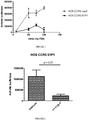
- CCR5 S1PR1 HOS cells are exposed for one hour to FTY720-P (33 ⁇ M) and then infected as before ( Figure 2 ).
- FTY720-P inhibits HOS CCR5 infection in the absence of S1PR1
- HOS CCR5 lacZ cells were preincubated for 1 hour, either with a specific agonist of S1PR1, SEW2871 (33 ⁇ M), or the natural agonist of all S1PR receptors (S1PR1 to S1PR5), sphingosine-1 -phosphate (S1P, 33 ⁇ M), ie FTY720-P (33 ⁇ M) which is agonist of S1PR1, S1PR3, S1PR4 and S1PR5 ( Figure 3 ).
- the S1P and the FTY720 reduce the measured infection by about 50%, and this in a very significant way (student test, p ⁇ 0.01). It thus turns out that in addition to the fact that S1PR1 stimulation decreases infection of a line that expresses this receptor on its surface, S1PR2 to S1PR5 receptor agonists also have a protective effect on infection.
- PBMC Peripheral blood mononuclear cells isolated from a healthy donor were preincubated in the presence of FTY720-P at 1 ⁇ M or S1P at 1 ⁇ M, then infected with Ad8-luc virus for 72 h before measuring luciferase activity.
- FTY720-P at 1 ⁇ M
- S1P at 1 ⁇ M
- Ad8-luc virus for 72 h
- the results show an inhibition of about 60% of the infection by these two agonists ( Figure 4 ).
- Expression of the S1PR1 receptor on the PBMC surface was not detected in flow cytometry (despite the presence of mRNA in these cells).
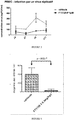
- PBMCs from healthy donors were preincubated with FTY720-P at 1 ⁇ M for one hour and then infected with replicative Ad8 virus.
- the amount of virus produced in the culture medium was evaluated by measuring the viral protein p24 at 4, 7, 9 and 11 days after infection ( Figure 5 ).
- the inventors have demonstrated the effect of sphingosine-1-phosphate receptor agonists on both cell lines and primary cells.
Landscapes
- Health & Medical Sciences (AREA)
- Life Sciences & Earth Sciences (AREA)
- Medicinal Chemistry (AREA)
- Veterinary Medicine (AREA)
- Public Health (AREA)
- General Health & Medical Sciences (AREA)
- Chemical & Material Sciences (AREA)
- Animal Behavior & Ethology (AREA)
- Pharmacology & Pharmacy (AREA)
- Epidemiology (AREA)
- Emergency Medicine (AREA)
- Virology (AREA)
- Nuclear Medicine, Radiotherapy & Molecular Imaging (AREA)
- Organic Chemistry (AREA)
- General Chemical & Material Sciences (AREA)
- Chemical Kinetics & Catalysis (AREA)
- Oncology (AREA)
- Communicable Diseases (AREA)
- Molecular Biology (AREA)
- Tropical Medicine & Parasitology (AREA)
- AIDS & HIV (AREA)
- Acyclic And Carbocyclic Compounds In Medicinal Compositions (AREA)
- Pharmaceuticals Containing Other Organic And Inorganic Compounds (AREA)
Description
- L'invention concerne des composés qui sont des agonistes d'un récepteur choisi parmi les récepteurs S1PR1, S1PR2, S1PR3, S1PR4 et S1PR5 pour une utilisation dans le traitement des infections à VIH.
- Le virus de l'immunodéficience humaine (VIH) est un rétrovirus infectant l'homme et responsable du syndrome d'immunodéficience acquise (sida), qui est un état affaibli du système immunitaire le rendant vulnérable à de multiples infections opportunistes. Transmis par plusieurs fluides corporels : sang, sécrétions vaginales, sperme ou lait maternel, le sida est aujourd'hui considéré comme une pandémie ayant causé la mort d'environ 25 millions de personnes entre 1981 (date de la première identification de cas de sida) et janvier 2006. Il est estimé qu'environ 1 % des personnes âgées de 15 à 49 ans vivent avec le VIH, principalement en Afrique subsaharienne. Bien qu'il existe des traitements antirétroviraux luttant contre le VIH et retardant par conséquence l'apparition du sida, réduisant ainsi la mortalité et la morbidité, il n'existe à l'heure actuelle aucun vaccin ou traitement définitif.
- Il y a donc un besoin pour de nouvelles molécules permettant de traiter efficacement les infections à VIH.
- Le VIH ou HIV pénètre dans une cellule cible par liaison de la protéine gp120 de l'enveloppe virale avec le récepteur CD4, liaison qui permet alors la formation d'un complexe ternaire avec le corécepteur CCR5 (virus à tropisme R5 ou VIH-R5). Ceci conduit à la fusion de l'enveloppe virale via la protéine gp41 avec la membrane cellulaire, ce qui permet l'entrée du virus. CCR5 est un récepteur de chimiokines présent sur différents types de lymphocytes, et appartient à la famille des récepteurs couplés aux protéines G (RCPG). CCR5 étant le principal corécepteur du VIH, il représente un intérêt physiopathologique particulier et une cible thérapeutique de choix.
- Les inventeurs ont pu montrer que le récepteur S1PR1 s'hétérodimérise avec le corécepteur CCR5 et qu'il diminue l'infectivité du VIH. Les inventeurs ont également montré que les agonistes du récepteur S1PR1 peuvent diminuer l'infection des cellules par le VIH. A l'issue d'études longues et approfondies, les inventeurs ont également montré que les agonistes des récepteurs S1PR1, S1PR2, S1PR3, S1PR4 et S1PR5 sont susceptibles de diminuer l'infection par VIH.
- Sans vouloir être liés par une théorie, les inventeurs envisagent plusieurs hypothèses pour expliquer le fonctionnement des agonistes selon l'invention.
- Une première hypothèse est que l'agoniste, en se fixant sur un récepteur S1PR, favoriserait l'internalisation de l'hétérodimère S1PR1-CCR5, comme cela a été proposé pour le récepteur S1PR1 seul par Markus H. Gräler dans Cell Physiol Biochem 2010 ; 26 :79-86, pour expliquer l'immunomodulation induite par l'agoniste FTY720-P. Cette internalisation de l'hétérodimère S1PR1-CCR5 diminuerait par conséquent la quantité de corécepteur CCR5 à la surface de la cellule, expliquant ainsi la baisse de l'infection par le VIH.
- Une deuxième hypothèse est que la stimulation d'un récepteur S1PR induite par la fixation de l'agoniste diminuerait la signalisation du récepteur CCR5. Ce phénomène, appelé hétérodésensibilisation, est bien connu. Ainsi, l'activation d'un récepteur S1PR, par son effet « inhibiteur » sur CCR5, pourrait influencer l'infection et la propagation du VIH. Un tel effet anti-VIH a notamment été documenté dans les cas de la stimulation de CXCR1 par l'interleukine 8 (Richardson et al., 2003. J Biol Chem 278:15867-15873), de celle du FPR par le peptide bactérien fMLF (Shen, W. et al., 2000. Blood 96:2887-2894), et de A2A par l'adénosine (Zhang et al., 2006. Blood 108:38-44).
- Une troisième hypothèse est que la stimulation d'un récepteur S1PR induite par la fixation de l'agoniste modifierait l'interaction de CCR5 avec CD4 ou gp120, ce qui entrainerait une diminution de l'infection des cellules par le virus.
- Enfin, à la lumière de résultats obtenus à l'aide de virus VIH-1 dont l'enveloppe est remplacée par celle du virus de la stomatite vésiculaire (VSVG) et donc qui pénètrent dans la cellule par endocytose et indépendamment de CCR5, les inventeurs ont émis une quatrième hypothèse. Cette dernière repose sur la possibilité que la signalisation induite par la liaison d'un agoniste à son récepteur S1PR stimulerait la voie de transduction de ce récepteur d'une manière qui interfère avec le cycle réplicatif du VIH par un mécanisme indépendant de CCR5.
- L'invention concerne donc les composés FTY720 et FTY720-P qui sont des agonistes du récepteur S1PR1 pour une utilisation dans des méthodes de traitement d'infections à VIH chez l'homme.
- On entend par "agoniste du récepteur du sphingosine-1-phosphate" ou agoniste d'un récepteur S1PR", un composé qui se lie à au moins un récepteur du sphingosine-1-phosphate choisi parmi S1PR1, S1PR2, S1PR3, S1PR4, S1PR5.
- Plus précisément, on entend par « agoniste du récepteur S1PR1 » un composé qui se lie au récepteur S1PR1 et qui, par exemple, entraîne l'internalisation du récepteur, et/ou la dissociation de l'hétérotrimère intracellulaire de protéines G en Gα-GTP et Gβγ, et/ou une augmentation de la phosphorylation du récepteur, et/ou l'activation de la voie de signalisation du récepteur. Ce terme englobe les agonistes dits « complets » ainsi que les agonistes dits « partiels » du récepteur du sphingosine-1-phosphate.
- Dans la suite, les expressions "récepteur S1PR1" et "récepteur S1P1" sont utilisées indifféremment.
- Selon l'invention, on entend par le terme « traitement » ou « traiter », l'action de supprimer, réduire, inhiber la progression, ou prévenir l'apparition de la condition ou de la maladie à laquelle ce terme s'applique ; ou l'action de supprimer, réduire, inhiber la progression, ou prévenir l'apparition d'un ou plusieurs symptômes de la condition ou de la maladie à laquelle ce terme s'applique.
- Selon l'invention, on entend par « infection à VIH » ou « infection à HIV » une infection par n'importe quel type, groupe ou clade de virus de l'immunodéficience humaine (VIH). En effet, le VIH est un virus qui possède une très importante variabilité génétique et présente ainsi une très grande diversité. Le VIH peut être de deux types : VIH-1, le plus présent dans le monde, ou VIH-2, moins pathogène que VIH-1. Il comprend le VIH-2A et le VIH-2B. Au sein de chaque type existent plusieurs groupes qui, à leur tour, comportent des clades. Le VIH-1 est classé en quatre groupes : groupe M (pour major group), groupe O (pour outlier group), groupe N (pour non-M, non-O group) et groupe P. En 2005, le groupe M prédominait largement avec plus de 40 millions de personnes contaminées, contre un peu plus de 500 pour le groupe O et seulement 7 pour le groupe N. Le groupe M comprend neuf sous-types ou clades (de A à D, de F à H, J et enfin K). S'ajoutent plusieurs formes recombinantes (en anglais « circulating recombinant form » ou CRF), qui ont pour origine la multiple infection d'une cellule par des sous-types différents, ce qui entraîne des mélanges dans le génome viral.
- La description concerne un composé qui est un agoniste d'au moins un récepteur du sphingosine-1-phosphate pour une utilisation dans des méthodes de traitement d'infections à VIH chez l'homme ou l'animal. L'invention concerne un composé qui est un agoniste d'au moins un récepteur choisi parmi les récepteurs S1PR1, S1PR2, S1PR3, S1PR4 et S1PR5 pour une utilisation dans une méthode de traitement d'une infection à VIH chez l'homme, caractérisé en ce que ledit composé est FTY720 ou FTY720-P.
- Le S1PR1 (ou S1P1) a une séquence de 382 acides aminés, accessible sous le numéro d'accession NP_001391.2 sur la base NCBI. Cette séquence est représentée par SEQ ID N°1.
- Le S1PR2 (ou S1P2) a une séquence de 353 acides aminés accessible sous le numéro d'accession NP_001391 sur la base NCBI. Cette séquence est représentée par SEQ ID N°2. Le S1PR3 (ou S1P3) a une séquence de 378 acides aminés accessible sous le numéro d'accession NP_005217 sur la base NCBI. Cette séquence est représentée par SEQ ID N°3. Le S1PR4 (ou S1P4) a une séquence de 384 acides aminés accessible sous le numéro d'accession NP_003766 sur la base NCBI. Cette séquence est représentée par SEQ ID N°4. Le S1PR5 (ou S1P5) est présent sous forme de deux isoformes.
- La première isoforme a une séquence de 310 acides aminés accessible sous le numéro d'accession AAH67781 sur la base NCBI. Cette séquence est représentée par SEQ ID N°5. La seconde isoforme a une séquence de 398 acides aminés accessible sous le numéro d'accession NP_001159687 sur la base NCBI. Cette séquence est représentée par SEQ ID N°6.
- Les agonistes des récepteurs du sphingosine-1-phosphate (S1PR) sont connus de l'art antérieur et l'homme du métier dispose des connaissances générales suffisantes pour identifier des composés agonistes d'un récepteur S1PR. Pour ce faire, il peut mettre en oeuvre un test fonctionnel de liaison de 35S-GTPγS in vitro. Il peut par exemple se référer à la publication DS. Im et al., Mol. Pharmacol. 2000 ; 57-753. Dans ce test fonctionnel, la liaison entre le GTPγS et les protéines G médiée par le ligand est mesurée dans un tampon de liaison du GTP (en mM : 50 HEPES ; 100 NaCl, 10 MgCl2, pH 7,5) en utilisant 25 µg d'une membrane préparée à partir de cellules HEK293 transfectées transitoirement. Le ligand est ajouté aux membranes en présence de 10 µM de GDP et de 0,1 nM de 35S-GTPγS (1200 Ci/mmol) et incubé à 30°C pendant 30 minutes. Le GTPγS lié est séparé du GTPγS non-lié par un collecteur Brandel (Gaithersburg, MD), et compté avec un compteur de scintillant liquide. Typiquement, le composé selon l'invention est choisi dans le groupe comprenant la sphingosine-1-phosphate, FTY720, FTY720-P, AUY954, CYM-5442, CYM-5181, SEW2871, VPC01091, DS-SG-44, KRP-203-P, DihydroS1P, Composé 26, Composé 12, la sphingosylphosphorylcholine et AFD-R.
- Il est également décrit un composé qui est un agoniste d'au moins deux récepteurs choisis parmi les récepteurs S1PR1, S1PR2, S1PR3, S1PR4 et S1PR5 pour une utilisation dans une méthode de traitement d'une infection à VIH chez l'homme ou l'animal. Typiquement, ledit composé est un agoniste d'au moins :
des récepteurs S1PR1 et S1PR2; ou
des récepteurs S1PR1 et S1PR3; ou
des récepteurs S1PR1 et S1PR4; ou
des récepteurs S1PR1 et S1PR5; ou
des récepteurs S 1 PR2 et S1PR3; ou
des récepteurs S 1 PR2 et S1PR4; ou
des récepteurs S 1 PR2 et S1PR5; ou
des récepteurs S 1 PR3 et S1PR4; ou
des récepteurs S 1 PR3 et S1PR5; ou
des récepteurs S 1 PR4 et S1PR5. Le composé est choisi parmi les composés cités dans le tableau ci-dessous:COMPOSES AGONISTE DE S1PR1 AGONISTE DE S1PR2 AGONISTE DE S1PR3 AGONISTE DE S1PR4 AGONISTE DE S1PR5 sphingosine-1-phosphate X X X X X FTY720-P X X X X AUY954 X X X VPC01091 X X X DS-SG-44 X X X KRP-203-P X X DihydroS1P X X X X X composé 26 X X X X Composé 12 X X Sphingosylphosphorylcholine X X X X X AFD-R X X X X - Ledit agoniste est un agoniste du récepteur S1PR1. Typiquement, il s'agit d'un agoniste de bas poids moléculaire, par exemple une petite molécule organique (naturelle ou pas). Le terme « petite molécule organique » se réfère à une molécule, naturelle ou pas, d'une taille comparable à celle des molécules organiques généralement utilisées comme médicament. Ce terme exclu les macromolécules (par exemple les protéines, les molécules d'acide nucléique, etc.). Des petites molécules organiques préférées ont une taille d'au plus 10 000 Da, de préférence d'au plus 5 000 Da, plus préférentiellement d'au plus 2 000 Da, encore plus préférentiellement d'au plus 1 000 Da.
- Les récepteurs du sphingosine-1-phosphate sont connus. Parmi ces récepteurs, le S1PR1 ou (« Sphingosine-1-phosphate receptor 1 ») est largement décrit dans la littérature. Il s'agit d'un récepteur appartenant à la famille des récepteurs couplés aux protéines G, dont le ligand naturel est la sphingosine-1-phosphate (S1P). S1PR1 est également connu sous les noms suivants: EDG1, S1P1, ECGF1, EDG-1, CHEDG1, D1S3362, FLJ58121. Il est exprimé de manière ubiquitaire et sa délétion génétique chez la souris a mis en évidence son rôle clé dans l'angiogenèse et dans la maturation vasculaire, ainsi que dans la régulation du recrutement des cellules immunitaires (Takabe et al., Pharmacol Rev 2008 June ; 60(2) :181-195). L'implication de la sphingosine-1-phosphate dans le cancer a également été décrite par Weng In Leong et al., dans Biochimie 92 (2010) 716-723.
- Les agonistes du récepteur S1PR1 sont également largement décrits dans de nombreuses revues scientifiques. On peut citer notamment la revue de Dong-Soon IM publiée dans Acta Pharmacologica Sinica (2010) 31 :1213-1222. On peut également citer les demandes de brevet
EP1905434A1 ouWO2010/075239A1 qui décrivent différentes classes d'agonistes. - Les agonistes du récepteur S1PR1 sont typiquement des analogues de la sphingosine, comme les dérivés de 2-substitué 2-amino-propane-1,3-diol ou les dérivés de 2-amino-propanol. Les agonistes du récepteur S1PR1 sont des composés comprenant typiquement un groupe de formule X

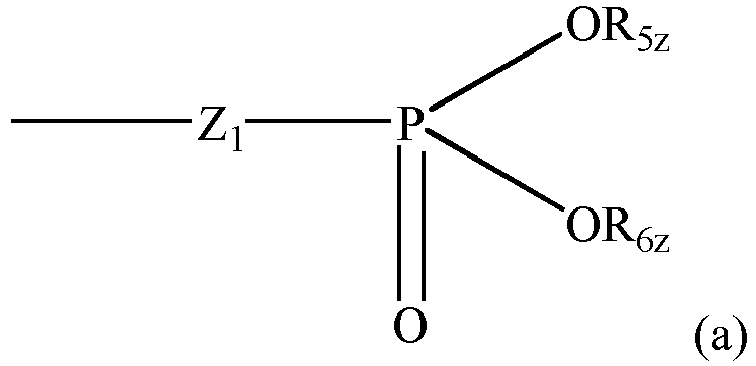
- où Z1 est une liaison directe ou O, de préférence O;
- chacun de R5z et R6z, indépendamment, est H, ou C1-4alkyle optionnellement substitué par 1, 2 ou 3 atomes d'halogène ;
- R1z est OH, acyloxy ou un résidu de formule (a) ; et chacun de R2z et R3z, indépendamment, est H, C1-4alkyle ou acyle.
- Le groupe de formule (X) est un groupe fonctionnel qui est attaché comme un groupe terminal à un groupe qui peut être hydrophile ou lipophile et peut comprendre un ou plusieurs résidus aliphatique, alicyclique, aromatique et/ou hétérocyclique. La molécule résultante fonctionne comme un agoniste d'un récepteur S1PR1.
- De manière préférée, au moins un de Z et R1z est ou comprend un résidu de formule (a).
- Des exemples d'agonistes du récepteur S1PR1 comprennent :
- (i) les composés décrits dans
EP627406A1 
- où R1 est une chaine C12-22 linéaire ou ramifiée
- qui peut avoir dans la chaîne une liaison ou un hétéroatome choisi parmi une liaison double, une liaison triple, O, S, NR6, où R6 est H, C1-4 alkyle, aryl-C1-4alkyle, acyle ou (C1-4alkoxy)carbonyle, et carbonyle, et/ou
- qui peut avoir comme substituant C1-4alkoxy, C2-4alcényloxy, C2-4alcynyloxy, arylC1-4alkyl-oxy, acyle, C1-4alkylamino, C1-4alkylthio, acylamino, (C1-4alkoxy)carbonyle, (C1-4alkoxy)-carbonylamino, acyloxy, (C1-4alky)carbamoyle, nitro, halogène, amino, hydroxyimino, hydroxy ou carboxy;
- ou R1 est
- un phénylalkyle où l'alkyle est une chaine carbonée linéaire ou ramifiée en C6-20 ; ou
- un phénylalkyle où l'alkyle est une chaine carbonée linéaire ou ramifiée en C1-30 où ledit phénylalkyle est substitué par
- ∘ une chaine carbonée linéaire ou ramifiée en C6-20 optionnellement substituée par un halogène,
- ∘ une chaine alkoxy linéaire ou ramifiée en C6-20 optionnellement substituée par un halogène,
- ∘ une chaine alcényloxy linéaire ou ramifiée en C6-20,
- ∘ un phényl-C1-14alkoxy, halophényl-C1-4alkoxy, phényl-C1-14alkoxy-C1-14alkyl, phénoxy-C1-4alkoxy or phénoxy-C1-4alkyle,
- ∘ un cycloalkylalkyle substitué par un C6-20alkyle,
- ∘ un hétéroarylalkyle substitué par un C6-20alkyle,
- ∘ un C6-20alkyle hétérocyclique, ou
- ∘ un alkyle hétérocyclique substitué par un C2-20alkyle,
- et où le groupement alkyle peut avoir :
- dans la chaîne carbonée, une liaison ou un hétéroatome choisi parmi une liaison double, une liaison triple, O, S, sulfinyle, sulfonyle, ou NR6, où R6 est tel que défini précédemment, et
- comme substituant, C1-4alkoxy, C2-4alcényloxy, C2-4alcynyloxy, arylC1-4alkyl-oxy, acyle, C1-4alkylamino, C1-4alkylthio, acylamino, (C1-4alkoxy)carbonyle, (C1-4alkoxy)-carbonylamino, acyloxy, (C1-4alky)carbamoyle, nitro, halogène, amino, hydroxy ou carboxy; et
- chacun de R2, R3, R4 et R5, indépendamment, est H, C1-4 alkyle ou acyle,
- ou un sel ou un hydrate pharmaceutiquement acceptable de celui-ci.
- où R1 est une chaine C12-22 linéaire ou ramifiée
- (ii) les composés décrits dans
WO 02/18395 
- où Xa est O, S, NR1s ou un groupe -(CH2)na-, ledit groupe étant substitué ou non par 1 à 4 halogènes ; na est 1 ou 2, R1s est H ou (C1-4)alkyle, ledit alkyle étant substitué ou non par un halogène, R1a est H, OH, (C1-4)alkyle ou O(C1-4)alkyle où l'alkyle est substitué ou non par 1 à 3 halogènes ; R1b est H, OH ou (C1-4)alkyle, où l'alkyle est substitué ou non par un halogène ; chaque R2a est indépendamment choisi parmi H ou (C1-4)alkyle, ledit alkyle étant substitué ou non par un halogène ; R3a est H, OH, halogène ou O(C1-4)alkyle où l'alkyle est substitué ou non par un halogène ; et R3b est H, OH, halogène, (C1-4)alkyle où l'alkyle est substitué ou non par hydroxyle, ou O(C1-4)alkyle où l'alkyle est substitué ou non par un halogène; Ya est -CH2-, -C(O)-, -CH(OH)-, -C(=NOH)-, O ou S, et R4a est (C4-14)alkyl ou (C4-14)alcényle ;
- ou un sel ou un hydrate pharmaceutiquement acceptable de celui-ci.
- Lorsque les composés de formules I, IIa ou IIb possèdent un ou plusieurs centres asymétriques, la présente invention doit être comprise comme couvrant les différents isomères optiques, racémates, diastéréoisomères et leurs mixtures. Les composés de formule IIa ou IIb, lorsque l'atome de carbone portant le groupement amine est asymétrique, ont de préférence la configuration R pour cet atome de carbone.
- Les composés de formules I, IIa ou IIb peuvent être sous forme libre ou sous forme de sel. Des exemples de sels pharmaceutiquement acceptables des composés de formules I, IIa ou IIb comprennent les sels d'acide inorganique, tels que hydrochloride, hydrobromide et sulfate ; les sels d'acide organique, tels que acétate, fumarate, maléate, benzoate, citrate, malate, méthanesulfonate et benzènesulfonate ; ou lorsque cela est approprié, les sels de métaux, tels que sodium, potassium, calcium, aluminium ; des sels d'amines, tels que triéthylamine ; et des sels d'acide aminé dibasique, tel que la lysine. Les composés et leurs sels selon l'invention couvrent également leurs formes hydrate et solvate.
- Dans les définitions ci-dessus :
- ▪ acyle peut être un résidu Ry-CO- où Ry est C1-6alkyle, C3-6cycloalkyle, phényle or phényl-C1-4alkyle,
- ▪ sauf si indiqué autrement, alkyle, alkoxy, alcényle ou alcynyle peuvent être linéaires ou ramifiés,
- ▪ aryle peut être phényle ou naphtyle, de préférence phényle,
- ▪ « groupe hétérocyclique » représente un groupe hétérocyclique de 5 à 7 chaînons, ayant 1 à 3 hétéroatomes choisis parmi S, O et N. Des exemples de tels groupes hétérocycliques comprennent les groupes hétéroaryles indiqués précédemment, et les composés hétérocycliques correspondant à des groupes hétéroaryles partiellement ou complètement hydrogénés, comme par exemple furyle, thienyle, pyrrolyle, azepinyle, pyrazolyle, imidazolyle, oxazolyle, isoxazolyle, thiazolyle, isothiazolyle, 1,2,3-oxadiazolyle, triazolyle, tetrazolyle, thiadiazolyle, pyranyle, pyridyle, pyridazinyle, pyrimidinyle, pyrazinyle, tetrahydropyranyle, morpholinyle, thiomorpholinyle, pyrrolidinyle, pyrrolyle, imidazolidinyle, pyrazolidinyle, piperidinyle, piperazinyle, oxazolidinyle, isoxazolidinyle, thiazolidinyle or pyrazolidinyle. Des groupes hétérocycliques préférés sont les groupes hétéroaryles à 5 ou 6 chaînons et les plus préférés sont les groupes morpholinyle, thiomorpholinyle or piperidinyle.
- Lorsque la chaine carbonée comme R1 est substituée dans les composés de formule I, cette chaine est de préférence substituée avec un halogène, nitro, amino, hydroxy ou carboxy. Quand la chaine carbonée est interrompue par un phénylène optionnellement substitué, la chaine carbonée est de préférence non substituée. Quand le groupement phénylène est substitué, il est de préférence substitué par un halogène, nitro, amino, méthoxy, hydroxy ou carboxy.
- Des composés préférés de formule I sont ceux dans lesquels R1 est C13-20alkyle, optionnellement substitué par nitro, halogène, amino, hydroxy ou carboxy, et, plus préférentiellement, ceux où R1 est un phénylalkyle substitué par une chaine C6-14alkyle optionnellement substituée par un halogène et le groupement alkyle est un C1-6alkyle optionnellement substitué par un hydroxy. Plus préférentiellement, R1 est un phényl-C1-6alkyle substitué sur le phényle par une chaîne C6-14alkyle, linéaire ou ramifiée, de préférence linéaire. La chaine C6-14alkyle peut être ortho, méta ou para, de préférence para. De préférence, chacun de R2 à R5 est H.
- Un composé de formule I préféré est le 2-amino-2-tétradécyl-1,3-propanediol.
- Un composé particulièrement préféré de formule I est le FTY720, c'est-à-dire le 2-amino-2-[2-(4-octylphényl)éthyl]propane-1,3-diol dans sa forme libre ou sous forme d'un de ses sels pharmaceutiquement acceptable, ou une pro-drogue de celui-ci. Le composé est FTY720 hydrochloride, comme indiqué ci après :

- Un composé préféré de formule IIa est le FTY720-phosphate ou FTY720-P (R2a est H, R3a est OH, Xa est O, R1a et R1b sont OH).
- Un composé préféré de formule IIb est le un composé-phosphate dans lequel R2a est H, R3b est OH, Xa est O, R1a et R1b sont OH, Ya est O et R4a est heptyle. Le composé dans le groupe comprenant la sphingosine-1-phosphate, FTY720, FTY720-P, AUY954, CYM-5442, CYM-5181, SEW2871, VPC01091, DS-SG-44, KRP-203-P, DihydroS1P, Composé 26, Composé 12, la sphingosylphosphorylcholine et AFD-R. Ces composés sont notamment cités par Dong-Soon IM dans Acta Pharmacologica Sinica (2010) 31 :1213-1222.
- Par "Composé 26", on entend le composé décrit dans la publication Li et al, "Discovery of potent 3,5-diphenyl-1,2,4-oxadiazole sphingosine-1-phosphate (SIP1) receptor agonists with exceptional selectivity against S1P2 and S1P3", Journal of Medicinal Chemistry, 2005 et ayant la formule suivante

- Par "Composé 12", on entend le composé décrit dans la publication Hanessian et al, "Constrained azacyclic analogues of the immunomodulatory agent FTY720 as molecular probes for sphingosine 1-phosphate receptors", Bioorganic & Medicinal Chemistry Letters, 2007 et ayant la formule suivante:

- Par AFD-R, on entend le composé décrit dans la publication Brinkmann et al, "The immune modulator FTY720 targets sphingosine-1-phosphate receptors", The Journal of Biological Chemistry, 2002 et ayant la formule suivante:

- De manière préférée, le composé est un agoniste des récepteurs S1PR1, S1PR3, SPR4 et S1PR5. Le composé selon l'invention est FTY720 (également connu sous le nom « fingolimod ») ou FTY720-P, qui est la forme phosphorylée du FTY720. FTY720 et FTY720-P ont notamment été décrits par Mandala S. et al. dans Science 2002 ; 296 :346-9 et par Brinkmann V. et al. dans J Biol Chem 2002 ; 277 :21453-7.
- Le FTY720 est un substrat de la sphingosine kinase 2 et est, sous sa forme phosphorylée, un agoniste des récepteurs S1PR1, S 1 PR3, S 1 PR4 et S1PR5.
- Le FTY720-P est particulièrement pertinent pour une utilisation dans le traitement d'une infection à VIH. Cela s'explique notamment du fait de la synergie des effets du FTY720-P sur les récepteurs S1PR1, S1PR3, S1PR4 et S1PR5. Les inventeurs ont montré l'effet de protection contre l'infection à VIH de ce composé sur des lignées cellulaires, des cellules primaires. Enfin, ils ont également montré l'effet de cette molécule in vivo sur des souris sur lesquelles des lymphocytes humains ont été greffés avant d'être infectés par le VIH. En outre, les inventeurs ont montré que le FTY720-P permettait une diminution de l'infection à VIH chez des cellules n'exprimant pas le S1PR1. Ce résultat confirme que les récepteurs S1PR3 et/ou S1PR4 et/ou SPR5 ont également un rôle primordial dans la protection contre l'infection à VIH. Les agonistes sont des agonistes spécifiques du récepteur S1PR1 et d'au moins un récepteur choisi parmi S1PR2, S1PR3, S1PR4, S1PR5.
- Il est également décrit des méthodes de traitement d'un sujet souffrant d'une infection à VIH comprenant l'étape d'administrer audit sujet une quantité thérapeutiquement efficace d'au moins un composé qui est un agoniste d'au moins un récepteur choisi parmi les récepteurs S1PR1, S1PR2, S1PR3, S1PR4 et S1PR5, et préférentiellement qui est un agoniste du récepteur S1PR1.
- Les composés selon l'invention peuvent également être administrés sous la forme de compositions pharmaceutiques, telles que définies ci après.
- Par « quantité thérapeutiquement efficace » on entend une quantité suffisante pour traiter et/ou prévenir l'infection à VIH.
- Les composés selon l'invention peuvent également être utilisés pour préparer des compositions pharmaceutiques pour le traitement d'infections à VIH.
- Ainsi, il est également décrit des compositions pharmaceutiques pour une utilisation dans des méthodes de traitement d'infections à VIH chez l'homme ou l'animal, lesdites compositions comprenant au moins un composé selon l'invention et un véhicule pharmaceutiquement acceptable.
- N'importe quel composé selon l'invention peut être combiné à tout type de véhicule ou excipient pharmaceutiquement acceptable, et optionnellement à une matrice à diffusion prolongée, telle qu'un polymère biodégradable, pour former une composition pharmaceutique selon l'invention.
- Les termes « pharmaceutiquement acceptable » se réfèrent à des entités moléculaires et des compositions qui ne produisent pas de réaction inverse, allergique ou autre réaction non désirée lorsqu'elles sont administrées à un mammifère, particulièrement un humain. Un véhicule ou excipient pharmaceutiquement acceptable peut être solide, semi-solide ou liquide.
- La forme des compositions pharmaceutiques, leur voie d'administration, leur dosage et leur posologie dépendent naturellement de la sévérité de l'infection, de son stade d'évolution, de l'âge, du sexe, du poids du sujet à traiter, etc.
- Les compositions pharmaceutiques selon l'invention peuvent être formulées pour une administration topique, orale, intra-nasale, parentérale, intraveineuse, intramusculaire, sous-cutanée, ou autre.
- Selon un mode de réalisation de l'invention, ladite infection à VIH est une infection à VIH-1. Selon un autre mode de réalisation, ladite infection à VIH étant une infection à VIH-2.
- Les exemples suivants sont donnés à titre illustratif seulement, et ne sauraient limiter la portée de l'invention.
-
-
Figure 1 : Mesure de l'infectabilité des lignées HOS CCR5 LacZ et HOS CCR5 S1PR1 par le virus Ad8Luc.
L'infectabilité est mesurée par l'activité luciférase. Cette figure montre que la présence du récepteur S1PR1 inhibe l'infection de la lignée HOS par le virus VIH. -
Figure 2 : Effet du FTY720-P sur une lignée cellulaire HOS CCR5 S1PR1.
L'infectabilité est mesurée par l'activité luciférase. Cette figure montre que la pré-incubation avec FTY720-P des cellules exprimant S1PR1 diminue l'infection. -
Figure 3 : Mesure de l'infectabilité sur une lignée HOS CCR5 n'exprimant pas S1PR1.
Des cellules HOS CCR5 lacZ ont été préincubées pendant 1 heure, avec :- un agoniste spécifique de S1PR1, le SEW2871, ou
- l'agoniste naturel de tous les récepteurs S1PR (S1PR1 à S1PR5), la sphingosine-1-phosphate (S1P), ou
- un agoniste de S1PR1, S1PR3, S1PR4 et S1PR5, le FTY720-P.
Aucune différence significative n'est observée avec le SEW2871 tandis que le S1P et le FTY720-P permettent une diminution d'environ 50% de l'infection à VIH. -
-
Figure 4 : Inhibition de l'infection de cellules primaires lymphocytaires par le FTY720-P.
Cette figure montre l'effet du S1PR1 et du FTY720-P sur des cellules mononuclées du sang périphérique (PBMC).
Cette figure confirme l'effet du FTY720-P sur des cellules primaires. -
Figure 5 : Mesure de la production virale dans le milieu de culture de cellules primaires infectées avec un virus réplicatif Ad8 et préincubées avec du FTY720-P.
Cette figure montre une nette inhibition de la production virale par les PBMC. -
Figure 6 : Effet de FTY720 in vivo
Cette figure montre une nette diminution de la virémie chez des souris greffées avec des cellules lymphocytaires humaines et infectés au VIH. Cette figure confirme l'effet in vivo du FTY720 sur la prévention de l'infection à VIH. - Les matériels et méthodes utilisés pour l'ensemble de la partie expérimentale sont détaillés ci après.
- Les lignées HOS-CD4 (AIDS Reagent Program, Rockvill, MD) et HEK-293T (simian virus 40 T antigen-transformed human embryonic kidney 293T, Genethon) sont cultivées en milieu DMEM supplémenté avec 10% de SVF (sérum de veau foetal), 10mM glutamax-1, 100 U/ml de pénicilline et 100 µg/ml de streptomycine. La lignée HEK-293T CD4+ CCR5+ (don de Martine Biard-Piechaczyk, Institut de Biologie, Montpellier, France) a été obtenue par transfection des gènes CD4 et CCR5 à partir de la lignée HEK-293T.
- Les PBMC humaines en culture sont isolées à partir de sang de donneurs sains par centrifugation de densité sur milieu de séparation des lymphocytes (Eurobio) et cultivées en milieu RPMI supplémenté comme le DMEM à 37°C, 5% de CO2.
- Pour tester l'influence de l'expression de S1PR1 sur l'infection par HIV-1, 50 000 cellules de HEK-293T CD4+ CCR5+ ont été transfectées transitoirement par lipofection en les incubant pendant 24h avec un mélange de 50 ng de plasmide CMV-S1PR1, 20 ng du plasmide pRL-TK-Renilla Luciferase (Promega) et 0,5 µl de lipofectamine (Lipofectamine™ 2000, Invitrogen) dans 150 µl de milieu DMEM 10% SVF en plaque 96 puits, préalablement incubée avec une solution de D-polylysine pendant 30 min. Le clone plasmidique de S1PR1 a été obtenu auprès du Missouri S&T cDNA Resource Center (www.cdna.org). Un fragment portant S1PR1 a été cloné sous contrôle du promoteur CMV dans le vecteur d'expression pcDNA3.1+ (invitrogen). 24h après la transfection, les puits sont lavés au DMEM (Bio Whittaker), puis les cellules sont infectées avec 40 ng du virion Ad8-luc dans 180 µl de milieu de culture. Le virion Ad8-luc est un virus non réplicatif pseudotypé R5 obtenu par co-transfection de cellules HEK293T avec le plasmide de transfert pNL4.3 Luc.R-E- qui porte un gène viral env défectif ainsi que le gène de la luciférase Firefly inséré dans le gène viral nef (AIDS Reagent Program), et le plasmide pCMV-AD8-env qui code pour l'enveloppe R5 du prototype AD8 HIV-1 (Cho, Shibata & Martin (1996) J. Virol. 70, 7318-7321). 24h après l'infection, les cellules sont lavées une fois avec du milieu de culture, et remises en culture avec 200 µl de DMEM, 10% SVF. 40h à 48h après l'infection, les cellules sont lavées une fois au PBS, lysées avec 50 µl de tampon puis les activités luciférase Firefly et Renilla sont mesurées séquentiellement dans un luminomètre à l'aide du système Dual-Luciferase® Reporter Assay (Promega, cat: E1910). L'activité luciférase Renilla est utilisée comme mesure du niveau de métabolisme cellulaire.
- Pour produire des vecteurs HIV exprimant les gènes CCR5, lacZ et S1PR1, les plasmides pWPXL-CCR5 (Desmetz et al., 2007, Clin Immunol 123, 148-154), pHRCMV-lacZ (Naldini et al., 1996, Science 272, 263-267) et pWPXL-S1PR1 ont été cotransfectés avec le plasmide packaging p8.2 et le plasmide pMD2G qui code pour l'enveloppe du virus de la stomatite vésiculaire dans des cellules 293T comme décrit précédemment (Lin et al., 2002, PNAS 99, 15590-15595). Pour construire le plasmide pWPXL-S1PR1, la séquence codante de S1PR1 a été amplifié par PCR à partir du plasmide pCDNA3.1-S1PR1 puis le fragment BamH1-Spe1 obtenu cloné dans le vecteur lentiviral pWPXL (addgene.org). Les cellules HOS ont été transduites (Lin et al., 2002) d'abord avec le vecteur HIV-CCR5 et la lignée obtenue a été retransduite avec le vecteur HIV-S1PR1 ou le vecteur HIV-lacZ avec des quantités égales de virus en équivalent p24. L'expression membranaire des récepteurs CCR5 et S1PR1 a été évaluée en cytométrie de flux (FACScalibur, BDBiosciences) après marquage des cellules avec les anticorps monoclonaux de souris anti-human CD 195 (BD Pharmingen) et anti-human EDG1 (R&D), respectivement.
- 50 000 cellules HOS sont cultivées en triplicatas en plaque 96 puits, puis infectées avec 50 ng de virus Ad8-luc. 24h après l'infection, les cellules sont lavées deux fois avec du PBS, et remises en culture pendant 48h. Les cellules sont alors lavées une fois au PBS, lysées avec 50 µl de tampon, puis l'activité luciferase Firefly est mesurée dans un luminomètre à l'aide du kit Promega (Luciferase Assay System) .
- Les PBMC sont activées par incubation pendant 72h dans du milieu de culture additionné de phytohémagglutinine (PHA, 1µg/ml) et d'interleukine 2 (IL2, 100 U/ml), puis après un lavage au RPMI, incubées en plaques 96 puits en triplicatas à 200 000 cellules dans 200 µl par puits. Elles sont ensuite infectées avec 70 ng d'équivalent p24 du prototype Ad8 HIV-1 pendant 18h, puis lavées 2X au PBS et incubées pendant 11 jours en ajustant le nombre de cellules à chaque prélèvement du surnageant de culture à J4, J7 et J9. La production de virus est suivie dans le surnageant de culture par mesure de la concentration de la protéine gag p24 par ELISA au moyen d'un kit commercial (Innotest HIV AG MAB, Ingen,réf:80563).
- Pour les cellules HEK-293T CD4+ CCR5+, 24h après transfection par le plasmide S1PR1 ou par le vecteur vide, les cellules ont été incubées pendant 30 min puis infectées avec l'anticorps anti-CCR5 à 10 µg/ml (clone 2D7, Pharmingen, ref. 555991), ou avec MIP-1β à 100 ng/ml (R&D systems, ref. 271-BME) ou avec (S)-FTY720 Phosphate (FTY720-P) à 80 ng/ml (Echelon, ref. B-0721).
- Pour les cellules HOS et les PBMC, les molécules S1P (Enzo, vendu par covalab ref. SL-140), FTY720-P (Echelon) ou SEW2871 (Cayman, ref. 10006440) ont été ajoutées dans le milieu de culture 1 heure avant l'infection aux concentrations indiquées.
- Les souris SCID sont de génotype cb17/Icr-Prkdcscid/Crl. Ces souris immunodéprimées sont hébergées dans une animalerie A3/L3 dans des cages avec couvercle à filtre dans un portoir ventilé. Après une semaine d'acclimatation, les animaux sont reconstitués par injection intra-péritonéale de 30.106 PBMC obtenues par centrifugation de densité sur les leucocytes d'un anneau de cytaphérèse non qualifié d'un donneur sain volontaire. La reconstitution est évaluée au 13ème jour par dosage des Immunoglobulines (Ig) humaines présentes dans le sérum des souris par test Elisa à l'aide de l'anticorps anti-human whole Ig-PO, (MP Biomedical, cat n°55230). Les souris dont la concentration en Ig totale est supérieure à 100 µg/ml sont conservées pour l'expérience, et sont infectées 14 jours après la reconstitution avec la souche JR-CSF de HIV-1 (souche R5) à 1000 TCID50 dans 100µl. Un gavage journalier avec 100 µl de FTY720 (Cayman, vendu par Interchim ref. BM8045) dissout à 60µg/ml dans de l'eau distillée est débuté un jour avant l'infection et continué pendant 12 jours. Les souris non-traitées sont gavées avec le même volume d'eau distillée. 50 µl de sang est prélevé rétro-orbitalement et dilué avec 1 ml de plasma humain pour doser la charge virale au 6ème, 9ème et 12ème jour après l'infection après anesthésie à l'isoflurane. Les virémies sont évaluées par quantification de l'ARN viral dans le plasma des souris en qPCR avec le test AmpliPrep/COBAS TaqMan HIV-1 (Roche Diagnostics, ref. 05212294190). Les valeurs inférieures à 20 copies d'ARN/ml (soit 400 copies/ml de sérum de souris) étant inférieures au seuil de détection du kit sont considérées égales à zéro.
- La séquence codante de S1PR1 a été amplifiée par PCR à partir du 2ème codon jusqu'au codon stop entre des sites Mlu1 et Xba1, puis insérée à l'aide de ces sites de restriction dans les plasmides pRK5-HA-SNAP-mGlu2 et pRK5-FLAG-CLIP-mGlu2 (Doumazane, E. et al., FASEB J. 2010 Sep 27) en remplacement du gène mGlu2, de telle sorte que le récepteur S1PR1 est fusionné à l'extrémité N terminal soit avec un épitope de l'hémagglutinine (HA) et l'enzyme SNAP, soit avec un épitope FLAG et l'enzyme CLIP, insérés derrière un peptide signal.
- Des cellules HEK293 ont été transfectées par lipofection avec de l'ADN des plasmides CLIP-CCR5 (7 ng pour 100 000 cellules) et SNAP-RCPG (gamme de 1 à 100 ng pour 100 000 cellules) et déposées à raison de 100 000 cellules par puits en plaque 96 puits noires pré-incubées avec une solution de polyornithine. 24 à 30h après la transfection, les cellules adhérentes sont lavées puis incubées avec du milieu de culture contenant les substrats des enzymes SNAP et CLIP couplés à des fluorophores pendant 2h à 37°. Les fluorophores sont du Lumi4®- Cryptate de Terbium lié à l'O 6-benzylguanine (BG-Lumi4) utilisé à 0,3 µM, et de la fluorescéine liée à l'O 2-benzylcytosine (BC-Fluorescéine) utilisé à 1 µM, substrats des enzymes SNAP et CLIP, respectivement. BG-Lumi4 et BC-Fluorescéine viennent de Cisbio Bioessays (Bagnols-sur-Cèze, France). Dans ces conditions, le marquage des récepteurs par les fluorophores est spécifique pour le SNAP ou le CLIP, total (100% des récepteurs sont marqués) et restreint aux récepteurs présents à la surface cellulaire (Doumazane, E. et al., FASEB J. 2010 Sep 27). De plus, les intensités de fluorescence du Lumi4 et de la fluorescéine sont proportionnelles au nombre de récepteurs présents à la surface cellulaire (Doumazane, E. et al., FASEB J. 2010 Sep 27). Les cellules sont ensuite lavées 4 fois avec du tampon Tris-Krebs à 37° (Maurel, D. et al., 2008, Nat Methods 5:561-567). La fluorescence et le TR-FRET sont mesurés dans 100 µl de tampon Tris-Krebs dans un spectrofluorimètre Infinite F500 (Tecan, Männedorf, Switzerland) avec les paramètres suivants: Lumi4 (excitation à 320 nm, émission à 620 nm, 150 µs de délai et 500 µs de temps d'intégration), fluorescéine (excitation à 485 nm, émission à 520 nm, 0 µs de délai et 1000 µs de temps d'intégration), trFRET (excitation à 320 nm, émission à 520 nm, 150 µs de délai et 500 µs de temps d'intégration). Le signal de FRET est corrigé par soustraction du FRET non spécifique obtenu après transfection du récepteur SNAP seul, et du FRET non spécifique obtenu avec le seul substrat BG-Lumi4 seul. Les valeurs de fluorescence du Lumi4 et de la fluorescéine sont corrigées par soustraction du signal non spécifique mesuré après transfection d'un plasmide vide.
- Le gène codant pour S1PR1 a été cloné dans un vecteur d'expression sous contrôle du promoteur CMV. Nous avons utilisé une lignée HEK293T exprimant les récepteurs CD4 CCR5 de manière constitutive et à un niveau suffisant pour permettre l'infection.
- Les résultats ont montré que lorsqu'on introduit un plasmide permettant l'expression à la membrane du récepteur S1PR1 dans cette lignée, le niveau d'infection est abaissé d'un facteur deux environ par rapport au contrôle (plasmide vide). Comme attendu, l'apport d'un plasmide CCR5 qui augmente le niveau membranaire du co-récepteur du VIH a donné un niveau d'infection supérieur au contrôle. Dans ces expériences, il est contrôlé que l'effet sur l'infection des plasmides S1PR1 et CCR5 ne résulte pas d'un effet global sur le métabolisme cellulaire.
- Une fois la capacité de S1PR1 à interférer avec l'infection par VIH mise en évidence, nous avons testé l'effet d'un agoniste de S1PR1 sur l'infection à VIH, en utilisant la même méthode mais en incluant une étape d'incubation des cellules avec l'agoniste à tester juste avant l'infection.
- Les résultats montrent qu'en présence du récepteur S1PR1 non stimulé, l'infection est diminuée de 60% par rapport au contrôle plasmide vide et qu'en présence du récepteur S1PR1 stimulé par l'agoniste FTY720-P pendant 30 min avant l'ajout du virus, l'infection est alors diminuée de 90% par rapport au contrôle plasmide vide. Cette diminution de l'infection avec FTY720-P est du même niveau que celle qui est obtenue dans cette expérience lorsque les cellules sont incubées dans les mêmes conditions avec un anticorps anti-CCR5 ou avec un ligand de CCR5 (MIP1-β), qui sont connus pour inhiber l'infection par le VIH (Wu, L. et al., 1997, J Exp Med 186 :1373-1381 ; Cocchi, F. et al., 1995, Science 270 (5243) :1811-1815).
- Les RCPG peuvent agir en tant qu'homodimères mais aussi par interactions hétérodimériques. Afin de préciser le mécanisme par lequel S1PR1 inhibe l'infection, nous l'avons testé pour sa capacité à hétérodimériser avec CCR5. Pour cela, nous avons utilisé une technologie de TR-FRET (Time Resolved- Fluorescence Resonance Energy Transfer), le HTRF (http://www.htrf.com/technology/). Dans cette technologie qui allie les principes du TRF (Time-Resolved Fluorescence) et du FRET (Fluorescence Resonance Energy Transfer), chacun des récepteurs CCR5 et S1PR1 est exprimé à la surface membranaire en fusion traductionnelle avec les enzymes SNAP et CLIP, respectivement, qui permettent la liaison spécifique et irréversible de deux fluorophores couplés à des substrats de ces enzymes. Un signal de FRET est détecté lorsque les 2 fluorophores sont à des distances compatibles avec une hétérodimérisation entre les récepteurs.
- Les résultats ont montré que le signal de FRET obtenu entre les récepteurs S1PR1 et CCR5 est comparable à celui obtenu pour l'homodimère CCR5, ce qui atteste d'une interaction directe à la membrane entre CCR5 et S1PR1, probablement au sein d'un complexe hétérodimérique.
- Les inventeurs ont corroboré leurs premiers résultats obtenus sur des lignées HEK293T exprimant les récepteurs CD4 CCR5 à l'aide de cellules HOS-CD4.
- Une lignée HOS (Human Osteo Sarcoma) exprimant le récepteur CD4 a été transduite par un vecteur lentiviral permettant l'expression constitutive du co-récepteur CCR5 à la membrane plasmique afin de la rendre infectable par le virus VIH-1. Cette lignée HOS CCR5 est transduite à nouveau pour obtenir l'expression à la membrane du récepteur S1PR1 (HOS CCR5 S1PR1). En parallèle, une lignée transduite avec le gène lacZ (HOS CCR5 lacZ) est obtenue par la même technique en contrôle d'infectabilité.
- Ces deux lignées sont infectées par différentes doses de virus Ad8-luc et leur infectabilité est évaluée 72h après l'infection par mesure de l'activité luciférase (
Figure 1 ). - On constate donc que la simple présence du récepteur S1PR1 inhibe l'infection de la lignée HOS par le VIH. Cet effet est très marqué, si l'on considère qu'il s'agit d'un virus « one-round » et qui donc n'effectue qu'un seul cycle de réplication. Ce résultat vient confirmer les résultats présentés précédemment sur la ligne HEK293 où le virus était utilisé à une dose unique.
- Des cellules HOS CCR5 S1PR1 sont exposées pendant une heure au FTY720-P (33 µM) puis infectée comme précédemment (
Figure 2 ). - Dans cette expérience, la pré-incubation avec FTY720-P des cellules exprimant le récepteur S1PR1 a diminué l'infection de 80% supplémentaire, en plus de l'inhibition constatée en présence du S1PR1 non stimulé.
- Dans cette expérience, les inventeurs ont testé l'effet de différents agonistes des récepteurs S1PR sur l'infection par la souche Ad8-luc de la lignée HOS CCR5 qui n'exprime pas S1PR1.
- Pour cela, des cellules HOS CCR5 lacZ ont été préincubées pendant 1 heure, soit avec un agoniste spécifique de S1PR1, le SEW2871 (33 µM), soit l'agoniste naturel de tous les récepteurs S1PR (S1PR1 à S1PR5), la sphingosine-1-phosphate (S1P, 33 µM), soit le FTY720-P (33 µM) qui est agoniste de S1PR1, S1PR3, S1PR4 et S1PR5 (
Figure 3 ). - Il apparaît d'abord que le SEW2871 ne modifie pas significativement l'infection dans cette expérience, résultat attendu étant donné que cette lignée n'exprime pas le S1PR1.
- Par contre, le S1P et le FTY720 diminuent l'infection mesurée d'environ 50%, et ceci de manière très significative (test de student, p <0,01). Il s'avère donc qu'outre le fait que la stimulation de S1PR1 diminue l'infection d'une lignée qui exprime ce récepteur à sa surface, que des agonistes des récepteurs S1PR2 à S1PR5 ont également un effet protecteur de l'infection.
- Des cellules mononuclées du sang périphérique (PBMC) isolées à partir d'un donneur sain ont été préincubées en présence de FTY720-P à 1 µM ou de S1P à 1 µM, puis infectées par du virus Ad8-luc pendant 72h avant de mesurer l'activité luciférase. Les résultats montrent une inhibition d'environ 60% de l'infection par ces deux agonistes (
Figure 4 ). L'expression du récepteur S1PR1 à la surface des PBMC n'a pas été détectée en cytométrie de flux (malgré la présence d'ARNm dans ces cellules). - Il est donc probable que l'effet de ces agonistes s'explique par la stimulation d'au moins un autre récepteur parmi les S 1 PR2, S 1 PR3, S 1 PR4, S1PR5.
- Ce résultat confirme le fait que l'inhibition de l'infection par FTY720-P n'est pas seulement due à son effet sur S1PR1.
- Pour confirmer cet effet sur les cellules primaires, des PBMC de donneurs sains ont été préincubées avec du FTY720-P à 1 µM pendant une heure, puis infectées avec du virus réplicatif Ad8. La quantité de virus produit dans le milieu de culture a été évaluée par mesure de la protéine virale p24 à 4, 7, 9 et 11 jours après l'infection (
Figure 5 ). - On observe une nette inhibition de la production virale par les PBMC, qui atteint 77% en moyenne au 9ème jour.
- Ainsi, les inventeurs ont démontré l'effet des agonistes des récepteurs de la sphingosine-1-phosphate à la fois sur des lignées cellulaires et sur des cellules primaires.
- Cette expérience permet de confirmer in vivo dans le modèle de souris SCID humanisées (hu-PBL-SCID) et infectées par le VIH-1, l'activité anti-VIH du FTY720 montrée préalablement in vitro sur des lignées ou des cellules primaires.
- Deux groupes d'animaux sont comparés vis-à-vis de l'infection par le VIH ; un groupe contrôle de 8 animaux non traités et un groupe de 6 animaux traités avec le FTY720. L'expérience a été réalisée comme suit :
- J-21: Réception des souris en animalerie A3 et adaptation d'une semaine à cet environnement.
- J-14: Reconstitution immunitaire des animaux par injection intra-péritonéale de PBMC humaines.
- J-1: Evaluation de la greffe immunitaire et constitution de deux groupes de souris ayant une distribution de souris reconstituées comparable. Début du traitement. Un gavage avec du FTY720 à 0,3mg par kg et par jour ou avec le véhicule, puis gavage journalier pendant 15 jours.
- J0 : Infection des souris par le virus VIH-1 de type R5.
- J6, 9, 12 : Dosage de la charge virale et sacrifice des animaux à J12.
- La valeur moyenne des virémies pour chacun des 2 groupes est représentée dans la
figure 6 (* : test de student, correction de Welch). On observe une diminution significative (p = 0,023) de l'infection des animaux traités. Cette expérience confirme donc l'effet anti-viral du FTY720 sur le VIH in vivo, dans le modèle de souris « humanisées ». -
- <110> François, Vincent
- <120> Inhibiteurs des infections à VIH et leurs utilisations
- <130> BCT 110459 QT
- <160> 6
- <170> PatentIn version 3.3
- <210> 1
<211> 382
<212> PRT
<213> Homo sapiens - <400> 1


- <210> 2
<211> 353
<212> PRT
<213> Homo sapiens - <400> 2


- <210> 3
<211> 378
<212> PRT
<213> Homo sapiens - <400> 3


- <210> 4
<211> 384
<212> PRT
<213> Homo sapiens - <400> 4


- <210> 5
<211> 310
<212> PRT
<213> Homo sapiens - <400> 5


- <210> 6
<211> 398
<212> PRT
<213> Homo sapiens - <400> 6


Claims (4)
- Composé qui est un agoniste d'au moins un récepteur choisi parmi les récepteurs S1PR1, S1PR2, S1PR3, S1PR4 et S1PR5 pour une utilisation dans une méthode de traitement d'une infection à VIH chez l'homme,
caractérisé en ce que ledit composé est FTY720 ou FTY720-P. - Composition pharmaceutique pour une utilisation dans une méthode de traitement d'une infection à VIH chez l'homme, ladite composition comprenant un composé tel que défini dans la revendication 1 et un véhicule pharmaceutiquement acceptable.
- Composé destiné à être utilisé selon la revendication 1, ou composition destinée à être utilisée selon la revendication 2, ladite infection à VIH étant une infection à VIH-1.
- Composé destiné à être utlisé selon la revendication 1, ou composition destinée à être utlisée selon la revendication 2, ladite infection à VIH étant une infection à VIH-2.
Applications Claiming Priority (2)
| Application Number | Priority Date | Filing Date | Title |
|---|---|---|---|
| FR1060432A FR2968556B1 (fr) | 2010-12-13 | 2010-12-13 | Inhibiteurs des infections a vih et leurs utilisations |
| PCT/FR2011/052948 WO2012080641A1 (fr) | 2010-12-13 | 2011-12-12 | Agonistes des recepteurs sip et leur utilisation dans le traitement des infections du vin |
Publications (2)
| Publication Number | Publication Date |
|---|---|
| EP2651408A1 EP2651408A1 (fr) | 2013-10-23 |
| EP2651408B1 true EP2651408B1 (fr) | 2017-10-18 |
Family
ID=43743711
Family Applications (1)
| Application Number | Title | Priority Date | Filing Date |
|---|---|---|---|
| EP11811088.1A Not-in-force EP2651408B1 (fr) | 2010-12-13 | 2011-12-12 | Agonistes des recepteurs s1p et leur utilisation dans le traitement des infections du vih |
Country Status (5)
| Country | Link |
|---|---|
| US (1) | US20130303490A1 (fr) |
| EP (1) | EP2651408B1 (fr) |
| ES (1) | ES2655495T3 (fr) |
| FR (1) | FR2968556B1 (fr) |
| WO (1) | WO2012080641A1 (fr) |
Families Citing this family (6)
| Publication number | Priority date | Publication date | Assignee | Title |
|---|---|---|---|---|
| US9886712B2 (en) * | 2013-03-13 | 2018-02-06 | APPDIRECT, Inc. | Indirect and direct delivery of applications |
| JP2016518812A (ja) | 2013-03-14 | 2016-06-30 | ガラパゴス・ナムローゼ・フェンノートシャップGalapagos N.V. | 線維症治療において有用な分子標的及び前記標的のインヒビター |
| JP6617702B2 (ja) | 2013-07-15 | 2019-12-11 | ザ リージェンツ オブ ザ ユニバーシティ オブ カリフォルニア | Fty720のアザサイクリック拘束アナログ |
| CN108366990B (zh) | 2015-09-24 | 2021-09-03 | 加利福尼亚大学董事会 | 合成的鞘脂类分子、药物、它们的合成方法及治疗方法 |
| DE102018217334A1 (de) | 2018-10-10 | 2020-04-16 | Harbins Ruhr Bioscience, Inc. | Sphingoid-Base und/oder Wirkstoff zur Verwendung bei der Prophylaxe und/oder Therapie einer viralen Infektion und/oder viralen Infektionskrankheit oder der Desinfektion, Nahrungsmittel/Nahrungsergänzungsmittel, Futtermittel/Futterergänzungsmittel und Pflanzenschutzmittel |
| EP4181906A1 (fr) | 2020-07-16 | 2023-05-24 | Harbins Ruhr Bioscience, Inc. | Composés sphingoïdes à utiliser dans la prophylaxie et/ou la thérapie d'une infection par un coronavirus |
Family Cites Families (11)
| Publication number | Priority date | Publication date | Assignee | Title |
|---|---|---|---|---|
| DE4041688A1 (de) * | 1990-12-24 | 1992-07-09 | Biotechnolog Forschung Gmbh | Therapeutisches mittel zur bekaempfung von viruserkrankungen |
| EP0627406B1 (fr) | 1992-10-21 | 1998-10-28 | Yoshitomi Pharmaceutical Industries, Ltd. | Compose 2-amino-1,3-propanediol et immunosuppresseur |
| KR100579792B1 (ko) * | 1998-05-13 | 2006-05-12 | 동화약품공업주식회사 | 신규 2,5-피리딘디카복실산 유도체 |
| AU8533101A (en) | 2000-08-31 | 2002-03-13 | Merck & Co Inc | Phosphate derivatives as immunoregulatory agents |
| CA2483594C (fr) | 2002-05-16 | 2011-02-15 | Novartis Ag | Utilisation d'agents de liaison du recepteur edg dans le cancer |
| CA2524867A1 (fr) * | 2003-05-15 | 2004-12-02 | Merck & Co., Inc. | 3-(2-amino-1-azacyclyl)-5-aryl-1,2,4-oxadiazoles servant d'agonistes du recepteur s1p |
| EP1905434A1 (fr) | 2006-09-26 | 2008-04-02 | Novartis AG | Compositions organiques comprenant d'un agoniste de S1P recepteur et leur utilisation therapeutique |
| BRPI0806932A2 (pt) * | 2007-02-02 | 2014-05-06 | Novartis Ag | Antagonista do receptor s1p1 de cromeno |
| WO2008124210A1 (fr) * | 2007-02-14 | 2008-10-16 | Emory University | Procédés et compositions destinés à traiter ou prévenir une infection en utilisant des agents de séquestration des leucocytes |
| WO2009074969A2 (fr) * | 2007-12-12 | 2009-06-18 | University Of Lausanne | Sphingosine-1-phosphate, ses analogues et antagonistes utilises comme medicaments |
| PL2379067T3 (pl) | 2008-12-22 | 2016-02-29 | Novartis Ag | Schemat dawkowania fingolimodu w leczeniu stwardnienia rozsianego |
-
2010
- 2010-12-13 FR FR1060432A patent/FR2968556B1/fr not_active Expired - Fee Related
-
2011
- 2011-12-12 ES ES11811088.1T patent/ES2655495T3/es active Active
- 2011-12-12 EP EP11811088.1A patent/EP2651408B1/fr not_active Not-in-force
- 2011-12-12 US US13/916,764 patent/US20130303490A1/en not_active Abandoned
- 2011-12-12 WO PCT/FR2011/052948 patent/WO2012080641A1/fr not_active Ceased
Non-Patent Citations (1)
| Title |
|---|
| None * |
Also Published As
| Publication number | Publication date |
|---|---|
| ES2655495T3 (es) | 2018-02-20 |
| FR2968556A1 (fr) | 2012-06-15 |
| WO2012080641A1 (fr) | 2012-06-21 |
| FR2968556B1 (fr) | 2013-12-27 |
| WO2012080641A8 (fr) | 2012-12-20 |
| EP2651408A1 (fr) | 2013-10-23 |
| US20130303490A1 (en) | 2013-11-14 |
Similar Documents
| Publication | Publication Date | Title |
|---|---|---|
| EP2651408A1 (fr) | Agonistes des recepteurs s1p et leur utilisation dans le traitement des infections du vih | |
| Morrow et al. | Stimulation of the liver X receptor pathway inhibits HIV-1 replication via induction of ATP-binding cassette transporter A1 | |
| US20120108500A1 (en) | Compositions and Methods for Modulating Immunodeficiency Virus Transcription | |
| CN106456699B (zh) | 作为抗老化剂抑制抗凋亡的Bcl-2蛋白的组合物和方法 | |
| Nedungadi et al. | Region‐specific changes in transient receptor potential vanilloid channel expression in the vasopressin magnocellular system in hepatic cirrhosis‐induced hyponatraemia | |
| CN100502875C (zh) | 阿米替林和/或丙米嗪在制备用于预防和/或治疗由鼻病毒感染导致的疾病的药物中的应用 | |
| WO2013068096A1 (fr) | Cassette d'expression inductible et ses utilisations | |
| Zhang et al. | A multi-protein complex with TRPC, PDE1C, and A2R plays a critical role in regulating cardiomyocyte cAMP and survival | |
| US20090269281A1 (en) | Calcium/Calmodulin-Dependent Protein Kinase Kinase as a Control Point for Cardiac Hypertrophy | |
| US20220249518A1 (en) | Use of ouabain antagonists to inhibit viral infection | |
| ES2951531T3 (es) | Composición ternaria farmacéutica de moduladores de S1PR | |
| EP4076437B1 (fr) | Inhibiteurs de mhc-i nef downmodulation pour le traitement de hiv | |
| JP2022064920A (ja) | 疼痛の治療のためのβアレスチン―ニューロキニン1受容体相互作用の阻害剤 | |
| WO2010012965A2 (fr) | Association d'un ligand de tlr3 et d'un agent de chimiotherapie agissant sur la voie intrinseque de "l'apoptose" dans le traitement d'un cancer | |
| WO2012076822A1 (fr) | Peptides et medicament antiviral | |
| Yan et al. | SIRPA suppresses integrin-dependent virus endocytosis | |
| EP2114400A2 (fr) | Utilisation du riluzole et de ses dérivés pour fabriquer de nouveaux médicaments | |
| WO2022187241A1 (fr) | Compositions et procédés de ciblage de card8 | |
| WO2021233950A1 (fr) | Composés pour leur utilisation pour la réactivation du vih dans des cellules latentes infectées par le vih | |
| US10883980B2 (en) | Methods and compositions for inhibiting hepatitis E virus | |
| Yang et al. | The Antagonism of ß3-AR and MICU1 Forms the Key Pathological Mechanism in Cardiac Hypertrophy | |
| Tavakoli-Tameh | Lentiviral Resistance to Tetherin and SERINC5 | |
| Dabbagh | Identification of PSGL-1 and the Shrek Family of Proteins as Broad-Spectrum Antiviral Host Factors | |
| Guerrero Alonso | Investigating early events in HIV-1 replication: the role of envelope signalling and PAF1 restriction factor | |
| Mujawar | Human immunodeficiency virus impairs reverse cholesterol transport from macrophages: A possible mechanism for atherosclerosis in HIV-1 infected patients |
Legal Events
| Date | Code | Title | Description |
|---|---|---|---|
| PUAI | Public reference made under article 153(3) epc to a published international application that has entered the european phase |
Free format text: ORIGINAL CODE: 0009012 |
|
| 17P | Request for examination filed |
Effective date: 20130611 |
|
| AK | Designated contracting states |
Kind code of ref document: A1 Designated state(s): AL AT BE BG CH CY CZ DE DK EE ES FI FR GB GR HR HU IE IS IT LI LT LU LV MC MK MT NL NO PL PT RO RS SE SI SK SM TR |
|
| DAX | Request for extension of the european patent (deleted) | ||
| 17Q | First examination report despatched |
Effective date: 20140403 |
|
| GRAP | Despatch of communication of intention to grant a patent |
Free format text: ORIGINAL CODE: EPIDOSNIGR1 |
|
| STAA | Information on the status of an ep patent application or granted ep patent |
Free format text: STATUS: GRANT OF PATENT IS INTENDED |
|
| INTG | Intention to grant announced |
Effective date: 20170517 |
|
| GRAS | Grant fee paid |
Free format text: ORIGINAL CODE: EPIDOSNIGR3 |
|
| GRAA | (expected) grant |
Free format text: ORIGINAL CODE: 0009210 |
|
| STAA | Information on the status of an ep patent application or granted ep patent |
Free format text: STATUS: THE PATENT HAS BEEN GRANTED |
|
| AK | Designated contracting states |
Kind code of ref document: B1 Designated state(s): AL AT BE BG CH CY CZ DE DK EE ES FI FR GB GR HR HU IE IS IT LI LT LU LV MC MK MT NL NO PL PT RO RS SE SI SK SM TR |
|
| REG | Reference to a national code |
Ref country code: GB Ref legal event code: FG4D Free format text: NOT ENGLISH |
|
| REG | Reference to a national code |
Ref country code: CH Ref legal event code: EP |
|
| REG | Reference to a national code |
Ref country code: AT Ref legal event code: REF Ref document number: 937324 Country of ref document: AT Kind code of ref document: T Effective date: 20171115 Ref country code: IE Ref legal event code: FG4D Free format text: LANGUAGE OF EP DOCUMENT: FRENCH |
|
| REG | Reference to a national code |
Ref country code: DE Ref legal event code: R096 Ref document number: 602011042563 Country of ref document: DE |
|
| REG | Reference to a national code |
Ref country code: ES Ref legal event code: FG2A Ref document number: 2655495 Country of ref document: ES Kind code of ref document: T3 Effective date: 20180220 |
|
| REG | Reference to a national code |
Ref country code: NL Ref legal event code: MP Effective date: 20171018 |
|
| REG | Reference to a national code |
Ref country code: FR Ref legal event code: PLFP Year of fee payment: 7 |
|
| REG | Reference to a national code |
Ref country code: LT Ref legal event code: MG4D |
|
| REG | Reference to a national code |
Ref country code: AT Ref legal event code: MK05 Ref document number: 937324 Country of ref document: AT Kind code of ref document: T Effective date: 20171018 |
|
| PG25 | Lapsed in a contracting state [announced via postgrant information from national office to epo] |
Ref country code: NL Free format text: LAPSE BECAUSE OF FAILURE TO SUBMIT A TRANSLATION OF THE DESCRIPTION OR TO PAY THE FEE WITHIN THE PRESCRIBED TIME-LIMIT Effective date: 20171018 |
|
| PG25 | Lapsed in a contracting state [announced via postgrant information from national office to epo] |
Ref country code: SE Free format text: LAPSE BECAUSE OF FAILURE TO SUBMIT A TRANSLATION OF THE DESCRIPTION OR TO PAY THE FEE WITHIN THE PRESCRIBED TIME-LIMIT Effective date: 20171018 Ref country code: NO Free format text: LAPSE BECAUSE OF FAILURE TO SUBMIT A TRANSLATION OF THE DESCRIPTION OR TO PAY THE FEE WITHIN THE PRESCRIBED TIME-LIMIT Effective date: 20180118 Ref country code: LT Free format text: LAPSE BECAUSE OF FAILURE TO SUBMIT A TRANSLATION OF THE DESCRIPTION OR TO PAY THE FEE WITHIN THE PRESCRIBED TIME-LIMIT Effective date: 20171018 Ref country code: FI Free format text: LAPSE BECAUSE OF FAILURE TO SUBMIT A TRANSLATION OF THE DESCRIPTION OR TO PAY THE FEE WITHIN THE PRESCRIBED TIME-LIMIT Effective date: 20171018 |
|
| PG25 | Lapsed in a contracting state [announced via postgrant information from national office to epo] |
Ref country code: GR Free format text: LAPSE BECAUSE OF FAILURE TO SUBMIT A TRANSLATION OF THE DESCRIPTION OR TO PAY THE FEE WITHIN THE PRESCRIBED TIME-LIMIT Effective date: 20180119 Ref country code: AT Free format text: LAPSE BECAUSE OF FAILURE TO SUBMIT A TRANSLATION OF THE DESCRIPTION OR TO PAY THE FEE WITHIN THE PRESCRIBED TIME-LIMIT Effective date: 20171018 Ref country code: IS Free format text: LAPSE BECAUSE OF FAILURE TO SUBMIT A TRANSLATION OF THE DESCRIPTION OR TO PAY THE FEE WITHIN THE PRESCRIBED TIME-LIMIT Effective date: 20180218 Ref country code: HR Free format text: LAPSE BECAUSE OF FAILURE TO SUBMIT A TRANSLATION OF THE DESCRIPTION OR TO PAY THE FEE WITHIN THE PRESCRIBED TIME-LIMIT Effective date: 20171018 Ref country code: LV Free format text: LAPSE BECAUSE OF FAILURE TO SUBMIT A TRANSLATION OF THE DESCRIPTION OR TO PAY THE FEE WITHIN THE PRESCRIBED TIME-LIMIT Effective date: 20171018 Ref country code: RS Free format text: LAPSE BECAUSE OF FAILURE TO SUBMIT A TRANSLATION OF THE DESCRIPTION OR TO PAY THE FEE WITHIN THE PRESCRIBED TIME-LIMIT Effective date: 20171018 Ref country code: BG Free format text: LAPSE BECAUSE OF FAILURE TO SUBMIT A TRANSLATION OF THE DESCRIPTION OR TO PAY THE FEE WITHIN THE PRESCRIBED TIME-LIMIT Effective date: 20180118 |
|
| REG | Reference to a national code |
Ref country code: DE Ref legal event code: R097 Ref document number: 602011042563 Country of ref document: DE |
|
| PG25 | Lapsed in a contracting state [announced via postgrant information from national office to epo] |
Ref country code: SK Free format text: LAPSE BECAUSE OF FAILURE TO SUBMIT A TRANSLATION OF THE DESCRIPTION OR TO PAY THE FEE WITHIN THE PRESCRIBED TIME-LIMIT Effective date: 20171018 Ref country code: DK Free format text: LAPSE BECAUSE OF FAILURE TO SUBMIT A TRANSLATION OF THE DESCRIPTION OR TO PAY THE FEE WITHIN THE PRESCRIBED TIME-LIMIT Effective date: 20171018 Ref country code: EE Free format text: LAPSE BECAUSE OF FAILURE TO SUBMIT A TRANSLATION OF THE DESCRIPTION OR TO PAY THE FEE WITHIN THE PRESCRIBED TIME-LIMIT Effective date: 20171018 Ref country code: CZ Free format text: LAPSE BECAUSE OF FAILURE TO SUBMIT A TRANSLATION OF THE DESCRIPTION OR TO PAY THE FEE WITHIN THE PRESCRIBED TIME-LIMIT Effective date: 20171018 |
|
| PLBE | No opposition filed within time limit |
Free format text: ORIGINAL CODE: 0009261 |
|
| STAA | Information on the status of an ep patent application or granted ep patent |
Free format text: STATUS: NO OPPOSITION FILED WITHIN TIME LIMIT |
|
| PG25 | Lapsed in a contracting state [announced via postgrant information from national office to epo] |
Ref country code: SM Free format text: LAPSE BECAUSE OF FAILURE TO SUBMIT A TRANSLATION OF THE DESCRIPTION OR TO PAY THE FEE WITHIN THE PRESCRIBED TIME-LIMIT Effective date: 20171018 Ref country code: PL Free format text: LAPSE BECAUSE OF FAILURE TO SUBMIT A TRANSLATION OF THE DESCRIPTION OR TO PAY THE FEE WITHIN THE PRESCRIBED TIME-LIMIT Effective date: 20171018 Ref country code: RO Free format text: LAPSE BECAUSE OF FAILURE TO SUBMIT A TRANSLATION OF THE DESCRIPTION OR TO PAY THE FEE WITHIN THE PRESCRIBED TIME-LIMIT Effective date: 20171018 |
|
| REG | Reference to a national code |
Ref country code: IE Ref legal event code: MM4A |
|
| 26N | No opposition filed |
Effective date: 20180719 |
|
| PG25 | Lapsed in a contracting state [announced via postgrant information from national office to epo] |
Ref country code: LU Free format text: LAPSE BECAUSE OF NON-PAYMENT OF DUE FEES Effective date: 20171212 Ref country code: MT Free format text: LAPSE BECAUSE OF FAILURE TO SUBMIT A TRANSLATION OF THE DESCRIPTION OR TO PAY THE FEE WITHIN THE PRESCRIBED TIME-LIMIT Effective date: 20171018 |
|
| REG | Reference to a national code |
Ref country code: BE Ref legal event code: MM Effective date: 20171231 |
|
| PG25 | Lapsed in a contracting state [announced via postgrant information from national office to epo] |
Ref country code: IE Free format text: LAPSE BECAUSE OF NON-PAYMENT OF DUE FEES Effective date: 20171212 |
|
| PG25 | Lapsed in a contracting state [announced via postgrant information from national office to epo] |
Ref country code: SI Free format text: LAPSE BECAUSE OF FAILURE TO SUBMIT A TRANSLATION OF THE DESCRIPTION OR TO PAY THE FEE WITHIN THE PRESCRIBED TIME-LIMIT Effective date: 20171018 Ref country code: BE Free format text: LAPSE BECAUSE OF NON-PAYMENT OF DUE FEES Effective date: 20171231 |
|
| PG25 | Lapsed in a contracting state [announced via postgrant information from national office to epo] |
Ref country code: MC Free format text: LAPSE BECAUSE OF FAILURE TO SUBMIT A TRANSLATION OF THE DESCRIPTION OR TO PAY THE FEE WITHIN THE PRESCRIBED TIME-LIMIT Effective date: 20171018 Ref country code: HU Free format text: LAPSE BECAUSE OF FAILURE TO SUBMIT A TRANSLATION OF THE DESCRIPTION OR TO PAY THE FEE WITHIN THE PRESCRIBED TIME-LIMIT; INVALID AB INITIO Effective date: 20111212 |
|
| PG25 | Lapsed in a contracting state [announced via postgrant information from national office to epo] |
Ref country code: CY Free format text: LAPSE BECAUSE OF NON-PAYMENT OF DUE FEES Effective date: 20171018 |
|
| PG25 | Lapsed in a contracting state [announced via postgrant information from national office to epo] |
Ref country code: MK Free format text: LAPSE BECAUSE OF FAILURE TO SUBMIT A TRANSLATION OF THE DESCRIPTION OR TO PAY THE FEE WITHIN THE PRESCRIBED TIME-LIMIT Effective date: 20171018 |
|
| PG25 | Lapsed in a contracting state [announced via postgrant information from national office to epo] |
Ref country code: TR Free format text: LAPSE BECAUSE OF FAILURE TO SUBMIT A TRANSLATION OF THE DESCRIPTION OR TO PAY THE FEE WITHIN THE PRESCRIBED TIME-LIMIT Effective date: 20171018 |
|
| PG25 | Lapsed in a contracting state [announced via postgrant information from national office to epo] |
Ref country code: PT Free format text: LAPSE BECAUSE OF FAILURE TO SUBMIT A TRANSLATION OF THE DESCRIPTION OR TO PAY THE FEE WITHIN THE PRESCRIBED TIME-LIMIT Effective date: 20171018 |
|
| PG25 | Lapsed in a contracting state [announced via postgrant information from national office to epo] |
Ref country code: AL Free format text: LAPSE BECAUSE OF FAILURE TO SUBMIT A TRANSLATION OF THE DESCRIPTION OR TO PAY THE FEE WITHIN THE PRESCRIBED TIME-LIMIT Effective date: 20171018 |
|
| PGFP | Annual fee paid to national office [announced via postgrant information from national office to epo] |
Ref country code: DE Payment date: 20211210 Year of fee payment: 11 Ref country code: FR Payment date: 20211231 Year of fee payment: 11 Ref country code: GB Payment date: 20211220 Year of fee payment: 11 |
|
| PGFP | Annual fee paid to national office [announced via postgrant information from national office to epo] |
Ref country code: IT Payment date: 20211214 Year of fee payment: 11 Ref country code: CH Payment date: 20211223 Year of fee payment: 11 |
|
| PGFP | Annual fee paid to national office [announced via postgrant information from national office to epo] |
Ref country code: ES Payment date: 20220104 Year of fee payment: 11 |
|
| REG | Reference to a national code |
Ref country code: DE Ref legal event code: R119 Ref document number: 602011042563 Country of ref document: DE |
|
| REG | Reference to a national code |
Ref country code: CH Ref legal event code: PL |
|
| GBPC | Gb: european patent ceased through non-payment of renewal fee |
Effective date: 20221212 |
|
| PG25 | Lapsed in a contracting state [announced via postgrant information from national office to epo] |
Ref country code: LI Free format text: LAPSE BECAUSE OF NON-PAYMENT OF DUE FEES Effective date: 20221231 Ref country code: GB Free format text: LAPSE BECAUSE OF NON-PAYMENT OF DUE FEES Effective date: 20221212 Ref country code: DE Free format text: LAPSE BECAUSE OF NON-PAYMENT OF DUE FEES Effective date: 20230701 Ref country code: CH Free format text: LAPSE BECAUSE OF NON-PAYMENT OF DUE FEES Effective date: 20221231 |
|
| PG25 | Lapsed in a contracting state [announced via postgrant information from national office to epo] |
Ref country code: FR Free format text: LAPSE BECAUSE OF NON-PAYMENT OF DUE FEES Effective date: 20221231 |
|
| REG | Reference to a national code |
Ref country code: ES Ref legal event code: FD2A Effective date: 20240130 |
|
| PG25 | Lapsed in a contracting state [announced via postgrant information from national office to epo] |
Ref country code: IT Free format text: LAPSE BECAUSE OF NON-PAYMENT OF DUE FEES Effective date: 20221212 |
|
| PG25 | Lapsed in a contracting state [announced via postgrant information from national office to epo] |
Ref country code: ES Free format text: LAPSE BECAUSE OF NON-PAYMENT OF DUE FEES Effective date: 20221213 |
|
| PG25 | Lapsed in a contracting state [announced via postgrant information from national office to epo] |
Ref country code: ES Free format text: LAPSE BECAUSE OF NON-PAYMENT OF DUE FEES Effective date: 20221213 |