EP2627631B1 - Pyrrolidinone als metap-2 inhibitoren - Google Patents
Pyrrolidinone als metap-2 inhibitoren Download PDFInfo
- Publication number
- EP2627631B1 EP2627631B1 EP11761005.5A EP11761005A EP2627631B1 EP 2627631 B1 EP2627631 B1 EP 2627631B1 EP 11761005 A EP11761005 A EP 11761005A EP 2627631 B1 EP2627631 B1 EP 2627631B1
- Authority
- EP
- European Patent Office
- Prior art keywords
- hydroxy
- carboxylic acid
- amide
- oxo
- chloro
- Prior art date
- Legal status (The legal status is an assumption and is not a legal conclusion. Google has not performed a legal analysis and makes no representation as to the accuracy of the status listed.)
- Active
Links
- 0 *C(CCN1*)(C(I)=O)C1=O Chemical compound *C(CCN1*)(C(I)=O)C1=O 0.000 description 23
- PLBMNFATAAIRIU-UHFFFAOYSA-N CC(Nc(nc1)ccc1N(CCC1(C(NCc2cc(Cl)cc(F)c2)=O)O)C1=O)=O Chemical compound CC(Nc(nc1)ccc1N(CCC1(C(NCc2cc(Cl)cc(F)c2)=O)O)C1=O)=O PLBMNFATAAIRIU-UHFFFAOYSA-N 0.000 description 2
- QGUKPUBEYAXWNH-SFHVURJKSA-N O[C@@](CCN1Cc2ccccc2)(C(NCCc2ccc[s]2)=O)C1=O Chemical compound O[C@@](CCN1Cc2ccccc2)(C(NCCc2ccc[s]2)=O)C1=O QGUKPUBEYAXWNH-SFHVURJKSA-N 0.000 description 2
- SFOFZJISFKGYOJ-QHCPKHFHSA-N O[C@@](CCN1c2ccccc2)(C(N(CC2)CCC2OCc2ccccc2)=O)C1=O Chemical compound O[C@@](CCN1c2ccccc2)(C(N(CC2)CCC2OCc2ccccc2)=O)C1=O SFOFZJISFKGYOJ-QHCPKHFHSA-N 0.000 description 2
- JRTDBOUJQMQHRG-INIZCTEOSA-N O[C@@](CCN1c2ccccc2)(C(NCC[n]2nccc2)=O)C1=O Chemical compound O[C@@](CCN1c2ccccc2)(C(NCC[n]2nccc2)=O)C1=O JRTDBOUJQMQHRG-INIZCTEOSA-N 0.000 description 2
- ATBSQUIXCADLIQ-IBGZPJMESA-N O[C@@](CCN1c2ccccc2)(C(NCc2cc(OC(F)F)ccc2)=O)C1=O Chemical compound O[C@@](CCN1c2ccccc2)(C(NCc2cc(OC(F)F)ccc2)=O)C1=O ATBSQUIXCADLIQ-IBGZPJMESA-N 0.000 description 2
- ZWCACIHAAFEZQC-GOSISDBHSA-N O[C@](CCN1c2cc(Cl)ccc2)(C(NCc2cc(Br)ccc2)=O)C1=O Chemical compound O[C@](CCN1c2cc(Cl)ccc2)(C(NCc2cc(Br)ccc2)=O)C1=O ZWCACIHAAFEZQC-GOSISDBHSA-N 0.000 description 2
- MGDLGRVPKAMUDE-UHFFFAOYSA-N CC(C)(C)OC(N(CC1)CCC1N(CCC1(C(NCc2cc(F)cc(F)c2)=O)O)C1=O)=O Chemical compound CC(C)(C)OC(N(CC1)CCC1N(CCC1(C(NCc2cc(F)cc(F)c2)=O)O)C1=O)=O MGDLGRVPKAMUDE-UHFFFAOYSA-N 0.000 description 1
- MGDLGRVPKAMUDE-JOCHJYFZSA-N CC(C)(C)OC(N(CC1)CCC1N(CC[C@]1(C(NCc2cc(F)cc(F)c2)=O)O)C1=O)=O Chemical compound CC(C)(C)OC(N(CC1)CCC1N(CC[C@]1(C(NCc2cc(F)cc(F)c2)=O)O)C1=O)=O MGDLGRVPKAMUDE-JOCHJYFZSA-N 0.000 description 1
- GJJYYMXBCYYXPQ-UHFFFAOYSA-N CC(C)(C)OC(N(CCC1)C1=O)=O Chemical compound CC(C)(C)OC(N(CCC1)C1=O)=O GJJYYMXBCYYXPQ-UHFFFAOYSA-N 0.000 description 1
- XVJCCKMDKOCJBO-INSVYWFGSA-N CC(C)C(C)NC([C@@](CCN1c2ccccc2)(C1=O)O)=O Chemical compound CC(C)C(C)NC([C@@](CCN1c2ccccc2)(C1=O)O)=O XVJCCKMDKOCJBO-INSVYWFGSA-N 0.000 description 1
- RVUOBZXCONYKEE-GOSISDBHSA-N CC(C)[n]1ncc(N(CC[C@]2(C(NCc3cc(F)cc(F)c3)=O)O)C2=O)c1 Chemical compound CC(C)[n]1ncc(N(CC[C@]2(C(NCc3cc(F)cc(F)c3)=O)O)C2=O)c1 RVUOBZXCONYKEE-GOSISDBHSA-N 0.000 description 1
- PLBMNFATAAIRIU-IBGZPJMESA-N CC(Nc(nc1)ccc1N(CC[C@@]1(C(NCc2cc(F)cc(Cl)c2)=O)O)C1=O)=O Chemical compound CC(Nc(nc1)ccc1N(CC[C@@]1(C(NCc2cc(F)cc(Cl)c2)=O)O)C1=O)=O PLBMNFATAAIRIU-IBGZPJMESA-N 0.000 description 1
- QSCWVRVQWBJERI-UHFFFAOYSA-N CC(Nc1cc(N(CCC2(C(NCc3cc(F)cc(Cl)c3)=O)O)C2=O)ccc1)=O Chemical compound CC(Nc1cc(N(CCC2(C(NCc3cc(F)cc(Cl)c3)=O)O)C2=O)ccc1)=O QSCWVRVQWBJERI-UHFFFAOYSA-N 0.000 description 1
- CCGFIGVZUWNPPC-YFKXAPIDSA-N CC(c(cc1)ccc1Cl)NC([C@@](CCN1c2ccccc2)(C1=O)O)=O Chemical compound CC(c(cc1)ccc1Cl)NC([C@@](CCN1c2ccccc2)(C1=O)O)=O CCGFIGVZUWNPPC-YFKXAPIDSA-N 0.000 description 1
- UCEOPVJAEOVIML-INSVYWFGSA-N CCC(COC)NC([C@@](CCN1c2ccccc2)(C1=O)O)=O Chemical compound CCC(COC)NC([C@@](CCN1c2ccccc2)(C1=O)O)=O UCEOPVJAEOVIML-INSVYWFGSA-N 0.000 description 1
- JKTKPWOXSUYDJO-UHFFFAOYSA-N CCCN(CCC1(C(NCc2cc(F)cc(Cl)c2)=O)O)C1=O Chemical compound CCCN(CCC1(C(NCc2cc(F)cc(Cl)c2)=O)O)C1=O JKTKPWOXSUYDJO-UHFFFAOYSA-N 0.000 description 1
- NEIBMQOGQHLYKX-AWEZNQCLSA-N CCN(CC[C@@]1(C(NCc2cc(Cl)cc(F)c2)=O)O)C1=O Chemical compound CCN(CC[C@@]1(C(NCc2cc(Cl)cc(F)c2)=O)O)C1=O NEIBMQOGQHLYKX-AWEZNQCLSA-N 0.000 description 1
- MYVNMXCYCZJPCD-UHFFFAOYSA-N CCNC(N(CCC1(C(NCc2cc(F)cc(Cl)c2)=O)O)C1=O)=O Chemical compound CCNC(N(CCC1(C(NCc2cc(F)cc(Cl)c2)=O)O)C1=O)=O MYVNMXCYCZJPCD-UHFFFAOYSA-N 0.000 description 1
- FHHMWJMUMOYGQW-UHFFFAOYSA-N CCOC(C(CCN1)C1=O)=O Chemical compound CCOC(C(CCN1)C1=O)=O FHHMWJMUMOYGQW-UHFFFAOYSA-N 0.000 description 1
- MCCKCZWEJVIHAE-KRWDZBQOSA-N CC[n]1ncc(N(CC[C@@]2(C(NCc3cccc(Cl)c3F)=O)O)C2=O)c1 Chemical compound CC[n]1ncc(N(CC[C@@]2(C(NCc3cccc(Cl)c3F)=O)O)C2=O)c1 MCCKCZWEJVIHAE-KRWDZBQOSA-N 0.000 description 1
- JBLDSZCGPMSNQO-INIZCTEOSA-N CCc1n[n](CCNC([C@@](CCN2c3ccccc3)(C2=O)O)=O)nn1 Chemical compound CCc1n[n](CCNC([C@@](CCN2c3ccccc3)(C2=O)O)=O)nn1 JBLDSZCGPMSNQO-INIZCTEOSA-N 0.000 description 1
- ABALFEXSZDXNNV-FBMWCMRBSA-N CCc1nnn[n]1CCNC([C@@](CC1)(C2[O]=C2N1c1ccccc1)O)=O Chemical compound CCc1nnn[n]1CCNC([C@@](CC1)(C2[O]=C2N1c1ccccc1)O)=O ABALFEXSZDXNNV-FBMWCMRBSA-N 0.000 description 1
- PGWIZKSBUJIAKL-UHFFFAOYSA-N CN(C)CCN(CCC1(C(NCc2cc(Cl)cc(F)c2)=O)O)C1=O Chemical compound CN(C)CCN(CCC1(C(NCc2cc(Cl)cc(F)c2)=O)O)C1=O PGWIZKSBUJIAKL-UHFFFAOYSA-N 0.000 description 1
- VHMZCSHJZGVHBU-QHCPKHFHSA-N COc1ccc(CN(CC2)CCN2C([C@@](CCN2c3ccccc3)(C2=O)O)=O)cc1 Chemical compound COc1ccc(CN(CC2)CCN2C([C@@](CCN2c3ccccc3)(C2=O)O)=O)cc1 VHMZCSHJZGVHBU-QHCPKHFHSA-N 0.000 description 1
- DMPMMDMJYYSEFJ-INIZCTEOSA-N CS(N(CC1)CCN1C([C@@](CCN1c2ccccc2)(C1=O)O)=O)(=O)=O Chemical compound CS(N(CC1)CCN1C([C@@](CCN1c2ccccc2)(C1=O)O)=O)(=O)=O DMPMMDMJYYSEFJ-INIZCTEOSA-N 0.000 description 1
- MXEFUXNWNNNDHC-UHFFFAOYSA-N CS([n](ccc1c2)c1ccc2N(CCC1(C(NCc2cc(F)cc(Cl)c2)=O)O)C1=O)(=O)=O Chemical compound CS([n](ccc1c2)c1ccc2N(CCC1(C(NCc2cc(F)cc(Cl)c2)=O)O)C1=O)(=O)=O MXEFUXNWNNNDHC-UHFFFAOYSA-N 0.000 description 1
- KPFFQFXJMBIWHA-IBGZPJMESA-N C[C@](CCN(C=O)c(cc1)ccc1F)(C(NCc1cc(C(F)(F)F)cc(F)c1)=O)O Chemical compound C[C@](CCN(C=O)c(cc1)ccc1F)(C(NCc1cc(C(F)(F)F)cc(F)c1)=O)O KPFFQFXJMBIWHA-IBGZPJMESA-N 0.000 description 1
- SWTNXIDBMHMITL-MRXNPFEDSA-N C[n]1ncc(N(CC[C@]2(C(NCc3cc(F)cc(Cl)c3)=O)O)C2=O)c1 Chemical compound C[n]1ncc(N(CC[C@]2(C(NCc3cc(F)cc(Cl)c3)=O)O)C2=O)c1 SWTNXIDBMHMITL-MRXNPFEDSA-N 0.000 description 1
- IDZJLMYFEXYNGH-IBGZPJMESA-N Cc(nc1)ccc1N(CC[C@@]1(C(NCCc2cc(F)cc(Cl)c2)=O)O)C1=O Chemical compound Cc(nc1)ccc1N(CC[C@@]1(C(NCCc2cc(F)cc(Cl)c2)=O)O)C1=O IDZJLMYFEXYNGH-IBGZPJMESA-N 0.000 description 1
- RVYMIEGNUMNNFA-KRWDZBQOSA-N Cc1ccc(CNC([C@@](CCN2c3ccccc3)(C2=O)O)=O)[o]1 Chemical compound Cc1ccc(CNC([C@@](CCN2c3ccccc3)(C2=O)O)=O)[o]1 RVYMIEGNUMNNFA-KRWDZBQOSA-N 0.000 description 1
- DDZRNEMLLIUREV-KRWDZBQOSA-N Cc1n[n](CCNC([C@@](CCN2c3ccccc3)(C2=O)O)=O)cc1 Chemical compound Cc1n[n](CCNC([C@@](CCN2c3ccccc3)(C2=O)O)=O)cc1 DDZRNEMLLIUREV-KRWDZBQOSA-N 0.000 description 1
- GXPZRCAOKGPAIW-SFHVURJKSA-N Cc1nccc(N(CC[C@@]2(C(NCc3cc(Cl)cc(F)c3)=O)O)C2=O)c1 Chemical compound Cc1nccc(N(CC[C@@]2(C(NCc3cc(Cl)cc(F)c3)=O)O)C2=O)c1 GXPZRCAOKGPAIW-SFHVURJKSA-N 0.000 description 1
- RUJUARQXFHVOGJ-NRFANRHFSA-N Cc1nnc(-c(cc2)ccc2N(CC[C@@]2(C(NCc3cc(F)cc(Cl)c3)=O)O)C2=O)[o]1 Chemical compound Cc1nnc(-c(cc2)ccc2N(CC[C@@]2(C(NCc3cc(F)cc(Cl)c3)=O)O)C2=O)[o]1 RUJUARQXFHVOGJ-NRFANRHFSA-N 0.000 description 1
- RUJUARQXFHVOGJ-OAQYLSRUSA-N Cc1nnc(-c(cc2)ccc2N(CC[C@]2(C(NCc3cc(F)cc(Cl)c3)=O)O)C2=O)[o]1 Chemical compound Cc1nnc(-c(cc2)ccc2N(CC[C@]2(C(NCc3cc(F)cc(Cl)c3)=O)O)C2=O)[o]1 RUJUARQXFHVOGJ-OAQYLSRUSA-N 0.000 description 1
- SVXAGSRVOWQLDP-IBGZPJMESA-N N#Cc(cc1)ccc1N(CC[C@@]1(C(NCc2cc(Cl)cc(F)c2)=O)O)C1=O Chemical compound N#Cc(cc1)ccc1N(CC[C@@]1(C(NCc2cc(Cl)cc(F)c2)=O)O)C1=O SVXAGSRVOWQLDP-IBGZPJMESA-N 0.000 description 1
- SVXAGSRVOWQLDP-LJQANCHMSA-N N#Cc(cc1)ccc1N(CC[C@]1(C(NCc2cc(Cl)cc(F)c2)=O)O)C1=O Chemical compound N#Cc(cc1)ccc1N(CC[C@]1(C(NCc2cc(Cl)cc(F)c2)=O)O)C1=O SVXAGSRVOWQLDP-LJQANCHMSA-N 0.000 description 1
- WIIHRWDUUZVVAQ-IBGZPJMESA-N N#Cc1cc(CNC([C@@](CCN2c3ccccc3)(C2=O)O)=O)ccc1 Chemical compound N#Cc1cc(CNC([C@@](CCN2c3ccccc3)(C2=O)O)=O)ccc1 WIIHRWDUUZVVAQ-IBGZPJMESA-N 0.000 description 1
- PGSDAKARRVQODV-IBGZPJMESA-N N#Cc1cccc(N(CC[C@@]2(C(NCc3cc(F)cc(Cl)c3)=O)O)C2=O)c1 Chemical compound N#Cc1cccc(N(CC[C@@]2(C(NCc3cc(F)cc(Cl)c3)=O)O)C2=O)c1 PGSDAKARRVQODV-IBGZPJMESA-N 0.000 description 1
- PGSDAKARRVQODV-LJQANCHMSA-N N#Cc1cccc(N(CC[C@]2(C(NCc3cc(F)cc(Cl)c3)=O)O)C2=O)c1 Chemical compound N#Cc1cccc(N(CC[C@]2(C(NCc3cc(F)cc(Cl)c3)=O)O)C2=O)c1 PGSDAKARRVQODV-LJQANCHMSA-N 0.000 description 1
- LXYFIPVWMJNSRS-UHFFFAOYSA-N NC(NCCN(CCC1(C(NCc2cc(Cl)cc(F)c2)=O)O)C1=O)=O Chemical compound NC(NCCN(CCC1(C(NCc2cc(Cl)cc(F)c2)=O)O)C1=O)=O LXYFIPVWMJNSRS-UHFFFAOYSA-N 0.000 description 1
- XXZUVOYOONEODU-IBGZPJMESA-N NC(c1cccc(N(CC[C@@]2(C(NCc3cc(Cl)cc(F)c3)=O)O)C2=O)c1)=O Chemical compound NC(c1cccc(N(CC[C@@]2(C(NCc3cc(Cl)cc(F)c3)=O)O)C2=O)c1)=O XXZUVOYOONEODU-IBGZPJMESA-N 0.000 description 1
- MGRDVZUQJVTUQI-UHFFFAOYSA-N O=C(C(CCN1c2ccccc2)(C1=O)F)NCc1cc(Cl)cc(F)c1 Chemical compound O=C(C(CCN1c2ccccc2)(C1=O)F)NCc1cc(Cl)cc(F)c1 MGRDVZUQJVTUQI-UHFFFAOYSA-N 0.000 description 1
- OIRXVPDWPIKPCJ-MRXNPFEDSA-N O=C([C@@H](CCN1c2ccccc2)C1=O)NCC1CCCCC1 Chemical compound O=C([C@@H](CCN1c2ccccc2)C1=O)NCC1CCCCC1 OIRXVPDWPIKPCJ-MRXNPFEDSA-N 0.000 description 1
- ONLULRJYAPHRKL-KRWDZBQOSA-N O=C([C@@](CCN1c2ccccc2)(C1=O)F)NCCc1ccc[s]1 Chemical compound O=C([C@@](CCN1c2ccccc2)(C1=O)F)NCCc1ccc[s]1 ONLULRJYAPHRKL-KRWDZBQOSA-N 0.000 description 1
- MGRDVZUQJVTUQI-SFHVURJKSA-N O=C([C@@](CCN1c2ccccc2)(C1=O)F)NCc1cc(Cl)cc(F)c1 Chemical compound O=C([C@@](CCN1c2ccccc2)(C1=O)F)NCc1cc(Cl)cc(F)c1 MGRDVZUQJVTUQI-SFHVURJKSA-N 0.000 description 1
- HNJBEVLQSNELDL-UHFFFAOYSA-N O=C1NCCC1 Chemical compound O=C1NCCC1 HNJBEVLQSNELDL-UHFFFAOYSA-N 0.000 description 1
- BQRKPFMDEFSXJX-JRZJBTRGSA-N OB(C(Cc1c[s]cc1)NC([C@@](CCN1c2ccccc2)(C1=O)O)=O)O Chemical compound OB(C(Cc1c[s]cc1)NC([C@@](CCN1c2ccccc2)(C1=O)O)=O)O BQRKPFMDEFSXJX-JRZJBTRGSA-N 0.000 description 1
- ORZFRLILCIPIFT-UHFFFAOYSA-N OC(CCN1c(cc2C3)ccc2NC3=O)(C(NCc2cc(Cl)cc(F)c2)=O)C1=O Chemical compound OC(CCN1c(cc2C3)ccc2NC3=O)(C(NCc2cc(Cl)cc(F)c2)=O)C1=O ORZFRLILCIPIFT-UHFFFAOYSA-N 0.000 description 1
- FZATYXICMFSLHR-UHFFFAOYSA-N OC(CCN1c2ccccc2)(C(NCCc2ccc[s]2)=O)C1=O Chemical compound OC(CCN1c2ccccc2)(C(NCCc2ccc[s]2)=O)C1=O FZATYXICMFSLHR-UHFFFAOYSA-N 0.000 description 1
- LXPXRJKZYWEYRM-ZVAWYAOSSA-N OC([C@](CC1)(C(NCc(cccc2)c2Cl)=O)O)N1c1ccccc1 Chemical compound OC([C@](CC1)(C(NCc(cccc2)c2Cl)=O)O)N1c1ccccc1 LXPXRJKZYWEYRM-ZVAWYAOSSA-N 0.000 description 1
- OGEZHGPXYOSHOI-UHFFFAOYSA-N OCCCN(C(C(NCc(c(Cl)c(cc1)F)c1F)=O)=O)c(cc1)ccc1F Chemical compound OCCCN(C(C(NCc(c(Cl)c(cc1)F)c1F)=O)=O)c(cc1)ccc1F OGEZHGPXYOSHOI-UHFFFAOYSA-N 0.000 description 1
- YWYPJGXRYCAKCL-SFHVURJKSA-N O[C@@](CCN1C(CCC(F)=C2)=C2F)(C(NCc2cccc(Br)c2)=O)C1=O Chemical compound O[C@@](CCN1C(CCC(F)=C2)=C2F)(C(NCc2cccc(Br)c2)=O)C1=O YWYPJGXRYCAKCL-SFHVURJKSA-N 0.000 description 1
- DZODUNCZPSSQPK-IBGZPJMESA-N O[C@@](CCN1c(cc2)ccc2F)(C(NCCc2cc(F)cc(Cl)c2)=O)C1=O Chemical compound O[C@@](CCN1c(cc2)ccc2F)(C(NCCc2cc(F)cc(Cl)c2)=O)C1=O DZODUNCZPSSQPK-IBGZPJMESA-N 0.000 description 1
- RMWSKRBLJAUOOY-NRFANRHFSA-N O[C@@](CCN1c(cc2CC3)ccc2NC3=O)(C(NCc2cc(F)cc(Cl)c2)=O)C1=O Chemical compound O[C@@](CCN1c(cc2CC3)ccc2NC3=O)(C(NCc2cc(F)cc(Cl)c2)=O)C1=O RMWSKRBLJAUOOY-NRFANRHFSA-N 0.000 description 1
- FRUGCKJPSRAHQG-KRWDZBQOSA-N O[C@@](CCN1c(cc2Cl)ccc2F)(C(NCCc2ccc[s]2)=O)C1=O Chemical compound O[C@@](CCN1c(cc2Cl)ccc2F)(C(NCCc2ccc[s]2)=O)C1=O FRUGCKJPSRAHQG-KRWDZBQOSA-N 0.000 description 1
- XIFOEEBWVNJGJR-SFHVURJKSA-N O[C@@](CCN1c(ccc(F)c2)c2F)(C(NCc2cc(Br)ccc2)=O)C1=O Chemical compound O[C@@](CCN1c(ccc(F)c2)c2F)(C(NCc2cc(Br)ccc2)=O)C1=O XIFOEEBWVNJGJR-SFHVURJKSA-N 0.000 description 1
- MHXBRGREQURGPQ-KRWDZBQOSA-N O[C@@](CCN1c2cccc(Cl)c2)(C(NCCc2ccc[s]2)=O)C1=O Chemical compound O[C@@](CCN1c2cccc(Cl)c2)(C(NCCc2ccc[s]2)=O)C1=O MHXBRGREQURGPQ-KRWDZBQOSA-N 0.000 description 1
- FJIIMBFXHPJEIW-SFHVURJKSA-N O[C@@](CCN1c2cccc(Cl)c2)(C(NCc2cc(Cl)cc(Cl)c2)=O)C1=O Chemical compound O[C@@](CCN1c2cccc(Cl)c2)(C(NCc2cc(Cl)cc(Cl)c2)=O)C1=O FJIIMBFXHPJEIW-SFHVURJKSA-N 0.000 description 1
- FHGKXRJNVGIMBI-NRFANRHFSA-N O[C@@](CCN1c2ccccc2)(C(N(CC2)CCN2c2cccc(C(F)(F)F)c2)=O)C1=O Chemical compound O[C@@](CCN1c2ccccc2)(C(N(CC2)CCN2c2cccc(C(F)(F)F)c2)=O)C1=O FHGKXRJNVGIMBI-NRFANRHFSA-N 0.000 description 1
- QIQJQFPNYSASIS-QHCPKHFHSA-N O[C@@](CCN1c2ccccc2)(C(N2CCN(CCc3ccccc3)CC2)=O)C1=O Chemical compound O[C@@](CCN1c2ccccc2)(C(N2CCN(CCc3ccccc3)CC2)=O)C1=O QIQJQFPNYSASIS-QHCPKHFHSA-N 0.000 description 1
- ZTRNBJGHHPPHDR-MBABXSBOSA-N O[C@@](CCN1c2ccccc2)(C(NC(C2)COc3c2cccc3)=O)C1=O Chemical compound O[C@@](CCN1c2ccccc2)(C(NC(C2)COc3c2cccc3)=O)C1=O ZTRNBJGHHPPHDR-MBABXSBOSA-N 0.000 description 1
- RPHWIYWSABTYPG-KRWDZBQOSA-N O[C@@](CCN1c2ccccc2)(C(NCCN2CCCC2)=O)C1=O Chemical compound O[C@@](CCN1c2ccccc2)(C(NCCN2CCCC2)=O)C1=O RPHWIYWSABTYPG-KRWDZBQOSA-N 0.000 description 1
- DNIYBVVWFUWXIA-IBGZPJMESA-N O[C@@](CCN1c2ccccc2)(C(NCCc2cc(Cl)cc(F)c2)=O)C1=O Chemical compound O[C@@](CCN1c2ccccc2)(C(NCCc2cc(Cl)cc(F)c2)=O)C1=O DNIYBVVWFUWXIA-IBGZPJMESA-N 0.000 description 1
- HBFWQJFNNHVTND-IBGZPJMESA-N O[C@@](CCN1c2ccccc2)(C(NCCc2cc(F)cc(F)c2)=O)C1=O Chemical compound O[C@@](CCN1c2ccccc2)(C(NCCc2cc(F)cc(F)c2)=O)C1=O HBFWQJFNNHVTND-IBGZPJMESA-N 0.000 description 1
- VHCKGEBUKOLAJF-NRFANRHFSA-N O[C@@](CCN1c2ccccc2)(C(NCc2cc(-c3ncc[s]3)ccc2)=O)C1=O Chemical compound O[C@@](CCN1c2ccccc2)(C(NCc2cc(-c3ncc[s]3)ccc2)=O)C1=O VHCKGEBUKOLAJF-NRFANRHFSA-N 0.000 description 1
- KIKZARFYFOEPSS-SFHVURJKSA-N O[C@@](CCN1c2ccccc2)(C(NCc2cc(C(F)(F)F)cc(F)c2)=O)C1=O Chemical compound O[C@@](CCN1c2ccccc2)(C(NCc2cc(C(F)(F)F)cc(F)c2)=O)C1=O KIKZARFYFOEPSS-SFHVURJKSA-N 0.000 description 1
- SKXIQDLNTUFTMU-SFHVURJKSA-N O[C@@](CCN1c2ccccc2)(C(NCc2cc(Cl)ccc2)=O)C1=O Chemical compound O[C@@](CCN1c2ccccc2)(C(NCc2cc(Cl)ccc2)=O)C1=O SKXIQDLNTUFTMU-SFHVURJKSA-N 0.000 description 1
- MLRKGIICBHVUFW-IBGZPJMESA-N O[C@@](CCN1c2ccccc2)(C(NCc2ccc3OCOc3c2)=O)C1=O Chemical compound O[C@@](CCN1c2ccccc2)(C(NCc2ccc3OCOc3c2)=O)C1=O MLRKGIICBHVUFW-IBGZPJMESA-N 0.000 description 1
- UVNFRPBMSMXYGA-INIZCTEOSA-N O[C@@](CCN1c2ccccc2)(C(NCc2ccc[s]2)=O)C1=O Chemical compound O[C@@](CCN1c2ccccc2)(C(NCc2ccc[s]2)=O)C1=O UVNFRPBMSMXYGA-INIZCTEOSA-N 0.000 description 1
- XOTUNQCOZMQKFZ-HNNXBMFYSA-N O[C@@](CCN1c2ccccc2)(C(NCc2ncc[s]2)=O)C1=O Chemical compound O[C@@](CCN1c2ccccc2)(C(NCc2ncc[s]2)=O)C1=O XOTUNQCOZMQKFZ-HNNXBMFYSA-N 0.000 description 1
- HGAKZBJQKISZOW-KRWDZBQOSA-N O[C@@](CCN1c2ccccc2)(C(NCc2ncccc2)=O)C1=O Chemical compound O[C@@](CCN1c2ccccc2)(C(NCc2ncccc2)=O)C1=O HGAKZBJQKISZOW-KRWDZBQOSA-N 0.000 description 1
- UJUCGCXPNQMRSB-GOSISDBHSA-N O[C@](CCN1C2CCCCC2)(C(NCc2cc(F)cc(Cl)c2)=O)C1=O Chemical compound O[C@](CCN1C2CCCCC2)(C(NCc2cc(F)cc(Cl)c2)=O)C1=O UJUCGCXPNQMRSB-GOSISDBHSA-N 0.000 description 1
- QGUKPUBEYAXWNH-GOSISDBHSA-N O[C@](CCN1Cc2ccccc2)(C(NCCc2ccc[s]2)=O)C1=O Chemical compound O[C@](CCN1Cc2ccccc2)(C(NCCc2ccc[s]2)=O)C1=O QGUKPUBEYAXWNH-GOSISDBHSA-N 0.000 description 1
- ROQQIJIHKQJQJG-GOSISDBHSA-N O[C@](CCN1c(cc2)cc(Cl)c2F)(C(NCc2cccc(Br)c2)=O)C1=O Chemical compound O[C@](CCN1c(cc2)cc(Cl)c2F)(C(NCc2cccc(Br)c2)=O)C1=O ROQQIJIHKQJQJG-GOSISDBHSA-N 0.000 description 1
- XIFOEEBWVNJGJR-GOSISDBHSA-N O[C@](CCN1c(ccc(F)c2)c2F)(C(NCc2cccc(Br)c2)=O)C1=O Chemical compound O[C@](CCN1c(ccc(F)c2)c2F)(C(NCc2cccc(Br)c2)=O)C1=O XIFOEEBWVNJGJR-GOSISDBHSA-N 0.000 description 1
- OCPCBMJJDFDYDL-OAQYLSRUSA-N O[C@](CCN1c2cc(cccc3)c3cc2)(C(NCCc2ccc[s]2)=O)C1=O Chemical compound O[C@](CCN1c2cc(cccc3)c3cc2)(C(NCCc2ccc[s]2)=O)C1=O OCPCBMJJDFDYDL-OAQYLSRUSA-N 0.000 description 1
- MHXBRGREQURGPQ-QGZVFWFLSA-N O[C@](CCN1c2cccc(Cl)c2)(C(NCCc2ccc[s]2)=O)C1=O Chemical compound O[C@](CCN1c2cccc(Cl)c2)(C(NCCc2ccc[s]2)=O)C1=O MHXBRGREQURGPQ-QGZVFWFLSA-N 0.000 description 1
- PONUKOIZVLVHFV-GOSISDBHSA-N O[C@](CCN1c2cccc(Cl)c2)(C(NCc(cccc2Cl)c2F)=O)C1=O Chemical compound O[C@](CCN1c2cccc(Cl)c2)(C(NCc(cccc2Cl)c2F)=O)C1=O PONUKOIZVLVHFV-GOSISDBHSA-N 0.000 description 1
- FZATYXICMFSLHR-QGZVFWFLSA-N O[C@](CCN1c2ccccc2)(C(NCCc2ccc[s]2)=O)C1=O Chemical compound O[C@](CCN1c2ccccc2)(C(NCCc2ccc[s]2)=O)C1=O FZATYXICMFSLHR-QGZVFWFLSA-N 0.000 description 1
- VXQTYJNZZMJGBG-GOSISDBHSA-N O[C@](CCN1c2ccccc2)(C(NCc(cc2Cl)ccc2F)=O)C1=O Chemical compound O[C@](CCN1c2ccccc2)(C(NCc(cc2Cl)ccc2F)=O)C1=O VXQTYJNZZMJGBG-GOSISDBHSA-N 0.000 description 1
Classifications
-
- C—CHEMISTRY; METALLURGY
- C07—ORGANIC CHEMISTRY
- C07D—HETEROCYCLIC COMPOUNDS
- C07D401/00—Heterocyclic compounds containing two or more hetero rings, having nitrogen atoms as the only ring hetero atoms, at least one ring being a six-membered ring with only one nitrogen atom
- C07D401/14—Heterocyclic compounds containing two or more hetero rings, having nitrogen atoms as the only ring hetero atoms, at least one ring being a six-membered ring with only one nitrogen atom containing three or more hetero rings
-
- A—HUMAN NECESSITIES
- A61—MEDICAL OR VETERINARY SCIENCE; HYGIENE
- A61K—PREPARATIONS FOR MEDICAL, DENTAL OR TOILETRY PURPOSES
- A61K31/00—Medicinal preparations containing organic active ingredients
- A61K31/33—Heterocyclic compounds
- A61K31/395—Heterocyclic compounds having nitrogen as a ring hetero atom, e.g. guanethidine or rifamycins
- A61K31/40—Heterocyclic compounds having nitrogen as a ring hetero atom, e.g. guanethidine or rifamycins having five-membered rings with one nitrogen as the only ring hetero atom, e.g. sulpiride, succinimide, tolmetin, buflomedil
- A61K31/4015—Heterocyclic compounds having nitrogen as a ring hetero atom, e.g. guanethidine or rifamycins having five-membered rings with one nitrogen as the only ring hetero atom, e.g. sulpiride, succinimide, tolmetin, buflomedil having oxo groups directly attached to the heterocyclic ring, e.g. piracetam, ethosuximide
-
- A—HUMAN NECESSITIES
- A61—MEDICAL OR VETERINARY SCIENCE; HYGIENE
- A61K—PREPARATIONS FOR MEDICAL, DENTAL OR TOILETRY PURPOSES
- A61K31/00—Medicinal preparations containing organic active ingredients
- A61K31/33—Heterocyclic compounds
- A61K31/395—Heterocyclic compounds having nitrogen as a ring hetero atom, e.g. guanethidine or rifamycins
- A61K31/40—Heterocyclic compounds having nitrogen as a ring hetero atom, e.g. guanethidine or rifamycins having five-membered rings with one nitrogen as the only ring hetero atom, e.g. sulpiride, succinimide, tolmetin, buflomedil
- A61K31/4025—Heterocyclic compounds having nitrogen as a ring hetero atom, e.g. guanethidine or rifamycins having five-membered rings with one nitrogen as the only ring hetero atom, e.g. sulpiride, succinimide, tolmetin, buflomedil not condensed and containing further heterocyclic rings, e.g. cromakalim
-
- A—HUMAN NECESSITIES
- A61—MEDICAL OR VETERINARY SCIENCE; HYGIENE
- A61K—PREPARATIONS FOR MEDICAL, DENTAL OR TOILETRY PURPOSES
- A61K31/00—Medicinal preparations containing organic active ingredients
- A61K31/33—Heterocyclic compounds
- A61K31/395—Heterocyclic compounds having nitrogen as a ring hetero atom, e.g. guanethidine or rifamycins
- A61K31/41—Heterocyclic compounds having nitrogen as a ring hetero atom, e.g. guanethidine or rifamycins having five-membered rings with two or more ring hetero atoms, at least one of which being nitrogen, e.g. tetrazole
- A61K31/42—Oxazoles
- A61K31/422—Oxazoles not condensed and containing further heterocyclic rings
-
- A—HUMAN NECESSITIES
- A61—MEDICAL OR VETERINARY SCIENCE; HYGIENE
- A61K—PREPARATIONS FOR MEDICAL, DENTAL OR TOILETRY PURPOSES
- A61K31/00—Medicinal preparations containing organic active ingredients
- A61K31/33—Heterocyclic compounds
- A61K31/395—Heterocyclic compounds having nitrogen as a ring hetero atom, e.g. guanethidine or rifamycins
- A61K31/41—Heterocyclic compounds having nitrogen as a ring hetero atom, e.g. guanethidine or rifamycins having five-membered rings with two or more ring hetero atoms, at least one of which being nitrogen, e.g. tetrazole
- A61K31/4245—Oxadiazoles
-
- A—HUMAN NECESSITIES
- A61—MEDICAL OR VETERINARY SCIENCE; HYGIENE
- A61K—PREPARATIONS FOR MEDICAL, DENTAL OR TOILETRY PURPOSES
- A61K31/00—Medicinal preparations containing organic active ingredients
- A61K31/33—Heterocyclic compounds
- A61K31/395—Heterocyclic compounds having nitrogen as a ring hetero atom, e.g. guanethidine or rifamycins
- A61K31/41—Heterocyclic compounds having nitrogen as a ring hetero atom, e.g. guanethidine or rifamycins having five-membered rings with two or more ring hetero atoms, at least one of which being nitrogen, e.g. tetrazole
- A61K31/433—Thidiazoles
-
- A—HUMAN NECESSITIES
- A61—MEDICAL OR VETERINARY SCIENCE; HYGIENE
- A61K—PREPARATIONS FOR MEDICAL, DENTAL OR TOILETRY PURPOSES
- A61K31/00—Medicinal preparations containing organic active ingredients
- A61K31/33—Heterocyclic compounds
- A61K31/395—Heterocyclic compounds having nitrogen as a ring hetero atom, e.g. guanethidine or rifamycins
- A61K31/435—Heterocyclic compounds having nitrogen as a ring hetero atom, e.g. guanethidine or rifamycins having six-membered rings with one nitrogen as the only ring hetero atom
- A61K31/44—Non condensed pyridines; Hydrogenated derivatives thereof
- A61K31/4427—Non condensed pyridines; Hydrogenated derivatives thereof containing further heterocyclic ring systems
- A61K31/4439—Non condensed pyridines; Hydrogenated derivatives thereof containing further heterocyclic ring systems containing a five-membered ring with nitrogen as a ring hetero atom, e.g. omeprazole
-
- A—HUMAN NECESSITIES
- A61—MEDICAL OR VETERINARY SCIENCE; HYGIENE
- A61K—PREPARATIONS FOR MEDICAL, DENTAL OR TOILETRY PURPOSES
- A61K31/00—Medicinal preparations containing organic active ingredients
- A61K31/33—Heterocyclic compounds
- A61K31/395—Heterocyclic compounds having nitrogen as a ring hetero atom, e.g. guanethidine or rifamycins
- A61K31/435—Heterocyclic compounds having nitrogen as a ring hetero atom, e.g. guanethidine or rifamycins having six-membered rings with one nitrogen as the only ring hetero atom
- A61K31/47—Quinolines; Isoquinolines
- A61K31/4709—Non-condensed quinolines and containing further heterocyclic rings
-
- A—HUMAN NECESSITIES
- A61—MEDICAL OR VETERINARY SCIENCE; HYGIENE
- A61K—PREPARATIONS FOR MEDICAL, DENTAL OR TOILETRY PURPOSES
- A61K31/00—Medicinal preparations containing organic active ingredients
- A61K31/33—Heterocyclic compounds
- A61K31/395—Heterocyclic compounds having nitrogen as a ring hetero atom, e.g. guanethidine or rifamycins
- A61K31/535—Heterocyclic compounds having nitrogen as a ring hetero atom, e.g. guanethidine or rifamycins having six-membered rings with at least one nitrogen and one oxygen as the ring hetero atoms, e.g. 1,2-oxazines
- A61K31/5375—1,4-Oxazines, e.g. morpholine
- A61K31/5377—1,4-Oxazines, e.g. morpholine not condensed and containing further heterocyclic rings, e.g. timolol
-
- A—HUMAN NECESSITIES
- A61—MEDICAL OR VETERINARY SCIENCE; HYGIENE
- A61K—PREPARATIONS FOR MEDICAL, DENTAL OR TOILETRY PURPOSES
- A61K31/00—Medicinal preparations containing organic active ingredients
- A61K31/69—Boron compounds
-
- A—HUMAN NECESSITIES
- A61—MEDICAL OR VETERINARY SCIENCE; HYGIENE
- A61K—PREPARATIONS FOR MEDICAL, DENTAL OR TOILETRY PURPOSES
- A61K45/00—Medicinal preparations containing active ingredients not provided for in groups A61K31/00 - A61K41/00
- A61K45/06—Mixtures of active ingredients without chemical characterisation, e.g. antiphlogistics and cardiaca
-
- A—HUMAN NECESSITIES
- A61—MEDICAL OR VETERINARY SCIENCE; HYGIENE
- A61P—SPECIFIC THERAPEUTIC ACTIVITY OF CHEMICAL COMPOUNDS OR MEDICINAL PREPARATIONS
- A61P1/00—Drugs for disorders of the alimentary tract or the digestive system
-
- A—HUMAN NECESSITIES
- A61—MEDICAL OR VETERINARY SCIENCE; HYGIENE
- A61P—SPECIFIC THERAPEUTIC ACTIVITY OF CHEMICAL COMPOUNDS OR MEDICINAL PREPARATIONS
- A61P11/00—Drugs for disorders of the respiratory system
-
- A—HUMAN NECESSITIES
- A61—MEDICAL OR VETERINARY SCIENCE; HYGIENE
- A61P—SPECIFIC THERAPEUTIC ACTIVITY OF CHEMICAL COMPOUNDS OR MEDICINAL PREPARATIONS
- A61P11/00—Drugs for disorders of the respiratory system
- A61P11/06—Antiasthmatics
-
- A—HUMAN NECESSITIES
- A61—MEDICAL OR VETERINARY SCIENCE; HYGIENE
- A61P—SPECIFIC THERAPEUTIC ACTIVITY OF CHEMICAL COMPOUNDS OR MEDICINAL PREPARATIONS
- A61P13/00—Drugs for disorders of the urinary system
- A61P13/08—Drugs for disorders of the urinary system of the prostate
-
- A—HUMAN NECESSITIES
- A61—MEDICAL OR VETERINARY SCIENCE; HYGIENE
- A61P—SPECIFIC THERAPEUTIC ACTIVITY OF CHEMICAL COMPOUNDS OR MEDICINAL PREPARATIONS
- A61P13/00—Drugs for disorders of the urinary system
- A61P13/12—Drugs for disorders of the urinary system of the kidneys
-
- A—HUMAN NECESSITIES
- A61—MEDICAL OR VETERINARY SCIENCE; HYGIENE
- A61P—SPECIFIC THERAPEUTIC ACTIVITY OF CHEMICAL COMPOUNDS OR MEDICINAL PREPARATIONS
- A61P17/00—Drugs for dermatological disorders
- A61P17/02—Drugs for dermatological disorders for treating wounds, ulcers, burns, scars, keloids, or the like
-
- A—HUMAN NECESSITIES
- A61—MEDICAL OR VETERINARY SCIENCE; HYGIENE
- A61P—SPECIFIC THERAPEUTIC ACTIVITY OF CHEMICAL COMPOUNDS OR MEDICINAL PREPARATIONS
- A61P17/00—Drugs for dermatological disorders
- A61P17/06—Antipsoriatics
-
- A—HUMAN NECESSITIES
- A61—MEDICAL OR VETERINARY SCIENCE; HYGIENE
- A61P—SPECIFIC THERAPEUTIC ACTIVITY OF CHEMICAL COMPOUNDS OR MEDICINAL PREPARATIONS
- A61P17/00—Drugs for dermatological disorders
- A61P17/10—Anti-acne agents
-
- A—HUMAN NECESSITIES
- A61—MEDICAL OR VETERINARY SCIENCE; HYGIENE
- A61P—SPECIFIC THERAPEUTIC ACTIVITY OF CHEMICAL COMPOUNDS OR MEDICINAL PREPARATIONS
- A61P19/00—Drugs for skeletal disorders
- A61P19/02—Drugs for skeletal disorders for joint disorders, e.g. arthritis, arthrosis
-
- A—HUMAN NECESSITIES
- A61—MEDICAL OR VETERINARY SCIENCE; HYGIENE
- A61P—SPECIFIC THERAPEUTIC ACTIVITY OF CHEMICAL COMPOUNDS OR MEDICINAL PREPARATIONS
- A61P19/00—Drugs for skeletal disorders
- A61P19/08—Drugs for skeletal disorders for bone diseases, e.g. rachitism, Paget's disease
- A61P19/10—Drugs for skeletal disorders for bone diseases, e.g. rachitism, Paget's disease for osteoporosis
-
- A—HUMAN NECESSITIES
- A61—MEDICAL OR VETERINARY SCIENCE; HYGIENE
- A61P—SPECIFIC THERAPEUTIC ACTIVITY OF CHEMICAL COMPOUNDS OR MEDICINAL PREPARATIONS
- A61P25/00—Drugs for disorders of the nervous system
-
- A—HUMAN NECESSITIES
- A61—MEDICAL OR VETERINARY SCIENCE; HYGIENE
- A61P—SPECIFIC THERAPEUTIC ACTIVITY OF CHEMICAL COMPOUNDS OR MEDICINAL PREPARATIONS
- A61P27/00—Drugs for disorders of the senses
- A61P27/02—Ophthalmic agents
-
- A—HUMAN NECESSITIES
- A61—MEDICAL OR VETERINARY SCIENCE; HYGIENE
- A61P—SPECIFIC THERAPEUTIC ACTIVITY OF CHEMICAL COMPOUNDS OR MEDICINAL PREPARATIONS
- A61P27/00—Drugs for disorders of the senses
- A61P27/02—Ophthalmic agents
- A61P27/06—Antiglaucoma agents or miotics
-
- A—HUMAN NECESSITIES
- A61—MEDICAL OR VETERINARY SCIENCE; HYGIENE
- A61P—SPECIFIC THERAPEUTIC ACTIVITY OF CHEMICAL COMPOUNDS OR MEDICINAL PREPARATIONS
- A61P29/00—Non-central analgesic, antipyretic or antiinflammatory agents, e.g. antirheumatic agents; Non-steroidal antiinflammatory drugs [NSAID]
-
- A—HUMAN NECESSITIES
- A61—MEDICAL OR VETERINARY SCIENCE; HYGIENE
- A61P—SPECIFIC THERAPEUTIC ACTIVITY OF CHEMICAL COMPOUNDS OR MEDICINAL PREPARATIONS
- A61P3/00—Drugs for disorders of the metabolism
-
- A—HUMAN NECESSITIES
- A61—MEDICAL OR VETERINARY SCIENCE; HYGIENE
- A61P—SPECIFIC THERAPEUTIC ACTIVITY OF CHEMICAL COMPOUNDS OR MEDICINAL PREPARATIONS
- A61P3/00—Drugs for disorders of the metabolism
- A61P3/04—Anorexiants; Antiobesity agents
-
- A—HUMAN NECESSITIES
- A61—MEDICAL OR VETERINARY SCIENCE; HYGIENE
- A61P—SPECIFIC THERAPEUTIC ACTIVITY OF CHEMICAL COMPOUNDS OR MEDICINAL PREPARATIONS
- A61P3/00—Drugs for disorders of the metabolism
- A61P3/08—Drugs for disorders of the metabolism for glucose homeostasis
- A61P3/10—Drugs for disorders of the metabolism for glucose homeostasis for hyperglycaemia, e.g. antidiabetics
-
- A—HUMAN NECESSITIES
- A61—MEDICAL OR VETERINARY SCIENCE; HYGIENE
- A61P—SPECIFIC THERAPEUTIC ACTIVITY OF CHEMICAL COMPOUNDS OR MEDICINAL PREPARATIONS
- A61P33/00—Antiparasitic agents
- A61P33/02—Antiprotozoals, e.g. for leishmaniasis, trichomoniasis, toxoplasmosis
- A61P33/06—Antimalarials
-
- A—HUMAN NECESSITIES
- A61—MEDICAL OR VETERINARY SCIENCE; HYGIENE
- A61P—SPECIFIC THERAPEUTIC ACTIVITY OF CHEMICAL COMPOUNDS OR MEDICINAL PREPARATIONS
- A61P35/00—Antineoplastic agents
-
- A—HUMAN NECESSITIES
- A61—MEDICAL OR VETERINARY SCIENCE; HYGIENE
- A61P—SPECIFIC THERAPEUTIC ACTIVITY OF CHEMICAL COMPOUNDS OR MEDICINAL PREPARATIONS
- A61P35/00—Antineoplastic agents
- A61P35/02—Antineoplastic agents specific for leukemia
-
- A—HUMAN NECESSITIES
- A61—MEDICAL OR VETERINARY SCIENCE; HYGIENE
- A61P—SPECIFIC THERAPEUTIC ACTIVITY OF CHEMICAL COMPOUNDS OR MEDICINAL PREPARATIONS
- A61P35/00—Antineoplastic agents
- A61P35/04—Antineoplastic agents specific for metastasis
-
- A—HUMAN NECESSITIES
- A61—MEDICAL OR VETERINARY SCIENCE; HYGIENE
- A61P—SPECIFIC THERAPEUTIC ACTIVITY OF CHEMICAL COMPOUNDS OR MEDICINAL PREPARATIONS
- A61P37/00—Drugs for immunological or allergic disorders
- A61P37/02—Immunomodulators
-
- A—HUMAN NECESSITIES
- A61—MEDICAL OR VETERINARY SCIENCE; HYGIENE
- A61P—SPECIFIC THERAPEUTIC ACTIVITY OF CHEMICAL COMPOUNDS OR MEDICINAL PREPARATIONS
- A61P37/00—Drugs for immunological or allergic disorders
- A61P37/08—Antiallergic agents
-
- A—HUMAN NECESSITIES
- A61—MEDICAL OR VETERINARY SCIENCE; HYGIENE
- A61P—SPECIFIC THERAPEUTIC ACTIVITY OF CHEMICAL COMPOUNDS OR MEDICINAL PREPARATIONS
- A61P43/00—Drugs for specific purposes, not provided for in groups A61P1/00-A61P41/00
-
- A—HUMAN NECESSITIES
- A61—MEDICAL OR VETERINARY SCIENCE; HYGIENE
- A61P—SPECIFIC THERAPEUTIC ACTIVITY OF CHEMICAL COMPOUNDS OR MEDICINAL PREPARATIONS
- A61P5/00—Drugs for disorders of the endocrine system
- A61P5/14—Drugs for disorders of the endocrine system of the thyroid hormones, e.g. T3, T4
-
- A—HUMAN NECESSITIES
- A61—MEDICAL OR VETERINARY SCIENCE; HYGIENE
- A61P—SPECIFIC THERAPEUTIC ACTIVITY OF CHEMICAL COMPOUNDS OR MEDICINAL PREPARATIONS
- A61P9/00—Drugs for disorders of the cardiovascular system
-
- A—HUMAN NECESSITIES
- A61—MEDICAL OR VETERINARY SCIENCE; HYGIENE
- A61P—SPECIFIC THERAPEUTIC ACTIVITY OF CHEMICAL COMPOUNDS OR MEDICINAL PREPARATIONS
- A61P9/00—Drugs for disorders of the cardiovascular system
- A61P9/10—Drugs for disorders of the cardiovascular system for treating ischaemic or atherosclerotic diseases, e.g. antianginal drugs, coronary vasodilators, drugs for myocardial infarction, retinopathy, cerebrovascula insufficiency, renal arteriosclerosis
-
- C—CHEMISTRY; METALLURGY
- C07—ORGANIC CHEMISTRY
- C07D—HETEROCYCLIC COMPOUNDS
- C07D207/00—Heterocyclic compounds containing five-membered rings not condensed with other rings, with one nitrogen atom as the only ring hetero atom
- C07D207/02—Heterocyclic compounds containing five-membered rings not condensed with other rings, with one nitrogen atom as the only ring hetero atom with only hydrogen or carbon atoms directly attached to the ring nitrogen atom
- C07D207/18—Heterocyclic compounds containing five-membered rings not condensed with other rings, with one nitrogen atom as the only ring hetero atom with only hydrogen or carbon atoms directly attached to the ring nitrogen atom having one double bond between ring members or between a ring member and a non-ring member
- C07D207/22—Heterocyclic compounds containing five-membered rings not condensed with other rings, with one nitrogen atom as the only ring hetero atom with only hydrogen or carbon atoms directly attached to the ring nitrogen atom having one double bond between ring members or between a ring member and a non-ring member with hetero atoms or with carbon atoms having three bonds to hetero atoms with at the most one bond to halogen, e.g. ester or nitrile radicals, directly attached to ring carbon atoms
- C07D207/24—Oxygen or sulfur atoms
- C07D207/26—2-Pyrrolidones
- C07D207/273—2-Pyrrolidones with hetero atoms or with carbon atoms having three bonds to hetero atoms with at the most one bond to halogen, e.g. ester or nitrile radicals, directly attached to other ring carbon atoms
- C07D207/277—Carbon atoms having three bonds to hetero atoms with at the most one bond to halogen, e.g. ester or nitrile radicals
-
- C—CHEMISTRY; METALLURGY
- C07—ORGANIC CHEMISTRY
- C07D—HETEROCYCLIC COMPOUNDS
- C07D401/00—Heterocyclic compounds containing two or more hetero rings, having nitrogen atoms as the only ring hetero atoms, at least one ring being a six-membered ring with only one nitrogen atom
- C07D401/02—Heterocyclic compounds containing two or more hetero rings, having nitrogen atoms as the only ring hetero atoms, at least one ring being a six-membered ring with only one nitrogen atom containing two hetero rings
- C07D401/04—Heterocyclic compounds containing two or more hetero rings, having nitrogen atoms as the only ring hetero atoms, at least one ring being a six-membered ring with only one nitrogen atom containing two hetero rings directly linked by a ring-member-to-ring-member bond
-
- C—CHEMISTRY; METALLURGY
- C07—ORGANIC CHEMISTRY
- C07D—HETEROCYCLIC COMPOUNDS
- C07D401/00—Heterocyclic compounds containing two or more hetero rings, having nitrogen atoms as the only ring hetero atoms, at least one ring being a six-membered ring with only one nitrogen atom
- C07D401/02—Heterocyclic compounds containing two or more hetero rings, having nitrogen atoms as the only ring hetero atoms, at least one ring being a six-membered ring with only one nitrogen atom containing two hetero rings
- C07D401/06—Heterocyclic compounds containing two or more hetero rings, having nitrogen atoms as the only ring hetero atoms, at least one ring being a six-membered ring with only one nitrogen atom containing two hetero rings linked by a carbon chain containing only aliphatic carbon atoms
-
- C—CHEMISTRY; METALLURGY
- C07—ORGANIC CHEMISTRY
- C07D—HETEROCYCLIC COMPOUNDS
- C07D401/00—Heterocyclic compounds containing two or more hetero rings, having nitrogen atoms as the only ring hetero atoms, at least one ring being a six-membered ring with only one nitrogen atom
- C07D401/02—Heterocyclic compounds containing two or more hetero rings, having nitrogen atoms as the only ring hetero atoms, at least one ring being a six-membered ring with only one nitrogen atom containing two hetero rings
- C07D401/10—Heterocyclic compounds containing two or more hetero rings, having nitrogen atoms as the only ring hetero atoms, at least one ring being a six-membered ring with only one nitrogen atom containing two hetero rings linked by a carbon chain containing aromatic rings
-
- C—CHEMISTRY; METALLURGY
- C07—ORGANIC CHEMISTRY
- C07D—HETEROCYCLIC COMPOUNDS
- C07D401/00—Heterocyclic compounds containing two or more hetero rings, having nitrogen atoms as the only ring hetero atoms, at least one ring being a six-membered ring with only one nitrogen atom
- C07D401/02—Heterocyclic compounds containing two or more hetero rings, having nitrogen atoms as the only ring hetero atoms, at least one ring being a six-membered ring with only one nitrogen atom containing two hetero rings
- C07D401/12—Heterocyclic compounds containing two or more hetero rings, having nitrogen atoms as the only ring hetero atoms, at least one ring being a six-membered ring with only one nitrogen atom containing two hetero rings linked by a chain containing hetero atoms as chain links
-
- C—CHEMISTRY; METALLURGY
- C07—ORGANIC CHEMISTRY
- C07D—HETEROCYCLIC COMPOUNDS
- C07D403/00—Heterocyclic compounds containing two or more hetero rings, having nitrogen atoms as the only ring hetero atoms, not provided for by group C07D401/00
- C07D403/02—Heterocyclic compounds containing two or more hetero rings, having nitrogen atoms as the only ring hetero atoms, not provided for by group C07D401/00 containing two hetero rings
- C07D403/04—Heterocyclic compounds containing two or more hetero rings, having nitrogen atoms as the only ring hetero atoms, not provided for by group C07D401/00 containing two hetero rings directly linked by a ring-member-to-ring-member bond
-
- C—CHEMISTRY; METALLURGY
- C07—ORGANIC CHEMISTRY
- C07D—HETEROCYCLIC COMPOUNDS
- C07D403/00—Heterocyclic compounds containing two or more hetero rings, having nitrogen atoms as the only ring hetero atoms, not provided for by group C07D401/00
- C07D403/02—Heterocyclic compounds containing two or more hetero rings, having nitrogen atoms as the only ring hetero atoms, not provided for by group C07D401/00 containing two hetero rings
- C07D403/12—Heterocyclic compounds containing two or more hetero rings, having nitrogen atoms as the only ring hetero atoms, not provided for by group C07D401/00 containing two hetero rings linked by a chain containing hetero atoms as chain links
-
- C—CHEMISTRY; METALLURGY
- C07—ORGANIC CHEMISTRY
- C07D—HETEROCYCLIC COMPOUNDS
- C07D405/00—Heterocyclic compounds containing both one or more hetero rings having oxygen atoms as the only ring hetero atoms, and one or more rings having nitrogen as the only ring hetero atom
- C07D405/02—Heterocyclic compounds containing both one or more hetero rings having oxygen atoms as the only ring hetero atoms, and one or more rings having nitrogen as the only ring hetero atom containing two hetero rings
- C07D405/04—Heterocyclic compounds containing both one or more hetero rings having oxygen atoms as the only ring hetero atoms, and one or more rings having nitrogen as the only ring hetero atom containing two hetero rings directly linked by a ring-member-to-ring-member bond
-
- C—CHEMISTRY; METALLURGY
- C07—ORGANIC CHEMISTRY
- C07D—HETEROCYCLIC COMPOUNDS
- C07D405/00—Heterocyclic compounds containing both one or more hetero rings having oxygen atoms as the only ring hetero atoms, and one or more rings having nitrogen as the only ring hetero atom
- C07D405/02—Heterocyclic compounds containing both one or more hetero rings having oxygen atoms as the only ring hetero atoms, and one or more rings having nitrogen as the only ring hetero atom containing two hetero rings
- C07D405/12—Heterocyclic compounds containing both one or more hetero rings having oxygen atoms as the only ring hetero atoms, and one or more rings having nitrogen as the only ring hetero atom containing two hetero rings linked by a chain containing hetero atoms as chain links
-
- C—CHEMISTRY; METALLURGY
- C07—ORGANIC CHEMISTRY
- C07D—HETEROCYCLIC COMPOUNDS
- C07D405/00—Heterocyclic compounds containing both one or more hetero rings having oxygen atoms as the only ring hetero atoms, and one or more rings having nitrogen as the only ring hetero atom
- C07D405/14—Heterocyclic compounds containing both one or more hetero rings having oxygen atoms as the only ring hetero atoms, and one or more rings having nitrogen as the only ring hetero atom containing three or more hetero rings
-
- C—CHEMISTRY; METALLURGY
- C07—ORGANIC CHEMISTRY
- C07D—HETEROCYCLIC COMPOUNDS
- C07D409/00—Heterocyclic compounds containing two or more hetero rings, at least one ring having sulfur atoms as the only ring hetero atoms
- C07D409/02—Heterocyclic compounds containing two or more hetero rings, at least one ring having sulfur atoms as the only ring hetero atoms containing two hetero rings
- C07D409/12—Heterocyclic compounds containing two or more hetero rings, at least one ring having sulfur atoms as the only ring hetero atoms containing two hetero rings linked by a chain containing hetero atoms as chain links
-
- C—CHEMISTRY; METALLURGY
- C07—ORGANIC CHEMISTRY
- C07D—HETEROCYCLIC COMPOUNDS
- C07D413/00—Heterocyclic compounds containing two or more hetero rings, at least one ring having nitrogen and oxygen atoms as the only ring hetero atoms
- C07D413/02—Heterocyclic compounds containing two or more hetero rings, at least one ring having nitrogen and oxygen atoms as the only ring hetero atoms containing two hetero rings
- C07D413/10—Heterocyclic compounds containing two or more hetero rings, at least one ring having nitrogen and oxygen atoms as the only ring hetero atoms containing two hetero rings linked by a carbon chain containing aromatic rings
-
- C—CHEMISTRY; METALLURGY
- C07—ORGANIC CHEMISTRY
- C07D—HETEROCYCLIC COMPOUNDS
- C07D413/00—Heterocyclic compounds containing two or more hetero rings, at least one ring having nitrogen and oxygen atoms as the only ring hetero atoms
- C07D413/02—Heterocyclic compounds containing two or more hetero rings, at least one ring having nitrogen and oxygen atoms as the only ring hetero atoms containing two hetero rings
- C07D413/12—Heterocyclic compounds containing two or more hetero rings, at least one ring having nitrogen and oxygen atoms as the only ring hetero atoms containing two hetero rings linked by a chain containing hetero atoms as chain links
-
- C—CHEMISTRY; METALLURGY
- C07—ORGANIC CHEMISTRY
- C07D—HETEROCYCLIC COMPOUNDS
- C07D417/00—Heterocyclic compounds containing two or more hetero rings, at least one ring having nitrogen and sulfur atoms as the only ring hetero atoms, not provided for by group C07D415/00
- C07D417/02—Heterocyclic compounds containing two or more hetero rings, at least one ring having nitrogen and sulfur atoms as the only ring hetero atoms, not provided for by group C07D415/00 containing two hetero rings
- C07D417/12—Heterocyclic compounds containing two or more hetero rings, at least one ring having nitrogen and sulfur atoms as the only ring hetero atoms, not provided for by group C07D415/00 containing two hetero rings linked by a chain containing hetero atoms as chain links
-
- C—CHEMISTRY; METALLURGY
- C07—ORGANIC CHEMISTRY
- C07F—ACYCLIC, CARBOCYCLIC OR HETEROCYCLIC COMPOUNDS CONTAINING ELEMENTS OTHER THAN CARBON, HYDROGEN, HALOGEN, OXYGEN, NITROGEN, SULFUR, SELENIUM OR TELLURIUM
- C07F5/00—Compounds containing elements of Groups 3 or 13 of the Periodic Table
- C07F5/02—Boron compounds
- C07F5/025—Boronic and borinic acid compounds
Definitions
- the invention had the object of finding new compounds with valuable properties, in particular those that can be used for the production of medicaments.
- Metalloproteases preferably on the methionine-amino-peptidase (MetAP), in particular on the subtype MetAP-2.
- MetalAP methionine-amino-peptidase
- They can also be used as anticancer medicines, but also as medicines that positively influence the metabolism of fat, but also as anti-inflammatory medicines.
- substituted hydrazides and N-alkoxyamides which have MetAP-2 inhibitory activity and can be used to inhibit angiogenesis, in particular for the treatment of diseases such as cancer whose development depends on angiogenesis, are described.
- MetAP-2 inhibitors are described which can be used for the treatment of cancer, hemangioma, proliferative retinopathy, rheumatoid arthritis, atherosclerotic neovascularization, psoriasis, ocular neovascularization and obesity.
- compounds are described as angiogenesis inhibitors and MetAP-2 inhibitors that can be used to treat lymphoid leukemia and lymphoma.
- the action of the compounds according to the invention against cancer is particularly effective in their activity against angiogenesis.
- Angiogenesis inhibition has been found to be helpful in over 70 diseases, such as: B. ovarian cancer ( F. Spinella et al. J. Cardiovasc. Pharmacol. 2004, 44, S140 ), Breast cancer ( A. Morabito et al. Crit. Rev. Oncol / Hematol. 2004, 49, 91 ), Prostate cancer ( Nicholson et al. Cancer Metastasis. Rev. 2001, 20, 297 ), diabetic blindness, psoriasis and macular degeneration ( E. Ng et al. Can. J. Ophthalmol. 2005, 23, 3706 ).
- the amino-terminal modification of nascent polypeptides is the most common modulation.
- Aminoproteases are metalloproteases that cleave amino acids from the unprotected N-terminus of peptides or proteins, which can be both co- and post-translational.
- Methionine aminopeptidase specifically cleaves terminal methionine nascent peptides when the penultimate amino acid is small and uncharged (eg, Gly, Ala, Ser, Thr, Val, Pro, or Cys).
- angiogenesis In many disease processes, angiogenesis is either causally at the heart of the disease or worsens the progression of the disease. For example, in cancer, angiogenesis causes the tumor to enlarge and spread to other organs.
- Other diseases in which angiogenesis plays an important role are psoriasis, arthrosis, arteriosclerosis and eye diseases such as diabetic retinopathy, age-related macular degeneration, rubeosis iridis or neovascular glaucoma, and inflammation.
- the compounds of the formula I on which this invention is based, compositions containing these compounds and the methods described can thus be used for the treatment of these diseases.
- the compounds of the present invention or a pharmaceutically acceptable salt thereof are administered for the treatment of cancer including solid carcinomas such as carcinomas of the lungs, pancreas, thyroid, urinary bladder or colon, myeloid diseases (e.g., myeloid leukemia ) or adenomas (eg villous colon adenoma).
- the tumors further include monocytic leukemia, brain, urogenital, lymphatic, gastric, laryngeal and lung carcinomas, including lung adenocarcinoma and small cell lung carcinoma, pancreatic and / or breast carcinoma.
- the present invention therefore relates to compounds according to the invention as medicaments and / or active pharmaceutical ingredients in the treatment and / or prophylaxis of said diseases and the use of compounds according to the invention for the preparation of a Pharmaceutical for the treatment and / or prophylaxis of said diseases. Also described is a method of treating said disorders comprising administering one or more of the compounds of the invention to a patient in need of such administration.
- the compounds according to the invention have anticancerogenic activity.
- the compounds of the invention are administered to a patient with a disease, e.g. To inhibit tumor growth, to reduce inflammation associated with a lymphoproliferative disorder, to inhibit graft rejection or neurological damage due to tissue repair, etc.
- the present compounds are useful for prophylactic or therapeutic purposes.
- the term "treating" is used to refer to both the prevention of disease and the treatment of pre-existing conditions.
- the prevention of proliferation / vitality is achieved by administration of the compounds of the invention prior to the development of the evident disease, e.g. To prevent tumor growth.
- the compounds are used to treat persistent diseases by stabilizing or ameliorating the clinical symptoms of the patient.
- the host or patient may be of any mammalian species, e.g. A primate species, especially humans; Rodents, including mice, rats and hamsters; Rabbits; Horses, cattle, dogs, cats, etc. Animal models are of interest for experimental studies, providing a model for the treatment of human disease.
- the susceptibility of a particular cell to treatment with the compounds of this invention can be determined by testing in vitro become. Typically, a culture of the cell is incubated with a compound of the invention at various concentrations for a period of time sufficient to allow the active agents to induce cell death or to inhibit cell proliferation, cell vitality or migration, usually between about one hour and one week. For testing in vitro, cultured cells from a biopsy sample can be used. The amount of cells remaining after treatment are then determined. The dose will vary depending on the specific compound used, the specific disease, the patient status, etc. Typically, a therapeutic dose will be sufficient to substantially reduce the unwanted cell population in the target tissue while maintaining patient viability. Treatment is generally continued until there is a significant reduction, e.g. B. at least about 50% reduction in cell load and can be continued until essentially no more unwanted cells are detected in the body.
- a significant reduction e.g. B. at least about 50% reduction in cell load and can be continued until essentially no more unwanted cells are detected in the body.
- the compounds according to the invention bring about a specific inhibition of MetAP-2.
- the compounds of the invention preferably exhibit a beneficial biological activity that is detectable in the assays described, for example, herein.
- the compounds of the present invention exhibit and effect an inhibiting effect, usually documented by IC 50 values in a suitable range, preferably in the micromolar range, and more preferably in the nanomolar range.
- the compounds of the invention may be used to achieve additive or synergistic effects in certain existing cancer chemotherapies and radiation and / or to restore the efficacy of certain existing cancer chemotherapies and radiation.
- the compounds according to the invention can also be used for the treatment of obesity (obesity).
- Henri R. Lijnen et al. describes in Obesity, Vor. 18 no.12, 2241-2246 (2010 ) the use of fumagillin, a Met-AP2 inhibitor, in the reduction of adipose tissue.
- Met-AP2 inhibitors for the treatment of obesity is also in the WO 2011/085201 A1 described.
- the compounds according to the invention can also be used for the treatment of malaria.
- X. Chem et al. describes in Chemistry & Biology, Vol.16, 193-202 (2009 ) the use of fumagillin, a Met-AP2 inhibitor, for the treatment of malaria.
- the compounds of the invention can also be used to treat benign prostatic hypertrophy.
- Met-AP2 inhibitors for the treatment of benign prostatic hypertrophy is described in US Pat WO 2011/085198 A1 described.
- Compounds of the formula I are also understood as meaning the hydrates and solvates of these compounds.
- the invention also relates to the optically active forms (stereoisomers), salts, the enantiomers, the racemates, the diastereomers and the hydrates and solvates of these compounds.
- Solvates of the compounds are understood to mean additions of inert solvent molecules to the compounds which form due to their mutual attraction. Solvates are, for example, mono- or dihydrate or alcoholates.
- pharmaceutically acceptable derivatives are meant, for example, the salts of the compounds of the invention as well as so-called prodrug compounds.
- the invention also provides for the use of mixtures of the compounds of the formula I, for example mixtures of two diastereomers, for example in a ratio of 1: 1, 1: 2, 1: 3, 1: 4, 1: 5, 1:10, 1: 100 or 1: 1000th
- mixtures of the compounds of the formula I for example mixtures of two diastereomers, for example in a ratio of 1: 1, 1: 2, 1: 3, 1: 4, 1: 5, 1:10, 1: 100 or 1: 1000th
- mixtures of the compounds of the formula I for example mixtures of two diastereomers, for example in a ratio of 1: 1, 1: 2, 1: 3, 1: 4, 1: 5, 1:10, 1: 100 or 1: 1000th
- A is alkyl, is unbranched (linear) or branched, and has 1, 2, 3, 4, 5, 6, 7, 8, 9 or 10 C atoms.
- A is preferably methyl, furthermore ethyl, propyl, isopropyl, butyl, isobutyl, sec-butyl or tert-butyl, furthermore also pentyl, 1-, 2- or 3-methylbutyl, 1,1-, 1,2- or 2,2-dimethylpropyl, 1-ethylpropyl, hexyl, 1-, 2-, 3- or 4-methylpentyl, 1,1-, 1,2-, 1,3-, 2,2-, 2,3- or 3,3-dimethylbutyl, 1- or 2-ethylbutyl, 1-ethyl-1-methylpropyl, 1-ethyl-2-methylpropyl, 1,1,2- or 1,2,2-trimethylpropyl, more preferably, for example, trifluoromethyl.
- A is preferably branched or unbranched alkyl having 1-6 C atoms, in which 1-7 H atoms may be replaced by F, Cl, Br and / or OH, or Cyc. Furthermore, A preferably denotes straight-chain or branched alkyl having 1-10 C atoms, in which 1-7 H atoms are replaced by F, Cl, Br, OH, CHO, COA, COOA, CN, CONA 2 , CONHA and / or CONH 2 could be, and / or wherein one or two non-adjacent CH and / or CH 2 groups may be replaced by O, N and / or NR 4 , or Cyc.
- Cyclic alkyl is preferably cyclopropyl, cyclobutyl, cyclopentyl, cyclohexyl or cycloheptyl.
- R 1 is preferably phenyl, benzyl, naphthyl or biphenyl unsubstituted or substituted once, twice, three, four or five times by Hal, CN, NHCOA, NHSO 2 A, SO 2 A and / or CONH 2 ; A or (CH 2 ) n Het.
- R 2 is preferably [C (R 4 ) 2 ] n Ar 2 , (CH 2 ) n Cyc, CH (C ⁇ CH) phenyl, A or (CH 2 ) n Het.
- R 3 is preferably OH, N 3 , NH 2 or F.
- R 4 is preferably H, methyl, ethyl or propyl.
- Ar 2 is , for example, phenyl, o-, m- or p-tolyl, o-, m- or p-ethylphenyl, o-, m- or p-propylphenyl, o-, m- or p-isopropylphenyl, o-, m - or p-tert-butylphenyl, o-, m- or p-trifluoromethylphenyl, o-, m- or p-fluorophenyl, o-, m- or p-bromophenyl, o-, m- or p-chlorophenyl, o -, m- or p-hydroxyphenyl, o-, m- or p-methoxyphenyl, o-, m- or p-methylsulfonylphenyl, o-, m- or p-nitrophenyl,
- Ar 2 furthermore preferably denotes unsubstituted or mono-, di-, tri-, tetra- or quintuple phenyl which is substituted by A, Hal, CN, OH and / or OA.
- Unsubstituted Het can thus z.
- Het more preferably represents unsubstituted or mono- or di-A, COAA, COA, CHO, (CH 2 ) n CONH 2 , (CH 2 ) n CONHA, (CH 2 ) n CONA 2 , SO 2 A, NHSO 2 A, O and / or pyrrolidinyl-substituted dihydro-indolyl, benzofuranyl, dihydro-benzofuranyl, 2,3-dihydro-benzo [1,4] dioxin-yl, chromanyl, oxazolyl, oxadiazolyl, tetrazolyl, oxadiazolyl, thiazolyl, thiadiazolyl, thienyl, furanyl , Tetrahydropyranyl, pyrazolyl, pyridyl, benzothiazolyl, 2,3-dihydro-benzo [1,4] dioxin-yl, iso
- the heterocyclic radicals may also be partially or completely hydrogenated. Unsubstituted Het 1 can thus z. Also mean 2,3-dihydro-2-, -3-, -4- or -5-furyl, 2,5-dihydro-2-, -3-, -4- or 5-furyl, tetrahydro-2 - or -3-furyl, 1,3-dioxolan-4-yl, tetrahydro-2- or 3-thienyl, 2,3-dihydro-1, -2, -3, -4 or -5 pyrrolyl, 2,5-dihydro-1-, 2-, -3-, -4- or -5-pyrrolyl, 1-, 2- or 3-pyrrolidinyl, tetrahydro-1-, -2- or -4 -imidazolyl, 2,3-dihydro-1-, 2-, -3-, -4- or -5-pyrazolyl, tetrahydro-1-, -3-
- Het 1 further preferably denotes unsubstituted or mono-, di- or trisubstituted by A and / or OA-substituted pyridazinyl, pyrazolyl, pyridyl, piperazinyl, morpholinyl, pyrimidinyl, furyl, thienyl, imidazolyl, pyrrolyl, oxazolyl, isoxazolyl, thiazolyl, triazolyl, tetrazolyl , Thiadiazole, piperidin-1-yl, pyrrolidin-1-yl, tetrahydropyranyl, [1,2] oxazinan-2-yl, [1,2,5] oxadiazinan-2-yl, [1,3] oxazinan-3 yl or hexahydropyrimidinyl.
- Het 1 particularly preferably denotes unsubstituted or monosubstituted by A imidazolyl, thiazolyl or pyrrolidinyl.
- Hal is preferably F, Cl or Br, but also I, more preferably F or Cl.
- Compounds of the formula I can preferably be obtained by reacting compounds of the formula II with a compound of the formula III.
- the compounds of the formula II and of the formula III are generally known. If they are new, they can be produced by methods known per se.
- L preferably denotes Cl, Br, I or a freely modified or reactively modified OH group, for example an activated ester, an imidazolide or alkylsulfonyloxy having 1-6 C atoms (preferably methylsulfonyloxy or trifluoromethylsulfonyloxy) or arylsulfonyloxy 6-10 carbon atoms (preferably phenyl or p-tolylsulfonyloxy).
- an activated ester an imidazolide or alkylsulfonyloxy having 1-6 C atoms (preferably methylsulfonyloxy or trifluoromethylsulfonyloxy) or arylsulfonyloxy 6-10 carbon atoms (preferably phenyl or p-tolylsulfonyloxy).
- the reaction is preferably carried out in the presence of a dehydrating agent such as a carbodiimide such as N, N'-dicyclohexylcarbodiimide (“DCCI”), 1,1'-carbonyl-diimidazole or N-3-dimethylaminopropyl-N'-ethyl-carbodiimide (“DAPECI "), furthermore propanephosphonic anhydride T3P (cf. Angew. Chem. 92, 129 (1980 )), Diphenylphosphoryl azide or 2-ethoxy-N-ethoxycarbonyl-1,2-dihydroquinoline, optionally in the presence of N-hydroxybenzotriazole;
- a dehydrating agent such as a carbodiimide such as N, N'-dicyclohexylcarbodiimide (“DCCI”), 1,1'-carbonyl-diimidazole or N-3-dimethylaminopropyl-N'-ethyl-car
- the reaction takes place in an inert solvent and is generally carried out in the presence of an acid-binding agent, preferably an organic base such as DIPEA, triethylamine, dimethylaniline, pyridine or quinoline.
- an acid-binding agent preferably an organic base such as DIPEA, triethylamine, dimethylaniline, pyridine or quinoline.
- an alkali or alkaline earth metal hydroxide, carbonate or bicarbonate or other salt of a weak acid of the alkali or alkaline earth metals preferably of potassium, sodium, calcium or cesium may be beneficial.
- the reaction time is between a few minutes and 14 days depending on the conditions used, the reaction temperature between about -15 ° and 150 °, usually between 40 ° and 130 °, particularly preferably between 60 ° and 110 ° C.
- Suitable inert solvents are, for example, hydrocarbons such as hexane, petroleum ether, benzene, toluene or xylene; chlorinated hydrocarbons such as trichlorethylene, 1,2-dichloroethane, carbon tetrachloride, chloroform or dichloromethane; Alcohols such as methanol, ethanol, isopropanol, n-propanol, n-butanol or tert-butanol; Ethers, such as diethyl ether, diisopropyl ether, tetrahydrofuran (THF) or dioxane; Glycol ethers such as ethylene glycol monomethyl or monoethyl ether (methyl glycol or ethyl glycol), ethylene glycol dimethyl ether (diglyme); Ketones such as acetone or butanone; Amides such as acetamide, dimethylacetamide or dimethylformamide (DMF);
- compounds of the formula I can preferably be obtained by oxidizing compounds of the formula IV.
- the oxidation is preferably carried out with tert-butyl hydroperoxide.
- the reaction time is between a few minutes and 14 days depending on the conditions used, the reaction temperature between about -15 ° and 150 °, usually between 40 ° and 130 °, particularly preferably between 60 ° and 110 ° C.
- water is preferred, with the addition of an alkali or alkaline earth metal hydroxide, carbonate or bicarbonate or other weak acid salt of the alkali or alkaline earth metals, preferably potassium, sodium, calcium or cesium, being preferred.
- the abovementioned compounds according to the invention can be used in their final non-salt form.
- the present invention also encompasses the use of these compounds in the form of their pharmaceutically acceptable salts, which can be derived from various organic and inorganic acids and bases according to procedures known in the art.
- Pharmaceutically acceptable salt forms of the compounds of formula I are for the most part prepared conventionally. If the compound of the formula I contains a carboxylic acid group, one of its suitable salts can be formed by reacting the compound with a suitable base to give the corresponding base addition salt.
- Such bases include, for example, alkali metal hydroxides, including potassium hydroxide, sodium hydroxide and lithium hydroxide; Alkaline earth metal hydroxides such as barium hydroxide and calcium hydroxide; Alkali metal alcoholates, eg, potassium ethanolate and sodium propanolate; as well as various organic Bases such as piperidine, diethanolamine and N-methylglutamine.
- alkali metal hydroxides including potassium hydroxide, sodium hydroxide and lithium hydroxide
- Alkaline earth metal hydroxides such as barium hydroxide and calcium hydroxide
- Alkali metal alcoholates eg, potassium ethanolate and sodium propanolate
- various organic Bases such as piperidine, diethanolamine and N-methylglutamine.
- the aluminum salts of the compounds of formula I are also included.
- acid addition salts can be formed by reacting these compounds with pharmaceutically acceptable organic and inorganic acids, for example hydrogen halides, such as hydrogen chloride, hydrogen bromide or hydrogen iodide, other mineral acids and their corresponding salts, such as sulfate, nitrate or phosphate, and the like. and monoarylsulfonates such as ethanesulfonate, toluenesulfonate and benzenesulfonate, as well as other organic acids and their corresponding salts such as acetate, trifluoroacetate, tartrate, maleate, succinate, citrate, benzoate, salicylate, ascorbate and the like.
- organic and inorganic acids for example hydrogen halides, such as hydrogen chloride, hydrogen bromide or hydrogen iodide, other mineral acids and their corresponding salts, such as sulfate, nitrate or phosphate, and the like. and monoarylsulfonates such as ethanes
- pharmaceutically acceptable acid addition salts of the compounds of formula I include the following: acetate, adipate, alginate, arginate, aspartate, benzoate, benzenesulfonate (besylate), bisulfate, bisulfite, bromide, butyrate, camphorate, camphorsulfonate, caprylate, chloride, chlorobenzoate, citrate , Cyclopentanepionate, digluconate, dihydrogenphosphate, dinitrobenzoate, dodecylsulfate, ethanesulfonate, fumarate, galacterate (from mucic acid), galacturonate, glucoheptanoate, gluconate, glutamate, glycerophosphate, hemisuccinate, hemisulfate, heptanoate, hexanoate, hippurate, hydrochloride, hydrobromide, hydroiodide, 2-hydroxyethanesulfon
- the base salts of the compounds according to the invention include aluminum, ammonium, calcium, copper, iron (III), iron (II), lithium, magnesium, manganese (III), manganese (II), potassium , Sodium and zinc salts, but this should not be limiting.
- Preferred among the above salts are ammonium; the alkali metal salts sodium and Potassium, as well as the alkaline earth metal salts calcium and magnesium.
- Salts of compounds of formula I derived from pharmaceutically acceptable organic non-toxic bases include salts of primary, secondary and tertiary amines, substituted amines, including naturally occurring substituted amines, cyclic amines and basic ion exchange resins, eg arginine, betaine, Caffeine, chloroprocaine, choline, N, N'-dibenzylethylenediamine (benzathine), dicyclohexylamine, diethanolamine, diethylamine, 2-diethylaminoethanol, 2-dimethylaminoethanol, ethanolamine, ethylenediamine, N-ethylmorpholine, N-ethylpiperidine, glucamine, glucosamine, histidine, hydrabamine, Iso-propylamine, lidocaine, lysine, meglumine, N-methyl-D-glucamine, morpholine, piperazine, piperidine, polyamine resins, procaine, pur
- Compounds of the present invention containing basic nitrogen-containing groups can be reacted with agents such as (C 1 -C 4 ) alkyl halides, eg, methyl, ethyl, isopropyl, and tert-butyl chloride, bromide, and iodide; Di (C 1 -C 4 ) alkyl sulfates, for example dimethyl, diethyl and diamyl sulfate; (C 10 -C 18 ) alkyl halides, for example decyl, dodecyl, lauryl, myristyl and stearyl chloride, bromide and iodide; and aryl (C 1 -C 4 ) alkyl halides, eg benzyl chloride and phenethyl bromide, quaternize. With such salts both water and oil-soluble compounds of the invention can be prepared.
- agents such as (C 1 -C 4 ) alky
- Preferred pharmaceutical salts include acetate, trifluoroacetate, besylate, citrate, fumarate, gluconate, hemisuccinate, hippurate, hydrochloride, hydrobromide, isethionate, mandelate, meglumine, nitrate, oleate, phosphonate, pivalate, sodium phosphate, stearate, Sulfate, sulfosalicylate, tartrate, thiomalate, tosylate and tromethamine, which is not intended to be limiting.
- the acid addition salts of basic compounds of formula I are prepared by contacting the free base form with a sufficient amount of the desired acid to form the salt in a conventional manner.
- the free base can be regenerated by contacting the salt form with a base and isolating the free base in a conventional manner.
- the free base forms in some sense differ from their corresponding salt forms in terms of certain physical properties such as solubility in polar solvents; however, in the context of the invention, the salts otherwise correspond to their respective free base forms.
- the pharmaceutically acceptable base addition salts of the compounds of formula I are formed with metals or amines such as alkali metals and alkaline earth metals or organic amines.
- metals are sodium, potassium, magnesium and calcium.
- Preferred organic amines are N, N'-dibenzylethylenediamine, chloroprocaine, choline, diethanolamine, ethylenediamine, N-methyl-D-glucamine and procaine.
- the base addition salts of acidic compounds of the invention are prepared by contacting the free acid form with a sufficient amount of the desired base to form the salt in a conventional manner.
- the free acid can be regenerated by contacting the salt form with an acid and isolating the free acid in a conventional manner.
- the free acid forms in some sense differ from their corresponding salt forms in terms of certain physical properties such as solubility in polar solvents; However, in the context of the invention, the salts otherwise correspond to their respective free acid forms.
- a compound according to the invention contains more than one group which can form such pharmaceutically acceptable salts, the invention also encompasses multiple salts.
- Typical multiple salt forms include Example bitartrate, diacetate, difumarate, dimeglumine, diphosphate, disodium and trihydrochloride, but this is not intended to be limiting.
- the term "pharmaceutically acceptable salt” in the present context means an active ingredient which contains a compound of the formula I in the form of one of its salts, especially if this salt form is the active ingredient in the Imparts improved pharmacokinetic properties to the free form of the active ingredient or any other salt form of the active ingredient which has previously been used.
- the pharmaceutically acceptable salt form of the active substance may also first impart a desired pharmacokinetic property to this active ingredient which it has not previously possessed, and may even positively influence the pharmacodynamics of this active ingredient in terms of its therapeutic activity in the body.
- the invention furthermore relates to medicaments comprising at least one compound of the formula I and / or pharmaceutically usable derivatives, solvates and stereoisomers thereof, including mixtures thereof in all ratios, and optionally excipients and / or adjuvants.
- compositions may be presented in the form of dosage units containing a predetermined amount of active ingredient per unit dose.
- a moiety may contain, for example, 0.5 mg to 1 g, preferably 1 mg to 700 mg, more preferably 5 mg to 100 mg of a compound of the invention, depending on the condition being treated, the route of administration and the age, weight and condition of the patient, or pharmaceutical formulations may be presented in the form of dosage units containing a predetermined amount of active ingredient per unit dose.
- Preferred dosage unit formulations are those containing a daily or partial dose as indicated above or a corresponding fraction thereof of an active ingredient.
- such pharmaceutical formulations can be included one of the methods well known in the pharmaceutical art.
- compositions may be administered by any suitable route, for example, oral (including buccal or sublingual), rectal, nasal, topical (including buccal, sublingual or transdermal), vaginal or parenteral (including subcutaneous, intramuscular, intravenous or intradermal). Ways, adapt.
- Such formulations can be prepared by any method known in the pharmaceutical art, for example, by bringing the active ingredient together with the carrier (s) or excipient (s).
- compositions adapted for oral administration may be administered as separate units, e.g. Capsules or tablets; Powder or granules; Solutions or suspensions in aqueous or non-aqueous liquids; edible foams or foam foods; or oil-in-water liquid emulsions or water-in-oil liquid emulsions.
- the active ingredient component in the case of oral administration in the form of a tablet or capsule, can be mixed with an oral, non-toxic and pharmaceutically acceptable inert carrier, e.g. Ethanol, glycerin, water and the like combine.
- an oral, non-toxic and pharmaceutically acceptable inert carrier e.g. Ethanol, glycerin, water and the like combine.
- Powders are prepared by comminuting the compound to a suitable fine size and mixing it with a similarly comminuted pharmaceutical excipient, e.g. an edible carbohydrate such as starch or mannitol.
- a flavor, preservative, dispersant and dye may also be present.
- Capsules are made by preparing a powder mix as described above and filling shaped gelatin casings therewith.
- Lubricants and lubricants such as highly disperse silica, talc, magnesium stearate, Calcium stearate or polyethylene glycol in solid form can be added to the powder mixture before the filling process.
- a disintegrants or solubilizers such as agar-agar, calcium carbonate or sodium carbonate may also be added to improve the availability of the drug after ingestion of the capsule.
- suitable binding, lubricating and disintegrants as well as dyes can also be incorporated into the mixture.
- suitable binders include starch, gelatin, natural sugars such as glucose or beta-lactose, corn sweeteners, natural and synthetic gums such as acacia, tragacanth or sodium alginate, carboxymethyl cellulose, polyethylene glycol, waxes, and the like.
- the lubricants used in these dosage forms include sodium oleate, sodium stearate, magnesium stearate, sodium benzoate, sodium acetate, sodium chloride, and the like.
- the disintegrating agents include, but are not limited to, starch, methyl cellulose, agar, bentonite, xanthan gum and the like.
- the tablets are formulated by, for example, preparing a powder mixture, granulating or dry pressing, adding a lubricant and a disintegrating agent and pressing the whole into tablets.
- a powder mixture is prepared by dissolving the appropriately comminuted compound with a diluent or a base as described above and optionally with a binder such as carboxymethylcellulose, an alginate, gelatin or polyvinylpyrrolidone, a dissolution reducer such as paraffin, a resorption accelerator, such as a quaternary salt and / or an absorbent, such as bentonite, kaolin or dicalcium phosphate.
- a binder such as carboxymethylcellulose, an alginate, gelatin or polyvinylpyrrolidone
- a dissolution reducer such as paraffin
- a resorption accelerator such as a quaternary salt and / or an absorbent, such as bentonite, kaolin or dicalcium phosphate.
- the powder mixture can be granulated by wetting it with a binder such as syrup, starch paste, Acadia slime or solutions of cellulosic or polymeric materials and pressing through a sieve.
- a binder such as syrup, starch paste, Acadia slime or solutions of cellulosic or polymeric materials and pressing through a sieve.
- the powder mixture can be run through a tabletting machine to produce non-uniformly shaped lumps which are broken up into granules.
- the granules can greased by the addition of stearic acid, a stearate salt, talc or mineral oil to prevent sticking to the tablet molds.
- the greased mixture is then compressed into tablets.
- the compounds according to the invention can also be combined with a free-flowing inert carrier and then pressed directly into tablets without carrying out the granulation or dry-pressing steps.
- a transparent or opaque protective layer consisting of a shellac sealant, a layer of sugar or polymeric material,
- Oral fluids e.g. Solution, syrups and elixirs may be prepared in unit dosage form such that a given quantity contains a predetermined amount of the compound.
- Syrups can be prepared by dissolving the compound in an appropriate taste aqueous solution while preparing elixirs using a non-toxic alcoholic vehicle.
- Suspensions can be formulated by dispersing the compound in a non-toxic vehicle.
- Solubilizers and emulsifiers e.g. ethoxylated isostearyl alcohols and polyoxyethylene sorbitol ethers, preservatives, flavoring additives such as e.g. Peppermint oil or natural sweeteners or saccharin or other artificial sweeteners, etc. can also be added.
- the unit dosage formulations for oral administration may optionally be encapsulated in microcapsules.
- the formulation may also be prepared to prolong or retard the release, such as by coating or embedding particulate material in polymers, wax, and the like.
- the compounds of the formula I and also salts, solvates and physiologically functional derivatives thereof can also be prepared in the form of liposome delivery systems, such as small unilamellar vesicles, large unilamellar vesicles and multilamellar vesicles.
- Liposomes can be formed from various phospholipids such as cholesterol, stearylamine or phosphatidylcholines.
- the compounds of formula I as well as the salts, solvates and physiologically functional derivatives thereof can also be delivered using monoclonal antibodies as individual carriers to which the compound molecules are coupled.
- the compounds can also be coupled with soluble polymers as targeted drug carriers.
- Such polymers may include polyvinylpyrrolidone, pyran copolymer, polyhydroxypropylmethacrylamidephenol, polyhydroxyethylaspartamidephenol or polyethyleneoxidepolylysine substituted with palmitoyl radicals.
- the compounds can be attached to a class of biodegradable polymers suitable for the controlled release of a drug, e.g.
- Polylactic acid Polyepsilon-caprolactone, polyhydroxybutyric acid, polyorthoesters, polyacetals, polydihydroxypyrans, polycyanoacrylates, and crosslinked or amphipathic block copolymers of hydrogels.
- compositions adapted for transdermal administration may be presented as discrete patches for prolonged, intimate contact with the epidermis of the recipient.
- the active substance can be supplied from the plaster by means of iontophoresis, as in Pharmaceutical Research, 3 (6), 318 (1986 ) in general.
- Pharmaceutical compounds adapted for topical administration may be formulated as ointments, creams, suspensions, lotions, powders, solutions, pastes, gels, sprays, aerosols or oils.
- the formulations are preferably applied as a topical ointment or cream.
- the active ingredient can be used with either a paraffinic or water miscible cream base.
- the active ingredient can be formulated into a cream with an oil-in-water cream base or a water-in-oil base.
- the pharmaceutical formulations adapted for topical application to the eye include eye drops wherein the active ingredient is dissolved or suspended in a suitable carrier, especially an aqueous solvent.
- compositions adapted for topical application in the mouth include lozenges, troches and mouthwashes.
- compositions adapted for rectal administration may be presented in the form of suppositories or enemas.
- compositions adapted for nasal administration in which the vehicle is a solid contain a coarse powder having a particle size, for example, in the range of 20-500 microns, which is administered in the manner in which snuff is received, i. by rapid inhalation via the nasal passages from a container held close to the nose with the powder.
- Suitable formulations for administration as a nasal spray or nasal drops with a liquid carrier include drug solutions in water or oil.
- Fine particulate dusts or mists which may be generated by various types of pressurized dosing dispensers with aerosols, nebulizers or insufflators.
- compositions adapted for vaginal administration may be presented as pessaries, tampons, creams, gels, pastes, foams or spray formulations.
- compositions adapted for parenteral administration include aqueous and nonaqueous sterile injection solutions containing antioxidants, buffers, bacteriostats and solutes which render the formulation isotonic with the blood of the recipient to be treated; and aqueous and non-aqueous sterile suspensions which may contain suspending agents and thickeners.
- the formulations may be administered in single or multiple dose containers, e.g. sealed vials and vials, and stored in the freeze-dried (lyophilized) state so that only the addition of the sterile carrier liquid, e.g. Water for injections, needed immediately before use.
- Injection solutions and suspensions prepared by formulation can be prepared from sterile powders, granules and tablets.
- formulations may include other means conventional in the art with respect to the particular type of formulation; for example, formulations suitable for oral administration may contain flavorings.
- a therapeutically effective amount of a compound of formula I depends on a number of factors including, but not limited to, the age and weight of the animal, the exact condition requiring treatment, as well as its severity, nature of the formulation and route of administration determined by the attending physician or veterinarian.
- an effective amount of a compound of the invention is for the treatment of neoplastic growth, for example, colon or breast carcinoma, generally in the range of 0.1 to 100 mg / kg body weight of the recipient (mammal) per day and more typically in the range of 1 to 10 mg / kg body weight per day.
- the actual amount per day would usually be between 70 and 700 mg, this amount as a single dose per day or more commonly in a number of divided doses (such as two, three, four, five or six) per Day can be given so that the total daily dose is the same.
- An effective amount of a salt thereof can be determined as a proportion of the effective amount of the compound of the invention per se . It can be assumed that similar dosages are suitable for the treatment of the other, above-mentioned disease states.
- the invention furthermore relates to medicaments comprising at least one compound of the formula I and / or pharmaceutically usable salts and stereoisomers thereof, including mixtures thereof in all ratios, and at least one further active pharmaceutical ingredient.
- the kit contains suitable containers, such as boxes or boxes, individual bottles, bags or ampoules.
- suitable containers such as boxes or boxes, individual bottles, bags or ampoules.
- the kit may contain separate ampoules each containing an effective amount of a compound of formula I and / or its pharmaceutically acceptable salts and stereoisomers, including mixtures thereof in all proportions, and an effective amount of another drug ingredient is dissolved or in lyophilized form.
- the invention relates to the compounds of formula I according to claim 1-8, as well as their pharmaceutically acceptable salts, tautomers and stereoisomers, including mixtures thereof in all proportions, for use in the treatment of tumors, tumor metastases, proliferative diseases of the mesangial cells, hemangioma, proliferative retinopathy , rheumatoid arthritis, atherosclerotic neovascularization, psoriasis, ocular neovascularization, osteoporosis, diabetes and obesity, lymphoid leukemia, lymphoma, malaria and prostatic hypertrophy
- the present compounds are useful as pharmaceutical agents for mammals, particularly for humans, in the treatment and control of diseases.
- diseases include proliferation of tumor cells, pathological neovascularization (or angiogenesis) that promotes solid tumor growth, neovascularization in the eye (diabetic retinopathy, age-related macular degeneration, and the like), and inflammation (psoriasis, rheumatoid arthritis, and the like). as well as proliferative diseases of the mesangial cells.
- the present invention comprises the use of the compounds of the formula I and / or their physiologically acceptable salts and solvates for the preparation of a medicament for the treatment or prevention of tumors, tumor diseases and / or tumor metastases.
- the tumor disease is preferably selected from the group tumor of squamous epithelium, bladder, stomach, kidneys, head and neck, esophagus, cervix, thyroid, intestine, liver, brain, prostate, genitourinary tract, of the lymphatic system, the stomach, the larynx, the lungs, the skin, monocytic leukemia, lung adenocarcinoma, small cell lung carcinoma, Pancreatic cancer, glioblastoma, breast carcinoma, acute myeloid leukemia, chronic myeloid leukemia, acute lymphoblastic leukemia, chronic lymphocytic leukemia, Hodgkin's lymphoma, non-Hodgkin's lymphoma.
- angiogenesis is involved.
- angiogenesis is an eye disease such as retinal vascularization, diabetic retinopathy, age-related macular degeneration, and the like.
- the angiogenic disorder is preferably selected from the group of diabetic retinopathy, arthritis, cancer, psoriasis, Kaposi's sarcoma, hemangioma, myocardial angiogenesis, atherosclerotic plaque neovascularization, angiogenic eye diseases, choroidal neovascularization, retrolental fibroplasia, macular degeneration, corneal graft rejection, rubeosis iridis, neurosculares Glaucoma, Oster Webber syndrome.
- the proliferative disease of the mesangial cells is preferably selected from the group Glomerulonephritis, diabetic nephropathy, malignant nephrosclerosis, thrombotic microangiopathy syndrome, graft rejection, glomerulopathy.
- inflammatory diseases include, for example, rheumatoid arthritis, psoriasis, contact dermatitis, late-type hypersensitivity reaction, and the like.
- the inflammatory disease is preferably selected from the group inflammatory bowel disease, arthritis, atherosclerosis, asthma, allergies, inflammatory kidney disease, multiple sclerosis, chronic obstructive pulmonary disease, inflammatory skin diseases, Pardontal disease, psoriasis, by T-cell mediated immune disease.
- the inflammatory bowel disease is preferably selected from the group ulcerative colitis, Crohn's disease, indeterminate colitis.
- the T-cell mediated immune disease is preferably selected from the group allergic encephalomyelitis, allergic neuritis, graft rejection, graft-versus-host reaction, myocarditis, thyroiditis, nephritis, systemic lupus erythematosus, insulin-dependent diabetes mellitus.
- the arthritis disorder is preferably selected from the group rheumatoid arthritis, osteoarthritis, Caplan syndrome, Felty syndrome, Sjogren syndrome, ankylosing spondylitis, Still's disease, chondrocalcinosis, metabolic arthritis, rheumatic fever, Reiter's disease, Wissler syndrome.
- the inflammatory kidney disease is preferably selected from the group Glomerulonephritis, glomerular injury, nephrotic syndrome, interstitial nephritis, lupus nephritis, Goodpasture syndrome, Wegener's granulomatosis, renal vasculitis, IgA nephropathy, idiopathic glomerular disease.
- the inflammatory skin disease is preferably selected from the group Psoriasis, atopic dermatitis, contact sensitivity, acne.
- the compounds of formula I and / or their physiologically acceptable salts and solvates for the manufacture of a medicament for the treatment or prevention of a disease in a mammal, which method is to a diseased mammal in need of such treatment , a therapeutically effective amount of a compound of the invention administered.
- the therapeutic amount depends on the particular disease and can be determined by the skilled person without great effort.
- the present invention also encompasses the use of compounds of the formula I and / or their physiologically acceptable salts and solvates for the preparation of a medicament for the treatment or prevention of retinal vascularization.
- the compounds of the formula I and / or their physiologically acceptable salts for the manufacture of a medicament for the treatment and / or control of a tumor-related disease in a mammal, which method is intended for a sick mammal in need of such treatment.
- administered a therapeutically effective amount of a compound of the invention administered a therapeutically effective amount of a compound of the invention.
- the therapeutic amount depends on the particular disease and can be determined by the skilled person without great effort.
- anticancer agent refers to any agent that is administered to a patient with cancer for the purpose of treating the cancer.
- the compounds of formula I may also be coadministered with other well-known therapeutics selected for their particular suitability for the condition being treated.
- the present compounds are also useful for combination with known anticancer agents. These known anticancer agents include the following: estrogen receptor modulators, androgen receptor modulators, retinoid receptor modulators, cytotoxic agents, antiproliferative agents, prenyl-protein transferase inhibitors, HMG-CoA reductase inhibitors, HIV protease inhibitors, reverse transcriptase inhibitors, and other angiogenesis inhibitors.
- the present compounds are particularly suitable for co-administration with radiotherapy.
- Estrogen receptor modulators refers to compounds that interfere with or inhibit the binding of estrogen to the receptor, regardless of how this occurs.
- Estrogen receptor modulators include, for example, tamoxifen, raloxifene, idoxifen, LY353381, LY 117081, toremifene, fulvestrant, 4- [7- (2,2-dimethyl-1-oxopropoxy-4-methyl-2- [4- [2- (2- 1-piperidinyl) ethoxy] phenyl] -2H-1-benzopyran-3-yl] phenyl 2,2-dimethyl-propanoate, 4,4'-dihydroxybenzophenone-2,4-dinitrophenylhydrazone and SH646, but this is not intended to be limiting , "Androgen receptor modulators" refers to compounds that interfere with or inhibit the binding of androgens to the receptor, regardless of how this occurs.
- the androgen receptor modulators include, for example, finasteride and other 5a-reductase inhibitors, nilutamide, flutamide, bicalutamide, liarozole, and abiraterone acetate.
- Retinoid receptor modulators refers to compounds that interfere with or inhibit the binding of retinoids to the receptor, regardless of how this occurs.
- Such retinoid receptor modulators include, for example, bexarotene, tretinoin, 13-cis-retinoic acid, 9-cis-retinoic acid, ⁇ -difluoromethylornithine, ILX23-7553, trans-N- (4'-hydroxyphenyl) -retinamide and N-4-carboxyphenylretinamide.
- Cytotoxic agents refers to compounds that cause cell death, primarily by direct action on cell function, or that inhibit or interfere with cell myosis, including alkylating agents, tumor necrosis factors, intercalators, microtubulin inhibitors, and topoisomerase inhibitors.
- the cytotoxic agents include, for example, tirapazimine, Sertenef, cachectin, ifosfamide, tasonermine, lonidamine, carboplatin, altretamine, prednimustine, dibromodulcite, ranimustine, fotemustine, nedaplatin, oxaliplatin, temozolomide, heptaplatin, estramustine, improvisulfan-tosylate, trofosfamide, nimustine, dibrospidium chloride, Pumitepa, Lobaplatin, Satraplatin, Profiromycin, Cisplatin, Irofulven, Dexifosfamide, cis-Amine dichloro (2-methylpyridine) platinum, Benzylguanine, Glufosfamide, GPX100, (trans, trans, trans) -bis-mu (hexane-1.6 -diamin) -mu- [diamine
- microtubulin inhibitors include, for example, paclitaxel, vindesine sulfate, 3 ', 4'-didehydro-4'-deoxy-8'-norvincaleukoblastin, docetaxol, rhizoxin, dolastatin, mivobulinisethionate, auristatin, cemadotin, RPR109881, BMS184476, Vinflunine, Cryptophycin, 2,3,4,5,6-pentafluoro-N- (3-fluoro-4-methoxyphenyl) benzenesulfonamide, anhydrovinblastine, N, N-dimethyl-L-valyl-L-valyl-N-methyl-L -valyl-L-prolyl-L-proline t-butylamide, TDX258 and BMS188797.
- paclitaxel vindesine sulfate
- Topoisomerase inhibitors are, for example, topotecan, hycaptamine, irinotecan, rubitecan, 6-ethoxypropionyl-3 ', 4'-O-exo-benzylidene-chartreusine, 9-methoxy-N, N-dimethyl-5-nitropyrazolo [3,4, 5-kl] acridine-2- (6H) propanamine, 1-amino-9-ethyl-5-fluoro-2,3-dihydro-9-hydroxy-4-methyl-1H, 12H-benzo [de] -pyrano [ 3 ', 4': b, 7] indolizino [1,2b] quinoline-10,13 (9H, 15H) -dione, lurtotecan, 7- [2- (N-isopropylamino) ethyl] - (20S) camptothecin, BNP1350 , BNPI1100, BN80915, BN80942,
- Antiproliferative agents include antisense RNA and DNA oligonucleotides such as G3139, ODN698, RVASKRAS, GEM231 and INX3001, and antimetabolites such as enocitabine, carmofur, tegafur, pentostatin, doxifluridine, trimetrexate, fludarabine, capecitabine, galocitabine, cytarabinocfosfate, Fosteabin Sodium Hydrate, Raltitrexed, Paltitrexide, Emitefur, Tiazofurin, Decitabine, Nolatrexed, Pemetrexed, Nelzarabine, 2'-Deoxy-2'-methylidenecytidine, 2'-fluoromethylene-2'-deoxycytidine, N- [5- (2,3- Dihydrobenzo-furyl) sulfonyl] -N '- (3,4-dichlorophenyl) urea, N6
- antiproliferative agents also include other monoclonal antibodies against growth factors already mentioned among the “angiogenesis inhibitors”, such as trastuzumab, as well as tumor suppressor genes, such as p53, which can be delivered via recombinant virus-mediated gene transfer (see, eg U.S. Patent No. 6,069,134 ).
- the present description of the experiment describes the inhibition of tumor cell proliferation / tumor cell vitality by active ingredients.
- the cells are seeded in suitable cell density in microtiter plates (96-well format) and the test substances are added in the form of a concentration series. After four more days of culture in serum-containing medium, tumor cell proliferation / tumor cell vitality can be determined by means of an Alamarblue test system.
- colon carcinoma cell lines For example, commercially available colon carcinoma cell lines, cell lines of the ovary, cell lines of the prostate, or breast cell lines.
- the cells are cultured in medium. At intervals of several days, the cells are detached from the culture dishes with the aid of trypsin solution and seeded in fresh medium at a suitable dilution. The cells are cultured at 37 ° C and 10% CO 2 .
- a defined number of cells for example 2000 cells are seeded per culture / well in a volume of 180 ⁇ l of culture medium in microtiter plates (96-well cell culture plates) with a multichannel pipette. The cells are then cultured in a CO2 incubator (37 ° C and 10% CO2).
- test substances are dissolved, for example, in DMSO and then used in the cell culture medium in appropriate concentration (optionally a dilution series).
- concentration optionally a dilution series
- the dilution levels can be adjusted depending on the efficiency of the active ingredients and the desired spread of the concentrations.
- the test substances are mixed in appropriate concentrations with cell culture medium.
- the addition of the test substances to the cells can take place on the same day as the sowing out of the cells. For this purpose, 20 ⁇ l of substance solution is added to the cultures / wells from the predilution plate.
- the cells are cultured for a further 4 days at 37 ° C and 10% CO 2 .
- the absorbance value of the medium control (no use of cells and test substances) is subtracted from all other extinction values.
- the controls (cells without test substance) are set equal to 100 percent and all other absorbance values related to this (expressed as% of control, for example):
- IC 50 values 50% inhibition
- IC 50 data of compounds according to the invention are given in Table 1.
- Inhibition of proliferation is determined by incorporation of bromodeoxyuridine (BrdU) into human umbilical endothelial cells (HUVEC, PromoCell, C-12200).
- the HUVEC are cultured at 37 ° C and 5% CO 2 in basal medium (PromoCell, C-22200) with supplement mix (PromoCell, C-39225).
- the viable cell count is determined and the cells are seeded at a density of 1000 cells per well in a total volume of 175 ⁇ l (wells are previously washed either with culture medium supplemented for 1-2 hours at 37 ° C or with 1 , 5% gelatin coated for 0.5-2 hours at 37 ° C).
- test substances are added in various concentrations (eg final concentrations of 30 ⁇ M to 0.03 nM in 10-fold dilution steps) and a volume of 25 ⁇ l.
- the DMSO concentration is kept constant at 0.3%.
- 20 ⁇ l of bromodeoxyuridine (Roche, # 11647229001 diluted 1: 1000 in culture medium, final concentration 10 ⁇ M) are added and cultured for a further 20 to 24 hours.
- the culture medium is removed and immunohistochemical detection is performed to detect BrdU incorporation (BrdU ELISA, Roche, # 11647229001).
- the cells are treated with a fixative for 30 min at room temperature and then incubated with a peroxidase-labeled anti-BrdU antibody (diluted 1: 100 in antibody dilution buffer) for 60 min at room temperature. After washing three times with 1X concentrated DPBS buffer (Gibco, # 14200), the enzymatic reaction is initiated in TMB substrate solution. The color development is stopped after 15 min by adding 25 .mu.l of a 1 M sulfuric acid solution. A determination of the optical density is carried out within 5 min by measuring at a wavelength of 450 nM. Cavities with DMSO-treated cells (100% control) or empty wells (blank) are used as controls. The sensitivity of this assay to inhibitors of methionine aminopeptidase is verified and confirmed using the inhibitor fumagillin.
- MetAP-2 activity is detected by a coupling of enzymatic reactions.
- the tripeptide Met-Arg-Ser (MAS) is used as substrate.
- the released methionine is first converted by the L-amino oxidase (AAO) to Met ox and H 2 O 2 .
- AAO L-amino oxidase
- the peroxidase (POD) catalyzes the oxidation of the leuco dye dianisidine to dianisidine ox with the aid of H 2 O 2 , the increase of which is detected photometrically at 450 nm.
- MetAP-2 activity can be continuously recorded as kinetics.
- the reaction scheme shows that one mole of dianisidine ox is formed per mole of methionine.
- the MetAP-2 enzyme activity can therefore be calculated directly as ⁇ absorption per unit time.
- Qualification of MetAP-2 activity (mol / unit time) is possible using the dianisidine ox extinction coefficient.
- the absorbance change per unit time is plotted and a slope calculation is made in the visually linear region of the reaction.
- the activities of the connections are summarized in Table 1.
- the samples are shaken at 37 ° C and 450 rpm for 24 hours. After about 7 h, the pH of the samples is checked and readjusted if necessary. It is also checked if the sample is still in excess.
- Ultrapure water plant MilliQ Gradient, Millipore, device: F3PN37462D Shakers: TiMix control, Bühler Incubation hood: TH 15 Bühler pH meter: 766 Calimatic kink device: pH 1 pH electrode: InLab 423 Mettler APCI-MS (atmospheric pressure chemical ionization - mass spectrometry) (M + H) + .
- racemic end products of the compounds of the invention or the racemic intermediates can be easily separated on a chiral HPLC or SFC column both on the analytical and on the preparative scale.
- “usual workup” means adding water if necessary, adjusting to pH values between 2 and 10, if necessary, depending on the constitution of the final product, extracting with ethyl acetate or dichloromethane, separating, drying organic phase over sodium sulfate, evaporated and purified by chromatography on silica gel and / or by crystallization.
- Mass spectrometry (MS): El (electron impact ionization) M + FAB (Fast Atom Bombardment) (M + H) + ESI (electrospray ionization) (M + H) + APCI-MS (atmospheric pressure chemical ionization - mass spectrometry) (M + H) + .
- the required S-enantiomer is further used for the synthesis of alcohol derivatives.
- Example A Injection glasses
- a solution of 100 g of an active compound of the formula I and 5 g of disodium hydrogen phosphate is adjusted to pH 6.5 in 3 l bidistilled water with 2 N hydrochloric acid, sterile filtered, filled into injection jars, lyophilized under sterile conditions and sealed sterile. Each injection jar contains 5 mg of active ingredient.
- a mixture of 20 g of an active compound of the formula I is melted with 100 g of soya lecithin and 1400 g of cocoa butter, poured into molds and allowed to cool. Each suppository contains 20 mg of active ingredient.
- a solution of 1 g of an active ingredient of the formula I, 9.38 g of NaH 2 PO 4 ⁇ 2 H 2 O, 28.48 g Na 2 HPO 4 ⁇ 12 H 2 O and 0.1 g of benzalkonium chloride in 940 ml of double-one prepares distilled water. Adjust to pH 6.8, make up to 1 liter and sterilize by irradiation. This solution can be used in the form of eye drops.
- 500 mg of an active compound of the formula I are mixed with 99.5 g of Vaseline under aseptic conditions.
- a mixture of 1 kg of active ingredient of the formula I, 4 kg of lactose, 1.2 kg of potato starch, 0.2 kg of talc and 0.1 kg of magnesium stearate is compressed in the usual way into tablets, such that each tablet contains 10 mg of active ingredient.
- Tablets are pressed analogously to Example E, which are then coated in the usual way with a coating of sucrose, potato starch, talc, tragacanth and dye.
- a solution of 1 kg of active compound of the formula I in 60 l of bidistilled water is sterile filtered, filled into ampoules, lyophilized under sterile conditions and sealed sterile. Each vial contains 10 mg of active ingredient.
Landscapes
- Chemical & Material Sciences (AREA)
- Organic Chemistry (AREA)
- Health & Medical Sciences (AREA)
- Veterinary Medicine (AREA)
- Pharmacology & Pharmacy (AREA)
- Life Sciences & Earth Sciences (AREA)
- Animal Behavior & Ethology (AREA)
- General Health & Medical Sciences (AREA)
- Public Health (AREA)
- Medicinal Chemistry (AREA)
- Nuclear Medicine, Radiotherapy & Molecular Imaging (AREA)
- General Chemical & Material Sciences (AREA)
- Chemical Kinetics & Catalysis (AREA)
- Engineering & Computer Science (AREA)
- Bioinformatics & Cheminformatics (AREA)
- Epidemiology (AREA)
- Diabetes (AREA)
- Immunology (AREA)
- Hematology (AREA)
- Physical Education & Sports Medicine (AREA)
- Pulmonology (AREA)
- Rheumatology (AREA)
- Orthopedic Medicine & Surgery (AREA)
- Obesity (AREA)
- Urology & Nephrology (AREA)
- Dermatology (AREA)
- Ophthalmology & Optometry (AREA)
- Tropical Medicine & Parasitology (AREA)
- Heart & Thoracic Surgery (AREA)
- Oncology (AREA)
- Endocrinology (AREA)
- Cardiology (AREA)
- Vascular Medicine (AREA)
- Neurology (AREA)
- Neurosurgery (AREA)
- Pain & Pain Management (AREA)
- Emergency Medicine (AREA)
- Child & Adolescent Psychology (AREA)
- Biomedical Technology (AREA)
- Pharmaceuticals Containing Other Organic And Inorganic Compounds (AREA)
Description
- Die Erfindung betrifft Verbindungen der Formel I

- R1
- unsubstituiertes oder ein-, zwei-, drei-, vier- oder fünffach durch Hal, CN, NHCOA, NHSO2A, SO2A und/oder CONH2 substituiertes Phenyl, Benzyl, Naphthyl oder Biphenyl; A oder (CH2)nHet,
- R2
- [C(R4)2]nAr2, (CH2)nCyc, CH[B(OH)2]CH2Het,

- R3
- OH, N3, NH2 oder F,
- R4
- H oder Alkyl mit 1, 2, 3 oder 4 C-Atomen,
- R2 und R4
- zusammen auch Alkylen mit 2, 3, 4 oder 5 C-Atomen, wobei eine CH2-Gruppe auch durch NH, NA, N-COA,
N-(CH2)nAr3, N-(CH2)nHet2, CH-A, CH-O-(CH2)nAr3, N-SO2A oder O ersetzt sein kann
und/oder durch A substituiert sein kann, - Het
- unsubstituiertes oder ein-, zwei- oder dreifach durch A, OA, COOA, COA, CHO, (CH2)nCONH2, (CH2)nCONHA, (CH2)nCONA2, SO2A, NHSO2A, =O und/oder Het1 substituiertes Pyridazinyl, Pyrazolyl, Benzimidazolyl, Pyridyl, Dibenzofuranyl, Carbazolyl, Indolyl, Dihydro-indolyl, Benzofuranyl, Dihydro-benzofuranyl, 2,3-Dihydro-benzo[1,4]dioxin-yl, Chromanyl, Piperazinyl, Morpholinyl, Tetrahydropyranyl, Chinolinyl, Isochinolinyl, Isoindolyl, Dihydrochinolinyl, Dihydroisochinolinyl, Tetrahydrochinolinyl, Tetrahydroisochinolinyl, Chinazolinyl, Chinoxalinyl, Phthalazinyl, Purinyl, Naphthyridinyl, Pyrimidinyl, Indazolyl, Furyl, Thienyl, Imidazolyl, Pyrrolyl, Oxazolyl, Oxadiazolyl, Isoxazolyl, Thiazolyl, Triazolyl, Tetrazolyl, Thiadiazol, Benzothiazolyl, Imidazo[1,2-a]pyridinyl, 1,3-Benzo-dioxolyl, Benzoxazolyl, Piperidin-1-yl, Pyrrolidin-1-yl, [1,2]Oxazinan-2-yl, [1,2,5]Oxadiazinan-2-yl, [1,3]Oxazinan-3-yl oder Hexahydropyrimidinyl,
- Het1
- unsubstituiertes oder ein-, zwei- oder dreifach durch A und/oder OA substituiertes Pyridazinyl, Pyrazolyl, Pyridyl, Piperazinyl, Morpholinyl, Pyrimidinyl, Furyl, Thienyl, Imidazolyl, Pyrrolyl, Oxazolyl, Isoxazolyl, Thiazolyl, Triazolyl, Tetrazolyl, Thiadiazol, Piperidin-1-yl, Pyrrolidin-1-yl, Tetrahydropyranyl, [1,2]Oxazinan-2-yl, [1,2,5]Oxadiazinan-2-yl, [1,3]Oxazinan-3-yl oder Hexahydropyrimidinyl,
- Het2
- Pyridyl, Pyrimidinyl, Furyl, Thienyl, Imidazolyl, Pyrrolyl, Oxazolyl, Oxadiazolyl, Isoxazolyl, Thiazolyl, Triazolyl, Tetrazolyl oder Thiadiazol,
- A
- unverzweigtes oder verzweigtes Alkyl mit 1-10 C-Atomen, worin 1-7 H-Atome durch F, Cl, Br, OH, CHO, COA, COOA, CN, CONA2, CONHA und/oder CONH2 ersetzt sein können, und/oder worin eine oder zwei nicht-benachbarte CH- und/oder CH2-Gruppen durch O, N und/oder NR4 ersetzt sein können, oder Cyc,
- Ar2
- unsubstituiertes oder ein-, zwei-, drei-, vier- oder fünffach durch A, Hal, CN, OH und/oder OA substituiertes Phenyl,
- Ar3
- unsubstituiertes oder ein-, zwei- oder dreifach durch Hal, OH, OA und/oder A substituiertes Phenyl,
- Cyc
- cyclisches Alkyl mit 3-7 C-Atomen,
- Hal
- F, Cl, Br oder I,
- n
- 0, 1, 2, 3 oder 4,
- Der Erfindung lag die Aufgabe zugrunde, neue Verbindungen mit wertvollen Eigenschaften aufzufinden, insbesondere solche, die zur Herstellung von Arzneimitteln verwendet werden können.
- Es wurde gefunden, daß die Verbindungen der Formel I und ihre Salze bei guter Verträglichkeit sehr wertvolle pharmakologische Eigenschaften besitzen.
- Insbesondere zeigen sie eine regulatorische, modulatorische und/oder inhibierende Wirkung auf Metallproteasen, vorzugsweise auf die Methionin-Amino-Peptidase (MetAP), besonders auf den Subtyp MetAP-2.
Sie können als Arzneimittel gegen Krebs aber auch als Arzneimittel, die den Fett-Stoffwechsel positiv beeinflussen, aber auch als Arzneimittel gegen Entzündungen verwendet werden. - Es wurde gefunden, dass das S-Enantiomer der erfindungsgemäßen Verbindungen deutlich aktiver gegen MetAP-2 ist, als das Spiegelbild (R-Enantiomer).
- Andere hydroxy-substituierte Pyrrolidinone kennt man aus:
- Zeitschrift für Naturforschung, B: Chemical Sciences (1994), 49(11), 1586-95;
- Analytica Chimica Acta (1987), 202, 167-74;
- Journal of Electroanalytical Chemistry and Interfacial Electrochemistry (1988), 239(1-2), 161-73;
- Zeitschrift fuer Naturfor.Teil B: Anorg. Chem. Org. Chem (1978), 33B(12), 1540-6;
- J. Chem. Soc. (1965), (Oct.), 5556-62;
- J. Chem. Soc. (1965), (Oct.), 5551-6.
- In der
WO 01/79157
In derWO 02/081415
In derWO 2008/011114 sind Verbindungen als Angiogenese-Inhibitoren und MetAP-2-Inhibitoren beschrieben, die zur Behandlung von lymphoider Leukämie und Lymphom verwendet werden können. - Die Wirkung der erfindungsgemäßen Verbindungen gegen Krebs liegt besonders in ihrer Wirkung gegen Angiogenese. Angiogenese-Hemmung hat sich bei über 70 Krankheiten als hilfreich erwiesen, wie z. B. Eierstockkrebs (F. Spinella et al. J. Cardiovasc. Pharmacol. 2004, 44, S140), Brustkrebs (A. Morabito et al. Crit. Rev. Oncol./Hematol. 2004, 49, 91), Prostatakrebs (B. Nicholson et al. Cancer Metastas. Rev. 2001, 20, 297), diabetische Erblindung, Schuppenflechte und Makuladegeneration (E. Ng et al. Can. J. Ophthalmol. 2005, 23, 3706).
- Proteasen regulieren viele unterschiedliche Zell-Prozesse, besonders die Modulation von Peptiden und Proteinen, besonders den Protein-Umsatz, die Protein-Reifung und Signalpeptid-Prozessierung, den Abbau von anormalen Proteinen sowie die In-/Aktivierung von regulatorischen Proteinen. Besonders die Amino-terminale Modifikation von naszierenden Polypeptiden stellt die häufigste Modulation dar. Aminoproteasen sind Metalloproteasen, die Aminosäuren vom ungeschützten N-Terminus von Peptiden oder Proteinen abspalten, was sowohl co- als auch posttranslatorisch erfolgen kann. Methionin Aminopeptidase (MetAP) spaltet terminales Methionin naszierender Peptide besonders, wenn die vorletzte Aminosäure klein und ungeladen ist (z. B. Gly, Ala, Ser, Thr, Val, Pro oder Cys).
- Bei vielen Krankheitsprozessen steht die Angiogenese entweder ursächlich im Mittelpunkt der Erkrankung oder wirkt sich verschlimmernd auf die Progression der Erkrankung aus. Beispielsweise im Krebsgeschehen führt die Angiogenese dazu, dass der Tumor sich vergrößern und in andere Organe übertreten kann. Weitere Erkrankungen, bei denen Angiogenese eine wichtige Rolle spielt sind Psoriasis, Arthrose, Arteriosklerose sowie Augenerkrankungen wie diabetische Retinopathie, altersbedingte makulare Degeneration, Rubeosis iridis oder neovasculäres Glaukom, ferner bei Entzündungen. Die dieser Erfindung zugrunde liegenden Verbindungen der Formel I, Zusammensetzungen, die diese Verbindungen enthalten, sowie die beschriebenen Verfahren können somit zur Behandlung dieser Krankheiten eingesetzt werden.
- Dementsprechend werden die erfindungsgemäßen Verbindungen oder ein pharmazeutisch unbedenkliches Salz davon für die Behandlung von Krebs verabreicht, einschließlich solider Karzinome, wie zum Beispiel Karzinome der Lungen, des Pankreas, der Schilddrüse, der Harnblase oder des Kolons, myeloische Erkrankungen (z. B. myeloische Leukämie) oder Adenome (z. B. villöses Kolonadenom).
Zu den Tumoren zählen weiterhin die Monozytenleukämie, Hirn-, Urogenital-, Lymphsystem-, Magen-, Kehlkopf- und Lungenkarzinom, darunter Lungenadenokarzinom und kleinzelliges Lungenkarzinom, Bauchspeicheldrüsen- und/oder Brustkarzinom. - Gegenstand der vorliegenden Erfindung sind deshalb erfindungsgemäße Verbindungen als Arzneimittel und/oder Arzneimittelwirkstoffe bei der Behandlung und/oder Prophylaxe der genannten Erkrankungen und die Verwendung von erfindungsgemäßen Verbindungen zur Herstellung eines Pharmazeutikums für die Behandlung und/oder Prophylaxe der genannten Erkrankungen. Beschrieben wird auch ein Verfahren zur Behandlung der genannten Erkrankungen umfassend die Verabreichung eines oder mehrerer erfindungsgemäßer Verbindungen an einen Patienten mit Bedarf an einer derartigen Verabreichung.
- Es kann gezeigt werden, dass die erfindungsgemäßen Verbindungen anticancerogene Wirkung aufweisen. Die erfindungsgemäßen Verbindungen werden an einen Patienten mit einer Erkrankung verabreicht, z. B. zur Inhibierung des Tumorwachstums, zur Verminderung der mit einer lymphoproliferativen Erkrankung einhergehenden Entzündung, zur Inhibition der Transplantatabstoßung oder neurologischer Schädigung aufgrund von Gewebereparatur usw. Die vorliegenden Verbindungen sind nützlich für prophylaktische oder therapeutische Zwecke. Wie hierin verwendet, wird der Begriff "Behandeln" als Bezugnahme sowohl auf die Verhinderung von Krankheiten als auch die Behandlung vorbestehender Leiden verwendet. Die Verhinderung von Proliferation/ Vitalität wird durch Verabreichung der erfindungsgemäßen Verbindungen vor Entwicklung der evidenten Krankheit erreicht, z. B. zur Verhinderung des Tumorwachstums. Als Alternative werden die Verbindungen zur Behandlung andauernder Krankheiten durch Stabilisation oder Verbesserung der klinischen Symptome des Patienten verwendet.
- Der Wirt oder Patient kann jeglicher Säugerspezies angehören, z. B. einer Primatenspezies, besonders Menschen; Nagetieren, einschließlich Mäusen, Ratten und Hamstern; Kaninchen; Pferden, Rindern, Hunden, Katzen usw. Tiermodelle sind für experimentelle Untersuchungen von Interesse, wobei sie ein Modell zur Behandlung einer Krankheit des Menschen zur Verfügung stellen.
- Die Suszeptibilität einer bestimmten Zelle gegenüber der Behandlung mit den erfindungsgemäßen Verbindungen kann durch Testen in vitro bestimmt werden. Typischerweise wird eine Kultur der Zelle mit einer erfindungsgemäßen Verbindung bei verschiedenen Konzentrationen für eine Zeitdauer inkubiert, die ausreicht, um den aktiven Mitteln zu ermöglichen, Zelltod zu induzieren oder Zellproliferation, Zellvitalität oder Migration zu inhibieren, gewöhnlich zwischen ungefähr einer Stunde und einer Woche. Zum Testen in vitro können kultivierte Zellen aus einer Biopsieprobe verwendet werden. Die Menge nach der Behandlung zurückbleibenden Zellen werden dann bestimmt. Die Dosis variiert abhängig von der verwendeten spezifischen Verbindung, der spezifischen Erkrankung, dem Patientenstatus usw.. Typischerweise ist eine therapeutische Dosis ausreichend, um die unerwünschte Zellpopulation im Zielgewebe erheblich zu vermindern, während die Lebensfähigkeit des Patienten aufrechterhalten wird. Die Behandlung wird im Allgemeinen fortgesetzt, bis eine erhebliche Reduktion vorliegt, z. B. mindestens ca. 50 % Verminderung der Zelllast und kann fortgesetzt werden, bis im Wesentlichen keine unerwünschten Zellen mehr im Körper nachgewiesen werden.
- Es wurde gefunden, dass die erfindungsgemäßen Verbindungen eine spezifische Inhibierung der MetAP-2 bewirken. Die erfindungsgemäßen Verbindungen zeigen bevorzugt eine vorteilhafte biologische Aktivität, die in den, zum Beispiel hierin beschriebenen Tests nachweisbar ist. In derartigen Tests zeigen und bewirken die erfindungsgemäßen Verbindungen einen inhibierenden Effekt, der gewöhnlich durch IC50-Werte in einem geeigneten Bereich, bevorzugt im mikromolaren Bereich und bevorzugter im nanomolaren Bereich dokumentiert wird.
- Zudem können die erfindungsgemäßen Verbindungen verwendet werden, um bei gewissen existierenden Krebs-Chemotherapien und -bestrahlungen additive oder synergistische Effekte zu erzielen und/oder, um die Wirksamkeit gewisser existierender Krebs-Chemotherapien und -bestrahlungen wiederherzustellen.
- Die erfindungsgemäßen Verbindungen können auch zur Behandlung von Fettleibigkeit (Obesitas) verwendet werden. Henri R. Lijnen et al. beschreibt in Obesity, Vor. 18 no.12, 2241-2246 (2010) die Verwendung von Fumagillin, einem Met-AP2-Inhibitor, bei der Reduzierung von adipösem Gewebe.
Die Verwendung von Met-AP2-Inhibitoren (Verbindungen vom Fumagillin-Typ) zur Behandlung von Obesitas ist auch in derWO 2011/085201 A1 beschrieben. - Die erfindungsgemäßen Verbindungen können auch zur Behandlung von Malaria verwendet werden. X. Chem et al. beschreibt in Chemistry & Biology, Vol.16, 193-202 (2009) die Verwendung von Fumagillin, einem Met-AP2-Inhibitor, zur Behandlung von Malaria.
- Die erfindungsgemäßen Verbindungen können auch zur Behandlung von gutartiger Prostatahypertrophie verwendet werden.
Die Verwendung von Met-AP2-Inhibitoren (Verbindungen vom Fumagillin-Typ) zur Behandlung von gutartiger Prostatahypertrophie ist in derWO 2011/085198 A1 beschrieben. - Unter Verbindungen der Formel I versteht man auch die Hydrate und Solvate dieser Verbindungen.
Gegenstand der Erfindung sind auch die optisch aktiven Formen (Stereoisomeren), Salze, die Enantiomeren, die Racemate, die Diastereomeren sowie die Hydrate und Solvate dieser Verbindungen. Unter Solvate der Verbindungen werden Anlagerungen von inerten Lösungsmittelmolekülen an die Verbindungen verstanden, die sich aufgrund ihrer gegenseitigen Anziehungskraft ausbilden. Solvate sind z.B. Mono- oder Dihydrate oder Alkoholate.
Unter pharmazeutisch verwendbaren Derivaten versteht man z.B. die Salze der erfindungsgemäßen Verbindungen als auch sogenannte Prodrug-Verbindungen. - Unter Prodrug-Derivaten versteht man mit z. B. Alkyl- oder Acylgruppen, Zuckern oder Oligopeptiden abgewandelte Verbindungen der Formel I, die im Organismus rasch zu den wirksamen erfindungsgemäßen Verbindungen gespalten werden.
Hierzu gehören auch bioabbaubare Polymerderivate der erfindungsgemäßen Verbindungen, wie dies z. B. in Int. J. Pharm. 115, 61-67 (1995) beschrieben ist. - Der Ausdruck "wirksame Menge" bedeutet die Menge eines Arzneimittels oder eines pharmazeutischen Wirkstoffes, die eine biologische oder medizinische Antwort in einem Gewebe, System, Tier oder Menschen hervorruft, die z.B. von einem Forscher oder Mediziner gesucht oder erstrebt wird.
Darüberhinaus bedeutet der Ausdruck "therapeutisch wirksame Menge" eine Menge, die, verglichen zu einem entsprechenden Subjekt, das diese Menge nicht erhalten hat, folgendes zur Folge hat: - verbesserte Heilbehandlung, Heilung, Prävention oder Beseitigung einer Krankheit, eines Krankheitsbildes, eines Krankheitszustandes, eines Leidens,
- einer Störung oder von Nebenwirkungen oder auch die Verminderung des Fortschreitens einer Krankheit, eines Leidens oder einer Störung.
- Gegenstand der Erfindung ist auch die Verwendung von Mischungen der Verbindungen der Formel I, z.B. Gemische zweier Diastereomerer z.B. im Verhältnis 1:1, 1:2, 1:3, 1:4, 1:5, 1:10, 1:100 oder 1:1000.
Besonders bevorzugt handelt es sich dabei um Mischungen stereoisomerer Verbindungen. - Gegenstand der Erfindung sind die Verbindungen der Formel I und ihre Salze sowie ein Verfahren zur Herstellung von Verbindungen der Formel I sowie ihrer pharmazeutisch verwendbaren Salze, Tautomeren und Stereoisomeren, dadurch gekennzeichnet, daß man
- a) eine Verbindung der Formel II

mit einer Verbindung der Formel III
R2-NHR4 III
worin R2 und R4 die in Anspruch 1 angegebenen Bedeutungen haben,
umsetzt,
oder - b) zur Herstellung von Verbindungen der Formel I, worin R3 OH bedeutet,
eine Verbindung der Formel IV
oxidiert,
oder - c) einen Rest R3 in einen anderen Rest R3 umwandelt, indem man eine OH-Gruppe gegen ein Halogenatom austauscht,
oder ein Halogenatom gegen N3 austauscht, - Vor- und nachstehend haben die Reste R1, R2 und R3 die bei der Formel I angegebenen Bedeutungen, sofern nicht ausdrücklich etwas anderes angegeben ist.
- A bedeutet Alkyl, ist unverzweigt (linear) oder verzweigt, und hat 1, 2, 3, 4, 5, 6, 7, 8, 9 oder 10 C-Atome. A bedeutet vorzugsweise Methyl, weiterhin Ethyl, Propyl, Isopropyl, Butyl, Isobutyl, sek.-Butyl oder tert.-Butyl, ferner auch Pentyl, 1-, 2- oder 3-Methylbutyl, 1,1- , 1,2- oder 2,2-Dimethylpropyl, 1-Ethylpropyl, Hexyl, 1- , 2-, 3- oder 4-Methylpentyl, 1,1- , 1,2- , 1,3- , 2,2-, 2,3- oder 3,3-Dimethylbutyl, 1- oder 2-Ethylbutyl, 1-Ethyl-1-methylpropyl, 1-Ethyl-2-methylpropyl, 1,1,2- oder 1,2,2-Trimethylpropyl, weiter bevorzugt z.B. Trifluormethyl.
Vorzugsweise bedeutet A unverzweigtes oder verzweigtes Alkyl mit 1-6 C-Atomen, worin 1-7 H-Atome durch F, Cl, Br und/oder OH ersetzt sein können, oder Cyc.
Weiterhin bedeutet A vorzugsweise unverzweigtes oder verzweigtes Alkyl mit 1-10 C-Atomen, worin 1-7 H-Atome durch F, Cl, Br, OH, CHO, COA, COOA, CN, CONA2, CONHA und/oder CONH2 ersetzt sein können,
und/oder worin eine oder zwei nicht-benachbarte CH- und/oder CH2-Gruppen durch O, N und/oder NR4 ersetzt sein können,
oder Cyc.
A bedeutet ganz besonders bevorzugt Alkyl mit 1, 2, 3, 4, 5 oder 6 C-Atomen, vorzugsweise Methyl, Ethyl, Propyl, Isopropyl, Butyl, Isobutyl, sek.-Butyl, tert.-Butyl, Pentyl, Hexyl, Trifluormethyl, Pentafluorethyl oder 1,1,1-Trifluorethyl. - Cyclisches Alkyl bedeutet vorzugsweise Cyclopropyl, Cyclobutyl, Cylopentyl, Cyclohexyl oder Cycloheptyl.
- R1 bedeutet vorzugsweise unsubstituiertes oder ein-, zwei-, drei-, vier- oder fünffach durch Hal, CN, NHCOA, NHSO2A, SO2A und/oder CONH2 substituiertes Phenyl, Benzyl, Naphthyl oder Biphenyl;
A oder (CH2)nHet.
R2 bedeutet vorzugsweise [C(R4)2]nAr2, (CH2)nCyc,
R3 bedeutet vorzugsweise OH, N3, NH2 oder F.
R4 bedeutet vorzugsweise H, Methyl, Ethyl oder Propyl. - Ar2 bedeutet z.B. Phenyl, o-, m- oder p-Tolyl, o-, m- oder p-Ethylphenyl, o-, m-oder p-Propylphenyl, o-, m- oder p-Isopropylphenyl, o-, m- oder p-tert.-Butylphenyl, o-, m- oder p-Trifluormethylphenyl, o-, m- oder p-Fluorphenyl, o-, m- oder p-Bromphenyl, o-, m- oder p-Chlorphenyl, o-, m- oder p-Hydroxyphenyl, o-, m- oder p-Methoxyphenyl, o-, m- oder p-Methylsulfonylphenyl, o-, m- oder p-Nitrophenyl, o-, m- oder p-Aminophenyl, o-, m- oder p-Methylaminophenyl, o-, m- oder p-Dimethylaminophenyl, o-, m- oder p-Aminosulfonylphenyl, o-, m- oder p-Aminocarbonylphenyl, o-, m- oder p-Carboxyphenyl, o-, m- oder p-Methoxycarbonylphenyl, o-, m- oder p-Ethoxycarbonylphenyl, o-, m-oder p-Acetylphenyl, o-, m- oder p-Formylphenyl, o-, m- oder p-Cyanphenyl, weiter bevorzugt 2,3-, 2,4-, 2,5-, 2,6-, 3,4- oder 3,5-Difluorphenyl, 2,3-, 2,4-, 2,5-, 2,6-, 3,4- oder 3,5-Dichlorphenyl, 2,3-, 2,4-, 2,5-, 2,6-, 3,4- oder 3,5-Dibromphenyl, 2,3,4-, 2,3,5-, 2,3,6-, 2,4,6- oder 3,4,5-Trichlorphenyl, p-lodphenyl, 4-Fluor-3-chlorphenyl, 2-Fluor-4-bromphenyl, 2,5-Difluor-4.-brom-phenyl oder 2,5-Dimethyl-4-chlorphenyl; ferner Naphthyl oder Biphenyl.
- Ar2 bedeutet weiterhin vorzugsweise unsubstituiertes oder ein-, zwei-, drei-, vier- oder fünffach durch A, Hal, CN, OH und/oder OA substituiertes Phenyl.
- Het bedeutet, ungeachtetet weiterer Substitutionen, z.B. 2- oder 3-Furyl, 2-oder 3-Thienyl, 1-, 2- oder 3-Pyrrolyl, 1-, 2, 4- oder 5-Imidazolyl, 1-, 3-, 4- oder 5-Pyrazolyl, 2-, 4- oder 5-Oxazolyl, 3-, 4- oder 5-lsoxazolyl, 2-, 4- oder 5-Thiazolyl, 3-, 4- oder 5-Isothiazolyl, 2-, 3- oder 4-Pyridyl, 2-, 4-, 5- oder 6-Pyrimidinyl, weiterhin bevorzugt 1,2,3-Triazol-1-, -4-oder-5-yl, 1,2,4-Triazol-1-, -3- oder 5-yl, 1- oder 5-Tetrazolyl, 1,2,3-Oxadiazol-4- oder -5-yl, 1,2,4-Oxadiazol-3- oder -5-yl, 1,3,4-Thiadiazol-2- oder -5-yl, 1,2,4-Thiadiazol-3- oder -5-yl, 1,2,3-Thiadiazol-4- oder -5-yl, 3- oder 4-Pyridazinyl, Pyrazinyl, 1-, 2-, 3-, 4-, 5-, 6- oder 7-Indolyl, 4- oder 5-Isoindolyl, 1-, 2-, 4- oder 5-Benzimidazolyl, 1-, 2-, 3-, 4-, 5-, 6- oder 7-Indazolyl, 1-, 3-, 4-, 5-, 6- oder 7-Benzopyrazolyl, 2-, 4-, 5-, 6- oder 7-Benzoxazolyl, 3-, 4-, 5-, 6- oder 7- Benzisoxazolyl, 2-, 4-, 5-, 6- oder 7-Benzothiazolyl, 2-, 4-, 5-, 6- oder 7-Benzisothiazolyl, 4-, 5-, 6- oder 7-Benz-2,1,3-oxadiazolyl, 2-, 3-, 4-, 5-, 6-, 7- oder 8-Chinolyl, 1-, 3-, 4-, 5-, 6-, 7- oder 8-Isochinolyl, 3-, 4-, 5-, 6-, 7- oder 8-Cinnolinyl, 2-, 4-, 5-, 6-, 7- oder 8-Chinazolinyl, 5- oder 6-Chinoxalinyl, 2-, 3-, 5-, 6-, 7- oder 8-2H-Benzo[1,4]-oxazinyl, weiter bevorzugt 1,3-Benzodioxol-5-yl, 1,4-Benzodioxan-6-yl, 2,1,3-Benzothiadiazol-4- oder -5-yl oder 2,1,3-Benzoxadiazol-5-yl.
Die heterocyclischen Reste können auch teilweise oder vollständig hydriert sein. - Unsubstituiertes Het kann also z. B. auch bedeuten 2,3-Dihydro-2-, -3-, -4-oder -5-furyl, 2,5-Dihydro-2-, -3-, -4- oder 5-furyl, Tetrahydro-2- oder -3-furyl, 1,3-Dioxolan-4-yl, Tetrahydro-2- oder -3-thienyl, 2,3-Dihydro-1-, -2-, -3-, -4-oder -5-pyrrolyl, 2,5-Dihydro-1-, -2-, -3-, -4- oder -5-pyrrolyl, 1-, 2- oder 3-Pyrrolidinyl, Tetrahydro-1-, -2- oder -4-imidazolyl, 2,3-Dihydro-1-, -2-, -3-, -4-oder -5-pyrazolyl, Tetrahydro-1-, -3- oder -4-pyrazolyl, 1,4-Dihydro-1-, -2-, -3-oder -4-pyridyl, 1,2,3,4-Tetrahydro-1-, -2-, -3-, -4-, -5- oder -6-pyridyl, 1-, 2-, 3-oder 4-Piperidinyl, 2-, 3- oder 4-Morpholinyl, Tetrahydro-2-, -3- oder -4-pyranyl, 1,4-Dioxanyl, 1,3-Dioxan-2-, -4- oder -5-yl, Hexahydro-1-, -3- oder -4-pyridazinyl, Hexahydro-1-, -2-, -4- oder -5-pyrimidinyl, 1-, 2- oder 3-Piperazinyl, 1,2,3,4-Tetrahydro-1-, -2-, -3-, -4-, -5-, -6-, -7- oder -8-chinolyl, 1,2,3,4-Tetrahydro-1-, -2-, -3-, -4-, -5-, -6-, -7- oder -8-isochinolyl, 2-, 3-, 5-, 6-, 7- oder 8- 3,4-Dihydro-2H-benzo[1,4]oxazinyl, weiter bevorzugt 2,3-Methylendioxyphenyl, 3,4-Methylendioxyphenyl, 2,3-Ethylendioxyphenyl, 3,4-Ethylendioxyphenyl, 3,4-(Difluormethylendioxy)phenyl, 2,3-Dihydro-benzofuran-5- oder 6-yl, 2,3-(2-Oxo-methylendioxy)-phenyl oder auch 3,4-Dihydro-2H-1,5-benzodioxepin-6- oder -7-yl, ferner bevorzugt 2,3-Dihydro-benzofuranyl oder 2,3-Dihydro-2-oxo-furanyl.
- Het bedeutet weiterhin vorzugsweise unsubstituiertes oder ein-, zwei- oder dreifach durch A, OA, COOA, COA, CHO, (CH2)nCONH2, SO2A, NHSO2A, =O und/oder Het1 substituiertes Pyridazinyl, Pyrazolyl, Benzimidazolyl, Pyridyl, Dibenzofuranyl, Carbazolyl, Indolyl, Dihydro-indolyl, Benzofuranyl, Dihydro-benzofuranyl, 2,3-Dihydro-benzo[1,4]dioxin-yl, Chromanyl, Piperazinyl, Morpholinyl, Tetrahydropyranyl, Chinolinyl, Isochinolinyl, Isoindolyl, Dihydrochinolinyl, Dihydroisochinolinyl, Tetrahydrochinolinyl, Tetrahydroisochinolinyl, Chinazolinyl, Chinoxalinyl, Phthalazinyl, Purinyl, Naphthyridinyl, Pyrimidinyl, Indazolyl, Furyl, Thienyl, Imidazolyl, Pyrrolyl, Oxazolyl, Oxadiazolyl, Isoxazolyl, Thiazolyl, Triazolyl, Tetrazolyl, Thiadiazol, Benzothiazolyl, Imidazo[1,2-a]pyridinyl, 1,3-Benzodioxolyl, Benzoxazolyl, Piperidin-1-yl, Pyrrolidin-1-yl, [1,2]Oxazinan-2-yl, [1,2,5]Oxadiazinan-2-yl, [1,3]Oxazinan-3-yl oder Hexahydropyrimidinyl.
- Het bedeutet besonders bevorzugt unsubstituiertes oder ein- oder zweifach durch A, COOA, COA, CHO, (CH2)nCONH2, (CH2)nCONHA, (CH2)nCONA2, SO2A, NHSO2A, =O und/oder Pyrrolidinyl substituiertes Dihydro-indolyl, Benzofuranyl, Dihydro-benzofuranyl, 2,3-Dihydro-benzo[1,4]dioxin-yl, Chromanyl, Oxazolyl, Oxadiazolyl, Tetrazolyl, Oxadiazolyl, Thiazolyl, Thiadiazolyl, Thienyl, Furanyl, Tetrahydropyranyl, Pyrazolyl, Pyridyl, Benzothiazolyl, 2,3-Dihydro-benzo[1,4]dioxin-yl, Chinolyl, Isochinolyl oder Pyrrolidinyl.
- Het1 bedeutet, ungeachtetet weiterer Substitutionen, z.B. 2- oder 3-Furyl, 2-oder 3-Thienyl, 1-, 2- oder 3-Pyrrolyl, 1-, 2, 4- oder 5-Imidazolyl, 1-, 3-, 4- oder 5-Pyrazolyl, 2-, 4- oder 5-Oxazolyl, 3-, 4- oder 5-Isoxazolyl, 2-, 4- oder 5-Thiazolyl, 3-, 4- oder 5-Isothiazolyl, 2-, 3- oder 4-Pyridyl, 2-, 4-, 5- oder 6-Pyrimidinyl, weiterhin bevorzugt 1,2,3-Triazol-1-, -4- oder -5-yl, 1,2,4-Triazol-1-, -3- oder 5-yl, 1- oder 5-Tetrazolyl, 1,2,3-Oxadiazol-4- oder -5-yl, 1,2,4-Oxadiazol-3- oder -5-yl, 1,3,4-Thiadiazol-2- oder -5-yl, 1,2,4-Thiadiazol-3- oder -5-yl, 1,2,3-Thiadiazol-4- oder -5-yl, 3- oder 4-Pyridazinyl oder Pyrazinyl.
Die heterocyclischen Reste können auch teilweise oder vollständig hydriert sein.
Unsubstituiertes Het1 kann also z. B. auch bedeuten 2,3-Dihydro-2-, -3-, -4-oder -5-furyl, 2,5-Dihydro-2-, -3-, -4- oder 5-furyl, Tetrahydro-2- oder -3-furyl, 1,3-Dioxolan-4-yl, Tetrahydro-2- oder -3-thienyl, 2,3-Dihydro-1-, -2-, -3-, -4-oder -5-pyrrolyl, 2,5-Dihydro-1-, -2-, -3-, -4- oder -5-pyrrolyl, 1-, 2- oder 3-Pyrrolidinyl, Tetrahydro-1-, -2- oder -4-imidazolyl, 2,3-Dihydro-1-, -2-, -3-, -4-oder -5-pyrazolyl, Tetrahydro-1-, -3- oder -4-pyrazolyl, 1,4-Dihydro-1-, -2-, -3-oder -4-pyridyl, 1,2,3,4-Tetrahydro-1-, -2-, -3-, -4-, -5- oder -6-pyridyl, 1-, 2-, 3-oder 4-Piperidinyl, 2-, 3- oder 4-Morpholinyl, Tetrahydro-2-, -3- oder -4-pyranyl, 1,4-Dioxanyl, 1,3-Dioxan-2-, -4- oder -5-yl, Hexahydro-1-, -3- oder -4-pyridazinyl, Hexahydro-1-, -2-, -4- oder -5-pyrimidinyl oder 1-, 2- oder 3-Piperazinyl. - Het1 bedeutet weiterhin vorzugsweise unsubstituiertes oder ein-, zwei- oder dreifach durch A und/oder OA substituiertes Pyridazinyl, Pyrazolyl, Pyridyl, Piperazinyl, Morpholinyl, Pyrimidinyl, Furyl, Thienyl, Imidazolyl, Pyrrolyl, Oxazolyl, Isoxazolyl, Thiazolyl, Triazolyl, Tetrazolyl, Thiadiazol, Piperidin-1-yl, Pyrrolidin-1-yl, Tetrahydropyranyl, [1,2]Oxazinan-2-yl, [1,2,5]Oxadiazinan-2-yl, [1,3]Oxazinan-3-yl oder Hexahydropyrimidinyl.
- Het1 bedeutet besonders bevorzugt unsubstituiertes oder einfach durch A substituiertes Imidazolyl, Thiazolyl oder Pyrrolidinyl.
- Hal bedeutet vorzugsweise F, Cl oder Br, aber auch I, besonders bevorzugt F oder Cl.
- Für die gesamte Erfindung gilt, daß sämtliche Reste, die mehrfach auftreten, gleich oder verschieden sein können, d.h. unabhängig voneinander sind.
Die Verbindungen der Formel I können ein oder mehrere chirale Zentren besitzen und daher in verschiedenen stereoisomeren Formen vorkommen. Die Formel I umschließt alle diese Formen. - Dementsprechend sind Gegenstand der Erfindung insbesondere diejenigen Verbindungen der Formel I, in denen mindestens einer der genannten Reste eine der vorstehend angegebenen bevorzugten Bedeutungen hat. Einige bevorzugte Gruppen von Verbindungen können durch die folgenden Teilformeln Ia bis If ausgedrückt werden, die der Formel I entsprechen und worin die nicht näher bezeichneten Reste die bei der Formel I angegebene Bedeutung haben, worin jedoch
in Ia - R1
- unsubstituiertes oder ein-, zwei-, drei-, vier- oder fünffach durch Hal, CN, NHCOA, NHSO2A, SO2A und/oder CONH2 substituiertes Phenyl, Benzyl, Naphthyl oder Biphenyl; A oder (CH2)nHet
- R2
- [C(R4)2]nAr2, (CH2)nCyc, CH[B(OH)2]CH2Het,

- R3
- OH, N3, NH2 oder F
- Het
- unsubstituiertes oder ein-, zwei- oder dreifach durch A, OA, COOA, COA, CHO, (CH2)nCONH2, (CH2)nCONHA, (CH2)nCONA2, SO2A, NHSO2A, =O und/oder Het1 substituiertes Pyridazinyl, Pyrazolyl, Benzimidazolyl, Pyridyl, Dibenzofuranyl, Carbazolyl, Indolyl, Dihydro-indolyl, Benzofuranyl, Dihydro-benzofuranyl, 2,3-Dihydro-benzo[1,4]dioxin-yl, Chromanyl, Piperazinyl, Morpholinyl, Tetrahydropyranyl, Chinolinyl, Isochinolinyl, Isoindolyl, Dihydrochinolinyl, Dihydroisochinolinyl, Tetrahydrochinolinyl, Tetrahydroisochinolinyl, Chinazolinyl, Chinoxalinyl, Phthalazinyl, Purinyl, Naphthyridinyl, Pyrimidinyl, Indazolyl, Furyl, Thienyl, Imidazolyl, Pyrrolyl, Oxazolyl, Oxadiazolyl, Isoxazolyl, Thiazolyl, Triazolyl, Tetrazolyl, Thiadiazol, Benzothiazolyl, Imidazo[1,2-a]pyridinyl, 1,3-Benzodioxolyl, Benzoxazolyl, Piperidin-1-yl, Pyrrolidin-1-yl, [1,2]Oxazinan-2-yl, [1,2,5]Oxadiazinan-2-yl, [1,3]Oxazinan-3-yl oder Hexahydropyrimidinyl
- Het1
- unsubstituiertes oder ein-, zwei- oder dreifach durch A und/oder OA substituiertes Pyridazinyl, Pyrazolyl, Pyridyl, Piperazinyl, Morpholinyl, Pyrimidinyl, Furyl, Thienyl, Imidazolyl, Pyrrolyl, Oxazolyl, Isoxazolyl, Thiazolyl, Triazolyl, Tetrazolyl, Thiadiazol, Piperidin-1-yl, Pyrrolidin-1-yl, Tetrahydropyranyl, [1,2]Oxazinan-2-yl, [1,2,5]Oxadiazinan-2-yl, [1,3]Oxazinan-3-yl oder Hexahydropyrimidinyl
- R1
- unsubstituiertes oder ein-, zwei-, drei-, vier- oder fünffach durch Hal, CN, NHCOA, NHSO2A, SO2A und/oder CONH2 substituiertes Phenyl, Benzyl, Naphthyl oder Biphenyl; A oder (CH2)nHet,
- R2
- [C(R4)2]nAr2, CH[B(OH)2]CH2Het,
(CH2)nCyc,
- R3
- OH, N3, NH2 oder F,
- R4
- H oder Alkyl mit 1, 2, 3 oder 4 C-Atomen,
- R2 und R4
- zusammen auch Alkylen mit 2, 3, 4 oder 5 C-Atomen, wobei eine CH2-Gruppe auch durch NH, NA, N-COA, N-(CH2)nAr3, N-(CH2)nHet2, CH-A, CH-O-(CH2)nAr3, N-SO2A oder O ersetzt sein kann
und/oder durch A substituiert sein kann, - Het
- unsubstituiertes oder ein-, zwei- oder dreifach durch A, OA, COOA, COA, CHO, (CH2)nCONH2, (CH2)nCONHA, (CH2)nCONA2, SO2A, NHSO2A, =O und/oder Het1 substituiertes Pyridazinyl, Pyrazolyl, Benzimidazolyl, Pyridyl, Dibenzofuranyl, Carbazolyl, Indolyl, Dihydro-indolyl, Benzofuranyl, Dihydro-benzofuranyl, 2,3-Dihydrobenzo[1,4]dioxin-yl, Chromanyl, Piperazinyl, Morpholinyl, Tetrahydropyranyl, Chinolinyl, Isochinolinyl, Isoindolyl, Dihydrochinolinyl, Dihydroisochinolinyl, Tetrahydrochinolinyl, Tetrahydroisochinolinyl, Chinazolinyl, Chinoxalinyl, Phthalazinyl, Purinyl, Naphthyridinyl, Pyrimidinyl, Indazolyl, Furyl, Thienyl, Imidazolyl, Pyrrolyl, Oxazolyl, Oxadiazolyl, Isoxazolyl, Thiazolyl, Triazolyl, Tetrazolyl, Thiadiazol, Benzothiazolyl, Imidazo[1,2-a]pyridinyl, 1,3-Benzodioxolyl, Benzoxazolyl, Piperidin-1-yl, Pyrrolidin-1-yl, [1,2]Oxazinan-2-yl, [1,2,5]Oxadiazinan-2-yl, [1,3]Oxazinan-3-yl oder Hexahydropyrimidinyl,
- Het1
- unsubstituiertes oder ein-, zwei- oder dreifach durch A und/oder OA substituiertes Pyridazinyl, Pyrazolyl, Pyridyl, Piperazinyl, Morpholinyl, Pyrimidinyl, Furyl, Thienyl, Imidazolyl, Pyrrolyl, Oxazolyl, Isoxazolyl, Thiazolyl, Triazolyl, Tetrazolyl, Thiadiazol, Piperidin-1-yl, Pyrrolidin-1-yl, Tetrahydropyranyl, [1,2]Oxazinan-2-yl, [1,2,5]Oxadiazinan-2-yl, [1,3]Oxazinan-3-yl oder Hexahydropyrimidinyl,
- Het2
- Pyridyl, Pyrimidinyl, Furyl, Thienyl, Imidazolyl, Pyrrolyl, Oxazolyl, Oxadiazolyl, Isoxazolyl, Thiazolyl, Triazolyl, Tetrazolyl oder Thiadiazol,
- A
- unverzweigtes oder verzweigtes Alkyl mit 1-10 C-Atomen, worin 1-7 H-Atome durch F, Cl, Br, OH, CHO, COA, COOA, CN, CONA2, CONHA und/oder CONH2 ersetzt sein können, und/oder worin eine oder zwei nicht-benachbarte CH- und/oder CH2-Gruppen durch O, N und/oder NR4 ersetzt sein können,
oder Cyc, - Ar2
- unsubstituiertes oder ein-, zwei-, drei-, vier- oder fünffach durch A, Hal, CN, OH und/oder OA substituiertes Phenyl,
- Ar3
- unsubstituiertes oder ein-, zwei- oder dreifach durch Hal, OH, OA und/oder A substituiertes Phenyl,
- Cyc
- cyclisches Alkyl mit 3-7 C-Atomen,
- Hal
- F, Cl, Br oder I,
- n
- 0, 1, 2, 3 oder 4,
- Die Verbindungen der Formel I und auch die Ausgangsstoffe zu ihrer Herstellung werden im übrigen nach an sich bekannten Methoden hergestellt, wie sie in der Literatur (z.B. in den Standardwerken wie Houben-Weyl, Methoden der organischen Chemie, Georg-Thieme-Verlag, Stuttgart) beschrieben sind, und zwar unter Reaktionsbedingungen, die für die genannten Umsetzungen bekannt und geeignet sind. Dabei kann man auch von an sich bekannten, hier nicht näher erwähnten Varianten Gebrauch machen.
- Verbindungen der Formel I können vorzugsweise erhalten werden, indem man Verbindungen der Formel II mit einer Verbindung der Formel III umsetzt.
Die Verbindungen der Formel II und der Formel III sind in der Regel bekannt. Sind sie neu, so können sie aber nach an sich bekannten Methoden hergestellt werden. - In den Verbindungen der Formel II bedeutet L vorzugsweise Cl, Br, I oder eine freie oder eine reaktionsfähig abgewandelte OH-Gruppe wie z.B. ein aktivierter Ester, ein Imidazolid oder Alkylsulfonyloxy mit 1-6 C-Atomen (bevorzugt Methylsulfonyloxy oder Trifluormethylsulfonyloxy) oder Arylsulfonyloxy mit 6-10 C-Atomen (bevorzugt Phenyl- oder p-Tolylsulfonyloxy).
Die Reaktion gelingt vorzugsweise in Gegenwart eines Dehydratisierungsmittels, wie z.B. eines Carbodiimids wie N,N'-Dicyclohexylcarbodiimid ("DCCI"), 1,1'-Carbonyl-diimidazol oder N-3-Dimethylaminopropyl-N'-ethyl-carbodiimid ("DAPECI"), ferner Propanphosphonsäureanhydrid T3P (vgl. Angew. Chem. 92, 129 (1980)), Diphenylphosphorylazid oder 2-Ethoxy-N-ethoxycarbonyl-1,2-dihydrochinolin, gegebenenfalls in Gegenwart von N-Hydroxybenzotriaol;
- Die Umsetzung erfolgt in einem inerten Lösungsmittel und erfolgt in der Regel in Gegenwart eines säurebindenden Mittels vorzugsweise einer organischen Base wie DIPEA, Triethylamin, Dimethylanilin, Pyridin oder Chinolin.
Auch der Zusatz eines Alkali- oder Erdalkalimetall-hydroxids, -carbonats oder -bicarbonats oder eines anderen Salzes einer schwachen Säure der Alkali- oder Erdalkalimetalle, vorzugsweise des Kaliums, Natriums, Calciums oder Cäsiums kann günstig sein. - Die Reaktionszeit liegt je nach den angewendeten Bedingungen zwischen einigen Minuten und 14 Tagen, die Reaktionstemperatur zwischen etwa -15° und 150°, normalerweise zwischen 40° und 130°, besonders bevorzugt zwischen 60° und 110°C.
- Als inerte Lösungsmittel eignen sich z.B. Kohlenwasserstoffe wie Hexan, Petrolether, Benzol, Toluol oder Xylol; chlorierte Kohlenwasserstoffe wie Trichlorethylen, 1,2-Dichlorethan,Tetrachlorkohlenstoff, Chloroform oder Dichlormethan; Alkohole wie Methanol, Ethanol, Isopropanol, n-Propanol, n-Butanol oder tert.-Butanol; Ether wie Diethylether, Diisopropylether, Tetrahydrofuran (THF) oder Dioxan; Glykolether wie Ethylenglykolmonomethyl- oder -monoethylether (Methylglykol oder Ethylglykol), Ethylen-glykoldimethylether (Diglyme); Ketone wie Aceton oder Butanon; Amide wie Acetamid, Dimethylacetamid oder Dimethylformamid (DMF); Nitrile wie Acetonitril; Sulfoxide wie Dimethylsulfoxid (DMSO); Schwefelkohlenstoff; Carbonsäuren wie Ameisensäure oder Essigsäure; Nitroverbindungen wie Nitromethan oder Nitrobenzol; Ester wie Ethylacetat oder Gemische der genannten Lösungsmittel.
Besonders bevorzugt sind Glykolether, wie Ethylenglycolmonomethylether, THF, Dichlormethan und/oder DMF. - Verbindungen der Formel I können weiterhin vorzugsweise erhalten werden, indem man Verbindungen der Formel IV oxidiert.
Die Oxidation erfolgt vorzugsweise mit tert.-Butylhydroperoxid.
Die Reaktionszeit liegt je nach den angewendeten Bedingungen zwischen einigen Minuten und 14 Tagen, die Reaktionstemperatur zwischen etwa -15° und 150°, normalerweise zwischen 40° und 130°, besonders bevorzugt zwischen 60° und 110°C.
Als Lösungsmittel ist Wasser bevorzugt, wobei der Zusatz eines Alkali- oder Erdalkalimetall-hydroxids, -carbonats oder -bicarbonats oder eines anderen Salzes einer schwachen Säure der Alkali- oder Erdalkalimetalle, vorzugsweise des Kaliums, Natriums, Calciums oder Cäsiums, bevorzugt ist. - Die genannten erfindungsgemäßen Verbindungen lassen sich in ihrer endgültigen Nichtsalzform verwenden. Andererseits umfaßt die vorliegende Erfindung auch die Verwendung dieser Verbindungen in Form ihrer pharmazeutisch unbedenklichen Salze, die von verschiedenen organischen und anorganischen Säuren und Basen nach fachbekannten Vorgehensweisen abgeleitet werden können. Pharmazeutisch unbedenkliche Salzformen der Verbindungen der Formel I werden größtenteils konventionell hergestellt. Sofern die Verbindung der Formel I eine Carbonsäuregruppe enthält, läßt sich eines ihrer geeigneten Salze dadurch bilden, daß man die Verbindung mit einer geeigneten Base zum entsprechenden Basenadditionssalz umsetzt. Solche Basen sind zum Beispiel Alkalimetallhydroxide, darunter Kaliumhydroxid, Natriumhydroxid und Lithiumhydroxid; Erdalkalimetallhydroxide wie Bariumhydroxid und Calciumhydroxid; Alkalimetallalkoholate, z.B. Kaliumethanolat und Natriumpropanolat; sowie verschiedene organische Basen wie Piperidin, Diethanolamin und N-Methylglutamin. Die Aluminiumsalze der Verbindungen der Formel I zählen ebenfalls dazu. Bei bestimmten Verbindungen der Formel I lassen sich Säureadditionssalze dadurch bilden, daß man diese Verbindungen mit pharmazeutisch unbedenklichen organischen und anorganischen Säuren, z.B. Halogenwasserstoffen wie Chlorwasserstoff, Bromwasserstoff oder Jodwasserstoff, anderen Mineralsäuren und ihren entsprechenden Salzen wie Sulfat, Nitrat oder Phosphat und dergleichen sowie Alkyl- und Monoarylsulfonaten wie Ethansulfonat, Toluolsulfonat und Benzolsulfonat, sowie anderen organischen Säuren und ihren entsprechenden Salzen wie Acetat, Trifluoracetat, Tartrat, Maleat, Succinat, Citrat, Benzoat, Salicylat, Ascorbat und dergleichen behandelt. Dementsprechend zählen zu pharmazeutisch unbedenklichen Säureadditionssalzen der Verbindungen der Formel I die folgenden: Acetat, Adipat, Alginat, Arginat, Aspartat, Benzoat, Benzolsulfonat (Besylat), Bisulfat, Bisulfit, Bromid, Butyrat, Kampferat, Kampfersulfonat, Caprylat, Chlorid, Chlorbenzoat, Citrat, Cyclopentanpropionat, Digluconat, Dihydrogenphosphat, Dinitrobenzoat, Dodecylsulfat, Ethansulfonat, Fumarat, Galacterat (aus Schleimsäure), Galacturonat, Glucoheptanoat, Gluconat, Glutamat, Glycerophosphat, Hemisuccinat, Hemisulfat, Heptanoat, Hexanoat, Hippurat, Hydrochlorid, Hydrobromid, Hydroiodid, 2-Hydroxyethansulfonat, lodid, Isethionat, Isobutyrat, Lactat, Lactobionat, Malat, Maleat, Malonat, Mandelat, Metaphosphat, Methansulfonat, Methylbenzoat, Monohydrogenphosphat, 2-Naphthalinsulfonat, Nicotinat, Nitrat, Oxalat, Oleat, Pamoat, Pectinat, Persulfat, Phenylacetat, 3-Phenylpropionat, Phosphat, Phosphonat, Phthalat, was jedoch keine Einschränkung darstellt.
- Weiterhin zählen zu den Basensalzen der erfindungsgemäßen Verbindungen Aluminium-, Ammonium-, Calcium-, Kupfer-, Eisen(III)-, Eisen(II)-, Lithium-, Magnesium-, Mangan(III)-, Mangan(II), Kalium-, Natrium- und Zinksalze, was jedoch keine Einschränkung darstellen soll. Bevorzugt unter den oben genannten Salzen sind Ammonium; die Alkalimetallsalze Natrium und Kalium,sowie die Erdalkalimetalsalze Calcium und Magnesium. Zu Salzen der Verbindungen der Formel I, die sich von pharmazeutisch unbedenklichen organischen nicht-toxischen Basen ableiten, zählen Salze primärer, sekundärer und tertiärer Amine, substituierter Amine, darunter auch natürlich vorkommender substituierter Amine, cyclischer Amine sowie basischer Ionenaustauscherharze, z.B. Arginin, Betain, Koffein, Chlorprocain, Cholin, N,N'-Dibenzylethylendiamin (Benzathin), Dicyclohexylamin, Diethanolamin, Diethylamin, 2-Diethylaminoethanol, 2-Dimethylaminoethanol, Ethanolamin, Ethylendiamin, N-Ethylmorpholin, N-Ethylpiperidin, Glucamin, Glucosamin, Histidin, Hydrabamin, Iso-propylamin, Lidocain, Lysin, Meglumin, N-Methyl-D-glucamin, Morpholin, Piperazin, Piperidin, Polyaminharze, Procain, Purine, Theobromin, Triethanolamin, Triethylamin, Trimethylamin, Tripropylamin sowie Tris-(hydroxymethyl)-methylamin (Tromethamin), was jedoch keine Einschränkung darstellen soll.
- Verbindungen der vorliegenden Erfindung, die basische stickstoffhaltige Gruppen enthalten, lassen sich mit Mitteln wie (C1-C4) Alkylhalogeniden, z.B. Methyl-, Ethyl-, Isopropyl- und tert.-Butylchlorid, -bromid und -iodid; Di(C1-C4)Alkylsulfaten, z.B. Dimethyl-, Diethyl- und Diamylsulfat; (C10-C18)Alkylhalogeniden, z.B. Decyl-, Dodecyl-, Lauryl-, Myristyl- und Stearylchlorid, -bromid und -iodid; sowie Aryl-(C1-C4)Alkylhalogeniden, z.B. Benzylchlorid und Phenethylbromid, quarternisieren. Mit solchen Salzen können sowohl wasserals auch öllösliche erfindungsgemäße Verbindungen hergestellt werden.
- Zu den oben genannten pharmazeutischen Salzen, die bevorzugt sind, zählen Acetat, Trifluoracetat, Besylat, Citrat, Fumarat, Gluconat, Hemisuccinat, Hippurat, Hydrochlorid, Hydrobromid, Isethionat, Mandelat, Meglumin, Nitrat, Oleat, Phosphonat, Pivalat, Natriumphosphat, Stearat, Sulfat, Sulfosalicylat, Tartrat, Thiomalat, Tosylat und Tromethamin, was jedoch keine Einschränkung darstellen soll.
- Die Säureadditionssalze basischer Verbindungen der Formel I werden dadurch hergestellt, daß man die freie Basenform mit einer ausreichenden Menge der gewünschten Säure in Kontakt bringt, wodurch man auf übliche Weise das Salz darstellt. Die freie Base läßt sich durch In-Kontakt-Bringen der Salzform mit einer Base und Isolieren der freien Base auf übliche Weise regenerieren. Die freien Basenformen unterscheiden sich in gewissem Sinn von ihren entsprechenden Salzformen in bezug auf bestimmte physikalische Eigenschaften wie Löslichkeit in polaren Lösungsmitteln; im Rahmen der Erfindung entsprechen die Salze jedoch sonst ihren jeweiligen freien Basenformen.
- Wie erwähnt werden die pharmazeutisch unbedenklichen Basenadditionssalze der Verbindungen der Formel I mit Metallen oder Aminen wie Alkalimetallen und Erdalkalimetallen oder organischen Aminen gebildet. Bevorzugte Metalle sind Natrium, Kalium, Magnesium und Calcium. Bevorzugte organische Amine sind N,N'-Dibenzylethylendiamin, Chlorprocain, Cholin, Diethanolamin, Ethylendiamin, N-Methyl-D-glucamin und Procain.
- Die Basenadditionssalze von erfindungsgemäßen sauren Verbindungen werden dadurch hergestellt, daß man die freie Säureform mit einer ausreichenden Menge der gewünschten Base in Kontakt bringt, wodurch man das Salz auf übliche Weise darstellt. Die freie Säure läßt sich durch In-Kontakt-Bringen der Salzform mit einer Säure und Isolieren der freien Säure auf übliche Weise regenerieren. Die freien Säureformen unterscheiden sich in gewissem Sinn von ihren entsprechenden Salzformen in bezug auf bestimmte physikalische Eigenschaften wie Löslichkeit in polaren Lösungsmitteln; im Rahmen der Erfindung entsprechen die Salze jedoch sonst ihren jeweiligen freien Säureformen.
- Enthält eine erfindungsgemäße Verbindung mehr als eine Gruppe, die solche pharmazeutisch unbedenklichen Salze bilden kann, so umfaßt die Erfindung auch mehrfache Salze. Zu typischen mehrfachen Salzformen zählen zum Beispiel Bitartrat, Diacetat, Difumarat, Dimeglumin, Diphosphat, Dinatrium und Trihydrochlorid, was jedoch keine Einschränkung darstellen soll.
- Im Hinblick auf das oben Gesagte sieht man, daß unter dem Ausdruck "pharmazeutisch unbedenkliches Salz" im vorliegenden Zusammenhang ein Wirkstoff zu verstehen ist, der eine Verbindung der Formel I in der Form eines ihrer Salze enthält, insbesondere dann, wenn diese Salzform dem Wirkstoff im Vergleich zu der freien Form des Wirkstoffs oder irgendeiner anderen Salzform des Wirkstoffs, die früher verwendet wurde, verbesserte pharmakokinetische Eigenschaften verleiht. Die pharmazeutisch unbedenkliche Salzform des Wirkstoffs kann auch diesem Wirkstoff erst eine gewünschte pharmakokinetische Eigenschaft verleihen, über die er früher nicht verfügt hat, und kann sogar die Pharmakodynamik dieses Wirkstoffs in bezug auf seine therapeutische Wirksamkeit im Körper positiv beeinflussen.
- Gegenstand der Erfindung sind ferner Arzneimittel, enthaltend mindestens eine Verbindung der Formel I und/oder ihre pharmazeutisch verwendbaren Derivate, Solvate und Stereoisomere, einschließlich deren Mischungen in allen Verhältnissen, sowie gegebenenfalls Träger- und/oder Hilfsstoffe.
- Pharmazeutische Formulierungen können in Form von Dosiseinheiten, die eine vorbestimmte Menge an Wirkstoff pro Dosiseinheit enthalten, dargereicht werden. Eine solche Einheit kann beispielsweise 0,5 mg bis 1 g, vorzugsweise 1 mg bis 700 mg, besonders bevorzugt 5 mg bis 100 mg einer erfindungsgemäßen Verbindung enthalten, je nach dem behandelten Krankheitszustand, dem Verabreichungsweg und dem Alter, Gewicht und Zustand des Patienten, oder pharmazeutische Formulierungen können in Form von Dosiseinheiten, die eine vorbestimmte Menge an Wirkstoff pro Dosiseinheit enthalten, dargereicht werden. Bevorzugte Dosierungseinheitsformulierungen sind solche, die eine Tagesdosis oder Teildosis, wie oben angegeben, oder einen entsprechenden Bruchteil davon eines Wirkstoffs enthalten. Weiterhin lassen sich solche pharmazeutischen Formulierungen mit einem der im pharmazeutischen Fachgebiet allgemein bekannten Verfahren herstellen.
- Pharmazeutische Formulierungen lassen sich zur Verabreichung über einen beliebigen geeigneten Weg, beispielsweise auf oralem (einschließlich buccalem bzw. sublingualem), rektalem, nasalem, topischem (einschließlich buccalem, sublingualem oder transdermalem), vaginalem oder parenteralem (einschließlich subkutanem, intramuskulärem, intravenösem oder intradermalem) Wege, anpassen. Solche Formulierungen können mit allen im pharmazeutischen Fachgebiet bekannten Verfahren hergestellt werden, indem beispielsweise der Wirkstoff mit dem bzw. den Trägerstoff(en) oder Hilfsstoff(en) zusammengebracht wird.
- An die orale Verabreichung angepaßte pharmazeutische Formulierungen können als separate Einheiten, wie z.B. Kapseln oder Tabletten; Pulver oder Granulate; Lösungen oder Suspensionen in wäßrigen oder nichtwäßrigen Flüssigkeiten; eßbare Schäume oder Schaumspeisen; oder Öl-in-Wasser-Flüssigemulsionen oder Wasser-in-ÖI-Flüssigemulsionen dargereicht werden.
- So läßt sich beispielsweise bei der oralen Verabreichung in Form einer Tablette oder Kapsel die Wirkstoffkomponente mit einem oralen, nichttoxischen und pharmazeutisch unbedenklichen inerten Trägerstoff, wie z.B. Ethanol, Glyzerin, Wasser u.ä. kombinieren. Pulver werden hergestellt, indem die Verbindung auf eine geeignete feine Größe zerkleinert und mit einem in ähnlicher Weise zerkleinerten pharmazeutischen Trägerstoff, wie z.B. einem eßbaren Kohlenhydrat wie beispielsweise Stärke oder Mannit vermischt wird. Ein Geschmacksstoff, Konservierungsmittel, Dispersionsmittel und Farbstoff können ebenfalls vorhanden sein.
- Kapseln werden hergestellt, indem ein Pulvergemisch wie oben beschrieben hergestellt und geformte Gelatinehüllen damit gefüllt werden. Gleit- und Schmiermittel wie z.B. hochdisperse Kieselsäure, Talkum, Magnesiumstearat, Kalziumstearat oder Polyethylenglykol in Festform können dem Pulvergemisch vor dem Füllvorgang zugesetzt werden. Ein Sprengmittel oder Lösungsvermittler, wie z.B. Agar-Agar, Kalziumcarbonat oder Natriumcarbonat, kann ebenfalls zugesetzt werden, um die Verfügbarkeit des Medikaments nach Einnahme der Kapsel zu verbessern.
- Außerdem können, falls gewünscht oder notwendig, geeignete Bindungs-, Schmier- und Sprengmittel sowie Farbstoffe ebenfalls in das Gemisch eingearbeitet werden. Zu den geeigneten Bindemitteln gehören Stärke, Gelatine, natürliche Zucker, wie z.B. Glukose oder Beta-Lactose, Süßstoffe aus Mais, natürliche und synthetische Gummi, wie z.B. Akazia, Traganth oder Natriumalginat, Carboxymethylzellulose, Polyethylenglykol, Wachse, u.ä. Zu den in diesen Dosierungsformen verwendeten Schmiermitteln gehören Natriumoleat, Natriumstearat, Magnesiumstearat, Natriumbenzoat, Natriumacetat, Natriumchlorid u.ä. Zu den Sprengmitteln gehören, ohne darauf beschränkt zu sein, Stärke, Methylzellulose, Agar, Bentonit, Xanthangummi u.ä. Die Tabletten werden formuliert, indem beispielsweise ein Pulvergemisch hergestellt, granuliert oder trockenverpreßt wird, ein Schmiermittel und ein Sprengmittel zugegeben werden und das Ganze zu Tabletten verpreßt wird. Ein Pulvergemisch wird hergestellt, indem die in geeigneter Weise zerkleinerte Verbindung mit einem Verdünnungsmittel oder einer Base, wie oben beschrieben, und gegebenenfalls mit einem Bindemittel, wie z.B. Carboxymethylzellulose, einem Alginat, Gelatine oder Polyvinylpyrrolidon, einem Lösungsverlangsamer, wie z.B. Paraffin, einem Resorptionsbeschleuniger, wie z.B. einem quaternären Salz und/oder einem Absorptionsmittel, wie z.B. Bentonit, Kaolin oder Dikalziumphosphat, vermischt wird. Das Pulvergemisch läßt sich granulieren, indem es mit einem Bindemittel, wie z.B. Sirup, Stärkepaste, Acadia-Schleim oder Lösungen aus Zellulose- oder Polymermaterialen benetzt und durch ein Sieb gepreßt wird. Als Alternative zur Granulierung kann man das Pulvergemisch durch eine Tablettiermaschine laufen lassen, wobei ungleichmäßig geformte Klumpen entstehen, die in Granulate aufgebrochen werden. Die Granulate können mittels Zugabe von Stearinsäure, einem Stearatsalz, Talkum oder Mineralöl gefettet werden, um ein Kleben an den Tablettengußformen zu verhindern. Das gefettete Gemisch wird dann zu Tabletten verpreßt. Die erfindungsgemäßen Verbindungen können auch mit einem freifließenden inerten Trägerstoff kombiniert und dann ohne Durchführung der Granulierungs- oder Trockenverpressungsschritte direkt zu Tabletten verpreßt werden. Eine durchsichtige oder undurchsichtige Schutzschicht, bestehend aus einer Versiegelung aus Schellack, einer Schicht aus Zucker oder Polymermaterial und einer Glanzschicht aus Wachs, kann vorhanden sein. Diesen Beschichtungen können Farbstoffe zugesetzt werden, um zwischen unterschiedlichen Dosierungseinheiten unterscheiden zu können.
- Orale Flüssigkeiten, wie z.B. Lösung, Sirupe und Elixiere, können in Form von Dosierungseinheiten hergestellt werden, so daß eine gegebene Quantität eine vorgegebene Menge der Verbindung enthält. Sirupe lassen sich herstellen, indem die Verbindung in einer wäßrigen Lösung mit geeignetem Geschmack gelöst wird, während Elixiere unter Verwendung eines nichttoxischen alkoholischen Vehikels hergestellt werden. Suspensionen können durch Dispersion der Verbindung in einem nichttoxischen Vehikel formuliert werden. Lösungsvermittler und Emulgiermittel, wie z.B. ethoxylierte Isostearylalkohole und Polyoxyethylensorbitolether, Konservierungsmittel, Geschmackszusätze, wie z.B. Pfefferminzöl oder natürliche Süßstoffe oder Saccharin oder andere künstliche Süßstoffe, u.ä. können ebenfalls zugegeben werden.
- Die Dosierungseinheitsformulierungen für die orale Verabreichung können gegebenenfalls in Mikrokapseln eingeschlossen werden. Die Formulierung läßt sich auch so herstellen, daß die Freisetzung verlängert oder retardiert wird, wie beispielsweise durch Beschichtung oder Einbettung von partikulärem Material in Polymere, Wachs u.ä.
- Die Verbindungen der Formel I sowie Salze, Solvate und physiologisch funktionelle Derivate davon lassen sich auch in Form von Liposomenzuführsystemen, wie z.B. kleinen unilamellaren Vesikeln, großen unilamellaren Vesikeln und multilamellaren Vesikeln, verabreichen. Liposomen können aus verschiedenen Phospholipiden, wie z.B. Cholesterin, Stearylamin oder Phosphatidylcholinen, gebildet werden.
- Die Verbindungen der Formel I sowie die Salze, Solvate und physiologisch funktionellen Derivate davon können auch unter Verwendung monoklonaler Antikörper als individuelle Träger, an die die Verbindungsmoleküle gekoppelt werden, zugeführt werden. Die Verbindungen können auch mit löslichen Polymeren als zielgerichtete Arzneistoffträger gekoppelt werden. Solche Polymere können Polyvinylpyrrolidon, Pyran-Copolymer, Polyhydroxypropylmethacrylamidphenol, Polyhydroxyethylaspartamidphenol oder Polyethylenoxidpolylysin, substituiert mit Palmitoylresten, umfassen. Weiterhin können die Verbindungen an eine Klasse von biologisch abbaubaren Polymeren, die zur Erzielung einer kontrollierten Freisetzung eines Arzneistoffs geeignet sind, z.B. Polymilchsäure, Polyepsilon-Caprolacton, Polyhydroxybuttersäure, Polyorthoester, Polyacetale, Polydihydroxypyrane, Polycyanoacrylate und quervernetzte oder amphipatische Blockcopolymere von Hydrogelen, gekoppelt sein.
- An die transdermale Verabreichung angepaßte pharmazeutische Formulierungen können als eigenständige Pflaster für längeren, engen Kontakt mit der Epidermis des Empfängers dargereicht werden. So kann beispielsweise der Wirkstoff aus dem Pflaster mittels lontophorese zugeführt werden, wie in Pharmaceutical Research, 3(6), 318 (1986) allgemein beschrieben.
- An die topische Verabreichung angepaßte pharmazeutische Verbindungen können als Salben, Cremes, Suspensionen, Lotionen, Pulver, Lösungen, Pasten, Gele, Sprays, Aerosole oder Öle formuliert sein.
- Für Behandlungen des Auges oder anderer äußerer Gewebe, z.B. Mund und Haut, werden die Formulierungen vorzugsweise als topische Salbe oder Creme appliziert. Bei Formulierung zu einer Salbe kann der Wirkstoff entweder mit einer paraffinischen oder einer mit Wasser mischbaren Cremebasis eingesetzt werden. Alternativ kann der Wirkstoff zu einer Creme mit einer Öl-in-Wasser-Cremebasis oder einer Wasser-in-Öl-Basis formuliert werden.
- Zu den an die topische Applikation am Auge angepaßten pharmazeutischen Formulierungen gehören Augentropfen, wobei der Wirkstoff in einem geeigneten Träger, insbesondere einem wäßrigen Lösungsmittel, gelöst oder suspendiert ist.
- An die topische Applikation im Mund angepaßte pharmazeutische Formulierungen umfassen Lutschtabletten, Pastillen und Mundspülmittel.
- An die rektale Verabreichung angepaßte pharmazeutische Formulierungen können in Form von Zäpfchen oder Einläufen dargereicht werden.
- An die nasale Verabreichung angepaßte pharmazeutische Formulierungen, in denen die Trägersubstanz ein Feststoff ist, enthalten ein grobes Pulver mit einer Teilchengröße beispielsweise im Bereich von 20-500 Mikrometern, das in der Art und Weise, wie Schnupftabak aufgenommen wird, verabreicht wird, d.h. durch Schnellinhalation über die Nasenwege aus einem dicht an die Nase gehaltenen Behälter mit dem Pulver. Geeignete Formulierungen zur Verabreichung als Nasenspray oder Nasentropfen mit einer Flüssigkeit als Trägersubstanz umfassen Wirkstofflösungen in Wasser oder Öl.
- An die Verabreichung durch Inhalation angepaßte pharmazeutische Formulierungen umfassen feinpartikuläre Stäube oder Nebel, die mittels verschiedener Arten von unter Druck stehenden Dosierspendern mit Aerosolen, Verneblern oder Insufflatoren erzeugt werden können.
- An die vaginale Verabreichung angepaßte pharmazeutische Formulierungen können als Pessare, Tampons, Cremes, Gele, Pasten, Schäume oder Sprayformulierungen dargereicht werden.
- Zu den an die parenterale Verabreichung angepaßten pharmazeutischen Formulierungen gehören wäßrige und nichtwäßrige sterile Injektionslösungen, die Antioxidantien, Puffer, Bakteriostatika und Solute, durch die die Formulierung isotonisch mit dem Blut des zu behandelnden Empfängers gemacht wird, enthalten; sowie wäßrige und nichtwäßrige sterile Suspensionen, die Suspensionsmittel und Verdicker enthalten können. Die Formulierungen können in Einzeldosis- oder Mehrfachdosisbehältern, z.B. versiegelten Ampullen und Fläschchen, dargereicht und in gefriergetrocknetem (lyophilisiertem) Zustand gelagert werden, so daß nur die Zugabe der sterilen Trägerflüssigkeit, z.B. Wasser für Injektionszwecke, unmittelbar vor Gebrauch erforderlich ist. Rezepturmäßig hergestellte Injektionslösungen und Suspensionen können aus sterilen Pulvern, Granulaten und Tabletten hergestellt werden.
- Es versteht sich, daß die Formulierungen neben den obigen besonders erwähnten Bestandteilen andere im Fachgebiet übliche Mittel mit Bezug auf die jeweilige Art der Formulierung enthalten können; so können beispielsweise für die orale Verabreichung geeignete Formulierungen Geschmacksstoffe enthalten.
- Eine therapeutisch wirksame Menge einer Verbindung der Formel I hängt von einer Reihe von Faktoren ab, einschließlich z.B. dem Alter und Gewicht des Tiers, dem exakten Krankheitszustand, der der Behandlung bedarf, sowie seines Schweregrads, der Beschaffenheit der Formulierung sowie dem Verabreichungsweg, und wird letztendlich von dem behandelnden Arzt bzw. Tierarzt festgelegt. Jedoch liegt eine wirksame Menge einer erfindungsgemäßen Verbindung für die Behandlung von neoplastischem Wachstum, z.B. Dickdarm- oder Brustkarzinom, im allgemeinen im Bereich von 0,1 bis 100 mg/kg Körpergewicht des Empfängers (Säugers) pro Tag und besonders typisch im Bereich von 1 bis 10 mg/kg Körpergewicht pro Tag. Somit läge für einen 70 kg schweren erwachsenen Säuger die tatsächliche Menge pro Tag für gewöhnlich zwischen 70 und 700 mg, wobei diese Menge als Einzeldosis pro Tag oder üblicher in einer Reihe von Teildosen (wie z.B. zwei, drei, vier, fünf oder sechs) pro Tag gegeben werden kann, so daß die Gesamttagesdosis die gleiche ist. Eine wirksame Menge eines Salzes davon kann als Anteil der wirksamen Menge der erfindungsgemäßen Verbindung per se bestimmt werden. Es läßt sich annehmen, daß ähnliche Dosierungen für die Behandlung der anderen, obenerwähnten Krankheitszustände geeignet sind.
- Gegenstand der Erfindung sind ferner Arzneimittel enthaltend mindestens eine Verbindung der Formel I und/oder ihre pharmazeutisch verwendbaren Salze und Stereoisomere, einschließlich deren Mischungen in allen Verhältnissen, und mindestens einen weiteren Arzneimittelwirkstoff.
- Gegenstand der Erfindung ist auch ein Set (Kit), bestehend aus getrennten Packungen von
- (a) einer wirksamen Menge an einer Verbindung der Formel I und/oder ihrer pharmazeutisch verwendbaren Salze und Stereoisomere, einschließlich deren Mischungen in allen Verhältnissen,
und - (b) einer wirksamen Menge eines weiteren Arzneimittelwirkstoffs.
- Das Set enthält geeignete Behälter, wie Schachteln oder Kartons, individuelle Flaschen, Beutel oder Ampullen. Das Set kann z.B. separate Ampullen enthalten, in denen jeweils eine wirksame Menge an einer Verbindung der Formel I und/oder ihrer pharmazeutisch verwendbaren Salze und Stereoisomere, einschließlich deren Mischungen in allen Verhältnissen,
und einer wirksamen Menge eines weiteren Arzneimittelwirkstoffs gelöst oder in lyophilisierter Form vorliegt. - Gegenstand der Erfindung sind die Verbindungen der Formel I gemäß Anspruch 1-8, sowie ihrer pharmazeutisch verwendbaren Salze, Tautomeren und Stereoisomeren, einschließlich deren Mischungen in allen Verhältnissen, zur Verwendung zur Behandlung von Tumoren, Tumormetastasen, proliferativer Erkrankungen der Mesangiumzellen, Hämangiom, proliferativer Retinopathie, rheumatoider Arthritis, atherosklerotischer Neovaskularisation, Psoriasis, okularer Neovaskularisation, Osteoporose, Diabetes und Fettleibigkeit, lymphoider Leukämie, Lymphom, Malaria und Prostatahypertrophie
- Die vorliegenden Verbindungen eignen sich als pharmazeutische Wirkstoffe für Säugetiere, insbesondere für den Menschen, bei der Behandlung und Bekämpfung von Krankheiten. Zu diesen Krankheiten zählen die Proliferation von Tumorzellen, die pathologische Gefäßneubildung (oder Angiogenese), die das Wachstum fester Tumoren fördert, die Gefäßneubildung im Auge (diabetische Retinopathie, altersbedingte Makula-Degeneration und dergleichen) sowie Entzündung (Schuppenflechte, rheumatoide Arthritis und dergleichen), sowie proliferative Erkrankungen der Mesangiumzellen.
- Die vorliegende Erfindung umfasst die Verwendung der Verbindungen der Formel I und/oder ihre physiologisch unbedenklichen Salze und Solvate zur Herstellung eines Arzneimittels zur Behandlung oder Vorbeugung von Tumoren, Tumorerkrankungen und/oder Tumormetastasen.
Die Tumorerkrankung ist vorzugsweise ausgewählt aus der Gruppe Tumor des Plattenepithel, der Blase, des Magens, der Nieren, von Kopf und Hals, des Ösophagus, des Gebärmutterhalses, der Schilddrüse, des Darms, der Leber, des Gehirns, der Prostata, des Urogenitaltrakts, des lymphatischen Systems, des Magens, des Kehlkopfs, der Lunge, der Haut, Monozytenleukämie, Lungenadenokarzinom, kleinzelliges Lungenkarzinom, Bauchspeicheldrüsenkrebs, Glioblastom, Brustkarzinom, akute myelotische Leukämie, chronische myelotische Leukämie, akute lymphatische Leukämie, chronische lymphatische Leukämie, Hodgkin-Lymphom, non-Hodgkin-Lymphom. - Ebensfalls umfasst ist die Verwendung der erfindungsgemäßen Verbindungen nach Anspruch 1 und/oder ihre physiologisch unbedenklichen Salze und Solvate zur Herstellung eines Arzneimittels zur Behandlung von Osteoporose, Diabetes und Fettleibigkeit.
- Ebensfalls umfasst ist die Verwendung der erfindungsgemäßen Verbindungen nach Anspruch 1 und/oder ihre physiologisch unbedenklichen Salze und Solvate zur Herstellung eines Arzneimittels zur Behandlung oder Vorbeugung einer Krankheit, an der Angiogenese beteiligt ist.
Eine derartige Krankheit, an der Angiogenese beteiligt ist, ist eine Augenkrankheit, wie Retina-Vaskularisierung, diabetische Retinopathie, altersbedingte Makula-Degeneration und dergleichen.
Die angiogene Erkrankung ist vorzugsweise ausgewählt aus der Gruppe diabetische Retinopathie, Arthritis, Krebs, Psoriasis, Kaposi Sarkom, Hemangioma, myocardiale Angiogenesis, atherosklerotische Plaque-Neovaskularisation, angiogene Augenerkrankungen, choroidale Neovaskularisation, retrolentale Fibroplasie, makulare Degeneration, corneale Transplantatabstossung, Rubeosis iridis, neurosculares Glaukom, Oster Webber Syndrom. - Die proliferative Erkrankung der Mesangiumzellen ist vorzugsweise ausgewählt aus der Gruppe
Glomerulonephritis, diabetische Nephropathie, maligne Nephrosclerose, thrombotisches Mikroangiopathie-Syndrom, Transplantatabstossung, Glomerulopathie. - Die Verwendung von Verbindungen der Formel I und/oder ihre physiologisch unbedenklichen Salze und Solvate zur Herstellung eines Arzneimittels zur Behandlung oder Vorbeugung von Entzündungskrankheiten, fällt ebenfalls unter den Umfang der vorliegenden Erfindung. Zu solchen Entzündungskrankheiten zählen zum Beispiel rheumatoide Arthritis, Schuppenflechte, Kontaktdermatitis, Spät-Typ der Überempfindlichkeitsreaktion und dergleichen.
Die inflammatorische Erkrankung ist vorzugsweise ausgewählt aus der Gruppe
entzündliche Darmerkrankung, Arthritis, Atherosclersose, Asthma, Allergien, entzündliche Nierenerkrankungen, multiple Sklerose, chronisch obstruktive Lungenerkrankung, entzündliche Hauterkrankungen, Pardontalerkrankungen, Psoriasis,
durch T-Zellen - vermittelte Immunerkrankung. - Die entzündliche Darmerkrankung ist vorzugsweise ausgewählt aus der Gruppe
ulcerative Colitis, Morbus Crohn, unbestimmte Colitis. - Die durch T-Zellen - vermittelte Immunerkrankung ist vorzugsweise ausgewählt aus der Gruppe
allergische Encephalomyelitis, allergische Neuritis, Transplantatabstossung, Graft-versus-Host-Reaktion, Myocarditis, Thyroiditis, Nephritis, systemischer Lupus erythematodes, insulinabhängiger Diabetes mellitus. - Die Arthritis-Erkrankung ist vorzugsweise ausgewählt aus der Gruppe rheumatoide Arthritis, Osteoarthritis, Caplan Syndrom, Felty Syndrom, Sjogren Syndrom, Spondylitis ankylosans, Morbus Still, Chondrocalcinosis, metabolische Arthritis, rheumatisches Fieber, Morbus Reiter, Wissler Syndrom.
- Die entzündliche Nierenerkrankung ist vorzugsweise ausgewählt aus der Gruppe
Glomerulonephritis, glomeruläre Verletzung, nephrotisches Syndrom, interstitielle Nephritis, Lupus nephritis, Goodpasture-Syndrom, Wegener-Granulomatose, Nierenvaskulitis, IgA-Nephropathie, idiopatische glomeruläre Erkrankung. - Die entzündliche Hauterkrankung ist vorzugsweise ausgewählt aus der Gruppe
Psoriasis, atopische Dermatitis, Kontaktempfindlichkeit, Akne. - Ebenfalls umfasst ist die Verwendung der Verbindungen der Formel I und/oder ihre physiologisch unbedenklichen Salze und Solvate zur Herstellung eines Arzneimittels zur Behandlung oder Vorbeugung einer Krankheit bzw. eines Leidens bei einem Säugetier, wobei man diesem Verfahren einem kranken Säugetier, das einer derartigen Behandlung bedarf, eine therapeutisch wirksame Menge einer erfindungsgemäßen Verbindung verabreicht. Die therapeutische Menge hängt von der jeweiligen Krankheit ab und kann vom Fachmann ohne allen großen Aufwand bestimmt werden.
Die vorliegende Erfindung umfasst auch die Verwendung Verbindungen der Formel I und/oder ihre physiologisch unbedenklichen Salze und Solvate zur Herstellung eines Arzneimittels zur Behandlung oder Vorbeugung von Retina-Vaskularisierung. - Ebenfalls umfasst ist die Verwendung der Verbindungen der Formel I und/oder ihre physiologisch unbedenklichen Salze zur Herstellung eines Arzneimittels zur Behandlung und/oder Bekämpfung einer durch Tumore bedingten Krankheit bei einem Säugetier, wobei man diesem Verfahren einem kranken Säugetier, das einer derartigen Behandlung bedarf, eine therapeutisch wirksame Menge einer erfindungsgemäßen Verbindung verabreicht. Die therapeutische Menge hängt von der jeweiligen Krankheit ab und kann vom Fachmann ohne allen großen Aufwand bestimmt werden.
- Die offenbarten Verbindungen der Formel I können in Verbindung mit anderen Therapeutika, einschließlich Antikrebsmitteln, verabreicht werden. Wie hier verwendet, betrifft der Begriff "Antikrebsmittel" jedes Mittel, das einem Patienten mit Krebs zum Zweck der Behandlung des Krebses verabreicht wird.
- Die Verbindungen der Formel I können auch gemeinsam mit anderen gut bekannten Therapeutika, die aufgrund ihrer jeweiligen Eignung für das behandelte Leiden ausgewählt werden, verabreicht werden.
Die vorliegenden Verbindungen eignen sich auch zur Kombination mit bekannten Antikrebsmitteln. Zu diesen bekannten Antikrebsmitteln zählen die folgenden: Östrogenrezeptormodulatoren, Androgenrezeptormodulatoren, Retinoidrezeptormodulatoren, Zytotoxika, antiproliferative Mittel, Prenyl-Proteintransferasehemmer, HMG-CoA-Reduktase-Hemmer, HIV-ProteaseHemmer, Reverse-Transkriptase-Hemmer sowie weitere Angiogenesehemmer. Die vorliegenden Verbindungen eignen sich insbesondere zur gemeinsamen Anwendung mit Radiotherapie. "Östrogenrezeptormodulatoren" bezieht sich auf Verbindungen, die die Bindung von Östrogen an den Rezeptor stören oder diese hemmen, und zwar unabhängig davon, wie dies geschieht. Zu den Östrogenrezeptormodulatoren zählen zum Beispiel Tamoxifen, Raloxifen, Idoxifen, LY353381, LY 117081, Toremifen, Fulvestrant, 4-[7-(2,2-Dimethyl-1-oxopropoxy-4-methyl-2-[4-[2-(1-piperidinyl)ethoxy]phenyl]-2H-1-benzopyran-3-yl]phenyl-2,2-dimethyl-propanoat, 4,4'-Dihydroxybenzophenon-2,4-dinitrophenylhydrazon und SH646, was jedoch keine Einschränkung darstellen soll.
"Androgenrezeptormodulatoren" bezieht sich auf Verbindungen, die die Bindung von Androgenen an den Rezeptor stören oder diese hemmen, und zwar unabhängig davon, wie dies geschieht. Zu den Androgenrezeptormodulatoren zählen zum Beispiel Finasterid und andere 5a-Reduktase-Hemmer, Nilutamid, Flutamid, Bicalutamid, Liarozol und Abirateron-acetat.
"Retinoidrezeptormodulatoren" bezieht sich auf Verbindungen, die die Bindung von Retinoiden an den Rezeptor stören oder diese hemmen, und zwar unabhängig davon, wie dies geschieht. Zu solchen Retinoidrezeptormodulatoren zählen zum Beispiel Bexaroten, Tretinoin, 13-cis-Retinsäure, 9-cis-Retinsäure, α-Difluormethylornithin, ILX23-7553, trans-N-(4'-Hydroxy-phenyl)retinamid und N-4-Carboxyphenylretinamid.
"Zytotoxika" bezieht sich auf Verbindungen, die in erster Linie durch direkte Einwirkung auf die Zellfunktion zum Zelltod führen oder die die Zellmyose hemmen oder diese stören, darunter Alkylierungsmittel, Tumornekrosefaktoren, interkaliernde Mittel, Mikrotubulin-Hemmer und Topoisomerase-Hemmer.
Zu den Zytotoxika zählen zum Beispiel Tirapazimin, Sertenef, Cachectin, Ifosfamid, Tasonermin, Lonidamin, Carboplatin, Altretamin, Prednimustin, Dibromdulcit, Ranimustin, Fotemustin, Nedaplatin, Oxaliplatin, Temozolomid, Heptaplatin, Estramustin, Improsulfan-tosylat, Trofosfamid, Nimustin, Dibrospidium-chlorid, Pumitepa, Lobaplatin, Satraplatin, Profiromycin, Cisplatin, Irofulven, Dexifosfamid, cis-Amindichlor(2-methylpyridin)platin, Benzylguanin, Glufosfamid, GPX100, (trans,trans,trans)-bis-mu-(hexan-1,6-diamin)-mu-[diamin-platin(II)]bis[diamin(chlor)platin(II)]-tetrachlorid, Diarizidinylspermin, Arsentrioxid, 1-(11-Dodecylamino-10-hydroxyundecyl)-3,7-dimethylxanthin, Zorubicin, Idarubicin, Daunorubicin, Bisantren, Mitoxantron, Pirarubicin, Pinafid, Valrubicin, Amrubicin, Antineoplaston, 3'-Desamino-3'-morpholino-13-desoxo-10-hydroxycarminomycin, Annamycin, Galarubicin, Elinafid, MEN10755 und 4-Desmethoxy-3-desamino-3-aziridinyl-4-methylsulfonyl-daunorubicin (sieheWO 00/50032
Zu den Mikrotubulin-Hemmern zählen zum Beispiel Paclitaxel, Vindesin-sulfat, 3',4'-Dideshydro-4'-desoxy-8'-norvincaleukoblastin, Docetaxol, Rhizoxin, Dolastatin, Mivobulin-isethionat, Auristatin, Cemadotin, RPR109881, BMS184476, Vinflunin, Cryptophycin, 2,3,4,5,6-pentafluor-N-(3-fluor-4-methoxyphenyl)benzolsulfonamid, Anhydrovinblastin, N,N-dimethyl-L-valyl-L-valyl-N-methyl-L-valyl-L-prolyl-L-prolin-t-butylamid, TDX258 und BMS188797.
Topoisomerase-Hemmer sind zum Beispiel Topotecan, Hycaptamin, Irinotecan, Rubitecan, 6-Ethoxypropionyl-3',4'-O-exo-benzyliden-chartreusin, 9-Methoxy-N,N-dimethyl-5-nitropyrazolo[3,4,5-kl]acridin-2-(6H)propanamin, 1-Amino-9-ethyl-5-fluor-2,3-dihydro-9-hydroxy-4-methyl-1H,12H-benzo[de]-pyrano[3',4':b,7]indolizino[1,2b]chinolin-10,13(9H,15H)-dion, Lurtotecan, 7-[2-(N-Isopropylamino)ethyl]-(20S)camptothecin, BNP1350, BNPI1100, BN80915, BN80942, Etoposid-phosphat, Teniposid, Sobuzoxan, 2'-Dimethylamino-2'-desoxy-etoposid, GL331, N-[2-(Dimethylamino)ethyl]-9-hydroxy-5,6-dimethyl-6H-pyrido[4,3-b]carbazol-1-carboxamid, Asulacrin, (5a,5aB,8aa,9b)-9-[2-[N-[2-(Dimethylamino)ethyl]-N-methylamino]ethyl]-5-[4-hydroxy-3,5-dimethoxy-phenyl]-5,5a,6,8,8a,9-hexohydrofuro(3',4':6,7)naphtho(2,3-d)-1,3-dioxol-6-on, 2,3-(Methylendioxy)-5-methyl-7-hydroxy-8-methoxybenzo[c]phenanthridinium, 6,9-Bis[(2-aminoethyl)amino]benzo[g]isochinolin-5,10-dion, 5-(3-Aminopropyl-amino)-7,10-dihydroxy-2-(2-hydroxyethylaminomethyl)-6H-pyrazolo[4,5,1-de]-acridin-6-on, N-[1-[2(Diethylamino)ethylamino]-7-methoxy-9-oxo-9H-thioxan-then-4-ylmethyl]formamid, N-(2-(Dimethyl-amino)-ethyl)acridin-4-carboxamid, 6-[[2-(Dimethylamino)-ethyl]amino]-3-hydroxy-7H-indeno[2,1-c]chinolin-7-on und Dimesna.
Zu den "antiproliferativen Mitteln" zählen Antisense-RNA- und -DNA-Oligonucleotide wie G3139, ODN698, RVASKRAS, GEM231 und INX3001, sowie Antimetaboliten wie Enocitabin, Carmofur, Tegafur, Pentostatin, Doxifluridin, Trimetrexat, Fludarabin, Capecitabin, Galocitabin, Cytarabinocfosfat, Fosteabin-Natriumhydrat, Raltitrexed, Paltitrexid, Emitefur, Tiazofurin, Decitabin, Nolatrexed, Pemetrexed, Nelzarabin, 2'-Desoxy-2'-methylidencytidin, 2'-Fluormethylen-2'-desoxycytidin, N-[5-(2,3-Dihydrobenzo-furyl)sulfonyl]-N'-(3,4-dichlorphenyl)harnstoff, N6-[4-Desoxy-4-[N2-[2(E),4(E)-tetradecadienoyl]glycylamino]-L-glycero-B-L-manno-heptopyranosyl]adenin, Aplidin, Ecteinascidin, Troxacitabine, 4-[2-Amino-4-oxo-4,6,7,8-tetrahydro-3H-pyrimidino[5,4-b][1,4]thiazin-6-yl-(S)-ethyl]-2,5-thienoyl-L-glutaminsäure, Aminopterin, 5-Flurouracil, Alanosin, 11-Acetyl-8-(carbamoyloxymethyl)-4-formyl-6-methoxy-14-oxa-1,11-diazatetracyclo(7.4.1.0.0)-tetradeca-2,4,6-trien-9-ylessigsäureester, Swainsonin, Lometrexol, Dexrazoxan, Methioninase, 2'-cyan-2'-desoxy-N4-palmitoyl-1-B-D-Arabinofuranosylcytosin und 3-Amino-pyridin-2-carboxaldehyd-thiosemicarbazon. Die "antiproliferativen Mittel" beinhalten auch andere monoklonale Antikörper gegen Wachstumsfaktoren als bereits unter den "Angiogenese-Hemmern" angeführt wurden, wie Trastuzumab, sowie Tumorsuppressorgene, wie p53, die über rekombinanten virusvermittelten Gentransfer abgegeben werden können (siehe z.B.US-Patent Nr. 6,069,134 ). - In der vorliegenden Versuchsbeschreibung wird die Hemmung der Tumorzellproliferation/ Tumorzellvitalität durch Wirkstoffe beschrieben.
Die Zellen werden in geeigneter Zelldichte in Mikrotiterplatten (96-well Format) ausgesät und die Testsubstanzen werden in Form einer Konzentrationreihe zugegeben. Nach vier weiteren Tagen der Kultivierung in serumhaltigem Medium kann die Tumorzellproliferation/ Tumorzellvitalität mittels eines Alamarblue-Testsystem bestimmt werden. - Beispielsweise käuflich erhältliche Colon-Carcinom-Zelllinien, Zelllinien des Eierstocks, Zellinien der Prostata oder Zelllinien der Brust etc.
Die Zellen werden in Medium kultiviert. In Abständen von mehreren Tagen werden die Zellen mit Hilfe von Trypsin-Lösung von den Kulturschalen abgelöst und in geeigneten Verdünnung in frischem Medium ausgesät. Die Zellen werden bei 37° Celsius und 10% CO2 kultiviert. - Eine definierte Zellzahl (z.B. 2000 Zellen) werden pro Kultur/ well in einem Volumen von 180µl Kulturmedium in Mikrotiterplatten (96 well Zellkulturplatten) mit einer Mehrkanalpipette ausgesät. Die Zellen werden anschließend in einem CO2-Brutschrank (37°C und 10% CO2) kultiviert.
- Die Testsubstanzen werden beispielsweise in DMSO gelöst und anschließend in entsprechender Konzentration (gegebenenfalls einer Verdünnungsreihe) im Zellkulturmedium eingesetzt. Die Verdünnungs-stufen können je nach Effizienz der Wirkstoffe und gewünschter Spreizung der Konzentrationen angepasst werden. Die Testsubstanzen werden in entsprechenden Konzentrationen mit Zellkulturmedium versetzt. Die Zugabe der Testsubstanzen zu den Zellen kann am selben Tag wie die Aussat der Zellen erfolgen. Dazu wird aus der Vorverdünnungsplatte jeweils 20µl Substanzlösung in die Kulturen/wells gegeben. Die Zellen werden für weitere 4 Tage bei 37°Celsius und 10% CO2 kultiviert.
- Pro well werden jeweils 20µl AlamarBlue Reagenz gegeben und die Microtiterplatten werden beispielsweise für weitere sieben Stunden in einem CO2-Brutschrank (bei 37°C und 10% CO2) inkubiert. Die Platten werden an einem Reader mit einem Fluoreszenzfilter bei einer Wellenlänge von 540nm gemessen. Die Platten können direkt vor der Messung leicht geschüttelt werden.
- Der Extinktionswert der Mediumkontrolle (keine Verwendung von Zellen und Testsubstanzen) wird von allen anderen Extinktionswerten subtrahiert. Die Kontrollen (Zellen ohne Testsubstanz) werden gleich 100 Prozent gesetzt und alle anderen Extinktionswerte hierzu in Beziehung gesetzt (beispielsweise in % der Kontrolle) ausgedrückt:
-

- Die Bestimmung von IC50 Werten (50%ige Hemmung) erfolgt mit Hilfe von Statistikprogrammen wie z.B. RS1.
IC50-Daten erfindungsgemäßer Verbindungen sind in Tabelle 1 angegeben.Material Best. Nr. Hersteller ------ Mikrotiterplatten für die Zellkultur (Nunclon Surface 96well Plate) 167008 Nunc DMEM P04-03550 Pan Biotech PBS (10x) Dulbecco 14200-067 Gibco 96well Platten (Polypropylen) 267334 Nunc AlamarBlue™ BUF012B Serotec FCS 1302 Pan Biotech GmbH Trypsin/EDTA Solution 10x L 2153 Biochrom AG 75cm2 Kulturflaschen 353136 BD Falcon A2780 93112519 ECACC Colo205 CCL222 ATCC MCF7 HTB22 ATCC PC3 CRL-1435 ATCC - Die Hemmung der Proliferation wird durch Inkorporation von Bromodesoxyuridin (BrdU) in humanen Endothelzellen aus der Nabelschnur (HUVEC, PromoCell, C-12200) bestimmt. Die HUVEC werden bei 37°C und 5% CO2 in Basalmedium (PromoCell, C-22200) mit Supplementmix (PromoCell, C-39225) kultiviert. Nach Ablösung der Zellen mittels Trypsin/EDTA wird die Lebendzellzahl bestimmt und die Zellen in einer Dichte von 1000 Zellen pro Kavität in einem Gesamtvolumen von 175 µl ausgesät (Kavitäten werden zuvor entweder mit supplementiertem Kulturmedium für 1-2 Stunden bei 37°C oder mit 1,5% Gelatine für 0,5 - 2 Stunden bei 37°C beschichtet). Nach 24 stündiger Kultivierung werden die Testsubstanzen in verschiedenen Konzentrationen (z.B. finale Konzentrationen 30 µM bis 0,03 nM in 10-fach Verdünnungsschritten) und einem Volumen von 25 µl hinzugegeben. Die DMSO Konzentration wird mit 0,3% konstant gehalten. Nach insgesamt 48 oder 72 stündiger Kultivierung werden 20 µl Bromdesoxyuridin (Roche, # 11647229001 1:1000 verdünnt in Kulturmedium, Endkonzentration 10µM) hinzugegeben und für weitere 20 bis 24 Stunden kultiviert. Nach insgesamt 72 bzw. 96 Stunden Inkubation mit Testsubstanzen wird das Kulturmedium entfernt und ein immunhistochemischer Nachweis zur Detektion der BrdU-Inkorporation durchgeführt (BrdU ELISA, Roche, # 11647229001). Hierzu werden die Zellen für 30 min bei Raumtemperatur mit einem Fixativ behandelt und anschließend mit einem Peroxidase-markiertem anti-BrdU Antikörper (1:100 verdünnt in Antikörperverdünnungspuffer) für 60 min bei Raumtemperatur inkubiert. Nach dreimaligem Waschen mit 1-fach konzentriertem DPBS-Puffer (Gibco, # 14200) wird die enzymatische Umsetzung in TMB-Substratlösung initiiert. Die Farbentwicklung wird nach 15 min durch Zugabe von 25 µl einer 1 M Schwefelsäurelösung abgestoppt. Eine Bestimmung der optischen Dichte erfolgt innerhalb von 5 min durch Messung bei einer Wellenlänge von 450 nM. Als Kontrollen dienen Kavitäten mit DMSO-behandelten Zellen (100% Kontrolle) oder leere Kavitäten (Leerwert). Die Sensitivität dieses Tests gegenüber Inhibitoren der Methioninaminopeptidase wird durch Verwendung des Inhibitors Fumagillin überprüft und bestätigt.
- Die MetAP-2 Aktivität wird durch eine Kopplung von enzymatischen Reaktionen nachgewiesen. Das Tripeptid Met-Arg-Ser (MAS) wird als Substrat eingesetzt. Das freigesetzte Methionin wird zunächst durch die L-Aminooxidase (AAO) zu Metox und H2O2 umgesetzt. Im zweiten Schritt katalysiert die Peroxidase (POD) mt Hilfe des H2O2 die Oxidation des Leukofarbstoffs Dianisidin zu Dianisidinox, dessen Zunahme photometrisch bei 450 nm detektiert wird.
MetAP-2 Aktivität kann als Kinetik kontinuierlich aufgezeichnet werden. Das Reaktionsschema verdeutlicht, dass pro mol Methionen ein mol Dianisidinox gebildet wird. Die MetAP-2 Enzymaktivität lässt sich deshalb direkt als Δ Absorption pro Zeiteinheit berechnen. Eine Qualifizierung der MetAP-2 Aktivität (mol Met/Zeiteinheit) ist mit Hilfe des Dianisidinox-Extinktionskoeffizienten möglich.
Die Extinktionsänderung pro Zeiteinheit wird graphisch dargestellt und eine Steigungsberechnung im visuell linearen Bereich der Reaktion durchgeführt. Die Aktivitäten der verbindungen sind in Tabelle 1 zusammengefasst. -
Eluent A: 2 ml Diethylamin, zur Synthese + 1000 ml Methanol, LiChrosolv Eluent B: 5 g Ammoniumacetat, zur Analyse + 5 ml Methanol, LiChrosolv + 995 ml Reinstwasser -
- Puffer: 3,954 g Natriumdihydrogenphosphat-Monohydrat + 6,024 g
- Natriumchlorid + 950 ml Reinstwasser mit 0,1 M NaOH oder 0,1 M HCl wird der pH-Wert eingestellt.
- Die Proben werden bei 37°C und 450 rpm 24 h lang geschüttelt.
Nach ca. 7h wird der pH Wert der Proben überprüft und gegebenenfalls nachgestellt.
Es wird auch kontrolliert, ob die Probe noch im Überschuss vorhanden ist. - Kurz vor Ende der 24h-Schüttelzeit werden die Proben nochmals auf pH-Wert und auf einen Niederschlag überprüft.
Reinstwasser Anlage: MilliQ Gradient, Millipore, Gerät: F3PN37462D
Schüttler: TiMix control, Bühler
Inkubationshaube: TH 15 Bühler
pH Meter: 766 Calimatic Knick Gerät: pH 1
pH Elektrode: InLab 423 Mettler
APCI-MS (atmospheric pressure chemical ionization - mass spectrometry) (M+H)+. - Die racemischen Endprodukte der erfindungsgemäßen Verbindungen oder die racemischen Intermediate lassen sich über eine chirale HPLC oder SFC-Säule einfach und sowohl im analytischen als auch im präparativen Maßstab trennen.

-
1. Säule : Acquity BEH C-18 (2.1 x 100mm , 1.7 µm)
2. Mobile Phase : A - 5 mM Ammonium Acetat in Wasser B -Acetonitril
3. Flow Mode : Gradient% A % B 0.0 0.3 90 10 1.0 0.3 90 10 2.0 0.3 85 15 4.5 0.3 45 55 6.0 0.3 10 90 8.0 0.3 10 90 9.0 0.3 90 10 10.0 0.3 90 10
4. Fluß : 0.3 ml/min.
5. UV max. : 254.0 nm
6. Column Temp. : 30.0 deg.
7. Sample Preparation: Acetonitril + Wasser -
- Chromolite Performance RP18-e 100-4,6mm
- Gradient: Acetonitril/H2O mit 0,01% Ameisensäure
- Methode: Chromolith/Chromolith (extended)
- Fluß: 3mL/min
-
- Säule: XBridge C8, 3.5 µm, 4.6 x 50 mm;
- Solvent A: Wasser + 0.1 % TFA;
- Solvent B: Acetonitril + 0.1 % TFA;
- Fluß: 2 ml/min;
- Gradient: 0 min: 5 % B, 8 min: 100 % B, 8.1 min: 10 %;
- Detektion bei 254 nm
- Trennung auf Chiralcel OD-H mit n-Heptan/Ethanol = 70/30.
Die Substanz wird in 10 ml n-Heptan/EtOH = 1/1 gelöst und über 5x25cm Chiralcel OD- Säule mit 20 µm Material bei einem Fluß von 100mL/min n-Heptan/Ethanol = 70/30 getrennt. - Vor- und nachstehend sind alle Temperaturen in °C angegeben. In den nachfolgenden Beispielen bedeutet "übliche Aufarbeitung": Man gibt, falls erforderlich, Wasser hinzu, stellt, falls erforderlich, je nach Konstitution des Endprodukts auf pH-Werte zwischen 2 und 10 ein, extrahiert mit Ethylacetat oder Dichlormethan, trennt ab, trocknet die organische Phase über Natriumsulfat, dampft ein und reinigt durch Chromatographie an Kieselgel und /oder durch Kristallisation.
F.: Schmelzpunkt
Massenspektrometrie (MS): El (Elektronenstoß-Ionisation) M+
FAB (Fast Atom Bombardment) (M+H)+
ESI (Electrospray lonization) (M+H)+
APCI-MS (atmospheric pressure chemical ionization - mass spectrometry) (M+H)+. -
- a)

- b)

- c)

- a) Weg 1: Die Säure wird in einer Amidkupplung zum entsprechenden Amid umgesetzt und dann mit tertiärem Butylhydroperoxid in einer basischen Umgebung am Kohlenstoff zwischen den beiden Carboxylgruppen zum Alkohol oxidiert (gefolgt von einer Enantiomerentrennung über Chromatographie).
- b) Weg 2: Alternativ wurde gefunden, dass unter den gleichen oxidativen Bedingungen wie in Weg 1 für das Amid beschrieben, sich der Ethylester der Ausgangssäure nicht oxidieren lässt. Jedoch gelingt dies mit Cerchlorid. Das dabei mit 30% erhaltene Chlorderivat lässt sich analog den Alkoholen in die Enantiomere trennen und dann weiter derivatisieren. (weitere Umsetzungen hier nicht gezeigt, Produkte sind dann aber z.B. "A39", "A43" und "A61").
- c) Die Verwendung von Cerfluorid ergibt jedoch nicht das analoge Fluorderivat. Die Umsetzung der Alkoholverbindung mit DAST (Diethylaminosulfurtrifluorid) in Dichlormethan führt zum gewünschten Fluor-Analogon. Die Testung bestätigt die aus mechanistischen Betrachtungen der Fluorierung von Alkoholen mit DAST erwartete Inversion am Asymmetriezentrum.
- d)

In d) ist gezeigt, wie sich N-Aryl-lactam-carbonsäuren herstellen lassen. Dieser Weg lässt sich dann leicht durchführen, wenn die Stickstoffverbindung eine Flüssigkeit ist. Es zeigt sich, dass das gemeinsame Schmelzen der Edukte, wenn die Stickstoff-Arylverbindung nicht flüssig ist, nicht vorteilhaft ist. Man erhält jedoch das gewünschte Produkt, wenn man die Stickstoff-Arylverbindung schmilzt und zu dieser Schmelze den Dicarbonsäureester (Meldrum's acid) gibt. - e)

- f)

-

- Man vereint in einem Mikrowellengefäß 200 mg 1-Phenyl-2-oxo-3-pyrrolidin-carbonsäure, 155 mg 2-Thiophenethylamin Hydrochlorid, 550 mg N-(3-Diemethylaminopyroyl)-N'-ethylcarbodiimid Hydrochlorid, 190 mg Hydroxybenzotriazol, 132 µl Triethylamin und 5 ml DMF. Nach dem Verschließen des Gefäßes mit einem Septum wird mittels Mikrowelle (Emrys Optimizer, PersonalChemistry) erhitzt (160°C, 5 min). Der Ansatz wird mit Wasser versetzt. Es entsteht ein Niederschlag. Es wird solange Wasser zugegeben bis kein weiterer Niederschlag mehr entsteht. Der Niederschlag wird abgesaugt und getrocknet.
- Ausbeute: 239 mg;
- Aussehen: weisser Feststoff;
- Reinheit: 100% (220nm, UV-Spur des LC-MS);
- LC-MS: 315(M+H);
- HPLC: 3,03 (Rt/min);
- HPLC-Methode: 1_100_2 (Gerät: LaChrom)
- Säule: Chromolith Performance RP18e 100-3mm
- Flussrate: 2 ml/min (Pumpe: L-7100)
- Solvent A: Wasser + 0,05% HCOOH
- Solvent B: Acetonitril + 0,04% HCOOH
- Wellenlänge: 220 nm (Detektor: L-7455)
- Gradient: 0 - 0,2 min: 99% A, 0,2 - 3,8 min: 99% A --> 100% B, 3,8 - 4,4 min: 100% B, 4,4 - 4,5 min: 100% B --> 99% A, 4,5 - 5,1 min: 99% A;
-
- Säule: Chromolith Speed Rod RP18e-50-4.6
- Flussrate: 2.4ml/min
- Solvent A: Wasser + 0,05% HCOOH
- Solvent B: Acetonitril + 0,04% HCOOH
- WL: 220 nm
- Gradient: 0-2.8min: 4%B auf 100%B, 2.8-3.3min:100%B.
-

- Man löst 100 mg des unter a) hergestellten Amids in 10 ml tert.-Butanol und gibt 60 mg tert.-Butylhydroperoxid (70%ig in Wasser) und 0.2 ml Natriumethylat (20%ig in Ethanol) hinzu, Dann wird für 4h bei 90°C gerührt. Der Ansatz wird bis fast zum Rückstand eingeengt. Der Rückstand wird mit Wasser und EE (Essigsäurethylester) versetzt und ausgeschüttelt. Die organische Phase wird über Na2SO4 getrocknet, abgesaugt und im Vakuum zum Rückstand eingeengt: Man erhält 80 mg. Der Rückstand wird in DMSO gelöst und über präparative HPLC aufgereinigt. Die Produktfraktionen werden vereinigt und im Vakuum zum Rückstand eingeengt. Man erhält 57 mg (54%) "A65";
- Aussehen: weisser Feststoff;
- Reinheit: 100% (220nm, UV-Spur des LC-MS);
- LC-MS: 331 (M+H);
- HPLC: 2,88 (Rt/min);
- HPLC-Methode: 1_100_2 (Gerät: LaChrom)
- Säule: Chromolith Performance RP18e 100-3mm
- Flussrate: 2 ml/min (Pumpe: L-7100)
- Solvent A: Wasser + 0,05% HCOOH
- Solvent B: Acetonitril + 0,04% HCOOH
- Wellenlänge: 220 nm (Detektor: L-7455)
- Gradient: 0 - 0,2 min: 99% A, 0,2 - 3,8 min: 99% A --> 100% B, 3,8 - 4,4 min: 100% B, 4,4 - 4,5 min: 100% B --> 99% A, 4,5 - 5,1 min: 99% A;
- LC-MS-Methode: (Gerät: Agilent 1100 Series)
- Säule: Chromolith Speed Rod RP18e-50-4.6
- Flussrate: 2.4ml/min
- Solvent A: Wasser + 0,05% HCOOH
- Solvent B: Acetonitril + 0,04% HCOOH
- WL: 220 nm
- Gradient: 0-2.8min: 4%B auf 100%B, 2.8-3.3min:100%B;
- Präp.-HPLC-Methode: 15_35_10_50ml_empfind_o_equi.M (Gerät: Agilent 1100 Series)
- Säule: Chromolith Prep Rod RP18e
- Flussrate: 50m1/min
- Solvent A: Acetonitril + 0,1% TFA
- Solvent B: Wasser + 0,1% TFA
- WL: 220 nm
- Gradient: von 1 - 15% ACN in 2 min, von 15 - 35% ACN in 8 min, sammeln ab 2 min bis 11 min.
-

- Analytische Trennung auf Chiralcel OD-H mit n-Heptan/Ethanol = 70:30.
40 mg des Racemats werden in 10 ml n-Heptan/EtOH = 1:1 gelöst und über 5x25cm Chiralcel OD-Säule mit 20 µm Material bei einem Fluß von 100 ml/min n-Heptan/Ethanol = 70:30 getrennt. -
- Fraktion 1: m=20 mg Enantiomer 1 :
Enantiomerenrein - Fraktion 2: m=20 mg Enantiomer 2:
Enantiomerenverhältnis:
Enantiomer 1: 0,6% : 99,4% Enantiomer 2 -
- a)

Zu einer Lösung von 2-Oxo-1-phenyl-pyrrolidin-3-carbonsäure (5 g) in 5 ml Ethanol wird bei 0°C Thionylchlorid (5.8 g) zugetropft und für 4 h bei 80°C gerührt.
Nach vollständiger Reaktion wird das Lösungsmittel im Vakuum entfernt und der Rückstand zwischen Wasser und Essigester verteilt. Die organische Phase wird mit gesättigter Natriumhydrogencarbonat-Lösung und gesättigter Natriumchlorid-Lösung gewaschen und über Natriumsulfat getrocknet. Nach dem Entfernen von Lösungsmittel und Trocknungsmittel erhält man für die weiteren Umsetzungen ausreichend reinen 2-Oxo-1-phenyl-pyrrolidin-3-carbonsäureethylester;
1H NMR (400 MHz, DMSO-d6) δ [ppm] 7.82-7.81 (t, J=2 Hz, 1H), 7.56-7.54 (m, 1H), 7.43-7.39 (t, J= 8 Hz, 1H), 7.24-7.21 (m, 1H), 4.17-4.12 (m, 2H), 3.3.92-3.73 (m, 3H), 2.39-2.27 (m, 2H), 1.22-1.14 (t, J= 7 Hz, 3H);
LCMS: Masse gefunden (M+1, 234);
Methode: A- 0.1% TFA in H2O, B- 0.1% TFA in Acetonitril: Fluß-2.0ml/min; Säule: X Bridge C8 (50x4.6mm.3.5u) + ve mode;
Rt (min) : 3.360 Area % 98.577. - b)

Zu einer Lösung von 2-Oxo-1-phenyl-pyrrolidin-3-carbobonsäureethylester (5 g) in 10 ml Isopropanol gibt man Cerchlorid Heptahydrat (1.59 g) und begast mit O2 für 15 min, dann lässt man die Mischung 14 h rühren.
Dann werden alle flüchtigen Bestandteile im Vakuum entfernt und der Ansatz durch Chromatographie aufgereinigt.
Der erhaltene 3-Hydroxy-2-oxo-1-phenyl-pyrrolidin-3-carbobonsäureethylester wird mit chiraler HPLC analysiert und nachfolgend in die Enantiomere aufgetrennt.
Das 'R'-Enantiomer eluiert nach Rt(min) 8.197.
Das 'S'-Enantiomer eluiert nach Rt(min) 11.240;
(Chiralpak AD-H(250x4.6)mm, 5µm; n-Hexane/IPA = 60:40).
1H NMR (400 MHz, DMSO-d6) δ [ppm] 7.67-7.65 (d, J=8 Hz, 2H), 7.42-7.38 (m, 2H), 7.20-7.17 (m, 1H), 6.53 (s, 1H), 4.13 (m, 2H), 3.91-3.80 (m, 2H), 3.92-3.79 (m, 2H), 2.58-2.51 (m, 1H), 2.17-2.10 (m, 1H), 1.19-1.16 (t, J=8 Hz, 2H); LCMS: Masse gefunden (M+1, 250);
Methode: A- 0.1% TFA in H2O, B- 0.1% TFA in Acetonitril: Fluß - 2.0ml/min; Säule: X Bridge C8 (50x4.6mm.3.5u) + ve mode;
Rt (min): 2.973 Area % 98.698. - c)

Zu einer Lösung von (S)-3-Hydroxy-2-oxo-1-phenyl-pyrrolidin-3-carbonsäureethylester (1.5 g) in THF/H2O = 3:1 gibt man LiOH/H2O (750 mg) und rührt für 4 h.
Dann wird das Lösungsmittel im Vakuum entfernt und der Ansatz mit 1.5N HCl angesäuert. Die wässrige Phase wird mit Essigester extrahiert und die vereinigten organischen Phasen werden über Natriumsulfat getrocknet. Man erhält (S)-3-Hydroxy-2-oxo-1-phenyl-pyrrolidin-3-carbonsäure;
1H NMR (400 MHz, DMSO-d6) δ [ppm] 7.68-7.65 (m, 2H), 7.42-7.37 (m, 2H), 7.20-7.15 (m, 1 H), 6.53 (s, 1 H), 3.87-3.81 (m, 2H), 2.56-2.51 (m, 1 H), 2.13-2.07 (m, 1 H);
LCMS: Masse gefunden (M+1, 222);
Methode: A- 0.1% TFA in H2O, B- 0.1% TFA in Acetonitril: Fluß - 2.0ml/min; Säule: X Bridge C8 (50x4.6mm.3.5u) + ve mode;
Rt (min): 1.970 Area % 98.63;
Chirale HPLC:
Methode: n-Hexan:IPA : 60:40; Fluß - 1.0ml/min;
Säule: Chiralpak AD-H(250x4.6)mm, 5µm;
Rt (min): 9.794 Area % 98.698. -

- Zu einer Lösung der zuvor hergestellten Säure (1eq) und Amin (1.2 eq) in trockenen DMF (3mml / mmol) gibt man EDCI (3 eq) und HOBT (1.5 eq) und erwärmt für 20 min auf 160 °C in der Mikrowelle.
Nach beendeter Reaktion wird das Lösungsmittel im Vakuum entfernt und über Chromatographie aufgereinigt. -
- a)

3-Chloroanilin (10.45 g) wird zu Cyclopropyl-Meldrum's Säure (6,6-Diemthyl-5,7-dioxa-spiro[2.5]octan-4,8-dion; 7g) in trockenem Dichlormethan gegeben und 14 h bei RT gerührt.
Dann wird der Ansatz mit 10%iger NaOH-Lösung gewaschen und die wässrige Phase mit 1 N HCl angesäuert, bis es zur Bildung eines farblosen Niederschlags kommt. Dieser wird abfiltriert und im Vakuum getrocknet;
1H NMR (400 MHz, DMSO-d6) δ [ppm] 12.89 (s, 1H), 7.83-7.82 (t, J=2 Hz, 1H), 7.57-7.54 (m, 1 H), 7.43-7.39 (t, J=8 Hz, 1 H), 7.23-7.20 (m, 1 H), 3.92-3.79 (m, 2H), 3.63-3.59 (m, 1H), 2.36-2.25 (m, 2H);
LGMS: Masse gefunden (M+1, 240);
Methode: A- 0.1 % TFA in H2O, B- 0.1 % TFA in Acetonitril: Fluß - 2.0ml/min; Säule: X Bridge C8 (50x4.6mm.3.5 µ) + ve mode;
Rt (min): 3.073 Area % 98.91. - b)

Die unter a) hergestellte Säure (0.2 g) wird in trockenem Dichlormethan gelöst. Nachfolgend werden 2-Thiopen-ethylamin (127 mg), Triethylamin (25 mg) und T3P (399 mg) zugegeben und der Ansatz 14 h gerührt. Man arbeitet wässrig auf und extrahiert mit Dichlormethan.
Die organische Phase wird mit Wasser, gesättigter Natriumhydrogencarbonatlösung und gesättigter Natriumchlorid-Lösung gewaschen, über Natriumsulfat getrocknet, eingedampft und an Kieselgel chromatographiert;
1H NMR (400 MHz, DMSO-d6) δ [ppm] 8.36-8.35 (t, J=5.4 Hz, 1H), 7.85-7.84 (d, J=2 Hz, 1 H), 7.56-7.54 (dd, J=2, 6.2 Hz, 1 H), 7.43-7.39 (t, J=8 Hz, 1 H), 7.33-7.32 (dd, J=2, 4 Hz, 1H), 7.22-7.20 (dd, J=2, 6 Hz, 1 H), 6.95-6.92 (m, 2H), 3.90-3.79 (m, 2H), 3.54-3.50 (m, 1 H), 3.38 (m, 2H), 2.96-2.93 (t, J=6.8 Hz, 1H),2.29-2.23 (m, 2H);
LCMS: Masse gefunden (M+1, 349);
Methode: A- 0.1% TFA in H2O, B- 0.1% TFA in Acetonitril: Fluß - 2.0ml/min; Säule: X Bridge C8 (50x4.6mm.3.5 µ) + ve mode;
Rt (min): 4.417 Area % 99.65. - c)

Das unter b) hergestellte Amid wird in tert.-Butanol (100 mg) gelöst. Tert.-Butylhydrogenperoxid (70% aq.)-Lösung (0.051 g) und Natriumethoxid (20%ig in Ethanol; 39 mg) werden zugefügt und für 1 h bei 70°C gerührt.
Nach beendeter Reaktion wird das Lösungsmittel im Vakuum entfernt und Wasser zugegeben bis ein farbloser Niederschlag entsteht. Dieser wird abfiltriert und chromatographiert.
Die Enantiomere werden durch chirale präparative HPLC erhalten.
Das nach Rt(min) 5.419 eluierende Enantiomer, ist die aktive S-konfigurierte Verbindung "A37"; (Chiralpak AD-H(250x4.6)mm, 5µm; n-Hexan/IPA = 60:40);
1H NMR (400 MHz, DMSO-d6) δ [ppm] 8.13 (t, J = 5.8, 1H), 7.89 (t, J = 2.0, 1 H), 7.61 (d, J = 8.2, 1 H), 7.43 (t, J = 8.1, 1 H), 7.33 (dd, J = 5.0, 1.0, 1 H), 7.25 (d, J = 8.0, 1 H), 6.94 (dd, J = 5.0, 3.5, 1 H), 6.88 (d, J = 3.5, 1 H), 6.69 (s, 1 H), 3.91 - 3.75 (m, 2H), 3.46 - 3.33 (m, 2H), 2.95 (t, J = 7.4, 2H), 2.08 (dt, J = 13.2, 8.2, 1 H);
LCMS: Masse gefunden (M+1, 365);
Method: A- 0.1% TFA in H2O, B- 0.1% TFA in Acetonitril: Fluß - 2.0ml/min; Säule: X Bridge C8 (50x4.6mm.3.5µ) + ve mode;
Rt (min): 4.055 Area % 99.02;
HPLC > 99.25%:
Methode: A- 0.1 % TFA in H2O, B- 0.1 % TFA in Acetonitril: Fluß - 2.0ml/min;
Säule: X Bridge C8 (50x4.6mm.3.5 µ);
Rt (min): 4.102;
Chirale HPLC:
Methode : n-Hexan:IPA = 60:40; Fluß - 1.0ml/min
Säule : Chiralpak AD-H(250x4.6)mm, 5 µm;
Rt (min): 5.419 Area % 100. -
- a)
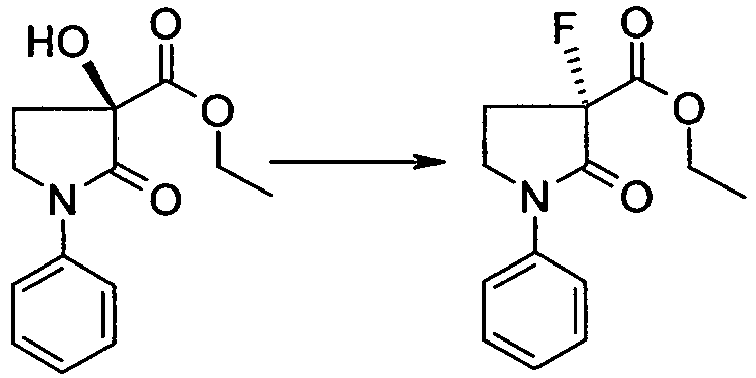
Man löst 300 mg (R)-3-Hydroxy-2-oxo-1-phenyl-pyrrolidin-3-carbonsäureethylester in trockenem Dichlormethan, gibt bei -78 °C 244 mg DAST langsam zu und rührt noch 4 h nach.
Nach beendeter Reaktion wird der Ansatz auf gesättigte Natriumhydrogencarbonat-Lösung gegossen, die wässrige Phase mit Dichlormethan extrahiert und die vereinigten organischen Phasen über Natriumsulfat getrocknet. Trocknungsmittel und Lösungsmittel werden entfernt und der Rückstand (180 mg) in der nachfolgenden Reaktion ohne weitere Aufreinigung weiter umgesetzt.
LCMS: Masse gefunden (M+1, 252);
Methode: A- 0.1% TFA in H2O, B- 0.1% TFA in Acetonitril: Fluß - 2.0ml/min; Säule: X Bridge C8 (50x4.6mm.3.5u) + ve mode;
Rt (min): 3.745 Area % 93.764. - b)

Zu einer Lösung von 180 mg (S)-3-Fluor-2-oxo-1-phenyl-pyrrolidin-3-carbonsäureethylester in THF/H2O = 3:1 gibt man 84 mg LiOH/H2O und rührt bei RT für 4 h. Nach vollständiger Reaktion wird der Ansatz mit 1.5 N HCl neutralisiert. Man extrahiert die wässrige Phase mit Ethylacetat und trocknet die organische Phase über Natriumsulfat. Nach dem Entfernen des Lösungsmittels im Vakuum erhält man 90 mg (S)-3-Fluor-2-oxo-1-phenyl-pyrrolidin-3-carbonsäure;
LCMS: Masse gefunden (M+1, 222);
Methode: A- 0.1% HCOOH, B- MeOH: Fluß =1.0 ml/min;
Säule: Atlantis DC18 (50x4.6mm.5µ) + ve mode;
Rt (min): 1.948 Area % 90.84. - c)

Zu einer Lösung von 90 mg (S)-3-Fluor-2-oxo-1-phenyl-pyrrolidin-3-carbonsäure und 61 mg 2-Thiophen-2-yl-ethylamin in trockenem DMF gibt man 230 mg EDCI, 65 mg HOBt und erwärmt für 20 min auf 160 °C in der Mikrowelle. Nach beendeter Reaktion entfernt man alle flüchtigen Bestandteile im Vakuum und reinigt den Rückstand chromatographisch auf. Man erhält 23 mg "A86";
1H NMR (400 MHz, DMSO-d6) δ [ppm] 8.72 (s, 1 H), 7.69 (d, J = 7.7, 2H), 7.50 - 7.40 (m, 2H), 7.33 (dd, J = 5.1, 1.2, 1 H), 7.23 (t, J = 7.4, 1 H), 6.94 (dd, J = 5.1, 3.4, 1 H), 6.89 (d, J = 3.4, 1 H), 3.97 (dd, J = 9.2, 3.3, 1 H), 3.92 (dd, J = 6.2, 3.4, 1 H), 3.48 - 3.37 (m, 2H), 2.98 (t, J = 7.3, 2H), 2.77 - 2.62 (m, 1 H), 2.47 - 2.35 (m, 2H);
19F NMR (377 MHz, DMSO-d6) δ [ppm] - 158.16.
LCMS: Masse gefunden (M+1, 333);
Methode: A- 0.1 % TFA in H2O, B- 0.1 % TFA in Acetonitril: Fluß - 2.0ml/min; Säule: X Bridge C8 (50x4.6mm.3.5 µ) + ve mode;
Rt (min): 4.147 Area % 97.65;
HPLC > 97%:
Methode: A- 0.1% TFA in H2O, B- 0.1% TFA in Acetonitril: Flow - 2.0ml/min;
Säule: X Bridge C8 (50x4.6mm.3.5 p);
Rt (min): 4.209. -

-

- Zu einer Lösung von 2-Oxo-1-phenyl-pyrrolidin-3-carbonsäure (5 g) in Ethanol gibt man Thionylchlorid bei 0 °C (5.8 g) und rührt den Ansatz für 4 h bei 80 °C. Nach beendeter Reaktion wird der Ansatz im Vakuum aufkonzentriert, der Rückstand in Wasser aufgenommen und mit Ethylacetat extrahiert. Die organische Phase wird mit gesättigter Natriumbicarbonatlösung sowie gesättigter Natriumchlorid Lösung gewaschen und über Natriumsulfat getrocknet. Man erhält 2-Oxo-1-phenyl-pyrrolidin-3-carbonsäureethylester (4.5 g, 79%);
1H NMR (400 MHz, DMSO-d6) δ [ppm] 7.82 - 7.81 (t, J = 2 Hz, 1H), 7.56 - 7.54 (m, 1H), 7.43 - 7.39 (t, J = 8 Hz, 1H), 7.24 - 7.21 (m, 1H), 4.17-4.12 (m, 2H), 3.92 - 3.73 (m, 3H), 2.39 - 2.27 (m, 2H), 1.22 - 1.14 (t, J = 7 Hz, 3H);
LC/MS: 233.0 (M+H bei 1, 234 min)
HPLC:
Method: A- 0.1% TFA in H2O, B- 0.1% TFA in ACN: Flow - 2.0ml/min.
Column: X Bridge C8 (50x4.6mm.3.5u) + ve mode
Rt (min): 3.360 Area % 98.577. -

- Zu einer Lösung von 2-Oxo-1-phenyl-pyrrolidin-3-carbonsäureethylester (5 g) in Isopropanol gibt man Cer(III)chlorid-heptahydrat (1.59 g) und leitet O2 für 15 min ein. Der Ansatz wird für 12 h bei RT gerührt. Nach beendeter Reaktion wird das Lösungsmittel im Vakuum entfernt und der Rückstand an Kieselgel chromatographisch aufgereinigt. 3-Hydroxy-2-oxo-1-phenyl-pyrrolidin-3-carbonsäureethylester (2.7 g) wird mittels chiraler HPLC analysiert und mit dieser Methode aufgereinigt. Die Substanz, die bei Rt (min) 8.197 eluiert, ist das "R" Enantiomer (1.2 g) und die Substanz, die bei Rt (min) 11.240 eluiert, das "S"-Enantiomer (1.2 g);
(Chiralpak AD-H (250x4.6) mm, 5 µm; n-Hexan/Isopropanol = 60:40).
Das erforderliche S-Enantiomer wird weiter für die Synthese von Alkoholderivaten verwendet. - Bei dieser Oxidation entsteht mit 20% Ausbeute auch 3-Chlor-2-oxo-1-phenyl-pyrrolidin-3-carbonsäureethylester als Racemat. Dieses wird vor der Enantiomerentrennung der Alkohole über Kieselgel Chromatographie abgetrennt (1 g) und für die nächste Stufe auch racemisch eingesetzt.
-

- Zu einer Lösung von 3-Chlor-2-oxo-1-phenylpyrrolidin-3-carbonsäureethylester (0.2 g, 0.74 mmol) in trockenem DME (5 ml) gibt man NaN3 (58 mg, 0.89 mmol). Die Reaktionslösung wird unter Sticktoff für 14 h bei 75°C gerührt. Nach Vervollständigung wir der Ansatz mit Essigester verdünnt und mit Wasser extrahiert. Die organische Phase wird über Natriumsulfat getrocknet, aufkonzentriert und der Rückstand direkt im nächsten Schritt weiter eingesetzt (200 mg, 97%);
Dünnschicht-Chromatogramm: Hexan/Ethylacetat = 7:3 Rf: 0.4;
LC/MS: 275.0 (M+H bei 1,275min);
1H NMR (DMSO-d6, 400MHz): δ [ppm] 7.67 - 7.65 (m, 2H), 7.46 - 7.42 (m, 2H), 7.26 - 7.23 (m, 1H), 4.30 - 4.22 (m, 2H), 3.95 - 3.92 (m, 2H), 2.68 - 2.63 (m, 1 H), 2.16 - 2.10 (m, 1 H), 1.22 (t, J = 7.08 Hz, 3H). -

- Zu einer Lösung von 3-Azido-2-oxo-1-phenylpyrrolidin-3-carbonsäureethylester (0.2 g, 0.7 mmol) in THF (2 ml) und H2O (1 ml) gibt man LiOH (91 mg, 2.1 mmol) und rührt den Ansatz bei RT für 20 Stunden. Nach vollständiger Reaktion werden alle flüchtigen Bestandteile im Vakuum entfernt, der Rückstand mit Wasser verdünnt und mit 1.5 N HCI-Lösung angesäuert. Der erhaltene Niederschlag wird abfiltriert und mit Wasser gewaschen. Nach dem Trocknen im Vakuum erhält man einen farblosen Feststoff als Produkt. (150 mg, 84%);
Dünnschicht-Chromatogramm: Hexan /Ethylacetat (7/3): Rf: 0.4;
LC/MS: 247.0 (M+H bei 1, 247 min);
1H NMR (DMSO-d6,400 MHz): δ [ppm] 7.68-7.66 (m, 2H), 7.45-7.41 (m, 2H), 7.25-7.21 (m, 1H), 3.95-3.89 (m, 2H), 2.64-2.59 (m, 1H), 2.13-2.05 (m, 1H). -

- Zu einer Lösung von 3-Azido-2-oxo-1-phenylpyrrolidin-3-carbonsäure (150 mg, 0.61 mmol) in 5 ml Dichloromethan gibt man 3-Chlor-5-fluorbenzylamin (97 mg, 0.61 mmol) und Et3N (0.24 ml, 1.8 mmol) gefolgt von T3P (0.6 ml, 1.8 mmol) bei 0°C. Die Reaktionsmischung wird unter Stickstoff für 4 Stunden bei Raumtemperatur gerührt. Nach beendeter Reaktion gibt man Wasser hinzu und extrahiert mit Dichlormethan erschöpfend. Nachfolgend werden die vereinigten organischen Phasen mit Wasser und gesättigter Natriumchlorid-lösung gewaschen und über Natriumsulfat getrocknet. Nach dem Abfiltrieren und Eindampfen wird der Rückstand an Kieselgel chromatographisch aufgereinigt. Man erhält das Produkt als farblosen Feststoff (150 mg, 63% yield);
Dünnschicht-Chromatogramm: Chloroform/Methanol = 9.5:0.5), Rf: 0.3 LC/MS: 388.1 (M+H bei 1, 388 min);
HPLC : Rt 5.12 min (HPLC purity 95.15 %, 95.46 %);
1H NMR (DMSO-d6, 400MHz): δ [ppm] 9.13 (t, J = 6.08 Hz, 1H), 7.70 - 7.68 (m, 2H), 7.43 (t, J = 8.64 Hz, 2H), 7.32 - 7.29 (m, 1 H), 7.24 - 7.20 (m, 2H), 7.09 (d, J = 9.80 Hz, 1 H), 4.42 - 4.34 (m, 2H), 3.95 - 3.89 (m, 2H), 2.61 - 2.58 (m, 1 H), 2.28 - 2.22 (m, 1H). -

- Zu einer Lösung von 3-Azido-2-oxo-1-phenyl-pyrrolidin-3-carbonsäure-(3-chlor-5-fluor-benzyl)amid (100 mg, 0.25 mmol) in 2 ml Methanol gibt man Et3N (0.1 ml, 0.75 mmol) gefolgt von Propandithiol (0.08 ml, 0.75 mmol). Der Ansatz wird für 12 Stunden bei RT gerührt. Nach beendeter Reaktion werden alle flüchtigen Bestandteile im Vakuum entfernt und der Rückstand an Kieselgel aufgereinigt.
- Analog werden die nachstehenden Verbindungen erhalten
Nr. Struktur / Name 1H NMR (400 MHz, DMSO-d6) δ [ppm] LC-MS; rt; [M+H+]* "A1" 
8.65 (t, J = 6.1, 1H), 7.70 (d, J = 8.3, 2H), 7.47 (s, 1H), 7.40 (t, J = 7.8, 3H), 7.26 (d, J = 4.8, 2H), 7.17 (t, J = 7.3, 1H), 6.73 (s, 1H), 4.34 (dd, J = 15.2, 6.5, 1H), 4.24 (dd, J = 15.3, 6.0, 1H), 3.85 (t, J = 6.8, 2H), 2.62 - 2.52 (m, 1H), 2.11 (dt, J = 12.9, 7.8, 1H) 4.005 min [389.0 + 392.0] % (S)-3-Hydroxy-2-oxo-1-phenyl-pyrrolidin-3-carbonsäure-3-brom-benzylamid "A2" 
8.16-8.11 (m, 1H), 7.68 (d, J = 7.7, 2H), 7.43 - 7.33 (m, 2H), 7.18 (d, J = 7.5, 1H), 6.68 (s, 1H), 6.66 (s, 1H), 3.83 (m, 2H), 3.56 - 3.47 (m, 2H), 2.85 (m, 2H), 2.55 (m, 1H), 2.13 - 2.01 (m, 1H), 1.22 (s, 9H) 3.513 min [372.3] % (S)-3-Hydroxy-2-oxo-1-phenyl-pyrrolidin-3-carbonsäure-[2-(5-tert.-butyl-oxazol-2-yl)-ethyl]-amid "A3" 
8.22 (t, J = 6.0, 1H), 7.68 (d, J = 1.1, 1H), 7.66 (d, J = 1.0, 1H), 7.42 - 7.36 (m, 2H), 7.21 - 7.12 (m, 1H), 6.65 (s, 1H), 4.78 - 4.60 (m, 2H), 3.80 (ddd, J = 15.3, 8.7, 5.2, 2H), 3.76-3.65 (m, 1H), 3.56 - 3.42 (m, 1H), 2.81 (q, J = 7.6, 2H), 2.42 (ddd, J = 12.8, 7.1, 3.8, 1H), 2.05 (dt, J = 12.9, 8.0, 1H), 1.25 (t, J = 7.6, 3H) 2.679 min [345.3] % (S)-3-Hydroxy-2-oxo-1-phenyl-pyrrolidin-3-carbonsäure-[2-(5-ethyl-tetrazol-2-yl)-ethyl]-amid "A4" 
8.65 (t, J = 6.2, 1H), 7.69 (dd, J = 8.7, 1.1, 2H), 7.43 - 7.37 (m, 2H), 7.33 (t, J = 7.6, 2H), 7.27 (dd, J = 6.6, 2.1, 1H), 7.22 (d, J = 7.5, 1H), 7.18 (dd, J = 10.5, 4.2, 1H), 6.73 (s, 1H), 4.35 (dd, J = 15.2, 6.6, 1H), 4.25 (dd, J = 15.4, 6.1, 1H), 3.90 - 3.80 (m, 2H), 2.61 - 2.54 (m, 1H), 2.11 (dt, J = 13.0, 7.8, 1H) 3.886 min [345.0] % (S)-3-Hydroxy-2-oxo-1-phenyl-pyrrolidin-3-carbonsäure-3-chlor-benzylamid "A5" 
8.51 (t, J = 6.0, 1H), 7.69 (dd, J = 8.6, 0.9, 2H), 7.45 - 7.34 (m, 2H), 7.32 - 7.24 (m, 4H), 7.20 (dt, J = 14.8, 4.6, 2H), 6.68 (s, 1H), 4.33 (dd, J = 15.1, 6.5, 1H), 4.27 (dd, J = 15.1, 6.2, 1H), 3.92 - 3.74 (m, 2H), 2.63 - 2.52 (m, 2H), 2.11 (dt, J = 12.9, 7.9, 1H) 3.309 min [311.3]% (S)-3-Hydroxy-2-oxo-1-phenyl-pyrrolidin-3-carbonsäure-benzylamid "A6" 
8.63 (t, J = 6.3, 1H), 7.77 - 7.60 (m, 2H), 7.45 - 7.30 (m, 3H), 7.22 - 7.10 (m, 3H), 7.07 (s, 1H), 7.02 (d, J = 9.8, 1H), 6.72 (s, 1H), 4.35 (dd, J = 15.4, 6.5, 1H), 4.27 (dd, J = 15.4, 6.2, 1H), 3.85 (dd, J = 8.7, 5.5, 2H), 2.64 - 2.52 (m, 1H), 2.20 - 2.05 (m, 1H) 3.927 min [377.0] % (S)-3-Hydroxy-2-oxo-1-phenyl-pyrrolidin-3-carbonsäure-3-difluormethoxy-benzylamid "A7" 
8.64 (t, J = 6.4, 1H), 7.69 (dd, J = 8.7, 1.1, 2H), 7.43 - 7.37 (m, 2H), 7.33 (td, J = 7.9, 6.1, 1H), 7.21 - 7.14 (m, 1H), 7.10 (d, J = 7.4, 2H), 7.08 - 6.99 (m, 2H), 6.73 (s, 1H), 4.37 (dd, J = 15.5, 6.6, 1H), 4.26 (dd, J = 15.4, 6.1, 1H), 3.92 - 3.75 (m, 2H), 2.63 - 2.54 (m, 1H), 2.12 (dt, J = 12.9, 7.7, 1H) 3.522 min [329.0} % (S)-3-Hydroxy-2-oxo-1-phenyl-pyrrolidin-3-carbonsäure-3-fluor-benzylamid "A8" 
8.70 (t, J = 6.4, 1H), 7.70 (d, J = 1.1, 1H), 7.68 (d, J = 1.0, 1H), 7.46 - 7.36 (m, 3H), 7.29 (d, J = 7.9, 1H), 7.25 (s, 1H), 7.22-7.14 (m, 2H), 6.73 (s, 1H), 4.38 (dd, J = 15.5, 6.6, 1H), 4.30 (dd, J = 15.5, 6.1, 1H), 3.90 - 3.82 (m, 2H), 2.56 (dt, J = 11.5, 5.6, 1H), 2.12 (dt, J = 12.9, 7.7, 1H) 4.362 min [395.0] % (S)-3-Hydroxy-2-oxo-1-phenyl-pyrrolidin-3-carbonsäure-3-trifluormethoxy-benzylamid "A9" 
8.69 (t, J = 6.3, 1H), 7.68 (d, J = 7.9, 2H), 7.43 (dt, J = 22.3, 8.0, 3H), 7.30 (dd, J = 16.9, 8.3, 3H), 7.23 (d, J = 1.0, 1H), 7.17 (t, J = 7.3, 1H), 6.89 (d, J = 1.0, 1H), 6.73 (s, 1H), 4.44 (dd, J = 15.4, 6.7, 1H), 4.31 (dd, J = 15.4, 6.0, 1H), 3.91 - 3.77 (m, 2H), 2.63 - 2.54 (m, 1H), 2.25 (s, 3H), 2.11 (dt, J = 13.0, 7.8, 1H) 2.357 min [391.3] % (S)-3-Hydroxy-2-oxo-1-phenyl-pyrrolidin-3-carbonsäure-3-(2-methyl-imidazol-1-yl)-benzylamid "A10" 
(400 MHz, CDCl3) δ [ppm] 7.66 (dd, J = 8.7, 1.0, 2H), 7.61 (br. s, 1H), 7.45-7.36 (m, 2H), 7.21 (t, J = 7.4, 1H), 4.18 (td, J = 9.2, 7.0, 1H), 3.84 (td, J = 9.2, 1.2, 1H), 3.78 - 3.60 (m, 2H), 3.07 - 2.88 (m, 2H), 2.74 (ddd, J = 12.7, 6.9, 1.3, 1H), 2.26 (dt, J = 12.7, 9.3, 1H), 1.45 (s, 9H), 1.33 - 1.18 (m, 2H), 0.89 (s, 1H) 3.549 min [373.3] % (S)-3-Hydroxy-2-oxo-1-phenyl-pyrrolidin-3-carbonsäure-[2-(5-tert.-butyl-[1,2,4]oxadiazol-3-yl)-ethyl]-amid "A11" 
7.89 (s, 1H), 7.72 - 7.66 (m, 2H), 7.39 (t, J = 8.0, 2H), 7.17 (t, J = 7.4, 1H), 6.57 (s, 1H), 5.70 (s, 1H), 3.94 - 3.74 (m, 2H), 3.08 (m, 2H), 2.11 - 1.96 (m, 1H), 1.72 (m, 4H), 1.55 (m, 2H), 1.50 - 1.38 (m, 4H), 1.02 (m, 3H) HPLC 5.529 min (S)-3-Hydroxy-2-oxo-1-phenyl-pyrrolidin-3-carbonsäure-(2-cyclopentyl-ethyl)-amid "A12" 
(400 MHz, CDCl3) δ 7.66 (d, J = 7.7, 1H), 7.55 (s, 1H), 7.40 (t, J = 8.0, 1H), 7.21 (t, J = 7.4, 1H), 4.18 (td, J = 9.2, 7.0, 1H), 3.84 (td, J = 9.2, 1.2, 1H), 3.77 - 3.62 (m, 1H), 3.39 - 3.27 (m, 1H), 3.04 - 2.86 (m, 1H), 2.73 (ddd, J = 12.7, 6.9, 1.2, 1H), 2.26 (dt, J = 12.7, 9.3, 1H), 2.14 (m, 1H), 2.01 -1.89 (m, 1H), 1.88 -1.77 (m, 1H), 1.77 - 1.68 (m, 1H) 3.706 min [385.3] % (S)-3-Hydroxy-2-oxo-1-phenyl-pyrrolidin-3-carbonsäure-[2-(5-cyclopentyl-[1,2,4]oxadiazol-3-yl)-ethyl]-amid "A13" 
8.28 (t, J = 6.1, 1H), 7.67 (d, J = 7.7, 2H), 7.45-7.34 (m, 2H), 7.17 (t, J = 7.4, 1H), 6.66 (s, 1H), 4.52 - 4.33 (m, 2H), 3.89 - 3.72 (m, 2H), 3.60 (m, 1H), 3.41 (m, 1H), 2.86 (q, J = 7.5, 2H), 2.41 (ddd, J = 12.7, 7.0, 4.1, 1H), 2.04 (dt, J = 12.9, 8.1, 1H), 1.28 (t, J = 7.5, 3H) 2.407 min [345.3] % (S)-3-Hydroxy-2-oxo-1-phenyl-pyrrolidin-3-carbonsäure-[2-(5-ethyl-tetrazol-1-yl)-ethyl]-amid "A14" 
8.23 (t, J = 6.2, 1H), 7.69 (d, J = 8.0, 2H), 7.40 (t, J = 7.8, 2H), 7.17 (t, J = 7.4, 1H), 6.66 (s, 1H), 3.82 (dd, J = 8.4, 5.2, 2H), 3.55 - 3.47 (m, 2H), 3.46 - 3.38 (m, 2H), 3.20 (t, J = 7.0, 2H), 2.66 (s, 3H), 2.08 (dt, J = 12.3, 8.0, 1H) 2.329 min [347.0] % (S)-3-Hydroxy-2-oxo-1-phenyl-pyrrolidin-3-carbonsäure-[2-(5-methyl-[1,3,4]thiadiazol-2-yl)-ethyl]-amid "A15" 
8.32 (s, 1H), 7.67 (d, J = 7.9, 2H), 7.39 (t, J = 8.0, 2H), 7.17 (t, J = 7.4, 1H), 6.66 (s, 1H), 3.86 - 3.75 (m, 2H), 3.58 (td, J = 13.4, 6.8, 1H), 3.43 (dt, J = 13.4, 6.6, 2H), 3.23 - 3.04 (m, 2H), 2.47 - 2.40 (m, 1H), 2.06 (dt, J = 13.1, 7.7, 1H) 3.342 min [385.3]% (S)-3-Hydroxy-2-oxo-1-phenyl-pyrrolidin-3-carbonsäure-[2-(5-trifluormethyl-[1,3,4]oxadiazol-2-yl)-ethyl]-amid "A16" 
8.10 (t, J = 5.9, 1H), 7.69 (d, J = 7.8, 2H), 7.40 (t, J = 8.0, 2H), 7.17 (t, J = 7.4, 1H), 7.14 (s, 1H), 6.62 (s, 1H), 3.83 (dd, J = 12.2, 5.5, 2H), 3.50 - 3.35 (m, 2H), 2.82 (t, J = 7.2, 2H), 2.61 (s, 3H), 2.53 (m, 1H), 2.07 (dt, J = 12.9, 8.0, 1H) HPLC 7.206 min (S)-3-Hydroxy-2-oxo-1-phenyl-pyrrolidin-3-carbonsäure-[2-(2-methyl-thiazol-4-yl)-ethyl]-amid "A17" 
8.20 (t, J = 6.0, 1H), 7.71 (d, J = 3.3, 1H), 7.69 (d, J = 7.8, 2H), 7.59 (d, J = 3.3, 1H), 7.45 - 7.36 (m, 2H), 7.17 (t, J = 7.4, 1H), 6.65 (s, 1H), 3.83 (t, J = 6.3, 2H), 3.52 (dt, J = 13.7, 6.8, 1H), 3.47-3.35 (m, 2H), 3.15 (t, J = 7.1, 2H), 2.56 - 2.51 (m, 1H), 2.07 (dt, J = 12.9, 7.9, 1H) 2.143 min [332.0] % (S)-3-Hydroxy-2-oxo-1-phenyl-pyrrolidin-3-carbonsäure-(2-thiazol-2-yl-ethyl)-amid "A18" 
8.07 (t, J = 5.9, 1H), 7.73 - 7.65 (m, 2H), 7.40 (dd, J = 10.8, 5.3, 2H), 7.17 (t, J = 7.4, 1H), 6.64 (d, J = 3.3, 1H), 6.63 (s, 1H), 6.59 (dd, J = 3.3, 1.1, 1H), 3.91 - 3.75 (m, 2H), 3.30 - 3.33 (m, 1H), 3.15 (m, 1H), 2.85 (t, J = 7.4, 2H), 2.53 (m, 1H), 2.34 (s, 3H), 2.07 (dt, J = 12.9, 8.0, 1H) 3.887 min [345.3] % (S)-3-Hydroxy-2-oxo-1-phenyl-pyrrolidin-3-carbonsäure-[2-(5-methyl-thiophen-2-yl)-ethyl]-amid "A19" 
8.10 (t, J = 5.7, 1H), 7.79 - 7.65 (m, 2H), 7.53 (d, J = 2.1, 1H), 7.40 (t, J = 8.0, 2H), 7.17 (t, J = 7.4, 1H), 6.65 (s, 1H), 5.97 (d, J = 2.1, 1H), 4.09 (t, J = 6.4, 2H), 3.82 (dd, J = 8.5, 5.4, 2H), 3.48 (m, 1H), 3.40 (m, 1H), 2.52 (m, 1H), 2.14 (s, 3H), 2.06 (dt, J = 12.9, 7.9, 1H) HPLC: 6.550 min (S)-3-Hydroxy-2-oxo-1-phenyl-pyrrolidin-3-carbonsäure-[2-(3-methyl-pyrazol-1-yl)-ethyl]-amid "A20" 
8.64 (t, J = 6.0, 1H), 7.69 (dd, J = 8.7, 1.0, 1H), 7.45 (td, J = 7.9, 1.6, 1H), 7.43 -7.37 (m, 1H), 7.31 (td, J = 7.5, 1.5, 1H), 7.18 (td, J = 7.7, 1.8, 1H), 6.75 (s, 1H), 4.41 (dd, J = 15.6, 6.0, 1H), 4.33 (dd, J = 15.5, 6.0, 1H), 3.90 - 3.80 (m, 1H), 2.62 - 2.55 (m, 1H), 2.12 (dt, J = 12.9, 8.0, 1H) 4.002 min [363.0] % (S)-3-Hydroxy-2-oxo-1-phenyl-pyrrolidin-3-carbonsäure-3-chlor-2-fluor-benzylamid "A21" 
(400 MHz, CDCl3) δ [ppm] 7.68 - 7.59 (m, 2H), 7.42 - 7.36 (m, 2H), 7.36 - 7.29 (m, 2H), 7.24 - 7.18 (m, 1H), 6.88 (td, J = 8.8, 1.8, 1H), 4.65 (dd, J = 14.6, 6.5, 1H), 4.50 (dd, J = 14.6, 5.6, 1H), 4.20 (td, J = 9.2, 6.9, 1H), 3.81 (td, J = 9.2, 1.2, 1H), 2.72 (ddd, J = 12.7, 6.9, 1.2, 1H), 2.25 (dt, J = 12.7, 9.3, 1H) (S)-3-Hydroxy-2-oxo-1-phenyl-pyrrolidin-3-carbonsäure-3-chlor-2,6-difluor-benzylamid "A22" 
8.66 (t, J = 6.3, 1H), 7.78 - 7.67 (m, 2H), 7.53-7.44 (m, 2H), 7.40 (t, J = 8.0, 2H), 7.16 (dd, J = 16.7, 8.2, 2H), 6.78 (s, 1H), 4.39 (dd, J = 15.8, 6.6, 1H), 4.26 (dd, J = 15.9, 6.0, 1H), 3.86 (dd, J = 8.0, 5.1, 2H), 2.64 - 2.54 (m, 1H), 2.13 (dt, J = 13.0, 7.6, 1H) HPLC 7.301 min (S)-3-Hydroxy-2-oxo-1-phenyl-pyrrolidin-3-carbonsäure-5-brom-2-fluor-benzylamid "A23" 
8.67 (t, J = 6.3, 1H), 7.69 (d, J = 8.4, 2H), 7.59 (d, J = 6.9, 1H), 7.40 (t, J = 7.8, 2H), 7.31 (d, J = 7.3, 2H), 7.18 (t, J = 7.4, 1H), 6.72 (s, 1H), 4.33 (dd, J = 15.1, 6.7, 1H), 4.22 (dd, J = 15.2, 6.0, 1H), 3.85 (t, J = 6.8, 2H), 2.62 - 2.52 (m, 1H), 2.11 (dt, J = 13.3, 7.8, 1H) 4.094 min [409.0 + 410.0] % (S)-3-Hydroxy-2-oxo-1-phenyl-pyrrolidin-3-carbonsäure-3-brom-4-fluor-benzylamid "A24" 
8.67 (t, J = 6.3, 1H), 8.48 (d, J = 1.8, 1H), 8.42 (dd, J = 4.7, 1.5, 1H), 7.69 (d, J = 7.9, 2H), 7.65 (dd, J = 12.9, 5.0, 1H), 7.46 - 7.36 (m, 2H), 7.32 (dd, J = 7.8, 4.8, 1H), 7.17 (t, J = 7.4, 1H), 7.00 (s, 1H), 6.71 (s, 1H), 4.37 (dd, J = 15.2, 6.5, 1H), 4.28 (dd, J = 15.2, 6.1, 1H), 3.94-3.78 (m, 2H), 2.63 - 2.53 (m, 1H), 2.11 (dt, J = 12.9, 7.8, 1H) 1.872 min [312.3] % (S)-3-Hydroxy-2-oxo-1-phenyl-pyrrolidin-3-carbonsäure-(pyridin-3-ylmethyl)-amid "A25" 
8.44 (t, J = 5.6, 1H), 7.70 (d, J = 8.1, 2H), 7.41 (dd, J = 15.5, 7.4, 3H), 7.17 (t, J = 7.4, 1H), 6.75 (s, 1H), 6.47 (d, J = 7.3, 1H), 6.28 (d, J = 8.4, 1H), 4.31 - 4.17 (m, 2H), 3.93 - 3.77 (m, 2H), 3.37 (m, 4H), 3.03 - 2.95 (m, 1H), 2.64 -2.57 (m, 1H), 2.12 (dt, J = 13.0,8.0, 1H), 2.01 - 1.83 (m, 4H), 1.09 - 0.89 (m, 1H) HPLC 9.533 (S)-3-Hydroxy-2-oxo-1-phenyl-pyrrolidin-3-carbonsäure-(6-pyrrolidin-1-yl-pyridin-2-ylmethyl)-amid "A26" 
8.63 (t, J = 5.2, 1H), 8.51 (d, J = 3.8, 1 H), 7.77 (t, J = 7.5, 1H), 7.71 (d, J = 8.5, 1H), 7.42 (t, J = 7.6, 2H), 7.33 (d, J = 7.7, 1H), 7.30 - 7.24 (m, 1H), 7.19 (t, J = 7.2, 1H), 6.79 (s, 1H), 4.46 (dd, J = 16.5, 6.4, 1H), 4.38 (dd, J = 16.1, 6.0, 1H), 3.88 (m, 2H), 2.62 (m, 1H), 2.16 (m, 1H) 1.959 min [312.3] (S)-3-Hydroxy-2-oxo-1-phenyl-pyrrolidin-3-carbonsäure-(pyridin-2-ylmethyl)-amid "A27" 
8.46 (t, J = 6.2, 1H), 7.70 (d, J = 7.8, 2H), 7.46 - 7.35 (m, 2H), 7.17 (t, J = 7.3, 2H), 7.07 (d, J = 4.4, 2H), 7.02 (d, J = 7.8, 1H), 6.68 (s, 1H), 4.29 (dd, J = 15.0, 6.5, 1H), 4.23 (dd, J = 15.1, 6.2, 1H), 3.96-3.74 (m, 2H), 2.64 - 2.52 (m, 1H), 2.26 (s, 3H), 2.11 (dt, J = 12.8, 7.8, 1H) 3.763 min [325.3] (S)-3-Hydroxy-2-oxo-1-phenyl-pyrrolidin-3-carbonsäure-3-methylbenzylamid "A28" 
8.74 (t, J = 6.3, 1H), 7.69 (d, J = 7.8, 2H), 7.63 (s, 1H), 7.54 (dd, J = 13.3, 6.1, 3H), 7.40 (t, J = 8.0, 2H), 7.17 (t, J = 7.4, 1H), 6.74 (s, 1H), 4.43 (dd, J = 15.5, 6.5, 1H), 4.33 (dd, J = 15.4, 6.1, 1H), 3.94-3.76 (m, 2H), 2.57 (dt, J = 11.8, 5.7, 1H), 2.12 (dt, J = 13.0, 7.8, 1H) 4.260 min [379.0] % (S)-3-Hydroxy-2-oxo-1-phenyl-pyrrolidin-3-carbonsäure-3-trifluormethyl-benzylamid "A29" 
(400 MHz, CDCl3) δ [ppm] 7.58 (d, J = 9.1, 1H), 7.52 (d, J = 9.1, 1H), 7.42 (d, J = 4.6, 1H), 7.22 (dd, J = 4.8, 1.4, 1H), 4.50 - 4.36 (m, 1H), 4.20 (dd, J = 16.1, 9.2, 1H), 3.83 (t, J = 9.2, 1H), 3.66 (s, 1H), 2.78 (dd, J = 12.8, 6.9, 1H), 2.29 (dt, J = 12.8, 9.4, 1H) 4.583 min [467.0 + 469.0 + 472.0] % (S)-1-(4-Brom-phenyl)-3-hydroxy-2-oxo-pyrrolidin-3-carbonsäure-3-brom-benzylamid "A30" 
8.11 (s, 1H), 7.68 (d, J = 9.0, 2H), 7.58 (d, J = 9.0, 2H), 7.32 (d, J = 5.1, 1H), 6.98 - 6.90 (m, 1H), 6.89 (s, 1H), 6.66 (s, 1H), 3.88 - 3.76 (m, 2H), 3.36 (d, J = 5.9, 2H), 2.95 (t, J = 7.3, 2H), 2.53 (s, 1H), 2.07 (dt, J = 12.4, 7.6, 2H) 4.127 min [409.0 + 410.0] % (S)-1-(4-Bromo-phenyl)-3-hydroxy-2-oxo-pyrrolidine-3-carboxylic acid (2-thiophen-2-yl-ethyl)-amide "A31" 
8.08 (t, J = 6.0, 1H), 7.50 - 7.41 (m, 1H), 7.41 - 7.36 (m, 1H), 7.33 (dd, J = 5.1, 1.2, 1H), 7.20-7.13 (m, 1H), 6.94 (dd, J = 5.1, 3.4, 1H), 6.89 (d, J = 2.4, 1H), 6.66 (s, 1H), 3.81 - 3.65 (m, 2H), 3.49 - 3.35 (m, 2H), 2.96 (t, J = 7.4, 2H), 2.57 - 2.52 (m, 1H), 2.13 (ddd, J = 12.9, 8.4, 7.3, 1H) 3.539 min [367.0] % (S)-1-(2,4-Difluor-phenyl)-3-hydroxy-2-oxo-pyrrolidin-3-carbonsäure-(2-thiophen-2-yl-ethyl)-amid ' i432" 
(400 MHz, CDCl3) δ [ppm] 7.67 - 7.59 (m, 1H), 7.18 (dd, J = 5.1, 1.1, 1H), 7.10 (dd, J = 11.7, 5.7, 1H), 6.96 (dd, J = 5.1, 3.4, 0H), 6.87 (d, J = 3.4, 1H), 4.17 (td, J = 9.2, 6.9, 1H), 3.80 (t, J = 9.2, 1H), 3.55 (dd, J = 13.1, 6.7, 2H), 3.07 (t, J = 6.7, 1H), 2.71 (dd, J = 13.4, 6.3, 1H), 2.25 (dt, J = 12.7, 9.3, 1H) 3.623 min [349.0] % (S)-1-(4-Fluor-phenyl)-3-hydroxy-2-oxo-pyrrolidin-3-carbonsäure-(2-thiophen-2-yl-ethyl)-amid "A33" 
1) HPLC 7.19 min "A34" 
8.24 (t, J = 6.1, 1H), 7.68 (d, J = 7.8, 2H), 7.39 (t, J = 8.0, 2H), 7.17 (t, J = 7.4, 1H), 6.66 (s, 1H), 3.82 (dd, J = 7.8, 5.7, 2H), 3.64 - 3.49 (m, 1H), 3.41 (td, J = 13.0, 6.6, 2H), 3.12 - 3.01 (m, 2H), 2.06 (dt, J = 12.8, 7.9, 1H), 1.28 (s, 9H) 3.564 min [373.3] % (S)-3-Hydroxy-2-oxo-1-phenyl-pyrrolidin-3-carbonsäure-[2-(3-tert.-butyl-[1,2,4]oxadiazol-5-yl)-ethyl]-amid "A35" 
8.23 (t, J = 6.0, 1H), 7.70 (d, J = 1.1, 1H), 7.68 (d, J = 0.8, 1H), 7.46 - 7.35 (m, 2H), 7.17 (t, J = 7.4, 1 H), 6.66 (s, 1H), 3.90 - 3.74 (m, 2H), 3.51 (dt, J = 13.4, 6.7, 1H), 3.46 - 3.36 (m, 1H), 3.21 (t, J = 6.9, 2H), 3.02 (q, J = 7.5, 2H), 2.07 (dt, J = 12.9, 8.0, 1H), 1.27 (t, J = 7.5, 3H) 2.631 min [361.0] % (S)-3-Hydroxy-2-oxo-1-phenyl-pyrrolidin-3-carbonsäure-[2-(5-ethyl-[1,3,4]thiadiazol-2-yl)-ethyl]-amid "A36" 
8.68 (t, J = 6.4, 1H), 7.92 (d, J = 3.2, 1H), 7.85 (s, 1H), 7.81 (dt, J = 7.6, 1.4, 1H), 7.78 (d, J = 3.2, 1H), 7.70 (dd, J = 8.7, 1.0, 2H), 7.47 - 7.35 (m, 4H), 7.24 - 7.13 (m, 1H), 6.72 (s, 1H), 4.45 - 4.29 (m, 2H), 3.95 - 3.72 (m, 2H), 2.64 2.55 (m, 1H), 2.13 (dt, J = 12.9, 7.8, 1H) 3.457 min [394.0] % (S)-3-Hydroxy-2-oxo-1-phenyl-pyrrolidin-3-carbonsäure-3-thiazol-2-yl-benzylamid "A37" 
8.13 (t, J = 5.8, 1H), 7.89 (t, J = 2.0, 1 H), 7.61 (d, J = 8.2, 1H), 7.43 (t, J = 8.1, 1H), 7.33 (dd, J = 5.0, 1.0, 1H), 7.25 (d, J = 8.0, 1H), 6.94 (dd, J = 5.0, 3.5, 1H), 6.88 (d, J = 3.5, 1H), 6.69 (s, 1H), 3.91 - 3.75 (m, 2H), 3.46 - 3.33 (m, 2H), 2.95 (t, J = 7.4, 2H), 2.08 (dt, J = 13.2, 8.2, 1H) (S)-1-(3-Chlor-phenyl)-3-hydroxy-2-oxo-pyrrolidin-3-carbonsäure-(2-thiophen-2-yl-ethyl)-amid "A38" 
8.66 (t, J = 6.4, 1H), 7.77 - 7.69 (m, 2H), 7.46 (s, 1H), 7.44 - 7.36 (m, 1H), 7.29 - 7.21 (m, 4H), 6.73 (s, 1H), 4.34 (dd, J = 15.3, 6.6, 1H), 4.24 (dd, J = 15.4, 6.1, 1H), 3.84 (t, J = 6.9, 2H), 2.61 - 2.52 (m, 2H), 2.11 (dt, J = 12.8, 7.7, 1H) 4.130 min [409.0 + 410.0] % (S)-1-(4-Fluor-phenyl)-3-hydroxy-2-oxo-pyrrolidin-3-carbonsäure-3-brom-benzylamid "A39" 
9.03 (t, J = 6.0, 1H), 7.68 (s, 1H), 7.66 (s, 1H), 7.49 (s, 1H), 7.46 - 7.39 (m, 3H), 7.33 - 7.27 (m, 2H), 7.24 (dd, J = 13.6, 6.2, 1H), 4.41 (dd, J = 15.4, 6.3, 1H), 4.33 (dd, J = 15.4, 6.0, 1H), 4.07 - 3.87 (m, 2H), 3.04 (dt, J = 14.8, 7.6, 1H), 2.57 - 2.51 (m, 1H) 5.006 min [407.0 + 409.0] (S)-3-Chlor-2-oxo-1-phenyl-pyrrolidin-3-carbonsäure-3-brom-benzylamid "A40" 
8.13 (t, J = 5.9, 1H), 7.89 (t, J = 2.0, 1H), 7.61 (ddd, J = 8.3, 2.1, 0.7, 1H), 7.43 (t, J = 8.2, 1H), 7.33 (dd, J = 5.1, 1.2, 1H), 7.27 - 7.21 (m, 1H), 6.94 (dd, J = 5.1, 3.4, 1H), 6.88 (d, J = 3.4, 1H), 6.69 (s, 1H), 3.89 - 3.80 (m, 2H), 3.45 - 3.34 (m, 2H), 2.95 (t, J = 7.2, 2H), 2.08 (dt, J = 13.0, 8.0, 2H) 4.045 min [365.0]% (R)-1-(3-Chlor-phenyl)-3-hydroxy-2-oxo-pyrrolidin-3-carbonsäure-(2-thiophen-2-yl-ethyl)-amid "A41" 
8.66 (t, J = 6.3, 1H), 7.81 - 7.65 (m, 2H), 7.46 (s, 1H), 7.41 (td, J = 4.8, 2.0, 1H), 7.31 - 7.21 (m, 4H), 6.74 (s, 1H), 4.34 (dd, J = 15.3, 6.6, 1H), 4.24 (dd, J = 15.3, 6.1, 1H), 3.84 (dd, J = 8.2, 5.5, 2H), 2.56 (dt, J = 11.6, 5.5, 1H), 2.11 (dt, J = 13.0, 7.7, 1H) 4.133 min [409.0 + 410.0] % (R)-1-(4-Fluor-phenyl)-3-hydroxy-2-oxo-pyrrolidin-3-carbonsäure-3-brom-benzylamid "A42" 
8.22 (t, J = 6.0, 1H), 7.67 (dd, J = 8.7, 1.0, 2H), 7.44 - 7.34 (m, 2H), 7.17 (dd, J = 10.5, 4.2, 1H), 6.65 (s, 1H), 4.78 - 4.57 (m, 2H), 3.84 - 3.74 (m, 2H), 3.74 - 3.66 (m, 1H), 3.54 - 3.39 (m, 1H), 2.81 (q, J = 7.6, 2H), 2.42 (ddd, J = 12.8, 7.1, 3.7, 1H), 2.05 (dt, J = 12.9, 8.1, 1H), 1.25 (t, J = 7.6, 3H) (R)-3-Hydroxy-2-oxo-1-phenyl-pyrrolidin-3-carbonsäure-[2-(5-ethyl-tetrazol-2-yl)-ethyl]-amid "A43" 
9.03 (t, J = 6.1, 1H), 7.68 (d, J = 1.1, 1H), 7.66 (d, J = 0.8, 1H), 7.49 (s, 1 H), 7.48 - 7.40 (m, 3H), 7.29 (dd, J = 4.1, 1.6, 2H), 7.26 - 7.19 (m, 1H), 4.41 (dd, J = 15.4, 6.3, 1H), 4.33 (dd, J = 15.4, 6.0, 1H), 4.06 - 3.90 (m, 2H), 3.04 (dt, J = 14.8, 7.5, 1H), 2.59 - 2.51 (m, 1H) 5.002 min [407.0 + 409.0] % (R)-3-Chlor-2-oxo-1-phenyl-pyrrolidin-3-carbonsäure-3-brom-benzylamid "A44" 
8.11 (t, J = 5.9, 1H), 7.74 - 7.63 (m, 3H), 7.44 (d, J = 1.4, 1H), 7.43-7.37 (m, 2H), 7.18 (dd, J = 10.6, 4.2, 1H), 6.65 (s, 1H), 6.21 (t, J = 2.0, 1H), 4.20 (t, J = 6.4, 2H), 3.82 (dd, J = 8.4, 5.4, 2H), 3.52 (m, , 1H), 3.42 (m, 1H), 2.06 (m, 1H) 2.376 min [315.0] % (S)-3-Hydroxy-2-oxo-1-phenyl-pyrrolidin-3-carbonsäure-(2-pyrazol-1-yl-ethyl)-amid "A45" 
7.85 (s, 1H), 7.68 (dd, J = 8.7, 1.0, 2H), 7.44 - 7.34 (m, 2H), 7.17 (dd, J = 10.6, 4.2, 1H), 6.65 (s, 1H), 3.93 - 3.76 (m, 2H), 3.20 (qd, J = 13.1, 6.3, 2H), 2.52 (m, 3H), 2.46 (m, 4H), 2.07 (dt, J = 12.9, 8.0, 1H), 1.67 (m, 4H) 1.990 min [318.3] % (S)-3-Hydroxy-2-oxo-1-phenyl-pyrrolidin-3-carbonsäure-(2-pyrrolidin-1-yl-ethyl)-amid "A46" 
8.66 (t, J = 6.2, 1H), 7.69 (dd, J = 8.7, 1.0, 2H), 7.43 - 7.33 (m, 3H), 7.30 (td, J = 8.8, 1.5, 1H), 7.18 (t, J = 7.4, 1H), 6.74 (s, 1H), 4.38 (dd, J = 15.3, 6.2, 1H), 4.30 (dd, J = 15.6, 6.2, 1H), 3.90 - 3.80 (m, 2H), 2.63 - 2.52 (m, 1H), 2.11 (dt, J = 13.0, 7.7, 1H) 4.169 min [381.0] % (S)-3-Hydroxy-2-oxo-1-phenyl-pyrrolidin-3-carbonsäure-3-chlor-2,4-difluor-benzylamid "A47" 
8.68 (t, J = 6.4, 1H), 7.69 (dd, J = 8.7, 1.0, 2H), 7.46 (dd, J = 7.3, 2.1, 1H), 7.43 - 7.36 (m, 2H), 7.34 (d, J = 9.3, 1H), 7.30 - 7.22 (m, 1H), 7.17 (t, J = 7.4, 1H), 6.73 (s, 1H), 4.33 (dd, J = 15.2, 6.8, 1H), 4.22 (dd, J = 15.3, 6.1, 1H), 3.85 (dd, J = 8.6, 5.6, 2H), 2.63 - 2.52 (m, 1H), 2.11 (dt, J = 13.0, 7.6, 1H) 4.128 min [363.0] % (S)-3-Hydroxy-2-oxo-1-phenyl-pyrrolidin-3-carbonsäure-3-chlor-4-fluor-benzylamid "A48" 
8.72 (t, J = 6.4, 1H), 7.69 (dd, J = 8.7, 1.0, 2H), 7.45 - 7.33 (m, 2H), 7.27 (dt, J = 8.8, 2.1, 1H), 7.18 (dd, J = 13.0, 4.5, 2H), 7.10 (d, J = 9.0, 1H), 6.76 (s, 1H), 4.38 (dd, J = 15.7, 6.6, 1H), 4.24 (dd, J = 15.9, 6.0, 1H), 3.89 - 3.82 (m, 2H), 2.62 - 2.54 (m, 1H), 2.12 (dt, J = 12.9, 7.6, 1H) 4.052 min [363.0] % (S)-3-Hydroxy-2-oxo-1-phenyl-pyrrolidin-3-carbonsäure-3-chlor-5-fluor-benzylamid "A49" 
8.67 (t, J = 6.3, 1H), 7.70 (dd, J = 8.7, 1.1, 2H), 7.44 - 7.31 (m, 4H), 7.26 - 7.14 (m, 2H), 6.78 (s, 1H), 4.39 (dd, J = 15.7, 6.6, 1H), 4.26 (dd, J = 15.7, 5.8, 1H), 3.91 - 3.81 (m, 2H), 2.63 - 2.54 (m, 1H), 2.13 (dt, J = 13.0, 7.7, 1H) 3.985 min [363.0] % (S)-3-Hydroxy-2-oxo-1-phenyl-pyrrolidin-3-carbonsäure-5-chlor-2-fluor-benzylamid "A50" 
8.68 (t, J = 6.4, 1H), 8.00 (dd, J = 6.7, 2.7, 1H), 7.68 (ddd, J = 9.1, 4.2, 2.8, 1H), 7.47 (dd, J = 12.1, 6.1, 2H), 7.44 - 7.39 (m, 1H), 7.32 - 7.19 (m, 2H), 6.78 (s, 1H), 4.34 (dd, J = 15.4, 6.6, 1H), 4.24 (dd, J =15.3,6.1, 1H), 3.92 - 3.77 (m, 2H), 2.61 - 2.52 (m, 1H), 2.10 (ddd, J = 19.9, 12.4, 6.8, 1H) 4.587 min [441.0] % (S)-1-(3-Chlor-4-fluor-phenyl)-3-hydroxy-2-oxo-pyrrolidin-3-carbonsäure-3-brom-benzylamid "A51" 
8.13 (t, J = 6.0, 1H), 7.99 (dd, J = 6.7, 2.7, 1 H), 7.75 - 7.63 (m, 1H), 7.48 (d, J = 9.1, 1H), 7.33 (dd, J = 5.1, 1.1, 1H), 6.94 (dd, J = 5.1, 3.4, 1H), 6.88 (d, J = 3.3, 1H), 6.69 (s, 1H), 3.89 - 3.75 (m, 2H), 3.46 - 3.35 (m, 1H), 2.95 (t, J = 7.3, 2H), 2.07 (dt, J = 13.0, 7.9, 1H) 4.148 min [383.0]% (S)-1-(3-Chlor-4-fluor-phenyl)-3-hydroxy-2-oxo-pyrrolidin-3-carbonsäure-(2-thiophen-2-yl-ethyl)-amid "A52" 
8.63 (t, J = 6.4, 1H), 7.50 - 7.44 (m, 2H), 7.44 - 7.36 (m, 2H), 7.30 - 7.24 (m, 2H), 7.16 (ddd, J = 8.2, 2.9, 1.5, 1H), 6.75 (s, 1H), 4.35 (dd, J = 15.3, 6.6, 1H), 4.26 (dd, J = 15.4, 6.1, 1H), 3.83 - 3.66 (m, 2H), 2.64 - 2.55 (m, 1H), 2.23 - 2.13 (m, 2H) 4.207 min [427.0 + 428.0] % (S)-1-(2,4-Difluor-phenyl)-3-hydroxy-2-oxo-pyrrolidin-3-carbonsäure-3-brom-benzylamid "A53" 
8.69 (t, J = 6.3, 1H), 8.00 (d, J = 7.5, 1H), 7.95 (t, J = 7.2, 2H), 7.62 - 7.49 (m, 4H), 7.43 (dd, J = 12.9, 7.3, 2H), 7.31 (d, J = 7.7, 1H), 7.26 (t, J = 7.7, 1H), 6.84 (s, 1H), 4.40 (dd, J = 15.4, 6.6, 1H), 4.33 (dd, J = 15.4, 6.2, 1H), 3.91 - 3.75 (m, 2H), 2.69 (ddd, J = 12.7, 7.4, 3.2, 1H), 2.40 - 2.29 (m, 1H) 4.364 min [439.0 + 442.0] % (R)-3-Hydroxy-1-naphthalin-1-yl-2-oxo-pyrrolidin-3-carbonsäure-3-brom-benzylamid "A54" 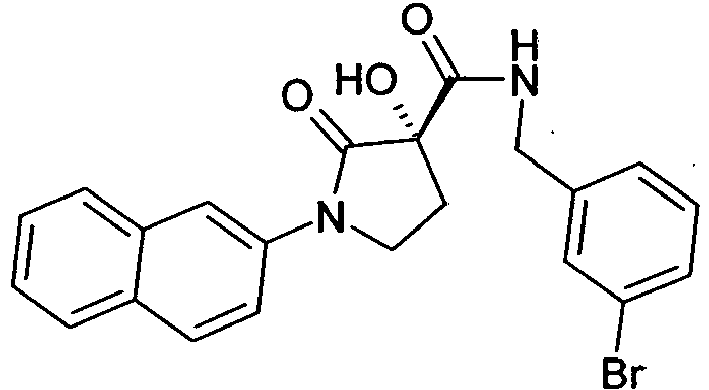
8.69 (t, J = 6.4, 1H), 8.10 - 8.04 (m, 2H), 7.95 (d, J = 9.7, 1H), 7.90 (dd, J = 8.1, 2.9, 2H), 7.54 - 7.43 (m, 3H), 7.43 - 7.39 (m, 1H), 7.28 (t, J = 1.9, 1H), 6.78 (s, 1H), 4.36 (dd, J = 15.4, 6.6, 1H), 4.26 (dd, J = 15.4, 6.2, 1H), 3.99 (dd, J = 8.5, 5.6, 2H), 2.70 - 2.57 (m, 2H), 2.18 (dt, J = 12.9, 7.6, 1H) 4.622 min [441.0 + 442.0] % (S)-3-Hydroxy-1-naphthalin-2-yl-2-oxo-pyrrolidin-3-carbonsäure-3-brom-benzylamid "A55" 
8.14 (t, J = 5.9, 1H), 8.08 - 8.02 (m, 2H), 7.94 (d, J = 8.7, 1H), 7.93 - 7.87 (m, 2H), 7.54 - 7.49 (m, 1H), 7.49 - 7.44 (m, 1H), 7.33 (dd, J = 5.1, 1.2, 1H), 6.95 (dd, J = 5.1, 3.4, 1H), 6.90 (d, J = 2.6, 1H), 6.69 (s, 1H), 4.01 - 3.93 (m, 2H), 3.38 (dd, J = 17.0, 10.5, 2H), 3.30 - 3.22 (m, 1H), 2.97 (t, J = 7.4, 2H), 2.61 - 2.52 (m, 2H), 2.13 (dt, J = 12.8, 7.8, 1H) 4.264 min [381.0] % (S)-3-Hydroxy-1-naphthalin-2-yl-2-oxo-pyrrolidin-3-carbonsäure-(2-thiophen-2-yl-ethyl)-amid "A56" 
8.68 (t, J = 6.2, 1H), 7.99 (dd, J = 6.7, 2.7, 1H), 7.75 - 7.63 (m, 1H), 7.48 (d, J = 9.1, 1H), 7.46 - 7.42 (m, 1H), 7.30 (t, J = 6.5, 1H), 7.18 (t, J = 8.0, 1H), 6.83 (s, 1H), 4.40 (dd, J = 15.6, 6.4, 1H), 4.32 (dd, J = 15.6, 6.2, 1H), 3.90 - 3.81 (m, 2H), 2.63 - 2.53 (m, 1H), 2.12 (dt, J = 13.0, 7.7, 1H) 4.602 min [415.0 + 417.0] % (S)-1-(3-Chlor-4-fluor-phenyl)-3-hydroxy-2-oxo-pyrrolidin-3-carbonsäure-3-chlor-2-fluor-benzylamid "A57" 
8.67 (t, J = 6.2, 1H), 7.88 (t, J = 2.0, 1H), 7.61 (dd, J = 8.3, 1.3, 1H), 7.48-7.41 (m, 1H), 7.32 - 7.27 (m, 1H), 7.25 (dd, J = 7.9, 1.3, 1H), 7.19 (dt, J = 8.3, 4.2, 1H), 6.80 (s, 1H), 4.40 (dd, J = 15.7, 6.7, 1H), 4.32 (dd, J = 15.6, 5.8, 1H), 3.86 (t, J = 6.8, 2H), 2.63 - 2.51 (m, 1H), 2.12 (dt, J = 13.0, 7.7, 1H) 4.525 min [397.0 + 398.0 + 399.0] % (S)-1-(3-Chlor-phenyl)-3-hydroxy-2-oxo-pyrrolidin-3-carbonsäure-3-chlor-2-fluor-benzylamid "A58" 
8.65 (t, J = 6.2, 1H), 7.76 - 7.65 (m, 2H), 7.52 - 7.36 (m, 1H), 7.33 - 7.28 (m, 1H), 7.27 - 7.22 (m, 2H), 7.18 (td, J = 7.9, 0.9, 1H), 6.76 (s, 1H), 4.40 (dd, J = 15.7, 6.3, 1H), 4.33 (dd, J = 15.3, 6.2, 1H), 3.84 (dd, J = 8.7, 5.6, 2H), 2.63 - 2.51 (m, 2H), 2.11 (dt, J = 12.9, 7.7, 1H) 4.129 min [381.0] % (S)-1-(4-Fluor-phenyl)-3-hydroxy-2-oxo-pyrrolidin-3-carbonsäure-3-chlor-2-fluor-benzylamid "A59" 
8.58 (t, J = 6.2, 1H), 7.70 (d, J = 1.1, 1H), 7.68 (d, J = 1.0, 1H), 7.45 - 7.33 (m, 3H), 7.22 - 7.14 (m, 1H), 6.99 - 6.87 (m, 2H), 6.66 (s, 1H), 4.44 (d, J = 6.4, 2H), 3.91 - 3.78 (m, 2H), 2.59 - 2.52 (m, 1H), 2.09 (dt, J = 12.9, 8.5, 1H) 3.373 min [317.0] % (S)-3-Hydroxy-2-oxo-1-phenyl-pyrrolidin-3-carbonsäure-(thiophen-2-ylmethyl)-amid "A60" 
9.03 (t, J = 6.2, 1H), 8.05 (d, J = 8.0, 1H), 7.93 (d, J = 7.9, 1H), 7.70 (d, J = 7.7, 2H), 7.53 - 7.46 (m, 1H), 7.44 - 7.35 (m, 3H), 7.18 (t, J = 7.4, 1H), 6.81 (s, 1H), 4.72 (dd, J = 16.2, 6.2, 1H), 4.65 (dd, J = 16.2, 6.1, 1H), 3.86 (dd, J = 9.7, 5.5, 2H), 2.60 (dd, J = 12.1, 7.6, 1H), 2.16 (dt, J = 12.7, 7.8, 1H) 3.462 min [368.0] % (S)-3-Hydroxy-2-oxo-1-phenyl-pyrrolidin-3-carbonsäure-(benzothiazol-2-ylmethyl)-amid "A61" 
8.51 (s, 1H), 7.67 (d, J = 1.1, 1H), 7.65 (d, J = 0.8, 1H), 7.43 (t, J = 8.0, 2H), 7.32 (dd, J = 5.1, 1.2, 1H), 7.23 (t, J = 7.4, 1H), 6.94 (dd, J = 5.0, 3.4, 1H), 6.89 (d, J = 3.3, 1H), 4.06 - 3.82 (m, 2H), 3.54 - 3.35 (m, 3H), 2.97 (dt, J = 20.8, 7.4, 3H) 4.522 min [349.0] % (S)-3-Chlor-2-oxo-1-phenyl-pyrrolidin-3-carbonsäure-(2-thiophen-2-yl-ethyl)-amid "A62" 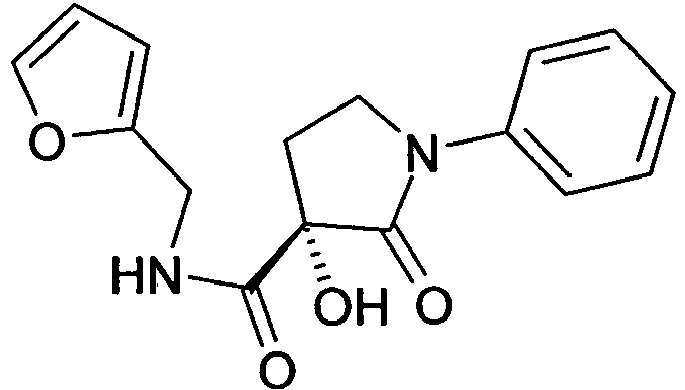
8.37 (s, 1H), 7.70 (d, J = 1.1, 1H), 7.68 (d, J = 0.9, 1H), 7.54 (dd, J = 1.8, 0.8, 1H), 7.44 - 7.37 (m, 2H), 7.17 (t, J = 7.4, 1H), 6.68 (s, 1H), 6.37 (dd, J = 3.2, 1.8, 1H), 6.21 (d, J = 2.4, 1H), 4.28 (d, J = 6.6, 2H), 3.89 - 3.82 (m, 2H), 2.60 - 2.53 (m, 1H), 2.09 (dt, J = 12.9, 8.4, 1H) 2.863 min [301.0] % (S)-3-Hydroxy-2-oxo-1-phenyl-pyrrolidin-3-carbonsäure-(furan-2-ylmethyl)-amid "A63" 
7.86 (br. t, J = 5.9, 1H), 7.69 (dt, J = 9.0, 1.7, 2H), 7.44 - 7.37 (m, 2H), 7.22 - 7.12 (m, 1H), 6.56 (s, 1H), 3.96 - 3.72 (m, 2H), 3.11 (dd, J = 14.4, 6.2, 2H), 2.57 - 2.52 (m, 1H), 2.14 - 1.98 (m, 1H), 1.56 (dp, J = 13.3, 6.7, 1H), 1.33 (dd, J = 14.5, 7.0, 2H), 0.87 (d, J = 2.2, 3H), 0.86 (d, J = 2.2, 3H) 1.978 min [291.10] 3-Hydroxy-2-oxo-1-phenyl-pyrrolidin-3-carbonsäure-(3-methylbutyl)-amid "A64" 
8.35 (t, J = 6.0, 1H), 7.70 (dd, J = 8.7, 1.0, 2H), 7.55 (dd, J = 1.7, 0.8, 1H), 7.47 - 7.35 (m, 2H), 7.18 (t, J = 7.4, 1H), 6.67 (s, 1H), 6.38 (dd, J = 3.1, 1.9, 1H), 6.22 (dd, J = 3.1, 0.7, 1H), 4.29 (d, J = 6.2, 2H), 3.93 - 3.80 (m, 2H), 2.56 (ddd, J = 12.8, 7.3, 4.1, 1H), 2.18 - 2.04 (m, 1H) 1.716 min [301.10] 3-Hydroxy-2-oxo-1-phenyl-pyrrolidin-3-carbonsäure-(furan-2-ylmethyl)-amid "A65" 
8.08 (t, J = 5.9, 1H), 7.71 (s, 1H), 7.69 (d, J = 8.8, 1H), 7.48 - 7.37 (m, 2H), 7.33 (dt, J = 10.3, 5.1, 1H), 7.23 - 7.13 (m, 1H), 6.96 (dd, J = 5.0, 3.5, 1H), 6.90 (t, J = 7.1, 1H), 6.61 (d, J = 17.5, 1H), 3.91 - 3.80 (m, 2H), 3.48 - 3.38 (m, 1H), 3.33 - 3.22 (m, 3H), 2.98 (t, J = 7.3, 2H), 2.58 - 2.52 (m, 1 H), 2.10 (m, 1H) 3-Hydroxy-2-oxo-1-phenyl-pyrrolidin-3-carbonsäure-(2-thiophen-2-yl-ethyl)-amid "A66" 
8.06 (t, J = 5.9, 1H), 7.70 (t, J = 1.5, 1H), 7.68 (t, J = 1.6, 1H), 7.52 (dd, J = 1.8, 0.7, 1H), 7.44 - 7.37 (m, 2H), 7.22 - 7.14 (m, 1H), 6.62 (s, 1H), 6.35 (dd, J = 3.1, 1.9, 1H), 6.16 (dd, J = 3.1, 0.7, 1H), 3.92 - 3.76 (m, 2H), 3.40 (td, J = 13.7, 7.4, 1H), 2.79 (t, J = 7.3, 2H), 2.53 (dd, J = 6.7, 3.6, 1H), 2.15 - 2.00 (m, 1H) 1.814 min [315.10] 3-Hydroxy-2-oxo-1-phenyl-pyrrolidin-3-carbonsäure-(2-furan-2-yl-ethyl)-amid "A67" 
8.65 (t, J = 6.3, 1H), 7.78 - 7.68 (m, 2H), 7.45 (td, J = 8.0, 1.6, 1H), 7.33 - 7.28 (m, 1H), 7.27 - 7.22 (m, 2H), 7.18 (td, J = 7.9, 0.8, 1H), 6.75 (d, J = 4.2, 1H), 4.40 (dd, J = 15.6, 6.3, 1H), 4.33 (dd, J = 15.6, 5.9, 1H), 3.89 - 3.79 (m, 2H), 2.62 - 2.52 (m, 1H), 2.11 (dt, J = 13.0, 7.7, 1H) 4.138 min [381.0] % (R)-1-(4-Fluor-phenyl)-3-hydroxy-2-oxo-pyrrolidin-3-carbonsäure-3-chlor-2-fluor-benzylamid "A68" 
8.67 (t, J = 6.3, 1H), 7.88 (t, J = 2.1, 1H), 7.61 (dd, J = 8.3, 1.3, 1H), 750 - 7.40 (m, 2H), 7.32 - 7.27 (m, 1H), 7.25 (ddd, J = 8.0, 2.0, 0.8, 1H), 7.19 (td, J = 8.0, 0.9, 1H), 6.80 (s, 1H), 4.40 (dd, J = 15.5, 6.4, 1H), 4.32 (dd, J = 15.7, 5.9, 1H), 3.86 (t, J = 6.9, 2H), 2.62 - 2.53 (m, 1H), 2.12 (dt, J = 13.0, 7.7, 2H) 4.523 min [397.0] % (R)-1-(3-Chlor-phenyl)-3-hydroxy-2-oxo-pyrrolidin-3-carbonsäure-3-chlor-2-fluor-benzylamid "A69" 
8.14 (t, J = 5.9, 1H), 8.09 - 8.04 (m, 2H), 7.94 (d, J = 8.7, 1H), 7.92 - 7.87 (m, 2H), 7.51 (dd, J = 10.9, 4.2, 1H), 7.47 (dd, J = 10.8, 4.2, 1H), 7.33 (dd, J = 5.1, 1.2, 1H), 6.95 (dd, J = 5.1, 3.4, 1H), 6.90 (d, J = 2.5, 1H), 6.69 (s, 1H), 4.04 - 3.88 (m, 2H), 3.48 - 3.35 (m, 1H), 3.29 (d, J = 5.9, 1H), 2.97 (t, J = 7.3, 2H), 2.63 - 2.52 (m, 1H), 2.13 (dt, J = 12.8, 7.9, 1H) 4.214 min [381.0] % (R)-3-Hydroxy-1-naphthalin-2-yl-2-oxo-pyrrolidin-3-carbonsäure-(2-thiophen-2-yl-ethyl)-amid "A70" 
8.69 (t, J = 6.3, 1H), 8.05 (s, 1 H), 7.95 (d, J = 9.7, 1H), 7.90 (dd, J = 8.0, 3.1, 2H), 7.55 - 7.44 (m, 3H), 7.44 - 7.39 (m, 1H), 7.28 (s, 1H), 6.78 (s, 1H), 4.36 (dd, J = 15.4, 6.6, 1H), 4.26 (dd, J = 15.4, 6.2, 1H), 3.99 (t, J = 7.0, 2H), 2.70 - 2.56 (m, 1H), 2.18 (dt, J = 13.1, 7.8, 1H) 4.629 min [441.0] % (R)-3-Hydroxy-1-naphthalin-2-yl-2-oxo-pyrrolidin-3-carbonsäure-3-brom-benzylamid "A71" 
8.69 (t, J = 6.4, 1H), 8.02 - 7.98 (m, 1H), 7.95 (t, J = 7.5, 2H), 7.61 - 7.49 (m, 4H), 7.45 (d, J = 7.3, 1H), 7.41 (dd, J = 5.5, 4.2, 1H), 7.31 (d, J = 7.8, 1H), 7.26 (t, J = 7.7, 1H), 6.82 (s, 1H), 4.40 (dd, J = 15.1, 6.6, 1H), 4.33 (dd, J = 15.3, 6.3, 1H), 3.86 (dd, J = 16.3, 7.4, 1H), 3.79 (td, J = 8.8, 3.3, 1H), 2.69 (ddd, J = 12.9, 7.5, 3.1, 1H), 2.34 (dt, J = 12.9, 8.5, 1H) 4.394 min [439.0 + 442.0] % (S)-3-Hydroxy-1-naphthalin-1-yl-2-oxo-pyrrolidin-3-carbonsäure-3-brom-benzylamid "A72" 
8.64 (t, J = 6.5, 1H), 7.50 - 7.44 (m, 2H), 7.44-7.37 (m, 2H), 7.26 (dd, J = 4.1, 2.2, 2H), 7.17 (t, J = 8.6, 1H), 6.75 (s, 1H), 4.35 (dd, J = 15.4, 6.5, 1H), 4.26 (dd, J = 15.4, 6.1, 1H), 3.81 - 3.66 (m, 2H), 2.64 - 2.56 (m, 1H), 2.22 - 2.13 (m, 1H) 4.055 min [425.0 + 427.0] % (R)-1-(2,4-Difluor-phenyl)-3-hydroxy-2-oxo-pyrrolidin-3-carbonsäure-3-brom-benzylamid "A73" 
8.68 (t, J = 6.4, 1H), 8.00 (dd, J = 6.7, 2.7, 1H), 7.68 (ddd, J = 9.1, 4.2, 2.8, 1H), 7.47 (dd, J = 12.2, 6.0, 2H), 7.45 - 7.35 (m, 1H), 7.33 - 7.22 (m, 2H), 6.78 (s, 1H), 4.34 (dd, J = 15.3, 6.6, 1H), 4.24 (dd, J = 15.4, 6.1, 1H), 3.93 - 3.82 (m, 2H), 2.62 - 2.51 (m, 2H), 2.11 (dt, J = 12.9, 7.7, 1H) 4.586 min [441.0] % (R)-1-(3-Chlor-4-fluor-phenyl)-3-hydroxy-2-oxo-pyrrolidin-3-carbonsäure-3-brom-benzylamid "A74" 
8.68 (t, J = 6.4, 1H), 7.74 - 7.65 (m, 2H), 7.47 (dd, J = 7.3, 2.1, 1H), 7.40 (dtd, J = 6.3, 4.2, 2.1, 2H), 7.34 (d, J = 9.3, 1H), 7.27 (ddd, J = 8.5, 4.8, 2.1, 1H), 7.17 (t, J = 7.4, 1H), 6.73 (s, 1H), 4.33 (dd, J = 15.1, 6.7, 1H), 4.22 (dd, J = 15.2, 6.3, 1H), 3.85 (dd J = 8.5, 5.6, 2H), 2.62 - 2.53 (m, 1H), 2.18 - 2.04 (m, 1H). 4.124 min [363.0] % (R)-3-Hydroxy-2-oxo-1-phenyl-pyrrolidin-3-carbonsäure-3-chlor-4-fluor-benzylamid "A75" 
8.52 (t, J = 6.2, 1H), 7.75 - 7.64 (m, 2H), 7.45 - 7.35 (m, 2H), 7.33 - 7.14 (m, 6H), 6.68 (s, 1H), 4.33 (dd, J = 15.0, 6.5, 1H), 4.27 (dd, J = 15.0, 6.2, 1H), 3.92 - 3.79 (m, 2H), 2.62 - 2.53 (m, 1H), 2.17 - 2.05 (m, 1H) (R)-3-Hydroxy-2-oxo-1-phenyl-pyrrolidin-3-carbonsäure-benzylamid "A76" 
(400 MHz, CDCl3) δ [ppm] 7.60 - 7.55 (m, 1H), 7.55 -7.47 (m, 1H), 7.42 (t, J = 3.5, 1H), 7.23 - 7.17 (m, 1H), 4.51 - 4.33 (m, 1H), 4.19 (td, J = 9.1, 7.0, 1H), 3.82 (t, J = 8.7, 1H), 3.77 (s, 1H), 2.78 (dd, J = 12.8, 5.9, 1H), 2.29 (dt, J = 12.8, 9.3, 1H) 4.596 min [467.0 + 469.0 + 472.0] % (R)-1-(4-Brom-phenyl)-3-hydroxy-2-oxo-pyrrolidin-3-carbonsäure-3-brom-benzylamid "A77" 
(400 MHz, CDCl3) δ [ppm] 7.61 - 7.54 (m, 2H), 7.54 - 7.49 (m, 2H), 7.18 (dd, J = 5.1, 1.2, 1H), 7.07 (s, 1H), 6.96 (dd, J = 5.1, 3.4, 1H), 6.87 (dd, J = 3.4, 1.0, 1H), 4.16 (td, J = 9.2, 6.9, 1H), 3.80 (td, J = 9.2, 1.2, 1H), 3.55 (dd, J = 13.0, 6.6, 3H), 3.07 (t, J = 6.9, 2H), 2.71 (ddd, J = 12.8, 6.9, 1.2, 1H), 2.25 (dt, J = 12.7, 9.4, 2H) 4.133 min [409.0 + 412.0] % (R)-1-(4-Brom-phenyl)-3-hydroxy-2-oxo-pyrrolidin-3-carbonsäure-(2-thiophen-2-yl-ethyl)-amid "A78" 
(400 MHz, CDCl3) δ [ppm] 7.69 - 7.58 (m, 2H), 7.18 (dd, J = 5.1, 1.1, 1H), 7.15 - 7.04 (m, 2H), 6.96 (dd, J = 5.1, 3.4, 1H), 6.87 (d, J = 2.6, 1H), 4.17 (td, J = 9.2, 7.0, 1H), 3.79 (dd, J = 9.2, 8.1, 1H), 3.58 (s, 1H), 3.55 (q, J = 6.6, 2H), 3.07 (t, J = 6.8, 2H), 2.80 - 2.64 (m, 1H), 2.25 (dt, J = 12.8, 9.3, 1H) 3.624 min [349.0] % (R)-1-(4-Fluor-phenyl)-3-hydroxy-2-oxo-pyrrolidin-3-carbonsäure-(2-thiophen-2-yl-ethyl)-amid "A79" 
8.65 (s, 1H), 7.70 (d, J = 8.2, 2H), 7.45 (d, J = 12.1, 1H), 7.43 (s, 3H), 7.26 (d, J = 3.8, 2H), 7.17 (t, J = 7.1, 1H), 6.73 (s, 1H), 4.34 (dd, J = 15.1, 6.5, 1H), 4.24 (dd, J = 15.5, 6.1, 1H), 3.85 (t, J = 6.7, 2H), 2.56 (dd, J = 13.0, 6.4, 1H), 2.19 - 2.05 (m, 1H) (R)-3-Hydroxy-2-oxo-1-phenyl-pyrrolidin-3-carbonsäure-3-brom-benzylamid "A80" 
8.68 (t, J = 6.4, 1H), 7.90 (t, J = 2.1, 1H), 7.62 (dd, J = 8.0, 1.7, 1H), 7.42 (ddd, J = 7.9, 7.2, 2.1, 3H), 7.30 - 7.22 (m, 3H), 6.77 (s, 1H), 4.34 (dd, J = 15.4, 6.6, 1H), 4.24 (dd, J = 15.4, 6.1, 1H), 3.92 - 3.79 (m, 2H), 2.63 - 2.52 (m, 1H), 2.12 (dt, J= 13.0, 7.8, 1H) 4.547 min [423.0 + 424.0] % (S)-1-(3-Chlor-phenyl)-3-hydroxy-2-oxo-pyrrolidin-3-carbonsäure-3-brom-benzylamid "A81" 
8.66 (t, J = 6.2, 1H), 7.74 - 7.64 (m, 2H), 7.64 - 7.56 (m, 2H), 7.52 - 7.41 (m, 1H), 7.30 (t, J = 7.3, 1H), 7.18 (t, J = 7.9, 1H), 6.78 (s, 1H), 4.40 (dd, J = 15.4, 6.5, 1H), 4.32 (dd, J =15.5,6.2, 1H), 3.91-3.76 (m, 2H), 2.63 - 2.52 (m, 1H), 2.12 (dt, J = 12.9, 7.7, 1H) 5.804 min [438.7 + 440.0] % (S)-1-(4-Brom-phenyl)-3-hydroxy-2-oxo-pyrrolidin-3-carbonsäure-3-chlor-2-fluor-benzylamid "A82" 
8.63 (t, J = 6.3, 1H), 7.51 - 7.36 (m, 3H), 7.30 (t, J = 6.6, 1H), 7.16 (dd, J = 13.5, 5.4, 2H), 6.77 (s, 1H), 4.42 (dd, J = 15.6, 6.4, 1H), 4.34 (dd, J = 15.5, 6.0, 1H), 3.84 - 3.67 (m, 2H), 2.72 - 2.56 (m, 1H), 2.17 (dt, J = 13.0, 7.6, 1 H) 4.073 min [399.0] % (S)-1-(2,4-Difluor-phenyl)-3-hydroxy-2-oxo-pyrrolidin-3-carbonsäure-3-chlor-2-fluor-benzylamid "A83" 
8.69 (t, J = 6.0, 1H), 7.73 - 7.63 (m, 2H), 7.40 (dd, J = 10.8, 5.3, 2H), 7.17 (t, J = 7.4, 1H), 6.75 (s, 1H), 4.51 (dd, J = 16.1, 6.1, 1H), 4.42 (dd, J = 16.1, 5.8, 1H), 3.92 - 3.76 (m, 2H), 2.59 - 2.52 (m, 1H), 2.45 (s, 3H), 2.12 (dt, J = 13.0, 7.9, 1H) 2.188 min [317.0]% (S)-3-Hydroxy-2-oxo-1-phenyl-pyrrolidin-3-carbonsäure-(5-methyl-[1,3,4]oxadiazol-2-ylmethyl)-amid "A84" 
8.45 (t, J = 6.1, 1H), 7.74 - 7.66 (m, 2H), 7.46 - 7.37 (m, 2H), 7.25 (d, J = 5.1, 1H), 7.22 - 7.14 (m, 1H), 6.79 (d, J = 5.1, 1H), 6.64 (s, 1H), 4.39 (dd, J = 15.2, 6.4, 1H), 4.33 (dd, J = 15.4, 6.4, 1H), 3.84 (ddd, J = 14.2, 9.2, 3.7, 2H), 2.60 - 2.52 (m, 1H), 2.16 (s, 3H), 2.09 (dt, J = 12.9, 8.5, 1H) 3.541 min [331.0] % (S)-3-Hydroxy-2-oxo-1-phenyl-pyrrolidin-3-carbonsäure-(3-methyl-thiophen-2-ylmethyl)-amid "A85" 
8.89 (t, J = 6.2, 1H), 7.70 (td, J = 3.2, 1.0, 3H), 7.60 (d, J = 3.3, 1H), 7.40 (dd, J = 10.7, 5.3, 2H), 7.18 (t, J = 7.4, 1H), 6.76 (s, 1H), 4.59 (dd, J = 16.0, 6.4, 1H), 4.54 (dd, J = 16.0, 6.3, 1H), 3.92 - 3.80 (m, 2H), 2.61 - 2.52 (m, 1H), 2.13 (dt, J = 12.9, 8.0, 1H) 2.356 min [318.0] (S)-3-Hydroxy-2-oxo-1-phenyl-pyrrolidin-3-carbonsäure-(thiazol-2-ylmethyl)-amid "A86" 
19F NMR (377 MHz, DMSO) δ [ppm] -158.16; 1H NMR 400 MHz, DMSO-d6) δ [ppm] 8.72 (s, 1H), 7.69 (d, J = 7.7, 2H), 7.50 - 7.40 (m, 2H), 7.33 (dd, J = 5.1, 1.2, 1H), 7.23 (t, J = 7.4, 1H), 6.94 (dd, J = 5.1, 3.4, 1H), 6.89 (d, J = 3.4, 1H), 3.97 (dd, J = 9.2, 3.3, 1H), 3.92 (dd, J = 6.2, 3.4, 1H), 3.48 - 3.37 (m, 2H), 2.98 (t, J = 7.3, 2H), 2.77 - 2.62 (m, 1H), 2.47 - 2.35 (m, 2H) (S)-3-Fluor-2-oxo-1-phenyl-pyrrolidin-3-carbonsäure-(2-thiophen-2-yl-ethyl)-amid "A87" 
8.68 (t, J = 6.3, 1H), 7.90 (t, J = 2.1, 1H), 7.62 (ddd, J = 8.3, 2.1, 0.8, 1H), 7.48 - 7.44 (m, 1H), 7.44 - 7.38 (m, 2H), 7.31 - 7.20 (m, 3H), 6.78 (s, 1H), 4.34 (dd, J = 15.3, 6.6, 1H), 4.24 (dd, J = 15.3, 6.1, 1H), 3.92 - 3.77 (m, 2H), 2.64 - 2.53 (m, 1H), 2.12 (dt, J = 13.0, 7.8, 1H) 4.487 min [422.8 + 424.8] % (R)-1-(3-Chlor-phenyl)-3-hydroxy-2-oxo-pyrrolidin-3-carbonsäure-3-brom-benzylamid "A88" 
8.63 (t, J = 6.3, 1H), 7.51 - 7.36 (m, 3H), 7.30 (dd, J = 10.7, 3.9, 1H), 7.20-7.13 (m, 2H), 6.78 (s, 1H), 4.41 (dd, J = 15.6, 6.4, 1H), 4.34 (dd, J = 15.6, 6.1, 1H), 3.84 - 3.66 (m, 2H), 2.61 (ddd, J = 12.8, 7.4, 4.2, 1H), 2.17 (ddd, J = 13.0, 8.2, 7.0, 1H) 4.075 min [399.0] % (R)-1-(2,4-Difluor-phenyl)-3-hydroxy-2-oxo-pyrrolidin-3-carbonsäure-3-chlor-2-fluor-benzylamid "A89" 
8.66 (t, J = 6.3, 1H), 7.73 - 7.63 (m, 2H), 7.63 - 7.56 (m, 2H), 7.45 (t, J = 6.8, 1H), 7.30 (t, J = 6.5, 1H), 7.18 (t, J = 7.9, 1H), 6.78 (s, 1H), 4.40 (dd, J = 15.5, 6.3, 1H), 4.32 (dd, J = 15.6, 5.8, 1H), 3.87 - 3.80 (m, 2H), 2.62 - 2.53 (m, 2H), 2.12 (dt, J = 13.0, 7.7, 1H) 5.804 min [438.7+4 40.0] (R)-1-(4-Brom-phenyl)-3-hydroxy-2-oxo-pyrrolidin-3-carbonsäure-3-chlor-2-fluor-benzylamid % "A90" 
8.02 (t, J = 6.0, 1 H), 7.38 - 7.31 (m, 3H), 7.26 (t, J = 6.8, 3H), 6.94 (dd, J = 5.1, 3.4, 1H), 6.90 (dd, J = 3.4, 1.0, 1H), 6.45 (s, 1H), 4.48 (d, J = 15.2, 1H), 4.36 (d, J = 15.2, 1H), 3.40 (ddd, J = 14.0, 10.2, 4.9, 1H), 3.30 - 3.16 (m, 3H), 2.95 (t, J = 7.4, 2H), 2.37 (ddd, J = 12.9, 7.7, 3.5, 1H), 1.93 (ddd, J = 13.0, 8.7, 7.0, 1H) (R)-1-Benzyl-3-hydroxy-2-oxo-pyrrolidin-3-carbonsäure-(2-thiophen-2-yl-ethyl)-amid "A91" 
8.02 (t, J = 6.0, 1H), 7.37 - 7.31 (m, 3H), 7.27 (dd, J = 10.2, 4.6, 3H), 6.94 (dd, J = 5.1, 3.4, 1H), 6.89 (dd, J = 3.3, 1.0, 1H), 6.45 (s, 1H), 4.48 (d, J = 15.3, 1H), 4.36 (d, J = 15.2, 1H), 3.46 - 3.38 (m, 2H), 3.30 - 3.18 (m, 4H), 2.95 (t, J = 7.4, 2H), 2.37 (ddd, J = 12.8, 7.6, 3.4, 1H), 1.93 (ddd, J = 12.9, 8.7, 7.0, 1H) (S)-1-Benzyl-3-hydroxy-2-oxo-pyrrolidin-3-carbonsäure-(2-thiophen-2-yl-ethyl)-amid "A91a" (S)-3-Amino-2-oxo-1-phenyl-pyrrolidin-3-carbonsäure-(3-chlor-5-fluor-benzyl)-amid 1) HPLC 2) LC-MS; rt; [M+H+] "A92" 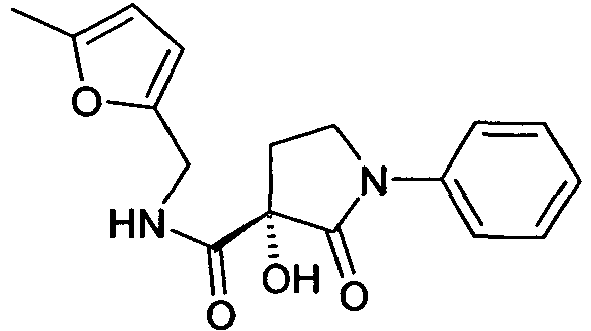
8.27 (t, J = 6.1, 1H), 7.69 (dd, J = 8.7, 1.0, 2H), 7.47 - 7.33 (m, 2H), 7.17 (t, J = 7.4, 1H), 6.67 (s, 1H), 6.07 (d, J = 3.0, 1H), 5.96 (dd, J = 3.0, 1.0, 1H), 4.22 (d, J = 6.0, 3H), 3.94 - 3.73 (m, 2H), 2.60 - 2.55 (m, 1H), 2.21 (s, 3H), 2.15 - 2.03 (m, 1H) 1) 3.342 min 2) [313.1] (S)-3-Hydroxy-2-oxo-1-phenyl-pyrrolidin-3-carbonsäure-(5-methyl-furan-2-ylmethyl)-amid "A93" 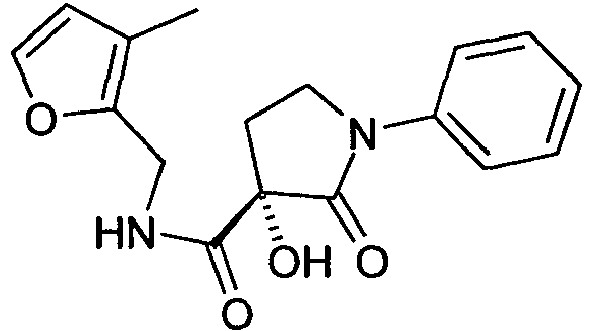
8.23 (d, J = 5.4, 1H), 7.69 (dd, J = 8.7, 1.0, 2H), 7.45 (d, J = 1.8, 1H), 7.44 - 7.37 (m, 2H), 7.17 (t, J = 7.4, 1H), 6.63 (s, 1H), 6.24 (d, J = 1.8, 1H), 4.24 (dd, J = 5.9, 2.6, 2H), 3.90 - 3.78 (m, 2H), 2.56 - 2.53 (m, 1H), 2.13 - 2.03 (m, 1H), 1.97 (s, 3H) 1) 3.326 min 2) [313] (S)-3-Hydroxy-2-oxo-1-phenyl-pyrrolidin-3-carbonsäure-(3-methyl-furan-2-ylmethyl)-amid "A94" 8.52 (t, J = 6.2, 1H), 7.70 (dd, J = 5.4, 3.4, 2H), 7.44 - 7.37 (m, 2H), 7.22 - 7.14 (m, 1H), 6.94 - 6.90 (m, 1H), 6.76 (s, 1H), 6.66 (s, 1H), 4.45 - 4.30 (m, 2H), 3.93 - 3.78 (m, 2H), 2.56 - 2.51 (m, 1H), 2.13 (s, 3H), 2.12 - 2.05 (m, 1H) 1) 3.666 min 
2) 3.762 min [331.0] (S)-3-Hydroxy-2-oxo-1-phenyl-pyrrolidin-3-carbonsäure-(4-methyl-thiophen-2-ylmethyl)-amid "A95" 
8.48 (t, J = 6.2, 1H), 7.69 (dd, J= 8.7, 1.1, 2H), 7.44 - 7.36 (m, 2H), 7.23 - 7.09 (m, 1H), 6.71 (d, J = 3.3, 1H), 6.65 (s, 1H), 6.63 - 6.54 (m, 1H), 4.44 - 4.28 (m, 2H), 3.92 - 3.76 (m, 2H), 2.57 - 2.51 (m, 1H), 2.36 (d, J = 0.8, 3H), 2.15 - 2.04 (m, 1H) 1) 3.653 min 2) 2.553 [331.2] (S)-3-Hydroxy-2-oxo-1-phenyl-pyrrolidin-3-carbonsäure-(5-methyl-thiophen-2-ylmethyl)-amid "A96" 
8.75 (t, J = 6.3, 1H), 7.88 (t, J = 2.1, 1H), 7.62 (ddd, J = 8.4, 2.1, 0.8, 1H), 7.44 (t, J = 8.2, 1H), 7.25 (ddd, J = 8.1, 2.0, 0.8, 1H), 7.07 (tt, J = 9.4, 2.4, 1H), 6.97 (dd, J = 8.6, 2.1, 2H), 6.82 (s, 1H), 4.38 (dd, J = 15.8, 6.7, 1H), 4.24 (dd, J = 15.8, 6.1, 1H), 3.92 - 3.80 (m, 2H), 2.63 - 2.54 (m, 1H), 2.13 (dt, J = 13.0, 7.6, 1H) 1) 4.352 min 2) 4.344 min [381.0] (S)-1-(3-Chlor-phenyl)-3-hydroxy-2-oxo-pyrrolidin-3-carbonsäure-3,5-difluor-benzylamid "A97" 
8.77 (t, J = 6.3, 1H), 7.90 (t, J = 2.1, 1H), 7.62 (ddd, J= 8.3, 2.1, 0.8, 1H), 7.45 (d, J = 2.0, 1H), 7.43 (t, J = 6.1, 1H), 7.31 (d, J = 1.9, 2H), 7.25 (ddd, J = 8.0, 2.0, 0.8, 1H), 6.82 (s, 1H), 4.36 (dd, J = 15.7, 6.7, 1H), 4.23 (dd, J = 15.7, 6.0, 1H), 3.94 - 3.79 (m, 2H), 2.62 - 2.54 (m, 1H), 2.21 - 2.08 (m, 1H) 1) 4.888 min 2) 3.373 min [415.0 + 416.0] (S)-1-(3-Chlor-phenyl)-3-hydroxy-2-oxo-pyrrolidin-3-carbonsäure-3,5-dichlor-benzylamid "A98" 
8.73 (t, J = 6.4, 1H), 7.76 -7.67 (m, 2H), 7.30 - 7.19 (m, 2H), 7.06 (tt, J = 9.4, 2.3, 1H), 7.02 - 6.93 (m, 2H), 6.78 (s, 1H), 4.39 (dd, J = 15.8, 6.7, 1H), 4.24 (dd, J = 15.9, 6.0, 1H), 3.84 (dd, J = 8.0, 5.7, 2H), 2.59 (dt, J = 11.9, 5.7, 1H), 2.12 (dt, J = 13.0, 7.6, 1H) 1) 3.930 min 2) 3.935 min [365.0] (S)-1-(4-Fluor-phenyl)-3-hydroxy-2-oxo-pyrrolidin-3-carbonsäure-3,5-difluor-benzylamid "A99" 
8.74 (t, J = 6.4, 1H), 7.77 - 7.68 (m, 2H), 7.45 (t, J = 1.9, 1H), 7.32 (d, J = 1.9, 2H), 7.28 - 7.22 (m, 2H), 6.78 (s, 1H), 4.36 (dd, J = 15.7, 6.7, 1H), 4.23 (dd, J = 15.7, 6.0, 1H), 3.90 - 3.79 (m, 2H), 2.61 - 2.52 (m, 1H), 2.11 (dt, J = 13.0, 7.6, 1H) 1) 4.566 min 2) 4.563 min [397.0 + 399.0] (S)-1-(4-Fluor-phenyl)-3-hydroxy-2-oxo-pyrrolidin-3-carbonsäure-3,5-dichlor-benzylamid "A100" 
8.72 (t, J = 6.4, 1H), 7.73 - 7.67 (m, 2H), 7.43 - 7.37 (m, 2H), 7.18 (dd, J = 10.5, 4.2, 1H), 7.06 (tt, J = 9.4, 2.4, 1H), 7.00 - 6.95 (m, 2H), 6.77 (s, 1H), 4.39 (dd, J = 15.9, 6.8, 1H), 4.24 (dd, J = 15.8, 6.0, 1H), 3.86 (dd, J = 8.0, 5.7, 2H), 2.63 - 2.55 (m, 1H), 2.18 - 2.07 (m, 1H). 1) 3.829 min 2) 3.472 min [347.2] (S)-3-Hydroxy-2-oxo-1-phenyl-pyrrolidin-3-carbonsäure-3,5-difluor-benzylamid "A101" 
8.74 (t, J = 6.4, 1H), 7.70 (dd, J = 8.7, 1.0, 2H), 7.45 (t, J = 1.9, 1H), 7.44 - 7.36 (m, 2H), 7.32 (d, J = 1.9, 2H), 7.18 (t, J = 7.4, 1H), 6.77 (s, 1H), 4.37 (dd, J = 15.6, 6.7, 1H), 4.23 (dd, J = 15.7, 6.0, 1H), 3.90 - 3.78 (m, 2H), 2.63 - 2.53 (m, 1H), 2.12 (dt, J = 13.0, 7.7, 1H) 1) 4.431 min 2) 4.451 min [379.0 + 381.3] (S)-3-Hydroxy-2-oxo-1-phenyl-pyrrolidin-3-carbonsäure-3,5-dichlor-benzylamid "A102" 
8.76 (t, J = 6.3, 1H), 7.89 (t, J = 2.1, 1H), 7.62 (ddd, J = 8.3, 2.1, 0.7, 1H), 7.44 (t, J = 8.2, 1H), 7.30 - 7.22 (m, 2H), 7.20 (s, 1H), 7.09 (d, J = 9.6, 1H), 6.82 (s, 1H), 4.37 (dd, J = 15.8, 6.7, 1H), 4.24 (dd, J = 15.8, 6.0, 1H), 3.93 - 3.81 (m, 2H), 2.63 - 2.54 (m, 1H), 2.18 - 2.08 (m, 1H) 1) 4.630 min 2) 4.624 min [397.0 + 399.0] (S)-1-(3-Chlor-phenyl)-3-hydroxy-2-oxo-pyrrolidin-3-carbonsäure-3-chlor-5-fluor-benzylamid "A103" 
8.73 (t, J = 6.4, 1H), 7.79 - 7.64 (m, 2H), 7.26 (ddd, J = 12.3, 7.1, 2.1, 3H), 7.20 (s, 1H), 7.10 (d, J = 9.3, 1H), 6.77 (s, 1H), 4.38 (dd, J = 15.8, 6.7, 1H), 4.24 (dd, J = 15.8, 6.1, 1H), 3.94 - 3.73 (m, 2H), 2.64 - 2.53 (m, 1H), 2.12 (dt, J = 13.1, 7.7, 1H) 1) 4.245 min 2) 4.354 min [381.0] (S)-1-(4-Fluor-phenyl)-3-hydroxy-2-oxo-pyrrolidin-3-carbonsäure-3-chlor-5-fluor-benzylamid "A104" 
8.70 (t, J = 6.4, 1H), 7.27 (dt, J = 6.2, 2.9, 2H), 7.20 (s, 1H), 7.11 (d, J = 2.5, 1H), 7.09 (d, J = 2.6, 1H), 6.87 (d, J = 8.8, 1H), 6.72 (s, 1H), 4.37 (dd, J = 15.9, 6.7, 1H), 4.27 - 4.19 (m, 5H), 3.82 - 3.74 (m, 2H), 2.59 - 2.51 (m, 1H), 2.07 (dt, J = 12.9, 7.6, 1H) 1) 4.066 min 2) 4.019 min [421.0] (S)-1-(2,3-Dihydro-benzo[1,4]dioxin-6-yl)-3-hydroxy-2-oxo-pyrrolidin-3-carbonsäure-3-chlor-5-fluor-benzylamid "A105" 
8.71 (t, J = 6.4, 1H), 7.40 (d, J = 2.2, 1H), 7.27 (dt, J = 8.7, 2.1, 1H), 7.20 (s, 1H), 7.09 (d, J = 8.9, 1H), 7.04 (dd, J = 8.5, 2.2, 1H), 6.94 (d, J = 8.5, 1H), 6.73 (s, 1H), 6.02 (s, 2H), 4.37 (dd, J = 15.8, 6.8, 1H), 4.23 (dd, J = 15.8, 5.9, 1H), 3.79 (dd, J = 7.5, 6.1, 2H), 2.61 - 2.52 (m, 1H), 2.08 (dt, J = 12.9, 7.6, 1H) 1) 4.062 min 2) 4.044 min [407.0] (S)-1-Benzo[1,3]dioxol-5-yl-3-hydroxy-2-oxo-pyrrolidin-3-carbonsäure-3-chlor-5-fluor-benzylamid "A106" 
8.85 (dd, J = 4.2, 1.7, 1H), 8.79 (t, J = 6.4, 1H), 8.36 (d, J = 7.6, 1H), 8.32 (dd, J = 9.2, 2.5, 1H), 8.12 (d, J = 2.5, 1H), 8.05 (d, J = 9.2, 1H), 7.53 (dd, J = 8.3, 4.2, 1H), 7.28 (dt, J = 8.8, 2.1, 1H), 7.22 (s, 1H), 7.11 (d, J = 9.7, 1H), 6.87 (s, 1H), 4.39 (dd, J = 15.8, 6.6, 1H), 4.26 (dd, J = 15.8, 6.1, 1H), 4.05 - 3.96 (m, 2H), 2.64 (dt, J = 6.9, 5.8, 1H), 2.20 (dt, J = 13.0, 7.6, 1H) 1) 3.027 min 2) 3.099 min [414.0] (S)-3-Hydroxy-2-oxo-1-chinolin-6-yl-pyrrolidin-3-carbonsäure-3-chlor-5-fluor-benzylamid "A107" 
8.59 (t, J = 6.4, 1H), 7.31 - 7.23 (m, 1H), 7.19 (s, 1H), 7.09 (d, J = 9.8, 1H), 6.46 (s, 1H), 4.36 (dd, J = 15.7, 6.8, 1H), 4.21 (dd, J = 15.8, 5.8, 1H), 2.76 (s, 3H), 2.45 - 2.40 (m, 1H), 2.00 - 1.88 (m, 1H) 1)2.869 min 2) 2.950 min [301.0] (S)-3-Hydroxy-1-methyl-2-oxo-pyrrolidin-3-carbonsäure-3-chlor-5-fluor-benzylamid "A108" 
8.57 (t, J = 6.4, 1H), 7.26 (dt, J = 8.8, 2.2, 1H), 7.18 (s, 1H), 7.13 - 7.01 (m, 1H), 6.44 (s, 1H), 4.36 (dd, J = 15.8, 6.8, 1H), 4.21 (dd, J = 15.8, 6.0, 1H), 3.27 - 3.16 (m, 1H), 3.11 (dt, J = 13.5, 6.8, 1H), 2.47 - 2.39 (m, 1H), 1.94 (ddd, J = 13.0, 8.3, 6.9, 1H), 1.47 (h, J = 7.3, 2H), 0.80 (t, J = 7.4, 3H) 1) 3.482 min 2) 3.504 min [329.0] (S)-3-Hydroxy-2-oxo-1-propyl-pyrrolidin-3-carbonsäure-3-chlor-5-fluor-benzylamid "A109" 
9.79 (s, 1H), 7.80 - 7.69 (m, 4H), 7.34 - 7.24 (m, 4H), 7.08 (dd, J = 10.6, 4.2, 1H), 7.02 (s, 1H), 3.89 (dd, J = 8.2, 5.5, 2H), 2.76 - 2.61 (m, 1H), 2.19 (dt, J= 13.1, 7.7, 1H) 1) 3.689 min 2) 3.653 min [315.0] (S)-1-(4-Fluor-phenyl)-3-hydroxy-2-oxo-pyrrolidin-3-carbonsäure-phenylamid "A110" 
10.11 (s, 1H), 7.90 (s, 1H), 7.73 (dd, J = 9.1, 4.9, 2H), 7.59 (s, 1H), 7.25 (t, J = 8.9, 2H), 6.87 (s, 1H), 3.88 (dd, J = 12.2, 5.5, 2H), 3.76 (s, 3H), 2.72 - 2.58 (m, 2H), 2.23 - 2.07 (m, 1H) 1)2.516 min 2) 2.576 min [319.2] (S)-1-(4-Fluor-phenyl)-3-hydroxy-2-oxo-pyrrolidin-3-carbonsäure-(1-methyl-1 H-pyrazol-4-yl)-amid "A111" 
8.70 (t, J = 6.4, 1H), 7.28 (dd, J = 4.6, 2.4, 1H), 7.26 (d, J = 3.5, 1H), 7.20 (s, 1H), 7.11 (d, J = 2.5, 1H), 7.09 (d, J = 2.6, 1H), 6.86 (d, J = 8.8, 1H), 6.72 (s, 1H), 4.37 (dd, J = 15.8, 6.8, 1H), 4.27 - 4.18 (m, 5H), 3.84 - 3.72 (m, 2H), 2.55 (dd, J = 13.1, 6.1, 1H), 2.07 (dt, J = 13.0, 7.6, 1H) 1) 4.069 min 2) 4.025 min [421.0] (R)-1-(2,3-Dihydro-benzo[1,4]dioxin-6-yl)-3-hydroxy-2-oxo-pyrrolidin-3-carbonsäure-3-chlor-5-fluor-benzylamid "A112" 
8.71 (t, J = 6.3, 1H), 7.40 (d, J = 2.1, 1H), 7.27 (d, J = 8.7, 1H), 7.20 (s, 1H), 7.09 (d, J = 9.4, 1H), 7.04 (dd, J = 8.5, 2.1, 1H), 6.94 (d, J = 8.5, 1H), 6.74 (s, 1H), 6.02 (s, 2H), 4.37 (dd, J = 15.7, 6.7, 1H), 4.23 (dd, J = 15.7, 6.0, 1H), 3.79 (t, J = 6.8, 2H), 2.63 - 2.52 (m, 1H), 2.15 - 2.02 (m, 1H) 1) 4.060 min 2) 4.199 min [407.0] (R)-1-Benzo[1,3]dioxol-5-yl-3-hydroxy-2-oxo-pyrrolidin-3-carbonsäure-3-chlor-5-fluor-benzylamid "A113" 
8.59 (t, J = 6.3, 1H), 7.26 (dt, J = 8.8, 2.2, 1H), 7.19 (s, 1H), 7.09 (d, J = 9.7, 1H), 6.46 (s, 1H), 4.36 (dd, J = 15.8, 6.8, 1H), 4.21 (dd, J = 15.8, 6.0, 1H), 3.37 - 3.28 (m, 5H), 2.47 - 2.41 (m, 1H), 2.01 - 1.85 (m, 1H) 1)2.867 min 2) 2.950 min [301.0] (R)-3-Hydroxy-1-methyl-2-oxo-pyrrolidin-3-carbonsäure-3-chlor-5-fluor-benzylamid "A114" 
8.57 (t, J = 6.4, 1H), 7.26 (dt, J = 8.8, 2.2, 1H), 7.18 (s, 1H), 7.08 (d, J = 9.7, 1H), 6.44 (s, 1H), 4.36 (dd, J = 15.8, 6.8, 1H), 4.21 (dd, J = 15.8, 6.0, 1H), 3.26 - 3.17 (m, 1H), 3.11 (dt, J = 13.4, 6.8, 1H), 2.47 - 2.39 (m, 1H), 2.02 - 1.86 (m, 1H), 1.47 (h, J = 7.3, 2H), 0.80 (t, J = 7.4, 3H) 1) 3.482 min 2) 3.505 min [329.0] (R)-3-Hydroxy-2-oxo-1-propyl-pyrrolidin-3-carbonsäure-3-chlor-5-fluor-benzylamid "A115" 
9.26 (t, J = 5.6, 1H), 7.70 (dd, J = 8.7, 1.0, 2H), 7.49 - 7.41 (m, 2H), 7.30 (dt, J = 8.8, 2.1, 1H), 7.28-7.23 (m, 1H), 7.21 (d, J = 4.1, 1H), 7.10 (d, J = 9.6, 1H), 4.44 (dd, J = 15.8, 6.5, 1H), 4.29 (dd, J = 15.8, 5.9, 1H), 4.05 - 3.89 (m, 2H), 2.79 (tdd, J = 14.1, 7.5, 3.8, 1H), 2.57 - 2.39 (m, 7H) 1) 4.729 min 2) 4.799 min [365.0] 3-Fluor-2-oxo-1-phenyl-pyrrolidin-3-carbonsäure-3-chlor-5-fluor-benzylamid "A116" 
1)2.958 min 2)2.911 min [378.0] (S)-3-Hydroxy-1-(2-methyl-pyridin-4-yl)-2-oxo-pyrrolidin-3-carbonsäure-3-chlor-5-fluor-benzylamid "A117" 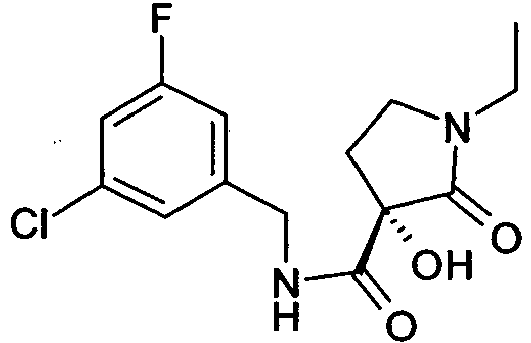
1) 3.123 min 2) 3.218 min [315.0] (S)-1-Ethyl-3-hydroxy-2-oxo-pyrrolidin-3-carbonsäure-3-chlor-5-fluor-benzylamid "A118" 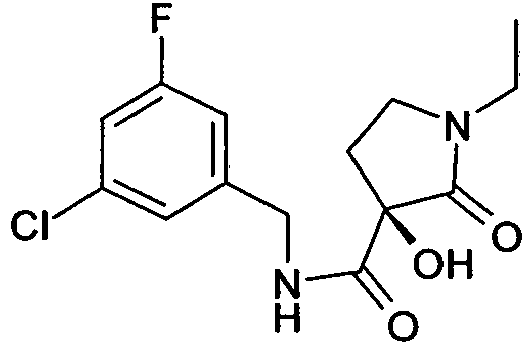
1) 3.122 min 2) 3.218 min [315.0] (R)-1-Ethyl-3-hydroxy-2-oxo-pyrrolidin-3-carbonsäure-3-chlor-5-fluor-benzylamid "A119" 
1) 4.729 min 2) 4.819 min [365.0] (S)-3-Fluor-2-oxo-1-phenyl-pyrrolidin-3-carbonsäure-3-chlor-5-fluor-benzylamid "A120" 
1) 4.718 min 2) 4.799 min [365.0] (R)-3-Fluor-2-oxo-1-phenyl-pyrrolidin-3-carbonsäure-3-chlor-5-fluor-benzylamid - Analog werden die nachstehenden Verbindungen hergestellt:
- (S)-3-Hydroxy-1-isobutyl-2-oxo-pyrrolidin-3-carbonsäure-3-chlor-5-fluor-benzylamid ("A121")

- (S)-1-(2-Amino-1-methyl-ethyl)-3-hydroxy-2-oxo-pyrrolidin-3-carbonsäure-3-chlor-5-fluor-benzylamid ("A122")

- (S)-1-(2-Dimethylamino-1-methyl-ethyl)-3-hydroxy-2-oxo-pyrrolidin-3-carbonsäure-3-chlor-5-fluor-benzylamid ("A123")
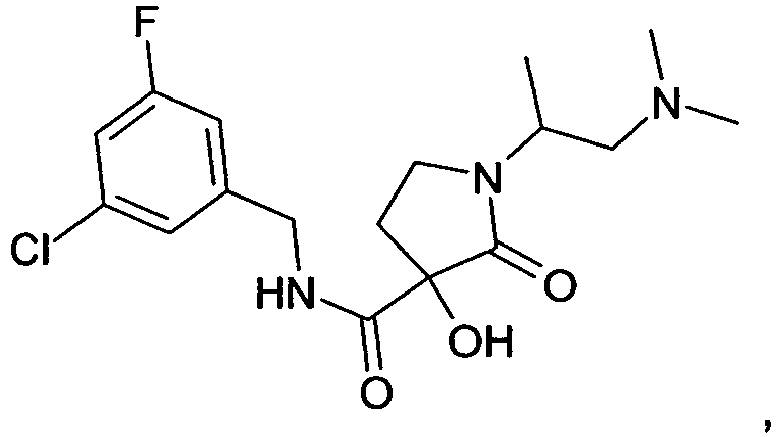
- (S)-1-(2-Amino-ethyl)-3-hydroxy-2-oxo-pyrrolidin-3-carbonsäure-3-chlor-5-fluor-benzylamid ("A124")
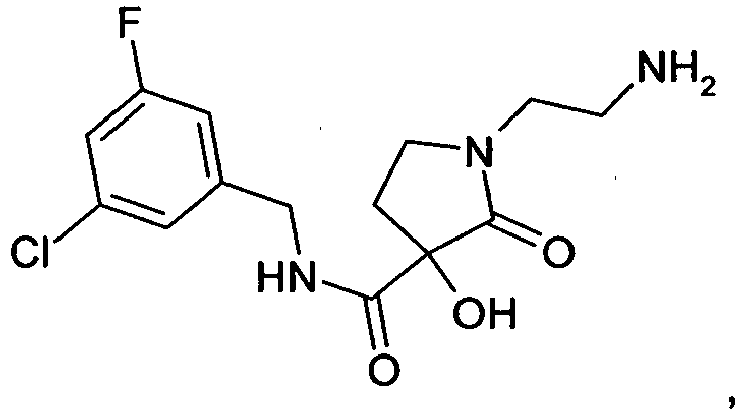
- (S)-1-(2-Dimethylamino-ethyl)-3-hydroxy-2-oxo-pyrrolidin-3-carbonsäure-3-chlor-5-fluor-benzylamid ("A125")

- (S)-1-(3-Dimethylamino-propyl)-3-hydroxy-2-oxo-pyrrolidin-3-carbonsäure-3-chlor-5-fluor-benzylamid ("A126")

- (S)-3-Hydroxy-1-(3-hydroxy-propyl)-2-oxo-pyrrolidin-3-carbonsäure-3-chlor-5-fluor-benzylamid ("A127")

- (S)-3-Hydroxy-1-(3-methoxy-propyl)-2-oxo-pyrrolidin-3-carbonsäure-3-chlor-5-fluor-benzylamid ("A128")

- (S)-3-Hydroxy-1-(2-methoxy-ethyl)-2-oxo-pyrrolidin-3-carbonsäure-3-chlor-5-fluor-benzylamid ("A129")

- (S)-1-(2-Formylamino-ethyl)-3-hydroxy-2-oxo-pyrrolidin-3-carbonsäure-3-chlor-5-fluor-benzylamid ("A130")

- (S)-1-(2-Acetylamino-ethyl)-3-hydroxy-2-oxo-pyrrolidin-3-carbonsäure-3-chlor-5-fluor-benzylamid ("A131")

- (S)-1-[1-(Acetylamino-methyl)-cyclopropyl]-3-hydroxy-2-oxo-pyrrolidin-3-carbonsäure-3-chlor-5-fluor-benzylamid ("A132")

- (S)-3-Hydroxy-2-oxo-1-(2-ureido-ethyl)-pyrrolidin-3-carbonsäure-3-chlor-5-fluor-benzylamid ("A133")
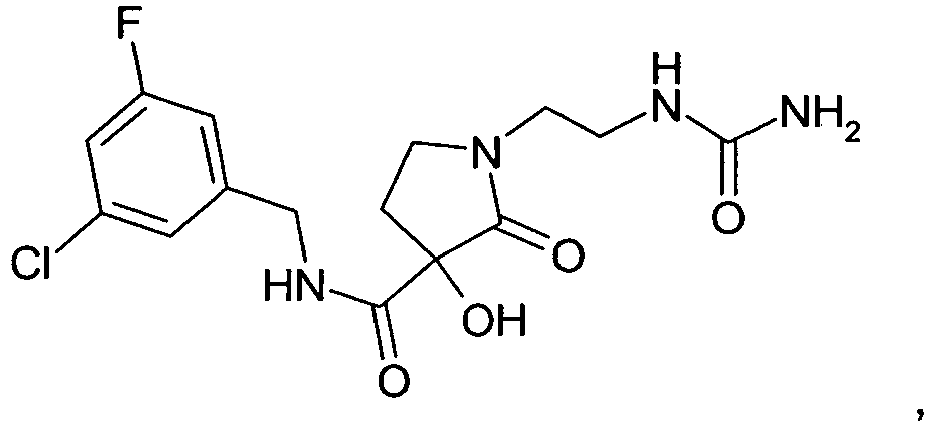
- (S)-1-(1H-Benzimidazol-5-yl)-3-hydroxy-2-oxo-pyrrolidin-3-carbonsäure-3-chlor-5-fluor-benzylamid ("A134")

- (S)-3-Hydroxy-2-oxo-1-(2-oxo-2,3-dihydro-1H-indol-5-yl)-pyrrolidin-3-carbonsäure-3-chlor-5-fluor-benzylamid ("A135")

- (S)-3-Hydroxy-2-oxo-1-((S)-2,2,2-trifluor-1-formylaminomethyl-ethyl)-pyrrolidin-3-carbonsäure-3-chlor-5-fluor-benzylamid ("A136")

- 1-(3-Carbamoyl-phenyl)-3-hydroxy-2-oxo-pyrrolidine-3-carbonsäure-3-chlor-5-fluor-benzylamid ("A137")

- 1-(2-Carbamoyl-phenyl)-3-hydroxy-2-oxo-pyrrolidine-3-carbonsäure-3-chlor-5-fluor-benzylamid ("A138")

- {2-[(S)-3-(3-Chlor-5-fluor-benzylcarbamoyl)-3-hydroxy-2-oxo-pyrrolidin-1-yl]-ethyl}-carbaminsäure-tert.-butylester ("A140")

- 1-(3-Cyan-phenyl)-3-hydroxy-2-oxo-pyrrolidine-3-carbonsäure-3-chlor-5-fluor-benzylamid ("A141")

- 1-(2-Cyan-phenyl)-3-hydroxy-2-oxo-pyrrolidine-3-carbonsäure-3-chlor-5-fluor-benzylamid ("A142"),
- 1-(4-Cyan-phenyl)-3-hydroxy-2-oxo-pyrrolidine-3-carbonsäure-3-chlor-5-fluor-benzylamid ("A143"),
- 1-(3-Amino-3-oxo-propyl)-N-[(3-chlor-5-fluor-phenyl)methyl]-3-hydroxy-2-oxo-pyrrolidin-3-carboxamid ("A144")

- N-[(3-Chlor-5-fluor-phenyl)methyl]-3-hydroxy-1-[3-(methylamino)-3-oxo-propyl]-2-oxo-pyrrolidin-3-carboxamid ("A145")

- 1-(4-Amino-4-oxo-butyl)-N-[(3-chlor-5-fluor-phenyl)methyl]-3-hydroxy-2-oxo-pyrrolidin-3-carboxamid ("A146"),
- N-[(3-Chlor-5-fluor-phenyl)methyl]-3-hydroxy-1-[4-(methylamino)-4-oxo-butyl]-2-oxo-pyrrolidin-3-carboxamid ("A147"),
- 1-(2-Cyan-ethyl)-3-hydroxy-2-oxo-pyrrolidin-3-carbonsäure-3-chlor-5-fluor-benzylamid ("A148")

- 1-(3-Cyan-propyl)-3-hydroxy-2-oxo-pyrrolidin-3-carbonsäure-3-chlor-5-fluor-benzylamid ("A149")
- 3-Hydroxy-1-(6-methyl-pyridin-3-yl)-2-oxo-pyrrolidin-3-carbonsäure-3-chlor-5-fluor-benzylamid ("A152")

- 3-Hydroxy-2-oxo-pyrrolidin-1,3-dicarbonsäure-3-(3-chlor-5-fluor-benzylamid)-1-ethylamid ("A153")

- 3-Hydroxy-2-oxo-pyrrolidin-1,3-dicarbonsäure-3-(3-chlor-5-fluor-benzylamid)-1-phenylamid ("A154")
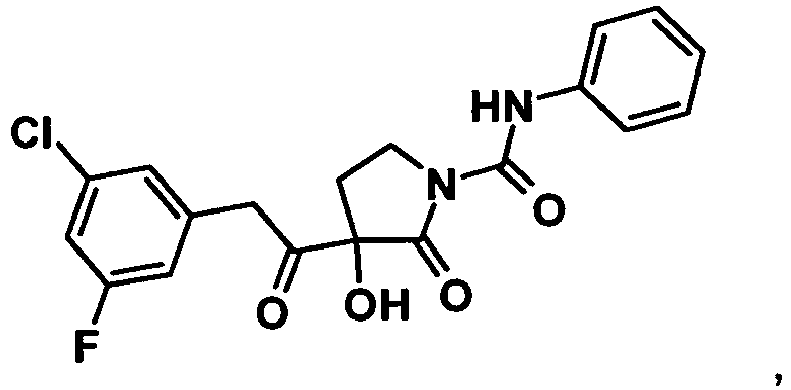
- 3-Azido-N-[(3-chlor-5-fluor-phenyl)-methyl]-2-oxo-1-phenyl-pyrrolidin-3-carboxamid ("A155")
- 3-Hydroxy-2-oxo-1-p-tolyl-pyrrolidin-3-carbonsäure-3-chlor-5-fluor-benzylamid ("A156")

- 1-Carbamoylmethyl-3-hydroxy-2-oxo-pyrrollidin-3-carbonsäure-3-chlor-5-fluor-benzylamid ("A157")

- (3S)-1-[(1 S)-2-Amino-1-methyl-2-oxo-ethyl]-N-[(3-chlor-5-fluor-phenyl)methyl]-3-hydroxy-2-oxo-pyrrolidin-3-carboxamid ("A158")

- (3S)-1-[(1R)-2-Amino-1-methyl-2-oxo-ethyl]-N-[(3-chlor-5-fluor-phenyl)methyl]-3-hydroxy-2-oxo-pyrrolidin-3-carboxamid ("A159"),
- 3-Hydroxy-2-oxo-1-(4-fluorphenyl)-pyrrolidin-3-carbonsäure-3-trifluormethyl-5-fluor-benzylamid ("A160"),
- 3-Hydroxy-2-oxo-1-phenyl-pyrrolidin-3-carbonsäure-3,5-(bis-trifluormethyl)-benzylamid ("A161").
- Analog werden die nachstehenden Verbindungen erhalten
Nr. Struktur / Name 1H NMR (400 MHz, DMSO-d6) δ [ppm] LC-MS; rt; [M+H+]* "A162" 
8.82 (t, J = 6.3, 1H), 7.76 - 7.70 (m, 2H), 7.53 (s, 1H), 7.51 (s, 2H), 7.43 (d, J = 9.5, 1H), 7.28 - 7.22 (m, 2H), 6.79 (s, 1H), 4.46 (dd, J = 15.8, 6.7, 1H), 4.32 (dd, J = 15.9, 6.0, 1H), 3.84 (t, J = 6.8, 2H), 2.63 - 2.54 (m, 1H), 2.12 (dt, J = 13.1, 7.6, 1H). 4.57 min [415] (S)-1-(4-Fluor-phenyl)-3-hydroxy-2-oxo-pyrrolidin-3-carbonsäure-3-fluor-5-trifluormethyl-benzylamid "A163" 
8.90 (t, J = 6.3, 1H), 7.96 (d, J = 4.1, 3H), 7.76 - 7.70 (m, 2H), 7.30 - 7.20 (m, 2H), 6.81 (s, 1H), 4.55 (dd, J = 15.9, 6.7, 1H), 4.40 (dd, J = 16.0, 6.0, 1H), 3.90 - 3.79 (m, 2H), 2.64 - 2.54 (m, 1H), 2.12 (dt, J = 13.0, 7.5, 1H). 5.09 min [465] (S)-1-(4-Fluor-phenyl)-3-hydroxy-2-oxo-pyrrolidin-3-carbonsäure-3,5-bis-trifluormethyl-benzylamid "A164" 
8.81 (t, J = 6.3, 1H), 7.70 (t, J = 1.6, 1H), 7.68 (d, J = 1.0, 1H), 7.52 (d, J = 7.8, 2H), 7.43 (d, J = 8.8, 2H), 7.21 - 7.12 (m, 1H), 6.78 (s, 1H), 4.47 (dd, J = 16.0, 6.8, 1H), 4.32 (dd, J = 15.8, 6.0, 1H), 3.86 (dd, J = 8.3, 5.7, 2H), 2.58 (dt, J = 6.7, 5.8, 1H), 2.12 (dt, J = 13.1, 7.6, 1H). 4.48 min; [397] (S)-3-Hydroxy-2-oxo-1-phenyl-pyrrolidin-3-carbonsäure-3-fluor-5-trifluormethyl-benzylamid "A165" 
8.90 (t, J = 6.4, 1H), 7.96 (d, J = 6.2, 3H), 7.69 (dd, J = 8.7, 1.0, 2H), 7.40 (dd, J = 10.7, 5.3, 2H), 7.17 (t, J = 7.4, 1H), 6.80 (s, 1H), 4.55 (dd, J = 15.9, 6.6, 1 H), 4.40 (dd, J = 15.9, 5.9, 1H), 3.92 - 3.77 (m, 2H), 2.58 (ddd, J = 12.0, 7.4, 4.4, 1H), 2.12 (dt, J = 13.0, 7.6, 1H). 5.02 min [447] (S)-3-Hydroxy-2-oxo-1-phenyl-pyrrolidin-3-carbonsäure-3,5-bis-trifluormethyl-benzylamid "A166" 
8.74 (s, 1H), 7.69 (d, J = 8.0, 2H), 7.39 (t, J = 7.9, 2H), 7.28 (d, J = 8.7, 1H), 7.17 (dd, J = 14.5, 7.2, 2H), 7.09 (d, J = 9.3, 1H), 4.35 (dd, J = 15.7, 6.2, 1H), 4.26 (dd, J = 15.7, 5.8, 1H), 3.89 - 3.78 (m, 2H), 2.57 (br. s, 2H), 2.06 (dt, J = 12.7, 7.8, 1H). 3.53 min [362] (S)-3-Amino-2-oxo-1-phenyl-pyrrolidin-3-carbonsäure-3-chlor-5-fluor-benzylamid "A167" 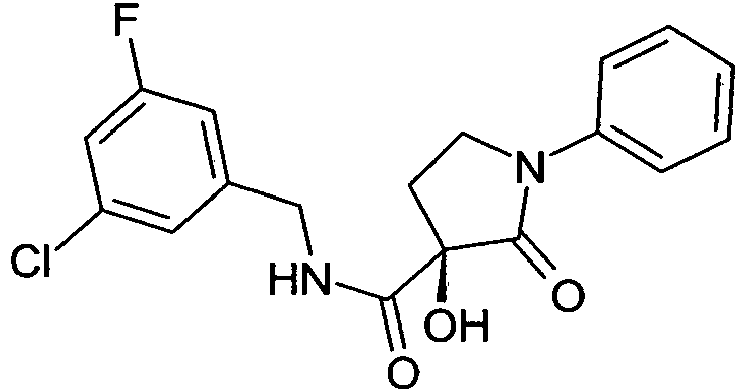
8.73 (t, J = 6.3, 1H), 7.69 (dd, J = 8.7, 1.0, 2H), 7.43 - 7.38 (m, 2H), 7.27 (dt, J = 8.8,2.1, 1H), 7.21-7.15 (m, 2H), 7.12 - 7.08 (m, 1H), 6.77 (s, 1H), 4.38 (dd, J = 15.7, 6.7, 1H), 4.24 (dd, J = 15.7, 6.1, 1H), 3.89 - 3.83 (m, 2H), 2.63 - 2.54 (m, 1H), 2.12 (dt, J = 13.1, 7.7, 1H). 4.15 min [363] (R)-3-Hydroxy-2-oxo-1-phenyl-pyrrolidin-3-carbonsäure-3-chlor-5-fluor-benzylamid "A168" 
8.77 (s, 1H), 7.69 (d, J = 7.8, 2H), 7.40 (t, J = 8.0, 2H), 7.30 - 7.25 (m, 1H), 7.22 - 7.13 (m, 2H), 7.09 (d, J = 9.3, 1H), 4.35 (dd, J = 15.6, 6.0, 1H), 4.27 (dd, J = 15.9, 5.9, 1H), 3.89 - 3.81 (m, 2H), 2.14 - 2.03 (m, 1H). 3.53 min [362] (R)-3-Amino-2-oxo-1-phenyl-pyrrolidin-3-carbonsäure-3-chlor-5-fluor-benzylamid "A169" 
9.13 (s, 1H), 7.69 (d, J = 7.7, 2H), 7.46 - 7.40 (m, 2H), 7.31 (d, J = 9.1, 1H), 7.26 - 7.18 (m, 2H), 7.09 (d, J = 8.6, 1H), 4.36 (dd, J = 11.5, 6.2, 2H), 3.92 (d, J = 7.5, 3H), 1.23 (s, 3H). 5.11 min [388] (S)-3-Azido-2-oxo-1-phenyl-pyrrolidin-3-carbonsäure-3-chlor-5-fluor-benzylamid "A170" 
8.62 (t, J = 6.0, 1H), 8.01 (s, 0H), 7.63 (s, 1H), 7.45 (t, J = 7.0, 1H), 7.30 (t, J = 6.7, 1H), 7.18 (t, J = 7.9, 1H), 6.69 (s, 1H), 4.39 (dd, J = 15.2, 6.1, 1H), 4.31 (dd, J = 15.6, 6.2, 1H), 3.68 (dd, J = 14.7, 5.9, 2H), 2.59 (dd, J = 8.9, 4.3, 1H), 2.17 - 2.07 (m, 1H). 3.12 min [367] (S)-3-Hydroxy-1-(1-methyl-1 H-pyrazol-4-yl)-2-oxo-pyrrolidin-3-carbonsäure-3-chlor-2-fluor-benzylamid "A171" 
8.57 (t, J = 6.3, 1H), 7.09 - 7.02 (m, 1H), 6.97 (d, J = 6.7, 1H), 6.47 (s, 1H), 4.37 (dd, J = 15.9, 6.8, 1H), 4.21 (dd, J = 15.9, 5.9, 1H), 3.39 (ddd, J = 13.4, 10.5, 5.4, 4H), 3.23 (s, 3H), 2.48 - 2.38 (m, 1H), 1.98 - 1.89 (m, 1H). 2.70 min [329] (S)-3-Hydroxy-1-(2-methoxy-ethyl)-2-oxo-pyrrolidin-3-carbonsäure-3,5-difluor-benzylamid "A172" 
8.72 (t, J = 6.4, 1H), 7.60 - 7.55 (m, 2H), 7.27 (dt, J = 8.8, 2.2, 1H), 7.20 (dd, J = 4.9, 3.3, 3H), 7.10 (d, J = 9.7, 1H), 6.73 (s, 1H), 4.37 (dd, J = 15.8, 6.7, 1H), 4.23 (dd, J = 15.8, 6.0, 1H), 3.82 (dd, J = 7.5, 6.1, 2H), 2.63 - 2.54 (m, 1H), 2.28 (s, 3H), 2.10 (dt, J = 13.0, 7.6, 1H). 4.42 min [377.3] (S)-3-Hydroxy-2-oxo-1-p-tolyl-pyrrolidin-3-carbonsäure-3-chlor-5-fluor-benzylamid "A173" 
8.55 (t, J = 6.4, 1H), 7.26 (dt, J = 8.8, 2.2, 1H), 7.18 (s, 1H), 7.09 (d, J = 9.7, 1H), 6.42 (s, 1H), 4.35 (dd, J = 15.8, 6.7, 1H), 4.20 (dd, J = 15.8, 6.0, 1H), 3.68 (ddd, J = 11.8, 8.0, 3.8, 1H), 3.32 - 3.21 (m, 3H), 2.46 - 2.36 (m, 1H), 1.98-1.83 (m, 1H), 1.80 - 1.67 (m, 2H), 1.66 - 1.50 (m, 3H), 1.50 - 1.21 (m, 4H), 1.19 - 0.99 (m, 2H). 4.19 min [369.3] (S)-1-Cyclohexyl-3-hydroxy-2-oxo-pyrrolidin-3-carbonsäure-3-chlor-5-fluor-benzylamid "A174" 
8.71 (t, J = 6.4, 1H), 8.01 (s, 1H), 7.63 (d, J = 0.6, 1H), 7.27 (dt, J = 8.8, 2.2, 1H), 7.19 (s, 1H), 7.09 (d, J = 9.6, 1H), 6.70 (s, 1H), 4.36 (dd, J = 15.8, 6.7, 1H), 4.23 (dd, J = 15.7, 6.1, 1H), 3.75 - 3.62 (m, 2H), 2.60 (ddd, J = 12.2, 7.7, 4.3, 1H), 2.18 - 2.05 (m, 1H). 3.17 min [367] (S)-3-Hydroxy-1-(1-methyl-1H-pyrazol-4-yl)-2-oxo-pyrrolidin-3-carbonsäure-3-chlor-5-fluor-benzylamid "A175" 
8.72 (t, J = 6.3, 1H), 7.50 (d, J = 6.5, 2H), 7.31 - 7.24 (m, 2H), 7.20 (s, 1H), 7.10 (d, J = 9.7, 1H), 7.00 (d, J = 7.3, 1H), 6.74 (s, 1H), 4.38 (dd, J = 15.8, 6.7, 1H), 4.23 (dd, J = 15.7, 6.0, 1H), 3.83 (dd, J = 8.0, 5.6, 2H), 2.63 - 2.53 (m, 1H), 2.11 (dt, J = 13.0, 7.6, 1H). 4.45 min [377] (S)-3-Hydroxy-2-oxo-1-m-tolyl-pyrrolidin-3-carbonsäure-3-chlor-5-fluor-benzylamid "A176" 
8.62 (t, J = 6.1, 1H), 8.01 (s, 1H), 7.63 (s, 1H), 7.45 (t, J = 7.4, 1H), 7.30 (t, J = 6.9, 1H), 7.18 (t, J = 7.9, 1H), 6.69 (s, 1H), 4.39 (dd, J = 15.6, 6.8, 1H), 4.31 (dd, J = 15.6, 6.2, 1H), 3.82 (s, 3H), 3.74-3.60 (m, 2H), 2.64 - 2.57 (m, 1H), 2.13 (dt, J = 13.0, 7.5, 1H). 3.11 min [367] (R)-3-Hydroxy-1-(1-methyl-1H-pyrazol-4-yl)-2-oxo-pyrrolidin-3-carbonsäure-3-chlor-2-fluor-benzylamid "A177" 
8.55 (t, J = 6.3, 1H), 7.26 (dt, J = 8.8, 2.1, 1H), 7.18 (s, 1H), 7.09 (d, J = 9.6, 1H), 6.42 (s, 1H), 4.35 (dd, J = 15.7, 6.7, 1H), 4.20 (dd, J = 15.7, 5.9, 1H), 3.68 (tt, J = 11.8, 3.7, 1H), 3.31 - 3.21 (m, 2H), 2.45 - 2.36 (m, 1H), 1.98 -1.84 (m, 1H), 1.80-1.68 (m, 2H), 1.66 - 1.50 (m, 3H), 1.50 - 1.20 (m, 5H), 1.15 - 1.01 (m, 1H). 4.19 min [369] (R)-1-Cyclohexyl-3-hydroxy-2-oxo-pyrrolidin-3-carbonsäure-3-chlor-5-fluor-benzylamid "A178" 
8.72 (t, J = 6.4, 1H), 7.50 (d, J = 6.4, 2H), 7.31 - 7.24 (m, 2H), 7.20 (s, 1H), 7.10 (d, J = 9.7, 1H), 7.00 (d, J = 7.6, 1H), 6.74 (s, 1H), 4.38 (dd, J = 15.8, 6.8, 1H), 4.23 (dd, J = 15.7, 6.0, 1H), 3.83 (t, J = 6.8, 2H), 2.62 - 2.52 (m, 1H), 2.31 (s, 3H), 2.11 (dt, J = 13.0, 7.6, 1H). 4.45 min [377] (R)-3-Hydroxy-2-oxo-1-m-tolyl-pyrrolidin-3-carbonsäure-3-chlor-5-fluor-benzylamid "A179" 
8.74 (t, J = 6.5, 1H), 7.92 (dd, J = 8.0, 1.5, 1H), 7.84 - 7.74 (m, 1H), 7.51 (ddd, J = 6.3, 3.7, 1.1, 2H), 7.27 (dd, J = 8.8, 2.2, 1H), 7.21 (s, 1H), 7.11 (d, J = 8.8, 1H), 6.87 (s, 1H), 4.39 (dd, J = 15.7, 7.0, 1H), 4.26 (dd, J = 15.8, 6.2, 1H), 3.97 - 3.76 (m, 3H), 2.69 - 2.56 (m, 2H), 2.28 - 2.14 (m, 1H). 3.87 min [388] (S)-1-(2-Cyan-phenyl)-3-hydroxy-2-oxo-pyrrolidin-3-carbonsäure-3-chlor-5-fluor-benzylamid "A180" 
8.79 (s, 1H), 7.91 (q, J = 9.1, 4H), 7.27 (d, J = 8.7, 1H), 7.19 (s, 1H), 7.08 (s, 1H), 6.88 (s, 1H), 4.37 (dd, J = 15.6, 6.2, 2H), 4.23 (dd, J = 15.7, 5.8, 2H), 3.90 (dd, J = 11.5, 5.7, 2H), 2.63 - 2.57 (m, 2H), 2.15 (dt, J = 11.6, 7.4, 2H). 4.15 min [386.3] (S)-1-(4-Cyan-phenyl)-3-hydroxy-2-oxo-pyrrolidin-3-carbonsäure-3-chlor-5-fluor-benzylamid "A181" 
8.76 (q, J = 5.2, 1H), 8.01 (dd, J = 8.5, 2.7, 1H), 7.32 -7.24 (m, 1H), 7.20 (s, 1H), 7.09 (d, J = 8.7, 1H), 6.81 (s, 1H), 4.37 (dd, J = 15.8, 6.7, 1H), 4.24 (dd, J = 15.7, 6.0, 1H), 3.86 (dd, J = 8.5, 5.7, 1H), 2.60 (dt, J = 6.8, 5.8, 1H), 2.45 (s, 3H), 2.14 (dt, J = 12.9, 7.4, 1H). 2.88 min [378] (S)-3-Hydroxy-1-(6-methyl-pyridin-3-yl)-2-oxo-pyrrolidin-3-carbonsäure-3-chlor-5-fluor-benzylamid "A182" 
8.69 (t, J = 6.4, 1H), 7.32 - 7.17 (m, 6H), 7.11 (d, J = 9.7, 1H), 6.70 (s, 1H), 4.41 (dd, J = 15.9, 6.7, 1H), 4.24 (dd, J = 15.8, 6.0, 1H), 3.68 (dd, J = 8.3, 5.3, 2H), 2.65 - 2.57 (m, 1H), 2.19 (dt, J = 13.0, 7.6, 1H), 2.11 (s, 3H). 4.17 min [377] (S)-3-Hydroxy-2-oxo-1-o-tolyl-pyrrolidin-3-carbonsäure-3-chlor-5-fluor-benzylamid "A183" 
8.02 (t, J = 5.9, 1H), 7.69 (dd, J = 8.7, 1.0, 2H), 7.44 - 7.37 (m, 2H), 7.35 - 7.28 (m, 1H), 7.17 (t, J = 7.4, 1H), 7.09 - 6.97 (m, 3H), 6.62 (s, 1H), 3.86 - 3.79 (m, 2H), 3.42 - 3.34 (m, 1H), 2.77 (t, J = 7.3, 2H), 2.47 - 2.37 (m, 2H), 2.05 (dt, J = 12.8, 7.9, 1H). 3.79 min [343.3] (S)-3-Hydroxy-2-oxo-1-phenyl-pyrrolidin-3-carbonsäure-[2-(3-fluor-phenyl)-ethyl]-amid "A184" 
8.00 (t, J = 5.8, 1H), 7.72 - 7.66 (m, 2H), 7.43 - 7.37 (m, 2H), 7.23 (dd, J = 8.6, 5.7, 2H), 7.17 (t, J = 7.4, 1H), 7.08 (t, J = 8.9, 2H), 6.61 (s, 1H), 3.86 - 3.67 (m, 2H), 3.31 - 3.13 (m, 2H), 2.73 (t, J = 7.4, 2H), 2.47 - 2.41 (m 1H), 2.05 (dt, J = 12.8, 7.9, 1H). 3.78 min [343] (S)-3-Hydroxy-2-oxo-1-phenyl-pyrrolidin-3-carbonsäure-[2-(4-fluor-phenyl)-ethyl]-amid "A185" 
8.00 (t, J = 6.0, 1H), 7.69 (dd, J = 8.7, 1.0, 2H), 7.44 - 7.37 (m, 2H), 7.33 - 7.24 (m, 2H), 7.18 (ddd, J = 13.8, 7.8, 1.7, 4H), 6.62 (s, 1H), 3.89 - 3.77 (m, 2H), 3.40 - 3.34 (m, 2H), 2.74 (t, J = 7.5, 2H), 2.47 - 2.40 (m, 1H), 2.06 (dt, J = 12.9, 7.9, 1H). 3.64 min [325.3] (S)-3-Hydroxy-2-oxo-1-phenyl-pyrrolidin-3-carbonsäure-phenethyl-amid "A186" 
8.74 (t, J = 6.3, 1H), 7.92 (dd, J = 8.0, 1.5, 1H), 7.82 - 7.76 (m, 1H), 7.55 - 7.48 (m, 2H), 7.27 (d, J = 8.8, 1H), 7.21 (s, 1H), 7.11 (d, J = 9.7, 1H), 6.87 (s, 1H), 4.39 (dd, J = 15.8, 6.8, 1H), 4.26 (dd, J = 15.7, 5.9, 1H), 3.96 - 3.83 (m, 2H), 2.62 (m, 1H), 2.27 - 2.17 (m, 1H). 3.87 min [388] (R)-1-(2-Cyan-phenyl)-3-hydroxy-2-oxo-pyrrolidin-3-carbonsäure-3-chlor-5-fluor-benzylamid "A187" 
8.79 (t, J = 6.5, 1H), 7.91 (q, J = 9.1, 4H), 7.27 (d, J = 8.7, 1H), 7.19 (s, 1H), 7.09 (d, J = 8.8, 1H), 6.89 (s, 1H), 4.37 (dd, J = 15.8, 6.7, 1H), 4.24 (dd, J = 15.9, 6.0, 1H), 3.90 (t, J = 6.5, 2H), 2.64 - 2.56 (m, 1H), 2.20 - 2.10 (m, 1H). 4.14 min [386.3] (R)-1-(4-Cyan-phenyl)-3-hydroxy-2-oxo-pyrrolidin-3-carbonsäure-3-chlor-5-fluor-benzylamid "A188" 
8.76 (q, J = 5.2, 1H), 8.01 (dd, J = 8.5, 2.7, 1H), 7.32 -7.24 (m, 1H), 7.20 (s, 0H), 7.09 (d, J = 8.9, 1H), 6.81 (s, 1H), 4.37 (dd, J = 15.8, 6.7, 1H), 4.24 (dd, J = 15.7, 6.1, 1H), 3.86 (dd, J = 8.5, 5.7, 1H), 2.60 (dt, J = 6.8, 5.7, 1H), 2.45 (s, 3H), 2.14 (dt, J= 12.9, 7.4, 1H). 2.88 min [378] (R)-3-Hydroxy-1-(6-methyl-pyridin-3-yl)-2-oxo-pyrrolidin-3-carbonsäure-3-chlor-5-fluor-benzylamid "A189" 
8.72 (t, J = 6.3, 1H), 7.57 (d, J = 8.5, 2H), 7.27 (dt, J = 8.8, 2.1, 1H), 7.23 - 7.18 (m, 3H), 7.10 (d, J = 9.8, 1H), 6.73 (s, 1H), 4.38 (dd, J = 15.8, 6.8, 1H), 4.23 (dd, J = 15.7, 6.1, 1H), 3.86 - 3.79 (m, 2H), 2.62 - 2.53 (m, 1H), 2.28 (s, 3H), 2.10 (dt, J = 13.0, 7.6, 1H). 4.44 min [377] (R)-3-Hydroxy-2-oxo-1-p-tolyl-pyrrolidin-3-carbonsäure-3-chlor-5-fluor-benzylamid "A190" 
8.71 (t, J = 6.4, 1H), 8.01 (s, 1H), 7.63 (d, J = 0.5, 1H), 7.31 - 7.23 (m, 1H), 7.19 (s, 1H), 7.09 (d, J = 9.7, 1H), 6.70 (s, 1H), 4.37 (dd, J = 15.8, 6.6, 1H), 4.23 (dd, J = 15.9, 5.9, 1H), 3.82 (s, 3H), 3.74 - 3.62 (m, 2H), 2.60 (ddd, J = 12.1, 7.6, 4.2, 1H), 2.13 (ddd, J = 13.1, 8.5, 6.7, 1H). 3.19 min [367] (R)-3-Hydroxy-1-(1-methyl-1H-pyrazol-4-yl)-2-oxo-pyrrolidin-3-carbonsäure-3-chlor-5-fluor-benzylamid "A191" 
8.69 (t, J = 6.4, 1H), 7.31 - 7.17 (m, 6H), 7.11 (d, J = 9.7, 1H), 6.70 (s, 1H), 4.41 (dd, J = 15.9, 6.7, 1H), 4.24 (dd, J = 15.8, 6.0, 1H), 3.68 (dd, J = 8.3, 5.3, 2H), 2.66 - 2.55 (m, 1H), 2.19 (dt, J = 13.0, 7.6, 1H), 2.11 (s, 3H). 4.17 min [377] (R)-3-Hydroxy-2-oxo-1-o-tolyl-pyrrolidin-3-carbonsäure-3-chlor-5-fluor-benzylamid "A192" 
8.76 (t, J = 6.4, 1H), 7.95 (br. s, 1H), 7.91 (d, J = 8.8, 2H), 7.79 (d, J = 8.9, 2H), 7.33 (br. s, 1H), 7.27 (d, J = 8.7, 1H), 7.20 (s, 1H), 7.10 (d, J = 9.2, 1H), 6.82 (s, 1H), 4.38 (dd, J = 15.8, 6.9, 1H), 4.24 (dd, J = 15.8, 6.0, 1H), 3.89 (dd, J = 9.3, 5.1, 2H), 3.37 (m, 1H), 2.64 - 2.55 (m, 2H), 2.19 - 2.08 (m, 1H). 3.2 min [406] (S)-1-(4-Carbamoyl-phenyl)-3-hydroxy-2-oxo-pyrrolidin-3-carbonsäure-3-chlor-5-fluor-benzylamid "A193" 
8.78 (t, J = 6.3, 1H), 8.16 (s, 1H), 8.08 (dt, J = 7.4, 2.0, 1H), 7.68 - 7.59 (m, 2H), 7.27 (dd, J = 8.8, 2.0, 1H), 7.19 (s, 1H), 7.09 (d, J = 9.5, 1H), 6.86 (s, 1H), 4.38 (dd, J = 15.6, 6.7, 1H), 4.24 (dd, J = 15.7, 6.0, 1H), 3.96 - 3.84 (m, 2H), 2.59 (ddd, J = 11.8, 7.1,4.5, 1H), 2.14 (dt, J = 13.1, 7.9, 1H). 4.16 min [388.3] (S)-1-(3-Cyan-phenyl)-3-hydroxy-2-oxo-pyrrolidin-3-carbonsäure-3-chlor-5-fluor-benzylamid "A194" 
8.78 (t, J = 6.4, 1H), 8.16 (d, J = 1.5, 1H), 8.08 (dt, J = 7.5, 2.1, 1H), 7.68-7.59 (m, 2H), 7.27 (dt, J = 8.8, 2.1, 1H), 7.19 (s, 1H), 7.09 (d, J = 9.6, 1H), 6.86 (s, 1H), 4.38 (dd, J = 15.8, 6.7, 1H), 4.24 (dd, J = 15.7, 6.0, 1H), 3.96 - 3.83 (m, 2H), 2.59 (ddd, J = 11.8,7.1,4.6, 1H), 2.14 (dt, J = 13.0, 7.7, 1H). 4.14 min [388.1] (R)-1-(3-Cyan-phenyl)-3-hydroxy-2-oxo-pyrrolidin-3-carbonsäure-3-chlor-5-fluor-benzylamid "A195" 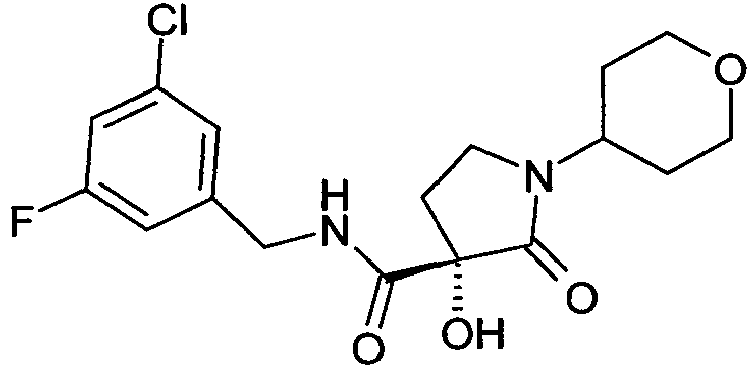
8.58 (t, J = 6.3, 1H), 7.26 (dt, J = 8.7, 2.1, 1H), 7.18 (s, 1H), 7.09 (d, J = 9.7, 1H), 6.47 (s, 1H), 4.35 (dd, J = 15.8, 6.7, 1H), 4.21 (dd, J = 15.8, 6.0, 1H), 4.02 - 3.83 (m, 3H), 3.38 (dd, J = 11.9, 9.7, 2H), 2.46 - 2.38 (m, 1H), 1.92 (dt, J = 13.0, 7.4, 1H), 1.69 (m, 2H), 1.57 - 1.40 (m, 2H). 3.1 min [371] (S)-3-Hydroxy-2-oxo-1-(tetrahydro-pyran-4-yl)-pyrrolidin-3-carbonsäure-3-chlor-5-fluor-benzylamid "A196" 
8.08 (t, J = 5.9, 1H), 7.68 (d, J = 7.7, 2H), 7.43 - 7.36 (m, 2H), 7.25 (dt, J = 7.3, 4.6, 2H), 7.13 (ddd, J = 15.4, 11.1, 4.2, 3H), 6.60 (s, 1H), 3.86 - 3.76 (m, 2H), 3.45 -3.19 (m, 2H), 2.85 - 2.71 (m, 2H), 2.48 - 2.39 (m, 1H), 2.05 (dt, J = 12.9, 8.0, 1H). 3.74 min [343] (S)-3-Hydroxy-2-oxo-1-phenyl-pyrrolidin-3-carbonsäure-[2-(2-fluor-phenyl)-ethyl]-amid "A197" 
9.00 (d, J = 2.4, 1H), 8.80 (t, J = 6.3, 1H), 8.28 (dd, J = 8.7, 2.5, 1H), 8.07 (d, J = 8.6, 2H), 7.60 (s, 1H), 7.28 (d, J = 8.8, 1H), 7.20 (s, 1H), 7.10 (d, J = 9.2, 1H), 6.91 (s, 1H), 4.38 (dd, J = 15.8, 6.7, 1H), 4.25 (dd, J = 15.7, 6.0, 1H), 4.03 - 3.88 (m, 2H), 2.69 - 2.58 (m, 1H), 2.24 - 2.12 (m, 1H). 3.18 min [407] 5-[(S)-3-(3-Chlor-5-fluor-benzylcarbamoyl)-3-hydroxy-2-oxo-pyrrolidin-1-yl]-pyridin-2-carbonsäure-amid "A198" 
8.62 (t, J = 6.3, 1H), 8.04 (s, 1H), 7.65 (d, J = 0.4, 1H), 7.50-7.42 (m, 1H), 7.30 (t, J = 6.5, 1H), 7.18 (t, J = 7.9, 1H), 6.68 (s, 1H), 4.39 (dd, J = 15.6, 6.3, 1H), 4.31 (dd, J = 15.6, 5.9, 1H), 4.11 (q, J = 7.3, 2H), 3.75 - 3.62 (m, 2H), 2.60 (ddd, J = 12.0, 7.6, 4.2, 1H), 2.18 - 2.06 (m, 1H), 1.33 (t, J = 7.3, 3H). 3.36 min [381.3] (S)-1-(1-Ethyl-1H-pyrazol-4-yl)-3-hydroxy-2-oxo-pyrrolidin-3-carbonsäure-3-chlor-2-fluor-benzylamid "A199" 
8.64 (s, 1H), 7.69 (dd, J = 8.7, 1.0, 2H), 7.44 - 7.36 (m, 2H), 7.26 - 7.18 (m, 2H), 7.18 - 7.09 (m, 3H), 6.67 (s, 1H), 3.88 - 3.76 (m, 2H), 2.61 - 2.51 (m, 1H), 2.10 (dt, J = 13.0, 7.8, 1H), 1.29 - 1.18 (m, 4H). 3.61 min [337] (S)-3-Hydroxy-2-oxo-1-phenyl-pyrrolidin-3-carbonsäure-(1-phenyl-cyclopropyl)-amid "A200" 
8.63 (t, J = 6.2, 1H), 8.03 (s, 1H), 7.66 (s, 1H), 7.49 - 7.42 (m, 1H), 7.30 (dd, J = 10.4, 4.1, 1H), 7.19 (dt, J = 8.6, 4.3, 1H), 6.69 (s, 1H), 4.49 (dq, J = 13.3, 6.6, 1H), 4.39 (dd, J = 15.6, 6.4, 1H), 4.31 (dd, J = 15.5, 6.1, 1H), 3.76 - 3.62 (m, 2H), 2.59 (ddd, J = 12.0, 7.6, 4.2, 1H), 2.12 (ddd, J = 18.7, 11.3, 6.3, 1H), 1.38 (d, J = 6.7, 6H). 3.61 min [395.3] (S)-3-Hydroxy-1-(1-isopropyl-1 H-pyrazol-4-yl)-2-oxo-pyrrolidin-3-carbonsäure-3-chlor-2-fluor-benzylamid "A201" 
8.71 (t, J = 6.4, 1H), 8.03 (d, J = 0.5, 1H), 7.66 (d, J = 0.5, 1H), 7.07 (tt, J = 9.4, 2.4, 1H), 7.01 - 6.93 (m, 2H), 6.69 (s, 1H), 4.55 - 4.43 (m, 1H), 4.38 (dd, J = 15.9, 6.8, 1H), 4.23 (dd, J = 15.8, 6.0, 1H), 3.76 - 3.61 (m, 2H), 2.61 (ddd, J = 12.2, 7.6, 4.3, 1H), 2.13 (ddd, J = 13.1, 8.5, 6.8, 1 H), 1.38 (d, J = 6.7, 6H). 3.37 min [379.2] (S)-3-Hydroxy-1-(1-isopropyl-1H-pyrazol-4-yl)-2-oxo-pyrrolidin-3-carbonsäure-3,5-difluor-benzylamid "A202" 
8.06 (t, J = 6.0, 1H), 7.68 (dd, J = 8.7, 1.0, 2H), 7.44 - 7.35 (m, 2H), 7.24 (dt, J = 8.9, 2.2, 1H), 7.20 - 7.13 (m, 2H), 7.08 (dd, J = 9.7, 1.4, 1H), 6.63 (s, 1H), 3.81 (dd, J = 7.8, 5.8, 2H), 3.45 - 3.35 (m, 2H), 2.78 (t, J = 6.9, 2H), 2.43 (dt, J = 12.8, 5.6, 1H), 2.05 (dt, J = 12.9, 7.8, 1H). 4.31 min [377] (S)-3-Hydroxy-2-oxo-1-phenyl-pyrrolidin-3-carbonsäure-[2-(3-chlor-5-fluor-phenyl)-ethyl]-amid "A203" 
8.70 (t, J = 6.2, 1H), 7.94 (d, J = 8.6, 2H), 7.77 (d, J = 8.7, 2H), 7.49 - 7.42 (m, 1H), 7.30 (t, J = 6.5, 1H), 7.18 (dd, J = 8.2, 7.5, 1H), 6.85 (s, 1H), 4.40 (dd, J = 15.6, 6.5, 1H), 4.33 (dd, J = 15.6, 6.0, 1H), 3.91 (dd, J = 8.6, 5.6, 2H), 2.60 (dt, J = 6.7, 5.6, 1H), 2.15 (dt, J= 13.1, 7.8, 1H). 4.89 min [431] (S)-3-Hydroxy-2-oxo-1-(4-trifluoromethyl-phenyl)-pyrrolidin-3-carbonsäure-3-chlor-2-fluor-benzylamid "A204" 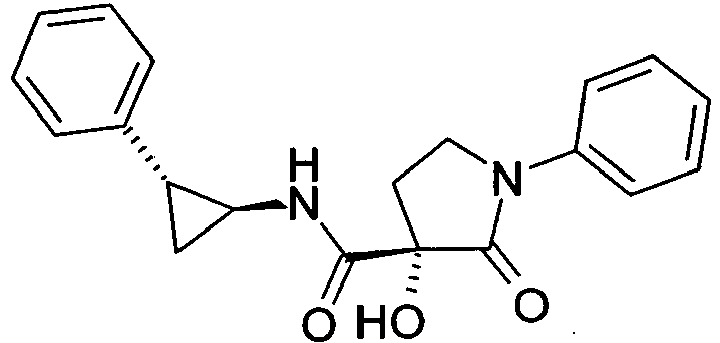
8.25 (d, J = 5.2, 1H), 7.69 (dd, J = 8.7, 1.0, 2H), 7.44 - 7.37 (m, 2H), 7.24 (dd, J = 10.3, 4.6, 2H), 7.20 - 7.06 (m, 4H), 6.62 (s, 1H), 3.87 - 3.81 (m, 2H), 2.88 (td, J = 8.3, 4.9, 1H), 2.61 - 2.51 (m, 1H), 2.13 - 2.00 (m, 2H), 1.40 -1.32 (m, 1H), 1.13 (dt, J = 7.9, 5.8, 1H). 3.85 min [337.3] (S)-3-Hydroxy-2-oxo-1-phenyl-pyrrolidin-3-carbonsäure-((1 S,2R)-2-phenyl-cyclopropyl)-amid "A205" 
9.00 (d, J = 2.1, 1H), 8.80 (t, J = 6.3, 1H), 8.28 (dd, J = 8.7, 2.6, 1H), 8.07 (d, J = 8.6, 2H), 7.60 (s, 1H), 7.28 (dt, J = 8.8, 2.1, 1H), 7.20 (s, 1H), 7.10 (d, J = 9.6, 1H), 6.90 (s, 1H), 4.38 (dd, J = 15.8, 6.7, 1H), 4.25 (dd, J = 15.6, 6.0, 1H), 4.01 - 3.90 (m, 2H), 2.68 - 2.58 (m, 1H), 2.23 - 2.13 (m, 1H). 3.18 min [407] 5-[(R)-3-(3-Chlor-5-fluor-benzylcarbamoyl)-3-hydroxy-2-oxo-pyrrolidin-1-yl]-pyridin-2-carbonsäure-amid "A206" 
8.63 (t, J = 6.3, 1H), 8.03 (d, J = 0.5, 1H), 7.66 (d, J = 0.5, 1H), 7.49 - 7.42 (m, 1H), 7.34 - 7.26 (m, 1H), 7.18 (td, J = 7.9, 0.8, 1H), 6.68 (s, 1H), 4.54 - 4.43 (m, 1H), 4.39 (dd, J = 15.6, 6.4, 1H), 4.31 (dd, J = 15.6, 6.0, 1H), 3.75 - 3.62 (m, 2H), 2.60 (ddd, J = 11.9, 7.5, 4.2, 1H), 2.20 - 2.07 (m, 1H), 1.38 (d, J = 6.7, 6H). 3.62 min [395.3] (R)-3-Hydroxy-1-(1-isopropyl-1H-pyrazol-4-yl)-2-oxo-pyrrolidin-3-carbonsäure-3-chlor-2-fluor-benzylamid "A207" 
8.71 (t, J = 6.4, 1H), 8.03 (s, 1H), 7.66 (s, 1H), 7.29 - 6.83 (m, 3H), 6.67 (d, J = 14.3, 1H), 4.55 - 4.43 (m, 1H), 4.38 (dd, J = 15.8, 6.7, 1H), 4.23 (dd, J = 15.8, 6.0, 1H), 3.77 - 3.62 (m, 2H), 2.61 (ddd, J = 12.2, 7.6, 4.4, 1H), 2.12 (ddd, J = 19.8, 11.8, 6.7, 1H), 1.38 (d, J = 6.7, 6H). 3.38 min [379.2] (R)-3-Hydroxy-1-(1-isopropyl-1H-pyrazol-4-yl)-2-oxo-pyrrolidin-3-carbonsäure-3,5-difluor-benzylamid "A208" 
8.58 (t, J = 6.5, 1H), 7.26 (dt, J = 8.7, 2.1, 1H), 7.18 (s, 1H), 7.09 (d, J = 9.7, 1H), 6.47 (s, 1H), 4.35 (dd, J = 15.9, 6.9, 1H), 4.21 (dd, J = 15.7, 6.0, 1H), 4.00 - 3.84 (m, 3H), 3.44 - 3.34 (m, 3H), 2.47 - 2.38 (m, 1H), 1.96 - 1.87 (m, 1H), 1.78 - 1.61 (m, 2H), 1.53 - 1.41 (m, 2H). 3.1 min [371] (R)-3-Hydroxy-2-oxo-1-(tetrahydro-pyran-4-yl)-pyrrolidin-3-carbonsäure- 3-chlor-5-fluor-benzylamid "A209" 
8.62 (t, J = 6.3, 1H), 8.04 (s, 1H), 7.65 (d, J = 0.4, 1H), 7.50 - 7.41 (m, 1H), 7.30 (t, J = 6.5, 1H), 7.18 (t, J = 7.9, 1H), 6.68 (s, 1H), 4.39 (dd, J = 15.6, 6.3, 1H), 4.31 (dd, J = 15.6, 5.9, 1H), 4.11 (q, J = 7.3, 2H), 3.76 - 3.62 (m, 2H), 2.60 (ddd, J = 12.0, 7.6, 4.2, 1H), 2.20 - 2.06 (m, 1H), 1.33 (t, J = 7.3, 3H). 3.35 min [381] (R)-1-(1-Ethyl-1H-pyrazol-4-yl)-3-hydroxy-2-oxo-pyrrolidin-3-carbonsäure-3-chlor-2-fluor-benzylamid "A210" 
8.71 (t, J = 6.4, 1H), 8.01 (d, J = 8.8, 1H), 7.62 (s, 1H), 7.39 (d, J = 8.7, 1H), 7.30 - 7.24 (m, 1H), 7.20 (s, 1H), 7.10 (d, J = 10.0, 1H), 6.72 (s, 1H), 4.38 (dd, J = 15.8, 6.7, 1H), 4.23 (dd, J = 15.8, 6.0, 1H), 4.09 (t, J = 8.6, 2H), 3.81 (t, J = 6.9, 2H), 3.15 (t, J = 8.4, 2H), 2.63 - 2.52 (m, 1H), 2.14 (s, 3H), 2.09 (dd, J = 13.8, 6.2, 1H). 3.66 min [446] "A211" 
8.70 (t, J = 6.2, 1H), 8.04 (s, 1H), 7.65 (s, 1H), 7.06 (t, J = 9.4, 1H), 6.97 (d, J = 6.5, 2H), 6.69 (s, 1H), 4.38 (dd, J = 15.8, 6.8, 1H), 4.23 (dd, J = 15.8, 5.9, 1H), 4.11 (q, J = 7.2, 2H), 3.77 - 3.60 (m, 2H), 2.61 (ddd, J = 12.3, 7.6, 4.4, 1H), 2.21 - 2.07 (m, 1H), 1.33 (t, J = 7.3, 3H). 3.06 min [365] (S)-1-(1-Ethyl-1 H-pyrazol-4-yl)-3-hydroxy-2-oxo-pyrrolidin-3-carbonsäure-3,5-difluor-benzylamid "A212" 
8.12 (t, J = 6.0, 1H), 7.68 (dd, J = 8.7, 1.0, 2H), 7.45 - 7.36 (m, 3H), 7.28-7.22 (m, 1H), 7.15 (dt, J = 16.5, 7.6, 2H), 6.60 (s, 1H), 3.80 (dd, J = 7.9, 5.7, 2H), 3.39 (td, J = 13.8, 7.2, 1H), 3.31 - 3.20 (m, 1H), 2.82 (dd, J = 10.6, 6.7, 2H), 2.47 - 2.37 (m, 1H), 2.04 (dt, J = 12.9, 7.9, 1H). 4.18 min [3773.] (S)-3-Hydroxy-2-oxo-1-phenyl-pyrrolidin-3-carbonsäure-[2-(3-chlor-2-fluor-phenyl)-ethyl]-amid "A213" 
8.78 (t, J = 6.3, 1H), 7.94 (d, J = 8.6, 2H), 7.78 (d, J = 8.7, 2H), 7.27 (dt, J = 8.8, 2.2, 1H), 7.20 (s, 1H), 7.09 (d, J = 8.9, 1H), 6.86 (s, 1H), 4.38 (dd, J = 15.8, 6.7, 1H), 4.24 (dd, J = 15.8, 6.1, 1H), 3.97 - 3.86 (m, 2H), 2.64 - 2.55 (m, 1H), 2.15 (dt, J = 13.1, 7.7, 1H). $$ 6.299 min [429.0] (S)-3-Hydroxy-2-oxo-1-(4-trifluormethyl-phenyl)-pyrrolidin-3-carbonsäure-3-chlor-5-fluor-benzylamid "A214" 
8.77 (t, J = 6.4, 1H), 7.94 (d, J = 8.6, 2H), 7.78 (d, J = 8.8, 2H), 7.12 - 7.02 (m, 1H), 6.98 (d, J = 6.6, 2H), 6.86 (s, 1H), 4.39 (dd, J = 15.7, 6.8, 1H), 4.25 (dd, J = 15.9, 6.1, 1H), 3.92 (dd, J = 8.7, 5.7, 2H), 2.61 (dt, J = 6.7, 5.7, 1H), 2.16 (dt, J = 13.0, 7.6, 1H). $$ 6.055 min [413.0] (S)-3-Hydroxy-2-oxo-1-(4-trifluormethyl-phenyl)-pyrrolidin-3-carbonsäure-3,5-difluor-benzylamid "A215" 
8.73 (t, J = 6.4, 1H), 7.75 - 7.66 (m, 4H), 7.61 (d, J = 7.9, 1H), 7.56 - 7.48 (m, 1H), 7.45 - 7.36 (m, 2H), 7.18 (t, J = 7.4, 1H), 6.76 (s, 1H), 4.41 (dd, J = 15.5, 6.7, 1H), 4.29 (dd, J = 15.6, 6.1, 1H), 3.85 (dd, J = 7.6, 6.0, 2H), 2.64-2.54 (m, 1H), 2.12 (dt, J = 13.0, 7.7, 1H). 3.352 min [336.2] (S)-3-Hydroxy-2-oxo-1-phenyl-pyrrolidin-3-carbonsäure-3-cyan-benzylamid "A216" 
8.70 (t, J = 6.2, 1H), 7.94 (d, J = 8.6, 2H), 7.77 (d, J = 8.8, 2H), 7.51 - 7.42 (m, 1H), 7.30 (t, J = 6.5, 1H), 7.18 (t, J = 7.9, 1H), 6.85 (s, 1H), 4.40 (dd, J = 15.6, 6.3, 1H), 4.33 (dd, J = 15.5, 6.1, 1H), 3.91 (dd, J = 8.6, 5.6, 2H), 2.60 (dt, J = 6.6, 5.7, 1H), 2.15 (dt, J = 13.0, 7.8, 1H). 4.879 min [431.0] (R)-3-Hydroxy-2-oxo-1-(4-trifluormethyl-phenyl)-pyrrolidin-3-carbonsäure-3-chlor-2-fluor-benzylamid "A217" 
8.78 (t, J = 6.3, 1H), 7.94 (d, J = 8.6, 2H), 7.78 (d, J = 8.7, 2H), 7.27 (dt, J = 8.8, 2.1, 1H), 7.20 (s, 1H), 7.09 (d, J = 9.6, 1H), 6.86 (s, 1H), 4.38 (dd, J = 15.7, 6.7, 1H), 4.24 (dd, J = 15.8, 6.1, 1H), 3.97-3.84 (m, 2H), 2.65 - 2.56 (m, 1H), 2.15 (dt, J= 13.1, 7.7, 1H). $$ 6.301 min [429.0] (R)-3-Hydroxy-2-oxo-1-(4-trifluormethyl-phenyl)-pyrrolidin-3-carbonsäure-3-chlor-5-fluor-benzylamid "A218" 
8.77 (t, J = 6.4, 1H), 7.94 (d, J = 8.7, 2H), 7.78 (d, J = 8.8, 2H), 7.11 - 7.03 (m, 1H), 6.98 (d, J = 6.6, 2H), 6.86 (s, 1H), 4.39 (dd, J = 15.8, 6.7, 1H), 4.24 (dd, J = 15.8, 6.0, 1H), 3.91 (dd, J = 8.7, 5.7, 2H), 2.61 (dt, J = 6.8, 5.8, 1H), 2.16 (dt, J = 13.0, 7.6, 1H). 4.69 min [415] (R)-3-Hydroxy-2-oxo-1-(4-trifluormethyl-phenyl)-pyrrolidin-3-carbonsäure-3,5-difluor-benzylamid "A219" 
8.05 (t, J = 6.0, 1H), 7.75 - 7.68 (m, 2H), 7.28-7.20 (m, 2H), 7.03 (tt, J = 9.5, 2.3, 1H), 6.98 - 6.92 (m, 2H), 6.63 (s, 1H), 3.80 (dd, J = 7.8, 5.7, 2H), 3.42 - 3.25 (m, 2H), 2.78 (t, J = 7.0, 2H), 2.44 (dt, J = 12.8, 5.6, 1H), 2.04 (dt, J = 12.9, 7.8, 1H). 4.22 min [379.3] (S)-1-(4-Fluor-phenyl)-3-hydroxy-2-oxo-pyrrolidin-3-carbonsäure-[2-(3,5-difluorphenyl)-ethyl]-amid "A220" 
8.21 (s, 1H), 8.11 (t, J = 6.0, 1H), 7.87 (d, J = 8.1, 1H), 7.65 (t, J = 8.0, 1H), 7.54 (d, J = 7.8, 1H), 7.23 (dt, J = 8.9, 2.2, 1H), 7.15 (s, 1H), 7.07 (d, J = 9.5, 1H), 6.70 (s, 1H), 3.94-3.82 (m, 2H), 3.43 - 3.34 (m, 2H), 3.30 (s, 1H), 2.78 (t, J = 6.9, 2H), 2.47 - 2.41 (m, 1H), 2.08 (dt, J = 13.2, 8.5, 1H). 5.09 min [445] (R)-3-Hydroxy-2-oxo-1-(3-trifluormethyl-phenyl)-pyrrolidin-3-carbonsäure-[2-(3-chlor-5-fluorphenyl)-ethyl]-amid "A221" 
8.10 (t, J = 6.0, 1H), 7.93 (d, J = 8.6, 2H), 7.77 (d, J = 8.8, 2H), 7.24 (dt, J = 8.9, 2.1, 1H), 7.15 (s, 1H), 7.07 (d, J = 9.0, 1H), 6.72 (s, 1 H), 3.93 - 3.81 (m, 2H), 3.43 - 3.33 (m, 2H), 2.78 (t, J = 6.9, 2H), 2.48 - 2.41 (m, 1H), 2.08 (dt, J = 12.8, 8.0, 1H). HPLC: 5.066 Min 99.06% purity (R)-3-Hydroxy-2-oxo-1-(4-trifluormethyl-phenyl)-pyrrolidin-3-carbonsäure-[2-(3-chlor-5-fluor-phenyl)-ethyl]-amid "A222" 
8.08 (t, J = 6.0, 1H), 7.69 (dt, J = 12.0, 2.2, 1H), 7.51 - 7.39 (m, 2H), 7.23 (dt, J = 8.9, 2.2, 1H), 7.15 (d, J = 1.5, 1H), 7.10-7.05 (m, 1H), 7.04 - 6.98 (m, 1H), 6.68 (s, 1H), 3.87 - 3.76 (m, 2H), 3.45-3.34 (m, 1H), 2.78 (t, J = 6.9, 2H), 2.43 (ddd, J = 12.8, 7.2, 4.1, 1H), 2.05 (dt, J = 12.9, 7.9, 1H). 4.58 min [395] (R)-1-(3-Fluor-phenyl)-3-hydroxy-2-oxo-pyrrolidin-3-carbonsäure-[2-(3-chlor-5-fluor-phenyl)-ethyl]-amid "A223" 
8.06 (t, J = 6.0, 1H), 7.75 - 7.68 (m, 2H), 7.28-7.21 (m, 3H), 7.16 (s, 1H), 7.08 (dd, J = 9.7, 1.4, 1H), 6.63 (s, 1H), 3.80 (dd, J = 7.6, 6.0, 2H), 3.44 - 3.34 (m, 1H), 2.78 (t, J = 7.0, 2H), 2.43 (dt, J = 12.7, 5.5, 1H), 2.04 (dt, J = 12.9, 7.8, 1H). 4.4 min [395] (S)-1-(4-Fluor-phenyl)-3-hydroxy-2-oxo-pyrrolidin-3-carbonsäure-[2-(3-chlor-5-fluor-phenyl)-ethyl]-amid "A224" 
8.08 (t, J = 6.0, 1H), 8.05 - 7.99 (m, 2H), 7.94 (dd, J = 8.2, 1.4, 1H), 7.67 (d, J = 7.8, 1H), 7.47 (t, J = 8.0, 1H), 7.42 (s, 1H), 7.24 (dt, J = 8.9, 2.1, 1H), 7.16 (s, 1H), 7.08 (dd, J = 9.7, 1.4, 1H), 6.66 (s, 1H), 3.89-3.83 (m, 2H), 3.42 - 3.34 (m, 1H), 2.78 (t, J = 7.0, 2H), 2.44 (dd, J = 12.3, 6.0, 1H), 2.07 (dt, J = 12.9, 7.8, 1H). 3.44 min [420] (S)-1-(3-Carbamoyl-phenyl)-3-hydroxy-2-oxo-pyrrolidin-3-carbonsäure-[2-(3-chlor-5-fluor-phenyl)-ethyl]-amid "A225" 
8.80 (t, J = 6.4, 1H), 8.21 (s, 1H), 7.89 (d, J = 8.3, 1H), 7.66 (t, J = 8.0, 1H), 7.54 (d, J = 7.8, 1H), 7.27 (dt, J = 8.7, 2.1, 1H), 7.20 (s, 1H), 7.09 (d, J = 9.6, 1H), 6.89 (s, 1H), 4.38 (dd, J = 15.8, 6.7, 1H), 4.24 (dd, J = 15.8, 6.0, 1H), 4.00 - 3.84 (m, 2H), 2.60 (ddd, J = 11.8, 7.2, 4.4, 1H), 2.15 (dt, J = 13.1, 7.7, 1H). 4.89 min [431] (R)-3-Hydroxy-2-oxo-1-(3-trifluormethyl-phenyl)-pyrrolidin-3-carbonsäure-3-chlor-5-fluor-benzylamid "A226" 
8.75 (t, J = 6.5, 1H), 7.69 (dt, J = 11.9, 2.2, 1H), 7.46 (dt, J = 15.0, 8.6, 2H), 7.27 (dd, J = 8.8, 2.1, 1H), 7.20 (s, 1H), 7.09 (d, J = 8.8, 1H), 7.03 (t, J = 7.9, 1H), 6.82 (s, 1H), 4.37 (dd, J = 15.4, 6.6, 1H), 4.24 (dd, J = 15.8, 5.7, 1H), 3.92 - 3.79 (m, 2H), 2.58 (dt, J = 6.8, 5.7, 1H), 2.13 (dt, J = 13.1, 7.7, 1H). 4.39 min [381] (R)-1-(3-Fluor-phenyl)-3-hydroxy-2-oxo-pyrrolidin-3-carbonsäure-3-chlor-5-fluor-benzylamid "A227" 
8.05 (t, J = 6.0, 1H), 7.68 (dt, J = 9.0, 1.7, 2H), 7.43 - 7.36 (m, 2H), 7.21-7.13 (m, 1H), 7.03 (tt, J = 9.5, 2.3, 1H), 6.99 - 6.92 (m, 2H), 6.63 (s, 1H), 3.82 (dd, J = 7.7, 5.9, 2H), 3.41 - 3.34 (m, 2H), 2.78 (t, J = 7.0, 2H), 2.44 (dt, J = 12.8, 5.5, 1H), 2.05 (dt, J = 12.9, 7.8, 1H). 3.97 min [361.3] (S)-3-Hydroxy-2-oxo-1-phenyl-pyrrolidin-3-carbonsäure-[2-(3,5-difluor-phenyl)-ethyl]-amid "A228" 
8.22 (t, J = 5.5, 1H), 7.70 (ddd, J = 10.7, 5.4, 3.0, 2H), 7.43 (td, J = 9.0, 4.7, 1H), 7.33 - 7.20 (m, 3H), 6.65 (s, 1H), 4.50 (dd, J = 15.0, 5.1, 1H), 4.43 (dd, J = 14.5, 4.5, 1H), 3.89-3.76 (m, 2H), 2.52 (m, 1H), 2.07 (dt, J = 12.9, 8.4, 1H). 4.01 min [399] (S)-1-(4-Fluor-phenyl)-3-hydroxy-2-oxo-pyrrolidin-3-carbonsäure-2-chlor-3,6-difluor-benzylamid "A229" 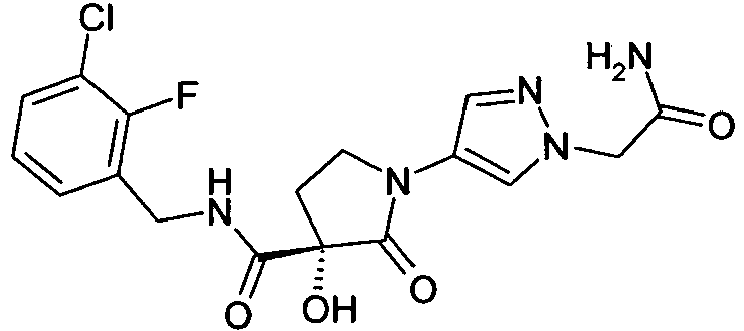
8.62 (t, J = 6.2, 1H), 8.04 (s, 1H), 7.66 (s, 1H), 7.51 - 7.43 (m, 2H), 7.31 (t, J = 6.5, 1H), 7.23 (s, 1H), 7.18 (t, J = 7.9, 1H), 6.70 (s, 1H), 4.74 (s, 2H), 4.40 (dd, J = 15.7, 6.2, 1H), 4.36 - 4.29 (m, 1H), 3.77 - 3.64 (m, 2H), 3.49 - 3.39 (m, 1H), 3.16 (d, J = 5.2, 1H), 2.61 (ddd, J = 12.1, 7.5, 4.3, 1H), 2.20 - 2.09 (m, 1H). HPLC 2.866 min 96.09 % purity (S)-1-(1-Carbamoylmethyl-1H-pyrazol-4-yl)-3-hydroxy-2-oxo-pyrrolidin-3-carbonsäure-3-chlor-2-fluor-benzylamid "A230" 
4.17 min [354.3] 4-[(R)-3-(3,5-Difluor-benzylcarbamoyl)-3-hydroxy-2-oxo-pyrrolidin-1-yl]-piperidin-1-carbonsäure-tert.-butylester "A231" 
8.75 (t, J = 6.4, 1H), 8.07 - 8.00 (m, 2H), 7.99-7.92 (m, 1H), 7.67 (d, J = 7.9, 1H), 7.48 (t, J = 8.0, 1H), 7.42 (s, 1H), 7.27 (dt, J = 8.8, 2.2, 1H), 7.20 (s, 1H), 7.10 (d, J = 9.7, 1H), 6.80 (s, 1H), 4.38 (dd, J = 15.8, 6.7, 1H), 4.25 (dd, J = 15.7, 6.0, 1H), 3.94-3.84 (m, 2H), 2.65 - 2.54 (m, 1H), 2.14 (dt, J = 13.0, 7.6, 1H). 3.32 min [406] (R)-1-(3-Carbamoyl-phenyl)-3-hydroxy-2-oxo-pyrrolidin-3-carbonsäure-3-chlor-5-fluor-benzylamid "A232" 
11.12 (s, 1H), 8.69 (d, J = 6.7, 1H), 7.70 (s, 1H), 7.41 - 7.38 (m, 2H), 7.38 - 7.35 (m, 1H), 7.27 (d, J = 8.8, 1H), 7.22 (s, 1H), 7.12 (d, J = 9.5, 1H), 6.69 (s, 1H), 6.42 (s, 1H), 4.40 (dd, J = 15.8, 7.1, 2H), 4.25 (dd, J = 15.8, 5.8, 2H), 3.91 - 3.84 (m, 2H), 2.64 - 2.55 (m, 2H), 2.14 (t, J = 6.6, 1H), 2.12-2.08 (m, 1H). 5.09 min [445] (S)-3-Hydroxy-2-oxo-1-(3-trifluormethyl-phenyl)-pyrrolidin-3-carbonsäure-[2-(3-chlor-5-fluor-phenyl)-ethyl]-amid "A233" 
8.11 (t, J = 6.0, 1H), 7.93 (d, J = 8.6, 2H), 7.77 (d, J = 8.7, 2H), 7.24 (dt, J = 8.9, 2.1, 1H), 7.15 (s, 1H), 7.08 (dd, J = 9.3, 1.8, 1H), 6.75 (s, 1H), 3.94 - 3.81 (m, 2H), 3.44 - 3.34 (m, 2H), 2.78 (t, J = 6.9, 2H), 2.47 - 2.41 (m, 1H), 2.08 (dt, J = 12.8, 7.9, 1H). HPLC 5.068 min 99.04 % purity (S)-3-Hydroxy-2-oxo-1-(4-trifluormethyl-phenyl)-pyrrolidin-3-carbonsäure-[2-(3-chlor-5-fluor-phenyl)-ethyl]-amid "A234" 
8.08 (t, J = 6.0, 1H), 7.69 (dt, J = 12.0, 2.2, 1H), 7.46 (tdd, J = 16.3, 11.0, 5.1, 2H), 7.23 (dt, J = 8.9, 2.1, 1H), 7.15 (s, 1H), 7.08 (dd, J = 9.3, 1.8, 1H), 7.05 - 6.98 (m, 1H), 6.68 (s, 1H), 3.89 - 3.70 (m, 2H), 3.44 - 3.33 (m, 2H), 2.78 (t, J = 6.9, 2H), 2.46 - 2.38 (m, 1H), 2.05 (dt, J = 13.0, 8.0, 1H). 4.59 min [395] (S)-1-(3-Fluor-phenyl)-3-hydroxy-2-oxo-pyrrolidin-3-carbonsäure-[2-(3-chlor-5-fluor-phenyl)-ethyl]-amid "A235" 
8.80 (t, J = 6.1, 1H), 8.21 (s, 1H), 7.89 (d, J = 8.2, 1H), 7.66 (t, J = 8.0, 1H), 7.55 (d, J = 7.7, 1H), 7.27 (d, J = 8.7, 1H), 7.20 (s, 1H), 7.09 (d, J = 9.6, 1H), 6.90 (s, 1H), 4.38 (dd, J = 15.7, 6.7, 1H), 4.24 (dd, J = 15.8, 5.8, 1H), 3.98-3.86 (m, 2H), 2.64 - 2.55 (m, 1H), 2.22 - 2.07 (m, 1H). 4.89 min [431] (S)-3-Hydroxy-2-oxo-1-(3-trifluormethyl-phenyl)-pyrrolidin-3-carbonsäure-3-chlor-5-fluor-benzylamid "A236" 
8.57 (d, J = 6.6, 1H), 7.07 (d, J = 9.2, 1H), 6.97 (d, J = 6.6, 2H), 6.47 (s, 1H), 4.36 (dd, J = 15.9, 6.7, 2H), 4.21 (dd, J = 16.0, 6.0, 1H), 4.00 (dd, J = 17.8, 12.9, 3H), 3.94-3.84 (m, 2H), 1.97 - 1.86 (m, 2H), 1.59 - 1.48 (m, 4H), 1.39 (s, 9H), 1.23 (s, 1H), 1.14 (t, J = 7.5, 2H). 4.17 min [354.3] 4-[(S)-3-(3,5-Difluor-benzyl-carbamoyl)-3-hydroxy-2-oxo-pyrrolidin-1-yl]-piperidin-1-carbonsäure-tert.-butylester "A237" 
8.75 (t, J = 6.4, 1H), 8.07 - 8.00 (m, 2H), 7.99-7.93 (m, 1H), 7.67 (d, J = 7.9, 1H), 7.48 (t, J = 8.0, 1H), 7.42 (s, 1H), 7.27 (dt, J = 8.8, 2.2, 1H), 7.20 (s, 1H), 7.10 (d, J = 9.7, 1H), 6.80 (s, 1H), 4.38 (dd, J = 15.8, 6.7, 1H), 4.25 (dd, J = 15.7, 6.0, 1H), 3.94-3.86 (m, 2H), 2.64 - 2.56 (m, 1H), 2.14 (dt, J = 13.0, 7.6, 1H). 3.25 min [406] (S)-1-(3-Carbamoyl-phenyl)-3-hydroxy-2-oxo-pyrrolidin-3-carbonsäure-3-chloro-5-fluor-benzylamid "A238" 
8.77 (t, J = 6.3, 1H), 7.70 (dt, J = 11.9, 2.2, 1H), 7.55 - 7.42 (m, 2H), 7.29 (dt, J = 8.8, 2.1, 1H), 7.21 (s, 1H), 7.11 (d, J = 9.6, 1H), 7.04 (td, J = 8.1, 1.6, 1H), 6.83 (s, 1H), 4.39 (dd, J = 15.7, 6.7, 1H), 4.25 (dd, J = 15.7, 6.0, 1H), 3.93 - 3.83 (m, 2H), 2.64 - 2.55 (m, 1H), 2.14 (dt, J = 13.1, 7.7, 1H). 4.4 min [381] (S)-1-(3-Fluor-phenyl)-3-hydroxy-2-oxo-pyrrolidin-3-carbonsäure-3-chlor-5-fluor-benzylamid "A239" 
8.75 (d, J = 2.6, 1H), 8.08 (t, J = 5.9, 1H), 8.00 (dd, J = 8.5, 2.7, 1H), 7.29 (d, J = 8.5, 1H), 7.23 (dt, J = 8.9, 2.2, 1H), 7.15 (s, 1H), 7.08 (dd, J = 9.3, 1.8, 1H), 6.67 (s, 1H), 3.88 - 3.77 (m, 2H), 3.42 - 3.33 (m, 2H), 2.78 (t, J = 7.0, 2H), 2.44 (s, 3H), 2.07 (dt, J = 12.9, 7.8, 1H). 3.09 min [392.3] "A240" 
8.06 - 7.97 (m, 2H), 7.65 (s, 1H), 7.24 (dt, J = 8.9, 2.1, 1H), 7.15 (s, 1H), 7.07 (d, J = 9.2, 1 H), 6.54 (d, J = 8.0, 1H), 4.48 (dt, J = 13.3, 6.7, 1H), 3.71 - 3.59 (m, 2H), 3.42 - 3.33 (m, 2H), 2.77 (t, J = 7.0, 2H), 2.44 (dd, J = 7.8, 3.9, 1H), 2.12 - 1.99 (m, 1H), 1.38 (d, J = 6.7, 6H). 3.94 min [409.3] (S)-3-Hydroxy-1-(1-isopropyl-1 H-pyrazol-4-yl)-2-oxo-pyrrolidin-3-carbonsäure-[2-(3-chlor-5-fluorphenyl)-ethyl]-amid "A241" 
8.09 (t, J = 6.0, 1H), 7.95 (s, 1H), 7.91 (d, J = 8.9, 2H), 7.77 (d, J = 8.9, 2H), 7.33 (s, 1H), 7.24 (dt, J = 8.8, 2.1, 1H), 7.16 (s, 1H), 7.08 (d, J = 9.0, 1H), 6.68 (s, 1H), 3.90 - 3.80 (m, 2H), 3.44 - 3.34 (m, 2H), 2.78 (t, J = 6.9, 2H), 2.47 - 2.38 (m, 1H), 2.06 (dt, J = 12.8, 7.9, 1H). 3.42 min [420] (S)-1-(4-Carbamoyl-phenyl)-3-hydroxy-2-oxo-pyrrolidin-3-carbonsäure-[2-(3-chlor-5-fluorphenyl)-ethyl]-amid "A242" 
8.72 (t, J = 6.3, 1H), 7.49 (s, 1H), 7.27 (dd, J = 8.8, 2.2, 1H), 7.20 (s, 1H), 7.09 (d, J = 9.2, 1H), 6.75 (s, 1H), 4.38 (dd, J = 15.7, 6.7, 1H), 4.23 (dd, J = 15.7, 5.8, 1H), 3.83 (t, J = 6.8, 1H), 3.65 (t, J = 6.3, 2H), 2.70 (t, J = 6.6, 1H), 2.56 (dd, J = 12.7, 6.0, 1H), 2.19 - 2.05 (m, 3H), 1.91 - 1.81 (m, 2H). 3.89 min [460.3] "A243" 
8.69 (t, J = 6.4, 1H), 7.36 (dd, J = 8.8, 2.7, 1H), 7.31 (d, J = 2.6, 1H), 7.27 (dt, J = 8.8, 2.1, 1H), 7.20 (s, 1H), 7.09 (d, J = 9.0, 1H), 6.74 (d, J = 8.8, 1H), 6.68 (s, 1H), 4.37 (dd, J = 15.8, 6.7, 1H), 4.23 (dd, J = 15.8, 6.0, 1H), 4.14 - 4.08 (m, 2H), 3.81 - 3.74 (m, 2H), 2.73 (t, J = 6.4, 2H), 2.60 - 2.51 (m, 1H), 2.08 (dt, J = 13.0, 7.6, 1H), 1.95 -1.86 (m, 2H). 4.41 min [419.3] (S)-1-Chroman-6-yl-3-hydroxy-2-oxo-pyrrolidin-3-carbonsäure-3-chlor-5-fluor-benzylamid "A244" 
8.75 (d, J = 2.6, 1H), 8.08 (t, J = 5.9, 1H), 8.00 (dd, J = 8.5, 2.7, 1H), 7.29 (d, J = 8.5, 1H), 7.23 (dt, J = 8.9, 2.1, 1H), 7.15 (s, 1H), 7.08 (dd, J = 9.7, 1.4, 1H), 6.67 (s, 1H), 3.88 - 3.77 (m, 2H), 3.44 - 3.35 (m, 1H), 2.78 (t, J = 6.9, 2H), 2.44 (s, 3H),2.43 (m, 1H), 2.07 (dt, J = 12.9, 7.8, 1H). 3.09 min [392.3] (R)-3-Hydroxy-1-(6-methyl-pyridin-3-yl)-2-oxo-pyrrolidin-3-carbonsäure-[2-(3-chlor-5-fluor-phenyl)-ethyl]-amid "A245" 
8.09 (t, J = 6.0, 1H), 7.95 (s, 1H), 7.91 (d, J = 8.9, 2H), 7.77 (d, J = 8.9, 2H), 7.33 (s, 1H), 7.24 (dt, J = 8.8, 2.1, 1H), 7.16 (s, 1H), 7.08 (d, J = 9.0, 1H), 6.68 (s, 1H), 3.91 - 3.79 (m, 2H), 3.43 - 3.35 (m, 2H), 2.78 (t, J = 6.9, 2H), 2.47 - 2.38 (m, 1H), 2.06 (dt, J = 12.8, 7.9, 1H). 3.42 min [420] (R)-1 -(4-Carbamoyl-phenyl)-3-hydroxy-2-oxo-pyrrolidin-3-carbonsäure-[2-(3-chlor-5-fluor-phenyl)-ethyl]-amid "A246" 
8.72 (t, J = 6.2, 1H), 7.49 (s, 2H), 7.30 - 7.24 (m, 1H), 7.20 (s, 1H), 7.09 (d, J = 9.4, 1H), 6.75 (s, 1H), 4.38 (dd, J = 15.9, 6.7, 1H), 4.23 (dd, J = 15.7, 6.3, 1H), 3.83 (t, J = 6.7, 2H), 3.65 (t, J = 6.4, 2H), 2.70 (t, J = 6.5, 2H), 2.56 (dd, J = 12.7, 5.9, 1H), 2.14 (s, 3H), 2.10 (dd, J = 12.9, 7.8, 2H), 1.90 - 1.81 (m, 2H). 3.89 min [460.3] (R)-1-(1-Acetyl-1,2,3,4-tetrahydro-chinolin-6-yl)-3-hydroxy-2-oxo-pyrrolidin-3-carbonsäure-3-chlor-5-fluor-benzylamid "A247" 
8.69 (t, J = 6.4, 1H), 7.36 (dd, J = 8.8, 2.7, 1H), 7.31 (d, J = 2.6, 1H), 7.27 (dt, J = 8.8, 2.1, 1H), 7.20 (s, 1H), 7.09 (d, J = 9.6, 1H), 6.74 (d, J = 8.8, 1H), 6.68 (s, 1H), 4.37 (dd, J = 16.0, 6.9, 1H), 4.23 (dd, J = 15.8, 6.0, 1H), 4.14 - 4.07 (m, 2H), 3.81 - 3.74 (m, 2H), 2.73 (t, J = 6.4, 2H), 2.60 - 2.51 (m, 1H), 2.08 (dt, J = 13.0, 7.6, 1H), 1.95 - 1.86 (m, 2H). 4.41 min [419.3] (R)-1-Chroman-6-yl-3-hydroxy-2-oxo-pyrrolidin-3-carbonsäure-3-chlor-5-fluor-benzylamid "A248" 
8.70 (t, J = 6.4, 1H), 8.03 (s, 1H), 7.66 (s, 1H), 7.27 (dt, J = 8.8, 2.1, 1H), 7.19 (s, 1H), 7.09 (d, J = 9.6, 1H), 6.69 (s, 1H), 4.48 (dt, J = 13.3, 6.7, 1H), 4.36 (dd, J = 15.7, 6.7, 1H), 4.23 (dd, J = 15.7, 6.0, 1H), 3.74 - 3.63 (m, 2H), 2.60 (ddd, J = 12.1, 7.6, 4.2, 1H), 2.17 - 2.09 (m, 1 H), 1.38 (d, J = 6.7, 6H). 3.78 min [395] (S)-3-Hydroxy-1-(1-isopropyl-1 H-pyrazol-4-yl)-2-oxo-pyrrolidin-3-carbonsäure-3-chlor-5-fluor-benzylamid "A249" 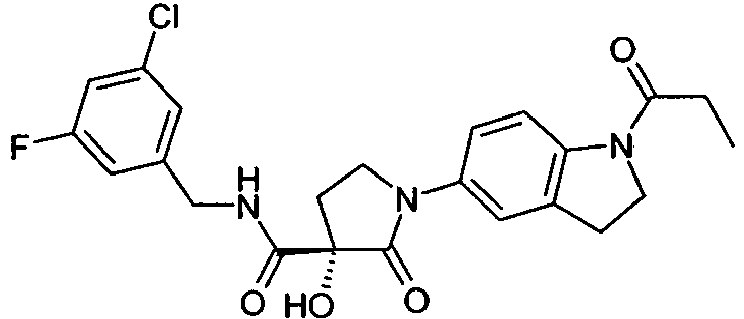
8.71 (t, J = 6.4, 1H), 8.05 (d, J = 8.7, 1H), 7.62 (s, 1H), 7.40 (d, J = 8.4, 1H), 7.27 (dd, J = 8.7, 2.2, 1H), 7.20 (s, 1H), 7.10 (d, J = 8.8, 1H), 6.72 (s, 1 H), 4.38 (dd, J = 15.5, 6.7, 1H), 4.23 (dd, J = 15.8, 5.9, 1H), 4.08 (t, J = 8.5, 2H), 3.84 - 3.79 (m, 2H), 3.15 (t, J= 8.5, 2H), 2.61 - 2.52 (m, 2H), 2.46 - 2.41 (m, 2H), 2.10 (dt, J = 13.0, 7.4, 1H), 1.07 - 1.02 (m, 3H). 4.07 min [460] (S)-3-Hydroxy-2-oxo-1-(1-propionyl-2,3-dihydro-1H-indol-5-yl)-pyrrolidin-3-carbonsäure-3-chlor-5-fluor-benzylamid "A250" 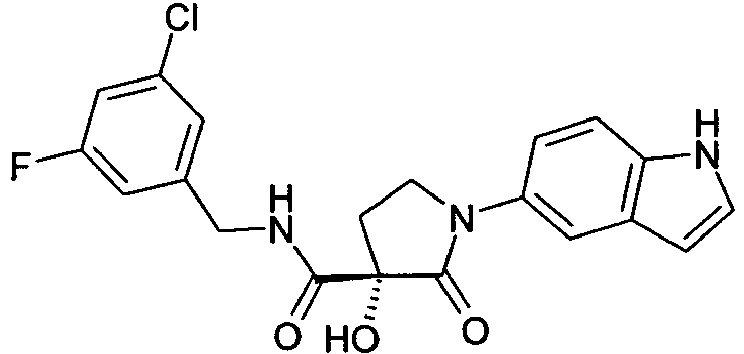
11.12 (s, 1H), 8.69 (d, J = 6.7, 1H), 7.70 (s, 1H), 7.44 - 7.34 (m, 3H), 7.27 (d, J = 8.8, 1H), 7.22 (s, 1H), 7.12 (d, J = 9.5, 1H), 6.69 (s, 1H), 6.42 (s, 1H), 4.40 (dd, J = 15.8, 7.1, 1H), 4.25 (dd, J = 15.8, 5.8, 1H), 3.90 - 3.84 (m, 2H), 2.64 - 2.55 (m, 2H), 2.12 (dt, J = 12.9, 7.6, 1H). 3.94 min [402] (S)-3-Hydroxy-1-(1H-indol-5-yl)-2-oxo-pyrrolidin-3-carbonsäure-3-chlor-5-fluor-benzylamid "A251" 
12.06 (s, 1H), 10.10 (s, 1H), 8.70 (t, J = 6.3, 1H), 7.65 (s, 1H), 7.47 (s, 1H), 7.43 (dd, J = 8.6, 2.4, 1H), 7.27 (dt, J = 8.7, 2.1, 1H), 7.20 (s, 1H), 7.09 (d, J = 8.9, 1H), 7.03 (s, 2H), 6.85 (d, J = 8.6, 1H), 6.72 (s, 1H), 4.37 (dd, J = 15.7, 6.8, 1H), 4.23 (dd, J = 15.7, 6.1, 1H), 3.79 (t, J = 6.8, 1H), 2.87 (t, J = 7.6, 1H), 2.61 - 2.52 (m, 1H), 2.43 (dd, J = 8.3, 6.7, 2H), 2.09 (dt, J = 12.9, 7.6, 1H). 3.38 min [432] (S)-3-Hydroxy-2-oxo-1-(2-oxo-1,2,3,4-tetrahydro-chinolin-6-yl)-pyrrolidin-3-carbonsäure-3-chlor-5-fluor-benzylamid "A252" 
8.69 (t, J = 6.3, 1H), 7.53 (s, 1H), 7.32 (dd, J = 8.6, 2.2, 1H), 7.27 (d, J = 8.7, 1H), 7.20 (s, 1H), 7.10 (d, J = 9.2, 1H), 6.77 (d, J = 8.6, 1H), 6.69 (s, 1H), 4.52 (t, J = 8.7, 2H), 4.38 (dd, J = 15.7, 6.7, 1H), 4.23 (dd, J = 15.7, 6.1, 1H), 3.82 - 3.76 (m, 2H), 3.18 (t, J = 8.7, 2H), 2.62 - 2.52 (m, 1H), 2.09 (dt, J = 12.9, 7.6, 1H). 4.06 min [405] (S)-1-(2,3-Dihydro-benzofuran-5-yl)-3-hydroxy-2-oxo-pyrrolidin-3-carbonsäure-3-chlor-5-fluor-benzylamid "A253" 
8.71 (t, J = 6.3, 1H), 7.64 (d, J = 2.0, 1H), 7.46 (dd, J = 8.6, 2.1, 1H), 7.29-7.23 (m, 2H), 7.20 (s, 1H), 7.09 (d, J = 9.6, 1H), 6.74 (s, 1H), 4.38 (dd, J = 15.7, 6.6, 1H), 4.23 (dd, J = 15.8, 6.0, 1H), 3.94 (t, J = 8.5, 2H), 3.85 - 3.78 (m, 2H), 3.13 (t, J = 8.4, 2H), 2.96 (s, 2H), 2.61 - 2.53 (m, 1H), 2.11 (dt, J = 13.0, 7.7, 1H). 3.99 min [482] 3-Hydroxy-1-(1-methansulfonyl-2,3-dihydro-1H-indol-5-yl)-2-oxo-pyrrolidin-3-carbonsäure-3-chlor-5-fluor-benzylamid "A254" 
10.02 (s, 1H), 8.73 (s, 1H), 7.93 (s, 1H), 7.48-7.43 (m, 1H), 7.34 - 7.24 (m, 3H), 7.20 (s, 1H), 7.09 (d, J = 9.7, 1H), 6.78 (s, 1H), 4.38 (dd, J = 15.7, 6.2, 1H), 4.24 (dd, J = 15.7, 5.3, 1H), 3.81 (dd, J = 8.3, 5.6, 2H), 2.62 - 2.53 (m, 1H), 2.12 (m, 1H), 2.03 (s, 3H). 3.53 min [420] 1-(3-Acetylamino-phenyl)-3-hydroxy-2-oxo-pyrrolidin-3-carbonsäure-3-chlor-5-fluor-benzylamid "A255" 
8.78 (t, J = 6.4, 1H), 8.03 - 7.98 (m, 2H), 7.97-7.92 (m, 2H), 7.27 (dt, J = 8.8, 2.1, 1H), 7.20 (s, 1H), 7.10 (d, J = 9.6, 1H), 6.86 (s, 1H), 4.38 (dd, J = 15.7, 6.7, 1H), 4.24 (dd, J = 15.7, 6.0, 1H), 3.97 - 3.87 (m, 2H), 2.65 - 2.58 (m, 1H), 2.16 (m, 1H). 3.76 min [445] 3-Hydroxy-1-[4-(5-methyl-[1,3,4]oxadiazol-2-yl)-phenyl]-2-oxo-pyrrolidin-3-carbonsäure-3-chlor-5-fluor-benzylamid "A256" 
3.71 min [395] (R)-3-Hydroxy-1-(1-isopropyl-1H-pyrazol-4-yl)-2-oxo-pyrrolidin-3-carbonsäure-3-chlor-5-fluor-benzylamid "A257" 
8.71 (t, J = 6.4, 1H), 8.05 (d, J = 8.6, 1H), 7.62 (s, 1H), 7.40 (d, J = 8.5, 1H), 7.27 (dt, J = 8.9, 2.2, 1H), 7.20 (s, 1H), 7.10 (d, J = 9.5, 1H), 6.72 (s, 1H), 4.38 (dd, J = 15.7, 6.7, 1H), 4.23 (dd, J = 15.6, 6.0, 1H), 4.08 (t, J = 8.6, 2H), 3.84 - 3.79 (m, 2H), 3.15 (t, J = 8.5, 2H), 2.61 - 2.52 (m, 2H), 2.45 (d, J = 7.4, 2H), 2.15 - 2.06 (m, 1H), 1.07 - 1.02 (m, 3H). 4.00 min [460] (R)-3-Hydroxy-2-oxo-1-(1-propionyl-2,3-dihydro-1H-indol-5-yl)-pyrrolidin-3-carbonsäure-3-chlor-5-fluor-benzylamid "A258" 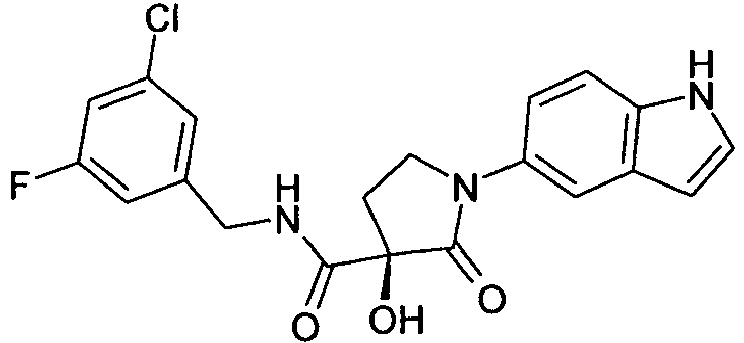
11.12 (s, 1H), 8.70 (t, J = 6.4, 1H), 7.70 (s, 1H), 7.45 - 7.34 (m, 3H), 7.27 (d, J = 8.6, 1H), 7.22 (s, 1H), 7.12 (d, J = 9.6, 1H), 6.69 (s, 1H), 6.42 (s, 1H), 4.40 (dd, J = 15.4, 6.6, 1H), 4.30 - 4.23 (m, 1H), 3.87 (t, J = 6.7, 2H), 2.63 - 2.56 (m, 1H), 2.12 (dt, J = 12.9, 7.6, 1H). 3.94 min [402] (R)-3-Hydroxy-1-(1H-indol-5-yl)-2-oxo-pyrrolidin-3-carbonsäure-3-chlor-5-fluor-benzylamid "A259" 
8.69 (t, J = 6.4, 1H), 7.55 -7.52 (m, 1H), 7.32 (dd, J = 8.6, 2.4, 1H), 7.27 (dt, J = 8.8, 2.2, 1H), 7.20 (s, 1H), 7.10 (d, J = 9.7, 1H), 6.77 (d, J = 8.6, 1H), 6.69 (s, 1H), 4.52 (t, J = 8.7, 2H), 4.38 (dd, J = 15.7, 6.7, 1H), 4.23 (dd, J = 15.8, 6.0, 1H), 3.78 (dd, J = 7.5, 6.1, 2H), 3.18 (t, J = 8.7, 2H), 2.60 - 2.52 (m, 1H), 2.09 (dt, J = 12.9, 7.6, 1H). 4.05 min [405] (R)-1-(2,3-Dihydro-benzofuran-5-yl)-3-hydroxy-2-oxo-pyrrolidin-3-carbonsäure-3-chlor-5-fluor-benzylamid "A260" 
8.78 (t, J = 6.3, 1H), 8.00 - 7.93 (m, 3H), 7.27 (dt, J = 8.8, 2.1, 1H), 7.20 (s, 1H), 7.09 (d, J = 9.8, 1H), 6.88 (s, 1H), 4.38 (dd, J = 15.4, 6.6, 1H), 4.24 (dd, J = 15.8, 5.9, 1H), 3.92 (t, J = 6.1, 2H), 2.60 (dt, J = 7.1, 5.8, 1H), 2.21 - 2.12 (m, 1H). 4.98 min [439] (S)-3-Hydroxy-1-(4-methansulfonyl-phenyl)-2-oxo-pyrrolidin-3-carbonsäure-3-chlor-5-fluor-benzylamid "A261" 
8.05 (t, J = 6.0, 1H), 8.00 (d, J = 8.8, 1H), 7.61 (s, 1H), 7.42 - 7.34 (m, 1H), 7.24 (dt, J = 8.8, 2.1, 1H), 7.16 (s, 1H), 7.08 (d, J = 9.1, 1H), 4.09 (t, J = 8.6, 2H), 3.81 - 3.74 (m, 2H), 3.43 - 3.23 (m, 4H), 3.15 (t, J = 8.5, 2H), 2.77 (t, J = 7.0, 2H), 2.46 - 2.37 (m, 1H), 2.14 (s, 3H), 2.03 (dt, J = 12.7, 7.8, 1H). 3.83 min [460.3] 1-(1-Acetyl-2,3-dihydro-1H-indol-5-yl)-3-hydroxy-2-oxo-pyrrolidin-3-carbonsäure-[2-(3-chlor-5-fluorphenyl)-ethyl]-amid "A262" 
10.54 (s, 1H), 8.76 (t, J = 6.4, 1H), 8.66 - 8.63 (m, 1H), 8.13-8.05 (m, 2H), 7.27 (dt, J = 8.8, 2.1, 1H), 7.20 (s, 1H), 7.10 (d, J = 9.6, 1H), 6.80 (s, 1H), 4.38 (dd, J = 15.7, 6.8, 1H), 4.24 (dd, J = 15.8, 6.1, 1H), 3.92 - 3.81 (m, 2H), 2.60 (ddd, J = 12.0, 7.1,4.8, 1H), 2.14 (dt, J = 13.0, 7.6, 1H), 2.07 (s, 3H). 3.03 min [421] 1-(6-Acetylamino-pyridin-3-yl)-3-hydroxy-2-oxo-pyrrolidin-3-carbonsäure-3-chlor-5-fluor-benzylamid "A263" 
8.78 (t, J = 6.4, 1H), 8.00 - 7.92 (m, 3H), 7.27 (dt, J = 8.8, 2.1, 1H), 7.20 (s, 1H), 7.09 (d, J = 8.8, 1H), 6.88 (s, 1H), 4.38 (dd, J = 16.1,6.7, 1H), 4.24 (dd, J = 15.8, 6.0, 1H), 3.92 (t, J = 6.1, 2H), 3.19 (s, 3H), 2.65 - 2.57 (m, 1 H), 2.16 (dt, J = 13.1, 7.7, 1H). 5.01 min [439] (R)-3-Hydroxy-1-(4-methan-sulfonyl-phenyl)-2-oxo-pyrrolidin-3-carbonsäure-3-chlor-5-fluor-benzylamid "A264" 
8.70 (t, J = 6.3, 1H), 7.64 (d, J = 2.0, 1H), 7.46 (dd, J = 8.6, 2.1, 1H), 7.29-7.23 (m, 2H), 7.20 (s, 1H), 7.09 (d, J = 9.6, 1H), 6.74 , (s, 1H), 4.38 (dd, J = 15.8, 6.6, 1H), 4.23 (dd, J = 15.8, 6.0, 1H), 3.94 (t, J = 8.5, 2H), 3.85 - 3.78 (m, 2H), 3.13 (t, J = 8.4, 2H), 2.96 (s, 2H), 2.61 - 2.53 (m, 1H), 2.11 (dt, J = 13.0, 7.7, 1H). $$$ 10.55 min 100% purity (R)-3-Hydroxy-1-(1-methan-sulfonyl-2,3-dihydro-1H-indol-5-yl)-2-oxo-pyrrolidin-3-carbonsäure-3-chlor-5-fluor-benzylamid "A265" 
8.72 (t, J = 6.3, 1H), 7.64 (d, J = 2.0, 1H), 7.46 (dd, J = 8.6, 2.1, 1H), 7.29-7.23 (m, 2H), 7.21 (s, 1H), 7.09 (d, J = 9.6, 1H), 6.74 (s, 1H), 4.38 (dd, J = 15.7, 6.6, 1H), 4.23 (dd, J = 15.7, 6.0, 1H), 3.94 (t, J = 8.5, 2H), 3.85 - 3.78 (m, 2H), 3.13 (t, J = 8.4, 2H), 2.96 (s, 2H), 2.61 - 2.53 (m, 1H), 2.11 (dt, J = 13.0, 7.7, 1H). $$$ 6.50 min 100% purity (S)-3-Hydroxy-1-(1-methansulfonyl-2,3-dihydro-1H-indol-5-yl)-2-oxo-pyrrolidin-3-carbonsäure-3-chlor-5-fluor-benzylamid "A266" 
8.78 (t, J = 6.4, 1H), 8.04 - 7.98 (m, 2H), 7.97-7.91 (m, 2H), 7.27 (dt, J = 8.8, 2.1, 1H), 7.20 (s, 1H), 7.10 (d, J = 9.6, 1H), 6.86 (s, 1H), 4.38 (dd, J = 15.7, 6.7, 1H), 4.24 (dd, J = 15.7, 6.0, 1H), 3.97 - 3.87 (m, 2H), 2.65 - 2.58 (m, 1H), 2.17 - 2.15 (m, 1H). $$$ 14.31 min 100% purity (R)-3-Hydroxy-1-[4-(5-methyl-[1,3,4]oxadiazol-2-yl)-phenyl]-2-oxo-pyrrolidin-3-carbonsäure-3-chlor-5-fluor-benzylamid "A267" 
8.79 (t, J = 6.4, 1H), 8.00 (m, 2H), 7.97 - 7.92 (m, 2H), 7.27 (dt, J = 8.8, 2.1, 1H), 7.20 (s, 1H), 7.10 (d, J = 9.6, 1H), 6.86 (s,1H), 4.38 (dd, J = 15.7, 6.7, 1H), 4.24 (dd, J = 15.7, 6.0, 1H), 3.97 - 3.87 (m, 2H), 2.65 - 2.58 (m, 1H), 2.16 (m, 1H). $$$ 5.54 min 89% purity (S)-3-Hydroxy-1-(1-methansulfonyl-2,3-dihydro-1H-indol-5-yl)-2-oxo-pyrrolidin-3-carbonsäure-3-chlor-5-fluor-benzylamid "A268" 
8.79 (t, J = 6.4, 1H), 8.32 (s, 1H), 7.99 (d, J = 7.7, 1H), 7.71 (dt, J = 15.6, 7.8, 2H), 7.27 (d, J = 8.9, 1H), 7.20 (s, 1H), 7.10 (d, J = 9.6, 1H), 6.87 (s, 1H), 4.37 (dd, J = 16.1, 6.7, 1H), 4.25 (dd, J = 15.7, 6.1, 1H), 3.93 (t, J = 6.9, 2H), 3.23 (s, 3H), 2.64-2.57 (m, 2H), 2.45 - 2.38 (m, 1H), 2.16 (dt, J = 13.3, 7.9, 1H). 4.99 min [441] (S)-3-Hydroxy-1-(3-methansulfonyl-phenyl)-2-oxo-pyrrolidin-3-carbonsäure-3-chlor-5-fluor-benzylamid "A269" 
8.74 (dd, J = 7.5, 4.6, 2H), 8.01 (dd, J = 8.5, 2.7, 1H), 7.30 (d, J = 8.5, 1H), 7.07 (tt, J = 9.4, 2.4, 1H), 6.99 (t, J = 6.4, 2H), 6.81 (s, 1H), 4.38 (dd, J = 15.8, 6.8, 1H), 4.25 (dd, J = 15.9, 6.1, 1H), 3.87 (t, J = 6.8, 2H), 2.64 - 2.55 (m, 1H), 2.45 (s, 3H), 2.14 (dt, J = 13.0, 7.5, 1H). 2.49 min [362] (S)-3-Hydroxy-1-(6-methyl-pyridin-3-yl)-2-oxo-pyrrolidin-3-carbonsäure-3,5-difluor-benzylamid "A270" 
9.96 (s, 1H), 8.71 (t, J = 6.5, 1H), 7.66 - 7.55 (m, 4H), 7.27 (d, J = 8.5, 1H), 7.20 (s, 1H), 7.09 (d, J = 9.2, 1H), 6.73 (s, 1H), 4.38 (dd, J = 15.4, 6.6, 1H), 4.23 (dd, J = 15.7, 5.9, 1H), 3.81 (t, J = 6.8, 2H), 2.62 - 2.53 (m, 2H), 2.16 - 2.05 (m, 2H), 2.02 (s, 3H). 3.37 min [420] (S)-1-(4-Acetylamino-phenyl)-3-hydroxy-2-oxo-pyrrolidin-3-carbonsäure-3-chlor-5-fluor-benzylamid "A271" 
9.84 (s, 1H), 8.73 (t, J = 6.4, 1H), 7.67 (s, 1H), 7.35 (dd, J = 3.9, 2.1, 2H), 7.27 (dt, J = 8.8, 2.2, 1H), 7.20 (s, 1H), 7.09 (d, J = 8.9, 1H), 7.05 - 7.00 (m, 1H), 6.79 (s, 1H), 4.37 (dd, J = 15.7, 6.7, 1H), 4.24 (dd, J = 15.7, 6.0, 1H), 3.87 - 3.77 (m, 2H), 2.99 (s, 3H), 2.63 - 2.53 (m, 1H), 2.12 (dt, J = 13.0, 7.8, 1H). 3.72 min [456] (S)-3-Hydroxy-1-(3-methansulfonyl-amino-phenyl)-2-oxo-pyrrolidin-3-carbonsäure-3-chlor-5-fluor-benzylamid "A272" 
8.79 (t, J = 6.4, 1H), 8.44 (t, J = 1.8, 1H), 7.84-7.76 (m, 2H), 7.63 (t, J = 8.0, 1H), 7.27 (dt, J = 8.7, 2.1, 1H), 7.21 (s, 1H), 7.10 (d, J = 9.5, 1H), 6.86 (s, 1H), 4.38 (dd, J = 15.8, 6.7, 1H), 4.25 (dd, J = 15.7, 6.0, 1H), 3.99 - 3.84 (m, 2H), 2.65 - 2.60 (m, 1H), 2.59 (s, 3H), 2.22-2.10 (m, 1H). 3.80 min [445] "A273" 
8.74 (dd, J = 7.6, 4.7, 2H), 8.01 (dd, J = 8.5, 2.7, 1H), 7.30 (d, J = 8.5, 1H), 7.07 (tt, J = 9.3, 2.3, 1H), 6.99 (t, J = 6.4, 2H), 6.81 (s, 1H), 4.38 (dd, J = 15.9, 6.7, 1H), 4.25 (dd, J = 15.8, 6.0, 1H), 3.87 (t, J = 6.8, 2H), 2.65 - 2.56 (m, 1H), 2.45 (s, 3H), 2.14 (dt, J = 13.1, 7.5, 1H). 2.48 min [362] (R)-3-Hydroxy-1-(6-methyl-pyridin-3-yl)-2-oxo-pyrrolidin-3-carbonsäure-3,5-difluor-benzylamid "A274" 
8.73 (t, J = 6.4, 1H), 8.31 (d, J = 9.0, 1H), 7.92 (d, J = 2.1, 1H), 7.88 (d, J = 3.8, 1H), 7.65 (dd, J = 9.0, 2.2, 1H), 7.27 (dt, J = 8.8, 2.1, 1H), 7.21 (s, 1H), 7.11 (d, J = 9.6, 1H), 6.76 (d, J = 4.0, 2H), 4.39 (dd, J = 15.7, 6.7, 1H), 4.25 (dd, J = 15.7, 6.1, 1H), 3.91 (t, J = 6.8, 2H), 2.64 (s, 3H), 2.62 - 2.55 (m, 1H), 2.14 (dt, J = 12.9, 7.5, 1H). 4.10 min [444] (S)-1-(1-Acetyl-1H-indol-5-yl)-3-hydroxy-2-oxo-pyrrolidin-3-carbonsäure-3-chlor-5-fluor-benzylamid "A275" 
8.72 (t, J = 6.4, 1H), 8.34 (d, J = 9.0, 1H), 7.94-7.90 (m, 2H), 7.66 (dd, J = 9.0, 2.2, 1H), 7.27 (dt, J = 8.8, 2.1, 1H), 7.21 (s, 1H), 7.11 (d, J = 9.7, 1H), 6.76 (d, J = 4.3, 2H), 4.39 (dd, J = 15.7, 6.7, 1H), 4.25 (dd, J = 15.7, 6.0, 1H), 3.91 (t, J = 6.8, 2H), 3.06 (q, J = 7.3, 2H), 2.61 (dt, J = 11.9, 5.7, 1H), 2.14 (dt, J = 13.0, 7.6, 1H), 1.17 (t, J = 7.3, 3H). 4.42 min [458] 3-Hydroxy-2-oxo-1-(1-propionyl-1H-indol-5-yl)-pyrrolidin-3-carbonsäure-3-chlor-5-fluor-benzylamid "A276" 
8.72 (t, J = 6.4, 1H), 7.94 (d, J = 2.0, 1H), 7.84 (d, J = 9.0, 1H), 7.71 (dd, J = 9.1, 2.1, 1H), 7.59 (d, J = 3.6, 1H), 7.30 - 7.25 (m, 1H), 7.21 (s, 1H), 7.11 (d, J = 8.9, 1H), 6.86 (d, J = 3.6, 1H), 6.76 (s, 1H), 4.39 (dd, J = 15.7, 6.6, 1H), 4.25 (dd, J = 15.7, 5.9, 1H), 3.95 - 3.85 (m, 2H), 3.41 (s, 3H), 2.65-2.57 (m, 1H), 2.15 (dt, J = 13.1, 7.6, 1H). 4.24 min [480.0] 3-Hydroxy-1-(1-methansulfonyl-1H-indol-5-yl)-2-oxo-pyrrolidin-3-carbonsäure-3-chlor-5-fluor-benzylamid "A277" 
10.56 (s, 1H), 8.74 (t, J = 6.5, 1H), 8.57 (s, 1H), 8.11 (dd, J = 9.0, 2.7, 1H), 7.27 (d, J = 8.7, 1H), 7.20 (s, 1H), 7.10 (d, J = 9.8, 1H), 7.02 (d, J = 8.9, 1H), 6.80 (s, 1H), 4.38 (dd, J = 15.9, 6.7, 2H), 4.24 (dd, J = 15.7, 5.8, 1H), 3.88-3.82 (m, 2H), 3.28 (s, 3H), 2.60 (dd, J = 13.0, 6.2, 2H), 2.15 (dd, J = 14.3, 6.5, 2H). 3.26 min [457] 3-Hydroxy-1-(6-methansulfonyl-amino-pyridin-3-yl)-2-oxo-pyrrolidin-3-carbonsäure-3-chlor-5-fluor-benzylamid "A278" 
8.72 (t, J = 6.3, 1H), 8.31 (d, J = 9.0, 1H), 7.92 (d, J = 2.0, 1H), 7.88 (d, J = 3.8, 1H), 7.65 (dd, J = 9.0, 2.1, 1H), 7.30 - 7.24 (m, 1H), 7.21 (s, 1H), 7.11 (d, J = 9.7, 1H), 6.76 (d, J = 5.1, 2H), 4.39 (dd, J = 15.8, 6.7, 1H), 4.25 (dd, J = 15.7, 6.0, 1H), 3.91 (t, J = 6.8, 2H), 2.64 (s, 3H), 2.60 (dd, J = 12.6, 6.2, 1H), 2.14 (dt, J = 13.1, 7.6, 1H). 4.09 min [444] (R)-1-(1-Acetyl-1H-indol-5-yl)-3-hydroxy-2-oxo-pyrrolidin-3-carbonsäure-3-chlor-5-fluor-benzylamid "A279" 
8.73 (t, J = 6.4, 1H), 8.12 (s, 1H), 7.94 (dd, J = 10.1, 1.4, 1H), 7.82 (ddd, J = 12.4, 9.1, 2.0, 1H), 7.75 (d, J = 9.2, 1H), 7.27 (dt, J = 8.8, 2.1, 1H), 7.21 (s, 1H), 7.11 (d, J = 9.6, 1H), 6.76 (d, J = 0.7, 1H), 5.84 (dd, J = 9.6, 2.4, 1H), 4.39 (dd, J = 15.8, 6.7, 1H), 4.25 (dd, J = 15.7, 6.0, 1H), 3.90 (dd, J = 17.8, 11.2, 3H), 3.74 (ddd, J = 11.5, 9.3, 5.3, 1H), 2.68-2.56 (m, 1H), 2.47 - 2.33 (m, 1H), 2.15 (dt, J = 13.0, 7.5, 1H), 2.09 - 1.92 (m, 2H), 1.86 - 1.67 (m, 1H), 1.57 (dd, J = 8.0, 4.6, 2H). 4.34 min [486.1] 3-Hydroxy-2-oxo-1-[1-(tetrahydro-pyran-2-yl)-1H-indazol-5-yl]-pyrrolidin-3-carbonsäure-3-chlor-5-fluor-benzylamid "A280" 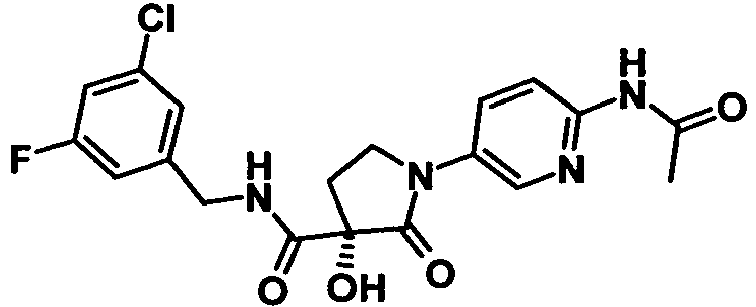
10.54 (s, 1H), 8.76 (t, J = 6.4, 1H), 8.66 - 8.63 (m, 1H), 8.13 - 8.05 (m, 2H), 7.27 (dt, J = 8.8, 2.1, 1H), 7.20 (s, 1H), 7.10 (d, J = 9.6, 1H), 6.80 (s, 1H), 4.38 (dd, J = 15.7, 6.8, 1H), 4.24 (dd, J = 15.8, 6.1, 1H), 3.92 - 3.81 (m, 2H), 2.60 (ddd, J = 12.0, 7.1, 4.8, 1H), 2.14 (dt, J = 13.0, 7.6, 1H), 2.07 (s, 3H). 1.873 min [421.1] $ (S)-1-(6-Acetylamino-pyridin-3-yl)-3-hydroxy-2-oxo-pyrrolidin-3-carbonsäure-3-chlor-5-fluor-benzylamid "A281" 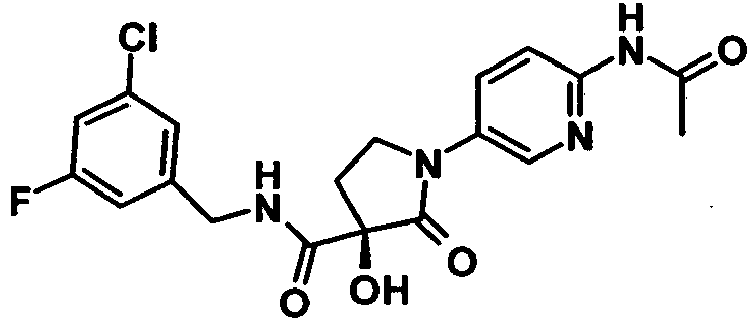
10.55 (s, 1H), 8.77 (t, J = 6.4, 1H), 8.66 - 8.63 (m, 1H), 8.13 - 8.05 (m, 2H), 7.27 (dt, J = 8.8, 2.1, 1H), 7.21 (s, 1H), 7.10 (d, J = 9.6, 1H), 6.80 (s, 1H), 4.38 (dd, J = 15.7, 6.8, 1H), 4.24 (dd, J = 15.8, 6.1, 1H), 3.92 - 3.81 (m, 2H), 2.60 (ddd, J = 12.0, 7.1,4.8, 1H), 2.14 (dt, J = 13.0, 7.6, 1H), 2.08 (s, 3H). 1.874 min [421.0] $ (R)-1-(6-Acetylamino-pyridin-3-yl)-3-hydroxy-2-oxo-pyrrolidin-3-carbonsäure-3-chlor-5-fluor-benzylamid "A282" 
9.00 (s, 1H), 8.71 (t, J = 6.4, 1H), 7.63 (d, J = 13.1, 1H), 7.45 (s, 1H), 7.31-7.24 (m, 1H), 7.20 (s, 1H), 7.10 (d, J = 9.6, 1H), 6.73 (s, 1H), 4.38 (dd, J = 15.8, 6.7, 1H), 4.24 (dd, J = 15.7, 6.0, 1H), 3.82 (t, J = 6.8, 2H), 3.13 (dt, J = 17.1, 8.6, 2H), 2.62 - 2.53 (m, 1H), 2.11 (dt, J = 12.9, 7.5, 1H). 3.51 min [432.0] (S)-1-(1-Formyl-2,3-dihydro-1H-indol-5-yl)-3-hydroxy-2-oxo-pyrrolidin-3-carbonsäure-3-chlor-5-fluor-benzylamid "A283" 
13.09 (s, 1H), 8.72 (t, J = 6.4, 1H), 8.08 (s, 1H), 7.91 (d, J = 1.5, 1H), 7.76 (dd, J = 9.0, 1.9, 1H), 7.56 (d, J = 9.0, 1H), 7.27 (dt, J = 8.8, 2.1, 1H), 7.21 (s, 1H), 7.11 (d, J = 9.7, 1H), 6.74 (s, 1H), 4.39 (dd, J = 15.7, 6.8, 1H), 4.25 (dd, J = 15.8, 6.0, 1H), 3.91 (t, J = 6.8, 2H), 2.65 - 2.57 (m, 1H), 2.14 (dt, J = 12.9, 7.5, 1H). 3.41 min [403.0] 3-Hydroxy-1-(1H-indazol-5-yl)-2-oxo-pyrrolidin-3-carbonsäure-3-chlor-5-fluor-benzylamid "A284" 
8.71 (t, J = 6.3, 1H), 7.57 (dd, J = 8.8, 2.4, 1H), 7.54 (s, 1H), 7.30 - 7.24 (m, 1H), 7.20 (s, 1H), 7.11 (d, J = 8.7, 2H), 6.73 (s, 1H), 4.38 (dd, J = 15.8, 6.7, 1H), 4.24 (dd, J = 15.7, 6.0, 1H), 3.83 (t, J = 6.8, 2H), 3.24 (s, 3H), 2.87 (t, J = 7.3, 2H), 2.63 - 2.51 (m, 3H), 2.12 (dt, J = 13.0, 7.6, 1H). 3.67 min [446.0] 3-Hydroxy-1-(1-methyl-2-oxo-1,2,3,4-tetrahydro-chinolin-6-yl)-2-oxo-pyrrolidin-3-carbonsäure-3-chlor-5-fluor-benzylamid "A285" 
9.00 (s, 1H), 8.71 (t, J = 6.4, 1H), 7.63 (d, J = 12.9, 1H), 7.45 (t, J = 4.7, 1H), 7.27 (dt, J = 8.8, 2.1, 1H), 7.20 (s, 1H), 7.10 (d, J = 9.1, 1H), 6.73 (s, 1H), 4.38 (dd, J = 15.7, 6.7, 1H), 4.24 (dd, J = 15.7, 6.0, 1H), 3.82 (dd, J = 8.2, 5.6, 2H), 3.14 (dt, J = 17.1, 5.1, 2H), 2.57 (dt, J = 6.6, 5.6, 1H), 2.11 (dt, J = 13.0, 7.6, 1H). 3.52 min [432.0] (R)-1-(1-Formyl-2,3-dihydro-1H-indol-5-yl)-3-hydroxy-2-oxo-pyrrolidin-3-carbonsäure-3-chlor-5-fluor-benzylamid "A286" 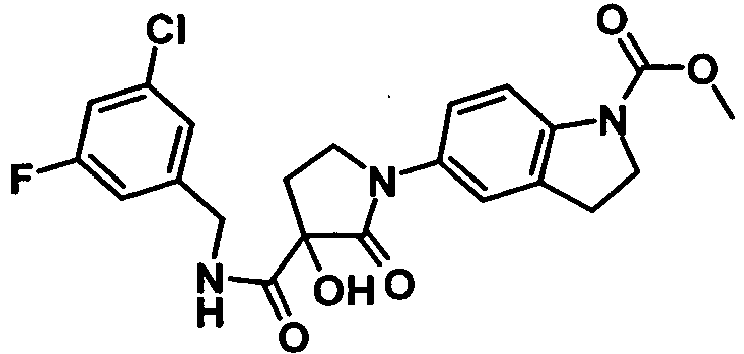
8.71 (t, J = 6.4, 1H), 7.68 (br. s, 1H), 7.59 (s, 1H), 7.45 - 7.40 (m, 1H), 7.27 (dt, J = 8.8, 2.2, 1H), 7.20 (s, 1H), 7.10 (d, J = 9.6, 1H), 6.73 (s, 1H), 4.38 (dd, J = 15.7, 6.7, 1H), 4.24 (dd, J = 15.8, 6.0, 1H), 3.96 (t, J = 8.7, 2H), 3.81 (t, J = 6.9, 2H), 3.73 (s, 3H), 3.11 (t, J = 8.6, 2H), 2.56 (dt, J = 17.8, 5.5, 1H), 2.10 (dt, J = 12.9, 7.6, 1H). 4.198 min [462] 5-[3-(3-Chlor-5-fluor-benzylcarbamoyl)-3-hydroxy-2-oxo-pyrrolidin-1-yl]-2,3-dihydro-indol-1-carbonsäure-methylester "A287" 
δ 8.70 (t, J = 6.4, 1H), 8.02 (d, J = 4.6, 1H), 7.72 (d, J = 1.8, 1H), 7.43 (dd, J = 8.9, 2.0, 1H), 7.36 (d, J = 8.9, 1H), 7.34 (d, J = 3.1, 1H), 7.27 (dt, J = 8.7, 2.1, 1H), 7.22 (s, 1H), 7.11 (d, J = 9.7, 1H), 6.74 (s, 1H), 6.44 (dd, J = 3.1, 0.6, 1H), 4.79 (s, 2H), 4.39 (dd, J = 15.8, 6.8, 1H), 4.25 (dd, J = 15.7, 6.0, 1H), 3.87 (t, J = 6.8, 2H), 2.64 - 2.55 (m, 4H), 2.13 (dt, J = 12.9, 7.5, 1H). 3.56 min [473] (S)-3-Hydroxy-1-(1-methylcarbamoyl-methyl-1 H-indol-5-yl)-2-oxo-pyrrolidin-3-carbonsäure-3-chlor-5-fluor-benzylamid "A288" 
8.64 (d, J = 8.7, 1H), 7.70 (dd, J = 8.7, 1.0, 2H), 7.47 (d, J = 7.2, 2H), 7.44-7.33 (m, 5H), 7.33 - 7.27 (m, 1H), 7.22 - 7.14 (m, 1H), 6.71 (s, 1H), 6.02-5.63 (m, 1H), 3.85 (td, J = 8.8, 5.2, 2H), 3.50 (d, J = 2.5, 1H), 2.55 - 2.50 (m, 1H), 2.09 (dt, J = 13.0, 7.8, 1H). 3.91 min [335] (S)-3-Hydroxy-2-oxo-1-phenyl-pyrrolidin-3-carbonsäure-(1-phenyl-prop-2-ynyl)-amid "A289" 
8.69 (t, J = 6.3, 1H), 8.00 (d, J = 4.5, 1H), 7.72 (d, J = 2.0, 1H), 7.43 (dd, J = 8.9, 2.0, 1H), 7.36 (d, J = 9.0, 1H), 7.34 (d, J = 3.1, 1H), 7.27 (dt, J = 8.7, 2.1, 1H), 7.22 (s, 1H), 7.11 (d, J = 9.0, 1H), 6.71 (s, 1H), 6.44 (d, J = 3.1, 1H), 4.79 (s, 2H), 4.39 (dd, J = 15.8, 6.8, 1H), 4.25 (dd, J = 15.6, 5.9, 1H), 3.87 (t, J = 6.7, 2H), 2.65 - 2.55 (m, 4H), 2.13 (dt, J = 12.9, 7.5, 1H). 3.56 min [473] (R)-3-Hydroxy-1-(1-methyl-carbamoylmethyl-1H-indol-5-yl)-2-oxo-pyrrolidin-3-carbonsäure-3-chlor-5-fluor-benzylamid "A290" 
8.69 (t, J = 6.3, 1H), 7.80 (d, J = 8.8, 1H), 7.51 (d, J = 2.1, 1H), 7.32 - 7.24 (m, 2H), 7.20 (s, 1H), 7.10 (d, J = 8.8, 1H), 6.68 (s, 1H), 6.61 (t, J = 5.5, 1H), 4.38 (dd, J = 15.7, 6.7, 1H), 4.23 (dd, J = 16.0, 6.1, 1H), 3.86 (t, J = 8.7, 2H), 3.79 (dd, J = 8.6, 5.7, 2H), 3.18 - 3.08 (m, 4H), 2.60 - 2.51 (m, 2H), 2.09 (dt, J = 13.0, 7.6, 1H), 1.07 (t, J = 7.1, 3H). 3.78 min [475] 5-[(S)-3-(3-Chlor-5-fluor-benzylcarbamoyl)-3-hydroxy-2-oxo-pyrrolidin-1-yl]-2,3-dihydro-indol-1-carbonsäure-ethylamid "A291" 
δ 8.69 (t, J = 6.4, 1H), 7.80 (d, J = 8.8, 1H), 7.51 (d, J = 2.0, 1H), 7.32-7.23 (m, 2H), 7.20 (s, 1H), 7.10 (d, J = 9.7, 1H), 6.68 (s, 1H), 6.61 (t, J = 5.5, 1H), 4.38 (dd, J = 15.8, 6.8, 1H), 4.23 (dd, J = 15.8, 6.0, 1H), 3.86 (t, J = 8.7, 2H), 3.79 (dd, J = 8.6, 5.7, 2H), 3.20 - 3.06 (m, 4H), 2.55 (dt, J = 6.8, 5.7, 1H), 2.09 (dt, J = 12.9, 7.6, 1H), 1.07 (t, J = 7.1, 3H). 3.78 min [475] 5-[(R)-3-(3-Chlor-5-fluor-benzylcarbamoyl)-3-hydroxy-2-oxo-pyrrolidin-1-yl]-2,3-dihydro-indol-1-carbonsäure-ethylamid "A292" 
8.17 (t, J = 5.7, 1H), 7.68 (dt, J = 9.0, 1.7, 2H), 7.44 - 7.35 (m, 2H), 7.22-7.13 (m, 1H), 6.60 (s, 1H), 3.89 - 3.77 (m, 2H), 3.63 - 3.51 (m, 4H), 3.14 (dd, J = 12.8, 6.8, 2H), 2.58-2.51 (m, 1H), 2.40 - 2.20 (m, 6H), 2.07 (m, 1H), 1.58 (p, J = 6.8, 2H). 1.94 min [348] (S)-3-Hydroxy-2-oxo-1-phenyl-pyrrolidin-3-carbonsäure-(3-morpholin-4-yl-propyl)-amid "A293" 
3.47 min [369] (S)-3-Hydroxy-2-oxo-1-phenyl-pyrrolidin-3-carbonsäure-(2,3-dihydro-benzo[1,4]dioxin-5-ylmethyl)-amid "A294" 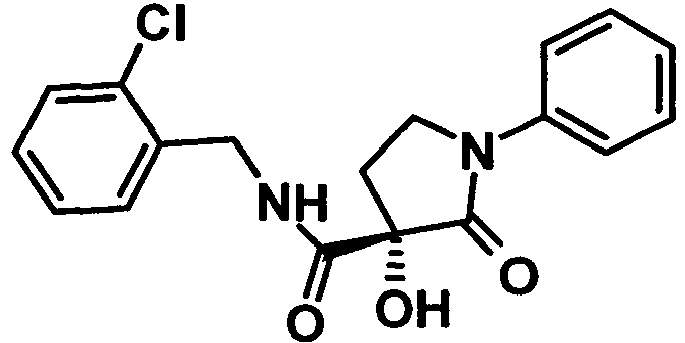
8.59 (t, J = 6.3, 1H), 7.70 (dt, J = 9.0, 1.7, 2H), 7.44 - 7.24 (m, 6H), 7.21-7.14 (m, 1H), 6.79 (s, 1H), 4.41 (dd, J = 16.2, 6.5, 1H), 4.31 (dd, J = 16.1, 6.1, 1H), 3.86 (dd, J = 8.5, 5.6, 2H), 2.65 - 2.57 (m, 1H), 2.14 (dt, J = 12.9, 7.7, 1H). 3.82 min [345] (S)-3-Hydroxy-2-oxo-1-phenyl-pyrrolidin-3-carbonsäure-2-chlor-benzylamid "A295" 
3.36 min [355] (S)-3-Hydroxy-2-oxo-1-phenyl-pyrrolidin-3-carbonsäure-(benzo[1,3]dioxol-5-ylmethyl)-amid "A296" 
8.01 (t, J = 6.1, 1H), 7.69 (dd, J = 8.7, 1.0, 2H), 7.40 (dd, J = 10.8, 5.3, 2H), 7.17 (t, J = 7.4, 1H), 6.61 (s, 1H), 3.90 - 3.77 (m, 2H), 3.32 - 3.29 (m, 2H), 3.16 (m, 2H), 3.05 (m, 2H), 2.53 (ddd, J = 11.8, 6.6, 3.5, 2H), 2.20 (t, J = 8.1, 2H), 2.07 (m, 1H), 1.95 - 1.85 (m, 2H), 1.59 (p, J = 6.9, 2H). 2.35 min [346] (S)-3-Hydroxy-2-oxo-1-phenyl-pyrrolidin-3-carbonsäure-[3-(2-oxo-pyrrolidin-1-yl)-propyl]-amid "A297" 
8.44 (t, J = 6.3, 1H), 7.69 (dd, J = 8.7, 1.1, 2H), 7.44 - 7.36 (m, 2H), 7.34-7.28 (m, 2H), 7.18 (d, J = 7.7, 3H), 6.66 (s, 1H), 4.27 (d, J = 6.4, 1H), 4.24 (d, J = 6.3, 1H), 3.86 (m, 3H), 2.61 - 2.52 (m, 1H), 2.10 (dt, J = 12.9, 7.8, 1H), 1.25 (s, 9H). 4.76 min [367] (S)-3-Hydroxy-2-oxo-1-phenyl-pyrrolidin-3-carbonsäure-4-tert.-butyl-benzylamid "A298" 
7.69 (dt, J = 9.0, 1.7, 2H), 7.52 (d, J = 8.7, 1H), 7.44 - 7.36 (m, 2H), 7.19-7.14 (m, 1H), 6.59 (d, J = 1.0, 1H), 3.92 - 3.70 (m, 3H), 2.58 - 2.50 (m, 1H), 2.07 (m, 1H), 1.54 - 1.14 (m, 5H), 1.06 (dd, J = 6.6, 4.2, 3H), 0.84 (dt, J = 11.5, 7.2, 3H). 3.43 min [291] (S)-3-Hydroxy-2-oxo-1-phenyl-pyrrolidin-3-carbonsäure-(1-methylbutyl)-amid "A299" 
8.53 (t, J = 6.3, 1H), 7.73 - 7.66 (m, 2H), 7.43-7.37 (m, 2H), 7.34 (t, J = 7.8, 1H), 7.31 - 7.25 (m, 1H), 7.20-7.11 (m, 3H), 6.73 (s, 1H), 4.38 (dd, J = 15.6, 6.4, 1H), 4.31 (dd, J = 15.5, 5.9, 1H), 3.91 - 3.80 (m, 2H), 2.58 (ddd, J = 12.9, 7.0, 4.5, 1H), 2.12 (dt, J = 13.0, 7.7, 1H). 3.51 min [329] (S)-3-Hydroxy-2-oxo-1-phenyl-pyrrolidine-3-carbonsäure-2-fluor-benzylamid "A300" 
7.71 - 7.65 (m, 2H), 7.40 (dd, J = 10.8, 5.3, 2H), 7.17 (t, J = 7.4, 1H), 6.77 (s, 1H), 4.09 (m, 1H), 3.78 (m, 2H), 3.73 - 3.62 (m, 2H), 3.59 (m, 5H), 2.72-2.63 (m, 1H), 2.11 (dt, J = 12.6, 8.9, 1H). 2.38 min [291] (S)-3-Hydroxy-3-(morpholin-4-carbonyl)-1-phenyl-pyrrolidin-2-on "A301" 
7.94 (t, J = 5.8, 1H), 7.68 (dt, J = 9.0, 1.7, 2H), 7.43 - 7.34 (m, 2H), 7.22-7.12 (m, 1H), 6.59 (s, 1H), 3.89 - 3.76 (m, 2H), 3.49 (hept, J = 6.1, 1H), 3.36 (t, J = 6.2, 2H), 3.14 (p, J = 6.6, 2H), 2.56 - 2.50 (m, 1H), 2.12 - 1.98 (m, 1H), 1.63 (p, J = 6.5, 2H), 1.06 (dd, J = 6.1, 3.0, 6H). 3.05 min [321] "A302" 
4.20 min [379] (S)-3-Hydroxy-2-oxo-1-phenyl-pyrrolidin-3-carbonsäure-2-trifluoromethyl-benzylamid "A303" 
7.70 (d, J = 8.0, 2H), 7.43 - 7.37 (m, 2H), 7.37-7.26 (m, 3H), 7.25 - 7.14 (m, 3H), 6.75 (s, 1H), 4.98 (dd, J = 78.2, 15.8, 1H), 4.49 (dd, J = 48.6, 15.3, 1H), 3.83 (dd, J = 19.3, 9.9, 1H), 3.75 - 3.56 (m, 2H), 3.10 (ddd, J = 23.0, 13.8, 6.1, 1H), 2.77 - 2.61 (m, 1H), 2.24 - 2.09 (m, 1H), 1.15 (t, J = 6.8, 2H), 0.90 (t, J = 6.9, 1H). 4.22 min [339] (S)-3-Hydroxy-2-oxo-1-phenyl-pyrrolidin-3-carbonsäure-benzyl-ethyl-amid "A304" 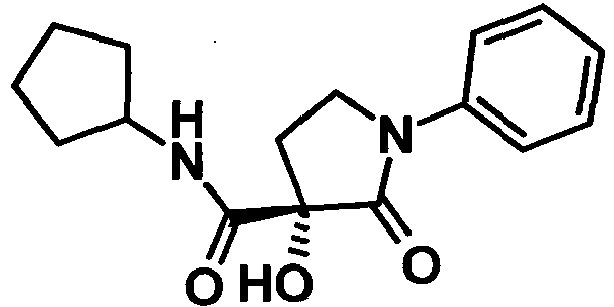
7.72 - 7.66 (m, 2H), 7.63 (d, J = 7.8, 1H), 7.43-7.36 (m, 2H), 7.20 - 7.13 (m, 1H), 6.59 (s, 1H), 4.06 - 3.95 (m, 1H), 3.89-3.77 (m, 2H), 2.56 - 2.51 (m, 1H), 2.11 - 2.01 (m, 1H), 1.79 (m, 2H), 1.70-1.58 (m, 2H), 1.54 - 1.37 (m, 4H). 3.07 min [289] (S)-3-Hydroxy-2-oxo-1-phenyl-pyrrolidine-3-carbonsäure-cyclopentylamid "A305" 
7.87 (t, J = 6.1, 1H), 7.68 (dt, J = 9.0, 1.8, 2H), 7.43 - 7.36 (m, 2H), 7.20 - 7.14 (m, 1H), 6.61 (s, 1H), 3.94 - 3.74 (m, 2H), 2.98 - 2.85 (m, 2H), 2.53 (ddd, J = 12.3, 7.1, 3.7, 1H), 2.15 - 2.03 (m, 1H), 1.75 (dp, J = 13.5, 6.8, 1H), 0.82 (dd, J = 6.7, 3.2, 6H). 3.00 min [277] (S)-3-Hydroxy-2-oxo-1-phenyl-pyrrolidine-3-carboxylic acid isobutyl-amid "A306" 
8.28 (t, J = 7.6, 1H), 7.72 - 7.64 (m, 2H), 7.43-7.31 (m, 6H), 7.17 (td, J = 7.4, 4.4, 1H), 6.69 (d, J = 9.2, 1H), 4.98 - 4.86 (m, 1H), 3.87 - 3.75 (m, 2H), 2.58 (ddd, J = 22.2, 11.9, 7.8, 1H), 2.47 - 2.37 (m, 1H), 2.09 (ddd, J = 15.9, 13.8, 8.0, 1H), 1.40 (dd, J = 7.0, 2.2, 3H). 4.18 min [359] (S)-3-Hydroxy-2-oxo-1-phenyl-pyrrolidine-3-carboxylic acid [1-(4-chloro-phenyl)-ethyl]-amid "A307" 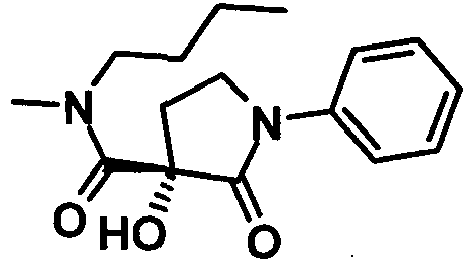
7.68 (dd, J = 8.7, 1.0, 2H), 7.43 - 7.35 (m, 2H), 7.20 - 7.12 (m, 1H), 6.57 (s, 1H), 3.79 (t, J = 8.6, 1H), 3.71 - 3.45 (m, 2H), 3.22 (m, 1H), 3.18 (m, 2H), 2.77 (m, 1H), 2.60 (m, 1H), 2.11 (m, 1H), 1.52 (m, 1H), 1.49 - 1.38 (m, 1H), 1.23 (m, 2H), 0.87 (m, 3H). 3.64 min [291] (S)-3-Hydroxy-2-oxo-1-phenyl-pyrrolidin-3-carbonsäure-butylmethyl-amid "A308" 
7.71 - 7.64 (m, 2H), 7.39 (dd, J = 10.8, 5.3, 2H), 7.16 (t, J = 7.4, 1H), 6.64 (s, 1H), 3.88 (s, 1H), 3.81 - 3.74 (m, 1H), 3.64 (m, 2H), 3.52 (m, 1H), 3.26 (m, 1H), 2.60 (m, 1H), 2.11 (m, 1H), 1.53 (m, 6H). 3.18 min [289] (S)-3-Hydroxy-1-phenyl-3-(piperidin-1-carbonyl)-pyrrolidin-2-on "A309" 
7.72 - 7.65 (m, 2H), 7.43 - 7.36 (m, 2H), 7.21-7.14 (m, 1H), 7.03 (s, 1H), 6.70 (s, 1H), 3.90 - 3.75 (m, 2H), 2.55 - 2.50 (m, 1 H), 2.05 (ddd, J = 12.9, 8.7, 7.6, 1H), 1.28 (s, 9H). 3.10 min [277] (S)-3-Hydroxy-2-oxo-1-phenyl-pyrrolidine-3-carbonsäure-tert.-butylamid "A310" 
7.89 (t, J = 5.9, 1H), 7.68 (dt, J = 9.0, 1.7, 2H), 7.44 - 7.36 (m, 2H), 7.20 - 7.13 (m, 1H), 6.58 (s, 1H), 3.92 - 3.77 (m, 2H), 3.08 (dd, J = 13.2, 6.9, 2H), 2.57 - 2.50 (m, 1H), 2.12 - 2.01 (m, 1H), 1.45-1.34 (m, 2H), 1.25 (dq, J = 14.1, 7.2, 3H), 0.85 (t, J = 7.3, 3H). 3.07 min [277] (S)-3-Hydroxy-2-oxo-1-phenyl-pyrrolidin-3-carbonsäure-butylamid "A311" 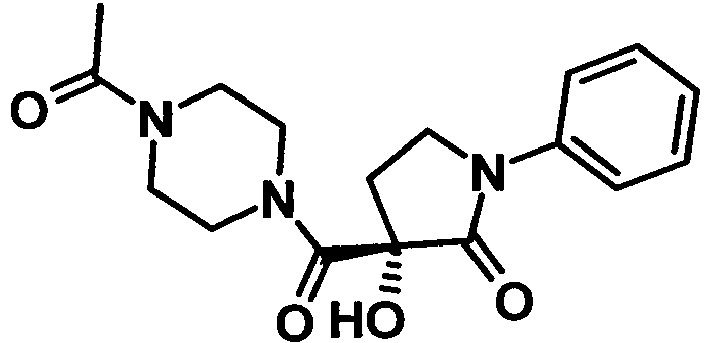
7.68 (dd, J = 8.7, 1.0, 2H), 7.43 - 7.36 (m, 2H), 7.21 - 7.13 (m, 1 H), 7.02 (d, J = 15.9, 1H), 6.82 (s, 1H), 4.09 (m, 1H), 3.79 (m, 1H), 3.72 - 3.53 (m, 4H), 3.44 (m, 2H), 3.24 (m, 1H), 3.16 (d, J = 5.2, 1H), 2.69 (dd, J = 12.5, 5.9, 1H), 2.13 (dt, J = 12.6, 9.0, 1H), 2.01 (s, 3H). 2.30 min [332] (S)-3-(4-Acetyl-piperazin-1-carbonyl)-3-hydroxy-1-phenyl-pyrrolidin-2-on "A312" 
7.94 (t, J = 5.7, 1H), 7.72 - 7.65 (m, 2H), 7.43 - 7.34 (m, 2H), 7.21 - 7.13 (m, 1H), 6.58 (s, 1H), 3.90 - 3.75 (m, 2H), 3.17-3.05 (m, 2H), 2.57 - 2.51 (m, 1H), 2.07 (ddd, J = 12.9, 8.5, 7.4, 1H), 1.02 (t, J = 7.2, 3H). 2.15 min [249] (S)-3-Hydroxy-2-oxo-1-phenyl-pyrrolidin-3-carbonsäure-ethylamid "A313" 
7.68 (dt, J = 9.0, 1.7, 2H), 7.42 - 7.34 (m, 2H), 7.19 - 7.13 (m, 1H), 6.55 (s, 1H), 3.79 (td, J = 9.2, 1.9, 1H), 3.62 (dt, J = 9.3, 6.8, 1H), 3.51 (t, J = 7.9, 2H), 3.21 - 3.05 (m, 2H), 2.58 (ddd, J = 12.6, 6.6, 1.9, 1H), 2.13 (dt, J = 12.7, 8.8, 1H), 1.61 (pd, J = 13.2, 7.4, 2H), 1.51-1.38 (m, 2H), 0.81 (dt, J = 12.3, 7.4, 6H). 4.04 min [305] (S)-3-Hydroxy-2-oxo-1-phenyl-pyrrolidin-3-carbonsäure-dipropylamid "A314" 
8.42 (d, J = 1.7, 1H), 8.40 (dd, J = 4.8, 1.6, 1H), 8.07 (t, J = 6.0, 1H), 7.68 (dd, J = 8.7, 1.0, 2H), 7.65-7.57 (m, 2H), 7.43 - 7.35 (m, 2H), 7.29 (ddd, J = 7.8, 4.8, 0.7, 1H), 7.22 - 7.13 (m, 1H), 6.62 (s, 1H), 3.87 - 3.75 (m, 2H), 3.44 - 3.20 (m, 2H), 2.77 (t, J = 7.1, 2H), 2.44 (m, 1H), 2.10 -1.99 (m, 1H). 1.88 min [326] (S)-3-Hydroxy-2-oxo-1-phenyl-pyrrolidin-3-carbonsäure-(2-pyridin-3-yl-ethyl)-amid "A315" 
7.70 - 7.64 (m, 2H), 7.42 - 7.36 (m, 2H), 7.19-7.12 (m, 1H), 6.67 (s, 1H), 3.98 (m, 1H), 3.77 (m, 1H), 3.65 (m, 2H), 3.59 - 3.37 (m, 2H), 2.63 (m, 2H), 2.46 - 2.30 (m, 4H), 2.11 (dt, J = 12.7, 8.9, 1H), 0.96 (d, J = 6.5, 6H). 2.18 min [332] (S)-3-Hydroxy-3-(4-isopropyl-piperazin-1-carbonyl)-1-phenyl-pyrrolidin-2-on "A316" 
7.67 (dt, J = 12.0, 6.1, 2H), 7.43 - 7.35 (m, 2H), 7.19-7.12 (m, 1H), 6.64 (s, 1H), 4.61 (m, 1H), 4.26 (m, 1H), 3.84 - 3.72 (m, 1H), 3.65 (m, 1H), 2.92 (m, 1H), 2.60 (m, 2H), 2.11 (dt, J = 12.6, 8.8, 1H), 1.62 (m, 3H), 1.19 (m, 2H), 0.89 (d, J = 6.1, 3H). 3.69 min [303] (S)-3-Hydroxy-3-(4-methyl-piperidin-1-carbonyl)-1-phenyl-pyrrolidin-2-on "A317" 
7.71 - 7.64 (m, 2H), 7.42 - 7.35 (m, 2H), 7.19 - 7.12 (m, 1H), 6.58 (s, 1H), 3.81 (m, 1H), 3.62 (m, 1H), 3.17 (s, 3H), 3.10 (m, 1H), 2.77 (s, 1H), 2.67 - 2.57 (m, 1H), 2.12 (dt, J = 12.8, 8.7, 1H), 2.03 - 1.80 (m, 1H), 0.81 (d, J = 6.0, 6H). 3.55 min [291] (S)-3-Hydroxy-2-oxo-1-phenyl-pyrrolidin-3-carbonsäure-isobutyl-methyl-amid "A318" 
8.09 (t, J = 6.0, 1H), 7.72 - 7.66 (m, 2H), 7.43 - 7.37 (m, 3H), 7.34 - 7.30 (m, 1H), 7.28 - 7.21 (m, 2H), 7.20 - 7.14 (m, 1H), 6.60 (s, 1H), 3.85 - 3.77 (m, 2H), 3.46 - 3.34 (m, 1H), 3.28 (m, 1H), 2.93 - 2.78 (m, 2H), 2.47 - 2.41 (m, 1H), 2.06 (dt, J = 12.9, 7.9, 1H) 4.00 min [359] (S)-3-Hydroxy-2-oxo-1-phenyl-pyrrolidin-3-carbonsäure-[2-(2-chlor-phenyl)-ethyl]-amid "A319" 
7.72 - 7.66 (m, 2H), 7.39 (t, J = 7.9, 2H), 7.34 - 7.12 (m, 6H), 6.68 (s, 1H), 3.88 (m, 1H), 3.77 (m, 1H), 3.69 - 3.47 (m, 1H), 3.40 - 3.33 (m, 1H), 3.16 (m, 1H), 3.03 - 2.88 (m, 1H), 2.89 (s, 3H), 2.80 - 2.72 (m, 1H), 2.51 (m, 1H), 2.09 (dt, J = 12.7, 8.8, 1H). 4.10 min [339] (S)-3-Hydroxy-2-oxo-1-phenyl-pyrrolidin-3-carbonsäure-methyl-phenethyl-amid "A320" 
7.88 (dd, J = 17.7, 8.2, 1H), 7.73-7.66 (m, 2H), 7.44 - 7.36 (m, 2H), 7.18 (td, J = 7.3, 1.1, 1H), 7.13 - 7.05 (m, 2H), 6.86 (t, J = 7.4, 1H), 6.81 - 6.77 (m, 1 H), 6.75 (d, J = 1.6, 1H), 4.24 - 4.11 (m, 1H), 4.11 - 4.01 (m, 1H), 3.97 - 3.79 (m, 3H), 3.00 - 2.78 (m, 2H), 2.57 (m, 1H), 2.09 (m, 1H). 3.74 min [353] (S)-3-Hydroxy-2-oxo-1-phenyl-pyrrolidin-3-carbonsäure-chroman-3-ylamid "A321" 
7.73 - 7.67 (m, 2H), 7.50 (s, 1H), 7.40 (dd, J = 10.8, 5.3, 2H), 7.33 (s, 1H), 7.17 (t, J = 7.4, 1H), 6.98 (d, J = 4.4,, 1H), 6.75 (m, 1H), 4.95 (m, 1H), 4.45 (m, 1H), 3.81 (m, 1H), 3.67 (m, 1H), 3.23 - 3.11 (m, 2H), 2.69 (s, 3H), 2.15 (dt, J = 12.7, 8.8, 1H). 3.71 min [331] (S)-3-Hydroxy-2-oxo-1-phenyl-pyrrolidin-3-carbonsäure-methyl-thiophen-3-ylmethyl-amid "A322" 
8.08 (d, J = 8.4, 1H), 7.68 (dd, J = 8.7, 1.0, 2H), 7.43 - 7.36 (m, 2H), 7.17 (t, J = 7.4, 1H), 6.59 (s, 1H), 4.29 - 4.13 (m, 1H), 3.89 - 3.75 (m, 2H), 2.57 - 2.50 (m, 1H), 2.16 - 1.99 5H), 1.65 - 1.52 (m, 2H). 2.73 min [275] (S)-3-Hydroxy-2-oxo-1-phenyl-pyrrolidin-3-carbonsäure-cyclobutylamid "A323" 
7.67 (d, J = 7.9, 2H), 7.39 (dd, J = 10.7, 5.3, 2H), 7.16 (t, J = 7.4, 1H), 6.61 (m, 1H), 3.78 (m, 1H), 3.65 (m, 1H), 3.05 (m, 1H), 2.65 (s, 3H), 2.59 (dd, J = 12.8, 4.9, 1H), 2.14 (m, 1H), 1.80 (m, 1H), 1.61 (m, 3H), 1.50 (m, 4H). 3.62 min [303] (S)-3-Hydroxy-2-oxo-1-phenyl-pyrrolidin-3-carbonsäure-cyclopentyl-methyl-amid "A324" 
7.84 (t, J = 6.2, 1H), 7.68 (dt, J = 3.1, 1.7, 2H), 7.43 - 7.35 (m, 2H), 7.16 (dd, J = 10.6, 4.2, 1H), 6.60 (s, 1H), 3.90-3.75 (m, 2H), 3.01 - 2.86 (m, 2H), 2.58 - 2.50 (m, 1H), 2.06 (ddd, J = 23.3, 17.6, 11.7, 1H), 1.64 (m, 5H), 1.44 (ddd, J = 10.9, 9.2, 5.5, 1H), 1.21 - 0.99 (m, 3H), 0.93 - 0.75 (m, 2H). 3.97 min [317] (S)-3-Hydroxy-2-oxo-1-phenyl-pyrrolidin-3-carbonsäure-cyclohexylmethyl-amid "A325" 
8.25 (t, J = 6.2, 1H), 7.72 - 7.66 (m, 2H), 7.44 - 7.35 (m, 2H), 7.25 - 7.14 (m, 3H), 6.96 (d, J = 7.8, 1H), 6.88 (t, J = 7.4, 1H), 6.73 (s, 1H), 4.30 (dd, J = 15.8, 6.4, 1H), 4.24 (dd, J = 15.8, 6.1, 1H), 3.86 (m, 2H), 3.79 (s, 3H), 2.59 (ddd, J = 12.7, 7.1, 4.3, 1H), 2.12 (dt, J = 12.9, 7.8, 1H). 3.58 min [341] (S)-3-Hydroxy-2-oxo-1-phenyl-pyrrolidin-3-carbonsäure-2-methoxy-benzylamid "A326" 
- 3.33 min [291] (S)-3-Hydroxy-2-oxo-1-phenyl-pyrrolidin-3-carbonsäure-(1,2-dimethyl-propyl)-amid "A327" 
7.87 (t, J = 5.9, 1H), 7.68 (dt, J = 8.9, 1.7, 2H), 7.43 - 7.36 (m, 2H), 7.20 - 7.14 (m, 1H), 6.57 (s, 1H), 3.86 (dt, J = 8.9, 0.7, 1H), 3.83 - 3.77 (m, 1H), 3.10 (dd, J = 14.4, 6.3, 2H), 2.56 - 2.50 (m, 1H), 2.07 (ddd, J = 12.9, 8.5, 7.6, 1H), 1.54 (dp, J = 13.3, 6.7, 1H), 1.32 (dd, J = 14.5, 7.0, 2H), 0.85 (dd, J = 6.6, 2.2, 6H). 3.53 min [291] (S)-3-Hydroxy-2-oxo-1-phenyl-pyrrolidin-3-carbonsäure-(3-methylbutyl)-amid "A328" 
8.41 (t, J = 6.3, 1H), 7.69 (dt, J = 9.0, 1.7, 2H), 7.44 - 7.34 (m, 2H), 7.23-7.16 (m, 3H), 6.89 - 6.82 (m, 2H), 6.65 (s, 1H), 4.25 (dd, J = 14.8, 6.5, 1H), 4.20 (dd, J = 14.8, 6.3, 1H), 3.91 - 3.79 (m, 2H), 3.71 (s, 3H), 2.55 (ddd, J = 12.8, 7.4, 3.9, 1H), 2.14 - 2.05 (m, 1H). 3.41 min [341] (S)-3-Hydroxy-2-oxo-1-phenyl-pyrrolidin-3-carbonsäure-4-methoxy-benzylamid "A329" 
7.82 (t, J = 5.7, 1H), 7.71 - 7.66 (m, 2H), 7.43 - 7.36 (m, 2H), 7.21 - 7.14 (m, 1H), 6.67 (s, 1H), 3.90 - 3.76 (m, 2H), 3.40 (t, J = 6.2, 2H), 3.34 (d, J = 6.6, 2H), 3.29 (dd, J = 9.7, 3.8, 1H), 3.26 - 3.16 (m, 1H), 2.56 - 2.51 (m, 1H), 2.14 - 2.01 (m, 1H), 1.54 - 1.45 (m, 2H), 0.85 (t, J = 7.4, 3H). 3.01 min [307] (S)-3-Hydroxy-2-oxo-1-phenyl-pyrrolidin-3-carbonsäure-(2-propoxy-ethyl)-amid "A330" 
8.00 (t, J = 5.9, 1H), 7.69 (dd, J = 8.7, 1.0, 2H), 7.44 - 7.36 (m, 2H), 7.29-7.23 (m, 2H), 7.22 - 7.11 (m, 4H), 6.60 (s, 1H), 3.93 - 3.76 (m, 2H), 3.18-3.03 (m, 2H), 2.59 - 2.51 (m, 3H), 2.08 (dt, J = 12.9, 7.9, 1 H), 1.73 (dt, J = 14.7, 7.2, 2H). 4.01 min [339] (S)-3-Hydroxy-2-oxo-1-phenyl-pyrrolidin-3-carbonsäure-(3-phenylpropyl)-amid "A331" 
7.68 (dd, J = 8.7, 1.0, 2H), 7.43 - 7.36 (m, 2H), 7.29 - 7.14 (m, 6H), 6.70 (s, 1H), 4.01 (m, 1H), 3.78 (t, J = 8.4, 2H), 3.66 (td, J = 9.4, 6.7, 2H), 3.54 (m, 1H), 3.37 (m, 1H), 2.78 - 2.69 (m, 2H), 2.69 - 2.60 (m, 1H), 2.57 - 2.50 (m, 2H), 2.47 - 2.27 (m, 3H), 2.11 (dt, J = 12.5, 8.9, 1H). 3.07 min [394] (S)-3-Hydroxy-3-(4-phenethyl-piperazin-1-carbonyl)-1-phenyl-pyrrolidin-2-on "A332" 
7.92 (t, J = 6.0, 1H), 7.72 - 7.66 (m, 2H), 7.44 - 7.36 (m, 2H), 7.21 - 7.14 (m, 1H), 6.84 (d, J = 8.2, 1H), 6.80 (d, J = 1.9, 1H), 6.71 (dd, J = 8.1, 1.9, 1H), 6.61 (s, 1H), 3.89 - 3.78 (m, 2H), 3.73 (s, 3H), 3.70 (s, 3H), 3.30 - 3.20 (m, 2H), 2.67 (t, J = 7.3, 2H), 2.53 -2.46 (m, 1H), 2.06 (dt, J = 12.9, 7.9, 1H). 3.28 min [385] (S)-3-Hydroxy-2-oxo-1-phenyl-pyrrolidin-3-carbonsäure-[2-(3,4-dimethoxy-phenyl)-ethyl]-amid "A333" 
8.71 (t, J = 6.4, 1H), 7.72 - 7.64 (m, 4H), 7.48 (d, J = 8.0, 2H), 7.44 - 7.37 (m, 2H), 7.17 (t, J = 7.4, 1H), 6.73 (s, 1H), 4.42 (dd, J = 15.6, 6.6, 1H), 4.34 (dd, J = 15.6, 6.1, 1H), 3.88 - 3.82 (m, 2H), 2.58 (ddd, J = 12.8, 6.9, 4.7, 1H), 2.12 (dt, J = 12.9, 7.7, 1H). 4.29 min [379] (S)-3-Hydroxy-2-oxo-1-phenyl-pyrrolidin-3-carbonsäure-4-trifluormethyl-benzylamid "A334" 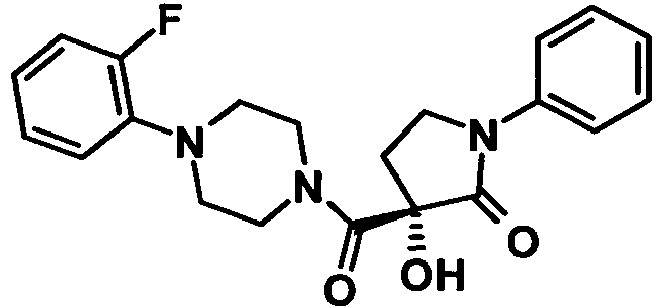
7.72 - 7.66 (m, 2H), 7.43 - 7.36 (m, 2H), 7.20 - 6.93 (m, 5H), 6.81 (s, 1H), 4.21 (s, 1H), 3.92 (s, 1H), 3.83 - 3.74 (m, 1H), 3.68 (td, J = 9.4, 6.6, 2H), 3.51 (br. m,, 1H), 2.99 (br. m, 4H), 2.75 - 2.67 (m, 1H), 2.15 (dt, J = 12.6, 9.0, 1H). 4.08 min [384 + 385] (S)-3-[4-(2-Fluor-phenyl)-piperazin-1-carbonyl]-3-hydroxy-1-phenyl-pyrrolidin-2-on "A335" 
8.50 (d, J = 1.6, 1H), 8.46 (dd, J = 4.8, 1.7, 1H), 7.71 (dt, J = 7.8, 1.9, 1H), 7.68 (d, J = 1.1, 1H), 7.66 (d, J = 1.0, 1H), 7.42 - 7.33 (m, 3H), 7.20-7.13 (m, 1H), 7.00 (s, 1H), 6.70 (s, 1H), 4.08 (m, 1H), 3.77 (m, 2H), 3.65 (m, 2H), 3.52 (s, 2H), 3.16 (d, J = 5.3, 1H), 2.68 - 2.60 (m, 1H), 2.39 (s, 3H), 2.30 (m, 1H), 2.15 - 2.04 (m, 1H). 1,99 min [381] (S)-3-Hydroxy-1-phenyl-3-(4-pyridin-3-ylmethyl-piperazin-1-carbonyl)-pyrrolidin-2-on "A336" 
δ 7.71 - 7.67 (m, 2H),7.46 - 7.36 (m, 3H), 7.27-7.22 (m, 1H), 7.21 - 7.13 (m, 2H), 7.09 (d, J = 7.6, 1H), 6.81 (s, 1H), 4.22 (m, 1H), 3.93 (m, 1H), 3.80 (t, J = 8.4, 1H), 3.68 (td, J = 9.4, 6.6, 2H), 3.50 (m, 1H), 3.35 (m, 1H), 3.27 (m, 3H), 2.77 - 2.67 (m, 1H), 2.15 (dt, J = 12.6, 8.9, 1H). 4.81 min [434.0] (S)-3-Hydroxy-1-phenyl-3-[4-(3-trifluoromethyl-phenyl)-piperazin-1-carbonyl]-pyrrolidin-2-on "A337" 
7.67 (dd, J = 8.7, 1.0, 2H), 7.38 (dt, J = 10.6, 2.0, 4H), 7.35 - 7.30 (m, 2H), 7.19 - 7.11 (m, 1H), 6.69 (s, 1H), 4.03 (m, 1H), 3.77 (m, 2H), 3.65 (m, 2H), 3.54 (m, 1H), 3.47 (s, 2H), 2.68 - 2.60 (m, 1H), 2.38 (m, 3H), 2.29 - 2.18 (m, 1H), 2.10 (dt, J = 12.6, 8.9, 1H). 3.20 min [414.0] (S)-3-[4-(4-Chlor-benzyl)-piperazin-1-carbonyl]-3-hydroxy-1-phenyl-pyrrolidin-2-on "A338" 
7.71 - 7.66 (m, 2H), 7.42 - 7.35 (m, 2H), 7.35 (s, 4H), 7.30 - 7.24 (m, 1H), 7.16 (t, J= 7.4, 1H), 6.71 (s, 1H), 4.52 (s, 2H), 4.34 (m, 1H), 4.08 (m, 1H), 3.86 (m, 1H), 3.82 - 3.72 (m, 1H), 3.64 (m 3H), 3.33 - 3.18 (m, 1H), 3.02 (m, 1H), 2.63 (dd, J = 12.6, 5.8, 1H), 2.12 (dt, J = 12.6, 8.9, 1H), 1.88 (m, 2H), 1.47 (m, 2H). 4.28 min [395] (S)-3-(4-Benzyloxy-piperidin-1-carbonyl)-3-hydroxy-1-phenyl-pyrrolidin-2-on "A339" 
7.68 (dd, J = 8.7, 1.0, 2H), 7.50 (dd, J = 7.4, 1.9, 1H), 7.43 (dd, J = 7.7, 1.5, 1H), 7.41 - 7.36 (m, 2H), 7.34 (dd, J = 7.4, 1.5, 1H), 7.31 (dd, J = 2.9, 2.0, 1H), 7.28 (dd, J = 7.5, 1.9, 1H), 7.16 (t, J = 7.4, 1H), 6.71 (s, 1H), 4.04 (m, 1H), 3.78 (t, J = 8.4, 2H), 3.65 (m, 1H), 3.58 (s, 2H), 3.35 (m, 2H), 2.69 - 2.59 (m, 1H), 2.47 - 2.27 (m, 4H), 2.11 (dt, J = 12.6, 8.9, 1H). 2.98 min [414] (S)-3-[4-(2-Chlor-benzyl)-piperazin-1-carbonyl]-3-hydroxy-1-phenyl-pyrrolidin-2-on "A340" 
7.69 - 7.64 (m, 2H), 7.42 - 7.35 (m, 2H), 7.21 (dd, J = 6.7, 4.8, 2H), 7.16 (qd, J = 2.3, 1.3, 1H), 6.90 - 6.85 (m, 2H), 6.68 (s, 1H), 4.01 (m, 1H), 3.77 (m, 1H), 3.72 (s, 3H), 3.65 (m, 2H), 3.54 (m, 1H), 3.40 (s, 2H), 2.68 - 2.59 (m, 1H), 2.30 (m, 4H), 2.10 (dt, J = 12.6, 8.8, 1H). 2.92 min [410] "A341" 
7.71 - 7.66 (m, 2H), 7.42 - 7.36 (m, 2H), 7.19 - 7.14 (m, 1H), 6.84 (s, 1H), 4.20 (m, 1H), 3.79 (t, J = 8.5, 3H), 3.66 (td, J = 9.4, 6.6, 1H), 3.36 (m, 1H), 3.10 (m, 4H), 2.88 (s, 3H), 2.74 - 2.65 (m, 1H), 2.14 (dt, J = 12.7, 9.0, 1H). 2.68 min [368] (S)-3-Hydroxy-3-(4-methansulfonyl-piperazin-1-carbonyl)-1-phenyl-pyrrolidin-2-on "A342" 
7.69 (dd, J = 8.7, 1.0, 2H), 7.51 (t, J = 8.5, 1H), 7.40 (t, J = 7.7, 2H), 7.17 (t, J = 7.4, 1H), 6.67 (d, J = 2.6, 1H), 3.91 - 3.68 (m, 3H), 3.38 - 3.32 (m, 1H), 3.30 - 3.25 (m, 1H), 3.24 (d, J = 2.2, 3H), 2.60 - 2.50 (m, 2H), 2.09 (dq, J = 12.9, 7.8, 1H), 1.58 - 1.33 (m, 2H), 0.81 (q, J = 7.5, 3H). 2.77 min + 2.83 min [307] (S)-3-Hydroxy-2-oxo-1-phenyl-pyrrolidin-3-carbonsäure-(1-methoxymethyl-propyl)-amid "A343" 
8.60 (t, J = 6.3, 1H), 7.69 (dt, J = 8.9, 1.7, 2H), 7.43 - 7.33 (m, 4H), 7.31 - 7.25 (m, 2H), 7.21 - 7.13 (m, 1H), 6.70 (s, 1H), 4.31 (dd, J = 15.2, 6.5, 1H), 4.24 (dd, J = 15.2, 6.2, 1H), 3.91 - 3.76 (m, 2H), 2.56 (ddd, J = 12.8, 7.1, 4.4, 1H), 2.17 - 2.04 (m, 1H). 3.93 min [345.0] (S)-3-Hydroxy-2-oxo-1-phenyl-pyrrolidin-3-carbonsäure-4-chlor-benzylamid "A344" 
HPLC 3.53 min [1-[[(3S)-3-hydroxy-2-oxo-1-phenyl-pyrrolidin-3-carbonyl]amino]-2-(3-thienyl)ethyl]boronsäure "A345" 
8.72 (t, J = 6.3, 1H), 7.58 (dd, J = 8.8, 2.4, 1H), 7.54 (s, 1H), 7.30 - 7.24 (m, 1H), 7.20 (s, 1H), 7.11 (d, J = 8.7, 2H), 6.73 (s, 1H), 4.38 (dd, J = 15.8, 6.7, 1H), 4.24 (dd, J = 15.8, 6.0, 1H), 3.83 (t, J = 6.8, 2H), 3.24 (s, 3H), 2.87 (t, J = 7.3, 2H), 2.63 - 2.51 (m, 3H), 2.13 (dt, J = 13.0, 7.6, 1H). 3.67 min [446] (S)-3-Hydroxy-1-(1-methyl-2-oxo-1,2,3,4-tetrahydro-chinolin-6-yl)-2-oxo-pyrrolidin-3-carbonsäure-3-chlor-5-fluor-benzylamid "A346" 
3.67 min [446] (R)-3-Hydroxy-1-(1-methyl-2-oxo-1,2,3,4-tetrahydro-chinolin-6-yl)-2-oxo-pyrrolidin-3-carbonsäure-3-chlor-5-fluor-benzylamid -
Method: A- 0.1% TFA in H2O, B- 0.1% TFA in ACN: Flow - 2.0ml/min.
Column: X Bridge C8 (50x4.6 mm.3.5u) + ve modeTime %B 0 05 8.0 100 8.1 100 8.5 05 10 05 -
- LC-MS-Methode: (Gerät: Agilent 1100 Series)
- Säule: Chromolith Speed Rod RP18e-50-4.6
- Flussrate: 2.4 ml/min
- Solvent A: Wasser + 0,05% HCOOH
- Solvent B: Acetonitril + 0,04% HCOOH
- WL: 220 nm
- Gradient: 0-2.8 min: 4% B auf 100% B, 2.8-3.3 min:100%B.
-
Method: A- 10 mM NH4HCO3, B- ACN: Flow - 1.0ml/min.
Column: X Bridge C8 (50x4.6mm.3.5u) - ve modeTime %B 0 05 8.0 100 8.1 100 8.5 05 10 05 -
Method: A- 0.1 % TFA in H2O, B- 0.1 % TFA in ACN: Flow - 2.0ml/min.
Column: X Bridge C8 (50x4.6 mm.3.5u) + ve modeTime %B 0 5 8.0 100 8.1 100 8.5 5 10 5 -
- Method: Isopropanol: Flow - 0.8 ml/min.
- Run time: 20 min
- Column: Chiralpak AD
- Die nachfolgenden Beispiele betreffen Arzneimittel:
- Eine Lösung von 100 g eines Wirkstoffes der Formel I und 5 g Dinatriumhydrogenphosphat wird in 3 I zweifach destilliertem Wasser mit 2 N Salzsäure auf pH 6,5 eingestellt, steril filtriert, in Injektionsgläser abgefüllt, unter sterilen Bedingungen lyophilisiert und steril verschlossen. Jedes Injektionsglas enthält 5 mg Wirkstoff.
- Man schmilzt ein Gemisch von 20 g eines Wirkstoffes der Formel I mit 100 g Sojalecithin und 1400 g Kakaobutter, gießt in Formen und läßt erkalten. Jedes Suppositorium enthält 20 mg Wirkstoff.
- Man bereitet eine Lösung aus 1 g eines Wirkstoffes der Formel I, 9,38 g NaH2PO4 · 2 H2O, 28,48 g Na2HPO4 · 12 H2O und 0,1 g Benzalkoniumchlorid in 940 ml zweifach destilliertem Wasser. Man stellt auf pH 6,8 ein, füllt auf 1 I auf und sterilisiert durch Bestrahlung. Diese Lösung kann in Form von Augentropfen verwendet werden.
- Man mischt 500 mg eines Wirkstoffes der Formel I mit 99,5 g Vaseline unter aseptischen Bedingungen.
- Ein Gemisch von 1 kg Wirkstoff der Formel I, 4 kg Lactose, 1,2 kg Kartoffelstärke, 0,2 kg Talk und 0,1 kg Magnesiumstearat wird in üblicher Weise zu Tabletten verpreßt, derart, daß jede Tablette 10 mg Wirkstoff enthält.
- Analog Beispiel E werden Tabletten gepreßt, die anschließend in üblicher Weise mit einem Überzug aus Saccharose, Kartoffelstärke, Talk, Tragant und Farbstoff überzogen werden.
- 2 kg Wirkstoff der Formel I werden in üblicher Weise in Hartgelatinekapseln gefüllt, so daß jede Kapsel 20 mg des Wirkstoffs enthält.
- Eine Lösung von 1 kg Wirkstoff der Formel I in 60 I zweifach destilliertem Wasser wird steril filtriert, in Ampullen abgefüllt, unter sterilen Bedingungen lyophilisiert und steril verschlossen. Jede Ampulle enthält 10 mg Wirkstoff.
in Ib
in Ic
in Id
in le
in If
| Inhibierung der MetAP-2 | |||
| IC50 von erfindungsgemäßen Verbindungen der Formel I |
| Verbindung Nr. | IC50 Enzym | Verbindung Nr. | IC50 Enzym |
| "A1" | A | "A16" | B |
| "A2" | C | "A17" | A |
| "A3" | B | "A18" | A |
| "A4" | A | "A19" | B |
| "A5" | A | "A20" | A |
| "A6" | B | "A21" | A |
| "A7" | A | "A22" | A |
| "A8" | B | "A23" | A |
| "A9" | B | "A24" | B |
| "A10" | C | "A25" | C |
| "A11" | A | "A26" | C |
| "A12" | C | "A27" | A |
| "A13" | C | "A28" | A |
| "A14" | C | "A29" | A |
| "A15" | C | "A30" | A |
| "A31" | A | "A46" | A |
| "A32" | A | "A47" | A |
| "A33" | A | "A48" | A |
| "A34" | C | "A49" | A |
| "A35" | C | "A50" | A |
| "A36" | B | "A51" | A |
| "A37" | A | "A52" | A |
| "A38" | A | "A53" | C |
| "A39" | C | "A54" | A |
| "A40" | A | "A55" | A |
| "A41" | B | "A56" | A |
| "A42" | C | "A57" | A |
| "A43" | C | "A58" | A |
| "A44" | B | "A59" | A |
| "A45" | C | "A60" | C |
| "A61" | C | "A71" | A |
| "A62" | A | "A72" | C |
| "A63" | A | "A73" | B |
| "A64" | B | "A74" | C |
| "A65" | A | "A75" | C |
| "A66" | A | "A76" | C |
| "A67" | B | "A77" | B |
| "A68" | B | "A78" | B |
| "A69" | A | "A79" | C |
| "A70" | C | "A80" | |
| "A81" | "A231" | B | |
| "A82" | "A233" | A | |
| "A83" | "A240" | A | |
| "A84" | "A250" | A | |
| "A162" | A | "A253" | A |
| "A163" | C | "A254" | A |
| "A164" | A | "A260" | A |
| "A165" | C | "A261" | A |
| "A170" | A | "A267" | A |
| "A171" | B | "A270" | A |
| "A172" | A | "A279" | A |
| "A173" | A | "A282" | A |
| "A180" | A | "A283" | A |
| "A181" | A | "A284" | A |
| "A192" | A | "A285" | C |
| "A193" | A | "A286" | A |
| "A200" | A | "A287" | A |
| "A211" | A | "A288" | A |
| "A215" | A | "A290" | A |
| "A220" | B | "A292" | C |
| "A295" | B | "A310" | A |
| "A298" | B | "A316" | B |
| "A300" | C | "A320" | A |
| "A301" | B | "A321" | C |
| "A302" | A | "A323" | B |
| "A303" | C | "A324" | A |
| "A305" | B | "A326" | B |
| "A307" | 10 | "A329" | B |
| "A308" | C | "A333" | C |
| IC50: 10 nM - 1 µM = A 1 µM - 10 µM = B > 10 µM = C |
Claims (8)
- Verbindungen der Formel I
 R1 unsubstituiertes oder ein-, zwei-, drei-, vier- oder fünffach durch Hal, CN, NHCOA, NHSO2A, SO2A und/oder CONH2 substituiertes Phenyl, Benzyl, Naphthyl oder Biphenyl; A oder (CH2)nHet,R2 [C(R4)2]nAr2, (CH2)nCyc, CH[B(OH)2]CH2Het,
 R3 OH, N3, NH2 oder F,R4 H oder Alkyl mit 1, 2, 3 oder 4 C-Atomen,R2 und R4 zusammen auch Alkylen mit 2, 3, 4 oder 5 C-Atomen, wobei eine CH2-Gruppe auch durch NH, NA, N-COA, N-(CH2)nAr3, N-(CH2)nHet2, CH-A, CH-O-(CH2)nAr3, N-SO2A oder O ersetzt sein kann
und/oder durch A substituiert sein kann,Het unsubstituiertes oder ein-, zwei- oder dreifach durch A, OA, COOA, COA, CHO, (CH2)nCONH2, (CH2)nCONHA, (CH2)nCONA2, SO2A, NHSO2A, =O und/oder Het1 substituiertes Pyridazinyl, Pyrazolyl, Benzimidazolyl, Pyridyl, Dibenzofuranyl, Carbazolyl, Indolyl, Dihydro-indolyl, Benzofuranyl, Dihydro-benzofuranyl, 2,3-Dihydrobenzo[1,4]dioxin-yl, Chromanyl, Piperazinyl, Morpholinyl, Tetrahydropyranyl, Chinolinyl, Isochinolinyl, Isoindolyl, Dihydrochinolinyl, Dihydroisochinolinyl, Tetrahydrochinolinyl, Tetrahydroisochinolinyl, Chinazolinyl, Chinoxalinyl, Phthalazinyl, Purinyl, Naphthyridinyl, Pyrimidinyl, Indazolyl, Furyl, Thienyl, Imidazolyl, Pyrrolyl, Oxazolyl, Oxadiazolyl, Isoxazolyl, Thiazolyl, Triazolyl, Tetrazolyl, Thiadiazol, Benzothiazolyl, Imidazo[1,2-a]pyridinyl, 1,3-Benzodioxolyl, Benzoxazolyl, Piperidin-1-yl, Pyrrolidin-1-yl, [1,2]Oxazinan-2-yl, [1,2,5]Oxadiazinan-2-yl, [1,3]Oxazinan-3-yl oder Hexahydropyrimidinyl,Het1 unsubstituiertes oder ein-, zwei- oder dreifach durch A und/oder OA substituiertes Pyridazinyl, Pyrazolyl, Pyridyl, Piperazinyl, Morpholinyl, Pyrimidinyl, Furyl, Thienyl, Imidazolyl, Pyrrolyl, Oxazolyl, Isoxazolyl, Thiazolyl, Triazolyl, Tetrazolyl, Thiadiazol, Piperidin-1-yl, Pyrrolidin-1-yl, Tetrahydropyranyl, [1,2]Oxazinan-2-yl, [1,2,5]Oxadiazinan-2-yl, [1,3]Oxazinan-3-yl oder Hexahydropyrimidinyl,Het2 Pyridyl, Pyrimidinyl, Furyl, Thienyl, Imidazolyl, Pyrrolyl, Oxazolyl, Oxadiazolyl, Isoxazolyl, Thiazolyl, Triazolyl, Tetrazolyl oder Thiadiazol,A unverzweigtes oder verzweigtes Alkyl mit 1-10 C-Atomen, worin 1-7 H-Atome durch F, Cl, Br, OH, CHO, COA, COOA, CN, CONA2, CONHA und/oder CONH2 ersetzt sein können, und/oder worin eine oder zwei nicht-benachbarte CH- und/oder CH2-Gruppen durch O, N und/oder NR4 ersetzt sein können,
oder Cyc,Ar2 unsubstituiertes oder ein-, zwei-, drei-, vier- oder fünffach durch A, Hal, CN, OH und/oder OA substituiertes Phenyl,Ar3 unsubstituiertes oder ein-, zwei- oder dreifach durch Hal, OH, OA und/oder A substituiertes Phenyl,Cyc cyclisches Alkyl mit 3-7 C-Atomen,Hal F, Cl, Br oder I,n 0, 1, 2, 3 oder 4,bedeutet,
sowie ihre pharmazeutisch verwendbaren Salze, Tautomere und Stereoisomere, einschließlich deren Mischungen in allen Verhältnissen. - Verbindungen nach Anspruch 1, ausgewählt aus der Gruppe
Verbindung Nr. Struktur/Name "A1" 
(S)-3-Hydroxy-2-oxo-1-phenyl-pyrrolidin-3-carbonsäure-3-brom-benzylamid "A2" 
(S)-3-Hydroxy-2-oxo-1-phenyl-pyrrolidin-3-carbonsäure-[2-(5-tert.-butyl-oxazol-2-yl)-ethyl]-amid "A3" 
(S)-3-Hydroxy-2-oxo-1-phenyl-pyrrolidin-3-carbonsäure-[2-(5-ethyl-tetrazol-2-yl)-ethyl]-amid "A4" 
(S)-3-Hydroxy-2-oxo-1-phenyl-pyrrolidin-3-carbonsäure-3-chlor-benzylamid "A5" 
(S)-3-Hydroxy-2-oxo-1-phenyl-pyrrolidin-3-carbonsäure-benzylamid "A6" 
(S)-3-Hydroxy-2-oxo-1-phenyl-pyrrolidin-3-carbonsäure-3-difluormethoxy-benzylamid "A7" 
(S)-3-Hydroxy-2-oxo-1-phenyl-pyrrolidin-3-carbonsäure-3-fluor-benzylamid "A8" 
(S)-3-Hydroxy-2-oxo-1-phenyl-pyrrolidin-3-carbonsäure-3-trifluormethoxy-benzylamid "A9" 
(S)-3-Hydroxy-2-oxo-1-phenyl-pyrrolidin-3-carbonsäure-3-(2-methyl-imidazol-1-yl)-benzylamid "A10" 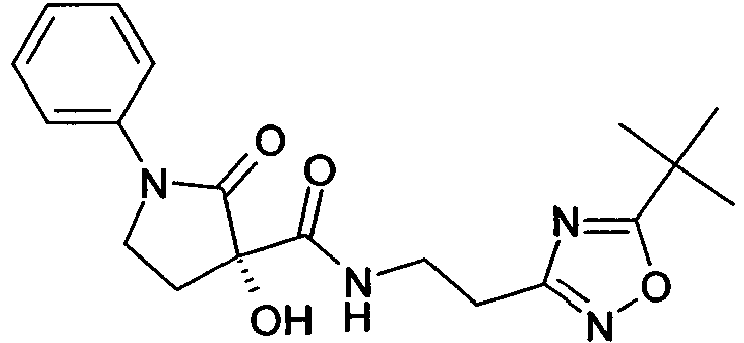
(S)-3-Hydroxy-2-oxo-1-phenyl-pyrrolidin-3-carbonsäure-[2-(5-tert.-butyl-[1,2,4]oxadiazol-3-yl)-ethyl]-amid "A11" 
(S)-3-Hydroxy-2-oxo-1-phenyl-pyrrolidin-3-carbonsäure-(2-cyclopentyl-ethyl)-amid "A12" 
(S)-3-Hydroxy-2-oxo-1-phenyl-pyrrolidin-3-carbonsäure-[2-(5-cyclopentyl-[1,2,4]oxadiazol-3-yl)-ethyl]-amid "A13" 
(S)-3-Hydroxy-2-oxo-1-phenyl-pyrrolidin-3-carbonsäure-[2-(5-ethyl-tetrazol-1-yl)-ethyl]-amid "A14" 
(S)-3-Hydroxy-2-oxo-1-phenyl-pyrrolidin-3-carbonsäure-[2-(5-methyl-[1,3,4]thiadiazol-2-yl)-ethyl]-amid "A15" 
(S)-3-Hydroxy-2-oxo-1-phenyl-pyrrolidin-3-carbonsäure-[2-(5-trifluormethyl-[1,3,4]oxadiazol-2-yl)-ethyl]-amid "A16" 
(S)-3-Hydraxy-2-oxo-1-phenyl-pyrrolidin-3-carbonsäure-[2-(2-methyl-thiazol-4-yl)-ethyl]-amid "A17" 
(S)-3-Hydroxy-2-oxo-1-phenyl-pyrrolidin-3-carbonsäure-(2-thiazol-2-yl-ethyl)-amid "A18" 
(S)-3-Hydroxy-2-oxo-1-phenyl-pyrrolidin-3-carbonsäure-[2-(5-methyl-thiophen-2-yl)-ethyl]-amid "A19" 
(S)-3-Hydroxy-2-oxo-1-phenyl-pyrrolidin-3-carbonsäure-[2-(3-methyl-pyrazol-1-yl)-ethyl]-amid "A20" 
(S)-3-Hydroxy-2-oxo-1-phenyl-pyrrolidin-3-carbonsäure-3-chlor-2-fluor-benzylamid "A21" 
(S)-3-Hydroxy-2-oxo-1-phenyl-pyrrolidin-3-carbonsäure-3-chlor-2,6-difluor-benzylamid "A22" 
(S)-3-Hydroxy-2-oxo-1-phenyl-pyrrolidin-3-carbonsäure-5-brom-2-fluor-benzylamid "A23" 
(S)-3-Hydroxy-2-oxo-1-phenyl-pyrrolidin-3-carbonsäure-3-brom-4-fluor-benzylamid "A24" 
"A25" 
(S)-3-Hydroxy-2-oxo-1-phenyl-pyrrolidin-3-carbonsäure-(6-pyrrolidin-1-yl-pyridin-2-ylmethyl)-amid "A26" 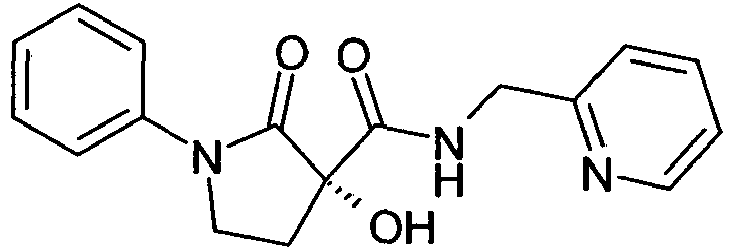
(S)-3-Hydroxy-2-oxo-1-phenyl-pyrrolidin-3-carbonsäure-(pyridin-2-ylmethyl)-amid "A27" 
(S)-3-Hydroxy-2-oxo-1-phenyl-pyrrolidin-3-carbonsäure-3-methyl-benzylamid "A28" 
(S)-3-Hydroxy-2-oxo-1-phenyl-pyrrolidin-3-carbonsäure-3-trifluormethyl-benzylamid "A29" 
(S)-1-(4-Brom-phenyl)-3-hydroxy-2-oxo-pyrrolidin-3-carbonsäure-3-brom-benzylamid "A30" 
(S)-1-(4-Bromo-phenyl)-3-hydroxy-2-oxo-pyrrolidine-3-carboxylic acid (2-thiophen-2-yl-ethyl)-amide "A31" 
(S)-1-(2,4-Difluor-phenyl)-3-hydroxy-2-oxo-pyrrolidin-3-carbonsäure-(2-thiophen-2-yl-ethyl)-amid "A32" 
(S)-1-(4-Fluor-phenyl)-3-hydroxy-2-oxo-pyrrolidin-3-carbonsäure-(2-thiophen-2-yl-ethyl)-amid "A33" 
(S)-3-Hydroxy-2-oxo-1-phenyl-pyrrolidin-3-carbonsäure-(2-thiophen-2-yl-ethyl)-amid "A34" 
(S)-3-Hydroxy-2-oxo-1-phenyl-pyrrolidin-3-carbonsäure-[2-(3-tert.-butyl-[1,2,4]oxadiazol-5-yl)-ethyl]-amid "A35" 
(S)-3-Hydroxy-2-oxo-1-phenyl-pyrrolidin-3-carbonsäure-[2-(5-ethyl-[1,3,4]thiadiazol-2-yl)-ethyl]-amid "A36" 
(S)-3-Hydroxy-2-oxo-1-phenyl-pyrrolidin-3-carbonsäure-3-thiazol-2-yl-benzylamid "A37" 
(S)-1-(3-Chlor-phenyl)-3-hydroxy-2-oxo-pyrrolidin-3-carbonsäure-(2-thiophen-2-yl-ethyl)-amid "A38" 
(S)-1-(4-Fluor-phenyl)-3-hydroxy-2-oxo-pyrrolidin-3-carbonsäure-3-brom-benzylamid "A39" 
(S)-3-Chlor-2-oxo-1-phenyl-pyrrolidin-3-carbonsäure-3-brom-benzylamid "A40" 
(R)-1-(3-Chlor-phenyl)-3-hydroxy-2-oxo-pyrrolidin-3-carbonsäure-(2-thiophen-2-yl-ethyl)-amid "A41" 
(R)-1-(4-Fluor-phenyl)-3-hydroxy-2-oxo-pyrrolidin-3-carbonsäure-3-brom-benzylamid "A42" 
(R)-3-Hydroxy-2-oxo-1-phenyl-pyrrolidin-3-carbonsäure-[2-(5-ethyl-tetrazol-2-yl)-ethyl]-amid "A43" 
(R)-3-Chlor-2-oxo-1-phenyl-pyrrolidin-3-carbonsäure-3-brom-benzylamid "A44" 
"A45" 
(S)-3-Hydroxy-2-oxo-1-phenyl-pyrrolidin-3-carbonsäure-(2-pyrrolidin-1-yl-ethyl)-amid "A46" 
(S)-3-Hydroxy-2-oxo-1-phenyl-pyrrolidin-3-carbonsäure-3-chlor-2,4-difluor-benzylamid "A47" 
(S)-3-Hydroxy-2-oxo-1-phenyl-pyrrolidin-3-carbonsäure-3-chlor-4-fluor-benzylamid "A48" 
(S)-3-Hydroxy-2-oxo-1-phenyl-pyrrolidin-3-carbonsäure-3-chlor-5-fluor-benzylamid "A49" 
(S)-3-Hydroxy-2-oxo-1-phenyl-pyrrolidin-3-carbonsäure-5-chlor-2-fluor-benzylamid "A50" 
(S)-1-(3-Chlor-4-fluor-phenyl)-3-hydroxy-2-oxo-pyrrolidin-3-carbonsäure-3-brom-benzylamid "A51" 
(S)-1-(3-Chlor-4-fluor-phenyl)-3-hydroxy-2-oxo-pyrrolidin-3-carbonsäure-(2-thiophen-2-yl-ethyl)-amid "A52" 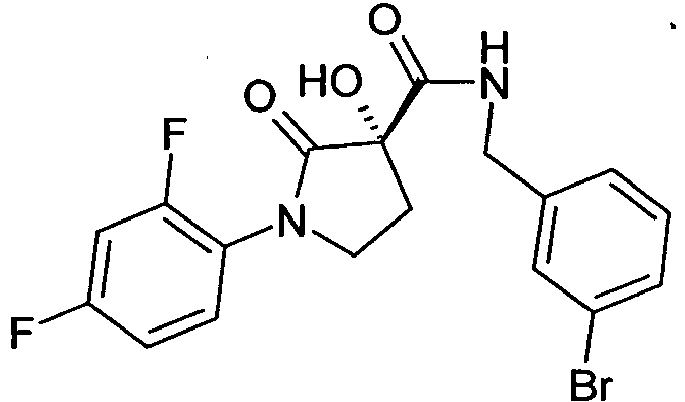
(S)-1-(2,4-Difluor-phenyl)-3-hydroxy-2-oxo-pyrrolidin-3-carbonsäure-3-brom-benzylamid "A53" 
"A54" 
(S)-3-Hydroxy-1-naphthalin-2-yl-2-oxo-pyrrolidin-3-carbonsäure-3-brom-benzylamid "A55" 
(S)-3-Hydroxy-1-naphthalin-2-yl-2-oxo-pyrrolidin-3-carbonsäure-(2-thiophen-2-yl-ethyl)-amid "A56" 
(S)-1-(3-Chlor-4-fluor-phenyl)-3-hydroxy-2-oxo-pyrrolidin-3-carbonsäure-3-chlor-2-fluor-benzylamid "A57" 
(S)-1-(3-Chlor-phenyl)-3-hydroxy-2-oxo-pyrrolidin-3-carbonsäure-3-chlor-2-fluor-benzylamid "A58" 
(S)-1-(4-Fluor-phenyl)-3-hydroxy-2-oxo-pyrrolidin-3-carbonsäure-3-chlor-2-fluor-benzylamid "A59" 
(S)-3-Hydroxy-2-oxo-1-phenyl-pyrrolidin-3-carbonsäure-(thiophen-2-ylmethyl)-amid "A60" 
(S)-3-Hydroxy-2-oxo-1-phenyl-pyrrolidin-3-carbonsäure-(benzothiazol-2-ylmethyl)-amid "A61" 
(S)-3-Chlor-2-oxo-1-phenyl-pyrrolidin-3-carbonsäure-(2-thiophen-2-yl-ethyl)-amid "A62" 
(S)-3-Hydroxy-2-oxo-1-phenyl-pyrrolidin-3-carbonsäure-(furan-2-ylmethyl)-amid "A63" 
3-Hydroxy-2-oxo-1-phenyl-pyrrolidin-3-carbonsäure-(3-methyl-butyl)-amid "A64" 
3-Hydroxy-2-oxo-1-phenyl-pyrrolidin-3-carbonsäure-(furan-2-ylmethyl)-amid "A65" 
3-Hydroxy-2-oxo-1-phenyl-pyrrolidin-3-carbonsäure-(2-thiophen-2-yl-ethyl)-amid "A66" 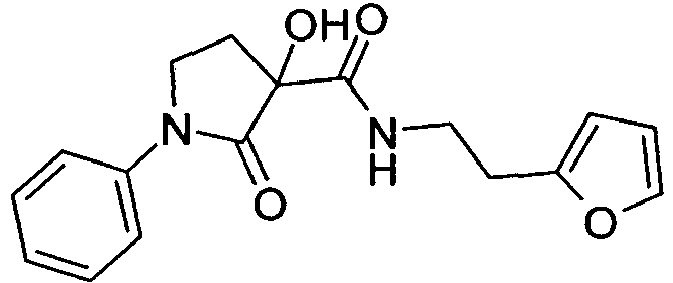
3-Hydroxy-2-oxo-1-phenyl-pyrrolidin-3-carbonsäure-(2-furan-2-yl-ethyl)-amid "A67" 
(R)-1-(4-Fluor-phenyl)-3-hydroxy-2-oxo-pyrrolidin-3-carbonsäure-3-chlor-2-fluor-benzylamid "A68" 
(R)-1-(3-Chlor-phenyl)-3-hydroxy-2-oxo-pyrrolidin-3-carbonsäure-3-chlor-2-fluor-benzylamid "A69" 
(R)-3-Hydroxy-1-naphthalin-2-yl-2-oxo-pyrrolidin-3-carbonsäure-(2-thiophen-2-yl-ethyl)-amid "A70" 
(R)-3-Hydroxy-1-naphthalin-2-yl-2-oxo-pyrrolidin-3-carbonsäure-3-brom-benzylamid "A71" 
(S)-3-Hydroxy-1-naphthalin-1-yl-2-oxo-pyrrolidin-3-carbonsäure-3-brom-benzylamid "A72" 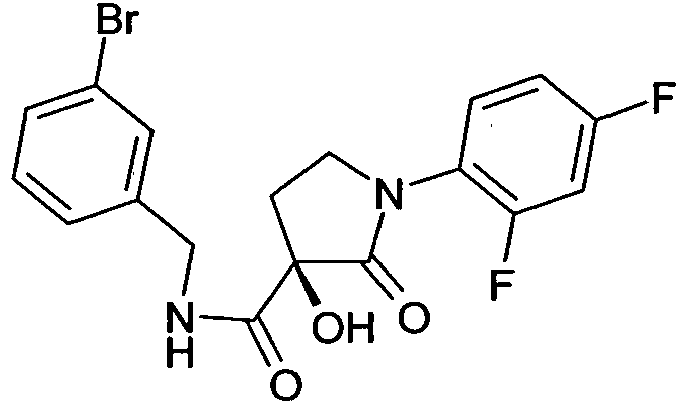
(R)-1-(2,4-Difluor-phenyl)-3-hydroxy-2-oxo-pyrrolidin-3-carbonsäure-3-brom-benzylamid "A73" 
"A74" 
(R)-3-Hydroxy-2-oxo-1-phenyl-pyrrolidin-3-carbonsäure-3-chlor-4-fluor-benzylamid "A75" 
(R)-3-Hydroxy-2-oxo-1-phenyl-pyrrolidin-3-carbonsäure-benzylamid "A76" 
(R)-1-(4-Brom-phenyl)-3-hydroxy-2-oxo-pyrrolidin-3-carbonsäure-3-brom-benzylamid "A77" 
(R)-1-(4-Brom-phenyl)-3-hydroxy-2-oxo-pyrrolidin-3-carbonsäure-(2-thiophen-2-yl-ethyl)-amid "A78" 
(R)-1-(4-Fluor-phenyl)-3-hydroxy-2-oxo-pyrrolidin-3-carbonsäure-(2-thiophen-2-yl-ethyl)-amid "A79" 
(R)-3-Hyd roxy-2-oxo-1-phenyl-pyrrolidin-3-carbonsäure-3-brom-benzylamid "A80" 
(S)-1-(3-Chlor-phenyl)-3-hydroxy-2-oxo-pyrrolidin-3-carbonsäure-3-brom-benzylamid "A81" 
(S)-1-(4-Brom-phenyl)-3-hydroxy-2-oxo-pyrrolidin-3-carbonsäure-3-chlor-2-fluor-benzylamid "A82" 
(S)-1-(2,4-Difluor-phenyl)-3-hydroxy-2-oxo-pyrrolidin-3-carbonsäure-3-chlor-2-fluor-benzylamid "A83" 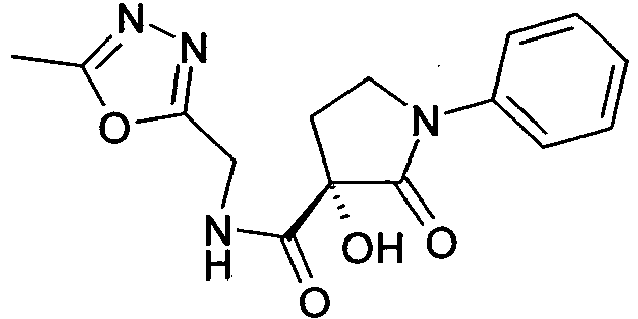
(S)-3-Hydroxy-2-oxo-1-phenyl-pyrrolidin-3-carbonsäure-(5-methyl-[1,3,4]oxadiazol-2-ylmethyl)-amid "A84" 
(S)-3-Hydroxy-2-oxo-1-phenyl-pyrrolidin-3-carbonsäure-(3-methyl-thiophen-2-ylmethyl)-amid "A85" 
(S)-3-Hydroxy-2-oxo-1-phenyl-pyrrolidin-3-carbonsäure-(thiazol-2-ylmethyl)-amid "A86" 
(S)-3-Fluor-2-oxo-1-phenyl-pyrrolidin-3-carbonsäure-(2-thiophen-2-yl-ethyl)-amid "A87" 
(R)-1-(3-Chlor-phenyl)-3-hydroxy-2-oxo-pyrrolidin-3-carbonsäure-3-brom-benzylamid "A88" 
(R)-1-(2,4-Difluor-phenyl)-3-hydroxy-2-oxo-pyrrolidin-3-carbonsäure-3-chlor-2-fluor-benzylamid "A89" 
(R)-1-(4-Brom-phenyl)-3-hydroxy-2-oxo-pyrrolidin-3-carbonsäure-3-chlor-2-fluor-benzylamid "A90" 
(R)-1-Benzyl-3-hydroxy-2-oxo-pyrrolidin-3-carbonsäure-(2-thiophen-2-yl-ethyl)-amid "A91" 
(S)-1-Benzyl-3-hydroxy-2-oxo-pyrrolidin-3-carbonsäure-(2-thiophen-2-yl-ethyl)-amid "A91a" (S)-3-Amino-2-oxo-1-phenyl-pyrrolidin-3-carbonsäure-(3-chlor-5-fluor-benzyl)-amid "A92" 
(S)-3-Hydroxy-2-oxo-1-phenyl-pyrrolidin-3-carbonsäure-(5-methyl-furan-2-ylmethyl)-amid "A93" 
(S)-3-Hydroxy-2-oxo-1-phenyl-pyrrolidin-3-carbonsäure-(3-methyl-furan-2-ylmethyl)-amid "A94" 
(S)-3-Hydroxy-2-oxo-1-phenyl-pyrrolidin-3-carbonsäure-(4-methyl-thiophen-2-ylmethyl)-amid "A95" 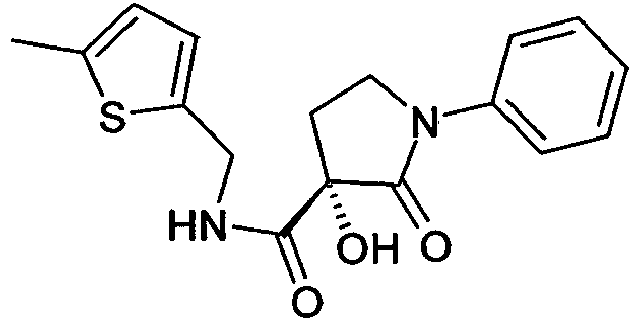
(S)-3-Hydroxy-2-oxo-1-phenyl-pyrrolidin-3-carbonsäure-(5-methyl-thiophen-2-ylmethyl)-amid "A96" 
(S)-1-(3-Chlor-phenyl)-3-hydroxy-2-oxo-pyrrolidin-3-carbonsäure-3,5-difluor-benzylamid "A97" 
(S)-1-(3-Chlor-phenyl)-3-hydroxy-2-oxo-pyrrolidin-3-carbonsäure-3,5-dichlor-benzylamid "A98" 
(S)-1-(4-Fluor-phenyl)-3-hydroxy-2-oxo-pyrrolidin-3-carbonsäure-3,5-difluor-benzylamid "A99" 
(S)-1-(4-Fluor-phenyl)-3-hydroxy-2-oxo-pyrrolidin-3-carbonsäure-3,5-dichlor-benzylamid "A100" 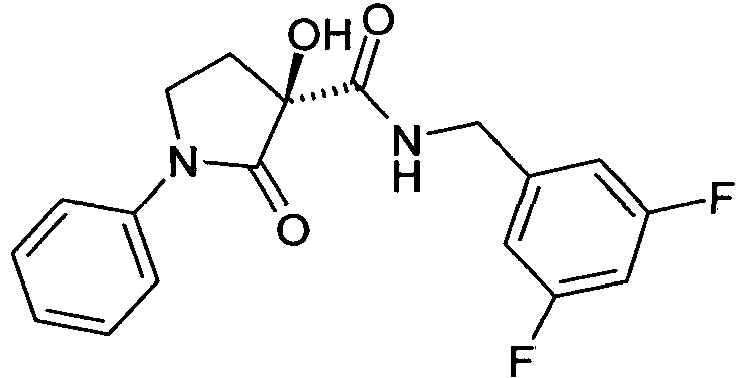
(S)-3-Hydroxy-2-oxo-1-phenyl-pyrrolidin-3-carbonsäure-3,5-difluor-benzylamid "A101" 
(S)-3-Hydroxy-2-oxo-1-phenyl-pyrrolidin-3-carbonsäure-3,5-dichlor-benzylamid "A102" 
(S)-1-(3-Chlor-phenyl)-3-hydroxy-2-oxo-pyrrolidin-3-carbonsäure-3-chlor-5-fluor-benzylamid "A103" 
"A104" 
(S)-1-(2,3-Dihydro-benzo[1,4]dioxin-6-yl)-3-hydroxy-2-oxo-pyrrolidin-3-carbonsäure-3-chlor-5-fluor-benzylamid "A105" 
(S)-1-Benzo[1,3]dioxol-5-yl-3-hydroxy-2-oxo-pyrrolidin-3-carbonsäure-3-chlor-5-fluor-benzylamid "A106" 
(S)-3-Hydroxy-2-oxo-1-chinolin-6-yl-pyrrolidin-3-carbonsäure-3-chlor-5-fluor-benzylamid "A107" 
(S)-3-Hydroxy-1-methyl-2-oxo-pyrrolidin-3-carbonsäure-3-chlor-5-fluor-benzylamid "A108" 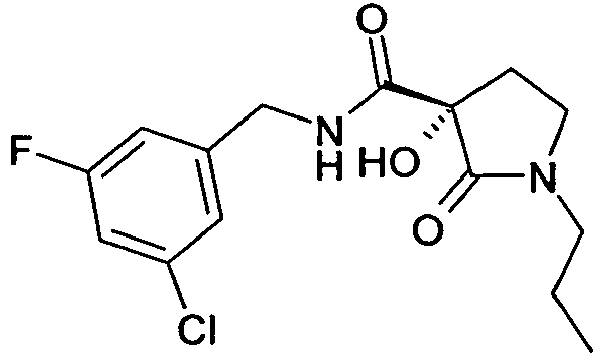
(S)-3-Hydroxy-2-oxo-1-propyl-pyrrolidin-3-carbonsäure-3-chlor-5-fluor-benzylamid "A109" 
(S)-1-(4-Fluor-phenyl)-3-hydroxy-2-oxo-pyrrolidin-3-carbonsäure-phenylamid "A110" 
(S)-1-(4-Fluor-phenyl)-3-hydroxy-2-oxo-pyrrolidin-3-carbonsäure-(1-methyl-1H-pyrazol-4-yl)-amid "A111" 
(R)-1-(2,3-Dihydro-benzo[1,4]dioxin-6-yl)-3-hydroxy-2-oxo-pyrrolidin-3-carbonsäure-3-chlor-5-fluor-benzylamid "A112" 
(R)-1-Benzo[1,3]dioxol-5-yl-3-hydroxy-2-oxo-pyrrolidin-3-carbonsäure-3-chlor-5-fluor-benzylamid "A113" 
(R)-3-Hydroxy-1-methyl-2-oxo-pyrrolidin-3-carbonsäure-3-chlor-5-fluor-benzylamid "A114" 
(R)-3-Hydroxy-2-oxo-1-propyl-pyrrolidin-3-carbonsäure-3-chlor-5-fluor-benzylamid "A115" 
3-Fluor-2-oxo-1-phenyl-pyrrolidin-3-carbonsäure-3-chlor-5-fluor-benzylamid "A116" 
(S)-3-Hydroxy-1-(2-methyl-pyridin-4-yl)-2-oxo-pyrrolidin-3-carbonsäure-3-chlor-5-fluor-benzylamid "A117" 
(S)-1-Ethyl-3-hydroxy-2-oxo-pyrrolidin-3-carbonsäure-3-chlor-5-fluor-benzylamid "A118" 
(R)-1-Ethyl-3-hydroxy-2-oxo-pyrrolidin-3-carbonsäure-3-chlor-5-fluor-benzylamid "A119" 
(S)-3-Fluor-2-oxo-1-phenyl-pyrrolidin-3-carbonsäure-3-chlor-5-fluor-benzylamid "A120" 
(R)-3-Fluor-2-oxo-1-phenyl-pyrrolidin-3-carbonsäure-3-chlor-5-fluor-benzylamid "A150" 3-Azido-2-oxo-1-phenyl-pyrrolidin-3-carbonsäure-(3-chlor-5-fluor-benzyl)amid "A151" 3-Amino-2-oxo-1-phenyl-pyrrolidin-3-carbonsäure-(3-chlor-5-fluor-benzyl)amid "A162" 
(S)-1-(4-Fluor-phenyl)-3-hydroxy-2-oxo-pyrrolidin-3-carbonsäure-3-fluor-5-trifluormethyl-benzylamid "A163" 
(S)-1-(4-Fluor-phenyl)-3-hydroxy-2-oxo-pyrrolidin-3-carbonsäure-3,5-bis-trifluormethyl-benzylamid "A164" 
(S)-3-Hydroxy-2-oxo-1-phenyl-pyrrolidin-3-carbonsäure-3-fluor-5-trifluormethyl-benzylamid "A165" 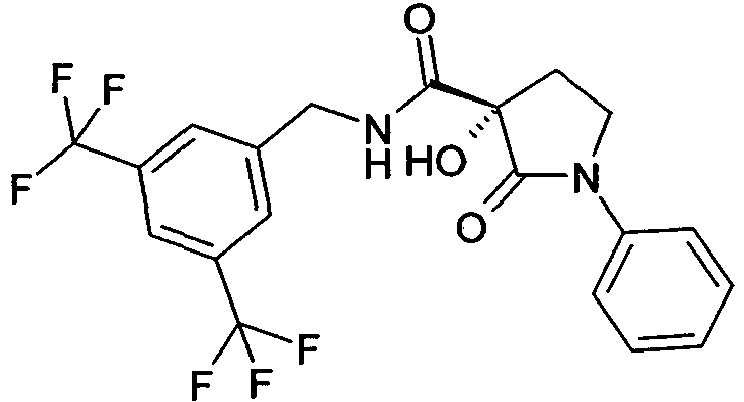
(S)-3-Hydroxy-2-oxo-1-phenyl-pyrrolidin-3-carbonsäure-3,5-bis-trifluormethyl-benzylamid "A166" 
(S)-3-Amino-2-oxo-1-phenyl-pyrrolidin-3-carbonsäure-3-chlor-5-fluor-benzylamid "A167" 
(R)-3-Hydroxy-2-oxo-1-phenyl-pyrrolidin-3-carbonsäure-3-chlor-5-fluor-benzylamid "A168" 
(R)-3-Amino-2-oxo-1-phenyl-pyrrolidin-3-carbonsäure-3-chlor-5-fluor-benzylamid "A169" 
(S)-3-Azido-2-oxo-1-phenyl-pyrrolidin-3-carbonsäure-3-chlor-5-fluor-benzylamid "A170" 
(S)-3-Hydroxy-1-(1-methyl-1H-pyrazol-4-yl)-2-oxo-pyrrolidin-3-carbonsäure-3-chlor-2-fluor-benzylamid "A171" 
(S)-3-Hydroxy-1-(2-methoxy-ethyl)-2-oxo-pyrrolidin-3-carbonsäure-3,5-difluor-benzylamid "A172" 
(S)-3-Hydroxy-2-oxo-1-p-tolyl-pyrrolidin-3-carbonsäure-3-chlor-5-fluor-benzylamid "A173" 
(S)-1-Cyclohexyl-3-hyd roxy-2-oxo-pyrrolidin-3-carbonsäure-3-chlor-5-fluor-benzylamid "A174" 
(S)-3-Hydroxy-1-(1-methyl-1H-pyrazol-4-yl)-2-oxo-pyrrolidin-3-carbonsäure-3-chlor-5-fluor-benzylamid "A175" 
(S)-3-Hydroxy-2-oxo-1-m-tolyl-pyrrolidin-3-carbonsäure-3-chlor-5-fluor-benzylamid "A176" 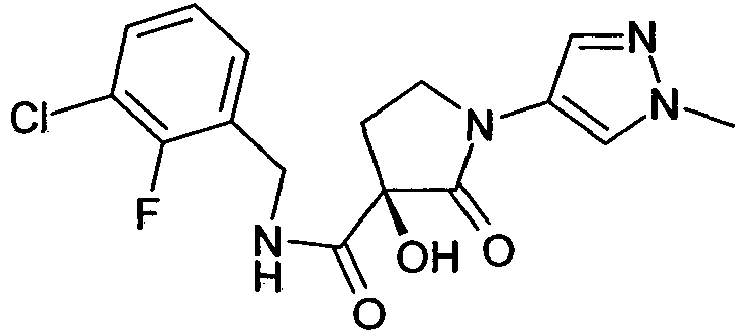
(R)-3-Hydroxy-1-(1-methyl-1H-pyrazol-4-yl)-2-oxo-pyrrolidin-3-carbonsäure-3-chlor-2-fluor-benzylamid "A177" 
(R)-1-Cyclohexyl-3-hydroxy-2-oxo-pyrrolidin-3-carbonsäure-3-chlor-5-fluor-benzylamid "A178" 
(R)-3-Hydroxy-2-oxo-1-m-tolyl-pyrrolidin-3-carbonsäure-3-chlor-5-fluor-benzylamid "A179" 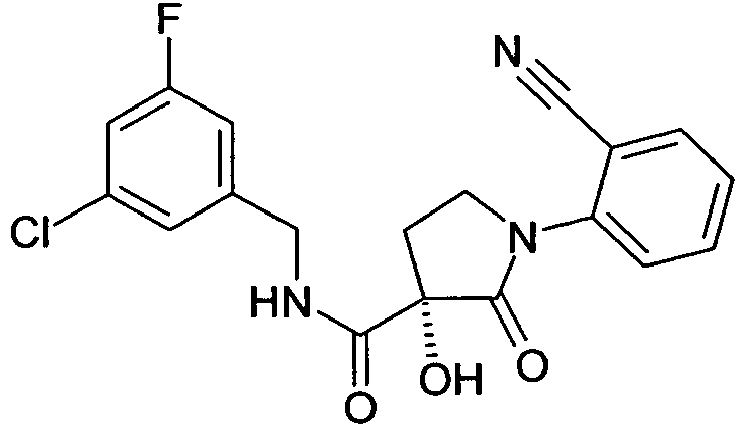
(S)-1-(2-Cyan-phenyl)-3-hydroxy-2-oxo-pyrrolidin-3-carbonsäure-3-chlor-5-fluor-benzylamid "A180" 
(S)-1-(4-Cyan-phenyl)-3-hydroxy-2-oxo-pyrrolidin-3-carbonsäure-3-chlor-5-fluor-benzylamid "A181" 
(S)-3-Hydroxy-1-(6-methyl-pyridin-3-yl)-2-oxo-pyrrolidin-3-carbonsäure-3-chlor-5-fluor-benzylamid "A182" 
(S)-3-Hydroxy-2-oxo-1-o-tolyl-pyrrolidin-3-carbonsäure-3-chlor-5-fluor-benzylamid "A183" 
(S)-3-Hydroxy-2-oxo-1-phenyl-pyrrolidin-3-carbonsäure-[2-(3-fluor-phenyl)-ethyl]-amid "A184" 
(S)-3-Hydroxy-2-oxo-1-phenyl-pyrrolidin-3-carbonsäure-[2-(4-fluor-phenyl)-ethyl]-amid "A185" 
(S)-3-Hydroxy-2-oxo-1-phenyl-pyrrolidin-3-carbonsäure-phenethyl-amid "A186" 
(R)-1-(2-Cyan-phenyl)-3-hydroxy-2-oxo-pyrrolidin-3-carbonsäure-3-chlor-5-fluor-benzylamid "A187" 
(R)-1-(4-Cyan-phenyl)-3-hydroxy-2-oxo-pyrrolidin-3-carbonsäure-3-chlor-5-fluor-benzylamid "A188" 
(R)-3-Hydroxy-1-(6-methyl-pyridin-3-yl)-2-oxo-pyrrolidin-3-carbonsäure-3-chlor-5-fluor-benzylamid "A189" 
(R)-3-Hydroxy-2-oxo-1-p-tolyl-pyrrolidin-3-carbonsäure-3-chlor-5-fluor-benzylamid "A190" 
(R)-3-Hydroxy-1-(1-methyl-1 H-pyrazol-4-yl)-2-oxo-pyrrolidin-3-carbonsäure-3-chlor-5-fluor-benzylamid "A191" 
"A192" 
(S)-1-(4-Carbamoyl-phenyl)-3-hydroxy-2-oxo-pyrrolidin-3-carbonsäure-3-chlor-5-fluor-benzylamid "A193" 
(S)-1-(3-Cyan-phenyl)-3-hydroxy-2-oxo-pyrrolidin-3-carbonsäure-3-chlor-5-fluor-benzylamid "A194" 
(R)-1-(3-Cyan-phenyl)-3-hydroxy-2-oxo-pyrrolidin-3-carbonsäure-3-chlor-5-fluor-benzylamid "A195" 
(S)-3-Hydroxy-2-oxo-1-(tetrahydro-pyran-4-yl)-pyrrolidin-3-carbonsäure-3-chlor-5-fluor-benzylamid "A196" 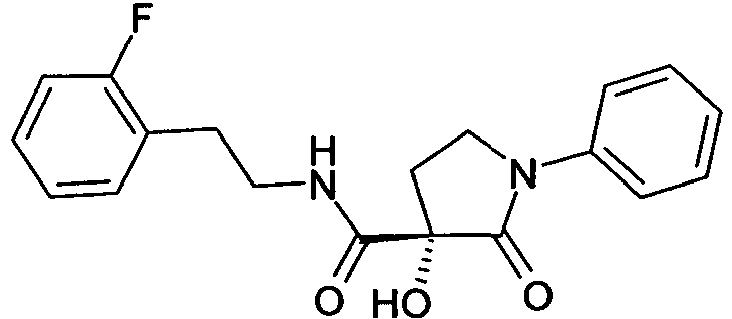
(S)-3-Hydroxy-2-oxo-1-phenyl-pyrrolidin-3-carbonsäure-[2-(2-fluor-phenyl)-ethyl]-amid "A197" 
5-[(S)-3-(3-Chlor-5-fluor-benzylcarbamoyl)-3-hydroxy-2-oxo-pyrrolidin-1-yl]-pyridin-2-carbonsäure-amid "A198" 
(S)-1-(1-Ethyl-1H-pyrazol-4-yl)-3-hydroxy-2-oxo-pyrrolidin-3-carbonsäure-3-chlor-2-fluor-benzylamid "A199" 
(S)-3-Hydroxy-2-oxo-1-phenyl-pyrrolidin-3-carbonsäure-(1-phenyl-cyclopropyl)-amid "A200" 
(S)-3-Hydroxy-1-(1-isopropyl-1H-pyrazol-4-yl)-2-oxo-pyrrolidin-3-carbonsäure-3-chlor-2-fluor-benzylamid "A201" 
(S)-3-Hydroxy-1-(1-isopropyl-1 H-pyrazol-4-yl)-2-oxo-pyrrolidin-3-carbonsäure-3,5-difluor-benzylamid "A202" 
(S)-3-Hydroxy-2-oxo-1-phenyl-pyrrolidin-3-carbonsäure-[2-(3-chlor-5-fluor-phenyl)-ethyl]-amid "A203" 
(S)-3-Hydroxy-2-oxo-1-(4-trifluoromethyl-phenyl)-pyrrolidin-3-carbonsäure-3-chlor-2-fluor-benzylamid "A204" 
(S)-3-Hydroxy-2-oxo-1-phenyl-pyrrolidin-3-carbonsäure-((1S,2R)-2-phenyl-cyclopropyl)-amid "A205" 
5-[(R)-3-(3-Chlor-5-fluor-benzylcarbamoyl)-3-hydroxy-2-oxo-pyrrolidin-1-yl]-pyridin-2-carbonsäure-amid "A206" 
(R)-3-Hydroxy-1-(1-isopropyl-1H-pyrazol-4-yl)-2-oxo-pyrrolidin-3-carbonsäure-3-chlor-2-fluor-benzylamid "A207" 
(R)-3-Hydroxy-1-(1-isopropyl-1H-pyrazol-4-yl)-2-oxo-pyrrolidin-3-carbonsäure-3,5-difluor-benzylamid "A208" 
(R)-3-Hydroxy-2-oxo-1-(tetrahydro-pyran-4-yl)-pyrrolidin-3-carbonsäure- 3-chlor-5-fluor-benzylamid "A209" 
(R)-1-(1-Ethyl-1H-pyrazol-4-yl)-3-hydroxy-2-oxo-pyrrolidin-3-carbonsäure-3-chlor-2-fluor-benzylamid "A210" 
1-(1-Acetyl-2,3-dihydro-1H-indol-5-yl)-3-hydroxy-2-oxo-pyrrolidin-3-carbonsäure-3-chlor-5-fluor-benzylamid "A211" 
(S)-1-(1-Ethyl-1 H-pyrazol-4-yl)-3-hydroxy-2-oxo-pyrrolidin-3-carbonsäure-3,5-difluor-benzylamid "A212" 
(S)-3-Hydroxy-2-oxo-1-phenyl-pyrrolidin-3-carbonsäure-[2-(3-chlor-2-fluor-phenyl)-ethyl]-amid "A213" 
(S)-3-Hydroxy-2-oxo-1-(4-trifluormethyl-phenyl)-pyrrolidin-3-carbonsäure-3-chlor-5-fluor-benzylamid "A214" 
(S)-3-Hydroxy-2-oxo-1-(4-trifluormethyl-phenyl)-pyrrolidin-3-carbonsäure-3,5-difluor-benzylamid "A215" 
(S)-3-Hydroxy-2-oxo-1-phenyl-pyrrolidin-3-carbonsäure-3-cyan-benzylamid "A216" 
(R)-3-Hydroxy-2-oxo-1-(4-trifluormethyl-phenyl)-pyrrolidin-3-carbonsäure-3-chlor-2-fluor-benzylamid "A217" 
(R)-3-Hydroxy-2-oxo-1-(4-trifluormethyl-phenyl)-pyrrolidin-3-carbonsäure-3-chlor-5-fluor-benzylamid "A218" 
(R)-3-Hydroxy-2-oxo-1-(4-trifluormethyl-phenyl)-pyrrolidin-3-carbonsäure-3,5-difluor-benzylamid "A219" 
(S)-1-(4-Fluor-phenyl)-3-hydroxy-2-oxo-pyrrolidin-3-carbonsäure-[2-(3,5-difluorphenyl)-ethyl]-amid "A220" 
(R)-3-Hydroxy-2-oxo-1-(3-trifluormethyl-phenyl)-pyrrolidin-3-carbonsäure-[2-(3-chlor-5-fluor-phenyl)-ethyl]-amid "A221" 
(R)-3-Hydroxy-2-oxo-1-(4-trifluormethyl-phenyl)-pyrrolidin-3-carbonsäure-[2-(3-chlor-5-fluor-phenyl)-ethyl]-amid "A222" 
(R)-1-(3-Fluor-phenyl)-3-hydroxy-2-oxo-pyrrolidin-3-carbonsäure-[2-(3-chlor-5-fluor-phenyl)-ethyl]-amid "A223" 
(S)-1-(4-Fluor-phenyl)-3-hydroxy-2-oxo-pyrrolidin-3-carbonsäure-[2-(3-chlor-5-fluor-phenyl)-ethyl]-amid "A224" 
(S)-1-(3-Carbamoyl-phenyl)-3-hydroxy-2-oxo-pyrrolidin-3-carbonsäure-[2-(3-chlor-5-fluor-phenyl)-ethyl]-amid "A225" 
(R)-3-Hydroxy-2-oxo-1-(3-trifluormethyl-phenyl)-pyrrolidin-3-carbonsäure-3-chlor-5-fluor-benzylamid "A226" 
(R)-1-(3-Fluor-phenyl)-3-hydroxy-2-oxo-pyrrolidin-3-carbonsäure-3-chlor-5-fluor-benzylamid "A227" 
(S)-3-Hydroxy-2-oxo-1-phenyl-pyrrolidin-3-carbonsäure-[2-(3,5-difluor-phenyl)-ethyl]-amid "A228" 
(S)-1-(4-Fluor-phenyl)-3-hydroxy-2-oxo-pyrrolidin-3-carbonsäure-2-chlor-3,6-difluor-benzylamid "A229" 
(S)-1-(1-Carbamoylmethyl-1 H-pyrazol-4-yl)-3-hydroxy-2-oxo-pyrrolidin-3-carbonsäure-3-chlor-2-fluor-benzylamid "A230" 
4-[(R)-3-(3,5-Difluor-benzylcarbamoyl)-3-hydroxy-2-oxo-pyrrolidin-1-yl]-piperidin-1-carbonsäure-tert.-butylester "A231" 
(R)-1-(3-Carbamoyl-phenyl)-3-hydroxy-2-oxo-pyrrolidin-3-carbonsäure-3-chlor-5-fluor-benzylamid "A232" 
(S)-3-Hydroxy-2-oxo-1-(3-trifluormethyl-phenyl)-pyrrolidin-3-carbonsäure-[2-(3-chlor-5-fluor-phenyl)-ethyl]-amid "A233" 
(S)-3-Hydroxy-2-oxo-1-(4-trifluormethyl-phenyl)-pyrrolidin-3-carbonsäure-[2-(3-chlor-5-fluor-phenyl)-ethyl]-amid "A234" 
(S)-1-(3-Fluor-phenyl)-3-hydroxy-2-oxo-pyrrolidin-3-carbonsäure-[2-(3-chlor-5-fluor-phenyl)-ethyl]-amid "A235" 
(S)-3-Hydroxy-2-oxo-1-(3-trifluormethyl-phenyl)-pyrrolidin-3-carbonsäure-3-chlor-5-fluor-benzylamid "A236" 
4-[(S)-3-(3,5-Difluor-benzylcarbamoyl)-3-hydroxy-2-oxo-pyrrolidin-1-yl]-piperidin-1-carbonsäure-tert.-butylester "A237" 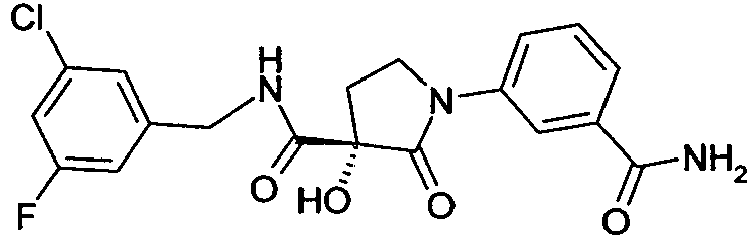
(S)-1-(3-Carbamoyl-phenyl)-3-hydroxy-2-oxo-pyrrolidin-3-carbonsäure-3-chloro-5-fluor-benzylamid "A238" 
(S)-1-(3-Fluor-phenyl)-3-hydroxy-2-oxo-pyrrolidin-3-carbonsäure-3-chlor-5-fluor-benzylamid "A239" 
(S)-3-Hydroxy-1-(6-methyl-pyridin-3-yl)-2-oxo-pyrrolidin-3-carbonsäure-[2-(3-chlor-5-fluor-phenyl)-ethyl]-amid "A240" 
(S)-3-Hydroxy-1-(1-isopropyl-1 H-pyrazol-4-yl)-2-oxo-pyrrolidin-3-carbonsäure-[2-(3-chlor-5-fluor-phenyl)-ethyl]-amid "A241" 
(S)-1-(4-Carbamoyl-phenyl)-3-hydroxy-2-oxo-pyrrolidin-3-carbonsäure-[2-(3-chlor-5-fluor-phenyl)-ethyl]-amid "A242" 
(S)-1-(1-Acetyl-1,2,3,4-tetrahydro-chinolin-6-yl)-3-hydroxy-2-oxo-pyrrolidin-3-carbonsäure-3-chlor-5-fluor-benzylamid "A243" 
(S)-1-Chroman-6-yl-3-hydroxy-2-oxo-pyrrolidin-3-carbonsäure-3-chlor-5-fluor-benzylamid "A244" 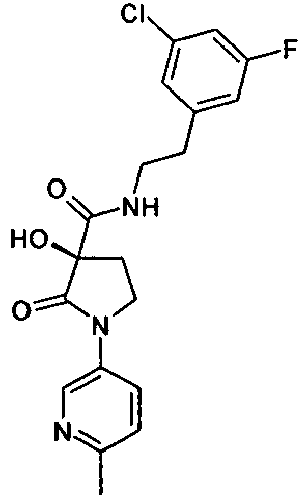
(R)-3-Hydroxy-1-(6-methyl-pyridin-3-yl)-2-oxo-pyrrolidin-3-carbonsäure-[2-(3-chlor-5-fluor-phenyl)-ethyl]-amid "A245" 
(R)-1-(4-Carbamoyl-phenyl)-3-hydroxy-2-oxo-pyrrolidin-3-carbonsäure-[2-(3-chlor-5-fluor-phenyl)-ethyl]-amid "A246" 
(R)-1-(1-Acetyl-1,2,3,4-tetrahydro-chinolin-6-yl)-3-hydroxy-2-oxo-pyrrolidin-3-carbonsäure-3-chlor-5-fluor-benzylamid "A247" 
(R)-1-Chroman-6-yl-3-hydroxy-2-oxo-pyrrolidin-3-carbonsäure-3-chlor-5-fluor-benzylamid "A248" 
(S)-3-Hydroxy-1-(1-isopropyl-1H-pyrazol-4-yl)-2-oxo-pyrrolidin-3-carbonsäure-3-chlor-5-fluor-benzylamid "A249" 
(S)-3-Hydroxy-2-oxo-1-(1-propionyl-2,3-dihydro-1H-indol-5-yl)-pyrrolidin-3-carbonsäure-3-chlor-5-fluor-benzylamid "A250" 
(S)-3-Hydroxy-1-(1H-indol-5-yl)-2-oxo-pyrrolidin-3-carbonsäure-3-chlor-5-fluor-benzylamid "A251" 
(S)-3-Hydroxy-2-oxo-1-(2-oxo-1,2,3,4-tetrahydro-chinolin-6-yl)-pyrrolidin-3-carbonsäure-3-chlor-5-fluor-benzylamid "A252" 
(S)-1-(2,3-Dihydro-benzofuran-5-yl)-3-hydroxy-2-oxo-pyrrolidin-3-carbonsäure-3-chlor-5-fluor-benzylamid "A253" 
3-Hydroxy-1-(1-methansulfonyl-2,3-dihydro-1H-indol-5-yl)-2-oxo-pyrrolidin-3-carbonsäure-3-chlor-5-fluor-benzylamid "A254" 
1-(3-Acetylamino-phenyl)-3-hydroxy-2-oxo-pyrrolidin-3-carbonsäure-3-chlor-5-fluor-benzylamid "A255" 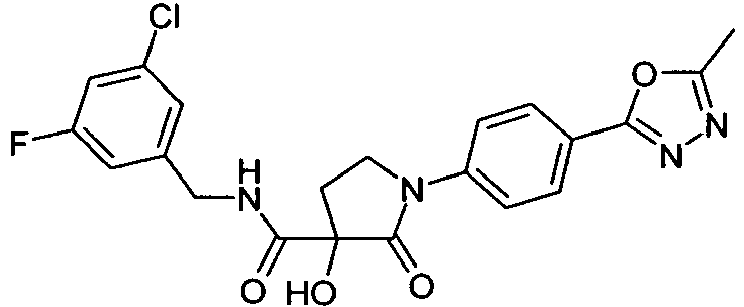
3-Hydroxy-1-[4-(5-methyl-[1,3,4]oxadiazol-2-yl)-phenyl]-2-oxo-pyrrolidin-3-carbonsäure-3-chlor-5-fluor-benzylamid "A256" 
(R)-3-Hydroxy-1-(1-isopropyl-1 H-pyrazol-4-yl)-2-oxo-pyrrolidin-3-carbonsäure-3-chlor-5-fluor-benzylamid "A257" 
(R)-3-Hydroxy-2-oxo-1-(1-propionyl-2,3-dihydro-1H-indol-5-yl)-pyrrolidin-3-carbonsäure-3-chlor-5-fluor-benzylamid "A258" 
(R)-3-Hydroxy-1-(1H-indol-5-yl)-2-oxo-pyrrolidin-3-carbonsäure-3-chlor-5-fluor-benzylamid "A259" 
(R)-1-(2,3-Dihydro-benzofuran-5-yl)-3-hydroxy-2-oxo-pyrrolidin-3-carbonsäure-3-chlor-5-fluor-benzylamid "A260" 
(S)-3-Hydroxy-1-(4-methansulfonyl-phenyl)-2-oxo-pyrrolidin-3-carbonsäure-3-chlor-5-fluor-benzylamid "A261" 
1-(1-Acetyl-2,3-dihydro-1H-indol-5-yl)-3-hydroxy-2-oxo-pyrrolidin-3-carbonsäure-[2-(3-chlor-5-fluor-phenyl)-ethyl]-amid "A262" 
1-(6-Acetylamino-pyridin-3-yl)-3-hydroxy-2-oxo-pyrrolidin-3-carbonsäure-3-chlor-5-fluor-benzylamid "A263" 
(R)-3-Hydroxy-1-(4-methansulfonyl-phenyl)-2-oxo-pyrrolidin-3-carbonsäure-3-chlor-5-fluor-benzylamid "A264" 
(R)-3-Hydroxy-1-(1-methansulfonyl-2,3-dihydro-1H-indol-5-yl)-2-oxo-pyrrolidin-3-carbonsäure-3-chlor-5-fluor-benzylamid "A265" 
(S)-3-Hydroxy-1-(1-methansulfonyl-2,3-dihydro-1H-indol-5-yl)-2-oxo-pyrrolidin-3-carbonsäure-3-chlor-5-fluor-benzylamid "A266" 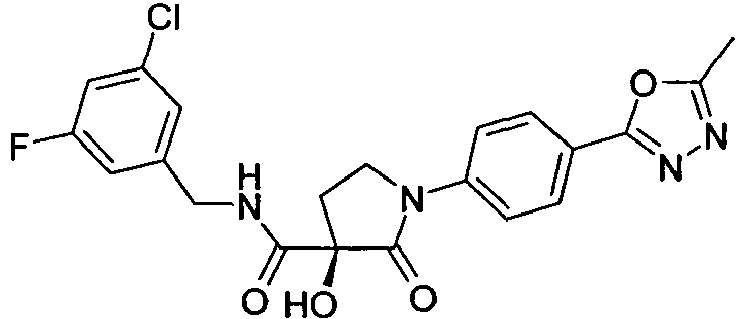
(R)-3-Hydroxy-1-[4-(5-methyl-[1,3,4]oxadiazol-2-yl)-phenyl]-2-oxo-pyrrolidin-3-carbonsäure-3-chlor-5-fluor-benzylamid "A267" 
(S)-3-Hydroxy-1-(1-methansulfonyl-2,3-dihydro-1H-indol-5-yl)-2-oxo-pyrrolidin-3-carbonsäure-3-chlor-5-fluor-benzylamid "A268" 
(S)-3-Hydroxy-1-(3-methansulfonyl-phenyl)-2-oxo-pyrrolidin-3-carbonsäure-3-chlor-5-fluor-benzylamid "A269" 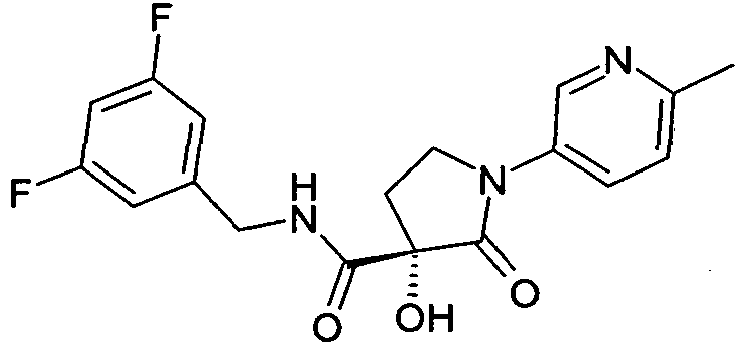
(S)-3-Hydroxy-1-(6-methyl-pyridin-3-yl)-2-oxo-pyrrolidin-3-carbonsäure-3,5-difluor-benzylamid "A270" 
(S)-1-(4-Acetylamino-phenyl)-3-hydroxy-2-oxo-pyrrolidin-3-carbonsäure-3-chlor-5-fluor-benzylamid "A271" 
(S)-3-Hydroxy-1-(3-methansulfonylamino-phenyl)-2-oxo-pyrrolidin-3-carbonsäure-3-chlor-5-fluor-benzylamid "A272" 
3-Hydroxy-1-[3-(5-methyl-[1,3,4]oxadiazol-2-yl)-phenyl]-2-oxo-pyrrolidin-3-carbonsäure-3-chlor-5-fluor-benzylamid "A273" 
(R)-3-Hydroxy-1-(6-methyl-pyridin-3-yl)-2-oxo-pyrrolidin-3-carbonsäure-3,5-difluor-benzylamid "A274" 
"A275" 
3-Hydroxy-2-oxo-1-(1-propionyl-1H-indol-5-yl)-pyrrolidin-3-carbonsäure-3-chlor-5-fluor-benzylamid "A276" 
3-Hydroxy-1-(1-methansulfonyl-1H-indol-5-yl)-2-oxo-pyrrolidin-3-carbonsäure-3-chlor-5-fluor-benzylamid "A277" 
3-Hydroxy-1-(6-methansulfonylamino-pyridin-3-yl)-2-oxo-pyrrolidin-3-carbonsäure-3-chlor-5-fluor-benzylamid "A278" 
(R)-1-(1-Acetyl-1H-indol-5-yl)-3-hydroxy-2-oxo-pyrrolidin-3-carbonsäure-3-chlor-5-fluor-benzylamid "A279" 
"A280" 
(S)-1-(6-Acetylamino-pyridin-3-yl)-3-hydroxy-2-oxo-pyrrolidin-3-carbonsäure-3-chlor-5-fluor-benzylamid "A281" 
(R)-1-(6-Acetylamino-pyridin-3-yl)-3-hydroxy-2-oxo-pyrrolidin-3-carbonsäure-3-chlor-5-fluor-benzylamid "A282" 
(S)-1-(1-Formyl-2,3-dihydro-1H-indol-5-yl)-3-hydroxy-2-oxo-pyrrolidin-3-carbonsäure-3-chlor-5-fluor-benzylamid "A283" 
3-Hydroxy-1-(1H-indazol-5-yl)-2-oxo-pyrrolidin-3-carbonsäure-3-chlor-5-fluor-benzylamid "A284" 
3-Hydroxy-1-(1-methyl-2-oxo-1,2,3,4-tetrahydro-chinolin-6-yl)-2-oxo-pyrrolidin-3-carbonsäure-3-chlor-5-fluor-benzylamid "A285" 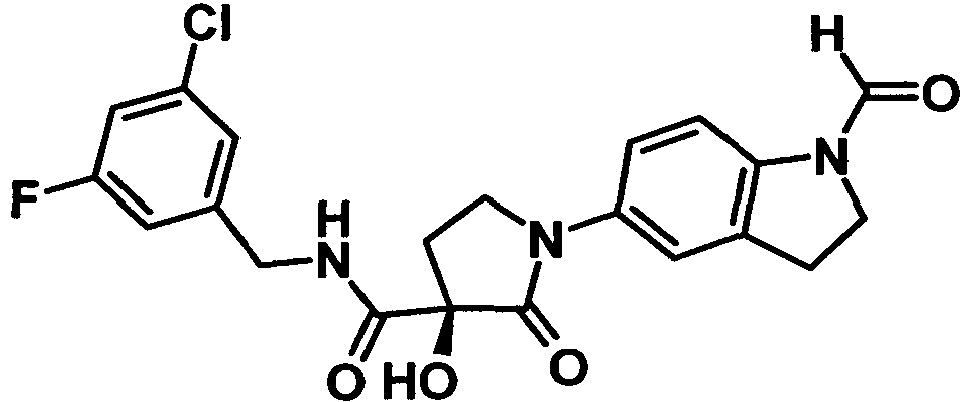
(R)-1-(1-Formyl-2,3-dihydro-1H-indol-5-yl)-3-hydroxy-2-oxo-pyrrolidin-3-carbonsäure-3-chlor-5-fluor-benzylamid "A286" 
5-[3-(3-Chlor-5-fluor-benzylcarbamoyl)-3-hydroxy-2-oxo-pyrrolidin-1-yl]-2,3-dihydro-indol-1-carbonsäuremethylester "A287" 
(S)-3-Hydroxy-1-(1-methyl-carbamoyl-methyl-1 H-indol-5-yl)-2-oxo-pyrrolidin-3-carbonsäure-3-chlor-5-fluor-benzylamid "A288" 
(S)-3-Hydroxy-2-oxo-1-phenyl-pyrrolidin-3-carbonsäure-(1-phenyl-prop-2-ynyl)-amid "A289" 
(R)-3-Hydroxy-1-(1-methylcarbamoylmethyl-1 H-indol-5-yl)-2-oxo-pyrrolidin-3-carbonsäure-3-chlor-5-fluor-benzylamid "A290" 
5-[(S)-3-(3-Chlor-5-fluor-benzylcarbamoyl)-3-hydroxy-2-oxo-pyrrolidin-1-yl]-2,3-dihydro-indol-1-carbonsäure-ethylamid "A291" 
5-[(R)-3-(3-Chlor-5-fluor-benzylcarbamoyl)-3-hydroxy-2-oxo-pyrrolidin-1-yl]-2,3-dihydro-indol-1-carbonsäure-ethylamid "A292" 
"A293" 
(S)-3-Hydroxy-2-oxo-1-phenyl-pyrrolidin-3-carbonsäure-(2,3-dihydro-benzo[1,4]dioxin-5-ylmethyl)-amid "A294" 
(S)-3-Hydroxy-2-oxo-1-phenyl-pyrrolidin-3-carbonsäure-2-chlor-benzylamid "A295" 
(S)-3-Hydroxy-2-oxo-1-phenyl-pyrrolidin-3-carbonsäure-(benzo[1,3]dioxol-5-ylmethyl)-amid "A296" 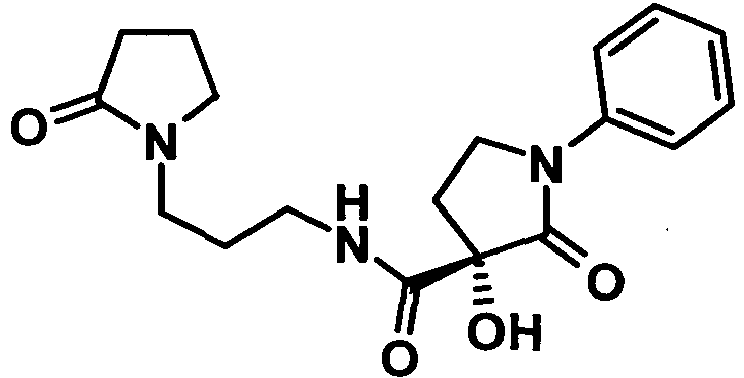
(S)-3-Hydroxy-2-oxo-1-phenyl-pyrrolidin-3-carbonsäure-[3-(2-oxo-pyrrolidin-1-yl)-propyl]-amid "A297" 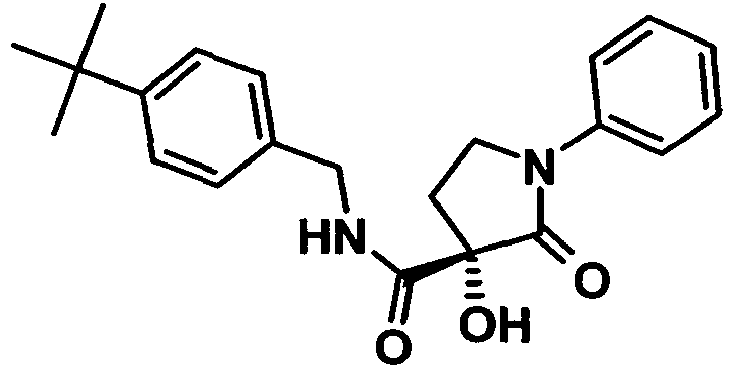
(S)-3-Hydroxy-2-oxo-1-phenyl-pyrrolidin-3-carbonsäure-4-tert.-butyl-benzylamid "A298" 
(S)-3-Hydroxy-2-oxo-1-phenyl-pyrrolidin-3-carbonsäure-(1-methyl-butyl)-amid "A299" 
(S)-3-Hydroxy-2-oxo-1-phenyl-pyrrolidine-3-carbonsäure-2-fluor-benzylamid "A300" 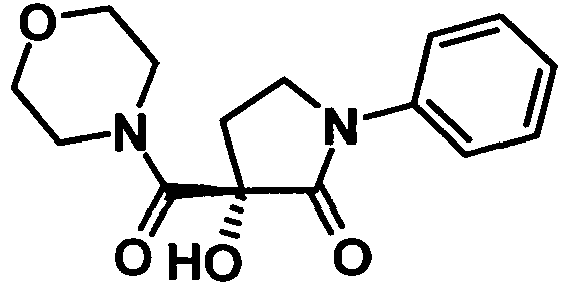
(S)-3-Hydroxy-3-(morpholin-4-carbonyl)-1-phenyl-pyrrolidin-2-on "A301" 
(S)-3-Hydroxy-2-oxo-1-phenyl-pyrrolidin-3-carbonsäure-(3-isopropoxy-propyl)-amid "A302" 
(S)-3-Hydroxy-2-oxo-1-phenyl-pyrrolidin-3-carbonsäure-2-trifluoromethyl-benzylamid "A303" 
(S)-3-Hydroxy-2-oxo-1-phenyl-pyrrolidin-3-carbonsäure-benzyl-ethyl-amid "A304" 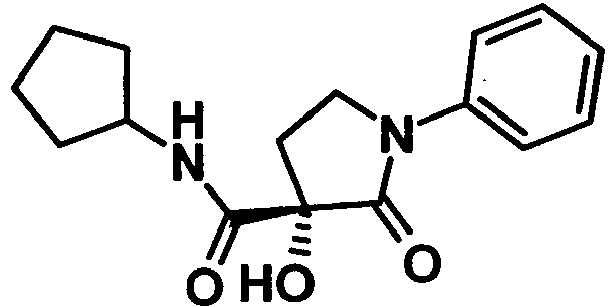
(S)-3-Hydroxy-2-oxo-1-phenyl-pyrrolidine-3-carbonsäure-cyclopentylamid "A305" 
"A306" 
(S)-3-Hydroxy-2-oxo-1-phenyl-pyrrolidine-3-carboxylic acid [1-(4-chloro-phenyl)-ethyl]-amid "A307" 
(S)-3-Hydroxy-2-oxo-1-phenyl-pyrrolidin-3-carbonsäure-butyl-methyl-amid "A308" 
(S)-3-Hydroxy-1-phenyl-3-(piperidin-1-carbonyl)-pyrrolidin-2-on "A309" 
(S)-3-Hydroxy-2-oxo-1-phenyl-pyrrolidine-3-carbonsäure-tert.-butylamid "A310" 
"A311" 
(S)-3-(4-Acetyl-piperazin-1-carbonyl)-3-hydroxy-1-phenyl-pyrrolidin-2-on "A312" 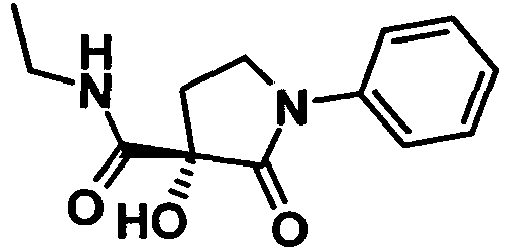
(S)-3-Hydroxy-2-oxo-1-phenyl-pyrrolidin-3-carbonsäure-ethylamid "A313" 
(S)-3-Hydroxy-2-oxo-1-phenyl-pyrrolidin-3-carbonsäure-dipropylamid "A314" 
(S)-3-Hydroxy-2-oxo-1-phenyl-pyrrolidin-3-carbonsäure-(2-pyridin-3-yl-ethyl)-amid "A315" 
"A316" 
(S)-3-Hydroxy-3-(4-methyl-piperidin-1-carbonyl)-1-phenyl-pyrrolidin-2-on "A317" 
(S)-3-Hydroxy-2-oxo-1-phenyl-pyrrolidin-3-carbonsäure-isobutyl-methyl-amid "A318" 
(S)-3-Hydroxy-2-oxo-1-phenyl-pyrrolidin-3-carbonsäure-[2-(2-chlor-phenyl)-ethyl]-amid "A319" 
(S)-3-Hydroxy-2-oxo-1-phenyl-pyrrolidin-3-carbonsäure-methyl-phenethyl-amid "A320" 
(S)-3-Hydroxy-2-oxo-1-phenyl-pyrrolidin-3-carbonsäure-chroman-3-ylamid "A321" 
(S)-3-Hydroxy-2-oxo-1-phenyl-pyrrolidin-3-carbonsäure-methyl-thiophen-3-ylmethyl-amid "A322" 
(S)-3-Hydroxy-2-oxo-1-phenyl-pyrrolidin-3-carbonsäure-cyclobutylamid "A323" 
(S)-3-Hydroxy-2-oxo-1-phenyl-pyrrolidin-3-carbonsäure-cyclopentyl-methyl-amid "A324" 
(S)-3-Hydroxy-2-oxo-1-phenyl-pyrrolidin-3-carbonsäure-cyclohexylmethyl-amid "A325" 
(S)-3-Hydroxy-2-oxo-1-phenyl-pyrrolidin-3-carbonsäure-2-methoxy-benzylamid "A326" 
(S)-3-Hydroxy-2-oxo-1-phenyl-pyrrolidin-3-carbonsäure-(1,2-dimethyl-propyl)-amid "A327" 
(S)-3-Hydroxy-2-oxo-1-phenyl-pyrrolidin-3-carbonsäure-(3-methyl-butyl)-amid "A328" 
(S)-3-Hydroxy-2-oxo-1-phenyl-pyrrolidin-3-carbonsäure-4-methoxy-benzylamid "A329" 
(S)-3-Hydroxy-2-oxo-1-phenyl-pyrrolidin-3-carbonsäure-(2-propoxy-ethyl)-amid "A330" 
(S)-3-Hydroxy-2-oxo-1-phenyl-pyrrolidin-3-carbonsäure-(3-phenyl-propyl)-amid "A331" 
(S)-3-Hydroxy-3-(4-phenethyl-piperazin-1-carbonyl)-1-phenyl-pyrrolidin-2-on "A332" 
(S)-3-Hydroxy-2-oxo-1-phenyl-pyrrolidin-3-carbonsäure-[2-(3,4-dimethoxy-phenyl)-ethyl]-amid "A333" 
(S)-3-Hydroxy-2-oxo-1-phenyl-pyrrolidin-3-carbonsäure-4-trifluormethyl-benzylamid "A334" 
(S)-3-[4-(2-Fluor-phenyl)-piperazin-1-carbonyl]-3-hydroxy-1-phenyl-pyrrolidin-2-on "A335" 
(S)-3-Hydroxy-1-phenyl-3-(4-pyridin-3-ylmethyl-piperazin-1-carbonyl)-pyrrolidin-2-on "A336" 
(S)-3-Hydroxy-1-phenyl-3-[4-(3-trifluoromethyl-phenyl)-piperazin-1-carbonyl]-pyrrolidin-2-on "A337" 
(S)-3-[4-(4-Chlor-benzyl)-piperazin-1-carbonyl]-3-hydroxy-1-phenyl-pyrrolidin-2-on "A338" 
(S)-3-(4-Benzyloxy-piperidin-1-carbonyl)-3-hydroxy-1-phenyl-pyrrolidin-2-on "A339" 
(S)-3-[4-(2-Chlor-benzyl)-piperazin-1-carbonyl]-3-hydroxy-1-phenyl-pyrrolidin-2-on "A340" 
(S)-3-Hydroxy-3-[4-(4-methoxy-benzyl)-piperazin-1-carbonyl]-1-phenyl-pyrrolidin-2-on "A341" 
(S)-3-Hydroxy-3-(4-methansulfonyl-piperazin-1-carbonyl)-1-phenyl-pyrrolidin-2-on "A342" 
(S)-3-Hydroxy-2-oxo-1-phenyl-pyrrolidin-3-carbonsäure-(1-methoxymethyl-propyl)-amid "A343" 
(S)-3-Hydroxy-2-oxo-1-phenyl-pyrrolidin-3-carbonsäure-4-chlor-benzylamid "A344" 
[1-[[(3S)-3-hydroxy-2-oxo-1-phenyl-pyrrolidin-3-carbonyl]amino]-2-(3-thienyl)ethyl]boronsäure "A345" 
(S)-3-Hydroxy-1-(1-methyl-2-oxo-1,2,3,4-tetrahydro-chinolin-6-yl)-2-oxo-pyrrolidin-3-carbonsäure-3-chlor-5-fluor-benzylamid "A346" 
(R)-3-Hydroxy-1-(1-methyl-2-oxo-1,2,3,4-tetrahydro-chinolin-6-yl)-2-oxo-pyrrolidin-3-carbonsäure-3-chlor-5-fluor-benzylamid - Verfahren zur Herstellung von Verbindungen der Formel I nach den Ansprüchen 1-2 sowie ihrer pharmazeutisch verwendbaren Salze, Tautomeren und Stereoisomeren, dadurch gekennzeichnet, daß mana) eine Verbindung der Formel II

mit einer Verbindung der Formel III
R2-NHR4 III
worin R2 und R4 die in Anspruch 1 angegebenen Bedeutungen haben,
umsetzt,
oderb) zur Herstellung von Verbindungen der Formel I, worin R3 OH bedeutet,
eine Verbindung der Formel IV
oxidiert,
oderc) einen Rest R3 in einen anderen Rest R3 umwandelt, indem man eine OH-Gruppe gegen ein Halogenatom austauscht,und/oder
oder ein Halogenatom gegen N3 austauscht,
eine Base oder Säure der Formel I in eines ihrer Salze umwandelt. - Arzneimittel, enthaltend mindestens eine Verbindung der Formel I nach Anspruch 1-2 und/oder ihre pharmazeutisch verwendbaren Salze, Tautomeren und Stereoisomeren, einschließlich deren Mischungen in allen Verhältnissen, sowie gegebenenfalls Träger- und/oder Hilfsstoffe.
- Verbindungen der Formel I gemäß Anspruch 1-2,
sowie ihrer pharmazeutisch verwendbaren Salze, Tautomeren und Stereoisomeren, einschließlich deren Mischungen in allen Verhältnissen, zur Verwendung zur Behandlung von Tumoren, Tumormetastasen, proliferativer Erkrankungen der Mesangiumzellen, Hämangiom, proliferativer Retinopathie, rheumatoider Arthritis, atherosklerotischer Neovaskularisation, Psoriasis, okularer Neovaskularisation, Osteoporose, Diabetes und Fettleibigkeit, lymphoider Leukämie, Lymphom, Malaria und Prostatahypertrophie. - Verbindungen nach Anspruch 5, wobei die Tumorerkrankung ausgewählt ist aus der Gruppe
des Plattenepithel, der Blase, des Magens, der Nieren, von Kopf und Hals, des Ösophagus, des Gebärmutterhalses, der Schilddrüse, des Darms, der Leber, des Gehirns, der Prostata, des Urogenitaltrakts, des lymphatischen Systems, des Magens, des Kehlkopfs, der Lunge, der Haut, Monozytenleukämie, Lungenadenokarzinom, kleinzelliges Lungenkarzinom, Bauchspeicheldrüsenkrebs, Glioblastom, Brustkarzinom, akute myelotische Leukämie, chronische myelotische Leukämie, akute lymphatische Leukämie, chronische lymphatische Leukämie, Hodgkin-Lymphom, non-Hodgkin-Lymphom, - Verbindungen der Formel I gemäß Anspruch 1-2 und/oder ihrer physiologisch unbedenklichen Salze zur Verwendung zur Behandlung von Tumoren, wobei eine therapeutisch wirksame Menge einer Verbindung der Formel I in Kombination mit einer Verbindung aus der Gruppe 1) Östrogenrezeptormodulator, 2) Androgenrezeptormodulator, 3) Retinoidrezeptormodulator, 4) Zytotoxikum, 5) antiproliferatives Mittel, 6) Prenyl-Proteintransferasehemmer, 7) HMG-CoA-Reduktase-Hemmer, 8) HIV-Protease-Hemmer, 9) Reverse-Transkriptase-Hemmer sowie 10) weiterer Angiogenese-Hemmer verabreicht wird.
- Verbindungen der Formel I gemäß Anspruch 1-2 und/oder ihrer physiologisch unbedenklichen Salze zur Verwendung zur Behandlung von Tumoren wobei eine therapeutisch wirksame Menge einer Verbindung der Formel I in Kombination mit Radiotherapie und einer Verbindung aus der Gruppe 1) Östrogenrezeptormodulator, 2) Androgenrezeptormodulator, 3) Retinoidrezeptormodulator, 4) Zytotoxikum, 5) antiproliferatives Mittel, 6) Prenyl-Proteintransferasehemmer, 7) HMG-CoA-Reduktase-Hemmer, 8) HIV-Protease-Hemmer, 9) Reverse-Transkriptase-Hemmer sowie 10) weiterer Angiogenese-Hemmer verabreicht wird.
Priority Applications (4)
| Application Number | Priority Date | Filing Date | Title |
|---|---|---|---|
| HRP20160249TT HRP20160249T1 (hr) | 2010-10-13 | 2011-09-14 | Pirolidinoni kao inhibitori metap2 |
| PL11761005T PL2627631T3 (pl) | 2010-10-13 | 2011-09-14 | Pirrolidynony jako inhibitory metap2 |
| SI201130753T SI2627631T1 (sl) | 2010-10-13 | 2011-09-14 | Pirolidinoni kot zaviralci metap2 |
| CY20161100221T CY1117287T1 (el) | 2010-10-13 | 2016-03-15 | Πυρρολιδινονη ως αναστολεις metap-2 |
Applications Claiming Priority (2)
| Application Number | Priority Date | Filing Date | Title |
|---|---|---|---|
| DE102010048374A DE102010048374A1 (de) | 2010-10-13 | 2010-10-13 | Pyrrolidinone als MetAP-2 Inhibitoren |
| PCT/EP2011/004608 WO2012048775A1 (de) | 2010-10-13 | 2011-09-14 | Pyrrolidinone als metap-2 inhibitoren |
Publications (2)
| Publication Number | Publication Date |
|---|---|
| EP2627631A1 EP2627631A1 (de) | 2013-08-21 |
| EP2627631B1 true EP2627631B1 (de) | 2015-12-16 |
Family
ID=44677838
Family Applications (1)
| Application Number | Title | Priority Date | Filing Date |
|---|---|---|---|
| EP11761005.5A Active EP2627631B1 (de) | 2010-10-13 | 2011-09-14 | Pyrrolidinone als metap-2 inhibitoren |
Country Status (23)
| Country | Link |
|---|---|
| US (1) | US8895535B2 (de) |
| EP (1) | EP2627631B1 (de) |
| JP (1) | JP5931885B2 (de) |
| KR (1) | KR101803126B1 (de) |
| CN (1) | CN103153951B (de) |
| AR (1) | AR083402A1 (de) |
| AU (1) | AU2011316199B2 (de) |
| BR (1) | BR112013008886B1 (de) |
| CA (1) | CA2814369C (de) |
| CY (1) | CY1117287T1 (de) |
| DE (1) | DE102010048374A1 (de) |
| DK (1) | DK2627631T3 (de) |
| EA (1) | EA022299B1 (de) |
| ES (1) | ES2563317T3 (de) |
| HR (1) | HRP20160249T1 (de) |
| HU (1) | HUE027149T2 (de) |
| IL (1) | IL225626A0 (de) |
| MX (1) | MX2013004004A (de) |
| PL (1) | PL2627631T3 (de) |
| RS (1) | RS54629B1 (de) |
| SG (1) | SG189853A1 (de) |
| SI (1) | SI2627631T1 (de) |
| WO (1) | WO2012048775A1 (de) |
Families Citing this family (20)
| Publication number | Priority date | Publication date | Assignee | Title |
|---|---|---|---|---|
| US8575349B2 (en) * | 2010-11-22 | 2013-11-05 | International Flavors & Fragrances Inc. | Derivatives of 1-alkyl-6-oxo-piperidine-3-carboxylic acids and 1-alkyl-5-oxo-pyrrolidine-3-carboxylic acids and their uses as cooling compounds |
| JP6042060B2 (ja) * | 2011-09-26 | 2016-12-14 | サノフイ | ピラゾロキノリノン誘導体、その調製および治療上の使用 |
| ES2527188T3 (es) * | 2011-09-26 | 2015-01-21 | Sanofi | Derivados de pirazolquinolinona, su preparación y su uso terapéutico |
| DE102012006884A1 (de) * | 2012-04-04 | 2013-10-10 | Merck Patent Gmbh | Cyclische Amide als MetAP-2 Inhibitoren |
| CA2923804A1 (en) * | 2013-09-12 | 2015-03-19 | Sumitomo Chemical Company, Limited | Nitrogen-containing saturated heterocyclic compound |
| SG11201700832YA (en) * | 2014-08-04 | 2017-03-30 | Merck Patent Gmbh | Pyrrolidinone derivatives as metap-2 inhibitors |
| WO2017084096A1 (en) * | 2015-11-20 | 2017-05-26 | Eli Lilly And Company | Pyrrolidinone compounds |
| WO2017004797A1 (en) * | 2015-07-08 | 2017-01-12 | Eli Lilly And Company | Pyrrolidinone compounds |
| EP3484858A4 (de) * | 2016-06-21 | 2020-02-26 | The University of Melbourne | Aktivatoren der hiv-latenz |
| WO2018098781A1 (en) * | 2016-12-01 | 2018-06-07 | Eli Lilly And Company | Pyrrolidinone compounds |
| EP3689870B1 (de) * | 2017-09-27 | 2022-07-13 | Kagoshima University | Analgetikum unter verwendung eines pac1-rezeptor-antagonisten-arzneimittels |
| CN108409630B (zh) * | 2018-02-07 | 2021-01-15 | 宁波大学 | 一种水相中3-羟基-2-吲哚酮衍生物的制备方法 |
| BR112021014220A2 (pt) * | 2019-01-22 | 2022-01-18 | Merck Patent Gmbh | Derivados heterocíclicos |
| HUE066832T2 (hu) * | 2019-07-03 | 2024-09-28 | Merck Patent Gmbh | Eljárás (S)-3-hidroxi-1-(1H-indol-5-il)-2-oxo-pirrolidin-3-karbonsav 3,5-difluor-benzilamid elõállítására |
| CN112480100B (zh) * | 2019-09-11 | 2022-10-14 | 康威(广州)生物科技有限公司 | 吡咯烷酮衍生物 |
| CN110759843A (zh) * | 2019-09-30 | 2020-02-07 | 东北师范大学 | 一种氟叠氮取代的四元杂环化合物的制备和应用 |
| KR20230038219A (ko) | 2020-07-09 | 2023-03-17 | 메르크 파텐트 게엠베하 | 메티오닌 아미노펩티다아제 2 억제제 및 vegfr/vegf 억제제의 조합 |
| CN112851561A (zh) * | 2021-01-29 | 2021-05-28 | 南京艾美斐生物医药科技有限公司 | 一种nr6a1蛋白受体抑制剂及其制备和应用 |
| KR20230170693A (ko) * | 2021-03-28 | 2023-12-19 | 캔웰 바이오테크 리미티드 | Metap-2 억제제, 약제학적 조성물 및 이의 치료 방법 |
| WO2023144053A1 (en) | 2022-01-26 | 2023-08-03 | Merck Patent Gmbh | Heterocyclic derivatives |
Family Cites Families (13)
| Publication number | Priority date | Publication date | Assignee | Title |
|---|---|---|---|---|
| US5747469A (en) | 1991-03-06 | 1998-05-05 | Board Of Regents, The University Of Texas System | Methods and compositions comprising DNA damaging agents and p53 |
| GB9904387D0 (en) | 1999-02-25 | 1999-04-21 | Pharmacia & Upjohn Spa | Antitumour synergistic composition |
| UY26664A1 (es) | 2000-04-14 | 2001-11-30 | Abbott Lab | Hidrazidas y alcoxiamidas inhibidoras de la angiogénesis. |
| US20070161570A1 (en) | 2000-11-01 | 2007-07-12 | Praecis Pharmaceuticals, Inc. | Methionine aminopeptidase-2 inhibitors and methods of use thereof |
| JP2004535377A (ja) | 2001-04-03 | 2004-11-25 | スミスクライン・ビーチャム・コーポレイション | Metap2を阻害する方法 |
| US20030225054A1 (en) * | 2002-06-03 | 2003-12-04 | Jingwu Duan | Combined use of tace inhibitors and COX2 inhibitors as anti-inflammatory agents |
| JP4398866B2 (ja) * | 2002-10-18 | 2010-01-13 | ビーエーエスエフ ソシエタス・ヨーロピア | 1−フェニルピロリジン−2−オン−3−カルボキサミド |
| JP2006104280A (ja) | 2004-10-04 | 2006-04-20 | Toyo Tire & Rubber Co Ltd | 高熱伝導性加硫ゴム成形体及びダイアフラム |
| US20090264650A1 (en) | 2005-03-31 | 2009-10-22 | Nobuo Cho | Prophylactic/Therapeutic Agent for Diabetes |
| US20070123508A1 (en) * | 2005-05-27 | 2007-05-31 | Roger Olsson | PAR2-modulating compounds and their use |
| UY31984A (es) * | 2008-07-16 | 2010-02-26 | Boehringer Ingelheim Int | DERIVADOS DE 1-(3,4-difluorobencil)-6-oxo-1,6-dihidropirimidin-5-carboxamidas N-sustituidas y de 2-(3,4-difluorobencil)-3-oxo-2,3-dihidro-1H-pirazol-4-carboxamidas N-sustituidas. |
| US8815309B2 (en) | 2010-01-08 | 2014-08-26 | Zafgen, Inc. | Methods of treating a subject with benign prostate hyperplasia |
| AU2011204267B2 (en) | 2010-01-08 | 2015-12-03 | Zafgen Corporation | Fumagillol type compounds and methods of making and using same |
-
2010
- 2010-10-13 DE DE102010048374A patent/DE102010048374A1/de not_active Withdrawn
-
2011
- 2011-09-14 EP EP11761005.5A patent/EP2627631B1/de active Active
- 2011-09-14 HU HUE11761005A patent/HUE027149T2/en unknown
- 2011-09-14 US US13/878,574 patent/US8895535B2/en active Active
- 2011-09-14 JP JP2013533102A patent/JP5931885B2/ja active Active
- 2011-09-14 HR HRP20160249TT patent/HRP20160249T1/hr unknown
- 2011-09-14 AU AU2011316199A patent/AU2011316199B2/en active Active
- 2011-09-14 BR BR112013008886-9A patent/BR112013008886B1/pt active IP Right Grant
- 2011-09-14 RS RS20160123A patent/RS54629B1/sr unknown
- 2011-09-14 MX MX2013004004A patent/MX2013004004A/es unknown
- 2011-09-14 KR KR1020137011998A patent/KR101803126B1/ko active Active
- 2011-09-14 CA CA2814369A patent/CA2814369C/en active Active
- 2011-09-14 WO PCT/EP2011/004608 patent/WO2012048775A1/de not_active Ceased
- 2011-09-14 SI SI201130753T patent/SI2627631T1/sl unknown
- 2011-09-14 PL PL11761005T patent/PL2627631T3/pl unknown
- 2011-09-14 CN CN201180049753.6A patent/CN103153951B/zh active Active
- 2011-09-14 SG SG2013026133A patent/SG189853A1/en unknown
- 2011-09-14 EA EA201300442A patent/EA022299B1/ru not_active IP Right Cessation
- 2011-09-14 DK DK11761005.5T patent/DK2627631T3/en active
- 2011-09-14 ES ES11761005T patent/ES2563317T3/es active Active
- 2011-10-13 AR ARP110103781A patent/AR083402A1/es not_active Application Discontinuation
-
2013
- 2013-04-08 IL IL225626A patent/IL225626A0/en active IP Right Grant
-
2016
- 2016-03-15 CY CY20161100221T patent/CY1117287T1/el unknown
Also Published As
| Publication number | Publication date |
|---|---|
| MX2013004004A (es) | 2013-04-24 |
| HK1186179A1 (zh) | 2014-03-07 |
| IL225626A0 (en) | 2013-06-27 |
| KR20130143053A (ko) | 2013-12-30 |
| ES2563317T3 (es) | 2016-03-14 |
| HRP20160249T1 (hr) | 2016-04-08 |
| SI2627631T1 (sl) | 2016-04-29 |
| PL2627631T3 (pl) | 2016-04-29 |
| EA022299B1 (ru) | 2015-12-30 |
| JP2013544781A (ja) | 2013-12-19 |
| US20130296274A1 (en) | 2013-11-07 |
| AU2011316199A1 (en) | 2013-05-02 |
| SG189853A1 (en) | 2013-06-28 |
| RS54629B1 (sr) | 2016-08-31 |
| AU2011316199B2 (en) | 2015-07-23 |
| CA2814369C (en) | 2019-01-15 |
| US8895535B2 (en) | 2014-11-25 |
| EP2627631A1 (de) | 2013-08-21 |
| DE102010048374A1 (de) | 2012-04-19 |
| CN103153951B (zh) | 2016-05-25 |
| WO2012048775A1 (de) | 2012-04-19 |
| CA2814369A1 (en) | 2012-04-19 |
| BR112013008886A2 (pt) | 2016-06-28 |
| HUE027149T2 (en) | 2016-10-28 |
| CN103153951A (zh) | 2013-06-12 |
| EA201300442A1 (ru) | 2013-11-29 |
| DK2627631T3 (en) | 2016-02-01 |
| JP5931885B2 (ja) | 2016-06-08 |
| AR083402A1 (es) | 2013-02-21 |
| BR112013008886B1 (pt) | 2021-07-13 |
| CY1117287T1 (el) | 2017-04-26 |
| KR101803126B1 (ko) | 2017-11-29 |
Similar Documents
| Publication | Publication Date | Title |
|---|---|---|
| EP2834221B1 (de) | Cyclische amide als metap-2 inhibitoren | |
| AU2011316199B2 (en) | Pyrrolidinones as MetAP2 inhibitors | |
| EP2288351B1 (de) | Neue pyrrolidinderivate als metap-2 inhibitoren | |
| EP2454253B1 (de) | Aminopyridinderivate zur behandlung von tumoren und entzündungskrankheiten | |
| EP2454258A1 (de) | Heterocyclische verbindungen als autotaxin-inhibitoren | |
| DE102008059578A1 (de) | Benzo-Naphtyridin Verbindungen | |
| DE102007047738A1 (de) | Imidazolderivate | |
| EP1685125A1 (de) | Pyrrolderivate | |
| DE102006016426A1 (de) | Neuartige Cyclobutyl-Verbindungen als Kinase-Inhibitoren | |
| EP2379558B1 (de) | Neue heterocyclische verbindungen als metap-2 inhibitoren | |
| EP1720846A1 (de) | Verwendung von thiadiazolharnstoffderivaten | |
| HK1186179B (en) | Pyrrolidinones as metap2 inhibitors |
Legal Events
| Date | Code | Title | Description |
|---|---|---|---|
| PUAI | Public reference made under article 153(3) epc to a published international application that has entered the european phase |
Free format text: ORIGINAL CODE: 0009012 |
|
| 17P | Request for examination filed |
Effective date: 20130302 |
|
| AK | Designated contracting states |
Kind code of ref document: A1 Designated state(s): AL AT BE BG CH CY CZ DE DK EE ES FI FR GB GR HR HU IE IS IT LI LT LU LV MC MK MT NL NO PL PT RO RS SE SI SK SM TR |
|
| DAX | Request for extension of the european patent (deleted) | ||
| 17Q | First examination report despatched |
Effective date: 20150415 |
|
| GRAP | Despatch of communication of intention to grant a patent |
Free format text: ORIGINAL CODE: EPIDOSNIGR1 |
|
| RIC1 | Information provided on ipc code assigned before grant |
Ipc: C07D 207/277 20060101AFI20150528BHEP Ipc: C07D 409/12 20060101ALI20150528BHEP Ipc: C07D 401/04 20060101ALI20150528BHEP Ipc: A61K 31/4015 20060101ALI20150528BHEP Ipc: C07D 405/04 20060101ALI20150528BHEP Ipc: A61K 31/4025 20060101ALI20150528BHEP Ipc: C07D 403/12 20060101ALI20150528BHEP Ipc: C07D 403/04 20060101ALI20150528BHEP Ipc: C07D 405/14 20060101ALI20150528BHEP Ipc: C07D 401/06 20060101ALI20150528BHEP Ipc: A61P 35/00 20060101ALI20150528BHEP Ipc: C07D 413/10 20060101ALI20150528BHEP Ipc: C07D 401/12 20060101ALI20150528BHEP Ipc: C07D 405/12 20060101ALI20150528BHEP Ipc: A61K 31/402 20060101ALI20150528BHEP Ipc: C07D 413/12 20060101ALI20150528BHEP |
|
| INTG | Intention to grant announced |
Effective date: 20150623 |
|
| GRAS | Grant fee paid |
Free format text: ORIGINAL CODE: EPIDOSNIGR3 |
|
| GRAA | (expected) grant |
Free format text: ORIGINAL CODE: 0009210 |
|
| AK | Designated contracting states |
Kind code of ref document: B1 Designated state(s): AL AT BE BG CH CY CZ DE DK EE ES FI FR GB GR HR HU IE IS IT LI LT LU LV MC MK MT NL NO PL PT RO RS SE SI SK SM TR |
|
| REG | Reference to a national code |
Ref country code: GB Ref legal event code: FG4D Free format text: NOT ENGLISH |
|
| REG | Reference to a national code |
Ref country code: CH Ref legal event code: EP |
|
| REG | Reference to a national code |
Ref country code: IE Ref legal event code: FG4D Free format text: LANGUAGE OF EP DOCUMENT: GERMAN |
|
| REG | Reference to a national code |
Ref country code: AT Ref legal event code: REF Ref document number: 765484 Country of ref document: AT Kind code of ref document: T Effective date: 20160115 |
|
| REG | Reference to a national code |
Ref country code: DE Ref legal event code: R096 Ref document number: 502011008519 Country of ref document: DE |
|
| REG | Reference to a national code |
Ref country code: DK Ref legal event code: T3 Effective date: 20160129 |
|
| REG | Reference to a national code |
Ref country code: SE Ref legal event code: TRGR |
|
| REG | Reference to a national code |
Ref country code: HR Ref legal event code: TUEP Ref document number: P20160249 Country of ref document: HR |
|
| REG | Reference to a national code |
Ref country code: ES Ref legal event code: FG2A Ref document number: 2563317 Country of ref document: ES Kind code of ref document: T3 Effective date: 20160314 |
|
| REG | Reference to a national code |
Ref country code: RO Ref legal event code: EPE |
|
| REG | Reference to a national code |
Ref country code: PT Ref legal event code: SC4A Free format text: AVAILABILITY OF NATIONAL TRANSLATION Effective date: 20160316 |
|
| REG | Reference to a national code |
Ref country code: HR Ref legal event code: T1PR Ref document number: P20160249 Country of ref document: HR |
|
| REG | Reference to a national code |
Ref country code: NL Ref legal event code: FP |
|
| REG | Reference to a national code |
Ref country code: EE Ref legal event code: FG4A Ref document number: E011705 Country of ref document: EE Effective date: 20160314 |
|
| PG25 | Lapsed in a contracting state [announced via postgrant information from national office to epo] |
Ref country code: LV Free format text: LAPSE BECAUSE OF FAILURE TO SUBMIT A TRANSLATION OF THE DESCRIPTION OR TO PAY THE FEE WITHIN THE PRESCRIBED TIME-LIMIT Effective date: 20151216 |
|
| REG | Reference to a national code |
Ref country code: GR Ref legal event code: EP Ref document number: 20160400496 Country of ref document: GR Effective date: 20160505 |
|
| PG25 | Lapsed in a contracting state [announced via postgrant information from national office to epo] |
Ref country code: NO Free format text: LAPSE BECAUSE OF FAILURE TO SUBMIT A TRANSLATION OF THE DESCRIPTION OR TO PAY THE FEE WITHIN THE PRESCRIBED TIME-LIMIT Effective date: 20160316 |
|
| REG | Reference to a national code |
Ref country code: SK Ref legal event code: T3 Ref document number: E 20811 Country of ref document: SK |
|
| REG | Reference to a national code |
Ref country code: FR Ref legal event code: PLFP Year of fee payment: 6 |
|
| PG25 | Lapsed in a contracting state [announced via postgrant information from national office to epo] |
Ref country code: SM Free format text: LAPSE BECAUSE OF FAILURE TO SUBMIT A TRANSLATION OF THE DESCRIPTION OR TO PAY THE FEE WITHIN THE PRESCRIBED TIME-LIMIT Effective date: 20151216 |
|
| REG | Reference to a national code |
Ref country code: DE Ref legal event code: R097 Ref document number: 502011008519 Country of ref document: DE |
|
| PLBE | No opposition filed within time limit |
Free format text: ORIGINAL CODE: 0009261 |
|
| STAA | Information on the status of an ep patent application or granted ep patent |
Free format text: STATUS: NO OPPOSITION FILED WITHIN TIME LIMIT |
|
| REG | Reference to a national code |
Ref country code: HU Ref legal event code: AG4A Ref document number: E027149 Country of ref document: HU |
|
| PGFP | Annual fee paid to national office [announced via postgrant information from national office to epo] |
Ref country code: NO Payment date: 20160909 Year of fee payment: 6 |
|
| 26N | No opposition filed |
Effective date: 20160919 |
|
| REG | Reference to a national code |
Ref country code: FR Ref legal event code: PLFP Year of fee payment: 7 |
|
| REG | Reference to a national code |
Ref country code: FR Ref legal event code: PLFP Year of fee payment: 8 |
|
| REG | Reference to a national code |
Ref country code: HR Ref legal event code: ODRP Ref document number: P20160249 Country of ref document: HR Payment date: 20190725 Year of fee payment: 9 |
|
| REG | Reference to a national code |
Ref country code: HR Ref legal event code: ODRP Ref document number: P20160249 Country of ref document: HR Payment date: 20200821 Year of fee payment: 10 |
|
| REG | Reference to a national code |
Ref country code: HR Ref legal event code: ODRP Ref document number: P20160249 Country of ref document: HR Payment date: 20210913 Year of fee payment: 11 |
|
| REG | Reference to a national code |
Ref country code: HR Ref legal event code: ODRP Ref document number: P20160249 Country of ref document: HR Payment date: 20220913 Year of fee payment: 12 |
|
| P01 | Opt-out of the competence of the unified patent court (upc) registered |
Effective date: 20230518 |
|
| REG | Reference to a national code |
Ref country code: HR Ref legal event code: ODRP Ref document number: P20160249 Country of ref document: HR Payment date: 20230731 Year of fee payment: 13 |
|
| REG | Reference to a national code |
Ref country code: HR Ref legal event code: ODRP Ref document number: P20160249 Country of ref document: HR Payment date: 20240726 Year of fee payment: 14 |
|
| PGFP | Annual fee paid to national office [announced via postgrant information from national office to epo] |
Ref country code: LU Payment date: 20250820 Year of fee payment: 15 Ref country code: NL Payment date: 20250820 Year of fee payment: 15 |
|
| REG | Reference to a national code |
Ref country code: HR Ref legal event code: ODRP Ref document number: P20160249 Country of ref document: HR Payment date: 20250901 Year of fee payment: 15 |
|
| REG | Reference to a national code |
Ref country code: CH Ref legal event code: U11 Free format text: ST27 STATUS EVENT CODE: U-0-0-U10-U11 (AS PROVIDED BY THE NATIONAL OFFICE) Effective date: 20251001 |
|
| PGFP | Annual fee paid to national office [announced via postgrant information from national office to epo] |
Ref country code: FI Payment date: 20250820 Year of fee payment: 15 Ref country code: PT Payment date: 20250825 Year of fee payment: 15 |
|
| PGFP | Annual fee paid to national office [announced via postgrant information from national office to epo] |
Ref country code: LT Payment date: 20250820 Year of fee payment: 15 Ref country code: DE Payment date: 20250820 Year of fee payment: 15 Ref country code: DK Payment date: 20250820 Year of fee payment: 15 |
|
| PGFP | Annual fee paid to national office [announced via postgrant information from national office to epo] |
Ref country code: MC Payment date: 20250826 Year of fee payment: 15 Ref country code: GR Payment date: 20250822 Year of fee payment: 15 |
|
| PGFP | Annual fee paid to national office [announced via postgrant information from national office to epo] |
Ref country code: PL Payment date: 20250821 Year of fee payment: 15 Ref country code: IT Payment date: 20250820 Year of fee payment: 15 Ref country code: TR Payment date: 20250826 Year of fee payment: 15 |
|
| PGFP | Annual fee paid to national office [announced via postgrant information from national office to epo] |
Ref country code: BG Payment date: 20250826 Year of fee payment: 15 Ref country code: HU Payment date: 20250917 Year of fee payment: 15 Ref country code: BE Payment date: 20250820 Year of fee payment: 15 Ref country code: GB Payment date: 20250820 Year of fee payment: 15 |
|
| PGFP | Annual fee paid to national office [announced via postgrant information from national office to epo] |
Ref country code: HR Payment date: 20250901 Year of fee payment: 15 |
|
| PGFP | Annual fee paid to national office [announced via postgrant information from national office to epo] |
Ref country code: AL Payment date: 20250926 Year of fee payment: 15 Ref country code: FR Payment date: 20250821 Year of fee payment: 15 Ref country code: AT Payment date: 20250822 Year of fee payment: 15 |
|
| PGFP | Annual fee paid to national office [announced via postgrant information from national office to epo] |
Ref country code: MT Payment date: 20250904 Year of fee payment: 15 Ref country code: SE Payment date: 20250820 Year of fee payment: 15 |
|
| PGFP | Annual fee paid to national office [announced via postgrant information from national office to epo] |
Ref country code: RS Payment date: 20250826 Year of fee payment: 15 Ref country code: EE Payment date: 20250903 Year of fee payment: 15 Ref country code: IE Payment date: 20250822 Year of fee payment: 15 Ref country code: CZ Payment date: 20250828 Year of fee payment: 15 |
|
| PGFP | Annual fee paid to national office [announced via postgrant information from national office to epo] |
Ref country code: RO Payment date: 20250910 Year of fee payment: 15 |
|
| PGFP | Annual fee paid to national office [announced via postgrant information from national office to epo] |
Ref country code: SK Payment date: 20250827 Year of fee payment: 15 |
|
| PGFP | Annual fee paid to national office [announced via postgrant information from national office to epo] |
Ref country code: IS Payment date: 20250915 Year of fee payment: 15 |
|
| PGFP | Annual fee paid to national office [announced via postgrant information from national office to epo] |
Ref country code: LV Payment date: 20250820 Year of fee payment: 15 |
|
| PGFP | Annual fee paid to national office [announced via postgrant information from national office to epo] |
Ref country code: SI Payment date: 20250828 Year of fee payment: 15 |
|
| PGFP | Annual fee paid to national office [announced via postgrant information from national office to epo] |
Ref country code: MK Payment date: 20250827 Year of fee payment: 15 |
|
| PGFP | Annual fee paid to national office [announced via postgrant information from national office to epo] |
Ref country code: CH Payment date: 20251001 Year of fee payment: 15 |
|
| PGFP | Annual fee paid to national office [announced via postgrant information from national office to epo] |
Ref country code: CY Payment date: 20250821 Year of fee payment: 15 |
|
| PGFP | Annual fee paid to national office [announced via postgrant information from national office to epo] |
Ref country code: ES Payment date: 20251001 Year of fee payment: 15 |