EP2609850B1 - Imaging mechanism and endoscope apparatus - Google Patents
Imaging mechanism and endoscope apparatus Download PDFInfo
- Publication number
- EP2609850B1 EP2609850B1 EP12008318.3A EP12008318A EP2609850B1 EP 2609850 B1 EP2609850 B1 EP 2609850B1 EP 12008318 A EP12008318 A EP 12008318A EP 2609850 B1 EP2609850 B1 EP 2609850B1
- Authority
- EP
- European Patent Office
- Prior art keywords
- contact
- face
- image sensor
- circuit board
- sensor
- Prior art date
- Legal status (The legal status is an assumption and is not a legal conclusion. Google has not performed a legal analysis and makes no representation as to the accuracy of the status listed.)
- Not-in-force
Links
- 238000003384 imaging method Methods 0.000 title claims description 59
- 238000003780 insertion Methods 0.000 claims description 33
- 230000037431 insertion Effects 0.000 claims description 33
- 239000004020 conductor Substances 0.000 claims description 14
- 239000002184 metal Substances 0.000 claims description 13
- 238000005452 bending Methods 0.000 description 14
- 230000003287 optical effect Effects 0.000 description 14
- 229910000679 solder Inorganic materials 0.000 description 5
- 238000005286 illumination Methods 0.000 description 4
- 230000000694 effects Effects 0.000 description 3
- 238000012545 processing Methods 0.000 description 3
- 239000011347 resin Substances 0.000 description 3
- 229920005989 resin Polymers 0.000 description 3
- 239000010409 thin film Substances 0.000 description 3
- 238000009825 accumulation Methods 0.000 description 1
- 239000000853 adhesive Substances 0.000 description 1
- 230000001070 adhesive effect Effects 0.000 description 1
- 239000000919 ceramic Substances 0.000 description 1
- 230000007423 decrease Effects 0.000 description 1
- 238000013461 design Methods 0.000 description 1
- 230000006866 deterioration Effects 0.000 description 1
- 239000004519 grease Substances 0.000 description 1
- 239000011810 insulating material Substances 0.000 description 1
- 230000010354 integration Effects 0.000 description 1
- 239000004973 liquid crystal related substance Substances 0.000 description 1
- 239000000463 material Substances 0.000 description 1
- 238000000034 method Methods 0.000 description 1
- 238000012986 modification Methods 0.000 description 1
- 230000004048 modification Effects 0.000 description 1
- 230000002093 peripheral effect Effects 0.000 description 1
- 230000000630 rising effect Effects 0.000 description 1
Images

Classifications
-
- A—HUMAN NECESSITIES
- A61—MEDICAL OR VETERINARY SCIENCE; HYGIENE
- A61B—DIAGNOSIS; SURGERY; IDENTIFICATION
- A61B1/00—Instruments for performing medical examinations of the interior of cavities or tubes of the body by visual or photographical inspection, e.g. endoscopes; Illuminating arrangements therefor
- A61B1/04—Instruments for performing medical examinations of the interior of cavities or tubes of the body by visual or photographical inspection, e.g. endoscopes; Illuminating arrangements therefor combined with photographic or television appliances
- A61B1/05—Instruments for performing medical examinations of the interior of cavities or tubes of the body by visual or photographical inspection, e.g. endoscopes; Illuminating arrangements therefor combined with photographic or television appliances characterised by the image sensor, e.g. camera, being in the distal end portion
- A61B1/051—Details of CCD assembly
Definitions
- the present invention relates to an imaging mechanism and an endoscope apparatus.
- an endoscope apparatus including an elongated insertion part having a distal end and a proximal end, and an imaging mechanism for taking an image of a target disposed at the distal end of the insertion part, is known.
- Japanese Unexamined Patent Application, First Publication No. 2006-68058 discloses a distal-end part of an electronic endoscope.
- a base with a solid-state imaging device (image sensor) mounted thereon and a signal line electrically connected to the image sensor are sealed in resin at the distal-end part.
- the resin at the distal-end part of the electronic endoscope disclosed in Japanese Unexamined Patent Application, First Publication No. 2006-68058 is hard. Consequently, the section where the resin is provided is a hard part with poor flexibility.
- the hard part mentioned above is the section from the tips of signal lines electrically connected to the image sensor to the section where the signal lines are bundled together.
- an image sensor including a great many light-receiving elements has a sensor face on which a great many light-receiving elements are arranged.
- Known examples include an image sensor where the number of light-receiving elements is increased by increasing the area of the sensor face, and an image sensor where the number of light-receiving elements is increased by increasing the degree of integration of the light-receiving elements and reducing their pitch. If the pitch of the light-receiving elements is too small, it will be diffcult to enhance the quality of the image obtained by the image sensor, even by increasing the number of light-receiving elements. In image sensors that take high-quality images, the area of the sensor face tends to be large.
- US 2009/0021618 A1 discloses an image pick-up module, in particular for an endoscope or a miniature camera, with an electronic image sensor.
- the image pick-up module has a plurality of contact fingers that are arranged in at least one row, and a rigid circuit board to which the contact fingers are electrically contact-connected, the image sensor and the circuit board being arranged approximately parallel to one another, and the contact fingers extending along at least one longitudinal side of the circuit board, which extends approximately transversely to the image sensor, and also a flexible multi-core cable which leads from the circuit board in the direction away from the image sensor and whose cores are likewise electrically contact-connected to the circuit board.
- the cores are contact-connected at contact-connection points on the circuit board which are closer to the image sensor than that side of the circuit board which is remote from the image sensor.
- the present invention provides an imaging mechanism and an endoscope apparatus that can prevent the insertion part from becoming large, even when a high-quality image sensor is mounted.
- an imaging mechanism includes the features of claim 1.
- the imaging mechanism includes a first wiring for transmitting an electrical power or an electrical signal to the image sensor that is connected to the contact-point part.
- a second contact-point part is provided on a different side face to the face whereon the contact-point part is disposed, and a second wiring for transmitting electrical power or an electrical signal to the image sensor and at least another one of the input/output leads being connected to the second contact-point part.
- At least one of the first wirings has a greater outer diameter than that of the second wiring.
- a second contact-point part is provided on a different side face to the face whereon the contact-point part is disposed, a second wiring for transmitting an electrical power or an electrical signal to the image sensor and at least another one of the input/output leads being connected to the second contact-point part.
- a third contact-point part being different to the contact-point part is disposed in the region.
- the third contact-point part is connected to a conductor pattern provided on the circuit board.
- the third contact-point part is electrically connected to an electronic component mounted on the circuit board.
- a third wiring for transmitting electrical power or an electrical signal to at least one of the electronic component and the image sensor is electrically and mechanically connected to the third contact-point part.
- one or more of the third contact-point parts is provided. At least one of the third wirings connected to the third contact-point parts has a larger outer diameter than that of the second wiring.
- an electronic component is mounted on a mount face of the circuit board, and has an outer face parallel with the mount face.
- a thermally conductive insulating cover is secured to the circuit board and covers the electronic component.
- a thermally conductive sheet with thermal conductivity and insulating characteristics is inserted between the outer face of the electronic component and the cover.
- length of the cover measured around an axis perpendicular to the mount face at the ends of sides far from the mount face is shorter than the length measured at the ends of sides near the mount face.
- the holding member has a lead contact face that intersects the sensor contact face among the outer faces of the holding member.
- the input/output leads protrude from the sensor face in the direction of the sensor contact face, bend in the direction of the lead contact face, and extend toward the lead contact face.
- a conductor pattern is formed on the lead contact face in correspondence with the pitch of the input/output leads, and the input/output leads are electrically and mechanically connected to the conductor pattern.
- an endoscope apparatus includes: an elongated insertion part having a distal end and a proximal end, the imaging mechanism according to any one of the first to the seventh aspects, and an operation portion provided at the proximal end of the insertion part.
- the imaging mechanism is disposed at the distal end of the insertion part and used for taking an image of an observation object.
- the endoscope apparatus includes: an elongated insertion part having a distal end and a proximal end; an imaging mechanism according to the fifth or sixth aspect; and a main-unit part provided at the proximal end of the insertion part.
- the imaging mechanism is disposed at the distal end of the insertion part and used for taking an image of an observation object.
- a metal wire is provided in an internal part of the insertion part, a distal end of the metal wire being thermally connected to the cover.
- the insertion part can be prevented from becoming large, even when a high-quality image sensor is mounted.
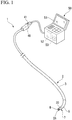
- FIG. 1 is an overall view of the endoscope apparatus 1 of the present embodiment.
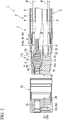
- FIG. 2 is a cross-sectional view of a distal-end section of an insertion part in the endoscope apparatus 1.
- FIG. 3 is a perspective view of an imaging mechanism 8 provided in the endoscope apparatus.
- FIG. 4 is a cross-sectional view of the imaging mechanism 8.
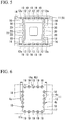
- FIG. 5 is a view of the imaging mechanism 8 when it is seen from the proximal end toward the distal end.
- FIG. 6 is a view of the imaging mechanism 8 when it is seen from the distal end toward the proximal end.
- the endoscope apparatus 1 includes an elongated insertion part 2 that is inserted from a distal end into an internal part or the like of an observation object, an operation portion 40 provided at a proximal end of the insertion part 2, and a main-unit part 50 that is electrically connected to the operation portion 40 by a cable.
- the insertion part 2 includes a flexible tube part 3, a bending portion 5 provided at the distal end of the flexible tube part 3, and a distal-end configuration part 7 disposed at the distal end of the bending portion 5.
- the flexible tube part 3 is a cylindrical member having a hollow structure and forming a circular shape in the cross-section of its diameter direction.
- the flexible tube part 3 internally includes an angle wire W for bending the bending portion 5, and a wiring part 4 for transmitting power and electrical signals to the imaging mechanism 8 and an illuminating mechanism 26 described below, which are provided at the distal-end configuration part 7.
- the bending portion 5 has a bendable cylindrical shape, and, when shaped in a straight line, is secured to the flexible tube part 3 such that it is coaxial therewith.
- the bending portion 5 includes a plurality of joint rings or bender pieces (hereinafter referred to as 'joint rings 6') arranged in its central axis direction. Adjacent joint rings 6 among the plurality of joint rings 6 are connected to each other.
- the distal end of the angle wire W is connected to the nodal ring 6 that is furthest to the distal-end side of the bending portion 5, and the bending portion 5 is bent by moving the angle wire W in the proximal-end direction.
- the distal-end configuration part 7 includes the imaging mechanism 8, an imaging optical system 24 that leads external light to the imaging mechanism 8, and an illuminating mechanism 26 that radiates illuminating light to an observation object.
- the distal-end configuration part 7 also includes a replaceable cap-shaped optical adaptor 30.
- the imaging mechanism 8 is provided for taking an image of an observation object, and includes an image sensor 9, a holding member 14, a circuit board 17, and a cover 22.
- the image sensor 9 includes a sensor unit 11 and input/output leads 12 for inputting and outputting to and from the signal processing circuit.
- the sensor unit 11 includes a sensor face 10 whereon a plurality of light-receiving elements are arranged in series, and a signal processing circuit (not shown) that reads signals from light-receiving elements of the sensor face 10 and outputs them.
- the sensor unit 11 is shaped like a plate that is rectangular when seen from the direction orthogonal to the sensor face 10. Also, when seen from the direction orthogonal to the sensor face 10, a plurality of input/output leads 12 extend from each of one pair of opposing sides of the sensor unit 11.
- the sensor face 10 has a rectangular shape with a predetermined aspect ratio of 4:3, 16:9, etc.
- the outline of the sensor unit 11 is shaped like a rectangular plate when seen from the direction orthogonal to the sensor face 10.
- the shape of the sensor unit 11 is not limited to this.
- the input/output leads 12 of the image sensor 9 protrude from the sensor face 10 in the direction of a sensor contact face 14a of the holding member 14, are bent in the direction of a lead contact face 14c, and extend toward this lead contact face 14c. Letting the direction in which the input/output leads 12 protrude from the sensor unit 11 as 0 degrees, the input/output leads 12 are bent more than 90 degrees to the proximal-end side. Each input/output lead 12 contacts the circuit board 17, described below. An insulating member 13 is provided between the input/output leads 12 and the sensor unit 11 to keep them insulated from each other.
- the holding member 14 is an insulating member including the sensor contact face 14a that makes contact with a face provided on an opposite side of the image sensor 9 to that of the sensor face 10.
- a conductor pattern (not shown) is formed in the holding member 14, and becomes a heat path for heat generated from the image sensor 9 while it is operating.
- the holding member 14 has the shape of a box with the sensor contact face 14a as the bottom face. That is, the side of the holding member 14 where the sensor contact face 14a is provided is sealed, and the side opposite to the side where the sensor contact face 14a is provided is open, so that the holding member 14 forms a receptacle shape.
- the sensor contact face 14a forms a square shape that is smaller than the outline of the sensor unit 11 when seen from the direction orthogonal to the sensor face 10 of the image sensor 9.
- the outer-side outline of the holding member 14 substantially forms a rectangular parallelepiped shape.
- Some electronic components for controlling the output of an image taken by the image sensor 9 to a control unit 52 described below, and an insulating plate 15 that insulates the electronic components, are provided inside the holding member 14. Inside the holding member 14, components that generate a small amount of heat while operating are disposed on the bottom-face side of the holding member 14 (the distal-end side of the distal-end configuration part 7), and components that generate a large amount of heat while operating are disposed on the open side of the holding member 14 (the proximal-end side of the distal-end configuration part 7). This can greatly suppress the effect of the heat generated by the electronic components on the image sensor 9.
- the region around the opening of the holding member 14 is the board contact face 14b, which contacts the circuit board 17 described below.
- Relay wiring parts 16 are formed on the board contact face 14b, and electrically connect the leads of the image sensor 9 to the terminals of the circuit board 17 described below.
- the relay wiring parts 16 are thin-plate or film-like metal members formed on the outer face of the holding member 14.
- the relay wiring parts 16 are provided at each of the four corners of the opening in the holding member 14.
- four corner leads 12a extending from the four corners of the image sensor 9 are connected to the relay wiring parts 16.
- the relay wiring parts 16 and the corner leads 12a are electrically and mechanically secured by solder.
- the holding member 14 has a lead contact face 14c that intersects the sensor contact face 14a among the outer faces of the holding member 14.
- a plurality of conductor patterns 14d are formed on the lead contact face 14c in correspondence with the pitch of the plurality of input/output leads 12 of the image sensor 9.
- the conductor patterns 14d have the shape of rectangles that are long in the direction orthogonal to the sensor contact face 14a. In a middle part of the long direction of each conductor pattern 14d, the conductor pattern 14d and the input/output lead 12 are electrically and mechanically connected by solder. The solder sections connecting the conductor patterns 14d and the input/output leads 12 are not shown in FIGS. 3 and 4 .
- the circuit board 17 is a plate-shaped member with mount faces 17a and 17b facing parallel with the sensor face 10 of the image sensor 9.
- One part of a camera control unit for controlling the operation of the image sensor 9 is arranged on the circuit board 17.
- the faces of the circuit board 17 in the thick direction are mount faces (mount faces 17a and 17b).
- mount faces 17a and 17b Of the electronic components mounted on the circuit board 17, those that generate a relatively large amount of heat are mounted on the mount face 17b, which is on the opposite side to the mount face 17a contacting the opening of the holding member 14.
- the circuit board 17 has a substantially square-shaped outline when seen from the direction orthogonal to the mount faces 17a and 17b (the direction indicated by letter X in FIG. 4 ).
- the length of one side of the circuit board 17 substantially matches the length of the short side of the holding member 14 when seen from the direction orthogonal to the sensor contact face 14a.
- Contact-point parts 18 where the relay wiring parts 16 are connected, second contact-point parts 19 where the input/output leads 12 of the image sensor 9 are connected, and third contact-point parts 20 where signal wires 4a and imaging-side electrical wires 4b of the wiring part 4 are connected, are provided on the outer face of the circuit board 17 that intersects the two mount faces 17a and 17b (this face is hereinafter termed 'side face 17c').
- the contact-point parts 18 are provided on the side face 17c of the circuit board 17 in a region within the outline of the holding member 14.
- the contact-point parts 18 are made from metal thin film in an indented shape with a groove for fitting the signal wire 4a or the imaging-side electrical wire 4b.
- the contact-point parts 18 and the relay wiring parts 16 are electrically and mechanically connected by solder or the like. If necessary, the contact-point parts 18 can be electrically connected via internal wiring (not shown) provided inside the circuit board 17 to each electronic circuit mounted on the circuit board 17 (e.g. an electronic component 21) and to electronic components and the like arranged in the holding member 14.
- the second contact-point parts 19 are provided at positions corresponding to the positions of the input/output leads 12 of the image sensor 9, and are made from metal thin film in an indented shape with a groove for fitting the input/output leads 12.
- the second contact-point parts 19 and the input/output leads 12 are electrically and mechanically connected by solder or the like. If necessary, the second contact-point parts 19 can also be connected to internal wiring (not shown) provided inside the circuit board 17.
- the internal wiring provided inside the circuit board 17 is formed by, for example, a conductor pattern made from a metal thin film. At least one part of each of the second contact-point parts 19 can be a dummy pad that is not connected to the internal wiring of the circuit board 17 or to an electronic circuit mounted on the circuit board 17 (e.g. the electronic component 21).
- the third contact-point parts 20 are provided on the side face 17c of the circuit board 17 in a region within the outline of the holding member 14, and is arranged between the two contact points 18.
- the third contact-point parts 20 are electrically connected via internal wiring (not shown) provided inside the circuit board 17 to each electronic circuit mounted on the circuit board 17 (e.g. the electronic component 21).
- the cover 22 is a member for protecting the electronic component 21 mounted on the mount face 17b of the circuit board 17 from external force.
- the cover 22 also becomes a path for radiating the heat generated from the electronic component 21.
- the cover 22 is secured to the mount face 17b of the circuit board 17 such that it is disposed along the outer peripheral section of the mount face 17b of the circuit board 17.
- the material used for the cover 22 is preferably one that does not easily deform due to external force, e.g. ceramics, etc.
- the shape of the cover 22 is such that, when its length is measured around an axis perpendicular to the mount faces 17a and 17b, the length of the cover 22 at the ends of the sides far from the mount faces 17a and 17b is shorter than the length of the cover 22 at the ends of the sides near the mount faces 17a and 17b.
- the diameter of the cover 22 gradually decreases toward the proximal-end side of the distal-end configuration part 7.
- Some of the wires constituting the wiring part 4 e.g. the signal wires 4a and the imaging-side electrical wires 4b
- the wiring part 4 extends along the outer face of the cover 22 to the proximal-end side, where it is more bundled than at the cover 22.
- the cover 22 has the shape of a truncated pyramid with the face contacting the mount face 17b as its bottom face, and parts of its side faces are open.
- the cover 22 has a thermally conductive sheet 23 with high thermal conductivity, which adheres to the electronic component 21.
- the thermally conductive sheet 23 is pushed by both the electronic component 21 and the inner face of the cover 22.
- the cover 22 and the thermally conductive sheet 23 are made from an insulating material.
- the thermally conductive sheet 23 has elasticity.
- a metal wire C for radiating heat generated from the electronic component 21 mounted on the circuit board 17 is connected to the outer face of the cover 22 such that the heat is transmitted favorably.
- the metal wire C is formed from a wire of braided or twisted metal.
- Part of the wiring part 4 can also be used as the metal wire C.
- the signal wire 4a includes a noise-reducing shield wire
- this shield wire can be used to disperse heat from the cover 22.
- wires that need not be directly connected to the input/output leads 12 of the image sensor 9 are connected to the third contact-point parts 20.
- the signal wires 4a and the imaging-side electrical wires 4b for connection to the third contact-point parts 20 are selected by prioritizing them based on their outer diameters. That is, the signal wires 4a and the imaging-side electrical wires 4b for connection to the third contact-point parts 20 are selected in order from the one with the thickest diameter and connected to the third contact-point parts 20.
- the configuration of the internal wiring of the circuit board 17 is determined in accordance with the wires connected to the third contact-point parts 20.
- the outer diameters of the wires connected to the third contact-point parts 20 are determined depending on the outer diameters of various constitutive elements such as the core, a covering, and a shield.
- the core of the signal wire 4a for transmitting a signal of the image taken by the imaging mechanism 8 is covered with a shield to prevent noise from infiltrating the signal, and its outer diameter will thus tend to be greater than other signal wires 4a that include only a core and a covering. For that reason, it is particularly preferable to connect the signal wires 4a to the third contact-point parts 20.
- the signal wires 4a and the imaging-side electrical wires 4b to be connected to the third contact-point parts 20 are arranged such that they do not stick out from the outline of the image sensor 9 when seen from a direction perpendicular to the mount faces 17a and 17b of the circuit board 17.
- the signal wires 4a and the imaging-side electrical wires 4b are arranged such that they do not stick out from the outline of the image sensor 9 when seen from a direction perpendicular to the mount faces 17a and 17b of the circuit board 17.
- the signal wires 4a and the imaging-side electrical wires 4b to be connected to the imaging mechanism 8 extend along the outer face of the cover 22 to the flexible tube part 3 side, where they are bundled together and inserted into the flexible tube part 3.
- the signal wires 4a and the imaging-side electrical wires 4b to be connected to the imaging mechanism 8 are within the inside region of the outline of the image sensor 9.
- Each of the signal wires 4a and the imaging-side electrical wires 4b to be connected to the imaging mechanism 8 is secured by an adhesive or the like from the circuit board 17 as far as the bundled section mentioned above, and is arranged such that it does not become disconnected from the circuit board 17 or break due to external force.
- the optical axis of the imaging optical system 24 is positioned such that the center of the sensor face 10 of the image sensor 9 intersects the sensor face 10 at a right angle.
- the imaging optical system 24 can be combined with an additional objective optical system 25 for modifying the optical characteristics.
- the additional objective optical system 25 is provided in the optical adaptor 30.
- the illuminating mechanism 26 includes a light source 27 provided inside the optical adaptor 30, an illumination optical system 28 for controlling the distribution of light generated from the light source 27, the illumination optical system 28 being provided in the optical adaptor 30, and an illumination power line 29 that supplies electrical power to the light source 27.
- a light-emitting diode or such like can, for example, be used as the light source 27.
- the illumination power line 29 extends through the internal part of the flexible tube part 3 to the internal part of the operation portion 40, and connects to a control unit 52 described below.
- the operation portion 40 is provided with a joystick 41 which a user manipulates to input the bend direction for bending the bending portion 5.
- a joystick 41 which a user manipulates to input the bend direction for bending the bending portion 5.
- the joystick 41 when the joystick 41 is tilted with respect to a predetermined intermediate position, that direction is input to the main-unit part 50 as the direction for bending the bending portion 5.
- the main unit bends the bending portion 5 based on the input from the joystick 41.
- the main-unit part 50 includes a display unit 51, a control unit 52, and a power unit 53.
- the display unit 51 is a device for displaying an image taken by the imaging mechanism 8, and includes, for example, a liquid crystal display panel and a display control circuit.
- the control unit 52 includes various types of electronic components for controlling the operations of the imaging mechanism 8, the illuminating mechanism 26, and the display unit 51.
- the power unit 53 supplies power for driving the imaging mechanism 8, the illuminating mechanism 26, the display unit 51, and the control unit 52.
- a battery and a power control circuit are provided inside the main-unit part 50.
- a power unit for using a commercial power supply to drive the endoscope apparatus 1 can be provided in the main unit.
- the insertion part 2 of the endoscope apparatus 1 is inserted into an internal part or the like of an observation object, and preferably has a small diameter.
- the space for housing the internal structural element of the insertion part 2 is therefore limited.
- the imaging mechanism 8 and the illuminating mechanism 26 must be housed together in a limited space in the distal-end configuration part 7.
- the distal-end configuration part 7 is hard.
- the distal-end configuration part 7 When the distal-end configuration part 7 is long in the central axis direction, if an observation object attempts to bend with a small radius of curvature in a narrow region, the distal end of the insertion part 2 will fail to bend and will collide, making it difficult to guide the distal end of the insertion part 2.
- the sections where the signal wires 4a and the imaging-side electrical wires 4b of the imaging mechanism 8 are secured together also have little flexibility, and these hard configuration sections produce a hard part at the distal-end section of the insertion part 2.
- those of the signal wires 4a and the imaging-side electrical wires 4b with a thick outer diameter are connected on a priority basis to the third contact-point parts 20, and are arranged on the inner side of the outline of the image sensor 9 when seen from the central axis direction of the distal-end configuration part 7.
- the wires with a thick outer diameter are provided near the center of the circuit board 17 when seen from the thick direction of the circuit board 17, when they are bundled together with the other wires, even if the length of the section where the signal wires 4a and the imaging-side electrical wires 4b of the imaging mechanism 8 are secured together in the central axis direction of the distal-end configuration part 7 is reduced, the thick wires need only be bent by a small amount. As a result, the length of the hard part can be reduced, while the burden on the thick wires due to bending them is kept small.
- the image sensor 9 includes a great many light-receiving elements, in comparison with when the image sensor has few light-receiving elements, the signals flowing in the signal wires 4a have higher frequencies and the effects of noise on the signals is liable to be considerable. Therefore, when using such an image sensor 9, the outer diameter of the signal wires 4a is liable to become thick due to a shield being provided to the signal wires 4a, each signal wire 4a and a ground wire being configured as a twisted pair, etc. Furthermore, when the image sensor 9 has a great many light-receiving elements, it tends to become large. If the signal wires 4a stick out from the outline of the image sensor 9 when seen from the direction perpendicular to the sensor face 10 of the image sensor 9, there is a possibility that the diameter of the distal-end configuration part 7 will become large.
- the imaging mechanism 8 of the embodiment when seen from the direction perpendicular to the sensor face 10 of the image sensor 9 (i.e. the central axis direction of the distal-end configuration part 7), the signal wires 4a and the imaging-side electrical wires 4b are inside the outline of the image sensor 9.
- the size of the imaging mechanism 8 when seen from the direction perpendicular to the sensor face 10 of the image sensor 9 is defined by the size of the image sensor 9. This prevents the diameter of the distal-end configuration part 7 from being greatly increased due to the signal wires 4a and the imaging-side electrical wires 4b, connected to the imaging mechanism 8, sticking out from the outline of the image sensor 9.
- heat generated by the image sensor 9 and other electronic components can sometimes result in thermal noise due to dark current to the image sensor 9.
- heat generated by the image sensor 9 is dispersed via the holding member 14, the circuit board 17, the thermally conductive sheet 23, and the cover 22 shown in FIG. 4 to the metal wire C (see FIG. 2 ).
- the image sensor 9 can reduce noise in the image due to the rising temperature of the image sensor 9. Especially, the image sensor 9 generates a large amount of heat when it includes a great many light-receiving elements, and when the operating frequency of the signal processing circuit increases.
- This embodiment includes a heat-radiation path provided in a straight line from the distal end of the insertion part 2 to the proximal end, and can thus reduce the accumulation of heat from the image sensor 9 and other electronic components arranged at the distal end of the insertion part 2. Therefore, deterioration in the quality of the image taken by the image sensor 9 can be suppressed.
- a large image sensor 9 can be mounted while suppressing an increase in the length of the hard part of the insertion part 2. As a result, even if a high-quality image sensor 9 is mounted, the insertion part 2 can be prevented from becoming large.
- the length of the hard part can be reduced.
- the path favorably shifts heat generated by the image sensor 9 to the proximal-end side of the insertion part 2, the effects of noise on the image sensor 9 can be suppressed to a low level, enabling a high-quality image to be taken.
- grease with high thermal conductivity can be provided instead of the thermally conductive sheet 23.
- the sensor contact face of the holding member can have a rectangular shape (including a substantially rectangular shape) that matches the outline of the sensor main unit when seen from the direction orthogonal to the sensor face of the image sensor.
- the relay wiring parts can be provided on faces other than the board contact face. Also, the relay wiring parts can be connected to the conductor pattern formed on the lead contact face of the holding member.
- the relay wiring parts can be formed on side faces of the circuit board.
- the relay wiring parts can be formed on both the holding member and the circuit board.
- the relay wiring part formed on the holding member and the relay wiring part formed on the circuit board are provided in a state of mutual electrical conduction.
Landscapes
- Health & Medical Sciences (AREA)
- Life Sciences & Earth Sciences (AREA)
- Surgery (AREA)
- Biomedical Technology (AREA)
- Medical Informatics (AREA)
- Optics & Photonics (AREA)
- Pathology (AREA)
- Radiology & Medical Imaging (AREA)
- Biophysics (AREA)
- Engineering & Computer Science (AREA)
- Physics & Mathematics (AREA)
- Heart & Thoracic Surgery (AREA)
- Nuclear Medicine, Radiotherapy & Molecular Imaging (AREA)
- Molecular Biology (AREA)
- Animal Behavior & Ethology (AREA)
- General Health & Medical Sciences (AREA)
- Public Health (AREA)
- Veterinary Medicine (AREA)
- Endoscopes (AREA)
- Instruments For Viewing The Inside Of Hollow Bodies (AREA)
- Transforming Light Signals Into Electric Signals (AREA)
- Studio Devices (AREA)
Applications Claiming Priority (1)
| Application Number | Priority Date | Filing Date | Title |
|---|---|---|---|
| JP2011289349A JP5926955B2 (ja) | 2011-12-28 | 2011-12-28 | 撮像機構及び内視鏡装置 |
Publications (2)
| Publication Number | Publication Date |
|---|---|
| EP2609850A1 EP2609850A1 (en) | 2013-07-03 |
| EP2609850B1 true EP2609850B1 (en) | 2017-02-01 |
Family
ID=47602729
Family Applications (1)
| Application Number | Title | Priority Date | Filing Date |
|---|---|---|---|
| EP12008318.3A Not-in-force EP2609850B1 (en) | 2011-12-28 | 2012-12-13 | Imaging mechanism and endoscope apparatus |
Country Status (4)
| Country | Link |
|---|---|
| US (1) | US9325881B2 (enExample) |
| EP (1) | EP2609850B1 (enExample) |
| JP (1) | JP5926955B2 (enExample) |
| CN (1) | CN103185960B (enExample) |
Families Citing this family (24)
| Publication number | Priority date | Publication date | Assignee | Title |
|---|---|---|---|---|
| ES2747232T3 (es) | 2010-09-08 | 2020-03-10 | Kpr Us Llc | Catéter con un conjunto de formación de imágenes |
| US10568496B2 (en) | 2012-07-26 | 2020-02-25 | DePuy Synthes Products, Inc. | Continuous video in a light deficient environment |
| AU2013295568B2 (en) | 2012-07-26 | 2017-09-07 | DePuy Synthes Products, Inc. | YCbCr pulsed illumination scheme in a light deficient environment |
| US9517184B2 (en) | 2012-09-07 | 2016-12-13 | Covidien Lp | Feeding tube with insufflation device and related methods therefor |
| USD735343S1 (en) | 2012-09-07 | 2015-07-28 | Covidien Lp | Console |
| USD717340S1 (en) | 2012-09-07 | 2014-11-11 | Covidien Lp | Display screen with enteral feeding icon |
| USD716841S1 (en) | 2012-09-07 | 2014-11-04 | Covidien Lp | Display screen with annotate file icon |
| US9198835B2 (en) | 2012-09-07 | 2015-12-01 | Covidien Lp | Catheter with imaging assembly with placement aid and related methods therefor |
| CA2906821A1 (en) | 2013-03-15 | 2014-09-18 | Olive Medical Corporation | Scope sensing in a light controlled environment |
| CA2906798A1 (en) | 2013-03-15 | 2014-09-18 | Olive Medical Corporation | Super resolution and color motion artifact correction in a pulsed color imaging system |
| JP5767414B2 (ja) * | 2013-08-05 | 2015-08-19 | オリンパス株式会社 | 内視鏡用撮像ユニット |
| JP5722513B1 (ja) * | 2013-09-25 | 2015-05-20 | オリンパスメディカルシステムズ株式会社 | 電気ユニット、及びこれを搭載した内視鏡 |
| WO2015045456A1 (ja) * | 2013-09-26 | 2015-04-02 | オリンパスメディカルシステムズ株式会社 | 内視鏡装置 |
| EP2923635A4 (en) * | 2013-10-04 | 2016-12-21 | Olympus Corp | IMAGE RECORDING UNIT FOR ENDOSCOPE |
| JP5806343B2 (ja) * | 2014-01-16 | 2015-11-10 | ソニー・オリンパスメディカルソリューションズ株式会社 | 光電複合モジュール、カメラヘッド、及び内視鏡装置 |
| JP6344935B2 (ja) * | 2014-03-13 | 2018-06-20 | Hoya株式会社 | 半導体装置及び内視鏡 |
| CN114191114A (zh) | 2014-03-21 | 2022-03-18 | 德普伊新特斯产品公司 | 用于成像传感器的卡缘连接器 |
| JP6013657B1 (ja) * | 2014-12-08 | 2016-10-25 | オリンパス株式会社 | 撮像ユニット、撮像モジュールおよび内視鏡システム |
| JP6539548B2 (ja) * | 2015-08-31 | 2019-07-03 | 富士フイルム株式会社 | 内視鏡用撮像装置及び内視鏡 |
| JP6605632B2 (ja) * | 2016-02-18 | 2019-11-13 | オリンパス株式会社 | 撮像装置および内視鏡 |
| JP6307697B1 (ja) * | 2016-05-10 | 2018-04-11 | オリンパス株式会社 | 電子回路ユニット、撮像ユニット、撮像モジュールおよび内視鏡 |
| JP2019076358A (ja) * | 2017-10-24 | 2019-05-23 | オリンパス株式会社 | 撮像モジュール、内視鏡、撮像モジュールの製造方法 |
| JP7132007B2 (ja) * | 2018-07-18 | 2022-09-06 | i-PRO株式会社 | 内視鏡用撮像ユニットおよび内視鏡 |
| CN113660815B (zh) * | 2021-10-20 | 2022-02-08 | 上海宇度医学科技股份有限公司 | 支架布线总成、布线方法及内窥镜头 |
Family Cites Families (14)
| Publication number | Priority date | Publication date | Assignee | Title |
|---|---|---|---|---|
| US4491865A (en) * | 1982-09-29 | 1985-01-01 | Welch Allyn, Inc. | Image sensor assembly |
| US6142930A (en) * | 1997-01-13 | 2000-11-07 | Asahi Kogaku Kogyo Kabushiki Kaisha | Electronic endoscope having compact construction |
| US5929901A (en) * | 1997-10-06 | 1999-07-27 | Adair; Edwin L. | Reduced area imaging devices incorporated within surgical instruments |
| JPH11326787A (ja) * | 1998-05-15 | 1999-11-26 | Olympus Optical Co Ltd | 撮像装置 |
| JP2000199863A (ja) * | 1999-01-07 | 2000-07-18 | Sony Corp | 固体撮像装置 |
| DE19924189C2 (de) * | 1999-05-27 | 2001-04-26 | Storz Karl Gmbh & Co Kg | Bildaufnehmermodul sowie Verfahren zum Zusammenbauen eines derartigen Bildaufnehmermoduls |
| JP4153733B2 (ja) * | 2002-06-24 | 2008-09-24 | オリンパス株式会社 | 内視鏡 |
| EP1406311B1 (en) * | 2002-10-02 | 2008-07-23 | STMicroelectronics Limited | Methods and apparatus for sensor alignment |
| JP4575698B2 (ja) * | 2004-04-08 | 2010-11-04 | Hoya株式会社 | 電子内視鏡の先端部 |
| JP4512452B2 (ja) | 2004-08-31 | 2010-07-28 | Hoya株式会社 | 電子内視鏡の先端部 |
| US8289381B2 (en) * | 2005-01-05 | 2012-10-16 | Avantis Medical Systems, Inc. | Endoscope with an imaging catheter assembly and method of configuring an endoscope |
| JP2008212363A (ja) * | 2007-03-02 | 2008-09-18 | Hoya Corp | 内視鏡 |
| DE102007034704A1 (de) * | 2007-07-18 | 2009-01-22 | Karl Storz Gmbh & Co. Kg | Bildaufnehmermodul |
| CN102572229A (zh) * | 2010-12-29 | 2012-07-11 | 鸿富锦精密工业(深圳)有限公司 | 摄像模组 |
-
2011
- 2011-12-28 JP JP2011289349A patent/JP5926955B2/ja not_active Expired - Fee Related
-
2012
- 2012-12-13 EP EP12008318.3A patent/EP2609850B1/en not_active Not-in-force
- 2012-12-17 US US13/716,494 patent/US9325881B2/en active Active
- 2012-12-21 CN CN201210563319.6A patent/CN103185960B/zh not_active Expired - Fee Related
Non-Patent Citations (1)
| Title |
|---|
| None * |
Also Published As
| Publication number | Publication date |
|---|---|
| US9325881B2 (en) | 2016-04-26 |
| CN103185960B (zh) | 2017-03-29 |
| JP2013135823A (ja) | 2013-07-11 |
| US20130169777A1 (en) | 2013-07-04 |
| JP5926955B2 (ja) | 2016-05-25 |
| CN103185960A (zh) | 2013-07-03 |
| EP2609850A1 (en) | 2013-07-03 |
Similar Documents
| Publication | Publication Date | Title |
|---|---|---|
| EP2609850B1 (en) | Imaging mechanism and endoscope apparatus | |
| CN106886089B (zh) | 内窥镜 | |
| JP4916595B2 (ja) | 撮像ユニット | |
| US11259693B2 (en) | Cable connection substrate, imaging apparatus, endoscope, and method of manufacturing imaging apparatus | |
| US10158188B2 (en) | Cable connection structure, ultrasonic probe, and ultrasonic endoscope system | |
| JP6625630B2 (ja) | 撮像装置、内視鏡システムおよび撮像装置の製造方法 | |
| US11957305B2 (en) | Endoscope distal end structure and endoscope | |
| EP3050491B1 (en) | Endoscope device | |
| CN107802227B (zh) | 内窥镜 | |
| US10925464B2 (en) | Imaging unit and endoscope | |
| JP2017153769A (ja) | 内視鏡 | |
| US20170064249A1 (en) | Endoscope imaging apparatus and endoscope | |
| WO2013108852A1 (ja) | ケーブル、ケーブル接続構造および撮像装置 | |
| US11681137B2 (en) | Endoscope imaging unit and endoscope | |
| CN107595231B (zh) | 内窥镜 | |
| US10980408B2 (en) | Medical camera head and medical camera apparatus | |
| WO2020044595A1 (ja) | 撮像ユニットおよび内視鏡 | |
| EP3449803A2 (en) | Imaging module | |
| US20190231180A1 (en) | Imaging module | |
| JP7598290B2 (ja) | 内視鏡 | |
| WO2019097588A1 (ja) | ケーブル接続構造、撮像装置および内視鏡 | |
| JP6898874B2 (ja) | 内視鏡撮像装置及び内視鏡 | |
| WO2024004932A1 (ja) | 内視鏡の先端構造、内視鏡及び接続部材 |
Legal Events
| Date | Code | Title | Description |
|---|---|---|---|
| PUAI | Public reference made under article 153(3) epc to a published international application that has entered the european phase |
Free format text: ORIGINAL CODE: 0009012 |
|
| AK | Designated contracting states |
Kind code of ref document: A1 Designated state(s): AL AT BE BG CH CY CZ DE DK EE ES FI FR GB GR HR HU IE IS IT LI LT LU LV MC MK MT NL NO PL PT RO RS SE SI SK SM TR |
|
| AX | Request for extension of the european patent |
Extension state: BA ME |
|
| 17P | Request for examination filed |
Effective date: 20131220 |
|
| RBV | Designated contracting states (corrected) |
Designated state(s): AL AT BE BG CH CY CZ DE DK EE ES FI FR GB GR HR HU IE IS IT LI LT LU LV MC MK MT NL NO PL PT RO RS SE SI SK SM TR |
|
| GRAP | Despatch of communication of intention to grant a patent |
Free format text: ORIGINAL CODE: EPIDOSNIGR1 |
|
| RIC1 | Information provided on ipc code assigned before grant |
Ipc: A61B 1/05 20060101AFI20160623BHEP |
|
| INTG | Intention to grant announced |
Effective date: 20160718 |
|
| RAP1 | Party data changed (applicant data changed or rights of an application transferred) |
Owner name: OLYMPUS CORPORATION |
|
| RAP1 | Party data changed (applicant data changed or rights of an application transferred) |
Owner name: OLYMPUS CORPORATION |
|
| STAA | Information on the status of an ep patent application or granted ep patent |
Free format text: STATUS: GRANT OF PATENT IS INTENDED |
|
| GRAS | Grant fee paid |
Free format text: ORIGINAL CODE: EPIDOSNIGR3 |
|
| RIN1 | Information on inventor provided before grant (corrected) |
Inventor name: ZEN, KENICHI |
|
| GRAA | (expected) grant |
Free format text: ORIGINAL CODE: 0009210 |
|
| STAA | Information on the status of an ep patent application or granted ep patent |
Free format text: STATUS: THE PATENT HAS BEEN GRANTED |
|
| AK | Designated contracting states |
Kind code of ref document: B1 Designated state(s): AL AT BE BG CH CY CZ DE DK EE ES FI FR GB GR HR HU IE IS IT LI LT LU LV MC MK MT NL NO PL PT RO RS SE SI SK SM TR |
|
| REG | Reference to a national code |
Ref country code: GB Ref legal event code: FG4D |
|
| REG | Reference to a national code |
Ref country code: CH Ref legal event code: EP Ref country code: AT Ref legal event code: REF Ref document number: 864858 Country of ref document: AT Kind code of ref document: T Effective date: 20170215 |
|
| REG | Reference to a national code |
Ref country code: IE Ref legal event code: FG4D |
|
| REG | Reference to a national code |
Ref country code: DE Ref legal event code: R096 Ref document number: 602012028138 Country of ref document: DE |
|
| REG | Reference to a national code |
Ref country code: NL Ref legal event code: MP Effective date: 20170201 |
|
| REG | Reference to a national code |
Ref country code: LT Ref legal event code: MG4D |
|
| REG | Reference to a national code |
Ref country code: AT Ref legal event code: MK05 Ref document number: 864858 Country of ref document: AT Kind code of ref document: T Effective date: 20170201 |
|
| PG25 | Lapsed in a contracting state [announced via postgrant information from national office to epo] |
Ref country code: LT Free format text: LAPSE BECAUSE OF FAILURE TO SUBMIT A TRANSLATION OF THE DESCRIPTION OR TO PAY THE FEE WITHIN THE PRESCRIBED TIME-LIMIT Effective date: 20170201 Ref country code: GR Free format text: LAPSE BECAUSE OF FAILURE TO SUBMIT A TRANSLATION OF THE DESCRIPTION OR TO PAY THE FEE WITHIN THE PRESCRIBED TIME-LIMIT Effective date: 20170502 Ref country code: HR Free format text: LAPSE BECAUSE OF FAILURE TO SUBMIT A TRANSLATION OF THE DESCRIPTION OR TO PAY THE FEE WITHIN THE PRESCRIBED TIME-LIMIT Effective date: 20170201 Ref country code: FI Free format text: LAPSE BECAUSE OF FAILURE TO SUBMIT A TRANSLATION OF THE DESCRIPTION OR TO PAY THE FEE WITHIN THE PRESCRIBED TIME-LIMIT Effective date: 20170201 Ref country code: NO Free format text: LAPSE BECAUSE OF FAILURE TO SUBMIT A TRANSLATION OF THE DESCRIPTION OR TO PAY THE FEE WITHIN THE PRESCRIBED TIME-LIMIT Effective date: 20170501 Ref country code: IS Free format text: LAPSE BECAUSE OF FAILURE TO SUBMIT A TRANSLATION OF THE DESCRIPTION OR TO PAY THE FEE WITHIN THE PRESCRIBED TIME-LIMIT Effective date: 20170601 |
|
| PG25 | Lapsed in a contracting state [announced via postgrant information from national office to epo] |
Ref country code: BG Free format text: LAPSE BECAUSE OF FAILURE TO SUBMIT A TRANSLATION OF THE DESCRIPTION OR TO PAY THE FEE WITHIN THE PRESCRIBED TIME-LIMIT Effective date: 20170501 Ref country code: PT Free format text: LAPSE BECAUSE OF FAILURE TO SUBMIT A TRANSLATION OF THE DESCRIPTION OR TO PAY THE FEE WITHIN THE PRESCRIBED TIME-LIMIT Effective date: 20170601 Ref country code: RS Free format text: LAPSE BECAUSE OF FAILURE TO SUBMIT A TRANSLATION OF THE DESCRIPTION OR TO PAY THE FEE WITHIN THE PRESCRIBED TIME-LIMIT Effective date: 20170201 Ref country code: NL Free format text: LAPSE BECAUSE OF FAILURE TO SUBMIT A TRANSLATION OF THE DESCRIPTION OR TO PAY THE FEE WITHIN THE PRESCRIBED TIME-LIMIT Effective date: 20170201 Ref country code: AT Free format text: LAPSE BECAUSE OF FAILURE TO SUBMIT A TRANSLATION OF THE DESCRIPTION OR TO PAY THE FEE WITHIN THE PRESCRIBED TIME-LIMIT Effective date: 20170201 Ref country code: ES Free format text: LAPSE BECAUSE OF FAILURE TO SUBMIT A TRANSLATION OF THE DESCRIPTION OR TO PAY THE FEE WITHIN THE PRESCRIBED TIME-LIMIT Effective date: 20170201 Ref country code: LV Free format text: LAPSE BECAUSE OF FAILURE TO SUBMIT A TRANSLATION OF THE DESCRIPTION OR TO PAY THE FEE WITHIN THE PRESCRIBED TIME-LIMIT Effective date: 20170201 Ref country code: SE Free format text: LAPSE BECAUSE OF FAILURE TO SUBMIT A TRANSLATION OF THE DESCRIPTION OR TO PAY THE FEE WITHIN THE PRESCRIBED TIME-LIMIT Effective date: 20170201 Ref country code: PL Free format text: LAPSE BECAUSE OF FAILURE TO SUBMIT A TRANSLATION OF THE DESCRIPTION OR TO PAY THE FEE WITHIN THE PRESCRIBED TIME-LIMIT Effective date: 20170201 |
|
| PG25 | Lapsed in a contracting state [announced via postgrant information from national office to epo] |
Ref country code: CZ Free format text: LAPSE BECAUSE OF FAILURE TO SUBMIT A TRANSLATION OF THE DESCRIPTION OR TO PAY THE FEE WITHIN THE PRESCRIBED TIME-LIMIT Effective date: 20170201 Ref country code: IT Free format text: LAPSE BECAUSE OF FAILURE TO SUBMIT A TRANSLATION OF THE DESCRIPTION OR TO PAY THE FEE WITHIN THE PRESCRIBED TIME-LIMIT Effective date: 20170201 Ref country code: RO Free format text: LAPSE BECAUSE OF FAILURE TO SUBMIT A TRANSLATION OF THE DESCRIPTION OR TO PAY THE FEE WITHIN THE PRESCRIBED TIME-LIMIT Effective date: 20170201 Ref country code: SK Free format text: LAPSE BECAUSE OF FAILURE TO SUBMIT A TRANSLATION OF THE DESCRIPTION OR TO PAY THE FEE WITHIN THE PRESCRIBED TIME-LIMIT Effective date: 20170201 Ref country code: EE Free format text: LAPSE BECAUSE OF FAILURE TO SUBMIT A TRANSLATION OF THE DESCRIPTION OR TO PAY THE FEE WITHIN THE PRESCRIBED TIME-LIMIT Effective date: 20170201 |
|
| REG | Reference to a national code |
Ref country code: DE Ref legal event code: R097 Ref document number: 602012028138 Country of ref document: DE |
|
| REG | Reference to a national code |
Ref country code: FR Ref legal event code: PLFP Year of fee payment: 6 |
|
| PG25 | Lapsed in a contracting state [announced via postgrant information from national office to epo] |
Ref country code: SM Free format text: LAPSE BECAUSE OF FAILURE TO SUBMIT A TRANSLATION OF THE DESCRIPTION OR TO PAY THE FEE WITHIN THE PRESCRIBED TIME-LIMIT Effective date: 20170201 Ref country code: DK Free format text: LAPSE BECAUSE OF FAILURE TO SUBMIT A TRANSLATION OF THE DESCRIPTION OR TO PAY THE FEE WITHIN THE PRESCRIBED TIME-LIMIT Effective date: 20170201 |
|
| PLBE | No opposition filed within time limit |
Free format text: ORIGINAL CODE: 0009261 |
|
| STAA | Information on the status of an ep patent application or granted ep patent |
Free format text: STATUS: NO OPPOSITION FILED WITHIN TIME LIMIT |
|
| 26N | No opposition filed |
Effective date: 20171103 |
|
| PG25 | Lapsed in a contracting state [announced via postgrant information from national office to epo] |
Ref country code: SI Free format text: LAPSE BECAUSE OF FAILURE TO SUBMIT A TRANSLATION OF THE DESCRIPTION OR TO PAY THE FEE WITHIN THE PRESCRIBED TIME-LIMIT Effective date: 20170201 |
|
| REG | Reference to a national code |
Ref country code: CH Ref legal event code: PL |
|
| REG | Reference to a national code |
Ref country code: IE Ref legal event code: MM4A |
|
| PG25 | Lapsed in a contracting state [announced via postgrant information from national office to epo] |
Ref country code: MT Free format text: LAPSE BECAUSE OF NON-PAYMENT OF DUE FEES Effective date: 20171213 Ref country code: LU Free format text: LAPSE BECAUSE OF NON-PAYMENT OF DUE FEES Effective date: 20171213 |
|
| REG | Reference to a national code |
Ref country code: BE Ref legal event code: MM Effective date: 20171231 |
|
| PG25 | Lapsed in a contracting state [announced via postgrant information from national office to epo] |
Ref country code: IE Free format text: LAPSE BECAUSE OF NON-PAYMENT OF DUE FEES Effective date: 20171213 |
|
| PG25 | Lapsed in a contracting state [announced via postgrant information from national office to epo] |
Ref country code: CH Free format text: LAPSE BECAUSE OF NON-PAYMENT OF DUE FEES Effective date: 20171231 Ref country code: BE Free format text: LAPSE BECAUSE OF NON-PAYMENT OF DUE FEES Effective date: 20171231 Ref country code: LI Free format text: LAPSE BECAUSE OF NON-PAYMENT OF DUE FEES Effective date: 20171231 |
|
| PGFP | Annual fee paid to national office [announced via postgrant information from national office to epo] |
Ref country code: DE Payment date: 20181210 Year of fee payment: 7 |
|
| PGFP | Annual fee paid to national office [announced via postgrant information from national office to epo] |
Ref country code: FR Payment date: 20181220 Year of fee payment: 7 Ref country code: GB Payment date: 20181218 Year of fee payment: 7 |
|
| PG25 | Lapsed in a contracting state [announced via postgrant information from national office to epo] |
Ref country code: MC Free format text: LAPSE BECAUSE OF FAILURE TO SUBMIT A TRANSLATION OF THE DESCRIPTION OR TO PAY THE FEE WITHIN THE PRESCRIBED TIME-LIMIT Effective date: 20170201 Ref country code: HU Free format text: LAPSE BECAUSE OF FAILURE TO SUBMIT A TRANSLATION OF THE DESCRIPTION OR TO PAY THE FEE WITHIN THE PRESCRIBED TIME-LIMIT; INVALID AB INITIO Effective date: 20121213 |
|
| PG25 | Lapsed in a contracting state [announced via postgrant information from national office to epo] |
Ref country code: CY Free format text: LAPSE BECAUSE OF NON-PAYMENT OF DUE FEES Effective date: 20170201 |
|
| PG25 | Lapsed in a contracting state [announced via postgrant information from national office to epo] |
Ref country code: MK Free format text: LAPSE BECAUSE OF FAILURE TO SUBMIT A TRANSLATION OF THE DESCRIPTION OR TO PAY THE FEE WITHIN THE PRESCRIBED TIME-LIMIT Effective date: 20170201 |
|
| PG25 | Lapsed in a contracting state [announced via postgrant information from national office to epo] |
Ref country code: TR Free format text: LAPSE BECAUSE OF FAILURE TO SUBMIT A TRANSLATION OF THE DESCRIPTION OR TO PAY THE FEE WITHIN THE PRESCRIBED TIME-LIMIT Effective date: 20170201 |
|
| REG | Reference to a national code |
Ref country code: DE Ref legal event code: R119 Ref document number: 602012028138 Country of ref document: DE |
|
| PG25 | Lapsed in a contracting state [announced via postgrant information from national office to epo] |
Ref country code: AL Free format text: LAPSE BECAUSE OF FAILURE TO SUBMIT A TRANSLATION OF THE DESCRIPTION OR TO PAY THE FEE WITHIN THE PRESCRIBED TIME-LIMIT Effective date: 20170201 |
|
| GBPC | Gb: european patent ceased through non-payment of renewal fee |
Effective date: 20191213 |
|
| PG25 | Lapsed in a contracting state [announced via postgrant information from national office to epo] |
Ref country code: DE Free format text: LAPSE BECAUSE OF NON-PAYMENT OF DUE FEES Effective date: 20200701 Ref country code: GB Free format text: LAPSE BECAUSE OF NON-PAYMENT OF DUE FEES Effective date: 20191213 Ref country code: FR Free format text: LAPSE BECAUSE OF NON-PAYMENT OF DUE FEES Effective date: 20191231 |