EP2562284A1 - Cr-haltiges stahlrohr für ein leitungsrohr mit hervorragender bruchfestigkeit der durch schweissungshitze betroffenen teile bei intergranularer stresskorrosion - Google Patents
Cr-haltiges stahlrohr für ein leitungsrohr mit hervorragender bruchfestigkeit der durch schweissungshitze betroffenen teile bei intergranularer stresskorrosion Download PDFInfo
- Publication number
- EP2562284A1 EP2562284A1 EP11772096A EP11772096A EP2562284A1 EP 2562284 A1 EP2562284 A1 EP 2562284A1 EP 11772096 A EP11772096 A EP 11772096A EP 11772096 A EP11772096 A EP 11772096A EP 2562284 A1 EP2562284 A1 EP 2562284A1
- Authority
- EP
- European Patent Office
- Prior art keywords
- steel pipe
- present
- stress corrosion
- resistance
- corrosion cracking
- Prior art date
- Legal status (The legal status is an assumption and is not a legal conclusion. Google has not performed a legal analysis and makes no representation as to the accuracy of the status listed.)
- Granted
Links
- 229910000831 Steel Inorganic materials 0.000 title claims abstract description 150
- 239000010959 steel Substances 0.000 title claims abstract description 150
- 230000007797 corrosion Effects 0.000 title abstract description 112
- 238000005260 corrosion Methods 0.000 title abstract description 112
- 238000005336 cracking Methods 0.000 title abstract description 68
- 239000000203 mixture Substances 0.000 claims abstract description 39
- 229910000859 α-Fe Inorganic materials 0.000 claims abstract description 38
- 229910000734 martensite Inorganic materials 0.000 claims abstract description 28
- 229910001566 austenite Inorganic materials 0.000 claims abstract description 27
- 238000003466 welding Methods 0.000 claims abstract description 20
- 229910052799 carbon Inorganic materials 0.000 claims abstract description 9
- 229910052804 chromium Inorganic materials 0.000 claims abstract description 8
- 229910052748 manganese Inorganic materials 0.000 claims abstract description 8
- 229910052759 nickel Inorganic materials 0.000 claims abstract description 8
- 229910052710 silicon Inorganic materials 0.000 claims abstract description 8
- 229910052750 molybdenum Inorganic materials 0.000 claims abstract description 7
- 229910052720 vanadium Inorganic materials 0.000 claims abstract description 5
- 229910052802 copper Inorganic materials 0.000 claims description 9
- 229910052721 tungsten Inorganic materials 0.000 claims description 9
- 229910052758 niobium Inorganic materials 0.000 claims description 8
- 229910052726 zirconium Inorganic materials 0.000 claims description 8
- 229910052719 titanium Inorganic materials 0.000 claims description 7
- 229910052757 nitrogen Inorganic materials 0.000 claims description 6
- 239000012535 impurity Substances 0.000 claims description 4
- 230000000694 effects Effects 0.000 abstract description 20
- UCKMPCXJQFINFW-UHFFFAOYSA-N Sulphide Chemical compound [S-2] UCKMPCXJQFINFW-UHFFFAOYSA-N 0.000 abstract description 11
- 238000010438 heat treatment Methods 0.000 abstract description 10
- 230000015572 biosynthetic process Effects 0.000 abstract description 5
- 238000010276 construction Methods 0.000 abstract description 3
- 238000001816 cooling Methods 0.000 description 51
- 238000012360 testing method Methods 0.000 description 39
- CURLTUGMZLYLDI-UHFFFAOYSA-N Carbon dioxide Chemical compound O=C=O CURLTUGMZLYLDI-UHFFFAOYSA-N 0.000 description 22
- 229910002092 carbon dioxide Inorganic materials 0.000 description 17
- 239000000463 material Substances 0.000 description 14
- 238000004519 manufacturing process Methods 0.000 description 13
- 239000007789 gas Substances 0.000 description 12
- 238000000034 method Methods 0.000 description 12
- FAPWRFPIFSIZLT-UHFFFAOYSA-M Sodium chloride Chemical compound [Na+].[Cl-] FAPWRFPIFSIZLT-UHFFFAOYSA-M 0.000 description 10
- 239000000243 solution Substances 0.000 description 10
- 238000005496 tempering Methods 0.000 description 9
- 238000011156 evaluation Methods 0.000 description 8
- 238000010791 quenching Methods 0.000 description 8
- 230000000171 quenching effect Effects 0.000 description 8
- 230000009466 transformation Effects 0.000 description 7
- 239000003129 oil well Substances 0.000 description 6
- 239000002244 precipitate Substances 0.000 description 6
- 239000000047 product Substances 0.000 description 6
- 239000001569 carbon dioxide Substances 0.000 description 5
- 230000002708 enhancing effect Effects 0.000 description 5
- 229920006395 saturated elastomer Polymers 0.000 description 5
- 239000011780 sodium chloride Substances 0.000 description 5
- 238000009864 tensile test Methods 0.000 description 5
- VEXZGXHMUGYJMC-UHFFFAOYSA-M Chloride anion Chemical compound [Cl-] VEXZGXHMUGYJMC-UHFFFAOYSA-M 0.000 description 4
- 238000009863 impact test Methods 0.000 description 4
- VNWKTOKETHGBQD-UHFFFAOYSA-N methane Chemical compound C VNWKTOKETHGBQD-UHFFFAOYSA-N 0.000 description 4
- 238000001556 precipitation Methods 0.000 description 4
- 230000009467 reduction Effects 0.000 description 4
- 239000007864 aqueous solution Substances 0.000 description 3
- 239000010953 base metal Substances 0.000 description 3
- 239000010779 crude oil Substances 0.000 description 3
- 238000011161 development Methods 0.000 description 3
- 238000005304 joining Methods 0.000 description 3
- 229910001105 martensitic stainless steel Inorganic materials 0.000 description 3
- 238000002844 melting Methods 0.000 description 3
- 230000008018 melting Effects 0.000 description 3
- 230000003287 optical effect Effects 0.000 description 3
- 229910001220 stainless steel Inorganic materials 0.000 description 3
- 239000010935 stainless steel Substances 0.000 description 3
- UIIMBOGNXHQVGW-UHFFFAOYSA-M Sodium bicarbonate Chemical compound [Na+].OC([O-])=O UIIMBOGNXHQVGW-UHFFFAOYSA-M 0.000 description 2
- 238000009749 continuous casting Methods 0.000 description 2
- 230000006866 deterioration Effects 0.000 description 2
- 238000005098 hot rolling Methods 0.000 description 2
- 230000006872 improvement Effects 0.000 description 2
- 239000003345 natural gas Substances 0.000 description 2
- 238000013001 point bending Methods 0.000 description 2
- 230000001681 protective effect Effects 0.000 description 2
- 239000002994 raw material Substances 0.000 description 2
- 238000003303 reheating Methods 0.000 description 2
- 238000005096 rolling process Methods 0.000 description 2
- 239000006104 solid solution Substances 0.000 description 2
- OKTJSMMVPCPJKN-UHFFFAOYSA-N Carbon Chemical compound [C] OKTJSMMVPCPJKN-UHFFFAOYSA-N 0.000 description 1
- 238000002441 X-ray diffraction Methods 0.000 description 1
- 238000010521 absorption reaction Methods 0.000 description 1
- 230000009471 action Effects 0.000 description 1
- 239000008186 active pharmaceutical agent Substances 0.000 description 1
- 230000002411 adverse Effects 0.000 description 1
- 229910001563 bainite Inorganic materials 0.000 description 1
- 238000005452 bending Methods 0.000 description 1
- 238000005266 casting Methods 0.000 description 1
- 230000008859 change Effects 0.000 description 1
- 239000003795 chemical substances by application Substances 0.000 description 1
- 238000007796 conventional method Methods 0.000 description 1
- 230000003247 decreasing effect Effects 0.000 description 1
- 238000007872 degassing Methods 0.000 description 1
- 238000005553 drilling Methods 0.000 description 1
- 238000001035 drying Methods 0.000 description 1
- 230000009977 dual effect Effects 0.000 description 1
- 238000002474 experimental method Methods 0.000 description 1
- 238000005242 forging Methods 0.000 description 1
- 230000000670 limiting effect Effects 0.000 description 1
- 238000003754 machining Methods 0.000 description 1
- 239000003921 oil Substances 0.000 description 1
- 229910001562 pearlite Inorganic materials 0.000 description 1
- 230000008569 process Effects 0.000 description 1
- 230000002829 reductive effect Effects 0.000 description 1
- 230000002441 reversible effect Effects 0.000 description 1
- 229910000030 sodium bicarbonate Inorganic materials 0.000 description 1
- 238000009628 steelmaking Methods 0.000 description 1
- 239000000126 substance Substances 0.000 description 1
- 239000012085 test solution Substances 0.000 description 1
Images
Classifications
-
- C—CHEMISTRY; METALLURGY
- C22—METALLURGY; FERROUS OR NON-FERROUS ALLOYS; TREATMENT OF ALLOYS OR NON-FERROUS METALS
- C22C—ALLOYS
- C22C38/00—Ferrous alloys, e.g. steel alloys
- C22C38/18—Ferrous alloys, e.g. steel alloys containing chromium
- C22C38/40—Ferrous alloys, e.g. steel alloys containing chromium with nickel
- C22C38/44—Ferrous alloys, e.g. steel alloys containing chromium with nickel with molybdenum or tungsten
-
- C—CHEMISTRY; METALLURGY
- C21—METALLURGY OF IRON
- C21D—MODIFYING THE PHYSICAL STRUCTURE OF FERROUS METALS; GENERAL DEVICES FOR HEAT TREATMENT OF FERROUS OR NON-FERROUS METALS OR ALLOYS; MAKING METAL MALLEABLE, e.g. BY DECARBURISATION OR TEMPERING
- C21D1/00—General methods or devices for heat treatment, e.g. annealing, hardening, quenching or tempering
- C21D1/18—Hardening; Quenching with or without subsequent tempering
- C21D1/25—Hardening, combined with annealing between 300 degrees Celsius and 600 degrees Celsius, i.e. heat refining ("Vergüten")
-
- C—CHEMISTRY; METALLURGY
- C21—METALLURGY OF IRON
- C21D—MODIFYING THE PHYSICAL STRUCTURE OF FERROUS METALS; GENERAL DEVICES FOR HEAT TREATMENT OF FERROUS OR NON-FERROUS METALS OR ALLOYS; MAKING METAL MALLEABLE, e.g. BY DECARBURISATION OR TEMPERING
- C21D6/00—Heat treatment of ferrous alloys
- C21D6/002—Heat treatment of ferrous alloys containing Cr
-
- C—CHEMISTRY; METALLURGY
- C21—METALLURGY OF IRON
- C21D—MODIFYING THE PHYSICAL STRUCTURE OF FERROUS METALS; GENERAL DEVICES FOR HEAT TREATMENT OF FERROUS OR NON-FERROUS METALS OR ALLOYS; MAKING METAL MALLEABLE, e.g. BY DECARBURISATION OR TEMPERING
- C21D6/00—Heat treatment of ferrous alloys
- C21D6/004—Heat treatment of ferrous alloys containing Cr and Ni
-
- C—CHEMISTRY; METALLURGY
- C21—METALLURGY OF IRON
- C21D—MODIFYING THE PHYSICAL STRUCTURE OF FERROUS METALS; GENERAL DEVICES FOR HEAT TREATMENT OF FERROUS OR NON-FERROUS METALS OR ALLOYS; MAKING METAL MALLEABLE, e.g. BY DECARBURISATION OR TEMPERING
- C21D9/00—Heat treatment, e.g. annealing, hardening, quenching or tempering, adapted for particular articles; Furnaces therefor
- C21D9/08—Heat treatment, e.g. annealing, hardening, quenching or tempering, adapted for particular articles; Furnaces therefor for tubular bodies or pipes
-
- C—CHEMISTRY; METALLURGY
- C21—METALLURGY OF IRON
- C21D—MODIFYING THE PHYSICAL STRUCTURE OF FERROUS METALS; GENERAL DEVICES FOR HEAT TREATMENT OF FERROUS OR NON-FERROUS METALS OR ALLOYS; MAKING METAL MALLEABLE, e.g. BY DECARBURISATION OR TEMPERING
- C21D9/00—Heat treatment, e.g. annealing, hardening, quenching or tempering, adapted for particular articles; Furnaces therefor
- C21D9/50—Heat treatment, e.g. annealing, hardening, quenching or tempering, adapted for particular articles; Furnaces therefor for welded joints
-
- C—CHEMISTRY; METALLURGY
- C22—METALLURGY; FERROUS OR NON-FERROUS ALLOYS; TREATMENT OF ALLOYS OR NON-FERROUS METALS
- C22C—ALLOYS
- C22C38/00—Ferrous alloys, e.g. steel alloys
- C22C38/001—Ferrous alloys, e.g. steel alloys containing N
-
- C—CHEMISTRY; METALLURGY
- C22—METALLURGY; FERROUS OR NON-FERROUS ALLOYS; TREATMENT OF ALLOYS OR NON-FERROUS METALS
- C22C—ALLOYS
- C22C38/00—Ferrous alloys, e.g. steel alloys
- C22C38/02—Ferrous alloys, e.g. steel alloys containing silicon
-
- C—CHEMISTRY; METALLURGY
- C22—METALLURGY; FERROUS OR NON-FERROUS ALLOYS; TREATMENT OF ALLOYS OR NON-FERROUS METALS
- C22C—ALLOYS
- C22C38/00—Ferrous alloys, e.g. steel alloys
- C22C38/04—Ferrous alloys, e.g. steel alloys containing manganese
-
- C—CHEMISTRY; METALLURGY
- C22—METALLURGY; FERROUS OR NON-FERROUS ALLOYS; TREATMENT OF ALLOYS OR NON-FERROUS METALS
- C22C—ALLOYS
- C22C38/00—Ferrous alloys, e.g. steel alloys
- C22C38/06—Ferrous alloys, e.g. steel alloys containing aluminium
-
- C—CHEMISTRY; METALLURGY
- C22—METALLURGY; FERROUS OR NON-FERROUS ALLOYS; TREATMENT OF ALLOYS OR NON-FERROUS METALS
- C22C—ALLOYS
- C22C38/00—Ferrous alloys, e.g. steel alloys
- C22C38/18—Ferrous alloys, e.g. steel alloys containing chromium
- C22C38/40—Ferrous alloys, e.g. steel alloys containing chromium with nickel
- C22C38/46—Ferrous alloys, e.g. steel alloys containing chromium with nickel with vanadium
-
- C—CHEMISTRY; METALLURGY
- C21—METALLURGY OF IRON
- C21D—MODIFYING THE PHYSICAL STRUCTURE OF FERROUS METALS; GENERAL DEVICES FOR HEAT TREATMENT OF FERROUS OR NON-FERROUS METALS OR ALLOYS; MAKING METAL MALLEABLE, e.g. BY DECARBURISATION OR TEMPERING
- C21D2211/00—Microstructure comprising significant phases
- C21D2211/001—Austenite
-
- C—CHEMISTRY; METALLURGY
- C21—METALLURGY OF IRON
- C21D—MODIFYING THE PHYSICAL STRUCTURE OF FERROUS METALS; GENERAL DEVICES FOR HEAT TREATMENT OF FERROUS OR NON-FERROUS METALS OR ALLOYS; MAKING METAL MALLEABLE, e.g. BY DECARBURISATION OR TEMPERING
- C21D2211/00—Microstructure comprising significant phases
- C21D2211/005—Ferrite
-
- C—CHEMISTRY; METALLURGY
- C21—METALLURGY OF IRON
- C21D—MODIFYING THE PHYSICAL STRUCTURE OF FERROUS METALS; GENERAL DEVICES FOR HEAT TREATMENT OF FERROUS OR NON-FERROUS METALS OR ALLOYS; MAKING METAL MALLEABLE, e.g. BY DECARBURISATION OR TEMPERING
- C21D2211/00—Microstructure comprising significant phases
- C21D2211/008—Martensite
Definitions
- the present invention relates to a Cr-containing steel pipe suitable for a steel pipe for linepipe used in a pipeline for transporting crude oil or natural gas produced in an oil well or a gas well, and more particularly to an improvement of corrosion resistance in an extremely harsh corrosion environment and an improvement of resistance to intergranular stress corrosion cracking, IGSCC, in a welded heat affected zone.
- patent document 1 discloses a martensitic stainless steel pipe which is suitable for a linepipe, can prevent intergranular stress corrosion cracking (abbreviated as IGSCC) generated in a welded heat affected zone without applying a post weld heat treatment, and has an excellent resistance to intergranular stress corrosion cracking in the welded heat affected zone.
- IGSCC intergranular stress corrosion cracking
- the martensitic stainless steel pipe disclosed in patent document 1 has the composition which contains by mass% less than 0.0100% C, less than 0.0100% N, 10 to 14% Cr, 3 to 8% Ni, 0.05 to 1.0% Si, 0.1 to 2.0% Mn, 0.03% or less P, 0.010% or less S, and 0.001 to 0.10% Al and, further, contains one kind or two or more kinds selected from a group consisting of 4% or less Cu, 4% or less Co, 4% or less Mo, and 4% or less W, and one kind or two or more kinds selected from a group consisting of 0.15% or less Ti, 0.10% or less Nb, 0.10% or less V, 0.10% or less Zr, 0.20% or less Hf, and 0.20% or less Ta such that Csol satisfies less than 0.0050%.
- patent document 2 discloses a stainless steel pipe with high strength for linepipe excellent in corrosion resistance.
- the stainless steel pipe with high strength described in patent document 2 has the composition which contains by mass% 0.001 to 0.015% C, 0.001 to 0.015% N, 15 to 18% Cr, 0.5% or more and less than 5.5% Ni, 0.5 to 3.5% Mo, 0.02 to 0.2% V, 0.01 to 0.5% Si, 0.1 to 1.8% Mn, 0.03% or less P, 0.005% or less S, 0.001 to 0.015% N, and 0.006% or less O such that both the relationship of Cr + 0.65Ni + 0.6Mo + 0.55Cu - 20C ⁇ 18.5, the relationship of Cr + Mo + 0.3Si - 43.5C - 0.4Mn - Ni - 0.3Cu - 9N ⁇ 11.5, and the relationship of C + N ⁇ 0.025 are simultaneously satisfied.
- the composition also contains Cr such that the content of Cr is adjusted to high level of 15 to 18%. Accordingly, it is possible to provide a steel pipe which is excellent in hot workability and low temperature toughness, has a sufficient strength for a linepipe, and is excellent in corrosion resistance even under high-temperature (200°C) corrosion environment containing a carbon dioxide gas and chloride ions.
- a steel pipe which the present invention aims at is an X-65 to X-80 class steel pipe (steel pipe having yield strength (YS) of 448 to 651MPa).
- excellent in toughness means a case where absorbed energy E -40 (J) at -40°C in a Charpy impact test is 50J or more.
- excellent in corrosion resistance means a case where a corrosion rate (mm/year) (hereinafter abbreviated as mm/y) in 200 g/liter of an NaCl aqueous solution at a temperature of 150°C in which a carbon dioxide gas at 3.0MPa is saturated is 0.10mm/y or less.
- mm/y a corrosion rate in 200 g/liter of an NaCl aqueous solution at a temperature of 150°C in which a carbon dioxide gas at 3.0MPa is saturated is 0.10mm/y or less.
- steel pipe includes a seamless steel pipe and a welded steel pipe in its definition.
- the inventors of the present invention to achieve the above-mentioned object, have extensively studied various factors which affect resistance to intergranular stress corrosion cracking in a welded heat affected zone under a corrosion environment containing carbon dioxide gas or chloride ion with respect to a ferrite-martensite stainless steel pipe containing 16 to 17% of Cr.
- intergranular stress corrosion cracking occurs through a process that coarse ferrite grains are formed in a welded heat affected zone during a heating cycle at the time of welding, Cr carbide precipitates in grain boundaries of coarse ferrite grains during a cooling cycle which follows the heating cycle, and Cr depleted zones are formed in the grain boundaries along with such precipitation.
- the inventors of the present invention have arrived at an idea that, in this kind of steel, by generating the transformation from ferrite ( ⁇ ) to austenite ( ⁇ ) at least from grain boundaries before Cr carbide precipitates in grain boundaries of coarse ferrite grains so that most grain boundaries are occupied by austenite, the precipitation of Cr carbide in the grain boundaries can be prevented so that the occurrence of intergranular stress corrosion cracking can be prevented by suppressing the formation of Cr depleted zones.
- the steel has the composition where a rate of ferrite forming elements is low such that ⁇ Cr+Mo+0.4W+0.3Si-43.5C-0.4Mn-Ni-0.3Cu-9N ⁇ is equal to or less than 13.3, in performing girth welding such as at the time of installing a pipeline, the microstructure of a coarse ferrite phase is formed in a region which is exposed to high temperature exceeding 1200°C around a melting point at the time of heating, while the transformation from ⁇ to ⁇ is generated so that a ⁇ phase is generated in grain boundaries or in grains at the time of cooling.
- a solubility product of carbide in the ⁇ phase is larger than a solubility product in the ⁇ phase so that carbide (Cr carbide) hardly precipitates in grain boundaries whereby Cr depleted zones are also hardly formed thus preventing intergranular stress corrosion cracking. It is needless to say that most or all ⁇ phase is transformed into a martensite phase by cooling which follows thereafter.
- the microstructure of a coarse ferrite phase arrives at a room temperature as it is without generating the transformation from ⁇ to ⁇ at the time of cooling which follows thereafter and hence, Cr carbide precipitates on grain boundaries so that Cr depleted zones are formed whereby intergranular stress corrosion cracking is liable to occur.
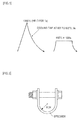
- specimen having a size: a thickness of 4mm, a width of 15mm and a length of 115mm respectively are sampled, and a welding heat cycle was applied to a center portion of the specimen under conditions shown in Fig. 1 .
- a specimen for microstructural observation was sampled from the specimen after a welding heat cycle was given, the specimen for microstructural observation was polished, and corroded, and the microstructure of the specimen for microstructural observation after the welding heat cycle was given was observed.
- the specimen was bent in a U shape with an inner radius of 8mm and was subjected to a corrosion test where the specimen was immersed in a corrosive solution.
- a 50g/l NaCl solution having a solution temperature of 100°C, a CO 2 pressure of 0.1MPa and pH of 2.0 was used as the corrosive solution.
- a test period was 168 hours. After the test was finished, a cross section of the specimen was observed using an optical microscope with a magnification ratio of 100 times, and the presence and non-presence of cracks was observed.
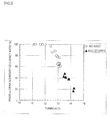
- FIG. 3 shows the relationship between a prior ⁇ grain boundary occupancy ratio and ⁇ Cr+Mo+0.4W+0.3Si-43.5C-0.4Mn-Ni-0.3Cu-9N ⁇ by determining a case where there was cracking as " ⁇ " and a case where there was no cracking as " ⁇ ".
- Fig. 3 shows that when ⁇ Cr+Mo+0.4W+0.3Si-43.5C-0.4Mn-Ni-0.3Cu-9N ⁇ in the formula (1) exceeds 13.3, a rate of a length occupied by a martensite phase and/or an austenite phase relative to the whole length of the prior ferrite ( ⁇ ) grain boundaries becomes less than 50% so that intergranular stress corrosion cracking occurred.
- the present invention has been completed as the result of the further studies based on the above-mentioned findings. That is, the gist of the present invention is as follows.
- a Cr-containing steel pipe for linepipe excellent in resistance to intergranular stress corrosion cracking in a welded heat affected zone which requires no post weld heat treatment can be manufactured at a low cost so that the present invention exhibits remarkable advantageous effects industrially.
- the present invention also has an advantageous effect that the steel pipe structure such as a pipeline can be constructed without performing post weld heat treatment so that a construction period can be shortened whereby a construction cost can be remarkably reduced.
- C is an element which contributes to the increase of strength of a steel pipe, and in the present invention, the steel pipe is required to contain 0.001% or more C.
- the steel pipe contains a large content of C exceeding 0.015%, toughness of the steel pipe in a welded heat affected zone is deteriorated.
- the steel pipe contains a large content of C, particularly, it becomes difficult to prevent intergranular stress corrosion cracking in a welded heat affected zone. Accordingly, the content of C is limited to a value which falls within a range from 0.001 to 0.015%.
- the content of C is preferably limited to a value which falls within a range from 0.002 to 0.010%.
- Si acts as a deoxidizing agent and is an element for increasing strength of a steel pipe by solid solution and, in the present invention, the steel pipe is required to contain 0.05% or more Si.
- the steel pipe contains a large content of Si exceeding 0.50%, toughness of a base material and a welded heat affected zone is deteriorated. Accordingly, the content of Si is limited to a value which falls within a range from 0.05 to 0.50%.
- the content of Si is preferably limited to a value which falls within a range from 0.10 to 0.40%.
- Mn contributes to the increase of strength of a steel pipe by solid solution, and is also an austenite forming element so that Mn enhances toughness of a base material and a welded heat affected zone by suppressing the generation of ferrite.
- the steel pipe is required to contain 0.10% or more Mn.
- the content of Mn is limited to a value which falls within a range from 0.10 to 2.0%.
- the content of Mn is preferably limited to a value which falls within a range from 0.20 to 0.90%.
- P is an element which deteriorates corrosion resistance such as CO 2 corrosion resistance and resistance to sulfide stress corrosion cracking and hence, in the present invention, it is desirable that the content of P is set as small as possible. However, the excessive reduction of P pushes up a manufacturing cost. Accordingly, as a range of the content of P which enables the industrial manufacture of a steel pipe at a relatively low cost and does not cause the deterioration of corrosion resistance, the content of P is limited to 0.020% or less. The content of P is preferably set to 0.015% or less.
- S is an element which remarkably deteriorates hot workability in a pipe manufacturing process and hence, it is desirable that the content of S is set as small as possible.
- a steel pipe can be manufactured through usual steps by decreasing the content of S to 0.010% or less and hence, the content of S is limited to 0.010% or less.
- the content of S is preferably set to 0.004% or less.
- Al is an element having a strong deoxidization function. To allow Al to exhibit such a strong deoxidization action, the steel pipe is required to contain 0.001% or more Al. However, when the content of Al exceeds 0.10%, Al exerts an adverse effect on toughness of the steel pipe. Accordingly, the content of Al is limited to 0.10% or less. The content of Al is preferably set to 0.05% or less.
- Cr is an element which enhances corrosion resistance such as CO 2 corrosion resistance and resistance to sulfide stress corrosion cracking by forming a protective surface film.
- a steel pipe is required to contain 15% or more Cr particularly for the purpose of enhancing corrosion resistance under harsh corrosion environment.
- the content of Cr exceeds 18%, the hot workability is deteriorated. Accordingly, the content of Cr is limited to a value which falls within a range from 15.0 to 18.0%.
- Ni is an element which has a function of hardening a protective film, enhances corrosion resistance such as CO 2 corrosion resistance and resistance to sulfide stress corrosion cracking, and contributes to the increase of strength of a steel pipe.
- the steel pipe is required to contain 2.0% or more Ni.
- the content of Ni exceeding 6.0% lowers hot workability and brings about the lowering of strength. Accordingly, the content of Ni is limited to a value which falls within a range from 2.0 to 6.0%.
- the content of Ni is preferably limited to a value which falls within a range from 3.0 to 5.0%.
- Mo is an element which has a function of increasing resistance to pitting corrosion generated by Cl - (chloride ions) and is effectively used for enhancing corrosion resistance. To acquire such effects, the steel pipe is required to contain 1.5% or more Mo. On the other hand, when the content of Mo exceeds 3.5%, hot workability is lowered and a manufacturing cost is pushed up. Accordingly, the content of Mo is limited to a value which falls within a range from 1.5 to 3.5%. Here, the content of Mo is preferably limited to a value which falls within a range from 1.8 to 3.0%.
- V 0.001 to 0.20%
- V is an element which contributes to the increase of strength and has a function of enhancing resistance to stress corrosion cracking. Although these effects appear in an out standing manner when the content of V is set to 0.001% or more, toughness of a steel pipe is lowered when the content of V exceeds 0.20%. Accordingly, the content of V is limited to a value which falls within a range from 0.001 to 0.20%. The content of V is preferably limited to a value which falls within a range from 0.010 to 0.10%.
- N is an element which has a function of enhancing pitting corrosion resistance.
- N is an element having a function of remarkably lowering weldability and hence, in the present invention, it is desirable to set the content of N as small as possible.
- excessive reduction of N pushes up a manufacturing cost. Accordingly, as a range of the content of N which enables the industrial manufacture of a steel pipe at a relatively low cost and does not cause the deterioration of weldablity, the content of N is set to 0.015% as an upper limit.
- the steel pipe may selectively contain one kind or two kinds selected from a group consisting of: 0.01 to 3.5% Cu and 0.01 to 3.5% W and/or one kind or two or more kinds selected from a group consisting of 0.01 to 0.20% Ti, 0.01 to 0.20% Nb, and 0.01 to 0.20% Zr and/or one kind or two kinds selected from a group consisting of 0.0005 to 0.0100% Ca and 0.0005 to 0.0100% REM when necessary.
- Both Cu and W are elements which enhance CO 2 corrosion resistance, and a steel pipe may selectively contain Cu, W when necessary.
- Cu is an element which enhances CO 2 corrosion resistance and also contributes to the increase of strength of a steel pipe.
- the content of Cu is preferably set to 0.01% or more for acquiring such effects. However, even when the content of Cu exceeds 3.5%, the effects are saturated, and an effect corresponding to the content of Cu cannot be expected so that it becomes economically disadvantageous. Accordingly, when the steel pipe contains Cu, the content of Cu is preferably limited to a value which falls within a range from 0.01 to 3.5%.
- the content of Cu is more preferably limited to a value which falls within a range from 0.30 to 2.0%.
- W is an element which enhances CO 2 corrosion resistance, and enhances resistance to stress corrosion cracking and, further, resistance to sulfide stress corrosion cracking and pitting corrosion resistance.
- the content of W is preferably set to 0.01% or more for acquiring such effects. However, even when the content of W exceeds 3.5%, the effects are saturated, and an effect corresponding to the content of W cannot be expected so that it becomes economically disadvantageous. Accordingly, when a steel pipe contains W, the content of W is preferably limited to a value which falls within a range from 0.01 to 3.5%. The content of W is more preferably limited to a value which falls within a range from 0.30 to 2.0%.
- All of Ti, Nb, Zr are elements which have strong carbide forming tendency compared to Cr, and have a function of suppressing the precipitation of Cr carbide in grain boundaries at the time of cooling.
- the steel pipe of the present invention may selectively contain one kind or two or more kinds selected from Ti, Nb, Zr when necessary.
- the steel pipe of the present invention contains 0.01% or more Ti, 0. 01% or more Nb and 0.01% or more Zr respectively.
- the content of Ti exceeds 0.20%
- the content of Nb exceeds 0.20%
- the content of Zr exceeds 0.20%, weldability and toughness are lowered.
- the content of Ti is preferably limited to a value which falls within a range from 0.01 to 0.20%
- the content of Nb is preferably limited to a value which falls within a range from 0.01 to 0.20%
- the content of Zr is preferably limited to a value which falls within a range from 0.01 to 0.20%.
- the steel pipe of the present invention contains 0.02 to 0.10% Ti, 0.02 to 0.10% Nb and 0.02 to 0.10% Zr respectively.
- Both Ca and REM are elements which enhance hot workability and manufacture stability at the time of continuous casting through a morphology control of inclusion and the composition of the steel pipe of the present invention may selectively contain these elements when necessary.
- the steel pipe of the present invention contains 0.0005% or more Ca and 0.0005% or more REM respectively.
- the content of Ca exceeding 0.0100% or the content of REM exceeding 0.0100% brings about the increase of an content of inclusion so that cleanness of steel is lowered.
- the content of Ca is preferably limited to a value which falls within a range from 0.0005 to 0.0100%
- the content of REM is preferably limited to a value which falls within a range from 0.0005 to 0.0100%.
- the content of Ca is limited to a value which falls within a range from 0.0010 to 0.0030%
- the content of REM is limited to a value which falls within a range from 0.0010% to 0.0050%.
- the contents of the respective compositions are adjusted such that the next formula (1) is satisfied within the above-mentioned composition range.
- the center value ⁇ Cr+Mo+0.4W+0.3Si-43.5C-0.4Mn-Ni-0.3Cu-9N ⁇ in the formula (1) is an index used for evaluating hot workability and, further, resistance to intergranular stress corrosion cracking.
- the contents of the respective elements are adjusted within the ranges described above such that the center value in the formula (1) falls within a range of 11. 5 to 13.3 which satisfies the formula (1).
- the center value in the formula (1) is less than 11. 5, hot workability becomes insufficient so that hot workability necessary and sufficient for the manufacture of a seamless steel pipe cannot be secured whereby the manufacture of the seamless steel pipe becomes difficult.
- the center value in the formula (1) is exceeds 13.3, as described above, the resistance to intergranular stress corrosion cracking is lowered. From the above, the contents of the respective elements are adjusted such that the contents of the respective elements fall within the above-mentioned ranges and satisfy the formula (1).
- the balance other than the above-mentioned compositions is constituted of Fe and inevitable impurities.
- the steel pipe may contain 0.010% or less O.
- the steel pipe of the present invention has the above-mentioned composition and, further, has the microstructure formed of 10 to 50% of ferrite phase by volume and 30% or less of austenite phase by volume, and a martensite phase as a base phase.
- the martensite phase also includes a tempered martensite phase in its definition. It is preferable that the steel pipe of the present invention contains 25% or more of martensite phase by volume to ensure desired strength.
- the ferrite phase is the microstructure which is soft and enhances workability, and it is desirable that the steel pipe of the present invention contains 10% or more of ferrite phase by volume from a viewpoint of enhancing workability.
- the steel pipe of the present invention contains a ferrite phase exceeding 50% by volume, the steel pipe of the present invention cannot ensure desired high strength (X-65, YS: 448MPa or more).
- the austenite phase is the microstructure which enhances toughness, when the content of austenite phase exceeds 30%, it is difficult for the steel pipe of the present invention to ensure strength.
- the austenite phase may take a case where the whole austenite phase is not transformed into a martensite phase at the time of quenching and the austenite phase remains partially or a case where a part of a martensite phase or a ferrite phase is subjected to reverse transformation at the time of tempering and the transformed austenite phase remains even after cooling.
- a ferrite single phase temperature region appears at a temperature of 1300°C or more.
- a welded heat affected zone which is heated to the ferrite single phase temperature region of 1300°C or more at the time of welding and is cooled has the microstructure where 50% or more of prior-ferrite grain boundaries is occupied by a martensite phase and/or an austenite phase in a ratio to the whole length of the prior-ferrite grain boundaries.
- the precipitation of Cr carbide in grain boundaries of the coarse prior ferrite grains can be avoided so that the intergranular stress corrosion cracking is suppressed whereby the resistance to intergranular stress corrosion cracking of the welded heat affected zone can be improved.
- molten steel having the above-mentioned composition is made by a conventional steel making method such as a converter, an electric furnace or a vacuum melting furnace, and a billet is formed from the molten steel by a conventional method such as a continuous casting method and a slabing mill method for rolling an ingot. Then, the billet is heated and is subjected to hot rolling through a conventional manufacturing step such as a Mannesmann-plug mill method or a Mannesmann-mandrel mill method, and is formed into a pipe shape thus manufacturing a seamless steel pipe having a desired size.
- a conventional steel making method such as a converter, an electric furnace or a vacuum melting furnace
- a billet is formed from the molten steel by a conventional method such as a continuous casting method and a slabing mill method for rolling an ingot.
- the billet is heated and is subjected to hot rolling through a conventional manufacturing step such as a Mannesmann-plug mill method or a Mannesmann-mandrel mill method, and is formed into
- the seamless steel pipe after pipe manufacturing is preferably subjected to accelerated cooling where the seamless steel pipe is cooled to a room temperature at a cooling rate above an air-cooling rate, preferably, at an average cooling rate of 0.5°C/s or more from 800 to 500°C. Due to such accelerated cooling, provided that the steel pipe has the composition within the composition range of the present invention, the steel pipe can have the microstructure where a martensite phase is a base phase as described above. When the cooling rate is less than 0.5°C/s, the steel pipe cannot have the microstructure where a martensite phase is a base phase.
- the microstructure where a martensite phase is a base phase means the microstructure where the martensite phase has the largest volume ratio or has a volume ratio which is substantially equal to a volume ratio of another microstructure which has the largest volume ratio.
- reheating, quenching and tempering may be performed.
- Such quenching may preferably be done in such a way that the seamless pipe is reheated to a temperature of 800°C or more, held at the temperature for 10min or more, and cooled to a temperature of 100°C or less at a cooling rate above an air-cooling rate or at an average cooling rate of 0.5°C/s or more from 800 to 500°C.
- the reheating temperature is less than 800°C, the seamless pipe cannot ensure the desired microstructure where a martensite phase is a base phase.
- Tempering may preferably be done in such a way that, after quenching, the seamless pipe is heated to a temperature of 500°C or more and 700°C or less, and more preferably, to a temperature of 580°C or more and 680°C or less, held at the same temperature for a predetermined time, and cooled by air. Due to such tempering, the seamless pipe can acquire all of desired high strength, desired high toughness and desired excellent corrosion resistance.
- the present invention is not limited to the seamless pipe.
- Using a steel sheet having the above-mentioned composition an electric resistance seam welded steel pipe or a UOE steel pipe is manufactured through conventional steps for linepipe. It is also preferable that the electric resistance seam welded steel pipe or the UOE steel pipe be formed into a steel pipe having the above-mentioned microstructure by applying the above-mentioned quenching-tempering treatment to a steel sheet or steel plate).
- the welded structure can be formed by joining the steel pipes of the present invention by welding.
- the joining of the steel pipes of the present invention by welding also includes a case where the steel pipes of the present invention and other kind of steel pipes are joined to each other by welding.
- a welded heat affected zone which is preferably heated to a ferrite single phase temperature region of 1300°C or more and is cooled includes a welded heat affected zone having the microstructure where 50% or more of prior-ferrite grain boundaries is occupied by a martensite phase and/or an austenite phase in a ratio to the whole length of prior-ferrite grain boundaries. Accordingly, intergranular stress corrosion cracking can be suppressed so that resistance to intergranular stress corrosion cracking in the welded heat affected zone can be improved without performing the post weld heat treatment.
- Molten steel having the composition shown in Table 1 was made by a vacuum melting furnace and was subjected to degassing, and thereafter, a steel ingot having 100kgf was produced by casting.
- the steel ingot was formed into a steel pipe having a predetermined size by hot forging.
- the steel pipe was heated and formed into a pipe by hot working using a model seamless mill (a miniaturized seamless mill for experimental use) thus producing a seamless steel pipe (outer diameter: 65mm ⁇ , wall thickness: 5.5mm).
- a model seamless mill a miniaturized seamless mill for experimental use
- the presence or non-presence of cracking on inner and outer surfaces of the seamless steel pipe was investigated by visually eyes, and hot workability was evaluated as follows. When cracking having a length of 5mm or more is recognized on an end surface on the pipe longitudinal direction, it is evaluated that cracking is present and the evaluation " ⁇ " is given, while it is evaluated that cracking is not present in other cases and the evaluation "O" is given.
- test materials were sampled from the obtained seamless steel pipe, and quenching and tempering were applied to the test materials (steel pipes) under conditions shown in Table 2.
- Specimens were sampled from the test materials (steel pipes) to which the quenching and tempering were applied, and the microstructural observation, a tensile test, an impact test, a corrosion test, a sulfide stress corrosion cracking test, a U bend stress corrosion cracking test were carried out on the specimens. Testing methods are as follows.
- Specimens for microstructural observation were sampled from the obtained test materials (steel pipes).
- the specimens for microstructural observation were polished and corroded, and thereafter, the specimens for microstructural observation were observed and were imaged using an optical microscope (magnification ratio: 1000 times), the microstructure of the specimen for microstructural observation was identified, and microstructure fractions of respective phases in a base metal were obtained using an image analyzer.
- an amout of residual austenite was measured using an X-ray diffraction method.
- V-notched specimens were sampled from the obtained test materials (steel pipes) in accordance with the provision of JIS Z 2242, and a Charpy impact test was carried out on the V-notched specimens, absorption energy vE -40 (J) at -40°C was obtained and the toughness of the base metal was evaluated.
- Corrosion specimens each having a thickness of 3mm, a width of 25mm and a length of 50mm were sampled from the obtained test materials (steel pipes) by machining, the corrosion test was carried out on the corrosion specimens, and the corrosion resistance (CO 2 corrosion resistance, pitting corrosion resistance) was evaluated.
- the corrosion test 200g/liter of an NaCl aqueous solution at a temperature of 150°C in which a carbon dioxide gas at 3.0MPa is saturated was held in an autoclave, the corrosion specimens were immersed in the aqueous solution for 30 days. After the corrosion test was finished, a weight of each specimen was measured and a corrosion rate was calculated based on a change in weight (reduction of weight) before and after the corrosion test.
- test specimens size: thickness of 4mm, width of 15mm and length of 115mm
- test materials steel pipes
- a four-point bending test in accordance with EFC (European Federation of Corrosion) No.17 was carried out on the specimens, and the resistance to sulfide stress corrosion cracking was evaluated.
- 50g/liter of NaCl+NaHCO 3 solution pH: 4.5
- the test was carried out while flowing a 10vol% H 2 S+90vol% CO 2 mixture gas, and the presence or non-presence of breaking was investigated.
- Test specimen raw materials (size: thickness of 4mm, width of 15mm and length of 115mm) were sampled from the obtained test materials (steel pipes), and a welding heat cycle was given to a center portion of the test material under conditions shown in Fig. 1 .
- Specimens for microstructural observation were sampled from the specimens after the welding heat cycle was given under conditions shown in Fig. 1 , and were polished and corroded, and the microstructures of the specimens after the welding heat cycle was given were observed.
- the presence or non-presence of a product by transformation (martensite phase and/or austenite phase) from the prior a grain boundaries was investigated, and a length of prior ⁇ grain boundaries occupied by the product by transformation (the martensite phase and/or the austenite phase) was measured, and an occupancy ratio of the length of prior ⁇ grain boundaries relative to the whole length of the prior ⁇ grain boundaries was calculated.
- a specimen having a thickness of 2mm, a width of 15mm and a length of 75mm was cut out from the center portion of the obtained specimen raw material to which the welding heat cycle was given and the U bend stress corrosion cracking test was carried out on the specimen.
- the specimen was bent in a U shape with an inner diameter of 8mm, and the specimen was immersed in a corrosive solution.
- 50 g/liter of NaCl solution which is under a condition where solution temperature is 100°C, a CO 2 pressure is 0.1MPa and pH is 2. 0 was used as the corrosive solution.
- a test period was 168 hours.
- All present invention examples have excellent hot workability, high strength of YS: 448MPa (65ksi)or more, high-toughness of vE -40 : 50 J or more and high corrosion resistance of a corrosion rate: 0.12mm/y or less, no sulfide stress corrosion cracking, no intergranular stress corrosion cracking in a welded heat affected zone which is heated to 1300°C or more, and exhibit excellent resistance to intergranular stress corrosion cracking in the welded heat affected zone.
- the formula (1) defined by the present invention exceeds 13.3 and hence, as shown in Table 3, a ratio of a length occupied by a martensite phase and/or an austenite phase relative to the whole length of the prior-ferrite grain boundaries (an occupancy ratio (%) of prior ⁇ -grain boundaries) becomes less than 50% so that intergranular stress corrosion cracking occurred.
- This advantageous effect of the present invention on resistance to intergranular stress corrosion cracking of the welded heat affected zone cannot be expected from JP-A-2005-336599 (patent document 2) at all.
Landscapes
- Chemical & Material Sciences (AREA)
- Engineering & Computer Science (AREA)
- Mechanical Engineering (AREA)
- Materials Engineering (AREA)
- Metallurgy (AREA)
- Organic Chemistry (AREA)
- Physics & Mathematics (AREA)
- Thermal Sciences (AREA)
- Crystallography & Structural Chemistry (AREA)
- Heat Treatment Of Articles (AREA)
- Heat Treatment Of Steel (AREA)
Applications Claiming Priority (2)
| Application Number | Priority Date | Filing Date | Title |
|---|---|---|---|
| JP2010095860 | 2010-04-19 | ||
| PCT/JP2011/059891 WO2011132765A1 (ja) | 2010-04-19 | 2011-04-15 | 溶接熱影響部の耐粒界応力腐食割れ性に優れたラインパイプ用Cr含有鋼管 |
Publications (3)
| Publication Number | Publication Date |
|---|---|
| EP2562284A1 true EP2562284A1 (de) | 2013-02-27 |
| EP2562284A4 EP2562284A4 (de) | 2017-07-12 |
| EP2562284B1 EP2562284B1 (de) | 2020-06-03 |
Family
ID=44834279
Family Applications (1)
| Application Number | Title | Priority Date | Filing Date |
|---|---|---|---|
| EP11772096.1A Not-in-force EP2562284B1 (de) | 2010-04-19 | 2011-04-15 | Cr-haltiges stahlrohr für ein leitungsrohr mit hervorragender bruchfestigkeit der durch schweissungshitze betroffenen teile bei intergranularer stresskorrosion |
Country Status (5)
| Country | Link |
|---|---|
| EP (1) | EP2562284B1 (de) |
| JP (1) | JP5765036B2 (de) |
| CN (1) | CN102859019A (de) |
| BR (1) | BR112012026595A2 (de) |
| WO (1) | WO2011132765A1 (de) |
Cited By (3)
| Publication number | Priority date | Publication date | Assignee | Title |
|---|---|---|---|---|
| EP3246418A4 (de) * | 2015-01-15 | 2017-11-22 | JFE Steel Corporation | Nahtloses edelstahlrohr für ein ölbohrloch und verfahren zur herstellung davon |
| EP3333276A4 (de) * | 2015-08-04 | 2019-01-09 | Nippon Steel & Sumitomo Metal Corporation | Edelstahl und ölbohrlochedelstahlmaterial |
| US20230340632A1 (en) * | 2020-07-06 | 2023-10-26 | Jfe Steel Corporation | Stainless steel seamless pipe and method for manufacturing same |
Families Citing this family (13)
| Publication number | Priority date | Publication date | Assignee | Title |
|---|---|---|---|---|
| WO2013161089A1 (ja) | 2012-04-26 | 2013-10-31 | Jfeスチール株式会社 | 溶接熱影響部の耐粒界応力腐食割れ性に優れたラインパイプ用Cr含有鋼管 |
| JP5924256B2 (ja) * | 2012-06-21 | 2016-05-25 | Jfeスチール株式会社 | 耐食性に優れた油井用高強度ステンレス鋼継目無管およびその製造方法 |
| JP5967066B2 (ja) * | 2012-12-21 | 2016-08-10 | Jfeスチール株式会社 | 耐食性に優れた油井用高強度ステンレス継目無鋼管およびその製造方法 |
| CN103233180A (zh) * | 2013-05-17 | 2013-08-07 | 宝山钢铁股份有限公司 | 一种高强度双相不锈钢管及其制造方法 |
| JP6171834B2 (ja) | 2013-10-21 | 2017-08-02 | Jfeスチール株式会社 | 厚肉鋼材製造用装置列 |
| JP6171851B2 (ja) * | 2013-10-29 | 2017-08-02 | Jfeスチール株式会社 | 継目無鋼管製造用装置列およびそれを利用した油井用高強度ステンレス継目無鋼管の製造方法 |
| BR102014005015A8 (pt) * | 2014-02-28 | 2017-12-26 | Villares Metals S/A | aço inoxidável martensítico-ferrítico, produto manufaturado, processo para a produção de peças ou barras forjadas ou laminadas de aço inoxidável martensítico-ferrítico e processo para a produção de tudo sem costura de aço inoxidável martensítico-ferrítico |
| JP6137082B2 (ja) * | 2014-07-31 | 2017-05-31 | Jfeスチール株式会社 | 低温靭性に優れた油井用高強度ステンレス継目無鋼管およびその製造方法 |
| JP6206423B2 (ja) * | 2015-01-22 | 2017-10-04 | Jfeスチール株式会社 | 低温靭性に優れた高強度ステンレス厚鋼板およびその製造方法 |
| CN105177255B (zh) * | 2015-10-15 | 2017-06-13 | 东北大学 | 一种铁素体‑奥氏体双相不锈钢的热处理工艺方法 |
| CN110763612B (zh) * | 2018-07-25 | 2022-10-11 | 中国石油化工股份有限公司 | 一种研究马氏体对奥氏体钢应力腐蚀开裂性能影响的方法 |
| CN115807190A (zh) * | 2022-11-28 | 2023-03-17 | 攀钢集团攀枝花钢铁研究院有限公司 | 一种输油用高强度耐腐蚀不锈钢无缝管及其制造方法 |
| CN119776737B (zh) * | 2025-03-11 | 2025-07-01 | 上海宇洋特种金属材料有限公司 | 一种耐磨焊管用钢及其制备方法和焊管 |
Family Cites Families (9)
| Publication number | Priority date | Publication date | Assignee | Title |
|---|---|---|---|---|
| JPS558404A (en) * | 1978-06-30 | 1980-01-22 | Nippon Steel Corp | Manufacture of austenitic stainless steel used in atmosphere of high-temperature and high-pressure water |
| JP3543740B2 (ja) * | 1999-08-06 | 2004-07-21 | 住友金属工業株式会社 | マルテンサイト系ステンレス鋼溶接鋼管 |
| JP4250851B2 (ja) * | 2000-03-30 | 2009-04-08 | 住友金属工業株式会社 | マルテンサイト系ステンレス鋼および製造方法 |
| JP2002060910A (ja) * | 2000-08-11 | 2002-02-28 | Sumitomo Metal Ind Ltd | 高Cr溶接鋼管 |
| JP4462005B2 (ja) | 2003-10-31 | 2010-05-12 | Jfeスチール株式会社 | 耐食性に優れたラインパイプ用高強度ステンレス鋼管およびその製造方法 |
| WO2005042793A1 (ja) * | 2003-10-31 | 2005-05-12 | Jfe Steel Corporation | 耐食性に優れたラインパイプ用高強度ステンレス鋼管およびその製造方法 |
| CN100497705C (zh) * | 2003-10-31 | 2009-06-10 | 杰富意钢铁株式会社 | 耐腐蚀性优良的管线管用高强度不锈钢管及其制造方法 |
| JP4400423B2 (ja) | 2004-01-30 | 2010-01-20 | Jfeスチール株式会社 | マルテンサイト系ステンレス鋼管 |
| US20100116382A1 (en) * | 2007-04-27 | 2010-05-13 | Japan Atomic Energy Agency | Austenitic stainless steel excellent in intergranular corrosion resistance and stress corrosion cracking resistance, and method for producing austenitic stainless steel material |
-
2011
- 2011-04-15 WO PCT/JP2011/059891 patent/WO2011132765A1/ja not_active Ceased
- 2011-04-15 BR BR112012026595A patent/BR112012026595A2/pt not_active Application Discontinuation
- 2011-04-15 CN CN2011800195748A patent/CN102859019A/zh active Pending
- 2011-04-15 EP EP11772096.1A patent/EP2562284B1/de not_active Not-in-force
- 2011-04-19 JP JP2011092571A patent/JP5765036B2/ja not_active Expired - Fee Related
Non-Patent Citations (1)
| Title |
|---|
| See references of WO2011132765A1 * |
Cited By (5)
| Publication number | Priority date | Publication date | Assignee | Title |
|---|---|---|---|---|
| EP3246418A4 (de) * | 2015-01-15 | 2017-11-22 | JFE Steel Corporation | Nahtloses edelstahlrohr für ein ölbohrloch und verfahren zur herstellung davon |
| US11193179B2 (en) | 2015-01-15 | 2021-12-07 | Jfe Steel Corporation | Seamless stainless steel pipe for oil country tubular goods and method of manufacturing the same |
| EP3333276A4 (de) * | 2015-08-04 | 2019-01-09 | Nippon Steel & Sumitomo Metal Corporation | Edelstahl und ölbohrlochedelstahlmaterial |
| US10378079B2 (en) | 2015-08-04 | 2019-08-13 | Nippon Steel Corporation | Stainless steel and stainless steel product for oil well |
| US20230340632A1 (en) * | 2020-07-06 | 2023-10-26 | Jfe Steel Corporation | Stainless steel seamless pipe and method for manufacturing same |
Also Published As
| Publication number | Publication date |
|---|---|
| EP2562284B1 (de) | 2020-06-03 |
| JP2011241477A (ja) | 2011-12-01 |
| EP2562284A4 (de) | 2017-07-12 |
| CN102859019A (zh) | 2013-01-02 |
| WO2011132765A1 (ja) | 2011-10-27 |
| BR112012026595A2 (pt) | 2016-07-12 |
| JP5765036B2 (ja) | 2015-08-19 |
Similar Documents
| Publication | Publication Date | Title |
|---|---|---|
| EP2562284B1 (de) | Cr-haltiges stahlrohr für ein leitungsrohr mit hervorragender bruchfestigkeit der durch schweissungshitze betroffenen teile bei intergranularer stresskorrosion | |
| EP3321389B1 (de) | Hochfestes nahtloses edelstahlrohr und herstellungsverfahren dafür | |
| JP6047947B2 (ja) | 耐サワー性に優れたラインパイプ用厚肉高強度継目無鋼管およびその製造方法 | |
| EP1546417B1 (de) | Hochfestes nahtloses stahlrohr mit hervorragender beständigkeit gegen der wasserstoffinduzierter rissbildung und herstellungsverfahren dafür | |
| JPWO2017138050A1 (ja) | 油井用高強度ステンレス継目無鋼管およびその製造方法 | |
| EP2565287A1 (de) | Hochfester edelstahl für ein ölbohrloch und hochfestes edelstahlrohr für ein ölbohrloch | |
| EP2947167A1 (de) | Nahtloses edelstahlrohr zur verwendung in ölbohrlöchern und herstellungsverfahren dafür | |
| WO2005042793A1 (ja) | 耐食性に優れたラインパイプ用高強度ステンレス鋼管およびその製造方法 | |
| EP2754726A1 (de) | Zweiphasiger edelstahl | |
| JP7315097B2 (ja) | 油井用高強度ステンレス継目無鋼管およびその製造方法 | |
| JP4978073B2 (ja) | 耐食性に優れる油井用高靭性超高強度ステンレス鋼管およびその製造方法 | |
| JP4400423B2 (ja) | マルテンサイト系ステンレス鋼管 | |
| EP3276025A1 (de) | Stahlplatte für ein strukturrohr, verfahren zur herstellung einer stahlplatte für ein strukturrohr und strukturrohr | |
| EP2322679B1 (de) | Nahtloses rohr aus martensitischem nichtrostendem stahl für ölbohrlochrohr und herstellungsverfahren dafür | |
| JP6672620B2 (ja) | 油井用ステンレス鋼及び油井用ステンレス鋼管 | |
| JP4250851B2 (ja) | マルテンサイト系ステンレス鋼および製造方法 | |
| JP5640777B2 (ja) | 溶接熱影響部の耐粒界応力腐食割れ性に優れたラインパイプ用Cr含有鋼管 | |
| JP5040973B2 (ja) | マルテンサイト系ステンレス鋼管円周溶接継手の製造方法 | |
| CN100473736C (zh) | 马氏体类不锈钢管 | |
| JP7347714B1 (ja) | 油井用高強度ステンレス継目無鋼管 | |
| JP4765283B2 (ja) | マルテンサイト系ステンレス鋼管円周溶接継手の製造方法 | |
| EP1876253B1 (de) | Rohr aus nichtrostendem stahl für erdölbohrloch mit hervorragenden erweiterungseigenschaften | |
| EP2843068B1 (de) | Eine methode zur herstellung eines cr-haltigen stahlrohrs für ein leitungsrohr mit hervorragender beständigkeit gegen interkristalline spannungsrisskorrosion der wärmebeeinflussten schweiszzone | |
| JP4997695B2 (ja) | 耐粒界応力腐食割れ性に優れたラインパイプ用マルテンサイト系ステンレス継目無鋼管円周溶接継手の製造方法およびラインパイプ用マルテンサイト系ステンレス継目無鋼管 | |
| JP5399635B2 (ja) | 拡管性に優れる油井用ステンレス鋼管およびその製造方法 |
Legal Events
| Date | Code | Title | Description |
|---|---|---|---|
| PUAI | Public reference made under article 153(3) epc to a published international application that has entered the european phase |
Free format text: ORIGINAL CODE: 0009012 |
|
| 17P | Request for examination filed |
Effective date: 20121119 |
|
| AK | Designated contracting states |
Kind code of ref document: A1 Designated state(s): AL AT BE BG CH CY CZ DE DK EE ES FI FR GB GR HR HU IE IS IT LI LT LU LV MC MK MT NL NO PL PT RO RS SE SI SK SM TR |
|
| DAX | Request for extension of the european patent (deleted) | ||
| RA4 | Supplementary search report drawn up and despatched (corrected) |
Effective date: 20170613 |
|
| RIC1 | Information provided on ipc code assigned before grant |
Ipc: C21D 9/50 20060101ALI20170607BHEP Ipc: C21D 6/00 20060101ALI20170607BHEP Ipc: C22C 38/04 20060101ALI20170607BHEP Ipc: C22C 38/00 20060101AFI20170607BHEP Ipc: C21D 9/08 20060101ALI20170607BHEP Ipc: C22C 38/58 20060101ALI20170607BHEP Ipc: C22C 38/02 20060101ALI20170607BHEP Ipc: C22C 38/46 20060101ALI20170607BHEP Ipc: C21D 1/25 20060101ALI20170607BHEP Ipc: C22C 38/44 20060101ALI20170607BHEP Ipc: C22C 38/06 20060101ALI20170607BHEP |
|
| STAA | Information on the status of an ep patent application or granted ep patent |
Free format text: STATUS: EXAMINATION IS IN PROGRESS |
|
| 17Q | First examination report despatched |
Effective date: 20180221 |
|
| GRAP | Despatch of communication of intention to grant a patent |
Free format text: ORIGINAL CODE: EPIDOSNIGR1 |
|
| STAA | Information on the status of an ep patent application or granted ep patent |
Free format text: STATUS: GRANT OF PATENT IS INTENDED |
|
| INTG | Intention to grant announced |
Effective date: 20191129 |
|
| GRAS | Grant fee paid |
Free format text: ORIGINAL CODE: EPIDOSNIGR3 |
|
| GRAA | (expected) grant |
Free format text: ORIGINAL CODE: 0009210 |
|
| STAA | Information on the status of an ep patent application or granted ep patent |
Free format text: STATUS: THE PATENT HAS BEEN GRANTED |
|
| AK | Designated contracting states |
Kind code of ref document: B1 Designated state(s): AL AT BE BG CH CY CZ DE DK EE ES FI FR GB GR HR HU IE IS IT LI LT LU LV MC MK MT NL NO PL PT RO RS SE SI SK SM TR |
|
| REG | Reference to a national code |
Ref country code: GB Ref legal event code: FG4D |
|
| REG | Reference to a national code |
Ref country code: CH Ref legal event code: EP Ref country code: AT Ref legal event code: REF Ref document number: 1277090 Country of ref document: AT Kind code of ref document: T Effective date: 20200615 |
|
| REG | Reference to a national code |
Ref country code: DE Ref legal event code: R096 Ref document number: 602011067149 Country of ref document: DE |
|
| REG | Reference to a national code |
Ref country code: LT Ref legal event code: MG4D |
|
| PG25 | Lapsed in a contracting state [announced via postgrant information from national office to epo] |
Ref country code: SE Free format text: LAPSE BECAUSE OF FAILURE TO SUBMIT A TRANSLATION OF THE DESCRIPTION OR TO PAY THE FEE WITHIN THE PRESCRIBED TIME-LIMIT Effective date: 20200603 Ref country code: LT Free format text: LAPSE BECAUSE OF FAILURE TO SUBMIT A TRANSLATION OF THE DESCRIPTION OR TO PAY THE FEE WITHIN THE PRESCRIBED TIME-LIMIT Effective date: 20200603 Ref country code: FI Free format text: LAPSE BECAUSE OF FAILURE TO SUBMIT A TRANSLATION OF THE DESCRIPTION OR TO PAY THE FEE WITHIN THE PRESCRIBED TIME-LIMIT Effective date: 20200603 Ref country code: NO Free format text: LAPSE BECAUSE OF FAILURE TO SUBMIT A TRANSLATION OF THE DESCRIPTION OR TO PAY THE FEE WITHIN THE PRESCRIBED TIME-LIMIT Effective date: 20200903 Ref country code: GR Free format text: LAPSE BECAUSE OF FAILURE TO SUBMIT A TRANSLATION OF THE DESCRIPTION OR TO PAY THE FEE WITHIN THE PRESCRIBED TIME-LIMIT Effective date: 20200904 |
|
| REG | Reference to a national code |
Ref country code: NL Ref legal event code: MP Effective date: 20200603 |
|
| PG25 | Lapsed in a contracting state [announced via postgrant information from national office to epo] |
Ref country code: LV Free format text: LAPSE BECAUSE OF FAILURE TO SUBMIT A TRANSLATION OF THE DESCRIPTION OR TO PAY THE FEE WITHIN THE PRESCRIBED TIME-LIMIT Effective date: 20200603 Ref country code: HR Free format text: LAPSE BECAUSE OF FAILURE TO SUBMIT A TRANSLATION OF THE DESCRIPTION OR TO PAY THE FEE WITHIN THE PRESCRIBED TIME-LIMIT Effective date: 20200603 Ref country code: BG Free format text: LAPSE BECAUSE OF FAILURE TO SUBMIT A TRANSLATION OF THE DESCRIPTION OR TO PAY THE FEE WITHIN THE PRESCRIBED TIME-LIMIT Effective date: 20200903 Ref country code: RS Free format text: LAPSE BECAUSE OF FAILURE TO SUBMIT A TRANSLATION OF THE DESCRIPTION OR TO PAY THE FEE WITHIN THE PRESCRIBED TIME-LIMIT Effective date: 20200603 |
|
| REG | Reference to a national code |
Ref country code: AT Ref legal event code: MK05 Ref document number: 1277090 Country of ref document: AT Kind code of ref document: T Effective date: 20200603 |
|
| PG25 | Lapsed in a contracting state [announced via postgrant information from national office to epo] |
Ref country code: AL Free format text: LAPSE BECAUSE OF FAILURE TO SUBMIT A TRANSLATION OF THE DESCRIPTION OR TO PAY THE FEE WITHIN THE PRESCRIBED TIME-LIMIT Effective date: 20200603 Ref country code: NL Free format text: LAPSE BECAUSE OF FAILURE TO SUBMIT A TRANSLATION OF THE DESCRIPTION OR TO PAY THE FEE WITHIN THE PRESCRIBED TIME-LIMIT Effective date: 20200603 |
|
| PG25 | Lapsed in a contracting state [announced via postgrant information from national office to epo] |
Ref country code: CZ Free format text: LAPSE BECAUSE OF FAILURE TO SUBMIT A TRANSLATION OF THE DESCRIPTION OR TO PAY THE FEE WITHIN THE PRESCRIBED TIME-LIMIT Effective date: 20200603 Ref country code: RO Free format text: LAPSE BECAUSE OF FAILURE TO SUBMIT A TRANSLATION OF THE DESCRIPTION OR TO PAY THE FEE WITHIN THE PRESCRIBED TIME-LIMIT Effective date: 20200603 Ref country code: ES Free format text: LAPSE BECAUSE OF FAILURE TO SUBMIT A TRANSLATION OF THE DESCRIPTION OR TO PAY THE FEE WITHIN THE PRESCRIBED TIME-LIMIT Effective date: 20200603 Ref country code: EE Free format text: LAPSE BECAUSE OF FAILURE TO SUBMIT A TRANSLATION OF THE DESCRIPTION OR TO PAY THE FEE WITHIN THE PRESCRIBED TIME-LIMIT Effective date: 20200603 Ref country code: AT Free format text: LAPSE BECAUSE OF FAILURE TO SUBMIT A TRANSLATION OF THE DESCRIPTION OR TO PAY THE FEE WITHIN THE PRESCRIBED TIME-LIMIT Effective date: 20200603 Ref country code: SM Free format text: LAPSE BECAUSE OF FAILURE TO SUBMIT A TRANSLATION OF THE DESCRIPTION OR TO PAY THE FEE WITHIN THE PRESCRIBED TIME-LIMIT Effective date: 20200603 Ref country code: PT Free format text: LAPSE BECAUSE OF FAILURE TO SUBMIT A TRANSLATION OF THE DESCRIPTION OR TO PAY THE FEE WITHIN THE PRESCRIBED TIME-LIMIT Effective date: 20201006 Ref country code: IT Free format text: LAPSE BECAUSE OF FAILURE TO SUBMIT A TRANSLATION OF THE DESCRIPTION OR TO PAY THE FEE WITHIN THE PRESCRIBED TIME-LIMIT Effective date: 20200603 |
|
| PG25 | Lapsed in a contracting state [announced via postgrant information from national office to epo] |
Ref country code: SK Free format text: LAPSE BECAUSE OF FAILURE TO SUBMIT A TRANSLATION OF THE DESCRIPTION OR TO PAY THE FEE WITHIN THE PRESCRIBED TIME-LIMIT Effective date: 20200603 Ref country code: PL Free format text: LAPSE BECAUSE OF FAILURE TO SUBMIT A TRANSLATION OF THE DESCRIPTION OR TO PAY THE FEE WITHIN THE PRESCRIBED TIME-LIMIT Effective date: 20200603 Ref country code: IS Free format text: LAPSE BECAUSE OF FAILURE TO SUBMIT A TRANSLATION OF THE DESCRIPTION OR TO PAY THE FEE WITHIN THE PRESCRIBED TIME-LIMIT Effective date: 20201003 |
|
| REG | Reference to a national code |
Ref country code: DE Ref legal event code: R097 Ref document number: 602011067149 Country of ref document: DE |
|
| PLBE | No opposition filed within time limit |
Free format text: ORIGINAL CODE: 0009261 |
|
| STAA | Information on the status of an ep patent application or granted ep patent |
Free format text: STATUS: NO OPPOSITION FILED WITHIN TIME LIMIT |
|
| PG25 | Lapsed in a contracting state [announced via postgrant information from national office to epo] |
Ref country code: DK Free format text: LAPSE BECAUSE OF FAILURE TO SUBMIT A TRANSLATION OF THE DESCRIPTION OR TO PAY THE FEE WITHIN THE PRESCRIBED TIME-LIMIT Effective date: 20200603 |
|
| 26N | No opposition filed |
Effective date: 20210304 |
|
| PG25 | Lapsed in a contracting state [announced via postgrant information from national office to epo] |
Ref country code: SI Free format text: LAPSE BECAUSE OF FAILURE TO SUBMIT A TRANSLATION OF THE DESCRIPTION OR TO PAY THE FEE WITHIN THE PRESCRIBED TIME-LIMIT Effective date: 20200603 |
|
| PG25 | Lapsed in a contracting state [announced via postgrant information from national office to epo] |
Ref country code: MC Free format text: LAPSE BECAUSE OF FAILURE TO SUBMIT A TRANSLATION OF THE DESCRIPTION OR TO PAY THE FEE WITHIN THE PRESCRIBED TIME-LIMIT Effective date: 20200603 |
|
| GBPC | Gb: european patent ceased through non-payment of renewal fee |
Effective date: 20210415 |
|
| PG25 | Lapsed in a contracting state [announced via postgrant information from national office to epo] |
Ref country code: LU Free format text: LAPSE BECAUSE OF NON-PAYMENT OF DUE FEES Effective date: 20210415 |
|
| REG | Reference to a national code |
Ref country code: BE Ref legal event code: MM Effective date: 20210430 |
|
| PG25 | Lapsed in a contracting state [announced via postgrant information from national office to epo] |
Ref country code: CH Free format text: LAPSE BECAUSE OF NON-PAYMENT OF DUE FEES Effective date: 20210430 Ref country code: LI Free format text: LAPSE BECAUSE OF NON-PAYMENT OF DUE FEES Effective date: 20210430 Ref country code: GB Free format text: LAPSE BECAUSE OF NON-PAYMENT OF DUE FEES Effective date: 20210415 |
|
| PG25 | Lapsed in a contracting state [announced via postgrant information from national office to epo] |
Ref country code: IE Free format text: LAPSE BECAUSE OF NON-PAYMENT OF DUE FEES Effective date: 20210415 |
|
| PG25 | Lapsed in a contracting state [announced via postgrant information from national office to epo] |
Ref country code: IS Free format text: LAPSE BECAUSE OF FAILURE TO SUBMIT A TRANSLATION OF THE DESCRIPTION OR TO PAY THE FEE WITHIN THE PRESCRIBED TIME-LIMIT Effective date: 20201003 |
|
| PG25 | Lapsed in a contracting state [announced via postgrant information from national office to epo] |
Ref country code: BE Free format text: LAPSE BECAUSE OF NON-PAYMENT OF DUE FEES Effective date: 20210430 |
|
| PGFP | Annual fee paid to national office [announced via postgrant information from national office to epo] |
Ref country code: FR Payment date: 20230309 Year of fee payment: 13 |
|
| PG25 | Lapsed in a contracting state [announced via postgrant information from national office to epo] |
Ref country code: HU Free format text: LAPSE BECAUSE OF FAILURE TO SUBMIT A TRANSLATION OF THE DESCRIPTION OR TO PAY THE FEE WITHIN THE PRESCRIBED TIME-LIMIT; INVALID AB INITIO Effective date: 20110415 Ref country code: CY Free format text: LAPSE BECAUSE OF FAILURE TO SUBMIT A TRANSLATION OF THE DESCRIPTION OR TO PAY THE FEE WITHIN THE PRESCRIBED TIME-LIMIT Effective date: 20200603 |
|
| PGFP | Annual fee paid to national office [announced via postgrant information from national office to epo] |
Ref country code: DE Payment date: 20230228 Year of fee payment: 13 |
|
| PG25 | Lapsed in a contracting state [announced via postgrant information from national office to epo] |
Ref country code: MK Free format text: LAPSE BECAUSE OF FAILURE TO SUBMIT A TRANSLATION OF THE DESCRIPTION OR TO PAY THE FEE WITHIN THE PRESCRIBED TIME-LIMIT Effective date: 20200603 |
|
| PG25 | Lapsed in a contracting state [announced via postgrant information from national office to epo] |
Ref country code: TR Free format text: LAPSE BECAUSE OF FAILURE TO SUBMIT A TRANSLATION OF THE DESCRIPTION OR TO PAY THE FEE WITHIN THE PRESCRIBED TIME-LIMIT Effective date: 20200603 |
|
| PG25 | Lapsed in a contracting state [announced via postgrant information from national office to epo] |
Ref country code: MT Free format text: LAPSE BECAUSE OF FAILURE TO SUBMIT A TRANSLATION OF THE DESCRIPTION OR TO PAY THE FEE WITHIN THE PRESCRIBED TIME-LIMIT Effective date: 20200603 |
|
| REG | Reference to a national code |
Ref country code: DE Ref legal event code: R119 Ref document number: 602011067149 Country of ref document: DE |
|
| PG25 | Lapsed in a contracting state [announced via postgrant information from national office to epo] |
Ref country code: DE Free format text: LAPSE BECAUSE OF NON-PAYMENT OF DUE FEES Effective date: 20241105 |
|
| PG25 | Lapsed in a contracting state [announced via postgrant information from national office to epo] |
Ref country code: FR Free format text: LAPSE BECAUSE OF NON-PAYMENT OF DUE FEES Effective date: 20240430 |
|
| PG25 | Lapsed in a contracting state [announced via postgrant information from national office to epo] |
Ref country code: FR Free format text: LAPSE BECAUSE OF NON-PAYMENT OF DUE FEES Effective date: 20240430 Ref country code: DE Free format text: LAPSE BECAUSE OF NON-PAYMENT OF DUE FEES Effective date: 20241105 |