EP2555805B1 - Apparatuses, methods, and compositions for the treatment and prophylaxis of chronic wounds - Google Patents
Apparatuses, methods, and compositions for the treatment and prophylaxis of chronic wounds Download PDFInfo
- Publication number
- EP2555805B1 EP2555805B1 EP11715141.5A EP11715141A EP2555805B1 EP 2555805 B1 EP2555805 B1 EP 2555805B1 EP 11715141 A EP11715141 A EP 11715141A EP 2555805 B1 EP2555805 B1 EP 2555805B1
- Authority
- EP
- European Patent Office
- Prior art keywords
- lipoic acid
- tissue
- scaffold
- reduced pressure
- alkyl
- Prior art date
- Legal status (The legal status is an assumption and is not a legal conclusion. Google has not performed a legal analysis and makes no representation as to the accuracy of the status listed.)
- Active
Links
Images


Classifications
-
- A—HUMAN NECESSITIES
- A61—MEDICAL OR VETERINARY SCIENCE; HYGIENE
- A61L—METHODS OR APPARATUS FOR STERILISING MATERIALS OR OBJECTS IN GENERAL; DISINFECTION, STERILISATION OR DEODORISATION OF AIR; CHEMICAL ASPECTS OF BANDAGES, DRESSINGS, ABSORBENT PADS OR SURGICAL ARTICLES; MATERIALS FOR BANDAGES, DRESSINGS, ABSORBENT PADS OR SURGICAL ARTICLES
- A61L15/00—Chemical aspects of, or use of materials for, bandages, dressings or absorbent pads
- A61L15/16—Bandages, dressings or absorbent pads for physiological fluids such as urine or blood, e.g. sanitary towels, tampons
- A61L15/42—Use of materials characterised by their function or physical properties
- A61L15/425—Porous materials, e.g. foams or sponges
-
- A—HUMAN NECESSITIES
- A61—MEDICAL OR VETERINARY SCIENCE; HYGIENE
- A61L—METHODS OR APPARATUS FOR STERILISING MATERIALS OR OBJECTS IN GENERAL; DISINFECTION, STERILISATION OR DEODORISATION OF AIR; CHEMICAL ASPECTS OF BANDAGES, DRESSINGS, ABSORBENT PADS OR SURGICAL ARTICLES; MATERIALS FOR BANDAGES, DRESSINGS, ABSORBENT PADS OR SURGICAL ARTICLES
- A61L15/00—Chemical aspects of, or use of materials for, bandages, dressings or absorbent pads
- A61L15/16—Bandages, dressings or absorbent pads for physiological fluids such as urine or blood, e.g. sanitary towels, tampons
- A61L15/22—Bandages, dressings or absorbent pads for physiological fluids such as urine or blood, e.g. sanitary towels, tampons containing macromolecular materials
- A61L15/26—Macromolecular compounds obtained otherwise than by reactions only involving carbon-to-carbon unsaturated bonds; Derivatives thereof
-
- A—HUMAN NECESSITIES
- A61—MEDICAL OR VETERINARY SCIENCE; HYGIENE
- A61L—METHODS OR APPARATUS FOR STERILISING MATERIALS OR OBJECTS IN GENERAL; DISINFECTION, STERILISATION OR DEODORISATION OF AIR; CHEMICAL ASPECTS OF BANDAGES, DRESSINGS, ABSORBENT PADS OR SURGICAL ARTICLES; MATERIALS FOR BANDAGES, DRESSINGS, ABSORBENT PADS OR SURGICAL ARTICLES
- A61L15/00—Chemical aspects of, or use of materials for, bandages, dressings or absorbent pads
- A61L15/16—Bandages, dressings or absorbent pads for physiological fluids such as urine or blood, e.g. sanitary towels, tampons
- A61L15/42—Use of materials characterised by their function or physical properties
- A61L15/44—Medicaments
-
- A—HUMAN NECESSITIES
- A61—MEDICAL OR VETERINARY SCIENCE; HYGIENE
- A61P—SPECIFIC THERAPEUTIC ACTIVITY OF CHEMICAL COMPOUNDS OR MEDICINAL PREPARATIONS
- A61P17/00—Drugs for dermatological disorders
- A61P17/02—Drugs for dermatological disorders for treating wounds, ulcers, burns, scars, keloids, or the like
-
- A—HUMAN NECESSITIES
- A61—MEDICAL OR VETERINARY SCIENCE; HYGIENE
- A61P—SPECIFIC THERAPEUTIC ACTIVITY OF CHEMICAL COMPOUNDS OR MEDICINAL PREPARATIONS
- A61P29/00—Non-central analgesic, antipyretic or antiinflammatory agents, e.g. antirheumatic agents; Non-steroidal antiinflammatory drugs [NSAID]
-
- A—HUMAN NECESSITIES
- A61—MEDICAL OR VETERINARY SCIENCE; HYGIENE
- A61L—METHODS OR APPARATUS FOR STERILISING MATERIALS OR OBJECTS IN GENERAL; DISINFECTION, STERILISATION OR DEODORISATION OF AIR; CHEMICAL ASPECTS OF BANDAGES, DRESSINGS, ABSORBENT PADS OR SURGICAL ARTICLES; MATERIALS FOR BANDAGES, DRESSINGS, ABSORBENT PADS OR SURGICAL ARTICLES
- A61L2300/00—Biologically active materials used in bandages, wound dressings, absorbent pads or medical devices
- A61L2300/20—Biologically active materials used in bandages, wound dressings, absorbent pads or medical devices containing or releasing organic materials
- A61L2300/21—Acids
-
- A—HUMAN NECESSITIES
- A61—MEDICAL OR VETERINARY SCIENCE; HYGIENE
- A61L—METHODS OR APPARATUS FOR STERILISING MATERIALS OR OBJECTS IN GENERAL; DISINFECTION, STERILISATION OR DEODORISATION OF AIR; CHEMICAL ASPECTS OF BANDAGES, DRESSINGS, ABSORBENT PADS OR SURGICAL ARTICLES; MATERIALS FOR BANDAGES, DRESSINGS, ABSORBENT PADS OR SURGICAL ARTICLES
- A61L2300/00—Biologically active materials used in bandages, wound dressings, absorbent pads or medical devices
- A61L2300/40—Biologically active materials used in bandages, wound dressings, absorbent pads or medical devices characterised by a specific therapeutic activity or mode of action
- A61L2300/404—Biocides, antimicrobial agents, antiseptic agents
-
- A—HUMAN NECESSITIES
- A61—MEDICAL OR VETERINARY SCIENCE; HYGIENE
- A61L—METHODS OR APPARATUS FOR STERILISING MATERIALS OR OBJECTS IN GENERAL; DISINFECTION, STERILISATION OR DEODORISATION OF AIR; CHEMICAL ASPECTS OF BANDAGES, DRESSINGS, ABSORBENT PADS OR SURGICAL ARTICLES; MATERIALS FOR BANDAGES, DRESSINGS, ABSORBENT PADS OR SURGICAL ARTICLES
- A61L2300/00—Biologically active materials used in bandages, wound dressings, absorbent pads or medical devices
- A61L2300/40—Biologically active materials used in bandages, wound dressings, absorbent pads or medical devices characterised by a specific therapeutic activity or mode of action
- A61L2300/412—Tissue-regenerating or healing or proliferative agents
- A61L2300/414—Growth factors
-
- A—HUMAN NECESSITIES
- A61—MEDICAL OR VETERINARY SCIENCE; HYGIENE
- A61L—METHODS OR APPARATUS FOR STERILISING MATERIALS OR OBJECTS IN GENERAL; DISINFECTION, STERILISATION OR DEODORISATION OF AIR; CHEMICAL ASPECTS OF BANDAGES, DRESSINGS, ABSORBENT PADS OR SURGICAL ARTICLES; MATERIALS FOR BANDAGES, DRESSINGS, ABSORBENT PADS OR SURGICAL ARTICLES
- A61L2300/00—Biologically active materials used in bandages, wound dressings, absorbent pads or medical devices
- A61L2300/40—Biologically active materials used in bandages, wound dressings, absorbent pads or medical devices characterised by a specific therapeutic activity or mode of action
- A61L2300/432—Inhibitors, antagonists
- A61L2300/434—Inhibitors, antagonists of enzymes
-
- A—HUMAN NECESSITIES
- A61—MEDICAL OR VETERINARY SCIENCE; HYGIENE
- A61L—METHODS OR APPARATUS FOR STERILISING MATERIALS OR OBJECTS IN GENERAL; DISINFECTION, STERILISATION OR DEODORISATION OF AIR; CHEMICAL ASPECTS OF BANDAGES, DRESSINGS, ABSORBENT PADS OR SURGICAL ARTICLES; MATERIALS FOR BANDAGES, DRESSINGS, ABSORBENT PADS OR SURGICAL ARTICLES
- A61L2300/00—Biologically active materials used in bandages, wound dressings, absorbent pads or medical devices
- A61L2300/40—Biologically active materials used in bandages, wound dressings, absorbent pads or medical devices characterised by a specific therapeutic activity or mode of action
- A61L2300/45—Mixtures of two or more drugs, e.g. synergistic mixtures
Definitions
- the present invention relates generally to medical treatment systems, and more particularly, medical dressings employing alpha-lipoic acid and its pharmaceutically acceptable salts and derivatives, for the preparation and composition applied to a substrate for treatment or prophylaxis of chronic wounds.
- Typical procedures for treating chronic wounds include the use of absorbent dressings or hydrocolloid gels. Additionally, since most chronic wounds are infected, many wound dressings contain antimicrobial agents, such as silver or iodine, to either create a barrier to microorganisms or reduce microbial load. These treatments are used more for managing the wound environment and moisture balance than actively promoting wound healing.
- ROS reactive oxygen species
- MMPs normal endogenous levels of MMPs are essential for tissue remodeling during the wound healing process. However, in excess, they continually break down the new tissue that is formed. This leads to a wound that either does not heal quickly or becomes “stalled.” Excess levels of ROS and MMPs create a sustained state of inflammation thereby preventing the progression of normal wound healing.
- Elevated levels of MMPs have been remedied by preventing activation of MMPs or by use of MMP inhibitors.
- Some wound dressings on the market use various forms of natural collagen as a sacrificial substrate for MMPs because the collagen also provides the mechanical properties (integrity) necessary to form the dressing.
- Topical application of antioxidants to a wound may reduce ROS levels, subsequently helping a chronic wound to reenter a normal healing state.
- HBO hyperbaric oxygen
- WO 01/00157 A1 describes a treatment composition, which is designed to form a thin film over the skin and thereby protect it from enzymes.
- a wound dressing for applying treatment to a tissue site is provided according to claim 1.
- a composition is provided according to claim 13.
- reduced pressure generally refers to a pressure less than the ambient pressure at a tissue site that is being subjected to treatment. In most cases, this reduced pressure will be less than the atmospheric pressure at which the patient is located. Alternatively, the reduced pressure may be less than a hydrostatic pressure associated with tissue at the tissue site. Although the terms “vacuum” and “negative pressure” may be used to describe the pressure applied to the tissue site, the actual pressure reduction applied to the tissue site may be significantly less than the pressure reduction normally associated with a complete vacuum. Reduced pressure may initially generate fluid flow in the area of the tissue site. As the hydrostatic pressure around the tissue site approaches the desired reduced pressure, the flow may subside, and the reduced pressure is then maintained. Unless otherwise indicated, values of pressure stated herein are gauge pressures. Similarly, references to increases in reduced pressure typically refer to a decrease in absolute pressure, while decreases in reduced pressure typically refer to an increase in absolute pressure.
- tissue site includes, without limitation, a wound or defect located on or within any tissue, including but not limited to, bone tissue, adipose tissue, muscle tissue, neural tissue, dermal tissue, vascular tissue, connective tissue, cartilage, tendons, or ligaments.
- tissue site may further refer to areas of any tissue that are not necessarily wounded or defective, but are instead areas in which it is desired to add or promote the growth of additional tissue.
- reduced pressure tissue treatment may be used in certain tissue areas to grow additional tissue that may be harvested and transplanted to another tissue location.
- the tissue may be that of any mammal, such as a mouse, rat, rabbit, cat, dog, pig, or primate, including humans, that are being treated as patients.
- the wound at the tissue site may be due to a variety of causes, including trauma, surgery, degeneration, and other causes.
- biologically active composition refers to a composition formulated with a lipoic acid derivative and gelatin. Such compositions may be formulated in any pharmaceutically acceptable carrier and will typically comprise an amount of lipoic acid derivative effective to reduce reactive oxygen species and inflammation at a tissue site.
- Gelatin for use according to the invention may be from any tissue source, such as from bovine, equine, or porcine tissues. Formulations and components for biologically active compositions are further detailed below.
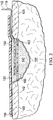
- a reduced pressure treatment system 100 for applying a reduced pressure to a tissue site 101 of a patient according to an illustrative embodiment where the tissue site includes wound 102 surrounded by healthy tissue including, without limitation, the epidermis 103 of such tissue.
- the system 100 comprises a canister 104 having a filter (not shown) contained within the canister 104 and a fluid supply 106 for delivering fluid 105 to the tissue site 101.
- the canister 104 is positioned in fluid communication with a reduced pressure source 108 and a reduced pressure dressing 110 that is positioned at the tissue site 101.
- the reduced pressure dressing 110 is fluidly connected to the canister 104 by a first conduit 112.
- the first conduit 112 may fluidly communicate with the reduced pressure dressing 110 through a tubing adapter 114.
- a second conduit 116 fluidly connects the canister 104 with the reduced pressure source 108.
- the canister 104 may be a fluid reservoir, or collection member, to filter or hold exudates and other fluids removed from the tissue site 101.
- the canister 104 and the reduced-pressure source 108 are integrated into a single housing structure.
- the fluid supply 106 is fluidly connected to the reduced pressure dressing 110 by a third conduit 118 that may be connected directly to the reduced pressure dressing 110 (not shown) or indirectly via the first conduit 112 which requires valves 122 and 124 for controlling the delivery of reduced pressure from the reduced pressure source 108 and/or fluid 105 from the fluid supply 106, respectively.
- the fluid 105 may be any gas or liquid, and may contain growth factors, healing factors, or other substances to treat the wound 102 at the tissue site 101.
- the fluid 105 may be water, saline, or dye saline.
- the reduced pressure source 108 is an electrically-driven vacuum pump.
- the reduced pressure source 108 may instead be a manually-actuated or manually-charged pump that does not require electrical power.
- the reduced pressure source 108 instead may be any other type of reduced pressure pump, or alternatively a wall suction port such as those available in hospitals and other medical facilities.
- the reduced pressure source 108 may be housed within or used in conjunction with a reduced pressure treatment unit 128, which may also contain sensors, processing units, alarm indicators, memory, databases, software, display unites, and user interfaces that further facilitate the application of reduced pressure treatment to the tissue site 101.
- a sensor or switch may be disposed at or near the reduced pressure source 108 to determine a source pressure generated by the reduced pressure source 108.
- the sensor may communicate with a processing unit that monitors and controls the reduced pressure that is delivered by the reduced pressure source 108.
- the reduced pressure dressing 110 includes a distribution manifold 130 adapted to be positioned at the tissue site 101, and a drape 132 that covers the distribution manifold 130 to maintain reduced pressure beneath the drape 132 at the tissue site 101.
- the reduced pressure dressing 110 may also include a separate scaffold 140, wherein the scaffold is coated with a biologically active composition comprising a lipoic acid derivative, and is positioned within the wound 102 in fluid communication with the distribution manifold 130.
- the system may further include a release layer 150 positioned in fluid communication between the distribution manifold 130 and the scaffold 140.
- the release layer 150 may include a release material such as a hydro-gel foaming material or water-soluble polymer.
- the drape 132 includes an aperture 134 through which the tubing adapter 114 extends to provide fluid communication between the conduit 112 and the distribution manifold 130.
- the drape 132 further includes a periphery portion 136 that may extend beyond a perimeter of the tissue site 101 and may include an adhesive or bonding agent (not shown) to secure the drape 132 to tissue adjacent the tissue site 101.
- the adhesive disposed on the drape 132 may be used to provide a seal between the epidermis 103 and the drape 132 to prevent leakage of reduced pressure from the tissue site 101.
- a seal layer such as, for example, a hydrogel or other material may be disposed between the drape 132 and the epidermis 103 to augment or substitute for the sealing properties of the adhesive.
- the drape 132 may be any material that provides a pneumatic or fluid seal.
- the drape 132 may, for example, be an impermeable or semi-permeable, elastomeric material.
- "Elastomeric” means having the properties of an elastomer, and generally refers to a polymeric material that has rubber-like properties. More specifically, most elastomers have elongation rates greater than 100% and a significant amount of resilience. The resilience of a material refers to the material's ability to recover from an elastic deformation.
- elastomers may include, but are not limited to, natural rubbers, polyisoprene, styrene butadiene rubber, chloroprene rubber, polybutadiene, nitrile rubber, butyl rubber, ethylene propylene rubber, ethylene propylene diene monomer, chlorosulfonated polyethylene, polysulfide rubber, polyurethane, EVA film, co-polyester, and silicones.
- drape materials include a silicone drape, 3M Tegaderm® drape, acrylic drape such as one available from Avery Dennison, or an incise drape.
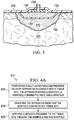
- FIG. 2 another embodiment of the reduced pressure dressing 110 is shown wherein the conduit connector 114 that penetrates the drape 132 is replaced by a perforated tube 113 having a plurality of apertures 115 in one end that are in fluid communication with the distribution manifold 130.
- the first conduit 112 is fluidly coupled to the other end of the perforated tube 113 for delivering reduced pressure or other fluids to the wound 102 as described above via the distribution manifold 130 and the scaffold 150.
- the distribution manifold 130 of the reduced pressure dressing 110 may be adapted to fully contact (not shown) or partially contact the wound 102 of the tissue site 101 being treated by the reduced pressure dressing 110, in which case the scaffold 140 covers the remaining portion of the wound 102.
- the distribution manifold 130 of the reduced pressure dressing 110 contacts only the scaffold 140 but not any portion of the wound 102.
- the first conduit 112 delivers reduced pressure or other fluids via the distribution manifold 130 to the scaffold 140 and ultimately the wound 102.
- the distribution manifold 130 and the scaffold 140 may be any size, shape, or thickness depending on a variety of factors, such as the type of treatment being implemented or the nature and size of the tissue site 101 or the wound 102.
- the size and shape of the scaffold 140 may be customized by a user to fill or partially fill the tissue site 101 or the wound 102.
- the distribution manifold 130 may have, for example, a square shape, or may be shaped as a circle, oval, polygon, an irregular shape, or any other shape.
- the distribution manifold 130, scaffold 140, and the release layer 150 (collectively referred to as the "layers") all include a plurality of flow channels of sufficient size to allow distribution of reduced pressure within the reduced pressure dressing 110 and to the wound 102.
- the flow channels provided in each of the layers may be an inherent characteristic of the material provided in that layer ( e.g., a naturally porous material), or the flow channels may be chemically, mechanically, or otherwise formed in the material prior to or after assembly of the three layers.
- the placement of the layers adjacent one another allows the flow channels in one layer to fluidly communicate with the flow channels in the adjacent layer.
- the relative positioning or connection of the layers as described above allow the plurality of flow channels of the scaffold 140 to fluidly communicate with the plurality of flow channels of the release layer 150, which are capable of fluidly communicating with the plurality of flow channels of the distribution manifold 130.
- manifold generally refers to a substance or structure that is provided to assist in applying reduced pressure to, delivering fluids to, or removing fluids from a tissue site.
- a manifold typically includes a plurality of flow channels or pathways that are interconnected to improve distribution of fluids provided to and removed from the area of tissue around the manifold.
- manifolds may include without limitation devices that have structural elements arranged to form flow channels, cellular foam such as open-cell foam, porous tissue collections, and liquids, gels and foams that include or cure to include flow channels.
- the distribution manifold 130 is a foam material that distributes reduced pressure to the tissue site 101 when the distribution manifold 130 is in contact with or near the tissue site 101.
- the foam material may be either hydrophobic or hydrophilic.
- the distribution manifold 130 is an open-cell, reticulated polyurethane foam such as GranuFoam® dressing available from Kinetic Concepts, Inc. of San Antonio, Texas.
- the distribution manifold 130 also functions to wick fluid away from the tissue site 101, while continuing to provide reduced pressure to the tissue site 101 as a manifold.
- the wicking properties of the distribution manifold 130 draw fluid away from the tissue site 101 by capillary flow or other wicking mechanisms.
- the GranuFoam® dressing in one embodiment has a porosity with pore sizes ranging from about 400-600 microns.
- hydrophilic foam is a polyvinyl alcohol, open-cell foam such as V.A.C. WhiteFoam® dressing available from Kinetic Concepts, Inc. of San Antonio, Texas.
- Other hydrophilic foams may include those made from polyether.
- Other foams that may exhibit hydrophilic characteristics include hydrophobic foams that have been treated or coated to provide hydrophilicity.
- the distribution manifold 130 may be constructed from bioresorbable materials that do not have to be removed from a patient's body following use of the reduced pressure dressing 110. Suitable bioresorbable materials may include, without limitation, collagen or a polymeric blend of polylactic acid (PLA) and polyglycolic acid (PGA).
- the polymeric blend may also include, without limitation, polycarbonates, polyfumarates, and capralactones.
- Scaffolds such as scaffold 140 of FIGs. 1-3 , may be formed from biologic or synthetic scaffold materials. Scaffolds are used in the field of tissue engineering to support protein adhesion and cellular ingrowth for tissue repair and regeneration.
- a scaffold may further comprise a biologically active composition, such as those detailed herein (e.g., a composition comprising a lipoic acid derivation and gelatin).
- a biologically active composition such as those detailed herein (e.g., a composition comprising a lipoic acid derivation and gelatin).
- the current state of the art in scaffold technology relies upon the inherent characteristics of the surrounding tissue space for the adsorption of proteins and migration of cells.
- the scaffold 140 provides physical guidance to direct the pathway of fluid flow within the wound 102 at the tissue site 101 creating avenues for the movement and migration of adhesive proteins and cells, respectively, which are integral to the establishment of a provisional matrix in predetermined patterns of organization within the tissue space.
- scaffolds serve to refine the pathways of fluid flow within the tissue space to cellular level patterns from the fluid source to the point(s) of flow initiation within the distribution manifold 130.
- the scaffold 140 embodies characteristics of a manifold for refinement of the flow pathways within the wound 102 at the tissue site 101.
- a scaffold is a reticulated structure comprising high void fraction for improved bioabsorption properties. Such high void fraction scaffold may also facilitate effective coating with biologically active compositions as detailed herein.
- the distribution manifold 130 or portion thereof may further serve as a scaffold for new cell-growth, or a separate scaffold may be used in conjunction with the distribution manifold 130 to promote cell-growth as described above.
- a scaffold may also function as a manifold in accordance with the embodiments described herein to administer reduced pressure tissue treatment to a tissue site.
- the distribution manifold 130 may also function as a scaffold
- the illustrative embodiments herein describe the use of a separate scaffold structure, the scaffold 140, in conjunction with the distribution manifold 130, wherein the scaffold also functions as a manifold.
- the separate manifold may also be coated with a biologically active composition comprising a lipoic acid derivative.
- the scaffold and/or manifold may be also be infused with, coated with, or comprised of cells, growth factors, extracellular matrix components, nutrients, integrins, or other substances to promote cell growth.
- a scaffold may be composed of any of the materials used to form a manifold.
- suitable scaffold materials include extracellular matrix proteins such as fibrin, collagen or fibronectin, and synthetic or naturally occurring polymers, including bioabsorbable or non-absorbable polymers, such as polylactic acid (PLA), polyglycolic acid (PGA), polylactide-co-glycolide (PLGA), polyvinylpyrrolidone, polycaprolactone, polycarbonates, polyfumarates, caprolactones, polyamides, polysaccharides (including alginates ( e.g ., calcium alginate) and chitosan), hyaluronic acid, polyhydroxybutyrate, polyhydroxyvalerate, polydioxanone, polyorthoesthers, polyethylene glycols, poloxamers, polyphosphazenes, polyanhydrides, polyamino acids, polyacetals, polycyanoacrylates, polyurethanes ( e
- the scaffold can also comprise ceramics such as hydroxyapatite, coralline apatite, calcium phosphate, calcium sulfate, calcium carbonate or other carbonates, bioglass, allografts, autografts, xenografts, decellularized tissues, or composites of any of the above.
- the scaffold comprises collagen (e.g ., BiostepTM or PomogranTM scaffolds), polylactic acid (PLA), polyglycolic acid (PGA), polylactide-co-glycolide (PLGA), a polyurethane, a polysaccharide, an hydroxyapatite, or a polytherylene glycol.
- the scaffold can comprise combinations of any two, three or more materials, either in separate or multiple areas of the scaffold, combined noncovalently or covalently (e.g., copolymers such as a polyethylene oxide-polypropylene glycol block copolymers, or terpolymers), or combinations thereof.
- Suitable matrix materials are discussed in, for example, Ma and Elisseeff, 2005, and Saltzman, 2004.
- the scaffold 140 may be manufactured by any of the following processes: salt leaching, freeze-drying, phase-separation, weaving fibers, bonding non-woven fibers, foaming, or any other suitable manufacturing method for the selected material.
- the scaffold 140 may be any porous, bioresorbable material that is capable of accepting and/or integrating new tissue growth into the scaffold 140 as described above.
- the pores of the scaffold 140 are preferably interconnected to define the plurality of flow channels within the scaffold 140, but additional flow channels may be provided by mechanically, chemically, or otherwise forming the flow channels within the scaffold 140.
- the exterior and interior surfaces (e.g., flow channels) of the scaffold may be coated with a biologically active composition comprising a lipoic acid derivative and gelatin.
- the pore sizes associated with the scaffold 140 are typically between about 50 and 500 microns, and more preferably between about 100 and 400 microns. Pore sizes below 50 microns tend to inhibit or prevent tissue growth.
- scaffolds for use according to the invention comprise a pore size large enough such that pores remain larger than about 50 microns after the scaffold is coated with a biologically active composition.
- the preferred average pore size of pores within the scaffold after coating is about 100 microns.
- the release layer 150 minimizes points of contact between the distribution manifold 130 and the scaffold 140. In one embodiment, the release material 150 will prevent any contact between the distribution manifold 130 and the scaffold 140. By minimizing contact between the distribution manifold 130 and the scaffold 140, the release material 150 serves as a barrier to tissue in-growth from the scaffold 140 into the distribution manifold 130.
- the release layer 150 may also serve as a binder and a release agent for the distribution manifold 130 and the scaffold 140.
- the release layer 150 is preferably either a hydrogel-forming material or a water-soluble polymer.
- the hydrogel-forming material may be any suitable material that is capable of accepting and/or forming a liquid or gel-like substance after exposure to water or other fluids for a specified period of time.
- the plurality flow channels of the release layer 150 allows the distribution of reduced pressure from the distribution manifold 130 to the scaffold 140, and further allows passage of any fluids being provided to or being removed from the wound 102.
- the plurality of flow channels may be an inherent characteristic of the release layer 150 (i.e. interconnected pores or other flow channels within the material itself), or mechanically, chemically, or otherwise formed in the release layer 150. Regardless of whether pores, voids, apertures, or some combination thereof are used to define the plurality of flow channels in the release layer 150, the porosity of the release layer 150 may be less than the porosity of the scaffold 140 to minimize in-growth of tissue into the release layer 150.
- the porosity of the release layer 150 may be controlled by limiting the size of the pores, voids, or apertures, or by controlling the number ( i.e. density) of pores, voids, or apertures disposed in the release layer 150.
- the porosity of the release layer 150 must remain high enough to allow distribution of reduced pressure and the flow of fluids through the release layer 150.
- the three layers of the reduced pressure dressing 110 are trimmed if necessary to match the shape and size of the wound 102.
- the wound 102 may be an open wound, burn, or other-damaged tissue, but the tissue site 101 may similarly be a site that contains healthy tissue upon which it is desired to grow additional tissue.
- the reduced pressure dressing 110 is placed adjacent the wound 102 such that the scaffold 140 is in contact with the wound 102.
- the multiple layers of the reduced pressure dressing 110 may be laminated, bonded, or otherwise connected, but the layers may also be separate from one another. If certain of the layers are not connected to one another, the various layers may be placed individually such that the scaffold 140 is in contact with the tissue site, the release layer 150 is in contact with the scaffold 140, and the distribution manifold 130 is in contact with the release layer 150.
- a reduced pressure is delivered from the reduced pressure source 108 to the manifold 130.
- the reduced pressure is distributed through the plurality of flow channels associated with the manifold 130 to the plurality of flow channels associated with the release layer 150.
- the reduced pressure is then distributed to the plurality of flow channels associated with the scaffold 140.
- fluids at the wound 102 such as wound exudate may be drawn through the plurality of flow channels in all the layers and removed from the reduced pressure dressing 110.
- the canister 104 collects exudate and protect the reduced pressure source 108.
- the plurality of flow channels of the three layers may be used to distribute fluids such as irrigation fluids, medication, antimicrobials, antibacterials, antivirals, and growth factors to the wound 102.
- the application of reduced pressure to the wound 102 induces new tissue growth.
- Some of the mechanisms by which new tissue growth is promoted include micro-deformation of the tissue, epithelial migration, and improved blood flow. These factors contribute to increasing the development of granulation tissue at the tissue site, which results in new tissue growth.
- delivery of reduced pressure typically involves creating a pressure differential between the reduced pressure source 108 and the wound 102.
- the pressure differential (with a lower pressure at the reduced pressure source 108 than at the wound 102) creates an initial fluid flow from the wound 102 toward the reduced pressure source 108.
- the reduced pressure may be maintained at the tissue site due to the fluid connection with the reduced pressure source 108 and the sealing function of the drape 132.
- the new tissue is permitted to grow into the scaffold 140.
- the material chosen for the scaffold 140 preferably supports and encourages new tissue growth. Since the scaffold 140 will remain at the tissue site following the administration of reduced pressure tissue treatment, it is preferred that new tissue penetrates the scaffold as much as possible. It has been observed that under the influence of reduced pressure, new tissue may penetrate up to 1 mm (thickness) of the scaffold 140 in a period of two days. Since the thickness of the scaffold 140 in some embodiments may only be about 1 to 4 mm, it may be desired to remove the distribution manifold 130 and the release layer 150 of the reduced pressure dressing 110 and replace the layers with a new dressing containing a new distribution manifold 130, a new release layer 150, and additional scaffold material.
- a new scaffold 140 may be placed on top of the old scaffold 140 following removal of the distribution manifold 130 and the release layer 150.
- the release material 150 preferably minimizes or prevents contact between the distribution manifold 130 and the scaffold 140 to hinder the growth of new tissue from the scaffold 140 through the release layer 150 and into the distribution manifold 130.
- New tissue growth into the scaffold 140 is hindered from further growth into the distribution manifold 130 by this separation and by the inherent properties of the release layer 150 as described above. While tissue growth into the distribution manifold 130 may still occur, the growth is minimized, which lessens pain to the patient upon removal of the distribution manifold 130.
- the release material 150 may be hydrated by soaking the reduced pressure dressing 110 with water, saline solution, or other fluids. Alternatively, the reduced pressure dressing 110 may be allowed to sit until bodily fluids from the tissue site hydrate the release layer 150. If the release layer 150 is a hydrogel-forming material, the release layer 150 transforms into a gel-like state and typically expands as it hydrates. This allows for easier removal of the distribution manifold 130 from the scaffold 140. Any hydrogel-forming material (or hydrogel) that remains following removal of the manifold 130 may be manually removed or dissolved by the introduction of additional fluids. Alternatively, if the release layer 150 is a water-soluble polymer, it will be dissolved as it absorbs water or other fluids, thus releasing the distribution manifold 130 from the scaffold 140.
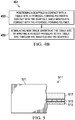
- the method 411 includes positioning a multi-layer reduced pressure delivery apparatus in contact with the tissue site at 415.
- the reduced pressure delivery apparatus includes a scaffold, a release material, and a manifold.
- the apparatus is oriented such that the scaffold contacts the tissue site.
- a reduced pressure is applied to the tissue site through the manifold and the scaffold at 423.
- the method 451 includes at 455 positioning a scaffold in contact with the tissue site, a release material in contact with the scaffold, and a manifold in contact with the release material.
- new tissue growth is stimulated at the tissue site by applying a reduced pressure to the tissue site through the manifold and the scaffold.
- a tissue growth kit 511 for promoting new tissue growth at a tissue site includes a scaffold 513, a release material 515, and a distribution manifold 517.
- the scaffold 513 includes a first and second side, the first side of the scaffold 513 being adapted to contact the tissue site.
- the scaffold 513 is similar to the scaffold 140 described previously with reference to FIGs. 1-3 .
- the release material 515 is adapted to contact the second side of the scaffold 513 and is similar to the release layer 150 described previously with reference to FIGs. 1-3 .
- the distribution manifold 517 is adapted to contact the release material 515 to distribute a reduced pressure to the tissue site through the scaffold 513.
- the distribution manifold 517 is similar to the manifold 130 described previously with reference to FIGs. 1-3 .
- the tissue growth kit 511 may further include a container 521 for housing the scaffold 513, release material 515, and distribution manifold 517 prior to use of the components.
- the container 521 may be a flexible bag, a box, or any other container suitable for storing the scaffold 513, release material 515, and distribution manifold 517.
- the reduced pressure dressing could also serve as an advanced tissue dressing alone in the absence of reduced pressure application.
- the same materials, relative positioning, and connectivity between layers may be used in the advanced tissue dressing.
- the advanced tissue dressing may include a first layer to promote and accept growth of new tissue, a third layer to assist in directing fluids away from the tissue site, and a second layer to facilitate removal of the third layer from the first layer at a selected time.
- the third layer of the advanced tissue dressing instead of having a "manifold", may be considered to include a fluid reservoir for collecting and holding fluids exuded by the wound.
- the materials described herein as being suitable distribution manifold materials are similarly suitable materials for the reservoir of the third layer. The only requirement of the reservoir is that the reservoir should be made from a material that is capable of storing fluids produced by or present at the tissue site.
- the invention provides methods for promoting wound healing by providing a biologically active composition comprising a lipoic acid derivative in an amount effective to reduce the level of ROS and/or reduce inflammation at the wound site and in surrounding tissue.
- lipoic acid derivative refers to molecules structurally related to alpha-lipoic acid, or a salt thereof such as sodium lipoate, that function as an antioxidant in vivo.
- a wide array of lipoic acid derivatives are known in the art and may be used according to the invention.
- U.S. Patent No. 6,887,891 details a number of lipoic acid derivatives any of which may be used in accordance with the invention.
- Certain generalized structures for lipoic acid derivative molecules are depicted in FIG. 6A-B .
- a lipoic acid derivative may have a structure according to FIG.
- n 1 and n 2 are, independently, C 1 -C 10 alkyl; and R 1 is H, C 1 -C 10 alkyl, C 6 -C 14 aryl, an alkyl ammonium or a protonated amino acid.
- a lipoic acid derivative may have a structure according to FIG. 6B wherein n 1 and n 2 are, independently, C 1 -C 10 alkyl; R 1 is H, C 1 -C 10 alkyl, C 6 -C 14 aryl, an alkyl ammonium or a protonated amino acid; and each of the R 2 positions are, independently, H, C 1 -C 10 alkyl or C 6 -C 14 aryl.
- Salts of alpha-lipoic acid with inorganic cations such as sodium, alkyl ammonium cations, and other pharmaceutically acceptable cations may be used according to the invention. Additionally, a number of esters and thioesters of alpha-lipoic acid can function as pro-drugs, undergoing hydrolysis to alpha-lipoic acid and dihydrolipoic acid in vivo.
- compositions containing alpha-lipoic acid or the pharmaceutically acceptable salt or derivative thereof may be suitable for local or systemic, oral or parenteral administration.
- Suitable carriers include, but are not limited to: hydrogels containing cellulose derivatives, including hydroxyethyl cellulose, hydroxymethyl cellulose, carboxymethyl cellulose, hydroxypropylmethyl cellulose and mixtures thereof; and hydrogels containing polyacrylic acid (Carbopols) as well as gelatin.
- the above carriers may include alginate (as a thickener or stimulant), preservatives such as benzyl alcohol, buffers to control pH such as disodium hydrogen phosphate/sodium dihydrogen phosphate, agents to adjust osmolarity such as sodium chloride, and stabilizers such as EDTA.
- Biologically active compositions may, in some embodiments, one or more additional active agents.
- topical application of antioxidants e.g., a lipoic acid derivative
- antioxidants for application in wound healing include ascorbic acid, fatty (linolenic, linoleic, and oleic) acids, and N-acetyl cysteine and such antioxidants may additionally be used in compositions disclosed herein.
- alpha-lipoic acid and its derivatives are potent antioxidants.
- Major biological effects of alpha-lipoic acid include normalizing blood sugar levels, improving nerve blood flow, reducing oxidative stress, alleviating diabetic neuropathy, and protecting membranes.
- lipoic acid molecules over other antioxidants include high antioxidant activity, the ability to scavenge free radicals in both water and fatty tissues, stability to gamma sterilization, and prolonged shelf-life, which is particularly important for medical device applications. Limited solubility in water and moderate hydrophobicity of alpha-lipoic acid are preferable for formulations that require graduate sustained release of antioxidants. These properties combined with low cost of derivatives such as alpha-lipoic acid make it a preferable solution for treatment of chronic wounds in general, and for incorporation into wound dressing such as the scaffold 140 of the wound dressing 110 described above.
- alpha-lipoic acid is stable to gamma-sterilization and temperatures up to 60°C, it may undergo partial decomposition in some storage conditions, like high humidity and low temperature, which is accompanied by an unpleasant odor due to its sulfur content.
- conversion of alpha-lipoic acid into a salt derivative, such as sodium lipoate, or the use of polymer barriers in the wound dressing 110 mitigates the odor issues.
- a lipoic acid derivative may be converted to a salt at a pH of about 6 to about 8. Within this pH range lipoic acid derivatives, such as alpha-lipoic acid, can be efficiently converted to a salt to reduce odor without significant loss of antioxidant activity.
- the invention provides compositions having reduced odor properties comprising a pharmaceutically acceptable salt of a lipoic acid derivative (e.g., sodium lipoate).
- a lipoic acid derivative for use according to the invention may be a lipoic acid prodrug that is converted into an active antioxidant in vivo.
- a biologically active composition comprising a sacrificial proteolytic enzyme substrate, such as protein, protein hydrolysate, or combinations thereof.
- a sacrificial proteolytic enzyme substrate can comprise keratin, collagen, elastin, gelatin, casein, albumin, fibrinogen, fibronectin, soy protein, wheat protein, corn protein, milk proteins and/or hydrolysates thereof (see, e.g., U.S. Patent No. 6,500,443 Proteins for use as sacrificial substrates are hydrolyzed or partially hydrolysed by treatment with a strong acid or base. Such treatment can fragment the subject proteins and generate more accessible peptide sequence to bind to proteolytic enzymes.
- a biologically active composition for use as described here further comprises gelatin or hydrolysates thereof.
- Gelatin can be processed from a variety of sources including, but not limited to, bovine skin, pig skin and bone material. Depending on the hydrolysis methods employed in manufacture, the gelatin may be defined as a type A or type B gelatin.
- One advantage of using a gelatin rather than, or in addition to, collagen is that gelatin includes exposed peptide sequences that serve as signals for protease binding.
- gelatin for use in biologically active compositions will, nonetheless, need to comprise sufficient gel strength to form an adherent layer on a porous material without causing the material to become overly stiff. Accordingly, gelatin for use in biologically active compositions can comprise a bloom value of between about 150-300 g, between about 200-250 g or about 225 g.
- the scaffold 140 may be a polyurethane foam as described above that is coated with gelatin to provide the reduced pressure dressing 110 with a sacrificial substrate for MMPs.
- Biologically active compositions comprise at least 4% w/w gelatin, such as about 6%, 8%, 10%, 15% or 20% w/w gelatin.
- a biologically active composition such as a composition coated on a porous material is sterilized by irradiation.
- irradiation can alter the amount of cross-linking within proteins in the composition.
- the amount of irradiation may be adjusted not only to achieve sterilization but also to achieve a desired level of protein cross-linking.
- a gelatin with a relatively low bloom value can be used in a coating and then subjected to irradiation to increase the effective bloom value of the gelatin coating by further cross-linking the protein.
- biologically active compositions and/or wound dressings according to the invention are subjected to gamma irradiation, such as between about 10-80 Gy, about 20-60 Gy or about 30-50 Gy of radiation.
- Biologically active compositions may be formulated as a solution, a spray, a cream, a gel or coating provided on a scaffold. Such compositions may be formulated for time-controlled release of the lipoic acid derivative. For example, the formulation may be formulated such that the lipoic acid derivative is released over a period of about 12 hours, 24 hours, 2 days, 3 days 4 days or 1 or more weeks.
- a biologically active composition is coated onto the surface and into the pores of a scaffold 140, as detailed above.
- Methods for coating such a scaffold may, for example, comprise the steps of (i) saturating a porous substrate material with a solution comprising the components of a biologically active composition; and (ii) drying the porous substrate thereby producing a wound healing scaffold coated with a biologically active composition.
- the coating solution may comprise a lipoic acid derivative (e.g., alpha-lipoic acid or sodium lipoate) and gelatin.
- the substrate material is dried such that the resulting wound healing scaffold comprises a moisture content of less than about 5%.
- compositions disclosed herein may further comprise other biologically active molecules such as antimicrobial agents, growth factors, proteinase inhibitors, chelating agent or preservatives.
- the composition additionally comprises a metal chelating agent capable of reducing MMP activity, such as EDTA.
- Antimicrobial agents may also be used in compositions according to the invention.
- the composition may include antibiotics, antifungal agents or more general antimicrobials.
- Antimicrobial compounds compatible with lipoic acid formulation include, but are not limited to, non-ionic silver, polyhexamethylene biguanide, chlorhexidine, benzalconium chloride, triclosan and others.
- a lipoic acid derivative and gelatin promotes healing or prophylaxis of chronic ulcers by regulating level of ROS and matrix metalloproteinases (MMP's) at the ulcer site.
- MMP's matrix metalloproteinases
- the balance between reactive oxygen species, proteolytic enzymes and their inhibitors is critical to the persistence and healing of chronic ulcers, and that the alpha-lipoic acid corrects this balance in chronic ulcers.
- Alpha-lipoic acid inhibits the influx of inflammatory cells to a wound site by inhibiting the transcription of genes for adhesion molecules such as ICAM-1 and other adhesion molecules on inflammatory cells and endothelial cells.
- alpha-lipoic acid inhibits the activation of nuclear transcription factors such as NF- ⁇ B, which controls the transcription of the MMP-9 gene, adhesion molecule genes such as ICAM-1, and inflammatory mediator genes such as TNF-alpha. Finally, alpha-lipoic acid can interfere with the inflammatory mediators such as leukotrienes.
- Biologically active compositions may be infused within, or coated on, the scaffold 140.
- the composition of alpha-lipoic acid may be coated on a woven, non-woven, or knitted fabric material.
- the alpha-lipoic acid may be dispersed within a bioresorbable polymeric film, sponge, or foam for sustained release at the wound 102.
- the alpha-lipoic acid may also be coated with gelatin on a polyurethane reticulated foam as described in the following Example.
- the formulation of lipoic acid and gelatin applied as a coating on the open-cell reticulated polyurethane foam pads provides unique combination of effects and is highly effective for healing of chronic wounds.
- the formulation can be used in combination with negative pressure wound therapy, which is known to be highly effective in stimulating growth of granulation tissue, reducing infection and maintaining proper moisture balance in the wound.
- Addition gelatin and lipoic acid and EDTA to the dressing specifically addresses healing of chronic wounds removing barriers to normal healing such as abnormally high levels of ROS and MMPs.
- MMP aspect of wound healing is addressed by formulations described in herein from several perspectives, i.e ., the reduction of ROS levels to affect recruitment of MMPs, the addition of EDTA to prevent MMP from activation, and gelatin to service as sacrificial substrate for MMPs preserving newly formed granulation tissue.
- Polyurethane open-cell reticulated foam pads were selected as the scaffold 140 and were immersed in a solution containing 1.5 wt % of alpha-lipoic acid and 4.5 wt % 225-bloom beef gelatin (and, where applicable, 0.3 % EDTA).
- Gelatin was used as a biocompatible binding agent with good oxygen barrier and sustained release properties for alpha-lipoic acid as well as for its ability to act as a sacrificial substrate for surrounding gelatinases.
- Alpha-lipoic acid was pre-dissolved in ethanol and then mixed into the final solution.
- the foam pads were immersed for a sufficient amount of time to coat the pathways formed within the open-cell reticulated foam as described above with respect to the scaffold 140.
- Dried foams comprised, by weight, 2% alpha-lipoic acid, 6% gelatin and, where applicable, 0.4% EDTA.
- FIG. 7 is a graph showing the percentage of hydrogen peroxide reduction due to reaction with alpha-lipoic acid.
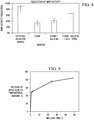
- An MMP-9 Colorimetric Drug Discovery Kit (Biomol) was used to evaluate the MMP inhibiting/inactivating ability of the formulated foam pads containing alpha-lipoic acid/gelatin (ALA) and gelatin alone (GF GEL).
- the controls were uncoated foam pads and known potent MMP inactivating drug, NNGH (C 13 H 20 N 2 O 5 S, available from Enzo® Life Sciences).
- FIG. 8 is a graph showing that gelatin-coated foam pads inhibit MMP activity, but the combination of gelatin and ALA along with the EDTA (described in Example 2) are much more potent than gelatin alone.
- FIG. 9 is a graph showing the release of alpha-lipoic acid from the coating on the foam pads. The coating delivers approximately 70% of the total alpha-lipoic acid within the first day, while the remaining alpha-lipoic acid is released during the next 2-3 days.
- Chelating agents like ethlenediaminetetraacetic acid (EDTA) were added to the dipping solution described in Example 1. The addition of EDTA to wound dressings prevents MMP from activation chelating zinc ions essential for activation of pro-MMPs.
- EDTA ethlenediaminetetraacetic acid
- a solution of sodium hydroxide can be added to the dipping solution described in Examples 1-2 to convert lipoic acid into sodium lipoate.
- the pH of resulting solution should be in the range between 6 and 8.
- the conversion of lipoic acid into sodium lipoate eliminates the risk of development of sulphur odor in the coated foams.
- Coated polyurethane foam (GranuFoam®) scaffolds described above in Examples 1-2 were further assayed for their ability to reduce MMP activity as compared to non-coated collagen based scaffold such as the BiostepTM and PromogranTM products.
- the results from two separate experiments are presented below in Tables 1 and 2 and demonstrate that the coated scaffolds reduced MMP activity similarly to collagen scaffolds, even though the coated scaffolds only comprised 10% by weight biologically active layer.
- the systems and methods of the present invention have been described with reference to tissue growth and healing in human patients, it should be recognized that these systems and methods for applying reduced pressure tissue treatment can be used in any living organism in which it is desired to promote tissue growth or healing.
- the systems and methods of the present invention may be applied to any tissue, including without limitation bone tissue, adipose tissue, muscle tissue, dermal tissue, vascular tissue, connective tissue, cartilage, tendons, or ligaments.
- the healing of tissue may be one focus of applying reduced pressure tissue treatment as described herein
- the application of reduced pressure tissue treatment may also be used to generate tissue growth in tissues that are not diseased, defective, or damaged.
- the harvested tissue may be transplanted to another tissue site to replace diseased or damaged tissue, or alternatively the harvested tissue may be transplanted to another patient.
Landscapes
- Health & Medical Sciences (AREA)
- Chemical & Material Sciences (AREA)
- General Health & Medical Sciences (AREA)
- Veterinary Medicine (AREA)
- Public Health (AREA)
- Life Sciences & Earth Sciences (AREA)
- Animal Behavior & Ethology (AREA)
- Engineering & Computer Science (AREA)
- Epidemiology (AREA)
- Materials Engineering (AREA)
- Hematology (AREA)
- Chemical Kinetics & Catalysis (AREA)
- Nuclear Medicine, Radiotherapy & Molecular Imaging (AREA)
- General Chemical & Material Sciences (AREA)
- Organic Chemistry (AREA)
- Medicinal Chemistry (AREA)
- Dispersion Chemistry (AREA)
- Pharmacology & Pharmacy (AREA)
- Rheumatology (AREA)
- Dermatology (AREA)
- Pain & Pain Management (AREA)
- Bioinformatics & Cheminformatics (AREA)
- Materials For Medical Uses (AREA)
- Medicinal Preparation (AREA)
- Pharmaceuticals Containing Other Organic And Inorganic Compounds (AREA)
- Media Introduction/Drainage Providing Device (AREA)
- Medicines That Contain Protein Lipid Enzymes And Other Medicines (AREA)
- Acyclic And Carbocyclic Compounds In Medicinal Compositions (AREA)
Applications Claiming Priority (2)
| Application Number | Priority Date | Filing Date | Title |
|---|---|---|---|
| US12/757,562 US8632512B2 (en) | 2010-04-09 | 2010-04-09 | Apparatuses, methods, and compositions for the treatment and prophylaxis of chronic wounds |
| PCT/US2011/031441 WO2011127188A2 (en) | 2010-04-09 | 2011-04-06 | Apparatuses, methods, and compositions for the treatment and prophylaxis of chronic wounds |
Publications (2)
| Publication Number | Publication Date |
|---|---|
| EP2555805A2 EP2555805A2 (en) | 2013-02-13 |
| EP2555805B1 true EP2555805B1 (en) | 2020-08-19 |
Family
ID=44059227
Family Applications (1)
| Application Number | Title | Priority Date | Filing Date |
|---|---|---|---|
| EP11715141.5A Active EP2555805B1 (en) | 2010-04-09 | 2011-04-06 | Apparatuses, methods, and compositions for the treatment and prophylaxis of chronic wounds |
Country Status (8)
| Country | Link |
|---|---|
| US (1) | US8632512B2 (enExample) |
| EP (1) | EP2555805B1 (enExample) |
| JP (2) | JP5988309B2 (enExample) |
| CN (2) | CN105126156A (enExample) |
| AU (1) | AU2011237638B2 (enExample) |
| CA (1) | CA2790559A1 (enExample) |
| TW (1) | TW201141548A (enExample) |
| WO (1) | WO2011127188A2 (enExample) |
Families Citing this family (68)
| Publication number | Priority date | Publication date | Assignee | Title |
|---|---|---|---|---|
| US11298453B2 (en) | 2003-10-28 | 2022-04-12 | Smith & Nephew Plc | Apparatus and method for wound cleansing with actives |
| GB0808376D0 (en) | 2008-05-08 | 2008-06-18 | Bristol Myers Squibb Co | Wound dressing |
| GB0817796D0 (en) | 2008-09-29 | 2008-11-05 | Convatec Inc | wound dressing |
| EP2536825B1 (en) | 2010-02-18 | 2024-03-27 | Osiris Therapeutics, Inc. | Immunocompatible amniotic membrane products |
| GB201020236D0 (en) | 2010-11-30 | 2011-01-12 | Convatec Technologies Inc | A composition for detecting biofilms on viable tissues |
| US10207031B2 (en) | 2010-12-08 | 2019-02-19 | Convatec Technologies Inc. | Integrated system for assessing wound exudates |
| CN103347562B (zh) | 2010-12-08 | 2016-08-10 | 康沃特克科技公司 | 伤口分泌液系统附件 |
| ES2940916T3 (es) | 2010-12-08 | 2023-05-12 | Convatec Technologies Inc | Sistema para eliminar exudados del sitio de una herida |
| US8597264B2 (en) | 2011-03-24 | 2013-12-03 | Kci Licensing, Inc. | Apparatuses, methods, and compositions for the treatment and prophylaxis of chronic wounds |
| AU2012262311B2 (en) | 2011-05-31 | 2016-04-28 | Lifecell Corporation | Adipose tissue matrices |
| GB201115182D0 (en) | 2011-09-02 | 2011-10-19 | Trio Healthcare Ltd | Skin contact material |
| GB201117296D0 (en) | 2011-10-07 | 2011-11-16 | Neotherix Ltd | Sampling device |
| CN102492109A (zh) * | 2011-11-28 | 2012-06-13 | 西安科技大学 | 一种可生物降解高回弹软质聚氨酯泡沫塑料及其制备方法 |
| GB2497406A (en) | 2011-11-29 | 2013-06-12 | Webtec Converting Llc | Dressing with a perforated binder layer |
| GB201120693D0 (en) | 2011-12-01 | 2012-01-11 | Convatec Technologies Inc | Wound dressing for use in vacuum therapy |
| USD733896S1 (en) | 2012-05-04 | 2015-07-07 | Genadyne Biotechnologies, Inc. | Abdominal dressing |
| CA2878446A1 (en) | 2012-07-13 | 2014-01-16 | Lifecell Corporation | Methods for improved treatment of adipose tissue |
| ES2849440T3 (es) | 2012-09-26 | 2021-08-18 | Lifecell Corp | Tejido adiposo procesado |
| CN105008611A (zh) | 2012-12-20 | 2015-10-28 | 康沃特克科技公司 | 化学改性的纤维素纤维的处理 |
| CN103622782B (zh) * | 2013-03-13 | 2015-01-28 | 潘银根 | 生物膜护创系统 |
| CN103156730A (zh) * | 2013-03-13 | 2013-06-19 | 潘银根 | 异种脱细胞真皮基质护创系统 |
| EP2976095B1 (en) * | 2013-03-15 | 2020-12-23 | 3M Innovative Properties Company | Wound healing compositions |
| WO2015021319A1 (en) * | 2013-08-07 | 2015-02-12 | Plurogen Therapeutics, Inc. | Delivery of medicants under continuous negative pressure dressing |
| JP2015105249A (ja) * | 2013-11-29 | 2015-06-08 | 富士フイルム株式会社 | 化粧料 |
| US10226566B2 (en) | 2014-04-23 | 2019-03-12 | Genadyne Biotechnologies, Inc. | System and process for removing bodily fluids from a body opening |
| AU2014393404A1 (en) * | 2014-05-07 | 2016-11-24 | Osiris Therapeutics, Inc. | Immunocompatible amniotic membrane products |
| JP2017514507A (ja) * | 2014-05-07 | 2017-06-08 | オシリス セラピューティクス,インコーポレイテッド | 免疫適合性のある絨毛膜生成物 |
| WO2015171142A1 (en) * | 2014-05-07 | 2015-11-12 | Osiris Therapeutics, Inc. | Therapeutic placental compositions, methods of making and methods of use |
| EP2944565B1 (en) | 2014-05-13 | 2017-09-27 | Entrotech, Inc. | Erosion protective sleeve |
| US10975220B2 (en) | 2014-05-16 | 2021-04-13 | 3M Innovative Properties Company | Articles including a porous elastomeric material with an integrated elastomeric material and methods of making same |
| EP3180039B1 (en) * | 2014-08-11 | 2020-05-13 | KCI Licensing, Inc. | Protease modulating wound interface layer for use with negative pressure wound therapy |
| EP3247364A4 (en) | 2015-01-20 | 2018-10-24 | Plurogen Therapeutics, LLC | Compositions and methods of treating microbes |
| US10758332B2 (en) * | 2015-08-13 | 2020-09-01 | C.R. Bard, Inc. | Prosthetic repair system and method of use |
| GB2543544A (en) | 2015-10-21 | 2017-04-26 | Brightwake Ltd | Wound dressing |
| JP6055069B1 (ja) * | 2015-12-10 | 2016-12-27 | サンアロー株式会社 | 臓器、組織又は器官モデル |
| EP3436820A2 (en) | 2016-03-30 | 2019-02-06 | Qualizyme Diagnostics GmbH&Co KG | Detecting microbial infection in wounds |
| EP3936095B1 (en) | 2016-03-30 | 2024-06-19 | ConvaTec Technologies Inc. | Detecting microbial infections in wounds |
| GB201608099D0 (en) | 2016-05-09 | 2016-06-22 | Convatec Technologies Inc | Negative pressure wound dressing |
| ES2841427T3 (es) | 2016-07-05 | 2021-07-08 | Lifecell Corp | Matrices de tejido que incorporan múltiples tipos de tejido |
| BR112019000284A2 (pt) | 2016-07-08 | 2019-04-16 | Convatec Technologies Inc. | aparelho de coleta de fluido |
| WO2018009880A1 (en) | 2016-07-08 | 2018-01-11 | Convatec Technologies Inc. | Flexible negative pressure system |
| CA3030153C (en) | 2016-07-08 | 2023-10-24 | Convatec Technologies Inc. | Fluid flow sensing |
| CN107789350A (zh) * | 2016-08-31 | 2018-03-13 | 杜建 | 包含硫辛酸及/或其衍生物的组合物及其应用 |
| US20200038248A1 (en) * | 2016-10-05 | 2020-02-06 | Temple University- Of The Commonwealth System Of Higher Education | Negative Pressure Enhanced Cellular Infiltration |
| CA3065379A1 (en) | 2017-06-07 | 2018-12-13 | Kci Licensing, Inc. | Systems, apparatuses, and methods for negative-pressure treatment with reduced tissue in-growth |
| WO2018226624A1 (en) | 2017-06-07 | 2018-12-13 | Kci Licensing, Inc. | Composite dressings for improved granulation and reduced maceration with negative-pressure treatment |
| WO2018226691A1 (en) | 2017-06-07 | 2018-12-13 | Kci Licensing, Inc. | Methods for manufacturing and assembling dual material tissue interface for negative-pressure therapy |
| JP2020523077A (ja) | 2017-06-07 | 2020-08-06 | ケーシーアイ ライセンシング インコーポレイテッド | 陰圧治療による肉芽形成の促進及び浸軟の低減のための複合ドレッシング |
| KR20200016928A (ko) | 2017-06-07 | 2020-02-17 | 케이씨아이 라이센싱 인코포레이티드 | 음압 치료를 이용한 육아 개선 및 침연 감소용 복합 드레싱재 |
| US10940048B2 (en) | 2017-06-07 | 2021-03-09 | Kci Licensing, Inc. | Assembly features and methods for a peel-and-place dressing for use with negative-pressure treatment |
| WO2018226627A1 (en) | 2017-06-07 | 2018-12-13 | Kci Licensing, Inc. | Composite dressings for improved granulation and reduced maceration with negative-pressure treatment |
| WO2019079570A1 (en) | 2017-10-18 | 2019-04-25 | Lifecell Corporation | ADIPOSE TISSUE PRODUCTS AND METHODS OF PRODUCTION |
| US11123375B2 (en) | 2017-10-18 | 2021-09-21 | Lifecell Corporation | Methods of treating tissue voids following removal of implantable infusion ports using adipose tissue products |
| ES2960617T3 (es) | 2017-10-19 | 2024-03-05 | Lifecell Corp | Productos de matriz de tejido acelular fluida y métodos de producción |
| US11246994B2 (en) | 2017-10-19 | 2022-02-15 | Lifecell Corporation | Methods for introduction of flowable acellular tissue matrix products into a hand |
| JP7370973B2 (ja) * | 2017-11-03 | 2023-10-30 | スリーエム イノベイティブ プロパティズ カンパニー | 長期装着ドレッシング |
| CN111836655A (zh) | 2017-11-16 | 2020-10-27 | 康沃特克有限公司 | 流体收集设备 |
| US11752039B2 (en) * | 2018-08-28 | 2023-09-12 | Systagenix Wound Management, Limited | Dressings for reduced tissue ingrowth |
| WO2020227601A1 (en) * | 2019-05-08 | 2020-11-12 | Musculoskeletal Transplant Foundation | Tissue derived porous matrices and methods for making and using same |
| EP3976127B1 (en) | 2019-05-30 | 2025-09-24 | LifeCell Corporation | Biologic breast implant |
| JP7511585B2 (ja) | 2019-06-03 | 2024-07-05 | コンバテック リミティド | 病原体を破壊して封じ込めるための方法およびデバイス |
| EP4613248A3 (en) * | 2019-06-26 | 2025-11-12 | Solventum Intellectual Properties Company | Dressing employing features for protection against maceration |
| US12178598B2 (en) * | 2019-08-09 | 2024-12-31 | Solventum Intellectual Properties Company | Negative-pressure system incorporating wound diagnostic capabilities |
| US11331221B2 (en) | 2019-12-27 | 2022-05-17 | Convatec Limited | Negative pressure wound dressing |
| US11771819B2 (en) | 2019-12-27 | 2023-10-03 | Convatec Limited | Low profile filter devices suitable for use in negative pressure wound therapy systems |
| US12152174B2 (en) * | 2023-04-13 | 2024-11-26 | The Regents Of The University Of California | Adjustably stable adhesive compositions for medical and non-medical uses, and recycling |
| US12269925B1 (en) | 2024-08-13 | 2025-04-08 | The Regents Of The University Of California | Fast curing, biocompatible and biodegradable adhesives and sealants |
| CN119587755A (zh) * | 2024-12-10 | 2025-03-11 | 重庆大学 | 一种含有载药acc纳米颗粒的双网络水凝胶及其制备方法和应用 |
Citations (2)
| Publication number | Priority date | Publication date | Assignee | Title |
|---|---|---|---|---|
| US5591709A (en) * | 1991-08-30 | 1997-01-07 | Life Medical Sciences, Inc. | Compositions and methods for treating wounds |
| WO2009137074A1 (en) * | 2008-05-06 | 2009-11-12 | Indigene Pharmaceuticals, Inc. | Compositions and methods for treating diabetic ulcers |
Family Cites Families (150)
| Publication number | Priority date | Publication date | Assignee | Title |
|---|---|---|---|---|
| US1355846A (en) | 1920-02-06 | 1920-10-19 | David A Rannells | Medical appliance |
| US2547758A (en) | 1949-01-05 | 1951-04-03 | Wilmer B Keeling | Instrument for treating the male urethra |
| US2632443A (en) | 1949-04-18 | 1953-03-24 | Eleanor P Lesher | Surgical dressing |
| GB692578A (en) | 1949-09-13 | 1953-06-10 | Minnesota Mining & Mfg | Improvements in or relating to drape sheets for surgical use |
| US2682873A (en) | 1952-07-30 | 1954-07-06 | Johnson & Johnson | General purpose protective dressing |
| NL189176B (nl) | 1956-07-13 | 1900-01-01 | Hisamitsu Pharmaceutical Co | Pleister op basis van een synthetische rubber. |
| GB801170A (en) | 1954-11-12 | 1958-09-10 | Pritchett & Gold & E P S Co | Improvements in surgical dressings |
| US2969057A (en) | 1957-11-04 | 1961-01-24 | Brady Co W H | Nematodic swab |
| US3066672A (en) | 1960-09-27 | 1962-12-04 | Jr William H Crosby | Method and apparatus for serial sampling of intestinal juice |
| US3367332A (en) | 1965-08-27 | 1968-02-06 | Gen Electric | Product and process for establishing a sterile area of skin |
| US3520300A (en) | 1967-03-15 | 1970-07-14 | Amp Inc | Surgical sponge and suction device |
| US3568675A (en) | 1968-08-30 | 1971-03-09 | Clyde B Harvey | Fistula and penetrating wound dressing |
| US3682180A (en) | 1970-06-08 | 1972-08-08 | Coilform Co Inc | Drain clip for surgical drain |
| BE789293Q (fr) | 1970-12-07 | 1973-01-15 | Parke Davis & Co | Pansement medico-chirugical pour brulures et lesions analogues |
| US3826254A (en) | 1973-02-26 | 1974-07-30 | Verco Ind | Needle or catheter retaining appliance |
| DE2527706A1 (de) | 1975-06-21 | 1976-12-30 | Hanfried Dr Med Weigand | Einrichtung zum einleiten von kontrastmittel in einen kuenstlichen darmausgang |
| DE2640413C3 (de) | 1976-09-08 | 1980-03-27 | Richard Wolf Gmbh, 7134 Knittlingen | Katheter-Überwachungsgerät |
| NL7710909A (nl) | 1976-10-08 | 1978-04-11 | Smith & Nephew | Samengestelde hechtstrook. |
| GB1562244A (en) | 1976-11-11 | 1980-03-05 | Lock P M | Wound dressing materials |
| US4080970A (en) | 1976-11-17 | 1978-03-28 | Miller Thomas J | Post-operative combination dressing and internal drain tube with external shield and tube connector |
| US4139004A (en) | 1977-02-17 | 1979-02-13 | Gonzalez Jr Harry | Bandage apparatus for treating burns |
| US4184510A (en) | 1977-03-15 | 1980-01-22 | Fibra-Sonics, Inc. | Valued device for controlling vacuum in surgery |
| US4165748A (en) | 1977-11-07 | 1979-08-28 | Johnson Melissa C | Catheter tube holder |
| US4245637A (en) | 1978-07-10 | 1981-01-20 | Nichols Robert L | Shutoff valve sleeve |
| SE414994B (sv) | 1978-11-28 | 1980-09-01 | Landstingens Inkopscentral | Venkateterforband |
| WO1980001139A1 (en) | 1978-12-06 | 1980-06-12 | Svedman Paul | Device for treating tissues,for example skin |
| US4284079A (en) | 1979-06-28 | 1981-08-18 | Adair Edwin Lloyd | Method for applying a male incontinence device |
| US4261363A (en) | 1979-11-09 | 1981-04-14 | C. R. Bard, Inc. | Retention clips for body fluid drains |
| US4569348A (en) | 1980-02-22 | 1986-02-11 | Velcro Usa Inc. | Catheter tube holder strap |
| US4480638A (en) | 1980-03-11 | 1984-11-06 | Eduard Schmid | Cushion for holding an element of grafted skin |
| US4297995A (en) | 1980-06-03 | 1981-11-03 | Key Pharmaceuticals, Inc. | Bandage containing attachment post |
| US4333468A (en) | 1980-08-18 | 1982-06-08 | Geist Robert W | Mesentery tube holder apparatus |
| US4465485A (en) | 1981-03-06 | 1984-08-14 | Becton, Dickinson And Company | Suction canister with unitary shut-off valve and filter features |
| US4392853A (en) | 1981-03-16 | 1983-07-12 | Rudolph Muto | Sterile assembly for protecting and fastening an indwelling device |
| US4373519A (en) | 1981-06-26 | 1983-02-15 | Minnesota Mining And Manufacturing Company | Composite wound dressing |
| US4392858A (en) | 1981-07-16 | 1983-07-12 | Sherwood Medical Company | Wound drainage device |
| US4419097A (en) | 1981-07-31 | 1983-12-06 | Rexar Industries, Inc. | Attachment for catheter tube |
| SE429197B (sv) | 1981-10-14 | 1983-08-22 | Frese Nielsen | Anordning for behandling av sar |
| DE3146266A1 (de) | 1981-11-21 | 1983-06-01 | B. Braun Melsungen Ag, 3508 Melsungen | Kombinierte vorrichtung fuer eine medizinische saugdrainage |
| US4551139A (en) | 1982-02-08 | 1985-11-05 | Marion Laboratories, Inc. | Method and apparatus for burn wound treatment |
| US4475909A (en) | 1982-05-06 | 1984-10-09 | Eisenberg Melvin I | Male urinary device and method for applying the device |
| EP0100148B1 (en) | 1982-07-06 | 1986-01-08 | Dow Corning Limited | Medical-surgical dressing and a process for the production thereof |
| NZ206837A (en) | 1983-01-27 | 1986-08-08 | Johnson & Johnson Prod Inc | Thin film adhesive dressing:backing material in three sections |
| US4548202A (en) | 1983-06-20 | 1985-10-22 | Ethicon, Inc. | Mesh tissue fasteners |
| US4540412A (en) | 1983-07-14 | 1985-09-10 | The Kendall Company | Device for moist heat therapy |
| US4543100A (en) | 1983-11-01 | 1985-09-24 | Brodsky Stuart A | Catheter and drain tube retainer |
| US4525374A (en) | 1984-02-27 | 1985-06-25 | Manresa, Inc. | Treating hydrophobic filters to render them hydrophilic |
| CA1286177C (en) | 1984-05-03 | 1991-07-16 | Smith And Nephew Associated Companies Plc | Adhesive wound dressing |
| US4897081A (en) | 1984-05-25 | 1990-01-30 | Thermedics Inc. | Percutaneous access device |
| US5215522A (en) | 1984-07-23 | 1993-06-01 | Ballard Medical Products | Single use medical aspirating device and method |
| GB8419745D0 (en) | 1984-08-02 | 1984-09-05 | Smith & Nephew Ass | Wound dressing |
| US4872450A (en) | 1984-08-17 | 1989-10-10 | Austad Eric D | Wound dressing and method of forming same |
| US4655754A (en) | 1984-11-09 | 1987-04-07 | Stryker Corporation | Vacuum wound drainage system and lipids baffle therefor |
| US4826494A (en) | 1984-11-09 | 1989-05-02 | Stryker Corporation | Vacuum wound drainage system |
| US4605399A (en) | 1984-12-04 | 1986-08-12 | Complex, Inc. | Transdermal infusion device |
| GB2171030B (en) * | 1985-01-10 | 1988-09-28 | Kansai Paint Co Ltd | Coating method |
| US5037397A (en) | 1985-05-03 | 1991-08-06 | Medical Distributors, Inc. | Universal clamp |
| US4640688A (en) | 1985-08-23 | 1987-02-03 | Mentor Corporation | Urine collection catheter |
| US4710165A (en) | 1985-09-16 | 1987-12-01 | Mcneil Charles B | Wearable, variable rate suction/collection device |
| US4758220A (en) | 1985-09-26 | 1988-07-19 | Alcon Laboratories, Inc. | Surgical cassette proximity sensing and latching apparatus |
| US4733659A (en) | 1986-01-17 | 1988-03-29 | Seton Company | Foam bandage |
| US4838883A (en) | 1986-03-07 | 1989-06-13 | Nissho Corporation | Urine-collecting device |
| JPS62281965A (ja) | 1986-05-29 | 1987-12-07 | テルモ株式会社 | カテ−テルおよびカテ−テル用固定部材 |
| GB8621884D0 (en) | 1986-09-11 | 1986-10-15 | Bard Ltd | Catheter applicator |
| GB2195255B (en) | 1986-09-30 | 1991-05-01 | Vacutec Uk Limited | Apparatus for vacuum treatment of an epidermal surface |
| US4743232A (en) | 1986-10-06 | 1988-05-10 | The Clinipad Corporation | Package assembly for plastic film bandage |
| DE3634569A1 (de) | 1986-10-10 | 1988-04-21 | Sachse Hans E | Kondomkatheter, ein harnroehrenkatheter zur verhinderung von aufsteigenden infektionen |
| JPS63135179A (ja) | 1986-11-26 | 1988-06-07 | 立花 俊郎 | 薬物の経皮投与具 |
| GB8628564D0 (en) | 1986-11-28 | 1987-01-07 | Smiths Industries Plc | Anti-foaming agent suction apparatus |
| GB8706116D0 (en) | 1987-03-14 | 1987-04-15 | Smith & Nephew Ass | Adhesive dressings |
| US4787888A (en) | 1987-06-01 | 1988-11-29 | University Of Connecticut | Disposable piezoelectric polymer bandage for percutaneous delivery of drugs and method for such percutaneous delivery (a) |
| US4863449A (en) | 1987-07-06 | 1989-09-05 | Hollister Incorporated | Adhesive-lined elastic condom cathether |
| GB8726777D0 (en) * | 1987-11-16 | 1987-12-23 | Smith & Nephew Ass | Adhesive dressings |
| US5176663A (en) | 1987-12-02 | 1993-01-05 | Pal Svedman | Dressing having pad with compressibility limiting elements |
| US4906240A (en) | 1988-02-01 | 1990-03-06 | Matrix Medica, Inc. | Adhesive-faced porous absorbent sheet and method of making same |
| US4985019A (en) | 1988-03-11 | 1991-01-15 | Michelson Gary K | X-ray marker |
| GB8812803D0 (en) | 1988-05-28 | 1988-06-29 | Smiths Industries Plc | Medico-surgical containers |
| US4919654A (en) | 1988-08-03 | 1990-04-24 | Kalt Medical Corporation | IV clamp with membrane |
| US5000741A (en) | 1988-08-22 | 1991-03-19 | Kalt Medical Corporation | Transparent tracheostomy tube dressing |
| EP0379416B1 (fr) | 1989-01-16 | 1995-03-08 | Roussel-Uclaf | Dérivés d'azabicycloheptène et leurs sels, leur procédé de préparation, leur application comme médicaments et les compositions les renfermant |
| US5100396A (en) | 1989-04-03 | 1992-03-31 | Zamierowski David S | Fluidic connection system and method |
| US5527293A (en) | 1989-04-03 | 1996-06-18 | Kinetic Concepts, Inc. | Fastening system and method |
| US5261893A (en) | 1989-04-03 | 1993-11-16 | Zamierowski David S | Fastening system and method |
| US4969880A (en) | 1989-04-03 | 1990-11-13 | Zamierowski David S | Wound dressing and treatment method |
| JP2719671B2 (ja) | 1989-07-11 | 1998-02-25 | 日本ゼオン株式会社 | 創傷被覆材 |
| US5358494A (en) | 1989-07-11 | 1994-10-25 | Svedman Paul | Irrigation dressing |
| US5232453A (en) | 1989-07-14 | 1993-08-03 | E. R. Squibb & Sons, Inc. | Catheter holder |
| GB2235877A (en) | 1989-09-18 | 1991-03-20 | Antonio Talluri | Closed wound suction apparatus |
| US5134994A (en) | 1990-02-12 | 1992-08-04 | Say Sam L | Field aspirator in a soft pack with externally mounted container |
| US5092858A (en) | 1990-03-20 | 1992-03-03 | Becton, Dickinson And Company | Liquid gelling agent distributor device |
| US5149331A (en) | 1991-05-03 | 1992-09-22 | Ariel Ferdman | Method and device for wound closure |
| US5278100A (en) | 1991-11-08 | 1994-01-11 | Micron Technology, Inc. | Chemical vapor deposition technique for depositing titanium silicide on semiconductor wafers |
| US5645081A (en) | 1991-11-14 | 1997-07-08 | Wake Forest University | Method of treating tissue damage and apparatus for same |
| US5636643A (en) | 1991-11-14 | 1997-06-10 | Wake Forest University | Wound treatment employing reduced pressure |
| US5279550A (en) | 1991-12-19 | 1994-01-18 | Gish Biomedical, Inc. | Orthopedic autotransfusion system |
| US5167613A (en) | 1992-03-23 | 1992-12-01 | The Kendall Company | Composite vented wound dressing |
| FR2690617B1 (fr) | 1992-04-29 | 1994-06-24 | Cbh Textile | Pansement adhesif transparent. |
| DE4306478A1 (de) | 1993-03-02 | 1994-09-08 | Wolfgang Dr Wagner | Drainagevorrichtung, insbesondere Pleuradrainagevorrichtung, und Drainageverfahren |
| US5342376A (en) | 1993-05-03 | 1994-08-30 | Dermagraphics, Inc. | Inserting device for a barbed tissue connector |
| US6241747B1 (en) | 1993-05-03 | 2001-06-05 | Quill Medical, Inc. | Barbed Bodily tissue connector |
| US5344415A (en) | 1993-06-15 | 1994-09-06 | Deroyal Industries, Inc. | Sterile system for dressing vascular access site |
| US5437651A (en) | 1993-09-01 | 1995-08-01 | Research Medical, Inc. | Medical suction apparatus |
| US5549584A (en) | 1994-02-14 | 1996-08-27 | The Kendall Company | Apparatus for removing fluid from a wound |
| US5556375A (en) | 1994-06-16 | 1996-09-17 | Hercules Incorporated | Wound dressing having a fenestrated base layer |
| US5607388A (en) | 1994-06-16 | 1997-03-04 | Hercules Incorporated | Multi-purpose wound dressing |
| US5664270A (en) | 1994-07-19 | 1997-09-09 | Kinetic Concepts, Inc. | Patient interface system |
| DE29504378U1 (de) | 1995-03-15 | 1995-09-14 | MTG Medizinisch, technische Gerätebau GmbH, 66299 Friedrichsthal | Elektronisch geregelte Niedervakuumpumpe für die Thorax- und Wunddrainage |
| US5709868A (en) * | 1995-09-20 | 1998-01-20 | Perricone; Nicholas V. | Lipoic acid in topical compositions |
| GB2320431B (en) | 1996-12-20 | 2000-08-30 | Johnson & Johnson Medical | Compositions for the treatment of chronic wounds |
| US6135116A (en) | 1997-07-28 | 2000-10-24 | Kci Licensing, Inc. | Therapeutic method for treating ulcers |
| GB9719520D0 (en) | 1997-09-12 | 1997-11-19 | Kci Medical Ltd | Surgical drape and suction heads for wound treatment |
| AU755496B2 (en) | 1997-09-12 | 2002-12-12 | Kci Licensing, Inc. | Surgical drape and suction head for wound treatment |
| US6071267A (en) | 1998-02-06 | 2000-06-06 | Kinetic Concepts, Inc. | Medical patient fluid management interface system and method |
| US6488643B1 (en) | 1998-10-08 | 2002-12-03 | Kci Licensing, Inc. | Wound healing foot wrap |
| US6287316B1 (en) | 1999-03-26 | 2001-09-11 | Ethicon, Inc. | Knitted surgical mesh |
| AR042572A1 (es) | 1999-04-02 | 2005-06-29 | Sod Conseils Rech Applic | Derivados de acido lipoico, procedimiento para su preparacion, medicamentos y composiciones farmaceuticas que los contienen y utilizacion de dichos derivados para la preparacion de los referidos medicamentos |
| US6856821B2 (en) | 2000-05-26 | 2005-02-15 | Kci Licensing, Inc. | System for combined transcutaneous blood gas monitoring and vacuum assisted wound closure |
| US7799004B2 (en) | 2001-03-05 | 2010-09-21 | Kci Licensing, Inc. | Negative pressure wound treatment apparatus and infection identification system and method |
| US6991643B2 (en) | 2000-12-20 | 2006-01-31 | Usgi Medical Inc. | Multi-barbed device for retaining tissue in apposition and methods of use |
| US6500443B1 (en) | 1999-06-30 | 2002-12-31 | Kimberly-Clark Worldwide, Inc. | Delivery of a sacrificial substrate to inhibit protease permeation into skin |
| JP4129536B2 (ja) | 2000-02-24 | 2008-08-06 | ヴェネテック インターナショナル,インコーポレイテッド | 高適合性カテーテルアンカリングシステム |
| US6539968B1 (en) * | 2000-09-20 | 2003-04-01 | Fugasity Corporation | Fluid flow controller and method of operation |
| US7700819B2 (en) * | 2001-02-16 | 2010-04-20 | Kci Licensing, Inc. | Biocompatible wound dressing |
| US6540705B2 (en) | 2001-02-22 | 2003-04-01 | Core Products International, Inc. | Ankle brace providing upper and lower ankle adjustment |
| US20020168400A1 (en) * | 2001-05-11 | 2002-11-14 | Biocore Medical Technologies, Inc. | Collagen/synthetic resin foam wound dressing |
| US7494482B2 (en) | 2001-05-15 | 2009-02-24 | The Brigham And Women's Hospital, Inc. | Methods and apparatus for application of micro-mechanical forces to tissues |
| US20040170703A1 (en) | 2001-11-29 | 2004-09-02 | Greystone Medical Group, Inc. | Reduction of reactive oxygen species in chronic wound management |
| DK1496951T3 (da) | 2002-04-24 | 2006-10-16 | Insense Ltd | Sårforbindinger omfattende et oxidoreduktase enzym i hydratiseret tilstand |
| US20070237812A1 (en) | 2006-04-11 | 2007-10-11 | Tyco Healthcare Group | Multi-layer wound dressings |
| US20050281858A1 (en) | 2004-06-18 | 2005-12-22 | Kloke Tim M | Devices, articles, coatings, and methods for controlled active agent release |
| GB2415382A (en) | 2004-06-21 | 2005-12-28 | Johnson & Johnson Medical Ltd | Wound dressings for vacuum therapy |
| RU2361621C2 (ru) * | 2004-07-26 | 2009-07-20 | КейСиАй ЛАЙСЕНЗИНГ, ИНК. | Способ покрытия субстрата антимикробным агентом и полученный таким образом продукт |
| US7485112B2 (en) | 2004-11-08 | 2009-02-03 | Boehringer Technologies, L.P. | Tube attachment device for wound treatment |
| JP3819016B2 (ja) | 2004-12-24 | 2006-09-06 | 株式会社キネシオ | 身体貼着用テープ |
| EP2708216B1 (en) | 2005-09-07 | 2016-04-06 | Smith & Nephew, Inc. | Self contained wound dressing apparatus |
| BRPI0615765A2 (pt) | 2005-09-07 | 2011-05-24 | Tyco Healthcare | curativo para ferimento com reservatório a vácuo |
| US8267918B2 (en) * | 2006-03-14 | 2012-09-18 | Kci Licensing, Inc. | System and method for percutaneously administering reduced pressure treatment using a flowable manifold |
| US20070299410A1 (en) * | 2006-06-26 | 2007-12-27 | Eknoian Michael W | Skin treatment article |
| DE202006020459U1 (de) * | 2006-08-16 | 2008-08-07 | Lohmann & Rauscher Gmbh & Co. Kg | Zubereitung mit marinem Kollagen zur Proteinasehemmung |
| WO2009107189A1 (ja) * | 2008-02-25 | 2009-09-03 | 帝國製薬株式会社 | ハイドロゲル創傷被覆材 |
| US20080114277A1 (en) * | 2006-11-09 | 2008-05-15 | Archel Ambrosio | Porous bioresorbable dressing conformable to a wound and methods of making same |
| RU2542471C2 (ru) * | 2006-11-15 | 2015-02-20 | Коуда Терапьютикс, Инк. | Улучшенные способы и композиции для заживления ран |
| ITMI20070644A1 (it) * | 2007-03-29 | 2008-09-30 | Difass Sa | Composizioni topiche comprendenti magaldrato |
| ITMI20070798A1 (it) | 2007-04-18 | 2008-10-19 | Biofarmitalia Spa | Dispositivo per distendere le rughe della pelle umana |
| JP2010525873A (ja) | 2007-05-01 | 2010-07-29 | ザ ブライハム アンド ウイメンズ ホスピタル, インコーポレイテッド | 創傷治癒デバイス |
| US20090177133A1 (en) * | 2008-01-04 | 2009-07-09 | Kristine Kieswetter | Reduced pressure dressing coated with biomolecules |
| US9782300B2 (en) * | 2008-02-01 | 2017-10-10 | Kci Licensing, Inc. | Fiber-microsphere bioresorbable composite scaffold for wound healing |
| SE533167C2 (sv) * | 2008-04-09 | 2010-07-13 | Moelnlycke Health Care Ab | Anordning för att behandla sår och sätt för att tillverka sårdynor |
| EP2291208B1 (en) * | 2008-06-25 | 2017-02-15 | KCI Licensing, Inc. | Absorbable, reduced-pressure manifolds and systems |
| KR20110040969A (ko) * | 2008-08-05 | 2011-04-20 | 바이오미메디카, 인코포레이티드 | 폴리우레탄-그라프트된 하이드로겔 |
-
2010
- 2010-04-09 US US12/757,562 patent/US8632512B2/en active Active
-
2011
- 2011-04-06 CN CN201510354734.4A patent/CN105126156A/zh active Pending
- 2011-04-06 WO PCT/US2011/031441 patent/WO2011127188A2/en not_active Ceased
- 2011-04-06 EP EP11715141.5A patent/EP2555805B1/en active Active
- 2011-04-06 CA CA2790559A patent/CA2790559A1/en not_active Abandoned
- 2011-04-06 CN CN201180015381.5A patent/CN103402556B/zh active Active
- 2011-04-06 JP JP2013503918A patent/JP5988309B2/ja active Active
- 2011-04-06 AU AU2011237638A patent/AU2011237638B2/en not_active Ceased
- 2011-04-08 TW TW100112283A patent/TW201141548A/zh unknown
-
2016
- 2016-04-22 JP JP2016085736A patent/JP6189473B2/ja not_active Expired - Fee Related
Patent Citations (2)
| Publication number | Priority date | Publication date | Assignee | Title |
|---|---|---|---|---|
| US5591709A (en) * | 1991-08-30 | 1997-01-07 | Life Medical Sciences, Inc. | Compositions and methods for treating wounds |
| WO2009137074A1 (en) * | 2008-05-06 | 2009-11-12 | Indigene Pharmaceuticals, Inc. | Compositions and methods for treating diabetic ulcers |
Also Published As
| Publication number | Publication date |
|---|---|
| JP6189473B2 (ja) | 2017-08-30 |
| EP2555805A2 (en) | 2013-02-13 |
| US8632512B2 (en) | 2014-01-21 |
| CA2790559A1 (en) | 2011-10-13 |
| CN103402556A (zh) | 2013-11-20 |
| CN105126156A (zh) | 2015-12-09 |
| TW201141548A (en) | 2011-12-01 |
| WO2011127188A2 (en) | 2011-10-13 |
| CN103402556B (zh) | 2015-07-22 |
| JP5988309B2 (ja) | 2016-09-07 |
| JP2013536156A (ja) | 2013-09-19 |
| WO2011127188A3 (en) | 2015-09-17 |
| AU2011237638A1 (en) | 2012-08-23 |
| US20110251566A1 (en) | 2011-10-13 |
| JP2016175921A (ja) | 2016-10-06 |
| AU2011237638B2 (en) | 2016-05-05 |
Similar Documents
| Publication | Publication Date | Title |
|---|---|---|
| US11896733B2 (en) | Apparatuses, methods, and compositions for the treatment and prophylaxis of chronic wounds | |
| EP2555805B1 (en) | Apparatuses, methods, and compositions for the treatment and prophylaxis of chronic wounds | |
| US10786595B2 (en) | Apparatuses, methods, and compositions for the treatment and prophylaxis of chronic wounds | |
| US20200397869A1 (en) | Wound healing compositions | |
| EP3672655B1 (en) | Biomaterial and methods of making and using said biomaterial | |
| US11529453B2 (en) | Reduced-pressure treatment and debridement systems and methods | |
| AU2009335121B2 (en) | Tissue roll scaffolds | |
| EP4326352B1 (en) | A wound care product comprising an antimicrobial coating |
Legal Events
| Date | Code | Title | Description |
|---|---|---|---|
| PUAI | Public reference made under article 153(3) epc to a published international application that has entered the european phase |
Free format text: ORIGINAL CODE: 0009012 |
|
| 17P | Request for examination filed |
Effective date: 20120806 |
|
| AK | Designated contracting states |
Kind code of ref document: A2 Designated state(s): AL AT BE BG CH CY CZ DE DK EE ES FI FR GB GR HR HU IE IS IT LI LT LU LV MC MK MT NL NO PL PT RO RS SE SI SK SM TR |
|
| DAX | Request for extension of the european patent (deleted) | ||
| R17D | Deferred search report published (corrected) |
Effective date: 20150917 |
|
| RAP1 | Party data changed (applicant data changed or rights of an application transferred) |
Owner name: KCI LICENSING, INC. |
|
| RAP1 | Party data changed (applicant data changed or rights of an application transferred) |
Owner name: KCI LICENSING, INC. |
|
| RAP1 | Party data changed (applicant data changed or rights of an application transferred) |
Owner name: KCI LICENSING, INC. |
|
| STAA | Information on the status of an ep patent application or granted ep patent |
Free format text: STATUS: EXAMINATION IS IN PROGRESS |
|
| 17Q | First examination report despatched |
Effective date: 20180213 |
|
| GRAP | Despatch of communication of intention to grant a patent |
Free format text: ORIGINAL CODE: EPIDOSNIGR1 |
|
| STAA | Information on the status of an ep patent application or granted ep patent |
Free format text: STATUS: GRANT OF PATENT IS INTENDED |
|
| INTG | Intention to grant announced |
Effective date: 20200317 |
|
| GRAS | Grant fee paid |
Free format text: ORIGINAL CODE: EPIDOSNIGR3 |
|
| GRAA | (expected) grant |
Free format text: ORIGINAL CODE: 0009210 |
|
| STAA | Information on the status of an ep patent application or granted ep patent |
Free format text: STATUS: THE PATENT HAS BEEN GRANTED |
|
| AK | Designated contracting states |
Kind code of ref document: B1 Designated state(s): AL AT BE BG CH CY CZ DE DK EE ES FI FR GB GR HR HU IE IS IT LI LT LU LV MC MK MT NL NO PL PT RO RS SE SI SK SM TR |
|
| REG | Reference to a national code |
Ref country code: GB Ref legal event code: FG4D |
|
| REG | Reference to a national code |
Ref country code: CH Ref legal event code: EP |
|
| REG | Reference to a national code |
Ref country code: DE Ref legal event code: R096 Ref document number: 602011068252 Country of ref document: DE |
|
| REG | Reference to a national code |
Ref country code: AT Ref legal event code: REF Ref document number: 1303208 Country of ref document: AT Kind code of ref document: T Effective date: 20200915 |
|
| REG | Reference to a national code |
Ref country code: IE Ref legal event code: FG4D |
|
| RAP2 | Party data changed (patent owner data changed or rights of a patent transferred) |
Owner name: 3M INNOVATIVE PROPERTIES COMPANY |
|
| REG | Reference to a national code |
Ref country code: GB Ref legal event code: 732E Free format text: REGISTERED BETWEEN 20201203 AND 20201209 |
|
| REG | Reference to a national code |
Ref country code: LT Ref legal event code: MG4D |
|
| REG | Reference to a national code |
Ref country code: DE Ref legal event code: R081 Ref document number: 602011068252 Country of ref document: DE Owner name: SOLVENTUM INTELLECTUAL PROPERTIES CO. (N.D.GES, US Free format text: FORMER OWNER: KCI LICENSING, INC., SAN ANTONIO, TEX., US Ref country code: DE Ref legal event code: R081 Ref document number: 602011068252 Country of ref document: DE Owner name: 3M INNOVATIVE PROPERTIES COMPANY, ST. PAUL, US Free format text: FORMER OWNER: KCI LICENSING, INC., SAN ANTONIO, TEX., US |
|
| REG | Reference to a national code |
Ref country code: NL Ref legal event code: MP Effective date: 20200819 |
|
| PG25 | Lapsed in a contracting state [announced via postgrant information from national office to epo] |
Ref country code: NO Free format text: LAPSE BECAUSE OF FAILURE TO SUBMIT A TRANSLATION OF THE DESCRIPTION OR TO PAY THE FEE WITHIN THE PRESCRIBED TIME-LIMIT Effective date: 20201119 Ref country code: BG Free format text: LAPSE BECAUSE OF FAILURE TO SUBMIT A TRANSLATION OF THE DESCRIPTION OR TO PAY THE FEE WITHIN THE PRESCRIBED TIME-LIMIT Effective date: 20201119 Ref country code: GR Free format text: LAPSE BECAUSE OF FAILURE TO SUBMIT A TRANSLATION OF THE DESCRIPTION OR TO PAY THE FEE WITHIN THE PRESCRIBED TIME-LIMIT Effective date: 20201120 Ref country code: FI Free format text: LAPSE BECAUSE OF FAILURE TO SUBMIT A TRANSLATION OF THE DESCRIPTION OR TO PAY THE FEE WITHIN THE PRESCRIBED TIME-LIMIT Effective date: 20200819 Ref country code: PT Free format text: LAPSE BECAUSE OF FAILURE TO SUBMIT A TRANSLATION OF THE DESCRIPTION OR TO PAY THE FEE WITHIN THE PRESCRIBED TIME-LIMIT Effective date: 20201221 Ref country code: LT Free format text: LAPSE BECAUSE OF FAILURE TO SUBMIT A TRANSLATION OF THE DESCRIPTION OR TO PAY THE FEE WITHIN THE PRESCRIBED TIME-LIMIT Effective date: 20200819 Ref country code: HR Free format text: LAPSE BECAUSE OF FAILURE TO SUBMIT A TRANSLATION OF THE DESCRIPTION OR TO PAY THE FEE WITHIN THE PRESCRIBED TIME-LIMIT Effective date: 20200819 Ref country code: SE Free format text: LAPSE BECAUSE OF FAILURE TO SUBMIT A TRANSLATION OF THE DESCRIPTION OR TO PAY THE FEE WITHIN THE PRESCRIBED TIME-LIMIT Effective date: 20200819 |
|
| REG | Reference to a national code |
Ref country code: AT Ref legal event code: MK05 Ref document number: 1303208 Country of ref document: AT Kind code of ref document: T Effective date: 20200819 |
|
| PG25 | Lapsed in a contracting state [announced via postgrant information from national office to epo] |
Ref country code: LV Free format text: LAPSE BECAUSE OF FAILURE TO SUBMIT A TRANSLATION OF THE DESCRIPTION OR TO PAY THE FEE WITHIN THE PRESCRIBED TIME-LIMIT Effective date: 20200819 Ref country code: RS Free format text: LAPSE BECAUSE OF FAILURE TO SUBMIT A TRANSLATION OF THE DESCRIPTION OR TO PAY THE FEE WITHIN THE PRESCRIBED TIME-LIMIT Effective date: 20200819 Ref country code: PL Free format text: LAPSE BECAUSE OF FAILURE TO SUBMIT A TRANSLATION OF THE DESCRIPTION OR TO PAY THE FEE WITHIN THE PRESCRIBED TIME-LIMIT Effective date: 20200819 Ref country code: NL Free format text: LAPSE BECAUSE OF FAILURE TO SUBMIT A TRANSLATION OF THE DESCRIPTION OR TO PAY THE FEE WITHIN THE PRESCRIBED TIME-LIMIT Effective date: 20200819 Ref country code: IS Free format text: LAPSE BECAUSE OF FAILURE TO SUBMIT A TRANSLATION OF THE DESCRIPTION OR TO PAY THE FEE WITHIN THE PRESCRIBED TIME-LIMIT Effective date: 20201219 |
|
| PG25 | Lapsed in a contracting state [announced via postgrant information from national office to epo] |
Ref country code: RO Free format text: LAPSE BECAUSE OF FAILURE TO SUBMIT A TRANSLATION OF THE DESCRIPTION OR TO PAY THE FEE WITHIN THE PRESCRIBED TIME-LIMIT Effective date: 20200819 Ref country code: SM Free format text: LAPSE BECAUSE OF FAILURE TO SUBMIT A TRANSLATION OF THE DESCRIPTION OR TO PAY THE FEE WITHIN THE PRESCRIBED TIME-LIMIT Effective date: 20200819 Ref country code: EE Free format text: LAPSE BECAUSE OF FAILURE TO SUBMIT A TRANSLATION OF THE DESCRIPTION OR TO PAY THE FEE WITHIN THE PRESCRIBED TIME-LIMIT Effective date: 20200819 Ref country code: CZ Free format text: LAPSE BECAUSE OF FAILURE TO SUBMIT A TRANSLATION OF THE DESCRIPTION OR TO PAY THE FEE WITHIN THE PRESCRIBED TIME-LIMIT Effective date: 20200819 Ref country code: DK Free format text: LAPSE BECAUSE OF FAILURE TO SUBMIT A TRANSLATION OF THE DESCRIPTION OR TO PAY THE FEE WITHIN THE PRESCRIBED TIME-LIMIT Effective date: 20200819 |
|
| REG | Reference to a national code |
Ref country code: DE Ref legal event code: R097 Ref document number: 602011068252 Country of ref document: DE |
|
| PG25 | Lapsed in a contracting state [announced via postgrant information from national office to epo] |
Ref country code: AT Free format text: LAPSE BECAUSE OF FAILURE TO SUBMIT A TRANSLATION OF THE DESCRIPTION OR TO PAY THE FEE WITHIN THE PRESCRIBED TIME-LIMIT Effective date: 20200819 Ref country code: AL Free format text: LAPSE BECAUSE OF FAILURE TO SUBMIT A TRANSLATION OF THE DESCRIPTION OR TO PAY THE FEE WITHIN THE PRESCRIBED TIME-LIMIT Effective date: 20200819 Ref country code: ES Free format text: LAPSE BECAUSE OF FAILURE TO SUBMIT A TRANSLATION OF THE DESCRIPTION OR TO PAY THE FEE WITHIN THE PRESCRIBED TIME-LIMIT Effective date: 20200819 |
|
| PLBE | No opposition filed within time limit |
Free format text: ORIGINAL CODE: 0009261 |
|
| STAA | Information on the status of an ep patent application or granted ep patent |
Free format text: STATUS: NO OPPOSITION FILED WITHIN TIME LIMIT |
|
| PG25 | Lapsed in a contracting state [announced via postgrant information from national office to epo] |
Ref country code: SK Free format text: LAPSE BECAUSE OF FAILURE TO SUBMIT A TRANSLATION OF THE DESCRIPTION OR TO PAY THE FEE WITHIN THE PRESCRIBED TIME-LIMIT Effective date: 20200819 |
|
| 26N | No opposition filed |
Effective date: 20210520 |
|
| PG25 | Lapsed in a contracting state [announced via postgrant information from national office to epo] |
Ref country code: IT Free format text: LAPSE BECAUSE OF FAILURE TO SUBMIT A TRANSLATION OF THE DESCRIPTION OR TO PAY THE FEE WITHIN THE PRESCRIBED TIME-LIMIT Effective date: 20200819 |
|
| PG25 | Lapsed in a contracting state [announced via postgrant information from national office to epo] |
Ref country code: SI Free format text: LAPSE BECAUSE OF FAILURE TO SUBMIT A TRANSLATION OF THE DESCRIPTION OR TO PAY THE FEE WITHIN THE PRESCRIBED TIME-LIMIT Effective date: 20200819 |
|
| PG25 | Lapsed in a contracting state [announced via postgrant information from national office to epo] |
Ref country code: MC Free format text: LAPSE BECAUSE OF FAILURE TO SUBMIT A TRANSLATION OF THE DESCRIPTION OR TO PAY THE FEE WITHIN THE PRESCRIBED TIME-LIMIT Effective date: 20200819 |
|
| PG25 | Lapsed in a contracting state [announced via postgrant information from national office to epo] |
Ref country code: LU Free format text: LAPSE BECAUSE OF NON-PAYMENT OF DUE FEES Effective date: 20210406 |
|
| REG | Reference to a national code |
Ref country code: BE Ref legal event code: MM Effective date: 20210430 |
|
| PG25 | Lapsed in a contracting state [announced via postgrant information from national office to epo] |
Ref country code: CH Free format text: LAPSE BECAUSE OF NON-PAYMENT OF DUE FEES Effective date: 20210430 Ref country code: LI Free format text: LAPSE BECAUSE OF NON-PAYMENT OF DUE FEES Effective date: 20210430 Ref country code: FR Free format text: LAPSE BECAUSE OF NON-PAYMENT OF DUE FEES Effective date: 20210430 |
|
| PG25 | Lapsed in a contracting state [announced via postgrant information from national office to epo] |
Ref country code: IE Free format text: LAPSE BECAUSE OF NON-PAYMENT OF DUE FEES Effective date: 20210406 |
|
| PG25 | Lapsed in a contracting state [announced via postgrant information from national office to epo] |
Ref country code: IS Free format text: LAPSE BECAUSE OF FAILURE TO SUBMIT A TRANSLATION OF THE DESCRIPTION OR TO PAY THE FEE WITHIN THE PRESCRIBED TIME-LIMIT Effective date: 20201219 |
|
| PG25 | Lapsed in a contracting state [announced via postgrant information from national office to epo] |
Ref country code: BE Free format text: LAPSE BECAUSE OF NON-PAYMENT OF DUE FEES Effective date: 20210430 |
|
| PG25 | Lapsed in a contracting state [announced via postgrant information from national office to epo] |
Ref country code: HU Free format text: LAPSE BECAUSE OF FAILURE TO SUBMIT A TRANSLATION OF THE DESCRIPTION OR TO PAY THE FEE WITHIN THE PRESCRIBED TIME-LIMIT; INVALID AB INITIO Effective date: 20110406 Ref country code: CY Free format text: LAPSE BECAUSE OF FAILURE TO SUBMIT A TRANSLATION OF THE DESCRIPTION OR TO PAY THE FEE WITHIN THE PRESCRIBED TIME-LIMIT Effective date: 20200819 |
|
| P01 | Opt-out of the competence of the unified patent court (upc) registered |
Effective date: 20230530 |
|
| REG | Reference to a national code |
Ref country code: GB Ref legal event code: 732E Free format text: REGISTERED BETWEEN 20240208 AND 20240214 |
|
| REG | Reference to a national code |
Ref country code: DE Ref legal event code: R081 Ref document number: 602011068252 Country of ref document: DE Owner name: SOLVENTUM INTELLECTUAL PROPERTIES CO. (N.D.GES, US Free format text: FORMER OWNER: 3M INNOVATIVE PROPERTIES COMPANY, ST. PAUL, MN, US |
|
| PG25 | Lapsed in a contracting state [announced via postgrant information from national office to epo] |
Ref country code: MK Free format text: LAPSE BECAUSE OF FAILURE TO SUBMIT A TRANSLATION OF THE DESCRIPTION OR TO PAY THE FEE WITHIN THE PRESCRIBED TIME-LIMIT Effective date: 20200819 |
|
| PG25 | Lapsed in a contracting state [announced via postgrant information from national office to epo] |
Ref country code: TR Free format text: LAPSE BECAUSE OF FAILURE TO SUBMIT A TRANSLATION OF THE DESCRIPTION OR TO PAY THE FEE WITHIN THE PRESCRIBED TIME-LIMIT Effective date: 20200819 |
|
| PG25 | Lapsed in a contracting state [announced via postgrant information from national office to epo] |
Ref country code: MT Free format text: LAPSE BECAUSE OF FAILURE TO SUBMIT A TRANSLATION OF THE DESCRIPTION OR TO PAY THE FEE WITHIN THE PRESCRIBED TIME-LIMIT Effective date: 20200819 |
|
| PGFP | Annual fee paid to national office [announced via postgrant information from national office to epo] |
Ref country code: GB Payment date: 20250319 Year of fee payment: 15 |
|
| PGFP | Annual fee paid to national office [announced via postgrant information from national office to epo] |
Ref country code: DE Payment date: 20250319 Year of fee payment: 15 |