EP2546697A2 - Photosensitive organic insulation composition for an oled device - Google Patents
Photosensitive organic insulation composition for an oled device Download PDFInfo
- Publication number
- EP2546697A2 EP2546697A2 EP11753570A EP11753570A EP2546697A2 EP 2546697 A2 EP2546697 A2 EP 2546697A2 EP 11753570 A EP11753570 A EP 11753570A EP 11753570 A EP11753570 A EP 11753570A EP 2546697 A2 EP2546697 A2 EP 2546697A2
- Authority
- EP
- European Patent Office
- Prior art keywords
- propyleneglycol
- composition
- group
- shown below
- polyimide
- Prior art date
- Legal status (The legal status is an assumption and is not a legal conclusion. Google has not performed a legal analysis and makes no representation as to the accuracy of the status listed.)
- Withdrawn
Links
- 239000000203 mixture Substances 0.000 title claims abstract description 45
- 238000009413 insulation Methods 0.000 title 1
- 229920001721 polyimide Polymers 0.000 claims abstract description 49
- 239000004642 Polyimide Substances 0.000 claims abstract description 46
- 239000000126 substance Substances 0.000 claims abstract description 39
- 239000002243 precursor Substances 0.000 claims abstract description 33
- 239000012212 insulator Substances 0.000 claims abstract description 28
- 125000000962 organic group Chemical group 0.000 claims description 22
- ZMXDDKWLCZADIW-UHFFFAOYSA-N N,N-Dimethylformamide Chemical compound CN(C)C=O ZMXDDKWLCZADIW-UHFFFAOYSA-N 0.000 claims description 15
- -1 diamine compound Chemical class 0.000 claims description 15
- 150000001875 compounds Chemical class 0.000 claims description 12
- 125000001424 substituent group Chemical group 0.000 claims description 10
- DNIAPMSPPWPWGF-UHFFFAOYSA-N Propylene glycol Chemical compound CC(O)CO DNIAPMSPPWPWGF-UHFFFAOYSA-N 0.000 claims description 9
- YEJRWHAVMIAJKC-UHFFFAOYSA-N 4-Butyrolactone Chemical compound O=C1CCCO1 YEJRWHAVMIAJKC-UHFFFAOYSA-N 0.000 claims description 8
- IAZDPXIOMUYVGZ-UHFFFAOYSA-N Dimethylsulphoxide Chemical compound CS(C)=O IAZDPXIOMUYVGZ-UHFFFAOYSA-N 0.000 claims description 8
- SECXISVLQFMRJM-UHFFFAOYSA-N N-Methylpyrrolidone Chemical compound CN1CCCC1=O SECXISVLQFMRJM-UHFFFAOYSA-N 0.000 claims description 8
- JHIVVAPYMSGYDF-UHFFFAOYSA-N cyclohexanone Chemical compound O=C1CCCCC1 JHIVVAPYMSGYDF-UHFFFAOYSA-N 0.000 claims description 8
- 239000002904 solvent Substances 0.000 claims description 8
- BGTOWKSIORTVQH-UHFFFAOYSA-N cyclopentanone Chemical compound O=C1CCCC1 BGTOWKSIORTVQH-UHFFFAOYSA-N 0.000 claims description 6
- LZCLXQDLBQLTDK-UHFFFAOYSA-N ethyl 2-hydroxypropanoate Chemical compound CCOC(=O)C(C)O LZCLXQDLBQLTDK-UHFFFAOYSA-N 0.000 claims description 6
- XLLIQLLCWZCATF-UHFFFAOYSA-N ethylene glycol monomethyl ether acetate Natural products COCCOC(C)=O XLLIQLLCWZCATF-UHFFFAOYSA-N 0.000 claims description 6
- GAEKPEKOJKCEMS-UHFFFAOYSA-N gamma-valerolactone Chemical compound CC1CCC(=O)O1 GAEKPEKOJKCEMS-UHFFFAOYSA-N 0.000 claims description 6
- 125000004435 hydrogen atom Chemical group [H]* 0.000 claims description 6
- RLSSMJSEOOYNOY-UHFFFAOYSA-N m-cresol Chemical compound CC1=CC=CC(O)=C1 RLSSMJSEOOYNOY-UHFFFAOYSA-N 0.000 claims description 6
- 125000004432 carbon atom Chemical group C* 0.000 claims description 5
- 239000004065 semiconductor Substances 0.000 claims description 5
- POAOYUHQDCAZBD-UHFFFAOYSA-N 2-butoxyethanol Chemical compound CCCCOCCO POAOYUHQDCAZBD-UHFFFAOYSA-N 0.000 claims description 4
- ZNQVEEAIQZEUHB-UHFFFAOYSA-N 2-ethoxyethanol Chemical compound CCOCCO ZNQVEEAIQZEUHB-UHFFFAOYSA-N 0.000 claims description 4
- 239000002318 adhesion promoter Substances 0.000 claims description 4
- 125000000217 alkyl group Chemical group 0.000 claims description 4
- 125000002947 alkylene group Chemical group 0.000 claims description 4
- AJFDBNQQDYLMJN-UHFFFAOYSA-N n,n-diethylacetamide Chemical compound CCN(CC)C(C)=O AJFDBNQQDYLMJN-UHFFFAOYSA-N 0.000 claims description 4
- LLHKCFNBLRBOGN-UHFFFAOYSA-N propylene glycol methyl ether acetate Chemical compound COCC(C)OC(C)=O LLHKCFNBLRBOGN-UHFFFAOYSA-N 0.000 claims description 4
- 239000004094 surface-active agent Substances 0.000 claims description 4
- VPBZZPOGZPKYKX-UHFFFAOYSA-N 1,2-diethoxypropane Chemical compound CCOCC(C)OCC VPBZZPOGZPKYKX-UHFFFAOYSA-N 0.000 claims description 3
- LEEANUDEDHYDTG-UHFFFAOYSA-N 1,2-dimethoxypropane Chemical compound COCC(C)OC LEEANUDEDHYDTG-UHFFFAOYSA-N 0.000 claims description 3
- QMGJMGFZLXYHCR-UHFFFAOYSA-N 1-(2-butoxypropoxy)butane Chemical compound CCCCOCC(C)OCCCC QMGJMGFZLXYHCR-UHFFFAOYSA-N 0.000 claims description 3
- RWNUSVWFHDHRCJ-UHFFFAOYSA-N 1-butoxypropan-2-ol Chemical compound CCCCOCC(C)O RWNUSVWFHDHRCJ-UHFFFAOYSA-N 0.000 claims description 3
- FUWDFGKRNIDKAE-UHFFFAOYSA-N 1-butoxypropan-2-yl acetate Chemical compound CCCCOCC(C)OC(C)=O FUWDFGKRNIDKAE-UHFFFAOYSA-N 0.000 claims description 3
- JOLQKTGDSGKSKJ-UHFFFAOYSA-N 1-ethoxypropan-2-ol Chemical compound CCOCC(C)O JOLQKTGDSGKSKJ-UHFFFAOYSA-N 0.000 claims description 3
- LIPRQQHINVWJCH-UHFFFAOYSA-N 1-ethoxypropan-2-yl acetate Chemical compound CCOCC(C)OC(C)=O LIPRQQHINVWJCH-UHFFFAOYSA-N 0.000 claims description 3
- ARXJGSRGQADJSQ-UHFFFAOYSA-N 1-methoxypropan-2-ol Chemical compound COCC(C)O ARXJGSRGQADJSQ-UHFFFAOYSA-N 0.000 claims description 3
- DMFAHCVITRDZQB-UHFFFAOYSA-N 1-propoxypropan-2-yl acetate Chemical compound CCCOCC(C)OC(C)=O DMFAHCVITRDZQB-UHFFFAOYSA-N 0.000 claims description 3
- XNWFRZJHXBZDAG-UHFFFAOYSA-N 2-METHOXYETHANOL Chemical compound COCCO XNWFRZJHXBZDAG-UHFFFAOYSA-N 0.000 claims description 3
- NQBXSWAWVZHKBZ-UHFFFAOYSA-N 2-butoxyethyl acetate Chemical compound CCCCOCCOC(C)=O NQBXSWAWVZHKBZ-UHFFFAOYSA-N 0.000 claims description 3
- SVONRAPFKPVNKG-UHFFFAOYSA-N 2-ethoxyethyl acetate Chemical compound CCOCCOC(C)=O SVONRAPFKPVNKG-UHFFFAOYSA-N 0.000 claims description 3
- LDMRLRNXHLPZJN-UHFFFAOYSA-N 3-propoxypropan-1-ol Chemical compound CCCOCCCO LDMRLRNXHLPZJN-UHFFFAOYSA-N 0.000 claims description 3
- MRABAEUHTLLEML-UHFFFAOYSA-N Butyl lactate Chemical compound CCCCOC(=O)C(C)O MRABAEUHTLLEML-UHFFFAOYSA-N 0.000 claims description 3
- 239000000654 additive Substances 0.000 claims description 3
- 239000001191 butyl (2R)-2-hydroxypropanoate Substances 0.000 claims description 3
- 238000004090 dissolution Methods 0.000 claims description 3
- 229940116333 ethyl lactate Drugs 0.000 claims description 3
- 229910052739 hydrogen Inorganic materials 0.000 claims description 3
- 239000001257 hydrogen Substances 0.000 claims description 3
- 229960004063 propylene glycol Drugs 0.000 claims description 3
- 235000013772 propylene glycol Nutrition 0.000 claims description 3
- 125000005353 silylalkyl group Chemical group 0.000 claims description 3
- 239000004973 liquid crystal related substance Substances 0.000 claims 1
- 239000011342 resin composition Substances 0.000 claims 1
- 150000004985 diamines Chemical class 0.000 abstract description 9
- 238000013035 low temperature curing Methods 0.000 abstract description 5
- 229920000233 poly(alkylene oxides) Polymers 0.000 abstract description 5
- 238000001723 curing Methods 0.000 abstract description 4
- 230000035945 sensitivity Effects 0.000 abstract description 4
- 239000003513 alkali Substances 0.000 abstract description 3
- 239000012535 impurity Substances 0.000 abstract description 2
- 238000000034 method Methods 0.000 description 11
- 229920000642 polymer Polymers 0.000 description 11
- 239000000758 substrate Substances 0.000 description 9
- MSTZGVRUOMBULC-UHFFFAOYSA-N 2-amino-4-[2-(3-amino-4-hydroxyphenyl)-1,1,1,3,3,3-hexafluoropropan-2-yl]phenol Chemical compound C1=C(O)C(N)=CC(C(C=2C=C(N)C(O)=CC=2)(C(F)(F)F)C(F)(F)F)=C1 MSTZGVRUOMBULC-UHFFFAOYSA-N 0.000 description 7
- 150000000000 tetracarboxylic acids Chemical class 0.000 description 7
- 230000000052 comparative effect Effects 0.000 description 6
- MTHSVFCYNBDYFN-UHFFFAOYSA-N diethylene glycol Chemical compound OCCOCCO MTHSVFCYNBDYFN-UHFFFAOYSA-N 0.000 description 6
- USIUVYZYUHIAEV-UHFFFAOYSA-N diphenyl ether Natural products C=1C=CC=CC=1OC1=CC=CC=C1 USIUVYZYUHIAEV-UHFFFAOYSA-N 0.000 description 6
- 238000002360 preparation method Methods 0.000 description 6
- IWBOPFCKHIJFMS-UHFFFAOYSA-N ethylene glycol bis(2-aminoethyl) ether Chemical compound NCCOCCOCCN IWBOPFCKHIJFMS-UHFFFAOYSA-N 0.000 description 5
- 239000000178 monomer Substances 0.000 description 5
- LCGLNKUTAGEVQW-UHFFFAOYSA-N Dimethyl ether Chemical compound COC LCGLNKUTAGEVQW-UHFFFAOYSA-N 0.000 description 4
- 239000011521 glass Substances 0.000 description 4
- 239000000463 material Substances 0.000 description 4
- 239000011347 resin Substances 0.000 description 4
- 229920005989 resin Polymers 0.000 description 4
- 239000000243 solution Substances 0.000 description 4
- FYSNRJHAOHDILO-UHFFFAOYSA-N thionyl chloride Chemical compound ClS(Cl)=O FYSNRJHAOHDILO-UHFFFAOYSA-N 0.000 description 4
- OKKJLVBELUTLKV-UHFFFAOYSA-N Methanol Chemical compound OC OKKJLVBELUTLKV-UHFFFAOYSA-N 0.000 description 3
- GTDPSWPPOUPBNX-UHFFFAOYSA-N ac1mqpva Chemical compound CC12C(=O)OC(=O)C1(C)C1(C)C2(C)C(=O)OC1=O GTDPSWPPOUPBNX-UHFFFAOYSA-N 0.000 description 3
- 239000007864 aqueous solution Substances 0.000 description 3
- 238000011156 evaluation Methods 0.000 description 3
- 150000004702 methyl esters Chemical class 0.000 description 3
- 239000003960 organic solvent Substances 0.000 description 3
- XLYOFNOQVPJJNP-UHFFFAOYSA-N water Chemical compound O XLYOFNOQVPJJNP-UHFFFAOYSA-N 0.000 description 3
- QGZKDVFQNNGYKY-UHFFFAOYSA-N Ammonia Chemical compound N QGZKDVFQNNGYKY-UHFFFAOYSA-N 0.000 description 2
- 206010034960 Photophobia Diseases 0.000 description 2
- 206010034972 Photosensitivity reaction Diseases 0.000 description 2
- 229920003171 Poly (ethylene oxide) Polymers 0.000 description 2
- JUJWROOIHBZHMG-UHFFFAOYSA-N Pyridine Chemical compound C1=CC=NC=C1 JUJWROOIHBZHMG-UHFFFAOYSA-N 0.000 description 2
- 239000002253 acid Substances 0.000 description 2
- 239000002585 base Substances 0.000 description 2
- 230000015572 biosynthetic process Effects 0.000 description 2
- 239000011248 coating agent Substances 0.000 description 2
- 238000000576 coating method Methods 0.000 description 2
- 238000007429 general method Methods 0.000 description 2
- 208000013469 light sensitivity Diseases 0.000 description 2
- 229910052751 metal Inorganic materials 0.000 description 2
- 239000002184 metal Substances 0.000 description 2
- OJURWUUOVGOHJZ-UHFFFAOYSA-N methyl 2-[(2-acetyloxyphenyl)methyl-[2-[(2-acetyloxyphenyl)methyl-(2-methoxy-2-oxoethyl)amino]ethyl]amino]acetate Chemical compound C=1C=CC=C(OC(C)=O)C=1CN(CC(=O)OC)CCN(CC(=O)OC)CC1=CC=CC=C1OC(C)=O OJURWUUOVGOHJZ-UHFFFAOYSA-N 0.000 description 2
- 230000036211 photosensitivity Effects 0.000 description 2
- 230000000704 physical effect Effects 0.000 description 2
- 229920005575 poly(amic acid) Polymers 0.000 description 2
- 239000002244 precipitate Substances 0.000 description 2
- 239000000047 product Substances 0.000 description 2
- 238000004528 spin coating Methods 0.000 description 2
- 238000002834 transmittance Methods 0.000 description 2
- RRQYJINTUHWNHW-UHFFFAOYSA-N 1-ethoxy-2-(2-ethoxyethoxy)ethane Chemical compound CCOCCOCCOCC RRQYJINTUHWNHW-UHFFFAOYSA-N 0.000 description 1
- DOVZUKKPYKRVIK-UHFFFAOYSA-N 1-methoxypropan-2-yl propanoate Chemical compound CCC(=O)OC(C)COC DOVZUKKPYKRVIK-UHFFFAOYSA-N 0.000 description 1
- VATRWWPJWVCZTA-UHFFFAOYSA-N 3-oxo-n-[2-(trifluoromethyl)phenyl]butanamide Chemical compound CC(=O)CC(=O)NC1=CC=CC=C1C(F)(F)F VATRWWPJWVCZTA-UHFFFAOYSA-N 0.000 description 1
- QGZKDVFQNNGYKY-UHFFFAOYSA-O Ammonium Chemical compound [NH4+] QGZKDVFQNNGYKY-UHFFFAOYSA-O 0.000 description 1
- VHUUQVKOLVNVRT-UHFFFAOYSA-N Ammonium hydroxide Chemical compound [NH4+].[OH-] VHUUQVKOLVNVRT-UHFFFAOYSA-N 0.000 description 1
- 101100046775 Arabidopsis thaliana TPPA gene Proteins 0.000 description 1
- BVKZGUZCCUSVTD-UHFFFAOYSA-M Bicarbonate Chemical compound OC([O-])=O BVKZGUZCCUSVTD-UHFFFAOYSA-M 0.000 description 1
- OKTJSMMVPCPJKN-UHFFFAOYSA-N Carbon Chemical compound [C] OKTJSMMVPCPJKN-UHFFFAOYSA-N 0.000 description 1
- XOBKSJJDNFUZPF-UHFFFAOYSA-N Methoxyethane Chemical compound CCOC XOBKSJJDNFUZPF-UHFFFAOYSA-N 0.000 description 1
- XUIMIQQOPSSXEZ-UHFFFAOYSA-N Silicon Chemical compound [Si] XUIMIQQOPSSXEZ-UHFFFAOYSA-N 0.000 description 1
- 239000000853 adhesive Substances 0.000 description 1
- 230000001070 adhesive effect Effects 0.000 description 1
- 229910052784 alkaline earth metal Inorganic materials 0.000 description 1
- 150000001342 alkaline earth metals Chemical class 0.000 description 1
- 239000012670 alkaline solution Substances 0.000 description 1
- 229910021529 ammonia Inorganic materials 0.000 description 1
- 235000011114 ammonium hydroxide Nutrition 0.000 description 1
- 150000003863 ammonium salts Chemical class 0.000 description 1
- 229910052799 carbon Inorganic materials 0.000 description 1
- 125000003178 carboxy group Chemical group [H]OC(*)=O 0.000 description 1
- 239000003054 catalyst Substances 0.000 description 1
- 238000007766 curtain coating Methods 0.000 description 1
- 239000008367 deionised water Substances 0.000 description 1
- 229910021641 deionized water Inorganic materials 0.000 description 1
- 125000004427 diamine group Chemical group 0.000 description 1
- 238000007607 die coating method Methods 0.000 description 1
- 229940077445 dimethyl ether Drugs 0.000 description 1
- SZXQTJUDPRGNJN-UHFFFAOYSA-N dipropylene glycol Chemical compound OCCCOCCCO SZXQTJUDPRGNJN-UHFFFAOYSA-N 0.000 description 1
- 229940113120 dipropylene glycol Drugs 0.000 description 1
- 238000010894 electron beam technology Methods 0.000 description 1
- BHXIWUJLHYHGSJ-UHFFFAOYSA-N ethyl 3-ethoxypropanoate Chemical compound CCOCCC(=O)OCC BHXIWUJLHYHGSJ-UHFFFAOYSA-N 0.000 description 1
- 125000000816 ethylene group Chemical group [H]C([H])([*:1])C([H])([H])[*:2] 0.000 description 1
- 230000001747 exhibiting effect Effects 0.000 description 1
- 238000002474 experimental method Methods 0.000 description 1
- 229910052736 halogen Inorganic materials 0.000 description 1
- 150000002367 halogens Chemical class 0.000 description 1
- 125000005842 heteroatom Chemical group 0.000 description 1
- XLYOFNOQVPJJNP-UHFFFAOYSA-M hydroxide Chemical compound [OH-] XLYOFNOQVPJJNP-UHFFFAOYSA-M 0.000 description 1
- 125000002887 hydroxy group Chemical group [H]O* 0.000 description 1
- 125000005462 imide group Chemical group 0.000 description 1
- 230000001678 irradiating effect Effects 0.000 description 1
- 239000007788 liquid Substances 0.000 description 1
- 238000004519 manufacturing process Methods 0.000 description 1
- QSHDDOUJBYECFT-UHFFFAOYSA-N mercury Chemical compound [Hg] QSHDDOUJBYECFT-UHFFFAOYSA-N 0.000 description 1
- 229910052753 mercury Inorganic materials 0.000 description 1
- BDJSOPWXYLFTNW-UHFFFAOYSA-N methyl 3-methoxypropanoate Chemical compound COCCC(=O)OC BDJSOPWXYLFTNW-UHFFFAOYSA-N 0.000 description 1
- 239000012299 nitrogen atmosphere Substances 0.000 description 1
- 238000000059 patterning Methods 0.000 description 1
- ISWSIDIOOBJBQZ-UHFFFAOYSA-N phenol group Chemical group C1(=CC=CC=C1)O ISWSIDIOOBJBQZ-UHFFFAOYSA-N 0.000 description 1
- 239000009719 polyimide resin Substances 0.000 description 1
- 239000011148 porous material Substances 0.000 description 1
- UMJSCPRVCHMLSP-UHFFFAOYSA-N pyridine Natural products COC1=CC=CN=C1 UMJSCPRVCHMLSP-UHFFFAOYSA-N 0.000 description 1
- 239000000376 reactant Substances 0.000 description 1
- 238000011160 research Methods 0.000 description 1
- 239000013557 residual solvent Substances 0.000 description 1
- 238000001878 scanning electron micrograph Methods 0.000 description 1
- 239000010703 silicon Substances 0.000 description 1
- 229910052710 silicon Inorganic materials 0.000 description 1
- 238000003786 synthesis reaction Methods 0.000 description 1
- QEMXHQIAXOOASZ-UHFFFAOYSA-N tetramethylammonium Chemical compound C[N+](C)(C)C QEMXHQIAXOOASZ-UHFFFAOYSA-N 0.000 description 1
- 238000007669 thermal treatment Methods 0.000 description 1
- XZZNDPSIHUTMOC-UHFFFAOYSA-N triphenyl phosphate Chemical compound C=1C=CC=CC=1OP(OC=1C=CC=CC=1)(=O)OC1=CC=CC=C1 XZZNDPSIHUTMOC-UHFFFAOYSA-N 0.000 description 1
- 229910052724 xenon Inorganic materials 0.000 description 1
- FHNFHKCVQCLJFQ-UHFFFAOYSA-N xenon atom Chemical compound [Xe] FHNFHKCVQCLJFQ-UHFFFAOYSA-N 0.000 description 1
Images


Classifications
-
- C—CHEMISTRY; METALLURGY
- C08—ORGANIC MACROMOLECULAR COMPOUNDS; THEIR PREPARATION OR CHEMICAL WORKING-UP; COMPOSITIONS BASED THEREON
- C08J—WORKING-UP; GENERAL PROCESSES OF COMPOUNDING; AFTER-TREATMENT NOT COVERED BY SUBCLASSES C08B, C08C, C08F, C08G or C08H
- C08J5/00—Manufacture of articles or shaped materials containing macromolecular substances
- C08J5/18—Manufacture of films or sheets
-
- G—PHYSICS
- G03—PHOTOGRAPHY; CINEMATOGRAPHY; ANALOGOUS TECHNIQUES USING WAVES OTHER THAN OPTICAL WAVES; ELECTROGRAPHY; HOLOGRAPHY
- G03F—PHOTOMECHANICAL PRODUCTION OF TEXTURED OR PATTERNED SURFACES, e.g. FOR PRINTING, FOR PROCESSING OF SEMICONDUCTOR DEVICES; MATERIALS THEREFOR; ORIGINALS THEREFOR; APPARATUS SPECIALLY ADAPTED THEREFOR
- G03F7/00—Photomechanical, e.g. photolithographic, production of textured or patterned surfaces, e.g. printing surfaces; Materials therefor, e.g. comprising photoresists; Apparatus specially adapted therefor
- G03F7/0005—Production of optical devices or components in so far as characterised by the lithographic processes or materials used therefor
- G03F7/0007—Filters, e.g. additive colour filters; Components for display devices
-
- C—CHEMISTRY; METALLURGY
- C08—ORGANIC MACROMOLECULAR COMPOUNDS; THEIR PREPARATION OR CHEMICAL WORKING-UP; COMPOSITIONS BASED THEREON
- C08G—MACROMOLECULAR COMPOUNDS OBTAINED OTHERWISE THAN BY REACTIONS ONLY INVOLVING UNSATURATED CARBON-TO-CARBON BONDS
- C08G73/00—Macromolecular compounds obtained by reactions forming a linkage containing nitrogen with or without oxygen or carbon in the main chain of the macromolecule, not provided for in groups C08G12/00 - C08G71/00
- C08G73/06—Polycondensates having nitrogen-containing heterocyclic rings in the main chain of the macromolecule
- C08G73/10—Polyimides; Polyester-imides; Polyamide-imides; Polyamide acids or similar polyimide precursors
- C08G73/1039—Polyimides; Polyester-imides; Polyamide-imides; Polyamide acids or similar polyimide precursors comprising halogen-containing substituents
-
- C—CHEMISTRY; METALLURGY
- C08—ORGANIC MACROMOLECULAR COMPOUNDS; THEIR PREPARATION OR CHEMICAL WORKING-UP; COMPOSITIONS BASED THEREON
- C08G—MACROMOLECULAR COMPOUNDS OBTAINED OTHERWISE THAN BY REACTIONS ONLY INVOLVING UNSATURATED CARBON-TO-CARBON BONDS
- C08G73/00—Macromolecular compounds obtained by reactions forming a linkage containing nitrogen with or without oxygen or carbon in the main chain of the macromolecule, not provided for in groups C08G12/00 - C08G71/00
- C08G73/06—Polycondensates having nitrogen-containing heterocyclic rings in the main chain of the macromolecule
- C08G73/10—Polyimides; Polyester-imides; Polyamide-imides; Polyamide acids or similar polyimide precursors
- C08G73/1042—Copolyimides derived from at least two different tetracarboxylic compounds or two different diamino compounds
-
- C—CHEMISTRY; METALLURGY
- C08—ORGANIC MACROMOLECULAR COMPOUNDS; THEIR PREPARATION OR CHEMICAL WORKING-UP; COMPOSITIONS BASED THEREON
- C08G—MACROMOLECULAR COMPOUNDS OBTAINED OTHERWISE THAN BY REACTIONS ONLY INVOLVING UNSATURATED CARBON-TO-CARBON BONDS
- C08G73/00—Macromolecular compounds obtained by reactions forming a linkage containing nitrogen with or without oxygen or carbon in the main chain of the macromolecule, not provided for in groups C08G12/00 - C08G71/00
- C08G73/06—Polycondensates having nitrogen-containing heterocyclic rings in the main chain of the macromolecule
- C08G73/10—Polyimides; Polyester-imides; Polyamide-imides; Polyamide acids or similar polyimide precursors
- C08G73/1046—Polyimides containing oxygen in the form of ether bonds in the main chain
-
- C—CHEMISTRY; METALLURGY
- C08—ORGANIC MACROMOLECULAR COMPOUNDS; THEIR PREPARATION OR CHEMICAL WORKING-UP; COMPOSITIONS BASED THEREON
- C08G—MACROMOLECULAR COMPOUNDS OBTAINED OTHERWISE THAN BY REACTIONS ONLY INVOLVING UNSATURATED CARBON-TO-CARBON BONDS
- C08G73/00—Macromolecular compounds obtained by reactions forming a linkage containing nitrogen with or without oxygen or carbon in the main chain of the macromolecule, not provided for in groups C08G12/00 - C08G71/00
- C08G73/06—Polycondensates having nitrogen-containing heterocyclic rings in the main chain of the macromolecule
- C08G73/10—Polyimides; Polyester-imides; Polyamide-imides; Polyamide acids or similar polyimide precursors
- C08G73/1075—Partially aromatic polyimides
- C08G73/1082—Partially aromatic polyimides wholly aromatic in the tetracarboxylic moiety
-
- C—CHEMISTRY; METALLURGY
- C09—DYES; PAINTS; POLISHES; NATURAL RESINS; ADHESIVES; COMPOSITIONS NOT OTHERWISE PROVIDED FOR; APPLICATIONS OF MATERIALS NOT OTHERWISE PROVIDED FOR
- C09D—COATING COMPOSITIONS, e.g. PAINTS, VARNISHES OR LACQUERS; FILLING PASTES; CHEMICAL PAINT OR INK REMOVERS; INKS; CORRECTING FLUIDS; WOODSTAINS; PASTES OR SOLIDS FOR COLOURING OR PRINTING; USE OF MATERIALS THEREFOR
- C09D179/00—Coating compositions based on macromolecular compounds obtained by reactions forming in the main chain of the macromolecule a linkage containing nitrogen, with or without oxygen, or carbon only, not provided for in groups C09D161/00 - C09D177/00
- C09D179/04—Polycondensates having nitrogen-containing heterocyclic rings in the main chain; Polyhydrazides; Polyamide acids or similar polyimide precursors
- C09D179/08—Polyimides; Polyester-imides; Polyamide-imides; Polyamide acids or similar polyimide precursors
-
- G—PHYSICS
- G03—PHOTOGRAPHY; CINEMATOGRAPHY; ANALOGOUS TECHNIQUES USING WAVES OTHER THAN OPTICAL WAVES; ELECTROGRAPHY; HOLOGRAPHY
- G03F—PHOTOMECHANICAL PRODUCTION OF TEXTURED OR PATTERNED SURFACES, e.g. FOR PRINTING, FOR PROCESSING OF SEMICONDUCTOR DEVICES; MATERIALS THEREFOR; ORIGINALS THEREFOR; APPARATUS SPECIALLY ADAPTED THEREFOR
- G03F7/00—Photomechanical, e.g. photolithographic, production of textured or patterned surfaces, e.g. printing surfaces; Materials therefor, e.g. comprising photoresists; Apparatus specially adapted therefor
- G03F7/004—Photosensitive materials
-
- G—PHYSICS
- G03—PHOTOGRAPHY; CINEMATOGRAPHY; ANALOGOUS TECHNIQUES USING WAVES OTHER THAN OPTICAL WAVES; ELECTROGRAPHY; HOLOGRAPHY
- G03F—PHOTOMECHANICAL PRODUCTION OF TEXTURED OR PATTERNED SURFACES, e.g. FOR PRINTING, FOR PROCESSING OF SEMICONDUCTOR DEVICES; MATERIALS THEREFOR; ORIGINALS THEREFOR; APPARATUS SPECIALLY ADAPTED THEREFOR
- G03F7/00—Photomechanical, e.g. photolithographic, production of textured or patterned surfaces, e.g. printing surfaces; Materials therefor, e.g. comprising photoresists; Apparatus specially adapted therefor
- G03F7/004—Photosensitive materials
- G03F7/0045—Photosensitive materials with organic non-macromolecular light-sensitive compounds not otherwise provided for, e.g. dissolution inhibitors
-
- G—PHYSICS
- G03—PHOTOGRAPHY; CINEMATOGRAPHY; ANALOGOUS TECHNIQUES USING WAVES OTHER THAN OPTICAL WAVES; ELECTROGRAPHY; HOLOGRAPHY
- G03F—PHOTOMECHANICAL PRODUCTION OF TEXTURED OR PATTERNED SURFACES, e.g. FOR PRINTING, FOR PROCESSING OF SEMICONDUCTOR DEVICES; MATERIALS THEREFOR; ORIGINALS THEREFOR; APPARATUS SPECIALLY ADAPTED THEREFOR
- G03F7/00—Photomechanical, e.g. photolithographic, production of textured or patterned surfaces, e.g. printing surfaces; Materials therefor, e.g. comprising photoresists; Apparatus specially adapted therefor
- G03F7/004—Photosensitive materials
- G03F7/022—Quinonediazides
- G03F7/023—Macromolecular quinonediazides; Macromolecular additives, e.g. binders
- G03F7/0233—Macromolecular quinonediazides; Macromolecular additives, e.g. binders characterised by the polymeric binders or the macromolecular additives other than the macromolecular quinonediazides
-
- H—ELECTRICITY
- H01—ELECTRIC ELEMENTS
- H01B—CABLES; CONDUCTORS; INSULATORS; SELECTION OF MATERIALS FOR THEIR CONDUCTIVE, INSULATING OR DIELECTRIC PROPERTIES
- H01B17/00—Insulators or insulating bodies characterised by their form
- H01B17/56—Insulating bodies
- H01B17/62—Insulating-layers or insulating-films on metal bodies
-
- H—ELECTRICITY
- H01—ELECTRIC ELEMENTS
- H01B—CABLES; CONDUCTORS; INSULATORS; SELECTION OF MATERIALS FOR THEIR CONDUCTIVE, INSULATING OR DIELECTRIC PROPERTIES
- H01B3/00—Insulators or insulating bodies characterised by the insulating materials; Selection of materials for their insulating or dielectric properties
- H01B3/18—Insulators or insulating bodies characterised by the insulating materials; Selection of materials for their insulating or dielectric properties mainly consisting of organic substances
- H01B3/30—Insulators or insulating bodies characterised by the insulating materials; Selection of materials for their insulating or dielectric properties mainly consisting of organic substances plastics; resins; waxes
-
- H—ELECTRICITY
- H01—ELECTRIC ELEMENTS
- H01B—CABLES; CONDUCTORS; INSULATORS; SELECTION OF MATERIALS FOR THEIR CONDUCTIVE, INSULATING OR DIELECTRIC PROPERTIES
- H01B3/00—Insulators or insulating bodies characterised by the insulating materials; Selection of materials for their insulating or dielectric properties
- H01B3/18—Insulators or insulating bodies characterised by the insulating materials; Selection of materials for their insulating or dielectric properties mainly consisting of organic substances
- H01B3/30—Insulators or insulating bodies characterised by the insulating materials; Selection of materials for their insulating or dielectric properties mainly consisting of organic substances plastics; resins; waxes
- H01B3/303—Macromolecular compounds obtained by reactions forming a linkage containing nitrogen with or without oxygen or carbon in the main chain of the macromolecule, not provided for in groups H01B3/38 or H01B3/302
- H01B3/306—Polyimides or polyesterimides
-
- C—CHEMISTRY; METALLURGY
- C08—ORGANIC MACROMOLECULAR COMPOUNDS; THEIR PREPARATION OR CHEMICAL WORKING-UP; COMPOSITIONS BASED THEREON
- C08J—WORKING-UP; GENERAL PROCESSES OF COMPOUNDING; AFTER-TREATMENT NOT COVERED BY SUBCLASSES C08B, C08C, C08F, C08G or C08H
- C08J2379/00—Characterised by the use of macromolecular compounds obtained by reactions forming in the main chain of the macromolecule a linkage containing nitrogen with or without oxygen, or carbon only, not provided for in groups C08J2361/00 - C08J2377/00
- C08J2379/04—Polycondensates having nitrogen-containing heterocyclic rings in the main chain; Polyhydrazides; Polyamide acids or similar polyimide precursors
- C08J2379/08—Polyimides; Polyester-imides; Polyamide-imides; Polyamide acids or similar polyimide precursors
Definitions
- the present invention relates to a photosensitive organic insulator composition for an organic light emitting diode (OLED) device.
- OLED organic light emitting diode
- a polyimide (PI) insulating layer is formed on an area, excluding an area on which an organic emission material for an OLED device is to be deposited to act as pixels, to define the shape of pixels, and allows the respective pixels to be electrically independently driven.
- Polyimide polymer having a hetero imide ring in a backbone, is prepared by polycondensing tetracarboxylic acid and diamine.
- Polyimide has excellent light transmittance, mechanical qualities, thermal characteristics and excellent adhesive strength with a substrate, and as such, polyimide has commercial importance. Polyimide has extensively employed to replace metal, glass, or the like, in various sectors, such as electrics, electronics, vehicles, airplanes, semiconductor, and the like.
- polyimide has such excellent thermal and mechanical properties as to be used as a material of a surface protection layer or insulating layer of a semiconductor element. Since most of polyimide has a low solubility, in general, a polyimide precursor solution is obtained, coated on a substrate, such as glass substrate, or the like, and then cured through a thermal treatment so as to be fabricated. A commercial polyimide product is supplied in a state of being a polyimide precursor solution or a polyimide film. In the semiconductor element field, the polyimide product is supplied in the state of being a polyimide precursor solution.
- a photosensitive organic insulator composition is advantageous in that it has reliable light sensitivity and low temperature during and a short curing time and can provide an insulating layer forming a low taper angle. Also, it can implement a high residual film without a residual at an edge thereof, and preferably, an exposed portion is dissolved in an alkali solution to minimize a generation of a impurity.
- the selection of a synthetic monomer for preparing polyimide or a polyimide precursor used as a photosensitive resin of an organic insulator composition is significant.
- inventors of the present invention have repeatedly conducted in-depth researches and various experiments to discover that low temperature curing and a low taper angle can be implemented by using polyimide or a precursor thereof, which is prepared by using diamine containing polyalkyleneoxide as a synthetic monomer, as an organic insulator composition and to develop a photosensitive organic insulator composition having excellent light transmittance and light sensitivity and exhibiting excellent adhesion with a substrate.
- an object of the present invention to provide a photosensitive organic insulator composition for an organic light emitting diode (OLED) device allowing for an implementation of low temperature curing and a formation of a low taper angle.
- Another object of the present invention is to provide a photosensitive organic insulator composition having excellent film characteristics ensuring a high level of adhesion and preventing a generation of cracks.
- a photosensitive organic insulator composition comprising 1 to 50 weight parts of a photo active compound over 100 weight parts of polyimide or a precursor thereof expressed by Chemical Formula 1 or 2 shown below:
- X is a quadrivalent organic group
- Y is a bivalent organic group
- Z is derived from a diamine compound expressed by Chemical Formula 3 shown below:
- n is an integer ranging from 2 to 21
- R' is an alkylene group having 2 to 6 carbon atoms.
- Z in Chemical Formula 1 is derived from a diamine compound expressed by Chemical Formula 4 shown below:
- n is an integer ranging from 2 to 21.
- n in Chemical Formula 4 is an integer ranging from 2 to 7.
- a substituent X in Chemical Formula 1 or 2 may be one or more selected from the group consisting of quadrivalent organic groups shown below:
- a substituent Y in Chemical Formula 1 or 2 may be one or more selected from the group consisting of bivalent organic groups shown below:
- substituent Y in Chemical Formula 1 or 2 may be a bivalent organic group derived from one or more diamine compounds selected from the group consisting of a plurality of diamine compounds shown below:
- the photo active compound may be one or more selected from the group consisting of compounds shown below:
- D may be one or more selected from among organic groups expressed by chemical formulas shown below and a hydrogen atom (H):
- the photosensitive organic insulator composition may contain 0.1 to 30 weight parts of one or more additives selected from the group consisting of a dissolution speed regulator, a sensitizer, an adhesion promoter, and a surfactant over 100 weight parts of the polyimide or the precursor thereof.
- the photosensitive organic insulator composition may contain 40 to 97 weight part of one or more solvents selected from the group consisting of N-methyl-2-pyrrolidone, N,N-dimethylformamide, N,N-dmiethylacetamide, dimethylsulfoxide, N,N-diethylacetamide, ⁇ -butyrolactone, ⁇ -valerolactone, m-cresol, ethyleneglycol monomethylether, ethyleneglycol monomethylether acetate, ethyleneglycol monoethylether, ethyleneglycol monoethylether acetate, ethyleneglycol monobutylether, ethyleneglycol monobutylether acetate, propyleneglycol monomethylether, propyleneglycol monomethylether acetate, propyleneglycol monoethylether, propyleneglycol monoethylether acetate, propyleneglycol monopropylether, propyleneglycol monopropylether, prop
- a photosensitive organic insulator composition including polyimide or a precursor thereof has a high level of adhesion with a substrate in a final device fabrication process, does not have a residue at a pattern edge portion, and implement a low taper angle even at a low temperature curing process.
- the present invention is directed to a photosensitive organic insulator composition including polyimide or a precursor thereof.
- a photosensitive organic insulator composition according to an exemplary embodiment of the present invention includes polyimide or a precursor thereof prepared by using diamine, including polyalkyleneoxide, as a synthetic monomer, and a photo active compound which is able to generate acid by light, and is fabricated by adding an adhesion promoter and a surfactant as necessary.
- the polyimide or the precursor thereof used as a base resin in the present exemplary embodiment is a polymer expressed by chemical formula 1 or 2 shown below:
- X is a quadrivalent organic group
- Y is a bivalent organic group
- Z is derived from a diamine compound expressed by Chemical Formula 3 shown below:
- n is an integer ranging from 2 to 21
- R' is an alkylene group having 2 to 6 carbon atoms.
- the polyimide or the precursor thereof having a repeating unit of Chemical Formula 1 or 2 is prepared by reacting tetracarboxyl dianhyride, an acid component, and diamine under the presence of an organic solvent.
- diamine containing polyalkyleneoxide [-OR'] m ) is used as a diamine compound.
- R' may be an alkylene group having two to six carbon atoms.
- R' is polyethyleneoxide as an ethylene group.
- a substituent Z of the polyimide or the precursor thereof expressed by Chemical Formula 1 or 2 is defined as a 'bivalent organic group containing polyethyleneoxide' derived from a diamine compound expressed by Chemical Formula 4 shown below:
- n is an integer ranging from 2 to 21.
- the polyimide or the precursor thereof containing the substituent Z is a photosensitive organic insulator composition, and when it is used as an insulating layer of an organic light emitting diode (OLED) device, the insulating layer can have excellent adhesion with a substrate and implements a low taper angle even at a low temperature curing process.
- OLED organic light emitting diode
- a substituent X of the polyimide or the precursor thereof expressed by Chemical Formula 1 or 2 may be one or two or more of quadrivalent organic groups derived from tetracarboxyl dianhydride used for polyimide or a precursor thereof which are expressed by chemical formulas shown below:
- tetracarboxyl dianhydride including one or more quadrivalent organic groups selected from among quadrivalent organic groups expressed by the chemical formulas is condensed with diamine expressed by Chemical Formula 3 shown below:
- n is an integer ranging from 2 to 21
- R' is an alkyl group having two to six carbon atoms.
- polyimide or a precursor thereof is prepared by using diamine including one or more selected from the bivalent organic groups expressed by chemical formulas shown below, besides diamine expressed by Chemical Formula 3, as a synthetic monomer.
- the bivalent organic groups expressed by the above chemical formulas include phenolic hydroxyl group or carboxyl group to provide alkali solubility to the polyimide or the precursor thereof according to the present exemplary embodiment.
- a substituent Y of the polyimide or the precursor thereof expressed by Chemical Formula 1 or 2 may be one or more selected from the bivalent organic groups.
- polyimide in order to control the photosensitivity of polyimide or a precursor thereof, one or more selected from the group consisting of diamine groups expressed by chemical formulas shown below, as a synthetic monomer.
- polyimide or a precursor thereof which has a weight average molecular weight of 2,000 to 200,000 may be used. If the weight average molecular weight is too low, film characteristics would deteriorate, and if it is too high, the solubility of a developer would be degraded.
- the polyimide or the precursor thereof is prepared by reacting tetracarboxyl dianhydride and a diamine compound expressed by Chemical Formula 3 under the presence of an organic solvent.
- organic solvent used for preparing the polyimide or the precursor thereof one or more selected from the group consisting of N-methyl-2-pyrrolidone, N,N-dimethylformamide, N,N-dmiethylacetamide, dimethylsulfoxide, N,N-diethylacetamide, ⁇ -butyrolactone, ethylcellosolve, butylcellosolve, diethyleneglycol, methylethylether, diethyleneglycol, dimethylether, diethyleneglycol, diethylether, dipropyleneglycol, dimethylether, methyl-3-methoxy propionate, ethyl 3-ethoxy propionate, propyleneglycol methylether propionate, dipropyleneglycol dimethylether, cyclohexanone, and propyleneglycolmonomethyletheracetate.
- a photosensitive polyimide resin composition according to the present exemplary embodiment is prepared by adding a photo active compound (PAC) to the thusly prepared polyimide or the precursor thereof, and adding a dissolution speed regulator, a sensitizer, an adhesion promoter, and a surfactant, as necessary.
- PAC photo active compound
- the respective additives may be used within the range of 0.1 to 30 weight parts over 100 weight parts of the polyimide or the precursor thereof.
- photo active compound used in the present exemplary embodiment one or a combination of two or more selected from the group consisting compounds expressed by chemical formulas shown below may be used.
- D may be any one selected from among organic groups expressed by chemical formulas shown below and a hydrogen atom (-H):
- the photo active compound is used by 1 to 50 weight parts over 100 weight parts of the polyimide or the precursor thereof.
- a solvent used for the photosensitive organic insulator composition according to the present exemplary embodiment is not particularly limited so long as it can dissolve the polyimide or the precursor thereof.
- the solvent one or more selected from the group consisting of N-methyl-2-pyrrolidone, N,N-dimethylformamide, N,N-dmiethylacetamide, dimethylsulfoxide, N,N-diethylacetamide, ⁇ -butyrolactone, ⁇ -valerolactone, m-cresol, ethyleneglycol monomethylether, ethyleneglycol monomethylether acetate, ethyleneglycol monoethylether, ethyleneglycol monoethylether acetate, ethyleneglycol monobutylether, ethyleneglycol monobutylether acetate, propyleneglycol monomethylether, propyleneglycol monomethylether acetate, propyleneglycol monoethylether, propyleneglycol monoethylether acetate,
- the photosensitive organic insulator composition according to the present exemplary embodiment may include a 40 to 97 weight parts of a solvent over 100 weight parts of the composition. If the solvent is contained to be less than 40 weight parts, the composition would have a high viscosity of more than necessary, failing to obtain a smooth surface when coated, failing to implement a desired thickness, and failing to form an even mixture in making a liquid to result in difficulty in implementing physical properties for forming fine patterns. If the solvent is contained to exceed 97 weight parts, an adhesion with a substrate would deteriorate and it is difficult to obtain uniform coating properties and a desired film thickness.
- the photosensitive organic insulator composition according to the present exemplary embodiment having the foregoing composition is applied to a base such as a glass substrate, or the like, by using a general method such as spin coating, slit spin coating, roll coating, die coating, curtain coating, or the like, and subject to an exposing and developing process to form a photosensitive film.
- the exposing and developing process is not particularly limited and a general method used to form a photosensitive layer using a general photosensitive organic insulator composition may be used.
- electromagnetic waves visible light from ultraviolet ray, electron beam, X-ray, laser light, and the like, may be irradiated as a light source.
- a known means such as a high pressure mercury lamp, an xenon flash lamp, a carbon arc lamp, a halogen lamp, a cold cathode fluorescent lamp (CCFL) for a copier, an LED, a semiconductor layer, and the like, may be used.
- an exposed area of the photosensitive film which has subject to the exposing process is removed by using a developer to form patterns.
- an alkaline solution such as a hydroxide of alkaline metal or alkaline earth metal, a carbonate, hydrogen carbonate, or ammonia water 4 th -grade ammonium salt may be used as the developer.
- an ammonia 4 th -grade ammonium aqueous solution such as a tetramethyl ammonium aqueous solution is particularly preferred.
- the photosensitive organic insulator composition is spin-coated on a glass or silicon wafer substrate and then pre-annealed for one to two minutes at about 110°C to 145°C to form a film.
- the film is exposed through a pattern-formed photo mask, and the exposed portion is developed by using an alkaline aqueous solution and then cleansed with deionized water. Thereafter, the resultant film is post-heated for about 30 minutes to two hours at a temperature ranging from 200°C to 350°C to obtain patterns.
- a polymer P-2 was obtained in the same manner except for the addition of 13.2 g (36 mmole) of 2,2-bis(3-amino-4-hydroxyphenyl)-hexafluoropropane, 1.7 g (12 mmole) of 1,2-bis(2-aminoethoxy)ethane, and 2.4 g (12 mmole) of 4-oxy dianiline, instead of 15.4 g (42 mmole) of 2,2-bis(3-amino-4-hydroxyphenyl)-hexafluoropropane and 2.7 g (18 mmole) of 1,2-bis(2-aminoethoxy)ethane in Embodiment 1.
- the weight average molecular weight of the obtained polymer P-2 was 25,000.
- a polyamic acid methylester (P-3) was obtained in the same manner except for the use of 22.0 g (60 mmole) of 2,2-bis(3-amino-4-hydroxyphenyl)-hexafluoropropane as a total amount, instead of 15.4 g (42 mmole) of 2,2-bis(3-amino-4-hydroxyphenyl)-hexafluoropropane and 2.7 g (18 mmole) of 1,2-bis(2-aminoethoxy)ethane in Embodiment 1.
- the weight average molecular weight of the obtained polymer was 29,500.
- a polyimide (P-4) was obtained in the same manner except for the addition of 17.6 g (48 mmole) of 2,2-bis(3-amino-4-hydroxyphenyl)-hexafluoropropane and 2.4 g (12 mmole) of 4-oxy dianiline, instead of 13.2 g (36 mmole) of 2,2-bis(3-amino-4-hydroxyphenyl)-hexafluoropropane and 1.8 g (12 mmole) of 1,2-bis(2-aminoethoxy)ethane in Embodiment 2.
- the weight average molecular weight of the obtained polymer was 23,000.
- a taper angle was measured through a section SEM image of a patterned resist, and the thickness and a residual film were measured by using a surface profiler with respect to the resist before and after a developing process.
- the amount of light exposure, by which the exposed portion was completely melt by the developer, was measured through a stepper and an aligner.
Landscapes
- Chemical & Material Sciences (AREA)
- Physics & Mathematics (AREA)
- Spectroscopy & Molecular Physics (AREA)
- Chemical Kinetics & Catalysis (AREA)
- Organic Chemistry (AREA)
- Health & Medical Sciences (AREA)
- Medicinal Chemistry (AREA)
- Polymers & Plastics (AREA)
- General Physics & Mathematics (AREA)
- Engineering & Computer Science (AREA)
- Materials Engineering (AREA)
- Manufacturing & Machinery (AREA)
- Life Sciences & Earth Sciences (AREA)
- Wood Science & Technology (AREA)
- Macromolecular Compounds Obtained By Forming Nitrogen-Containing Linkages In General (AREA)
- Materials For Photolithography (AREA)
- Electroluminescent Light Sources (AREA)
- Compositions Of Macromolecular Compounds (AREA)
- Organic Low-Molecular-Weight Compounds And Preparation Thereof (AREA)
Abstract
Description
- The present invention relates to a photosensitive organic insulator composition for an organic light emitting diode (OLED) device.
- In an organic light emitting diode (OLED) device, a polyimide (PI) insulating layer is formed on an area, excluding an area on which an organic emission material for an OLED device is to be deposited to act as pixels, to define the shape of pixels, and allows the respective pixels to be electrically independently driven.
- Polyimide, polymer having a hetero imide ring in a backbone, is prepared by polycondensing tetracarboxylic acid and diamine.
- Polyimide has excellent light transmittance, mechanical qualities, thermal characteristics and excellent adhesive strength with a substrate, and as such, polyimide has commercial importance. Polyimide has extensively employed to replace metal, glass, or the like, in various sectors, such as electrics, electronics, vehicles, airplanes, semiconductor, and the like.
- In particular, polyimide has such excellent thermal and mechanical properties as to be used as a material of a surface protection layer or insulating layer of a semiconductor element. Since most of polyimide has a low solubility, in general, a polyimide precursor solution is obtained, coated on a substrate, such as glass substrate, or the like, and then cured through a thermal treatment so as to be fabricated. A commercial polyimide product is supplied in a state of being a polyimide precursor solution or a polyimide film. In the semiconductor element field, the polyimide product is supplied in the state of being a polyimide precursor solution.
- A photosensitive organic insulator composition is advantageous in that it has reliable light sensitivity and low temperature during and a short curing time and can provide an insulating layer forming a low taper angle. Also, it can implement a high residual film without a residual at an edge thereof, and preferably, an exposed portion is dissolved in an alkali solution to minimize a generation of a impurity. The selection of a synthetic monomer for preparing polyimide or a polyimide precursor used as a photosensitive resin of an organic insulator composition is significant.
- Thus, inventors of the present invention have repeatedly conducted in-depth researches and various experiments to discover that low temperature curing and a low taper angle can be implemented by using polyimide or a precursor thereof, which is prepared by using diamine containing polyalkyleneoxide as a synthetic monomer, as an organic insulator composition and to develop a photosensitive organic insulator composition having excellent light transmittance and light sensitivity and exhibiting excellent adhesion with a substrate.
- It is, therefore, an object of the present invention to provide a photosensitive organic insulator composition for an organic light emitting diode (OLED) device allowing for an implementation of low temperature curing and a formation of a low taper angle.
- Another object of the present invention is to provide a photosensitive organic insulator composition having excellent film characteristics ensuring a high level of adhesion and preventing a generation of cracks.
- To achieve the above objects, there is provided a photosensitive organic insulator composition comprising 1 to 50 weight parts of a photo active compound over 100 weight parts of polyimide or a precursor thereof expressed by Chemical Formula 1 or 2 shown below:


- Here, X is a quadrivalent organic group, Y is a bivalent organic group, and Z is derived from a diamine compound expressed by Chemical Formula 3 shown below:

- Here, m is an integer ranging from 2 to 21, and R' is an alkylene group having 2 to 6 carbon atoms.
- Also, 0≤p<1, 0<q≤1, p+q=1;
- n is an integer ranging from 2 to 500;
- R is selected from the group consisting of hydrogen, an alkyl group, and a silyl alkyl group.
- Preferably, Z in Chemical Formula 1 is derived from a diamine compound expressed by Chemical Formula 4 shown below:

- Here, m is an integer ranging from 2 to 21.
- Preferably, m in Chemical Formula 4 is an integer ranging from 2 to 7.
- A substituent X in Chemical Formula 1 or 2 may be one or more selected from the group consisting of quadrivalent organic groups shown below:


- Also, a substituent Y in Chemical Formula 1 or 2 may be one or more selected from the group consisting of bivalent organic groups shown below:


- Also, the substituent Y in Chemical Formula 1 or 2 may be a bivalent organic group derived from one or more diamine compounds selected from the group consisting of a plurality of diamine compounds shown below:


- Meanwhile, the photo active compound may be one or more selected from the group consisting of compounds shown below:


- Here, D may be one or more selected from among organic groups expressed by chemical formulas shown below and a hydrogen atom (H):

- Meanwhile, the photosensitive organic insulator composition may contain 0.1 to 30 weight parts of one or more additives selected from the group consisting of a dissolution speed regulator, a sensitizer, an adhesion promoter, and a surfactant over 100 weight parts of the polyimide or the precursor thereof.
- Preferably, the photosensitive organic insulator composition may contain 40 to 97 weight part of one or more solvents selected from the group consisting of N-methyl-2-pyrrolidone, N,N-dimethylformamide, N,N-dmiethylacetamide, dimethylsulfoxide, N,N-diethylacetamide, γ-butyrolactone, γ-valerolactone, m-cresol, ethyleneglycol monomethylether, ethyleneglycol monomethylether acetate, ethyleneglycol monoethylether, ethyleneglycol monoethylether acetate, ethyleneglycol monobutylether, ethyleneglycol monobutylether acetate, propyleneglycol monomethylether, propyleneglycol monomethylether acetate, propyleneglycol monoethylether, propyleneglycol monoethylether acetate, propyleneglycol monopropylether, propyleneglycol monopropylether acetate, propyleneglycol monobutylether, propyleneglycol monobutylether acetate, propyleneglycol dimethylether, propyleneglycol diethylether, propyleneglycol dipropyltylether, propyleneglycol dibutylether, ethyl lactate, butyl lactate, cyclohexanone, and cyclopentanone, over 100 weight parts of the composition.
- According to exemplary embodiments of the present invention, a photosensitive organic insulator composition including polyimide or a precursor thereof has a high level of adhesion with a substrate in a final device fabrication process, does not have a residue at a pattern edge portion, and implement a low taper angle even at a low temperature curing process.
- The above and other objects and features of the present invention will become apparent from the following description of preferred embodiments given in conjunction with the accompanying drawings, in which:
-
FIGS. 1 and 2 show morphologies of insulating layers in an organic light emitting diode (OLED) device employing a photosensitive organic insulator composition including resins fabricated in Embodiment 1 and Embodiment 2, respectively. -
FIGS. 3 and 4 show morphologies of insulating layers in an OLED device employing a photosensitive organic insulator composition including resins fabricated in Comparative Example 1 and Comparative Example 2, respectively. - The present invention is directed to a photosensitive organic insulator composition including polyimide or a precursor thereof.
- A photosensitive organic insulator composition according to an exemplary embodiment of the present invention includes polyimide or a precursor thereof prepared by using diamine, including polyalkyleneoxide, as a synthetic monomer, and a photo active compound which is able to generate acid by light, and is fabricated by adding an adhesion promoter and a surfactant as necessary.
- The polyimide or the precursor thereof used as a base resin in the present exemplary embodiment is a polymer expressed by chemical formula 1 or 2 shown below:


- Here, X is a quadrivalent organic group, Y is a bivalent organic group, and Z is derived from a diamine compound expressed by Chemical Formula 3 shown below:

- Here, m is an integer ranging from 2 to 21, and R' is an alkylene group having 2 to 6 carbon atoms.
- Also, 0≤p<1, 0<q≤1, p+q=1;
- n is an integer ranging from 2 to 500;
- R is selected from the group consisting of hydrogen, an alkyl group, and a silyl alkyl group.
- The polyimide or the precursor thereof having a repeating unit of Chemical Formula 1 or 2 is prepared by reacting tetracarboxyl dianhyride, an acid component, and diamine under the presence of an organic solvent.
- In an exemplary embodiment of the present invention, diamine containing polyalkyleneoxide ([-OR']m) is used as a diamine compound.
- Of the polyalkyleneoxide, R' may be an alkylene group having two to six carbon atoms. Preferably, R' is polyethyleneoxide as an ethylene group.
- Thus, preferably, a substituent Z of the polyimide or the precursor thereof expressed by Chemical Formula 1 or 2 is defined as a 'bivalent organic group containing polyethyleneoxide' derived from a diamine compound expressed by Chemical Formula 4 shown below:

- Here, m is an integer ranging from 2 to 21.
- The polyimide or the precursor thereof containing the substituent Z is a photosensitive organic insulator composition, and when it is used as an insulating layer of an organic light emitting diode (OLED) device, the insulating layer can have excellent adhesion with a substrate and implements a low taper angle even at a low temperature curing process.
- A substituent X of the polyimide or the precursor thereof expressed by Chemical Formula 1 or 2 may be one or two or more of quadrivalent organic groups derived from tetracarboxyl dianhydride used for polyimide or a precursor thereof which are expressed by chemical formulas shown below:


- In the present exemplary embodiment, tetracarboxyl dianhydride including one or more quadrivalent organic groups selected from among quadrivalent organic groups expressed by the chemical formulas is condensed with diamine expressed by Chemical Formula 3 shown below:

- Here, m is an integer ranging from 2 to 21, and R' is an alkyl group having two to six carbon atoms.
- Also, in the present exemplary embodiment, in order to provide photosensitivity to polyimide or a precursor thereof, polyimide or a precursor thereof is prepared by using diamine including one or more selected from the bivalent organic groups expressed by chemical formulas shown below, besides diamine expressed by Chemical Formula 3, as a synthetic monomer.


- The bivalent organic groups expressed by the above chemical formulas include phenolic hydroxyl group or carboxyl group to provide alkali solubility to the polyimide or the precursor thereof according to the present exemplary embodiment.
- A substituent Y of the polyimide or the precursor thereof expressed by Chemical Formula 1 or 2 may be one or more selected from the bivalent organic groups.
- Also, in the present exemplary embodiment, in order to control the photosensitivity of polyimide or a precursor thereof, one or more selected from the group consisting of diamine groups expressed by chemical formulas shown below, as a synthetic monomer.


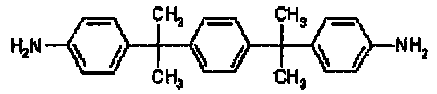

- In the present exemplary embodiment, polyimide or a precursor thereof which has a weight average molecular weight of 2,000 to 200,000 may be used. If the weight average molecular weight is too low, film characteristics would deteriorate, and if it is too high, the solubility of a developer would be degraded.
- The polyimide or the precursor thereof is prepared by reacting tetracarboxyl dianhydride and a diamine compound expressed by Chemical Formula 3 under the presence of an organic solvent.
- As the organic solvent used for preparing the polyimide or the precursor thereof, one or more selected from the group consisting of N-methyl-2-pyrrolidone, N,N-dimethylformamide, N,N-dmiethylacetamide, dimethylsulfoxide, N,N-diethylacetamide, γ-butyrolactone, ethylcellosolve, butylcellosolve, diethyleneglycol, methylethylether, diethyleneglycol, dimethylether, diethyleneglycol, diethylether, dipropyleneglycol, dimethylether, methyl-3-methoxy propionate, ethyl 3-ethoxy propionate, propyleneglycol methylether propionate, dipropyleneglycol dimethylether, cyclohexanone, and propyleneglycolmonomethyletheracetate.
- A photosensitive polyimide resin composition according to the present exemplary embodiment is prepared by adding a photo active compound (PAC) to the thusly prepared polyimide or the precursor thereof, and adding a dissolution speed regulator, a sensitizer, an adhesion promoter, and a surfactant, as necessary.
- The respective additives may be used within the range of 0.1 to 30 weight parts over 100 weight parts of the polyimide or the precursor thereof.
- As the photo active compound used in the present exemplary embodiment, one or a combination of two or more selected from the group consisting compounds expressed by chemical formulas shown below may be used.


- Here, D may be any one selected from among organic groups expressed by chemical formulas shown below and a hydrogen atom (-H):

- Preferably, the photo active compound is used by 1 to 50 weight parts over 100 weight parts of the polyimide or the precursor thereof.
- A solvent used for the photosensitive organic insulator composition according to the present exemplary embodiment is not particularly limited so long as it can dissolve the polyimide or the precursor thereof. For example, as the solvent, one or more selected from the group consisting of N-methyl-2-pyrrolidone, N,N-dimethylformamide, N,N-dmiethylacetamide, dimethylsulfoxide, N,N-diethylacetamide, γ-butyrolactone, γ-valerolactone, m-cresol, ethyleneglycol monomethylether, ethyleneglycol monomethylether acetate, ethyleneglycol monoethylether, ethyleneglycol monoethylether acetate, ethyleneglycol monobutylether, ethyleneglycol monobutylether acetate, propyleneglycol monomethylether, propyleneglycol monomethylether acetate, propyleneglycol monoethylether, propyleneglycol monoethylether acetate, propyleneglycol monopropylether, propyleneglycol monopropylether acetate, propyleneglycol monobutylether, propyleneglycol monobutylether acetate, propyleneglycol dimethylether, propyleneglycol diethylether, propyleneglycol dipropyltylether, propyleneglycol dibutylether, ethyl lactate, butyl lactate, cyclohexanone, and cyclopentanone may be used.
- Preferably, the photosensitive organic insulator composition according to the present exemplary embodiment may include a 40 to 97 weight parts of a solvent over 100 weight parts of the composition. If the solvent is contained to be less than 40 weight parts, the composition would have a high viscosity of more than necessary, failing to obtain a smooth surface when coated, failing to implement a desired thickness, and failing to form an even mixture in making a liquid to result in difficulty in implementing physical properties for forming fine patterns. If the solvent is contained to exceed 97 weight parts, an adhesion with a substrate would deteriorate and it is difficult to obtain uniform coating properties and a desired film thickness.
- The photosensitive organic insulator composition according to the present exemplary embodiment having the foregoing composition is applied to a base such as a glass substrate, or the like, by using a general method such as spin coating, slit spin coating, roll coating, die coating, curtain coating, or the like, and subject to an exposing and developing process to form a photosensitive film. The exposing and developing process is not particularly limited and a general method used to form a photosensitive layer using a general photosensitive organic insulator composition may be used.
- In the exposing process, electromagnetic waves, visible light from ultraviolet ray, electron beam, X-ray, laser light, and the like, may be irradiated as a light source. Also, in irradiating the light source, a known means such as a high pressure mercury lamp, an xenon flash lamp, a carbon arc lamp, a halogen lamp, a cold cathode fluorescent lamp (CCFL) for a copier, an LED, a semiconductor layer, and the like, may be used.
- In the developing process, an exposed area of the photosensitive film which has subject to the exposing process is removed by using a developer to form patterns. In this case, an alkaline solution such as a hydroxide of alkaline metal or alkaline earth metal, a carbonate, hydrogen carbonate, or ammonia water 4th-grade ammonium salt may be used as the developer. In this case, an ammonia 4th-grade ammonium aqueous solution such as a tetramethyl ammonium aqueous solution is particularly preferred.
- As for the overall process, the photosensitive organic insulator composition is spin-coated on a glass or silicon wafer substrate and then pre-annealed for one to two minutes at about 110°C to 145°C to form a film. The film is exposed through a pattern-formed photo mask, and the exposed portion is developed by using an alkaline aqueous solution and then cleansed with deionized water. Thereafter, the resultant film is post-heated for about 30 minutes to two hours at a temperature ranging from 200°C to 350°C to obtain patterns.
- The present invention will be described in more detail based on embodiments as follows; however, the present invention is not limited thereto.
- 300 ml of anhydrous methyl alcohol was added to 31.0g (0.1 mole) of 3,3',4,4'-diphenyl ether tetracarboxylic acid dianhyride, which was then refluxed and stirred for five hours at 80°C so as to be reacted. The residual solvent was dried under a high temperature and reduced pressure to obtain 37.4 g (yield rate of 100%) of 3,3',4,4'-diphenyl ether tetracarboxylic acid dimethylester. 35.4g (0.3 mole) of thionylchloride was applied drop-wise to the obtained 37.4 g (0.1 mole) of 3,3',4,4'-diphenyl ether tetracarboxylic acid dimethylester, to which N,N-dimethylformamide of a catalyst amount was added, reacted at 90°C for three hours, and then cooled to room temperature. The residual thionylchloride was removed at a reduced pressure to obtain 41.0 g (yield rate of 100%) of 3,3',4,4'-diphenyl ether tetracarboxylic acid dichloride.
- 24.6 g (60 mmole) of the prepared 3,3',4,4'-diphenyl ether tetracarboxylic acid dichloride was slowly applied dropwise to 150 ml of N-methyl-2-pyrrolydone with 15.4 g (42 mmole) of 2,2-bis(3-amino-4-hydroxyphenyl)-hexafluoropropane, 2.7 g (18 mmole) of 1,2-bis(2-aminoethoxy)ethane, and 10.65 g of pyridine dissolved therein, at 0°C under a nitrogen atmosphere, the temperature was slowly increased to room temperature and then the resultant material was stirred five hours. Thereafter, the reactant was slowly applied dropwise to 2L of water to generate a precipitate, the generated precipitate was filtered out, cleansed with water three times, and then dried at a reduced pressure to obtain 32.5 g of polyamic acid methylester (P-1). The weight average molecular weight of the obtained polymer was 28,000.
- A polymer P-2 was obtained in the same manner except for the addition of 13.2 g (36 mmole) of 2,2-bis(3-amino-4-hydroxyphenyl)-hexafluoropropane, 1.7 g (12 mmole) of 1,2-bis(2-aminoethoxy)ethane, and 2.4 g (12 mmole) of 4-oxy dianiline, instead of 15.4 g (42 mmole) of 2,2-bis(3-amino-4-hydroxyphenyl)-hexafluoropropane and 2.7 g (18 mmole) of 1,2-bis(2-aminoethoxy)ethane in Embodiment 1. The weight average molecular weight of the obtained polymer P-2 was 25,000.
- A polyamic acid methylester (P-3) was obtained in the same manner except for the use of 22.0 g (60 mmole) of 2,2-bis(3-amino-4-hydroxyphenyl)-hexafluoropropane as a total amount, instead of 15.4 g (42 mmole) of 2,2-bis(3-amino-4-hydroxyphenyl)-hexafluoropropane and 2.7 g (18 mmole) of 1,2-bis(2-aminoethoxy)ethane in Embodiment 1. The weight average molecular weight of the obtained polymer was 29,500.
- A polyimide (P-4) was obtained in the same manner except for the addition of 17.6 g (48 mmole) of 2,2-bis(3-amino-4-hydroxyphenyl)-hexafluoropropane and 2.4 g (12 mmole) of 4-oxy dianiline, instead of 13.2 g (36 mmole) of 2,2-bis(3-amino-4-hydroxyphenyl)-hexafluoropropane and 1.8 g (12 mmole) of 1,2-bis(2-aminoethoxy)ethane in Embodiment 2. The weight average molecular weight of the obtained polymer was 23,000.
- 3 g of the thusly obtained polyimide precursors (P-1 and P-3) or the polyimides (P-2 and P-4) and 1.0 g of diazonaphthoquinone ester compound (TPPA 320: OH or OD is selectively given according to the ratio of OD/(OD+OH)=2/3) as a photo active compound were applied to a solvent of 8 g of N-methyl-2-pyrrolydone. The resultant material was stirred at room temperature for one hour and then filtered by using a filter with fine pores having a diameter of 1 µm to prepare a photosensitive organic insulator composition.
- The physical properties of the thusly prepared photosensitive organic insulator composition were measured in the following manner, and the results were shown in [Table 1] and
FIGS. 1 to 4 . - A taper angle was measured through a section SEM image of a patterned resist, and the thickness and a residual film were measured by using a surface profiler with respect to the resist before and after a developing process.
- In order to evaluate the sensitivity, the amount of light exposure, by which the exposed portion was completely melt by the developer, was measured through a stepper and an aligner.
- In order to evaluate a residue and adhesion, the shape of patterns remaining after a patterning process was performed was observed.
[Table 1] Thickness (um) Sensitivity (mJ) Taper Angle Residue Adhesion Residual film (%) Curing Temperatu re (°C) Curing duration (Min.) Embodioment 1 1.8 28 24 Good Good 85 230 30 Embodioment 2 1.8 35 28 Good Good 90 230 30 Comparative Example 1 1.7 70 64 Poor Not good 90 280 60 Comparative Example 2 1.8 60 47 Good Not good 85 280 60
Claims (10)
- A photosensitive organic insulator composition comprising 1 to 50 weight parts of a photo active compound over 100 weight parts of polyimide or a precursor thereof expressed by Chemical Formula 1 or 2 shown below:


- The composition of claim 1, wherein Z is derived from a diamine compound expressed by Chemical Formula 4 shown below:

- The composition of claim 2, wherein m in Chemical Formula 4 is an integer ranging from 2 to 7.
- The composition of claim 1, wherein a substituent X in Chemical Formula 1 or 2 is one or more selected from the group consisting of organic groups expressed by chemical formulas shown below:


- The composition of claim 1, wherein a substituent Y in Chemical Formula 1 or 2 is one or more selected from the group consisting of organic groups expressed by chemical formulas shown below:



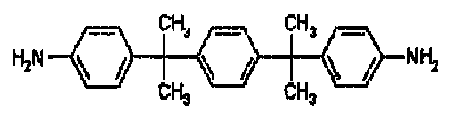
- The composition of claim 1, wherein the substituent Y in Chemical Formula 1 or 2 is an organic group derived from one or more diamine compound groups expressed by chemical formulas shown below:



- The composition of claim 1, wherein the photo active compound is one or more selected from the group consisting of compounds expressed by chemical formulas shown below:



- The composition of claim 1, wherein, 0.1 to 30 weight parts of one or more additives selected from the group consisting of a dissolution speed regulator, a sensitizer, an adhesion promoter, and a surfactant is contained over 100 weight parts of the polyimide or the precursor thereof.
- The composition of claim 1, wherein 40 to 97 weight part of one or more solvents selected from the group consisting of N-methyl-2-pyrrolidone, N,N-dimethylformamide, N,N-dmiethylacetamide, dimethylsulfoxide, N,N-diethylacetamide, γ-butyrolactone, γ-valerolactone, m-cresol, ethyleneglycol monomethylether, ethyleneglycol monomethylether acetate, ethyleneglycol monoethylether, ethyleneglycol monoethylether acetate, ethyleneglycol monobutylether, ethyleneglycol monobutylether acetate, propyleneglycol monomethylether, propyleneglycol monomethylether acetate, propyleneglycol monoethylether, propyleneglycol monoethylether acetate, propyleneglycol monopropylether, propyleneglycol monopropylether acetate, propyleneglycol monobutylether, propyleneglycol monobutylether acetate, propyleneglycol dimethylether, propyleneglycol diethylether, propyleneglycol dipropyltylether, propyleneglycol dibutylether, ethyl lactate, butyl lactate, cyclohexanone, and cyclopentanone is contained over 100 weight parts of the composition.
- An organic light emitting diode (OLED) insulating layer, a liquid crystal display (LCD) insulating layer, or a semiconductor insulating layer comprising a polyimide film prepared with the photosensitive resin composition according to claim 1.
Applications Claiming Priority (3)
| Application Number | Priority Date | Filing Date | Title |
|---|---|---|---|
| KR20100021946 | 2010-03-11 | ||
| KR1020110015963A KR101304590B1 (en) | 2010-03-11 | 2011-02-23 | Photosensitive resin composition for insulator of OLED devices |
| PCT/KR2011/001562 WO2011111965A2 (en) | 2010-03-11 | 2011-03-07 | Photosensitive organic insulation composition for an oled device |
Publications (2)
| Publication Number | Publication Date |
|---|---|
| EP2546697A2 true EP2546697A2 (en) | 2013-01-16 |
| EP2546697A4 EP2546697A4 (en) | 2017-01-25 |
Family
ID=44954298
Family Applications (1)
| Application Number | Title | Priority Date | Filing Date |
|---|---|---|---|
| EP11753570.8A Withdrawn EP2546697A4 (en) | 2010-03-11 | 2011-03-07 | Photosensitive organic insulation composition for an oled device |
Country Status (7)
| Country | Link |
|---|---|
| US (1) | US20110223538A1 (en) |
| EP (1) | EP2546697A4 (en) |
| JP (2) | JP5649242B2 (en) |
| KR (1) | KR101304590B1 (en) |
| CN (1) | CN102893214B (en) |
| TW (1) | TWI446107B (en) |
| WO (1) | WO2011111965A2 (en) |
Cited By (1)
| Publication number | Priority date | Publication date | Assignee | Title |
|---|---|---|---|---|
| TWI577069B (en) * | 2014-10-02 | 2017-04-01 | Central Glass Co Ltd | An organic electroluminescent substrate, and an organic electroluminescent display using the same |
Families Citing this family (8)
| Publication number | Priority date | Publication date | Assignee | Title |
|---|---|---|---|---|
| CN104662475B (en) * | 2012-09-25 | 2019-03-29 | 东丽株式会社 | Positive photosensitive resin composition and method for producing semiconductor device containing cured film using the same |
| KR101700994B1 (en) | 2013-07-01 | 2017-01-31 | 주식회사 엘지화학 | Separation method of photoactive compound |
| DE102014106885B4 (en) * | 2014-05-15 | 2022-01-20 | Pictiva Displays International Limited | Method for producing an insulator layer, method for producing an organic optoelectronic component comprising an insulator layer and organic optoelectronic component comprising an insulator layer |
| CN104693466B (en) * | 2015-02-05 | 2017-12-12 | 湘潭大学 | A kind of method for easily going removing coating regulation and control liquid crystalline block copolymers film farmland area orientation |
| US10590306B2 (en) * | 2015-10-23 | 2020-03-17 | Toray Industries, Inc. | Resin composition for display substrate, and heat-resistant resin film, organic EL display substrate, and method for manufacturing organic EL display using same |
| KR102066549B1 (en) * | 2016-12-01 | 2020-01-15 | 삼성에스디아이 주식회사 | Photosensitive resin composition, black pixel defining layer using the same and display device |
| WO2018155547A1 (en) * | 2017-02-23 | 2018-08-30 | 日立化成デュポンマイクロシステムズ株式会社 | Photosensitive resin composition, cured pattern production method, cured product, interlayer insulating film, cover coat layer, surface protective layer, and electronic component |
| KR102501979B1 (en) * | 2017-03-03 | 2023-02-21 | 닛산 가가쿠 가부시키가이샤 | Coating film forming composition for foreign matter removal |
Family Cites Families (27)
| Publication number | Priority date | Publication date | Assignee | Title |
|---|---|---|---|---|
| JP3535281B2 (en) * | 1995-08-31 | 2004-06-07 | 株式会社巴川製紙所 | Adhesive tape and liquid adhesive for electronic parts |
| JP3677191B2 (en) * | 1999-03-15 | 2005-07-27 | 株式会社東芝 | Photosensitive polyimide developer, polyimide film pattern forming method, and electronic component |
| JP4171777B2 (en) * | 1999-05-31 | 2008-10-29 | 株式会社ピーアイ技術研究所 | Aliphatic polyimide composition and image forming method |
| KR100405301B1 (en) | 1999-09-10 | 2003-11-12 | 주식회사 엘지화학 | Novel polyimide precursor and photosensitive resin composition using the same |
| KR100494631B1 (en) * | 2000-07-27 | 2005-06-13 | 미쯔이카가쿠 가부시기가이샤 | Polyamic acid, polyimide, process for producing these, and film of the polyimide |
| JP4078478B2 (en) * | 2001-10-30 | 2008-04-23 | 株式会社カネカ | Photosensitive resin composition and photosensitive dry film resist using the same |
| KR100589067B1 (en) * | 2001-10-30 | 2006-06-14 | 가부시키가이샤 가네카 | Photosensitive resin composition, the photosensitive film and laminated body using this |
| TW581991B (en) * | 2002-10-25 | 2004-04-01 | Ritdisplay Corp | OLED device and packaging method thereof |
| KR100548625B1 (en) | 2003-03-24 | 2006-01-31 | 주식회사 엘지화학 | High heat resistant transparent polyimide precursor and photosensitive resin composition using same |
| EP1610357A4 (en) * | 2003-03-31 | 2008-05-07 | Mitsui Chemicals Inc | VACUUM ENVELOPE FOR A DISPLAY DEVICE AND CLOSURE MATERIAL FOR SAID DEVICE |
| JP2005196130A (en) * | 2003-12-12 | 2005-07-21 | Hitachi Cable Ltd | Photosensitive polyimide resin composition, insulating film using the same, method for manufacturing insulating film, and electronic component using insulating film |
| JP2006206756A (en) * | 2005-01-28 | 2006-08-10 | Sony Chem Corp | Polyimide compound and flexible wiring board |
| CN101218540B (en) * | 2005-07-14 | 2011-04-13 | 三井化学株式会社 | Positive photosensitive resin composition and process for pattern formation |
| KR100867528B1 (en) * | 2006-04-27 | 2008-11-10 | 에스케이에너지 주식회사 | Monomer for synthesizing polyimide, and polyimide precursor composition and flexible metal foil laminate comprising same |
| US7592119B2 (en) * | 2007-02-09 | 2009-09-22 | Sony Corporation | Photosensitive polyimide resin composition |
| JP4957583B2 (en) * | 2007-02-22 | 2012-06-20 | 新日本理化株式会社 | Solvent-soluble polyimide copolymer and polyimide varnish containing the same |
| WO2008133072A1 (en) * | 2007-04-18 | 2008-11-06 | Dai Nippon Printing Co., Ltd. | Substrate for suspension, method for producing the same, magnetic head suspension, and hard disk drive |
| JP5061792B2 (en) * | 2007-08-21 | 2012-10-31 | 住友ベークライト株式会社 | Positive photosensitive resin composition, cured film, protective film, insulating film, and semiconductor device and display device using the same. |
| WO2009054487A1 (en) * | 2007-10-26 | 2009-04-30 | Asahi Kasei Kabushiki Kaisha | Polyimide precursor and photosensitive resin composition containing polyimide precursor |
| KR101102256B1 (en) * | 2007-12-14 | 2012-01-03 | 주식회사 엘지화학 | Polyimide Polymer Compound and Positive Polyimide Photosensitive Resin Composition Comprising the Same |
| CN101960382B (en) * | 2008-03-07 | 2014-01-01 | 株式会社Lg化学 | Positive photosensitive polyimide composition |
| KR101597146B1 (en) * | 2008-05-20 | 2016-02-24 | 가부시키가이샤 가네카 | Novel polyimide precursor composition, use of the same, and production method of the same |
| JP2010169944A (en) * | 2009-01-23 | 2010-08-05 | Mitsui Chemicals Inc | Negative photosensitive resin composition, method of forming negative pattern using the same, circuit board material, and coverlay for circuit board |
| JP5201155B2 (en) * | 2009-01-27 | 2013-06-05 | 新日本理化株式会社 | Poly (amide acid-imide) resin |
| CN102365314B (en) * | 2009-07-15 | 2014-01-08 | 株式会社Lg化学 | Photosensitive polyimide and photosensitive resin composition containing the photosensitive polyimide |
| US8559831B2 (en) * | 2009-11-13 | 2013-10-15 | Eastman Kodak Company | Sheet registration for a multipass electrophotographic printer |
| TWI440656B (en) * | 2009-11-16 | 2014-06-11 | Asahi Kasei E Materials Corp | A polyimide precursor and a photosensitive resin composition comprising the polyimide precursor |
-
2011
- 2011-02-23 KR KR1020110015963A patent/KR101304590B1/en active Active
- 2011-03-07 WO PCT/KR2011/001562 patent/WO2011111965A2/en not_active Ceased
- 2011-03-07 JP JP2012556967A patent/JP5649242B2/en active Active
- 2011-03-07 EP EP11753570.8A patent/EP2546697A4/en not_active Withdrawn
- 2011-03-07 CN CN201180023554.8A patent/CN102893214B/en active Active
- 2011-03-11 US US13/046,319 patent/US20110223538A1/en not_active Abandoned
- 2011-03-11 TW TW100108280A patent/TWI446107B/en active
-
2014
- 2014-07-18 JP JP2014148191A patent/JP2014225031A/en active Pending
Non-Patent Citations (1)
| Title |
|---|
| See references of WO2011111965A2 * |
Cited By (1)
| Publication number | Priority date | Publication date | Assignee | Title |
|---|---|---|---|---|
| TWI577069B (en) * | 2014-10-02 | 2017-04-01 | Central Glass Co Ltd | An organic electroluminescent substrate, and an organic electroluminescent display using the same |
Also Published As
| Publication number | Publication date |
|---|---|
| WO2011111965A2 (en) | 2011-09-15 |
| US20110223538A1 (en) | 2011-09-15 |
| WO2011111965A3 (en) | 2012-01-05 |
| CN102893214A (en) | 2013-01-23 |
| JP2014225031A (en) | 2014-12-04 |
| JP5649242B2 (en) | 2015-01-07 |
| TW201135359A (en) | 2011-10-16 |
| EP2546697A4 (en) | 2017-01-25 |
| KR101304590B1 (en) | 2013-09-05 |
| JP2013522660A (en) | 2013-06-13 |
| KR20110102819A (en) | 2011-09-19 |
| TWI446107B (en) | 2014-07-21 |
| CN102893214B (en) | 2015-11-25 |
Similar Documents
| Publication | Publication Date | Title |
|---|---|---|
| EP2546697A2 (en) | Photosensitive organic insulation composition for an oled device | |
| KR101438857B1 (en) | Photosensitive resin composition, process for producing patterned hardened film with use thereof and electronic part | |
| EP2113810A1 (en) | Photosensitive resin composition, cured film, protective film, insulating film and semiconductor device using the same, and display device | |
| KR101249685B1 (en) | Photosensitive polyimide and photosensitive resin composition comprising the same | |
| JP5109471B2 (en) | Negative photosensitive resin composition, pattern manufacturing method, and electronic component | |
| KR20160149040A (en) | Photosensitive polyimide composition | |
| KR101067090B1 (en) | Positive photosensitive resin composition, cured film, protective film, insulating film, semiconductor device, display device using the same | |
| KR101202012B1 (en) | Photo-sensitive Polyimide resin composition | |
| US20040170914A1 (en) | Positive-working photosensitive resin precursor composition | |
| US6582879B2 (en) | Reactive photo acid-generating agent and heat-resistant photoresist composition with polyamide precursor | |
| JP2003183362A (en) | Method for synthesizing polynaphthylene, photosensitive resin composition, method for manufacturing pattern, and electronic part | |
| KR101812580B1 (en) | Positive photosensitive resin composition, photosensitive resin film, and display device using the same | |
| KR20140144527A (en) | Photosensitive polyimide composition | |
| KR20140074117A (en) | Blockers of moisture-absorption, Positive polyamide varnish containing the same and polyimide film | |
| KR20200031903A (en) | Photosensitive resin composition, photosensitive resin layer and electronic device using the same | |
| KR20240009689A (en) | Photosensitive resin composition, cured film and display device comprising the same | |
| KR20130073540A (en) | Positive photosensitive resin composition, photosensitive resin film prepared by using the same, and semiconductor device including the photosensitive resin film | |
| KR102319968B1 (en) | Positive photosensitive resin composition, photosensitive resin layer and electronic device using the same | |
| WO2010010842A1 (en) | Positive-type photosensitive resin composition, cured film, protective film, insulating film, and semiconductor device and display device each comprising the cured film | |
| KR102337564B1 (en) | Photosensitive resin composition, photosensitive resin layer and electronic device using the same | |
| KR102288385B1 (en) | Photosensitive resin composition, photosensitive resin layer and electronic device using the same | |
| KR102477633B1 (en) | Alkali soluble resin, photosensitive resin composition including the same, photosensitive resin layer and display device | |
| JP5245226B2 (en) | Resin composition and semiconductor device | |
| JPH0644154B2 (en) | Organic solvent-soluble positive photosensitive polyimide composition | |
| JP2005062293A (en) | Alkali-soluble photosensitive resin composition and method for forming resin layer |
Legal Events
| Date | Code | Title | Description |
|---|---|---|---|
| PUAI | Public reference made under article 153(3) epc to a published international application that has entered the european phase |
Free format text: ORIGINAL CODE: 0009012 |
|
| 17P | Request for examination filed |
Effective date: 20120906 |
|
| AK | Designated contracting states |
Kind code of ref document: A2 Designated state(s): AL AT BE BG CH CY CZ DE DK EE ES FI FR GB GR HR HU IE IS IT LI LT LU LV MC MK MT NL NO PL PT RO RS SE SI SK SM TR |
|
| DAX | Request for extension of the european patent (deleted) | ||
| A4 | Supplementary search report drawn up and despatched |
Effective date: 20170104 |
|
| RIC1 | Information provided on ipc code assigned before grant |
Ipc: G03F 7/004 20060101AFI20161222BHEP Ipc: C09D 179/08 20060101ALI20161222BHEP Ipc: G03F 7/039 20060101ALI20161222BHEP Ipc: C08L 79/08 20060101ALI20161222BHEP Ipc: H01B 3/38 20060101ALI20161222BHEP |
|
| STAA | Information on the status of an ep patent application or granted ep patent |
Free format text: STATUS: THE APPLICATION IS DEEMED TO BE WITHDRAWN |
|
| 18D | Application deemed to be withdrawn |
Effective date: 20170801 |