EP2532992B1 - Multityp-Klimaanlage und Regelverfahren dafür - Google Patents
Multityp-Klimaanlage und Regelverfahren dafür Download PDFInfo
- Publication number
- EP2532992B1 EP2532992B1 EP12170925.7A EP12170925A EP2532992B1 EP 2532992 B1 EP2532992 B1 EP 2532992B1 EP 12170925 A EP12170925 A EP 12170925A EP 2532992 B1 EP2532992 B1 EP 2532992B1
- Authority
- EP
- European Patent Office
- Prior art keywords
- degree
- electronic expansion
- expansion valve
- superheat
- opening
- Prior art date
- Legal status (The legal status is an assumption and is not a legal conclusion. Google has not performed a legal analysis and makes no representation as to the accuracy of the status listed.)
- Active
Links
Images




Classifications
-
- F—MECHANICAL ENGINEERING; LIGHTING; HEATING; WEAPONS; BLASTING
- F25—REFRIGERATION OR COOLING; COMBINED HEATING AND REFRIGERATION SYSTEMS; HEAT PUMP SYSTEMS; MANUFACTURE OR STORAGE OF ICE; LIQUEFACTION SOLIDIFICATION OF GASES
- F25B—REFRIGERATION MACHINES, PLANTS OR SYSTEMS; COMBINED HEATING AND REFRIGERATION SYSTEMS; HEAT PUMP SYSTEMS
- F25B13/00—Compression machines, plants or systems, with reversible cycle
-
- F—MECHANICAL ENGINEERING; LIGHTING; HEATING; WEAPONS; BLASTING
- F25—REFRIGERATION OR COOLING; COMBINED HEATING AND REFRIGERATION SYSTEMS; HEAT PUMP SYSTEMS; MANUFACTURE OR STORAGE OF ICE; LIQUEFACTION SOLIDIFICATION OF GASES
- F25B—REFRIGERATION MACHINES, PLANTS OR SYSTEMS; COMBINED HEATING AND REFRIGERATION SYSTEMS; HEAT PUMP SYSTEMS
- F25B49/00—Arrangement or mounting of control or safety devices
- F25B49/02—Arrangement or mounting of control or safety devices for compression type machines, plants or systems
-
- F—MECHANICAL ENGINEERING; LIGHTING; HEATING; WEAPONS; BLASTING
- F25—REFRIGERATION OR COOLING; COMBINED HEATING AND REFRIGERATION SYSTEMS; HEAT PUMP SYSTEMS; MANUFACTURE OR STORAGE OF ICE; LIQUEFACTION SOLIDIFICATION OF GASES
- F25B—REFRIGERATION MACHINES, PLANTS OR SYSTEMS; COMBINED HEATING AND REFRIGERATION SYSTEMS; HEAT PUMP SYSTEMS
- F25B2313/00—Compression machines, plants or systems with reversible cycle not otherwise provided for
- F25B2313/005—Outdoor unit expansion valves
-
- F—MECHANICAL ENGINEERING; LIGHTING; HEATING; WEAPONS; BLASTING
- F25—REFRIGERATION OR COOLING; COMBINED HEATING AND REFRIGERATION SYSTEMS; HEAT PUMP SYSTEMS; MANUFACTURE OR STORAGE OF ICE; LIQUEFACTION SOLIDIFICATION OF GASES
- F25B—REFRIGERATION MACHINES, PLANTS OR SYSTEMS; COMBINED HEATING AND REFRIGERATION SYSTEMS; HEAT PUMP SYSTEMS
- F25B2313/00—Compression machines, plants or systems with reversible cycle not otherwise provided for
- F25B2313/023—Compression machines, plants or systems with reversible cycle not otherwise provided for using multiple indoor units
- F25B2313/0233—Compression machines, plants or systems with reversible cycle not otherwise provided for using multiple indoor units in parallel arrangements
-
- F—MECHANICAL ENGINEERING; LIGHTING; HEATING; WEAPONS; BLASTING
- F25—REFRIGERATION OR COOLING; COMBINED HEATING AND REFRIGERATION SYSTEMS; HEAT PUMP SYSTEMS; MANUFACTURE OR STORAGE OF ICE; LIQUEFACTION SOLIDIFICATION OF GASES
- F25B—REFRIGERATION MACHINES, PLANTS OR SYSTEMS; COMBINED HEATING AND REFRIGERATION SYSTEMS; HEAT PUMP SYSTEMS
- F25B2313/00—Compression machines, plants or systems with reversible cycle not otherwise provided for
- F25B2313/027—Compression machines, plants or systems with reversible cycle not otherwise provided for characterised by the reversing means
- F25B2313/02741—Compression machines, plants or systems with reversible cycle not otherwise provided for characterised by the reversing means using one four-way valve
-
- F—MECHANICAL ENGINEERING; LIGHTING; HEATING; WEAPONS; BLASTING
- F25—REFRIGERATION OR COOLING; COMBINED HEATING AND REFRIGERATION SYSTEMS; HEAT PUMP SYSTEMS; MANUFACTURE OR STORAGE OF ICE; LIQUEFACTION SOLIDIFICATION OF GASES
- F25B—REFRIGERATION MACHINES, PLANTS OR SYSTEMS; COMBINED HEATING AND REFRIGERATION SYSTEMS; HEAT PUMP SYSTEMS
- F25B2313/00—Compression machines, plants or systems with reversible cycle not otherwise provided for
- F25B2313/029—Control issues
-
- F—MECHANICAL ENGINEERING; LIGHTING; HEATING; WEAPONS; BLASTING
- F25—REFRIGERATION OR COOLING; COMBINED HEATING AND REFRIGERATION SYSTEMS; HEAT PUMP SYSTEMS; MANUFACTURE OR STORAGE OF ICE; LIQUEFACTION SOLIDIFICATION OF GASES
- F25B—REFRIGERATION MACHINES, PLANTS OR SYSTEMS; COMBINED HEATING AND REFRIGERATION SYSTEMS; HEAT PUMP SYSTEMS
- F25B2500/00—Problems to be solved
- F25B2500/26—Problems to be solved characterised by the startup of the refrigeration cycle
-
- F—MECHANICAL ENGINEERING; LIGHTING; HEATING; WEAPONS; BLASTING
- F25—REFRIGERATION OR COOLING; COMBINED HEATING AND REFRIGERATION SYSTEMS; HEAT PUMP SYSTEMS; MANUFACTURE OR STORAGE OF ICE; LIQUEFACTION SOLIDIFICATION OF GASES
- F25B—REFRIGERATION MACHINES, PLANTS OR SYSTEMS; COMBINED HEATING AND REFRIGERATION SYSTEMS; HEAT PUMP SYSTEMS
- F25B2600/00—Control issues
- F25B2600/21—Refrigerant outlet evaporator temperature
Definitions
- the present invention relates to a multi-type air conditioner in which a plurality of indoor units are connected in parallel to an outdoor unit and to a control method for the multi-type air conditioner.
- an expansion valve is controlled so as to be open-loop controlled for a predetermined period of time at a starting time and so as to be zone controlled thereafter.
- the air conditioner is operated with the degree of opening of the electronic expansion valve being set in proportion to the rotational speed of the compressor by using the outside air temperature, the discharge degree of superheat, and the suction degree of superheat as parameters.
- the degree of opening of the electronic expansion valve is zone controlled to perform feedback control such that the degree of superheat falls in a target zone.
- the air conditioner is operated with high COP (coefficient of performance) (for example, see PTL 1).
- PTL 2 proposes a technique in which, at the starting time of a heating operation, an initial degree of opening of an electronic expansion valve, which is uniformly set based on the indoor temperature and the outdoor temperature, is corrected based on the starting state of the air conditioner at the starting time to reduce the rising time for the next starting time, thereby improving quick heating.
- PTL 3 proposes that, in an air conditioner in which the degree of opening of an electronic expansion valve is zone controlled such that the discharge degree of superheat of the refrigerant becomes a target degree of superheat, the target degree of superheat be corrected so as to be reduced in a stepwise fashion as the discharge refrigerant temperature is increased, thereby preventing the compressor from being superheated and allowing the life of the compressor to be EP-A-2 261 580 discloses a multi-type air conditioner according to the preamble of claim1.
- the air conditioner is operated with the degree of opening of the electronic expansion valve being set at a certain degree of opening calculated based on particular parameters. Therefore, operations in which the degree of opening is over-throttled and over-relaxed may be repeated depending on the operating conditions, thus causing a delay in switching over to an optimum operating point and making the operation of the compressor less stable, in some cases, and undermining high-COP operation.
- the present invention has been made in view of such circumstances, and an object thereof is to provide a multi-type air conditioner and a control method therefor, in which it is possible to swiftly reach an ideal zone-control region at the switchover from open-loop control to zone control and to operate the air conditioner with high COP while ensuring the stable operation of the compressor.
- the multi-type air conditioner and the control method therefor of the present invention employ the following solutions.
- a first aspect of the present invention provides a multi-type air conditioner in which a plurality of indoor units are connected in parallel to a single outdoor unit, and a closed-cycle refrigerant circuit is formed of a compressor, a four-way switching valve, an outdoor heat exchanger, a first electronic expansion valve, a receiver, a plurality of second electronic expansion valves connected in parallel to a plurality of indoor heat exchangers, and the plurality of the indoor heat exchangers connected in parallel to each other, in which the first electronic expansion valve is open-loop controlled for a predetermined period of time at a degree of opening calculated based on particular parameters at a starting time of a heating operation and at a time of a change in the number of operated indoor units ; in which the first electronic expansion valve is then switched over to zone control in which a discharge degree of superheat is controlled so as to fall within a target zone; and in which the first electronic expansion valve is provided with an expansion-valve control section that corrects, when a temperature deviation of the discharge degree of super
- the first electronic expansion valve that is zone controlled such that the discharge degree of superheat of the refrigerant falls within a target zone
- the first electronic expansion valve is open-loop controlled for the predetermined period of time at the degree of opening calculated based on particular parameters at the starting time of a heating operation and at the time of a change in the number of operated indoor units; the first electronic expansion valve is then switched over to zone control in which the discharge degree of superheat is controlled so as to fall within the target zone; and the first electronic expansion valve is provided with the expansion-valve control section, which, when a temperature deviation of the discharge degree of superheat with respect to the target zone and a time variation of the discharge degree of superheat are large at the switchover to zone control, corrects the degree of opening of the heating electronic expansion valve for the next open-loop control in response there
- the air conditioner In open-loop control during the heating operation, the air conditioner is operated with the degree of opening of the first electronic expansion valve being set at a certain degree of opening calculated based on particular parameters; therefore, operations in which the degree of opening is over-throttled and over-relaxed may be repeated depending on the operating conditions, thus causing a delay in switching over to an optimum operating point, in some cases.
- the degree of opening for the next open-loop control is corrected in response thereto.
- the degree of opening of the first electronic expansion valve in the open-loop control is calculated by using at least an outside air temperature and a capacity of the plurality of the indoor heat exchangers, as the parameters.
- the difference in the required refrigerant amount between cooling and heating operations is increased.
- the degree of opening of the first electronic expansion valve in open-loop control is calculated by using at least the outside air temperature and the capacity of the plurality of the indoor heat exchangers as the parameters.
- the operating point of the entire system is adjusted by the first electronic expansion valve, and the surplus refrigerant produced during the heating operation is held in the receiver, thereby making it possible to ensure appropriate degrees of supercooling at the respective indoor heat exchangers, and the degree of opening of the first electronic expansion valve is controlled by using at least the outside air temperature and the capacity of the plurality of the indoor heat exchangers as the parameters, thereby making it possible to set the degree of opening of the first electronic expansion valve in open-loop control to a more appropriate degree of opening.
- a correction coefficient for the degree of opening of the first electronic expansion valve is determined according to an outside air temperature and a capacity of the plurality of the indoor heat exchangers of the indoor units connected to the outdoor unit.
- the correction coefficient for the degree of opening of the first electronic expansion valve is determined based on the outside air temperature and the capacity of the plurality of the indoor heat exchangers of the indoor units connected to the outdoor unit. Therefore, when the temperature deviation of the discharge degree of superheat with respect to the target zone and the time variation of the discharge degree of superheat are large at the switchover to zone control, the correction coefficient that is changed based on the outside air temperature and the capacity of the plurality of the indoor heat exchangers is accordingly updated, thereby making it possible to reflect the updated correction coefficient in calculating the degree of opening of the first electronic expansion valve for the next open-loop control.
- a correction coefficient for the degree of opening of the first electronic expansion valve is increased or decreased when a percentage at which the temperature deviation of the discharge degree of superheat with respect to the target zone and the time variation of the discharge degree of superheat, calculated at sampling intervals, are equal to or higher than a predetermined value or are equal to or lower than a predetermined value that exceeds a predetermined percentage, at the switchover to zone control.
- the correction coefficient for the degree of opening of the first electronic expansion valve is increased or decreased when the percentage at which the temperature deviation of the discharge degree of superheat with respect to the target zone and the time variation of the discharge degree of superheat, calculated at sampling intervals, are equal to or higher than a predetermined value or are equal to or lower than a predetermined value that exceeds a predetermined percentage, at the switchover to zone control.
- this correction coefficient it is possible to prevent a situation in which, at the switchover to zone control, the degree of opening of the first electronic expansion valve is over-throttled, thus making the discharge degree of superheat overshoot the target zone and causing hunting, or is over-relaxed, thus causing a delay in reaching the target zone. Therefore, it is possible to set the degree of opening of the first electronic expansion valve in open-loop control to an appropriate degree of opening to swiftly reach the ideal zone-control region at the switchover to zone control, and to ensure the stable operation of the compressor.
- a second aspect of the present invention provides a control method for a multi-type air conditioner in which a plurality of indoor units are connected in parallel to a single outdoor unit, and a closed-cycle refrigerant circuit is formed of a compressor, a four-way switching valve, an outdoor heat exchanger, a first electronic expansion valve, a receiver, a plurality of second electronic expansion valves connected in parallel to a plurality of indoor heat exchangers, and the plurality of the indoor heat exchangers connected in parallel to each other, the control method including: performing open-loop control for the first electronic expansion valve for a predetermined period of time at a degree of opening calculated based on particular parameters, at a starting time of a heating operation and at a time of a change in the number of operated indoor units; switching over to zone control in which a discharge degree of superheat is controlled so as to fall within a target zone; and correcting, when a temperature deviation of the discharge degree of superheat with respect to the target zone and a time variation of the discharge degree of super
- the first electronic expansion valve that is zone controlled such that the discharge degree of superheat of the refrigerant falls within a target zone
- the first electronic expansion valve is open-loop controlled for the predetermined period of time at the degree of opening calculated based on particular parameters at the starting time of a heating operation and at the time of a change in the number of operated indoor units; and the first electronic expansion valve is then switched over to zone control in which the discharge degree of superheat is controlled so as to fall within the target zone; and, when the temperature deviation of the discharge degree of superheat with respect to the target zone and the time variation of the discharge degree of superheat are large at the switchover to zone control, the degree of opening of the first electronic expansion valve for the next open-loop control is corrected in response thereto.
- the air conditioner In open-loop control during the heating operation, the air conditioner is operated with the degree of opening of the first electronic expansion valve being set at a certain degree of opening calculated based on particular parameters; therefore, operations in which the degree of opening is over-throttled and over-relaxed may be repeated depending on the operating conditions, thus causing a delay in switching over to an optimum operating point, in some cases.
- the degree of opening for the next open-loop control is corrected in response thereto.
- the air conditioner in open-loop control during the heating operation, is operated with the degree of opening of the first electronic expansion valve being set at a certain degree of opening calculated based on particular parameters; therefore, operations in which the degree of opening is over-throttled and over-relaxed may be repeated depending on the operating conditions, thus causing a delay in switching over to an optimum operating point, in some cases.
- the degree of opening for the next open-loop control is corrected in response thereto.
- Fig. 1 is a configuration diagram (refrigerant circuit diagram) of a multi-type air conditioner according to the embodiment of the present invention.
- Fig. 2 is a diagram for explaining the operation of a heating electronic expansion valve of the multi-type air conditioner.
- Fig. 3 is a diagram for explaining the operation of the heating electronic expansion valve at a switchover from open-loop control to zone control.
- a multi-type air conditioner 1 has a configuration in which a plurality of (six in this example, but the number of indoor units is not limited thereto) indoor units 3A to 3F are connected in parallel to a single outdoor unit 2.
- indoor heat exchangers 19A to 19F of the plurality of the indoor units 3A to 3F are connected to the liquid-side actuating valves 13A to 13F and the gas-side actuating valves 14A to 14F via piping joints 20A to 20F and piping joints 21A to 21F, respectively, thereby forming a single-system closed-cycle refrigerant circuit 22 serving as the multi-type air conditioner 1.
- Blower fans (not shown) are provided for the outdoor heat exchanger 7 and the indoor heat exchangers 19A to 19F to make outside air and air in the rooms circulate to the respective heat exchangers.
- a refrigerant compressed in the compressor 4 is circulated via the oil separator 5, the four-way switching valve 6, the outdoor heat exchanger 7, the first electronic expansion valve 8, the receiver 9, the second electronic expansion valves 10A to 10F, the sound-damping capillary tubes 11A to 11F, the strainers 12A to 12F, the liquid-side actuating valves 13A to 13F, the indoor heat exchangers 19A to 19F, the gas-side actuating valves 14A to 14F, the header 15, the four-way switching valve 6, the first accumulator 16, and the second accumulator 17.
- the refrigerant While circulating, the refrigerant is condensed in the outdoor heat exchanger 7, is reduced in pressure in the first electronic expansion valve 8 and the second electronic expansion valves 10A to 10F, and is then evaporated by absorbing heat in the indoor heat exchangers 19A to 19F, thereby cooling indoor air at the indoor heat exchangers 19A to 19F and using the cooled air for indoor cooling.
- the circulation direction of the refrigerant is switched by the four-way switching valve 6.
- the refrigerant compressed in the compressor 4 is circulated via the oil separator 5, the four-way switching valve 6, the header 15, the gas-side actuating valves 14A to 14F, the indoor heat exchangers 19A to 19F, the liquid-side actuating valves 13A to 13F, the strainers 12A to 12F, the sound-damping capillary tubes 11A to 11F, the second electronic expansion valves 10A to 10F, the receiver 9, the first electronic expansion valve 8, the outdoor heat exchanger 7, the four-way switching valve 6, the first accumulator 16, and the second accumulator 17.
- the refrigerant While circulating, the refrigerant is condensed by releasing heat in the outdoor heat exchanger 7, is reduced in pressure in the second electronic expansion valves 10A to 10F and the first electronic expansion valve 8, and is then evaporated in the outdoor heat exchanger 7, thereby heating indoor air at the indoor heat exchangers 19A to 19F and using the heated air for indoor heating.
- the first electronic expansion valve 8 and the second electronic expansion valves 10A to 10F are controlled by an expansion-valve control section 24 of an outdoor controller 23, as described below.
- the first electronic expansion valve 8 and the second electronic expansion valves 10A to 10F are put under normal control or transient control.
- the transient control is control performed within a predetermined period of time (for example, three minutes) after the compressor 4 is turned on from the OFF state or within a predetermined period of time (for example, three minutes) after the number of operated units among the plurality of the indoor units 3A to 3F is changed.
- the normal control is control performed when the transient control is not performed.
- the second electronic expansion valves 10A to 10F are set at degrees of opening corresponding to the indoor target rotational speeds for the respective rooms, to control the volumes of circulating refrigerant for the respective indoor heat exchangers 19A to 19F.
- the first electronic expansion valve 8 is open-loop controlled at the degree of opening calculated by Formula (1), in which the actual rotational speed of the compressor 4 is corrected based on the outside air temperature, the suction degree of superheat, and the discharge degree of superheat.
- the first electronic expansion valve 8 is zone controlled such that a discharge degree of superheat TDSH obtained from the difference between the detected value from a discharge temperature sensor 25 and the detected value from an outdoor heat-exchanger sensor 26 falls within a target zone.
- the degree of opening OP of the first electronic expansion valve 8 a ⁇ N + b ⁇ Z 2 ⁇ Z 3 wherein
- the second electronic expansion valves 10A to 10F are set at degrees of opening corresponding to the indoor target rotational speeds for the respective rooms, to control the volumes of circulating refrigerant for the respective indoor heat exchangers 19A to 19F.
- the first electronic expansion valve 8 is open-loop controlled at the degree of opening calculated by Formula (2), in which the actual rotational speed of the compressor 4 is corrected based on the outside air temperature, the capacity of the plurality of the indoor heat exchangers, the number of stopped units, the presence or absence of a large wall-type unit that includes a high-capacity indoor heat exchanger, the suction degree of superheat, and the discharge degree of superheat.
- the first electronic expansion valve 8 is zone controlled such that the discharge degree of superheat TDSH of the refrigerant obtained from the detected value from the discharge temperature sensor 25 and the detected value from a high-pressure pressure sensor 27 falls within a target zone.
- the degree of opening OP of the first electronic expansion valve 8 a ⁇ N + b + c + d ⁇ Z 2 ⁇ Z 3 ⁇ Z 4 wherein
- Fig. 2 is the diagram for explaining the operation, in which the first electronic expansion valve (EEVH) 8 is open-loop controlled in transient control, which is performed when the compressor 4 is turned on from the OFF state or when the number of operated units among the indoor units 3A to 3F is changed, and is zone controlled in the normal control, which is performed when the transient control is not performed.
- the degree of opening of the first electronic expansion valve 8 in zone control is obtained by adding the degree of opening set in the zone control to the degree of opening set in the open-loop control.
- the degree of opening of the first electronic expansion valve (EEVH) 8 is controlled by using the capacity of the plurality of the indoor heat exchangers as a parameter.
- control for reaching an appropriate operating point and control for distributing the refrigerant to the rooms have been carried out by throttling the second electronic expansion valves 10A to 10F corresponding to the rooms.
- the number of indoor units 3A to 3F is increased, since the difference in the required refrigerant amount between cooling and heating operations is increased, surplus refrigerant produced during the heating operation cannot be handled, and the refrigerant is accumulated in the condensers (indoor heat exchangers), thus increasing the degree of supercooling.
- the first electronic expansion valve (EEVH) 8 which is used to adjust the operating point of the entire system, is provided, and the receiver 9 is disposed immediately before the first electronic expansion valve 8, thereby making it possible to hold the surplus refrigerant and ensure an appropriate degree of supercooling.
- the throttle level of the first electronic expansion valve (EEVH) 8 is controlled by using, as parameters, not only the outside air temperature, the suction degree of superheat, and the discharge degree of superheat but also the capacity of the plurality of the indoor heat exchangers, the number of stopped units, and the presence or absence of a large wall-type unit that includes a high-capacity indoor heat exchanger, and the distribution of the refrigerant to the indoor units 3A to 3F is controlled according to the demand rotational speeds for the rooms via the second electronic expansion valves (EEVs) 10A to 10F corresponding to the rooms, thereby making it possible to swiftly attain the optimum operating point.
- the degree of opening OP of the first electronic expansion valve 8 is calculated by Formula (2).
- Parameters used in the calculation include not only the outside air temperature, the suction degree of superheat, and the discharge degree of superheat but also the correction coefficients a and b, determined based on the outside air temperature and the capacity of the indoor heat exchangers, the correction coefficient c, determined based on the number of stopped units, the correction coefficient d, determined based on the temperature deviation of the discharge degree of superheat with respect to the target zone and the time variation of the discharge degree of superheat at the switchover from open-loop control to zone control, and the correction coefficient Z 4 , determined based on the presence or absence of a large wall-type unit that includes a high-capacity indoor heat exchanger.
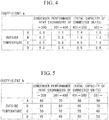
- the correction coefficient a is determined based on the total capacity of the plurality of the indoor heat exchangers 19A to 19F connected to the multi-type air conditioner 1 and the values A to D of the outside air temperature detected by an outside air temperature sensor 28.
- the correction coefficient b is determined based on the total capacity of the plurality of the indoor heat exchangers 19A to 19F connected to the multi-type air conditioner 1 and the values A to D of the outside air temperature detected by the outside air temperature sensor 28.
- the correction coefficient a is set to 0.6
- the correction coefficient b is set to 55.
- the total capacity of the plurality of the indoor heat exchangers in the tables shown in Figs. 4 and 5 is obtained by summing the capacities of the heat exchangers of the plurality of the indoor units connected to the multi-type air conditioner 1, from the table shown in Fig. 9 indicating, for example, the percentages of the capacities of the heat exchangers of the other indoor units, where the capacity of the heat exchanger of a medium wall-type indoor unit is set to 100.
- the outside air temperature is set to the value A when the outside air temperature detected by the outside air temperature sensor 28 has a difference of +12 °C or greater from the reference value; the outside air temperature is set to the value B when it has a difference that falls in a range from -1 °C to +11 °C from the reference value; the outside air temperature is set to the value C when it has a difference that falls in a range from -1 °C to -9 °C from the reference value; and the outside air temperature is set to the value D when it has a difference smaller than -9 °C from the reference value.
- the correction coefficient c is the sum of ⁇ pulses determined according to the value of the total capacity of the indoor heat exchangers of stopped units among the indoor units 3A to 3F. For example, if the total capacity of the indoor heat exchangers of stopped units is smaller than 90, the correction coefficient c is set to 3. If the total capacity thereof is 111 or greater, the correction coefficient c is set to 10. Furthermore, in particular, if a large wall-type unit that includes a high-capacity indoor heat exchanger (large wall type shown in Fig. 9 ) is included in the plurality of the indoor units 3A to 3F, the correction coefficient Z 4 is used as a multiplicative factor. As shown in Fig. 8 , the correction coefficient Z 4 is set to 1.1 when the total capacity of the indoor heat exchangers is 399 or smaller and is set to 1.5 when the total capacity of the indoor heat exchangers is 400 or greater.
- the correction coefficients Z 2 and Z 3 which are used to maintain appropriate values of the suction degree of superheat and the discharge degree of superheat, respectively, are selected as follows.
- a preset coefficient Z 2 is selected based on the suction degree of superheat calculated from the difference between the detected value from a suction temperature sensor 29 and the average value of the detected values from the indoor heat-exchanger sensors 30A to 30F, during the cooling operation, or the difference between the detected value from the suction temperature sensor 29 and the detected value from the outdoor heat-exchanger sensor 26, during the heating operation.
- a preset coefficient Z 3 is selected based on the discharge degree of superheat calculated from the difference between the detected value from the discharge temperature sensor 25 and the detected value from the outdoor heat-exchanger sensor 26, during the cooling operation, or the difference between the detected value from the discharge temperature sensor 25 and the maximum value among the detected values from the indoor heat-exchanger sensors 30A to 30F, during the heating operation.
- the actual rotational speed of the compressor 4 is corrected by using the correction coefficients a, b, c, Z 2 , Z 3 , and Z 4 , as parameters, to calculate the degree of opening OP of the first electronic expansion valve 8, thereby making it possible to swiftly attain the optimum operating point.
- a predetermined period of time for example, three minutes
- the correction coefficient d which is determined in consideration of a temperature deviation E(n) of the discharge degree of superheat TDSH with respect to the target zone and a time variation DE of the discharge degree of superheat TDSH at the switchover from open-loop control to zone control, is added to the above-described parameters.
- the correction coefficient d is determined from the total capacity of the plurality of the indoor heat exchangers 19A to 19F connected to the multi-type air conditioner 1 and the values A to D of the outside air temperature detected by the outside air temperature sensor 28, and is set to a value that is sequentially updated according to the past operating conditions.
- the correction coefficient d is increased or decreased according to the past operating conditions and is sequentially updated.
- the correction coefficient d is used to prevent a situation in which, during the heating operation, at the switchover from open-loop control to zone control, a deviation from the appropriate operating point in the open-loop control becomes large, and the degree of opening of the first electronic expansion valve 8 is over-throttled, thus overshooting the target zone and causing hunting, as indicated by curve X in Fig. 3 , or the degree of opening is over-relaxed, thus casing a delay in reaching the target zone, as indicated by curve Y.
- the curve X the high pressure is increased, and the oil level of the compressor 4 is reduced.
- the oil temperature cannot be ensured. Therefore, it is difficult to stably operate the compressor 4.
- the correction coefficient d is sequentially rewritten in the table shown in Fig. 7 , as follows.
- the temperature deviation E(n) of the discharge degree of superheat TDSH with respect to the target zone and the time variation DE of the discharge degree of superheat TDSH are calculated at sampling intervals (for example, every 40 seconds).
- sampling intervals for example, every 40 seconds.
- the first electronic expansion valve (EEVH) 8 which is used to adjust the operating point of the entire system, is provided separately from the individual-room second electronic expansion valves (EEVs) 10A to 10F, which are used to adjust the volumes of refrigerant to be supplied to the indoor heat exchangers 19A to 19F of the indoor units 3A to 3F, and the receiver 9 is disposed between the first electronic expansion valve (EEVH) 8 and the second electronic expansion valves (EEVs) 10A to 10F. Therefore, during the heating operation, the surplus refrigerant can be held in the receiver 9. As a result, accumulation of the refrigerant in the indoor heat exchangers 19A to 19F can be eliminated to ensure an appropriate degree of supercooling.
- the degree of opening of the first electronic expansion valve (EEVH) 8 is corrected by using, as parameters, the outside air temperature, the indoor-heat-exchanger capacity, the number of stopped units (indoor units), the suction degree of superheat, and the discharge degree of superheat, so as to swiftly reach the optimum operating point, that is, the ideal zone-control region. Therefore, it is possible to operate the multi-type air conditioner 1 with high COP while ensuring the stable operation of the compressor 4.
- the degree of opening of the first electronic expansion valve (EEVH) 8 is controlled by using, as parameters, at least the outside air temperature and the capacity of the plurality of the indoor heat exchangers, thereby making it possible to set the degree of opening of the first electronic expansion valve 8 in open-loop control to a more appropriate degree of opening.
- the air conditioner 1 is operated with the degree of opening of the first electronic expansion valve (EEVH) 8 in the open-loop control during the heating operation being set at a certain degree of opening calculated based on the above-described various parameters, operations in which the degree of opening is over-throttled and over-relaxed may be repeated depending on the operating conditions, thus causing a delay in switching over to the optimum operating point, in some cases.
- EEVH electronic expansion valve
- the temperature deviation E(n) of the discharge degree of superheat TDSH with respect to the target zone and the time variation DE of the discharge degree of superheat TDSH are calculated, and, when the temperature deviation E(n) with respect to the target zone and the time variation DE of the discharge degree of superheat TDSH are large, the degree of opening of the first electronic expansion valve 8 for the next open-loop control is corrected in response thereto.
- the correction coefficient d which is used to correct the degree of opening of the first electronic expansion valve (EEVH) 8 is determined based on the outside air temperature and the total capacity of the plurality of the indoor heat exchangers 19A to 19F.
- the correction coefficient d which is changed according to the outside air temperature and the capacity of the plurality of connected indoor heat exchangers 19A to 19F, can be accordingly updated sequentially in the table and reflected in calculating the degree of opening of the first electronic expansion valve 8 for the next open-loop control. Therefore, if a similar operating point appears in the operation thereafter, it is possible to correct the degree of opening of the first electronic expansion valve 8 to an appropriate operating point by using the correction coefficient d and to swiftly reach the ideal zone-control region at the switchover to zone control.
- the correction coefficient d is increased or decreased when the percentage at which the temperature deviation E(n) of the discharge degree of superheat TDSH with respect to the target zone and the time variation DE of the discharge degree of superheat TDSH, calculated at sampling intervals, are equal to or higher than a predetermined value or are equal to or lower than a predetermined value exceeds a predetermined percentage, at the switchover to zone control.
- the degree of opening of the first electronic expansion valve 8 is over-throttled, thus making the discharge degree of superheat TDSH overshoot the target zone and causing hunting, or is over-relaxed, thus causing a delay in reaching the target zone. Therefore, it is possible to set the degree of opening of the first electronic expansion valve 8 in open-loop control to an appropriate degree of opening to swiftly reach the ideal zone-control region at the switchover to zone control, and to ensure the stable operation of the compressor 4.
- the present invention is not limited to the invention according to the above-described embodiment, and appropriate modifications can be made without departing from the scope thereof.
- the number of the indoor units 3A to 3F may be higher than or lower than six.
- the refrigerant circuit 22 can be modified to various types of circuits as long as it has the first electronic expansion valve (EEVH) 8, the second electronic expansion valves (EEVs) 10A to 10F corresponding to the indoor units 3A to 3F, and the receiver 9 disposed between the first electronic expansion valve (EEVH) 8 and the second electronic expansion valves (EEVs) 10A to 10F.
- the second electronic expansion valves (EEVs) 10A to 10F are disposed closer to the outdoor unit 2; however, as a matter of course, the second electronic expansion valves (EEVs) 10A to 10F corresponding to the indoor units 3A to 3F can be disposed closer to the indoor units 3A to 3F.
Landscapes
- Engineering & Computer Science (AREA)
- Physics & Mathematics (AREA)
- Mechanical Engineering (AREA)
- Thermal Sciences (AREA)
- General Engineering & Computer Science (AREA)
- Air Conditioning Control Device (AREA)
Claims (5)
- Multityp-Klimaanlange (1), umfassend:eine einzelne Außeneinheit (2),mehrere Inneneinheiten (3A-3F), die parallel mit der einzelnen Außeneinheit (2) verbunden sind, undeinen geschlossenen Kühlmittelkreislauf, der aus einem Kompressor (4), einem Vierwege-Schaltventil (6), einem Außenwärmetauscher (7), einem ersten elektronischen Expansionsventil (8), einem Empfänger (9), mehreren Innenwärmetauschern, die parallel miteinander verbunden sind, und mehreren zweiten elektronischen Expansionsventilen (10A-10F), die parallel mit den mehreren Innenwärmetauschern (19A-19F) verbunden sind, gebildet ist,dadurch gekennzeichnet, dass die Multityp-Klimaanlage ferner einen Expansionsventilsteuerabschnitt (24) umfasst, der das erste elektronische Expansionsventil steuert,wobei der Expansionsventilsteuerabschnitt (24) dazu konfiguriert ist, eine Kreislaufsteuerung für das erste elektronische Expansionsventil (8) für eine vorbestimmte Zeitperiode bei einem Öffnungsgrad, der basierend auf bestimmten Parametern berechnet wird, zu einem Startzeitpunkt eines Heizbetriebs und zu einem Zeitpunkt einer Änderung in der Anzahl betriebener Inneneinheiten auszuführen,wobei der Expansionsventilsteuerabschnitt (24) ferner dazu konfiguriert ist, dann zu einer Zonensteuerung umzuschalten, in der ein Ausstoßgrad an Überhitze so gesteuert ist, dass er in eine Zielzone fällt, undwobei der Expansionsventilsteuerabschnitt (24) ferner dazu konfiguriert ist, wenn eine Temperaturabweichung des Ausstoßgrads an Überhitze in Bezug auf die Zielzone und eine Zeitvariation des Ausstoßgrads an Überhitze beim Umschalten zur Zonensteuerung groß ist, einen Öffnungsgrad des ersten elektronischen Expansionsventils (8) für die nächste Kreislaufsteuerung als Reaktion darauf zu korrigieren.
- Multityp-Klimaanlage (1) nach Anspruch 1, wobei der Expansionsventilsteuerabschnitt (24) dazu konfiguriert ist, den Öffnungsgrad des ersten elektronischen Expansionsventils (8) in der Kreislaufsteuerung unter Verwendung zumindest einer Außenlufttemperatur und einer Kapazität der mehreren Innenwärmetauscher(19A-19F) als die Parameter zu berechnen.
- Multityp-Klimaanlage (1) nach Anspruch 1 oder 2, wobei der Expansionsventilsteuerabschnitt (24) dazu konfiguriert ist, einen Korrekturkoeffizienten für den Öffnungsgrad des ersten elektronischen Expansionsventils (8) gemäß einer Außenlufttemperatur und einer Kapazität der Innenwärmetauscher (19A-19F) der Inneneinheiten (3A-3F), die mit der Außeneinheit (2) verbunden sind, zu bestimmen.
- Multityp-Klimaanlage (1) nach Anspruch 3, wobei der Expansionsventilsteuerabschnitt (24) dazu konfiguriert ist, den Korrekturkoeffizienten für den Öffnungsgrad des ersten elektronischen Expansionsventils (8) zu erhöhen oder zu verringern, wenn ein Prozentsatz, bei dem die Temperaturabweichung des Ausstoßgrads an Überhitze in Bezug auf die Zielzone und die Zeitvariation des Ausstoßgrads an Überhitze, in Abtastintervallen berechnet, beim Umschalten zur Zonensteuerung gleich oder höher als ein vorbestimmter Wert oder gleich oder niedriger als ein vorbestimmter Wert sind, einen vorbestimmten Prozentsatz übersteigt.
- Steuerverfahren für eine Multityp-Klimaanlage (1) mit
einer einzelnen Außeneinheit,
mehreren Inneneinheiten (3A-3F), die parallel mit der einzelnen Außeneinheit (2) verbunden sind, und
einen geschlossenen Kühlmittelkreislauf, der aus einem Kompressor (4), einem Vierwege-Schaltventil (6), einem Außenwärmetauscher (7), einem ersten elektronischen Expansionsventil (8), einem Empfänger (9), mehreren Innenwärmetauschern, die parallel miteinander verbunden sind, und mehreren zweiten elektronischen Expansionsventilen (10A-10F), die parallel mit den mehreren Innenwärmetauschern verbunden sind, gebildet ist, wobei das Steuerverfahren dadurch gekennzeichnet ist, dass es umfasst:- Ausführen einer Kreislaufsteuerung für das erste elektronische Expansionsventil (8) für eine vorbestimmte Zeitperiode bei einem Öffnungsgrad, der basierend auf bestimmten Parametern berechnet wird, zu einer Startzeit eines Wärmebetriebs und zu einem Zeitpunkt einer Änderung in der Anzahl betriebener Inneneinheiten,- Umschalten zur Zonensteuerung, in der ein Ausstoßgrad an Überhitze so gesteuert wird, dass er in eine Zielzone fällt, und- wenn eine Temperaturabweichung des Ausstoßgrads an Überhitze in Bezug auf die Zielzone und eine Zeitvariation des Ausstoßgrads an Überhitze beim Umschalten zur Zonenregelung groß ist, Korrigieren des Öffnungsgrads des ersten elektronischen Expansionsventils (8) für die nächste Kreislaufsteuerung als Reaktion darauf.
Applications Claiming Priority (1)
| Application Number | Priority Date | Filing Date | Title |
|---|---|---|---|
| JP2011128876A JP5797022B2 (ja) | 2011-06-09 | 2011-06-09 | マルチ形空気調和機およびその制御方法 |
Publications (3)
| Publication Number | Publication Date |
|---|---|
| EP2532992A1 EP2532992A1 (de) | 2012-12-12 |
| EP2532992B1 true EP2532992B1 (de) | 2018-01-24 |
| EP2532992B8 EP2532992B8 (de) | 2018-02-28 |
Family
ID=46197151
Family Applications (1)
| Application Number | Title | Priority Date | Filing Date |
|---|---|---|---|
| EP12170925.7A Active EP2532992B8 (de) | 2011-06-09 | 2012-06-06 | Multityp-Klimaanlage und Regelverfahren dafür |
Country Status (3)
| Country | Link |
|---|---|
| EP (1) | EP2532992B8 (de) |
| JP (1) | JP5797022B2 (de) |
| ES (1) | ES2659744T3 (de) |
Cited By (1)
| Publication number | Priority date | Publication date | Assignee | Title |
|---|---|---|---|---|
| EP4567342A4 (de) * | 2022-08-17 | 2025-10-15 | Gd Midea Air Conditioning Equipment Co Ltd | Steuerungsverfahren für multisplit-klimaanlage, steuergerät, klimaanlage und medium |
Families Citing this family (22)
| Publication number | Priority date | Publication date | Assignee | Title |
|---|---|---|---|---|
| CN103776131B (zh) * | 2014-01-17 | 2016-05-25 | 苏州海特温控技术有限公司 | 一种空调制冷时电子膨胀阀的控制方法 |
| CN103884140B (zh) * | 2014-02-21 | 2016-04-20 | 海信(山东)空调有限公司 | 空调压缩机排气过热度的控制方法及系统 |
| EP3062046B1 (de) * | 2015-02-25 | 2020-08-19 | Honeywell spol s.r.o. | Ein Verfahren zum Starten eines Dampfkompressionssystems, eine Steuerung für ein Dampfkompressionssystem und einer zugehörigen maschinenlesbaren Speichervorrichtung |
| CN105987551A (zh) * | 2015-02-28 | 2016-10-05 | 青岛海尔空调器有限总公司 | 空调防结霜恶化的电子膨胀阀开度控制方法及系统 |
| US10704814B2 (en) | 2015-03-09 | 2020-07-07 | Carrier Corporation | Expansion valve control |
| JP6640579B2 (ja) * | 2016-01-28 | 2020-02-05 | 三菱重工サーマルシステムズ株式会社 | 空調装置 |
| CN106482425A (zh) * | 2016-10-27 | 2017-03-08 | 青岛海尔特种电冰柜有限公司 | 分体式多温区制冷设备 |
| CN106679214A (zh) * | 2016-10-27 | 2017-05-17 | 青岛海尔特种电冰柜有限公司 | 多温区制冷循环系统及多温区制冷设备 |
| CN106482426A (zh) * | 2016-10-27 | 2017-03-08 | 青岛海尔特种电冰柜有限公司 | 分体式制冷设备 |
| CN106979641B (zh) * | 2017-04-20 | 2018-09-11 | 天津大学 | 基于改进mfac的制冷系统数据驱动节能控制系统及方法 |
| CN107655166B (zh) * | 2017-09-18 | 2020-05-22 | 广东美的暖通设备有限公司 | 多联式空调的控制方法、系统及计算机可读存储介质 |
| WO2019052035A1 (zh) | 2017-09-18 | 2019-03-21 | 广东美的暖通设备有限公司 | 多联式空调的控制方法、系统及计算机可读存储介质 |
| CN109520099A (zh) * | 2018-11-27 | 2019-03-26 | 宁波奥克斯电气股份有限公司 | 一种电子膨胀阀的初始开度控制方法、装置及空调器 |
| CN110081554B (zh) * | 2019-05-07 | 2020-12-25 | 珠海格力电器股份有限公司 | 多联机空调系统的控制方法及装置 |
| CN111121249B (zh) * | 2019-12-26 | 2021-12-10 | 宁波奥克斯电气股份有限公司 | 一种多联机系统的控制方法、控制装置和多联机系统 |
| CN111520868A (zh) * | 2020-05-25 | 2020-08-11 | 广东志高暖通设备股份有限公司 | 一种多联机系统的室内机冷媒分配控制方法 |
| CN111520869B (zh) * | 2020-05-25 | 2022-07-19 | 广东开利暖通空调股份有限公司 | 一种多联机系统的室内机冷媒精确分配控制方法 |
| CN112594971A (zh) * | 2020-12-16 | 2021-04-02 | 珠海格力电器股份有限公司 | 一种热泵机组、热泵机组控制方法及装置 |
| CN112762579B (zh) * | 2020-12-31 | 2023-04-25 | 青岛海尔空调电子有限公司 | 空调系统的控制方法 |
| CN114234353B (zh) * | 2021-12-20 | 2023-03-21 | 珠海格力电器股份有限公司 | 多联机组电子膨胀阀的控制方法 |
| CN114396715B (zh) * | 2022-01-13 | 2023-08-08 | 北京小米移动软件有限公司 | 设备控制方法、装置、电子设备及存储介质 |
| CN120706841B (zh) * | 2025-08-26 | 2025-11-07 | 山西省安装集团股份有限公司 | 一种大型机场高效直供式冷热源供能系统 |
Family Cites Families (19)
| Publication number | Priority date | Publication date | Assignee | Title |
|---|---|---|---|---|
| JPS59191853A (ja) * | 1983-04-15 | 1984-10-31 | 株式会社東芝 | 冷凍サイクルの制御方法 |
| JPS61237978A (ja) * | 1985-04-13 | 1986-10-23 | ダイキン工業株式会社 | マルチ形冷凍装置 |
| JP2928245B2 (ja) * | 1987-07-10 | 1999-08-03 | 松下冷機株式会社 | 多室形空気調和機 |
| JP2689599B2 (ja) * | 1989-04-27 | 1997-12-10 | ダイキン工業株式会社 | 空気調和装置の運転制御装置 |
| JP2568747B2 (ja) * | 1990-03-06 | 1997-01-08 | 松下電器産業株式会社 | 多室型空気調和機 |
| JPH06288654A (ja) * | 1993-04-02 | 1994-10-18 | Matsushita Seiko Co Ltd | 空気調和機の電動膨張弁制御装置 |
| JP3347441B2 (ja) * | 1993-12-24 | 2002-11-20 | 株式会社日立製作所 | 空気調和装置の制御装置 |
| JP3546544B2 (ja) * | 1995-07-06 | 2004-07-28 | ダイキン工業株式会社 | 空気調和機の起動運転制御装置 |
| JP3495486B2 (ja) | 1995-12-22 | 2004-02-09 | 東芝キヤリア株式会社 | 空気調和機 |
| JP3334507B2 (ja) * | 1996-09-13 | 2002-10-15 | 三菱電機株式会社 | 冷凍システム装置および冷凍システム装置の制御方法 |
| KR100195913B1 (ko) * | 1996-10-04 | 1999-06-15 | 구자홍 | 다실 공기조화기 |
| JPH11153366A (ja) * | 1997-11-25 | 1999-06-08 | Daikin Ind Ltd | 冷凍装置の起動制御装置 |
| JP3671850B2 (ja) * | 2001-03-16 | 2005-07-13 | 三菱電機株式会社 | 冷凍サイクル |
| JP4100135B2 (ja) * | 2002-11-07 | 2008-06-11 | 三菱電機株式会社 | 冷凍サイクル装置及び冷凍サイクル装置の制御方法 |
| JP2005291553A (ja) | 2004-03-31 | 2005-10-20 | Mitsubishi Heavy Ind Ltd | マルチ型空気調和装置 |
| KR101117249B1 (ko) * | 2004-12-06 | 2012-03-15 | 삼성전자주식회사 | 멀티 에어컨 시스템 및 멀티 에어컨 시스템의 밸브 개도제어방법 |
| JP4781959B2 (ja) * | 2006-09-29 | 2011-09-28 | 三菱重工業株式会社 | マルチ型空気調和装置 |
| JP2009229012A (ja) * | 2008-03-24 | 2009-10-08 | Daikin Ind Ltd | 冷凍装置 |
| JP5045524B2 (ja) * | 2008-03-31 | 2012-10-10 | ダイキン工業株式会社 | 冷凍装置 |
-
2011
- 2011-06-09 JP JP2011128876A patent/JP5797022B2/ja active Active
-
2012
- 2012-06-06 ES ES12170925.7T patent/ES2659744T3/es active Active
- 2012-06-06 EP EP12170925.7A patent/EP2532992B8/de active Active
Non-Patent Citations (1)
| Title |
|---|
| None * |
Cited By (1)
| Publication number | Priority date | Publication date | Assignee | Title |
|---|---|---|---|---|
| EP4567342A4 (de) * | 2022-08-17 | 2025-10-15 | Gd Midea Air Conditioning Equipment Co Ltd | Steuerungsverfahren für multisplit-klimaanlage, steuergerät, klimaanlage und medium |
Also Published As
| Publication number | Publication date |
|---|---|
| EP2532992B8 (de) | 2018-02-28 |
| JP5797022B2 (ja) | 2015-10-21 |
| ES2659744T3 (es) | 2018-03-19 |
| EP2532992A1 (de) | 2012-12-12 |
| JP2012255599A (ja) | 2012-12-27 |
Similar Documents
| Publication | Publication Date | Title |
|---|---|---|
| EP2532992B1 (de) | Multityp-Klimaanlage und Regelverfahren dafür | |
| EP2792959B1 (de) | Ausseneinheit und klimaanlagenvorrichtung | |
| AU2009263631B2 (en) | Air conditioning apparatus and air conditioning apparatus refrigerant quantity determination method | |
| US8522568B2 (en) | Refrigeration system | |
| US10018391B2 (en) | Air conditioner | |
| EP2535669A2 (de) | Multisplit-Klimaanlage | |
| US10955160B2 (en) | Air conditioner including a plurality of utilization units connected in parallel to a heat source unit | |
| KR20130041284A (ko) | 공기 조화 장치 | |
| JP6021955B2 (ja) | 冷凍サイクル装置、及び、冷凍サイクル装置の制御方法 | |
| US10527334B2 (en) | Refrigeration system | |
| CN107477798B (zh) | 用于控制空调的冷媒的方法和装置、空调 | |
| CN107003028B (zh) | 空调装置 | |
| US11441822B2 (en) | Air conditioner | |
| EP2375192A2 (de) | Klimaanlage | |
| JP2015068614A (ja) | 冷凍装置 | |
| JP5506433B2 (ja) | マルチ型空気調和機 | |
| JP4718904B2 (ja) | 空気調和装置およびその制御方法 | |
| JP3277665B2 (ja) | 空気調和機 | |
| JP2019020081A (ja) | 空気調和装置及びその運転方法 | |
| JP6271011B2 (ja) | 冷凍空調装置 | |
| JP5201175B2 (ja) | 空気調和装置 | |
| JP2021139520A (ja) | 冷凍サイクル装置 | |
| CN111895604B (zh) | 一种空调器 | |
| JP2012127562A (ja) | 多室型冷凍サイクル装置 | |
| KR101229345B1 (ko) | 멀티형 공기조화기의 제어방법 |
Legal Events
| Date | Code | Title | Description |
|---|---|---|---|
| PUAI | Public reference made under article 153(3) epc to a published international application that has entered the european phase |
Free format text: ORIGINAL CODE: 0009012 |
|
| AK | Designated contracting states |
Kind code of ref document: A1 Designated state(s): AL AT BE BG CH CY CZ DE DK EE ES FI FR GB GR HR HU IE IS IT LI LT LU LV MC MK MT NL NO PL PT RO RS SE SI SK SM TR |
|
| AX | Request for extension of the european patent |
Extension state: BA ME |
|
| 17P | Request for examination filed |
Effective date: 20130604 |
|
| RBV | Designated contracting states (corrected) |
Designated state(s): AL AT BE BG CH CY CZ DE DK EE ES FI FR GB GR HR HU IE IS IT LI LT LU LV MC MK MT NL NO PL PT RO RS SE SI SK SM TR |
|
| GRAP | Despatch of communication of intention to grant a patent |
Free format text: ORIGINAL CODE: EPIDOSNIGR1 |
|
| INTG | Intention to grant announced |
Effective date: 20170721 |
|
| GRAS | Grant fee paid |
Free format text: ORIGINAL CODE: EPIDOSNIGR3 |
|
| GRAJ | Information related to disapproval of communication of intention to grant by the applicant or resumption of examination proceedings by the epo deleted |
Free format text: ORIGINAL CODE: EPIDOSDIGR1 |
|
| GRAL | Information related to payment of fee for publishing/printing deleted |
Free format text: ORIGINAL CODE: EPIDOSDIGR3 |
|
| GRAR | Information related to intention to grant a patent recorded |
Free format text: ORIGINAL CODE: EPIDOSNIGR71 |
|
| GRAA | (expected) grant |
Free format text: ORIGINAL CODE: 0009210 |
|
| INTC | Intention to grant announced (deleted) | ||
| AK | Designated contracting states |
Kind code of ref document: B1 Designated state(s): AL AT BE BG CH CY CZ DE DK EE ES FI FR GB GR HR HU IE IS IT LI LT LU LV MC MK MT NL NO PL PT RO RS SE SI SK SM TR |
|
| INTG | Intention to grant announced |
Effective date: 20171218 |
|
| REG | Reference to a national code |
Ref country code: GB Ref legal event code: FG4D |
|
| REG | Reference to a national code |
Ref country code: CH Ref legal event code: EP |
|
| RAP2 | Party data changed (patent owner data changed or rights of a patent transferred) |
Owner name: MITSUBISHI HEAVY INDUSTRIES THERMAL SYSTEMS, LTD. |
|
| REG | Reference to a national code |
Ref country code: AT Ref legal event code: REF Ref document number: 965994 Country of ref document: AT Kind code of ref document: T Effective date: 20180215 |
|
| REG | Reference to a national code |
Ref country code: IE Ref legal event code: FG4D |
|
| REG | Reference to a national code |
Ref country code: DE Ref legal event code: R096 Ref document number: 602012042263 Country of ref document: DE |
|
| REG | Reference to a national code |
Ref country code: ES Ref legal event code: FG2A Ref document number: 2659744 Country of ref document: ES Kind code of ref document: T3 Effective date: 20180319 |
|
| REG | Reference to a national code |
Ref country code: NL Ref legal event code: MP Effective date: 20180124 |
|
| REG | Reference to a national code |
Ref country code: FR Ref legal event code: PLFP Year of fee payment: 7 |
|
| REG | Reference to a national code |
Ref country code: LT Ref legal event code: MG4D |
|
| REG | Reference to a national code |
Ref country code: AT Ref legal event code: MK05 Ref document number: 965994 Country of ref document: AT Kind code of ref document: T Effective date: 20180124 |
|
| PG25 | Lapsed in a contracting state [announced via postgrant information from national office to epo] |
Ref country code: NL Free format text: LAPSE BECAUSE OF FAILURE TO SUBMIT A TRANSLATION OF THE DESCRIPTION OR TO PAY THE FEE WITHIN THE PRESCRIBED TIME-LIMIT Effective date: 20180124 |
|
| PG25 | Lapsed in a contracting state [announced via postgrant information from national office to epo] |
Ref country code: CY Free format text: LAPSE BECAUSE OF FAILURE TO SUBMIT A TRANSLATION OF THE DESCRIPTION OR TO PAY THE FEE WITHIN THE PRESCRIBED TIME-LIMIT Effective date: 20180124 Ref country code: FI Free format text: LAPSE BECAUSE OF FAILURE TO SUBMIT A TRANSLATION OF THE DESCRIPTION OR TO PAY THE FEE WITHIN THE PRESCRIBED TIME-LIMIT Effective date: 20180124 Ref country code: NO Free format text: LAPSE BECAUSE OF FAILURE TO SUBMIT A TRANSLATION OF THE DESCRIPTION OR TO PAY THE FEE WITHIN THE PRESCRIBED TIME-LIMIT Effective date: 20180424 Ref country code: LT Free format text: LAPSE BECAUSE OF FAILURE TO SUBMIT A TRANSLATION OF THE DESCRIPTION OR TO PAY THE FEE WITHIN THE PRESCRIBED TIME-LIMIT Effective date: 20180124 Ref country code: HR Free format text: LAPSE BECAUSE OF FAILURE TO SUBMIT A TRANSLATION OF THE DESCRIPTION OR TO PAY THE FEE WITHIN THE PRESCRIBED TIME-LIMIT Effective date: 20180124 |
|
| PG25 | Lapsed in a contracting state [announced via postgrant information from national office to epo] |
Ref country code: LV Free format text: LAPSE BECAUSE OF FAILURE TO SUBMIT A TRANSLATION OF THE DESCRIPTION OR TO PAY THE FEE WITHIN THE PRESCRIBED TIME-LIMIT Effective date: 20180124 Ref country code: SE Free format text: LAPSE BECAUSE OF FAILURE TO SUBMIT A TRANSLATION OF THE DESCRIPTION OR TO PAY THE FEE WITHIN THE PRESCRIBED TIME-LIMIT Effective date: 20180124 Ref country code: RS Free format text: LAPSE BECAUSE OF FAILURE TO SUBMIT A TRANSLATION OF THE DESCRIPTION OR TO PAY THE FEE WITHIN THE PRESCRIBED TIME-LIMIT Effective date: 20180124 Ref country code: AT Free format text: LAPSE BECAUSE OF FAILURE TO SUBMIT A TRANSLATION OF THE DESCRIPTION OR TO PAY THE FEE WITHIN THE PRESCRIBED TIME-LIMIT Effective date: 20180124 Ref country code: BG Free format text: LAPSE BECAUSE OF FAILURE TO SUBMIT A TRANSLATION OF THE DESCRIPTION OR TO PAY THE FEE WITHIN THE PRESCRIBED TIME-LIMIT Effective date: 20180424 Ref country code: GR Free format text: LAPSE BECAUSE OF FAILURE TO SUBMIT A TRANSLATION OF THE DESCRIPTION OR TO PAY THE FEE WITHIN THE PRESCRIBED TIME-LIMIT Effective date: 20180425 Ref country code: IS Free format text: LAPSE BECAUSE OF FAILURE TO SUBMIT A TRANSLATION OF THE DESCRIPTION OR TO PAY THE FEE WITHIN THE PRESCRIBED TIME-LIMIT Effective date: 20180524 Ref country code: PL Free format text: LAPSE BECAUSE OF FAILURE TO SUBMIT A TRANSLATION OF THE DESCRIPTION OR TO PAY THE FEE WITHIN THE PRESCRIBED TIME-LIMIT Effective date: 20180124 |
|
| REG | Reference to a national code |
Ref country code: DE Ref legal event code: R097 Ref document number: 602012042263 Country of ref document: DE |
|
| PG25 | Lapsed in a contracting state [announced via postgrant information from national office to epo] |
Ref country code: RO Free format text: LAPSE BECAUSE OF FAILURE TO SUBMIT A TRANSLATION OF THE DESCRIPTION OR TO PAY THE FEE WITHIN THE PRESCRIBED TIME-LIMIT Effective date: 20180124 Ref country code: EE Free format text: LAPSE BECAUSE OF FAILURE TO SUBMIT A TRANSLATION OF THE DESCRIPTION OR TO PAY THE FEE WITHIN THE PRESCRIBED TIME-LIMIT Effective date: 20180124 Ref country code: AL Free format text: LAPSE BECAUSE OF FAILURE TO SUBMIT A TRANSLATION OF THE DESCRIPTION OR TO PAY THE FEE WITHIN THE PRESCRIBED TIME-LIMIT Effective date: 20180124 |
|
| PG25 | Lapsed in a contracting state [announced via postgrant information from national office to epo] |
Ref country code: SM Free format text: LAPSE BECAUSE OF FAILURE TO SUBMIT A TRANSLATION OF THE DESCRIPTION OR TO PAY THE FEE WITHIN THE PRESCRIBED TIME-LIMIT Effective date: 20180124 Ref country code: DK Free format text: LAPSE BECAUSE OF FAILURE TO SUBMIT A TRANSLATION OF THE DESCRIPTION OR TO PAY THE FEE WITHIN THE PRESCRIBED TIME-LIMIT Effective date: 20180124 Ref country code: SK Free format text: LAPSE BECAUSE OF FAILURE TO SUBMIT A TRANSLATION OF THE DESCRIPTION OR TO PAY THE FEE WITHIN THE PRESCRIBED TIME-LIMIT Effective date: 20180124 Ref country code: CZ Free format text: LAPSE BECAUSE OF FAILURE TO SUBMIT A TRANSLATION OF THE DESCRIPTION OR TO PAY THE FEE WITHIN THE PRESCRIBED TIME-LIMIT Effective date: 20180124 |
|
| PLBE | No opposition filed within time limit |
Free format text: ORIGINAL CODE: 0009261 |
|
| STAA | Information on the status of an ep patent application or granted ep patent |
Free format text: STATUS: NO OPPOSITION FILED WITHIN TIME LIMIT |
|
| REG | Reference to a national code |
Ref country code: DE Ref legal event code: R119 Ref document number: 602012042263 Country of ref document: DE |
|
| 26N | No opposition filed |
Effective date: 20181025 |
|
| REG | Reference to a national code |
Ref country code: CH Ref legal event code: PL |
|
| GBPC | Gb: european patent ceased through non-payment of renewal fee |
Effective date: 20180606 |
|
| PG25 | Lapsed in a contracting state [announced via postgrant information from national office to epo] |
Ref country code: SI Free format text: LAPSE BECAUSE OF FAILURE TO SUBMIT A TRANSLATION OF THE DESCRIPTION OR TO PAY THE FEE WITHIN THE PRESCRIBED TIME-LIMIT Effective date: 20180124 |
|
| REG | Reference to a national code |
Ref country code: BE Ref legal event code: MM Effective date: 20180630 |
|
| REG | Reference to a national code |
Ref country code: IE Ref legal event code: MM4A |
|
| PG25 | Lapsed in a contracting state [announced via postgrant information from national office to epo] |
Ref country code: MC Free format text: LAPSE BECAUSE OF FAILURE TO SUBMIT A TRANSLATION OF THE DESCRIPTION OR TO PAY THE FEE WITHIN THE PRESCRIBED TIME-LIMIT Effective date: 20180124 Ref country code: LU Free format text: LAPSE BECAUSE OF NON-PAYMENT OF DUE FEES Effective date: 20180606 |
|
| PG25 | Lapsed in a contracting state [announced via postgrant information from national office to epo] |
Ref country code: LI Free format text: LAPSE BECAUSE OF NON-PAYMENT OF DUE FEES Effective date: 20180630 Ref country code: CH Free format text: LAPSE BECAUSE OF NON-PAYMENT OF DUE FEES Effective date: 20180630 Ref country code: GB Free format text: LAPSE BECAUSE OF NON-PAYMENT OF DUE FEES Effective date: 20180606 Ref country code: IE Free format text: LAPSE BECAUSE OF NON-PAYMENT OF DUE FEES Effective date: 20180606 Ref country code: DE Free format text: LAPSE BECAUSE OF NON-PAYMENT OF DUE FEES Effective date: 20190101 |
|
| PG25 | Lapsed in a contracting state [announced via postgrant information from national office to epo] |
Ref country code: BE Free format text: LAPSE BECAUSE OF NON-PAYMENT OF DUE FEES Effective date: 20180630 |
|
| PG25 | Lapsed in a contracting state [announced via postgrant information from national office to epo] |
Ref country code: MT Free format text: LAPSE BECAUSE OF NON-PAYMENT OF DUE FEES Effective date: 20180606 |
|
| PG25 | Lapsed in a contracting state [announced via postgrant information from national office to epo] |
Ref country code: TR Free format text: LAPSE BECAUSE OF FAILURE TO SUBMIT A TRANSLATION OF THE DESCRIPTION OR TO PAY THE FEE WITHIN THE PRESCRIBED TIME-LIMIT Effective date: 20180124 |
|
| PG25 | Lapsed in a contracting state [announced via postgrant information from national office to epo] |
Ref country code: HU Free format text: LAPSE BECAUSE OF FAILURE TO SUBMIT A TRANSLATION OF THE DESCRIPTION OR TO PAY THE FEE WITHIN THE PRESCRIBED TIME-LIMIT; INVALID AB INITIO Effective date: 20120606 Ref country code: PT Free format text: LAPSE BECAUSE OF FAILURE TO SUBMIT A TRANSLATION OF THE DESCRIPTION OR TO PAY THE FEE WITHIN THE PRESCRIBED TIME-LIMIT Effective date: 20180124 |
|
| PG25 | Lapsed in a contracting state [announced via postgrant information from national office to epo] |
Ref country code: MK Free format text: LAPSE BECAUSE OF NON-PAYMENT OF DUE FEES Effective date: 20180124 |
|
| PGFP | Annual fee paid to national office [announced via postgrant information from national office to epo] |
Ref country code: IT Payment date: 20250522 Year of fee payment: 14 |
|
| PGFP | Annual fee paid to national office [announced via postgrant information from national office to epo] |
Ref country code: FR Payment date: 20250508 Year of fee payment: 14 |
|
| PGFP | Annual fee paid to national office [announced via postgrant information from national office to epo] |
Ref country code: ES Payment date: 20250701 Year of fee payment: 14 |