EP2503103A2 - Dampfturbine - Google Patents
Dampfturbine Download PDFInfo
- Publication number
- EP2503103A2 EP2503103A2 EP12160566A EP12160566A EP2503103A2 EP 2503103 A2 EP2503103 A2 EP 2503103A2 EP 12160566 A EP12160566 A EP 12160566A EP 12160566 A EP12160566 A EP 12160566A EP 2503103 A2 EP2503103 A2 EP 2503103A2
- Authority
- EP
- European Patent Office
- Prior art keywords
- temperature side
- side seal
- seal rings
- thermal barrier
- low
- Prior art date
- Legal status (The legal status is an assumption and is not a legal conclusion. Google has not performed a legal analysis and makes no representation as to the accuracy of the status listed.)
- Granted
Links
Images



Classifications
-
- F—MECHANICAL ENGINEERING; LIGHTING; HEATING; WEAPONS; BLASTING
- F01—MACHINES OR ENGINES IN GENERAL; ENGINE PLANTS IN GENERAL; STEAM ENGINES
- F01D—NON-POSITIVE DISPLACEMENT MACHINES OR ENGINES, e.g. STEAM TURBINES
- F01D11/00—Preventing or minimising internal leakage of working-fluid, e.g. between stages
- F01D11/003—Preventing or minimising internal leakage of working-fluid, e.g. between stages by packing rings; Mechanical seals
-
- F—MECHANICAL ENGINEERING; LIGHTING; HEATING; WEAPONS; BLASTING
- F16—ENGINEERING ELEMENTS AND UNITS; GENERAL MEASURES FOR PRODUCING AND MAINTAINING EFFECTIVE FUNCTIONING OF MACHINES OR INSTALLATIONS; THERMAL INSULATION IN GENERAL
- F16J—PISTONS; CYLINDERS; SEALINGS
- F16J15/00—Sealings
- F16J15/02—Sealings between relatively-stationary surfaces
- F16J15/06—Sealings between relatively-stationary surfaces with solid packing compressed between sealing surfaces
- F16J15/064—Sealings between relatively-stationary surfaces with solid packing compressed between sealing surfaces the packing combining the sealing function with other functions
-
- F—MECHANICAL ENGINEERING; LIGHTING; HEATING; WEAPONS; BLASTING
- F16—ENGINEERING ELEMENTS AND UNITS; GENERAL MEASURES FOR PRODUCING AND MAINTAINING EFFECTIVE FUNCTIONING OF MACHINES OR INSTALLATIONS; THERMAL INSULATION IN GENERAL
- F16J—PISTONS; CYLINDERS; SEALINGS
- F16J15/00—Sealings
- F16J15/02—Sealings between relatively-stationary surfaces
- F16J15/06—Sealings between relatively-stationary surfaces with solid packing compressed between sealing surfaces
- F16J15/08—Sealings between relatively-stationary surfaces with solid packing compressed between sealing surfaces with exclusively metal packing
-
- F—MECHANICAL ENGINEERING; LIGHTING; HEATING; WEAPONS; BLASTING
- F16—ENGINEERING ELEMENTS AND UNITS; GENERAL MEASURES FOR PRODUCING AND MAINTAINING EFFECTIVE FUNCTIONING OF MACHINES OR INSTALLATIONS; THERMAL INSULATION IN GENERAL
- F16J—PISTONS; CYLINDERS; SEALINGS
- F16J15/00—Sealings
- F16J15/02—Sealings between relatively-stationary surfaces
- F16J15/06—Sealings between relatively-stationary surfaces with solid packing compressed between sealing surfaces
- F16J15/08—Sealings between relatively-stationary surfaces with solid packing compressed between sealing surfaces with exclusively metal packing
- F16J15/0806—Sealings between relatively-stationary surfaces with solid packing compressed between sealing surfaces with exclusively metal packing characterised by material or surface treatment
-
- F—MECHANICAL ENGINEERING; LIGHTING; HEATING; WEAPONS; BLASTING
- F05—INDEXING SCHEMES RELATING TO ENGINES OR PUMPS IN VARIOUS SUBCLASSES OF CLASSES F01-F04
- F05D—INDEXING SCHEME FOR ASPECTS RELATING TO NON-POSITIVE-DISPLACEMENT MACHINES OR ENGINES, GAS-TURBINES OR JET-PROPULSION PLANTS
- F05D2220/00—Application
- F05D2220/30—Application in turbines
- F05D2220/31—Application in turbines in steam turbines
-
- F—MECHANICAL ENGINEERING; LIGHTING; HEATING; WEAPONS; BLASTING
- F05—INDEXING SCHEMES RELATING TO ENGINES OR PUMPS IN VARIOUS SUBCLASSES OF CLASSES F01-F04
- F05D—INDEXING SCHEME FOR ASPECTS RELATING TO NON-POSITIVE-DISPLACEMENT MACHINES OR ENGINES, GAS-TURBINES OR JET-PROPULSION PLANTS
- F05D2240/00—Components
- F05D2240/10—Stators
- F05D2240/14—Casings or housings protecting or supporting assemblies within
-
- F—MECHANICAL ENGINEERING; LIGHTING; HEATING; WEAPONS; BLASTING
- F05—INDEXING SCHEMES RELATING TO ENGINES OR PUMPS IN VARIOUS SUBCLASSES OF CLASSES F01-F04
- F05D—INDEXING SCHEME FOR ASPECTS RELATING TO NON-POSITIVE-DISPLACEMENT MACHINES OR ENGINES, GAS-TURBINES OR JET-PROPULSION PLANTS
- F05D2240/00—Components
- F05D2240/40—Use of a multiplicity of similar components
Definitions
- Embodiments described herein relate generally to a steam turbine.
- a steam inlet pipe such as an inlet sleeve where high temperature steam flows is made of a Ni-base alloy or the like having excellent heat resistance, and seal rings contacted to the steam inlet pipe and casings contacted to the seal rings are formed of CrMoV steel or 12Cr steel.
- the main steam of high temperature flows through the inlet sleeve, and heat is conducted to the casings via the seal rings which are contacted to the inlet sleeve. Therefore, the temperatures of the seal rings and the casings are raised as the main steam increases to a high temperature, and it is necessary to take measures against heat when a conventional material is used to configured the seal rings and the casings.
- FIG. 1 is a diagram showing a meridional cross section of the steam turbine of a first embodiment.
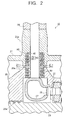
- FIG. 2 is a diagram showing in a magnified fashion a cross section covering from an inlet portion of an outer casing to a nozzle box in the steam turbine of the first embodiment.
- FIG. 3 is a diagram showing an enlarged cross section of seal rings between an inlet sleeve and the outer casing of the steam turbine of the first embodiment.
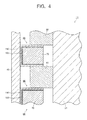
- FIG. 4 is a diagram showing an enlarged cross section of seal rings between an inlet sleeve and an outer casing of the steam turbine of a second embodiment.
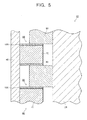
- FIG. 5 is a diagram showing an enlarged cross section of seal rings between an inlet sleeve and an outer casing of the steam turbine of a third embodiment.
- FIG. 6 is a diagram showing an enlarged cross section of seal rings between an inlet sleeve and an outer casing of the steam turbine of a fourth embodiment.
- a steam turbine is provided with annular seal rings between a steam inlet pipe for introducing steam and casings into which the steam inlet pipe is inserted.
- the seal rings include high-temperature side seal rings which are disposed with their inner circumferences contacted to the outer circumference of the steam inlet pipe, and low-temperature side seal rings which are formed to have inner and outer diameters larger than those of the high-temperature side seal rings and disposed with their outer circumferences contacted to the casings.
- a thermal barrier layer is disposed (1) between the inner circumferences of the high-temperature side seal rings and the outer circumference of the steam inlet pipe and between the high-temperature side seal rings and the low-temperature side seal rings, (2) between the high-temperature side seal rings and the low-temperature side seal rings, or (3) between the outer circumferences of the low-temperature side seal rings and the casings.
- FIG. 1 is a diagram showing a meridional cross section of a steam turbine 10 of a first embodiment according to the present invention.
- FIG. 2 is a diagram showing in a magnified fashion a cross section of from an inlet portion 21 a of an outer casing 21 to a nozzle box 27 in the steam turbine 10 of the first embodiment according to the present invention.
- Like component parts corresponding to those of the following embodiments are denoted by like reference numerals, and overlapped descriptions will be omitted or simplified.
- the steam turbine 10 has a double-structured casing which is comprised of an inner casing 20 and the outer casing 21 which is disposed on the outside of it. And, a turbine rotor 23 where moving blades 22 are implanted is disposed through the inner casing 20. This turbine rotor 23 is rotatably supported by rotor bearings 24.
- stationary blades 25 are arranged alternately with the moving blades 22 in the axial direction of the turbine rotor 23.
- Gland labyrinth portions 26a, 26b, 26c and 26d are disposed between the turbine rotor 23 and the individual casings to prevent the steam as the working fluid from leaking outside.
- an inlet portion 20a of the inner casing 20 is provided with a nozzle box 27.
- the nozzle box 27 is disposed between the inner casing 20 and the turbine rotor 23 (namely, an inner portion of the inlet portion 20a of the inner casing 20).
- An outlet portion of the nozzle box 27 is provided with first stage stationary blades 25 (first stage nozzles). Steam supplied to the nozzle box 27 is led to the first stage moving blades 22 through the first stage stationary blades 25.
- An inlet sleeve 40 is disposed between and connected to the inlet portion 21a of the outer casing 21 and the inlet portion 20a of the inner casing 20 and functions as a steam inlet pipe. This inlet sleeve 40 leads the steam, which is from a main steam pipe 28, into the nozzle box 27.
- recesses 50 which are respectively formed of an enlarged bore portion having a bore larger than that of a steam inlet of the outer casing 21, are formed on the side of the inner casing 20 of the inlet portion 21a of the outer casing 21 and on the side of the outer casing 21 of the inlet portion 20a of the inner casing 20.
- the inlet sleeve 40 is inserted into the recesses 50 via a plurality of seal rings 60. It is preferable that the inlet sleeve 40 is configured to have an inner diameter same to or little larger than the bore of the steam inlet of the outer casing 21.
- the inlet sleeve 40 is fixed by being inserted into the recesses 50 via the plurality of seal rings 60 and, for example, suppressed from being moved in the axial direction of the inlet sleeve 40.
- the end portion of the inlet sleeve 40 on the side of the inner casing 20 is a free end and stretchable in the axial direction of the inlet sleeve 40.
- An end portion 21b of the inlet portion 21a of the outer casing 21, which is on the side of the inner casing 20, and an end portion 20b of the inlet portion 20a of the inner casing 20, which is on the side of the outer casing 21, configure the recesses 50 and are removably connected to the respective casings by, for example, bolting or the like.
- the end portion 20b and 21 b are mounted on the outer casing 21 or the inner casing 20 after the inlet sleeve 40 and the seal rings 60 are disposed in the recesses 50. Then, the end portion 20b and 21b are provided to suppress the seal rings 60 from moving in the vertical direction (the axial direction of the inlet sleeve 40).
- the individual seal rings 60 are comprised of a high-temperature side seal ring 70 which is disposed with its inner circumference contacted to the outer circumference of the inlet sleeve 40, and a low-temperature side seal ring 80 which is configured to have its inner diameter and outer diameter larger than those of the high-temperature side seal ring 70 and disposed with its outer circumference contacted to the inner casing 20 or the outer casing 21.
- the high-temperature side seal ring 70 and the low-temperature side seal ring 80 are preferably formed to have, for example, a structure that they are alternately stacked in the axial direction of the inlet sleeve 40. Since the seal rings 60 have a stacked structure, steam can be secured by stopping (sealing) between the inlet sleeve 40 and the inner casing 20 or the outer casing 21.
- the steam turbine 10 is also provided with an exhaust passage 29 which leads steam as a working fluid, which has flown through the steam passage in the inner casing 20 while performing the expansion work and passed through the final stage moving blade 22, from the interior of the inner casing 20 to the outside of the steam turbine 10.
- seal rings 60 The structure of the seal rings 60 is described in detail below.
- FIG. 3 is a diagram showing enlarged cross sections of the seal rings 60 between the inlet sleeve 40 and the outer casing 21 of the steam turbine 10 of the first embodiment according to the invention.
- the structure of the seal rings 60 between the inlet sleeve 40 and the outer casing 21 are shown, but the seal rings 60 between the inlet sleeve 40 and the inner casing 20 also have the same structure.
- a thermal barrier layer 90 is formed between an inner circumference of the high-temperature side seal ring 70 and an outer circumference of the inlet sleeve 40 and between the high-temperature side seal ring 70 and the low-temperature side seal rings 80.
- the thermal barrier layer 90 can be formed of a thermal barrier coating layer 100 which is formed on the inner circumferential surface of the high-temperature side seal ring 70 contacted to the outer circumference of the inlet sleeve 40 and on top and bottom surfaces of the high-temperature side seal ring 70 contacted to the low-temperature side seal rings 80.
- the thermal barrier coating layer 100 is entirely formed on the top and bottom surfaces of the high-temperature side seal ring 70, but the thermal barrier coating layer 100 may be formed on only a portion contacted to the low-temperature side seal ring 80. And, when the high-temperature side seal ring 70 is located at a stacked end portion, the thermal barrier coating layer 100 is formed on one surface, which is contacted to the low-temperature side seal ring 80, between the top and bottom surfaces of the high-temperature side seal ring 70 at the end.
- the thermal barrier coating layer 100 is formed of a material having a thermal conductivity lower than that of the material forming the high-temperature side seal ring 70 and the low-temperature side seal ring 80.
- the thermal barrier coating layer 100 is formed of an oxide material such as zirconia (ZrO 2 ), hafnia (HfO 2 ), ceria (CeO 2 ), titania (TiO 2 ) alumina (Al 2 O 3 ), magnesia (MgO), rare earth zirconate (X 2 Zr 2 O 7 , where X is a rare earth element such as Sc, Y, La, Ce, Pr or Nd).
- the high-temperature side seal ring 70 and the low-temperature side seal ring 80 are formed of, for example, a metallic material such as CrMoV steel or 12Cr. Such a material has a thermal conductivity of, for example, about 25 to 45 W/(m•K).
- the oxide material forming the thermal barrier coating layer 100 has a thermal conductivity of, for example, about 1 to 10 W/(m•K), which is lower than the thermal conductivity of the material forming the high-temperature side seal ring 70 and the low-temperature side seal ring 80.
- rare earth zirconate and hafnia have a low thermal conductivity and a relatively large coefficient of thermal expansion and, therefore, are suitable as the thermal barrier coating layer 100 formed on the surface of the metallic material.
- the thermal barrier coating layer 100 is formed by thermal spraying such as atmospheric plasma spraying, physical vapor deposition, or the like. And, the thermal barrier coating layer 100 may also be formed by a slurry coating method that coats a slurry containing particles of the above-described oxide material, and then sintering. And, the thermal barrier coating layer 100 is preferably formed to have a thickness of about 0.1 mm to 1.0 mm to obtain a thermal barrier effect.
- the thermal barrier coating layer 100 was formed on the top and bottom surfaces of the high-temperature side seal ring 70 as the thermal barrier layer 90 between the high-temperature side seal ring 70 and the low-temperature side seal ring 80, but the thermal barrier coating layer 100 may be formed on the top and bottom surfaces of the low-temperature side seal ring 80.
- the thermal barrier coating layer 100 was formed on the inner circumferential surface of the high-temperature side seal ring 70 as the thermal barrier layer 90 between the inner circumference of the high-temperature side seal ring 70 and the outer circumference of the inlet sleeve 40, but the thermal barrier coating layer 100 may be formed on the outer circumferential surface of the inlet sleeve 40.
- the steam introduced into the steam turbine 10 through the main steam pipe 28 is led into the nozzle box 27 through the inlet sleeve 40.
- the steam led into the nozzle box 27 flows while performing the expansion work through the steam passage between the stationary blades 25 arranged in the inner casing 20 and the moving blades 22 implanted in the turbine rotor 23 to rotate the turbine rotor 23.
- the steam having passed through the final-stage moving blades 22 is exhausted out of the steam turbine 10 through the exhaust passage 29.
- the high temperature steam introduced through the main steam pipe 28 as described above passes through the inlet sleeve 40. At this time, heat is transmitted from the steam to the inlet sleeve 40 by heat transfer. Heat is transmitted from the inlet sleeve 40 to the high-temperature side seal ring 70, which is contacted to the inlet sleeve 40, by heat conduction. But, the heat transfer between them is suppressed because they have the thermal barrier coating layer 100 between them. In addition, since the high-temperature side seal ring 70 and the low-temperature side seal ring 80 also have the thermal barrier coating layer 100 between them, the heat transfer is suppressed.
- the heat transfer from the inlet sleeve 40 to the high-temperature side seal ring 70, the low-temperature side seal ring 80 and the outer casing 21 is suppressed, and the high-temperature side seal ring 70, the low-temperature side seal ring 80 and the outer casing 21 can be suppressed from having a temperature increase. Therefore, even in a case where the steam temperature of the steam turbine 10 is raised to a high temperature, the high-temperature side seal ring 70, the low-temperature side seal ring 80 and the outer casing 21 can be formed of the same material as the conventional material,
- the heat transfer between the inlet sleeve 40 and the inner casing 20 is also same as the above-described heat transfer. That is, the heat transfer to the high-temperature side seal ring 70, the low-temperature side seal ring 80 and the inner casing 20 is suppressed, and the high-temperature side seal ring 70, the low-temperature side seal ring 80 and the inner casing 20 can be suppressed from having a temperature increase. Therefore, even when the steam temperature of the steam turbine 10 is raised to a high temperature, the high-temperature side seal ring 70, the low-temperature side seal ring 80 and the inner casing 20 can be formed of the same material as the conventional one.
- the heat transfer from the inlet sleeve 40 to the outer casing 21 and the inner casing 20 can be suppressed by disposing the thermal barrier layer 90 between the inner circumference of the high-temperature side seal ring 70 and the outer circumference of the inlet sleeve 40 and between the high-temperature side seal ring 70 and the low-temperature side seal ring 80.
- a thermal barrier sheet may be disposed as the thermal barrier layer 90 between the high-temperature side seal ring 70 and the low-temperature side seal ring 80 instead of formation of the thermal barrier coating layer 100 on the top and bottom surfaces of the high-temperature side seal ring 70 or the low-temperature side seal ring 80.
- the thermal barrier sheet is made of a material having a thermal conductivity lower than that of the material forming the high-temperature side seal ring 70 and the low-temperature side seal ring 80.
- alumina fiber, silica fiber, zirconia fiber, hafnia fiber or the like can be used.
- the thermal barrier sheet for example, Almax (a product of Mitsui Mining Co., Ltd.), Nextel (a product of 3M Co.), Altex (a product of Sumitomo Chemical Co., Ltd.), Saffil (a product of Saffil Ltd.), ZY series (a product of Zircar Products, Inc.) can be used.
- the thermal barrier sheet can be produced by a precursor fiberizing method, such as an inorganic salt method, a sol method, a slurry method or a precursor polymer method, that forms fibers of precursors of respective types of materials, and then performs sintering.
- the thermal barrier sheet can be produced by, for example, a melt spinning method or the like that melts a raw material by electrical heating or the like and spreads the resulting melt by a flow of air or a rotating disk.
- Such a thermal barrier sheet has a thermal conductivity of, for example, about 0.1 to 0.5 W/(m•K), which is lower than that of the material forming the high-temperature side seal ring 70 and the low-temperature side seal ring 80.
- the same action and effect as those described above can also be obtained by the structure having the thermal barrier sheet between the high-temperature side seal ring 70 and the low-temperature side seal ring 80.
- the structure of a steam turbine I 1 of a second embodiment according to the invention is same as the structure of the steam turbine 10 of the first embodiment excepting the structure of the seal rings 60 between the inlet sleeve 40 and the inner casing 20 or the outer casing 21. Therefore, the structure of the seal rings 60 having a different structure is mainly described below.
- FIG. 4 is a diagram showing enlarged cross sections of the seal rings 60 between the inlet sleeve 40 and the outer casing 21 of the steam turbine 11 of the second embodiment according to the invention.
- the structure of the seal rings 60 between the inlet sleeve inlet sleeve 40 and the outer casing 21 is shown here, but the structure of the seal rings 60 between the inlet sleeve 40 and the inner casing 20 also has the same structure.
- the thermal barrier coating layer 100 is formed on the inner circumferential surface of the high-temperature side seal ring 70, which is contacted to the outer circumference of the inlet sleeve 40, and on the top and bottom surfaces of the high-temperature side seal ring 70, which are contacted to the low-temperature side seal rings 80.
- the abrasion-resistant coating layer 110 is formed on the surface of the thermal barrier coating layer 100. In other words, the abrasion-resistant coating layer 110 forms the outermost layer.
- the thermal barrier coating layer 100 is same to that of the steam turbine 10 of the first embodiment.
- the above-described oxide material forming the thermal barrier coating layer 100 has a relatively high hardness and can exhibit excellent abrasion resistance against simple sliding, but when it is used for the seal ring, a local impact load is applied by vibration and the like other than sliding. Therefore, the thermal barrier coating layer 100 is defected, possibly decreasing its thickness. Accordingly, the surface of the thermal barrier coating layer 100 is provided with the abrasion-resistant coating layer 110.
- the abrasion-resistant coating layer 110 is preferably formed of a material having abrasion resistance better than the oxide material forming the thermal barrier coating layer 100. Therefore, as a material forming the abrasion-resistant coating layer 110, it is preferable to use, for example, a material containing a compound such as WC or CrC in a metal base, a material forming a hard compound by dispersion of nitrogen or boron into metal by a nitriding treatment or a boriding treatment, or the like.
- cermet WC-X or CrC-X, where X is a metal element and suitably has Ni, Co or the like as a main component
- cermet WC-X or CrC-X, where X is a metal element and suitably has Ni, Co or the like as a main component
- the material forming the hard compound by dispersion of nitrogen or boron into metal by the nitriding treatment or the boriding treatment nitride (TiN, AIN, or Fe 2 -3N), boride (FeB or Fe 2 B) or the like can be used.
- chromia Cr 2 O 3
- diamond like carbon or the like can be used.
- the abrasion-resistant coating layer 110 is formed by thermal spraying, physical vapor deposition, chemical vapor deposition, nitriding treatment, boriding treatment or the like.
- a method of forming the abrasion-resistant coating layer 110 is exemplified specifically.
- the abrasion-resistant material such as cermet among the above-described abrasion-resistant materials is applied on the surface of the thermal barrier coating layer 100 by thermal spraying.
- the abrasion-resistant material is undergone, for example, high-speed flame spraying.
- the surface of the thermal barrier coating layer 100 may also be subjected to a blast treatment to improve the mechanical adhesion of the abrasion-resistant material.
- an intermediate layer of a MCrAlY alloy (M is a metal element having Ni, Co, Fe or the like as a main component) or the like having a coefficient of thermal expansion, which is intermediate between those of the materials forming the thermal barrier coating layer 100 and the abrasion-resistant coating layer 110, may be formed between the thermal barrier coating layer 100 and the abrasion-resistant coating layer 110.
- M is a metal element having Ni, Co, Fe or the like as a main component
- the abrasion-resistant coating layer 110 such as diamond like carbon is formed by physical vapor deposition.
- a metal layer for example, metal having Ni or Co as a main component
- the abrasion-resistant coating layer 110 is formed on the metal layer by nitriding treatment or boriding treatment.
- the nitriding treatment is a method of hardening by exposing to an atmosphere containing ammonia or nitrogen to penetrate nitrogen on the surface.
- the boriding treatment is a method of forming a boride layer by penetrating and spreading boron.
- the abrasion-resistant coating layer 110 is formed to have a thickness of about 0.1 mm to 1.0 mm to maintain the abrasion resistance.
- thermal barrier coating layer 100 and the abrasion-resistant coating layer 110 were formed on the top and bottom surfaces of the high-temperature side seal ring 70 between the high-temperature side seal ring 70 and the low-temperature side seal ring 80 but may be formed on the top and bottom surfaces of the low-temperature side seal ring 80.
- thermal barrier coating layer 100 and the abrasion-resistant coating layer 110 were formed on the inner circumferential surface of the high-temperature side seal ring 70 between the inner circumference of the high-temperature side seal ring 70 and the outer circumference of the inlet sleeve 40, but the thermal barrier coating layer 100 and the abrasion-resistant coating layer 110 may be formed on the outer circumferential surface of the inlet sleeve 40.
- the seal rings 60 can be provided with the abrasion-resistant coating layer 110 to improve the mechanical strength at a contact portion between the inlet sleeve 40 and the high-temperature side seal ring 70 and a contact portion between the high-temperature side seal ring 70 and the low-temperature side seal ring 80.
- the provision of the thermal barrier coating layer 100 can suppress the heat transfer from the inlet sleeve 40 to the outer casing 21 and the inner casing 20.
- the structure of a steam turbine 12 of a third embodiment according to the invention is same to that of the steam turbine 10 of the first embodiment excepting the structure of the seal rings 60 between the inlet sleeve 40 and the inner casing 20 or the outer casing 21. Therefore, the structure of the seal rings 60 having a different structure is mainly described below.
- FIG. 5 is a diagram showing enlarged cross sections of the seal rings 60 between the inlet sleeve 40 and the outer casing 21 in the steam turbine 12 of the third embodiment according to the invention.
- the structure of the seal rings 60 between the inlet sleeve 40 and the outer casing 21 is shown, but the structure of the seal rings 60 between the inlet sleeve 40 and the inner casing 20 also has the same structure.
- the thermal barrier layer 90 is formed between the high-temperature side seal ring 70 and the low-temperature side seal ring 80.
- the thermal barrier layer 90 can be formed of, for example, the thermal barrier coating layer 100 formed on the top and bottom surfaces of the high-temperature side seal ring 70, which are contacted to the low-temperature side seal rings 80.
- the thermal barrier coating layer 100 is entirely formed on the top and bottom surfaces of the high-temperature side seal ring 70, but the thermal barrier coating layer 100 may be formed on only a portion which is contacted to the low-temperature side seal ring 80. And, the thermal barrier coating layer 100 may be formed on the top and bottom surfaces of the low-temperature side seal ring 80, which are contacted to the high-temperature side seal rings 70. And, as the thermal barrier layer 90, a thermal barrier sheet may be formed between the high-temperature side seal ring 70 and the low-temperature side seal ring 80 instead of the formation of the thermal barrier coating layer 100 between them.
- the thermal barrier coating layer 100 and the thermal barrier sheet are same to those of the steam turbine 10 of the first embodiment.
- the high-temperature side seal ring 70 is in direct contact with the inlet sleeve 40, a Ni-base alloy having heat resistance better than metallic materials such as CrMoV steel and 12Cr may be used in addition to such materials depending on the steam temperature.
- the Ni-base alloy has a thermal conductivity of about 10 to 30 W/(m•K). Therefore, the thermal conductivity (for example, about 1 to 10 W/(m•K)) of the oxide material forming the thermal barrier coating layer 100 is lower than that of the material forming the high-temperature side seal ring 70.
- the seal rings 60 When the seal rings 60 are configured as described above, heat is transmitted from the inlet sleeve 40 to the high-temperature side seal ring 70, the low-temperature side seal ring 80 and the outer casing 21 by heat conduction. The heat transfer is suppressed because the thermal barrier coating layer 100 is disposed between the high-temperature side seal ring 70 and the low-temperature side seal ring 80. Thus, the heat transfer from the high-temperature side seal ring 70 to the low-temperature side seal ring 80 and the outer casing 21 is suppressed, and the low-temperature side seal ring 80 and the outer casing 21 can be suppressed from having a temperature increase. Therefore, even when the steam temperature of the steam turbine 10 is raised to a high temperature, at least the low-temperature side seal ring 80 and the outer casing 21 can be formed of the same material as the conventional one.
- the heat transfer between the inlet sleeve 40 and the inner casing 20 is also same to the above-described transmission of heat. That is, the heat transfer to the low-temperature side seal ring 80 and the inner casing 20 is suppressed, and the low-temperature side seal ring 80 and the inner casing 20 can be suppressed from having a temperature increase. Therefore, even when the steam temperature of the steam turbine 10 is raised to a high temperature, at least the low-temperature side seal ring 80 and the inner casing 20 can be formed of the same material as the conventional one.
- the heat transfer from the inlet sleeve 40 to the outer casing 21 and the inner casing 20 can be suppressed by disposing the thermal barrier layer 90 between the high-temperature side seal ring 70 and the low-temperature side seal ring 80.
- the abrasion-resistant coating layer 110 maybe formed on the surface of the above-described thermal barrier coating layer 100 in the same manner as in the second embodiment.
- the heat transfer from the inlet sleeve 40 to the outer casing 21 and the inner casing 20 can be suppressed, and the mechanical strength at a contact portion between the high-temperature side seal ring 70 and the low-temperature side seal ring 80 can also be improved.
- the structure of a steam turbine 13 of a fourth embodiment according to the invention is same to that of the steam turbine 10 of the first embodiment excepting the structure of the seal rings 60 between the inlet sleeve 40 and the inner casing 20 or the outer casing 21. Therefore, the structure of the seal rings 60 having a different structure is mainly described below.
- FIG. 6 is a diagram showing enlarged cross sections of the seal rings 60 between the inlet sleeve 40 and the outer casing 21 of the steam turbine 13 of the fourth embodiment according to the invention.
- the structure of the seal rings 60 between the inlet sleeve 40 and the outer casing 21 is shown, but the structure of the seal rings 60 between the inlet sleeve 40 and the inner casing 20 also has the same structure.
- the thermal barrier layer 90 is formed between the low-temperature side seal ring 80 and the outer casing 21.
- the thermal barrier layer 90 can be formed of the thermal barrier coating layer 140 which is formed on, for example, the outer circumferential surface of the low-temperature side seal ring 80, which is contacted to the outer casing 21.
- the thermal barrier coating layer 100 may be formed on the circumferential surface of the outer casing 21, which is contacted to the low-temperature side seal ring 80.
- the thermal barrier coating layer 100 is same to that of the steam turbine 10 of the first embodiment.
- the high-temperature side seal ring 70 is in direct contact with the inlet sleeve 40, and the low-temperature side seal ring 80 is in direct contact with the high-temperature side seal ring 70. Therefore, the high-temperature side seal ring 70 and the low-temperature side seal ring 80 may be formed of a Ni-base alloy having heat resistance better than metallic materials such as CrMoV steel and 12Cr in addition to such materials depending on the steam temperature.
- the seal rings 60 When the seal rings 60 are configured as described above, heat is transmitted from the inlet sleeve 40 to the high-temperature side seal ring 70, the low-temperature side seal ring 80 and the outer casing 21 by heat conduction. The heat transfer is suppressed because the thermal barrier coating layer 100 is disposed between the low-temperature side seal ring 80 and the outer casing 21. Thus, the heat transfer from the low-temperature side seal ring 80 to the outer casing 21 is suppressed, and the outer casing 21 can be suppressed from having a temperature increase. Therefore, even when the steam temperature of the steam turbine 13 is raised to a high temperature, at least the outer casing 21 can be formed of the same material as the conventional one.
- the heat transfer between the inlet sleeve 40 and the inner casing 20 is also same to the above-described transmission of heat. That is, the heat transfer to the inner casing 20 is suppressed, and the inner casing 20 can be suppressed from having a temperature increase. Therefore, even when the steam temperature of the steam turbine 13 is raised to a high temperature, at least the inner casing 20 can be formed of the same material as the conventional one.
- the heat transfer from the inlet sleeve 40 to the outer casing 21 and the inner casing 20 can be suppressed by disposing the thermal barrier coating layer 100 between the low-temperature side seal ring 80 and the outer casing 21 and between the low-temperature side seal ring 80 and the inner casing 20.
- the abrasion-resistant coating layer 110 may be formed on the surface of the above-described thermal barrier coating layer 100 in the same manner as in the second embodiment.
- the heat transfer from the inlet sleeve 40 to the outer casing 21 and the inner casing 20 can be suppressed, and the mechanical strength at a contact portion between the low-temperature side seal ring 80 and the outer casing 21 and a contact portion between the low-temperature side seal ring 80 and the inner casing 20 can also be improved.
- the seal rings between the inlet sleeve and the casings in the high-pressure turbine provided with the inner casing and the outer casing were described, but it is not exclusive.
- this embodiment can also be applied to between the stationary blades 25 and the inner casing 20, between the inner casing 20 and the outer casing 21, and between the nozzle box 27 and the inner casing 20.
Landscapes
- Engineering & Computer Science (AREA)
- General Engineering & Computer Science (AREA)
- Mechanical Engineering (AREA)
- Turbine Rotor Nozzle Sealing (AREA)
- Gasket Seals (AREA)
Applications Claiming Priority (1)
| Application Number | Priority Date | Filing Date | Title |
|---|---|---|---|
| JP2011065469A JP5558396B2 (ja) | 2011-03-24 | 2011-03-24 | 蒸気タービン |
Publications (3)
| Publication Number | Publication Date |
|---|---|
| EP2503103A2 true EP2503103A2 (de) | 2012-09-26 |
| EP2503103A3 EP2503103A3 (de) | 2017-12-20 |
| EP2503103B1 EP2503103B1 (de) | 2019-04-24 |
Family
ID=45936865
Family Applications (1)
| Application Number | Title | Priority Date | Filing Date |
|---|---|---|---|
| EP12160566.1A Active EP2503103B1 (de) | 2011-03-24 | 2012-03-21 | Dampfturbine |
Country Status (4)
| Country | Link |
|---|---|
| US (1) | US9045993B2 (de) |
| EP (1) | EP2503103B1 (de) |
| JP (1) | JP5558396B2 (de) |
| CN (1) | CN102691530B (de) |
Cited By (1)
| Publication number | Priority date | Publication date | Assignee | Title |
|---|---|---|---|---|
| US12473977B2 (en) | 2022-10-10 | 2025-11-18 | Rtx Corporation | Methods for surface modification of mid-turbine frame piston seal rings and interfacing components to achieve low friction and high wear resistance |
Families Citing this family (13)
| Publication number | Priority date | Publication date | Assignee | Title |
|---|---|---|---|---|
| US9523792B2 (en) | 2011-10-14 | 2016-12-20 | Lg Chem, Ltd. | Polarizer having protection films in two sides and optical device comprising the same |
| JP6000071B2 (ja) | 2012-11-06 | 2016-09-28 | 三菱日立パワーシステムズ株式会社 | 蒸気タービン |
| JP6342320B2 (ja) * | 2014-12-19 | 2018-06-13 | 株式会社東芝 | シール装置、伸縮継手 |
| CN107461493A (zh) * | 2016-06-03 | 2017-12-12 | 上海希伯自控技术有限公司 | 一种金属弹簧蓄能密封圈 |
| CN107701500B (zh) * | 2017-09-30 | 2019-05-24 | 中国航发沈阳发动机研究所 | 可转静子叶片传动密封结构 |
| JP7278685B2 (ja) * | 2019-02-08 | 2023-05-22 | ジヤトコ株式会社 | 動力伝達装置 |
| JP2021076039A (ja) * | 2019-11-06 | 2021-05-20 | 株式会社東芝 | 蒸気タービンケーシング、蒸気タービン、蒸気タービンシステム、蒸気タービンケーシングの予熱方法、および蒸気タービンケーシング予熱制御システム |
| CN110966050B (zh) * | 2019-12-20 | 2022-05-10 | 东方电气集团东方汽轮机有限公司 | 一种汽轮机进汽插管密封连接结构 |
| US11436534B2 (en) | 2020-05-20 | 2022-09-06 | Bank Of America Corporation | Distributed artificial intelligence model |
| US11727306B2 (en) | 2020-05-20 | 2023-08-15 | Bank Of America Corporation | Distributed artificial intelligence model with deception nodes |
| CN112901285B (zh) * | 2021-01-27 | 2023-03-03 | 中国电建集团四川工程有限公司 | 一种密封高压汽轮机的密封装置以及拆除方法 |
| CN115405378A (zh) * | 2022-09-29 | 2022-11-29 | 哈尔滨汽轮机厂有限责任公司 | 一种60mw汽轮机用阀门汽缸一体的进汽结构 |
| EP4563791A1 (de) * | 2023-11-30 | 2025-06-04 | Industria de Turbo Propulsores, S.A.U. | Dichtring |
Family Cites Families (16)
| Publication number | Priority date | Publication date | Assignee | Title |
|---|---|---|---|---|
| GB1388682A (en) * | 1971-03-05 | 1975-03-26 | Srm Hydromekanik Ab | Seal arrangement |
| JPH0674722B2 (ja) * | 1984-10-15 | 1994-09-21 | 株式会社日立製作所 | 蒸気タ−ビンの蒸気導入部構造 |
| US4850794A (en) * | 1987-08-14 | 1989-07-25 | Westinghouse Electric Corp. | Hardfacing technique and improved construction for inlet steam sealing surfaces of steam turbines |
| US5037115A (en) * | 1989-09-11 | 1991-08-06 | Brandon Ronald E | Piston ring assemblies for high temperature seals |
| US5169674A (en) * | 1990-10-23 | 1992-12-08 | The United States Of America As Represented By The Administrator Of The National Aeronautics And Space Administration | Method of applying a thermal barrier coating system to a substrate |
| JPH07158408A (ja) * | 1993-12-08 | 1995-06-20 | Toshiba Corp | 蒸気タービンの入口管装置 |
| US5433453A (en) * | 1994-03-02 | 1995-07-18 | Imo Industries, Inc. Quabbin Division | Articulated snout rings having spaced teeth |
| US5628617A (en) * | 1996-08-12 | 1997-05-13 | Demag Delavel Turbomachinery Corp. Turbocare Division | Expanding bell seal |
| JPH11229817A (ja) | 1998-02-09 | 1999-08-24 | Hitachi Ltd | 蒸気タービンの主蒸気管冷却装置及び蒸気タービン発電プラント |
| JP2001271608A (ja) | 2000-03-27 | 2001-10-05 | Mitsubishi Heavy Ind Ltd | タービン蒸気入口部用スタックリング |
| US6910853B2 (en) * | 2002-11-27 | 2005-06-28 | General Electric Company | Structures for attaching or sealing a space between components having different coefficients or rates of thermal expansion |
| JP2009127515A (ja) * | 2007-11-22 | 2009-06-11 | Toshiba Corp | 高温蒸気タービン |
| JP5433183B2 (ja) * | 2008-08-07 | 2014-03-05 | 株式会社東芝 | 蒸気タービンおよび蒸気タービンプラントシステム |
| US8470460B2 (en) * | 2008-11-25 | 2013-06-25 | Rolls-Royce Corporation | Multilayer thermal barrier coatings |
| JP5395574B2 (ja) | 2008-11-27 | 2014-01-22 | 株式会社東芝 | 蒸気機器 |
| JP5317814B2 (ja) * | 2009-04-27 | 2013-10-16 | 株式会社東芝 | 蒸気タービン |
-
2011
- 2011-03-24 JP JP2011065469A patent/JP5558396B2/ja not_active Expired - Fee Related
-
2012
- 2012-03-15 US US13/421,569 patent/US9045993B2/en active Active
- 2012-03-21 EP EP12160566.1A patent/EP2503103B1/de active Active
- 2012-03-23 CN CN201210080580.0A patent/CN102691530B/zh active Active
Non-Patent Citations (1)
| Title |
|---|
| None |
Cited By (1)
| Publication number | Priority date | Publication date | Assignee | Title |
|---|---|---|---|---|
| US12473977B2 (en) | 2022-10-10 | 2025-11-18 | Rtx Corporation | Methods for surface modification of mid-turbine frame piston seal rings and interfacing components to achieve low friction and high wear resistance |
Also Published As
| Publication number | Publication date |
|---|---|
| EP2503103B1 (de) | 2019-04-24 |
| US20120243978A1 (en) | 2012-09-27 |
| CN102691530B (zh) | 2015-03-25 |
| EP2503103A3 (de) | 2017-12-20 |
| CN102691530A (zh) | 2012-09-26 |
| US9045993B2 (en) | 2015-06-02 |
| JP2012202246A (ja) | 2012-10-22 |
| JP5558396B2 (ja) | 2014-07-23 |
Similar Documents
| Publication | Publication Date | Title |
|---|---|---|
| US9045993B2 (en) | Steam turbine | |
| US9718735B2 (en) | CMC turbine components and methods of forming CMC turbine components | |
| EP2615250B1 (de) | Mit Endlosfasern verstärkte Bindungsschicht für ein Oxidationsschutzschichtsystem | |
| EP3037394A1 (de) | Umgebungssperrbeschichtung mit abreibbarer beschichtung für keramische verbundwerkstoffe | |
| EP2644747A2 (de) | Faserverstärkte Barriereschicht, Verfahren zur Anwendung der Barriereschicht auf eine Komponente und Turbomaschinenkomponente | |
| JP6979751B2 (ja) | タービン構成要素 | |
| US11174557B2 (en) | Thermal barrier coating system compatible with overlay | |
| US12351531B2 (en) | Protective coating for ceramic matrix composites | |
| US11407688B2 (en) | Coating structure, turbine part having same, and method for manufacturing coating structure | |
| US20100327535A1 (en) | Fiber seal for ceramic matrix composite components | |
| CN104487612B (zh) | 具有多孔钨青铜结构底层的热障涂层系统 | |
| JP2017218635A (ja) | 遮熱コーティング、タービン部材およびガスタービン | |
| CN108534178A (zh) | 用于穿透cmc衬套的构件的密封组件 | |
| EP2540973A1 (de) | Dichtungssystem für eine Gasturbine | |
| US20180087387A1 (en) | Compositions and methods for coating metal turbine blade tips | |
| CN1320257C (zh) | 用以密封间隙的密封件和具有密封件的燃气轮机 | |
| CN105452530A (zh) | 高孔隙度可磨耗涂层 | |
| US20180340687A1 (en) | Refractory ceramic component for a gas turbine engine | |
| US20130330203A1 (en) | Method for producing a protective layer for a rotor blade | |
| US20150093237A1 (en) | Ceramic matrix composite component, turbine system and fabrication process | |
| Noor et al. | Review on ceramic application in automotive turbocharged engines | |
| RU2573542C1 (ru) | Металлические волокна из жаростойкого сплава (варианты) и изделие, выполненное из металлических волокон | |
| US20140037971A1 (en) | Reinforced articles and methods of making the same | |
| US20160146042A1 (en) | Gas turbine and heat shield for a gas turbine | |
| CN110475944A (zh) | 气体涡轮部件及其装配方法 |
Legal Events
| Date | Code | Title | Description |
|---|---|---|---|
| PUAI | Public reference made under article 153(3) epc to a published international application that has entered the european phase |
Free format text: ORIGINAL CODE: 0009012 |
|
| 17P | Request for examination filed |
Effective date: 20120321 |
|
| AK | Designated contracting states |
Kind code of ref document: A2 Designated state(s): AL AT BE BG CH CY CZ DE DK EE ES FI FR GB GR HR HU IE IS IT LI LT LU LV MC MK MT NL NO PL PT RO RS SE SI SK SM TR |
|
| AX | Request for extension of the european patent |
Extension state: BA ME |
|
| PUAL | Search report despatched |
Free format text: ORIGINAL CODE: 0009013 |
|
| AK | Designated contracting states |
Kind code of ref document: A3 Designated state(s): AL AT BE BG CH CY CZ DE DK EE ES FI FR GB GR HR HU IE IS IT LI LT LU LV MC MK MT NL NO PL PT RO RS SE SI SK SM TR |
|
| AX | Request for extension of the european patent |
Extension state: BA ME |
|
| RIC1 | Information provided on ipc code assigned before grant |
Ipc: F16J 15/06 20060101ALI20171116BHEP Ipc: F01D 11/00 20060101AFI20171116BHEP Ipc: F01D 9/04 20060101ALI20171116BHEP Ipc: F02C 7/28 20060101ALI20171116BHEP Ipc: F16J 15/08 20060101ALI20171116BHEP Ipc: F01D 9/06 20060101ALI20171116BHEP Ipc: F01D 25/26 20060101ALI20171116BHEP |
|
| GRAP | Despatch of communication of intention to grant a patent |
Free format text: ORIGINAL CODE: EPIDOSNIGR1 |
|
| STAA | Information on the status of an ep patent application or granted ep patent |
Free format text: STATUS: GRANT OF PATENT IS INTENDED |
|
| INTG | Intention to grant announced |
Effective date: 20180724 |
|
| GRAJ | Information related to disapproval of communication of intention to grant by the applicant or resumption of examination proceedings by the epo deleted |
Free format text: ORIGINAL CODE: EPIDOSDIGR1 |
|
| STAA | Information on the status of an ep patent application or granted ep patent |
Free format text: STATUS: REQUEST FOR EXAMINATION WAS MADE |
|
| GRAP | Despatch of communication of intention to grant a patent |
Free format text: ORIGINAL CODE: EPIDOSNIGR1 |
|
| STAA | Information on the status of an ep patent application or granted ep patent |
Free format text: STATUS: GRANT OF PATENT IS INTENDED |
|
| INTC | Intention to grant announced (deleted) | ||
| INTG | Intention to grant announced |
Effective date: 20181119 |
|
| GRAS | Grant fee paid |
Free format text: ORIGINAL CODE: EPIDOSNIGR3 |
|
| GRAA | (expected) grant |
Free format text: ORIGINAL CODE: 0009210 |
|
| STAA | Information on the status of an ep patent application or granted ep patent |
Free format text: STATUS: THE PATENT HAS BEEN GRANTED |
|
| AK | Designated contracting states |
Kind code of ref document: B1 Designated state(s): AL AT BE BG CH CY CZ DE DK EE ES FI FR GB GR HR HU IE IS IT LI LT LU LV MC MK MT NL NO PL PT RO RS SE SI SK SM TR |
|
| REG | Reference to a national code |
Ref country code: GB Ref legal event code: FG4D |
|
| REG | Reference to a national code |
Ref country code: CH Ref legal event code: EP |
|
| REG | Reference to a national code |
Ref country code: CH Ref legal event code: NV Representative=s name: VALIPAT S.A. C/O BOVARD SA NEUCHATEL, CH Ref country code: AT Ref legal event code: REF Ref document number: 1124417 Country of ref document: AT Kind code of ref document: T Effective date: 20190515 Ref country code: IE Ref legal event code: FG4D |
|
| REG | Reference to a national code |
Ref country code: DE Ref legal event code: R096 Ref document number: 602012059260 Country of ref document: DE |
|
| REG | Reference to a national code |
Ref country code: NL Ref legal event code: MP Effective date: 20190424 |
|
| REG | Reference to a national code |
Ref country code: LT Ref legal event code: MG4D |
|
| PG25 | Lapsed in a contracting state [announced via postgrant information from national office to epo] |
Ref country code: NL Free format text: LAPSE BECAUSE OF FAILURE TO SUBMIT A TRANSLATION OF THE DESCRIPTION OR TO PAY THE FEE WITHIN THE PRESCRIBED TIME-LIMIT Effective date: 20190424 |
|
| PG25 | Lapsed in a contracting state [announced via postgrant information from national office to epo] |
Ref country code: FI Free format text: LAPSE BECAUSE OF FAILURE TO SUBMIT A TRANSLATION OF THE DESCRIPTION OR TO PAY THE FEE WITHIN THE PRESCRIBED TIME-LIMIT Effective date: 20190424 Ref country code: HR Free format text: LAPSE BECAUSE OF FAILURE TO SUBMIT A TRANSLATION OF THE DESCRIPTION OR TO PAY THE FEE WITHIN THE PRESCRIBED TIME-LIMIT Effective date: 20190424 Ref country code: AL Free format text: LAPSE BECAUSE OF FAILURE TO SUBMIT A TRANSLATION OF THE DESCRIPTION OR TO PAY THE FEE WITHIN THE PRESCRIBED TIME-LIMIT Effective date: 20190424 Ref country code: NO Free format text: LAPSE BECAUSE OF FAILURE TO SUBMIT A TRANSLATION OF THE DESCRIPTION OR TO PAY THE FEE WITHIN THE PRESCRIBED TIME-LIMIT Effective date: 20190724 Ref country code: PT Free format text: LAPSE BECAUSE OF FAILURE TO SUBMIT A TRANSLATION OF THE DESCRIPTION OR TO PAY THE FEE WITHIN THE PRESCRIBED TIME-LIMIT Effective date: 20190824 Ref country code: SE Free format text: LAPSE BECAUSE OF FAILURE TO SUBMIT A TRANSLATION OF THE DESCRIPTION OR TO PAY THE FEE WITHIN THE PRESCRIBED TIME-LIMIT Effective date: 20190424 Ref country code: ES Free format text: LAPSE BECAUSE OF FAILURE TO SUBMIT A TRANSLATION OF THE DESCRIPTION OR TO PAY THE FEE WITHIN THE PRESCRIBED TIME-LIMIT Effective date: 20190424 Ref country code: LT Free format text: LAPSE BECAUSE OF FAILURE TO SUBMIT A TRANSLATION OF THE DESCRIPTION OR TO PAY THE FEE WITHIN THE PRESCRIBED TIME-LIMIT Effective date: 20190424 |
|
| PG25 | Lapsed in a contracting state [announced via postgrant information from national office to epo] |
Ref country code: RS Free format text: LAPSE BECAUSE OF FAILURE TO SUBMIT A TRANSLATION OF THE DESCRIPTION OR TO PAY THE FEE WITHIN THE PRESCRIBED TIME-LIMIT Effective date: 20190424 Ref country code: BG Free format text: LAPSE BECAUSE OF FAILURE TO SUBMIT A TRANSLATION OF THE DESCRIPTION OR TO PAY THE FEE WITHIN THE PRESCRIBED TIME-LIMIT Effective date: 20190724 Ref country code: LV Free format text: LAPSE BECAUSE OF FAILURE TO SUBMIT A TRANSLATION OF THE DESCRIPTION OR TO PAY THE FEE WITHIN THE PRESCRIBED TIME-LIMIT Effective date: 20190424 Ref country code: GR Free format text: LAPSE BECAUSE OF FAILURE TO SUBMIT A TRANSLATION OF THE DESCRIPTION OR TO PAY THE FEE WITHIN THE PRESCRIBED TIME-LIMIT Effective date: 20190725 Ref country code: PL Free format text: LAPSE BECAUSE OF FAILURE TO SUBMIT A TRANSLATION OF THE DESCRIPTION OR TO PAY THE FEE WITHIN THE PRESCRIBED TIME-LIMIT Effective date: 20190424 |
|
| REG | Reference to a national code |
Ref country code: AT Ref legal event code: MK05 Ref document number: 1124417 Country of ref document: AT Kind code of ref document: T Effective date: 20190424 |
|
| PG25 | Lapsed in a contracting state [announced via postgrant information from national office to epo] |
Ref country code: IS Free format text: LAPSE BECAUSE OF FAILURE TO SUBMIT A TRANSLATION OF THE DESCRIPTION OR TO PAY THE FEE WITHIN THE PRESCRIBED TIME-LIMIT Effective date: 20190824 |
|
| REG | Reference to a national code |
Ref country code: DE Ref legal event code: R097 Ref document number: 602012059260 Country of ref document: DE |
|
| PG25 | Lapsed in a contracting state [announced via postgrant information from national office to epo] |
Ref country code: SK Free format text: LAPSE BECAUSE OF FAILURE TO SUBMIT A TRANSLATION OF THE DESCRIPTION OR TO PAY THE FEE WITHIN THE PRESCRIBED TIME-LIMIT Effective date: 20190424 Ref country code: RO Free format text: LAPSE BECAUSE OF FAILURE TO SUBMIT A TRANSLATION OF THE DESCRIPTION OR TO PAY THE FEE WITHIN THE PRESCRIBED TIME-LIMIT Effective date: 20190424 Ref country code: EE Free format text: LAPSE BECAUSE OF FAILURE TO SUBMIT A TRANSLATION OF THE DESCRIPTION OR TO PAY THE FEE WITHIN THE PRESCRIBED TIME-LIMIT Effective date: 20190424 Ref country code: DK Free format text: LAPSE BECAUSE OF FAILURE TO SUBMIT A TRANSLATION OF THE DESCRIPTION OR TO PAY THE FEE WITHIN THE PRESCRIBED TIME-LIMIT Effective date: 20190424 Ref country code: AT Free format text: LAPSE BECAUSE OF FAILURE TO SUBMIT A TRANSLATION OF THE DESCRIPTION OR TO PAY THE FEE WITHIN THE PRESCRIBED TIME-LIMIT Effective date: 20190424 Ref country code: CZ Free format text: LAPSE BECAUSE OF FAILURE TO SUBMIT A TRANSLATION OF THE DESCRIPTION OR TO PAY THE FEE WITHIN THE PRESCRIBED TIME-LIMIT Effective date: 20190424 |
|
| PG25 | Lapsed in a contracting state [announced via postgrant information from national office to epo] |
Ref country code: IT Free format text: LAPSE BECAUSE OF FAILURE TO SUBMIT A TRANSLATION OF THE DESCRIPTION OR TO PAY THE FEE WITHIN THE PRESCRIBED TIME-LIMIT Effective date: 20190424 Ref country code: SM Free format text: LAPSE BECAUSE OF FAILURE TO SUBMIT A TRANSLATION OF THE DESCRIPTION OR TO PAY THE FEE WITHIN THE PRESCRIBED TIME-LIMIT Effective date: 20190424 |
|
| PLBE | No opposition filed within time limit |
Free format text: ORIGINAL CODE: 0009261 |
|
| STAA | Information on the status of an ep patent application or granted ep patent |
Free format text: STATUS: NO OPPOSITION FILED WITHIN TIME LIMIT |
|
| PG25 | Lapsed in a contracting state [announced via postgrant information from national office to epo] |
Ref country code: TR Free format text: LAPSE BECAUSE OF FAILURE TO SUBMIT A TRANSLATION OF THE DESCRIPTION OR TO PAY THE FEE WITHIN THE PRESCRIBED TIME-LIMIT Effective date: 20190424 |
|
| 26N | No opposition filed |
Effective date: 20200127 |
|
| PG25 | Lapsed in a contracting state [announced via postgrant information from national office to epo] |
Ref country code: SI Free format text: LAPSE BECAUSE OF FAILURE TO SUBMIT A TRANSLATION OF THE DESCRIPTION OR TO PAY THE FEE WITHIN THE PRESCRIBED TIME-LIMIT Effective date: 20190424 |
|
| PG25 | Lapsed in a contracting state [announced via postgrant information from national office to epo] |
Ref country code: MC Free format text: LAPSE BECAUSE OF FAILURE TO SUBMIT A TRANSLATION OF THE DESCRIPTION OR TO PAY THE FEE WITHIN THE PRESCRIBED TIME-LIMIT Effective date: 20190424 |
|
| REG | Reference to a national code |
Ref country code: BE Ref legal event code: MM Effective date: 20200331 |
|
| PG25 | Lapsed in a contracting state [announced via postgrant information from national office to epo] |
Ref country code: LU Free format text: LAPSE BECAUSE OF NON-PAYMENT OF DUE FEES Effective date: 20200321 |
|
| PG25 | Lapsed in a contracting state [announced via postgrant information from national office to epo] |
Ref country code: IE Free format text: LAPSE BECAUSE OF NON-PAYMENT OF DUE FEES Effective date: 20200321 Ref country code: FR Free format text: LAPSE BECAUSE OF NON-PAYMENT OF DUE FEES Effective date: 20200331 |
|
| PG25 | Lapsed in a contracting state [announced via postgrant information from national office to epo] |
Ref country code: BE Free format text: LAPSE BECAUSE OF NON-PAYMENT OF DUE FEES Effective date: 20200331 |
|
| GBPC | Gb: european patent ceased through non-payment of renewal fee |
Effective date: 20200321 |
|
| PG25 | Lapsed in a contracting state [announced via postgrant information from national office to epo] |
Ref country code: GB Free format text: LAPSE BECAUSE OF NON-PAYMENT OF DUE FEES Effective date: 20200321 |
|
| PG25 | Lapsed in a contracting state [announced via postgrant information from national office to epo] |
Ref country code: MT Free format text: LAPSE BECAUSE OF FAILURE TO SUBMIT A TRANSLATION OF THE DESCRIPTION OR TO PAY THE FEE WITHIN THE PRESCRIBED TIME-LIMIT Effective date: 20190424 Ref country code: CY Free format text: LAPSE BECAUSE OF FAILURE TO SUBMIT A TRANSLATION OF THE DESCRIPTION OR TO PAY THE FEE WITHIN THE PRESCRIBED TIME-LIMIT Effective date: 20190424 |
|
| PG25 | Lapsed in a contracting state [announced via postgrant information from national office to epo] |
Ref country code: MK Free format text: LAPSE BECAUSE OF FAILURE TO SUBMIT A TRANSLATION OF THE DESCRIPTION OR TO PAY THE FEE WITHIN THE PRESCRIBED TIME-LIMIT Effective date: 20190424 |
|
| PGFP | Annual fee paid to national office [announced via postgrant information from national office to epo] |
Ref country code: DE Payment date: 20231229 Year of fee payment: 13 |
|
| PGFP | Annual fee paid to national office [announced via postgrant information from national office to epo] |
Ref country code: CH Payment date: 20240401 Year of fee payment: 13 |
|
| REG | Reference to a national code |
Ref country code: DE Ref legal event code: R119 Ref document number: 602012059260 Country of ref document: DE |
|
| REG | Reference to a national code |
Ref country code: CH Ref legal event code: H13 Free format text: ST27 STATUS EVENT CODE: U-0-0-H10-H13 (AS PROVIDED BY THE NATIONAL OFFICE) Effective date: 20251023 |
|
| PG25 | Lapsed in a contracting state [announced via postgrant information from national office to epo] |
Ref country code: DE Free format text: LAPSE BECAUSE OF NON-PAYMENT OF DUE FEES Effective date: 20251001 |
|
| PG25 | Lapsed in a contracting state [announced via postgrant information from national office to epo] |
Ref country code: CH Free format text: LAPSE BECAUSE OF NON-PAYMENT OF DUE FEES Effective date: 20250331 |