EP2501829B1 - Improved fatigue-resistant nitinol instrument - Google Patents
Improved fatigue-resistant nitinol instrument Download PDFInfo
- Publication number
- EP2501829B1 EP2501829B1 EP10832092.0A EP10832092A EP2501829B1 EP 2501829 B1 EP2501829 B1 EP 2501829B1 EP 10832092 A EP10832092 A EP 10832092A EP 2501829 B1 EP2501829 B1 EP 2501829B1
- Authority
- EP
- European Patent Office
- Prior art keywords
- instrument
- nickel
- range
- temperature
- titanium alloy
- Prior art date
- Legal status (The legal status is an assumption and is not a legal conclusion. Google has not performed a legal analysis and makes no representation as to the accuracy of the status listed.)
- Active
Links
- 229910001000 nickel titanium Inorganic materials 0.000 title claims description 72
- HLXZNVUGXRDIFK-UHFFFAOYSA-N nickel titanium Chemical compound [Ti].[Ti].[Ti].[Ti].[Ti].[Ti].[Ti].[Ti].[Ti].[Ti].[Ti].[Ni].[Ni].[Ni].[Ni].[Ni].[Ni].[Ni].[Ni].[Ni].[Ni].[Ni].[Ni].[Ni].[Ni] HLXZNVUGXRDIFK-UHFFFAOYSA-N 0.000 title description 55
- 229910000734 martensite Inorganic materials 0.000 claims description 51
- 238000000034 method Methods 0.000 claims description 45
- 229910001566 austenite Inorganic materials 0.000 claims description 42
- 239000000956 alloy Substances 0.000 claims description 37
- PXHVJJICTQNCMI-UHFFFAOYSA-N Nickel Chemical compound [Ni] PXHVJJICTQNCMI-UHFFFAOYSA-N 0.000 claims description 36
- 229910052759 nickel Inorganic materials 0.000 claims description 16
- 238000003754 machining Methods 0.000 claims description 11
- 238000005482 strain hardening Methods 0.000 claims description 11
- 239000010936 titanium Substances 0.000 claims description 11
- 238000004519 manufacturing process Methods 0.000 claims description 9
- 239000000203 mixture Substances 0.000 claims description 9
- 229910052719 titanium Inorganic materials 0.000 claims description 9
- 239000011573 trace mineral Substances 0.000 claims description 9
- 235000013619 trace mineral Nutrition 0.000 claims description 9
- RTAQQCXQSZGOHL-UHFFFAOYSA-N Titanium Chemical compound [Ti] RTAQQCXQSZGOHL-UHFFFAOYSA-N 0.000 claims description 8
- 238000005382 thermal cycling Methods 0.000 claims description 7
- 230000002441 reversible effect Effects 0.000 claims description 4
- HZEWFHLRYVTOIW-UHFFFAOYSA-N [Ti].[Ni] Chemical compound [Ti].[Ni] HZEWFHLRYVTOIW-UHFFFAOYSA-N 0.000 claims description 2
- 229910045601 alloy Inorganic materials 0.000 description 36
- 230000008569 process Effects 0.000 description 29
- 239000000463 material Substances 0.000 description 15
- 125000004122 cyclic group Chemical group 0.000 description 12
- RVTZCBVAJQQJTK-UHFFFAOYSA-N oxygen(2-);zirconium(4+) Chemical compound [O-2].[O-2].[Zr+4] RVTZCBVAJQQJTK-UHFFFAOYSA-N 0.000 description 10
- 230000009466 transformation Effects 0.000 description 8
- 230000007704 transition Effects 0.000 description 6
- 210000004262 dental pulp cavity Anatomy 0.000 description 5
- 230000001351 cycling effect Effects 0.000 description 4
- 238000000227 grinding Methods 0.000 description 3
- 238000012360 testing method Methods 0.000 description 3
- 238000005452 bending Methods 0.000 description 2
- 230000008901 benefit Effects 0.000 description 2
- 230000008859 change Effects 0.000 description 2
- 239000011651 chromium Substances 0.000 description 2
- 239000010949 copper Substances 0.000 description 2
- 238000005520 cutting process Methods 0.000 description 2
- 230000001419 dependent effect Effects 0.000 description 2
- 230000000694 effects Effects 0.000 description 2
- 230000001747 exhibiting effect Effects 0.000 description 2
- 238000010438 heat treatment Methods 0.000 description 2
- 230000004044 response Effects 0.000 description 2
- 238000000926 separation method Methods 0.000 description 2
- 238000000844 transformation Methods 0.000 description 2
- OKTJSMMVPCPJKN-UHFFFAOYSA-N Carbon Chemical compound [C] OKTJSMMVPCPJKN-UHFFFAOYSA-N 0.000 description 1
- VYZAMTAEIAYCRO-UHFFFAOYSA-N Chromium Chemical compound [Cr] VYZAMTAEIAYCRO-UHFFFAOYSA-N 0.000 description 1
- RYGMFSIKBFXOCR-UHFFFAOYSA-N Copper Chemical compound [Cu] RYGMFSIKBFXOCR-UHFFFAOYSA-N 0.000 description 1
- UFHFLCQGNIYNRP-UHFFFAOYSA-N Hydrogen Chemical compound [H][H] UFHFLCQGNIYNRP-UHFFFAOYSA-N 0.000 description 1
- XEEYBQQBJWHFJM-UHFFFAOYSA-N Iron Chemical compound [Fe] XEEYBQQBJWHFJM-UHFFFAOYSA-N 0.000 description 1
- 229910000990 Ni alloy Inorganic materials 0.000 description 1
- 229910001069 Ti alloy Inorganic materials 0.000 description 1
- 238000000137 annealing Methods 0.000 description 1
- QVGXLLKOCUKJST-UHFFFAOYSA-N atomic oxygen Chemical compound [O] QVGXLLKOCUKJST-UHFFFAOYSA-N 0.000 description 1
- 230000036760 body temperature Effects 0.000 description 1
- 229910052799 carbon Inorganic materials 0.000 description 1
- 230000015556 catabolic process Effects 0.000 description 1
- 229910052804 chromium Inorganic materials 0.000 description 1
- 239000010941 cobalt Substances 0.000 description 1
- 229910017052 cobalt Inorganic materials 0.000 description 1
- GUTLYIVDDKVIGB-UHFFFAOYSA-N cobalt atom Chemical compound [Co] GUTLYIVDDKVIGB-UHFFFAOYSA-N 0.000 description 1
- 238000001816 cooling Methods 0.000 description 1
- 229910052802 copper Inorganic materials 0.000 description 1
- 239000013078 crystal Substances 0.000 description 1
- 230000007547 defect Effects 0.000 description 1
- 238000006731 degradation reaction Methods 0.000 description 1
- 230000006870 function Effects 0.000 description 1
- 229910052739 hydrogen Inorganic materials 0.000 description 1
- 239000001257 hydrogen Substances 0.000 description 1
- 230000001939 inductive effect Effects 0.000 description 1
- 230000007774 longterm Effects 0.000 description 1
- 229910052751 metal Inorganic materials 0.000 description 1
- 239000002184 metal Substances 0.000 description 1
- 229910052760 oxygen Inorganic materials 0.000 description 1
- 239000001301 oxygen Substances 0.000 description 1
- 230000000704 physical effect Effects 0.000 description 1
- 238000002360 preparation method Methods 0.000 description 1
- 230000009467 reduction Effects 0.000 description 1
- 239000010935 stainless steel Substances 0.000 description 1
- 229910001220 stainless steel Inorganic materials 0.000 description 1
- 239000007858 starting material Substances 0.000 description 1
- 238000002560 therapeutic procedure Methods 0.000 description 1
Images


Classifications
-
- C—CHEMISTRY; METALLURGY
- C21—METALLURGY OF IRON
- C21D—MODIFYING THE PHYSICAL STRUCTURE OF FERROUS METALS; GENERAL DEVICES FOR HEAT TREATMENT OF FERROUS OR NON-FERROUS METALS OR ALLOYS; MAKING METAL MALLEABLE, e.g. BY DECARBURISATION OR TEMPERING
- C21D1/00—General methods or devices for heat treatment, e.g. annealing, hardening, quenching or tempering
- C21D1/26—Methods of annealing
-
- B—PERFORMING OPERATIONS; TRANSPORTING
- B21—MECHANICAL METAL-WORKING WITHOUT ESSENTIALLY REMOVING MATERIAL; PUNCHING METAL
- B21K—MAKING FORGED OR PRESSED METAL PRODUCTS, e.g. HORSE-SHOES, RIVETS, BOLTS OR WHEELS
- B21K5/00—Making tools or tool parts, e.g. pliers
- B21K5/02—Making tools or tool parts, e.g. pliers drilling-tools or other for making or working on holes
-
- A—HUMAN NECESSITIES
- A61—MEDICAL OR VETERINARY SCIENCE; HYGIENE
- A61C—DENTISTRY; APPARATUS OR METHODS FOR ORAL OR DENTAL HYGIENE
- A61C5/00—Filling or capping teeth
- A61C5/40—Implements for surgical treatment of the roots or nerves of the teeth; Nerve needles; Methods or instruments for medication of the roots
- A61C5/42—Files for root canals; Handgrips or guiding means therefor
-
- C—CHEMISTRY; METALLURGY
- C21—METALLURGY OF IRON
- C21D—MODIFYING THE PHYSICAL STRUCTURE OF FERROUS METALS; GENERAL DEVICES FOR HEAT TREATMENT OF FERROUS OR NON-FERROUS METALS OR ALLOYS; MAKING METAL MALLEABLE, e.g. BY DECARBURISATION OR TEMPERING
- C21D9/00—Heat treatment, e.g. annealing, hardening, quenching or tempering, adapted for particular articles; Furnaces therefor
- C21D9/0068—Heat treatment, e.g. annealing, hardening, quenching or tempering, adapted for particular articles; Furnaces therefor for particular articles not mentioned below
-
- C—CHEMISTRY; METALLURGY
- C21—METALLURGY OF IRON
- C21D—MODIFYING THE PHYSICAL STRUCTURE OF FERROUS METALS; GENERAL DEVICES FOR HEAT TREATMENT OF FERROUS OR NON-FERROUS METALS OR ALLOYS; MAKING METAL MALLEABLE, e.g. BY DECARBURISATION OR TEMPERING
- C21D9/00—Heat treatment, e.g. annealing, hardening, quenching or tempering, adapted for particular articles; Furnaces therefor
- C21D9/52—Heat treatment, e.g. annealing, hardening, quenching or tempering, adapted for particular articles; Furnaces therefor for wires; for strips ; for rods of unlimited length
- C21D9/54—Furnaces for treating strips or wire
- C21D9/56—Continuous furnaces for strip or wire
-
- C—CHEMISTRY; METALLURGY
- C22—METALLURGY; FERROUS OR NON-FERROUS ALLOYS; TREATMENT OF ALLOYS OR NON-FERROUS METALS
- C22C—ALLOYS
- C22C19/00—Alloys based on nickel or cobalt
- C22C19/03—Alloys based on nickel or cobalt based on nickel
-
- C—CHEMISTRY; METALLURGY
- C22—METALLURGY; FERROUS OR NON-FERROUS ALLOYS; TREATMENT OF ALLOYS OR NON-FERROUS METALS
- C22F—CHANGING THE PHYSICAL STRUCTURE OF NON-FERROUS METALS AND NON-FERROUS ALLOYS
- C22F1/00—Changing the physical structure of non-ferrous metals or alloys by heat treatment or by hot or cold working
- C22F1/006—Resulting in heat recoverable alloys with a memory effect
-
- C—CHEMISTRY; METALLURGY
- C22—METALLURGY; FERROUS OR NON-FERROUS ALLOYS; TREATMENT OF ALLOYS OR NON-FERROUS METALS
- C22F—CHANGING THE PHYSICAL STRUCTURE OF NON-FERROUS METALS AND NON-FERROUS ALLOYS
- C22F1/00—Changing the physical structure of non-ferrous metals or alloys by heat treatment or by hot or cold working
- C22F1/10—Changing the physical structure of non-ferrous metals or alloys by heat treatment or by hot or cold working of nickel or cobalt or alloys based thereon
-
- A—HUMAN NECESSITIES
- A61—MEDICAL OR VETERINARY SCIENCE; HYGIENE
- A61C—DENTISTRY; APPARATUS OR METHODS FOR ORAL OR DENTAL HYGIENE
- A61C2201/00—Material properties
- A61C2201/007—Material properties using shape memory effect
-
- C—CHEMISTRY; METALLURGY
- C21—METALLURGY OF IRON
- C21D—MODIFYING THE PHYSICAL STRUCTURE OF FERROUS METALS; GENERAL DEVICES FOR HEAT TREATMENT OF FERROUS OR NON-FERROUS METALS OR ALLOYS; MAKING METAL MALLEABLE, e.g. BY DECARBURISATION OR TEMPERING
- C21D2201/00—Treatment for obtaining particular effects
- C21D2201/01—Shape memory effect
-
- C—CHEMISTRY; METALLURGY
- C21—METALLURGY OF IRON
- C21D—MODIFYING THE PHYSICAL STRUCTURE OF FERROUS METALS; GENERAL DEVICES FOR HEAT TREATMENT OF FERROUS OR NON-FERROUS METALS OR ALLOYS; MAKING METAL MALLEABLE, e.g. BY DECARBURISATION OR TEMPERING
- C21D2211/00—Microstructure comprising significant phases
- C21D2211/001—Austenite
-
- C—CHEMISTRY; METALLURGY
- C21—METALLURGY OF IRON
- C21D—MODIFYING THE PHYSICAL STRUCTURE OF FERROUS METALS; GENERAL DEVICES FOR HEAT TREATMENT OF FERROUS OR NON-FERROUS METALS OR ALLOYS; MAKING METAL MALLEABLE, e.g. BY DECARBURISATION OR TEMPERING
- C21D2211/00—Microstructure comprising significant phases
- C21D2211/008—Martensite
-
- Y—GENERAL TAGGING OF NEW TECHNOLOGICAL DEVELOPMENTS; GENERAL TAGGING OF CROSS-SECTIONAL TECHNOLOGIES SPANNING OVER SEVERAL SECTIONS OF THE IPC; TECHNICAL SUBJECTS COVERED BY FORMER USPC CROSS-REFERENCE ART COLLECTIONS [XRACs] AND DIGESTS
- Y10—TECHNICAL SUBJECTS COVERED BY FORMER USPC
- Y10T—TECHNICAL SUBJECTS COVERED BY FORMER US CLASSIFICATION
- Y10T29/00—Metal working
- Y10T29/49—Method of mechanical manufacture
- Y10T29/49567—Dental appliance making
Definitions
- the present invention is related generally to a method of treating a nickel titanium alloy, known as Nitinol, for use in manufacturing instruments having improved resistance to cyclic fatigue failure.
- the invention is related to preparation of Nitinol wire blanks for use in manufacturing instruments for use in the human body having improved resistance to cyclic fatigue failures.
- Nitinol a nickel and titanium alloy.
- Nitinol an acronym for Nickel Titanium Naval Ordinance Laboratory
- Nitinol exhibits several useful properties such as shape memory, by which a Nitinol component returns to a previously memorized shape after being forced into a second shape.
- Nitinol also exhibits superelasticity, meaning that a Nitinol component may be deformed elastically to a very large extent by strain without reducing its ability to return to its original shape after the strain has been removed.
- Nitinol is very flexible and resistant to cyclic fatigue when compared to stainless steel, which makes Nitinol the material of choice in medical and dental applications. However, cyclic fatigue remains a common problem with Nitinol medical and dental instruments.
- Nitinol alloys can exist in one of two different temperature-dependent crystal structures-austenite at higher temperatures and martensite at lower temperatures-and within a given temperature range, the alloy can stabilize as one or the other.
- this temperature-dependent phase transformation is from martensite to austenite during heating, while the reverse transformation from austenite to martensite starts upon cooling.
- austenite start temperature or A S the alloy rapidly changes in composition between the martensite and austenite form and completes the transition to austenite at a critical temperature known as the austenite finish temperature or A F .
- a F temperature There are two known methods for obtaining a target A F temperature: varying the nickel-to-titanium ratio and thermally heat treating the material at its finished form.
- the A F of Nitinol is affected directly by the ratio of nickel to titanium during production of the ingot.
- the target A F temperature can be lowered or raised by varying the nickel percentage alone.
- the A F temperature is also directly affected by the processing of the material post-ingot form by the amount of cold work, the temperatures at which the material is thermally heat treated, and the amount of strain induced during processing. Therefore, a target A F is achievable by varying the nickel percentage, the thermal heat treat process of the material, or both accordingly.
- Nitinol in the martensite form is soft and malleable, it demonstrates improved fatigue resistance, which is due to the differing crystalline structures between Nitinol in its martensitic and austenitic state.
- Austenitic Nitinol's crystalline structure is known to be that of a face centered cubic lattice, while the martensitic crystalline structure is that of a monoclinic distorted structure with atomic dislocations.
- the distorted structure of martensitic Nitinol allows for the material to be deformed at greater angles and working conditions than that of the austenitic Nitinol in those same angles or working conditions.
- the material cannot withstand the same level of stress/strain-such as cyclical fatigue-as it can withstand when it is below the A F temperature and transitioning to (or transitioned into) its martensitic state.
- Nitinol in the austenite form is strong and hard, having a much more regular crystalline lattice structure and exhibiting properties similar to those of titanium.
- conventional wisdom holds that Nitinol must be primarily in its austenitic state in order to provide required stiffness and strength.
- Nitinol alloys can also undergo a phase change between austenite and martensite as a result of the application of a strain. Therefore, a strain-induced martensite can exist in the alloy at temperatures up to a martensitic deformation temperature M D , which is typically above the austenite finish temperature A F .
- M D martensitic deformation temperature
- Nitinol in the austenitic phase can be bent so that at high strain locations the alloy becomes martensitic. If the alloy is designed to have an unstable martensite phase at its intended application's operating temperature, removal of the strain results in a reverse transformation that straightens the bending. This reverse transformation is an example of what is known as shape memory and is considered an essential feature of Nitinol.
- the prior art teaches a process by which Nitinol in its martensitic state undergoes cold and hot cycling to stabilize the martensitic twins and therefore significantly improve fatigue performance (see U.S. Pat. No. 7,648,599 to Berendt , titled “Method of Preparing Nickel Titanium Alloy for Use in Manufacturing Instruments with Improved Fatigue Resistance.")
- This cycling process works to stabilize the crystalline structure of the Nitinol in its more martensitic condition and maintains the stabilized martensitic twins for long term usage.
- EP1762633 discloses an endodontic instrument that is flexible and resistant to torsional fatigue and that is adapted for use in performing root canal therapy on a tooth, in a martensitic state thermodynamically at operating temperatures, with the characteristic austenite finish temperature of the Nitinol metal, comprising: a cylindrical elongate shank composed of an alloy comprising at least about 40% titanium and at least about 50% nickel, said elongate shank further having a proximal end and an opposite distal end so as to define a working length adjacent said distal end; at least one ground flute extending helically around said shank working length and defining at least one cutting edge, a helical land positioned between axially adjacent flute segments; and said shank being trained to remain in a martensitic state at body temperature by having been subjected to strain of between about 1% and about 10% while being thermally cycled between hot and cold baths.
- machining operations such as grinding may be employed. These machining operations degrade the physical properties of the material.
- a Nitinol wire prepared using the method of U.S. Pat. No. 7,648,599 might be five-times more resistant to cyclic fatigue than Nitinol wires prepared by conventional means. After machining operations, this same wire might be only three-times more resistant. The machining processes produce mechanical stress and frictional heat which alter the characteristics of the surface of wire.
- a fatigue-resistant Nitinol material made according to this invention has a working portion composed of a nickel-titanium alloy composition including trace elements and configured for use in the human body.
- the working portion is in the deformed monoclinic martensitic state and has an austenite finish temperature in the range of 30° to 60°C. Because the operating environment of the instrument is about 37° C, the working portion remains in the monoclinic martensitic state during its use.
- the relatively high austenite finish temperature and fatigue resistance is achieved by subjecting the nickel-titanium alloy to a final thermal heat treat in a temperature range of about 410 to 440°C while the nickel-titanium alloy is under constant strain.
- the constant strain is caused by placing the heated alloy in tension in a range of about 3 to 15 kg.
- the high austenite finish temperature is achieved without subjecting the alloy to thermal cycling to produce shape memory. Additionally, there are no intermediate processing steps occurring between obtaining a finished diameter of the wire or blank through cold working and the final thermal heat treat under constant strain.
- the alloy's material characteristics are accomplished with fewer process steps than prior art processes.
- One such prior-art process subjects the alloy to thermal cycling while the alloy is subjected to strain.
- the cold bath of the thermal cycle is in a temperature range of about 0° to 10° C and the hot bath is in a temperature range of 100° to 180° C.
- Objects of this invention are to produce a Nitinol material that is suitable for use in the human body (or in other applications) and (1) has an austenitic finish temperature well above that of the normal operating temperature of the instrument; (2) can be subjected to cyclic fatigue; (3) can traverse a bend or curve; (4) can rotate around a bend or curve in excess of 90 degrees; (5) retains the martensitic state, and in particular the monoclinic martensitic state, within the expected operating temperature range of the instrument; (6) has improved resistance to cyclic fatigue with significantly fewer process steps than current methods; (7) has reduced shape memory properties; and (8) does not require or rely upon shape memory properties.
- the starting material for use in an apparatus and method practiced according to this invention is a Nitinol composition including trace elements consisting of preferably 55.8 +/- 1.5 wt. % nickel (Ni), with the balance being that of titanium (Ti). There are also trace elements including iron (Fe), chromium (Cr), copper (Cu), cobalt (Co), oxygen (O), hydrogen (H), and/or carbon (C), generally less than 1 wt. % each.
- the Nitinol composition may also consist of 50 +/- 10 wt. % nickel, with the balance being that of titanium and the trace elements.
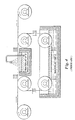
- FIG. 3 a prior-art process shows the steps normally employed to convert a Nitinol wire into a stable martensite state useable for manufacturing fatigue resistant devices.
- This type of device is the endodontic instrument illustrated in FIGS. 1 and 2 .
- untreated Nitinol wire is unwound from a spool and passed through an annealing oven, a series of dies, and final heat thermal processing operation.
- the temperatures used and the amount of cold working depend upon such factors as the amount of stiffness (or, conversely, flexibility) desired in the wire and the diameter of the wire.
- the cold working step achieves about a 45 +/-10 % reduction in cross-sectional area of the wire and is followed by final heat thermal processing at about 500° to 800° C (930° to 1475° F) for a time period sufficient to anneal the wire based upon its diameter.
- the process according to the present invention may be preceded by these cold working steps but eliminates the need for the high temperature anneal of FIG. 3 .
- FIG. 4 shows the steps of the training process.
- the Nitinol wire is placed under a constant 1 to 10% elongation or strain as it is repeatedly thermal cycled between a cold and hot bath.
- the cold bath is at a temperature in the range of about 0 to 10° C (32° to 50° F) and the hot bath is in the range of about 100 to 180° C (212° to 356° F).
- the micro-twinning structure undergoes a de-twinning or realignment process to achieve an energetically stable martensitic structure with reduced interfacial friction and residual deformation. This contributes to the improved fatigue resistance of the Nitinol wire which results from this process.
- Nitinol as an alloy exists in two naturally occurring forms, that is, in the austenite form and in the martensite form.
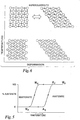
- the alloy transitions between martensite and austenite, and can stabilize as either martensite or austenite, within a given temperature range (see FIG. 5 ).
- the austenite phase in the alloy is plotted as a function of the temperature, with several important transition temperatures marked.
- a S indicates the temperature at which the austenite starts and
- a F indicates the temperature at which the alloy is 100% in the austenite phase.
- M S and M F indicate the martensite start and finish temperatures, respectively.
- the austenite form begins.
- the austenite form increases as a percent of the alloy until the temperature reaches A F .
- the alloy will remain in the 100% austenite form at temperatures at or above A F .
- Nitinol in the martensite form can demonstrate significantly improved fatigue resistance relative to Nitinol in the austenite form.
- Nitinol transitions occur are very sensitive to small variations in the alloy's content of nickel, titanium and any other trace elements. Therefore, Nitinol's properties can be tailored for specific applications by controlling the alloy's composition.
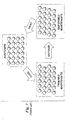
- FIG. 6 pictorially illustrates the transition of Nitinol between the austenite form and the martensite form.
- the nickel is illustrated by the large non-shaded circles.
- the titanium is illustrated by the small shaded circles.
- the alloy When the alloy is in the austenite state, the arrangement of atoms is orderly. As the temperature of the alloy cools, the atomic structure changes from the initial orderly structure to a twinned martensite arrangement or state. In this twinned martensite state, and without a significant change in temperature, the alloy can be subjected to strain in order to transform into "deformed martensite" or "de-twinned martensite” state. The alloy can remain in this state until heat is applied to reach the level of the austenite start (A S ). As further heat is applied the alloy returns to the 100% austenite state (A F ).
- the shape memory and superelastic properties of Nitinol may be understood in terms of the phase transformations the alloy undergoes under various conditions.
- Shape memory refers to the ability to restore an originally memorized shape of a deformed Nitinol sample by heating it. Referring to FIG. 7 , the alloy is heated to a temperature above A F and, when in the austenite state, formed into a desired shape. This causes the alloy to memorize the desired shape. Lowering the temperature below M S , moves the alloy into the twinned martensite state. If a deformation-inducing strain is applied to the alloy when in this state, the alloy will move to the deformed martensite state and will retain that shape even after the strain has been removed. Then, if the alloy is again heated to a temperature above A F , a thermo-elastic phase transformation takes place. The element returns to its previously memorized austenite shape, thereby regaining its strength and rigidity.
- the present invention does not require the high temperature, final thermal heat processing of FIG. 3 (after cold working), nor does it require the training process of FIG. 4 , in order to achieve a martensitic structure that produces superior and unexpected fatigue performance.
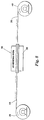
- the Nitinol material here is subjected to final thermal heat treat at about 410° to 440°C (770° to 824° F) while being subjected to a preferably constant strain of in the range of about 3 to 15 kg (see FIG. 8 ).
- wire 15 that has been cold worked is passed through an oven 30 for final thermal heat treat while under strain ( FIG. 8 ).
- Wire 15 going out of the cold working process may be passed directly to over 30 or first wound about a spool 20.
- Wire 15 wound about spool 20 could also be supplied by a manufacturer of Nitinol alloy products and already cold worked to the desired dimension for subsequent machining operations.
- the treated wire 25 may be wound about a finish spool 30.
- Wire 25 is in condition to be used to manufacture products, specifically instrumentation or other products that require a high degree of flexibility combined with an unusually high fatigue resistance characteristic and high austenite finish temperature.
- the resultant Nitinol material or wire 25 is in a transitory martensitic state (i.e. in the deformed monoclinic state) and has the following properties: Properties Austenitic finish temperature A F (°C) ⁇ 30-60 Ultimate tensile strength > 200 Ksi Permanent set (PS @ 7Mpa) 20 Ultimate tensile strength to upper plateau stress ratio ⁇ 2.5
- a F is very sensitive to changes in nickel composition and, therefore, to hold the A F at a desired level, the nickel composition must be held steady for any manufacturing process to achieve a repeatable A F .
- the estimated percentage of nickel to accomplish an A F of about 50° C (122° F) using the process of FIG. 8 would be approximately 55.3%. Therefore, the percentage of nickel used to achieve a desired A F by way of the above method may be altered as appropriate.
- Endodontic instruments (see FIGS. 1 & 2 ) made using Nitinol wire which was prepared according to this method ( FIG. 8 ) were tested at room temperature in a rotary system along a 90° curve. The instruments averaged about 11 minutes to failure. Instruments made according to the prior art training process of FIG. 4 averaged about 2.3 minutes to failure (still far above that of instruments made only according to the process of FIG. 3 ).
- the instruments also exhibited reduced shape memory.
- Shape memory is not an asset for any instrument which must traverse a curve or be positioned within a curve because shape memory is a restoring force.
- the instrument was placed in a fixture and bent at a 90° angle and released. This bend and release was repeated two more times. An instrument without any shape memory will remain bent at 90° once released.
- a Nitinol instrument with shape memory properties exhibits about 88° of restoration. That is, after being bent 90°, the instrument returns to a position about 2° less than its original starting position. In other words, instead of traveling a full 180° (90° bend, 90° return), the instrument travels about 178° total.
- a Nitinol instrument made according to the process of FIG. 4 is typically in the range of about 10° to 15° off of straight after the repeated bend-and-release test (exhibiting roughly 165° to 170° of total travel).
- the shape memory restorative property is in the range of about 80 to 90 percent.
- Instruments made according to FIG. 8 exhibited even less shape memory than those made according to FIG. 4 , being about 25° to 35° off of straight after repeated bend-and-release (roughly 145° to 155° of total travel). Therefore, the shape memory restorative property of the instrument is about 60 to 75 percent.
- the medical or dental instrument provided by the method of FIG. 8 typically undergoes subsequent machining operations to produce the desired final instrument.
- grinding operations may produce the helical flutes and cutting edges of the endodontic instruments of FIGS. 1 and 2 .
- the fatigue performance of the instrument is negatively affected.
- Putting the final machined instrument through a finished instrument heat treat in a temperature range of about 248° to 500° C (487° to 932° F) restores and can enhance the fatigue-resistant properties of the instrument, with heat treat in the range of 350 to 450° C (662° to 842° F) being best. A longer time is required for heat treat at the lower end of this temperature range and a shorter time is required for heat treat at the higher end.
- Producing an instrument according to the process of FIG. 8 reduces the restoring force by about half when compared to the process of FIG. 8 .
- Subjecting the finished instrument to a final instrument heat treat produces even less restoring force but with improved resistance to cyclic fatigue with minimal or insignificant loss in torque performance.
- An austenitic finish temperature A F above 37° C is important for instruments adapted for use in the human body than is the stabilized martensitic effect and shape memory achieved by the prior art process of FIG. 4 . Additionally, an A F above 37° C may be achieved by eliminating the strain-induced thermal cycling steps of FIG. 4 and simply subjecting the Nitinol to a strain-induced final straightening thermal heat treat in the range of 410° to 440° C, varying the nickel percentage at the ingot level, or applying both strain-induced heat treat and varying the nickel percentage. This results in a Nitinol alloy with significant resistance to cyclic fatigue but without requiring the additional processing steps and elevated temperatures of prior art processes. Further, the alloy has a high A F . To date, no manufacturer of endodontic instruments produces an instrument in which the Nitinol is in a martensitic or transitory state ( i.e. in the deformed monoclinic state) and having a high A F .
Landscapes
- Chemical & Material Sciences (AREA)
- Engineering & Computer Science (AREA)
- Mechanical Engineering (AREA)
- Materials Engineering (AREA)
- Metallurgy (AREA)
- Organic Chemistry (AREA)
- Physics & Mathematics (AREA)
- Thermal Sciences (AREA)
- Crystallography & Structural Chemistry (AREA)
- Health & Medical Sciences (AREA)
- Neurosurgery (AREA)
- Epidemiology (AREA)
- Biomedical Technology (AREA)
- Nuclear Medicine, Radiotherapy & Molecular Imaging (AREA)
- Surgery (AREA)
- Oral & Maxillofacial Surgery (AREA)
- Dentistry (AREA)
- Neurology (AREA)
- Life Sciences & Earth Sciences (AREA)
- Animal Behavior & Ethology (AREA)
- General Health & Medical Sciences (AREA)
- Public Health (AREA)
- Veterinary Medicine (AREA)
- Dental Tools And Instruments Or Auxiliary Dental Instruments (AREA)
Applications Claiming Priority (2)
| Application Number | Priority Date | Filing Date | Title |
|---|---|---|---|
| US26200809P | 2009-11-17 | 2009-11-17 | |
| PCT/US2010/056999 WO2011062970A1 (en) | 2009-11-17 | 2010-11-17 | Improved fatigue-resistant nitinol instrument |
Publications (3)
| Publication Number | Publication Date |
|---|---|
| EP2501829A1 EP2501829A1 (en) | 2012-09-26 |
| EP2501829A4 EP2501829A4 (en) | 2017-04-26 |
| EP2501829B1 true EP2501829B1 (en) | 2018-06-20 |
Family
ID=44059958
Family Applications (1)
| Application Number | Title | Priority Date | Filing Date |
|---|---|---|---|
| EP10832092.0A Active EP2501829B1 (en) | 2009-11-17 | 2010-11-17 | Improved fatigue-resistant nitinol instrument |
Country Status (4)
| Country | Link |
|---|---|
| US (2) | US8714976B2 (enExample) |
| EP (1) | EP2501829B1 (enExample) |
| JP (2) | JP5732468B2 (enExample) |
| WO (1) | WO2011062970A1 (enExample) |
Families Citing this family (30)
| Publication number | Priority date | Publication date | Assignee | Title |
|---|---|---|---|---|
| US9034007B2 (en) | 2007-09-21 | 2015-05-19 | Insera Therapeutics, Inc. | Distal embolic protection devices with a variable thickness microguidewire and methods for their use |
| US9034034B2 (en) | 2010-12-22 | 2015-05-19 | V-Wave Ltd. | Devices for reducing left atrial pressure, and methods of making and using same |
| JP5732468B2 (ja) * | 2009-11-17 | 2015-06-10 | ジョンソン,ウィリアム・ビー | 耐疲労性の向上したニチノール器具 |
| US10196713B2 (en) * | 2009-11-20 | 2019-02-05 | Dentsply Sirona Inc. | Medical instrument with modified memory and flexibility properties and method |
| US8916009B2 (en) | 2011-05-06 | 2014-12-23 | Dentsply International Inc. | Endodontic instruments and methods of manufacturing thereof |
| WO2011143063A1 (en) * | 2010-05-10 | 2011-11-17 | Zdurne, David, A. | Endodontic rotary instruments made of shape memory alloys in their martensitic state and manufacturing methods thereof |
| CA2901443A1 (en) | 2013-03-15 | 2014-09-25 | Insera Therapeutics, Inc. | Vascular treatment devices and methods |
| US8715314B1 (en) | 2013-03-15 | 2014-05-06 | Insera Therapeutics, Inc. | Vascular treatment measurement methods |
| US8715315B1 (en) | 2013-03-15 | 2014-05-06 | Insera Therapeutics, Inc. | Vascular treatment systems |
| US8679150B1 (en) | 2013-03-15 | 2014-03-25 | Insera Therapeutics, Inc. | Shape-set textile structure based mechanical thrombectomy methods |
| US20160022377A1 (en) * | 2013-03-15 | 2016-01-28 | Ultradent Products, Inc. | Combined use of ultrasound with nickel titanium endodontic file in endodontic procedure |
| US9902025B2 (en) | 2013-07-11 | 2018-02-27 | Dentsply International Inc. | Process for producing a shape memory spiral rotary file |
| CH709851B1 (fr) * | 2014-07-07 | 2020-01-31 | Fkg Dentaire Sa | Instrument endodontique pour l'alésage de canaux radiculaires. |
| US20170135784A1 (en) * | 2014-07-24 | 2017-05-18 | Nv Bekaert Sa | High fatigue resistant wire |
| WO2016040416A1 (en) * | 2014-09-09 | 2016-03-17 | Gold Standard Instruments, LLC | Method for forming an endodontic instrument or device |
| FR3033487B1 (fr) * | 2015-03-11 | 2021-01-08 | Soprane | Perfectionnements aux aiguilles hyper elastiques |
| US11779435B2 (en) * | 2015-08-26 | 2023-10-10 | Flexscrewdriver I.K.E. | Dental screwdriver |
| US10543060B2 (en) | 2015-12-03 | 2020-01-28 | Ormco Corporation | Fluted endodontic file |
| EP3416568A4 (en) | 2016-02-16 | 2019-10-16 | Insera Therapeutics, Inc. | SUCTION DEVICES AND ANCHORED FLOW REVERSING DEVICES |
| RU169763U1 (ru) * | 2016-04-26 | 2017-03-31 | Федеральное государственное бюджетное образовательное учреждение высшего образования "Кубанский государственный медицинский университет" Министерства здравоохранения Российской Федерации (ФГБОУ ВО КубГМУ Минздрава России) | Модель для определения циклической прочности механических эндодонтических инструментов при препарировании корневых каналов зубов |
| KR101759174B1 (ko) * | 2016-04-29 | 2017-07-19 | 한국생산기술연구원 | 신뢰성이 향상된 치과용 임플란트 세정기구 |
| EP3513490B1 (en) * | 2016-09-14 | 2024-12-11 | Smarter Alloys Inc. | Shape memory alloy actuator with strain gauge sensor and position estimation and method for manufacturing same |
| AU2017248568B2 (en) | 2016-10-22 | 2023-09-21 | Kerr Corporation | Variable Heat-Treat Endodontic File |
| USD842474S1 (en) | 2017-10-20 | 2019-03-05 | Ormco Corporation | Endodontic file |
| US10898698B1 (en) * | 2020-05-04 | 2021-01-26 | V-Wave Ltd. | Devices with dimensions that can be reduced and increased in vivo, and methods of making and using the same |
| US12281373B2 (en) | 2019-09-27 | 2025-04-22 | W. L. Gore & Associates, Inc. | Wires of nickel-titanium alloy and methods of forming the same |
| AU2020353148B2 (en) | 2019-09-27 | 2024-01-04 | W. L. Gore & Associates, Inc. | Wires of superelastic nickel-titanium alloy and methods of forming the same |
| US12599756B2 (en) | 2020-05-04 | 2026-04-14 | V-Wave Ltd. | Devices with dimensions that can be reduced and increased In Vivo |
| DE102021104165A1 (de) * | 2021-02-22 | 2022-08-25 | Gebr. Brasseler Gmbh & Co. Kg | Verfahren zur Herstellung eines Arbeitsbereichs für ein Wurzelkanalinstrument sowie eines Wurzelkanalinstruments und Wurzelkanalinstrument |
| US11813386B2 (en) | 2022-04-14 | 2023-11-14 | V-Wave Ltd. | Interatrial shunt with expanded neck region |
Family Cites Families (20)
| Publication number | Priority date | Publication date | Assignee | Title |
|---|---|---|---|---|
| JPS54156579A (en) * | 1978-05-31 | 1979-12-10 | Toshiba Corp | Temperature measuring apparatus |
| US4336312A (en) * | 1980-01-30 | 1982-06-22 | The Garrett Corporation | Weldable nickel base cast alloy for high temperature applications and method |
| US4283233A (en) * | 1980-03-07 | 1981-08-11 | The United States Of America As Represented By The Secretary Of The Navy | Method of modifying the transition temperature range of TiNi base shape memory alloys |
| JPS58151445A (ja) * | 1982-02-27 | 1983-09-08 | Tohoku Metal Ind Ltd | 可逆形状記憶効果を有するチタンニツケル合金およびその製造方法 |
| JPS59113167A (ja) * | 1982-12-20 | 1984-06-29 | Tohoku Metal Ind Ltd | チタン・ニツケル形状記憶合金の熱処理方法 |
| US5527205A (en) * | 1991-11-05 | 1996-06-18 | Tulsa Dental Products, L.L.C. | Method of fabricating an endodontic instrument |
| US5318527A (en) * | 1992-12-22 | 1994-06-07 | Advanced Cardiovascular Systems, Inc. | Fixed wire catheter exchange device |
| US5624508A (en) * | 1995-05-02 | 1997-04-29 | Flomenblit; Josef | Manufacture of a two-way shape memory alloy and device |
| US5931819A (en) * | 1996-04-18 | 1999-08-03 | Advanced Cardiovascular Systems, Inc. | Guidewire with a variable stiffness distal portion |
| JP3943142B2 (ja) * | 1997-04-25 | 2007-07-11 | リタナ・リミテッド | 2方向性形状記憶装置の製造 |
| US6149501A (en) * | 1997-09-26 | 2000-11-21 | Kerr Corporation | Superelastic endodontic instrument, method of manufacture, and apparatus therefor |
| US5984679A (en) * | 1997-09-26 | 1999-11-16 | Ormco Corporation | Method of manufacturing superelastic endodontic files and files made therefrom |
| JP2001049410A (ja) * | 1999-08-09 | 2001-02-20 | Daido Steel Co Ltd | 超弾性合金線材の製造方法、携帯用通信機器のアンテナ部品の製造方法及び携帯用通信機器のアンテナ部品 |
| AU2002354033A1 (en) * | 2001-11-05 | 2003-05-19 | Memry Corporation | Work-hardened pseudoelastic guide wires |
| JP2005224505A (ja) * | 2004-02-16 | 2005-08-25 | Terumo Corp | 光照射装置 |
| US20050198777A1 (en) * | 2004-03-09 | 2005-09-15 | Mabe James H. | Hinge apparatus with two-way controllable shape memory alloy (SMA) hinge pin actuator and methods of making two-way SMA parts |
| JP4621851B2 (ja) * | 2004-11-29 | 2011-01-26 | マニー株式会社 | 根管治療器具 |
| US7648599B2 (en) * | 2005-09-13 | 2010-01-19 | Sportswire, LLC | Method of preparing nickel titanium alloy for use in manufacturing instruments with improved fatigue resistance |
| JP2009082244A (ja) * | 2007-09-27 | 2009-04-23 | Terumo Corp | 生体内留置用ステントおよび生体器官拡張器具 |
| JP5732468B2 (ja) * | 2009-11-17 | 2015-06-10 | ジョンソン,ウィリアム・ビー | 耐疲労性の向上したニチノール器具 |
-
2010
- 2010-11-17 JP JP2012539995A patent/JP5732468B2/ja not_active Expired - Fee Related
- 2010-11-17 WO PCT/US2010/056999 patent/WO2011062970A1/en not_active Ceased
- 2010-11-17 US US13/510,500 patent/US8714976B2/en not_active Expired - Fee Related
- 2010-11-17 EP EP10832092.0A patent/EP2501829B1/en active Active
-
2014
- 2014-05-05 US US14/269,968 patent/US9878366B2/en not_active Expired - Fee Related
-
2015
- 2015-04-13 JP JP2015081788A patent/JP2015164539A/ja active Pending
Non-Patent Citations (1)
| Title |
|---|
| None * |
Also Published As
| Publication number | Publication date |
|---|---|
| US8714976B2 (en) | 2014-05-06 |
| US20140242543A1 (en) | 2014-08-28 |
| EP2501829A1 (en) | 2012-09-26 |
| JP2013511338A (ja) | 2013-04-04 |
| US20120231414A1 (en) | 2012-09-13 |
| WO2011062970A1 (en) | 2011-05-26 |
| JP5732468B2 (ja) | 2015-06-10 |
| EP2501829A4 (en) | 2017-04-26 |
| JP2015164539A (ja) | 2015-09-17 |
| US9878366B2 (en) | 2018-01-30 |
Similar Documents
| Publication | Publication Date | Title |
|---|---|---|
| US9878366B2 (en) | Fatigue-resistant Nitinol instrument | |
| EP2821518B1 (en) | A method of preparing nitinol for use in manufacturing instruments with improved fatigue resistance | |
| EP2423338B1 (en) | Shape setting a shape memory alloy dental arch | |
| US10149737B2 (en) | Niti alloy root canal file with flexibility gradient and manufacturing method thereof | |
| JP7815109B2 (ja) | 超弾性ニッケルチタン合金のワイヤ及びその形成方法 | |
| JP2007510064A (ja) | 長い耐用年数のニチノール | |
| JP7628509B2 (ja) | NiTi合金の歯内治療器具を製造または改変する方法 | |
| JP2020504233A (ja) | 形状記憶及び超弾性の性質を備えたNiフリーベータTi合金 | |
| EP3177745B1 (en) | High fatigue resistant wire | |
| CN113802076B (zh) | 一种超弹性镍钛合金丝材的加工方法 | |
| TW201124642A (en) | Method for locking a nut made out of a material with a low plastic deformation capacity | |
| JP4028008B2 (ja) | NiTiPd系超弾性合金材とその製造方法及びこの合金材による歯列矯正ワイヤー | |
| WO1998002109A2 (en) | Orthodontic archwire and method of manufacture | |
| JP3933623B2 (ja) | 生体用超弾性チタン合金の製造方法および超弾性用チタン合金 | |
| CN117987753A (zh) | 镍钛记忆合金制品的加工方法及加工系统 | |
| JPS622026B2 (enExample) | ||
| JPH02149651A (ja) | Ti―Ni系超弾性合金の製造方法 | |
| JP2005105404A6 (ja) | 生体用超弾性チタン合金の製造方法および超弾性用チタン合金 | |
| JP2005105388A6 (ja) | 生体用超弾性チタン合金の製造方法および超弾性用チタン合金 |
Legal Events
| Date | Code | Title | Description |
|---|---|---|---|
| PUAI | Public reference made under article 153(3) epc to a published international application that has entered the european phase |
Free format text: ORIGINAL CODE: 0009012 |
|
| 17P | Request for examination filed |
Effective date: 20120614 |
|
| AK | Designated contracting states |
Kind code of ref document: A1 Designated state(s): AL AT BE BG CH CY CZ DE DK EE ES FI FR GB GR HR HU IE IS IT LI LT LU LV MC MK MT NL NO PL PT RO RS SE SI SK SM TR |
|
| AX | Request for extension of the european patent |
Extension state: BA ME |
|
| RA4 | Supplementary search report drawn up and despatched (corrected) |
Effective date: 20170327 |
|
| RIC1 | Information provided on ipc code assigned before grant |
Ipc: C21D 9/00 20060101ALI20170317BHEP Ipc: A61C 5/42 20170101ALI20170317BHEP Ipc: C21D 1/26 20060101ALI20170317BHEP Ipc: C21D 9/06 20060101ALI20170317BHEP Ipc: C22F 1/00 20060101ALI20170317BHEP Ipc: C21D 9/56 20060101ALI20170317BHEP Ipc: C22C 19/03 20060101ALI20170317BHEP Ipc: C22F 1/10 20060101ALI20170317BHEP Ipc: C21D 9/08 20060101AFI20170317BHEP Ipc: B21K 5/02 20060101ALI20170317BHEP |
|
| RIC1 | Information provided on ipc code assigned before grant |
Ipc: C21D 9/56 20060101ALI20171127BHEP Ipc: C21D 9/06 20060101ALI20171127BHEP Ipc: B21K 5/02 20060101ALI20171127BHEP Ipc: C22F 1/00 20060101ALI20171127BHEP Ipc: A61C 5/42 20170101ALI20171127BHEP Ipc: C21D 9/08 20060101AFI20171127BHEP Ipc: C21D 1/26 20060101ALI20171127BHEP Ipc: C22C 19/03 20060101ALI20171127BHEP Ipc: C22F 1/10 20060101ALI20171127BHEP Ipc: C21D 9/00 20060101ALI20171127BHEP |
|
| GRAP | Despatch of communication of intention to grant a patent |
Free format text: ORIGINAL CODE: EPIDOSNIGR1 |
|
| INTG | Intention to grant announced |
Effective date: 20180202 |
|
| GRAS | Grant fee paid |
Free format text: ORIGINAL CODE: EPIDOSNIGR3 |
|
| GRAA | (expected) grant |
Free format text: ORIGINAL CODE: 0009210 |
|
| AK | Designated contracting states |
Kind code of ref document: B1 Designated state(s): AL AT BE BG CH CY CZ DE DK EE ES FI FR GB GR HR HU IE IS IT LI LT LU LV MC MK MT NL NO PL PT RO RS SE SI SK SM TR |
|
| AX | Request for extension of the european patent |
Extension state: BA ME |
|
| REG | Reference to a national code |
Ref country code: GB Ref legal event code: FG4D |
|
| REG | Reference to a national code |
Ref country code: IE Ref legal event code: FG4D |
|
| REG | Reference to a national code |
Ref country code: AT Ref legal event code: REF Ref document number: 1010642 Country of ref document: AT Kind code of ref document: T Effective date: 20180715 |
|
| REG | Reference to a national code |
Ref country code: DE Ref legal event code: R096 Ref document number: 602010051440 Country of ref document: DE |
|
| REG | Reference to a national code |
Ref country code: SE Ref legal event code: TRGR |
|
| REG | Reference to a national code |
Ref country code: FR Ref legal event code: PLFP Year of fee payment: 9 |
|
| REG | Reference to a national code |
Ref country code: CH Ref legal event code: NV Representative=s name: ABREMA AGENCE BREVET ET MARQUES, GANGUILLET, CH Ref country code: CH Ref legal event code: PFA Owner name: DENTSPLY SIRONA INC., US Free format text: FORMER OWNER: DENTSPLY INTERNATIONAL INC., US Ref country code: CH Ref legal event code: PUE Owner name: DENTSPLY INTERNATIONAL INC., US Free format text: FORMER OWNER: JOHNSON, WILLIAM B., US |
|
| REG | Reference to a national code |
Ref country code: NL Ref legal event code: MP Effective date: 20180620 |
|
| PG25 | Lapsed in a contracting state [announced via postgrant information from national office to epo] |
Ref country code: NO Free format text: LAPSE BECAUSE OF FAILURE TO SUBMIT A TRANSLATION OF THE DESCRIPTION OR TO PAY THE FEE WITHIN THE PRESCRIBED TIME-LIMIT Effective date: 20180920 Ref country code: FI Free format text: LAPSE BECAUSE OF FAILURE TO SUBMIT A TRANSLATION OF THE DESCRIPTION OR TO PAY THE FEE WITHIN THE PRESCRIBED TIME-LIMIT Effective date: 20180620 Ref country code: BG Free format text: LAPSE BECAUSE OF FAILURE TO SUBMIT A TRANSLATION OF THE DESCRIPTION OR TO PAY THE FEE WITHIN THE PRESCRIBED TIME-LIMIT Effective date: 20180920 Ref country code: LT Free format text: LAPSE BECAUSE OF FAILURE TO SUBMIT A TRANSLATION OF THE DESCRIPTION OR TO PAY THE FEE WITHIN THE PRESCRIBED TIME-LIMIT Effective date: 20180620 |
|
| REG | Reference to a national code |
Ref country code: LT Ref legal event code: MG4D |
|
| PG25 | Lapsed in a contracting state [announced via postgrant information from national office to epo] |
Ref country code: LV Free format text: LAPSE BECAUSE OF FAILURE TO SUBMIT A TRANSLATION OF THE DESCRIPTION OR TO PAY THE FEE WITHIN THE PRESCRIBED TIME-LIMIT Effective date: 20180620 Ref country code: HR Free format text: LAPSE BECAUSE OF FAILURE TO SUBMIT A TRANSLATION OF THE DESCRIPTION OR TO PAY THE FEE WITHIN THE PRESCRIBED TIME-LIMIT Effective date: 20180620 Ref country code: GR Free format text: LAPSE BECAUSE OF FAILURE TO SUBMIT A TRANSLATION OF THE DESCRIPTION OR TO PAY THE FEE WITHIN THE PRESCRIBED TIME-LIMIT Effective date: 20180921 Ref country code: RS Free format text: LAPSE BECAUSE OF FAILURE TO SUBMIT A TRANSLATION OF THE DESCRIPTION OR TO PAY THE FEE WITHIN THE PRESCRIBED TIME-LIMIT Effective date: 20180620 |
|
| REG | Reference to a national code |
Ref country code: AT Ref legal event code: MK05 Ref document number: 1010642 Country of ref document: AT Kind code of ref document: T Effective date: 20180620 |
|
| PG25 | Lapsed in a contracting state [announced via postgrant information from national office to epo] |
Ref country code: NL Free format text: LAPSE BECAUSE OF FAILURE TO SUBMIT A TRANSLATION OF THE DESCRIPTION OR TO PAY THE FEE WITHIN THE PRESCRIBED TIME-LIMIT Effective date: 20180620 |
|
| PG25 | Lapsed in a contracting state [announced via postgrant information from national office to epo] |
Ref country code: IS Free format text: LAPSE BECAUSE OF FAILURE TO SUBMIT A TRANSLATION OF THE DESCRIPTION OR TO PAY THE FEE WITHIN THE PRESCRIBED TIME-LIMIT Effective date: 20181020 Ref country code: PL Free format text: LAPSE BECAUSE OF FAILURE TO SUBMIT A TRANSLATION OF THE DESCRIPTION OR TO PAY THE FEE WITHIN THE PRESCRIBED TIME-LIMIT Effective date: 20180620 Ref country code: EE Free format text: LAPSE BECAUSE OF FAILURE TO SUBMIT A TRANSLATION OF THE DESCRIPTION OR TO PAY THE FEE WITHIN THE PRESCRIBED TIME-LIMIT Effective date: 20180620 Ref country code: AT Free format text: LAPSE BECAUSE OF FAILURE TO SUBMIT A TRANSLATION OF THE DESCRIPTION OR TO PAY THE FEE WITHIN THE PRESCRIBED TIME-LIMIT Effective date: 20180620 Ref country code: RO Free format text: LAPSE BECAUSE OF FAILURE TO SUBMIT A TRANSLATION OF THE DESCRIPTION OR TO PAY THE FEE WITHIN THE PRESCRIBED TIME-LIMIT Effective date: 20180620 Ref country code: CZ Free format text: LAPSE BECAUSE OF FAILURE TO SUBMIT A TRANSLATION OF THE DESCRIPTION OR TO PAY THE FEE WITHIN THE PRESCRIBED TIME-LIMIT Effective date: 20180620 Ref country code: SK Free format text: LAPSE BECAUSE OF FAILURE TO SUBMIT A TRANSLATION OF THE DESCRIPTION OR TO PAY THE FEE WITHIN THE PRESCRIBED TIME-LIMIT Effective date: 20180620 |
|
| REG | Reference to a national code |
Ref country code: CH Ref legal event code: PK Free format text: BERICHTIGUNGEN |
|
| RIC2 | Information provided on ipc code assigned after grant |
Ipc: A61C 5/42 20170101ALI20171127BHEP Ipc: C21D 9/00 20060101ALI20171127BHEP Ipc: C22F 1/10 20060101ALI20171127BHEP Ipc: C21D 9/06 20060101ALI20171127BHEP Ipc: C21D 9/08 20060101AFI20171127BHEP Ipc: B21K 5/02 20060101ALI20171127BHEP Ipc: C21D 1/26 20060101ALI20171127BHEP Ipc: C22F 1/00 20060101ALI20171127BHEP Ipc: C22C 19/03 20060101ALI20171127BHEP Ipc: C21D 9/56 20060101ALI20171127BHEP |
|
| PG25 | Lapsed in a contracting state [announced via postgrant information from national office to epo] |
Ref country code: ES Free format text: LAPSE BECAUSE OF FAILURE TO SUBMIT A TRANSLATION OF THE DESCRIPTION OR TO PAY THE FEE WITHIN THE PRESCRIBED TIME-LIMIT Effective date: 20180620 Ref country code: SM Free format text: LAPSE BECAUSE OF FAILURE TO SUBMIT A TRANSLATION OF THE DESCRIPTION OR TO PAY THE FEE WITHIN THE PRESCRIBED TIME-LIMIT Effective date: 20180620 |
|
| REG | Reference to a national code |
Ref country code: DE Ref legal event code: R097 Ref document number: 602010051440 Country of ref document: DE |
|
| PLBE | No opposition filed within time limit |
Free format text: ORIGINAL CODE: 0009261 |
|
| STAA | Information on the status of an ep patent application or granted ep patent |
Free format text: STATUS: NO OPPOSITION FILED WITHIN TIME LIMIT |
|
| 26N | No opposition filed |
Effective date: 20190321 |
|
| PG25 | Lapsed in a contracting state [announced via postgrant information from national office to epo] |
Ref country code: DK Free format text: LAPSE BECAUSE OF FAILURE TO SUBMIT A TRANSLATION OF THE DESCRIPTION OR TO PAY THE FEE WITHIN THE PRESCRIBED TIME-LIMIT Effective date: 20180620 |
|
| REG | Reference to a national code |
Ref country code: DE Ref legal event code: R081 Ref document number: 602010051440 Country of ref document: DE Owner name: DENTSPLY SIRONA INC. (N.D.GES.D. STAATES DELAW, US Free format text: FORMER OWNER: JOHNSON, WILLIAM B., TULSA, OKLA., US |
|
| PG25 | Lapsed in a contracting state [announced via postgrant information from national office to epo] |
Ref country code: MC Free format text: LAPSE BECAUSE OF FAILURE TO SUBMIT A TRANSLATION OF THE DESCRIPTION OR TO PAY THE FEE WITHIN THE PRESCRIBED TIME-LIMIT Effective date: 20180620 Ref country code: LU Free format text: LAPSE BECAUSE OF NON-PAYMENT OF DUE FEES Effective date: 20181117 |
|
| REG | Reference to a national code |
Ref country code: GB Ref legal event code: 732E Free format text: REGISTERED BETWEEN 20190711 AND 20190717 |
|
| REG | Reference to a national code |
Ref country code: BE Ref legal event code: MM Effective date: 20181130 |
|
| REG | Reference to a national code |
Ref country code: IE Ref legal event code: MM4A |
|
| PG25 | Lapsed in a contracting state [announced via postgrant information from national office to epo] |
Ref country code: SI Free format text: LAPSE BECAUSE OF FAILURE TO SUBMIT A TRANSLATION OF THE DESCRIPTION OR TO PAY THE FEE WITHIN THE PRESCRIBED TIME-LIMIT Effective date: 20180620 |
|
| PG25 | Lapsed in a contracting state [announced via postgrant information from national office to epo] |
Ref country code: IE Free format text: LAPSE BECAUSE OF NON-PAYMENT OF DUE FEES Effective date: 20181117 |
|
| PG25 | Lapsed in a contracting state [announced via postgrant information from national office to epo] |
Ref country code: AL Free format text: LAPSE BECAUSE OF FAILURE TO SUBMIT A TRANSLATION OF THE DESCRIPTION OR TO PAY THE FEE WITHIN THE PRESCRIBED TIME-LIMIT Effective date: 20180620 Ref country code: BE Free format text: LAPSE BECAUSE OF NON-PAYMENT OF DUE FEES Effective date: 20181130 |
|
| PG25 | Lapsed in a contracting state [announced via postgrant information from national office to epo] |
Ref country code: MT Free format text: LAPSE BECAUSE OF NON-PAYMENT OF DUE FEES Effective date: 20181117 |
|
| PG25 | Lapsed in a contracting state [announced via postgrant information from national office to epo] |
Ref country code: TR Free format text: LAPSE BECAUSE OF FAILURE TO SUBMIT A TRANSLATION OF THE DESCRIPTION OR TO PAY THE FEE WITHIN THE PRESCRIBED TIME-LIMIT Effective date: 20180620 |
|
| PG25 | Lapsed in a contracting state [announced via postgrant information from national office to epo] |
Ref country code: PT Free format text: LAPSE BECAUSE OF FAILURE TO SUBMIT A TRANSLATION OF THE DESCRIPTION OR TO PAY THE FEE WITHIN THE PRESCRIBED TIME-LIMIT Effective date: 20180620 |
|
| PG25 | Lapsed in a contracting state [announced via postgrant information from national office to epo] |
Ref country code: HU Free format text: LAPSE BECAUSE OF FAILURE TO SUBMIT A TRANSLATION OF THE DESCRIPTION OR TO PAY THE FEE WITHIN THE PRESCRIBED TIME-LIMIT; INVALID AB INITIO Effective date: 20101117 Ref country code: MK Free format text: LAPSE BECAUSE OF NON-PAYMENT OF DUE FEES Effective date: 20180620 Ref country code: CY Free format text: LAPSE BECAUSE OF FAILURE TO SUBMIT A TRANSLATION OF THE DESCRIPTION OR TO PAY THE FEE WITHIN THE PRESCRIBED TIME-LIMIT Effective date: 20180620 |
|
| REG | Reference to a national code |
Ref country code: CH Ref legal event code: PFUS Owner name: DENTSPLY SIRONA INC., US Free format text: FORMER OWNER: DENTSPLY SIRONA INC., US |
|
| PGFP | Annual fee paid to national office [announced via postgrant information from national office to epo] |
Ref country code: CH Payment date: 20201117 Year of fee payment: 11 Ref country code: DE Payment date: 20201103 Year of fee payment: 11 Ref country code: SE Payment date: 20201110 Year of fee payment: 11 Ref country code: IT Payment date: 20201013 Year of fee payment: 11 Ref country code: GB Payment date: 20201104 Year of fee payment: 11 Ref country code: FR Payment date: 20201013 Year of fee payment: 11 |
|
| REG | Reference to a national code |
Ref country code: DE Ref legal event code: R119 Ref document number: 602010051440 Country of ref document: DE |
|
| REG | Reference to a national code |
Ref country code: CH Ref legal event code: PL |
|
| GBPC | Gb: european patent ceased through non-payment of renewal fee |
Effective date: 20211117 |
|
| PG25 | Lapsed in a contracting state [announced via postgrant information from national office to epo] |
Ref country code: SE Free format text: LAPSE BECAUSE OF NON-PAYMENT OF DUE FEES Effective date: 20211118 |
|
| PG25 | Lapsed in a contracting state [announced via postgrant information from national office to epo] |
Ref country code: GB Free format text: LAPSE BECAUSE OF NON-PAYMENT OF DUE FEES Effective date: 20211117 Ref country code: DE Free format text: LAPSE BECAUSE OF NON-PAYMENT OF DUE FEES Effective date: 20220601 |
|
| PG25 | Lapsed in a contracting state [announced via postgrant information from national office to epo] |
Ref country code: FR Free format text: LAPSE BECAUSE OF NON-PAYMENT OF DUE FEES Effective date: 20211130 |
|
| PG25 | Lapsed in a contracting state [announced via postgrant information from national office to epo] |
Ref country code: IT Free format text: LAPSE BECAUSE OF NON-PAYMENT OF DUE FEES Effective date: 20211117 |
|
| PG25 | Lapsed in a contracting state [announced via postgrant information from national office to epo] |
Ref country code: LI Free format text: LAPSE BECAUSE OF NON-PAYMENT OF DUE FEES Effective date: 20220630 Ref country code: CH Free format text: LAPSE BECAUSE OF NON-PAYMENT OF DUE FEES Effective date: 20220630 |