EP2499195B1 - Sauerstofffänger, zusammensetzung mit den fängern sowie aus der zusammensetzung hergestellte artikel - Google Patents
Sauerstofffänger, zusammensetzung mit den fängern sowie aus der zusammensetzung hergestellte artikel Download PDFInfo
- Publication number
- EP2499195B1 EP2499195B1 EP10830818.0A EP10830818A EP2499195B1 EP 2499195 B1 EP2499195 B1 EP 2499195B1 EP 10830818 A EP10830818 A EP 10830818A EP 2499195 B1 EP2499195 B1 EP 2499195B1
- Authority
- EP
- European Patent Office
- Prior art keywords
- composition
- ppm
- oxygen
- polymer
- transition metal
- Prior art date
- Legal status (The legal status is an assumption and is not a legal conclusion. Google has not performed a legal analysis and makes no representation as to the accuracy of the status listed.)
- Active
Links
- 0 *c1cc(CN(Cc2c3cccc2)C3=O)ccc1 Chemical compound *c1cc(CN(Cc2c3cccc2)C3=O)ccc1 0.000 description 3
- JHMBTUMIVBSJFS-UHFFFAOYSA-N CN(Cc1ccccc11)C1=O Chemical compound CN(Cc1ccccc11)C1=O JHMBTUMIVBSJFS-UHFFFAOYSA-N 0.000 description 1
Images

Classifications
-
- C—CHEMISTRY; METALLURGY
- C08—ORGANIC MACROMOLECULAR COMPOUNDS; THEIR PREPARATION OR CHEMICAL WORKING-UP; COMPOSITIONS BASED THEREON
- C08K—Use of inorganic or non-macromolecular organic substances as compounding ingredients
- C08K5/00—Use of organic ingredients
- C08K5/16—Nitrogen-containing compounds
- C08K5/34—Heterocyclic compounds having nitrogen in the ring
- C08K5/3412—Heterocyclic compounds having nitrogen in the ring having one nitrogen atom in the ring
- C08K5/3415—Five-membered rings
- C08K5/3417—Five-membered rings condensed with carbocyclic rings
-
- B—PERFORMING OPERATIONS; TRANSPORTING
- B65—CONVEYING; PACKING; STORING; HANDLING THIN OR FILAMENTARY MATERIAL
- B65D—CONTAINERS FOR STORAGE OR TRANSPORT OF ARTICLES OR MATERIALS, e.g. BAGS, BARRELS, BOTTLES, BOXES, CANS, CARTONS, CRATES, DRUMS, JARS, TANKS, HOPPERS, FORWARDING CONTAINERS; ACCESSORIES, CLOSURES, OR FITTINGS THEREFOR; PACKAGING ELEMENTS; PACKAGES
- B65D1/00—Rigid or semi-rigid containers having bodies formed in one piece, e.g. by casting metallic material, by moulding plastics, by blowing vitreous material, by throwing ceramic material, by moulding pulped fibrous material or by deep-drawing operations performed on sheet material
- B65D1/02—Bottles or similar containers with necks or like restricted apertures, designed for pouring contents
- B65D1/0207—Bottles or similar containers with necks or like restricted apertures, designed for pouring contents characterised by material, e.g. composition, physical features
-
- B—PERFORMING OPERATIONS; TRANSPORTING
- B65—CONVEYING; PACKING; STORING; HANDLING THIN OR FILAMENTARY MATERIAL
- B65D—CONTAINERS FOR STORAGE OR TRANSPORT OF ARTICLES OR MATERIALS, e.g. BAGS, BARRELS, BOTTLES, BOXES, CANS, CARTONS, CRATES, DRUMS, JARS, TANKS, HOPPERS, FORWARDING CONTAINERS; ACCESSORIES, CLOSURES, OR FITTINGS THEREFOR; PACKAGING ELEMENTS; PACKAGES
- B65D81/00—Containers, packaging elements, or packages, for contents presenting particular transport or storage problems, or adapted to be used for non-packaging purposes after removal of contents
- B65D81/24—Adaptations for preventing deterioration or decay of contents; Applications to the container or packaging material of food preservatives, fungicides, pesticides or animal repellants
- B65D81/26—Adaptations for preventing deterioration or decay of contents; Applications to the container or packaging material of food preservatives, fungicides, pesticides or animal repellants with provision for draining away, or absorbing, or removing by ventilation, fluids, e.g. exuded by contents; Applications of corrosion inhibitors or desiccators
- B65D81/266—Adaptations for preventing deterioration or decay of contents; Applications to the container or packaging material of food preservatives, fungicides, pesticides or animal repellants with provision for draining away, or absorbing, or removing by ventilation, fluids, e.g. exuded by contents; Applications of corrosion inhibitors or desiccators for absorbing gases, e.g. oxygen absorbers or desiccants
-
- C—CHEMISTRY; METALLURGY
- C07—ORGANIC CHEMISTRY
- C07D—HETEROCYCLIC COMPOUNDS
- C07D209/00—Heterocyclic compounds containing five-membered rings, condensed with other rings, with one nitrogen atom as the only ring hetero atom
- C07D209/02—Heterocyclic compounds containing five-membered rings, condensed with other rings, with one nitrogen atom as the only ring hetero atom condensed with one carbocyclic ring
- C07D209/44—Iso-indoles; Hydrogenated iso-indoles
- C07D209/46—Iso-indoles; Hydrogenated iso-indoles with an oxygen atom in position 1
-
- C—CHEMISTRY; METALLURGY
- C08—ORGANIC MACROMOLECULAR COMPOUNDS; THEIR PREPARATION OR CHEMICAL WORKING-UP; COMPOSITIONS BASED THEREON
- C08K—Use of inorganic or non-macromolecular organic substances as compounding ingredients
- C08K5/00—Use of organic ingredients
- C08K5/0008—Organic ingredients according to more than one of the "one dot" groups of C08K5/01 - C08K5/59
- C08K5/0083—Nucleating agents promoting the crystallisation of the polymer matrix
-
- C—CHEMISTRY; METALLURGY
- C08—ORGANIC MACROMOLECULAR COMPOUNDS; THEIR PREPARATION OR CHEMICAL WORKING-UP; COMPOSITIONS BASED THEREON
- C08K—Use of inorganic or non-macromolecular organic substances as compounding ingredients
- C08K5/00—Use of organic ingredients
- C08K5/04—Oxygen-containing compounds
- C08K5/09—Carboxylic acids; Metal salts thereof; Anhydrides thereof
- C08K5/098—Metal salts of carboxylic acids
-
- C—CHEMISTRY; METALLURGY
- C08—ORGANIC MACROMOLECULAR COMPOUNDS; THEIR PREPARATION OR CHEMICAL WORKING-UP; COMPOSITIONS BASED THEREON
- C08K—Use of inorganic or non-macromolecular organic substances as compounding ingredients
- C08K2201/00—Specific properties of additives
- C08K2201/012—Additives improving oxygen scavenging properties
-
- C—CHEMISTRY; METALLURGY
- C08—ORGANIC MACROMOLECULAR COMPOUNDS; THEIR PREPARATION OR CHEMICAL WORKING-UP; COMPOSITIONS BASED THEREON
- C08L—COMPOSITIONS OF MACROMOLECULAR COMPOUNDS
- C08L67/00—Compositions of polyesters obtained by reactions forming a carboxylic ester link in the main chain; Compositions of derivatives of such polymers
Definitions
- Oxygen scavengers are believed to react with oxygen that is trapped in the package or that permeates from outside of the package, thus extending to life of package contents.
- packages include films, bottles, containers, and the like.
- Food, beverages (such as beer and fruit juices), cosmetics, medicines, and the like are particularly sensitive to oxygen exposure and require high barrier properties to oxygen to preserve the freshness of the package contents and avoid changes in flavor, texture and color.
- polyamides in combination with a transition metal are known to be useful as the oxygen scavenging material.
- One particularly useful polyamide is MXD6 which contains meta-xylene residues in the polymer chain. See, for example, U.S. Pat. Nos. 5,639,815 ; 5,049,624 ; and 5,021,515 .
- oxygen scavengers include potassium sulfite ( U.S. Pat. No. 4,536,409 ), unsaturated hydrocarbons ( U.S. Pat. No. 5,211,875 ), and ascorbic acid derivatives ( U.S. Pat. No. 5,075,362 ).
- US 2008/0277622 discloses oxygen scavenger compounds comprising a six membered ring with two benzylic amide functionalities attached thereto.
- haze can result due to such factors as the immiscibility of the scavenging materials with the base polymer resins and the inability to create by mechanical blending means disperse-phase domains that are so small as not to interfere with the passage of light therethrough; and the adverse influence of the scavenging material on the crystallization behavior of PET base resin.
- One approach to minimizing such haze is careful selection of base resin to improve dispersibility of the scavenger material and, thus, reduce, but not substantially eliminate, haze; and to minimize the adverse crystallization effect. This approach may undesirably narrowly restrict the choice of base polymer resin.
- melt blended polymer compositions disclosed herein comprise:
- compositions are disclosed herein.
- a weight percent of a component is based on the total weight of the formulation or composition in which the component is included.
- master batch refers to a mixture of base polymer, oxidizable organic component, and transition metal that will be diluted, typically with at least additional base polymer, prior to forming an article. As such, the concentrations of oxidizable organic component and transition metal are higher than in the formed article.
- Admixture or “blend” is generally used herein means a physical combination of two or more different components.
- electrostatically-withdrawing or “electron-donating” refer to the ability of a substituent to withdraw or donate electrons relative to that of hydrogen if hydrogen occupied the same position in the molecule. These terms are well-understood by one skilled in the art and are discussed, for example, in Advanced Organic Chemistry by J. March, 1985, pp. 16-18 .
- range of numbers is presented in the application, it is understood that the range includes all integers and fractions thereof between the stated range limits.
- a range of numbers expressly includes numbers less than the stated endpoints and those in-between the stated range.
- a range of from 1-3 for example, includes the integers one, two, and three as well as any fractions that reside between these integers.
- hydrocarbyl stands for any carbon atom-based unit (organic molecule), said units optionally containing one or more organic functional group, including inorganic atom comprising salts, inter alia, carboxylate salts, quaternary ammonium salts.
- organic hydrocarbyl Within the broad meaning of the term “hydrocarbyl” are the classes “acyclic hydrocarbyl” and “cyclic hydrocarbyl” which terms are used to divide hydrocarbyl units into cyclic and non-cyclic classes.
- cyclic hydrocarbyl units can comprise only carbon atoms in the ring (carbocyclic and aryl rings) or can comprise one or more heteroatoms in the ring (heterocyclic and heteroaryl).
- carbocyclic and aryl rings the lowest number of carbon atoms in a ring are 3 carbon atoms; cyclopropyl.
- aryl the lowest number of carbon atoms in a ring are 6 carbon atoms; phenyl.
- heterocyclic the lowest number of carbon atoms in a ring is 1 carbon atom; diazirinyl.
- Ethylene oxide comprises 2 carbon atoms and is a C 2 heterocycle.
- heteroaryl rings the lowest number of carbon atoms in a ring is 1 carbon atom; 1,2,3,4-tetrazolyl.
- acyclic hydrocarbyl and “cyclic hydrocarbyl” as used herein.
- substituted and unsubstituted acyclic hydrocarbyl encompasses 3 categories of units:
- substituted and unsubstituted cyclic hydrocarbyl encompasses 5 categories of units:
- carbocyclic rings are from C 3 to C 20 ; aryl rings are C 6 or C 10 ; heterocyclic rings are from C 1 to C 9 ; and heteroaryl rings are from C 1 to C 9 .
- fused ring units as well as spirocyclic rings, bicyclic rings and the like, which comprise a single heteroatom will be characterized and referred to herein as being encompassed by the cyclic family corresponding to the heteroatom containing ring, although the artisan can have alternative characterizations.
- 1,2,3,4-tetrahydroquinoline having the formula: is, for the purposes of the present disclosure, considered a heterocyclic unit.
- 6,7-Dihydro-5 H -cyclopentapyrimidine having the formula: is, for the purposes of the present disclosure, considered a heteroaryl unit.
- aryl ring When a fused ring unit contains heteroatoms in both a saturated ring (heterocyclic ring) and an aryl ring (heteroaryl ring), the aryl ring will predominate and determine the type of category to which the ring is assigned herein for the purposes of describing the disclosure.
- 1,2,3,4-tetrahydro-[1,8]naphthyridine having the formula: is, for the purposes of the present disclosure, considered a heteroaryl unit.
- substituted is used throughout the specification.
- substituted unit or moiety is a hydrocarbyl unit or moiety, whether acyclic or cyclic, which has one or more hydrogen atoms replaced by a substituent or several substituents as defined herein below.”
- the units, when substituting for hydrogen atoms are capable of replacing one hydrogen atom, two hydrogen atoms, or three hydrogen atoms of a hydrocarbyl moiety at a time.
- these substituents can replace two hydrogen atoms on two adjacent carbons to form said substituent, new moiety, or unit.
- a substituted unit that requires a single hydrogen atom replacement includes halogen, hydroxyl, and the like.
- a two hydrogen atom replacement includes carbonyl, oximino, and the like.
- a two hydrogen atom replacement from adjacent carbon atoms includes epoxy, and the like.
- Three hydrogen replacement includes cyano, and the like.
- substituted is used throughout the present specification to indicate that a hydrocarbyl moiety, inter alia, aromatic ring, alkyl chain; can have one or more of the hydrogen atoms replaced by a substituent. When a moiety is described as "substituted" any number of the hydrogen atoms can be replaced.
- 4-hydroxyphenyl is a "substituted aromatic carbocyclic ring (aryl ring)", (N,N-dimethyl-5-amino)octanyl is a " substituted C 8 linear alkyl unit, 3-guanidinopropyl is a "substituted C 3 linear alkyl unit,” and 2-carboxypyridinyl is a "substituted heteroaryl unit.”
- the oxygen scavengers can be added during the formation of the polymer composition or the oxygen scavengers can be formed in situ during the formulation of the composition, during the formation of an article of manufacture comprising the composition, or upon curing or other process step chosen by the formulator.
- the end product oxygen scavenger can be formed in situ by the degradation of a precursor or, alternatively, the oxygen scavenger can result from the break down of an oxygen scavenger in the course of the first scavenger successfully scavenging oxygen.
- polymer compositions comprising:
- the oxygen scavengers described herein are present in an amount of about 1% to about 10% by weight based on the weight of the composition in some embodiments. In other embodiments, the oxygen scavenging compound is present in an amount of about 1% to about 5% by weight based on the weight of the composition. In still other embodiments, the compound is present in an amount of about 1% to about 3% by weight based on the weight of the composition. Also within the scope of the present disclosure are those embodiments were the oxygen scavengers described herein are present in an amount of about 0.1% to about 10% by weight based on the weight of the composition.
- One embodiment disclosed herein further comprises from 30 to 150 ppm of one or more transition metals.
- package walls comprising at least one layer, the layer comprising a composition, the composition comprising:
- the article is a preform, a sheet, a bottle, a cup, or a jar.
- the antioxidant/oxygen scavengers disclosed herein can be used in a broad range of organic products normally subject to gradual degradation in the presence of oxygen during use over an extended period.
- One embodiment disclosed herein relates to organic compositions protected by the present antioxidants that are of the type wherein the art recognizes the need for antioxidant protection and to which an antioxidant a known antioxidant is customarily added to obtain an extended service life.
- the oxidative degradation that this protects against is the slow gradual deterioration of the organic composition rather than, for example, combustion.
- the disclosed additives are not necessarily flame retarding additives nor flame suppressing.
- the antioxidant/oxygen scavenger can be utilized at elevated temperatures. One such use would be during a melt processing operation.
- the disclosed oxygen scavengers can be prepared by the procedures outlined below in the various schemes and as described in the Examples herein.
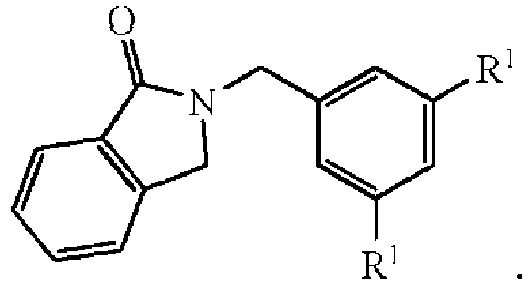
- One category of oxygen scavenger relates to compounds having the formula: wherein R 1 can be hydrogen or any substitute for hydrogen as defined herein above.
- Scheme I and Example 1 provide a non-limiting example of the preparation of compounds according to this category.
- Example 2 The resulting product from Example 2 was tested by HPLC and GC. Conditions for GC are as follows: 30 m DB -17, 0.32mm i.d. The initial temperature was 50°C, for 3 minutes with a temperature ramp of 10°C/min, followed by a final temperature of 250°C for 10 minutes. The methanol test solvent eluted at 1.0 minute. 3-methylbenzyl amine eluted at 3.3 minutes. Phthalide eluted at 15.5 minutes. The product eluted at 26.9 minutes.
- HPLC conditions are as follows. HPLC was performed on a C18 column, 15 cm x 4.6 mm i.d. 5 micron. Detection was at 254 nm. The mobile phase elution profile is tabulated below. Time water methanol Flow 0.00 90 10 1.500 ml/min 8.00 20 80 1.500 ml/min 13.00 20 80 1.500 ml/min 17.00 90 10 1.500 ml/min 19.00 90 10 1.500 ml/min
- the n-metaxylylene-2,3-dihydro-1H-isoindol-1-one (DC-9-78) was prepared according to Example 2 having up to 90% purity.
- This liquid compound was physically blended with hot, dry PET resin (Heatwave CF746 from Eastman Chemicals) and a PET based Cobalt Neodecanoate Masterbatch.
- the Heatwave CF746 PET resin was dried in Matsui dryer at 310°F for ⁇ 6 hrs with air dew point of -40°F.
- the BOY 22 S injection molder barrel temperatures during injection molding was ⁇ 270°C for both zones, the injection pressure was ⁇ 600 psi, nozzle heater and sprue heater temperatures were ⁇ 275°C.
- the mold was water cooled.
- Plaques formed from the above composition were collected and tested for oxygen scavenging ability using OxysenseTM.
- the plaques were ground to fine powder, placed in a sealed glass vial, with a photoluminescent window on the wall. The intensity of light reflected from the photoluminescent window is proportional to the oxygen content in the vial.
- the OxysenseTM data for the above composition and a control composition comprised of Constar International's DC-100 is shown in Figure 1 .
- the compound n-metaxylylene-2,3-dihydro-1H-isoindol-1one does scavenge oxygen when melt-blended with cobalt catalyst in a PET matrix.
- the compound 2-benzyl-1-isoindolinone (DCX-300-1) was prepared by reacting benzyl amine with phthalide (2-benzofuran-1(3H)-one.
- the chemical structure of 2-benzyl-1-isoindolinone is shown below: 1.4 weight % of this compound (lot number LP 081710, prepared by Cymer LLC, Decatur, TN) was mixed with dried Eastlon CB-651S PET resin (lot number 0104896, manufactured by Far Eastern Textiles) and 80 ppm cobalt catalyst (added as a solid masterbatch of Cobalt Neodecanoate in PET).
- the PET resin was dried in a Piovan dryer at 170°C for 4 hours before being used for mixing.
- the mixture was fed into the BOY 22 S injection molding machine to mold plaques.
- the BOY 22 S injection molder barrel temperatures during injection molding was ⁇ 275°C for both heating zones, the injection pressure was ⁇ 700 psi, nozzle heater and sprue heater temperatures were ⁇ 280°C.
- the mold was water cooled.
- Plaques formed from the above composition were collected and tested for oxygen scavenging ability using OxysenseTM.
- the plaques were ground to fine powder, placed in a sealed glass vial, with a photoluminescent window on the wall. The intensity of light reflected from the photoluminescent window is proportional to the oxygen content in the vial.
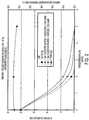
- the OxysenseTM data for the above composition, a similar composition comprised of Constar International's DC-300 as the oxygen scavenger, and a control composition comprised of Constar International's DC-100 are shown in Figure 2 .
- the compound 2-benzyl-1-isoindolinone (DCX-300-1) does scavenge oxygen when melt-blended with cobalt catalyst in a PET matrix.
- the formulator can purchase the compounds from one or more suppliers when available.
- the compounds can also be formed in situ.
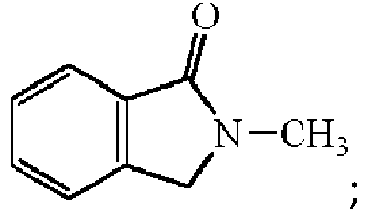
- 2,2'-[1,3-pehenylenebis(methylene)]diisoindolin-1-one having the formula: to the thermoplastic polymers disclosed herein will result in the formation of 2-methylisoindolin-1-one in the final melt composition.
- a compound such as 6,7-dimethoxy-2- ⁇ 3-[(1-oxoisoindolin-2-yl)methyl]-benzylisoindolin-1-one having the formula: can be added to the thermoplastic polymer wherein the resulting melt will comprise both 2-methylisoindolin-1-one and 6,7-dimethoxy-2-methylisoindolin-1-one having the respective formulae:
- Oxygen scavengers such as 6,7-dimethoxy-2- ⁇ 3-[(1-oxoisoindolin-2-yl)methyl]-benzylisoindolin-1-one and 6,7-dimethoxy-2- ⁇ 3-[(1-oxoisoindolin-2-yl)methyl]-benzylisoindolin-1-one can be prepared by the procedures outlined and disclosed in U.S. Patent Application Publication 2008/0277622 A1 . Modifications to the procedures disclosed in U.S. Patent Application Publication 2008/0277622 A1 to afford the compounds disclosed herein are within the skill of the organic chemist.
- the disclosed oxygen scavengers can also protect other compounds and compositions that are susceptible to damage by oxygen.
- the following are non-limiting examples.
- Petroleum oils such as solvent-refined, midcontinent lubricating oil and Gulfcoast lubricating oils are effectively stabilized.
- hydrocarbon lubricating oils both mineral and synthetic, the present additives are particularly effective when used in combination with a zinc dihydrocarbyldithiophosphate, e.g. zinc dialkyldithiophosphate or zinc dialkaryldithiophosphate.
- Synthetic ester lubricants such as those used in turbines and turbojet engines are given a high degree of stabilization.
- Typical synthetic ester lubricants include di-2-ethylhexyl sebacate, trimethylolpropane tripelargonate, C 5 -C 9 aliphatic monocarboxylic esters of pentaerythritol, complex esters formed by condensing under esterifying conditions, mixtures of polyols, polycarboxylic acids, and aliphatic monocarboxylic acids and/or monohydric alkanols.
- Polyamides such as adipic acid-1,6-diaminohexane condensates and poly-6-aminohexanoic acid (nylon) are effectively stabilized.
- Polyalkylene oxides such as copolymers of phenol with ethylene oxide or propylene oxide are stabilized.
- Polyphenyl ethers such as poly-2,6-dimethylphenyl ether formed by polymerization of 2,6-dimethylphenol using a copper-pyridine catalyst are stabilized.
- Polycarbonate plastics and other polyformaldehydes are also protected.
- Linear polyesters such as phthalic anhydride-glycol condensates are given a high degree of protection.
- Polyesters such as those derived from terephthalic acid and alkylene glycols are also given a high degree of protection.
- Other polyesters such as trimellitic acid-glycerol condensates are also protected.
- Polyacrylates such as polymethylacrylate and polymethylmethacrylate are effectively stabilized.
- Polyacrylonitriles and copolymers of acrylonitriles with other olefinically unsaturated monomers such as methylmeth-acrylates are also effectively stabilized.
- the additives can be used to protect any of the many organic substrates to which an antioxidant is normally added. It can be used where economics permit to protect such substrates as asphalt, paper, fluorocarbons such as Teflon®, polyvinyl acetate, polyvinylidene chloride, coumarone-indene resins, polyvinyl ethers, polyvinylidene bromide, polyvinyl bromide, acrylonitrile, vinyl bromide copolymer, vinyl butyral resins, silicones such as dimethylsilicone lubricants, phosphate lubricants such as tricresylphosphate, and the like.
- fluorocarbons such as Teflon®
- polyvinyl acetate polyvinylidene chloride
- coumarone-indene resins polyvinyl ethers
- polyvinylidene bromide polyvinyl bromide
- acrylonitrile vinyl bromide copolymer
- One embodiment disclosed herein is the incorporation of the disclosed oxygen scavenger into polyethylene terephthalate formulations which further include a transition metal catalyst.
- the oxygen scavenger works particularly well in the presence of the transition metal catalyst.
- compositions disclosed herein can include a transition metal salt, compound or complex, as an oxygen scavenger catalyst.
- the transition metal can be selected from the first, second, or third transition series of the Periodic Table.
- the metal can be Rh, Ru, or one of the elements in the series of Sc to Zn (i.e., Sc, Ti, V, Cr, Mn, Fe, Co, Ni, Cu, and Zn).
- Suitable anions for the salts include, but are not limited to, chloride, acetate, oleate, stearate, palmitate, 2-ethylhexanoate, neodecanoate, and naphthenate.
- Representative salts include cobalt (II) 2-ethylhexanoate, cobalt oleate, and cobalt (II) neodecanoate.
- the metal salt also can be an ionomer, in which case a polymeric counter ion can be employed.
- the amounts of the components used in the oxygen scavenging formulations of the present disclosure can affect the use and effectiveness of this composition.
- the amounts of polymer, transition metal catalyst, antioxidant, polymeric diluents, additives, etc. can vary depending on the desired article and its end use.
- one of the primary functions of the antioxidant or oxygen scavenging molecules described above is to react irreversibly with oxygen during the scavenging process, while a primary function of the transition metal catalyst is to facilitate this process.
- the amount of antioxidant (or oxygen scavenging molecules) present affects the oxygen scavenging capacity of the composition, i.e., the amount of oxygen that the composition can consume, while the amount of transition metal catalyst affects the rate at which oxygen is consumed as well as the induction period.
- the additive can be merely mixed into the substrate.
- the organic substrate is in solution and the additive is added to the solution and the solvent removed.
- Solid organic substrates can be merely sprayed with a solution of the additive in a volatile solvent.
- stabilized grain products result from spraying the grain with a toluene solution of the additive.
- the additive can be added following the polymerization stage by mixing it with the final emulsion or solution polymerization mixture and then coagulating or removing solvent to recover the stabilized polymer. It can also be added at the compounding stage by merely mixing the additive with the rubbery polymer in commercial mixing equipment such as a Banbury blender.
- rubbery polymers such as styrene-butadiene rubber, cispolybutadiene or isoprene polymers are blended with the antioxidant together with the other ingredients normally added such as carbon black, oil, sulfur, zinc oxide, stearic acid, vulcanization accelerators, and the like.
- the resultant mixture is fabricated and molded into a finished form and vulcanized.
- the oxygen scavenger composition of the present disclosure can be incorporated in packaging articles having various forms.
- suitable articles include, but are not limited to, flexible sheet films, flexible bags, pouches, semi-rigid and rigid containers such as bottles (e.g. PET bottles) or metal cans, or combinations thereof.
- Typical flexible films and bags include those used to package various food items and can be made up of one or a multiplicity of layers to form the overall film or bag-like packaging material.
- the oxygen scavenger composition of the present disclosure can be used in one, some or all of the layers of such packaging material.
- Typical rigid or semi-rigid articles include plastic, paper or cardboard containers, such as those utilized for juices, soft drinks, as well as thermoformed trays or cups normally having thickness in the range of from 100 to 1000 micrometers.
- the walls of such articles can comprise single or multiple layers of materials.
- the articles can also take the form of a bottle or metal can, or a crown, cap, crown or cap liner, plastisol or gasket.
- the oxygen scavenger composition of the present disclosure can be used as an integral layer or portion of, or as an external or internal coating or liner of, the formed semi-rigid or rigid packaging article. As a liner, the oxygen scavenger composition can be extruded as a film along with the rigid article itself, in e.g.
- a coextrusion, extrusion coating, or extrusion lamination process so as to form the liner in situ during article production; or alternatively can be adhered by heat and/or pressure, by adhesive, or by any other suitable method to an outer surface of the article after the article has been produced.
- the disclosure can also be used as a non-integral component of a packaging article such as, for example, a bottle cap liner, adhesive or non-adhesive sheet insert, sealant, sachet, fibrous mat insert or the like.
- articles for packaging other oxygen-sensitive products can also benefit from the present disclosure.
- Such products would include pharmaceuticals, oxygen sensitive medical products, corrodible metals or products, electronic devices and the like.
- the base polymer in the composition is a polyester.
- the polyester polymers of the disclosure are thermoplastic and, thus, the form of the compositions are not limited and can include a composition in the melt phase polymerization, as an amorphous pellet, as a solid stated polymer, as a semi-crystalline particle, as a composition of matter in a melt processing zone, as a bottle preform, or in the form of a stretch blow molded bottle or other articles.
- the polyester is polyethylene terephthalate (PET).
- polyester polymers examples include polyethylene terephthalate homopolymers and copolymers modified with one or more polycarboxylic acid modifiers in a cumulative amount of less than about 15 mole %, or about 10 mole % or less, or about 8 mole % or less, or one or more hydroxyl compound modifiers in an amount of less than about 60 mol %, or less than about 50 mole %, or less than about 40 mole %, or less than about 15 mole %, or about 10 mole % or less, or about 8 mole % or less (collectively referred to for brevity as "PET”) and polyethylene naphthalate homopolymers and copolymers modified with a cumulative amount of with less than about 15 mole %, or about 10 mole % or less, or about 8 mole % or less, of one or more polycarboxylic acid modifiers or modified less than about 60 mol %, or less than about 50 mole %, or less than about 40 mole %
- the polyester polymer contains at least about 90 mole % ethylene terephthalate repeat units, and in other embodiments, at least about 92 mole %, and in yet other embodiments, or at least about 94 mole %, based on the moles of all repeat units in the polyester polymers.
- the polycarboxylic acid component(s) of the present polyester can include one or more additional modifier polycarboxylic acids.
- additional modifier polycarboxylic acids include aromatic dicarboxylic acids preferably having about 8 to about 14 carbon atoms, aliphatic dicarboxylic acids preferably having about 4 to about 12 carbon atoms, or cycloaliphatic dicarboxylic acids preferably having about 8 to about 12 carbon atoms.
- modifier dicarboxylic acids useful as an acid component(s) are phthalic acid, isophthalic acid, naphthalene-2,6-dicarboxylic acid, cyclohexanedicarboxylic acid, cyclohexanediacetic acid, diphenyl-4,4'-dicarboxylic acid, succinic acid, glutaric acid, adipic acid, azelaic acid, sebacic acid, and the like, with isophthalic acid, naphthalene-2,6-dicarboxylic acid, and cyclohexanedicarboxylic acid being most preferable. It should be understood that use of the corresponding acid anhydrides, esters, and acid chlorides of these acids is included in the term "polycarboxylic acid.” It is also possible for trifunctional and higher order polycarboxylic acids to modify the polyester.
- the hydroxyl component is made from compounds containing 2 or more hydroxyl groups capable of reacting with a carboxylic acid group.
- preferred hydroxyl compounds contain 2 or 3 hydroxyl groups.
- These hydroxyl compounds include C 2 -C 4 alkane diols, such as ethylene glycol, propane diol, and butane diol, among which ethylene glycol is most preferred for container applications.
- other modifier hydroxyl compound component(s) can include diols such as cycloaliphatic diols preferably having 6 to 20 carbon atoms and/or aliphatic diols preferably having about 3 to about 20 carbon atoms.
- diols examples include diethylene glycol; triethylene glycol; 1,4-cyclohexanedimethanol; propane-1,3-diol and butane-1,4-diol (which are considered modifier diols if ethylene glycol residues are present in the polymer in an amount of at least 85 mole % based on the moles of all hydroxyl compound residues); pentane-1,5-diol; hexane-1,6-diol; 3-methylpentanediol-(2,4); neopentyl glycol; 2-methylpentanediol-(1,4); 2,2,4-trimethylpentane-diol-(1,3); 2,5-ethylhexanediol-(1,3); 2,2-diethyl propane-diol-(1,3); hexanediol-(1,3); 1,4-di-(hydroxyethoxy)-benzene
- polyesters such as polyethylene terephthalate are made by reacting a glycol with a dicarboxylic acid as the free acid or its dimethyl ester to produce an ester monomer and/or oligomers, which are then polycondensed to produce the polyester.
- modifiers include isophthalic acid, naphthalenic dicarboxylic acid, trimellitic anhydride, pyromellitic dianhydride, 1,4-cyclohexane dimethanol, and diethylene glycol.
- the amount of the polyester polymer in the formulated polyester polymer composition ranges from greater than about 50.0 wt. %, or from about 80.0 wt. %, or from about 90.0 wt. %, or from about 95.0 wt. %, or from about 96.0 wt. %, or from about 97 wt. %, and up to about 99.90 wt. %, based on the combined weight of all polyester polymers and all polyamide polymers.
- the formulated polyester polymer compositions can also include blends of formulated polyester polymer compositions with other thermoplastic polymers such as polycarbonate.
- the polyester comprises a majority of the composition of the disclosures, and in some embodiments the polyester is present in an amount of at least about 80 wt. %, or at least about 90 wt. %, based on the weight of the composition (excluding fillers, inorganic compounds or particles, fibers, impact modifiers, or other polymers serve as impact modifiers or which form a discontinuous phase such as can be found in cold storage food trays).
- polyester compositions can be prepared by polymerization procedures known in the art sufficient to effect esterification and polycondensation.
- Polyester melt phase manufacturing processes include direct condensation of a dicarboxylic acid with the diol, optionally in the presence of esterification catalysts, in the esterification zone, followed by polycondensation in the prepolymer and finishing zones in the presence of a polycondensation catalyst; or ester exchange usually in the presence of a transesterification catalyst in the ester exchange zone, followed by prepolymerization and finishing in the presence of a polycondensation catalyst, and each can optionally be solid stated according to known methods.
- the transition metal used in the instant compositions is a metal in the positive oxidation state. It should be noted that it is contemplated that one or more such metals can be used.
- cobalt is added in +2 or +3 oxidation state. In some embodiments, it is preferred to use cobalt in the +2 oxidation state.
- copper in the +2 oxidation state is utilized.
- rhodium in the +2 oxidation state is used.
- zinc can also be added to the composition. Preferred zinc compounds include those in a positive oxidation state.
- Suitable counter-ions to the transition metal cations include carboxylates, such as neodecanoates, octanoates, acetates, lactates, naphthalates, malates, stearates, acetylacetonates, linoleates, oleates, palmitates, 2-ethylhexanoates, or ethylene glycolates; or as their oxides, borates, carbonates, chlorides, dioxides, hydroxides, nitrates, phosphates, sulfates, or silicates among others.
- the transition metal is present in an amount of from about 10 ppm to about 400 ppm. In some embodiments, levels of at least about 50 ppm, or at least about 100 ppm of metal can achieve suitable oxygen scavenging levels. The exact amount of transition metal used in an application can be determined by trials that are well within the skill level of one skilled in the art. In some embodiments involving wall applications (as opposed to master batch applications where more catalyst is used), it is preferred to keep the level of metal below about 300 ppm and, in other embodiments, preferably below about 250 ppm.
- the transition metal or metals can be added neat or in a carrier (such as a liquid or wax) to an extruder or other device for making the article, or the metal can be present in a concentrate or carrier with the oxidizable organic component, in a concentrate or carrier with a base polymer, or in a concentrate or carrier with a base polymer/oxidizable organic component blend.
- a carrier such as a liquid or wax
- the transition metal can be added as a polymerization catalyst to the melt phase reaction for making the base polymer (a polyester polymer in some embodiments) and be present as residual metals when the polymer is fed to the melting zone (e.g. the extrusion or injection molding zone) for making the article such as a preform or sheet.
- transition metal does not substantially increase the intrinsic viscosity (I.V) of the melt in the melt processing zone.
- transition metal or metals can be added in two or more stages, such as once during the melt phase for the production of the polyester polymer and again once more to the melting zone for making the article.
- the composition optionally further contains at least one colourant.
- the composition can also include other components such as pigments, fillers, crystallization aids, impact modifiers, surface lubricants, denesting agents, stabilizers, ultraviolet light absorbing agents, metal deactivators, nucleating agents such as polyethylene and polypropylene, phosphate stabilizers and dyestuffs.
- additional components are well known to those skilled in the art and can be added to the existing composition so long as they do not negatively impact the performance of the compositions.
- the total quantity of such components will be less than about 10% by weight relative to the whole composition. In some embodiments, the amount of these optional components is less than about 5%, by weight relative to the total composition.
- a common additive used in the manufacture of polyester polymer compositions used to make stretch blow molded bottles is a reheat additive because the preforms made from the composition must be reheated prior to entering the mold for stretch blowing into a bottle.
- reheat additives include various forms of black particles, e.g. carbon black, activated carbon, black iron oxide, glassy carbon, and silicon carbide; the gray particles such as antimony, and other reheat additives such as silicas, red iron oxide, and so forth.
- impact modifiers are typically additives.
- typical commercially available impact modifiers well-known in the art and useful in this disclosure include ethylene/acrylate/glycidyl terpolymers and ethylene/acrylate copolymers in which the acrylate is a methyl or ethyl acrylate or methyl or ethyl methacrylate or the corresponding butyl acrylates, styrene based block copolymers, and various acrylic core/shell type impact modifiers.
- the impact modifiers can be used in conventional amounts from about 0.1 to about 25 weight percent of the overall composition and, in some embodiments, preferably in amounts from about 0.1 to about 10 weight percent of the composition.
- the packaging contents are sensitive to the ingress of oxygen, but the contents can also be affected by UV light.
- Fruit juices and pharmaceuticals are two examples of such contents. Accordingly, in some embodiments, it is desirable to incorporate into the polyester composition any one of the known UV absorbing compounds in amounts effective to protect the packaged contents.
- the instant compositions can be made by mixing a base polymer (PET, for example) with the oxidizable organic component and the transition metal composition.
- a base polymer PET, for example
- the oxidizable organic component and the transition metal composition can be made by any method known to those skilled in the art.
- some or part of the transition metal can exist in the base polymer prior to mixing. This residual metal, for example, can exist from the manufacturing process of the base polymer.
- the base polymer, the oxidizable organic component and the transition metal are mixed by tumbling in a hopper.
- Other optional ingredients can be added during this mixing process or added to the mixture after the aforementioned mixing or to an individual component prior to the aforementioned mixing step.
- the instant composition can also be made by adding each ingredient separately and mixing the ingredients prior melt processing the composition to form an article.
- the mixing can be just prior to the melt process zone.
- one or more ingredients can be premixed in a separate step prior to bringing all of the ingredients together.
- the disclosure concerns use of the compositions described herein as a component of a wall that is used in a package for oxygen sensitive materials.
- the necessary scavenging capacity of a package will generally have to be greater for walls that have a greater permeance in the absence of scavenging additives. Accordingly, a good effect is harder to achieve with inherently higher permeance materials are used.
- the wall can be a rigid one, a flexible sheet, or a clinging film. It can be homogenous or a laminate or coated with other polymers. If it is laminated or coated, then the scavenging property can reside in a layer of the wall the permeance of which is relatively high in the absence of scavenging and which alone would not perform very satisfactorily but which performs satisfactorily in combination with one or more other layers which have a relatively low permeance but negligible or insufficient oxygen-scavenging properties.
- a single such layer could be used on the outside of the package since this is the side from which oxygen primarily comes when the package is filled and sealed. However, such a layer to either side of the scavenging layer would reduce consumption of scavenging capacity prior to filling and sealing.
- the permeability of the composition for oxygen is advantageously not more than about 3.0, or about 1.7, or about 0.7, or about 0.2, or about 0.03 cm 3 mm/(m 2 atm day).
- the permeability of the composition provided by the present disclosure is advantageously not more than about three-quarters of that in the absence of oxygen-scavenging properties.
- the permeability is not more than about one half, one-tenth in certain embodiments, one twenty-fifth in other embodiments, and not more than one-hundredth in yet other embodiments of that in the absence of oxygen-scavenging properties.
- the permeability in the absence of oxygen-scavenging properties is advantageously not more than about 17 cm 3 mm/(m 2 atm day), or about 10, and or about 6.
- a particularly good effect can be achieved for such permeabilities in the range from about 0.5, or about 1.0, to 10, or about 6.0, cm 3 mm/(m 2 atm day).
- Measurements of oxygen permeation can be made by methods described, for example, in U.S. Pat. No. 5,639,815 , the contents of which are incorporated herein in its entirety.
- the instant composition can be used as a master batch for blending with a polymer or a polymer containing component.
- concentration of the oxidizable organic component and the transition metal will be higher to allow for the final blended product to have suitable amounts of these components.
- the master batch can also contain an amount of the polymer to which the master batch is to be blended with.
- the master batch can contain a polymer that is compatible with the polymer that the master batch is to be blended with.
- compositions of the instant disclosure can be used for forming a layer of a wall which primarily provides oxygen-scavenging (another layer including polymer providing gas barrier without significant scavenging), or as a head-space scavenger (completely enclosed, together with the package contents, by a package wall).
- a layer of a wall which primarily provides oxygen-scavenging (another layer including polymer providing gas barrier without significant scavenging), or as a head-space scavenger (completely enclosed, together with the package contents, by a package wall).
- the time period for which the permeability is maintained can be extended by storing the articles in sealed containers or under an inert atmosphere such as nitrogen prior to use with oxygen sensitive materials.
- the disclosure provides a package, whether rigid, semi-rigid, collapsible, lidded, or flexible or a combination of these, comprising a wall as formed from the compositions described herein.
- a package whether rigid, semi-rigid, collapsible, lidded, or flexible or a combination of these, comprising a wall as formed from the compositions described herein.
- Such packages can be formed by methods well known to those skilled in the art.
- moulding generally, injection moulding, stretch blow moulding, extrusion, thermoforming, extrusion blow moulding, and (specifically for multilayer structures) co-extrusion and lamination using adhesive tie layers.
- Orientation, e.g. by stretch blow moulding, of the polymer is especially attractive with phthalate polyesters because of the known mechanical advantages that result.
- the melt processing zone for making the article can be operated under customary conditions effective for making the intended articles, such as preforms, bottles, trays, and other articles mentioned below.
- such conditions are effective to process the melt without substantially increasing the I.V. of the melt and which are ineffective to promote transesterification reactions.
- suitable operating conditions effective to establish a physical blend of the polyester polymer, oxidizable organic component, and transition metal are temperatures in the melt processing zone within a range of about 250°C. to about 300°C at a total cycle time of less than about 6 minutes, and typically without the application of vacuum and under a positive pressure ranging from about 0 psig to about 900 psig.
- the residence time of the melt on the screw can range from about 1 to about 4 minutes.
- Specific articles include preforms, containers and films for packaging of food, beverages, cosmetics, pharmaceuticals, and personal care products where a high oxygen barrier is needed.
- beverage containers are bottles for holding water and carbonated soft drinks, and the disclosure is particularly useful in bottle applications containing juices, sport drinks, beer or any other beverage where oxygen detrimentally affects the flavor, fragrance, performance (prevent vitamin degradation), or color of the drink.
- the compositions of the instant disclosure are also particularly useful as a sheet for thermoforming into rigid packages and films for flexible structures. Rigid packages include food trays and lids.
- Examples of food tray applications include dual ovenable food trays, or cold storage food trays, both in the base container and in the lidding (whether a thermoformed lid or a film), where the freshness of the food contents can decay with the ingress of oxygen.
- the compositions of the instant disclosure also find use in the manufacture of cosmetic containers and containers for pharmaceuticals or medical devices.
- the package walls of the instant disclosure can be a single layer or a multilayer constructions.
- the outer and inner layers can be structural layers with one or more protective layers containing the oxygen scavenging material positioned there between.
- the outer and inner layers comprise and polyolefin or a polyester.
- a single layer design is preferred. Such a layer can have advantages in simplicity of manufacture and cost.
Landscapes
- Chemical & Material Sciences (AREA)
- Organic Chemistry (AREA)
- Medicinal Chemistry (AREA)
- Health & Medical Sciences (AREA)
- Polymers & Plastics (AREA)
- Chemical Kinetics & Catalysis (AREA)
- Engineering & Computer Science (AREA)
- Mechanical Engineering (AREA)
- Crystallography & Structural Chemistry (AREA)
- Food Science & Technology (AREA)
- Ceramic Engineering (AREA)
- Heterocyclic Carbon Compounds Containing A Hetero Ring Having Oxygen Or Sulfur (AREA)
- Compositions Of Macromolecular Compounds (AREA)
- Pharmaceuticals Containing Other Organic And Inorganic Compounds (AREA)
- Solid-Sorbent Or Filter-Aiding Compositions (AREA)
- Medicinal Preparation (AREA)
Claims (15)
- Schmelzgemischte Polymerzusammensetzung, umfassend:(a) ein thermoplastisches Polymer; und(b) ein Übergangsmetall in einer positiven Oxidationsstufe, wobei das Metall in einer Menge von 10 ppm bis 400 ppm vorhanden ist(c) oder eine Verbindung aufweisend die Formel:(i)
 (ii)
(ii) (iii)
(iii)
 (i) -CH3;(ii) -CHO; oder(ii) einer Kombination davon; undder Index n gleich 1 oder 2 ist; und(d) optional mindestens ein Färbemittel.
 - Polymerzusammensetzung nach Anspruch 1, umfassend etwa 10 ppm bis etwa 400 ppm, bevorzugt 30 ppm bis 150 ppm eines Übergangsmetalls.
- Polymerzusammensetzung nach Anspruch 1 oder Anspruch 2, wobei das thermoplastische Polymer ein Polyester-Homopolymer oder Polyester-Copolymer, bevorzugt Polyethylenterephthalat oder ein Copolymer davon, ist.
- Polymerzusammensetzung nach einem der Ansprüche 1 bis 3, wobei die Verbindung 1 Gew.-% bis 10 Gew.-%, bevorzugt 1 Gew.-% bis 5 Gew.-%, insbesondere 1 Gew.-% bis 3 Gew.-% der Zusammensetzung umfasst.
- Verfahren zur Herstellung einer sauerstoffaufnehmenden Polymerzusammensetzung, umfassend den Schritt des Kombinierens:(a) eines thermoplastischen Polymers;(b) eines Übergangsmetalls in einer positiven Oxidationsstufe, wobei das Metall in der Zusammensetzung in einer Menge von 10 ppm bis 400 ppm vorhanden ist, und(c) einer Verbindung aufweisend die Formel:(i)
 (ii)
(ii) (iii)
(iii)
 (i) -CH3;(ii) -CHO; oder(ii) einer Kombination davon; undder Index n gleich 1 oder 2 ist; und(d) optional mindestens eines Färbemittels.
 - Verfahren zur Herstellung eines Gegenstandes, bevorzugt einer Flasche oder eines Vorformlings, umfassend den Schritt des Bereitstellens einer Polymerzusammensetzung, wobei die Zusammensetzung umfasst:(a) ein thermoplastisches Polymer;(b) ein Übergangsmetall in einer positiven Oxidationsstufe, wobei das Metall in der Zusammensetzung in einer Menge von 10 ppm bis 400 ppm vorhanden ist; und(c) eine Verbindung aufweisend die Formel:(i)
 (ii)
(ii)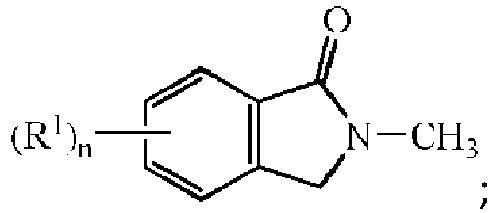 (iii)
(iii)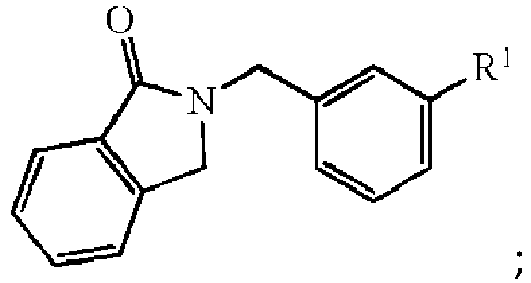
 (i) -CH3;(ii) -CHO; oder(ii) einer Kombination davon; undder Index n gleich 1 oder 2 ist; und(d) optional mindestens ein Färbemittel, und Formen eines Gegenstandes aus der Zusammensetzung.
 - Verfahren nach Anspruch 6, wobei der Schritt des Formens Spritzgießen, Streckblasformen, Extrusion, Thermoformen oder Extrusionsblasformen umfasst.
- Verfahren nach Anspruch 6 oder 7, wobei der Schritt des Formens eine Platten- oder Folienextrusion ist.
- Verfahren nach Anspruch 5, wobei das Übergangsmetall in der Zusammensetzung in einer Menge von 10 ppm bis 400 ppm, bevorzugt 30 ppm bis 150 ppm, vorhanden ist.
- Verfahren nach Anspruch 5 oder 9, wobei das thermoplastische Polymer ein Polyester-Homopolymer oder Polyester-Copolymer, bevorzugt Polyethylenterephthalat oder ein Copolymer davon, ist.
- Verfahren nach einem der Ansprüche 5, 9 und 10, wobei die Verbindung etwa 1 bis 10 Gew.-%, bevorzugt 1 bis 5 Gew.-%, insbesondere 1 bis 3 Gew.-% der Zusammensetzung umfasst.
- Verfahren nach einem der Ansprüche 6 bis 8, wobei das Übergangsmetall in der Zusammensetzung in einer Menge von 10 ppm bis 400 ppm, bevorzugt 30 ppm bis 150 ppm, vorhanden ist.
- Verfahren nach einem der Ansprüche 6 bis 8 und 12, wobei das thermoplastische Polymer ein Polyester-Homopolymer oder Polyester-Copolymer, bevorzugt Polyethylenterephthalat oder ein Copolymer davon, ist.
- Verfahren nach einem der Ansprüche 6 bis 8, 12 und 13, wobei die Verbindung 1 bis 10 %, bevorzugt 1 bis 5 %, insbesondere 1 bis 3 Gew.-% der Zusammensetzung, enthält.
- Verfahren nach einem der Ansprüche 6 bis 8 und 12 bis 14, wobei der Gegenstand eine Flasche, ein Vorformling, eine Platte, ein Becher oder ein Glas ist.
Applications Claiming Priority (2)
| Application Number | Priority Date | Filing Date | Title |
|---|---|---|---|
| US26115809P | 2009-11-13 | 2009-11-13 | |
| PCT/US2010/056594 WO2011060304A2 (en) | 2009-11-13 | 2010-11-12 | Oxygen scavengers, compositions comprising the scavengers, and artcles made from the compositions |
Publications (3)
| Publication Number | Publication Date |
|---|---|
| EP2499195A2 EP2499195A2 (de) | 2012-09-19 |
| EP2499195A4 EP2499195A4 (de) | 2018-01-10 |
| EP2499195B1 true EP2499195B1 (de) | 2020-12-09 |
Family
ID=42285226
Family Applications (1)
| Application Number | Title | Priority Date | Filing Date |
|---|---|---|---|
| EP10830818.0A Active EP2499195B1 (de) | 2009-11-13 | 2010-11-12 | Sauerstofffänger, zusammensetzung mit den fängern sowie aus der zusammensetzung hergestellte artikel |
Country Status (5)
| Country | Link |
|---|---|
| US (2) | US9181414B2 (de) |
| EP (1) | EP2499195B1 (de) |
| AU (3) | AU2010319298B2 (de) |
| CA (1) | CA2780749A1 (de) |
| WO (1) | WO2011060304A2 (de) |
Families Citing this family (31)
| Publication number | Priority date | Publication date | Assignee | Title |
|---|---|---|---|---|
| WO2008141185A1 (en) | 2007-05-10 | 2008-11-20 | Constar International, Inc. | Oxygen scavenging molecules, articles containing same, and methods of their use |
| US8193182B2 (en) | 2008-01-04 | 2012-06-05 | Intellikine, Inc. | Substituted isoquinolin-1(2H)-ones, and methods of use thereof |
| KR101653842B1 (ko) | 2008-01-04 | 2016-09-02 | 인텔리카인, 엘엘씨 | 특정 화학 물질, 조성물 및 방법 |
| EP2483342B1 (de) | 2009-09-29 | 2017-02-22 | Plastipak Packaging, Inc. | Färbemittelkompatible sauerstoffabsorbierende polymerzusammensetzung und daraus hergestellte artikel |
| CA2780749A1 (en) | 2009-11-13 | 2011-05-19 | Constar International, Inc. | Oxygen scavengers, compositions comprising the scavengers, and artcles made from the compositions |
| US8450398B2 (en) | 2009-11-13 | 2013-05-28 | Constar International, Inc. | Oxygen scavengers, compositions comprising the scavengers, and articles made from the compositions |
| JP5951600B2 (ja) | 2010-05-21 | 2016-07-13 | インフィニティー ファーマシューティカルズ, インコーポレイテッド | キナーゼ調節のための、化合物、組成物および方法 |
| AR084824A1 (es) | 2011-01-10 | 2013-06-26 | Intellikine Inc | Procesos para preparar isoquinolinonas y formas solidas de isoquinolinonas |
| MX2014000648A (es) | 2011-07-19 | 2014-09-25 | Infinity Pharmaceuticals Inc | Compuestos heterociclicos y sus usos. |
| US8785470B2 (en) | 2011-08-29 | 2014-07-22 | Infinity Pharmaceuticals, Inc. | Heterocyclic compounds and uses thereof |
| WO2013165971A1 (en) * | 2012-04-30 | 2013-11-07 | Constar International Llc | Oxygen scavenging compositions |
| US8828998B2 (en) | 2012-06-25 | 2014-09-09 | Infinity Pharmaceuticals, Inc. | Treatment of lupus, fibrotic conditions, and inflammatory myopathies and other disorders using PI3 kinase inhibitors |
| WO2014071109A1 (en) | 2012-11-01 | 2014-05-08 | Infinity Pharmaceuticals, Inc. | Treatment of cancers using pi3 kinase isoform modulators |
| JP6249245B2 (ja) * | 2013-03-06 | 2017-12-20 | 三菱瓦斯化学株式会社 | 酸素吸収性樹脂組成物、およびこれを用いた酸素吸収性多層インジェクション成形体および酸素吸収性多層容器 |
| CN105008128B (zh) * | 2013-03-06 | 2017-01-11 | 三菱瓦斯化学株式会社 | 吸氧性多层体、吸氧性容器、吸氧性密闭容器、吸氧性ptp包装体、及使用它们的保存方法 |
| WO2014136918A1 (ja) * | 2013-03-06 | 2014-09-12 | 三菱瓦斯化学株式会社 | 酸素吸収性医療用多層容器及びバイオ医薬の保存方法 |
| US9481667B2 (en) | 2013-03-15 | 2016-11-01 | Infinity Pharmaceuticals, Inc. | Salts and solid forms of isoquinolinones and composition comprising and methods of using the same |
| US10189199B2 (en) * | 2013-08-30 | 2019-01-29 | Discma Ag | Highly modified polyesters for containers |
| EP3071206B1 (de) | 2013-11-22 | 2021-02-17 | CL Biosciences LLC | Gastrin antagonisten (zb yf476, netazepid) zur behandlung und vorbeugung von osteoporosis |
| WO2015160975A2 (en) | 2014-04-16 | 2015-10-22 | Infinity Pharmaceuticals, Inc. | Combination therapies |
| WO2015200765A1 (en) | 2014-06-26 | 2015-12-30 | Plastipak Packaging, Inc. | Plastic container with threaded neck finish |
| US11136167B2 (en) | 2014-06-26 | 2021-10-05 | Plastipak Packaging, Inc. | Plastic container with threaded neck finish |
| US11338983B2 (en) | 2014-08-22 | 2022-05-24 | Plastipak Packaging, Inc. | Oxygen scavenging compositions, articles containing same, and methods of their use |
| US10316167B2 (en) | 2014-09-19 | 2019-06-11 | Plastipak Packaging | Oxygen scavengers, compositions comprising the scavengers, and articles made from the compositions |
| US10351692B2 (en) | 2014-10-17 | 2019-07-16 | Plastipak Packaging, Inc. | Oxygen scavengers, compositions comprising the scavengers, and articles made from the compositions |
| CA3026149A1 (en) | 2016-06-02 | 2017-12-07 | Cadent Therapeutics, Inc. | Potassium channel modulators |
| RU2754507C2 (ru) | 2016-06-24 | 2021-09-02 | Инфинити Фармасьютикалз, Инк. | Комбинированная терапия |
| BR112019014814B1 (pt) | 2017-01-23 | 2024-03-12 | Novartis Ag | Compostos, composições farmacêuticas dos mesmos e seus usos no tratamento de doenças associadas à disfunção de canais iônicos de potássio |
| CA3116339A1 (en) | 2018-10-22 | 2020-04-30 | Cadent Therapeutics, Inc. | Crystalline forms of potassium channel modulators |
| EP3924160A4 (de) | 2019-01-26 | 2022-09-07 | Finite Research Ltd | Zur reaktion mit oder entfernung von molekularem sauerstoff fähige formulierungen |
| EP4217412A1 (de) * | 2020-07-26 | 2023-08-02 | Finite Research Ltd | Abfallabschwächungsverfahren und -materialien |
Family Cites Families (47)
| Publication number | Priority date | Publication date | Assignee | Title |
|---|---|---|---|---|
| DE134980C (de) | ||||
| DE442774C (de) | 1925-03-31 | 1927-04-07 | I G Farbenindustrie Akt Ges | Verfahren zur Darstellung von Aralkylaminen und ihren Derivaten |
| US2841591A (en) * | 1952-06-18 | 1958-07-01 | Du Pont | Preparation of phthalimidines |
| NL126384C (de) * | 1963-11-19 | |||
| US3317558A (en) * | 1965-08-13 | 1967-05-02 | Basf Ag | Production of n-substituted phthalimidines |
| FI753673A7 (de) | 1975-01-15 | 1976-07-16 | Merck & Co Inc | |
| US4536409A (en) | 1981-01-23 | 1985-08-20 | American Can Company | Oxygen scavenger |
| DE3342414A1 (de) | 1983-11-24 | 1985-06-05 | Bayer Ag, 5090 Leverkusen | Neue flammschutzmittelkombinationen und ihre verwendung in thermoplastischen formmassen aus polycarbonaten und abs-polymerisaten |
| GB2207439B (en) * | 1987-07-27 | 1992-02-12 | Metal Box Plc | Improvements in and relating to packaging |
| JP2991437B2 (ja) | 1987-07-27 | 1999-12-20 | カヌードメタルボックス パブリック リミテド カンパニー | 包装に関する改良 |
| GB8803062D0 (en) | 1988-02-10 | 1988-03-09 | Grace W R & Co | Sealed containers & sealing compositions for them |
| EP0335520A1 (de) | 1988-03-12 | 1989-10-04 | CarnaudMetalbox plc | Verpackungsmittel |
| JPH0362828A (ja) | 1989-07-30 | 1991-03-18 | Victor Co Of Japan Ltd | 光学部材用ポリカーボネート樹脂成形品の着色方法 |
| US5250592A (en) * | 1990-04-12 | 1993-10-05 | Ciba-Geigy Corporation | Isoindolinone compounds as stabilizers for organic materials |
| US5211875A (en) * | 1991-06-27 | 1993-05-18 | W. R. Grace & Co.-Conn. | Methods and compositions for oxygen scavenging |
| AU684810B2 (en) * | 1993-07-13 | 1998-01-08 | Chevron Phillips Chemical Company Lp | Ethylenic oxygen scavenging compositions and process for making same by esterification or transesterification in reactive extruder |
| US6906146B2 (en) * | 1993-07-13 | 2005-06-14 | Phillips Petroleum Company | Compositions having ethylenic backbone and benzylic, allylic, or ether-containing side-chains, oxygen scavenging compositions containing same, and process for making these compositions by esterification or transesterification of a polymer melt |
| US6057013A (en) | 1996-03-07 | 2000-05-02 | Chevron Chemical Company | Oxygen scavenging system including a by-product neutralizing material |
| US6410156B1 (en) * | 2001-03-06 | 2002-06-25 | Honeywell International Inc. | Oxygen scavenging polyamide compositions suitable for pet bottle applications |
| US7740926B2 (en) | 2001-07-26 | 2010-06-22 | M&G Usa Corporation | Oxygen-scavenging containers |
| US6780916B2 (en) * | 2001-07-26 | 2004-08-24 | M & G Usa Corporation | Oxygen-scavenging resin compositions having low haze |
| JP2006524264A (ja) | 2003-01-06 | 2006-10-26 | トーレイ プラスティクス(アメリカ),インコーポレイティド | 難燃性ポリエステル樹脂組成物及びそれから形成された物品 |
| AU2004202264B2 (en) | 2003-05-29 | 2008-12-18 | Mitsubishi Gas Chemical Company, Inc. | Masterbatch and production method of oxygen-absorbing molded article |
| GB2405874B (en) * | 2003-09-10 | 2008-05-28 | Colormatrix Europe Ltd | Fatty acid ester slip agents for polyethylene terephthalate |
| TW200528484A (en) | 2004-01-29 | 2005-09-01 | Wellman Inc | Imide-modified polyester resins and methods of making the same |
| DE602005009210D1 (de) * | 2004-08-17 | 2008-10-02 | Invista Tech Sarl | Farbige sauerstoffabfangende polymere |
| US20060069197A1 (en) | 2004-09-27 | 2006-03-30 | Tammaji Kulkarny S | Oxygen scavenging composition |
| US20060182911A1 (en) * | 2004-10-19 | 2006-08-17 | Tammaji Kulkarni S | Gas barrier pet composition for monolayer bottle and process thereof |
| JP2008523170A (ja) | 2004-12-06 | 2008-07-03 | イーストマン ケミカル カンパニー | 酸素捕捉性組成物用のポリエステル系コバルトコンセントレート |
| WO2006088889A2 (en) | 2005-02-15 | 2006-08-24 | Constar International, Inc. | Oxygen scavenging compositions and packaging comprising said compositions |
| US7959998B2 (en) * | 2005-03-02 | 2011-06-14 | Eastman Chemical Company | Transparent, oxygen-scavenging compositions containing polyesters comprising a cyclobutanediol and articles prepared therefrom |
| US20070241309A1 (en) * | 2006-04-13 | 2007-10-18 | Julius Uradnisheck | Composition for controlling exposure to oxygen |
| WO2008049744A1 (en) | 2006-10-25 | 2008-05-02 | Ciba Holding Inc. | Monoazo colorants for mass-colouring of polymers |
| US7521523B2 (en) * | 2006-12-28 | 2009-04-21 | Eastman Chemical Company | Oxygen-scavenging polyester compositions useful in packaging |
| US20080255280A1 (en) * | 2007-04-11 | 2008-10-16 | Susan Sims | Oxygen-scavenging polymer blends suitable for use in packaging |
| WO2008141185A1 (en) | 2007-05-10 | 2008-11-20 | Constar International, Inc. | Oxygen scavenging molecules, articles containing same, and methods of their use |
| US20110017611A1 (en) | 2007-12-21 | 2011-01-27 | Basf Se | Oxygen-scavenging mixtures |
| WO2009152114A1 (en) | 2008-06-09 | 2009-12-17 | Constar International, Inc. | Methods and products for improving the recyclability of oxygen scavenging containers |
| EP2208763A1 (de) | 2009-01-15 | 2010-07-21 | Cognis IP Management GmbH | Komplexester als Lösungsmittel für Druckfarben (III) |
| CA2770165A1 (en) | 2009-08-17 | 2011-02-24 | Basf Se | Use of thermoplastic elastomer to increase oxygen scavenger activity of functionalized polyolefin films |
| EP2483342B1 (de) | 2009-09-29 | 2017-02-22 | Plastipak Packaging, Inc. | Färbemittelkompatible sauerstoffabsorbierende polymerzusammensetzung und daraus hergestellte artikel |
| US8450398B2 (en) | 2009-11-13 | 2013-05-28 | Constar International, Inc. | Oxygen scavengers, compositions comprising the scavengers, and articles made from the compositions |
| WO2011060308A2 (en) * | 2009-11-13 | 2011-05-19 | Constar International, Inc. | Thermoplastic polymers comprising oxygen scavenging molecules |
| CA2780749A1 (en) | 2009-11-13 | 2011-05-19 | Constar International, Inc. | Oxygen scavengers, compositions comprising the scavengers, and artcles made from the compositions |
| US8377530B2 (en) | 2011-02-08 | 2013-02-19 | Eastman Chemical Company | Polyesters with low molecular weight additives for improved gas barrier properties |
| US20120283366A1 (en) | 2011-05-06 | 2012-11-08 | Graham Packaging Company, L.P. | Activated oxygen scavenging compositions for plastic containers |
| JP5798450B2 (ja) | 2011-11-15 | 2015-10-21 | 花王株式会社 | シリコンウエハ用研磨液組成物 |
-
2010
- 2010-11-12 CA CA2780749A patent/CA2780749A1/en not_active Abandoned
- 2010-11-12 AU AU2010319298A patent/AU2010319298B2/en active Active
- 2010-11-12 EP EP10830818.0A patent/EP2499195B1/de active Active
- 2010-11-12 US US12/945,351 patent/US9181414B2/en active Active
- 2010-11-12 WO PCT/US2010/056594 patent/WO2011060304A2/en not_active Ceased
-
2015
- 2015-11-09 US US14/935,953 patent/US10040922B2/en active Active
-
2016
- 2016-02-05 AU AU2016200734A patent/AU2016200734B2/en not_active Ceased
-
2018
- 2018-07-04 AU AU2018204870A patent/AU2018204870A1/en not_active Abandoned
Non-Patent Citations (1)
| Title |
|---|
| None * |
Also Published As
| Publication number | Publication date |
|---|---|
| AU2010319298A1 (en) | 2012-07-05 |
| CA2780749A1 (en) | 2011-05-19 |
| WO2011060304A2 (en) | 2011-05-19 |
| AU2016200734A1 (en) | 2016-03-03 |
| US20160229988A1 (en) | 2016-08-11 |
| WO2011060304A3 (en) | 2011-11-03 |
| AU2010319298B2 (en) | 2015-11-05 |
| AU2016200734B2 (en) | 2018-04-05 |
| US9181414B2 (en) | 2015-11-10 |
| US10040922B2 (en) | 2018-08-07 |
| AU2018204870A1 (en) | 2018-07-26 |
| EP2499195A2 (de) | 2012-09-19 |
| EP2499195A4 (de) | 2018-01-10 |
| US20110172335A1 (en) | 2011-07-14 |
Similar Documents
| Publication | Publication Date | Title |
|---|---|---|
| EP2499195B1 (de) | Sauerstofffänger, zusammensetzung mit den fängern sowie aus der zusammensetzung hergestellte artikel | |
| US11739059B2 (en) | Oxygen scavenging molecules, articles containing same, and methods of their use | |
| EP2566917B1 (de) | Sauerstoffabsorbierende additive für kunststoffbehälter | |
| EP2499134B1 (de) | Sauerstofffänger, zusammensetzung mit den fängern sowie aus der zusammensetzung hergestellte artikel | |
| US20250043128A1 (en) | Oxygen scavenging compositions, articles containing same, and methods of their use | |
| HK1140784B (en) | Oxygen scavenging molecules, articles containing same, and methods of their use |
Legal Events
| Date | Code | Title | Description |
|---|---|---|---|
| PUAI | Public reference made under article 153(3) epc to a published international application that has entered the european phase |
Free format text: ORIGINAL CODE: 0009012 |
|
| 17P | Request for examination filed |
Effective date: 20120612 |
|
| AK | Designated contracting states |
Kind code of ref document: A2 Designated state(s): AL AT BE BG CH CY CZ DE DK EE ES FI FR GB GR HR HU IE IS IT LI LT LU LV MC MK MT NL NO PL PT RO RS SE SI SK SM TR |
|
| DAX | Request for extension of the european patent (deleted) | ||
| RAP1 | Party data changed (applicant data changed or rights of an application transferred) |
Owner name: CONSTAR INTERNATIONAL LLC |
|
| RAP1 | Party data changed (applicant data changed or rights of an application transferred) |
Owner name: PLASTIPAK PACKAGING, INC. |
|
| A4 | Supplementary search report drawn up and despatched |
Effective date: 20171213 |
|
| RIC1 | Information provided on ipc code assigned before grant |
Ipc: C08K 5/098 20060101ALI20171207BHEP Ipc: C08L 67/00 20060101ALI20171207BHEP Ipc: C07D 209/46 20060101ALI20171207BHEP Ipc: C08K 5/3417 20060101AFI20171207BHEP Ipc: B65D 1/02 20060101ALI20171207BHEP Ipc: C08K 5/00 20060101ALI20171207BHEP Ipc: C08K 3/08 20060101ALI20171207BHEP Ipc: C08J 5/18 20060101ALI20171207BHEP Ipc: B01J 20/26 20060101ALI20171207BHEP Ipc: B65D 81/26 20060101ALI20171207BHEP |
|
| STAA | Information on the status of an ep patent application or granted ep patent |
Free format text: STATUS: EXAMINATION IS IN PROGRESS |
|
| 17Q | First examination report despatched |
Effective date: 20190201 |
|
| GRAP | Despatch of communication of intention to grant a patent |
Free format text: ORIGINAL CODE: EPIDOSNIGR1 |
|
| STAA | Information on the status of an ep patent application or granted ep patent |
Free format text: STATUS: GRANT OF PATENT IS INTENDED |
|
| INTG | Intention to grant announced |
Effective date: 20191119 |
|
| GRAJ | Information related to disapproval of communication of intention to grant by the applicant or resumption of examination proceedings by the epo deleted |
Free format text: ORIGINAL CODE: EPIDOSDIGR1 |
|
| STAA | Information on the status of an ep patent application or granted ep patent |
Free format text: STATUS: EXAMINATION IS IN PROGRESS |
|
| INTC | Intention to grant announced (deleted) | ||
| GRAP | Despatch of communication of intention to grant a patent |
Free format text: ORIGINAL CODE: EPIDOSNIGR1 |
|
| STAA | Information on the status of an ep patent application or granted ep patent |
Free format text: STATUS: GRANT OF PATENT IS INTENDED |
|
| INTG | Intention to grant announced |
Effective date: 20200707 |
|
| GRAS | Grant fee paid |
Free format text: ORIGINAL CODE: EPIDOSNIGR3 |
|
| GRAA | (expected) grant |
Free format text: ORIGINAL CODE: 0009210 |
|
| STAA | Information on the status of an ep patent application or granted ep patent |
Free format text: STATUS: THE PATENT HAS BEEN GRANTED |
|
| AK | Designated contracting states |
Kind code of ref document: B1 Designated state(s): AL AT BE BG CH CY CZ DE DK EE ES FI FR GB GR HR HU IE IS IT LI LT LU LV MC MK MT NL NO PL PT RO RS SE SI SK SM TR |
|
| REG | Reference to a national code |
Ref country code: GB Ref legal event code: FG4D |
|
| REG | Reference to a national code |
Ref country code: AT Ref legal event code: REF Ref document number: 1343411 Country of ref document: AT Kind code of ref document: T Effective date: 20201215 Ref country code: CH Ref legal event code: EP |
|
| REG | Reference to a national code |
Ref country code: DE Ref legal event code: R096 Ref document number: 602010066133 Country of ref document: DE |
|
| REG | Reference to a national code |
Ref country code: IE Ref legal event code: FG4D |
|
| PG25 | Lapsed in a contracting state [announced via postgrant information from national office to epo] |
Ref country code: FI Free format text: LAPSE BECAUSE OF FAILURE TO SUBMIT A TRANSLATION OF THE DESCRIPTION OR TO PAY THE FEE WITHIN THE PRESCRIBED TIME-LIMIT Effective date: 20201209 Ref country code: RS Free format text: LAPSE BECAUSE OF FAILURE TO SUBMIT A TRANSLATION OF THE DESCRIPTION OR TO PAY THE FEE WITHIN THE PRESCRIBED TIME-LIMIT Effective date: 20201209 Ref country code: NO Free format text: LAPSE BECAUSE OF FAILURE TO SUBMIT A TRANSLATION OF THE DESCRIPTION OR TO PAY THE FEE WITHIN THE PRESCRIBED TIME-LIMIT Effective date: 20210309 Ref country code: GR Free format text: LAPSE BECAUSE OF FAILURE TO SUBMIT A TRANSLATION OF THE DESCRIPTION OR TO PAY THE FEE WITHIN THE PRESCRIBED TIME-LIMIT Effective date: 20210310 |
|
| REG | Reference to a national code |
Ref country code: AT Ref legal event code: MK05 Ref document number: 1343411 Country of ref document: AT Kind code of ref document: T Effective date: 20201209 |
|
| PG25 | Lapsed in a contracting state [announced via postgrant information from national office to epo] |
Ref country code: SE Free format text: LAPSE BECAUSE OF FAILURE TO SUBMIT A TRANSLATION OF THE DESCRIPTION OR TO PAY THE FEE WITHIN THE PRESCRIBED TIME-LIMIT Effective date: 20201209 Ref country code: LV Free format text: LAPSE BECAUSE OF FAILURE TO SUBMIT A TRANSLATION OF THE DESCRIPTION OR TO PAY THE FEE WITHIN THE PRESCRIBED TIME-LIMIT Effective date: 20201209 Ref country code: BG Free format text: LAPSE BECAUSE OF FAILURE TO SUBMIT A TRANSLATION OF THE DESCRIPTION OR TO PAY THE FEE WITHIN THE PRESCRIBED TIME-LIMIT Effective date: 20210309 |
|
| REG | Reference to a national code |
Ref country code: NL Ref legal event code: MP Effective date: 20201209 |
|
| PG25 | Lapsed in a contracting state [announced via postgrant information from national office to epo] |
Ref country code: NL Free format text: LAPSE BECAUSE OF FAILURE TO SUBMIT A TRANSLATION OF THE DESCRIPTION OR TO PAY THE FEE WITHIN THE PRESCRIBED TIME-LIMIT Effective date: 20201209 Ref country code: HR Free format text: LAPSE BECAUSE OF FAILURE TO SUBMIT A TRANSLATION OF THE DESCRIPTION OR TO PAY THE FEE WITHIN THE PRESCRIBED TIME-LIMIT Effective date: 20201209 |
|
| REG | Reference to a national code |
Ref country code: LT Ref legal event code: MG9D |
|
| PG25 | Lapsed in a contracting state [announced via postgrant information from national office to epo] |
Ref country code: SM Free format text: LAPSE BECAUSE OF FAILURE TO SUBMIT A TRANSLATION OF THE DESCRIPTION OR TO PAY THE FEE WITHIN THE PRESCRIBED TIME-LIMIT Effective date: 20201209 Ref country code: SK Free format text: LAPSE BECAUSE OF FAILURE TO SUBMIT A TRANSLATION OF THE DESCRIPTION OR TO PAY THE FEE WITHIN THE PRESCRIBED TIME-LIMIT Effective date: 20201209 Ref country code: PT Free format text: LAPSE BECAUSE OF FAILURE TO SUBMIT A TRANSLATION OF THE DESCRIPTION OR TO PAY THE FEE WITHIN THE PRESCRIBED TIME-LIMIT Effective date: 20210409 Ref country code: RO Free format text: LAPSE BECAUSE OF FAILURE TO SUBMIT A TRANSLATION OF THE DESCRIPTION OR TO PAY THE FEE WITHIN THE PRESCRIBED TIME-LIMIT Effective date: 20201209 Ref country code: EE Free format text: LAPSE BECAUSE OF FAILURE TO SUBMIT A TRANSLATION OF THE DESCRIPTION OR TO PAY THE FEE WITHIN THE PRESCRIBED TIME-LIMIT Effective date: 20201209 Ref country code: CZ Free format text: LAPSE BECAUSE OF FAILURE TO SUBMIT A TRANSLATION OF THE DESCRIPTION OR TO PAY THE FEE WITHIN THE PRESCRIBED TIME-LIMIT Effective date: 20201209 Ref country code: LT Free format text: LAPSE BECAUSE OF FAILURE TO SUBMIT A TRANSLATION OF THE DESCRIPTION OR TO PAY THE FEE WITHIN THE PRESCRIBED TIME-LIMIT Effective date: 20201209 |
|
| PG25 | Lapsed in a contracting state [announced via postgrant information from national office to epo] |
Ref country code: AT Free format text: LAPSE BECAUSE OF FAILURE TO SUBMIT A TRANSLATION OF THE DESCRIPTION OR TO PAY THE FEE WITHIN THE PRESCRIBED TIME-LIMIT Effective date: 20201209 Ref country code: PL Free format text: LAPSE BECAUSE OF FAILURE TO SUBMIT A TRANSLATION OF THE DESCRIPTION OR TO PAY THE FEE WITHIN THE PRESCRIBED TIME-LIMIT Effective date: 20201209 |
|
| REG | Reference to a national code |
Ref country code: DE Ref legal event code: R097 Ref document number: 602010066133 Country of ref document: DE |
|
| PG25 | Lapsed in a contracting state [announced via postgrant information from national office to epo] |
Ref country code: IS Free format text: LAPSE BECAUSE OF FAILURE TO SUBMIT A TRANSLATION OF THE DESCRIPTION OR TO PAY THE FEE WITHIN THE PRESCRIBED TIME-LIMIT Effective date: 20210409 |
|
| PLBE | No opposition filed within time limit |
Free format text: ORIGINAL CODE: 0009261 |
|
| STAA | Information on the status of an ep patent application or granted ep patent |
Free format text: STATUS: NO OPPOSITION FILED WITHIN TIME LIMIT |
|
| PG25 | Lapsed in a contracting state [announced via postgrant information from national office to epo] |
Ref country code: AL Free format text: LAPSE BECAUSE OF FAILURE TO SUBMIT A TRANSLATION OF THE DESCRIPTION OR TO PAY THE FEE WITHIN THE PRESCRIBED TIME-LIMIT Effective date: 20201209 Ref country code: IT Free format text: LAPSE BECAUSE OF FAILURE TO SUBMIT A TRANSLATION OF THE DESCRIPTION OR TO PAY THE FEE WITHIN THE PRESCRIBED TIME-LIMIT Effective date: 20201209 |
|
| 26N | No opposition filed |
Effective date: 20210910 |
|
| PG25 | Lapsed in a contracting state [announced via postgrant information from national office to epo] |
Ref country code: SI Free format text: LAPSE BECAUSE OF FAILURE TO SUBMIT A TRANSLATION OF THE DESCRIPTION OR TO PAY THE FEE WITHIN THE PRESCRIBED TIME-LIMIT Effective date: 20201209 Ref country code: DK Free format text: LAPSE BECAUSE OF FAILURE TO SUBMIT A TRANSLATION OF THE DESCRIPTION OR TO PAY THE FEE WITHIN THE PRESCRIBED TIME-LIMIT Effective date: 20201209 Ref country code: ES Free format text: LAPSE BECAUSE OF FAILURE TO SUBMIT A TRANSLATION OF THE DESCRIPTION OR TO PAY THE FEE WITHIN THE PRESCRIBED TIME-LIMIT Effective date: 20201209 |
|
| PG25 | Lapsed in a contracting state [announced via postgrant information from national office to epo] |
Ref country code: IS Free format text: LAPSE BECAUSE OF FAILURE TO SUBMIT A TRANSLATION OF THE DESCRIPTION OR TO PAY THE FEE WITHIN THE PRESCRIBED TIME-LIMIT Effective date: 20210409 |
|
| PG25 | Lapsed in a contracting state [announced via postgrant information from national office to epo] |
Ref country code: MC Free format text: LAPSE BECAUSE OF FAILURE TO SUBMIT A TRANSLATION OF THE DESCRIPTION OR TO PAY THE FEE WITHIN THE PRESCRIBED TIME-LIMIT Effective date: 20201209 |
|
| REG | Reference to a national code |
Ref country code: CH Ref legal event code: PL |
|
| PG25 | Lapsed in a contracting state [announced via postgrant information from national office to epo] |
Ref country code: LU Free format text: LAPSE BECAUSE OF NON-PAYMENT OF DUE FEES Effective date: 20211112 Ref country code: BE Free format text: LAPSE BECAUSE OF NON-PAYMENT OF DUE FEES Effective date: 20211130 |
|
| REG | Reference to a national code |
Ref country code: BE Ref legal event code: MM Effective date: 20211130 |
|
| PG25 | Lapsed in a contracting state [announced via postgrant information from national office to epo] |
Ref country code: IE Free format text: LAPSE BECAUSE OF NON-PAYMENT OF DUE FEES Effective date: 20211112 |
|
| PG25 | Lapsed in a contracting state [announced via postgrant information from national office to epo] |
Ref country code: HU Free format text: LAPSE BECAUSE OF FAILURE TO SUBMIT A TRANSLATION OF THE DESCRIPTION OR TO PAY THE FEE WITHIN THE PRESCRIBED TIME-LIMIT; INVALID AB INITIO Effective date: 20101112 Ref country code: CY Free format text: LAPSE BECAUSE OF FAILURE TO SUBMIT A TRANSLATION OF THE DESCRIPTION OR TO PAY THE FEE WITHIN THE PRESCRIBED TIME-LIMIT Effective date: 20201209 |
|
| P01 | Opt-out of the competence of the unified patent court (upc) registered |
Effective date: 20230525 |
|
| PG25 | Lapsed in a contracting state [announced via postgrant information from national office to epo] |
Ref country code: LI Free format text: LAPSE BECAUSE OF NON-PAYMENT OF DUE FEES Effective date: 20220630 Ref country code: CH Free format text: LAPSE BECAUSE OF NON-PAYMENT OF DUE FEES Effective date: 20220630 |
|
| PG25 | Lapsed in a contracting state [announced via postgrant information from national office to epo] |
Ref country code: MK Free format text: LAPSE BECAUSE OF FAILURE TO SUBMIT A TRANSLATION OF THE DESCRIPTION OR TO PAY THE FEE WITHIN THE PRESCRIBED TIME-LIMIT Effective date: 20201209 |
|
| PGFP | Annual fee paid to national office [announced via postgrant information from national office to epo] |
Ref country code: GB Payment date: 20240529 Year of fee payment: 14 |
|
| PGFP | Annual fee paid to national office [announced via postgrant information from national office to epo] |
Ref country code: DE Payment date: 20240530 Year of fee payment: 14 |
|
| PGFP | Annual fee paid to national office [announced via postgrant information from national office to epo] |
Ref country code: FR Payment date: 20240529 Year of fee payment: 14 |
|
| PG25 | Lapsed in a contracting state [announced via postgrant information from national office to epo] |
Ref country code: MT Free format text: LAPSE BECAUSE OF FAILURE TO SUBMIT A TRANSLATION OF THE DESCRIPTION OR TO PAY THE FEE WITHIN THE PRESCRIBED TIME-LIMIT Effective date: 20201209 |
|
| REG | Reference to a national code |
Ref country code: DE Ref legal event code: R119 Ref document number: 602010066133 Country of ref document: DE |
|
| GBPC | Gb: european patent ceased through non-payment of renewal fee |
Effective date: 20241112 |
|
| PG25 | Lapsed in a contracting state [announced via postgrant information from national office to epo] |
Ref country code: DE Free format text: LAPSE BECAUSE OF NON-PAYMENT OF DUE FEES Effective date: 20250603 |
|
| PG25 | Lapsed in a contracting state [announced via postgrant information from national office to epo] |
Ref country code: GB Free format text: LAPSE BECAUSE OF NON-PAYMENT OF DUE FEES Effective date: 20241112 |
|
| PG25 | Lapsed in a contracting state [announced via postgrant information from national office to epo] |
Ref country code: FR Free format text: LAPSE BECAUSE OF NON-PAYMENT OF DUE FEES Effective date: 20241130 |