EP2490106A2 - Koordinatenerkennungssystem, Informationsverarbeitungsvorrichtung und -verfahren, computerlesbares Programm und computerlesbares Trägermedium - Google Patents
Koordinatenerkennungssystem, Informationsverarbeitungsvorrichtung und -verfahren, computerlesbares Programm und computerlesbares Trägermedium Download PDFInfo
- Publication number
- EP2490106A2 EP2490106A2 EP12155479A EP12155479A EP2490106A2 EP 2490106 A2 EP2490106 A2 EP 2490106A2 EP 12155479 A EP12155479 A EP 12155479A EP 12155479 A EP12155479 A EP 12155479A EP 2490106 A2 EP2490106 A2 EP 2490106A2
- Authority
- EP
- European Patent Office
- Prior art keywords
- contact
- detecting apparatus
- coordinate
- indicating
- information processing
- Prior art date
- Legal status (The legal status is an assumption and is not a legal conclusion. Google has not performed a legal analysis and makes no representation as to the accuracy of the status listed.)
- Ceased
Links
Images



Classifications
-
- G—PHYSICS
- G06—COMPUTING OR CALCULATING; COUNTING
- G06F—ELECTRIC DIGITAL DATA PROCESSING
- G06F3/00—Input arrangements for transferring data to be processed into a form capable of being handled by the computer; Output arrangements for transferring data from processing unit to output unit, e.g. interface arrangements
- G06F3/01—Input arrangements or combined input and output arrangements for interaction between user and computer
- G06F3/03—Arrangements for converting the position or the displacement of a member into a coded form
- G06F3/033—Pointing devices displaced or positioned by the user, e.g. mice, trackballs, pens or joysticks; Accessories therefor
- G06F3/0354—Pointing devices displaced or positioned by the user, e.g. mice, trackballs, pens or joysticks; Accessories therefor with detection of 2D relative movements between the device, or an operating part thereof, and a plane or surface, e.g. 2D mice, trackballs, pens or pucks
- G06F3/03545—Pens or stylus
-
- G—PHYSICS
- G06—COMPUTING OR CALCULATING; COUNTING
- G06F—ELECTRIC DIGITAL DATA PROCESSING
- G06F3/00—Input arrangements for transferring data to be processed into a form capable of being handled by the computer; Output arrangements for transferring data from processing unit to output unit, e.g. interface arrangements
- G06F3/01—Input arrangements or combined input and output arrangements for interaction between user and computer
- G06F3/03—Arrangements for converting the position or the displacement of a member into a coded form
- G06F3/041—Digitisers, e.g. for touch screens or touch pads, characterised by the transducing means
- G06F3/042—Digitisers, e.g. for touch screens or touch pads, characterised by the transducing means by opto-electronic means
- G06F3/0421—Digitisers, e.g. for touch screens or touch pads, characterised by the transducing means by opto-electronic means by interrupting or reflecting a light beam, e.g. optical touch-screen
- G06F3/0423—Digitisers, e.g. for touch screens or touch pads, characterised by the transducing means by opto-electronic means by interrupting or reflecting a light beam, e.g. optical touch-screen using sweeping light beams, e.g. using rotating or vibrating mirror
-
- G—PHYSICS
- G06—COMPUTING OR CALCULATING; COUNTING
- G06F—ELECTRIC DIGITAL DATA PROCESSING
- G06F3/00—Input arrangements for transferring data to be processed into a form capable of being handled by the computer; Output arrangements for transferring data from processing unit to output unit, e.g. interface arrangements
- G06F3/01—Input arrangements or combined input and output arrangements for interaction between user and computer
- G06F3/048—Interaction techniques based on graphical user interfaces [GUI]
- G06F3/0487—Interaction techniques based on graphical user interfaces [GUI] using specific features provided by the input device, e.g. functions controlled by the rotation of a mouse with dual sensing arrangements, or of the nature of the input device, e.g. tap gestures based on pressure sensed by a digitiser
- G06F3/0488—Interaction techniques based on graphical user interfaces [GUI] using specific features provided by the input device, e.g. functions controlled by the rotation of a mouse with dual sensing arrangements, or of the nature of the input device, e.g. tap gestures based on pressure sensed by a digitiser using a touch-screen or digitiser, e.g. input of commands through traced gestures
- G06F3/04883—Interaction techniques based on graphical user interfaces [GUI] using specific features provided by the input device, e.g. functions controlled by the rotation of a mouse with dual sensing arrangements, or of the nature of the input device, e.g. tap gestures based on pressure sensed by a digitiser using a touch-screen or digitiser, e.g. input of commands through traced gestures for inputting data by handwriting, e.g. gesture or text
Definitions
- the present invention relates to a coordinate detection system, information processing apparatus and method, a computer-executable program and a computer-readable carrier medium for identifying a type or a contact timing of an indicating object.
- an electronic whiteboard has been used at conferences, etc. in companies, educational institutions, governmental institutions, etc., that is provided with a large display for displaying images and that allows users to write or draw characters, numbers, or images including graphics on the display with an indicating object such as a stylus or a finger.
- Japanese Patent Application Laid-open No. 2008-176802 discloses a coordinate input/detecting apparatus that is the electronic whiteboard equipped with the optical touch panel.
- the coordinate input/detecting apparatus includes light emitting units for emitting light that travels in an input region with a predetermined range; a reflecting unit that is arranged at a predetermined position on a peripheral portion of the input region; an intensity-distribution detecting unit that receives light emitted by each of the light emitting units and then reflected by the reflecting unit and that detects an intensity distribution of the received light; and a coordinate identifying unit that identifies, using the intensity distribution, the coordinate of a light blocking position at which the light traveling in the input region is blocked.
- a position coordinate of an indicating object is identified by a change in the intensity of light blocked by the indicating object.
- the present invention has been made in view of the above, and an object of the present invention is to provide a coordinate detection system, an information processing apparatus, and an information processing method capable of accurately identifying a type and a contact timing of an indicating object and improving drawing accuracy.
- a coordinate detection system detects a coordinate contacted by an object.
- the coordinate detection system includes a coordinate detecting apparatus that is mounted on a display apparatus, detects approach of an indicating object toward the display apparatus, detects a position coordinate of the indicating object on the display apparatus, and outputs a notice indicating the approach of the indicating object and the position coordinate; a contact detecting apparatus that detects whether the contact detecting apparatus is in contact with the coordinate detecting apparatus and outputs a notice indicating contact or non-contact of the contact detecting apparatus with the coordinate detecting apparatus; and an information processing apparatus that includes a control unit that, upon reception of the notice indicating the approach of the indicating object, determines whether the notice indicating the contact of the contact detecting apparatus with the coordinate detecting apparatus is received within a predetermined time, and issues an event indicating the contact of the contact detecting apparatus with the coordinate detecting apparatus when receiving the notice of the contact of the contact detecting apparatus within the predetermined time.
- An information processing apparatus performs a process on a coordinate detected by a coordinate detecting apparatus mounted on a display apparatus.
- the information processing apparatus includes a control unit that controls the coordinate detecting apparatus, receives an approach notice indicating approach of an indicting object from the coordinate detecting apparatus, determines whether a contact notice indicating contact of a contact detecting apparatus with the coordinate detecting apparatus is received within a predetermined time upon reception of the approach notice, and issues an event indicating the contact of the contact detecting apparatus with the coordinate detecting apparatus.
- a method which is implemented by an information processing apparatus to perform a process on a coordinate detected by a coordinate detecting apparatus, includes receiving an approach notice indicating approach of an indicating object from the coordinate detecting apparatus; determining whether a contact notice indicating contact of a contact detecting apparatus with the coordinate detecting apparatus is received within a predetermined time; and issuing an event indicating the contact of the contact detecting apparatus when the contact notice is received within the predetermined time.
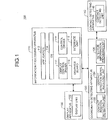
- Fig. 1 is a diagram illustrating functional configurations of an information processing apparatus 110, a coordinate detecting apparatus 120, a display apparatus 130, and a contact detecting apparatus 140 included in a coordinate detection system 100 according to an embodiment.
- the information processing apparatus 110 controls the coordinate detecting apparatus 120.
- the information processing apparatus 110 of the embodiment may be an information processing apparatus such as a desktop personal computer.
- the information processing apparatus 110 includes a processor 150, such as a central processing unit (CPU) or a microprocessor unit (MPU), and executes a program of the embodiment that is written in a program language, such as an assembly language, C, C++, Java (registered trademark), PERL, RUBY, or PYTHON, under the management of an operating system (OS), such as WINDOWS (registered trademark) series, UNIX (registered trademark), LINUX (registered trademark), TRON, ITRON, ⁇ ITRON, or Android (registered trademark).
- OS operating system
- the information processing apparatus 110 also includes a read only memory (ROM) 151 as a nonvolatile memory for storing a boot program, such as BIOS; a random access memory (RAM) 152 for providing an execution space for executing the program of the embodiment; and a hard disk device (HDD) 153 for continuously storing data and the program of the embodiment.
- ROM read only memory
- BIOS basic input-output system
- RAM random access memory
- HDD hard disk device
- the program of the embodiment can be distributed by being stored in a machine-readable recording medium, such as an HDD, a compact disc read only memory (CD-ROM), a magneto-optical (MO) disk, a flexible disk, an electrically erasable programmable read only memory (EEPROM), or an electrically programmable read only memory (EPROM), or may be transferred via a network in a format that is readable by other apparatuses.
- a machine-readable recording medium such as an HDD, a compact disc read only memory (CD-ROM), a magneto-optical (MO) disk, a flexible disk, an electrically erasable programmable read only memory (EEPROM), or an electrically programmable read only memory (EPROM)
- the information processing apparatus 110 includes an application 112, an OS 114, a control driver 116, a display control driver 117, an interface unit 118, and a graphics board 119.
- the application 112 is an application program for providing an image to be displayed on the coordinate detecting apparatus 120.
- the application 112 generates an image, provides the image to the display control driver 117 directly or via the OS 114, and causes the display apparatus 130 to display the image.
- the application 112 receives, from the control driver 116, an event indicating contact, movement, or separation of an indicating object with respect to the coordinate detecting apparatus 120 mounted on the display apparatus 130, or receives a position coordinate of the indicating object, and executes a corresponding process. For example, when receiving an event indicating contact or movement of the indicating object, the application 112 changes a display color of an image indicated by a position coordinate on a display screen of the display apparatus 130 corresponding to the position coordinate of the indicating object, generates an image of a drawn character, symbol, or the like, and displays the image on the display apparatus 130 via the display control driver 117.
- various application programs can be used.
- the application programs include document editing software including Microsoft Word (registered trademark), spreadsheet software including Microsoft Excel (registered trademark), presentation software including Microsoft Power Point (registered trademark), or drawing software for drawing an image on the display apparatus 130.
- the OS 114 is an operation system of the information processing apparatus 110.
- the OS 114 sends the received image together with the display command to the display control driver 117 and causes the display apparatus 130 to display the image.
- the OS 114 displays a cursor at the position coordinate of the indicating object on the display screen of the display apparatus 130 in accordance with an event indicating contact, movement, or separation of the indicating object upon reception of the event from the control driver 116.
- the OS 114 determines that an object, such as a menu bar or a radio button, displayed at the position coordinate is selected, and notifies the application 112 that the object is selected.
- the application 112 executes various processes corresponding to the selected object.
- the control driver 116 is a functional unit that controls the coordinate detecting apparatus 120.
- the control driver 116 stores, as buffering, a light blocking signal, a position coordinate of the indicating object, and a contact detection signal, which are received from the coordinate detecting apparatus 120 and will be described below, in a storage device, such as a buffer memory, of the information processing apparatus 110.
- the control driver 116 executes a process to be explained below with reference to Figs. 3A and 3B , issues various events to the OS 114, and provides the position coordinate of the indicating object on the display screen of the display apparatus 130, by using the light blocking signal, the position coordinate of the indicating object, and the contact detection signal.
- the control driver 116 separately performs the buffering and the process illustrated in Figs. 3A and 3B .
- the display control driver 117 is a functional unit that controls the graphics board 119 that controls images displayed on a display unit 132 of the display apparatus 130.
- the display control driver 117 receives, from the application 112 or the OS 114, an image to be displayed at the request of the application 112, writes the image in a video memory (not illustrated) of the graphics board 119, and causes the graphics board 119 to display the image on the display unit 132 of the display apparatus 130.
- the interface unit 118 is a functional unit that exchanges data between the information processing apparatus 110 and the coordinate detecting apparatus 120.
- a universal serial bus (USB) connector can be employed as the interface unit 118.
- the control driver 116 acquires various events and the position coordinate of the indicating object from the coordinate detecting apparatus 120 via a USB cable.
- the information processing apparatus 110 may use wireless communication compliant with various wireless communication protocol, such as Wi-Fi (registered trademark) or Bluetooth (registered trademark), to exchange images, various events, or data of the position coordinate of the indicating object between the information processing apparatus 110 and the coordinate detecting apparatus 120.
- various wireless communication protocol such as Wi-Fi (registered trademark) or Bluetooth (registered trademark)
- the graphics board 119 is a functional unit that controls an image to be displayed on the display unit 132 of the display apparatus 130.
- the graphics board 119 is connected to the display apparatus 130 via a video transmission cable, such as a video graphics array (VGA) cable, transmits an image, as a video signal, that is written in the video memory by the display control driver 117 to the display apparatus 130, and causes the display apparatus 130 to display the image.
- a video transmission cable such as a video graphics array (VGA) cable
- the coordinate detecting apparatus 120 is installed on the display apparatus 130, detects whether an indicating object, such as the contact detecting apparatus 140, a finger, or a stylus, comes close thereto or comes in contact therewith, and detects a position coordinate of the indicating object.
- the coordinate detecting apparatus 120 includes a contact position detecting unit 122, a contact detection signal receiving unit 124, and a detection information providing unit 126.
- the contact position detecting unit 122 detects a position coordinate of the indicating object, such as the contact detecting apparatus 140, on the display unit 132 of the display apparatus 130.
- a position coordinate of the indicating object such as the contact detecting apparatus 140
- light scanners are provided at two adjacent left and right corners of the display unit 132.
- the light scanners emit light while rotating, thereby outputting light beams that are approximately parallel to the display surface of the display unit 132.
- the light scanners receive light beams reflected and returned by a reflecting member arranged on the display unit 132.
- the contact position detecting unit 122 calculates a position coordinate of a light blocking point at which the light beams are blocked on the display unit 132, on the basis of waveform data that is a light reception result received from the light scanners.
- the contact position detecting unit 122 detects a peak point of the waveform data indicating a light intensity distribution received from the light scanners.
- W is a distance between the two light scanners
- ⁇ R is an angle between the indicating object and the light scanner on the right side
- ⁇ L is an angle between the indicating object and the light scanner on the left side.
- the coordinate detecting apparatus of another embodiment disclosed in Japanese Patent Application Laid-open No. 2008-176802 it is possible to arrange a plurality of pairs of a light emitting element and a light receiving element around the coordinate detecting apparatus 120 and calculate position coordinates of an indicating object on the basis of light reception results of the light receiving elements when the indicating object comes into contact with the coordinate detecting apparatus.
- the position coordinates of the indicating object identified by the blocked light, as the light reception results, on the light receiving elements correspond to the respective light receiving elements.
- the contact position detecting unit 122 detects whether light is blocked by an indicating object approaching the coordinate detecting apparatus 120, on the basis of a change in the intensity of light received by the light scanners.
- the contact position detecting unit 122 generates the light blocking signal indicating whether light is blocked.
- the light blocking signal is transmitted from the detection information providing unit 126 to the information processing apparatus 110, together with the position coordinate of the indicating object calculated by the above method.
- the contact detection signal receiving unit 124 is a functional unit that receives the contact detection signal indicating whether the contact detecting apparatus 140 is in contact with the coordinate detecting apparatus 120. When receiving the contact detection signal from the contact detecting apparatus 140, the contact detection signal receiving unit 124 notifies the detection information providing unit 126 of contact or non-contact. In the embodiment, the contact detection signal receiving unit 124 receives the contact detection signal from the contact detecting apparatus 140 via a signal line capable of communicating the contact detection signal. However, in another embodiment, it is possible to detect the contact detection signal via wireless communication using infrared or Bluetooth (registered trademark).
- the detection information providing unit 126 provides the information processing apparatus 110 with detection information.
- the detection information providing unit 126 transmits the light blocking signal, the position coordinate of the indicating object, or the contact detection signal, as the detection information.
- the detection information providing unit 126 simultaneously transmits the light blocking signal and the position coordinate of the indicating object.
- the detection information providing unit 126 periodically transmits the detection information.
- the contact detecting apparatus 140 may directly transmit the contact detection signal to the information processing apparatus 110.
- the display apparatus 130 displays an image provided by the information processing apparatus 110, and includes the display unit 132 for displaying the image.
- a display such as a plasma display, a liquid crystal display, an organic EL display, or a CRT display, may be used as the display apparatus.
- An image, such as a display screen, displayed on the display unit 132 contains a graphical user interface (GUI) provided by the application 112 of the information processing apparatus 110 or contains drawing images, such as characters, lines, symbols, or patterns, generated by the application 112 on the basis of the contact position detected by the coordinate detecting apparatus 120.
- GUI graphical user interface
- the display apparatus 130 is structured as an apparatus separate from the information processing apparatus 110.
- an information processing apparatus such as a notebook personal computer, having the display apparatus 130 and the information processing apparatus 110 that are integrated with each other.
- the contact detecting apparatus 140 is an apparatus that detects a contact thereof with the coordinate detecting apparatus 120.
- the contact detecting apparatus 140 includes a contact detecting unit 142 for detecting whether the contact detecting apparatus 140 is in contact with an object. When detecting that the contact detecting apparatus 140 comes into contact with an object, the contact detecting unit 142 transmits the contact detection signal indicating the contact to the coordinate detecting apparatus 120.
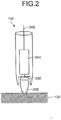
- Fig. 2 is a diagram illustrating a hardware configuration of the contact detecting apparatus according to the embodiment. In the following, the hardware configuration of the contact detecting apparatus 140 will be explained.
- the contact detecting apparatus 140 includes a tip portion 200 as the contact detecting unit 142; a contact detection sensor 202; a contact determining unit 204; and a signal line 206.
- the tip portion 200 is a movable member that comes into contact with the coordinate detecting apparatus 120 mounted on the display apparatus 130. When one end portion of the tip portion 200 comes into contact with an object, the tip portion 200 moves in the longitudinal direction of the contact detecting apparatus 140, so that the other end portion comes into contact with the contact detection sensor 202.
- An elastic member (not illustrated), such as a spring, is arranged between the tip portion 200 and the contact detection sensor 202. When the tip portion 200 comes away from the object, the tip portion 200 returns to the initial position because of a biasing force of the elastic member.
- the contact detection sensor 202 is a sensor that detects contact of the tip portion 200.
- a pressure sensor such as FlexiForce (registered trademark) manufactured by Nitta Corporation or INASTOMER (registered trademark) manufactured by Inaba Rubber Co., Ltd, may be employed as the contact detection sensor 202.
- FlexiForce registered trademark
- INASTOMER registered trademark
- a resistance value of an electric current in the contact detection sensor 202 changes.
- the contact determining unit 204 is a unit for monitoring the contact detection sensor 202 and determines whether the contact detecting apparatus 140 is in contact or not.
- the contact determining unit 204 may be a semiconductor circuit, and includes a voltage conversion circuit, an analog-to-digital (A/D) conversion circuit, a memory circuit, a determination circuit, and an output circuit.
- A/D analog-to-digital
- the voltage conversion circuit converts the change in the resistance value of the contact detection sensor 202 into a voltage
- the A/D conversion circuit converts the voltage, which has been converted by the voltage conversion circuit, into an pressure signal.
- the determination circuit compares a predetermined threshold stored in the memory circuit with the pressure signal, determines whether the tip portion 200 is in contact with an object, and outputs a determination result.
- a change in the resistance value that occurs when the tip portion 200 actually comes into contact with an object is converted into a voltage, and the digitally-converted value is set as the predetermined threshold. Then, when the change in the resistance value is equal to or greater than the predetermined threshold, it is determined that the tip portion 200 is in contact with the object. On the other hand, when the change in the resistance value is smaller than the predetermined threshold, it is determined that the tip portion 200 is not in contact with the object.
- the output circuit outputs, as the contact detection signal, a determination result calculated by the determination circuit to the coordinate detecting apparatus 120 via the signal line 206.
- the contact detection signal contains a value indicating contact (true) or non-contact (false) of the contact detecting apparatus 140 with an object.
- the output circuit periodically outputs the contact detection signal.
- the contact detection signal indicating contact may be output only when the determination circuit determines that the tip portion 200 is in contact with an object.
- the contact detection signal is transmitted to the coordinate detecting apparatus 120 via the signal line 206.
- the contact detection signal may be transmitted via wireless communication using infrared or Bluetooth (registered trademark).
- the contact detection signal may be transmitted directly to the information processing apparatus 110 via wireless communication or a dedicated line.
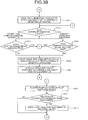
- Figs. 3A and 3B are flowcharts of a process performed by the information processing apparatus according to the embodiment. In the following, the process performed by the control driver 116 of the information processing apparatus 110 will be explained with reference to Figs. 3A and 3B .
- Step S301 the control driver 116 initializes a variable for identifying a type of an indicating object (hereinafter, the variable is described as an "indicating object identification variable") that is temporarily stored in a storage device, such as a RAM or a register, of the information processing apparatus 110.
- a storage device such as a RAM or a register
- the control driver 116 resets and initializes a timer that measures time.
- a software timer implemented by a program or a hardware timer constructed of a timer circuit may be used as a time measuring unit.
- Step S303 the control driver 116 determines whether the latest light blocking signal, which is the latest at this step among the light blocking signals stored in the buffer memory, contains a value indicating blocking of light (true). When it is determined that the light is not blocked (NO), the process at Step S303 is repeated. On the other hand, when it is determined that the light is blocked (YES), the process goes to Step S304.
- the control driver 116 starts the timer to measure time.
- the control driver 116 acquires the measured time from the timer and determines whether a predetermined time ( ⁇ t) has elapsed.
- the predetermined time may be an average time from when the light is blocked by an indicating object approaching the coordinate detecting apparatus 120 to when a user actually brings the indicating object into contact with the display unit 132.
- the predetermined time may be written into a setting file or the like that can be referred to by the control driver 116, and the setting file may be installed into the information processing apparatus 110 or the control driver 116 as a program.
- Step S305 when it is determined that the predetermined time has not elapsed (NO), the process goes to Step S306.
- the control driver 116 determines whether the contact detection signal of the contact detecting apparatus 140 that is received from the coordinate detecting apparatus 120 contains a value indicating contact of the contact detecting apparatus 140 with an object (true).
- the process returns to Step S305.
- the contact detection signal contains a value indicating contact of the contact detecting apparatus 140 with the object (true) (YES)
- the control driver 116 sets a value indicating that the indicating object is the contact detecting apparatus 140 to the indicating object identification variable.
- Step S305 when it is determined that the predetermined time has elapsed (YES), the process goes to Step S308.
- the control driver 116 determines whether the latest light blocking signal, which is the latest at this step among the light blocking signals stored in the buffer memory, contains a value indicating blocking of light (true). When it is determined that the light is not blocked (NO), the process returns to Step S301. On the other hand, when it is determined that the light is blocked (YES), the process goes to Step S309.
- Step S309 the control driver 116 sets a value indicating that the indicating object is not the contact detecting apparatus 140 to the indicating object identification variable.
- the control driver 116 acquires, from the buffer memory, the latest position coordinate of the indicating object that is the latest at this step among the position coordinates stored in the buffer memory.
- the control driver 116 issues an event indicating contact of the indicating object with the coordinate detecting apparatus 120.
- the event contains the position coordinate of the indicating object acquired at Step S310.
- Step S312 the control driver 116 identifies the type of the indicating object by referring to the indicating object identification variable.
- the process goes to Step S313.
- the process goes to Step S314.
- Step S313 the control driver 116 determines whether the latest light blocking signal, which is the latest at this step among the light blocking signals stored in the buffer, contains a value indicating blocking of light (true). When it is determined that the light is blocked (YES), the process goes to Step S315. On the other hand, when it is determined that the light is not blocked, i.e., when the indicating object is separate from the coordinate detecting apparatus 120 (NO), the process goes to Step S318.
- Step S314 the control driver 116 determines whether the latest contact detection signal, which is the latest at this step among the contact detection signals stored in the buffer memory, contains a value indicating contact of the contact detecting apparatus 140 with the object (true).
- the process goes to Step S315.
- the process goes to Step S318.
- the control driver 116 acquires, from the buffer memory, the latest position coordinate of the indicating object that is the latest at this step among the position coordinates stored in the buffer memory.
- the control driver 116 determines whether the position coordinate acquired at Step S310 and the position coordinate acquired at Step S315 are different from each other.
- the position coordinate acquired at Step S310 is temporarily stored in the storage device, such as a RAM or a register, so that the position coordinate can be compared with the position coordinate acquired at Step S315.
- Step S316 when it is determined that the position coordinates are different from each other, i.e., when the position coordinate of the indicating object at the time of previous contact and the position coordinate of the indicating object at the time of subsequent contact are different from each other (YES), the process goes to Step S317.
- Step S317 an event indicating that the indicating object has moved is issued, and the process returns to Step S312.
- the event contains the position coordinate of the indicating object acquired at Step S315.
- Step S316 when it is determined that the position coordinates are the same at the determination at Step S316, i.e., when the position coordinate of the indicating object at the time of previous contact and the position coordinate of the indicating object at the time of subsequent contact are the same (NO), the process returns to Step S312. Then, when the indicating object identification variable specified at Step S307 or at Step S309 indicates an object other than the contact detecting apparatus, the process goes to Step S313. On the other hand, when the indicating object identification variable indicates the contact detecting apparatus, the process goes to Step S314.
- Step S318 the control driver 116 issues an event indicating separation of the indicating object from the coordinate detecting apparatus 120.
- Step S319 the control driver 116 initializes the indicating object identification variable and clears the position coordinates stored in the storage device. Then, the process returns to Step S302 and the above processes are repeated.
- the event issued at Step S311 is "an event indicating contact of the indicating object with the coordinate detecting apparatus".
- the "event indicating separation of the indicating object from the coordinate detecting apparatus" issued at Step S318 may be issued as different events, such as “an event indicating separation of the contact detecting apparatus from the coordinate detecting apparatus” and “an event indicating separation of an object other than the contact detecting apparatus from the coordinate detecting apparatus", on the basis of the determination at Step S312.
- different events indicating touch with a dedicated pen and touch with a finger may be issued separately so that a write function can be realized with use of the dedicated pen and an erase function can be realized with use of the finger.
- the information processing apparatus 110 determines whether the contact detection signal indicating contact of the contact detecting apparatus 140, which is the indicating object, with the coordinate detecting apparatus 120 is received within a predetermined time after reception of the light blocking signal indicating blocking of light, i.e., within an average time taken for a user to bring the indicating object into contact with the coordinate detecting apparatus 120 after the light is blocked. Therefore, the information processing apparatus of the embodiment can accurately determine whether the indicating object used for drawing images is the contact detecting apparatus 140 or an indicating object other than the contact detecting apparatus 140 when the user draws characters or the like on the coordinate detecting apparatus 120.
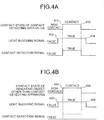
- Figs. 4A and 4B are timing diagrams illustrating output timings of the light blocking signal and the contact detection signal that are output from the coordinate detecting apparatus to the information processing apparatus when an indicating object comes into contact with the coordinate detecting apparatus according to the embodiment.
- the output timings of the light blocking signal and the contact detection signal that are output when the contact detecting apparatus 140 or the indicating object other than the contact detecting apparatus 140 comes into contact with the coordinate detecting apparatus 120.
- Fig. 4A illustrates the output timings and the states of the light blocking signal and the contact detection signal that are output by the coordinate detecting apparatus 120 when the contact detecting apparatus 140 comes into contact with the coordinate detecting apparatus 120.
- the light blocking signal which contains a value of "false” indicating non-blocking of light
- the contact detection signal which contains a value of "false” indicating non-contact of the contact detecting apparatus with an object
- the contact detecting apparatus 140 When the contact detecting apparatus 140 approaches the coordinate detecting apparatus 120, the light blocking signal containing a value of "true” indicating blocking of light is output at a time point 412 in Fig. 4A . Subsequently, when the contact detecting apparatus 140 comes into contact with the coordinate detecting apparatus 120, the contact detection signal containing a value of "true” indicating contact of the contact detecting apparatus with the object is output at a time point 414.
- the contact detection signal containing a value of "false” indicating non-contact of the contact detection apparatus with the object is output at a time point 416.
- the light blocking signal containing a value of "false” indicating non-blocking of light is output at a time point 418.
- Fig. 4B illustrates the output timings and the states of the light blocking signal and the contact detection signal that are output by the coordinate detecting apparatus 120 when an indicating object other than the contact detecting apparatus 140, e.g., a finger, comes into contact with the coordinate detecting apparatus 120.
- the light blocking signal which contains a value of "false” indicating non-blocking of light
- the contact detection signal which contains a value of "false” indicating non-contact of the finger with an object
- the light blocking signal containing a value of "true” indicating blocking of light is output at a time point 422 in Fig. 4B .
- the finger comes into contact with the coordinate detecting apparatus 120 at a time point 424 and thereafter comes away from the coordinate detecting apparatus 120 at a time point 426.
- the contact detection signal containing a value of "false” indicating non-contact of the finger with the object is output at a time point 428.
- Figs. 5A and 5B are timing diagrams illustrating a timing at which the information processing apparatus according to the embodiment issues an event.
- an event issuance timing that is applied when the information processing apparatus 110 does not receive the contact detection signal indicating contact of the contact detecting apparatus 140 within a predetermined time after reception of the light blocking signal indicating blocking of light from the coordinate detecting apparatus 120.
- Fig. 5A illustrates an event issuance timing that is applied when the information processing apparatus 110 receives the light blocking signal indicating blocking of light and the contact detection signal indicating contact of the contact detecting apparatus 140 after lapse of the predetermine time ( ⁇ t).
- the information processing apparatus 110 receives the light blocking signal indicating blocking of light at a time point 512 and starts measuring time.
- the information processing apparatus 110 does not receive the contact detection signal indicating contact of the contact detecting apparatus 140 within the predetermined time ( ⁇ t) after the start of measurement of time, the information processing apparatus 110 issues an event indicating contact of an indicating object with the coordinate detecting apparatus 120 at a time point 514 at which the predetermined time ( ⁇ t) ends.
- the information processing apparatus 110 receives the contact detection signal indicating contact of the contact detecting apparatus 140 at a time point 516.
- the contact detecting apparatus 140 is separate from the coordinate detecting apparatus 120 and the information processing apparatus 110 receives the contact detection signal indicating separation of the contact detecting apparatus 140, the information processing apparatus 110 issues an event indicating separation of the indicating object from the coordinate detecting apparatus 120 at a time point 518.
- Fig. 5B illustrates an event issuance timing that is applied when the information processing apparatus 110 receives the light blocking signal indicating blocking of light but does not receive the contact detection signal indicating contact of the contact detecting apparatus 140 even after lapse of the predetermined time ( ⁇ t).
- the information processing apparatus 110 receives the light blocking signal indicating blocking of light at a time point 522 and starts measuring time.
- the information processing apparatus 110 issues an event indicating contact of an indicating object with the coordinate detecting apparatus 120 at a time point 524 at which the predetermined time ( ⁇ t) ends.
- the information processing apparatus 110 issues an event indicating separation of the indicating object from the coordinate detecting apparatus 120 at a time point 526 at which the light blocking signal is received.
- Fig. 6 is a diagram illustrating a timing at which the information processing apparatus according to the embodiment issues an event.
- an event issuance timing that is applied when the information processing apparatus 110 receives the contact detection signal indicating contact of the contact detecting apparatus 140 within a predetermined time after reception of the light blocking signal indicating blocking of light from the coordinate detecting apparatus 120.
- Fig. 6 illustrates an event issuance timing that is applied when the information processing apparatus 110 receives the light blocking signal indicating blocking of light and also receives the contact detection signal indicating contact of the contact detecting apparatus 140 within the predetermined time ( ⁇ t).
- the information processing apparatus 110 receives the light blocking signal indicating blocking of light at a time point 612 and starts measuring time.
- the information processing apparatus 110 issues an event indicating contact of the indicating object with the coordinate detecting apparatus 120 at a time point 614 at which the contact detection signal is received.
- the information processing apparatus 110 When receiving the contact detection signal indicating separation of the contact detecting apparatus 140 from the coordinate detecting apparatus 120, the information processing apparatus 110 issues an event indicating separation of the indicating object from the coordinate detecting apparatus 120 at a time point 616 at which the contact detection signal is received.
- the coordinate detection system includes a coordinate detecting apparatus that detects a position coordinate of an indicating object; an information processing apparatus that performs a processes on the coordinate detected by the coordinate detecting apparatus; a display apparatus that displays an image provided from the information processing apparatus; and the contact detecting apparatus.
- the coordinate detecting apparatus is mounted on the display unit, detects approach of the indicating object toward the display apparatus, detects the position coordinate of the indicating object, and outputs a notice indicating the approach of the indicating object and the position coordinate.
- the information processing apparatus includes an application that provides an image to be displayed on the display apparatus; and a control driver that controls the coordinate detecting apparatus.
- the control driver determines whether a notice indicating contact of a contact detecting apparatus is received within a predetermined time.
- the control driver determines that the contact detecting apparatus is the indicating object that is in contact with the coordinate detecting apparatus, and issues an event indicating the contact of the contact detecting apparatus.
- the coordinate detection system can accurately identify a type of the indicating object that is used for drawing images on the coordinate detecting apparatus, i.e., whether the indicating object is the contact detecting apparatus. As a result, it is possible to accurately recognize a contact timing, enabling to improve the drawing accuracy.
- an information processing apparatus a method, and a computer program product capable of accurately identifying a type of an indicating object and improving the drawing accuracy.
- the present invention can be implemented in any convenient form, for example using dedicated hardware, or a mixture of dedicated hardware and software.
- the present invention may be implemented as computer software implemented by one or more network processing apparatus.
- the network can comprise any conventional terrestrial or wireless communications network, such as the Internet.
- the processing apparatus can compromise any suitably programmed apparatuses such as a general purpose computer, personal digital assistant, mobile telephone (such as a WAP or 3G-compliant phone) and so on. Since the present invention can be implemented as software, each and every aspect of the present invention thus encompasses computer software implemental on a programmable device.
- the computer software can be provided to the programmable device using any conventional carrier medium.
- the carrier medium can compromise a transient carrier medium such as an electrical, optical, microwave, acoustic or radio frequency signal carrying the computer code.
- a transient carrier medium such as an electrical, optical, microwave, acoustic or radio frequency signal carrying the computer code.
- An example of such a transient medium is a TCP/IP signal carrying computer code over an IP network, such as the Internet.
- the carrier medium can also comprise a storage medium for storing processor readable code such as a floppy disk, hard disk, CD ROM, magnetic tape device or solid state memory device.
- the hardware platform includes any desired kind of hardware resources including, for example, a central processing unit (CPU), a random access memory (RAM), and a hard disk drive (HDD).
- the CPU may be implemented by any desired kind of any desired number of processor.
- the RAM may be implemented by any desired kind of volatile or non-volatile memory.
- the HDD may be implemented by any desired kind of non-volatile memory capable of storing a large amount of data.
- the hardware resources may additionally include an input device, an output device, or a network device, depending on the type of the apparatus. Alternatively, the HDD may be provided outside of the apparatus as long as the HDD is accessible.
- the CPU such as a cache memory of the CPU
- the RAM may function as a physical memory or a primary memory of the apparatus, while the HDD may function as a secondary memory of the apparatus.
Landscapes
- Engineering & Computer Science (AREA)
- General Engineering & Computer Science (AREA)
- Theoretical Computer Science (AREA)
- Human Computer Interaction (AREA)
- Physics & Mathematics (AREA)
- General Physics & Mathematics (AREA)
- Position Input By Displaying (AREA)
- User Interface Of Digital Computer (AREA)
Applications Claiming Priority (2)
| Application Number | Priority Date | Filing Date | Title |
|---|---|---|---|
| JP2011030430 | 2011-02-16 | ||
| JP2011258458A JP2012185798A (ja) | 2011-02-16 | 2011-11-28 | 座標検出システム、情報処理装置、方法、プログラムおよび記録媒体 |
Publications (2)
| Publication Number | Publication Date |
|---|---|
| EP2490106A2 true EP2490106A2 (de) | 2012-08-22 |
| EP2490106A3 EP2490106A3 (de) | 2015-05-06 |
Family
ID=45655776
Family Applications (1)
| Application Number | Title | Priority Date | Filing Date |
|---|---|---|---|
| EP20120155479 Ceased EP2490106A3 (de) | 2011-02-16 | 2012-02-15 | Koordinatenerkennungssystem, Informationsverarbeitungsvorrichtung und -verfahren, computerlesbares Programm und computerlesbares Trägermedium |
Country Status (4)
| Country | Link |
|---|---|
| US (1) | US9229541B2 (de) |
| EP (1) | EP2490106A3 (de) |
| JP (1) | JP2012185798A (de) |
| CN (1) | CN102681722B (de) |
Families Citing this family (16)
| Publication number | Priority date | Publication date | Assignee | Title |
|---|---|---|---|---|
| US8902248B1 (en) * | 2011-07-14 | 2014-12-02 | Vmware, Inc. | Method and system for measuring display performance of a remote application |
| JP5849673B2 (ja) | 2011-12-09 | 2016-02-03 | 株式会社リコー | 電子情報ボード装置 |
| JP5915143B2 (ja) | 2011-12-15 | 2016-05-11 | 株式会社リコー | 電子情報ボード装置 |
| JP6051549B2 (ja) | 2012-03-16 | 2016-12-27 | 株式会社リコー | 通信制御システム、制御装置、プログラムおよび電子情報ボード |
| JP5935456B2 (ja) | 2012-03-30 | 2016-06-15 | 株式会社リコー | 画像処理装置 |
| JP2013210956A (ja) | 2012-03-30 | 2013-10-10 | Ricoh Co Ltd | ディスプレイ装置 |
| JP6015086B2 (ja) | 2012-04-17 | 2016-10-26 | 株式会社リコー | 情報共有装置、情報共有システム、描画処理方法及びプログラム |
| US9372553B2 (en) * | 2012-07-10 | 2016-06-21 | Microsoft Technology Licensing, Llc | Directional force sensing for styli |
| JP6201519B2 (ja) | 2013-08-21 | 2017-09-27 | 株式会社リコー | 座標検知装置、及び座標検知方法、及び電子情報ボードシステム |
| JP6427937B2 (ja) * | 2013-09-05 | 2018-11-28 | 株式会社リコー | 表示装置及び表示システム |
| US9674265B2 (en) | 2013-11-04 | 2017-06-06 | Vmware, Inc. | Filtering unnecessary display updates for a networked client |
| US9674518B2 (en) | 2013-12-20 | 2017-06-06 | Vmware, Inc. | Measuring remote video display with embedded pixels |
| JP2015210569A (ja) | 2014-04-24 | 2015-11-24 | 株式会社リコー | 画像処理装置、情報共有装置、画像処理方法、及びプログラム |
| JP6340958B2 (ja) | 2014-07-02 | 2018-06-13 | 株式会社リコー | プロジェクタ装置、インタラクティブシステム、およびインタラクティブ制御方法 |
| JP2017111589A (ja) | 2015-12-16 | 2017-06-22 | 株式会社リコー | 座標検出装置、表示システム、投影システム及び座標検出方法 |
| JP6935265B2 (ja) * | 2017-08-04 | 2021-09-15 | 日置電機株式会社 | 波形表示装置および波形表示用プログラム |
Citations (2)
| Publication number | Priority date | Publication date | Assignee | Title |
|---|---|---|---|---|
| US20050122319A1 (en) * | 2003-12-08 | 2005-06-09 | Fujitsu Component Limited | Input pen and input device |
| JP2008176802A (ja) | 1998-05-11 | 2008-07-31 | Ricoh Co Ltd | 座標入力/検出装置および電子黒板システム |
Family Cites Families (13)
| Publication number | Priority date | Publication date | Assignee | Title |
|---|---|---|---|---|
| JP2000105671A (ja) | 1998-05-11 | 2000-04-11 | Ricoh Co Ltd | 座標入力/検出装置および電子黒板システム |
| JP4828746B2 (ja) | 2001-09-20 | 2011-11-30 | 株式会社リコー | 座標入力装置 |
| AU2002336341A1 (en) * | 2002-02-20 | 2003-09-09 | Planar Systems, Inc. | Light sensitive display |
| JP4001758B2 (ja) | 2002-03-07 | 2007-10-31 | 株式会社リコー | タッチパネル付きディスプレイ装置 |
| US20050110777A1 (en) * | 2003-11-25 | 2005-05-26 | Geaghan Bernard O. | Light-emitting stylus and user input device using same |
| US7847789B2 (en) * | 2004-11-23 | 2010-12-07 | Microsoft Corporation | Reducing accidental touch-sensitive device activation |
| US8094129B2 (en) * | 2006-11-27 | 2012-01-10 | Microsoft Corporation | Touch sensing using shadow and reflective modes |
| JP2009110286A (ja) | 2007-10-30 | 2009-05-21 | Toshiba Corp | 情報処理装置、ランチャー起動制御プログラムおよびランチャー起動制御方法 |
| US8842076B2 (en) * | 2008-07-07 | 2014-09-23 | Rockstar Consortium Us Lp | Multi-touch touchscreen incorporating pen tracking |
| US8536471B2 (en) | 2008-08-25 | 2013-09-17 | N-Trig Ltd. | Pressure sensitive stylus for a digitizer |
| US20100079413A1 (en) * | 2008-09-29 | 2010-04-01 | Denso Corporation | Control device |
| JP5158014B2 (ja) | 2009-05-21 | 2013-03-06 | ソニー株式会社 | 表示制御装置、表示制御方法およびコンピュータプログラム |
| JP2010277377A (ja) * | 2009-05-29 | 2010-12-09 | Panasonic Corp | タッチパネルシステム |
-
2011
- 2011-11-28 JP JP2011258458A patent/JP2012185798A/ja active Pending
-
2012
- 2012-02-09 US US13/369,864 patent/US9229541B2/en not_active Expired - Fee Related
- 2012-02-15 CN CN201210034118.7A patent/CN102681722B/zh not_active Expired - Fee Related
- 2012-02-15 EP EP20120155479 patent/EP2490106A3/de not_active Ceased
Patent Citations (2)
| Publication number | Priority date | Publication date | Assignee | Title |
|---|---|---|---|---|
| JP2008176802A (ja) | 1998-05-11 | 2008-07-31 | Ricoh Co Ltd | 座標入力/検出装置および電子黒板システム |
| US20050122319A1 (en) * | 2003-12-08 | 2005-06-09 | Fujitsu Component Limited | Input pen and input device |
Also Published As
| Publication number | Publication date |
|---|---|
| EP2490106A3 (de) | 2015-05-06 |
| JP2012185798A (ja) | 2012-09-27 |
| US20120206387A1 (en) | 2012-08-16 |
| CN102681722B (zh) | 2016-06-29 |
| CN102681722A (zh) | 2012-09-19 |
| US9229541B2 (en) | 2016-01-05 |
Similar Documents
| Publication | Publication Date | Title |
|---|---|---|
| EP2490106A2 (de) | Koordinatenerkennungssystem, Informationsverarbeitungsvorrichtung und -verfahren, computerlesbares Programm und computerlesbares Trägermedium | |
| US9329706B2 (en) | Display device with touch panel, event switching control method, and computer-readable storage medium | |
| EP3343342B1 (de) | Vorrichtung zur verarbeitung handschriftlicher informationen, verfahren zur verarbeitung handschriftlicher informationen und programm zur verarbeitung handschriftlicher informationen | |
| US9329714B2 (en) | Input device, input assistance method, and program | |
| EP3427136B1 (de) | Detektion der sanften berührung eines eingabestifts | |
| EP2551759A2 (de) | Gestenerkennungsverfahren und Berührungssystem, das dieses Verfahren einbindet | |
| EP2244173A2 (de) | Positionserkennungsverfahren für Berührungsbildschirme, Berührungsbildschirm und elektronische Vorrichtung | |
| EP2711825A2 (de) | System zur Bereitstellung einer Benutzerschnittstelle zur Verwendung durch tragbare und andere Vorrichtungen | |
| JP2004280836A (ja) | 筆記モーションの画区分認識システムおよびその認識方法 | |
| EP3676692B1 (de) | Selektives scanning für berührungsempfindliche anzeigevorrichtung | |
| US20150022467A1 (en) | Electronic device, control method of electronic device, and control program of electronic device | |
| EP3046009A1 (de) | Informationsverarbeitungsvorrichtung, eingabeverfahren und programm | |
| JP5737229B2 (ja) | オブジェクト共有システム及びオブジェクト入力支援プログラム | |
| US10283075B2 (en) | Electronic apparatus which effects touch coordinate based on proximity and strain | |
| CN102859473A (zh) | 触摸板的指向位置确定设备、触摸板设备、包括触摸板设备的电子设备、确定触摸板上的指向位置的方法及计算机程序存储介质 | |
| US20240402847A1 (en) | Sensor controller, electronic device, and position detection method | |
| KR101715997B1 (ko) | 정전용량 터치패널용 구동 방법 및 장치 | |
| CN104246670A (zh) | 图像控制装置、图像处理系统、以及计算机程序产品 | |
| US8497846B2 (en) | Touch detection method and touch detector using the same | |
| US12373066B2 (en) | Electronic device having control chip for detecting different types of touch objects | |
| KR20170073748A (ko) | 정전용량 터치패널용 구동 방법 및 장치 | |
| EP2835726A1 (de) | Eingabevorrichtung und elektronische Vorrichtung damit, und Verfahren zur Bestimmung einer Eingabeposition | |
| KR101460531B1 (ko) | 터치 인식 장치, 터치 인식 장치의 구동 방법, 및 이를 이용한 단말기 | |
| US20250321659A1 (en) | Electronic device with touch control | |
| EP4303710A1 (de) | Anzeigevorrichtung und von der anzeigevorrichtung durchgeführtes verfahren |
Legal Events
| Date | Code | Title | Description |
|---|---|---|---|
| PUAI | Public reference made under article 153(3) epc to a published international application that has entered the european phase |
Free format text: ORIGINAL CODE: 0009012 |
|
| 17P | Request for examination filed |
Effective date: 20120215 |
|
| AK | Designated contracting states |
Kind code of ref document: A2 Designated state(s): AL AT BE BG CH CY CZ DE DK EE ES FI FR GB GR HR HU IE IS IT LI LT LU LV MC MK MT NL NO PL PT RO RS SE SI SK SM TR |
|
| AX | Request for extension of the european patent |
Extension state: BA ME |
|
| PUAL | Search report despatched |
Free format text: ORIGINAL CODE: 0009013 |
|
| AK | Designated contracting states |
Kind code of ref document: A3 Designated state(s): AL AT BE BG CH CY CZ DE DK EE ES FI FR GB GR HR HU IE IS IT LI LT LU LV MC MK MT NL NO PL PT RO RS SE SI SK SM TR |
|
| AX | Request for extension of the european patent |
Extension state: BA ME |
|
| 17Q | First examination report despatched |
Effective date: 20160311 |
|
| STAA | Information on the status of an ep patent application or granted ep patent |
Free format text: STATUS: THE APPLICATION HAS BEEN REFUSED |
|
| 18R | Application refused |
Effective date: 20170613 |