EP2467502B1 - Verfahren zur herstellung von lederpellets - Google Patents
Verfahren zur herstellung von lederpellets Download PDFInfo
- Publication number
- EP2467502B1 EP2467502B1 EP10737317.7A EP10737317A EP2467502B1 EP 2467502 B1 EP2467502 B1 EP 2467502B1 EP 10737317 A EP10737317 A EP 10737317A EP 2467502 B1 EP2467502 B1 EP 2467502B1
- Authority
- EP
- European Patent Office
- Prior art keywords
- leather
- polymer material
- pellets
- shavings
- heated
- Prior art date
- Legal status (The legal status is an assumption and is not a legal conclusion. Google has not performed a legal analysis and makes no representation as to the accuracy of the status listed.)
- Active
Links
Images


Classifications
-
- C—CHEMISTRY; METALLURGY
- C08—ORGANIC MACROMOLECULAR COMPOUNDS; THEIR PREPARATION OR CHEMICAL WORKING-UP; COMPOSITIONS BASED THEREON
- C08H—DERIVATIVES OF NATURAL MACROMOLECULAR COMPOUNDS
- C08H1/00—Macromolecular products derived from proteins
- C08H1/06—Macromolecular products derived from proteins derived from horn, hoofs, hair, skin or leather
-
- C—CHEMISTRY; METALLURGY
- C08—ORGANIC MACROMOLECULAR COMPOUNDS; THEIR PREPARATION OR CHEMICAL WORKING-UP; COMPOSITIONS BASED THEREON
- C08K—Use of inorganic or non-macromolecular organic substances as compounding ingredients
- C08K5/00—Use of organic ingredients
- C08K5/0008—Organic ingredients according to more than one of the "one dot" groups of C08K5/01 - C08K5/59
- C08K5/0041—Optical brightening agents, organic pigments
-
- C—CHEMISTRY; METALLURGY
- C08—ORGANIC MACROMOLECULAR COMPOUNDS; THEIR PREPARATION OR CHEMICAL WORKING-UP; COMPOSITIONS BASED THEREON
- C08L—COMPOSITIONS OF MACROMOLECULAR COMPOUNDS
- C08L23/00—Compositions of homopolymers or copolymers of unsaturated aliphatic hydrocarbons having only one carbon-to-carbon double bond; Compositions of derivatives of such polymers
- C08L23/02—Compositions of homopolymers or copolymers of unsaturated aliphatic hydrocarbons having only one carbon-to-carbon double bond; Compositions of derivatives of such polymers not modified by chemical after-treatment
- C08L23/04—Homopolymers or copolymers of ethene
- C08L23/06—Polyethylene
-
- C—CHEMISTRY; METALLURGY
- C08—ORGANIC MACROMOLECULAR COMPOUNDS; THEIR PREPARATION OR CHEMICAL WORKING-UP; COMPOSITIONS BASED THEREON
- C08L—COMPOSITIONS OF MACROMOLECULAR COMPOUNDS
- C08L23/00—Compositions of homopolymers or copolymers of unsaturated aliphatic hydrocarbons having only one carbon-to-carbon double bond; Compositions of derivatives of such polymers
- C08L23/02—Compositions of homopolymers or copolymers of unsaturated aliphatic hydrocarbons having only one carbon-to-carbon double bond; Compositions of derivatives of such polymers not modified by chemical after-treatment
- C08L23/10—Homopolymers or copolymers of propene
- C08L23/12—Polypropene
-
- C—CHEMISTRY; METALLURGY
- C08—ORGANIC MACROMOLECULAR COMPOUNDS; THEIR PREPARATION OR CHEMICAL WORKING-UP; COMPOSITIONS BASED THEREON
- C08L—COMPOSITIONS OF MACROMOLECULAR COMPOUNDS
- C08L89/00—Compositions of proteins; Compositions of derivatives thereof
- C08L89/04—Products derived from waste materials, e.g. horn, hoof or hair
- C08L89/06—Products derived from waste materials, e.g. horn, hoof or hair derived from leather or skin, e.g. gelatin
Definitions
- the invention relates to a process for the production of leather pellets in which shavings are obtained as a waste product in leather production and the shavings are comminuted to a leather pulp containing leather fibers.
- the animal hides are folded in one of the process steps, d. H. by means of a spiral knife roll to a uniform thickness, e.g. 1.5 mm, planed on the back.
- the planed material is the so-called shavings, which occur in an amount of about 33% of the skin weight. So far, the shavings were used depending on the grain either for leather pulp production (chrome shavings) or for composting (chrome-free shavings), and spent on landfills.
- the object of the present invention is to develop a process for the utilization of resulting in the leather production Falzs fondne.
- the invention is based primarily on the idea that the shavings can make good use and can be further processed industrially, if they are first processed into an intermediate product.
- This intermediate product takes the form of leather pellets produced in the process according to the invention by the following steps: shavings are obtained as a waste product in leather production; the shavings are comminuted to leather leather containing leather fibers; the shredded shavings are pressed into leather pellets; and the leather pellets are dried to a residual moisture content of at most 30% by weight.
- the shavings can be obtained both in a chrome tanning and in a tanning with glutaraldehyde.
- the shavings are first comminuted by fine grinding to a fiber or grain size of about 0.5 mm.
- the pressing of the pellets can be done in a conventional pelleting press.
- the pressed leather pellets can be dried to a residual moisture content of 5 to 30% by weight. Lower levels of residual moisture content are required for processing in some types of machines as otherwise these machines would be susceptible to corrosion by moisture, while other types of machines are less sensitive.
- the leather pellets are easy to handle as bulk material in contrast to the leather meal and packaged have a shelf life of months or even years.
- the pressed leather pellets are an intermediate that can be further processed in various ways.
- a method according to the invention for further processing of the leather pellets provides that the pellets in the ratio of about 10 - 95% mixed with a thermoplastic polymer material and bonded to a compound granules of leather fibers and polymer material. This is done in an extruding machine to which the polymer material and the leather pellets are premixed or fed separately. In the extrusion process, the mixture of leather pellets and polymer material is homogenized, so that the compound granules is a matrix of polymer material with embedded leather fibers.
- a dye may be added to the usually colorless polymer material in order to give the granules a desired color.
- the subsequent heat-drying and other influences the color stability is not always controlled with the required precision.
- the coloring of the compound granules by adding dyes to the polymers in the extrusion process leads to reproducible results.
- the leather pellets produced from the leather meal generally can not withstand the thermal stresses due to natural denaturation at temperatures greater than 180 ° C. and tend to burn in the presence of oxygen and / or give off combustion odors.
- thermoplastic polymer materials whose melting point is above 180 ° C. can surprisingly also be used in the production of the compound granules.
- the polymer material formed as a thermoplastic be in the molten or softened state to a temperature heated above 180 ° C, and that the cold or preheated leather pellets are added to the heated polymer material and mixed with this while cooling the mixture before the finished mixture is formed to form the granules.
- a preferred embodiment of the method according to the invention provides that the polymer material is heated along a heating section of an extruder to a peak temperature above 180 ° C. with melting or softening, that the leather pellets are admixed in the cold or preheated state downstream of the heating of the polymer material and that so produced finished mixture is output at a lowered temperature compared to the heating via an outlet nozzle or a nozzle plate and formed into the compound granules.
- a thermoplastic polymer material having a melting or softening point above 180 ° C., preferably above 220 ° C., is used for this purpose.
- the compound granules prepared in this way is another intermediate product. It consists of a granulate of thermoplastic material and leather fibers, in which the thermoplastic material has a softening point above 150 ° C, preferably above 180 ° C.
- the compound granules as an intermediate product according to the invention is preferably used for the production of moldings by means of an injection molding process.
- the compound granules in the injection molding machine in principle can be heated to temperatures above 180 ° C before it is injected into the cavity of the injection molding machine.
- the higher temperature resistance is presumably due to the fact that the leather fibers within the compound granules are surrounded by a protective layer which counteracts the denaturing of the leather fibers.
- oxygen is displaced or shielded by the polymer material, which promotes combustion of the leather fibers would.
- a suitable process control in which the residence time is minimized in a heating zone of the injection molding machine, an improvement in this regard can be achieved.
- the compound granules can be used to produce molded parts by means of the injection molding process. Due to the proportion of leather such moldings have a leather look and feel, which makes use for the production of moldings such as handles for tools, Nordic Walking poles, bicycle grips, sports equipment handles and the like more particularly advantageous. For the sheathing of vehicle steering wheel rims, this method is also well suited. So far, in such applications in which the grip friendliness of leather material was desired, a complex application with real leather had to be done. The procedure according to the invention provides a cost-effective and therefore widely applicable alternative. For the production of moldings such as toy figures, the compound granules according to the invention is also suitable, since here too an appearance and feel arises, which makes the figures appear more realistic.
- the compound granulate is also suitable for the production of films by calendering. Such films can be used wherever previously pure plastic films or genuine leather were used.
- the shavings produced in leather production which have a starting moisture content of 15-60 wt .-%, entered via a feed station 10 in a fine mill 12 and ground there to a fiber or grain size of about 0.5 mm.
- the shavings can be colored after this process step in a universal mixer 14 by adding a dye.
- the material After milling, the material has a moisture content of about 15-50 wt .-% on.
- the milled shavings are now pressed in a press 16 to leather pellets.
- the moisture content further reduced to about 10 - 40 wt .-%.
- the leather pellets can be processed into specially formulated companies, the so-called compounders, into a compound granulate.
- the leather pellets in an extruder 20 accordingly Fig. 2 mixed with a thermoplastic polymer material and extruded.
- the polymer material usually present in the form of granules and the leather pellets are combined along a mixing and conveying path within the extruder by means of screw conveyors 22 under pressure and heat.
- the polymer material supplied in the form of granules in the filling zone 24 is first heated along several heating zones 26 and thereby brought to melt.
- the leather pellets are fed downstream of the fill zone 24 via a side feeder 28 and the molten polymeric material added.
- the compounding takes place.
- the leather pellets are finely ground, so that the extrusion product has an approximately homogeneous distribution of leather fibers in a plastic matrix.
- excess moisture is removed from the mass by means of a vacuum pump.
- the material mixture extruded through a nozzle plate 34 from the extruder 20 in turn is cut off to the desired length and forms the compound granulate as the product of the process.
- the polymer material may, if it has not been previously dyed, be added to the extrusion process, a dye which determines the color of the compound granules and the molded parts or films subsequently produced therefrom.
- thermoplastic polymer materials are preferably polypropylene, polyethylene or thermoplastic elastomers into consideration. It has been found that with suitable process control, it is also possible to use those polymer materials whose melting point is above 180 ° C. This is surprising in that, according to conventional wisdom, the maximum temperature that can be exposed to leather is about 180 ° C.
- the compound granules thus produced can in turn be filled into containers of any size and delivered to the final processor, for example, the injection molding or the film manufacturer.
- the processing of the compound granules to moldings by means of an injection molding process wherein the moldings thus produced have a leather-typical look and feel.
- an injection molding machine 40 according to Fig. 3 the compound granules via a hopper 42 and a feeder 44 of an injection unit 46, in which the granules along a conveying path 48 by means of a Worm 50 grated, heated in several heating zones 52 to melting temperature and injected via a nozzle 54 in an injection mold 56.
- the cavity 58 of the injection mold 56 determines the shape and the surface structure of the finished molding.
- the composite granules can be processed by calendering, in which molten compound granules are passed through usually several consecutive heated roller pair gaps and thereby brought to the desired thickness, into films whose range of use covers that of conventional plastic films.
- the invention relates to a process for producing leather pellets, to a process for producing a compound granulate from leather pellets and a polymer material, and to the use of such a compound granulate for the production of molded parts or films.
- the leather pellets are made by the following steps: shavings are recovered as waste products in leather production; the shavings are comminuted to leather leather containing leather fibers; the millbase is pressed into leather pellets; and the leather pellets are dried to a residual moisture content of at most 30% by weight.
- the leather pellets can be mixed with a polymer material in the ratio of 10 to 95 wt .-% and joined together to form a compound granules as another intermediate product and molded become.
- This compound granulate can be used for the production of molded parts by means of injection molding or of films by means of calendering.
Landscapes
- Chemical & Material Sciences (AREA)
- Health & Medical Sciences (AREA)
- Organic Chemistry (AREA)
- Chemical Kinetics & Catalysis (AREA)
- Medicinal Chemistry (AREA)
- Polymers & Plastics (AREA)
- Biochemistry (AREA)
- Materials Engineering (AREA)
- Engineering & Computer Science (AREA)
- Life Sciences & Earth Sciences (AREA)
- Dermatology (AREA)
- Treatment And Processing Of Natural Fur Or Leather (AREA)
- Processing And Handling Of Plastics And Other Materials For Molding In General (AREA)
Description
- Die Erfindung betrifft ein Verfahren zur Herstellung von Lederpellets, bei welchem Falzspäne als Abfallprodukt bei der Lederherstellung gewonnen und die Falzspäne zu einem Lederfasern enthaltenden Ledermahlgut zerkleinert werden.
- Im Zuge der industriellen Lederherstellung werden die Tierhäute in einem der Verfahrensschritte gefalzt, d. h. mittels einer Spiralmesserwalze auf eine gleichmäßige Dicke, z.B. 1,5 mm, rückseitig abgehobelt. Das abgehobelte Material sind die so genannten Falzspäne, die in einer Menge von etwa 33% des Hautgewichts anfallen. Bisher wurden die Falzspäne gerbartabhängig entweder zur Lederfaserstoffherstellung (Chromfalzspäne) oder zur Kompostierung (chromfreie Falzspäne) verwendet, sowie auf Deponien verbracht.
- Es ist ein Verfahren der eingangs angegebenen Art bekannt (
WO 2007/121497 A ), bei welchem Lederabfälle in Form von Falzspänen zu einem Lederfasern enthaltenden Ledermahlgut zerkleinert und in dieser Form einer Weiterbearbeitung zugeführt werden. - In allen diesen Fällen sind die zukünftigen Verwertungs- und Entsorgungswege der Lederabfälle ungewiss und mit Kosten verbunden.
- Ausgehend hiervon besteht die Aufgabe der vorliegenden Erfindung darin, ein Verfahren zur Nutzbarmachung von bei der Lederherstellung anfallenden Falzspäne zu entwickeln.
- Zur Lösung wird die im Patentanspruch 1 angegebene Merkmalskombination vorgeschlagen. Vorteilhafte Ausgestaltungen und Weiterbildungen der Erfindung ergeben sich aus den abhängigen Ansprüchen.
- Die Erfindung geht vor allem von dem Gedanken aus, dass sich die Falzspäne sinnvoll nutzen und industriell weiterverarbeiten lassen, wenn sie zunächst zu einem Zwischenprodukt verarbeitet werden. Dieses Zwischenprodukt erhält die Form von Lederpellets, die bei dem erfindungsgemäßen Verfahren durch die folgenden Schritte hergestellt werden: Falzspäne werden als Abfallprodukt bei der Lederherstellung gewonnen; die Falzspäne werden zu einem Lederfasern enthaltenden Ledermahlgut zerkleinert; die zerkleinerten Falzspäne werden zu Lederpellets gepresst; und die Lederpellets werden bis zu einem Restfeuchtegehalt von maximal 30 Gew.-% getrocknet. Dabei können die Falzspäne sowohl bei einer Chromgerbung als auch bei einer Gerbung mit Glutardialdehyd gewonnen werden.
- Zweckmäßig werden die Falzspäne zunächst durch Feinmahlen zu einer Faser- bzw. Korngröße von etwa 0,5 mm zerkleinert. Das Pressen der Pellets kann in einer herkömmlichen Pelletierpresse erfolgen. Je nach den Anforderungen der nachfolgenden Weiterverarbeitungsprozesse können die gepressten Lederpellets zu einem Restfeuchtegehalt von 5 - 30 Gew.-% getrocknet werden. Für die Verarbeitung in einigen Maschinentypen ist ein geringerer Restfeuchtegehalt erforderlich, da diese Maschinen sonst durch die Feuchtigkeit einer Korrosionsgefahr ausgesetzt wären, während andere Maschinentypen diesbezüglich unempfindlicher sind.
- Die Lederpellets sind im Gegensatz zu dem Ledermahlgut leicht als Schüttgut zu handhaben und weisen verpackt eine Lagerfähigkeit von Monaten oder sogar Jahren auf.
- Die gepressten Lederpellets sind ein Zwischenprodukt, das sich auf verschiedene Weisen weiterverarbeiten lässt. Ein erfindungsgemäßes Verfahren zur Weiterverarbeitung der Lederpellets sieht vor, dass die Pellets im Verhältnis von etwa 10 - 95 % mit einem thermoplastischem Polymerwerkstoff vermischt und zu einem Compound-Granulat aus Lederfasern und Polymerwerkstoff verbunden werden. Dies erfolgt in einer Extrudiermaschine, der der Polymerwerkstoff und die Lederpellets vorgemischt oder getrennt zugeführt werden. Beim Extrudiervorgang wird das Gemisch aus Lederpellets und Polymerwerkstoff homogenisiert, so dass das Compound-Granulat eine Matrix aus Polymerwerkstoff mit eingebetteten Lederfasern darstellt. Bei der Herstellung des Compound-Granulats kann dem üblicherweise an sich farblosen Polymerwerkstoff ein Farbstoff zugesetzt werden, um dem Granulat eine gewünschte Farbe zu verleihen. Grundsätzlich ist es auch möglich, bereits das Mahlgut während der Herstellung der Lederpellets mit herkömmlichen Lederfarbstoffen zu färben. Es hat sich jedoch gezeigt, dass durch die nachfolgende Warmtrocknung und andere Einflüsse die Farbbeständigkeit nicht immer mit der erforderlichen Präzision zu steuern ist. Die Färbung des Compound-Granulats durch Beigabe von Farbstoffen zu den Polymeren beim Extrudiervorgang führt jedoch zu reproduzierbaren Ergebnissen.
- Dem Fachmann ist es an sich bekannt, dass die aus dem Ledermahlgut hergestellten Lederpellets in der Regel bei Temperaturen größer 180 °C den thermischen Belastungen aufgrund einer natürlichen Denaturierung nicht standhalten können und dazu neigen, im Beisein von Sauerstoff zu verbrennen und/oder Verbrennungsgerüche abzugeben. Andererseits besteht ein Bedarf nach Compound-Granulaten, die auch höheren Temperaturen standhalten.
- Versuche haben gezeigt, dass bei der Herstellung des Compound-Granulats überraschend auch thermoplastische Polymerwerkstoffe verwendet werden können, deren Schmelztemperatur oberhalb 180 °C liegt. Um thermoplastische Polymerwerkstoffe dieser Art einsetzen zu können, wird gemäß der Erfindung vorgeschlagen, dass der als Thermoplast ausgebildete Polymerwerkstoff in geschmolzenem oder erweichtem Zustand auf eine Temperatur oberhalb 180 °C erhitzt wird, und dass die kalten oder vorgewärmten Lederpellets dem erhitzten Polymerwerkstoff zugesetzt und mit diesem unter Abkühlung des Gemischs vermischt werden, bevor das Fertiggemisch unter Bildung des Granulats ausgeformt wird.
- Eine bevorzugte Ausgestaltung des erfindungsgemäßen Verfahrens sieht vor, dass der Polymerwerkstoff entlang einer Aufheizstrecke eines Extruders auf eine Spitzentemperatur über 180 °C unter Aufschmelzen oder Erweichen erhitzt wird, dass die Lederpellets in kaltem oder vorgewärmtem Zustand stromabwärts der Aufheizstrecke dem Polymerwerkstoff beigemischt werden und dass das so erzeugte Fertiggemisch bei gegenüber der Aufheizstrecke abgesenkter Temperatur über eine Austrittsdüse oder eine Düsenplatte ausgegeben und zu dem Compound-Granulat geformt wird. Vorteilhafterweise wird hierfür ein thermoplastischer Polymerwerkstoff mit einem Schmelz- oder Erweichungspunkt oberhalb 180 °C, vorzugsweise oberhalb 220 °C verwendet.
- Das derart hergestellte Compound-Granulat ist ein weiteres Zwischenprodukt. Es besteht aus einem Granulat aus thermoplastischem Kunststoff und Lederfasern, bei welchen der thermoplastische Kunststoff einen Erweichungspunkt oberhalb 150 °C, vorzugsweise oberhalb 180 °C aufweist.
- Das Compound-Granulat als Zwischenprodukt wird gemäß der Erfindung bevorzugt zur Herstellung von Formteilen mittels eines Spritzgussverfahrens verwendet. Versuche haben gezeigt, dass das Compound-Granulat in der Spritzgussmaschine grundsätzlich auch auf Temperaturen oberhalb 180 °C erhitzt werden kann, bevor es in die Kavität der Spritzgussmaschine eingespritzt wird. Die höhere Temperaturbeständigkeit ist vermutlich darauf zurückzuführen, dass die Lederfasern innerhalb des Compound-Granulats von einer Schutzschicht umgeben sind, die der Denaturierung der Lederfasern entgegenwirkt. Zusätzlich wird durch den Polymerwerkstoff der Sauerstoff verdrängt oder abgeschirmt, der eine Verbrennung der Lederfasern fördern würde. Auch durch eine geeignete Prozessführung, bei der die Verweilzeit in einer Heizzone der Spritzgussmaschine minimiert wird, kann eine Verbesserung in dieser Hinsicht erzielt werden.
- Aus dem Compound-Granulat können mittels des Spritzgussverfahrens Formteile hergestellt werden. Aufgrund des Lederanteils weisen derartige Formteile eine Lederoptik und -haptik auf, die eine Verwendung zur Herstellung von Formteilen wie Handgriffe für Werkzeuge, Nordic-Walking-Stöcke, Fahrradgriffe, Sportgerätgriffe und dergleichen mehr besonders vorteilhaft macht. Für die Ummantelung von Fahrzeuglenkradkränzen ist dieses Verfahren ebenfalls gut geeignet. Bisher musste bei derartigen Anwendungen, bei denen die Grifffreundlichkeit von Lederwerkstoff gewünscht war, eine aufwändige Applikation mit Echtleder erfolgen. Die erfindungsgemäße Vorgehensweise schafft hier eine kostengünstige und damit breit einsetzbare Alternative. Für die Herstellung von Formteilen wie Spielzeugfiguren, ist das erfindungsgemäße Compound-Granulat ebenfalls geeignet, da auch hier eine Optik und Haptik entsteht, die die Figuren realistischer erscheinen lässt.
- Das Compound-Granulat eignet sich darüber hinaus zur Herstellung von Folien durch Kalandrieren. Derartige Folien können überall dort zum Einsatz kommen, wo bisher reine Kunststofffolien oder Echtleder verwendet wurden.
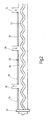
- Im Folgenden wird die Erfindung anhand der Zeichnung näher erläutert. Es zeigen
- Fig. 1
- ein Blockschema für ein Verfahren zur Herstellung von Lederpellets, Compound-Granulat und Spritzgussteilen unter Verwendung von Falzspänen, die bei der Lederherstellung anfallen;
- Fig. 2
- einen Schnitt durch einen Extruder zur Herstellung von Compound-Granulat;
- Fig. 3
- einen Schnitt durch eine Spritzgussmaschine zur Herstellung von Spritzgussteilen unter Verwendung von Compound-Granulat als Zwischenprodukt.
- Ausgehend von dem Blockschema nach
Fig. 1 werden zunächst die bei der Lederherstellung gewonnenen Falzspäne, die eine Ausgangsfeuchtigkeit von 15 - 60 Gew.-% aufweisen, über eine Aufgabestation 10 in eine Feinmühle 12 eingegeben und dort zu einer Faser- bzw. Korngröße von ca. 0,5 mm gemahlen. Gegebenenfalls können die Falzspäne nach diesem Verfahrensschritt in einem Universalmischer 14 durch Zugabe eines Farbstoffs gefärbt werden. Nach dem Mahlen weist das Material einen Feuchtegehalt von etwa 15 - 50 Gew.-% auf. Die gemahlenen Falzspäne werden nun in einer Presse 16 zu Lederpellets gepresst. Hierbei verringert sich der Feuchtegehalt weiter auf etwa 10 - 40 Gew.-%. Soweit erforderlich kann sich hieran ein Trocknungsvorgang in dem Trockner 18 anschließen, bis die Lederpellets eine Restfeuchte von < 9 Gew.-% aufweisen. Die so hergestellten Lederpellets werden als Schüttgut im Gebinde beliebiger Größe abgefüllt. Die Haltbarkeit derartiger Lederpellets beträgt Monate bis Jahre, so dass eine sofortige Weiterverarbeitung nicht erforderlich ist. - Zur weiteren Verarbeitung können die Lederpellets in speziell dafür eingerichteten Betrieben, den sogenannten Compoundeuren, zu einem Compound-Granulat weiterverarbeitet werden. Hierzu werden die Lederpellets in einem Extruder 20 entsprechend
Fig. 2 mit einem thermoplastischem Polymerwerkstoff vermischt und extrudiert. Beim Extrudieren werden der üblicherweise als Granulat vorhandene Polymerwerkstoff und die Lederpellets entlang einer Misch- und Förderstrecke innerhalb des Extruders mittels Förderschnecken 22 unter Druck- und Wärmeeinwirkung zusammengeführt. Der in der Einfüllzone 24 in Form eines Granulats zugeführte Polymerwerkstoff wird zunächst entlang mehrerer Heizzonen 26 erhitzt und dabei zum Schmelzen gebracht. Die Lederpellets werden stromabwärts der Einfüllzone 24 über eine Seitenbeschickung 28 zugeführt und dem geschmolzenen Polymerwerkstoff beigemischt. Entlang der weiteren Förderstrecke 30 findet die Compoundierung statt. Dort werden die Lederpellets fein zerrieben, so dass das Extrusionsprodukt eine annähernd homogene Verteilung von Lederfasern in einer Kunststoffmatrix aufweist. Über die Entgasungsöffnung 32 wird mittels einer Vakuumpumpe überflüssige Feuchtigkeit aus der Masse entfernt. Das durch eine Düsenplatte 34 aus dem Extruder 20 strangartig ausgestoßene Materialgemisch wird seinerseits in der gewünschten Länge abgeschnitten und bildet als Verfahrensprodukt das Compound-Granulat. - Dem Polymerwerkstoff kann, soweit er nicht bereits vorher gefärbt wurde, beim Extrudiervorgang ein Farbstoff beigefügt werden, der die Farbe des Compound-Granulats und der anschließend daraus hergestellten Formteile oder Folien bestimmt.
- Als thermoplastische Polymerwerkstoffe kommen bevorzugt Polypropylen, Polyethylen oder thermoplastische Elastomere in Betracht. Es hat sich gezeigt, dass bei einer geeigneten Prozessführung auch solche Polymerwerkstoffe verwendet werden können, deren Schmelztemperatur oberhalb 180 °C liegt. Dies ist insofern überraschend, als nach herkömmlichem Wissen die Maximaltemperatur, der Leder ausgesetzt werden kann, bei etwa 180 °C liegt.
- Das so erzeugte Compound-Granulat kann wiederum in Gebinde beliebiger Größe abgefüllt und an den Endverarbeiter, beispielsweise die Spritzgießerei oder den Folienhersteller, geliefert werden.
- Besonders vorteilhaft ist die Verarbeitung des Compound-Granulats zu Formteilen mittels eines Spritzgussverfahrens, wobei die so hergestellten Formteile eine ledertypische Optik und Haptik aufweisen. Zu diesem Zweck wird mit einer Spritzgussmaschine 40 gemäß
Fig. 3 das Compound-Granulat über einen Einfülltrichter 42 und einen Einzug 44 einer Spritzeinheit 46 zugeführt, in welcher das Granulat entlang einer Förderstrecke 48 mittels einer Schnecke 50 zerrieben, in mehreren Heizzonen 52 auf Schmelztemperatur aufgeheizt und über eine Düse 54 in ein Spritzgießwerkzeug 56 eingespritzt wird. Die Kavität 58 des Spritzgießwerkzeugs 56 bestimmt die Form und die Oberflächenstruktur des fertigen Formteils. - Mit dem Spritzgießen lassen sich Massenprodukte mit hoher Genauigkeit in kurzer Zeit herstellen. Dabei kann die Oberfläche des Bauteils nahezu frei gewählt werden. Glatte Oberflächen, Narbungen für berührungsfreundliche Bereiche, Muster und Gravuren lassen sich im Zuge des Herstellvorgangs einbringen. Für das Leder-Kunststoff-Compound kommen Teile in Frage, die dekorative Anforderungen erfüllen sollen oder die für den manuellen Gebrauch bestimmt sind, wie Griffe für Werkzeuge, Tennisschläger, Nordic-Walking-Stöcke, Lenkradkränze für Fahrzeuge und dergleichen.
- Andererseits kann das Compound-Granulat durch Kalandrieren, bei dem geschmolzenes Compound-Granulat durch in der Regel mehrere, aufeinanderfolgende beheizte Walzenpaarspalte geführt und dabei auf die gewünschte Dicke gebracht wird, zu Folien verarbeitet werden, deren Einsatzspektrum dasjenige herkömmlicher Kunststofffolien abdeckt.
- Zusammenfassend ist folgendes festzustellen: Die Erfindung betrifft ein Verfahren zur Herstellung von Lederpellets, ein Verfahren zur Herstellung eines Compound-Granulats aus Lederpellets und einem Polymerwerkstoff sowie die Verwendung eines derartigen Compound-Granulats zur Herstellung von Formteilen oder Folien. Die Lederpellets werden durch die folgenden Schritte hergestellt: Falzspäne werden als Abfallprodukte bei der Lederherstellung gewonnen; die Falzspäne werden zu einem Lederfasern enthaltenden Ledermahlgut zerkleinert; das Mahlgut wird zu Lederpellets gepresst; und die Lederpellets werden bis zu einem Restfeuchtegehalt von maximal 30 Gew.-% getrocknet. Die Lederpellets können mit einem Polymerwerkstoff im Verhältnis von 10 - 95 Gew.-% vermischt und unter Bildung eines Compound-Granulats als weiteres Zwischenprodukt miteinander verbunden und ausgeformt werden. Dieses Compound-Granulat kann zur Herstellung von Formteilen mittels Spritzgießen oder von Folien mittels Kalandrieren verwendet werden.
-
- 10
- Aufgabestation
- 12
- Feinmühle
- 14
- Universalmischer
- 16
- Presse
- 18
- Trockner
- 20
- Extruder
- 22
- Förderschnecke
- 24
- Einfüllzone
- 26
- Heizzonen
- 28
- Seitenbeschickung
- 30
- Förderstrecke
- 32
- Entgasungsöffnung
- 34
- Düsenplatte
- 40
- Spritzgussmaschine
- 42
- Einfülltrichter
- 44
- Einzug
- 46
- Spritzeinheit
- 48
- Förderstrecke
- 50
- Schnecke
- 52
- Heizzonen
- 54
- Düse
- 56
- Spritzgießwerkzeug
- 58
- Kavität
Claims (16)
- Verfahren zur Herstellung von Lederpellets, bei dem:- Falzspäne als Abfallprodukt bei der Lederherstellung gewonnen werden,- die Falzspäne zu einem Lederfasern enthaltenden Ledermahlgut zerkleinert werden,
dadurch gekennzeichnet,- dass die Falzspäne einen Ausgangsfeuchtegehalt von 15-60 Gew.% aufweisen,- das Ledermahlgut zu Lederpellets gepresst wird,- die Lederpellets bis zu einem Restfeuchtegehalt von maximal 30 Gew.-% getrocknet werden. - Verfahren nach Anspruch 1, dadurch gekennzeichnet, dass die Falzspäne bei einer Chromgerbung oder Gerbung mit Glutardialdehyd gewonnen werden.
- Verfahren nach einem der Ansprüche 1 oder 2, dadurch gekennzeichnet, dass die Falzspäne oder Fertiglederabfälle zu einer Faser- oder Korngröße von etwa 0, 5 mm zerkleinert werden.
- Verfahren nach einem der Ansprüche 1 bis 3, dadurch gekennzeichnet, dass dem Ledermahlgut in einem Mischapparat pulverförmiger Farbstoff hinzugefügt wird.
- Verfahren nach einem der Ansprüche 1 bis 4, dadurch gekennzeichnet, dass die Lederpellets bei einer Temperatur von bis zu 110 °C bis zu einem Restfeuchtegehalt von < 9 Gew.-% getrocknet werden.
- Verfahren nach einem der Ansprüche 1 bis 5, dadurch gekennzeichnet, dass die Lederpellets mit einem Polymerwerkstoff im Verhältnis von 10 - 95 Gew.-% vermischt und zerrieben und unter Bildung eines Compound-Granulats miteinander verbunden und ausgeformt werden.
- Verfahren nach Anspruch 6, dadurch gekennzeichnet, dass dem Polymerwerkstoff vor dem Vermischen mit den Lederpellets ein Farbstoff hinzugefügt wird.
- Verfahren nach Anspruch 6 oder 7, dadurch gekennzeichnet, dass das Gemisch aus Lederpellets und Polymerwerkstoff in einer Extrudiermaschine zu dem Compound-Granulat extrudiert wird.
- Verfahren nach einem der Ansprüche 6 bis 8, dadurch gekennzeichnet, dass der als Thermoplast ausgebildete Polymerwerkstoff in geschmolzenem oder erweichtem Zustand auf eine Temperatur oberhalb 150 °C erhitzt wird und dass die Lederpellets in kaltem oder vorerwärmtem Zustand dem erhitzten Polymerwerkstoff zugesetzt und mit diesem unter Abkühlung des Gemischs vermischt werden, bevor sie unter Bildung des Granulats ausgeformt werden.
- Verfahren nach Anspruch 9, dadurch gekennzeichnet, dass der thermoplastische Polymerwerkstoff auf eine Temperatur oberhalb 180 °C, vorzugsweise oberhalb 220 °C erhitzt wird, bevor die Lederpellets dem erhitzten Polymerwerkstoff zugesetzt werden.
- Verfahren nach einem der Ansprüche 6 bis 10, dadurch gekennzeichnet, dass der aus einem Thermoplast bestehende Polymerwerkstoff entlang einer Aufheizstrecke eines Extruders auf eine Temperatur oberhalb 180 °C, vorzugsweise 220 °C unter Aufschmelzen oder Erweichen erhitzt wird, und dass die Lederpellets in kaltem oder vorgewärmtem Zustand stromabwärts der Aufheizstrecke dem Polymerwerkstoff beigemischt werden, und dass das so erzeugte Compound-Gemisch über eine Austrittsdüse ausgegeben und zu dem Compound-Granulat geformt wird.
- Verfahren nach einem der Ansprüche 9 bis 11, dadurch gekennzeichnet, dass ein thermoplastischer Polymerwerkstoff mit einem Schmelz- oder Erweichungspunkt oberhalb 180 °C, vorzugsweise oberhalb 220 °C verwendet wird.
- Verwendung des nach einem der Ansprüche 6 bis 12 hergestellten Compound-Granulats zur Herstellung von Formteilen mittels eines Spritzgussverfahrens.
- Verwendung nach Anspruch 13, dadurch gekennzeichnet, dass das Compound-Granulat in einer Spritzgussmaschine auf eine Temperatur oberhalb 180 °C erhitzt wird, bevor es in eine Spritzgussform eingespritzt wird.
- Verwendung des nach einem der Ansprüche 6 bis 12 hergestellten Compound-Granulats zur Herstellung von Folien mittels eines Kalandrierverfahrens.
- Verwendung nach Anspruch 15, dadurch gekennzeichnet, dass das Compound-Granulat auf eine Temperatur oberhalb 180 °C erhitzt wird, bevor es einer Kalanderstrecke zugeführt wird.
Priority Applications (1)
| Application Number | Priority Date | Filing Date | Title |
|---|---|---|---|
| PL10737317T PL2467502T3 (pl) | 2009-08-18 | 2010-07-26 | Sposób wytwarzania peletek skórzanych |
Applications Claiming Priority (2)
| Application Number | Priority Date | Filing Date | Title |
|---|---|---|---|
| DE102009037792A DE102009037792A1 (de) | 2009-08-18 | 2009-08-18 | Verfahren zur Herstellung von Lederpellets |
| PCT/EP2010/060797 WO2011020680A2 (de) | 2009-08-18 | 2010-07-26 | Verfahren zur herstellung von lederpellets und compound-granulat sowie deren verwendung |
Publications (2)
| Publication Number | Publication Date |
|---|---|
| EP2467502A2 EP2467502A2 (de) | 2012-06-27 |
| EP2467502B1 true EP2467502B1 (de) | 2016-01-13 |
Family
ID=43495361
Family Applications (1)
| Application Number | Title | Priority Date | Filing Date |
|---|---|---|---|
| EP10737317.7A Active EP2467502B1 (de) | 2009-08-18 | 2010-07-26 | Verfahren zur herstellung von lederpellets |
Country Status (9)
| Country | Link |
|---|---|
| US (1) | US8623249B2 (de) |
| EP (1) | EP2467502B1 (de) |
| JP (1) | JP5707403B2 (de) |
| CN (1) | CN102471808B (de) |
| DE (1) | DE102009037792A1 (de) |
| DK (1) | DK2467502T3 (de) |
| ES (1) | ES2561432T3 (de) |
| PL (1) | PL2467502T3 (de) |
| WO (1) | WO2011020680A2 (de) |
Families Citing this family (10)
| Publication number | Priority date | Publication date | Assignee | Title |
|---|---|---|---|---|
| CN103054275A (zh) * | 2012-11-30 | 2013-04-24 | 张建武 | 采用制鞋废料再生生产鞋用部件的加工工艺 |
| CN103421239B (zh) * | 2013-05-15 | 2015-10-21 | 宁波工程学院 | 一种回收聚丙烯/皮粉复合物的制备方法 |
| DE102015119351B4 (de) | 2015-11-10 | 2022-12-29 | Proreta Tactical GmbH | Ballistisch wirksame Schutzvorrichtung |
| ITUB20160574A1 (it) * | 2016-02-09 | 2017-08-09 | Tesa S R L | Metodo per l'ottenimento di materiale a base di pelle animale e prodotti ottenuti con tale materiale |
| CN106283278B (zh) * | 2016-08-29 | 2018-12-04 | 福建永盛皮革制品有限公司 | 一种利用废旧成品皮革提取真皮纤维的方法 |
| CN111844820B (zh) * | 2020-06-09 | 2021-07-06 | 四川大学 | 利用废弃皮革材料和废弃nbr/pvc类橡塑保温材料制备类人造革材料的方法 |
| DE102021120795A1 (de) | 2021-08-10 | 2023-02-16 | Bader Gmbh & Co. Kg | Schalldämmendes Objekt |
| PL444267A1 (pl) * | 2023-03-30 | 2024-01-15 | Instytut Maszyn Przepływowych Im. Roberta Szewalskiego Polskiej Akademii Nauk | Granulat z mieszanki odpadów garbarskich i mielonych odpadów gumowych oraz sposób jego wytworzenia |
| TWI874155B (zh) * | 2024-03-07 | 2025-02-21 | 簡單綠能股份有限公司 | 植物皮革漸層紋路製法 |
| WO2026003659A1 (en) * | 2024-06-26 | 2026-01-02 | Revet S.P.A. | Composite granule deriving from different organic sources and related production process |
Family Cites Families (20)
| Publication number | Priority date | Publication date | Assignee | Title |
|---|---|---|---|---|
| US2148905A (en) * | 1936-12-23 | 1939-02-28 | Webwood Corp | Method for the treatment and utilization of scrap or waste leather |
| JPS53121902A (en) * | 1977-03-29 | 1978-10-24 | Takumi Kougiyou Kk | Simulated natural leather |
| US4100154A (en) * | 1977-04-22 | 1978-07-11 | A. L. Gebhardt Company | Process for recovery and separation of nutritious protein hydrolysate and chromium from chrome leather scrap |
| US4497871A (en) * | 1983-04-27 | 1985-02-05 | Henke Edward W | Reconstituted leather and method of manufacturing same |
| JP2531515B2 (ja) * | 1986-08-07 | 1996-09-04 | 出光石油化学株式会社 | 皮革様成形品の成形用ペレツト |
| JPH01256904A (ja) * | 1988-04-08 | 1989-10-13 | Citizen Watch Co Ltd | 腕時計バンド |
| CN1014122B (zh) * | 1988-10-17 | 1991-10-02 | 中国科学院生态环境研究中心 | 用铬革渣制取饲料蛋白粉、盐基性硫酸铬和颗粒肥料的方法 |
| JPH0345305A (ja) * | 1989-07-12 | 1991-02-26 | Hosokawa Micron Corp | 成型用ペレット |
| JPH0753880B2 (ja) * | 1989-11-21 | 1995-06-07 | 出光石油化学株式会社 | 皮革粉含有樹脂組成物、皮革様成形品及び皮革様成形品の製造方法 |
| AU640005B2 (en) | 1990-05-11 | 1993-08-12 | Idemitsu Kosan Co. Ltd | Powdered leather and method of producing the same |
| DE4223703A1 (de) * | 1992-07-18 | 1994-01-20 | H P Chemie Pelzer Res & Dev | Formteile mit lederartigen Oberflächeneigenschaften |
| US6264879B1 (en) * | 1996-06-05 | 2001-07-24 | Mat, Inc. | Reconstituted leather product and process |
| CN1398535A (zh) * | 2001-07-23 | 2003-02-26 | 刘继顺 | 用皮革废料制取仿鱼粉的方法及其仿鱼粉 |
| DE10320061B4 (de) | 2003-05-06 | 2005-12-22 | Bader Gmbh & Co. | Verfahren zur Herstellung eines Werkstoffs unter Verwendung von Lederabfällen und damit erzeugtes Formteil |
| GB0412380D0 (en) * | 2004-06-03 | 2004-07-07 | B & H Res Ltd | Formation of leather sheet material using hydroentanglement |
| CN101432367A (zh) * | 2006-04-25 | 2009-05-13 | 雷米·斯多尔 | 皮革材料 |
| AT503620B1 (de) | 2006-04-25 | 2012-12-15 | Remy Dr Stoll | Lederwerkstoff und Verfahren zur Bearbeitung von Lederbestandteilen |
| JP2008087247A (ja) * | 2006-09-29 | 2008-04-17 | Miyagawa Kasei Ind Co Ltd | プラスチック成形品の製造方法 |
| WO2009042599A1 (en) * | 2007-09-25 | 2009-04-02 | Aetrex Worldwide, Inc. | Articles prepared using recycled materials and methods of preparation thereof |
| AT506728B1 (de) | 2008-05-06 | 2011-04-15 | Remy Dr Stoll | Lederwerkstoff und verfahren zur herstellung |
-
2009
- 2009-08-18 DE DE102009037792A patent/DE102009037792A1/de not_active Withdrawn
-
2010
- 2010-07-26 US US13/387,804 patent/US8623249B2/en active Active
- 2010-07-26 JP JP2012525114A patent/JP5707403B2/ja active Active
- 2010-07-26 PL PL10737317T patent/PL2467502T3/pl unknown
- 2010-07-26 ES ES10737317.7T patent/ES2561432T3/es active Active
- 2010-07-26 EP EP10737317.7A patent/EP2467502B1/de active Active
- 2010-07-26 DK DK10737317.7T patent/DK2467502T3/en active
- 2010-07-26 CN CN201080032844.4A patent/CN102471808B/zh active Active
- 2010-07-26 WO PCT/EP2010/060797 patent/WO2011020680A2/de not_active Ceased
Also Published As
| Publication number | Publication date |
|---|---|
| CN102471808B (zh) | 2016-01-20 |
| JP5707403B2 (ja) | 2015-04-30 |
| ES2561432T3 (es) | 2016-02-26 |
| PL2467502T3 (pl) | 2016-07-29 |
| WO2011020680A2 (de) | 2011-02-24 |
| CN102471808A (zh) | 2012-05-23 |
| US8623249B2 (en) | 2014-01-07 |
| EP2467502A2 (de) | 2012-06-27 |
| DK2467502T3 (en) | 2016-04-04 |
| HK1167165A1 (zh) | 2012-11-23 |
| JP2013502470A (ja) | 2013-01-24 |
| US20120133071A1 (en) | 2012-05-31 |
| DE102009037792A1 (de) | 2011-02-24 |
| WO2011020680A3 (de) | 2011-05-05 |
Similar Documents
| Publication | Publication Date | Title |
|---|---|---|
| WO2011020680A2 (de) | Verfahren zur herstellung von lederpellets und compound-granulat sowie deren verwendung | |
| DE69911762T2 (de) | Verfahren und vorrichtung zur kontinuierlichen herstellung von verbundwerkstoffen aus kunststoff und cellulose fasern | |
| EP2101983B1 (de) | Mischung von kunststoff mit holzpartikeln | |
| CH633819A5 (de) | Konstruktionsmaterial und verfahren zur herstellung desselben. | |
| EP0538286B1 (de) | Kombiniertes kompoundier-spritzgussverfahren und vorrichtung zur durchführung dieses verfahrens | |
| EP0685520A1 (de) | Faserverbundkunststoffmaterial und Verfahren zu dessen Herstellung | |
| EP3065936B1 (de) | Verfahren zur herstellung eines halbzeugs zur verarbeitung zu einem cfk-bauteil aus kohlefaserabfällen | |
| DE4331747A1 (de) | Extrudiertes, faserverstärktes Naturstoff-Granulat zur thermoplastischen Weiterverarbeitung, sowie Verfahren zu seiner Herstellung | |
| DE3526102C2 (de) | ||
| DE10045794A1 (de) | Verfahren zur Herstellung eines Zwischenproduktes für die Erzeugung von Kunststoff-Formkörpern | |
| DE19956164A1 (de) | Granulat und Verfahren und Vorrichtung zu seiner Herstellung | |
| DE102008046770A1 (de) | Direktcompoundieren von Naturfasern | |
| EP2942173A1 (de) | Verfahren zur Herstellung von Granulat zum Spritzgießen; Verfahren zur Herstellung eines Formteils und mittels des Verfahrens hergestelltes Formteil | |
| EP0643093A1 (de) | Flächiges Halbzeug aus GMT-Recyclat | |
| EP0782909B1 (de) | Verfahren zur Herstellung von Gegenständen aus faserverstärkten Thermoplasten | |
| DE2524298B2 (de) | Verfahren und mischung zum angiessen eines schuhteiles aus thermoplastischem kautschuk an andere teile eines schuhs | |
| DE2408690A1 (de) | Thermoplastische massen | |
| DE4330860A1 (de) | Flächiges Halbzeug | |
| DE4122382A1 (de) | Verfahren zur aufbereitung von kunststoffmischungen, danach herstellbares gemisch sowie dessen verwendung | |
| DE3406896C2 (de) | Radiergummi mit thermoplastischer Substanz und Verfahren zu dessen Herstellung | |
| DE69319729T2 (de) | Verfahren und vorrichtung zum mischen von russ und polymermaterial | |
| DE19857288A1 (de) | Verfahren und Anlage zur Herstellung von faserverstärkten Kunststoffmassen | |
| EP0865891A2 (de) | Faserbewehrtes Granulat zum Spritzgiessen von Formteilen und ein Verfahren zur Herstellung von faserbewehrtem Granulat | |
| EP4308759A1 (de) | Verfahren zur herstellung eines formkörpers aus kunststoffabfällen und naturfasern | |
| DE2228922A1 (de) | Verfahren zur herstellung von formteilen aus glasfaserverstaerkten, thermoplastischen kunststoffen und vorpressmaterial dazu |
Legal Events
| Date | Code | Title | Description |
|---|---|---|---|
| PUAI | Public reference made under article 153(3) epc to a published international application that has entered the european phase |
Free format text: ORIGINAL CODE: 0009012 |
|
| 17P | Request for examination filed |
Effective date: 20120131 |
|
| AK | Designated contracting states |
Kind code of ref document: A2 Designated state(s): AL AT BE BG CH CY CZ DE DK EE ES FI FR GB GR HR HU IE IS IT LI LT LU LV MC MK MT NL NO PL PT RO SE SI SK SM TR |
|
| DAX | Request for extension of the european patent (deleted) | ||
| 17Q | First examination report despatched |
Effective date: 20140207 |
|
| REG | Reference to a national code |
Ref country code: DE Ref legal event code: R079 Ref document number: 502010010939 Country of ref document: DE Free format text: PREVIOUS MAIN CLASS: C14B0013000000 Ipc: C08H0001060000 |
|
| RIC1 | Information provided on ipc code assigned before grant |
Ipc: C08L 89/06 20060101ALI20141128BHEP Ipc: C08H 1/06 20060101AFI20141128BHEP |
|
| GRAP | Despatch of communication of intention to grant a patent |
Free format text: ORIGINAL CODE: EPIDOSNIGR1 |
|
| INTG | Intention to grant announced |
Effective date: 20150925 |
|
| GRAS | Grant fee paid |
Free format text: ORIGINAL CODE: EPIDOSNIGR3 |
|
| GRAA | (expected) grant |
Free format text: ORIGINAL CODE: 0009210 |
|
| AK | Designated contracting states |
Kind code of ref document: B1 Designated state(s): AL AT BE BG CH CY CZ DE DK EE ES FI FR GB GR HR HU IE IS IT LI LT LU LV MC MK MT NL NO PL PT RO SE SI SK SM TR |
|
| REG | Reference to a national code |
Ref country code: GB Ref legal event code: FG4D Free format text: NOT ENGLISH |
|
| REG | Reference to a national code |
Ref country code: CH Ref legal event code: EP |
|
| REG | Reference to a national code |
Ref country code: CH Ref legal event code: NV Representative=s name: TROESCH SCHEIDEGGER WERNER AG, CH |
|
| REG | Reference to a national code |
Ref country code: IE Ref legal event code: FG4D Free format text: LANGUAGE OF EP DOCUMENT: GERMAN |
|
| REG | Reference to a national code |
Ref country code: AT Ref legal event code: REF Ref document number: 770491 Country of ref document: AT Kind code of ref document: T Effective date: 20160215 |
|
| REG | Reference to a national code |
Ref country code: ES Ref legal event code: FG2A Ref document number: 2561432 Country of ref document: ES Kind code of ref document: T3 Effective date: 20160226 |
|
| REG | Reference to a national code |
Ref country code: DE Ref legal event code: R096 Ref document number: 502010010939 Country of ref document: DE |
|
| REG | Reference to a national code |
Ref country code: DK Ref legal event code: T3 Effective date: 20160331 |
|
| REG | Reference to a national code |
Ref country code: LT Ref legal event code: MG4D |
|
| REG | Reference to a national code |
Ref country code: NL Ref legal event code: MP Effective date: 20160113 |
|
| PG25 | Lapsed in a contracting state [announced via postgrant information from national office to epo] |
Ref country code: NL Free format text: LAPSE BECAUSE OF FAILURE TO SUBMIT A TRANSLATION OF THE DESCRIPTION OR TO PAY THE FEE WITHIN THE PRESCRIBED TIME-LIMIT Effective date: 20160113 |
|
| REG | Reference to a national code |
Ref country code: FR Ref legal event code: PLFP Year of fee payment: 7 |
|
| PG25 | Lapsed in a contracting state [announced via postgrant information from national office to epo] |
Ref country code: NO Free format text: LAPSE BECAUSE OF FAILURE TO SUBMIT A TRANSLATION OF THE DESCRIPTION OR TO PAY THE FEE WITHIN THE PRESCRIBED TIME-LIMIT Effective date: 20160413 Ref country code: GR Free format text: LAPSE BECAUSE OF FAILURE TO SUBMIT A TRANSLATION OF THE DESCRIPTION OR TO PAY THE FEE WITHIN THE PRESCRIBED TIME-LIMIT Effective date: 20160414 Ref country code: FI Free format text: LAPSE BECAUSE OF FAILURE TO SUBMIT A TRANSLATION OF THE DESCRIPTION OR TO PAY THE FEE WITHIN THE PRESCRIBED TIME-LIMIT Effective date: 20160113 Ref country code: HR Free format text: LAPSE BECAUSE OF FAILURE TO SUBMIT A TRANSLATION OF THE DESCRIPTION OR TO PAY THE FEE WITHIN THE PRESCRIBED TIME-LIMIT Effective date: 20160113 |
|
| PG25 | Lapsed in a contracting state [announced via postgrant information from national office to epo] |
Ref country code: LV Free format text: LAPSE BECAUSE OF FAILURE TO SUBMIT A TRANSLATION OF THE DESCRIPTION OR TO PAY THE FEE WITHIN THE PRESCRIBED TIME-LIMIT Effective date: 20160113 Ref country code: PT Free format text: LAPSE BECAUSE OF FAILURE TO SUBMIT A TRANSLATION OF THE DESCRIPTION OR TO PAY THE FEE WITHIN THE PRESCRIBED TIME-LIMIT Effective date: 20160513 Ref country code: SE Free format text: LAPSE BECAUSE OF FAILURE TO SUBMIT A TRANSLATION OF THE DESCRIPTION OR TO PAY THE FEE WITHIN THE PRESCRIBED TIME-LIMIT Effective date: 20160113 Ref country code: IS Free format text: LAPSE BECAUSE OF FAILURE TO SUBMIT A TRANSLATION OF THE DESCRIPTION OR TO PAY THE FEE WITHIN THE PRESCRIBED TIME-LIMIT Effective date: 20160513 Ref country code: LT Free format text: LAPSE BECAUSE OF FAILURE TO SUBMIT A TRANSLATION OF THE DESCRIPTION OR TO PAY THE FEE WITHIN THE PRESCRIBED TIME-LIMIT Effective date: 20160113 |
|
| REG | Reference to a national code |
Ref country code: SK Ref legal event code: T3 Ref document number: E 21004 Country of ref document: SK |
|
| REG | Reference to a national code |
Ref country code: DE Ref legal event code: R097 Ref document number: 502010010939 Country of ref document: DE |
|
| PG25 | Lapsed in a contracting state [announced via postgrant information from national office to epo] |
Ref country code: EE Free format text: LAPSE BECAUSE OF FAILURE TO SUBMIT A TRANSLATION OF THE DESCRIPTION OR TO PAY THE FEE WITHIN THE PRESCRIBED TIME-LIMIT Effective date: 20160113 |
|
| PLBE | No opposition filed within time limit |
Free format text: ORIGINAL CODE: 0009261 |
|
| STAA | Information on the status of an ep patent application or granted ep patent |
Free format text: STATUS: NO OPPOSITION FILED WITHIN TIME LIMIT |
|
| PG25 | Lapsed in a contracting state [announced via postgrant information from national office to epo] |
Ref country code: CZ Free format text: LAPSE BECAUSE OF FAILURE TO SUBMIT A TRANSLATION OF THE DESCRIPTION OR TO PAY THE FEE WITHIN THE PRESCRIBED TIME-LIMIT Effective date: 20160113 Ref country code: SM Free format text: LAPSE BECAUSE OF FAILURE TO SUBMIT A TRANSLATION OF THE DESCRIPTION OR TO PAY THE FEE WITHIN THE PRESCRIBED TIME-LIMIT Effective date: 20160113 Ref country code: RO Free format text: LAPSE BECAUSE OF FAILURE TO SUBMIT A TRANSLATION OF THE DESCRIPTION OR TO PAY THE FEE WITHIN THE PRESCRIBED TIME-LIMIT Effective date: 20160113 |
|
| 26N | No opposition filed |
Effective date: 20161014 |
|
| PG25 | Lapsed in a contracting state [announced via postgrant information from national office to epo] |
Ref country code: BE Free format text: LAPSE BECAUSE OF NON-PAYMENT OF DUE FEES Effective date: 20160731 |
|
| PG25 | Lapsed in a contracting state [announced via postgrant information from national office to epo] |
Ref country code: BG Free format text: LAPSE BECAUSE OF FAILURE TO SUBMIT A TRANSLATION OF THE DESCRIPTION OR TO PAY THE FEE WITHIN THE PRESCRIBED TIME-LIMIT Effective date: 20160413 Ref country code: SI Free format text: LAPSE BECAUSE OF FAILURE TO SUBMIT A TRANSLATION OF THE DESCRIPTION OR TO PAY THE FEE WITHIN THE PRESCRIBED TIME-LIMIT Effective date: 20160113 |
|
| PG25 | Lapsed in a contracting state [announced via postgrant information from national office to epo] |
Ref country code: MC Free format text: LAPSE BECAUSE OF FAILURE TO SUBMIT A TRANSLATION OF THE DESCRIPTION OR TO PAY THE FEE WITHIN THE PRESCRIBED TIME-LIMIT Effective date: 20160113 |
|
| REG | Reference to a national code |
Ref country code: IE Ref legal event code: MM4A |
|
| REG | Reference to a national code |
Ref country code: FR Ref legal event code: PLFP Year of fee payment: 8 |
|
| PG25 | Lapsed in a contracting state [announced via postgrant information from national office to epo] |
Ref country code: IE Free format text: LAPSE BECAUSE OF NON-PAYMENT OF DUE FEES Effective date: 20160726 |
|
| PG25 | Lapsed in a contracting state [announced via postgrant information from national office to epo] |
Ref country code: LU Free format text: LAPSE BECAUSE OF NON-PAYMENT OF DUE FEES Effective date: 20160726 |
|
| PG25 | Lapsed in a contracting state [announced via postgrant information from national office to epo] |
Ref country code: CY Free format text: LAPSE BECAUSE OF FAILURE TO SUBMIT A TRANSLATION OF THE DESCRIPTION OR TO PAY THE FEE WITHIN THE PRESCRIBED TIME-LIMIT Effective date: 20160113 Ref country code: HU Free format text: LAPSE BECAUSE OF FAILURE TO SUBMIT A TRANSLATION OF THE DESCRIPTION OR TO PAY THE FEE WITHIN THE PRESCRIBED TIME-LIMIT; INVALID AB INITIO Effective date: 20100726 |
|
| PG25 | Lapsed in a contracting state [announced via postgrant information from national office to epo] |
Ref country code: MK Free format text: LAPSE BECAUSE OF FAILURE TO SUBMIT A TRANSLATION OF THE DESCRIPTION OR TO PAY THE FEE WITHIN THE PRESCRIBED TIME-LIMIT Effective date: 20160113 Ref country code: TR Free format text: LAPSE BECAUSE OF FAILURE TO SUBMIT A TRANSLATION OF THE DESCRIPTION OR TO PAY THE FEE WITHIN THE PRESCRIBED TIME-LIMIT Effective date: 20160113 Ref country code: MT Free format text: LAPSE BECAUSE OF FAILURE TO SUBMIT A TRANSLATION OF THE DESCRIPTION OR TO PAY THE FEE WITHIN THE PRESCRIBED TIME-LIMIT Effective date: 20160113 |
|
| REG | Reference to a national code |
Ref country code: FR Ref legal event code: PLFP Year of fee payment: 9 |
|
| PG25 | Lapsed in a contracting state [announced via postgrant information from national office to epo] |
Ref country code: AL Free format text: LAPSE BECAUSE OF FAILURE TO SUBMIT A TRANSLATION OF THE DESCRIPTION OR TO PAY THE FEE WITHIN THE PRESCRIBED TIME-LIMIT Effective date: 20160113 |
|
| PGFP | Annual fee paid to national office [announced via postgrant information from national office to epo] |
Ref country code: ES Payment date: 20250826 Year of fee payment: 16 |
|
| PGFP | Annual fee paid to national office [announced via postgrant information from national office to epo] |
Ref country code: DK Payment date: 20250725 Year of fee payment: 16 Ref country code: DE Payment date: 20250722 Year of fee payment: 16 |
|
| PGFP | Annual fee paid to national office [announced via postgrant information from national office to epo] |
Ref country code: PL Payment date: 20250717 Year of fee payment: 16 Ref country code: IT Payment date: 20250721 Year of fee payment: 16 |
|
| PGFP | Annual fee paid to national office [announced via postgrant information from national office to epo] |
Ref country code: GB Payment date: 20250722 Year of fee payment: 16 |
|
| PGFP | Annual fee paid to national office [announced via postgrant information from national office to epo] |
Ref country code: FR Payment date: 20250725 Year of fee payment: 16 Ref country code: AT Payment date: 20250722 Year of fee payment: 16 |
|
| PGFP | Annual fee paid to national office [announced via postgrant information from national office to epo] |
Ref country code: CH Payment date: 20250801 Year of fee payment: 16 |
|
| PGFP | Annual fee paid to national office [announced via postgrant information from national office to epo] |
Ref country code: SK Payment date: 20250725 Year of fee payment: 16 |