EP2463594B1 - Entlüftungsvorrichtung, wärmetauschereinheit und befestigungswerkzeug - Google Patents
Entlüftungsvorrichtung, wärmetauschereinheit und befestigungswerkzeug Download PDFInfo
- Publication number
- EP2463594B1 EP2463594B1 EP10781396.6A EP10781396A EP2463594B1 EP 2463594 B1 EP2463594 B1 EP 2463594B1 EP 10781396 A EP10781396 A EP 10781396A EP 2463594 B1 EP2463594 B1 EP 2463594B1
- Authority
- EP
- European Patent Office
- Prior art keywords
- heat exchanger
- valve
- exchange unit
- heat exchange
- front surface
- Prior art date
- Legal status (The legal status is an assumption and is not a legal conclusion. Google has not performed a legal analysis and makes no representation as to the accuracy of the status listed.)
- Not-in-force
Links
- 238000013022 venting Methods 0.000 claims description 38
- 230000001681 protective effect Effects 0.000 claims description 37
- 238000012546 transfer Methods 0.000 claims description 24
- 238000012423 maintenance Methods 0.000 claims description 16
- 239000003638 chemical reducing agent Substances 0.000 claims description 7
- 230000003100 immobilizing effect Effects 0.000 claims description 2
- 230000003313 weakening effect Effects 0.000 claims description 2
- XLYOFNOQVPJJNP-UHFFFAOYSA-N water Substances O XLYOFNOQVPJJNP-UHFFFAOYSA-N 0.000 description 87
- 239000010408 film Substances 0.000 description 32
- 239000000463 material Substances 0.000 description 7
- 238000000034 method Methods 0.000 description 7
- -1 polypropylene Polymers 0.000 description 7
- 238000003780 insertion Methods 0.000 description 6
- 230000037431 insertion Effects 0.000 description 6
- 239000004743 Polypropylene Substances 0.000 description 5
- 230000000694 effects Effects 0.000 description 5
- 229920001155 polypropylene Polymers 0.000 description 5
- 230000002411 adverse Effects 0.000 description 4
- 230000005494 condensation Effects 0.000 description 4
- 238000009833 condensation Methods 0.000 description 4
- 230000007423 decrease Effects 0.000 description 4
- 239000000853 adhesive Substances 0.000 description 3
- 230000001070 adhesive effect Effects 0.000 description 3
- 230000002829 reductive effect Effects 0.000 description 3
- 238000005452 bending Methods 0.000 description 2
- 230000001143 conditioned effect Effects 0.000 description 2
- 238000010586 diagram Methods 0.000 description 2
- 238000009434 installation Methods 0.000 description 2
- 238000005304 joining Methods 0.000 description 2
- 238000000465 moulding Methods 0.000 description 2
- 238000010137 moulding (plastic) Methods 0.000 description 2
- 239000004033 plastic Substances 0.000 description 2
- 229920003023 plastic Polymers 0.000 description 2
- 229920000139 polyethylene terephthalate Polymers 0.000 description 2
- 239000005020 polyethylene terephthalate Substances 0.000 description 2
- 238000009423 ventilation Methods 0.000 description 2
- 241001417523 Plesiopidae Species 0.000 description 1
- 208000027418 Wounds and injury Diseases 0.000 description 1
- 230000002159 abnormal effect Effects 0.000 description 1
- 238000004378 air conditioning Methods 0.000 description 1
- 238000007664 blowing Methods 0.000 description 1
- 230000006378 damage Effects 0.000 description 1
- 230000003247 decreasing effect Effects 0.000 description 1
- 238000013461 design Methods 0.000 description 1
- 239000000835 fiber Substances 0.000 description 1
- 208000014674 injury Diseases 0.000 description 1
- 238000003754 machining Methods 0.000 description 1
- 238000004519 manufacturing process Methods 0.000 description 1
- 238000012986 modification Methods 0.000 description 1
- 230000004048 modification Effects 0.000 description 1
- 230000002093 peripheral effect Effects 0.000 description 1
- 238000003825 pressing Methods 0.000 description 1
- 238000012545 processing Methods 0.000 description 1
- 230000008439 repair process Effects 0.000 description 1
- 230000000630 rising effect Effects 0.000 description 1
- 239000010409 thin film Substances 0.000 description 1
- 238000011144 upstream manufacturing Methods 0.000 description 1
Images








Classifications
-
- F—MECHANICAL ENGINEERING; LIGHTING; HEATING; WEAPONS; BLASTING
- F24—HEATING; RANGES; VENTILATING
- F24D—DOMESTIC- OR SPACE-HEATING SYSTEMS, e.g. CENTRAL HEATING SYSTEMS; DOMESTIC HOT-WATER SUPPLY SYSTEMS; ELEMENTS OR COMPONENTS THEREFOR
- F24D19/00—Details
- F24D19/08—Arrangements for drainage, venting or aerating
- F24D19/082—Arrangements for drainage, venting or aerating for water heating systems
- F24D19/083—Venting arrangements
-
- F—MECHANICAL ENGINEERING; LIGHTING; HEATING; WEAPONS; BLASTING
- F24—HEATING; RANGES; VENTILATING
- F24F—AIR-CONDITIONING; AIR-HUMIDIFICATION; VENTILATION; USE OF AIR CURRENTS FOR SCREENING
- F24F1/00—Room units for air-conditioning, e.g. separate or self-contained units or units receiving primary air from a central station
- F24F1/0007—Indoor units, e.g. fan coil units
- F24F1/0059—Indoor units, e.g. fan coil units characterised by heat exchangers
-
- F—MECHANICAL ENGINEERING; LIGHTING; HEATING; WEAPONS; BLASTING
- F24—HEATING; RANGES; VENTILATING
- F24F—AIR-CONDITIONING; AIR-HUMIDIFICATION; VENTILATION; USE OF AIR CURRENTS FOR SCREENING
- F24F1/00—Room units for air-conditioning, e.g. separate or self-contained units or units receiving primary air from a central station
- F24F1/0007—Indoor units, e.g. fan coil units
- F24F1/0059—Indoor units, e.g. fan coil units characterised by heat exchangers
- F24F1/0063—Indoor units, e.g. fan coil units characterised by heat exchangers by the mounting or arrangement of the heat exchangers
-
- F—MECHANICAL ENGINEERING; LIGHTING; HEATING; WEAPONS; BLASTING
- F24—HEATING; RANGES; VENTILATING
- F24F—AIR-CONDITIONING; AIR-HUMIDIFICATION; VENTILATION; USE OF AIR CURRENTS FOR SCREENING
- F24F1/00—Room units for air-conditioning, e.g. separate or self-contained units or units receiving primary air from a central station
- F24F1/0007—Indoor units, e.g. fan coil units
- F24F1/0068—Indoor units, e.g. fan coil units characterised by the arrangement of refrigerant piping outside the heat exchanger within the unit casing
-
- F—MECHANICAL ENGINEERING; LIGHTING; HEATING; WEAPONS; BLASTING
- F28—HEAT EXCHANGE IN GENERAL
- F28F—DETAILS OF HEAT-EXCHANGE AND HEAT-TRANSFER APPARATUS, OF GENERAL APPLICATION
- F28F9/00—Casings; Header boxes; Auxiliary supports for elements; Auxiliary members within casings
- F28F9/001—Casings in the form of plate-like arrangements; Frames enclosing a heat exchange core
- F28F9/002—Casings in the form of plate-like arrangements; Frames enclosing a heat exchange core with fastening means for other structures
-
- F—MECHANICAL ENGINEERING; LIGHTING; HEATING; WEAPONS; BLASTING
- F24—HEATING; RANGES; VENTILATING
- F24D—DOMESTIC- OR SPACE-HEATING SYSTEMS, e.g. CENTRAL HEATING SYSTEMS; DOMESTIC HOT-WATER SUPPLY SYSTEMS; ELEMENTS OR COMPONENTS THEREFOR
- F24D19/00—Details
- F24D19/008—Details related to central heating radiators
- F24D19/0087—Fan arrangements for forced convection
-
- F—MECHANICAL ENGINEERING; LIGHTING; HEATING; WEAPONS; BLASTING
- F24—HEATING; RANGES; VENTILATING
- F24F—AIR-CONDITIONING; AIR-HUMIDIFICATION; VENTILATION; USE OF AIR CURRENTS FOR SCREENING
- F24F1/00—Room units for air-conditioning, e.g. separate or self-contained units or units receiving primary air from a central station
- F24F1/0007—Indoor units, e.g. fan coil units
- F24F1/0018—Indoor units, e.g. fan coil units characterised by fans
- F24F1/0022—Centrifugal or radial fans
-
- F—MECHANICAL ENGINEERING; LIGHTING; HEATING; WEAPONS; BLASTING
- F24—HEATING; RANGES; VENTILATING
- F24F—AIR-CONDITIONING; AIR-HUMIDIFICATION; VENTILATION; USE OF AIR CURRENTS FOR SCREENING
- F24F1/00—Room units for air-conditioning, e.g. separate or self-contained units or units receiving primary air from a central station
- F24F1/0007—Indoor units, e.g. fan coil units
- F24F1/0043—Indoor units, e.g. fan coil units characterised by mounting arrangements
- F24F1/0057—Indoor units, e.g. fan coil units characterised by mounting arrangements mounted in or on a wall
-
- F—MECHANICAL ENGINEERING; LIGHTING; HEATING; WEAPONS; BLASTING
- F28—HEAT EXCHANGE IN GENERAL
- F28D—HEAT-EXCHANGE APPARATUS, NOT PROVIDED FOR IN ANOTHER SUBCLASS, IN WHICH THE HEAT-EXCHANGE MEDIA DO NOT COME INTO DIRECT CONTACT
- F28D1/00—Heat-exchange apparatus having stationary conduit assemblies for one heat-exchange medium only, the media being in contact with different sides of the conduit wall, in which the other heat-exchange medium is a large body of fluid, e.g. domestic or motor car radiators
- F28D1/02—Heat-exchange apparatus having stationary conduit assemblies for one heat-exchange medium only, the media being in contact with different sides of the conduit wall, in which the other heat-exchange medium is a large body of fluid, e.g. domestic or motor car radiators with heat-exchange conduits immersed in the body of fluid
- F28D1/04—Heat-exchange apparatus having stationary conduit assemblies for one heat-exchange medium only, the media being in contact with different sides of the conduit wall, in which the other heat-exchange medium is a large body of fluid, e.g. domestic or motor car radiators with heat-exchange conduits immersed in the body of fluid with tubular conduits
- F28D1/047—Heat-exchange apparatus having stationary conduit assemblies for one heat-exchange medium only, the media being in contact with different sides of the conduit wall, in which the other heat-exchange medium is a large body of fluid, e.g. domestic or motor car radiators with heat-exchange conduits immersed in the body of fluid with tubular conduits the conduits being bent, e.g. in a serpentine or zig-zag
- F28D1/0477—Heat-exchange apparatus having stationary conduit assemblies for one heat-exchange medium only, the media being in contact with different sides of the conduit wall, in which the other heat-exchange medium is a large body of fluid, e.g. domestic or motor car radiators with heat-exchange conduits immersed in the body of fluid with tubular conduits the conduits being bent, e.g. in a serpentine or zig-zag the conduits being bent in a serpentine or zig-zag
-
- F—MECHANICAL ENGINEERING; LIGHTING; HEATING; WEAPONS; BLASTING
- F28—HEAT EXCHANGE IN GENERAL
- F28F—DETAILS OF HEAT-EXCHANGE AND HEAT-TRANSFER APPARATUS, OF GENERAL APPLICATION
- F28F2265/00—Safety or protection arrangements; Arrangements for preventing malfunction
- F28F2265/18—Safety or protection arrangements; Arrangements for preventing malfunction for removing contaminants, e.g. for degassing
-
- F—MECHANICAL ENGINEERING; LIGHTING; HEATING; WEAPONS; BLASTING
- F28—HEAT EXCHANGE IN GENERAL
- F28F—DETAILS OF HEAT-EXCHANGE AND HEAT-TRANSFER APPARATUS, OF GENERAL APPLICATION
- F28F2275/00—Fastening; Joining
- F28F2275/08—Fastening; Joining by clamping or clipping
- F28F2275/085—Fastening; Joining by clamping or clipping with snap connection
-
- Y—GENERAL TAGGING OF NEW TECHNOLOGICAL DEVELOPMENTS; GENERAL TAGGING OF CROSS-SECTIONAL TECHNOLOGIES SPANNING OVER SEVERAL SECTIONS OF THE IPC; TECHNICAL SUBJECTS COVERED BY FORMER USPC CROSS-REFERENCE ART COLLECTIONS [XRACs] AND DIGESTS
- Y02—TECHNOLOGIES OR APPLICATIONS FOR MITIGATION OR ADAPTATION AGAINST CLIMATE CHANGE
- Y02B—CLIMATE CHANGE MITIGATION TECHNOLOGIES RELATED TO BUILDINGS, e.g. HOUSING, HOUSE APPLIANCES OR RELATED END-USER APPLICATIONS
- Y02B30/00—Energy efficient heating, ventilation or air conditioning [HVAC]
Definitions
- the present invention relates to an air a heat exchange unit having an air vent apparatus; and particularly an air vent apparatus for venting the air of a circulation passage of a heat exchanger.
- An air vent apparatus used to vent air in a circulation passage of a heat exchanger is provided inside an air conditioner or another heat exchange unit comprising a heat exchanger, as disclosed in JP-U-2-77511 ), for example. Since concerns are presented in that, e.g., the medium inside the circulation passage will be blown out during the air venting operation by the air vent apparatus, the air venting operation is performed by a technician when the heat exchange unit is installed. To ensure safety, the air vent apparatus is set up in a location where it cannot be easily operated by the user of the heat exchange unit.
- a heat exchange unit having a securing implement having a base plate as defined in the preamble of claim 1 is known from JP-U-57-10216 .
- An air vent apparatus in which the valve is secured at a side of the heat exchanger is known from JP-U-49-65060 .
- Another air vent apparatus in which the nozzle is oriented parallel to the heat exchanger is disclosed in JP-U-50-23051 .
- air bubbles sometimes form in the circulation passage after installation, and these air bubbles are sometimes the cause of abnormal noises.
- the technician does not need to go through the trouble of performing air venting and can make repairs easily.
- An object of the present invention is to provide a heat exchange unit comprising an air vent apparatus whereby a user can easily perform air venting when air bubbles have formed in the circulation passage of the heat exchanger.
- a heat exchange unit according to the present invention is defined in claim 1.
- the valve is disposed on the front surface of the heat exchanger and in a position facing the opening of the casing.
- the opening can be exposed by the maintenance opening structure.
- a user can insert their hand through this opening, for example, to open the valve and perform air venting. Therefore, the user of the heat exchange unit can open the valve and easily perform the operation for performing air venting by the same procedure as the maintenance of the heat exchanger, without removing the cover over the entire unit or the components inside the internal unit as in conventional practice.
- the valve of the heat exchange unit according to the present invention has a nozzle for venting air.
- the heat exchange unit further comprises a securing implement.
- the securing implement secures the valve in place on the front surface of the heat exchanger. Therefore, the securing implement has a holding part for holding the nozzle of the valve in an orientation pointed toward the heat exchanger.
- the nozzle of the valve since the nozzle of the valve is held in an orientation pointed toward the heat exchanger by the holding part of the securing implement, the medium discharged from the nozzle strikes the heat exchanger, flows over the heat exchanger, and can be led to a drain pan provided for the heat exchanger. A hose for causing the medium to flow from the nozzle to the drain pan can thereby be omitted.
- the securing implement of the heat exchange unit further has, in front of the nozzle, a force reducer for weakening the force of the medium discharged from the nozzle of the valve.
- the force of the medium discharged from the nozzle of the valve is weakened by the force reducer, whereby the medium is no longer scattered deep into the heat exchanger, and the medium can be led downward along the front surface of the heat exchanger. Since the force of the medium exiting the nozzle is weakened, the medium can be prevented from hitting the heat exchanger and splashing during the air venting operation.
- the heat exchanger of the heat exchange unit has a heat transfer tube for causing the medium to flow into the interior, whereby the heat of the medium is transmitted.
- the securing implement further has a fitting part that fits with the heat transfer tube of the heat exchanger in order to secure the securing implement to the heat exchanger.
- the fitting part is fitted with the heat transfer tube, the securing implement is directly secured to the heat exchanger, the positional relationship between the securing implement and the heat exchanger is easily set, and the structure of the securing implement can be simplified.
- the valve of the heat exchange unit has an operating knob for opening and closing the valve.
- the securing implement further has a base plate.
- the base plate is provided with a holding part. Furthermore, the base plate has a guard region which extends in the space between the operating knob and the heat exchanger in a state in which the valve is held in the holding part.
- the guard area held by the base plate between the operating knob and the heat exchanger provides the effect of impeding any fingers turning the operating knob from coming in contact with the heat exchanger.
- the heat exchange unit further comprises a tube connecting the circulation passage and the valve.
- the securing implement further has a protective film for protecting the tube from the heat exchanger, the protective film being disposed between the tube and the heat exchanger.
- the tube can be prevented from coming in contact with a location of the heat exchanger where the tube is easily scratched, by the protective film disposed between the tube and the heat exchanger.
- the securing implement of the heat exchange unit further has a cover for covering a periphery of the nozzle of the valve in a state in which the valve is held in the holding part.
- the splashing of the medium scattering around the periphery of the nozzle is blocked by the cover, and the medium does not scatter past the cover.
- the holding part of the heat exchange unit has a clamping part for clamping the valve, and a locking part for immobilizing the clamping part in order to keep the valve in a state of being clamped by the clamping part.
- the holding part includes a valve-clamping area.
- the valve-clamping area formed when the clamping part is immobilized by the locking part includes a portion smaller than the external shape of the valve.
- the clamping part when an attempt is made to clamp the valve with a portion smaller than the external shape of the valve, the clamping part is pushed by the valve and therefore rises, the locking force of the locking part is maximized, the clamping part is firmly caught by the locking part, and therefore, does not come loose easily.
- the securing implement of the heat exchange unit secures the nozzle in place at a position where the medium discharged from the nozzle flows over the front surface of the heat exchanger.
- the medium can be led downward along the front surface of the heat exchanger due to the secured location of the nozzle.
- the base plate of the heat exchange unit has on a front surface a rib extending from one end edge to another end edge that face each other horizontally.
- condensed water flowing over the surface of the base plate must flow over the rib, and the speed at which the condensed water flows therefore decreases.
- the condensed water thereby no longer forcefully flows over the surface of the base plate of the securing implement or forcefully drips down from the base plate.
- the nozzle of the valve since the nozzle of the valve is held in an orientation pointed toward the heat exchanger by the holding part of the securing implement, the medium exiting the nozzle of the valve can be led to the drain pan provided for the heat exchanger. A hose for causing the medium to flow from the nozzle to the drain pan can therefore be omitted.
- air venting can be performed by a simple procedure that is no different from that when performing maintenance of the heat exchanger and the user of the heat exchange unit can enact the air venting operation in a simple manner without relying on the installation technician.
- adverse events in which the user mistakenly operates the valve can be prevented because the valve is also covered in the same manner as the heat exchanger.
- the air vent apparatus can therefore be configured at low cost, and the heat exchange unit can be made more compact.
- the heat exchange unit according to claim 3 of the present invention not only is the securing implement made less expensive by the simplification of the securing implement, but attaching the securing implement is also simplified, and the manufacturing cost of the heat exchange unit can be reduced.
- the protective film can prevent the tube from being scratched by the fins or tube plate of the heat exchanger.
- the cover prevents the medium from getting on the technician performing air venting during the air venting operation.
- the base plate of the securing implement can prevent the condensed water of the heat exchanger from splashing.
- a convector as a heat exchange unit is described herein below. The following descriptions are made in the order of the circulation passage of the convector, the structure of the convector, the configuration and securing of an air vent apparatus housed inside the convector, and a securing implement of the air vent apparatus.
- FIG. 1 is a circuit diagram showing the convector and the circulation passage of a medium around the periphery of the convector.
- this convector 1 water (warm water or cold water) is circulated as a medium for transmitting heat.
- This convector 1 comprises a heat exchanger 2 for performing heat exchange between the circulated water and indoor air, and an air vent apparatus 3 for venting air from the circulation passage which circulates water through the heat exchanger 2.
- a feed tube 4 through which water flows from a chiller or another heat source (not shown) is connected to the inlet of a three-way valve 5.
- This three-way valve 5 has a first outlet for causing the incoming water to flow to the convector 1, and a second outlet for allowing the incoming water to flow to a feed tube 6 which returns water to the chiller or other heat source.
- the water that has exited the second outlet of the three-way valve 5 flows to the feed tube 6 without circulating through the convector 1.
- the convector 1 is provided with an inlet connection port 7 into which water flows before heat exchange, and an outlet connection port 8 from which water flows out after heat exchange.
- the water that has exited the first outlet of the three-way valve 5 flows into the convector 1 from the inlet connection port 7 of the convector 1.
- the inlet connection port 7 of the convector 1 is connected to an inlet header 9 of the heat exchanger 2, and the water flowing into the convector 1 is led to the heat exchanger 2. Water that has undergone heat exchange in the heat exchanger 2 is led from an outlet header 10 to the outlet connection port 8, and the water flows from the outlet connection port 8 to the feed tube 6.
- the air vent apparatus 3 for venting air from the water circulation passage as described above is configured such that a valve 25 is connected to the top part of the outlet header 10 by a capillary tube 26.
- the convector 1 comprises a front surface grill 12, an air filter 13, and an intake grill 14 which are superposed on the front of the heat exchanger 2 in the stated order from the side near the heat exchanger 2.
- a bell mouth 15 and a turbofan 16 are disposed in the stated order from the side near the heat exchanger 2
- a bottom frame 17 is disposed so as to cover the rear as well as the top, bottom, left, and right of the turbofan 16.
- a fan motor 18 for driving the turbofan 16 is attached along with a cover to the substantial center of the bottom frame 17 as seen from the front. Also attached to the bottom surface of the bottom frame 17 is an assembly 19 having a drain pan 19a for receiving condensed water forming in the heat exchanger 2 and a ventilation duct 19b of a bottom discharge port.
- An electrical components box 20 is attached to the inside surface of the bottom frame 17, and control of the rotational speed of the turbofan 16 and other factors is performed using a microcomputer housed inside the electrical components box 20. Power to the fan motor 18 and other internal devices is supplied from a power source line or the like leading to the electrical components box 20.
- an air direction adjuster 21 is attached to an opening 12a on the top of the grill so as to be capable of turning, and the ventilation duct 19b of the assembly 19 is attached to an opening 12b on the bottom of the grill.
- the opening 12a on the top of the front surface of the front surface grill 12 is connected with a top discharge port 14a of the intake grill 14, and the opening 12b on the bottom of the front surface is connected with a bottom discharge port 14b of the intake grill 14.
- An intake port 22 is provided to the side of the intake grill 14, and indoor air drawn in through this intake port 22 passes through the air filter 13 and the front surface grill 12 and flows to the heat exchanger 2.
- Conditioned air that has undergone heat exchange by passing through the heat exchanger 2 is blown out from a circular opening 23 in the bell mouth 15 toward the bottom frame 17 by the turbofan 16.
- the conditioned air that has reached the bottom frame 17 then runs into the bottom frame 17 to be blown out of the convector 1 through either the top discharge port 14a or the bottom discharge port 14b.
- the air vent apparatus 3 is attached to the upper right of the heat exchanger 2 as seen from the front surface. The details of the method for securing the air vent apparatus 3 are described hereinafter. Since the air vent apparatus 3 is provided to the front surface of the heat exchanger 2, the air vent apparatus 3 is exposed to the indoor air before heat exchange is performed in the heat exchanger 2.
- the air vent apparatus 3 and the air filter 13 are made to have a positional relationship such as the one previously described and are designed so that the air vent apparatus 3 does not come in contact with the air filter 13. Since the air vent apparatus 3 is arranged in this manner, a user can operate the air vent apparatus 3 by removing the intake grill 14 and the air filter 13.
- the intake grill 14 and the air filter 13 constitute a maintenance opening structure for exposing the openings 24 in the front surface of the heat exchanger 2 during maintenance.
- the water discharged from the air vent apparatus 3 when air venting is performed by the air vent apparatus 3 is discharged toward the heat exchanger 2.
- the structure is one in which the water flows along the front surface of the heat exchanger 2 and into the drain pan 19a from the heat exchanger 2. Because of this structure, there is no need for a hose for allowing the water to flow from the air vent apparatus 3 to the drain pan 19a as in conventional practice. Since the water during air venting flows along the front surface of the heat exchanger 2, the user (operator) can perceive that water has been drained appropriately by visually confirming that water is flowing.
- the air vent apparatus 3 To operate this manner of air venting, the user must turn an operating knob of the air vent apparatus 3 to open and close the valve. Therefore, the user may get injured by the fins of the heat exchanger 2.
- the air vent apparatus 3 is secured to the heat exchanger 2 by a plate-shaped securing implement, and this securing implement protects the user from injury.
- the air vent apparatus 3 directs the opening of the valve in the direction of the heat exchanger 2, and covers the front surface of the valve with the securing implement. With this type of configuration, the water that has exited the valve does not scatter in front of the valve, and water can be prevented from reaching the user.
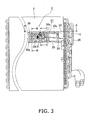
- FIG. 3 is a partially cutaway front view of the heat exchanger to which the air vent apparatus is secured.
- FIG. 4 is a side view of the state of FIG. 3 as seen from the right.
- FIG. 5 is a cross-sectional view along line A-A of FIG. 3
- FIG. 6 is a cross-sectional view along line B-B of FIG. 3
- FIG. 7 is a cross-sectional view along line C-C of FIG. 3 .
- the air vent apparatus 3 is composed of the valve 25, the capillary tube 26, and a securing implement 27, as shown in FIG. 3 .
- the valve 25 has an external shape of a substantially hexagonal column, and has a nozzle 28 (see FIG. 7 ) and an operating knob 29.
- the valve 25 can be opened and closed by turning this operating knob 29 by hand.
- the capillary tube 26 connects the valve 25 with the top part of the outlet header 10 of the heat exchanger 2.
- the outlet header 10 has a linear portion 10a extending vertically, and air bubbles in the water flowing through the outlet header 10 collect in the top part of the outlet header 10.
- the valve 25 is opened, air is pushed by the water pressure of the outlet header 10 into the capillary tube 26 which is connected after narrowing gradually from the top part of the outlet header 10.
- the securing implement 27 has a base plate 30 formed by machining polypropylene into a plate shape, a fastener 31 provided on the front surface of the base plate 30 in order to fasten the valve 25, a pawl 32 provided to the base plate 30 in order to secure the base plate 30 to the heat exchanger 2, and a protective film 33 for protecting the capillary tube 26, as shown in FIG. 7 .
- the fastener 31 is composed of a clamping part 34 which is a portion for clamping the valve 25, a locking part 35 that locks so as to be able to keep the valve 25 in a clamped state by the clamping part 34, and a hinge 36 connecting the two portions of the clamping part 34 so that the clamping part 34 can be opened and closed.
- This fastener 31 is integrally molded from the same material as the base plate 30 made of polypropylene.
- the locking part 35 is composed of an opening provided to the extending portion of one of the two portions of the clamping part 34, and an insertion part having a pawl provided to the other extending portion, and locking can be achieved by inserting the insertion part through the opening and hooking the pawl on the periphery of the opening.
- the fastener 31 also functions as a cover for covering the periphery of the nozzle 28 of the valve 25. In other words, when the water discharged from the nozzle 28 scatters in a direction other than in the direction of the heat exchanger 2, the water is prevented from reaching the lower portion 37 or the like of the fastener 31 and scattering to the periphery of the fastener 31.
- a water-guiding plate 38 extends toward the heat exchanger 2 from the base plate 30.
- This water-guiding plate 38 is disposed so as to extend in front of the nozzle 28 of the valve 25 when the valve 25 has been fastened by the fastener 31.
- the water-guiding plate 38 is designed so that when the securing implement 27 is secured to the heat exchanger 2, the distal end of the water-guiding plate 38 is either in slight contact with the heat exchanger 2 or is disposed in a position facing the heat exchanger 2 across a slight gap. This type of design makes it possible for water whose force of discharge has been weakened by the water-guiding plate 38 to flow downward along the front surface of the heat exchanger 2.
- the distal end of the water-guiding plate 38 is disposed so as to be in contact with several fins 39 of the heat exchanger 2.
- the valve 25 By arranging the valve 25 in this manner, the water discharged when air is vented using the valve 25 runs along the front surfaces of the fins 39 of the heat exchanger 2, and the completion of the air venting operation can be confirmed by visually confirming this running water.
- the heat exchanger 2 is a cross-fin-coil type heat exchanger.
- a plurality of heat transfer tubes 40 extend parallel to each other and substantially horizontally, orthogonal to the long fins 39 extending up and down as shown in FIG. 6 .
- the securing implement 27 is secured by the pawl 32 provided on the rear surface thereof being fitted with the heat transfer tubes 40.
- the form in which the pawl 32 and the heat transfer tubes 40 fit together involves the pawl 32 being held between two heat transfer tubes 40 (the form shown in FIG. 6 ).
- the pawl 32 readily deforms in an elastic manner due to a cleft 32a being provided to part of the pawl 32, and the pawl 32 can be configured so as to be inserted smoothly between the heat transfer tubes 40.
- the securing implement 27 can be firmly secured so as to not move. Since the base plate 30 is made of a polypropylene plate about 2 mm thick, the configuration is thin but comparatively rigid, and the base plate 30 is not readily deformed by the operation of the valve 25 so as to move away from the heat exchanger 2.
- the capillary tube 26 connected to the valve 25 is disposed from the side surface of the heat exchanger 2 up to the front surface.
- the capillary tube 26 is bent in the periphery of the heat exchanger 2 and is pressed against the heat exchanger 2. Therefore, there is a possibility that the capillary tube 26 will be scratched by the edge of a tube plate 41 constituting the side surface of the heat exchanger 2 or by the fins 39 of the heat exchanger 2.
- the protective film 33 is attached to the right side of the base plate 30 of the securing implement 27, and this protective film 33 protects the capillary tube 26 from the fins 39 and the tube plate 41, as shown in FIG. 8 .
- the protective film 33 is configured from a thin film of polyethylene terephthalate in order to ensure a space for fitting the capillary tube 26.
- the protective film 33 is formed so as to bend in a substantial L shape when seen from the top surface, and is disposed not only on the front surface of the heat exchanger 2, but on the side surface of the heat exchanger 2 as well.
- the base plate 30 guards the fingers from touching the fins 39 when an operator grasps and turns the operating knob 29. Therefore, the base plate 30 spans a comparatively wide range behind the operating knob 29. A wider base plate 30 yields a greater effect of protecting the fingers of the operator.
- the base plate 30 since the base plate 30 is positioned on the front surface of the heat exchanger 2, i.e., upstream of the air flow passing through the heat exchanger 2, the base plate 30 hinders the flow of air flowing into the heat exchanger 2, and the heat exchange efficiency of the heat exchanger 2 therefore decreases when the surface area of the base plate 30 is increased.
- openings 30a, 30c not large enough to admit a finger are formed in the base plate 30, preventing the heat exchange efficiency of the heat exchanger 2 from decreasing.
- a large opening 30b is formed flanking the valve 25 on the opposite side from where the operating knob 29 is located because there is little likelihood of the fingers of the technician being inserted thereinto.
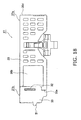
- FIG. 8 is a front view of the main body of the securing implement
- FIG. 9 is a rear view of the main body.
- the securing implement 27 is composed of the main body 27a which includes the base plate 30 made of polypropylene, the fastener 31, and the pawl 32; and an attachment 27b which includes the protective film 33 made of polyethylene terephthalate.
- the base plate 30 has a plurality of large and small openings 30a, 30b formed in a substantially rectangular plate having a width of approximately 160 mm and a height of approximately 55 mm.
- a secured-side member 34a of the clamping part 34 of the fastener 31 is disposed in the widthwise substantial center of the base plate 30.
- the clamping part 34 is composed of two portions, the secured-side member 34a and a turning-side member 34b, and these portions are connected by the hinge 36. Since the material of the main body 27a of the securing implement 27 is polypropylene, the hinge 36 is formed by providing a thin portion during the molding of the main body 27a.
- a thin-walled region 30j is also provided along an end edge 30E. The protective film 33 is attached to this thin-walled region 30j.
- FIG. 10 is a right-side view of the main body 27a of the securing implement 27.
- Concave parts 42a, 42b of the secured-side member 34a and the turning-side member 34b have the shape of a hexagon divided in two as shown in FIG. 10 , and when these two concave parts 42a, 42b are brought together, a space having a substantially hexagonal cross section is formed (see FIG. 15 ).
- ribs 47a, 47b shown in FIG. 12 fit in and secure the valve 25 so that the valve 25 does not come loose.
- the turning-side member 34b is rotated upward about the hinge 36 as an axis of rotation.
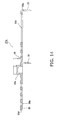
- FIG. 12 is a cross-sectional view along line D-D in FIG.
- An insertion part 43 and an opening 44 shown in FIG. 12 constitute the locking part 35.
- a pawl 43a is attached to the insertion part 43, and when the turning-side member 34b rotates and the insertion part 43 is inserted into the opening 44, the pawl 43a is brought in contact with the top part of the opening 44 and inserted therethrough while being pressed against the bottom side. Therefore, when the insertion part has been fully inserted, the pawl 43a locks on the opening 44 and the turning-side member 34b of the clamping part 34 is secured in place.
- a bulge 45 is formed in the concave part 42b as shown in FIG. 12 . Because of this bulge 45, the surface area of the space 34c, which is formed by joining together the two concave parts 42a, 42b and which has a hexagonal cross section, is smaller than the surface area of the cross section of the valve 25.
- the bulge 45 is pressed by the valve 25 and the turning-side member 34b of the clamping part 34 is lifted upward. The force by which the pawl 43a is caught in the opening 44 thereby increases, and the operator cannot remove the pawl 43a easily. It is thereby possible to prevent an adverse event in which the fastener 31 is displaced when the operator turns the operating knob 29.
- the valve 25 is also supported by a support plate 46 separated slightly from the fastener 31 so that the fastener 31 does not readily come out even if a twisting force acts on the valve 25 when the operating knob 29 is turned.
- the base plate 30 has a comparatively large protective area between the operating knob 29 and the fins 39 of the heat exchanger 2. If an operator is concerned that the fastener 31 might come out when the operating knob 29 is turned, the operator could also push the fastener 31 by hand. Therefore, the base plate 30 has a protective guard area 30m around the periphery of the fastener 31 even in the area where the operating knob 29 is not disposed.
- the protective guard area 30m of the base plate 30 is provided with openings 30a, 30c which allow air to pass through but do not allow fingers to pass through.
- the opening 30a is formed in the periphery of the valve 25, and is a small rectangular hole having a width of 5 mm and a height of 10 mm, for example. If the size of the opening 30a is as previously described, there is little chance of the fingers of an average adult passing through the opening 30a, and since the thickness of the base plate 30 is about 2 mm, for example, the operator need not give any thought to being injured unless the operator performs an unusual action such as intentionally pressing their fingers in the opening 30a.
- the opening 30c is even smaller than the opening 30a.
- a large opening 30b is formed in an area where the operator's fingers do not reach when performing air venting.
- pawls 32 are disposed at one end edge 30d and the other end edge 30e in the width direction of the base plate 30 as shown in FIGS. 11 and 14 , the base plate 30 readily flexes forward due to the force whereby the center of the base plate 30 is pulled to the front of the heat exchanger 2.
- a pawl 32 is also disposed on the back side of the fastener 31 as shown in FIGS. 11 and 14 . The pawl 32 on the back side of the fastener 31 prevents the base plate 30 from rising up off the front surface of the heat exchanger 2.
- the pawls 32 are also formed at different heights in the vertical direction, as is clear from FIG. 10 . When three pawls 32 are disposed in alignment at the same height, it is easier for three pawls 32 to rotate about an axis of a straight line joining the pawls.
- the pawls 32 are disposed as staggered in the vertical direction in order to prevent the securing implement 27 from being readily pulled out by this force in the rotational direction.
- the pawls 32 lock on the heat transfer tubes 40, as has already been described. Therefore, recessed portions 32b are formed in the edges of the pawls 32. Two heat transfer tubes 40 fit into the recessed portions 32b, whereby the securing implement 27 is secured to the front surface of the heat exchanger 2. The strength by which the pawls 32 fit with the heat transfer tubes 40 is adjusted by the cleft 32a so as not to be too firm. What secures the securing implement 27 in place is the three pawls 32 and the back surface of the base plate 30 being in contact with the heat transfer tubes 40 and fins 39 of the heat exchanger 2.
- the one of the three inner surfaces of the concave part 42a that is parallel to the base plate 30 is set apart from the base plate 30.
- the reason for such a structure is to direct the nozzle 28 of the valve 25 in the direction of the heat exchanger 2 but to prevent the nozzle 28 from coming in contact with the fins 39 of the heat exchanger 2 even when the valve 25 is fastened by the fastener 31.
- the nozzle 28 discharges water from the opening 31b of the fastener 31 (see FIGS. 9 and 12 ) toward the side of the heat exchanger 2.
- the nozzle 28 is not pointed horizontally toward the heat exchanger 2, but is inclined downward by about 60 degrees, for example, from the horizontal direction pointing at the heat exchanger 2. Therefore, the water-guiding plate 38 is positioned on the front surface of the nozzle 28.
- the water-guiding plate 38 is disposed horizontally in the state of the securing implement 27 being attached to the heat exchanger 2, and the top surface of the water-guiding plate 38 is angled at approximately 120 degrees, for example, in relation to a line extended from the nozzle 28. Therefore, water discharged from the nozzle 28 of the valve 25 strikes the water-guiding plate 38 and loses some of its discharge force, but this force causes the water to flow from the water-guiding plate 38 toward the front surface of the heat exchanger 2.
- the angle of the water-guiding plate 38 does not necessarily need to be horizontal. Whether the distal end 38a of the water-guiding plate 38 is pointed slightly upward or downward, the water is preferably led to the heat exchanger 2.
- the angle of the nozzle 28 is not limited to the angle described above, and is preferably directed toward the heat exchanger 2. The nozzle 28 is easily handled when pointed downward, however, because it is not preferable for the water exiting the nozzle 28 to return to the valve 25.
- the distal end 38a of the water-guiding plate 38 is in contact with the fins 39 of the heat exchanger 2.
- the water led to the distal end 38a of the water-guiding plate 38 has its discharge force weakened by the water-guiding plate 38, and the water therefore flows down over the front surfaces of the fins 39 into the lower drain pan 19a without going through the heat exchanger 2.
- the fins 39 fulfill the role of a hose, the hose can be omitted in the air vent apparatus 3 attached to the front surface of the heat exchanger 2. Since the water travels along the front surfaces of the fins 39, it is possible to confirm whether or not there is a discharge of exiting water after air has been vented, and it is possible to easily confirm that air has been vented in the air venting operation.
- ribs 30f, 30g are formed from one end edge 30d to the other end edge 30e. These intermittent horizontal ribs 30f and peaked ribs 30g are a result of the shapes of the openings 30a, 30b, 30c and the fastener 31.
- ribs 30f, 30g prevent some of the condensed water formed on the fins 39 of the heat exchanger 2 and other components from flowing forcefully over the front surface of the base plate 30 and dripping down from the base plate 30 so as to splash.
- the speed at which the condensed water heads downward is reduced.
- the condensed water thereby collects at the bottom end edge 30h of the base plate 30, and the condensed water again builds up to the fins 39 due to the surface tension of the collected condensed water. Since the fastener 31 projects from the base plate 30, the condensed water readily splashes when flowing over the top of the fastener 31.
- the ribs 30f, 30g be formed in the entire space between the one end edge 30d and the other end edge 30e of the base plate 30.
- the condensed water cannot get past the openings 30a, 30b, 30c, and the ribs 30f stop at the openings 30a, 30b, 30c.
- These ribs 30f, 30g are formed so as to project about several millimeters from the surface of the base plate 30. It has been found through experimentation that the position where the ribs 30f are formed is preferably higher than the vertical center.
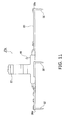
- FIG. 13 is a cross-sectional view along line F-F in FIG. 8 .
- a lower part of the base plate 30 sticks out further as shown in FIG. 13 .
- the rigidity of the base plate 30 increases and the base plate 30 is stronger against bending stress.
- the base plate 30 is thereby prevented from being deformed by bending stress applied to the base plate 30 at times such as when the turning-side member 34b of the fastener 31 bends about the hinge 36 as an axis or when the operating knob 29 is turned.
- the attachment 27b is configured such that an adhesive material 50 is formed on the molded protective film 33.
- the adhesive material 50 is formed at a specified width along one lengthwise edge 33a of the substantially rectangular protective film 33.
- the protective film 33 and the adhesive material 50 can be molded by attaching double-sided tape at predetermined positions, for example, and perforating the protective film 33 together with the double-sided tape by Thompson processing.
- An opening 33c for positioning is also formed at the same time by perforating.
- An protrusion part 51 is formed in a location near the middle in the other lengthwise edge 33b opposite the lengthwise edge 33a.
- a folded part 52 provided above the protrusion part 51 is separated from the protrusion part 51 by a notch 53.
- the folded part 52 is formed by folding perpendicularly at the lengthwise edge 33b.
- the back surface of the folded part 52 is set on the front surface of the tube plate 41.
- the lengthwise edge 33b of the protective film 33 extends farther out than the back surface of the folded part 52 by a length L1 of about 0.5 mm, for example.
- the lengthwise edge 33b of the protective film 33 extends farther out than the corner of the tube plate 41 by the length L1, and there must therefore be a protective film 33 between the capillary tube 26 and the corner of the tube plate 41. Due to the presence of the protective film 33 on the corner of the tube plate 41, the capillary tube 26 is prevented from being scratched by the corner of the tube plate 41.
- the protective film 33 is configured from a thin material of about 0.5 mm, for example, even in cases in which the gaps between the components disposed on the front surface side of the heat exchanger 2 and the front surface of the heat exchanger 2 are the same small size as in conventional practice, the capillary tube 26 can be drawn to the front surface of the heat exchanger 2 if the gap is slightly larger than the diameter of the capillary tube 26.
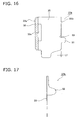
- FIGS. 18 and 19 show a state in which the attachment 27b has been attached to the main body 27a.
- FIG. 18 is a rear side view of the securing implement 27, and
- FIG. 19 is a plan view of the securing implement 27.
- the protective film 33 is attached to the thin-walled region 30j of the base plate 30 (see FIG. 9 ). Since the protective film 33 is secured to the thin-walled region 30j, the back surface of the securing implement 27 is coplanar with the back surface of the base plate 30 and the protective film 33 even if the protective film 33 is thick. Therefore, the entire back side of the securing implement 27 including the protective film 33 and the back surface of the base plate 30 can be brought in contact with the fins 39.
- the protective film 33 is positioned relative to the base plate 30 by fitting a pawl 32 into the opening 33c. Because of this pawl 32, the protective film does not come off even if the protective film 33 is pulled with the protrusion part 51.
- the convector 1 (heat exchange unit) comprises the air vent apparatus 3 for venting air entering the circulation passage of the heat exchanger 2.
- the air vent apparatus 3 is attached to the front surface of the heat exchanger 2.
- the openings 24 of the front surface grill 12 on the front surface of the heat exchanger 2 can be exposed during maintenance of the heat exchanger 2 in order to perform maintenance on the heat exchanger 2.
- the operating knob 29 of the valve 25 of the air vent apparatus 3 can be turned through the openings 24 to perform air venting.
- the openings 24 of the front surface grill 12 can be exposed by removing the intake grill 14 and the air filter 13 which are attached to the convector 1 so as to be removable.
- the intake grill 14 and the air filter 13 capable of being removed constitute a maintenance opening structure.
- the maintenance opening structure herein is preferably one in which the opening in the front surface of the heat exchanger 2 is exposed in order to perform maintenance on the heat exchanger 2, and the structure does not necessarily need to be removable.
- This maintenance opening structure is contained in a casing that includes the front surface grill 12 to which the intake grill 14 and air filter 13 are attached.
- valve 25 of the air vent apparatus 3 located on the front surface of the heat exchanger 2, the valve 25 is easily exposed in order to perform the air venting operation.
- adverse events of the valve 25 being mistakenly opened can be prevented because the valve 25 is covered by the intake grill 14 and the air filter 13.
- the air vent apparatus 3 branches off from the circulation passage as shown in FIG. 1 , the water in the capillary tube 26 of the air vent apparatus 3 is not circulated, the effect of the air vent apparatus 3 being cooled by the water is therefore small, and there is no condensation.
- the air vent apparatus 3 is disposed on the front surface of the heat exchanger 2, indoor air is constantly blowing over the air vent apparatus 3 and acting so as to dry the air vent apparatus 3, and the air vent apparatus 3 therefore has a configuration even more resistant to condensation.
- the ribs 30f, 30g are provided in order to ensure that the condensed water flowing down to the base plate 30 of the securing implement 27 from the heat exchanger 2 does not scatter.
- the ribs 30f, 30g are cut off at the locations of the openings 30a, 30b, 30c and other obstacles, but are disposed so as to extend from one of the end edges 30d, 30e to the other, which face each other horizontally. This is because water that passes over the front surface of the base plate 30 must make contact with the ribs 30f, 30g.
- the fastener 31 (holding part) of the securing implement 27 holds the nozzle 28 of the valve 25 in a direction pointing toward the heat exchanger 2. Therefore, when the air venting operation is performed, water exiting the nozzle 28 is discharged onto the heat exchanger 2. The water flows over the fins 39 of the heat exchanger 2 and is led to the drain pan 19a. With this type of configuration, water is led to the drain pan 19a without a hose leading from the nozzle 28 to the drain pan 19a. The hose can be omitted by using this type of configuration.
- the hose Since the hose is omitted and the tip of the nozzle 28 is opened, it is thus possible for water exiting the nozzle 28 to drip down from the nozzle 28.
- the water-guiding plate 38 is provided to the securing implement 27, and the water discharged from the nozzle 28 is led to the fins 39 of the heat exchanger 2 by the water-guiding plate 38.
- the nozzle 28 is secured in place in a position whereby the flow of water exiting the nozzle 28 can reach the heat exchanger 2.
- the capillary tube 26 of the air vent apparatus 3 Since the capillary tube 26 of the air vent apparatus 3 is connected to the outlet header 10 of the heat exchanger 2, the water in the capillary tube 26 is subjected to pressure for circulating the water.
- the valve 25 When the valve 25 is opened in such a state, water is forcefully expelled out of the nozzle 28. Therefore, merely by having the nozzle 28 directed toward the heat exchanger 2, water exiting the nozzle 28 can penetrate, and manage to enter the back surface of, the heat exchanger 2.
- the water-guiding plate 38 is disposed in a direction facing the nozzle 28 so that the water does not penetrate the heat exchanger 2.
- the water-guiding plate 38 functions as a force reducer, serving to weaken the force of the water exiting the nozzle 28.
- the force of the water weakened and the water exiting the nozzle 28 directed to the front surface of the heat exchanger 2 the water flows over the front surface of the heat exchanger 2. Since an operation is performed for draining water from the openings 24 in the front surface of the heat exchanger 2, the operator can visually confirm the water flowing over the front surface of the heat exchanger 2 in this manner and can confirm that the water draining operation has ended by visually confirming the water flowing over the heat exchanger 2.
- the nozzle 28 is covered by the fastener 31 except for the portion in the direction in which the distal end of the nozzle 28 points.
- the fastener 31 fulfills the role of a cover. Water (the medium) can thereby be prevented from getting on the body, hands, or feet of the operator during the operation.
- the clamping part 34 clamps the valve 25, but the fastener 31 is caught by the locking part 35 in order to maintain the clamped state.
- the clamping part 34 attempts to clamp the valve 25 over a smaller surface area than the cross-sectional surface area of the valve 25 because of the bulge 45. Therefore, the turning-side member 34b is raised upward, the force by which the pawl 43a is caught in the locking part 35 is maximized, the resistance against the pulling force increases, and it is therefore possible to prevent the hold of the fastener 31 (holding part) from being released by the operator opening and closing the valve.
- the securing implement 27 is secured to the heat transfer tubes 40 of the heat exchanger 2 by three pawls 32 (fitting parts). Each of the pawls 32 is insertably fitted between two heat transfer tubes 40. Since the securing implement 27 is secured in place by the pawls 32 alone, the configuration of the securing implement 27 is extremely simple. Therefore, the pawls 32 can be created together with the other portions of the main body 27a of the securing implement 27 by plastic integrated molding, and it is possible to provide the securing implement 27 having fitting parts at low cost. Merely having the pawls 32 fitted simplifies the operation, and facilitates the securing task of the securing implement 27.
- Each of the pawls 32 herein is fitted in between two heat transfer tubes 40, but the fitting can also be accomplished by pawls that clamp one heat transfer tube 40.
- One heat transfer tube 40 may be inserted in a cleft 32a of a pawl having a shape such as that of the pawls 32, a portion 32b recessed in the edge may be inserted between two heat transfer tubes on both side and secured in place to three heat transfer tubes 40, and the number of heat transfer tubes 40 fitted with one pawl can be selected appropriately.
- another possibility is to clamp and fasten the heat transfer tubes with something having a different shape than the pawls; e.g., something with a shape such as that of the fastener 31.
- the operating knob 29 is turned to open and close the valve 25.
- the securing implement 27 has a guard area 30m where the base plate 30 extends around the periphery of the operating knob 29.
- the openings 30a, 30c in the guard area 30m are too small for fingers to fit through. Therefore, the guard area 30m prevents fingers from being scratched by the fins 39 of the heat exchanger 2.
- the openings 30a, 30c allow air to pass through to the heat exchanger 2 and therefore have the effect of preventing a decrease in heat exchange efficiency in the heat exchanger 2.
- the guard area 30m also extends in the periphery of the fastener 31 and can also protect fingers holding the fastener 31.
- the valve 25 and the outlet header 10 of the circulation passage of the heat exchanger 2 are connected by the capillary tube 26. Since the outlet header 10 is disposed on the side surface of the heat exchanger 2 and the valve 25 is disposed on the front surface of the heat exchanger, the capillary tube 26 is drawn around the heat exchanger 2 from the side surface to the front surface. Because the capillary tube 26 is arranged in this manner, the protective film 33 is disposed between the capillary tube 26 and the heat exchanger 2.
- the protective film 33 fulfills the role of protecting the capillary tube 26 so that the capillary tube 26 is not scratched by the fins 39 or the tube plate 41 of the heat exchanger 2.
- the reason the protective film 33 is configured from a material thinner than the base plate 30 of the securing implement 27 is because there is only a small space in the peripheral edge of the side surface of the heat exchanger 2 and it is therefore difficult to place a thick member such as the base plate 30.
Landscapes
- Engineering & Computer Science (AREA)
- Mechanical Engineering (AREA)
- General Engineering & Computer Science (AREA)
- Physics & Mathematics (AREA)
- Thermal Sciences (AREA)
- Chemical & Material Sciences (AREA)
- Combustion & Propulsion (AREA)
- Other Air-Conditioning Systems (AREA)
- Heat-Exchange Devices With Radiators And Conduit Assemblies (AREA)
Claims (9)
- Wärmetauscheinheit (1) zum Durchführen eines Wärmeaustauschs zwischen Luft und einem Medium, das durch einen Zirkulationskanal zirkuliert, wobei die Wärmetauscheinheit aufweist:einen Wärmetauscher (2), der mit dem Zirkulationskanal verbindbar ist;ein Gehäuse (12, 13, 14) zum Abdecken einer Vorderfläche des Wärmetauschers, wobei das Gehäuse eine Wartungsöffnungsstruktur (13, 14) zum Freilegen einer Öffnung (24) in der Vorderfläche des Wärmetauschers während der Wartung, aufweist; undeine Entlüftungsvorrichtung zum Entlüften von Luft, die in den Zirkulationskanal des Wärmetauschers (2) eintritt, wobei die Entlüftungsvorrichtung ein Ventil (25) aufweist, das mit dem Zirkulationskanal verbunden ist und eine Düse (28) zum Entlüften von Luft aufweist, undein Sicherungsgerät (27) zum Sichern des Ventils an einer Vorderfläche des Wärmetauschers, die Luft einzieht, wobei das Sicherungsgerät eine Grundplatte (30) aufweist,dadurch gekennzeichnet, dassein Halteteil (31) an einer Vorderfläche der Grundplatte vorgesehen ist und die Entlüftungsvorrichtung so an der Vorderfläche der Grundplatte hält, dass die Düse der Entlüftungsvorrichtung zu dem Wärmetauscher hin gerichtet ist, wobei das Ventil (25) an der Vorderfläche des Wärmetauchers, der Öffnung des Gehäuses zugewandt, angeordnet ist.
- Wärmetauscheinheit nach Anspruch 1, wobei
das Sicherungsgerät ferner, vor der Düse, einen Kraftminderer (38) zum Schwächen der Kraft des Mediums, welches aus der Düse des Ventils ausgestoßen wird, aufweist. - Wärmetauscheinheit nach einem der Ansprüche 1 bis 2, wobei
der Wärmetauscher ein Wärmeübertragungsrohr (40) zum Bewirken, dass das Medium durch das Innere strömt, wodurch die Wärme des Mediums übertragen wird, aufweist; und
das Sicherungsgerät ferner ein Passstück (32) aufweist, das mit dem Wärmeübertragungsrohr des Wärmetauschers zusammenpasst, um das Sicherungsgerät an dem Wärmetauscher zu sichern, wobei das Passstück bevorzugt an einer Rückfläche der Grundplatte vorgesehen ist. - Wärmetauscheinheit nach einem der Ansprüche 1 bis 3, wobei
das Ventil einen Betätigungsknopf (29) zum Öffnen und Schließen des Ventils aufweist; und
die Grundplatte (30) einen Schutzbereich aufweist, der sich in dem Raum zwischen dem Betätigungsknopf und dem Wärmetauscher in einem Zustand in dem das Ventil in dem Halteteil gehalten ist, erstreckt. - Wärmetauscheinheit nach einem der Ansprüche 1 bis 4, ferner mit:einem Rohr (26), das den Zirkulationskanal und das Ventil verbindet; wobeidas Sicherungsgerät ferner einen Schutzfilm (33) zum Schützen der Rohrs vor dem Wärmetauscher, aufweist, wobei der Schutzfilm zwischen dem Rohr und dem Wärmetauscher angeordnet ist.
- Wärmetauscheinheit nach einem der Ansprüche 1 bis 2, wobei
das Sicherungsgerät ferner eine Abdeckung (31) zum Abdecken eines Umfangs der Düse des Ventils in einem Zustand in dem das Ventil in dem Halteteil gehalten ist, aufweist. - Wärmetauscheinheit nach Anspruch 1, wobei
das Halteteil einen Klemmteil (34) zum Klemmen des Ventils, einen Verriegelungsteil (35) zum Immobilisieren des Klemmteils, um das Ventil in einem durch das Klemmteil geklemmten Zustand zu halten und einen Ventilklemmbereich aufweist; und
der Ventilklemmbereich, der ausgebildet wird, wenn der Klemmteil durch den Verriegelungsteil immobilisiert wird, einen Abschnitt aufweist, der kleiner ist als die äußere Form des Ventils. - Wärmetauscheinheit nach einem der Ansprüche 1 bis 7, wobei
das Sicherungsgerät die Düse an einem Ort an einer Position an der das von der Düse ausgestoßene Medium über die Vorderfläche des Wärmetauschers strömt, sichert. - Wärmetauscheinheit nach einem der Ansprüche 1 bis 8, wobei
die Grundplatte an einer Vorderfläche eine Rippe (30f) aufweist, die sich von einer Endkante (30d) zu einer anderen Endkante (30e), die einander horizontal zugewandt sind, erstreckt.
Applications Claiming Priority (1)
| Application Number | Priority Date | Filing Date | Title |
|---|---|---|---|
| PCT/JP2010/000099 WO2011083519A1 (ja) | 2010-01-08 | 2010-01-08 | 空気抜き装置、熱交換ユニット及び固定具 |
Publications (3)
| Publication Number | Publication Date |
|---|---|
| EP2463594A1 EP2463594A1 (de) | 2012-06-13 |
| EP2463594A4 EP2463594A4 (de) | 2012-11-28 |
| EP2463594B1 true EP2463594B1 (de) | 2016-01-06 |
Family
ID=44305266
Family Applications (1)
| Application Number | Title | Priority Date | Filing Date |
|---|---|---|---|
| EP10781396.6A Not-in-force EP2463594B1 (de) | 2010-01-08 | 2010-01-08 | Entlüftungsvorrichtung, wärmetauschereinheit und befestigungswerkzeug |
Country Status (2)
| Country | Link |
|---|---|
| EP (1) | EP2463594B1 (de) |
| WO (1) | WO2011083519A1 (de) |
Cited By (1)
| Publication number | Priority date | Publication date | Assignee | Title |
|---|---|---|---|---|
| EP3722682B1 (de) * | 2017-12-08 | 2023-10-11 | Mitsubishi Electric Corporation | Inneneinheit einer klimaanlagenvorrichtung sowie klimaanlagenvorrichtung |
Families Citing this family (4)
| Publication number | Priority date | Publication date | Assignee | Title |
|---|---|---|---|---|
| JP5995645B2 (ja) * | 2012-10-12 | 2016-09-21 | 三菱重工業株式会社 | 空気調和機の室内ユニット |
| JP5811134B2 (ja) * | 2013-04-30 | 2015-11-11 | ダイキン工業株式会社 | 空気調和機の室内ユニット |
| GB2578036B (en) | 2017-07-27 | 2021-05-19 | Mitsubishi Electric Corp | Air-conditioning system and method of sealing heat medium |
| CN110621136B (zh) * | 2018-06-19 | 2022-08-02 | 中兴通讯股份有限公司 | 芯体组件以及通信室外机柜热交换器 |
Family Cites Families (8)
| Publication number | Priority date | Publication date | Assignee | Title |
|---|---|---|---|---|
| JPS5213151Y2 (de) * | 1972-09-15 | 1977-03-24 | ||
| JPS5023051U (de) * | 1973-06-25 | 1975-03-14 | ||
| JPS56182Y2 (de) * | 1976-08-23 | 1981-01-07 | ||
| JPS6120420Y2 (de) * | 1980-06-18 | 1986-06-19 | ||
| JPH0277511U (de) | 1988-12-01 | 1990-06-14 | ||
| JP2565590Y2 (ja) * | 1991-03-18 | 1998-03-18 | 三洋電機株式会社 | ファンコンベクター |
| JPH0618814U (ja) * | 1992-08-20 | 1994-03-11 | 三洋電機株式会社 | 暖房用放熱器 |
| JPH09210392A (ja) * | 1996-01-30 | 1997-08-12 | Daikin Ind Ltd | ファンコイルユニット |
-
2010
- 2010-01-08 EP EP10781396.6A patent/EP2463594B1/de not_active Not-in-force
- 2010-01-08 WO PCT/JP2010/000099 patent/WO2011083519A1/ja not_active Ceased
Cited By (1)
| Publication number | Priority date | Publication date | Assignee | Title |
|---|---|---|---|---|
| EP3722682B1 (de) * | 2017-12-08 | 2023-10-11 | Mitsubishi Electric Corporation | Inneneinheit einer klimaanlagenvorrichtung sowie klimaanlagenvorrichtung |
Also Published As
| Publication number | Publication date |
|---|---|
| EP2463594A1 (de) | 2012-06-13 |
| EP2463594A4 (de) | 2012-11-28 |
| WO2011083519A1 (ja) | 2011-07-14 |
Similar Documents
| Publication | Publication Date | Title |
|---|---|---|
| EP2463594B1 (de) | Entlüftungsvorrichtung, wärmetauschereinheit und befestigungswerkzeug | |
| ES2755888T3 (es) | Unidad interna para aire acondicionado que tiene deflectores | |
| US8439655B2 (en) | Cooling channel for a fan motor for a ventilation, heating, and/or air conditioning system | |
| US5857353A (en) | Wall cooling apparatus for a control panel, with a fan and a lamellar heat exchanger | |
| JP5108119B2 (ja) | ダストボックス、フィルタ清掃装置および空気調和機 | |
| CN107360726A (zh) | 空调的室内机 | |
| JP6633457B2 (ja) | 空気調和機 | |
| US9903600B2 (en) | Wind direction adjusting device of air-conditioning apparatus and air-conditioning apparatus | |
| WO2012096119A1 (ja) | フィルタ保持装置、フィルタ清掃装置および空気調和機 | |
| JP5108118B2 (ja) | フィルタ清掃装置、ダストボックスおよび空気調和機 | |
| JP2016090162A (ja) | 空気調和機 | |
| JPH109665A (ja) | 天井吊り形空気調和機 | |
| KR20220053419A (ko) | 식기세척기 | |
| JP3899864B2 (ja) | 熱交換器固定板およびそれを用いた空気調和機 | |
| JP3480874B2 (ja) | 空気調和機 | |
| ES2744050T3 (es) | Dispositivo interior de aire acondicionado | |
| EP1910758A2 (de) | Kondensatablaufpfanne für eine verdampfereinheit | |
| KR101137160B1 (ko) | 공기조화기 실내기의 드레인팬 | |
| JP2012072924A (ja) | 床置式空気調和機 | |
| KR100294674B1 (ko) | 공기조화기의집진필터결합장치_ | |
| KR101886026B1 (ko) | 공기조화기 | |
| KR100319692B1 (ko) | 온도센서 보호장치를 갖춘 공기조화기의 실내기 | |
| CN219735469U (zh) | 空调器组件 | |
| KR20090022102A (ko) | 공기조화기 | |
| KR200154576Y1 (ko) | 공기조화기의 증발기 커버장치 |
Legal Events
| Date | Code | Title | Description |
|---|---|---|---|
| PUAI | Public reference made under article 153(3) epc to a published international application that has entered the european phase |
Free format text: ORIGINAL CODE: 0009012 |
|
| 17P | Request for examination filed |
Effective date: 20101202 |
|
| AK | Designated contracting states |
Kind code of ref document: A1 Designated state(s): AT BE BG CH CY CZ DE DK EE ES FI FR GB GR HR HU IE IS IT LI LT LU LV MC MK MT NL NO PL PT RO SE SI SK SM TR |
|
| A4 | Supplementary search report drawn up and despatched |
Effective date: 20121030 |
|
| RIC1 | Information provided on ipc code assigned before grant |
Ipc: F24D 3/10 20060101ALI20121024BHEP Ipc: F28F 9/00 20060101ALI20121024BHEP Ipc: F24F 1/00 20110101AFI20121024BHEP |
|
| DAX | Request for extension of the european patent (deleted) | ||
| 17Q | First examination report despatched |
Effective date: 20140102 |
|
| GRAP | Despatch of communication of intention to grant a patent |
Free format text: ORIGINAL CODE: EPIDOSNIGR1 |
|
| INTG | Intention to grant announced |
Effective date: 20150904 |
|
| GRAS | Grant fee paid |
Free format text: ORIGINAL CODE: EPIDOSNIGR3 |
|
| GRAA | (expected) grant |
Free format text: ORIGINAL CODE: 0009210 |
|
| AK | Designated contracting states |
Kind code of ref document: B1 Designated state(s): AT BE BG CH CY CZ DE DK EE ES FI FR GB GR HR HU IE IS IT LI LT LU LV MC MK MT NL NO PL PT RO SE SI SK SM TR |
|
| REG | Reference to a national code |
Ref country code: GB Ref legal event code: FG4D |
|
| REG | Reference to a national code |
Ref country code: CH Ref legal event code: EP |
|
| REG | Reference to a national code |
Ref country code: FR Ref legal event code: PLFP Year of fee payment: 7 |
|
| REG | Reference to a national code |
Ref country code: IE Ref legal event code: FG4D |
|
| REG | Reference to a national code |
Ref country code: AT Ref legal event code: REF Ref document number: 769183 Country of ref document: AT Kind code of ref document: T Effective date: 20160215 |
|
| REG | Reference to a national code |
Ref country code: DE Ref legal event code: R096 Ref document number: 602010029999 Country of ref document: DE |
|
| REG | Reference to a national code |
Ref country code: SE Ref legal event code: TRGR |
|
| REG | Reference to a national code |
Ref country code: LT Ref legal event code: MG4D |
|
| REG | Reference to a national code |
Ref country code: NL Ref legal event code: MP Effective date: 20160106 |
|
| REG | Reference to a national code |
Ref country code: AT Ref legal event code: MK05 Ref document number: 769183 Country of ref document: AT Kind code of ref document: T Effective date: 20160106 |
|
| PG25 | Lapsed in a contracting state [announced via postgrant information from national office to epo] |
Ref country code: NL Free format text: LAPSE BECAUSE OF FAILURE TO SUBMIT A TRANSLATION OF THE DESCRIPTION OR TO PAY THE FEE WITHIN THE PRESCRIBED TIME-LIMIT Effective date: 20160106 |
|
| PG25 | Lapsed in a contracting state [announced via postgrant information from national office to epo] |
Ref country code: FI Free format text: LAPSE BECAUSE OF FAILURE TO SUBMIT A TRANSLATION OF THE DESCRIPTION OR TO PAY THE FEE WITHIN THE PRESCRIBED TIME-LIMIT Effective date: 20160106 Ref country code: IT Free format text: LAPSE BECAUSE OF FAILURE TO SUBMIT A TRANSLATION OF THE DESCRIPTION OR TO PAY THE FEE WITHIN THE PRESCRIBED TIME-LIMIT Effective date: 20160106 Ref country code: NO Free format text: LAPSE BECAUSE OF FAILURE TO SUBMIT A TRANSLATION OF THE DESCRIPTION OR TO PAY THE FEE WITHIN THE PRESCRIBED TIME-LIMIT Effective date: 20160406 Ref country code: GR Free format text: LAPSE BECAUSE OF FAILURE TO SUBMIT A TRANSLATION OF THE DESCRIPTION OR TO PAY THE FEE WITHIN THE PRESCRIBED TIME-LIMIT Effective date: 20160407 Ref country code: ES Free format text: LAPSE BECAUSE OF FAILURE TO SUBMIT A TRANSLATION OF THE DESCRIPTION OR TO PAY THE FEE WITHIN THE PRESCRIBED TIME-LIMIT Effective date: 20160106 Ref country code: HR Free format text: LAPSE BECAUSE OF FAILURE TO SUBMIT A TRANSLATION OF THE DESCRIPTION OR TO PAY THE FEE WITHIN THE PRESCRIBED TIME-LIMIT Effective date: 20160106 |
|
| PG25 | Lapsed in a contracting state [announced via postgrant information from national office to epo] |
Ref country code: AT Free format text: LAPSE BECAUSE OF FAILURE TO SUBMIT A TRANSLATION OF THE DESCRIPTION OR TO PAY THE FEE WITHIN THE PRESCRIBED TIME-LIMIT Effective date: 20160106 Ref country code: IS Free format text: LAPSE BECAUSE OF FAILURE TO SUBMIT A TRANSLATION OF THE DESCRIPTION OR TO PAY THE FEE WITHIN THE PRESCRIBED TIME-LIMIT Effective date: 20160506 Ref country code: PL Free format text: LAPSE BECAUSE OF FAILURE TO SUBMIT A TRANSLATION OF THE DESCRIPTION OR TO PAY THE FEE WITHIN THE PRESCRIBED TIME-LIMIT Effective date: 20160106 Ref country code: PT Free format text: LAPSE BECAUSE OF FAILURE TO SUBMIT A TRANSLATION OF THE DESCRIPTION OR TO PAY THE FEE WITHIN THE PRESCRIBED TIME-LIMIT Effective date: 20160506 Ref country code: LT Free format text: LAPSE BECAUSE OF FAILURE TO SUBMIT A TRANSLATION OF THE DESCRIPTION OR TO PAY THE FEE WITHIN THE PRESCRIBED TIME-LIMIT Effective date: 20160106 Ref country code: LV Free format text: LAPSE BECAUSE OF FAILURE TO SUBMIT A TRANSLATION OF THE DESCRIPTION OR TO PAY THE FEE WITHIN THE PRESCRIBED TIME-LIMIT Effective date: 20160106 |
|
| REG | Reference to a national code |
Ref country code: CH Ref legal event code: PL |
|
| REG | Reference to a national code |
Ref country code: DE Ref legal event code: R097 Ref document number: 602010029999 Country of ref document: DE |
|
| PG25 | Lapsed in a contracting state [announced via postgrant information from national office to epo] |
Ref country code: MC Free format text: LAPSE BECAUSE OF FAILURE TO SUBMIT A TRANSLATION OF THE DESCRIPTION OR TO PAY THE FEE WITHIN THE PRESCRIBED TIME-LIMIT Effective date: 20160106 Ref country code: DK Free format text: LAPSE BECAUSE OF FAILURE TO SUBMIT A TRANSLATION OF THE DESCRIPTION OR TO PAY THE FEE WITHIN THE PRESCRIBED TIME-LIMIT Effective date: 20160106 Ref country code: EE Free format text: LAPSE BECAUSE OF FAILURE TO SUBMIT A TRANSLATION OF THE DESCRIPTION OR TO PAY THE FEE WITHIN THE PRESCRIBED TIME-LIMIT Effective date: 20160106 Ref country code: LI Free format text: LAPSE BECAUSE OF NON-PAYMENT OF DUE FEES Effective date: 20160131 Ref country code: CH Free format text: LAPSE BECAUSE OF NON-PAYMENT OF DUE FEES Effective date: 20160131 |
|
| REG | Reference to a national code |
Ref country code: IE Ref legal event code: MM4A |
|
| PLBE | No opposition filed within time limit |
Free format text: ORIGINAL CODE: 0009261 |
|
| STAA | Information on the status of an ep patent application or granted ep patent |
Free format text: STATUS: NO OPPOSITION FILED WITHIN TIME LIMIT |
|
| PG25 | Lapsed in a contracting state [announced via postgrant information from national office to epo] |
Ref country code: RO Free format text: LAPSE BECAUSE OF FAILURE TO SUBMIT A TRANSLATION OF THE DESCRIPTION OR TO PAY THE FEE WITHIN THE PRESCRIBED TIME-LIMIT Effective date: 20160106 Ref country code: SK Free format text: LAPSE BECAUSE OF FAILURE TO SUBMIT A TRANSLATION OF THE DESCRIPTION OR TO PAY THE FEE WITHIN THE PRESCRIBED TIME-LIMIT Effective date: 20160106 Ref country code: SM Free format text: LAPSE BECAUSE OF FAILURE TO SUBMIT A TRANSLATION OF THE DESCRIPTION OR TO PAY THE FEE WITHIN THE PRESCRIBED TIME-LIMIT Effective date: 20160106 |
|
| 26N | No opposition filed |
Effective date: 20161007 |
|
| REG | Reference to a national code |
Ref country code: FR Ref legal event code: PLFP Year of fee payment: 8 |
|
| PG25 | Lapsed in a contracting state [announced via postgrant information from national office to epo] |
Ref country code: IE Free format text: LAPSE BECAUSE OF NON-PAYMENT OF DUE FEES Effective date: 20160108 |
|
| PG25 | Lapsed in a contracting state [announced via postgrant information from national office to epo] |
Ref country code: BG Free format text: LAPSE BECAUSE OF FAILURE TO SUBMIT A TRANSLATION OF THE DESCRIPTION OR TO PAY THE FEE WITHIN THE PRESCRIBED TIME-LIMIT Effective date: 20160406 Ref country code: SI Free format text: LAPSE BECAUSE OF FAILURE TO SUBMIT A TRANSLATION OF THE DESCRIPTION OR TO PAY THE FEE WITHIN THE PRESCRIBED TIME-LIMIT Effective date: 20160106 |
|
| PG25 | Lapsed in a contracting state [announced via postgrant information from national office to epo] |
Ref country code: MT Free format text: LAPSE BECAUSE OF FAILURE TO SUBMIT A TRANSLATION OF THE DESCRIPTION OR TO PAY THE FEE WITHIN THE PRESCRIBED TIME-LIMIT Effective date: 20160106 |
|
| REG | Reference to a national code |
Ref country code: FR Ref legal event code: PLFP Year of fee payment: 9 |
|
| PG25 | Lapsed in a contracting state [announced via postgrant information from national office to epo] |
Ref country code: CY Free format text: LAPSE BECAUSE OF FAILURE TO SUBMIT A TRANSLATION OF THE DESCRIPTION OR TO PAY THE FEE WITHIN THE PRESCRIBED TIME-LIMIT Effective date: 20160106 Ref country code: HU Free format text: LAPSE BECAUSE OF FAILURE TO SUBMIT A TRANSLATION OF THE DESCRIPTION OR TO PAY THE FEE WITHIN THE PRESCRIBED TIME-LIMIT; INVALID AB INITIO Effective date: 20100108 |
|
| PG25 | Lapsed in a contracting state [announced via postgrant information from national office to epo] |
Ref country code: TR Free format text: LAPSE BECAUSE OF FAILURE TO SUBMIT A TRANSLATION OF THE DESCRIPTION OR TO PAY THE FEE WITHIN THE PRESCRIBED TIME-LIMIT Effective date: 20160106 Ref country code: MT Free format text: LAPSE BECAUSE OF FAILURE TO SUBMIT A TRANSLATION OF THE DESCRIPTION OR TO PAY THE FEE WITHIN THE PRESCRIBED TIME-LIMIT Effective date: 20160131 Ref country code: LU Free format text: LAPSE BECAUSE OF NON-PAYMENT OF DUE FEES Effective date: 20160108 Ref country code: MK Free format text: LAPSE BECAUSE OF FAILURE TO SUBMIT A TRANSLATION OF THE DESCRIPTION OR TO PAY THE FEE WITHIN THE PRESCRIBED TIME-LIMIT Effective date: 20160106 |
|
| PGFP | Annual fee paid to national office [announced via postgrant information from national office to epo] |
Ref country code: CZ Payment date: 20181219 Year of fee payment: 10 |
|
| PGFP | Annual fee paid to national office [announced via postgrant information from national office to epo] |
Ref country code: FR Payment date: 20181213 Year of fee payment: 10 Ref country code: BE Payment date: 20181217 Year of fee payment: 10 |
|
| PGFP | Annual fee paid to national office [announced via postgrant information from national office to epo] |
Ref country code: GB Payment date: 20190102 Year of fee payment: 10 Ref country code: DE Payment date: 20181228 Year of fee payment: 10 |
|
| PGFP | Annual fee paid to national office [announced via postgrant information from national office to epo] |
Ref country code: SE Payment date: 20190110 Year of fee payment: 10 |
|
| PG25 | Lapsed in a contracting state [announced via postgrant information from national office to epo] |
Ref country code: CZ Free format text: LAPSE BECAUSE OF NON-PAYMENT OF DUE FEES Effective date: 20200108 |
|
| REG | Reference to a national code |
Ref country code: DE Ref legal event code: R119 Ref document number: 602010029999 Country of ref document: DE |
|
| REG | Reference to a national code |
Ref country code: SE Ref legal event code: EUG |
|
| GBPC | Gb: european patent ceased through non-payment of renewal fee |
Effective date: 20200108 |
|
| REG | Reference to a national code |
Ref country code: SE Ref legal event code: EUG |
|
| REG | Reference to a national code |
Ref country code: BE Ref legal event code: MM Effective date: 20200131 |
|
| PG25 | Lapsed in a contracting state [announced via postgrant information from national office to epo] |
Ref country code: DE Free format text: LAPSE BECAUSE OF NON-PAYMENT OF DUE FEES Effective date: 20200801 Ref country code: SE Free format text: LAPSE BECAUSE OF NON-PAYMENT OF DUE FEES Effective date: 20200109 Ref country code: GB Free format text: LAPSE BECAUSE OF NON-PAYMENT OF DUE FEES Effective date: 20200108 Ref country code: FR Free format text: LAPSE BECAUSE OF NON-PAYMENT OF DUE FEES Effective date: 20200131 |
|
| PG25 | Lapsed in a contracting state [announced via postgrant information from national office to epo] |
Ref country code: BE Free format text: LAPSE BECAUSE OF NON-PAYMENT OF DUE FEES Effective date: 20200131 |