EP2453343A2 - Tragbare elektronische Vorrichtung und Verfahren dafür - Google Patents
Tragbare elektronische Vorrichtung und Verfahren dafür Download PDFInfo
- Publication number
- EP2453343A2 EP2453343A2 EP11182356A EP11182356A EP2453343A2 EP 2453343 A2 EP2453343 A2 EP 2453343A2 EP 11182356 A EP11182356 A EP 11182356A EP 11182356 A EP11182356 A EP 11182356A EP 2453343 A2 EP2453343 A2 EP 2453343A2
- Authority
- EP
- European Patent Office
- Prior art keywords
- application interface
- application
- display
- electronic device
- view
- Prior art date
- Legal status (The legal status is an assumption and is not a legal conclusion. Google has not performed a legal analysis and makes no representation as to the accuracy of the status listed.)
- Ceased
Links
Images



Classifications
-
- G—PHYSICS
- G06—COMPUTING OR CALCULATING; COUNTING
- G06F—ELECTRIC DIGITAL DATA PROCESSING
- G06F3/00—Input arrangements for transferring data to be processed into a form capable of being handled by the computer; Output arrangements for transferring data from processing unit to output unit, e.g. interface arrangements
- G06F3/01—Input arrangements or combined input and output arrangements for interaction between user and computer
- G06F3/048—Interaction techniques based on graphical user interfaces [GUI]
- G06F3/0487—Interaction techniques based on graphical user interfaces [GUI] using specific features provided by the input device, e.g. functions controlled by the rotation of a mouse with dual sensing arrangements, or of the nature of the input device, e.g. tap gestures based on pressure sensed by a digitiser
- G06F3/0488—Interaction techniques based on graphical user interfaces [GUI] using specific features provided by the input device, e.g. functions controlled by the rotation of a mouse with dual sensing arrangements, or of the nature of the input device, e.g. tap gestures based on pressure sensed by a digitiser using a touch-screen or digitiser, e.g. input of commands through traced gestures
-
- G—PHYSICS
- G06—COMPUTING OR CALCULATING; COUNTING
- G06F—ELECTRIC DIGITAL DATA PROCESSING
- G06F16/00—Information retrieval; Database structures therefor; File system structures therefor
- G06F16/10—File systems; File servers
- G06F16/16—File or folder operations, e.g. details of user interfaces specifically adapted to file systems
- G06F16/168—Details of user interfaces specifically adapted to file systems, e.g. browsing and visualisation, 2d or 3d GUIs
-
- G—PHYSICS
- G06—COMPUTING OR CALCULATING; COUNTING
- G06F—ELECTRIC DIGITAL DATA PROCESSING
- G06F3/00—Input arrangements for transferring data to be processed into a form capable of being handled by the computer; Output arrangements for transferring data from processing unit to output unit, e.g. interface arrangements
- G06F3/01—Input arrangements or combined input and output arrangements for interaction between user and computer
- G06F3/048—Interaction techniques based on graphical user interfaces [GUI]
- G06F3/0481—Interaction techniques based on graphical user interfaces [GUI] based on specific properties of the displayed interaction object or a metaphor-based environment, e.g. interaction with desktop elements like windows or icons, or assisted by a cursor's changing behaviour or appearance
-
- G—PHYSICS
- G06—COMPUTING OR CALCULATING; COUNTING
- G06F—ELECTRIC DIGITAL DATA PROCESSING
- G06F3/00—Input arrangements for transferring data to be processed into a form capable of being handled by the computer; Output arrangements for transferring data from processing unit to output unit, e.g. interface arrangements
- G06F3/01—Input arrangements or combined input and output arrangements for interaction between user and computer
- G06F3/048—Interaction techniques based on graphical user interfaces [GUI]
- G06F3/0481—Interaction techniques based on graphical user interfaces [GUI] based on specific properties of the displayed interaction object or a metaphor-based environment, e.g. interaction with desktop elements like windows or icons, or assisted by a cursor's changing behaviour or appearance
- G06F3/0483—Interaction with page-structured environments, e.g. book metaphor
-
- G—PHYSICS
- G06—COMPUTING OR CALCULATING; COUNTING
- G06F—ELECTRIC DIGITAL DATA PROCESSING
- G06F9/00—Arrangements for program control, e.g. control units
- G06F9/06—Arrangements for program control, e.g. control units using stored programs, i.e. using an internal store of processing equipment to receive or retain programs
- G06F9/44—Arrangements for executing specific programs
- G06F9/448—Execution paradigms, e.g. implementations of programming paradigms
- G06F9/4488—Object-oriented
- G06F9/449—Object-oriented method invocation or resolution
Definitions
- the present disclosure relates to an electronic device including but not limited to a portable electronic device having a touch-sensitive display.
- Portable electronic devices include several types of devices including mobile stations such as simple cellular telephones, smart telephones, Personal Digital Assistants (PDAs), tablet computers, and laptop computers, with wireless network communications or near-field communications connectivity such as Bluetooth® capabilities.
- mobile stations such as simple cellular telephones, smart telephones, Personal Digital Assistants (PDAs), tablet computers, and laptop computers, with wireless network communications or near-field communications connectivity such as Bluetooth® capabilities.
- a touch-sensitive display also known as a touch-screen display, is particularly useful on handheld devices, which are small and have limited space for user input and output.
- the information displayed on the touch-sensitive displays may be modified depending on the functions and operations being performed.
- a portable electronic device includes: a display; a memory; and a processor coupled to the display and the memory.
- the memory stores statements and instructions for execution by the processor to carry out a method of: displaying, in a first view, a first application interface providing a visual representation of a first application; receiving a navigational command to access a second application visually represented by a second application interface; displaying, in a transitional view and in response to the received navigational command, a transition between the first application interface and the second application interface; and displaying, in a second view, the second application interface.
- the displayed transition between the first application interface and the second application interface is dependent on a property of the received navigational command.
- the displayed transition between the first application interface and the second application interface comprises an appearance of a translational movement on a planar surface, an appearance of a rotational movement about an axis of rotation, an appearance of a twisting movement, or an appearance of a folding movement of the first application interface.
- the displayed transition between the first application interface and the second application interface comprises a portion of the first application interface and a portion of the second application interface.
- the first and second application interfaces are displayed to appear in a non-overlapping arrangement on a planar surface.
- the first and second application interfaces have sheet-like properties.
- a method includes: displaying, in a first view on a display of a portable electronic device, a first application interface providing a visual representation of a first application; receiving a navigational command to access a second application visually represented by a second application interface; displaying, in a transitional view on the display and in response to the received navigational command, a transition between the first application interface and the second application interface; and displaying, in a second view on the display, the second application interface.
- a non-transitory machine-readable memory storing statements and instructions for execution by a processor to perform a method of facilitating user interface navigation as described and illustrated herein.
- a portable electronic device includes: a graphics memory, and a graphics engine to render in the graphics memory: a plurality of application interfaces, each providing a visual representation of an associated application user interface, where the plurality of application interfaces appear to be in a non-overlapping arrangement on a planar surface.
- the portable electronic device further includes: a display to display a portion of the content rendered to the graphics memory; a memory; and a processor coupled to the graphics memory, the graphics engine, the display and the memory.
- the memory stores statements and instructions for execution by the processor to carry out a method of: displaying on the display a first view comprising a portion of the content rendered in the graphics memory containing portions of one or more of the application interfaces; responsive to a navigation command, transitioning to a second view comprising a different portion of the content rendered in the graphics memory containing portions of one or more of the application interfaces, where the transition from the first view to the second view provides the appearance that one or more of the plurality of application interfaces is translating along the planar surface; and on completion of the transition, displaying the second view on the display.
- a non-transitory machine-readable memory storing statements and instructions for execution by a processor for producing a user interface for a portable electronic device.
- the user interface includes: a plurality of application interfaces forming rendered graphical content, each of the plurality of application interfaces providing a visual representation of an associated application user interface, where the plurality of application interfaces appear to be in a non-overlapping arrangement on a planar surface; a first view comprising a portion of the rendered graphical content containing portions of one or more of the application interfaces; a second view comprising a different portion of the rendered graphical content containing portions of one or more of the application interfaces; and a transitional view, displayed responsive to a navigation command, the transitional view providing a transition from the first view to the second view and providing the appearance that one or more of the plurality of application interfaces is translating along the planar surface.
- FIG. 1 is a block diagram of a portable electronic device in accordance with an example embodiment.
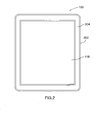
- FIG. 2 is a front view of an example of a portable electronic device.
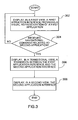
- FIG. 3 is a flowchart illustrating a method according to an example embodiment.
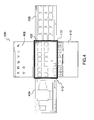
- FIG. 4 is a view of an application space and a first view on a display according to an example embodiment.
- FIG. 5 is a view of an application space and a transitional view on a display according to an example embodiment.
- FIG. 6 is a view of an application space and a second view on a display according to an example embodiment.
- FIG. 7 is a view of a displayed transition comprising a translational movement according to an example embodiment.
- FIG. 8 is a view of a displayed transition comprising a folding movement according to an example embodiment.
- FIG. 9 is a view of a displayed transition comprising another folding movement according to an example embodiment.
- FIG. 10 is a view of a displayed transition comprising a rotational movement according to an example embodiment.
- FIG. 11 is a view of a displayed transition comprising a twisting movement according to an example embodiment.
- An electronic device including a display, a processor and a memory.
- the processor is coupled to the display and the memory to carry out a method of facilitating user interface navigation in the electronic device.
- a first application interface provides a visual representation of a first application.
- a transitional view is displayed including a transition between the first application interface and the second application interface. The displayed transition can be dependent on a property of the received navigational command.
- the first and second application interfaces can be displayed to appear in a non-overlapping arrangement on a planar surface, and can have sheet-like properties or behaviors.
- This disclosure generally relates to an electronic device, which is a portable electronic device in the embodiments described herein.
- portable electronic devices include mobile, or handheld, wireless communication devices such as pagers, cellular phones, cellular smart-phones, wireless organizers, PDAs, wirelessly enabled notebook computers, tablet computers, and so forth.
- the portable electronic device may also be a portable electronic device without wireless communication capabilities, such as a handheld electronic game device, digital photograph album, digital camera, or other device.
- FIG. 1 A block diagram of an example of a portable electronic device 100 is shown in FIG. 1 .
- the portable electronic device 100 includes multiple components, such as a processor 102 that controls the overall operation of the portable electronic device 100.
- the portable electronic device 100 presently described optionally includes a communication subsystem 104 and a short-range communications 132 module to perform various communication functions, including data and voice communications. Data received by the portable electronic device 100 is decompressed and decrypted by a decoder 106.
- the communication subsystem 104 receives messages from and sends messages to a wireless network 150.
- the wireless network 150 may be any type of wireless network, including, but not limited to, data wireless networks, voice wireless networks, and networks that support both voice and data communications.
- a power source 142 such as one or more rechargeable batteries or a port to an external power supply, powers the portable electronic device 100.
- the processor 102 interacts with other components, such as Random Access Memory (RAM) 108, memory 110, a display 112 with a touch-sensitive overlay 114 operably connected to an electronic controller 116 that together comprise a touch-sensitive display 118, an auxiliary input/output (I/O) subsystem 124, a data port 126, a speaker 128, a microphone 130, short-range communications 132, and other device subsystems 134.
- RAM Random Access Memory
- memory 110 can include graphics memory 152 accessed by the controller 116 to render graphic content for display on to the display 112.
- the processor 102 interacts with the touch-sensitive overlay 114 via the electronic controller 116.
- Information such as text, characters, symbols, images, icons, and other items that may be displayed or rendered on a portable electronic device, is displayed on the touch-sensitive display 118 via the processor 102.
- the processor 102 may interact with an orientation sensor such as an accelerometer 136 that may be utilized to detect direction of gravitational forces or gravity-induced reaction forces.
- the processor 102 may also interact with one or more force sensors 122 so as to determine, for example, the orientation of the portable electronic device 100.
- the portable electronic device 100 uses a Subscriber Identity Module or a Removable User Identity Module (SIM/RUIM) card 138 for communication with a network, such as the wireless network 150.
- SIM/RUIM Removable User Identity Module
- user identification information may be programmed into memory 110.
- the portable electronic device 100 includes an operating system 146 and software programs or components 148 that are executed by the processor 102 and are typically stored in a persistent, updatable store such as the memory 110. Additional applications or programs may be loaded onto the portable electronic device 100 through the wireless network 150, the auxiliary I/O subsystem 124, the data port 126, the short-range communications subsystem 132, or any other suitable subsystem 134.
- a received signal such as a text message, an e-mail message, or web page download, is processed by the communication subsystem 104 and input to the processor 102.
- the processor 102 processes the received signal for output to the display 112 and/or to the auxiliary I/O subsystem 124.
- a subscriber may generate data items, for example e-mail messages, which may be transmitted over the wireless network 150 through the communication subsystem 104.
- the speaker 128 outputs audible information converted from electrical signals
- the microphone 130 converts audible information into electrical signals for processing.
- the touch-sensitive display 118 may be any suitable touch-sensitive display, such as a capacitive, resistive, infrared, surface acoustic wave (SAW) touch-sensitive display, strain gauge, optical imaging, dispersive signal technology, acoustic pulse recognition, and so forth, as known in the art.
- a capacitive touch-sensitive display includes a capacitive touch-sensitive overlay 114.
- the overlay 114 may be an assembly of multiple layers in a stack which may include, for example, a substrate, a ground shield layer, a barrier layer, one or more capacitive touch sensor layers separated by a substrate or other barrier, and a cover.
- the capacitive touch sensor layers may be any suitable material, such as patterned indium tin oxide (ITO).
- One or more touches may be detected by the touch-sensitive display 118.
- the processor 102 may determine attributes of the touch, including a location of a touch.
- Touch location data may include an area of contact or a single point of contact, such as a point at or near a center of the area of contact.
- a signal is provided to the controller 116 in response to detection of a touch.
- a touch may be detected from any suitable object, such as a finger, thumb, appendage, or other items, for example, a stylus, pen, or other pointer, depending on the nature of the touch-sensitive display 118.
- the controller 116 and/or the processor 102 may detect a touch by any suitable contact member on the touch-sensitive display 118. Similarly, multiple simultaneous touches are detected.
- One or more gestures are also detected by the touch-sensitive display 118.
- a gesture such as a swipe, also known as a flick, is a particular type of touch on a touch-sensitive display 118 that begins at an origin point and continues to a finishing point.
- a gesture may be identified by attributes of the gesture, including the start point, the end point, the distance traveled, the duration, the velocity, and the direction, for example.
- a gesture may be long or short in distance and/or duration. Two points of the gesture may be utilized to determine a direction of the gesture.
- optional force sensor(s) 122 may be disposed in any suitable location, for example, between the touch-sensitive display 118 and a back of the portable electronic device 100 to detect a force imparted by a touch on the touch-sensitive display 118.
- the force sensor 122 may be a force-sensitive resistor, strain gauge, piezoelectric or piezoresistive device, pressure sensor, or other suitable device.
- Force as utilized throughout the specification refers to force measurements, estimates, and/or calculations, such as pressure, deformation, stress, strain, force density, force-area relationships, thrust, torque, and other effects that include force or related quantities.
- Force information related to a detected touch may be utilized to select information, such as information associated with a location of a touch. For example, a touch that does not meet a force threshold may highlight a selection option, whereas a touch that meets a force threshold may select or input that selection option.
- Selection options include, for example, displayed or virtual keys of a keyboard; selection boxes or windows, e.g., "cancel,” “delete,” or “unlock”; function buttons, such as play or stop on a music player; and so forth.
- Different magnitudes of force may be associated with different functions or input. For example, a lesser force may result in panning, and a higher force may result in zooming.
- the portable electronic device 100 includes a housing 202 that encloses components such as shown in FIG. 1 .
- the housing 202 may include a front 204, and a back and sidewalls (not shown).
- the front 204 of the housing includes openings in which the touch-sensitive display 118 is exposed.
- a representation or metaphor that is familiar to a user, often from an unrelated domain, can assist the user in easily navigating and accessing tools and applications.
- the desktop, file folder, file cabinet, tree view, and recycle bin are all graphical user interface metaphors that have found use in a file system or an operating system.
- the present disclosure provides a method for facilitating navigation between application interfaces that may be used on a small display such as those in portable electronic devices.
- Example embodiments of the present disclosure provide a user interface for a portable computing device having a display.
- the display can be a touch sensitive display.
- the user interface provides, in an embodiment, a plurality of application interfaces.
- An "application interface” provides a visual representation of an associated application.
- the application interface provides a visual representation of a human-machine interface (HMI) of the associated application.
- HMI human-machine interface
- the term "user interface” represents the collection of application interfaces and other visual features provided on a display.
- FIG. 3 is a flowchart illustrating a method of controlling a portable electronic device, such as the portable electronic device 100, according to an example embodiment.
- the method is carried out by computer-readable code executed, for example, by the processor 102. Coding of software for carrying out such a method is within the scope of a person of ordinary skill in the art given the present description.
- the method may contain additional or fewer processes than shown and/or described, and may be performed in a different order.
- the method of the example embodiment of FIG. 3 includes the following: displaying, in a first view, a first application interface providing a visual representation of a first application (step 302); receiving a navigational command to access a second application visually represented by a second application interface (step 304); displaying, in a transitional view on the display and in response to the received navigational command, a transition between the first application interface and the second application interface (step 306); and displaying, in a second view on the display, the second application interface (step 308).
- FIGS. 4-6 illustrate an example embodiment of the first view, as well as the transitional view and the second view displayed in response to the navigational command, such as an upward gesture.
- the navigational command that causes the application interface transitions described above and further herein is not limited to swiping gestures as described in the examples.
- the navigational command may take the form of other contact (e.g. touch) gestures, proximity gestures, tilting of the portable electronic device 100, changing the orientation of the portable electronic device 100, pointing device inputs, voice commands, keyboard inputs or other similar user inputs.
- FIG. 4 illustrates an application space 400 and a first view 412 on a display 112 according to an example embodiment.
- the application space 400 includes a plurality of application interfaces 402, 404, 406, 408 and 410, each providing a visual representation of an associated application user interface.
- the first view is provided in a first display state.
- the plurality of application interfaces appear to be in a non-overlapping arrangement on a planar surface, with respect to the application space 400.
- a first application interface 402 provides a visual representation of a first application.
- a navigational command is received to access a second application visually represented by a second application interface, which in this case is 410.
- a transitional view 512 is displayed in response to the received navigational command.
- the transitional view is provided in a transitional display state.
- a transition between the first application interface 402 and the second application interface 410 is displayed.
- the application interfaces 402 and 410 appear to be in a non-overlapping arrangement on a planar surface with respect to the display 112.
- the second application interface 410 is displayed in the second view 612, which is provided in a second display state in an example embodiment.
- the relative spatial arrangement of the plurality of application interfaces visually representing the applications can be used to enhance the user's conscious and unconscious navigational comfort.
- a subset of the application interfaces are arranged in an array (for example, left to right in a horizontal array) in the application space 400, and accessed in such a manner that they form a continuous conveyor.
- application interfaces 402, 404 and 406 are included in this horizontal array.
- the application interfaces are arranged in a matrix.
- System functions are, in the example embodiment of FIGS. 4-6 , provided in the application space 400 above and below the application interface 402 which provides a visual representation of the active application.
- An application launcher interface 408 and application switcher interface 410 are system function applications shown visually in the embodiment of FIGS. 4-6 .
- the application launcher interface 408 is accessible by a downward gesture
- the application switcher interface 410 is accessible by an upward gesture.
- the plurality of application interfaces have sheet-like properties, or sheet-like behaviors, or both.
- the plurality of application interfaces for individual applications can be visually represented as a sheet, such as a 'sheet of paper' laid out on a 2-dimensional surface.
- some application interfaces may behave like sheets, such as sheets of paper, during navigation between application interfaces.
- all, or substantially all, of the viewable real estate of the display 112 is dedicated to displaying one individual 'sheet' (i.e. one single application interface) at a time.
- the displayed transition in view 512 comprises a vertical translational movement according to which the application switcher interface 410 appears like a sheet sliding up onto the display 112, and the application interface 402 appears like a sheet sliding upward off the display 112.
- the navigational command may be an upward swiping gesture.
- the navigational command may be a downward swiping gesture.
- the application interface 402 appears like a sheet sliding downward off of the display 112 and an application launcher interface 408 appears like a sheet sliding down on to the display 112.
- FIG. 7 is a view of a displayed transition comprising a translational movement according to an example embodiment.
- the application interface 404 appears to have a horizontal translational movement from left to right into, or onto, the display 112.
- the application interface 402 appears to have a horizontal translational movement from left to right out of, or off of, the display 112.
- the displayed transition between the first application interface and the second application interface comprises a portion of the first application interface and a portion of the second application interface.
- the displayed portions of the application interfaces 402 and 404 for the first and second applications can be determined or sized based on the stage of the transition, such as to represent a smooth transition of the interface. In an example embodiment, half way through the transition, the interfaces 402 and 404 each take up about 50% of the display, and 3/4 of the way through, the interface 402 takes up about 25% and the interface 404 takes up about 75% of the display.
- the application interfaces have 3-dimensional behaviors such as, for example, corner curls, or a sheet can be flipped over the expose content on its reverse side.
- FIG. 8 is a view of a displayed transition comprising a folding or curling movement according to an example embodiment.
- a user inputs a navigational command that may be a gesture originating from a corner of the display 112.
- a corresponding edge or corner of the application interface 800 is made to appear like a corner of a sheet being curled downward.
- This folding or curling movement exposes an area 802 previously covered (e.g. hidden) by the application interface 800.
- the newly exposed area 802 may contain information such as, for example, system status information, or alert information, or both.
- a further navigational command causes the previously curled corner of the interface 800 to uncurl.
- FIG. 9 is a view of a device display illustrating a displayed transition comprising another folding movement, similar to FIG. 8 , according to an example embodiment.
- the application interface 800 of the first application appears to be a sheet that is curled downward from an edge of the sheet to expose a relatively larger area 902 previously covered by the interface 800.
- the exposed area 902 may contain system, status, notification, configuration or other similar information or interfaces.
- the previously curled sheet of the interface 800 may subsequently be uncurled to its previous appearance in response to a further navigational command.
- FIG. 10 and FIG. 11 illustrate views of a displayed transition comprising a rotational movement and a twisting movement, respectively, according to an example embodiment.
- time sequences are illustrated (time moving from left to right), each one showing a diagrammatical sketch of an example display at various points in time.
- the time sequences are represented in FIG. 10 by exemplary displays 1002 through 1010, and in FIG. 11 by exemplary displays 1102 through 1110.
- a transition is provided from a front face 1020 of a sheet displaying a first application interface to a back face 1030 displaying a second application interface.
- FIGS. 10 and 11 the front face 1020 is white and the back face 1030 is dark.
- the areas 1040 with diagonal hash lines represent the portions of the display 112 that become uncovered as the sheet transitions from the front face 1020 to the back face 1030.
- FIG. 10 shows a transition of the sheet by rotating it about a horizontal axis that dissects the sheet at its vertical midway point.
- FIG. 11 shows a transition of the sheet by twisting over the sheet starting from the right-hand vertical edge.
- the transition of FIG. 10 is displayed in response to a user inputting a navigational command that may be a gesture along an axis substantially parallel or substantially perpendicular to an edge of the display 112.
- the transition of FIG. 11 is displayed in response to a user inputting a navigational command that may be a gesture along an axis substantially diagonal to an edge of the display 112, or along an axis extending from a corner of the display 112.
- an application interface such as the application interface 402 is displayed to substantially fill the display 112.
- one or more application interfaces appear on the display 112 at the same time, and some application interfaces may only fill a portion of the display 112.
- the application space 400 can be considered as a user interface for a portable electronic device 100.
- a non-transitory machine-readable memory is provided storing statements and instructions for execution by a processor for producing the user interface.
- the user interface includes a plurality of application interfaces forming rendered graphical content. Each of the plurality of application interfaces provides a visual representation of an associated application interface. In an example embodiment, the plurality of application interfaces appear to be in a non-overlapping arrangement on a planar surface.
- the user interface provides: a first view comprising a portion of the rendered graphical content containing portions of one or more of the application interfaces, such as shown in FIG. 4 ; a second view comprising a different portion of the rendered graphical content containing portions of one or more of the application interfaces, such as shown in FIG. 6 ; and a transitional view, displayed responsive to a navigation command, such as shown in FIG. 5 .
- the transitional view provides a transition from the first view to the second view, and in an embodiment provides the appearance that one or more of the plurality of application interfaces is translating along the planar surface.
- a navigational command has the effect of "moving" the display 112 around in the application space 400, such that the display 112 acts as a "portal", or a window, to reveal an area of the application space 400 to generate the different views described and illustrated herein.
- the portable electronic device 100 includes a memory 110 including a graphics memory 152, and a controller 116 to render in the graphics memory 152: a plurality of application interfaces 402, 404, 406, 408 and 410, each providing a visual representation of an associated application, where the plurality of application interfaces 402, 404, 406, 408 and 410 appear to be in a non-overlapping arrangement on a planar surface.
- the portable electronic device 100 further includes a display 112 to display a portion of the content rendered to the graphics memory 152, the memory 110, and a processor 102 coupled to the memory 110, the controller 116, and the display 112.
- the memory 110 stores statements and instructions for execution by the processor 102 to carry out a method of: displaying in the display 112 a first view comprising a portion of the content rendered in the graphics memory 152 containing portions of one or more of the application interfaces 402, 404, 406, 408 and 410; responsive to a navigation command, transitioning to a second view comprising a different portion of the content rendered in the graphics memory containing portions of one or more of the application interfaces 402, 404, 406, 408 and 410, where the transition from the first view to the second view provides the appearance that one or more of the plurality of application interfaces 402, 404, 406, 408 and 410 is translating along the planar surface; and on completion of the transition, displaying the second view on the display.
- Embodiments of the disclosure provide for improved user interface navigation on a portable electronic device display. Transitions between a first application interface and a second application interface can be achieved using a model that is familiar to users, and provides an appealing visual experience.
- Embodiments of the disclosure can be represented as a computer program product stored in a machine-readable medium (also referred to as a computer-readable medium, a processor-readable medium, or a computer usable medium having a computer-readable program code embodied therein).
- the machine-readable medium can be any suitable tangible, non-transitory medium, including magnetic, optical, or electrical storage medium including a diskette, compact disk read only memory (CD-ROM), memory device (volatile or non-volatile), or similar storage mechanism.
- the machine-readable medium can contain various sets of instructions, code sequences, configuration information, or other data, which, when executed, cause a processor to perform steps in a method according to an embodiment of the disclosure.
Landscapes
- Engineering & Computer Science (AREA)
- Theoretical Computer Science (AREA)
- General Engineering & Computer Science (AREA)
- Physics & Mathematics (AREA)
- General Physics & Mathematics (AREA)
- Human Computer Interaction (AREA)
- Software Systems (AREA)
- Data Mining & Analysis (AREA)
- Databases & Information Systems (AREA)
- User Interface Of Digital Computer (AREA)
- Digital Computer Display Output (AREA)
Applications Claiming Priority (1)
| Application Number | Priority Date | Filing Date | Title |
|---|---|---|---|
| US38630210P | 2010-09-24 | 2010-09-24 |
Publications (2)
| Publication Number | Publication Date |
|---|---|
| EP2453343A2 true EP2453343A2 (de) | 2012-05-16 |
| EP2453343A3 EP2453343A3 (de) | 2014-11-12 |
Family
ID=44862474
Family Applications (1)
| Application Number | Title | Priority Date | Filing Date |
|---|---|---|---|
| EP20110182356 Ceased EP2453343A3 (de) | 2010-09-24 | 2011-09-22 | Tragbare elektronische Vorrichtung und Verfahren dafür |
Country Status (7)
| Country | Link |
|---|---|
| US (1) | US9684444B2 (de) |
| EP (1) | EP2453343A3 (de) |
| CN (1) | CN103119546A (de) |
| CA (1) | CA2811253C (de) |
| DE (1) | DE112011103173T5 (de) |
| GB (1) | GB2496803A (de) |
| WO (1) | WO2012037688A1 (de) |
Families Citing this family (14)
| Publication number | Priority date | Publication date | Assignee | Title |
|---|---|---|---|---|
| EP2434368B1 (de) * | 2010-09-24 | 2018-08-01 | BlackBerry Limited | Verfahren zur Konservierung von Strom auf einer tragbaren elektronischen Vorrichtung, die dafür konfiguriert wurde |
| US9417754B2 (en) * | 2011-08-05 | 2016-08-16 | P4tents1, LLC | User interface system, method, and computer program product |
| US9619912B2 (en) * | 2012-03-02 | 2017-04-11 | Verizon Patent And Licensing Inc. | Animated transition from an application window to another application window |
| EP2642359A1 (de) * | 2012-03-20 | 2013-09-25 | dSPACE digital signal processing and control engineering GmbH | Entwicklungseinrichtung und Verfahren zum Erstellen eines Steuergeräteprogramms |
| JP5891083B2 (ja) * | 2012-03-26 | 2016-03-22 | 京セラ株式会社 | 装置、方法、及びプログラム |
| JP5853817B2 (ja) * | 2012-03-28 | 2016-02-09 | 富士通株式会社 | 情報処理装置、制御方法及び制御プログラム |
| US11209961B2 (en) * | 2012-05-18 | 2021-12-28 | Apple Inc. | Device, method, and graphical user interface for manipulating user interfaces based on fingerprint sensor inputs |
| US20150067582A1 (en) * | 2013-09-05 | 2015-03-05 | Storehouse Media, Inc. | Content navigation structure and transition mechanism |
| US10261674B2 (en) * | 2014-09-05 | 2019-04-16 | Microsoft Technology Licensing, Llc | Display-efficient text entry and editing |
| US10788981B2 (en) * | 2015-03-31 | 2020-09-29 | Huawei Technologies Co., Ltd. | Method and apparatus for processing new message associated with application |
| US11314388B2 (en) * | 2016-06-30 | 2022-04-26 | Huawei Technologies Co., Ltd. | Method for viewing application program, graphical user interface, and terminal |
| CN111610912B (zh) * | 2020-04-24 | 2023-10-10 | 北京小米移动软件有限公司 | 应用显示方法、应用显示装置及存储介质 |
| US11409410B2 (en) | 2020-09-14 | 2022-08-09 | Apple Inc. | User input interfaces |
| CN117149320A (zh) * | 2022-08-09 | 2023-12-01 | 惠州Tcl移动通信有限公司 | 界面显示方法、装置、计算机设备和存储介质 |
Citations (7)
| Publication number | Priority date | Publication date | Assignee | Title |
|---|---|---|---|---|
| US20040021643A1 (en) * | 2002-08-02 | 2004-02-05 | Takeshi Hoshino | Display unit with touch panel and information processing method |
| US20080062141A1 (en) * | 2006-09-11 | 2008-03-13 | Imran Chandhri | Media Player with Imaged Based Browsing |
| US20080122796A1 (en) * | 2006-09-06 | 2008-05-29 | Jobs Steven P | Touch Screen Device, Method, and Graphical User Interface for Determining Commands by Applying Heuristics |
| US20090144661A1 (en) * | 2007-11-29 | 2009-06-04 | Sony Corporation | Computer implemented display, graphical user interface, design and method including scrolling features |
| WO2009143075A2 (en) * | 2008-05-23 | 2009-11-26 | Palm, Inc. | Navigating among activities in a computing device |
| US20100095240A1 (en) * | 2008-05-23 | 2010-04-15 | Palm, Inc. | Card Metaphor For Activities In A Computing Device |
| US20100182248A1 (en) * | 2009-01-19 | 2010-07-22 | Chun Jin-Woo | Terminal and control method thereof |
Family Cites Families (116)
| Publication number | Priority date | Publication date | Assignee | Title |
|---|---|---|---|---|
| JPH0458316A (ja) | 1990-06-28 | 1992-02-25 | Toshiba Corp | 情報処理装置 |
| US5579487A (en) | 1992-10-02 | 1996-11-26 | Teletransaction, Inc. | Portable work slate computer with multiple docking positions for interchangeably receiving removable modules |
| US5579036A (en) | 1994-04-28 | 1996-11-26 | At&T Global Information Solutions Company | Touch screen device and shielding bracket therefor |
| US6473069B1 (en) | 1995-11-13 | 2002-10-29 | Cirque Corporation | Apparatus and method for tactile feedback from input device |
| US5754809A (en) | 1995-12-12 | 1998-05-19 | Dell U.S.A., L.P. | Perspective windowing technique for computer graphical user interface |
| JPH1011208A (ja) | 1996-06-24 | 1998-01-16 | Sharp Corp | 座標入力装置 |
| JP3069949B2 (ja) | 1996-10-09 | 2000-07-24 | 日精樹脂工業株式会社 | 射出成形機の入力装置 |
| WO1998044407A1 (en) | 1997-03-28 | 1998-10-08 | Sun Microsystems, Inc. | Method and apparatus for configuring sliding panels |
| JP3492493B2 (ja) | 1997-06-13 | 2004-02-03 | 日本電気株式会社 | タッチパネル及びタッチパネル上の押圧位置検出方法 |
| WO1999031571A1 (en) | 1997-12-16 | 1999-06-24 | Microsoft Corporation | Soft input panel system and method |
| US7800592B2 (en) | 2005-03-04 | 2010-09-21 | Apple Inc. | Hand held electronic device with multiple touch sensing devices |
| US8479122B2 (en) | 2004-07-30 | 2013-07-02 | Apple Inc. | Gestures for touch sensitive input devices |
| US6437836B1 (en) | 1998-09-21 | 2002-08-20 | Navispace, Inc. | Extended functionally remote control system and method therefore |
| US6552719B2 (en) | 1999-01-07 | 2003-04-22 | Microsoft Corporation | System and method for automatically switching between writing and text input modes |
| US6936965B1 (en) | 1999-11-24 | 2005-08-30 | Lg Electronics Inc. | Plasma display panel |
| US7183948B2 (en) | 2001-04-13 | 2007-02-27 | 3M Innovative Properties Company | Tangential force control in a touch location device |
| US6809723B2 (en) | 2001-05-14 | 2004-10-26 | Agilent Technologies, Inc. | Pushbutton optical screen pointing device |
| US20020186257A1 (en) | 2001-06-08 | 2002-12-12 | Cadiz Jonathan J. | System and process for providing dynamic communication access and information awareness in an interactive peripheral display |
| KR100556072B1 (ko) | 2001-09-21 | 2006-03-07 | 레노보 (싱가포르) 피티이. 엘티디. | 입력 장치, 컴퓨터 장치, 입력 대상의 인식 방법,소프트웨어 키보드에서의 입력 대상의 인식 방법 및컴퓨터 프로그램 |
| US7487462B2 (en) | 2002-02-21 | 2009-02-03 | Xerox Corporation | Methods and systems for indicating invisible contents of workspace |
| US7656393B2 (en) | 2005-03-04 | 2010-02-02 | Apple Inc. | Electronic device having display and surrounding touch sensitive bezel for user interface and control |
| WO2004075004A2 (en) | 2003-02-14 | 2004-09-02 | Mattel, Inc. | Hand-held interactive electronic device |
| US8508508B2 (en) | 2003-02-14 | 2013-08-13 | Next Holdings Limited | Touch screen signal processing with single-point calibration |
| US8456447B2 (en) | 2003-02-14 | 2013-06-04 | Next Holdings Limited | Touch screen signal processing |
| US7047092B2 (en) * | 2003-04-08 | 2006-05-16 | Coraccess Systems | Home automation contextual user interface |
| JP4685338B2 (ja) | 2003-09-19 | 2011-05-18 | 株式会社東芝 | 情報処理装置 |
| US8504798B2 (en) * | 2003-12-30 | 2013-08-06 | Sandisk Technologies Inc. | Management of non-volatile memory systems having large erase blocks |
| JP2005208991A (ja) | 2004-01-23 | 2005-08-04 | Canon Inc | 位置情報出力装置及び信号処理方法 |
| US8281241B2 (en) | 2004-06-28 | 2012-10-02 | Nokia Corporation | Electronic device and method for providing extended user interface |
| US8184108B2 (en) | 2004-06-30 | 2012-05-22 | Poa Sana Liquidating Trust | Apparatus and method for a folded optical element waveguide for use with light based touch screens |
| EP1774427A2 (de) | 2004-07-30 | 2007-04-18 | Apple Computer, Inc. | Auf modus basierende graphische benutzeroberflächen für berührungsempfindliche eingabeeinrichtungen |
| US7761814B2 (en) | 2004-09-13 | 2010-07-20 | Microsoft Corporation | Flick gesture |
| JP4578947B2 (ja) | 2004-11-19 | 2010-11-10 | 任天堂株式会社 | ゲームプログラムおよびゲーム装置 |
| JP4583893B2 (ja) | 2004-11-19 | 2010-11-17 | 任天堂株式会社 | ゲームプログラムおよびゲーム装置 |
| US20060146055A1 (en) | 2005-01-06 | 2006-07-06 | Raymond Chow | Graphics controller providing for animated windows |
| KR102305019B1 (ko) | 2005-03-04 | 2021-09-27 | 애플 인크. | 다기능 휴대용 장치 |
| JP4394057B2 (ja) | 2005-09-21 | 2010-01-06 | アルプス電気株式会社 | 入力装置 |
| DE102006045591A1 (de) | 2005-10-28 | 2007-05-03 | Volkswagen Ag | Anzeigevorrichtung zur Anzeige von Informationen, insbesondere den Betrieb eines Kraftfahrzeuges betreffenden Informationen |
| JP2007199819A (ja) | 2006-01-24 | 2007-08-09 | Fujitsu Ltd | メッセージ表示制御プログラムおよびメッセージ表示制御装置 |
| US20090278806A1 (en) | 2008-05-06 | 2009-11-12 | Matias Gonzalo Duarte | Extended touch-sensitive control area for electronic device |
| US20070250787A1 (en) * | 2006-04-21 | 2007-10-25 | Hideya Kawahara | Enhancing visual representation and other effects for application management on a device with a small screen |
| US9063647B2 (en) | 2006-05-12 | 2015-06-23 | Microsoft Technology Licensing, Llc | Multi-touch uses, gestures, and implementation |
| US7880728B2 (en) | 2006-06-29 | 2011-02-01 | Microsoft Corporation | Application switching via a touch screen interface |
| US20080051642A1 (en) | 2006-08-24 | 2008-02-28 | Hagai Krupnik | Device, system and method of displaying in -vivo images at variable rate |
| US20080084400A1 (en) | 2006-10-10 | 2008-04-10 | Outland Research, Llc | Touch-gesture control of video media play on handheld media players |
| US7956847B2 (en) | 2007-01-05 | 2011-06-07 | Apple Inc. | Gestures for controlling, manipulating, and editing of media files using touch sensitive devices |
| US20080222545A1 (en) | 2007-01-07 | 2008-09-11 | Lemay Stephen O | Portable Electronic Device with a Global Setting User Interface |
| US20080238884A1 (en) | 2007-03-29 | 2008-10-02 | Divyasimha Harish | Edge sensors forming a touchscreen |
| US9195329B2 (en) | 2007-05-04 | 2015-11-24 | Blackberry Limited | Touch-sensitive device |
| TWI357012B (en) | 2007-05-15 | 2012-01-21 | Htc Corp | Method for operating user interface and recording |
| US8165633B2 (en) * | 2007-07-16 | 2012-04-24 | Microsoft Corporation | Passive interface and software configuration for portable devices |
| US20090046057A1 (en) * | 2007-08-17 | 2009-02-19 | Asaki Umezawa | Image forming apparatus, display processing apparatus, display processing method, and computer program product |
| US9477395B2 (en) * | 2007-09-04 | 2016-10-25 | Apple Inc. | Audio file interface |
| US20090058820A1 (en) | 2007-09-04 | 2009-03-05 | Microsoft Corporation | Flick-based in situ search from ink, text, or an empty selection region |
| TWI417764B (zh) | 2007-10-01 | 2013-12-01 | Giga Byte Comm Inc | A control method and a device for performing a switching function of a touch screen of a hand-held electronic device |
| JP5133022B2 (ja) | 2007-10-04 | 2013-01-30 | 任天堂株式会社 | プログラム、情報処理装置、情報処理システムおよび情報処理方法 |
| US20090119678A1 (en) | 2007-11-02 | 2009-05-07 | Jimmy Shih | Systems and methods for supporting downloadable applications on a portable client device |
| JP5119888B2 (ja) | 2007-11-26 | 2013-01-16 | ブラザー工業株式会社 | ラスタデータ作成装置、ラスタデータ作成プログラム及び表示装置 |
| US20090146970A1 (en) | 2007-12-10 | 2009-06-11 | Research In Motion Limited | Electronic device and touch screen having discrete touch-sensitive areas |
| US20090174679A1 (en) | 2008-01-04 | 2009-07-09 | Wayne Carl Westerman | Selective Rejection of Touch Contacts in an Edge Region of a Touch Surface |
| KR101224588B1 (ko) | 2008-01-24 | 2013-01-22 | 삼성전자주식회사 | 멀티포인트 스트록을 감지하기 위한 ui 제공방법 및 이를적용한 멀티미디어 기기 |
| US20090189875A1 (en) | 2008-01-29 | 2009-07-30 | Research In Motion Limited | Electronic device and touch screen display |
| KR101012300B1 (ko) | 2008-03-07 | 2011-02-08 | 삼성전자주식회사 | 터치스크린을 구비한 휴대 단말기의 사용자 인터페이스장치 및 그 방법 |
| US9448721B2 (en) | 2008-03-19 | 2016-09-20 | Blackberry Limited | Electronic device including touch-sensitive input device and method of determining selection |
| US8159469B2 (en) | 2008-05-06 | 2012-04-17 | Hewlett-Packard Development Company, L.P. | User interface for initiating activities in an electronic device |
| US20090278795A1 (en) | 2008-05-09 | 2009-11-12 | Smart Technologies Ulc | Interactive Input System And Illumination Assembly Therefor |
| EP2283427A4 (de) | 2008-05-12 | 2013-01-16 | Energy And Power Solutions Inc | Systeme und verfahren zur beurteilung und optimierung von energienutzung und umweltauswirkungen |
| US9280255B2 (en) | 2008-05-28 | 2016-03-08 | Qualcomm Incorporated | Structured displaying of visual elements |
| US8659555B2 (en) | 2008-06-24 | 2014-02-25 | Nokia Corporation | Method and apparatus for executing a feature using a tactile cue |
| KR20100006003A (ko) | 2008-07-08 | 2010-01-18 | 삼성전자주식회사 | 휴대단말기의 터치 인터페이스를 이용한 영상편집 방법 및장치 |
| KR101496844B1 (ko) | 2008-07-28 | 2015-02-27 | 삼성디스플레이 주식회사 | 터치 스크린 표시 장치 및 그 구동 방법 |
| US10375223B2 (en) | 2008-08-28 | 2019-08-06 | Qualcomm Incorporated | Notifying a user of events in a computing device |
| US8692776B2 (en) | 2008-09-19 | 2014-04-08 | Apple Inc. | Correction of parasitic capacitance effect in touch sensor panels |
| EP2169521A1 (de) | 2008-09-26 | 2010-03-31 | Research In Motion Limited | Touchscreen-Vorrichtung mit einer Escape-Softtaste |
| KR101586627B1 (ko) | 2008-10-06 | 2016-01-19 | 삼성전자주식회사 | 멀티 터치를 이용한 리스트 관리 방법 및 장치 |
| CA2680666A1 (en) | 2008-10-08 | 2010-04-08 | Research In Motion Limited | An electronic device having a state aware touchscreen |
| US20100100067A1 (en) | 2008-10-17 | 2010-04-22 | Pugliese Iii Sebastian C | Articles with a series of graphical objects providing a functional cue |
| US8533844B2 (en) * | 2008-10-21 | 2013-09-10 | Lookout, Inc. | System and method for security data collection and analysis |
| US20100107067A1 (en) | 2008-10-27 | 2010-04-29 | Nokia Corporation | Input on touch based user interfaces |
| CN102197358A (zh) * | 2008-10-28 | 2011-09-21 | 夏普株式会社 | 具有2个显示装置的电子设备、其控制方法以及记录介质 |
| EP2184671B1 (de) | 2008-10-29 | 2011-05-04 | Giga-Byte Communications, Inc. | Verfahren und Vorrichtung zum Umschalten eines Touchscreens einer tragbaren elektronischen Vorrichtung |
| US9122356B2 (en) | 2008-10-30 | 2015-09-01 | Dell Products L.P. | Virtual periphery display buttons |
| KR101544475B1 (ko) | 2008-11-28 | 2015-08-13 | 엘지전자 주식회사 | 터치를 통한 입출력 제어 |
| US8368657B2 (en) | 2008-12-01 | 2013-02-05 | Freescale Semiconductor, Inc. | Touch sensor panel using regional and local electrodes to increase number of sense locations |
| US20100175026A1 (en) * | 2009-01-05 | 2010-07-08 | Bortner Christopher F | System and method for graphical content and media management, sorting, and retrieval |
| US8499251B2 (en) | 2009-01-07 | 2013-07-30 | Microsoft Corporation | Virtual page turn |
| JP4670970B2 (ja) | 2009-01-28 | 2011-04-13 | ソニー株式会社 | 表示入力装置 |
| US8396992B2 (en) * | 2009-01-30 | 2013-03-12 | Cassis International Pte Ltd | System and method for virtualizing the peripherals in a terminal device to enable remote management via removable portable media with processing capability |
| WO2010092993A1 (ja) | 2009-02-13 | 2010-08-19 | 株式会社 東芝 | 情報処理装置 |
| US9176747B2 (en) * | 2009-02-17 | 2015-11-03 | Sandisk Il Ltd. | User-application interface |
| US20100214218A1 (en) | 2009-02-20 | 2010-08-26 | Nokia Corporation | Virtual mouse |
| US20100229090A1 (en) | 2009-03-05 | 2010-09-09 | Next Holdings Limited | Systems and Methods for Interacting With Touch Displays Using Single-Touch and Multi-Touch Gestures |
| US10007340B2 (en) | 2009-03-12 | 2018-06-26 | Immersion Corporation | Systems and methods for interfaces featuring surface-based haptic effects |
| US8355698B2 (en) * | 2009-03-30 | 2013-01-15 | Microsoft Corporation | Unlock screen |
| US8238876B2 (en) * | 2009-03-30 | 2012-08-07 | Microsoft Corporation | Notifications |
| TW201035829A (en) | 2009-03-31 | 2010-10-01 | Compal Electronics Inc | Electronic device and method of operating screen |
| KR101579309B1 (ko) | 2009-03-31 | 2016-01-04 | 엘지전자 주식회사 | 디스플레이 장치 |
| JP4904375B2 (ja) | 2009-03-31 | 2012-03-28 | 京セラ株式会社 | ユーザインタフェース装置及び携帯端末装置 |
| US10244056B2 (en) * | 2009-04-15 | 2019-03-26 | Wyse Technology L.L.C. | Method and apparatus for transferring remote session data |
| US20110004845A1 (en) | 2009-05-19 | 2011-01-06 | Intelliborn Corporation | Method and System For Notifying A User of An Event Or Information Using Motion And Transparency On A Small Screen Display |
| US8836648B2 (en) | 2009-05-27 | 2014-09-16 | Microsoft Corporation | Touch pull-in gesture |
| US20110004888A1 (en) * | 2009-07-06 | 2011-01-06 | Sudharshan Srinivasan | Screen sharing method with selective access to both data and logic of a shared application using a helper application |
| KR20110022347A (ko) | 2009-08-27 | 2011-03-07 | 삼성전자주식회사 | 터치 스크린에서의 노이즈 제거 방법 및 터치 스크린을 구비한 디스플레이 장치에서의 터치 동작 디스플레이 방법 |
| JP5333068B2 (ja) * | 2009-08-31 | 2013-11-06 | ソニー株式会社 | 情報処理装置、表示方法及び表示プログラム |
| KR101644416B1 (ko) * | 2009-12-17 | 2016-08-02 | 삼성전자주식회사 | 화상형성장치 및 그 로컬 유저 인터페이스 제공방법 |
| US8793611B2 (en) | 2010-01-06 | 2014-07-29 | Apple Inc. | Device, method, and graphical user interface for manipulating selectable user interface objects |
| US20110164065A1 (en) | 2010-01-06 | 2011-07-07 | Ati Technologies Ulc | Method And Apparatus For Configuring Display Bezel Compensation For A Single Large Surface Display Formed By A Plurality Of Displays |
| US8799827B2 (en) | 2010-02-19 | 2014-08-05 | Microsoft Corporation | Page manipulations using on and off-screen gestures |
| US9274682B2 (en) | 2010-02-19 | 2016-03-01 | Microsoft Technology Licensing, Llc | Off-screen gestures to create on-screen input |
| US8483518B2 (en) | 2010-02-19 | 2013-07-09 | Microsoft Corporation | Image-based CAPTCHA exploiting context in object recognition |
| US9052926B2 (en) * | 2010-04-07 | 2015-06-09 | Apple Inc. | Device, method, and graphical user interface for managing concurrently open software applications |
| US9164620B2 (en) | 2010-06-07 | 2015-10-20 | Apple Inc. | Touch sensing error compensation |
| US8260247B2 (en) | 2010-07-21 | 2012-09-04 | Research In Motion Limited | Portable electronic device and method of operation |
| US9710154B2 (en) | 2010-09-03 | 2017-07-18 | Microsoft Technology Licensing, Llc | Dynamic gesture parameters |
| JP5792971B2 (ja) | 2011-03-08 | 2015-10-14 | 任天堂株式会社 | 情報処理システム、情報処理プログラム、および情報処理方法 |
| US9423876B2 (en) | 2011-09-30 | 2016-08-23 | Microsoft Technology Licensing, Llc | Omni-spatial gesture input |
-
2011
- 2011-09-22 GB GB1302988.9A patent/GB2496803A/en not_active Withdrawn
- 2011-09-22 DE DE112011103173T patent/DE112011103173T5/de not_active Withdrawn
- 2011-09-22 WO PCT/CA2011/050589 patent/WO2012037688A1/en not_active Ceased
- 2011-09-22 EP EP20110182356 patent/EP2453343A3/de not_active Ceased
- 2011-09-22 US US13/240,250 patent/US9684444B2/en active Active
- 2011-09-22 CA CA2811253A patent/CA2811253C/en active Active
- 2011-09-22 CN CN201180045776XA patent/CN103119546A/zh active Pending
Patent Citations (7)
| Publication number | Priority date | Publication date | Assignee | Title |
|---|---|---|---|---|
| US20040021643A1 (en) * | 2002-08-02 | 2004-02-05 | Takeshi Hoshino | Display unit with touch panel and information processing method |
| US20080122796A1 (en) * | 2006-09-06 | 2008-05-29 | Jobs Steven P | Touch Screen Device, Method, and Graphical User Interface for Determining Commands by Applying Heuristics |
| US20080062141A1 (en) * | 2006-09-11 | 2008-03-13 | Imran Chandhri | Media Player with Imaged Based Browsing |
| US20090144661A1 (en) * | 2007-11-29 | 2009-06-04 | Sony Corporation | Computer implemented display, graphical user interface, design and method including scrolling features |
| WO2009143075A2 (en) * | 2008-05-23 | 2009-11-26 | Palm, Inc. | Navigating among activities in a computing device |
| US20100095240A1 (en) * | 2008-05-23 | 2010-04-15 | Palm, Inc. | Card Metaphor For Activities In A Computing Device |
| US20100182248A1 (en) * | 2009-01-19 | 2010-07-22 | Chun Jin-Woo | Terminal and control method thereof |
Also Published As
| Publication number | Publication date |
|---|---|
| DE112011103173T5 (de) | 2013-08-14 |
| WO2012037688A1 (en) | 2012-03-29 |
| EP2453343A3 (de) | 2014-11-12 |
| GB201302988D0 (en) | 2013-04-03 |
| CN103119546A (zh) | 2013-05-22 |
| CA2811253A1 (en) | 2012-03-29 |
| GB2496803A (en) | 2013-05-22 |
| CA2811253C (en) | 2018-09-04 |
| US9684444B2 (en) | 2017-06-20 |
| US20120131501A1 (en) | 2012-05-24 |
Similar Documents
| Publication | Publication Date | Title |
|---|---|---|
| CA2811253C (en) | Transitional view on a portable electronic device | |
| US20230409165A1 (en) | User interfaces for widgets | |
| US8810535B2 (en) | Electronic device and method of controlling same | |
| EP2434387B1 (de) | Tragbare elektronische Vorrichtung und Verfahren dafür | |
| US20130342452A1 (en) | Electronic device including touch-sensitive display and method of controlling a position indicator | |
| US9098127B2 (en) | Electronic device including touch-sensitive display and method of controlling same | |
| US20130326392A1 (en) | Portable electronic device including a placeholder for an entry field and method of controlling same | |
| EP2508970A1 (de) | Elektronische Vorrichtung und Steuerungsverfahren dafür | |
| US20120206381A1 (en) | Electronic device and method of controlling same | |
| EP2657822A1 (de) | Tragbare elektronische Vorrichtung mit virtueller Tastatur und Verfahren zu deren Steuerung | |
| CA2871507C (en) | Portable electronic device including virtual keyboard and method of controlling same | |
| US20130293483A1 (en) | Selectable object display method and apparatus | |
| EP2584441A1 (de) | Elektronische Vorrichtung und Steuerungsverfahren dafür | |
| EP2722746A1 (de) | Elektronische Vorrichtung mit berührungsempfindlicher Anzeige und Verfahren zu deren Steuerung | |
| EP2669780A1 (de) | Tragbare elektronische Vorrichtung mit einem Platzhalter für ein Eingabefeld und Steuerungsverfahren dafür | |
| EP2549366A1 (de) | Berührungsempfindliche elektronische Vorrichtung und Steuerungsverfahren dafür | |
| EP2487570A1 (de) | Elektronische Vorrichtung und Steuerungsverfahren dafür | |
| EP2508969A1 (de) | Elektronische Vorrichtung und Steuerungsverfahren dafür | |
| KR20120005979A (ko) | 전자 디바이스 및 표시된 정보를 추적하는 방법 | |
| EP2843527B1 (de) | Mobiles Endgerät mit Unterstützung einer Notizfunktion und Verfahren zur Steuerung des mobilen Endgeräts | |
| EP2660698A1 (de) | Auswählbares Objektanzeigeverfahren und Vorrichtung | |
| EP2631755A1 (de) | Elektronische Vorrichtung mit berührungsempfindlicher Anzeige und Verfahren zu deren Steuerung | |
| US20130057479A1 (en) | Electronic device including touch-sensitive displays and method of controlling same | |
| CA2766875C (en) | Portable electronic device and method of controlling same | |
| CA2747036A1 (en) | Electronic device and method of controlling same |
Legal Events
| Date | Code | Title | Description |
|---|---|---|---|
| PUAI | Public reference made under article 153(3) epc to a published international application that has entered the european phase |
Free format text: ORIGINAL CODE: 0009012 |
|
| 17P | Request for examination filed |
Effective date: 20110922 |
|
| AK | Designated contracting states |
Kind code of ref document: A2 Designated state(s): AL AT BE BG CH CY CZ DE DK EE ES FI FR GB GR HR HU IE IS IT LI LT LU LV MC MK MT NL NO PL PT RO RS SE SI SK SM TR |
|
| AX | Request for extension of the european patent |
Extension state: BA ME |
|
| RAP1 | Party data changed (applicant data changed or rights of an application transferred) |
Owner name: QNX SOFTWARE SYSTEMS LIMITED Owner name: RESEARCH IN MOTION LIMITED |
|
| RAP1 | Party data changed (applicant data changed or rights of an application transferred) |
Owner name: BLACKBERRY LIMITED Owner name: QNX SOFTWARE SYSTEMS LIMITED |
|
| RAP1 | Party data changed (applicant data changed or rights of an application transferred) |
Owner name: QNX SOFTWARE SYSTEMS LIMITED Owner name: BLACKBERRY LIMITED |
|
| RAP1 | Party data changed (applicant data changed or rights of an application transferred) |
Owner name: BLACKBERRY LIMITED Owner name: 2236008 ONTARIO INC. |
|
| PUAL | Search report despatched |
Free format text: ORIGINAL CODE: 0009013 |
|
| AK | Designated contracting states |
Kind code of ref document: A3 Designated state(s): AL AT BE BG CH CY CZ DE DK EE ES FI FR GB GR HR HU IE IS IT LI LT LU LV MC MK MT NL NO PL PT RO RS SE SI SK SM TR |
|
| AX | Request for extension of the european patent |
Extension state: BA ME |
|
| RIC1 | Information provided on ipc code assigned before grant |
Ipc: G06F 3/048 20130101AFI20141009BHEP Ipc: G06F 9/44 20060101ALI20141009BHEP |
|
| STAA | Information on the status of an ep patent application or granted ep patent |
Free format text: STATUS: EXAMINATION IS IN PROGRESS |
|
| 17Q | First examination report despatched |
Effective date: 20170306 |
|
| RAP1 | Party data changed (applicant data changed or rights of an application transferred) |
Owner name: BLACKBERRY LIMITED |
|
| STAA | Information on the status of an ep patent application or granted ep patent |
Free format text: STATUS: THE APPLICATION HAS BEEN REFUSED |
|
| 18R | Application refused |
Effective date: 20210608 |