EP2439291A1 - Mehrphasenstahl, aus einem solchen Mehrphasenstahl hergestelltes kaltgewalztes Flachprodukt und Verfahren zu dessen Herstellung - Google Patents
Mehrphasenstahl, aus einem solchen Mehrphasenstahl hergestelltes kaltgewalztes Flachprodukt und Verfahren zu dessen Herstellung Download PDFInfo
- Publication number
- EP2439291A1 EP2439291A1 EP10186555A EP10186555A EP2439291A1 EP 2439291 A1 EP2439291 A1 EP 2439291A1 EP 10186555 A EP10186555 A EP 10186555A EP 10186555 A EP10186555 A EP 10186555A EP 2439291 A1 EP2439291 A1 EP 2439291A1
- Authority
- EP
- European Patent Office
- Prior art keywords
- cold
- temperature
- annealing
- steel
- multiphase steel
- Prior art date
- Legal status (The legal status is an assumption and is not a legal conclusion. Google has not performed a legal analysis and makes no representation as to the accuracy of the status listed.)
- Granted
Links
Classifications
-
- C—CHEMISTRY; METALLURGY
- C21—METALLURGY OF IRON
- C21D—MODIFYING THE PHYSICAL STRUCTURE OF FERROUS METALS; GENERAL DEVICES FOR HEAT TREATMENT OF FERROUS OR NON-FERROUS METALS OR ALLOYS; MAKING METAL MALLEABLE, e.g. BY DECARBURISATION OR TEMPERING
- C21D8/00—Modifying the physical properties of ferrous metals or ferrous alloys by deformation combined with, or followed by, heat treatment
- C21D8/02—Modifying the physical properties of ferrous metals or ferrous alloys by deformation combined with, or followed by, heat treatment during manufacturing of plates or strips
- C21D8/0247—Modifying the physical properties of ferrous metals or ferrous alloys by deformation combined with, or followed by, heat treatment during manufacturing of plates or strips characterised by the heat treatment
- C21D8/0263—Modifying the physical properties of ferrous metals or ferrous alloys by deformation combined with, or followed by, heat treatment during manufacturing of plates or strips characterised by the heat treatment following hot rolling
-
- C—CHEMISTRY; METALLURGY
- C21—METALLURGY OF IRON
- C21D—MODIFYING THE PHYSICAL STRUCTURE OF FERROUS METALS; GENERAL DEVICES FOR HEAT TREATMENT OF FERROUS OR NON-FERROUS METALS OR ALLOYS; MAKING METAL MALLEABLE, e.g. BY DECARBURISATION OR TEMPERING
- C21D6/00—Heat treatment of ferrous alloys
-
- C—CHEMISTRY; METALLURGY
- C21—METALLURGY OF IRON
- C21D—MODIFYING THE PHYSICAL STRUCTURE OF FERROUS METALS; GENERAL DEVICES FOR HEAT TREATMENT OF FERROUS OR NON-FERROUS METALS OR ALLOYS; MAKING METAL MALLEABLE, e.g. BY DECARBURISATION OR TEMPERING
- C21D6/00—Heat treatment of ferrous alloys
- C21D6/005—Heat treatment of ferrous alloys containing Mn
-
- C—CHEMISTRY; METALLURGY
- C21—METALLURGY OF IRON
- C21D—MODIFYING THE PHYSICAL STRUCTURE OF FERROUS METALS; GENERAL DEVICES FOR HEAT TREATMENT OF FERROUS OR NON-FERROUS METALS OR ALLOYS; MAKING METAL MALLEABLE, e.g. BY DECARBURISATION OR TEMPERING
- C21D6/00—Heat treatment of ferrous alloys
- C21D6/008—Heat treatment of ferrous alloys containing Si
-
- C—CHEMISTRY; METALLURGY
- C21—METALLURGY OF IRON
- C21D—MODIFYING THE PHYSICAL STRUCTURE OF FERROUS METALS; GENERAL DEVICES FOR HEAT TREATMENT OF FERROUS OR NON-FERROUS METALS OR ALLOYS; MAKING METAL MALLEABLE, e.g. BY DECARBURISATION OR TEMPERING
- C21D8/00—Modifying the physical properties of ferrous metals or ferrous alloys by deformation combined with, or followed by, heat treatment
- C21D8/02—Modifying the physical properties of ferrous metals or ferrous alloys by deformation combined with, or followed by, heat treatment during manufacturing of plates or strips
-
- C—CHEMISTRY; METALLURGY
- C21—METALLURGY OF IRON
- C21D—MODIFYING THE PHYSICAL STRUCTURE OF FERROUS METALS; GENERAL DEVICES FOR HEAT TREATMENT OF FERROUS OR NON-FERROUS METALS OR ALLOYS; MAKING METAL MALLEABLE, e.g. BY DECARBURISATION OR TEMPERING
- C21D9/00—Heat treatment, e.g. annealing, hardening, quenching or tempering, adapted for particular articles; Furnaces therefor
- C21D9/46—Heat treatment, e.g. annealing, hardening, quenching or tempering, adapted for particular articles; Furnaces therefor for sheet metals
-
- C—CHEMISTRY; METALLURGY
- C22—METALLURGY; FERROUS OR NON-FERROUS ALLOYS; TREATMENT OF ALLOYS OR NON-FERROUS METALS
- C22C—ALLOYS
- C22C38/00—Ferrous alloys, e.g. steel alloys
- C22C38/001—Ferrous alloys, e.g. steel alloys containing N
-
- C—CHEMISTRY; METALLURGY
- C22—METALLURGY; FERROUS OR NON-FERROUS ALLOYS; TREATMENT OF ALLOYS OR NON-FERROUS METALS
- C22C—ALLOYS
- C22C38/00—Ferrous alloys, e.g. steel alloys
- C22C38/02—Ferrous alloys, e.g. steel alloys containing silicon
-
- C—CHEMISTRY; METALLURGY
- C22—METALLURGY; FERROUS OR NON-FERROUS ALLOYS; TREATMENT OF ALLOYS OR NON-FERROUS METALS
- C22C—ALLOYS
- C22C38/00—Ferrous alloys, e.g. steel alloys
- C22C38/04—Ferrous alloys, e.g. steel alloys containing manganese
-
- C—CHEMISTRY; METALLURGY
- C22—METALLURGY; FERROUS OR NON-FERROUS ALLOYS; TREATMENT OF ALLOYS OR NON-FERROUS METALS
- C22C—ALLOYS
- C22C38/00—Ferrous alloys, e.g. steel alloys
- C22C38/06—Ferrous alloys, e.g. steel alloys containing aluminium
-
- C—CHEMISTRY; METALLURGY
- C22—METALLURGY; FERROUS OR NON-FERROUS ALLOYS; TREATMENT OF ALLOYS OR NON-FERROUS METALS
- C22C—ALLOYS
- C22C38/00—Ferrous alloys, e.g. steel alloys
- C22C38/12—Ferrous alloys, e.g. steel alloys containing tungsten, tantalum, molybdenum, vanadium, or niobium
-
- C—CHEMISTRY; METALLURGY
- C22—METALLURGY; FERROUS OR NON-FERROUS ALLOYS; TREATMENT OF ALLOYS OR NON-FERROUS METALS
- C22C—ALLOYS
- C22C38/00—Ferrous alloys, e.g. steel alloys
- C22C38/14—Ferrous alloys, e.g. steel alloys containing titanium or zirconium
-
- C—CHEMISTRY; METALLURGY
- C21—METALLURGY OF IRON
- C21D—MODIFYING THE PHYSICAL STRUCTURE OF FERROUS METALS; GENERAL DEVICES FOR HEAT TREATMENT OF FERROUS OR NON-FERROUS METALS OR ALLOYS; MAKING METAL MALLEABLE, e.g. BY DECARBURISATION OR TEMPERING
- C21D2211/00—Microstructure comprising significant phases
- C21D2211/005—Ferrite
-
- C—CHEMISTRY; METALLURGY
- C21—METALLURGY OF IRON
- C21D—MODIFYING THE PHYSICAL STRUCTURE OF FERROUS METALS; GENERAL DEVICES FOR HEAT TREATMENT OF FERROUS OR NON-FERROUS METALS OR ALLOYS; MAKING METAL MALLEABLE, e.g. BY DECARBURISATION OR TEMPERING
- C21D2211/00—Microstructure comprising significant phases
- C21D2211/008—Martensite
-
- Y—GENERAL TAGGING OF NEW TECHNOLOGICAL DEVELOPMENTS; GENERAL TAGGING OF CROSS-SECTIONAL TECHNOLOGIES SPANNING OVER SEVERAL SECTIONS OF THE IPC; TECHNICAL SUBJECTS COVERED BY FORMER USPC CROSS-REFERENCE ART COLLECTIONS [XRACs] AND DIGESTS
- Y02—TECHNOLOGIES OR APPLICATIONS FOR MITIGATION OR ADAPTATION AGAINST CLIMATE CHANGE
- Y02P—CLIMATE CHANGE MITIGATION TECHNOLOGIES IN THE PRODUCTION OR PROCESSING OF GOODS
- Y02P10/00—Technologies related to metal processing
- Y02P10/20—Recycling
Definitions
- the invention relates to a method for producing a cold-rolled product, a multiphase steel and a cold rolled flat product produced from such a multiphase steel by cold rolling.
- the "flat products” according to the invention may be sheets, strips, blanks obtained therefrom or comparable products. If this is referred to as "cold flat products", it means flat products produced by cold rolling.
- a multiphase steel which should have a balanced property profile in this respect, is from the EP 1 367 143 A1 known.
- EP 1 367 143 A1 known.
- the known steel should also have a particularly good weldability.
- the known steel contains to 0.03 - 0.25 wt .-% C, by its presence in combination with the other alloying elements tensile strengths of at least 700 MPa to be achieved.
- the strength of the known steel is to be supported by Mn in contents of 1.4-3.5% by weight.
- Al is used in the melting of the known steel as an oxidizing agent and may be present in the steel in amounts of up to 0.1% by weight.
- the known steel may also have up to 0.7% by weight of Si, the presence of which stabilizes the ferritic-martensitic structure of the steel.
- Cr is added to the known steel in amounts of 0.05-1% by weight in order to reduce the influence of the heat introduced by the welding process in the region of the weld.
- Nb should additionally have a positive influence on the deformability of the steel, since its presence brings about a thinning of the ferrite grain.
- 0.05 to 1% by weight of Mo, 0.02 to 0.5% by weight of V, 0.005 to 0.05% by weight of Ti and 0.0002 to 0.002% by weight of the known steel can be used.
- % B are added. Mo and V contribute to the hardenability of the known steel, while Ti and B should additionally have a positive effect on the strength of the steel.
- Another, also made of a high strength multiphase steel, well malleable steel sheet is from the EP 1 589 126 B1 known.
- This known steel sheet contains 0.10-0.28 wt% C, 1.0-2.0 wt% Si, 1.0-3.0 wt% Mn, 0.03-0.10 Wt% Nb, up to 0.5 wt% A1, up to 0.15 wt% P, up to 0.02 wt% S.
- the steel sheet up to 1.0 wt% Mo, up to 0.5 wt% Ni, up to 0.5 wt% Cu, to 0.003 wt% Ca, up to 0.003 wt .-% rare earth metals, up to 0.1 wt .-% Ti or up to 0.1 wt .-% V be present.
- the structure of the known steel sheet based on its overall structure, has a retained austenite content of 5 to 20% and at least 50% bainitic ferrite. At the same time, the proportion of polygonal ferrite in the structure of the known steel sheet should be at most 30%.
- the object of the invention was to provide a method for producing a cold-flat product from a multiphase steel with TRIP properties, which has a further increased strength with simultaneously high elongation at break. Similarly, a multi-phase steel and a flat product should be created with this combination of properties.
- the solution of the above-mentioned object consists of a cold flat product designed according to claim 16.
- a multiphase steel according to the invention contains (in% by weight) C: 0.14-0.25%, Mn: 1.7-2.5%, Si: 1.4-2.0%, A1: ⁇ 0.1 1%, Cr: ⁇ 0.1 1%, Mo: ⁇ 0.05%, Nb: 0.02-0.06%, S: up to 0.01%, P: up to 0.02%, N: up to 0.01%, and optionally at least one element from the group "Ti, B, V" according to the following proviso: Ti: up to 0.1%, B: up to 0.002%, V : up to 0.15%, balance iron and unavoidable impurities.
- the steel according to the invention is melted and cast into a preliminary product.
- This precursor may be a slab or a thin slab.
- the precursor is then reheated to a temperature of 1100-1300 ° C, if necessary, to obtain a uniformly warmed microstructure of the starting product.
- Reheating temperatures of max. 1250 ° C, in particular max. 1220 ° C lead at optimized production costs to an improved surface of the product according to the invention.
- the precursor is then hot rolled to a hot strip.
- the final temperature of the hot rolling is 820-950 ° C., in order to ensure a good microstructure exit situation for the cooling on the outfeed roller table which has passed through after the hot rolling.
- the hot strip obtained is then wound into a coil at a coiler temperature of 400-750 ° C., in particular 530-600 ° C., in order to obtain the later Cold rolling carried out without being able to carry out large rolling forces and to avoid grain boundary oxidation.
- the hot strip After coiling, the hot strip at cold rolling degrees of 30-80%, especially 50-70%, cold-rolled to a cold flat product to ensure a sufficiently high driving force for the recrystallization processes in the subsequent annealing.
- the resulting cold-rolled product is then subjected to a heat treatment comprising a continuous annealing and overaging of the cold-rolled product.
- the annealing temperature set in the continuous annealing is according to the invention at least 20 ° C higher than the A c1 temperature of the steel and must not exceed the A c3 temperature of the steel.
- the overaging temperature set in the overaging treatment is typically 350-500 ° C, especially 370-460 ° C, to cause further carbonization of the austenite.
- the continuous annealing prescribed by the invention with an annealing temperature extending to at most the A c3 temperature causes the microstructure of the cold-rolled product produced according to the invention to have comparatively high martensite contents of 12-40% by volume and, consequently, a high level of tensile strength R m of at least 980 Reached MPa.
- the steel produced according to the invention has a good formability, which manifests itself in a transverse elongation A 80 of at least 15%.
- the yield strength R eL of the steel according to the invention is regularly above 500 MPa.
- the multiphase steel according to the invention has TRIP properties.
- the annealing time over which the cold flat product is annealed at the annealing temperature is typically at most 300 seconds to allow a sufficiently high level of carbon-enriched austenite to form in the two-phase region of the steel.
- the duration of the over-aging treatment after annealing can be up to 800 s to optimally stabilize retained austenite.
- the cold-rolled product can be accelerated after annealing from the annealing temperature corresponding to the maximum of the A c3 temperature at a cooling rate of at least 5 ° C / s to a 500 ° C Intermediate temperature to be cooled.
- the annealing of the cold flat product can be carried out in the course of a fire coating, in which the cold flat product is provided with a metallic protective coating.
- the cold strip produced according to the invention with a protective layer after the heat treatment by electrolytic coating or another deposition method.
- the cold-rolled strip obtained may also be subjected to re-rolling at degrees of deformation of up to 3.0% in order to improve its dimensional stability, surface finish and mechanical properties.
- the hot strip may be subjected to annealing prior to cold rolling. This can be advantageously carried out as Haubenglühung or continuous annealing.
- the at the the cold rolling preparatory annealing set annealing temperatures are typically 400-700 ° C.
- Carbon increases the amount and the stability of the retained austenite in a steel according to the invention. Therefore, in the steel of the present invention, at least 0.14 wt% of carbon is present to stabilize the austenite to room temperature and to prevent complete conversion of the austenite formed in an annealing treatment into martensite, ferrite or bainite, and bainitic ferrite, respectively.
- at least 0.14 wt% of carbon is present to stabilize the austenite to room temperature and to prevent complete conversion of the austenite formed in an annealing treatment into martensite, ferrite or bainite, and bainitic ferrite, respectively.
- over 0.25 wt .-% lying carbon contents have a negative effect on the weldability.
- the positive effects of carbon in steel according to the invention can be used particularly reliably if C is present in amounts of 0.19-0.24% by weight, in particular up to 0.23% by weight, with a minimum content of 0.21 wt .-% C is particularly advantageous.
- Mn Like C, Mn contributes to the strength and increase the amount and stability of the retained austenite. However, excessive Mn levels increase the risk of segregation. They also have a negative effect on the elongation at break, since the ferrite and bainite conversions are greatly delayed and, as a result, comparatively high amounts of martensite remain in the microstructure.
- the Mn content of a steel according to the invention is set at 1.7-2.5% by weight.
- Steel according to the invention contains 1.4-2.0% by weight of Si. At levels greater than 1.4% by weight, Si assists in stabilizing the retained austenite and suppresses it In the course of the processing of the steel according to the invention, over-aging treatment carried out the carbide formation in the bainite stage. The bainite transformation does not proceed completely due to the presence of Si, so that only bainitic ferrite is formed and carbide formation does not occur. In this way, the present invention desired stability of carbon-enriched retained austenite is achieved.
- Si contributes to increasing strength by solid solution strengthening. At levels of more than 2% by weight, however, deterioration of the surface quality and the risk of embrittlement during hot rolling must be expected.
- a steel according to the invention When producing a steel according to the invention, Al is used for deoxidation.
- a steel according to the invention therefore has Al contents of less than 0.1% by weight.
- the Cr content is limited to less than 0.1% by weight and the Mo content of a steel according to the invention is limited to less than 0.05% by weight.
- a steel according to the invention contains Nb in amounts of 0.02-0.06% by weight and optionally one or more of the elements "Ti, V, B" in order to increase the strength of the steel according to the invention.
- Nb, Ti and V form with the C and N present in the steel according to the invention very fine excretions. These precipitates increase strength and yield strength by particle hardening and grain refining. The grain refining is also of great advantage for the forming properties of the steel.
- Ti still binds N during solidification or very high temperatures, so that possible negative effects of this element on the properties of the steel according to the invention are minimized.
- up to 0.1% by weight of Ti and up to 0.15% by weight of V can be added to a steel according to the invention in addition to the Nb which is always present.
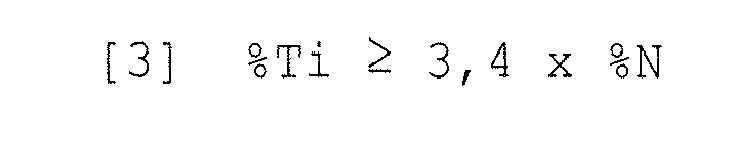
- the positive influence of the presence of Ti with respect to the setting of the N contents can be used particularly purposefully if the Ti content "% Ti" of a multiphase steel according to the invention fulfills the following condition [3]: % Ti ⁇ 3 . 4 x % N . where "% N" denotes the respective N content of the multiphase steel.
- the positive effect of Ti in a steel according to the invention occurs particularly reliably when its Ti content is at least 0.01% by weight.
- the ferrite formation can be delayed upon cooling, so that a larger amount of austenite is present in the bainite. As a result, the amount and the stability of the retained austenite can be increased.
- bainitic ferrite is formed instead of normal ferrite, which contributes to increasing the yield strength.
- At least 10% by volume of ferrite, in particular at least 12% by volume of ferrite, and at least 6% by volume of retained austenite and optionally 5-40% by volume of bainite are present in the structure of a steel according to the invention in order to achieve the desired high strength and On the other hand, to ensure good deformability.
- Up to 90% by volume of the microstructure of ferrite can be used, depending on the amount of the remaining microstructure constituents, and the residual austenite contents of the microstructure can amount to a maximum of 25% by volume.
- Contents of at least 12 vol.% Martensite in the structure of the steel according to the invention contribute to its strength, wherein the martensite content to max. 40 Vol .-% should be limited in order to ensure sufficient extensibility of the steel according to the invention.
- the retained austenite of a steel according to the invention is preferably enriched in carbon such that it is present in accordance with the method described in the article of A. Zarei Hanzaki et al. in ISIJ Int. Vol. 35, No 3, 1995, pp. 324 - 331 published formula [1] calculated C inRA content is more than 0.6 wt .-%.
- C INRA a RA - a ⁇ / 0 . 0044 with a ⁇ : 0.3578 nm (lattice constant of austenite); a RA : respective lattice parameter of the retained austenite after final cooling in nm measured on the finished cold strip.
- the amount of carbon present in the retained austenite substantially affects the TRIP properties and ductility of a steel according to the invention. Accordingly, it is advantageous if the C inRA content is as high as possible.
- G RA % RA x C INRA with% RA: residual austenite content of the multiphase steel in% by volume; C inRA : C content of retained austenite calculated according to formula [1].
- each of the cold-rolled products after the cold rolling has been subjected to a heat treatment, the annealing at an annealing temperature GT over an annealing time GZ, followed by accelerated cooling with a Cooling rate V to 500 ° C and an overaging treatment at an overaging temperature UAT over an overaging time UAt included.
- the different heat treatment variants used are given in Table 2.
- Table 3 also shows for each of the cold-rolled products K1-K23 the tensile strength R m , the yield strength R eL , the transverse elongation A 80 in the transverse direction, the residual austenite content RA, the C content C inRA of the retained austenite, the quality G RA of the retained austenite and the martensite content M.
- Table 1 (content by weight in%, balance iron and unavoidable impurities) melt C Si Mn al Nb V Ti P S N B A c3 A c1 S1 0.217 1.75 1,85 0,021 0.04 0.01 0.01 0,004 0,003 0.0016 0.0004 853 754 S2 0.24 1.75 1.8 0, 021 0.04 0.01 0.02 0,004 0,003 0.0036 0.001 853 755 S3 0.217 1.75 2.2 0,021 0.04 0.01 0.01 0.01 0,004 0,003 0.0049 0.0004 842 750 S4 0.23 1.65 2.0 0.05 0.04 0.02 0.01 0,015 0,003 0.005 0.0005 861 750 S5 0.21 1.75 1,85 0.02 0.04 0.01 0.01 0,004 0,002 0.0016 0.0004 854 754 S6 0.226 1.44 2.47 0.08 0.06 0.02 0.01 0.005 0,002 0.0025 0.0003 844 738 S7 0.211 1.97 1.76 0.048 0.02
Landscapes
- Chemical & Material Sciences (AREA)
- Engineering & Computer Science (AREA)
- Materials Engineering (AREA)
- Mechanical Engineering (AREA)
- Metallurgy (AREA)
- Organic Chemistry (AREA)
- Physics & Mathematics (AREA)
- Thermal Sciences (AREA)
- Crystallography & Structural Chemistry (AREA)
- Heat Treatment Of Sheet Steel (AREA)
- Heat Treatment Of Steel (AREA)
Abstract
Description
- Die Erfindung betrifft ein Verfahren zur Herstellung eines Kaltflachprodukts, einen Mehrphasenstahl sowie ein aus einem solchen Mehrphasenstahl durch Kaltwalzen erzeugtes Kaltwalzflachprodukt. Bei den erfindungsgemäßen "Flachprodukten" kann es sich um Bleche, Bänder, daraus gewonnene Zuschnitte oder vergleichbare Produkte handeln. Wenn hier von "Kaltflachprodukten" die Rede ist, dann sind damit durch Kaltwalzen erzeugte Flachprodukte gemeint.
- Insbesondere im Bereich des Fahrzeugkarosseriebaus besteht die Forderung nach Werkstoffen, die einerseits hohe Festigkeiten besitzen, andererseits aber auch so gut verformbar sind, dass aus ihnen mit einfachen Mitteln komplex gestaltete Bauteile geformt werden können.
- Ein Mehrphasenstahl, der ein in dieser Hinsicht ausgewogenes Eigenschaftsprofil besitzen soll, ist aus der
EP 1 367 143 A1 bekannt. Neben einer vergleichbar hohen Festigkeit und guten Verformbarkeit soll der bekannte Stahl auch eine besonders gute Schweißeignung besitzen. - Der bekannte Stahl enthält dazu 0,03 - 0,25 Gew.-% C, durch dessen Anwesenheit in Kombination mit den anderen Legierungselementen Zugfestigkeiten von mindestens 700 MPa erreicht werden sollen. Zusätzlich unterstützt werden soll die Festigkeit des bekannten Stahls durch Mn in Gehalten von 1,4 - 3,5 Gew.-%. A1 wird bei der Erschmelzung des bekannten Stahls als Oxidationsmittel eingesetzt und kann in dem Stahl in Gehalten von bis zu 0,1 Gew.-% vorhanden sein. Der bekannte Stahl kann auch bis zu 0,7 Gew.-% Si aufweisen, durch dessen Anwesenheit sich die ferritisch-martensitische Struktur des Stahls stabilisieren lässt. Cr wird dem bekannten Stahl in Gehalten von 0,05 - 1 Gew.-% zugegeben, um den Einfluss der durch den Schweißvorgang im Bereich der Schweißnaht eingetragenen Wärme zu vermindern. Für denselben Zweck sind in dem bekannten Stahl 0,005 - 0,1 Gew.-% Nb vorhanden. Nb soll dabei zusätzlich einen positiven Einfluss auf die Verformbarkeit des Stahls besitzen, da seine Anwesenheit eine Feinung des Ferritkorns mit sich bringt. Für denselben Zweck können dem bekannten Stahl 0,05 - 1 Gew.-% Mo, 0,02 - 0,5 Gew.-% V, 0,005 - 0,05 Gew.-% Ti und 0,0002 - 0,002 Gew.-% B zugegeben werden. Mo und V tragen dabei zur Härtbarkeit des bekannten Stahls bei, während Ti und B sich zusätzlich positiv auf die Festigkeit des Stahls auswirken sollen.
- Ein anderes, ebenfalls aus einem hochfesten Mehrphasenstahl bestehendes, gut verformbares Stahlblech ist aus der
EP 1 589 126 B1 bekannt. Dieses bekannte Stahlblech enthält 0,10 - 0,28 Gew.-% C, 1,0 - 2,0 Gew.-% Si, 1,0 - 3,0 Gew.-% Mn, 0,03 - 0,10 Gew.-% Nb, bis zu 0,5 Gew.-% A1, bis zu 0,15 Gew.-% P, bis zu 0,02 Gew.-% S. Optional können in dem Stahlblech bis zu 1,0 Gew.-% Mo, bis zu 0,5 Gew.-% Ni, bis zu 0,5 Gew.-% Cu, bis 0,003 Gew.-% Ca, bis zu 0,003 Gew.-% Seltenerdmetalle, bis zu 0,1 Gew.-% Ti oder bis zu 0,1 Gew.-% V vorhanden sein. Das Gefüge des bekannten Stahlblechs weist bezogen auf seine Gesamtstruktur einen Restaustenit-Gehalt von 5 - 20 % sowie mindestens 50 % bainitischen Ferrit auf. Gleichzeitig soll der Anteil an polygonalem Ferrit an dem Gefüge des bekannten Stahlblechs höchstens 30 % betragen. Durch die Beschränkung des Anteils an polygonalem Ferrit soll in dem bekannten Stahlblech Bainit die Matrix-Phase bilden und Restautenit-Anteile vorhanden sein, die zur Ausgewogenheit von Zugfestigkeit und Verformbarkeit beitragen. Auch dabei soll die Anwesenheit von Nb sicherstellen, dass der Restaustenit-Anteil des Gefüges feinkörnig ausgebildet ist. Um diesen Effekt zu gewährleisten, wird im Zuge der Erzeugung des aus derEP 1 589 126 B1 bekannten Stahlblechs eine besonders hohe Anfangstemperatur des Warmwalzens von 1250 - 1350 °C gewählt. In diesem Temperaturbereich geht Nb vollständig in feste Lösung, so dass sich während des Warmwalzens des Stahls eine große Zahl von feinen Nb-Karbiden bildet, die im polygonalen Ferrit oder im Bainit vorliegen. - Weiter heißt es in der
EP 1 589 126 B1 , dass die hohe Anfangstemperatur des Warmwalzens zwar die Voraussetzung für die Feinheit des Restaustenits ist, jedoch nicht alleine den gewünschten Effekt hat. Vielmehr soll dazu auch eine abschließende Glühung bei Temperaturen oberhalb der Ac3-Temperatur, ein darauf folgendes kontrolliertes Abkühlen mit einer Abkühlrate von mindestens 10 °C/s bis zu einer im Bereich von 300 - 450 °C liegenden Temperatur, bei der die Bainit-Umwandlung abläuft, und schließlich ein Halten bei dieser Temperatur über eine ausreichend lange Zeit erforderlich sein. - Vor dem Hintergrund des voranstehend beschriebenen Standes der Technik bestand die Aufgabe der Erfindung darin, ein Verfahren zur Herstellung eines Kaltflachprodukts aus einem Mehrphasenstahl mit TRIP-Eigenschaften anzugeben, das eine weiter erhöhte Festigkeit bei gleichzeitig hoher Bruchdehnung besitzt. Ebenso sollten ein Mehrphasenstahl und ein Flachprodukt mit dieser Eigenschaftskombination geschaffen werden.
- Im Hinblick auf das Verfahren ist die oben angegebene Aufgabe schließlich erfindungsgemäß dadurch gelöst worden, dass die in Anspruch 1 angegebenen Arbeitsschritte durchlaufen werden.
- In Bezug auf den Stahl ist die voranstehend angegebene Aufgabe erfindungsgemäß durch einen gemäß Anspruch 8 beschaffenen Stahl gelöst worden.
- In Bezug auf das Flachprodukt besteht die Lösung der oben genannten Aufgabe in einem gemäß Anspruch 16 ausgebildeten Kaltflachprodukt.
- Vorteilhafte Ausgestaltungen der Erfindung sind in den abhängigen Ansprüchen angegeben und werden nachfolgend gemeinsam mit dem allgemeinen Erfindungsgedanken im Einzelnen erläutert.
- Ein erfindungsgemäßer Mehrphasenstahl enthält (in Gew.-%) C: 0,14 - 0,25 %, Mn: 1,7 - 2,5 %, Si: 1,4 - 2,0 %, A1: < 0,1 1 %, Cr: < 0,1 1 %, Mo: < 0,05 %, Nb: 0,02 - 0,06 %, S: bis zu 0,01 %, P: bis zu 0,02 %, N: bis zu 0,01 %, sowie optional mindestens ein Element aus der Gruppe "Ti, B, V" gemäß folgender Maßgabe: Ti: bis zu 0,1 %, B: bis zu 0,002 %, V: bis zu 0,15 %, Rest Eisen und unvermeidbare Verunreinigungen.
- Im Zuge des erfindungsgemäßen Verfahrens wird der erfindungsgemäße Stahl erschmolzen und zu einem Vorprodukt vergossen. Bei diesem Vorprodukt kann es sich um eine Bramme oder eine Dünnbramme handeln.
- Das Vorprodukt wird dann erforderlichenfalls auf eine 1100 - 1300 °C betragende Temperatur wiedererwärmt, um ein gleichmäßig durchgewärmtes Gefüge des Ausgangsprodukts zu erhalten. Wiedererwärmungstemperaturen von max. 1250 °C, insbesondere max. 1220 °C führen dabei bei optimierten Produktionskosten zu einer verbesserten Oberfläche des erfindungsgemäß erzeugten Produkts.
- Von der Wiedererwärmungstemperatur ausgehend wird das Vorprodukt anschließend zu einem Warmband warmgewalzt. Die Endtemperatur des Warmwalzens beträgt erfindungsgemäß 820 - 950 °C, um eine gute Gefügeausgangssituation für das Abkühlen auf dem im Anschluss an das Warmwalzen durchlaufenen Auslaufrollgang zu gewährleisten.
- Das erhaltene Warmband wird daraufhin bei einer 400 - 750 °C, insbesondere 530 - 600 °C, betragenden Haspeltemperatur zu einem Coil gewickelt, um die später durchgeführte Kaltwalzung ohne große Walzkräfte ausführen zu können und eine Korngrenzenoxidation zu vermeiden.
- Nach dem Haspeln wird das Warmband bei Kaltwalzgraden von 30 - 80 %, insbesondere 50 - 70 %, zu einem Kaltflachprodukt kaltgewalzt, um eine genügend hohe treibende Kraft für die Rekristallisationsvorgänge beim anschließenden Glühen zu gewährleisten. Dabei führen Kaltwalzgrade von 30 - 65 %, insbesondere 50 - 65 %, besonders sicher zu dem gewünschten Ergebnis.
- Das erhaltene Kaltflachprodukt wird anschließend einer Wärmebehandlung unterzogen, die eine Durchlaufglühung und ein Überaltern des Kaltflachprodukts umfasst.
- Die bei der Durchlaufglühung eingestellte Glühtemperatur ist erfindungsgemäß um mindestens 20 °C höher als die Ac1-Temperatur des Stahls und darf die Ac3-Temperatur des Stahls nicht überschreiten.
- Die Ac3-Temperatur des erfindungsgemäßen Stahls lässt sich gemäß Leslie, s. W.C. Leslie "The Physical Metallurgy of Steel", Mc Graw-Hill Book Company, 1981, p. 275, nach folgender Formel [4] berechnen:

mit %C = C-Gehalt, %Ni = Ni-Gehalt, %Si = Si-Gehalt, %V = V-Gehalt, %Mo = Mo-Gehalt, %W = W-Gehalt, %Mn = Mn-Gehalt, %Cr = Cr-Gehalt, %Cu = Cu-Gehalt, %P = P-Gehalt, %Al = Al-Gehalt und %Ti = Ti-Gehalt des Stahls. - Die bei der Überalterungsbehandlung eingestellte Überalterungstemperatur liegt typischerweise bei 350 - 500 °C, insbesondere 370 - 460 °C, um eine weitere Anreicherung des Austenits mit Kohlenstoff zu bewirken.
- Die von der Erfindung vorgeschriebene Durchlaufglühung bei einer bis höchstens zur Ac3-Temperatur reichenden Glühtemperatur bewirkt, dass das Gefüge des erfindungsgemäß erzeugten Kaltflachprodukts vergleichbar hohe Martensitgehalte von 12 - 40 Vol.-% und damit einhergehend ein hohes Niveau der Zugfestigkeit Rm von mindestens 980 MPa erreicht. Gleichzeitig weist der erfindungsgemäß erzeugte Stahl ein gutes Umformvermögen auf, das sich in einer Bruchdehnung A80 in Querrichtung von mindestens 15 % äußert. Die Streckgrenze ReL des erfindungsgemäßen Stahls liegt regelmäßig über 500 MPa. Dabei besitzt der erfindungsgemäße Mehrphasenstahl TRIP-Eigenschaften.
- Die Glühdauer, über die das Kaltflachprodukt bei der Glühtemperatur geglüht wird, beträgt typischerweise höchstens 300 s, damit sich ein ausreichend hoher Anteil an mit Kohlenstoff angereichertem Austenit im Zweiphasengebiet des Stahls bilden kann.
- Die Dauer der nach dem Glühen durchgeführten Überalterungsbehandlung kann bis zu 800 s betragen, um den Restaustenit optimal zu stabilisieren.
- Um eine Rückumwandlung in Ferrit zu erlangen und die Entstehung von Perlit zu unterdrücken, kann das Kaltflachprodukt nach dem Glühen ausgehend von der der maximal der Ac3-Temperatur entsprechenden Glühtemperatur mit einer Abkühlgeschwindigkeit von mindestens 5 °C/s beschleunigt auf eine 500 °C betragende Zwischentemperatur abgekühlt werden.
- Das Glühen des Kaltflachprodukts kann im Zuge einer Feuerbeschichtung durchgeführt werden, bei der das Kaltflachprodukt mit einer metallischen Schutzbeschichtung versehen wird.
- Ebenso ist es möglich, das erfindungsgemäß erzeugte Kaltband nach der Wärmebehandlung durch elektrolytisches Beschichten oder ein anderes Abscheideverfahren mit einer Schutzschicht zu versehen.
- Ergänzend oder alternativ kann es ebenso zweckmäßig sein, das Kaltflachprodukt mit einer organischen Schutzschicht zu belegen.
- Optional kann das erhaltene Kaltband auch noch einer Nachwalzung bei Verformungsgraden von bis zu 3,0 % unterzogen werden, um seine Maßhaltigkeit, Oberflächenbeschaffenheit und mechanische Eigenschaften zu verbessern.
- Um die Kaltwalzbarkeit des Warmbands zu verbessern, kann das Warmband vor dem Kaltwalzen einer Glühung unterzogen werden. Diese kann vorteilhafterweise als Haubenglühung oder Durchlaufglühung durchgeführt werden. Die bei der das Kaltwalzen vorbereitenden Glühung eingestellten Glühtemperaturen betragen typischerweise 400 - 700 °C.
- Kohlenstoff erhöht in einem erfindungsgemäßen Stahl die Menge und die Stabilität des Restaustenits. In erfindungsgemäßem Stahl ist daher mindestens 0,14 Gew.-% Kohlenstoff vorhanden, um den Austenit bis Raumtemperatur zu stabilisieren und eine vollständige Umwandlung des bei einer Glühbehandlung gebildeten Austenits in Martensit, Ferrit oder Bainit bzw. bainitischen Ferrit zu verhindern. Über 0,25 Gew.-% liegende Kohlenstoffgehalte wirken sich jedoch auf die Schweißeignung negativ aus. Besonders sicher lassen sich die positiven Wirkungen von Kohlenstoff in erfindungsgemäßem Stahl nutzen, wenn in ihm C in Gehalten von 0,19 - 0,24 Gew.-%, insbesondere bis zu 0,23 Gew.-%, vorhanden ist, wobei ein Mindestgehalt von 0,21 Gew.-% C besonders vorteilhaft ist.
- Mn trägt wie C zur Festigkeit und zur Erhöhung der Menge und der Stabilität des Restaustenits bei. Zu hohe Mn-Gehalte verstärken jedoch die Gefahr der Seigerungsbildung. Sie wirken sich zudem negativ auf die Bruchdehnung aus, da die Ferrit- und Bainit-Umwandlungen stark verzögert werden und als Folge vergleichbar hohe Mengen an Martensit im Gefüge verbleiben. Der Mn-Gehalt eines erfindungsgemäßen Stahls ist auf 1,7 - 2,5 Gew.-% festgesetzt.
- Erfindungsgemäßer Stahl enthält 1,4 - 2,0 Gew.-% Si. Bei Gehalten von mehr als 1,4 Gew.-% unterstützt Si die Stabilisierung des Restaustenits und unterdrückt bei der im Zuge der erfindungsgemäßen Verarbeitung des Stahls durchgeführten Überalterungsbehandlung die Karbidbildung in der Bainitstufe. Die Bainitumwandlung läuft in Folge der Anwesenheit von Si nicht vollständig ab, so dass nur bainitischer Ferrit gebildet wird und die Karbidbildung nicht zu Stande kommt. Auf diese Weise wird die erfindungsgemäß angestrebte Stabilität von an Kohlenstoff angereichertem Restaustenit erzielt. Darüber hinaus trägt Si zur Erhöhung der Festigkeit durch Mischkristallverfestigung bei. Bei Gehalten von mehr 2 Gew.-% muss jedoch mit einer Verschlechterung der Oberflächenqualität und der Gefahr einer Versprödung beim Warmwalzen gerechnet werden.
- Bei der Erzeugung eines erfindungsgemäßen Stahls wird Al zur Desoxidation eingesetzt. Ein erfindungsgemäßer Stahl weist daher Al-Gehalte von weniger 0,1 Gew.-% auf.
- Cr und Mo sind in einem erfindungsgemäßen Stahl unerwünscht und sollen daher nur in unwirksamen Mengen vorhanden sein, da sie die bainitische Umwandlung verzögern und die Stabilisierung des Restaustenits behindern. Daher ist erfindungsgemäß der Cr-Gehalt auf weniger als 0,1 Gew.-% und der Mo-Gehalt eines erfindungsgemäßen Stahls auf weniger als 0,05 Gew.-% beschränkt.
- Ein erfindungsgemäßer Stahl enthält Nb in Gehalten von 0,02 - 0,06 Gew.-% sowie optional eines oder mehrere der Elemente "Ti, V, B", um die Festigkeit des erfindungsgemäßen Stahls zu steigern. Nb, Ti und V bilden mit dem im erfindungsgemäßen Stahl vorhandenen C und N sehr feine Ausscheidungen. Diese Ausscheidungen wirken festigkeits- und streckgrenzensteigernd durch Teilchenhärtung und Kornfeinung. Die Kornfeinung ist auch für die umformtechnischen Eigenschaften des Stahls von großem Vorteil.
- Ti bindet N noch bei der Erstarrung oder sehr hohen Temperaturen ab, so dass mögliche negative Wirkungen dieses Elements auf die Eigenschaften des erfindungsgemäßen Stahls auf ein Minimum reduziert sind. Um diesen Effekt zu nutzen, kann einem erfindungsgemäßen Stahl zusätzlich zum stets vorhandenen Nb bis zu 0,1 Gew.-% Ti und bis zu 0,15 Gew.-% V zugegeben werden.
- Eine Überschreitung der erfindungsgemäß vorgegebenen Obergrenzen der Gehalte an Mikrolegierungselementen würde zur Verzögerung der Rekristallisation während des Glühens führen, so dass diese bei der realen Produktion entweder nicht realisiert werden kann oder eine zusätzliche Ofenleistung erfordern würde.
- Der positive Einfluss der Anwesenheit von Ti in Bezug auf die Abbindung der N-Gehalte kann dann besonders zielgerichtet genutzt werden, wenn der Ti-Gehalt "%Ti" eines erfindungsgemäßen Mehrphasenstahls folgende Bedingung [3] erfüllt:

wobei mit "%N" der jeweilige N-Gehalt des Mehrphasenstahls bezeichnet ist. - Besonders sicher tritt die positive Wirkung von Ti in einem erfindungsgemäßen Stahl dann ein, wenn sein Ti-Gehalt mindestens 0,01 Gew.-% beträgt.
- Durch die Zugabe von bis zu 0,002 Gew.-% Bor kann die Ferritbildung bei der Abkühlung verzögert werden, so dass eine größere Austenitmenge in der Bainitstufe vorliegt. Dadurch können die Menge und die Stabilität des Restaustenits erhöht werden. Darüber hinaus wird statt normalem Ferrit bainitischer Ferrit gebildet, der zur Erhöhung der Streckgrenze beiträgt.
- Praxisgerechte, im Hinblick auf die Kosten und das Eigenschaftsprofil des erfindungsgemäßen Stahls besonders vorteilhafte Varianten des erfindungsgemäßen Stahls ergeben sich, wenn der Ti-Gehalt auf 0,02 Gew.-% beschränkt ist sowie B in Gehalten von 0,0005 - 0,002 Gew.-% oder V in Gehalten von 0,06 - 0,15 Gew.-% vorhanden sind.
- Im Gefüge eines erfindungsgemäßen Stahls sind mindestens 10 Vol.-% Ferrit, insbesondere mindestens 12 Vol.-% Ferrit, sowie mindestens 6 Vol.-% Restaustenit und optional 5 - 40 Vol.-% Bainit vorhanden, um einerseits die angestrebte hohe Festigkeit und andererseits die gute Verformbarkeit zu sichern. Dabei können abhängig von der Menge der übrigen Gefügebestandteile bis zu 90 Vol.-% des Gefüges aus Ferrit bestehen, wobei die Restaustenit-Gehalte des Gefüges bis maximal 25 Vol.-% betragen können. Gehalte von mindestens 12 Vol.-% Martensit im Gefüge des erfindungsgemäßen Stahls tragen zu dessen Festigkeit bei, wobei der Martensitgehalt auf max. 40 Vol.-% beschränkt sein sollte, um eine ausreichende Dehnbarkeit des erfindungsgemäßen Stahls sicherzustellen.
- Bevorzugt ist der Restaustenit eines erfindungsgemäßen Stahls so mit Kohlenstoff angereichert, dass sein gemäß der im Artikel von A. Zarei Hanzaki et al. in ISIJ Int. Vol. 35, No 3, 1995, pp. 324 - 331, veröffentlichten Formel [1] berechneter CinRA-Gehalt mehr als 0,6 Gew.-% beträgt.

mit aγ: 0,3578 nm (Gitterkonstante des Austenits);
aRA: jeweiliger Gitterparameter des Restaustenits nach der Endabkühlung in nm am fertigen Kaltband gemessen. - Die Menge des im Restaustenit vorhandenen Kohlenstoffs beeinflusst wesentlich die TRIP-Eigenschaften und die Dehnbarkeit eines erfindungsgemäßen Stahls. Dementsprechend ist es vorteilhaft, wenn der CinRA-Gehalt so hoch wie möglich ist.
- In Bezug auf die angestrebt hohe Stabilität des Restaustenits vorteilhaft ist es darüber hinaus, wenn er eine nach der Formel [2] berechnete Güte GRA des Restaustenits ("Restaustenitgüte") von mehr als 6 aufweist.

mit %RA: Restaustenit-Gehalt des Mehrphasenstahls in Vol.-%;
CinRA:C-Gehalt des Restaustenits berechnet gemäß Formel [1]. - Zum Nachweis der Eigenschaften erfindungsgemäß beschaffener und erzeugter Bleche sind die in Tabelle 1 angegebenen erfindungsgemäßen Schmelzen S1 bis S7 erschmolzen und zu Kaltflachprodukten K1 - K23 verarbeitet worden. Zusätzlich sind in Tabelle 1 die gemäß der oben angegebenen Formel [4] berechnete Ac3-Temperatur sowie die nach der folgenden Formel [5], ebenfalls nach dem oben bereits genannten Fachbuch von Leslie berechnete Ac1-Temperatur eingetragen:

mit %Mn = Mn-Gehalt, %Ni = Ni-Gehalt,
%Si = Si-Gehalt, %Cr = Cr-Gehalt,
%As = As-Gehalt, %W = W-Gehalt des Stahls - Im Zuge der Erzeugung der als Kaltbänder oder -bleche vorliegenden Kaltflachprodukte K1 - K23 ist jeweils eine der Stahlschmelzen S1 - S7 zu einer Bramme vergossen worden. Die Bramme ist anschließend wiedererwärmt zu einem Warmband warmgewalzt worden. Das erhaltene Warmband ist gehaspelt und nach dem Haspeln zu einem Kaltband kaltgewalzt worden.
- Jedes der Kaltflachprodukte ist nach dem Kaltwalzen einer Wärmbehandlung unterzogen worden, die ein Glühen bei einer Glühtemperatur GT über eine Glühzeit GZ, eine darauf folgende beschleunigte Abkühlung mit einer Abkühlrate V auf 500 °C und eine Überalterungsbehandlung bei einer Überalterungstemperatur UAT über eine Überalterungszeit UAt umfasste. Die verschiedenen angewendeten Wärmebehandlungsvarianten sind in Tabelle 2 angegeben.
- In Tabelle 3 sind für jedes der Kaltflachprodukte K1 - K23 die Stahlzusammensetzung sowie die bei seiner Erzeugung eingestellten Parameter "Wiedererwärmungstemperatur Wat", "Warmwalzendtemperatur Wet", "Haspeltemperatur Ht" und "Kaltwalzgrad KWg" verzeichnet. Zusätzlich ist in Tabelle 3 für jedes Kaltflachprodukt K1 - K23 angegeben, welches der in Tabelle 2 aufgelisteten Wärmebehandlungen bei seiner Erzeugung angewendet worden ist. Schließlich sind in Tabelle 3 auch noch für jedes der Kaltflachprodukte K1 - K23 die Zugfestigkeit Rm, die Streckgrenze ReL, die Bruchdehnung A80 in Querrichtung, der Restaustenitgehalt RA, der C-Gehalt CinRA des Restaustenits, die Güte GRA des Restaustenits sowie der Martensitgehalt M angegeben.
- Die Versuche belegen, dass sich bei erfindungsgemäßer Vorgehensweise zuverlässig Kaltflachprodukte K1 - K20 erzeugen lassen, die jeweils eine optimale Kombination aus einer mehr als 980 MPa betragenden Zugfestigkeit Rm und einer jeweils mehr als 15 % betragenden Bruchdehnung A80 in Querrichtung besitzen. Die jeweils bei einer oberhalb der Ac3-Temperatur des jeweiligen Stahls liegenden Glühtemperaturen GT der geglühten Kaltflachprodukte K21, K22 und K23 erreichen dagegen dieses Festigkeitsniveau nicht.
Tabelle 1 (Gehaltsangaben in Gew.-%, Rest Eisen und unvermeidbare Verunreinigungen) Schmelze C Si Mn Al Nb V Ti P S N B Ac3 Ac1 S1 0,217 1,75 1,85 0,021 0,04 0,01 0,01 0,004 0,003 0,0016 0,0004 853 754 S2 0,24 1,75 1,8 0, 021 0,04 0,01 0,02 0,004 0,003 0,0036 0,001 853 755 S3 0,217 1,75 2,2 0,021 0,04 0,01 0,01 0,004 0,003 0,0049 0,0004 842 750 S4 0,23 1,65 2,0 0,05 0,04 0,02 0,01 0,015 0,003 0,005 0,0005 861 750 S5 0,21 1,75 1,85 0,02 0,04 0,01 0,01 0,004 0,002 0,0016 0,0004 854 754 S6 0,226 1,44 2,47 0,08 0,06 0,02 0,01 0,005 0,002 0,0025 0,0003 844 738 S7 0,211 1,97 1,76 0,048 0,02 0,08 0,02 0,009 0,003 0,0037 0,0008 893 761 Tabelle 2 Wärmebehandlung GT [°C] GZ [s] V [°C/s] UAT [°C] UAt [s] Wärmebehandlung GT [°C] GZ [s] V [°C/s] UAT [°C] UAt [s] A 820 60 15 375 60 K 820 60 50 425 60 B 820 60 15 375 120 L 820 60 50 425 120 C 820 60 15 375 360 M 820 60 100 425 120 D 820 60 15 425 30 N 840 60 100 425 120 E 820 60 15 425 60 O 860 60 100 425 120 F 820 60 15 425 120 P 800 100 15 375 120 G 820 60 15 450 30 Q 820 80 15 375 60 H 820 60 15 450 60 R 840 80 15 425 60 I 820 60 15 450 120 S 860 80 50 425 120 J 820 60 50 425 30 Tabelle 3 Schmelze Glüh. Nr. WaT [°C] WeT [°C] HAT [°C] KWg [%] Rel [Mpa] Rm [Mpa] A80 [%] Ra [Vol-%] aRa [nm] CinRa [Gew.-%] Güte RA Martensit [%] Erfindungsgemäß? K1 S1 K 1101 890 600 45 542 986 21,8 19,0 0,3610 0,73 13,87 12 ja K2 S1 R 1242 890 540 50 583 1042 21,2 19,8 0,3609 0,71 14,06 20 ja K3 S1 N 1235 820 520 56 571 1027 20,3 16,9 0,3608 0,89 11,66 21 ja K4 S2 J 1190 880 600 40 615 1086 16,9 15,0 0,3609 0,71 10,65 37 ja K5 S2 K 1222 900 510 56 627 1049 20,9 17,5 0,3611 0,76 13,30 29 ja K6 S2 L 1178 910 510 64 633 1025 21,4 18,5 0,3611 0,75 13,88 19 ja K7 S3 D 1180 900 490 62 604 1098 16,5 15,5 0,3607 0,66 10,23 37 ja K8 S3 F 1250 950 490 60 632 1015 19,1 17,5 0,3611 0,75 13,13 18 ja K9 S3 I 1109 910 450 57 621 1058 18,7 16,5 0,3611 0,74 12,21 32 ja K10 S4 H 1223 890 400 54 650 1100 16,7 15,0 0,3607 0,65 9,75 38 ja K11 S4 G 1114 900 520 61 617 1023 20,1 16,3 0,3609 0,7 11,41 26 ja K12 S5 P 1193 870 510 58 580 1012 21,1 18,3 0,3611 0,74 13,54 27 ja K13 S5 Q 1200 830 700 45 582 992 18, 6 17,2 0,3610 0,72 12,38 14 ja K14 S5 B 1202 920 560 45 530 1008 22,1 19,1 0,3610 0,73 13,94 18 ja K15 S6 L 1209 890 450 50 620 1089 17,1 15,5 0,3609 0,7 10,85 40 ja K16 S6 M 1203 890 580 75 612 1070 17,8 14,0 0,3606 0,63 8,82 33 ja K17 S6 G 1190 870 620 70 580 1063 19,4 17,7 0,3609 0,71 12,57 33 ja K18 S7 A 1197 900 500 49 602 1099 20,9 17,0 0,3611 0,75 12,75 40 ja K19 S7 C 1201 923 630 60 602 1085 19,2 16,0 0,3608 0,68 10,88 36 ja K20 S6 I 1190 910 625 61 613 1038 19,8 17, 1 0,3609 0,7 11, 97 28 ja K21 S5 E 1200 898 600 50 551 993 21,6 17,0 0,3611 0,75 12,75 13 ja K22 S4 O 1191 860 612 56 662 944 17,3 13,6 0,3605 0,62 8,43 11 nein K23 S7 S 1198 860 620 57 554 936 22,1 22,5 0,3610 0,73 16,43 9 nein
Claims (16)
- Verfahren zum Herstellen eines Kaltflachprodukts, bei dem folgende Arbeitsschritte absolviert werden:- Erschmelzen und Vergießen eines Mehrphasenstahls zu einem Vorprodukt, das neben Eisen und unvermeidbaren Verunreinigungen (in Gew.-%)
C: 0,14 - 0,25 %, Mn: 1,7 - 2,5 %, Si: 1,4 - 2,0 %, Al : < 0,1 %, Cr: < 0,1 %, Mo: < 0,05 % Nb: 0,02 - 0,06 %, S: bis zu 0,01 %, P: bis zu 0,02 %, N: bis zu 0,01 %, Ti: bis zu 0,1 %,B: bis zu 0,002 %,V: bis zu 0,15 %;- Warmwalzen des Vorprodukts ausgehend von einer 1100 - 1300 °C betragenden Anfangstemperatur und endend bei einer 820 - 950 °C betragenden Endtemperatur zu einem Warmband;- Haspeln des Warmbands bei einer 400 - 750 °C betragenden Haspeltemperatur;- optionales Glühen des Warmbands;- bei Kaltwalzgraden von 30 - 80 % erfolgendes Kaltwalzen des Warmbands zu dem Kaltflachprodukt;- Wärmebehandeln des erhaltenen Kaltflachprodukts, wobei das Wärmebehandeln- ein Durchlaufglühen des Kaltflachprodukts bei einer Glühtemperatur, die um mindestens 20 °C höher als die Acl-Temperatur und höchstens gleich der Ac3-Temperatur des Mehrphasenstahls ist, sowie- ein Überaltern des Kaltflachprodukts bei einer 350 - 500 °C betragenden Überalterungstemperatur umfasst. - Verfahren nach Anspruch 1, dadurch gekennzeichnet, dass die Glühdauer, über die das Kaltflachprodukt bei der Glühtemperatur geglüht wird, höchstens 10 - 300 s beträgt.
- Verfahren nach einem der voranstehenden Ansprüche, dadurch gekennzeichnet, dass die Dauer der nach dem Glühen durchgeführten Überalterungsbehandlung bis zu 800 s beträgt.
- Verfahren nach einem der voranstehenden Ansprüche, dadurch gekennzeichnet, dass die Wärmebehandlung eine von der Glühtemperatur ausgehende Abkühlung des Kaltflachprodukts bis zu einer Zwischentemperatur von 500 °C mit einer Abkühlrate von mindestens 5 °C/s umfasst.
- Verfahren nach einem der voranstehenden Ansprüche, dadurch gekennzeichnet, dass die Haspeltemperatur 530 - 600 °C, der Kaltwalzgrad 50 - 70 %, die Glühtemperatur 800 - 830 °C oder die Überalterungstemperatur 370 - 460 °C betragen.
- Verfahren nach einem der voranstehenden Ansprüche, dadurch gekennzeichnet, dass das Kaltflachprodukt mit einer metallischen oder organischen Schutzschicht belegt wird.
- Verfahren nach einem der voranstehenden Ansprüche, dadurch gekennzeichnet, dass das optional nach dem Haspeln und vor dem Kaltwalzen durchgeführte Glühen des Warmbands als Haubenglühung oder Durchlaufglühung bei 400 - 700 °C ausgeführt wird.
- Mehrphasenstahl enthaltend (in Gew.-%)
C: 0,14 - 0,25 %, Mn: 1, 7 - 2,5 %, Si: 1,4 - 2,0 %, Al: < 0,1 %, Cr: < 0,1 %, Mo: < 0,05 %, Nb: 0,02 - 0,06 %, S: bis zu 0,01 %, P: bis zu 0,02%, N: bis zu 0,01 %, Ti: bis zu 0,1 %,B: bis zu 0,002 %,V: bis zu 0,15 %,Rest Eisen und unvermeidbare Verunreinigungen,wobei im Gefüge des Stahls mindestens 12 - 40 Vol.-% Martensit und mindestens 6 Vol.-% Restaustenit sowie optional 5 - 40 Vol.-% Bainit vorhanden sind und der Stahl eine Zugfestigkeit Rm von mindestens 980 MPa und eine in Querrichtung gemessene Bruchdehnung A80 von mehr als 15 % besitzt. - Mehrphasenstahl nach Anspruch 8, dadurch gekennzeichnet, dass der gemäß der Formel [1] berechnete CinRA-Gehalt des Restaustenits mehr als 0,6 Gew.-% beträgt:

mit aγ: 0,3578 nm (Gitterparameter des Austenits);
aRA: jeweiliger Gitterparameter des
Restaustenits nach der Endabkühlung in nm am fertigen Kaltband gemessen. - Mehrphasenstahl nach Anspruch 9, dadurch gekennzeichnet, dass er eine nach der Formel [2] berechnete Güte GRA des Restaustenits aufweist, für die gilt GRA > 6:

mit %RA: Restaustenit-Gehalt des Mehrphasenstahls
in Vol.-%;
CinRA: C-Gehalt des Restaustenits berechnet gemäß Formel [1]. - Mehrphasenstahl nach einem der Ansprüche 8 bis 10, dadurch gekennzeichnet, dass sein C-Gehalt 0,19 - 0,23 Gew.-% beträgt.
- Mehrphasenstahl nach einem der Ansprüche 8 bis 10, dadurch gekennzeichnet, dass sein Ti-Gehalt mindestens 0,01 Gew.-% beträgt.
- Mehrphasenstahl nach einem der Ansprüche 8 bis 12, dadurch gekennzeichnet, dass sein Ti-Gehalt %Ti die Bedingung [3] erfüllt:
mit %N: N-Gehalt des Mehrphasenstahls; - Mehrphasenstahl nach einem der Ansprüche 8 bis 13, dadurch gekennzeichnet, dass er mindestens 0,0005 Gew.-% B enthält.
- Mehrphasenstahl nach einem der Ansprüche 8 bis 14, dadurch gekennzeichnet, dass er mindestens 0,06 Gew.-% V enthält.
- Kaltflachprodukt hergestellt durch Anwendung des gemäß einem der Ansprüche 1 bis 7 aus einem gemäß einem der Ansprüche 8 bis 15 beschaffenen Mehrphasenstahls.
Priority Applications (6)
| Application Number | Priority Date | Filing Date | Title |
|---|---|---|---|
| EP10186555.8A EP2439291B1 (de) | 2010-10-05 | 2010-10-05 | Mehrphasenstahl, aus einem solchen Mehrphasenstahl hergestelltes kaltgewalztes Flachprodukt und Verfahren zu dessen Herstellung |
| PCT/EP2011/066774 WO2012045613A1 (de) | 2010-10-05 | 2011-09-27 | Mehrphasenstahl, aus einem solchen mehrphasenstahl hergestelltes kaltgewalztes flachprodukt und verfahren zu dessen herstellung |
| KR1020137011653A KR101850122B1 (ko) | 2010-10-05 | 2011-09-27 | 복합조직강, 복합조직강으로 제조된 냉연 평판 제품 및 제조 방법 |
| CN201180048743.0A CN103237905B (zh) | 2010-10-05 | 2011-09-27 | 多相钢,由该类多相钢制成的、冷轧的扁钢制品以及该制造方法 |
| US13/877,816 US20130248055A1 (en) | 2010-10-05 | 2011-09-27 | Multi-Phase Steel, Cold-Rolled Flat Product Produced from Such a Multi-Phase Steel and Method for Producing It |
| JP2013532120A JP6093702B2 (ja) | 2010-10-05 | 2011-09-27 | 多相鋼から作られた冷間圧延平鋼製品およびその製造方法 |
Applications Claiming Priority (1)
| Application Number | Priority Date | Filing Date | Title |
|---|---|---|---|
| EP10186555.8A EP2439291B1 (de) | 2010-10-05 | 2010-10-05 | Mehrphasenstahl, aus einem solchen Mehrphasenstahl hergestelltes kaltgewalztes Flachprodukt und Verfahren zu dessen Herstellung |
Publications (2)
| Publication Number | Publication Date |
|---|---|
| EP2439291A1 true EP2439291A1 (de) | 2012-04-11 |
| EP2439291B1 EP2439291B1 (de) | 2013-11-27 |
Family
ID=43629097
Family Applications (1)
| Application Number | Title | Priority Date | Filing Date |
|---|---|---|---|
| EP10186555.8A Active EP2439291B1 (de) | 2010-10-05 | 2010-10-05 | Mehrphasenstahl, aus einem solchen Mehrphasenstahl hergestelltes kaltgewalztes Flachprodukt und Verfahren zu dessen Herstellung |
Country Status (6)
| Country | Link |
|---|---|
| US (1) | US20130248055A1 (de) |
| EP (1) | EP2439291B1 (de) |
| JP (1) | JP6093702B2 (de) |
| KR (1) | KR101850122B1 (de) |
| CN (1) | CN103237905B (de) |
| WO (1) | WO2012045613A1 (de) |
Cited By (7)
| Publication number | Priority date | Publication date | Assignee | Title |
|---|---|---|---|---|
| WO2014019964A1 (en) * | 2012-07-30 | 2014-02-06 | Tata Steel Nederland Technology Bv | A method for producing a high strength strip steel with a good deep drawability and a high strength steel produced thereby |
| JP2015014026A (ja) * | 2013-07-04 | 2015-01-22 | 新日鐵住金株式会社 | 冷延鋼板およびその製造方法 |
| CN104404367A (zh) * | 2014-12-10 | 2015-03-11 | 东北大学 | 一种高强度高塑性冷轧低碳钢及其制备方法 |
| CN105247082A (zh) * | 2013-04-01 | 2016-01-13 | 日立金属株式会社 | 刀具用钢的生产方法 |
| CN108165709A (zh) * | 2016-08-29 | 2018-06-15 | 武汉佰起科技有限公司 | 一种用于弹簧片的带钢加工工艺 |
| EP3390040B1 (de) | 2015-12-15 | 2020-08-26 | Tata Steel IJmuiden B.V. | Hochfester feuerverzinkter bandstahl |
| CN115181893A (zh) * | 2021-04-02 | 2022-10-14 | 宝山钢铁股份有限公司 | 1180MPa级低碳低合金热镀锌TRIP钢及快速热处理热镀锌制造方法 |
Families Citing this family (10)
| Publication number | Priority date | Publication date | Assignee | Title |
|---|---|---|---|---|
| CN104233092B (zh) * | 2014-09-15 | 2016-12-07 | 首钢总公司 | 一种热轧trip钢及其制备方法 |
| PL3276030T3 (pl) * | 2015-03-23 | 2020-09-21 | Nippon Steel Corporation | Blacha stalowa cienka walcowana na gorąco i sposób jej wytwarzania oraz sposób wytwarzania blachy stalowej cienkiej walcowanej na zimno |
| DE102017123236A1 (de) * | 2017-10-06 | 2019-04-11 | Salzgitter Flachstahl Gmbh | Höchstfester Mehrphasenstahl und Verfahren zur Herstellung eines Stahlbandes aus diesem Mehrphasenstahl |
| US20210189517A1 (en) * | 2018-05-22 | 2021-06-24 | Thyssenkrupp Steel Europe Ag | Sheet Metal Part Formed from a Steel Having a High Tensile Strength and Method for Manufacturing Said Sheet Metal Part |
| CN111534739A (zh) * | 2020-02-17 | 2020-08-14 | 本钢板材股份有限公司 | 一种980MPa级高成形性冷轧相变诱导塑性钢及其制备方法 |
| CN115181892B (zh) * | 2021-04-02 | 2023-07-11 | 宝山钢铁股份有限公司 | 1180MPa级别低碳低合金TRIP钢及快速热处理制造方法 |
| KR102372546B1 (ko) * | 2021-07-27 | 2022-03-10 | 현대제철 주식회사 | 연신율이 우수한 초고강도 강판 및 그 제조방법 |
| DE102022102418A1 (de) | 2022-02-02 | 2023-08-03 | Salzgitter Flachstahl Gmbh | Hochfestes schmelztauchbeschichtetes Stahlband mit durch Gefügeumwandlung bewirkter Plastizität und Verfahren zu dessen Herstellung |
| CN116732445A (zh) * | 2022-03-01 | 2023-09-12 | 宝山钢铁股份有限公司 | 一种用于镀锌钢板的冷轧基板、镀锌钢板及其制造方法 |
| KR102871776B1 (ko) * | 2022-06-03 | 2025-10-17 | 티센크루프 스틸 유럽 악티엔게젤샤프트 | 수소 취화에 대해 감소된 감수성을 갖는 고강도 냉간 압연 강철 및 그의 제조 방법 |
Citations (9)
| Publication number | Priority date | Publication date | Assignee | Title |
|---|---|---|---|---|
| JPH01272720A (ja) * | 1988-04-22 | 1989-10-31 | Kobe Steel Ltd | 高延性高強度複合組織鋼板の製造法 |
| EP1367143A1 (de) | 2001-02-27 | 2003-12-03 | Nkk Corporation | Feuerverzinktes stahlblech mit hoher festigkeit und herstellungsverfahren dafür |
| EP1865085A1 (de) * | 2005-03-31 | 2007-12-12 | Kabushiki Kaisha Kobe Seiko Sho | Hochfestes kaltgewalztes stahlblech mit hervorragender beschichtungshaftung, verarbeitbarkeit und wasserstofffversprödungsfestigkeit sowie stahlkomponente für ein fahrzeug |
| US20080251161A1 (en) * | 2005-03-30 | 2008-10-16 | Kabushiki Kaisha Kobe Seiko Sho (Kobe Steel, Ltd.) | High Strength Cold Rolled Steel Sheet and Plated Steel Sheet Excellent in the Balance of Strength and Workability |
| EP1589126B1 (de) | 2004-04-22 | 2009-03-25 | Kabushiki Kaisha Kobe Seiko Sho | Hochfestes und kaltgewaltzes stahlblech mit hervorragender verformbarkeit und plattiertes stahlblech |
| WO2009096344A1 (ja) * | 2008-01-31 | 2009-08-06 | Jfe Steel Corporation | 加工性に優れた高強度溶融亜鉛めっき鋼板およびその製造方法 |
| WO2009099251A1 (ja) * | 2008-02-08 | 2009-08-13 | Jfe Steel Corporation | 加工性に優れた高強度溶融亜鉛めっき鋼板およびその製造方法 |
| US20100108200A1 (en) * | 2008-10-30 | 2010-05-06 | Kabushiki Kaisha Kobe Seiko Sho (Kobe Steel Ltd) | High yield ratio and high-strength hot-dip galvanized steel sheet excellent in workability and production method thereof |
| US20100172786A1 (en) * | 2006-06-05 | 2010-07-08 | Kabushiki Kaisha Kobe Seiko Sho | High-strength steel sheet having excellent elongation, stretch flangeability and weldability |
Family Cites Families (3)
| Publication number | Priority date | Publication date | Assignee | Title |
|---|---|---|---|---|
| JPH10237547A (ja) * | 1997-02-27 | 1998-09-08 | Kobe Steel Ltd | 高延性高強度冷延鋼板及びその製造方法 |
| JP2010065272A (ja) * | 2008-09-10 | 2010-03-25 | Jfe Steel Corp | 高強度鋼板およびその製造方法 |
| JP5644095B2 (ja) * | 2009-11-30 | 2014-12-24 | 新日鐵住金株式会社 | 延性及び耐遅れ破壊特性の良好な引張最大強度900MPa以上を有する高強度鋼板および高強度冷延鋼板の製造方法、高強度亜鉛めっき鋼板の製造方法 |
-
2010
- 2010-10-05 EP EP10186555.8A patent/EP2439291B1/de active Active
-
2011
- 2011-09-27 KR KR1020137011653A patent/KR101850122B1/ko not_active Expired - Fee Related
- 2011-09-27 US US13/877,816 patent/US20130248055A1/en not_active Abandoned
- 2011-09-27 JP JP2013532120A patent/JP6093702B2/ja not_active Expired - Fee Related
- 2011-09-27 CN CN201180048743.0A patent/CN103237905B/zh active Active
- 2011-09-27 WO PCT/EP2011/066774 patent/WO2012045613A1/de not_active Ceased
Patent Citations (11)
| Publication number | Priority date | Publication date | Assignee | Title |
|---|---|---|---|---|
| JPH01272720A (ja) * | 1988-04-22 | 1989-10-31 | Kobe Steel Ltd | 高延性高強度複合組織鋼板の製造法 |
| EP1367143A1 (de) | 2001-02-27 | 2003-12-03 | Nkk Corporation | Feuerverzinktes stahlblech mit hoher festigkeit und herstellungsverfahren dafür |
| EP1589126B1 (de) | 2004-04-22 | 2009-03-25 | Kabushiki Kaisha Kobe Seiko Sho | Hochfestes und kaltgewaltzes stahlblech mit hervorragender verformbarkeit und plattiertes stahlblech |
| US20080251161A1 (en) * | 2005-03-30 | 2008-10-16 | Kabushiki Kaisha Kobe Seiko Sho (Kobe Steel, Ltd.) | High Strength Cold Rolled Steel Sheet and Plated Steel Sheet Excellent in the Balance of Strength and Workability |
| EP1865085A1 (de) * | 2005-03-31 | 2007-12-12 | Kabushiki Kaisha Kobe Seiko Sho | Hochfestes kaltgewalztes stahlblech mit hervorragender beschichtungshaftung, verarbeitbarkeit und wasserstofffversprödungsfestigkeit sowie stahlkomponente für ein fahrzeug |
| US20100172786A1 (en) * | 2006-06-05 | 2010-07-08 | Kabushiki Kaisha Kobe Seiko Sho | High-strength steel sheet having excellent elongation, stretch flangeability and weldability |
| WO2009096344A1 (ja) * | 2008-01-31 | 2009-08-06 | Jfe Steel Corporation | 加工性に優れた高強度溶融亜鉛めっき鋼板およびその製造方法 |
| EP2258886A1 (de) * | 2008-01-31 | 2010-12-08 | JFE Steel Corporation | Hochfestes heissverzinktes stahlblech mit hervorragender verarbeitbarkeit und herstellungsverfahren dafür |
| WO2009099251A1 (ja) * | 2008-02-08 | 2009-08-13 | Jfe Steel Corporation | 加工性に優れた高強度溶融亜鉛めっき鋼板およびその製造方法 |
| EP2243852A1 (de) * | 2008-02-08 | 2010-10-27 | JFE Steel Corporation | Hochfestes, feuerverzinktes stahlblech mit hervorragender verarbeitbarkeit und herstellungsverfahren dafür |
| US20100108200A1 (en) * | 2008-10-30 | 2010-05-06 | Kabushiki Kaisha Kobe Seiko Sho (Kobe Steel Ltd) | High yield ratio and high-strength hot-dip galvanized steel sheet excellent in workability and production method thereof |
Non-Patent Citations (6)
| Title |
|---|
| A. ZAREI HANZAKI ET AL., ISIJ INT., vol. 35, no. 3, 1995, pages 324 - 331 |
| BLECK W ET AL: "Niobium in dual phase and TRIP steels", NIOBIUM SCIENCE & TECHNOLOGY, PROCEEDINGS OF THE INTERNATIONAL SYMPOSIUM NIOBIUM 2001,, 1 January 2001 (2001-01-01), pages 727 - 752, XP009119372 * |
| LESLIE, S. W.C. LESLIE: "The Physical Metallurgy of Steel", 1981, MC GRAW-HILL BOOK COMPANY, pages: 275 |
| SUGIMOTO K I ET AL: "Formability of Nb bearing ultra high-strength TRIP-aided sheet steels", JOURNAL OF MATERIALS PROCESSING TECHNOLOGY, ELSEVIER, NL, vol. 177, no. 1-3, 3 July 2006 (2006-07-03), pages 390 - 395, XP025080827, ISSN: 0924-0136, [retrieved on 20060703], DOI: 10.1016/J.JMATPROTEC.2006.03.186 * |
| TRAINT S ET AL: "The influence of Nb on the phase transformations and mechanical properties in Al- and Si-alloyed TRIP-steels", A SYMPOSIUM ON THE THERMODYNAMICS, KINETICS, CHARACTERIZATION AND MODELING OF AUSTENITE FORMATION AND DECOMPOSITION : [HELD AT THE MATERIALS SCIENCE & TECHNOLOGY 2003 MEETING IN CHICAGO, ILLINOIS, USA, NOVEMBER 9 - 12, 2003], TMS, WARRENDALE, US, 1 January 2003 (2003-01-01), pages 577 - 594, XP009145169, ISBN: 978-0-87339-559-5 * |
| YU CHEN ET AL: "Microstructures and mechanical properties of Nb-Ti bearing hot-rolled TRIP steels", JOURNAL OF MATERIALS SCIENCE & TECHNOLOGY, ZHONGGUO KEXUEYUAN, CN, vol. 22, no. 6, 1 January 2006 (2006-01-01), pages 759 - 762, XP009133609, ISSN: 1005-0302 * |
Cited By (9)
| Publication number | Priority date | Publication date | Assignee | Title |
|---|---|---|---|---|
| WO2014019964A1 (en) * | 2012-07-30 | 2014-02-06 | Tata Steel Nederland Technology Bv | A method for producing a high strength strip steel with a good deep drawability and a high strength steel produced thereby |
| CN105247082A (zh) * | 2013-04-01 | 2016-01-13 | 日立金属株式会社 | 刀具用钢的生产方法 |
| JP2015014026A (ja) * | 2013-07-04 | 2015-01-22 | 新日鐵住金株式会社 | 冷延鋼板およびその製造方法 |
| CN104404367A (zh) * | 2014-12-10 | 2015-03-11 | 东北大学 | 一种高强度高塑性冷轧低碳钢及其制备方法 |
| EP3390040B1 (de) | 2015-12-15 | 2020-08-26 | Tata Steel IJmuiden B.V. | Hochfester feuerverzinkter bandstahl |
| EP3390040B2 (de) † | 2015-12-15 | 2023-08-30 | Tata Steel IJmuiden B.V. | Hochfester feuerverzinkter bandstahl |
| CN108165709A (zh) * | 2016-08-29 | 2018-06-15 | 武汉佰起科技有限公司 | 一种用于弹簧片的带钢加工工艺 |
| CN115181893A (zh) * | 2021-04-02 | 2022-10-14 | 宝山钢铁股份有限公司 | 1180MPa级低碳低合金热镀锌TRIP钢及快速热处理热镀锌制造方法 |
| CN115181893B (zh) * | 2021-04-02 | 2023-07-11 | 宝山钢铁股份有限公司 | 1180MPa级低碳低合金热镀锌TRIP钢及快速热处理热镀锌制造方法 |
Also Published As
| Publication number | Publication date |
|---|---|
| WO2012045613A1 (de) | 2012-04-12 |
| CN103237905B (zh) | 2015-11-25 |
| JP6093702B2 (ja) | 2017-03-08 |
| KR101850122B1 (ko) | 2018-04-19 |
| US20130248055A1 (en) | 2013-09-26 |
| CN103237905A (zh) | 2013-08-07 |
| EP2439291B1 (de) | 2013-11-27 |
| JP2013545887A (ja) | 2013-12-26 |
| KR20130117787A (ko) | 2013-10-28 |
Similar Documents
| Publication | Publication Date | Title |
|---|---|---|
| EP2439291B1 (de) | Mehrphasenstahl, aus einem solchen Mehrphasenstahl hergestelltes kaltgewalztes Flachprodukt und Verfahren zu dessen Herstellung | |
| EP2439290B1 (de) | Mehrphasenstahl, aus einem solchen Mehrphasenstahl hergestelltes kaltgewalztes Flachprodukt und Verfahren zu dessen Herstellung | |
| EP2383353B1 (de) | Höherfester, Mn-haltiger Stahl, Stahlflachprodukt aus einem solchen Stahl und Verfahren zu dessen Herstellung | |
| EP2855718B1 (de) | Stahlflachprodukt und verfahren zur herstellung eines stahlflachprodukts | |
| EP3655560B1 (de) | Stahlflachprodukt mit guter alterungsbeständigkeit und verfahren zu seiner herstellung | |
| EP3504349B1 (de) | Verfahren zur herstellung eines höchstfesten stahlbandes mit verbesserten eigenschaften bei der weiterverarbeitung und ein derartiges stahlband | |
| EP3332047B1 (de) | Verfahren zur herstellung eines flexibel gewalzten stahlflachprodukts und dessen verwendung | |
| EP2668302B1 (de) | Verfahren zur herstellung eines stahlbandes aus einem höherfesten mehrphasenstahl mit ausgezeichneten umformeigenschaften | |
| EP2489748B1 (de) | Aus einem Komplexphasenstahl hergestelltes warmgewalztes Stahlflachprodukt und Verfahren zu dessen Herstellung | |
| WO2018108653A1 (de) | Warmgewalztes stahlflachprodukt und verfahren zu seiner herstellung | |
| EP2840159B1 (de) | Verfahren zum Herstellen eines Stahlbauteils | |
| EP2905348B1 (de) | Hochfestes Stahlflachprodukt mit bainitisch-martensitischem Gefüge und Verfahren zur Herstellung eines solchen Stahlflachprodukts | |
| EP3332046B1 (de) | Hochfester aluminiumhaltiger manganstahl, ein verfahren zur herstellung eines stahlflachprodukts aus diesem stahl und hiernach hergestelltes stahlflachprodukt | |
| EP2690184B1 (de) | Kaltgewalztes Stahlflachprodukt und Verfahren zu seiner Herstellung | |
| DE102018132860A1 (de) | Verfahren zur Herstellung von konventionell warmgewalzten, profilierten Warmbanderzeugnissen | |
| WO2014125016A1 (de) | Kaltgewalztes stahlflachprodukt für tiefziehanwendungen und verfahren zu seiner herstellung | |
| EP3551776B1 (de) | Verfahren zur herstellung eines warm- oder kaltbandes und/oder eines flexibel gewalzten stahlflachprodukts aus einem hochfesten manganhaltigen stahl und stahlflachprodukt hiernach | |
| DE102016115618A1 (de) | Verfahren zur Herstellung eines höchstfesten Stahlbandes mit verbesserten Eigenschaften bei der Weiterverarbeitung und ein derartiges Stahlband | |
| DE3881002T2 (de) | Durch wärmrbehandlung härtbares warmgewalztes stahlfeinblech mit ausgezeichneter kaltverformbarkeit und verfahren zu seiner herstellung. | |
| EP1398390B1 (de) | Ferritisch/martensitischer Stahl mit hoher Festigkeit und sehr feinem Gefüge | |
| EP3964591A1 (de) | Warmgewalztes stahlflachprodukt und verfahren zur herstellung eines warmgewalzten stahlflachprodukts | |
| EP4139492A1 (de) | Warmgewalztes stahlflachprodukt und verfahren zu seiner herstellung | |
| EP3781717A1 (de) | Kaltgewalztes stahlflachprodukt sowie verwendung und verfahren zur herstellung eines solchen stahlflachprodukts | |
| EP1786937B1 (de) | Beruhigter, unlegierter oder mikrolegierter walzstahl mit bake-hardening effekt und verfahren zu seiner herstellung |
Legal Events
| Date | Code | Title | Description |
|---|---|---|---|
| AK | Designated contracting states |
Kind code of ref document: A1 Designated state(s): AL AT BE BG CH CY CZ DE DK EE ES FI FR GB GR HR HU IE IS IT LI LT LU LV MC MK MT NL NO PL PT RO RS SE SI SK SM TR |
|
| AX | Request for extension of the european patent |
Extension state: BA ME |
|
| PUAI | Public reference made under article 153(3) epc to a published international application that has entered the european phase |
Free format text: ORIGINAL CODE: 0009012 |
|
| 17P | Request for examination filed |
Effective date: 20121011 |
|
| GRAP | Despatch of communication of intention to grant a patent |
Free format text: ORIGINAL CODE: EPIDOSNIGR1 |
|
| INTG | Intention to grant announced |
Effective date: 20130424 |
|
| GRAS | Grant fee paid |
Free format text: ORIGINAL CODE: EPIDOSNIGR3 |
|
| GRAP | Despatch of communication of intention to grant a patent |
Free format text: ORIGINAL CODE: EPIDOSNIGR1 |
|
| INTG | Intention to grant announced |
Effective date: 20130927 |
|
| GRAA | (expected) grant |
Free format text: ORIGINAL CODE: 0009210 |
|
| AK | Designated contracting states |
Kind code of ref document: B1 Designated state(s): AL AT BE BG CH CY CZ DE DK EE ES FI FR GB GR HR HU IE IS IT LI LT LU LV MC MK MT NL NO PL PT RO RS SE SI SK SM TR |
|
| REG | Reference to a national code |
Ref country code: GB Ref legal event code: FG4D Free format text: NOT ENGLISH |
|
| REG | Reference to a national code |
Ref country code: CH Ref legal event code: EP |
|
| REG | Reference to a national code |
Ref country code: AT Ref legal event code: REF Ref document number: 642760 Country of ref document: AT Kind code of ref document: T Effective date: 20131215 |
|
| REG | Reference to a national code |
Ref country code: IE Ref legal event code: FG4D Free format text: LANGUAGE OF EP DOCUMENT: GERMAN |
|
| REG | Reference to a national code |
Ref country code: DE Ref legal event code: R096 Ref document number: 502010005479 Country of ref document: DE Effective date: 20140123 |
|
| REG | Reference to a national code |
Ref country code: NL Ref legal event code: T3 |
|
| REG | Reference to a national code |
Ref country code: LT Ref legal event code: MG4D |
|
| PG25 | Lapsed in a contracting state [announced via postgrant information from national office to epo] |
Ref country code: HR Free format text: LAPSE BECAUSE OF FAILURE TO SUBMIT A TRANSLATION OF THE DESCRIPTION OR TO PAY THE FEE WITHIN THE PRESCRIBED TIME-LIMIT Effective date: 20131127 Ref country code: FI Free format text: LAPSE BECAUSE OF FAILURE TO SUBMIT A TRANSLATION OF THE DESCRIPTION OR TO PAY THE FEE WITHIN THE PRESCRIBED TIME-LIMIT Effective date: 20131127 Ref country code: SE Free format text: LAPSE BECAUSE OF FAILURE TO SUBMIT A TRANSLATION OF THE DESCRIPTION OR TO PAY THE FEE WITHIN THE PRESCRIBED TIME-LIMIT Effective date: 20131127 Ref country code: NO Free format text: LAPSE BECAUSE OF FAILURE TO SUBMIT A TRANSLATION OF THE DESCRIPTION OR TO PAY THE FEE WITHIN THE PRESCRIBED TIME-LIMIT Effective date: 20140227 Ref country code: LT Free format text: LAPSE BECAUSE OF FAILURE TO SUBMIT A TRANSLATION OF THE DESCRIPTION OR TO PAY THE FEE WITHIN THE PRESCRIBED TIME-LIMIT Effective date: 20131127 Ref country code: IS Free format text: LAPSE BECAUSE OF FAILURE TO SUBMIT A TRANSLATION OF THE DESCRIPTION OR TO PAY THE FEE WITHIN THE PRESCRIBED TIME-LIMIT Effective date: 20140327 |
|
| PG25 | Lapsed in a contracting state [announced via postgrant information from national office to epo] |
Ref country code: CY Free format text: LAPSE BECAUSE OF FAILURE TO SUBMIT A TRANSLATION OF THE DESCRIPTION OR TO PAY THE FEE WITHIN THE PRESCRIBED TIME-LIMIT Effective date: 20131127 Ref country code: LV Free format text: LAPSE BECAUSE OF FAILURE TO SUBMIT A TRANSLATION OF THE DESCRIPTION OR TO PAY THE FEE WITHIN THE PRESCRIBED TIME-LIMIT Effective date: 20131127 Ref country code: ES Free format text: LAPSE BECAUSE OF FAILURE TO SUBMIT A TRANSLATION OF THE DESCRIPTION OR TO PAY THE FEE WITHIN THE PRESCRIBED TIME-LIMIT Effective date: 20131127 Ref country code: RS Free format text: LAPSE BECAUSE OF FAILURE TO SUBMIT A TRANSLATION OF THE DESCRIPTION OR TO PAY THE FEE WITHIN THE PRESCRIBED TIME-LIMIT Effective date: 20131127 |
|
| PG25 | Lapsed in a contracting state [announced via postgrant information from national office to epo] |
Ref country code: PT Free format text: LAPSE BECAUSE OF FAILURE TO SUBMIT A TRANSLATION OF THE DESCRIPTION OR TO PAY THE FEE WITHIN THE PRESCRIBED TIME-LIMIT Effective date: 20140327 |
|
| PG25 | Lapsed in a contracting state [announced via postgrant information from national office to epo] |
Ref country code: EE Free format text: LAPSE BECAUSE OF FAILURE TO SUBMIT A TRANSLATION OF THE DESCRIPTION OR TO PAY THE FEE WITHIN THE PRESCRIBED TIME-LIMIT Effective date: 20131127 |
|
| REG | Reference to a national code |
Ref country code: DE Ref legal event code: R097 Ref document number: 502010005479 Country of ref document: DE |
|
| PG25 | Lapsed in a contracting state [announced via postgrant information from national office to epo] |
Ref country code: SK Free format text: LAPSE BECAUSE OF FAILURE TO SUBMIT A TRANSLATION OF THE DESCRIPTION OR TO PAY THE FEE WITHIN THE PRESCRIBED TIME-LIMIT Effective date: 20131127 Ref country code: PL Free format text: LAPSE BECAUSE OF FAILURE TO SUBMIT A TRANSLATION OF THE DESCRIPTION OR TO PAY THE FEE WITHIN THE PRESCRIBED TIME-LIMIT Effective date: 20131127 Ref country code: RO Free format text: LAPSE BECAUSE OF FAILURE TO SUBMIT A TRANSLATION OF THE DESCRIPTION OR TO PAY THE FEE WITHIN THE PRESCRIBED TIME-LIMIT Effective date: 20131127 Ref country code: CZ Free format text: LAPSE BECAUSE OF FAILURE TO SUBMIT A TRANSLATION OF THE DESCRIPTION OR TO PAY THE FEE WITHIN THE PRESCRIBED TIME-LIMIT Effective date: 20131127 |
|
| PG25 | Lapsed in a contracting state [announced via postgrant information from national office to epo] |
Ref country code: DK Free format text: LAPSE BECAUSE OF FAILURE TO SUBMIT A TRANSLATION OF THE DESCRIPTION OR TO PAY THE FEE WITHIN THE PRESCRIBED TIME-LIMIT Effective date: 20131127 |
|
| PLBE | No opposition filed within time limit |
Free format text: ORIGINAL CODE: 0009261 |
|
| STAA | Information on the status of an ep patent application or granted ep patent |
Free format text: STATUS: NO OPPOSITION FILED WITHIN TIME LIMIT |
|
| 26N | No opposition filed |
Effective date: 20140828 |
|
| REG | Reference to a national code |
Ref country code: DE Ref legal event code: R097 Ref document number: 502010005479 Country of ref document: DE Effective date: 20140828 |
|
| PG25 | Lapsed in a contracting state [announced via postgrant information from national office to epo] |
Ref country code: SI Free format text: LAPSE BECAUSE OF FAILURE TO SUBMIT A TRANSLATION OF THE DESCRIPTION OR TO PAY THE FEE WITHIN THE PRESCRIBED TIME-LIMIT Effective date: 20131127 |
|
| PG25 | Lapsed in a contracting state [announced via postgrant information from national office to epo] |
Ref country code: LU Free format text: LAPSE BECAUSE OF FAILURE TO SUBMIT A TRANSLATION OF THE DESCRIPTION OR TO PAY THE FEE WITHIN THE PRESCRIBED TIME-LIMIT Effective date: 20141005 Ref country code: MC Free format text: LAPSE BECAUSE OF FAILURE TO SUBMIT A TRANSLATION OF THE DESCRIPTION OR TO PAY THE FEE WITHIN THE PRESCRIBED TIME-LIMIT Effective date: 20131127 |
|
| REG | Reference to a national code |
Ref country code: CH Ref legal event code: PL |
|
| GBPC | Gb: european patent ceased through non-payment of renewal fee |
Effective date: 20141005 |
|
| REG | Reference to a national code |
Ref country code: IE Ref legal event code: MM4A |
|
| PG25 | Lapsed in a contracting state [announced via postgrant information from national office to epo] |
Ref country code: GB Free format text: LAPSE BECAUSE OF NON-PAYMENT OF DUE FEES Effective date: 20141005 Ref country code: CH Free format text: LAPSE BECAUSE OF NON-PAYMENT OF DUE FEES Effective date: 20141031 Ref country code: LI Free format text: LAPSE BECAUSE OF NON-PAYMENT OF DUE FEES Effective date: 20141031 |
|
| REG | Reference to a national code |
Ref country code: FR Ref legal event code: PLFP Year of fee payment: 6 |
|
| PG25 | Lapsed in a contracting state [announced via postgrant information from national office to epo] |
Ref country code: IE Free format text: LAPSE BECAUSE OF NON-PAYMENT OF DUE FEES Effective date: 20141005 |
|
| PG25 | Lapsed in a contracting state [announced via postgrant information from national office to epo] |
Ref country code: SM Free format text: LAPSE BECAUSE OF FAILURE TO SUBMIT A TRANSLATION OF THE DESCRIPTION OR TO PAY THE FEE WITHIN THE PRESCRIBED TIME-LIMIT Effective date: 20131127 |
|
| PG25 | Lapsed in a contracting state [announced via postgrant information from national office to epo] |
Ref country code: BG Free format text: LAPSE BECAUSE OF FAILURE TO SUBMIT A TRANSLATION OF THE DESCRIPTION OR TO PAY THE FEE WITHIN THE PRESCRIBED TIME-LIMIT Effective date: 20131127 Ref country code: GR Free format text: LAPSE BECAUSE OF FAILURE TO SUBMIT A TRANSLATION OF THE DESCRIPTION OR TO PAY THE FEE WITHIN THE PRESCRIBED TIME-LIMIT Effective date: 20140228 |
|
| PG25 | Lapsed in a contracting state [announced via postgrant information from national office to epo] |
Ref country code: MT Free format text: LAPSE BECAUSE OF FAILURE TO SUBMIT A TRANSLATION OF THE DESCRIPTION OR TO PAY THE FEE WITHIN THE PRESCRIBED TIME-LIMIT Effective date: 20131127 Ref country code: HU Free format text: LAPSE BECAUSE OF FAILURE TO SUBMIT A TRANSLATION OF THE DESCRIPTION OR TO PAY THE FEE WITHIN THE PRESCRIBED TIME-LIMIT; INVALID AB INITIO Effective date: 20101005 Ref country code: TR Free format text: LAPSE BECAUSE OF FAILURE TO SUBMIT A TRANSLATION OF THE DESCRIPTION OR TO PAY THE FEE WITHIN THE PRESCRIBED TIME-LIMIT Effective date: 20131127 |
|
| REG | Reference to a national code |
Ref country code: FR Ref legal event code: PLFP Year of fee payment: 7 |
|
| REG | Reference to a national code |
Ref country code: FR Ref legal event code: PLFP Year of fee payment: 8 |
|
| PG25 | Lapsed in a contracting state [announced via postgrant information from national office to epo] |
Ref country code: MK Free format text: LAPSE BECAUSE OF FAILURE TO SUBMIT A TRANSLATION OF THE DESCRIPTION OR TO PAY THE FEE WITHIN THE PRESCRIBED TIME-LIMIT Effective date: 20131127 |
|
| REG | Reference to a national code |
Ref country code: FR Ref legal event code: PLFP Year of fee payment: 9 |
|
| PG25 | Lapsed in a contracting state [announced via postgrant information from national office to epo] |
Ref country code: AL Free format text: LAPSE BECAUSE OF FAILURE TO SUBMIT A TRANSLATION OF THE DESCRIPTION OR TO PAY THE FEE WITHIN THE PRESCRIBED TIME-LIMIT Effective date: 20131127 |
|
| PGFP | Annual fee paid to national office [announced via postgrant information from national office to epo] |
Ref country code: IT Payment date: 20201021 Year of fee payment: 11 |
|
| PG25 | Lapsed in a contracting state [announced via postgrant information from national office to epo] |
Ref country code: IT Free format text: LAPSE BECAUSE OF NON-PAYMENT OF DUE FEES Effective date: 20211005 |
|
| P01 | Opt-out of the competence of the unified patent court (upc) registered |
Effective date: 20230519 |
|
| PGFP | Annual fee paid to national office [announced via postgrant information from national office to epo] |
Ref country code: NL Payment date: 20251023 Year of fee payment: 16 |
|
| PGFP | Annual fee paid to national office [announced via postgrant information from national office to epo] |
Ref country code: DE Payment date: 20251021 Year of fee payment: 16 |
|
| PGFP | Annual fee paid to national office [announced via postgrant information from national office to epo] |
Ref country code: AT Payment date: 20251024 Year of fee payment: 16 |
|
| PGFP | Annual fee paid to national office [announced via postgrant information from national office to epo] |
Ref country code: FR Payment date: 20251021 Year of fee payment: 16 |
|
| PGFP | Annual fee paid to national office [announced via postgrant information from national office to epo] |
Ref country code: BE Payment date: 20251023 Year of fee payment: 16 |