EP2434490A2 - Tragbares Endgerät und Verfahren zur Steuerung der Wiedergabegeschwindigkeit dieses Geräts - Google Patents
Tragbares Endgerät und Verfahren zur Steuerung der Wiedergabegeschwindigkeit dieses Geräts Download PDFInfo
- Publication number
- EP2434490A2 EP2434490A2 EP11005879A EP11005879A EP2434490A2 EP 2434490 A2 EP2434490 A2 EP 2434490A2 EP 11005879 A EP11005879 A EP 11005879A EP 11005879 A EP11005879 A EP 11005879A EP 2434490 A2 EP2434490 A2 EP 2434490A2
- Authority
- EP
- European Patent Office
- Prior art keywords
- touch gesture
- mobile terminal
- multiple velocity
- detected touch
- display
- Prior art date
- Legal status (The legal status is an assumption and is not a legal conclusion. Google has not performed a legal analysis and makes no representation as to the accuracy of the status listed.)
- Withdrawn
Links
Images

Classifications
-
- G—PHYSICS
- G11—INFORMATION STORAGE
- G11B—INFORMATION STORAGE BASED ON RELATIVE MOVEMENT BETWEEN RECORD CARRIER AND TRANSDUCER
- G11B27/00—Editing; Indexing; Addressing; Timing or synchronising; Monitoring; Measuring tape travel
- G11B27/005—Reproducing at a different information rate from the information rate of recording
-
- G—PHYSICS
- G06—COMPUTING OR CALCULATING; COUNTING
- G06F—ELECTRIC DIGITAL DATA PROCESSING
- G06F3/00—Input arrangements for transferring data to be processed into a form capable of being handled by the computer; Output arrangements for transferring data from processing unit to output unit, e.g. interface arrangements
- G06F3/01—Input arrangements or combined input and output arrangements for interaction between user and computer
- G06F3/03—Arrangements for converting the position or the displacement of a member into a coded form
- G06F3/041—Digitisers, e.g. for touch screens or touch pads, characterised by the transducing means
- G06F3/0412—Digitisers structurally integrated in a display
-
- G—PHYSICS
- G06—COMPUTING OR CALCULATING; COUNTING
- G06F—ELECTRIC DIGITAL DATA PROCESSING
- G06F3/00—Input arrangements for transferring data to be processed into a form capable of being handled by the computer; Output arrangements for transferring data from processing unit to output unit, e.g. interface arrangements
- G06F3/01—Input arrangements or combined input and output arrangements for interaction between user and computer
- G06F3/048—Interaction techniques based on graphical user interfaces [GUI]
- G06F3/0484—Interaction techniques based on graphical user interfaces [GUI] for the control of specific functions or operations, e.g. selecting or manipulating an object, an image or a displayed text element, setting a parameter value or selecting a range
- G06F3/0485—Scrolling or panning
-
- G—PHYSICS
- G06—COMPUTING OR CALCULATING; COUNTING
- G06F—ELECTRIC DIGITAL DATA PROCESSING
- G06F3/00—Input arrangements for transferring data to be processed into a form capable of being handled by the computer; Output arrangements for transferring data from processing unit to output unit, e.g. interface arrangements
- G06F3/01—Input arrangements or combined input and output arrangements for interaction between user and computer
- G06F3/048—Interaction techniques based on graphical user interfaces [GUI]
- G06F3/0487—Interaction techniques based on graphical user interfaces [GUI] using specific features provided by the input device, e.g. functions controlled by the rotation of a mouse with dual sensing arrangements, or of the nature of the input device, e.g. tap gestures based on pressure sensed by a digitiser
- G06F3/0488—Interaction techniques based on graphical user interfaces [GUI] using specific features provided by the input device, e.g. functions controlled by the rotation of a mouse with dual sensing arrangements, or of the nature of the input device, e.g. tap gestures based on pressure sensed by a digitiser using a touch-screen or digitiser, e.g. input of commands through traced gestures
-
- G—PHYSICS
- G11—INFORMATION STORAGE
- G11B—INFORMATION STORAGE BASED ON RELATIVE MOVEMENT BETWEEN RECORD CARRIER AND TRANSDUCER
- G11B19/00—Driving, starting, stopping record carriers not specifically of filamentary or web form, or of supports therefor; Control thereof; Control of operating function ; Driving both disc and head
- G11B19/02—Control of operating function, e.g. switching from recording to reproducing
- G11B19/022—Control panels
- G11B19/025—'Virtual' control panels, e.g. Graphical User Interface [GUI]
-
- G—PHYSICS
- G11—INFORMATION STORAGE
- G11B—INFORMATION STORAGE BASED ON RELATIVE MOVEMENT BETWEEN RECORD CARRIER AND TRANSDUCER
- G11B27/00—Editing; Indexing; Addressing; Timing or synchronising; Monitoring; Measuring tape travel
- G11B27/10—Indexing; Addressing; Timing or synchronising; Measuring tape travel
- G11B27/34—Indicating arrangements
-
- H—ELECTRICITY
- H04—ELECTRIC COMMUNICATION TECHNIQUE
- H04B—TRANSMISSION
- H04B1/00—Details of transmission systems, not covered by a single one of groups H04B3/00 - H04B13/00; Details of transmission systems not characterised by the medium used for transmission
- H04B1/38—Transceivers, i.e. devices in which transmitter and receiver form a structural unit and in which at least one part is used for functions of transmitting and receiving
- H04B1/40—Circuits
- H04B1/401—Circuits for selecting or indicating operating mode
Definitions
- the present invention is directed to a mobile terminal and method of controlling a playback or reproduction speed and the direction of an image of a mobile terminal by using a touch gesture.
- a mobile terminal may be configured to perform diverse functions. Such diverse functions may include a data and voice communication function, a function of capturing a photo image or video through a camera, a voice storage function, a music file reproducing function through a speaker system, and an image or video display function. Some mobile terminals include an additional function for playing games and other mobile terminals are implemented as multimedia players. Recently, mobile terminals allow users to receive broadcast or multicast signals in order to view video or television programs.
- a touch function of mobile terminals allows users who are not familiar with a button/key input to conveniently operate terminals by using a touch screen. Recently, the touch function has become as an important function of a mobile terminal, along with a user interface, for allowing a simple input. As the touch function is applied in various forms to mobile terminals, development of a user interface (Ul) related to the various forms of touch function is increasingly required.
- Ul user interface
- a mobile terminal is connected to the Internet in order to download and store data and video or to display or reproduce the downloaded data and video on a screen.
- the video may include movie, music, sports, and personal images posted on a Web page by a particular user.
- the user may select a fast-forward button or a rewind button displayed on a lower end portion of the screen in order to move a screen image to a desired position.
- the user may also move a play bar displayed on an upper end portion of the screen, which indicates an amount of the video currently reproduced, in order to move the screen image to a desired reproduction position.
- the user must select buttons several times to change the reproduction position using the fast-forward and rewind buttons in order to move to a desired position. This causes user inconvenience and the playback speed is disadvantageously fixed. Also, the movement position is not accurate when the user arbitrarily moves the reproduction bar in order to move the screen image and change the reproduction position.
- a method of controlling a playback speed in a mobile terminal includes reproducing a video on a display detecting a touch gesture on the display, determining a reproduction direction of the video according to a direction of the detected touch gesture, determining a multiple velocity of the video according to a movement distance of the detected touch gesture and moving the reproduced video according to the determined reproduction direction and multiple velocity.
- the touch gesture includes a touch and drag movement. It is further contemplated that moving the reproduced video includes fast-forwarding when the detected touch gesture moves to the right and rewinding when the detected touch gesture moves to the left.
- the determined multiple velocity corresponds to the movement distance of the detected touch gesture and ranges from X to X. It is further contemplated that the method further includes displaying the determined multiple velocity on the display as a multiple velocity icon at an upper side of the detected touch gesture according to the movement distance of the detected touch gesture.
- the method further includes displaying the determined reproduction direction as an indicator at an upper side of the detected touch gesture according to the direction of the detected touch gesture. It is further contemplated that the method further includes displaying the determined reproduction direction and multiple velocity on the display while the detected touch gesture is maintained and moving the reproduced video according to the determined reproduction direction and multiple velocity at a corresponding position when the detected touch gesture is released.
- the determined reproduction direction and multiple velocity are displayed in proximity to the detected touch gesture. It is further contemplated that the method further includes displaying an increased multiple velocity on the display that corresponds to an increased movement distance when the touch gesture is dragged. Preferably, the method further includes storing the determined multiple velocity as information in a table in a memory.
- a mobile terminal in another aspect of the invention, includes a display unit configured to display a reproduced video, a sensing unit configured to detect a touch gesture on the displayed reproduced video and a controller configured to determine a reproduction direction of the video according to a direction of the detected touch gesture determine a multiple velocity of the video according to movement distance of the detected touch gesture and to move the reproduced video according to the determined reproduction direction and multiple velocity.
- the touch gesture includes a touch-and-drag movement. It is further contemplated that the controller is further configured to control the display unit to fast-forward the reproduced video when the detected touch gesture moves to the right and to rewind the reproduced video when the detected touch gesture moves to the left.
- the determined multiple velocity corresponds to the movement distance of the detected touch gesture and ranges from X to X. It is further contemplated that the controller is further configured to control the display unit to display the determined multiple velocity as a multiple velocity icon at an upper side of the detected touch gesture according to the movement distance of the detected touch gesture.
- the controller is further configured to control the display unit to display the determined reproduction direction as an indicator at an upper side of the detected touch gesture according to the direction of the detected touch gesture. It is further contemplated that the controller is further configured to control the display unit to display the determined reproduction direction and multiple velocity while the detected touch gesture is maintained and control the display unit to move the reproduced video according to the determined reproduction direction and multiple velocity at a corresponding position when the detected touch gesture is released.
- the controller is further configured to control the display unit to display the determined reproduction direction and multiple velocity in proximity to the detected touch gesture. It is further contemplated that the controller is further configured to control the display unit to display an increased multiple velocity that corresponds to an increased movement distance when the touch gesture is dragged.
- the mobile terminal further includes a memory configured to store the determined multiple velocity as information in a table the information corresponding to the movement distance of the detected touch gesture.
- FIG. 1 is a schematic block diagram of a mobile terminal according to an embodiment of the present invention.
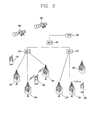
- FIG. 2 is a block diagram of a wireless communication system with which the mobile terminal illustrated in FIG. 1 is operable.
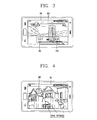
- FIG. 3 illustrates an example of a video reproduction screen image of a mobile terminal.
- FIG. 4 illustrates an example of 4X multiple velocity rewinding by using a touch gesture according to an embodiment of the present invention.
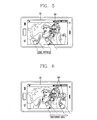
- FIG. 5 illustrates an example of 2X multiple velocity fast-forwarding by using a touch gesture according to an embodiment of the present invention.
- FIG. 6 illustrates an example of continuously displaying a multiple velocity icon according to the movement of a user's finger according to an embodiment of the present invention.
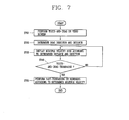
- FIG. 7 is a flow chart illustrating a method of controlling playback speed of a mobile terminal according to an embodiment of the present invention.
- Mobile terminals may be implemented in various forms.
- a terminal according the present invention may include mobile terminals such as mobile phones, smart phones, notebook computers, digital broadcast receivers, PDAs (Personal Digital Assistants), PMPs (Portable Multimedia Player), navigation devices, and similar devices.
- a mobile terminal according to the present invention may also include fixed terminals such as digital TVs, desk top computers and similar devices.
- the present invention is described with reference to a mobile terminal. However, it would be understood by a person in the art that the configuration according to the embodiments of the present invention are also applicable to the fixed types of terminals, except for any elements especially configured for a mobile purpose.
- FIG. 1 is a block diagram of a mobile terminal 100 according to an embodiment of the present invention.
- the mobile terminal 100 includes a wireless communication unit 110, an A/V (audio/video) input unit 120, a user input unit 130, a sensing unit 140, an output unit 150, a memory 160, an interface unit 170, a controller 180, and a power supply unit 190.
- FIG. 1 shows the mobile terminal 100 having various components, but it is understood that implementing all of the illustrated components is not a requirement. Greater or fewer components may alternatively be implemented.
- two or more of the wireless communication unit 110, the A/V input unit 120, the user input unit 130, the sensing unit 140, the output unit 150, the memory 160, the interface unit 170, the controller 180, and the power supply unit 190 may be incorporated into a single unit.
- some of the wireless communication unit 110, the A/V input unit 120, the user input unit 130, the sensing unit 140, the output unit 150, the memory 160, the interface unit 170, the controller 180, and the power supply unit 190 may be divided into two or more smaller units.
- FIG. 1 shows a wireless communication unit 110 configured with several commonly implemented components.
- the wireless communication unit 110 typically includes one or more components that permit wireless communication between the mobile terminal 100 and a wireless communication system or network within which the mobile terminal is located.
- the wireless communication unit 110 can include a broadcast receiving module 111, a mobile communication module 112, a wireless Internet module 113, a short-range communication module 114, and a location information module module 115. At least two broadcast receiving modules 111 can be provided to facilitate simultaneous reception of at least two broadcast channels or broadcast channel switching.
- the broadcast receiving module 111 receives a broadcast signal and/or broadcast associated information from an external broadcast managing server via a broadcast channel.
- the broadcast channel may include a satellite channel or a terrestrial channel.
- the broadcast managing server refers generally to a system that transmits a broadcast signal and/or broadcast associated information or a server which is provided with a previously generated broadcast signal and/or broadcast associated information.
- the broadcast messaging server then transmits the provided signal or information to a terminal.
- broadcast associated information examples include information associated with a broadcast channel, a broadcast program, and a broadcast service provider.
- the broadcast associated information may include an electronic program guide (EPG) of digital multimedia broadcasting (DMB) and electronic service guide (ESG) of digital video broadcast-handheld (DVB-H).
- EPG electronic program guide
- ESG electronic service guide
- the broadcast signal may be implemented as a TV broadcast signal, a radio broadcast signal, or a data broadcast signal.
- the broadcast signal may further include a broadcast signal combined with a TV or radio broadcast signal.
- the broadcast receiving module 111 may be configured to receive broadcast signals transmitted from various types of broadcast systems.
- broadcasting systems include digital multimedia broadcasting-terrestrial (DMB-T), digital multimedia broadcasting-satellite (DMB-S), digital video broadcast-handheld (DVB-H), DVB-CBMS, OMA-BCAST, the data broadcasting system known as media forward link only (MediaFLOR) and integrated services digital broadcast-terrestrial (ISDB-T).
- DMB-T digital multimedia broadcasting-terrestrial
- DMB-S digital multimedia broadcasting-satellite
- DVD-H digital video broadcast-handheld
- DVB-CBMS digital video broadcast-handheld
- OMA-BCAST OMA-BCAST
- MediaFLOR media forward link only
- ISDB-T integrated services digital broadcast-terrestrial
- the broadcast receiving module 111 may be configured to be suitable for nearly all types of broadcasting systems other than those set forth herein.
- the broadcast signal and/or the broadcast-related information received by the broadcast reception module 111 may be stored in the memory 160.
- the mobile communication module 112 communicates wireless signals with one or more network entities, such as base station or Node-B.
- Such signals may represent, for example, audio, video, multimedia, control signaling, or data.
- the wireless Internet module 113 supports Internet access for the mobile terminal 100.
- the wireless Internet module 113 may be internally or externally coupled to the mobile terminal 100.
- the wireless Internet technology can include, for example, WLAN (Wireless LAN), Wibro (Wireless broadband), Wimax (World Interoperability for Microwave Access), or HSDPA (High Speed Downlink Packet Access).
- the short-range communication module 114 facilitates relatively short-range communications.
- Suitable technologies for short-range communication may include, but are not limited to, radio frequency identification (RFID), infrared data association (IrDA), ultra-wideband (UWB), as well at the networking technologies commonly referred to as BluetoothR and ZigBeeR.
- RFID radio frequency identification
- IrDA infrared data association
- UWB ultra-wideband
- the location information module 115 checks or otherwise acquires the location or position of the mobile terminal 100.
- the Location information module 115 may receive position information from a plurality of GPS satellites.
- a typical example of the location information module 115 is a GPS (Global Positioning System).
- the GPS module 115 calculates distance information from three or more satellites and accurate time information.
- the GPS module 115 applies trigonometry to the calculated information in order to accurately calculate three-dimensional current location information according to latitude, longitude, and altitude.
- a method for calculating location and time information by using three satellites and correcting an error of the calculated location and time information using another one satellite exists.
- the GPS module 115 can also calculate speed information by continuously calculating the current location of the mobile terminal 100 in real time.
- the audio/video (A/V) input unit 120 is configured to provide audio or video signal input to the mobile terminal 100. As shown, the A/V input unit 120 includes a camera 121 and a microphone 122.
- the camera 121 receives and processes image frames of still pictures or video, which are obtained by an image sensor in a video call mode or a photographing mode.
- the processed image frames can be displayed on the display unit 151.
- the image frames processed by the camera 121 can be stored in the memory unit 160 or can be externally transmitted via the wireless communication unit 110.
- the microphone 122 receives an external audio signal while the mobile terminal 100 is in a particular mode, such as phone call mode, recording mode or voice recognition mode.
- the audio signal is processed and converted into digital data.
- the processed audio data is transformed into a format transmittable to a mobile communication base station via the mobile communication module 112 in a call mode.
- the microphone 122 typically includes assorted noise removing algorithms to remove noise generated in the course of receiving the external audio signal.
- Data generated by the A/V input unit 120 may be stored in the memory 160, utilized by the output unit 150, or transmitted via one or more modules of the wireless communication unit 110. If desired, two or more cameras 121 or microphones 122 may be provided.
- the user input unit 130 generates input data responsive to user manipulation of an associated input device or devices.
- Examples of such devices include a keypad, a dome switch, a touchpad such as static pressure/capacitance, a jog wheel and a jog switch.
- the sensing unit 140 provides status measurements of various aspects of the mobile terminal 100.
- the sensing unit 140 may detect an open/close status of the mobile terminal 100, the relative positioning of components such as a display and keypad, a change of position of the mobile terminal or a component of the mobile terminal, a presence or absence of user contact with the mobile terminal, or orientation or acceleration/deceleration of the mobile terminal.
- the mobile terminal 100 may be configured as a slide-type mobile terminal and the sensing unit 140 may sense whether a sliding portion of the mobile terminal is open or closed.
- the sensing unit 140 may also sense the presence or absence of power provided by the power supply unit 190 or the presence or absence of a coupling or other connection between the interface unit 170 and an external device.
- the sensing unit 140 may include a proximity sensor 141.
- the proximity sensor 141 may determine whether there is an object nearby and approaching the mobile terminal 100 without any mechanical contact with the entity. More specifically, the proximity sensor 141 may detect an object that is nearby and approaching by detecting a change in an alternating magnetic field or the rate of change of static capacitance.
- the sensing unit 140 may include two or more proximity sensors 141.
- the output unit 150 generates outputs relevant to the senses such as sight, hearing, and touch.
- the output unit 150 is illustrated in FIG. 1 as having a display unit 151, an audio output module 152, an alarm unit 153, and a haptic module 154.
- the display unit 151 is typically implemented to visually display or output information associated with the mobile terminal 100. For example, if the mobile terminal 100 is operating in a phone call mode, the display unit 151 will generally provide a user interface (Ul) or graphical user interface (GUI) that includes information associated with placing, conducting, and terminating a phone call. If the mobile terminal 100 is in a video call mode or a photographing mode, the display unit 151 may additionally or alternatively display images which are associated with these modes, the Ul or the GUI.
- Ul user interface
- GUI graphical user interface
- One particular implementation of the present invention includes the display unit 151 configured as a touch screen working in cooperation with an input device, such as a touchpad. If the display unit 151 and the user input unit 130 form a layer structure together that is implemented as a touch screen, the display unit 151 may be used as both an output device and an input device.
- the display unit 151 may be implemented using known display technologies including a liquid crystal display (LCD), a thin film transistor-liquid crystal display (TFT-LCD), an organic light-emitting diode display (OLED), a flexible display and a three-dimensional (3D) display.
- the mobile terminal 100 may include two or more display units 151.
- the mobile terminal 100 may include an external display unit (not shown) and an internal display unit (not shown).
- the audio output module 152 supports the audio output requirements of the mobile terminal 100.
- the audio output module 152 may be implemented using one or more speakers, buzzers, other audio producing devices, or combinations thereof.
- the audio output module 152 functions in various modes such as call-receiving mode, call-placing mode, recording mode, voice recognition mode and broadcast reception mode.
- the audio output module 152 outputs audio relating to a particular function or status, such as call received, message received, or errors.
- the alarm unit 153 may output an alarm signal indicating the occurrence of an event in the mobile terminal 100.
- An alarm signal for notifying the user of the occurrence of an event may be output not only by the alarm unit 153 but also by the display unit 151 or the audio output module 153.
- Examples of the event include receiving a call signal, receiving a message, and receiving a key signal.
- Examples of the alarm signal output by the alarm unit 153 include an audio signal, a video signal and a vibration signal.
- the alarm unit 153 may output an alarm signal upon receiving a call signal or a message.
- the alarm unit 153 may receive a key signal and output an alarm signal as feedback to the key signal. In this way, the user may be able to easily recognize the occurrence of an event based on an alarm signal output by the alarm unit 153.
- the haptic module 154 generates various tactile effects that can be sensed by a user. Vibration is a representative tactile effect generated by the haptic module 154.
- the memory 160 is generally used to store various types of data to support the processing, control, and storage requirements of the mobile terminal 100. Examples of data stored in the memory 160 include program instructions for applications operating in the mobile terminal 100, contact data, phonebook data, messages, pictures, and video.
- the memory 160 may be implemented using any type or combination of suitable volatile and non-volatile memory or storage devices. Examples of memory types are random access memory (RAM), static random access memory (SRAM), electrically erasable programmable read-only memory (EEPROM), erasable programmable read-only memory (EPROM), programmable read-only memory (PROM), read-only memory (ROM), magnetic memory, flash memory, magnetic or optical disk memory, multimedia card micro type memory, card-type memory, such as SD memory or XD memory, and other similar memory or data storage devices.
- RAM random access memory
- SRAM static random access memory
- EEPROM electrically erasable programmable read-only memory
- EPROM erasable programmable read-only memory
- PROM programmable read-only memory
- ROM read-only memory
- magnetic memory flash memory
- magnetic or optical disk memory multimedia card micro type memory
- card-type memory such as SD memory or XD memory
- multimedia card micro type memory such as SD memory or XD memory
- the interface unit 170 is often implemented to couple the mobile terminal 100 with external devices.
- the interface unit 170 receives data from the external devices or is supplied with power and then transfers the data or power to the respective elements of the mobile terminal 100 or enables data within the mobile terminal 100 to be transferred to the external devices.
- the interface unit 170 may be configured using a wired/wireless headset port, an external charger port, a wired/wireless data port, a memory card port, a port for coupling to a device having an identity module, audio input/output ports, video input/output ports, or an earphone port.
- the identity module is a chip for storing various kinds of information for authenticating a user's authority to use the mobile terminal 100 and can include a User Identify Module (UIM), a Subscriber Identity Module (SIM), or a Universal Subscriber Identity Module (USIM).
- UIM User Identify Module
- SIM Subscriber Identity Module
- USIM Universal Subscriber Identity Module
- a device having the identity module, or an 'identity device', can be manufactured as a smart card. Therefore, the identity device is connectible to the mobile terminal 100 via a corresponding port.
- the interface unit 170 When the mobile terminal 100 is connected to an external cradle, the interface unit 170 provides a passage for supplying the mobile terminal with power from the cradle or a passage for delivering various command signals to the mobile terminal that are input from the cradle by a user. Each of the various command signals input from the cradle or power can operate as a signal enabling the mobile terminal 100 to determine that it is correctly loaded in the cradle.
- the controller 180 typically controls the overall operations of the mobile terminal 100. For example, the controller 180 performs the control and processing associated with voice calls, data communications, instant message communication, video calls, camera operations and recording operations. Furthermore, the controller 180 may perform a pattern recognizing process for recognizing a writing input or a picture drawing input performed on the touch screen as characters or images.
- the controller 180 may include a multimedia module 181 that provides multimedia playback.
- the multimedia module 181 may be configured as part of the controller 180 or implemented as a separate component.
- the power supply unit 190 provides power required by the various components for the mobile terminal 100.
- the power may be internal power, external power, or combinations thereof.
- Various embodiments as described herein may be implemented in a computer-readable medium using, for example, computer software, hardware, or any combination thereof.
- the embodiments described herein may be implemented by using at least one of application specific integrated circuits (ASICs), digital signal processors (DSPs), digital signal processing devices (DSPDs), programmable logic devices (PLDs), field programmable gate arrays (FPGAs), processors, controllers, micro-controllers, microprocessors, electronic units designed to perform the functions described herein. In some cases, such embodiments may be implemented in the controller 180.
- ASICs application specific integrated circuits
- DSPs digital signal processors
- DSPDs digital signal processing devices
- PLDs programmable logic devices
- FPGAs field programmable gate arrays
- processors controllers, micro-controllers, microprocessors, electronic units designed to perform the functions described herein.
- controller 180 such embodiments may be implemented in the controller 180.
- the embodiments such as procedures or functions may be implemented together with separate software modules that allow performing of at least one function or operation.
- Software codes can be implemented by a software application (or program) written in any suitable programming language.
- the software codes may be stored in the memory 160 and executed by the controller 180.
- the previous description of the mobile terminal 100 has been from the perspective of its functions.
- the description of the present invention will be with regard to a slide-type mobile terminal.
- the present invention is applicable to any type of mobile terminals, such as folder-type, bar-type, swing-type, or slide type.
- the mobile terminal 100 shown in FIG. 1 may be configured to operate with a communication system that transmits data via frames or packets, such as wired and wireless communication systems, as well as satellite-based communication systems.
- a communication system that transmits data via frames or packets, such as wired and wireless communication systems, as well as satellite-based communication systems.
- Such communication systems in which the mobile terminal according to the present invention can operate will be described with reference to FIG. 2 .
- Such communication systems may use different air interfaces and/or physical layers.
- air interfaces utilized by the communication systems include frequency division multiple access (FDMA), time division multiple access (TDMA), code division multiple access (CDMA), and universal mobile telecommunications system (UMTS) such as long term evolution (LTE), global system for mobile communications (GSM), and other similar communication systems.
- FDMA frequency division multiple access
- TDMA time division multiple access
- CDMA code division multiple access
- UMTS universal mobile telecommunications system
- LTE long term evolution
- GSM global system for mobile communications
- the description of the present invention is related to a CDMA communication system.
- teachings apply equally to other types of systems.
- a CDMA wireless communication system may include a plurality of mobile terminals 100, a plurality of base stations (BSs) 270, base station controllers (BSCs) 275, and a mobile switching center (MSC) 280.
- the MSC 280 is configured to interface with a public switch telephone network (PSTN) 290.
- PSTN public switch telephone network
- the system as shown illustrated in FIG. 2 may include a plurality of BSCs 275.
- the MSC 280 is also configured to interface with the BSCs 275, which may be coupled to the base stations 270 via backhaul lines.
- the backhaul lines may be configured in accordance with any of several known interfaces including, for example, E1/T1, ATM, IP, PPP, Frame Relay, HDSL, ADSL, or xDSL.
- Each BS 270 may serve one or more sectors or regions, each sector or region covered by an omni-directional antenna or an antenna pointed in a particular direction radially away from the BS 270. Alternatively, each sector or region may be covered by two or more antennas for diversity reception. Each BS 270 may be configured to support a plurality of frequency assignments, with each frequency assignment having a particular spectrum, such as 1.25 MHz or 5 MHz
- the intersection of a sector and frequency assignment may be referred to as a CDMA channel.
- the BS 270 may also be referred to as base station transceiver subsystems (BTSs) or other equivalent terms.
- BTSs base station transceiver subsystems
- base station may be used to collectively refer to a single BSC 275 and at least one BS 270.
- the base station may also be referred to as a "cell site.”
- individual sectors of a particular BS 270 may be referred to as a plurality of cell sites.
- a broadcasting transmitter (BT) 295 transmits a broadcast signal to the mobile terminals 100 operating within the system.
- the broadcast receiving module 111 is provided in the mobile terminal 100 to receive broadcast signals transmitted by the BT 295.
- FIG. 2 illustrates several global positioning system (GPS) satellites 300.
- the GPS satellites 300 help locate at least one of a plurality of mobile terminals 100. Although several GPS satellites 300 are depicted in FIG. 2 , it is understood that useful positioning information may be obtained with any number of GPS satellites.
- the Location information module 115 is typically configured to cooperate with the GPS satellites 300 to obtain desired positioning information.
- GPS tracking techniques instead of or in addition to GPS tracking techniques, other technologies to track the location of the mobile terminals 100 may be used.
- at least one of the GPS satellites 300 may selectively or additionally handle satellite DMB transmissions.
- the BSs 270 receive reverse-link signals from various mobile terminals 100.
- the mobile terminals 100 typically engage in calls, messaging, and other types of communications.
- Each reverse-link signal received by a particular base station 270 is processed within the particular BS 270.
- the resulting data is forwarded to an associated BSC 275.
- the BSC 275 provides call resource allocation and mobility management functionality including the coordination of soft handoff procedures between BSs 270.
- the BSCs 275 also route the received data to the MSC 280, which provides additional routing services for interfacing with the PSTN 290.
- the PSTN 290 interfaces with the MSC 280
- the MSC interfaces with the BSCs 275
- the BSCs 275 in turn control the BSs 270 to transmit forward-link signals to the mobile terminals 100.
- the present invention provides a method whereby a playback speed and direction of video, such as fast-forward, rewind, and multiple velocity, may be determined via a touch gesture when the user views a video displayed on a display unit of a mobile terminal 100.
- a touch gesture may be a touch-and-drag operation, with the playback speed and direction of the video determined according to the direction and distance of the touch-and-drag operation.
- FIG. 3 illustrates a general video reproduction screen image of a mobile terminal 100 according to an embodiment of the present invention.
- a video reproduction image is displayed on the display unit 151.
- Buttons 350 and 351 for performing fast-forward and rewind are provided at a lower end portion of the video reproduction image and a reproduction bar 352 indicating the degree or a reproduction rate of the current video is provided to an upper end portion of the video reproduction image.
- the fast-forward button 350 or the rewind button 351 may be pressed or the reproduction bar 352 may be moved in order to move to the corresponding scene.
- the present invention provides a method for controlling a playback speed using a gesture capable of accomplishing the quick mobility of the reproduction bar 352 and the accuracy of the fast-forward button 350 and rewind button 351.
- FIG. 4 illustrates an example of 4 times multiple velocity (4X) rewinding by using a touch gesture according to an embodiment of the present invention.
- the user determines fast-forward, rewind, and a multiple velocity via a finger gesture, such as a touch-and-drag operation, on a screen in which a video is being reproduced.
- the direction and distance of the touch gesture are detected by a touch sensor provided in the sensing unit 140.
- the controller 180 may perform a fast-forward or rewind operation according to the dragged finger direction. For example, when the user drags his finger to the right, the controller 180 performs the 'fast-forward' operation and when the user drags his finger to the left, the controller 180 performs the 'rewind' operation.
- the controller 180 also determines an appropriate multiple velocity ranging from 0.5X to 8X according to the distance along which the user's finger is dragged.
- the multiple velocities according to the drag distances are stored in table form in the memory 160.
- the determined multiple velocity is displayed in a certain area, such as with a multiple velocity icon 360 at an upper side of the first touched point, along with the display of an indicator of fast-forward or rewind
- the multiple velocity icon 360 is continuously displayed whenever the user's finger moves.
- the controller 180 When the user drags his finger to the left while touching the first point, the controller 180 continuously displays the multiple velocity icon 360 indicating the multiple velocity ranging from 0.5X to 4X according to the drag distance. When the user's finger stops at a second point, the controller 180 displays the multiple velocity icon 360 including a rewind display and a 4X multiple velocity display. When the user releases his finger from the second point, the controller 180 performs rewinding at 4X multiple velocity on the video currently being reproduced.
- FIG. 5 illustrates an example of 2 times multiple velocity (or 2X) fast-forwarding by using a touch gesture according to an embodiment of the present invention.
- the controller 180 determines a multiple velocity (0.5X to 8X) corresponding to the drag distance and continuously displays the multiple velocity icon 360.
- the controller 180 displays the multiple velocity icon 360 including a fast-forward display and 4X display.
- the controller 180 performs fast-forward operation at 2X multiple velocity on the video being currently reproduced.
- FIG. 6 illustrates an example of continuously displaying a multiple velocity icon 360 according to the movement of a user's finger according to an embodiment of the present invention.
- the controller 180 recognizes a movement distance when the user drags his finger and displays a multiple velocity icon 360 indicating a multiple velocity ranging from 0.5X to 8X.
- FIG. 7 is a flow chart illustrating a method of controlling a playback speed of a mobile terminal 100 according to an embodiment of the present invention.
- the controller 180 determines the drag direction and the drag distance based on an output value of the touch sensor of the sensing unit 140 (step S720).
- the controller 180 determines whether to rewind or fast-forward according to the determined direction.
- the drag distance is increased and the controller 180 continuously displays a multiple velocity icon 360 corresponding to the increased distance and the determined rewind or fast-forward operation (step S730).
- the multiple velocity determined according to the drag distance is stored in the form of a table in the memory 160.
- the controller 180 When the user releases his finger from a position corresponding to a desired multiple velocity, the controller 180 recognizes that the touch-and-drag operation has been terminated (step S70) and recognizes that the user wants to rewind or fast-forward the video at a multiple velocity corresponding to the position. The controller 180 then rewinds or fast-forwards the video according to the determined multiple velocity (step S750).
- the present invention performs a rewinding or fast-forwarding operation according to the movement direction of the user's finger and displays the multiple velocity according to the distance by which the user's finger has moved. In this way, fast-forwarding or rewinding a video at various speeds is facilitated.
- the method of the present invention can be implemented as software codes read by a computer in a program-recorded medium.
- the computer-readable medium may include various types of recording devices in which data that can be read by a computer system is stored.
- the computer-readable medium may include a ROM, a RAM, a CD-ROM, a magnetic tape, a floppy disk, an optical data storage device, and similar devices.
- the computer-readable medium also includes implementations in the form of carrier waves or signals, such as transmission via the Internet.
- the computer may include the controller 180 of the terminal 100.
Landscapes
- Engineering & Computer Science (AREA)
- General Engineering & Computer Science (AREA)
- Theoretical Computer Science (AREA)
- Human Computer Interaction (AREA)
- Physics & Mathematics (AREA)
- General Physics & Mathematics (AREA)
- Computer Networks & Wireless Communication (AREA)
- Signal Processing (AREA)
- Telephone Function (AREA)
- User Interface Of Digital Computer (AREA)
- Television Signal Processing For Recording (AREA)
Applications Claiming Priority (1)
| Application Number | Priority Date | Filing Date | Title |
|---|---|---|---|
| KR1020100092921A KR20120031399A (ko) | 2010-09-24 | 2010-09-24 | 이동 단말기 및 그의 재생속도 제어 방법 |
Publications (2)
| Publication Number | Publication Date |
|---|---|
| EP2434490A2 true EP2434490A2 (de) | 2012-03-28 |
| EP2434490A3 EP2434490A3 (de) | 2014-11-05 |
Family
ID=44532526
Family Applications (1)
| Application Number | Title | Priority Date | Filing Date |
|---|---|---|---|
| EP11005879.9A Withdrawn EP2434490A3 (de) | 2010-09-24 | 2011-07-18 | Tragbares Endgerät und Verfahren zur Steuerung der Wiedergabegeschwindigkeit dieses Geräts |
Country Status (4)
| Country | Link |
|---|---|
| US (1) | US20120079386A1 (de) |
| EP (1) | EP2434490A3 (de) |
| KR (1) | KR20120031399A (de) |
| CN (1) | CN102419685A (de) |
Cited By (3)
| Publication number | Priority date | Publication date | Assignee | Title |
|---|---|---|---|---|
| WO2014099893A3 (en) * | 2012-12-17 | 2014-08-21 | Motorola Mobility Llc | Multi-touch gesture for movement of media |
| EP2859551A4 (de) * | 2012-06-08 | 2016-04-13 | Lg Electronics Inc | Videobearbeitungsverfahren und digitale vorrichtung dafür |
| EP2998853A4 (de) * | 2013-10-28 | 2016-07-27 | Huawei Tech Co Ltd | Verfahren und vorrichtung zur einstellung einer wiedergabe |
Families Citing this family (35)
| Publication number | Priority date | Publication date | Assignee | Title |
|---|---|---|---|---|
| US20130246948A1 (en) * | 2012-03-16 | 2013-09-19 | Lenovo (Beijing) Co., Ltd. | Control method and control device |
| EP2672374A1 (de) | 2012-06-05 | 2013-12-11 | algoriddim GmbH | Erkennung von Kreisbewegungen in einem zweidimensionalen Raum |
| JP2014071669A (ja) * | 2012-09-28 | 2014-04-21 | Toshiba Corp | 情報表示装置、制御方法及びプログラム |
| CN103914126A (zh) * | 2012-12-31 | 2014-07-09 | 腾讯科技(深圳)有限公司 | 一种多媒体播放器控制方法和装置 |
| CN103076985B (zh) * | 2013-01-31 | 2016-03-02 | 北京魔力时间科技有限公司 | 基于触屏精确操控和显示视频播放进度装置及使用方法 |
| KR101366150B1 (ko) * | 2013-06-21 | 2014-02-25 | (주)티비스톰 | 동영상 재생속도 제어 사용자 인터페이싱 방법 및 그 방법을 실행하는 프로그램이 기록된 컴퓨터로 읽을 수 있는 기록매체 |
| KR20150006720A (ko) * | 2013-07-09 | 2015-01-19 | 엘지전자 주식회사 | 이동단말기 및 그 제어방법 |
| US10990214B2 (en) * | 2014-06-18 | 2021-04-27 | Google Llc | Methods, systems, and media for controlling playback of video using a touchscreen |
| CN106537891B (zh) * | 2014-08-12 | 2020-09-04 | 索尼公司 | 信息处理设备、程序和信息处理方法 |
| US10162516B2 (en) | 2015-05-22 | 2018-12-25 | Casio Computer Co., Ltd. | Display apparatus for displaying images |
| JP6098681B2 (ja) * | 2015-05-22 | 2017-03-22 | カシオ計算機株式会社 | 表示装置、表示方法及びプログラム |
| US10503264B1 (en) | 2015-06-16 | 2019-12-10 | Snap Inc. | Radial gesture navigation |
| KR102399791B1 (ko) | 2015-08-18 | 2022-05-20 | 삼성전자주식회사 | 콘텐츠 탐색 인터페이스 제공 방법 및 이를 지원하는 전자 장치 |
| KR101714207B1 (ko) * | 2015-09-02 | 2017-03-08 | 엘지전자 주식회사 | 이동 단말기 및 그의 제어 방법 |
| US10109319B2 (en) | 2016-01-08 | 2018-10-23 | Gopro, Inc. | Digital media editing |
| US9812175B2 (en) | 2016-02-04 | 2017-11-07 | Gopro, Inc. | Systems and methods for annotating a video |
| US10397632B2 (en) * | 2016-02-16 | 2019-08-27 | Google Llc | Touch gesture control of video playback |
| US10530731B1 (en) | 2016-03-28 | 2020-01-07 | Snap Inc. | Systems and methods for chat with audio and video elements |
| GB201610752D0 (en) * | 2016-06-20 | 2016-08-03 | Flavourworks Ltd | Method for delivering an interactive video |
| CN106303631B (zh) * | 2016-08-17 | 2019-11-19 | 浙江大华技术股份有限公司 | 一种视频播放进度控制方法及装置 |
| WO2018058480A1 (zh) * | 2016-09-29 | 2018-04-05 | 深圳市汇顶科技股份有限公司 | 指纹导航方法及指纹导航信号产生的装置 |
| CN107105163B (zh) * | 2017-04-28 | 2020-12-18 | 努比亚技术有限公司 | 一种视频拍摄方法、播放方法及装置 |
| CN107277580B (zh) * | 2017-05-24 | 2019-07-05 | 中广热点云科技有限公司 | 一种在手机上缓存欲回放的电视节目的方法 |
| US20240036721A1 (en) * | 2017-07-01 | 2024-02-01 | Oliver H. Melgrove | Portable device with adjustable stopwatch feature |
| US11641439B2 (en) * | 2018-10-29 | 2023-05-02 | Henry M. Pena | Real time video special effects system and method |
| US10388322B1 (en) | 2018-10-29 | 2019-08-20 | Henry M. Pena | Real time video special effects system and method |
| US11218646B2 (en) * | 2018-10-29 | 2022-01-04 | Henry M. Pena | Real time video special effects system and method |
| US10404923B1 (en) | 2018-10-29 | 2019-09-03 | Henry M. Pena | Real time video special effects system and method |
| US11689686B2 (en) * | 2018-10-29 | 2023-06-27 | Henry M. Pena | Fast and/or slowmotion compensating timer display |
| US12452383B2 (en) * | 2018-10-29 | 2025-10-21 | Henry M. Pena | Fast and/or slow motion compensating timer display |
| US20220066631A1 (en) * | 2018-12-24 | 2022-03-03 | Oktein Technology Limited | System and method for playing video content |
| WO2022040308A1 (en) * | 2020-08-18 | 2022-02-24 | Pena Henry M | Real time video special effects system and method |
| CN112684952B (zh) * | 2020-12-18 | 2022-06-14 | 网易(杭州)网络有限公司 | 视频播放控制方法、装置及电子设备 |
| CN113320448B (zh) * | 2021-06-01 | 2022-07-29 | 智己汽车科技有限公司 | 一种座椅调节方法、装置及计算机可读存储介质 |
| CN114598912B (zh) * | 2022-02-10 | 2024-05-10 | 互影科技(北京)有限公司 | 一种多媒体文件显示方法、装置、存储介质及电子设备 |
Family Cites Families (27)
| Publication number | Priority date | Publication date | Assignee | Title |
|---|---|---|---|---|
| US5202961A (en) * | 1990-06-08 | 1993-04-13 | Apple Computer, Inc. | Sequential information controller |
| DE69230186T2 (de) * | 1991-11-28 | 2000-05-11 | Sony Corp., Tokio/Tokyo | Videosignalwiedergabegerät |
| JP4281127B2 (ja) * | 1998-10-16 | 2009-06-17 | ソニー株式会社 | 画像再生装置 |
| US6624826B1 (en) * | 1999-09-28 | 2003-09-23 | Ricoh Co., Ltd. | Method and apparatus for generating visual representations for audio documents |
| KR100403238B1 (ko) * | 2000-09-30 | 2003-10-30 | 엘지전자 주식회사 | 비디오의 지능형 빨리 보기 시스템 |
| JP2004104594A (ja) * | 2002-09-11 | 2004-04-02 | Toshiba Corp | デジタルスチルカメラ及びユーザ指示入力方法 |
| US7233316B2 (en) * | 2003-05-01 | 2007-06-19 | Thomson Licensing | Multimedia user interface |
| JP2007525115A (ja) * | 2004-01-29 | 2007-08-30 | コーニンクレッカ フィリップス エレクトロニクス エヌ ヴィ | ビデオ再生装置のオンスクリーン制御 |
| US7519223B2 (en) * | 2004-06-28 | 2009-04-14 | Microsoft Corporation | Recognizing gestures and using gestures for interacting with software applications |
| JP2006157345A (ja) * | 2004-11-29 | 2006-06-15 | Matsushita Electric Ind Co Ltd | 映像信号再生装置 |
| JP2006323664A (ja) * | 2005-05-19 | 2006-11-30 | Sony Corp | 電子機器 |
| KR101259116B1 (ko) * | 2006-09-29 | 2013-04-26 | 엘지전자 주식회사 | 콘트롤러 및 콘트롤러에서 키이 코드를 발생하는 방법 |
| US20080084400A1 (en) * | 2006-10-10 | 2008-04-10 | Outland Research, Llc | Touch-gesture control of video media play on handheld media players |
| US7827490B2 (en) * | 2006-11-30 | 2010-11-02 | Microsoft Corporation | Media state user interface |
| US7956847B2 (en) * | 2007-01-05 | 2011-06-07 | Apple Inc. | Gestures for controlling, manipulating, and editing of media files using touch sensitive devices |
| KR20080104858A (ko) * | 2007-05-29 | 2008-12-03 | 삼성전자주식회사 | 터치 스크린 기반의 제스쳐 정보 제공 방법 및 장치, 그장치를 포함하는 정보 단말 기기 |
| KR100837283B1 (ko) * | 2007-09-10 | 2008-06-11 | (주)익스트라스탠다드 | 터치스크린을 구비한 휴대용 단말기 |
| US9767681B2 (en) * | 2007-12-12 | 2017-09-19 | Apple Inc. | Handheld electronic devices with remote control functionality and gesture recognition |
| WO2009080653A1 (en) * | 2007-12-20 | 2009-07-02 | Purple Labs | Method and system for moving a cursor and selecting objects on a touchscreen using a finger pointer |
| US8405621B2 (en) * | 2008-01-06 | 2013-03-26 | Apple Inc. | Variable rate media playback methods for electronic devices with touch interfaces |
| US20090207140A1 (en) * | 2008-02-19 | 2009-08-20 | Sony Ericsson Mobile Communications Ab | Identifying and responding to multiple time-overlapping touches on a touch panel |
| JP2009245239A (ja) * | 2008-03-31 | 2009-10-22 | Sony Corp | ポインタ表示装置、ポインタ表示検出方法、ポインタ表示検出プログラム及び情報機器 |
| KR101565378B1 (ko) * | 2008-09-03 | 2015-11-03 | 엘지전자 주식회사 | 이동단말기 및 그 제어 방법 |
| JP4666053B2 (ja) * | 2008-10-28 | 2011-04-06 | ソニー株式会社 | 情報処理装置、情報処理方法およびプログラム |
| JP4811452B2 (ja) * | 2008-11-19 | 2011-11-09 | ソニー株式会社 | 画像処理装置、画像表示方法および画像表示プログラム |
| US20100218135A1 (en) * | 2009-02-26 | 2010-08-26 | Thomas Stanton Brugler | Cursor thumbnail displaying page layout |
| US8572513B2 (en) * | 2009-03-16 | 2013-10-29 | Apple Inc. | Device, method, and graphical user interface for moving a current position in content at a variable scrubbing rate |
-
2010
- 2010-09-24 KR KR1020100092921A patent/KR20120031399A/ko not_active Withdrawn
-
2011
- 2011-07-15 US US13/184,415 patent/US20120079386A1/en not_active Abandoned
- 2011-07-18 EP EP11005879.9A patent/EP2434490A3/de not_active Withdrawn
- 2011-08-30 CN CN2011102534989A patent/CN102419685A/zh active Pending
Non-Patent Citations (1)
| Title |
|---|
| None |
Cited By (9)
| Publication number | Priority date | Publication date | Assignee | Title |
|---|---|---|---|---|
| EP2859551A4 (de) * | 2012-06-08 | 2016-04-13 | Lg Electronics Inc | Videobearbeitungsverfahren und digitale vorrichtung dafür |
| US9401177B2 (en) | 2012-06-08 | 2016-07-26 | Lg Electronics Inc. | Video editing method and digital device therefor |
| WO2014099893A3 (en) * | 2012-12-17 | 2014-08-21 | Motorola Mobility Llc | Multi-touch gesture for movement of media |
| EP2998853A4 (de) * | 2013-10-28 | 2016-07-27 | Huawei Tech Co Ltd | Verfahren und vorrichtung zur einstellung einer wiedergabe |
| JP2016539441A (ja) * | 2013-10-28 | 2016-12-15 | 華為技術有限公司Huawei Technologies Co.,Ltd. | 再生調節方法および装置 |
| US9978422B2 (en) | 2013-10-28 | 2018-05-22 | Huawei Technologies Co., Ltd. | Playback regulation method and apparatus |
| CN108108100A (zh) * | 2013-10-28 | 2018-06-01 | 华为技术有限公司 | 一种调节播放的方法及装置 |
| EP3441867A1 (de) * | 2013-10-28 | 2019-02-13 | Huawei Technologies Co., Ltd. | Wiedergaberegulierungsverfahren und -vorrichtung |
| CN108108100B (zh) * | 2013-10-28 | 2021-06-22 | 华为技术有限公司 | 一种调节播放的方法及装置 |
Also Published As
| Publication number | Publication date |
|---|---|
| EP2434490A3 (de) | 2014-11-05 |
| US20120079386A1 (en) | 2012-03-29 |
| KR20120031399A (ko) | 2012-04-03 |
| CN102419685A (zh) | 2012-04-18 |
Similar Documents
| Publication | Publication Date | Title |
|---|---|---|
| EP2434490A2 (de) | Tragbares Endgerät und Verfahren zur Steuerung der Wiedergabegeschwindigkeit dieses Geräts | |
| US10126866B2 (en) | Terminal, controlling method thereof and recordable medium for the same | |
| US8171427B2 (en) | Mobile terminal and controlling method thereof | |
| US8170620B2 (en) | Mobile terminal and keypad displaying method thereof | |
| US8169448B2 (en) | Mobile terminal and display method thereof | |
| US8565828B2 (en) | Mobile terminal having touch sensor-equipped input device and control method thereof | |
| US9182896B2 (en) | Terminal and method of control | |
| KR101592033B1 (ko) | 이동 단말기 및 그 화면 분할 방법 | |
| US20090262087A1 (en) | Terminal and method for recognizing image therein | |
| US8494494B2 (en) | Mobile terminal and method of controlling mobile terminal | |
| US20100304788A1 (en) | Mobile terminal and controlling method thereof | |
| EP2157777B1 (de) | Mobiles Endgerät und zugehöriges Geotagging-Verfahren | |
| EP2160024B1 (de) | Endgerät, Steuerverfahren und aufzeichnungsfähiges Medium dafür | |
| US8443018B2 (en) | Mobile terminal and unit converting method thereof | |
| EP3218790B1 (de) | Mobiles endgerät und verfahren zur steuerung davon | |
| KR20120010525A (ko) | 이동 단말기 및 그의 화면회전 제어방법 | |
| KR20120071934A (ko) | 이동 단말기 및 그의 연속적인 키 입력 처리방법 | |
| KR101134742B1 (ko) | 이동 단말기 및 그의 데이타 재생 제어방법 |
Legal Events
| Date | Code | Title | Description |
|---|---|---|---|
| PUAI | Public reference made under article 153(3) epc to a published international application that has entered the european phase |
Free format text: ORIGINAL CODE: 0009012 |
|
| AK | Designated contracting states |
Kind code of ref document: A2 Designated state(s): AL AT BE BG CH CY CZ DE DK EE ES FI FR GB GR HR HU IE IS IT LI LT LU LV MC MK MT NL NO PL PT RO RS SE SI SK SM TR |
|
| AX | Request for extension of the european patent |
Extension state: BA ME |
|
| PUAL | Search report despatched |
Free format text: ORIGINAL CODE: 0009013 |
|
| AK | Designated contracting states |
Kind code of ref document: A3 Designated state(s): AL AT BE BG CH CY CZ DE DK EE ES FI FR GB GR HR HU IE IS IT LI LT LU LV MC MK MT NL NO PL PT RO RS SE SI SK SM TR |
|
| AX | Request for extension of the european patent |
Extension state: BA ME |
|
| RIC1 | Information provided on ipc code assigned before grant |
Ipc: G11B 19/02 20060101ALI20141002BHEP Ipc: G11B 27/00 20060101AFI20141002BHEP Ipc: G11B 27/34 20060101ALI20141002BHEP Ipc: G06F 3/048 20130101ALI20141002BHEP |
|
| STAA | Information on the status of an ep patent application or granted ep patent |
Free format text: STATUS: THE APPLICATION IS DEEMED TO BE WITHDRAWN |
|
| 18D | Application deemed to be withdrawn |
Effective date: 20150203 |