EP2413899B1 - Dental anesthetic comprising tetracaine and a vasoconstrictor for intranasal administration - Google Patents
Dental anesthetic comprising tetracaine and a vasoconstrictor for intranasal administration Download PDFInfo
- Publication number
- EP2413899B1 EP2413899B1 EP10714119.4A EP10714119A EP2413899B1 EP 2413899 B1 EP2413899 B1 EP 2413899B1 EP 10714119 A EP10714119 A EP 10714119A EP 2413899 B1 EP2413899 B1 EP 2413899B1
- Authority
- EP
- European Patent Office
- Prior art keywords
- pharmaceutical composition
- composition according
- nasal
- tetracaine
- subject
- Prior art date
- Legal status (The legal status is an assumption and is not a legal conclusion. Google has not performed a legal analysis and makes no representation as to the accuracy of the status listed.)
- Active
Links
Images

Classifications
-
- A—HUMAN NECESSITIES
- A61—MEDICAL OR VETERINARY SCIENCE; HYGIENE
- A61K—PREPARATIONS FOR MEDICAL, DENTAL OR TOILETRY PURPOSES
- A61K31/00—Medicinal preparations containing organic active ingredients
- A61K31/21—Esters, e.g. nitroglycerine, selenocyanates
- A61K31/215—Esters, e.g. nitroglycerine, selenocyanates of carboxylic acids
- A61K31/235—Esters, e.g. nitroglycerine, selenocyanates of carboxylic acids having an aromatic ring attached to a carboxyl group
- A61K31/24—Esters, e.g. nitroglycerine, selenocyanates of carboxylic acids having an aromatic ring attached to a carboxyl group having an amino or nitro group
- A61K31/245—Amino benzoic acid types, e.g. procaine, novocaine
-
- A—HUMAN NECESSITIES
- A61—MEDICAL OR VETERINARY SCIENCE; HYGIENE
- A61K—PREPARATIONS FOR MEDICAL, DENTAL OR TOILETRY PURPOSES
- A61K31/00—Medicinal preparations containing organic active ingredients
- A61K31/33—Heterocyclic compounds
- A61K31/395—Heterocyclic compounds having nitrogen as a ring hetero atom, e.g. guanethidine or rifamycins
- A61K31/41—Heterocyclic compounds having nitrogen as a ring hetero atom, e.g. guanethidine or rifamycins having five-membered rings with two or more ring hetero atoms, at least one of which being nitrogen, e.g. tetrazole
- A61K31/4164—1,3-Diazoles
-
- A—HUMAN NECESSITIES
- A61—MEDICAL OR VETERINARY SCIENCE; HYGIENE
- A61K—PREPARATIONS FOR MEDICAL, DENTAL OR TOILETRY PURPOSES
- A61K31/00—Medicinal preparations containing organic active ingredients
- A61K31/33—Heterocyclic compounds
- A61K31/395—Heterocyclic compounds having nitrogen as a ring hetero atom, e.g. guanethidine or rifamycins
- A61K31/41—Heterocyclic compounds having nitrogen as a ring hetero atom, e.g. guanethidine or rifamycins having five-membered rings with two or more ring hetero atoms, at least one of which being nitrogen, e.g. tetrazole
- A61K31/4164—1,3-Diazoles
- A61K31/4174—Arylalkylimidazoles, e.g. oxymetazolin, naphazoline, miconazole
-
- A—HUMAN NECESSITIES
- A61—MEDICAL OR VETERINARY SCIENCE; HYGIENE
- A61K—PREPARATIONS FOR MEDICAL, DENTAL OR TOILETRY PURPOSES
- A61K47/00—Medicinal preparations characterised by the non-active ingredients used, e.g. carriers or inert additives; Targeting or modifying agents chemically bound to the active ingredient
- A61K47/06—Organic compounds, e.g. natural or synthetic hydrocarbons, polyolefins, mineral oil, petrolatum or ozokerite
- A61K47/08—Organic compounds, e.g. natural or synthetic hydrocarbons, polyolefins, mineral oil, petrolatum or ozokerite containing oxygen, e.g. ethers, acetals, ketones, quinones, aldehydes, peroxides
- A61K47/10—Alcohols; Phenols; Salts thereof, e.g. glycerol; Polyethylene glycols [PEG]; Poloxamers; PEG/POE alkyl ethers
-
- A—HUMAN NECESSITIES
- A61—MEDICAL OR VETERINARY SCIENCE; HYGIENE
- A61K—PREPARATIONS FOR MEDICAL, DENTAL OR TOILETRY PURPOSES
- A61K9/00—Medicinal preparations characterised by special physical form
- A61K9/0012—Galenical forms characterised by the site of application
- A61K9/0043—Nose
-
- A—HUMAN NECESSITIES
- A61—MEDICAL OR VETERINARY SCIENCE; HYGIENE
- A61K—PREPARATIONS FOR MEDICAL, DENTAL OR TOILETRY PURPOSES
- A61K9/00—Medicinal preparations characterised by special physical form
- A61K9/14—Particulate form, e.g. powders, Processes for size reducing of pure drugs or the resulting products, Pure drug nanoparticles
-
- A—HUMAN NECESSITIES
- A61—MEDICAL OR VETERINARY SCIENCE; HYGIENE
- A61M—DEVICES FOR INTRODUCING MEDIA INTO, OR ONTO, THE BODY; DEVICES FOR TRANSDUCING BODY MEDIA OR FOR TAKING MEDIA FROM THE BODY; DEVICES FOR PRODUCING OR ENDING SLEEP OR STUPOR
- A61M19/00—Local anaesthesia; Hypothermia
-
- A—HUMAN NECESSITIES
- A61—MEDICAL OR VETERINARY SCIENCE; HYGIENE
- A61P—SPECIFIC THERAPEUTIC ACTIVITY OF CHEMICAL COMPOUNDS OR MEDICINAL PREPARATIONS
- A61P1/00—Drugs for disorders of the alimentary tract or the digestive system
- A61P1/02—Stomatological preparations, e.g. drugs for caries, aphtae, periodontitis
-
- A—HUMAN NECESSITIES
- A61—MEDICAL OR VETERINARY SCIENCE; HYGIENE
- A61P—SPECIFIC THERAPEUTIC ACTIVITY OF CHEMICAL COMPOUNDS OR MEDICINAL PREPARATIONS
- A61P23/00—Anaesthetics
- A61P23/02—Local anaesthetics
-
- A—HUMAN NECESSITIES
- A61—MEDICAL OR VETERINARY SCIENCE; HYGIENE
- A61K—PREPARATIONS FOR MEDICAL, DENTAL OR TOILETRY PURPOSES
- A61K2300/00—Mixtures or combinations of active ingredients, wherein at least one active ingredient is fully defined in groups A61K31/00 - A61K41/00
Definitions
- the present invention relates to tetracaine based anesthetic formulations and methods of use thereof.
- the invention further relates to topical formulations of tetracaine for use in topically anesthetizing body tissues.
- the present invention also relates to tetracaine based dental anesthetic formulations for anesthetizing the maxillary dental arch using these formulations.
- the most common means for anesthetizing maxillary teeth is the use of an infiltration injection.
- the patient may receive a needle penetration and injection of a local anesthetic solution at the approximate apex of the root on the buccal surface of a tooth (or teeth) to be treated.
- a maxillary palatal injection of dental local anesthetic can be used for regional block anesthesia of teeth.
- the patient may also receive a maxillary palatal injection of local anesthesia in order to effect regional nerve blocks.
- Dental anxiety including needle or shot discomfort and phobia, is a longstanding barrier to regular dental care.
- Needle injection of local anesthetic is recognized as the most anxiety-provoking procedure in dentistry for children and adults. Not only can the injection of local anesthetics produce fear, pain and an increase in blood pressure, but the increased stress of injection can result in fainting, hyperventilation, convulsions, shock, hypertension, cardiac arrest, respiratory collapse, acute allergic reaction to preservatives, bronchospasm, angina, and organ system toxicity in medically compromised patients.
- Lidocaine the most widely used local dental anesthetic today, was first introduced in the 1940s.
- Oraqix® gel the only widely-used non-injectable, subsurface local anesthetic commercially available today is Oraqix® gel.
- Oraqix® can be used in periodontal pockets during scaling or root-planing procedures, it does not provide adequate anesthesia for use in procedures such as filling, crowns and root canals.
- behavior modification therapy topical numbing around the injection site, nitrous oxide, hypnosis, and TENS units, none of these advances has eliminated the need for needle injection.
- Nasal administration of anesthetics has also been disclosed, for example, in United States Patent 6,413,499 .
- the present invention provides a tetracaine based anesthetic as set out in the claims.
- the present invention provides a tetracaine based anesthetic formulation which is useful for anesthetizing at least a portion of a body part, organ, or tissue.
- the present invention provides a nasal tetracaine based dental anesthetic formulation which is useful for anesthetizing the maxillary dental arch.
- the invention is based on delivering anesthetic to specific areas in the nasal cavity and/or nasal sinuses such as the maxillary sinus.
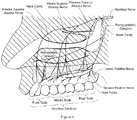
- the invention is also based on delivering the anesthetic to the anterior dental plexus, extensions of the middle superior nerve, the posterior superior alveolar nerve, the nociceptors of the facial and buccal nerve, and/or the sphenopalatine (pterygopalatine) ganglion.
- the nerves of the upper teeth are like branches of a tree that extend through the nasal cavity down into the teeth.
- the pharmaceutical composition of the present invention is administered into the rear of the nasal cavity, affecting the base, or "trunk,” of the nerve pathways. This anesthetizes the branches that transmit nerve impulses from all of the upper teeth (other than the two wisdom teeth and the second molar on each side) as well as the A delta and C pain fibers of the facial soft tissue. In some cases, the second molars are indeed anesthetized.
- the invention provides a pharmaceutical composition
- a pharmaceutical composition comprising a) tetracaine, or a pharmaceutically acceptable salt thereof; b) a vasoconstrictor; and c) a pharmaceutically acceptable carrier.
- the pharmaceutical composition comprises a) tetracaine, or a pharmaceutically acceptable salt thereof; b) a vasoconstrictor; c) a preservative; d) a viscosity enhancing agent; and e) a pharmaceutically acceptable carrier.
- the composition comprises about 3% (w/v) tetracaine.
- the pharmaceutical composition is for intranasal administration.
- vasoconstrictors that may be included in the pharmaceutical compositions of the invention (including the intranasal pharmaceutical composition) include, but are not limited to, indirect ⁇ 1 -adrenergic; calcium channel blockers; meperidine; imidazole drugs such as oxymetazoline and xylometazoline; ⁇ 2 -adrenergic agonists such as guanfacine; imidazoline (I 1 ) ligands; direct ⁇ 2 -adrenergic agonists such as clonidine; substance P blockers/reducers such as capsaicin; I-menthol; icilin; epinephrine (i.e., adrenaline); levonordefrin (i.e., nordefrin); and glutamate receptor inhibitors; or pharmaceutically acceptable salts thereof.
- the vasoconstrictor is oxymetazoline, or a pharmaceutically acceptable salt thereof.
- the oxymetazoline is an organic compound that may be included
- the pharmaceutical composition comprises about 0.01-1.0% (w/v) oxymetazoline HCI. In other embodiments, the pharmaceutical composition comprises about 0.05% (w/v) oxymetazoline.
- the pharmaceutical composition (including the intranasal pharmaceutical composition) further comprises a preservative.
- the preservative includes, but is not limited to, sugar alcohols (e.g., sorbitol and mannitol), ethanol, benzyl alcohol, isopropanol, cresol, chlorocresol, and phenol.
- the preservative is benzyl alcohol.
- the intranasal pharmaceutical composition comprises about 0.5-2.0% (w/v) benzyl alcohol. In other embodiments, the pharmaceutical composition comprises about 0.9% (w/v) benzyl alcohol.
- the pharmaceutical composition (including the intranasal pharmaceutical composition) further comprises a viscosity enhancing agent.
- the viscosity enhancing agent includes, but is not limited to methylcellulose, hydroxyethylcellulose, hydroxypropylmethylcellulose and smart hydrogel.
- the viscosity enhancing agent is hydroxyethylcellulose.
- the intranasal pharmaceutical composition comprises about 0.01-1.0% (w/v) hydroxyethylcellulose. In other embodiments, the intranasal pharmaceutical composition comprises about 0.05% (w/v) hydroxyethylcellulose.
- the pharmaceutical composition is formulated as a gel or a liquid.
- the liquid is water, a sugar alcohol, an alcohol (e.g., ethanol), or any other anesthetic solvent that is biologically compatible with the target tissue.
- the pH of the pharmaceutical composition is between about 4.0 to about 7.5. In other embodiments, the pH of the pharmaceutical composition is between about 4.0 to about 6.5. In another embodiment the pharmaceutical composition has a pH of about 5.5 to about 6.5. In further embodiments, the pharmaceutical composition has a pH of about 6.0 to about 6.5.
- the pharmaceutical composition comprises tetracaine, oxymetazoline and benzyl alcohol.
- the pharmaceutical composition comprises tetracaine HCl, oxymetazoline HCl, anhydrous citric acid (for pH control), sodium hydroxide (for pH adjustment), benzyl alcohol, hydrochloric acid (for pH control), hydroxyethylcellulose, and purified water.
- the pharmaceutical composition of the present invention comprises the components, and respective amounts, listed in Table 1 below (referred to herein as the "Table 1 formulation").
- the Table 1 formulation is for intranasal administration.
- Table 1 Ingredient Formulation (% w/v) Tetracaine hydrochloride, USP 3.00 Oxymetazoline hydrochloride, USP 0.05 Citric acid anhydrous, USP 1.00 Sodium hydroxide, NF q.s. Benzyl alcohol, NF 0.90 Hydrochloric acid, NF q.s. Hydroxyethvlcellulose, NF (5000 cps) 0.05 Purified water, USP q.s. to 100 %
- the composition of present invention may be used for anesthetizing at least a portion of a body part, organ, or tissue.
- a pharmaceutical composition is administered topically.
- the tissue is epithelial tissue.
- the tissue is mucosal tissue.
- the mucosal tissue is a tissue or membrane present in the ear, throat, mouth (e.g., gums), eye, nose, rectal area and/or the urogenital tract (such as the vagina).
- the composition of the invention may be used for anesthetizing at least a portion of a patient's maxillary dental arch (and pain fibers external to the dental arch) in a subject by selectively delivering into the nasal cavity of the subject a pharmaceutical composition of the invention, wherein at least a portion of the pharmaceutical composition is absorbed by nasal tissue located at the rear of the nasal cavity in the vicinity of the sphenopalatine ganglion and, consequently, the maxillary nerve (and/or structures that communicate with the maxillary nerve), thereby anesthetizing at least a portion of the maxillary dental arch (and pain fibers outside, but around the maxillary arch) of the subject of the subject.
- the pharmaceutical compositions is delivered into the nasal sinus and/or rear of the nasal cavity of the subject.
- the tissues around the maxilla are also anesthetized.
- the pharmaceutical composition is delivered by nebulization, ionophoresis, laser, ultrasound (typically at greater than 20,000 cycles/second) or spraying.
- the pharmaceutical composition and/or target tissue are chilled or heated before administration.
- the pharmaceutical composition is delivered by spraying. In other embodiments, the delivered spray is a stream or a plume.
- the pharmaceutical composition of the invention may be comprises sprayed the intranasally 1-5 times into each of the nostrils of the subject. In other embodiments, the pharmaceutical composition of the invention may be sprayed 3 times into each of the nostrils of the subject. In some embodiments, each of the sprays are administered within about 1-10 minutes, of each other. For example, spray #1 may be administered, followed by an interval of about 1-10 minutes, after which spray #2 is administered, followed by an interval of about 1-10 minutes after which spray #3 is administered, etc. In some embodiments, the interval between sprays is about 1-6 minutes. In some embodiments, the interval between sprays is about 2-6 minutes. In other embodiments, the interval between sprays is about 3-5 minutes. In yet other embodiments, the interval between sprays is about 4 minutes.
- composition of the invention is used for delivering (e.g., metered) amount of tetracaine into the nasal cavity of the subject.
- the method comprises delivering about 12-50 mg of tetracaine into the nasal sinuses and/or rear of the nasal cavity of the subject.
- the method comprises delivering about 15-24 mg of tetracaine into the nasal sinuses and/or rear of the nasal cavity of the subject.
- the method comprises delivering about 15-20 mg of tetracaine into the nasal sinuses and/or rear of the nasal cavity of the subject.
- the particle size of the pharmaceutical composition delivered to the rear of the nasal sinuses and/or rear of the nasal cavity is about 5-50 microns ( ⁇ m). In other embodiments, the particle size of the pharmaceutical composition is about 10-20 microns. In other embodiments, the pharmaceutical composition is delivered in a manner such that at least 85% of the particles are at least about 10 microns or larger. In yet other embodiments, the particle size of the pharmaceutical composition is about 10 microns or larger.
- the invention provides a spray device for intranasal delivery of a pharmaceutical composition of the present invention.
- the spray device is capable of delivering the intranasal pharmaceutical composition to the nasal tissue located at the rear of the nasal cavity.
- the spray device is capable of delivering the intranasal pharmaceutical composition to the nasal tissue located in the nasal sinuses and at the rear of the nasal cavity, in the vicinity of the maxillary nerve and/or structures that communicate with the maxillary nerve.
- the spray device is pre-filled with an intranasal pharmaceutical composition of the present invention.
- “Anesthetizing” as used herein refers to administering an anesthetic compound (e.g., tetracaine) for the purpose of preventing sensation and/or reducing pain.
- an anesthetic compound e.g., tetracaine
- Intranasal formulation refers to a formulation that is delivered to the nasal cavity and/or nasal sinuses.
- “Local anesthetic” as used herein refers to an anesthetic delivered near the nerve ending to be anesthetized which diffuses after introduction inside the tissue.
- a local anesthetic is capable of penetrating the tissue deep enough so as to reach the target nerves and nerve branches.
- a local anesthetic is different from a “topical anesthetic" in that a topical anesthetic only provides surface anesthesia to a depth of approximately 1-2 mm.
- a topical anesthetic does not penetrate deep enough in the tissue to reach nerve branches or teeth.
- Maxilla refers to either of a pair of bones of the human skull fused to form the upper jaw.
- the maxilla is sometimes simply referred to as the upper jaw.
- Maxillary dental arch or “maxillary arch” as used herein refers to the curved structure formed by the maxillary (upper) teeth in their natural position.
- Mucosal tissue or “mucous tissue” as used herein refers to a type of epithelial tissue. Mucosal tissue refers to the layer of tissue which covers the surface of organs or lines a cavity. Non-limiting examples of mucosal tissue include, tissue in the ear, throat, mouth, eye, nose, rectal area and/or the urogenital tract (such as the vagina).
- Pulpal anesthesia refers to a level of anesthesia such that when a electric pulp testing (EPT) stimulation (i.e., a reading of 65 on the pulp tester) is administered to a tooth, the subject indicates no pain sensation in the tooth.
- EPT electric pulp testing
- Preceding nerves refers to nerve endings and nerves located upstream, usually present in a more central neural bundle, from a particular reference nerve.
- Subject refers to an animal including a mammal (e.g., a human).
- Tetracaine (sometimes referred to as “amethocaine”) as used herein refers to (2-(dimethylamino)ethyl 4-(butylamino)benzoate) and any salt thereof.
- Tetracaine HCl refers to the HCl salt of 2-(dimethylamino)ethyl 4-(butylamino)benzoate.
- the present invention provides tetracaine based anesthetic formulations. These formulations are useful for anesthetizing at least a portion of a body part, organ, or tissue.
- the present invention provides a pharmaceutical composition for anesthetizing at least a portion of a body part, organ, or tissue by administering a pharmaceutical composition of the invention.
- the pharmaceutical composition described herein is delivered directly to the target body part, organ, or tissue.
- the target tissue is epithelial tissue. In other embodiments, the target tissue is mucosal tissue. In yet other embodiments, the mucosal tissue is a tissue or membrane present in the ear, throat, mouth ( e.g., gums), eye, nose, rectal area and/or the urogenital tract (such as the vagina).
- the present invention provides intranasal formulations of tetracaine. Such formulations are useful for anesthetizing the maxillary dental arch and pain fibers around the maxillary dental arch. Such formulations are useful as local anesthetics.
- Tetracaine is unique in that it is both stable and highly protein bound compared to nearly all other local anesthetics. Because of its protein-bound nature and smaller molecular weight, tetracaine is better able to penetrate and adhere to the protein-covered membranes of nerve cells and is better able to penetrate the nerve so as to induce an anesthetic effect (especially when present in a formulation containing at least some of, e.g., vasoconstrictors, surfactants, emulsifiers, solvents, pH modifiers and preservatives) when compared to other ester-based anesthetics such as cocaine, procaine, chloroprocaine and benzocaine.
- anesthetic effect especially when present in a formulation containing at least some of, e.g., vasoconstrictors, surfactants, emulsifiers, solvents, pH modifiers and preservatives
- ester-based anesthetics such as cocaine, procaine, chloroprocaine and benzocaine.
- ester-based local anesthetics are very toxic in small amounts and have also been shown to be unstable.
- Amide-based local anesthetics such as lidocaine, mepivacaine, bupivacaine, etidocaine, prilocaine, and ropivacaine, while protein bound, are not as effective as tetracaine (especially when tetracaine is part of one of the formulations of the present invention).
- the present invention provides a pharmaceutical composition suitable for administration of tetracaine or a pharmaceutically acceptable salt thereof.
- the pharmaceutical composition comprises a) tetracaine, or a pharmaceutically acceptable salt thereof; b) a vasoconstrictor; and c) a pharmaceutically acceptable carrier.
- the pharmaceutical composition comprises a) tetracaine, or a pharmaceutically acceptable salt thereof; b) a vasoconstrictor; c) a preservative; d) a viscosity enhancing agent; and e) a pharmaceutically acceptable carrier.
- the composition comprises about 2.0-5.0% (w/v) tetracaine.
- the composition comprises about 2.25-4.75% (w/v) tetracaine. In other embodiments, the composition comprises about 2.5-4.0% (w/v) tetracaine. In yet other embodiments, the pharmaceutical composition comprises about 2.5-3.5% (w/v) tetracaine. In a particular embodiment, the pharmaceutical composition comprises about 3% (w/v) tetracaine. In some embodiments, the pharmaceutical composition is for intranasal administration.
- vasoconstrictor may be used in the pharmaceutical composition of this invention.
- the vasoconstrictors used in the pharmaceutical compositions of the invention has several purposes. First, the vasoconstrictor shrinks the tissue (e.g., nasal tissue) thereby enhancing penetration of the anesthetic into the tissue ( e.g., deeper into the nasal cavity). Second, once the vasoconstrictor has been absorbed into the desired area, it inhibits systemic migration of the anesthetic, thereby allowing the anesthetic to remain at a desired site.
- the vasoconstrictor reduces blood flow to the desired tissue, thereby increasing the duration of the anesthetic's effectiveness (typically by activating G-protein coupled receptors which render metallic ionophores in the nerve membrane more sensitive to the tetracaine base).
- Typical vasoconstrictors useful in the pharmaceutical compositions of this invention include but are not limited to indirect ⁇ 1 -adrenergic agonists such as phenylephrine; calcium channel blockers; meperidine; imidazole drugs such as oxymetazoline and xylometazoline; ⁇ 2 -adrenergic agonists such as guanfacine; imidazoline (I 1 ) ligands; direct ⁇ 2 -adrenergic agonists such as clonidine; substance P blockers/reducers such as capsaicin; I-menthol; icilin; and glutamate receptor inhibitors; or pharmaceutically acceptable salts thereof.
- indirect ⁇ 1 -adrenergic agonists such as phenylephrine; calcium channel blockers; meperidine; imidazole drugs such as oxymetazoline and xylometazoline; ⁇ 2 -adrenergic agonists such as guanfacine
- the vasoconstrictor includes but is not limited to oxymetazoline, xylometazoline, guafacine, clonidine, phenylephrine, meperidine, capsaicin; I-menthol; icilin and pharmaceutically acceptable salts thereof.
- the vasoconstrictor is oxymetazoline, or a pharmaceutically acceptable salt thereof.
- the oxymetazoline is an oxymetazoline HCl salt.
- concentration of vasoconstrictor used in the pharmaceutical composition of the instant invention will depend on the specific vasoconstrictor and the desired vasoconstricting effect. Typical ranges of concentrations include but are not limited to about 0.01-5% (w/v). In some embodiments, the composition comprises about 0.01-1.0% (w/v) ( e.g., oxymetazoline HCl salt). In yet other embodiments, the composition comprises about 0.05% (w/v) ( e.g., oxymetazoline HCl salt).
- Oxymetazoline In addition to its vasoconstricting activity, oxymetazoline has been shown to have a degree of anesthetic affect. Oxymetazoline affects G-protein coupled receptors and, in turn, K + , Na + , and Ca 2+ channels present in nerve cells. In particular, oxymetazoline enhances K + , Na + , and Ca 2+ permeability such that the nerve is no longer polarized and, thus, is unable to fire and transmit pain impulses.
- the pharmaceutical composition of this invention further comprises a preservative.
- preservatives include, but are not limited to sugar alcohols (e.g., sorbitol and mannitol), ethanol, benzyl alcohol, isopropanol, cresol, chlorocresol, phenol and benzalkonium chloride (BAK).
- the preservative is benzyl alcohol. Benzyl alcohol is particularly desirable because it exhibits an anesthetic effect and works to enhance the effect of tetracaine in a synergistic manner.
- concentration of preservative used in the pharmaceutical composition of the instant invention will depend on the specific preservative. Typical ranges of concentrations of preservatives are about 0.1-5 % (w/v). In some embodiments, the composition comprises about 0.5-2.0% (w/v). In other embodiments, the composition comprises about 0.9% (w/v) ( e.g., benzyl alcohol).
- the anesthetic, vasoconstrictor and other agents used in the compositions of the present invention may be dispersed in an appropriate carrier in order to control the dosage, absorption rate and other desired properties.
- Pharmaceutically acceptable carriers useful in the present invention include but are not limited to aqueous carriers, gel carriers, emulsifiers, surfactants, time release vehicles, nanoparticles, microspheres, intra- and para-cellular transport chemicals, polymers, and chitin.
- aqueous carriers include, but are not limited to, water, buffers (e.g., phosphate buffer, citrate buffer), sugar alcohols, alcohols such as ethanol, or any other solvent that is biologically compatible with the target tissue.
- Saline is not an appropriate carrier for use with the compositions of the present invention. Specifically, it has been discovered that the compositions of the present invention are unstable in saline as exhibited by the formation of a precipitate.
- the pH of the pharmaceutical composition of the present invention is typically adjusted to be compatible with the pH of the tissue to which it is being administered (e.g., the nasal cavity).
- the composition has a pH of about 4.0-6.5.
- the composition has a pH of about 5.5-6.5.
- the pharmaceutical composition has a pH of about 6.0 to about 6.5. The skilled artisan will appreciate that higher or lower pHs than those recited may be required and would readily know how to adjust the pH accordingly.
- the pharmaceutical composition of this invention further comprises a viscosity enhancing agent.
- viscosity enhancing agents include, but are not limited to methylcellulose, hydroxyethylcellulose, hydroxypropylmethylcellulose and smart hydrogel. In some embodiments, the viscosity enhancing agent is hydroxyethylcellulose.
- Viscosity enhancing agents aid in controlling the mobility of the formulation before, during, and after application of the formulation to a target body part, tissue or organ. For example, viscosity enhancing agents aid in controlling the amount of formulation that either drips out of the nostrils or into the throat of the subject by reducing the mobility of the applied formulation. Viscosity enhancing agents also increase the amount of time the formulation is in contact with the vasculature (e.g., nasal vasculature) which helps to increase the uptake efficiency of the formulation to the vasculature. In addition, viscosity enhancing agents further dilute moieties present in the nasal passage that degrade esters (e.g., esterase) and can be mildly cilio-inhibitory.
- esters e.g., esterase
- the concentration of viscosity enhancing agent used in the pharmaceutical composition of the instant invention will depend on the specific viscosity enhancing agent. Typical ranges of viscosity enhancing agents, include 0.01 to 5% (w/v). In some embodiments, the pharmaceutical composition comprises about 0.01-1.0% (w/v). In other embodiments, the composition comprises about 0.05% (w/v) ( e.g., hydroxyethylcellulose). The inventors have observed that compositions comprising high amounts of viscosity enhancing agents (e.g., hydroxyethylcellulose) result in clogging of the spray apparatus ( e.g., the BD AccusprayTM device).
- the pharmaceutical composition of the present invention comprises the following components: tetracaine HCl, oxymetazoline HCl, anhydrous citric acid (for pH control), sodium hydroxide (for pH adjustment), benzyl alcohol, hydrochloric acid (for pH control), hydroxyethylcellulose, and purified water.
- the pharmaceutical composition is for intranasal administration.
- the pharmaceutical composition of the present invention is the Table 1 formulation.
- the Table 1 formulation is for intranasal administration.
- the Table 1 formulation has a pH of between about 4.0-6.5. In another embodiment the Table 1 formulation has a pH of between about 5.5-6.5. In another embodiment the Table 1 formulation has a pH of about 6.0 to about 6.5.
- compositions of the present invention may be administered in several forms.
- suitable formulations include, but are not limited to, solutions, sprays, suspensions, lotions, gels, creams, foams, oils, emulsions, ointments, powders (such as CaCO 3 containing powders), lyophilized powders, or suppositories.
- formulation used will depend on, for example, the amount of active ingredient to be administered and the target body part, organ or tissue.
- Suitable lotion or cream formulations may comprise, for example, mineral oil, dimethyl sulfoxide (DMSO), sorbitan monostearate, polysorbate 60, cetyl esters wax, cetearyl alcohol, 2-octyldodecanol, benzyl alcohol, or combinations thereof.
- DMSO dimethyl sulfoxide
- sorbitan monostearate polysorbate 60
- cetyl esters wax cetearyl alcohol
- 2-octyldodecanol 2-octyldodecanol
- benzyl alcohol or combinations thereof.
- Suitable gel formulations may comprise, for example, modified celluloses (e.g., hydroxypropyl cellulose and hydroxyethyl cellulose), carbopol homopolymers and copolymers, solvents such as diglycol monoethyl ether, alkylene glycols ( e.g., propylene glycol), dimethyl isosorbide, alcohols ( e.g ., isopropyl alcohol and ethanol), isopropyl myristate, ethyl acetate, C 12 -C 15 alkyl benzoates, mineral oil, squalane, cyclomethicone, capric/caprylic triglycerides, or combinations thereof.
- modified celluloses e.g., hydroxypropyl cellulose and hydroxyethyl cellulose
- carbopol homopolymers and copolymers such as diglycol monoethyl ether, alkylene glycols (e.g., propylene glycol), dimethyl isosorb
- Suitable foam compositions may comprise, for example, an emulsion and a gaseous propellant.
- gaseous propellants include, but are not limited to, hydrofluoroalkanes (HFAs) such as 1,1,1,2-tetrafluoroethane (HFA 134a) and 1,1,1,2,3,3,3-heptafluoropropane (HFA 227).
- Suitable oil formulations may comprise, for example, natural and synthetic oils, fats, fatty acids, lecithins, triglycerides, or combinations thereof.
- Suitable ointment formulations may comprise, for example, hydrocarbon bases (e.g ., petrolatum, white petrolatum, yellow ointment, and mineral oil), absorption bases (e.g., hydrophilic petrolatum, anhydrous lanolin, lanolin, and cold cream), water-removable bases (e.g., hydrophilic ointment), water-soluble bases (e.g., polyethylene glycol ointments), propylene glycol, polyoxyethylene, polyoxypropylene, emulsifying wax, or combinations thereof.
- hydrocarbon bases e.g ., petrolatum, white petrolatum, yellow ointment, and mineral oil
- absorption bases e.g., hydrophilic petrolatum, anhydrous lanolin, lanolin, and cold cream
- water-removable bases e.g., hydrophilic ointment
- water-soluble bases e.g., polyethylene glycol ointments
- the pharmaceutical compositions optionally comprise pharmaceutically acceptable excipients.
- pharmaceutically acceptable excipients include, but are not limited to, preservatives, surfactants, stabilizing agents, emulsifiers, antibacterial agents, buffering agents and viscosity modifying agents. Specific examples of such excipients are discussed above.
- emulsifiers include, but are not limited to, acacia, anionic emulsifying wax, calcium stearate, carbomers, cetostearyl alcohol, cetyl alcohol, cholesterol, diethanolamine, ethylene glycol palmitostearate, glycerin monostearate, glyceryl monooleate, hydroxpropyl cellulose, hypromellose, lanolin, hydrous, lanolin alcohols, lecithin, medium-chain triglycerides, methylcellulose, mineral oil and lanolin alcohols, monobasic sodium phosphate, monoethanolamine, nonionic emulsifying wax, oleic acid, poloxamer, poloxamers, polyoxyethylene alkyl ethers, polyoxyethylene castor oil derivatives, polyoxyethylene sorbitan fatty acid esters, polyoxyethylene stearates, propylene glycol alginate, self-emulsifying glyceryl monostearate, sodium citrate dehydrate, sodium la
- the composition of present invention provides may be used for anesthetizing at least a portion of a body part, organ, or tissue by administering a pharmaceutical composition of the invention.
- the pharmaceutical composition is topically administered to the target body part, organ, or tissue.
- the pharmaceutical composition is rubbed, sprayed, or spread on to the target body part, organ, or tissue.
- the pharmaceutical composition and/or target tissue are chilled before administration.
- the pharmaceutical composition and/or target tissue are heated before administration.
- the pharmaceutical composition is administered by nebulization or injection.
- the pharmaceutical composition is administered viz ionophoresis or ultrasound (typically at greater than 20,000 cycles/second).
- Any delivery device may be used to apply the pharmaceutical composition to the body part, organ, or tissue.
- suitable delivery devices include, but are not limited to squeeze bottles, syringes, pneumatically pressurized devices, pump sprayers, positive pressure nebulizers and the like.
- the device used is pre-filled with a pharmaceutical composition of the present invention.
- the invention provides a method for anesthetizing at least a portion of a patient's maxillary dental arch (and pain fibers external to the dental arch) in a subject comprising selectively delivering into the nasal cavity of the subject a pharmaceutical composition of the invention, wherein at least a portion of the pharmaceutical composition is absorbed by nasal tissue located at the rear of the nasal cavity in the vicinity of the sphenopalatine ganglion and, consequently, the maxillary nerve (and/or structures that communicate with the maxillary nerve), thereby anesthetizing at least a portion of the maxillary dental arch (and pain fibers outside but around the maxillary arch of the subject) of the subject.
- the pharmaceutical compositions is delivered into the nasal sinuses and/or rear of the nasal cavity of the subject.
- the maxillary dental arch is anesthetized without producing facial numbness of the eye, surface of the nose, cheeks or lips.
- the tissues around the maxilla e.g., mucosal tissue such as gums
- the pharmaceutical composition is delivered by nebulization or spraying.
- the pharmaceutical composition is delivered to the nasal sinuses such as the maxillary sinus.
- the pharmaceutical composition is delivered to the anterior dental plexus, extensions of the middle superior nerve, the posterior superior alveolar nerve, the nociceptors of the facial and buccal nerve, and/or the sphenopalatine (pterygopalatine) ganglion.
- the pharmaceutical composition is also delivered to parts of the trigeminal ganglion.
- the delivered spray is a stream or a plume.
- the pharmaceutical composition In order to anesthetize the maxillary dental arch, the pharmaceutical composition must be administered to the tissue located at the extreme rear upper end of the nasal cavity such that the composition is absorbed in the region of the maxillary nerve and the pterygopalatine ganglion.
- the maxillary nerve as used herein refers to region of the nasal cavity where the posterior, middle and anterior superior alveolar nerves collect. These nerves are responsible for the initial transmission of transmitting pain, temperature and pressure impulses generated by the nerves of the maxillary dentition and surrounding maxillary bone. After the impulses pass through the maxillary nerve and the main trunk of the trigeminal nerve, they are transmitted to the brain for processing and recognition.
- any delivery device may be used in the methods of the present invention.
- delivery devices suitable for intranasal administration include, but are not limited to squeeze bottles, syringes, pneumatically pressurized devices, pump sprayers, positive pressure nebulizers and the like.
- the device used is pre-filled with a pharmaceutical composition of the present invention.
- the device used is a BD AccusprayTM device.
- the method comprises spraying the pharmaceutical composition 1-5 times into each of the nostrils of the subject. In other embodiments, the method comprises spraying the pharmaceutical composition 3 times into each of the nostrils of the subject.
- the each spraying may play a unique role in the onset of the anesthetic effect.
- the first spray begins to neutralize nasal enzymatic pathways (e.g., esterases, cytochrome P450, aldehyde dehydrogenase), which may breakdown the delivered pharmaceutical composition.
- nasal enzymatic pathways e.g., esterases, cytochrome P450, aldehyde dehydrogenase
- the first spray begins to paralyze the nasal cilia which may otherwise clear the composition to, for example, the pharynx.
- the composition delivered in the second and third sprays bring on the anesthetic effect.
- each of the sprays are administered within about 1-10 minutes of each other.
- spray #1 may be administered, followed by an interval of about 1-10 minutes, after which spray #2 is administered, followed by an interval of about 1-10 minutes, after which spray #3 is administered, etc.
- the interval between sprays is about 1-6 minutes.
- the interval between sprays is about 2-6 minutes.
- the interval between sprays is about 3-5 minutes.
- the interval between sprays is about 4 minutes.
- the pharmaceutical compositions of the present invention are delivered to the maxillary sinus and the anterior dental plexus, as well as extensions of the middle superior alveolar nerve and sphenopalatine ganglion. Further, the pharmaceutical compositions of the present invention anesthetize at least a portion of the branches of the maxillary nerve and the pterygopalatine ganglion. In some embodiments, the pharmaceutical composition is also delivered to parts of the trigeminal ganglion (e.g., V2-V3 of the trigeminal ganglion). Depending on the extent of anesthetization, it is possible to anesthetize part or all of the surrounding tissues of the maxillary arch.
- the trigeminal ganglion e.g., V2-V3 of the trigeminal ganglion
- the angle of spraying aids in targeting the formulation to the relevant portions of the nasal cavity described above.
- the pharmaceutical composition is delivered in 3 sprays
- the following procedure may be used: For the first spray, the tip of the spray device can be positioned at an angle of about 35 to 45 degrees from the horizontal plane while the subject looks straight ahead.
- the tip of the spray device For the second spray, the tip of the spray device can be positioned at an angle of about -10 to +5 degrees from the horizontal plane while the subject looks straight ahead.
- the third spray can be delivered in the same fashion as the first spray.
- the tip of the spray device can be positioned at an angle of about 42 degrees from the horizontal plane for the first and third sprays, and can be positioned at an angle of about zero degrees for the second spray. In other embodiments, the tip of the spray device is positioned approximately 0-2 mm inside the nose during sprayings.
- the targeting of specific teeth is desired.
- the spray device is angled about 0 to 15 degrees toward the midsagittal plane.
- the spray device is angled about 5 degrees away to about 5 degrees toward the midsagittal plane.
- the spray device is angled about 0 to 10 degrees away from midsagittal plane.
- the spray device is angled about 5 to 10 degrees toward the midsagittal plane for the anterior teeth, about parallel to the midsagittal plane for the bicuspids, and about 5 degrees away from midsagittal plane for the posterior teeth.
- Tooth targeting may be further refined by varying the depth at which the spray device is placed within the nostril. For example, when spraying, the spray device can be placed about 2-3 mm within the nostril to target the anterior teeth, about 5 mm within the nostril to target the bicuspids, and about 7-9 mm to target the posterior teeth.
- a known (e.g., metered) amount of tetracaine is delivered into the nasal cavity of the subject.
- the known (e.g., metered) amount of tetracaine is delivered into the nasal sinuses and/or rear of the nasal cavity of the subject.
- the amount of tetracaine delivered to the nasal sinuses and/or rear of the nasal cavity of the subject is about 12-50 mg of tetracaine.
- about 15-24 mg of tetracaine is delivered into the nasal sinuses and/or rear of the nasal cavity of the subject.
- about 15-20 mg of tetracaine is delivered into the nasal sinuses and/or rear of the nasal cavity of the subject.
- composition comprises about 3% (w/v) tetracaine.
- the inventors have observed that compositions comprising 2% tetracaine do not result in pulpal anesthesia, possibly due to insufficient amounts of tetracaine.
- the inventors also observed that compositions comprising 4% or more tetracaine were not as effective in inducing pulpal anesthesia.
- the particle size of the pharmaceutical composition delivered to the nasal sinuses and/or rear of the nasal cavity is about 5-50 microns. In other embodiments, the particle size of the pharmaceutical composition is about 10-20 microns. In some embodiments, the pharmaceutical composition is delivered in a manner such that at least 50% of the particles are at least about 10 microns or larger. In other embodiments, the pharmaceutical composition is delivered in a manner such that at least 65% of the particles are at least about 10 microns or larger. In other embodiments, the pharmaceutical composition is delivered in a manner such that at least 85% of the particles are at least about 10 microns or larger. In yet other embodiments, the pharmaceutical composition is delivered in a manner such that at least 90% of the particles are at least about 10 microns or larger. In further embodiments, the pharmaceutical composition is delivered in a manner such that at least 95% of the particles are at least about 10 microns or larger.
- the purpose of this study was to identify an effective and safe dosage of an intranasally administered tetracaine hydrochloride solution for obtaining anesthesia of the maxillary dentition.
- Healthy human volunteers were administered a dose of tetracaine HCl delivered as a nasal spray using a BD AccusprayTM device.
- the administration of the local anesthetic varied by total dose, concentration, and volume, and it included single doses in a single nostril, split doses in the same nostril, and divided doses in both nostrils. Different techniques regarding direction of spray were also investigated.
- EPT testing was accomplished by passing a current through the tooth to be tested wherein the lowest level of current is a "0" and the highest level of current is an "80.” Subjects are exposed to an increasing amount of current (starting at 0 and ramping up to 80). If any pain was felt by the subject, the test was stopped and the EPT reading was recorded. A composition was considered successful at anesthetizing a tooth when, upon administration, the subject did not report any tooth pain up to a reading of 80.
- the initial spray of the formulation was administered at a spray device angle of approximately zero degrees from the horizontal plane with the tip placed 0-2 cm inside the nostril with the subject looking straight ahead.
- the spray angle was changed to approximately 42 degrees.
- the efficacy of the formulation was measured by monitoring pain levels via electric pulp testing (EPT).
- the Table 1 formulation was evaluated to determine if it: a) provided anesthesia of the maxillary teeth sufficient for the performance of dental procedures, and provided anesthesia of soft tissue; and b) was safe and tolerable compared to a sham nasal spray of isotonic saline in the BD AccusprayTM device, an active control injection of 2% lidocaine hydrochloride dental local anesthetic infiltration injection, and a sham injection.
- a schedule of the procedures is presented in Table 3.
- Table 3 Schedule of Procedures 0 min Administer first dose of nasal spray and perform injection (or sham injection), followed by sips of water 4 min Administer second dose of nasal spray, followed by sips of water 8 min Administer third dose of nasal spray, followed by sips of water 15 min Begin dental procedure 20 min* Soft Tissue Assessment, VAS 30 min Soft Tissue Assessment 40 min Soft Tissue Assessment 50 min Soft Tissue Assessment 60 min** Global VAS, Soft Tissue Assessment 1 hr 20 min Soft Tissue Assessment 1 hr 40 min Soft Tissue Assessment 2 hr Soft Tissue Assessment *If subject is not sufficiently anesthetized to proceed with the dental procedure at 15 minutes, start at 20 minutes, immediately after Vital Signs and VAS **VAS will be performed at the end of the dental procedure, regardless of the timepoint.
- VAS Visual Analog Scale
- Subjects were randomly assigned a treatment group and treatment order. The order of active drug administration (intranasal versus injection) was also random. Assessment of soft tissue anesthesia was made prior to dosing, and at 20, 30, 40, 60, 80, 100, and 120 minutes after dosing. At 0 min, either a) a single intraoral injection of lidocaine with epinephrine and sham nasal spray of isotonic saline was given; or b) a sham injection (depending on randomization group) and administration of a spray of the Table 1 formulation was administered. Additional doses of nasal spray were administered at 4 and 8 minutes. Subjects sipped approximately 2 oz of water following each active or placebo nasal spray dose.
- the Heft-Parker visual analog scale was administered at 15 and 20 minutes after start of dosing.
- Dental treatment commenced 4 minutes after the last dose was given. If patients reported pain, the dental treatment did not commence until the 20 minute mark and an additional VAS test was given.
- Vital signs (heart rate, blood pressures, pulse oximetry) were taken before dosing, 15 minutes after the start of dosing, and at 20, 30, 40, 50, 60, and 120 minutes after the start of dosing. Global efficacy assessments was made at the end of treatment.
- the Table 1 formulation was delivered in a BD Accuspray® mono-dose nasal spray device with backstop (BD Medical-Pharmaceutical Systems, Franklin Lakes, New Jersey). Dose delivery was controlled by the solution concentration and volume contained in each syringe. All units were filled to deliver 0.1 mL. A total of six sprays (three in each nostril) of the Table 1 formulation were administered, with four minutes between each nasal spray dose. The total dosing period spanned 8 minutes. The total dosage of the Table 1 formulation was 18 mg tetracaine and 0.3 mg oxymetazoline.
- the sham nasal spray consisted of isotonic saline solution.
- the active control injection consisted of 2% lidocaine HCl and epinephrine (1:100,000) USP (LolliCaine single-use applicators, Centrix). The injection was performed with a 30-gauge short needle inserted submucosally approximating the apex of the tooth to be treated.
- the dosage of the 2% lidocaine hydrochloride with 1:100,000 epinephrine injection consisted of one-half cartridge (0.9 mL) delivered over 30 seconds for the treatment of anterior or premolar teeth, and one cartridge (1.8 mL) delivered over 60 seconds for the treatment of a first molar.
- the sham injection consisted of a dental syringe and lidocaine with epinephrine cartridge but with the cap left on a 30-gauge short needle tip.
- the needle cap was held against the mucosa in the proper position for the injection for 30 seconds for anterior and premolar teeth and 60 seconds for molar teeth. No solution was injected.
- the rescue therapy consisted of 4% articaine hydrochloride with 1:100,000 epinephrine injection (Septocaine, Septodont).
- the Dosing Algorithm consisted of:
- Subjects sipped approximately 2 oz of water one minute after each dose of nasal spray i.e., at approximately 2 and 5 min, and at 10 min.
- the dentist stopped treatment and waited five minutes (to a total of 20 minutes post start of dosing).
- Subjects who continued to report pain at resumption of dental treatment were considered "treatment failures" and were given rescue therapy.
- each spray For each spray, the subject was sitting up with their chin slightly down. During each spray, the subject was instructed to hold his/her breath. After each spray the subject was asked to gently sniff.
- the tip of the spray device was positioned approximately 0-2 cm inside the nose at an angle of 0 degrees from the horizontal plane; the subject looked straight ahead.
- the tip of the spray device was positioned approximately 0-2 cm inside the nose at an angle of 42 degrees from the horizontal plane as illustrated in the diagram below; again the subject looked straight ahead.
- a dental professional used a pressure sensitive mechanical probe (i.e., Rotadent®) and tested the following areas for soft tissue anesthesia: distal to the apex of the tooth in the position of the maxillary first premolar at the deepest point in the buccal vestibule; apical to the maxillary lateral incisor at the deepest point in the labial vestibule; incisive papilla; and at the confluence of the alveolar process and hard palate medial to the maxillary second premolar (near the greater palatine foramen).
- Rotadent® a pressure sensitive mechanical probe
- the Table 1 formulation provides an effective means of anesthetizing teeth without need for painful injection procedures.
- interval time between sprays The effect of the interval time between sprays was evaluated. In particular, interval times of about 1, 2, 3, 4, and beyond 4 minutes were evaluated. It was observed that shorter interval times between spray administrations (i.e., interval times of about 1, 2, or 3 minutes between sprays) resulted in faster onset of the anesthetic affect, but a shorter duration of the anesthetic effect, when compared to an interval time of about 4 minutes. It was also observed that waiting more than 4 minutes between spray administrations did not affect the time of anesthetic onset, but resulted in a short duration of anesthetic affect.
Landscapes
- Health & Medical Sciences (AREA)
- Life Sciences & Earth Sciences (AREA)
- Veterinary Medicine (AREA)
- Public Health (AREA)
- General Health & Medical Sciences (AREA)
- Animal Behavior & Ethology (AREA)
- Chemical & Material Sciences (AREA)
- Medicinal Chemistry (AREA)
- Pharmacology & Pharmacy (AREA)
- Epidemiology (AREA)
- Engineering & Computer Science (AREA)
- Anesthesiology (AREA)
- Emergency Medicine (AREA)
- Otolaryngology (AREA)
- Bioinformatics & Cheminformatics (AREA)
- General Chemical & Material Sciences (AREA)
- Chemical Kinetics & Catalysis (AREA)
- Biomedical Technology (AREA)
- Heart & Thoracic Surgery (AREA)
- Hematology (AREA)
- Organic Chemistry (AREA)
- Nuclear Medicine, Radiotherapy & Molecular Imaging (AREA)
- Oil, Petroleum & Natural Gas (AREA)
- Medicinal Preparation (AREA)
- Pharmaceuticals Containing Other Organic And Inorganic Compounds (AREA)
- Acyclic And Carbocyclic Compounds In Medicinal Compositions (AREA)
- Medicines That Contain Protein Lipid Enzymes And Other Medicines (AREA)
Priority Applications (1)
| Application Number | Priority Date | Filing Date | Title |
|---|---|---|---|
| PL10714119T PL2413899T3 (pl) | 2009-04-03 | 2010-04-02 | Dentystyczny środek znieczulający zawierający tetrakainę i środek zwężający naczynia krwionośne do podawania donosowego |
Applications Claiming Priority (2)
| Application Number | Priority Date | Filing Date | Title |
|---|---|---|---|
| US16668009P | 2009-04-03 | 2009-04-03 | |
| PCT/US2010/001002 WO2010114622A1 (en) | 2009-04-03 | 2010-04-02 | Dental anesthetic comprising tetracaine and a vasoconstrictor for intranasal administration |
Publications (2)
| Publication Number | Publication Date |
|---|---|
| EP2413899A1 EP2413899A1 (en) | 2012-02-08 |
| EP2413899B1 true EP2413899B1 (en) | 2021-01-27 |
Family
ID=42164462
Family Applications (1)
| Application Number | Title | Priority Date | Filing Date |
|---|---|---|---|
| EP10714119.4A Active EP2413899B1 (en) | 2009-04-03 | 2010-04-02 | Dental anesthetic comprising tetracaine and a vasoconstrictor for intranasal administration |
Country Status (18)
| Country | Link |
|---|---|
| US (7) | US8580282B2 (enExample) |
| EP (1) | EP2413899B1 (enExample) |
| JP (3) | JP5788864B2 (enExample) |
| KR (2) | KR20170026639A (enExample) |
| CN (2) | CN103932973B (enExample) |
| AU (2) | AU2010232995C1 (enExample) |
| BR (1) | BRPI1010303A2 (enExample) |
| CA (1) | CA2757032C (enExample) |
| DK (1) | DK2413899T3 (enExample) |
| EA (1) | EA024184B1 (enExample) |
| ES (1) | ES2861064T3 (enExample) |
| IL (1) | IL215489A0 (enExample) |
| MX (1) | MX2011010445A (enExample) |
| NZ (2) | NZ612063A (enExample) |
| PL (1) | PL2413899T3 (enExample) |
| PT (1) | PT2413899T (enExample) |
| WO (1) | WO2010114622A1 (enExample) |
| ZA (2) | ZA201107011B (enExample) |
Families Citing this family (13)
| Publication number | Priority date | Publication date | Assignee | Title |
|---|---|---|---|---|
| EP2413899B1 (en) | 2009-04-03 | 2021-01-27 | St. Renatus, LLC | Dental anesthetic comprising tetracaine and a vasoconstrictor for intranasal administration |
| WO2014052859A1 (en) * | 2012-09-28 | 2014-04-03 | St. Renatus, Llc | Pharmaceutical composition comprising benzyl alcohol for the treatment of migraines |
| EP3086785A4 (en) * | 2014-01-01 | 2017-08-30 | Real Time Imaging Technologies, LLC | Improved local anesthetic solution for dental and/or contrast media use |
| CA2952622A1 (en) * | 2014-06-16 | 2015-12-23 | Loewi LLC | Methods of anesthetizing nerve tissue in the trigeminal nerve pathway and medical uses thereof |
| CA2971156A1 (en) * | 2014-12-23 | 2016-06-30 | St. Renatus, Llc | Tetracaine-based anesthetic |
| EP3244800A1 (en) | 2015-01-12 | 2017-11-22 | Real Time Imaging Technologies, LLC | Low-dose x-ray imaging system |
| US10039830B2 (en) * | 2016-03-04 | 2018-08-07 | Cetylite Industries, Inc. | Topical anesthetic composition |
| US20170360718A1 (en) * | 2016-06-01 | 2017-12-21 | St. Renatus, Llc | Intranasal dental anesthetic |
| AU2019403903A1 (en) | 2018-12-19 | 2021-06-24 | Acasti Pharma U.S., Inc. | Therapeutic composition of intranasal lidocaine |
| CN111494310A (zh) * | 2020-04-29 | 2020-08-07 | 周晓玲 | 一种局部麻醉药物的制备及使用方法 |
| EP4355313A1 (en) * | 2021-06-14 | 2024-04-24 | Pharmavax AS | Combinations of local anesthetics for improved pain relief |
| EP4648760A1 (en) * | 2023-01-13 | 2025-11-19 | Smilanich, Michael D. | Composition for local anesthesia and uses thereof |
| GB2628149A (en) * | 2023-03-16 | 2024-09-18 | Lee Nathaniel Wurie | Nasal spray for performing sphenopalatine ganglion block |
Family Cites Families (16)
| Publication number | Priority date | Publication date | Assignee | Title |
|---|---|---|---|---|
| US3832460A (en) * | 1971-03-19 | 1974-08-27 | C Kosti | Anesthetic-vasoconstrictor-antihistamine composition for the treatment of hypertrophied oral tissue |
| US5209724A (en) | 1988-04-11 | 1993-05-11 | Dhaliwal Avtar S | Composite anesthetic article and method of use |
| BR9306816A (pt) | 1992-07-28 | 1998-12-08 | Procter & Gamble | Composição farmaceutica para uso tópico contendo um polímero catiônico reticulado e um eter alcoxilado |
| US5854269A (en) | 1993-11-19 | 1998-12-29 | Schering-Plough Healthcare Products, Inc. | Nasal spray compositions |
| US5585398A (en) * | 1994-07-15 | 1996-12-17 | Ernst; Amy A. | Topical anesthetic comprising lidocaine, adrenaline, and tetracaine, and its method of use |
| US6075059A (en) | 1999-02-24 | 2000-06-13 | The Ohio State University | Compositions for dental anesthesia |
| US20040131665A1 (en) * | 1999-10-22 | 2004-07-08 | Wepfer Scott T. | Topical anesthetic formulation |
| US6413499B1 (en) * | 2000-01-06 | 2002-07-02 | Bryan M. Clay | Methods and kits for maxillary dental anesthesia by means of a nasal deliverable anesthetic |
| US20040045546A1 (en) | 2002-09-05 | 2004-03-11 | Peirce Management, Llc | Pharmaceutical delivery system for oral inhalation through nebulization consisting of inert substrate impregnated with substance (S) to be solubilized or suspended prior to use |
| JP4591746B2 (ja) | 2002-12-03 | 2010-12-01 | 大正製薬株式会社 | 難溶性抗ウイルス成分含有水溶性外用剤組成物 |
| ES2223277B1 (es) * | 2003-06-19 | 2006-03-01 | Fernando Bouffard Fita | Composicion anestesica para administracion topica. |
| WO2005065696A1 (en) | 2004-01-01 | 2005-07-21 | Panacea Biotec Ltd. | Pharmaceutical compositions comprising an extract of euphorbia prostrata |
| US20060052305A1 (en) * | 2004-05-10 | 2006-03-09 | Nastech Pharmaceutical Company Inc. | Method of treating osteoporosis using intranasal parathyroid hormone |
| US20070154402A1 (en) | 2005-10-24 | 2007-07-05 | Collegium Pharmaceutical, Inc. | Topical Pharmaceutical Foam Composition |
| US9252862B2 (en) | 2008-09-17 | 2016-02-02 | Qualcomm Incorporated | MIMO preamble for initial access with an unknown number of transmit antennas |
| EP2413899B1 (en) * | 2009-04-03 | 2021-01-27 | St. Renatus, LLC | Dental anesthetic comprising tetracaine and a vasoconstrictor for intranasal administration |
-
2010
- 2010-04-02 EP EP10714119.4A patent/EP2413899B1/en active Active
- 2010-04-02 CA CA2757032A patent/CA2757032C/en active Active
- 2010-04-02 EA EA201171215A patent/EA024184B1/ru not_active IP Right Cessation
- 2010-04-02 CN CN201410169695.6A patent/CN103932973B/zh not_active Expired - Fee Related
- 2010-04-02 WO PCT/US2010/001002 patent/WO2010114622A1/en not_active Ceased
- 2010-04-02 DK DK10714119.4T patent/DK2413899T3/da active
- 2010-04-02 US US13/262,704 patent/US8580282B2/en not_active Expired - Fee Related
- 2010-04-02 BR BRPI1010303A patent/BRPI1010303A2/pt not_active IP Right Cessation
- 2010-04-02 AU AU2010232995A patent/AU2010232995C1/en not_active Ceased
- 2010-04-02 CN CN201080020599.5A patent/CN102421416B/zh not_active Expired - Fee Related
- 2010-04-02 JP JP2012503429A patent/JP5788864B2/ja not_active Expired - Fee Related
- 2010-04-02 KR KR1020177005466A patent/KR20170026639A/ko not_active Ceased
- 2010-04-02 MX MX2011010445A patent/MX2011010445A/es active IP Right Grant
- 2010-04-02 ES ES10714119T patent/ES2861064T3/es active Active
- 2010-04-02 PT PT107141194T patent/PT2413899T/pt unknown
- 2010-04-02 NZ NZ612063A patent/NZ612063A/en not_active IP Right Cessation
- 2010-04-02 PL PL10714119T patent/PL2413899T3/pl unknown
- 2010-04-02 KR KR1020117026165A patent/KR101747979B1/ko not_active Expired - Fee Related
- 2010-04-02 NZ NZ595376A patent/NZ595376A/xx unknown
-
2011
- 2011-09-26 ZA ZA2011/07011A patent/ZA201107011B/en unknown
- 2011-10-02 IL IL215489A patent/IL215489A0/en unknown
-
2013
- 2013-09-13 US US14/027,033 patent/US9308191B2/en not_active Expired - Fee Related
- 2013-12-11 ZA ZA2013/09321A patent/ZA201309321B/en unknown
-
2014
- 2014-10-15 JP JP2014210422A patent/JP2015034167A/ja not_active Withdrawn
-
2015
- 2015-10-13 AU AU2015242984A patent/AU2015242984B2/en not_active Expired - Fee Related
-
2016
- 2016-03-02 US US15/058,324 patent/US9855247B2/en active Active
- 2016-11-15 JP JP2016222091A patent/JP2017031226A/ja active Pending
-
2017
- 2017-04-18 US US15/490,011 patent/US10456377B2/en active Active
- 2017-04-27 US US15/498,991 patent/US10420750B2/en active Active
- 2017-04-27 US US15/498,986 patent/US20170326111A1/en not_active Abandoned
-
2020
- 2020-05-12 US US16/872,657 patent/US20200268715A1/en not_active Abandoned
Non-Patent Citations (1)
| Title |
|---|
| None * |
Also Published As
Similar Documents
| Publication | Publication Date | Title |
|---|---|---|
| US10456377B2 (en) | Anesthetic comprising tetracaine and a vasoconstrictor for administration to a subject | |
| US6413499B1 (en) | Methods and kits for maxillary dental anesthesia by means of a nasal deliverable anesthetic | |
| WO2016105482A9 (en) | Tetracaine-based anesthetic | |
| HK1165296B (en) | Dental anesthetic comprising tetracaine and a vasoconstrictor for intranasal administration | |
| WO2017210390A1 (en) | Intranasal dental anesthetic | |
| WO2024151854A1 (en) | Composition for local anesthesia and uses thereof |
Legal Events
| Date | Code | Title | Description |
|---|---|---|---|
| PUAI | Public reference made under article 153(3) epc to a published international application that has entered the european phase |
Free format text: ORIGINAL CODE: 0009012 |
|
| 17P | Request for examination filed |
Effective date: 20111025 |
|
| AK | Designated contracting states |
Kind code of ref document: A1 Designated state(s): AT BE BG CH CY CZ DE DK EE ES FI FR GB GR HR HU IE IS IT LI LT LU LV MC MK MT NL NO PL PT RO SE SI SK SM TR |
|
| AX | Request for extension of the european patent |
Extension state: AL BA ME RS |
|
| REG | Reference to a national code |
Ref country code: HK Ref legal event code: DE Ref document number: 1165296 Country of ref document: HK |
|
| 17Q | First examination report despatched |
Effective date: 20150623 |
|
| STAA | Information on the status of an ep patent application or granted ep patent |
Free format text: STATUS: EXAMINATION IS IN PROGRESS |
|
| GRAP | Despatch of communication of intention to grant a patent |
Free format text: ORIGINAL CODE: EPIDOSNIGR1 |
|
| STAA | Information on the status of an ep patent application or granted ep patent |
Free format text: STATUS: GRANT OF PATENT IS INTENDED |
|
| INTG | Intention to grant announced |
Effective date: 20200820 |
|
| GRAS | Grant fee paid |
Free format text: ORIGINAL CODE: EPIDOSNIGR3 |
|
| GRAA | (expected) grant |
Free format text: ORIGINAL CODE: 0009210 |
|
| STAA | Information on the status of an ep patent application or granted ep patent |
Free format text: STATUS: THE PATENT HAS BEEN GRANTED |
|
| AK | Designated contracting states |
Kind code of ref document: B1 Designated state(s): AT BE BG CH CY CZ DE DK EE ES FI FR GB GR HR HU IE IS IT LI LT LU LV MC MK MT NL NO PL PT RO SE SI SK SM TR |
|
| AX | Request for extension of the european patent |
Extension state: AL BA ME RS |
|
| RAP1 | Party data changed (applicant data changed or rights of an application transferred) |
Owner name: ST. RENATUS, LLC |
|
| REG | Reference to a national code |
Ref country code: GB Ref legal event code: FG4D |
|
| REG | Reference to a national code |
Ref country code: CH Ref legal event code: EP |
|
| REG | Reference to a national code |
Ref country code: AT Ref legal event code: REF Ref document number: 1360204 Country of ref document: AT Kind code of ref document: T Effective date: 20210215 |
|
| REG | Reference to a national code |
Ref country code: IE Ref legal event code: FG4D |
|
| REG | Reference to a national code |
Ref country code: DE Ref legal event code: R096 Ref document number: 602010066402 Country of ref document: DE |
|
| REG | Reference to a national code |
Ref country code: PT Ref legal event code: SC4A Ref document number: 2413899 Country of ref document: PT Date of ref document: 20210330 Kind code of ref document: T Free format text: AVAILABILITY OF NATIONAL TRANSLATION Effective date: 20210323 |
|
| REG | Reference to a national code |
Ref country code: DK Ref legal event code: T3 Effective date: 20210412 |
|
| REG | Reference to a national code |
Ref country code: NL Ref legal event code: FP |
|
| REG | Reference to a national code |
Ref country code: SE Ref legal event code: TRGR |
|
| REG | Reference to a national code |
Ref country code: CH Ref legal event code: NV Representative=s name: VOSSIUS AND PARTNER PATENTANWAELTE RECHTSANWAELT, CH |
|
| REG | Reference to a national code |
Ref country code: GR Ref legal event code: EP Ref document number: 20210400985 Country of ref document: GR Effective date: 20210519 |
|
| REG | Reference to a national code |
Ref country code: NO Ref legal event code: T2 Effective date: 20210127 |
|
| REG | Reference to a national code |
Ref country code: LT Ref legal event code: MG9D |
|
| REG | Reference to a national code |
Ref country code: AT Ref legal event code: UEP Ref document number: 1360204 Country of ref document: AT Kind code of ref document: T Effective date: 20210127 |
|
| PG25 | Lapsed in a contracting state [announced via postgrant information from national office to epo] |
Ref country code: HR Free format text: LAPSE BECAUSE OF FAILURE TO SUBMIT A TRANSLATION OF THE DESCRIPTION OR TO PAY THE FEE WITHIN THE PRESCRIBED TIME-LIMIT Effective date: 20210127 Ref country code: FI Free format text: LAPSE BECAUSE OF FAILURE TO SUBMIT A TRANSLATION OF THE DESCRIPTION OR TO PAY THE FEE WITHIN THE PRESCRIBED TIME-LIMIT Effective date: 20210127 Ref country code: LT Free format text: LAPSE BECAUSE OF FAILURE TO SUBMIT A TRANSLATION OF THE DESCRIPTION OR TO PAY THE FEE WITHIN THE PRESCRIBED TIME-LIMIT Effective date: 20210127 Ref country code: BG Free format text: LAPSE BECAUSE OF FAILURE TO SUBMIT A TRANSLATION OF THE DESCRIPTION OR TO PAY THE FEE WITHIN THE PRESCRIBED TIME-LIMIT Effective date: 20210427 |
|
| PG25 | Lapsed in a contracting state [announced via postgrant information from national office to epo] |
Ref country code: LV Free format text: LAPSE BECAUSE OF FAILURE TO SUBMIT A TRANSLATION OF THE DESCRIPTION OR TO PAY THE FEE WITHIN THE PRESCRIBED TIME-LIMIT Effective date: 20210127 |
|
| REG | Reference to a national code |
Ref country code: DE Ref legal event code: R097 Ref document number: 602010066402 Country of ref document: DE |
|
| PG25 | Lapsed in a contracting state [announced via postgrant information from national office to epo] |
Ref country code: SM Free format text: LAPSE BECAUSE OF FAILURE TO SUBMIT A TRANSLATION OF THE DESCRIPTION OR TO PAY THE FEE WITHIN THE PRESCRIBED TIME-LIMIT Effective date: 20210127 Ref country code: CZ Free format text: LAPSE BECAUSE OF FAILURE TO SUBMIT A TRANSLATION OF THE DESCRIPTION OR TO PAY THE FEE WITHIN THE PRESCRIBED TIME-LIMIT Effective date: 20210127 Ref country code: EE Free format text: LAPSE BECAUSE OF FAILURE TO SUBMIT A TRANSLATION OF THE DESCRIPTION OR TO PAY THE FEE WITHIN THE PRESCRIBED TIME-LIMIT Effective date: 20210127 |
|
| PG25 | Lapsed in a contracting state [announced via postgrant information from national office to epo] |
Ref country code: RO Free format text: LAPSE BECAUSE OF FAILURE TO SUBMIT A TRANSLATION OF THE DESCRIPTION OR TO PAY THE FEE WITHIN THE PRESCRIBED TIME-LIMIT Effective date: 20210127 Ref country code: SK Free format text: LAPSE BECAUSE OF FAILURE TO SUBMIT A TRANSLATION OF THE DESCRIPTION OR TO PAY THE FEE WITHIN THE PRESCRIBED TIME-LIMIT Effective date: 20210127 Ref country code: MC Free format text: LAPSE BECAUSE OF FAILURE TO SUBMIT A TRANSLATION OF THE DESCRIPTION OR TO PAY THE FEE WITHIN THE PRESCRIBED TIME-LIMIT Effective date: 20210127 |
|
| PLBE | No opposition filed within time limit |
Free format text: ORIGINAL CODE: 0009261 |
|
| STAA | Information on the status of an ep patent application or granted ep patent |
Free format text: STATUS: NO OPPOSITION FILED WITHIN TIME LIMIT |
|
| 26N | No opposition filed |
Effective date: 20211028 |
|
| PG25 | Lapsed in a contracting state [announced via postgrant information from national office to epo] |
Ref country code: SI Free format text: LAPSE BECAUSE OF FAILURE TO SUBMIT A TRANSLATION OF THE DESCRIPTION OR TO PAY THE FEE WITHIN THE PRESCRIBED TIME-LIMIT Effective date: 20210127 |
|
| PGFP | Annual fee paid to national office [announced via postgrant information from national office to epo] |
Ref country code: SE Payment date: 20220912 Year of fee payment: 13 Ref country code: PT Payment date: 20220912 Year of fee payment: 13 Ref country code: NO Payment date: 20220927 Year of fee payment: 13 Ref country code: NL Payment date: 20220916 Year of fee payment: 13 Ref country code: LU Payment date: 20220916 Year of fee payment: 13 Ref country code: IE Payment date: 20220926 Year of fee payment: 13 Ref country code: GB Payment date: 20220915 Year of fee payment: 13 Ref country code: DK Payment date: 20220927 Year of fee payment: 13 Ref country code: DE Payment date: 20220914 Year of fee payment: 13 Ref country code: AT Payment date: 20220926 Year of fee payment: 13 |
|
| PGFP | Annual fee paid to national office [announced via postgrant information from national office to epo] |
Ref country code: PL Payment date: 20220913 Year of fee payment: 13 Ref country code: IS Payment date: 20220927 Year of fee payment: 13 Ref country code: GR Payment date: 20220928 Year of fee payment: 13 Ref country code: FR Payment date: 20220923 Year of fee payment: 13 Ref country code: BE Payment date: 20220916 Year of fee payment: 13 |
|
| PGFP | Annual fee paid to national office [announced via postgrant information from national office to epo] |
Ref country code: IT Payment date: 20220927 Year of fee payment: 13 Ref country code: ES Payment date: 20220927 Year of fee payment: 13 |
|
| PGFP | Annual fee paid to national office [announced via postgrant information from national office to epo] |
Ref country code: CH Payment date: 20221010 Year of fee payment: 13 |
|
| PG25 | Lapsed in a contracting state [announced via postgrant information from national office to epo] |
Ref country code: HU Free format text: LAPSE BECAUSE OF FAILURE TO SUBMIT A TRANSLATION OF THE DESCRIPTION OR TO PAY THE FEE WITHIN THE PRESCRIBED TIME-LIMIT; INVALID AB INITIO Effective date: 20100402 Ref country code: CY Free format text: LAPSE BECAUSE OF FAILURE TO SUBMIT A TRANSLATION OF THE DESCRIPTION OR TO PAY THE FEE WITHIN THE PRESCRIBED TIME-LIMIT Effective date: 20210127 |
|
| P01 | Opt-out of the competence of the unified patent court (upc) registered |
Effective date: 20230530 |
|
| REG | Reference to a national code |
Ref country code: DE Ref legal event code: R119 Ref document number: 602010066402 Country of ref document: DE |
|
| REG | Reference to a national code |
Ref country code: NO Ref legal event code: MMEP |
|
| REG | Reference to a national code |
Ref country code: DK Ref legal event code: EBP Effective date: 20230430 |
|
| REG | Reference to a national code |
Ref country code: SE Ref legal event code: EUG |
|
| REG | Reference to a national code |
Ref country code: CH Ref legal event code: PL |
|
| REG | Reference to a national code |
Ref country code: NL Ref legal event code: MM Effective date: 20230501 |
|
| REG | Reference to a national code |
Ref country code: AT Ref legal event code: MM01 Ref document number: 1360204 Country of ref document: AT Kind code of ref document: T Effective date: 20230402 |
|
| GBPC | Gb: european patent ceased through non-payment of renewal fee |
Effective date: 20230402 |
|
| PG25 | Lapsed in a contracting state [announced via postgrant information from national office to epo] |
Ref country code: LU Free format text: LAPSE BECAUSE OF NON-PAYMENT OF DUE FEES Effective date: 20230402 |
|
| REG | Reference to a national code |
Ref country code: BE Ref legal event code: MM Effective date: 20230430 |
|
| PG25 | Lapsed in a contracting state [announced via postgrant information from national office to epo] |
Ref country code: GB Free format text: LAPSE BECAUSE OF NON-PAYMENT OF DUE FEES Effective date: 20230402 Ref country code: GR Free format text: LAPSE BECAUSE OF NON-PAYMENT OF DUE FEES Effective date: 20231110 |
|
| PG25 | Lapsed in a contracting state [announced via postgrant information from national office to epo] |
Ref country code: SE Free format text: LAPSE BECAUSE OF NON-PAYMENT OF DUE FEES Effective date: 20230403 Ref country code: PT Free format text: LAPSE BECAUSE OF NON-PAYMENT OF DUE FEES Effective date: 20231002 Ref country code: NO Free format text: LAPSE BECAUSE OF NON-PAYMENT OF DUE FEES Effective date: 20230430 Ref country code: NL Free format text: LAPSE BECAUSE OF NON-PAYMENT OF DUE FEES Effective date: 20230501 Ref country code: LI Free format text: LAPSE BECAUSE OF NON-PAYMENT OF DUE FEES Effective date: 20230430 Ref country code: GR Free format text: LAPSE BECAUSE OF NON-PAYMENT OF DUE FEES Effective date: 20231110 Ref country code: GB Free format text: LAPSE BECAUSE OF NON-PAYMENT OF DUE FEES Effective date: 20230402 Ref country code: FR Free format text: LAPSE BECAUSE OF NON-PAYMENT OF DUE FEES Effective date: 20230430 Ref country code: DE Free format text: LAPSE BECAUSE OF NON-PAYMENT OF DUE FEES Effective date: 20231103 Ref country code: CH Free format text: LAPSE BECAUSE OF NON-PAYMENT OF DUE FEES Effective date: 20230430 Ref country code: AT Free format text: LAPSE BECAUSE OF NON-PAYMENT OF DUE FEES Effective date: 20230402 |
|
| REG | Reference to a national code |
Ref country code: IE Ref legal event code: MM4A |
|
| PG25 | Lapsed in a contracting state [announced via postgrant information from national office to epo] |
Ref country code: BE Free format text: LAPSE BECAUSE OF NON-PAYMENT OF DUE FEES Effective date: 20230430 |
|
| PG25 | Lapsed in a contracting state [announced via postgrant information from national office to epo] |
Ref country code: IE Free format text: LAPSE BECAUSE OF NON-PAYMENT OF DUE FEES Effective date: 20230402 |
|
| PG25 | Lapsed in a contracting state [announced via postgrant information from national office to epo] |
Ref country code: MK Free format text: LAPSE BECAUSE OF FAILURE TO SUBMIT A TRANSLATION OF THE DESCRIPTION OR TO PAY THE FEE WITHIN THE PRESCRIBED TIME-LIMIT Effective date: 20210127 Ref country code: IT Free format text: LAPSE BECAUSE OF NON-PAYMENT OF DUE FEES Effective date: 20230402 Ref country code: IE Free format text: LAPSE BECAUSE OF NON-PAYMENT OF DUE FEES Effective date: 20230402 Ref country code: DK Free format text: LAPSE BECAUSE OF NON-PAYMENT OF DUE FEES Effective date: 20230430 |
|
| REG | Reference to a national code |
Ref country code: ES Ref legal event code: FD2A Effective date: 20240527 |
|
| PG25 | Lapsed in a contracting state [announced via postgrant information from national office to epo] |
Ref country code: ES Free format text: LAPSE BECAUSE OF NON-PAYMENT OF DUE FEES Effective date: 20230403 |
|
| PG25 | Lapsed in a contracting state [announced via postgrant information from national office to epo] |
Ref country code: ES Free format text: LAPSE BECAUSE OF NON-PAYMENT OF DUE FEES Effective date: 20230403 |
|
| PG25 | Lapsed in a contracting state [announced via postgrant information from national office to epo] |
Ref country code: MT Free format text: LAPSE BECAUSE OF FAILURE TO SUBMIT A TRANSLATION OF THE DESCRIPTION OR TO PAY THE FEE WITHIN THE PRESCRIBED TIME-LIMIT Effective date: 20210127 |
|
| PG25 | Lapsed in a contracting state [announced via postgrant information from national office to epo] |
Ref country code: PL Free format text: LAPSE BECAUSE OF NON-PAYMENT OF DUE FEES Effective date: 20230402 |
|
| PG25 | Lapsed in a contracting state [announced via postgrant information from national office to epo] |
Ref country code: PL Free format text: LAPSE BECAUSE OF NON-PAYMENT OF DUE FEES Effective date: 20230402 |
|
| PG25 | Lapsed in a contracting state [announced via postgrant information from national office to epo] |
Ref country code: IS Free format text: LAPSE BECAUSE OF NON-PAYMENT OF DUE FEES Effective date: 20231106 |
|
| PG25 | Lapsed in a contracting state [announced via postgrant information from national office to epo] |
Ref country code: TR Free format text: LAPSE BECAUSE OF FAILURE TO SUBMIT A TRANSLATION OF THE DESCRIPTION OR TO PAY THE FEE WITHIN THE PRESCRIBED TIME-LIMIT Effective date: 20210127 |