EP2407546B1 - Herstellungsverfahren für eine reduktionsmischung aus mikroorganismen mit oxidationsreduktionpotenzial von 0 mv oder geringer - Google Patents
Herstellungsverfahren für eine reduktionsmischung aus mikroorganismen mit oxidationsreduktionpotenzial von 0 mv oder geringer Download PDFInfo
- Publication number
- EP2407546B1 EP2407546B1 EP10750943.2A EP10750943A EP2407546B1 EP 2407546 B1 EP2407546 B1 EP 2407546B1 EP 10750943 A EP10750943 A EP 10750943A EP 2407546 B1 EP2407546 B1 EP 2407546B1
- Authority
- EP
- European Patent Office
- Prior art keywords
- yeast
- oxidation
- brewer
- reducing mixture
- microorganism
- Prior art date
- Legal status (The legal status is an assumption and is not a legal conclusion. Google has not performed a legal analysis and makes no representation as to the accuracy of the status listed.)
- Active
Links
Images





Classifications
-
- C—CHEMISTRY; METALLURGY
- C05—FERTILISERS; MANUFACTURE THEREOF
- C05F—ORGANIC FERTILISERS NOT COVERED BY SUBCLASSES C05B, C05C, e.g. FERTILISERS FROM WASTE OR REFUSE
- C05F5/00—Fertilisers from distillery wastes, molasses, vinasses, sugar plant or similar wastes or residues, e.g. from waste originating from industrial processing of raw material of agricultural origin or derived products thereof
- C05F5/006—Waste from chemical processing of material, e.g. diestillation, roasting, cooking
- C05F5/008—Waste from biochemical processing of material, e.g. fermentation, breweries
-
- A—HUMAN NECESSITIES
- A01—AGRICULTURE; FORESTRY; ANIMAL HUSBANDRY; HUNTING; TRAPPING; FISHING
- A01N—PRESERVATION OF BODIES OF HUMANS OR ANIMALS OR PLANTS OR PARTS THEREOF; BIOCIDES, e.g. AS DISINFECTANTS, AS PESTICIDES OR AS HERBICIDES; PEST REPELLANTS OR ATTRACTANTS; PLANT GROWTH REGULATORS
- A01N63/00—Biocides, pest repellants or attractants, or plant growth regulators containing microorganisms, viruses, microbial fungi, animals or substances produced by, or obtained from, microorganisms, viruses, microbial fungi or animals, e.g. enzymes or fermentates
- A01N63/30—Microbial fungi; Substances produced thereby or obtained therefrom
- A01N63/32—Yeast
-
- C—CHEMISTRY; METALLURGY
- C05—FERTILISERS; MANUFACTURE THEREOF
- C05C—NITROGENOUS FERTILISERS
- C05C9/00—Fertilisers containing urea or urea compounds
-
- C—CHEMISTRY; METALLURGY
- C09—DYES; PAINTS; POLISHES; NATURAL RESINS; ADHESIVES; COMPOSITIONS NOT OTHERWISE PROVIDED FOR; APPLICATIONS OF MATERIALS NOT OTHERWISE PROVIDED FOR
- C09K—MATERIALS FOR MISCELLANEOUS APPLICATIONS, NOT PROVIDED FOR ELSEWHERE
- C09K17/00—Soil-conditioning materials or soil-stabilising materials
- C09K17/14—Soil-conditioning materials or soil-stabilising materials containing organic compounds only
- C09K17/16—Soil-conditioning materials or soil-stabilising materials containing organic compounds only applied in a physical form other than a solution or a grout, e.g. as platelets or granules
-
- C—CHEMISTRY; METALLURGY
- C09—DYES; PAINTS; POLISHES; NATURAL RESINS; ADHESIVES; COMPOSITIONS NOT OTHERWISE PROVIDED FOR; APPLICATIONS OF MATERIALS NOT OTHERWISE PROVIDED FOR
- C09K—MATERIALS FOR MISCELLANEOUS APPLICATIONS, NOT PROVIDED FOR ELSEWHERE
- C09K17/00—Soil-conditioning materials or soil-stabilising materials
- C09K17/14—Soil-conditioning materials or soil-stabilising materials containing organic compounds only
- C09K17/18—Prepolymers; Macromolecular compounds
- C09K17/32—Prepolymers; Macromolecular compounds of natural origin, e.g. cellulosic materials
-
- C—CHEMISTRY; METALLURGY
- C12—BIOCHEMISTRY; BEER; SPIRITS; WINE; VINEGAR; MICROBIOLOGY; ENZYMOLOGY; MUTATION OR GENETIC ENGINEERING
- C12N—MICROORGANISMS OR ENZYMES; COMPOSITIONS THEREOF; PROPAGATING, PRESERVING, OR MAINTAINING MICROORGANISMS; MUTATION OR GENETIC ENGINEERING; CULTURE MEDIA
- C12N1/00—Microorganisms; Compositions thereof; Processes of propagating, maintaining or preserving microorganisms or compositions thereof; Processes of preparing or isolating a composition containing a microorganism; Culture media therefor
- C12N1/14—Fungi; Culture media therefor
- C12N1/16—Yeasts; Culture media therefor
- C12N1/18—Baker's yeast; Brewer's yeast
-
- Y—GENERAL TAGGING OF NEW TECHNOLOGICAL DEVELOPMENTS; GENERAL TAGGING OF CROSS-SECTIONAL TECHNOLOGIES SPANNING OVER SEVERAL SECTIONS OF THE IPC; TECHNICAL SUBJECTS COVERED BY FORMER USPC CROSS-REFERENCE ART COLLECTIONS [XRACs] AND DIGESTS
- Y02—TECHNOLOGIES OR APPLICATIONS FOR MITIGATION OR ADAPTATION AGAINST CLIMATE CHANGE
- Y02A—TECHNOLOGIES FOR ADAPTATION TO CLIMATE CHANGE
- Y02A40/00—Adaptation technologies in agriculture, forestry, livestock or agroalimentary production
- Y02A40/10—Adaptation technologies in agriculture, forestry, livestock or agroalimentary production in agriculture
- Y02A40/20—Fertilizers of biological origin, e.g. guano or fertilizers made from animal corpses
Definitions
- the present invention relates to a method for producing a microorganism-derived reducing mixture obtained by subjecting a microorganism to a hydrothermal treatment.
- Waste yeast discharged from food production plants such as breweries is subjected to waste treatments by incineration or the like, except for part of the waste yeast being used as a raw material for yeast, extracts and yeast preparations, feeds for livestock, fertilizers, and the like. Meanwhile, a portion of yeast cell walls remaining after extraction of yeast extracts is mainly discarded while the other portion of the yeast cell walls is used for health foods, feeds for livestock, and the like.
- waste treatments entail costs of transport to disposal sites and disposal costs.
- conventional usages have some limitations in terms of the applications, the amount used, and the added values of products, when the amount of the waste yeast generated is taken into consideration.
- a treated material which can be used for new applications can increase the amount used, and has higher added values, and for a treatment method therefor.
- Patent Literature 1 describes a method for obtaining an intracellular substance by destroying cells with high-temperature high-pressure steam, and shows yeast as a preferred microorganism. Since the- reaction is conducted in a low-temperature region, which is an ionization reaction region, decomposition to low-molecular weight substances hardly proceeds, and the amount of reducing substances produced is very small. Hence, it is difficult to keep the intrinsic potential within a reducing region.
- Patent Literature 2 describes a method for obtaining a water-soluble fraction of cell walls of a microorganism by use of high-temperature and high-pressure water at a temperature higher than 100°C and at a pressure not higher than the saturation vapor pressure at the temperature, and shows yeast as the microorganism.
- the water-soluble fraction obtained by the method has an oxidation-reduction potential of 0 mV or less immediately after being obtained, but soon the oxidation-reduction potential turns to 0 mV or higher.
- the present invention has been made in view of the above-described circumstances, and an object of the present invention is to provide a treatment method which enables conversion of a microorganism, particularly waste yeast into a treated material having a high added value, and to provide the treated material.
- the present invention provides a method for producing a microorganism-derived reducing mixture having an oxidation-reduction potential of 0 mV or less, the method comprising subjecting a yeast or a yeast extract to a superheated steam treatment in the presence of silicic acid or a silicate, wherein the superheated steam treatment is conducted in the absence of oxygen with superheated steam at a pressure of 0.9 MPa to 1.9 MPa at 150 °C to 210 °C.
- microorganism-derived reducing mixture having an oxidation-reduction potential of 0 mV or less, the microorganism-derived reducing mixture being obtained by any one of the production methods.
- the present description provides a microorganism-derived reducing mixture having an oxidation-reduction potential of 0 mV or less, wherein a rise in oxidation-reduction potential 14 days after preparation of said mixture is 40% or less of a lowest potential.
- composition comprising the microorganism-derived reducing mixture.
- a soil quality improver composition comprising the microorganism-derived reducing mixture.
- a plant disease resistance improver composition comprising the microorganism-derived reducing mixture.
- a plant growth promoter comprising the microorganism-derived reducing mixture.
- the reducing substance obtained by the present invention has a reducing ability.
- the reducing substance when used for agricultural plants, the reducing substance can be introduced in a state close to the oxidation-reduction potential in the cells, so that enhancement of the functionality of the substance can be expected.
- the reducing substance can also be used for the flooding technology, which is one of the soil sterilization technologies.
- the reducing substance since the reducing substance has anti-oxidation activities such as SOD inhibition, it can be expected that the reducing substance will be applied to anti-aging agents for the skin, and the like by utilizing the anti-oxidation ability.
- the microorganism used in the present invention is a yeast or a yeast extract, and yeasts which have been eaten and the like are preferable from the viewpoint of safety.
- yeasts When the yeasts are used for fertilizers, animal feeds, foods, beverages, supplements, drugs, and the like, it can be expected that consumers will readily accept these products because of the high safety.
- yeasts cultured for this purpose only maybe used.
- the use of a yeast obtained as a surplus waste material from the brewing industries of beer, sake, soybean paste, soy sauce, or the like is advantageous in terms of reduction in amount of waste materials and in waste disposal costs.
- a brewer's yeast which can be supplied stably and industrially, is particularly preferable.
- the form of the microorganism used may be a yeast as a whole.
- a yeast extract or a microorganism component such as, for example, yeast cell walls remaining after production of a yeast extract can be used.
- the state of the yeast, the yeast extract, the yeast cell walls, or the like may be any, and, for example, the state may be a slurry, one whose water content is reduced by pressing, one whose water content is further reduced by drying, a powder, a suspension, or the like.
- a brewer's yeast slurry, a pressed brewer's yeast, a dry brewer's yeast, a brewer's yeast suspension, dry yeast cell walls, a yeast cell wall suspension, and a brewer's yeast-containing inorganic material are preferable.
- the superheated steam refers to steam at a temperature higher than 100°C.
- the superheated steam treatment is conducted with superheated steam at 150°C to 210°C.
- the superheated steam treatment is conducted with superheated steam at 0.9 MPa to 1.9 MPa, preferably 1.2 MPa to 1.8 MPa.
- the superheated steam treatment is conducted preferably with superheated steam at a pressure of 1.2 MPa to 1.8 MPa at 150°C to 210°C.
- the superheated steam treatment is conducted in the absence of oxygen.
- Examples of a method for conducting the superheated steam treatment in the absence of oxygen include a method in which the gas inside a reaction vessel is replaced with a gas such as carbon dioxide gas, nitrogen gas, or argon, and the like.
- the superheated steam treatment is conducted in the presence of silicic acid or a silicate.
- silicic acid or the silicate used a diatom-derived siliceous ore, which is inexpensive and has a stable pore volume, can be used.
- the silicic acid or the silicate used in the superheated steam treatment is not particularly limited, and examples thereof include silicic acid, silicates, and the like such as zeolite and acid clay, which are classified into that.
- the amount of the silicic acid or the silicat-e added is preferably 1 w/w% to 40 w/w%, and more preferably 15 w/w% to 20 w/w%. Note that, the added amount is to be adjusted as appropriate depending on the quality of the yeast and the concentration of the yeast at the time of being used for the treatment.
- the microorganism-derived reducing mixture obtained by the above-described-method of the present invention has an oxidation-reduction potential of 0 mV or less.
- the microorganism-derived reducing mixture made according to the present invention has preferably an oxidation-reduction potential of -50 mV or less.
- the microorganism-derived reducing mixture obtained by the above-described method made according to the present invention is such that a rise in oxidation-reduction potential 14 days after preparation of said mixture is 40% or less of a lowest potential.
- the microorganism-derived reducing mixture of the present invention is preferably such that the percentage of the rise in oxidation-reduction potential 14 days after preparation of said mixture is 35% or less, and more preferably such that the percentage of the rise in oxidation-reduction potential 14 days after preparation of said mixture is 10% or less.
- the oxidation-reduction potential of the microorganism-derived reducing mixture made according to the present invention may be 0 mV or positive in the period from immediately after to 1 or 2 days after the treatment. However, the oxidation-reduction potential gradually lowers, turns to a negative value in 3 to 4 days, and remains stably at a negative value.
- the oxidation-reduction potential in respiration cells of eukaryotes is around -180 mV.
- the microorganism-derived reducing mixture of made according to the present invention which is converted into a reducing substance, has an excellent affinity for the insides of cells, and enables the yeast-derived component to act effectively.
- a brewer's yeast or the like is used as the raw material, the quality stability of the raw material can be secured, and conversion into a high-value added product can be expected.
- a novel production technology to basic technologies accumulated so far, such a raw material can be applied to various fields as a reducing material.
- a yeast-derived component known so far is produced in the reducing form, and introduced in a state close to an oxidation-reduction potential in cells of agricultural plants.
- the functionality of the substance can be enhanced.
- the microorganism-derived reducing mixture is a reducing substance
- the microorganism-derived reducing mixture can be used for a flooding reduction technology, which is a noticeable soil sterilization technology.
- the flooding reduction technology is a method in which water is kept on soil as in the case of a paddy field, and the state of the soil under the water surface is changed to a reduced state to thereby reduce pathogens in the soil.
- the flooding reduction technology lacks versatility, for example, because a large amount of water is necessary, water needs to be kept for a long period, and the technology can be implemented only in the high temperature period because of the mediation of microorganisms.
- the flooding rather leads to proliferation of pathogens in some cases.
- the reducing ability of the substance itself can be used.
- the microorganism-derived reducing mixture made according to the present invention can be used to prepare a soil quality improver composition.
- the soil quality improver composition may contain any of humic substances, zeolite, diatomite, calcium silicate, vermiculite, and peat mosses, which are used for soil improvement. Soil improvement by use of the soil quality improver composition is expected to achieve effects such as growth promotion and yield increase.
- the treated product has such an excellent anti-oxidation ability and stability that the oxidation-reduction potential of the treated product is stably retained at a negative potential for a long period.
- the microorganism-derived reducing mixture made according to the present invention can be used to prepare a cosmetic composition.
- any other generally usable cosmetic components can be used for the cosmetic composition, and the cosmetic components can be selected from the following substances depending on the efficacy, and the effect.
- excipients examples thereof include excipients, fragrances, and the like which are generally used for cosmetics, as well as various cosmetic components such as fats and fatty oils, surfactants, humectants, whitening agents, pH adjusters, binders, polyvalent alcohols, essential oils, fragrances, thickeners, preservatives, antioxidants, ultraviolet absorbers, pigments, pulverized plant materials, crude drugs, inorganic salts, inorganic acids, detergents, emulsifiers, and the like.
- cosmetic components such as fats and fatty oils, surfactants, humectants, whitening agents, pH adjusters, binders, polyvalent alcohols, essential oils, fragrances, thickeners, preservatives, antioxidants, ultraviolet absorbers, pigments, pulverized plant materials, crude drugs, inorganic salts, inorganic acids, detergents, emulsifiers, and the like.
- the microorganism-derived reducing mixture made according to the present invention can be used for feeds for livestock, fishes, and the like, for improvement of skin symptoms caused by active oxygen (moistness, dryness, dullness in color, blemishes, freckles, sagging, wrinkles, texture of the skin, firmness, and the like), for prevention or treatment of diseases such as cerebral stroke, arteriosclerosis, myocardial infarction, rheumatism, inflammation, stomach ulcer, cataract, cancer, AIDS, and the like, for prevention of aging, and for a hair restorer, for example.
- active oxygen moistness, dryness, dullness in color, blemishes, freckles, sagging, wrinkles, texture of the skin, firmness, and the like
- diseases such as cerebral stroke, arteriosclerosis, myocardial infarction, rheumatism, inflammation, stomach ulcer, cataract, cancer, AIDS, and the like, for prevention of aging, and for a hair restorer, for example.
- the treated product is less colored, and expected to be used for a wider range of applications.
- the microorganism-derived reducing mixture made according to the present invention can be used to prepare a plant disease re-sistance improver composition.
- the plant disease resistance improver composition can be blended with components such as water-soluble solvents and surfactants, as long as the effect of improving the resistance to diseases, pests, and nematodes achieved by the microorganism-derived reducing mixture made according to the present invention is not impaired.
- a material containing one or more substances having elicitor activities selected from peptides, polysaccharides, glycoproteins and lipids can also be added to the plant disease resistance improver composition.
- substances having elicitor activities selected from peptides, polysaccharides, glycoproteins and lipids.
- Various substances specific to individual plants have been known as the substances having elicitor activities, and the substances having elicitor activities may be selected as appropriate depending on the plant to be subjected.
- a plant growth control agent can also added to the plant disease resistance improver composition.
- organisms are affected by the oxidation-reduction potential of their growing environments. It can be said that those which prefer environments with high oxidation-reduction potentials are aerobic, whereas those which prefer environments with low oxidation-reduction potentials are highly anaerobic. Methanogens are well known as organisms which require particularly high anaerobic states, and the oxidation-reduction potential of culture media for methanogens needs to be -330 mV or less. In addition, ordinary nitrifying bacteria, denitrifying bacteria, sulfate-reducing bacteria, and the like require low oxidation-reduction potentials.
- Examples of organisms which prefer aerobic environments include almost all animals, almost all fungi, some bacteria such as bacteria of the genus Bacillus, the genus Pseudomonas, and the like, nematodes, and the like.
- individual microorganisms have their respective preferred regions of oxidation-reduction potential. By controlling the oxidation-reduction potential, specific microorganisms can be activated or inactivated. When an environment with a low oxidation-reduction potential is created by use of the microorganism-derived reducing mixture made according to the present invention, the activities of microorganisms which prefer aerobic environments can be suppressed.
- the microorganism-derived reducing mixture can be used as a fungicide, an antiviral agent, or the like.
- microorganisms which prefer anaerobic environments can be activated.
- the microorganism-derived reducing mixture made according to the present invention can be used for culturing of lactic acid bacteria, methanogens, and the like; brewing of alcoholic beverages by anaerobic fermentation such as brewing of beer; production of lactic acid bacteria beverages; and the like.
- the microorganism-derived reducing mixture made according to the present invention can be prepared, for example, in the form of a supplement.
- a known method may be employed for the preparation.
- the dosage- form is not particularly limited, and examples thereof include oral preparations including solid preparations such as a tablet, a powder, fine granules, granules, a capsule, and a pill; and liquid preparations such as an aqueous solution, a suspension, a syrup, and an emulsion; and the like. These oral preparations can be produced by a generally employed method.
- any of excipients, disintegrators, binders, lubricants, surfactants, alcohols, water, water-soluble polymers, sweeteners, corrigents, acidulants, drug carriers, and the like which are generally used in the art may be added to the oral preparations depending on the forms thereof.
- a beverage for skin symptom improvement can be produced by blending the microorganism-derived reducing mixture made according to the present invention with a beverage.
- the beverage include fruit juices, vegetable juices, roasted barley tea, green tea, black tea, coffee, yogurt beverages, lactic acid bacteria beverages, low-alcoholic beverages, and the like.
- a food for skin symptom improvement can be produced by blending the microorganism-derived reducing mixture made according to the present invention with a food.
- the food include dairy products such as fermented milk, cheese, and butter; confectionery products such as candies, cookies, chewing gum, butter cake; breads; and the like.
- a skin cosmetic can be produced.
- the skin cosmetic include lotion, emulsion, cosmetic cream, foundation, rouge, face powder, and the like.
- the skin cosmetic may be prepared according to an ordinary method.
- a skin cosmetic can be produced by blending the microorganism-derived reducing mixture made according to the present invention.
- the skin cosmetic include lotion, emulsion, cosmetic cream, foundation, rouge, face powder, and the like.
- the skin cosmetic may be prepared according to an ordinary method.
- a pharmaceutical preparation for skin symptom improvement containing the microorganism-derived reducing mixture made according to the present invention as an active ingredient can be produced.
- the dosage form of the pharmaceutical preparation for skin symptom improvement of the present invention is not particularly limited, and example thereof include oral preparations including solid preparations such as a tablet, a powder, fine granules, granules, a capsule, a pill, and the like; liquid preparations such as an aqueous solution, a suspension, a syrup, and an emulsion; and the like. These oral preparations can be produced by a generally employed method.
- any of excipients, disintegrators, binders, lubricants, surfactants, alcohols, water, water-soluble polymers, sweeteners, corrigents, acidulants, drug carriers, and the like which are generally used in the art may be added to the oral preparations depending on the forms thereof.
- the pharmaceutical preparation for skin symptom improvement containing the microorganism-derived reducing mixture made according to the present invention as an active ingredient, the above-described skin symptoms are prevented or improved.
- auxiliary water was introduced to a multi-purpose material conversion system (equipment manufactured by Rumoi Biomass Center) .
- a multi-purpose material conversion system equipment manufactured by Rumoi Biomass Center
- 500 kg of a dry brewer's yeast nitrogen: 8%
- the dissolved oxygen was reduced by conducting a deaeration operation in such a manner that superheated steam was introduced to a head space, while the water temperature was allowed to rise and an upper exhaust valve was opened.
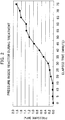
- Figs. 1 and 2 show changes with time of the temperature and the pressure in the reactor due to the superheated steam.
- a test was conducted for investigating an effect of the yeast-derived hydrothermal treatment product on a plant disease resistance.
- a liquid sample was prepared which contained 250 ppm of the yeast-derived reducing mixture obtained in Example 1, 10 ⁇ g/mL of Rifamcin, and 500 ⁇ g/ml of ampicillin. Water was used as control.
- the disease resistance was evaluated by an elicitor activity evaluation method based on the method of Yoshikawa, M., et al. (Nature 275, 546-547 (1978 )).
- the elicitor activity is an action to induce synthesis of an antimicrobial substance such as a phytoalexin in a plant body.
- soybeans Glycine. max cv. Green Homer
- soybeans were seeded in a culture soil obtained by mixing vermiculite and humus soil, and were then cultivated under fluorescent light for 10 to 14 days under conditions of a 16-hour light condition, an 8-hour dark condition, and 25°C.
- cotyledons were cut, and the back surfaces thereof were removed with a razor, and 80 ⁇ L of the above-described liquid sample was dropped onto each cotyledon.
- the cotyledons were kept still for 24 hours at 25°C under a light condition, and whether or not the wound turned red was determined.
- a wound which turned red indicates that the synthesis of glyceollin, which is a phytoalexin of soybean, was induced.
- the determination results were shown in Table 1.
- Fig. 3 shows a photograph used for the determination (in the photograph in Fig. 3 , wounds which turned red were recognized as black portions).
- the brewer's yeast-derived reducing mixture of Example 1 (liquid, nitrogen: 3 w/w%), as it was, was used as a liquid active ingredient.
- a liquid fertilizer material was produced.
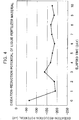
- Fig. 4 shows the change with time in the oxidation-reduction potential of the liquid fertilizer material. Note that, the oxidation-reduction potential on Day 0 is that of the 12% urea solution.
- the liquid fertilizer material maintained the reducing ability even after 10 days had elapsed, and the oxidation-reduction potential was -173 mV after 10 days had elapsed.
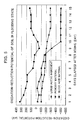
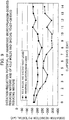
- a sandy soil with an electrical conductivity EC of 1.7 m/S was used. With 40 L of the sandy soil, 10 L of the powdery fertilizer material of Example 3 was mixed. The mixture was filled into a box-shaped well-closed container. As control groups, the siliceous ore powder was used in an amount equal to the amount of the siliceous ore powder contained in 10 L of the powdery fertilizer material, and the liquid fertilizer material was used in an amount equal to the amount of the liquid fertilizer material contained in 10 L of the powdery fertilizer material, in place of the powdery fertilizer material. Each mixture was placed in a flooding state, and was allowed to stand still for 15 days under normal temperature. The change in oxidation-reduction potential was measured for 15 days. Fig. 5 shows the results.
- the oxidation-reduction potential is generally lowered by the Maillard reaction.
- the present invention is different from conventional technologies in that the oxidation-reduction potential is lowered without causing the Maillard reaction.
- the brewer's yeast-derived reducing mixture obtained in Example 1 was subjected to a measurement for DPPH (1,1-diphenyl-2-picrylhydrazyl) radical quenching activity.
- the measurement method was as follows. The test substance was suspended in water, and the suspension was transferred to a 96-well plate where dilution series were prepared (100 ⁇ L per well) . To each well, 100 ⁇ L of a 750 ⁇ M DPPH solution (dissolved in 100% methanol) was added. The plate was allowed to stand still at room temperature for 15 minutes. Thereafter, the absorbance at 550 nm was measured.
- the high-temperature high-pressure treated dry brewer's yeast was obtained by treating a dry brewer's yeast under a pressurized condition of 2 atm (0.2 MPa) at 121°C for 20 minutes.
- the brewer's yeast-derived reducing mixture had an IC50 of 2463 ppm, and the dry brewer's yeast had an IC50 of 18704 ppm.
- the high-temperature high-pressure treated dry brewer's yeast had such an extremely weak activity that it was impossible to calculate the IC50 thereof.
- the brewer's yeast-derived reducing mixture exhibited a remarkably stronger activity than the dry brewer's yeast and the high-temperature high-pressure treated dry brewer's yeast.
- Example 1 The brewer's yeast-derived reducing mixture obtained i-n Example 1 was subjected to a measurement for SOD (superoxide dismutase) activity.
- the measurement was conducted by using SOD Assay Kit-WST of Dojindo Laboratories in accordance with the standard protocol. Specifically, diluted samples were introduced into a 96-well plate (20 ⁇ L per well). Then, 200 ⁇ L of a WST (2-(4-iodophenyl)-3-(4-nitrophenyl)-5-(2,4-disulfophen yl)-2H-tetrazolium salt) solution and 20 ⁇ L of a xanthine oxidase solution were added to each of the wells.
- a WST (2-(4-iodophenyl)-3-(4-nitrophenyl)-5-(2,4-disulfophen yl)-2H-tetrazolium salt
- the brewer's yeast-derived reducing mixture exhibited a remarkably stronger activity than the dry brewer's yeast and the high-temperature high-pressure treated dry brewer's yeast.
- the brewer's yeast-derived reducing mixture had an IC50 of 2445 ppm, and the dry brewer's yeast had an IC50 of 20619 ppm.
- the high-temperature high-pressure treated dry brewer's yeast had such a weak activity that it was impossible to calculate the IC50 thereof.
- Powdery dry brewer's yeast cells were dissolved in water at 25 w/w%.
- a siliceous ore was added at 16 w/w% as a catalyst, whereas no catalyst was added for a control experiment.
- a superheated steam treatment was conducted in the same manner as in Example 1.
- the pressure inside the container was 1.86 MPa. Then, the reaction was allowed to proceed for 10 minutes under the conditions.
- the colors of the treated materials were visually observed.
- the color of the treated material of the control experiment was deeper than that of the yeast liquid before the treatment.
- the chromaticity of the treated material of the test experiment was almost the same as that of the raw material yeast liquid before the treatment. This suggested that the siliceous ore added as the catalyst further suppressed the Maillard reaction.
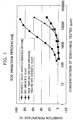
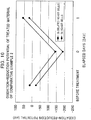
- each of the treated materials was mixed well, and 40 ml thereof was sampled and placed into a beaker with a capacity of 100 ml. Each of the samples was photographed with a digital camera, and a printed image thereof was measured with a Lab measuring apparatus (Konica Minolta Sensing, Inc., a spectrophotometer CM-2600d) in an SCE (specular component excluded) mode. Table 3 shows the results. Each of the treated materials was diluted with water to achieve a cell concentration of 10 w/w%, and measured for change in oxidation-reduction potential ( Fig. 8 ).
- Example 9 superheated steam treatment on anaerobic microorganisms and on Koji (Aspergillus) molds and Shochu (Japanese distilled beverage) yeast
- An anaerobically digested sludge mainly containing anaerobic microorganisms (a sludge which was obtained from a human excreta treatment plant and dehydrated with a screw press to a water content of 48 to 52 w/w%), and a Shochu lees mainly containing Koji molds and Shochu yeast (having a water content of 43 to 45 w/w%) were subjected to a superheated steam treatment in the same manner as in Example 1. Note, however, that the treatment temperature was 185°C to 190°C, and the treatment time was 20 minutes. A liquid was separated from each of the treated materials by centrifugation.
- the treated liquid was diluted 10-fold with water, and was measured for the oxidation-reduction potential for 14 days.
- Fig. 9 shows the results.
- the rise of the oxidation-reduction potential of the reducing mixture derived from the anaerobic microorganisms 14 days after preparation of said mixture was 35.3% of the lowest potential.
- the rise of the oxidation-reduction potential of the reducing mixture derived from the Koji molds and Shochu yeast 14 days after preparation of said mixture was 22.2% of the lowest potential.
- Yeast cell walls (a residue remaining after a yeast extract was produced) were diluted with purified water to 3 % by mass and to 5 % by mass.
- purified water to 3 % by mass and to 5 % by mass.
- the oxidation-reduction potentials of the treated materials were -142 mV to -188 mV immediately after the treatment, and rose to 0 mV or higher in one day.
- the oxidation-reduction potential of the treated material made according to the present invention was stable after the oxidation-reduction potential became 0 mV or less after the treatment.
- the oxidation-reduction potential of each of the treated materials of Comparative Example 2 rose immediately, and reached 0 mV or higher in one day.
- Table 4 Oxidation-Reduction Potential of Treated Materials Immediately after treatment After one day 3% diluted yeast cell walls -142 58 5% yeast cell walls -188 19
- Example 2 To 100 L of the brewer's yeast cell wall-derived reducing mixture obtained in Example 1, 600 kg of a siliceous ore powder (trade name: North Keido, distributor: Hokkaido Natural Ltd.) was added. The materials were mixed with each other, and dried for three weeks under a condition of an air flow. Thus, a powdery material having a water content of 35% was produced.
- a siliceous ore powder (trade name: North Keido, distributor: Hokkaido Natural Ltd.) was added. The materials were mixed with each other, and dried for three weeks under a condition of an air flow. Thus, a powdery material having a water content of 35% was produced.
- Table 5 Change in Oxidation-Reduction Potential (mV) May 14 May 25 June 6 Untreated area 269 244 270 Wheat bran area -9.8 -160 86 Test area -92 -149 51 Table 6 Change in Amount of Fusarium Bacteria (cells/g dry soil) Before treatmen t May 25 June 18 July 18 August 18 Untreate d area 2.7 ⁇ 10 5 2.4 ⁇ 10 3 9.7 ⁇ 10 2 2.8 ⁇ 10 2 3.7 ⁇ 10 2 Wheat bran area 2.7 ⁇ 10 5 1.4 ⁇ 10 2 3 4.9 ⁇ 10 2 9.8 ⁇ 10 2 Test area 2.7 ⁇ 10 5 1.4 ⁇ 10 2 1 3.6 ⁇ 10 5.1 ⁇ 10
- Nematodes isolated from a farm field (Chiba Prefecture) for actually producing tomato were cultured in an agar medium, and then the gel was cut out and transferred to a Petri dish.
- the gel was immersed in a 5% aqueous solution of the powdery material of Example 10 to achieve a flooding state.
- For an untreated group for control the gel was immersed in distilled water to achieve a flooding state.
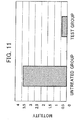
- 25 nematodes in each of the test group and the untreated group were observed with a microscope, and evaluated for motility and classified into the following five grades: 0 (the nematodes did not move at all) to 4 (the nematodes moved vigorously).
- the powdery material of ExampLe 11 was added to a culture medium (0.08% of Nutrient Broth and 0.05% of Yeast Extract) at 20% (w/v). Two days later, Staphylococcus aureus (4.1 ⁇ 10 9 cells/ml) was inoculated, and was subjected to static culture at 25°C for two days. Then, the number of viable cells was determined. Table 7 shows the results. The amount of the Staphylococcus aureus bacteria of the untreated experiment was increased. In contrast, the proliferation of the Staphylococcus aureus bacteria was suppressed in the test experiment, and the amount of the bacteria was reduced.
- Example 16 Bacteriostatic Actions on Staphylococcus chromogenes and Bacillus thuringiensis
- Example 11 The powdery material of Example 11 was added to a culture medium (0.08% of Nutrient Broth and 0.05% of Yeast Extract) at 20% (w/v). Ten days later, Staphylococcus chromogenes (5.6 ⁇ 10 cells/ml) and Bacillus thuringiensis (1.8 ⁇ 10 cells/ml) which were isolate from milk of a breast inflammation cow were inoculated, and subjected to static culture at 25°C for two days. Then, the total number of viable cells was determined.
- a culture medium 0.08% of Nutrient Broth and 0.05% of Yeast Extract
- Staphylococcus chromogenes 5.6 ⁇ 10 cells/ml
- Bacillus thuringiensis 1.8 ⁇ 10 cells/ml
- Table 8 shows the results. The amount of bacteria in the untreated experiment was greatly increased, whereas the bacteria did not proliferate at all in the test experiment.
- Table 8 Change in Amount of Bacteria of Staphylococcus chromogenes and Bacillus thuringiensis (cells/ml) At inoculation After culturing Untreated experiment (culture medium) 7.2 ⁇ 10 3.5 ⁇ 10 6 Test experiment 7.2 ⁇ 10 0
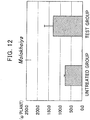
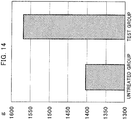
- Example 11 A farm field (Moriya City, Ibaraki Prefecture) for actual production of cherry tomato was used. Cherry tomato was seeded on March 4, 2009 , and planted on April 6. After the planting, the liquid material of Example 11 diluted 1000-fold was administered thorough a water feeding tube once a week. The cherry tomato was harvested from May 25 to August 5, and the total yields were compared with each other. Fig. 14 shows the results. The yield in the test area was higher by approximately 12% than that of the untreated area.
Landscapes
- Life Sciences & Earth Sciences (AREA)
- Chemical & Material Sciences (AREA)
- Engineering & Computer Science (AREA)
- Organic Chemistry (AREA)
- Health & Medical Sciences (AREA)
- Mycology (AREA)
- Biotechnology (AREA)
- Zoology (AREA)
- Microbiology (AREA)
- Wood Science & Technology (AREA)
- General Health & Medical Sciences (AREA)
- Soil Sciences (AREA)
- Genetics & Genomics (AREA)
- General Life Sciences & Earth Sciences (AREA)
- Bioinformatics & Cheminformatics (AREA)
- Materials Engineering (AREA)
- Botany (AREA)
- Virology (AREA)
- General Engineering & Computer Science (AREA)
- Biochemistry (AREA)
- Biomedical Technology (AREA)
- Tropical Medicine & Parasitology (AREA)
- Medicinal Chemistry (AREA)
- Environmental & Geological Engineering (AREA)
- Environmental Sciences (AREA)
- Pest Control & Pesticides (AREA)
- Plant Pathology (AREA)
- Dentistry (AREA)
- Agronomy & Crop Science (AREA)
- Agricultural Chemicals And Associated Chemicals (AREA)
- Micro-Organisms Or Cultivation Processes Thereof (AREA)
- Coloring Foods And Improving Nutritive Qualities (AREA)
- Medicines Containing Material From Animals Or Micro-Organisms (AREA)
- Cultivation Of Plants (AREA)
- Chemical Kinetics & Catalysis (AREA)
- Inorganic Chemistry (AREA)
- Molecular Biology (AREA)
- Soil Conditioners And Soil-Stabilizing Materials (AREA)
Claims (6)
- Ein Verfahren zur Herstellung eines reduzierenden Gemisches, das von Mikroorganismen abgeleitet ist, mit einem Oxidations-Reduktions-Potential von 0 mV oder weniger, wobei das Verfahren das Unterwerfen einer Hefe oder eines Hefeextrakts unter eine überhitzte Heißdampfbehandlung in Gegenwart von Kieselsäure oder eines Silikats umfasst, wobei die überhitzte Heißdampfbehandlung in Abwesenheit von Sauerstoff und mit einem überhitzten Dampf bei einem Druck von 0,9 MPa bis 1,9 MPa bei 150 °C bis 210 °C durchgeführt wird.
- Das Herstellungsverfahren nach Anspruch 1, wobei ein Hefeextrakt der überhitzten Heißdampfbehandlung unterzogen wird.
- Das Herstellungsverfahren nach einem der Ansprüche 1 bis 2, wobei die Hefe- oder Hefeextraktkomponente eine oder eine Kombination von einer Mehrzahl von Mitgliedern ist, die ausgewählt sind aus der Gruppe bestehend aus Aufschlämmungen von Bierhefe, gepressten Bierhefen, trockenen Bierhefen, Suspensionen von Bierhefe, trockenen Hefezellwänden, Suspensionen von Hefezellwand und Bierhefe-haltigen anorganischen Materialien.
- Ein Verfahren nach einem der Ansprüche 1 bis 3, wobei das erzeugte reduzierende Gemisch, das von Mikroorganismen abgeleitet ist, als eine Zusammensetzung zur Verbesserung der Bodenqualität verwendet wird.
- Ein Verfahren nach einem der Ansprüche 1 bis 3, wobei das erzeugte reduzierende Gemisch, das von Mikroorganismen abgeleitet ist, als eine Zusammensetzung zur Verbesserung Resistenz gegen Pflanzenkrankheit verwendet wird.
- Ein Verfahren nach einem der Ansprüche 1 bis 3, wobei das erzeugte reduzierende Gemisch, das von Mikroorganismen abgeleitet ist, als eine Zusammensetzung zur Wachstumsförderung von Pflanzen verwendet wird.
Priority Applications (1)
| Application Number | Priority Date | Filing Date | Title |
|---|---|---|---|
| PL10750943T PL2407546T3 (pl) | 2009-03-13 | 2010-03-15 | Sposób wytwarzania mieszaniny redukującej pochodzącej z mikroorganizmów, która ma potencjał oksydacyjno-redukcyjny wynoszący 0mv lub mniej |
Applications Claiming Priority (2)
| Application Number | Priority Date | Filing Date | Title |
|---|---|---|---|
| JP2009061841 | 2009-03-13 | ||
| PCT/JP2010/054342 WO2010104197A1 (ja) | 2009-03-13 | 2010-03-15 | 0mV以下の酸化還元電位を有する微生物由来還元性混合物及びその製造方法 |
Publications (3)
| Publication Number | Publication Date |
|---|---|
| EP2407546A1 EP2407546A1 (de) | 2012-01-18 |
| EP2407546A4 EP2407546A4 (de) | 2014-10-15 |
| EP2407546B1 true EP2407546B1 (de) | 2018-06-20 |
Family
ID=42728476
Family Applications (1)
| Application Number | Title | Priority Date | Filing Date |
|---|---|---|---|
| EP10750943.2A Active EP2407546B1 (de) | 2009-03-13 | 2010-03-15 | Herstellungsverfahren für eine reduktionsmischung aus mikroorganismen mit oxidationsreduktionpotenzial von 0 mv oder geringer |
Country Status (10)
| Country | Link |
|---|---|
| US (1) | US9193635B2 (de) |
| EP (1) | EP2407546B1 (de) |
| JP (1) | JP5715044B2 (de) |
| CN (1) | CN102405292B (de) |
| AU (1) | AU2010221982B2 (de) |
| ES (1) | ES2677349T3 (de) |
| HU (1) | HUE039392T2 (de) |
| PL (1) | PL2407546T3 (de) |
| TW (1) | TWI513409B (de) |
| WO (1) | WO2010104197A1 (de) |
Families Citing this family (11)
| Publication number | Priority date | Publication date | Assignee | Title |
|---|---|---|---|---|
| JP5528629B2 (ja) * | 2011-07-19 | 2014-06-25 | リジェンティス株式会社 | 酵母菌から抽出されたポリリン酸,ポリリン酸の塩又はポリリン酸の溶媒和物を含むポリリン酸組成物及びその製造方法。 |
| WO2013084822A1 (ja) * | 2011-12-08 | 2013-06-13 | アサヒグループホールディングス株式会社 | 微生物由来還元性混合物 |
| EP2796438B1 (de) * | 2011-12-21 | 2017-10-18 | Asahi Group Holdings, Ltd. | Reduzierbare düngemittel |
| JP2013169176A (ja) * | 2012-02-21 | 2013-09-02 | Asahi Group Holdings Ltd | 植物の育苗方法及び植物の栽培方法 |
| CN103906427B (zh) * | 2012-10-25 | 2015-12-02 | 朝日集团控股株式会社 | 胶乳的增产方法 |
| JPWO2015166683A1 (ja) * | 2014-04-28 | 2017-04-20 | アサヒグループホールディングス株式会社 | 還元性肥料を植物体に適用する方法及び落葉果樹に使用される薬剤 |
| JP5866035B1 (ja) * | 2015-01-08 | 2016-02-17 | アサヒグループホールディングス株式会社 | 有効分げつ促進方法 |
| EP3336071A1 (de) * | 2016-12-19 | 2018-06-20 | Danstar Ferment AG | Verfahren und zusammensetzung zur verbesserung des pflanzenwachstums |
| CN108395319A (zh) * | 2018-03-06 | 2018-08-14 | 嘉祥瑞丰美生态农业有限公司 | 一种复合微生物液体肥料 |
| JP2022040826A (ja) * | 2020-08-31 | 2022-03-11 | アサヒグループホールディングス株式会社 | 還元能を有する組成物 |
| JP2023173502A (ja) * | 2022-05-26 | 2023-12-07 | アサヒグループホールディングス株式会社 | 抗癌組成物 |
Family Cites Families (16)
| Publication number | Priority date | Publication date | Assignee | Title |
|---|---|---|---|---|
| FR1340225A (fr) * | 1962-08-03 | 1963-10-18 | British Petroleum Co | Perfectionnement à la production de levures alimentaires à partir des fractions du pétrole |
| GB1129785A (en) * | 1967-01-23 | 1968-10-09 | Oskar Johansons Slakteriaktieb | A method of producing fodder for domestic animals |
| JPS5276413A (en) | 1975-12-18 | 1977-06-27 | Kureha Chem Ind Co Ltd | Production of oncostatic substances |
| GB8604440D0 (en) | 1986-02-22 | 1986-03-26 | Bovril Ltd | Process |
| JPH05276413A (ja) * | 1991-03-25 | 1993-10-22 | Toshiba Corp | 映像信号処理装置 |
| JP2967846B2 (ja) | 1992-07-24 | 1999-10-25 | キッコーマン株式会社 | 酢 液 |
| DE4420730A1 (de) | 1994-06-15 | 1995-12-21 | Henkel Kgaa | Verfahren zur Desodorierung und Stabilisierung biotechnologisch gewonnener Wertstoffe und ihrer wäßrigen Zubereitungen |
| JPH1156288A (ja) * | 1997-08-21 | 1999-03-02 | Kikkoman Corp | キノコ粉末の製造法 |
| CN1358221A (zh) | 2000-01-14 | 2002-07-10 | 冈本良一 | 废物的干馏减容装置 |
| US20020078623A1 (en) * | 2000-07-07 | 2002-06-27 | Raddon Stanley J. | Process for creating pellet for utilization in land revegetation or as a fuel source |
| JP2004284858A (ja) | 2003-03-20 | 2004-10-14 | Ii M S:Kk | 機能性物質及びその製造方法 |
| US20050112255A1 (en) | 2003-11-25 | 2005-05-26 | Tottenham Dennis E. | Apparatus and method for microbial intervention and pasteurization of food and equipment |
| JP2005185187A (ja) * | 2003-12-25 | 2005-07-14 | Sapporo Breweries Ltd | 微生物細胞壁水溶性画分及びその製造方法 |
| TWI275357B (en) * | 2005-03-11 | 2007-03-11 | Nat Pingtung University Of Sci | Processing method of low-fat sweet potato chip |
| CN101314163B (zh) | 2008-06-16 | 2010-06-09 | 费爱民 | 陈旧垃圾资源化处理方法 |
| JP5276413B2 (ja) * | 2008-11-05 | 2013-08-28 | 本田技研工業株式会社 | 車両用カップホルダ |
-
2010
- 2010-03-12 TW TW099107211A patent/TWI513409B/zh active
- 2010-03-15 WO PCT/JP2010/054342 patent/WO2010104197A1/ja not_active Ceased
- 2010-03-15 JP JP2011503889A patent/JP5715044B2/ja active Active
- 2010-03-15 ES ES10750943.2T patent/ES2677349T3/es active Active
- 2010-03-15 HU HUE10750943A patent/HUE039392T2/hu unknown
- 2010-03-15 US US13/254,557 patent/US9193635B2/en active Active
- 2010-03-15 PL PL10750943T patent/PL2407546T3/pl unknown
- 2010-03-15 EP EP10750943.2A patent/EP2407546B1/de active Active
- 2010-03-15 AU AU2010221982A patent/AU2010221982B2/en active Active
- 2010-03-15 CN CN201080017494.4A patent/CN102405292B/zh active Active
Non-Patent Citations (1)
| Title |
|---|
| None * |
Also Published As
| Publication number | Publication date |
|---|---|
| US20110319264A1 (en) | 2011-12-29 |
| EP2407546A4 (de) | 2014-10-15 |
| AU2010221982A1 (en) | 2011-09-29 |
| EP2407546A1 (de) | 2012-01-18 |
| US9193635B2 (en) | 2015-11-24 |
| PL2407546T3 (pl) | 2018-11-30 |
| JP5715044B2 (ja) | 2015-05-07 |
| CN102405292A (zh) | 2012-04-04 |
| HUE039392T2 (hu) | 2018-12-28 |
| TWI513409B (zh) | 2015-12-21 |
| CN102405292B (zh) | 2015-06-10 |
| AU2010221982B2 (en) | 2013-07-18 |
| WO2010104197A1 (ja) | 2010-09-16 |
| JPWO2010104197A1 (ja) | 2012-09-13 |
| TW201038197A (en) | 2010-11-01 |
| ES2677349T3 (es) | 2018-08-01 |
Similar Documents
| Publication | Publication Date | Title |
|---|---|---|
| US9193635B2 (en) | Reducing mixture derived from microorganisms which has an oxidation-reduction potential of 0 mV or less, and production method for same | |
| KR100962587B1 (ko) | 천연 식물소재 및 한약재의 발효방법, 상기 방법에 의해서제조된 발효물 및 이를 함유하는 약학 조성물, 화장품조성물 및 식품 조성물 | |
| DE69934141T2 (de) | Mikroorganismus und anwendung desselben | |
| CN102191189B (zh) | 益生菌菌株及其应用 | |
| JP2003259835A (ja) | 発酵製品の製造とその利用 | |
| KR20120125042A (ko) | 복합 미생물에 의한 생약재 발효액 제조방법, 그 방법으로 제조된 발효액, 및 그 발효액에 의해 제조된 발효식품 | |
| CN105481489B (zh) | 一种枯草芽胞杆菌生物菌肥及其制备方法 | |
| KR101276789B1 (ko) | 발효 오일 및 그 발효오일을 포함하는 건강기능식품 | |
| TW201828962A (zh) | 蜂蜜發酵物及其製造方法 | |
| KR20200129695A (ko) | 해방풍 추출물의 유산균 발효물, 그 제조방법 및 용도 | |
| KR101138684B1 (ko) | 유용미생물 배양방법 및 이를 이용한 식품 | |
| KR101426501B1 (ko) | 쇠비름 및 미강을 함유하는 발효 조성물 및 그의 제조방법 | |
| KR101357649B1 (ko) | 인삼과 유용미생물을 이용한 발효 마늘식품과 그 제조방법 | |
| KR102407131B1 (ko) | 증체율 또는 면역력을 향상시키는 사료용 생균제 조성물의 제조방법 | |
| KR101989999B1 (ko) | 장미숙성추출물 및 이의 제조방법 | |
| KR102155716B1 (ko) | 락토바실러스 플란타룸 ami-1103 균주를 이용한 당근 발효물 제조방법 | |
| KR102155717B1 (ko) | 락토바실러스 플란타룸 ami-1103 균주를 이용한 브로콜리 발효물 제조방법 | |
| KR102160918B1 (ko) | 미생물 기반의 사료용 생균제 | |
| KR102416743B1 (ko) | 발아식물 발효 추출물을 포함하는 조성물 및 그 제조방법 | |
| CN103087887A (zh) | 紫薯保健酒及其制备方法 | |
| KR102407123B1 (ko) | 홍국균을 포함하는 생균제 조성물 | |
| KR101797548B1 (ko) | 녹용 추출물을 포함하는 마스크팩 조성물 | |
| RU2181018C1 (ru) | Способ получения биологически активного пищевого полуфабриката и пищевой биологически активный продукт, полученный на его основе | |
| KR101286603B1 (ko) | 스피룰리나 함유 장류식품의 제조방법 및 제조된 장류식품 | |
| RU2665547C1 (ru) | Бесклеточная культуральная жидкость на основе штамма Bacillus subtilis, консервант для силоса и полифункциональное средство для растений с фунгицидными, бактерицидными и ростстимулирующими свойствами |
Legal Events
| Date | Code | Title | Description |
|---|---|---|---|
| PUAI | Public reference made under article 153(3) epc to a published international application that has entered the european phase |
Free format text: ORIGINAL CODE: 0009012 |
|
| 17P | Request for examination filed |
Effective date: 20111013 |
|
| AK | Designated contracting states |
Kind code of ref document: A1 Designated state(s): AT BE BG CH CY CZ DE DK EE ES FI FR GB GR HR HU IE IS IT LI LT LU LV MC MK MT NL NO PL PT RO SE SI SK SM TR |
|
| RIN1 | Information on inventor provided before grant (corrected) |
Inventor name: MAEKAWA YOSHIO Inventor name: HONMA DAIKI Inventor name: IWABUCHI CHIKAKO Inventor name: KITAGAWA TAKANORI |
|
| DAX | Request for extension of the european patent (deleted) | ||
| A4 | Supplementary search report drawn up and despatched |
Effective date: 20140911 |
|
| RIC1 | Information provided on ipc code assigned before grant |
Ipc: C05G 5/00 20060101ALI20140905BHEP Ipc: C05F 5/00 20060101ALI20140905BHEP Ipc: C12N 1/00 20060101ALI20140905BHEP Ipc: C05G 1/00 20060101ALI20140905BHEP Ipc: C12N 1/16 20060101ALI20140905BHEP Ipc: C09K 17/50 20060101ALI20140905BHEP Ipc: C09K 17/32 20060101ALI20140905BHEP Ipc: C09K 17/12 20060101ALI20140905BHEP Ipc: C12P 1/00 20060101AFI20140905BHEP Ipc: C09K 101/00 20060101ALI20140905BHEP Ipc: C12P 1/02 20060101ALI20140905BHEP |
|
| 17Q | First examination report despatched |
Effective date: 20150527 |
|
| STAA | Information on the status of an ep patent application or granted ep patent |
Free format text: STATUS: EXAMINATION IS IN PROGRESS |
|
| RIC1 | Information provided on ipc code assigned before grant |
Ipc: C05F 5/00 20060101ALI20170502BHEP Ipc: C12N 1/18 20060101ALI20170502BHEP Ipc: C05G 5/00 20060101ALI20170502BHEP Ipc: C12N 1/16 20060101ALI20170502BHEP Ipc: C09K 101/00 20060101ALI20170502BHEP Ipc: C12P 1/02 20060101ALI20170502BHEP Ipc: C05G 1/00 20060101ALI20170502BHEP Ipc: C12N 1/00 20060101ALI20170502BHEP Ipc: C09K 17/12 20060101ALI20170502BHEP Ipc: C09K 17/32 20060101ALI20170502BHEP Ipc: C09K 17/50 20060101ALI20170502BHEP Ipc: C12P 1/00 20060101AFI20170502BHEP Ipc: C09K 17/16 20060101ALI20170502BHEP Ipc: C05C 9/00 20060101ALI20170502BHEP Ipc: A01N 63/04 20060101ALI20170502BHEP |
|
| REG | Reference to a national code |
Ref country code: DE Ref legal event code: R079 Ref document number: 602010051400 Country of ref document: DE Free format text: PREVIOUS MAIN CLASS: C12P0001000000 Ipc: A01N0063040000 |
|
| RIC1 | Information provided on ipc code assigned before grant |
Ipc: C12N 1/18 20060101ALI20170712BHEP Ipc: C09K 17/32 20060101ALI20170712BHEP Ipc: C12N 1/16 20060101ALI20170712BHEP Ipc: C05C 9/00 20060101ALI20170712BHEP Ipc: C05F 5/00 20060101ALI20170712BHEP Ipc: A01N 63/04 20060101AFI20170712BHEP Ipc: C09K 17/16 20060101ALI20170712BHEP |
|
| GRAP | Despatch of communication of intention to grant a patent |
Free format text: ORIGINAL CODE: EPIDOSNIGR1 |
|
| STAA | Information on the status of an ep patent application or granted ep patent |
Free format text: STATUS: GRANT OF PATENT IS INTENDED |
|
| INTG | Intention to grant announced |
Effective date: 20180129 |
|
| GRAS | Grant fee paid |
Free format text: ORIGINAL CODE: EPIDOSNIGR3 |
|
| GRAA | (expected) grant |
Free format text: ORIGINAL CODE: 0009210 |
|
| STAA | Information on the status of an ep patent application or granted ep patent |
Free format text: STATUS: THE PATENT HAS BEEN GRANTED |
|
| RIN1 | Information on inventor provided before grant (corrected) |
Inventor name: IWABUCHI CHIKAKO Inventor name: MAEKAWA YOSHIO Inventor name: KITAGAWA TAKANORI Inventor name: HONMA DAIKI |
|
| AK | Designated contracting states |
Kind code of ref document: B1 Designated state(s): AT BE BG CH CY CZ DE DK EE ES FI FR GB GR HR HU IE IS IT LI LT LU LV MC MK MT NL NO PL PT RO SE SI SK SM TR |
|
| REG | Reference to a national code |
Ref country code: GB Ref legal event code: FG4D |
|
| REG | Reference to a national code |
Ref country code: IE Ref legal event code: FG4D |
|
| REG | Reference to a national code |
Ref country code: AT Ref legal event code: REF Ref document number: 1009919 Country of ref document: AT Kind code of ref document: T Effective date: 20180715 |
|
| REG | Reference to a national code |
Ref country code: DE Ref legal event code: R096 Ref document number: 602010051400 Country of ref document: DE |
|
| REG | Reference to a national code |
Ref country code: ES Ref legal event code: FG2A Ref document number: 2677349 Country of ref document: ES Kind code of ref document: T3 Effective date: 20180801 |
|
| REG | Reference to a national code |
Ref country code: RO Ref legal event code: EPE |
|
| REG | Reference to a national code |
Ref country code: NL Ref legal event code: FP |
|
| PG25 | Lapsed in a contracting state [announced via postgrant information from national office to epo] |
Ref country code: LT Free format text: LAPSE BECAUSE OF FAILURE TO SUBMIT A TRANSLATION OF THE DESCRIPTION OR TO PAY THE FEE WITHIN THE PRESCRIBED TIME-LIMIT Effective date: 20180620 Ref country code: BG Free format text: LAPSE BECAUSE OF FAILURE TO SUBMIT A TRANSLATION OF THE DESCRIPTION OR TO PAY THE FEE WITHIN THE PRESCRIBED TIME-LIMIT Effective date: 20180920 Ref country code: FI Free format text: LAPSE BECAUSE OF FAILURE TO SUBMIT A TRANSLATION OF THE DESCRIPTION OR TO PAY THE FEE WITHIN THE PRESCRIBED TIME-LIMIT Effective date: 20180620 Ref country code: SE Free format text: LAPSE BECAUSE OF FAILURE TO SUBMIT A TRANSLATION OF THE DESCRIPTION OR TO PAY THE FEE WITHIN THE PRESCRIBED TIME-LIMIT Effective date: 20180620 Ref country code: NO Free format text: LAPSE BECAUSE OF FAILURE TO SUBMIT A TRANSLATION OF THE DESCRIPTION OR TO PAY THE FEE WITHIN THE PRESCRIBED TIME-LIMIT Effective date: 20180920 |
|
| REG | Reference to a national code |
Ref country code: LT Ref legal event code: MG4D |
|
| PG25 | Lapsed in a contracting state [announced via postgrant information from national office to epo] |
Ref country code: GR Free format text: LAPSE BECAUSE OF FAILURE TO SUBMIT A TRANSLATION OF THE DESCRIPTION OR TO PAY THE FEE WITHIN THE PRESCRIBED TIME-LIMIT Effective date: 20180921 Ref country code: LV Free format text: LAPSE BECAUSE OF FAILURE TO SUBMIT A TRANSLATION OF THE DESCRIPTION OR TO PAY THE FEE WITHIN THE PRESCRIBED TIME-LIMIT Effective date: 20180620 Ref country code: HR Free format text: LAPSE BECAUSE OF FAILURE TO SUBMIT A TRANSLATION OF THE DESCRIPTION OR TO PAY THE FEE WITHIN THE PRESCRIBED TIME-LIMIT Effective date: 20180620 |
|
| REG | Reference to a national code |
Ref country code: AT Ref legal event code: MK05 Ref document number: 1009919 Country of ref document: AT Kind code of ref document: T Effective date: 20180620 |
|
| REG | Reference to a national code |
Ref country code: HU Ref legal event code: AG4A Ref document number: E039392 Country of ref document: HU |
|
| REG | Reference to a national code |
Ref country code: SK Ref legal event code: T3 Ref document number: E 28378 Country of ref document: SK |
|
| PG25 | Lapsed in a contracting state [announced via postgrant information from national office to epo] |
Ref country code: EE Free format text: LAPSE BECAUSE OF FAILURE TO SUBMIT A TRANSLATION OF THE DESCRIPTION OR TO PAY THE FEE WITHIN THE PRESCRIBED TIME-LIMIT Effective date: 20180620 Ref country code: AT Free format text: LAPSE BECAUSE OF FAILURE TO SUBMIT A TRANSLATION OF THE DESCRIPTION OR TO PAY THE FEE WITHIN THE PRESCRIBED TIME-LIMIT Effective date: 20180620 Ref country code: IS Free format text: LAPSE BECAUSE OF FAILURE TO SUBMIT A TRANSLATION OF THE DESCRIPTION OR TO PAY THE FEE WITHIN THE PRESCRIBED TIME-LIMIT Effective date: 20181020 |
|
| PG25 | Lapsed in a contracting state [announced via postgrant information from national office to epo] |
Ref country code: SM Free format text: LAPSE BECAUSE OF FAILURE TO SUBMIT A TRANSLATION OF THE DESCRIPTION OR TO PAY THE FEE WITHIN THE PRESCRIBED TIME-LIMIT Effective date: 20180620 |
|
| REG | Reference to a national code |
Ref country code: DE Ref legal event code: R097 Ref document number: 602010051400 Country of ref document: DE |
|
| PLBE | No opposition filed within time limit |
Free format text: ORIGINAL CODE: 0009261 |
|
| STAA | Information on the status of an ep patent application or granted ep patent |
Free format text: STATUS: NO OPPOSITION FILED WITHIN TIME LIMIT |
|
| 26N | No opposition filed |
Effective date: 20190321 |
|
| PG25 | Lapsed in a contracting state [announced via postgrant information from national office to epo] |
Ref country code: DK Free format text: LAPSE BECAUSE OF FAILURE TO SUBMIT A TRANSLATION OF THE DESCRIPTION OR TO PAY THE FEE WITHIN THE PRESCRIBED TIME-LIMIT Effective date: 20180620 |
|
| PG25 | Lapsed in a contracting state [announced via postgrant information from national office to epo] |
Ref country code: SI Free format text: LAPSE BECAUSE OF FAILURE TO SUBMIT A TRANSLATION OF THE DESCRIPTION OR TO PAY THE FEE WITHIN THE PRESCRIBED TIME-LIMIT Effective date: 20180620 |
|
| PG25 | Lapsed in a contracting state [announced via postgrant information from national office to epo] |
Ref country code: MC Free format text: LAPSE BECAUSE OF FAILURE TO SUBMIT A TRANSLATION OF THE DESCRIPTION OR TO PAY THE FEE WITHIN THE PRESCRIBED TIME-LIMIT Effective date: 20180620 |
|
| REG | Reference to a national code |
Ref country code: CH Ref legal event code: PL |
|
| REG | Reference to a national code |
Ref country code: DE Ref legal event code: R079 Ref document number: 602010051400 Country of ref document: DE Free format text: PREVIOUS MAIN CLASS: A01N0063040000 Ipc: A01N0063300000 |
|
| PG25 | Lapsed in a contracting state [announced via postgrant information from national office to epo] |
Ref country code: LU Free format text: LAPSE BECAUSE OF NON-PAYMENT OF DUE FEES Effective date: 20190315 |
|
| REG | Reference to a national code |
Ref country code: BE Ref legal event code: MM Effective date: 20190331 |
|
| PG25 | Lapsed in a contracting state [announced via postgrant information from national office to epo] |
Ref country code: LI Free format text: LAPSE BECAUSE OF NON-PAYMENT OF DUE FEES Effective date: 20190331 Ref country code: IE Free format text: LAPSE BECAUSE OF NON-PAYMENT OF DUE FEES Effective date: 20190315 Ref country code: CH Free format text: LAPSE BECAUSE OF NON-PAYMENT OF DUE FEES Effective date: 20190331 |
|
| PG25 | Lapsed in a contracting state [announced via postgrant information from national office to epo] |
Ref country code: BE Free format text: LAPSE BECAUSE OF NON-PAYMENT OF DUE FEES Effective date: 20190331 |
|
| PG25 | Lapsed in a contracting state [announced via postgrant information from national office to epo] |
Ref country code: TR Free format text: LAPSE BECAUSE OF FAILURE TO SUBMIT A TRANSLATION OF THE DESCRIPTION OR TO PAY THE FEE WITHIN THE PRESCRIBED TIME-LIMIT Effective date: 20180620 |
|
| PG25 | Lapsed in a contracting state [announced via postgrant information from national office to epo] |
Ref country code: PT Free format text: LAPSE BECAUSE OF FAILURE TO SUBMIT A TRANSLATION OF THE DESCRIPTION OR TO PAY THE FEE WITHIN THE PRESCRIBED TIME-LIMIT Effective date: 20181022 Ref country code: MT Free format text: LAPSE BECAUSE OF NON-PAYMENT OF DUE FEES Effective date: 20190315 |
|
| PG25 | Lapsed in a contracting state [announced via postgrant information from national office to epo] |
Ref country code: CY Free format text: LAPSE BECAUSE OF FAILURE TO SUBMIT A TRANSLATION OF THE DESCRIPTION OR TO PAY THE FEE WITHIN THE PRESCRIBED TIME-LIMIT Effective date: 20180620 |
|
| PG25 | Lapsed in a contracting state [announced via postgrant information from national office to epo] |
Ref country code: MK Free format text: LAPSE BECAUSE OF FAILURE TO SUBMIT A TRANSLATION OF THE DESCRIPTION OR TO PAY THE FEE WITHIN THE PRESCRIBED TIME-LIMIT Effective date: 20180620 |
|
| PGFP | Annual fee paid to national office [announced via postgrant information from national office to epo] |
Ref country code: ES Payment date: 20250403 Year of fee payment: 16 |
|
| PGFP | Annual fee paid to national office [announced via postgrant information from national office to epo] |
Ref country code: NL Payment date: 20260213 Year of fee payment: 17 |
|
| PGFP | Annual fee paid to national office [announced via postgrant information from national office to epo] |
Ref country code: GB Payment date: 20260202 Year of fee payment: 17 |
|
| PGFP | Annual fee paid to national office [announced via postgrant information from national office to epo] |
Ref country code: DE Payment date: 20260128 Year of fee payment: 17 |
|
| PGFP | Annual fee paid to national office [announced via postgrant information from national office to epo] |
Ref country code: RO Payment date: 20260226 Year of fee payment: 17 Ref country code: IT Payment date: 20260220 Year of fee payment: 17 |
|
| PGFP | Annual fee paid to national office [announced via postgrant information from national office to epo] |
Ref country code: HU Payment date: 20260303 Year of fee payment: 17 |
|
| PGFP | Annual fee paid to national office [announced via postgrant information from national office to epo] |
Ref country code: FR Payment date: 20260209 Year of fee payment: 17 |
|
| PGFP | Annual fee paid to national office [announced via postgrant information from national office to epo] |
Ref country code: CZ Payment date: 20260223 Year of fee payment: 17 |
|
| PGFP | Annual fee paid to national office [announced via postgrant information from national office to epo] |
Ref country code: PL Payment date: 20260216 Year of fee payment: 17 |
|
| PGFP | Annual fee paid to national office [announced via postgrant information from national office to epo] |
Ref country code: SK Payment date: 20260212 Year of fee payment: 17 |