EP2376683B1 - Hydrophilic porous wicks for vaporizable materials - Google Patents
Hydrophilic porous wicks for vaporizable materials Download PDFInfo
- Publication number
- EP2376683B1 EP2376683B1 EP10700773.4A EP10700773A EP2376683B1 EP 2376683 B1 EP2376683 B1 EP 2376683B1 EP 10700773 A EP10700773 A EP 10700773A EP 2376683 B1 EP2376683 B1 EP 2376683B1
- Authority
- EP
- European Patent Office
- Prior art keywords
- fibers
- wick
- wicks
- synthetic
- fiber
- Prior art date
- Legal status (The legal status is an assumption and is not a legal conclusion. Google has not performed a legal analysis and makes no representation as to the accuracy of the status listed.)
- Active
Links
Images


Classifications
-
- A—HUMAN NECESSITIES
- A61—MEDICAL OR VETERINARY SCIENCE; HYGIENE
- A61L—METHODS OR APPARATUS FOR STERILISING MATERIALS OR OBJECTS IN GENERAL; DISINFECTION, STERILISATION OR DEODORISATION OF AIR; CHEMICAL ASPECTS OF BANDAGES, DRESSINGS, ABSORBENT PADS OR SURGICAL ARTICLES; MATERIALS FOR BANDAGES, DRESSINGS, ABSORBENT PADS OR SURGICAL ARTICLES
- A61L9/00—Disinfection, sterilisation or deodorisation of air
- A61L9/015—Disinfection, sterilisation or deodorisation of air using gaseous or vaporous substances, e.g. ozone
- A61L9/04—Disinfection, sterilisation or deodorisation of air using gaseous or vaporous substances, e.g. ozone using substances evaporated in the air without heating
- A61L9/12—Apparatus, e.g. holders, therefor
- A61L9/127—Apparatus, e.g. holders, therefor comprising a wick
-
- D—TEXTILES; PAPER
- D01—NATURAL OR MAN-MADE THREADS OR FIBRES; SPINNING
- D01F—CHEMICAL FEATURES IN THE MANUFACTURE OF ARTIFICIAL FILAMENTS, THREADS, FIBRES, BRISTLES OR RIBBONS; APPARATUS SPECIALLY ADAPTED FOR THE MANUFACTURE OF CARBON FILAMENTS
- D01F8/00—Conjugated, i.e. bi- or multicomponent, artificial filaments or the like; Manufacture thereof
- D01F8/04—Conjugated, i.e. bi- or multicomponent, artificial filaments or the like; Manufacture thereof from synthetic polymers
- D01F8/14—Conjugated, i.e. bi- or multicomponent, artificial filaments or the like; Manufacture thereof from synthetic polymers with at least one polyester as constituent
-
- F—MECHANICAL ENGINEERING; LIGHTING; HEATING; WEAPONS; BLASTING
- F23—COMBUSTION APPARATUS; COMBUSTION PROCESSES
- F23D—BURNERS
- F23D2900/00—Special features of, or arrangements for burners using fluid fuels or solid fuels suspended in a carrier gas
- F23D2900/03082—Wick made of specific material, e.g. ceramic
-
- Y—GENERAL TAGGING OF NEW TECHNOLOGICAL DEVELOPMENTS; GENERAL TAGGING OF CROSS-SECTIONAL TECHNOLOGIES SPANNING OVER SEVERAL SECTIONS OF THE IPC; TECHNICAL SUBJECTS COVERED BY FORMER USPC CROSS-REFERENCE ART COLLECTIONS [XRACs] AND DIGESTS
- Y10—TECHNICAL SUBJECTS COVERED BY FORMER USPC
- Y10T—TECHNICAL SUBJECTS COVERED BY FORMER US CLASSIFICATION
- Y10T428/00—Stock material or miscellaneous articles
- Y10T428/29—Coated or structually defined flake, particle, cell, strand, strand portion, rod, filament, macroscopic fiber or mass thereof
- Y10T428/2913—Rod, strand, filament or fiber
- Y10T428/2933—Coated or with bond, impregnation or core
- Y10T428/2938—Coating on discrete and individual rods, strands or filaments
-
- Y—GENERAL TAGGING OF NEW TECHNOLOGICAL DEVELOPMENTS; GENERAL TAGGING OF CROSS-SECTIONAL TECHNOLOGIES SPANNING OVER SEVERAL SECTIONS OF THE IPC; TECHNICAL SUBJECTS COVERED BY FORMER USPC CROSS-REFERENCE ART COLLECTIONS [XRACs] AND DIGESTS
- Y10—TECHNICAL SUBJECTS COVERED BY FORMER USPC
- Y10T—TECHNICAL SUBJECTS COVERED BY FORMER US CLASSIFICATION
- Y10T428/00—Stock material or miscellaneous articles
- Y10T428/29—Coated or structually defined flake, particle, cell, strand, strand portion, rod, filament, macroscopic fiber or mass thereof
- Y10T428/2913—Rod, strand, filament or fiber
- Y10T428/298—Physical dimension
Definitions
- the present invention is in the field of hydrophilic porous wicks, biodegradable porous wicks and biodegradable porous media.
- a fragrance device that uses multiple reed wicks to release fragrance is known.
- the device generally contains a jar partially filled with a fragrance liquid and a number of reed wicks.
- the fragrance is typically dissolved in organic solvents, which are used as carriers.
- a number of reed wicks are placed in the jar with a portion of the length of the reed wicks submerged in the fragrance solution.
- the fragrance solution wicks into the reed wicks and rises by capillary forces through the length of the reed wicks. Fragrance is then released into the air by fragrance evaporation from the reed wick surface.
- This type of device is energy efficient because it uses no heating element, motorized fans, or atomizing pumps.
- Synthetic polymer wicks have been used for fragrance wicks, such as polyester and polyolefin material based fiber wicks.
- these synthetic fabric materials are not biodegradable and may have a long term negative environmental impact once they are disposed.
- a biodegradable, hydrophilic wick that could wick aqueous based fragrance liquids faster, higher and more uniformly to deliver more fragrance into the environment than the current traditional reed wicks. Consumers prefer colored wicks in many occasions for decorative purposes, such as a natural wood color for the wicks. Colors used for wicks need to be stable and should not fade during the application.
- a biodegradable, hydrophilic colored wick that could wick aqueous based fragrance liquids faster, higher and more uniformly to deliver more fragrance into the environment than the current traditional reed wicks.
- the present invention relates to a hydrophilic porous wick comprising sintered synthetic bicomponent fibers having pores between the sintered synthetic bicomponent fibers, wherein the synthetic bicomponent fibers comprise PLA/PLA bicomponent fibers.
- This invention provides a hydrophilic fiber wick.
- This invention also provides a biodegradable fiber wick.
- This invention also provides a hydrophilic, biodegradable fiber wick.
- This invention provides biodegradable porous media.
- the wicks of the present invention may be made from different materials and may be used for delivering a vaporizable material into an environment, such as a room environment.
- the wicks of the present invention may be made from different materials and may be used for delivering fragrance into an environment, such as a room environment.
- Aqueous based fragrances in this invention are fragrance formulations that have a water composition over 50% by weight.
- the wicks of the present invention may also deliver non-aqueous based fragrances into an environment.
- the wicks of the present invention may also deliver other vaporizable materials into an environment. These wicks may be made of synthetic fiber materials, or a blend of synthetic fiber materials and natural fiber materials.
- synthetic fiber materials comprise synthetic bicomponent fibers.
- synthetic fiber materials comprise synthetic bicomponent fibers and natural monocomponent fibers or synthetic monocomponent fibers.
- Synthetic fibers may be biodegradable or non-biodegradable.
- synthetic bicomponent fibers are combined with natural fibers to form a wick.
- natural fiber materials comprise cotton.
- either the synthetic fiber materials, the natural fiber materials or both may be colored.
- the wicks of the present invention may be colored.
- This invention provides a synthetic biodegradable fiber fragrance wick for delivering fragrance into an environment, such as a room environment.
- This invention also provides a composite biodegradable fiber fragrance wick comprising a synthetic biodegradable fiber material and a natural biodegradable fiber material for delivering fragrance into an environment, such as a room environment.
- This invention also provides a method of delivering a vaporizable material, such as a fragrance, into the atmosphere comprising placing a hydrophilic porous wick comprising sintered synthetic bicomponent fibers having pores between the sintered synthetic bicomponent fibers into a fluid containing a vaporizable material and permitting the fluid containing the vaporizable material to wick through the hydrophilic porous wick and release into the atmosphere.
- a vaporizable material such as a fragrance
- This invention also provides a method of delivering a vaporizable material, such as a fragrance, into the atmosphere comprising placing a hydrophilic porous wick comprising sintered synthetic bicomponent fibers having pores between the sintered synthetic bicomponent fibers, and natural monocomponent fibers or synthetic monocomponent fibers, into a fluid containing a vaporizable material and permitting the fluid containing the vaporizable material to wick through the hydrophilic porous wick and release into the atmosphere.
- a vaporizable material such as a fragrance
- This invention also provides a composite biodegradable fiber fragrance wick comprised of a majority of synthetic biodegradable fiber materials and a minority of natural biodegradable fiber materials for delivering fragrance into an environment, such as a room environment.
- the wicks are made from a synthetic sinterable bicomponent fiber.
- the wicks are made from a two component fiber blend of a synthetic sinterable bicomponent fiber and a monocomponent fiber that is carded into a sliver which is subsequently subjected to heat and pressure in an oven pultrusion process.
- a die on the output side of the oven forms rods of desired diameter that are subsequently cut into wicks.
- the sheath or core of the bicomponent fiber and/or the monocomponent fiber may be colored.
- the majority of the fiber blend is composed of the bicomponent synthetic fiber (over 50 wt% to about 95 wt%).
- the bicomponent synthetic fiber is at least more than 50 wt%, 60 wt%, 70 wt%, 80 wt%, 90 wt% or 95 wt% of the weight of the wick.
- the minor component of the fiber blend is a monocomponent fiber which may be colored.
- This monocomponent fiber can be a synthetic fiber or natural fiber.
- the monocomponent fiber can be a solution dyed synthetic, reactive dyed synthetic, reactive dyed cotton, genetically modified colored cotton or naturally colored cotton.
- wicks are made using solution dyed bicomponent fiber.
- the bicomponent fibers and monocomponent fibers should be of similar denier (for example about 2-12 denier), length (about 12.7 mm (0.5 inches) to about 76.2 mm (3.0 inches)), and crimp.
- the colored monocomponent fibers have a melt or decomposition temperature at least about 10°C higher than that of the bicomponent sheath material.
- the sliver is bonded together by using an oven pultrusion process.
- the oven thermally bonds (melts) the sheath material of the bicomponent fibers to other bicomponent fibers and to the non binding monocomponent fibers.
- This process produces a cylindrical sintered porous matrix.
- a die compresses and shapes this matrix into rods that are subsequently air cooled and cut to length.
- wicking of vaporizable materials such as water based fragrances
- One way to increase this surface energy is to treat wicks using plasma. This can be a batch process at low pressure or an inline process at or above atmospheric pressure.
- a number of gases can be energized to react with the surface of the fiber to create hydrophilic moieties. Gases include, but are not limited to, oxygen, air, nitrogen, argon and a combination thereof.
- Various exposure times, pressures, and energies are used during the plasma process depending on the desired product requirements. Experimental results have shown that plasma treating sintered fiber wicks increases the capillary rise height and rate of rise of water based fragrance fluids within the fiber wick.
- deionized water moved against gravity at the rate of over 10.16 mm/minute (0.4 inches/minute) in the initial 50.8 mm (2 inches) of the wick.
- the poly (lactic acid) (PLA)/PLA bicomponent fiber is a type of polyester, and polyester materials respond well to oxygen plasma treatment processes both in terms of hydrophilic wicking improvement and shelf life.
- the wick is comprised of synthetic sinterable hydrophilic bicomponent fibers.
- all fiber compositions in the wicks are hydrophilic.
- some, most, or all of the synthetic sinterable hydrophilic bicomponent fibers are colored.
- the wick is comprised of synthetic sinterable biodegradable bicomponent fibers.
- all fiber compositions in the wicks are biodegradable.
- some, most or all of the synthetic sinterable biodegradable bicomponent fibers are colored.
- the wick is comprised of synthetic sinterable hydrophilic bicomponent fibers and a colored naturally biodegradable fiber.
- the biodegradable fiber is dyed or naturally colored.
- the wick is comprised of synthetic sinterable hydrophilic bicomponent fibers and a colored naturally biodegradable cotton fiber.
- the colored cotton is dyed or naturally colored.
- the wick is comprised of synthetic sinterable biodegradable bicomponent fibers and a colored naturally biodegradable fiber.
- the colored naturally biodegradable fiber is dyed or naturally colored.
- the wick is comprised of synthetic sinterable biodegradable bicomponent fibers and a colored naturally biodegradable cotton fiber.
- the colored cotton is dyed or naturally colored.
- the wick is comprised of synthetic sinterable biodegradable bicomponent fibers and non-biodegradable bicomponent fibers, wherein the biodegradable biocomponent fiber is the majority component in the wick.
- the wick is comprised of synthetic sinterable biodegradable bicomponent fibers and colored hydrophilic cellulosic fibers.
- the wick is comprised of synthetic sinterable biodegradable bicomponent fibers and colored hydrophilic synthetic fibers.
- the colored hydrophilic synthetic fibers may be biodegradable or not biodegradable.
- the wicks of the present invention may be optionally activated by plasma treatment for improved hydrophilicity.
- the wicks of the present invention may be optionally activated by employing finishing agents for improved hydrophilicity.
- finishing agents may be applied to the bicomponent fibers.
- finishing agents are present in the commercially available bicomponent fibers.
- the wicks of the present invention can wick vaporizable materials, such as aqueous or non-aqueous-based fragrances, and evaporate the fragrances into the air without the use of heat, convection air, or atomization.
- the biodegradable wick composition can be also used in the applications listed in PCT/US02/11829 ( WO 03/080904 ), which include applications as filtration media for pipette tip filter, as an in line filter, as writing instrument nibs, seal sealing filtration media and in other disposable filtration and barrier applications.
- This invention provides a hydrophilic porous fiber wick.
- This invention also provides a biodegradable porous fiber wick.
- This invention also provides a hydrophilic, biodegradable porous fiber wick.
- This invention provides biodegradable porous media.
- the wicks of the present invention may be made from different materials and may be used for delivering vaporizable material, such as fragrance, into the atmosphere, such as the atmosphere of a room environment. Accordingly, the use of the term "fragrance wick” in this application is not limiting to wicks for releasing fragrance but includes wicks that can release other vaporizable materials.
- Aqueous based fragrances in this invention are fragrance formulations that have a water composition over 50% by weight.
- the wicks of the present invention may also deliver non-aqueous based fragrances into an environment.
- These wicks may be made of synthetic fiber materials, or a blend of synthetic fiber materials and natural fiber materials.
- synthetic fiber materials comprise synthetic sinterable bicomponent fibers.
- Synthetic fibers may be biodegradable or non-biodegradable.
- synthetic bicomponent fibers are combined with natural monocomponent fibers or synthetic monocomponent fibers to form a wick.
- natural fiber materials comprise cotton.
- either the synthetic fiber materials, the natural fiber materials or both may be colored.
- the wicks of the present invention may be colored.
- biodegradable is used in this application to indicate that a component of the wick is biodegradable.
- the wt% of the component of the wick that is biodegradable is at least 40%, at least 50%, at least 60%, at least 70%, at least 80% or at least 90% of the total weight of the wick.
- the majority component of the wick is biodegradable.
- Sinterable synthetic bicomponent fibers can be partially melted by heating and fused together with void spaces (pores) among the fibers.
- One component in the sinterable bicomponent fiber has a lower melting temperature than another component in the sinterable bicomponent fiber.
- Bicomponent fibers can be fused together by melting the lower melting temperature component thereby forming porous media.
- wicks are made of sinterable synthetic bicomponent fibers.
- the wicks are made from a two component fiber blend of a sinterable synthetic bicomponent fiber and a monocomponent fiber that is carded into a sliver which is subsequently subjected to heat and pressure in an oven pultrusion process.
- Monocomponent fibers may be natural or synthetic.
- bicomponent fibers may be blended with monocomponent fibers in a weight to weight ratio of about 9.5:1 9:1, 8 :1, 7:1, 6:1, 5:1, or 4:1, or any intermediate number between these ratios (bicomponent fibers:monocomponent fibers).
- a die on the output side of the oven forms rods of desired diameter that are subsequently cut into wicks.
- the sheath or core of the bicomponent fiber and/or the monocomponent fiber may be colored.
- the majority of the fiber blend is composed of the bicomponent synthetic fiber (about 51 wt% to about 95 wt%).
- the bicomponent synthetic fiber may be at least more than 50 wt%, 60 wt%, 70 wt%, 80 wt%, 90 wt% or 95 wt% of the weight of the wick.
- the minor component of the fiber blend is a monocomponent fiber which may be colored. This monocomponent fiber is a synthetic fiber or a natural fiber such as a cotton fiber.
- the monocomponent fiber can be a solution dyed synthetic, reactive dyed synthetic, reactive dyed cotton, genetically modified colored cotton or naturally colored cotton.
- wicks are made using solution dyed bicomponent fiber. The color may also be produced by application of a dye solution after the wick is made.
- the bicomponent fibers and monocomponent fibers should be of similar denier (2-12 denier), length (about 12.7 mm (0.5 inches) to about 76.2 mm (3.0 inches)), and crimp.
- the monocomponent fibers have a melt or decomposition temperature at least about 10°C higher than that of the bicomponent sheath material. In other embodiments, the monocomponent fibers have a melt or decomposition temperature at least about 20°C higher or at least about 30°C higher than that of the bicomponent sheath material.
- the sliver is bonded together by using an oven pultrusion process.
- the oven thermally bonds (melts) the sheath material of the bicomponent fibers to other bicomponent fibers and to the non binding monocomponent fibers that do not melt during the pultrusion process.
- This process produces a cylindrical sintered porous matrix.
- a die compresses and shapes this matrix into rods that are subsequently air cooled and cut to length.
- Plasma treatment of the wicks of the present invention is optional. This can be a batch process at low pressure or an inline process at or above atmospheric pressure. A number of gases can be energized to react with the surface of the fiber to create hydrophilic moieties. Gases include, but are not limited to, oxygen, air, nitrogen, and argon. Other inert gases or vapors such as helium, water, or methanol can be used. Various exposure times, pressures, and energies are used during the plasma process depending on the desired product requirements.
- Plasma treating sintered fiber wicks increases the capillary rise height and rate of water based fragrance fluids within the fiber wick.
- deionized water moved against gravity at the rate of over about 10.16 mm/minute (0.4 inches/minute) in the initial 50.8 mm (2 inches) of the wick.
- Plasma treatment increased the water wicking rate of some wicks of the present invention from about 38.1 mm (1.5 inches) in 2 minutes to about 63.5 mm (2.5 inches) in 2 minutes.
- the PLA/PLA bicomponent fiber is a type of polyester and polyester materials are known to respond well to oxygen plasma treatment processes both in terms of hydrophilic wicking improvement and shelf life.
- finishing agents may be employed to render the wicks more hydrophilic.
- bicomponent fibers and/or monocomponent fibers are treated with finishing agents before carding and pultrusion. Bicomponent fibers and/or monocomponent fibers treated with finishing agents are commercially available.
- Synthetic fiber materials that can be used to make the wicks of the present invention may be biodegradable or non-biodegradable.
- Synthetic biodegradable fibers include but are not limited to the following: poly (lactic acid) (PLA), polyhydroxyalkanoates (PHA), polyhydroxybutyrate-valerate (PHBV), and polycaprolactone (PCL).
- PLA poly (lactic acid)
- PHA polyhydroxyalkanoates
- PHBV polyhydroxybutyrate-valerate
- PCL polycaprolactone
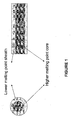
- Sinterable synthetic bicomponent fibers have a core/sheath or side by side cross-sectional structure.
- bicomponent fibers have an islands-in-the-sea, matrix fibril, citrus fibril, or segmented pie cross-sectional structure.
- Bicomponent fibers comprising core/sheath cross-sectional structure are provided in Table 1.
- fibers comprise continuous fibers. In other embodiments, fibers comprise staple fibers. In one embodiment, for example, a fiber of a fibrous material comprises a staple bicomponent fiber. Staple fibers, according to some embodiments, have any desired length. In some embodiments, fibrous materials are woven or non-woven. In one embodiment, a fibrous material is sintered. In one embodiment, fibrous wicks are optionally colored.
- bicomponent fibers are used.
- Bicomponent fibers that may be used in the present invention may have a variety of configurations such as a concentric sheath and core arrangement, an eccentric core relative to the sheath, a side by side arrangement of fibers, and other configurations known to one of ordinary skill in the art.
- bicomponent fibers have an islands-in-the-sea, matrix fibril, citrus fibril, or segmented pie cross-sectional structure.
- Bicomponent fibers that can be used to make the wicks of the present invention may be sinterable.
- Synthetic sinterable and generally non-biodegradable bicomponent fibers that may be employed in the practice of this invention include, but are not limited to fibers constructed from the following pairs of polymers: polypropylene/polyethylene terephthalate (PET), polyethylene (PE)/PET, polypropylene/Nylon-6, Nylon-6/PET, copolyester/PET, copolyester/Nylon-6, copolyester/Nylon-6,6, poly-4-methyl-1-pentene/ PET, poly-4-methyl-1-pentene/Nylon-6, poly-4-methyl-1-pentene/Nylon-6,6, PET/polyethylene naphthalate (PEN), Nylon-6,6/poly-1,4-cyclohexanedimethy- 1 (PCT), polypropylene/polybutylene terephthalate (PBT), Nylon-6/co-polyamide, polyester/polyester and polyurethane/acetal.
- PET polypropylene/poly
- Natural fiber materials can be used in combination with the synthetic bicomponent fibers to make the wicks of the present invention. These natural fiber materials include, but are not limited to: cotton fiber, Rayon, Tencel, silk, and wool. Cottons can be any type of cotton, including Pima, Egyptian Cotton, Upland cotton, and Asiatic cotton. Naturally biodegradable cellulose based fibers include vegetable fibers, wood fibers, animal fibers and some man-made cellulose based fibers. Vegetable fibers include cotton fibers.
- the cotton can be purchased commercially from many sources such as Cotton Works Inc. (Gaffney, SC, USA), Frontier Spinning Mills Inc. (Stanford, NC, USA), and Parkdale (Gastonia, NC, USA). The are also a number of companies that dye cotton. Cottons can also be dyed with dyes by many methods. One requirement for the dyed cotton for this application is good color fastness. The dye should generally stay on the cotton surface and not move with the aqueous or non-aqueous based fragrances. One type of dye for this application is a reactive dye that can form covalent bonds with cotton.
- the reactive dyes that can be used in this application include, but are not be limited to Procion MX series dyes, Cibacron F, Drimarene K, Remazol or vinyl sulfone dyes, Levafix, Procion H and H-E, or Novacron from Huntsman chemicals.
- the fiber can be long or short. It is important to have similar lengths of the natural fiber and of the synthetic bicomponent fiber. Synthetic fibers can be cut to a desired length. A good match provides better blending (dispersion of the lower concentrate fiber) and better carding. Furthermore, this yields adequate tensile strength for the pultrusion process. Fibers that are too short will not be carded properly into adequate sliver for the pultrusion process.
- the fibers used in this application are generally from about 12.7 mm to about 63.5 mm (about 0.5 to about 2.5 inches) in length. In one embodiment cotton fibers are from about 12.7 mm to about 38.1 mm (about 0.5 to about 1.5 inches) in length.
- synthetic bicomponent fibers are from about 12.7 mm to about 63.5 mm (about 0.5 to about 2.5 inches) in length, from about 25.4 mm to about 38.1 mm (about 1.0 to about 1.5 inches) in length, or from about 38.1 mm to about 50.8 mm (about 1.5 to about 2.0 inches) in length.
- non-sintered colored fibrous components that may be employed in the practice of this invention include, but are not limited to: naturally colored cotton fiber (Vreseis Ltd. trade name: Fox fiber), and dye colored cotton, Rayon, Tencel, silk, wool, polyvinyl alcohol (PVA) or acrylic fibers.
- a fibrous component comprises any type or combination of colored fibers known to one of skill in the art useful in aqueous and non-aqueous fragrance wicks.
- the synthetic bicomponent fiber materials, and blends of synthetic bicomponent fiber materials with synthetic monocomponent or natural fiber monocomponent materials, used to make the wicks of the present invention were carded into sliver.
- the sliver was bonded together by using an oven pultrusion process.
- the synthetic biodegradable bicomponent fibers were composed of a concentric sheath and core material.
- the sheath material was of a lower melting point than the core material.
- the oven temperature was set between the melting temperature of the sheath and core and the oven thermally bonded (melted) the sheath material of the biodegradable bicomponent fibers to other biodegradable bicomponent fibers. This process produced a cylindrical sintered porous matrix. A die compressed and shaped this matrix into rods that were subsequently air cooled and cut to desired length.
- the wicks were plasma treated.
- Plasma treatment could be any one of commonly employed industrial plasma processes, such as radiofrequency (RF) or microwave plasma.
- the plasma could also be a low pressure or normal pressure air plasma process.
- plasma was a low pressure, gas plasma treatment process.
- the wicks were placed in a chamber for a specified time, energy level, and gas flow rate.
- the plasma process made the wicks more hydrophilic.
- the gas was oxygen, but other gases could be used, such as nitrogen, argon, hydrogen and any combination thereof.
- Other molecules, such as alcohol or acrylic acids also could be used in the plasma chamber to make the polymer more hydrophilic.
- the gas flow rate was controlled to maintain the chamber at a pressure about 13.3 Pa (100 mtorr) and treatment time generally was a few minutes to 30 minutes. It is widely known that plasma treatment conditions depend on the machine design, sample size, power etc. One of ordinary skill in the art can modify conditions for different component parts and on different plasma machines. A plasma treatment device that feeds inline to the pultrusion process and does not require vacuum conditions and operates at positive pressures (above ambient atmospheric pressure) may be used.
- the plasma treatment process creates hydrophilic moieties on the surface of the fiber molecules. These moieties increase the surface energy of the fiber wicks making them more hydrophilic.
- the cross sectional area determines the amount of fluid that can be transported through the wicks for a given wick density. Larger diameter wicks can transport more fluid.
- Finishing agents are optionally employed to enhance hydrophilicity of the wicks. Finishing agents are well known in the textile industry as aiding agents for the fiber process or provide fiber with desired properties, such as water absorption etc. Finishing agents that may be employed were published in the WO/1993/017172 , US 4,098,702 , and US 4,403,049 . Details of the application of finishing agents, including surfactant, to provide textiles with desired properties may be found in " Handbook of Detergents: Formulation” edited by Michael Showell, pages 279-304, CRC Press .
- finishes may generally be accomplished by contacting a fiber tow or yarn with a solution or emulsion comprising at least one finishing agent having desirable lubrication, antistatic, wetting, and/or emulsification properties.
- Other additives such as antioxidants, biocides, anti-corrosion agents, and pH control agents may also be added into the finishes.
- a suitable fiber finish may also be sprayed or applied directly onto fibers or yarn. Fibers treated with finishing agents are commercially available.
- the wicks can have different diameters and lengths depending on the desired application. Multiple wicks may be placed in a jar filled with a liquid containing a vaporizable material such as a fragrance. Capillary forces draw the fragrance solution up the wicks. Fragrance is then released by evaporation of the fluid from the surface of the exposed portion of the wicks.
- wicks may be made with diameters of about 1.02 mm (0.04 inches) to about 25.4 mm (1 inch) using the pultrusion process.
- wick diameters may be about 1.27, 1.52, 1.78, 2.03, 2.29, 2.54, 2.79, 3.05, 3.30, 3.56, 3.81, 4.06, 4.32, 4.57, 4.82, 5.08, 5.33, 5.59, 5.84, 6.10, 6.35, 6.60, 6.86, 7.11, 7.37, or 7.62 mm (0.05, 0.06, 0.07, 0.08, 0.09, 0.10, 0.11, 0.12, 0.13, 0.14, 0.15, 0.16, 0.17, 0.18, 0.19, 0.20, 0.21, 0.22, 0.23, 0.24, 0.25, 0.26, 0.27, 0.28, 0.29, or 0.30 inches).
- wick diameters may greater than about 7.62 mm (0.30 inches), greater than about 10.16 mm (0.40 inches), greater than about 12.7 mm (0.50 inches), or greater than about 15.24 mm (0.60 inches).
- the rods can be cut into wicks of any desired length, for example 5.08 mm (0.2 inches) or greater.
- wicks may be equal to or longer than about 50.8 mm (2.0 inches), about 76.2 mm (3.0 inches), about 101.6 mm (4.0 inches), about 127 mm (5.0 inches), about 152.4 mm (6.0 inches), about 177.8 mm (7.0 inches), about 203.2 mm (8.0 inches), about 228.6 mm (9.0 inches), about 254 mm (10 inches), about 279.4 mm (11 inches), about 304.8 mm (12 inches), about 330.2 mm (13 inches), about 355.6 mm (14 inches), about 384 mm (15 inches), about 508 mm (20 inches), about 635 mm (25 inches), or about 762 mm (30 inches).
- the wicks have a length to diameter ratio greater than 40, greater than 50, greater than 60, greater than 70, greater than 80, greater than 90, greater than 100, greater than 150, greater than 200, greater than 250, or greater than 300.
- the wicks of the present invention have a pore volume in the range of about 50% to about 95%.
- a vaporizable material such as a fragrance
- the exposed surface area of the wicks controls the rate of evaporation. A greater wick surface area (larger diameter and/or length) causes greater fragrance release. Fragrance release is dependent on other environmental factors such as temperature and humidity.
- the wicks of the present invention function effectively at ambient temperature or room temperature and do not require heat, convection air, or atomization.
- the wicks of the present invention can wick vaporizable materials, such as fragrances, for release into the atmosphere. These wicks can wick and release both aqueous and oil based fragrances.
- the wicks are not limited to fragrances and may wick and release other vaporizable materials, in addition to or instead of fragrances.
- Vaporizable materials containing insect repellants may be used to repel undesirable invertebrates, such as mosquitoes, no see ums, flies, wasps, yellow jackets and hornets from the environment.
- Vaporizable materials containing insecticides may kill insects in the environment.
- Vaporizable materials containing both a fragrance and an insect repellant or insecticide may be employed for the dual function of a pleasurable odor and insect repellency or an insect kill.
- Vaporizable fragrances, disinfectants, deodorants, pheromones, insect repellants, and insecticides are well known to one of skill in the art and are available from a variety of commercial sources.
- Common fragrances comprise citrus oils, fruity floral oils, herbal floral oils, lemon oils, orange oils, or combinations thereof.
- Disinfectants in some embodiments, comprise denatonium benzoate, hinokitiol, benzthiazolyl-2-thioalkanoic nitriles, alkyl dimethylbenzyl ammonium chlorides, or trichlosan.
- Insect repellants in some embodiments, comprise N,N-diethyl-meta-toluamide, citronella oils, or camphor.
- insecticides in some embodiments, comprise imiprotrin, cypermethrin, bifentrint, or pyrethrins.
- the wick surface energy, density, cross sectional area, and surface area can be optimized for a particular vaporizable material delivery system.
- the wick can have different colors.
- the color can be provided by the sinterable bicomponent fiber, by a monocomponent fiber or other additive fibers.
- the wick of the present invention may have synthetic and sinterable hydrophilic bicomponent fiber from about 51 wt% to about 100 wt% and other synthetic or natural fibers from about 0 wt% to about 49 wt%.
- the wick may have synthetic and sinterable hydrophilic bicomponent fiber from about 60 wt% to about 100 wt%, or 70 wt% to about 100 wt%, and other synthetic or natural fibers from about 0 wt% to about 40 wt% or from about 0 wt% to about 30 wt%, respectfully.
- the wick of the present invention may have synthetic biodegradable and sinterable bicomponent fiber from about 51 wt% to about 100 wt% and other synthetic or natural fibers from about 0 wt% to about 49 wt%.
- the wick may have synthetic biodegradable and sinterable bicomponent fiber from about 60 wt% to about 100 wt%, or 70 wt% to about 100 wt%, and other synthetic or natural fibers from about 0 wt% to about 40 wt% or from about 0 wt% to about 30 wt%, respectfully.
- the wick of the present invention may have synthetic sinterable biodegradable bicomponent fiber from about 51 wt% to about 100 wt% and other natural fibers from about 0 wt% to about 49 wt%.
- the wick may have synthetic sinterable biodegradable bicomponent fiber from about 60 wt% to about 100 wt%, or 70 wt% to about 100 wt%, and other natural fibers from about 0 wt% to about 40 wt% or from about 0 wt% to about 30 wt%, respectfully.
- the wick of the present invention may have synthetic sinterable biodegradable bicomponent fiber from about 51 wt% to about 100 wt% and other synthetic monocomponent fibers from about 0 wt% to about 49 wt%.
- the wick may have sinterable synthetic biodegradable bicomponent fiber from about 60 wt% to about 100 wt%, or 70 wt% to about 100 wt%, and other synthetic monocomponent fibers from about 0 wt% to about 40 wt% or from about 0 wt% to about 30 wt%, respectfully.
- the wick of the present invention may have synthetic sinterable non-biodegradable bicomponent fiber from about 51 wt% to about 100 wt% and other natural fibers from about 0 wt% to about 49 wt%.
- the wick may have sinterable synthetic non-biodegradable bicomponent fiber from about 60 wt% to about 100 wt%, or 70 wt% to about 100 wt%, and other natural fibers from about 0 wt% to about 40 wt% or from about 0 wt% to about 30 wt%, respectfully.
- the wick of the present invention may have synthetic sinterable non-biodegradable bicomponent fiber from about 51 wt% to about 100 wt% and other natural fibers from about 0 wt% to about 49 wt%.
- the wick may have sinterable synthetic non-biodegradable bicomponent fiber from about 60 wt% to about 100 wt%, or 70 wt% to about 100 wt%, and other natural fibers from about 0 wt% to about 40 wt% or from about 0 wt% to about 30 wt%, respectfully.
- wicks of the present invention may have sinterable bicomponent fiber from 70 to 95 wt % and hydrophilic monocomponent fiber from 5 to 30 percent (wt %).
- the wicks have a density from about 0.2 g/ml to about 1.0 g/ml, or from about 0.3 g/ml to about 0.9 g/ml or from about 0.4 g/ml to about 0.8 g/ml.
- the wicks were made from pultrusion of synthetic sinterable poly(lactic acid) (PLA) or its copolymer concentric bicomponent fibers.
- PLA synthetic sinterable poly(lactic acid)
- both core and sheath materials were PLA and the core PLA had a melting temperature higher than the melting temperature of sheath PLA (Far Eastern Textile Ltd. Ingeo SLN2450CM, 4 denier). It is preferred that the melting temperature difference is more than 10° C, more than 20°C or more than 30°C.
- the melting temperature of the polymer can be controlled by manipulation of crystallization, the copolymerization or the blend as known to one of ordinary skill in the art of polymer chemistry.
- the sliver was bonded together by using an oven pultrusion process.
- the synthetic biodegradable bicomponent fibers were composed of a concentric sheath and core material.
- the PLA in the sheath material was of a lower melting point than the PLA in the core material.
- the melting point for the PLA sheath was about 132 °C and melting point for the PLA in the core was about 165 °C.
- the oven temperature was controlled based on the manufacturing conditions. The temperature depended on the pultrusion speed and rod diameter. The goal was to provide a sufficient amount of heat to the sinterable bicomponent fiber such that only the sheath of the bicomponent fiber melted but not the core.
- the silver was pultruded through an oven at the temperature of 204-221°C and compressed through a die at the temperature of 49-66°C.
- the pultrusion speed was 50.8 to 101.6 mm/seconds (2.0 to 4.0 inches/seconds).
- This process produced a cylindrical sintered porous matrix. A die compressed and shaped this matrix into rods that were subsequently air cooled and cut to length.
- the wicks were plasma treated.
- plasma was a low pressure, gas plasma treatment process.
- the wicks were placed in a chamber for a specified time, energy level, and gas flow rate.
- the plasma process made the wicks more hydrophilic.
- the gas was oxygen.
- the gas flow rate was controlled to maintain the chamber at a pressure about 13.3 Pa (100 mtorr) and treatment time generally was a few minutes.
- Table 2 Aqueous based fragrance delivery amount (in grams (gm)) for ten 203.2-mm 3.81 mm (8-inch 0.15 inch) diameter wicks produced as described in this example under different pultrusion speeds PLA WICKS Days Speed One (gm) Speed Two (gm) 0 0 0 3 19.51 20.92 5 22.99 24.39 6 24.18 25.55 7 25.19 26.54 10 26.91 28.16 21 27.63 28.84 22 28.08 29.28 23 28.64 29.80 24 29.01 30.14 27 30.42 31.47 28 30.99 32.04 29 31.56 32.57 30 31.95 32.95 31 32.44 33.39 34 33.67 34.51 35 33.99 34.79
- the wicks were made from pultrusion of a blend of synthetic sinterable poly(lactic acid) (PLA)/PLA concentric bicomponent fibers and a colored naturally biodegradable fiber, such as cotton fiber. These materials were blended in a 9:1 (PLA: cotton) ratio and carded into sliver. The lower content brown cotton provided the natural color of the wicks.
- the silver was pultruded through an oven at the temperature of 204-221°C and compressed through a die at the temperature of 49-66°C.
- the pultrusion speed was 50.8 to 101.6 mm/seconds (2.0 to 4.0 inches/seconds).
- This process produced a cylindrical sintered porous matrix. A die compressed and shaped this matrix into rods that were subsequently air cooled and cut to length.
- the wicks were plasma treated.
- plasma was a low pressure, gas plasma treatment process.
- the wicks were placed in a chamber for a specified time, energy level, and gas flow rate.
- the plasma process made the wicks more hydrophilic.
- the gas was oxygen.
- the gas flow rate was controlled to maintain the chamber at a pressure about 13.3 Pa (100 mtorr) and treatment time generally was a few minutes.
- the wicks were hydrophilic and deionized water wicked to one inch high against gravity in less than 120 seconds.
- the wicks are also made from combining synthetic sinterable biodegradable concentric bicomponent fibers with non-sinterable, hydrophilic monocomponent fibers, such as PVA (polyvinyl alcohol) or acrylic fiber materials, that are blended in a 9 to 1 (9: 1) ratio and carded into sliver.
- the sliver is bonded together by using an oven pultrusion process.
- the silver is pultruded through an oven at the temperature of 204 to 221 °C and compressed through a die at the temperature of 49 to 66°C.
- the pultrusion speed was 50.8 to 101.6 mm/seconds (2.0 to 4.0 inches/seconds).
- the wicks are plasma treated.
- plasma is a low pressure, gas plasma treatment process.
- the wicks are placed in a chamber for a specified time, energy level, and gas flow rate.
- the plasma process makes the wicks more hydrophilic.
- the gas is oxygen.
- the gas flow rate is controlled to maintain the chamber at a pressure about 13.3Pa (100 mtorr) and treatment time generally is a few minutes.
- the sliver contains synthetic sinterable biodegradable bicomponent poly(lactic acid) PLA/PLA fiber (Far Eastern Textile Ltd. Ingeo SLN2450CM, 4 denier) and dye colored cotton fiber (Memphis Upland long staple cotton, dyed by Littlewood Corp. using Novacron dyes manufactured by Huntsman).
- the cotton is brown in color.
- the ratio of synthetic sinterable biodegradable bicomponent PLA/PLA fiber to dye cotton fiber is 9:1 by weight.
- the silver is pultruded through an oven at the temperature of 204-221°C and compressed through a die at the temperature of 49-66°CC.
- the pultrusion speed is 50.8 to 101.6 mm/seconds (2.0 to 4.0 inches/seconds).
- the product (rod) has a light brown marbled appearance similar to balsa wood.
- the products are cut into 203.2 mm (8 inch) long wicks and placed in a plasma chamber.
- the gas is oxygen.
- the wicks are treated at 400 watts for about 15 minutes.
- the treated wicks are able to wick water to 25.4 mm (1 inch) high in less than 120 seconds.
- the wicks were made from combining sinterable polyethylene/polyester (PE/PET) concentric bicomponent fibers with non-sinterable, natural brown cotton fibers (Vreseis Ltd. Trade name: Fox fiber). These materials were blended in a 9:1 ratio and carded into sliver. The lower content brown cotton provided the natural color of the wicks.
- PE/PET polyethylene/polyester
- Fox fiber non-sinterable, natural brown cotton fibers
- the sliver was bonded together by using an oven pultrusion process.
- the bicomponent fibers were composed of a concentric sheath and core material. To facilitate sintering, the sheath material was of a lower melting point than the core material.
- the oven thermally bonded (melted) the sheath material of the bicomponent fibers to other bicomponent fibers and to the non binding fibers.
- These non binding fibers include monocomponent fibers such as naturally colored cotton or dyed cotton.
- the non binding fibers generally do not melt and bind to each other.
- the silver was pultruded through an oven at the temperature of 175-220°C and compressed through a die at the temperature of 49-66°C.
- the pultrusion speed was 50.8 to 101.6 mm/seconds (2.0 to 4.0 inches/seconds). This process produced a cylindrical sintered porous matrix. A die compressed and shaped this matrix into rods that were subsequently air cooled and cut to length.
- the wicks were plasma treated.
- plasma was a low pressure, gas plasma treatment process.
- the wicks were placed in a chamber for a specified time, energy level, and gas flow rate.
- the plasma process made the parts more hydrophilic:
- the gas was oxygen.
- the gas flow rate was controlled to maintain the chamber at a pressure about 13.3 Pa (100 mtorr) and treatment time generally was about 15 minutes.
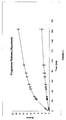
- Table 3 Presented in Table 3 are comparative data between two reed wicks and three sintered fiber wicks over a four hour period.
- the fiber wicks described in this invention draw water based fluid to a much greater height with a greater wick rate.
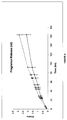
- These wicks in Table 3 were brown in color and were made of co-polyethylene:polyethylene terephthalate (CoPE/PET) bicomponent fiber and naturally colored cotton at the ratio of 9:1. Fragrance delivery amount data are in figures 3 and 4 and are expressed in grams (gm).
- the wicks were made from combining sinterable polyethylene/polyester (PE/PET) bicomponent 3.0 Dtex (diameter)) (Trevira GMBH, Germany) and dye colored cotton fiber (50 mm long length Pima cotton, dyed by Littlewood Corp. using NovaChrome dyes manufactured by Huntsman (Woodlands, Texas, US). The cotton was brown in color. These materials were blended in a 9:1 ratio and carded into sliver. The lower content dyed cotton fibers provided the color of the wicks.
- PE/PET sinterable polyethylene/polyester
- dye colored cotton fiber 50 mm long length Pima cotton, dyed by Littlewood Corp. using NovaChrome dyes manufactured by Huntsman (Woodlands, Texas, US).
- the cotton was brown in color. These materials were blended in a 9:1 ratio and carded into sliver.
- the lower content dyed cotton fibers provided the color of the wicks.
- the sliver was bonded together by using an oven pultrusion process.
- the bicomponent fibers were composed of a concentric sheath and core material. To facilitate sintering, the sheath material was of a lower melting point than the core material.
- the oven thermally bonded (melted) the sheath material of the bicomponent fibers to other bicomponent fibers and to the non binding fibers. These non binding fibers were dyed cotton fibers.
- the non binding fibers generally do not melt and bind to each other.
- the silver was pultruded through an oven at the temperature of 175-220°C and compressed through a die at the temperature of 49-66°C.
- the pultrusion speed was 50.8 to 101.6 mm/second (2.0 to 4.0 inches/second). This process produced a cylindrical sintered porous matrix. A die compressed and shaped this matrix into rods that were subsequently air cooled and cut to length. The resulted wick had the color of the dyed cotton.
- the wicks were plasma treated in the similar way as naturally colored wicks.
- the gas flow rate was controlled to maintain the chamber at a pressure about 13.3 Pa (100 mtorr) and treatment time was about 15 minutes.
- the wick can have different diameters and lengths depending on the application.
- Multiple wicks were placed in a jar filled with a fragrance liquid. Capillary forces drew the fragrance solution up the wicks. Fragrance was then released by evaporation of the fluid from the surface of the exposed portion of the wicks.
- Ten wicks were placed in a small jar (approx. 76.2 to 152.4 mm (3 to 6 inches) tall), filled with a fragrance liquid and a portion of the length of wicks was submerged in the solution.
- the ratio of the bicomponent fiber and dye colored cotton fiber was 9:1. However this ratio can be changed accordingly based on the application.
- Table 4 Aqueous based fragrance delivery amount (in grams (gm) for ten 203.2-mm (8-inch) long, 2.79 mm (0.11 inch) diameter wicks produced as described in this example and ten 203.2-mm (8-inch) long rattan wicks in 35 days.
- the wicks are also made from combining sinterable polyethylene/polyester (PE/PET) concentric bicomponent fibers with non-sinterable, dyed protein-based fibers, such as silk or wool. These materials are blended in a 9:1 ratio and carded into sliver. The lower content of dyed fiber provides the color of the wicks.
- PE/PET polyethylene/polyester
- the wicks are also made from combining sinterable polyethylene/polyester (PE/PET) concentric bicomponent fibers with non-sinterable, dyed cellulose based fibers, such as Rayon, Tencel, or wood fibers. These materials are blended in a 9:1 ratio and carded into sliver. The lower content of dyed cellulose fiber provides the color of the wicks.
- PE/PET polyethylene/polyester
- the wicks are also made from combining sinterable polyethylene/polyester (PE/PET) concentric bicomponent fibers with non-sinterable, hydrophilic dyed synthetic fibers, such polyvinyl alcohol (PVA) and acrylic. These materials are blended in a 9:1 ratio and carded into sliver. The lower content of dyed hydrophilic synthetic fiber provides the color of the wicks.
- PE/PET polyethylene/polyester
- PVA polyvinyl alcohol
- acrylic acrylic
- the wicks are also made from combining sinterable colored concentric bicomponent fibers such as polyethylene/polyester (PE/PET), or polyester/polyester fibers, with a hydrophilic cellulosic, protein or synthetic fiber, such as cotton, Rayon, Tencel, silk, wool, PVA or polyacrylate fibers. These materials are blended in a 9:1 ratio (bicomponent fiber: hydrophilic fibers) and carded into sliver.
- the high content of colored bicomponent fiber provides the color of the wicks. Usually there is an economic advantage in using dyed cotton as opposed to solution dyed synthetic fiber.
- Wicks are optionally plasma treated after the pultrusion process to provide the wicks with satisfactory fragrance delivery rate.
- the plasma treatment may occur minutes to days following the pultrusion process.
- the sliver contained sinterable bicomponent fiber (co polyethylene (PE)/PET bicomponent 3.0 Dtex (diameter)) (Kosa, USA) GMBH, Germany).
- the silver was pultruded through an oven at the temperature of 175-220 °C and compressed through a die at the temperature of 60°C.
- the pultrusion speed was 50.8-101.6 mm/second (2-4 inch/second).
- the products were cut into 203.2 mm (8 inch) long wicks and placed in a plasma chamber.
- the gas was oxygen.
- the wicks were treated at 200 watts for about 15 minutes. Fragrance delivery rate for plasma and non-plasma treated wicks were similar.
- Table 5 Aqueous based fragrance delivery amount (in grams (gm) for ten 203.2-mm (8-inch) long, 3.81 mm (0.15 inch) diameter wicks produced as described in this example with and without plasma treatment.
- the wicks were made by combining synthetic sinterable concentric bicomponent fibers PE/PET bicomponent 3.0 Dtex (diameter)) (Trevira GMBH, Germany) with non-sinterable, hydrophilic monocomponent green acrylic fiber materials blended in a 7 to 3 (7:3) ratio and carded into sliver.
- the acrylic fibers were modacrylic fibers that were dyed green (available from VMOD Fibers LLC, Charlotte, NC, US).
- the sliver was bonded together using an oven pultrusion process. The silver was pultruded through the oven at a temperature of 204-221 °C and compressed through a die at a temperature of 49-66°C. The pultrusion speed was 50.8 to 101.6 mm/seconds (2.0 to 4.0 inches/seconds).
- the wicks were plasma treated.
- plasma was a low pressure, gas plasma treatment process.
- the wicks were placed in a chamber for a specified time, energy level, and gas flow rate.
- the plasma process made the wicks more hydrophilic.
- the gas was oxygen.
- the gas flow rate was controlled to maintain the chamber at a pressure about 13.3 Pa (100 mtorr) and treatment time generally was a few minutes.
- the resulting wicks were green colored, hydrophilic and able to wick water against gravity to 25.4 mm (1 inch) high in less than 120 seconds.
Landscapes
- Health & Medical Sciences (AREA)
- Epidemiology (AREA)
- General Chemical & Material Sciences (AREA)
- Engineering & Computer Science (AREA)
- Textile Engineering (AREA)
- Chemical Kinetics & Catalysis (AREA)
- Chemical & Material Sciences (AREA)
- Life Sciences & Earth Sciences (AREA)
- Animal Behavior & Ethology (AREA)
- General Health & Medical Sciences (AREA)
- Public Health (AREA)
- Veterinary Medicine (AREA)
- Nonwoven Fabrics (AREA)
- Multicomponent Fibers (AREA)
Applications Claiming Priority (3)
| Application Number | Priority Date | Filing Date | Title |
|---|---|---|---|
| US14364609P | 2009-01-09 | 2009-01-09 | |
| US17914109P | 2009-05-18 | 2009-05-18 | |
| PCT/US2010/020514 WO2010081013A1 (en) | 2009-01-09 | 2010-01-08 | Hydrophilic porous wicks for vaporizable materials |
Publications (2)
| Publication Number | Publication Date |
|---|---|
| EP2376683A1 EP2376683A1 (en) | 2011-10-19 |
| EP2376683B1 true EP2376683B1 (en) | 2014-06-11 |
Family
ID=42097222
Family Applications (1)
| Application Number | Title | Priority Date | Filing Date |
|---|---|---|---|
| EP10700773.4A Active EP2376683B1 (en) | 2009-01-09 | 2010-01-08 | Hydrophilic porous wicks for vaporizable materials |
Country Status (4)
| Country | Link |
|---|---|
| US (1) | US20100176210A1 (enExample) |
| EP (1) | EP2376683B1 (enExample) |
| JP (1) | JP2012514701A (enExample) |
| WO (1) | WO2010081013A1 (enExample) |
Cited By (3)
| Publication number | Priority date | Publication date | Assignee | Title |
|---|---|---|---|---|
| CN104911733A (zh) * | 2015-05-20 | 2015-09-16 | 铜陵宏正网络科技有限公司 | 一种含有氨纶纤维的耐干洗阻燃羊绒复合纤维及其制作方法 |
| US11141951B2 (en) | 2015-02-24 | 2021-10-12 | Porex Corporation | Membrane-coated sintered porous media for sample collection |
| US20240358879A1 (en) * | 2021-09-23 | 2024-10-31 | Ksp Holding B.V. | Dispensing system for dispensing a fluid into the atmosphere |
Families Citing this family (11)
| Publication number | Priority date | Publication date | Assignee | Title |
|---|---|---|---|---|
| US7731102B2 (en) * | 2006-06-22 | 2010-06-08 | Filtrona Richmond, Inc. | Neutral displacement wick |
| US20100065653A1 (en) * | 2008-08-01 | 2010-03-18 | Wingo James P | Wicks for dispensers of vaporizable materials |
| CN102733096B (zh) * | 2012-06-13 | 2014-07-09 | 嘉兴学院 | 一种不易致敏、可调节湿气的全降解医疗卫生用无纺材料 |
| US10245343B2 (en) * | 2013-08-23 | 2019-04-02 | American Felt & Filter Company | Scented wafer |
| US9114558B1 (en) * | 2013-08-26 | 2015-08-25 | Amad Tayebi | Method of making a non-clogging porous fibrous mass for air scenting |
| WO2015134860A1 (en) | 2014-03-07 | 2015-09-11 | Ticona Llc | Sintered polymeric particles having narrow particle size distribution for porous structures |
| CN105002613A (zh) * | 2015-05-20 | 2015-10-28 | 铜陵宏正网络科技有限公司 | 一种含有不锈钢纤维的抗静电羊绒复合纤维及其制作方法 |
| KR101711821B1 (ko) * | 2015-12-10 | 2017-03-03 | 디케이 주식회사 | 서방성 휘산장치 |
| CN111163816B (zh) | 2017-05-19 | 2022-06-21 | 珀雷克斯公司 | 具有亲水性烧结多孔塑料或亲水性多孔纤维空气阻止过滤器的输注装置 |
| CN108060467A (zh) * | 2017-12-22 | 2018-05-22 | 合肥洁诺无纺布制品有限公司 | 一种手术铺单用聚乳酸纤维 |
| WO2025191146A1 (de) * | 2024-03-15 | 2025-09-18 | Schreiber Gmbh | Docht für eine kerze |
Citations (1)
| Publication number | Priority date | Publication date | Assignee | Title |
|---|---|---|---|---|
| WO2003080904A2 (en) * | 2001-04-20 | 2003-10-02 | Porex Technologies Corporation | Functional fibers and fibrous materials |
Family Cites Families (61)
| Publication number | Priority date | Publication date | Assignee | Title |
|---|---|---|---|---|
| US3780260A (en) * | 1972-08-04 | 1973-12-18 | E Elsner | Combination night light and liquid vaporizer |
| JPS5314667B2 (enExample) * | 1973-04-09 | 1978-05-19 | ||
| US3910753A (en) * | 1974-04-15 | 1975-10-07 | George Y Lee | Wax burner |
| US4098702A (en) * | 1976-04-09 | 1978-07-04 | George A. Goulston Company, Inc. | Yarn finish formulation |
| US4438839A (en) * | 1980-03-07 | 1984-03-27 | General Electric Company | Apparatus and methods for assembling end shield assemblies for dynamoelectric machines |
| JPS57128271A (en) | 1981-01-29 | 1982-08-09 | Unitika Ltd | Production of polyester fiber with good adhesiveness with rubbers |
| US4795668A (en) * | 1983-10-11 | 1989-01-03 | Minnesota Mining And Manufacturing Company | Bicomponent fibers and webs made therefrom |
| IT1189926B (it) * | 1986-02-18 | 1988-02-10 | Cefin Spa | Metodo per il raffreddamento del filo continuo di copertura di rulli di saldatura di una macchina per la saldatura in continuo di elementi tubolari |
| JPH0718294Y2 (ja) * | 1988-02-10 | 1995-05-01 | アース製薬株式会社 | 加熱蒸散器 |
| US5196171A (en) * | 1991-03-11 | 1993-03-23 | In-Vironmental Integrity, Inc. | Electrostatic vapor/aerosol/air ion generator |
| GB2261671B (en) * | 1991-11-16 | 1996-07-03 | Gb Biotech | Gel production from plant matter |
| US5284704A (en) * | 1992-01-15 | 1994-02-08 | American Felt & Filter Company | Non-woven textile articles comprising bicomponent fibers and method of manufacture |
| US5314718A (en) | 1992-02-28 | 1994-05-24 | Henkel Corporation | Fiber finishing methods |
| JPH0679832A (ja) * | 1992-05-26 | 1994-03-22 | Nitto Denko Corp | 親水性繊維シート及びその製造方法 |
| US5607766A (en) * | 1993-03-30 | 1997-03-04 | American Filtrona Corporation | Polyethylene terephthalate sheath/thermoplastic polymer core bicomponent fibers, method of making same and products formed therefrom |
| US5434386A (en) * | 1993-09-01 | 1995-07-18 | Holmes Products Corp. | Electric circuit having a heater element and a night light |
| US5449117A (en) * | 1993-10-04 | 1995-09-12 | Technical Concepts, L.P. | Apparatus and method for controllably dispensing drops of liquid |
| EP0731651B1 (en) * | 1993-11-29 | 1998-04-01 | Courtaulds Fibres (Holdings) Limited | Cigarette filters |
| US5509430A (en) * | 1993-12-14 | 1996-04-23 | American Filtrona Corporation | Bicomponent fibers and tobacco smoke filters formed therefrom |
| US5591395A (en) * | 1995-08-03 | 1997-01-07 | S. C. Johnson & Son, Inc. | Method of disinfecting air |
| US5647053A (en) * | 1995-10-11 | 1997-07-08 | S. C. Johnson & Son, Inc. | Vapor dipensing device |
| US5948529A (en) * | 1997-02-26 | 1999-09-07 | Hna Holdings, Inc. | Bicomponent fiber |
| US6090331A (en) * | 1998-08-28 | 2000-07-18 | S. C. Johnson & Son, Inc. | Method of manufacturing gel candles having non-metal core wicks |
| US6361752B1 (en) * | 1999-05-19 | 2002-03-26 | S. C. Johnson & Son, Inc. | Apparatus for volatilizing and dispensing a chemical into a room environment |
| EP1088562A1 (en) * | 1999-09-29 | 2001-04-04 | Givaudan SA | A device for the controllable transfer of a liquid and an apparatus for dispensing transferred liquids |
| DE59909132D1 (de) * | 1999-12-18 | 2004-05-13 | C T R | Vorrichtung zum Verdampfen von flüchtigen Substanzen, insbesondere von Insektiziden und/oder Duftstoffen |
| DE60034368T2 (de) * | 1999-12-28 | 2008-01-03 | Kimberly-Clark Worldwide, Inc., Neenah | Verwendungs-abhängiges indikatorsystem für absorbierende artikel |
| US6792199B2 (en) * | 2000-02-25 | 2004-09-14 | The Dial Corporation | Variable temperature vaporizer |
| US6333009B1 (en) * | 2000-05-11 | 2001-12-25 | Noville, Inc. | Heating element for oil burning lamp |
| US20040265164A1 (en) * | 2000-07-27 | 2004-12-30 | The Procter & Gamble Company | Methods, devices, compositions, and systems for improved scent delivery |
| US20040028551A1 (en) * | 2000-07-27 | 2004-02-12 | Kvietok Frank Andrej | Methods for emitting volatile compositions |
| JP2002048651A (ja) * | 2000-08-04 | 2002-02-15 | Nippon Precision Circuits Inc | 半導体温度検出方法およびその回路 |
| ITMI20012030A1 (it) * | 2000-10-04 | 2003-03-28 | Sumitomo Chemical Co | Dispositivo per il controllo di animali nocivi e supporto per sostanze volatili da usare nello stesso |
| MXPA03003055A (es) * | 2000-10-09 | 2004-12-06 | Dial Corp | Mecha porosa para vaporizadores de liquidos. |
| US6450419B1 (en) * | 2000-10-27 | 2002-09-17 | S.C. Johnson & Son, Inc. | Self contained liquid atomizer assembly |
| US20030005620A1 (en) * | 2001-07-06 | 2003-01-09 | Ananth Gopal P. | Wick based liquid emanation system |
| EP1283062B1 (en) * | 2001-08-07 | 2006-05-03 | S.C. Johnson & Son, Inc. | Polyfunctional electric wall evaporator |
| US7456025B2 (en) * | 2001-08-28 | 2008-11-25 | Porex Corporation | Sintered polymer membrane for analyte detection device |
| DE60234863D1 (de) * | 2001-11-21 | 2010-02-04 | Porex Corp | Diskrete hydrophil-hydrophobe poröse materialien und herstellungsverfahren dafür |
| US6697571B2 (en) * | 2002-03-11 | 2004-02-24 | The Dial Corporation | Method and apparatus for selective positioning a wick material in a vapor-dispensing device |
| EP1512312A4 (en) * | 2002-05-13 | 2006-11-22 | Johnson & Son Inc S C | COORDINATED EMISSION OF FRAGRANCE, LIGHT AND SOUNDS |
| US20040074982A1 (en) * | 2002-10-08 | 2004-04-22 | Kotary Kara L. | Wick-based delivery system with wick having small porosity sections |
| US6786427B2 (en) * | 2002-12-19 | 2004-09-07 | S. C. Johnson & Son, Inc. | Liquid sealing arrangements for replaceable liquid reservoirs |
| TW583003B (en) * | 2003-05-23 | 2004-04-11 | Benq Corp | Mobile phone and odorant module thereof |
| JP2005125069A (ja) * | 2003-10-03 | 2005-05-19 | Dainippon Jochugiku Co Ltd | 放香器 |
| US7290668B2 (en) * | 2004-03-01 | 2007-11-06 | Filtrona Richmond, Inc. | Bicomponent fiber wick |
| AU2005230449B2 (en) * | 2004-04-01 | 2010-02-18 | Liposcience, Inc. | NMR clinical analyzers and related methods, systems, modules and computer program products for clinical evaluation of biosamples |
| AU2005260607B2 (en) * | 2004-06-30 | 2010-10-14 | S. C. Johnson & Son, Inc. | Improved wick to reduce liquid flooding and control release rate |
| US7681806B2 (en) * | 2004-07-28 | 2010-03-23 | The Dial Corporation | Vapor dispersing device and method |
| US20090073694A1 (en) * | 2005-02-18 | 2009-03-19 | Glynntech, Inc | Multifunction communications device |
| US7589340B2 (en) * | 2005-03-31 | 2009-09-15 | S.C. Johnson & Son, Inc. | System for detecting a container or contents of the container |
| US7622073B2 (en) * | 2005-04-12 | 2009-11-24 | S.C. Johnson & Son, Inc. | Apparatus for and method of dispensing active materials |
| JP2007130439A (ja) * | 2005-06-27 | 2007-05-31 | Earth Chem Corp Ltd | 揮散器 |
| US20070058955A1 (en) * | 2005-09-13 | 2007-03-15 | The Dial Corporation | Vapor-emitting device with a solar-powered, active end of use indicator |
| GB2432316A (en) * | 2005-09-15 | 2007-05-23 | Carbonate Ltd | Heated wick assemblies |
| US7493028B2 (en) * | 2006-04-04 | 2009-02-17 | Group Dekko, Inc. | Multiple bottle evaporative diffuser |
| JP2009537279A (ja) * | 2006-05-19 | 2009-10-29 | ポーレックス コーポレイション | インジケータをともなう蒸気ディスペンサ |
| US7731102B2 (en) * | 2006-06-22 | 2010-06-08 | Filtrona Richmond, Inc. | Neutral displacement wick |
| US7604859B2 (en) * | 2006-08-30 | 2009-10-20 | Far Eastern Textile Ltd. | Heat adhesive biodegradable bicomponent fibers |
| JP2009148394A (ja) * | 2007-12-20 | 2009-07-09 | Earth Chem Corp Ltd | 薬剤揮散体 |
| US20100065653A1 (en) * | 2008-08-01 | 2010-03-18 | Wingo James P | Wicks for dispensers of vaporizable materials |
-
2010
- 2010-01-08 US US12/684,547 patent/US20100176210A1/en not_active Abandoned
- 2010-01-08 JP JP2011545463A patent/JP2012514701A/ja active Pending
- 2010-01-08 EP EP10700773.4A patent/EP2376683B1/en active Active
- 2010-01-08 WO PCT/US2010/020514 patent/WO2010081013A1/en not_active Ceased
Patent Citations (1)
| Publication number | Priority date | Publication date | Assignee | Title |
|---|---|---|---|---|
| WO2003080904A2 (en) * | 2001-04-20 | 2003-10-02 | Porex Technologies Corporation | Functional fibers and fibrous materials |
Cited By (3)
| Publication number | Priority date | Publication date | Assignee | Title |
|---|---|---|---|---|
| US11141951B2 (en) | 2015-02-24 | 2021-10-12 | Porex Corporation | Membrane-coated sintered porous media for sample collection |
| CN104911733A (zh) * | 2015-05-20 | 2015-09-16 | 铜陵宏正网络科技有限公司 | 一种含有氨纶纤维的耐干洗阻燃羊绒复合纤维及其制作方法 |
| US20240358879A1 (en) * | 2021-09-23 | 2024-10-31 | Ksp Holding B.V. | Dispensing system for dispensing a fluid into the atmosphere |
Also Published As
| Publication number | Publication date |
|---|---|
| WO2010081013A1 (en) | 2010-07-15 |
| EP2376683A1 (en) | 2011-10-19 |
| JP2012514701A (ja) | 2012-06-28 |
| US20100176210A1 (en) | 2010-07-15 |
Similar Documents
| Publication | Publication Date | Title |
|---|---|---|
| US20100176210A1 (en) | Hydrophilic Porous Wicks for Vaporizable Materials | |
| KR101856793B1 (ko) | 후각 자극 물질들에 대한 방법들, 조성물들 및 물품들 | |
| US20130251773A1 (en) | Controlled Release Insect Repellent Materials | |
| EP1113097A2 (en) | Fragrance-emitting fiber | |
| KR101944956B1 (ko) | 에센셜 오일을 함유하는 복합나노섬유 및 그의 제조방법 | |
| US20100065653A1 (en) | Wicks for dispensers of vaporizable materials | |
| JP5903909B2 (ja) | 加熱蒸散用害虫防除材及び加熱蒸散害虫防除方法 | |
| Iliou et al. | Citronella oil‐loaded electrospun micro/nanofibrous matrices as sustained repellency systems for the Asian tiger mosquito Aedes albopictus | |
| CN102383304B (zh) | 具有杀虫效果的家用纺织品及其加工方法 | |
| AU2019250232B2 (en) | Insect pest control product and insect pest control method | |
| KR20080026171A (ko) | 증기 활성 물질 발산용 제품 및 방법 | |
| Massella et al. | Manufacture techniques of chitosan-based microcapsules to enhance functional properties of textiles | |
| JP2023139193A (ja) | 有害生物忌避ポリマー組成物 | |
| US20110108630A1 (en) | Bonded Fiber Wick | |
| Xiang et al. | Electrospun nanofibers as controlled release systems for the combined pheromones of Grapholita molesta and Cydia pomonella | |
| CN101116439A (zh) | 室温挥发驱杀蚊虫剂及其使用方法 | |
| Mahmud et al. | Progress in mosquito repellent textiles: factors, methods, and challenges | |
| KR20160090576A (ko) | 바이오-폴리우레탄과 나노-티타니아를 복합한 다기능성 멤브레인 필름과 그의 제조방법 | |
| CN101692803A (zh) | 支承件和挥发装置 | |
| EP3850150A1 (en) | Lactam coated textile | |
| JP2014083023A (ja) | 薬剤揮散装置 | |
| WO2015128428A1 (de) | Pheromondispenser aus kunststoffmaterial | |
| CN114438613A (zh) | 一种持久驱蚊驱虫丝线的制备方法及制品 | |
| FR3071421B1 (fr) | Procede pour la fabrication d'un support active et support ainsi obtenu | |
| KR102128828B1 (ko) | 충 기피 소재의 제조방법 및 충 기피 소재 |
Legal Events
| Date | Code | Title | Description |
|---|---|---|---|
| PUAI | Public reference made under article 153(3) epc to a published international application that has entered the european phase |
Free format text: ORIGINAL CODE: 0009012 |
|
| 17P | Request for examination filed |
Effective date: 20110714 |
|
| AK | Designated contracting states |
Kind code of ref document: A1 Designated state(s): AT BE BG CH CY CZ DE DK EE ES FI FR GB GR HR HU IE IS IT LI LT LU LV MC MK MT NL NO PL PT RO SE SI SK SM TR |
|
| AX | Request for extension of the european patent |
Extension state: AL BA RS |
|
| RIN1 | Information on inventor provided before grant (corrected) |
Inventor name: MAO, GUOQIANG Inventor name: ARTHUR, MICHAEL Inventor name: SPORRER, KEVIN |
|
| 17Q | First examination report despatched |
Effective date: 20120515 |
|
| REG | Reference to a national code |
Ref country code: DE Ref legal event code: R079 Ref document number: 602010016614 Country of ref document: DE Free format text: PREVIOUS MAIN CLASS: D01F0008040000 Ipc: D01F0008140000 |
|
| RIC1 | Information provided on ipc code assigned before grant |
Ipc: A61L 9/12 20060101ALI20131007BHEP Ipc: D01F 8/14 20060101AFI20131007BHEP |
|
| GRAP | Despatch of communication of intention to grant a patent |
Free format text: ORIGINAL CODE: EPIDOSNIGR1 |
|
| INTG | Intention to grant announced |
Effective date: 20140117 |
|
| GRAS | Grant fee paid |
Free format text: ORIGINAL CODE: EPIDOSNIGR3 |
|
| GRAA | (expected) grant |
Free format text: ORIGINAL CODE: 0009210 |
|
| AK | Designated contracting states |
Kind code of ref document: B1 Designated state(s): AT BE BG CH CY CZ DE DK EE ES FI FR GB GR HR HU IE IS IT LI LT LU LV MC MK MT NL NO PL PT RO SE SI SK SM TR |
|
| AX | Request for extension of the european patent |
Extension state: AL BA RS |
|
| REG | Reference to a national code |
Ref country code: GB Ref legal event code: FG4D |
|
| REG | Reference to a national code |
Ref country code: CH Ref legal event code: EP |
|
| REG | Reference to a national code |
Ref country code: IE Ref legal event code: FG4D |
|
| REG | Reference to a national code |
Ref country code: AT Ref legal event code: REF Ref document number: 672314 Country of ref document: AT Kind code of ref document: T Effective date: 20140715 |
|
| REG | Reference to a national code |
Ref country code: DE Ref legal event code: R096 Ref document number: 602010016614 Country of ref document: DE Effective date: 20140724 |
|
| PG25 | Lapsed in a contracting state [announced via postgrant information from national office to epo] |
Ref country code: LT Free format text: LAPSE BECAUSE OF FAILURE TO SUBMIT A TRANSLATION OF THE DESCRIPTION OR TO PAY THE FEE WITHIN THE PRESCRIBED TIME-LIMIT Effective date: 20140611 Ref country code: FI Free format text: LAPSE BECAUSE OF FAILURE TO SUBMIT A TRANSLATION OF THE DESCRIPTION OR TO PAY THE FEE WITHIN THE PRESCRIBED TIME-LIMIT Effective date: 20140611 Ref country code: GR Free format text: LAPSE BECAUSE OF FAILURE TO SUBMIT A TRANSLATION OF THE DESCRIPTION OR TO PAY THE FEE WITHIN THE PRESCRIBED TIME-LIMIT Effective date: 20140912 Ref country code: NO Free format text: LAPSE BECAUSE OF FAILURE TO SUBMIT A TRANSLATION OF THE DESCRIPTION OR TO PAY THE FEE WITHIN THE PRESCRIBED TIME-LIMIT Effective date: 20140911 |
|
| REG | Reference to a national code |
Ref country code: NL Ref legal event code: VDEP Effective date: 20140611 |
|
| REG | Reference to a national code |
Ref country code: AT Ref legal event code: MK05 Ref document number: 672314 Country of ref document: AT Kind code of ref document: T Effective date: 20140611 |
|
| REG | Reference to a national code |
Ref country code: LT Ref legal event code: MG4D |
|
| PG25 | Lapsed in a contracting state [announced via postgrant information from national office to epo] |
Ref country code: LV Free format text: LAPSE BECAUSE OF FAILURE TO SUBMIT A TRANSLATION OF THE DESCRIPTION OR TO PAY THE FEE WITHIN THE PRESCRIBED TIME-LIMIT Effective date: 20140611 Ref country code: SE Free format text: LAPSE BECAUSE OF FAILURE TO SUBMIT A TRANSLATION OF THE DESCRIPTION OR TO PAY THE FEE WITHIN THE PRESCRIBED TIME-LIMIT Effective date: 20140611 Ref country code: HR Free format text: LAPSE BECAUSE OF FAILURE TO SUBMIT A TRANSLATION OF THE DESCRIPTION OR TO PAY THE FEE WITHIN THE PRESCRIBED TIME-LIMIT Effective date: 20140611 |
|
| PG25 | Lapsed in a contracting state [announced via postgrant information from national office to epo] |
Ref country code: ES Free format text: LAPSE BECAUSE OF FAILURE TO SUBMIT A TRANSLATION OF THE DESCRIPTION OR TO PAY THE FEE WITHIN THE PRESCRIBED TIME-LIMIT Effective date: 20140611 Ref country code: CZ Free format text: LAPSE BECAUSE OF FAILURE TO SUBMIT A TRANSLATION OF THE DESCRIPTION OR TO PAY THE FEE WITHIN THE PRESCRIBED TIME-LIMIT Effective date: 20140611 Ref country code: SK Free format text: LAPSE BECAUSE OF FAILURE TO SUBMIT A TRANSLATION OF THE DESCRIPTION OR TO PAY THE FEE WITHIN THE PRESCRIBED TIME-LIMIT Effective date: 20140611 Ref country code: RO Free format text: LAPSE BECAUSE OF FAILURE TO SUBMIT A TRANSLATION OF THE DESCRIPTION OR TO PAY THE FEE WITHIN THE PRESCRIBED TIME-LIMIT Effective date: 20140611 Ref country code: PT Free format text: LAPSE BECAUSE OF FAILURE TO SUBMIT A TRANSLATION OF THE DESCRIPTION OR TO PAY THE FEE WITHIN THE PRESCRIBED TIME-LIMIT Effective date: 20141013 Ref country code: EE Free format text: LAPSE BECAUSE OF FAILURE TO SUBMIT A TRANSLATION OF THE DESCRIPTION OR TO PAY THE FEE WITHIN THE PRESCRIBED TIME-LIMIT Effective date: 20140611 |
|
| PGFP | Annual fee paid to national office [announced via postgrant information from national office to epo] |
Ref country code: MC Payment date: 20141209 Year of fee payment: 6 |
|
| PG25 | Lapsed in a contracting state [announced via postgrant information from national office to epo] |
Ref country code: NL Free format text: LAPSE BECAUSE OF FAILURE TO SUBMIT A TRANSLATION OF THE DESCRIPTION OR TO PAY THE FEE WITHIN THE PRESCRIBED TIME-LIMIT Effective date: 20140611 Ref country code: PL Free format text: LAPSE BECAUSE OF FAILURE TO SUBMIT A TRANSLATION OF THE DESCRIPTION OR TO PAY THE FEE WITHIN THE PRESCRIBED TIME-LIMIT Effective date: 20140611 Ref country code: IS Free format text: LAPSE BECAUSE OF FAILURE TO SUBMIT A TRANSLATION OF THE DESCRIPTION OR TO PAY THE FEE WITHIN THE PRESCRIBED TIME-LIMIT Effective date: 20141011 Ref country code: AT Free format text: LAPSE BECAUSE OF FAILURE TO SUBMIT A TRANSLATION OF THE DESCRIPTION OR TO PAY THE FEE WITHIN THE PRESCRIBED TIME-LIMIT Effective date: 20140611 |
|
| PGFP | Annual fee paid to national office [announced via postgrant information from national office to epo] |
Ref country code: LU Payment date: 20150105 Year of fee payment: 6 |
|
| REG | Reference to a national code |
Ref country code: DE Ref legal event code: R097 Ref document number: 602010016614 Country of ref document: DE |
|
| PLBE | No opposition filed within time limit |
Free format text: ORIGINAL CODE: 0009261 |
|
| STAA | Information on the status of an ep patent application or granted ep patent |
Free format text: STATUS: NO OPPOSITION FILED WITHIN TIME LIMIT |
|
| PG25 | Lapsed in a contracting state [announced via postgrant information from national office to epo] |
Ref country code: IT Free format text: LAPSE BECAUSE OF FAILURE TO SUBMIT A TRANSLATION OF THE DESCRIPTION OR TO PAY THE FEE WITHIN THE PRESCRIBED TIME-LIMIT Effective date: 20140611 Ref country code: DK Free format text: LAPSE BECAUSE OF FAILURE TO SUBMIT A TRANSLATION OF THE DESCRIPTION OR TO PAY THE FEE WITHIN THE PRESCRIBED TIME-LIMIT Effective date: 20140611 |
|
| PGFP | Annual fee paid to national office [announced via postgrant information from national office to epo] |
Ref country code: IE Payment date: 20150112 Year of fee payment: 6 Ref country code: CH Payment date: 20150114 Year of fee payment: 6 |
|
| 26N | No opposition filed |
Effective date: 20150312 |
|
| REG | Reference to a national code |
Ref country code: DE Ref legal event code: R097 Ref document number: 602010016614 Country of ref document: DE Effective date: 20150312 |
|
| PG25 | Lapsed in a contracting state [announced via postgrant information from national office to epo] |
Ref country code: BE Free format text: LAPSE BECAUSE OF FAILURE TO SUBMIT A TRANSLATION OF THE DESCRIPTION OR TO PAY THE FEE WITHIN THE PRESCRIBED TIME-LIMIT Effective date: 20140611 |
|
| PGFP | Annual fee paid to national office [announced via postgrant information from national office to epo] |
Ref country code: BE Payment date: 20150112 Year of fee payment: 6 |
|
| PG25 | Lapsed in a contracting state [announced via postgrant information from national office to epo] |
Ref country code: SI Free format text: LAPSE BECAUSE OF FAILURE TO SUBMIT A TRANSLATION OF THE DESCRIPTION OR TO PAY THE FEE WITHIN THE PRESCRIBED TIME-LIMIT Effective date: 20140611 |
|
| REG | Reference to a national code |
Ref country code: FR Ref legal event code: PLFP Year of fee payment: 7 |
|
| PGFP | Annual fee paid to national office [announced via postgrant information from national office to epo] |
Ref country code: DE Payment date: 20160105 Year of fee payment: 7 |
|
| PGFP | Annual fee paid to national office [announced via postgrant information from national office to epo] |
Ref country code: GB Payment date: 20160106 Year of fee payment: 7 |
|
| PG25 | Lapsed in a contracting state [announced via postgrant information from national office to epo] |
Ref country code: LU Free format text: LAPSE BECAUSE OF NON-PAYMENT OF DUE FEES Effective date: 20160108 |
|
| REG | Reference to a national code |
Ref country code: CH Ref legal event code: PL |
|
| PG25 | Lapsed in a contracting state [announced via postgrant information from national office to epo] |
Ref country code: MC Free format text: LAPSE BECAUSE OF NON-PAYMENT OF DUE FEES Effective date: 20160201 |
|
| PG25 | Lapsed in a contracting state [announced via postgrant information from national office to epo] |
Ref country code: LI Free format text: LAPSE BECAUSE OF NON-PAYMENT OF DUE FEES Effective date: 20160131 Ref country code: CH Free format text: LAPSE BECAUSE OF NON-PAYMENT OF DUE FEES Effective date: 20160131 |
|
| REG | Reference to a national code |
Ref country code: IE Ref legal event code: MM4A |
|
| REG | Reference to a national code |
Ref country code: FR Ref legal event code: PLFP Year of fee payment: 8 |
|
| PGFP | Annual fee paid to national office [announced via postgrant information from national office to epo] |
Ref country code: MT Payment date: 20150323 Year of fee payment: 6 |
|
| PG25 | Lapsed in a contracting state [announced via postgrant information from national office to epo] |
Ref country code: IE Free format text: LAPSE BECAUSE OF NON-PAYMENT OF DUE FEES Effective date: 20160108 |
|
| PGFP | Annual fee paid to national office [announced via postgrant information from national office to epo] |
Ref country code: FR Payment date: 20161215 Year of fee payment: 8 |
|
| PG25 | Lapsed in a contracting state [announced via postgrant information from national office to epo] |
Ref country code: BG Free format text: LAPSE BECAUSE OF FAILURE TO SUBMIT A TRANSLATION OF THE DESCRIPTION OR TO PAY THE FEE WITHIN THE PRESCRIBED TIME-LIMIT Effective date: 20140611 Ref country code: HU Free format text: LAPSE BECAUSE OF FAILURE TO SUBMIT A TRANSLATION OF THE DESCRIPTION OR TO PAY THE FEE WITHIN THE PRESCRIBED TIME-LIMIT; INVALID AB INITIO Effective date: 20100108 Ref country code: SM Free format text: LAPSE BECAUSE OF FAILURE TO SUBMIT A TRANSLATION OF THE DESCRIPTION OR TO PAY THE FEE WITHIN THE PRESCRIBED TIME-LIMIT Effective date: 20140611 |
|
| PG25 | Lapsed in a contracting state [announced via postgrant information from national office to epo] |
Ref country code: CY Free format text: LAPSE BECAUSE OF FAILURE TO SUBMIT A TRANSLATION OF THE DESCRIPTION OR TO PAY THE FEE WITHIN THE PRESCRIBED TIME-LIMIT Effective date: 20140611 |
|
| REG | Reference to a national code |
Ref country code: DE Ref legal event code: R119 Ref document number: 602010016614 Country of ref document: DE |
|
| PG25 | Lapsed in a contracting state [announced via postgrant information from national office to epo] |
Ref country code: TR Free format text: LAPSE BECAUSE OF FAILURE TO SUBMIT A TRANSLATION OF THE DESCRIPTION OR TO PAY THE FEE WITHIN THE PRESCRIBED TIME-LIMIT Effective date: 20140611 Ref country code: MT Free format text: LAPSE BECAUSE OF NON-PAYMENT OF DUE FEES Effective date: 20160131 |
|
| GBPC | Gb: european patent ceased through non-payment of renewal fee |
Effective date: 20170108 |
|
| PG25 | Lapsed in a contracting state [announced via postgrant information from national office to epo] |
Ref country code: GB Free format text: LAPSE BECAUSE OF NON-PAYMENT OF DUE FEES Effective date: 20170108 Ref country code: DE Free format text: LAPSE BECAUSE OF NON-PAYMENT OF DUE FEES Effective date: 20170801 |
|
| PG25 | Lapsed in a contracting state [announced via postgrant information from national office to epo] |
Ref country code: MK Free format text: LAPSE BECAUSE OF FAILURE TO SUBMIT A TRANSLATION OF THE DESCRIPTION OR TO PAY THE FEE WITHIN THE PRESCRIBED TIME-LIMIT Effective date: 20140611 |
|
| PG25 | Lapsed in a contracting state [announced via postgrant information from national office to epo] |
Ref country code: MT Free format text: LAPSE BECAUSE OF NON-PAYMENT OF DUE FEES Effective date: 20160108 |
|
| PG25 | Lapsed in a contracting state [announced via postgrant information from national office to epo] |
Ref country code: FR Free format text: LAPSE BECAUSE OF NON-PAYMENT OF DUE FEES Effective date: 20180131 |
|
| REG | Reference to a national code |
Ref country code: FR Ref legal event code: ST Effective date: 20180928 |