EP2376212B1 - Nanofaserverbundfilter aus porösen blöcken und herstellungsverfahren - Google Patents
Nanofaserverbundfilter aus porösen blöcken und herstellungsverfahren Download PDFInfo
- Publication number
- EP2376212B1 EP2376212B1 EP08878336.0A EP08878336A EP2376212B1 EP 2376212 B1 EP2376212 B1 EP 2376212B1 EP 08878336 A EP08878336 A EP 08878336A EP 2376212 B1 EP2376212 B1 EP 2376212B1
- Authority
- EP
- European Patent Office
- Prior art keywords
- nano
- porous block
- fibers
- fiber composite
- porous
- Prior art date
- Legal status (The legal status is an assumption and is not a legal conclusion. Google has not performed a legal analysis and makes no representation as to the accuracy of the status listed.)
- Not-in-force
Links
Images







Classifications
-
- B—PERFORMING OPERATIONS; TRANSPORTING
- B01—PHYSICAL OR CHEMICAL PROCESSES OR APPARATUS IN GENERAL
- B01D—SEPARATION
- B01D39/00—Filtering material for liquid or gaseous fluids
- B01D39/14—Other self-supporting filtering material ; Other filtering material
- B01D39/16—Other self-supporting filtering material ; Other filtering material of organic material, e.g. synthetic fibres
- B01D39/1669—Cellular material
- B01D39/1676—Cellular material of synthetic origin
-
- B—PERFORMING OPERATIONS; TRANSPORTING
- B01—PHYSICAL OR CHEMICAL PROCESSES OR APPARATUS IN GENERAL
- B01D—SEPARATION
- B01D39/00—Filtering material for liquid or gaseous fluids
- B01D39/14—Other self-supporting filtering material ; Other filtering material
- B01D39/20—Other self-supporting filtering material ; Other filtering material of inorganic material, e.g. asbestos paper, metallic filtering material of non-woven wires
-
- B—PERFORMING OPERATIONS; TRANSPORTING
- B01—PHYSICAL OR CHEMICAL PROCESSES OR APPARATUS IN GENERAL
- B01D—SEPARATION
- B01D35/00—Filtering devices having features not specifically covered by groups B01D24/00 - B01D33/00, or for applications not specifically covered by groups B01D24/00 - B01D33/00; Auxiliary devices for filtration; Filter housing constructions
-
- B—PERFORMING OPERATIONS; TRANSPORTING
- B01—PHYSICAL OR CHEMICAL PROCESSES OR APPARATUS IN GENERAL
- B01D—SEPARATION
- B01D39/00—Filtering material for liquid or gaseous fluids
- B01D39/14—Other self-supporting filtering material ; Other filtering material
- B01D39/16—Other self-supporting filtering material ; Other filtering material of organic material, e.g. synthetic fibres
- B01D39/18—Other self-supporting filtering material ; Other filtering material of organic material, e.g. synthetic fibres the material being cellulose or derivatives thereof
-
- B—PERFORMING OPERATIONS; TRANSPORTING
- B01—PHYSICAL OR CHEMICAL PROCESSES OR APPARATUS IN GENERAL
- B01D—SEPARATION
- B01D39/00—Filtering material for liquid or gaseous fluids
- B01D39/14—Other self-supporting filtering material ; Other filtering material
- B01D39/20—Other self-supporting filtering material ; Other filtering material of inorganic material, e.g. asbestos paper, metallic filtering material of non-woven wires
- B01D39/2055—Carbonaceous material
- B01D39/2058—Carbonaceous material the material being particulate
- B01D39/2062—Bonded, e.g. activated carbon blocks
-
- B—PERFORMING OPERATIONS; TRANSPORTING
- B01—PHYSICAL OR CHEMICAL PROCESSES OR APPARATUS IN GENERAL
- B01D—SEPARATION
- B01D39/00—Filtering material for liquid or gaseous fluids
- B01D39/14—Other self-supporting filtering material ; Other filtering material
- B01D39/20—Other self-supporting filtering material ; Other filtering material of inorganic material, e.g. asbestos paper, metallic filtering material of non-woven wires
- B01D39/2068—Other inorganic materials, e.g. ceramics
- B01D39/2082—Other inorganic materials, e.g. ceramics the material being filamentary or fibrous
-
- B—PERFORMING OPERATIONS; TRANSPORTING
- B01—PHYSICAL OR CHEMICAL PROCESSES OR APPARATUS IN GENERAL
- B01D—SEPARATION
- B01D46/00—Filters or filtering processes specially modified for separating dispersed particles from gases or vapours
-
- B—PERFORMING OPERATIONS; TRANSPORTING
- B01—PHYSICAL OR CHEMICAL PROCESSES OR APPARATUS IN GENERAL
- B01J—CHEMICAL OR PHYSICAL PROCESSES, e.g. CATALYSIS OR COLLOID CHEMISTRY; THEIR RELEVANT APPARATUS
- B01J20/00—Solid sorbent compositions or filter aid compositions; Sorbents for chromatography; Processes for preparing, regenerating or reactivating thereof
- B01J20/02—Solid sorbent compositions or filter aid compositions; Sorbents for chromatography; Processes for preparing, regenerating or reactivating thereof comprising inorganic material
- B01J20/06—Solid sorbent compositions or filter aid compositions; Sorbents for chromatography; Processes for preparing, regenerating or reactivating thereof comprising inorganic material comprising oxides or hydroxides of metals not provided for in group B01J20/04
-
- B—PERFORMING OPERATIONS; TRANSPORTING
- B01—PHYSICAL OR CHEMICAL PROCESSES OR APPARATUS IN GENERAL
- B01J—CHEMICAL OR PHYSICAL PROCESSES, e.g. CATALYSIS OR COLLOID CHEMISTRY; THEIR RELEVANT APPARATUS
- B01J20/00—Solid sorbent compositions or filter aid compositions; Sorbents for chromatography; Processes for preparing, regenerating or reactivating thereof
- B01J20/02—Solid sorbent compositions or filter aid compositions; Sorbents for chromatography; Processes for preparing, regenerating or reactivating thereof comprising inorganic material
- B01J20/06—Solid sorbent compositions or filter aid compositions; Sorbents for chromatography; Processes for preparing, regenerating or reactivating thereof comprising inorganic material comprising oxides or hydroxides of metals not provided for in group B01J20/04
- B01J20/08—Solid sorbent compositions or filter aid compositions; Sorbents for chromatography; Processes for preparing, regenerating or reactivating thereof comprising inorganic material comprising oxides or hydroxides of metals not provided for in group B01J20/04 comprising aluminium oxide or hydroxide; comprising bauxite
-
- B—PERFORMING OPERATIONS; TRANSPORTING
- B01—PHYSICAL OR CHEMICAL PROCESSES OR APPARATUS IN GENERAL
- B01J—CHEMICAL OR PHYSICAL PROCESSES, e.g. CATALYSIS OR COLLOID CHEMISTRY; THEIR RELEVANT APPARATUS
- B01J20/00—Solid sorbent compositions or filter aid compositions; Sorbents for chromatography; Processes for preparing, regenerating or reactivating thereof
- B01J20/28—Solid sorbent compositions or filter aid compositions; Sorbents for chromatography; Processes for preparing, regenerating or reactivating thereof characterised by their form or physical properties
- B01J20/28002—Solid sorbent compositions or filter aid compositions; Sorbents for chromatography; Processes for preparing, regenerating or reactivating thereof characterised by their form or physical properties characterised by their physical properties
- B01J20/28004—Sorbent size or size distribution, e.g. particle size
- B01J20/28007—Sorbent size or size distribution, e.g. particle size with size in the range 1-100 nanometers, e.g. nanosized particles, nanofibers, nanotubes, nanowires or the like
-
- B—PERFORMING OPERATIONS; TRANSPORTING
- B01—PHYSICAL OR CHEMICAL PROCESSES OR APPARATUS IN GENERAL
- B01J—CHEMICAL OR PHYSICAL PROCESSES, e.g. CATALYSIS OR COLLOID CHEMISTRY; THEIR RELEVANT APPARATUS
- B01J20/00—Solid sorbent compositions or filter aid compositions; Sorbents for chromatography; Processes for preparing, regenerating or reactivating thereof
- B01J20/28—Solid sorbent compositions or filter aid compositions; Sorbents for chromatography; Processes for preparing, regenerating or reactivating thereof characterised by their form or physical properties
- B01J20/28014—Solid sorbent compositions or filter aid compositions; Sorbents for chromatography; Processes for preparing, regenerating or reactivating thereof characterised by their form or physical properties characterised by their form
- B01J20/28042—Shaped bodies; Monolithic structures
-
- B—PERFORMING OPERATIONS; TRANSPORTING
- B01—PHYSICAL OR CHEMICAL PROCESSES OR APPARATUS IN GENERAL
- B01J—CHEMICAL OR PHYSICAL PROCESSES, e.g. CATALYSIS OR COLLOID CHEMISTRY; THEIR RELEVANT APPARATUS
- B01J20/00—Solid sorbent compositions or filter aid compositions; Sorbents for chromatography; Processes for preparing, regenerating or reactivating thereof
- B01J20/28—Solid sorbent compositions or filter aid compositions; Sorbents for chromatography; Processes for preparing, regenerating or reactivating thereof characterised by their form or physical properties
- B01J20/28054—Solid sorbent compositions or filter aid compositions; Sorbents for chromatography; Processes for preparing, regenerating or reactivating thereof characterised by their form or physical properties characterised by their surface properties or porosity
- B01J20/28057—Surface area, e.g. B.E.T specific surface area
- B01J20/28061—Surface area, e.g. B.E.T specific surface area being in the range 100-500 m2/g
-
- B—PERFORMING OPERATIONS; TRANSPORTING
- B01—PHYSICAL OR CHEMICAL PROCESSES OR APPARATUS IN GENERAL
- B01J—CHEMICAL OR PHYSICAL PROCESSES, e.g. CATALYSIS OR COLLOID CHEMISTRY; THEIR RELEVANT APPARATUS
- B01J20/00—Solid sorbent compositions or filter aid compositions; Sorbents for chromatography; Processes for preparing, regenerating or reactivating thereof
- B01J20/30—Processes for preparing, regenerating, or reactivating
- B01J20/32—Impregnating or coating ; Solid sorbent compositions obtained from processes involving impregnating or coating
- B01J20/3202—Impregnating or coating ; Solid sorbent compositions obtained from processes involving impregnating or coating characterised by the carrier, support or substrate used for impregnation or coating
- B01J20/3204—Inorganic carriers, supports or substrates
-
- B—PERFORMING OPERATIONS; TRANSPORTING
- B01—PHYSICAL OR CHEMICAL PROCESSES OR APPARATUS IN GENERAL
- B01J—CHEMICAL OR PHYSICAL PROCESSES, e.g. CATALYSIS OR COLLOID CHEMISTRY; THEIR RELEVANT APPARATUS
- B01J20/00—Solid sorbent compositions or filter aid compositions; Sorbents for chromatography; Processes for preparing, regenerating or reactivating thereof
- B01J20/30—Processes for preparing, regenerating, or reactivating
- B01J20/32—Impregnating or coating ; Solid sorbent compositions obtained from processes involving impregnating or coating
- B01J20/3202—Impregnating or coating ; Solid sorbent compositions obtained from processes involving impregnating or coating characterised by the carrier, support or substrate used for impregnation or coating
- B01J20/3206—Organic carriers, supports or substrates
-
- B—PERFORMING OPERATIONS; TRANSPORTING
- B01—PHYSICAL OR CHEMICAL PROCESSES OR APPARATUS IN GENERAL
- B01J—CHEMICAL OR PHYSICAL PROCESSES, e.g. CATALYSIS OR COLLOID CHEMISTRY; THEIR RELEVANT APPARATUS
- B01J20/00—Solid sorbent compositions or filter aid compositions; Sorbents for chromatography; Processes for preparing, regenerating or reactivating thereof
- B01J20/30—Processes for preparing, regenerating, or reactivating
- B01J20/32—Impregnating or coating ; Solid sorbent compositions obtained from processes involving impregnating or coating
- B01J20/3231—Impregnating or coating ; Solid sorbent compositions obtained from processes involving impregnating or coating characterised by the coating or impregnating layer
- B01J20/3234—Inorganic material layers
- B01J20/3236—Inorganic material layers containing metal, other than zeolites, e.g. oxides, hydroxides, sulphides or salts
-
- B—PERFORMING OPERATIONS; TRANSPORTING
- B82—NANOTECHNOLOGY
- B82Y—SPECIFIC USES OR APPLICATIONS OF NANOSTRUCTURES; MEASUREMENT OR ANALYSIS OF NANOSTRUCTURES; MANUFACTURE OR TREATMENT OF NANOSTRUCTURES
- B82Y30/00—Nanotechnology for materials or surface science, e.g. nanocomposites
-
- B—PERFORMING OPERATIONS; TRANSPORTING
- B01—PHYSICAL OR CHEMICAL PROCESSES OR APPARATUS IN GENERAL
- B01D—SEPARATION
- B01D2239/00—Aspects relating to filtering material for liquid or gaseous fluids
- B01D2239/02—Types of fibres, filaments or particles, self-supporting or supported materials
- B01D2239/025—Types of fibres, filaments or particles, self-supporting or supported materials comprising nanofibres
-
- B—PERFORMING OPERATIONS; TRANSPORTING
- B01—PHYSICAL OR CHEMICAL PROCESSES OR APPARATUS IN GENERAL
- B01D—SEPARATION
- B01D2239/00—Aspects relating to filtering material for liquid or gaseous fluids
- B01D2239/04—Additives and treatments of the filtering material
- B01D2239/0407—Additives and treatments of the filtering material comprising particulate additives, e.g. adsorbents
-
- B—PERFORMING OPERATIONS; TRANSPORTING
- B01—PHYSICAL OR CHEMICAL PROCESSES OR APPARATUS IN GENERAL
- B01D—SEPARATION
- B01D2239/00—Aspects relating to filtering material for liquid or gaseous fluids
- B01D2239/04—Additives and treatments of the filtering material
- B01D2239/0442—Antimicrobial, antibacterial, antifungal additives
-
- B—PERFORMING OPERATIONS; TRANSPORTING
- B01—PHYSICAL OR CHEMICAL PROCESSES OR APPARATUS IN GENERAL
- B01D—SEPARATION
- B01D2239/00—Aspects relating to filtering material for liquid or gaseous fluids
- B01D2239/06—Filter cloth, e.g. knitted, woven non-woven; self-supported material
- B01D2239/0604—Arrangement of the fibres in the filtering material
- B01D2239/064—The fibres being mixed
-
- B—PERFORMING OPERATIONS; TRANSPORTING
- B01—PHYSICAL OR CHEMICAL PROCESSES OR APPARATUS IN GENERAL
- B01D—SEPARATION
- B01D2239/00—Aspects relating to filtering material for liquid or gaseous fluids
- B01D2239/10—Filtering material manufacturing
-
- B—PERFORMING OPERATIONS; TRANSPORTING
- B01—PHYSICAL OR CHEMICAL PROCESSES OR APPARATUS IN GENERAL
- B01D—SEPARATION
- B01D2239/00—Aspects relating to filtering material for liquid or gaseous fluids
- B01D2239/12—Special parameters characterising the filtering material
- B01D2239/1233—Fibre diameter
-
- B—PERFORMING OPERATIONS; TRANSPORTING
- B01—PHYSICAL OR CHEMICAL PROCESSES OR APPARATUS IN GENERAL
- B01D—SEPARATION
- B01D2239/00—Aspects relating to filtering material for liquid or gaseous fluids
- B01D2239/12—Special parameters characterising the filtering material
- B01D2239/1291—Other parameters
-
- B—PERFORMING OPERATIONS; TRANSPORTING
- B01—PHYSICAL OR CHEMICAL PROCESSES OR APPARATUS IN GENERAL
- B01D—SEPARATION
- B01D2253/00—Adsorbents used in seperation treatment of gases and vapours
- B01D2253/10—Inorganic adsorbents
- B01D2253/104—Alumina
-
- B—PERFORMING OPERATIONS; TRANSPORTING
- B01—PHYSICAL OR CHEMICAL PROCESSES OR APPARATUS IN GENERAL
- B01D—SEPARATION
- B01D2253/00—Adsorbents used in seperation treatment of gases and vapours
- B01D2253/10—Inorganic adsorbents
- B01D2253/112—Metals or metal compounds not provided for in B01D2253/104 or B01D2253/106
-
- B—PERFORMING OPERATIONS; TRANSPORTING
- B01—PHYSICAL OR CHEMICAL PROCESSES OR APPARATUS IN GENERAL
- B01D—SEPARATION
- B01D2257/00—Components to be removed
- B01D2257/60—Heavy metals or heavy metal compounds
-
- B—PERFORMING OPERATIONS; TRANSPORTING
- B01—PHYSICAL OR CHEMICAL PROCESSES OR APPARATUS IN GENERAL
- B01D—SEPARATION
- B01D2257/00—Components to be removed
- B01D2257/91—Bacteria; Microorganisms
Definitions
- Nano-scale materials of many types are being developed and used for a variety of purposes.
- Anisotropic nano-scale fibers have been produced having relatively small diameters (e.g., on the order of nano-meters) and much longer lengths, thus making such nano-scale fibers "high aspect ratio" materials.
- Many of these nano-scale fibers have unique properties that can make them promising candidates for a wide range of applications, as, for example, filtration media.
- Nano-scale alumina particles which can have filtration utility, inter alia.
- spherical aluminum particles on the order of about 25 to about 500 nm diametrically with corresponding surface areas of about 10 to about 70 m 2 /gram, can be solution processed to produce nano-fibers of gamma and/or alpha alumina with favourable surface areas in the range from about 200 m 2 /gram to as high as about 600 m 2 /gram, inter alia.
- crude boehmite nanofibers can be produced hydrothermally and annealed to give nanofibers with similar properties, the annealing generally causing particles to grow and the surface area to decrease.
- WO 03/000407 A1 discloses nano alumina fibers prepared by hydrothermal reaction of aluminium trihydroxide with ammonium hydroxide (NH 4 OH). A mixture of microglass fibers, aluminium trihydroxide with ammonium hydroxide in water was heated to about 170°C (steam pressure about 10 bar) for 2 hours. After cooling the powder was filtered and then a filter media was prepared.
- NH 4 OH ammonium hydroxide
- a general aspect of the presently described developments includes providing a porous block nano-fiber composite product as defined in claim 1 including a porous block having pores and a plurality of inorganic nano-fibers formed within pores of the porous block.
- Non-limiting examples include a carbon porous block and boehmite nanofibers, inter alia.
- Another aspect hereof includes a method for producing a porous block nano-fiber composite as defined in claim 8.
- the method may include providing a porous block and an aluminum precursor material in water in a process chamber; hydrothermally producing a porous block nano-fiber composite product.
- the basic fiber created hereby may be boehmite.
- Other possible precursors may include titanium oxide (TiO 2 ) or iron oxide similarly processed.
- a further alternative aspect may include annealing, as in annealing boehmite to gamma or alpha alumina depending on temperature.
- a still further alternative may include incorporating the porous block nano-fiber composite product as an active element as a filtration medium.
- a further aspect provides a filtration system as defined in claim 11.
- non-organic nano-fibers e.g. of alumina or like substances, including as one specific example, boehmite (Al(O)OH), grown in the pores of a porous filtration block of, in some examples, porous carbon, and processes for the fabrication or use thereof.
- Exemplary nano-fiber porous block compositions and methods of production and use thereof may be better understood with reference to the Figures and the following description though it should be understood that various alternative porous blocks, non-organic nano-fibers and production methods may be used.
- the filtration system 10 may include a porous filtration block 100 or a modified block 110, modified as described herebelow.
- Block 100 or 110 may be disposed as shown within a flow-through chamber 101 of system 10.
- a fluid may be introduced via an inlet 102 (see e.g., the inlet flow arrows), then flow through the porous filter block 100 or 110 (dashed line flow arrows) and exit via the outlet 103 (outlet flow arrows).
- the fluid is water with one or more contaminants or impurities to be filtered therefrom via the porous filter block 100/110.
- the block and system are only schematically shown in FIG. 1 ; a great many potential alternative implementations not constricted by the physical form of FIG. 1 may incorporate one or more features hereof regardless of size, scale, shape, or manner of operation.
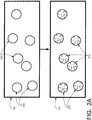
- FIG. 2 presents a more detailed schematic of a block 100 with a number of pores 200, which, by modification as described herein, and in moving from the upper view to the lower view of FIG. 2A , result in a modified block 110 having modified pore structures 210 which have nano-fibers grown therein or thereon as described below.
- a magnified view of a schematic pore structure 210 is shown in FIG. 2B with a number of nano-fibers 211 disposed therewithin.
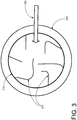
- FIG. 3 then provides a schematic functional view in which a flow of fluid 300 is shown passing over and into a pore 210 where it contacts one or more nano-fibers 211 as well as the substrate material 250.
- contact of the water with the carbon can have a beneficial effect as known, with additional benefits provided by the nano-fibers.
- the carbon can remove some contaminants or impurities, e.g., undesirable organics and/or some elements or molecules such as chlorine or chloramines; however, with the addition of the nano-fibers hereof, additional functionality may be found in the further removal of biological pathogens, e.g., viruses or bacteria, or other particulates, organic or inorganic, or toxic elements such as heavy metals.
- the external substrate material 250 shown in the example of FIG. 3 may alternatively represent an outer porous membrane with a nano-fiber structure grown in the interior of a pore thereof.
- the pore within the porous substrate hereof may be a pore within a porous block or within a porous membrane, or both; however, in either case, the nano-fibers are formed therewithin.
- An outer porous membrane may also be used with a porous block substrate, so that, for example, such a membrane may serve to contain the nano-fibers 211 and/or any support medium 110 for the nano-fibers.
- the porous block may then have a first functional attribute as, for example, the carbon described here; with a second attribute in the nano-fibers disposed within the pores of the porous block; and a third attribute in an external outer porous membrane also or alternatively having nano-fibers formed within the pores thereof.
- the porous block nano-fiber composite 110 may be produced by direct hydrothermal synthesis of nano-fibers 211 in the presence of an as yet un-modified porous block 100.
- a precursor material may be provided in solution in a suitable reaction vessel (also referred to as a "process chamber") with the porous block 100.
- the process chamber may then be heated and pressurized to synthesize nano-fibers which form or "grow" on the porous block in the process chamber to produce a porous block nano-fiber composite product 110.
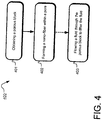
- FIG. 4 provides a summary view of such a process, here process 400, in which a first step or operation 401 includes obtaining the porous block, the next step or operation 402 involving the formation of the nano-fiber or nano-fibers within pores of the porous substrate.
- Direct hydrothermal synthesis of nano-fibers 211 may include providing an aluminum precursor material which may be selected from Al(OH) 3 , Al(Ac) 2 OH, and Al(Ac)(OH) 2 .
- boehmite may be the material of the nano-fibers synthesized using an Al(OH) 2 pre-cursor with water heated to a temperature of about 200°C for a time period of about 5 h (five hours) to produce substantially white solid nano-fibers on the porous substrate block on or within pores thereof.
- hydrothermal processing can be used to grow the nano-fibers directly on other porous materials as well to produce enhanced composite filtration media. It is noted that fiber forming reactions which are not necessarily hydrothermal in nature may also be implemented, e.g., where fiber growth can be nucleated in the pores of the base material.
- the small diameters (average 2nm) and overall aspect ratio (average 100's of nm) of the nano-fibers and large surface area of the nano-fibers as well as the underlying porous block provide a geometry that is conducive for use in filtration.
- the ability of the nano-fibers and the porous block nano-fiber composite to contact a solution, such as water enables the nano-fibers and the porous block nano-fiber composite to readily act as a filter medium.
- the nano-fibers and/or the porous block nano-fiber composite collect contaminants or impurities from the fluid flowing in contact therewith to thus provide efficient removal for the filter medium.
- the flowing of fluid in contact with the porous block and/or nano-fibers is shown as a step or operation 403 in FIG.
- the nano-fibers do not agglomerate on/within the pores of the porous block and instead promote matrix and scaffolding structures which are more conducive to filtration applications.
- the nano-fiber filters may be used for a wide variety of filtration applications.
- the alumina, and particularly the boehmite-phase, properties of the nano-fibers and the porous block nano-fiber composite aid in the removal of biologicals and heavy metals as described further below.
- Boehmite has a demonstrated chemical affinity for viruses and heavy metals.
- the large surface areas of the nano-fibers and the porous block nano-fiber composite may also be well-suited for filtering pathogens.
- the porous block nano-fiber composite 110 may be produced by hydrothermal synthesis of nano-fibers 211 in the presence of a porous block 100 with additional and/or alternative elements; for example with active elements, such as TiO 2 , Fe 2 O 3 , ZnO, or other inorganic oxides, etc., embedded in the nano-fiber matrix, or by providing an aluminum precursor material in water with trace amounts of (NH 4 ) 2 SO 4 .
- active elements such as TiO 2 , Fe 2 O 3 , ZnO, or other inorganic oxides, etc.
- the additional and/or alternative active elements may serve to oxidize or reduce elements to be filtered directly or by photo-oxidation or reduction. Examples of such embodiments are further discussed below.
- the aluminum precursor material may be selected from Al(OH) 3 , Al(Ac) 2 OH, and Al(Ac)(OH) 2 , and, although not required, the precursor material may be provided in granular form.
- the process chamber may be heated for the reaction to take place, typically, heated in the range of about 125°C to about 200°C or more, up to e.g., 400°C for annealing or like processing.
- the process chamber may also be pressurized, typically, in the range of about 345kPa (50 psi) to about 690kPa (100 psi) (gauge).
- An exemplary process may produce a porous block nano-fiber composite product, the nano-fiber formation being described by equation (1) according to one implementation in which the precursor material includes Al(OH) 2 Ac.
- the precursor material includes Al(OH) 2 Ac.
- Al(OH) 2 Ac + Water + (NH 4 ) 2 SO 4 (trace) nano-fibers
- the boehmite might be made to experience a change in phase from boehmite to gamma alumina.
- the process typically may not include the use of salts, making it a "clean" process for producing nano-fibers 211.
- the nano-fibers 211 may readily deaggregate from one another, and indeed, may readily be dispersible in a solution (e.g., water), though here are readily nucleated or attached to and/or within the pores of the porous block substrate 100.
- any suitable process chamber may be provided with which the temperature and pressure may be controlled as described herein.
- the process chamber may be a Parr Model 4761 300 ml Pressure Reactor or a Parr Model 4642 2L Pressure Reactor.
- other process chambers now known or later developed are also contemplated as being suitable for use herewith or herein.
- the nano-fibers 211 produced according to the hereto may be analyzed using any of a variety of well-known techniques, such as x-ray diffraction.
- X-ray diffraction X-ray diffraction
- XRD X-ray diffraction
- the data is typically represented as a series of diffraction patterns, which can be compared to the diffraction patterns of known materials.
- the alumina nano-fiber products 211 produced according to the methods hereof are about 100% boehmite, as determined by x-ray diffraction.
- the nano-fiber product 211 may be further processed to the gamma phase of alumina by heating the boehmite to 400°C in air.
- a porous block nano-fiber composite product 110 may be produced during the synthesis of the nano-fibers 211, by providing the as-yet un-modified porous block 100 in the process chamber.
- Such a process may be described according to one implementation by equation (3), below.
- the nano-fibers 211 are not merely mechanically mixed with a porous block 100.
- the porous block 100 serves as a medium on which the nano-fibers 211 "grow" or crystallize during synthesis to produce the nano-fiber composite block 110.
- the nano-fibers 211 bond to the porous block 100 during synthesis without compromising the morphology or reducing the surface area of the nano-fibers 211.
- a porous block 100 may include any suitable porous material, including for example, carbon, metal oxides, silicones, cellulose and/or organic polymers to name only a few.
- Production of a substrate porous block 100 is not limited to any particular method and may be produced in any suitable manner, as may be well-understood by those skilled in the art. Note also that no particular size or shape of block or other substrate material is required, merely that the block or substrate material have pores.
- a porous block nano-fiber composite product 110 produced according to the teachings hereof may also be analyzed using any of a variety of well-known techniques, such as x-ray diffraction, as briefly discussed above.
- a composite 110 produced according to the methods hereof may include nano-fibers of about 100% boehmite, as shown in the x-ray diffraction profile of FIG. 5 .
- the nano-fibers of the composite 110 may be further processed to the gamma alumina phase, as discussed above.
- the nano-fiber composite 10 may be annealed, annealing to temperatures in the range of about 250°C to 400°C to provide the highest nano-fiber product surface area (i.e., about 500-650 m 2 /g), although it is not intended that the compositions hereof be limited to any particular range of temperatures. Note, this phase change may generally occur without changing morphology or aspect ratio.
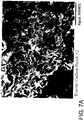
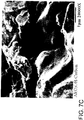
- FIGs. 6 and 7 are images of the nano-fiber porous block composite materials produced according to EXAMPLES 1 and 2 below, the images being taken by a scanning electron microscope in a process generically referred to as scanning electron microscopy (SEM).
- SEM scanning electron microscopy
- the composite block 110 includes a plurality of nano-fibers crystallized within the pores of a porous carbon block;
- FIG. 6A being an SEM image of a commercial carbon block before boehmite growth
- FIG. 6B being an SEM image of the same commercial carbon block after boehmite growth.
- FIG. 7A being an SEM image of a larger pore commercial carbon block before boehmite growth
- FIG. 7B being an SEM image of the same larger pore commercial carbon block after boehmite growth
- FIG. 7C being another SEM image of the same larger pore commercial carbon block after boehmite growth
- FIG. 7C being of higher magnification.
- Nano-fibers 211 produced according to the teachings hereof include typically very small diameters (e.g., average 2nm) in relation to their length, giving them high aspect ratios. Accordingly, this unique morphology combined with high surface areas make the nano-fiber porous block composite product 110 conducive for use in many applications, including filtration.
- the boehmite phase of the nano-fibers 211 may also enhance the bioactive and heavy metal filtration capability of the product as described further below.
- nano-fibers 211 and porous block nano-fiber composite 110 can be readily integrated with other materials or devices to produce high-efficiency filtration products. Accordingly, in one implementation the product 110 may be readily incorporated as filter media within a filtration system, such as the system 10 of FIG. 1 .
- the nano-fibers 211 and/or nano-fiber composite 110 provide desirable removal characteristics for the filter media.
- the unique morphology and other characteristics of the nano-fibers 211 and/or porous block nano-fiber composite 110 make the products hereof particularly suitable for a potential large range of filtration applications including, but not limited to, both air filters and water filters.
- the boehmite phase also lends itself due to chemical affinity, to use in bioactive applications. These products provide a chemical and/or electrostatic affinity and/or high surface area to which viruses and pathogens may adhere, making these products particularly advantageous in bioactive filtration applications.
- Table 1 An exemplary of bio-affinity of boehmite fibers is shown by the product characteristics in Table 1 (noting these characteristics were generated for boehmite nano-fibers grown by processes like those described herein though not on/in carbon block substrate pores such as those of EXAMPLES 1 and 2), below.
- Table 1 Virus rating > log 7 Space Flow Velocity (cm/sec) 1.6 Capacity to Absorb Virus-size Particles (units/cm 2 ) 1.2x 10 13 (before penetration) Susceptibility to Clogging low Susceptibility to Point Defects no
- Boehmite nano-fibers formed by processes not unlike those described herein and used in heavy metal filtering may include a boehmite mat supported on a Gelman Acrodisc syringe filter prepared by dispersing 0.1 g of such boehmite nano-fibers in water (10 ml) and passing the dispersion through the filter.
- Such a heavy metal filter was tested for its ability to remove the following heavy metals: zinc (Zn), cadmium (Cd), lead (Pb), copper (Cu), gold (Au), and silver (Ag) from water.
- Zn zinc
- Cd cadmium
- Pb lead
- Cu copper
- Au gold
- Au silver
- Ag silver
- Table 2 TABLE 2 Zn Cd Pb Cu Au Ag Metal in untreated water (mg/L) 50 35 35 35 35 35 1 1 Metal in treated water (mg/L) 0.001 0.001 0.001 0.001 0.001 0.001 0.001 0.001 Removal Efficiency (%) 99.998 99.997 99.997 99.997 99.9 99.9
- the nano-fiber filter block 110 may be used for biological and/or inorganic filtering applications by mechanical and/or chemical adsorption and/or electrostatic attraction mechanisms.
- a nano-fiber filter 110 represents a complex composite structure which may be optimized for absorption of specific materials.
- nano-fiber filter 110 may be used under high flow conditions.
- the adsorbed materials may be eluted from the filter.
- the base filter material here for example, the porous block
- the porous block may thus be enhanced in the composite filter product form; in a particular example, the standard porous block being effective for filtration of large bacteria like e-coli and cryptosporidium (e.g., cryptosporidium organisms (protozoa) form protective oocysts between 4 to 7 microns in size; giardia are also in the form of oocysts but slightly larger, between 6 to 10 microns in size; these oocysts allowing the organisms to survive outside the body of the host, in a watercourse, and protects them against disinfection methods such as chlorination or ultra-violet radiation).
- cryptosporidium organisms e.g., cryptosporidium organisms (protozoa) form protective oocysts between 4 to 7 microns in size
- giardia are also in the form of oocysts but slightly larger, between 6
- the actual non-oocyst bacteria are much smaller, e.g., about 0.2-0.5 microns, and the presently described nanofibers reduce the effective pore size of the substrate to much smaller and add chemical activity to capture not only the oocysts capable of being trapped by conventional porous blocks, but, to also capture the bacterial organisms, themselves, as well as much smaller viruses and chemical contaminants.
- a product hereof may be used in filters for removing ultra small particles released from solvents such as alcohols, esters, and ketones.
- a product hereof may be used for the filtration of high-purity chemicals or water used in electronics manufacturing.
- a further new application may be in the filtering out of nanomaterials, whether inorganic, organic or otherwise (as there is increasing concern about the toxicity of nanomaterials; as per DOE P 456.1, U.S. Department of Energy, Publication 456.1).
- Other exemplary applications may include air or other gas filters.
- Yet other filtration applications are also contemplated as being within the scope hereof, as will become readily apparent to one skilled in the art after having become familiar with the teachings hereof.
- compositions for example, the nano-fibers 211 and/or composite blocks 110 produced according to the processes described herein which may be used with absorption pads (e.g., for medical detection kits), and concentration/scavenging of biological agents (including bioterrorism weapons), to name just a few.
- absorption pads e.g., for medical detection kits
- concentration/scavenging of biological agents including bioterrorism weapons
- the precursor material included laboratory grade granular Al(OH) 3 of a type that is readily commercially available from a wide range of suppliers.
- boehmite nano-fibers were synthesized using about 25.5 g Al(OH) 3 with about 200 ml water heated to a temperature of about 200°C for a time period of about 5 h (five hours) to produce substantially white solid nano-fibers on a commercially available porous carbon substrate block on or within pores thereof; the carbon substrate blocks here, being 4 carbon rings, 3.81 cm (1.5 inch) diameter X 1.27 cm (0.5 inch) thick (note, as introduced above, the term porous block is not shape dependent).
- the process chamber was maintained at a total pressure of about 1.03MPa (150 psi) (gauge).
- the process chamber was maintained at about 200°C and the reaction temperature was estimated to be about 180°C.
- the reaction resulted in the production of about 19.0 g of nano-fibers.
- the product was dried at about 100°C for 5 hours.
- the nano-fibers produced according to this example were analyzed using x-ray diffraction techniques, briefly described above and shown in FIG. 5 .
- the nano-fibers included about 100% boehmite and had an average surface area of about 285 m 2 /g by BET analysis.
- the nano-fibers were also confined to the porous carbon block, thereby enabling ready subsequent use in filtration, such as was described above.
- SEM images of before and after processing for this example are shown in respective FIGs. 6A and 6B .
- the precursor material included substantially the same laboratory grade Al(OH) 3 of a type that is readily commercially available from a wide range of suppliers.
- the boehmite nano-fibers were again synthesized using about 25.5 g Al(OH) 3 with about 200 ml water heated to a temperature of about 200°C for a time period of about 5 h (five hours) to produce substantially white solid nano-fibers on a commercially porous carbon substrate on or within pores thereof.
- the porous block material hereof included carbon base materials (here, also four (4) carbon rings, 3.81 cm (1.5 inch) diameter X 1.27 cm (0.5 inch) thick) with larger pore structures than the substrates of Example 1, see Figs. 7A , 7B and 7C
- the process chamber was maintained at a total pressure of about 1.03 MPa (150 psi).
- the process chamber was maintained at about 200°C and the reaction temperature was estimated to be about 180°C.
- the reaction was allowed to proceed in this manner for about 5 hours, which resulted in the production of about 19 g of nano-fiber porous block composite material.
- the composite product was dried at about 100°C for 5 hours.
- the nano-fiber composite produced according to this example was analyzed using x-ray diffraction techniques, briefly described above.
- the nano-fiber composite included about 100% boehmite.
- the nano-fiber porous block composite had an average surface area of about 195 m 2 /g determined by BET analysis.
- titanium oxide TiO 2
- a form of titanium oxide chemistry involves hydrothermal digestion of TiO 2 powder in strongly basic solution to produce sodium titanate nanotubes, as shown. (4) 3TiO 2 + 2NaOH ⁇ Na 2 Ti 3 O 7 nanotubes + H 2 O
- FIG. 8 is an X-ray diffraction (XRD) characterization of titanate products synthesized at various temperatures as shown therein.
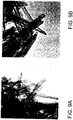
- FIG. 9 in respective sub-part FIGs. 9A and 9B , provides (TEM) images of titanate nanotubes synthesized at 180C.
- the titanate nanotubes When the titanate nanotubes are subsequently heated in water at temperatures between about 150 and about 250°C for 3 to 24 hrs, the material is converted into anatase TiO 2 nanorods.
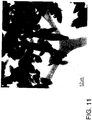
- 0.5 g of sodium titanate nanotubes were placed in 25 ml of water in a Teflon-lined 300 ml Parr pressure reactor, which was then maintained at the specified temperature for the specified time. The products were collected, washed with water (100 ml), dried at 100°C for 30 min and characterized by XRD and TEM as shown in FIGs. 10 and 11 .
- FIG. 10 shown are products of hydrothermal conversion of titanate nanotubes to TiO 2 nanorods processed at 150°C for 24 hrs showing intermediate conversion of titanate belts to TiO 2 spikes.
- FIG. 11 shown are products of hydrothermal conversion of titanate nanotubes to TiO 2 nanorods processed at 230°C for 5 hrs showing complete conversion to TiO 2 nanorods.
- the hydrothermal conversion of the titanate nanotubes to TiO 2 can be controlled using reaction time and temperature to produce different product morphologies, as illustrated by the two TEM images described above ( FIGs 10 and 11 ).
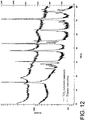
- XRD as shown in FIG. 12 confirms that the TiO 2 produced is the crystalline anatase phase.
- Example 3 titanium oxide examples of Example 3 discussed above are provided for purposes of illustration and are not intended to be limiting. Still other implementations and modifications are also contemplated.
- the carbon materials used herein may be derived from any of a number of sources, including but not limited to bituminous coal, wood or cocoanut shell, inter alia.
- a powder form of carbon may be formed into a porous block using a binder to create the particular size and/or shape desired, and the binder then burned out.
- Other block formation techniques may be used as well or in lieu hereof, as for example compression molding.
- Blocks hereof need not be polygonal, but may take many shapes depending upon end use. End uses may be personal water bottle size blocks, or may be of larger scales up to and/or including transportable systems, e.g., transportable by truck or aircraft, up to and/or including municipal size implementations.
Landscapes
- Chemical & Material Sciences (AREA)
- Chemical Kinetics & Catalysis (AREA)
- Analytical Chemistry (AREA)
- Organic Chemistry (AREA)
- Engineering & Computer Science (AREA)
- Inorganic Chemistry (AREA)
- Materials Engineering (AREA)
- Nanotechnology (AREA)
- Geology (AREA)
- Life Sciences & Earth Sciences (AREA)
- Crystallography & Structural Chemistry (AREA)
- General Physics & Mathematics (AREA)
- Condensed Matter Physics & Semiconductors (AREA)
- Composite Materials (AREA)
- Ceramic Engineering (AREA)
- Physics & Mathematics (AREA)
- Filtering Materials (AREA)
- Solid-Sorbent Or Filter-Aiding Compositions (AREA)
- Filtering Of Dispersed Particles In Gases (AREA)
- Water Treatment By Sorption (AREA)
Claims (11)
- Nanofaserverbundstoff aus porösen Blöcken, umfassend:einen porösen Block mit Poren; undmehrere anorganische Nanofasern, die in den Poren des porösen Blocks ausgebildet sind;wobei die anorganischen Nanofasern unter Verwendung eines hydrothermalen Verfahrens ausgebildet werden, enthaltend:Bereitstellen eines porösen Blocks und eines anorganischen Vorläufermaterials in Wasser in einer Prozesskammer;Erhitzen und Druckbeaufschlagen der Prozesskammer, um ein Nanofaserverbundstoffprodukt aus porösen Blöcken herzustellen; undEinbringen des Nanofaserverbundstoffprodukts aus porösen Blöcken als aktives Element als Filtrationsmedium, wobei das hydrothermale Verfahren zu den anorganischen Nanofasern führt, die Matrix- und Gerüststrukturen umfassen.
- Nanofaserverbundstoff mit porösen Blöcken nach Anspruch 1, wobei der poröse Block mindestens einer aus: Kohlenstoff, Metalloxid, Silikon, Cellulose und einem organischen Polymer ist.
- Nanofaserverbundstoff mit porösen Blöcken nach Anspruch 1, wobei die anorganischen Nanofasern aus mindestens einem aus: einem Aluminat, einem Titanat und einem anorganischen Oxid ausgebildet werden.
- Nanofaserverbundstoff mit porösen Blöcken nach Anspruch 1, wobei die anorganischen Nanofasern mindestens eines aus: Böhmit, Gamma-Aluminiumoxid und Alpha-Aluminiumoxid sind.
- Nanofaserverbundstoff mit porösen Blöcken nach Anspruch 1, wobei die anorganischen Nanofasern unter Verwendung eines Vorläufermaterials ausgebildet werden, das mindestens eines der folgenden enthält: TiO2, Al(OH)3, Al(Ac)2OH und Al(Ac)(OH)2.
- Nanofaserverbundstoff aus porösen Blöcken nach Anspruch 1, umfassend anorganische Aluminiumoxid-Nanofasern derart, dass der Nanofaserverbundstoff aus porösen Blöcken für die Verwendung als Filter für die Absorption von mindestens einem aus biologischen Wirkstoffen und Pathogenen ausgelegt ist.
- Nanofaserverbundstoff aus porösen Blöcken nach Anspruch 1, umfassend anorganische Aluminiumoxid-Nanofasern derart, dass der Nanofaserverbundstoff aus porösen Blöcken für die Verwendung als Filter für die Absorption von mindestens einem Schwermetall ausgelegt ist.
- Verfahren zur Herstellung eines Nanofaserverbundstoffs aus porösen Blöcken, umfassend:Bereitstellen eines porösen Blocks und eines anorganischen Vorläufermaterials in Wasser in einer Prozesskammer; undhydrothermisches Herstellen eines Nanofaserverbundstoffprodukts aus porösen Blöcken, das mehrere anorganische Nanofasern umfasst, die in den Poren des porösen Blocks durch Erhitzen und Druckbeaufschlagen der Prozesskammer ausgebildet werden, um das Nanofaserverbundstoffprodukt aus porösen Blöcken zu erzeugen; und Einbringen des Nanofaserverbundstoffprodukts aus porösen Blöcken als aktives Element als Filtrationsmedium, wobei das hydrothermale Verfahren zu den anorganischen Nanofasern führt, die Matrix- und Gerüststrukturen umfassen.
- Verfahren nach Anspruch 8, wobei der poröse Block einer der Folgenden ist: Kohlenstoff, Metalloxid, Silikon, Cellulose und ein organisches Polymer.
- Verfahren nach Anspruch 8, wobei die anorganischen Nanofasern aus mindestens einem aus einem Aluminat, einem Titanat, einem anorganischen Oxid, einem Böhmit, einem Gamma-Aluminiumoxid und einem alpha-Aluminiumoxid ausgebildet sind.
- Filtrationssystem, umfassend:eine Durchflusskammer mit einem Einlass und einem Auslass; undein Filtrationsmedium, das in der Durchflusskammer angeordnet ist, wobei das Filtrationsmedium umfasst:einen Nanofaserverbundstoff mit porösen Blöcken nach einem der Ansprüche 1 bis 7.
Priority Applications (1)
| Application Number | Priority Date | Filing Date | Title |
|---|---|---|---|
| PL08878336T PL2376212T3 (pl) | 2008-11-21 | 2008-11-21 | Filtry kompozytu nanowłókna z porowatego bloku i sposób przygotowania |
Applications Claiming Priority (1)
| Application Number | Priority Date | Filing Date | Title |
|---|---|---|---|
| PCT/US2008/084434 WO2010059165A1 (en) | 2008-11-21 | 2008-11-21 | Porous block nanofiber composite filters |
Publications (3)
| Publication Number | Publication Date |
|---|---|
| EP2376212A1 EP2376212A1 (de) | 2011-10-19 |
| EP2376212A4 EP2376212A4 (de) | 2013-05-01 |
| EP2376212B1 true EP2376212B1 (de) | 2018-04-25 |
Family
ID=42198399
Family Applications (1)
| Application Number | Title | Priority Date | Filing Date |
|---|---|---|---|
| EP08878336.0A Not-in-force EP2376212B1 (de) | 2008-11-21 | 2008-11-21 | Nanofaserverbundfilter aus porösen blöcken und herstellungsverfahren |
Country Status (16)
| Country | Link |
|---|---|
| US (1) | US9409111B2 (de) |
| EP (1) | EP2376212B1 (de) |
| JP (1) | JP2012509169A (de) |
| KR (1) | KR101316564B1 (de) |
| CN (1) | CN102256680A (de) |
| AU (1) | AU2008364297B2 (de) |
| BR (1) | BRPI0823280B1 (de) |
| CA (1) | CA2744179C (de) |
| IL (1) | IL212999A (de) |
| MX (1) | MX347647B (de) |
| MY (1) | MY186532A (de) |
| PL (1) | PL2376212T3 (de) |
| RU (1) | RU2502543C2 (de) |
| SG (1) | SG171766A1 (de) |
| WO (1) | WO2010059165A1 (de) |
| ZA (1) | ZA201104046B (de) |
Families Citing this family (12)
| Publication number | Priority date | Publication date | Assignee | Title |
|---|---|---|---|---|
| US20130270180A1 (en) * | 2010-10-28 | 2013-10-17 | Novarials Corporation | Ceramic nanowire membranes and methods of making the same |
| MX347341B (es) * | 2011-04-10 | 2017-04-21 | Nanoholdings Llc | Unidad de purificacion de agua. |
| US9908800B2 (en) | 2011-04-14 | 2018-03-06 | Global Water Group, Incorporated | System and method for wastewater treatment |
| JP5803444B2 (ja) * | 2011-08-31 | 2015-11-04 | 国立研究開発法人産業技術総合研究所 | 有機分子(シッフ塩基分子)内包繊維状アルミナ自立膜とその製造法、及びこの複合膜による水中の遷移金属イオン検出法・回収法 |
| SG11201402580SA (en) | 2011-11-24 | 2014-10-30 | Indian Inst Technology | Multilayer organic-templated-boehmite-nanoarchitecture for water purification |
| MX362092B (es) | 2012-04-17 | 2019-01-07 | Indian Institute Of Tech | Deteccion del caudal de agua con clusteres cuanticos. |
| WO2015141902A1 (ko) * | 2014-03-17 | 2015-09-24 | 한국과학기술연구원 | 유수분리 구조체 및 그 제조방법, 유수분리 장치, 및 상기 유수분리 장치를 이용한 유수분리방법 |
| KR102263140B1 (ko) * | 2014-07-23 | 2021-06-10 | 엘지전자 주식회사 | 필터 시스템 |
| CZ201552A3 (cs) * | 2015-01-28 | 2016-09-29 | Masarykova Univerzita | Použití anorganických nanovláken pro záchyt sloučenin s fosfátovou skupinou ve své struktuře |
| CZ306040B6 (cs) * | 2015-05-18 | 2016-07-07 | Miloš Heršálek | Nanofotokatalytické filtrační zařízení |
| JP6570153B1 (ja) * | 2018-10-31 | 2019-09-04 | 株式会社アースクリーンテクノ | 空気中浮遊物捕集材、これを用いる空気浄化部材及び空気浄化装置 |
| CN109879350B (zh) * | 2019-03-11 | 2021-12-10 | 华南师范大学 | 一种重金属细小沉淀物吸附装置 |
Family Cites Families (19)
| Publication number | Priority date | Publication date | Assignee | Title |
|---|---|---|---|---|
| JPH02149307A (ja) | 1989-10-12 | 1990-06-07 | Kato Hatsujo Kaisha Ltd | 焼結樹脂製多孔質濾過体の製造方法 |
| JPH1114204A (ja) | 1997-06-20 | 1999-01-22 | Matsushita Refrig Co Ltd | 不純物除去フィルター及びそれを用いた冷凍システム |
| RU2304463C2 (ru) * | 2001-06-22 | 2007-08-20 | Аргонид Корпорейшн | Наноразмерный электроположительный волокнистый адсорбент |
| JP4393039B2 (ja) * | 2001-07-18 | 2010-01-06 | イビデン株式会社 | 触媒つきフィルタ、その製造方法及び排気ガス浄化システム |
| US20050279696A1 (en) * | 2001-08-23 | 2005-12-22 | Bahm Jeannine R | Water filter materials and water filters containing a mixture of microporous and mesoporous carbon particles |
| US6835311B2 (en) * | 2002-01-31 | 2004-12-28 | Koslow Technologies Corporation | Microporous filter media, filtration systems containing same, and methods of making and using |
| KR100522041B1 (ko) * | 2003-03-19 | 2005-10-17 | 한국기계연구원 | 비표면적이 큰 다공성 재료의 제조방법 |
| US20050026526A1 (en) | 2003-07-30 | 2005-02-03 | Verdegan Barry M. | High performance filter media with internal nanofiber structure and manufacturing methodology |
| US20050029198A1 (en) * | 2003-08-08 | 2005-02-10 | Frederick Tepper | Heavy metals absorbent and method of use |
| RU2242276C1 (ru) * | 2003-11-27 | 2004-12-20 | Лисецкий Владимир Николаевич | Сорбент и способ его получения |
| JP2006130463A (ja) * | 2004-11-09 | 2006-05-25 | Nissan Motor Co Ltd | 浄化フィルター、その製造方法及び排気ガス浄化装置 |
| JP4049774B2 (ja) * | 2004-12-20 | 2008-02-20 | シャープ株式会社 | 多孔質フィルタ、多孔質フィルタの製造方法、空気清浄装置および空気清浄方法 |
| KR100620360B1 (ko) | 2005-04-20 | 2006-09-06 | 한국기계연구원 | 다공성 재료의 제조방법 |
| JP4528192B2 (ja) * | 2005-04-26 | 2010-08-18 | シャープ株式会社 | フィルター、その製造方法、空気清浄装置 |
| KR100826762B1 (ko) | 2005-07-22 | 2008-04-30 | 주식회사 엘지화학 | 세라믹 필터 및 그 제조방법 |
| RU2317843C2 (ru) * | 2005-08-08 | 2008-02-27 | Институт физики прочности и материаловедения Сибирского отделения Российской академии наук (ИФПМ СО РАН) | Фильтрующий материал, способ его получения и способ фильтрования |
| WO2007033173A1 (en) | 2005-09-12 | 2007-03-22 | Argonide Corporation | Electrostatic air filter |
| RU2336946C2 (ru) | 2006-02-21 | 2008-10-27 | Институт физики прочности и материаловедения (ИФПМ СО РАН) | Сорбент тяжелых металлов, способ его получения и способ очистки воды |
| RU2328447C1 (ru) | 2006-10-17 | 2008-07-10 | Институт физики прочности и материаловедения Сибирское отделение Российской академии наук (ИФПМ СО РАН) | Способ получения нановолокон оксидно-гидроксидных фаз алюминия |
-
2008
- 2008-11-21 JP JP2011537406A patent/JP2012509169A/ja active Pending
- 2008-11-21 SG SG2011036399A patent/SG171766A1/en unknown
- 2008-11-21 CA CA2744179A patent/CA2744179C/en active Active
- 2008-11-21 MY MYPI2011002259A patent/MY186532A/en unknown
- 2008-11-21 BR BRPI0823280-6A patent/BRPI0823280B1/pt not_active IP Right Cessation
- 2008-11-21 PL PL08878336T patent/PL2376212T3/pl unknown
- 2008-11-21 MX MX2011005319A patent/MX347647B/es active IP Right Grant
- 2008-11-21 EP EP08878336.0A patent/EP2376212B1/de not_active Not-in-force
- 2008-11-21 AU AU2008364297A patent/AU2008364297B2/en not_active Ceased
- 2008-11-21 RU RU2011125334/05A patent/RU2502543C2/ru active
- 2008-11-21 KR KR1020117013882A patent/KR101316564B1/ko not_active Expired - Fee Related
- 2008-11-21 WO PCT/US2008/084434 patent/WO2010059165A1/en not_active Ceased
- 2008-11-21 US US13/130,109 patent/US9409111B2/en active Active
- 2008-11-21 CN CN200880132427XA patent/CN102256680A/zh active Pending
-
2011
- 2011-05-19 IL IL212999A patent/IL212999A/en active IP Right Grant
- 2011-05-31 ZA ZA2011/04046A patent/ZA201104046B/en unknown
Non-Patent Citations (1)
| Title |
|---|
| None * |
Also Published As
| Publication number | Publication date |
|---|---|
| BRPI0823280B1 (pt) | 2019-11-05 |
| IL212999A0 (en) | 2011-07-31 |
| CA2744179A1 (en) | 2010-05-27 |
| MX347647B (es) | 2017-05-08 |
| CA2744179C (en) | 2014-06-17 |
| SG171766A1 (en) | 2011-07-28 |
| AU2008364297B2 (en) | 2013-09-26 |
| RU2011125334A (ru) | 2012-12-27 |
| CN102256680A (zh) | 2011-11-23 |
| MY186532A (en) | 2021-07-25 |
| RU2502543C2 (ru) | 2013-12-27 |
| WO2010059165A1 (en) | 2010-05-27 |
| KR20110118126A (ko) | 2011-10-28 |
| EP2376212A1 (de) | 2011-10-19 |
| US9409111B2 (en) | 2016-08-09 |
| EP2376212A4 (de) | 2013-05-01 |
| IL212999A (en) | 2014-08-31 |
| US20120037560A1 (en) | 2012-02-16 |
| BRPI0823280A2 (pt) | 2015-06-16 |
| AU2008364297A1 (en) | 2010-05-27 |
| KR101316564B1 (ko) | 2013-10-15 |
| MX2011005319A (es) | 2012-01-20 |
| PL2376212T3 (pl) | 2018-11-30 |
| JP2012509169A (ja) | 2012-04-19 |
| ZA201104046B (en) | 2015-03-25 |
Similar Documents
| Publication | Publication Date | Title |
|---|---|---|
| US9409111B2 (en) | Porous block nanofiber composite filters | |
| DelaiáSun | Hierarchically multifunctional TiO 2 nano-thorn membrane for water purification | |
| Tolba et al. | Effective and highly recyclable ceramic membrane based on amorphous nanosilica for dye removal from the aqueous solutions | |
| Qaraah et al. | Facile synthesis of flower-like hierarchical N-doped Nb 2 O 5/C nanostructures with efficient photocatalytic activity under visible light | |
| Otitoju et al. | Surface modification of PVDF membrane via layer-by-layer self-assembly of TiO2/V for enhanced photodegradation of emerging organic pollutants and the implication for wastewater remediation | |
| BRPI0608868A2 (pt) | produtos e métodos para remoção de substáncias de uma solução aquosa | |
| Alizadeh Arasi et al. | Extraction of nano‐porous silica from hydrosodalite produced via modification of low‐grade kaolin for removal of methylene blue from wastewater | |
| Kuang et al. | An Al2O3@ ZnO membrane for oil-in-water emulsion separation with photocatalytic regeneration prepared via a simple deposition route | |
| He et al. | Lanthanum-doped activated carbon derived from municipal sludge for enhanced defluoridation: characteristics and mechanism | |
| US20190336918A1 (en) | Porous alumina-carbon based composite membrane and its fabrication method | |
| Ali et al. | Auto-combustion fabrication and characterization of TiO2 nanoparticles and utilization as an adsorbent for removal of Pb2+ from aqueous solution | |
| Manojkumar et al. | Separation of mercury (II) ions from aqueous solution using zeolite-P composite membrane developed on low cost tubular ceramic support | |
| Wang et al. | Template-free synthesis of Ta3N5 hollow nanospheres as a visible-light-driven photocatalyst | |
| CN105727629A (zh) | 纳米纤维复合材料过滤器、制造该材料的方法和过滤系统 | |
| Liang et al. | Development of TiO2 nanowires for membrane filtration applications | |
| WO2009070169A1 (en) | Nanocomposite production including deposition of nanoparticles on nanofibers | |
| HK1226360A1 (en) | Nano-fiber composite filter, method for producing the composite and filtration system | |
| HK1226360A (en) | Nano-fiber composite filter, method for producing the composite and filtration system | |
| Abdul Aziz et al. | A Mini Review on the Effects of Synthesis Conditions of Bimetallic Ag/Si Nanoparticles on Their Physicochemical Properties | |
| HK1160068A (en) | Porous block nanofiber composite filters | |
| Ju et al. | Evaluation of the Adsorptive performance of Rambutan-shaped γ-Al2O3 micro-nanostructure against wastewater containing the Azo Dye: methyl orange | |
| Mendez et al. | Efficient Degradation of Methylene Blue Using Titanium-Substituted Hydroxyapatite for Water Purification | |
| Hamid et al. | Degradation of methylene blue using CuO prepared using conventional solid state method | |
| Mustapha | Synthesis and Characterisation of TiO2/ZnO Nanocomposites Immobilized on Kaolin for the Treatment of Tannery Wastewater | |
| Anduang et al. | Waste Banana Peels as a Precursor for the Synthesis of Elemental-Doped Silicon Quantum Dots Embedded in Silica for Efficient Adsorptive Decontamination of Textile Wastewater |
Legal Events
| Date | Code | Title | Description |
|---|---|---|---|
| PUAI | Public reference made under article 153(3) epc to a published international application that has entered the european phase |
Free format text: ORIGINAL CODE: 0009012 |
|
| 17P | Request for examination filed |
Effective date: 20110621 |
|
| AK | Designated contracting states |
Kind code of ref document: A1 Designated state(s): AT BE BG CH CY CZ DE DK EE ES FI FR GB GR HR HU IE IS IT LI LT LU LV MC MT NL NO PL PT RO SE SI SK TR |
|
| DAX | Request for extension of the european patent (deleted) | ||
| REG | Reference to a national code |
Ref country code: DE Ref legal event code: R079 Ref document number: 602008055048 Country of ref document: DE Free format text: PREVIOUS MAIN CLASS: B01D0039000000 Ipc: B01D0046000000 |
|
| A4 | Supplementary search report drawn up and despatched |
Effective date: 20130403 |
|
| RIC1 | Information provided on ipc code assigned before grant |
Ipc: B01D 39/18 20060101ALI20130326BHEP Ipc: B01D 46/00 20060101AFI20130326BHEP Ipc: B01D 39/20 20060101ALI20130326BHEP Ipc: B01D 39/16 20060101ALI20130326BHEP |
|
| RAP1 | Party data changed (applicant data changed or rights of an application transferred) |
Owner name: ALLIANCE FOR SUSTAINABLE ENERGY, LLC Owner name: GLOBAL WATER GROUP, INCORPORATED |
|
| 17Q | First examination report despatched |
Effective date: 20151211 |
|
| GRAP | Despatch of communication of intention to grant a patent |
Free format text: ORIGINAL CODE: EPIDOSNIGR1 |
|
| INTG | Intention to grant announced |
Effective date: 20170424 |
|
| GRAJ | Information related to disapproval of communication of intention to grant by the applicant or resumption of examination proceedings by the epo deleted |
Free format text: ORIGINAL CODE: EPIDOSDIGR1 |
|
| INTC | Intention to grant announced (deleted) | ||
| GRAP | Despatch of communication of intention to grant a patent |
Free format text: ORIGINAL CODE: EPIDOSNIGR1 |
|
| INTG | Intention to grant announced |
Effective date: 20171109 |
|
| GRAA | (expected) grant |
Free format text: ORIGINAL CODE: 0009210 |
|
| GRAS | Grant fee paid |
Free format text: ORIGINAL CODE: EPIDOSNIGR3 |
|
| AK | Designated contracting states |
Kind code of ref document: B1 Designated state(s): AT BE BG CH CY CZ DE DK EE ES FI FR GB GR HR HU IE IS IT LI LT LU LV MC MT NL NO PL PT RO SE SI SK TR |
|
| REG | Reference to a national code |
Ref country code: GB Ref legal event code: FG4D |
|
| REG | Reference to a national code |
Ref country code: CH Ref legal event code: EP |
|
| REG | Reference to a national code |
Ref country code: AT Ref legal event code: REF Ref document number: 992275 Country of ref document: AT Kind code of ref document: T Effective date: 20180515 |
|
| REG | Reference to a national code |
Ref country code: IE Ref legal event code: FG4D |
|
| REG | Reference to a national code |
Ref country code: DE Ref legal event code: R096 Ref document number: 602008055048 Country of ref document: DE |
|
| REG | Reference to a national code |
Ref country code: RO Ref legal event code: EPE |
|
| REG | Reference to a national code |
Ref country code: CH Ref legal event code: NV Representative=s name: E. BLUM AND CO. AG PATENT- UND MARKENANWAELTE , CH |
|
| REG | Reference to a national code |
Ref country code: NL Ref legal event code: MP Effective date: 20180425 |
|
| REG | Reference to a national code |
Ref country code: LT Ref legal event code: MG4D |
|
| PG25 | Lapsed in a contracting state [announced via postgrant information from national office to epo] |
Ref country code: NL Free format text: LAPSE BECAUSE OF FAILURE TO SUBMIT A TRANSLATION OF THE DESCRIPTION OR TO PAY THE FEE WITHIN THE PRESCRIBED TIME-LIMIT Effective date: 20180425 |
|
| PG25 | Lapsed in a contracting state [announced via postgrant information from national office to epo] |
Ref country code: SE Free format text: LAPSE BECAUSE OF FAILURE TO SUBMIT A TRANSLATION OF THE DESCRIPTION OR TO PAY THE FEE WITHIN THE PRESCRIBED TIME-LIMIT Effective date: 20180425 Ref country code: LT Free format text: LAPSE BECAUSE OF FAILURE TO SUBMIT A TRANSLATION OF THE DESCRIPTION OR TO PAY THE FEE WITHIN THE PRESCRIBED TIME-LIMIT Effective date: 20180425 Ref country code: ES Free format text: LAPSE BECAUSE OF FAILURE TO SUBMIT A TRANSLATION OF THE DESCRIPTION OR TO PAY THE FEE WITHIN THE PRESCRIBED TIME-LIMIT Effective date: 20180425 Ref country code: FI Free format text: LAPSE BECAUSE OF FAILURE TO SUBMIT A TRANSLATION OF THE DESCRIPTION OR TO PAY THE FEE WITHIN THE PRESCRIBED TIME-LIMIT Effective date: 20180425 Ref country code: BG Free format text: LAPSE BECAUSE OF FAILURE TO SUBMIT A TRANSLATION OF THE DESCRIPTION OR TO PAY THE FEE WITHIN THE PRESCRIBED TIME-LIMIT Effective date: 20180725 Ref country code: NO Free format text: LAPSE BECAUSE OF FAILURE TO SUBMIT A TRANSLATION OF THE DESCRIPTION OR TO PAY THE FEE WITHIN THE PRESCRIBED TIME-LIMIT Effective date: 20180725 |
|
| PG25 | Lapsed in a contracting state [announced via postgrant information from national office to epo] |
Ref country code: GR Free format text: LAPSE BECAUSE OF FAILURE TO SUBMIT A TRANSLATION OF THE DESCRIPTION OR TO PAY THE FEE WITHIN THE PRESCRIBED TIME-LIMIT Effective date: 20180726 Ref country code: LV Free format text: LAPSE BECAUSE OF FAILURE TO SUBMIT A TRANSLATION OF THE DESCRIPTION OR TO PAY THE FEE WITHIN THE PRESCRIBED TIME-LIMIT Effective date: 20180425 Ref country code: HR Free format text: LAPSE BECAUSE OF FAILURE TO SUBMIT A TRANSLATION OF THE DESCRIPTION OR TO PAY THE FEE WITHIN THE PRESCRIBED TIME-LIMIT Effective date: 20180425 |
|
| REG | Reference to a national code |
Ref country code: AT Ref legal event code: MK05 Ref document number: 992275 Country of ref document: AT Kind code of ref document: T Effective date: 20180425 |
|
| PG25 | Lapsed in a contracting state [announced via postgrant information from national office to epo] |
Ref country code: PT Free format text: LAPSE BECAUSE OF FAILURE TO SUBMIT A TRANSLATION OF THE DESCRIPTION OR TO PAY THE FEE WITHIN THE PRESCRIBED TIME-LIMIT Effective date: 20180827 |
|
| REG | Reference to a national code |
Ref country code: DE Ref legal event code: R097 Ref document number: 602008055048 Country of ref document: DE |
|
| PG25 | Lapsed in a contracting state [announced via postgrant information from national office to epo] |
Ref country code: CZ Free format text: LAPSE BECAUSE OF FAILURE TO SUBMIT A TRANSLATION OF THE DESCRIPTION OR TO PAY THE FEE WITHIN THE PRESCRIBED TIME-LIMIT Effective date: 20180425 Ref country code: SK Free format text: LAPSE BECAUSE OF FAILURE TO SUBMIT A TRANSLATION OF THE DESCRIPTION OR TO PAY THE FEE WITHIN THE PRESCRIBED TIME-LIMIT Effective date: 20180425 Ref country code: EE Free format text: LAPSE BECAUSE OF FAILURE TO SUBMIT A TRANSLATION OF THE DESCRIPTION OR TO PAY THE FEE WITHIN THE PRESCRIBED TIME-LIMIT Effective date: 20180425 Ref country code: AT Free format text: LAPSE BECAUSE OF FAILURE TO SUBMIT A TRANSLATION OF THE DESCRIPTION OR TO PAY THE FEE WITHIN THE PRESCRIBED TIME-LIMIT Effective date: 20180425 Ref country code: DK Free format text: LAPSE BECAUSE OF FAILURE TO SUBMIT A TRANSLATION OF THE DESCRIPTION OR TO PAY THE FEE WITHIN THE PRESCRIBED TIME-LIMIT Effective date: 20180425 |
|
| PG25 | Lapsed in a contracting state [announced via postgrant information from national office to epo] |
Ref country code: IT Free format text: LAPSE BECAUSE OF FAILURE TO SUBMIT A TRANSLATION OF THE DESCRIPTION OR TO PAY THE FEE WITHIN THE PRESCRIBED TIME-LIMIT Effective date: 20180425 |
|
| PLBE | No opposition filed within time limit |
Free format text: ORIGINAL CODE: 0009261 |
|
| STAA | Information on the status of an ep patent application or granted ep patent |
Free format text: STATUS: NO OPPOSITION FILED WITHIN TIME LIMIT |
|
| 26N | No opposition filed |
Effective date: 20190128 |
|
| PG25 | Lapsed in a contracting state [announced via postgrant information from national office to epo] |
Ref country code: SI Free format text: LAPSE BECAUSE OF FAILURE TO SUBMIT A TRANSLATION OF THE DESCRIPTION OR TO PAY THE FEE WITHIN THE PRESCRIBED TIME-LIMIT Effective date: 20180425 |
|
| PG25 | Lapsed in a contracting state [announced via postgrant information from national office to epo] |
Ref country code: MC Free format text: LAPSE BECAUSE OF FAILURE TO SUBMIT A TRANSLATION OF THE DESCRIPTION OR TO PAY THE FEE WITHIN THE PRESCRIBED TIME-LIMIT Effective date: 20180425 Ref country code: LU Free format text: LAPSE BECAUSE OF NON-PAYMENT OF DUE FEES Effective date: 20181121 |
|
| REG | Reference to a national code |
Ref country code: BE Ref legal event code: MM Effective date: 20181130 |
|
| PG25 | Lapsed in a contracting state [announced via postgrant information from national office to epo] |
Ref country code: BE Free format text: LAPSE BECAUSE OF NON-PAYMENT OF DUE FEES Effective date: 20181130 |
|
| PG25 | Lapsed in a contracting state [announced via postgrant information from national office to epo] |
Ref country code: MT Free format text: LAPSE BECAUSE OF NON-PAYMENT OF DUE FEES Effective date: 20181121 |
|
| PG25 | Lapsed in a contracting state [announced via postgrant information from national office to epo] |
Ref country code: TR Free format text: LAPSE BECAUSE OF FAILURE TO SUBMIT A TRANSLATION OF THE DESCRIPTION OR TO PAY THE FEE WITHIN THE PRESCRIBED TIME-LIMIT Effective date: 20180425 |
|
| PG25 | Lapsed in a contracting state [announced via postgrant information from national office to epo] |
Ref country code: HU Free format text: LAPSE BECAUSE OF FAILURE TO SUBMIT A TRANSLATION OF THE DESCRIPTION OR TO PAY THE FEE WITHIN THE PRESCRIBED TIME-LIMIT; INVALID AB INITIO Effective date: 20081121 Ref country code: CY Free format text: LAPSE BECAUSE OF FAILURE TO SUBMIT A TRANSLATION OF THE DESCRIPTION OR TO PAY THE FEE WITHIN THE PRESCRIBED TIME-LIMIT Effective date: 20180425 |
|
| PG25 | Lapsed in a contracting state [announced via postgrant information from national office to epo] |
Ref country code: IS Free format text: LAPSE BECAUSE OF FAILURE TO SUBMIT A TRANSLATION OF THE DESCRIPTION OR TO PAY THE FEE WITHIN THE PRESCRIBED TIME-LIMIT Effective date: 20180825 |
|
| PGFP | Annual fee paid to national office [announced via postgrant information from national office to epo] |
Ref country code: PL Payment date: 20210908 Year of fee payment: 14 Ref country code: GB Payment date: 20210930 Year of fee payment: 14 |
|
| PGFP | Annual fee paid to national office [announced via postgrant information from national office to epo] |
Ref country code: FR Payment date: 20211109 Year of fee payment: 14 Ref country code: IE Payment date: 20211012 Year of fee payment: 14 Ref country code: RO Payment date: 20211025 Year of fee payment: 14 Ref country code: DE Payment date: 20210929 Year of fee payment: 14 |
|
| PGFP | Annual fee paid to national office [announced via postgrant information from national office to epo] |
Ref country code: CH Payment date: 20211014 Year of fee payment: 14 |
|
| REG | Reference to a national code |
Ref country code: DE Ref legal event code: R119 Ref document number: 602008055048 Country of ref document: DE |
|
| REG | Reference to a national code |
Ref country code: CH Ref legal event code: PL |
|
| GBPC | Gb: european patent ceased through non-payment of renewal fee |
Effective date: 20221121 |
|
| PG25 | Lapsed in a contracting state [announced via postgrant information from national office to epo] |
Ref country code: RO Free format text: LAPSE BECAUSE OF NON-PAYMENT OF DUE FEES Effective date: 20221121 Ref country code: LI Free format text: LAPSE BECAUSE OF NON-PAYMENT OF DUE FEES Effective date: 20221130 Ref country code: CH Free format text: LAPSE BECAUSE OF NON-PAYMENT OF DUE FEES Effective date: 20221130 |
|
| PG25 | Lapsed in a contracting state [announced via postgrant information from national office to epo] |
Ref country code: IE Free format text: LAPSE BECAUSE OF NON-PAYMENT OF DUE FEES Effective date: 20221121 Ref country code: GB Free format text: LAPSE BECAUSE OF NON-PAYMENT OF DUE FEES Effective date: 20221121 Ref country code: DE Free format text: LAPSE BECAUSE OF NON-PAYMENT OF DUE FEES Effective date: 20230601 |
|
| PG25 | Lapsed in a contracting state [announced via postgrant information from national office to epo] |
Ref country code: FR Free format text: LAPSE BECAUSE OF NON-PAYMENT OF DUE FEES Effective date: 20221130 |
|
| PG25 | Lapsed in a contracting state [announced via postgrant information from national office to epo] |
Ref country code: PL Free format text: LAPSE BECAUSE OF NON-PAYMENT OF DUE FEES Effective date: 20221121 |