EP2367141A2 - Zentralisierte Informationsverarbeitungsvorrichtung und zentralisiertes Informationsverarbeitungssystem - Google Patents
Zentralisierte Informationsverarbeitungsvorrichtung und zentralisiertes Informationsverarbeitungssystem Download PDFInfo
- Publication number
- EP2367141A2 EP2367141A2 EP11155816A EP11155816A EP2367141A2 EP 2367141 A2 EP2367141 A2 EP 2367141A2 EP 11155816 A EP11155816 A EP 11155816A EP 11155816 A EP11155816 A EP 11155816A EP 2367141 A2 EP2367141 A2 EP 2367141A2
- Authority
- EP
- European Patent Office
- Prior art keywords
- information
- sorting
- recognition
- parameter value
- information processing
- Prior art date
- Legal status (The legal status is an assumption and is not a legal conclusion. Google has not performed a legal analysis and makes no representation as to the accuracy of the status listed.)
- Withdrawn
Links
Images



Classifications
-
- G—PHYSICS
- G06—COMPUTING OR CALCULATING; COUNTING
- G06V—IMAGE OR VIDEO RECOGNITION OR UNDERSTANDING
- G06V10/00—Arrangements for image or video recognition or understanding
- G06V10/98—Detection or correction of errors, e.g. by rescanning the pattern or by human intervention; Evaluation of the quality of the acquired patterns
-
- G—PHYSICS
- G06—COMPUTING OR CALCULATING; COUNTING
- G06V—IMAGE OR VIDEO RECOGNITION OR UNDERSTANDING
- G06V10/00—Arrangements for image or video recognition or understanding
- G06V10/98—Detection or correction of errors, e.g. by rescanning the pattern or by human intervention; Evaluation of the quality of the acquired patterns
- G06V10/987—Detection or correction of errors, e.g. by rescanning the pattern or by human intervention; Evaluation of the quality of the acquired patterns with the intervention of an operator
-
- G—PHYSICS
- G06—COMPUTING OR CALCULATING; COUNTING
- G06K—GRAPHICAL DATA READING; PRESENTATION OF DATA; RECORD CARRIERS; HANDLING RECORD CARRIERS
- G06K7/00—Methods or arrangements for sensing record carriers, e.g. for reading patterns
- G06K7/10—Methods or arrangements for sensing record carriers, e.g. for reading patterns by electromagnetic radiation, e.g. optical sensing; by corpuscular radiation
-
- G—PHYSICS
- G06—COMPUTING OR CALCULATING; COUNTING
- G06V—IMAGE OR VIDEO RECOGNITION OR UNDERSTANDING
- G06V30/00—Character recognition; Recognising digital ink; Document-oriented image-based pattern recognition
- G06V30/10—Character recognition
- G06V30/22—Character recognition characterised by the type of writing
- G06V30/224—Character recognition characterised by the type of writing of printed characters having additional code marks or containing code marks
Definitions
- Embodiments described herein relate generally to a centralized information processing apparatus and centralized information processing system that permit an ordinary user who is not a person skilled in the art to easily enhance the recognition rate of a character written on a paper-like sheet or the like by means of a paper-sheet processing system.
- a system that reads address information (sorting information) such as dwelling places, addresses and postcodes described on respective paper-like sheets (mail such as postcards or envelopes) by use of an optical character reader (OCR) and sorts the paper-like sheets.
- address information sorting information
- OCR optical character reader
- the reading operation of automatically converting an optically read character pattern to a corresponding character code is performed by an image process such as a pattern matching process for referring to a preset dictionary.
- a parameter in a knowledge database (dictionary or the like) used when a corresponding address is extracted from a candidate character group is adjusted.
- the reading operation of a specified dwelling place is more efficiently performed based on time-sequential statistical data by updating a parameter.
- a centralized information processing apparatus includes an information acquisition unit configured to acquire image data formed by reading sorting information described on a paper-like sheet by use of reading means, sorting destinations arranged in a descending order of scores obtained by character recognition performed for the image data and score information items thereof, and sorting information that is specified based on unrecognizable image data, a recognition-rate processing unit configured to provide information related to a recognition rate for each sorting destination based on the respective information items in a preset period, a changed parameter value acquisition unit configured to acquire a new parameter value obtained by changing the parameter value configuring the score, a simulation executing unit configured to execute a simulation of a character recognition process for the image data by using the changed parameter value, a difference list providing unit configured to form and provide a difference list indicating different content between new sorting information obtained as the simulation result and original sorting information, and urging the user to input information indicating whether the simulation result is accepted, and a parameter changing unit configured to change the parameter value to the new parameter value when information to the effect that the
- a centralized information processing system is explained with reference to the accompanying drawings.
- the embodiment is explained by taking a paper-like sheet as mail, sorting information as address information and a sorting destination as an address, but this invention is not limited to this embodiment.
- FIG. 1 is a block diagram showing the schematic configuration of an exemplary centralized information processing system according to one embodiment.
- the centralized information processing system includes a centralized information processing apparatus 1, input/output device 2, communication path 3 and mail processing system 4.
- the mail processing system 4 includes a mail-sorting machine 5 and video coding system (VCS) 6.
- VCS video coding system
- the centralized information processing apparatus 1 acquires mail processing information from the mail-sorting machine 5 and video coding system 6 via the communication path 3 and supports adjustment of a parameter by the user based on the processing information.
- the input/output device 2 inputs an instruction of the user to the centralized information processing apparatus 1 and displays output content from the centralized information processing apparatus 1.
- the mail-sorting machine 5 reads an address or postcode described on mail such as a postcard or envelope by use of the recognition module of an optical character reader (OCR) and performs a process of sorting the mail for each postcode or for each delivery area according to sorting information corresponding to the read address or postcode.
- OCR optical character reader
- the whole image of the rejected mail is supplied from the mail-sorting machine 5 to the video coding system 6.
- the video coding system 6 displays the whole images on a display module (not shown) of the video coding system 6 in an order of rejection.
- the operator While visually observing the address image (original image read by the OCR) of the rejected mail displayed on the display module of the video coding system 6, the operator manually inputs (performs the coding process for) all of the addresses or postcodes that cannot be read by the mail-sorting machine 5.
- the mail-sorting machine 5 mechanically sorts the mail according to sorting information corresponding to the address or postcode input by the operator.
- the centralized information processing apparatus 1 includes an input/output interface 10, transmission/reception processor 11, recognition rate processor 12, weight parameter processor 13, difference information processor 14, totalization processor 15 and information processing database 20.
- the input/output interface 10 is an interface used for information transfer between the input/output device 2 and the mail processing system 4.
- the transmission/reception processor 11 receives and stores information from the mail processing system 4 and transmits the processing result in the centralized information processing apparatus 1 to the mail processing system 4.
- the recognition rate processor 12 acquires data of the recognition processing result in the mail processing system 4 to calculate statistical data such as a recognition rate.
- the weight parameter processor 13 simulates a recognition process when a weight parameter is changed.
- the difference information processor 14 extracts changing content (difference) of the recognition result accompanied by a change in the weight parameter.
- the totalization processor 15 totalizes and edits the changing results of the weight parameter.
- the information processing database 20 stores data related to the operations of the respective portions.
- the configuration of the system shown in FIG. 1 is the configuration on the assumption that the respective processes explained below are performed in the centralized information processing apparatus 1. Therefore, the functions of the centralized information processing apparatus 1 may be provided on the mail-sorting machine 5 or video coding system 6 or the functions may be separately provided thereon. This embodiment is explained based on the configuration of FIG. 1 .
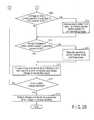
- FIG. 2A and FIG. 2B are flow diagrams for illustrating the procedure of the schematic operation of an exemplary centralized information processing apparatus according to one embodiment.
- steps S01, S02 the centralized information processing apparatus 1 receives data from the mail-sorting machine 5 and VCS 6.
- IDs that specify respective mails recognition results obtained for respective image data items in an order from a higher score position and the like are provided.
- IDs that specify respective mails address results instructed (coding-processed) by manual input by the operator and the like are provided.
- the ID is identification information inherently assigned to image data.
- Image data may not be whole data read by the OCR but may be data that is obtained by extracting only a dwelling place area portion and includes information based on which the operator can determine a correct dwelling place. Further, an image can be compressed.
- the data transmission timings of the mail-sorting machine 5 and VCS 6 are not necessarily set to the same timing. Data items respectively transmitted are set to correspond by use of IDs that specify the respective mails. However, data can be temporarily stored in one of the mail-sorting machine 5 and VCS 6 and then whole data items can be simultaneously received.
- step S03 the transmission/reception processor 11 of the centralized information processing apparatus 1 puts transmitted data items together for respective data items of each ID and stores the data items in the information processing database in a preset period.
- the storage period may be freely set to one week or one month, for example, by taking the storage capacity and the robust property with respect to variation in the address into consideration. Further, mails such as New Year's mails and year-end gifts in respective seasons may be separately stored for respective determined periods. When a plurality of mail processing systems that are mail reception/transmission objects are present, data may be stored for the respective objects.
- step S04 the recognition rate processor 12 calculates the recognition rate of mail for each address.
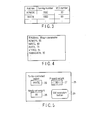
- FIG. 3 is a diagram showing the result of recognition for respective addresses.
- the "sorting number” indicates the number of cases in which the mail-sorting machine 5 recognizes the addresses.
- the "VCS number” indicates the number of cases in which the mail-sorting machine 5 cannot recognize the addresses and rejects the mails and the addresses are assigned by the coding process of the VCS 6.
- the recognition rate processor 12 displays the recognition result shown in FIG. 3 and the calculated recognition rate on the input/output device 2.
- the addresses are sorted in the prefecture unit, but any one of the hierarchical layers of the dwelling places may be used.
- the unit in which mails are sorted and put together can be freely specified by the operator.
- a desired one of the hierarchical layers of the dwelling place hierarchy may be specified or desired plural ones of the hierarchical layers may be specified.
- Various specifications may be combined.
- dwelling places near the processing station may be specified in the finely divided address units and dwelling places that are far apart from the processing station may be specified in the upper layers of the dwelling place hierarchy.
- mails can be sorted not in the address unit, but in the postcode unit or name unit.
- step S05 the operator determines based on the result of display whether or not it is required to correct a weight parameter for each address.
- characters that are given as plural candidates are expressed in point (score) and the character of the recognition result is determined based on the score.
- a mechanism that weights and corrects a recognition score of each dwelling place is provided in the mail processing system.
- the weight parameters for respective addresses are parameters for the addresses. Judging from the result of FIG. 3 , when "IWATE" is specified as the address, the rate at which image data is rejected and supplied to the VCS 6 is high (the recognition rate is low). Therefore it is determined to select a weight parameter for the address of "IWATE" as a to-be-adjusted object.
- Display content provided for the operator is not limited to content of FIG. 3 if the content can be used to support a narrowing operation for a to-be-adjusted object.
- the recognition rate itself may be calculated and expressed by use of a line graph.
- the addresses may be sorted in a descending order of recognition rates.
- the operator can determine the candidate based on the above statistical information. Further, the operator can narrow to-be-corrected candidates based on sensual desire to limit an erroneous reading operation with respect to a specified address. Further, at least one of candidates with a low recognition rate may be automatically adopted irrespective of the determination by the operator.
- step S05 If the result of step S05 is Yes, that is, if it is determined necessary to correct a weight parameter for each address, the process of a next step is performed. Otherwise (if the result of step S05 is No), the present process is terminated since the adjustment process is unnecessary. At this time, the parameters are kept unchanged and the original values are maintained. If the parameter required to be corrected is automatically extracted, the parameter that provides a recognition rate less than or equal to a threshold value may be selected.
- FIG. 4 is a diagram showing an example of content of a weight parameter file for each address.
- the weight parameter for each address is one of factor data items used for calculation of a total score.
- the addresses are sorted in the prefecture unit, but any part of the dwelling place hierarchy may be used.
- the unit is not limited to the address and may be set in the postcode unit or name unit. Therefore, the parameters are stored in the information processing database 20 of the centralized information processing apparatus 1.
- the parameters are not limited to one type and different types of parameters may be used for seasonal mails such as New Year's mails and year-end gifts, for example.
- a score for each address is finally corrected based on the character recognition simulation result using a new weight parameter obtained by changing the weight parameter.
- the explanation is made based on the simple addition system in which the final recognition result is derived by adding a weight parameter to the recognition score for each address.
- the weight parameter is changed from the present value (for example, 80) to a larger number (for example, 90) when the weight parameter for each address of IWATE is adjusted.
- the process of changing the parameter is performed according to the following procedure.
- the weight parameter processor 13 displays a weight parameter-change setting screen 25 shown in FIG. 5 on the input/output device 2.
- a to-be-corrected input column 26 present weight display column 27, newly set weight input column 28 and SIM execution button 29 are provided.
- the operator inputs an address to be corrected to the to-be-corrected input column 26. Then, the weight parameter processor 13 searches a weight parameter file for each address and displays a weight parameter set in the input address on the present weight display column 27. Further, the weight parameter processor 13 also displays the content ( FIG. 4 ) of the weight parameter file for each address.
- the operator refers to the displayed content of the weight parameter file for each address, compares the same with a parameter of another address and inputs a new weight parameter value to the newly set weight input column 28. Next, if the operator presses the SIM execution button 29, the weight parameter processor 13 executes a simulation by use of the new weight parameter value.
- the weight parameter-change setting screen 25 shown in FIG. 5 may be configured to simultaneously change weight parameters for plural addresses.
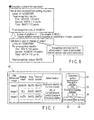
- FIG. 6 is a diagram for illustrating an exemplary simulation process of one embodiment.
- the upper portion of the diagram shows the character recognition processing result by the mail-sorting machine 5 and the lower portion of the diagram shows the simulation result by use of a parameter after being changed.
- the character recognition processing result by the mail-sorting machine 5 is data transmitted from the mail-sorting machine 5 as explained in step S01 and is obtained as address recognition results arranged from an upper position of a higher score for each ID to plural positions.
- the recognition results of a certain mail by the mail-sorting machine 5 indicate "first: AOMORI 115 points", “second: AKITA 113 points”, “third: IWATE 112 points” and "final recognition output: AOMORI". That is, the image of this ID indicates that "AOMORI" with the highest score is adopted as the recognition result since the scores are respectively set to "115 points", "113 points” and "112 points” when the addresses are recognized as "AOMORI", "AKITA” and "IWATE”.
- the recognition process itself is unnecessary for the simulation. Only a process of selecting the final recognition result from the results of plural orders becomes necessary.
- "IWATE" is selected as the final recognition result in a condition that the first-order recognition score is not less than 100 and the score difference with respect to the second-order recognition score is two or more.
- the selection process may be performed by executing the same algorithm as that of the selection process in the mail-sorting machine 5.
- the weight parameter value is incremented by +10, but there occurs a possibility that the precision of the character recognition is lowered if the weight change amount is large. Therefore, the restriction may be imposed to set the changing amount of the weight parameter within ⁇ 20% of the original value, for example.
- step S07 the difference information processor 14 compares the original OCR result with a result obtained after correcting the parameter and lists up only a portion (difference) in which the recognition result is different.
- the difference information processor 14 stores or records a corresponding image and ID thereof.
- step S08 the difference information processor 14 displays a list of contents of differences with images on the input/output device 2.
- FIG. 7 is a diagram showing an exemplary difference information display screen of one embodiment.
- a difference list display 31 on which a list of difference images, determination results and the like is displayed, and totalization button 32, recognition number display column 33, erroneous reading number display column 34, OK button 35 and NG button 36 are provided.
- the display portion is information manually input from the input/output device 2 by the operator. That is, the operator refers to an image displayed in "SIM difference image” to read an address and input the same.
- the difference information processor 14 may automatically adopt the coding processing result transmitted from the VCS 6. This operation makes efficient the instructing operation of the operator.
- an address that is the correct answer is already manually input while the operator watches the image and the coding processing result of the ID that coincides with the ID of an image displayed in the difference image list is automatically selected and the operation can be reflected on "correct answer”.
- the cell In the column (cell) that is already reflected on "correct answer”, the cell can be made prominent by coloring the cell, the operation of inputting a character string can be made impossible or the display operation thereof can be made impossible.
- step S09 to step S10 that automatically reflects the result of the VCS 6 is described.
- the difference information processor 14 automatically reflects the VCS result on a correct answer display portion of a corresponding image.
- mail for which an answer is input in the VCS 6 is only mail whose address cannot be specified in the mail-sorting machine 5. Therefore, if mail is recognized in the mail-sorting machine 5 but is erroneously recognized, that is, if mail is erroneously read, the operator refers to an image displayed in "SIM difference image" to input a correct answer.
- step S11 The procedure of a correct answer input process in step S11 to step S12 is now described.
- step S11 If one of the cells in the correct answer column of the difference list display 31 in which no information is input is present (Yes in step S11), the operator manually inputs a correct answer while watching the image in step S12.
- the difference information processor 14 supports the operation as a manually input GUI.
- the addresses encircled by dotted-line circles in the "correct answer" column are contents input by the operator while watching the image.
- the difference information processor 14 compares the content of the "correct answer” column with "original result” and "new result” to display a change in the final result.
- Content obtained by comparing "original result” with “correct answer” is displayed in a portion corresponding to the root of the arrow of “determination” and content obtained by comparing "new result” with “correct answer” is displayed in a portion corresponding to the point of the arrow.
- a method for setting the determination result to "REJ” when “original result” or “new result” is “REJ”, setting the determination result to "erroneous reading” when “original result” and “new result” are character strings other than “REJ” and "original result” and “correct answer” are different from each other and setting the determination result to "correct answer” when they coincide with each other may be used.
- An operation button (not shown) may be provided on the difference information display screen 30 to provide an extraction function of a specified character string and a sort function according to a specified order with respect to display on the difference list display 31. This measure can be recommended because the operation for the difference information display screen 30 can be efficiently performed.
- an operation button (not shown) may be provided on the difference information display screen 30 and the content of "determination" that is specified content, for example, the content expressed as "A ⁇ B" may be extracted, edited and displayed by the operation of the operator.
- step S13 the totalization processor 15 compares all of the new and old results of the difference list with the correct answers to totalize and display changes in the recognition result.
- the totalization processor 15 displays an increase or decrease in the correct answer number before and after the change of the parameter on the recognition number display column 33 and displays an increase or decrease in the erroneous reading number before and after the change of the parameter on the erroneous reading number display column 34. If the operation becomes efficient, the recognition rate and erroneous reading rate are derived based on the above values and the contents may be displayed based on the thus derived recognition rate and erroneous reading rate.
- FIG. 8A, FIG. 8B are diagrams each showing an exemplary recognition change display for each address and erroneous reading change display for each address in one embodiment.
- FIG. 8A shows change display for each address of the recognition success rate and recognition success number
- FIG. 8B shows change display for each address of the erroneous reading rate and erroneous reading number.
- a column graph in each diagram indicates a change in the recognition number or erroneous reading number for each address
- a line graph indicates a change in the recognition rate or erroneous reading rate for each address.
- FIG. 8A, FIG. 8B the changes are displayed for respective addresses written on the mails, but mails may be sorted for respective SIM recognition final result outputs erroneously read depending on the operation.
- the above sorting method is effective in some cases when a trouble occurs if the address is erroneously read as a far dwelling place.
- the erroneous reading factor can be further analyzed by adding a function of displaying an image group obtained by erroneously reading letters addressed to "IWATE".
- step S14 If the operator determines that the simulation result is satisfied as a whole in the totalization and display operations (Yes in step S14), the operator presses the OK button 35.
- step S15 the totalization processor 15 adopts the result after the change and registers the same as a correct weight parameter for each address. If the result after the change cannot be satisfied (No in step S14), the processor repeatedly performs a process starting from the procedure (step S05) of determining whether or not it is necessary to correct the weight parameter for each address.
- step S15 if a finally registered parameter is updated, the transmission/reception processor 11 distributes a parameter after the change to the mail-sorting machine 5. After the parameter distribution, the mail-sorting machine 5 is operated based on the parameter after updating.
- the parameter distribution can be performed in a remote state if the centralized information processing apparatus 1 is installed in a place far apart from the mail processing system and no attention is paid to the communication system.
- weight parameters for respective different addresses are formed for a New Year's period and normal period and the sorting machine can be operated in the respective periods by first dividing data items distributed from the sorting machine to the centralized information processing system according to periods.
- weight parameters for respective addresses suitable for the operation of the processing station can be formed by storing the distribution data items separately for the collection times of the morning and night.
- the process is performed by use of the independent centralized information processing apparatus 1, but it is not always necessary to provide the independent centralized information processing apparatus 1 in an environment in which data held by the mail-sorting machine 5 and VCS 6 can be stored.
- the simulation operation portion of the centralized information processing apparatus 1 may be operated by the operation from the operation panel of the mail processing system 4 and there occurs no problem even if the parameter changing operation is performed as an offline operation of the mail processing system 4.
- the stored data can be used again since the answer thereof is already partially specified and may be discarded to totalize the newest number of mails.
- the centralized information processing apparatus 1 transfers information with respect to one mail processing system, but may remotely transfer information with respect to a plurality of mail processing systems provided in a plurality of mail processing stations via communication lines.
- parameter values may be stored in different files depending on the time (time band) at which the centralized information processing apparatus 1 collects data and the parameter values may be separately managed.
- the centralized information processing apparatus 1 transfers information online with respect to the mail processing system via the communication path, but information transfer can be performed offline via a recording medium.
Landscapes
- Engineering & Computer Science (AREA)
- Physics & Mathematics (AREA)
- General Physics & Mathematics (AREA)
- Theoretical Computer Science (AREA)
- Multimedia (AREA)
- Quality & Reliability (AREA)
- Computer Vision & Pattern Recognition (AREA)
- Health & Medical Sciences (AREA)
- Electromagnetism (AREA)
- General Health & Medical Sciences (AREA)
- Toxicology (AREA)
- Artificial Intelligence (AREA)
- Sorting Of Articles (AREA)
- Character Discrimination (AREA)
- Facsimiles In General (AREA)
Applications Claiming Priority (1)
| Application Number | Priority Date | Filing Date | Title |
|---|---|---|---|
| JP2010061538A JP5390440B2 (ja) | 2010-03-17 | 2010-03-17 | 集中情報処理装置及び集中情報処理システム |
Publications (1)
| Publication Number | Publication Date |
|---|---|
| EP2367141A2 true EP2367141A2 (de) | 2011-09-21 |
Family
ID=44212145
Family Applications (1)
| Application Number | Title | Priority Date | Filing Date |
|---|---|---|---|
| EP11155816A Withdrawn EP2367141A2 (de) | 2010-03-17 | 2011-02-24 | Zentralisierte Informationsverarbeitungsvorrichtung und zentralisiertes Informationsverarbeitungssystem |
Country Status (6)
| Country | Link |
|---|---|
| US (1) | US20110229018A1 (de) |
| EP (1) | EP2367141A2 (de) |
| JP (1) | JP5390440B2 (de) |
| KR (1) | KR101136169B1 (de) |
| CN (1) | CN102189080A (de) |
| PH (1) | PH12011000063A1 (de) |
Cited By (2)
| Publication number | Priority date | Publication date | Assignee | Title |
|---|---|---|---|---|
| CN104285245A (zh) * | 2012-05-30 | 2015-01-14 | 冲电气工业株式会社 | 纸页类处理装置以及存储程序的存储介质 |
| EP3258420A1 (de) * | 2016-06-16 | 2017-12-20 | Kabushiki Kaisha Toshiba | Verabreichungshandhabungsvorrichtung, verabreichungshandhabungsverfahren und verabreichungshandhabungsprogramm |
Families Citing this family (6)
| Publication number | Priority date | Publication date | Assignee | Title |
|---|---|---|---|---|
| JP6242722B2 (ja) * | 2014-03-13 | 2017-12-06 | 株式会社東芝 | 文字認識装置、区分機、およびプログラム |
| JP6914110B2 (ja) * | 2016-06-16 | 2021-08-04 | 株式会社東芝 | 配達物処理装置、配達物処理方法、及び配達物処理プログラム |
| CN106651278A (zh) * | 2017-01-10 | 2017-05-10 | 上海万琛电子商务有限公司 | 一种基于物流分拣系统的数据处理方法 |
| JP6783671B2 (ja) * | 2017-01-13 | 2020-11-11 | 株式会社東芝 | 区分システム、認識支援装置、認識支援方法、および認識支援プログラム |
| US10929799B2 (en) * | 2017-06-29 | 2021-02-23 | Amazon Technologies, Inc. | Identification of inaccurate addresses for package deliveries |
| CN111242554B (zh) * | 2020-01-17 | 2023-10-17 | 秒针信息技术有限公司 | 拣货方式类型确定方法和装置 |
Family Cites Families (14)
| Publication number | Priority date | Publication date | Assignee | Title |
|---|---|---|---|---|
| JP2991779B2 (ja) * | 1990-06-11 | 1999-12-20 | 株式会社リコー | 文字認識方法及び装置 |
| JPH0528320A (ja) * | 1991-07-19 | 1993-02-05 | Nec Corp | 紙葉類区分装置 |
| JPH06111077A (ja) * | 1992-09-28 | 1994-04-22 | Matsushita Electric Ind Co Ltd | 文書認識装置の評価装置 |
| JPH0957204A (ja) * | 1995-08-24 | 1997-03-04 | Toshiba Corp | 郵便物の宛先自動読取システム |
| JP3232991B2 (ja) * | 1995-12-13 | 2001-11-26 | 株式会社日立製作所 | 文字読取り方法及び住所読取り方法 |
| KR970066985A (ko) * | 1996-03-07 | 1997-10-13 | 김광호 | 화상신호 처리방법 및 그 장치 |
| JPH11203411A (ja) * | 1998-01-20 | 1999-07-30 | Fuji Xerox Co Ltd | 文書読み取り装置 |
| JP4574814B2 (ja) | 2000-08-10 | 2010-11-04 | 株式会社東芝 | 情報処理装置、情報処理方法、紙葉類処理装置、および紙葉類処理方法 |
| JP2002269494A (ja) | 2001-03-07 | 2002-09-20 | Toshiba Corp | 紙葉類処理装置及び紙葉類処理方法 |
| JP4733859B2 (ja) * | 2001-06-07 | 2011-07-27 | 株式会社東芝 | 所在情報認識装置および区分装置 |
| JP2004105921A (ja) * | 2002-09-20 | 2004-04-08 | Hitachi Ltd | 紙葉類処理装置 |
| JP2005288345A (ja) * | 2004-03-31 | 2005-10-20 | Toshiba Corp | 紙葉類読取区分機 |
| FR2881663B1 (fr) * | 2005-02-08 | 2007-03-16 | Solystic Sa | Procede de traitement d'envois postaux avec une detection des occurences d'attributs ocr |
| KR100926565B1 (ko) * | 2007-12-13 | 2009-11-12 | 한국전자통신연구원 | 주소 데이터베이스 구축 장치 및 그 방법 |
-
2010
- 2010-03-17 JP JP2010061538A patent/JP5390440B2/ja not_active Expired - Fee Related
-
2011
- 2011-02-24 US US13/033,667 patent/US20110229018A1/en not_active Abandoned
- 2011-02-24 KR KR1020110016400A patent/KR101136169B1/ko not_active Expired - Fee Related
- 2011-02-24 PH PH1/2011/000063A patent/PH12011000063A1/en unknown
- 2011-02-24 EP EP11155816A patent/EP2367141A2/de not_active Withdrawn
- 2011-03-02 CN CN2011100500070A patent/CN102189080A/zh active Pending
Non-Patent Citations (1)
| Title |
|---|
| None |
Cited By (3)
| Publication number | Priority date | Publication date | Assignee | Title |
|---|---|---|---|---|
| CN104285245A (zh) * | 2012-05-30 | 2015-01-14 | 冲电气工业株式会社 | 纸页类处理装置以及存储程序的存储介质 |
| EP3258420A1 (de) * | 2016-06-16 | 2017-12-20 | Kabushiki Kaisha Toshiba | Verabreichungshandhabungsvorrichtung, verabreichungshandhabungsverfahren und verabreichungshandhabungsprogramm |
| US10235564B2 (en) | 2016-06-16 | 2019-03-19 | Kabushiki Kaisha Toshiba | Delivery handling apparatus, delivery handling method, and delivery handling program |
Also Published As
| Publication number | Publication date |
|---|---|
| PH12011000063A1 (en) | 2013-03-04 |
| US20110229018A1 (en) | 2011-09-22 |
| JP2011194287A (ja) | 2011-10-06 |
| JP5390440B2 (ja) | 2014-01-15 |
| KR101136169B1 (ko) | 2012-04-17 |
| KR20110104876A (ko) | 2011-09-23 |
| CN102189080A (zh) | 2011-09-21 |
Similar Documents
| Publication | Publication Date | Title |
|---|---|---|
| US20110229018A1 (en) | Centralized information processing apparatus and centralized information processing system | |
| US20080002234A1 (en) | Scanning Verification and Tracking System and Method | |
| CN110515846B (zh) | 一种关于用户体验测试的数据自动化处理分析系统 | |
| CN113269101B (zh) | 一种票据识别方法、装置和设备 | |
| JP6441718B2 (ja) | 帳票処理システム、帳票処理方法及びプログラム | |
| CN117036073B (zh) | 基于互联网的发票审核与自动报销系统 | |
| EP1196252B1 (de) | Verfahren und gerät zum aktualisieren einer adressendatenbank mit registrierten adressendaten | |
| CN109300026A (zh) | 基于自动记账大数据的财务智能分析方法及其系统 | |
| CN117973334B (zh) | 基于文件表格的自动识别导入方法 | |
| CN113841156B (zh) | 基于图像识别的控制方法与装置 | |
| EP2367124A1 (de) | Adressdatenbank-Aktualisierungsvorrichtung und Adressdatenbank-Aktualisierungsverfahren | |
| CN111177308A (zh) | 一种文本内容的识别情绪方法 | |
| AU2020379335B2 (en) | Resource operation plan creation support device, resource operation plan creation support method, and program | |
| JP2020140583A (ja) | 辞書作成装置、辞書作成方法及び辞書作成プログラム | |
| JP4706379B2 (ja) | 住所認識装置 | |
| CN112541713A (zh) | 基于指标体系的政务公开自动评估的方法 | |
| JPH0957204A (ja) | 郵便物の宛先自動読取システム | |
| JP4356908B2 (ja) | 財務諸表自動入力装置 | |
| JP4104617B2 (ja) | 成果物情報管理システムおよび成果物情報管理プログラム | |
| CN118095794A (zh) | 基于正则算法的工单信息提取方法及系统 | |
| CN109600428A (zh) | 一种自动化上传附件并匹配关联的方法和装置 | |
| CN119152512B (zh) | 一种仓储物流纸质清单电子化的数据处理方法 | |
| KR20170070719A (ko) | 집배구코드 기반의 도착구분계획을 위한 방법 | |
| KR20210084946A (ko) | 식품 광고 이미지 검수 방법 및 서버 | |
| US20060102530A1 (en) | Sorting mail in carrier walk sequence |
Legal Events
| Date | Code | Title | Description |
|---|---|---|---|
| PUAI | Public reference made under article 153(3) epc to a published international application that has entered the european phase |
Free format text: ORIGINAL CODE: 0009012 |
|
| 17P | Request for examination filed |
Effective date: 20110224 |
|
| AK | Designated contracting states |
Kind code of ref document: A2 Designated state(s): AL AT BE BG CH CY CZ DE DK EE ES FI FR GB GR HR HU IE IS IT LI LT LU LV MC MK MT NL NO PL PT RO RS SE SI SK SM TR |
|
| AX | Request for extension of the european patent |
Extension state: BA ME |
|
| STAA | Information on the status of an ep patent application or granted ep patent |
Free format text: STATUS: THE APPLICATION HAS BEEN WITHDRAWN |
|
| RIN1 | Information on inventor provided before grant (corrected) |
Inventor name: MAEDA, MASAYA Inventor name: IRIE, BUNPEI Inventor name: HAMAMURA, TOMOYUKI |
|
| 18W | Application withdrawn |
Effective date: 20120907 |