EP2350129B1 - Compositions of pd-1 antagonists and methods of use - Google Patents
Compositions of pd-1 antagonists and methods of use Download PDFInfo
- Publication number
- EP2350129B1 EP2350129B1 EP09811805.2A EP09811805A EP2350129B1 EP 2350129 B1 EP2350129 B1 EP 2350129B1 EP 09811805 A EP09811805 A EP 09811805A EP 2350129 B1 EP2350129 B1 EP 2350129B1
- Authority
- EP
- European Patent Office
- Prior art keywords
- composition
- fusion protein
- cancer
- use according
- polypeptide
- Prior art date
- Legal status (The legal status is an assumption and is not a legal conclusion. Google has not performed a legal analysis and makes no representation as to the accuracy of the status listed.)
- Active
Links
Images


Classifications
-
- A—HUMAN NECESSITIES
- A61—MEDICAL OR VETERINARY SCIENCE; HYGIENE
- A61K—PREPARATIONS FOR MEDICAL, DENTAL OR TOILETRY PURPOSES
- A61K38/00—Medicinal preparations containing peptides
- A61K38/16—Peptides having more than 20 amino acids; Gastrins; Somatostatins; Melanotropins; Derivatives thereof
- A61K38/17—Peptides having more than 20 amino acids; Gastrins; Somatostatins; Melanotropins; Derivatives thereof from animals; from humans
- A61K38/177—Receptors; Cell surface antigens; Cell surface determinants
-
- A—HUMAN NECESSITIES
- A61—MEDICAL OR VETERINARY SCIENCE; HYGIENE
- A61K—PREPARATIONS FOR MEDICAL, DENTAL OR TOILETRY PURPOSES
- A61K31/00—Medicinal preparations containing organic active ingredients
- A61K31/66—Phosphorus compounds
- A61K31/675—Phosphorus compounds having nitrogen as a ring hetero atom, e.g. pyridoxal phosphate
-
- A—HUMAN NECESSITIES
- A61—MEDICAL OR VETERINARY SCIENCE; HYGIENE
- A61K—PREPARATIONS FOR MEDICAL, DENTAL OR TOILETRY PURPOSES
- A61K45/00—Medicinal preparations containing active ingredients not provided for in groups A61K31/00 - A61K41/00
- A61K45/06—Mixtures of active ingredients without chemical characterisation, e.g. antiphlogistics and cardiaca
-
- A—HUMAN NECESSITIES
- A61—MEDICAL OR VETERINARY SCIENCE; HYGIENE
- A61P—SPECIFIC THERAPEUTIC ACTIVITY OF CHEMICAL COMPOUNDS OR MEDICINAL PREPARATIONS
- A61P31/00—Antiinfectives, i.e. antibiotics, antiseptics, chemotherapeutics
-
- A—HUMAN NECESSITIES
- A61—MEDICAL OR VETERINARY SCIENCE; HYGIENE
- A61P—SPECIFIC THERAPEUTIC ACTIVITY OF CHEMICAL COMPOUNDS OR MEDICINAL PREPARATIONS
- A61P31/00—Antiinfectives, i.e. antibiotics, antiseptics, chemotherapeutics
- A61P31/04—Antibacterial agents
-
- A—HUMAN NECESSITIES
- A61—MEDICAL OR VETERINARY SCIENCE; HYGIENE
- A61P—SPECIFIC THERAPEUTIC ACTIVITY OF CHEMICAL COMPOUNDS OR MEDICINAL PREPARATIONS
- A61P31/00—Antiinfectives, i.e. antibiotics, antiseptics, chemotherapeutics
- A61P31/10—Antimycotics
-
- A—HUMAN NECESSITIES
- A61—MEDICAL OR VETERINARY SCIENCE; HYGIENE
- A61P—SPECIFIC THERAPEUTIC ACTIVITY OF CHEMICAL COMPOUNDS OR MEDICINAL PREPARATIONS
- A61P31/00—Antiinfectives, i.e. antibiotics, antiseptics, chemotherapeutics
- A61P31/12—Antivirals
-
- A—HUMAN NECESSITIES
- A61—MEDICAL OR VETERINARY SCIENCE; HYGIENE
- A61P—SPECIFIC THERAPEUTIC ACTIVITY OF CHEMICAL COMPOUNDS OR MEDICINAL PREPARATIONS
- A61P31/00—Antiinfectives, i.e. antibiotics, antiseptics, chemotherapeutics
- A61P31/12—Antivirals
- A61P31/14—Antivirals for RNA viruses
-
- A—HUMAN NECESSITIES
- A61—MEDICAL OR VETERINARY SCIENCE; HYGIENE
- A61P—SPECIFIC THERAPEUTIC ACTIVITY OF CHEMICAL COMPOUNDS OR MEDICINAL PREPARATIONS
- A61P31/00—Antiinfectives, i.e. antibiotics, antiseptics, chemotherapeutics
- A61P31/12—Antivirals
- A61P31/14—Antivirals for RNA viruses
- A61P31/16—Antivirals for RNA viruses for influenza or rhinoviruses
-
- A—HUMAN NECESSITIES
- A61—MEDICAL OR VETERINARY SCIENCE; HYGIENE
- A61P—SPECIFIC THERAPEUTIC ACTIVITY OF CHEMICAL COMPOUNDS OR MEDICINAL PREPARATIONS
- A61P31/00—Antiinfectives, i.e. antibiotics, antiseptics, chemotherapeutics
- A61P31/12—Antivirals
- A61P31/14—Antivirals for RNA viruses
- A61P31/18—Antivirals for RNA viruses for HIV
-
- A—HUMAN NECESSITIES
- A61—MEDICAL OR VETERINARY SCIENCE; HYGIENE
- A61P—SPECIFIC THERAPEUTIC ACTIVITY OF CHEMICAL COMPOUNDS OR MEDICINAL PREPARATIONS
- A61P31/00—Antiinfectives, i.e. antibiotics, antiseptics, chemotherapeutics
- A61P31/12—Antivirals
- A61P31/20—Antivirals for DNA viruses
-
- A—HUMAN NECESSITIES
- A61—MEDICAL OR VETERINARY SCIENCE; HYGIENE
- A61P—SPECIFIC THERAPEUTIC ACTIVITY OF CHEMICAL COMPOUNDS OR MEDICINAL PREPARATIONS
- A61P31/00—Antiinfectives, i.e. antibiotics, antiseptics, chemotherapeutics
- A61P31/12—Antivirals
- A61P31/20—Antivirals for DNA viruses
- A61P31/22—Antivirals for DNA viruses for herpes viruses
-
- A—HUMAN NECESSITIES
- A61—MEDICAL OR VETERINARY SCIENCE; HYGIENE
- A61P—SPECIFIC THERAPEUTIC ACTIVITY OF CHEMICAL COMPOUNDS OR MEDICINAL PREPARATIONS
- A61P33/00—Antiparasitic agents
-
- A—HUMAN NECESSITIES
- A61—MEDICAL OR VETERINARY SCIENCE; HYGIENE
- A61P—SPECIFIC THERAPEUTIC ACTIVITY OF CHEMICAL COMPOUNDS OR MEDICINAL PREPARATIONS
- A61P33/00—Antiparasitic agents
- A61P33/02—Antiprotozoals, e.g. for leishmaniasis, trichomoniasis, toxoplasmosis
-
- A—HUMAN NECESSITIES
- A61—MEDICAL OR VETERINARY SCIENCE; HYGIENE
- A61P—SPECIFIC THERAPEUTIC ACTIVITY OF CHEMICAL COMPOUNDS OR MEDICINAL PREPARATIONS
- A61P33/00—Antiparasitic agents
- A61P33/02—Antiprotozoals, e.g. for leishmaniasis, trichomoniasis, toxoplasmosis
- A61P33/06—Antimalarials
-
- A—HUMAN NECESSITIES
- A61—MEDICAL OR VETERINARY SCIENCE; HYGIENE
- A61P—SPECIFIC THERAPEUTIC ACTIVITY OF CHEMICAL COMPOUNDS OR MEDICINAL PREPARATIONS
- A61P35/00—Antineoplastic agents
-
- A—HUMAN NECESSITIES
- A61—MEDICAL OR VETERINARY SCIENCE; HYGIENE
- A61P—SPECIFIC THERAPEUTIC ACTIVITY OF CHEMICAL COMPOUNDS OR MEDICINAL PREPARATIONS
- A61P35/00—Antineoplastic agents
- A61P35/02—Antineoplastic agents specific for leukemia
-
- A—HUMAN NECESSITIES
- A61—MEDICAL OR VETERINARY SCIENCE; HYGIENE
- A61P—SPECIFIC THERAPEUTIC ACTIVITY OF CHEMICAL COMPOUNDS OR MEDICINAL PREPARATIONS
- A61P37/00—Drugs for immunological or allergic disorders
- A61P37/02—Immunomodulators
- A61P37/04—Immunostimulants
-
- A—HUMAN NECESSITIES
- A61—MEDICAL OR VETERINARY SCIENCE; HYGIENE
- A61P—SPECIFIC THERAPEUTIC ACTIVITY OF CHEMICAL COMPOUNDS OR MEDICINAL PREPARATIONS
- A61P43/00—Drugs for specific purposes, not provided for in groups A61P1/00-A61P41/00
-
- C—CHEMISTRY; METALLURGY
- C07—ORGANIC CHEMISTRY
- C07K—PEPTIDES
- C07K14/00—Peptides having more than 20 amino acids; Gastrins; Somatostatins; Melanotropins; Derivatives thereof
- C07K14/435—Peptides having more than 20 amino acids; Gastrins; Somatostatins; Melanotropins; Derivatives thereof from animals; from humans
- C07K14/705—Receptors; Cell surface antigens; Cell surface determinants
- C07K14/70503—Immunoglobulin superfamily
- C07K14/70532—B7 molecules, e.g. CD80, CD86
-
- C—CHEMISTRY; METALLURGY
- C07—ORGANIC CHEMISTRY
- C07K—PEPTIDES
- C07K2319/00—Fusion polypeptide
- C07K2319/33—Fusion polypeptide fusions for targeting to specific cell types, e.g. tissue specific targeting, targeting of a bacterial subspecies
-
- Y—GENERAL TAGGING OF NEW TECHNOLOGICAL DEVELOPMENTS; GENERAL TAGGING OF CROSS-SECTIONAL TECHNOLOGIES SPANNING OVER SEVERAL SECTIONS OF THE IPC; TECHNICAL SUBJECTS COVERED BY FORMER USPC CROSS-REFERENCE ART COLLECTIONS [XRACs] AND DIGESTS
- Y02—TECHNOLOGIES OR APPLICATIONS FOR MITIGATION OR ADAPTATION AGAINST CLIMATE CHANGE
- Y02A—TECHNOLOGIES FOR ADAPTATION TO CLIMATE CHANGE
- Y02A50/00—TECHNOLOGIES FOR ADAPTATION TO CLIMATE CHANGE in human health protection, e.g. against extreme weather
- Y02A50/30—Against vector-borne diseases, e.g. mosquito-borne, fly-borne, tick-borne or waterborne diseases whose impact is exacerbated by climate change
Definitions
- the present disclosures relate to a method of increasing T cell responses, for example, to an antigen, in a mammal in need of such increase, comprising administering to said mammal a compound that reduces inhibitory signal transduction in immune cells, especially T cells, and a potentiating agent, wherein said treatment regimen is effective to increase the T cell response of said mammal.
- Preferred compounds of the disclosures also include, but are not limited to, compounds, including active fragments, variants and homologs, that bind to natural ligands of PD-1, such as fragments of B7-1 that bind to B7-H1, as well as fusion proteins incorporating any of the foregoing, that bind to ligands of PD-1 to prevent the latter from binding to PD-1 to trigger inhibitory signal transduction.
- Preferred embodiments of compounds useful in the present disclosures also include antibodies that bind to PD-1 or CTLA4, thereby reducing, or abolishing, inhibitory signal transduction mediated by these sources.
- the present disclosures relate to a method of increasing T cell responses in a mammal in need thereof, comprising administering to said mammal an effective treatment regimen comprising an immunomodulator, and a potentiating agent, wherein said treatment regimen is effective to increase the T cell response of said mammal.
- immunomodulators include molecules that antagonize other CD28 family receptors (such as CTLA4) that inhibit T cell responses.
- CTLA4 CD28 family receptors
- a preferred embodiment uses an anti-CTLA4 antibody and a potentiating agent.
- a fusion protein that prevents or reduces inhibitory signal transduction through PD-1 and the potentiating agent are administered at different times, such as where the potentiating agent is administered prior to administering the PD-1 antagonist. Such administration may be in conjunction with an additional therapeutic agent.
- the present disclosure includes compositions of the antagonists used in the methods of the invention, in a pharmaceutically acceptable carrier and wherein said PD-1 binding molecule and said potentiating agent are each present in an amount effective to produce increased T cell stimulation.
- CTLA4 antagonist means a compound that reduces CTLA4-mediated inhibition of T cell reactions.
- CTLA4 delivers an inhibitory impulse upon binding of B7 ligands, such B7-1 and B7-2.
- a CTLA4 antagonist is one that dirupts binding of said ligands to CTLA4 on activated T cells.
- the antagonist is an anti-CTLA4 antibody that binds CTLA4 to prevent ligand binding.
- an active fragment would be a portion of said polypeptide comprising a binding domain that binds to a natural ligand of PD-1 to prevent stimulation of PD-1 mediated inhibitory signal transduction by said ligand.
- Active fragments may be identified by their ability to compete with the molecule they are derived from for binding to a natural binding site. For example, active fragments will compete with wild-type B7-DC for binding to PD-1.
- a "co-stimulatory polypeptide” is a polypeptide that, upon interaction with a cell-surface molecule on T cells, modulates the activity of the T cell.
- the response of the T cell can be an effector (e.g., CTL or antibody-producing B cell) response, a helper response providing help for one or more effector (e.g., CTL or antibody-producing B cell) responses, or a suppressive response.
- isolated is meant to describe a compound of interest (e.g., either a polynucleotide or a polypeptide) that is in an environment different from that in which the compound naturally occurs e.g. separated from its natural milieu such as by concentrating a peptide to a concentration at which it is not found in nature. "Isolated” is meant to include compounds that are within samples that are substantially enriched for the compound of interest and/or in which the compound of interest is partially or substantially purified.
- amino acid sequence alteration can be, for example, a substitution, a deletion, or an insertion of one or more amino acids.
- portion when used in relation to polypeptides, refer to a continuous sequence of residues, such as amino acid residues, which sequence forms a subset of a larger sequence.
- residues such as amino acid residues
- fragments when used in relation to polypeptides, refer to a continuous sequence of residues, such as amino acid residues, which sequence forms a subset of a larger sequence.
- the oligopeptides resulting from such treatment would represent portions, segments or fragments of the starting polypeptide.
- a “fragment” of a polypeptide thus refers to any subset of the polypeptide that is a shorter polypeptide of the full length protein. Generally, fragments will be five or more amino acids in length.
- valency refers to the number of binding sites available per molecule.
- the term “percent identity” or “percent identical,” when referring to a sequence, means that a sequence is compared to a claimed or described sequence after alignment of the sequence to be compared (the "Compared Sequence”) with the described or claimed sequence (the “Reference Sequence”).
- Percent Identity 100 ⁇ 1 - C / R
- C is the number of differences between the Reference Sequence and the Compared Sequence over the length of alignment between the Reference Sequence and the Compared Sequence wherein (i) each base or amino acid in the Reference Sequence that does not have a corresponding aligned base or amino acid in the Compared Sequence and (ii) each gap in the Reference Sequence and (iii) each aligned base or amino acid in the Reference Sequence that is different from an aligned base or amino acid in the Compared Sequence, constitutes a difference; and R is the number of bases or amino acids in the Reference Sequence over the length of the alignment with the Compared Sequence with any gap created in the Reference Sequence also being counted as a base or amino acid.
- the Compared Sequence has the specified minimum percent identity to the Reference Sequence even though alignments may exist in which the hereinabove calculated Percent Identity is less than the specified Percent Identity.
- the term "conservative amino acid substitution” means a substitution wherein the substituted amino acid has similar structural or chemical properties, and “non-conservative" amino acid substitutions are those in which the charge, hydrophobicity, or bulk of the substituted amino acid is significantly altered. Non-conservative substitutions will differ more significantly in their effect on maintaining (a) the structure of the peptide backbone in the area of the substitution, for example, as a sheet or helical conformation, (b) the charge or hydrophobicity of the molecule at the target site, or (c) the bulk of the side chain.
- conservative amino acid substitutions include those in which the substitution is within one of the five following groups: 1) small aliphatic, nonpolar or slightly polar residues (Ala, Ser, Thr, Pro, Gly); 2) polar, negatively charged residues and their amides (Asp, Asn, Glu, Gin); polar, positively charged residues (His, Arg, Lys); large aliphatic, nonpolar residues (Met, Leu, Ile, Val, Cys); and large aromatic resides (Phe, Tyr, Trp).
- non-conservative amino acid substitutions are those where 1) a hydrophilic residue, e.g., seryl or threonyl, is substituted for (or by) a hydrophobic residue, e.g., leucyl, isoleucyl, phenylalanyl, valyl, or alanyl; 2) a cysteine or proline is substituted for (or by) any other residue; 3) a residue having an electropositive side chain, e.g., lysyl, arginyl, or histidyl, is substituted for (or by) an electronegative residue, e.g., glutamyl or aspartyl; or 4) a residue having a bulky side chain, e.g., phenylalanine, is substituted for (or by) a residue that does not have a side chain, e.g., glycine.
- a hydrophilic residue e.g., seryl or threon
- the terms “individual”, “host”, “subject”, and “patient” are used interchangeably herein, and refer to a mammal, including, but not limited to, primates, for example, human beings, as well as rodents, such as mice and rats, and other laboratory animals.
- the term "effective amount” or “therapeutically effective amount” means a dosage sufficient to treat, inhibit, or alleviate one or more symptoms of a disease state being treated or to otherwise provide a desired pharmacologic and/or physiologic effect, especially enhancing T cell response to a selected antigen.
- the precise dosage will vary according to a variety of factors such as subject-dependent variables (e.g., age, immune system health, etc.), the disease, and the treatment being administered.
- pharmaceutically acceptable carrier includes any and all solvents, dispersion media, coatings, antibacterial and antifungal agents, isotonic and absorption delaying agents, and the like.
- the use of such media and agents for pharmaceutically active substances is well known in the art. Except insofar as any conventional media or agent is incompatible with the active compound, use thereof in the therapeutic compositions is contemplated. Supplementary active compounds can also be incorporated into the compositions.
- antibody is meant to include both intact molecules as well as fragments thereof that include the antigen-binding site.
- Whole antibody structure is often given as H 2 L 2 and refers to the fact that antibodies commonly comprise 2 light (L) amino acid chains and 2 heavy (H) amino acid chains. Both chains have regions capable of interacting with a structurally complementary antigenic target. The regions interacting with the target are referred to as “variable” or “V” regions and are characterized by differences in amino acid sequence from antibodies of different antigenic specificity.
- the variable regions of either H or L chains contains the amino acid sequences capable of specifically binding to antigenic targets. Within these sequences are smaller sequences dubbed "hypervariable" because of their extreme variability between antibodies of differing specificity.
- CDR regions Such hypervariable regions are also referred to as “complementarity determining regions” or “CDR” regions. These CDR regions account for the basic specificity of the antibody for a particular antigenic determinant structure.
- the CDRs represent non-contiguous stretches of amino acids within the variable regions but, regardless of species, the positional locations of these critical amino acid sequences within the variable heavy and light chain regions have been found to have similar locations within the amino acid sequences of the variable chains.
- the variable heavy and light chains of all antibodies each have 3 CDR regions, each non-contiguous with the others (termed L1, L2, L3, H1, H2, H3) for the respective light (L) and heavy (H) chains.
- the accepted CDR regions have been described by Kabat et al, J. Biol. Chem.
- the present disclosures provide a treatment regimen, or combination therapy, for treating disease in mammals comprising a compound that reduces or abolishes inhibitory signal transduction in T cells, preferably human T cells, administered in conjunction with a potentiating agent to increase an immune response.
- the T cell response can be regulated by molecules that bind to receptors on the T cell surface and molecules that bind to ligands of such receptors.
- molecules that bind PD-1 to reduce its inhibitory effect and/or molecules that bind one or more PD-1 ligands to reduce their ability to bind PD-1 have the effect of reducing the ability of PD-1 to inhibit T cell response, thereby increasing this response and the immunological effects thereof.
- compositions containing antagonists of PD-1 receptors include compounds or agents that either bind to and block a ligand of PD-1 to interfere with or inhibit the binding of the ligand to the PD-1 receptor, or bind directly to and block the PD-1 receptor without inducing inhibitory signal transduction through the PD-1 receptor.
- the PD-1 receptor antagonist binds directly to the PD-1 receptor without triggering inhibitory signal transduction and also binds to a ligand of the PD-1 receptor to reduce or inhibit the ligand from triggering signal transduction through the PD-1 receptor.
- PD-1 signaling requires binding to a PD-1 ligand (such as B7-H1 or B7-DC) in close proximity to a peptide antigen presented by major histocompatibility complex (MHC) (see, for example, Freeman Proc. Natl. Acad. Sci. U. S. A 105:10275-10276 (2008 )). Therefore, proteins, antibodies or small molecules that prevent co-ligation of PD-1 and TCR on the T cell membrane are useful PD-1 antagonists contemplated by the disclosures.
- MHC major histocompatibility complex
- Exemplary PD-1 receptor antagonists include, but are not limited to B7-DC polypeptides, including homologs and variants of these, as well as active fragments of any of the foregoing, and fusion proteins that incorporate any of these.
- the fusion protein comprises the soluble portion of B7-DC coupled to the Fc portion of an antibody, such as human IgG, and does not incorporate all or part of the transmembrane portion of human B7-DC.
- the PD-1 receptor antagonists can also be small molecule antagonists or antibodies that reduce or interfere with PD-1 receptor signal transduction by binding to ligands of PD-1 or to PD-1 itself, especially where co-ligation of PD-1 with TCR does not follow such binding, thereby not triggering inhibitory signal transduction through the PD-1 receptor.
- the PD-1 receptor antagonists provided herein are generally useful in vivo and ex vivo as immune response-stimulating therapeutics.
- the disclosed antagonist compositions are useful for treating a subject having or being predisposed to any disease or disorder to which the subject's immune system mounts an immune response.
- B7-DC proteins can be used as PD-1 receptor antagonists.
- B7-DC is a natural ligand of PD-1 and binds to PD-1 with higher affinity than B7-H1, and can thus inhibit B7-H1:PD-1 interactions.
- Suitable B7-DC polypeptides, including variants, homologs and fragments thereof, can be obtained from the following full length human B7-DC polypeptides with (SEQ ID NO:1) or without (SEQ ID NO:2) the endogenous signal peptide.
- the B7 family of molecules including B7-DC, are expressed at the cell surface with a membrane proximal constant IgC domain and a membrane distal IgV domain. Receptors for these ligands share a common extracellular IgV-like domain. Interactions of receptor-ligand pairs are mediated predominantly through residues in the IgV domains of the ligands and receptors.
- IgV domains are described as having two sheets that each contains a layer of ⁇ -strands. These ⁇ -strands are referred to as A', B, C, C', C", D, E, F and G.
- B7-DC a transmembrane protein, in its monomeric form, comprises IgV and IgC domains that make up the extracellular portion of the molecule (the extracellular domain, or ECD), with the IgV-like domain being responsible, in whole or in part, for PD-1 binding as well as other functions recited in the compositions of the disclosures.
- the IgV domain is characterized in that it possesses a disulfide bond linking the B and F strands (referred to above), which appears to be characteristic of many IgV domains and possesses a similar three-dimensional structure with the IgV domains of both B7-1 and B7-2 (see Molnar et al.(2008), supra).
- the B7-DC variant polypeptides contain amino acid alterations (i.e., substitutions, deletions or insertions) within one or more of these ⁇ -strands in any possible combination.
- B7-DC variants contain one or more amino acid alterations (i.e., substitutions, deletions or insertions) within the A', C, C', C", D, E, F or G ⁇ -strands.
- B7-DC variants contain one or more amino acid alterations in the G ⁇ -strand.
- variant B7-DC polypeptide fragments include the IgC and IgV domains of B7-DC.
- variant B7-DC polypeptide fragments include the IgV domain of B7-DC.
- variant B7-DC polypeptides include soluble fragments. Soluble B7-DC fragments are fragments of B7-DC that may be shed, secreted or otherwise extracted from the producing cells.
- variant B7-DC polypeptide fragments of the fusion protein include the entire extracellular domain of B7-DC.
- the extracellular domain of B7-DC includes amino acids from about 20 to about amino acid 221 of murine or human B7-DC or active fragments thereof.
- variant B7-DC polypeptide fragments include the IgC and IgV domains of B7-DC.
- variant B7-DC polypeptide fragments include the IgV domain of B7-DC.
- PD-1 signaling is thought to require binding to a PD-1 ligand (typically B7-H1) in close proximity to a peptide antigen presented by major histocompatibility complex (MHC) ( Freeman Proc. Natl. Acad. Sci. U. S. A 105:10275-10276 (2008 )). Therefore, proteins, antibodies or small molecules that prevent co-ligation of PD-1 and TCR on the T cell membrane are useful PD-1 antagonists comntemplated by this invention.
- MHC major histocompatibility complex
- the PD-1 antagonist of the disclosures useful in the methods and compositions of the invention include fragments of the B7-DC protein incorporating the ECD.
- the fragments of B7-DC include part of the extracellular domain that comprise the an IgV or IgV-like domain, preferably amino acids 20-221, more preferably 20-121, that are sufficient to bind to the PD-1 receptor to interfere with, or prevent, or otherwise reduce inhibitory signal transduction through the PD-1 receptor.
- the B7-DC fragment of the fusion protein competes with B7-H1 for binding to PD-1 receptors.
- variant B7-DC polypeptide fragments of the fusion protein may contain a region of the polypeptide that is important for binding to PD-1. These polypeptide fragments may be useful to compete for binding to PD-1 and to prevent native B7-DC from binding to PD-1. By competing for binding to PD-1, these fragments may be useful to enhance an immune response, as inhibiting interactions of B7-H1 and B7-DC with PD-1 inhibits the suppression of immune responses that would otherwise occur.
- a polypeptide fragment of mouse or human B7-DC that could competitively bind to PD-1 can contain, for example, amino acids 101-108 or 110-114.
- B7-DC fragments useful in the methods and/or compositions of the invention include, but are in no way limited to, the following B7-DC extracellular domains:
- a PD-1 antagonist useful in the compositions and methods of the disclosures also includes a fusion protein (as described below) that comprises first and second polypeptide portions, wherein said fusion protein, or at least the first polypeptide portion thereof, possesses PD-1 antagonist activity, especially where said fusion protein binds to and blocks PD-1 or binds to and blocks a ligand of PD-1.
- the first polypeptide portion of such fusion protein can comprise, or consist of, any of the PD-1 antagonistic polypeptides, or PD-1 binding fragments thereof, otherwise recited herein for use as PD-1 antagonists in the methods of the disclosures.
- the recited first polypeptide portion is N-terminal to the recited second polypeptide portion.
- the recited first polypeptide portion is linked to the recited second polypeptide portion by an oligopeptide in addition to the amino acids composing the recited first and second polypeptide portions, where said linking amino acids do not substantially decrease the PD-1 antagonist activity of said fusion protein.
- the dimer results from the covalent bonding of Cys residues in the CH regions of two of the Ig heavy chains that are the same Cys residues that are disulfide linked in dimerized normal Ig heavy chains.
- polypeptide binding partners include, but are not limited to, green fluorescent protein (GFP), glutathione S-transferase (GST), polyhistidine, myc, hemaglutinin, FlagTM tag (Kodak, New Haven, CT), maltose E binding protein and protein A.
- GFP green fluorescent protein
- GST glutathione S-transferase
- polyhistidine polyhistidine
- myc myc
- hemaglutinin FlagTM tag
- FlagTM tag Kodak, New Haven, CT
- maltose E binding protein and protein A maltose E binding protein and protein A.
- Still another embodiment provides a tetramer construct having a BirA substrate fused to the extracellular domain of a variant B7-DC polypeptide.
- Methods for making tetramer constructs are known in the art (see Pertovas, et al., J. Exp. Med., 203:2281 (2006 )).
- Exemplary murine B7-DC fusion proteins contain amino acids 20-221 of murine B7-DC fused to amino acids 237-469 of murine IgG2a (CAA49868).
- human B7-DC fusion proteins contain amino acids 20-221 of human B7-DC fused to amino acids 245-476 of human IgG1 (AAA02914).
- the signal peptides for B7-DC fusion proteins include the endogenous signal peptides or any other signal peptide that facilitates secretion of the fusion protein from a host.
- the first polypeptide would include only the IgV domain.
- Other embodiments may comprise the hinge and Fc domain of an IgG antibody, such IgG1, with none of the variable region present.
- Other embodiments include use of the hinge and Fc region of IgG2 or IgG4, especially having an N297Q or other mutation that reduces effector function.
- the polypeptide useful as a PD-1 antagonist, or the first polypeptide portion of a fusion protein useful as a PD-1 antagonist comprises an amino acid sequence that has at least 60%, or at least 65%, or at least 70%, or at least 75%, or at least 80%, or at least 85%, or at least 90%, or at least 95%, or at least 99%, identity to amino acids 1-221 of SEQ ID NO: 1, preferably amino acids 20-221 of SEQ ID NO: 1, or amino acids 26-221 of SEQ ID NO: 1, or amino acids 1-202 of SEQ ID NO: 3 or 4, more preferably amino acids 20-121 of SEQ ID NO: 1 or amino acids 1-102 of SEQ ID NO: 3 or 4.
- a polypeptide useful as a PD-1 antagonist or the first polypeptide portion of a fusion protein useful as a PD-1 antagonist, consists of amino acids 1-221 of SEQ ID NO: 1, or consists of amino acids 20-221 of SEQ ID NO: 1, or consists of amino acids 26-221 of SEQ ID NO: 1, or consists of amino acids 1-202 of SEQ ID NO: 3 or 4. In one embodiment (SEQ ID NO: 2), it does not comprise amino acids 1-19 of SEQ ID NO: 1.
- such percent identities are achieved by reliance on conservative amino acid substitutions as defined elsewhere herein.
- the PD-1 antagonist polypeptide, or first polypeptide portion of a PD-1 antagonist fusion protein comprises the IgV domain, or IgV-like domain, or PD-1 binding fragment thereof, of a PD-1 ligand, or consists of the IgV domain, or IgV-like domain, or PD-1 binding fragment thereof, of a PD-1 ligand.
- PD-1 ligand is a wild-type B7-DC or B7-H1 molecule, preferably mouse or primate, preferably human, wild-type B7-DC or B7-H1 molecule.
- a PD-1 antagonist of the invention also includes a PD-1 binding fragment of amino acids 20-121 of SEQ ID NO: 1 (human full length), or as disclosed herein but not claimed amino acids 1-102 of SEQ ID NO: 3 (extracellular domain or ECD).
- the polypeptide or PD-1 binding fragment also incorporates amino acids WDYKY at residues 110-114 of SEQ ID NO: 1 or WDYKY at residues 91-95 of SEQ ID NO: 3.
- a PD-1 binding fragment comprises at least 10 , or at least 20, or at least 30, or at least 40, or at least 50, or at least 60, or at least 70, or at least 75, or at least 80, or at least 85, or at least 90, or at least 95, or at least 100 contiguous amino acids of the sequence of amino acids 20-121 of SEQ ID NO: 1, wherein a preferred embodiment of each such PD-1 binding fragment would comprise as a sub-fragment the amino acids WDYKY found at residues 110-114 of SEQ ID NO: 1 or WDYKY at residues 91-95 of SEQ ID NO: 3.
- polypeptides and PD-1 binding fragments specifically contemplated by the invention include the polypeptide sequence of amino acids 20-121 of SEQ ID NO: 1 (human full length) and PD-1 binding fragments thereof, wherein, in such polypeptide or PD-1 binding fragment, a cysteine is present at residues 42 and/or 102, with a cysteine at both positions being preferred, and/or wherein a phenylalanine is present at residue 21, and/or wherein a glutamic acid is present at residue 28, and/or wherein a threonine, and/or wherein a glutamine is present at residue 60, and/or wherein a glutamic acid is present at residue 101, and/or wherein isoleucine is present at residue 103, and/or wherein an isoleucine is present at residue 105, and/or wherein a glycine is present at residue 107, and/or wherein valine is present at residue 108, and/or wherein a tryptophan is
- Additional preferred polypeptides and PD-1 binding fragments specifically contemplated by the disclosures include the polypeptide sequence of amino acids 1-102 of SEQ ID NO: 3 (human ECD) or SEQ ID NO: 4 (murine ECD) and PD-1 binding fragments thereof, wherein, in such polypeptide or PD-1 binding fragment, a cysteine is present at residues 23 and/or 83, with a cysteine at both positions being preferred, and/or wherein a phenylalanine is present at residue 2, and/or wherein a glutamic acid is present at residue 9, and/or wherein a threonine or arginine is present at residue 37, with threonine preferred, and/or wherein a glutamine is present at residue 41, and/or wherein arginine is present at residue 82, and/or wherein a leucine is present at residue 84, and/or-wherein an isoleucine is present at residue 86, and/or wherein a glycine is
- any of the above polypeptides may also incorporate portions or fragments, for example, from 1 to 10 contiguous amino acids, drawn from the signal, transmembrane or C-terminal domains of the B7-DC or B7-H1 polypeptide, such as that of mouse or primate, preferably human.
- polypeptides and/or PD-1 binding fragments can also be present in any of the fusion proteins of the invention, for example, where such polypeptide or PD-1 binding fragment represents the "first polypeptide" of such fusion protein.
- the molecule combined with a potentiating agent for use in a treatment regimen of the invention, comprises a PD-1 binding fragment of amino acids 20-221 of SEQ ID NO: 1.
- the fragment is from amino acids 20 - 121 of SEQ ID NO: 1, preferably where the fragment contains amino acids 110-114 of SEQ ID NO: 1.
- more than one such fragment is present (as described elsewhere herein) and the molecule comprises at least 2, 3, 4, 5 or more fragments of a B7-DC protein, especially where the fragment is part of, or contains part of, amino acids 20-221 of SEQ ID NO: 1.
- At least one said fragment is from amino acids 20 - 121 of SEQ ID NO: 1, more preferrably wherein at least one said fragment includes amino acids 110-114 of SEQ ID NO: 1 (i.e., the sequence WDYKY (SEQ ID NO: 14)).
- the PD-1 binding fragment comprises at least 10, or at least 25, or at least 50, or at least 75, or at least 100 contiguous amino acids in length.
- the endogenous human signal peptide has the following sequence MIFLLLMLSL ELQLHQIAA (SEQ ID NO:5) and represents the first 19 amino acids of SEQ ID NO: 1.
- the polypeptide fragments of B7-DC can include 1, 2, 3, 4, 5, 6, 7, 8, 9, or 10 contiguous amino acids of the endogenous or heterologous signal peptide (which can be used to produce a recombinant B7-DC polypeptide by expression in and secretion from a transformed cell).
- a useful B7-DC polypeptide can include 1, 2, 3, 4, 5, 6, 7, 8, 9, or 10 contiguous amino acids of the transmembrane domain of B7-DC, and/or 1, 2, 3, 4, 5, 6, 7, 8, 9, or 10 contiguous amino acids of the cytoplasmic domain, or combinations thereof provided the B7-DC fragment retains the ability to antagonize the PD-1 receptor.
- mice on the C57BL/6 background slowly develop a lupus-like glomerulonephritis and progressive arthritis ( Nishimura, et al., Immunity, 11:141-151 (1999 )).
- PD-1-/- mice on the BALB/c background rapidly develop a fatal autoimmune dilated cardiomyopathy ( Nishimura, et al., Science. 291:319-322 (2001 )).
- substantial evidence indicates that B7-DC can function to costimulate activate T cell responses.
- B7-DC causes increased proliferation and production of cytokines in vitro ( Tseng, et al., J. Exp. Med. 193:839-846 (2001 )).
- in vitro studies indicate a negative regulatory role for B7-DC in T cell responses.
- B7-DC proteins, variants, fragments and fusions thereof may have the advantage of directly enhancing T cell responses by binding to an unknown receptor that activates the T cell, in addition to enhancing T cell responses by preventing the PD-1 mediated inhibitory signal transduction.
- the compound for use in combination with a potentiating agent in the treatment regimen of the invention is, or comprises, a fragment of a mammalian B7-H1, preferably from mouse or primate, preferably human, wherein said fragment binds to and blocks PD-1 but does not result in inhibitory signal transduction through PD-1 and said fragment is at least 10, or at least 20, or at least 30, or at least 40, or at least 50, or at least 60, or at least 70, or at least 80, or at least 90, or at least 100 contiguous amino acids in length.
- the fragment can be of variable length so long as it has the function of binding to PD-1 but does not produce inhibitory signal transduction that results in reduced T cell proliferation.
- B7-H1 fragments also find use as part of the first polypeptide portion of fusion proteins of the disclosures.
- B7-H1-Ig proteins are described in WO/2001/014557 (pub. 1 March 2001 ) and in WO/2002/079499 (pub. 10 October 2002 ).
- polypeptides of the disclosures include those that bind to the ligands of the PD-1 receptor. These include the PD-1 receptor protein, or soluble fragments thereof, which can bind to the PD-1 ligands, such as B7-H1 or B7-DC, and prevent binding to the endogenous PD-1 receptor, thereby preventing inhibitory signal transduction. B7-H1 has also been shown to bind the protein B7.1 ( Butte et al., Immunity, Vol. 27, pp. 111-122, (2007 )).
- Such fragments also include the soluble ECD portion of the PD-1 protein that includes mutations, such as the A99L mutation, that increases binding to the natural ligands ( Molnar et al., Crystal structure of the complex between programmed death-1 (PD-1) and its ligand PD-L2, PNAS, Vol. 105, pp. 10483-10488 (29 July 2008 )),.
- B7-1 or soluble fragments thereof which can bind to the B7-H1 ligand and prevent binding to the endogenous PD-1 receptor, thereby preventing inhibitory signal transduction, are also useful.
- PD-1 polypeptides useful in the methods of the disclosures are as follows:.
- B7-1 and fragments thereof can also bind to B7-H1 and send inhibitory transducstion to T cells through B7-H1
- blocking of this interaction can also reduce inhibitory signal transduction that occurs through B7-H1.
- Compounds for use in the disclosures include those molecules that block this type of interaction. Such molecules have been disclosed in Butte et al (2007), supra, and include anti-B7-H1 antibodies with dual-specificity that block either the B7-H1 :B7-1 and B7-H1:PD-1 interaction as well as antibodies exhibiting mono-specificity that block the PD-L1:B7-1 interaction. Compounds that block this interaction by blocking B7-1 are also useful, and include anti-B7-1 antibodies.
- Polypeptides useful in the disclosures, as described, include those that are mutated to contain one or more amino acid substitutions, deletions, or insertions. Methods for mutagenesis are known in the art.
- the mutated or variant polypeptides inhibit or reduce inhibitory signal transduction through PD-1 receptors by binding to ligands of PD-1.
- the variants e.g. B7-DC polypeptides
- the variant polypeptides may be of any species of origin. In one embodiment of the disclosures, the variant polypeptide is from a mammalian species. In a preferred embodiment, the variant polypeptide is of murine or primate, preferably human, origin.
- the variant polypeptide is a B7-DC polypeptide that has the same binding affinity to PD-1 as wildtype or non-variant B7-DC but does not have or has less than 10% ability to trigger inhibitory signal transduction through the PD-1 receptor relative to a non-mutated B7-DC polypeptide.
- the variant B7-DC polypeptide has 10%, 20%, 30%, 40%, 50%, or 60% more binding affinity to PD-1 than wildtype B7- DC without triggering PD-1 inhibitory signaling transduction.
- a variant polypeptide (e.g. a variant B7-DC polypeptide) includes those having any combination of amino acid substitutions, deletions or insertions so long as the PD-1 antagonizing activity is not substantially reduced versus the wild type. However, where there is such a reduction, this should be by no more than half that of the wild type so that said variant has at least 50% of the PD-1 antagonist activity of the wild type protein, preferably at least 60%, more preferably at least 80%, most preferably at least 90% or 95%, with at least 100% being especially preferred. Increases in such activity resulting from said variant is even more desirable.
- isolated B7-DC variant polypeptides have amino acid alterations such that their amino acid sequence shares at least 60, 70, 80, 85, 90, 95, 97, 98, 99, 99.5 or 100% identity with an amino acid sequence of a wild type B7-DC polypeptide, especially that from a mammal, preferably wild type murine or wild type primate, preferably human, B7-DC polypeptide.
- Polypeptide sequence identity can be calculated using the definition of % identity provided hereinabove.
- Amino acid substitutions in polypeptides may be "conservative” or “non-conservative”.
- B7 family molecules including B7-DC, are expressed at the cell surface with a membrane proximal constant IgC domain and a membrane distal IgV domain. Receptors for these ligands share a common extracellular IgV-like domain. Interactions of receptor-ligand pairs are mediated predominantly through residues in the IgV domains of the ligands and receptors.
- IgV domains are described as having two sheets that each contains a layer of ⁇ -strands. These ⁇ -strands are referred to as A', B, C, C', C", D, E, F and G.
- the B7-DC variant polypeptides contain amino acid alterations (i.e., substitutions, deletions or insertions) within one or more of these ⁇ -strands in any possible combination.
- B7-DC variants contain one or more amino acid alterations (i.e., substitutions, deletions or insertions) within the A', C, C', C", D, E, F or G ⁇ -strands.
- B7-DC variants contain one or more amino acid alterations in the G ⁇ -strand.
- a variant B7-DC polypeptide can contain, without limitation, substitutions, deletions or insertions at positions that do not substantially reduce binding to PD-1 relative to non-mutated B7-DC.
- substitutions at the recited amino acid positions can be made using any amino acid or amino acid analog.
- the substitutions at the recited positions can be made with any of the naturally-occurring amino acids (e.g., alanine, aspartic acid, asparagine, arginine, cysteine, glycine, glutamic acid, glutamine, histidine, leucine, valine, isoleucine, lysine, methionine, proline, threonine, serine, phenylalanine, tryptophan, or tyrosine).
- the naturally-occurring amino acids e.g., alanine, aspartic acid, asparagine, arginine, cysteine, glycine, glutamic acid, glutamine, histidine, leucine, valine, isoleucine, lysine, methionine, proline, threonine, serine, phenylalanine, tryptophan, or
- Preferred fragments include all or part of the extracellular domain of B7-DC effective to bind to PD-1.
- variant B7-DC polypeptides include soluble fragments. Soluble B7-DC fragments are fragments of B7-DC that may be shed, secreted or otherwise extracted from the producing cells.
- variant B7-DC polypeptide fragments include the entire extracellular domain of B7-DC.
- the extracellular domain of B7-DC includes amino acids from about 20 to about amino acid 221 of murine or primate, preferably human, B7-DC.
- variant B7-DC polypeptide fragments include the IgC and IgV domains of B7-DC.
- variant B7-DC polypeptide fragments include the IgV domain of B7-DC.
- variant B7-DC polypeptide fragments contain a region of the polypeptide that is important for binding affinity for PD-1. These polypeptide fragments are useful to bind to and block the PD-1 receptor to prevent native ligands from binding to PD-1 receptor, thereby enhancing an immune response. Inhibiting interactions of native B7-H1 or B7-DC with PD-1 inhibits the suppression of immune responses that would otherwise occur.
- a polypeptide fragment of mouse or primate, preferably human, B7-DC that binds to PD-1 contains, by way of non-limiting example, amino acids 101-105, or 111-113.
- the binding of B7-H1 to PD-1 receptor typically is inhibited by at least 50 percent, or by at least 60 percent, or by at least 70 percent, or by at least 75 percent, or by at least 80 percent, or by at least 90 percent, or by at least 95 percent, or more compared to the level of binding of B7-H1 to PD-1 in the absence of the fragment.
- Human PD-1 mutant A99L binds B7-DC and B7-H1 with higher affinity than unmutated human PD-1 ( Lazar Molnar et al PNAS 105 p. 10483-10488 (2008 )).
- the compound acting to reduce inhibitory signal transduction is a soluble protein, such as the ECD of PD-1 incorporating this mutation.
- Polypeptides useful in the disclosures, as decribed, including variants, homologs and fragments thereof, can be modified by chemical moieties found associated with polypeptides in the normal cellular environment, for example, by phosphorylation, methylation, amidation, sulfation, acylation, glycosylation, sumoylation and ubiquitylation of the polypeptide.
- the second polypeptide binding partner, or second polypeptide portion may be N-terminal or C-terminal relative to the PD-1 antagonist polypeptide.
- the second polypeptide is C-terminal to the PD-1 antagonist polypeptide.
- Still another embodiment provides a tetramer construct having a BirA substrate fused to the extracellular domain of a variant B7-DC polypeptide.
- Methods for making tetramer constructs are known in the art (see Pertovas, et al., J. Exp. Med., 203:2281 (2006 )).
- PD-1 antagonists contemplated by the methods of the disclosures include antibodies that bind to PD-1 or ligands of PD-1, and other antibodies.
- the present disclosures relate to a method of increasing a T cell response in a mammal in need thereof, comprising administering to said mammal an effective treatment regimen comprising an anti-PD-1 antibody and a potentiating agent, wherein said treatment regimen is effective to increase the T cell response of said mammal to said antigen.
- Anti-PD-1 antibodies useful in the treatment regimens(s) of the disclosures include, but are not limited to, those described in the following publications:
- an anti-PD-1 antibody useful in the methods of the disclosures is MDX-1106 (see Kosak, US 20070166281 (pub. 19 July 2007 ) at par. 42), a human anti-PD-1 antibody, preferably administered at a dose of 3 mg/kg.
- the present disclosures relate to a method of increasing a T cell response in a mammal in need thereof, comprising administering to said mammal an effective treatment regimen comprising an anti-PD-1 ligand antibody, an anti-B7-H1 antibody for example, and a potentiating agent, wherein said treatment regimen is effective to increase the T cell response of said mammal to said antigen.
- Anti-B7-H1 antibodies useful in the treatment regimens(s) of the disclosures include, but are not limited to, those described in the following publications:
- an anti-B7-H1 antibody useful in the methods of the disclosures is MDX-1105 ( WO/2007/005874, published 11 January 2007 )), a human anti-B7-H1 antibody.
- anti-B7-DC antibodies see 7,411,051 , 7,052,694 , 7,390,888 , 20060099203
- Another embodiment of the disclosures includes a bi-specific antibody that comprises an antibody that binds to the PD-1 receptor bridged to an antibody that binds to a ligand of PD-1, such as B7-H1.
- the PD-1 binding portion reduces or inhibits signal transduction through the PD-1 receptor.
- the small molecule antagonists reduce or interfere with PD-1 receptor signal transduction by binding to ligands of PD-1 such as B7-H1 and B7-DC and preventing the ligand from interacting with PD-1 or by binding directly to and blocking the PD-1 receptor without triggering signal transduction through the PD-1 receptor.
- the activity of the PD-1 antagonist is increased, preferably synergistically, by the presence of a potentiating agent.
- the potentiating agent acts to increase the efficacy of the PD-1 receptor antagonist, possibly by more than one mechanism, although the precise mechanism of action is not essential to the broad practice of the present invention.
- the potentiating agent is cyclophosphamide.
- Cyclophosphamide (CTX, Cytoxan ® , or Neosar ® ) is an oxazaphosphorine drug and analogs include ifosfamide (IFO, Ifex), perfosfamide, trophosphamide (trofosfamide; Ixoten), and pharmaceutically acceptable salts, solvates, prodrugs and metabolites thereof ( US patent application 20070202077 ).
- Ifosfamide (MITOXANA ® ) is a structural analog of cyclophosphamide and its mechanism of action is considered to be identical or substantially similar to that of cyclophosphamide.
- the potentiating agent is an agent that reduces activity and/or number of regulatory T lymphocytes (T-regs), preferably, as claimed, Sunitinib (SUTENT ® ), anti-TGF ⁇ or Imatinib (GLEEVAC ® ).
- T-regs regulatory T lymphocytes
- the recited treatment regimen may also include administering an adjuvant.
- Useful potentiating agents also include mitosis inhibitors, such as paclitaxol, aromatase inhibitors (e.g. Letrozole) and angiogenesis inhibitors (VEGF inhibitors e.g. Avastin, VEGF-Trap) (see, for example, Li et al., Vascular endothelial growth factor blockade reduces intratumoral regulatory T cells and enhances the efficacy of a GM-CSF-secreting cancer immunotherapy. Clin Cancer Res. 2006 Nov 15;12(22)6808-16 .), TLR4 antagonists, and IL-18 antagonists, or as claimed herein anthracyclines, oxaliplatin, doxorubicin .
- mitosis inhibitors such as paclitaxol, aromatase inhibitors (e.g. Letrozole) and angiogenesis inhibitors (VEGF inhibitors e.g. Avastin, VEGF-Trap)
- VEGF inhibitors e.g
- the disclosures relate to a therapeutic composition, comprising a molecule that prevents inhibitory signal transduction through PD-1, or a CTLA4 antagonist, and a potentiating agent in a pharmaceutically acceptable carrier.
- the components of said composition are present in an amount effective to increase a T cell response in a mammal.
- the potentiating agent is cyclophosphamide or an analog of cyclophosphamide, examples of such analogs having been recited above.
- compositions of the invention may also contain one or more adjuvants as described herein.
- a PD-1 antagonist useful as a component of a therapeutic composition of the disclosures include any of the PD-1 antagonists recited herein for use in any of the methods of the disclosures.
- such PD-1 antagonist includes any of the fusion proteins recited herein.
- Such antagonist can also be any of the polypeptides or PD-1 binding fragments recited herein for use as the first polypeptide portion of any of the fusion proteins described for use in any of the methods of the disclosures.
- Such antagonist can further be an antibody, such as any of the known anti-PD-1, -B7-DC or -B7-H1 antibodies mentioned herein.
- a therapeutic composition of the disclosures also includes, in addition to or in place of the aforementioned PD-1 antagonist, an anti-CTLA4 antibody.
- an anti-CTLA4 antibody Such a composition would therefore contain such an anti-CTLA4 antibody and a potentiating agent of the kind already described herein.
- a therapeutic composition of the disclosures finds use in any of the methods of the disclosures herein. Such composition, while intended for use as an active treatment of a disease condition, may also find use as prophylactic compositions to prevent any of the diseases recited herein.
- the present disclosures contemplate a therapeuitc composition comprising a PD-1 antagonist and a potentiating agent in a pharmaceutically acceptable carrier, wherein the PD-1 antagonist and the potentiating agent are together present in an amount effective to increase a T cell response in a mammal.
- compositions within the scope of the disclosures include compositions comprising any and all combinations of the PD-1 antagonists and/or antibodies disclosed herein with any of the recited potentiating agents.
- a therapeutic composition of the disclosures includes a composition comprising an effective amount of one or more PD-1 antagonists, such as a combination of any or all of the full length polypeptides enumerated herein as specific SEQ ID NOs.
- the composition comprises at least one PD-1 anatgonist and/or antibody mediating T cell activity and at least one potentiating agent.
- compositions of the invention may also include additional active agents.
- the pharmaceutical or therapeutic composition further comprises at least one additional agent selected from the group consisting of an anti-PD-1 antibody, an anti-CTLA4 antibody, a mitosis inhibitor, such as paclitaxel, an aromatase inhibitor, such as letrozole, an A2AR antagonist, an angiogenesis inhibitor, anthracyclines, oxaliplatin, doxorubicin, TLR4 antagonists, and IL-18 antagonists.
- the PD-1 antagonist and/or potentiating agent may be administered by any suitable means.
- the PD-1 antagonist and/or potentiating agent is administered in an aqueous solution, by parenteral injection.
- the formulation may also be in the form of a suspension or emulsion.
- pharmaceutical compositions are provided including effective amounts of a peptide or polypeptide, and optionally include pharmaceutically acceptable diluents, preservatives, solubilizers, emulsifiers, adjuvants and/or carriers.
- compositions include diluents sterile water, buffered saline of various buffer content (e.g., Tris-HCl, acetate, phosphate), pH and ionic strength; and optionally, additives such as detergents and solubilizing agents (e.g., TWEEN 20, TWEEN 80, Polysorbate 80), anti-oxidants (e.g., ascorbic acid, sodium metabisulfite), and preservatives (e.g., Thimersol, benzyl alcohol) and bulking substances (e.g., lactose, mannitol).
- buffered saline of various buffer content e.g., Tris-HCl, acetate, phosphate
- pH and ionic strength e.g., Tris-HCl, acetate, phosphate
- additives e.g., Tris-HCl, acetate, phosphate
- additives e.g., TWEEN 20, TWEEN 80, Poly
- non-aqueous solvents or vehicles examples include propylene glycol, polyethylene glycol, vegetable oils, such as olive oil and corn oil, gelatin, and injectable organic esters such as ethyl oleate.
- the formulations may be lyophilized and redissolved/resuspended immediately before use.
- the formulation may be sterilized by, for example, filtration through a bacteria retaining filter, by incorporating sterilizing agents into the compositions, by irradiating the compositions, or by heating the compositions.
- the PD-1 antagonist and the potentiating agent may be administered at the same time, or at different times, with the potentiating agent being administered before or after the PD-1 antagonist.
- a potentiating agent is administered both before and after the PD-1 antagonist.
- the same potentiating agent is administered before and after the PD-1 antagonist.
- the potentiating agent administered before the PD-1 antagonist is administered before the PD-1 antagonist.
- the term "effective amount” or “therapeutically effective amount” means a dosage sufficient to treat, inhibit, or alleviate one or more symptoms of the disorder being treated or to otherwise provide a desired pharmacologic and/or physiologic effect.
- the precise dosage will vary according to a variety of factors such as subject-dependent variables (e.g., age, immune system health, etc.), the disease, and the treatment being effected.
- Therapeutically effective amounts of PD-1 receptor antagonists and/or antibodies together with a potentiating agents cause an immune response to be activated or sustained.
- the selected dosage depends upon the desired therapeutic effect, on the route of administration, and on the duration of the treatment desired. Generally dosage levels of 0.001 to 50 mg/kg of body weight daily are administered to mammals. Preferrably, said dose is 1 to 50 mg/kg, more preferably 1 to 40 mg/kg, or even 1 to 30 mg/kg, with a dose of 2 to 20 mg/kg being also a preferred dose. Examples of other dosages include 2 to 15 mg/kg, or 2 to 10 mg/kg or even 3 to 5 mg/kg, with a dose of about 4 mg/kg being a specific example.
- dosages are commonly in the range of 0.1 to 100 mg/kg, with shorter ranges of 1 to 50 mg/kg preferred and ranges of 10 to 20 mg/kg being more preferred.
- An appropriate dose for a human subject is between 5 and 15 mg/kg, with 10 mg/kg of antibody (for example, human anti-PD-1 antibody, like MDX-1106) most preferred (plus a suitable dose of cyclophosphamide or other potentiating agent given up to about 24 hours before the antibody).
- dosage forms based on body weight for any of the signal transduction antagonists useful in the methods of the invention include doses in the range of 5-300 mg/kg, or 5-290 mg/kg, or 5-280 mg/kg, or 5-270 mg/kg, or 5-260 mg/kg, or 5-250 mg/kg, or 5-240 mg/kg, or 5-230 mg/kg, or 5-220 mg/kg, or 5-210 mg/kg, or 20 to 180 mg/kg, or 30 to 170 mg/kg, or 40 to 160 mg/kg, or 50 to 150 mg/kg, or 60 to 140 mg/kg, or 70 to 130 mg/kg, or 80 to 120 mg/kg, or 90 to 110 mg/kg, or 95 to 105 mg/kg, with doses of 3 mg/kg, 5 mg/kg, 7 mg/kg, 10 mg/kg, 15 mg/kg, 20 mg/kg, 25 mg/kg, 30 mg/kg, 50 mg/kg and 100 mg/kg being specific examples of preferred doses.
- the potentiating agent for example cyclophosphamide
- the potentiating agent is administered in non-toxic doses that vary depending on the animal.
- the potentiating agent is administered by any suitable means of administration, including parenteral or oral, the former including system administration, such as intravenous.
- a potentiating agent like cyclophosphamide is normally administered orally.
- Such administration may be at any convenient dosage, depending on the potentiating agent.
- the dosage in each case may be based on body weight or may be administered as a unit dosage.
- CTX While CTX itself is nontoxic, some of its metabolites are cytotoxic alkylating agents that induce DNA crosslinking and, at higher doses, strand breaks. Many cells are resistant to CTX because they express high levels of the detoxifying enzyme aldehyde dehydrogenase (ALDH). CTX targets proliferating lymphocytes, as lymphocytes (but not hematopoietic stem cells) express only low levels of ALDH, and cycling cells are most sensitive to DNA alkylation agents.
- ALDH aldehyde dehydrogenase
- CTX ⁇ 200 mg/kg
- These low doses are sub-therapeutic and do not have a direct anti-tumor activity.
- high doses of CTX inhibit the anti-tumor response.
- CTX Several mechanisms may explain the role of CTX in potentiation of anti-tumor immune response: (a) depletion of CD4+CD25+FoxP3+ Treg (and specifically proliferating Treg, which may be especially suppressive), (b) depletion of B lymphocytes; (c) induction of nitric oxide (NO), resulting in suppression of tumor cell growth; (d) mobilization and expansion of CD11b+Gr-1+ MDSC. These primary effects have numerous secondary effects; for example following Treg depletion macrophages produce more IFN- ⁇ and less IL-10. CTX has also been shown to induce type I IFN expression and promote homeostatic proliferation of lymphocytes.
- Treg depletion is most often cited as the mechanism by which CTX potentiates the anti-tumor immune response. This conclusion is based in part by the results of adoptive transfer experiments.
- CTX treatment at Day 9 gives a 75% cure rate.
- Transfer of purified Treg at Day 12 almost completely inhibited the CTX response ( van der Most et al. Cancer Immunol. Immunother. 58:1219-1228 (2009 ).
- a similar result was observed in the HHD2 tumor model: adoptive transfer of CD4+CD25+ Treg after CTX pretreatment eliminated therapeutic response to vaccine ( Taieb,J. J. Immunol. 176:2722-2729 (2006 )).
- CTX is a safe, well-tolerated, and effective agent for promoting anti-tumor immune responses ( Bas, & Mastrangelo Cancer Immunol. Immunother. 47:1-12 (1998 )).
- mg/m 2 doses may be used but unit doses administered over a finite time interval may be preferred.
- unit doses may be administered on a daily basis for a finite time period, such as up to 3 days, or up to 5 days, or up to 7 days, or up to 10 days, or up to 15 days or up to 20 days or up to 25 days, are all specifically contemplated by the invention.
- the same regimen may be applied for the other potentiating agents recited herein.
- the treatment regimen includes multiple administrations of one or more PD-1 antagonists.
- such multiple administrations of PD-1 antagonists are in conjunction with multiple administrations of the same or different potentiating agents.
- compositions useful herein also contain a pharmaceutically acceptable carrier, including any suitable diluent or excipient, which includes any pharmaceutical agent that does not itself induce the production of antibodies harmful to the individual receiving the composition, and which may be administered without undue toxicity.
- Pharmaceutically acceptable carriers include, but are not limited to, liquids such as water, saline, glycerol and ethanol, and the like, including carriers useful in forming sprays for nasal and other respiratory tract delivery or for delivery to the ophthalmic system.
- an increase in T-cell activity is therapeutically useful in enhancing clearance of an infective viral agent from a human.
- the disclosed compounds of the invention, with PD-1 receptor antagonist activity, together with a potentiating agent work in combination for the treatment of local or systemic viral infections.
- Infections that are to be treated by the compounds of the invention include, but are not limited to, immunodeficiency (e.g., HIV), papilloma (e.g., HPV), herpes (e.g., HSV), encephalitis, influenza (e.g., human influenza virus A), hepatitis (e.g.
- Malignant tumors which may be treated are classified herein according to the embryonic origin of the tissue from which the tumor is derived.
- Carcinomas are tumors arising from endodermal or ectodermal tissues such as skin or the epithelial lining of internal organs and glands.
- Sarcomas which arise less frequently, are derived from mesodermal connective tissues such as bone, fat, and cartilage.
- the leukemias and lymphomas are malignant tumors of hematopoietic cells of the bone marrow. Leukemias proliferate as single cells, whereas lymphomas tend to grow as tumor masses. Malignant tumors may show up at numerous organs or tissues of the body to establish a cancer.
- the murine analog of B7-DC-Ig (in which the mouse B7-DC ECD, which shares 72% sequence identity with the human protein, is fused to the Fc domain of mouse IgG 2a ) tested in syngeneic mouse tumor models for colon cancer, mastocytoma, and other tumor types incorporating a cyclophosphamide (CTX) pre-treatment as described herein.
- CTX cyclophosphamide
- the desired outcome of a prophylactic, therapeutic or de-sensitized immune response may vary according to the disease, based on principles well known in the art.
- an immune response against an infectious agent may completely prevent colonization and replication of an infectious agent, affecting "sterile immunity" and the absence of any disease symptoms.
- a vaccine against infectious agents may be considered effective if it reduces the number, severity or duration of symptoms; if it reduces the number of individuals in a population with symptoms; or reduces the transmission of an infectious agent.
- immune responses against cancer, allergens or infectious agents may completely treat a disease, may alleviate symptoms, or may be one facet in an overall therapeutic intervention against a disease.
- the stimulation of an immune response against a cancer may be coupled with surgical, chemotherapeutic, radiologic, hormonal and other immunologic approaches in order to affect treatment.
- PD-1 binding activity of human B7-DC-Ig was assessed by ELISA.
- 96-well ELISA plates were coated with 100 uL 0.75 ug/mL recombinant human PD-1/Fc (R&D Systems) diluted in BupH Carbonate/Bicarbonate pH 9.4 buffer (Pierce) for 2 hours and then blocked with BSA solution (Jackson ImmunoResearch) for 90-120 minutes.
- Serially diluted human B7-DC-Ig wild type, as well as D111S mutein, and K113S mutants that were selected for reduced binding to PD-1) as well as human IgG1 isotype control were allowed to bind for 90 minutes.
- Bound B7-DC-Ig was detected using 100 uL of 0.5 ug/mL biotin conjugated anti-human B7-DC clone MIH18 (eBioscience) followed by 1:1000 diluted HRP-Streptavidin (BD Bioscience) and TMB substrate (BioFX). Absorbance at 450 nm was read using a plate reader (Molecular Devices) and data were analyzed in SoftMax using a 4-parameter logistic fit. The data showed that human B7-DC-Ig (wildtype) bound to PD-1 but the K113S and D111S mutants do not bind to PD-1.
- buffers, media, reagents, cells, culture conditions and the like are not intended to be limiting, but are to be read so as to include all related materials that one of ordinary skill in the art would recognize as being of interest or value in the particular context in which that discussion is presented. For example, it is often possible to substitute one buffer system or culture medium for another and still achieve similar, if not identical, results. Those of skill in the art will have sufficient knowledge of such systems and methodologies so as to be able, without undue experimentation, to make such substitutions as will optimally serve their purposes in using the methods and procedures disclosed herein.
- BT-DC-Ig binds to PD01 expressing CHO cells
- B7-DC-Ig was first conjugated with allophycocyanin (APC) and then incubated at various concentrations with a CHO cell line constitutively expressing PD-1 or parent CHO cells that do not express PD-1. Binding was analyzed by flow cytometry.
- Figure 1 shows the median fluorescence intensity (MFI) of B7-DC-Ig-APC as a function of the concentration of probe (x-axis).
- MFI median fluorescence intensity
- B7-DC-Ig-APC binds to CHO.PD-1 cells (solid circle) but not untransfected CHO cells (gray triangle).
- BT-DC-Ig competes with B7-H1 for binding to PD-1.
- B7-H1-Ig was first conjugated with allophycocyanin (APC). Unlabeled B7-DC-Ig at various concentrations was first incubated with a CHO cell line constitutively expressing PD-1 before adding B7-H1-Ig-APC to the probe and cell mixture.
- Figure 2 shows the median fluorescence intensity (MFI) of B7-H1-Fc-APC is shown as a function of the concentration of unlabeled B7-DC-Ig competitor (x-axis) added.
- B7-DC-Ig As the concentration of unlabeled B7-DC-Ig is increased the amount of B7-H1-Ig-APC bound to CHO cells decreases, demonstrating that B7-DC-Ig competes with B7-H1 for binding to PD-1.
- CT26 cells were split at 1:5 dilution with 30 mL complete medium (RPMI + 10% FBS, 2 mM L-Glu, and 1x P/S) for two days culture or at 1:10 dilution with 30 ml complete medium for 3 days culture.
- CT26 cells were harvested by aspirating medium, rinsing the flask with 5 mL PBS, adding 5 mL trypsin, incubating at 37 °C for 2 min, and then neutralizing with 10 mL complete medium. After centrifuge at 600 x g ( ⁇ 1000 rpm) for 5 min, media was sspirateed and the cell pellet was resuspended by pipetting with 10 ml plain RPMI. This wash step was repeated for three times.
- Cell number and viability of the inoculated cells were analyzed by trypan blue dye staining with proper dilution (e.g. 1:5 dilution, 10 ⁇ L cells + 40 ⁇ L trypan blue) and confirmed by NOVA cell count during the last wash step. Cell viability generally was greater than 95% for inoculation.
- CT26 cells were diluted to 6.7x10 5 cells/mL for initial inoculation with plain RPMI and stored on ice. Typically each mouse was inoculated with 150 ⁇ L (1x10 5 cells).
- CTX solution was reconstituted by 1x PBS to 4 mg/mL. Mice were intraperitoneally (IP) injected with 0.5 mL of CTX solution resulting in 2 mg for a 20 gram mouse, i.e. 100 mg/kg.
- IP intraperitoneally
- mice were euthanized and taken off the study if the tumor volume reached 2000 mm 3 or if there were skin ulcers and infections at the tumor inoculation site.
- mice at age of 9 to 11 weeks were implanted subcutaneously with 1.0 x 10 5 CT26 colorectal tumor cells as described above. On day 10 post tumor implantation, mice received 100 mg/kg of cyclophosphamide. B7-DC-Ig treatment started 1 day later, on day 11. Mice were treated with 100 ug of B7-DC-Ig, 2 doses per week, for 4 weeks and total 8 doses. 75% of the mice that received the CTX + B7-DC-Ig treatment regimen eradicated the established tumors by Day 44, whereas all mice in the control CTX alone group died as a result of tumor growth or were euthanized because tumors exceeded the sizes approved by IACUC (results shown in Figure 3 ). These results demonstrate the effectiveness of the treatment regimen on established tumors and not mere prophylaxis.
- Combination of cyclophosphamide and BT-DC-Ig can generate tumor specific, memory cytotoxic T lymphocytes
- mice eradiated established CT26 colorectal tumors from the above described experiment were rechallenged with 2.5x10 5 CT26 cells on Day 44. Seven days later, mouse spleens were isolated. Mouse splenocytes were pulsed with 5 or 50 ug/mL of ovalbumin (OVA) or AH1 peptides for 6 hours in the presence of a Golgi blocker (BD BioScience). Memory T effector cells were analyzed by assessing CD8 + /IFN ⁇ + T cells. Results in Figure 5 show that there were significant amount of CT26 specific T effector cells in the CT26 tumor-eradicated mice.
- OVA ovalbumin
- AH1 peptides AH1 peptides
- Combination of cyclophosphamide and anti-PD-1 can eradicate established tumors.
- Combination of cyclophosphamide and anti-CTLA4 can eradicate established tumors.
- mice at age of 9 to 11 weeks were challenged subcutaneously with 1.0 x 10 5 CT26 colorectal tumor cells. On day 11 post tumor challenge, mice received 100 mg/kg of cyclophosphamide.
- Anti-CTLA4 an anti-mouse CTLA4 from hamster hybridoma - ATCC deposit UC10-4F10-11
- Anti-CTLA4 an anti-mouse CTLA4 from hamster hybridoma - ATCC deposit UC10-4F10-11
- Mice were treated with 100 ug of anti-CTLA4, 2 doses per week, for 4 weeks. 56% of the mice that received the CTX + anti-CTLA4 regimen were tumor free at day 50 after tumor challenge, whereas all mice in the control group died as a result of tumor growth or were euthanized because tumors exceeded the sizes approved by IACUC. Results are shown in Figure 8 . These results show the effectiveness of the treatment regimen on established tumors and not mere prophylaxis.
- B10.D2 mice at age of 9 to 11 weeks were injected intravenously with 3.0 x 10 5 SP-1 cells, which were isolated from lung metastasis post parent TRAMP cell injection.
- the CTX mice received 3 doses of CTX, 50 mg/kg, on Day 5, 12 and 19.
- the B7-DC-Ig treated mice received 3 doses of B7-DC-Ig, 5 mg/kg, on Day 6,13 and 20.
- mice at age of 11-13 weeks were implanted with CT26 cells using a hemispleen injection technique ( Yoshimura K et al., 2007, Cancer Research ).
- mice received 1 injection of CTX at 50 mg/kg, IP.
- mice were treated with recombinant Listeria carrying AH1 peptide, an immunodominant epitope of CT26, at 0.1 LDso (1x10 7 CFU), then on Day 14 and 17.
- Mice were also treated with B7-DC-Ig on Day 11 and then on Day 18.
- Figire 11 shows mice without any treatment or treated with CTX and Listeria cancer vaccine all died before Dady 45. There were 60% of the mice received triple combination, CTX + Listeria cancer vaccine and B7-DC-Ig survived.
Landscapes
- Health & Medical Sciences (AREA)
- Life Sciences & Earth Sciences (AREA)
- Chemical & Material Sciences (AREA)
- Veterinary Medicine (AREA)
- General Health & Medical Sciences (AREA)
- Medicinal Chemistry (AREA)
- Public Health (AREA)
- Animal Behavior & Ethology (AREA)
- Pharmacology & Pharmacy (AREA)
- Organic Chemistry (AREA)
- General Chemical & Material Sciences (AREA)
- Nuclear Medicine, Radiotherapy & Molecular Imaging (AREA)
- Chemical Kinetics & Catalysis (AREA)
- Virology (AREA)
- Immunology (AREA)
- Oncology (AREA)
- Communicable Diseases (AREA)
- Molecular Biology (AREA)
- Epidemiology (AREA)
- Engineering & Computer Science (AREA)
- Tropical Medicine & Parasitology (AREA)
- Gastroenterology & Hepatology (AREA)
- Zoology (AREA)
- Bioinformatics & Cheminformatics (AREA)
- Proteomics, Peptides & Aminoacids (AREA)
- Cell Biology (AREA)
- Toxicology (AREA)
- Biotechnology (AREA)
- Biochemistry (AREA)
- Biophysics (AREA)
- Genetics & Genomics (AREA)
- AIDS & HIV (AREA)
- Hematology (AREA)
- Pulmonology (AREA)
- Medicines That Contain Protein Lipid Enzymes And Other Medicines (AREA)
- Medicines Containing Antibodies Or Antigens For Use As Internal Diagnostic Agents (AREA)
- Pharmaceuticals Containing Other Organic And Inorganic Compounds (AREA)
- Peptides Or Proteins (AREA)
- Acyclic And Carbocyclic Compounds In Medicinal Compositions (AREA)
Description
- The present invention relates to therapeutic compositions containing a compound that prevents inhibitory signal transduction on T cells in combination with potentiating agents and the use of said components together or separately for the induction of T cell responses valuable in disease therapy.
- The response of T lymphocytes to disease states, such as infection and chronic diseases like cancer, is complicated and involves intercellular interactions and the production of soluble mediators (called cytokines or lymphokines). Activation of T cells normally depends on an antigen-specific signal following contact of the T cell receptor (TCR) with an antigenic peptide presented via the major histocompatibility complex (MHC) while the extent of this reaction is controlled by positive and negative antigen-independent signals eminating from a variety of co-stimulatory molecules. The latter are commonly members of the CD28/B7 family. Conversely, Programmed Death-1 (PD-1) is a member of the CD28 family of receptors that delivers a negative immune response when induced on T cells. Contact between PD-1 and one of its ligands (B7-H1 or B7-DC) induces an inhibitory response that decreases T cell multiplication and/or the strength and/or duration of a T cell response.
- Thus, the T lymphocyte response is regulated by various factors, including cell surface molecules that act as receptors, where the latter include both the TCR complex as well as other surface molecules.
- In sum, an antigen specific T cell response is mediated by two signals: 1) engagement of the TCR with antigenic peptide presented in the context of HC (signal 1), and 2) a second antigen-independent signal delivered by contact between different receptor/ligand pairs (signal 2). This "second signal" is critical in determining the type of T cell response (activation vs tolerance) as well as the strength and duration of that response, and is regulated by both positive and negative signals from costimulatory molecules, such as the B7 family of proteins.
- The most extensively characterized T cell costimulatory pathway is B7-CD28, in which B7-1 (CD80) and B7-2 (CD86) each can engage the stimulatory CD28 receptor and the inhibitory CTLA-4 (CD152) receptor. In conjunction with signaling through the T cell receptor, CD28 ligation increases antigen-specific proliferation of T cells, enhances production of cytokines, stimulates differentiation and effector function, and promotes survival of T cells (Lenshow, et al., Annu. Rev. Immunol., 14:233-258 (1996); Chambers and Allison, Curr. Opin. Immunol., 9:396-404 (1997); and Rathmell and Thompson, Annu. Rev. Immunol., 17:781-828 (1999)). In contrast, signaling through CTLA-4 is thought to deliver a negative signal that inhibits T cell proliferation, IL-2 production, and cell cycle progression (Krummel and Allison, J. Exp. Med., 183:2533-2540 (1996); and Walunas, et al., J. Exp. Med., 183:2541-2550 (1996)). Other members of the B7 family of costimulatory molecules include B7-H1 (Dong, et al., Nature Med., 5:1365-1369 (1999); and Freeman, et al., J. Exp. Med., 192:1-9 (2000)), B7-DC (Tseng, et al., J. Exp. Med., 193:839-846 (2001); and Latchman, et al., Nature Immunol., 2:261-268 (2001)), B7-H2 (Wang, et al., Blood, 96:2808-2813 (2000); Swallow, et al., Immunity, 11:423-432 (1999); and Yoshinaga, et al., Nature, 402:827-832 (1999)), B7-H3 (Chapoval, et al., Nature Immunol., 2:269-274 (2001)) and B7-H4 (Choi, et al., J. Immunol., 171:4650-4654 (2003); Sica, et al., Immunity, 18:849-861 (2003); Prasad, et al., Immunity, 18:863-873 (2003); and Zang, et al., Proc. Natl. Acad. Sci. U.S.A., 100:10388-10392 (2003)). B7-H5 (described in
WO 2006/012232 ) is a newly discovered member of the B7 family. - B7 family molecules have a membrane proximal IgC (constant) domain and a membrane distal IgV (variable) domain. The CD28-like family of receptors for these ligands share a common extracellular IgV-like domain. Interactions of receptor-ligand pairs are mediated predominantly through residues in the IgV domains of the ligands and receptors (Schwartz, et al., Nature Immunol., 3:427-434 (2002)). In general, IgV domains are described as having two sheets that each contains a layer of β-strands (Williams and Barclay, Annu. Rev. Immunol., 6:381-405 (1988)). The front and back sheets of CTLA-4 contain strands A'GFC'C and ABEDC, respectively (Ostrov, et al., Science, 290:816-819 (2000)), whereas the front and back sheets of the B7 IgV domains are composed of strands AGFCC'C" and BED, respectively (Schwartz, et al., Nature, 410:604-608 (2001); Stamper, et al., Nature, 410:608-611 (2001); and Ikemizu, et al., Immunity, 12:51-60 (2000)). Crystallographic analysis revealed that the CTLA-4/B7 binding interface is dominated by the interaction of the CDR3-analogous loop from CTLA-4, composed of a MYPPPY motif, with a surface on B7 formed predominately by the G, F, C, C' and C" strands (Schwartz, et al., Nature, 410:604-608 (2001); and Stamper, et al., Nature, 410:608-611 (2001)). Data from amino acid homologies, mutation, and computer modeling provide support for the concept that this motif also is a major B7-binding site for CD28 (Bajorath, et al., J. Mol. Graph. Model., 15:135-139 (1997)). Although the MYPPPY motif is not conserved in ICOS, the receptor for B7-H2, studies have indicated that a related motif having the sequence FDPPPF and located at the analogous position is a major determinant for binding of ICOS to B7-H2 (Wand, et al., J. Exp. Med., 195:1033-1041 (2002)).
- B7-DC (also called PD-L2 or CD273) is a relatively new member of the B7 family, and has an amino acid sequence that is about 34% identical to B7-H1 (also called PD-L1). Human and mouse B7-DC orthologues share about 70% amino acid identity. While B7-H1 and B7-DC transcripts are found in various tissues (Dong, et al., Nature Med., 5:1365-1369 (1999); Latchman, et al., Nature Immunol., 2:261-268 (2001); and Tamura, Blood, 97:1809-1816 (2001)), the expression profiles of the proteins are quite distinct. B7-H1 is broadly expressed on a wide variety of tissue and cell types, while B7-DC expression is predominantly restricted to activated dendritic cells (DC) and macrophages.
- It has been shown that both B7-H1 and B7-DC bind to PD-1 (Freeman, et al., J. Exp. Med., 192:1027-1034 (2000)), a distant member of the CD28 family with an immunoreceptor tyrosine-based inhibitory motif (ITIM) in its cytoplasmic domain (Ishida, et al., EMBO J., 11:3887-3895 (1992)). PD-1, a member of the CD28 family of receptors, is inducibly expressed on activated T cells, B cells, natural killer (NK) cells, monocytes, DC, and macrophages (Keir, et al Curr. Opin. Immunol. 19:309-314 (2007)).
- The primary result of PD-1 ligation by its ligands is to inhibit signaling downstream of the T cell Receptor (TCR). Therefore, signal transduction via PD-1 usually provides a suppressive or inhibitory signal to the T cell that results in decreased T cell proliferation or other reduction in T cell activation. B7-H1 is the predominant PD-1 ligand causing inhibitory signal transduction in T cells. The present disclosures solve the problem of undesired T cell inhibition by providing agents that bind to PD-1 and thus prevent inhibitory signal transduction, or else bind to ligands of PD-1 such as B7-H1, thereby preventing the ligand from binding to PD-1 to deliver an inhibitory signal. In either case, T cell responses, such as T cell proliferation or activation, are stimulated.
- B7-H1 is the predominant PD-1 ligand, likely due to its broader distribution and higher expression levels. PD-1 inhibition occurs only when PD-1 and TCR are ligated in close proximity to each other, in the context of the immune synapse. PD-1 and its ligands have been the topic of several review articles.
- B7-H1 is also over expressed in many cancers (including breast cancer, colon cancer, esophageal cancer, gastric cancer, glioma, leukemia, lung cancer, melanoma, multiple myeloma, ovarian cancer, pancreatic cancer, renal cell carcinoma, and urothelial cancer), and has been linked to poor prognosis. B7-H1 is expressed by many tumor cell lines, especially following stimulation with interferon gamma (IFN-γ), and is also upregulated on tumor infiltrating myeloid derived suppressor cells (MDSC). For example, PD-1 is up-regulated on tumor specific CD8 T cells and is associated with functional impairment, anergy, exhaustion, and apoptosis. PD-1 upregulation has also been associated with dysfunctional and/or suppressive phenotypes on additional cell types, such as regulatory T cells (Treg) and natural killer T (NKT) cells.
- The present disclosures make use of such molecular functions by providing treatment regimens for treating diseases through increased T cell activity, especially cancer and infectious diseases.
- The invention is as defined in the accompanying claims.In one aspect, the present disclosures relate to a method of increasing T cell responses, for example, to an antigen, in a mammal in need of such increase, comprising administering to said mammal a compound that reduces inhibitory signal transduction in immune cells, especially T cells, and a potentiating agent, wherein said treatment regimen is effective to increase the T cell response of said mammal.
- Compounds useful in the treatment regimen of the disclosures include those that bind to and block PD-1 receptors on T cells without triggering inhibitory signal transduction, compounds that bind to PD-1 ligands to prevent their binding to PD-1, compounds that do both and compounds that prevent expression of genes that encode either PD-1 or natural ligands of PD-1. Such compounds are referred to herein as "PD-1 antagonists." Compounds that bind to natural ligands of PD-1 include PD-1 itself, as well as active fragments of PD-1, and in the case of the B7-H1 ligand, B7.1 proteins and fragments. Such antagonists include proteins, antibodies, anti-sense molecules and small organics. In a preferred embodiment, said T cell response is greater than that produced by either of said PD-1 antagonist fusion protein or said potentiating agent when either is administered without the other.
- In another embodiment, compounds useful in the methods of the disclosures are those that bind to T cell surface molecules such as CTLA4 to prevent the inhibitory signals triggered by binding of natural ligands thereof or that bind to said natural ligands. Such antagonists include proteins, antibodies, anti-sense molecules and small organics.
- In a general embodiment, compounds useful in treatment regimens and compositions of the present disclosures include those that bind to PD-1 without triggering, inducing, increasing, facilitating and/or permitting co-ligation of PD-1 with TCR.
- Preferred compounds of the disclosures that prevent inhibitory signal transduction through PD-1 and thus act as PD-1 antagonists include, but are not limited to, B7-DC polypeptides, especially soluble portions of these, including active fragments of these, variants and homologs of these, as well as fusion proteins incorporating any of the foregoing, that bind to PD-1 without triggering inhibitory signal transduction. In preferred embodiments, B7-DC comprises the amino acid sequence of SEQ ID NO: 1, 2, 3 or 4. Preferred such compounds are those incorporating the soluble domain of B7-DC (i.e., without transmembrane sequence). Suitable fragments of B7-DC polypeptides include fragments containing the IgV and/or IgC domains or fragments containing only the IgV domain, with the latter being a preferred embodiment, with amino acids 20-121 of SEQ ID NO: 1 being a preferred example of an IgV domain.
- Preferred PD-1 antagonists of the disclosures also include, but are not limited to, active fragments of natural ligands of PD-1, such as B7-H1 polypeptides (disclosed in
U.S. Patent No. 6,803,192 , incorporated by reference herein in its entirety), especially soluble portions of these, including variants and homologs of these, as well as fusion proteins incorporating any of the foregoing, that bind to PD-1 without triggering inhibitory signal transduction. - Preferred compounds of the disclosures also include, but are not limited to, compounds, including active fragments, variants and homologs, that bind to natural ligands of PD-1, such as fragments of B7-1 that bind to B7-H1, as well as fusion proteins incorporating any of the foregoing, that bind to ligands of PD-1 to prevent the latter from binding to PD-1 to trigger inhibitory signal transduction.
- In another embodiment of the disclosures, the compositions and methods of use thereof, include a combination of a PD-1 receptor antagonist that binds to and blocks the PD-1 receptor, and a separate PD-1 receptor antagonist that binds to and blocks PD-1 receptor ligands. Another embodiment of the present invention provides PD-1 receptor antagonists that bind to the PD-1 receptor without triggering inhibitory signal transduction through the PD-1 receptor and also have the ability to bind and antagonize PD-1 receptor ligands, such as B7-H1, that would otherwise trigger inhibitory signal transduction through the PD-1 receptor. Other contemplated PD-1 receptor antagonists include bi-specific antibodies that can bind both the PD-1 receptor and PD-1 receptor ligands.
- Preferred embodiments of compounds useful in the present disclosures also include antibodies that bind to PD-1 or CTLA4, thereby reducing, or abolishing, inhibitory signal transduction mediated by these sources.
- Preferred compounds for use in the methods of the disclosures also include, but are not limited to, active fragments of ligands of CTLA4 (such as B7-1 and B7-2) that bind to CTLA4 to reduce subsequent inhibitory signals yet do not bind to CD28 or otherwise inhibit positive signal transduction by CD28.
- Preferred compounds of the disclosures that prevent inhibitory signal transduction through PD-1 and thus act as PD-1 antagonists include, but are not limited to, B7-DC antagonists, especially soluble portions of these, including active fragments of these, variants and homologs of these, as well as fusion proteins incorporating any of the foregoing, that bind to B7-DC.
- In one embodiment of the disclosures, B7-DC polypeptides, fragments or variants thereof are coupled to other polypeptides to form fusion proteins that antagonize the PD-1 receptor by binding to the PD-1 receptor without causing inhibitory signal transduction through PD-1, thereby reducing, or interfering with, ligand binding to PD-1, particularly B7-H1 binding, and thereby interfering with inhibitory signal transduction through the PD-1 receptor. Examples of fusion proteins of the invention are polypeptides comprising the amino acid sequence of SEQ ID NO: 9, 10, 12 or 13, as well as homologs thereof. In one preferred embodiment, all or a portion of the extracellular domain (ECD) of B7-DC is part of a fusion protein wherein it is linked to a second polypeptide containing an Fc portion of an immunoglobulin. A preferred example of this is B7-DC-Ig, especially where this structure is part of a homodimer wherein two B7-DC-Ig molecules are linked to each other, such as by a disulfide linkage.
- In specific embodiments of the disclosures, fragments useful in the compounds of the invention consist of at least 10, 15, 25, 50, 75, 100, 150, 200 or more contiguous amino acids of a polypeptide having the desired antagonist activity. Such fragments are also commonly part of fusion proteins for use in the invention.
- In another aspect, the present disclosures relate to a method of increasing T cell responses in a mammal in need thereof, comprising administering to said mammal an effective treatment regimen comprising an anti-PD-1 antibody and a potentiating agent, wherein said treatment regimen is effective to increase the T cell response of said mammal.
- In another aspect, the present disclosures relate to a method of increasing T cell responses in a mammal in need thereof, comprising administering to said mammal an effective treatment regimen comprising an immunomodulator, and a potentiating agent, wherein said treatment regimen is effective to increase the T cell response of said mammal. Such immunomodulators include molecules that antagonize other CD28 family receptors (such as CTLA4) that inhibit T cell responses. A preferred embodiment uses an anti-CTLA4 antibody and a potentiating agent. Additional immunomodulators include: molecules that agonize CD28 family receptors (such as CD28 and ICOS) that activate T cell responses; molecules that antagonize B7 family ligands (such as B7-H1, B7-DC, B7-H4) that inhibit T cell responses; and molecules that agonize B7 family ligands (such as B7.1 and B7.2) that activate T cell responses.
- In additional embodiments of any of the methods of the invention, the treatment regimen of a PD-1 antagonist fusion protein and a potentiating agent further comprises at least one additional therapeutic agent. Additional therapeutic agents contemplated include immunomodulatory agents. Exemplary immunomodulating agents for such methods include anti-PD-1 and anti-CTLA4 antibodies.
- In one embodiment of the invention, the potentiating agent is selected from cyclophosphamide and analogs of cyclophosphamide, Sunitinib (Sutent), anti-TGFβ and Imatinib (Gleevac), anthracyclines, oxaliplatin, doxorubicin. Other potentiating agents disclosed but not claimed include: (a mitosis inhibitor, such as paclitaxel, an aromatase inhibitor, such as letrozole, an A2a adenosine receptor (A2AR) antagonist, an angiogenesis inhibitor) TLR4 antagonists, and IL-18 antagonists. Some of these agents reduce the number of Tregs (i.e., regulatory T lymphocytes or T-regs) within the tumor microenvironment.
- In another embodiment, the compositions of the invention specifically contemplate use of any suitable adjuvant as part of said method and/or composition.
- In accordance with the invention, T cells can be contacted with PD-1 receptor antagonist fusion protein and/or compositions thereof containing a potentiating agent in vifro, ex vivo or in vivo. Contacting T cells using PD-1 receptor antagonist fusion proteins and/or compositions thereof containing a potentiating agent can occur before, during or after activation of the T cell.
- In a specific embodiment, a fusion protein that prevents or reduces inhibitory signal transduction through PD-1 and the potentiating agent are administered at different times, such as where the potentiating agent is administered prior to administering the PD-1 antagonist. Such administration may be in conjunction with an additional therapeutic agent.
- In specific embodiments a composition for use in a method of the invention, the treatment regimen includes administration of the potentiating agent at least 1 hour, or at least 2 hours, or at least 3 hours, or at least 5 hours, or at least 10 hours, or at least 15 hours, or at least 20 hours, or at least 24 hours, or at least 30 hours before administering the fusion protein. Also disclosed is the administration of the potentiating agent at one of the immediately aforementioned times or even longer before administering any or all of the PD-1 antagonist, the anti-PD-1 antibody, the anti-CTLA4 antibody, and/or additional therapeutic agents. Administration of the potentiating agent may also occur after administering any or all of the PD-1 antagonist, the anti-PD-1 antibody, the anti-CTLA4 antibody and/or additional therapeutic agents, such as no more than 1 hour, 2 hours, 3 hours, 5 hours, 10 hours, 15 hours, 20 hours, 24 hours, or even up to 30 hours after administering a PD-1 antagonist, or may occur in conjunction with administering the PD-1 antagonist.
- The increased T cell response achieved as a result of the compositions of the invention is sufficient to treat a disease, including one or more of cancer, viral infection, bacterial infection and parasitic infection. Where the disease is cancer, such cancer is any one or more of bladder, brain, breast, cervical, colo-rectal, esophageal, kidney, liver, lung, nasopharangeal, pancreatic, prostate, skin, stomach, uterine, ovarian, testicular, or hematologic cancer.
- In another aspect, the present disclosure includes compositions of the antagonists used in the methods of the invention, in a pharmaceutically acceptable carrier and wherein said PD-1 binding molecule and said potentiating agent are each present in an amount effective to produce increased T cell stimulation.
- In one preferred embodiment, the invention includes medical kits comprising containers holding one or more of the agents for use in the invention together with pharmaceutical carriers for dilution thereof and instructions for administration. In addition, it is disclosed that both of said PD-1 receptor antagonist and potentiating agent may be present as components in a single container, in a pharmaceutically acceptable carrier, when said components are to be administered at the same time.
-
-
Figure 1 shows that B7-DC-Ig binds to PD-1. Labeled B7-DC-Ig was incubated at various concentrations with a CHO cell line constitutively expressing PD-1 or parent CHO cells that do not express PD-1. Binding was analyzed by flow cytometry. The median fluorescence intensity (MFI) of B7-DC-Ig (y-axis) is shown as a function of the concentration of probe (x-axis). B7-DC-Ig binds to CHO.PD-1 cells (solid circle) but not untransfected CHO cells (gray triangle). -
Figure 2 shows that B7-DC-Ig competes with B7-H1 for binding to PD-1. Unlabeled B7-DC-Ig at various concentrations was first incubated with a CHO cell line constitutively expressing PD-1 before adding labeled B7-H1-Ig to the cell mixture. The median fluorescence intensity (MFI) of B7-H1-Ig (y-axis) is shown as a function of the concentration of unlabeled B7-DC-Ig competitor (x-axis) added. As the concentration of unlabeled B7-DC-Ig is increased the amount of labeled B7-H1-Ig bound to CHO cells decreases, demonstrating that B7-DC-Ig competes with B7-H1 for binding to PD-1. -
Figure 3 shows the results of experiments wherein the combination of cyclophosphamide (CTX or Cytoxan®) and dimeric murine B7-DC-Ig resulted in eradication of established CT26 tumors (colon carcinoma) in mice. Graph A shows tumor volume (mm3) versus days post tumor challenge in mice treated with 100 mg/kg of CTX onDay 10 while Graph B shows tumor volume (mm3) versus days post tumor challenge in mice treated with CTX onDay 10 followed a day later by the first B7-DC-Ig administration. Each line in each graph represents one mouse. Black arrow stands for B7-DC-Ig administration. Graph C shows average tumor volume. -
Figure 4 shows the results of experiments wherein the combination of CTX and dimeric murine B7-DC-Ig eradicated established CT26 tumors (colon carcinoma) in mice and protected against re-challenge with CT26. Mice that were treated with CTX and B7-DC-Ig and found to be free of tumor growth on day 44 following tumor inoculation were rechallenged with tumors. The mice were later rechallenged again on onDay 70. None of the mice displayed tumor growth byday 100. -
Figure 5 shows CTX and B7-DC-Ig treatment resulted in generation of tumor specific memory CTL. Mice eradicated established CT26 subcutenous tumors post CTX and B7-DC-Ig treatment were re-challenged with CT26 cells. Seven days later, splenocytes were isolated and pulsed with either ovalbumin, an irrelevant peptide, or AH1, a CT26 specific peptide. Cells were stained with anti-CD8 antibody first followed by intracellular staining with anti-IFNγ antibody prior to FACS analysis. -
Figure 6 shows the effects of different doses of B7-DC-Ig in combination with CTX on the eradication of established CT26 tumors in mice. Balb/C mice at age of 9 to 11 weeks were implanted subcutaneously with 1E05 CT26 cells. On Day 9, mice were injected IP with 100 mg/kg of CTX. Twenty four hours later, onDay 10, mice were treated with 30, 100, or 300 ug of B7-DC-Ig followed by 2 injections every week up tototal 8 treatments. Tumor growth was measured two times per week. -
Figure 7 shows the results of experiments wherein the combination of CTX and anti-PD-1 antibody resulted in eradication of established CT26 tumors (colon carcinoma) in mice. Graph A shows tumor volume (mm3) versus days post tumor challenge in untreated mice (i.e., mice treated with vehicle alone), Graph B shows tumor volume (mm3) versus days post tumor challenge in mice treated with anti-PD-1 alone starting onDay 11 at 300µg per injection, 3 times per week, up to 12 injections and Graph C shows tumor volume (mm3) versus days post tumor challenge in mice treated with CTX onDay 11 and the first anti-PD-1 administration on Day 12 at 300µg per injection, 3 times per week, up to 12 injections. Each line in each graph represents one mouse. Black arrow stands for anti-PD-1 administration. -
Figure 8 shows the results of experiments wherein the combination of CTX and anti-CTLA4 antibody resulted in eradication of established CT26 tumors (colon carcinoma) in mice. Here, Graph A shows tumor volume (mm3) versus days post tumor challenge in mice treated with 100 mg/kg of CTX onDay 11 while Graph B shows tumor volume (mm3) versus days post tumor challenge in mice treated with CTX onDay 11 and anti-CTLA4 on Day 12 at 100µg per injection, 2 times per week, up to 8 injections. Each line in each graph represents one mouse. Black arrow stands for anti-CTLA-4 administration. -
Figure 9 shows the results of experiments wherein Balb/C mice at age of 9 to 11 weeks of age were implanted with 1 X 10⁵ CT26 cells subcutaneously. On Day 9, mice were injected with 100 mg/kg of CTX, IP. Twenty four hours later, onDay 10, mice were treated with 100 ug of B7-DC-Ig. There were 5 groups: naïve mice that did not receive any tumor cells, vehicle injected, CTX alone, CTX + B7-DC-Ig or B7-DC-Ig alone. Two naïve mice and 4 mice from other groups were removed from the study on Day 11 (2 days post CTX) and Day 16 (7 days post CTX) for T cell analysis. Left panel shows onDay -
Figure 10 shows the results of experiments wherein the combination of CTX and B7-DC-Ig resulted in increased survival in mice with tail vein injection of a mouse prostate tumor cell line. SP-1 cells were isolated from mouse lungs that were metastasized from TRAMP prostate tumor cell injection. B10.D2 mice were first injected with 3x10⁵ SP-1 cells via tail vein injection. OnDay 5, 12 and 19, mice were injected with 50 mg/kg of CTX where was indicated. OnDay 6, 13 and 20, mice were administered with 5 mg/kg of B7-DC-Ig were it was indicated. Here, "NT" refers to "not treated". -
Figure 11 . Balb/C mice at age of 11-13 weeks were given isolated hepatic metastases using a hemispleen injection technique. The spleens of anesthetized mice were divided into two halves and the halves were clipped. CT26 cells (1E05) were injected into one hemispleen, and after 30 seconds, that hemispleen was resected and the splenic draining vein was clipped. OnDay 10, mice received 1 injection of CTX at 50 mg/kg, IP. Twenty four hours later, onDay 11, mice were treated with recombinant Listeria carrying AH1 peptide, an immunodominant epitope of CT26, at 0.1 x LD50 (1 x10⁷ CFU), then on Day 14 and 17. Mice were also treated with B7-DC-Ig onDay 11 and then on Day 18. Mouse overall survival was monitored. - Unless defined otherwise, all technical and scientific terms used herein have the same meanings as commonly understood by one of skill in the art to which the disclosed invention belongs. In particular, the following terms and phrases have the following meaning.
- The term "inhibitory signal transduction" is intended to mean any signal transduction having the effect of abolishing, or otherwise reducing, T cell responses against an antigen, whether by reducing T cell proliferation or by any other inhibitory mechanism, whereby the extent or duration of an immunogenic T cell response is decreased. Such inhibitory signal transduction may be due to PD-1 binding to a natural ligand, such as binding of PD-1 by B7-H1 or some other member of this class of ligands, B7-DC, or may be due to binding of CTLA4 to ligands, such as B7-1 or B7-2. In general, compounds of the disclosures reduce such inhibitory signal transduction and include, but are not limited to, PD-1 antagonists and CTLA4 antagonists.
- The term "PD-1 antagonist" means any molecule that attenuates inhibitory signal transduction mediated by PD-1, found on the surface of T cells, B cells, natural killer (NK) cells, monocytes, DC, and macrophages. Such an antagonist includes a molecule that disrupts any inhibitory signal generated by a PD-1 molecule on a T cell. In specific examples of the disclosures, a PD-1 antagonist is a molecule that inhibits, reduces, abolishes or otherwise reduces inhibitory signal transduction through the PD-1 receptor signaling pathway. Such decrease may result where: (i) the PD-1 antagonist of the invention binds to a PD-1 receptor without triggering signal transduction, to reduce or block inhibitory signal transduction,; (ii) the PD-1 antagonist binds to a ligand (e.g. an agonist) of the PD-1 receptor, preventing its binding thereto (for example, where said agonist is B7-H1); (iii) the PD-1 antagonist binds to, or otherwise inhibits the activity of, a molecule that is part of a regulatory chain that, when not inhibited, has the result of stimulating or otherwise facilitating PD-1 inhibitory signal transduction; or (iv) the PD-1 antagonist inhibits expression of a PD-1 receptor or expression ligand thereof, especially by reducing or abolishing expression of one or more genes encoding PD-1 or one or more of its natural ligands. Thus, a PD-1 antagonist of the disclosures is a molecule that effects a decrease in PD-1 inhibitory signal transduction, thereby increasing T cell response to one or more antigens.
- As used herein, the term "CTLA4 antagonist" means a compound that reduces CTLA4-mediated inhibition of T cell reactions. For example, in an T cell, CTLA4 delivers an inhibitory impulse upon binding of B7 ligands, such B7-1 and B7-2. A CTLA4 antagonist is one that dirupts binding of said ligands to CTLA4 on activated T cells. In one embodiment of the disclosures, the antagonist is an anti-CTLA4 antibody that binds CTLA4 to prevent ligand binding.
- As used herein, the term "active fragment" refers to a portion of a natural polypeptide, or a polypeptide with high sequence homology (for example, at least 80%, 85%, 90%, 95%, 98%, or 99% amino acid sequence identity) to a natural polypeptide and that exhibits PD-1 antagonist activity, for example, by binding PD-1 or by binding to a ligand of PD-1. In preferred embodiments, such a fragment would consist of the extracellular domain (ECD) of a B7-DC protein that binds to PD-1, such as SEQ ID NO: 3, preferably
amino acids 20 to 221 thereof. In the case of PD-1 polypeptide, an active fragment would be a portion of said polypeptide comprising a binding domain that binds to a natural ligand of PD-1 to prevent stimulation of PD-1 mediated inhibitory signal transduction by said ligand. Active fragments may be identified by their ability to compete with the molecule they are derived from for binding to a natural binding site. For example, active fragments will compete with wild-type B7-DC for binding to PD-1. - With respect to an antibody, the term "active fragment" means an antigen binding portion of an antibody that is less than an entire immunoglobulin. Such fragments include Fab and F(ab2)' fragments, capable of reacting with and binding to any of the polypeptides disclosed herein as being receptors or ligands. These Fab and F(ab')2 fragments lack the Fc portion of an intact antibody, clear more rapidly from the circulation, and may have less non-specific tissue binding than an intact antibody (Wahl et al., J. Nuc. Med. 24:316-325 (1983)). Also included are Fv fragments (Hochman, J. et al. (1973) Biochemistry 12:1130-1135; Sharon, J. et al.(1976) Biochemistry 15:1591-1594). These various fragments are produced using conventional techniques such as protease cleavage or chemical cleavage (see, e.g., Rousseaux et al., Meth. Enzymol., 121:663-69 (1986)).
- As used herein, the term "soluble portion" of a PD-1 antagonist means that portion of the full length polypeptide that does not include any part of the transmembrane portion or segment. For example, with respect to B7-DC, a soluble portion would include the extracellular portion (with or without the N-terminal signal sequence) but would not include any part of the transmembrane portion (or, at least, not enough to reduce solubility). Thus, the ECD of human B7-DC is shown as SEQ ID NO: 3 and consists of both the IgV-like and IgC-like domains of the full length molecule (i.e., amino acids 20-221 of the full length sequence (SEQ ID NO: 1).
- As used herein, a "co-stimulatory polypeptide" is a polypeptide that, upon interaction with a cell-surface molecule on T cells, modulates the activity of the T cell. Thus, the response of the T cell can be an effector (e.g., CTL or antibody-producing B cell) response, a helper response providing help for one or more effector (e.g., CTL or antibody-producing B cell) responses, or a suppressive response.
- As used herein, the term "treatment regimen" refers to a treatment of a disease or a method for achieving a desired physiological change, such as increased or decreased response of the immune system to an antigen or immunogen, such as an increase or decrease in the number or activity of one or more cells, or cell types, that are involved in such response, wherein said treatment or method comprises administering to an animal, such as a mammal, especially a human being, a sufficient amount of two or more chemical agents or components of said regimen to effectively treat a disease or to produce said physiological change, wherein said chemical agents or components are administered together, such as part of the same composition, or administered separately and independently at the same time or at different times (i.e., administration of each agent or component is separated by a finite period of time from one or more of the agents agents or components) and where administration of said one or more agents or components achieves a result greater than that of any of said agents or components when administered alone or in isolation.
- As used herein the term "isolated" is meant to describe a compound of interest (e.g., either a polynucleotide or a polypeptide) that is in an environment different from that in which the compound naturally occurs e.g. separated from its natural milieu such as by concentrating a peptide to a concentration at which it is not found in nature. "Isolated" is meant to include compounds that are within samples that are substantially enriched for the compound of interest and/or in which the compound of interest is partially or substantially purified.
- As used herein, the term "polypeptide" refers to a chain of amino acids of any length, regardless of modification (e.g., phosphorylation or glycosylation). A polypeptide of the present invention may be a recombinant polypeptide, a natural polypeptide or a synthetic polypeptide, preferably a recombinant polypeptide.
- As used herein, a "variant" polypeptide contains at least one amino acid sequence alteration as compared to the amino acid sequence of the corresponding wild-type polypeptide.
- As used herein, an "amino acid sequence alteration" can be, for example, a substitution, a deletion, or an insertion of one or more amino acids.
- As used herein, the terms "portion," "segment," and "fragment," when used in relation to polypeptides, refer to a continuous sequence of residues, such as amino acid residues, which sequence forms a subset of a larger sequence. For example, if a polypeptide were subjected to treatment with any of the common endopeptidases, such as trypsin or chymotrypsin, the oligopeptides resulting from such treatment would represent portions, segments or fragments of the starting polypeptide. A "fragment" of a polypeptide thus refers to any subset of the polypeptide that is a shorter polypeptide of the full length protein. Generally, fragments will be five or more amino acids in length.
- A derivative, analog or homolog, of a polypeptide (or fragment thereof) of the invention may be (i) one in which one or more of the amino acid residues are substituted with a conserved or non-conserved amino acid residue (preferably a conserved amino acid residue) and such substituted amino acid residue may or may not be one encoded by the genetic code, or (ii) one in which one or more of the amino acid residues includes a substituent group, or (iii) one in which the mature polypeptide is fused with another compound, such as a compound to increase the half-life of the polypeptide (for example, polyethylene glycol), or (iv) one in which the additional amino acids are fused to the mature polypeptide, such as a leader or secretory sequence or a sequence which is employed for purification of the mature polypeptide or a proprotein sequence. Such derivatives and analogs are deemed to be within the scope of those skilled in the art from the teachings herein.
- As used herein, "valency" refers to the number of binding sites available per molecule.
- In accordance with the present disclosures, the term "percent identity" or "percent identical," when referring to a sequence, means that a sequence is compared to a claimed or described sequence after alignment of the sequence to be compared (the "Compared Sequence") with the described or claimed sequence (the "Reference Sequence"). The Percent Identity is then determined according to the following formula:

wherein C is the number of differences between the Reference Sequence and the Compared Sequence over the length of alignment between the Reference Sequence and the Compared Sequence wherein (i) each base or amino acid in the Reference Sequence that does not have a corresponding aligned base or amino acid in the Compared Sequence and (ii) each gap in the Reference Sequence and (iii) each aligned base or amino acid in the Reference Sequence that is different from an aligned base or amino acid in the Compared Sequence, constitutes a difference; and R is the number of bases or amino acids in the Reference Sequence over the length of the alignment with the Compared Sequence with any gap created in the Reference Sequence also being counted as a base or amino acid. If an alignment exists between the Compared Sequence and the Reference Sequence for which the percent identity as calculated above is about equal to or greater than a specified minimum Percent Identity then the Compared Sequence has the specified minimum percent identity to the Reference Sequence even though alignments may exist in which the hereinabove calculated Percent Identity is less than the specified Percent Identity. - As used herein, the term "conservative amino acid substitution" means a substitution wherein the substituted amino acid has similar structural or chemical properties, and "non-conservative" amino acid substitutions are those in which the charge, hydrophobicity, or bulk of the substituted amino acid is significantly altered. Non-conservative substitutions will differ more significantly in their effect on maintaining (a) the structure of the peptide backbone in the area of the substitution, for example, as a sheet or helical conformation, (b) the charge or hydrophobicity of the molecule at the target site, or (c) the bulk of the side chain. Examples of conservative amino acid substitutions include those in which the substitution is within one of the five following groups: 1) small aliphatic, nonpolar or slightly polar residues (Ala, Ser, Thr, Pro, Gly); 2) polar, negatively charged residues and their amides (Asp, Asn, Glu, Gin); polar, positively charged residues (His, Arg, Lys); large aliphatic, nonpolar residues (Met, Leu, Ile, Val, Cys); and large aromatic resides (Phe, Tyr, Trp). Examples of non-conservative amino acid substitutions are those where 1) a hydrophilic residue, e.g.,, seryl or threonyl, is substituted for (or by) a hydrophobic residue, e.g., leucyl, isoleucyl, phenylalanyl, valyl, or alanyl; 2) a cysteine or proline is substituted for (or by) any other residue; 3) a residue having an electropositive side chain, e.g., lysyl, arginyl, or histidyl, is substituted for (or by) an electronegative residue, e.g., glutamyl or aspartyl; or 4) a residue having a bulky side chain, e.g., phenylalanine, is substituted for (or by) a residue that does not have a side chain, e.g., glycine.
- The terms "individual", "host", "subject", and "patient" are used interchangeably herein, and refer to a mammal, including, but not limited to, primates, for example, human beings, as well as rodents, such as mice and rats, and other laboratory animals.
- As used herein the term "effective amount" or "therapeutically effective amount" means a dosage sufficient to treat, inhibit, or alleviate one or more symptoms of a disease state being treated or to otherwise provide a desired pharmacologic and/or physiologic effect, especially enhancing T cell response to a selected antigen. The precise dosage will vary according to a variety of factors such as subject-dependent variables (e.g., age, immune system health, etc.), the disease, and the treatment being administered.
- As used herein "pharmaceutically acceptable carrier" includes any and all solvents, dispersion media, coatings, antibacterial and antifungal agents, isotonic and absorption delaying agents, and the like. The use of such media and agents for pharmaceutically active substances is well known in the art. Except insofar as any conventional media or agent is incompatible with the active compound, use thereof in the therapeutic compositions is contemplated. Supplementary active compounds can also be incorporated into the compositions.
- The term "antibody" is meant to include both intact molecules as well as fragments thereof that include the antigen-binding site. Whole antibody structure is often given as H2L2 and refers to the fact that antibodies commonly comprise 2 light (L) amino acid chains and 2 heavy (H) amino acid chains. Both chains have regions capable of interacting with a structurally complementary antigenic target. The regions interacting with the target are referred to as "variable" or "V" regions and are characterized by differences in amino acid sequence from antibodies of different antigenic specificity. The variable regions of either H or L chains contains the amino acid sequences capable of specifically binding to antigenic targets. Within these sequences are smaller sequences dubbed "hypervariable" because of their extreme variability between antibodies of differing specificity. Such hypervariable regions are also referred to as "complementarity determining regions" or "CDR" regions. These CDR regions account for the basic specificity of the antibody for a particular antigenic determinant structure. The CDRs represent non-contiguous stretches of amino acids within the variable regions but, regardless of species, the positional locations of these critical amino acid sequences within the variable heavy and light chain regions have been found to have similar locations within the amino acid sequences of the variable chains. The variable heavy and light chains of all antibodies each have 3 CDR regions, each non-contiguous with the others (termed L1, L2, L3, H1, H2, H3) for the respective light (L) and heavy (H) chains. The accepted CDR regions have been described by Kabat et al, J. Biol. Chem. 252:6609-6616 (1977). The antibodies disclosed according to the invention may also be wholly synthetic, wherein the polypeptide chains of the antibodies are synthesized and, possibly, optimized for binding to the polypeptides disclosed herein as being receptors. Such antibodies may be chimeric or humanized antibodies and may be fully tetrameric in structure, or may be dimeric and comprise only a single heavy and a single light chain.
- The present disclosures provide a treatment regimen, or combination therapy, for treating disease in mammals comprising a compound that reduces or abolishes inhibitory signal transduction in T cells, preferably human T cells, administered in conjunction with a potentiating agent to increase an immune response.
- The methods of the disclosures also relate to the use of broad spectrum immunomodulators and compositions of these. In general, the increased T cell response resulting from these methods is greater than any increased T cell response resulting from administering the same dose of either of said PD-1 antagonist or said potentiating agent alone.
- The disclosed compositions and regimens are useful to stimulate or enhance immune responses involving T cells. Thus, the compositions of the invention are most useful in treating a disease condition that would benefit from an increase in T cell activity and where the increased T cell response is necessary or sufficient to treat said disease, even though the disease is not specifically caused or aggravated by a reduced T cell response. In a preferred embodiment, the type of disease to be treated or prevented is a malignant tumor or a chronic infectious disease caused by a bacterium, virus, protozoan, helminth, or other intracellular microbial pathogen that is attacked, i.e., by cytotoxic T lymphocytes. Activation of T cells using the disclosed compositions is also advantageous to treat or prevent conditions characterized by immunosuppression.
- In accordance with the present disclosures, the T cell response can be regulated by molecules that bind to receptors on the T cell surface and molecules that bind to ligands of such receptors. In the case of PD-1, molecules that bind PD-1 to reduce its inhibitory effect and/or molecules that bind one or more PD-1 ligands to reduce their ability to bind PD-1 have the effect of reducing the ability of PD-1 to inhibit T cell response, thereby increasing this response and the immunological effects thereof.
- Compositions containing antagonists of PD-1 receptors are provided and include compounds or agents that either bind to and block a ligand of PD-1 to interfere with or inhibit the binding of the ligand to the PD-1 receptor, or bind directly to and block the PD-1 receptor without inducing inhibitory signal transduction through the PD-1 receptor. In another embodiment of the disclosures, the PD-1 receptor antagonist binds directly to the PD-1 receptor without triggering inhibitory signal transduction and also binds to a ligand of the PD-1 receptor to reduce or inhibit the ligand from triggering signal transduction through the PD-1 receptor. By reducing the number and/or amount of ligands that bind to PD-1 receptor and trigger the transduction of an inhibitory signal, fewer cells are attenuated by the negative signal delivered by PD-1 signal transduction and a more robust immune response can be achieved.
- In accordance with the present disclosures, PD-1 signaling requires binding to a PD-1 ligand (such as B7-H1 or B7-DC) in close proximity to a peptide antigen presented by major histocompatibility complex (MHC) (see, for example, Freeman Proc. Natl. Acad. Sci. U. S. A 105:10275-10276 (2008)). Therefore, proteins, antibodies or small molecules that prevent co-ligation of PD-1 and TCR on the T cell membrane are useful PD-1 antagonists contemplated by the disclosures.
- Exemplary PD-1 receptor antagonists include, but are not limited to B7-DC polypeptides, including homologs and variants of these, as well as active fragments of any of the foregoing, and fusion proteins that incorporate any of these. In a preferred embodiment, the fusion protein comprises the soluble portion of B7-DC coupled to the Fc portion of an antibody, such as human IgG, and does not incorporate all or part of the transmembrane portion of human B7-DC. The PD-1 receptor antagonists can also be small molecule antagonists or antibodies that reduce or interfere with PD-1 receptor signal transduction by binding to ligands of PD-1 or to PD-1 itself, especially where co-ligation of PD-1 with TCR does not follow such binding, thereby not triggering inhibitory signal transduction through the PD-1 receptor.
- The PD-1 receptor antagonists provided herein are generally useful in vivo and ex vivo as immune response-stimulating therapeutics. In general, the disclosed antagonist compositions are useful for treating a subject having or being predisposed to any disease or disorder to which the subject's immune system mounts an immune response.
- In certain disclosures, B7-DC proteins can be used as PD-1 receptor antagonists. B7-DC is a natural ligand of PD-1 and binds to PD-1 with higher affinity than B7-H1, and can thus inhibit B7-H1:PD-1 interactions. Suitable B7-DC polypeptides, including variants, homologs and fragments thereof, can be obtained from the following full length human B7-DC polypeptides with (SEQ ID NO:1) or without (SEQ ID NO:2) the endogenous signal peptide.


- The B7 family of molecules, including B7-DC, are expressed at the cell surface with a membrane proximal constant IgC domain and a membrane distal IgV domain. Receptors for these ligands share a common extracellular IgV-like domain. Interactions of receptor-ligand pairs are mediated predominantly through residues in the IgV domains of the ligands and receptors. In general, IgV domains are described as having two sheets that each contains a layer of β-strands. These β-strands are referred to as A', B, C, C', C", D, E, F and G. The structure of such polypeptides has been described in the literature (See Molnar et al., Crystal structure of the complex between programmed death-1 (PD-1) and its ligand PD-L2, PNAS, Vol. 105, pp. 10483-10488 (29 July 2008)).
- B7-DC, a transmembrane protein, in its monomeric form, comprises IgV and IgC domains that make up the extracellular portion of the molecule (the extracellular domain, or ECD), with the IgV-like domain being responsible, in whole or in part, for PD-1 binding as well as other functions recited in the compositions of the disclosures. For the human protein, the IgV domain is characterized in that it possesses a disulfide bond linking the B and F strands (referred to above), which appears to be characteristic of many IgV domains and possesses a similar three-dimensional structure with the IgV domains of both B7-1 and B7-2 (see Molnar et al.(2008), supra).
- In one embodiment of the disclosures the B7-DC variant polypeptides contain amino acid alterations (i.e., substitutions, deletions or insertions) within one or more of these β-strands in any possible combination. In another embodiment of the disclosures, B7-DC variants contain one or more amino acid alterations (i.e., substitutions, deletions or insertions) within the A', C, C', C", D, E, F or G β-strands. In a preferred embodiment B7-DC variants contain one or more amino acid alterations in the G β-strand. In another embodiment of the disclosures, variant B7-DC polypeptide fragments include the IgC and IgV domains of B7-DC. In another embodiment of the disclosures, variant B7-DC polypeptide fragments include the IgV domain of B7-DC.
- Human and mouse B7-DC proteins contain a short intracytoplasmic domain, a single transmembrane domain and an extracellular domain. The extracellular domain contains two Ig domains; a membrane proximal IgC domain and a membrane distal IgV domain. Useful fragments of variant B7-DC polypeptides include soluble fragments. Soluble B7-DC fragments are fragments of B7-DC that may be shed, secreted or otherwise extracted from the producing cells. In one embodiment, variant B7-DC polypeptide fragments of the fusion protein include the entire extracellular domain of B7-DC. The extracellular domain of B7-DC includes amino acids from about 20 to about amino acid 221 of murine or human B7-DC or active fragments thereof. In another embodiment, variant B7-DC polypeptide fragments include the IgC and IgV domains of B7-DC. In another embodiment, variant B7-DC polypeptide fragments include the IgV domain of B7-DC.
- PD-1 signaling is thought to require binding to a PD-1 ligand (typically B7-H1) in close proximity to a peptide antigen presented by major histocompatibility complex (MHC) (Freeman Proc. Natl. Acad. Sci. U. S. A 105:10275-10276 (2008)). Therefore, proteins, antibodies or small molecules that prevent co-ligation of PD-1 and TCR on the T cell membrane are useful PD-1 antagonists comntemplated by this invention.
- The PD-1 antagonist of the disclosures useful in the methods and compositions of the invention include fragments of the B7-DC protein incorporating the ECD. Alternatively, the fragments of B7-DC include part of the extracellular domain that comprise the an IgV or IgV-like domain, preferably amino acids 20-221, more preferably 20-121, that are sufficient to bind to the PD-1 receptor to interfere with, or prevent, or otherwise reduce inhibitory signal transduction through the PD-1 receptor. In a preferred embodiment of the invention the B7-DC fragment of the fusion protein competes with B7-H1 for binding to PD-1 receptors.
- In one embodiment, variant B7-DC polypeptide fragments of the fusion protein may contain a region of the polypeptide that is important for binding to PD-1. These polypeptide fragments may be useful to compete for binding to PD-1 and to prevent native B7-DC from binding to PD-1. By competing for binding to PD-1, these fragments may be useful to enhance an immune response, as inhibiting interactions of B7-H1 and B7-DC with PD-1 inhibits the suppression of immune responses that would otherwise occur. A polypeptide fragment of mouse or human B7-DC that could competitively bind to PD-1 can contain, for example, amino acids 101-108 or 110-114. The binding of wild-type B7-DC to PD-1 typically is inhibited by at least 50 percent, 60 percent, 70 percent, 75 percent, 80 percent, 90 percent, 95 percent, or more than 95 percent as compared to the level of binding of wild-type B7-DC to PD-1 in the absence of a fragment of said wild-type B7-DC. Exemplary B7-DC fragments useful in the methods and/or compositions of the invention include, but are in no way limited to, the following B7-DC extracellular domains:
- Human B7-DC extracellular domain (ECD):

- and murine B7-DC ECD:

- Cynomolgus monkey B7-DC ECD:

- Numerous other primate sequences useful in the methods and compositions of the invention are provided in Onlamoon et al., Immunology, Vol. 124, pp. 277-293 (2008).
- A PD-1 antagonist useful in the compositions and methods of the disclosures also includes a fusion protein (as described below) that comprises first and second polypeptide portions, wherein said fusion protein, or at least the first polypeptide portion thereof, possesses PD-1 antagonist activity, especially where said fusion protein binds to and blocks PD-1 or binds to and blocks a ligand of PD-1. The first polypeptide portion of such fusion protein can comprise, or consist of, any of the PD-1 antagonistic polypeptides, or PD-1 binding fragments thereof, otherwise recited herein for use as PD-1 antagonists in the methods of the disclosures. In a preferred embodiment of such a fusion protein, the recited first polypeptide portion is N-terminal to the recited second polypeptide portion. In a separate embodiment of the disclosures, the recited first polypeptide portion is linked to the recited second polypeptide portion by an oligopeptide in addition to the amino acids composing the recited first and second polypeptide portions, where said linking amino acids do not substantially decrease the PD-1 antagonist activity of said fusion protein.
- In a preferred dimeric fusion protein, the dimer results from the covalent bonding of Cys residues in the CH regions of two of the Ig heavy chains that are the same Cys residues that are disulfide linked in dimerized normal Ig heavy chains.
- A large number of polypeptide sequences that are routinely used as fusion protein binding partners are well known in the art. Examples of useful polypeptide binding partners include, but are not limited to, green fluorescent protein (GFP), glutathione S-transferase (GST), polyhistidine, myc, hemaglutinin, Flag™ tag (Kodak, New Haven, CT), maltose E binding protein and protein A.
- Still another embodiment provides a tetramer construct having a BirA substrate fused to the extracellular domain of a variant B7-DC polypeptide. Methods for making tetramer constructs are known in the art (see Pertovas, et al., J. Exp. Med., 203:2281 (2006)).
- Exemplary murine B7-DC fusion proteins contain amino acids 20-221 of murine B7-DC fused to amino acids 237-469 of murine IgG2a (CAA49868). In one non-limiting example, human B7-DC fusion proteins contain amino acids 20-221 of human B7-DC fused to amino acids 245-476 of human IgG1 (AAA02914). The signal peptides for B7-DC fusion proteins include the endogenous signal peptides or any other signal peptide that facilitates secretion of the fusion protein from a host. In another embodiment of the disclosures, the first polypeptide would include only the IgV domain. Other embodiments may comprise the hinge and Fc domain of an IgG antibody, such IgG1, with none of the variable region present. Other embodiments include use of the hinge and Fc region of IgG2 or IgG4, especially having an N297Q or other mutation that reduces effector function.
- In accordance with the methods and compositions of the disclosures, the polypeptide useful as a PD-1 antagonist, or the first polypeptide portion of a fusion protein useful as a PD-1 antagonist, comprises an amino acid sequence that has at least 60%, or at least 65%, or at least 70%, or at least 75%, or at least 80%, or at least 85%, or at least 90%, or at least 95%, or at least 99%, identity to amino acids 1-221 of SEQ ID NO: 1, preferably amino acids 20-221 of SEQ ID NO: 1, or amino acids 26-221 of SEQ ID NO: 1, or amino acids 1-202 of SEQ ID NO: 3 or 4, more preferably amino acids 20-121 of SEQ ID NO: 1 or amino acids 1-102 of SEQ ID NO: 3 or 4.
- In one embodiment of the disclosures, a polypeptide useful as a PD-1 antagonist, or the first polypeptide portion of a fusion protein useful as a PD-1 antagonist, consists of amino acids 1-221 of SEQ ID NO: 1, or consists of amino acids 20-221 of SEQ ID NO: 1, or consists of amino acids 26-221 of SEQ ID NO: 1, or consists of amino acids 1-202 of SEQ ID NO: 3 or 4. In one embodiment (SEQ ID NO: 2), it does not comprise amino acids 1-19 of SEQ ID NO: 1.
- In other specific examples, a PD-1 antagonist polypeptide, or first polypeptide portion of a PD-1 antagonist fusion protein, comprises the amino acid sequence 20-121 of SEQ ID NO: 1, preferably where it comprises the amino acid sequence WDYKY at residues 110-114 thereof, or where it comprises amino acids 1-102 of SEQ ID NO: 3, preferably where it comprises the amino acid sequence WDYKY at residues 91-95 thereof.
- In a preferred embodiment, such percent identities are achieved by reliance on conservative amino acid substitutions as defined elsewhere herein.
- In one such embodiment, the PD-1 antagonist polypeptide, or first polypeptide portion of a PD-1 antagonist fusion protein, does not comprise amino acids 1-19 of SEQ ID NO: 1, or does not comprise any portion of a transmembrane domain, especially not the entire such domain, or does not comprise any portion of the intracellular (or soluble) domain, especially not the entire such domain, of a PD-1 ligand or other PD-1 antagonist protein. In a preferred embodiment, such antagonist, or first polypeptide portion, comprises only the extracellular domain (ECD) of SEQ ID NO:1 and is thus comprised only of a soluble portion of the polypeptide of said sequence, or a fragment of said soluble portion.
- In other such embodiments of the disclosures, the PD-1 antagonist polypeptide, or first polypeptide portion of a PD-1 antagonist fusion protein, comprises the IgV domain, or IgV-like domain, or PD-1 binding fragment thereof, of a PD-1 ligand, or consists of the IgV domain, or IgV-like domain, or PD-1 binding fragment thereof, of a PD-1 ligand. In specific examples, such PD-1 ligand is a wild-type B7-DC or B7-H1 molecule, preferably mouse or primate, preferably human, wild-type B7-DC or B7-H1 molecule.
- In other such embodiments of the disclosures, the PD-1 antagonist polypeptide, or first polypeptide portion of a PD-1 antagonist fusion protein, a PD-1 binding fragment of the IgV domain, or IgV-like domain, of a PD-1 ligand, especially where IgV domain, or IgV-like domain, consists of amino acids 20 - 121 of SEQ ID NO: 1 or amino acids 1 - 102 of SEQ ID NO: 3.
- A PD-1 antagonist of the invention also includes a PD-1 binding fragment of amino acids 20-121 of SEQ ID NO: 1 (human full length), or as disclosed herein but not claimed amino acids 1-102 of SEQ ID NO: 3 (extracellular domain or ECD).
- In specific embodiments thereof, the polypeptide or PD-1 binding fragment also incorporates amino acids WDYKY at residues 110-114 of SEQ ID NO: 1 or WDYKY at residues 91-95 of SEQ ID NO: 3. By way of non-limiting examples disclosed herein but not claimed, such a PD-1 binding fragment comprises at least 10 , or at least 20, or at least 30, or at least 40, or at least 50, or at least 60, or at least 70, or at least 75, or at least 80, or at least 85, or at least 90, or at least 95, or at least 100 contiguous amino acids of the sequence of amino acids 20-121 of SEQ ID NO: 1, wherein a preferred embodiment of each such PD-1 binding fragment would comprise as a sub-fragment the amino acids WDYKY found at residues 110-114 of SEQ ID NO: 1 or WDYKY at residues 91-95 of SEQ ID NO: 3.
- Other preferred polypeptides and PD-1 binding fragments specifically contemplated by the invention include the polypeptide sequence of amino acids 20-121 of SEQ ID NO: 1 (human full length) and PD-1 binding fragments thereof, wherein, in such polypeptide or PD-1 binding fragment, a cysteine is present at residues 42 and/or 102, with a cysteine at both positions being preferred, and/or wherein a phenylalanine is present at residue 21, and/or wherein a glutamic acid is present at residue 28, and/or wherein a threonine, and/or wherein a glutamine is present at residue 60, and/or wherein a glutamic acid is present at residue 101, and/or wherein isoleucine is present at residue 103, and/or wherein an isoleucine is present at residue 105, and/or wherein a glycine is present at residue 107, and/or wherein valine is present at residue 108, and/or wherein a tryptophan is present at residue 110, and/or wherein aspartic acid is present at residue 111, and/or wherein a tyrosine is present at residue 112, and/or wherein a lysine is present at residue 113, and/or wherein a tyrosine is present at residue 114, provided that, in the case of PD-1 binding fragments, said fragment is large enough to include such amino acid positions.
- Additional preferred polypeptides and PD-1 binding fragments specifically contemplated by the disclosures include the polypeptide sequence of amino acids 1-102 of SEQ ID NO: 3 (human ECD) or SEQ ID NO: 4 (murine ECD) and PD-1 binding fragments thereof, wherein, in such polypeptide or PD-1 binding fragment, a cysteine is present at residues 23 and/or 83, with a cysteine at both positions being preferred, and/or wherein a phenylalanine is present at residue 2, and/or wherein a glutamic acid is present at residue 9, and/or wherein a threonine or arginine is present at residue 37, with threonine preferred, and/or wherein a glutamine is present at residue 41, and/or wherein arginine is present at residue 82, and/or wherein a leucine is present at residue 84, and/or-wherein an isoleucine is present at residue 86, and/or wherein a glycine is present at residue 88, and/or wherein an alanine is present at residue 89, and/or wherein a tryptophan is present at residue 91, and/or wherein a aspartic acid is present at residue 92, and/or wherein a tyrosine is present at residue 93, and/or wherein a lysine is present at residue 94, and/or wherein a tyrosine is present at residue 95, provided that, in the case of PD-1 binding fragments, said fragment is large enough to include such amino acid positions.
- In additional embodiments, any of the above polypeptides may also incorporate portions or fragments, for example, from 1 to 10 contiguous amino acids, drawn from the signal, transmembrane or C-terminal domains of the B7-DC or B7-H1 polypeptide, such as that of mouse or primate, preferably human.
- Such polypeptides and/or PD-1 binding fragments can also be present in any of the fusion proteins of the invention, for example, where such polypeptide or PD-1 binding fragment represents the "first polypeptide" of such fusion protein.
- In specific examples, the molecule, combined with a potentiating agent for use in a treatment regimen of the invention, comprises a PD-1 binding fragment of amino acids 20-221 of SEQ ID NO: 1. In one such embodiment, the fragment is from amino acids 20 - 121 of SEQ ID NO: 1, preferably where the fragment contains amino acids 110-114 of SEQ ID NO: 1. In some ebodiments, more than one such fragment is present (as described elsewhere herein) and the molecule comprises at least 2, 3, 4, 5 or more fragments of a B7-DC protein, especially where the fragment is part of, or contains part of, amino acids 20-221 of SEQ ID NO: 1. In a preferred embodiment thereof, at least one said fragment is from amino acids 20 - 121 of SEQ ID NO: 1, more preferrably wherein at least one said fragment includes amino acids 110-114 of SEQ ID NO: 1 (i.e., the sequence WDYKY (SEQ ID NO: 14)). In preferred embodiments of the disclosures, the PD-1 binding fragment comprises at least 10, or at least 25, or at least 50, or at least 75, or at least 100 contiguous amino acids in length.
- The endogenous human signal peptide has the following sequence MIFLLLMLSL ELQLHQIAA (SEQ ID NO:5) and represents the first 19 amino acids of SEQ ID NO: 1. In certain embodiments of the disclosures, the polypeptide fragments of B7-DC can include 1, 2, 3, 4, 5, 6, 7, 8, 9, or 10 contiguous amino acids of the endogenous or heterologous signal peptide (which can be used to produce a recombinant B7-DC polypeptide by expression in and secretion from a transformed cell). It will also be appreciated that a useful B7-DC polypeptide can include 1, 2, 3, 4, 5, 6, 7, 8, 9, or 10 contiguous amino acids of the transmembrane domain of B7-DC, and/or 1, 2, 3, 4, 5, 6, 7, 8, 9, or 10 contiguous amino acids of the cytoplasmic domain, or combinations thereof provided the B7-DC fragment retains the ability to antagonize the PD-1 receptor.
- The phenotypes of PD-1-/- mice provide direct evidence for PD-1 being a negative regulator of immune responses in vivo. In the absence of PD-1, mice on the C57BL/6 background slowly develop a lupus-like glomerulonephritis and progressive arthritis (Nishimura, et al., Immunity, 11:141-151 (1999)). PD-1-/- mice on the BALB/c background rapidly develop a fatal autoimmune dilated cardiomyopathy (Nishimura, et al., Science. 291:319-322 (2001)). However, substantial evidence indicates that B7-DC can function to costimulate activate T cell responses. In the presence of suboptimal TCR signals, B7-DC causes increased proliferation and production of cytokines in vitro (Tseng, et al., J. Exp. Med. 193:839-846 (2001)). On the other hand, in vitro studies indicate a negative regulatory role for B7-DC in T cell responses. These seemingly contradictory data are best interpreted by expression of additional receptors for B7-DC on T cells other than PD-1.
- Therefore, B7-DC proteins, variants, fragments and fusions thereof, may have the advantage of directly enhancing T cell responses by binding to an unknown receptor that activates the T cell, in addition to enhancing T cell responses by preventing the PD-1 mediated inhibitory signal transduction.
- In another embodiment of the disclosures, the compound for use in combination with a potentiating agent in the treatment regimen of the invention, is, or comprises, a fragment of a mammalian B7-H1, preferably from mouse or primate, preferably human, wherein said fragment binds to and blocks PD-1 but does not result in inhibitory signal transduction through PD-1 and said fragment is at least 10, or at least 20, or at least 30, or at least 40, or at least 50, or at least 60, or at least 70, or at least 80, or at least 90, or at least 100 contiguous amino acids in length. In other embodiments of the disclosures, the fragment can be of variable length so long as it has the function of binding to PD-1 but does not produce inhibitory signal transduction that results in reduced T cell proliferation. Such B7-H1 fragments also find use as part of the first polypeptide portion of fusion proteins of the disclosures.
- B7-H1 sequences are as follows:
- Human B7-H1 Polypeptide (SEQ ID NO. 16):

- Murine B7-H1 (SEQ ID NO: 17)

- Macaca mulatta PD-L1 (SEQ ID NO: 18)

- B7-H1-Ig proteins are described in
WO/2001/014557 (pub. 1 March 2001 ) and inWO/2002/079499 (pub. 10 October 2002 ). - Other useful polypeptides of the disclosures include those that bind to the ligands of the PD-1 receptor. These include the PD-1 receptor protein, or soluble fragments thereof, which can bind to the PD-1 ligands, such as B7-H1 or B7-DC, and prevent binding to the endogenous PD-1 receptor, thereby preventing inhibitory signal transduction. B7-H1 has also been shown to bind the protein B7.1 (Butte et al., Immunity, Vol. 27, pp. 111-122, (2007)). Such fragments also include the soluble ECD portion of the PD-1 protein that includes mutations, such as the A99L mutation, that increases binding to the natural ligands (Molnar et al., Crystal structure of the complex between programmed death-1 (PD-1) and its ligand PD-L2, PNAS, Vol. 105, pp. 10483-10488 (29 July 2008)),. B7-1 or soluble fragments thereof, which can bind to the B7-H1 ligand and prevent binding to the endogenous PD-1 receptor, thereby preventing inhibitory signal transduction, are also useful.
- PD-1 polypeptides useful in the methods of the disclosures are as follows:.
- Human PD-1 (SEQ ID NO: 19)

- Cynomolgus monkey PD-1 (SEQ ID NO: 20)

- In accordance with the disclosures, because B7-1 and fragments thereof can also bind to B7-H1 and send inhibitory transducstion to T cells through B7-H1, blocking of this interaction can also reduce inhibitory signal transduction that occurs through B7-H1. Compounds for use in the disclosures include those molecules that block this type of interaction. Such molecules have been disclosed in Butte et al (2007), supra, and include anti-B7-H1 antibodies with dual-specificity that block either the B7-H1 :B7-1 and B7-H1:PD-1 interaction as well as antibodies exhibiting mono-specificity that block the PD-L1:B7-1 interaction. Compounds that block this interaction by blocking B7-1 are also useful, and include anti-B7-1 antibodies.
- Polypeptides useful in the disclosures, as described, include those that are mutated to contain one or more amino acid substitutions, deletions, or insertions. Methods for mutagenesis are known in the art. The mutated or variant polypeptides inhibit or reduce inhibitory signal transduction through PD-1 receptors by binding to ligands of PD-1. Alternatively, the variants (e.g. B7-DC polypeptides) can bind to the PD-1 receptor and inhibit, reduce, or block inhibitory signal transduction through the PD-1 receptor. The variant polypeptides may be of any species of origin. In one embodiment of the disclosures, the variant polypeptide is from a mammalian species. In a preferred embodiment, the variant polypeptide is of murine or primate, preferably human, origin.
- In one embodiment the variant polypeptide is a B7-DC polypeptide that has the same binding affinity to PD-1 as wildtype or non-variant B7-DC but does not have or has less than 10% ability to trigger inhibitory signal transduction through the PD-1 receptor relative to a non-mutated B7-DC polypeptide. In other embodiments, the variant B7-DC polypeptide has 10%, 20%, 30%, 40%, 50%, or 60% more binding affinity to PD-1 than wildtype B7- DC without triggering PD-1 inhibitory signaling transduction.
- A variant polypeptide (e.g. a variant B7-DC polypeptide) includes those having any combination of amino acid substitutions, deletions or insertions so long as the PD-1 antagonizing activity is not substantially reduced versus the wild type. However, where there is such a reduction, this should be by no more than half that of the wild type so that said variant has at least 50% of the PD-1 antagonist activity of the wild type protein, preferably at least 60%, more preferably at least 80%, most preferably at least 90% or 95%, with at least 100% being especially preferred. Increases in such activity resulting from said variant is even more desirable. In one embodiment, isolated B7-DC variant polypeptides have amino acid alterations such that their amino acid sequence shares at least 60, 70, 80, 85, 90, 95, 97, 98, 99, 99.5 or 100% identity with an amino acid sequence of a wild type B7-DC polypeptide, especially that from a mammal, preferably wild type murine or wild type primate, preferably human, B7-DC polypeptide.
- Polypeptide sequence identity can be calculated using the definition of % identity provided hereinabove.
- Amino acid substitutions in polypeptides may be "conservative" or "non-conservative".
- B7 family molecules, including B7-DC, are expressed at the cell surface with a membrane proximal constant IgC domain and a membrane distal IgV domain. Receptors for these ligands share a common extracellular IgV-like domain. Interactions of receptor-ligand pairs are mediated predominantly through residues in the IgV domains of the ligands and receptors. In general, IgV domains are described as having two sheets that each contains a layer of β-strands. These β-strands are referred to as A', B, C, C', C", D, E, F and G. In one embodiment of the disclosures the B7-DC variant polypeptides contain amino acid alterations (i.e., substitutions, deletions or insertions) within one or more of these β-strands in any possible combination. In another embodiment of the disclosures, B7-DC variants contain one or more amino acid alterations (i.e., substitutions, deletions or insertions) within the A', C, C', C", D, E, F or G β-strands. In one embodiment of the disclosures, B7-DC variants contain one or more amino acid alterations in the G β-strand.
- With respect to murine or primate, preferably human, B7-DC, a variant B7-DC polypeptide can contain, without limitation, substitutions, deletions or insertions at positions that do not substantially reduce binding to PD-1 relative to non-mutated B7-DC.
- It is understood, however, that substitutions at the recited amino acid positions can be made using any amino acid or amino acid analog. For example, the substitutions at the recited positions can be made with any of the naturally-occurring amino acids (e.g., alanine, aspartic acid, asparagine, arginine, cysteine, glycine, glutamic acid, glutamine, histidine, leucine, valine, isoleucine, lysine, methionine, proline, threonine, serine, phenylalanine, tryptophan, or tyrosine).
- While the substitutions described herein are with respect to mouse and primate, especially human, B7-DC, it is noted that one of ordinary skill in the art could readily make equivalent alterations in the corresponding polypeptides from other species (e.g., rat, hamster, guinea pig, gerbil, rabbit, dog, cat, horse, pig, sheep, cow or non-human primate).
- Preferred fragments include all or part of the extracellular domain of B7-DC effective to bind to PD-1.
- In one embodiment of the disclosures, variant B7-DC polypeptide fragments are those that retain the ability to bind to PD-1 without triggering PD-1 inhibitory signal transduction. One embodiment of the disclosures provides a variant B7-DC polypeptide that is a fragment of full-length B7-DC and typically has at least 20 percent, 30 percent, 40 percent, 50 percent, 60 percent, 70 percent, 80 percent, 90 percent, 95 percent, 98 percent, 99 percent, 100 percent, or even more than 100 percent of the PD-1 antagonist activity of the full-length variant B7-DC polypeptide.
- Useful fragments of variant B7-DC polypeptides include soluble fragments. Soluble B7-DC fragments are fragments of B7-DC that may be shed, secreted or otherwise extracted from the producing cells. In one embodiment, variant B7-DC polypeptide fragments include the entire extracellular domain of B7-DC. The extracellular domain of B7-DC includes amino acids from about 20 to about amino acid 221 of murine or primate, preferably human, B7-DC. In another embodiment of the disclosures, variant B7-DC polypeptide fragments include the IgC and IgV domains of B7-DC. In another embodiment, variant B7-DC polypeptide fragments include the IgV domain of B7-DC.
- In one embodiment of the disclosures, variant B7-DC polypeptide fragments contain a region of the polypeptide that is important for binding affinity for PD-1. These polypeptide fragments are useful to bind to and block the PD-1 receptor to prevent native ligands from binding to PD-1 receptor, thereby enhancing an immune response. Inhibiting interactions of native B7-H1 or B7-DC with PD-1 inhibits the suppression of immune responses that would otherwise occur. A polypeptide fragment of mouse or primate, preferably human, B7-DC that binds to PD-1 contains, by way of non-limiting example, amino acids 101-105, or 111-113. The binding of B7-H1 to PD-1 receptor typically is inhibited by at least 50 percent, or by at least 60 percent, or by at least 70 percent, or by at least 75 percent, or by at least 80 percent, or by at least 90 percent, or by at least 95 percent, or more compared to the level of binding of B7-H1 to PD-1 in the absence of the fragment.
- Human PD-1 mutant A99L binds B7-DC and B7-H1 with higher affinity than unmutated human PD-1 (Lazar Molnar et al PNAS 105 p. 10483-10488 (2008)). In one embodiment of the disclosures, the compound acting to reduce inhibitory signal transduction is a soluble protein, such as the ECD of PD-1 incorporating this mutation.
- Polypeptides useful in the disclosures, as decribed, including variants, homologs and fragments thereof, can be modified by chemical moieties found associated with polypeptides in the normal cellular environment, for example, by phosphorylation, methylation, amidation, sulfation, acylation, glycosylation, sumoylation and ubiquitylation of the polypeptide.
- Such polypeptides may also be modified by chemical moieties that are not normally part of polypeptides in a cellular environment. Such modifications can be introduced into the molecule by reacting targeted amino acid residues of the polypeptide with an organic derivatizing agent that is capable of reacting with selected side chains or terminal residues. Another useful modification is cyclization of the protein. Such modifications also include introduction of a label capable of providing a detectable signal, either directly or indirectly, including, but not limited to, radioisotopes and fluorescent compounds.
- Examples of chemical derivatives of the polypeptides include lysinyl and amino terminal residues derivatized with succinic or other carboxylic acid anhydrides. Derivatization with a cyclic carboxylic anhydride has the effect of reversing the charge of the lysinyl residues. Other suitable reagents for derivatizing amino-containing residues include imidoesters such as methyl picolinimidate; pyridoxal phosphate; pyridoxal; chloroborohydride; trinitrobenzenesulfonic acid; O-methylisourea; 2,4 pentanedione; and transaminase-catalyzed reaction with glyoxylate. Carboxyl side groups, aspartyl or glutamyl, may be selectively modified by reaction with carbodiimides (R-N=C=N--R') such as 1-cyclohexyl-3-(2-morpholinyl-(4-ethyl)carbodiimide or 1-ethyl-3-(4-azonia-4,4-dimethylpentyl) carbodiimide. Furthermore, aspartyl and glutamyl residues can be converted to asparaginyl and glutaminyl residues by reaction with ammonia. Polypeptides of the invention can also include one or more D-amino acids that are substituted for one or more L-amino acids.
- In other embodiments of the disclosures, the potentiating agent, such as CTX, may be itself part of the compound that reduces inhibitory signal transduction, such as where the potentiating agent is chemically linked to a PD-1 antagonist of the disclosures.
- Fusion polypeptides having a first fusion partner, or polypeptide portion, comprising all or a part of a PD-1 antagonist protein, a B7-DC polypeptide for example, (including variants, homologs and fragments thereof) fused (i) directly to a second polypeptide or, (ii) optionally, fused to a linker peptide sequence that is fused to the second polypeptide are also provided. The presence of the fusion partner can alter, for example, the solubility, affinity and/or valency of the PD-1 antagonist polypeptide. The disclosed fusion proteins include any combination of amino acid alteration (i.e., substitution, deletion or insertion), fragment, and/or modification of a PD-1 antagonist polypeptide as described above. In one embodiment, B7-DC fusion proteins include the extracellular domain of a B7-DC protein as the first binding partner. In another embodiment of the disclosures, such B7-DC fusion proteins include the IgV and IgC domain of a B7-DC protein as the first binding partner. In another embodiment of the disclosures, variant B7-DC fusion proteins include the IgV domain of a B7-DC protein as the first binding partner.
- Representative first fusion partners include primate, preferably human, or murine B7-DC polypeptide, fragments thereof, and variants thereof disclosed hereinabove. Preferred fragments include the extracellular domain of B7-DC. As recited, the extracellular domain can include 1-10 contiguous amino acids of a signal peptide, B7-DC transmembrane domain, or both.
- In one embodiment of the disclosures, the compositions and/or products and/or methods of the invention utilize PD-1 receptor antagonist, especially polypeptides, including variants, homologs and fragments thereof, that are coupled to other polypeptides to form fusion proteins that antagonize the PD-1 receptor by binding a PD-1 ligand, such as B7-H1, thereby inhibiting the ligand from interacting with PD-1. In another embodiment of the disclosures, PD-1 receptor antagonist polypeptides, or variants thereof, are coupled to other polypeptides to form fusion proteins that antagonize the PD-1 receptor by binding to and blocking the PD-1 receptor and inhibit or reduce inhibitory signal transduction through PD-1.
- The second polypeptide binding partner, or second polypeptide portion, may be N-terminal or C-terminal relative to the PD-1 antagonist polypeptide. In a preferred embodiment of the disclosures, the second polypeptide is C-terminal to the PD-1 antagonist polypeptide.
- In a preferred embodiment, the fusion protein contemplated for use in and compositions and/or products of the invention comprises at least a portion of an antibody. With the advent of methods of molecular biology and recombinant technology, it is now possible to produce antibody molecules by recombinant means and thereby generate gene sequences that code for specific amino acid sequences found in the polypeptide structure of the antibodies. Such antibodies can be produced by either cloning the gene sequences encoding the polypeptide chains of said antibodies or by direct synthesis of said polypeptide chains, with in vitro assembly of the synthesized chains to form active tetrameric (H2L2) structures with affinity for specific epitopes and antigenic determinants. This has permitted the ready production of antibodies having sequences characteristic of neutralizing antibodies from different species and sources.
- Regardless of the source of the antibodies, or how they are recombinantly constructed, or how they are synthesized, in vitro or in vivo, using transgenic animals, such as cows, goats and sheep, using large cell cultures of laboratory or commercial size, in bioreactors or by direct chemical synthesis employing no living organisms at any stage of the process, all antibodies have a similar overall 3 dimensional structure. This structure is often given as H2L2 and refers to the fact that antibodies commonly comprise 2 light (L) amino acid chains and 2 heavy (H) amino acid chains. Both chains have regions capable of interacting with a structurally complementary antigenic target. The regions interacting with the target are referred to as "variable" or "V" regions and are characterized by differences in amino acid sequence from antibodies of different antigenic specificity.
- In preferred embodiments of the disclosures, the PD-1 receptor antagonist polypeptides, including fragments, mutants and other variants, have a first fusion partner having all or a part of a B7-DC protein or variant thereof fused (i) directly to a second polypeptide or, (ii) optionally, fused to a linker peptide sequence that is fused to the second polypeptide. The presence of the fusion partner can alter the solubility, affinity and/or valency of the B7-DC polypeptide. In more preferred embodiments, B7-DC polypeptides are fused to one or more domains of an Ig heavy chain constant region, more preferably an amino acid sequence corresponding to the hinge,
C H2 andC H3 regions of a human immunoglobulin Cγ1 chain or to the hinge,C H2 andC H3 regions of a murine immunoglobulin Cγ2a chain. In a preferred embodiment, the constant region preferably includes a mutation (for example N297Q) to eliminate or reduce Fc receptor binding. - The hinge,
C H2 andC H3 regions of a human immunoglobulin Cγ1 chain has the following amino acid sequence:
- The hinge,
C H2 andC H3 regions of a murine immunoglobulin Cγ2a chain has the following amino acid sequence:
- Exemplary murine B7-DC fusion proteins contain amino acids 20-221 of murine B7-DC fused to amino acids 237-469 of murine IgG2a (CAA49868). Human B7-DC fusion proteins can contain amino acids 20-221 of human B7-DC fused to amino acids 245-476 of human IgG1 (AAA02914). The signal peptides for B7-DC fusion proteins can be the endogenous signal peptides or any other signal peptide that facilitates secretion of the fusion protein from a host.
- A representative murine B7-DC-Ig fusion protein is encoded by the nucleic acid sequence of SEQ ID NO:8.
- It will be appreciated that the disclosed nucleic acid sequences can be codon-optimized to increase levels of expression for synthesizing the fusion proteins useful in the methods and compositions of the present invention. Methods for codon optimization are known in the art.
- The murine B7-DC-Ig fusion protein encoded by SEQ ID NO:8 has the following amino acid sequence:

- SEQ ID NO:10 provides the amino acid sequence for murine B7-DC-Ig fusion protein without the signal sequence.

- In one embodiment human B7-DC-Ig is encoded by the nucleic acid sequence of SEQ ID NO:11, encoding the amino acid sequence for human B7-DC-Ig:

- The present invention specifically contemplates embodiments where the mature fusion protein useful in the methods and compositions of the invention have the signal sequence removed. In a preferred embodiment, the signal sequence is completely removed.
- SEQ ID NO:13 provides the amino acid sequence for human B7-DC-Ig without the signal sequence.

- The present disclosures specifically contemplates embodiments where the disclosed B7-DC-Ig fusion proteins used in the methods and compositions disclosed herein have at least about 80%, 85%, 90%, 99% or 100% sequence identity to SEQ ID NO: 9, 10, 12, or 13.
- In another embodiment of the disclosures, the fusion polypeptide may have bi-specific function whereby the first fusion partner binds to a ligand of PD-1, such as B7-H1, and the second fusion partner binds to the PD-1 receptor without triggering inhibitory signal transduction through the PD-1 receptor.
- While a polypeptide useful in the invention may be monomeric or dimeric, the fusion proteins themselves may be present in a monomeric or an oligomeric form, preferably as a dimer. In specific embodiments, the fusion proteins useful as PD-1 antagonists in the compositions of the invention may assemble spontaneously into oligomeric, especially dimeric, forms or may be chemically linked to form such oligomers by means well known in the art. For example, a fusion protein useful in practicing the invention may itself comprise a portion of a B7-DC polypeptide fused to a portion of an antibody and these may be further assembled into a dimer. In one such example, a polypeptide for use in the invention is fused as a single amino acid chain to the Fc region of an antibody (such as where this construct is expressed from a single recombinant polynucleotide), after which two such fusion products are linked to each other to form a homodimer, such as by a disulfide linkage between the respective Fc regions.
- Such dimeric products may be homodimers (where both monomeric fusion proteins are identical) or may be heterodimers (where two different fusion proteins are linked to each other). The individual monomers of such dimers may be linked by any means known in the art, such as by covalent linkage (e.g., a disulfide bond) or by noncovalent linkage (such as an ionic interaction). The B7-DC-Ig used in the examples of the invention were present in the form of a homodimer having 2 copies of SEQ ID NO: 10 linked together by a disulfide linkage. In addition, the heterodimers of the invention include bispecific proteins and fusion proteins wherein one monomeric portion binds to PD-1 and the other binds to a natural ligand of PD-1. Such heterodimers are formed by coupling of polypeptides and fusion proteins fully described elsewhere herein.
- In another useful embodiment of the invention, the PD-1 antagonist fusion protein is a heterodimer, such as where two fusion proteins are linked together but they are not of identical amino acid sequence. In a specific example, each monomer may comprise an Fc portion of an antibody linked to an active fragment of a B7-DC polypeptide where these active fragments are from different portions of the B7-DC polypeptide or where a fusion protein comprising an Fc portion of an antibody fused to a full length native B7-DC polypeptide is linked (for example, cross-linked) to a fusion protein comprising an Fc portion of an antibody and an active fragment of a full length native B7-DC polypeptide. In each such case, the portion of the antibody used in forming each monomeric fusion protein may be different between the two monomeric units. Any such dimeric combination is specifically contemplated by the methods and compositions of the invention.
- In a preferred dimeric fusion protein, the dimer results from the covalent bonding of Cys residue in the CH regions of two of the Ig heavy chains that are the same Cys residues that are disulfide linked in dimerized normal Ig heavy chains.
- Still another embodiment provides a tetramer construct having a BirA substrate fused to the extracellular domain of a variant B7-DC polypeptide. Methods for making tetramer constructs are known in the art (see Pertovas, et al., J. Exp. Med., 203:2281 (2006)).
- Other PD-1 antagonists contemplated by the methods of the disclosures include antibodies that bind to PD-1 or ligands of PD-1, and other antibodies.
- In one aspect, the present disclosures relate to a method of increasing a T cell response in a mammal in need thereof, comprising administering to said mammal an effective treatment regimen comprising an anti-PD-1 antibody and a potentiating agent, wherein said treatment regimen is effective to increase the T cell response of said mammal to said antigen.
- Anti-PD-1 antibodies useful in the treatment regimens(s) of the disclosures include, but are not limited to, those described in the following publications:
-
PCT/IL03/00425 Hardy et al., WO/2003/099196 ) -
PCT/JP2006/309606 Korman et al., WO/2006/121168 ) -
PCT/US2008/008925 (Li et al., WO/2009/014708 ) -
PCT/JP03/08420 Honjo et al., WO/2004/004771 ) -
PCT/JP04/00549 Honjo et al., WO/2004/072286 ) -
PCT/IB2003/006304 Collins et al., WO/2004/056875 ) -
PCT/US2007/088851 (Ahmed et al., WO/2008/083174 ) -
PCT/US2006/026046 (Korman et al., WO/2007/005874 ) -
PCT/US2008/084923 (Terrett et al., WO/2009/073533 ) - Berger et al., Clin. Cancer Res., Vol. 14, pp. 30443051 (2008).
- A specific example of an anti-PD-1 antibody useful in the methods of the disclosures is MDX-1106 (see
Kosak, US 20070166281 (pub. 19 July 2007 ) at par. 42), a human anti-PD-1 antibody, preferably administered at a dose of 3 mg/kg. - In another aspect, the present disclosures relate to a method of increasing a T cell response in a mammal in need thereof, comprising administering to said mammal an effective treatment regimen comprising an anti-PD-1 ligand antibody, an anti-B7-H1 antibody for example, and a potentiating agent, wherein said treatment regimen is effective to increase the T cell response of said mammal to said antigen.
- Anti-B7-H1 antibodies useful in the treatment regimens(s) of the disclosures include, but are not limited to, those described in the following publications:
-
PCT/US06/022423 (WO/2006/133396, pub. 14 December 2006 ) -
PCT/US07/088851 (WO/2008/083174, pub. 10 July 2008 ) -
US 2006/0110383 (pub. 25 May 2006 ) - A specific example of an anti-B7-H1 antibody useful in the methods of the disclosures is MDX-1105 (
WO/2007/005874, published 11 January 2007 )), a human anti-B7-H1 antibody.
For anti-B7-DC antibodies see7,411,051 ,7,052,694 ,7,390,888 ,20060099203 - Another embodiment of the disclosures includes a bi-specific antibody that comprises an antibody that binds to the PD-1 receptor bridged to an antibody that binds to a ligand of PD-1, such as B7-H1. In a preferred embodiment of the disclosures, the PD-1 binding portion reduces or inhibits signal transduction through the PD-1 receptor.
- The antibody for use in the disclosures need not be an anti-PD-1 or anti-PD-1 ligand antibody but may be another antibody useful in mediating the effects of T cells in an immune response. In this aspect, the present disclosures relate to a method of increasing a T cell response to an antigen in a mammal in need thereof, comprising administering to said mammal an effective treatment regimen comprising an anti-CTLA4 antibody and a potentiating agent, wherein said treatment regimen is effective to increase the T cell response of said mammal to said antigen. An example of an anti-CTLA4 antibody contemplated for use in the methods of the disclosures include an antibody as described in
PCT/US2006/043690 (Fischkoff et al., WO/2007/056539 ). - Specific examples of an anti-CTLA4 antibody useful in the methods of the disclosures are Ipilimumab, also known as MDX-010 or MDX-101, a human anti-CTLA4 antibody, preferably administered at a dose of 10 mg/kg, and Tremelimumab a human anti-CTLA4 antibody, preferably administered at a dose of 15 mg/kg.
- The PD-1 receptor antagonists can also be small molecule antagonists. The term "small molecule" refers to small organic compounds having a molecular weight of more than 100 and less than about 2,500 daltons, preferably between 100 and 2000, more preferably between about 100 and about 1250, more preferably between about 100 and about 1000, more preferably between about 100 and about 750, more preferably between about 200 and about 500 daltons. The small molecules often include cyclical carbon or heterocyclic structures and/or aromatic or polyaromatic structures substituted with one or more functional groups. The small molecule antagonists reduce or interfere with PD-1 receptor signal transduction by binding to ligands of PD-1 such as B7-H1 and B7-DC and preventing the ligand from interacting with PD-1 or by binding directly to and blocking the PD-1 receptor without triggering signal transduction through the PD-1 receptor.
- In one embodiment of the disclosures, such a small molecule may be administered in combination with another PD-1 antagonist or CTLA4 antagonist, such as an antibody specific for PD-1 or one of its ligands or an antibody specific for CTLA4 or one of its ligands. Thus, such small molecules may be administered as compounds in one or more of the methods of the disclosures or may be administered in combination with other compounds useful in the methods of the disclosures. For example, a series of small organic compounds have been shown to bind to the B7-1 ligand to prevent binding to CTLA4 (see Erbe et al., J. Biol. Chem., Vol. 277, pp. 7363-7368 (2002). Such small organics could be administered alone or together with an anti-CTLA4 antibody, in combination with CTX administration, to reduce inhibitory signal transduction of T cells.
- In one embodiment of the disclosures, PD-1 antagonists or CTLA4 antagonists contemplated for use in the methods of the invention include anti-sense nucleic acids, both DNA and RNA, as well as siRNA molecules. Such anti-sense molecules prevent-expression of PD-1 on T cells as well as production of T cell ligands, such as B7-H1, PD-L1 and PD-L2. For example, siRNA (for example, of about 21 nucleotides in length, which is specific for the gene encoding PD-1, or encoding a PD-1 ligand, and which oligonucleotides can be readily purchased commercially) complexed with carriers, such as polyethyleneimine (see Cubillos-Ruiz et al., J. Clin. Invest. 119(8): 2231-2244 (2009), are readily taken up by cells that express PD-1 as well as ligands of PD-1 and reduce expression of these receptors and ligands to achieve a decrease in inhibitory signal transduction in T cells, thereby activating T cells.
- In accordance with the disclosures, the activity of the PD-1 antagonist is increased, preferably synergistically, by the presence of a potentiating agent. The potentiating agent acts to increase the efficacy of the PD-1 receptor antagonist, possibly by more than one mechanism, although the precise mechanism of action is not essential to the broad practice of the present invention.
- In the preferred embodiment, the potentiating agent is cyclophosphamide. Cyclophosphamide (CTX, Cytoxan®, or Neosar®) is an oxazaphosphorine drug and analogs include ifosfamide (IFO, Ifex), perfosfamide, trophosphamide (trofosfamide; Ixoten), and pharmaceutically acceptable salts, solvates, prodrugs and metabolites thereof (
US patent application 20070202077 ). Ifosfamide (MITOXANA®) is a structural analog of cyclophosphamide and its mechanism of action is considered to be identical or substantially similar to that of cyclophosphamide. Perfosfamide (4-hydroperoxycyclophosphamide) and trophosphamide are also alkylating agents, which are structurally related to cyclophosphamide. For example, perfosfamide alkylates DNA, thereby inhibiting DNA replication and RNA and protein synthesis. New oxazaphosphorines derivatives have been designed and evaluated with an attempt to improve the selectivity and response with reduced host toxicity (Liang J, Huang M, Duan W, Yu XQ, Zhou S. Design of new oxazaphosphorine anticancer drugs. Curr Pharm Des. 2007;13(9):963-78. Review). These include mafosfamide (NSC 345842), glufosfamide (D19575, beta-D-glucosylisophosphoramide mustard), S-(-)-bromofosfamide (CBM-11), NSC 612567 (aldophosphamide perhydrothiazine) and NSC 613060 (aldophosphamide thiazolidine). Mafosfamide is an oxazaphosphorine analog that is a chemically stable 4-thioethane sulfonic acid salt of 4-hydroxy-CPA. Glufosfamide is IFO derivative in which the isophosphoramide mustard, the alkylating metabolite of IFO, is glycosidically linked to a beta-D-glucose molecule. Additional cyclophosphamide analogs are described inUS patent 5,190,929 entitled "Cyclophosphamide analogs useful as anti-tumor agents". - In other embodiments of the disclosures, the potentiating agent is an agent that reduces activity and/or number of regulatory T lymphocytes (T-regs), preferably, as claimed, Sunitinib (SUTENT®), anti-TGFβ or Imatinib (GLEEVAC®). The recited treatment regimen may also include administering an adjuvant.
- Useful potentiating agents also include mitosis inhibitors, such as paclitaxol, aromatase inhibitors (e.g. Letrozole) and angiogenesis inhibitors (VEGF inhibitors e.g. Avastin, VEGF-Trap) (see, for example, Li et al., Vascular endothelial growth factor blockade reduces intratumoral regulatory T cells and enhances the efficacy of a GM-CSF-secreting cancer immunotherapy. Clin Cancer Res. 2006 .), TLR4 antagonists, and IL-18 antagonists, or as claimed herein anthracyclines, oxaliplatin, doxorubicin .
- In one aspect, the disclosures relate to a therapeutic composition, comprising a molecule that prevents inhibitory signal transduction through PD-1, or a CTLA4 antagonist, and a potentiating agent in a pharmaceutically acceptable carrier. The components of said composition are present in an amount effective to increase a T cell response in a mammal. In specific embodiments of the disclosures, the potentiating agent is cyclophosphamide or an analog of cyclophosphamide, examples of such analogs having been recited above.
- In other specific examples, the potentiating agent is an agent that reduces activity of regulatory T lymphocytes (T-regs), preferably where the activity is reduced due to a decrease in the number of said T-regs. In preferred non-limiting embodiments, the agent is Sunitinib (SUTENT®), anti-TGFβ or Imatinib (GLEEVAC®).
- The potentiating agent useful in formulating compositions of the disclosures also include mitosis inhibitors, such as paclitaxol, aromatase inhibitors (e.g. Letrozole), agniogenesis inhibitors (VEGF inhibitors e.g. Avastin, VEGF-Trap), anthracyclines, oxaliplatin, doxorubicin, TLR4 antagonists, and IL-18 antagonists.
- A therapeutic composition of the invention also optionally comprises at least one additional agent that may be one or more of an anti-PD-1 antibody, an anti-CTLA4 antibody, a mitosis inhibitor, an aromatase inhibitor, an A2a adenosine receptor (A2AR) antagonist, or an angiogenesis inhibitor.
- Any of the therapeutic compositions of the invention may also contain one or more adjuvants as described herein.
- A PD-1 antagonist useful as a component of a therapeutic composition of the disclosures include any of the PD-1 antagonists recited herein for use in any of the methods of the disclosures. For example, such PD-1 antagonist includes any of the fusion proteins recited herein. Such antagonist can also be any of the polypeptides or PD-1 binding fragments recited herein for use as the first polypeptide portion of any of the fusion proteins described for use in any of the methods of the disclosures. Such antagonist can further be an antibody, such as any of the known anti-PD-1, -B7-DC or -B7-H1 antibodies mentioned herein.
- A therapeutic composition of the disclosures also includes, in addition to or in place of the aforementioned PD-1 antagonist, an anti-CTLA4 antibody. Such a composition would therefore contain such an anti-CTLA4 antibody and a potentiating agent of the kind already described herein.
- A therapeutic composition of the disclosures finds use in any of the methods of the disclosures herein. Such composition, while intended for use as an active treatment of a disease condition, may also find use as prophylactic compositions to prevent any of the diseases recited herein.
- In one aspect, the present disclosures contemplate a therapeuitc composition comprising a PD-1 antagonist and a potentiating agent in a pharmaceutically acceptable carrier, wherein the PD-1 antagonist and the potentiating agent are together present in an amount effective to increase a T cell response in a mammal.
- Therapeutic compositions within the scope of the disclosures include compositions comprising any and all combinations of the PD-1 antagonists and/or antibodies disclosed herein with any of the recited potentiating agents. By way of non-limiting examples, a therapeutic composition of the disclosures includes a composition comprising an effective amount of one or more PD-1 antagonists, such as a combination of any or all of the full length polypeptides enumerated herein as specific SEQ ID NOs. or homologs thereof together with one or more fragments of any of said polypeptides, including where any or all of these are fused to other proteins, such as being fused to one or more immunoglobulins recited herein, or not so fused, and comprising one or more potentiating agents, such as cyclophosphamide alone, or cyclophosphamide plus one or more analogs thereof, of just one or more analogs of cyclophosphamide, or the potentiating agent may consist of cyclophosphamide and an agent that reduces T reg number in a mammal receiving the composition, or may consist of a cyclophosphamide analog plus an agent that reduces T reg number or the potentiating agent may consist only of one or more agents that reduce T reg number or other Treg activity. All such combinations are contemplated by the disclosures so long as the composition comprises at least one PD-1 anatgonist and/or antibody mediating T cell activity and at least one potentiating agent.
- The compositions of the invention may also include additional active agents. In preferred embodiments of any of the compositions of the invention, the pharmaceutical or therapeutic composition further comprises at least one additional agent selected from the group consisting of an anti-PD-1 antibody, an anti-CTLA4 antibody, a mitosis inhibitor, such as paclitaxel, an aromatase inhibitor, such as letrozole, an A2AR antagonist, an angiogenesis inhibitor, anthracyclines, oxaliplatin, doxorubicin, TLR4 antagonists, and IL-18 antagonists.
- The PD-1 antagonist and/or potentiating agent may be administered by any suitable means. In a preferred embodiment, the PD-1 antagonist and/or potentiating agent is administered in an aqueous solution, by parenteral injection. The formulation may also be in the form of a suspension or emulsion. In general, pharmaceutical compositions are provided including effective amounts of a peptide or polypeptide, and optionally include pharmaceutically acceptable diluents, preservatives, solubilizers, emulsifiers, adjuvants and/or carriers. Such compositions include diluents sterile water, buffered saline of various buffer content (e.g., Tris-HCl, acetate, phosphate), pH and ionic strength; and optionally, additives such as detergents and solubilizing agents (e.g.,
TWEEN 20,TWEEN 80, Polysorbate 80), anti-oxidants (e.g., ascorbic acid, sodium metabisulfite), and preservatives (e.g., Thimersol, benzyl alcohol) and bulking substances (e.g., lactose, mannitol). Examples of non-aqueous solvents or vehicles are propylene glycol, polyethylene glycol, vegetable oils, such as olive oil and corn oil, gelatin, and injectable organic esters such as ethyl oleate. The formulations may be lyophilized and redissolved/resuspended immediately before use. The formulation may be sterilized by, for example, filtration through a bacteria retaining filter, by incorporating sterilizing agents into the compositions, by irradiating the compositions, or by heating the compositions. - Pharmaceutical compositions of the invention may be administered by parenteral (intramuscular, intraperitoneal, intravenous (IV) or subcutaneous injection), transdermal (either passively or using iontophoresis or electroporation), or transmucosal (nasal, vaginal, rectal, or sublingual) routes of administration. The methods of administering the compositions of the invention do not preclude administering the PD-1 antagonist and the potentiating agent by separate and different routes (e.g. topically).
- The PD-1 antagonist and the potentiating agent may be administered at the same time, or at different times, with the potentiating agent being administered before or after the PD-1 antagonist. In one embodiment of the disclosures, a potentiating agent is administered both before and after the PD-1 antagonist. In one such embodiment, the same potentiating agent is administered before and after the PD-1 antagonist. In another embodiment, the potentiating agent administered before the PD-1 antagonist.
- As used herein the term "effective amount" or "therapeutically effective amount" means a dosage sufficient to treat, inhibit, or alleviate one or more symptoms of the disorder being treated or to otherwise provide a desired pharmacologic and/or physiologic effect. The precise dosage will vary according to a variety of factors such as subject-dependent variables (e.g., age, immune system health, etc.), the disease, and the treatment being effected. Therapeutically effective amounts of PD-1 receptor antagonists and/or antibodies together with a potentiating agents cause an immune response to be activated or sustained.
- The selected dosage depends upon the desired therapeutic effect, on the route of administration, and on the duration of the treatment desired. Generally dosage levels of 0.001 to 50 mg/kg of body weight daily are administered to mammals. Preferrably, said dose is 1 to 50 mg/kg, more preferably 1 to 40 mg/kg, or even 1 to 30 mg/kg, with a dose of 2 to 20 mg/kg being also a preferred dose. Examples of other dosages include 2 to 15 mg/kg, or 2 to 10 mg/kg or even 3 to 5 mg/kg, with a dose of about 4 mg/kg being a specific example.
- For treatment regimens using a potentiating agent and an antibody, such as an anti-PD-1 antibody or an anti-CTLA4 antibody, dosages are commonly in the range of 0.1 to 100 mg/kg, with shorter ranges of 1 to 50 mg/kg preferred and ranges of 10 to 20 mg/kg being more preferred. An appropriate dose for a human subject is between 5 and 15 mg/kg, with 10 mg/kg of antibody (for example, human anti-PD-1 antibody, like MDX-1106) most preferred (plus a suitable dose of cyclophosphamide or other potentiating agent given up to about 24 hours before the antibody).
- In general, by way of example only, dosage forms based on body weight for any of the signal transduction antagonists useful in the methods of the invention include doses in the range of 5-300 mg/kg, or 5-290 mg/kg, or 5-280 mg/kg, or 5-270 mg/kg, or 5-260 mg/kg, or 5-250 mg/kg, or 5-240 mg/kg, or 5-230 mg/kg, or 5-220 mg/kg, or 5-210 mg/kg, or 20 to 180 mg/kg, or 30 to 170 mg/kg, or 40 to 160 mg/kg, or 50 to 150 mg/kg, or 60 to 140 mg/kg, or 70 to 130 mg/kg, or 80 to 120 mg/kg, or 90 to 110 mg/kg, or 95 to 105 mg/kg, with doses of 3 mg/kg, 5 mg/kg, 7 mg/kg, 10 mg/kg, 15 mg/kg, 20 mg/kg, 25 mg/kg, 30 mg/kg, 50 mg/kg and 100 mg/kg being specific examples of preferred doses. Such doses may, of course, be repeated. The dose will, of course, be correlated with the identity of the mammal receiving said dose. Doses in the above-recited mg/kg ranges are convenient for mammals, including rodents, such as mice and rats, and primates, especially humans, with doses of about 5 mg/kg, about 10 mg/kg and about 15 mg/kg being especially preferred for treating humans.
- In accordance with the treatment regimen of the invention, the potentiating agent, for example cyclophosphamide, is administered in non-toxic doses that vary depending on the animal. In specific embodiments, the potentiating agent is administered by any suitable means of administration, including parenteral or oral, the former including system administration, such as intravenous. For example, a potentiating agent like cyclophosphamide is normally administered orally. Such administration may be at any convenient dosage, depending on the potentiating agent. The dosage in each case may be based on body weight or may be administered as a unit dosage.
- While CTX itself is nontoxic, some of its metabolites are cytotoxic alkylating agents that induce DNA crosslinking and, at higher doses, strand breaks. Many cells are resistant to CTX because they express high levels of the detoxifying enzyme aldehyde dehydrogenase (ALDH). CTX targets proliferating lymphocytes, as lymphocytes (but not hematopoietic stem cells) express only low levels of ALDH, and cycling cells are most sensitive to DNA alkylation agents.
- Low doses of CTX (< 200 mg/kg) can have immune stimulatory effects, including stimulation of anti-tumor immune responses in humans and mouse models of cancer (Brode & Cooke Crit Rev. Immunol. 28:109-126 (2008)). These low doses are sub-therapeutic and do not have a direct anti-tumor activity. In contrast, high doses of CTX inhibit the anti-tumor response. Several mechanisms may explain the role of CTX in potentiation of anti-tumor immune response: (a) depletion of CD4+CD25+FoxP3+ Treg (and specifically proliferating Treg, which may be especially suppressive), (b) depletion of B lymphocytes; (c) induction of nitric oxide (NO), resulting in suppression of tumor cell growth; (d) mobilization and expansion of CD11b+Gr-1+ MDSC. These primary effects have numerous secondary effects; for example following Treg depletion macrophages produce more IFN-γ and less IL-10. CTX has also been shown to induce type I IFN expression and promote homeostatic proliferation of lymphocytes.
- Treg depletion is most often cited as the mechanism by which CTX potentiates the anti-tumor immune response. This conclusion is based in part by the results of adoptive transfer experiments. In the AB1-HA tumor model, CTX treatment at Day 9 gives a 75% cure rate. Transfer of purified Treg at Day 12 almost completely inhibited the CTX response (van der Most et al. Cancer Immunol. Immunother. 58:1219-1228 (2009). A similar result was observed in the HHD2 tumor model: adoptive transfer of CD4+CD25+ Treg after CTX pretreatment eliminated therapeutic response to vaccine (Taieb,J. J. Immunol. 176:2722-2729 (2006)).
- Numerous human clinical trials have demonstrated that low dose CTX is a safe, well-tolerated, and effective agent for promoting anti-tumor immune responses (Bas, & Mastrangelo Cancer Immunol. Immunother. 47:1-12 (1998)).
- The optimal dose for CTX to potentiate an anti-tumor immune response, is one that lowers overall T cell counts by lowering Treg levels below the normal range but is subtherapeutic (see Machiels et al. Cancer Res. 61:3689-3697 (2001)).
- In human clinical trials where CTX has been used as an immunopotentiating agent, a dose of 300 mg/m2 has usually been used. For an average male (6 ft, 170 pound (78 kg) with a body surface area of 1.98 m2), 300 mg/m2 is 8 mg/kg, or 624 mg of total protein. In mouse models of cancer, efficacy has been seen at doses ranging from 15 - 150 mg/kg, which relates to 0.45 - 4.5 mg of total protein in a 30g mouse (Machiels et al. Cancer Res. 61:3689-3697 (2001), Hengst et al Cancer Res. 41:2163-2167 (1981), Hengst Cancer Res. 40:2135-2141 (1980)).
- For larger mammals, such as a primate, preferably human, patient, such mg/m2 doses may be used but unit doses administered over a finite time interval may be preferred. Such unit doses may be administered on a daily basis for a finite time period, such as up to 3 days, or up to 5 days, or up to 7 days, or up to 10 days, or up to 15 days or up to 20 days or up to 25 days, are all specifically contemplated by the invention. The same regimen may be applied for the other potentiating agents recited herein.
- All such administrations disclosed herein but not claimed may occur before or after administration of a PD-1 binding molecule of the invention. Alternatively, administration of one or more doses of a PD-1 binding molecule of the invention may be temprally staggered with the administration of potentiating agent to form a uniform or non-uniform course of treatment whereby one or more doses of potentiating agent are administered, followed by one or more doses of a PD-1 binding compound, followed by one or more doses of potentiating agent, all according to whatever schedule is selected or desired by the researcher or clinician administering said agents.
- In other specific embodiments, the treatment regimen includes multiple administrations of one or more PD-1 antagonists. In some embodiments, such multiple administrations of PD-1 antagonists are in conjunction with multiple administrations of the same or different potentiating agents.
- As in other embodiments of the invention, here the potentiating agent is administered at least 1, 2, 3, 5, 10, 15, 20, 24 or 30 hours prior to administering of the PD-1-antagonist.
- The pharmaceutical compositions useful herein also contain a pharmaceutically acceptable carrier, including any suitable diluent or excipient, which includes any pharmaceutical agent that does not itself induce the production of antibodies harmful to the individual receiving the composition, and which may be administered without undue toxicity. Pharmaceutically acceptable carriers include, but are not limited to, liquids such as water, saline, glycerol and ethanol, and the like, including carriers useful in forming sprays for nasal and other respiratory tract delivery or for delivery to the ophthalmic system. A thorough discussion of pharmaceutically acceptable carriers, diluents, and other excipients is presented in REMINGTON'S PHARMACEUTICAL SCIENCES (Mack Pub. Co., N.J. current edition).
- Vaccine compositions (as discussed below) may further incorporate additional substances to stabilize pH, or to function as adjuvants, wetting agents, or emulsifying agents, which can serve to improve the effectiveness of the vaccine.
- Vaccines are generally formulated for parenteral administration and are injected either subcutaneously or intramuscularly. Such vaccines can also be formulated as suppositories or for oral administration, using methods known in the art, or for administration through nasal or respiratory routes.
- Isolated PD-1 antagonist polypeptides, including variants, homologs and fragments thereof, either wild-type or mutated, and fusion proteins comprising any of these, all contemplated for use in the invention, can be obtained by, for example, chemical synthesis or by recombinant production in a host cell. To recombinantly produce a costimulatory polypeptide, a nucleic acid containing a nucleotide sequence encoding the polypeptide can be used to transform, transduce, or transfect a bacterial or eukaryotic host cell (e.g., an insect, yeast, or mammalian cell). It will be appreciated that the nucleotide sequences can be codon-optimized to increase levels of protein expression in a particular kind of host cell. Methods for codon optimization are well known in the art. In general, nucleic acid constructs include a regulatory sequence operably linked to a nucleotide sequence encoding a costimulatory polypeptide. Regulatory sequences (also referred to herein as expression control sequences) typically do not encode a gene product, but instead affect the expression of the nucleic acid sequences to which they are operably linked. The signal peptides used to secrete proteins from a cell can be the endogenous signal peptides or any other signal peptide that facilitates secretion of the fusion protein from a host.
- For general molecular biology procedures useful in practicing the present disclosures, a number of standard references are available that contain procedures well known in the art of molecular biology and genetic engineering and which procedures need not be further described herein. Useful references include Sambrook, et al., Molecular Cloning: A Laboratory Manual, Second Edition, Cold Spring Harbor, N.Y., (1989), Wu et al, Methods in Gene Biotechnology (CRC Press, New York, NY, 1997), and Recombinant Gene Expression Protocols, in Methods in Molecular Biology, Vol. 62, (Tuan, ed., Humana Press, Totowa, NJ, 1997).
- Diseases to be treated or prevented by administering a therapeutic combination provided by the present disclosures include a malignant tumor or a chronic infectious disease caused by a bacterium, virus, protozoan, helminth, or other microbial pathogen that enters intracellularly. Such diseases are often combatted through attack by cytotoxic T lymphocytes. Because the present invention provides combination therapes useful in enhancing T cell responses, through increased T cell activity, increased T cell proliferation and reduced T cell inhibitory signals, the combination therapies of the invention have unique advantage in treating (or even preventing) such diseases.
- In one embodiment, because viral infections are cleared primarily by T-cells, an increase in T-cell activity is therapeutically useful in enhancing clearance of an infective viral agent from a human. Thus, the disclosed compounds of the invention, with PD-1 receptor antagonist activity, together with a potentiating agent work in combination for the treatment of local or systemic viral infections. Infections that are to be treated by the compounds of the invention include, but are not limited to, immunodeficiency (e.g., HIV), papilloma (e.g., HPV), herpes (e.g., HSV), encephalitis, influenza (e.g., human influenza virus A), hepatitis (e.g. HCV, HBV), and common cold (e.g., human rhinovirus) viral infections. Pharmaceutical formulations of PD-1 receptor antagonists compositions can also be administered to treat systemic viral diseases, including, but not limited to, AIDS, influenza, the common cold, or encephalitis.
- Non-viral infections treatable by the compounds of the invention include, but are not limited to, infections cause by microoganisms including, but not limited to, Actinomyces, Anabaena, Bacillus, Bacteroides, Bdellovibrio, Bordetella, Borrelia, Campylobacter, Caulobacter, Chlamydia, Chlorobium, Chromatium, Clostridium, Corynebacterium, Cytophaga, Deinococcus, Escherichia, Francisella, Halobacterium, Heliobacter, Haemophilus, Hemophilus influenza type B (HIB), Hyphomicrobium, Legionella, Leptspirosis, Listeria, Meningococcus A, B and C, Methanobacterium, Micrococcus, Myobacterium, Mycoplasma, Myxococcus, Neisseria, Nitrobacter, Oscillatoria, Prochloron, Proteus, Pseudomonas, Phodospirillum, Rickettsia, Salmonella, Shigella, Spirillum, Spirochaeta, Staphylococcus, Streptococcus, Streptomyces, Sulfolobus, Thermoplasma, Thiobacillus, Treponema, Vibrio, Yersinia, Cryptococcus neoformans, Histoplasma sp. (such as Histoplasma capsulatum), Candida albicans, Candida tropicalis, Nocardia asteroides, Rickettsia ricketsii, Rickettsia typhi, Leishmania, Mycoplasma pneumoniae, Chlamydial psittaci, Chlamydial trachomatis, Plasmodium sp. (such as Plasmodium falciparum), Trypanosoma brucei, Entamoeba histolytica, Toxoplasma gondii, Trichomonas vaginalis and Schistosoma mansoni.
- In one embodiment, the present invention provides compositions for inducing or enhancing an immune response in a human host for treating cancer by increasing a T cell response. The types of cancer that may be treated with the provided compositions and methods include, but are not limited to, the following: bladder, brain, breast, cervical, colo-rectal, esophageal, kidney, liver, lung, nasopharangeal, pancreatic, prostate, skin, stomach, uterine, ovarian testicular, and hematologic cancer.
- Malignant tumors which may be treated are classified herein according to the embryonic origin of the tissue from which the tumor is derived. Carcinomas are tumors arising from endodermal or ectodermal tissues such as skin or the epithelial lining of internal organs and glands. Sarcomas, which arise less frequently, are derived from mesodermal connective tissues such as bone, fat, and cartilage. The leukemias and lymphomas are malignant tumors of hematopoietic cells of the bone marrow. Leukemias proliferate as single cells, whereas lymphomas tend to grow as tumor masses. Malignant tumors may show up at numerous organs or tissues of the body to establish a cancer.
- As a demonstration of the value of the treatment regimens of the disclosures, the murine analog of B7-DC-Ig (in which the mouse B7-DC ECD, which shares 72% sequence identity with the human protein, is fused to the Fc domain of mouse IgG2a) tested in syngeneic mouse tumor models for colon cancer, mastocytoma, and other tumor types incorporating a cyclophosphamide (CTX) pre-treatment as described herein.
- The results showed that treatment with a single subtherapeutic dose of CTX, which acts as an immunopotentiating agent, followed by murine B7-DC-IG eradicates established CT26 colon carcinoma tumors in upto 80% of the animals. Further, in CT26 colon carcinoma tumor re-challenge studies, no tumor re-growth was detected in mice that had previously eradicated tumor following CTX + murine B7-DC-Ig treatment. These mice were also shown to have an increased tumor-specific CTL population relative to naïve mice.
- In one embodiment, the present disclosures contemplate use of a compound that reduces inhibitory signal transduction in a T cell, as described elsewhere herein, in the manufacture of a medicament for increasing a T cell response by combination therapy wherein said compound is administered in conjunction with a potentiating agent. Further, the compound that reduces inhibitory signal transduction in a T cell and said potentiating agent are provided as separate medicaments for administration at different times, preferably where the potentiating agent is administered prior to the compound that reduces inhibitory signal transduction, for example, up to 24 hours prior to the inhibitory compound (or other time intervals recited herein). Preferably, the compound and potentiating agent are for use in the treatment of an infectious disease or cancer, including diseases caused by any of the infectious agents or cancers recited elsewhere herein.
- In a preferred embodiment, a compound useful in these compositions is a recombinant protein composed of the ECD of human B7-DC fused to the Fc domain of human IgG1, referred to herein as B7-DC-Ig.
- In one embodiment, the present invention relates to a medical kit for administering a compound that reduces inhibitory signal transduction in a T cell, as disclosed herein, in combination with a potentiating agent, said kit comprising:
- (a) a dosage supply of a compound that reduces inhibitory signal transduction in a T cell,
- (b) a supply of a potentiating agent;
- (c) a supply of pharmaceutically acceptable carrier; and
- (d) printed instructions for administering the compound in a use as described above.
- Vaccines require strong T cell response to eliminate cancer cells and infected cells or infectious agents. PD-1 receptor antagonists described herein can be administered as a component of a vaccine, along with a potentiating agent, to provide a costimulatory signal to T cells. Vaccines disclosed herein include antigens, a PD-1 receptor antagonist and optionally adjuvants and targeting molecules.
- The antigens against which the T cell response is enhanced by the composition of the invention includes peptides, proteins, polysaccharides, saccharides, lipids, nucleic acids, or combinations thereof. The antigens, in the case of disease, are present due to the disease process.
- The disclosed PD-1 receptor antagonists fusion protein compositions may be administered in conjunction with prophylactic vaccines, which confer resistance in a subject to subsequent exposure to infectious agents, or in conjunction with therapeutic vaccines, which can be used to initiate or enhance a subject's immune response to a pre-existing antigen, such as a tumor antigen in a subject with cancer, or a viral antigen in a subject infected with a virus.
- The desired outcome of a prophylactic, therapeutic or de-sensitized immune response may vary according to the disease, based on principles well known in the art. For example, an immune response against an infectious agent may completely prevent colonization and replication of an infectious agent, affecting "sterile immunity" and the absence of any disease symptoms. However, a vaccine against infectious agents may be considered effective if it reduces the number, severity or duration of symptoms; if it reduces the number of individuals in a population with symptoms; or reduces the transmission of an infectious agent. Similarly, immune responses against cancer, allergens or infectious agents may completely treat a disease, may alleviate symptoms, or may be one facet in an overall therapeutic intervention against a disease. For example, the stimulation of an immune response against a cancer may be coupled with surgical, chemotherapeutic, radiologic, hormonal and other immunologic approaches in order to affect treatment.
- The products of the invention do not preclude use of an adjuvant in addition to the potentiating agent. Such adjuvant may be administered, for example, along with the PD-1 antagonist. The adjuvants useful in the compositions and methods of the invention include, but are not limited to, one or more of the following: oil emulsions (e.g., Freund's adjuvant); saponin formulations; virosomes and viral-like particles; bacterial and microbial derivatives; immunostimulatory oligonucleotides; ADP-ribosylating toxins and detoxified derivatives; alum; BCG; mineral-containing compositions (e.g., mineral salts, such as aluminium salts and calcium salts, hydroxides, phosphates, sulfates, etc.); bioadhesives and/or mucoadhesives; microparticles; liposomes; polyoxyethylene ether and polyoxyethylene ester formulations; muramyl peptides; polyphosphazene; imidazoquinolone compounds; and surface active substances (e.g. lysolecithin, pluronic polyols, polyanions, peptides, oil emulsions, keyhole limpet hemocyanin, and dinitrophenol). Useful adjuvants also include immunomodulators such as cytokines, interleukins (e.g., IL-1, IL-2, IL-4, IL-5, IL-6, IL-7, IL-12, etc.), interferons (e.g., interferon-γ), macrophage colony stimulating factor, and tumor necrosis factor.
- Nothing herein precludes the disclosed PD-1 receptor antagonist, including any of the polypeptides, fragments, variants, homologs and fusion proteins disclosed herein, from being administered to a subject in need thereof in combination with one or more additional therapeutic agents (in addition to the potentiating agent). The additional therapeutic agents are selected based on the condition, disorder or disease to be treated. For example, PD-1 receptor antagonists can be co-administered with one or more additional agents that function to enhance or promote an immune response, and which are considered herein as active agents.
- Such agents include, but are not limited to, amsacrine, bleomycin, busulfan, capecitabine, carboplatin, carmustine, chlorambucil, cisplatin, cladribine, clofarabine, crisantaspase, cytarabine, dacarbazine, dactinomycin, daunorubicin, docetaxel, doxorubicin, epirubicin, etoposide, fludarabine, fluorouracil, gemcitabine, hydroxycarbamide, idarubicin, ifosfamide, irinotecan, leucovorin, liposomal doxorubicin, liposomal daunorubicin, lomustine, melphalan, mercaptopurine, mesna, methotrexate, mitomycin, mitoxantrone, oxaliplatin, paclitaxel, pemetrexed, pentostatin, procarbazine, raltitrexed, satraplatin, streptozocin, tegafur-uracil, temozolomide, teniposide, thiotepa, tioguanine, topotecan, treosulfan, vinblastine, vincristine, vindesine, vinorelbine, or a combination thereof. Representative proapoptotic agents include, but are not limited to fludarabinetaurosporine, cycloheximide, actinomycin D, lactosylceramide, 15d-PGJ(2) and combinations thereof.
- The therapies provided by the methods and compositions of the present invention may also be used in conjunction with other types of therapies, such as radiation treatments, surgery, and the like.
- The present disclosures recites a number specific structures useful in practicing the methods of the disclosures. Other compounds possessing antagonist activity and being useful in the methods of the disclosures may also be identified by reference to well known assay procedures for identifying chemical structures that bind to PD-1, CTLA4, and ligands of any of these and that also possess the ability to reduce inhibitory signal transduction in T cells. Some such assays are binding assays useful in determining if a selected chemical structure binds to receptors; these are well known in the art and need not be discussed in detail herein (see, for example,
U.S. 2008/0274490, (pub. 6 November 2008 ) andU.S. 7,105,328 (issued 12 September 2006 ), each showing assays for PD-1 signaling modulators using T cells) the disclosures. Other assays are used to determine the effects of agents of the invention, such as active fragments, to activate T cells by increasing proliferation and/or production of cytokines. Such assays are also well known in the art. For example, increased proliferation of cells can be demonstrated by increased 3H-thymidine incorporation (due to increased DNA synthesis needed for cellular mulitplication) or ELISA and/or RIA for detecting increased production of cytokines by T cells in culture. - In one such experiment, PD-1 binding activity of human B7-DC-Ig was assessed by ELISA. 96-well ELISA plates were coated with 100 uL 0.75 ug/mL recombinant human PD-1/Fc (R&D Systems) diluted in BupH Carbonate/Bicarbonate pH 9.4 buffer (Pierce) for 2 hours and then blocked with BSA solution (Jackson ImmunoResearch) for 90-120 minutes. Serially diluted human B7-DC-Ig (wild type, as well as D111S mutein, and K113S mutants that were selected for reduced binding to PD-1) as well as human IgG1 isotype control were allowed to bind for 90 minutes. Bound B7-DC-Ig was detected using 100 uL of 0.5 ug/mL biotin conjugated anti-human B7-DC clone MIH18 (eBioscience) followed by 1:1000 diluted HRP-Streptavidin (BD Bioscience) and TMB substrate (BioFX). Absorbance at 450 nm was read using a plate reader (Molecular Devices) and data were analyzed in SoftMax using a 4-parameter logistic fit. The data showed that human B7-DC-Ig (wildtype) bound to PD-1 but the K113S and D111S mutants do not bind to PD-1.
- In carrying out the procedures of the present disclosures it is of course to be understood that reference to particular buffers, media, reagents, cells, culture conditions and the like are not intended to be limiting, but are to be read so as to include all related materials that one of ordinary skill in the art would recognize as being of interest or value in the particular context in which that discussion is presented. For example, it is often possible to substitute one buffer system or culture medium for another and still achieve similar, if not identical, results. Those of skill in the art will have sufficient knowledge of such systems and methodologies so as to be able, without undue experimentation, to make such substitutions as will optimally serve their purposes in using the methods and procedures disclosed herein.
- The disclosures are described in more detail in the following non-limiting examples. It is to be understood that these methods and examples in no way limit the disclosures to the embodiments described herein and that other embodiments and uses will no doubt suggest themselves to those skilled in the art.
- B7-DC-Ig was first conjugated with allophycocyanin (APC) and then incubated at various concentrations with a CHO cell line constitutively expressing PD-1 or parent CHO cells that do not express PD-1. Binding was analyzed by flow cytometry.
Figure 1 shows the median fluorescence intensity (MFI) of B7-DC-Ig-APC as a function of the concentration of probe (x-axis). B7-DC-Ig-APC binds to CHO.PD-1 cells (solid circle) but not untransfected CHO cells (gray triangle). - B7-H1-Ig was first conjugated with allophycocyanin (APC). Unlabeled B7-DC-Ig at various concentrations was first incubated with a CHO cell line constitutively expressing PD-1 before adding B7-H1-Ig-APC to the probe and cell mixture.
Figure 2 shows the median fluorescence intensity (MFI) of B7-H1-Fc-APC is shown as a function of the concentration of unlabeled B7-DC-Ig competitor (x-axis) added. As the concentration of unlabeled B7-DC-Ig is increased the amount of B7-H1-Ig-APC bound to CHO cells decreases, demonstrating that B7-DC-Ig competes with B7-H1 for binding to PD-1. - Mouse colorectal tumor cell line, CT26, was obtained from ATCC. A master cell bank at Passage 4 was generated following ATCC guidelines. Cells were tested and confirmed no mycoplasma and other pathogen contamination. One vial of tumor cells was thawed from the cryopreserved stocks and grown for two passages prior to inoculation.
- CT26 cells were split at 1:5 dilution with 30 mL complete medium (RPMI + 10% FBS, 2 mM L-Glu, and 1x P/S) for two days culture or at 1:10 dilution with 30 ml complete medium for 3 days culture.
CT26 cells were harvested by aspirating medium, rinsing the flask with 5 mL PBS, adding 5 mL trypsin, incubating at 37 °C for 2 min, and then neutralizing with 10 mL complete medium. After centrifuge at 600 x g (∼1000 rpm) for 5 min, media was sspirateed and the cell pellet was resuspended by pipetting with 10 ml plain RPMI. This wash step was repeated for three times. - Cell number and viability of the inoculated cells were analyzed by trypan blue dye staining with proper dilution (e.g. 1:5 dilution, 10 µL cells + 40 µL trypan blue) and confirmed by NOVA cell count during the last wash step. Cell viability generally was greater than 95% for inoculation.
- CT26 cells were diluted to 6.7x10⁵ cells/mL for initial inoculation with plain RPMI and stored on ice. Typically each mouse was inoculated with 150 µL (1x10⁵ cells).
- On Day 9, all the tumor-bearing mice were first grouped into a rat cage and randomly divided the mice to experimental groups. CTX solution was reconstituted by 1x PBS to 4 mg/mL. Mice were intraperitoneally (IP) injected with 0.5 mL of CTX solution resulting in 2 mg for a 20 gram mouse, i.e. 100 mg/kg.
- On
Day 10, mice were IP injected with 0.5 mL of B7-DC-Ig (0.2 mg/mL) resulting in 0.1 mg for a 20 gram mouse, i.e. 5 mg/kg. The same dose was given 2 time a week for 4 weeks, total 8 doses. Tumor growth were monitored by measuring the tumor twice weekly, starting on the day when giving B7-DC-Ig via a digital caliper. Tumor volume was calculated as following:
- Mice were euthanized and taken off the study if the tumor volume reached 2000 mm3 or if there were skin ulcers and infections at the tumor inoculation site.
- Balb/C mice at age of 9 to 11 weeks were implanted subcutaneously with 1.0 x 10⁵ CT26 colorectal tumor cells as described above. On
day 10 post tumor implantation, mice received 100 mg/kg of cyclophosphamide. B7-DC-Ig treatment started 1 day later, onday 11. Mice were treated with 100 ug of B7-DC-Ig, 2 doses per week, for 4 weeks and total 8 doses. 75% of the mice that received the CTX + B7-DC-Ig treatment regimen eradicated the established tumors by Day 44, whereas all mice in the control CTX alone group died as a result of tumor growth or were euthanized because tumors exceeded the sizes approved by IACUC (results shown inFigure 3 ). These results demonstrate the effectiveness of the treatment regimen on established tumors and not mere prophylaxis. - Mice eradicated established CT26 colorectal tumors from the above described experiment were rechallenged with 1x10⁵ CT26 cells on Day 44 and
Day 70. No tumors grew out from the rechallenge suggesting they had developed long term anti-tumor immunity from the cyclophosphamide and B7-DC-Ig combination treatment. All mice in the vehicle control group developed tumors (results shown inFigure 4 ). These results show the effectiveness of the treatment regimen on established tumors and that the cyclophosphamide and B7-DCIg combination treatment resulted in memory responses to tumor antigens. - Mice eradiated established CT26 colorectal tumors from the above described experiment were rechallenged with 2.5x10⁵ CT26 cells on Day 44. Seven days later, mouse spleens were isolated. Mouse splenocytes were pulsed with 5 or 50 ug/mL of ovalbumin (OVA) or AH1 peptides for 6 hours in the presence of a Golgi blocker (BD BioScience). Memory T effector cells were analyzed by assessing CD8+/IFNγ+ T cells. Results in
Figure 5 show that there were significant amount of CT26 specific T effector cells in the CT26 tumor-eradicated mice. - Balb/C mice at age of 9 to 11 weeks were implanted subcutaneously with 1.0 x 10⁵ CT26 colorectal tumor cells. On day 9 post tumor implantation, mice received a single dose of cyclophosphamide (100 mg/kg) and started treatment on
Day 10 with 30, 100 or 300 µg of B7-DC-Ig, 2 doses per week for 4 weeks, total 8 doses.Figure 6 shows there were 70% of the mice eradicated the tumors at 300 µg, 40% tumor eradication with 100 µg, and 30 µg dose gave rise to 10% tumor eradication. - This is a comparative example.
- Balb/C mice at age of 9 to 11 weeks were challenged subcutaneously with 1.0 x 10⁵ CT26 colorectal tumor cells. On
day 11 post tumor challenge, mice received a single dose of cyclophosphamide (100 mg/kg) and started treatment with anti-PD-1 antibody (250 ug, Clone G4, Hirano F. et al., 2005 Cancer Research) which was administered 3 times per week for four weeks. 70% of the mice that received the CTX + anti-PD-1 regimen eradicated established CT26 tumors atday 50 after tumor challenge, whereas all mice in the control and anti-PD-1 alone groups died as a result of tumor growth or were euthanized because tumors exceeded the sizes approved by IACUC. These results show the effectiveness of the treatment regimen on established tumors and not mere prophylaxis. Results are shown inFigure 7 . - This is a comparative example.
- Balb/C mice at age of 9 to 11 weeks were challenged subcutaneously with 1.0 x 10⁵ CT26 colorectal tumor cells. On
day 11 post tumor challenge, mice received 100 mg/kg of cyclophosphamide. Anti-CTLA4 (an anti-mouse CTLA4 from hamster hybridoma - ATCC deposit UC10-4F10-11) treatment was started 1 day later, on day 12. Mice were treated with 100 ug of anti-CTLA4, 2 doses per week, for 4 weeks. 56% of the mice that received the CTX + anti-CTLA4 regimen were tumor free atday 50 after tumor challenge, whereas all mice in the control group died as a result of tumor growth or were euthanized because tumors exceeded the sizes approved by IACUC. Results are shown inFigure 8 . These results show the effectiveness of the treatment regimen on established tumors and not mere prophylaxis. -
Figure 9 shows the results of experiments wherein Balb/C mice at age of 9 to 11 weeks of age were implanted with 1 X 10⁵ CT26 cells subcutaneously. On Day 9, mice were injected with 100 mg/kg of CTX, IP. Twenty four hours later, onDay 10, mice were treated with 100 ug of B7-DC-Ig. There were 5 groups: naive mice that did not receive any tumor cells, vehicle injected, CTX alone, CTX + B7-DC-Ig or B7-DC-Ig alone. Two naive mice and 4 mice from other groups were removed from the study on Day 11 (2 days post CTX) and Day 16 (7 days post CTX) for T cell analysis. Left panel shows onDay - B10.D2 mice at age of 9 to 11 weeks were injected intravenously with 3.0 x 10⁵ SP-1 cells, which were isolated from lung metastasis post parent TRAMP cell injection. The CTX mice received 3 doses of CTX, 50 mg/kg, on
Day 5, 12 and 19. The B7-DC-Ig treated mice received 3 doses of B7-DC-Ig, 5 mg/kg, onDay 6,13 and 20. OnDay 100, 17% of mice in the control groups, no-treated, CTX alone, B7-DC-Ig alone survived while 43% of the mice received combination of CTX and B7-DC-Ig survived. Results are shown inFigure 10 . - This is a comparative example.
- Balb/C mice at age of 11-13 weeks were implanted with CT26 cells using a hemispleen injection technique (Yoshimura K et al., 2007, Cancer Research). On
Day 10, mice received 1 injection of CTX at 50 mg/kg, IP. Twenty four hours later, onDay 11, mice were treated with recombinant Listeria carrying AH1 peptide, an immunodominant epitope of CT26, at 0.1 LDso (1x10⁷ CFU), then on Day 14 and 17. Mice were also treated with B7-DC-Ig onDay 11 and then on Day 18.Figire 11 shows mice without any treatment or treated with CTX and Listeria cancer vaccine all died beforeDady 45. There were 60% of the mice received triple combination, CTX + Listeria cancer vaccine and B7-DC-Ig survived. -
- 1. Brode S, Cooke A. Immune-potentiating effects of the chemotherapeutic drug cyclophosphamide. Crit Rev.lmmunol. 2008;28(2):109-26
- 2. van der Most RG, Currie AJ, Mahendran S, Prosser A, Darabi A, Robinson BW, Nowak AK, Lake RA. Tumor eradication after cyclophosphamide depends on concurrent depletion of regulatory T cells: a role for cycling TNFR2-expressing effector-suppressor T cells in limiting effective chemotherapy. Cancer Immunol.Immunother. 2009 Aug;58(8):1219-28
- 3. Taieb J, Chaput N, Schartz N, Roux S, Novault S, Menard C, Ghiringhelli F, Terme M, Carpentier AF, Darrasse-Jeze G, et al. Chemoimmunotherapy of tumors: cyclophosphamide synergizes with exosome based vaccines. J.Immunol. 2006
- 4. Machiels JP, Reilly RT, Emens LA, Ercolini AM, Lei RY, Weintraub D, Okoye FI, Jaffee EM. Cyclophosphamide, doxorubicin, and paclitaxel enhance the antitumor immune response of granulocyte/macrophage-colony stimulating factor-secreting whole-cell vaccines in HER-2/neu tolerized mice. Cancer Res. 2001 May 1;61(9):3689-97
- 5. Bass KK, Mastrangelo MJ. Immunopotentiation with low-dose cyclophosphamide in the active specific immunotherapy of cancer. Cancer Immunol.Immuriother. 1998 Sep;47(1):1-12
- 6. Hengst JC, Mokyr MB, Dray S. Cooperation between cyclophosphamide tumoricidal activity and host antitumor immunity in the cure of mice bearing large MOPC-315 tumors. Cancer Res. 1981 Jun;41(6):2163-7
- 7. Hengst JC, Mokyr MB, Dray S. Importance of timing in cyclophosphamide therapy of MOPC-315 tumor-bearing mice. Cancer Res. 1980 Jul;40(7):2135-41
- 8. Tsung K, Meko JB, Tsung YL, Peplinski GR, Norton JA. Immune response against large tumors eradicated by treatment with cyclophosphamide and IL-12. J.Immunol. 1998
- 9. Honeychurch J, Glennie MJ, Illidge TM. Cyclophosphamide inhibition of anti-CD40 monoclonal antibody-based therapy of B cell lymphoma is dependent on CD11b+ cells. Cancer Res. 2005
- 10. Wada S, Yoshimura K, Hipkiss EL, Harris TJ, Yen HR, Goldberg MV, Grosso JF, Getnet D, Demarzo AM, Netto GJ, Anders R, Pardoll DM, Drake CG. Cyclophosphamide augments antitumor immunity: studies in an autochthonous prostate cancer,model. Cancer Res. 2009 May 15;69(10):4309-18.
- 11. Freeman,G.J. Structures of PD-1 with its ligands: sideways and dancing cheek to cheek. Proc. Natl. Acad. Sci. U. S. A 105, 10275-10276 (2008).
- 12. Brode,S. & Cooke,A. Immune-potentiating effects of the chemotherapeutic drug cyclophosphamide. Crit Rev. Immunol. 28, 109-126 (2008).
- 13. van der Most,R.G. et al. Tumor eradication after cyclophosphamide depends on concurrent depletion of regulatory T cells: a role for cycling TNFR2-expressing effector-suppressor T cells in limiting effective chemotherapy. Cancer Immunol. Immunother. 58, 1219-1228 (2009).
- 14. Taieb,J. et al. Chemoimmunotherapy of tumors: cyclophosphamide synergizes with exosome based vaccines. J. Immunol. 176, 2722-2729 (2006).
- 15. Bass,K.K. & Mastrangelo,M.J. Immunopotentiation with low-dose cyclophosphamide in the active specific immunotherapy of cancer. Cancer Immunol. Immunother. 47, 1-12 (1998).
- 16. Machiels,J.P. et al. Cyclophosphamide, doxorubicin, and paclitaxel enhance the antitumor immune response of granulocyte/macrophage-colony stimulating factor-secreting whole-cell vaccines in HER-2/neu tolerized mice. Cancer Res. 61, 3689-3697 (2001).
- 17. Hengst.J.C., Mokyr,M.B., & Dray,S. Cooperation between cyclophosphamide tumoricidal activity and host antitumor immunity in the cure of mice bearing large MOPC-315 tumors. Cancer Res. 41, 2163-2167 (1981).
- 18. Hengst,J.C., Mokyr,M.B., & Dray,S. Importance of timing in cyclophosphamide therapy of MOPC-315 tumor-bearing mice. Cancer Res. 40, 2135-2141 (1980).
- 19. Tsung,K., Meko,J.B., Tsung,Y.L., Peplinski,G.R., & Norton,J.A. Immune response against large tumors eradicated by treatment with cyclophosphamide and IL-12. J. Immunol. 160, 1369-1377 (1998).
- 20. Honeychurch,J., Glennie,M.J., & Illidge,T.M. Cyclophosphamide inhibition of anti-CD40 monoclonal antibody-based therapy of B cell lymphoma is dependent on CD11b+ cells. Cancer Res. 65, 7493-7501 (2005).
- 21. Wada S, Yoshimura K, Hipkiss EL, Harris TJ, Yen HR, Goldberg MV, Grosso JF, Getnet D, Demarzo AM, Netto GJ, Anders R, Pardoll DM, Drake CG. Cyclophosphamide augments antitumor immunity: studies in an autochthonous prostate cancer model. Cancer Res. 2009 May 15;69(10):4309-18.
-
- <110> Langermann, Solomon
- <120> Compositions of PD-1 Antagonists and Methods of Use
- <130> 21682-6
- <140>
<141> - <150>
61/211,697 - <150>
61/091,692 - <150>
61/091,709 - <150>
61/091,705 - <160> 20
- <170> PatentIn version 3.4
- <210> 1
<211> 273
<212> PRT
<213> Homo sapiens - <400> 1


- <210> 2
<211> 254
<212> PRT
<213> Homo sapiens - <400> 2


- <210> 3
<211> 202
<212> PRT
<213> Homo sapiens - <400> 3

- <210> 4
<211> 202
<212> PRT
<213> murine - <400> 4


- <210> 5
<211> 19
<212> PRT
<213> Homo sapiens - <400> 5


- <210> 6
<211> 232
<212> PRT
<213> Homo sapiens - <400> 6


- <210> 7
<211> 233
<212> PRT
<213> murine - <400> 7


- <210> 8
<211> 1365
<212> DNA
<213> artificial - <220>
<223> Murine B7-DC-Ig - <400> 8


- <210> 9
<211> 454
<212> PRT
<213> artificial - <220>
<223> Murine B7-DC-Ig - <400> 9


- <210> 10
<211> 435
<212> PRT
<213> artificial - <220>
<223> Murine B7-DC-Ig fusion protein without signal sequence - <400> 10


- <210> 11
<211> 1362
<212> DNA
<213> artificial - <220>
<223> Human B7-DC-Ig - <400> 11


- <210> 12
<211> 453
<212> PRT
<213> Artificial - <220>
<223> Human B7-DC-Ig - <400> 12


- <210> 13
<211> 434
<212> PRT
<213> Artificial - <220>
<223> Human B7-DC-Ig without signal sequence - <400> 13

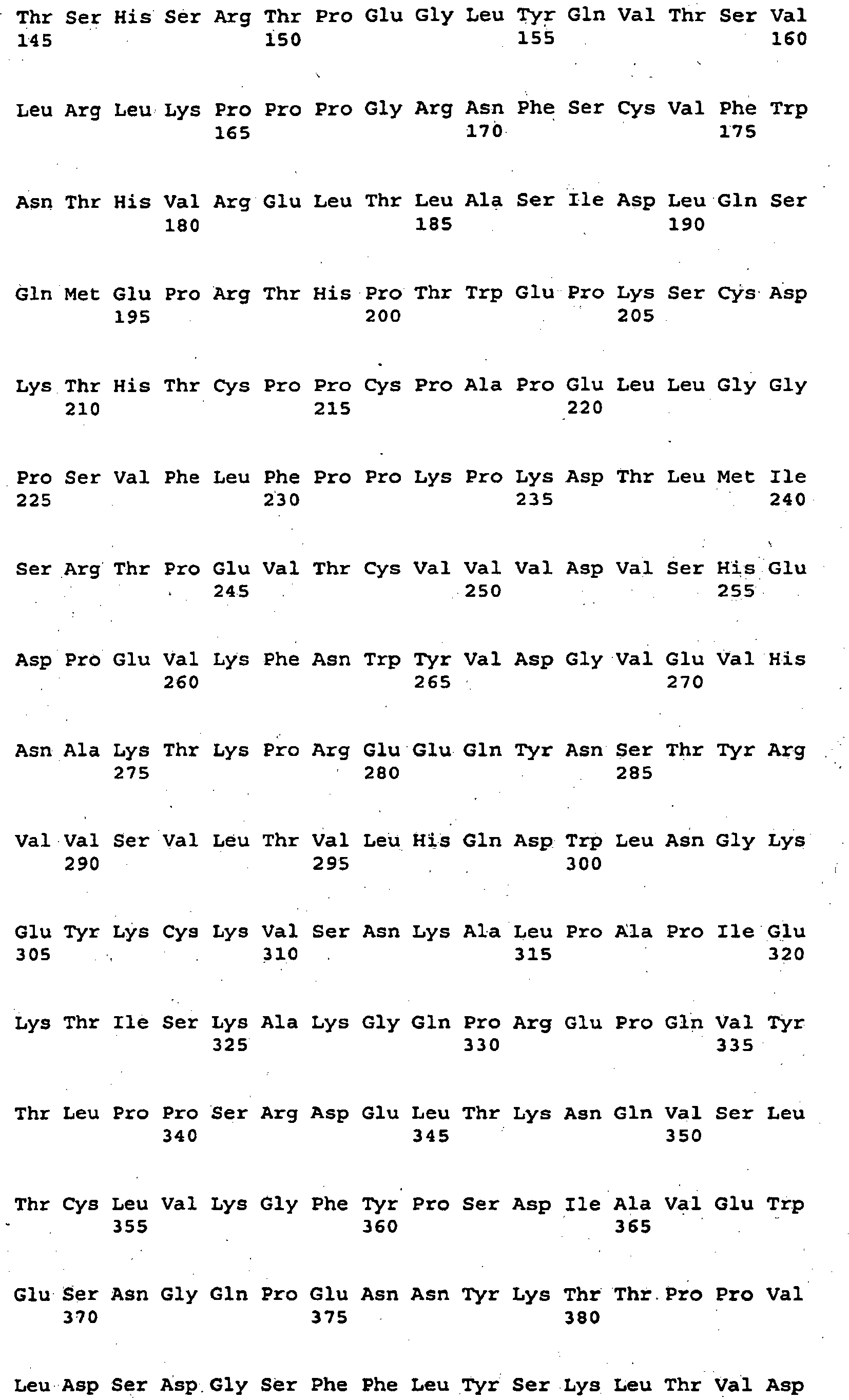

- <210> 14
<211> 5
<212> PRT
<213> Homo sapiens - <400> 14

- <210> 15
<211> 202
<212> PRT
<213> Macaca fascicularis - <400> 15


- <210> 16
<211> 290
<212> PRT
<213> Homo sapiens - <400> 16


- <210> 17
<211> 290
<212> PRT
<213> Mus musculus - <400> 17.


- <210> 18
<211> 290
<212> PRT
<213> Macaca mulatta - <400> 18


- <210> 19
<211> 288
<212> PRT
<213> Homo sapiens - <400> 19


- <210> 20
<211> 288
<212> PRT
<213> Macaca fascicularis - <400> 20


Claims (30)
- A composition comprising:a fusion protein comprising first and second peptide portions wherein said first peptide portion consists of an amino acid sequence selected from: wild type B7-DC, an amino acid sequence having at least 98% identity to amino acids 20-221 or 20-121 of SEQ ID NO: 1 and which competes in vitro with wild-type B7-DC for binding to PD-1, a fragment of B7-DC which competes in vitro with wild-type B7-DC for binding to PD-1, and an extracellular domain of B7-DC and said second peptide portion comprises a portion of an immunoglobulin (Ig);for use in a method of increasing a T cell response in a human;wherein the human is one to whom a composition comprising a potentiating agent selected from the group consisting of: cyclophosphamide, an analog of cyclophosphamide, sunitinib, anti-TGFβ, imatinib, anthracyrlines, oxaliplatin and doxorubicin, and wherein the dosage of the potentiating agent is not effective to have direct anti-tumor activity, has previously been administered;and wherein the T cell response achieved following the administration of fusion protein is greater than the T cell response achieved by administering either the fusion protein alone or the potentiating agent alone.
- A composition comprising
a potentiating agent selected from the group consisting of: cyclophosphamide, an analog of cyclophosphamide, sunitinib, anti-TGFβ, imatinib, anthracyclines, oxaliplatin and doxorubicin,
for use in a method of increasing a T cell response in a human;
wherein the dosage of the potentiating agent is not effective to have direct anti-tumor activity;
wherein the human is one to whom a composition comprising a fusion protein comprising first and second peptide portions wherein said first peptide portion consists of an amino acid sequence selected from: wild type B7-DC, an amino acid sequence having at least 98% identity to amino acids 20-221 or 20-121 of SEQ ID NO: 1 and which competes in vitro with wild-type B7-DC for binding to PD-1, a fragment of B7-DC which competes in vitro with wild-type B7-DC for binding to PD-1, and an extracellular domain of B7-DC and said second peptide portion comprises a portion of an immunoglobulin (Ig), is subsequently to be administered;
and wherein the T cell response achieved following the administration of fusion protein is greater than the T cell response achieved by administering either the fusion protein alone or the potentiating agent alone. - A composition for use according to claim 1 or 2 wherein said first peptide portion consists of a wild type B7-DC polypeptide.
- A composition for use according to claim 3 wherein said B7-DC is a human B7-DC.
- A composition for use according to claim 1 or 2 wherein said first peptide portion consists of a fragment of B7-DC which does not comprise any portion of the transmembrane portion of said B7-DC polypeptide.
- A composition for use according to claim 5 wherein said first peptide portion consists of the soluble portion of said B7-DC polypeptide and said second peptide portion comprises the Fc region of an antibody but does not comprise any of the variable region of said antibody.
- A composition for use according to claim 5 or 6 wherein said first peptide portion consists of the amino acid sequence of SEQ ID NO: 3 and said second polypeptide portion comprises the Fc region of an antibody but does not comprise any of the variable region of said antibody.
- A composition for use according to claim 1 or 2 wherein said first peptide portion consists of an amino acid sequence having at least 98% identity to amino acids 20-221 or 20-121 of SEQ ID NO: 1.
- A composition for use according to claim 8 wherein said first peptide portion consists of the amino acid sequence of amino acids 20-221 or 20-121 of SEQ ID NO: 1.
- A composition for use according to claim 1 or 2 wherein said fusion protein comprises an amino acid sequence having at least 95% identity to the sequence of SEQ ID NO: 9, 10, 12 or 13.
- A composition for use according to claim 10 wherein said fusion protein comprises the amino acid sequence of SEQ ID NO: 9, 10, 12, or 13.
- A composition for use according to any preceding claim wherein said fusion protein is a monomer.
- A composition for use according to any of claims 1 to 11 wherein said fusion protein forms a dimer.
- A composition for use according to claim 13 wherein said fusion protein forms a homodimer.
- A composition for use according to claim 13 wherein said fusion protein forms a heterodimer.
- A composition for use according to any preceding claim wherein said potentiating agent is cyclophosphamide or an analog of cyclophosphamide.
- A composition for use according to any preceding claim for use in a method of any preceding claim wherein said potentiating agent is administered at least X hours before administering said fusion protein, wherein X is selected from 1, 2, 3, 5, 10, 15, 20, 24 and 30.
- A composition for use according to any preceding claim wherein said fusion protein comprises a fragment of wild-type B7-DC which competes in vitro with wild-type B7-DC for binding to PD-1.
- A composition for use according to claim 18 wherein said fragment of wild-type B7-DC does not comprise any portion of the transmembrane portion of such polypeptide.
- A composition for use according to claim 18 wherein said B7-DC polypeptide is human B7-DC polypeptide.
- A composition for use according to claim 1 or 2 wherein said first peptide portion consists of the extracellular domain of B7-DC or a polypeptide differing therefrom by only conservative amino acid substitutions.
- A composition for use according to any preceding claim wherein said fusion protein is used in an amount sufficient to treat cancer or infection by an increased T cell mediated immune response.
- A composition for use according to claim 1 or 2 wherein said method comprises the treatment of cancer.
- A composition for use according to claim 1 or 2 wherein said method comprises the treatment of an infectious disease.
- A composition for use according to claim 23 wherein said cancer is bladder cancer, brain cancer, breast cancer, cervical cancer, colo-rectal cancer, esophageal cancer, kidney cancer, liver cancer, lung cancer, nasopharangeal cancer, pancreatic cancer, prostate cancer, skin cancer, stomach cancer, uterine cancer, ovarian cancer, testicular cancer, or hematologic cancer.
- A composition for use according to claim 23 for use in said method wherein said method further comprises administering at least one additional agent selected from the group consisting of an anti-PD-1 antibody, an anti-CTLA4 antibody, a mitosis inhibitor, an aromatase inhibitor, an A2AR antagonist, and an angiogenesis inhibitor with said fusion protein.
- A kit-of-parts comprising:a fusion protein comprising a first and second peptide portions wherein said first peptide portion consists of amino acids 20-221 of SEQ ID NO: 1, and said second peptide portion comprises a portion of an immunoglobulin (Ig);and cyclophosphamide;for use in a method of treating cancer;wherein said cyclophosphamide is administered before said fusion protein and said fusion protein is administered without cyclophosphamide following administration of cyclophosphamide;wherein the dosage of cyclophosphamide is not effective to have direct anti-tumor activity.
- The composition for use according to claim 27 wherein said second peptide portion comprises amino acids 245-476 of human IgGI.
- The composition for use according to claim 27 for use in the method of claim 27 wherein said cyclophosphamide is administered to said patient at least 24 hours prior to the administration of the fusion protein.
- A kit of parts comprising:a fusion protein comprising first and second peptide portions wherein said first peptide portion consists of an amino acid sequence selected from: wild type B7-DC, an amino acid sequence having at least 98% identity to amino acids 20-221 or 20-121 of SEQ ID NO: 1 and which competes in vitro with wild-type B7-DC for binding to PD-1, a fragment of B7-DC which competes in vitro with wild-type B7-DC for binding to PD-1, and an extracellular domain of B7-DC and said second peptide portion comprises a portion of an immunoglobulin (Ig);and a potentiating agent selected from the group consisting of: cyclophosphamide, an analog of cyclophosphamide, sunitinib, anti-TGFβ, imatinib, anthracyclines, oxaliplatin and doxorubicin;for use in a method of increasing a T cell response in a human;wherein said potentiating agent is to be administered before said fusion protein and said fusion protein is to be administered without said potentiating agent following administration of said potentiating agent;wherein the dosage of the potentiating agent is not effective to have direct anti-tumor activity;and wherein the T cell response achieved following the administration of fusion protein is greater than the T cell response achieved by administering either the fusion protein alone or the potentiating agent alone.
Priority Applications (5)
| Application Number | Priority Date | Filing Date | Title |
|---|---|---|---|
| PL09811805T PL2350129T3 (en) | 2008-08-25 | 2009-08-25 | Compositions of pd-1 antagonists and methods of use |
| SI200931266T SI2350129T1 (en) | 2008-08-25 | 2009-08-25 | Compositions of pd-1 antagonists and methods of use |
| EP15163742.8A EP2927240A1 (en) | 2008-08-25 | 2009-08-25 | Compositions of pd-1 antagonists and methods of use |
| HRP20150933TT HRP20150933T1 (en) | 2008-08-25 | 2009-08-25 | PD-1 ANTAGONIST PREPARATIONS AND USE PROCEDURES |
| CY20151100775T CY1116816T1 (en) | 2008-08-25 | 2015-09-07 | PD-1 COMPONENT COMPOSITIONS AND METHODS OF USE |
Applications Claiming Priority (5)
| Application Number | Priority Date | Filing Date | Title |
|---|---|---|---|
| US9170908P | 2008-08-25 | 2008-08-25 | |
| US9169408P | 2008-08-25 | 2008-08-25 | |
| US9170508P | 2008-08-25 | 2008-08-25 | |
| US21169709P | 2009-04-02 | 2009-04-02 | |
| PCT/US2009/004825 WO2010027423A2 (en) | 2008-08-25 | 2009-08-25 | Compositions of pd-1 antagonists and methods of use |
Related Child Applications (2)
| Application Number | Title | Priority Date | Filing Date |
|---|---|---|---|
| EP15163742.8A Division EP2927240A1 (en) | 2008-08-25 | 2009-08-25 | Compositions of pd-1 antagonists and methods of use |
| EP15163742.8A Division-Into EP2927240A1 (en) | 2008-08-25 | 2009-08-25 | Compositions of pd-1 antagonists and methods of use |
Publications (3)
| Publication Number | Publication Date |
|---|---|
| EP2350129A2 EP2350129A2 (en) | 2011-08-03 |
| EP2350129A4 EP2350129A4 (en) | 2012-04-25 |
| EP2350129B1 true EP2350129B1 (en) | 2015-06-10 |
Family
ID=41725778
Family Applications (2)
| Application Number | Title | Priority Date | Filing Date |
|---|---|---|---|
| EP09811805.2A Active EP2350129B1 (en) | 2008-08-25 | 2009-08-25 | Compositions of pd-1 antagonists and methods of use |
| EP15163742.8A Withdrawn EP2927240A1 (en) | 2008-08-25 | 2009-08-25 | Compositions of pd-1 antagonists and methods of use |
Family Applications After (1)
| Application Number | Title | Priority Date | Filing Date |
|---|---|---|---|
| EP15163742.8A Withdrawn EP2927240A1 (en) | 2008-08-25 | 2009-08-25 | Compositions of pd-1 antagonists and methods of use |
Country Status (28)
| Country | Link |
|---|---|
| US (4) | US8114845B2 (en) |
| EP (2) | EP2350129B1 (en) |
| JP (1) | JP5798919B2 (en) |
| KR (1) | KR20110050529A (en) |
| CN (1) | CN102203132A (en) |
| AU (1) | AU2009288730B2 (en) |
| CA (1) | CA2734908A1 (en) |
| CL (1) | CL2011000423A1 (en) |
| CO (1) | CO6341574A2 (en) |
| CY (1) | CY1116816T1 (en) |
| DK (1) | DK2350129T3 (en) |
| DO (1) | DOP2011000059A (en) |
| EA (2) | EA023148B1 (en) |
| ES (1) | ES2545609T3 (en) |
| HR (1) | HRP20150933T1 (en) |
| HU (1) | HUE027525T2 (en) |
| IL (1) | IL211298A0 (en) |
| MA (1) | MA32646B1 (en) |
| MX (1) | MX2011002252A (en) |
| NZ (1) | NZ591130A (en) |
| PE (1) | PE20110435A1 (en) |
| PL (1) | PL2350129T3 (en) |
| PT (1) | PT2350129E (en) |
| RS (1) | RS54233B1 (en) |
| SI (1) | SI2350129T1 (en) |
| SM (1) | SMT201500212B (en) |
| WO (1) | WO2010027423A2 (en) |
| ZA (1) | ZA201101120B (en) |
Cited By (3)
| Publication number | Priority date | Publication date | Assignee | Title |
|---|---|---|---|---|
| US10513558B2 (en) | 2015-07-13 | 2019-12-24 | Cytomx Therapeutics, Inc. | Anti-PD1 antibodies, activatable anti-PD1 antibodies, and methods of use thereof |
| US10766955B2 (en) | 2017-01-20 | 2020-09-08 | Sanofi | Anti-TGF-β antibodies and their use |
| US10844115B2 (en) | 2017-01-20 | 2020-11-24 | Genzyme Corporation | Bone-targeting antibodies |
Families Citing this family (625)
| Publication number | Priority date | Publication date | Assignee | Title |
|---|---|---|---|---|
| EP1234031B2 (en) | 1999-11-30 | 2021-11-24 | Mayo Foundation For Medical Education And Research | B7-h1, a novel immunoregulatory molecule |
| US7030219B2 (en) | 2000-04-28 | 2006-04-18 | Johns Hopkins University | B7-DC, Dendritic cell co-stimulatory molecules |
| US7432351B1 (en) | 2002-10-04 | 2008-10-07 | Mayo Foundation For Medical Education And Research | B7-H1 variants |
| DK3428191T3 (en) * | 2004-10-06 | 2025-01-02 | Mayo Found Medical Education & Res | B7-H1 AND PD-1 FOR THE TREATMENT OF RENAL CELL CARCINOMA |
| PL2161336T5 (en) * | 2005-05-09 | 2017-10-31 | Ono Pharmaceutical Co | Human monoclonal antibodies to programmed death 1(PD-1) and methods for treating cancer using anti-PD-1 antibodies alone or in combination with other immunotherapeutics |
| MX2008007056A (en) | 2005-12-02 | 2008-11-12 | Sinai School Medicine | Chimeric viruses presenting non-native surface proteins and uses thereof. |
| DK2347775T3 (en) | 2005-12-13 | 2020-07-13 | Harvard College | TEMPLATES FOR CELL TRANSPLANTATION |
| AU2008293885A1 (en) | 2007-07-13 | 2009-03-05 | The John Hopkins University | B7-DC variants |
| JP2012500652A (en) * | 2008-08-25 | 2012-01-12 | アンプリミューン、インコーポレーテッド | Targeted costimulatory polypeptides and methods of use for treating cancer |
| ES2545609T3 (en) | 2008-08-25 | 2015-09-14 | Amplimmune, Inc. | PD-1 antagonist compositions and methods of use |
| EP4209510B1 (en) | 2008-12-09 | 2024-01-31 | F. Hoffmann-La Roche AG | Anti-pd-l1 antibodies and their use to enhance t-cell function |
| US20130017199A1 (en) * | 2009-11-24 | 2013-01-17 | AMPLIMMUNE ,Inc. a corporation | Simultaneous inhibition of pd-l1/pd-l2 |
| PT2542590T (en) * | 2010-03-05 | 2017-08-31 | Univ Johns Hopkins | COMPOSITIONS AND METHODS FOR DIRECTED IMMUNOMODULATOR ANTIBODIES AND FUSION PROTEINS |
| WO2011133636A1 (en) | 2010-04-20 | 2011-10-27 | Cedars-Sinai Medical Center | COMBINATION THERAPY WITH CD4 LYMPHOCYTE DEPLETION AND mTOR INHIBITORS |
| US8907053B2 (en) | 2010-06-25 | 2014-12-09 | Aurigene Discovery Technologies Limited | Immunosuppression modulating compounds |
| US9783578B2 (en) | 2010-06-25 | 2017-10-10 | Aurigene Discovery Technologies Limited | Immunosuppression modulating compounds |
| WO2012018538A2 (en) * | 2010-07-26 | 2012-02-09 | Schering Corporation | Bioassays for determining pd-1 modulation |
| EP3620185A1 (en) | 2010-10-06 | 2020-03-11 | President and Fellows of Harvard College | Injectable, pore-forming hydrogels for materials-based cell therapies |
| CN103261217B (en) * | 2010-11-11 | 2017-04-26 | 港大科桥有限公司 | Soluble pd-1 variants, fusion constructs, and uses thereof |
| US9675561B2 (en) | 2011-04-28 | 2017-06-13 | President And Fellows Of Harvard College | Injectable cryogel vaccine devices and methods of use thereof |
| EP2701699B1 (en) | 2011-04-28 | 2019-10-16 | The Broad Institute, Inc. | Inhibitors of histone deacetylase |
| CN102298053B (en) * | 2011-05-20 | 2014-01-29 | 中山大学肿瘤防治中心 | Combination antibody kit for risk assessment of postoperative recurrence of primary hepatocellular carcinoma |
| US9096642B2 (en) | 2011-06-08 | 2015-08-04 | Aurigene Discovery Technologies Limited | Therapeutic compounds for immunomodulation |
| WO2012177788A1 (en) * | 2011-06-20 | 2012-12-27 | La Jolla Institute For Allergy And Immunology | Modulators of 4-1bb and immune responses |
| US10081684B2 (en) | 2011-06-28 | 2018-09-25 | Whitehead Institute For Biomedical Research | Using sortases to install click chemistry handles for protein ligation |
| EP2739358B1 (en) | 2011-08-01 | 2018-11-28 | F.Hoffmann-La Roche Ag | Methods of treating cancer using pd-1 axis binding antagonists and mek inhibitors |
| GB201120527D0 (en) * | 2011-11-29 | 2012-01-11 | Ucl Business Plc | Method |
| DK2806883T3 (en) | 2012-01-25 | 2019-07-22 | Dnatrix Inc | BIOMARKERS AND COMBINATION THERAPIES WITH USING ONCOLYTIC VIRUS AND IMMUNOMODULATION |
| WO2013155487A1 (en) | 2012-04-12 | 2013-10-17 | Yale University | Vehicles for controlled delivery of different pharmaceutical agents |
| PT2838515T (en) | 2012-04-16 | 2020-02-25 | Harvard College | Mesoporous silica compositions for modulating immune responses |
| AU2013263076B2 (en) | 2012-05-15 | 2017-08-31 | Bristol-Myers Squibb Company | Cancer immunotherapy by disrupting PD-1/PD-L1 signaling |
| EP4541818A3 (en) | 2012-05-25 | 2025-07-23 | Cellectis | Methods for engineering allogeneic and immunosuppressive resistant t cell for immunotherapy |
| JP6312659B2 (en) * | 2012-05-31 | 2018-04-18 | ジェネンテック, インコーポレイテッド | Cancer treatment method using PD-1 binding antagonist and VEGF antagonist |
| UY34887A (en) | 2012-07-02 | 2013-12-31 | Bristol Myers Squibb Company Una Corporacion Del Estado De Delaware | OPTIMIZATION OF ANTIBODIES THAT FIX THE LYMPHOCYTE ACTIVATION GEN 3 (LAG-3) AND ITS USES |
| JP6337255B2 (en) | 2012-07-27 | 2018-06-06 | ザ ブロード インスティテュート, インコーポレーテッドThe Broad Institute, Inc. | Inhibitors of histone deacetylase |
| US20150250837A1 (en) * | 2012-09-20 | 2015-09-10 | Morningside Technology Ventures Ltd. | Oncolytic virus encoding pd-1 binding agents and uses of the same |
| EP3763810A3 (en) | 2012-10-10 | 2021-07-14 | Sangamo Therapeutics, Inc. | T cell modifying compounds and uses thereof |
| US9657082B2 (en) | 2013-01-31 | 2017-05-23 | Thomas Jefferson University | PD-L1 and PD-L2-based fusion proteins and uses thereof |
| WO2014122271A1 (en) * | 2013-02-07 | 2014-08-14 | INSERM (Institut National de la Santé et de la Recherche Médicale) | Methods for predicting the survival time of patients suffering from diffuse large b-cell lymphomas |
| US9573988B2 (en) | 2013-02-20 | 2017-02-21 | Novartis Ag | Effective targeting of primary human leukemia using anti-CD123 chimeric antigen receptor engineered T cells |
| LT2958943T (en) | 2013-02-20 | 2020-01-27 | The Trustees Of The University Of Pennsylvania | CANCER TREATMENT USING HUMANIZED ANTI-EGFRVIII CHIMERY ANTIGEN RECEPTOR |
| WO2014127917A1 (en) | 2013-02-22 | 2014-08-28 | Curevac Gmbh | Combination of vaccination and inhibition of the pd-1 pathway |
| BR122021025267B1 (en) | 2013-02-22 | 2023-12-05 | Curevac Ag | KIT PARTS AND PHARMACEUTICAL COMPOSITION COMPRISING A PD-1 PATHWAY INHIBITOR |
| EP2961419A4 (en) * | 2013-02-26 | 2016-12-21 | Rongfu Wang | Phf20 and jmjd3 compositions and methods of use in cancer immunotherapy |
| KR102222157B1 (en) | 2013-03-14 | 2021-03-03 | 이칸 스쿨 오브 메디슨 엣 마운트 시나이 | Newcastle disease viruses and uses thereof |
| US9302005B2 (en) | 2013-03-14 | 2016-04-05 | Mayo Foundation For Medical Education And Research | Methods and materials for treating cancer |
| TWI654206B (en) | 2013-03-16 | 2019-03-21 | 諾華公司 | Treatment of cancer with a humanized anti-CD19 chimeric antigen receptor |
| CA2909160C (en) | 2013-04-09 | 2021-05-25 | Lixte Biotechnology, Inc. | Formulations of oxabicycloheptanes and oxabicycloheptenes |
| JP6742903B2 (en) | 2013-05-02 | 2020-08-19 | アナプティスバイオ インコーポレイティッド | Antibodies to programmed death-1 (PD-1) |
| EP2994530A4 (en) | 2013-05-10 | 2016-11-16 | Whitehead Biomedical Inst | PROTEIN MODIFICATION OF LIVING CELLS USING SORTASE |
| HK1222662A1 (en) | 2013-05-10 | 2017-07-07 | Whitehead Institute For Biomedical Research | In vitro production of red blood cells with sortaggable proteins |
| US11311575B2 (en) | 2013-05-13 | 2022-04-26 | Cellectis | Methods for engineering highly active T cell for immunotherapy |
| US11077144B2 (en) | 2013-05-13 | 2021-08-03 | Cellectis | CD19 specific chimeric antigen receptor and uses thereof |
| WO2014194293A1 (en) | 2013-05-30 | 2014-12-04 | Amplimmune, Inc. | Improved methods for the selection of patients for pd-1 or b7-h4 targeted therapies, and combination therapies thereof |
| US9452217B2 (en) | 2013-06-22 | 2016-09-27 | Nitor Therapeutics | Methods for potentiating immune response for the treatment of infectious diseases and cancer |
| SI3030262T1 (en) | 2013-08-08 | 2020-03-31 | Cytune Pharma | Combined pharmaceutical composition |
| CA2919725C (en) | 2013-08-08 | 2023-04-18 | Cytune Pharma | An il-15 and il-15r.aplha. sushi domain based modulokines |
| AR097306A1 (en) | 2013-08-20 | 2016-03-02 | Merck Sharp & Dohme | MODULATION OF TUMOR IMMUNITY |
| AU2014323523B2 (en) | 2013-09-20 | 2020-02-20 | Bristol-Myers Squibb Company | Combination of anti-LAG-3 antibodies and anti-PD-1 antibodies to treat tumors |
| EP3757130A1 (en) | 2013-09-26 | 2020-12-30 | Costim Pharmaceuticals Inc. | Methods for treating hematologic cancers |
| EP3470081A1 (en) | 2013-10-01 | 2019-04-17 | Mayo Foundation for Medical Education and Research | Methods for treating cancer in patients with elevated levels of bim |
| KR102460800B1 (en) | 2013-11-01 | 2022-10-31 | 예일 유니버시티 | Modular particles for immunotherapy |
| WO2015066413A1 (en) | 2013-11-01 | 2015-05-07 | Novartis Ag | Oxazolidinone hydroxamic acid compounds for the treatment of bacterial infections |
| CN105899232A (en) | 2013-11-13 | 2016-08-24 | 诺华股份有限公司 | mTOR Inhibitors for Enhanced Immune Response |
| WO2015073746A2 (en) | 2013-11-13 | 2015-05-21 | Whitehead Institute For Biomedical Research | 18f labeling of proteins using sortases |
| HUE046249T2 (en) | 2013-12-12 | 2020-02-28 | Shanghai hengrui pharmaceutical co ltd | PD-1 antibody, antigen-binding fragment thereof, and its therapeutic use |
| WO2015095423A2 (en) * | 2013-12-17 | 2015-06-25 | Genentech, Inc. | Combination therapy comprising ox40 binding agonists and pd-1 axis binding antagonists |
| CA2931684C (en) | 2013-12-19 | 2024-02-20 | Novartis Ag | Human mesothelin chimeric antigen receptors and uses thereof |
| EP3087099A4 (en) * | 2013-12-23 | 2017-07-19 | Oncomed Pharmaceuticals, Inc. | Immunotherapy with binding agents |
| EP3092495B1 (en) * | 2014-01-06 | 2020-11-25 | Expression Pathology, Inc. | Srm assay for pd-l1 |
| CA3156357A1 (en) * | 2014-01-06 | 2015-07-09 | The Trustees Of The University Of Pennsylvania | Pd1 and pdl1 antibodies and vaccine combinations and use of same for immunotherapy |
| JO3517B1 (en) | 2014-01-17 | 2020-07-05 | Novartis Ag | N-azaspirocycloalkane substituted n-heteroaryl compounds and compositions for inhibiting the activity of shp2 |
| TWI680138B (en) | 2014-01-23 | 2019-12-21 | 美商再生元醫藥公司 | Human antibodies to pd-l1 |
| TWI681969B (en) | 2014-01-23 | 2020-01-11 | 美商再生元醫藥公司 | Human antibodies to pd-1 |
| CA2935423C (en) | 2014-01-24 | 2023-11-07 | Dana-Farber Cancer Institute, Inc. | Antibody molecules to pd-1 and uses thereof |
| AU2015210750B2 (en) | 2014-01-31 | 2020-08-20 | Children's Medical Center Corporation | Antibody molecules to TIM-3 and uses thereof |
| WO2015120198A1 (en) * | 2014-02-05 | 2015-08-13 | Cedars-Sinai Medical Center | Methods and compositions for treating cancer and infectious diseases |
| WO2015127501A1 (en) | 2014-02-27 | 2015-09-03 | Viralytics Limited | Combination method for treatment of cancer |
| EP3114144A1 (en) * | 2014-03-05 | 2017-01-11 | Bristol-Myers Squibb Company | Treatment of renal cancer using a combination of an anti-pd-1 antibody and another anti-cancer agent |
| US10618963B2 (en) | 2014-03-12 | 2020-04-14 | Yeda Research And Development Co. Ltd | Reducing systemic regulatory T cell levels or activity for treatment of disease and injury of the CNS |
| ES3040431T3 (en) | 2014-03-12 | 2025-10-31 | Yeda Res & Dev | Reducing systemic regulatory t cell levels or activity for treatment of disease and injury of the cns |
| US9394365B1 (en) | 2014-03-12 | 2016-07-19 | Yeda Research And Development Co., Ltd | Reducing systemic regulatory T cell levels or activity for treatment of alzheimer's disease |
| ES2754239T3 (en) | 2014-03-12 | 2020-04-16 | Curevac Ag | Combination of vaccination and OX40 agonists |
| US10519237B2 (en) | 2014-03-12 | 2019-12-31 | Yeda Research And Development Co. Ltd | Reducing systemic regulatory T cell levels or activity for treatment of disease and injury of the CNS |
| WO2015138920A1 (en) | 2014-03-14 | 2015-09-17 | Novartis Ag | Antibody molecules to lag-3 and uses thereof |
| EP3593812A3 (en) | 2014-03-15 | 2020-05-27 | Novartis AG | Treatment of cancer using chimeric antigen receptor |
| CN106164072B (en) | 2014-03-24 | 2019-10-01 | 诺华股份有限公司 | Monocyclic lactam organic compounds for the treatment of bacterial infections |
| WO2015153514A1 (en) | 2014-03-31 | 2015-10-08 | Genentech, Inc. | Combination therapy comprising anti-angiogenesis agents and ox40 binding agonists |
| IL322264A (en) | 2014-04-07 | 2025-09-01 | Novartis Ag | Treatment of cancer using anti-cd19 chimeric antigen receptor |
| EP3137105A4 (en) | 2014-04-30 | 2017-12-27 | President and Fellows of Harvard College | Combination vaccine devices and methods of killing cancer cells |
| RU2695332C2 (en) | 2014-05-15 | 2019-07-23 | Бристол-Маерс Сквибб Компани | Treating lung cancer by combination of anti-pd-1 and other anti-cancer agents |
| US10302653B2 (en) | 2014-05-22 | 2019-05-28 | Mayo Foundation For Medical Education And Research | Distinguishing antagonistic and agonistic anti B7-H1 antibodies |
| DK3148579T3 (en) | 2014-05-28 | 2021-03-08 | Agenus Inc | ANTI-GITR ANTIBODIES AND METHODS OF USING IT |
| TWI693232B (en) | 2014-06-26 | 2020-05-11 | 美商宏觀基因股份有限公司 | Covalently bonded diabodies having immunoreactivity with pd-1 and lag-3, and methods of use thereof |
| MX2017000546A (en) | 2014-07-15 | 2017-03-08 | Genentech Inc | Compositions for treating cancer using pd-1 axis binding antagonists and mek inhibitors. |
| US9777061B2 (en) | 2014-07-21 | 2017-10-03 | Novartis Ag | Treatment of cancer using a CD33 chimeric antigen receptor |
| US11542488B2 (en) | 2014-07-21 | 2023-01-03 | Novartis Ag | Sortase synthesized chimeric antigen receptors |
| WO2016014530A1 (en) | 2014-07-21 | 2016-01-28 | Novartis Ag | Combinations of low, immune enhancing. doses of mtor inhibitors and cars |
| EP3171896A4 (en) | 2014-07-23 | 2018-03-21 | Mayo Foundation for Medical Education and Research | Targeting dna-pkcs and b7-h1 to treat cancer |
| US20170209492A1 (en) | 2014-07-31 | 2017-07-27 | Novartis Ag | Subset-optimized chimeric antigen receptor-containing t-cells |
| JP2017523213A (en) | 2014-08-06 | 2017-08-17 | ノバルティス アーゲー | Quinolone derivatives as antibacterial agents |
| KR101940430B1 (en) * | 2014-08-07 | 2019-01-18 | 가꼬우호우징 효고 이카다이가쿠 | Therapeutic agent for cancer which comprises combination of il-18 and molecule-targeting antibody |
| PL3177640T3 (en) * | 2014-08-08 | 2020-11-02 | The Board Of Trustees Of The Leland Stanford Junior University | High affinity pd-1 agents and methods of use |
| WO2016025880A1 (en) | 2014-08-14 | 2016-02-18 | Novartis Ag | Treatment of cancer using gfr alpha-4 chimeric antigen receptor |
| SG11201700770PA (en) | 2014-08-19 | 2017-03-30 | Novartis Ag | Anti-cd123 chimeric antigen receptor (car) for use in cancer treatment |
| WO2016040882A1 (en) | 2014-09-13 | 2016-03-17 | Novartis Ag | Combination therapies of egfr inhibitors |
| EP3193931B1 (en) * | 2014-09-16 | 2020-08-05 | Innate Pharma | Neutralization of inhibitory pathways in lymphocytes |
| ES2891332T3 (en) | 2014-09-17 | 2022-01-27 | Novartis Ag | Targeting cytotoxic cells with chimeric receptors for adoptive immunotherapy |
| US9616114B1 (en) | 2014-09-18 | 2017-04-11 | David Gordon Bermudes | Modified bacteria having improved pharmacokinetics and tumor colonization enhancing antitumor activity |
| KR20170066546A (en) | 2014-10-03 | 2017-06-14 | 노파르티스 아게 | Combination therapies |
| US10053683B2 (en) | 2014-10-03 | 2018-08-21 | Whitehead Institute For Biomedical Research | Intercellular labeling of ligand-receptor interactions |
| AU2015330898B2 (en) | 2014-10-08 | 2022-03-10 | Novartis Ag | Biomarkers predictive of therapeutic responsiveness to chimeric antigen receptor therapy and uses thereof |
| MA41044A (en) | 2014-10-08 | 2017-08-15 | Novartis Ag | COMPOSITIONS AND METHODS OF USE FOR INCREASED IMMUNE RESPONSE AND CANCER TREATMENT |
| WO2016061142A1 (en) | 2014-10-14 | 2016-04-21 | Novartis Ag | Antibody molecules to pd-l1 and uses thereof |
| WO2016065330A1 (en) * | 2014-10-24 | 2016-04-28 | Aladar Szalay | Combination immunotherapy approach for treatment of cancer |
| AU2015339306B2 (en) | 2014-10-29 | 2021-07-22 | Bristol-Myers Squibb Company | Combination therapy for cancer |
| WO2016073763A2 (en) * | 2014-11-06 | 2016-05-12 | Biothera, Inc. | Beta-glucan methods and compositions that affect the tumor microenvironment |
| EP4098278A1 (en) | 2014-11-13 | 2022-12-07 | The Johns Hopkins University | Checkpoint blockade and microsatellite instability |
| PE20170912A1 (en) | 2014-11-14 | 2017-07-12 | Novartis Ag | ANTIBODY-DRUG CONJUGATES |
| WO2016089873A1 (en) * | 2014-12-02 | 2016-06-09 | Celgene Corporation | Combination therapies |
| US20180334490A1 (en) | 2014-12-03 | 2018-11-22 | Qilong H. Wu | Methods for b cell preconditioning in car therapy |
| US11220545B2 (en) | 2014-12-08 | 2022-01-11 | Dana-Farber Cancer Institute, Inc. | Methods for upregulating immune responses using combinations of anti-RGMb and anti-PD-1 agents |
| TWI595006B (en) | 2014-12-09 | 2017-08-11 | 禮納特神經系統科學公司 | Anti-PD-1 antibodies and methods of using same |
| CU24443B1 (en) | 2014-12-16 | 2019-10-04 | Novartis Ag | ISOXAZOLE HYDROXAMIC ACID COMPOUNDS AS LpxC INHIBITORS |
| RU2726996C1 (en) * | 2014-12-16 | 2020-07-17 | Бристол-Маерс Сквибб Компани | Use of inhibitors of immune control points in new growths of central nervous system |
| EP3233918A1 (en) | 2014-12-19 | 2017-10-25 | Novartis AG | Combination therapies |
| CN105983097B (en) * | 2015-01-28 | 2021-06-08 | 华中科技大学同济医学院附属协和医院 | A kind of antitumor preparation and preparation method thereof |
| HK1247861A1 (en) * | 2015-01-30 | 2018-10-05 | President And Fellows Of Harvard College | Peritumoral and intratumoral materials for cancer therapy |
| US11161907B2 (en) | 2015-02-02 | 2021-11-02 | Novartis Ag | Car-expressing cells against multiple tumor antigens and uses thereof |
| CN108271359B (en) * | 2015-02-13 | 2021-11-09 | 索伦托药业有限公司 | Antibody therapeutics that bind CTLA4 |
| BR112017018234A2 (en) * | 2015-02-26 | 2018-04-17 | Merck Patent Gmbh | pd-1 / pd-l1 inhibitors for cancer treatment |
| JO3746B1 (en) | 2015-03-10 | 2021-01-31 | Aduro Biotech Inc | Compositions and methods for activating “stimulator of interferon gene”-dependent signalling |
| HUE048111T2 (en) | 2015-03-23 | 2020-05-28 | Bayer Pharma AG | Anti-CEACAM6 antibodies and their application |
| EP3280795B1 (en) | 2015-04-07 | 2021-03-24 | Novartis AG | Combination of chimeric antigen receptor therapy and amino pyrimidine derivatives |
| CN114099793A (en) | 2015-04-10 | 2022-03-01 | 哈佛学院院长等 | Immune cell capture device and methods of making and using same |
| GB201506411D0 (en) | 2015-04-15 | 2015-05-27 | Bergenbio As | Humanized anti-axl antibodies |
| RS61943B1 (en) | 2015-04-17 | 2021-07-30 | Alpine Immune Sciences Inc | Immunomodulatory proteins with tunable affinities |
| MY188749A (en) | 2015-04-17 | 2021-12-28 | Bristol Myers Squibb Co | Compositions comprising a combination of nivolumab and ipilimumab |
| AU2016249005B2 (en) | 2015-04-17 | 2022-06-16 | Novartis Ag | Methods for improving the efficacy and expansion of chimeric antigen receptor-expressing cells |
| EP3286211A1 (en) | 2015-04-23 | 2018-02-28 | Novartis AG | Treatment of cancer using chimeric antigen receptor and protein kinase a blocker |
| WO2016176504A1 (en) | 2015-04-28 | 2016-11-03 | Bristol-Myers Squibb Company | Treatment of pd-l1-positive melanoma using an anti-pd-1 antibody |
| JP2018514550A (en) | 2015-04-28 | 2018-06-07 | ブリストル−マイヤーズ スクイブ カンパニーBristol−Myers Squibb Company | Treatment of PD-L1 negative melanoma using anti-PD-1 antibody and anti-CTLA-4 antibody |
| US10676723B2 (en) | 2015-05-11 | 2020-06-09 | David Gordon Bermudes | Chimeric protein toxins for expression by therapeutic bacteria |
| MX383614B (en) | 2015-05-21 | 2025-03-14 | Harpoon Therapeutics Inc | TRISPECIFIC BINDING PROTEINS AND METHODS OF USE. |
| US20180155429A1 (en) | 2015-05-28 | 2018-06-07 | Bristol-Myers Squibb Company | Treatment of pd-l1 positive lung cancer using an anti-pd-1 antibody |
| US11078278B2 (en) | 2015-05-29 | 2021-08-03 | Bristol-Myers Squibb Company | Treatment of renal cell carcinoma |
| CA2986765A1 (en) | 2015-05-29 | 2016-12-08 | Agenus Inc. | Anti-ctla-4 antibodies and methods of use thereof |
| TWI870335B (en) | 2015-06-12 | 2025-01-21 | 美商宏觀基因股份有限公司 | Variant chimeric 4d5 antibodies and uses thereof in combination with anti-pd-1 antibodies for the treatment of cancer |
| WO2016203432A1 (en) | 2015-06-17 | 2016-12-22 | Novartis Ag | Antibody drug conjugates |
| SI3858859T1 (en) | 2015-07-14 | 2026-03-31 | Bristol-Myers Squibb Company | METHOD OF TREATING CANCER USING AN IMMUNE CHECKPOINT INHIBITOR; AN ANTIBODY THAT BINDS TO PROGRAMMED CELL DEATH RECEPTOR-1 (PD-1) OR PROGRAMMED CELL DEATH LIGAND 1 (PD-L1) |
| CN116059219A (en) | 2015-07-16 | 2023-05-05 | 比奥克斯塞尔医疗股份有限公司 | Novel method for treating cancer using immunomodulation |
| EP3744340A3 (en) | 2015-07-16 | 2021-03-03 | Biokine Therapeutics Ltd. | Compositions and methods for treating cancer |
| WO2017015427A1 (en) | 2015-07-21 | 2017-01-26 | Novartis Ag | Methods for improving the efficacy and expansion of immune cells |
| WO2017019897A1 (en) | 2015-07-29 | 2017-02-02 | Novartis Ag | Combination therapies comprising antibody molecules to tim-3 |
| JP6840127B2 (en) | 2015-07-29 | 2021-03-10 | ノバルティス アーゲー | Combination of anti-PD-1 antibody and anti-M-CSF antibody in the treatment of cancer |
| EP4378957A3 (en) | 2015-07-29 | 2024-08-07 | Novartis AG | Combination therapies comprising antibody molecules to pd-1 |
| ES2878188T3 (en) | 2015-07-29 | 2021-11-18 | Novartis Ag | Combination therapies comprising antibody molecules against LAG-3 |
| MX2018001268A (en) | 2015-07-29 | 2018-07-06 | Novartis Ag | Combination of pd-1 antagonist with an egfr inhibitor. |
| AU2016298227B9 (en) | 2015-07-30 | 2019-10-31 | Macrogenics, Inc. | PD-1-binding molecules and methods of use thereof |
| US10660954B2 (en) | 2015-07-31 | 2020-05-26 | University Of Florida Research Foundation, Incorporated | Hematopoietic stem cells in combinatorial therapy with immune checkpoint inhibitors against cancer |
| EP3331901A1 (en) | 2015-08-07 | 2018-06-13 | Pieris Pharmaceuticals GmbH | Novel fusion polypeptide specific for lag-3 and pd-1 |
| EA201800148A1 (en) | 2015-08-11 | 2019-01-31 | Калиди Биотерапьютикс, Инк. | CHALLENGE VACCINE FOR CANCER TREATMENT |
| US10561653B2 (en) | 2015-08-11 | 2020-02-18 | Novartis Ag | 5-bromo-2,6-di-(1H-pyrazol-1-yl)pyrimidin-4-amine for use in the treatment of cancer |
| CN116334205A (en) | 2015-09-03 | 2023-06-27 | 诺华股份有限公司 | Biomarkers predictive of cytokine release syndrome |
| US10160761B2 (en) | 2015-09-14 | 2018-12-25 | Infinity Pharmaceuticals, Inc. | Solid forms of isoquinolinones, and process of making, composition comprising, and methods of using the same |
| US12048753B2 (en) | 2015-10-01 | 2024-07-30 | Whitehead Institute For Biomedical Research | Labeling of antibodies |
| AU2016329251B2 (en) | 2015-10-02 | 2023-02-02 | F. Hoffmann-La Roche Ag | Anti-PD1 antibodies and methods of use |
| DK3356411T3 (en) | 2015-10-02 | 2021-09-06 | Hoffmann La Roche | Bispecific antibodies specific for PD1 and TIM3 |
| CN108136010A (en) | 2015-10-08 | 2018-06-08 | 宏观基因有限公司 | For the conjoint therapy for the treatment of cancer |
| WO2017066561A2 (en) | 2015-10-16 | 2017-04-20 | President And Fellows Of Harvard College | Regulatory t cell pd-1 modulation for regulating t cell effector immune responses |
| CN108135934B (en) | 2015-10-19 | 2024-09-10 | 永恒生物科技股份有限公司 | Methods of treating solid or lymphoid tumors by combination therapy |
| SG11201802769RA (en) | 2015-10-29 | 2018-05-30 | Novartis Ag | Antibody conjugates comprising toll-like receptor agonist |
| US10875923B2 (en) | 2015-10-30 | 2020-12-29 | Mayo Foundation For Medical Education And Research | Antibodies to B7-H1 |
| JP6936221B2 (en) | 2015-11-02 | 2021-09-15 | ファイブ プライム セラピューティクス, インコーポレイテッド | CD80 extracellular domain polypeptides and their use in cancer treatment |
| WO2017077382A1 (en) | 2015-11-06 | 2017-05-11 | Orionis Biosciences Nv | Bi-functional chimeric proteins and uses thereof |
| CN108350081A (en) | 2015-11-18 | 2018-07-31 | 百时美施贵宝公司 | Use the combined therapy lung cancer of anti-PD-1 antibody and anti-CTLA-4 antibody |
| RU2745707C2 (en) | 2015-11-23 | 2021-03-30 | Файв Прайм Терапьютикс, Инк. | Fgfr2 inhibitors separately or in combination with immunostimulating agents in cancer treatment |
| SG10201912984WA (en) | 2015-12-02 | 2020-03-30 | Agenus Inc | Antibodies and methods of use thereof |
| US10590169B2 (en) * | 2015-12-09 | 2020-03-17 | Virogin Biotech Canada Ltd | Compositions and methods for inhibiting CD279 interactions |
| JP6955507B2 (en) | 2015-12-14 | 2021-10-27 | マクロジェニクス,インコーポレーテッド | Bispecificity with immune responsiveness to PD-1 and CTLA-4 and how to use it |
| EP3389712B1 (en) | 2015-12-17 | 2024-04-10 | Novartis AG | Antibody molecules to pd-1 and uses thereof |
| US10392442B2 (en) | 2015-12-17 | 2019-08-27 | Bristol-Myers Squibb Company | Use of anti-PD-1 antibody in combination with anti-CD27 antibody in cancer treatment |
| CA3008102A1 (en) | 2015-12-18 | 2017-06-22 | Novartis Ag | Antibodies targeting cd32b and methods of use thereof |
| PT3393504T (en) | 2015-12-22 | 2025-12-30 | Novartis Ag | Mesothelin chimeric antigen receptor (CAR) and anti-PD-L1 inhibitor antibody for combined use in anticancer therapy. |
| HUE063377T2 (en) | 2015-12-22 | 2024-01-28 | Regeneron Pharma | Combination of anti-pd-1 antibodies and bispecific anti-cd20/anti-cd3 antibodies to treat cancer |
| WO2017112943A1 (en) | 2015-12-23 | 2017-06-29 | Modernatx, Inc. | Methods of using ox40 ligand encoding polynucleotides |
| HK1257518A1 (en) | 2016-01-11 | 2019-10-25 | Novartis Ag | Immune-stimulating humanized monoclonal antibodies against human interleukin-2, and fusion proteins thereof |
| EP3403091B1 (en) | 2016-01-11 | 2021-12-22 | Technion Research & Development Foundation Limited | Methods of determining prognosis of sepsis and treating same |
| CN116769054A (en) | 2016-02-05 | 2023-09-19 | 奥里尼斯生物科学私人有限公司 | Bispecific signaling agents and uses thereof |
| CN115487351A (en) | 2016-02-06 | 2022-12-20 | 哈佛学院校长同事会 | Remodel Blood Nest to rebuild immunity |
| ES2897913T3 (en) | 2016-02-19 | 2022-03-03 | Novartis Ag | Tetracyclic pyridone compounds as antivirals |
| CN109476731A (en) | 2016-02-29 | 2019-03-15 | 基础医药有限公司 | Methods of treating cancer |
| CN109196121B (en) | 2016-02-29 | 2022-01-04 | 基因泰克公司 | Methods for treatment and diagnosis of cancer |
| CA3016287A1 (en) | 2016-03-04 | 2017-09-08 | Novartis Ag | Cells expressing multiple chimeric antigen receptor (car) molecules and uses therefore |
| US20170252417A1 (en) | 2016-03-07 | 2017-09-07 | Massachusetts Institute Of Technology | Protein-chaperoned t-cell vaccines |
| ES3041500T3 (en) | 2016-03-10 | 2025-11-12 | Cg Oncology Inc | Methods of treating solid tumors by combination therapy |
| JP2019512271A (en) | 2016-03-21 | 2019-05-16 | デイナ ファーバー キャンサー インスティチュート,インコーポレイテッド | T cell exhaustion state specific gene expression regulator and use thereof |
| CN109311885A (en) | 2016-03-24 | 2019-02-05 | 诺华股份有限公司 | Alkynyl nucleoside analogs as inhibitors of human rhinovirus |
| US11209441B2 (en) | 2016-04-05 | 2021-12-28 | Bristol-Myers Squibb Company | Cytokine profiling analysis |
| SG11201808909WA (en) | 2016-04-13 | 2018-11-29 | Vivia Biotech Sl | Ex vivo bite-activated t cells |
| WO2017180713A1 (en) | 2016-04-13 | 2017-10-19 | Orimabs Ltd. | Anti-psma antibodies and use thereof |
| IL310729A (en) | 2016-04-15 | 2024-04-01 | Alpine Immune Sciences Inc | Cd80 variant immunomodulatory proteins and uses thereof |
| US11753463B2 (en) | 2016-05-13 | 2023-09-12 | Orionis Biosciences BV | Therapeutic targeting of non-cellular structures |
| US11236141B2 (en) | 2016-05-13 | 2022-02-01 | Orionis Biosciences BV | Targeted mutant interferon-beta and uses thereof |
| TWI786044B (en) | 2016-05-13 | 2022-12-11 | 美商再生元醫藥公司 | Methods of treating skin cancer by administering a pd-1 inhibitor |
| EP3243832A1 (en) | 2016-05-13 | 2017-11-15 | F. Hoffmann-La Roche AG | Antigen binding molecules comprising a tnf family ligand trimer and pd1 binding moiety |
| DK3458083T5 (en) | 2016-05-18 | 2024-10-21 | Modernatx Inc | POLYNUCLEOTIDES ENCODING INTERLEUKIN-12 (IL12) AND USES THEREOF |
| EP3458092A1 (en) | 2016-05-18 | 2019-03-27 | Modernatx, Inc. | Mrna combination therapy for the treatment of cancer |
| WO2017201325A1 (en) | 2016-05-18 | 2017-11-23 | Modernatx, Inc. | Combinations of mrnas encoding immune modulating polypeptides and uses thereof |
| US10688104B2 (en) | 2016-05-20 | 2020-06-23 | Eli Lilly And Company | Combination therapy with Notch and PD-1 or PD-L1 inhibitors |
| US11623958B2 (en) | 2016-05-20 | 2023-04-11 | Harpoon Therapeutics, Inc. | Single chain variable fragment CD3 binding proteins |
| US10100106B2 (en) | 2016-05-20 | 2018-10-16 | Harpoon Therapeutics, Inc. | Single domain serum albumin binding protein |
| MX389710B (en) | 2016-05-27 | 2025-03-20 | Agenus Inc | Antibodies to T-cell immunoglobulin protein and mucin domain 3 (TIM-3) and methods of using them. |
| FI3464368T3 (en) | 2016-06-02 | 2023-09-12 | Bristol Myers Squibb Co | THE USE OF ANTI-PD-1 ANTIBODY IN COMBINATION WITH ANTI-CD30 ANTIBODY IN THE TREATMENT OF LYMPHOMA |
| CN109475633A (en) | 2016-06-02 | 2019-03-15 | 百时美施贵宝公司 | Blockade of PD-1 with nivolumab in refractory Hodgkin lymphoma |
| CN109476753A (en) | 2016-06-03 | 2019-03-15 | 百时美施贵宝公司 | Anti-PD-1 antibodies for use in methods of treating tumors |
| KR102702675B1 (en) | 2016-06-03 | 2024-09-05 | 브리스톨-마이어스 스큅 컴퍼니 | Use of anti-pd-1 antibody in the treatment of patients with colorectal cancer |
| KR20190015407A (en) | 2016-06-03 | 2019-02-13 | 브리스톨-마이어스 스큅 컴퍼니 | Anti-PD-1 antibody for use in the treatment of recurrent small cell lung cancer |
| HRP20201524T1 (en) | 2016-06-14 | 2021-03-05 | Novartis Ag | Crystalline form of (r)-4-(5-(cyclopropylethynyl)isoxazol-3-yl)-n-hydroxy-2-methyl-2-(methylsulfonyl)butanamide as an antibacterial agent |
| WO2017216686A1 (en) | 2016-06-16 | 2017-12-21 | Novartis Ag | 8,9-fused 2-oxo-6,7-dihydropyrido-isoquinoline compounds as antivirals |
| WO2017216685A1 (en) | 2016-06-16 | 2017-12-21 | Novartis Ag | Pentacyclic pyridone compounds as antivirals |
| MX391135B (en) | 2016-06-24 | 2025-03-21 | Infinity Pharmaceuticals Inc | COMBINATION THERAPIES. |
| EP3507367A4 (en) | 2016-07-05 | 2020-03-25 | Aduro BioTech, Inc. | Locked nucleic acid cyclic dinucleotide compounds and uses thereof |
| EP3484448B1 (en) | 2016-07-13 | 2025-04-09 | President and Fellows of Harvard College | Antigen-presenting cell-mimetic scaffolds and methods for making and using the same |
| CN109641947B (en) | 2016-07-20 | 2023-04-14 | 犹他大学研究基金会 | CD229 CAR T cells and methods of use thereof |
| EP3491013A1 (en) | 2016-07-28 | 2019-06-05 | Alpine Immune Sciences, Inc. | Cd155 variant immunomodulatory proteins and uses thereof |
| CN110214150A (en) | 2016-07-28 | 2019-09-06 | 诺华股份有限公司 | Combination therapy of chimeric antigen receptor and PD-1 inhibitor |
| JP2019525934A (en) | 2016-07-29 | 2019-09-12 | イーライ リリー アンド カンパニー | Combination therapy with melestinib and anti-PD-L1 or anti-PD-1 inhibitor for use in the treatment of cancer |
| EP4549467A3 (en) | 2016-08-01 | 2025-07-23 | ImmunoGenesis, Inc. | Administration of hypoxia activated prodrugs in combination with immune modulatory agents for treating cancer |
| RU2770060C2 (en) | 2016-08-02 | 2022-04-14 | Президент Энд Феллоуз Оф Гарвард Колледж | Biological materials for modulating immune responses |
| WO2018027039A1 (en) | 2016-08-03 | 2018-02-08 | Nextcure, Inc. | Compositions and methods for modulating lair signal transduction |
| JP2019528689A (en) * | 2016-08-11 | 2019-10-17 | ザ カウンシル オブ ザ クイーンズランド インスティテュート オブ メディカル リサーチ | Immunomodulatory compounds |
| JP7198666B2 (en) * | 2016-08-26 | 2023-01-04 | 哲治 奥野 | Microvascular blood flow reducing agent and its use |
| CN109906082A (en) | 2016-09-07 | 2019-06-18 | 塔夫茨大学信托人 | Use the combined therapy of immune DASH inhibitor and PGE2 antagonist |
| US20190218294A1 (en) | 2016-09-09 | 2019-07-18 | Bristol-Myers Squibb Company | Use of an anti-pd-1 antibody in combination with an anti-mesothelin antibody in cancer treatment |
| AU2017322501A1 (en) | 2016-09-09 | 2019-03-28 | Laboratoire Francais Du Fractionnement Et Des Biotechnologies | Combination of an anti-CD20 antibody, PI3 kinase-delta inhibitor, and anti-PD-1 or anti-PD-L1 antibody for treating hematological cancers |
| TW201811788A (en) | 2016-09-09 | 2018-04-01 | 瑞士商諾華公司 | Polycyclic pyridone compounds as antivirals |
| HRP20201993T1 (en) * | 2016-09-14 | 2021-02-05 | Abbvie Biotherapeutics Inc. | Anti-pd-1 antibodies |
| DK3515478T3 (en) | 2016-09-21 | 2024-05-21 | Nextcure Inc | Antibodies to SIGLEC-15 and methods of use thereof |
| EP4360714A3 (en) | 2016-09-21 | 2024-07-24 | Nextcure, Inc. | Antibodies for siglec-15 and methods of use thereof |
| WO2018057585A1 (en) | 2016-09-21 | 2018-03-29 | The United States Of America, As Represented By The Secretary, Department Of Health And Human Services | Chimeric antigen receptor (car) that targets chemokine receptor ccr4 and its use |
| CN109906232B (en) | 2016-09-23 | 2023-11-07 | 马伦戈治疗公司 | Multispecific antibody molecules containing lambda light chains and kappa light chains |
| JOP20190061A1 (en) | 2016-09-28 | 2019-03-26 | Novartis Ag | Beta-lactamase inhibitors |
| WO2018067992A1 (en) | 2016-10-07 | 2018-04-12 | Novartis Ag | Chimeric antigen receptors for the treatment of cancer |
| KR102576042B1 (en) | 2016-10-11 | 2023-09-07 | 아게누스 인코포레이티드 | Anti-LAG-3 Antibodies and Methods of Using The Same |
| WO2018071576A1 (en) | 2016-10-14 | 2018-04-19 | The United States Of America, As Represented By The Secretary, Department Of Health And Human Services | Treatment of tumors by inhibition of cd300f |
| WO2018073753A1 (en) | 2016-10-18 | 2018-04-26 | Novartis Ag | Fused tetracyclic pyridone compounds as antivirals |
| JP7204643B2 (en) | 2016-10-24 | 2023-01-16 | オリオニス バイオサイエンシズ ビーブイ | Targeted mutant interferon-gamma and its uses |
| JP7312106B2 (en) * | 2016-10-27 | 2023-07-20 | アイオー バイオテック エーピーエス | New PDL2 compounds |
| EP3666794A1 (en) | 2016-11-01 | 2020-06-17 | AnaptysBio, Inc. | Antibodies directed against programmed death- 1 (pd-1) |
| RS62589B1 (en) | 2016-11-02 | 2021-12-31 | Jounce Therapeutics Inc | Antibodies to pd-1 and uses thereof |
| EP3535295A1 (en) | 2016-11-02 | 2019-09-11 | EngMab Sàrl | Bispecific antibody against bcma and cd3 and an immunological drug for combined use in treating multiple myeloma |
| WO2018101448A1 (en) | 2016-11-30 | 2018-06-07 | Kyowa Hakko Kirin Co., Ltd. | Method of treating cancer using anti-ccr4 antibody and anti-pd-1 antibody |
| US20190358262A1 (en) | 2016-12-03 | 2019-11-28 | Juno Therapeutics, Inc. | Methods for modulation of car-t cells |
| CN118634323A (en) | 2016-12-07 | 2024-09-13 | 艾吉纳斯公司 | Antibodies and methods of use thereof |
| US11180535B1 (en) | 2016-12-07 | 2021-11-23 | David Gordon Bermudes | Saccharide binding, tumor penetration, and cytotoxic antitumor chimeric peptides from therapeutic bacteria |
| FI3551660T3 (en) | 2016-12-07 | 2023-12-11 | Agenus Inc | Anti-ctla-4 antibodies and methods of use thereof |
| WO2018107004A1 (en) | 2016-12-08 | 2018-06-14 | Lixte Biotechnology, Inc. | Oxabicycloheptanes for modulation of immune response |
| ES2988845T3 (en) | 2017-01-09 | 2024-11-21 | Onkosxcel Therapeutics Llc | Predictive and diagnostic procedures for prostate cancer |
| EP3565844B8 (en) | 2017-01-09 | 2023-04-12 | Tesaro, Inc. | Methods of treating cancer with anti-pd-1 antibodies |
| AU2018207172B2 (en) | 2017-01-13 | 2023-10-12 | Mink Therapeutics, Inc. | T cell receptors that bind to NY-ESO-1 and methods of use thereof |
| WO2018134279A1 (en) | 2017-01-18 | 2018-07-26 | Pieris Pharmaceuticals Gmbh | Novel fusion polypeptides specific for lag-3 and pd-1 |
| EP3570870A1 (en) | 2017-01-20 | 2019-11-27 | Novartis AG | Combination therapy for the treatment of cancer |
| JOP20190187A1 (en) | 2017-02-03 | 2019-08-01 | Novartis Ag | Anti-ccr7 antibody drug conjugates |
| MX2019009255A (en) | 2017-02-06 | 2019-11-05 | Orionis Biosciences Nv | Targeted chimeric proteins and uses thereof. |
| CN110573172A (en) | 2017-02-06 | 2019-12-13 | 奥里尼斯生物科学有限公司 | Targeted engineered interferon and uses thereof |
| WO2018151820A1 (en) | 2017-02-16 | 2018-08-23 | Elstar Therapeutics, Inc. | Multifunctional molecules comprising a trimeric ligand and uses thereof |
| KR20240011262A (en) | 2017-02-21 | 2024-01-25 | 리제너론 파아마슈티컬스, 인크. | Anti-pd-1 antibodies for treatment of lung cancer |
| JP7132232B2 (en) | 2017-02-24 | 2022-09-06 | マクロジェニクス,インコーポレーテッド | Bispecific binding molecules capable of binding CD137 and tumor antigens and uses thereof |
| TW202428301A (en) | 2017-02-28 | 2024-07-16 | 法商賽諾菲公司 | Therapeutic rna |
| EP3592868B1 (en) | 2017-03-06 | 2022-11-23 | Novartis AG | Methods of treatment of cancer with reduced ubb expression |
| WO2018167778A1 (en) | 2017-03-12 | 2018-09-20 | Yeda Research And Development Co. Ltd. | Methods of diagnosing and prognosing cancer |
| WO2018167780A1 (en) | 2017-03-12 | 2018-09-20 | Yeda Research And Development Co. Ltd. | Methods of prognosing and treating cancer |
| EP3596114A2 (en) | 2017-03-16 | 2020-01-22 | Alpine Immune Sciences, Inc. | Cd80 variant immunomodulatory proteins and uses thereof |
| JP2020512357A (en) | 2017-03-31 | 2020-04-23 | ファイブ プライム セラピューティクス, インコーポレイテッド | Combination therapy for cancer using anti-GITR antibody |
| EP4201953A1 (en) | 2017-04-03 | 2023-06-28 | F. Hoffmann-La Roche AG | Immunoconjugates of an anti-pd-1 antibody with a mutant il-2 or with il-15 |
| WO2018185618A1 (en) | 2017-04-03 | 2018-10-11 | Novartis Ag | Anti-cdh6 antibody drug conjugates and anti-gitr antibody combinations and methods of treatment |
| SG11201909154SA (en) | 2017-04-05 | 2019-10-30 | Hoffmann La Roche | Bispecific antibodies specifically binding to pd1 and lag3 |
| US11603407B2 (en) | 2017-04-06 | 2023-03-14 | Regeneron Pharmaceuticals, Inc. | Stable antibody formulation |
| JP7297672B2 (en) | 2017-04-13 | 2023-06-26 | アジェナス インコーポレイテッド | ANTI-CD137 ANTIBODY AND METHODS OF USE THEREOF |
| JP2020517256A (en) | 2017-04-19 | 2020-06-18 | エルスター セラピューティクス, インコーポレイテッド | Multispecific molecules and uses thereof |
| KR20190137847A (en) | 2017-04-20 | 2019-12-11 | 에이디씨 테라퓨틱스 에스에이 | Combination Therapy with Anti-CD25 Antibody-Drug Conjugates |
| CN110536703B (en) | 2017-04-20 | 2024-07-12 | Adc治疗有限公司 | Combination therapy using anti-AXL antibody-drug conjugates |
| AR111419A1 (en) | 2017-04-27 | 2019-07-10 | Novartis Ag | INDAZOL PIRIDONA FUSIONED COMPOUNDS AS ANTIVIRALS |
| US20200055948A1 (en) | 2017-04-28 | 2020-02-20 | Novartis Ag | Cells expressing a bcma-targeting chimeric antigen receptor, and combination therapy with a gamma secretase inhibitor |
| AR111651A1 (en) | 2017-04-28 | 2019-08-07 | Novartis Ag | CONJUGATES OF ANTIBODIES THAT INCLUDE TOLL TYPE RECEIVER AGONISTS AND COMBINATION THERAPIES |
| UY37695A (en) | 2017-04-28 | 2018-11-30 | Novartis Ag | BIS 2’-5’-RR- (3’F-A) (3’F-A) CYCLE DINUCLEOTIDE COMPOUND AND USES OF THE SAME |
| AU2018258661A1 (en) | 2017-04-28 | 2019-10-17 | Five Prime Therapeutics, Inc. | Methods of treatment with CD80 extracellular domain polypeptides |
| EP4328241A3 (en) | 2017-04-28 | 2024-06-05 | Marengo Therapeutics, Inc. | Multispecific molecules comprising a non-immunoglobulin heterodimerization domain and uses thereof |
| US20200179511A1 (en) | 2017-04-28 | 2020-06-11 | Novartis Ag | Bcma-targeting agent, and combination therapy with a gamma secretase inhibitor |
| RS64576B1 (en) | 2017-05-01 | 2023-10-31 | Agenus Inc | Anti-tigit antibodies and methods of use thereof |
| UY37718A (en) | 2017-05-05 | 2018-11-30 | Novartis Ag | 2-TRYCLINAL QUINOLINONES AS ANTIBACTERIAL AGENTS |
| JOP20190256A1 (en) | 2017-05-12 | 2019-10-28 | Icahn School Med Mount Sinai | Newcastle disease viruses and uses thereof |
| AU2018265856B2 (en) | 2017-05-12 | 2023-04-27 | Harpoon Therapeutics, Inc. | Mesothelin binding proteins |
| CN110869392A (en) | 2017-05-16 | 2020-03-06 | 百时美施贵宝公司 | Treatment of cancer with anti-GITR agonistic antibodies |
| US11421011B2 (en) | 2017-05-18 | 2022-08-23 | Modernatx, Inc. | Polynucleotides encoding tethered interleukin-12 (IL12) polypeptides and uses thereof |
| WO2018215937A1 (en) | 2017-05-24 | 2018-11-29 | Novartis Ag | Interleukin-7 antibody cytokine engrafted proteins and methods of use in the treatment of cancer |
| CN110662762A (en) | 2017-05-24 | 2020-01-07 | 诺华股份有限公司 | Antibody cytokine graft proteins and methods for treating cancer |
| JP2020520671A (en) | 2017-05-24 | 2020-07-16 | ノバルティス アーゲー | Antibody-cytokine grafted proteins and methods of use |
| KR102721137B1 (en) | 2017-05-30 | 2024-10-25 | 브리스톨-마이어스 스큅 컴퍼니 | Composition comprising anti-LAG-3 antibody or anti-LAG-3 antibody and anti-PD-1 or anti-PD-L1 antibody |
| CA3060984A1 (en) | 2017-05-30 | 2018-12-06 | Bristol-Myers Squibb Company | Treatment of lag-3 positive tumors |
| MX2019012038A (en) | 2017-05-30 | 2019-11-18 | Bristol Myers Squibb Co | Compositions comprising a combination of an anti-lag-3 antibody, a pd-1 pathway inhibitor, and an immunotherapeutic agent. |
| WO2018222685A1 (en) | 2017-05-31 | 2018-12-06 | Stcube & Co., Inc. | Methods of treating cancer using antibodies and molecules that immunospecifically bind to btn1a1 |
| WO2018222901A1 (en) | 2017-05-31 | 2018-12-06 | Elstar Therapeutics, Inc. | Multispecific molecules that bind to myeloproliferative leukemia (mpl) protein and uses thereof |
| WO2018223004A1 (en) | 2017-06-01 | 2018-12-06 | Xencor, Inc. | Bispecific antibodies that bind cd20 and cd3 |
| JP2020522498A (en) | 2017-06-01 | 2020-07-30 | ゼンコー・インコーポレイテッドXencor、 Inc. | Bispecific antibody that binds to CD123 CD3 |
| CN111225675B (en) | 2017-06-02 | 2024-05-03 | 朱诺治疗学股份有限公司 | Articles and methods of treatment using adoptive cell therapy |
| US11559504B2 (en) * | 2017-06-02 | 2023-01-24 | The Penn State Research Foundation | Ceramide nanoliposomes, compositions and methods of using for immunotherapy |
| EP3635007A1 (en) | 2017-06-06 | 2020-04-15 | STCube & Co., Inc. | Methods of treating cancer using antibodies and molecules that bind to btn1a1 or btn1a1-ligands |
| UA127900C2 (en) | 2017-06-14 | 2024-02-07 | Ейдісі Терапьютікс Са | Dosage regimes for the administration of an anti-cd19 adc |
| WO2018237173A1 (en) | 2017-06-22 | 2018-12-27 | Novartis Ag | Antibody molecules to cd73 and uses thereof |
| US11312783B2 (en) | 2017-06-22 | 2022-04-26 | Novartis Ag | Antibody molecules to CD73 and uses thereof |
| EP3644721A1 (en) | 2017-06-29 | 2020-05-06 | Juno Therapeutics, Inc. | Mouse model for assessing toxicities associated with immunotherapies |
| WO2019023624A1 (en) | 2017-07-28 | 2019-01-31 | Bristol-Myers Squibb Company | Predictive peripheral blood biomarker for checkpoint inhibitors |
| US11285149B2 (en) | 2017-07-28 | 2022-03-29 | Dana-Farber Cancer Institute, Inc. | Enhanced immunotherapy of cancer using targeted transcriptional modulators |
| AU2018317390A1 (en) * | 2017-08-14 | 2020-04-02 | Cytodigm, Inc. | Microparticle formulations of adenosine receptor antagonists for treating cancer |
| WO2019035938A1 (en) | 2017-08-16 | 2019-02-21 | Elstar Therapeutics, Inc. | Multispecific molecules that bind to bcma and uses thereof |
| EP3668876B1 (en) | 2017-08-18 | 2024-01-24 | Cothera Bioscience, Inc. | Polymorphic form of tg02 |
| SG11202001211TA (en) | 2017-08-28 | 2020-03-30 | Bristol Myers Squibb Co | Tim-3 antagonists for the treatment and diagnosis of cancers |
| JP7387585B2 (en) | 2017-09-04 | 2023-11-28 | アジェナス インコーポレイテッド | T-cell receptor that binds mixed lineage leukemia (MLL)-specific phosphopeptide and methods of use thereof |
| CN118909118A (en) | 2017-09-07 | 2024-11-08 | 奥古斯塔大学研究所公司 | Programming cell death protein 1 antibodies |
| SI3694529T1 (en) | 2017-10-13 | 2024-10-30 | Harpoon Therapeutics, Inc. | Trispecific proteins and methods of use |
| IL315737A (en) | 2017-10-13 | 2024-11-01 | Harpoon Therapeutics Inc | B cell maturation antigen binding proteins |
| CN109662966A (en) * | 2017-10-16 | 2019-04-23 | 北京莱科金基因科技有限责任公司 | Purposes of the istradefylline in the drug that preparation is used for oncotherapy |
| WO2019077062A1 (en) | 2017-10-18 | 2019-04-25 | Vivia Biotech, S.L. | Bite-activated car-t cells |
| CA3080904A1 (en) | 2017-11-01 | 2019-05-09 | Juno Therapeutics, Inc. | Antibodies and chimeric antigen receptors specific for b-cell maturation antigen |
| MX2020004572A (en) | 2017-11-01 | 2020-10-07 | Juno Therapeutics Inc | RECEPTORS OF SPECIFIC CHIMERIC ANTIGENS FOR THE MATURATION ANTIGEN OF B CELLS AND POLYNUCLEOTIDES THAT ENCODE THEM. |
| US12031975B2 (en) | 2017-11-01 | 2024-07-09 | Juno Therapeutics, Inc. | Methods of assessing or monitoring a response to a cell therapy |
| CN111655288A (en) | 2017-11-16 | 2020-09-11 | 诺华股份有限公司 | combination therapy |
| US20210079015A1 (en) | 2017-11-17 | 2021-03-18 | Novartis Ag | Novel dihydroisoxazole compounds and their use for the treatment of hepatitis b |
| KR102478433B1 (en) | 2017-11-17 | 2022-12-15 | 머크 샤프 앤드 돔 엘엘씨 | Antibodies specific for immunoglobulin-like transcript 3 (ILT3) and uses thereof |
| WO2019108900A1 (en) | 2017-11-30 | 2019-06-06 | Novartis Ag | Bcma-targeting chimeric antigen receptor, and uses thereof |
| EP3720881A1 (en) | 2017-12-08 | 2020-10-14 | Elstar Therapeutics, Inc. | Multispecific molecules and uses thereof |
| US11946094B2 (en) | 2017-12-10 | 2024-04-02 | Augusta University Research Institute, Inc. | Combination therapies and methods of use thereof |
| WO2019118937A1 (en) | 2017-12-15 | 2019-06-20 | Juno Therapeutics, Inc. | Anti-cct5 binding molecules and methods of use thereof |
| EP3728266A1 (en) | 2017-12-20 | 2020-10-28 | Novartis AG | Fused tricyclic pyrazolo-dihydropyrazinyl-pyridone compounds as antivirals |
| US11324774B2 (en) | 2018-01-05 | 2022-05-10 | Augusta University Research Institute, Inc. | Compositions of oral alkaline salts and metabolic acid inducers and uses thereof |
| WO2019139987A1 (en) | 2018-01-09 | 2019-07-18 | Elstar Therapeutics, Inc. | Calreticulin binding constructs and engineered t cells for the treatment of diseases |
| JP2021510733A (en) | 2018-01-12 | 2021-04-30 | ケーディーエーシー セラピューティクス,インコーポレーテッドKdac Therapeutics, Inc. | Combination of selective histone deacetylase 3 (HDAC3) inhibitor and immunotherapeutic agent for the treatment of cancer |
| MX2020006171A (en) | 2018-01-12 | 2020-09-03 | Bristol Myers Squibb Co | Combination therapy with anti-il-8 antibodies and anti-pd-1 antibodies for treating cancer. |
| CA3096287A1 (en) | 2018-01-22 | 2019-07-25 | Pascal Biosciences Inc. | Cannabinoids and derivatives for promoting immunogenicity of tumor and infected cells |
| WO2019147670A1 (en) | 2018-01-23 | 2019-08-01 | Nextcure, Inc. | B7-h4 antibodies and methods of use thereof |
| WO2019148089A1 (en) | 2018-01-26 | 2019-08-01 | Orionis Biosciences Inc. | Xcr1 binding agents and uses thereof |
| CN111655730A (en) | 2018-01-31 | 2020-09-11 | 豪夫迈·罗氏有限公司 | Bispecific antibodies comprising an antigen-binding site that binds to LAG3 |
| WO2019152743A1 (en) | 2018-01-31 | 2019-08-08 | Celgene Corporation | Combination therapy using adoptive cell therapy and checkpoint inhibitor |
| WO2019157124A1 (en) | 2018-02-08 | 2019-08-15 | Bristol-Myers Squibb Company | Combination of a tetanus toxoid, anti-ox40 antibody and/or anti-pd-1 antibody to treat tumors |
| EP3759110A1 (en) | 2018-02-28 | 2021-01-06 | Novartis AG | Indole-2-carbonyl compounds and their use for the treatment of hepatitis b |
| WO2019169229A1 (en) | 2018-03-01 | 2019-09-06 | Nextcure, Inc. | Klrg1 binding compositions and methods of use thereof |
| IL277095B2 (en) | 2018-03-07 | 2025-10-01 | Pfizer | Anti-pd-1 antibody compositions |
| CN112218658A (en) | 2018-03-12 | 2021-01-12 | 国家健康科学研究所 | Use of caloric restriction mimics for chemoimmunotherapy to enhance cancer treatment |
| US12152073B2 (en) | 2018-03-14 | 2024-11-26 | Marengo Therapeutics, Inc. | Multifunctional molecules that bind to calreticulin and uses thereof |
| EP3765516A2 (en) | 2018-03-14 | 2021-01-20 | Elstar Therapeutics, Inc. | Multifunctional molecules and uses thereof |
| US10738128B2 (en) | 2018-03-14 | 2020-08-11 | Surface Oncology, Inc. | Antibodies that bind CD39 and uses thereof |
| US20210361734A1 (en) | 2018-03-19 | 2021-11-25 | 9 Meters Biopharma, Inc. | Compositions and methods for potentiating immune checkpoint inhibitor therapy |
| US11874276B2 (en) | 2018-04-05 | 2024-01-16 | Dana-Farber Cancer Institute, Inc. | STING levels as a biomarker for cancer immunotherapy |
| JP2021521182A (en) | 2018-04-12 | 2021-08-26 | ブリストル−マイヤーズ スクイブ カンパニーBristol−Myers Squibb Company | Combination therapy of CD73 antagonist and PD-1 / PD-L1 axis antagonist |
| CN111989095A (en) | 2018-04-16 | 2020-11-24 | 上海岸阔医药科技有限公司 | Methods of preventing or treating side effects of tumor therapy |
| WO2019204462A2 (en) | 2018-04-17 | 2019-10-24 | Celldex Therapeutics, Inc. | Anti-cd27 and anti-pd-l1 antibodies and bispecific constructs |
| JP7516254B2 (en) | 2018-04-18 | 2024-07-16 | ゼンコア インコーポレイテッド | IL-15/IL-15RA HETERODIMERIC FC FUSION PROTEINS AND USES THEREOF |
| CA3097593A1 (en) | 2018-04-18 | 2019-10-24 | Xencor, Inc. | Pd-1 targeted heterodimeric fusion proteins containing il-15/il-15ra fc-fusion proteins and pd-1 antigen binding domains and uses thereof |
| KR20210005646A (en) | 2018-04-26 | 2021-01-14 | 아게누스 인코포레이티드 | Heat shock protein-binding peptide composition and method for use thereof |
| EP3784351A1 (en) | 2018-04-27 | 2021-03-03 | Novartis AG | Car t cell therapies with enhanced efficacy |
| EP3788369A1 (en) | 2018-05-01 | 2021-03-10 | Novartis Ag | Biomarkers for evaluating car-t cells to predict clinical outcome |
| SG11202010469QA (en) | 2018-05-23 | 2020-11-27 | Adc Therapeutics Sa | Molecular adjuvant |
| UY38247A (en) | 2018-05-30 | 2019-12-31 | Novartis Ag | ANTIBODIES AGAINST ENTPD2, COMBINATION THERAPIES AND METHODS OF USE OF ANTIBODIES AND COMBINATION THERAPIES |
| US20210214459A1 (en) | 2018-05-31 | 2021-07-15 | Novartis Ag | Antibody molecules to cd73 and uses thereof |
| CN112165974B (en) | 2018-05-31 | 2024-11-08 | 诺华股份有限公司 | Hepatitis B Antibody |
| WO2019232528A1 (en) | 2018-06-01 | 2019-12-05 | Xencor, Inc. | Dosing of a bispecific antibody that bind cd123 and cd3 |
| AU2019277029C1 (en) | 2018-06-01 | 2024-01-04 | Novartis Ag | Binding molecules against BCMA and uses thereof |
| EP3802599B1 (en) | 2018-06-03 | 2023-12-20 | LamKap Bio beta AG | Bispecific antibodies against ceacam5 and cd47 |
| US11505782B2 (en) | 2018-06-04 | 2022-11-22 | Calidi Biotherapeutics, Inc. | Cell-based vehicles for potentiation of viral therapy |
| AU2019284911B2 (en) | 2018-06-13 | 2026-04-09 | Novartis Ag | BCMA chimeric antigen receptors and uses thereof |
| AU2019288276B2 (en) | 2018-06-20 | 2026-02-12 | Incyte Corporation | Anti-PD-1 antibodies and uses thereof |
| TW202504917A (en) | 2018-06-21 | 2025-02-01 | 美商再生元醫藥公司 | Methods for treating cancer with bispecific anti-cd3xmuc16 antibodies and anti-pd-1 antibodies |
| WO2020010250A2 (en) | 2018-07-03 | 2020-01-09 | Elstar Therapeutics, Inc. | Anti-tcr antibody molecules and uses thereof |
| AR116109A1 (en) | 2018-07-10 | 2021-03-31 | Novartis Ag | DERIVATIVES OF 3- (5-AMINO-1-OXOISOINDOLIN-2-IL) PIPERIDINE-2,6-DIONA AND USES OF THE SAME |
| CU20210002A7 (en) | 2018-07-10 | 2021-08-06 | Novartis Ag | DERIVATIVES OF 3- (5-HYDROXY-1-OXOISOINDOLIN-2-IL) PIPERIDINE-2,6-DIONA AND THEIR USE IN THE TREATMENT OF PROTEIN-DEPENDENT DISORDERS WITH ZINC 2 FINGERS OF THE IKAROS FAMILY (IKZF2) |
| US20210277135A1 (en) | 2018-07-13 | 2021-09-09 | Bristol-Myers Squibb Company | Ox-40 agonist, pd-1 pathway inhibitor and ctla-4 inhibitor combination for use in a method of treating a cancer or a solid tumor |
| EP3826660A1 (en) | 2018-07-26 | 2021-06-02 | Bristol-Myers Squibb Company | Lag-3 combination therapy for the treatment of cancer |
| WO2020021061A1 (en) | 2018-07-26 | 2020-01-30 | Pieris Pharmaceuticals Gmbh | Humanized anti-pd-1 antibodies and uses thereof |
| WO2020037215A1 (en) | 2018-08-17 | 2020-02-20 | Icahn School Of Medicine At Mount Sinai | Recombinant newcastle disease viruses and uses thereof for the prevention of rsv disease or human metapneumovirus disease |
| AU2019328632A1 (en) | 2018-08-27 | 2021-03-25 | Pieris Pharmaceuticals Gmbh | Combination therapies comprising CD137/HER2 bispecific agents and PD-1 axis inhibitors and uses thereof |
| CN109053895B (en) | 2018-08-30 | 2020-06-09 | 中山康方生物医药有限公司 | Anti-PD-1-anti-VEGFA bifunctional antibody, pharmaceutical composition and use thereof |
| US20210340279A1 (en) | 2018-08-31 | 2021-11-04 | Yale University | Compositions and methods of using cell-penetrating antibodies in combination with immune checkpoint modulators |
| WO2020048942A1 (en) | 2018-09-04 | 2020-03-12 | INSERM (Institut National de la Santé et de la Recherche Médicale) | Methods and pharmaceutical compositions for enhancing cytotoxic t lymphocyte-dependent immune responses |
| US11359024B2 (en) | 2018-09-07 | 2022-06-14 | Pfizer Inc. | Anti-AVB8 antibodies and compositions and uses thereof |
| WO2020053742A2 (en) | 2018-09-10 | 2020-03-19 | Novartis Ag | Anti-hla-hbv peptide antibodies |
| JP7467423B2 (en) | 2018-09-11 | 2024-04-15 | キュリス,インコーポレイテッド | Combination therapy with phosphoinositide 3-kinase inhibitors having zinc-binding moieties |
| AU2019339777B2 (en) | 2018-09-12 | 2022-09-01 | Novartis Ag | Antiviral pyridopyrazinedione compounds |
| WO2020061129A1 (en) | 2018-09-19 | 2020-03-26 | President And Fellows Of Harvard College | Compositions and methods for labeling and modulation of cells in vitro and in vivo |
| WO2020058372A1 (en) | 2018-09-19 | 2020-03-26 | INSERM (Institut National de la Santé et de la Recherche Médicale) | Methods and pharmaceutical composition for the treatment of cancers resistant to immune checkpoint therapy |
| KR20210089146A (en) | 2018-09-19 | 2021-07-15 | 알파인 이뮨 사이언시즈, 인코포레이티드 | Methods and uses of variant CD80 proteins and related constructs |
| US12195544B2 (en) | 2018-09-21 | 2025-01-14 | Harpoon Therapeutics, Inc. | EGFR binding proteins and methods of use |
| EP3856771A4 (en) | 2018-09-25 | 2022-06-29 | Harpoon Therapeutics, Inc. | Dll3 binding proteins and methods of use |
| CN113164777B (en) | 2018-09-27 | 2024-12-13 | 马伦戈治疗公司 | CSF1R/CCR2 multispecific antibody |
| WO2020069405A1 (en) | 2018-09-28 | 2020-04-02 | Novartis Ag | Cd22 chimeric antigen receptor (car) therapies |
| US20210347851A1 (en) | 2018-09-28 | 2021-11-11 | Novartis Ag | Cd19 chimeric antigen receptor (car) and cd22 car combination therapies |
| CA3113379A1 (en) | 2018-09-29 | 2020-04-02 | Novartis Ag | Process of manufacture of a compound for inhibiting the activity of shp2 |
| WO2020070053A1 (en) | 2018-10-01 | 2020-04-09 | INSERM (Institut National de la Santé et de la Recherche Médicale) | Use of inhibitors of stress granule formation for targeting the regulation of immune responses |
| SG11202103192RA (en) | 2018-10-03 | 2021-04-29 | Xencor Inc | Il-12 heterodimeric fc-fusion proteins |
| CR20210239A (en) | 2018-10-12 | 2021-12-15 | Xencor Inc | IL-15/IL-15RALFA-FC FUSION PROTEINS TARGETING PD-1 AND USES THEREOF IN COMBINATION THERAPIES |
| US12291570B2 (en) | 2018-10-17 | 2025-05-06 | Biolinerx Ltd. | Treatment of metastatic pancreatic adenocarcinoma |
| WO2020092839A1 (en) | 2018-10-31 | 2020-05-07 | Mayo Foundation For Medical Education And Research | Methods and materials for treating cancer |
| EP3873540A4 (en) | 2018-10-31 | 2022-07-27 | Mayo Foundation for Medical Education and Research | METHODS AND MATERIALS FOR THE TREATMENT OF CANCER |
| CA3116412A1 (en) | 2018-10-31 | 2020-05-07 | Humanigen, Inc. | Materials and methods for treating cancer |
| US20230053449A1 (en) | 2018-10-31 | 2023-02-23 | Novartis Ag | Dc-sign antibody drug conjugates |
| SG11202104188VA (en) | 2018-11-01 | 2021-05-28 | Juno Therapeutics Inc | Methods for treatment using chimeric antigen receptors specific for b-cell maturation antigen |
| MX2021005022A (en) | 2018-11-01 | 2021-09-08 | Juno Therapeutics Inc | RECEPTORS FOR CHIMERIC ANTIGENS SPECIFIC FOR MEMBER D OF GROUP 5 OF CLASS C OF THE G PROTEIN-COUPLED RECEPTOR (GPRC5D). |
| WO2020097409A2 (en) | 2018-11-08 | 2020-05-14 | Modernatx, Inc. | Use of mrna encoding ox40l to treat cancer in human patients |
| CA3118892A1 (en) | 2018-11-08 | 2020-05-14 | Orionis Biosciences, Inc. | Modulation of dendritic cell lineages |
| US20220010017A1 (en) | 2018-11-14 | 2022-01-13 | Bayer Aktiengesellschaft | Pharmaceutical combination of anti-ceacam6 and either anti-pd-1 or anti-pd-l1 antibodies for the treatment of cancer |
| WO2020102375A1 (en) | 2018-11-14 | 2020-05-22 | Regeneron Pharmaceuticals, Inc. | Intralesional administration of pd-1 inhibitors for treating skin cancer |
| EP3880238A1 (en) | 2018-11-16 | 2021-09-22 | Juno Therapeutics, Inc. | Methods of dosing engineered t cells for the treatment of b cell malignancies |
| CN113365650A (en) | 2018-11-16 | 2021-09-07 | 新免疫技术有限公司 | Methods of treating tumors with combinations of IL-7 proteins and immune checkpoint inhibitors |
| US20220016079A1 (en) | 2018-11-26 | 2022-01-20 | Debiopharm International S.A. | Combination treatment of hiv infections |
| ES2971964T3 (en) | 2018-11-28 | 2024-06-10 | Inst Nat Sante Rech Med | Methods and kit for testing the lytic potential of immune effector cells |
| BR112021010354A2 (en) | 2018-11-30 | 2021-11-03 | Juno Therapeutics Inc | Methods for treatment using adoptive cell therapy |
| US12257340B2 (en) | 2018-12-03 | 2025-03-25 | Agensys, Inc. | Pharmaceutical compositions comprising anti-191P4D12 antibody drug conjugates and methods of use thereof |
| WO2020115262A1 (en) | 2018-12-07 | 2020-06-11 | INSERM (Institut National de la Santé et de la Recherche Médicale) | Use of cd26 and cd39 as new phenotypic markers for assessing maturation of foxp3+ t cells and uses thereof for diagnostic purposes |
| EP3897624A1 (en) | 2018-12-17 | 2021-10-27 | Institut National de la Santé et de la Recherche Médicale (INSERM) | Use of sulconazole as a furin inhibitor |
| EP3897844B1 (en) | 2018-12-19 | 2023-11-15 | Deutsches Krebsforschungszentrum | Pharmaceutical combination of anti ceacam6 and tim3 antibodies |
| WO2020128972A1 (en) | 2018-12-20 | 2020-06-25 | Novartis Ag | Dosing regimen and pharmaceutical combination comprising 3-(1-oxoisoindolin-2-yl)piperidine-2,6-dione derivatives |
| CN113438961A (en) | 2018-12-20 | 2021-09-24 | Xencor股份有限公司 | Targeting heterodimeric Fc fusion proteins containing IL-15/IL-15R α and NKG2D antigen binding domains |
| PH12021551479A1 (en) | 2018-12-21 | 2022-07-18 | Novartis Ag | Antibodies to pmel17 and conjugates thereof |
| AU2019408408A1 (en) | 2018-12-21 | 2021-06-03 | Valerio Therapeutics | New conjugated nucleic acid molecules and their uses |
| KR20210121077A (en) | 2019-01-15 | 2021-10-07 | 인쎄름 (엥스띠뛰 나씨오날 드 라 쌍떼 에 드 라 흐쉐르슈 메디깔) | Mutated Interleukin-34 (IL-34) Polypeptides and Uses thereof in Therapy |
| CA3123886A1 (en) | 2019-01-17 | 2020-07-23 | James DAHLMAN | Drug delivery systems containing oxidized cholesterols |
| BR112021014112A2 (en) | 2019-01-18 | 2021-10-13 | Dracen Pharmaceuticals, Inc. | USES OF DON PRO-DRUG COMPOUND AND IMMUNE CONTROL POINT INHIBITOR TO TREAT CANCER, AS WELL AS COMPOUND AND PHARMACEUTICAL COMPOSITION COMPRISING THE SAME |
| CA3126110A1 (en) | 2019-01-21 | 2020-07-30 | Sanofi | Therapeutic rna and anti-pd1 antibodies for advanced stage solid tumor cancers |
| CA3123303A1 (en) | 2019-01-29 | 2020-08-06 | Juno Therapeutics, Inc. | Antibodies and chimeric antigen receptors specific for receptor tyrosine kinase like orphan receptor 1 (ror1) |
| BR112021015672A2 (en) | 2019-02-15 | 2021-10-05 | Novartis Ag | 3-(1-OXOISOINDOLIN-2-YL)PIPERIDINE-2,6-DIONE DERIVATIVES AND USES THEREOF |
| ES3032659T3 (en) | 2019-02-15 | 2025-07-23 | Novartis Ag | 3-(1-oxo-5-(piperidin-4-yl)isoindolin-2-yl)piperidine-2,6-dione derivatives and uses thereof |
| US20220107320A1 (en) | 2019-02-15 | 2022-04-07 | Incelldx, Inc. | Assaying Bladder-Associated Samples, Identifying and Treating Bladder-Associated Neoplasia, and Kits for Use Therein |
| WO2020169472A2 (en) | 2019-02-18 | 2020-08-27 | INSERM (Institut National de la Santé et de la Recherche Médicale) | Methods of inducing phenotypic changes in macrophages |
| AU2020226893B2 (en) | 2019-02-21 | 2025-02-27 | Marengo Therapeutics, Inc. | Multifunctional molecules that bind to T cell related cancer cells and uses thereof |
| GB2597851B (en) | 2019-02-21 | 2024-05-29 | Marengo Therapeutics Inc | Antibody molecules that bind to NKP30 and uses thereof |
| US20220088075A1 (en) | 2019-02-22 | 2022-03-24 | The Trustees Of The University Of Pennsylvania | Combination therapies of egfrviii chimeric antigen receptors and pd-1 inhibitors |
| TW202045544A (en) | 2019-02-22 | 2020-12-16 | 美商戊瑞治療有限公司 | Cd80 extracellular domain fc fusion proteins for treating pd-l1 negative tumors |
| MA55084A (en) | 2019-02-28 | 2022-01-05 | Regeneron Pharma | ADMINISTRATION OF PD-1 INHIBITORS FOR THE TREATMENT OF SKIN CANCER |
| AU2020231343B2 (en) | 2019-03-06 | 2026-03-26 | Regeneron Pharmaceuticals, Inc. | IL-4/IL-13 pathway inhibitors for enhanced efficacy in treating cancer |
| AU2020248002A1 (en) | 2019-03-26 | 2021-10-21 | The Regents Of The University Of Michigan | Small molecule degraders of STAT3 |
| US12570679B2 (en) | 2019-03-29 | 2026-03-10 | Regents Of The University Of Michigan | STAT3 protein degraders |
| US20220175744A1 (en) * | 2019-04-02 | 2022-06-09 | Board Of Regents, The University Of Texas System | Combinations of transcription inhibitors and immune checkpoint inhibitors for treatment of disease |
| US20220177978A1 (en) | 2019-04-02 | 2022-06-09 | INSERM (Institut National de la Santé et de la Recherche Médicale) | Methods of predicting and preventing cancer in patients having premalignant lesions |
| US20220160692A1 (en) | 2019-04-09 | 2022-05-26 | INSERM (Institut National de la Santé et de la Recherche Médicale) | Use of sk2 inhibitors in combination with immune checkpoint blockade therapy for the treatment of cancer |
| EP3956446A1 (en) | 2019-04-17 | 2022-02-23 | INSERM (Institut National de la Santé et de la Recherche Médicale) | Methods and compositions for treatment of nlrp3 inflammasome mediated il-1beta dependent disorders |
| EP3725370A1 (en) | 2019-04-19 | 2020-10-21 | ImmunoBrain Checkpoint, Inc. | Modified anti-pd-l1 antibodies and methods and uses for treating a neurodegenerative disease |
| AU2020276242B2 (en) | 2019-05-13 | 2025-01-30 | Regeneron Pharmaceuticals, Inc. | Combination of PD-1 inhibitors and LAG-3 inhibitors for enhanced efficacy in treating cancer |
| AU2020278465B2 (en) | 2019-05-20 | 2026-04-23 | Dana-Farber Cancer Institute, Inc. | Boronic ester prodrugs and uses thereof |
| WO2020239558A1 (en) | 2019-05-24 | 2020-12-03 | Pfizer Inc. | Combination therapies using cdk inhibitors |
| US20220265590A1 (en) | 2019-06-12 | 2022-08-25 | Vanderbilt University | Dibenzylamines as amino acid transport inhibitors |
| AU2020291464A1 (en) | 2019-06-12 | 2022-02-03 | Vanderbilt University | Amino acid transport inhibitors and the uses thereof |
| KR20220041080A (en) | 2019-06-18 | 2022-03-31 | 얀센 사이언시즈 아일랜드 언리미티드 컴퍼니 | Combination of hepatitis B virus (HBV) vaccine and anti-PD-1 or anti-PC-L1 antibody |
| AU2020296372A1 (en) | 2019-06-18 | 2022-02-17 | Janssen Sciences Ireland Unlimited Company | Combination of hepatitis B virus (HBV) vaccines and anti-PD-1 antibody |
| BR112021026334A2 (en) | 2019-06-27 | 2022-05-10 | Medstar Health | HDac6-activated macrophages, compositions, and uses thereof |
| AU2020315401B2 (en) | 2019-07-16 | 2025-05-22 | The Regents Of The University Of Michigan | Imidazopyrimidines as EED inhibitors and the use thereof |
| WO2021023698A1 (en) | 2019-08-02 | 2021-02-11 | Lanthiopep B.V | Angiotensin type 2 (at2) receptor agonists for use in the treatment of cancer |
| CN112300286A (en) * | 2019-08-02 | 2021-02-02 | 康方药业有限公司 | anti-CTLA 4-anti-PD-1 bispecific antibodies and uses thereof |
| JP7765379B2 (en) | 2019-08-12 | 2025-11-06 | ピュリノミア バイオテック, インコーポレイテッド | Methods and compositions for promoting and enhancing T cell-mediated immune responses via ADCC targeting of CD39-expressing cells - Patent Application 20070122999 |
| GB201912107D0 (en) | 2019-08-22 | 2019-10-09 | Amazentis Sa | Combination |
| WO2021041532A1 (en) | 2019-08-26 | 2021-03-04 | Dana-Farber Cancer Institute, Inc. | Use of heparin to promote type 1 interferon signaling |
| US20220388978A1 (en) | 2019-08-27 | 2022-12-08 | Regents Of The University Of Michigan | Cereblon e3 ligase inhibitors |
| KR20220053007A (en) | 2019-08-30 | 2022-04-28 | 아게누스 인코포레이티드 | Anti-CD96 antibodies and methods of use thereof |
| TW202124444A (en) | 2019-09-16 | 2021-07-01 | 美商表面腫瘤學公司 | Anti-cd39 antibody compositions and methods |
| BR112022004995A2 (en) | 2019-09-18 | 2022-06-21 | Lamkap Bio Alpha AG | Bispecific antibodies against ceacam5 and cd3 |
| TW202124446A (en) | 2019-09-18 | 2021-07-01 | 瑞士商諾華公司 | Combination therapies with entpd2 antibodies |
| JP2022548881A (en) | 2019-09-18 | 2022-11-22 | ノバルティス アーゲー | ENTPD2 Antibodies, Combination Therapy and Methods of Using Antibodies and Combination Therapy |
| PE20221416A1 (en) | 2019-09-18 | 2022-09-20 | Novartis Ag | NKG2D FUSION PROTEINS AND THEIR USES |
| CN115023267A (en) | 2019-09-19 | 2022-09-06 | 密歇根大学董事会 | Spirocyclic androgen receptor protein degrading agents |
| EP4034148A4 (en) | 2019-09-23 | 2025-09-10 | Harvard College | Biomaterial-based antigen-free vaccine and use thereof |
| TWI875823B (en) | 2019-09-25 | 2025-03-11 | 美商表面腫瘤學有限責任公司 | Anti-il-27 antibodies and uses thereof |
| MX2022003357A (en) | 2019-09-25 | 2022-05-03 | Seagen Inc | COMBINATION OF ANTI-CD30 ANTIBODY CONJUGATED WITH A DRUG, ANTI-PD-1 AND CHEMOTHERAPY FOR THE TREATMENT OF HEMATOPOIETIC CANCER. |
| US11667613B2 (en) | 2019-09-26 | 2023-06-06 | Novartis Ag | Antiviral pyrazolopyridinone compounds |
| CA3151322A1 (en) | 2019-10-01 | 2021-04-08 | Silverback Therapeutics, Inc. | Combination therapy with immune stimulatory conjugates |
| EP3800201A1 (en) | 2019-10-01 | 2021-04-07 | INSERM (Institut National de la Santé et de la Recherche Médicale) | Cd28h stimulation enhances nk cell killing activities |
| WO2021067863A2 (en) | 2019-10-03 | 2021-04-08 | Xencor, Inc. | Targeted il-12 heterodimeric fc-fusion proteins |
| EP4037710A1 (en) | 2019-10-04 | 2022-08-10 | Institut National de la Santé et de la Recherche Médicale (INSERM) | Methods and pharmaceutical composition for the treatment of ovarian cancer, breast cancer or pancreatic cancer |
| TW202128757A (en) | 2019-10-11 | 2021-08-01 | 美商建南德克公司 | Pd-1 targeted il-15/il-15ralpha fc fusion proteins with improved properties |
| US20220395553A1 (en) | 2019-11-14 | 2022-12-15 | Cohbar, Inc. | Cxcr4 antagonist peptides |
| JP7543404B2 (en) * | 2019-11-20 | 2024-09-02 | ジーアイ・セル・インコーポレイテッド | Medium composition for culturing T cells and method for culturing T cells using the same |
| KR20220104217A (en) | 2019-11-26 | 2022-07-26 | 노파르티스 아게 | CD19 and CD22 chimeric antigen receptors and uses thereof |
| US20210154281A1 (en) | 2019-11-26 | 2021-05-27 | Massachusetts Institute Of Technology | Cell-based cancer vaccines and cancer therapies |
| GB201917254D0 (en) | 2019-11-27 | 2020-01-08 | Adc Therapeutics Sa | Combination therapy |
| EP3831849A1 (en) | 2019-12-02 | 2021-06-09 | LamKap Bio beta AG | Bispecific antibodies against ceacam5 and cd47 |
| AU2020397956A1 (en) | 2019-12-04 | 2022-07-07 | Orna Therapeutics, Inc. | Circular RNA compositions and methods |
| US11897950B2 (en) | 2019-12-06 | 2024-02-13 | Augusta University Research Institute, Inc. | Osteopontin monoclonal antibodies |
| WO2021119105A1 (en) | 2019-12-09 | 2021-06-17 | Seagen Inc. | Combination therapy with liv1-adc and pd-1 antagonist |
| KR20220116257A (en) | 2019-12-20 | 2022-08-22 | 노파르티스 아게 | Combination of anti-TIM-3 antibody MBG453 and anti-TGF-beta antibody NIS793 with or without decitabine or anti-PD-1 antibody spartalizumab for treating myelofibrosis and myelodysplastic syndrome |
| AU2020416273A1 (en) | 2020-01-03 | 2022-07-28 | Marengo Therapeutics, Inc. | Anti-TCR antibody molecules and uses thereof |
| WO2021138407A2 (en) | 2020-01-03 | 2021-07-08 | Marengo Therapeutics, Inc. | Multifunctional molecules that bind to cd33 and uses thereof |
| CN111110655B (en) * | 2020-01-20 | 2020-12-25 | 山东大学 | Nano composite and preparation method and application thereof |
| JP2023511439A (en) | 2020-01-28 | 2023-03-17 | ジェネンテック, インコーポレイテッド | IL15/IL15R alpha heterodimeric FC fusion proteins for the treatment of cancer |
| US20230086099A1 (en) | 2020-01-30 | 2023-03-23 | Ona Therapeutics, S.L. | Combination therapy for treatment of cancer and cancer metastasis |
| TW202146452A (en) | 2020-02-28 | 2021-12-16 | 瑞士商諾華公司 | Dosing of a bispecific antibody that binds cd123 and cd3 |
| JP2023516724A (en) | 2020-03-06 | 2023-04-20 | オーエヌエー セラピューティクス エセ.エレ. | Anti-CD36 antibodies and their use to treat cancer |
| EP4121453A2 (en) | 2020-03-20 | 2023-01-25 | Orna Therapeutics, Inc. | Circular rna compositions and methods |
| WO2021195481A1 (en) | 2020-03-26 | 2021-09-30 | The Regents Of The University Of Michigan | Small molecule stat protein degraders |
| IL297147B1 (en) | 2020-04-10 | 2026-05-01 | Juno Therapeutics Inc | Methods and uses related to cell therapy engineered with a chimeric antigen receptor targeting b-cell maturation antigen |
| US20230181756A1 (en) | 2020-04-30 | 2023-06-15 | Novartis Ag | Ccr7 antibody drug conjugates for treating cancer |
| AU2021265801B2 (en) | 2020-05-01 | 2026-04-02 | Ngm Biopharmaceuticals, Inc. | ILT-binding agents and methods of use thereof |
| AU2021270750B2 (en) | 2020-05-13 | 2024-06-13 | Massachusetts Institute Of Technology | Compositions of polymeric microdevices and their use in cancer immunotherapy |
| MX2022014734A (en) | 2020-05-26 | 2023-03-15 | Regeneron Pharma | Methods of treating cervical cancer by administering the pd-1 inhibitor antibody cemiplimab. |
| JP7858550B2 (en) | 2020-05-26 | 2026-05-14 | アンスティチュート、ナシオナル、ドゥ、ラ、サンテ、エ、ドゥ、ラ、ルシェルシュ、メディカル | Severe Acute Respiratory Syndrome Coronavirus 2 (SARS-CoV-2) polypeptide and its use for vaccine purposes |
| WO2021243207A1 (en) | 2020-05-28 | 2021-12-02 | Modernatx, Inc. | Use of mrnas encoding ox40l, il-23 and il-36gamma for treating cancer |
| US11767353B2 (en) | 2020-06-05 | 2023-09-26 | Theraly Fibrosis, Inc. | Trail compositions with reduced immunogenicity |
| CN116096862A (en) | 2020-06-11 | 2023-05-09 | 诺华股份有限公司 | ZBTB32 inhibitors and uses thereof |
| AR122644A1 (en) | 2020-06-19 | 2022-09-28 | Onxeo | NEW CONJUGATED NUCLEIC ACID MOLECULES AND THEIR USES |
| CN115916199A (en) | 2020-06-23 | 2023-04-04 | 诺华股份有限公司 | Dosage regimens comprising 3-(1-oxoisoindolin-2-yl)piperidine-2,6-dione derivatives |
| WO2021260675A1 (en) | 2020-06-24 | 2021-12-30 | Yeda Research And Development Co. Ltd. | Agents for sensitizing solid tumors to treatment |
| US20230257365A1 (en) | 2020-07-10 | 2023-08-17 | The Regents Of The University Of Michigan | Small molecule androgen receptor protein degraders |
| US20230233690A1 (en) | 2020-07-10 | 2023-07-27 | The Regents Of The University Of Michigan | Androgen receptor protein degraders |
| US20230271940A1 (en) | 2020-08-03 | 2023-08-31 | Novartis Ag | Heteroaryl substituted 3-(1-oxoisoindolin-2-yl)piperidine-2,6-dione derivatives and uses thereof |
| GB2616354A (en) | 2020-08-26 | 2023-09-06 | Marengo Therapeutics Inc | Methods of detecting TRBC1 or TRBC2 |
| US20230323470A1 (en) | 2020-08-26 | 2023-10-12 | Regeneron Pharmaceuticals, Inc. | Methods of treating cancer by administering a pd-1 inhibitor |
| WO2022049526A1 (en) | 2020-09-02 | 2022-03-10 | Pharmabcine Inc. | Combination therapy of a pd-1 antagonist and an antagonist for vegfr-2 for treating patients with cancer |
| EP4208258A1 (en) | 2020-09-03 | 2023-07-12 | Regeneron Pharmaceuticals, Inc. | Methods of treating cancer pain by administering a pd-1 inhibitor |
| WO2022053864A1 (en) * | 2020-09-08 | 2022-03-17 | Kwon Byoung S | Pd-1 polypeptide variants |
| AR123585A1 (en) | 2020-09-24 | 2022-12-21 | Merck Sharp & Dohme | STABLE FORMULATIONS OF PROGRAMMED DEATH RECEPTOR 1 (PD-1) ANTIBODIES AND HYALURONIDASE VARIANTS AND FRAGMENTS THEREOF AND METHODS OF USE THEREOF |
| CN116601140A (en) | 2020-10-02 | 2023-08-15 | 羿尊生物医药股份有限公司 | For subcutaneous administration containing (S)-2-((S)-2-acetylamino-3-(1H-indol-3-yl)propionylamino)-6-diazo-5-oxohexyl Freeze-dried composition of isopropyl ester and use thereof |
| WO2022072762A1 (en) | 2020-10-02 | 2022-04-07 | Regeneron Pharmaceuticals, Inc. | Combination of antibodies for treating cancer with reduced cytokine release syndrome |
| US20240101666A1 (en) | 2020-10-23 | 2024-03-28 | Bristol-Myers Squibb Company | Lag-3 antagonist therapy for lung cancer |
| EP4240491A1 (en) | 2020-11-06 | 2023-09-13 | Novartis AG | Cd19 binding molecules and uses thereof |
| KR20230107260A (en) | 2020-11-12 | 2023-07-14 | 인쎄름 (엥스띠뛰 나씨오날 드 라 쌍떼 에 드 라 흐쉐르슈 메디깔) | Antibodies conjugated or fused to the receptor-binding domain of the SARS-COV-2 spike protein, and their use for vaccine purposes |
| WO2022101463A1 (en) | 2020-11-16 | 2022-05-19 | INSERM (Institut National de la Santé et de la Recherche Médicale) | Use of the last c-terminal residues m31/41 of zikv m ectodomain for triggering apoptotic cell death |
| WO2022118197A1 (en) | 2020-12-02 | 2022-06-09 | Pfizer Inc. | Time to resolution of axitinib-related adverse events |
| US20240050432A1 (en) | 2020-12-08 | 2024-02-15 | Infinity Pharmaceuticals, Inc. | Eganelisib for use in the treatment of pd-l1 negative cancer |
| KR20220082558A (en) | 2020-12-10 | 2022-06-17 | 재단법인 의약바이오컨버젼스연구단 | Novel fragmented cysteinyl-tRNA synthetase peptide with immune-enhancing activity and use thereof |
| HRP20240213T1 (en) | 2020-12-18 | 2024-04-26 | Lamkap Bio Beta Ag | Bispecific antibodies against ceacam5 and cd47 |
| EP4284510A1 (en) | 2021-01-29 | 2023-12-06 | Novartis AG | Dosage regimes for anti-cd73 and anti-entpd2 antibodies and uses thereof |
| WO2022165403A1 (en) | 2021-02-01 | 2022-08-04 | Yale University | Chemotherapeutic bioadhesive particles with immunostimulatory molecules for cancer treatment |
| CN117222413A (en) | 2021-02-10 | 2023-12-12 | 同润生物医药(上海)有限公司 | Methods and combinations for treating tumors |
| GB202102396D0 (en) | 2021-02-19 | 2021-04-07 | Adc Therapeutics Sa | Molecular adjuvant |
| US20240190874A1 (en) | 2021-03-03 | 2024-06-13 | The Regents Of The University Of Michigan | Small molecule degraders of androgen receptor |
| US20240166647A1 (en) | 2021-03-03 | 2024-05-23 | The Regents Of The University Of Michigan | Cereblon Ligands |
| WO2022184937A1 (en) | 2021-03-05 | 2022-09-09 | Leadartis, S.L. | Trimeric polypeptides and uses thereof in the treatment of cancer |
| WO2022204672A1 (en) | 2021-03-23 | 2022-09-29 | Regeneron Pharmaceuticals, Inc. | Methods of treating cancer in immunosuppressed or immunocompromised patients by administering a pd-1 inhibitor |
| WO2022212400A1 (en) | 2021-03-29 | 2022-10-06 | Juno Therapeutics, Inc. | Methods for dosing and treatment with a combination of a checkpoint inhibitor therapy and a car t cell therapy |
| TW202304979A (en) | 2021-04-07 | 2023-02-01 | 瑞士商諾華公司 | USES OF ANTI-TGFβ ANTIBODIES AND OTHER THERAPEUTIC AGENTS FOR THE TREATMENT OF PROLIFERATIVE DISEASES |
| JP2024515591A (en) | 2021-04-08 | 2024-04-10 | マレンゴ・セラピューティクス,インコーポレーテッド | Multifunctional molecules that bind to TCRs and uses thereof |
| US20240228659A1 (en) | 2021-04-14 | 2024-07-11 | INSERM (Institut National de la Santé et de la Recherche Médicale) | New method to improve nk cells cytotoxicity |
| WO2022221720A1 (en) | 2021-04-16 | 2022-10-20 | Novartis Ag | Antibody drug conjugates and methods for making thereof |
| WO2022231930A1 (en) | 2021-04-26 | 2022-11-03 | Celanese Eva Performance Polymers Llc | Implantable device for sustained release of a macromolecular drug compound |
| AR125874A1 (en) | 2021-05-18 | 2023-08-23 | Novartis Ag | COMBINATION THERAPIES |
| WO2022242737A1 (en) | 2021-05-21 | 2022-11-24 | 天津立博美华基因科技有限责任公司 | Pharmaceutical combination and use thereof |
| JP2024522349A (en) | 2021-05-25 | 2024-06-18 | エーデルワイス イミューン インク | C-X-C motif chemokine receptor 6 (CXCR6) binding molecules and methods of use thereof |
| WO2022247972A2 (en) | 2021-05-26 | 2022-12-01 | Centro De Inmunologia Molecular | Use of therapeutic compositions for the treatment of patients with tumours of epithelial origin |
| TW202307210A (en) | 2021-06-01 | 2023-02-16 | 瑞士商諾華公司 | Cd19 and cd22 chimeric antigen receptors and uses thereof |
| TW202313679A (en) | 2021-06-03 | 2023-04-01 | 美商欣爍克斯公司 | Head and neck cancer combination therapy comprising an il-2 conjugate and a pd-1 antagonist |
| EP4367269A1 (en) | 2021-07-05 | 2024-05-15 | Inserm (Institut National De La Sante Et De La Recherche Medicale) | Gene signatures for predicting survival time in patients suffering from renal cell carcinoma |
| CA3225932A1 (en) | 2021-07-19 | 2023-01-26 | Regeneron Pharmaceuticals, Inc. | Combination of checkpoint inhibitors and an oncolytic virus for treating cancer |
| CN118488964A (en) | 2021-07-30 | 2024-08-13 | Ona疗法有限公司 | Anti-CD 36 antibodies and their use for treating cancer |
| US20250215103A1 (en) | 2021-08-03 | 2025-07-03 | Hoffmann-La Roche Inc. | Bispecific antibodies and methods of use |
| EP4380596A1 (en) | 2021-08-04 | 2024-06-12 | Genentech, Inc. | Il15/il15r alpha heterodimeric fc-fusion proteins for the expansion of nk cells in the treatment of solid tumours |
| WO2023031366A1 (en) | 2021-09-02 | 2023-03-09 | Deutsches Krebsforschungszentrum Stiftung des öffentlichen Rechts | Anti-cecam6 antibodies with reduced side-effects |
| EP4399206A1 (en) | 2021-09-08 | 2024-07-17 | Redona Therapeutics, Inc. | Papd5 and/or papd7 inhibiting 4-oxo-1,4-dihydroquinoline-3-carboxylic acid derivatives |
| WO2023057882A1 (en) | 2021-10-05 | 2023-04-13 | Pfizer Inc. | Combinations of azalactam compounds with a pd-1 axis binding antagonist for the treatment of cancer |
| CA3234821A1 (en) | 2021-10-28 | 2023-05-04 | Suman Kumar VODNALA | Methods for culturing immune cells |
| WO2023079428A1 (en) | 2021-11-03 | 2023-05-11 | Pfizer Inc. | Combination therapies using tlr7/8 agonist |
| EP4433504A1 (en) | 2021-11-17 | 2024-09-25 | Institut National de la Santé et de la Recherche Médicale | Universal sarbecovirus vaccines |
| AU2022409713A1 (en) | 2021-12-16 | 2024-06-20 | Valerio Therapeutics | New conjugated nucleic acid molecules and their uses |
| WO2023122573A1 (en) | 2021-12-20 | 2023-06-29 | Synthorx, Inc. | Head and neck cancer combination therapy comprising an il-2 conjugate and pembrolizumab |
| EP4456907A1 (en) | 2021-12-30 | 2024-11-06 | NeoImmuneTech, Inc. | Method of treating a tumor with a combination of il-7 protein and vegf antagonist |
| IL313864A (en) | 2022-01-07 | 2024-08-01 | Regeneron Pharma | Methods of treating recurrent ovarian cancer with bispecific anti-muc16 x anti-cd3 antibodies alone or in combination with anti-pd-1 antibodies |
| CN114432441B (en) * | 2022-01-11 | 2023-04-25 | 中国人民解放军陆军军医大学第一附属医院 | PD-1 modified gold composite copper selenide nanoparticle and application thereof in mediating photothermal targeting treatment of cancer |
| KR20240144944A (en) | 2022-01-28 | 2024-10-04 | 온퀄리티 파마슈티컬스 차이나 리미티드 | Methods for preventing or treating diseases or symptoms associated with antineoplastic agents |
| JP2025504020A (en) | 2022-01-28 | 2025-02-06 | ジョージアミューン・インコーポレイテッド | Antibodies against programmed cell death protein 1, which are PD-1 agonists |
| WO2023154799A1 (en) | 2022-02-14 | 2023-08-17 | The United States Of America, As Represented By The Secretary, Department Of Health And Human Services | Combination immunotherapy for treating cancer |
| JP2025507378A (en) | 2022-02-14 | 2025-03-18 | ギリアード サイエンシーズ, インコーポレイテッド | Antiviral naphthyridinone compounds |
| US20250152643A1 (en) | 2022-02-17 | 2025-05-15 | Regeneron Pharmaceuticals, Inc. | Combinations of checkpoint inhibitors and oncolytic virus for treating cancer |
| US20250188088A1 (en) | 2022-02-21 | 2025-06-12 | Onquality Pharmaceuticals China Ltd. | Compound and use thereof |
| EP4482947A1 (en) | 2022-02-24 | 2025-01-01 | Amazentis SA | Uses of urolithins |
| IL315405A (en) | 2022-03-17 | 2024-11-01 | Regeneron Pharma | Methods of treating recurrent epithelioid sarcoma with bispecific anti-muc16 x anti-cd3 antibodies alone or in combination with anti-pd-1 antibodies |
| WO2023192478A1 (en) | 2022-04-01 | 2023-10-05 | Bristol-Myers Squibb Company | Combination therapy with anti-il-8 antibodies and anti-pd-1 antibodies for treating cancer |
| WO2023196988A1 (en) | 2022-04-07 | 2023-10-12 | Modernatx, Inc. | Methods of use of mrnas encoding il-12 |
| WO2023214325A1 (en) | 2022-05-05 | 2023-11-09 | Novartis Ag | Pyrazolopyrimidine derivatives and uses thereof as tet2 inhibitors |
| WO2023224912A1 (en) | 2022-05-16 | 2023-11-23 | Regeneron Pharmaceuticals, Inc. | Methods of treating metastatic castration-resistant prostate cancer with bispecific anti-psma x anti-cd3 antibodies alone or in combination with anti-pd-1 antibodies |
| CA3257280A1 (en) | 2022-05-25 | 2023-11-30 | Msd International Gmbh | Combination of a braf inhibitor, an egfr inhibitor, and a pd-1 antagonist for the treatment of braf v600e-mutant, msi-h/dmmr colorectal cancer |
| US20260041745A1 (en) | 2022-06-09 | 2026-02-12 | Zymedi Co., Ltd. | Novel crs fragment peptide with immunopotentiating activity, and use thereof |
| CN119998319A (en) | 2022-06-16 | 2025-05-13 | 拉姆卡普生物测试有限公司 | Combination therapy of a bispecific antibody against CEACAM5 and CD47 and a bispecific antibody against CEACAM5 and CD3 |
| WO2023250400A1 (en) | 2022-06-22 | 2023-12-28 | Juno Therapeutics, Inc. | Treatment methods for second line therapy of cd19-targeted car t cells |
| IL318277A (en) | 2022-07-11 | 2025-03-01 | Autonomous Therapeutics Inc | Encrypted rna and methods of its use |
| JP2025530983A (en) | 2022-08-02 | 2025-09-19 | リジェネロン・ファーマシューティカルズ・インコーポレイテッド | Methods for treating metastatic castration-resistant prostate cancer using a bispecific anti-psma x anti-cd28 antibody in combination with an anti-pd-1 antibody |
| CN120051298A (en) | 2022-08-05 | 2025-05-27 | 朱诺治疗学股份有限公司 | GPRC5D and BCMA specific chimeric antigen receptors |
| US20260048049A1 (en) | 2022-08-18 | 2026-02-19 | Pulmatrix Operating Company, Inc. | Methods for treating cancer using inhaled angiogenesis inhibitor |
| WO2024040264A1 (en) | 2022-08-19 | 2024-02-22 | Massachusetts Institute Of Technology | Compositions and methods for targeting dendritic cell lectins |
| WO2024052356A1 (en) | 2022-09-06 | 2024-03-14 | Institut National de la Santé et de la Recherche Médicale | Inhibitors of the ceramide metabolic pathway for overcoming immunotherapy resistance in cancer |
| IL319877A (en) | 2022-10-03 | 2025-05-01 | Regeneron Pharma | Methods of treating cancer with bispecific egfr x cd28 antibodies alone or in combination with anti-pd-1 antibodies |
| JP2025536260A (en) | 2022-10-11 | 2025-11-05 | イェール ユニバーシティー | Cell-permeable antibody compositions and methods of use |
| KR20250089492A (en) | 2022-11-07 | 2025-06-18 | 네오이뮨텍, 인코퍼레이티드 | Treatment of tumors with unmethylated MGMT promoter |
| EP4622631A1 (en) | 2022-11-23 | 2025-10-01 | University of Georgia Research Foundation, Inc. | Compositions and methods of use thereof for increasing immune responses |
| WO2024129778A2 (en) | 2022-12-13 | 2024-06-20 | Juno Therapeutics, Inc. | Chimeric antigen receptors specific for baff-r and cd19 and methods and uses thereof |
| WO2024163477A1 (en) | 2023-01-31 | 2024-08-08 | University Of Rochester | Immune checkpoint blockade therapy for treating staphylococcus aureus infections |
| EP4680342A1 (en) | 2023-03-13 | 2026-01-21 | Regeneron Pharmaceuticals, Inc. | Combination of pd-1 inhibitors and lag-3 inhibitors for enhanced efficacy in treating melanoma |
| WO2024215787A1 (en) | 2023-04-11 | 2024-10-17 | Ngm Biopharmaceuticals, Inc. | Methods of treating osteosarcoma using lair1 binding agents and pd-1 antagonists |
| WO2024216028A1 (en) | 2023-04-12 | 2024-10-17 | Agenus Inc. | Methods of treating cancer using an anti-ctla4 antibody and an enpp1 inhibitor |
| WO2024213767A1 (en) | 2023-04-14 | 2024-10-17 | Institut National de la Santé et de la Recherche Médicale | Engraftment of mesenchymal stromal cells engineered to stimulate immune infiltration in tumors |
| WO2024223299A2 (en) | 2023-04-26 | 2024-10-31 | Isa Pharmaceuticals B.V. | Methods of treating cancer by administering immunogenic compositions and a pd-1 inhibitor |
| WO2024261302A1 (en) | 2023-06-22 | 2024-12-26 | Institut National de la Santé et de la Recherche Médicale | Nlrp3 inhibitors, pak1/2 inhibitors and/or caspase 1 inhibitors for use in the treatment of rac2 monogenic disorders |
| WO2025003193A1 (en) | 2023-06-26 | 2025-01-02 | Institut National de la Santé et de la Recherche Médicale | Sertraline and indatraline for disrupting intracellular cholesterol trafficking and subsequently inducing lysosomal damage and anti-tumor immunity |
| WO2025006811A1 (en) | 2023-06-27 | 2025-01-02 | Lyell Immunopharma, Inc. | Methods for culturing immune cells |
| WO2025012417A1 (en) | 2023-07-13 | 2025-01-16 | Institut National de la Santé et de la Recherche Médicale | Anti-neurotensin long fragment and anti-neuromedin n long fragment antibodies and uses thereof |
| AU2024298986C1 (en) | 2023-07-21 | 2026-03-19 | Jiangsu Mabwell Health Pharmaceutical R & D Co., Ltd. | Pharmaceutical composition containing anti-nectin4 antibody-drug conjugate and anti-pd-1 antibody and use thereof |
| CN121604974A (en) | 2023-08-02 | 2026-03-03 | 瑞泽恩制药公司 | Methods of treating metastatic castration-resistant prostate cancer with bispecific anti-psma x anti-CD 28 antibodies |
| KR20260049559A (en) | 2023-08-02 | 2026-04-14 | 리제너론 파아마슈티컬스, 인크. | Treatment method for clear cell renal cell carcinoma using bispecific anti-PSMA x anti-CD28 antibodies |
| WO2025042742A1 (en) | 2023-08-18 | 2025-02-27 | Bristol-Myers Squibb Company | Compositions comprising antibodies that bind bcma and cd3 and methods of treatment |
| US20250075000A1 (en) | 2023-09-06 | 2025-03-06 | Novimmune Sa | Combination therapy with a cea x cd28 bispecific antibody and blocking anti-pd-1 antibodies for enhanced in vivo anti-tumor activity |
| WO2025080538A1 (en) | 2023-10-09 | 2025-04-17 | Regeneron Pharmaceuticals, Inc. | Methods of treating cancer with a combination of a pd1 inhibitor and a targeted immunocytokine |
| WO2025106736A2 (en) | 2023-11-15 | 2025-05-22 | Regeneron Pharmaceuticals, Inc. | Combination of pd-1 inhibitors and lag-3 inhibitors for enhanced efficacy in treating lung cancer |
| TW202539732A (en) | 2023-11-29 | 2025-10-16 | 美商再生元醫藥公司 | Methods of treating recurrent ovarian cancer and endometrial cancer with bispecific anti-muc16 x anti-cd28 antibodies in combination with anti-pd-1 antibodies or bispecific anti-muc16 x anti-cd3 antibodies |
| TW202542187A (en) | 2023-12-12 | 2025-11-01 | 美商再生元醫藥公司 | Methods of treating endometrial cancer with bispecific anti-muc16 x anti-cd3 antibodies alone or in combination with anti-pd-1 antibodies |
| WO2025151487A2 (en) | 2024-01-08 | 2025-07-17 | Regents Of The University Of Michigan | Small-molecule inhibitors of adar1 |
| WO2025151800A1 (en) | 2024-01-10 | 2025-07-17 | Autonomous Therapeutics, Inc. | Programmable, rna editor-controlled nucleic acid dose amplifiers and their methods of use |
| WO2025151803A1 (en) | 2024-01-10 | 2025-07-17 | Autonomous Therapeutics, Inc. | Alphaviral encrypted rnas and their methods of use |
| WO2025210175A1 (en) | 2024-04-04 | 2025-10-09 | Centre National De La Recherche Scientifique | Mutant csf-1r extracellular domain fusion molecules and therapeutic uses thereof |
| WO2025250689A1 (en) * | 2024-05-28 | 2025-12-04 | Georgia State University Research Foundation | Combination therapy with angiogenesis protein and immune checkpoint inhibitor with/without chemotherapeutics |
| WO2026006604A1 (en) | 2024-06-26 | 2026-01-02 | Lyell Immunopharma, Inc. | Feeder cell replacement |
| WO2026003224A2 (en) | 2024-06-26 | 2026-01-02 | Iomx Therapeutics Ag | Bispecific antigen binding proteins (abp) targeting immune checkpoint molecules and both leukocyte immunoglobulin-like receptor subfamily b1 (lilrb1) and lilrb2; combinations and uses thereof |
| WO2026012976A1 (en) | 2024-07-08 | 2026-01-15 | Institut National de la Santé et de la Recherche Médicale | Use of inhibitor of gasdermind for treatment of rac2 monogenic disorders |
| WO2026015612A1 (en) | 2024-07-10 | 2026-01-15 | Regeneron Pharmaceuticals, Inc. | Methods of treating smarcb1-deficient cancers |
| WO2026037841A1 (en) | 2024-08-12 | 2026-02-19 | ONA Therapeutics S.L. | Anti-fgfr4 molecules and uses thereof |
| WO2026050572A2 (en) | 2024-08-29 | 2026-03-05 | Marengo Therapeutics, Inc. | Multifunctional molecules binding to tcr and uses thereof |
| WO2026052851A2 (en) | 2024-09-09 | 2026-03-12 | Institut National de la Santé et de la Recherche Médicale | Inhibitor of ciliogenesis for use in a method of preventing therapeutic resistance in cancer |
| WO2026059920A1 (en) | 2024-09-10 | 2026-03-19 | Regeneron Pharmaceuticals, Inc. | Methods of treating multiple myeloma with bcma inhibitors in combination with pd1/pd-l1 inhibitors |
| WO2026093526A1 (en) | 2024-10-31 | 2026-05-07 | Institut National de la Santé et de la Recherche Médicale | Methods of predicting cancer in patients having premalignant lesions |
| WO2026093435A1 (en) | 2024-10-31 | 2026-05-07 | Institut National de la Santé et de la Recherche Médicale | Use of jak inhibitors for enhancing the potency of immunotherapy in the treament of cancer |
Citations (1)
| Publication number | Priority date | Publication date | Assignee | Title |
|---|---|---|---|---|
| WO2003020259A2 (en) * | 2001-09-03 | 2003-03-13 | Cancer Research Technology Limited | Combinations of dmxaa and other anti-cancer agents |
Family Cites Families (114)
| Publication number | Priority date | Publication date | Assignee | Title |
|---|---|---|---|---|
| US2011464A (en) | 1933-03-23 | 1935-08-13 | Winkler Alfred | Device for removing from a pile of sheets the sheet lowermost at the time |
| US4272398A (en) | 1978-08-17 | 1981-06-09 | The United States Of America As Represented By The Secretary Of Agriculture | Microencapsulation process |
| US4376110A (en) | 1980-08-04 | 1983-03-08 | Hybritech, Incorporated | Immunometric assays using monoclonal antibodies |
| US4769330A (en) | 1981-12-24 | 1988-09-06 | Health Research, Incorporated | Modified vaccinia virus and methods for making and using the same |
| US5155020A (en) | 1989-03-08 | 1992-10-13 | Health Research Inc. | Recombinant poxvirus host range selection system |
| US4650764A (en) | 1983-04-12 | 1987-03-17 | Wisconsin Alumni Research Foundation | Helper cell |
| US4861719A (en) | 1986-04-25 | 1989-08-29 | Fred Hutchinson Cancer Research Center | DNA constructs for retrovirus packaging cell lines |
| WO1988001213A1 (en) | 1986-08-18 | 1988-02-25 | Clinical Technologies Associates, Inc. | Delivery systems for pharmacological agents |
| US4946778A (en) | 1987-09-21 | 1990-08-07 | Genex Corporation | Single polypeptide chain binding molecules |
| US4980289A (en) | 1987-04-27 | 1990-12-25 | Wisconsin Alumni Research Foundation | Promoter deficient retroviral vector |
| US4861627A (en) | 1987-05-01 | 1989-08-29 | Massachusetts Institute Of Technology | Preparation of multiwall polymeric microcapsules |
| US6699475B1 (en) | 1987-09-02 | 2004-03-02 | Therion Biologics Corporation | Recombinant pox virus for immunization against tumor-associated antigens |
| US5750375A (en) | 1988-01-22 | 1998-05-12 | Zymogenetics, Inc. | Methods of producing secreted receptor analogs and biologically active dimerized polypeptide fusions |
| US6018026A (en) | 1988-01-22 | 2000-01-25 | Zymogenetics, Inc. | Biologically active dimerized and multimerized polypeptide fusions |
| US5567584A (en) | 1988-01-22 | 1996-10-22 | Zymogenetics, Inc. | Methods of using biologically active dimerized polypeptide fusions to detect PDGF |
| EP0721983A1 (en) | 1988-01-22 | 1996-07-17 | ZymoGenetics, Inc. | Methods of producing biologically active peptide dimers |
| US5278056A (en) | 1988-02-05 | 1994-01-11 | The Trustees Of Columbia University In The City Of New York | Retroviral packaging cell lines and process of using same |
| US5190929A (en) | 1988-05-25 | 1993-03-02 | Research Corporation Technologies, Inc. | Cyclophosphamide analogs useful as anti-tumor agents |
| US5223409A (en) | 1988-09-02 | 1993-06-29 | Protein Engineering Corp. | Directed evolution of novel binding proteins |
| US5124263A (en) | 1989-01-12 | 1992-06-23 | Wisconsin Alumni Research Foundation | Recombination resistant retroviral helper cell and products produced thereby |
| US5225538A (en) | 1989-02-23 | 1993-07-06 | Genentech, Inc. | Lymphocyte homing receptor/immunoglobulin fusion proteins |
| US5225336A (en) | 1989-03-08 | 1993-07-06 | Health Research Incorporated | Recombinant poxvirus host range selection system |
| US5175099A (en) | 1989-05-17 | 1992-12-29 | Research Corporation Technologies, Inc. | Retrovirus-mediated secretion of recombinant products |
| US5240846A (en) | 1989-08-22 | 1993-08-31 | The Regents Of The University Of Michigan | Gene therapy vector for cystic fibrosis |
| US5013556A (en) | 1989-10-20 | 1991-05-07 | Liposome Technology, Inc. | Liposomes with enhanced circulation time |
| US5283173A (en) | 1990-01-24 | 1994-02-01 | The Research Foundation Of State University Of New York | System to detect protein-protein interactions |
| US5204243A (en) | 1990-02-14 | 1993-04-20 | Health Research Incorporated | Recombinant poxvirus internal cores |
| US6641809B1 (en) | 1990-03-26 | 2003-11-04 | Bristol-Myers Squibb Company | Method of regulating cellular processes mediated by B7 and CD28 |
| NZ241954A (en) | 1991-03-15 | 1994-01-26 | Amgen Inc | Compositions of g-csf for pulmonary administration. |
| US5637481A (en) | 1993-02-01 | 1997-06-10 | Bristol-Myers Squibb Company | Expression vectors encoding bispecific fusion proteins and methods of producing biologically active bispecific fusion proteins in a mammalian cell |
| EP0609356A4 (en) * | 1991-10-21 | 1994-10-26 | Sphinx Pharma Corp | 2-aminopropan-1,3-diol chemotherapeutic agents. |
| US5932448A (en) | 1991-11-29 | 1999-08-03 | Protein Design Labs., Inc. | Bispecific antibody heterodimers |
| US5521184A (en) | 1992-04-03 | 1996-05-28 | Ciba-Geigy Corporation | Pyrimidine derivatives and processes for the preparation thereof |
| TW225528B (en) | 1992-04-03 | 1994-06-21 | Ciba Geigy Ag | |
| US5861310A (en) | 1993-11-03 | 1999-01-19 | Dana-Farber Cancer Institute | Tumor cells modified to express B7-2 with increased immunogenicity and uses therefor |
| US5942607A (en) | 1993-07-26 | 1999-08-24 | Dana-Farber Cancer Institute | B7-2: a CTLA4/CD28 ligand |
| US5451569A (en) | 1994-04-19 | 1995-09-19 | Hong Kong University Of Science And Technology R & D Corporation Limited | Pulmonary drug delivery system |
| US5632983A (en) | 1994-11-17 | 1997-05-27 | University Of South Florida | Method for treating secondary immunodeficiency |
| US5731168A (en) | 1995-03-01 | 1998-03-24 | Genentech, Inc. | Method for making heteromultimeric polypeptides |
| US5675848A (en) | 1995-10-18 | 1997-10-14 | Mallinckrodt Medical, Inc. | Inflatable blanket having perforations of different sizes |
| US6750334B1 (en) | 1996-02-02 | 2004-06-15 | Repligen Corporation | CTLA4-immunoglobulin fusion proteins having modified effector functions and uses therefor |
| AU737910B2 (en) | 1997-01-31 | 2001-09-06 | Regents Of The University Of California, The | Chimeric antibody fusion proteins for the recruitment and stimulation of an antitumor immune response |
| US20070224663A1 (en) | 1997-03-07 | 2007-09-27 | Human Genome Sciences, Inc. | Human Secreted Proteins |
| US7368531B2 (en) | 1997-03-07 | 2008-05-06 | Human Genome Sciences, Inc. | Human secreted proteins |
| US7411051B2 (en) | 1997-03-07 | 2008-08-12 | Human Genome Sciences, Inc. | Antibodies to HDPPA04 polypeptide |
| US20060223088A1 (en) | 1997-03-07 | 2006-10-05 | Rosen Craig A | Human secreted proteins |
| US6468546B1 (en) | 1998-12-17 | 2002-10-22 | Corixa Corporation | Compositions and methods for therapy and diagnosis of ovarian cancer |
| AU6058500A (en) | 1999-06-30 | 2001-01-31 | Center For Blood Research, The | Fusion protein and uses thereof |
| EP1074617A3 (en) | 1999-07-29 | 2004-04-21 | Research Association for Biotechnology | Primers for synthesising full-length cDNA and their use |
| PT1210428E (en) | 1999-08-23 | 2015-07-21 | Genetics Inst Llc | Pd-1, a receptor for b7-4, and uses therefor |
| US6803192B1 (en) | 1999-11-30 | 2004-10-12 | Mayo Foundation For Medical Education And Research | B7-H1, a novel immunoregulatory molecule |
| AR034118A1 (en) | 2000-02-15 | 2004-02-04 | Sugen Inc | COMPOUNDS OF 2-INDOLINONES REPLACED WITH PROTEINQUINASE INHIBITING PIRROLS; YOUR PHARMACEUTICAL AND INTERMEDIARY SYNTHESIS COMPOSITIONS |
| EP1274720A4 (en) | 2000-04-12 | 2004-08-18 | Human Genome Sciences Inc | ALBUMIN FUSED PROTEINS |
| US7030219B2 (en) | 2000-04-28 | 2006-04-18 | Johns Hopkins University | B7-DC, Dendritic cell co-stimulatory molecules |
| US20030031675A1 (en) * | 2000-06-06 | 2003-02-13 | Mikesell Glen E. | B7-related nucleic acids and polypeptides useful for immunomodulation |
| WO2001094413A2 (en) | 2000-06-06 | 2001-12-13 | Bristol-Myers Squibb Company | B7-related nucleic acids and polypeptides and their uses for immunomodulation |
| WO2001097843A2 (en) * | 2000-06-22 | 2001-12-27 | University Of Iowa Research Foundation | Methods for enhancing antibody-induced cell lysis and treating cancer |
| EP1320599A2 (en) | 2000-06-28 | 2003-06-25 | Genetics Institute, LLC | Pd-l2 molecules: pd-1 ligands and uses therefor |
| WO2002002587A1 (en) | 2000-06-30 | 2002-01-10 | Human Genome Sciences, Inc. | B7-like polynucleotides, polypeptides, and antibodies |
| US6635750B1 (en) | 2000-07-20 | 2003-10-21 | Millennium Pharmaceuticals, Inc. | B7-H2 nucleic acids, members of the B7 family |
| CA2422215A1 (en) | 2000-09-20 | 2002-03-28 | Amgen Inc. | B7-like molecules and uses thereof |
| US7182942B2 (en) | 2000-10-27 | 2007-02-27 | Irx Therapeutics, Inc. | Vaccine immunotherapy for immune suppressed patients |
| US7408041B2 (en) | 2000-12-08 | 2008-08-05 | Alexion Pharmaceuticals, Inc. | Polypeptides and antibodies derived from chronic lymphocytic leukemia cells and uses thereof |
| US6551786B2 (en) | 2001-01-04 | 2003-04-22 | Myriad Genetics, Inc. | Screen assay for selecting protein-protein interaction modulators |
| US6743619B1 (en) | 2001-01-30 | 2004-06-01 | Nuvelo | Nucleic acids and polypeptides |
| WO2002079499A1 (en) | 2001-04-02 | 2002-10-10 | Wyeth | Pd-1, a receptor for b7-4, and uses therefor |
| AR036993A1 (en) | 2001-04-02 | 2004-10-20 | Wyeth Corp | USE OF AGENTS THAT MODULATE THE INTERACTION BETWEEN PD-1 AND ITS LINKS IN THE SUBMODULATION OF IMMUNOLOGICAL ANSWERS |
| US20060084794A1 (en) | 2001-04-12 | 2006-04-20 | Human Genome Sciences, Inc. | Albumin fusion proteins |
| US7794710B2 (en) | 2001-04-20 | 2010-09-14 | Mayo Foundation For Medical Education And Research | Methods of enhancing T cell responsiveness |
| DE60224822T2 (en) | 2001-10-19 | 2009-01-22 | Zymogenetics, Inc., Seattle | DIMERIZED GROWTH FACTOR AND MATERIALS AND METHOD FOR THE PRODUCTION THEREOF |
| CA2466279A1 (en) | 2001-11-13 | 2003-05-22 | Dana-Farber Cancer Institute, Inc. | Agents that modulate immune cell activation and methods of use thereof |
| US7164500B2 (en) | 2002-01-29 | 2007-01-16 | Hewlett-Packard Development Company, L.P. | Method and apparatus for the automatic generation of image capture device control marks |
| IL149820A0 (en) | 2002-05-23 | 2002-11-10 | Curetech Ltd | Humanized immunomodulatory monoclonal antibodies for the treatment of neoplastic disease or immunodeficiency |
| PT1537878E (en) | 2002-07-03 | 2010-11-18 | Ono Pharmaceutical Co | IMMUNOPOTENTIAL COMPOSITIONS |
| US7052694B2 (en) | 2002-07-16 | 2006-05-30 | Mayo Foundation For Medical Education And Research | Dendritic cell potentiation |
| EP1551376A4 (en) | 2002-08-12 | 2010-10-06 | Dynavax Tech Corp | IMMUNOMODULATORY COMPOSITIONS, THEIR METHODS OF PREPARATION AND USE |
| US7432351B1 (en) | 2002-10-04 | 2008-10-07 | Mayo Foundation For Medical Education And Research | B7-H1 variants |
| WO2004056875A1 (en) | 2002-12-23 | 2004-07-08 | Wyeth | Antibodies against pd-1 and uses therefor |
| WO2004072286A1 (en) | 2003-01-23 | 2004-08-26 | Ono Pharmaceutical Co., Ltd. | Substance specific to human pd-1 |
| US7579437B2 (en) | 2003-02-27 | 2009-08-25 | Theravision Gmbh | Polypeptides and methods for making the same |
| PT2251353E (en) | 2003-08-07 | 2013-05-07 | Zymogenetics Inc | Homogeneous preparations of il-29 |
| ATE517914T1 (en) | 2004-03-08 | 2011-08-15 | Zymogenetics Inc | DIMERIC FUSION PROTEINS AND MATERIALS AND METHODS FOR THE PRODUCTION THEREOF |
| WO2006012232A1 (en) | 2004-06-24 | 2006-02-02 | Mayo Foundation For Medical Education And Research | B7-h5, a costimulatory polypeptide |
| US20060099203A1 (en) | 2004-11-05 | 2006-05-11 | Pease Larry R | B7-DC binding antibody |
| MX2007002271A (en) * | 2004-07-23 | 2007-06-15 | Om Pharma | Combination anticancer therapy and pharmaceutical compositions therefore. |
| US20070166281A1 (en) | 2004-08-21 | 2007-07-19 | Kosak Kenneth M | Chloroquine coupled antibodies and other proteins with methods for their synthesis |
| DK3428191T3 (en) | 2004-10-06 | 2025-01-02 | Mayo Found Medical Education & Res | B7-H1 AND PD-1 FOR THE TREATMENT OF RENAL CELL CARCINOMA |
| AU2005302459A1 (en) | 2004-10-29 | 2006-05-11 | University Of Southern California | Combination cancer immunotherapy with co-stimulatory molecules |
| PL2161336T5 (en) * | 2005-05-09 | 2017-10-31 | Ono Pharmaceutical Co | Human monoclonal antibodies to programmed death 1(PD-1) and methods for treating cancer using anti-PD-1 antibodies alone or in combination with other immunotherapeutics |
| KR101510065B1 (en) | 2005-06-08 | 2015-04-07 | 다나-파버 캔서 인스티튜트 인크. | Methods and compositions for the treatment of persistent infections and cancer by inhibiting the programmed cell death 1 (pd-1) pathway |
| CA2612241C (en) * | 2005-07-01 | 2018-11-06 | Medarex, Inc. | Human monoclonal antibodies to programmed death ligand 1 (pd-l1) |
| GB0519303D0 (en) | 2005-09-21 | 2005-11-02 | Oxford Biomedica Ltd | Chemo-immunotherapy method |
| US20070231344A1 (en) | 2005-10-28 | 2007-10-04 | The Brigham And Women's Hospital, Inc. | Conjugate vaccines for non-proteinaceous antigens |
| WO2007056539A2 (en) | 2005-11-08 | 2007-05-18 | Medarex, Inc. | Prophylaxis and treatment of enterocolitis associated with anti-ctla-4 antibody therapy |
| EP2345412A1 (en) | 2005-12-02 | 2011-07-20 | The Johns Hopkins University | Use of high-dose oxazaphosphorine drugs for treating immune disorders |
| CN101325971A (en) | 2005-12-07 | 2008-12-17 | 米德列斯公司 | CTLA-4 antibody dose escalation regimens |
| JP2009518427A (en) | 2005-12-08 | 2009-05-07 | ユニバーシティー オブ ルーイビル リサーチ ファンデーション,インコーポレーテッド | In vivo cell surface manipulation |
| US20090304711A1 (en) | 2006-09-20 | 2009-12-10 | Drew Pardoll | Combinatorial Therapy of Cancer and Infectious Diseases with Anti-B7-H1 Antibodies |
| WO2008037080A1 (en) | 2006-09-29 | 2008-04-03 | Universite De Montreal | Methods and compositions for immune response modulation and uses thereof |
| CA2947292C (en) | 2006-12-27 | 2019-07-23 | Emory University | Compositions and methods for the treatment of infections and tumors |
| US20100055111A1 (en) * | 2007-02-14 | 2010-03-04 | Med. College Of Georgia Research Institute, Inc. | Indoleamine 2,3-dioxygenase, pd-1/pd-l pathways, and ctla4 pathways in the activation of regulatory t cells |
| AU2008293885A1 (en) | 2007-07-13 | 2009-03-05 | The John Hopkins University | B7-DC variants |
| US20090028857A1 (en) | 2007-07-23 | 2009-01-29 | Cell Genesys, Inc. | Pd-1 antibodies in combination with a cytokine-secreting cell and methods of use thereof |
| EP2581441A1 (en) | 2007-08-09 | 2013-04-17 | Genzyme Corporation | Method of treating autoimmune disease with mesenchymal stem cells |
| JP2011502163A (en) | 2007-10-31 | 2011-01-20 | ザ スクリプス リサーチ インスティテュート | Combination therapies to treat persistent viral infections |
| AR069747A1 (en) | 2007-11-30 | 2010-02-17 | Medarex Inc | ANTI-B7H4 MONOCLONAL ANTIBODY CONJUGATE - PHARMACO AND METHODS OF USE |
| RU2531758C2 (en) | 2008-02-11 | 2014-10-27 | Куретек Лтд. | Monoclonal antibodies for tumour treatment |
| WO2009114110A1 (en) | 2008-03-08 | 2009-09-17 | Immungene, Inc. | Engineered fusion molecules immunotherapy in cancer and inflammatory diseases |
| US8168757B2 (en) | 2008-03-12 | 2012-05-01 | Merck Sharp & Dohme Corp. | PD-1 binding proteins |
| DE602008000891D1 (en) | 2008-04-30 | 2010-05-12 | Immatics Biotechnologies Gmbh | Novel formulations of tumor-associated peptides which bind to human leukocyte antigens of class I or II for vaccination |
| JP2012500652A (en) | 2008-08-25 | 2012-01-12 | アンプリミューン、インコーポレーテッド | Targeted costimulatory polypeptides and methods of use for treating cancer |
| ES2545609T3 (en) | 2008-08-25 | 2015-09-14 | Amplimmune, Inc. | PD-1 antagonist compositions and methods of use |
| EP4209510B1 (en) | 2008-12-09 | 2024-01-31 | F. Hoffmann-La Roche AG | Anti-pd-l1 antibodies and their use to enhance t-cell function |
| US20130017199A1 (en) | 2009-11-24 | 2013-01-17 | AMPLIMMUNE ,Inc. a corporation | Simultaneous inhibition of pd-l1/pd-l2 |
-
2009
- 2009-08-25 ES ES09811805.2T patent/ES2545609T3/en active Active
- 2009-08-25 HR HRP20150933TT patent/HRP20150933T1/en unknown
- 2009-08-25 HU HUE09811805A patent/HUE027525T2/en unknown
- 2009-08-25 EP EP09811805.2A patent/EP2350129B1/en active Active
- 2009-08-25 EA EA201170373A patent/EA023148B1/en not_active IP Right Cessation
- 2009-08-25 CA CA2734908A patent/CA2734908A1/en not_active Abandoned
- 2009-08-25 PE PE2011000200A patent/PE20110435A1/en not_active Application Discontinuation
- 2009-08-25 EP EP15163742.8A patent/EP2927240A1/en not_active Withdrawn
- 2009-08-25 SI SI200931266T patent/SI2350129T1/en unknown
- 2009-08-25 WO PCT/US2009/004825 patent/WO2010027423A2/en not_active Ceased
- 2009-08-25 NZ NZ591130A patent/NZ591130A/en not_active IP Right Cessation
- 2009-08-25 US US12/547,129 patent/US8114845B2/en not_active Expired - Fee Related
- 2009-08-25 RS RS20150547A patent/RS54233B1/en unknown
- 2009-08-25 CN CN2009801422563A patent/CN102203132A/en active Pending
- 2009-08-25 KR KR1020117006754A patent/KR20110050529A/en not_active Ceased
- 2009-08-25 PT PT98118052T patent/PT2350129E/en unknown
- 2009-08-25 JP JP2011524986A patent/JP5798919B2/en not_active Expired - Fee Related
- 2009-08-25 AU AU2009288730A patent/AU2009288730B2/en not_active Ceased
- 2009-08-25 MX MX2011002252A patent/MX2011002252A/en active IP Right Grant
- 2009-08-25 PL PL09811805T patent/PL2350129T3/en unknown
- 2009-08-25 DK DK09811805.2T patent/DK2350129T3/en active
- 2009-08-25 EA EA201500417A patent/EA201500417A1/en unknown
-
2011
- 2011-02-11 ZA ZA2011/01120A patent/ZA201101120B/en unknown
- 2011-02-17 IL IL211298A patent/IL211298A0/en unknown
- 2011-02-22 DO DO2011000059A patent/DOP2011000059A/en unknown
- 2011-02-25 CO CO11023516A patent/CO6341574A2/en not_active Application Discontinuation
- 2011-02-25 CL CL2011000423A patent/CL2011000423A1/en unknown
- 2011-03-18 MA MA33714A patent/MA32646B1/en unknown
- 2011-12-06 US US13/312,201 patent/US20130230514A1/en not_active Abandoned
- 2011-12-20 US US13/332,154 patent/US8609089B2/en not_active Expired - Fee Related
- 2011-12-20 US US13/332,164 patent/US8709416B2/en not_active Expired - Fee Related
-
2015
- 2015-09-07 CY CY20151100775T patent/CY1116816T1/en unknown
- 2015-09-09 SM SM201500212T patent/SMT201500212B/en unknown
Patent Citations (1)
| Publication number | Priority date | Publication date | Assignee | Title |
|---|---|---|---|---|
| WO2003020259A2 (en) * | 2001-09-03 | 2003-03-13 | Cancer Research Technology Limited | Combinations of dmxaa and other anti-cancer agents |
Non-Patent Citations (2)
| Title |
|---|
| EMENS LEISHA A ET AL: "Timed sequential treatment with cyclophosphamide, doxorubicin, and an allogeneic granulocyte-macrophage colony-stimulating factor-secreting breast tumor vaccine: a chemotherapy dose-ranging factorial study of safety and immune activation.", JOURNAL OF CLINICAL ONCOLOGY : OFFICIAL JOURNAL OF THE AMERICAN SOCIETY OF CLINICAL ONCOLOGY 10 DEC 2009, vol. 27, no. 35, 10 December 2009 (2009-12-10), pages 5911 - 5918, ISSN: 1527-7755 * |
| WADA SATOSHI ET AL: "Cyclophosphamide augments antitumor immunity: studies in an autochthonous prostate cancer model.", CANCER RESEARCH 15 MAY 2009, vol. 69, no. 10, 15 May 2009 (2009-05-15), pages 4309 - 4318, ISSN: 1538-7445 * |
Cited By (6)
| Publication number | Priority date | Publication date | Assignee | Title |
|---|---|---|---|---|
| US10513558B2 (en) | 2015-07-13 | 2019-12-24 | Cytomx Therapeutics, Inc. | Anti-PD1 antibodies, activatable anti-PD1 antibodies, and methods of use thereof |
| US10766955B2 (en) | 2017-01-20 | 2020-09-08 | Sanofi | Anti-TGF-β antibodies and their use |
| US10844115B2 (en) | 2017-01-20 | 2020-11-24 | Genzyme Corporation | Bone-targeting antibodies |
| US11242384B2 (en) | 2017-01-20 | 2022-02-08 | Sanofi | Anti-TGF-beta antibodies and their use |
| US12049496B2 (en) | 2017-01-20 | 2024-07-30 | Sanofi | Anti-TGF-beta antibodies and their use |
| US12098194B2 (en) | 2017-01-20 | 2024-09-24 | Genzyme Corporation | Bone-targeting antibodies |
Also Published As
Similar Documents
| Publication | Publication Date | Title |
|---|---|---|
| AU2009288730B2 (en) | Compositions of PD-1 antagonists and methods of use | |
| AU2009288289B2 (en) | PD-1 antagonists and methods of use thereof | |
| US20250084164A1 (en) | Compositions and methods for modulating lair signal transduction | |
| US12286478B2 (en) | B7-H4 antibodies and methods of use thereof | |
| ZA200208897B (en) | Methods for regulating a cell-mediated immune response by blocking lymphocytic signals and by blocking LFA-1 mediated adhesion. | |
| AU2013227994A1 (en) | Compositions of PD-1 antagonists and methods of use | |
| RU2812915C2 (en) | Antibodies to programmed cell death protein 1 | |
| US20230357384A1 (en) | Compositions and methods for modulating flrt3 mediated signal transduction | |
| WO2025155809A2 (en) | Compositions and methods for modulating vstm-1 mediated signal transduction |
Legal Events
| Date | Code | Title | Description |
|---|---|---|---|
| PUAI | Public reference made under article 153(3) epc to a published international application that has entered the european phase |
Free format text: ORIGINAL CODE: 0009012 |
|
| 17P | Request for examination filed |
Effective date: 20110428 |
|
| AK | Designated contracting states |
Kind code of ref document: A2 Designated state(s): AT BE BG CH CY CZ DE DK EE ES FI FR GB GR HR HU IE IS IT LI LT LU LV MC MK MT NL NO PL PT RO SE SI SK SM TR |
|
| AX | Request for extension of the european patent |
Extension state: AL BA RS |
|
| REG | Reference to a national code |
Ref country code: DE Ref legal event code: R079 Ref document number: 602009031692 Country of ref document: DE Free format text: PREVIOUS MAIN CLASS: C07K0016000000 Ipc: C07K0014470000 |
|
| A4 | Supplementary search report drawn up and despatched |
Effective date: 20120326 |
|
| RIC1 | Information provided on ipc code assigned before grant |
Ipc: C07K 14/705 20060101ALI20120320BHEP Ipc: C07K 14/52 20060101ALI20120320BHEP Ipc: C12N 15/62 20060101ALI20120320BHEP Ipc: C07K 14/47 20060101AFI20120320BHEP Ipc: C07K 14/715 20060101ALI20120320BHEP |
|
| REG | Reference to a national code |
Ref country code: HK Ref legal event code: DE Ref document number: 1159662 Country of ref document: HK |
|
| 17Q | First examination report despatched |
Effective date: 20130620 |
|
| RIN1 | Information on inventor provided before grant (corrected) |
Inventor name: LIU, LINDA Inventor name: LANGERMANN, SOLOMON |
|
| GRAP | Despatch of communication of intention to grant a patent |
Free format text: ORIGINAL CODE: EPIDOSNIGR1 |
|
| INTG | Intention to grant announced |
Effective date: 20140821 |
|
| GRAP | Despatch of communication of intention to grant a patent |
Free format text: ORIGINAL CODE: EPIDOSNIGR1 |
|
| INTG | Intention to grant announced |
Effective date: 20141223 |
|
| GRAS | Grant fee paid |
Free format text: ORIGINAL CODE: EPIDOSNIGR3 |
|
| GRAA | (expected) grant |
Free format text: ORIGINAL CODE: 0009210 |
|
| RAP1 | Party data changed (applicant data changed or rights of an application transferred) |
Owner name: AMPLIMMUNE, INC. |
|
| AK | Designated contracting states |
Kind code of ref document: B1 Designated state(s): AT BE BG CH CY CZ DE DK EE ES FI FR GB GR HR HU IE IS IT LI LT LU LV MC MK MT NL NO PL PT RO SE SI SK SM TR |
|
| AX | Request for extension of the european patent |
Extension state: AL BA RS |
|
| REG | Reference to a national code |
Ref country code: GB Ref legal event code: FG4D |
|
| REG | Reference to a national code |
Ref country code: CH Ref legal event code: EP |
|
| REG | Reference to a national code |
Ref country code: AT Ref legal event code: REF Ref document number: 730871 Country of ref document: AT Kind code of ref document: T Effective date: 20150715 |
|
| REG | Reference to a national code |
Ref country code: DE Ref legal event code: R096 Ref document number: 602009031692 Country of ref document: DE |
|
| REG | Reference to a national code |
Ref country code: IE Ref legal event code: FG4D |
|
| REG | Reference to a national code |
Ref country code: RO Ref legal event code: EPE |
|
| REG | Reference to a national code |
Ref country code: DK Ref legal event code: T3 Effective date: 20150827 |
|
| REG | Reference to a national code |
Ref country code: NL Ref legal event code: T3 |
|
| REG | Reference to a national code |
Ref country code: HR Ref legal event code: TUEP Ref document number: P20150933 Country of ref document: HR |
|
| REG | Reference to a national code |
Ref country code: ES Ref legal event code: FG2A Ref document number: 2545609 Country of ref document: ES Kind code of ref document: T3 Effective date: 20150914 |
|
| REG | Reference to a national code |
Ref country code: SE Ref legal event code: TRGR |
|
| REG | Reference to a national code |
Ref country code: FR Ref legal event code: PLFP Year of fee payment: 7 |
|
| REG | Reference to a national code |
Ref country code: HR Ref legal event code: ODRP Ref document number: P20150933 Country of ref document: HR Payment date: 20150918 Year of fee payment: 7 |
|
| REG | Reference to a national code |
Ref country code: PT Ref legal event code: SC4A Free format text: AVAILABILITY OF NATIONAL TRANSLATION Effective date: 20150819 |
|
| REG | Reference to a national code |
Ref country code: HR Ref legal event code: T1PR Ref document number: P20150933 Country of ref document: HR |
|
| RAP2 | Party data changed (patent owner data changed or rights of a patent transferred) |
Owner name: MEDIMMUNE, LLC |
|
| PGFP | Annual fee paid to national office [announced via postgrant information from national office to epo] |
Ref country code: CH Payment date: 20150928 Year of fee payment: 7 Ref country code: HR Payment date: 20150918 Year of fee payment: 7 Ref country code: FI Payment date: 20150929 Year of fee payment: 7 Ref country code: GB Payment date: 20150827 Year of fee payment: 7 Ref country code: ES Payment date: 20150928 Year of fee payment: 7 Ref country code: IE Payment date: 20150929 Year of fee payment: 7 Ref country code: RO Payment date: 20150922 Year of fee payment: 7 Ref country code: LT Payment date: 20150918 Year of fee payment: 7 Ref country code: MC Payment date: 20150922 Year of fee payment: 7 Ref country code: BG Payment date: 20150929 Year of fee payment: 7 Ref country code: CZ Payment date: 20150921 Year of fee payment: 7 |
|
| REG | Reference to a national code |
Ref country code: NO Ref legal event code: T2 Effective date: 20150610 |
|
| REG | Reference to a national code |
Ref country code: EE Ref legal event code: FG4A Ref document number: E011025 Country of ref document: EE Effective date: 20150824 |
|
| PGFP | Annual fee paid to national office [announced via postgrant information from national office to epo] |
Ref country code: SI Payment date: 20150921 Year of fee payment: 7 Ref country code: GR Payment date: 20150929 Year of fee payment: 7 Ref country code: BE Payment date: 20150928 Year of fee payment: 7 Ref country code: LV Payment date: 20150922 Year of fee payment: 7 Ref country code: SM Payment date: 20150930 Year of fee payment: 7 Ref country code: AT Payment date: 20150921 Year of fee payment: 7 Ref country code: SE Payment date: 20150929 Year of fee payment: 7 Ref country code: LU Payment date: 20151001 Year of fee payment: 7 Ref country code: IS Payment date: 20150918 Year of fee payment: 7 Ref country code: FR Payment date: 20150917 Year of fee payment: 7 |
|
| REG | Reference to a national code |
Ref country code: GR Ref legal event code: EP Ref document number: 20150401869 Country of ref document: GR Effective date: 20151022 |
|
| PGFP | Annual fee paid to national office [announced via postgrant information from national office to epo] |
Ref country code: DK Payment date: 20150928 Year of fee payment: 7 Ref country code: IT Payment date: 20150923 Year of fee payment: 7 |
|
| REG | Reference to a national code |
Ref country code: PL Ref legal event code: T3 |
|
| PGFP | Annual fee paid to national office [announced via postgrant information from national office to epo] |
Ref country code: EE Payment date: 20150921 Year of fee payment: 7 Ref country code: DE Payment date: 20150929 Year of fee payment: 7 Ref country code: NO Payment date: 20150929 Year of fee payment: 7 |
|
| PGFP | Annual fee paid to national office [announced via postgrant information from national office to epo] |
Ref country code: PL Payment date: 20151001 Year of fee payment: 7 Ref country code: CY Payment date: 20150923 Year of fee payment: 7 Ref country code: NL Payment date: 20150926 Year of fee payment: 7 Ref country code: PT Payment date: 20151019 Year of fee payment: 7 |
|
| REG | Reference to a national code |
Ref country code: DE Ref legal event code: R097 Ref document number: 602009031692 Country of ref document: DE |
|
| PLBE | No opposition filed within time limit |
Free format text: ORIGINAL CODE: 0009261 |
|
| STAA | Information on the status of an ep patent application or granted ep patent |
Free format text: STATUS: NO OPPOSITION FILED WITHIN TIME LIMIT |
|
| 26N | No opposition filed |
Effective date: 20160311 |
|
| REG | Reference to a national code |
Ref country code: HU Ref legal event code: AG4A Ref document number: E027525 Country of ref document: HU |
|
| PGFP | Annual fee paid to national office [announced via postgrant information from national office to epo] |
Ref country code: HU Payment date: 20150925 Year of fee payment: 7 |
|
| PG25 | Lapsed in a contracting state [announced via postgrant information from national office to epo] |
Ref country code: BE Free format text: LAPSE BECAUSE OF NON-PAYMENT OF DUE FEES Effective date: 20160831 |
|
| REG | Reference to a national code |
Ref country code: DE Ref legal event code: R119 Ref document number: 602009031692 Country of ref document: DE |
|
| REG | Reference to a national code |
Ref country code: HR Ref legal event code: PBON Ref document number: P20150933 Country of ref document: HR Effective date: 20160825 Ref country code: EE Ref legal event code: MM4A Ref document number: E011025 Country of ref document: EE Effective date: 20160831 |
|
| REG | Reference to a national code |
Ref country code: DK Ref legal event code: EBP Effective date: 20160831 Ref country code: NO Ref legal event code: MMEP |
|
| REG | Reference to a national code |
Ref country code: LT Ref legal event code: MM4D Effective date: 20160825 |
|
| REG | Reference to a national code |
Ref country code: SE Ref legal event code: EUG |
|
| PG25 | Lapsed in a contracting state [announced via postgrant information from national office to epo] |
Ref country code: MC Free format text: LAPSE BECAUSE OF NON-PAYMENT OF DUE FEES Effective date: 20160831 |
|
| PGFP | Annual fee paid to national office [announced via postgrant information from national office to epo] |
Ref country code: MT Payment date: 20150923 Year of fee payment: 7 |
|
| REG | Reference to a national code |
Ref country code: CH Ref legal event code: PL |
|
| REG | Reference to a national code |
Ref country code: NL Ref legal event code: MM Effective date: 20160901 |
|
| REG | Reference to a national code |
Ref country code: AT Ref legal event code: MM01 Ref document number: 730871 Country of ref document: AT Kind code of ref document: T Effective date: 20160825 |
|
| GBPC | Gb: european patent ceased through non-payment of renewal fee |
Effective date: 20160825 |
|
| PG25 | Lapsed in a contracting state [announced via postgrant information from national office to epo] |
Ref country code: SE Free format text: LAPSE BECAUSE OF NON-PAYMENT OF DUE FEES Effective date: 20160826 Ref country code: LV Free format text: LAPSE BECAUSE OF NON-PAYMENT OF DUE FEES Effective date: 20160825 Ref country code: FI Free format text: LAPSE BECAUSE OF NON-PAYMENT OF DUE FEES Effective date: 20160825 Ref country code: GR Free format text: LAPSE BECAUSE OF NON-PAYMENT OF DUE FEES Effective date: 20170309 Ref country code: NO Free format text: LAPSE BECAUSE OF NON-PAYMENT OF DUE FEES Effective date: 20160831 Ref country code: CH Free format text: LAPSE BECAUSE OF NON-PAYMENT OF DUE FEES Effective date: 20160831 Ref country code: RO Free format text: LAPSE BECAUSE OF NON-PAYMENT OF DUE FEES Effective date: 20160825 Ref country code: EE Free format text: LAPSE BECAUSE OF NON-PAYMENT OF DUE FEES Effective date: 20160831 Ref country code: HU Free format text: LAPSE BECAUSE OF NON-PAYMENT OF DUE FEES Effective date: 20160826 Ref country code: LT Free format text: LAPSE BECAUSE OF NON-PAYMENT OF DUE FEES Effective date: 20160825 Ref country code: LI Free format text: LAPSE BECAUSE OF NON-PAYMENT OF DUE FEES Effective date: 20160831 |
|
| REG | Reference to a national code |
Ref country code: GR Ref legal event code: ML Ref document number: 20150401869 Country of ref document: GR Effective date: 20170309 |
|
| REG | Reference to a national code |
Ref country code: FR Ref legal event code: ST Effective date: 20170428 |
|
| PG25 | Lapsed in a contracting state [announced via postgrant information from national office to epo] |
Ref country code: BG Free format text: LAPSE BECAUSE OF NON-PAYMENT OF DUE FEES Effective date: 20170331 Ref country code: CZ Free format text: LAPSE BECAUSE OF NON-PAYMENT OF DUE FEES Effective date: 20160825 Ref country code: SM Free format text: LAPSE BECAUSE OF NON-PAYMENT OF DUE FEES Effective date: 20170306 Ref country code: SI Free format text: LAPSE BECAUSE OF NON-PAYMENT OF DUE FEES Effective date: 20160826 Ref country code: AT Free format text: LAPSE BECAUSE OF NON-PAYMENT OF DUE FEES Effective date: 20160825 Ref country code: CY Free format text: LAPSE BECAUSE OF NON-PAYMENT OF DUE FEES Effective date: 20160825 Ref country code: IS Free format text: LAPSE BECAUSE OF FAILURE TO SUBMIT A TRANSLATION OF THE DESCRIPTION OR TO PAY THE FEE WITHIN THE PRESCRIBED TIME-LIMIT Effective date: 20170301 |
|
| REG | Reference to a national code |
Ref country code: SI Ref legal event code: KO00 Effective date: 20170419 Ref country code: IE Ref legal event code: MM4A |
|
| PG25 | Lapsed in a contracting state [announced via postgrant information from national office to epo] |
Ref country code: NL Free format text: LAPSE BECAUSE OF NON-PAYMENT OF DUE FEES Effective date: 20160901 |
|
| REG | Reference to a national code |
Ref country code: AT Ref legal event code: UEP Ref document number: 730871 Country of ref document: AT Kind code of ref document: T Effective date: 20150610 |
|
| PG25 | Lapsed in a contracting state [announced via postgrant information from national office to epo] |
Ref country code: DE Free format text: LAPSE BECAUSE OF NON-PAYMENT OF DUE FEES Effective date: 20170301 Ref country code: FR Free format text: LAPSE BECAUSE OF NON-PAYMENT OF DUE FEES Effective date: 20160831 Ref country code: GB Free format text: LAPSE BECAUSE OF NON-PAYMENT OF DUE FEES Effective date: 20160825 Ref country code: HR Free format text: LAPSE BECAUSE OF NON-PAYMENT OF DUE FEES Effective date: 20160825 Ref country code: DK Free format text: LAPSE BECAUSE OF NON-PAYMENT OF DUE FEES Effective date: 20160831 Ref country code: IE Free format text: LAPSE BECAUSE OF NON-PAYMENT OF DUE FEES Effective date: 20160825 |
|
| PG25 | Lapsed in a contracting state [announced via postgrant information from national office to epo] |
Ref country code: LU Free format text: LAPSE BECAUSE OF NON-PAYMENT OF DUE FEES Effective date: 20160825 Ref country code: PT Free format text: LAPSE BECAUSE OF NON-PAYMENT OF DUE FEES Effective date: 20170525 Ref country code: IT Free format text: LAPSE BECAUSE OF NON-PAYMENT OF DUE FEES Effective date: 20160825 |
|
| PG25 | Lapsed in a contracting state [announced via postgrant information from national office to epo] |
Ref country code: PL Free format text: LAPSE BECAUSE OF NON-PAYMENT OF DUE FEES Effective date: 20160825 |
|
| REG | Reference to a national code |
Ref country code: HK Ref legal event code: WD Ref document number: 1159662 Country of ref document: HK |
|
| PG25 | Lapsed in a contracting state [announced via postgrant information from national office to epo] |
Ref country code: ES Free format text: LAPSE BECAUSE OF NON-PAYMENT OF DUE FEES Effective date: 20160826 Ref country code: SK Free format text: LAPSE BECAUSE OF FAILURE TO SUBMIT A TRANSLATION OF THE DESCRIPTION OR TO PAY THE FEE WITHIN THE PRESCRIBED TIME-LIMIT Effective date: 20150610 |
|
| PGFP | Annual fee paid to national office [announced via postgrant information from national office to epo] |
Ref country code: MK Payment date: 20151015 Year of fee payment: 7 |
|
| PG25 | Lapsed in a contracting state [announced via postgrant information from national office to epo] |
Ref country code: MK Free format text: LAPSE BECAUSE OF NON-PAYMENT OF DUE FEES Effective date: 20160826 |
|
| PG25 | Lapsed in a contracting state [announced via postgrant information from national office to epo] |
Ref country code: MT Free format text: LAPSE BECAUSE OF NON-PAYMENT OF DUE FEES Effective date: 20160825 |
|
| REG | Reference to a national code |
Ref country code: ES Ref legal event code: FD2A Effective date: 20181123 |
|
| PG25 | Lapsed in a contracting state [announced via postgrant information from national office to epo] |
Ref country code: TR Free format text: LAPSE BECAUSE OF NON-PAYMENT OF DUE FEES Effective date: 20160825 |