EP2340875A2 - Verbesserte Golfschlägerköpfe - Google Patents
Verbesserte Golfschlägerköpfe Download PDFInfo
- Publication number
- EP2340875A2 EP2340875A2 EP10195619A EP10195619A EP2340875A2 EP 2340875 A2 EP2340875 A2 EP 2340875A2 EP 10195619 A EP10195619 A EP 10195619A EP 10195619 A EP10195619 A EP 10195619A EP 2340875 A2 EP2340875 A2 EP 2340875A2
- Authority
- EP
- European Patent Office
- Prior art keywords
- golf club
- club head
- degrees
- less
- loft
- Prior art date
- Legal status (The legal status is an assumption and is not a legal conclusion. Google has not performed a legal analysis and makes no representation as to the accuracy of the status listed.)
- Withdrawn
Links
- 230000007935 neutral effect Effects 0.000 claims abstract description 57
- 230000005484 gravity Effects 0.000 claims abstract description 19
- 230000007423 decrease Effects 0.000 claims description 5
- 239000002023 wood Substances 0.000 abstract description 116
- 230000008859 change Effects 0.000 abstract description 12
- 239000002184 metal Substances 0.000 abstract description 3
- 229910052751 metal Inorganic materials 0.000 abstract description 3
- XEEYBQQBJWHFJM-UHFFFAOYSA-N Iron Chemical compound [Fe] XEEYBQQBJWHFJM-UHFFFAOYSA-N 0.000 description 6
- 230000000694 effects Effects 0.000 description 5
- 230000008901 benefit Effects 0.000 description 4
- 238000005516 engineering process Methods 0.000 description 3
- 229910052742 iron Inorganic materials 0.000 description 3
- 239000004576 sand Substances 0.000 description 3
- 230000009286 beneficial effect Effects 0.000 description 2
- 230000009467 reduction Effects 0.000 description 2
- 230000000284 resting effect Effects 0.000 description 2
- 101100489581 Caenorhabditis elegans par-5 gene Proteins 0.000 description 1
- 230000001010 compromised effect Effects 0.000 description 1
- 238000013461 design Methods 0.000 description 1
- 230000001627 detrimental effect Effects 0.000 description 1
- 230000006872 improvement Effects 0.000 description 1
- 239000000463 material Substances 0.000 description 1
- 238000005259 measurement Methods 0.000 description 1
- 238000000034 method Methods 0.000 description 1
- 238000012986 modification Methods 0.000 description 1
- 230000004048 modification Effects 0.000 description 1
- 238000001228 spectrum Methods 0.000 description 1
- 239000004575 stone Substances 0.000 description 1
- 238000012360 testing method Methods 0.000 description 1
Images


Classifications
-
- A—HUMAN NECESSITIES
- A63—SPORTS; GAMES; AMUSEMENTS
- A63B—APPARATUS FOR PHYSICAL TRAINING, GYMNASTICS, SWIMMING, CLIMBING, OR FENCING; BALL GAMES; TRAINING EQUIPMENT
- A63B53/00—Golf clubs
- A63B53/04—Heads
- A63B53/0466—Heads wood-type
-
- A—HUMAN NECESSITIES
- A63—SPORTS; GAMES; AMUSEMENTS
- A63B—APPARATUS FOR PHYSICAL TRAINING, GYMNASTICS, SWIMMING, CLIMBING, OR FENCING; BALL GAMES; TRAINING EQUIPMENT
- A63B53/00—Golf clubs
- A63B53/04—Heads
- A63B53/0408—Heads characterised by specific dimensions, e.g. thickness
- A63B53/0412—Volume
-
- A—HUMAN NECESSITIES
- A63—SPORTS; GAMES; AMUSEMENTS
- A63B—APPARATUS FOR PHYSICAL TRAINING, GYMNASTICS, SWIMMING, CLIMBING, OR FENCING; BALL GAMES; TRAINING EQUIPMENT
- A63B53/00—Golf clubs
- A63B53/005—Club sets
-
- A—HUMAN NECESSITIES
- A63—SPORTS; GAMES; AMUSEMENTS
- A63B—APPARATUS FOR PHYSICAL TRAINING, GYMNASTICS, SWIMMING, CLIMBING, OR FENCING; BALL GAMES; TRAINING EQUIPMENT
- A63B53/00—Golf clubs
- A63B53/04—Heads
- A63B53/0408—Heads characterised by specific dimensions, e.g. thickness
-
- A—HUMAN NECESSITIES
- A63—SPORTS; GAMES; AMUSEMENTS
- A63B—APPARATUS FOR PHYSICAL TRAINING, GYMNASTICS, SWIMMING, CLIMBING, OR FENCING; BALL GAMES; TRAINING EQUIPMENT
- A63B53/00—Golf clubs
- A63B53/04—Heads
- A63B53/0433—Heads with special sole configurations
Definitions
- the present invention relates generally to a plurality of golf club heads wherein the difference in spin generated by each and everyone of the golf club head is minimized. More specifically, the present invention relates to a plurality of metal wood type golf club heads with a volume of between about 110 cubic centimeters (cc) and about 250cc, wherein the change in backspin between any two clubs within the plurality of metal wood type golf club heads is less than about 600 revolutions per minute (rpm).
- the present invention relates to a plurality of fairway wood type golf club heads wherein all golf club heads have a Center of Gravity (CG) location that is less than about 8.0mm away from a neutral axis of the golf club head creating a spin to loft ratio that decreases as the loft increases; resulting in a spin to loft ratio change of less than about 10 rpm/degrees between the clubs.
- CG Center of Gravity
- a golfer may utilize different golf clubs designed to achieve different objectives encountered throughout the golf course.
- one of the major objectives of a golfer during a round of golf is to drive a golf ball as far as they can.
- a driver type golf club is generally used to accomplish this objective by maximizing the distance of a golf shot from a tee box utilizing a golf tee that improves the quality of contact with the golf ball.
- one of the other objectives of golf is to accurately get the golf ball into a cup to complete a hole.
- a putter type golf club is generally used to accomplish this second objective by gently guiding the golf ball into the cup, thus requiring a maximum emphasis on accuracy.
- Iron type golf clubs have been the predominant golf club of choice for a golfer that wishes accomplish this third objective mentioned above, as iron type golf clubs strive for a balance of accuracy and distance of a golf shot depending on the exact distance needs of the golfer.
- golf courses present numerous other challenges that may or may not be capable of being addressed by the above mentioned clubs.
- golf courses may offer numerous additional challenges such as sand traps, tall roughs, trees, lakes, rivers, oceans, waterfalls, long par 5's, or even stone walls in the middle of a golf course that may require specialized golf clubs to help a golfer overcome these additional challenges.
- specialized golf clubs have been created to help a golfer tackle these additional challenges of the golf course.
- the sand wedge with its heavy weight, sharper edges, and higher lofts, is one example of such a club that makes it a easier for a golfer to escape the sand traps of a golf course.
- Fairway woods have been developed to help the golfer address the difficulty encountered when he or she needs to hit a golf ball over a significantly long distance, especially when the golfer finds the golf ball at a location that does not allow the use of a golf tee.
- Fairway woods are a particular type of golf club that, similar to drivers, places an emphasis on maximizing the distance of a golf shot. Fairway woods, however, are different than drivers in that they may be used to hit a golf ball resting on the ground with or without a golf tee. Fairway woods, because of their need to be able to maximize performance off the ground without a golf tee, may generally have a smaller size, allowing the club to effectively get under and engage a golf ball resting on the ground.
- the sole portion of the '310 Patent is generally thicker than the upper portion, and preferably approximately one and one-third to six times as thick, resulting in a lower center of gravity that allows a golfer to more easily swing the face of the club head under a golf ball.
- Another way to improve the performance of a fairway wood is to create a fairway wood type golf club head with a higher moment of inertia to provide even more forgiveness. More specifically, the prior art technology could utilize strategic weight placement at extreme ends of the fairway wood type golf club head to prevent twisting of the golf club head. This ability of a golf club head to resist twisting upon impact may generally increase the moment of inertia of a golf club head, yielding a fairway wood type golf club head that is more accurate regardless of the impact location.
- fairway woods Due to the versatility and enhanced performance capabilities of fairway wood type golf clubs, fairway woods have gained prominent acceptance with golfers. In fact, golfers have found fairway woods so appealing, the golfing industry have expanded their fairway wood offerings to include multiple fairway woods with different lofts to help golfers achieve different types of golf shots all within the realm of maintaining the basic premise of hitting the golf ball a significant distance. Because of the multiple offerings as well as their increased performance benefits, it is not uncommon for a golfer to carry multiple fairway woods to help him or her navigate the difficulties of a golf course. However, because of the inherent design limitations of fairway woods stemming from their smaller size, fairway woods that vary from one another in terms of loft may generally be accompanied by significant changes in terms of its size, volume, and shape that could alter the performance of the fairway wood.
- the advancements within the fairway wood technology have been in a vacuum, focusing on individual clubs instead of controlling the variables that deprive the entire set of fairway type golf clubs from achieving the maximum distance that the club is capable of. More specifically, because of the difference in size, volume, and shape, the amount of spin generated by the higher lofted fairway wood type golf clubs may generally be significantly higher, robbing the higher lofted fairway wood type golf clubs of distance.
- One aspect of the present invention is a plurality of golf club heads comprising a first golf club head and a second golf club head.
- the first golf club head further comprises a first striking face located at a front portion of the first golf club head and the first striking face has a first loft angle of greater than about 14 degrees and less than about 24 degrees.
- the first striking face also has a first face center defining a first neutral axis normal to the first striking face passing through the first face center.
- the first golf club head also has a first center of gravity located at a first CG location distance away from the first neutral axis.
- the second golf club head further comprises a second striking face located at a front portion of the second golf club head and the second striking face has a second loft angle of greater than about 14 degrees and less than about 24 degrees.
- the second striking face also has a second face center defining a second neutral axis normal to the second striking face passing through the second face center.
- the second golf club head also has a second center of gravity located at a second CG location distance away from the second neutral axis.
- the first golf club head and the second golf club head both have a volume of greater than about 110cc and less than about 250cc, and the difference between the first CG location distance and the second CG location distance is less than about 1.00mm.
- the CG location distance is calculated from a line that runs normal to the neutral axis through the CG location.
- a golf club head comprising a striking face located at a front portion of the golf club head and the striking face has a first loft angle of greater than about 14 degrees and less than about 24 degrees.
- the striking face also has a face center defining a neutral axis normal to the striking face passing through the face center.
- the golf club head also has a center of gravity located at a CG location distance away from the neutral axis, wherein the golf club head has a volume of greater than about 110cc and less than about 250cc, and wherein the CG location distance is less than about 8.0mm.
- the CG location distance is calculated from a line that runs normal to the neutral axis through the CG location.
- a plurality of golf club heads comprising a first golf club head and a second golf club head.
- the first golf club head further comprises a first striking face located at a front portion of the first golf club head and the first striking face has a first loft angle of greater than about 14 degrees and less than about 24 degrees.
- the first striking face also has a first face center defining a first neutral axis normal to the first striking face passing through the first face center.
- the first golf club head also has a first center of gravity located at a first CG location distance away from the first neutral axis.
- the second golf club head further comprises a second striking face located at a front portion of the second golf club head and the second striking face has a second loft angle of greater than about 14 degrees and less than about 24 degrees.
- the second striking face also has a second face center defining a second neutral axis normal to the second striking face passing through the second face center.
- the second golf club head also has a second center of gravity located at a second CG location distance away from the second neutral axis.
- the first golf club head and the second golf club head both have a volume of greater than about 110cc and less than about 250cc, and the difference in a volume to CG location distance ratio between the first golf club head and the second golf club head is less than about 50cm 2 , wherein the volume to CG location distance ratio is defined as the volume of the golf club head divided by the center of gravity location measured away from the neutral axis.
- the CG location distance is calculated from a line that runs normal to the neutral axis through the CG location.
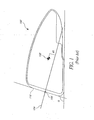
- FIG. 1 is a cross-sectional view of a prior art 3 fairway wood type golf club head
- FIG. 2 is a cross-sectional view of a prior art 5 fairway wood type golf club head
- FIG. 3 is a cross-sectional view of a prior art 7 fairway wood type golf club head
- FIG. 4 is a cross-sectional view of a 3 fairway wood type golf club head in accordance with an exemplary embodiment of the present invention
- FIG. 5 is a cross-sectional view of a 5 fairway wood type golf club head in accordance with an exemplary embodiment of the present invention.
- FIG. 6 is a cross-sectional view of a 7 fairway wood type golf club head in accordance with an exemplary embodiment of the present invention.
- FIGS. 1-3 shown here refer to a plurality of prior art golf club heads wherein the Center of Gravity (CG) location is driven primarily by the size and shape of the golf club heads 100 , 200 , and 300 , causing the backspin rate to fluctuate significantly between golf club heads 100 , 200, and 300 . More specifically, because of the significant fluctuation in the backspin rate between golf club heads 100 , 200 , and 300 , the performance of these golf club heads are compromised, resulting in a loss of distance.
- Golf club head 100 shown here in FIG. 1 , may generally resemble a prior art 3 fairway wood type golf club head with a loft of about 16 degrees.
- Golf club head 200 shown here in FIG.
- Golf club head 300 may generally resemble a prior art 7 fairway wood type golf club with a loft of about 20 degrees.
- FIG. 1 showing a prior art 3 fairway wood type golf club head 100
- the 3 fairway wood type golf club head 100 may have a loft angle ⁇ .
- a 3 fairway wood type golf club head 100 may generally have a loft angle of about 16 degrees, indicating that it may generally be the least lofted club within the set of fairway wood type golf club heads.
- FIG. 1 also shows a CG 102 location within the body of the golf club head 100 . More specifically, the CG 102 is located at a "CG Location Distance" d1 away from a neutral axis 104 of the golf club head 100 .
- the neutral axis 104 of a golf club head 100 may generally be defined as the axis that passes through the center 106 of the striking face 110 of the golf club head 100 , while being normal to the striking face 110 that has a loft angle ⁇ . It is worth noting that in this prior art golf club head 100 , the "CG Location Distance" d1 , as specifically referred to herein, signifies the location of the CG 102 away from the neutral axis 104 , measured from a point that is normal to the neutral axis 104 . "CG Location Distance" d1 , as referred to in this prior art embodiment in FIG. 1 may generally be about 5.6mm.
- Prior art 3 fairway wood type golf club head 100 may generally have a volume of about 165cc.
- the amount of backspin generated by this prior art 3 fairway wood type golf club head 100 may generally be about 3600 revolutions per minute (rpm), when the golf club head is swung with a velocity of about 80 to 85 miles per hour (mph) with an attack angle of between about -2 degrees to about 2 degrees.
- FIG. 2 shows a prior art 5 fairway wood type golf club head 200 with a loft angle ⁇ .
- a 5 fairway wood type golf club head 200 may generally have a loft angle of about 18 degrees, making it a balanced fairway wood type golf club head 200 in terms of distance and accuracy.
- the "CG Location Distance" d2 between the CG 202 location and the neutral axis 204 may generally be greater than "CG Location Distance” d1 . More specifically, the "CG Location Distance” d2 may generally be about 7.5mm, causing this prior art 5 fairway wood type golf club head 200 to generate significantly more backspin than a 3 fairway wood type golf club head 100 shown in FIG. 1 .
- Prior art 5 fairway wood type golf club head 200 may generally have a volume of about 160cc. It may also be worthwhile to note that the amount of backspin generated by this prior art 5 fairway wood type golf club head 200 may generally be about 4500rpm, wherein the golf club head is swung with a velocity of about 80 to 85mph with an attack angle of between about -2 degrees to about 2 degrees.
- FIG. 3 shows a prior art 7 fairway wood type golf club head 300 with a loft angle ⁇ .
- a 7 fairway wood type golf club head 300 may generally have a loft angle of about 20 degrees, making it a high lofted fairway wood type golf club head 300 .
- the "CG Location Distance" d3 between the CG 302 location and the neutral axis 304 may generally be greater than d1 or d2 .
- the "CG Location Distance" d3 may generally be about 9.5mm, causing this prior art 7 fairway wood type golf club head 300 to generate significantly more backspin than a 3 fairway wood type golf club head 100 and the 5 fairway wood type golf club head 200 shown in FIG. 1 and FIG. 2 .
- Prior art 7 fairway wood type golf club head 300 may generally have a volume of about 150cc. It may also be worthwhile to note that the amount of backspin generated by this prior art 7 fairway wood type golf club head 300 may generally be about 5400rpm, when the golf club head is swung with a velocity of about 80 to 85mph with an attack angle of between about -2 degrees to about 2 degrees.
- the 5 fairway wood type golf club head 200 may generate about 900rpm more backspin than the 3 fairway wood type golf club head 100 .
- the 7 fairway wood type golf club head 300 also generates about 900rpm more backspin than the 5 fairway wood type golf club head 200 .
- This dramatic increase in backspin between the different clubs could be detrimental to the overall performance of these fairway wood type golf club heads as such a dramatic increase in backspin may deprive the higher lofted fairway wood type golf club heads of distance.
- the trajectory of a golf shot bit by these different clubs may become dramatically different, making them less predictable relative to each other.
- the difference between the "CG location distance" d1, d2 , and d3 may generally be greater than about 1.00mm.
- the difference between "CG Location Distance” d1 and distance d2 may generally be about 1.74mm while the "CG Location Distance” between d2 and d3 may generally be about 2.17mm.
- the dramatic change in CG location distances d1, d2 , and d3 may be one of the factors that contributes to the undesirable effect described above of having a large spin variation between the various fairway wood type golf club heads. Having such a large spin variation may be undesirable in a golf club because golf shots may tend to balloon when a higher lofted club generates too much spin, robbing the golfer of distance.
- FIGS. 4-7 shows a plurality of fairway wood type golf club heads in accordance with an exemplary embodiment of the present invention when a conscious effort has been taken to strategically place the CG location at a location that is relatively constant throughout the plurality of fairway wood type golf club heads.
- the CG location of the plurality of fairway wood type golf club heads may generally all be within 8.0mm away from the neutral axis.
- the change in the CG location distance from the neutral axis between any club within the plurality of fairway wood type golf club heads may generally be less than about 1.25mm, more preferably less than about 1.0mm, and most preferably less than about 0.75mm.
- a 3 fairway wood type golf club head 400 may have a CG 402 location distance d4 of about 7.2mm
- a 5 fairway wood type golf club head 500 may have a CG 502 location distance d5 of about 7.7mm
- a 7 fairway wood type golf club head 600 may have a CG 602 location distance d6 of about 7.9mm away from a neutral axis of the fairway wood type golf club head.
- FIG. 4 shows a 3 fairway wood type golf club head 400 in accordance with an exemplary embodiment of the present invention with a loft angle ⁇ .
- the loft angle ⁇ in accordance with an exemplary embodiment of the present invention may generally be greater than about 14 degrees and less than about 18 degrees, more preferably about 16 degrees.
- FIG. 4 also shows the CG 402 of the exemplary 3 fairway wood type golf club head 400 being placed at a "CG Location Distance" d4 away from the neutral axis 404 .
- the neutral axis 404 of a golf club head 400 may generally be defined as the axis that passes through the center 406 of the striking face 410 of the golf club head 400 , while being normal to the striking face 110 that has a loft angle ⁇ .
- the distance d4 signifying the CG 402 location distance away from the neutral axis 404 , may generally be less than about 8.0mm and greater than about 5.0mm, most preferably about 7.2mm.
- the volume of a 3 fairway wood type golf club head 400 may generally be greater than about 165cc and less than about 250cc, more preferably about 170cc.
- the 3 fairway wood type golf club head 400 may generally have a backspin rate of about 3600rpm when striking a golf ball with a velocity of about 80mph to about 85mph with an attack angle of between about -2 degrees to about 2 degrees.
- FIG. 5 shows a 5 fairway wood type golf club head 500 in accordance with an exemplary embodiment of the present invention with a loft angle ⁇ .
- the loft angle ⁇ in accordance with this exemplary embodiment of the present invention may generally be greater than about 16 degrees and less than about 20 degrees, more preferably about 18 degrees.
- FIG. 5 also shows the CG 502 of the exemplary 5 fairway wood type golf club head 500 being placed at a "CG Location Distance" d5 away from the neutral axis 505 .
- the distance d5 may generally be less than about 8.0mm and greater than about 5.0mm, most preferably about 7.7mm.
- the volume of a 5 fairway wood type golf club head 500 may generally be greater than about 160cc and less than about 170cc, more preferably about 165cc. Finally, the 5 fairway wood type golf club head 500 may generally have a backspin rate of about 3900rpm when striking a golf ball with a velocity of about 80mph to about 85mph with an attack angle of between about -2 degrees to about 2 degrees.
- FIG. 6 shows a 7 fairway wood type golf club head 600 in accordance with an exemplary embodiment of the present invention with a loft angle ⁇ .
- the loft angle ⁇ in accordance with this exemplary embodiment of the present invention may generally be greater than about 18 degrees and less than about 24 degrees, more preferably about 20 degrees.
- FIG. 6 also shows the CG 602 of the exemplary 7 fairway wood type golf club head 600 being placed at a "CG Location Distance" d6 away from the neutral axis.
- the distance d6 may generally be less than about 8.0mm and greater than about 5.0mm, most preferably about 7.9mm.
- the volume of a 7 fairway wood type golf club head 600 may generally be greater than about 110cc and less than about 165cc, more preferably about 159cc. Finally, the 7 fairway wood type golf club head 600 may generally have a backspin rate of about 4200rpm when striking a golf ball with a velocity of about 80mph to about 85mph with an attack angle of between about -2 degrees to about 2 degrees.
- the amount of spin generated by the fairway wood type golf club heads 400 , 500 , and 600 in accordance with the exemplary embodiment of the present invention it may be apparent that the amount of spin generated by the 3 fairway wood type golf club head 400 , the 5 fairway wood type golf club head 500 , and the 7 fairway wood type golf club head 600 are substantially similar. More specifically the 5 fairway wood type golf club head in accordance with an exemplary embodiment of the present invention 500 may generate only about 300rpm more backspin than the 3 fairway wood type golf club head 400 while the 7 fairway wood type golf club head 600 may generate only about 300rpm more backspin than the 5 fairway wood type golf club head 500 .
- the change in the amount of backspin between any two clubs within the plurality of fairway wood type golf club head may generally be less than about 600rpm.
- These backspin figures, when compared to prior art fairway wood type golf club heads 100, 200 , and 300 may generally change significantly less.
- controlling the amount of backspin of a plurality of fairway wood type golf club heads may be beneficial, as minimized spin variation provides more distance for each and every single club within the set.
- the decrease in spin variation between different fairway wood type golf club heads may generally minimize the distance gaps between the different clubs; which benefits a golfer by allowing him to execute a variety of different golf shots.
- fairway wood type golf club heads in accordance with an exemplary embodiment of the present invention is the reduction in change of CG location distance away from the neutral axis. Having less of a variation of the CG location distance from the neutral axis within a set of fairway wood type golf club 400 , 500 , and 600 may be beneficial to control the excessive spin and ballooning effect generally associated with higher lofted fairway wood type golf club heads. More specifically, the difference between any of the CG location distance d4 , d5 , and d6 within the plurality of golf club heads may generally be less than about 1.00mm.
- the difference between distance d4 and distance d5 may generally be about 0.49mm while the distance between d5 and d6 may generally be about 0.3mm. Even the CG location distance between d4 and d6 may generally be less than about 0.79mm. Because of the tighter variation of the location of the CG location away from the central axis, the spin rate difference between the different clubs may generally be minimized; yielding in a maximized distance by reducing the ballooning effect in fairway type golf club heads.
- Controlling and minimizing the change in CG location distance between the different fairway wood type golf club heads 400, 500 , and 600 may generally be accomplished by placing the discretionary weight of the golf club head at a location that helps move the CG location closer to the neutral axis. More specifically, because of the fairway wood type golf club heads have a smaller volume and size, there is sufficient discretionary weight within the golf club head to help shift the location of the CG closer to the neutral axis. However, having the CG location closer to the neutral axis can not be achieved merely by moving the CG location lower and further back, as described by the prior art.
- moving the CG location lower may help bring the CG location distance closer to the neutral axis
- moving the CG location further back as described in the prior art may actually bring the CG location away from the neutral axis.
- a closer examination of the angle of the neutral axis being normal to the loft angle of the striking face of the golf club head may help explain this phenomenon, as the loft angle of the striking face may generally cause the neutral axis to be lower towards the rear of the golf club head.
- an important performance ratio can be obtained describing the relationship between the individual clubs within a plurality of fairway wood type golf club heads.
- This important performance ratio may generally be referred to as the Spin to Loft Ratio as shown below in Equation 1:
- Spin to Loft Ratio Spin Loft
- the Spin to Loft Ratio of a golf club head may be important to the performance of a golf club head, as it captures the ability of a golf club head to maintain distance and control of a golf club while limiting the dreaded ballooning effect that tends to occur in a higher lofted fairway wood type golf club head.
- a 3 fairway wood type golf club head 400 in accordance with an exemplary embodiment of the present invention may generally have a spin to loft ratio of greater than about 229rpm/degrees and less than about 230rpm/degrees, more preferably about 225rpm/degrees
- a 5 fairway wood type golf club head 500 in accordance with an exemplary embodiment of the present invention may generally have a spin to loft ratio of greater than about 210rpm/degrees and less than about 220rpm/degrees, more preferably about 215rpm/degrees
- a 7 fairway wood type golf club head 600 in accordance with an exemplary embodiment of the present invention may generally have a spin to loft ratio of greater than about 205rpm/degrees and less than about 215rpm/degrees, more preferably about 210 rpm/degrees.
- One interesting result of the plurality of golf club heads in accordance with an exemplary embodiment of the present invention is that the Spin to Loft Ratio decreases as the loft of the each individual club increases. This decrease in Spin to Loft Ratio usually results because the set of fairway type golf club heads in accordance with the exemplary embodiment of the present invention does a better job at maintaining the amount of spin generated by the different fairway type golf club heads within the set. Additionally, the change in Spin to Loft Ratio between any two golf club heads within the set may generally be less than l4rpm/degrees, more preferably less than about 12rpm/degrees, and most preferably less than about 10rpm/degrees all without departing from the scope and content of the present invention.
- volume to CG Location Distance Ratio Volume CG Distance from Neutral Axis
- the volume to CG Location Distance Ratio may be important to a fairway wood type golf club because it provides a easily measurable and quantifiable parameter in the form of distance of the CG location.
- a 3 fairway wood type golf club head 400 in accordance with an exemplary embodiment of the present invention may generally have a volume to CG location distance ratio of greater than about 225 cm 2 and less than about 245 cm 2 , more preferably about 235cm 2
- 5 fairway wood type golf club head 500 in accordance with an exemplary embodiment may generally have a volume to CG location distance ratio of greater than about 202 cm 2 and less than about 222 cm 2 , more preferably about 212cm 2
- a 7 fairway wood type golf club head 600 in accordance with an exemplary embodiment of the present invention may generally have a volume to CG location distance ratio of greater than about 184 cm 2 and less then about 204 cm 2 , most preferably about 194cm 2
- the CG location distance away from the neutral axis is closely related to the amount of spin generated by a fairway wood type golf club head, keeping the location of the CG less than about 8.0mm away from the neutral axis regardless of the volume changes of the different fairway wood type golf club head will ensure consistent backspin characteristics throughout the plurality of fairway wood type golf clubs. More specifically, it is even more desirable to keep the change in Volume to CG Location Distance ratio less than about 50cm 2 between any two clubs within the let, more preferably less than about 48cm 2 , and most preferably less than about 46cm 2 , all without departing from the scope and content of the present invention.
Landscapes
- Health & Medical Sciences (AREA)
- General Health & Medical Sciences (AREA)
- Physical Education & Sports Medicine (AREA)
- Life Sciences & Earth Sciences (AREA)
- Engineering & Computer Science (AREA)
- Wood Science & Technology (AREA)
- Golf Clubs (AREA)
Applications Claiming Priority (1)
| Application Number | Priority Date | Filing Date | Title |
|---|---|---|---|
| US12/644,051 US8641550B2 (en) | 2009-12-22 | 2009-12-22 | Golf club heads |
Publications (1)
| Publication Number | Publication Date |
|---|---|
| EP2340875A2 true EP2340875A2 (de) | 2011-07-06 |
Family
ID=43971566
Family Applications (1)
| Application Number | Title | Priority Date | Filing Date |
|---|---|---|---|
| EP10195619A Withdrawn EP2340875A2 (de) | 2009-12-22 | 2010-12-17 | Verbesserte Golfschlägerköpfe |
Country Status (4)
| Country | Link |
|---|---|
| US (3) | US8641550B2 (de) |
| EP (1) | EP2340875A2 (de) |
| JP (1) | JP2011131056A (de) |
| CN (1) | CN102100963A (de) |
Cited By (9)
| Publication number | Priority date | Publication date | Assignee | Title |
|---|---|---|---|---|
| WO2014152890A1 (en) * | 2013-03-14 | 2014-09-25 | Karsten Manufacturing Corporation | Golf club heads with optimized characteristics and related methods |
| US9144722B2 (en) | 2013-03-14 | 2015-09-29 | Karsten Manufacturing Corporation | Golf club heads with optimized characteristics and related methods |
| US9168429B2 (en) | 2013-03-14 | 2015-10-27 | Karsten Manufacturing Corporation | Golf club heads with optimized characteristics and related methods |
| US9186561B2 (en) | 2013-03-14 | 2015-11-17 | Karsten Manufacturing Corporation | Golf club heads with optimized characteristics and related methods |
| US10080933B2 (en) | 2013-03-14 | 2018-09-25 | Karsten Manufacturing Corporation | Golf club heads with optimized characteristics and related methods |
| US10207161B2 (en) | 2016-11-18 | 2019-02-19 | Karsten Manufacturing Corporation | Club head having balanced impact and swing performance characteristics |
| US10434381B2 (en) | 2013-03-14 | 2019-10-08 | Karsten Manufacturing Corporation | Club head having balanced impact and swing performance characteristics |
| US10610745B2 (en) | 2013-03-14 | 2020-04-07 | Karsten Manufacturing Corporation | Golf club heads with optimized characteristics and related methods |
| US10967232B2 (en) | 2019-05-15 | 2021-04-06 | Karsten Manufacturing Corporation | Club head having balanced impact and swing performance characteristics |
Families Citing this family (34)
| Publication number | Priority date | Publication date | Assignee | Title |
|---|---|---|---|---|
| US8900069B2 (en) | 2010-12-28 | 2014-12-02 | Taylor Made Golf Company, Inc. | Fairway wood center of gravity projection |
| US8235844B2 (en) | 2010-06-01 | 2012-08-07 | Adams Golf Ip, Lp | Hollow golf club head |
| US9943734B2 (en) | 2004-11-08 | 2018-04-17 | Taylor Made Golf Company, Inc. | Golf club |
| US9393471B2 (en) | 2005-04-21 | 2016-07-19 | Cobra Golf Incorporated | Golf club head with removable component |
| US7753806B2 (en) | 2007-12-31 | 2010-07-13 | Taylor Made Golf Company, Inc. | Golf club |
| US9089749B2 (en) | 2010-06-01 | 2015-07-28 | Taylor Made Golf Company, Inc. | Golf club head having a shielded stress reducing feature |
| US8821312B2 (en) | 2010-06-01 | 2014-09-02 | Taylor Made Golf Company, Inc. | Golf club head having a stress reducing feature with aperture |
| US8827831B2 (en) | 2010-06-01 | 2014-09-09 | Taylor Made Golf Company, Inc. | Golf club head having a stress reducing feature |
| US10639524B2 (en) | 2010-12-28 | 2020-05-05 | Taylor Made Golf Company, Inc. | Golf club head |
| US8888607B2 (en) | 2010-12-28 | 2014-11-18 | Taylor Made Golf Company, Inc. | Fairway wood center of gravity projection |
| US9707457B2 (en) | 2010-12-28 | 2017-07-18 | Taylor Made Golf Company, Inc. | Golf club |
| US9220953B2 (en) | 2010-12-28 | 2015-12-29 | Taylor Made Golf Company, Inc. | Fairway wood center of gravity projection |
| US9114292B2 (en) | 2012-02-28 | 2015-08-25 | Cobra Golf Incorporated | Golf club head with stablizing sole |
| US8517850B1 (en) | 2012-12-11 | 2013-08-27 | Cobra Golf Incorporated | Golf club grip with device housing |
| US9114294B2 (en) | 2012-02-28 | 2015-08-25 | Cobra Golf Incorporated | Distance gapping golf club set with dual-range club |
| USD675272S1 (en) | 2012-03-21 | 2013-01-29 | Taylor Made Golf Company, Inc. | Golf club head |
| USD692077S1 (en) | 2012-03-21 | 2013-10-22 | Taylor Made Golf Company, Inc. | Golf club head |
| USD686679S1 (en) | 2012-03-21 | 2013-07-23 | Taylor Made Golf Company, Inc. | Golf club head |
| USD697152S1 (en) | 2012-10-18 | 2014-01-07 | Taylor Made Golf Company, Inc. | Golf club head |
| US11351424B2 (en) * | 2012-10-23 | 2022-06-07 | Karsten Manufacturing Corporation | Adjustable sole weight of a golf club head |
| USD696367S1 (en) | 2012-11-07 | 2013-12-24 | Taylor Made Golf Company, Inc. | Golf club head |
| USD735284S1 (en) | 2014-06-23 | 2015-07-28 | Taylor Made Golf Company, Inc. | Iron club head |
| USD737913S1 (en) | 2014-06-23 | 2015-09-01 | Taylor Made Golf Company, Inc. | Iron club head |
| USD737912S1 (en) | 2014-06-23 | 2015-09-01 | Taylor Made Golf Company, Inc. | Iron club head |
| USD731606S1 (en) | 2014-06-23 | 2015-06-09 | Taylor Made Golf Company, Inc. | Iron club head |
| US10065082B2 (en) | 2014-07-22 | 2018-09-04 | Taylor Made Golf Company, Inc. | Golf club |
| USD772996S1 (en) | 2015-07-16 | 2016-11-29 | Taylor Made Golf Company, Inc. | Golf club head |
| US10532254B1 (en) | 2017-11-07 | 2020-01-14 | Cobra Golf Incorporated | Low drag golf club head with improved mass properties |
| US10099101B1 (en) | 2017-12-07 | 2018-10-16 | Ssg International, Llc | Golf club grip with sensor housing |
| USD849166S1 (en) | 2017-12-07 | 2019-05-21 | Ssg International, Llc | Golf putter grip |
| US10653926B2 (en) | 2018-07-23 | 2020-05-19 | Taylor Made Golf Company, Inc. | Golf club heads |
| JP6645569B1 (ja) * | 2018-12-27 | 2020-02-14 | 住友ゴム工業株式会社 | ゴルフクラブヘッド |
| US11759685B2 (en) | 2020-12-28 | 2023-09-19 | Taylor Made Golf Company, Inc. | Golf club heads |
| US11406881B2 (en) | 2020-12-28 | 2022-08-09 | Taylor Made Golf Company, Inc. | Golf club heads |
Citations (1)
| Publication number | Priority date | Publication date | Assignee | Title |
|---|---|---|---|---|
| US6074310A (en) | 1998-04-20 | 2000-06-13 | Bost Enterprises | Metal wood golf club head having low center of gravity |
Family Cites Families (15)
| Publication number | Priority date | Publication date | Assignee | Title |
|---|---|---|---|---|
| US4630825A (en) * | 1984-12-17 | 1986-12-23 | Glenn H. Schmidt | Golf clubs |
| JPS6290662U (de) * | 1985-11-29 | 1987-06-10 | ||
| JP2590325B2 (ja) * | 1986-09-12 | 1997-03-12 | ブリヂストンスポーツ株式会社 | ゴルフクラブセツト |
| US5643107A (en) * | 1994-12-05 | 1997-07-01 | Dunlop Maxfli Sports Corporation | Golf club head set |
| JPH10216272A (ja) * | 1997-02-05 | 1998-08-18 | Sumitomo Rubber Ind Ltd | ウッド型ゴルフクラブヘッド |
| JP2001286583A (ja) * | 2000-02-02 | 2001-10-16 | Sumitomo Rubber Ind Ltd | ゴルフクラブセット |
| US7147570B2 (en) * | 2000-09-08 | 2006-12-12 | Taylor Made Golf Company, Inc. | Method for fitting golf clubs |
| KR100596956B1 (ko) * | 2001-08-03 | 2006-07-07 | 요코하마 고무 가부시키가이샤 | 골프 클럽 헤드 |
| JP2004008345A (ja) * | 2002-06-04 | 2004-01-15 | Sumitomo Rubber Ind Ltd | ゴルフクラブ |
| JP4010305B2 (ja) * | 2004-03-29 | 2007-11-21 | 美津濃株式会社 | ゴルフクラブヘッド |
| JP2005334648A (ja) | 2004-04-21 | 2005-12-08 | Acushnet Co | 変移する中空タイプのゴルフクラブ |
| WO2007062153A2 (en) * | 2005-11-23 | 2007-05-31 | Belmont Peter A | Golf club heads |
| US7500926B2 (en) * | 2006-12-22 | 2009-03-10 | Roger Cleveland Golf Co., Inc. | Golf club head |
| US20090137338A1 (en) * | 2007-11-27 | 2009-05-28 | Bridgestone Sports Co., Ltd. | Wood-type golf club head |
| US7632196B2 (en) | 2008-01-10 | 2009-12-15 | Adams Golf Ip, Lp | Fairway wood type golf club |
-
2009
- 2009-12-22 US US12/644,051 patent/US8641550B2/en active Active
-
2010
- 2010-12-17 EP EP10195619A patent/EP2340875A2/de not_active Withdrawn
- 2010-12-21 JP JP2010284515A patent/JP2011131056A/ja active Pending
- 2010-12-22 CN CN201010620537XA patent/CN102100963A/zh active Pending
-
2014
- 2014-01-31 US US14/169,409 patent/US9192827B2/en active Active
-
2015
- 2015-11-04 US US14/932,397 patent/US20160051870A1/en not_active Abandoned
Patent Citations (1)
| Publication number | Priority date | Publication date | Assignee | Title |
|---|---|---|---|---|
| US6074310A (en) | 1998-04-20 | 2000-06-13 | Bost Enterprises | Metal wood golf club head having low center of gravity |
Cited By (41)
| Publication number | Priority date | Publication date | Assignee | Title |
|---|---|---|---|---|
| US10434381B2 (en) | 2013-03-14 | 2019-10-08 | Karsten Manufacturing Corporation | Club head having balanced impact and swing performance characteristics |
| US11173355B2 (en) | 2013-03-14 | 2021-11-16 | Karsten Manufacturing Corporation | Golf club heads with optimized characteristics and related methods |
| US9168429B2 (en) | 2013-03-14 | 2015-10-27 | Karsten Manufacturing Corporation | Golf club heads with optimized characteristics and related methods |
| US9186561B2 (en) | 2013-03-14 | 2015-11-17 | Karsten Manufacturing Corporation | Golf club heads with optimized characteristics and related methods |
| GB2527004A (en) * | 2013-03-14 | 2015-12-09 | Karsten Mfg Corp | Golf club heads with optimized characteristics and related methods |
| US9675851B2 (en) | 2013-03-14 | 2017-06-13 | Karsten Manufacturing Corporation | Golf club heads with optimized characteristics and related methods |
| US9764206B2 (en) | 2013-03-14 | 2017-09-19 | Karsten Manufacturing Corporation | Golf club heads with optimized characteristics and related methods |
| US9764205B2 (en) | 2013-03-14 | 2017-09-19 | Karsten Manufacturing Corporation | Golf club heads with optimized characteristics and related methods |
| US10080933B2 (en) | 2013-03-14 | 2018-09-25 | Karsten Manufacturing Corporation | Golf club heads with optimized characteristics and related methods |
| US12397209B2 (en) | 2013-03-14 | 2025-08-26 | Karsten Manufacturing Corporation | Golf club heads with optimized characteristics and related methods |
| US10238938B2 (en) | 2013-03-14 | 2019-03-26 | Karsten Manufacturing Corporation | Golf club heads with optimized characteristics and related methods |
| US10357700B2 (en) | 2013-03-14 | 2019-07-23 | Karsten Manufacturing Corporation | Golf club heads with optimized characteristics and related methods |
| US9144722B2 (en) | 2013-03-14 | 2015-09-29 | Karsten Manufacturing Corporation | Golf club heads with optimized characteristics and related methods |
| US11554299B2 (en) | 2013-03-14 | 2023-01-17 | Karsten Manufacturing Corporation | Golf club heads with optimized characteristics and related methods |
| US10857435B2 (en) | 2013-03-14 | 2020-12-08 | Karsten Manufacturing Corporation | Golf club heads with optimized characteristics and related methods |
| GB2527004B (en) * | 2013-03-14 | 2020-03-04 | Karsten Mfg Corp | Golf club heads with optimized characteristics and related methods |
| US10610745B2 (en) | 2013-03-14 | 2020-04-07 | Karsten Manufacturing Corporation | Golf club heads with optimized characteristics and related methods |
| US10828541B2 (en) | 2013-03-14 | 2020-11-10 | Karsten Manufacturing Corporation | Club head having balanced impact and swing performance characteristics |
| US12220619B2 (en) | 2013-03-14 | 2025-02-11 | Karsten Manufacturing Corporation | Golf club heads with optimized characteristics |
| US11957964B2 (en) | 2013-03-14 | 2024-04-16 | Karsten Manufacturing Corporation | Club head having balanced impact and swing performance characteristics |
| US11819746B2 (en) | 2013-03-14 | 2023-11-21 | Karsten Manufacturing Corporation | Golf club heads with optimized characteristics and related methods |
| US11117026B2 (en) | 2013-03-14 | 2021-09-14 | Karsten Manufacturing Corporation | Golf club heads with optimized characteristics and related methods |
| US10486037B2 (en) | 2013-03-14 | 2019-11-26 | Karsten Manufacturing Corporation | Golf club heads with optimized characteristics and related methods |
| US11305164B2 (en) | 2013-03-14 | 2022-04-19 | Karsten Manufacturing Corporation | Club head having balanced impact and swing performance characteristics |
| US11318359B2 (en) | 2013-03-14 | 2022-05-03 | Karsten Manufacturing Corporation | Golf club heads with optimized characteristics and related methods |
| WO2014152890A1 (en) * | 2013-03-14 | 2014-09-25 | Karsten Manufacturing Corporation | Golf club heads with optimized characteristics and related methods |
| JP2023089028A (ja) * | 2016-11-18 | 2023-06-27 | カーステン マニュファクチュアリング コーポレーション | バランスの取れたインパクト性能とスイング性能を有するクラブヘッド |
| JP7522256B2 (ja) | 2016-11-18 | 2024-07-24 | カーステン マニュファクチュアリング コーポレーション | バランスの取れたインパクト性能とスイング性能を有するクラブヘッド |
| JP7254987B2 (ja) | 2016-11-18 | 2023-04-10 | カーステン マニュファクチュアリング コーポレーション | バランスの取れたインパクト性能とスイング性能を有するクラブヘッド |
| JP2023089030A (ja) * | 2016-11-18 | 2023-06-27 | カーステン マニュファクチュアリング コーポレーション | バランスの取れたインパクト性能とスイング性能を有するクラブヘッド |
| JP2022084692A (ja) * | 2016-11-18 | 2022-06-07 | カーステン マニュファクチュアリング コーポレーション | バランスの取れたインパクト性能とスイング性能を有するクラブヘッド |
| JP2023089029A (ja) * | 2016-11-18 | 2023-06-27 | カーステン マニュファクチュアリング コーポレーション | バランスの取れたインパクト性能とスイング性能を有するクラブヘッド |
| US11738244B2 (en) | 2016-11-18 | 2023-08-29 | Karsten Manufacturing Corporation | Club head having balanced impact and swing performance characteristics |
| US10207161B2 (en) | 2016-11-18 | 2019-02-19 | Karsten Manufacturing Corporation | Club head having balanced impact and swing performance characteristics |
| US10864413B2 (en) | 2016-11-18 | 2020-12-15 | Karsten Manufacturing Corporation | Club head having balanced impact and swing performance characteristics |
| JP7522254B2 (ja) | 2016-11-18 | 2024-07-24 | カーステン マニュファクチュアリング コーポレーション | バランスの取れたインパクト性能とスイング性能を有するクラブヘッド |
| US11358037B2 (en) | 2016-11-18 | 2022-06-14 | Karsten Manufacturing Corporation | Club head having balanced impact and swing performance characteristics |
| JP7522255B2 (ja) | 2016-11-18 | 2024-07-24 | カーステン マニュファクチュアリング コーポレーション | バランスの取れたインパクト性能とスイング性能を有するクラブヘッド |
| US10556159B2 (en) | 2016-11-18 | 2020-02-11 | Karsten Manufacturing Corporation | Club head having balanced impact and swing performance characteristics |
| JP2025020156A (ja) * | 2016-11-18 | 2025-02-12 | カーステン マニュファクチュアリング コーポレーション | バランスの取れたインパクト性能とスイング性能を有するクラブヘッド |
| US10967232B2 (en) | 2019-05-15 | 2021-04-06 | Karsten Manufacturing Corporation | Club head having balanced impact and swing performance characteristics |
Also Published As
| Publication number | Publication date |
|---|---|
| JP2011131056A (ja) | 2011-07-07 |
| US20110151989A1 (en) | 2011-06-23 |
| US8641550B2 (en) | 2014-02-04 |
| US20160051870A1 (en) | 2016-02-25 |
| US9192827B2 (en) | 2015-11-24 |
| CN102100963A (zh) | 2011-06-22 |
| US20140148266A1 (en) | 2014-05-29 |
Similar Documents
| Publication | Publication Date | Title |
|---|---|---|
| EP2340875A2 (de) | Verbesserte Golfschlägerköpfe | |
| US11298598B2 (en) | Low and back crown mass for a golf club head | |
| JP4680820B2 (ja) | アイアン型ゴルフクラブ | |
| US8187120B2 (en) | Wedge type golf club head | |
| US20100331102A1 (en) | Golf club head with non-threaded internal cavity chamber | |
| US9713751B2 (en) | Wedge type golf club head | |
| US20150024867A1 (en) | Golf club with improved performance characteristics | |
| US8187115B2 (en) | Set of constant face center metal woods | |
| EP2305356A1 (de) | Golfschläger mit Schienen | |
| US8579729B2 (en) | Wedge type golf club head | |
| JP2012130693A (ja) | ゴルフクラブヘッドの改良打撃フェース | |
| US8491414B2 (en) | Wedge type golf club head | |
| WO2003022368A2 (en) | Method for fitting golf clubs | |
| US20100234125A1 (en) | High launch and low spin golf ball and golf club combination | |
| US20150018119A1 (en) | Golf club head with face channel | |
| US11819740B2 (en) | Golf club heads with energy storage characteristics | |
| JP2006006946A (ja) | 低密度貫通孔ホーゼルを備えたゴルフクラブ | |
| US9956461B2 (en) | Iron type golf club set | |
| JPH11333037A (ja) | ゴルフクラブ及びゴルフクラブセット | |
| JP7168502B2 (ja) | ウッド型ゴルフクラブセット | |
| JP2001170223A (ja) | ウッド型ゴルフクラブヘッド | |
| US20190192925A1 (en) | Low profile driver type golf club head | |
| JP2001161866A (ja) | ゴルフクラブヘッド | |
| JPH119730A (ja) | シリーズ関係のゴルフクラブ群 |
Legal Events
| Date | Code | Title | Description |
|---|---|---|---|
| PUAI | Public reference made under article 153(3) epc to a published international application that has entered the european phase |
Free format text: ORIGINAL CODE: 0009012 |
|
| AK | Designated contracting states |
Kind code of ref document: A2 Designated state(s): AL AT BE BG CH CY CZ DE DK EE ES FI FR GB GR HR HU IE IS IT LI LT LU LV MC MK MT NL NO PL PT RO RS SE SI SK SM TR |
|
| AX | Request for extension of the european patent |
Extension state: BA ME |
|
| STAA | Information on the status of an ep patent application or granted ep patent |
Free format text: STATUS: THE APPLICATION IS DEEMED TO BE WITHDRAWN |
|
| 18D | Application deemed to be withdrawn |
Effective date: 20130702 |