EP2314725B1 - Method for producing large diameter ingots of nickel base alloys - Google Patents
Method for producing large diameter ingots of nickel base alloys Download PDFInfo
- Publication number
- EP2314725B1 EP2314725B1 EP10075549.5A EP10075549A EP2314725B1 EP 2314725 B1 EP2314725 B1 EP 2314725B1 EP 10075549 A EP10075549 A EP 10075549A EP 2314725 B1 EP2314725 B1 EP 2314725B1
- Authority
- EP
- European Patent Office
- Prior art keywords
- temperature
- alloy
- ingot
- hour
- var
- Prior art date
- Legal status (The legal status is an assumption and is not a legal conclusion. Google has not performed a legal analysis and makes no representation as to the accuracy of the status listed.)
- Expired - Lifetime
Links
- 229910045601 alloy Inorganic materials 0.000 title claims abstract description 93
- 239000000956 alloy Substances 0.000 title claims abstract description 93
- PXHVJJICTQNCMI-UHFFFAOYSA-N Nickel Chemical compound [Ni] PXHVJJICTQNCMI-UHFFFAOYSA-N 0.000 title claims abstract description 76
- 229910052759 nickel Inorganic materials 0.000 title claims abstract description 38
- 238000004519 manufacturing process Methods 0.000 title claims description 21
- 238000000034 method Methods 0.000 claims abstract description 72
- 238000010438 heat treatment Methods 0.000 claims abstract description 52
- 238000005204 segregation Methods 0.000 claims abstract description 34
- 238000005266 casting Methods 0.000 claims abstract description 30
- 229910000601 superalloy Inorganic materials 0.000 claims abstract description 26
- 239000000155 melt Substances 0.000 claims abstract description 15
- 238000000137 annealing Methods 0.000 claims abstract description 6
- 238000010313 vacuum arc remelting Methods 0.000 claims description 79
- 238000002844 melting Methods 0.000 claims description 20
- 230000008018 melting Effects 0.000 claims description 20
- 238000004227 thermal cracking Methods 0.000 claims description 15
- 238000001816 cooling Methods 0.000 claims description 14
- XEEYBQQBJWHFJM-UHFFFAOYSA-N Iron Chemical compound [Fe] XEEYBQQBJWHFJM-UHFFFAOYSA-N 0.000 claims description 12
- 239000010955 niobium Substances 0.000 claims description 10
- 206010014970 Ephelides Diseases 0.000 claims description 9
- 208000003351 Melanosis Diseases 0.000 claims description 9
- 229910052758 niobium Inorganic materials 0.000 claims description 8
- GUCVJGMIXFAOAE-UHFFFAOYSA-N niobium atom Chemical compound [Nb] GUCVJGMIXFAOAE-UHFFFAOYSA-N 0.000 claims description 8
- 239000012535 impurity Substances 0.000 claims description 7
- 230000008569 process Effects 0.000 claims description 7
- OKTJSMMVPCPJKN-UHFFFAOYSA-N Carbon Chemical compound [C] OKTJSMMVPCPJKN-UHFFFAOYSA-N 0.000 claims description 6
- VYZAMTAEIAYCRO-UHFFFAOYSA-N Chromium Chemical compound [Cr] VYZAMTAEIAYCRO-UHFFFAOYSA-N 0.000 claims description 6
- RTAQQCXQSZGOHL-UHFFFAOYSA-N Titanium Chemical compound [Ti] RTAQQCXQSZGOHL-UHFFFAOYSA-N 0.000 claims description 6
- 229910052782 aluminium Inorganic materials 0.000 claims description 6
- XAGFODPZIPBFFR-UHFFFAOYSA-N aluminium Chemical compound [Al] XAGFODPZIPBFFR-UHFFFAOYSA-N 0.000 claims description 6
- 229910052799 carbon Inorganic materials 0.000 claims description 6
- 229910052804 chromium Inorganic materials 0.000 claims description 6
- 239000011651 chromium Substances 0.000 claims description 6
- 229910052742 iron Inorganic materials 0.000 claims description 6
- 239000000203 mixture Substances 0.000 claims description 6
- 239000010936 titanium Substances 0.000 claims description 6
- 229910052719 titanium Inorganic materials 0.000 claims description 6
- ZOKXTWBITQBERF-UHFFFAOYSA-N Molybdenum Chemical compound [Mo] ZOKXTWBITQBERF-UHFFFAOYSA-N 0.000 claims description 5
- 229910052750 molybdenum Inorganic materials 0.000 claims description 5
- 239000011733 molybdenum Substances 0.000 claims description 5
- 230000008646 thermal stress Effects 0.000 claims description 5
- ZOXJGFHDIHLPTG-UHFFFAOYSA-N Boron Chemical compound [B] ZOXJGFHDIHLPTG-UHFFFAOYSA-N 0.000 claims description 4
- PWHULOQIROXLJO-UHFFFAOYSA-N Manganese Chemical compound [Mn] PWHULOQIROXLJO-UHFFFAOYSA-N 0.000 claims description 4
- 229910052796 boron Inorganic materials 0.000 claims description 4
- 238000005261 decarburization Methods 0.000 claims description 4
- 229910052748 manganese Inorganic materials 0.000 claims description 4
- 239000011572 manganese Substances 0.000 claims description 4
- 229910052710 silicon Inorganic materials 0.000 claims description 4
- 239000010703 silicon Substances 0.000 claims description 4
- 229910052715 tantalum Inorganic materials 0.000 claims description 4
- GUVRBAGPIYLISA-UHFFFAOYSA-N tantalum atom Chemical compound [Ta] GUVRBAGPIYLISA-UHFFFAOYSA-N 0.000 claims description 4
- 239000004411 aluminium Substances 0.000 claims description 3
- VVTSZOCINPYFDP-UHFFFAOYSA-N [O].[Ar] Chemical compound [O].[Ar] VVTSZOCINPYFDP-UHFFFAOYSA-N 0.000 claims description 2
- QVGXLLKOCUKJST-UHFFFAOYSA-N atomic oxygen Chemical compound [O] QVGXLLKOCUKJST-UHFFFAOYSA-N 0.000 claims description 2
- 230000006698 induction Effects 0.000 claims description 2
- 239000001301 oxygen Substances 0.000 claims description 2
- 229910052760 oxygen Inorganic materials 0.000 claims description 2
- 238000007711 solidification Methods 0.000 abstract description 10
- 230000008023 solidification Effects 0.000 abstract description 10
- 238000011282 treatment Methods 0.000 abstract description 2
- 238000005242 forging Methods 0.000 description 12
- 239000000463 material Substances 0.000 description 7
- 238000010586 diagram Methods 0.000 description 6
- 239000002893 slag Substances 0.000 description 6
- 241000519995 Stachys sylvatica Species 0.000 description 4
- 238000010248 power generation Methods 0.000 description 4
- 238000009497 press forging Methods 0.000 description 4
- 230000035882 stress Effects 0.000 description 4
- RYGMFSIKBFXOCR-UHFFFAOYSA-N Copper Chemical compound [Cu] RYGMFSIKBFXOCR-UHFFFAOYSA-N 0.000 description 3
- XUIMIQQOPSSXEZ-UHFFFAOYSA-N Silicon Chemical compound [Si] XUIMIQQOPSSXEZ-UHFFFAOYSA-N 0.000 description 3
- 239000010941 cobalt Substances 0.000 description 3
- 229910017052 cobalt Inorganic materials 0.000 description 3
- GUTLYIVDDKVIGB-UHFFFAOYSA-N cobalt atom Chemical compound [Co] GUTLYIVDDKVIGB-UHFFFAOYSA-N 0.000 description 3
- 229910052802 copper Inorganic materials 0.000 description 3
- 239000010949 copper Substances 0.000 description 3
- 230000004907 flux Effects 0.000 description 3
- 238000000265 homogenisation Methods 0.000 description 3
- 229910001068 laves phase Inorganic materials 0.000 description 3
- 238000012545 processing Methods 0.000 description 3
- 238000003303 reheating Methods 0.000 description 3
- IJGRMHOSHXDMSA-UHFFFAOYSA-N Atomic nitrogen Chemical compound N#N IJGRMHOSHXDMSA-UHFFFAOYSA-N 0.000 description 2
- OAICVXFJPJFONN-UHFFFAOYSA-N Phosphorus Chemical compound [P] OAICVXFJPJFONN-UHFFFAOYSA-N 0.000 description 2
- NINIDFKCEFEMDL-UHFFFAOYSA-N Sulfur Chemical compound [S] NINIDFKCEFEMDL-UHFFFAOYSA-N 0.000 description 2
- 239000005864 Sulphur Substances 0.000 description 2
- 238000013459 approach Methods 0.000 description 2
- 238000006243 chemical reaction Methods 0.000 description 2
- 230000001143 conditioned effect Effects 0.000 description 2
- 238000005336 cracking Methods 0.000 description 2
- 230000007547 defect Effects 0.000 description 2
- 238000011161 development Methods 0.000 description 2
- 238000005530 etching Methods 0.000 description 2
- 238000012986 modification Methods 0.000 description 2
- 230000004048 modification Effects 0.000 description 2
- 239000012768 molten material Substances 0.000 description 2
- 229910052698 phosphorus Inorganic materials 0.000 description 2
- 239000011574 phosphorus Substances 0.000 description 2
- 239000000047 product Substances 0.000 description 2
- 239000002994 raw material Substances 0.000 description 2
- 230000009467 reduction Effects 0.000 description 2
- 125000006850 spacer group Chemical group 0.000 description 2
- 229910001247 waspaloy Inorganic materials 0.000 description 2
- 239000012141 concentrate Substances 0.000 description 1
- 238000010276 construction Methods 0.000 description 1
- 230000002939 deleterious effect Effects 0.000 description 1
- 230000000694 effects Effects 0.000 description 1
- 238000010891 electric arc Methods 0.000 description 1
- 238000005516 engineering process Methods 0.000 description 1
- 238000011156 evaluation Methods 0.000 description 1
- 238000000605 extraction Methods 0.000 description 1
- 229910001055 inconels 600 Inorganic materials 0.000 description 1
- 239000003999 initiator Substances 0.000 description 1
- 239000007788 liquid Substances 0.000 description 1
- 239000011159 matrix material Substances 0.000 description 1
- 230000007246 mechanism Effects 0.000 description 1
- 238000010309 melting process Methods 0.000 description 1
- 229910052751 metal Inorganic materials 0.000 description 1
- 239000002184 metal Substances 0.000 description 1
- 150000001247 metal acetylides Chemical class 0.000 description 1
- 239000007769 metal material Substances 0.000 description 1
- 150000004767 nitrides Chemical class 0.000 description 1
- 229910052757 nitrogen Inorganic materials 0.000 description 1
- 239000004848 polyfunctional curative Substances 0.000 description 1
- 239000002244 precipitate Substances 0.000 description 1
- 238000011084 recovery Methods 0.000 description 1
- 230000035945 sensitivity Effects 0.000 description 1
- 239000007787 solid Substances 0.000 description 1
- 230000000930 thermomechanical effect Effects 0.000 description 1
Images

Classifications
-
- C—CHEMISTRY; METALLURGY
- C22—METALLURGY; FERROUS OR NON-FERROUS ALLOYS; TREATMENT OF ALLOYS OR NON-FERROUS METALS
- C22C—ALLOYS
- C22C19/00—Alloys based on nickel or cobalt
- C22C19/03—Alloys based on nickel or cobalt based on nickel
- C22C19/05—Alloys based on nickel or cobalt based on nickel with chromium
-
- C—CHEMISTRY; METALLURGY
- C22—METALLURGY; FERROUS OR NON-FERROUS ALLOYS; TREATMENT OF ALLOYS OR NON-FERROUS METALS
- C22B—PRODUCTION AND REFINING OF METALS; PRETREATMENT OF RAW MATERIALS
- C22B19/00—Obtaining zinc or zinc oxide
- C22B19/04—Obtaining zinc by distilling
- C22B19/16—Distilling vessels
- C22B19/18—Condensers, Receiving vessels
-
- C—CHEMISTRY; METALLURGY
- C22—METALLURGY; FERROUS OR NON-FERROUS ALLOYS; TREATMENT OF ALLOYS OR NON-FERROUS METALS
- C22B—PRODUCTION AND REFINING OF METALS; PRETREATMENT OF RAW MATERIALS
- C22B23/00—Obtaining nickel or cobalt
- C22B23/06—Refining
-
- C—CHEMISTRY; METALLURGY
- C22—METALLURGY; FERROUS OR NON-FERROUS ALLOYS; TREATMENT OF ALLOYS OR NON-FERROUS METALS
- C22B—PRODUCTION AND REFINING OF METALS; PRETREATMENT OF RAW MATERIALS
- C22B9/00—General processes of refining or remelting of metals; Apparatus for electroslag or arc remelting of metals
- C22B9/16—Remelting metals
- C22B9/20—Arc remelting
-
- C—CHEMISTRY; METALLURGY
- C22—METALLURGY; FERROUS OR NON-FERROUS ALLOYS; TREATMENT OF ALLOYS OR NON-FERROUS METALS
- C22C—ALLOYS
- C22C19/00—Alloys based on nickel or cobalt
- C22C19/03—Alloys based on nickel or cobalt based on nickel
-
- C—CHEMISTRY; METALLURGY
- C22—METALLURGY; FERROUS OR NON-FERROUS ALLOYS; TREATMENT OF ALLOYS OR NON-FERROUS METALS
- C22F—CHANGING THE PHYSICAL STRUCTURE OF NON-FERROUS METALS AND NON-FERROUS ALLOYS
- C22F1/00—Changing the physical structure of non-ferrous metals or alloys by heat treatment or by hot or cold working
- C22F1/10—Changing the physical structure of non-ferrous metals or alloys by heat treatment or by hot or cold working of nickel or cobalt or alloys based thereon
Definitions
- the present invention relates to an improved method for producing large diameter, premium quality ingots of nickel base superalloys.
- the present invention more particularly relates to a method for producing ingots of nickel base superalloys, including Alloy 718 (UNS N07718) and other nickel base superalloys experiencing significant segregation during casting, and wherein the ingots have a diameter greater than 30 inches (762 mm) and are substantially free of negative segregation, are free of freckles, and are free of other positive segregation.
- the present invention also is directed to ingots of Alloy 718 having diameters greater than 30 inches (762 mm), as well as to any ingots, regardless of diameter, formed using the method of the invention.
- the method of the present invention may be applied in, for example, the manufacture of large diameter, premium quality ingots of nickel base superalloys that are fabricated into rotating parts for power generation.
- Such parts include, for example, wheels and spacers for land-based turbines and rotating components for aeronautical turbines.
- components must be manufactured from nickel base superalloys in the form of large diameter ingots that lack significant segregation.
- Such ingots must be substantially free of positive and negative segregation, and should be completely free of the manifestation of positive segregation known as "freckles".
- Freckles are the most common manifestation of positive segregation and are dark etching regions enriched in solute elements. Freckles result from the flow of solute-rich interdendritic liquid in the mushy zone of the ingot during solidification.
- Freckles in Alloy 718 for example, are enriched in niobium compared to the matrix, have a high density of carbides, and usually contain Laves phase. "White spots" are the major type of negative segregation.
- ingots substantially lacking positive and negative segregation and that are also free of freckles are referred to herein as "premium quality" ingots.
- Premium quality nickel base superalloy ingots are required in certain critical applications including, for example, rotating components in aeronautical or land-based power generation turbines and in other applications in which segregation-related metallurgical defects may result in catastrophic failure of the component.
- an ingot substantially lacks" positive and negative segregation when such types of segregation are wholly absent or are present only to an extent that does not make the ingot unsuitable for use in critical applications, such as use for fabrication into rotating components for aeronautical and land-based turbine applications.
- compositions of Alloys 718 and 706 are well known in the art.
- the compositions are defined as being:
- Alloy 718 as well as certain other segregation-prone nickel base superalloys such as Alloy 706 (UNS N09706), are typically refined by a "triple melt” technique which combines, sequentially, vacuum induction melting (VIM), electroslag remelting (ESR), and vacuum arc remelting (VAR).
- VIM vacuum induction melting
- ESR electroslag remelting
- VAR vacuum arc remelting
- Premium quality ingots of these segregation-prone materials are difficult to produce in large diameters by VAR melting, the last step in the triple melt sequence. In some cases, large diameter ingots are fabricated into single components, so areas of unacceptable segregation in VAR-cast ingots cannot be selectively removed prior to component fabrication. Consequently, the entire ingot or a portion of the ingot may need to be scrapped.
- VAR ingots of Alloy 718, Alloy 706, and other nickel base superalloys such as Alloy 600, Alloy 625, Alloy 720, and Waspaloy are increasingly required in larger weights, and correspondingly larger diameters, for emerging applications.
- Such applications include, for example, rotating components for larger land-based and aeronautical turbines under development. Larger ingots are needed not only to achieve the final component weight economically, but also to facilitate sufficient thermomechanical working to adequately break down the ingot structure and achieve all of the final mechanical and structural requirements.
- the invention provides a VAR ingot in accordance with claim 1 of the appended claims.
- the invention further provides a method of making a VAR ingot in accordance with claim 8 of the appended claims.
- the present invention provides a novel method of producing a nickel base superalloy.
- the method may be used to cast VAR ingots of premium quality from Alloy 718 in diameters greater than 30 inches (762 mm) and having weights in excess of 21,500 lbs (9772 kg). It is believed that the method of the present invention also may be applied in the production of large diameter VAR ingots from other nickel base superalloys subject to significant segregation during casting, such as, for example, Alloy 706.
- the method of the present invention includes the initial step of casting a nickel base superalloy within a casting mold. This may be accomplished by VIM, argon oxygen decarburization (AOD), vacuum oxygen decarburization (VOD), or any other suitable primary melting and casting technique.
- the cast ingot is subsequently annealed and overaged by heating the alloy at a furnace temperature of at least 1200°F (649°C) for at least 10 hours.
- the ingot is applied as an ESR electrode and is electroslag remelted at a melt rate of at least 8 lbs/min. (3.63 kg/min.).
- the ESR ingot is transferred to a heating furnace within 4 hours of complete solidification, and is subsequently subjected to a post-ESR heat treatment.
- the ESR ingot may be cast with a diameter that is larger than the desired diameter of the VAR electrode to be used in a subsequent step of the method. Therefore, the method of the present invention may include, subsequent to holding the ESR ingot at the second furnace temperature, and prior vacuum arc remelting, mechanically working the ESR ingot at elevated temperature to alter dimensions of the ingot and to provide a VAR electrode of the desired diameter.
- the ESR ingot may be further processed in one of several ways, including cooling to a suitable mechanical working temperature or cooling to about room temperature and subsequently reheating to a suitable mechanical working temperature.
- the ingot may be directly cooled to room temperature and subsequently processed by vacuum arc remelting without the step of mechanical working. All steps of cooling and reheating the ESR ingot subsequent to holding the ESR ingot at the second temperature are carried out in a manner that inhibits thermal stresses and that will not result in thermal cracking of the ingot.
- the ESR ingot is vacuum arc remelted at a melt rate of 8 to 11 lbs/minute (3.63 to 5 kg/minute) to provide a VAR ingot.
- the VAR melt rate is preferably 9 to 10.25 lbs/minute (4.09 to 4.66 kg/min), and is more preferably 9.25 to 10.2 lbs/minute (4.20 to 4.63 kg/minute).
- the VAR ingot preferably has a diameter greater than 30 inches (762 mm), and more preferably has a diameter of at least 36 inches (914 mm).
- the present invention is further directed to a method of producing an ingot of a VAR ingot of a nickel base superalloy that is substantially free of positive and negative segregation and that includes the step of casting in a casting mold an alloy selected from Alloy 718 and other nickel base superalloys subject to significant segregation during casting.
- the cast ingot is subsequently annealed and overaged by heating at a furnace temperature of at least 1550°F (843°C) for at least 10 hours.
- the annealed ingot is subsequently electroslag remelted at a melt rate of at least about 10 lbs/min. (4.54 kg/min.), and the ESR ingot is then transferred to a heating furnace within 4 hours of complete solidification.
- the ESR ingot is subjected to a multi-stage post-ESR heat treatment by holding the ingot at a first furnace temperature of 900°F (482°C) to 1800°F (982°C) for at least 10 hours.
- the furnace temperature is subsequently increased by no more than 100°F/hour (55.6°C/hour) to an intermediate furnace temperature, and is subsequently further increased by no more than 200°F/hour (111 °C/hour) to a second furnace temperature of at least 2125°F (1163°C).
- the ingot is held at the second furnace temperature for at least 10 hours.
- the ESR ingot may be converted to a VAR electrode of appropriate dimensions, if necessary, and is subsequently vacuum arc remelted at a melt rate of 8 to 11 lbs/minute (3.63 to 5 kg/minute) to provide a VAR ingot.
- the VAR ingot may be further processed, such as by a homogenization and/or suitable mechanical conversion to desired dimensions.
- the present invention also is directed to VAR ingots produced according to the method of the invention.
- the present invention is directed to VAR ingots of Alloy 718 which have a diameter greater than 30 inches (762 mm), and is further directed to premium quality Alloy 718 ingots having a diameter greater than 30 inches (762 mm) and which are produced by VAR techniques.
- Articles of manufacture may be produced by fabricating the articles from ingots within the present invention.
- Representative articles of manufacture that may be fabricated from the ingots of the present invention include, for example, wheels and spacers for use in land-based turbines and rotating components for use in aeronautical turbines.
- the method of the present invention allows for the production of premium quality, large diameter ingots from Alloy 718, a nickel base superalloy that is prone to segregation on casting.
- Alloy 718 a nickel base superalloy that is prone to segregation on casting.
- the heaviest commercially available ingots of Alloy 718 were limited to about 28 inches (711 mm) in diameter, with maximum weights of about 21,500 lbs (9773 kg) because of length/diameter limitations.
- the inventors have successfully produced premium quality ingots of Alloy 718 with diameters greater than 30 inches (762 mm) and at least 36 inches (914 mm) by the present method.
- the method of the present invention includes the step of casting a nickel base superalloy within a casting mold.
- the nickel base alloy may be, for example, Alloy 718.
- Alloy 718 has the following broad composition, all in weight percentages: about 50.0 to about 55.0 nickel; about 17 to about 21.0 chromium; 0 up to about 0.08 carbon; 0 up to about 0.35 manganese; 0 up to about 0.35 silicon; about 2.8 up to about 3.3 molybdenum; at least one of niobium and tantalum, wherein the sum of niobium and tantalum is about 4.75 up to about 5.5; about 0.65 up to about 1.15 titanium; about 0.20 up to about 0.8 aluminum; 0 up to about 0.006 boron; and iron and incidental impurities.
- Alloy 718 is available under the trademark Allvac 718 from the Allvac division of Allegheny Technologies Incorporated, Pittsburgh, Pennsylvania. Allvac 718 has the following nominal composition (in weight percentages) when cast in larger VAR ingot diameters: 54.0 nickel; 0.5 aluminum; 0.01 carbon; 5.0 niobium; 18.0 chromium; 3.0 molybdenum; 0.9 titanium; and iron and incidental impurities.
- Any suitable technique may be used to melt and cast the alloy within a casting mold. Suitable techniques include, for example, VIM, AOD, and VOD.
- VIM low cost raw materials
- AOD AOD
- VOD Low-density diode
- the choice of melting and casting technique is often dictated by a combination of cost and technical issues. Electric arc furnace/AOD melting facilitates the use of low cost raw materials, but tends to be lower in yield than VIM melting, particularly if bottom pouring is used. As the cost of raw materials increases, the higher yield from VIM melting may make this a more economical approach. Alloys containing higher levels of reactive elements may require VIM melting to ensure adequate recovery. The need for low gaseous residual contents, particularly nitrogen, also may dictate the use of VIM melting to reach the desired levels.
- the alloy After the alloy has been cast, it may be held within the mold for a certain period to ensure sufficient solidification so that it may be stripped safely from the casting mold.
- Those of ordinary skill in the art may readily determine a sufficient time, if any, to hold the cast ingot within mold. That time will depend on, for example, the size and dimensions of the ingot, the parameters of the casting operation, and the composition of the ingot.
- the cast ingot is placed in a heating furnace and is annealed and overaged by heating at a furnace temperature of least 1200°F (649°C) for at least 10 hours.
- the ingot is heated at a furnace temperature of at least 1200°F (649°C) for at least 18 hours.
- a more preferable heating temperature is at least 1550°F (843°C).
- the annealing and overaging heat treatment is intended to remove residual stresses within the ingot created during solidification. As ingot diameter increases, residual stresses become more of a concern because of increased thermal gradients within the ingot and the degree of microsegregation and macrosegregation increases, raising the sensitivity to thermal cracking.
- melt rate cycle is caused by thermal cracks introduced into the ESR and VAR electrode that interrupt heat conduction along the electrode from the tip that is melting. This concentrates the heat below the crack, which causes the melt rate to increase as the melting interface approaches the crack.
- the end of the electrode is relatively cold, making the melting process suddenly slower.
- the melt rate gradually increases until a steady state temperature gradient is reestablished in the electrode and the nominal melt rate is reached.
- the ingot is used as an ESR electrode to form an ESR ingot.
- the inventors have determined that an ESR melt rate of at least about 8 lbs/minute (3.63 kg/minute), and more preferably at least 10 lbs/minute (4.54 kg/minute) should be used to provide an ESR ingot suitable for further processing to a large diameter VAR ingot. Any suitable flux and flux feed rate may be used, and those having ordinary skill in the art may readily determine suitable fluxes and feed rates for a given ESR process.
- the suitable melting rate will depend on the desired ESR ingot diameter and should be selected to provide an ESR ingot of a solid construction (i .e., substantially lacking voids and cracks), having reasonably good surface quality, and lacking excessive residual stresses to inhibit thermal cracking.
- the general operation of ESR equipment and the general manner of conducting the remelting operation are well known to those of ordinary skill in the art. Such persons may readily electroslag remelt an ESR electrode of a nickel base superalloy, such as Alloy 718, at the melt rate specified in the present method without further instruction.
- the inventors have discovered that in the production of large diameter ingots of Alloy 718, it is important that the ESR ingot is hot transferred into the heating furnace and that the post-ESR heat treatment be initiated within 4 hours from the complete solidification of the ESR ingot.
- the post-ESR heat treatment is initiated by holding the ingot at a first furnace temperature in the range of at least 600°F (316°C) up to 1800°F (982°C) for at least 10 hours. More preferably, the furnace temperature range is least 900°F (482°C) up to 1800°F (982°C). It also is preferred that the heating time at the selected furnace temperature is at least 20 hours.
- the heating furnace temperature is increased from the first furnace temperature up to a second furnace temperature of at least 2125°F (1163°C), and preferably at least 2175°F (1191°C), in a manner that inhibits the generation of thermal stresses within the ESR ingot.
- the increase in furnace temperature up to the second furnace temperature may be performed in a single stage or as a multiple-stage operation including two or more heating stages.
- a particularly satisfactory sequence of increasing temperature from the first to the second furnace temperatures is a two-stage sequence including: increasing furnace temperature from the first temperature by no greater than 100°/hour (55.6°C/hour), and preferably about 25°F/hour (13.9°C/hour), to an intermediate temperature; and then further increasing furnace temperature from the intermediate temperature by no greater than 200°F/hour (111°C/hour), and preferably about 50°F/hour (27.8°C/hour), to the second furnace temperature.
- the intermediate temperature is at least 1000°F (583°C), and more preferably is at least 1400°F (760°C).
- the ESR ingot is held at the second furnace temperature for at least 10 hours.
- the inventors have determined that after being held at the second furnace temperature, the ingot should exhibit a homogenized structure and include only minimal Laves phase.
- the ESR ingot is preferably held at the second furnace temperature for at least 24 hours, and is more preferably held at the second furnace temperature for about 32 hours.
- the ESR ingot After the ESR ingot has been held at the second furnace temperature for the specified period, it may be further processed in one of several ways. If the ESR ingot will not be mechanically worked, it may be cooled from the second furnace temperature to room temperature in a manner that inhibits thermal cracking. If the ESR ingot has a diameter that is greater than the desired diameter of the VAR electrode, the ESR ingot may be mechanically worked such as by, for example, hot forging. The ESR ingot may be cooled from the second furnace temperature to a suitable mechanical working temperature in a manner selected to inhibit thermal cracking. If, however, the ESR ingot has been cooled below a suitable working temperature, it may be reheated to the working temperature in a fashion that inhibits thermal cracking and may then be worked to the desired dimensions.
- a preferred cooling sequence that has been shown to prevent thermal cracking includes: reducing the furnace temperature from the second furnace temperature at a rate no greater than 200°F/hour (111°C/hour), and preferably at about 100°F/hour (55.6°C/hour), to a first intermediate temperature not greater than 1750°F (954°C), and preferably not greater than 1600°F (871°C); holding at the first intermediate temperature for at least 10 hours, and preferably at least 18 hours; further reducing the furnace temperature from the first intermediate temperature at a rate not greater than 150°F/hour (83.3°C/hour), and preferably about 75°F/hour (41.7°C/hour), to a second intermediate temperature not greater than 1400°F (760°C), and preferably not greater than 1150°F (621°C); holding at the second intermediate temperature for at least 5 hours, and
- the ESR ingot will have been subjected to the post-ESR heat treatment. It also has assumed, either as cast on the ESR apparatus or after mechanical working, a suitable diameter for use as the VAR electrode.
- the ESR ingot may then be conditioned and cropped to adjust its shape to that suitable for use as a VAR electrode, as is known in the art.
- the VAR electrode is subsequently vacuum arc remelted at a rate of 8 to 11 lbs/minute (3.63 to 5 kg/minute) in a manner known to those of ordinary skill in the art to provide a VAR ingot of the desired diameter.
- the cast VAR ingot may be further processed, if desired.
- the VAR ingot may be homogenized and overaged using techniques conventional in the production of commercially available larger diameter nickel base superalloy VAR ingots.
- Nickel base superalloy ingots produced by the method of the present invention may be fabricated into articles of manufacture by known manufacturing techniques. Such articles would naturally include certain rotating components adapted for use in aeronautical and land-based power generation turbines.
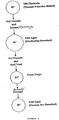
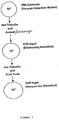
- ESR ingot After the 101.6 cm (40-inch) ESR ingot was cast, it was allowed to cool within the mold for 2 hours and then subjected to the following post-ESR heat treatment. The heat treatment prevented thermal cracking in the ingot in subsequent processing.
- the ESR ingot was removed from the mold and hot transferred to a heating furnace where it was maintained at about 900°F (482°C) for 20 hours. Furnace temperature was then increased by about 25°F/hour (13.9°C/hour) to about 1400°F (760°C). Furnace temperature was then further increased at a rate of about 50°F/hour (27.8°C/hour) to about 2175°F (1191°C), and the ingot was held at 2175°F (1191°C) for at least 32 hours.
- the ingot was then cooled by reducing furnace temperature about 100°F/hour (55.6°C/hour) to about 1600°F (871°C). That temperature was maintained for at least 18 hours.
- the ingot was then further cooled by reducing the furnace temperature about 75°F/hour (41.7°C/hour) to about 1150°F, and the temperature was held there for about 7 hours.
- the ingot was removed from the furnace and allowed to air cool.
- the inventors have discovered that only a narrow and specific VAR melting range will produce a substantially segregation-free VAR ingot, and that VAR control is especially critical during start-up to avoid macrosegregation.
- the 81.3 cm (32-inch) VAR electrode was vacuum arc remelted to a 91.4 cm (36-inch) VAR ingot at a melt rate of about 4.4 kg/min (9.75 lbs/min) which must be controlled within a narrow window.
- the VAR ingot was then homogenized using a standard furnace homogenization heating cycle, and was then overaged at 1600°F (871°C) for 20 hours minimum.
- the ESR ingot had a diameter in excess of that which could be used on the available VAR apparatus, which accommodated a VAR electrode of up to about 34 inches ((863 mm). This necessitated that the diameter of the ESR ingot be adjusted by mechanical working. This, in turn, required that the inventors develop a suitable ESR ingot heating sequence to heat the ESR ingot to forging temperature while preventing the occurrence of thermal cracking during forging. If the diameter of the ESR ingot were to more closely approximate the maximum diameter usable on the available VAR apparatus, then the ESR ingot would be less prone to thermal cracking.
- Press forging or other mechanical working of the ESR ingot may be wholly unnecessary if the size of the ESR ingot were suitable for use directly on the available VAR apparatus.
- the ESR ingot could be delivered to the VAR apparatus immediately after the post-ESR heat treatment steps.
- FIG. 2 is a diagram generally depicting a prophetic embodiment of a triple-melt process according to the present invention wherein the ESR apparatus may be used to cast a 91.4 cm (36-inch) ESR ingot. Because the ESR ingot has a diameter that is less than the 101.6 cm (40-inch) diameter of the ESR ingot cast in Example 1, there would be less risk of ingot cracking or other working-induced imperfections. In addition, the reduced diameter and greater length of the ESR ingot would reduce the likelihood that the ESR ingot would crack or suffer from significant segregation once cast.
- the VIM electrode is cast to an 83.8 cm (33-inch) diameter ingot.
- the VIM ingot is then hot transferred and may be annealed and overaged as described in Example 1.
- the VIM ingot is allowed to remain in the casting mold for 6 to 8 hours before being stripped and loaded into the heat-treating furnace. It is believed that the hold time in the casting mold could be reduced for smaller diameter VIM ingots.
- the 83.8 cm (33-inch) VIM ingot is then electroslag remelted by the process generally described in Example 1.
- the ingot is then hot transferred and subjected to a post-ESR heat treatment as described above in Example 1.
- the ESR ingot is ramped up to forging temperature and press forged to 81.3 cm (32-inch) diameter as generally described in Example 1.
- the 81.3 cm (32-inch) forging is overaged and then vacuum arc remelted to a 91.4 cm (36-inch) VAR ingot as generally described in Example 1.
- the VAR ingot may then be homogenized by standard homogenization treatments, or may be suitably processed in other ways. It is believed that a premium quality Alloy 718 VAR ingot, comparable to the ingot produced by the method of Example 1, would result.
- VAR ingots of Allvac 718 material having diameters greater than 76.2 cm (30 inches) were prepared by the method of the present invention and inspected. Parameters of the several runs are set forth in the following chart. In several of the runs, various VAR melt rates were evaluated to determine the effects on quality of the resulting VAR ingot.
- VAR ingots were conducted on 25 cm (10-inch) diameter billet produced by draw forging the VAR ingots, followed by GFM forging to final diameter.
- the forged billets were peeled and polished to remove surface irregularities after which they were ultrasonic inspected for internal cracks and voids that are usually associated with areas of negative segregation.
- Transverse slices cut from several locations along the length of the billets representing all melt rates were then chemically etched to reveal areas of negative and positive segregation. The absence of sonic indications and segregation defects was sufficient to classify the material as being of premium quality.
Landscapes
- Chemical & Material Sciences (AREA)
- Engineering & Computer Science (AREA)
- Materials Engineering (AREA)
- Mechanical Engineering (AREA)
- Metallurgy (AREA)
- Organic Chemistry (AREA)
- Manufacturing & Machinery (AREA)
- Physics & Mathematics (AREA)
- Plasma & Fusion (AREA)
- Thermal Sciences (AREA)
- Crystallography & Structural Chemistry (AREA)
- Manufacture And Refinement Of Metals (AREA)
- Battery Electrode And Active Subsutance (AREA)
Applications Claiming Priority (4)
| Application Number | Priority Date | Filing Date | Title |
|---|---|---|---|
| US09/802,064 US6416564B1 (en) | 2001-03-08 | 2001-03-08 | Method for producing large diameter ingots of nickel base alloys |
| EP02707863A EP1377690B1 (en) | 2001-03-08 | 2002-02-25 | Method for producing large diameter ingots of nickel base alloys |
| EP07075914A EP1923474A1 (en) | 2001-03-08 | 2002-02-25 | Large diameter ingots of nickel base alloys |
| PCT/US2002/005510 WO2002072897A1 (en) | 2001-03-08 | 2002-02-25 | Method for producing large diameter ingots of nickel base alloys |
Related Parent Applications (4)
| Application Number | Title | Priority Date | Filing Date |
|---|---|---|---|
| EP02707863A Division EP1377690B1 (en) | 2001-03-08 | 2002-02-25 | Method for producing large diameter ingots of nickel base alloys |
| EP07075914A Division EP1923474A1 (en) | 2001-03-08 | 2002-02-25 | Large diameter ingots of nickel base alloys |
| EP02707863.3 Division | 2002-02-27 | ||
| EP07075914.7 Division | 2007-10-23 |
Publications (2)
| Publication Number | Publication Date |
|---|---|
| EP2314725A1 EP2314725A1 (en) | 2011-04-27 |
| EP2314725B1 true EP2314725B1 (en) | 2018-07-18 |
Family
ID=25182747
Family Applications (4)
| Application Number | Title | Priority Date | Filing Date |
|---|---|---|---|
| EP10075549.5A Expired - Lifetime EP2314725B1 (en) | 2001-03-08 | 2002-02-25 | Method for producing large diameter ingots of nickel base alloys |
| EP02707863A Expired - Lifetime EP1377690B1 (en) | 2001-03-08 | 2002-02-25 | Method for producing large diameter ingots of nickel base alloys |
| EP10075548A Withdrawn EP2314724A1 (en) | 2001-03-08 | 2002-02-25 | Method for producing large diameter ingots of nickel base alloys |
| EP07075914A Withdrawn EP1923474A1 (en) | 2001-03-08 | 2002-02-25 | Large diameter ingots of nickel base alloys |
Family Applications After (3)
| Application Number | Title | Priority Date | Filing Date |
|---|---|---|---|
| EP02707863A Expired - Lifetime EP1377690B1 (en) | 2001-03-08 | 2002-02-25 | Method for producing large diameter ingots of nickel base alloys |
| EP10075548A Withdrawn EP2314724A1 (en) | 2001-03-08 | 2002-02-25 | Method for producing large diameter ingots of nickel base alloys |
| EP07075914A Withdrawn EP1923474A1 (en) | 2001-03-08 | 2002-02-25 | Large diameter ingots of nickel base alloys |
Country Status (12)
| Country | Link |
|---|---|
| US (2) | US6416564B1 (enExample) |
| EP (4) | EP2314725B1 (enExample) |
| JP (1) | JP4245351B2 (enExample) |
| CN (1) | CN100366769C (enExample) |
| AT (1) | ATE383448T1 (enExample) |
| AU (2) | AU2002242239C1 (enExample) |
| BR (1) | BR0207928B1 (enExample) |
| CA (3) | CA2439423C (enExample) |
| DE (2) | DE02707863T1 (enExample) |
| RU (1) | RU2272083C2 (enExample) |
| SE (1) | SE527455C2 (enExample) |
| WO (1) | WO2002072897A1 (enExample) |
Families Citing this family (65)
| Publication number | Priority date | Publication date | Assignee | Title |
|---|---|---|---|---|
| US8891583B2 (en) * | 2000-11-15 | 2014-11-18 | Ati Properties, Inc. | Refining and casting apparatus and method |
| US6496529B1 (en) * | 2000-11-15 | 2002-12-17 | Ati Properties, Inc. | Refining and casting apparatus and method |
| US7192496B2 (en) * | 2003-05-01 | 2007-03-20 | Ati Properties, Inc. | Methods of processing nickel-titanium alloys |
| US8266800B2 (en) | 2003-09-10 | 2012-09-18 | Siemens Energy, Inc. | Repair of nickel-based alloy turbine disk |
| US7156932B2 (en) | 2003-10-06 | 2007-01-02 | Ati Properties, Inc. | Nickel-base alloys and methods of heat treating nickel-base alloys |
| US7316057B2 (en) * | 2004-10-08 | 2008-01-08 | Siemens Power Generation, Inc. | Method of manufacturing a rotating apparatus disk |
| ITMI20042482A1 (it) * | 2004-12-23 | 2005-03-23 | Nuovo Pignone Spa | Turbina a vapore |
| US7531054B2 (en) * | 2005-08-24 | 2009-05-12 | Ati Properties, Inc. | Nickel alloy and method including direct aging |
| US7803212B2 (en) * | 2005-09-22 | 2010-09-28 | Ati Properties, Inc. | Apparatus and method for clean, rapidly solidified alloys |
| US7578960B2 (en) * | 2005-09-22 | 2009-08-25 | Ati Properties, Inc. | Apparatus and method for clean, rapidly solidified alloys |
| US7803211B2 (en) * | 2005-09-22 | 2010-09-28 | Ati Properties, Inc. | Method and apparatus for producing large diameter superalloy ingots |
| US8381047B2 (en) * | 2005-11-30 | 2013-02-19 | Microsoft Corporation | Predicting degradation of a communication channel below a threshold based on data transmission errors |
| RU2323985C2 (ru) * | 2006-04-19 | 2008-05-10 | ОАО "Корпорация ВСМПО-АВИСМА" | Способ плавления слитков в вакуумной дуговой печи |
| JP5690586B2 (ja) | 2007-03-30 | 2015-03-25 | エイティーアイ・プロパティーズ・インコーポレーテッド | ワイヤ放電イオンプラズマ電子エミッタを含む溶解炉 |
| US8748773B2 (en) | 2007-03-30 | 2014-06-10 | Ati Properties, Inc. | Ion plasma electron emitters for a melting furnace |
| US7985304B2 (en) * | 2007-04-19 | 2011-07-26 | Ati Properties, Inc. | Nickel-base alloys and articles made therefrom |
| US20090028744A1 (en) * | 2007-07-23 | 2009-01-29 | Heraeus, Inc. | Ultra-high purity NiPt alloys and sputtering targets comprising same |
| US7798199B2 (en) * | 2007-12-04 | 2010-09-21 | Ati Properties, Inc. | Casting apparatus and method |
| US8747956B2 (en) | 2011-08-11 | 2014-06-10 | Ati Properties, Inc. | Processes, systems, and apparatus for forming products from atomized metals and alloys |
| US8475711B2 (en) | 2010-08-12 | 2013-07-02 | Ati Properties, Inc. | Processing of nickel-titanium alloys |
| CN102409182A (zh) * | 2010-08-23 | 2012-04-11 | 南京宝泰特种材料股份有限公司 | 一种镍板坯的制造方法 |
| US9246188B2 (en) | 2011-02-14 | 2016-01-26 | Los Alamos National Security, Llc | Anti-perovskite solid electrolyte compositions |
| CN102181639B (zh) * | 2011-04-26 | 2012-11-14 | 中钢集团吉林铁合金股份有限公司 | 一种采用矿热炉一步法生产低碳、微碳锰硅合金的方法 |
| CN102286666B (zh) * | 2011-07-06 | 2013-03-13 | 江苏远航精密合金科技股份有限公司 | 用真空熔炼方法制备大重量镍锭的工艺 |
| CN102719683A (zh) * | 2012-06-29 | 2012-10-10 | 山西太钢不锈钢股份有限公司 | 一种电渣炉冶炼镍基高温合金的方法 |
| CN102806337A (zh) * | 2012-08-16 | 2012-12-05 | 太原钢铁(集团)有限公司 | 固溶强化型镍基合金电渣锭热送均质化开坯的工艺方法 |
| CN103667586B (zh) * | 2012-09-12 | 2015-07-15 | 上海丰渠特种合金有限公司 | 一种uns n07718高温合金的制备方法 |
| CN103801577A (zh) * | 2012-11-08 | 2014-05-21 | 高玉树 | 镍及镍合金管材的加工工艺方法 |
| CN103882248A (zh) * | 2012-12-21 | 2014-06-25 | 陕西宏远航空锻造有限责任公司 | 一种含有锡和铋的镍基高温合金的冶炼方法 |
| US9279171B2 (en) | 2013-03-15 | 2016-03-08 | Ati Properties, Inc. | Thermo-mechanical processing of nickel-titanium alloys |
| JP6338828B2 (ja) * | 2013-06-10 | 2018-06-06 | 三菱日立パワーシステムズ株式会社 | Ni基鍛造合金並びにこれを用いたタービンディスク、タービンスペーサ及びガスタービン |
| JP6620924B2 (ja) * | 2014-09-29 | 2019-12-18 | 日立金属株式会社 | Fe−Ni基超耐熱合金の製造方法 |
| US9902641B2 (en) * | 2015-03-20 | 2018-02-27 | Corning Incorporated | Molds for shaping glass-based materials and methods for making the same |
| US9765416B2 (en) * | 2015-06-24 | 2017-09-19 | Ati Properties Llc | Alloy melting and refining method |
| DE102015016729B4 (de) | 2015-12-22 | 2018-10-31 | Vdm Metals International Gmbh | Verfahren zur Herstellung einer Nickel-Basislegierung |
| US11011796B2 (en) | 2016-10-21 | 2021-05-18 | Quantumscape Battery, Inc. | Electrolyte separators including lithium borohydride and composite electrolyte separators of lithium-stuffed garnet and lithium borohydride |
| CN106498234B (zh) * | 2016-11-01 | 2018-01-30 | 河钢股份有限公司 | 一种组合式连续挤压模腔堵头材料及其制备方法 |
| CN106676299B (zh) * | 2016-12-29 | 2018-05-04 | 西部超导材料科技股份有限公司 | 一种提高GH4720Li合金W元素成分均匀性的方法 |
| CN106636707B (zh) * | 2016-12-29 | 2018-07-03 | 西部超导材料科技股份有限公司 | 一种镍基高温合金GH4720Li的冶炼工艺 |
| DE102018009375A1 (de) * | 2017-12-04 | 2019-06-06 | Vdm Metals International Gmbh | Verfahren zur Herstellung einer Nickel-Basislegierung |
| DE102018130946B4 (de) | 2017-12-14 | 2024-06-20 | Vdm Metals International Gmbh | Verfahren zur herstellung von halbzeugen aus einer nickel-basislegierung |
| IT201800004541A1 (it) | 2018-04-16 | 2019-10-16 | Procedimento per la produzione di una superlega e superlega ottenuta con il procedimento | |
| DE102020106433A1 (de) | 2019-03-18 | 2020-09-24 | Vdm Metals International Gmbh | Nickel-Legierung mit guter Korrosionsbeständigkeit und hoher Zugfestigkeit sowie Verfahren zur Herstellung von Halbzeugen |
| CN110331301B (zh) * | 2019-06-25 | 2021-03-09 | 河钢股份有限公司 | 一种电渣重熔哈氏合金的方法 |
| CN110284014A (zh) * | 2019-06-25 | 2019-09-27 | 河钢股份有限公司 | 一种蒙乃尔合金的冶炼方法 |
| DE102020116858A1 (de) * | 2019-07-05 | 2021-01-07 | Vdm Metals International Gmbh | Nickel-Basislegierung für Pulver und Verfahren zur Herstellung eines Pulvers |
| DE102020116865A1 (de) | 2019-07-05 | 2021-01-07 | Vdm Metals International Gmbh | Nickel-Basislegierung für Pulver und Verfahren zur Herstellung eines Pulvers |
| DE102020116868A1 (de) | 2019-07-05 | 2021-01-07 | Vdm Metals International Gmbh | Pulver aus einer Nickel-Kobaltlegierung, sowie Verfahren zur Herstellung des Pulvers |
| CN110396605B (zh) * | 2019-07-22 | 2021-02-09 | 中国航发北京航空材料研究院 | 一种变形高温合金铸锭的制备方法 |
| EP4023779B1 (en) * | 2019-08-28 | 2025-02-12 | Gaona Aero Material Co., Ltd. | Smelting process for high-niobium high-temperature alloy |
| CN111876651B (zh) * | 2019-08-28 | 2022-05-24 | 北京钢研高纳科技股份有限公司 | 一种大尺寸高铌高温706合金铸锭及其冶炼工艺 |
| CN111876649B (zh) * | 2019-08-28 | 2022-05-24 | 北京钢研高纳科技股份有限公司 | 一种高铌高温合金大尺寸铸锭的冶炼工艺及高铌高温合金大尺寸铸锭 |
| CN110484775B (zh) * | 2019-09-23 | 2021-06-15 | 成都先进金属材料产业技术研究院有限公司 | 降低gh4169镍基合金锭冶金缺陷的工艺方法 |
| CN110468292B (zh) * | 2019-09-23 | 2021-06-04 | 成都先进金属材料产业技术研究院有限公司 | 用于低冶金缺陷gh4169镍基合金锭的制造方法 |
| KR20210042026A (ko) * | 2019-10-08 | 2021-04-16 | 다이니폰 인사츠 가부시키가이샤 | 증착 마스크를 제조하기 위한 금속판, 금속판의 제조 방법, 증착 마스크 및 증착 마스크의 제조 방법 |
| CN111020245B (zh) * | 2019-10-28 | 2021-05-28 | 成都先进金属材料产业技术研究院有限公司 | 镍铜耐蚀合金的制备方法 |
| CN110900131A (zh) * | 2019-12-09 | 2020-03-24 | 中国科学院上海应用物理研究所 | 基于碳化物组织改性的耐熔盐腐蚀镍钼铬合金加工方法 |
| CN111155021B (zh) * | 2020-01-21 | 2021-07-23 | 北京钢研高纳科技股份有限公司 | 高温合金锭坯及其制备方法和高温合金制件 |
| CN111187946B (zh) * | 2020-03-02 | 2021-11-16 | 北京钢研高纳科技股份有限公司 | 一种高铝含量的镍基变形高温合金及制备方法 |
| CN111575536A (zh) * | 2020-05-28 | 2020-08-25 | 江苏隆达超合金航材有限公司 | 一种高W、Mo含量镍基高温合金及其制备方法 |
| CN111961875B (zh) * | 2020-09-01 | 2022-09-20 | 北京钢研高纳科技股份有限公司 | 一种铁镍基高温合金电渣锭控制铝钛烧损的冶炼方法 |
| CN112708788B (zh) * | 2020-11-18 | 2022-06-17 | 北京钢研高纳科技股份有限公司 | 一种提高k403合金塑性的方法,模具材料和制品 |
| CN113293311B (zh) * | 2021-05-28 | 2022-12-09 | 金川集团股份有限公司 | 真空感应冷坩埚熔炼制备高纯镍锭的方法 |
| CN113403492B (zh) * | 2021-08-20 | 2021-11-05 | 苏州集萃高合材料科技有限公司 | 一种超低硫高温合金的制备方法 |
| CN115418489B (zh) * | 2022-08-31 | 2024-07-16 | 重庆大学 | 电渣重熔含硼高温合金精确控制硼的方法 |
Family Cites Families (14)
| Publication number | Priority date | Publication date | Assignee | Title |
|---|---|---|---|---|
| US3677830A (en) | 1970-02-26 | 1972-07-18 | United Aircraft Corp | Processing of the precipitation hardening nickel-base superalloys |
| US3985995A (en) * | 1973-04-19 | 1976-10-12 | August Thyssen-Hutte Aktienges. | Method of making large structural one-piece parts of metal, particularly one-piece shafts |
| US3975219A (en) | 1975-09-02 | 1976-08-17 | United Technologies Corporation | Thermomechanical treatment for nickel base superalloys |
| US4066447A (en) | 1976-07-08 | 1978-01-03 | Huntington Alloys, Inc. | Low expansion superalloy |
| US5424029A (en) | 1982-04-05 | 1995-06-13 | Teledyne Industries, Inc. | Corrosion resistant nickel base alloy |
| US5328659A (en) | 1982-10-15 | 1994-07-12 | United Technologies Corporation | Superalloy heat treatment for promoting crack growth resistance |
| CN85100649B (zh) * | 1985-04-01 | 1988-08-24 | 鞍山钢铁公司 | 超高温耐磨铸造镍基合金 |
| US5129970A (en) | 1988-09-26 | 1992-07-14 | General Electric Company | Method of forming fatigue crack resistant nickel base superalloys and product formed |
| JP2778705B2 (ja) | 1988-09-30 | 1998-07-23 | 日立金属株式会社 | Ni基超耐熱合金およびその製造方法 |
| RU2002834C1 (ru) * | 1991-06-28 | 1993-11-15 | Всероссийский институт легких сплавов | Способ получени крупногабаритных слитков из сплавов на основе титана, никел и других тугоплавких металлов |
| US5476555A (en) * | 1992-08-31 | 1995-12-19 | Sps Technologies, Inc. | Nickel-cobalt based alloys |
| US5888315A (en) | 1995-03-07 | 1999-03-30 | Henkel Corporation | Composition and process for forming an underpaint coating on metals |
| US5954112A (en) * | 1998-01-27 | 1999-09-21 | Teledyne Industries, Inc. | Manufacturing of large diameter spray formed components using supplemental heating |
| US6496529B1 (en) * | 2000-11-15 | 2002-12-17 | Ati Properties, Inc. | Refining and casting apparatus and method |
-
2001
- 2001-03-08 US US09/802,064 patent/US6416564B1/en not_active Expired - Lifetime
-
2002
- 2002-02-04 US US10/066,891 patent/US6719858B2/en not_active Expired - Lifetime
- 2002-02-25 BR BRPI0207928-3A patent/BR0207928B1/pt not_active IP Right Cessation
- 2002-02-25 AU AU2002242239A patent/AU2002242239C1/en not_active Expired
- 2002-02-25 EP EP10075549.5A patent/EP2314725B1/en not_active Expired - Lifetime
- 2002-02-25 EP EP02707863A patent/EP1377690B1/en not_active Expired - Lifetime
- 2002-02-25 RU RU2003129805/02A patent/RU2272083C2/ru active
- 2002-02-25 EP EP10075548A patent/EP2314724A1/en not_active Withdrawn
- 2002-02-25 CA CA2439423A patent/CA2439423C/en not_active Expired - Lifetime
- 2002-02-25 EP EP07075914A patent/EP1923474A1/en not_active Withdrawn
- 2002-02-25 DE DE0001377690T patent/DE02707863T1/de active Pending
- 2002-02-25 CA CA2876838A patent/CA2876838A1/en not_active Abandoned
- 2002-02-25 CA CA2771264A patent/CA2771264C/en not_active Expired - Lifetime
- 2002-02-25 WO PCT/US2002/005510 patent/WO2002072897A1/en not_active Ceased
- 2002-02-25 DE DE60224514T patent/DE60224514T2/de not_active Expired - Lifetime
- 2002-02-25 CN CNB028086112A patent/CN100366769C/zh not_active Expired - Lifetime
- 2002-02-25 JP JP2002571947A patent/JP4245351B2/ja not_active Expired - Lifetime
- 2002-02-25 AT AT02707863T patent/ATE383448T1/de active
-
2003
- 2003-09-03 SE SE0302357A patent/SE527455C2/sv not_active IP Right Cessation
-
2006
- 2006-08-25 AU AU2006203712A patent/AU2006203712B9/en not_active Expired
Non-Patent Citations (1)
| Title |
|---|
| None * |
Also Published As
Similar Documents
| Publication | Publication Date | Title |
|---|---|---|
| EP2314725B1 (en) | Method for producing large diameter ingots of nickel base alloys | |
| AU2002242239A1 (en) | Method for producing large diameter ingots of nickel base alloys | |
| EP4023779B1 (en) | Smelting process for high-niobium high-temperature alloy | |
| CN111876651B (zh) | 一种大尺寸高铌高温706合金铸锭及其冶炼工艺 | |
| CN111519068B (zh) | 一种难变形镍基高温合金gh4151合金的三联冶炼工艺 | |
| KR102261357B1 (ko) | 합금 용해 및 정련 방법 | |
| CN109112319B (zh) | 用于核级不锈钢电渣重熔的渣料及采用该渣料进行电渣重熔的方法 | |
| CN114318109B (zh) | 一种真空感应炉与加压电渣炉冶炼高氮模具钢的方法 | |
| CN116855779B (zh) | 一种高温用镍基合金的制备方法及高温用镍基合金 | |
| EP4467674A1 (en) | Disc-shaft integrated turbine disc, and manufacturing method thereof | |
| CN110408812B (zh) | 一种用于鼠笼式异步牵引电机端环的制备方法 | |
| CN116426760A (zh) | 一种无表面杂波且液析可控的冷轧辊的制备方法及冷轧辊 | |
| JP2000144273A (ja) | 超耐熱合金の消耗電極式再溶解法 | |
| RU2829982C1 (ru) | Способ изготовления диска турбины, интегрированного с валом | |
| CN116043043A (zh) | 一种高温合金的四联冶炼工艺 | |
| CN121183253A (zh) | 一种燃气轮机用大尺寸Fe基高温合金的冶炼方法 |
Legal Events
| Date | Code | Title | Description |
|---|---|---|---|
| PUAI | Public reference made under article 153(3) epc to a published international application that has entered the european phase |
Free format text: ORIGINAL CODE: 0009012 |
|
| AC | Divisional application: reference to earlier application |
Ref document number: 1923474 Country of ref document: EP Kind code of ref document: P Ref document number: 1377690 Country of ref document: EP Kind code of ref document: P |
|
| AK | Designated contracting states |
Kind code of ref document: A1 Designated state(s): AT BE CH CY DE DK ES FI FR GB GR IE IT LI LU MC NL PT SE TR |
|
| AX | Request for extension of the european patent |
Extension state: SI |
|
| 17P | Request for examination filed |
Effective date: 20111026 |
|
| 17Q | First examination report despatched |
Effective date: 20130122 |
|
| RAP1 | Party data changed (applicant data changed or rights of an application transferred) |
Owner name: ATI PROPERTIES LLC |
|
| STAA | Information on the status of an ep patent application or granted ep patent |
Free format text: STATUS: EXAMINATION IS IN PROGRESS |
|
| TPAC | Observations filed by third parties |
Free format text: ORIGINAL CODE: EPIDOSNTIPA |
|
| TPAC | Observations filed by third parties |
Free format text: ORIGINAL CODE: EPIDOSNTIPA |
|
| GRAP | Despatch of communication of intention to grant a patent |
Free format text: ORIGINAL CODE: EPIDOSNIGR1 |
|
| STAA | Information on the status of an ep patent application or granted ep patent |
Free format text: STATUS: GRANT OF PATENT IS INTENDED |
|
| INTG | Intention to grant announced |
Effective date: 20180208 |
|
| GRAS | Grant fee paid |
Free format text: ORIGINAL CODE: EPIDOSNIGR3 |
|
| GRAA | (expected) grant |
Free format text: ORIGINAL CODE: 0009210 |
|
| STAA | Information on the status of an ep patent application or granted ep patent |
Free format text: STATUS: THE PATENT HAS BEEN GRANTED |
|
| AC | Divisional application: reference to earlier application |
Ref document number: 1377690 Country of ref document: EP Kind code of ref document: P Ref document number: 1923474 Country of ref document: EP Kind code of ref document: P |
|
| AK | Designated contracting states |
Kind code of ref document: B1 Designated state(s): AT BE CH CY DE DK ES FI FR GB GR IE IT LI LU MC NL PT SE TR |
|
| REG | Reference to a national code |
Ref country code: GB Ref legal event code: FG4D |
|
| REG | Reference to a national code |
Ref country code: CH Ref legal event code: EP |
|
| REG | Reference to a national code |
Ref country code: IE Ref legal event code: FG4D |
|
| REG | Reference to a national code |
Ref country code: DE Ref legal event code: R096 Ref document number: 60249525 Country of ref document: DE |
|
| REG | Reference to a national code |
Ref country code: AT Ref legal event code: REF Ref document number: 1019432 Country of ref document: AT Kind code of ref document: T Effective date: 20180815 |
|
| REG | Reference to a national code |
Ref country code: SE Ref legal event code: TRGR |
|
| REG | Reference to a national code |
Ref country code: NL Ref legal event code: MP Effective date: 20180718 |
|
| PG25 | Lapsed in a contracting state [announced via postgrant information from national office to epo] |
Ref country code: NL Free format text: LAPSE BECAUSE OF FAILURE TO SUBMIT A TRANSLATION OF THE DESCRIPTION OR TO PAY THE FEE WITHIN THE PRESCRIBED TIME-LIMIT Effective date: 20180718 |
|
| PG25 | Lapsed in a contracting state [announced via postgrant information from national office to epo] |
Ref country code: GR Free format text: LAPSE BECAUSE OF FAILURE TO SUBMIT A TRANSLATION OF THE DESCRIPTION OR TO PAY THE FEE WITHIN THE PRESCRIBED TIME-LIMIT Effective date: 20181019 Ref country code: FI Free format text: LAPSE BECAUSE OF FAILURE TO SUBMIT A TRANSLATION OF THE DESCRIPTION OR TO PAY THE FEE WITHIN THE PRESCRIBED TIME-LIMIT Effective date: 20180718 |
|
| PG25 | Lapsed in a contracting state [announced via postgrant information from national office to epo] |
Ref country code: ES Free format text: LAPSE BECAUSE OF FAILURE TO SUBMIT A TRANSLATION OF THE DESCRIPTION OR TO PAY THE FEE WITHIN THE PRESCRIBED TIME-LIMIT Effective date: 20180718 |
|
| REG | Reference to a national code |
Ref country code: DE Ref legal event code: R097 Ref document number: 60249525 Country of ref document: DE |
|
| PLBE | No opposition filed within time limit |
Free format text: ORIGINAL CODE: 0009261 |
|
| STAA | Information on the status of an ep patent application or granted ep patent |
Free format text: STATUS: NO OPPOSITION FILED WITHIN TIME LIMIT |
|
| PG25 | Lapsed in a contracting state [announced via postgrant information from national office to epo] |
Ref country code: DK Free format text: LAPSE BECAUSE OF FAILURE TO SUBMIT A TRANSLATION OF THE DESCRIPTION OR TO PAY THE FEE WITHIN THE PRESCRIBED TIME-LIMIT Effective date: 20180718 |
|
| 26N | No opposition filed |
Effective date: 20190423 |
|
| REG | Reference to a national code |
Ref country code: CH Ref legal event code: PL |
|
| PG25 | Lapsed in a contracting state [announced via postgrant information from national office to epo] |
Ref country code: LU Free format text: LAPSE BECAUSE OF NON-PAYMENT OF DUE FEES Effective date: 20190225 Ref country code: MC Free format text: LAPSE BECAUSE OF FAILURE TO SUBMIT A TRANSLATION OF THE DESCRIPTION OR TO PAY THE FEE WITHIN THE PRESCRIBED TIME-LIMIT Effective date: 20180718 |
|
| REG | Reference to a national code |
Ref country code: BE Ref legal event code: MM Effective date: 20190228 |
|
| REG | Reference to a national code |
Ref country code: IE Ref legal event code: MM4A |
|
| PG25 | Lapsed in a contracting state [announced via postgrant information from national office to epo] |
Ref country code: LI Free format text: LAPSE BECAUSE OF NON-PAYMENT OF DUE FEES Effective date: 20190228 Ref country code: CH Free format text: LAPSE BECAUSE OF NON-PAYMENT OF DUE FEES Effective date: 20190228 |
|
| PG25 | Lapsed in a contracting state [announced via postgrant information from national office to epo] |
Ref country code: IE Free format text: LAPSE BECAUSE OF NON-PAYMENT OF DUE FEES Effective date: 20190225 |
|
| PG25 | Lapsed in a contracting state [announced via postgrant information from national office to epo] |
Ref country code: BE Free format text: LAPSE BECAUSE OF NON-PAYMENT OF DUE FEES Effective date: 20190228 |
|
| PG25 | Lapsed in a contracting state [announced via postgrant information from national office to epo] |
Ref country code: TR Free format text: LAPSE BECAUSE OF FAILURE TO SUBMIT A TRANSLATION OF THE DESCRIPTION OR TO PAY THE FEE WITHIN THE PRESCRIBED TIME-LIMIT Effective date: 20180718 |
|
| PG25 | Lapsed in a contracting state [announced via postgrant information from national office to epo] |
Ref country code: PT Free format text: LAPSE BECAUSE OF FAILURE TO SUBMIT A TRANSLATION OF THE DESCRIPTION OR TO PAY THE FEE WITHIN THE PRESCRIBED TIME-LIMIT Effective date: 20181118 |
|
| PGFP | Annual fee paid to national office [announced via postgrant information from national office to epo] |
Ref country code: IT Payment date: 20210219 Year of fee payment: 20 Ref country code: FR Payment date: 20210223 Year of fee payment: 20 |
|
| REG | Reference to a national code |
Ref country code: AT Ref legal event code: UEP Ref document number: 1019432 Country of ref document: AT Kind code of ref document: T Effective date: 20180718 |
|
| PG25 | Lapsed in a contracting state [announced via postgrant information from national office to epo] |
Ref country code: CY Free format text: LAPSE BECAUSE OF FAILURE TO SUBMIT A TRANSLATION OF THE DESCRIPTION OR TO PAY THE FEE WITHIN THE PRESCRIBED TIME-LIMIT Effective date: 20180718 |
|
| PGFP | Annual fee paid to national office [announced via postgrant information from national office to epo] |
Ref country code: GB Payment date: 20210225 Year of fee payment: 20 Ref country code: DE Payment date: 20210225 Year of fee payment: 20 Ref country code: AT Payment date: 20210203 Year of fee payment: 20 Ref country code: SE Payment date: 20210225 Year of fee payment: 20 |
|
| REG | Reference to a national code |
Ref country code: DE Ref legal event code: R071 Ref document number: 60249525 Country of ref document: DE |
|
| REG | Reference to a national code |
Ref country code: GB Ref legal event code: PE20 Expiry date: 20220224 |
|
| REG | Reference to a national code |
Ref country code: SE Ref legal event code: EUG |
|
| REG | Reference to a national code |
Ref country code: AT Ref legal event code: MK07 Ref document number: 1019432 Country of ref document: AT Kind code of ref document: T Effective date: 20220225 |
|
| PG25 | Lapsed in a contracting state [announced via postgrant information from national office to epo] |
Ref country code: GB Free format text: LAPSE BECAUSE OF EXPIRATION OF PROTECTION Effective date: 20220224 |