EP2292425A1 - Harzbeschichtetes stahlblech, das gezogene und abgestreckte dosen mit hervorragendem glanz liefern kann, und verfahren zur herstellung von harzbedecktem stahlblech - Google Patents
Harzbeschichtetes stahlblech, das gezogene und abgestreckte dosen mit hervorragendem glanz liefern kann, und verfahren zur herstellung von harzbedecktem stahlblech Download PDFInfo
- Publication number
- EP2292425A1 EP2292425A1 EP09758102A EP09758102A EP2292425A1 EP 2292425 A1 EP2292425 A1 EP 2292425A1 EP 09758102 A EP09758102 A EP 09758102A EP 09758102 A EP09758102 A EP 09758102A EP 2292425 A1 EP2292425 A1 EP 2292425A1
- Authority
- EP
- European Patent Office
- Prior art keywords
- resin
- steel plate
- tin
- plating layer
- resin layer
- Prior art date
- Legal status (The legal status is an assumption and is not a legal conclusion. Google has not performed a legal analysis and makes no representation as to the accuracy of the status listed.)
- Granted
Links
Images


Classifications
-
- B—PERFORMING OPERATIONS; TRANSPORTING
- B32—LAYERED PRODUCTS
- B32B—LAYERED PRODUCTS, i.e. PRODUCTS BUILT-UP OF STRATA OF FLAT OR NON-FLAT, e.g. CELLULAR OR HONEYCOMB, FORM
- B32B15/00—Layered products comprising a layer of metal
- B32B15/04—Layered products comprising a layer of metal comprising metal as the main or only constituent of a layer, which is next to another layer of the same or of a different material
- B32B15/08—Layered products comprising a layer of metal comprising metal as the main or only constituent of a layer, which is next to another layer of the same or of a different material of synthetic resin
-
- B—PERFORMING OPERATIONS; TRANSPORTING
- B32—LAYERED PRODUCTS
- B32B—LAYERED PRODUCTS, i.e. PRODUCTS BUILT-UP OF STRATA OF FLAT OR NON-FLAT, e.g. CELLULAR OR HONEYCOMB, FORM
- B32B15/00—Layered products comprising a layer of metal
- B32B15/18—Layered products comprising a layer of metal comprising iron or steel
-
- B—PERFORMING OPERATIONS; TRANSPORTING
- B32—LAYERED PRODUCTS
- B32B—LAYERED PRODUCTS, i.e. PRODUCTS BUILT-UP OF STRATA OF FLAT OR NON-FLAT, e.g. CELLULAR OR HONEYCOMB, FORM
- B32B27/00—Layered products comprising a layer of synthetic resin
- B32B27/30—Layered products comprising a layer of synthetic resin comprising vinyl (co)polymers; comprising acrylic (co)polymers
- B32B27/308—Layered products comprising a layer of synthetic resin comprising vinyl (co)polymers; comprising acrylic (co)polymers comprising acrylic (co)polymers
-
- B—PERFORMING OPERATIONS; TRANSPORTING
- B32—LAYERED PRODUCTS
- B32B—LAYERED PRODUCTS, i.e. PRODUCTS BUILT-UP OF STRATA OF FLAT OR NON-FLAT, e.g. CELLULAR OR HONEYCOMB, FORM
- B32B27/00—Layered products comprising a layer of synthetic resin
- B32B27/36—Layered products comprising a layer of synthetic resin comprising polyesters
-
- B—PERFORMING OPERATIONS; TRANSPORTING
- B32—LAYERED PRODUCTS
- B32B—LAYERED PRODUCTS, i.e. PRODUCTS BUILT-UP OF STRATA OF FLAT OR NON-FLAT, e.g. CELLULAR OR HONEYCOMB, FORM
- B32B27/00—Layered products comprising a layer of synthetic resin
- B32B27/40—Layered products comprising a layer of synthetic resin comprising polyurethanes
-
- B—PERFORMING OPERATIONS; TRANSPORTING
- B32—LAYERED PRODUCTS
- B32B—LAYERED PRODUCTS, i.e. PRODUCTS BUILT-UP OF STRATA OF FLAT OR NON-FLAT, e.g. CELLULAR OR HONEYCOMB, FORM
- B32B5/00—Layered products characterised by the non- homogeneity or physical structure, i.e. comprising a fibrous, filamentary, particulate or foam layer; Layered products characterised by having a layer differing constitutionally or physically in different parts
- B32B5/14—Layered products characterised by the non- homogeneity or physical structure, i.e. comprising a fibrous, filamentary, particulate or foam layer; Layered products characterised by having a layer differing constitutionally or physically in different parts characterised by a layer differing constitutionally or physically in different parts, e.g. denser near its faces
- B32B5/147—Layered products characterised by the non- homogeneity or physical structure, i.e. comprising a fibrous, filamentary, particulate or foam layer; Layered products characterised by having a layer differing constitutionally or physically in different parts characterised by a layer differing constitutionally or physically in different parts, e.g. denser near its faces by treatment of the layer
-
- C—CHEMISTRY; METALLURGY
- C09—DYES; PAINTS; POLISHES; NATURAL RESINS; ADHESIVES; COMPOSITIONS NOT OTHERWISE PROVIDED FOR; APPLICATIONS OF MATERIALS NOT OTHERWISE PROVIDED FOR
- C09D—COATING COMPOSITIONS, e.g. PAINTS, VARNISHES OR LACQUERS; FILLING PASTES; CHEMICAL PAINT OR INK REMOVERS; INKS; CORRECTING FLUIDS; WOODSTAINS; PASTES OR SOLIDS FOR COLOURING OR PRINTING; USE OF MATERIALS THEREFOR
- C09D5/00—Coating compositions, e.g. paints, varnishes or lacquers, characterised by their physical nature or the effects produced; Filling pastes
-
- B—PERFORMING OPERATIONS; TRANSPORTING
- B05—SPRAYING OR ATOMISING IN GENERAL; APPLYING FLUENT MATERIALS TO SURFACES, IN GENERAL
- B05D—PROCESSES FOR APPLYING FLUENT MATERIALS TO SURFACES, IN GENERAL
- B05D2202/00—Metallic substrate
- B05D2202/10—Metallic substrate based on Fe
-
- B—PERFORMING OPERATIONS; TRANSPORTING
- B05—SPRAYING OR ATOMISING IN GENERAL; APPLYING FLUENT MATERIALS TO SURFACES, IN GENERAL
- B05D—PROCESSES FOR APPLYING FLUENT MATERIALS TO SURFACES, IN GENERAL
- B05D2350/00—Pretreatment of the substrate
- B05D2350/60—Adding a layer before coating
- B05D2350/65—Adding a layer before coating metal layer
-
- B—PERFORMING OPERATIONS; TRANSPORTING
- B05—SPRAYING OR ATOMISING IN GENERAL; APPLYING FLUENT MATERIALS TO SURFACES, IN GENERAL
- B05D—PROCESSES FOR APPLYING FLUENT MATERIALS TO SURFACES, IN GENERAL
- B05D3/00—Pretreatment of surfaces to which liquids or other fluent materials are to be applied; After-treatment of applied coatings, e.g. intermediate treating of an applied coating preparatory to subsequent applications of liquids or other fluent materials
- B05D3/02—Pretreatment of surfaces to which liquids or other fluent materials are to be applied; After-treatment of applied coatings, e.g. intermediate treating of an applied coating preparatory to subsequent applications of liquids or other fluent materials by baking
-
- B—PERFORMING OPERATIONS; TRANSPORTING
- B05—SPRAYING OR ATOMISING IN GENERAL; APPLYING FLUENT MATERIALS TO SURFACES, IN GENERAL
- B05D—PROCESSES FOR APPLYING FLUENT MATERIALS TO SURFACES, IN GENERAL
- B05D7/00—Processes, other than flocking, specially adapted for applying liquids or other fluent materials to particular surfaces or for applying particular liquids or other fluent materials
- B05D7/50—Multilayers
- B05D7/52—Two layers
-
- B—PERFORMING OPERATIONS; TRANSPORTING
- B32—LAYERED PRODUCTS
- B32B—LAYERED PRODUCTS, i.e. PRODUCTS BUILT-UP OF STRATA OF FLAT OR NON-FLAT, e.g. CELLULAR OR HONEYCOMB, FORM
- B32B2250/00—Layers arrangement
- B32B2250/03—3 layers
-
- B—PERFORMING OPERATIONS; TRANSPORTING
- B32—LAYERED PRODUCTS
- B32B—LAYERED PRODUCTS, i.e. PRODUCTS BUILT-UP OF STRATA OF FLAT OR NON-FLAT, e.g. CELLULAR OR HONEYCOMB, FORM
- B32B2250/00—Layers arrangement
- B32B2250/40—Symmetrical or sandwich layers, e.g. ABA, ABCBA, ABCCBA
-
- B—PERFORMING OPERATIONS; TRANSPORTING
- B32—LAYERED PRODUCTS
- B32B—LAYERED PRODUCTS, i.e. PRODUCTS BUILT-UP OF STRATA OF FLAT OR NON-FLAT, e.g. CELLULAR OR HONEYCOMB, FORM
- B32B2255/00—Coating on the layer surface
- B32B2255/06—Coating on the layer surface on metal layer
-
- B—PERFORMING OPERATIONS; TRANSPORTING
- B32—LAYERED PRODUCTS
- B32B—LAYERED PRODUCTS, i.e. PRODUCTS BUILT-UP OF STRATA OF FLAT OR NON-FLAT, e.g. CELLULAR OR HONEYCOMB, FORM
- B32B2255/00—Coating on the layer surface
- B32B2255/20—Inorganic coating
- B32B2255/205—Metallic coating
-
- B—PERFORMING OPERATIONS; TRANSPORTING
- B32—LAYERED PRODUCTS
- B32B—LAYERED PRODUCTS, i.e. PRODUCTS BUILT-UP OF STRATA OF FLAT OR NON-FLAT, e.g. CELLULAR OR HONEYCOMB, FORM
- B32B2270/00—Resin or rubber layer containing a blend of at least two different polymers
-
- B—PERFORMING OPERATIONS; TRANSPORTING
- B32—LAYERED PRODUCTS
- B32B—LAYERED PRODUCTS, i.e. PRODUCTS BUILT-UP OF STRATA OF FLAT OR NON-FLAT, e.g. CELLULAR OR HONEYCOMB, FORM
- B32B2307/00—Properties of the layers or laminate
- B32B2307/40—Properties of the layers or laminate having particular optical properties
-
- B—PERFORMING OPERATIONS; TRANSPORTING
- B32—LAYERED PRODUCTS
- B32B—LAYERED PRODUCTS, i.e. PRODUCTS BUILT-UP OF STRATA OF FLAT OR NON-FLAT, e.g. CELLULAR OR HONEYCOMB, FORM
- B32B2307/00—Properties of the layers or laminate
- B32B2307/40—Properties of the layers or laminate having particular optical properties
- B32B2307/406—Bright, glossy, shiny surface
-
- B—PERFORMING OPERATIONS; TRANSPORTING
- B32—LAYERED PRODUCTS
- B32B—LAYERED PRODUCTS, i.e. PRODUCTS BUILT-UP OF STRATA OF FLAT OR NON-FLAT, e.g. CELLULAR OR HONEYCOMB, FORM
- B32B2307/00—Properties of the layers or laminate
- B32B2307/50—Properties of the layers or laminate having particular mechanical properties
-
- B—PERFORMING OPERATIONS; TRANSPORTING
- B32—LAYERED PRODUCTS
- B32B—LAYERED PRODUCTS, i.e. PRODUCTS BUILT-UP OF STRATA OF FLAT OR NON-FLAT, e.g. CELLULAR OR HONEYCOMB, FORM
- B32B2307/00—Properties of the layers or laminate
- B32B2307/50—Properties of the layers or laminate having particular mechanical properties
- B32B2307/536—Hardness
-
- B—PERFORMING OPERATIONS; TRANSPORTING
- B32—LAYERED PRODUCTS
- B32B—LAYERED PRODUCTS, i.e. PRODUCTS BUILT-UP OF STRATA OF FLAT OR NON-FLAT, e.g. CELLULAR OR HONEYCOMB, FORM
- B32B2307/00—Properties of the layers or laminate
- B32B2307/70—Other properties
- B32B2307/714—Inert, i.e. inert to chemical degradation, corrosion
-
- B—PERFORMING OPERATIONS; TRANSPORTING
- B32—LAYERED PRODUCTS
- B32B—LAYERED PRODUCTS, i.e. PRODUCTS BUILT-UP OF STRATA OF FLAT OR NON-FLAT, e.g. CELLULAR OR HONEYCOMB, FORM
- B32B2439/00—Containers; Receptacles
- B32B2439/40—Closed containers
- B32B2439/66—Cans, tins
-
- B—PERFORMING OPERATIONS; TRANSPORTING
- B32—LAYERED PRODUCTS
- B32B—LAYERED PRODUCTS, i.e. PRODUCTS BUILT-UP OF STRATA OF FLAT OR NON-FLAT, e.g. CELLULAR OR HONEYCOMB, FORM
- B32B2439/00—Containers; Receptacles
- B32B2439/70—Food packaging
Definitions
- the present invention relates to a resin-coated steel plate and a manufacturing method thereof, and more particularly to a resin-coated steel plate suitable for forming a drawn and ironed can whose barrel portion exhibits excellent brightness by dry lubrication without using a liquid coolant and a manufacturing method of the resin-coated steel plate.
- a drawn and ironed can having a thin-wall barrel portion.
- the drawn and ironed can is manufactured as follows. That is, a metal material such as an aluminum sheet or a tin plate is subject to drawing between a drawing die and a punch in at least one stage thus forming a cup which is constituted of a barrel portion having no seam on a side surface thereof and a bottom portion integrally joined to the barrel portion without a seam. Then, when desired, ironing is applied to the barrel portion by allowing the barrel portion to pass between an ironing punch and a die so that the barrel portion of the can becomes thin.
- a liquid coolant is used in general for lowering friction between a resin-coated metal plate and a tool. Further, forming of a resin-coated metal plate into the seamless can by drawing/ironing is also performed in a dry state by applying wax or the like as a lubricant. However, to realize such ironing of the resin-coated metal plate in such a dry state, the resin-coated metal plate is required to withstand severe forming.
- a coated metal plate which enables drawing and ironing under such a dry condition, and an amount of coating film on a surface of the sheet plate, a plating condition and a film thickness for drawing and ironing under the dry condition have been studied in patent document 1.
- Patent document 1 JP-A-2003-34322
- the coated metal plate described in the above-mentioned patent document 1 does not take a condition on a material for acquiring brightness and hence, as a matter of course, patent document 1 completely fails to describe specific contents of conditions and a range which are considered necessary for acquiring brightness which the inventors of the present invention aim at.
- the coated metal plate described in patent document 1 uses an aluminum plate which may produce brightness more easily compared to a steel plate, it is hardly conceivable that the coated metal plate described in patent document 1 produces a can which exhibits appearance having brightness.
- a resin-coated steel plate used for forming a drawn and ironed can which includes: a steel plate; a first tin plating layer which is formed on a surface of the steel plate which becomes an outer surface of the can and has a free tin amount of #20 to #150; a first resin layer which is formed on the first tin plating layer and has a thickness of 0.01 to 3.0 ⁇ m; and a second resin layer which is formed on a surface of the steel plate which becomes an inner surface of the can and has a thickness of 10 to 50 ⁇ m.
- the resin-coated steel plate may also preferably be configured as follows.
- a method of manufacturing a resin-coated steel plate which includes the steps of: forming a first tin plating layer having a free tin amount of #20 to #150 on one surface of a steel plate which becomes an outer surface of the can; forming a first resin layer having a thickness of 0.01 to 3.0 ⁇ m on the first tin plating layer; and forming a second resin layer having a thickness of 10 to 50 ⁇ m on a surface of the steel plate which becomes an inner surface of the can.
- the steel plate may preferably be heated to a temperature not lower than a melting point of tin after forming the first resin layer.
- a brightness enhancing method increases the number of steps and hence, it is necessary to determine whether or not such a method should be adopted by taking required brightness and economy into consideration.
- the resin-coated steel plate of the present invention even when the drawing and ironing are performed under a dry condition, it is possible to stably manufacture the drawn and ironed can (DI can) without producing metal powder or the like. Further, according to the resin-coated steel plate of the present invention, a barrel portion of the obtained drawn and ironed can exhibits excellent brightness as well as excellent corrosion resistance.
- a resin coated steel plate according to the present invention is a resin-coated steel plate used in forming a drawn and ironed can.
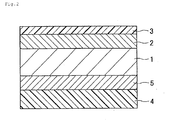
- the gist of the resin coated steel plate according to the present invention lies in that, as can be understood from the cross-sectional structure of the resin-coated steel plate shown in Fig.
- a first tin plating layer 2 having a free tin amount of #20 to #150 is formed on a surface of a steel plate 1 which constitutes an outer surface of the can, and a first resin layer 3 having a thickness of 0.01 to 3.0 ⁇ m is formed on the first tin plating layer 2, and a second resin layer 4 having a thickness of 10 to 50 ⁇ m is formed on a surface of the steel plate 1 which constitutes an inner surface of the can.
- the resin coated steel plate it is difficult to suppress the generation of a rough surface caused by the deformation of crystal grains on a surface of iron due to drawing and hence, a drawn and ironed can which has excellent brightness cannot be obtained.
- inventors of the present invention have found that by forming a tin layer which has malleability on the surface of the steel plate which constitutes the outer surface of the can such that the free tin amount falls within the above-mentioned range and, at the same time, by forming a resin layer having a thickness which falls within the above-mentioned range on the tin layer, ironing of the tin layer and the like is facilitated and hence, a surface smoothing action by ironing can be effectively acquired thus forming a drawn and ironed can which exhibits appearance having excellent brightness.
- the resin-coated steel plate according to the present invention exhibits excellent formability in drawing and ironing and can form a drawn and ironed can having excellent brightness and corrosion resistance (examples 1 to 16). That is, according to the present invention, it is important that the free tin amount of the tin layer formed on the surface of the steel plate which constitutes the outer surface side of the can falls within the above-mentioned range with respect to brightness of the manufactured can. When the free tin amount is smaller than the above-mentioned range, as apparent from a result of a comparison example 1 described later, the regular reflectance is low and hence, the drawn and ironed can cannot have excellent brightness.
- the free tin amount is larger than the above-mentioned range, there exists a tendency that the surface roughness is increased resulting in lowering of the regular reflectance. Further, it is also important that the thickness of the first resin layer formed on the tin layer falls within the above-mentioned range with respect to the brightness and the formability of the obtained can.
- the thickness of the resin layer is smaller than the above-mentioned range, there may be a case where the metal surface is shaved so that metal powder is produced and pin holes are formed in an inner surface of the can attributed to this metal powder resulting in leaking of liquid (comparison example 2).
- the thickness of the resin layer is larger than the above-mentioned range, the can exhibits the poor brightness even when the tin layer whose free tin amount falls within the above-mentioned range is formed (comparison example 3).
- the thickness of the resin layer is smaller than the above-mentioned range, there may be a case that defective coating is formed leading to leaking of liquid (comparison example 4).
- the thickness of the resin layer is larger than the above-mentioned range, the further improvement of the quality of the can cannot be expected and hence, the excessive thickness of the resin layer merely brings about a disadvantage economically.
- a second tin plating layer 5 whose free tin amount falls within a range from #2 to #16 is formed between the surface of the steel plate 1 which constitutes a can-inner-side surface and the second resin layer 4.
- the free tin content is larger than the above-mentioned range, the further enhancement of the corrosion resistance is not expected and hence, the excessive increase of the free tin amount brings about a disadvantage economically.
- a portion of the first tin plating layer 2 and a portion of the second tin plating layer 5 may be formed into an alloy by reflow treatment so that the first tin plating layer 2 is constituted of a first tin layer 2a and an iron-tin alloy layer 2b and second tin plating layer 5 is constituted of a second tin layer 5a and an iron-tin alloy layer 5b.
- a post treatment layer 6, 7 described later which is formed by chromating or the like may be formed on the first tin plating layer 2 and the second tin plating layer 5.
- a steel plate which can be used for forming the resin-coated steel plate of the present invention a steel plate which has been conventionally used in the manufacture of a drawn and ironed can be used.
- various kinds of steel plates can be suitably used depending on usage or application.
- a cold-rolled steel plate having a plate thickness ranging from 0.15 to 0.3mm which is manufactured by applying cold rolling to a hot rolled plate made of alumina killed steel and, thereafter, applying cold rolling again to the rolled steel after annealing for increasing a strength of the rolled plate or the like.
- Ra arithmetic average surface roughness
- the free tin amount of the first tin plating layer falls within a range from #20 to #150.
- the free tin amount can be adjusted to a value within such a range by adjusting tin plating amount (tin coated amount), reflow conditions (temperature, time) and the like.
- # used for indicating the free tin amount is a symbol used in expressing an amount of tin in a tin plate in general, wherein #1 indicates a tin amount of 0.112g/m 2 and the tin amount is proportional to numeral affixed to #.
- #20 indicates a tin amount of 2.24g/m 2
- #150 indicates a tin amount of 16.8g/m 2
- the arithmetic average surface roughness (Ra) of the surface of the first tin plating layer is not more than 0.15 ⁇ m from a viewpoint of brightness. That is, when the arithmetic average surface roughness (Ra) exceeds 0.15 ⁇ m so that the surface of the first tin plating layer is coarse, the resin layer in valley portions is entangled at the time of ironing thus deteriorating surface smoothness of the resin-coated steel plate resulting in lowering of regular reflectance, that is, brightness of the resin-coated steel plate.
- the second tin plating layer is formed in the same manner as the first tin plating layer except for that the free tin amount of the second tin plating layer ranges from #2 to #16.
- Martin's hardness at a temperature of 25°C of the first resin layer formed on the first tin plating layer is not less than 50N/mm 2 .
- a smoothing effect of the tin plating layer by way of the resin layer can be enhanced and hence, it is possible to enhance regular reflectance, that is, brightness of the drawn and ironed can.
- polyester having the rigid molecular structure as resin content or a crosslink-type resin such as a urethane-acrylate-based UV paint can be used.
- the resin layer may be prepared by blending a hard resin and a soft resin.
- the glass transition temperature of the first resin layer when the first resin layer is of a non-crosslink type and an inorganic filler such as silica is not added in the first resin layer, it is preferable to set the glass transition temperature of the first resin layer to a temperature not lower than 20°C, and more particularly to a temperature not lower than 70°C.
- a smoothing effect of the tin plating layer by way of the resin layer can be enhanced and hence, it is possible to enhance regular reflectance, that is, brightness of the manufactured drawn and ironed can.
- the proper glass transition temperature of the resin should be determined by taking a kind and an amount of the cross-linking agent or the inorganic filler into consideration.
- a resin which is used for forming the first resin layer of the resin-coated steel plate of the present invention constitutes a protective layer of the drawn and ironed can and hence, it is desirable that the first resin layer has following properties. That is, the resin layer per se receives the severe ironing and hence, it is desirable that the resin layer can be elongated to some extent. Particularly, it is desirable that the resin layer has the elongation after fracture of not less than 5% at a temperature of 25°C when measured in accordance with ASTM D-882. Further, it is desirable that there is no change in appearance due to corrosion of the steel plate. Particularly, it is desirable that water absorption measured in accordance with ASTM D-570-63 (at 23 degrees for 24 hours) is not more than 15%.
- the resin layer exhibits the excellent adhesiveness to a metal material and, more particularly, the excellent thermal adhesiveness to the metal material. It is also preferable that concentration of a carbonyl group in the resin is not less than 100meq/100g resin.
- the resin for forming the first resin layer of the present invention is not limited to those resins. That is, a polyester group such as polyethylene terephthalate, polyethylene terephthalate/isophthalate, polytetra methylene terephthalate, polyethylene/ tetra methylene terephthalate, polytetra methylene terephthalate/isophthalate, polytetramethylene/ethylene terephthalate, polyethylene/ tetra methylene terephtalate/ isophthalate, polyethylene/ oxybenzoate or a blended material of these resins; polycarbonate group such as poly-p-xylene glycol biscarbonate, poly-dioxydiphenyl methane carbonate, poly-dioxydiphenol 2, 2-propane carbonate, poly-dioxydiphenyl 1, 1-ethane carbonate; polyamide group such as poly- ⁇ -aminoca
- the first resin layer of the resin coated steel plate of the present invention can be formed by coating a paint which is formed by dissolving a resin content in a solvent, an aqueous dispersion agent in which a resin content is dispersed, or a ultraviolet-curing-type paint which contains 10% of solid content or by adhering a cast film, or by directly coating a resin by extrusion.
- the second resin layer which is formed on the surface of the steel plate which constitutes the inner-surface-side surface or on the second tin plating layer which is formed when necessary can be formed using the same material and the same method as the first resin layer.
- the second resin layer is brought into contact with a content of the can and hence, it is also necessary to pay attention to barrier property against metal corroding content in the content. That is, it is necessary to determine a resin to be applied by taking a content filled in the can and a preservation period.
- polyester particularly ethylene-terephthalate-based polyester which contains an isophthalic acid as a copolymer content is named.
- the resin-coated steel plate of the present invention can be formed by the manufacturing method which includes: a step in which a first tin plating layer is formed on one surface of a steel plate such that a free tin amount becomes #20 to #150; a step in which a first resin layer having a thickness of 0.01 to 3.0 ⁇ m is formed on the first tin plating layer; and a step in which a second resin layer having a thickness of 10 to 50 ⁇ m is formed on another surface of the steel plate.
- a known method such as alkaline electrolytic cleaning, acid cleaning or the like is applicable.
- the first tin plating layer is formed on the steel plate and, when necessary, the second tin plating layer is formed on the steel plate.
- the tin plating layer is formed on the above-mentioned steel plate as follows. That is, the tin plating layer is formed on the above-mentioned steel plate by electroplating using a known Ferrostan bath or halogen bath.
- a tin plating layer having a normal luster surface is formed on the above-mentioned steel plate such that a tin plating layer is formed on the steel plate by electroplating, the steel plate is heated at a temperature equal to or more than a melting point of tin, and the steel plate is quenched in water after tin is melted (reflow treatment).
- the free tin amount of the first tin plating layer falls within a range from #20 to #150, and the adjustment of free tin amount can be performed by adjusting tin plating amount (tin coated amount), reflow conditions (temperature, time) and the like. Further, it is preferable that the arithmetic average roughness of the surface of the first tin plating layer is set to not more than 0.15 ⁇ m. As mentioned previously, the above range can be adjusted by adjusting the tin plating condition in addition to the adjustment of the coarseness of the using steel plate. In forming the second tin plating layer when necessary, the second tin plating layer is formed in the same manner as the first tin plating layer while adjusting the free tin amount to a value which falls within a range from #2 to #16.
- a post-treatment (surface treatment) layer may be formed on the first tin plating layer and the second tin plating layer from a viewpoint of enhancing adhesiveness between the first resin layer and the first tin plating layer and adhesiveness between the second resin layer and the second tin plating layer.
- immersion treatment which immerses the tin plating layer in an aqueous solution of dichromate salt, a method which forms a chromium hydrous oxide film on the tin plating layer by electrolytic treatment, a method which forms a two-layered film made of metal chromium and chromium hydrous oxide on the tin plating layer by electrolytic treatment in an aqueous solution of chromic anhydride, a method which forms a thin film made of an organic resin such as a polyacrylic acid or an epoxy resin on the tin plating layer, a method which applies silane coupling treatment to the tin plating layer are considered.
- These surface treatments can be performed by a conventionally known method.
- a first resin layer having a thickness of 0.01 to 3.0 ⁇ m is formed on the first tin plating layer and, at the same time, a second resin layer having a thickness of 10 to 50 ⁇ m is formed on another surface of the steel plate.
- the first resin layer may be formed by a conventionally known coating method such as roll coater coating including gravure coater coating, spray coating or the like.
- the adjustment of thickness of the coated film may be conducted by adjusting a coating amount or an amount of solvent or resin content in paint or the like.
- the adjustment of thickness of the coated film may be conducted by adjusting roughness of meshes of gravure or the like.
- the first resin layer may be also formed by adhering a preformed cast film to a steel plate by thermal adhesion or the like or by directly coating a resin on the steel plate by extrusion. According to the present invention, it is desirable to heat the steel plate to a temperature not lower than a melting point of tin after forming the first resin layer from a viewpoint of brightness. However, there exists a possibility that this heating pushes up a manufacturing cost due to the increase of steps and hence, it is necessary to determine whether or not the heating is performed by taking economy and requested properties into consideration.
- the first resin layer and the first tin plating layer can be brought into more uniform contact and hence, brightness of the resin-coated metal plate can be enhanced eventually.
- the second resin layer can be formed simultaneously with the formation of the first resin layer, or the second resin layer can be formed before or after the formation of the first resin layer.
- the selection of the respective resin layers and the resin forming method should be determined such that no defective appearance occurs on the first resin layer or the second resin layer due to adhesion of the first resin layer or the second resin layer to a roll.
- the second resin layer can be formed by coating of paint or by an extrusion coating method besides the adhesion of a cast film by thermal adhesion.
- the resin-coated steel plate of the present invention can be preferably used in forming the conventionally known drawn and ironed can. It is possible to form the resin-coated steel can with favorable formability also under a dry condition without using a coolant, not to mention, under a condition which uses a liquid coolant. That is, a blank which is punched out from the resin-coated steel plate of the present invention is drawn into a cup-shaped body using drawing dies in one stage or in plural stages.
- ironing for increasing a height of a barrel portion of the cup-shaped body while decreasing a wall thickness of the barrel portion of the cup-shaped body is applied to the cup-shaped body in such a manner that the barrel portion is forcibly pushed into a clearance portion between the ironing die and a punch which is set smaller than a thickness of the barrel portion of the cup-shaped body.
- DI can relatively-small-diameter drawn and ironed can
- a barrel portion having a width of 20mm which is arranged at a position 60mm away from a can bottom of the formed drawn can is cut off in the circumferential direction, and the cut barrel portion having a width of 20mm is divided into eight pieces in the can height direction thus preparing measuring samples.
- a total reflectance and a diffuse reflectance of a center portion of each measuring sample are measured using a spectrophotometric colorimetry meter (made by Konica Minolta Holdings, Inc., Type: CM-3500), and regular reflectance is calculated using a following formula.
- Regular reflectance(%) total reflectance (%) - diffuse reflectance (%) An average value of regular reflectances of eight divided samples is calculated by dropping the fractional portion of the value and is used as the barrel-portion regular reflectance in the present invention. It is determined that the resin-coated steel plate is practically usable when the regular reflectance is not less than 10%.
- a portion of the barrel of the can obtained by drawing and ironing is cut in the circumferential direction using a position 2mm lower than a lowest portion of an undulated upper end of the barrel portion as a starting point, and the upper portion of the barrel portion is removed thus allowing the can to have a constant height. Thereafter, flange forming is applied to the can and a content (Coca Cola: registered trademark) is filled in the can such that the content reaches 90% of the total height of the can.
- An aluminum lid to which epoxy phenolic-based coating material is coated by baking with a thickness after drying of 10 ⁇ m is seamed to the can.
- each aluminum lid arranged up-side-down 100 pieces of these cans are left under respective atmospheres of 37°C and 50°C for 6 months, and the number of cans which exhibits leaking of liquid in the respective atmospheres are checked.
- the most favorable case may be a case where no cans exhibit leaking of liquid even when the cans are left under the atmosphere of 50°C for 6 months, it is determined the cans are practically usable in a case where no cans exhibit leaking of liquid even when the cans are left under the atmosphere of 37°C for 6 months.
- Contents of the cans which are left for 6 months under respective atmospheres of 37°C and 50°C for 6 months are sampled, and flavors of contents in all cans are checked by 30 people.
- it is determined that the flavor is abnormal while when the number of people who perceive such flavor abnormality is less than three, it is determined that the flavor is favorable.
- the most favorable case may be a case where cans exhibit favorable flavor even when the cans are left under the atmosphere of 50°C, it is determined the cans are practically usable in a case where cans exhibit favorable flavor even when the cans are left under the atmosphere of 37°C for 6 months.
- a copolymer polyester paint (product name: VYLON-1400) made by TOYOBO Co., Ltd. is applied to a surface of the metal plate which constitutes an outer surface of the can by painting and, thereafter, the metal plate is dried under atmosphere of 150°C for 10 minutes thus manufacturing a resin-coated steel plate having a coated film whose thickness after drying is 1 ⁇ m.
- 50mg/m 2 of glamour wax is applied to both surfaces of the resin-coated steel plate by coating and, thereafter, drawing and ironing are applied to the resin-coated steel plate in dry atmosphere under following forming conditions such that the inner surface of the can becomes the surface coated with a copolymer polyester film made by Toyo Kohan CO., Ltd. thus manufacturing a drawn and ironed can.
- Properties of the drawn and ironed can that is, regular reflectance of an outer surface of the can, leaking of liquid after a lapse of time from filling of liquid, and flavor of content are evaluated using the above-mentioned evaluation methods. A result of the evaluations is shown in Table 1.
- the free tin quantities of the first tin plating layer and the second tin plating layer, the thicknesses of the first resin layer and the second resin layer, and Ra of the first tin plating layer are set to values shown in Table 1, using resin-coated steel plates which are manufactured in the same manner as the first embodiment, drawing and ironing are performed under forming conditions substantially equal to the forming conditions of the example 1 thus manufacturing drawn and ironed cans. Properties of these drawn and ironed cans are shown in Table 1. From Table 1, it is found that even when the cans are left under 37°C and 50°C for 6 months after content is filled in the cans, and leaking of liquid is observed in no cans.
- All cans exhibit good flavor at least in the case where the cans are left for 6 months under 37°C. All can exhibit can-properties which prove that the cans withstand the practical use. Further, barrel portions of the cans exhibit high regular reflectance so that the cans obtain appearance of high brightness.
- Table 1 Properties of these drawn and ironed cans are shown in Table 1. From Table 1, it is found that even when the cans are left under 37°C and 50°C for 6 months after content is filled in the cans, leaking of liquid is observed in no cans. All cans exhibit favorable flavor under both temperatures. All can exhibit can-properties which prove that the cans withstand the practical use. Further, barrel portions of the cans exhibit high regular reflectance so that the cans obtain appearance of high brightness.
- Embodiment Tin-plating layer Resin layer Re-heating Characteristics of formed can First tin-plating layer Second tin-plating layer First resin layer Second resin layer Regular reflectance of body portion Liquid spill (%) Flavor Ra ( ⁇ m) Amount of free tin Amout of free tin Tg (°C) Hardness (N/mm2) Thickness ( ⁇ m) Thickness ( ⁇ m) 37°C 50°C 37°C 50°C 1 0.12 #20 #10 83 265 0.01 28 None 22 0 0 Good Good 2 0.12 #80 #10 83 265 0.1 28 None 46 0 0 Good Good Good 3 0.12 #150 #10 83 265 0.1 28 None 47 0 0 Good Good 4 0.12 #80 #10 83 265 1 28 None 24 0 0 Good Good 5 0.12 #60 #10 83 265 3 28 None 13 0 0 Good Good 6 0.12 #80 #10 83 265 0.5 10 None 32 0 0 Good Good Good 7 0.12 #80
- Embodiment Tin-plating layer Resin layer Re-heating Characteristics of formed can First tin-plating layer Second tin-plating layer First resin layer Second resin layer Regular reflectance of body portion Liquid spill (%) Flavor ka ( ⁇ m) Amount of free tin Amount of free tin Tg (°C) Hardness (N/mm2) Thickness ( ⁇ m) Thickness ( ⁇ m) 37°C 50°C 37°C 50°C 1 0.12 #15 #10 83 265 0.01 28 None 9 0 0 Good Good 2 0.12 #80 #10 83 263 0.007 28 None 51 2 18 Bad Bad 3 0.12 #150 #10 263 4.0 28 None 8 0 0 Good Good 4 0.12 #80 #10 83 263 1.0 8 None 21 2 27 Bad Bad Bad
Landscapes
- Chemical & Material Sciences (AREA)
- Life Sciences & Earth Sciences (AREA)
- Engineering & Computer Science (AREA)
- Materials Engineering (AREA)
- Wood Science & Technology (AREA)
- Organic Chemistry (AREA)
- Laminated Bodies (AREA)
- Electroplating Methods And Accessories (AREA)
- Rigid Containers With Two Or More Constituent Elements (AREA)
- Extrusion Moulding Of Plastics Or The Like (AREA)
Applications Claiming Priority (2)
| Application Number | Priority Date | Filing Date | Title |
|---|---|---|---|
| JP2008146119 | 2008-06-03 | ||
| PCT/JP2009/002465 WO2009147835A1 (ja) | 2008-06-03 | 2009-06-02 | 光輝性に優れた絞りしごき缶を提供可能な樹脂被覆鋼板及びその製造方法 |
Publications (3)
| Publication Number | Publication Date |
|---|---|
| EP2292425A1 true EP2292425A1 (de) | 2011-03-09 |
| EP2292425A4 EP2292425A4 (de) | 2013-11-13 |
| EP2292425B1 EP2292425B1 (de) | 2014-12-31 |
Family
ID=41397918
Family Applications (1)
| Application Number | Title | Priority Date | Filing Date |
|---|---|---|---|
| EP09758102.9A Not-in-force EP2292425B1 (de) | 2008-06-03 | 2009-06-02 | Harzbeschichtetes stahlblech, das gezogene und abgestreckte dosen mit hervorragendem glanz liefern kann, und verfahren zur herstellung von harzbeschichtetem stahlblech |
Country Status (4)
| Country | Link |
|---|---|
| EP (1) | EP2292425B1 (de) |
| JP (1) | JP5462159B2 (de) |
| CN (1) | CN102015285B (de) |
| WO (1) | WO2009147835A1 (de) |
Cited By (1)
| Publication number | Priority date | Publication date | Assignee | Title |
|---|---|---|---|---|
| EP2915759A4 (de) * | 2012-10-31 | 2016-06-29 | Toyo Kohan Co Ltd | Harzbeschichtete metallplatte für eine tiefgezogene und geglättete dose, tiefgezogene und geglättete dose sowie herstellungsverfahren für die tiefgezogene und geglättete dose |
Families Citing this family (1)
| Publication number | Priority date | Publication date | Assignee | Title |
|---|---|---|---|---|
| JP5827789B2 (ja) * | 2010-03-26 | 2015-12-02 | 東洋鋼鈑株式会社 | 光輝性に優れた絞りしごき缶用樹脂被覆Al板及び絞りしごき缶の製造方法 |
Family Cites Families (5)
| Publication number | Priority date | Publication date | Assignee | Title |
|---|---|---|---|---|
| CA2029943C (en) * | 1989-11-15 | 1999-10-12 | Ryousuke Wake | Resin-coated steel sheet for drawn-and-ironed cans and drawn-and-ironed cans manufactured therefrom |
| JP2534589B2 (ja) * | 1991-01-21 | 1996-09-18 | 東洋鋼鈑株式会社 | 薄肉化深絞り缶用ポリエステル樹脂被覆鋼板および原板 |
| JP3872998B2 (ja) * | 2001-04-09 | 2007-01-24 | 関西ペイント株式会社 | 塗装金属板及びそれを用いた絞りしごき缶 |
| JP2004098552A (ja) * | 2002-09-11 | 2004-04-02 | Toyo Kohan Co Ltd | 2ピース缶用ラミネート鋼板およびそれを用いた2ピース缶 |
| JP5377817B2 (ja) * | 2005-11-11 | 2013-12-25 | 東洋製罐株式会社 | 耐食性に優れたキャップ適用可能な缶体 |
-
2009
- 2009-06-02 CN CN2009801163817A patent/CN102015285B/zh not_active Expired - Fee Related
- 2009-06-02 WO PCT/JP2009/002465 patent/WO2009147835A1/ja not_active Ceased
- 2009-06-02 JP JP2010515770A patent/JP5462159B2/ja not_active Expired - Fee Related
- 2009-06-02 EP EP09758102.9A patent/EP2292425B1/de not_active Not-in-force
Cited By (1)
| Publication number | Priority date | Publication date | Assignee | Title |
|---|---|---|---|---|
| EP2915759A4 (de) * | 2012-10-31 | 2016-06-29 | Toyo Kohan Co Ltd | Harzbeschichtete metallplatte für eine tiefgezogene und geglättete dose, tiefgezogene und geglättete dose sowie herstellungsverfahren für die tiefgezogene und geglättete dose |
Also Published As
| Publication number | Publication date |
|---|---|
| EP2292425B1 (de) | 2014-12-31 |
| EP2292425A4 (de) | 2013-11-13 |
| CN102015285B (zh) | 2013-10-23 |
| CN102015285A (zh) | 2011-04-13 |
| WO2009147835A1 (ja) | 2009-12-10 |
| JPWO2009147835A1 (ja) | 2011-10-20 |
| JP5462159B2 (ja) | 2014-04-02 |
Similar Documents
| Publication | Publication Date | Title |
|---|---|---|
| EP2159045B1 (de) | Harzbeschichtetes aluminiumlegierungsblech und daraus hergestellter formkörper | |
| EP3725511B1 (de) | Harzbeschichtete metallplatte für behälter | |
| US8647729B2 (en) | Draw-ironed aluminum can and method of producing the same | |
| EP2159046A1 (de) | Harzbeschichtetes blech und daraus hergestellter formkörper | |
| EP2915759B1 (de) | Harzbeschichtete metallplatte für eine tiefgezogene und geglättete dose, tiefgezogene und geglättete dose sowie herstellungsverfahren für die tiefgezogene und geglättete dose | |
| EP2444245B1 (de) | Verbundstoff-al-material für gezogenes und gebügeltes blech | |
| CN101346493A (zh) | 用于油箱的经表面处理的无Cr钢板其制造方法和所用的处理组合物 | |
| AU718855B2 (en) | Rustproof steel sheet for automobile fuel tank with excellent resistance weldability corrosion resistance and press moldability | |
| EP2292425B1 (de) | Harzbeschichtetes stahlblech, das gezogene und abgestreckte dosen mit hervorragendem glanz liefern kann, und verfahren zur herstellung von harzbeschichtetem stahlblech | |
| EP2554277B1 (de) | Harzbeschichtete al-platte für eine tiefgezogene und abgestreckte dose mit hervorragendem glanz sowie verfahren zur herstellung der tiefgezogenen und abgestreckten dose | |
| US20050100749A1 (en) | Metal sheet coated with thermoplastic resin and can obtained therefrom | |
| JPH0999517A (ja) | 潤滑処理鋼板とそれに用いる皮膜形成性組成物 | |
| EP2436609B1 (de) | Gezogene und geglättete dose aus stahl und verfahren zu ihrer herstellung | |
| JPH0243040A (ja) | 耐食性に優れた潤滑樹脂処理鋼板 | |
| JP4254112B2 (ja) | プレコート鋼板を用いたプレス成形缶 | |
| JP5060460B2 (ja) | 樹脂密着性に優れた樹脂塗装アルミニウム板 | |
| JPH06155656A (ja) | 自動車用表面処理鋼板 | |
| JP4908734B2 (ja) | 成形性に優れる樹脂被覆金属板材およびその製造方法 | |
| JP3088507B2 (ja) | 食缶用フィルムラミネート鋼板 | |
| WO2017217159A1 (ja) | 金属容器蓋用ラミネート金属板及びその製造方法 | |
| JP2625499B2 (ja) | 容器用溶融アルミニウムめっき鋼板、製造方法及び缶体 | |
| JPH0760897A (ja) | 潤滑性黒色鋼板 | |
| JP2011073338A (ja) | 容器用樹脂被覆鋼板 | |
| JPH06155655A (ja) | 耐食性に優れた潤滑性鋼板 | |
| JPH09271716A (ja) | 加工性、加工後耐食性に優れた低光沢黒色鋼板 |
Legal Events
| Date | Code | Title | Description |
|---|---|---|---|
| PUAI | Public reference made under article 153(3) epc to a published international application that has entered the european phase |
Free format text: ORIGINAL CODE: 0009012 |
|
| 17P | Request for examination filed |
Effective date: 20110103 |
|
| AK | Designated contracting states |
Kind code of ref document: A1 Designated state(s): AT BE BG CH CY CZ DE DK EE ES FI FR GB GR HR HU IE IS IT LI LT LU LV MC MK MT NL NO PL PT RO SE SI SK TR |
|
| AX | Request for extension of the european patent |
Extension state: AL BA RS |
|
| DAX | Request for extension of the european patent (deleted) | ||
| A4 | Supplementary search report drawn up and despatched |
Effective date: 20131014 |
|
| RIC1 | Information provided on ipc code assigned before grant |
Ipc: C09D 167/00 20060101ALI20131008BHEP Ipc: B32B 27/36 20060101ALI20131008BHEP Ipc: B32B 15/08 20060101AFI20131008BHEP Ipc: B65D 1/12 20060101ALI20131008BHEP |
|
| GRAP | Despatch of communication of intention to grant a patent |
Free format text: ORIGINAL CODE: EPIDOSNIGR1 |
|
| RIC1 | Information provided on ipc code assigned before grant |
Ipc: B32B 27/36 20060101ALI20140623BHEP Ipc: B32B 15/08 20060101AFI20140623BHEP Ipc: B65D 1/12 20060101ALI20140623BHEP Ipc: C09D 167/00 20060101ALI20140623BHEP |
|
| INTG | Intention to grant announced |
Effective date: 20140708 |
|
| GRAS | Grant fee paid |
Free format text: ORIGINAL CODE: EPIDOSNIGR3 |
|
| GRAA | (expected) grant |
Free format text: ORIGINAL CODE: 0009210 |
|
| AK | Designated contracting states |
Kind code of ref document: B1 Designated state(s): AT BE BG CH CY CZ DE DK EE ES FI FR GB GR HR HU IE IS IT LI LT LU LV MC MK MT NL NO PL PT RO SE SI SK TR |
|
| REG | Reference to a national code |
Ref country code: CH Ref legal event code: EP Ref country code: GB Ref legal event code: FG4D |
|
| REG | Reference to a national code |
Ref country code: IE Ref legal event code: FG4D |
|
| REG | Reference to a national code |
Ref country code: AT Ref legal event code: REF Ref document number: 704116 Country of ref document: AT Kind code of ref document: T Effective date: 20150215 |
|
| REG | Reference to a national code |
Ref country code: DE Ref legal event code: R096 Ref document number: 602009028710 Country of ref document: DE Effective date: 20150219 |
|
| PG25 | Lapsed in a contracting state [announced via postgrant information from national office to epo] |
Ref country code: NO Free format text: LAPSE BECAUSE OF FAILURE TO SUBMIT A TRANSLATION OF THE DESCRIPTION OR TO PAY THE FEE WITHIN THE PRESCRIBED TIME-LIMIT Effective date: 20150331 Ref country code: LT Free format text: LAPSE BECAUSE OF FAILURE TO SUBMIT A TRANSLATION OF THE DESCRIPTION OR TO PAY THE FEE WITHIN THE PRESCRIBED TIME-LIMIT Effective date: 20141231 Ref country code: FI Free format text: LAPSE BECAUSE OF FAILURE TO SUBMIT A TRANSLATION OF THE DESCRIPTION OR TO PAY THE FEE WITHIN THE PRESCRIBED TIME-LIMIT Effective date: 20141231 |
|
| REG | Reference to a national code |
Ref country code: NL Ref legal event code: VDEP Effective date: 20141231 |
|
| REG | Reference to a national code |
Ref country code: LT Ref legal event code: MG4D |
|
| PG25 | Lapsed in a contracting state [announced via postgrant information from national office to epo] |
Ref country code: GR Free format text: LAPSE BECAUSE OF FAILURE TO SUBMIT A TRANSLATION OF THE DESCRIPTION OR TO PAY THE FEE WITHIN THE PRESCRIBED TIME-LIMIT Effective date: 20150401 Ref country code: LV Free format text: LAPSE BECAUSE OF FAILURE TO SUBMIT A TRANSLATION OF THE DESCRIPTION OR TO PAY THE FEE WITHIN THE PRESCRIBED TIME-LIMIT Effective date: 20141231 Ref country code: HR Free format text: LAPSE BECAUSE OF FAILURE TO SUBMIT A TRANSLATION OF THE DESCRIPTION OR TO PAY THE FEE WITHIN THE PRESCRIBED TIME-LIMIT Effective date: 20141231 Ref country code: SE Free format text: LAPSE BECAUSE OF FAILURE TO SUBMIT A TRANSLATION OF THE DESCRIPTION OR TO PAY THE FEE WITHIN THE PRESCRIBED TIME-LIMIT Effective date: 20141231 |
|
| REG | Reference to a national code |
Ref country code: AT Ref legal event code: MK05 Ref document number: 704116 Country of ref document: AT Kind code of ref document: T Effective date: 20141231 |
|
| PG25 | Lapsed in a contracting state [announced via postgrant information from national office to epo] |
Ref country code: NL Free format text: LAPSE BECAUSE OF FAILURE TO SUBMIT A TRANSLATION OF THE DESCRIPTION OR TO PAY THE FEE WITHIN THE PRESCRIBED TIME-LIMIT Effective date: 20141231 |
|
| PG25 | Lapsed in a contracting state [announced via postgrant information from national office to epo] |
Ref country code: CZ Free format text: LAPSE BECAUSE OF FAILURE TO SUBMIT A TRANSLATION OF THE DESCRIPTION OR TO PAY THE FEE WITHIN THE PRESCRIBED TIME-LIMIT Effective date: 20141231 Ref country code: ES Free format text: LAPSE BECAUSE OF FAILURE TO SUBMIT A TRANSLATION OF THE DESCRIPTION OR TO PAY THE FEE WITHIN THE PRESCRIBED TIME-LIMIT Effective date: 20141231 Ref country code: SK Free format text: LAPSE BECAUSE OF FAILURE TO SUBMIT A TRANSLATION OF THE DESCRIPTION OR TO PAY THE FEE WITHIN THE PRESCRIBED TIME-LIMIT Effective date: 20141231 Ref country code: RO Free format text: LAPSE BECAUSE OF FAILURE TO SUBMIT A TRANSLATION OF THE DESCRIPTION OR TO PAY THE FEE WITHIN THE PRESCRIBED TIME-LIMIT Effective date: 20141231 |
|
| PG25 | Lapsed in a contracting state [announced via postgrant information from national office to epo] |
Ref country code: IS Free format text: LAPSE BECAUSE OF FAILURE TO SUBMIT A TRANSLATION OF THE DESCRIPTION OR TO PAY THE FEE WITHIN THE PRESCRIBED TIME-LIMIT Effective date: 20150430 Ref country code: PL Free format text: LAPSE BECAUSE OF FAILURE TO SUBMIT A TRANSLATION OF THE DESCRIPTION OR TO PAY THE FEE WITHIN THE PRESCRIBED TIME-LIMIT Effective date: 20141231 Ref country code: AT Free format text: LAPSE BECAUSE OF FAILURE TO SUBMIT A TRANSLATION OF THE DESCRIPTION OR TO PAY THE FEE WITHIN THE PRESCRIBED TIME-LIMIT Effective date: 20141231 |
|
| REG | Reference to a national code |
Ref country code: DE Ref legal event code: R097 Ref document number: 602009028710 Country of ref document: DE |
|
| PG25 | Lapsed in a contracting state [announced via postgrant information from national office to epo] |
Ref country code: DK Free format text: LAPSE BECAUSE OF FAILURE TO SUBMIT A TRANSLATION OF THE DESCRIPTION OR TO PAY THE FEE WITHIN THE PRESCRIBED TIME-LIMIT Effective date: 20141231 Ref country code: EE Free format text: LAPSE BECAUSE OF FAILURE TO SUBMIT A TRANSLATION OF THE DESCRIPTION OR TO PAY THE FEE WITHIN THE PRESCRIBED TIME-LIMIT Effective date: 20141231 |
|
| PLBE | No opposition filed within time limit |
Free format text: ORIGINAL CODE: 0009261 |
|
| STAA | Information on the status of an ep patent application or granted ep patent |
Free format text: STATUS: NO OPPOSITION FILED WITHIN TIME LIMIT |
|
| 26N | No opposition filed |
Effective date: 20151001 |
|
| PG25 | Lapsed in a contracting state [announced via postgrant information from national office to epo] |
Ref country code: IT Free format text: LAPSE BECAUSE OF FAILURE TO SUBMIT A TRANSLATION OF THE DESCRIPTION OR TO PAY THE FEE WITHIN THE PRESCRIBED TIME-LIMIT Effective date: 20141231 |
|
| PG25 | Lapsed in a contracting state [announced via postgrant information from national office to epo] |
Ref country code: MC Free format text: LAPSE BECAUSE OF FAILURE TO SUBMIT A TRANSLATION OF THE DESCRIPTION OR TO PAY THE FEE WITHIN THE PRESCRIBED TIME-LIMIT Effective date: 20141231 |
|
| REG | Reference to a national code |
Ref country code: CH Ref legal event code: PL |
|
| PG25 | Lapsed in a contracting state [announced via postgrant information from national office to epo] |
Ref country code: LU Free format text: LAPSE BECAUSE OF FAILURE TO SUBMIT A TRANSLATION OF THE DESCRIPTION OR TO PAY THE FEE WITHIN THE PRESCRIBED TIME-LIMIT Effective date: 20150602 Ref country code: SI Free format text: LAPSE BECAUSE OF FAILURE TO SUBMIT A TRANSLATION OF THE DESCRIPTION OR TO PAY THE FEE WITHIN THE PRESCRIBED TIME-LIMIT Effective date: 20141231 |
|
| REG | Reference to a national code |
Ref country code: IE Ref legal event code: MM4A |
|
| PG25 | Lapsed in a contracting state [announced via postgrant information from national office to epo] |
Ref country code: CH Free format text: LAPSE BECAUSE OF NON-PAYMENT OF DUE FEES Effective date: 20150630 Ref country code: LI Free format text: LAPSE BECAUSE OF NON-PAYMENT OF DUE FEES Effective date: 20150630 Ref country code: IE Free format text: LAPSE BECAUSE OF NON-PAYMENT OF DUE FEES Effective date: 20150602 |
|
| PG25 | Lapsed in a contracting state [announced via postgrant information from national office to epo] |
Ref country code: BE Free format text: LAPSE BECAUSE OF FAILURE TO SUBMIT A TRANSLATION OF THE DESCRIPTION OR TO PAY THE FEE WITHIN THE PRESCRIBED TIME-LIMIT Effective date: 20141231 |
|
| REG | Reference to a national code |
Ref country code: FR Ref legal event code: PLFP Year of fee payment: 8 |
|
| PG25 | Lapsed in a contracting state [announced via postgrant information from national office to epo] |
Ref country code: MT Free format text: LAPSE BECAUSE OF FAILURE TO SUBMIT A TRANSLATION OF THE DESCRIPTION OR TO PAY THE FEE WITHIN THE PRESCRIBED TIME-LIMIT Effective date: 20141231 |
|
| PG25 | Lapsed in a contracting state [announced via postgrant information from national office to epo] |
Ref country code: HU Free format text: LAPSE BECAUSE OF FAILURE TO SUBMIT A TRANSLATION OF THE DESCRIPTION OR TO PAY THE FEE WITHIN THE PRESCRIBED TIME-LIMIT; INVALID AB INITIO Effective date: 20090602 Ref country code: BG Free format text: LAPSE BECAUSE OF FAILURE TO SUBMIT A TRANSLATION OF THE DESCRIPTION OR TO PAY THE FEE WITHIN THE PRESCRIBED TIME-LIMIT Effective date: 20141231 |
|
| REG | Reference to a national code |
Ref country code: FR Ref legal event code: PLFP Year of fee payment: 9 |
|
| PG25 | Lapsed in a contracting state [announced via postgrant information from national office to epo] |
Ref country code: CY Free format text: LAPSE BECAUSE OF FAILURE TO SUBMIT A TRANSLATION OF THE DESCRIPTION OR TO PAY THE FEE WITHIN THE PRESCRIBED TIME-LIMIT Effective date: 20141231 |
|
| PG25 | Lapsed in a contracting state [announced via postgrant information from national office to epo] |
Ref country code: TR Free format text: LAPSE BECAUSE OF FAILURE TO SUBMIT A TRANSLATION OF THE DESCRIPTION OR TO PAY THE FEE WITHIN THE PRESCRIBED TIME-LIMIT Effective date: 20141231 |
|
| REG | Reference to a national code |
Ref country code: FR Ref legal event code: PLFP Year of fee payment: 10 |
|
| PG25 | Lapsed in a contracting state [announced via postgrant information from national office to epo] |
Ref country code: MK Free format text: LAPSE BECAUSE OF FAILURE TO SUBMIT A TRANSLATION OF THE DESCRIPTION OR TO PAY THE FEE WITHIN THE PRESCRIBED TIME-LIMIT Effective date: 20141231 |
|
| PG25 | Lapsed in a contracting state [announced via postgrant information from national office to epo] |
Ref country code: PT Free format text: LAPSE BECAUSE OF FAILURE TO SUBMIT A TRANSLATION OF THE DESCRIPTION OR TO PAY THE FEE WITHIN THE PRESCRIBED TIME-LIMIT Effective date: 20141231 |
|
| PGFP | Annual fee paid to national office [announced via postgrant information from national office to epo] |
Ref country code: FR Payment date: 20200619 Year of fee payment: 12 Ref country code: DE Payment date: 20200618 Year of fee payment: 12 |
|
| PGFP | Annual fee paid to national office [announced via postgrant information from national office to epo] |
Ref country code: GB Payment date: 20200625 Year of fee payment: 12 |
|
| REG | Reference to a national code |
Ref country code: DE Ref legal event code: R119 Ref document number: 602009028710 Country of ref document: DE |
|
| GBPC | Gb: european patent ceased through non-payment of renewal fee |
Effective date: 20210602 |
|
| PG25 | Lapsed in a contracting state [announced via postgrant information from national office to epo] |
Ref country code: GB Free format text: LAPSE BECAUSE OF NON-PAYMENT OF DUE FEES Effective date: 20210602 Ref country code: DE Free format text: LAPSE BECAUSE OF NON-PAYMENT OF DUE FEES Effective date: 20220101 |
|
| PG25 | Lapsed in a contracting state [announced via postgrant information from national office to epo] |
Ref country code: FR Free format text: LAPSE BECAUSE OF NON-PAYMENT OF DUE FEES Effective date: 20210630 |