EP2252267B1 - Lyophilisierte nanoemulsion - Google Patents
Lyophilisierte nanoemulsion Download PDFInfo
- Publication number
- EP2252267B1 EP2252267B1 EP09722255.8A EP09722255A EP2252267B1 EP 2252267 B1 EP2252267 B1 EP 2252267B1 EP 09722255 A EP09722255 A EP 09722255A EP 2252267 B1 EP2252267 B1 EP 2252267B1
- Authority
- EP
- European Patent Office
- Prior art keywords
- nanoemulsion
- lipid
- sucrose
- lyophilized
- lyophilised
- Prior art date
- Legal status (The legal status is an assumption and is not a legal conclusion. Google has not performed a legal analysis and makes no representation as to the accuracy of the status listed.)
- Active
Links
- 239000007908 nanoemulsion Substances 0.000 title claims description 98
- 239000000839 emulsion Substances 0.000 claims description 42
- 239000000194 fatty acid Substances 0.000 claims description 38
- 150000002632 lipids Chemical class 0.000 claims description 30
- 229930006000 Sucrose Natural products 0.000 claims description 28
- 239000005720 sucrose Substances 0.000 claims description 28
- -1 sucrose fatty acid ester Chemical class 0.000 claims description 28
- 235000014113 dietary fatty acids Nutrition 0.000 claims description 26
- 229930195729 fatty acid Natural products 0.000 claims description 26
- 238000000034 method Methods 0.000 claims description 26
- 238000004108 freeze drying Methods 0.000 claims description 23
- 239000012071 phase Substances 0.000 claims description 17
- 238000002360 preparation method Methods 0.000 claims description 10
- 239000008346 aqueous phase Substances 0.000 claims description 9
- 150000003626 triacylglycerols Chemical class 0.000 claims description 9
- 150000001875 compounds Chemical class 0.000 claims description 4
- 229940088594 vitamin Drugs 0.000 claims description 4
- 229930003231 vitamin Natural products 0.000 claims description 4
- 239000011782 vitamin Substances 0.000 claims description 4
- 235000013343 vitamin Nutrition 0.000 claims description 4
- 238000004945 emulsification Methods 0.000 claims description 3
- XLYOFNOQVPJJNP-UHFFFAOYSA-N water Substances O XLYOFNOQVPJJNP-UHFFFAOYSA-N 0.000 description 29
- 239000003995 emulsifying agent Substances 0.000 description 23
- 229940057917 medium chain triglycerides Drugs 0.000 description 19
- 239000002245 particle Substances 0.000 description 18
- 239000004480 active ingredient Substances 0.000 description 15
- 239000000463 material Substances 0.000 description 15
- 239000005639 Lauric acid Substances 0.000 description 12
- 239000003921 oil Substances 0.000 description 12
- 235000019198 oils Nutrition 0.000 description 12
- 239000007788 liquid Substances 0.000 description 11
- 239000003814 drug Substances 0.000 description 9
- 239000013543 active substance Substances 0.000 description 8
- 229940079593 drug Drugs 0.000 description 8
- 239000003925 fat Substances 0.000 description 8
- 235000000346 sugar Nutrition 0.000 description 8
- GVJHHUAWPYXKBD-UHFFFAOYSA-N d-alpha-tocopherol Natural products OC1=C(C)C(C)=C2OC(CCCC(C)CCCC(C)CCCC(C)C)(C)CCC2=C1C GVJHHUAWPYXKBD-UHFFFAOYSA-N 0.000 description 7
- 238000009826 distribution Methods 0.000 description 7
- PEDCQBHIVMGVHV-UHFFFAOYSA-N Glycerine Chemical compound OCC(O)CO PEDCQBHIVMGVHV-UHFFFAOYSA-N 0.000 description 6
- 239000000787 lecithin Substances 0.000 description 6
- 235000010445 lecithin Nutrition 0.000 description 6
- POULHZVOKOAJMA-UHFFFAOYSA-N methyl undecanoic acid Natural products CCCCCCCCCCCC(O)=O POULHZVOKOAJMA-UHFFFAOYSA-N 0.000 description 6
- 239000000203 mixture Substances 0.000 description 6
- 238000007911 parenteral administration Methods 0.000 description 6
- IIZPXYDJLKNOIY-JXPKJXOSSA-N 1-palmitoyl-2-arachidonoyl-sn-glycero-3-phosphocholine Chemical compound CCCCCCCCCCCCCCCC(=O)OC[C@H](COP([O-])(=O)OCC[N+](C)(C)C)OC(=O)CCC\C=C/C\C=C/C\C=C/C\C=C/CCCCC IIZPXYDJLKNOIY-JXPKJXOSSA-N 0.000 description 5
- CZMRCDWAGMRECN-UGDNZRGBSA-N Sucrose Chemical compound O[C@H]1[C@H](O)[C@@H](CO)O[C@@]1(CO)O[C@@H]1[C@H](O)[C@@H](O)[C@H](O)[C@@H](CO)O1 CZMRCDWAGMRECN-UGDNZRGBSA-N 0.000 description 5
- 230000002528 anti-freeze Effects 0.000 description 5
- 150000004665 fatty acids Chemical class 0.000 description 5
- 230000007062 hydrolysis Effects 0.000 description 5
- 238000006460 hydrolysis reaction Methods 0.000 description 5
- 229940067606 lecithin Drugs 0.000 description 5
- 235000010469 Glycine max Nutrition 0.000 description 4
- FAPWRFPIFSIZLT-UHFFFAOYSA-M Sodium chloride Chemical compound [Na+].[Cl-] FAPWRFPIFSIZLT-UHFFFAOYSA-M 0.000 description 4
- 239000003963 antioxidant agent Substances 0.000 description 4
- 235000006708 antioxidants Nutrition 0.000 description 4
- 239000004530 micro-emulsion Substances 0.000 description 4
- WTJKGGKOPKCXLL-RRHRGVEJSA-N phosphatidylcholine Chemical compound CCCCCCCCCCCCCCCC(=O)OC[C@H](COP([O-])(=O)OCC[N+](C)(C)C)OC(=O)CCCCCCCC=CCCCCCCCC WTJKGGKOPKCXLL-RRHRGVEJSA-N 0.000 description 4
- 239000003549 soybean oil Substances 0.000 description 4
- 235000012424 soybean oil Nutrition 0.000 description 4
- 239000000126 substance Substances 0.000 description 4
- 239000008307 w/o/w-emulsion Substances 0.000 description 4
- CSCPPACGZOOCGX-UHFFFAOYSA-N Acetone Chemical compound CC(C)=O CSCPPACGZOOCGX-UHFFFAOYSA-N 0.000 description 3
- UHOVQNZJYSORNB-UHFFFAOYSA-N Benzene Chemical compound C1=CC=CC=C1 UHOVQNZJYSORNB-UHFFFAOYSA-N 0.000 description 3
- 244000068988 Glycine max Species 0.000 description 3
- 235000021360 Myristic acid Nutrition 0.000 description 3
- TUNFSRHWOTWDNC-UHFFFAOYSA-N Myristic acid Natural products CCCCCCCCCCCCCC(O)=O TUNFSRHWOTWDNC-UHFFFAOYSA-N 0.000 description 3
- 239000004372 Polyvinyl alcohol Substances 0.000 description 3
- HEMHJVSKTPXQMS-UHFFFAOYSA-M Sodium hydroxide Chemical compound [OH-].[Na+] HEMHJVSKTPXQMS-UHFFFAOYSA-M 0.000 description 3
- 229930003427 Vitamin E Natural products 0.000 description 3
- 229940099371 diacetylated monoglycerides Drugs 0.000 description 3
- WIGCFUFOHFEKBI-UHFFFAOYSA-N gamma-tocopherol Natural products CC(C)CCCC(C)CCCC(C)CCCC1CCC2C(C)C(O)C(C)C(C)C2O1 WIGCFUFOHFEKBI-UHFFFAOYSA-N 0.000 description 3
- VLKZOEOYAKHREP-UHFFFAOYSA-N n-Hexane Chemical compound CCCCCC VLKZOEOYAKHREP-UHFFFAOYSA-N 0.000 description 3
- IPCSVZSSVZVIGE-UHFFFAOYSA-N n-hexadecanoic acid Natural products CCCCCCCCCCCCCCCC(O)=O IPCSVZSSVZVIGE-UHFFFAOYSA-N 0.000 description 3
- 239000000546 pharmaceutical excipient Substances 0.000 description 3
- 229920002451 polyvinyl alcohol Polymers 0.000 description 3
- 229920000036 polyvinylpyrrolidone Polymers 0.000 description 3
- 239000001267 polyvinylpyrrolidone Substances 0.000 description 3
- 235000013855 polyvinylpyrrolidone Nutrition 0.000 description 3
- 150000005846 sugar alcohols Chemical class 0.000 description 3
- 239000004094 surface-active agent Substances 0.000 description 3
- 235000019165 vitamin E Nutrition 0.000 description 3
- 239000011709 vitamin E Substances 0.000 description 3
- 229940046009 vitamin E Drugs 0.000 description 3
- GVJHHUAWPYXKBD-IEOSBIPESA-N α-tocopherol Chemical compound OC1=C(C)C(C)=C2O[C@@](CCC[C@H](C)CCC[C@H](C)CCCC(C)C)(C)CCC2=C1C GVJHHUAWPYXKBD-IEOSBIPESA-N 0.000 description 3
- HDTRYLNUVZCQOY-UHFFFAOYSA-N α-D-glucopyranosyl-α-D-glucopyranoside Natural products OC1C(O)C(O)C(CO)OC1OC1C(O)C(O)C(O)C(CO)O1 HDTRYLNUVZCQOY-UHFFFAOYSA-N 0.000 description 2
- 229940114069 12-hydroxystearate Drugs 0.000 description 2
- JVKUCNQGESRUCL-UHFFFAOYSA-N 2-Hydroxyethyl 12-hydroxyoctadecanoate Chemical compound CCCCCCC(O)CCCCCCCCCCC(=O)OCCO JVKUCNQGESRUCL-UHFFFAOYSA-N 0.000 description 2
- TWJNQYPJQDRXPH-UHFFFAOYSA-N 2-cyanobenzohydrazide Chemical compound NNC(=O)C1=CC=CC=C1C#N TWJNQYPJQDRXPH-UHFFFAOYSA-N 0.000 description 2
- HEDRZPFGACZZDS-UHFFFAOYSA-N Chloroform Chemical compound ClC(Cl)Cl HEDRZPFGACZZDS-UHFFFAOYSA-N 0.000 description 2
- RTZKZFJDLAIYFH-UHFFFAOYSA-N Diethyl ether Chemical compound CCOCC RTZKZFJDLAIYFH-UHFFFAOYSA-N 0.000 description 2
- WQZGKKKJIJFFOK-GASJEMHNSA-N Glucose Natural products OC[C@H]1OC(O)[C@H](O)[C@@H](O)[C@@H]1O WQZGKKKJIJFFOK-GASJEMHNSA-N 0.000 description 2
- 235000021314 Palmitic acid Nutrition 0.000 description 2
- 229920002690 Polyoxyl 40 HydrogenatedCastorOil Polymers 0.000 description 2
- 235000019485 Safflower oil Nutrition 0.000 description 2
- 229920001304 Solutol HS 15 Polymers 0.000 description 2
- 235000021355 Stearic acid Nutrition 0.000 description 2
- HDTRYLNUVZCQOY-WSWWMNSNSA-N Trehalose Natural products O[C@@H]1[C@@H](O)[C@@H](O)[C@@H](CO)O[C@@H]1O[C@@H]1[C@H](O)[C@@H](O)[C@@H](O)[C@@H](CO)O1 HDTRYLNUVZCQOY-WSWWMNSNSA-N 0.000 description 2
- 229930003316 Vitamin D Natural products 0.000 description 2
- QYSXJUFSXHHAJI-XFEUOLMDSA-N Vitamin D3 Natural products C1(/[C@@H]2CC[C@@H]([C@]2(CCC1)C)[C@H](C)CCCC(C)C)=C/C=C1\C[C@@H](O)CCC1=C QYSXJUFSXHHAJI-XFEUOLMDSA-N 0.000 description 2
- HDTRYLNUVZCQOY-LIZSDCNHSA-N alpha,alpha-trehalose Chemical compound O[C@@H]1[C@@H](O)[C@H](O)[C@@H](CO)O[C@@H]1O[C@@H]1[C@H](O)[C@@H](O)[C@H](O)[C@@H](CO)O1 HDTRYLNUVZCQOY-LIZSDCNHSA-N 0.000 description 2
- 230000003078 antioxidant effect Effects 0.000 description 2
- 230000015556 catabolic process Effects 0.000 description 2
- 239000007957 coemulsifier Substances 0.000 description 2
- 230000000052 comparative effect Effects 0.000 description 2
- 239000002577 cryoprotective agent Substances 0.000 description 2
- GHVNFZFCNZKVNT-UHFFFAOYSA-N decanoic acid Chemical compound CCCCCCCCCC(O)=O GHVNFZFCNZKVNT-UHFFFAOYSA-N 0.000 description 2
- 238000006731 degradation reaction Methods 0.000 description 2
- 239000008121 dextrose Substances 0.000 description 2
- 238000000502 dialysis Methods 0.000 description 2
- 238000012377 drug delivery Methods 0.000 description 2
- 238000001035 drying Methods 0.000 description 2
- 150000002148 esters Chemical class 0.000 description 2
- 229960002297 fenofibrate Drugs 0.000 description 2
- YMTINGFKWWXKFG-UHFFFAOYSA-N fenofibrate Chemical compound C1=CC(OC(C)(C)C(=O)OC(C)C)=CC=C1C(=O)C1=CC=C(Cl)C=C1 YMTINGFKWWXKFG-UHFFFAOYSA-N 0.000 description 2
- 238000000265 homogenisation Methods 0.000 description 2
- 238000001990 intravenous administration Methods 0.000 description 2
- 238000010253 intravenous injection Methods 0.000 description 2
- 230000000813 microbial effect Effects 0.000 description 2
- AOHAPDDBNAPPIN-UHFFFAOYSA-N myristicinic acid Natural products COC1=CC(C(O)=O)=CC2=C1OCO2 AOHAPDDBNAPPIN-UHFFFAOYSA-N 0.000 description 2
- WQEPLUUGTLDZJY-UHFFFAOYSA-N n-Pentadecanoic acid Natural products CCCCCCCCCCCCCCC(O)=O WQEPLUUGTLDZJY-UHFFFAOYSA-N 0.000 description 2
- QIQXTHQIDYTFRH-UHFFFAOYSA-N octadecanoic acid Chemical compound CCCCCCCCCCCCCCCCCC(O)=O QIQXTHQIDYTFRH-UHFFFAOYSA-N 0.000 description 2
- OQCDKBAXFALNLD-UHFFFAOYSA-N octadecanoic acid Natural products CCCCCCCC(C)CCCCCCCCC(O)=O OQCDKBAXFALNLD-UHFFFAOYSA-N 0.000 description 2
- WWZKQHOCKIZLMA-UHFFFAOYSA-N octanoic acid Chemical compound CCCCCCCC(O)=O WWZKQHOCKIZLMA-UHFFFAOYSA-N 0.000 description 2
- 235000005713 safflower oil Nutrition 0.000 description 2
- 239000003813 safflower oil Substances 0.000 description 2
- 229920006395 saturated elastomer Polymers 0.000 description 2
- 239000011780 sodium chloride Substances 0.000 description 2
- 239000000243 solution Substances 0.000 description 2
- 239000008117 stearic acid Substances 0.000 description 2
- 238000003860 storage Methods 0.000 description 2
- 235000019166 vitamin D Nutrition 0.000 description 2
- 239000011710 vitamin D Substances 0.000 description 2
- 150000003710 vitamin D derivatives Chemical class 0.000 description 2
- 229940046008 vitamin d Drugs 0.000 description 2
- 239000000230 xanthan gum Substances 0.000 description 2
- 229920001285 xanthan gum Polymers 0.000 description 2
- 235000010493 xanthan gum Nutrition 0.000 description 2
- 229940082509 xanthan gum Drugs 0.000 description 2
- ASWBNKHCZGQVJV-UHFFFAOYSA-N (3-hexadecanoyloxy-2-hydroxypropyl) 2-(trimethylazaniumyl)ethyl phosphate Chemical compound CCCCCCCCCCCCCCCC(=O)OCC(O)COP([O-])(=O)OCC[N+](C)(C)C ASWBNKHCZGQVJV-UHFFFAOYSA-N 0.000 description 1
- OCAPBUJLXMYKEJ-UHFFFAOYSA-N 1-[biphenyl-4-yl(phenyl)methyl]imidazole Chemical compound C1=NC=CN1C(C=1C=CC(=CC=1)C=1C=CC=CC=1)C1=CC=CC=C1 OCAPBUJLXMYKEJ-UHFFFAOYSA-N 0.000 description 1
- FPIPGXGPPPQFEQ-UHFFFAOYSA-N 13-cis retinol Natural products OCC=C(C)C=CC=C(C)C=CC1=C(C)CCCC1(C)C FPIPGXGPPPQFEQ-UHFFFAOYSA-N 0.000 description 1
- 235000019489 Almond oil Nutrition 0.000 description 1
- GUBGYTABKSRVRQ-XLOQQCSPSA-N Alpha-Lactose Chemical compound O[C@@H]1[C@@H](O)[C@@H](O)[C@@H](CO)O[C@H]1O[C@@H]1[C@@H](CO)O[C@H](O)[C@H](O)[C@H]1O GUBGYTABKSRVRQ-XLOQQCSPSA-N 0.000 description 1
- 101000734334 Arabidopsis thaliana Protein disulfide isomerase-like 1-1 Proteins 0.000 description 1
- 239000001878 Bakers yeast glycan Substances 0.000 description 1
- ONAIRGOTKJCYEY-XXDXYRHBSA-N CCCCCCCCCCCCCCCCCC(O)=O.O[C@H]1[C@H](O)[C@@H](CO)O[C@@]1(CO)O[C@@H]1[C@H](O)[C@@H](O)[C@H](O)[C@@H](CO)O1 Chemical compound CCCCCCCCCCCCCCCCCC(O)=O.O[C@H]1[C@H](O)[C@@H](CO)O[C@@]1(CO)O[C@@H]1[C@H](O)[C@@H](O)[C@H](O)[C@@H](CO)O1 ONAIRGOTKJCYEY-XXDXYRHBSA-N 0.000 description 1
- 101000609815 Caenorhabditis elegans Protein disulfide-isomerase 1 Proteins 0.000 description 1
- 101000609840 Caenorhabditis elegans Protein disulfide-isomerase 2 Proteins 0.000 description 1
- 239000005632 Capric acid (CAS 334-48-5) Substances 0.000 description 1
- 239000005635 Caprylic acid (CAS 124-07-2) Substances 0.000 description 1
- 244000020518 Carthamus tinctorius Species 0.000 description 1
- 235000003255 Carthamus tinctorius Nutrition 0.000 description 1
- 229920000742 Cotton Polymers 0.000 description 1
- LFQSCWFLJHTTHZ-UHFFFAOYSA-N Ethanol Chemical compound CCO LFQSCWFLJHTTHZ-UHFFFAOYSA-N 0.000 description 1
- 108010010803 Gelatin Proteins 0.000 description 1
- 241000219146 Gossypium Species 0.000 description 1
- 206010018910 Haemolysis Diseases 0.000 description 1
- GUBGYTABKSRVRQ-QKKXKWKRSA-N Lactose Natural products OC[C@H]1O[C@@H](O[C@H]2[C@H](O)[C@@H](O)C(O)O[C@@H]2CO)[C@H](O)[C@@H](O)[C@H]1O GUBGYTABKSRVRQ-QKKXKWKRSA-N 0.000 description 1
- 102100021425 Monocarboxylate transporter 10 Human genes 0.000 description 1
- 235000019483 Peanut oil Nutrition 0.000 description 1
- 239000002202 Polyethylene glycol Substances 0.000 description 1
- 108091006608 SLC16A10 Proteins 0.000 description 1
- ONAIRGOTKJCYEY-UHFFFAOYSA-N Sucrose monostearate Chemical compound CCCCCCCCCCCCCCCCCC(O)=O.OC1C(O)C(CO)OC1(CO)OC1C(O)C(O)C(O)C(CO)O1 ONAIRGOTKJCYEY-UHFFFAOYSA-N 0.000 description 1
- FPIPGXGPPPQFEQ-BOOMUCAASA-N Vitamin A Natural products OC/C=C(/C)\C=C\C=C(\C)/C=C/C1=C(C)CCCC1(C)C FPIPGXGPPPQFEQ-BOOMUCAASA-N 0.000 description 1
- 229930003448 Vitamin K Natural products 0.000 description 1
- 208000027418 Wounds and injury Diseases 0.000 description 1
- 239000000654 additive Substances 0.000 description 1
- 239000002671 adjuvant Substances 0.000 description 1
- FPIPGXGPPPQFEQ-OVSJKPMPSA-N all-trans-retinol Chemical compound OC\C=C(/C)\C=C\C=C(/C)\C=C\C1=C(C)CCCC1(C)C FPIPGXGPPPQFEQ-OVSJKPMPSA-N 0.000 description 1
- 239000008168 almond oil Substances 0.000 description 1
- 229940087168 alpha tocopherol Drugs 0.000 description 1
- 150000001412 amines Chemical class 0.000 description 1
- 150000001413 amino acids Chemical class 0.000 description 1
- 150000003851 azoles Chemical class 0.000 description 1
- 229940049706 benzodiazepine Drugs 0.000 description 1
- 150000001557 benzodiazepines Chemical class 0.000 description 1
- WQZGKKKJIJFFOK-VFUOTHLCSA-N beta-D-glucose Chemical compound OC[C@H]1O[C@@H](O)[C@H](O)[C@@H](O)[C@@H]1O WQZGKKKJIJFFOK-VFUOTHLCSA-N 0.000 description 1
- 229960002206 bifonazole Drugs 0.000 description 1
- 230000015572 biosynthetic process Effects 0.000 description 1
- FFGPTBGBLSHEPO-UHFFFAOYSA-N carbamazepine Chemical compound C1=CC2=CC=CC=C2N(C(=O)N)C2=CC=CC=C21 FFGPTBGBLSHEPO-UHFFFAOYSA-N 0.000 description 1
- 229960000623 carbamazepine Drugs 0.000 description 1
- 239000004359 castor oil Substances 0.000 description 1
- 235000019438 castor oil Nutrition 0.000 description 1
- 238000006243 chemical reaction Methods 0.000 description 1
- 239000003795 chemical substances by application Substances 0.000 description 1
- 229960001214 clofibrate Drugs 0.000 description 1
- KNHUKKLJHYUCFP-UHFFFAOYSA-N clofibrate Chemical compound CCOC(=O)C(C)(C)OC1=CC=C(Cl)C=C1 KNHUKKLJHYUCFP-UHFFFAOYSA-N 0.000 description 1
- 238000004581 coalescence Methods 0.000 description 1
- 238000011109 contamination Methods 0.000 description 1
- 238000013270 controlled release Methods 0.000 description 1
- 238000007796 conventional method Methods 0.000 description 1
- 235000012343 cottonseed oil Nutrition 0.000 description 1
- 239000002385 cottonseed oil Substances 0.000 description 1
- 230000006378 damage Effects 0.000 description 1
- POZRVZJJTULAOH-LHZXLZLDSA-N danazol Chemical compound C1[C@]2(C)[C@H]3CC[C@](C)([C@](CC4)(O)C#C)[C@@H]4[C@@H]3CCC2=CC2=C1C=NO2 POZRVZJJTULAOH-LHZXLZLDSA-N 0.000 description 1
- 229960000766 danazol Drugs 0.000 description 1
- 230000003111 delayed effect Effects 0.000 description 1
- 238000011161 development Methods 0.000 description 1
- AAOVKJBEBIDNHE-UHFFFAOYSA-N diazepam Chemical compound N=1CC(=O)N(C)C2=CC=C(Cl)C=C2C=1C1=CC=CC=C1 AAOVKJBEBIDNHE-UHFFFAOYSA-N 0.000 description 1
- 229960003529 diazepam Drugs 0.000 description 1
- 238000002296 dynamic light scattering Methods 0.000 description 1
- 230000000694 effects Effects 0.000 description 1
- 239000008344 egg yolk phospholipid Substances 0.000 description 1
- 230000001804 emulsifying effect Effects 0.000 description 1
- 238000005516 engineering process Methods 0.000 description 1
- 238000011156 evaluation Methods 0.000 description 1
- 229940125753 fibrate Drugs 0.000 description 1
- 239000012530 fluid Substances 0.000 description 1
- 235000013305 food Nutrition 0.000 description 1
- 238000009472 formulation Methods 0.000 description 1
- 238000007710 freezing Methods 0.000 description 1
- 230000008014 freezing Effects 0.000 description 1
- 229920000159 gelatin Polymers 0.000 description 1
- 239000008273 gelatin Substances 0.000 description 1
- 235000019322 gelatine Nutrition 0.000 description 1
- 235000011852 gelatine desserts Nutrition 0.000 description 1
- 238000007429 general method Methods 0.000 description 1
- ZEMPKEQAKRGZGQ-XOQCFJPHSA-N glycerol triricinoleate Natural products CCCCCC[C@@H](O)CC=CCCCCCCCC(=O)OC[C@@H](COC(=O)CCCCCCCC=CC[C@@H](O)CCCCCC)OC(=O)CCCCCCCC=CC[C@H](O)CCCCCC ZEMPKEQAKRGZGQ-XOQCFJPHSA-N 0.000 description 1
- 230000008588 hemolysis Effects 0.000 description 1
- 239000000819 hypertonic solution Substances 0.000 description 1
- 229940021223 hypertonic solution Drugs 0.000 description 1
- 238000000338 in vitro Methods 0.000 description 1
- 230000005918 in vitro anti-tumor Effects 0.000 description 1
- 230000005917 in vivo anti-tumor Effects 0.000 description 1
- 238000010348 incorporation Methods 0.000 description 1
- 238000001802 infusion Methods 0.000 description 1
- 239000004615 ingredient Substances 0.000 description 1
- 238000002347 injection Methods 0.000 description 1
- 239000007924 injection Substances 0.000 description 1
- 208000014674 injury Diseases 0.000 description 1
- 229940028435 intralipid Drugs 0.000 description 1
- 239000008101 lactose Substances 0.000 description 1
- 150000004668 long chain fatty acids Chemical class 0.000 description 1
- 238000004519 manufacturing process Methods 0.000 description 1
- 238000005259 measurement Methods 0.000 description 1
- 230000008018 melting Effects 0.000 description 1
- 238000002844 melting Methods 0.000 description 1
- 229920000609 methyl cellulose Polymers 0.000 description 1
- 150000004702 methyl esters Chemical class 0.000 description 1
- 239000001923 methylcellulose Substances 0.000 description 1
- 235000010981 methylcellulose Nutrition 0.000 description 1
- 239000000693 micelle Substances 0.000 description 1
- 235000021243 milk fat Nutrition 0.000 description 1
- 150000002763 monocarboxylic acids Chemical class 0.000 description 1
- 235000016709 nutrition Nutrition 0.000 description 1
- 230000035764 nutrition Effects 0.000 description 1
- 239000007764 o/w emulsion Substances 0.000 description 1
- 229960002446 octanoic acid Drugs 0.000 description 1
- 239000004006 olive oil Substances 0.000 description 1
- 235000008390 olive oil Nutrition 0.000 description 1
- 239000008385 outer phase Substances 0.000 description 1
- 230000003647 oxidation Effects 0.000 description 1
- 238000007254 oxidation reaction Methods 0.000 description 1
- 238000010979 pH adjustment Methods 0.000 description 1
- 235000016236 parenteral nutrition Nutrition 0.000 description 1
- 239000000312 peanut oil Substances 0.000 description 1
- 238000005191 phase separation Methods 0.000 description 1
- SHUZOJHMOBOZST-UHFFFAOYSA-N phylloquinone Natural products CC(C)CCCCC(C)CCC(C)CCCC(=CCC1=C(C)C(=O)c2ccccc2C1=O)C SHUZOJHMOBOZST-UHFFFAOYSA-N 0.000 description 1
- 229920001223 polyethylene glycol Polymers 0.000 description 1
- 229920000223 polyglycerol Polymers 0.000 description 1
- 235000019422 polyvinyl alcohol Nutrition 0.000 description 1
- 239000008159 sesame oil Substances 0.000 description 1
- 235000011803 sesame oil Nutrition 0.000 description 1
- 239000002904 solvent Substances 0.000 description 1
- 230000006641 stabilisation Effects 0.000 description 1
- 238000011105 stabilization Methods 0.000 description 1
- 230000001954 sterilising effect Effects 0.000 description 1
- 238000004659 sterilization and disinfection Methods 0.000 description 1
- 150000003431 steroids Chemical class 0.000 description 1
- 238000006467 substitution reaction Methods 0.000 description 1
- 150000003445 sucroses Chemical class 0.000 description 1
- 150000008163 sugars Chemical class 0.000 description 1
- 239000000375 suspending agent Substances 0.000 description 1
- 230000001225 therapeutic effect Effects 0.000 description 1
- 238000002560 therapeutic procedure Methods 0.000 description 1
- 229960000984 tocofersolan Drugs 0.000 description 1
- 229930003799 tocopherol Natural products 0.000 description 1
- 239000011732 tocopherol Substances 0.000 description 1
- 235000010384 tocopherol Nutrition 0.000 description 1
- 229960001295 tocopherol Drugs 0.000 description 1
- 230000002110 toxicologic effect Effects 0.000 description 1
- 231100000027 toxicology Toxicity 0.000 description 1
- 238000005809 transesterification reaction Methods 0.000 description 1
- 150000005691 triesters Chemical class 0.000 description 1
- UFTFJSFQGQCHQW-UHFFFAOYSA-N triformin Chemical compound O=COCC(OC=O)COC=O UFTFJSFQGQCHQW-UHFFFAOYSA-N 0.000 description 1
- 238000000108 ultra-filtration Methods 0.000 description 1
- 150000004670 unsaturated fatty acids Chemical class 0.000 description 1
- 235000021122 unsaturated fatty acids Nutrition 0.000 description 1
- 235000019155 vitamin A Nutrition 0.000 description 1
- 239000011719 vitamin A Substances 0.000 description 1
- 235000019168 vitamin K Nutrition 0.000 description 1
- 239000011712 vitamin K Substances 0.000 description 1
- 150000003721 vitamin K derivatives Chemical class 0.000 description 1
- 229940045997 vitamin a Drugs 0.000 description 1
- 229940046010 vitamin k Drugs 0.000 description 1
- 239000008215 water for injection Substances 0.000 description 1
- 235000004835 α-tocopherol Nutrition 0.000 description 1
- 239000002076 α-tocopherol Substances 0.000 description 1
Images
Classifications
-
- A—HUMAN NECESSITIES
- A61—MEDICAL OR VETERINARY SCIENCE; HYGIENE
- A61K—PREPARATIONS FOR MEDICAL, DENTAL OR TOILETRY PURPOSES
- A61K9/00—Medicinal preparations characterised by special physical form
- A61K9/10—Dispersions; Emulsions
- A61K9/107—Emulsions ; Emulsion preconcentrates; Micelles
- A61K9/1075—Microemulsions or submicron emulsions; Preconcentrates or solids thereof; Micelles, e.g. made of phospholipids or block copolymers
-
- A—HUMAN NECESSITIES
- A61—MEDICAL OR VETERINARY SCIENCE; HYGIENE
- A61K—PREPARATIONS FOR MEDICAL, DENTAL OR TOILETRY PURPOSES
- A61K47/00—Medicinal preparations characterised by the non-active ingredients used, e.g. carriers or inert additives; Targeting or modifying agents chemically bound to the active ingredient
- A61K47/06—Organic compounds, e.g. natural or synthetic hydrocarbons, polyolefins, mineral oil, petrolatum or ozokerite
- A61K47/08—Organic compounds, e.g. natural or synthetic hydrocarbons, polyolefins, mineral oil, petrolatum or ozokerite containing oxygen, e.g. ethers, acetals, ketones, quinones, aldehydes, peroxides
- A61K47/14—Esters of carboxylic acids, e.g. fatty acid monoglycerides, medium-chain triglycerides, parabens or PEG fatty acid esters
-
- A—HUMAN NECESSITIES
- A61—MEDICAL OR VETERINARY SCIENCE; HYGIENE
- A61K—PREPARATIONS FOR MEDICAL, DENTAL OR TOILETRY PURPOSES
- A61K47/00—Medicinal preparations characterised by the non-active ingredients used, e.g. carriers or inert additives; Targeting or modifying agents chemically bound to the active ingredient
- A61K47/06—Organic compounds, e.g. natural or synthetic hydrocarbons, polyolefins, mineral oil, petrolatum or ozokerite
- A61K47/26—Carbohydrates, e.g. sugar alcohols, amino sugars, nucleic acids, mono-, di- or oligo-saccharides; Derivatives thereof, e.g. polysorbates, sorbitan fatty acid esters or glycyrrhizin
-
- A—HUMAN NECESSITIES
- A61—MEDICAL OR VETERINARY SCIENCE; HYGIENE
- A61K—PREPARATIONS FOR MEDICAL, DENTAL OR TOILETRY PURPOSES
- A61K9/00—Medicinal preparations characterised by special physical form
- A61K9/14—Particulate form, e.g. powders, Processes for size reducing of pure drugs or the resulting products, Pure drug nanoparticles
- A61K9/19—Particulate form, e.g. powders, Processes for size reducing of pure drugs or the resulting products, Pure drug nanoparticles lyophilised, i.e. freeze-dried, solutions or dispersions
-
- Y—GENERAL TAGGING OF NEW TECHNOLOGICAL DEVELOPMENTS; GENERAL TAGGING OF CROSS-SECTIONAL TECHNOLOGIES SPANNING OVER SEVERAL SECTIONS OF THE IPC; TECHNICAL SUBJECTS COVERED BY FORMER USPC CROSS-REFERENCE ART COLLECTIONS [XRACs] AND DIGESTS
- Y10—TECHNICAL SUBJECTS COVERED BY FORMER USPC
- Y10S—TECHNICAL SUBJECTS COVERED BY FORMER USPC CROSS-REFERENCE ART COLLECTIONS [XRACs] AND DIGESTS
- Y10S977/00—Nanotechnology
- Y10S977/902—Specified use of nanostructure
- Y10S977/904—Specified use of nanostructure for medical, immunological, body treatment, or diagnosis
- Y10S977/906—Drug delivery
-
- Y—GENERAL TAGGING OF NEW TECHNOLOGICAL DEVELOPMENTS; GENERAL TAGGING OF CROSS-SECTIONAL TECHNOLOGIES SPANNING OVER SEVERAL SECTIONS OF THE IPC; TECHNICAL SUBJECTS COVERED BY FORMER USPC CROSS-REFERENCE ART COLLECTIONS [XRACs] AND DIGESTS
- Y10—TECHNICAL SUBJECTS COVERED BY FORMER USPC
- Y10S—TECHNICAL SUBJECTS COVERED BY FORMER USPC CROSS-REFERENCE ART COLLECTIONS [XRACs] AND DIGESTS
- Y10S977/00—Nanotechnology
- Y10S977/902—Specified use of nanostructure
- Y10S977/904—Specified use of nanostructure for medical, immunological, body treatment, or diagnosis
- Y10S977/906—Drug delivery
- Y10S977/907—Liposome
Definitions
- the present invention relates to a lyophilized nanoemulsion comprising a lipophilic phase and one or more sucrose fatty acid esters, the nanoemulsion preparable from the lyophilized nanoemulsion by redispersion, and to processes for the preparation of the lyophilised nanoemulsion.
- Emulsions are disperse systems consisting of two immiscible liquids, one of which is dispersed in the inner, dispersed phase and the other in the outer, closed phase.
- Nanoemulsions are emulsion systems in which the inner dispersed phase consists of very fine lipophilic droplets ranging in size from about 20 to about 500 nm homogeneously distributed in the outer water phase (O / W emulsion). Nanoemulsions can be preferably used parenterally and are particularly for intravenous nutrition of patients who can not feed orally, used commercially available brand products include Intralipid ®, Lipodfundin ®, Lipovenös ®. All nanoemulsions have a milky cloudy appearance.
- microemulsions To be distinguished from nanoemulsions are microemulsions in which the inner, dispersed phase has a particle size of 10 nm to 50 nm. Microemulsions contain a significantly higher emulsifier concentration than nanoemulsions, and usually also a coemulsifier. Microemulsions are self-emulsifying and have a clear or opalescent appearance, but are poorly tolerated due to the high emulsifier concentration and therefore only very limited parenteral administration.
- Intravenously administrable nanoemulsions make high demands on the compatibility of their ingredients and the particle size of the fat particles.
- a fat component in parenteral nutrition are preferably oils with a high proportion of unsaturated fatty acids such as soybean, safflower and cotton oil, as emulsifiers lecithins such as egg, soybean and Cerebrallecitin used and usually also contain antioxidants such as tocopherol and possibly other excipients ,
- Emulsions are usually prepared by pre-emulsifying the heated oil and water phases with a blender followed by ultrafine emulsification with a high pressure homogenizer followed by sterilization with superheated steam.
- Nanoemulsions can be produced in a short time using standard comminution techniques (high pressure homogenization). However, nanoemulsions are thermodynamically unstable and therefore often have insufficient storage stability. When stored for long periods of time, especially at elevated temperatures and temperature fluctuations, the fat particles flow into each other (coalescence), so that the nanoemulsion as a whole becomes unusable.
- Nanoemulsions have also been used repeatedly as carrier systems for parenteral lipophilic drugs. The aim is to increase the therapeutic efficacy and safety of drugs through controlled release from emulsion systems (drug delivery system).
- lipophilic active substances contained in nanoemulsions are partially or completely embedded in the fat particles.
- the pharmacokinetic behavior of the drug is largely determined by the pharmacokinetic behavior of the carrier preparations, from which this is released first. Delayed release prevents high local drug concentrations, reduces degradation and increases the duration of action.
- An example of a commercially available, containing an active ingredient nanoemulsion is Diazepam ® -Lipuro.
- All commercially available nanoemulsions contain lecithin as emulsifier. Since lecithin is sensitive to hydrolysis and the hydrolysis product lysolecithin can cause hemolysis, the pH of the emulsions must be adjusted by means of NaOH or NaOleat and / or adjuvants which inhibit the hydrolysis must be added. In general, excipients which are not intended for their intended use and which serve only for stabilization should be avoided whenever possible in order to rule out the potential risk of injury resulting therefrom.
- JP 11171796 A describes the preparation of a drug containing the drug Teprenon for oral administration containing a sucrose fatty acid ester as emulsifier.
- the aim of the described development is to protect the oxidation-sensitive active ingredient from degradation and to provide a palatable preparation for oral administration. Freeze-drying of the emulsion is not described.
- U.S. Patent No. 5,750,142 describes a lyophilized nanoemulsion which should also be suitable for parenteral administration.
- the lyophilized emulsion contains at least 40% by weight of an (amine) antidegradant.
- All emulsions of the exemplary embodiments contain, in addition to lecithin as emulsifier, a co-emulsifier and ⁇ -tocopherol as antioxidant.
- PVP Polyvinylpyrrolidone
- WO 94/14418 A1 describes a lyophilized emulsion composition whose inner, lipophilic phase consists of hydrophilic emulsifiers and acetylated monoglycerides, and which further contains sugar or sugar alcohols as antifreeze / scaffold. Acetylated monoglycerides are amphiphilic and therefore not safe from a toxicological point of view. Furthermore, the emulsion composition contains high levels of sugars / sugar alcohols (in the embodiments, the weight ratio of sugar: emulsifier + acetylated monoglycerides 2: 1), so that by reconstitution either hyperosmotic and poorly compatible emulsions or emulsions with only a small proportion of lipophilic phase can be produced.
- JP 52-96724 describes lyophilized O / W emulsions containing, in addition to an oil / fat and emulsifiers, a film-forming excipient such as gelatin, PVP, methylcellulose, PVA, polyethylene glycol or sucrose fatty acid ester.
- a film-forming excipient such as gelatin, PVP, methylcellulose, PVA, polyethylene glycol or sucrose fatty acid ester.
- JP 2004/161650 A describes a freeze-dried W / O / W emulsion with polyglycerol fatty acid ester or sucrose fatty acid ester as emulsifier, the outer phase of which contains polyvinyl alcohol or xanthan gum and a sugar. Without polyvinyl alcohol or xanthan gum, the lyophilized W / O / W emulsions are not redispersible to form emulsions; after redispersion of the emulsions containing these substances, W / O / W emulsions result with average particle sizes of about 500 to> 3000 nm. The redispersed W / O / W emulsions are suitable for oral, but not for parenteral administration.
- the object of the present invention was to remedy the disadvantages of the prior art and to provide a nanoemulsion which is lyophilisable and redispersible by redispersion with water to a parenterally administrable nanoemulsion having a droplet size distribution corresponding to the starting emulsion.
- the lyophilized nanoemulsion should be as simple as possible and be prepared without the addition of other substances such as antifreezes and antioxidants and stable storage for long periods (shelf life 3 years).
- a lyophilized nanoemulsion corresponding to these requirements can be provided if, in addition to a lipid, it contains sucrose fatty acid esters as emulsifiers.
- the invention therefore relates to a lyophilized nanoemulsion, which is characterized in that it comprises at least one lipid and at least contains a sucrose fatty acid ester and lipid and sucrose fatty acid esters to each other in a weight ratio of 1: 1 to 5: 1.
- the lyophilized nanoemulsion can also be prepared without the addition of cryoprotectants and can nevertheless be redispersed by addition of an aqueous liquid to give a nanoemulsion whose particle size distribution largely corresponds to that of the starting emulsion.
- the possible absence of antifreeze reduces the microbial contamination risk (the additives promote microbial growth).
- the nanoemulsion according to the invention does not contain cryoprotectants, e.g. Sugar, sugar alcohols or amino acids.
- the lyophilized nanoemulsion (by addition of a little water) is also redispersible to a nanoemulsion which has an increased proportion of inner (lipid) phase compared to the starting emulsion, without this being accompanied by an increased osmolality, the parenteral Questionable overall administration (hyperosmotic nanoemulsions are parenterally poorly tolerated).
- the lyophilised nanoemulsion according to the invention can advantageously also be used as a drug delivery system which, after redispersion with an aqueous fluid, can be administered parenterally or else orally.
- the lyophilized nanoemulsion is also suitable, for example, as a carrier emulsion for parenteral fat substitution therapy.
- the lyophilized nanoemulsion contains one or more active agents.
- the invention therefore also provides a lyophilized nanoemulsion which is characterized in that it contains at least one lipid, at least one sucrose fatty acid ester and at least one active substance.
- lipophilic active substances that is to say substances which are relatively insoluble in water but soluble in one or more fatty solvents, e.g. Benzene, chloroform, acetone, ether or hexane.
- pharmaceutically active substances which have a solubility of preferably> 1 ⁇ g / ml and an oil / water distribution ratio of> 1: 1 in fats / oils (triesters of the trihydric alcohol glycerol with saturated / unsaturated monocarboxylic acids of different chain length).
- the lyophilized nanoemulsion can be redispersed with an aqueous liquid, preferably water, to a nanoemulsion whose particle size distribution largely corresponds to the particle size distribution of the starting emulsion (i.e., the nanoemulsion before conversion to the lyophilized nanoemulsion by freeze-drying).
- an aqueous liquid preferably water
- the aqueous liquid used for the redispersion may also contain dissolved substances, for example isotonizing agents such as sodium chloride or dextrose.
- Aqueous liquids which are particularly suitable for redispersion are physiological sodium chloride solution and dextrose solutions.
- the lyophilized emulsion according to the invention can in principle contain as lipid all lipids which are suitable from a pharmaceutical point of view for the preparation of nanoemulsions, in particular mono-, di- and / or triglycerides with C 8 - to C 22 -fatty acids, more preferably C 8 - 18 fatty acids, and / or fat-soluble vitamins.
- the invention therefore also provides a lyophilized nanoemulsion, which is characterized in that as lipid mono-, di- and / or triglycerides with C 8 - to C 22 -fatty acids, preferably C 8 - to C 18 -fatty acids, unsaturated or saturated C 8 - to C 22 fatty acids and / or fat-soluble vitamins or fat-soluble active ingredients, preferably, are contained.
- lipids examples include natural oils such as peanut oil, almond oil, olive oil, sesame oil, soybean oil, safflower oil or cottonseed oil, semi-synthetic oils such as medium chain triglycerides (MCT), a triglyceride mixture containing as fatty acids mainly C 8 to C 12 Fatty acids, in particular caprylic acid and capric acid, but also contains the fat-soluble vitamins (vitamin A, vitamin D, vitamin E, vitamin K), of which vitamin E and vitamin D are preferred.
- natural oils such as peanut oil, almond oil, olive oil, sesame oil, soybean oil, safflower oil or cottonseed oil
- semi-synthetic oils such as medium chain triglycerides (MCT), a triglyceride mixture containing as fatty acids mainly C 8 to C 12 Fatty acids, in particular caprylic acid and capric acid, but also contains the fat-soluble vitamins (vitamin A, vitamin D, vitamin E, vitamin K), of which vitamin E and vitamin D are preferred.
- the lyophilized nanoemulsion preferably contains triglycerides as lipid.
- Particularly preferred triglycerides are triglycerides of C 8 to C 12 fatty acids.
- Sucrose fatty acid esters are esters which can be obtained, for example, by transesterification of sucrose with methyl esters of long-chain fatty acids.
- Useful according to the invention are esters of sucrose with C 8 - to C 22 -fatty acids, preferred are sucrose esters with C 12 - to C 18 -fatty acids, in particular lauric, myristic, palmitic and stearic acid, particularly preferred are lauric and myristic acid.
- Sucrose fatty acid esters are also commercially available and marketed, for example, by Mitsubishi Kagaku Corp., Tokyo, Japan under the trade name Ryoto. Examples of these are sucrose fatty acid esters with lauric acid, with myristic acid or with stearic acid, which have the trade names Ryoto L 1695, Ryoto M 1695 and Ryoto S 1670.
- the lipid contained herein and the sucrose fatty acid esters are present to each other in a weight ratio of 1: 1 to 5: 1, preferably in a weight ratio of 2: 1 to 4: 1.
- the invention therefore relates to a lyophilized nanoemulsion, which is characterized in that lipid and sucrose fatty acid esters to each other in a weight ratio of 1: 1 to 5: 1, preferably in a weight ratio of 2: 1 to 4: 1.
- the lyophilized nanoemulsion according to the invention can be prepared by freeze-drying a nanoemulsion, wherein lipid are dispersed together with the emulsifier in an aqueous phase.
- the lipid and aqueous phase are present in the nanoemulsion (starting emulsion) to be lyophilized to each other in a weight ratio of 0.5: 99.5 to 30: 70.
- the invention therefore also provides a lyophilised nanoemulsion, which is characterized in that it is prepared by freeze-drying a nanoemulsion in which lipid and aqueous phase are present to each other in a weight ratio of 0.5: 99.5 to 30: 70.
- the lyophilized nanoemulsion can be readily redispersed by addition of an aqueous liquid to a nanoemulsion which can be administered directly, for example parenterally or orally.
- the invention therefore also relates to a nanoemulsion, which is characterized in that it is prepared from the lyophilized nanoemulsion by redispersion with an aqueous liquid.
- the ratio of lipid to aqueous liquid can be varied over a wide range in the redispersion-forming nanoemulsion. If, for example, a little aqueous liquid is used, highly concentrated nanoemulsions are formed which contain high amounts of active substance per unit volume when loaded with active ingredient. This also makes it possible to administer large amounts of active ingredient by means of small volumes. If, therefore, high doses of active substance are to be administered, the injection volume required for this purpose can advantageously be significantly reduced and, for example, an intravenous infusion can be replaced by an intravenous injection.
- the lyophilized nanoemulsion also does not require an antifreeze, such as sugar, its redispersion can also be carried out with a little aqueous liquid, without these, like the lyophilized emulsions of the prior art, inevitably become hypertonic, which, for example in parenteral administration, leads to the well-known tolerability problems.
- the invention therefore also relates to a nanoemulsion which is characterized in that lipid and water are present to each other in a weight ratio of 0.5: 99.5 to 50: 50, preferably in a weight ratio of 5:95 to 50:50.
- the lyophilized nanoemulsion according to the invention can be prepared by removing the aqueous phase by lyophilization by means of an emulsion prepared by means of the methods and technologies used in the manufacture of medicaments.
- the invention therefore also provides a process for the preparation of the lyophilized nanoemulsion according to the invention, which is characterized in that a nanoemulsion is first prepared in the customary manner, and the latter is subsequently stripped of the outer, aqueous phase by freeze-drying.
- active ingredients are to be incorporated into the lyophilised nanoemulsion according to the invention, this can be achieved by dissolving in the aqueous surfactant phase (emulsifier boundary layer and emulsifier micelles) in the case of hydrophilic active ingredients and by dissolving in the emulsifier and lipid-containing lipophilic active compounds.
- the addition of active ingredient can also take place immediately before carrying out the lyophilization, which is advantageous in particular for hydrolysis-sensitive and / or thermolabile active substances.
- the process for the preparation of the active ingredient-containing emulsion composition according to the invention can be adapted advantageously to the physicochemical properties of the active ingredients.
- At least one active ingredient before emulsification is dissolved either in the aqueous phase or in the emulsifier and lipid-containing phase or at least one active ingredient is added to the emulsion before it is freeze-dried.
- sucrose ester is dissolved in H 2 O at 50 ° C., the oil is heated to 50 ° C., water and oil phases are combined, the combined phases are preheated by means of Ultraturrax at 8000 rpm for 3 minutes and then in a Avestin Emulsiflex-C3 subjected to high-pressure homogenization (8 cycles, 4x1000bar + 4x2000bar).
- a nanoemulsion is prepared according to the general procedure described above.
- Sucrose-lauric acid ester (Ryoto L1695) 5g
- Medium chain triglycerides 10g water 85g
- a nanoemulsion is prepared according to the general procedure described above.
- Sucrose-lauric acid ester (Ryoto L1695) 5g soybean oil 10g water 85g
- a nanoemulsion is prepared according to the general procedure described above.
- Sucrose myristic acid ester (Ryoto M1695) 5g
- Medium chain triglycerides 10g water 85g
- a nanoemulsion is prepared according to the general procedure described above.
- Sucrose-lauric acid ester (Ryoto L1695) 5g
- Medium chain triglycerides 20g water 75g
- a nanoemulsion is prepared according to the general procedure described above.
- Sucrose-stearic acid ester (Ryoto S1670) 5g
- Medium chain triglycerides 20g water 75g
- a nanoemulsion is prepared according to the general procedure described above.
- Sucrose-lauric acid ester (Ryoto L1695) 5g
- Medium chain triglycerides 30g water 65g
- a nanoemulsion is prepared according to the general procedure described above.
- Sucrose-lauric acid ester (Ryoto L1695) 7.5g
- Medium chain triglycerides 30g fenofibrate 1.5g water 61g
- a nanoemulsion is prepared according to the general procedure described above.
- PEG660-12 hydroxystearate (Solutol HS15) 5g
- Medium chain triglycerides 10g water 85g
- a nanoemulsion is prepared according to the general procedure described above.
- Phosphatidylcholine, soya-based, 75% purity 5g soybean oil 10g water 85g
- Nanoemulsions with Solutol® HS 15 (PEG660-12 hydroxystearate) / Cremophor® RH 40 (PEG-40 hydrogenated castor oil) / lipoid S75 (soy-based phosphatidylcholine) and lipoid E80 (eibased phosphatidylcholine) as emulsifiers and middle-chain are used in analogy to the general method described above Triglycerides (MCT) produced as lipid (for parts by weight see Tab. 2) and freeze-dried.
- MCT Triglycerides
- a commercially available nanoemulsion (Lipovenös® containing phosphatidylcholine as emulsifier) is lyophilized under the same conditions.
- lyophilisates obtained None of the lyophilisates obtained (lyophilised nanoemulsions) has an intact lyophilization cake, all are collapsed. Redispersion with water results in phase separation or very coarse emulsions are formed which are not suitable for parenteral administration.
- sucrose-fatty acid ester-containing nanoemulsions show structure-preserving cake formation after lyophilization.
- nanoemulsions that have particle sizes in the range of ⁇ 200 nm form without energy input.
- the size measurements are made by means of photon correlation spectroscopy.
- the intensity-weighted mean diameter of the emulsion droplets is determined on a Nano ZS Zeatasizer (Malvern Ltd, UK).
- the evaluation of the scatter signals takes place via the software DTS 5.03 (Malvern Ltd. UK).
- the polydispersity index (PDI) is implemented in this software.
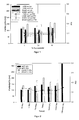
- Table 1 The average particle sizes and the polydispersity index (PDI) of the sucrose-fatty acid ester-containing emulsions before and after Freeze-drying is summarized in Table 1 and in FIG. 1 shown graphically.
- Table 1 example emulsifier lipid before freeze-drying after freeze-drying No.
- FIG. 2 and Table 2 show the particle sizes of representative nanoemulsions before lyophilization based on the present invention compared to standard emulsions.
- sucrose fatty acid esters lead with the same energy input and the same surfactant concentration up to ⁇ 50 nm smaller emulsion droplets than the emulsifiers that are commonly used for nanoemulsions.
Landscapes
- Health & Medical Sciences (AREA)
- Chemical & Material Sciences (AREA)
- Life Sciences & Earth Sciences (AREA)
- Animal Behavior & Ethology (AREA)
- Public Health (AREA)
- Veterinary Medicine (AREA)
- Medicinal Chemistry (AREA)
- Pharmacology & Pharmacy (AREA)
- Epidemiology (AREA)
- General Health & Medical Sciences (AREA)
- Engineering & Computer Science (AREA)
- Chemical Kinetics & Catalysis (AREA)
- Oil, Petroleum & Natural Gas (AREA)
- General Chemical & Material Sciences (AREA)
- Molecular Biology (AREA)
- Bioinformatics & Cheminformatics (AREA)
- Biochemistry (AREA)
- Biophysics (AREA)
- Dispersion Chemistry (AREA)
- Medicinal Preparation (AREA)
- Colloid Chemistry (AREA)
- Acyclic And Carbocyclic Compounds In Medicinal Compositions (AREA)
Description
- Die vorliegende Erfindung betrifft eine lyophilisierte Nanoemulsion enthaltend eine lipophile Phase und einen oder mehrere Saccharose-Fettsäureester, die aus der lyophilisierten Nanoemulsion durch Redispersion herstellbare Nanoemulsion sowie Verfahren zur Herstellung der lyophilisierten Nanoemulsion.
- Emulsionen sind disperse Systeme, die aus zwei miteinander nicht mischbaren Flüssigkeiten bestehen, von denen eine die innere, dispergierte Phase, in der anderen der äußeren, geschlossenen Phase fein verteilt ist.
- Nanoemulsionen sind Emulsionssysteme, in denen die innere, dispergierte, Phase aus sehr feinen lipophilen Tröpfchen in einem Größenbereich von circa 20 bis circa 500 nm besteht, die homogen in der aus Wasser bestehenden äußeren Phase verteilt vorliegen (O/W-Emulsion). Nanoemulsionen können bevorzugt parenteral angewendet werden und kommen insbesondere zur intravenösen Ernährung von Patienten, die oral keine Nahrung aufnehmen können, zum Einsatz, kommerziell erhältliche Markenprodukte sind z.B. Intralipid®, Lipodfundin®, Lipovenös®. Alle Nanoemulsionen weisen ein milchig-trübes Aussehen auf.
- Von Nanoemulsionen abzugrenzen sind Mikroemulsionen, in denen die innere, dispergierte Phase eine Partikelgröße von 10 nm bis 50 nm aufweist. Mikroemulsionen enthalten eine gegenüber Nanoemulsionen deutlich erhöhte Emulgatorkonzentration sowie meist auch einen Co-Emulgator. Mikroemulsionen sind selbstemulgierend und weisen ein klares oder opaleszierendes Aussehen auf, sind aber infolge der hohen Emulgatorkonzentration schlecht verträglich und daher nur sehr begrenzt parenteral applizierbar.
- Intravenös applizierbare Nanoemulsionen stellen hohe Anforderungen an die Verträglichkeit ihrer Inhaltsstoffe und die Teilchengröße der Fettpartikel. Als Fettkomponente kommen in der parenteralen Ernährung vorzugsweise Öle mit einem hohen Anteil an ungesättigten Fettsäuren wie Sojabohnen-, Safflor- und Baumwollöl, als Emulgatoren Lecithine wie Ei-, Soja- und Cerebrallecitin zur Anwendung und enthalten zumeist ferner Antioxidantien wie Tocopherolacetat sowie ggf. weitere Hilfsstoffe.
- Die Emulsionsherstellung erfolgt üblicherweise durch Voremulgierung der erwärmten Öl- und Wasserphasen mit einem Mixer, gefolgt von Feinstemulgierung mit einem Hochdruckhomogenisator und anschließender Sterilisation mit überhitztem Wasserdampf.
- Nanoemulsionen können unter geringem Zeitaufwand mit Standardzerkleinerungstechniken (Hochdruckhomogenisation) hergestellt werden. Nanoemulsionen sind jedoch thermodynamisch instabil und weisen daher eine oft unzureichende Lagerstabilität auf. Bei Lagerung über längere Zeiträume, insbesondere bei erhöhten Temperaturen und Temperaturschwankungen, kommt es zu einem Ineinanderfließen der Fettpartikel (Koaleszenz), sodass die Nanoemulsion insgesamt unbrauchbar wird.
- Das "Handbook on Injectable Drugs" (American Society of Hospital Pharmacists, Seite 237-244 (1986), Lawrence A. Trissel) beschreibt einige kommerziell verfügbare Zubereitungen. Sie enthalten Sojabohnenöl bzw. Saffloröl, Eilecithin, Glycerin und Wasser und haben mittlere Teilchengrößen von ≤ 0,5 µm.
- Nanoemulsionen wurden auch wiederholt als Trägersysteme für parenteral zu verabreichende lipophile Arzneistoffe eingesetzt. Ziel ist es dabei, die therapeutische Wirksamkeit und Sicherheit von Arzneistoffen durch kontrollierte Freigabe aus Emulsionssystemen (Drug Delivery System) zu erhöhen.
- Entsprechend ihren Löslichkeitseigenschaften sind in Nanoemulsionen enthaltene lipophile Wirkstoffe teilweise oder vollständig in die Fettpartikel eingebettet. Damit wird das pharmakokinetische Verhalten des Wirkstoffes maßgeblich durch das pharmakokinetische Verhalten der Trägerzubereitungen bestimmt, aus welcher dieser erst freigesetzt wird. Durch verzögerte Freisetzung werden hohe lokale Wirkstoffkonzentrationen vermieden, der Abbau verringert und damit die Wirkungsdauer erhöht. Ein Beispiel für eine kommerziell erhältliche, einen Wirkstoff enthaltende Nanoemulsion ist Diazepam®-Lipuro.
- Alle kommerziell erhältlichen Nanoemulsionen enthalten Lecithin als Emulgator. Da Lecithin hydrolyseempfindlich ist und das Hydrolyseprodukt Lysolecithin Hämolyse bewirken kann, muss der pH-Wert der Emulsionen mittels NaOH oder NaOleat eingestellt werden und/oder Hilfsstoffe zugesetzt werden, die die Hydrolyse hemmen. Allgemein sollten Hilfsstoffe, die nicht aus dem Verwendungszweck heraus begründet sind und lediglich zur Stabilisierung dienen, wann immer möglich vermieden werden, um das sich hierdurch ergebende potentielle Risiko von Schädigungen grundsätzlich auszuschließen.
-
JP 11171796 A -
US-Patent Nr. 5,750,142 beschreibt eine lyophilisierte Nanoemulsion, die auch für die parenterale Verabreichung geeignet sein soll. Neben der Fettphase und dem Emulgator enthält die lyophilisierte Emulsion mindestens 40 Gew.-% eines (Amin)-Gefrierschutzmittels. Alle Emulsionen der Ausführungsbeispiele enthalten neben Lecithin als Emulgator einen Co-Emulgator sowie α-Tocopherol als Antioxidans. Weiterhin ist zumeist Polyvinylpyrrolidon (PVP) enthalten, das als Suspendierungsmittel die Tröpfchengröße der rekonstituierten Emulsion kontrollieren und im nanoscaligen Bereich halten soll. -
WO 94/14418 A1 -
JP 52-96724 -
JP 2004/161650 A - Die Arbeit von Cereida et al. (Microencapsulating Properties of Trehalose and of its Blends with Sucrose and Lactose", J Food Sci 70 (2005) E401-E408) beschreibt eine Mikroemulsion hergestellt aus niedrigschmelzendes Milchfett und Palmitinsäure Saccharoseester. Die lyophilisierte Emulsion enthält Lipid und Saccharose-Fettsäureester in einem Gewichtsverhältnis von 11:1 und Trehalose als Gefrierschutzmittel.
- Eine kürzlich im Internet veröffentlichte Arbeit (Dong Zhao et al.: A submicron emulsion for intravenous injection: Characerization, in vitro and in vivo antitumor effect, Int J Pharm (2007), doi:10.1016/j.ijpharm.2008.01.055) offenbart einen gefriergetrocknete Nanoemulsion, die neben einem Öl und Lecithin als Emulgator einen hohen Anteil an Saccharose enthält (Gewichtsverhältnis Ölphase : Zucker = 1 : 5). Aufgrund der Verwendung von hydrolyseempfindlichem Lecithin enthält die Emulsion zusätzlich Vitamin E. Der hohe Anteil an Saccharose kann nachteilhaft nach Redispersion zu hypertonen Lösungen führen. Weiterhin ist der Zuckeranteil bei Verabreichung an Diabetiker nicht unkritisch und kann zu hyperosmotischen Formulierungen führen.
- Aufgabe der vorliegenden Erfindung war, den Nachteilen des Standes der Technik abzuhelfen und eine Nanoemulsion bereitzustellen, die lyophilisierbar ist und durch Redispersion mit Wasser zu einer parenteral verabreichbaren Nanoemulsion mit einer der Ausgangsemulsion entsprechenden Tröpfchengrößenverteilung redispergierbar ist. Die lyophilisierte Nanoemulsion sollte möglichst einfach aufgebaut sein und auch ohne den Zusatz von weiteren Stoffen wie Gefrierschutzmitteln und Antioxidantien herstellbar und über lange Zeiträume (Haltbarkeit 3 Jahre) stabil lagerfähig sein.
- Überraschenderweise wurde gefunden, dass eine diesen Anforderungen entsprechende lyophilisierte Nanoemulsion bereitgestellt werden kann, wenn diese neben einem Lipid Saccharose-Fettsäureester als Emulgatoren enthält. Gegenstand der Erfindung ist daher eine lyophilisierte Nanoemulsion, die dadurch gekennzeichnet ist, dass diese mindestens ein Lipid und mindestens einen Saccharose -Fettsäureester enthält und Lipid und Saccharose-Fettsäureester zueinander in einem Gewichtsverhältnis von 1 : 1 bis 5 : 1 vorliegen.
- Aufgrund der Stabilität der Saccharose-Fettsäureester ist vorteilhaft weder eine pH-Werteinstellung (Alkalisierung) noch der Zusatz eines Antioxidans erforderlich. Überraschenderweise ist die lyophilisierte Nanoemulsion auch ohne Zusatz von Gefrierschutzmitteln herstellbar und kann dennoch durch Zusatz einer wässrigen Flüssigkeit zu einer Nanoemulsion redispergiert werden, deren Teilchengrößenverteilung weit gehend der der Ausgangsemulsion entspricht. Infolge des möglichen Verzichts auf Gefrierschutzmittel verringert sich das mikrobielle Kontaminationsrisiko (die Zusatzstoffe fördern den mikrobiellen Wachstum). Demgemäß enthält die erfindungsgemäße Nanoemulsion nach einer bevorzugten Ausführungsform keine Gefrierschutzmittel wie z.B. Zucker, Zuckeralkohole oder Aminosäuren.
- Weiterhin vorteilhaft ist, dass die lyophilisierte Nanoemulsion (durch Zugabe von wenig Wasser) auch zu einer Nanoemulsion redispergierbar ist, die einen gegenüber der Ausgangsemulsion erhöhten Anteil an innerer (Lipid)-Phase aufweist, ohne dass dies mit einer erhöhten Osmolalität einhergeht, die deren parenterale Verabreichbarkeit insgesamt infrage stellt (hyperosmotische Nanoemulsionen sind parenteral schlecht verträglich).
- Durch Einarbeitung von lipophilen Wirkstoffen kann die erfindungsgemäße lyophilisierte Nanoemulsion vorteilhaft auch als Drug Delivery System eingesetzt werden, das nach Redispersion mit einer wässrigen Flüssigkeit parenteral oder auch oral verabreichbar ist. Daneben ist die lyophilisierte Nanoemulsion beispielsweise auch als Trägeremulsion für die parenterale Fettsubstitutionstherapie geeignet.
- Nach einer Ausführungsform der Erfindung enthält die lyophilisierte Nanoemulsion einen oder mehrere Wirkstoffe. Gegenstand der Erfindung ist daher auch eine lyophilisierte Nanoemulsion, die dadurch gekennzeichnet ist, dass sie mindestens ein Lipid, mindestens einen Saccharose-Fettsäureester und mindestens einen Wirkstoff enthält.
- Bevorzugt sind lipophile Wirkstoffe, das heißt Substanzen, die relativ unlöslich in Wasser aber löslich in einem oder mehreren fetten Lösungsmitteln wie z.B. Benzol, Chloroform, Aceton, Äther oder Hexan sind. Bevorzugt sind pharmazeutisch wirksame Substanzen, die in Fetten/Ölen (Triester des dreiwertigen Alkohols Glycerol mit gesättigten/ungesättigten Monocarbonsäuren unterschiedlicher Kettenlänge) eine Löslichkeit von bevorzugt >1µg/ml und ein Öl-/Wasserverteilungsverhältnis von >1:1 aufweisen. Beispiele für lipophile Wirkstoffe, die in der erfindungsgemäßen lyophilisierte Nanoemulsion enthalten sein können, (Fibrate, z.B. Fenofibrat/Clofibrat, Benzodiazepine, z.B. Carbamazepin, Azole, z.B. Bifonazol, Steroide, z.B. Danazol).
- Die lyophilisierte Nanoemulsion kann mit einer wässrigen Flüssigkeit, bevorzugt Wasser, zu einer Nanoemulsion redispergiert werden, deren Teilchengrößenverteilung weitgehend der Teilchengrößenverteilung der Ausgangsemulsion (d. h. der Nanoemulsion vor Überführung zur lyophilisierte Nanoemulsion mittels Gefriertrocknung), entspricht. Neben reinem Wasser, insbesondere Wasser zur Injektion, kann die zur Redispersion verwendete wässrige Flüssigkeit auch gelöste Stoffe, beispielsweise Isotonisierungsmittel wie Natriumchlorid oder Dextrose enthalten. Zur Redispersion besonders geeignete wässrige Flüssigkeiten sind physiologische Natriumchlorid-Lösung und Dextrose-Lösungen.
- Die erfindungsgemäße lyophilisierte Emulsion kann als Lipid grundsätzlich alle Lipide enthalten, die aus pharmazeutischer Sicht zur Herstellung von Nanoemulsionen geeignet sind, insbesondere Mono-, Di- und/oder Triglyceride mit C8- bis C22-Fettsäuren, besonders bevorzugt C8- bis C18-Fettsäuren, und/oder fettlösliche Vitamine. Gegenstand der Erfindung ist daher auch eine lyophilisierte Nanoemulsion, die dadurch gekennzeichnet ist, dass als Lipid Mono-, Di- und/oder Triglyceride mit C8- bis C22-Fettsäuren, bevorzugt C8- bis C18-Fettsäuren, ungesättigte oder gesättigte C8- bis C22-Fettsäuren und/oder fettlösliche Vitamine oder fettlösliche Wirkstoffe , vorzugsweise, enthalten sind.
- Beispiele geeigneter Lipide sind natürliche Öle, wie zum Beispiel Erdnussöl, Mandelöl, Olivenöl, Sesamöl, Sojabohnenöl, Distelöl (Saffloröl) oder Baumwollöl, halbsynthetische Öle wie z.B. Mittelkettige Triglyceride (MCT), ein Triglyceridgemisch, das als Fettsäuren hauptsächlich C8- bis C12-Fettsäuren, insbesondere Caprylsäure und Caprinsäure, enthält, aber auch die fettlöslichen Vitamine (Vitamin A, Vitamin D, Vitamin E, Vitamin K), wovon Vitamin E und Vitamin D bevorzugt sind.
- Bevorzugt enthält die lyophilisierte Nanoemulsion als Lipid Triglyceride. Als Triglyceride besonders bevorzugt sind Triglyceride von C8- bis C12-Fettsäuren. Saccharose-Fettsäureester sind Ester, die z.B. durch Umesterung von Saccharose mit Methylestern langkettiger Fettsäuren erhalten werden können. Erfindungsgemäß einsetzbar sind Ester der Saccharose mit C8- bis C22-Fettsäuren, bevorzugt sind Saccharoseester mit C12- bis C18-Fettsäuren, insbesondere Laurin-, Myristin-, Palmitin- und Stearinsäure, besonders bevorzugt sind Laurin- und Myristinsäure. Saccharose-Fettsäureester sind auch kommerziell verfügbar und werden beispielsweise von der Firma Mitsubishi Kagaku Corp., Tokio, Japan unter der Handlungsbezeichnung Ryoto vertrieben. Beispiele hierfür sind Saccharose-Fettsäureester mit Laurinsäure, mit Myristinsäure oder mit Stearinsäure, die die Handelbezeichnungen Ryoto L 1695, Ryoto M 1695 und Ryoto S 1670 aufweisen.
- In der lyophilisierten Nanoemulsion liegen das hierin enthaltene Lipid und die Saccharose-Fettsäureester zueinander in einem Gewichtsverhältnis von 1 : 1 bis 5 : 1, bevorzugt in einem Gewichtsverhältnis von 2 : 1 bis 4 : 1 vor. Gegenstand der Erfindung ist daher eine lyophilisierte Nanoemulsion, die dadurch gekennzeichnet ist, dass Lipid und Saccharose-Fettsäureester zueinander in einem Gewichtsverhältnis von 1 : 1 bis 5 : 1, bevorzugt in einem Gewichtsverhältnis von 2 : 1 bis 4 : 1 vorliegen.
- Die erfindungsgemäße lyophilisierte Nanoemulsion kann durch Gefriertrocknung einer Nanoemulsion hergestellt werden, worin Lipid zusammen mit dem Emulgator in einer wässrigen Phase dispergiert vorliegen. Zweckmäßigerweise liegen Lipid und wässrige Phase in der zu lyophilisierenden Nanoemulsion (Ausgangsemulsion) zueinander in einem Gewichtsverhältnis von 0,5 : 99,5 bis 30 : 70 vor. Gegenstand der Erfindung ist daher auch eine lyophilisierte Nanoemulsion, die dadurch gekennzeichnet ist, dass diese durch Gefriertrocknung einer Nanoemulsion hergestellt wird, in welcher Lipid und wässrige Phase zueinander in einem Gewichtsverhältnis von 0,5 : 99,5 bis 30 : 70 vorliegen.
- Die lyophilisierte Nanoemulsion kann in einfacher Weise durch Zugabe einer wässrigen Flüssigkeit zu einer Nanoemulsion redispergiert werden, die direkt, beispielsweise parenteral oder oral, verabreichbar ist. Gegenstand der Erfindung ist daher auch eine Nanoemulsion, die dadurch gekennzeichnet ist, dass diese aus der lyophilisierten Nanoemulsion durch Redispersion mit einer wässrigen Flüssigkeit hergestellt wird.
- In Abhängigkeit von der zur Redispersion der lyophilisierten Emulsion zugegebenen Menge an wässriger Flüssigkeit kann in der durch Redispersion entstehenden Nanoemulsion das Verhältnis von Lipid und wässriger Flüssigkeit zueinander über weite Bereiche variiert werden. Wird z.B. wenig wässrige Flüssigkeit verwendet, entstehen hochkonzentrierte Nanoemulsionen, die bei Wirkstoffbeladung pro Volumeneinheit hohe Wirkstoffmengen enthalten. Dies ermöglicht es auch große Wirkstoffmengen mittels kleiner Volumina zu verabreichen. Sind also hohe Wirkstoffdosen zu verabreichen, kann das hierzu erforderliche Injektionsvolumen vorteilhaft deutlich reduziert werden und beispielsweise eine intravenöse Infusion durch eine intravenöse Injektion ersetzt werden. Da die lyophilisierte Nanoemulsion auch kein Gefrierschutzmittel, wie z.B. Zucker, erfordert, kann deren Redispersion auch mit wenig wässriger Flüssigkeit erfolgen, ohne dass diese, wie die lyophilisierten Emulsionen des Standes der Technik, zwangsläufig hyperton werden, was, beispielsweise bei parenteraler Verabreichung, zu den bekannten Verträglichkeitsproblemen führt.
- Gegenstand der Erfindung ist daher auch einen Nanoemulsion, die dadurch gekennzeichnet ist, dass hierin Lipid und Wasser zueinander in einem Gewichtsverhältnis von 0,5 : 99,5 bis 50 : 50, vorzugsweise in einem Gewichtsverhältnis von 5 : 95 bis 50 : 50 vorliegen.
- Die erfindungsgemäße lyophilisierte Nanoemulsion kann hergestellt werden, indem einer mittels der in der Arzneimittelherstellung gebräuchlichen Verfahren und Technologien hergestellten Emulsion die wässrige Phase durch Lyophilisation entfernt wird. Gegenstand der Erfindung ist daher auch ein Verfahren zur Herstellung der erfindungsgemäßen lyophilisierten Nanoemulsion, welches dadurch gekennzeichnet ist, dass zunächst in üblicher Weise eine Nanoemulsion hergestellt wird, und dieser anschließend mittels Gefriertrocknung die äußere, wässrige Phase entzogen wird.
- Sollen in die erfindungsgemäße lyophilisierte Nanoemulsion Wirkstoffe eingearbeitet werden, kann dies bei hydrophilen Wirkstoffen durch Lösen in der wässrigen Tensidphase (Emulgatorgrenzschicht und Emulgatormizellen) und bei lipophilen Wirkstoffen durch Lösen in der Emulgator und Lipid enthaltenden Phase erfolgen. Alternativ kann die Wirkstoffzugabe auch unmittelbar vor Durchführung der Lyophilisation erfolgen, was insbesondere für hydrolyseempfindliche und/oder thermolabile Wirkstoffe vorteilhaft ist. Damit kann das Verfahren zur Herstellung der erfindungsgemäßen wirkstoffhaltigen Emulsionszusammensetzung in vorteilhafter Weise an die physikochemischen Eigenschaften der Wirkstoffe angepasst werden. Daher wird in einer zweckmäßigen Ausführungsform des erfindungsgemäßen Verfahrens mindestens ein Wirkstoff vor Emulgierung entweder in der wässrigen Phase oder in der Emulgator und Lipid enthaltenden Phase gelöst oder mindestens ein Wirkstoff der Emulsion vor ihrer Gefriertrocknung zugegeben.
- Hierbei ist zu beachten, dass die Wirkstoffverteilung innerhalb des dispersen Systems vor Lyophilisation gewährleistet ist, was mit üblichen Methoden wie Gleichgewichtsdialyse, Differentialdialyse und Ultrafiltration leicht geprüft werden kann.
- Die Beispiele, ohne hierauf beschränkt zu sein, erläutern die Erfindung.
- Allgemeines Verfahren zur Herstellung der Nanoemulsionen Der Sucroseester wird bei 50°C in H2O gelöst, das Öl auf 50°C temperiert, Wasser- und Ölphase miteinander vereinigt, die vereinigten Phasen mittels Ultraturrax bei 8000 rpm für 3 Minuten vorhomogenisiert und anschließend in einem Avestin Emulsiflex-C3 einer Hochdruckhomogenisation unterzogen (8 Zyklen, 4x1000bar + 4x2000bar).
- Die Nanoemulsion wird anschließend folgendem Gefriertrocknungsprozess unterzogen:
- 1) Einfrierprozess: -50°C, 3,5 Stunden
- 2) Haupttrocknung: -40°C, geeigneter Unterdruck über bis zu 48 Stunden
- 3) Nachtrocknung: -40 - +20°C, geeigneter Unterdruck über bis zu 12 Stunden.
- Unter Verwendung der nachfolgenden angeführten Stoffe wird gemäß dem oben beschriebenen allgemeinen Verfahren eine Nanoemulsion hergestellt.
Saccharose- Laurinsäureester (Ryoto L1695) 5g Mittelkettige Triglyceride 10g Wasser 85g - Unter Verwendung der nachfolgenden angeführten Stoffe wird gemäß dem oben beschriebenen allgemeinen Verfahren eine Nanoemulsion hergestellt.
Saccharose- Laurinsäureester (Ryoto L1695) 5g Sojaöl 10g Wasser 85g - Unter Verwendung der nachfolgenden angeführten Stoffe wird gemäß dem oben beschriebenen allgemeinen Verfahren eine Nanoemulsion hergestellt.
Saccharose-Myristinsäureester (Ryoto M1695) 5g Mittelkettige Triglyceride 10g Wasser 85g - Unter Verwendung der nachfolgenden angeführten Stoffe wird gemäß dem oben beschriebenen allgemeinen Verfahren eine Nanoemulsion hergestellt.
Saccharose-Laurinsäureester (Ryoto L1695) 5g Mittelkettige Triglyceride 20g Wasser 75g - Unter Verwendung der nachfolgenden angeführten Stoffe werden gemäß dem oben beschriebenen allgemeinen Verfahren eine Nanoemulsion hergestellt.
Saccharose-Stearinsäureester (Ryoto S1670) 5g Mittelkettige Triglyceride 20g Wasser 75g - Unter Verwendung der nachfolgenden angeführten Stoffe wird gemäß dem oben beschriebenen allgemeinen Verfahren eine Nanoemulsion hergestellt.
Saccharose-Laurinsäureester (Ryoto L1695) 5g Mittelkettige Triglyceride 30g Wasser 65g - Unter Verwendung der nachfolgenden angeführten Stoffe wird gemäß dem oben beschriebenen allgemeinen Verfahren eine Nanoemulsion hergestellt.
Saccharose-Laurinsäureester (Ryoto L1695) 7.5g Mittelkettige Triglyceride 30g Wasser 62.5g - Unter Verwendung der nachfolgenden angeführten Stoffe wird gemäß dem oben beschriebenen allgemeinen Verfahren eine Nanoemulsion hergestellt.
Saccharose-Laurinsäureester (Ryoto L1695) 10g Mittelkettige Triglyceride 30g Wasser 60g - Unter Verwendung der nachfolgenden angeführten Stoffe wird gemäß dem oben beschriebenen allgemeinen Verfahren eine Nanoemulsion hergestellt.
Saccharose-Laurinsäureester (Ryoto L1695) 7.5g Mittelkettige Triglyceride 10g Wasser 82.5g - Unter Verwendung der nachfolgenden angeführten Stoffe wird gemäß dem oben beschriebenen allgemeinen Verfahren eine Nanoemulsion hergestellt.
Saccharose-Laurinsäureester (Ryoto L1695) 10g Mittelkettige Triglyceride 10g Wasser 80g - Unter Verwendung der nachfolgenden angeführten Stoffe wird gemäß dem oben beschriebenen allgemeinen Verfahren eine Nanoemulsion hergestellt.
Saccharose-Laurinsäureester (Ryoto M1695) 7.5g Mittelkettige Triglyceride 10g Wasser 82.5g - Unter Verwendung der nachfolgenden angeführten Stoffe wird gemäß dem oben beschriebenen allgemeinen Verfahren eine Nanoemulsion hergestellt.
Saccharose-Laurinsäureester (Ryoto M1695) 10g Mittelkettige Triglyceride 10g Wasser 80g - Unter Verwendung der nachfolgenden angeführten Stoffe wird gemäß dem oben beschriebenen allgemeinen Verfahren eine Nanoemulsion hergestellt.
Saccharose-Laurinsäureester (Ryoto L1695) 7.5g Mittelkettige Triglyceride 30g Fenofibrat 1.5g Wasser 61g - Unter Verwendung der nachfolgenden angeführten Stoffe wird gemäß dem oben beschriebenen allgemeinen Verfahren eine Nanoemulsion hergestellt.
PEG660-12-Hydroxystearat (Solutol HS15) 5g Mittelkettige Triglyceride 10g Wasser 85g - Unter Verwendung der nachfolgenden angeführten Stoffe wird gemäß dem oben beschriebenen allgemeinen Verfahren eine Nanoemulsion hergestellt.
Phosphatidylcholin, auf Sojabasis, 75% Reinheit): 5g Sojaöl 10g Wasser 85g - Keines der erhaltenen Lyophilisate (lyophilisierten Nanoemulsionen) weist einen intakten Lyophilisationskuchen auf, alle sind kollabiert. Bei Redispersion mit Wasser ergibt sich Phasenseparation bzw. werden sehr grobe Emulsionen gebildet, die nicht zur parenteralen Applikation geeignet sind.
- Im Gegensatz dazu zeigen die Saccharose-Fettsäureester-haltigen Nanoemulsionen eine strukturerhaltende Kuchenbildung nach Lyophilisation. Bei Wasseraddition zum Lyophilisationskuchen bilden sich ohne Energieeintrag Nanoemulsionen aus, die Partikelgrößen im Bereich <200nm aufweisen.
- Die Größenmessungen werden mittels Photonenkorrelationsspektroskopie vorgenommen. Bestimmt wird der intensitätsgewichtete mittlere Durchmesser der Emulsionströpfchen an einem Zeatasizer Nano ZS (Malvern Ltd, UK). Die Auswertung der Streusignale erfolgt über die Software DTS 5.03 (Malvern Ltd. UK). Als Maß für die Größenverteilung der Probe ist in dieser Software der Polydispersitätsindex (PDI) implementiert.
- Die mittleren Partikelgrößen und der Polydispersitätsindex (PDI) der Saccharose-Fettsäureester enthaltenden Emulsionen vor und nach Gefriertrocknung sind in Tabelle 1 zusammengestellt und in
Figur 1 graphisch dargestellt.Tabelle 1 Beispiel Emulgator Lipid vor Gefriertrocknung nach Gefriertrocknung Nr. Ryoto L1695 [%] MCT [%] Partikelgröße [nm] PDI Partikelgröße [nm] PDI 1 5 10 113,4 0,162 126,2 0,21 9 7,5 10 117,1 0,198 132,1 0,227 10 10 10 122,2 0,17 159,7 0,235 Emulgator Lipid vor Gefriertrocknung nach Gefriertrocknung Ryoto M1695 [%] MCT [%] Partikelgröße [nm] PDI Partikelgröße [nm] PDI 3 5 10 106,9 0,204 147,5 0,133 11 7,5 10 103,8 0,207 144,9 0,168 12 10 10 116 0,206 154,6 0,195 -
Figur 2 und Tabelle 2 zeigen die Partikelgrößen von repräsentativen Nanoemulsionen vor Lyophilisation auf Grundlage der vorliegenden Erfindung im Vergleich zu Standardemulsionen. Überraschenderweise führen Saccharose-Fettsäurester bei gleichem Energieeintrag und gleicher Tensidkonzentration zu bis zu ∼50nm kleineren Emulsionströpfchen als die Emulgatoren, die üblicherweise für Nanoemulsionen verwendet werden.Tabelle 2 MCT 10% MCT 20% Tensid/Produkt Größe [nm] PDI Größe [nm] PDI Ryoto M1695 2% 101,9 0,143 135,3 0,115 Ryoto L 1695 2% 100,6 0,138 117 0,125 Cremophor RH 40 2% 131,7 0,107 175,8 0,056 Solutol HS 15 2% 142,7 0,121 199 0,081 Lipoid S75 125 0,122 163,9 0,087 Lipoid E80 133,1 0,117 179,6 0,075 Lipovenös® 10% 316,2 0,146 -
Claims (10)
- Lyophilisierte Nanoemulsion, dadurch gekennzeichnet, dass diese mindestens ein Lipid und mindestens einen Saccharose-Fettsäureester enthält und Lipid und Saccharose-Fettsäureester zueinander in einem Gewichtsverhältnis von 1 : 1 bis 5 : 1 vorliegen.
- Lyophilisierte Nanoemulsion nach Anspruch 1, dadurch gekennzeichnet, dass diese mindestens einen Wirkstoff enthält.
- Lyophilisierte Nanoemulsion nach Anspruch 1 und/oder 2, dadurch gekennzeichnet, dass als Lipid Mono-, Di- und/oder Triglyceride mit C8- bis C22-Fettsäuren, bevorzugt C8- bis C18-Fettsäuren, und/oder fettlösliche Vitamine enthalten sind.
- Lyophilisierte Nanoemulsion nach Anspruch 3, dadurch gekennzeichnet, dass als Lipid Triglyceride enthalten sind.
- Lyophilisierte Nanoemulsionen nach Anspruch 4, dadurch gekennzeichnet, dass die Triglyceride C8- bis C12-Fettsäuren enthalten.
- Lyophilisierte Nanoemulsion nach einem oder mehreren der Ansprüche 1 bis 5, dadurch gekennzeichnet, dass die Saccharose-Fettsäureester C8- bis C22-Fettsäuren, bevorzugt C12- bis C18-Fettsäuren, enthalten.
- Lyophilisierte Nanoemulsion nach einem oder mehreren der Ansprüche 1 bis 6, dadurch gekennzeichnet, dass Lipid und Saccharose-Fettsäureester zueinander in einem Gewichtsverhältnis von 2 : 1 bis 4 : 1 vorliegen.
- Lyophilisierte Nanoemulsion nach einem oder mehreren der Ansprüche 1 bis 7, dadurch gekennzeichnet, dass diese durch Gefriertrocknung einer Nanoemulsion hergestellt wird, in welcher Lipid und wässrige Phase in einem Gewichtsverhältnis von 0,5 : 99,5 bis 30 : 70 vorliegen.
- Verfahren zur Herstellung der lyophilisierten Nanoemulsion nach einem oder mehreren der Ansprüche 1 bis 8, dadurch gekennzeichnet, dass zunächst in üblicher Weise eine Nanoemulsion hergestellt wird, und dieser anschließend mittels Gefriertrocknung die äußere, wässrige Phase entzogen wird.
- Verfahren nach Anspruch 9, dadurch gekennzeichnet, dass mindestens ein Wirkstoff vor Emulgierung entweder in der wässrigen Phase oder in der Lipid enthaltenden Phase gelöst oder mindestens ein Wirkstoff der Emulsion vor ihrer Gefriertrocknung zugegeben wird.
Applications Claiming Priority (2)
| Application Number | Priority Date | Filing Date | Title |
|---|---|---|---|
| DE102008015366A DE102008015366A1 (de) | 2008-03-20 | 2008-03-20 | Lyophilisierte Nanoemulsion |
| PCT/EP2009/001355 WO2009115175A2 (de) | 2008-03-20 | 2009-02-26 | Lyophilisierte nanoemulsion |
Publications (2)
| Publication Number | Publication Date |
|---|---|
| EP2252267A2 EP2252267A2 (de) | 2010-11-24 |
| EP2252267B1 true EP2252267B1 (de) | 2016-09-28 |
Family
ID=40984061
Family Applications (1)
| Application Number | Title | Priority Date | Filing Date |
|---|---|---|---|
| EP09722255.8A Active EP2252267B1 (de) | 2008-03-20 | 2009-02-26 | Lyophilisierte nanoemulsion |
Country Status (9)
| Country | Link |
|---|---|
| US (1) | US8211948B2 (de) |
| EP (1) | EP2252267B1 (de) |
| JP (1) | JP5603852B2 (de) |
| AU (1) | AU2009226618B2 (de) |
| CA (1) | CA2718791C (de) |
| DE (1) | DE102008015366A1 (de) |
| ES (1) | ES2608062T3 (de) |
| IL (1) | IL207913A (de) |
| WO (1) | WO2009115175A2 (de) |
Families Citing this family (16)
| Publication number | Priority date | Publication date | Assignee | Title |
|---|---|---|---|---|
| US8357639B2 (en) * | 2007-07-03 | 2013-01-22 | Baker Hughes Incorporated | Nanoemulsions |
| MX2010010214A (es) | 2008-03-20 | 2010-12-21 | Virun Inc | Derivados de vitamina e y sus usos. |
| EP2548456B1 (de) | 2008-03-20 | 2015-07-08 | Virun, Inc. | Emulsionen mit einem PEG-Derivat von Tocopherol |
| CA2792330C (en) * | 2010-03-23 | 2017-01-03 | Virun, Inc | Nanoemulsion including a peg-derivative of vitamin e and a sucrose fatty acid ester |
| US8741373B2 (en) | 2010-06-21 | 2014-06-03 | Virun, Inc. | Compositions containing non-polar compounds |
| US8586527B2 (en) | 2011-10-20 | 2013-11-19 | Jaipal Singh | Cerivastatin to treat pulmonary disorders |
| SMT202000008T1 (it) | 2012-01-23 | 2020-03-13 | Sage Therapeutics Inc | Formulazione di steroide neuroattivo comprendente un complesso di allopregnanolone e solfobutil eter beta-ciclodestrina |
| CA2863544C (en) | 2012-02-10 | 2019-03-26 | Virun, Inc. | Beverage compositions containing non-polar compounds |
| PL2887944T3 (pl) | 2012-08-21 | 2022-02-21 | Sage Therapeutics, Inc. | Allopregnanolon do leczenia lekoopornego stanu padaczkowego |
| US9351517B2 (en) | 2013-03-15 | 2016-05-31 | Virun, Inc. | Formulations of water-soluble derivatives of vitamin E and compositions containing same |
| US9693574B2 (en) | 2013-08-08 | 2017-07-04 | Virun, Inc. | Compositions containing water-soluble derivatives of vitamin E mixtures and modified food starch |
| US9861611B2 (en) | 2014-09-18 | 2018-01-09 | Virun, Inc. | Formulations of water-soluble derivatives of vitamin E and soft gel compositions, concentrates and powders containing same |
| US10016363B2 (en) | 2014-09-18 | 2018-07-10 | Virun, Inc. | Pre-spray emulsions and powders containing non-polar compounds |
| AU2019391397B2 (en) * | 2018-12-06 | 2023-06-15 | Chemipal Global Entrepreneurship Ltd | Vitamin D micro-emulsions and uses thereof |
| JP7756548B2 (ja) * | 2021-11-30 | 2025-10-20 | 株式会社ダイセル | ガス発生器 |
| CN116650425B (zh) * | 2023-07-13 | 2025-06-27 | 晟迪生物医药(苏州)有限公司 | 糖酯化合物或其盐在冷冻保护、冷冻干燥保护中的应用 |
Family Cites Families (16)
| Publication number | Priority date | Publication date | Assignee | Title |
|---|---|---|---|---|
| JPS5296724A (en) | 1976-02-10 | 1977-08-13 | Kyowa Hakko Kogyo Co Ltd | Preparation of powdery products |
| FR2561916B1 (fr) * | 1984-03-30 | 1987-12-11 | Lafon Labor | Forme galenique pour administration orale et son procede de preparation par lyophilisation d'une emission huile dans eau |
| JPH04275216A (ja) * | 1991-03-04 | 1992-09-30 | Eisai Co Ltd | 脂溶性薬物を含有した凍結乾燥組成物 |
| DE4244122C1 (de) | 1992-12-24 | 1994-06-01 | Sanol Arznei Schwarz Gmbh | Lyophilisierte, wirkstoffhaltige Emulsion zur intravenösen Applikation |
| US5646082A (en) | 1993-06-24 | 1997-07-08 | Cosmo Research Institute | Crystalline aluminosilicate, process for producing the same, and catalyst employing the same for catalytic cracking of hydrocarbon oil |
| US5948002A (en) * | 1996-11-15 | 1999-09-07 | Bonutti; Peter M. | Apparatus and method for use in positioning a suture anchor |
| US6458373B1 (en) * | 1997-01-07 | 2002-10-01 | Sonus Pharmaceuticals, Inc. | Emulsion vehicle for poorly soluble drugs |
| JPH11171796A (ja) | 1997-12-08 | 1999-06-29 | Ohta Pharmaceut Co Ltd | テプレノン経口投与用製剤およびその製造方法 |
| FR2800611B1 (fr) * | 1999-11-08 | 2002-10-11 | Oreal | Composition a application topique contenant un sucre, et ses utilisations cosmetiques |
| WO2002087692A1 (en) * | 2001-04-26 | 2002-11-07 | The Procter & Gamble Company | A method and apparatus for the treatment of cosmetic skin conditioins |
| JP2004161650A (ja) | 2002-11-12 | 2004-06-10 | Taisho Pharmaceut Co Ltd | W/o/w型ドライエマルション |
| EP1598060A1 (de) * | 2004-05-18 | 2005-11-23 | Nestec S.A. | Öl-in-Wasser-Emulsion für Lieferung |
| US8388950B2 (en) * | 2005-06-15 | 2013-03-05 | Kaneka Corporation | Coenzyme Q10-containing water-soluble composition and process for production thereof |
| FR2901124B1 (fr) * | 2006-05-17 | 2008-06-27 | Oreal | Emulsion huile dans eau fine |
| JP2008142588A (ja) * | 2006-12-06 | 2008-06-26 | Fujifilm Corp | 水中油滴型エマルション及びその製造方法、並びに機能性粉末及びその製造方法 |
| CN101428002A (zh) * | 2008-11-20 | 2009-05-13 | 沈阳万爱普利德医药科技有限公司 | 注射用紫杉醇冻干微乳剂及其制备方法 |
-
2008
- 2008-03-20 DE DE102008015366A patent/DE102008015366A1/de not_active Withdrawn
-
2009
- 2009-02-26 EP EP09722255.8A patent/EP2252267B1/de active Active
- 2009-02-26 US US12/922,787 patent/US8211948B2/en not_active Expired - Fee Related
- 2009-02-26 WO PCT/EP2009/001355 patent/WO2009115175A2/de not_active Ceased
- 2009-02-26 JP JP2011500060A patent/JP5603852B2/ja not_active Expired - Fee Related
- 2009-02-26 CA CA2718791A patent/CA2718791C/en active Active
- 2009-02-26 ES ES09722255.8T patent/ES2608062T3/es active Active
- 2009-02-26 AU AU2009226618A patent/AU2009226618B2/en not_active Ceased
-
2010
- 2010-08-31 IL IL207913A patent/IL207913A/en active IP Right Grant
Non-Patent Citations (1)
| Title |
|---|
| MARINA CERDEIRA ET AL: "Microencapsulating Properties of Trehalose and of its Blends with Sucrose and Lactose", JOURNAL OF FOOD SCIENCE, vol. 70, no. 6, 1 August 2005 (2005-08-01), pages E401 - E408, XP055025792, ISSN: 0022-1147, DOI: 10.1111/j.1365-2621.2005.tb11445.x * |
Also Published As
| Publication number | Publication date |
|---|---|
| WO2009115175A3 (de) | 2010-01-07 |
| IL207913A0 (en) | 2010-12-30 |
| AU2009226618B2 (en) | 2014-04-10 |
| IL207913A (en) | 2015-05-31 |
| AU2009226618A1 (en) | 2009-09-24 |
| CA2718791C (en) | 2016-03-29 |
| JP5603852B2 (ja) | 2014-10-08 |
| EP2252267A2 (de) | 2010-11-24 |
| WO2009115175A2 (de) | 2009-09-24 |
| JP2011519349A (ja) | 2011-07-07 |
| US8211948B2 (en) | 2012-07-03 |
| ES2608062T3 (es) | 2017-04-05 |
| US20110015266A1 (en) | 2011-01-20 |
| DE102008015366A1 (de) | 2009-09-24 |
| CA2718791A1 (en) | 2009-09-24 |
Similar Documents
| Publication | Publication Date | Title |
|---|---|---|
| WO2009115175A2 (de) | Lyophilisierte nanoemulsion | |
| EP1305006B1 (de) | Verfahren zur herstellung von dispersionen zur formulierung wenig oder schwer löslicher wirkstoffe | |
| DE3853191T2 (de) | Arzneimittelträger. | |
| DE69809074T2 (de) | Herstellung von arzneimitteln | |
| EP1073426B1 (de) | Pharmazeutische ciclosporin-formulierung mit verbesserten biopharmazeutischen eigenschaften, erhöhter physikalischer qualität & stabilität sowie verfahren zur herstellung | |
| EP3193830B1 (de) | Aprepitantemulsion | |
| DE69632408T2 (de) | Stabilisierte und steril filtrierbare nanopartikel | |
| DE68914929T2 (de) | Emulgierte Zusammensetzung. | |
| DE69837328T2 (de) | Zusammensetzung zur bildung eine emulsion für eine taxoid substanze | |
| DE69914742T2 (de) | Gegen hitzeeinwirkung geschützte mikropartikel und verfahren zur terminalen dampfsterilisation derselben | |
| DE69133042T2 (de) | Lyophilisierte zubereitung sowie deren herstellung | |
| KR20120027298A (ko) | 약물 로드된 에멀젼의 제조 방법 | |
| DE4440337A1 (de) | Pharmazeutische Nanosuspensionen zur Arzneistoffapplikation als Systeme mit erhöhter Sättigungslöslichkeit und Lösungsgeschwindigkeit | |
| DE4131562A1 (de) | Arzneistofftraeger aus festen lipidteilchen-feste lipidnanosphaeren (sln) | |
| EP1249230B1 (de) | Coenzym Q10 enthaltende Mikroemulsion-Prekonzentrate und Mikroemulsionen | |
| US20050049209A1 (en) | Pharmaceutical compositions for delivering macrolides | |
| DE69526450T2 (de) | Emulsion zur verabreichung eines sphingolipids und deren verwendung | |
| US10413508B2 (en) | Preparation of an oil-in-water emulsion for polymer stabilized pharmaceutical formulations | |
| DE4244122C1 (de) | Lyophilisierte, wirkstoffhaltige Emulsion zur intravenösen Applikation | |
| EP0651994A1 (de) | Flüssige orale Zubereitungen von fettlösliche Arzneimittel |
Legal Events
| Date | Code | Title | Description |
|---|---|---|---|
| PUAI | Public reference made under article 153(3) epc to a published international application that has entered the european phase |
Free format text: ORIGINAL CODE: 0009012 |
|
| 17P | Request for examination filed |
Effective date: 20100715 |
|
| AK | Designated contracting states |
Kind code of ref document: A2 Designated state(s): AT BE BG CH CY CZ DE DK EE ES FI FR GB GR HR HU IE IS IT LI LT LU LV MC MK MT NL NO PL PT RO SE SI SK TR |
|
| AX | Request for extension of the european patent |
Extension state: AL BA RS |
|
| RIN1 | Information on inventor provided before grant (corrected) |
Inventor name: GEISSLER, SIMON Inventor name: SCHMIDT, MARTINA VICTORIA Inventor name: LANGGUTH, PETER Inventor name: HANEFELD, ANDREA |
|
| DAX | Request for extension of the european patent (deleted) | ||
| 17Q | First examination report despatched |
Effective date: 20120508 |
|
| GRAP | Despatch of communication of intention to grant a patent |
Free format text: ORIGINAL CODE: EPIDOSNIGR1 |
|
| INTG | Intention to grant announced |
Effective date: 20160414 |
|
| GRAS | Grant fee paid |
Free format text: ORIGINAL CODE: EPIDOSNIGR3 |
|
| GRAA | (expected) grant |
Free format text: ORIGINAL CODE: 0009210 |
|
| AK | Designated contracting states |
Kind code of ref document: B1 Designated state(s): AT BE BG CH CY CZ DE DK EE ES FI FR GB GR HR HU IE IS IT LI LT LU LV MC MK MT NL NO PL PT RO SE SI SK TR |
|
| REG | Reference to a national code |
Ref country code: GB Ref legal event code: FG4D Free format text: NOT ENGLISH |
|
| REG | Reference to a national code |
Ref country code: CH Ref legal event code: EP |
|
| REG | Reference to a national code |
Ref country code: AT Ref legal event code: REF Ref document number: 832131 Country of ref document: AT Kind code of ref document: T Effective date: 20161015 |
|
| REG | Reference to a national code |
Ref country code: IE Ref legal event code: FG4D Free format text: LANGUAGE OF EP DOCUMENT: GERMAN |
|
| REG | Reference to a national code |
Ref country code: DE Ref legal event code: R096 Ref document number: 502009013137 Country of ref document: DE |
|
| REG | Reference to a national code |
Ref country code: FR Ref legal event code: PLFP Year of fee payment: 9 |
|
| REG | Reference to a national code |
Ref country code: LT Ref legal event code: MG4D |
|
| PG25 | Lapsed in a contracting state [announced via postgrant information from national office to epo] |
Ref country code: NO Free format text: LAPSE BECAUSE OF FAILURE TO SUBMIT A TRANSLATION OF THE DESCRIPTION OR TO PAY THE FEE WITHIN THE PRESCRIBED TIME-LIMIT Effective date: 20161228 Ref country code: LT Free format text: LAPSE BECAUSE OF FAILURE TO SUBMIT A TRANSLATION OF THE DESCRIPTION OR TO PAY THE FEE WITHIN THE PRESCRIBED TIME-LIMIT Effective date: 20160928 Ref country code: FI Free format text: LAPSE BECAUSE OF FAILURE TO SUBMIT A TRANSLATION OF THE DESCRIPTION OR TO PAY THE FEE WITHIN THE PRESCRIBED TIME-LIMIT Effective date: 20160928 Ref country code: HR Free format text: LAPSE BECAUSE OF FAILURE TO SUBMIT A TRANSLATION OF THE DESCRIPTION OR TO PAY THE FEE WITHIN THE PRESCRIBED TIME-LIMIT Effective date: 20160928 |
|
| REG | Reference to a national code |
Ref country code: NL Ref legal event code: MP Effective date: 20160928 |
|
| PG25 | Lapsed in a contracting state [announced via postgrant information from national office to epo] |
Ref country code: GR Free format text: LAPSE BECAUSE OF FAILURE TO SUBMIT A TRANSLATION OF THE DESCRIPTION OR TO PAY THE FEE WITHIN THE PRESCRIBED TIME-LIMIT Effective date: 20161229 Ref country code: NL Free format text: LAPSE BECAUSE OF FAILURE TO SUBMIT A TRANSLATION OF THE DESCRIPTION OR TO PAY THE FEE WITHIN THE PRESCRIBED TIME-LIMIT Effective date: 20160928 Ref country code: SE Free format text: LAPSE BECAUSE OF FAILURE TO SUBMIT A TRANSLATION OF THE DESCRIPTION OR TO PAY THE FEE WITHIN THE PRESCRIBED TIME-LIMIT Effective date: 20160928 Ref country code: LV Free format text: LAPSE BECAUSE OF FAILURE TO SUBMIT A TRANSLATION OF THE DESCRIPTION OR TO PAY THE FEE WITHIN THE PRESCRIBED TIME-LIMIT Effective date: 20160928 |
|
| REG | Reference to a national code |
Ref country code: ES Ref legal event code: FG2A Ref document number: 2608062 Country of ref document: ES Kind code of ref document: T3 Effective date: 20170405 |
|
| PG25 | Lapsed in a contracting state [announced via postgrant information from national office to epo] |
Ref country code: EE Free format text: LAPSE BECAUSE OF FAILURE TO SUBMIT A TRANSLATION OF THE DESCRIPTION OR TO PAY THE FEE WITHIN THE PRESCRIBED TIME-LIMIT Effective date: 20160928 Ref country code: RO Free format text: LAPSE BECAUSE OF FAILURE TO SUBMIT A TRANSLATION OF THE DESCRIPTION OR TO PAY THE FEE WITHIN THE PRESCRIBED TIME-LIMIT Effective date: 20160928 |
|
| PG25 | Lapsed in a contracting state [announced via postgrant information from national office to epo] |
Ref country code: IS Free format text: LAPSE BECAUSE OF FAILURE TO SUBMIT A TRANSLATION OF THE DESCRIPTION OR TO PAY THE FEE WITHIN THE PRESCRIBED TIME-LIMIT Effective date: 20170128 Ref country code: SK Free format text: LAPSE BECAUSE OF FAILURE TO SUBMIT A TRANSLATION OF THE DESCRIPTION OR TO PAY THE FEE WITHIN THE PRESCRIBED TIME-LIMIT Effective date: 20160928 Ref country code: BE Free format text: LAPSE BECAUSE OF NON-PAYMENT OF DUE FEES Effective date: 20170228 Ref country code: BG Free format text: LAPSE BECAUSE OF FAILURE TO SUBMIT A TRANSLATION OF THE DESCRIPTION OR TO PAY THE FEE WITHIN THE PRESCRIBED TIME-LIMIT Effective date: 20161228 Ref country code: CZ Free format text: LAPSE BECAUSE OF FAILURE TO SUBMIT A TRANSLATION OF THE DESCRIPTION OR TO PAY THE FEE WITHIN THE PRESCRIBED TIME-LIMIT Effective date: 20160928 Ref country code: PT Free format text: LAPSE BECAUSE OF FAILURE TO SUBMIT A TRANSLATION OF THE DESCRIPTION OR TO PAY THE FEE WITHIN THE PRESCRIBED TIME-LIMIT Effective date: 20170130 Ref country code: PL Free format text: LAPSE BECAUSE OF FAILURE TO SUBMIT A TRANSLATION OF THE DESCRIPTION OR TO PAY THE FEE WITHIN THE PRESCRIBED TIME-LIMIT Effective date: 20160928 |
|
| REG | Reference to a national code |
Ref country code: DE Ref legal event code: R097 Ref document number: 502009013137 Country of ref document: DE |
|
| PG25 | Lapsed in a contracting state [announced via postgrant information from national office to epo] |
Ref country code: DK Free format text: LAPSE BECAUSE OF FAILURE TO SUBMIT A TRANSLATION OF THE DESCRIPTION OR TO PAY THE FEE WITHIN THE PRESCRIBED TIME-LIMIT Effective date: 20160928 |
|
| PLBE | No opposition filed within time limit |
Free format text: ORIGINAL CODE: 0009261 |
|
| STAA | Information on the status of an ep patent application or granted ep patent |
Free format text: STATUS: NO OPPOSITION FILED WITHIN TIME LIMIT |
|
| 26N | No opposition filed |
Effective date: 20170629 |
|
| PG25 | Lapsed in a contracting state [announced via postgrant information from national office to epo] |
Ref country code: MC Free format text: LAPSE BECAUSE OF FAILURE TO SUBMIT A TRANSLATION OF THE DESCRIPTION OR TO PAY THE FEE WITHIN THE PRESCRIBED TIME-LIMIT Effective date: 20160928 |
|
| REG | Reference to a national code |
Ref country code: IE Ref legal event code: MM4A |
|
| PG25 | Lapsed in a contracting state [announced via postgrant information from national office to epo] |
Ref country code: SI Free format text: LAPSE BECAUSE OF FAILURE TO SUBMIT A TRANSLATION OF THE DESCRIPTION OR TO PAY THE FEE WITHIN THE PRESCRIBED TIME-LIMIT Effective date: 20160928 |
|
| PG25 | Lapsed in a contracting state [announced via postgrant information from national office to epo] |
Ref country code: LU Free format text: LAPSE BECAUSE OF NON-PAYMENT OF DUE FEES Effective date: 20170226 |
|
| REG | Reference to a national code |
Ref country code: FR Ref legal event code: PLFP Year of fee payment: 10 |
|
| REG | Reference to a national code |
Ref country code: BE Ref legal event code: MM Effective date: 20170228 |
|
| PG25 | Lapsed in a contracting state [announced via postgrant information from national office to epo] |
Ref country code: IE Free format text: LAPSE BECAUSE OF NON-PAYMENT OF DUE FEES Effective date: 20170226 |
|
| REG | Reference to a national code |
Ref country code: AT Ref legal event code: MM01 Ref document number: 832131 Country of ref document: AT Kind code of ref document: T Effective date: 20170226 |
|
| PG25 | Lapsed in a contracting state [announced via postgrant information from national office to epo] |
Ref country code: AT Free format text: LAPSE BECAUSE OF NON-PAYMENT OF DUE FEES Effective date: 20170226 |
|
| PG25 | Lapsed in a contracting state [announced via postgrant information from national office to epo] |
Ref country code: MT Free format text: LAPSE BECAUSE OF FAILURE TO SUBMIT A TRANSLATION OF THE DESCRIPTION OR TO PAY THE FEE WITHIN THE PRESCRIBED TIME-LIMIT Effective date: 20160928 |
|
| PG25 | Lapsed in a contracting state [announced via postgrant information from national office to epo] |
Ref country code: HU Free format text: LAPSE BECAUSE OF FAILURE TO SUBMIT A TRANSLATION OF THE DESCRIPTION OR TO PAY THE FEE WITHIN THE PRESCRIBED TIME-LIMIT; INVALID AB INITIO Effective date: 20090226 |
|
| PG25 | Lapsed in a contracting state [announced via postgrant information from national office to epo] |
Ref country code: CY Free format text: LAPSE BECAUSE OF NON-PAYMENT OF DUE FEES Effective date: 20160928 |
|
| PG25 | Lapsed in a contracting state [announced via postgrant information from national office to epo] |
Ref country code: MK Free format text: LAPSE BECAUSE OF FAILURE TO SUBMIT A TRANSLATION OF THE DESCRIPTION OR TO PAY THE FEE WITHIN THE PRESCRIBED TIME-LIMIT Effective date: 20160928 |
|
| PG25 | Lapsed in a contracting state [announced via postgrant information from national office to epo] |
Ref country code: TR Free format text: LAPSE BECAUSE OF FAILURE TO SUBMIT A TRANSLATION OF THE DESCRIPTION OR TO PAY THE FEE WITHIN THE PRESCRIBED TIME-LIMIT Effective date: 20160928 |
|
| PGFP | Annual fee paid to national office [announced via postgrant information from national office to epo] |
Ref country code: FR Payment date: 20230110 Year of fee payment: 15 Ref country code: ES Payment date: 20230310 Year of fee payment: 15 Ref country code: CH Payment date: 20230307 Year of fee payment: 15 |
|
| PGFP | Annual fee paid to national office [announced via postgrant information from national office to epo] |
Ref country code: IT Payment date: 20230110 Year of fee payment: 15 Ref country code: GB Payment date: 20230105 Year of fee payment: 15 Ref country code: DE Payment date: 20221230 Year of fee payment: 15 |
|
| P01 | Opt-out of the competence of the unified patent court (upc) registered |
Effective date: 20230518 |
|
| REG | Reference to a national code |
Ref country code: DE Ref legal event code: R119 Ref document number: 502009013137 Country of ref document: DE |
|
| REG | Reference to a national code |
Ref country code: CH Ref legal event code: PL |
|
| PG25 | Lapsed in a contracting state [announced via postgrant information from national office to epo] |
Ref country code: CH Free format text: LAPSE BECAUSE OF NON-PAYMENT OF DUE FEES Effective date: 20240229 |
|
| GBPC | Gb: european patent ceased through non-payment of renewal fee |
Effective date: 20240226 |
|
| PG25 | Lapsed in a contracting state [announced via postgrant information from national office to epo] |
Ref country code: CH Free format text: LAPSE BECAUSE OF NON-PAYMENT OF DUE FEES Effective date: 20240229 |
|
| PG25 | Lapsed in a contracting state [announced via postgrant information from national office to epo] |
Ref country code: DE Free format text: LAPSE BECAUSE OF NON-PAYMENT OF DUE FEES Effective date: 20240903 |
|
| PG25 | Lapsed in a contracting state [announced via postgrant information from national office to epo] |
Ref country code: GB Free format text: LAPSE BECAUSE OF NON-PAYMENT OF DUE FEES Effective date: 20240226 |
|
| PG25 | Lapsed in a contracting state [announced via postgrant information from national office to epo] |
Ref country code: FR Free format text: LAPSE BECAUSE OF NON-PAYMENT OF DUE FEES Effective date: 20240229 |
|
| PG25 | Lapsed in a contracting state [announced via postgrant information from national office to epo] |
Ref country code: GB Free format text: LAPSE BECAUSE OF NON-PAYMENT OF DUE FEES Effective date: 20240226 Ref country code: FR Free format text: LAPSE BECAUSE OF NON-PAYMENT OF DUE FEES Effective date: 20240229 Ref country code: DE Free format text: LAPSE BECAUSE OF NON-PAYMENT OF DUE FEES Effective date: 20240903 |
|
| PG25 | Lapsed in a contracting state [announced via postgrant information from national office to epo] |
Ref country code: IT Free format text: LAPSE BECAUSE OF NON-PAYMENT OF DUE FEES Effective date: 20240226 |
|
| REG | Reference to a national code |
Ref country code: ES Ref legal event code: FD2A Effective date: 20250401 |
|
| PG25 | Lapsed in a contracting state [announced via postgrant information from national office to epo] |
Ref country code: ES Free format text: LAPSE BECAUSE OF NON-PAYMENT OF DUE FEES Effective date: 20240227 |