EP2245754B1 - Verfahren und vorrichtung zum löschen von mehrantennenempfängerstörungen - Google Patents
Verfahren und vorrichtung zum löschen von mehrantennenempfängerstörungen Download PDFInfo
- Publication number
- EP2245754B1 EP2245754B1 EP07861109.2A EP07861109A EP2245754B1 EP 2245754 B1 EP2245754 B1 EP 2245754B1 EP 07861109 A EP07861109 A EP 07861109A EP 2245754 B1 EP2245754 B1 EP 2245754B1
- Authority
- EP
- European Patent Office
- Prior art keywords
- signal
- streams
- signal streams
- stream
- symbols
- Prior art date
- Legal status (The legal status is an assumption and is not a legal conclusion. Google has not performed a legal analysis and makes no representation as to the accuracy of the status listed.)
- Not-in-force
Links
- 238000000034 method Methods 0.000 title claims description 37
- 239000002131 composite material Substances 0.000 claims description 51
- 238000000354 decomposition reaction Methods 0.000 claims description 35
- 238000001514 detection method Methods 0.000 claims description 35
- 238000004364 calculation method Methods 0.000 claims description 23
- 239000011159 matrix material Substances 0.000 claims description 22
- 125000004122 cyclic group Chemical group 0.000 claims description 3
- 230000001172 regenerating effect Effects 0.000 claims 1
- 238000010586 diagram Methods 0.000 description 7
- 230000005540 biological transmission Effects 0.000 description 4
- 238000004891 communication Methods 0.000 description 3
- 101000741965 Homo sapiens Inactive tyrosine-protein kinase PRAG1 Proteins 0.000 description 2
- 102100038659 Inactive tyrosine-protein kinase PRAG1 Human genes 0.000 description 2
- 238000007476 Maximum Likelihood Methods 0.000 description 2
- 239000000654 additive Substances 0.000 description 1
- 230000000996 additive effect Effects 0.000 description 1
- 238000005516 engineering process Methods 0.000 description 1
- 230000003334 potential effect Effects 0.000 description 1
- 238000000926 separation method Methods 0.000 description 1
Images



Classifications
-
- H—ELECTRICITY
- H04—ELECTRIC COMMUNICATION TECHNIQUE
- H04B—TRANSMISSION
- H04B7/00—Radio transmission systems, i.e. using radiation field
- H04B7/02—Diversity systems; Multi-antenna system, i.e. transmission or reception using multiple antennas
- H04B7/04—Diversity systems; Multi-antenna system, i.e. transmission or reception using multiple antennas using two or more spaced independent antennas
- H04B7/0413—MIMO systems
-
- H—ELECTRICITY
- H04—ELECTRIC COMMUNICATION TECHNIQUE
- H04L—TRANSMISSION OF DIGITAL INFORMATION, e.g. TELEGRAPHIC COMMUNICATION
- H04L1/00—Arrangements for detecting or preventing errors in the information received
- H04L1/004—Arrangements for detecting or preventing errors in the information received by using forward error control
- H04L1/0045—Arrangements at the receiver end
- H04L1/0047—Decoding adapted to other signal detection operation
- H04L1/005—Iterative decoding, including iteration between signal detection and decoding operation
-
- H—ELECTRICITY
- H04—ELECTRIC COMMUNICATION TECHNIQUE
- H04L—TRANSMISSION OF DIGITAL INFORMATION, e.g. TELEGRAPHIC COMMUNICATION
- H04L1/00—Arrangements for detecting or preventing errors in the information received
- H04L1/02—Arrangements for detecting or preventing errors in the information received by diversity reception
- H04L1/06—Arrangements for detecting or preventing errors in the information received by diversity reception using space diversity
-
- H—ELECTRICITY
- H04—ELECTRIC COMMUNICATION TECHNIQUE
- H04B—TRANSMISSION
- H04B7/00—Radio transmission systems, i.e. using radiation field
- H04B7/02—Diversity systems; Multi-antenna system, i.e. transmission or reception using multiple antennas
- H04B7/04—Diversity systems; Multi-antenna system, i.e. transmission or reception using multiple antennas using two or more spaced independent antennas
- H04B7/08—Diversity systems; Multi-antenna system, i.e. transmission or reception using multiple antennas using two or more spaced independent antennas at the receiving station
- H04B7/0837—Diversity systems; Multi-antenna system, i.e. transmission or reception using multiple antennas using two or more spaced independent antennas at the receiving station using pre-detection combining
- H04B7/0842—Weighted combining
- H04B7/0848—Joint weighting
- H04B7/0854—Joint weighting using error minimizing algorithms, e.g. minimum mean squared error [MMSE], "cross-correlation" or matrix inversion
-
- H—ELECTRICITY
- H04—ELECTRIC COMMUNICATION TECHNIQUE
- H04L—TRANSMISSION OF DIGITAL INFORMATION, e.g. TELEGRAPHIC COMMUNICATION
- H04L1/00—Arrangements for detecting or preventing errors in the information received
- H04L1/12—Arrangements for detecting or preventing errors in the information received by using return channel
- H04L1/16—Arrangements for detecting or preventing errors in the information received by using return channel in which the return channel carries supervisory signals, e.g. repetition request signals
- H04L1/18—Automatic repetition systems, e.g. Van Duuren systems
- H04L1/1812—Hybrid protocols; Hybrid automatic repeat request [HARQ]
-
- H—ELECTRICITY
- H04—ELECTRIC COMMUNICATION TECHNIQUE
- H04L—TRANSMISSION OF DIGITAL INFORMATION, e.g. TELEGRAPHIC COMMUNICATION
- H04L25/00—Baseband systems
- H04L25/02—Details ; arrangements for supplying electrical power along data transmission lines
- H04L25/03—Shaping networks in transmitter or receiver, e.g. adaptive shaping networks
- H04L25/03006—Arrangements for removing intersymbol interference
Definitions
- the present invention generally relates to multiple-input multiple-output (MIMO) based communication networks, and particularly relates to cancelling signal interference in MIMO based networks.
- MIMO multiple-input multiple-output
- MIMO Multiple Input and Multiple Output
- the transmitter has multiple antennas for transmitting information to a receiver. Each transmit antenna radiates energy representing the signal being transmitted.
- the receiver also has multiple antennas for receiving the transmitted signals.
- the signal received at each antenna has contributions from different ones of the transmit antennas.
- the receiver attempts to separate out the different transmit antenna signal components.
- a MIMO-based receiver separates out the signal received at the same antenna into respective individual signal streams transmitted from each transmit antenna.
- MLD Maximum Likelihood Detection
- MLD calculates a metric based on squared Euclidean distance for every possible combination of modulation signals from received signals and selects the modulation signal combination which shows the maximum likelihood (minimum sum of the metric corresponds to the combination of modulation signal over streams).
- the complexity associated with MLD increases exponentially as a function of modulation order or number of transmit antenna, and thus becomes even more impractical for advanced wireless communication networks.
- QR-decomposition involves decomposing a composite channel matrix associated with all signal propagation paths into a unitary matrix Q and an upper-triangular matrix R .
- the Hermitian matrix of Q is then calculated and multiplied with the matrix representing all received signal streams. This yields an upper-triangular matrix for the desired signal streams, plus noise.
- the bottom row of the resulting matrix includes only a particular signal stream without any interference from the other signal streams. This reduces the amount of signal processing resources needed to cancel inter-stream interference.
- the M-algorithm selects a number of symbols according to the branch metric by M in metric calculation to compare at each stage corresponding to transmit antenna which further reduces the amount of metric calculations.
- QR-MLD still tends to be overly complex.
- SIC Successive Interference Cancellation
- received signal streams are ranked, e.g., based on received power.
- the highest ranking stream is selected and a replica of that signal is regenerated based on symbols detected for that signal and the estimated channel response associated with the signal.
- the signal replica is then subtracted from the composite signal, cancelling the signal's influence on the composite signal. This way, symbols for the remaining signal streams can be detected absent interference from cancelled signal streams.
- the SIC process continues until all signal streams are detected. Detection performance improves with SIC as more signal streams are cancelled because the remaining signal streams can be detected with less interference.
- the performance of SIC is typically worse than MLD because antenna diversity gain is not expected for the first signal stream and only 2 nd order diversity gain is expected for the second signal stream and so on.
- ideal diversity order expected at n-th stream signal detection using SIC is (R-T+n) because it includes the signal of stream by (T-n+1) among R antennas at n-th signal stream detection. This may result in improper signal stream detection which in turn causes an erroneous signal replica to be cancelled, increasing interference for the remaining signal streams.
- Yet another conventional interference cancellation approach involves combining iterative soft cancellation with parallel-type interference cancellation, e.g., as disclosed in the Watanabe et al. IEICE article entitled "A Study of MIMO System with QR Decomposition and Soft Interference Canceller", IEICE Technical Report, RCS2005-112, pp. 31-36, Nov. 2005 .
- This approach uses iterative parallel interference cancellation using soft values which could get receiver diversity gain and suppress error propagation. QR decomposition gives fairly good performance in the initial estimation and cancellation resulting in quick convergence in iterative parallel soft interference cancellation. Then, this approach yields results similar to MLD, but with reduced processing.
- a multi-antenna receiver uses QR-decomposition to detect symbols and calculate a decision metric such as Log Likelihood Ratio (LLR) for each received signal stream over one Transmission Time Interval (TTI) such as one frame or one sub-frame.
- LLR Log Likelihood Ratio
- TTI Transmission Time Interval
- the receiver then performs soft serial interference cancellation and redetects the symbols and recalculates the decision metric for each received signal stream based on the soft serial interference cancellation results.
- the decision metric indicates whether symbol detection is more accurate with or without soft serial interference cancellation. Comparing the decision metric calculations for at least one of the signal streams allows the receiver to determine whether soft serial interference cancellation improves symbol detection accuracy.
- the symbols detected based on the interference cancellation results are decoded and coherently combined to detect the transmitted signal. Otherwise, the symbols detected before interference cancellation was performed are decoded. This way, the more accurate group of detected symbols is used to decode the transmitted signal. For example, if soft serial interference cancellation yields too many symbol detection errors as indicated by the decision metric, the resulting symbols are not decoded. Instead, the symbols detected based on the QR-decomposition results are decoded.
- the multi-antenna receiver can attempt at least once to re-decode unsuccessfully decoded signal streams. That is, if one or more signal streams are not properly decoded, the corresponding decoding results pend while the receiver attempts to decode the remaining signal streams. Accordingly, the receiver does not stop decoding because one signal stream was improperly decoded. Instead, the receiver attempts at least once to re-decode any unsuccessfully decoded signal streams. Decoding accuracy is further improved because interference from successfully decoded signal streams is cancelled from the composite signal before re-decoding is attempted. This way, when the receiver attempts to re-decode unsuccessfully decoded signal streams, it does so absent interference from successfully decoded streams.
- the receiver may optionally re-rank the unsuccessfully decoded signal streams based on the decision metric calculations before attempting to re-decode the symbols. This further improves re-decoding accuracy because the signal streams most likely to be re-decoded successfully are processed first and their contribution removed before the receiver attempts to re-decode the remaining signal streams. Attempting more than once to re-decode signal streams reduces the number of Negative Acknowledgement (NACK) requests issued by the receiver, improving data throughput.
- NACK Negative Acknowledgement
- a composite signal including a plurality of component signal streams received by a multi-antenna receiver is processed by using QR-decomposition to detect symbols and calculate a decision metric for each of the signal streams.
- Soft serial interference cancellation is performed on the composite signal based on the symbols detected for different ones of the signal streams and a ranking of the signal streams.
- the symbols are re-detected and the decision metric recalculated for each signal stream based on the soft serial interference cancellation results.
- the different decision metric calculations for at least one of the signal streams are compared to determine whether symbol detection is more accurate with or without soft serial interference cancellation.
- the signal streams are decoded using the symbols detected based on the soft serial interference cancellation results when symbol detection is determined to be more accurate with soft serial interference cancellation. Otherwise, the signal streams are decoded based on the symbols detected using QR-decomposition.
- multi-stage iterative soft serial cancellation yields receive antenna diversity gain
- soft interference cancellation reduces error propagation due to symbol detection error or decoding error
- QR decomposition reduces symbol detection error
- selection between detected symbols with and without cancellation based on a metric reduces decoding error.
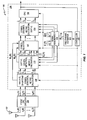
- Figure 1 illustrates an embodiment of a receiver 100 having R antennas 102 for receiving a signal transmitted over different signal propagation paths.
- the signals as a function of time (t) x 1 (t), x 2 (t), ⁇ , x R (t) received at the different antennas 102 each have contributions from different ones of the transmit antennas (not shown).
- the received signals are filtered, down-converted and digitized by front end circuitry 104 to form corresponding baseband signal streams as a function of symbol index (n) x 1 (n), x 2 (n), ⁇ , x R (n).
- the composite baseband signal vector x [x 1 (n),x 2 (n), ⁇ x R (n)] T is processed by a baseband processor 106 included in the receiver 100 to decode the transmitted signal.
- the baseband processor 106 detects symbols for each signal stream before and after performing interference cancellation on the composite baseband signal.
- a decision metric is also calculated for each signal stream before and after interference cancellation.
- the decision metric indicates symbol detection accuracy.
- the baseband processor 106 compares the decision metric calculations for at least one of the signal streams to determine whether symbol detection is more accurate with or without interference cancellation. If more accurate, the baseband processor 106 uses the symbols detected based on the interference cancellation results to decode the transmitted signal. Otherwise, the symbols detected before interference cancellation are used for decoding. This way, the more accurate group of symbols is used to decode the transmitted signal.
- the baseband processor 106 attempts at least once to re-decode unsuccessfully decoded signal streams. This way, signal decoding does not stop if only a single stream is incorrectly decoded. Instead, the baseband processor 106 makes at least one attempt to re-decode unsuccessfully decoded signal streams before requesting re-transmission. Accordingly, the baseband processor 106 not only uses the more accurate group of detected symbols to decode the transmitted signal, the baseband processor 106 also attempts to re-decode unsuccessfully decoded signal streams at least once before requesting re-transmission because subtracting interference when decoding is successful could reduce interference and improve decoding performance at the next trial. The baseband processor 106 thus not only improves signal decoding accuracy, it also improves data transmission throughput by reducing the number of signal re-transmission requests (e.g., NACKs) made by the receiver 100.
- NACKs signal re-transmission requests
- the number of transmitted symbol streams is the same as the number of receive antennas 102 (R). However, this may not always be the case. Accordingly, the equations and corresponding Figures described herein can be readily modified to include an additional index (not shown) for generalizing to any number of transmit and receive antennas. Thus, any number of transmit and receive antennas can be handled by the embodiments described herein.
- the different stages 108 - 116 may be implemented as separate logical and/or software stages.
- the different baseband processor stages 108 - 116 may be implemented as a single logical entity and/or software program. Either way, the stages 108 - 116 shown in Figure 1 merely illustrate the various signal processing functions carried out by the baseband processor 106 and should not be construed or otherwise limit the claimed invention to a particular physical arrangement of logic and/or software elements.
- the first baseband processor stage 108 applies QR-decomposition to the received signal streams x 1 (n),x 2 (n), ⁇ ,x R (n), e.g., as illustrated by Step 200 of Figure 2 .
- the second baseband processor stage 110 performs soft serial interference cancellation on the composite baseband signal x using the first group of detected symbols ⁇ 1 (R), e.g., as illustrated by Step 204 of Figure 2 .
- the interference cancellation is considered "soft" because symbol estimates (i.e., detected symbols) are used, not actually decoded symbols.
- the third baseband processor stage 112 compares the different decision metric calculations for at least one of the signal streams to determine whether symbol detection is more accurate with or without soft serial interference cancellation, e.g., as illustrated by Step 208 of Figure 2 .
- LLR is used as the decision metric.
- the decision metric is a SINR (signal to interference-plus-noise ratio).
- MCS Modulation and Coding Set
- the third stage 112 selects the first group of symbols ⁇ 1 , (R) detected based on the QR-decomposition results. Otherwise, the third stage 112 selects the second group of symbols ⁇ 2 (R) detected based on the interference cancellation results.
- the fourth baseband processor stage 114 decodes the different signal streams using the selected group of symbols, e.g., as illustrated by Step 210 of Figure 2 . Accordingly, the fourth stage 114 performs symbol decoding based on the soft serial interference cancellation results when the decision metric indicates that interference cancellation yields more accurate symbol detection results. Otherwise, the signal streams are decoded based on the QR-decomposition results. The fourth stage 114 may decode the signal streams via any known symbol decoding technique.
- the fifth baseband processor stage 116 determines whether individual ones of the signal streams are decoded properly. In one embodiment, the fifth stage 116 calculates a cyclic redundancy check (CRC) value for each signal stream as is well known in the art. The CRC value indicates whether symbols detected for a particular signal stream are properly decoded. If so, the received signal stream is regenerated possibly with some weighting and partly removed from the composite baseband signal so that its signal contribution is partly cancelled. This way, the remaining signal streams can be decoded reduced or ideally absent interference from previously decoded signal streams. In one embodiment, a signal stream may be regenerated by re-encoding decoded symbols to corresponding soft symbol estimates.
- CRC cyclic redundancy check
- Figure 3 illustrates an embodiment of processing logic for QR-decomposing the baseband signal streams X 1 (n),X 2 (n), ⁇ X R (n).
- the first baseband processor stage 108 begins the QR-decomposition and symbol detection process (Step 300).
- the signal streams may be initially ranked based on received power.
- the first stage 108 applies QR-decomposition to the highest ranking signal stream x 1 (n) (Step 304).
- x has a size of R x 1
- H has a size of R x T
- c has a size of Tx1
- R is the number of receive antennas 102
- T is the number of transmit antennas and possibly R ⁇ T.
- h j,i the matrix element of H , denotes the channel response between the j th transmit antenna and the i th receive antenna 102. Again take for example the case of four transmit and receive antennas 102.
- c 1 is generated by interchanging row component according to H 1 .
- QR-decomposing H 1 yields the unitary matrix Q 1 and upper-triangular matrix R 1 .
- the fourth row has no interference from transmitted signal streams c j where j ⁇ 1.
- interference-free terms for c 2 , c 3 and c 4 can likewise be determined based on equations (4)-(6).
- a QR-decomposition it is possible to make a QR-decomposition to get c w at x z Any desirable metric may be used to determine which receive antenna stream x z is QR-decomposed to get c w . In one embodiment, this determination is based on received pilot power for each stream which would be allocated to have no interference on each other.
- c w is obtained by decomposing at x z for all z (1,2, ⁇ , R) and will be selected which has the maximum estimated SINR.
- the first baseband processor stage 108 detects symbols ⁇ 1,1 and calculates the decision metric m 1,1 for the first signal stream x 1 (n) based on the QR-decomposition results y 4 (Step 306). The first stage 108 then determines whether all signal streams have been QR-decomposed as described above (Step 308). If not, the stream index is incremented (Step 310) and the QR-decomposition process repeated for each remaining signal stream (Steps 304 - 306). The signal streams may be optionally re-ranked based on the decision metric calculations after all signal streams have been QR-decomposed (Step 312). In one embodiment, LLR is used as the decision metric.
- the decision metric is a SINR (signal to interference-plus-noise ratio).
- MCS Modulation and Coding Set
- the first stage 108 ends the QR-decomposition and symbol detection processes after all streams have been processed (Step 314).
- the resulting group of detected symbols ⁇ 1 (R) is provided to the second stage 110 for performing soft serial interference cancellation and symbol re-detection.
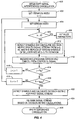
- Figure 4 illustrates an embodiment of processing logic for performing soft serial interference cancellation on the composite baseband signal x based on the group of symbols detected using the QR-decomposition results.
- each transmitted signal stream is regenerated using the corresponding symbols detected during QR-decomposition and successively subtracted from the composite baseband signal based on signal ranking, e.g., according to equation (1).
- signal ranking e.g., according to equation (1).
- symbols for the remaining signal streams can be re-detected with reduced or ideally absent interference from higher-ranking signal streams.
- the second baseband processor stage 110 begins the soft serial interference cancellation process (Step 400).
- Interference cancellation is performed for k max iterations, where symbols are detected for all signal streams each iteration.
- the second stage 110 initializes the interference cancellation parameters because symbols have already been detected and decision metric calculations made by the first stage 108.
- a signal regenerator 118 included in or associated with the baseband processor 106 regenerates the first signal stream using the initialized parameters.
- the second stage 110 cancels the regenerated signal from the composite baseband signal (Step 410).
- the regenerated signal also known as replica, which is obtained from the detected signal and estimated channel with a weighting factor based on metric similar to equation (1).
- Symbols ⁇ 2,2 are then detected and the decision metric calculated m 2,2 for the next highest ranking signal stream with reduced or ideally absent interference from the highest ranking signal stream (Step 412). This process continues until symbols for all signal streams have been re-detected and cancelled from the composite baseband signal (Step 414), incrementing the signal stream index j each time (Step 416).
- Step 416 the iteration index k is incremented by one (Step 418) and the interference cancellation process is repeated once again for all streams (Steps 406 - 416).
- the symbol estimates ⁇ 2,1 , ⁇ 2,2 , ⁇ 2,R and decision metric calculations m 2 (R) are potentially refined each time the iteration index is incremented.
- the desired number of interference cancellation iterations is achieved (Step 420).
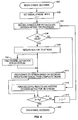
- Figure 5 illustrates an embodiment of processing logic for determining whether symbol detection is more accurate with or without soft serial interference cancellation.
- the third baseband processor stage 112 compares the different decision metric calculations provided by the first and second stages 108, 110 for at least one of the signal streams to determine whether soft serial interference cancellation improves symbol detection accuracy.
- the third stage 112 begins the symbol detection accuracy determination process (Step 500).
- the third stage 112 compares the different decision metric calculations for the m highest ranking signal streams.
- the third stage 112 compares the decision metric calculation for the highest ranking signal stream post interference cancellation ( m 2,1 ) to the decision metric calculation for the highest ranking signal stream pre interference cancellation ( m 1,1 ) (Step 502).
- the symbols ⁇ 1 (R) detected by the first stage 108 before soft serial interference cancellation are selected for decoding if the decision metric indicates they are more accurate (Step 504). Otherwise, the second group of symbols ⁇ 2 (R) detected by the second stage 110 is selected for decoding (Step 506). The symbol detection accuracy determination process then ends (Step 508). The selected group of symbols is provided to the fourth baseband processor stage 114 for decoding.
- Figure 6 illustrates an embodiment of processing logic for decoding the selected group of symbol streams.
- the fourth baseband processor stage 114 decodes the symbols provided by the third stage 112, attempting to re-decode unsuccessfully decoded symbol streams at least once. This way, symbol detection accuracy improves while reducing the number of signal retransmission requests issued by the receiver 100.
- the fourth stage 114 begins the symbol decoding process (Step 600).
- the symbols associated with the first stream are decoded and the decision metric recalculated (Step 604).
- the fifth baseband processor stage 116 calculates a CRC value based on the symbol decoding results d ⁇ 1 for the first signal stream.
- a controller 120 included in or associated with the baseband processor 106 determines whether the CRC value is valid (Step 606). If valid, the baseband processor 106 generates a message such as an Acknowledgement (ACK) message indicating the first signal stream was successfully decoded (Step 608). When the ACK message is actually sent depends on the Hybrid Automatic Repeat-Request (HARQ) protocol. All streams may be acknowledged in the same ACK message or in different messages. Regardless, the signal regenerator 118 reproduces the first signal stream using the successfully decoded symbols d ⁇ 1 and the fourth stage 114 cancels the regenerated signal from the composite baseband signal (Step 610). This way, the remaining symbol streams can be decoded with reduced or ideally absent interference from the first stream.
- ACK Acknowledgement
- HARQ Hybrid Automatic Repeat-Request
- the controller 120 instructs a fine channel estimator 122 included in or associated with the baseband processor 106 to calculate a fine channel estimate ⁇ 1 fine associated with the first signal stream as is well known in the art (Step 612) (e.g., well known as the decision feedback approach).
- the fine channel estimate is highly accurate and is used to re-generate the first stream, e.g., by substituting the fine channel estimate ⁇ 1 fine for H j est in equation (1). Using a more accurate channel estimate improves cancellation of the re-generated signal from the composite signal.
- the symbol decoding process (Steps 604 - 610) continues for each signal stream (Steps 614 and 616). If the CRC value calculated for a particular signal stream is invalid, the signal stream is not regenerated and cancelled from the composite signal (Step 606). Instead, its decoding results pend and its decision metric calculation saved for subsequent use (step 618). The decoding results are not used because the signal stream was incorrectly decoded. Otherwise, decoding errors are compounded if they are regenerated and cancelled from the composite signal.
- the fourth stage 114 ends the symbol decoding process after each symbol stream is initially decoded (Step 620). However, the receiver 100 does not automatically generate a signal retransmission request for each unsuccessfully decoded signal stream. Instead, the baseband processor 106 attempts at least once to re-decode the unsuccessfully decoded signal streams before issuing retransmission requests such as NACKs.
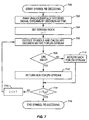
- Figure 7 illustrates an embodiment of processing logic for re-decoding symbol streams that were initially decoded incorrectly. This way, the receiver 100 has at least one more opportunity to re-decode problematic signal streams before requesting retransmission.
- the fourth baseband processor stage 114 re-initiates the symbol re-decoding process (Step 700).
- the unsuccessfully decoded signal streams are re-ranked based on the decision metric calculations so that the highest ranking signal stream is processed first (Step 702). This improves the likelihood that some or all of the problematic signal streams will be correctly decoded.
- the fifth stage 116 calculates a CRC value for the j th signal stream and the controller 120 determines whether the CRC value is valid (Step 708). This time, the receiver 100 issues a retransmission request if the symbols remain incorrectly decoded (Step 710). Otherwise, the receiver 100 issues an acknowledgement message indicating successful decoding (Step 712) if the CRC value is valid.
- the re-decoding process continues for the remaining signal streams until the last stream (as indicated by N UD ) is re-decoded (Steps 714 and 716).
- the fourth stage 114 then ends the symbol re-decoding process (Step 718).
- the symbol re-decoding process may be repeated as many times as desired, each iteration eliciting steps 700 - 718 of Figure 7 so long as decision metric increases each iteration, even if the CRC value is invalid within the maximum number of trials which depends on processing delay, etc.
- the baseband processor 106 of the multi band receiver may be configured to QR-decompose the signal streams to obtain a unitary matrix and a triangular matrix used to detect the symbols and calculate the decision metric for each signal stream.
- the baseband processor 106 may be configured to detect the symbols and calculate the decision metric for all signal streams using QR-decomposition before performing soft serial interference cancellation on the composite signal.
- the baseband processor 106 may be configured to:
- the baseband processor 106 may be configured to regenerate and cancel a higher ranking signal stream from the composite signal before detecting the symbols of a lower ranking signal stream so that the symbols of the lower ranking signal stream can be detected from the composite signal absent interference from the higher ranking signal stream.
- the baseband processor 106 may be configured to re-rank the signal streams based on the decision metric calculated for the different signal streams using QR-decomposition, wherein the soft serial interference cancellation is performed based on the re-ranking.
- the baseband processor 106 may be configured to:
- the baseband processor 106 may in some embodiments be configured to:
- the baseband processor 106 may be configured to determine decoding success based on a cyclic redundancy check (CRC) value calculated for each decoded signal stream.
- CRC cyclic redundancy check
- the baseband processor 106 may be configured to:
Landscapes
- Engineering & Computer Science (AREA)
- Computer Networks & Wireless Communication (AREA)
- Signal Processing (AREA)
- Radio Transmission System (AREA)
- Noise Elimination (AREA)
Claims (16)
- Verfahren zum Verarbeiten eines zusammengesetzten Signals, welches eine durch einen Mehrantennenempfänger empfangene Mehrzahl von Komponentensignalströmen enthält, umfassend:Verwenden von QR-Zerlegung zum Detektieren von Symbolen und Berechnen einer Entscheidungsmetrik für jeden der Signalströme (202);Durchführen von weicher serieller Interferenzlöschung an dem zusammengesetzten Signal basierend auf den für verschiedene der Signalströme detektierten Symbolen und einer Einordnung in einer Rangordnung der Signalströme (204);erneutes Detektieren der Symbole und erneutes Berechnen der Entscheidungsmetrik für jeden Signalstrom basierend auf den Ergebnissen der weichen Interferenzlöschung (206);Vergleichen der verschiedenen Entscheidungsmetrik-Berechnungen für zumindest einen der Signalströme, um zu bestimmen, ob die Symboldetektion mit oder ohne weicher serieller Interferenzlöschung akkurater ist (208); undDekodieren der Signalströme unter Verwendung der detektieren Symbole, basierend auf den Ergebnissen der weichen seriellen Interferenzlöschung, wenn ermittelt ist, dass die Symboldetektion mit weicher serieller Interferenzlöschung akkurater ist, andernfalls basierend auf den mittels QR-Zerlegung detektierten Symbolen (210).
- Verfahren gemäß Anspruch 1, wobei das Verwenden von QR-Zerlegung, um Symbole zu detektieren und eine Entscheidungsmetrik für jede der Signalströme zu berechnen, das QR-Zerlegen der Signalströme umfasst, um eine unitäre Matrix und eine Dreiecksmatrix zu erhalten, welche zum Detektieren der Symbole und Berechnen der Entscheidungsmetrik für jeden Signalstrom verwendet werden.
- Verfahren gemäß Anspruch 2, wobei das QR-Zerlegen der Signalströme zum Erhalten einer unitären Matrix und einer Dreiecksmatrix, das QR-Zerlegen der Signalströme basierend auf einer empfangenen Pilotleistung umfasst.
- Verfahren gemäß Anspruch 2, wobei das QR-Zerlegen der Signalströme zum Erhalten einer unitären Matrix und einer Dreiecksmatrix umfasst, die Signalströme zu QR-zerlegen und dann den Signalstrom mit dem maximalen geschätzten Signal-zu-Interferenz-plus-Rauschen-Verhältnis auszuwählen.
- Verfahren gemäß Anspruch 1, wobei für alle Signalströme die Symbole detektiert und die Entscheidungsmetrik durch Verwendung von QR-Zerlegung berechnet werden, bevor weiche serielle Interferenzlöschung an dem zusammengesetzten Signal durchgeführt wird (300-314).
- Verfahren gemäß Anspruch 1, wobei das Durchführen weicher serieller Interferenzlöschung an dem zusammengesetzten Signal umfasst:Regenerieren jedes Signalstroms von den entsprechenden mittels QR-Zerlegung detektierten Symbolen (410); undLöschen jedes regenerierten Signalstroms von dem zusammengesetzten Signal dem Rang nach folgend (410).
- Verfahren gemäß Anspruch 6, wobei ein höherrangiger Signalstrom von dem zusammengesetzten Signalstrom regeneriert und gelöscht wird, bevor die Symbole eines niederrangigeren Signalstroms detektiert werden, so dass die Symbole des niederrangigeren Signalstroms von dem zusammengesetzten Signal ohne der Interferenz des höherrangigen Signalstroms detektiert werden können (410 - 416).
- Verfahren gemäß Anspruch 1, ferner aufweisend erneutes Einordnen in eine Rangordnung der Signalströme basierend auf der für die verschiedenen Signalströme mittels QR-Zerlegung berechneten Entscheidungsmetrik (312), wobei die weiche serielle Interferenzlöschung basierend auf dem erneuten Einordnen durchgeführt wird.
- Verfahren gemäß Anspruch 1, wobei das Vergleichen der verschiedenen Entscheidungsmetrik-Berechnungen für zumindest eines der Signalströme zum Bestimmen, ob die Symboldetektion mit oder ohne weicher serieller Interferenzlöschung akkurater ist, umfasst, die verschiedenen Entscheidungsmetrik-Berechnungen für eine oder mehrere der höchstrangigen Signalströme zu vergleichen (502).
- Verfahren gemäß Anspruch 1, wobei das Dekodieren der Signalströme umfasst:Dekodieren der Signalströme dem Rang nach folgend (602, 604);nacheinanderfolgendes Löschen nacheinanderfolgend dekodierter Signalströme von dem zusammengesetzten Signal, so dass verbleibende nicht-dekodierte Signalströme anschließend von dem zusammengesetzten Signal ohne Interferenz der erfolgreich dekodierten Signalströme dekodiert werden können (610); undzumindest einmalig Versuchen, die erfolglos dekodierten Signalströme erneut zu dekodieren (700 - 718).
- Verfahren gemäß Anspruch 10, ferner umfassend:Durchführen von Kanalfeinschätzung für erfolgreich dekodierte Signalströme (612); undVerwenden der entsprechenden Kanalfeinschätzungsergebnisse, um die erfolgreich dekodierten Signalströme von dem zusammengesetzten Signal zu löschen (610).
- Verfahren gemäß Anspruch 10, ferner umfassend das Melden, ob die Signalströme erfolgreich oder erfolglos dekodiert wurden nach zumindest einem einmaligen Versuchen des erneuten Kodierens erfolglos dekodierter Signalströme (710, 712).
- Verfahren gemäß Anspruch 10, wobei der Dekodierungserfolg basierend auf einem Wert einer zyklischen Redundanzprüfung (CRC) für jeden der dekodierten Signalströme bestimmt wird (708).
- Verfahren gemäß Anspruch 13, wobei das zumindest einmalig Versuchen zum erneuten Dekodieren erfolglos dekodierter Signalströme umfasst, zu versuchen, die erfolglos dekodierten Signalströme so lange zu dekodieren, wie die Entscheidungsmetrik jeden Versuch erhöht, selbst wenn einer oder mehrere der CRC Werte ungültig ist.
- Verfahren gemäß Anspruch 10, wobei nacheinanderfolgendes Löschen nacheinanderfolgend dekodierter Signalströme von dem zusammengesetzten Signal umfasst:Löschen eines dekodierten höherrangigen Signalstrom von dem zusammengesetzten Signal, falls er erfolgreich dekodiert ist, so dass ein niederrangiger Signalstrom von dem zusammengesetzten Signal ohne der Interferenz des höherrangigen Signals dekodiert werden kann (610, 614, 616); undfalls der höherrangige Signalstrom nicht erfolgreich dekodiert ist, Dekodieren des niederrangigen Signalstroms und, falls erfolgreich dekodiert, Löschen des dekodierten niederrangigen Signalstroms von dem zusammengesetzten Signal, so dass der höherrangige Signalstrom anschließend von dem zusammengesetzten Signal ohne der Interferenz des niederrangigen Signals erneut dekodiert werden kann (610, 614, 616, 618, 700 - 718).
- Mehrantennenempfänger (100) zum Verarbeiten eines zusammengesetzten Signals, welches eine Mehrzahl von Komponentensignalströmen enthält, umfassend einen Basisbandprozessor (106), welcher konfiguriert ist zum:Verwenden von QR-Zerlegung zum Detektieren von Symbolen und Berechnen einer Entscheidungsmetrik für jeden der Signalströme;Durchführen einer weichen seriellen Interferenzlöschung an dem zusammengesetzten Signal basierend auf den für verschiedene der Signalströme detektierten Symbolen und einer Einordnung in einer Rangordnung der Signalströme ;erneutes Detektieren der Symbole und erneutes Berechnen der Entscheidungsmetrik für jeden Signalstrom basierend auf den Ergebnissen der weichen seriellen Interferenzlöschung;Vergleichen der verschiedenen Entscheidungsmetrik-Berechnungen für zumindest einen der Signalströme, um zu bestimmen, ob die Symboldetektion mit oder ohne weicher serieller Interferenzlöschung akkurater ist; undDekodieren der Signalströme unter Verwendung der detektieren Symbole, basierend auf den Ergebnissen der weichen seriellen Interferenzlöschung, wenn ermittelt ist, dass die Symboldetektion mit weicher serieller Interferenzlöschung akkurater ist, andernfalls basierend auf den mittels QR-Zerlegung detektierten Symbolen.
Applications Claiming Priority (1)
| Application Number | Priority Date | Filing Date | Title |
|---|---|---|---|
| PCT/SE2007/051014 WO2009078766A1 (en) | 2007-12-17 | 2007-12-17 | Multi-antenna receiver interference cancellation method and apparatus |
Publications (3)
| Publication Number | Publication Date |
|---|---|
| EP2245754A1 EP2245754A1 (de) | 2010-11-03 |
| EP2245754A4 EP2245754A4 (de) | 2014-07-02 |
| EP2245754B1 true EP2245754B1 (de) | 2016-03-02 |
Family
ID=40795744
Family Applications (1)
| Application Number | Title | Priority Date | Filing Date |
|---|---|---|---|
| EP07861109.2A Not-in-force EP2245754B1 (de) | 2007-12-17 | 2007-12-17 | Verfahren und vorrichtung zum löschen von mehrantennenempfängerstörungen |
Country Status (4)
| Country | Link |
|---|---|
| US (1) | US8315343B2 (de) |
| EP (1) | EP2245754B1 (de) |
| JP (1) | JP5337815B2 (de) |
| WO (1) | WO2009078766A1 (de) |
Families Citing this family (20)
| Publication number | Priority date | Publication date | Assignee | Title |
|---|---|---|---|---|
| KR100934007B1 (ko) * | 2007-12-18 | 2009-12-28 | 한국전자통신연구원 | 다중입력 다중출력 수신기에서 다차원 검출 장치 및방법과, 이를 이용한 수신 장치 |
| KR100890789B1 (ko) * | 2007-12-19 | 2009-03-31 | 한국전자통신연구원 | 다중입력 다중출력 시스템의 수신 장치 및 그 방법 |
| US8467480B2 (en) * | 2009-09-14 | 2013-06-18 | Qualcomm Incorporated | Combining decision metrics for decoding based on payload difference |
| US8817924B2 (en) | 2010-09-23 | 2014-08-26 | Qualcomm Incorporated | Iterative pilot tone cancellation for improved channel estimation and decoding |
| EP3203642B1 (de) * | 2011-04-05 | 2019-02-20 | BlackBerry Limited | Verfahren zur interferenzunterdrückung und verfahren zur erkennung von fehlerhaften nachbarzellmessungen |
| US8548005B2 (en) * | 2011-04-19 | 2013-10-01 | Mediatek Singapore Pte. Ltd. | Technique for switching between 1x and 2x oversampling rate in a TD-SCDMA receiver |
| US9723496B2 (en) | 2011-11-04 | 2017-08-01 | Qualcomm Incorporated | Method and apparatus for interference cancellation by a user equipment using blind detection |
| JP5896461B2 (ja) * | 2012-03-19 | 2016-03-30 | 日本電気株式会社 | 信号分離装置、信号分離方法 |
| US9148260B2 (en) * | 2012-03-26 | 2015-09-29 | Telefonaktiebolaget L M Ericsson (Publ) | Method and apparatus relating to HARQ processes |
| JP6018969B2 (ja) * | 2013-05-13 | 2016-11-02 | 株式会社日立国際電気 | 無線通信装置および無線通信方法 |
| CN112851769A (zh) | 2014-01-27 | 2021-05-28 | 分子模板公司 | 用于哺乳动物中的去免疫化志贺毒素a亚基效应子多肽 |
| US11142584B2 (en) | 2014-03-11 | 2021-10-12 | Molecular Templates, Inc. | CD20-binding proteins comprising Shiga toxin A subunit effector regions for inducing cellular internalization and methods using same |
| AU2015274647C1 (en) | 2014-06-11 | 2020-01-30 | Molecular Templates, Inc. | Protease-cleavage resistant, Shiga toxin a subunit effector polypeptides and cell-targeted molecules comprising the same |
| EP3186936B1 (de) * | 2014-11-03 | 2019-07-10 | The University of Surrey | Erkennung von iterativen mimo-signalen |
| KR20170110601A (ko) | 2015-02-05 | 2017-10-11 | 몰레큘러 템플레이츠, 인코퍼레이션. | 시가 독소 a 서브유닛 작동체 영역을 포함하는 다가 cd20 결합 분자 및 이들의 강화된 조성물 |
| EP3303373B1 (de) | 2015-05-30 | 2020-04-08 | Molecular Templates, Inc. | Deimmunisierte shigatoxin-a-untereinheitsgerüste und zellgerichtete moleküle damit |
| EP3169028B1 (de) * | 2015-11-13 | 2020-09-23 | Institut Mines Telecom | Halb-abschliessendes rekursives blockdecodierungsverfahren und vorrichtung |
| KR102580647B1 (ko) | 2016-12-07 | 2023-09-20 | 몰레큘러 템플레이츠, 인코퍼레이션. | 부위 특이적 접합을 위한 시가 독소 a 서브유닛 작동체 폴리펩타이드, 시가 독소 작동체 스캐폴드, 및 세포-표적화 분자 |
| KR102590672B1 (ko) | 2017-01-25 | 2023-10-18 | 몰레큘러 템플레이츠, 인코퍼레이션. | 탈면역된 시가 독소 a 서브유닛 이펙터 및 cd8+ t-세포 에피토프를 포함하는 세포-표적화 분자 |
| KR20200143634A (ko) | 2018-04-17 | 2020-12-24 | 몰레큘러 템플레이츠, 인코퍼레이션. | 탈면역된 시가 독소 a 서브유닛 스캐폴드를 포함하는 her2-표적화 분자 |
Family Cites Families (8)
| Publication number | Priority date | Publication date | Assignee | Title |
|---|---|---|---|---|
| US7386057B2 (en) | 2003-02-20 | 2008-06-10 | Nec Corporation | Iterative soft interference cancellation and filtering for spectrally efficient high-speed transmission in MIMO systems |
| KR100575982B1 (ko) | 2003-11-05 | 2006-05-02 | 삼성전자주식회사 | 다중 안테나를 사용하는 직교주파수분할다중 시스템에서간섭신호 제거 장치 및 방법 |
| JP4322918B2 (ja) * | 2004-03-05 | 2009-09-02 | 株式会社エヌ・ティ・ティ・ドコモ | 受信装置、受信方法、および無線通信システム |
| JP4536495B2 (ja) * | 2004-11-29 | 2010-09-01 | 株式会社エヌ・ティ・ティ・ドコモ | 信号分離装置及び信号分離方法 |
| JP4290660B2 (ja) * | 2005-02-14 | 2009-07-08 | 日本電信電話株式会社 | 空間多重信号検出回路及び空間多重信号検出方法 |
| US8660210B2 (en) | 2006-01-23 | 2014-02-25 | Qualcomm Incorporated | Method of packet format dependent selection of MIMO-OFDM demodulator |
| JP4854378B2 (ja) * | 2006-05-01 | 2012-01-18 | ソフトバンクBb株式会社 | 無線伝送システムおよび無線伝送方法 |
| US8483324B2 (en) * | 2007-04-05 | 2013-07-09 | Wi-Lan, Inc. | Signal detection in multiple-input-multiple-output communication system |
-
2007
- 2007-12-17 WO PCT/SE2007/051014 patent/WO2009078766A1/en not_active Ceased
- 2007-12-17 US US12/808,232 patent/US8315343B2/en not_active Expired - Fee Related
- 2007-12-17 JP JP2010537890A patent/JP5337815B2/ja not_active Expired - Fee Related
- 2007-12-17 EP EP07861109.2A patent/EP2245754B1/de not_active Not-in-force
Also Published As
| Publication number | Publication date |
|---|---|
| JP2011507389A (ja) | 2011-03-03 |
| EP2245754A1 (de) | 2010-11-03 |
| US20100272220A1 (en) | 2010-10-28 |
| US8315343B2 (en) | 2012-11-20 |
| JP5337815B2 (ja) | 2013-11-06 |
| EP2245754A4 (de) | 2014-07-02 |
| WO2009078766A1 (en) | 2009-06-25 |
Similar Documents
| Publication | Publication Date | Title |
|---|---|---|
| EP2245754B1 (de) | Verfahren und vorrichtung zum löschen von mehrantennenempfängerstörungen | |
| US8027402B2 (en) | Symbol-level combining for multiple input multiple output (MIMO) systems with hybrid automatic repeat request (HARQ) and/or repetition coding | |
| US8090063B2 (en) | Symbol-level combining for multiple input multiple output (MIMO) systems with hybrid automatic repeat request (HARQ) and/or repetition coding | |
| EP2047626B1 (de) | Durch verkettung unterstütztes kombinieren auf symbolebene für mimo-systeme mit harq und/oder wiederholungscodierung | |
| US7254192B2 (en) | Iterative detection in MIMO systems | |
| EP2560313B1 (de) | Symbolebenenkombination für Mimo-Systeme mit HARQ- und/oder Wiederholungskodierung | |
| EP2025069B1 (de) | Verfahren und vorrichtung zur korrektur von datenübertragungsfehlern | |
| US8300747B2 (en) | Method and system for an adaptive VBLAST receiver for wireless multiple input multiple outout (MIMO) detection | |
| US8423862B2 (en) | Execution decision apparatus, receiving apparatus, radio communication system, and execution decision method | |
| US7302018B2 (en) | Iterative detection in MIMO systems | |
| US8718177B2 (en) | Optimal linear equalizer for MIMO systems with HARQ and/or repetition coding | |
| EP3048766A1 (de) | Doppeliterativer MIMO-Empfänger | |
| US8737539B2 (en) | Low complexity iterative MIMO receiver based on successive soft interference cancellation and MMSE spatial filtering | |
| JP4381901B2 (ja) | 通信路推定及びデータ検出方法 | |
| JP2005110201A (ja) | 無線通信システム並びに無線送信機及び無線受信機 | |
| EP1811706B1 (de) | Methode und System für Zellular- Diversitätsempfänger mit verbesserter Interferenzunterdrückung | |
| CN101931506A (zh) | 一种基于概率数据辅助检测信号的方法及设备 | |
| US8477884B2 (en) | Accelerated turbo transceiver and method for MIMO system | |
| EP2232756B1 (de) | Verfahren zum senden eines symbolblocks in mimo-netzwerken | |
| Matsumoto | Iterative (turbo) signal processing techniques for MIMO signal detection and equalization | |
| CN101047483B (zh) | 多码字的多输入多输出系统中的重传方法 | |
| Prasad et al. | Efficient combining techniques for multi-input multi-output multi-user systems employing hybrid automatic repeat request | |
| TWI378660B (en) | Method and apparatus for interference cancellation in a wireless communications system | |
| Li et al. | Iterative successive interference cancellation based on multiple feedback for multiuser MIMO systems | |
| Whang | Transmission and Combining for Hybrid Automatic Repeat Request in Multiple-Input Multiple-Output Systems |
Legal Events
| Date | Code | Title | Description |
|---|---|---|---|
| PUAI | Public reference made under article 153(3) epc to a published international application that has entered the european phase |
Free format text: ORIGINAL CODE: 0009012 |
|
| 17P | Request for examination filed |
Effective date: 20100915 |
|
| AK | Designated contracting states |
Kind code of ref document: A1 Designated state(s): AT BE BG CH CY CZ DE DK EE ES FI FR GB GR HU IE IS IT LI LT LU LV MC MT NL PL PT RO SE SI SK TR |
|
| AX | Request for extension of the european patent |
Extension state: AL BA HR MK RS |
|
| DAX | Request for extension of the european patent (deleted) | ||
| RAP1 | Party data changed (applicant data changed or rights of an application transferred) |
Owner name: UNWIRED PLANET INTERNATIONAL LIMITED |
|
| A4 | Supplementary search report drawn up and despatched |
Effective date: 20140604 |
|
| RIC1 | Information provided on ipc code assigned before grant |
Ipc: H04L 25/02 20060101ALI20140528BHEP Ipc: H04L 1/06 20060101ALI20140528BHEP Ipc: H04B 1/707 20110101AFI20140528BHEP |
|
| GRAP | Despatch of communication of intention to grant a patent |
Free format text: ORIGINAL CODE: EPIDOSNIGR1 |
|
| INTG | Intention to grant announced |
Effective date: 20150630 |
|
| GRAS | Grant fee paid |
Free format text: ORIGINAL CODE: EPIDOSNIGR3 |
|
| GRAA | (expected) grant |
Free format text: ORIGINAL CODE: 0009210 |
|
| AK | Designated contracting states |
Kind code of ref document: B1 Designated state(s): AT BE BG CH CY CZ DE DK EE ES FI FR GB GR HU IE IS IT LI LT LU LV MC MT NL PL PT RO SE SI SK TR |
|
| REG | Reference to a national code |
Ref country code: GB Ref legal event code: FG4D |
|
| REG | Reference to a national code |
Ref country code: AT Ref legal event code: REF Ref document number: 778625 Country of ref document: AT Kind code of ref document: T Effective date: 20160315 Ref country code: CH Ref legal event code: EP |
|
| REG | Reference to a national code |
Ref country code: IE Ref legal event code: FG4D |
|
| REG | Reference to a national code |
Ref country code: DE Ref legal event code: R096 Ref document number: 602007045063 Country of ref document: DE |
|
| REG | Reference to a national code |
Ref country code: NL Ref legal event code: MP Effective date: 20160302 |
|
| REG | Reference to a national code |
Ref country code: LT Ref legal event code: MG4D |
|
| REG | Reference to a national code |
Ref country code: AT Ref legal event code: MK05 Ref document number: 778625 Country of ref document: AT Kind code of ref document: T Effective date: 20160302 |
|
| PG25 | Lapsed in a contracting state [announced via postgrant information from national office to epo] |
Ref country code: ES Free format text: LAPSE BECAUSE OF FAILURE TO SUBMIT A TRANSLATION OF THE DESCRIPTION OR TO PAY THE FEE WITHIN THE PRESCRIBED TIME-LIMIT Effective date: 20160302 Ref country code: FI Free format text: LAPSE BECAUSE OF FAILURE TO SUBMIT A TRANSLATION OF THE DESCRIPTION OR TO PAY THE FEE WITHIN THE PRESCRIBED TIME-LIMIT Effective date: 20160302 Ref country code: GR Free format text: LAPSE BECAUSE OF FAILURE TO SUBMIT A TRANSLATION OF THE DESCRIPTION OR TO PAY THE FEE WITHIN THE PRESCRIBED TIME-LIMIT Effective date: 20160603 |
|
| PG25 | Lapsed in a contracting state [announced via postgrant information from national office to epo] |
Ref country code: LT Free format text: LAPSE BECAUSE OF FAILURE TO SUBMIT A TRANSLATION OF THE DESCRIPTION OR TO PAY THE FEE WITHIN THE PRESCRIBED TIME-LIMIT Effective date: 20160302 Ref country code: NL Free format text: LAPSE BECAUSE OF FAILURE TO SUBMIT A TRANSLATION OF THE DESCRIPTION OR TO PAY THE FEE WITHIN THE PRESCRIBED TIME-LIMIT Effective date: 20160302 Ref country code: PL Free format text: LAPSE BECAUSE OF FAILURE TO SUBMIT A TRANSLATION OF THE DESCRIPTION OR TO PAY THE FEE WITHIN THE PRESCRIBED TIME-LIMIT Effective date: 20160302 Ref country code: AT Free format text: LAPSE BECAUSE OF FAILURE TO SUBMIT A TRANSLATION OF THE DESCRIPTION OR TO PAY THE FEE WITHIN THE PRESCRIBED TIME-LIMIT Effective date: 20160302 Ref country code: SE Free format text: LAPSE BECAUSE OF FAILURE TO SUBMIT A TRANSLATION OF THE DESCRIPTION OR TO PAY THE FEE WITHIN THE PRESCRIBED TIME-LIMIT Effective date: 20160302 Ref country code: LV Free format text: LAPSE BECAUSE OF FAILURE TO SUBMIT A TRANSLATION OF THE DESCRIPTION OR TO PAY THE FEE WITHIN THE PRESCRIBED TIME-LIMIT Effective date: 20160302 |
|
| PG25 | Lapsed in a contracting state [announced via postgrant information from national office to epo] |
Ref country code: IS Free format text: LAPSE BECAUSE OF FAILURE TO SUBMIT A TRANSLATION OF THE DESCRIPTION OR TO PAY THE FEE WITHIN THE PRESCRIBED TIME-LIMIT Effective date: 20160702 Ref country code: EE Free format text: LAPSE BECAUSE OF FAILURE TO SUBMIT A TRANSLATION OF THE DESCRIPTION OR TO PAY THE FEE WITHIN THE PRESCRIBED TIME-LIMIT Effective date: 20160302 |
|
| PG25 | Lapsed in a contracting state [announced via postgrant information from national office to epo] |
Ref country code: RO Free format text: LAPSE BECAUSE OF FAILURE TO SUBMIT A TRANSLATION OF THE DESCRIPTION OR TO PAY THE FEE WITHIN THE PRESCRIBED TIME-LIMIT Effective date: 20160302 Ref country code: SK Free format text: LAPSE BECAUSE OF FAILURE TO SUBMIT A TRANSLATION OF THE DESCRIPTION OR TO PAY THE FEE WITHIN THE PRESCRIBED TIME-LIMIT Effective date: 20160302 Ref country code: PT Free format text: LAPSE BECAUSE OF FAILURE TO SUBMIT A TRANSLATION OF THE DESCRIPTION OR TO PAY THE FEE WITHIN THE PRESCRIBED TIME-LIMIT Effective date: 20160704 Ref country code: CZ Free format text: LAPSE BECAUSE OF FAILURE TO SUBMIT A TRANSLATION OF THE DESCRIPTION OR TO PAY THE FEE WITHIN THE PRESCRIBED TIME-LIMIT Effective date: 20160302 |
|
| REG | Reference to a national code |
Ref country code: DE Ref legal event code: R097 Ref document number: 602007045063 Country of ref document: DE |
|
| PG25 | Lapsed in a contracting state [announced via postgrant information from national office to epo] |
Ref country code: BE Free format text: LAPSE BECAUSE OF FAILURE TO SUBMIT A TRANSLATION OF THE DESCRIPTION OR TO PAY THE FEE WITHIN THE PRESCRIBED TIME-LIMIT Effective date: 20160302 Ref country code: IT Free format text: LAPSE BECAUSE OF FAILURE TO SUBMIT A TRANSLATION OF THE DESCRIPTION OR TO PAY THE FEE WITHIN THE PRESCRIBED TIME-LIMIT Effective date: 20160302 |
|
| PLBE | No opposition filed within time limit |
Free format text: ORIGINAL CODE: 0009261 |
|
| STAA | Information on the status of an ep patent application or granted ep patent |
Free format text: STATUS: NO OPPOSITION FILED WITHIN TIME LIMIT |
|
| PG25 | Lapsed in a contracting state [announced via postgrant information from national office to epo] |
Ref country code: DK Free format text: LAPSE BECAUSE OF FAILURE TO SUBMIT A TRANSLATION OF THE DESCRIPTION OR TO PAY THE FEE WITHIN THE PRESCRIBED TIME-LIMIT Effective date: 20160302 |
|
| PGFP | Annual fee paid to national office [announced via postgrant information from national office to epo] |
Ref country code: IE Payment date: 20161123 Year of fee payment: 10 Ref country code: GB Payment date: 20161128 Year of fee payment: 10 |
|
| 26N | No opposition filed |
Effective date: 20161205 |
|
| PG25 | Lapsed in a contracting state [announced via postgrant information from national office to epo] |
Ref country code: BG Free format text: LAPSE BECAUSE OF FAILURE TO SUBMIT A TRANSLATION OF THE DESCRIPTION OR TO PAY THE FEE WITHIN THE PRESCRIBED TIME-LIMIT Effective date: 20160602 Ref country code: SI Free format text: LAPSE BECAUSE OF FAILURE TO SUBMIT A TRANSLATION OF THE DESCRIPTION OR TO PAY THE FEE WITHIN THE PRESCRIBED TIME-LIMIT Effective date: 20160302 |
|
| REG | Reference to a national code |
Ref country code: DE Ref legal event code: R119 Ref document number: 602007045063 Country of ref document: DE |
|
| REG | Reference to a national code |
Ref country code: CH Ref legal event code: PL |
|
| PG25 | Lapsed in a contracting state [announced via postgrant information from national office to epo] |
Ref country code: MC Free format text: LAPSE BECAUSE OF FAILURE TO SUBMIT A TRANSLATION OF THE DESCRIPTION OR TO PAY THE FEE WITHIN THE PRESCRIBED TIME-LIMIT Effective date: 20160302 |
|
| REG | Reference to a national code |
Ref country code: FR Ref legal event code: ST Effective date: 20170831 |
|
| PG25 | Lapsed in a contracting state [announced via postgrant information from national office to epo] |
Ref country code: FR Free format text: LAPSE BECAUSE OF NON-PAYMENT OF DUE FEES Effective date: 20170102 Ref country code: LU Free format text: LAPSE BECAUSE OF NON-PAYMENT OF DUE FEES Effective date: 20161217 Ref country code: CH Free format text: LAPSE BECAUSE OF NON-PAYMENT OF DUE FEES Effective date: 20161231 Ref country code: LI Free format text: LAPSE BECAUSE OF NON-PAYMENT OF DUE FEES Effective date: 20161231 |
|
| PG25 | Lapsed in a contracting state [announced via postgrant information from national office to epo] |
Ref country code: DE Free format text: LAPSE BECAUSE OF NON-PAYMENT OF DUE FEES Effective date: 20170701 |
|
| PG25 | Lapsed in a contracting state [announced via postgrant information from national office to epo] |
Ref country code: CY Free format text: LAPSE BECAUSE OF FAILURE TO SUBMIT A TRANSLATION OF THE DESCRIPTION OR TO PAY THE FEE WITHIN THE PRESCRIBED TIME-LIMIT Effective date: 20160302 Ref country code: HU Free format text: LAPSE BECAUSE OF FAILURE TO SUBMIT A TRANSLATION OF THE DESCRIPTION OR TO PAY THE FEE WITHIN THE PRESCRIBED TIME-LIMIT; INVALID AB INITIO Effective date: 20071217 |
|
| REG | Reference to a national code |
Ref country code: GB Ref legal event code: 732E Free format text: REGISTERED BETWEEN 20180510 AND 20180516 |
|
| PG25 | Lapsed in a contracting state [announced via postgrant information from national office to epo] |
Ref country code: TR Free format text: LAPSE BECAUSE OF FAILURE TO SUBMIT A TRANSLATION OF THE DESCRIPTION OR TO PAY THE FEE WITHIN THE PRESCRIBED TIME-LIMIT Effective date: 20160302 |
|
| GBPC | Gb: european patent ceased through non-payment of renewal fee |
Effective date: 20171217 |
|
| REG | Reference to a national code |
Ref country code: IE Ref legal event code: MM4A |
|
| PG25 | Lapsed in a contracting state [announced via postgrant information from national office to epo] |
Ref country code: MT Free format text: LAPSE BECAUSE OF NON-PAYMENT OF DUE FEES Effective date: 20161217 |
|
| PG25 | Lapsed in a contracting state [announced via postgrant information from national office to epo] |
Ref country code: IE Free format text: LAPSE BECAUSE OF NON-PAYMENT OF DUE FEES Effective date: 20171217 |
|
| PG25 | Lapsed in a contracting state [announced via postgrant information from national office to epo] |
Ref country code: GB Free format text: LAPSE BECAUSE OF NON-PAYMENT OF DUE FEES Effective date: 20171217 |