EP2237234A1 - Verfahren und Vorrichtung zur Zugangskontrolle - Google Patents
Verfahren und Vorrichtung zur Zugangskontrolle Download PDFInfo
- Publication number
- EP2237234A1 EP2237234A1 EP09157266A EP09157266A EP2237234A1 EP 2237234 A1 EP2237234 A1 EP 2237234A1 EP 09157266 A EP09157266 A EP 09157266A EP 09157266 A EP09157266 A EP 09157266A EP 2237234 A1 EP2237234 A1 EP 2237234A1
- Authority
- EP
- European Patent Office
- Prior art keywords
- code
- access
- mobile telephone
- identification code
- identification
- Prior art date
- Legal status (The legal status is an assumption and is not a legal conclusion. Google has not performed a legal analysis and makes no representation as to the accuracy of the status listed.)
- Withdrawn
Links
- 238000000034 method Methods 0.000 title claims abstract description 31
- 230000003287 optical effect Effects 0.000 claims abstract description 13
- 238000004590 computer program Methods 0.000 claims abstract description 3
- 239000011159 matrix material Substances 0.000 claims description 15
- 201000009032 substance abuse Diseases 0.000 description 4
- 238000011161 development Methods 0.000 description 3
- 230000018109 developmental process Effects 0.000 description 3
- 238000012937 correction Methods 0.000 description 2
- 238000010586 diagram Methods 0.000 description 2
- 235000010678 Paulownia tomentosa Nutrition 0.000 description 1
- 240000002834 Paulownia tomentosa Species 0.000 description 1
- 230000001419 dependent effect Effects 0.000 description 1
- 230000009977 dual effect Effects 0.000 description 1
- 238000013507 mapping Methods 0.000 description 1
- 239000003550 marker Substances 0.000 description 1
- 238000012986 modification Methods 0.000 description 1
- 230000004048 modification Effects 0.000 description 1
- 230000006855 networking Effects 0.000 description 1
- 230000008520 organization Effects 0.000 description 1
Images

Classifications
-
- H—ELECTRICITY
- H04—ELECTRIC COMMUNICATION TECHNIQUE
- H04W—WIRELESS COMMUNICATION NETWORKS
- H04W12/00—Security arrangements; Authentication; Protecting privacy or anonymity
- H04W12/08—Access security
-
- G—PHYSICS
- G07—CHECKING-DEVICES
- G07C—TIME OR ATTENDANCE REGISTERS; REGISTERING OR INDICATING THE WORKING OF MACHINES; GENERATING RANDOM NUMBERS; VOTING OR LOTTERY APPARATUS; ARRANGEMENTS, SYSTEMS OR APPARATUS FOR CHECKING NOT PROVIDED FOR ELSEWHERE
- G07C9/00—Individual registration on entry or exit
- G07C9/20—Individual registration on entry or exit involving the use of a pass
-
- G—PHYSICS
- G07—CHECKING-DEVICES
- G07C—TIME OR ATTENDANCE REGISTERS; REGISTERING OR INDICATING THE WORKING OF MACHINES; GENERATING RANDOM NUMBERS; VOTING OR LOTTERY APPARATUS; ARRANGEMENTS, SYSTEMS OR APPARATUS FOR CHECKING NOT PROVIDED FOR ELSEWHERE
- G07C2209/00—Indexing scheme relating to groups G07C9/00 - G07C9/38
- G07C2209/60—Indexing scheme relating to groups G07C9/00174 - G07C9/00944
- G07C2209/62—Comprising means for indicating the status of the lock
-
- G—PHYSICS
- G07—CHECKING-DEVICES
- G07C—TIME OR ATTENDANCE REGISTERS; REGISTERING OR INDICATING THE WORKING OF MACHINES; GENERATING RANDOM NUMBERS; VOTING OR LOTTERY APPARATUS; ARRANGEMENTS, SYSTEMS OR APPARATUS FOR CHECKING NOT PROVIDED FOR ELSEWHERE
- G07C9/00—Individual registration on entry or exit
- G07C9/20—Individual registration on entry or exit involving the use of a pass
- G07C9/29—Individual registration on entry or exit involving the use of a pass the pass containing active electronic elements, e.g. smartcards
-
- H—ELECTRICITY
- H04—ELECTRIC COMMUNICATION TECHNIQUE
- H04W—WIRELESS COMMUNICATION NETWORKS
- H04W12/00—Security arrangements; Authentication; Protecting privacy or anonymity
- H04W12/60—Context-dependent security
- H04W12/69—Identity-dependent
- H04W12/77—Graphical identity
Definitions
- the invention relates to a method and a device for access control.
- a method for wirelessly entering a destination call for an elevator is known.
- a wireless connection is set up between the mobile telephone of the person who has requested an elevator car with the mobile telephone and the elevator control.
- the elevator and the floor on which the person is located are identified and the user profile belonging to this person is selected.
- the elevator control determined based on the user profile, the destination floor and ensures that provided for the person an elevator car on the floor on which it is located, and then the destination floor is approached.
- an elevator with a security system in which a mobile telephone is used to identify a person.
- the identification number displayed on the display panel of the mobile telephone is detected with an optical reader and sent to an identification unit forwarded. If the identification number and thus the person is registered with the identification unit, that person is granted access to the elevator.
- An object of the invention is to provide a method and an apparatus for access control to a building, a building area, a room, an elevator car or a lift. In doing so, it should be ensured that only those persons who are really entitled to access have access. Manipulation for the purpose of abuse should be largely excluded.
- the object is achieved by a method for access control with the features according to claim 1.
- the access control method comprises the following steps. With a mobile phone, an identification code is sent to an access node. If the identification code is recognized as valid, an access code is sent from the access node to the mobile phone and displayed on the display of the mobile phone. A camera captures the access code and, if the access code is recognized as valid, access is granted.
- the identification code is the telephone number of the mobile telephone.
- the access code is a two-dimensional optical code.
- the access code is a data matrix code or a QR code.
- the identification code is passed from the access node to a control unit, which then checks whether the identification code is included in a list of permissible identification codes. If so, the access code is routed to the access node.
- the access code is valid for a limited time. This further reduces the risk of abuse.
- the access code can only be used once. This further reduces the risk of abuse.
- the inventive method can be used for access control to a building, a building area, an elevator car or a lift.
- the device according to the invention for carrying out the method for access control comprises a mobile telephone and an access node, which is designed and operable such that it can receive the identification code of the mobile telephone and transmit the access code to the mobile telephone.
- the device also includes a control unit that is configured and operable to check the identification code and to generate the access code.
- an optical reader is provided, which is connected to the control unit.
- the optical reading device can be a scanner or a camera.
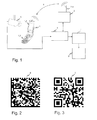
- FIG. 1 is shown in block diagram form a possible embodiment of the inventive access control device.
- FIG. 4 shows the flowchart for illustrating an embodiment of the inventive method for access control.
- a building area such as a room or a lift 9
- the person with his mobile telephone 1 can identify himself at a corresponding access node 2, which is also referred to below as the access point AP .
- an identification code ID is sent from the mobile telephone 1 to the access node 2 via a radio link 8 (step S1).
- the radio connection 8 can be made for example via Bluetooth.
- Bluetooth is a standard according to IEEE 802.15.1 and is used for wireless networking of devices over a short distance. Bluetooth forms the interface through which the mobile phone 1 and the access node 2 can communicate with each other.
- the access node 2 is equipped with a corresponding antenna 2.1. After the access node 2 has received the identification code ID, it forwards it to a control unit 3 (step S2).
- the control unit 3 may be, for example, a server.
- the access node 2 and the control unit 3 are usually arranged spatially separated. This is not mandatory. In a building, there may also be a plurality of access nodes 2, which are then all connected to the control unit 3.
- the identification code ID is advantageously the phone number of the mobile phone 1. It can also be provided that the person using the mobile phone 1, a certain code, such as a password, must enter via the keyboard 1.2 of the mobile phone 1, which then on the radio connection 8 is transmitted to the access node 2. In this case, the code entered via the keyboard 1.2 corresponds to the identification code ID.
- the server 3 checks the received identification code ID. If the identification code ID is not considered permissible (step S4), the server 3 informs the access node 2 that that the person is the access to a certain equipment, such as a lift 9 to refuse (step S5). If, on the other hand, the identification code ID is deemed admissible (step S4), the server 3 generates an access code (step S6) and transmits it to the access node 2.
- the access code is also referred to below as the optical code.
- the access code can be valid for a limited time. This ensures that a person is only granted access for a certain period of time. In addition, it can be provided that the access code is valid only once, so that once it has been used, it can no longer be used again. This prevents abuse. Thus, the mobile phone 1 can not be used by any other person to gain access with the same access code.
- FIG. 2 shows an example of such a Data Matrix Code 6.
- code in this context does not mean the encryption of data to keep it secret, but the graphical representation of the data in binary symbols.
- ECC n Error Checking and Correction Algorithm
- the most readable code scheme is the ECC 200 scheme.
- the size of the square or even rectangular code image is determined from a large selection set, the symbol elements of the code image are square or round.
- the Data Matrix Code is standardized by the International Organization for Standardization (ISO) and described in the ISO Specifications ISO / IEC 16022: 2000 and ISO / IEC 24720: 2006 as well as in other standards for applications such as DIN standards and DIN standards. EN standards. These standards are mandatory throughout the industry. The use of a standardized code ensures that the code can be read independently of the manufacturer of the encoder or the reader.
- ISO International Organization for Standardization
- the information is coded in a square or rectangular area as a pattern of equally large points.
- the dots are black or white boxes that connect to each other or round dots with gaps in between.
- the uniform symbol size and the fixed symbol spacing ensure the reading of the image and the decoding of the information and compact the data matrix code in the areal extent.
- the Data Matrix Code 6 contains redundant data, so that for example with a Reed-Solomon error correction on the ECC 200 up to 25% corrects errors in the code image can be. This is particularly advantageous if parts of the code image are hidden or unreadable.
- QR code 7 is generated as an access code from the server 3.
- FIG. 3 shows an example of such a QR code 7.
- the QR code 7 is also a two-dimensional barcode or 2D code, where QR stands for Quick Response, that is, for a quick response.
- QR Code 7 Even with the QR Code 7, the term code does not mean the secret encryption of data, but the mapping of the data into binary symbols.
- the QR code 7 consists of a square matrix of black and white dots representing the encoded data in the dual system. A special marker in three of the four corners of the square indicates the orientation. In the QR code, the data is redundant, so that even if up to 30% of the QR code are destroyed, this can still be read correctly.
- the QR Code 7 can store up to 7,089 numeric characters, 4,296 alphanumeric characters or 2,953 bytes.
- the standard for the QR code can be found in the ISO standard ISO / IEC18004.
- Both the data matrix code 6 and the QR code 7 are machine-read with an optical reader 5, such as a scanner or a camera.
- the data contained in codes 6 and 7 can then be further processed electronically.
- the access code 6 or 7 is activated in a step S7 7 is sent via the radio link 8 from the access node 2 to the mobile phone 1.
- the access code 6 or 7 is displayed on the display 1.1 of the mobile phone 1 in step S8.
- the user of the mobile phone 1 can now show this access code of a camera 5 which sends the captured image with the access code to the server 3 (step S10).
- the server 3 checks whether the access code is allowable (step S11). This can be done, for example, by the server 3 comparing the access code recorded by the camera 5 with the access code that the server has sent to the mobile telephone 1. If the access code is deemed permissible (step S11), the server 3 notifies the access node 2 that access is granted to the person (step S12).
- step S11 the server 3 informs the access node 2 that the person is not allowed to enter or use any particular equipment such as an elevator 9 (step S13). If access to the elevator 9 is denied, the control unit 3 informs the elevator controller 4 which controls the elevator 9. The elevator control 4 then initiates the appropriate measures.
- access is understood in the present context as a generic term, which includes both the entry or access to a building, a room or an elevator car and the use of a device or equipment, such as a lift.
- a scanner can be used to detect the access code 6 or 7 on the display 1.1 of the mobile telephone 1.
Landscapes
- Engineering & Computer Science (AREA)
- Computer Security & Cryptography (AREA)
- Computer Networks & Wireless Communication (AREA)
- Signal Processing (AREA)
- Physics & Mathematics (AREA)
- General Physics & Mathematics (AREA)
- Telephonic Communication Services (AREA)
- Mobile Radio Communication Systems (AREA)
- Telephone Function (AREA)
Abstract
Das Verfahren zur Zugangskontrolle umfasst folgende Schritte. Mit einem Mobiltelefon (1) wird an einen Zugangsknoten (2) ein Identifikationscode (ID) gesendet. Falls der Identifikationscode (ID) als gültig erkannt wird, wird vom Zugangsknoten (2) an das Mobiltelefon (1) ein Zugangscode (6; 7) gesendet und auf der Anzeige (1.1) des Mobiltelefons (1) dargestellt. Mit einer Kamera (5) wird der Zugangscode (6; 7) erfasst, und falls der Zugangscode (6; 7) als gültig erkannt wird, wird der Zugang gewährt.
Description
- Die Erfindung betrifft ein Verfahren und eine Vorrichtung zur Zugangskontrolle.
- Aus der Druckschrift
WO 2006/000618 A2 ist ein Verfahren zur drahtlosen Eingabe eines Zielrufs für einen Aufzug bekannt. Dabei wird in einem ersten Schritt zwischen dem Mobiltelefon der Person, die mit dem Mobiltelefon eine Aufzugskabine angefordert hat, und der Aufzugsteuerung eine drahtlose Verbindung aufgebaut. In einem zweiten Schritt wird von der Aufzugssteuerung die Person und das Stockwerk auf dem sich die Person befindet, identifiziert und das zu dieser Person gehörende Benutzerprofil ausgewählt. Anschliessend ermittelt die Aufzugssteuerung anhand des Benutzerprofils das Zielstockwerk und sorgt dafür, dass für die Person eine Aufzugskabine auf dem Stockwerk, auf dem sie sich befindet, bereit gestellt und danach das Zielstockwerk angefahren wird. - Aus der Druckschrift
JP 2005-280882 - Eine Aufgabe der Erfindung ist es, ein Verfahren und eine Vorrichtung zur Zugangskontrolle zu einem Gebäude, einem Gebäudebereich, einem Raum, einer Aufzugskabine oder einem Aufzug anzugeben. Dabei soll sichergestellt werden, dass nur jene Personen Zugang erhalten, die auch wirklich zugangsberechtigt sind. Eine Manipulation zum Zwecke des Missbrauchs soll weitestgehend ausgeschlossen sein.
- Die Aufgabe wird durch ein Verfahren zur Zugangskontrolle mit den Merkmalen gemäss Patentanspruch 1 gelöst.
- Das erfindungsgemässe Verfahren zur Zugangskontrolle umfasst folgende Schritte. Mit einem Mobiltelefon wird an einen Zugangsknoten ein Identifikationscode gesendet. Falls der Identifikationscode als gültig erkannt wird, wird vom Zugangsknoten an das Mobiltelefon ein Zugangscode gesendet und auf der Anzeige des Mobiltelefons dargestellt. Mit einer Kamera wird der Zugangscode erfasst, und falls der Zugangscode als gültig erkannt wird, wird der Zugang gewährt.
- Vorteilhafte Weiterbildungen der Erfindung ergeben sich aus den in den abhängigen Patentansprüchen angegebenen Merkmalen.
- Bei einer Ausführungsform des erfindungsgemässen Verfahrens ist der Identifikationscode die Telefonnummer des Mobiltelefons.
- Bei einer weiteren Ausführungsform des erfindungsgemässen Verfahrens ist der Zugangscode ein zweidimensionaler optischer Code.
- Bei einer dritten Ausführungsform des erfindungsgemässen Verfahrens ist der Zugangscode ein Data Matrix Code oder ein QR Code.
- Darüber hinaus kann bei dem erfindungsgemässen Verfahren vorgesehen sein, dass der Identifikationscode vom Zugangsknoten an eine Steuereinheit geleitet wird, die dann prüft, ob der Identifikationscode in einer Liste mit zulässigen Identifikationscodes enthalten ist. Falls dies der Fall ist, wird der Zugangscode an den Zugangsknoten geleitet.
- Zudem kann es von Vorteil sein, wenn bei dem Verfahren zur Zugangskontrolle ein Aufzug zur Benutzung freigegeben wird, wenn der Zugang gewährt wurde.
- Bei einer Weiterbildung des erfindungsgemässen Verfahrens ist der Zugangscode zeitlich beschränkt gültig. Dadurch wird die Gefahr eines Missbrauchs weiter reduziert.
- Bei einer anderen Weiterbildung des erfindungsgemässen Verfahrens ist der Zugangscode nur einmal verwendbar. Dadurch wird die Gefahr eines Missbrauchs weiter reduziert. Das erfindungsgemässe Verfahren kann zur Zugangskontrolle zu einem Gebäude, einem Gebäudebereich, einer Aufzugskabine oder einem Aufzug verwendet werden.
- Die erfindungsgemässe Vorrichtung zur Durchführung des Verfahrens zur Zugangskontrolle umfasst ein Mobiltelefon und einen Zugangsknoten, der derart ausgebildet und betreibbar ist, dass er den Identifikationscode des Mobiltelefons empfangen und dem Mobiltelefon den Zugangscode übermitteln kann. Die Vorrichtung umfasst zudem eine Steuereinheit, die derart ausgebildet und betreibbar ist, dass sie den Identifikationscode überprüfen und den Zugangscode generieren kann. Des weiteren ist ein optisches Lesegerät vorgesehen, das mit der Steuereinheit verbunden ist.
- Bei der erfindungsgemässen Vorrichtung kann das optische Lesegerät ein Scanner oder eine Kamera sein.
- Schliesslich wird ein Computerprogrammprodukt vorgeschlagen, das auf einem von einem Computer benutzbaren Medium gespeichert ist, das für den Computer lesbaren Programmcode enthält, und das dafür sorgt, dass der Computer das beschriebene Verfahren zur Zugangskontrolle durchführt. Der Computer kann Teil der Steuereinheit oder des Zugangsknotens sein.
- Im Folgenden wird die Erfindung mit mehreren Ausführungsbeispielen anhand von vier Figuren weiter erläutert.
- Figur 1
- zeigt in Form eines Blockdiagramms eine mögliche Ausführungsform der erfindungsgemässen Vorrich- tung zur Zugangskontrolle.
- Figur 2
- zeigt ein Beispiel für einen Data Matrix Code.
- Figur 3
- zeigt ein Beispiel für einen QR Code.
- Figur 4
- zeigt ein Flussdiagramm zur Veranschaulichung des erfindungsgemässen Verfahrens zur Zugangskontrol- le.
- Im Folgenden wird eine Ausführungsform der Erfindung anhand der
Figuren 1 und4 erläutert. InFigur 1 ist in Form eines Blockdiagramms eine mögliche Ausführungsform der erfindungsgemässen Vorrichtung zur Zugangskontrolle dargestellt.Figur 4 zeigt das Flussdiagramm zur Veranschaulichung einer Ausführungsform des erfindungsgemässen Verfahrens zur Zugangskontrolle. - Damit eine Person einen Zutritt oder Zugang zu einem Gebäude, einem Gebäudebereich, wie beispielsweise einem Raum oder einem Aufzug 9 erhält, kann sich die Person mit ihrem Mobiltelefon 1 bei einem entsprechenden Zugangsknoten 2, welcher im Folgenden auch als Access Point AP bezeichnet wird, identifizieren. Sobald die Person mit ihrem Mobiltelefon 1 in die Reichweite des Zugangsknotens 2 gelangt, wird über eine Funkverbindung 8 ein Identifikationscode ID vom Mobiltelefon 1 an den Zugangsknoten 2 gesendet (Schritt S1).
- Die Funkverbindung 8 kann beispielsweise über Bluetooth erfolgen. Bluetooth ist ein Standard gemäss IEEE 802.15.1 und dient der kabellosen Vernetzung von Geräten über eine kurze Distanz. Bluetooth bildet dabei die Schnittstelle, über die das Mobiltelefon 1 und der Zugangsknoten 2 miteinander kommunizieren können.
- Der Zugangsknoten 2 ist dazu mit einer entsprechenden Antenne 2.1 ausgestattet. Nachdem der Zugangsknoten 2 den Identifikationscode ID empfangen hat, leitet er ihn an eine Steuereinheit 3 weiter (Schritt S2). Die Steuereinheit 3 kann beispielsweise ein Server sein. Der Zugangsknoten 2 und die Steuereinheit 3 sind in der Regel räumlich getrennt angeordnet. Dies ist aber nicht zwingend. In einem Gebäude können sich auch mehrere Zugangsknoten 2 befinden, die dann allesamt mit der Steuereinheit 3 verbunden sind.
- Der Identifikationscode ID ist vorteilhafter Weise die Telefonnummer des Mobiltelefons 1. Es kann aber auch vorgesehen sein, dass die Person, die das Mobiltelefon 1 benutzt, einen bestimmten Code, beispielsweise ein Passwort, über die Tastatur 1.2 des Mobiltelefons 1 eingeben muss, der dann über die Funkverbindung 8 an den Zugangsknoten 2 übermittelt wird. In diesem Fall entspricht der über die Tastatur 1.2 eingegebene Code dem Identifikationscode ID.
- In einem weiteren Schritt S3 überprüft der Server 3 den empfangenen Identifikationscode ID. Falls der Identifikationscode ID nicht als zulässig erachtet wird (Schritt S4), wird vom Server 3 dem Zugangsknoten 2 mitgeteilt, dass der Person der Zugang zu einem bestimmten Equipment, wie beispielsweise einem Aufzug 9 zu verweigern ist (Schritt S5). Falls der Identifikationscode ID hingegen als zulässig erachtet wird (Schritt S4), generiert der Server 3 einen Zugangscode (Schritt S6) und übermittelt diesen an den Zugangsknoten 2. Der Zugangscode wird im Folgenden auch als optischer Code bezeichnet.
- Der Zugangscode kann zeitlich beschränkt gültig sein. Dadurch wird erreicht, dass einer Person nur für eine gewisse Zeitspanne der Zugang gewährt wird. Zudem kann vorgesehen sein, dass der Zugangscode nur ein einziges Mal gültig ist, so dass er, nachdem er einmal benutzt wurde, kein weiteres Mal mehr benutzt werden kann. Dadurch wird Missbrauch verhindert. So kann das Mobiltelefon 1 von keiner weiteren Person benutzt werden, um sich mit dem selben Zugangscode Zugang zu verschaffen.
- Des Weiteren kann folgendes vorgesehen sein. Sobald der Person, die das Mobiltelefon 1 bei sich trägt, der Zugang gewährt wurde, wird für eine bestimmte Zeitdauer und/oder für einen bestimmten Zugangsknoten ein weiterer Zugang mit dem selben Mobiltelefon 1 gesperrt. Dadurch wird verhindert, dass das Mobiltelefon 1 einer anderen Person überreicht wird, die sich dann mit diesem Mobiltelefon Zugang verschafft.
- Als Zugangscode kann vom Server 3 beispielsweise ein Data Matrix Code 6 generiert werden.
Figur 2 zeigt ein Beispiel für einen solchen Data Matrix Code 6. Der Begriff Code bedeutet in diesem Zusammenhang nicht die Verschlüsselung von Daten, um diese geheim zu halten, sondern die grafische Abbildung der Daten in binären Symbolen. Der Data Matrix Code ist ein zweidimensionaler Barcode oder 2D-Code, der in verschiedenen Code-Schemata, zum Beispiel "ECC n" existiert. ECC steht für Error Checking and Correction Algorithm und das nachfolgende n für einen Wert zwischen 0 und 200. Das am sichersten lesbare Codeschema ist das Schema ECC 200. Die Grösse des quadratischen oder auch rechteckigen Codebildes wird aus einer grossen Auswahlmenge bestimmt, die Symbol-Elemente des Codebildes sind quadratisch oder rund. Der Data Matrix Code ist bei der Internationalen Organisation für Normung (ISO) genormt und in den ISO Spezifikationen ISO/IEC 16022:2000 und ISO/IEC 24720:2006 sowie in weiteren Normen für Anwendungen beschrieben, wie beispielsweise in DIN-Normen und DIN-EN-Normen. Diese Normen sind industrieweit verbindlich. Durch die Verwendung eines genormten Codes wird sicher gestellt, dass der Code unabhängig vom Hersteller des Kodierers oder des Lesegeräts gelesen werden kann. - Beim Data Matrix Code 6 ist die Information in einer quadratischen oder rechteckigen Fläche als Muster von gleich grossen Punkten kodiert. Die Punkte sind schwarze oder weisse Kästchen, die aneinander anschliessen oder runde Punkte mit Lücken dazwischen. Die einheitliche Symbolgrösse und der feste Symbolabstand machen das Lesen des Bildes und das Dekodieren der Information sicher und den Data Matrix Code in der flächenmässigen Ausdehnung kompakt. Beim Lesen des Data Matrix Codes wird die Anordnung der Punkte innerhalb der Umrandung und im Raster der Matrix erfasst.
- Der Data Matrix Code 6 enthält redundante Daten, so dass beispielsweise mit einer Reed-Solomon-Fehlerkorrektur beim ECC 200 bis zu 25 % Fehler im Codebild korrigiert werden können. Dies ist insbesondere dann von Vorteil, wenn Teile des Codebilds verdeckt oder unlesbar sind.
- Alternativ dazu kann als Zugangscode vom Server 3 beispielsweise auch ein QR Code 7 generiert werden.
Figur 3 zeigt ein Beispiel für einen solchen QR Code 7. Der QR Code 7 ist ebenfalls ein zweidimensionaler Barcode oder 2D-Code, wobei QR für Quick Response, also für eine schnelle Antwort steht. - Auch beim QR Code 7 bedeutet der Begriff Code nicht die geheime Verschlüsselung von Daten, sondern die Abbildung der Daten in binären Symbolen. Der QR Code 7 besteht aus einer quadratischen Matrix aus schwarzen und weissen Punkten, welche die codierten Daten im Dualsystem darstellen. Eine spezielle Markierung in drei der vier Ecken des Quadrats gibt die Orientierung vor. Im QR Code sind die Daten redundant vorhanden, so dass selbst wenn bis zu 30% des QR Codes zerstört sind, dieser dennoch richtig gelesen werden kann. Mit dem QR Code 7 können bis zu 7.089 numerische Zeichen, 4.296 alphanumerische Zeichen oder 2.953 Bytes gespeichert werden. Der Standard für den QR Code findet sich in der ISO-Norm ISO/IEC18004.
- Sowohl der Data Matrix Code 6 als auch der QR Code 7 werden mit einem optischen Lesegerät 5, wie zum Beispiel einem Scanner oder einer Kamera maschinell eingelesen. Die in den Codes 6 und 7 enthaltenen Daten können dann elektronisch weiterverarbeitet werden.
- Nachdem der Server 3 den Zugangscode 6 beziehungsweise 7 generiert hat und an den Zugangsknoten 2 übermittelt hat, wird in einem Schritt S7 der Zugangscode 6 beziehungsweise 7 über die Funkverbindung 8 vom Zugangsknoten 2 an das Mobiltelefon 1 gesendet.
- Daraufhin wird im Schritt S8 der Zugangscode 6 beziehungsweise 7 auf dem Display 1.1 des Mobiltelefons 1 dargestellt. Der Benutzer des Mobiltelefons 1 kann nun diesen Zugangscode einer Kamera 5 zeigen, die das aufgenommene Bild mit dem Zugangscode an den Server 3 sendet (Schritt S10). Der Server 3 prüft daraufhin, ob der Zugangscode zulässig ist (Schritt S11). Dies kann beispielsweise dadurch erfolgen, dass der Server 3 den von der Kamera 5 aufgenommenen Zugangscode mit dem Zugangscode vergleicht, den der Server an das Mobiltelefon 1 gesandt hat. Falls der Zugangscode als zulässig erachtet wird (Schritt S11), teilt der Server 3 dem Zugangsknoten 2 mit, dass der Person der Zugang gewährt wird (Schritt S12). Falls der Zugangscode hingegen nicht als zulässig erachtet wird (Schritt S11), wird vom Server 3 dem Zugangsknoten 2 mitgeteilt, dass der Person der Zutritt oder die Benutzung eines bestimmten Equipments, wie beispielsweise eines Aufzugs 9 zu verweigern ist (Schritt S13). Falls der Zugang zum Aufzug 9 verweigert wird, teilt die Steuereinheit 3 dies der Aufzugssteuerung 4, die zur Steuerung des Aufzugs 9 dient, mit. Die Aufzugssteuerung 4 leitet daraufhin die entsprechenden Massnahmen ein.
- Der Begriff Zugang wird im vorliegenden Kontext als generischer Begriff verstanden, der sowohl den Eintritt oder Zutritt zu einem Gebäude, einem Raum oder einer Aufzugskabine als auch die Benutzung eines Geräts oder Equipments, wie beispielsweise einem Aufzug, umfasst.
- Die vorhergehende Beschreibung der Ausführungsbeispiele gemäss der vorliegenden Erfindung dient nur zu illustrativen Zwecken und nicht zum Zwecke der Beschränkung der Erfindung. Im Rahmen der Erfindung sind verschiedene Änderungen und Modifikationen möglich, ohne den Umfang der Erfindung sowie ihre Äquivalente zu verlassen. So kann beispielsweise statt der Kamera auch ein Scanner verwendet werden, um den Zugangscode 6 beziehungsweise 7 auf dem Display 1.1 des Mobiltelefons 1 zu erfassen.
-
- 1
- Mobilfunkgerät
- 1.1
- Anzeige
- 1.2
- Tastatur
- 2
- Zugangsknoten oder Access Point
- 2.1
- Antenne
- 3
- Server
- 4
- Aufzugsteuerung
- 5
- Kamera
- 6
- zweidimensionaler optischer Code
- 7
- zweidimensionaler optischer Code
- 8
- Funkverbindung
- 9
- Aufzug
- AP
- Access Point
- ID
- Identifikationscode
- S1 - S13
- Schritt 1 bis Schritt 13
Claims (12)
- Verfahren zur Zugangskontrolle,
das folgende Schritte umfasst:- mit einem Mobiltelefon (1) wird an einen Zugangsknoten (2) ein Identifikationscode (ID) gesendet,- falls der Identifikationscode (ID) als gültig erkannt wird, wird vom Zugangsknoten (2) an das Mobiltelefon (1) ein Zugangscode (6; 7) gesendet und auf der Anzeige (1.1) des Mobiltelefons (1) dargestellt,- mit einem optischen Lesegerät (5) wird der Zugangscode (6; 7) erfasst, und- falls der Zugangscode (6; 7) als gültig erkannt wird, wird der Zugang gewährt. - Verfahren nach Patentanspruch 1,
bei dem der Identifikationscode (ID) die Telefonnummer des Mobiltelefons (1) ist. - Verfahren nach Patentanspruch 1 oder 2,
bei dem der Zugangscode (6; 7) ein zweidimensionaler optischer Code ist. - Verfahren nach Patentanspruch 1, 2 oder 3,
bei dem der Zugangscode (6; 7) ein Data Matrix Code (6) oder ein QR Code (7) ist. - Verfahren nach einem der Patentansprüche 1 bis 4,- bei dem der Identifikationscode (ID) vom Zugangsknoten (2) an einen Steuereinheit (3) geleitet wird,- bei dem die Steuereinheit (3) prüft, ob der Identifikationscode (ID) in einer Liste mit zulässigen Identifikationscodes enthalten ist, und falls dies der Fall ist, den Zugangscode (6; 7) an den Zugangsknoten (2) leitet.
- Verfahren nach einem der Patentansprüche 1 bis 5, bei dem ein Aufzug (9) zur Benutzung freigegeben wird, wenn der Zugang gewährt wurde.
- Verfahren nach einem der Patentansprüche 1 bis 6, bei dem der Zugangscode (6; 7) zeitlich beschränkt gültig ist.
- Verfahren nach einem der Patentansprüche 1 bis 7, bei dem der Zugangscode (6; 7) nur einmal verwendbar ist.
- Verwendung des Verfahrens nach einem der Patentansprüche 1 bis 8,
zur Zugangskontrolle zu einem Gebäude, einem Gebäudebereich oder einem Aufzug (9). - Vorrichtung zur Durchführung des Verfahrens zur Zugangskontrolle nach einem der Patentansprüche 1 bis 9,- mit einem Mobiltelefon (1),- mit einem Zugangsknoten (2), der derart ausgebildet und betreibbar ist, dass er den Identifikationscode (ID) des Mobiltelefons (1) empfangen und dem Mobiltelefon (1) den Zugangscode (6; 7) übermitteln kann,- mit einer Steuereinheit (3), die derart ausgebildet und betreibbar ist, dass sie den Identifikationscode (ID) überprüfen und den Zugangscode (6; 7) generieren kann, und- mit einem optischen Lesegerät (5), die mit der Steuereinheit (3) verbunden ist.
- Vorrichtung nach Patentanspruch 10,
bei der das optische Lesegerät (5) ein Scanner oder eine Kamera ist. - Computerprogrammprodukt,- das auf einem von einem Computer benutzbaren Medium gespeichert ist,- das für den Computer lesbaren Programmcode enthält, und- das dafür sorgt, dass der Computer das Verfahren nach einem der Patentansprüche 1 bis 8 durchführt.
Priority Applications (11)
| Application Number | Priority Date | Filing Date | Title |
|---|---|---|---|
| EP09157266A EP2237234A1 (de) | 2009-04-03 | 2009-04-03 | Verfahren und Vorrichtung zur Zugangskontrolle |
| SG2011071552A SG175010A1 (en) | 2009-04-03 | 2010-04-01 | Method and device for access control |
| PL10713326T PL2415029T3 (pl) | 2009-04-03 | 2010-04-01 | Sposób i urządzenie kontroli dostępu |
| PCT/EP2010/054421 WO2010112586A1 (de) | 2009-04-03 | 2010-04-01 | Verfahren und vorrichtung zur zugangskontrolle |
| MYPI2011004724A MY169822A (en) | 2009-04-03 | 2010-04-01 | Method and device for access control |
| EP10713326.6A EP2415029B1 (de) | 2009-04-03 | 2010-04-01 | Verfahren und vorrichtung zur zugangskontrolle |
| US13/262,557 US10068395B2 (en) | 2009-04-03 | 2010-04-01 | Access control system |
| CA2757405A CA2757405C (en) | 2009-04-03 | 2010-04-01 | Method and system for access control |
| CN201080024088.0A CN102449667B (zh) | 2009-04-03 | 2010-04-01 | 用于进入监控的方法和设备 |
| AU2010230205A AU2010230205B2 (en) | 2009-04-03 | 2010-04-01 | Method and device for access control |
| AU2016202519A AU2016202519B2 (en) | 2009-04-03 | 2016-04-20 | Method and system for access control |
Applications Claiming Priority (1)
| Application Number | Priority Date | Filing Date | Title |
|---|---|---|---|
| EP09157266A EP2237234A1 (de) | 2009-04-03 | 2009-04-03 | Verfahren und Vorrichtung zur Zugangskontrolle |
Publications (1)
| Publication Number | Publication Date |
|---|---|
| EP2237234A1 true EP2237234A1 (de) | 2010-10-06 |
Family
ID=40999821
Family Applications (2)
| Application Number | Title | Priority Date | Filing Date |
|---|---|---|---|
| EP09157266A Withdrawn EP2237234A1 (de) | 2009-04-03 | 2009-04-03 | Verfahren und Vorrichtung zur Zugangskontrolle |
| EP10713326.6A Active EP2415029B1 (de) | 2009-04-03 | 2010-04-01 | Verfahren und vorrichtung zur zugangskontrolle |
Family Applications After (1)
| Application Number | Title | Priority Date | Filing Date |
|---|---|---|---|
| EP10713326.6A Active EP2415029B1 (de) | 2009-04-03 | 2010-04-01 | Verfahren und vorrichtung zur zugangskontrolle |
Country Status (9)
| Country | Link |
|---|---|
| US (1) | US10068395B2 (de) |
| EP (2) | EP2237234A1 (de) |
| CN (1) | CN102449667B (de) |
| AU (2) | AU2010230205B2 (de) |
| CA (1) | CA2757405C (de) |
| MY (1) | MY169822A (de) |
| PL (1) | PL2415029T3 (de) |
| SG (1) | SG175010A1 (de) |
| WO (1) | WO2010112586A1 (de) |
Cited By (17)
| Publication number | Priority date | Publication date | Assignee | Title |
|---|---|---|---|---|
| WO2012130727A1 (en) * | 2011-03-29 | 2012-10-04 | Inventio Ag | Distribution of premises access information |
| ITTV20110153A1 (it) * | 2011-11-08 | 2013-05-09 | Visionee S R L | Sistema di videocitofonia |
| EP2642456A2 (de) | 2012-03-24 | 2013-09-25 | Abb Ag | Zugangssteuerung eines Türkommunikation-Geräts oder Gebäudesystemtechnik-Geräts |
| DE102012006012A1 (de) | 2012-03-24 | 2013-09-26 | Abb Ag | Verfahren zum Auslösen einer(Schalt-) Aktion bei einem Haus-Kommunikationssytem oder bei der Gebäudesystemtechnik |
| CN103383784A (zh) * | 2012-05-05 | 2013-11-06 | Abb股份公司 | 移动终端设备和楼宇系统技术或门通信设备间的通信方法 |
| EP2728524A1 (de) * | 2012-10-31 | 2014-05-07 | Alpha Centauri | Kontrollverfahren für den Zugang zu einem Raum durch Lesen eines Grafikcodes auf einem Zugangscoupon, System und entsprechendes Computerprogramm |
| CN104724558A (zh) * | 2015-03-02 | 2015-06-24 | 上海电力学院 | 一种主动预约式智能电梯调度系统 |
| WO2016059188A1 (de) * | 2014-10-15 | 2016-04-21 | Firma Klaus Multiparking Gmbh | Verfahren und system zur steuerung einer autoparkvorrichtung |
| CN105844758A (zh) * | 2016-05-20 | 2016-08-10 | 广州邻礼信息科技有限公司 | 一种物业常驻用户及访客出入管理的系统及实现方法 |
| CN106548224A (zh) * | 2016-10-25 | 2017-03-29 | 中冶华天工程技术有限公司 | 一种基于二维码的一卡通管理系统及管理方法 |
| WO2017148840A1 (de) * | 2016-02-29 | 2017-09-08 | Inventio Ag | Überprüfen von zugangsberechtigungen mit mobilen kontrollgeräten |
| EP2642457A3 (de) * | 2012-03-20 | 2017-09-13 | S. Siedle & Söhne Telefon- und Telegrafenwerke OHG | Verfahren und System zur Durchführung einer Gebäudezugangskontrolle |
| RU2635871C2 (ru) * | 2012-03-02 | 2017-11-16 | Абб Аг | Устройство для конфигурирования по меньшей мере одного прибора системотехники здания или связи с дверной станцией |
| US9842446B2 (en) | 2012-08-21 | 2017-12-12 | Onity Inc. | Systems and methods for lock access management using wireless signals |
| JP2018070344A (ja) * | 2016-10-31 | 2018-05-10 | フジテック株式会社 | エレベータシステム |
| WO2019121336A1 (de) * | 2017-12-20 | 2019-06-27 | Inventio Ag | Zugangskontrollsystem mit funk-authentifizierung und kennworterfassung |
| EP4216116A4 (de) * | 2020-09-16 | 2024-05-22 | Hitachi, Ltd. | Gebäudeinterne verkehrsflusseinstellvorrichtung und gebäudeinternes verkehrsflusseinstellverfahren |
Families Citing this family (66)
| Publication number | Priority date | Publication date | Assignee | Title |
|---|---|---|---|---|
| EP2237234A1 (de) | 2009-04-03 | 2010-10-06 | Inventio AG | Verfahren und Vorrichtung zur Zugangskontrolle |
| DE102012008657A1 (de) * | 2012-05-03 | 2013-11-07 | Torben Friehe | Verfahren zum Übertragen von Daten zur Betätigung einer Vorrichtung zur Öffnung eines Schlosses |
| WO2014116182A1 (en) * | 2013-01-25 | 2014-07-31 | Hitachi Elevator Asia Pte Ltd | System, device and method for controlling lift access and computer-readable medium storing computer-readable program for lift access |
| DE102014106364A1 (de) | 2013-05-13 | 2014-11-13 | Hakan Orcan | System zum Prüfen einer Zugangsberechtigung für eine Schließeinrichtung |
| DE202013004667U1 (de) * | 2013-05-13 | 2013-07-31 | Hakan Orcan | Der virtuelle Schlüssel |
| US9198041B2 (en) | 2013-08-05 | 2015-11-24 | Nextek Power Systems, Inc. | Method of and system for authenticating a user to operate an electrical device |
| TWI658717B (zh) * | 2013-10-01 | 2019-05-01 | 瑞士商伊文修股份有限公司 | 存取控制方法、存取控制系統及電腦可讀取儲存媒體 |
| WO2015099990A1 (en) * | 2013-12-24 | 2015-07-02 | Hoeffner Daren | Method and system of controlling access to access points |
| CN105197700A (zh) * | 2014-06-05 | 2015-12-30 | 三菱电机上海机电电梯有限公司 | 以二维码为媒介的电梯用访客系统及其控制方法 |
| DE102014008654A1 (de) * | 2014-06-13 | 2015-12-17 | Wago Verwaltungsgesellschaft Mbh | Temporäre Berechtigung |
| DE102014116183A1 (de) * | 2014-11-06 | 2016-05-12 | Bundesdruckerei Gmbh | Verfahren zum Bereitstellen eines Zugangscodes auf einem portablen Gerät und portables Gerät |
| CN107000969A (zh) | 2014-12-02 | 2017-08-01 | 因温特奥股份公司 | 向便携式电子设备提供反馈的访问控制系统 |
| US10163288B2 (en) * | 2014-12-02 | 2018-12-25 | Inventio Ag | Access control using portable electronic devices |
| CN104537736A (zh) * | 2014-12-23 | 2015-04-22 | 韶关市英诺维科技设备有限公司 | 一种二维码锁在商务管理中的应用 |
| EP3251388B1 (de) | 2015-01-27 | 2019-05-22 | Signify Holding B.V. | Verfahren und vorrichtungen zur erkennung der nähe zur steuerung einer vorrichtung |
| US10296851B2 (en) | 2015-04-11 | 2019-05-21 | At&T Intellectual Property I, L.P. | Automatic allocation of physical facilities for maximum collaboration |
| US9824515B2 (en) | 2015-03-24 | 2017-11-21 | At&T Intellectual Property I, L.P. | Automatic calendric physical access |
| US9972144B2 (en) | 2015-03-24 | 2018-05-15 | At&T Intellectual Property I, L.P. | Automatic physical access |
| US9582841B2 (en) | 2015-03-24 | 2017-02-28 | At&T Intellectual Property I, L.P. | Location based emergency management plans |
| KR102583765B1 (ko) | 2016-04-06 | 2023-10-04 | 오티스 엘리베이터 컴파니 | 모바일 방문자 관리 |
| AU2017258184A1 (en) * | 2016-04-27 | 2018-10-18 | Cubic Corporation | 4D barcode |
| DE102016108013B3 (de) | 2016-04-29 | 2017-06-14 | Fujitsu Technology Solutions Intellectual Property Gmbh | Verfahren für ein System zum sicheren Öffnen einer Türe sowie System zum sicheren Öffnen einer Türe |
| CN106097531B (zh) * | 2016-08-10 | 2019-08-13 | 深圳博科智能科技有限公司 | 一种应用于门禁系统的预约方法和移动终端及门禁系统 |
| DE102017011812A1 (de) * | 2016-12-23 | 2018-06-28 | Löwenstein Medical Technology S.A. | Beatmungssystem und Verfahren |
| EP3566213B1 (de) * | 2017-01-09 | 2023-07-19 | Carrier Corporation | Zugangskontrollsystem mit nachrichtenübermittlung |
| SG11201907614YA (en) | 2017-04-10 | 2019-09-27 | Inventio Ag | Visitor access control system with radio identification and facial recognition |
| MX2019012159A (es) | 2017-04-10 | 2019-11-21 | Inventio Ag | Sistema de control de acceso teniendo reconocimiento por radio y facial. |
| CN110719883B (zh) | 2017-06-07 | 2021-07-02 | 因温特奥股份公司 | 具有访客工作模式的电梯系统 |
| US10257606B2 (en) | 2017-06-20 | 2019-04-09 | Cubic Corporation | Fast determination of a frequency of a received audio signal by mobile phone |
| KR20240074012A (ko) | 2017-09-01 | 2024-05-27 | 아사 알보이 엔트란스 시스템스 에이비 | 하나 이상의 가동 도어 부재를 갖는 출입구 시스템의 구성 |
| US20190084794A1 (en) * | 2017-09-20 | 2019-03-21 | Otis Elevator Company | Elevator request authorization system |
| US10875741B2 (en) | 2017-09-29 | 2020-12-29 | Otis Elevator Company | Elevator request authorization system for a third party |
| US11551501B2 (en) | 2017-12-20 | 2023-01-10 | Inventio Ag | Access control system having radio and facial recognition |
| CN110228733B (zh) | 2018-03-06 | 2022-08-09 | 奥的斯电梯公司 | 电梯服务请求的授权管理和授权请求 |
| US10865069B2 (en) | 2018-09-18 | 2020-12-15 | Otis Elevator Company | Effecting communication bridge with elevator system |
| EP3864633B1 (de) | 2018-10-12 | 2023-05-31 | Inventio Ag | Zugangskontrollsystem und verfahren zum betreiben eines zugangskontrollsystems |
| US11846716B2 (en) | 2018-10-12 | 2023-12-19 | Inventio Ag | System and method for position determination in a building |
| CN111091644B (zh) | 2018-10-24 | 2022-12-13 | 奥的斯电梯公司 | 电梯服务请求的授权管理和授权请求 |
| WO2020126483A1 (de) | 2018-12-21 | 2020-06-25 | Inventio Ag | Zugangskontrollsystem mit schiebetür mit objektüberwachungsfunktion |
| US11993974B2 (en) | 2018-12-21 | 2024-05-28 | Inventio Ag | Access control system with sliding door with a gesture control function |
| CN111615017A (zh) * | 2019-02-26 | 2020-09-01 | 颜振 | 应用二维条码达成对讲机功能的系统 |
| AU2020233914B2 (en) | 2019-03-08 | 2023-06-01 | Inventio Ag | Access control system comprising a sliding door that is opened contactlessly from the inside |
| WO2020182511A1 (de) | 2019-03-08 | 2020-09-17 | Inventio Ag | Zugangskontrollsystem mit einer schiebetür und visualisierung von statusinformation |
| AU2019445348B2 (en) * | 2019-04-09 | 2025-02-27 | Kone Corporation | Access right management |
| WO2020216877A1 (de) | 2019-04-26 | 2020-10-29 | Inventio Ag | Zugangskontrollsystem und verfahren zum betreiben eines zugangskontrollsystems |
| IT201900011634A1 (it) * | 2019-07-12 | 2021-01-12 | Matichotels Srl | Sistema di sblocco di accessi di una struttura e metodo associato |
| KR102281798B1 (ko) * | 2019-10-07 | 2021-07-26 | 이기철 | 난수 암호를 이용한 다중 잠금 장치 |
| BR112022011685A2 (pt) | 2019-12-16 | 2022-09-06 | Inventio Ag | Dispositivo de interface homem-máquina para sistemas de edifício |
| WO2021121989A1 (de) | 2019-12-20 | 2021-06-24 | Inventio Ag | Gebäudesystem für private nutzerkommunikation |
| WO2021219920A1 (en) * | 2020-04-29 | 2021-11-04 | Kone Corporation | A solution for generating a touchless elevator call |
| EP4154224A1 (de) | 2020-05-18 | 2023-03-29 | Inventio Ag | Zusätzliche zonenüberwachung für gebäudetür |
| AU2021314961B2 (en) | 2020-07-31 | 2025-01-02 | Inventio Ag | Building wall module with automatic doors for users and postal delivery |
| EP4196422B1 (de) * | 2020-08-13 | 2025-09-10 | Inventio Ag | Gebäudesystem mit aufzugrufeingabe über berechtigung durch offline-qr-code |
| US20220106160A1 (en) * | 2020-10-02 | 2022-04-07 | Otis Elevator Company | System and method for making contact-free elevator requests |
| CN112802233B (zh) * | 2020-12-28 | 2021-11-12 | 徐永贵 | 实验室电子门锁的生成和开锁方法、装置、设备及存储介质 |
| CN112978526B (zh) * | 2021-03-11 | 2023-04-28 | 郭强 | 一种门禁及电梯控制方法、设备及系统 |
| BE1029318B1 (nl) * | 2021-04-16 | 2022-11-21 | Nine Eng | Werkwijze voor toegangsbeheer tot een beveiligde zone |
| JP7226844B2 (ja) * | 2021-06-16 | 2023-02-21 | Necプラットフォームズ株式会社 | 受付システム及び受付方法 |
| ES2937716B2 (es) * | 2021-09-28 | 2023-07-31 | Laliga Content Prot Sl | Procedimiento y sistema de control de acceso |
| US20250336251A1 (en) | 2022-06-30 | 2025-10-30 | Inventio Ag | Access control system with barrier-free access |
| US12327449B2 (en) | 2022-10-12 | 2025-06-10 | Truist Bank | Virtual identification for granting secure access using two forms of authentication |
| US12002315B2 (en) * | 2022-10-12 | 2024-06-04 | Truist Bank | Virtual identification for granting secure access using varying forms of readable access codes |
| EP4639501A1 (de) | 2022-12-20 | 2025-10-29 | Inventio Ag | Gebäudesystem und mensch-maschine-schnittstelleneinrichtung für mimikdarstellungen |
| WO2026002472A1 (de) | 2024-06-26 | 2026-01-02 | Inventio Ag | Gebäudesystem mit aufzugssystem und türsprechanlage |
| US20260011198A1 (en) * | 2024-07-03 | 2026-01-08 | The Adt Security Corporation | Multi-factor authentication for third-party delivery service providers |
| WO2026027050A1 (en) * | 2024-07-31 | 2026-02-05 | Assa Abloy Ab | Wireless access protocol with physical presence verification |
Citations (5)
| Publication number | Priority date | Publication date | Assignee | Title |
|---|---|---|---|---|
| WO2001041081A2 (en) * | 1999-12-03 | 2001-06-07 | First Hop Oy | A method and a system for obtaining services using a cellular telecommunication system |
| JP2005280882A (ja) | 2004-03-29 | 2005-10-13 | Toshiba Elevator Co Ltd | エレベータシステム |
| WO2006000618A2 (en) | 2004-06-28 | 2006-01-05 | Kone Corporation | Elevator arrangement |
| FR2873217A1 (fr) * | 2004-07-19 | 2006-01-20 | Francois Pierre Desgigot | Telephone mobile avec generateur de codes a barres incorpore |
| EP1705595A2 (de) * | 2005-03-25 | 2006-09-27 | NEC Corporation | Authentifizierungssystem und Authentifizierungsverfahren unter Verwendung eines tragbaren Kommunikationsendgeräts |
Family Cites Families (29)
| Publication number | Priority date | Publication date | Assignee | Title |
|---|---|---|---|---|
| US4655324A (en) * | 1985-09-23 | 1987-04-07 | Otis Elevator Company | Method for privately controlling an elevator |
| WO2001041075A1 (en) * | 1999-11-30 | 2001-06-07 | Bording Data A/S | An access control system |
| US6993123B1 (en) * | 2000-03-10 | 2006-01-31 | Verizon Services Corp. | Intelligent access control system |
| US7133659B2 (en) * | 2000-09-29 | 2006-11-07 | Nokia Mobile Phones Limited | Methods of operating a reservation system using electronic device cover with embedded transponder |
| TWI282941B (en) * | 2001-03-15 | 2007-06-21 | Toshiba Corp | Entrance management apparatus and entrance management method by using face features identification |
| FI20010930A0 (fi) * | 2001-05-04 | 2001-05-04 | Lauri Veikko Raeisaenen | Menetelmä ja laite suunnan näyttämiseksi solukkoverkossa |
| US6811078B2 (en) * | 2002-01-17 | 2004-11-02 | Monica L. Workens | Point-of-transaction machine with improved versatility and related method |
| US7222241B2 (en) * | 2002-02-25 | 2007-05-22 | Info Data, Inc. | Building security and access protection system |
| US7428413B2 (en) * | 2003-03-11 | 2008-09-23 | Wayport, Inc. | Method and system for providing network access and services using access codes |
| US20060100779A1 (en) * | 2003-09-02 | 2006-05-11 | Vergin William E | Off-board navigational system |
| US7387250B2 (en) * | 2003-12-04 | 2008-06-17 | Scanbuy, Inc. | System and method for on the spot purchasing by scanning barcodes from screens with a mobile device |
| FI117010B (fi) * | 2004-11-01 | 2006-05-15 | Kone Corp | Hissin kauko-ohjaus |
| US20100219234A1 (en) * | 2005-04-25 | 2010-09-02 | Mobiqa Limited | Mobile ticket authentication |
| US20060293929A1 (en) * | 2005-06-23 | 2006-12-28 | Chunghwa Telecom Co., Ltd. | Electronic-ticket service system based on color-scale-code image recognition |
| MY151605A (en) * | 2005-07-28 | 2014-06-30 | Inventio Ag | Method of controlling access to an area |
| US7377426B1 (en) * | 2005-09-01 | 2008-05-27 | Todd Makeever | Interactive visitor announcement/access control system |
| TR201900727T4 (tr) * | 2005-09-30 | 2019-02-21 | Inventio Ag | Bir bina alanından yolcuların ve/veya yüklerin transfer edilmesi için asansör sistemi. |
| PL1833219T3 (pl) * | 2006-03-08 | 2015-01-30 | Monitise Ltd | Sposób, urządzenie i oprogramowanie wykorzystujące kod w celu obliczania ograniczonego czasowo hasła w telefonie komórkowym |
| JP5140874B2 (ja) * | 2006-05-12 | 2013-02-13 | 日本電気株式会社 | 情報処理システム、情報処理方法、それらに用いられる装置及びプログラム |
| WO2007139909A2 (en) * | 2006-05-25 | 2007-12-06 | Celltrust Corporation | Secure mobile information management system and method |
| US8280359B2 (en) * | 2006-05-25 | 2012-10-02 | Celltrust Corporation | Methods of authorizing actions |
| JP4996175B2 (ja) * | 2006-08-29 | 2012-08-08 | 株式会社東芝 | 入室管理システムおよび入室管理方法 |
| US20100020970A1 (en) * | 2006-11-13 | 2010-01-28 | Xu Liu | System And Method For Camera Imaging Data Channel |
| US8656472B2 (en) * | 2007-04-20 | 2014-02-18 | Microsoft Corporation | Request-specific authentication for accessing web service resources |
| US8272038B2 (en) * | 2008-05-19 | 2012-09-18 | International Business Machines Corporation | Method and apparatus for secure authorization |
| US8342407B2 (en) * | 2008-07-21 | 2013-01-01 | Gilbarco, Inc. | System and method for pairing a bluetooth device with a point-of-sale terminal |
| EP2237234A1 (de) | 2009-04-03 | 2010-10-06 | Inventio AG | Verfahren und Vorrichtung zur Zugangskontrolle |
| WO2011150405A2 (en) * | 2010-05-28 | 2011-12-01 | Suridx, Inc. | Wireless encrypted control of physical access systems |
| US20120298737A1 (en) * | 2011-05-26 | 2012-11-29 | Thales Avionics, Inc. | Methods, apparatuses and articles of manufacture to provide passenger preference data to in-flight entertainment systems |
-
2009
- 2009-04-03 EP EP09157266A patent/EP2237234A1/de not_active Withdrawn
-
2010
- 2010-04-01 PL PL10713326T patent/PL2415029T3/pl unknown
- 2010-04-01 US US13/262,557 patent/US10068395B2/en active Active
- 2010-04-01 EP EP10713326.6A patent/EP2415029B1/de active Active
- 2010-04-01 CN CN201080024088.0A patent/CN102449667B/zh active Active
- 2010-04-01 WO PCT/EP2010/054421 patent/WO2010112586A1/de not_active Ceased
- 2010-04-01 SG SG2011071552A patent/SG175010A1/en unknown
- 2010-04-01 MY MYPI2011004724A patent/MY169822A/en unknown
- 2010-04-01 CA CA2757405A patent/CA2757405C/en active Active
- 2010-04-01 AU AU2010230205A patent/AU2010230205B2/en active Active
-
2016
- 2016-04-20 AU AU2016202519A patent/AU2016202519B2/en active Active
Patent Citations (5)
| Publication number | Priority date | Publication date | Assignee | Title |
|---|---|---|---|---|
| WO2001041081A2 (en) * | 1999-12-03 | 2001-06-07 | First Hop Oy | A method and a system for obtaining services using a cellular telecommunication system |
| JP2005280882A (ja) | 2004-03-29 | 2005-10-13 | Toshiba Elevator Co Ltd | エレベータシステム |
| WO2006000618A2 (en) | 2004-06-28 | 2006-01-05 | Kone Corporation | Elevator arrangement |
| FR2873217A1 (fr) * | 2004-07-19 | 2006-01-20 | Francois Pierre Desgigot | Telephone mobile avec generateur de codes a barres incorpore |
| EP1705595A2 (de) * | 2005-03-25 | 2006-09-27 | NEC Corporation | Authentifizierungssystem und Authentifizierungsverfahren unter Verwendung eines tragbaren Kommunikationsendgeräts |
Cited By (33)
| Publication number | Priority date | Publication date | Assignee | Title |
|---|---|---|---|---|
| CN103460259B (zh) * | 2011-03-29 | 2016-01-27 | 因温特奥股份公司 | 建筑物访问信息的分配 |
| US9589398B2 (en) | 2011-03-29 | 2017-03-07 | Inventio Ag | Distribution of premises access information |
| US9202322B2 (en) | 2011-03-29 | 2015-12-01 | Inventio Ag | Distribution of premises access information |
| CN103460259A (zh) * | 2011-03-29 | 2013-12-18 | 因温特奥股份公司 | 建筑物访问信息的分配 |
| WO2012130727A1 (en) * | 2011-03-29 | 2012-10-04 | Inventio Ag | Distribution of premises access information |
| ITTV20110153A1 (it) * | 2011-11-08 | 2013-05-09 | Visionee S R L | Sistema di videocitofonia |
| EP2592830A1 (de) * | 2011-11-08 | 2013-05-15 | Visionee SRL | Videotüreintrittssystem |
| RU2635871C2 (ru) * | 2012-03-02 | 2017-11-16 | Абб Аг | Устройство для конфигурирования по меньшей мере одного прибора системотехники здания или связи с дверной станцией |
| EP2642457A3 (de) * | 2012-03-20 | 2017-09-13 | S. Siedle & Söhne Telefon- und Telegrafenwerke OHG | Verfahren und System zur Durchführung einer Gebäudezugangskontrolle |
| CN103325162A (zh) * | 2012-03-24 | 2013-09-25 | Abb股份公司 | 门禁通信设备或楼宇系统工程设备的访问控制 |
| RU2636698C2 (ru) * | 2012-03-24 | 2017-11-27 | Абб Аг | Блок управления доступом устройства дверной связи или устройства системотехники здания |
| DE102012006012A1 (de) | 2012-03-24 | 2013-09-26 | Abb Ag | Verfahren zum Auslösen einer(Schalt-) Aktion bei einem Haus-Kommunikationssytem oder bei der Gebäudesystemtechnik |
| CN103325162B (zh) * | 2012-03-24 | 2017-08-08 | Abb股份公司 | 门禁通信设备或楼宇系统工程设备的访问控制 |
| DE102012006013A1 (de) | 2012-03-24 | 2013-09-26 | Abb Ag | Zugangssteuerung eines Türkommunikation-Geräts oder Gebäudesystemtechnik-Geräts |
| EP2642456A2 (de) | 2012-03-24 | 2013-09-25 | Abb Ag | Zugangssteuerung eines Türkommunikation-Geräts oder Gebäudesystemtechnik-Geräts |
| EP2642456A3 (de) * | 2012-03-24 | 2017-08-02 | Abb Ag | Zugangssteuerung eines Türkommunikation-Geräts oder Gebäudesystemtechnik-Geräts |
| EP2661022A2 (de) | 2012-05-05 | 2013-11-06 | Abb Ag | Verfahren zur gesicherten Kommunikation zwischen einem mobilen Endgerät und einem Gerät der Gebäudesystemtechnik oder der Türkommunikation |
| CN103383784A (zh) * | 2012-05-05 | 2013-11-06 | Abb股份公司 | 移动终端设备和楼宇系统技术或门通信设备间的通信方法 |
| EP2661022A3 (de) * | 2012-05-05 | 2016-09-28 | Abb Ag | Verfahren zur gesicherten Kommunikation zwischen einem mobilen Endgerät und einem Gerät der Gebäudesystemtechnik oder der Türkommunikation |
| DE102012009128A1 (de) | 2012-05-05 | 2013-11-07 | Abb Ag | Verfahren zur Kommunikation zwischen einem mobilen Endgerät und einem Gerät der Gebäudesystemtechnik oder der Türkommunikation |
| US9842446B2 (en) | 2012-08-21 | 2017-12-12 | Onity Inc. | Systems and methods for lock access management using wireless signals |
| EP2728524A1 (de) * | 2012-10-31 | 2014-05-07 | Alpha Centauri | Kontrollverfahren für den Zugang zu einem Raum durch Lesen eines Grafikcodes auf einem Zugangscoupon, System und entsprechendes Computerprogramm |
| WO2016059188A1 (de) * | 2014-10-15 | 2016-04-21 | Firma Klaus Multiparking Gmbh | Verfahren und system zur steuerung einer autoparkvorrichtung |
| CN104724558A (zh) * | 2015-03-02 | 2015-06-24 | 上海电力学院 | 一种主动预约式智能电梯调度系统 |
| WO2017148840A1 (de) * | 2016-02-29 | 2017-09-08 | Inventio Ag | Überprüfen von zugangsberechtigungen mit mobilen kontrollgeräten |
| CN105844758A (zh) * | 2016-05-20 | 2016-08-10 | 广州邻礼信息科技有限公司 | 一种物业常驻用户及访客出入管理的系统及实现方法 |
| CN106548224A (zh) * | 2016-10-25 | 2017-03-29 | 中冶华天工程技术有限公司 | 一种基于二维码的一卡通管理系统及管理方法 |
| JP2018070344A (ja) * | 2016-10-31 | 2018-05-10 | フジテック株式会社 | エレベータシステム |
| WO2019121336A1 (de) * | 2017-12-20 | 2019-06-27 | Inventio Ag | Zugangskontrollsystem mit funk-authentifizierung und kennworterfassung |
| CN111373452A (zh) * | 2017-12-20 | 2020-07-03 | 因温特奥股份公司 | 具有无线电身份认证机制和口令检测机制的入口监控系统 |
| US11210880B2 (en) | 2017-12-20 | 2021-12-28 | Inventio Ag | Access control system having radio authentication and password recognition |
| CN111373452B (zh) * | 2017-12-20 | 2022-07-19 | 因温特奥股份公司 | 具有无线电身份认证机制和口令检测机制的入口监控系统 |
| EP4216116A4 (de) * | 2020-09-16 | 2024-05-22 | Hitachi, Ltd. | Gebäudeinterne verkehrsflusseinstellvorrichtung und gebäudeinternes verkehrsflusseinstellverfahren |
Also Published As
| Publication number | Publication date |
|---|---|
| AU2016202519A1 (en) | 2016-05-12 |
| PL2415029T3 (pl) | 2020-07-27 |
| SG175010A1 (en) | 2011-11-28 |
| CA2757405A1 (en) | 2010-10-07 |
| US10068395B2 (en) | 2018-09-04 |
| EP2415029B1 (de) | 2020-02-12 |
| US20120068818A1 (en) | 2012-03-22 |
| CA2757405C (en) | 2018-05-29 |
| AU2010230205A1 (en) | 2011-11-03 |
| EP2415029A1 (de) | 2012-02-08 |
| MY169822A (en) | 2019-05-16 |
| AU2010230205B2 (en) | 2016-05-12 |
| WO2010112586A1 (de) | 2010-10-07 |
| CN102449667B (zh) | 2016-02-17 |
| CN102449667A (zh) | 2012-05-09 |
| AU2016202519B2 (en) | 2017-05-25 |
Similar Documents
| Publication | Publication Date | Title |
|---|---|---|
| EP2415029B1 (de) | Verfahren und vorrichtung zur zugangskontrolle | |
| EP2900581B1 (de) | Verfahren zur rückstellung eines sicherheitssystems einer aufzugsanlage | |
| EP1331754B1 (de) | Zugangskontrollverfahren für ein drahtloses lokales Kommunikationsnetz | |
| EP3058427A1 (de) | Verfahren und system zum fernbedienen einer werkzeugmaschine mittels eines mobilen kommunikationsgeräts | |
| EP3096021B1 (de) | Ferndiagnose von vakuumgeräten | |
| EP3249615A1 (de) | Verfahren zum auslesen von zugangsberechtigungen oder von ids aus zumindest einem kundenmedium mittels mehrerer leseeinrichtungen einer zugangskontrollvorrichtung und zur auswertung der ausgelesenen ids oder zugangsberechtigungen | |
| EP4187511A1 (de) | Fest montierte ticketerfassungsvorrichtung für ein zugangskontrollsystem | |
| EP3590279B1 (de) | Verfahren, system und anwendungsprogramm zur zuordnung von industriellen feldgeräten in einer cloud-umgebung | |
| EP4168343B1 (de) | Verfahren zum betreiben einer personentransportanlage durch zuverlässiges konfigurieren einer elektronischen sicherheitseinrichtung mittels visueller datenübertragung | |
| DE19743101B4 (de) | Verfahren zum Zuordnen eines Betätigungselementes zu einem Gerät | |
| WO2016074789A1 (de) | Verfahren zum überprüfen der gültigkeit eines tickets; mobile einrichtung | |
| EP3566161A1 (de) | Signatursystem zur verifikation einer unterschrift, sowie ein entsprechendes signaturverfahren | |
| DE102022124736B3 (de) | Gateanordnung, insbesondere für ein Personentransportsystem | |
| DE102010031932A1 (de) | Verfahren zur Zugangskontrolle und entsprechende Vorrichtung | |
| EP3728094B1 (de) | Fahrtplanung aufgrund erwarteter passagieranzahl | |
| WO2015158920A1 (de) | Bereitstellung von daten zu einer anlage | |
| DE102014003937A1 (de) | Verfahren zur bidirektionalen Kommunikation zwischen einem Kraftfahrzeug und einer Infrastruktureinrichtung und Kraftfahrzeug | |
| WO2023072481A1 (de) | Steuern eines diensts an bord eines fahrzeugs | |
| CH705068A1 (de) | Vorrichtung zur computergestützten Automatisierung einer Bibliothek. | |
| AT513807B1 (de) | Anlage zur Identifikation von Personen | |
| DE102021212014B4 (de) | Verfahren und Vorrichtung zur Detektion beweglicher Betriebsmittel | |
| EP1320079A1 (de) | Authentifizierung mit Latenzbildabweisung | |
| EP2711885B1 (de) | Prozessvorrichtung mit Umwandlungseinrichtung | |
| DE69805650T2 (de) | Geschütztes lesen eines kodierten, kryptographischen schlüssels | |
| DE102009035004A1 (de) | Datenträger mit Displayeinrichtung |
Legal Events
| Date | Code | Title | Description |
|---|---|---|---|
| PUAI | Public reference made under article 153(3) epc to a published international application that has entered the european phase |
Free format text: ORIGINAL CODE: 0009012 |
|
| AK | Designated contracting states |
Kind code of ref document: A1 Designated state(s): AT BE BG CH CY CZ DE DK EE ES FI FR GB GR HR HU IE IS IT LI LT LU LV MC MK MT NL NO PL PT RO SE SI SK TR |
|
| AX | Request for extension of the european patent |
Extension state: AL BA RS |
|
| STAA | Information on the status of an ep patent application or granted ep patent |
Free format text: STATUS: THE APPLICATION IS DEEMED TO BE WITHDRAWN |
|
| 18D | Application deemed to be withdrawn |
Effective date: 20110407 |