EP2233565B1 - Medium für säugerkörperzellen und zusatz dafür - Google Patents
Medium für säugerkörperzellen und zusatz dafür Download PDFInfo
- Publication number
- EP2233565B1 EP2233565B1 EP08868742.1A EP08868742A EP2233565B1 EP 2233565 B1 EP2233565 B1 EP 2233565B1 EP 08868742 A EP08868742 A EP 08868742A EP 2233565 B1 EP2233565 B1 EP 2233565B1
- Authority
- EP
- European Patent Office
- Prior art keywords
- medium
- serum
- cells
- low
- use according
- Prior art date
- Legal status (The legal status is an assumption and is not a legal conclusion. Google has not performed a legal analysis and makes no representation as to the accuracy of the status listed.)
- Not-in-force
Links
Images



Classifications
-
- C—CHEMISTRY; METALLURGY
- C12—BIOCHEMISTRY; BEER; SPIRITS; WINE; VINEGAR; MICROBIOLOGY; ENZYMOLOGY; MUTATION OR GENETIC ENGINEERING
- C12N—MICROORGANISMS OR ENZYMES; COMPOSITIONS THEREOF; PROPAGATING, PRESERVING, OR MAINTAINING MICROORGANISMS; MUTATION OR GENETIC ENGINEERING; CULTURE MEDIA
- C12N5/00—Undifferentiated human, animal or plant cells, e.g. cell lines; Tissues; Cultivation or maintenance thereof; Culture media therefor
- C12N5/06—Animal cells or tissues; Human cells or tissues
- C12N5/0602—Vertebrate cells
- C12N5/0652—Cells of skeletal and connective tissues; Mesenchyme
- C12N5/0662—Stem cells
- C12N5/0663—Bone marrow mesenchymal stem cells (BM-MSC)
-
- C—CHEMISTRY; METALLURGY
- C12—BIOCHEMISTRY; BEER; SPIRITS; WINE; VINEGAR; MICROBIOLOGY; ENZYMOLOGY; MUTATION OR GENETIC ENGINEERING
- C12N—MICROORGANISMS OR ENZYMES; COMPOSITIONS THEREOF; PROPAGATING, PRESERVING, OR MAINTAINING MICROORGANISMS; MUTATION OR GENETIC ENGINEERING; CULTURE MEDIA
- C12N5/00—Undifferentiated human, animal or plant cells, e.g. cell lines; Tissues; Cultivation or maintenance thereof; Culture media therefor
- C12N5/06—Animal cells or tissues; Human cells or tissues
- C12N5/0602—Vertebrate cells
- C12N5/0652—Cells of skeletal and connective tissues; Mesenchyme
- C12N5/0662—Stem cells
- C12N5/0667—Adipose-derived stem cells [ADSC]; Adipose stromal stem cells
-
- C—CHEMISTRY; METALLURGY
- C12—BIOCHEMISTRY; BEER; SPIRITS; WINE; VINEGAR; MICROBIOLOGY; ENZYMOLOGY; MUTATION OR GENETIC ENGINEERING
- C12N—MICROORGANISMS OR ENZYMES; COMPOSITIONS THEREOF; PROPAGATING, PRESERVING, OR MAINTAINING MICROORGANISMS; MUTATION OR GENETIC ENGINEERING; CULTURE MEDIA
- C12N2500/00—Specific components of cell culture medium
- C12N2500/30—Organic components
- C12N2500/36—Lipids
-
- C—CHEMISTRY; METALLURGY
- C12—BIOCHEMISTRY; BEER; SPIRITS; WINE; VINEGAR; MICROBIOLOGY; ENZYMOLOGY; MUTATION OR GENETIC ENGINEERING
- C12N—MICROORGANISMS OR ENZYMES; COMPOSITIONS THEREOF; PROPAGATING, PRESERVING, OR MAINTAINING MICROORGANISMS; MUTATION OR GENETIC ENGINEERING; CULTURE MEDIA
- C12N2501/00—Active agents used in cell culture processes, e.g. differentation
- C12N2501/80—Neurotransmitters; Neurohormones
- C12N2501/825—Serotonine (5-HT); Melatonine
Definitions
- the present invention relates to a medium used when mammalian somatic cells are cultured in vitro, and an additive to constitute the medium.
- Somatic cells of mammals such as human including cells having pluripotency and differentiated cells are important cells which can be used for cell therapy and regenerative medicine. Culturing of these cells to allow growth thereof is important in view of productivity of cells for cell therapy and promotion of the progress in researches for these medical treatments.
- Somatic cells are known to grow in a serum-containing medium to which serum was added to about 10%.
- serum autologous serum obtained from blood derived from an individual from whom the somatic cells to be cultured were derived, such as one obtained from blood of a patient from whom the somatic cells to be cultured were collected; or serum derived from a different species, such as bovine serum; is usually used.
- somatic cells are demanded to be grown in a medium wherein serum is not used or the amount of the serum used is reduced as much as possible.
- Patent Literature 1 discloses a serum-free medium for human mesenchymal cells, containing a minimum essential medium, serum albumin, a compound of iron, insulin and glutamine. It is described that, in this serum-free medium, serotonin which has an activity to promote mitosis of human mesenchymal cells may be added. However, even in cases where mesenchymal cells were cultured in a serum-free medium to which serotonin was added, their growth was relatively slow and cell morphologies changed in a short period of time, leading to decrease in the growing ability, which were problematic.
- Patent Literature 2 discloses a serum-free medium for regulation of differentiation of human embryonic stem (ES) cells, which serum-free medium contains a ligand for a lysophospholipid receptor, that is, an endothelial cell differentiation gene (Edg) family receptor, including lysophosphatidic acid (LPA), sphingosine-1-phosphate (S1P) or the like.
- LPA is also known to have an effect to inhibit differentiation of a preadipocyte to an adipocyte ( J. Biol. Chem. Vol.280, 15, 14656-14662 (2005 ); Non-patent Literature 1).
- Patent Literature 3 a serum-free medium for human bone marrow-derived mesenchymal stem cells is described, and it is described that its culturing condition requires a basic fibroblast growth factor (bFGF), hepatocyte growth factor (HGF), transforming growth factor (TGF- ⁇ ) and platelet-derived growth factor (PDGF) in addition to an ITS additive (insulin, transferrin and selenium-containing additive), but in cases where the number of the growth factors added was not more than 3, the growing ability is decreased, which was problematic.
- bFGF basic fibroblast growth factor
- HGF hepatocyte growth factor
- TGF- ⁇ transforming growth factor
- PDGF platelet-derived growth factor
- cytokines growth factors of mammals such as human having pluripotency
- cytokines include platelet-derived growth factors (PDGFs), basic fibroblast growth factors (bFGFs) and epithelial cell growth factors (EGFs)
- PDGFs platelet-derived growth factors
- bFGFs basic fibroblast growth factors
- EGFs epithelial cell growth factors
- N-acetyl-L-cysteine reduces cell death by inhibition of apoptosis ( Molecular Human Reproduction Vol.8, No3.3, pp. 228-236, 2002 , Non-patent Literature 8; J Leukoc Biol. Vol.76, No.1, pp. 152-61, 2004 , Non-patent Literature 9).
- the present invention aims to provide a medium for mammalian somatic cells with which mammalian somatic cells can be grown effectively when the mammalian somatic cells are cultured, while reducing the amount of serum to be added to the medium as much as possible or without adding serum thereto, and to provide an additive to constitute the medium.
- the present inventors intensively studied to discover that blending of a ligand for an endothelial cell differentiation gene (Edg) family receptor and a ligand for a serotonin receptor to a medium allows effective growth of somatic cells of mammals even in cases where the medium does not contain serum at all or contains only a small amount thereof, thereby completing the present invention.
- Edg endothelial cell differentiation gene
- the present invention provides a medium for mammalian somatic cells, which medium contains a ligand for an endothelial cell differentiation gene (Edg) family receptor and a ligand for a serotonin receptor as set out in the claims. Further, disclosed is an additive for a medium for mammalian somatic cells, which additive contains a ligand for an endothelial cell differentiation gene (Edg) family receptor and a ligand for a serotonin receptor.
- Edg endothelial cell differentiation gene
- the medium and the additive for a medium of the present invention enable efficient growth of somatic cells under conditions where serum, which has been conventionally added to the medium when somatic cells were cultured, is not used or the amount thereof to be added is reduced. Therefore, problems which have occurred by usage of serum, for example, the burden of a patient, contamination of infectious pathogens and the like can be solved. Further, also in cases where serum is added, variations in the growing ability of cells due to variations among the lots of sera to be added can be suppressed. Further, also by using human serum as the serum, somatic cells can be grown efficiently. Further, since somatic cells can be cultured using a reduced amount of serum by the method for culturing of the present invention, cultured somatic cells having a stable quality can be provided. Therefore, the obtained cultured somatic cells can be made to be those having a stable quality wherein the problem of contamination of infectious pathogens is minimized.
- “somatic cells” are cells other than germ cells among the cells constituting a multicellular organism, and include a differentiated cell which was specified to a certain purpose and does not become a cell other than that; and a cell having an ability to differentiate into several types of cells having different functions.
- the former cell is a functional cell of an adult and includes cells which form various organs in a living body, such as skin cells, nerve cells, muscle cells, blood cells, fibroblasts, hepatic cells, cartilage cells and adipocytes.
- the latter is called a stem cell and capable of transdifferentiation into one or more types of differentiated cells among the above-described differentiated cells, and includes embryonic stem cells and somatic stem cells.
- Somatic stem cells are cells other than embryonic stem cells among stem cells and precursor cells having an ability to differentiate into several types of cells having different functions, and include induced pluripotent stem cells, hematopoietic stem cells, mesenchymal stem cells, neural stem cells, skin stem cells, hepatic stem cell, pancreatic stem cells and the like.
- the cells to be cultured in the medium of the present invention is not restricted as long as they are mammalian somatic cells, and preferred examples thereof include, but are not limited to, somatic stem cells including mesenchymal cells such as fibroblast cells; adipose tissue-derived stem cells; and bone marrow-derived mesenchymal stem cells.
- somatic stem cells including mesenchymal cells such as fibroblast cells; adipose tissue-derived stem cells; and bone marrow-derived mesenchymal stem cells.
- a ligand for an endothelial cell differentiation gene (Edg) family receptor is contained as an essential component.
- Edg family receptors are a group of G protein-coupled receptors whose gene sequences are highly homologous to each other, and Edg-1 to Edg-8 have been identified so far in mammals such as human, mouse and sheep (Non-patent Literature 4 and 5). It is known that, among these, Edg-2, Edg-4 and Edg-7 function as LPA receptors, and Edg-1, Edg-3, Edg-5, Edg-6 and Edg-8 function as S1P receptors.
- a ligand for a receptor means a substance which binds specifically to the receptor, and include not only natural ligands existing in a living body but also other naturally-occurring and synthesized compounds known as agonists and antagonists.
- Edg ligand As the ligand for an Edg family receptor (this may be hereinafter referred to as "Edg ligand” for convenience), one or more compounds selected from the group consisting of lysophosphatidic acid (LPA) and salts thereof; sphingosine-1-phosphate (S1P); and agonists of Edg family receptors are preferred.
- LPA lysophosphatidic acid
- S1P sphingosine-1-phosphate
- agonists of Edg family receptors are preferred.
- Alkyl LPA analogues bind to Edg family receptors and act in the same manner as LPA and S1P, and examples thereof include dihydrosphingosine-1-phosphate, platelet-activating factors (PAFs), sphingosine phosphorylcholine, alkyl LPA analogues and FTY720.
- PAFs platelet-activating factors
- sphingosine phosphorylcholine alkyl LPA analogues
- FTY720 FTY720.
- LPA is a compound represented by the General Formula (I) below: R-O-CH 2 CH(OH)CH 2 PO 4 H 2 (I) (wherein R represents C 10 -C 30 alkyl, C 10 -C 30 alkenyl or C 10 -C 30 acyl).
- the number of carbon atoms of acyl group in the group R in the above-described General Formula (I) does not include those of carbonyl.
- the salt of LPA a known salt may be used, and examples thereof include alkaline metal salts such as sodium salt and potassium salt; and ammonium salt.
- LPA or the salt of LPA examples include 1-oleoyl lysophosphatidic acid sodium salt and LPA potassium salt.
- Edg ligands may be used either individually or in combination of two or more types thereof.
- the medium of the present invention further contains a ligand for a serotonin receptor (this may be hereinafter referred to as "serotonin ligand" for convenience).
- a serotonin receptor is a kind of G protein-binding receptors existing mainly in a central nerve system.
- serotonin ligand one or more types of compounds selected from serotonin, salts thereof and serotonin agonists are preferred.
- Serotonin is also called 5-hydroxytryptamine and known to act as a neurotransmitter.
- a serotonin agonist is a substance known to bind to a serotonin receptor and act in the same manner as serotonin, and examples thereof include ipsapirone, gepirone, buspirone, 1-[2-(4-aminophenyl)ethyl]-4-(3-bifluoromethylphenyl)piperazine (PADD), N,N-dipropyl-5-carboxyamidotryptamine (DP-5CT), ⁇ -methyl-5-hydroxytryptamine (HT) and 2-methyl-5-HT.
- DP-5CT N,N-dipropyl-5-carboxyamidotryptamine
- HT ⁇ -methyl-5-hydroxytryptamine
- 2-methyl-5-HT 2-methyl-5-HT.
- the salt of serotonin a known salt may be used, and examples thereof include hydrochloride.
- Serotonin ligands may be used either individually or in combination of two or more types thereof
- the concentration of the ligand in the medium is usually about 0.01 to 100 ⁇ M.
- the Edg ligand is at least one selected from the group consisting of lysophosphatidic acid (LPA) and salts thereof, its concentration in the medium is preferably 0.25 to 10 ⁇ M.
- the Edg ligand is sphingosine-1-phosphate (S1P)
- its concentration in the medium is preferably 0.01 ⁇ M to 0.2 ⁇ M.
- the concentration of the serotonin ligand is preferably 0.1 to 100 ⁇ M, more preferably 0.25 to 20 ⁇ M.
- the medium of the present invention preferably further contains an antioxidant.
- the antioxidant include at least one selected from the group consisting ofN-acetylcysteine (NAC), L-cysteine, catalase, superoxide dismutase and 2-mercaptoethanol, more preferably, at least one selected from the group consisting of N-acetylcysteine and L-cysteine.
- NAC N-acetylcysteine
- L-cysteine catalase
- superoxide dismutase and 2-mercaptoethanol more preferably, at least one selected from the group consisting of N-acetylcysteine and L-cysteine.
- These antioxidants are known to have an action to inhibit apoptosis and therefore effective for maintenance and growth of cultured cells.
- the antioxidants may be used either individually or in combination of two or more types thereof.
- the concentration of the antioxidant in the medium is preferably 0.01 mM to 10 mM, more preferably 0.1 mM to 1 mM.
- the medium of the present invention preferably further contains an animal serum albumin.
- Albumin is a major component of serum and known to play roles such as deliver of a drug in blood.
- an animal serum albumin By containing an animal serum albumin, growth of cultured cells is further promoted.
- Preferred examples of the animal serum albumin include human serum albumin (HSA) and recombinant human serum albumin (rHSA), and bovine serum albumin (BSA). These albumins may be used either individually or in combination of two or more types thereof.
- the concentration of albumin in the medium is preferably 0.0001 to 10% by weight, more preferably 0.0001 to 1% by weight.
- the medium of the present invention preferably further contains a growth factor.
- a growth factor By containing a growth factor, growth of cultured cells is further promoted.
- the growth factor include epidermal growth factors (EGFs), insulin-like growth factor (IGFs), transforming growth factors (TGFs), nerve growth factors (NGFs), brain-derived neurotrophic factors (BDNFs), vascular endothelial cell growth factors (VEGFs), granulocyte colony-stimulating factors (G-CSFs), granulocyte-macrophage colony-stimulating factors (GM-CSFs), erythropoietin (EPO), thrombopoietin (TPO) and hepatocyte growth factors (HGFs), and more preferred examples thereof include platelet-derived growth factors (PDGFs), basic fibroblast growth factors (bFGFs) and epidermal growth factors (EGFs).
- EGFs platelet-derived growth factors
- bFGFs basic fibroblast growth factors
- the growth factors themselves are well-known in the field.
- the growth factors may be used either individually or in combination of two or more types thereof.
- PDGF platelet-derived growth factor
- bFGF basic fibroblast growth factor
- the medium of the present invention may further contain a ligand (PDGF) for a platelet-derived growth factor receptor (PDGFR), and especially, a medium for culturing mesenchymal stem cells preferably contains this.
- PDGFR is a kind of tyrosine kinase-related receptors, and by containing a ligand for this, mesenchymal stem cells can be grown efficiently.
- Examples of ligands for PDGFR include PDGF-AA, PDGF-AB, PDGF-BB, PDGF-CC and PDGF-DD, all of which are well-known.
- the ligands for PDGFR may be used either individually or in combination of two or more types thereof.
- the medium of the present invention may contain a ligand (FGF) for a basic fibroblast growth factor receptor, and especially, a medium for culturing mesenchymal stem cells preferably contains this.
- FGF ligand
- FGFR is known to mainly exist in mesenchymal cells, and by containing a ligand for this, the life time of a mesenchymal stem cell can be improved.
- a total of not less than 20 types of ligands for PDGFR are known to exist, which ligands include basic fibroblast growth factors (bFGFs) and acidic fibroblast growth factors (aFGFs). Examples thereof include FGF-1 and FGF-4.
- bFGF is known to be strongly involved in formation of tissues. All of these are well-known.
- the concentration of the growth factor (in cases where a plurality of the growth factors are contained, the total concentration thereof) is preferably 0.1 to 100 ng/mL, more preferably 1 to 10 ng/mL.
- the medium of the present invention may further contain a surfactant. It is considered that, by containing a surfactant at a low concentration, there is an effect to reduce an adverse effect on cell membrane. On the other hand, it is known that addition of a surfactant at a high concentration to a medium induces inhibition of cell growth, and cell death.
- a surfactant nonionic surfactants such as polyoxyethylenesorbitan fatty acid ester (trade names: Tween 20, Tween 40, Tween 60, Tween 80 and the like), alkylphenoxy polyethylene glycol (trade names: Triton X-100 and the like), alkylphenyl polyethylene glycol (trade names: Triton X-114, NP-40 and the like) are preferred.
- the surfactants may be used either individually or in combination of two or more types thereof.
- the concentration of the surfactant (in cases where a plurality of the surfactants are contained, the total concentration thereof) is usually 0.1 to 100 ng/mL, preferably 1 to 10 ng/mL.
- the medium is a serum-free medium or a low-serum medium. That is, the content of serum in the medium of the present invention is preferably 0 to 5% by weight, more preferably 0 to 1% by weight, with respect to the total amount of the medium.
- a medium is referred to as a low-serum medium in cases where it contains serum but the content thereof is not more than 5% by weight, preferably 1% by weight.
- the medium of the present invention can be obtained by addition of the above-described two essential components and, preferably, further one or more of the above-described preferred components to a serum-free or low-serum basal medium.
- serum-free basal media examples include minimum essential media (MEM) such as Eagle's medium; Dulbecco's modified Eagle's medium (DMEM), minimum essential medium ⁇ (MEM- ⁇ ); mesenchymal stem cell basal medium (MSCBM); Ham's F-12 and F-10 media; DMEM/F12 medium; Williams medium E; RPMI-1640 medium; MCDB medium; 199 medium; Fisher medium; Iscove's modified Dulbecco's medium (IMDM); and McCoy modified medium.
- MEM minimum essential media
- DMEM Dulbecco's modified Eagle's medium
- MSCBM mesenchymal stem cell basal medium
- Ham's F-12 and F-10 media Ham's F-12 and F-10 media
- DMEM/F12 medium Williams medium E
- RPMI-1640 medium MCDB medium
- 199 medium 199 medium
- Fisher medium Iscove's modified Dulbecco's medium (IMDM); and McCoy modified medium.
- the medium of the present invention may further contain various additives which are well-known as additives to be contained in a medium for mammalian cells.
- additives include amino acids, inorganic salts and vitamins, as well as other additives such as carbon sources and antibiotics.
- amino acids examples include glycine, L-alanine, L-arginine, L-asparagine, L-aspartic acid, L-cysteine, L-cystine, L-glutamate, L-glutamine, L-histidine, L-isoleucine, L-leucine, L-lysine, L-methionine, L-phenylalanine, L-proline, L-serine, L-threonine, L-tryptophan, L-tyrosine and L-valine.
- inorganic salts examples include calcium chloride, copper sulfate, iron (III) nitrate, iron sulfate, magnesium chloride, magnesium sulfate, potassium chloride, sodium hydrogen carbonate, sodium chloride, disodium hydrogen phosphate, sodium dihydrogen phosphate, zinc sulfate and selenic acid.
- vitamins examples include choline, vitamin A, vitamin B1, vitamin B2, vitamin B3, vitamin B4, vitamin B5, vitamin B6, vitamin B7, vitamin B12, vitamin B13, vitamin B 15, vitamin B 17, vitamin Bh, vitamin Bt, vitamin Bx, vitamin C, vitamin D, vitamin E, vitamin F, vitamin K, vitamin M and vitamin P.
- additives to media for mammalian cells itself is known, and the amount of each additive to be added may be the same as that for known media, or it may be set as appropriate by a routine experiment.
- the amount of each amino acid to be added is usually about 5 mg/L to 500 mg/L, preferably about 10 mg/L to 400 mg/L;
- the amount of each inorganic salt to be added is usually about 0 mg/L to 10 g/L, preferably 0.01 mg/L to 7 g/L;
- the amount of each vitamin to be added is about 0.01 mg/L to 500 mg/L, preferably about 0.05 mg/L to 300 mg/L.
- additives examples include (1) growth factors such as corticosterone and progesterone; (2) antibiotics such as penicillin, streptomycin, gentamycin and kanamycin; (3) carbon sources such as glucose, galactose, fructose and sucrose; (4) trace metals such as magnesium, iron, zinc, calcium, potassium, sodium, copper, selenium, cobalt, tin, molybdenum, nickel and silicon; and other additives such as adenosine 5'-monophosphate, corticosterone, ethanolamine, insulin, reduced glutathione, lipoic acid, hypoxanthine, phenol red, progesterone, putrescine, pyruvic acid, thymidine, triiodothyronine, transferrin and lactoferrin.
- growth factors such as corticosterone and progesterone
- antibiotics such as penicillin, streptomycin, gentamycin and kanamycin
- carbon sources such as glucose, galactos
- the amount of each of these additives to be added may also be the same as that in conventional use, or may be set as appropriate by a routine experiment depending on the purpose of each additive. It is usually 0.001 mg/L to 5 g/L, especially about 0.1 to 3 g/L.
- the medium of the present invention can be used for culturing for growth and maintenance of somatic cells, and in cases where the cells to be cultured are stem cells, it can also be used for induction of differentiation of the stem cells. In cases where it is used for induction of differentiation of stem cells, a differentiation inducer is further added.
- the differentiation inducer examples include cytokines (e.g., various interleukins, erythropoietin and thrombopoietin), colony-stimulating factors (e.g., G-CSF), steroid hormones (e.g., dexamethasone), indoles (e.g., indomethacin), and thiazolidine derivatives (e.g., Rosiglitazone). These may be used either individually or in combination of two or more types thereof.
- the amount of each differentiation inducer to be added may also be the same as that in conventional use, and it is usually added in an amount of about 1 ⁇ 10 -10 to 1 ⁇ 10 -6 % by weight with respect to the total amount of the medium.
- the medium of the present invention may contain one or more of the above-described various additives, and usually contains a combination of a plurality of additives.
- Culturing itself of mammalian somatic cells in the medium of the present invention can be carried out by a method which is the same as one used conventionally, and is usually carried out at 30 to 37°C under 5% CO 2 and 5 to 21% O 2 .
- the additive contains the above-described Edg ligand and serotonin ligand. Further, it preferably contains the above-described various preferred components. Further, it may contain one or more of the above-described various additive(s).
- the additive one having a composition which gives the above-described medium of the present invention when dissolved into water or a basal medium is convenient and preferred. In this case, the ratio of each blended component to be contained in the additive is the same as that of the content of the component in the medium.
- the basal medium include the above-described various media which are conventionally used for culturing of mammalian cells.
- % means “% by weight” unless otherwise specified, and the concentration of each additive means its final concentration in a medium. Therefore, for example, "low-serum medium C to which 2.5 ng/mL basic fibroblast growth factor (bFGF) was added” means that bFGF was added to low-serum medium C such that the final concentration of bFGF is 2.5 ng/mL.
- bFGF basic fibroblast growth factor
- ligand 1 As the serotonin ligand, ligand 1 (S-1) was produced by dissolving 2.1 mg of serotonin hydrochloride (manufactured by Sigma) into 10 mL of DMEM (manufactured by LONZA). Further, as the Edg ligand, ligand 2 (S-2) was produced by dissolving 2.3 mg of 1-oleyl lysophosphatidic acid sodium salt (LPA: manufactured by CAYMAN) into 10 mL of PBS. Further, ligand 3 (S-3) was produced by dissolving 2.1 mg of serotonin hydrochloride and 2.3 mg of LPA into 10 mL of PBS.
- LPA 1-oleyl lysophosphatidic acid sodium salt
- S-1 and/or S-2 produced in (1-1) was/were added to low-serum medium C at various concentrations to obtain low-serum media. More particularly, S-1 and/or S-2 was/were added at the concentration(s) below:
- 1% S-1 corresponds to about 10 ⁇ M
- 1% S-2 corresponds to about 5 ⁇ M.
- DMEM/F12 To DMEM/F12, added were 1% nonessential amino acids (manufactured by GIBCO), 7 ⁇ 10 4 % 2-ME, 100 U/L penicillin/streptomycin, 10% FCS and 2.5 ng/mL bFGF to obtain a conventional serum-containing medium (conventional medium).
- a culture dish having a diameter of 100 mm 10 mL of each of these media was placed, and hMADS were seeded at an initial cell number of 10,000 cells/mL, followed by culturing at 37°C under 5% CO 2 .
- the population doubling number means the number of times (n) cell division occurred. During cell division, a cell is divided into two cells, so that the number of cells becomes 2" after n times of division.
- the population doubling number can be calculated by the following equation.
- Population doubling number n Log 2 number of cells counted at P ⁇ 1 / number of cells seeded at P ⁇ 1 ) ⁇ number of cells counted at P ⁇ 2 / number of cells seeded at P ⁇ 2 ⁇ ... (wherein P1, P2, ... represent the first passage, second passage, ..., respectively.)
- an increase of 1 in the population doubling number means a two times larger number of cells and an increase of 2 therein means a four times larger number of cells
- an increase of x in the population doubling number means a 2 x times larger number of cells.
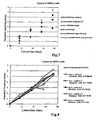
- Fig. 1 shows changes in the population doubling number observed when the concentration of S-2 was constant.
- Fig. 1 the population doubling numbers for the conventional medium (O); low-serum medium C (A); 0.2% S-2 ( ⁇ ); 0.2% S-2, 0.001 % S-1 (-); 0.2% S-2, 0.01% S-1 (*); 0.2% S-2, 0.1% S-1 (+); 0.2% S-2, 1% S-1 ( ⁇ ); and 0.2% S-2, 10% S-1 ( ⁇ ) are shown.
- Fig. 2 shows changes in the population doubling number observed when the concentration of S-1 was constant.
- Fig. 2 the population doubling numbers for the conventional medium ( ⁇ ); low-serum medium C (A); 0.1%S-1 ( ⁇ ); 0.1% S-1, 0.002% S-2 (-); 0.1% S-1, 0.02% S-2 (*); 0.1% S-1, 0.2% S-2(+); 0.1% S-1, 0.5% S-2( ⁇ ); 0.1% S-1, 1% S-2 ( ⁇ ); and 0.1% S-1, 2% S-2 ( ⁇ ) are shown.
- Fig. 3 the population doubling numbers for the conventional medium ( ⁇ ); 1% S-1 ( ⁇ ); 1% S-2 ( ⁇ ); and 1% S-3 ( ⁇ ) are shown.
- adipocyte differentiation medium DMEM, 10% FCS, 500 ⁇ M isobutylmethylxanthine (IBMX), 1 ⁇ M dexamethasone, 1 ⁇ M insulin, 1 ⁇ M Rosiglitazone
- DMEM adipocyte differentiation medium
- IBMX isobutylmethylxanthine
- 1 ⁇ M dexamethasone 1 ⁇ M insulin, 1 ⁇ M Rosiglitazone
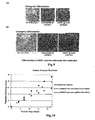
- a medium prepared by adding S-3 to low-serum medium C were transferred to a 24-well culture plate containing 0.5 mL of a bone cell-differentiation medium (DMEM, 10% FCS, 200 ⁇ M ascorbic acid, 0.1 ⁇ M dexamethasone, 10 mM ⁇ -glycerophosphate) at a cell density of 10,000 cells/cm 2 , and cultured at 37°C under 5% CO 2 for 15 days, to induce differentiation into osteocytes. differentiate cell were confirmed by alizarin red S staining. The results are shown in Fig. 4(B) .
- DMEM bone cell-differentiation medium
- hMADS cells cultured in a medium prepared by adding S-3 to low-serum medium C were stained to the same extent as the cells cultured in the conventional medium containing 10% serum, and hence that the hMADS cells differentiated into adipocytes and osteocytes to the same extent. Therefore, it can be seen that the both cells cultured in these media have an ability to maintain the undifferentiated state, and that there is no difference in differentiation potential as stem cells.
- ligand 1 As the serotonin ligand, ligand 1 (S-1) was produced by dissolving 2.1 mg of serotonin hydrochloride (manufactured by Sigma) into 10 mL of DMEM (manufactured by LONZA).
- ligand 2 (S-2) was produced by dissolving 2.3 mg of 1-oleyl lysophosphatidic acid sodium salt (LPA: manufactured by CAYMAN) into 10 mL of PBS, and ligand 2 (S-2') was produced by dissolving 1.9 mg of sphingosine-1-phosphate (S1P: manufactured by CAYMAN) into 10 mL of DMEM.
- LPA 1-oleyl lysophosphatidic acid sodium salt
- S-2' was produced by dissolving 1.9 mg of sphingosine-1-phosphate (S1P: manufactured by CAYMAN) into 10 mL of DMEM.
- ligand 3 (S-3) was produced by dissolving 2.1 mg of serotonin hydrochloride and 2.3 mg of LPA into 10 mL of PBS.
- Low-serum medium C1 was obtained by adding 100 U/mL penicillin/streptomycin (manufactured by GIBCO) and 0.5% FCS to a basal medium which was the same as the basal medium prepared in Example 1 except that it did not contain hypoxanthine and thymidine and a part of the inorganic salts (copper sulfate, iron (III) nitrate, iron sulfate, magnesium chloride, disodium hydrogen phosphate, zinc sulfate). Further, low-serum medium C2 was obtained by adding 100 U/mL penicillin/streptomycin (manufactured by GIBCO) and 1.0% FCS to the basal medium.
- S-1 and/or 2 produced in (2-1) was/were added to low-serum medium C1 at various concentrations to obtain low-serum media. More particularly, S-1 and/or S-2 was/were added at the concentration(s) below:
- S-1 and/or 2' produced in (2-1) was/were added to low-serum medium C2 at various concentrations to obtain low-serum media. More particularly, S-1 and/or S-2' was/were added at the concentration(s) below:
- a medium kit for human mesenchymal stem cells containing 10% FCS, L-glutamine and antibiotics was used as the conventional medium.
- a culture dish having a diameter of 100 mm 10 mL of each of these media was placed, and hMSCs were seeded at an initial cell number of 10,000 cells/mL, followed by culturing at 37°C under 5% CO 2 .
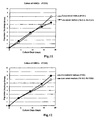
- Fig. 5 to 7 show changes in the population doubling numbers (n) during the first 19 days after the beginning of the culture
- Fig. 8 shows changes in the population doubling numbers (n) during the first 18 days after the beginning of the culture, calculated using the results obtained by measurement of the cell numbers at each passage using a hemacytometer. The results are shown in Fig. 5 to 8 .
- Fig. 5 shows changes in the population doubling number observed when the concentration of S-2 was constant.
- Fig. 5 the population doubling numbers for the conventional medium ( ⁇ ); low-serum medium C1 ( ⁇ ); 0.2% S-2 ( ⁇ ); 0.2% S-2, 0.001% S-1 (-); 0.2% S-2, 0.01% S-1 (*); 0.2% S-2, 0.1% S-1 (+); 0.2% S-2, 1% S-1 ( ⁇ ); 0.2% S-2, 10% S-1 ( ⁇ ); 1% S-1 ( ⁇ ); 1% S-2 ( ⁇ ); and 1% S-1, 1% S-2 ( ⁇ ) are shown.
- Fig. 6 shows changes in the population doubling number observed when the concentration of S-1 was constant.
- Fig. 6 the population doubling numbers for the conventional medium ( ⁇ ); low-serum medium C1 ( ⁇ ); 0.1% S-1( ⁇ ); 0.1% S-1, 0.002% S-2 (-); 0.1% S-1, 0.02% S-2 (*); 0.1% S-1, 0.2% S-2 (+); 0.1% S-1, 1% S-2 ( ⁇ ); 0.1% S-1, 2% S-2 ( ⁇ ); 1% S-1 ( ⁇ ); 1% S-2 ( ⁇ ); and 1% S-1, 1% S-2 ( ⁇ ) are shown.
- Fig. 7 the population doubling numbers for the conventional medium ( ⁇ ); low-serum medium C1 ( ⁇ ); 1% S-1 ( ⁇ ); 1% S-2 ( ⁇ ); 1% S-3( ⁇ ); and 1% S-3, 1% FCS ( ⁇ ) are shown.
- Fig. 8 shows changes in the population doubling number observed when the concentration of S-1 was constant.
- Fig. 8 the population doubling numbers for the conventional medium ( ⁇ ); 0.1% S-2', 1% S-1 ( ⁇ ); 0.02% S-2', 1% S-1 ( ⁇ ); 0.01% S-2', 1% S-1 ( ⁇ ); 0.002% S-2', 1% S-1 ( ⁇ ); 0.0002% S-2', 1% S-1( ⁇ ) are shown.
- hMSCs cultured in 1% S-3, 1% FCS were stained to the same extent as the cells cultured in the conventional medium containing 10% serum, and hence that the hMSCs differentiated into adipocytes and osteocytes to the same extent. Therefore, it can be seen that the both cells cultured in these media have an ability to maintain the undifferentiated state, and that there is no difference in differentiation potential as stem cells.
- serum-free medium 3 (1% S-3 SF) was obtained with the same composition as that of the above-described low-serum medium 3 except that FCS was not contained.
- DMEM/F12 To DMEM/F12, added were 1 mg/L nonessential amino acids (manufactured by GIBCO), 7 ⁇ 10 -4 % 2-ME, 100 U/L penicillin/streptomycin, 10% FCS and 2.5 ng/mL bFGF to obtain a conventional serum-containing medium (conventional medium).
- hFBs were seeded at an initial cell number of 10,000 cells/mL, followed by culturing at 37°C under 5% CO 2 .
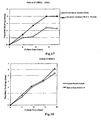
- Fig. 10 the population doubling numbers for the conventional medium ( ⁇ ); 1% S-3 LS ( ⁇ ); and 1% S-3 SF ( ⁇ ) are shown.
- Ligand 3 (S-3) was produced by dissolving 2.1 mg of serotonin hydrochloride and 2.3 mg of LPA into 10 mL of PBS.
- FCS 1-4 Each of low-serum media C2 (FCS 1-4) was obtained by adding 100 U/ml penicillin/streptomycin (manufactured by GIBCO) and 1.0% FCS of a different lot to a basal medium which was the same as the basal medium prepared in Example 1 except that it did not contain hypoxanthine and thymidine and a part of the inorganic salts (copper sulfate, iron (III) nitrate, iron sulfate, magnesium chloride, disodium hydrogen phosphate, zinc sulfate).
- low-serum media 1% S-3, 1 % FCS (1-4)
- FCS 1-4 low-serum media
- a culture dish having a diameter of 100 mm 10 mL of each of these media was placed, and hMSCs were seeded at an initial cell number of 10,000 cells/mL, followed by culturing at 37°C under 5% CO 2 .
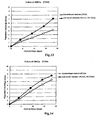
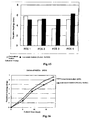
- a summary of the population doubling numbers (n) observed when culture was carried out for 14 days using the conventional media (FCS 1-4) and the low-serum media (1% S-3, 1% FCS (1-4)) is shown in Fig. 15 .
- Ligand 3 (S-3) was produced by dissolving 2.1 mg of serotonin hydrochloride and 2.3 mg of LPA into 10 mL of PBS.
- Each of low-serum media C3 (HS 1, 2) was obtained by adding 100 U/ml penicillin/streptomycin (manufactured by GIBCO) and 1.0% human serum HS of a different lot to a basal medium which was the same as the basal medium prepared in Example 1 except that it did not contain hypoxanthine and thymidine and a part of the inorganic salts (copper sulfate, iron (III) nitrate, iron sulfate, magnesium chloride, disodium hydrogen phosphate, zinc sulfate).
- Low-serum media (1% S-3, 1% FCS (1-4)) were obtained by adding 1% S-3 produced in (5-1) to the low-serum media C2 (HS 1, 2).
- a culture dish having a diameter of 100 mm 10 mL of each of these media was placed, and hMSCs were seeded at an initial cell number of 10,000 cells/mL, followed by culturing at 37°C under 5% CO 2 .
- inorganic salts all the inorganic salts described above except copper sulfate, iron (III) nitrate, iron sulfate, magnesium chloride, disodium hydrogen phosphate, zinc sulfate
- vitamins all the vitamins described above
- other additives adenosine 5'-monophosphate, corticosterone, ethanolamine, D-galactose, D-glucose, insulin, reduced glutathione, lipoic acid, phenol red, progesterone, putrescine, pyruvic acid, triiodothyronine and transferrin
- PDGF platelet-derived growth factor
- bFGF basic fibroblast growth factor
- 0.02% by weight human serum albumin 500 ⁇ M N-acetylcysteine (NAC), 100 U/ml penicillin/streptomycin
- a conventional serum-containing medium (conventional medium A) was obtained by adding 100 U/mL penicillin/streptomycin and 10% FBS to DMEM.
- a culture dish having a diameter of 100 mm 10 mL of each of these media was placed, and hMSCs were seeded at an initial cell number of 15,000 cells/mL, followed by culturing at 37°C under 5% CO 2 .
- culturing in serum-free growth medium A of the present invention gave the population doubling numbers equivalent to those in the case of culturing in the serum-containing conventional medium A even though serum-free growth medium A is serum-free and contains only two types of growth factors.
- adipocyte differentiation medium (DMEM, 10% FCS, 500 ⁇ M IBMX, 1 ⁇ M dexamethasone, 1 ⁇ M insulin, 1 ⁇ M Rosiglitazone) at a cell density of 30,000 cells/cm 2 , and cultured at 37°C under 5% CO 2 for 14 days, to induce differentiation into adipocytes. differentiated cells were confirmed by Oil Red O staining.
- Fig. 19(A) The results are shown in Fig. 19(A) .
- Fig. 19(A) in the case of maintaining the cells in serum-free growth medium A of the present invention for several passages followed by differentiation induction, the cells were stained to a slightly lesser extent than, although about the same extent as, in the case of culturing in serum-containing conventional medium A, so that evident differentiated cells were confirmed.
- Fig. 19(B) The results are shown in Fig. 19(B) .
- Fig. 19(B) in the case of maintaining the cells in serum-free growth medium A of the present invention for several passages followed by differentiation induction, the cells were stained to the same extent as in the case of culturing in conventional serum-containing medium A, so that differentiated cells confirmed.
- Example 7 Culturing of Human Bone Marrow-derived Mesenchymal Stem Cells (hMSCs) 3
- inorganic salts all the inorganic salts described above except copper sulfate, iron (III) nitrate, iron sulfate, magnesium chloride, disodium hydrogen phosphate, zinc sulfate
- vitamins all the vitamins described above
- other additives adenosine 5'-monophosphate, corticosterone, ethanolamine, D-galactose, D-glucose, insulin, reduced glutathione, lipoic acid, phenol red, progesterone, putrescine, pyruvic acid, triiodothyronine and transferrin
- human serum albumin 500 ⁇ M N-acetylcysteine (NAC), 100 U/ml penicillin/streptomycin (manufactured by GIBCO) and 1% S-3 produced in (1-1) were added to obtain serum-free growth medium B.
- NAC N-acetylcysteine
- penicillin/streptomycin manufactured by GIB
- Fig. 20 The results are shown in Fig. 20 . As shown in Fig. 20 , even in the case where the cells were cultured in the serum-free growth medium B of the present invention which did not contain a growth factor, the cells could be grown, although the population doubling numbers were smaller than in the cases of culturing in serum-free medium B of the present invention containing growth factors and culturing in conventional medium A.
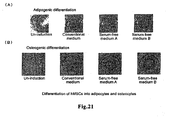
- adipocyte differentiation medium (DMEM, 10% FCS, 500 ⁇ M IBMX, 1 ⁇ M dexamethasone, 1 ⁇ M insulin, 1 ⁇ M Rosiglitazone) at a cell density of 30,000 cells/cm 2 , and cultured at 37°C under 5% CO 2 for 14 days, to induce differentiation into adipocytes. Differentiated cells were confirmed by Oil Red O staining.
- Fig. 21 (A) The results are shown in Fig. 21 (A) .
- the cells cultured for several passages in the respective three types of media followed by differentiation induction were stained to about the same extents, so that even in the case where the cells were cultured in serum-free medium B of the present invention which did not contain a growth factor, differentiation was confirmed to have occurred to the same extent as in the case of culturing in the serum-containing conventional medium.
- Fig. 21 (A) The results are shown in Fig. 21 (A) .
- Fig. 21 (A) in the case of maintaining the cells in serum-free growth medium A or serum-free growth medium B for several passages followed by differentiation induction, the cells were stained to the same extent as in the case of culturing in conventional medium A, so that differentiation into bone cells was confirmed. It was revealed that the serum-free growth medium of the present invention allows osteocytes to keep an ability to differentiate into osteocytes even in cases where it does not contain a growth factor.
Landscapes
- Health & Medical Sciences (AREA)
- Life Sciences & Earth Sciences (AREA)
- Engineering & Computer Science (AREA)
- Biomedical Technology (AREA)
- Chemical & Material Sciences (AREA)
- Wood Science & Technology (AREA)
- Organic Chemistry (AREA)
- Developmental Biology & Embryology (AREA)
- Biotechnology (AREA)
- Zoology (AREA)
- Bioinformatics & Cheminformatics (AREA)
- Genetics & Genomics (AREA)
- Cell Biology (AREA)
- Microbiology (AREA)
- Rheumatology (AREA)
- Biochemistry (AREA)
- General Engineering & Computer Science (AREA)
- General Health & Medical Sciences (AREA)
- Hematology (AREA)
- Immunology (AREA)
- Micro-Organisms Or Cultivation Processes Thereof (AREA)
Claims (23)
- Verwendung eines Mediums zur Übergangskultur von Säugetiersomazellen, worin das Medium einen Agonisten für einen Rezeptor der Endothelzellendifferenzierungsgen- (Edg-) Familie und einen Agonisten für einen Serotoninrezeptor umfasst, worin das Medium ein serumfreies Medium oder ein serumarmes Medium ist.
- Verwendung nach Anspruch 1, worin die Konzentration des Agonisten für einen Rezeptor der Endothelzellendifferenzierungsgenfamilie im Medium 0,01 bis 100 µM beträgt und die Konzentration des Agonisten für einen Serotoninrezeptor im Medium 0,1 bis 100 µM beträgt.
- Verwendung nach Anspruch 1 oder 2, worin der Agonist für einen Rezeptor der Endothelzellendifferenzierungsgenfamilie zumindest ein aus der aus Lysophosphatidinsäure (LPA) und Salzen davon; Sphingosin-1-phosphat (SIP) bestehenden Gruppe ausgewählter ist.
- Verwendung nach Anspruch 1, worin der Agonist für einen Rezeptor der Endothelzellendifferenzierungsgenfamilie zumindest ein aus der aus Lysophosphatidinsäure (LPA) und Salzen davon bestehenden Gruppe ausgewählter ist und eine Konzentration von 0,25 bis 10 µM im Medium aufweist und der Agonist für einen Serotoninrezeptor eine Konzentration von 0,25 bis 20 µM im Medium aufweist.
- Verwendung nach einem der Ansprüche 1 bis 4, worin der Agonist für einen Serotoninrezeptor zumindest ein aus der aus Serotonin und Salzen davon bestehenden Gruppe ausgewählter ist.
- Verwendung nach einem der Ansprüche 1 bis 5, worin das Medium des Weiteren ein Antioxidans umfasst.
- Verwendung nach Anspruch 6, worin das Antioxidans zumindest ein aus der aus N-Acetylcystein und L-Cystein bestehenden Gruppe ausgewähltes ist.
- Verwendung nach Anspruch 6 oder 7, worin die Konzentration des Antioxidans 0,01 mM bis 10 mM beträgt.
- Verwendung nach einem der Ansprüche 1 bis 8, worin das Medium des Weiteren ein Tierserumalbumin umfasst.
- Verwendung nach einem der Ansprüche 1 bis 9, worin die Konzentration des Serumalbumins in dem Medium 0,0001 bis 10 Gew.-% beträgt.
- Verwendung nach einem der Ansprüche 1 bis 10, worin das Medium des Weiteren einen Wachstumsfaktor umfasst.
- Verwendung nach Anspruch 11, worin der Wachstumsfaktor zumindest ein aus der aus aus Blutplättchen gewonnenen Wachstumsfaktoren (PDGF), basischen Fibroblastenwachstumsfaktoren (bFGF) und epidermalen Wachstumsfaktoren (EGF) bestehenden Gruppe ausgewählter ist.
- Verwendung nach Anspruch 12, worin das Medium zwei Arten der Wachstumsfaktoren umfasst, die ein aus Blutplättchen gewonnener Wachstumsfaktor (PDGF) und ein basischer Fibroblastenwachstumsfaktor (bFGF) im Medium sind.
- Verwendung nach einem der Ansprüche 11 bis 13, worin die Konzentration des Wachstumsfaktors im Medium 0,1 bis 100 ng/ml beträgt.
- Verwendung eines Mediumzusatzes zur Übergangskultur von Säugetiersomazellen, wobei der Zusatz einen Agonisten für einen Rezeptor der Endothelzellendifferenzierungsgen- (Edg-) Familie und einen Agonisten für einen Serotoninrezeptor umfasst.
- Verwendung nach Anspruch 15, worin der Agonist für einen Rezeptor der Endothelzellendifferenzierungsgenfamilie zumindest ein aus der aus Lysophosphatidinsäure (LPA) und Salzen davon; Sphingosin-1-phosphat (SIP) bestehenden Gruppe ausgewählter ist; und/oder
worin der Agonist für einen Serotoninrezeptor zumindest ein aus der aus Serotonin und Salzen davon bestehenden Gruppe ausgewählter ist. - Verwendung nach Anspruch 15 oder 16, worin der Zusatz des Weiteren ein Antioxidans umfasst und/oder
des Weiteren ein Tierserumalbumin umfasst und/oder
des Weiteren einen Wachstumsfaktor umfasst. - Verwendung nach einem der Ansprüche 15 bis 17, worin der Zusatz eine Zusammensetzung aufweist, die das Medium wie in einem der Ansprüche 1 bis 14 definiert bereitstellt, wenn er in Wasser oder einem Basalmedium gelöst ist.
- Verfahren zur Übergangskultur von Säugetiersomazellen, wobei das Verfahren das Kultivieren der Säugetiersomazellen in einem Medium wie in einem der Ansprüche 1 bis 14 definiert umfasst.
- Medium für Säugetiersomazellen, das einen Agonisten für einen Rezeptor der Endothelzellendifferenzierungsgen- (Edg-) Familie, einen Agonisten für einen Serotoninrezeptor und einen Wachstumsfaktor umfasst, worin das Medium serumfrei ist.
- Medium nach Anspruch 20, worin der Wachstumsfaktor zumindest ein aus der aus aus Blutplättchen gewonnenen Wachstumsfaktoren (PDGF), basischen Fibroblastenwachstumsfaktoren (bFGF) und epidermalen Wachstumsfaktoren (EGF) bestehenden Gruppe ausgewählter ist.
- Medium nach Anspruch 21, das zwei Arten der Wachstumsfaktoren umfasst, die ein auf Blutplättchen gewonnener Wachstumsfaktor (PDGF) und ein basischer Fibroblastenwachstumsfaktor (bFGF) im Medium sind.
- Medium nach einem der Ansprüche 20 bis 22, worin die Konzentration des Wachstumsfaktors im Medium 0,1 bis 100 ng/ml beträgt.
Applications Claiming Priority (3)
| Application Number | Priority Date | Filing Date | Title |
|---|---|---|---|
| JP2007340802 | 2007-12-28 | ||
| JP2008151295 | 2008-06-10 | ||
| PCT/JP2008/073806 WO2009084662A1 (ja) | 2007-12-28 | 2008-12-26 | 哺乳動物体細胞用培地及びそのための添加剤 |
Publications (3)
| Publication Number | Publication Date |
|---|---|
| EP2233565A1 EP2233565A1 (de) | 2010-09-29 |
| EP2233565A4 EP2233565A4 (de) | 2011-12-07 |
| EP2233565B1 true EP2233565B1 (de) | 2015-05-13 |
Family
ID=40824375
Family Applications (1)
| Application Number | Title | Priority Date | Filing Date |
|---|---|---|---|
| EP08868742.1A Not-in-force EP2233565B1 (de) | 2007-12-28 | 2008-12-26 | Medium für säugerkörperzellen und zusatz dafür |
Country Status (6)
| Country | Link |
|---|---|
| US (2) | US20110008893A1 (de) |
| EP (1) | EP2233565B1 (de) |
| JP (1) | JPWO2009084662A1 (de) |
| KR (1) | KR101574989B1 (de) |
| CN (1) | CN101918542B (de) |
| WO (1) | WO2009084662A1 (de) |
Families Citing this family (22)
| Publication number | Priority date | Publication date | Assignee | Title |
|---|---|---|---|---|
| JP5663841B2 (ja) * | 2009-02-23 | 2015-02-04 | 富士レビオ株式会社 | 骨細胞への分化誘導培地及び方法 |
| JP5515319B2 (ja) | 2009-02-23 | 2014-06-11 | 富士レビオ株式会社 | 脂肪細胞への分化誘導培地及び方法 |
| US20120207790A1 (en) * | 2009-10-08 | 2012-08-16 | National University Corporation Nagoya University | Immunosuppressing agent comprising mesenchymal stem cell derived from adipose tissue, and use thereof |
| JP5674303B2 (ja) | 2009-11-06 | 2015-02-25 | ユニ・チャーム株式会社 | 使い捨て着用物品 |
| JP5993113B2 (ja) * | 2011-01-31 | 2016-09-14 | 株式会社 バイオミメティクスシンパシーズ | アルツハイマー病治療に向けたヒト脂肪組織由来間葉系幹細胞 |
| WO2013071459A2 (es) * | 2011-10-24 | 2013-05-23 | Universidad Del Desarrollo | Composición que comprende un glucocorticoide y una tiazolinediona para inducir diferenciación adipogénica completa de células madre de mamíferos |
| JP6090735B2 (ja) * | 2012-03-02 | 2017-03-08 | 国立大学法人山口大学 | 消化器系がん幹細胞を培養するための無血清培地、及びそれを用いた消化器系がん幹細胞の増殖方法 |
| CN104254602A (zh) * | 2012-04-24 | 2014-12-31 | 克瑞奥埃斯塔麦诺健康与技术股份有限公司 | 用于心脏组织保护的干细胞的组合物和方法 |
| US8835175B2 (en) * | 2012-11-13 | 2014-09-16 | Grifols, S.A. | Culture medium for human mesenchymal stem cells |
| AU2015261380B2 (en) | 2014-05-16 | 2021-04-15 | Koninklijke Nederlandse Akademie Van Wetenschappen | Improved culture method for organoids |
| GB201421092D0 (en) * | 2014-11-27 | 2015-01-14 | Koninklijke Nederlandse Akademie Van Wetenschappen | Culture medium |
| CN104480066B (zh) * | 2014-12-30 | 2018-03-30 | 陕西瑞盛生物科技有限公司 | 一种软骨细胞培养基及软骨细胞培养方法 |
| US10894947B1 (en) * | 2016-04-29 | 2021-01-19 | Hope Biosciences, Llc | Method for generating protein rich conditioned medium |
| JP6754279B2 (ja) * | 2016-11-25 | 2020-09-09 | 株式会社日立プラントサービス | 細胞培養培地、並びにこれを用いた細胞培養装置及び細胞培養方法 |
| CN106434532A (zh) * | 2016-12-22 | 2017-02-22 | 叶宗耀 | 一种培养肝细胞的培养基及其制备方法 |
| CN107345216B (zh) * | 2017-07-28 | 2020-11-06 | 暨南大学 | 一种脂肪干细胞培养基及其应用 |
| GB201819224D0 (en) | 2018-11-26 | 2019-01-09 | Koninklijke Nederlandse Akademie Van Wetenschappen | Hepatocyte expansion methods |
| JP7308611B2 (ja) | 2018-12-07 | 2023-07-14 | 関東化学株式会社 | 多能性幹細胞用未分化維持培地 |
| CN111004778A (zh) * | 2019-12-16 | 2020-04-14 | 江苏艾洛特生物科技有限公司 | 一种细胞无血清培养基添加物、培养基及用途 |
| CN114591897B (zh) * | 2020-12-03 | 2024-02-23 | 梦芊科技知识产权有限公司 | 使用无异源培养基三维培养间充质干细胞的方法 |
| CN114107188B (zh) * | 2021-11-30 | 2025-01-14 | 滨州医学院 | 一种干细胞成膜培养基及其应用 |
| CN116254223B (zh) * | 2023-01-12 | 2024-12-06 | 青岛农业大学 | 用于冻存后猪皮肤干细胞复苏的培养基及其制备方法 |
Family Cites Families (6)
| Publication number | Priority date | Publication date | Assignee | Title |
|---|---|---|---|---|
| US5908782A (en) | 1995-06-05 | 1999-06-01 | Osiris Therapeutics, Inc. | Chemically defined medium for human mesenchymal stem cells |
| US7169610B2 (en) * | 2002-01-25 | 2007-01-30 | Genzyme Corporation | Serum-free media for chondrocytes and methods of use thereof |
| CA2488425A1 (en) * | 2002-06-07 | 2003-12-18 | Es Cell International Pte Ltd | Methods of regulating differentiation in stem cells |
| WO2004039965A1 (ja) * | 2002-10-31 | 2004-05-13 | Riken | 多能性幹細胞培養用の組成物とその使用 |
| KR101264940B1 (ko) * | 2004-09-08 | 2013-05-15 | 위스콘신 얼럼나이 리서어치 화운데이션 | 배아 줄기 세포용 배지 및 이의 배양물 |
| KR101107835B1 (ko) | 2006-01-13 | 2012-02-09 | 가부시키가이샤 투셀 | 동물 세포의 무혈청 배양에 사용하기 위한 배양 배지 첨가물, 키트 및 이의 용도 |
-
2008
- 2008-12-26 JP JP2009548105A patent/JPWO2009084662A1/ja active Pending
- 2008-12-26 KR KR1020107005263A patent/KR101574989B1/ko not_active Expired - Fee Related
- 2008-12-26 US US12/810,729 patent/US20110008893A1/en not_active Abandoned
- 2008-12-26 CN CN2008801239879A patent/CN101918542B/zh not_active Expired - Fee Related
- 2008-12-26 EP EP08868742.1A patent/EP2233565B1/de not_active Not-in-force
- 2008-12-26 WO PCT/JP2008/073806 patent/WO2009084662A1/ja not_active Ceased
-
2012
- 2012-06-14 US US13/523,581 patent/US9410125B2/en not_active Expired - Fee Related
Also Published As
| Publication number | Publication date |
|---|---|
| JPWO2009084662A1 (ja) | 2011-05-19 |
| EP2233565A1 (de) | 2010-09-29 |
| CN101918542A (zh) | 2010-12-15 |
| WO2009084662A1 (ja) | 2009-07-09 |
| US9410125B2 (en) | 2016-08-09 |
| US20120329155A1 (en) | 2012-12-27 |
| EP2233565A4 (de) | 2011-12-07 |
| KR20100097649A (ko) | 2010-09-03 |
| CN101918542B (zh) | 2013-06-12 |
| KR101574989B1 (ko) | 2015-12-21 |
| US20110008893A1 (en) | 2011-01-13 |
Similar Documents
| Publication | Publication Date | Title |
|---|---|---|
| EP2233565B1 (de) | Medium für säugerkörperzellen und zusatz dafür | |
| US10184112B2 (en) | Culture medium additive for use in serum-free culturing of animal cell, kit and use thereof | |
| JP5515319B2 (ja) | 脂肪細胞への分化誘導培地及び方法 | |
| EP3263697B1 (de) | Kulturmedium zur kultivierung mesenchymaler stammzellen, verfahren zur kultivierung mesenchymaler stammzellen und mesenchymale stammzelle | |
| EP3184627B1 (de) | Kulturmedium für mesenchymale stammzellen | |
| WO2018164228A1 (ja) | Ror1陽性の間葉系幹細胞を含有する、線維症を伴う疾患の予防又は処置のための医薬組成物、及びその調製方法、並びにror1陽性の間葉系幹細胞を用いる線維症を伴う疾患の予防又は処置方法 | |
| JP2014525262A (ja) | 間葉系幹細胞の基本培養培地の調製方法、間葉系幹細胞の基本培養培地及びこれを利用して培養分化した細胞治療剤 | |
| EP3385372B1 (de) | Verfahren zur herstellung einer mesenchymalen zelllinie aus dem fettgewebe von wirbeltieren | |
| WO2014082685A1 (en) | Serum-free medium for human mesenchymal stem cells | |
| CN110734893B (zh) | 含维生素c的促进脐带间充质干细胞增殖的培养基 | |
| EP4227405A1 (de) | Verfahren zur herstellung einer zellformulierung zur gelenkbehandlung, zellformulierung zur gelenkbehandlung und verfahren zur kultivierung mesenchymaler stammzellen | |
| CN110799639A (zh) | 含有核黄素衍生物的培养基 | |
| US9315777B2 (en) | Culture medium and method for inducing differentiation into bone cells | |
| CN113215095A (zh) | 组合物、培养基补充剂以及干细胞培养基及培养方法 |
Legal Events
| Date | Code | Title | Description |
|---|---|---|---|
| PUAI | Public reference made under article 153(3) epc to a published international application that has entered the european phase |
Free format text: ORIGINAL CODE: 0009012 |
|
| 17P | Request for examination filed |
Effective date: 20100719 |
|
| AK | Designated contracting states |
Kind code of ref document: A1 Designated state(s): AT BE BG CH CY CZ DE DK EE ES FI FR GB GR HR HU IE IS IT LI LT LU LV MC MT NL NO PL PT RO SE SI SK TR |
|
| AX | Request for extension of the european patent |
Extension state: AL BA MK RS |
|
| RIN1 | Information on inventor provided before grant (corrected) |
Inventor name: HOTTA, YOSHIYUKI Inventor name: SUGIMURA, ITSURO Inventor name: YAMAGUMA, HARUMI |
|
| DAX | Request for extension of the european patent (deleted) | ||
| REG | Reference to a national code |
Ref country code: DE Ref legal event code: R079 Ref document number: 602008038171 Country of ref document: DE Free format text: PREVIOUS MAIN CLASS: C12N0005060000 Ipc: C12N0005077500 |
|
| A4 | Supplementary search report drawn up and despatched |
Effective date: 20111107 |
|
| RIC1 | Information provided on ipc code assigned before grant |
Ipc: C12N 5/071 20100101ALI20111031BHEP Ipc: C12N 5/0775 20100101AFI20111031BHEP |
|
| 17Q | First examination report despatched |
Effective date: 20121008 |
|
| RAP1 | Party data changed (applicant data changed or rights of an application transferred) |
Owner name: FUJIREBIO INC. |
|
| GRAP | Despatch of communication of intention to grant a patent |
Free format text: ORIGINAL CODE: EPIDOSNIGR1 |
|
| INTG | Intention to grant announced |
Effective date: 20141222 |
|
| GRAS | Grant fee paid |
Free format text: ORIGINAL CODE: EPIDOSNIGR3 |
|
| GRAA | (expected) grant |
Free format text: ORIGINAL CODE: 0009210 |
|
| AK | Designated contracting states |
Kind code of ref document: B1 Designated state(s): AT BE BG CH CY CZ DE DK EE ES FI FR GB GR HR HU IE IS IT LI LT LU LV MC MT NL NO PL PT RO SE SI SK TR |
|
| REG | Reference to a national code |
Ref country code: GB Ref legal event code: FG4D |
|
| REG | Reference to a national code |
Ref country code: CH Ref legal event code: EP |
|
| REG | Reference to a national code |
Ref country code: IE Ref legal event code: FG4D |
|
| REG | Reference to a national code |
Ref country code: AT Ref legal event code: REF Ref document number: 726855 Country of ref document: AT Kind code of ref document: T Effective date: 20150615 |
|
| REG | Reference to a national code |
Ref country code: DE Ref legal event code: R096 Ref document number: 602008038171 Country of ref document: DE Effective date: 20150625 |
|
| REG | Reference to a national code |
Ref country code: AT Ref legal event code: MK05 Ref document number: 726855 Country of ref document: AT Kind code of ref document: T Effective date: 20150513 |
|
| REG | Reference to a national code |
Ref country code: NL Ref legal event code: MP Effective date: 20150513 |
|
| REG | Reference to a national code |
Ref country code: LT Ref legal event code: MG4D |
|
| PG25 | Lapsed in a contracting state [announced via postgrant information from national office to epo] |
Ref country code: PT Free format text: LAPSE BECAUSE OF FAILURE TO SUBMIT A TRANSLATION OF THE DESCRIPTION OR TO PAY THE FEE WITHIN THE PRESCRIBED TIME-LIMIT Effective date: 20150914 Ref country code: ES Free format text: LAPSE BECAUSE OF FAILURE TO SUBMIT A TRANSLATION OF THE DESCRIPTION OR TO PAY THE FEE WITHIN THE PRESCRIBED TIME-LIMIT Effective date: 20150513 Ref country code: HR Free format text: LAPSE BECAUSE OF FAILURE TO SUBMIT A TRANSLATION OF THE DESCRIPTION OR TO PAY THE FEE WITHIN THE PRESCRIBED TIME-LIMIT Effective date: 20150513 Ref country code: LT Free format text: LAPSE BECAUSE OF FAILURE TO SUBMIT A TRANSLATION OF THE DESCRIPTION OR TO PAY THE FEE WITHIN THE PRESCRIBED TIME-LIMIT Effective date: 20150513 Ref country code: FI Free format text: LAPSE BECAUSE OF FAILURE TO SUBMIT A TRANSLATION OF THE DESCRIPTION OR TO PAY THE FEE WITHIN THE PRESCRIBED TIME-LIMIT Effective date: 20150513 Ref country code: NO Free format text: LAPSE BECAUSE OF FAILURE TO SUBMIT A TRANSLATION OF THE DESCRIPTION OR TO PAY THE FEE WITHIN THE PRESCRIBED TIME-LIMIT Effective date: 20150813 |
|
| PG25 | Lapsed in a contracting state [announced via postgrant information from national office to epo] |
Ref country code: AT Free format text: LAPSE BECAUSE OF FAILURE TO SUBMIT A TRANSLATION OF THE DESCRIPTION OR TO PAY THE FEE WITHIN THE PRESCRIBED TIME-LIMIT Effective date: 20150513 Ref country code: BG Free format text: LAPSE BECAUSE OF FAILURE TO SUBMIT A TRANSLATION OF THE DESCRIPTION OR TO PAY THE FEE WITHIN THE PRESCRIBED TIME-LIMIT Effective date: 20150813 Ref country code: IS Free format text: LAPSE BECAUSE OF FAILURE TO SUBMIT A TRANSLATION OF THE DESCRIPTION OR TO PAY THE FEE WITHIN THE PRESCRIBED TIME-LIMIT Effective date: 20150913 Ref country code: GR Free format text: LAPSE BECAUSE OF FAILURE TO SUBMIT A TRANSLATION OF THE DESCRIPTION OR TO PAY THE FEE WITHIN THE PRESCRIBED TIME-LIMIT Effective date: 20150814 Ref country code: LV Free format text: LAPSE BECAUSE OF FAILURE TO SUBMIT A TRANSLATION OF THE DESCRIPTION OR TO PAY THE FEE WITHIN THE PRESCRIBED TIME-LIMIT Effective date: 20150513 |
|
| REG | Reference to a national code |
Ref country code: FR Ref legal event code: PLFP Year of fee payment: 8 |
|
| PG25 | Lapsed in a contracting state [announced via postgrant information from national office to epo] |
Ref country code: DK Free format text: LAPSE BECAUSE OF FAILURE TO SUBMIT A TRANSLATION OF THE DESCRIPTION OR TO PAY THE FEE WITHIN THE PRESCRIBED TIME-LIMIT Effective date: 20150513 Ref country code: EE Free format text: LAPSE BECAUSE OF FAILURE TO SUBMIT A TRANSLATION OF THE DESCRIPTION OR TO PAY THE FEE WITHIN THE PRESCRIBED TIME-LIMIT Effective date: 20150513 |
|
| PGFP | Annual fee paid to national office [announced via postgrant information from national office to epo] |
Ref country code: GB Payment date: 20151221 Year of fee payment: 8 Ref country code: DE Payment date: 20151211 Year of fee payment: 8 |
|
| REG | Reference to a national code |
Ref country code: DE Ref legal event code: R097 Ref document number: 602008038171 Country of ref document: DE |
|
| PG25 | Lapsed in a contracting state [announced via postgrant information from national office to epo] |
Ref country code: CZ Free format text: LAPSE BECAUSE OF FAILURE TO SUBMIT A TRANSLATION OF THE DESCRIPTION OR TO PAY THE FEE WITHIN THE PRESCRIBED TIME-LIMIT Effective date: 20150513 Ref country code: RO Free format text: LAPSE BECAUSE OF NON-PAYMENT OF DUE FEES Effective date: 20150513 Ref country code: PL Free format text: LAPSE BECAUSE OF FAILURE TO SUBMIT A TRANSLATION OF THE DESCRIPTION OR TO PAY THE FEE WITHIN THE PRESCRIBED TIME-LIMIT Effective date: 20150513 Ref country code: SK Free format text: LAPSE BECAUSE OF FAILURE TO SUBMIT A TRANSLATION OF THE DESCRIPTION OR TO PAY THE FEE WITHIN THE PRESCRIBED TIME-LIMIT Effective date: 20150513 |
|
| PGFP | Annual fee paid to national office [announced via postgrant information from national office to epo] |
Ref country code: FR Payment date: 20151221 Year of fee payment: 8 |
|
| PLBE | No opposition filed within time limit |
Free format text: ORIGINAL CODE: 0009261 |
|
| STAA | Information on the status of an ep patent application or granted ep patent |
Free format text: STATUS: NO OPPOSITION FILED WITHIN TIME LIMIT |
|
| 26N | No opposition filed |
Effective date: 20160216 |
|
| PG25 | Lapsed in a contracting state [announced via postgrant information from national office to epo] |
Ref country code: IT Free format text: LAPSE BECAUSE OF FAILURE TO SUBMIT A TRANSLATION OF THE DESCRIPTION OR TO PAY THE FEE WITHIN THE PRESCRIBED TIME-LIMIT Effective date: 20150513 |
|
| PG25 | Lapsed in a contracting state [announced via postgrant information from national office to epo] |
Ref country code: SI Free format text: LAPSE BECAUSE OF FAILURE TO SUBMIT A TRANSLATION OF THE DESCRIPTION OR TO PAY THE FEE WITHIN THE PRESCRIBED TIME-LIMIT Effective date: 20150513 Ref country code: BE Free format text: LAPSE BECAUSE OF NON-PAYMENT OF DUE FEES Effective date: 20151231 |
|
| PG25 | Lapsed in a contracting state [announced via postgrant information from national office to epo] |
Ref country code: LU Free format text: LAPSE BECAUSE OF FAILURE TO SUBMIT A TRANSLATION OF THE DESCRIPTION OR TO PAY THE FEE WITHIN THE PRESCRIBED TIME-LIMIT Effective date: 20151226 Ref country code: MC Free format text: LAPSE BECAUSE OF FAILURE TO SUBMIT A TRANSLATION OF THE DESCRIPTION OR TO PAY THE FEE WITHIN THE PRESCRIBED TIME-LIMIT Effective date: 20150513 |
|
| REG | Reference to a national code |
Ref country code: CH Ref legal event code: PL |
|
| PG25 | Lapsed in a contracting state [announced via postgrant information from national office to epo] |
Ref country code: BE Free format text: LAPSE BECAUSE OF FAILURE TO SUBMIT A TRANSLATION OF THE DESCRIPTION OR TO PAY THE FEE WITHIN THE PRESCRIBED TIME-LIMIT Effective date: 20150513 |
|
| REG | Reference to a national code |
Ref country code: IE Ref legal event code: MM4A |
|
| PG25 | Lapsed in a contracting state [announced via postgrant information from national office to epo] |
Ref country code: CH Free format text: LAPSE BECAUSE OF NON-PAYMENT OF DUE FEES Effective date: 20151231 Ref country code: IE Free format text: LAPSE BECAUSE OF NON-PAYMENT OF DUE FEES Effective date: 20151226 Ref country code: LI Free format text: LAPSE BECAUSE OF NON-PAYMENT OF DUE FEES Effective date: 20151231 |
|
| PG25 | Lapsed in a contracting state [announced via postgrant information from national office to epo] |
Ref country code: HU Free format text: LAPSE BECAUSE OF FAILURE TO SUBMIT A TRANSLATION OF THE DESCRIPTION OR TO PAY THE FEE WITHIN THE PRESCRIBED TIME-LIMIT; INVALID AB INITIO Effective date: 20081226 |
|
| PG25 | Lapsed in a contracting state [announced via postgrant information from national office to epo] |
Ref country code: CY Free format text: LAPSE BECAUSE OF FAILURE TO SUBMIT A TRANSLATION OF THE DESCRIPTION OR TO PAY THE FEE WITHIN THE PRESCRIBED TIME-LIMIT Effective date: 20150513 Ref country code: NL Free format text: LAPSE BECAUSE OF FAILURE TO SUBMIT A TRANSLATION OF THE DESCRIPTION OR TO PAY THE FEE WITHIN THE PRESCRIBED TIME-LIMIT Effective date: 20150513 Ref country code: SE Free format text: LAPSE BECAUSE OF FAILURE TO SUBMIT A TRANSLATION OF THE DESCRIPTION OR TO PAY THE FEE WITHIN THE PRESCRIBED TIME-LIMIT Effective date: 20150513 |
|
| REG | Reference to a national code |
Ref country code: DE Ref legal event code: R119 Ref document number: 602008038171 Country of ref document: DE |
|
| GBPC | Gb: european patent ceased through non-payment of renewal fee |
Effective date: 20161226 |
|
| PG25 | Lapsed in a contracting state [announced via postgrant information from national office to epo] |
Ref country code: TR Free format text: LAPSE BECAUSE OF FAILURE TO SUBMIT A TRANSLATION OF THE DESCRIPTION OR TO PAY THE FEE WITHIN THE PRESCRIBED TIME-LIMIT Effective date: 20150513 Ref country code: MT Free format text: LAPSE BECAUSE OF FAILURE TO SUBMIT A TRANSLATION OF THE DESCRIPTION OR TO PAY THE FEE WITHIN THE PRESCRIBED TIME-LIMIT Effective date: 20150513 |
|
| REG | Reference to a national code |
Ref country code: FR Ref legal event code: ST Effective date: 20170831 |
|
| PG25 | Lapsed in a contracting state [announced via postgrant information from national office to epo] |
Ref country code: FR Free format text: LAPSE BECAUSE OF NON-PAYMENT OF DUE FEES Effective date: 20170102 |
|
| PG25 | Lapsed in a contracting state [announced via postgrant information from national office to epo] |
Ref country code: GB Free format text: LAPSE BECAUSE OF NON-PAYMENT OF DUE FEES Effective date: 20161226 Ref country code: DE Free format text: LAPSE BECAUSE OF NON-PAYMENT OF DUE FEES Effective date: 20170701 |