EP2228359B1 - Verfahren zur oxidativen Umwandlung von Methanol - Google Patents
Verfahren zur oxidativen Umwandlung von Methanol Download PDFInfo
- Publication number
- EP2228359B1 EP2228359B1 EP10002007.2A EP10002007A EP2228359B1 EP 2228359 B1 EP2228359 B1 EP 2228359B1 EP 10002007 A EP10002007 A EP 10002007A EP 2228359 B1 EP2228359 B1 EP 2228359B1
- Authority
- EP
- European Patent Office
- Prior art keywords
- methanol
- catalyst
- molecular sieve
- amount
- dmmx
- Prior art date
- Legal status (The legal status is an assumption and is not a legal conclusion. Google has not performed a legal analysis and makes no representation as to the accuracy of the status listed.)
- Active
Links
Images
Classifications
-
- B—PERFORMING OPERATIONS; TRANSPORTING
- B01—PHYSICAL OR CHEMICAL PROCESSES OR APPARATUS IN GENERAL
- B01J—CHEMICAL OR PHYSICAL PROCESSES, e.g. CATALYSIS OR COLLOID CHEMISTRY; THEIR RELEVANT APPARATUS
- B01J29/00—Catalysts comprising molecular sieves
- B01J29/04—Catalysts comprising molecular sieves having base-exchange properties, e.g. crystalline zeolites
- B01J29/06—Crystalline aluminosilicate zeolites; Isomorphous compounds thereof
- B01J29/08—Crystalline aluminosilicate zeolites; Isomorphous compounds thereof of the faujasite type, e.g. type X or Y
- B01J29/16—Crystalline aluminosilicate zeolites; Isomorphous compounds thereof of the faujasite type, e.g. type X or Y containing arsenic, antimony, bismuth, vanadium, niobium, tantalum, polonium, chromium, molybdenum, tungsten, manganese, technetium or rhenium
- B01J29/166—Y-type faujasite
-
- B—PERFORMING OPERATIONS; TRANSPORTING
- B01—PHYSICAL OR CHEMICAL PROCESSES OR APPARATUS IN GENERAL
- B01J—CHEMICAL OR PHYSICAL PROCESSES, e.g. CATALYSIS OR COLLOID CHEMISTRY; THEIR RELEVANT APPARATUS
- B01J29/00—Catalysts comprising molecular sieves
- B01J29/04—Catalysts comprising molecular sieves having base-exchange properties, e.g. crystalline zeolites
- B01J29/06—Crystalline aluminosilicate zeolites; Isomorphous compounds thereof
- B01J29/40—Crystalline aluminosilicate zeolites; Isomorphous compounds thereof of the pentasil type, e.g. types ZSM-5, ZSM-8 or ZSM-11, as exemplified by patent documents US3702886, GB1334243 and US3709979, respectively
- B01J29/48—Crystalline aluminosilicate zeolites; Isomorphous compounds thereof of the pentasil type, e.g. types ZSM-5, ZSM-8 or ZSM-11, as exemplified by patent documents US3702886, GB1334243 and US3709979, respectively containing arsenic, antimony, bismuth, vanadium, niobium tantalum, polonium, chromium, molybdenum, tungsten, manganese, technetium or rhenium
-
- C—CHEMISTRY; METALLURGY
- C07—ORGANIC CHEMISTRY
- C07C—ACYCLIC OR CARBOCYCLIC COMPOUNDS
- C07C41/00—Preparation of ethers; Preparation of compounds having groups, groups or groups
- C07C41/48—Preparation of compounds having groups
- C07C41/50—Preparation of compounds having groups by reactions producing groups
-
- B—PERFORMING OPERATIONS; TRANSPORTING
- B01—PHYSICAL OR CHEMICAL PROCESSES OR APPARATUS IN GENERAL
- B01J—CHEMICAL OR PHYSICAL PROCESSES, e.g. CATALYSIS OR COLLOID CHEMISTRY; THEIR RELEVANT APPARATUS
- B01J2229/00—Aspects of molecular sieve catalysts not covered by B01J29/00
- B01J2229/10—After treatment, characterised by the effect to be obtained
- B01J2229/20—After treatment, characterised by the effect to be obtained to introduce other elements in the catalyst composition comprising the molecular sieve, but not specially in or on the molecular sieve itself
-
- B—PERFORMING OPERATIONS; TRANSPORTING
- B01—PHYSICAL OR CHEMICAL PROCESSES OR APPARATUS IN GENERAL
- B01J—CHEMICAL OR PHYSICAL PROCESSES, e.g. CATALYSIS OR COLLOID CHEMISTRY; THEIR RELEVANT APPARATUS
- B01J2229/00—Aspects of molecular sieve catalysts not covered by B01J29/00
- B01J2229/30—After treatment, characterised by the means used
- B01J2229/42—Addition of matrix or binder particles
Definitions
- the present invention relates to a process of conversion of methanol, particularly a method of oxidative conversion of methanol to polyoxymethylene dimethyl ethers.
- dimethyl ethers For example, dehydration of methanol in the presence of catalyst results in dimethyl ethers, which have good combustion characteristics attributing to its high hexadecane numbers.
- Dimethyl ethers can be widely used as substitutes for civil liquid petroleum gas and vehicle fuel.
- dimethyl ethers can also be used as propellant for aerosol, foaming agent, solvent and extractant etc.
- US 6,166,266 discloses a method for synthesis of polyoxymethylene dimethyl ethers(CH 3 O(CH 2 O) x CH 3 , DMM x ,2 ⁇ x ⁇ 8) from formaldehyde and dimethyl ether containing material, using borosilicate exhibiting the MFI crystal structure or ion exchange resin having proton acid as catalyst.
- EP 1,505,049A1 discloses a method for synthesis polyoxymethylene dimethyl ether (CH 3 O(CH 2 O) x CH 3 , DMM x , 2 ⁇ x ⁇ 5) from methylal and polyoxymethylene using fluorosulfonic acid as catalyst.
- Polyoxymethylene dimethyl ether (DMM x ) with a higher hexadecane number of larger than 60 can be used as engine fuel for compression ignition internal combustion diesel engines or additive for diesel fuel. Further, since polyoxymethylene dimethyl ether (DMM x ) is a liquid at ambient temperature, it can be easily stored and transported.
- WO 00/29364 relates to the preparation of polyoxymethylene dimethyl ethers by reaction of dimethyl ether with formaldehyde over heterogeneous catalysts.
- the catalyst comprises silver as an essential component.
- the catalyst is capable of hydrating dimethyl ether under conditions of reaction sufficient to form an effluent comprising water, methanol, formaldehyde, dimethylether, and polyoxymethylene dimethyl ethers.
- US 2005/0154226 describes the oxidation of methanol and/or dimethyl ether using supported molybdenum containing heteropolyacid catalysts.
- the production of dimethyl ether from methanol can be inhibited by partial deactivation of acid sites on the catalyst.
- DE 10 2005027701 relates to a process for preparing polyoxymethylene dimethyl ether from methanol and formaldehyde followed by distillation of the reaction mixture.
- the objective of the invention is to provide a new method for oxidative conversion of methanol.
- the present invention provides a new process of preparing polyoxymethylene dimethyl ether from methanol, comprising contact-reacting methanol with oxidant in the presence of a catalyst, wherein the catalyst comprises at least one Group VIB metal component in an amount of from 0.5 to 50 wt% (in terms of metal oxide) and at least one Group VIII metal component in an amount of from 0.2 to 20 wt% (in terms of metal oxide), and at least one molecular sieve having acid catalytic activity in an amount of from 40 to 95 wt%, based on the total weight of the catalyst, and the Group VIII metal component in the catalyst is iron, wherein the oxidant is oxygen or a gas mixture of oxygen with other gases which are inert to methanol.
- the catalyst comprises at least one Group VIB metal component in an amount of from 0.5 to 50 wt% (in terms of metal oxide) and at least one Group VIII metal component in an amount of from 0.2 to 20 wt% (in terms of metal oxide), and at least one molecular sie
- the present invention further provides a gas-phase process of preparing polyoxymethylene dimethyl ether (DMMx) from methanol, comprising mixing methanol and oxidant to form a mixed gas of methanol and oxidant, feeding the mixed gas into reactor, passing the mixed gas through catalyst bed to form a product mixture containing DMMx, characterized in that, it comprises a step of adjusting the temperature of the reactor under controlled thermal condition
- the process according to the present invention can convert methanol to dimethyl ether and polyoxymethylene dimethyl ether (DMM x , 2 ⁇ x ⁇ 8 ) through one step.
- the preferred Group VIB metal component in the catalyst is molybdenum, and the preferred Group VIII metal component in the catalyst is iron.
- the metal components can be salts, oxides, or sulfides thereof, with oxides being preferred.
- the amount of the Group VIB metal component (in terms of metal oxide) is preferably 2 to 20 wt%, and the amount of the Group VIII metal component (in terms of metal oxide) is preferably 0.2 to 10 wt% based on the total weight of the catalyst.
- the molecular sieve having acid catalytic activity is preferably selected from the group consisting of molecular sieve having mesoporous structure, macroporous structure, and a combination thereof.
- the mesoporous molecular sieve is ZSM-5 molecular sieve
- the macroporous molecular sieve is Y-type molecular sieves.
- the mesoporous molecular sieve is ZSM-5 having a ratio of SiO 2 /Al 2 O 3 ⁇ 50
- the macroporous molecular sieve is one or more Y-type molecular sieves of HY, REY, REHY, USY and REUSY.
- the amount of the molecular sieves is 60 to 90 wt%, more preferably 70 to 90 wt%, based on the total weight of the catalyst.
- the molecular sieve can be commercially available or can be prepared by any known methods in the art.
- CN1187462A , CN1121979C and CN1257840C disclose phosphor- or rare earth elements- containing ZSM-5 molecular sieve having different silica alumina ratios and crystal grains and the synthesis methods thereof.
- CN1005387B , CN1069553C , CN1205915A and CN10610976A disclose HY, REY, REHY, USY and REUSY molecular sieves and the synthesis methods thereof.
- one method which can be used to prepare the catalyst comprises: preparing aqueous solution of the compound of the metal component, then impregnating the molecular sieve having acid catalytic activity with the solution, and drying and calcinating/uncalcinating the molecular sieve.
- the methods and conditions for drying and calcinating are well known for preparing catalysts.
- drying is conducted at a temperature of 50 to 300°C for 0.5 to 12 hours, and more preferably, at a temperature of 100 to 250°C for 1 to 6 hours, and calcination is conducted at a temperature of 350 to 650°C for 0.5 to 12 hours, and more preferably, at a temperature of 400 to 600°C for 1 to 4 hours.
- the catalysts can be any mould products, such as microspheres, spheres, tablets, or strip etc. Molding can be conducted by conventional methods, such as tablet molding, extruding molding, or rolling sphere molding. Molding can be operated either by molding the molecular sieve followed by loading the molecular sieve with metal components or by mixing the molecular sieve with the metal components followed by molding the mixture, when the catalysts are various kinds of molding products easy to be operated.
- Molding can be conducted by conventional methods, such as tablet molding, rolling sphere molding and extruding molding etc.
- suitable amount of extrusion aids and water can be introduced into the mixture before the extrusion.
- the categories and amount of the extrusion aids used is conventional in the art.
- the typical extrusion aids can be selected from the group consisting of sesbania powder, methyl cellulose, starch, polyvinyl alcohol, and a combination thereof.
- heat-resistant inorganic oxide matrix in the catalyst.
- the amount of the heat-resistant inorganic oxide matrix is no more than 80 wt%, preferably no more than 60 wt% of the total weight of the catalyst.
- Said heat-resistant inorganic oxide matrixes are heat-resistant inorganic oxides which are usually used as matrix for catalyst.
- the heat-resistant inorganic oxides are selected from the group consisting of alumina, silica (silicon oxide), titanium oxide, magnesium oxide, silica-alumina, silica-magnesium oxide, silica-zirconium oxide, silica-thorium oxide, silica-beryllium oxide, silica-titanium oxide, silica-zirconium oxide, titanium oxide-zirconium oxide, silica-alumina-thorium oxide, silica-alumina-titanium oxide, silica-alumina-magnesium oxide, silica-alumina-zirconium oxide, preferably one or more of alumina, silica, silica-alumina, and a combination thereof.
- the catalyst comprises heat-resistant inorganic oxide matrix
- the preparation method of the catalyst of the present invention provided that the conditions are sufficient for loading the metal components into the mixture of the molecular sieve and the heat-resistant inorganic oxide matrix.
- Preferred preparation method comprises the following steps:
- drying and calcinating methods and conditions thereof are commonly known in the art.
- drying is performed at a temperature of 50 to 300°C for a period of 0.5 to 12 hours, and more preferably, at a temperature of 100 to 200°C for a period of 1 to 6 hours.
- Preferred conditions of calcination are at temperature of 350 to 600°C for 0.5 to 8 hours, and more preferred are at temperature of 400 to 500°C for 1 to 4 hours.
- the catalyst When the catalyst is prepared by mixing the precursor of the heat-resistant oxide matrix and the molecular sieve, it is preferred to include a calcinating step after the mixing step.
- the methods for calcination and the conditions thereof are those typically used in the preparation of catalysts.
- drying is conducted at a temperature of 50 to 300°C for a period of 0.5 to 12 hours, and more preferably, at a temperature of 10 to 200°C for a period of 1 to 6 hours.
- Preferred conditions of calcinating is conducted at a temperature of 350 to 600°C for 0.5 to 8 hours, and more preferred at a temperature of 400 to 500°C for 1 to 4 hours.
- the oxidant is oxygen or the gas mixture of oxygen and other gases which are inert to methanol in the above conditions.
- the gas which is inert to methanol is preferably selected from the group consisting of air, nitrogen, inert gases, and a combination thereof.
- the oxygen content of the gas mixture is 1 to 30% by volume.
- the reactors can be batch tank reactor, fixed-bed reactor, fluidized-bed reactor, etc.
- the conditions for contact-reaction is as follows: a reaction temperature of 50 to 500°C, preferably 100 to 400°C, more preferably 100 to 300°C, most preferably 200 to 300°C, a reaction pressure of 0.1 MPa to 5 MPa, preferably 0.1 MPa to 5 MPa, more preferably 0.1 MPa to 2 MPa, a mass space velocity of methanol feed of 0.5 to 50h -1 , preferably 3 to 30h -1 , more preferably 8 to 20 h -1 , and the amount of oxidant are adjusted so that the molar ratio of oxygen to methanol in the contact-reaction is 0.01 to 0.5, preferably 0.05 to 0.3 .
- the present invention provides a gas-phase process of preparing polyoxymethylene dimethyl ether (DMMx) from methanol, comprising mixing methanol and oxidant to form a binary mixed gas of methanol and oxidant, feeding the mixed gas into reactor, passing the mixed gas through a catalyst bed to form a product mixture containing DMMx, characterized in that, it comprises a step of adjusting the temperature of the reactor under controlled thermal condition.
- DMMx polyoxymethylene dimethyl ether
- the step of adjusting the temperature of the reactor under controlled thermal condition may be varying the mass space velocity of methanol feed.
- the step of adjusting the temperature of the reactor under controlled thermal condition may be cooling with cooling medium outside the reaction bed, wherein the cooling medium is one or more air, water or heat transfer oil.
- the step of adjusting the temperature of the reactor under controlled thermal condition may be controlling the cycle amount of non-DMMx portions in the product mixture. Said controlling the cycle amount of non-DMMx portions in the product mixture includes partly or completely incorporating non-DMMx portions in the product mixture into catalyst bed directly from the top of the reactor or at multi-points in separate stage, and controlling the temperature of cycled product under 0-150°C.
- the ratio of the amount of the cycle product to the starting methanol is from 0.1 to 100. The combination of the above procedures may be used.
- the oxidant is oxygen or the gas mixture of oxygen and other gases which are inert to methanol in the above conditions.
- the gas which is inert to methanol is preferably selected from the group consisting of air, nitrogen, inert gases, and a combination thereof.
- the oxygen content of the gas mixture is about 1 to about 30% by volume, when the oxidant is a gas mixture of oxygen and other gases which are inert to methanol in the above conditions.
- the reactors can be batch tank reactor, fixed-bed reactor, fluidized-bed reactor, etc.
- the conditions for contact-reaction is as follows: a reaction temperature of 50 to 500°C, preferably 100 to 400°C, more preferably 100 to 300°C, most preferably 200 to 300°C, a reaction pressure of 0.1 MPa to 10 MPa, preferably 0.1 MPa to 5 MPa, more preferably 0.1 MPa to 2 MPa, a mass space velocity of methanol feed of 0.5 to 50h -1 , preferably 3 to 30h -1 , more preferably 8 to 20 h -1 , and the amount of oxidant are adjusted so that the molar ratio of oxygen to methanol in the contact-reaction is 0.01 to 0.5, preferably 0.05 to 0.3.
- the catalyst bed is fixed bed, and the catalyst comprises at least one Group VIB metal component, at least one Group VIII metal component, and at least one molecular sieve having acid catalytic activity.
- the product mixture containing DMMx may be feed into separation procedure.
- the product mixture comprises dimethyl ethers, polyoxymethylene dimethyl ethers and water. It is optional to include one or more operational units of flash evaporation, atmospheric distillation and vacuum distillation to achieve desire separation.
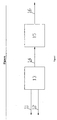
- Purified methanol (satisfying GB338-2004 first class) from outside and air are feed into methanol oxidation procedure 13 via pipelines 11 and 12 respectively at the top of the reactor, and are reacted under the temperature of 200°C to 228°C to produce mixed gas containing polyoxymethylene dimethyl ethers.
- the produced gas is quenched down to 100-120°C in the quenching stage of the reactor to prevent the reaction product from being thermal degraded or prevent intermediate product formaldehyde from being polymerized into polyformaldehyde.
- the cooled reaction product 14 is feed into product separation procedure 15 and a part of methanol may be feed into product separation procedure as absorbing liquid.
- polyoxymethylene dimethyl ethers are absorbed by the cycle liquid flowing from the top to the bottom of the column, and the remaining tail gas containing trace amount of polyoxymethylene dimethyl ethers and formaldehyde are passed to the tail gas processor (unshown) and burned.
- Methanol, dimethyl ether, formaldehyde, methylal, and water in polyoxymethylene dimethyl ethers are vaporized in the product separation step, in which dimethyl ether is used as inert medium and recycled to the conversion part of methanol. It controls the distillation range and flash point of the object product during the product separation step to obtain polyoxymethylene dimethyl ethers product 16 having diesel oil-like properties.
- methanol and oxidant are feed into methanol conversion reaction unit 13 via 11 and 12 respectively.
- the reaction product is feed into separation unit 15 via 14 to obtain dimethyl ether, formaldehyde, methylal, water, and polyoxymethylene dimethyl ethers.
- the products are removed via 16.
- the reaction unit 13 comprises quenching exchanger, in which reaction product is quenched to be lower than the temperature under which polyoxymethylene dimethyl ethers is degraded or intermediate product formaldehyde is polymerized into polyformaldehyde, such as from 100-120°C, so as to prevent polyoxymethylene dimethyl ethers from being thermal degraded or prevent intermediate product formaldehyde from being polymerized into polyformaldehyde. Then the reaction product is feed into product separation unit 15 via 14.
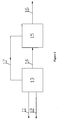
- a step 17 for cycling at least a portion of non-DMMx in the reaction product to reaction unit 13 is added, with the remaining is the same as that of Figure 1 .
- Examples 1-7 illustrate the catalysts which can be used in the process of the invention and the method of preparing the same.
- a conversation of methanol is conducted, wherein the feed of methanol is a methanol having first class under GB338-2004 , the reactor is a shell and tube fixed reactor, the cooling medium is water and the catalyst is C5.
- the feeding amount of methanol is 12000kg/h
- the conversion rate of methanol in one-run is more than 96-98%
- the output amount of DMMx is 4080kg/h
- the cycling dimethyl ether is in an amount of 10000kg/h.
- the other reaction conditions are listed in Table 2, and the reaction product is listed in Table 3. The result shows the selectivity of DMMx may be up to 34.6% under the above operating conditions.
- Examples 11-24 illustrate the process provided in the invention and their technical effect.
- the reactions took place in a fixed-bed reactor.
- the methanol is an analytical reagent available from Beijing Chemical Works, and the oxidant is air.
- Catalysts C1-C6 and C9 were pressed into tablets, broken and sieved, resulting in particles of 20-40 meshes.
- Catalysts C7-C8 were broken and sieved, resulting in particles of 20-40 meshes.
- Table 4 summarized the catalyst used in each example and reaction conditions.
- the process according to the present invention can convert methanol directly to dimethyl ether and polyoxymethylene dimethyl ether (DMM X , 2 ⁇ x ⁇ 8 ) by one step.
- the methanol conversion reaches 98.4% and DMMx selectivity reaches 34.1% when using REY as molecular sieve in the catalyst. It is particularly suitable for preparing procedure requiring high yield of DMMx.
Landscapes
- Chemical & Material Sciences (AREA)
- Organic Chemistry (AREA)
- Chemical Kinetics & Catalysis (AREA)
- Crystallography & Structural Chemistry (AREA)
- Engineering & Computer Science (AREA)
- Materials Engineering (AREA)
- Organic Low-Molecular-Weight Compounds And Preparation Thereof (AREA)
- Catalysts (AREA)
- Low-Molecular Organic Synthesis Reactions Using Catalysts (AREA)
Claims (14)
- Verfahren zur Herstellung von Polyoxymethylendimethylether aus Methanol, umfassend die Kontaktreaktion von Methanol mit einem Oxidationsmittel in der Gegenwart eines Katalysators, dadurch gekennzeichnet, dass der Katalysator zumindest eine Metallkomponente der Gruppe VIB in einer Menge von 0,5 bis 50 Gew.-% (als Metalloxid) und zumindest eine Metallkomponente der Gruppe VIII in einer Menge von 0,2 bis 20 Gew.-% (als Metalloxid) und zumindest ein Molekularsieb mit einer sauren katalytischen Aktivität in einer Menge von 40 bis 95 Gew.-% enthält, bezogen auf das Gesamtgewicht des Katalysators, und worin die Metallkomponente der Gruppe VIII im Katalysator Eisen ist, worin das Oxidationsmittel Sauerstoff oder eine Gasmischung aus Sauerstoff mit anderen Gasen ist, die für Methanol inert sind.
- Verfahren nach Anspruch 1, dadurch gekennzeichnet, dass das Molekularsieb mit einer sauren katalytischen Aktivität ausgewählt ist aus der Gruppe bestehend aus Molekularsieb mit mesoporöser Struktur, makroporöser Struktur und einer Kombination davon, worin die Menge des Molekularsiebes 70 bis 90 Gew.-% ist, bezogen auf das Gesamtgewicht des Katalysators.
- Verfahren nach Anspruch 2, dadurch gekennzeichnet, dass das Molekularsieb mit mesoporöser Struktur ZSM-5 Molekularsieb ist und das Molekularsieb mit der makroporösen Struktur Molekularsieb vom Y-Typ ist, insbesondere worin das Molekularsieb vom Y-Typ ausgewählt ist aus der Gruppe bestehend aus HY, REY, REHY, USY, REUSY und einer Kombination davon, mehr bevorzugt, worin das Molekularsieb vom Y-Typ ausgewählt ist aus der Gruppe bestehend aus REY, REHY, REUSY und einer Kombination davon.
- Verfahren nach Anspruch 1, dadurch gekennzeichnet, dass der Katalysator weiterhin eine wärmeresistente anorganische Oxidmatrix in einer Menge von nicht mehr als 80 Gew.-%, bevorzugt nicht mehr als 60 Gew.-%, bezogen auf das Gesamtgewicht des Katalysators enthält, wobei bevorzugt die wärmeresistente anorganische Oxidmatrix ausgewählt ist aus der Gruppe bestehend aus Aluminiumoxid, Siliziumoxid, Siliziumoxid-Aluminiumoxid und einer Kombination davon.
- Verfahren nach Anspruch 1, dadurch gekennzeichnet, dass die Bedingungen für die Kontaktreaktion eine Temperatur innerhalb des Bereiches von 50 bis 500°C, bevorzugt 100 bis 400°C, mehr bevorzugt 100 bis 300°C, einen Druck innerhalb eines Bereiches von 0,1 bis 10 MPa, bevorzugt 0,1 bis 5 MPa, mehr bevorzugt 0,1 bis 2 MPa und eine Massenraumgeschwindigkeit von zugeführtem Methanol innerhalb des Bereiches von 0,5 bis 50 h-1, bevorzugt 3 bis 30 h-1, mehr bevorzugt 8 bis 20 h-1 sind und der Gehalt des sauren Oxidationsmittels so ausgewählt ist, dass das molare Verhältnis von Sauerstoff zu Methanol in der Kontaktreaktion 0,01 bis 0,5, bevorzugt 0,05 bis 0,3 ist.
- Verfahren nach Anspruch 1, dadurch gekennzeichnet, dass das Gas, das für Methanol inert ist, ein oder mehrere Gase ist, ausgewählt aus Stickstoff und Inertgasen.
- Verfahren nach Anspruch 6, dadurch gekennzeichnet, dass der Sauerstoffgehalt in der Gasmischung 1 bis 30% ist.
- Verfahren nach Anspruch 1, dadurch gekennzeichnet, dass es ein Gasphasenverfahren zur Herstellung von Polyoxymethylendimethylether (DMMx) aus Methanol umfasst, umfassend das Mischen von Methanol und dem Oxidationsmittel zur Bildung eines binären gemischten Gases aus Methanol und dem Oxidationsmittel, Zuführen des gemischten Gases zu einem Reaktor, Durchleiten des gemischten Gases durch ein Katalysatorbett, zur Bildung einer Produktmischung, umfassend DMMx, und dass es einen Schritt zur Einstellung der Temperatur des Reaktors unter gesteuerter thermischer Bedingung umfasst.
- Verfahren nach Anspruch 8, dadurch gekennzeichnet, dass der Schritt der Einstellung der Temperatur des Reaktors unter gesteuerter thermischer Bedingung das Steuern der Zyklusmenge von Nicht-DMMx-Bereichen in der Produktmischung enthält, zum Einstellen der Reaktionstemperatur.
- Verfahren nach Anspruch 9, dadurch gekennzeichnet, dass die Steuerung der Zyklusmenge von Nicht-DMMx-Teilen in der Produktmischung das Einführen von Nicht-DMMx-Bereichen in der Produktmischung in das Katalysatorbett direkt von der oberen Seite des Reaktors oder an vielen Punkten in separaten Stufen und die Steuerung der Temperatur des Zyklusproduktes unter 0 bis 150°C umfasst.
- Verfahren nach Anspruch 9, dadurch gekennzeichnet, dass das Verhältnis der Menge des Zyklusproduktes zum Ausgangsmethanol von 0,1 bis 100 ist.
- Verfahren nach Anspruch 8, dadurch gekennzeichnet, dass der Schritt des Einstellens der Temperatur des Reaktors unter gesteuerter thermischer Bedingung das Kühlen mit Kühlmedium außerhalb des Reaktionsbettes umfasst, wobei das Kühlmedium bevorzugt Luft, Wasser oder Wärmetransferöl ist.
- Verfahren nach Anspruch 8, dadurch gekennzeichnet, dass es weiterhin das Führen der Produktmischung, die DMMx umfasst, in einen Trennvorgang umfasst.
- Verfahren nach Anspruch 8, dadurch gekennzeichnet, dass das Katalysatorbett ein Festbett ist.
Applications Claiming Priority (1)
| Application Number | Priority Date | Filing Date | Title |
|---|---|---|---|
| CN200910078391 | 2009-02-27 |
Publications (3)
| Publication Number | Publication Date |
|---|---|
| EP2228359A1 EP2228359A1 (de) | 2010-09-15 |
| EP2228359A8 EP2228359A8 (de) | 2010-12-22 |
| EP2228359B1 true EP2228359B1 (de) | 2013-10-23 |
Family
ID=42355418
Family Applications (1)
| Application Number | Title | Priority Date | Filing Date |
|---|---|---|---|
| EP10002007.2A Active EP2228359B1 (de) | 2009-02-27 | 2010-02-26 | Verfahren zur oxidativen Umwandlung von Methanol |
Country Status (3)
| Country | Link |
|---|---|
| US (1) | US8476477B2 (de) |
| EP (1) | EP2228359B1 (de) |
| JP (1) | JP5600260B2 (de) |
Cited By (1)
| Publication number | Priority date | Publication date | Assignee | Title |
|---|---|---|---|---|
| DE102017218782A1 (de) | 2017-10-20 | 2019-04-25 | Fraunhofer-Gesellschaft zur Förderung der angewandten Forschung e.V. | Verfahren zur Herstellung von Polyoxymethylendimethylether |
Families Citing this family (7)
| Publication number | Priority date | Publication date | Assignee | Title |
|---|---|---|---|---|
| CN103288607A (zh) * | 2013-06-26 | 2013-09-11 | 苏州奥索特新材料有限公司 | 一种聚甲氧基二甲醚的合成方法 |
| US20150158018A1 (en) * | 2013-12-09 | 2015-06-11 | Bi-Zeng Zhan | Hydrocracking catalyst and process for producing lube base stocks |
| CN105566077B (zh) * | 2016-02-03 | 2017-05-24 | 凯瑞环保科技股份有限公司 | 一种制备聚甲氧基二甲醚的工艺方法 |
| US20180013151A1 (en) | 2016-07-08 | 2018-01-11 | Semiconductor Energy Laboratory Co., Ltd. | Positive electrode active material, power storage device, electronic device, and method for manufacturing positive electrode active material |
| US10125072B2 (en) | 2017-03-24 | 2018-11-13 | King Abdulaziz University | Mn/CeO2 catalyst for dimethyl ether production via oxidative dehydration of methanol |
| CN112495427B (zh) * | 2020-11-24 | 2023-07-28 | 宏元(广东)高新材料科技有限公司 | 多级孔分子筛催化剂和制备方法及其在聚甲氧基二甲醚合成中应用 |
| CN117599839B (zh) * | 2023-11-08 | 2025-12-26 | 中国科学院山西煤炭化学研究所 | 甲醇直接氧化制聚甲氧基二甲醚的催化剂及其制备方法和应用 |
Family Cites Families (28)
| Publication number | Priority date | Publication date | Assignee | Title |
|---|---|---|---|---|
| JPS523362B1 (de) * | 1970-12-23 | 1977-01-27 | ||
| JPS6322536A (ja) | 1986-07-14 | 1988-01-30 | Mitsubishi Chem Ind Ltd | ホルムアルデヒドの製造方法 |
| JP2577941B2 (ja) * | 1988-01-13 | 1997-02-05 | 旭化成工業株式会社 | Zsm―5を用いるアルコールの製造方法 |
| CN1005387B (zh) | 1988-02-05 | 1989-10-11 | 中国石油化工总公司 | 含稀土氧化物的富硅y型分子筛裂化催化剂 |
| CN1056818C (zh) | 1997-01-10 | 2000-09-27 | 中国石油化工总公司 | 一种zsm-5分子筛的合成方法 |
| CN1071594C (zh) | 1997-07-17 | 2001-09-26 | 中国石油化工总公司 | 一种超稳y型沸石的制备方法 |
| CN1069553C (zh) | 1997-11-25 | 2001-08-15 | 中国石油化工总公司 | 一种制备稀土y型分子筛的方法 |
| DE19815280A1 (de) * | 1998-04-06 | 1999-10-07 | Basf Ag | Multimetalloxidmassen |
| US5959156A (en) | 1998-11-12 | 1999-09-28 | Bp Amoco Corporation | Preparation of polyoxymethylene dimethyl ethers by catalytic conversion of dimethyl ether with formaldehyde formed by oxy-dehydrogenation of dimethyl ether |
| US6350919B1 (en) | 1998-11-12 | 2002-02-26 | Bp Corporation North America Inc. | Preparation of polyoxymethylene dialkane ethers, by catalytic conversion of formaldehyde formed by dehydrogenation of methanol or dimethyl ether |
| WO2000029364A1 (en) | 1998-11-12 | 2000-05-25 | Bp Amoco Corporation | Preparation of polyoxymethylene dimethyl ethers by reaction of dimethylether with formaldehyde over heterogeneous catalysts |
| US6392102B1 (en) | 1998-11-12 | 2002-05-21 | Bp Corporation North America Inc. | Preparation of polyoxymethylene dimethyl ethers by catalytic conversion of formaldehyde formed by oxidation of dimethyl ether |
| US6166266A (en) | 1998-11-12 | 2000-12-26 | Bp Amoco Corporation | Preparation of polyoxymethylene dimethyl ethers by catalytic conversion of dimethyl ether with formaldehyde formed by oxidation of methanol |
| CN1111086C (zh) | 1999-04-16 | 2003-06-11 | 中国石油化工集团公司 | 一种含稀土的分子筛及其制备方法 |
| ITMI991614A1 (it) | 1999-07-22 | 2001-01-22 | Snam Progetti | Miscela liquida costituita da gasoli diesel e da composti ossigenati |
| JP4920128B2 (ja) * | 1999-12-02 | 2012-04-18 | 株式会社日本触媒 | 排出用ガス配管の閉塞防止方法 |
| JP3982978B2 (ja) * | 2000-06-14 | 2007-09-26 | 独立行政法人科学技術振興機構 | 酸化レニウム系選択酸化反応用触媒 |
| CN1121979C (zh) | 2000-11-13 | 2003-09-24 | 中国石油化工股份有限公司 | 一种zsm-5分子筛的制备 |
| JP5069827B2 (ja) * | 2001-02-28 | 2012-11-07 | 株式会社ダイセル | 反応制御方法および制御装置 |
| CN1257840C (zh) | 2003-03-11 | 2006-05-31 | 中国石油化工股份有限公司 | 一种zsm-5结构沸石、其制备和应用 |
| US6956134B2 (en) | 2004-01-08 | 2005-10-18 | The Regents Of The University Of California | Oxidation of methanol and/or dimethyl ether using supported molybdenum-containing heteropolyacid catalysts |
| DE102005027701A1 (de) | 2005-06-15 | 2006-12-21 | Basf Ag | Verfahren zur Herstellung von Polyoxymethylendimethylethern aus Methanol und Formaldehyd |
| DE602005021711D1 (de) * | 2005-09-20 | 2010-07-15 | Arkema France | Verfahren zur herstellung von teilweise oxidierten produkten niederer alkohole durch direkte oxidierung eines niederen alkohols, und katalysatoren zur verwendung in diesem verfahren |
| CN100537503C (zh) | 2007-05-31 | 2009-09-09 | 上海华谊丙烯酸有限公司 | 一种甘油加氢制备正丙醇的方法 |
| CN101182367A (zh) | 2007-07-31 | 2008-05-21 | 中国科学院兰州化学物理研究所 | 聚甲氧基甲缩醛的制备方法 |
| CN101199939B (zh) | 2007-12-21 | 2010-09-29 | 中国科学院山西煤炭化学研究所 | 一种甲烷氧化合成甲醇和甲醛的催化剂及制法和应用 |
| CN101224431A (zh) * | 2008-01-30 | 2008-07-23 | 中国科学院山西煤炭化学研究所 | 甲醇一步法氧化合成甲缩醛的催化剂及其制法和应用 |
| FR2934262B1 (fr) * | 2008-07-22 | 2012-08-10 | Arkema France | Procede de fabrication de dialcoxyalcanes par oxydation partielle d'alcools inferieurs en presence d'un catalyseur a base d'un oxyde mixte de molybdene |
-
2010
- 2010-02-26 EP EP10002007.2A patent/EP2228359B1/de active Active
- 2010-02-26 JP JP2010042087A patent/JP5600260B2/ja active Active
- 2010-02-26 US US12/713,552 patent/US8476477B2/en active Active
Cited By (1)
| Publication number | Priority date | Publication date | Assignee | Title |
|---|---|---|---|---|
| DE102017218782A1 (de) | 2017-10-20 | 2019-04-25 | Fraunhofer-Gesellschaft zur Förderung der angewandten Forschung e.V. | Verfahren zur Herstellung von Polyoxymethylendimethylether |
Also Published As
| Publication number | Publication date |
|---|---|
| EP2228359A8 (de) | 2010-12-22 |
| US8476477B2 (en) | 2013-07-02 |
| JP5600260B2 (ja) | 2014-10-01 |
| JP2010202651A (ja) | 2010-09-16 |
| EP2228359A1 (de) | 2010-09-15 |
| US20110054221A1 (en) | 2011-03-03 |
Similar Documents
| Publication | Publication Date | Title |
|---|---|---|
| EP2228359B1 (de) | Verfahren zur oxidativen Umwandlung von Methanol | |
| EP2017250B1 (de) | Verfahren zur herstellung des produkts der hydrogenolyse von mehrere hydroxylgruppen enthaltenden alkoholen | |
| EP3142785B1 (de) | Verfahren zur herstellung von alkenolen und verwendung davon zur herstellung von 1,3-butadien | |
| EP3262023B1 (de) | Verfahren zur herstellung von dienen | |
| KR20090094035A (ko) | 쿠멘 히드로퍼옥시드의 분해를 위한 고체 산 촉매 및 방법 | |
| KR101953218B1 (ko) | 2단 반응으로 함산소 탄화수소로부터 탈산소 연료를 제조하는 방법 | |
| EP1773486B1 (de) | Wolframat enthaltende katalysatoren zur synthese von alkylmercaptan und verfahren zu ihrer herstellung | |
| CA2129709A1 (en) | Process for producing gamma-butyrolactone | |
| CN113372303B (zh) | 一种制备四氢呋喃二甲醇二烷基醚的方法 | |
| CN101817731A (zh) | 一种甲醇转化制备聚甲氧基二甲醚的方法 | |
| JP2792986B2 (ja) | アルカノールの製造法 | |
| EP1052260B1 (de) | Trimerisierung von Formaldehyd in der Gasphase | |
| KR20190055762A (ko) | Cu-기반 촉매, 이의 제조 방법 및 이의 용도 | |
| CN115448814A (zh) | 一种γ-丁内酯催化加氢制备1,4-丁二醇的方法 | |
| US6087538A (en) | Addition reaction of hydroxyl-containing compounds with alkynes or allenes | |
| CN1363544A (zh) | 浸渍法制备3-羟基丙醛加氢催化剂 | |
| CN113877562A (zh) | 用于合成丙烯酸甲酯的固体碱催化剂及其制备方法和应用 | |
| CN113509956B (zh) | 分子筛催化剂及其制备方法和应用 | |
| DE102009014541A1 (de) | Katalysatoranordnung zur Oxidation von Methanol zu Formaldehyd | |
| CN106861726B (zh) | 一种合成丙二醇甲醚的固体碱催化剂的制备方法及应用 | |
| EP4234528A1 (de) | Verfahren zur hydrierung von c13-aldehyden in mindestens zwei hydrierstufen | |
| EP3233774B1 (de) | Verfahren zur herstellung von n-butanol und 1,4-butandiol aus furan | |
| CN1109027C (zh) | 一种制备γ-丁内酯的方法 | |
| CN102030621B (zh) | 一种气相法由甲醇生成DMMx的工艺 | |
| CN101940940A (zh) | 一种氧化转化甲醇的催化剂 |
Legal Events
| Date | Code | Title | Description |
|---|---|---|---|
| PUAI | Public reference made under article 153(3) epc to a published international application that has entered the european phase |
Free format text: ORIGINAL CODE: 0009012 |
|
| AK | Designated contracting states |
Kind code of ref document: A1 Designated state(s): AT BE BG CH CY CZ DE DK EE ES FI FR GB GR HR HU IE IS IT LI LT LU LV MC MK MT NL NO PL PT RO SE SI SK SM TR |
|
| AX | Request for extension of the european patent |
Extension state: AL BA RS |
|
| RIN1 | Information on inventor provided before grant (corrected) |
Inventor name: FU, QIANG Inventor name: ZHANG, WEI Inventor name: ZHOU, XUHUA Inventor name: WANG, JIN Inventor name: YU, PENG Inventor name: LIU, JINGSONG Inventor name: RONG, JUNFENG Inventor name: SHI, CHANGZHI |
|
| 17P | Request for examination filed |
Effective date: 20110303 |
|
| 17Q | First examination report despatched |
Effective date: 20120509 |
|
| GRAP | Despatch of communication of intention to grant a patent |
Free format text: ORIGINAL CODE: EPIDOSNIGR1 |
|
| RIC1 | Information provided on ipc code assigned before grant |
Ipc: B01J 29/48 20060101ALN20130405BHEP Ipc: B01J 29/16 20060101ALN20130405BHEP Ipc: C07C 43/303 20060101ALI20130405BHEP Ipc: C07C 41/50 20060101AFI20130405BHEP |
|
| INTG | Intention to grant announced |
Effective date: 20130503 |
|
| GRAS | Grant fee paid |
Free format text: ORIGINAL CODE: EPIDOSNIGR3 |
|
| GRAA | (expected) grant |
Free format text: ORIGINAL CODE: 0009210 |
|
| AK | Designated contracting states |
Kind code of ref document: B1 Designated state(s): AT BE BG CH CY CZ DE DK EE ES FI FR GB GR HR HU IE IS IT LI LT LU LV MC MK MT NL NO PL PT RO SE SI SK SM TR |
|
| REG | Reference to a national code |
Ref country code: GB Ref legal event code: FG4D |
|
| REG | Reference to a national code |
Ref country code: CH Ref legal event code: EP |
|
| REG | Reference to a national code |
Ref country code: AT Ref legal event code: REF Ref document number: 637497 Country of ref document: AT Kind code of ref document: T Effective date: 20131115 |
|
| REG | Reference to a national code |
Ref country code: IE Ref legal event code: FG4D |
|
| REG | Reference to a national code |
Ref country code: NL Ref legal event code: T3 |
|
| REG | Reference to a national code |
Ref country code: DE Ref legal event code: R096 Ref document number: 602010011090 Country of ref document: DE Effective date: 20131219 |
|
| REG | Reference to a national code |
Ref country code: AT Ref legal event code: MK05 Ref document number: 637497 Country of ref document: AT Kind code of ref document: T Effective date: 20131023 |
|
| REG | Reference to a national code |
Ref country code: LT Ref legal event code: MG4D |
|
| PG25 | Lapsed in a contracting state [announced via postgrant information from national office to epo] |
Ref country code: FI Free format text: LAPSE BECAUSE OF FAILURE TO SUBMIT A TRANSLATION OF THE DESCRIPTION OR TO PAY THE FEE WITHIN THE PRESCRIBED TIME-LIMIT Effective date: 20131023 Ref country code: NO Free format text: LAPSE BECAUSE OF FAILURE TO SUBMIT A TRANSLATION OF THE DESCRIPTION OR TO PAY THE FEE WITHIN THE PRESCRIBED TIME-LIMIT Effective date: 20140123 Ref country code: HR Free format text: LAPSE BECAUSE OF FAILURE TO SUBMIT A TRANSLATION OF THE DESCRIPTION OR TO PAY THE FEE WITHIN THE PRESCRIBED TIME-LIMIT Effective date: 20131023 Ref country code: LT Free format text: LAPSE BECAUSE OF FAILURE TO SUBMIT A TRANSLATION OF THE DESCRIPTION OR TO PAY THE FEE WITHIN THE PRESCRIBED TIME-LIMIT Effective date: 20131023 Ref country code: SE Free format text: LAPSE BECAUSE OF FAILURE TO SUBMIT A TRANSLATION OF THE DESCRIPTION OR TO PAY THE FEE WITHIN THE PRESCRIBED TIME-LIMIT Effective date: 20131023 Ref country code: IS Free format text: LAPSE BECAUSE OF FAILURE TO SUBMIT A TRANSLATION OF THE DESCRIPTION OR TO PAY THE FEE WITHIN THE PRESCRIBED TIME-LIMIT Effective date: 20140223 Ref country code: BE Free format text: LAPSE BECAUSE OF FAILURE TO SUBMIT A TRANSLATION OF THE DESCRIPTION OR TO PAY THE FEE WITHIN THE PRESCRIBED TIME-LIMIT Effective date: 20131023 |
|
| PG25 | Lapsed in a contracting state [announced via postgrant information from national office to epo] |
Ref country code: LV Free format text: LAPSE BECAUSE OF FAILURE TO SUBMIT A TRANSLATION OF THE DESCRIPTION OR TO PAY THE FEE WITHIN THE PRESCRIBED TIME-LIMIT Effective date: 20131023 Ref country code: ES Free format text: LAPSE BECAUSE OF FAILURE TO SUBMIT A TRANSLATION OF THE DESCRIPTION OR TO PAY THE FEE WITHIN THE PRESCRIBED TIME-LIMIT Effective date: 20131023 Ref country code: CY Free format text: LAPSE BECAUSE OF FAILURE TO SUBMIT A TRANSLATION OF THE DESCRIPTION OR TO PAY THE FEE WITHIN THE PRESCRIBED TIME-LIMIT Effective date: 20131023 Ref country code: AT Free format text: LAPSE BECAUSE OF FAILURE TO SUBMIT A TRANSLATION OF THE DESCRIPTION OR TO PAY THE FEE WITHIN THE PRESCRIBED TIME-LIMIT Effective date: 20131023 |
|
| PG25 | Lapsed in a contracting state [announced via postgrant information from national office to epo] |
Ref country code: PT Free format text: LAPSE BECAUSE OF FAILURE TO SUBMIT A TRANSLATION OF THE DESCRIPTION OR TO PAY THE FEE WITHIN THE PRESCRIBED TIME-LIMIT Effective date: 20140224 |
|
| REG | Reference to a national code |
Ref country code: DE Ref legal event code: R097 Ref document number: 602010011090 Country of ref document: DE |
|
| PG25 | Lapsed in a contracting state [announced via postgrant information from national office to epo] |
Ref country code: EE Free format text: LAPSE BECAUSE OF FAILURE TO SUBMIT A TRANSLATION OF THE DESCRIPTION OR TO PAY THE FEE WITHIN THE PRESCRIBED TIME-LIMIT Effective date: 20131023 |
|
| PG25 | Lapsed in a contracting state [announced via postgrant information from national office to epo] |
Ref country code: CZ Free format text: LAPSE BECAUSE OF FAILURE TO SUBMIT A TRANSLATION OF THE DESCRIPTION OR TO PAY THE FEE WITHIN THE PRESCRIBED TIME-LIMIT Effective date: 20131023 Ref country code: RO Free format text: LAPSE BECAUSE OF FAILURE TO SUBMIT A TRANSLATION OF THE DESCRIPTION OR TO PAY THE FEE WITHIN THE PRESCRIBED TIME-LIMIT Effective date: 20131023 Ref country code: SK Free format text: LAPSE BECAUSE OF FAILURE TO SUBMIT A TRANSLATION OF THE DESCRIPTION OR TO PAY THE FEE WITHIN THE PRESCRIBED TIME-LIMIT Effective date: 20131023 Ref country code: PL Free format text: LAPSE BECAUSE OF FAILURE TO SUBMIT A TRANSLATION OF THE DESCRIPTION OR TO PAY THE FEE WITHIN THE PRESCRIBED TIME-LIMIT Effective date: 20131023 |
|
| PLBE | No opposition filed within time limit |
Free format text: ORIGINAL CODE: 0009261 |
|
| STAA | Information on the status of an ep patent application or granted ep patent |
Free format text: STATUS: NO OPPOSITION FILED WITHIN TIME LIMIT |
|
| PG25 | Lapsed in a contracting state [announced via postgrant information from national office to epo] |
Ref country code: MC Free format text: LAPSE BECAUSE OF FAILURE TO SUBMIT A TRANSLATION OF THE DESCRIPTION OR TO PAY THE FEE WITHIN THE PRESCRIBED TIME-LIMIT Effective date: 20131023 Ref country code: LU Free format text: LAPSE BECAUSE OF FAILURE TO SUBMIT A TRANSLATION OF THE DESCRIPTION OR TO PAY THE FEE WITHIN THE PRESCRIBED TIME-LIMIT Effective date: 20140226 Ref country code: DK Free format text: LAPSE BECAUSE OF FAILURE TO SUBMIT A TRANSLATION OF THE DESCRIPTION OR TO PAY THE FEE WITHIN THE PRESCRIBED TIME-LIMIT Effective date: 20131023 |
|
| REG | Reference to a national code |
Ref country code: CH Ref legal event code: PL |
|
| 26N | No opposition filed |
Effective date: 20140724 |
|
| PG25 | Lapsed in a contracting state [announced via postgrant information from national office to epo] |
Ref country code: CH Free format text: LAPSE BECAUSE OF NON-PAYMENT OF DUE FEES Effective date: 20140228 Ref country code: LI Free format text: LAPSE BECAUSE OF NON-PAYMENT OF DUE FEES Effective date: 20140228 |
|
| REG | Reference to a national code |
Ref country code: DE Ref legal event code: R097 Ref document number: 602010011090 Country of ref document: DE Effective date: 20140724 |
|
| REG | Reference to a national code |
Ref country code: IE Ref legal event code: MM4A |
|
| PG25 | Lapsed in a contracting state [announced via postgrant information from national office to epo] |
Ref country code: IE Free format text: LAPSE BECAUSE OF NON-PAYMENT OF DUE FEES Effective date: 20140226 |
|
| PG25 | Lapsed in a contracting state [announced via postgrant information from national office to epo] |
Ref country code: SI Free format text: LAPSE BECAUSE OF FAILURE TO SUBMIT A TRANSLATION OF THE DESCRIPTION OR TO PAY THE FEE WITHIN THE PRESCRIBED TIME-LIMIT Effective date: 20131023 |
|
| REG | Reference to a national code |
Ref country code: FR Ref legal event code: PLFP Year of fee payment: 7 |
|
| PG25 | Lapsed in a contracting state [announced via postgrant information from national office to epo] |
Ref country code: MT Free format text: LAPSE BECAUSE OF FAILURE TO SUBMIT A TRANSLATION OF THE DESCRIPTION OR TO PAY THE FEE WITHIN THE PRESCRIBED TIME-LIMIT Effective date: 20131023 |
|
| PG25 | Lapsed in a contracting state [announced via postgrant information from national office to epo] |
Ref country code: SM Free format text: LAPSE BECAUSE OF FAILURE TO SUBMIT A TRANSLATION OF THE DESCRIPTION OR TO PAY THE FEE WITHIN THE PRESCRIBED TIME-LIMIT Effective date: 20131023 |
|
| PG25 | Lapsed in a contracting state [announced via postgrant information from national office to epo] |
Ref country code: BG Free format text: LAPSE BECAUSE OF FAILURE TO SUBMIT A TRANSLATION OF THE DESCRIPTION OR TO PAY THE FEE WITHIN THE PRESCRIBED TIME-LIMIT Effective date: 20131023 Ref country code: GR Free format text: LAPSE BECAUSE OF FAILURE TO SUBMIT A TRANSLATION OF THE DESCRIPTION OR TO PAY THE FEE WITHIN THE PRESCRIBED TIME-LIMIT Effective date: 20140124 |
|
| PG25 | Lapsed in a contracting state [announced via postgrant information from national office to epo] |
Ref country code: TR Free format text: LAPSE BECAUSE OF FAILURE TO SUBMIT A TRANSLATION OF THE DESCRIPTION OR TO PAY THE FEE WITHIN THE PRESCRIBED TIME-LIMIT Effective date: 20131023 Ref country code: HU Free format text: LAPSE BECAUSE OF FAILURE TO SUBMIT A TRANSLATION OF THE DESCRIPTION OR TO PAY THE FEE WITHIN THE PRESCRIBED TIME-LIMIT; INVALID AB INITIO Effective date: 20100226 |
|
| REG | Reference to a national code |
Ref country code: FR Ref legal event code: PLFP Year of fee payment: 8 |
|
| REG | Reference to a national code |
Ref country code: FR Ref legal event code: PLFP Year of fee payment: 9 |
|
| PG25 | Lapsed in a contracting state [announced via postgrant information from national office to epo] |
Ref country code: MK Free format text: LAPSE BECAUSE OF FAILURE TO SUBMIT A TRANSLATION OF THE DESCRIPTION OR TO PAY THE FEE WITHIN THE PRESCRIBED TIME-LIMIT Effective date: 20131023 |
|
| P01 | Opt-out of the competence of the unified patent court (upc) registered |
Effective date: 20230502 |
|
| PGFP | Annual fee paid to national office [announced via postgrant information from national office to epo] |
Ref country code: FR Payment date: 20251231 Year of fee payment: 17 |
|
| PGFP | Annual fee paid to national office [announced via postgrant information from national office to epo] |
Ref country code: NL Payment date: 20260106 Year of fee payment: 17 |
|
| PGFP | Annual fee paid to national office [announced via postgrant information from national office to epo] |
Ref country code: GB Payment date: 20260106 Year of fee payment: 17 |
|
| PGFP | Annual fee paid to national office [announced via postgrant information from national office to epo] |
Ref country code: DE Payment date: 20260102 Year of fee payment: 17 |
|
| PGFP | Annual fee paid to national office [announced via postgrant information from national office to epo] |
Ref country code: IT Payment date: 20260122 Year of fee payment: 17 |