EP2227490B1 - Monoklonale antikörper und auf den melanocortin-4-rezeptor gerichtete bindungsfragmente sowie ihre verwendung bei der behandlung von kachexie und damit zusammenhängenden leiden und erkrankungen - Google Patents
Monoklonale antikörper und auf den melanocortin-4-rezeptor gerichtete bindungsfragmente sowie ihre verwendung bei der behandlung von kachexie und damit zusammenhängenden leiden und erkrankungen Download PDFInfo
- Publication number
- EP2227490B1 EP2227490B1 EP08869649.7A EP08869649A EP2227490B1 EP 2227490 B1 EP2227490 B1 EP 2227490B1 EP 08869649 A EP08869649 A EP 08869649A EP 2227490 B1 EP2227490 B1 EP 2227490B1
- Authority
- EP
- European Patent Office
- Prior art keywords
- monoclonal antibody
- binding fragment
- mab
- seq
- cachexia
- Prior art date
- Legal status (The legal status is an assumption and is not a legal conclusion. Google has not performed a legal analysis and makes no representation as to the accuracy of the status listed.)
- Not-in-force
Links
- 239000012634 fragment Substances 0.000 title claims description 41
- 230000027455 binding Effects 0.000 title claims description 39
- 206010006895 Cachexia Diseases 0.000 title claims description 21
- 102000001796 Melanocortin 4 receptors Human genes 0.000 title claims description 19
- 108010021436 Type 4 Melanocortin Receptor Proteins 0.000 title claims description 19
- 238000011282 treatment Methods 0.000 title claims description 13
- 208000037265 diseases, disorders, signs and symptoms Diseases 0.000 title description 6
- 201000010099 disease Diseases 0.000 title description 5
- 239000003814 drug Substances 0.000 claims description 17
- 241000124008 Mammalia Species 0.000 claims description 15
- 239000008194 pharmaceutical composition Substances 0.000 claims description 13
- 230000036528 appetite Effects 0.000 claims description 11
- 235000019789 appetite Nutrition 0.000 claims description 11
- 208000024891 symptom Diseases 0.000 claims description 10
- 239000000203 mixture Substances 0.000 claims description 8
- 229940124597 therapeutic agent Drugs 0.000 claims description 8
- 230000000295 complement effect Effects 0.000 claims description 5
- 230000001747 exhibiting effect Effects 0.000 claims description 5
- 230000004936 stimulating effect Effects 0.000 claims description 5
- 238000002360 preparation method Methods 0.000 claims description 4
- 125000003275 alpha amino acid group Chemical group 0.000 claims 2
- 238000002560 therapeutic procedure Methods 0.000 claims 1
- 238000002347 injection Methods 0.000 description 38
- 239000007924 injection Substances 0.000 description 38
- 230000000694 effects Effects 0.000 description 28
- 101710085775 Melanocortin receptor 4 Proteins 0.000 description 27
- 102100023724 Melanocortin receptor 4 Human genes 0.000 description 27
- 150000001413 amino acids Chemical group 0.000 description 26
- 210000004027 cell Anatomy 0.000 description 20
- 238000001727 in vivo Methods 0.000 description 17
- 241000700159 Rattus Species 0.000 description 16
- 108090000765 processed proteins & peptides Proteins 0.000 description 16
- 238000000034 method Methods 0.000 description 15
- 230000037396 body weight Effects 0.000 description 10
- LOKCTEFSRHRXRJ-UHFFFAOYSA-I dipotassium trisodium dihydrogen phosphate hydrogen phosphate dichloride Chemical compound P(=O)(O)(O)[O-].[K+].P(=O)(O)([O-])[O-].[Na+].[Na+].[Cl-].[K+].[Cl-].[Na+] LOKCTEFSRHRXRJ-UHFFFAOYSA-I 0.000 description 9
- 210000004408 hybridoma Anatomy 0.000 description 9
- 238000000338 in vitro Methods 0.000 description 9
- 239000002953 phosphate buffered saline Substances 0.000 description 9
- 238000000185 intracerebroventricular administration Methods 0.000 description 8
- 150000007523 nucleic acids Chemical group 0.000 description 8
- 230000000144 pharmacologic effect Effects 0.000 description 8
- 230000001225 therapeutic effect Effects 0.000 description 8
- 238000007492 two-way ANOVA Methods 0.000 description 8
- 238000010152 Bonferroni least significant difference Methods 0.000 description 7
- 239000002158 endotoxin Substances 0.000 description 7
- 230000037406 food intake Effects 0.000 description 7
- 235000012631 food intake Nutrition 0.000 description 7
- 229920006008 lipopolysaccharide Polymers 0.000 description 7
- 231100000673 dose–response relationship Toxicity 0.000 description 6
- 102000001189 Cyclic Peptides Human genes 0.000 description 5
- 108010069514 Cyclic Peptides Proteins 0.000 description 5
- 230000001186 cumulative effect Effects 0.000 description 5
- 230000002829 reductive effect Effects 0.000 description 5
- 230000004044 response Effects 0.000 description 5
- 208000016261 weight loss Diseases 0.000 description 5
- 102000004190 Enzymes Human genes 0.000 description 4
- 108090000790 Enzymes Proteins 0.000 description 4
- 241000699666 Mus <mouse, genus> Species 0.000 description 4
- 108091028043 Nucleic acid sequence Proteins 0.000 description 4
- 238000000692 Student's t-test Methods 0.000 description 4
- 235000013305 food Nutrition 0.000 description 4
- 238000003018 immunoassay Methods 0.000 description 4
- 230000002163 immunogen Effects 0.000 description 4
- 238000007912 intraperitoneal administration Methods 0.000 description 4
- 238000001990 intravenous administration Methods 0.000 description 4
- 238000004519 manufacturing process Methods 0.000 description 4
- 108020004707 nucleic acids Proteins 0.000 description 4
- 102000039446 nucleic acids Human genes 0.000 description 4
- 102000004196 processed proteins & peptides Human genes 0.000 description 4
- UCSJYZPVAKXKNQ-HZYVHMACSA-N streptomycin Chemical compound CN[C@H]1[C@H](O)[C@@H](O)[C@H](CO)O[C@H]1O[C@@H]1[C@](C=O)(O)[C@H](C)O[C@H]1O[C@@H]1[C@@H](NC(N)=N)[C@H](O)[C@@H](NC(N)=N)[C@H](O)[C@H]1O UCSJYZPVAKXKNQ-HZYVHMACSA-N 0.000 description 4
- WHNFPRLDDSXQCL-UHFFFAOYSA-N α-melanotropin Chemical compound C=1N=CNC=1CC(C(=O)NC(CC=1C=CC=CC=1)C(=O)NC(CCCNC(N)=N)C(=O)NC(CC=1C2=CC=CC=C2NC=1)C(=O)NCC(=O)NC(CCCCN)C(=O)N1C(CCC1)C(=O)NC(C(C)C)C(N)=O)NC(=O)C(CCC(O)=O)NC(=O)C(CCSC)NC(=O)C(CO)NC(=O)C(NC(=O)C(CO)NC(C)=O)CC1=CC=C(O)C=C1 WHNFPRLDDSXQCL-UHFFFAOYSA-N 0.000 description 4
- 108010032595 Antibody Binding Sites Proteins 0.000 description 3
- 208000017667 Chronic Disease Diseases 0.000 description 3
- 239000006144 Dulbecco’s modified Eagle's medium Substances 0.000 description 3
- 101000978418 Homo sapiens Melanocortin receptor 4 Proteins 0.000 description 3
- 102400000740 Melanocyte-stimulating hormone alpha Human genes 0.000 description 3
- 101710200814 Melanotropin alpha Proteins 0.000 description 3
- 241000699670 Mus sp. Species 0.000 description 3
- 239000002299 complementary DNA Substances 0.000 description 3
- 229940079593 drug Drugs 0.000 description 3
- 102000057094 human MC4R Human genes 0.000 description 3
- 230000000670 limiting effect Effects 0.000 description 3
- 108090000623 proteins and genes Proteins 0.000 description 3
- WHNFPRLDDSXQCL-UAZQEYIDSA-N α-msh Chemical compound C([C@@H](C(=O)N[C@@H](CO)C(=O)N[C@@H](CCSC)C(=O)N[C@@H](CCC(O)=O)C(=O)N[C@@H](CC=1NC=NC=1)C(=O)N[C@@H](CC=1C=CC=CC=1)C(=O)N[C@@H](CCCNC(N)=N)C(=O)N[C@@H](CC=1C2=CC=CC=C2NC=1)C(=O)NCC(=O)N[C@@H](CCCCN)C(=O)N1[C@@H](CCC1)C(=O)N[C@@H](C(C)C)C(N)=O)NC(=O)[C@H](CO)NC(C)=O)C1=CC=C(O)C=C1 WHNFPRLDDSXQCL-UAZQEYIDSA-N 0.000 description 3
- 208000031648 Body Weight Changes Diseases 0.000 description 2
- 108091003079 Bovine Serum Albumin Proteins 0.000 description 2
- 238000001134 F-test Methods 0.000 description 2
- 102000003688 G-Protein-Coupled Receptors Human genes 0.000 description 2
- 108090000045 G-Protein-Coupled Receptors Proteins 0.000 description 2
- DHMQDGOQFOQNFH-UHFFFAOYSA-N Glycine Chemical compound NCC(O)=O DHMQDGOQFOQNFH-UHFFFAOYSA-N 0.000 description 2
- 101710085774 Melanocortin receptor 3 Proteins 0.000 description 2
- 102100023726 Melanocortin receptor 3 Human genes 0.000 description 2
- 206010028980 Neoplasm Diseases 0.000 description 2
- 229930182555 Penicillin Natural products 0.000 description 2
- JGSARLDLIJGVTE-MBNYWOFBSA-N Penicillin G Chemical compound N([C@H]1[C@H]2SC([C@@H](N2C1=O)C(O)=O)(C)C)C(=O)CC1=CC=CC=C1 JGSARLDLIJGVTE-MBNYWOFBSA-N 0.000 description 2
- 229920001213 Polysorbate 20 Polymers 0.000 description 2
- CDBYLPFSWZWCQE-UHFFFAOYSA-L Sodium Carbonate Chemical compound [Na+].[Na+].[O-]C([O-])=O CDBYLPFSWZWCQE-UHFFFAOYSA-L 0.000 description 2
- UIIMBOGNXHQVGW-UHFFFAOYSA-M Sodium bicarbonate Chemical compound [Na+].OC([O-])=O UIIMBOGNXHQVGW-UHFFFAOYSA-M 0.000 description 2
- IQFYYKKMVGJFEH-XLPZGREQSA-N Thymidine Chemical compound O=C1NC(=O)C(C)=CN1[C@@H]1O[C@H](CO)[C@@H](O)C1 IQFYYKKMVGJFEH-XLPZGREQSA-N 0.000 description 2
- 239000007983 Tris buffer Substances 0.000 description 2
- 239000002671 adjuvant Substances 0.000 description 2
- 230000003321 amplification Effects 0.000 description 2
- 208000022531 anorexia Diseases 0.000 description 2
- 239000005557 antagonist Substances 0.000 description 2
- 230000015572 biosynthetic process Effects 0.000 description 2
- 230000004579 body weight change Effects 0.000 description 2
- 239000000872 buffer Substances 0.000 description 2
- 201000011510 cancer Diseases 0.000 description 2
- 150000001875 compounds Chemical class 0.000 description 2
- 239000012228 culture supernatant Substances 0.000 description 2
- 206010061428 decreased appetite Diseases 0.000 description 2
- 230000003247 decreasing effect Effects 0.000 description 2
- 230000001419 dependent effect Effects 0.000 description 2
- 235000005911 diet Nutrition 0.000 description 2
- 230000037213 diet Effects 0.000 description 2
- 238000010790 dilution Methods 0.000 description 2
- 239000012895 dilution Substances 0.000 description 2
- 238000002474 experimental method Methods 0.000 description 2
- 239000012894 fetal calf serum Substances 0.000 description 2
- 238000009472 formulation Methods 0.000 description 2
- 230000004927 fusion Effects 0.000 description 2
- FDGQSTZJBFJUBT-UHFFFAOYSA-N hypoxanthine Chemical compound O=C1NC=NC2=C1NC=N2 FDGQSTZJBFJUBT-UHFFFAOYSA-N 0.000 description 2
- 238000012760 immunocytochemical staining Methods 0.000 description 2
- 230000003834 intracellular effect Effects 0.000 description 2
- 229940125425 inverse agonist Drugs 0.000 description 2
- 239000000463 material Substances 0.000 description 2
- 238000003199 nucleic acid amplification method Methods 0.000 description 2
- 229940049954 penicillin Drugs 0.000 description 2
- 235000010486 polyoxyethylene sorbitan monolaurate Nutrition 0.000 description 2
- 239000000256 polyoxyethylene sorbitan monolaurate Substances 0.000 description 2
- 102000004169 proteins and genes Human genes 0.000 description 2
- 238000011160 research Methods 0.000 description 2
- 230000002441 reversible effect Effects 0.000 description 2
- 238000013207 serial dilution Methods 0.000 description 2
- 210000002966 serum Anatomy 0.000 description 2
- DAEPDZWVDSPTHF-UHFFFAOYSA-M sodium pyruvate Chemical compound [Na+].CC(=O)C([O-])=O DAEPDZWVDSPTHF-UHFFFAOYSA-M 0.000 description 2
- 229910001220 stainless steel Inorganic materials 0.000 description 2
- 239000010935 stainless steel Substances 0.000 description 2
- 229960005322 streptomycin Drugs 0.000 description 2
- 238000001356 surgical procedure Methods 0.000 description 2
- 210000000211 third ventricle Anatomy 0.000 description 2
- LENZDBCJOHFCAS-UHFFFAOYSA-N tris Chemical compound OCC(N)(CO)CO LENZDBCJOHFCAS-UHFFFAOYSA-N 0.000 description 2
- CUKWUWBLQQDQAC-VEQWQPCFSA-N (3s)-3-amino-4-[[(2s)-1-[[(2s)-1-[[(2s)-1-[[(2s,3s)-1-[[(2s)-1-[(2s)-2-[[(1s)-1-carboxyethyl]carbamoyl]pyrrolidin-1-yl]-3-(1h-imidazol-5-yl)-1-oxopropan-2-yl]amino]-3-methyl-1-oxopentan-2-yl]amino]-3-(4-hydroxyphenyl)-1-oxopropan-2-yl]amino]-3-methyl-1-ox Chemical compound C([C@@H](C(=O)N[C@@H]([C@@H](C)CC)C(=O)N[C@@H](CC=1NC=NC=1)C(=O)N1[C@@H](CCC1)C(=O)N[C@@H](C)C(O)=O)NC(=O)[C@@H](NC(=O)[C@H](CCCN=C(N)N)NC(=O)[C@@H](N)CC(O)=O)C(C)C)C1=CC=C(O)C=C1 CUKWUWBLQQDQAC-VEQWQPCFSA-N 0.000 description 1
- APIXJSLKIYYUKG-UHFFFAOYSA-N 3 Isobutyl 1 methylxanthine Chemical compound O=C1N(C)C(=O)N(CC(C)C)C2=C1N=CN2 APIXJSLKIYYUKG-UHFFFAOYSA-N 0.000 description 1
- UAIUNKRWKOVEES-UHFFFAOYSA-N 3,3',5,5'-tetramethylbenzidine Chemical compound CC1=C(N)C(C)=CC(C=2C=C(C)C(N)=C(C)C=2)=C1 UAIUNKRWKOVEES-UHFFFAOYSA-N 0.000 description 1
- TVZGACDUOSZQKY-LBPRGKRZSA-N 4-aminofolic acid Chemical compound C1=NC2=NC(N)=NC(N)=C2N=C1CNC1=CC=C(C(=O)N[C@@H](CCC(O)=O)C(O)=O)C=C1 TVZGACDUOSZQKY-LBPRGKRZSA-N 0.000 description 1
- UZOVYGYOLBIAJR-UHFFFAOYSA-N 4-isocyanato-4'-methyldiphenylmethane Chemical compound C1=CC(C)=CC=C1CC1=CC=C(N=C=O)C=C1 UZOVYGYOLBIAJR-UHFFFAOYSA-N 0.000 description 1
- 206010002091 Anaesthesia Diseases 0.000 description 1
- 102400000345 Angiotensin-2 Human genes 0.000 description 1
- 101800000733 Angiotensin-2 Proteins 0.000 description 1
- DWRXFEITVBNRMK-UHFFFAOYSA-N Beta-D-1-Arabinofuranosylthymine Natural products O=C1NC(=O)C(C)=CN1C1C(O)C(O)C(CO)O1 DWRXFEITVBNRMK-UHFFFAOYSA-N 0.000 description 1
- 241000208199 Buxus sempervirens Species 0.000 description 1
- 241000282465 Canis Species 0.000 description 1
- 241000283707 Capra Species 0.000 description 1
- BVKZGUZCCUSVTD-UHFFFAOYSA-L Carbonate Chemical compound [O-]C([O-])=O BVKZGUZCCUSVTD-UHFFFAOYSA-L 0.000 description 1
- 108020004414 DNA Proteins 0.000 description 1
- 241000282324 Felis Species 0.000 description 1
- 239000004471 Glycine Substances 0.000 description 1
- 108010001336 Horseradish Peroxidase Proteins 0.000 description 1
- UGQMRVRMYYASKQ-UHFFFAOYSA-N Hypoxanthine nucleoside Natural products OC1C(O)C(CO)OC1N1C(NC=NC2=O)=C2N=C1 UGQMRVRMYYASKQ-UHFFFAOYSA-N 0.000 description 1
- 108060003951 Immunoglobulin Proteins 0.000 description 1
- 108010067060 Immunoglobulin Variable Region Proteins 0.000 description 1
- 102000017727 Immunoglobulin Variable Region Human genes 0.000 description 1
- PIWKPBJCKXDKJR-UHFFFAOYSA-N Isoflurane Chemical compound FC(F)OC(Cl)C(F)(F)F PIWKPBJCKXDKJR-UHFFFAOYSA-N 0.000 description 1
- 240000004658 Medicago sativa Species 0.000 description 1
- 235000010624 Medicago sativa Nutrition 0.000 description 1
- 239000000637 Melanocyte-Stimulating Hormone Substances 0.000 description 1
- 241000283973 Oryctolagus cuniculus Species 0.000 description 1
- 206010035226 Plasma cell myeloma Diseases 0.000 description 1
- 101000978434 Rattus norvegicus Melanocortin receptor 3 Proteins 0.000 description 1
- 229920002684 Sepharose Polymers 0.000 description 1
- FAPWRFPIFSIZLT-UHFFFAOYSA-M Sodium chloride Chemical compound [Na+].[Cl-] FAPWRFPIFSIZLT-UHFFFAOYSA-M 0.000 description 1
- 241000589500 Thermus aquaticus Species 0.000 description 1
- 239000000556 agonist Substances 0.000 description 1
- 125000000539 amino acid group Chemical group 0.000 description 1
- 229960003896 aminopterin Drugs 0.000 description 1
- 238000001949 anaesthesia Methods 0.000 description 1
- 230000037005 anaesthesia Effects 0.000 description 1
- 229950006323 angiotensin ii Drugs 0.000 description 1
- 230000002891 anorexigenic effect Effects 0.000 description 1
- 210000000628 antibody-producing cell Anatomy 0.000 description 1
- 229940082988 antihypertensives serotonin antagonists Drugs 0.000 description 1
- 239000003420 antiserotonin agent Substances 0.000 description 1
- 230000004596 appetite loss Effects 0.000 description 1
- 238000003556 assay Methods 0.000 description 1
- QVGXLLKOCUKJST-UHFFFAOYSA-N atomic oxygen Chemical compound [O] QVGXLLKOCUKJST-UHFFFAOYSA-N 0.000 description 1
- IQFYYKKMVGJFEH-UHFFFAOYSA-N beta-L-thymidine Natural products O=C1NC(=O)C(C)=CN1C1OC(CO)C(O)C1 IQFYYKKMVGJFEH-UHFFFAOYSA-N 0.000 description 1
- 210000004556 brain Anatomy 0.000 description 1
- RMRJXGBAOAMLHD-IHFGGWKQSA-N buprenorphine Chemical compound C([C@]12[C@H]3OC=4C(O)=CC=C(C2=4)C[C@@H]2[C@]11CC[C@]3([C@H](C1)[C@](C)(O)C(C)(C)C)OC)CN2CC1CC1 RMRJXGBAOAMLHD-IHFGGWKQSA-N 0.000 description 1
- 238000013262 cAMP assay Methods 0.000 description 1
- 238000010805 cDNA synthesis kit Methods 0.000 description 1
- 238000004113 cell culture Methods 0.000 description 1
- 210000004289 cerebral ventricle Anatomy 0.000 description 1
- 230000008859 change Effects 0.000 description 1
- 238000012512 characterization method Methods 0.000 description 1
- 238000006243 chemical reaction Methods 0.000 description 1
- 239000003795 chemical substances by application Substances 0.000 description 1
- 238000010367 cloning Methods 0.000 description 1
- 230000000052 comparative effect Effects 0.000 description 1
- 239000003246 corticosteroid Substances 0.000 description 1
- 229960001334 corticosteroids Drugs 0.000 description 1
- JJCFRYNCJDLXIK-UHFFFAOYSA-N cyproheptadine Chemical compound C1CN(C)CCC1=C1C2=CC=CC=C2C=CC2=CC=CC=C21 JJCFRYNCJDLXIK-UHFFFAOYSA-N 0.000 description 1
- 229960001140 cyproheptadine Drugs 0.000 description 1
- 230000016396 cytokine production Effects 0.000 description 1
- 238000007405 data analysis Methods 0.000 description 1
- 238000011161 development Methods 0.000 description 1
- 230000003292 diminished effect Effects 0.000 description 1
- 230000000245 dipsogenic effect Effects 0.000 description 1
- BNIILDVGGAEEIG-UHFFFAOYSA-L disodium hydrogen phosphate Chemical compound [Na+].[Na+].OP([O-])([O-])=O BNIILDVGGAEEIG-UHFFFAOYSA-L 0.000 description 1
- 229910000397 disodium phosphate Inorganic materials 0.000 description 1
- 235000019800 disodium phosphate Nutrition 0.000 description 1
- 208000035475 disorder Diseases 0.000 description 1
- 230000035622 drinking Effects 0.000 description 1
- 238000007878 drug screening assay Methods 0.000 description 1
- 238000005516 engineering process Methods 0.000 description 1
- 238000006911 enzymatic reaction Methods 0.000 description 1
- 239000003178 glass ionomer cement Substances 0.000 description 1
- ZDXPYRJPNDTMRX-UHFFFAOYSA-N glutamine Natural products OC(=O)C(N)CCC(N)=O ZDXPYRJPNDTMRX-UHFFFAOYSA-N 0.000 description 1
- 239000001963 growth medium Substances 0.000 description 1
- 238000003306 harvesting Methods 0.000 description 1
- 230000036541 health Effects 0.000 description 1
- 230000003053 immunization Effects 0.000 description 1
- 238000002649 immunization Methods 0.000 description 1
- 229940127121 immunoconjugate Drugs 0.000 description 1
- 102000018358 immunoglobulin Human genes 0.000 description 1
- 238000012606 in vitro cell culture Methods 0.000 description 1
- 230000006698 induction Effects 0.000 description 1
- 208000015181 infectious disease Diseases 0.000 description 1
- 230000004968 inflammatory condition Effects 0.000 description 1
- 229960002725 isoflurane Drugs 0.000 description 1
- 230000003907 kidney function Effects 0.000 description 1
- 230000003908 liver function Effects 0.000 description 1
- 208000019017 loss of appetite Diseases 0.000 description 1
- 235000021266 loss of appetite Nutrition 0.000 description 1
- 210000004072 lung Anatomy 0.000 description 1
- 239000012139 lysis buffer Substances 0.000 description 1
- 238000012423 maintenance Methods 0.000 description 1
- 239000002609 medium Substances 0.000 description 1
- 229960002985 medroxyprogesterone acetate Drugs 0.000 description 1
- PSGAAPLEWMOORI-PEINSRQWSA-N medroxyprogesterone acetate Chemical compound C([C@@]12C)CC(=O)C=C1[C@@H](C)C[C@@H]1[C@@H]2CC[C@]2(C)[C@@](OC(C)=O)(C(C)=O)CC[C@H]21 PSGAAPLEWMOORI-PEINSRQWSA-N 0.000 description 1
- 229960004296 megestrol acetate Drugs 0.000 description 1
- RQZAXGRLVPAYTJ-GQFGMJRRSA-N megestrol acetate Chemical compound C1=C(C)C2=CC(=O)CC[C@]2(C)[C@@H]2[C@@H]1[C@@H]1CC[C@@](C(C)=O)(OC(=O)C)[C@@]1(C)CC2 RQZAXGRLVPAYTJ-GQFGMJRRSA-N 0.000 description 1
- 235000013336 milk Nutrition 0.000 description 1
- 239000008267 milk Substances 0.000 description 1
- 210000004080 milk Anatomy 0.000 description 1
- 238000012986 modification Methods 0.000 description 1
- 230000004048 modification Effects 0.000 description 1
- 238000002625 monoclonal antibody therapy Methods 0.000 description 1
- 201000000050 myeloid neoplasm Diseases 0.000 description 1
- 230000036963 noncompetitive effect Effects 0.000 description 1
- 230000003287 optical effect Effects 0.000 description 1
- 229910052760 oxygen Inorganic materials 0.000 description 1
- 239000001301 oxygen Substances 0.000 description 1
- 230000037361 pathway Effects 0.000 description 1
- 238000010647 peptide synthesis reaction Methods 0.000 description 1
- 210000003024 peritoneal macrophage Anatomy 0.000 description 1
- 230000003285 pharmacodynamic effect Effects 0.000 description 1
- 238000001050 pharmacotherapy Methods 0.000 description 1
- 239000013612 plasmid Substances 0.000 description 1
- 229940093430 polyethylene glycol 1500 Drugs 0.000 description 1
- 230000002516 postimmunization Effects 0.000 description 1
- 235000008476 powdered milk Nutrition 0.000 description 1
- 229960005205 prednisolone Drugs 0.000 description 1
- OIGNJSKKLXVSLS-VWUMJDOOSA-N prednisolone Chemical compound O=C1C=C[C@]2(C)[C@H]3[C@@H](O)C[C@](C)([C@@](CC4)(O)C(=O)CO)[C@@H]4[C@@H]3CCC2=C1 OIGNJSKKLXVSLS-VWUMJDOOSA-N 0.000 description 1
- 239000000583 progesterone congener Substances 0.000 description 1
- 230000002035 prolonged effect Effects 0.000 description 1
- 238000000746 purification Methods 0.000 description 1
- 238000011084 recovery Methods 0.000 description 1
- 231100000272 reduced body weight Toxicity 0.000 description 1
- 229920006395 saturated elastomer Polymers 0.000 description 1
- 230000003248 secreting effect Effects 0.000 description 1
- 238000012163 sequencing technique Methods 0.000 description 1
- 210000002027 skeletal muscle Anatomy 0.000 description 1
- 210000003625 skull Anatomy 0.000 description 1
- 235000017557 sodium bicarbonate Nutrition 0.000 description 1
- 229910000030 sodium bicarbonate Inorganic materials 0.000 description 1
- 235000017550 sodium carbonate Nutrition 0.000 description 1
- 229910000029 sodium carbonate Inorganic materials 0.000 description 1
- 229940054269 sodium pyruvate Drugs 0.000 description 1
- 241000894007 species Species 0.000 description 1
- 230000009870 specific binding Effects 0.000 description 1
- 210000004988 splenocyte Anatomy 0.000 description 1
- 238000013222 sprague-dawley male rat Methods 0.000 description 1
- 238000010186 staining Methods 0.000 description 1
- 238000012353 t test Methods 0.000 description 1
- 229940104230 thymidine Drugs 0.000 description 1
- 210000004881 tumor cell Anatomy 0.000 description 1
- 238000005406 washing Methods 0.000 description 1
- XLYOFNOQVPJJNP-UHFFFAOYSA-N water Substances O XLYOFNOQVPJJNP-UHFFFAOYSA-N 0.000 description 1
- 230000004580 weight loss Effects 0.000 description 1
Images









Classifications
-
- C—CHEMISTRY; METALLURGY
- C07—ORGANIC CHEMISTRY
- C07K—PEPTIDES
- C07K16/00—Immunoglobulins [IGs], e.g. monoclonal or polyclonal antibodies
- C07K16/18—Immunoglobulins [IGs], e.g. monoclonal or polyclonal antibodies against material from animals or humans
- C07K16/28—Immunoglobulins [IGs], e.g. monoclonal or polyclonal antibodies against material from animals or humans against receptors, cell surface antigens or cell surface determinants
- C07K16/2869—Immunoglobulins [IGs], e.g. monoclonal or polyclonal antibodies against material from animals or humans against receptors, cell surface antigens or cell surface determinants against hormone receptors
-
- A—HUMAN NECESSITIES
- A61—MEDICAL OR VETERINARY SCIENCE; HYGIENE
- A61P—SPECIFIC THERAPEUTIC ACTIVITY OF CHEMICAL COMPOUNDS OR MEDICINAL PREPARATIONS
- A61P25/00—Drugs for disorders of the nervous system
-
- A—HUMAN NECESSITIES
- A61—MEDICAL OR VETERINARY SCIENCE; HYGIENE
- A61P—SPECIFIC THERAPEUTIC ACTIVITY OF CHEMICAL COMPOUNDS OR MEDICINAL PREPARATIONS
- A61P3/00—Drugs for disorders of the metabolism
-
- A—HUMAN NECESSITIES
- A61—MEDICAL OR VETERINARY SCIENCE; HYGIENE
- A61P—SPECIFIC THERAPEUTIC ACTIVITY OF CHEMICAL COMPOUNDS OR MEDICINAL PREPARATIONS
- A61P3/00—Drugs for disorders of the metabolism
- A61P3/04—Anorexiants; Antiobesity agents
-
- A—HUMAN NECESSITIES
- A61—MEDICAL OR VETERINARY SCIENCE; HYGIENE
- A61P—SPECIFIC THERAPEUTIC ACTIVITY OF CHEMICAL COMPOUNDS OR MEDICINAL PREPARATIONS
- A61P35/00—Antineoplastic agents
-
- A—HUMAN NECESSITIES
- A61—MEDICAL OR VETERINARY SCIENCE; HYGIENE
- A61P—SPECIFIC THERAPEUTIC ACTIVITY OF CHEMICAL COMPOUNDS OR MEDICINAL PREPARATIONS
- A61P43/00—Drugs for specific purposes, not provided for in groups A61P1/00-A61P41/00
-
- A—HUMAN NECESSITIES
- A61—MEDICAL OR VETERINARY SCIENCE; HYGIENE
- A61P—SPECIFIC THERAPEUTIC ACTIVITY OF CHEMICAL COMPOUNDS OR MEDICINAL PREPARATIONS
- A61P5/00—Drugs for disorders of the endocrine system
- A61P5/02—Drugs for disorders of the endocrine system of the hypothalamic hormones, e.g. TRH, GnRH, CRH, GRH, somatostatin
- A61P5/04—Drugs for disorders of the endocrine system of the hypothalamic hormones, e.g. TRH, GnRH, CRH, GRH, somatostatin for decreasing, blocking or antagonising the activity of the hypothalamic hormones
-
- A—HUMAN NECESSITIES
- A61—MEDICAL OR VETERINARY SCIENCE; HYGIENE
- A61P—SPECIFIC THERAPEUTIC ACTIVITY OF CHEMICAL COMPOUNDS OR MEDICINAL PREPARATIONS
- A61P5/00—Drugs for disorders of the endocrine system
- A61P5/06—Drugs for disorders of the endocrine system of the anterior pituitary hormones, e.g. TSH, ACTH, FSH, LH, PRL, GH
-
- A—HUMAN NECESSITIES
- A61—MEDICAL OR VETERINARY SCIENCE; HYGIENE
- A61K—PREPARATIONS FOR MEDICAL, DENTAL OR TOILETRY PURPOSES
- A61K39/00—Medicinal preparations containing antigens or antibodies
- A61K2039/505—Medicinal preparations containing antigens or antibodies comprising antibodies
-
- C—CHEMISTRY; METALLURGY
- C07—ORGANIC CHEMISTRY
- C07K—PEPTIDES
- C07K2317/00—Immunoglobulins specific features
- C07K2317/50—Immunoglobulins specific features characterized by immunoglobulin fragments
- C07K2317/56—Immunoglobulins specific features characterized by immunoglobulin fragments variable (Fv) region, i.e. VH and/or VL
-
- C—CHEMISTRY; METALLURGY
- C07—ORGANIC CHEMISTRY
- C07K—PEPTIDES
- C07K2317/00—Immunoglobulins specific features
- C07K2317/50—Immunoglobulins specific features characterized by immunoglobulin fragments
- C07K2317/56—Immunoglobulins specific features characterized by immunoglobulin fragments variable (Fv) region, i.e. VH and/or VL
- C07K2317/565—Complementarity determining region [CDR]
-
- C—CHEMISTRY; METALLURGY
- C07—ORGANIC CHEMISTRY
- C07K—PEPTIDES
- C07K2317/00—Immunoglobulins specific features
- C07K2317/60—Immunoglobulins specific features characterized by non-natural combinations of immunoglobulin fragments
- C07K2317/62—Immunoglobulins specific features characterized by non-natural combinations of immunoglobulin fragments comprising only variable region components
- C07K2317/622—Single chain antibody (scFv)
-
- C—CHEMISTRY; METALLURGY
- C07—ORGANIC CHEMISTRY
- C07K—PEPTIDES
- C07K2317/00—Immunoglobulins specific features
- C07K2317/70—Immunoglobulins specific features characterized by effect upon binding to a cell or to an antigen
- C07K2317/76—Antagonist effect on antigen, e.g. neutralization or inhibition of binding
-
- C—CHEMISTRY; METALLURGY
- C07—ORGANIC CHEMISTRY
- C07K—PEPTIDES
- C07K2317/00—Immunoglobulins specific features
- C07K2317/90—Immunoglobulins specific features characterized by (pharmaco)kinetic aspects or by stability of the immunoglobulin
- C07K2317/92—Affinity (KD), association rate (Ka), dissociation rate (Kd) or EC50 value
Definitions
- the present invention relates to monoclonal antibodies and binding fragments thereof directed to the human melanocortin-4 receptor and methods for treating cachexia and related conditions and diseases using such monoclonal antibodies and binding fragments, and further relates to pharmaceutical compositions including such monoclonal antibodies and binding fragments as well as therapeutic uses of such compositions.
- Cachexia a condition in which the patient loses fat and skeletal muscle mass and which is often accompanied by inflammatory conditions.
- Cachexia has been increasingly recognized as an independent risk factor for morbidity and mortality.
- Conventional treatment for cachexia includes diet modification, and pharmacotherapy for which a number of drugs may be used, including corticosteroids such as prednisolone, progestational agents such as megestrol acetate and medroxyprogesterone acetate, and serotonin antagonists such as cyproheptadine (see in this regard, for example, Cancer Medicine 6, Table 144-2 "Pharmacologic Treatment of Cancer Cachexia").
- corticosteroids such as prednisolone
- progestational agents such as megestrol acetate and medroxyprogesterone acetate
- serotonin antagonists such as cyproheptadine
- MC4-R human melanocortin-4 receptor
- PCT Patent Application Publication No. 97/47316 discloses drug screening assays for identifying therapeutics useful in treating body weight disorders based an the MC4-R.
- MC4-R is a G-protein coupled receptor (GPCR) which has been shown to be expressed primarily in the brain ( Gantz et all., 1993, J. Biol. Chem. 268:15174-15179 ; Mountjoy et al., 1994, Mol. Endo. 8:1298-1308 ) and is known to play a crucial role in energy balance ( Cowley, MA, Eur. J. Pharmacol. 480:3-11, 2003 ; Elies, R. et al. Eur. J. Biochem. 251:659-666, 1998 ).
- the sequences of the MC4-R in various organisms have been reported in the literature. In this regard, see for example European Patent Application No. 1167386 (canine and feline sequences) and U.S. Patent Nos. 5,703,220 and 6,117,975 (human sequences).
- Non-antibody compounds that affect the activity of the MC4-R have been reported (see in this regard, for example, U.S. Patent No. 7,169,777 , U.S. Patent Publication No. 2004/0082779 , European Patent Application No. 1167386 and PCT Publication Nos. WO 01/085930 and 98/10068 ).
- polyclonal antibodies have been generated against the MC4-R ( Peter et al., Am. J. Physiol. Re ug 1. Integr. Comp. Physiol. 292:R2151-R2158, 2007 ), however monoclonal antibodies against the MC4-R have not been reported.
- an isolated monoclonal antibody or binding fragment thereof that binds to the melanocortin-4 receptor or a portion of the melanocortin-4 receptor.
- the isolated monoclonal antibody or binding fragment thereof binds to a portion of the melanocortin-4 receptor comprising the amino acid sequence set forth in SEQ ID NO:2.
- the isolated monoclonal antibody or binding fragment thereof comprises the variable domain of the heavy chain of the isolated monoclonal antibody.
- the isolated monoclonal antibody or binding fragment thereof comprises the variable domain of the light chain of the isolated monoclonal antibody.
- the isolated monoclonal antibody or binding fragment thereof comprises the amino acid sequences set forth in SEQ ID NO:5 and SEQ ID NO:7.
- the isolated monoclonal antibody or binding fragment thereof comprises the amino acid sequences which are encoded by the nucleic acid sequences set forth in SEQ ID NO:4 and SEQ ID NO:6.
- the isolated monoclonal antibody or binding fragment thereof is an antagonist or a reverse agonist of the melanocortin-4 receptor.
- the isolated monoclonal antibody or binding fragment thereof is produced recombinantly.
- composition comprising a therapeutically effective amount of an isolated monoclonal antibody or binding fragment thereof according to any of the preceding embodiments.
- the pharmaceutical composition further comprises an active therapeutic agent in combination with and different from the isolated monoclonal antibody or binding fragment thereof.
- a method for stimulating the appetite of a mammal comprising administering to a mammal having a reduced appetite an isolated monoclonal antibody or binding fragment thereof according to any of the preceding embodiments.
- a method for treating the symptoms of cachexia in a mammal exhibiting such symptoms by administering to the mammal an isolated monoclonal antibody or binding fragment thereof according to any of the proceeding embodiments.
- an isolated monoclonal antibody or binding fragment thereof comprising the amino acid sequences set forth in SEQ ID NO:5 and SEQ ID NO:7.
- a pharmaceutical composition comprising a therapeutically effective amount of an isolated monoclonal antibody or binding fragment thereof comprising the amino acid sequences set forth in SEQ ID NO:5 and SEQ ID NO:7 and which is present in the composition in an amount that is therapeutically effective to increase the appetite of a mammal.
- the pharmaceutical composition is therapeutically useful for treating the symptoms of cachexia in a patient exhibiting such Symptoms.
- a method for stimulating the appetite of a mammal comprising administering to a mammal an isolated monoclonal antibody or binding fragment thereof that binds to the melanocortin-4 receptor or a portion of the melanocortin-4 receptor.
- the method for stimulating the appetite of a mammal includes administering an isolated monoclonal antibody or binding fragment thereof comprising the amino acid sequences set forth in SEQ ID NO:5 and SEQ ID NO:7.
- a method for treating the symptoms of cachexia in a mammal exhibiting the Symptoms comprising administering to the mammal a pharmaceutical composition comprising an isolated monoclonal antibody or binding fragment thereof that binds to the melanocortin-4 receptor or a portion of the melanocortin-4 receptor.
- the method for treating the symptoms of cachexia comprises administering to the mammal a pharmaceutical composition comprising a monoclonal antibody binding fragment comprising the amino acid sequence set forth in SEQ ID NO:5 which binds to a portion of the melanocortin-4 receptor comprising the amino acid sequence set forth in SEQ ID NO:2.
- a monoclonal antibody or binding fragment thereof that binds to the melanocortin-4 receptor or a portion of the melanocortin-4 receptor for the preparation of a medicament useful for increasing the appetite in a mammal.
- a monoclonal antibody or binding fragment thereof that binds to the melanocortin-4 receptor or a portion of the melanocortin-4 receptor for the preparation of a medicament useful for the treatment of cachexia and related conditions.
- the present invention is directed to monoclonal antibodies ("mAbs”), binding fragments and derivatives thereof (collectively referred to herein with respect to the present invention as “monoclonal antibodies” and/or “antibodies”) against the human melanocortin-4 receptor (“MC4-R”) and their use in the treatment of certain conditions and diseases, including cachexia, and is further directed to pharmaceutical compositions including the inventive mAbs.
- mAbs monoclonal antibodies
- MC4-R human melanocortin-4 receptor
- inventive mAbs have been shown in the present invention to be pharmacologically active against the MC4-R, in particular against a short peptide sequence of the constitutive active N-terminal (NT) domain of the MC4-R, and have further been shown to have appetite stimulating effects.
- monoclonal antibodies include antibodies which are produced by a hybridoma that has been formed by fusing a tumor cell with an antibody-producing cell, and are therefore identical. Further, hybridomas that produce the inventive monoclonal antibodies against the immunogenic components of the MC4-R described herein can be produced by known techniques.
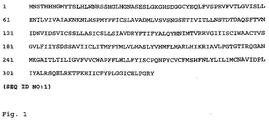
- the amino acid sequence of the rate MC4-R consists of 332 amino acid residues (SEQ ID NO:1; NCBI Accession No. NP037231) as shown in FIG.1 .
- peptides corresponding to the N-terminal domain of the MC4-R (“NT4 peptide", illustrated in FIG.2 ) and N-terminal domain of the MC3-R ("NT3 peptide") were synthesized.
- the NT4 peptide has the amino acid sequence TSLHLWNRSSHGLHG (SEQ ID NO:2) consisting of residues 11-25 of the rat MCR4-R (see Peter JC et al., Am. J. Physiol. Regul. Integr. Comp. Physiol. iol.
- the NT3 peptide has the amino acid sequence ASNRSGSGFCEQVFIKPEV (SEQ ID NO:3) consisting of residues 26-44 of the rat MC3-R (SEQ ID NO:3).
- the peptides were synthesized as set forth in Neimark J and Briand JP, Pept. Res. 1993;6(4):219-28 .
- mice were immunized with 25 ⁇ g of the free peptide NT4 emulsified in complete Freund's adjuvant and injected subcutaneously. Four weeks post-immunization, a booster injection of 25 gg in incomplete Freund's adjuvant was given. Four weeks later 10 gg peptide dissolved in NaCl 0.9% was injected intravenously three days before harvesting the spieen cells for fusion.
- Fusion was performed with polyethylene glycol 1500 (Sigma, Saint-Louis, USA) at a ratio of 2 splenocytes for 1 myeloma cell.
- Hybridomas were cultivated in 96 well plates precoated with peritoneal macrophages of C58B16 mice 1000 cells/well.
- 5x10⁵ cells were distributed per well in IMDM medium supplemented with 10% heat inactivated fetal calf serum, 200 mM glutamine, 1 00mM sodium pyruvate, 1% penicillin streptomycin (Omnilab, Mettmenstetten, Switzerland) 3% Hypoxanthine, Aminopterine, Thymidine (HAT, Gibco, Lucerne, Switzerland) in a humidified incubator at 37°C under an atmosphere of 5% CO2.
- NT4 peptide (2 ⁇ M) was adsorbed with carbonate buffer (Na2CO3 15 mM, NaHCO3 35 mM, pH 9.6), an 96-well MAXISORP microtiter plates (Nunc, Roskilde, Denmark), 50 gl/well, by incubating for 2 h at 37°C.
- PBS Phosphate Buffered Saline
- NaCI 150 mM NaCI 150 mM
- KC1 27 mM pH 7.4
- Tween 20 Fluka, Buchs, Switzerland
- Immunized mice sera or 1:10 dilution of hybridoma culture supernatant were added to the plates and incubated for ih at 37°C. Plates were then washed with PBS containing 0.05% Tween 20 (PBS-T) and incubated with goat anti-mouse immunoglobulin H+L horseradish peroxidase conjugated (Biorad), diluted 1/5000, for 1 h at 37°C. After washing the plates with PBS-T and PBS, enzymatic reactions were carried out at room temperature by adding 3,3',5,5'tetramethylbenzidine (TMB) in the presence of 0.04% H202. Reactions were stopped after 15 min by the addition of HCl (1N). Optical density was measured at 450 nm by using a microplate reader Victor Wallac (Perkin Eimer, Fremont, CA, USA).
- RNA was prepared from 107 freshly subcloned hybridoma cells using the RNAnow kit (Biogentex, USA) and first strand cDNA was synthesized using iScriptTm cDNA Synthesis kit (Biorad, Hercules, CA, USA). The VH and VL chain domains were amplified by PCR using IgG primer set (Novagen).
- the 50 gl PCR mixtures contained 50 ng hybridoma cDNA, 20 pmol of each appropriate primer, 250 ⁇ M of each dNTP, 1 xTaq buffer (Sigma) and 1 U Thermus aquaticus (Taq) polymerase.
- Amplification included 50 cycles of 1.5 min at 94°C, 2.5 min at 55°C and 3 min at 72°C in a thermocycler (PTC- 150, MJ Research).
- the amplified DNAs were ligated into the pGEMT vector (Promega, Madison, WI, USA) and the recombinant plasmids purified using miniprep kit (Qiagen).
- the DNA sequences of the cloned VH and VL inserts were determined using the PRISM Cycle Sequencing kit (ABI) and M13 Forward and Reverse primers. The sequences of the V genes were determined on two independent batches of RNA preparations to ensure accuracy.
- the isotype of the selected mAbs was determined using MonoAbiD kit according to manufacturer's instructions (Zymed lab).
- the anti-NT4 mAbs were affinity-purified on NT4 peptide coupled by their N-terminus end to activated CNBr-Sepharose 4B column (Amersham Biosciences, Uppsala, Sweden) according to manufacturer's instructions. Culture supernatants were loaded on the column at 4°C. The mAbs were eluted with 0.2 M glycine pH 2.7, collected in tubes containing 1 M Tris buffer pH 8, subsequently dialyzed against PBS overnight at 4°C and finally stored at -20°C.
- HEK-293 cells expressing human (h) MC4-R were cultured in Dulbecco's Modified Eagle Medium (DMEM) (Sigma, St. Louis, MO, USA) containing 10% fetal calf serum (Bioconcept, Allschwil, Switzerland), 1% penicillin/streptomycin (Gibco, Grand Island, NY, USA) and G418 at 600 ⁇ g/ml (Sigma) in a humidified atmosphere containing 5% CO2 at 37°C.
- DMEM Dulbecco's Modified Eagle Medium
- DMEM fetal bovine serum
- IBMX 3-isobutyl-1-methylxanthine
- Cells were treated with serial dilutions of purified mAbs for 30 min or preincubated with 100nM of mAbs for 30 min and then treated with serial dilutions of a-melanocyte stimulating hormone (a-MSH, 10-9 to 10-5M) for 15 min.
- a-MSH a-melanocyte stimulating hormone
- the guide cannula was secured in place with 3 stainless steel screws and glass-ionomer cement (3M), and a stylet was inserted to seal the cannula until use.
- Temgesic (0.03 mg/kg) was given subcutaneously for 2 days post-surgery. Seven days after recovery from surgery, accuracy of the cannula placement in the third ventricle was tested by measuring the dipsogenic response (immediate drinking of at least 5 ml water in 15 min) to an icv injection of 20 pmol of angiotensin II in 5 pl injection volume.
- Purified mAbs were slowly (1 min) injected icv at 9:00 am at a dose of 0.1 1 pg in a volume of 5 pl using a Hamilton syringe. These doses were selected based on the results of comparative in vitro studies. Following the injection of rat Abs, food intake was continuously recorded during the following 3 days using an automatic food intake apparatus (TSE Systems, Bad Homburg, Germany) at one hour intervals for 3 days. After the injection of rabbit Abs, food intake was measured during the following 3 days at 9:00 am and 5:00 pm.
- TSE Systems automatic food intake apparatus
- the enzyme immunoassay was performed an the free peptides NT4 and NT3.
- the serum of the mouse used for hybridoma production showed a highly specific and pronounced response against the immunogenic peptide NT4 derived from the N-terminus part of the MC4-R but not against the NT3 peptide derived from the N-terminus part of the MC3-R.
- the polyclonal response was high, only two clones could be conserved until subcloning and amplification: mAb 1E8a and mAb 2G2 both IgM antibodies.
- the specificity of mAb 1E8a for the NT4 peptide corresponded to the polyclonal mouse response.
- variable domain of the heavy and light chains of mAb 1E8a, and the variable domain of the heavy chain of mAb 2G2, were cloned and sequenced.
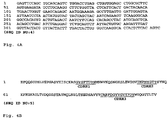
- FIG.4A SEQ ID NO:4
- FIG.4B SEQ ID NO:5
- FIG.5A SEQ ID NO:6
- FIG.5B SEQ ID NO:7
- FIG.6A SEQ ID NO:8
- FIG.6B SEQ ID NO:9
- the constant regions of mAbs 1EBa and 2G2 are common to all mouse antibodies in this subtype.
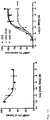
- HEK-293 cells were treated with purified mAb 2G2 and mAb 1E8a.
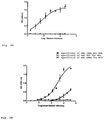
- concentration-response curves in FIG.7A left panel
- HEK-293 cells transfected with the MC4-R were exposed to increasing concentrations of mAb 2G2 (1 pM - 0.1 ⁇ M)
- no decrease in cAMP was measured.
- FIG.7A right panel
- the presence of mAb 2G2 had no effect on the concentration-response curve of a-MSH.
- Figures 9A to 9C illustrate the specificity of mAb 1E8a.
- Figure 9a shows cultured HEK-293 cells expressing human MCR4 which have been stained with fluorescently labeled mAb 1E8a. Significant levels of expressed hMCR4 are detected.
- Figures 9B and 9C show in vitro cell cultures where either HEK-293 cells expressing hMRC3 were stained in the same procedure as in Fig. 9A or cells that expressed hMCR4 were stained with mAb 2G2 (control antibody). In both cases no significant staining occurred.
- Figure 10 summarizes the immuno-cytochemical staining of cells which express either MCR4 or MCR3 and which were stained with mAb 1E8A or mAb 2G2 (control mAb).
- the binding constant Kd of mAb 1E8a to the NT4 peptided was determined as 2.3 x 10 -9 M.
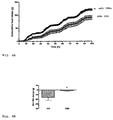
- Figure 12 shows the in vivo effect of mAb 1E8a and 2G2 (1 ⁇ g) after intracerebroventricular (icv) injection of the mAbs.
- the monoclonal antibodies were both administered at 9:00am during the light phase (experimental protocol) as indicated above.
- the results are presented as mean ⁇ S.E.M, **: p ⁇ 0.01; Two-way ANOVA repeated measures, Bonferroni post-hoc test; ⁇ : p ⁇ 0.01, Student t-test.
- the left panel of Figure 12 shows that administration of mAb 1E8a leads to a significant increase in food uptake measured during the post injection phase compared to the mAb 2G2.
- the right panel illustrates the body weight change.
- Rats which were injected with mAb 1E8a did not suffer from body weight loss during the post injection phase. On the contrary, their body weight increased. On the other hand, Rats that were injected with mAb 2G2 showed a significant loss in body weight during the post injection phase.
- Figure 14 shows the in vivo effect of intravenous (iv) injection of mAb 1E8a and 2G2 (300 ⁇ g/kg). The results are presented as mean ⁇ S.E.M.
- the experimental protocol comprised an intravenous (iv) injection with either mAb (1E8a or 2G2). The injection was performed at 9:00 am in the light phase. No significant difference in the cumulative food intake could be detected between the two groups.
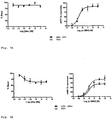
- Figure 15 shows the in vitro Effects of single chain Fv fragments (scFv) of 1E8a and 2G2 on cAMP levels.
- PBS was used as a further control and, as well as scFv of 2G2, it did not influence the concentration response curve of ⁇ -MSH.
- the results are similar to those shown in Figure 11 .
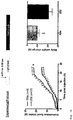
- Figure 16 shows the in vivo effect of icv injection of single chain fragments (scFv) of mAb 1E8a and 2G2 (1.7 ⁇ g).
- the results are presented as mean ⁇ S.E.M, *:p ⁇ 0.05, Two-way ANOVA repeated measures, Bonferroni post-hoc test, ⁇ : p ⁇ 0.05, Student t-test
- the scFv were injected intracerebroventricularly at 9:00 am during the light phase.
- the administration of scFv of 1E8a did significantly increase the cumulative food uptake which was measured in the post injection period.
- both groups of rats showed loss in body weight during the post injection period.
- the body weight loss in rats which were administered the scFv of 1E8a showed a significantly reduced body weight loss.
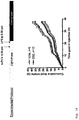
- Figure 18 shows the in vivo effect of iv Injection of scFv 1EBa and 2G2 + ip Injection of LPS (300 ⁇ g/kg). The results are presented as mean ⁇ S.E.M.
- the experimental protocol comprises a intravenous (iv) injection of scFv of either 1E8a or 2G2 at 4:30 pm and, one hour later, at 5:30 pm an intraperitoneal (ip) injection of LPS.
- Rats that were treated with scFv of 1E8a show a clear tendency of an increased cumulative food intake observed in the time period post injection of scFv.
- Figure 19 shows the amino acid sequence of cyclic peptides H1 (SEQ ID NO: 10), H2 (SEQ ID NO: 11), H3 (SEQ ID NO: 12), L1 (SEQ ID NO: 13), L2 (SEQ ID NO: 14) and L3(SEQ ID NO: 15).
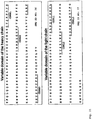
- Figure 21 shows the amino acid sequences of the mAb Paratope of mAb 1E8a.
- the upper panel shows the amino acid sequence of the variable domain of the heavy chain and the lower panel shows the amino acid sequence of the variable domain of the light chain.
- mAbs produced against the MC4-R in particular mAb 1E8a, have a profound effect an appetite and, resultantly, weight loss, indicating their therapeutic utility for cachexia and related conditions and diseases.
- inventive therapeutic mAbs may be administered in any known, suitable way.
- they may administered according to standard monoclonal antibody therapy protocols where they are infused in a clinical setting to specifically target cells expressing the MC4-R.
- they may be administered parenterally, orally or administered to the sinuses, throat or lungs, and respectively in a suitable form for such administration.
- They may further be modified in certain embodiments according to artrecognized techniques, for example they may be chimerized and humanized for various therapeutic purposes.
- MC4-R may be provided in combination with other active therapeutic agents, and in certain embodiments may form immunoconjugates to direct other therapeutic agents to the MC4-R.
Landscapes
- Health & Medical Sciences (AREA)
- Chemical & Material Sciences (AREA)
- Organic Chemistry (AREA)
- Life Sciences & Earth Sciences (AREA)
- Medicinal Chemistry (AREA)
- General Health & Medical Sciences (AREA)
- Engineering & Computer Science (AREA)
- Nuclear Medicine, Radiotherapy & Molecular Imaging (AREA)
- General Chemical & Material Sciences (AREA)
- Pharmacology & Pharmacy (AREA)
- Chemical Kinetics & Catalysis (AREA)
- Animal Behavior & Ethology (AREA)
- Public Health (AREA)
- Veterinary Medicine (AREA)
- Bioinformatics & Cheminformatics (AREA)
- Immunology (AREA)
- Endocrinology (AREA)
- Diabetes (AREA)
- Neurology (AREA)
- Biomedical Technology (AREA)
- Obesity (AREA)
- Biochemistry (AREA)
- Biophysics (AREA)
- Genetics & Genomics (AREA)
- Molecular Biology (AREA)
- Proteomics, Peptides & Aminoacids (AREA)
- Hematology (AREA)
- Child & Adolescent Psychology (AREA)
- Neurosurgery (AREA)
- Medicines Containing Antibodies Or Antigens For Use As Internal Diagnostic Agents (AREA)
- Peptides Or Proteins (AREA)
- Preparation Of Compounds By Using Micro-Organisms (AREA)
- Medicines That Contain Protein Lipid Enzymes And Other Medicines (AREA)
Claims (10)
- Isolierter monoklonaler Antikörper oder Bindungsfragment davon, der/das an den Melanocortin-4-Rezeptor oder einen Teil des Melanocortin-4-Rezeptors bindet, wobei besagter Antikörper oder besagtes Bindungsfragment davon eine variable Schwerkettendomäne umfasst, welche Antigenbindungsstellen (complementary determining regions; CDR's) CDRH1, CDRH2 und CDRH3 umfasst, und eine variable Leichtkettendomäne umfasst, welche Antigenbindungsstellen (complementary determining regions; CDR's) CDRL1, CDRL2 und CDRL3 umfasst,
wobei die variable Schwerkettendomäne die in SEQ ID NO:5 beschriebene und wie in Fig. 4B dargestellte Aminosäuresequenz beinhaltet und die variable Leichtkettendomäne die in SEQ ID NO:7 beschriebene und wie in Fig. 5B dargestellte Aminosäuresequenz beinhaltet. - Isolierter monoklonaler Antikörper oder Bindungsfragment davon nach Anspruch 1, wobei der besagte isolierte monoklonale Antikörper oder das besagte Bindungsfragment davon rekombinant hergestellt ist.
- Pharmazeutische Zusammensetzung enthaltend eine therapeutisch wirksame Menge eines isolierten monoklonalen Antikörpers oder eines Bindungsfragments davon nach Anspruch 1 oder 2.
- Pharmazeutische Zusammensetzung nach Anspruch 3, weiter enthaltend einen aktiven Wirkstoff in Kombination mit und unterschiedlich vom besagten isolierten monoklonalen Antikörper oder Bindungsfragment davon.
- Pharmazeutische Zusammensetzung enthaltend eine therapeutisch wirksame Menge eines isolierten monoklonalen Antikörpers oder eines Bindungsfragments davon nach Anspruch 1, welcher/welches in einer Menge in der besagten Zusammensetzung vorhanden ist, die therapeutisch wirksam ist, um den Appetit eines Säugetiers zu steigern.
- Pharmazeutische Zusammensetzung nach Anspruch 4, wobei die besagte Zusammensetzung für die Behandlung der Symptome von Kachexie bei einem diese Symptome aufweisenden Patienten therapeutisch nützlich ist.
- Verwendung eines monoklonalen Antikörpers oder eines Bindungsfragments davon nach Anspruch 1 oder 2 für die Herstellung eines für die Behandlung von Kachexie nützlichen Medikaments.
- Monoklonaler Antikörper oder Bindungsfragment davon nach Anspruch 1 oder 2 zur Anwendung bei der Behandlung von Kachexie.
- Nichttherapeutische Methode für die Anregung des Appetits eines Säugetiers, beinhaltend die Verabreichung eines isolierten monoklonalen Antikörpers oder eines Bindungsfragments davon nach Anspruch 1 oder 2 an ein Säugetier.
- Monoklonaler Antikörper oder Bindungsfragment davon nach Anspruch 1 oder 2 zur Verwendung als ein Medikament.
Applications Claiming Priority (3)
| Application Number | Priority Date | Filing Date | Title |
|---|---|---|---|
| US1836007P | 2007-12-31 | 2007-12-31 | |
| US2966108P | 2008-02-19 | 2008-02-19 | |
| PCT/IB2008/003651 WO2009087467A2 (en) | 2007-12-31 | 2008-12-30 | Monoclonal antibodies and binding fragments thereof directed to the melanocortin-4 receptor and their use in the treatment of cachexia and related conditions and diseases |
Publications (2)
| Publication Number | Publication Date |
|---|---|
| EP2227490A2 EP2227490A2 (de) | 2010-09-15 |
| EP2227490B1 true EP2227490B1 (de) | 2016-05-11 |
Family
ID=40637117
Family Applications (1)
| Application Number | Title | Priority Date | Filing Date |
|---|---|---|---|
| EP08869649.7A Not-in-force EP2227490B1 (de) | 2007-12-31 | 2008-12-30 | Monoklonale antikörper und auf den melanocortin-4-rezeptor gerichtete bindungsfragmente sowie ihre verwendung bei der behandlung von kachexie und damit zusammenhängenden leiden und erkrankungen |
Country Status (6)
| Country | Link |
|---|---|
| US (2) | US8252908B2 (de) |
| EP (1) | EP2227490B1 (de) |
| JP (1) | JP5685774B2 (de) |
| AU (1) | AU2008200795A1 (de) |
| CA (1) | CA2619381A1 (de) |
| WO (1) | WO2009087467A2 (de) |
Families Citing this family (5)
| Publication number | Priority date | Publication date | Assignee | Title |
|---|---|---|---|---|
| US20100022442A1 (en) * | 2008-07-25 | 2010-01-28 | Ambryx Biotechnology, Inc. | Compositions and methods for increasing serum antioxidant concentrations, decreasing serum triglyceride levels, inhibiting insulin-receptor signaling activity, increasing serum ghrelin levels, and decreasing serum tnf-alpha levels |
| WO2018105198A1 (ja) * | 2016-12-09 | 2018-06-14 | 富士フイルム株式会社 | ミックスモードアフィニティクロマトグラフィー用担体 |
| US11332499B2 (en) | 2018-08-16 | 2022-05-17 | Regents Of The University Of Minnesota | Cyclic peptides and methods of use thereof |
| AU2022371170A1 (en) * | 2021-10-19 | 2024-05-02 | Bioatla, Inc. | Conditionally active proteins for neurodegenerative diseases |
| CN116731184B (zh) * | 2022-11-25 | 2024-06-14 | 厦门康基生物科技有限公司 | 一种特异性结合Taq酶的单克隆抗体F6H12及其应用 |
Family Cites Families (7)
| Publication number | Priority date | Publication date | Assignee | Title |
|---|---|---|---|---|
| US5622860A (en) | 1994-02-17 | 1997-04-22 | The Regents Of The University Of Michigan | Genes encoding melanocortin receptors |
| US5908609A (en) * | 1996-06-10 | 1999-06-01 | Millennium Pharmaceuticals, Inc. | Screening methods for compounds useful in the regulation of body weight |
| US6287763B1 (en) * | 1996-06-10 | 2001-09-11 | Millennium Pharmaceuticals, Inc. | Screening methods for compounds useful in the regulation of body weight |
| EP1129105A4 (de) * | 1998-11-09 | 2005-03-30 | Merck & Co Inc | Dna moleküle, die den melancortin 4 rezeptor des rhesus-affen kodieren |
| US20030032791A1 (en) * | 2000-06-26 | 2003-02-13 | Alan Robertson Scott | Novel melanocortin-4 receptor sequences and screening assays to identify compounds useful in regulating animal appetite and metabolic rate |
| KR100427645B1 (ko) * | 2001-07-24 | 2004-04-28 | 한국생명공학연구원 | 인간 멜라노코틴-4 수용체에 대한 항체와 그 제조방법 |
| AU2008200794A1 (en) | 2007-12-31 | 2009-07-16 | University Of Basel | Methods for diagnosing and treating obesity by modulating the activity of auto-antibodies against the melanocortin-4 receptor |
-
2008
- 2008-02-20 CA CA002619381A patent/CA2619381A1/en not_active Abandoned
- 2008-02-20 AU AU2008200795A patent/AU2008200795A1/en not_active Abandoned
- 2008-12-30 EP EP08869649.7A patent/EP2227490B1/de not_active Not-in-force
- 2008-12-30 JP JP2010540187A patent/JP5685774B2/ja not_active Expired - Fee Related
- 2008-12-30 US US12/811,249 patent/US8252908B2/en not_active Expired - Fee Related
- 2008-12-30 WO PCT/IB2008/003651 patent/WO2009087467A2/en not_active Ceased
-
2012
- 2012-07-27 US US13/560,638 patent/US8703139B2/en not_active Expired - Fee Related
Non-Patent Citations (1)
| Title |
|---|
| J. C. PETER ET AL: "A Pharmacologically Active Monoclonal Antibody against the Human Melanocortin-4 Receptor: Effectiveness After Peripheral and Central Administration", JOURNAL OF PHARMACOLOGY AND EXPERIMENTAL THERAPEUTICS, vol. 333, no. 2, 1 May 2010 (2010-05-01), pages 478 - 490, XP055110955, ISSN: 0022-3565, DOI: 10.1124/jpet.109.163279 * |
Also Published As
| Publication number | Publication date |
|---|---|
| AU2008200795A1 (en) | 2009-07-16 |
| WO2009087467A2 (en) | 2009-07-16 |
| WO2009087467A3 (en) | 2009-12-17 |
| US8252908B2 (en) | 2012-08-28 |
| CA2619381A1 (en) | 2009-06-30 |
| EP2227490A2 (de) | 2010-09-15 |
| JP5685774B2 (ja) | 2015-03-18 |
| US8703139B2 (en) | 2014-04-22 |
| US20130058941A1 (en) | 2013-03-07 |
| US20110044987A1 (en) | 2011-02-24 |
| JP2011508739A (ja) | 2011-03-17 |
Similar Documents
| Publication | Publication Date | Title |
|---|---|---|
| ES2881602T3 (es) | Conjugados de anticuerpo-fynómero | |
| JP6537492B2 (ja) | 呼吸器合胞体ウイルスfタンパク質に対するヒト抗体及びその使用方法 | |
| EP3339322A2 (de) | Immunoglobulin einzel variable domänen antikörper mit einer c-terminalen extension zwecks reduzierter immunogenizität | |
| CN113366016B (zh) | 抗人白细胞介素5(il-5)单克隆抗体及其应用 | |
| BR112012029986B1 (pt) | Anticorpo humano isolado ou fragmento de ligação ao antígeno do mesmo que se liga especificamente ou bloqueia a atividade biológica de gdf8 humano maduro do tipo selvagem, composição farmacêutica e usos dos mesmos | |
| BRPI0815370B1 (pt) | anticorpos humanos de alta afinidade contra o fator de crescimento neural humano e seu uso, molécula de ácido nucleico, vetor de expressão, método para produção de um anticorpo anti-ngf humano e composiçao farmacêutica | |
| IL258121B2 (en) | Anti-pro/latent-myostatin antibodies and uses thereof | |
| KR20170003912A (ko) | 면역원성 당펩타이드에 대한 항체, 이를 포함하는 조성물 및 이의 용도 | |
| WO2022095926A1 (zh) | 靶向于白介素36r的抗体及其制备方法和应用 | |
| US8703139B2 (en) | Monoclonal antibodies and binding fragments thereof directed to the melanocortin-4 receptor and their use in the treatment of cachexia and related conditions and diseases | |
| EP3269735B1 (de) | Antikörper gegen sclerostin, antigenbindendes fragmente und dessen medizinische verwendung | |
| CN113637070A (zh) | 抗spike蛋白的抗体或抗原结合片段及其应用 | |
| EP2373335B1 (de) | Monoklonale anti-ferroportin-1-antikörper und verwendungen davon | |
| WO2023143407A1 (zh) | 靶向冠状病毒的抗体在预防、治疗或改善covid-19中的应用 | |
| WO2020200099A1 (zh) | 包含抗il-5抗体的药物组合物及其用途 | |
| CN120380016A (zh) | 包含促卵泡激素和血清白蛋白抗原结合片段的融合蛋白及其组合物和用途 | |
| CN116948030B (zh) | 抗asgr1单克隆抗体及其应用 | |
| CN113637083A (zh) | 用于治疗冠状病毒的融合蛋白及其应用 | |
| HK40120457A (en) | Anti-asgr1 monoclonal antibody and use thereof | |
| BR112016021083B1 (pt) | Polipeptídeo de fusão bi-específico, composição farmacêutica e seus usos | |
| BR112017019075B1 (pt) | Anticorpo ou fragmento de ligação ao antígeno do mesmo que se liga especificamente à esclerostina humana, composição farmacêutica e usos dos mesmos |
Legal Events
| Date | Code | Title | Description |
|---|---|---|---|
| PUAI | Public reference made under article 153(3) epc to a published international application that has entered the european phase |
Free format text: ORIGINAL CODE: 0009012 |
|
| 17P | Request for examination filed |
Effective date: 20100325 |
|
| AK | Designated contracting states |
Kind code of ref document: A2 Designated state(s): AT BE BG CH CY CZ DE DK EE ES FI FR GB GR HR HU IE IS IT LI LT LU LV MC MT NL NO PL PT RO SE SI SK TR |
|
| AX | Request for extension of the european patent |
Extension state: AL BA MK RS |
|
| DAX | Request for extension of the european patent (deleted) | ||
| 17Q | First examination report despatched |
Effective date: 20140408 |
|
| GRAP | Despatch of communication of intention to grant a patent |
Free format text: ORIGINAL CODE: EPIDOSNIGR1 |
|
| INTG | Intention to grant announced |
Effective date: 20150701 |
|
| INTG | Intention to grant announced |
Effective date: 20151201 |
|
| GRAS | Grant fee paid |
Free format text: ORIGINAL CODE: EPIDOSNIGR3 |
|
| GRAA | (expected) grant |
Free format text: ORIGINAL CODE: 0009210 |
|
| AK | Designated contracting states |
Kind code of ref document: B1 Designated state(s): AT BE BG CH CY CZ DE DK EE ES FI FR GB GR HR HU IE IS IT LI LT LU LV MC MT NL NO PL PT RO SE SI SK TR |
|
| REG | Reference to a national code |
Ref country code: GB Ref legal event code: FG4D |
|
| REG | Reference to a national code |
Ref country code: CH Ref legal event code: EP |
|
| REG | Reference to a national code |
Ref country code: AT Ref legal event code: REF Ref document number: 798607 Country of ref document: AT Kind code of ref document: T Effective date: 20160515 |
|
| REG | Reference to a national code |
Ref country code: IE Ref legal event code: FG4D |
|
| REG | Reference to a national code |
Ref country code: DE Ref legal event code: R096 Ref document number: 602008044250 Country of ref document: DE |
|
| REG | Reference to a national code |
Ref country code: CH Ref legal event code: NV Representative=s name: PATENTANWAELTE SCHAAD, BALASS, MENZL AND PARTN, CH |
|
| REG | Reference to a national code |
Ref country code: LT Ref legal event code: MG4D |
|
| REG | Reference to a national code |
Ref country code: NL Ref legal event code: MP Effective date: 20160511 |
|
| PG25 | Lapsed in a contracting state [announced via postgrant information from national office to epo] |
Ref country code: NO Free format text: LAPSE BECAUSE OF FAILURE TO SUBMIT A TRANSLATION OF THE DESCRIPTION OR TO PAY THE FEE WITHIN THE PRESCRIBED TIME-LIMIT Effective date: 20160811 Ref country code: NL Free format text: LAPSE BECAUSE OF FAILURE TO SUBMIT A TRANSLATION OF THE DESCRIPTION OR TO PAY THE FEE WITHIN THE PRESCRIBED TIME-LIMIT Effective date: 20160511 Ref country code: FI Free format text: LAPSE BECAUSE OF FAILURE TO SUBMIT A TRANSLATION OF THE DESCRIPTION OR TO PAY THE FEE WITHIN THE PRESCRIBED TIME-LIMIT Effective date: 20160511 Ref country code: LT Free format text: LAPSE BECAUSE OF FAILURE TO SUBMIT A TRANSLATION OF THE DESCRIPTION OR TO PAY THE FEE WITHIN THE PRESCRIBED TIME-LIMIT Effective date: 20160511 |
|
| REG | Reference to a national code |
Ref country code: AT Ref legal event code: MK05 Ref document number: 798607 Country of ref document: AT Kind code of ref document: T Effective date: 20160511 |
|
| PG25 | Lapsed in a contracting state [announced via postgrant information from national office to epo] |
Ref country code: LV Free format text: LAPSE BECAUSE OF FAILURE TO SUBMIT A TRANSLATION OF THE DESCRIPTION OR TO PAY THE FEE WITHIN THE PRESCRIBED TIME-LIMIT Effective date: 20160511 Ref country code: HR Free format text: LAPSE BECAUSE OF FAILURE TO SUBMIT A TRANSLATION OF THE DESCRIPTION OR TO PAY THE FEE WITHIN THE PRESCRIBED TIME-LIMIT Effective date: 20160511 Ref country code: SE Free format text: LAPSE BECAUSE OF FAILURE TO SUBMIT A TRANSLATION OF THE DESCRIPTION OR TO PAY THE FEE WITHIN THE PRESCRIBED TIME-LIMIT Effective date: 20160511 Ref country code: PT Free format text: LAPSE BECAUSE OF FAILURE TO SUBMIT A TRANSLATION OF THE DESCRIPTION OR TO PAY THE FEE WITHIN THE PRESCRIBED TIME-LIMIT Effective date: 20160912 Ref country code: ES Free format text: LAPSE BECAUSE OF FAILURE TO SUBMIT A TRANSLATION OF THE DESCRIPTION OR TO PAY THE FEE WITHIN THE PRESCRIBED TIME-LIMIT Effective date: 20160511 Ref country code: GR Free format text: LAPSE BECAUSE OF FAILURE TO SUBMIT A TRANSLATION OF THE DESCRIPTION OR TO PAY THE FEE WITHIN THE PRESCRIBED TIME-LIMIT Effective date: 20160812 |
|
| PG25 | Lapsed in a contracting state [announced via postgrant information from national office to epo] |
Ref country code: IT Free format text: LAPSE BECAUSE OF FAILURE TO SUBMIT A TRANSLATION OF THE DESCRIPTION OR TO PAY THE FEE WITHIN THE PRESCRIBED TIME-LIMIT Effective date: 20160511 |
|
| PG25 | Lapsed in a contracting state [announced via postgrant information from national office to epo] |
Ref country code: SK Free format text: LAPSE BECAUSE OF FAILURE TO SUBMIT A TRANSLATION OF THE DESCRIPTION OR TO PAY THE FEE WITHIN THE PRESCRIBED TIME-LIMIT Effective date: 20160511 Ref country code: RO Free format text: LAPSE BECAUSE OF FAILURE TO SUBMIT A TRANSLATION OF THE DESCRIPTION OR TO PAY THE FEE WITHIN THE PRESCRIBED TIME-LIMIT Effective date: 20160511 Ref country code: EE Free format text: LAPSE BECAUSE OF FAILURE TO SUBMIT A TRANSLATION OF THE DESCRIPTION OR TO PAY THE FEE WITHIN THE PRESCRIBED TIME-LIMIT Effective date: 20160511 Ref country code: DK Free format text: LAPSE BECAUSE OF FAILURE TO SUBMIT A TRANSLATION OF THE DESCRIPTION OR TO PAY THE FEE WITHIN THE PRESCRIBED TIME-LIMIT Effective date: 20160511 Ref country code: CZ Free format text: LAPSE BECAUSE OF FAILURE TO SUBMIT A TRANSLATION OF THE DESCRIPTION OR TO PAY THE FEE WITHIN THE PRESCRIBED TIME-LIMIT Effective date: 20160511 |
|
| REG | Reference to a national code |
Ref country code: DE Ref legal event code: R097 Ref document number: 602008044250 Country of ref document: DE |
|
| PG25 | Lapsed in a contracting state [announced via postgrant information from national office to epo] |
Ref country code: BE Free format text: LAPSE BECAUSE OF FAILURE TO SUBMIT A TRANSLATION OF THE DESCRIPTION OR TO PAY THE FEE WITHIN THE PRESCRIBED TIME-LIMIT Effective date: 20160511 Ref country code: PL Free format text: LAPSE BECAUSE OF FAILURE TO SUBMIT A TRANSLATION OF THE DESCRIPTION OR TO PAY THE FEE WITHIN THE PRESCRIBED TIME-LIMIT Effective date: 20160511 Ref country code: AT Free format text: LAPSE BECAUSE OF FAILURE TO SUBMIT A TRANSLATION OF THE DESCRIPTION OR TO PAY THE FEE WITHIN THE PRESCRIBED TIME-LIMIT Effective date: 20160511 |
|
| PLBE | No opposition filed within time limit |
Free format text: ORIGINAL CODE: 0009261 |
|
| STAA | Information on the status of an ep patent application or granted ep patent |
Free format text: STATUS: NO OPPOSITION FILED WITHIN TIME LIMIT |
|
| 26N | No opposition filed |
Effective date: 20170214 |
|
| PG25 | Lapsed in a contracting state [announced via postgrant information from national office to epo] |
Ref country code: SI Free format text: LAPSE BECAUSE OF FAILURE TO SUBMIT A TRANSLATION OF THE DESCRIPTION OR TO PAY THE FEE WITHIN THE PRESCRIBED TIME-LIMIT Effective date: 20160511 |
|
| REG | Reference to a national code |
Ref country code: DE Ref legal event code: R119 Ref document number: 602008044250 Country of ref document: DE |
|
| PG25 | Lapsed in a contracting state [announced via postgrant information from national office to epo] |
Ref country code: MC Free format text: LAPSE BECAUSE OF FAILURE TO SUBMIT A TRANSLATION OF THE DESCRIPTION OR TO PAY THE FEE WITHIN THE PRESCRIBED TIME-LIMIT Effective date: 20160511 |
|
| REG | Reference to a national code |
Ref country code: CH Ref legal event code: PL |
|
| GBPC | Gb: european patent ceased through non-payment of renewal fee |
Effective date: 20161230 |
|
| REG | Reference to a national code |
Ref country code: FR Ref legal event code: ST Effective date: 20170831 |
|
| REG | Reference to a national code |
Ref country code: IE Ref legal event code: MM4A |
|
| PG25 | Lapsed in a contracting state [announced via postgrant information from national office to epo] |
Ref country code: LU Free format text: LAPSE BECAUSE OF NON-PAYMENT OF DUE FEES Effective date: 20161230 Ref country code: FR Free format text: LAPSE BECAUSE OF NON-PAYMENT OF DUE FEES Effective date: 20170102 Ref country code: LI Free format text: LAPSE BECAUSE OF NON-PAYMENT OF DUE FEES Effective date: 20161231 Ref country code: CH Free format text: LAPSE BECAUSE OF NON-PAYMENT OF DUE FEES Effective date: 20161231 |
|
| PG25 | Lapsed in a contracting state [announced via postgrant information from national office to epo] |
Ref country code: GB Free format text: LAPSE BECAUSE OF NON-PAYMENT OF DUE FEES Effective date: 20161230 Ref country code: IE Free format text: LAPSE BECAUSE OF NON-PAYMENT OF DUE FEES Effective date: 20161230 Ref country code: DE Free format text: LAPSE BECAUSE OF NON-PAYMENT OF DUE FEES Effective date: 20170701 |
|
| PG25 | Lapsed in a contracting state [announced via postgrant information from national office to epo] |
Ref country code: HU Free format text: LAPSE BECAUSE OF FAILURE TO SUBMIT A TRANSLATION OF THE DESCRIPTION OR TO PAY THE FEE WITHIN THE PRESCRIBED TIME-LIMIT; INVALID AB INITIO Effective date: 20081230 Ref country code: CY Free format text: LAPSE BECAUSE OF FAILURE TO SUBMIT A TRANSLATION OF THE DESCRIPTION OR TO PAY THE FEE WITHIN THE PRESCRIBED TIME-LIMIT Effective date: 20160511 |
|
| PG25 | Lapsed in a contracting state [announced via postgrant information from national office to epo] |
Ref country code: IS Free format text: LAPSE BECAUSE OF FAILURE TO SUBMIT A TRANSLATION OF THE DESCRIPTION OR TO PAY THE FEE WITHIN THE PRESCRIBED TIME-LIMIT Effective date: 20160511 Ref country code: TR Free format text: LAPSE BECAUSE OF FAILURE TO SUBMIT A TRANSLATION OF THE DESCRIPTION OR TO PAY THE FEE WITHIN THE PRESCRIBED TIME-LIMIT Effective date: 20160511 |
|
| PG25 | Lapsed in a contracting state [announced via postgrant information from national office to epo] |
Ref country code: BG Free format text: LAPSE BECAUSE OF FAILURE TO SUBMIT A TRANSLATION OF THE DESCRIPTION OR TO PAY THE FEE WITHIN THE PRESCRIBED TIME-LIMIT Effective date: 20160511 |
|
| PG25 | Lapsed in a contracting state [announced via postgrant information from national office to epo] |
Ref country code: MT Free format text: LAPSE BECAUSE OF NON-PAYMENT OF DUE FEES Effective date: 20161230 |