EP2220251B1 - Method for the diagnosis of pathologies characterised by the anomalous deposition of amyloid in organs and tissues by detecting a mutation at position 673 in app770, and vector and peptide for use in the therapy of said pathologies - Google Patents
Method for the diagnosis of pathologies characterised by the anomalous deposition of amyloid in organs and tissues by detecting a mutation at position 673 in app770, and vector and peptide for use in the therapy of said pathologies Download PDFInfo
- Publication number
- EP2220251B1 EP2220251B1 EP08838209.8A EP08838209A EP2220251B1 EP 2220251 B1 EP2220251 B1 EP 2220251B1 EP 08838209 A EP08838209 A EP 08838209A EP 2220251 B1 EP2220251 B1 EP 2220251B1
- Authority
- EP
- European Patent Office
- Prior art keywords
- amyloid
- app
- mutation
- human
- pathologies
- Prior art date
- Legal status (The legal status is an assumption and is not a legal conclusion. Google has not performed a legal analysis and makes no representation as to the accuracy of the status listed.)
- Active
Links
Images





Classifications
-
- C—CHEMISTRY; METALLURGY
- C07—ORGANIC CHEMISTRY
- C07K—PEPTIDES
- C07K14/00—Peptides having more than 20 amino acids; Gastrins; Somatostatins; Melanotropins; Derivatives thereof
- C07K14/435—Peptides having more than 20 amino acids; Gastrins; Somatostatins; Melanotropins; Derivatives thereof from animals; from humans
- C07K14/46—Peptides having more than 20 amino acids; Gastrins; Somatostatins; Melanotropins; Derivatives thereof from animals; from humans from vertebrates
- C07K14/47—Peptides having more than 20 amino acids; Gastrins; Somatostatins; Melanotropins; Derivatives thereof from animals; from humans from vertebrates from mammals
- C07K14/4701—Peptides having more than 20 amino acids; Gastrins; Somatostatins; Melanotropins; Derivatives thereof from animals; from humans from vertebrates from mammals not used
- C07K14/4711—Alzheimer's disease; Amyloid plaque core protein
-
- A—HUMAN NECESSITIES
- A01—AGRICULTURE; FORESTRY; ANIMAL HUSBANDRY; HUNTING; TRAPPING; FISHING
- A01K—ANIMAL HUSBANDRY; AVICULTURE; APICULTURE; PISCICULTURE; FISHING; REARING OR BREEDING ANIMALS, NOT OTHERWISE PROVIDED FOR; NEW BREEDS OF ANIMALS
- A01K67/00—Rearing or breeding animals, not otherwise provided for; New or modified breeds of animals
- A01K67/027—New or modified breeds of vertebrates
- A01K67/0275—Genetically modified vertebrates, e.g. transgenic
- A01K67/0278—Knock-in vertebrates, e.g. humanised vertebrates
-
- A—HUMAN NECESSITIES
- A61—MEDICAL OR VETERINARY SCIENCE; HYGIENE
- A61P—SPECIFIC THERAPEUTIC ACTIVITY OF CHEMICAL COMPOUNDS OR MEDICINAL PREPARATIONS
- A61P25/00—Drugs for disorders of the nervous system
- A61P25/28—Drugs for disorders of the nervous system for treating neurodegenerative disorders of the central nervous system, e.g. nootropic agents, cognition enhancers, drugs for treating Alzheimer's disease or other forms of dementia
-
- C—CHEMISTRY; METALLURGY
- C12—BIOCHEMISTRY; BEER; SPIRITS; WINE; VINEGAR; MICROBIOLOGY; ENZYMOLOGY; MUTATION OR GENETIC ENGINEERING
- C12N—MICROORGANISMS OR ENZYMES; COMPOSITIONS THEREOF; PROPAGATING, PRESERVING, OR MAINTAINING MICROORGANISMS; MUTATION OR GENETIC ENGINEERING; CULTURE MEDIA
- C12N15/00—Mutation or genetic engineering; DNA or RNA concerning genetic engineering, vectors, e.g. plasmids, or their isolation, preparation or purification; Use of hosts therefor
- C12N15/09—Recombinant DNA-technology
- C12N15/63—Introduction of foreign genetic material using vectors; Vectors; Use of hosts therefor; Regulation of expression
- C12N15/79—Vectors or expression systems specially adapted for eukaryotic hosts
- C12N15/85—Vectors or expression systems specially adapted for eukaryotic hosts for animal cells
- C12N15/8509—Vectors or expression systems specially adapted for eukaryotic hosts for animal cells for producing genetically modified animals, e.g. transgenic
-
- C—CHEMISTRY; METALLURGY
- C12—BIOCHEMISTRY; BEER; SPIRITS; WINE; VINEGAR; MICROBIOLOGY; ENZYMOLOGY; MUTATION OR GENETIC ENGINEERING
- C12Q—MEASURING OR TESTING PROCESSES INVOLVING ENZYMES, NUCLEIC ACIDS OR MICROORGANISMS; COMPOSITIONS OR TEST PAPERS THEREFOR; PROCESSES OF PREPARING SUCH COMPOSITIONS; CONDITION-RESPONSIVE CONTROL IN MICROBIOLOGICAL OR ENZYMOLOGICAL PROCESSES
- C12Q1/00—Measuring or testing processes involving enzymes, nucleic acids or microorganisms; Compositions therefor; Processes of preparing such compositions
- C12Q1/68—Measuring or testing processes involving enzymes, nucleic acids or microorganisms; Compositions therefor; Processes of preparing such compositions involving nucleic acids
- C12Q1/6876—Nucleic acid products used in the analysis of nucleic acids, e.g. primers or probes
- C12Q1/6883—Nucleic acid products used in the analysis of nucleic acids, e.g. primers or probes for diseases caused by alterations of genetic material
-
- A—HUMAN NECESSITIES
- A01—AGRICULTURE; FORESTRY; ANIMAL HUSBANDRY; HUNTING; TRAPPING; FISHING
- A01K—ANIMAL HUSBANDRY; AVICULTURE; APICULTURE; PISCICULTURE; FISHING; REARING OR BREEDING ANIMALS, NOT OTHERWISE PROVIDED FOR; NEW BREEDS OF ANIMALS
- A01K2207/00—Modified animals
- A01K2207/15—Humanized animals
-
- A—HUMAN NECESSITIES
- A01—AGRICULTURE; FORESTRY; ANIMAL HUSBANDRY; HUNTING; TRAPPING; FISHING
- A01K—ANIMAL HUSBANDRY; AVICULTURE; APICULTURE; PISCICULTURE; FISHING; REARING OR BREEDING ANIMALS, NOT OTHERWISE PROVIDED FOR; NEW BREEDS OF ANIMALS
- A01K2217/00—Genetically modified animals
-
- A—HUMAN NECESSITIES
- A01—AGRICULTURE; FORESTRY; ANIMAL HUSBANDRY; HUNTING; TRAPPING; FISHING
- A01K—ANIMAL HUSBANDRY; AVICULTURE; APICULTURE; PISCICULTURE; FISHING; REARING OR BREEDING ANIMALS, NOT OTHERWISE PROVIDED FOR; NEW BREEDS OF ANIMALS
- A01K2217/00—Genetically modified animals
- A01K2217/05—Animals comprising random inserted nucleic acids (transgenic)
-
- A—HUMAN NECESSITIES
- A01—AGRICULTURE; FORESTRY; ANIMAL HUSBANDRY; HUNTING; TRAPPING; FISHING
- A01K—ANIMAL HUSBANDRY; AVICULTURE; APICULTURE; PISCICULTURE; FISHING; REARING OR BREEDING ANIMALS, NOT OTHERWISE PROVIDED FOR; NEW BREEDS OF ANIMALS
- A01K2217/00—Genetically modified animals
- A01K2217/07—Animals genetically altered by homologous recombination
- A01K2217/075—Animals genetically altered by homologous recombination inducing loss of function, i.e. knock out
-
- A—HUMAN NECESSITIES
- A01—AGRICULTURE; FORESTRY; ANIMAL HUSBANDRY; HUNTING; TRAPPING; FISHING
- A01K—ANIMAL HUSBANDRY; AVICULTURE; APICULTURE; PISCICULTURE; FISHING; REARING OR BREEDING ANIMALS, NOT OTHERWISE PROVIDED FOR; NEW BREEDS OF ANIMALS
- A01K2217/00—Genetically modified animals
- A01K2217/15—Animals comprising multiple alterations of the genome, by transgenesis or homologous recombination, e.g. obtained by cross-breeding
-
- A—HUMAN NECESSITIES
- A01—AGRICULTURE; FORESTRY; ANIMAL HUSBANDRY; HUNTING; TRAPPING; FISHING
- A01K—ANIMAL HUSBANDRY; AVICULTURE; APICULTURE; PISCICULTURE; FISHING; REARING OR BREEDING ANIMALS, NOT OTHERWISE PROVIDED FOR; NEW BREEDS OF ANIMALS
- A01K2227/00—Animals characterised by species
- A01K2227/10—Mammal
- A01K2227/105—Murine
-
- A—HUMAN NECESSITIES
- A01—AGRICULTURE; FORESTRY; ANIMAL HUSBANDRY; HUNTING; TRAPPING; FISHING
- A01K—ANIMAL HUSBANDRY; AVICULTURE; APICULTURE; PISCICULTURE; FISHING; REARING OR BREEDING ANIMALS, NOT OTHERWISE PROVIDED FOR; NEW BREEDS OF ANIMALS
- A01K2267/00—Animals characterised by purpose
- A01K2267/03—Animal model, e.g. for test or diseases
- A01K2267/0306—Animal model for genetic diseases
- A01K2267/0312—Animal model for Alzheimer's disease
-
- C—CHEMISTRY; METALLURGY
- C12—BIOCHEMISTRY; BEER; SPIRITS; WINE; VINEGAR; MICROBIOLOGY; ENZYMOLOGY; MUTATION OR GENETIC ENGINEERING
- C12Q—MEASURING OR TESTING PROCESSES INVOLVING ENZYMES, NUCLEIC ACIDS OR MICROORGANISMS; COMPOSITIONS OR TEST PAPERS THEREFOR; PROCESSES OF PREPARING SUCH COMPOSITIONS; CONDITION-RESPONSIVE CONTROL IN MICROBIOLOGICAL OR ENZYMOLOGICAL PROCESSES
- C12Q2600/00—Oligonucleotides characterized by their use
- C12Q2600/156—Polymorphic or mutational markers
-
- C—CHEMISTRY; METALLURGY
- C12—BIOCHEMISTRY; BEER; SPIRITS; WINE; VINEGAR; MICROBIOLOGY; ENZYMOLOGY; MUTATION OR GENETIC ENGINEERING
- C12Q—MEASURING OR TESTING PROCESSES INVOLVING ENZYMES, NUCLEIC ACIDS OR MICROORGANISMS; COMPOSITIONS OR TEST PAPERS THEREFOR; PROCESSES OF PREPARING SUCH COMPOSITIONS; CONDITION-RESPONSIVE CONTROL IN MICROBIOLOGICAL OR ENZYMOLOGICAL PROCESSES
- C12Q2600/00—Oligonucleotides characterized by their use
- C12Q2600/158—Expression markers
-
- G—PHYSICS
- G01—MEASURING; TESTING
- G01N—INVESTIGATING OR ANALYSING MATERIALS BY DETERMINING THEIR CHEMICAL OR PHYSICAL PROPERTIES
- G01N2333/00—Assays involving biological materials from specific organisms or of a specific nature
- G01N2333/435—Assays involving biological materials from specific organisms or of a specific nature from animals; from humans
- G01N2333/46—Assays involving biological materials from specific organisms or of a specific nature from animals; from humans from vertebrates
- G01N2333/47—Assays involving proteins of known structure or function as defined in the subgroups
- G01N2333/4701—Details
- G01N2333/4709—Amyloid plaque core protein
Definitions
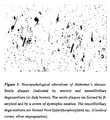
- Alzheimer's disease is the most common form of dementia in elderly people. It is a degenerative disease clinically characterised by the progressive decline of cognitive functions, and neuropathologically characterised by the accumulation of insoluble aggregates of ⁇ -amyloid (A ⁇ ) and tau protein, in the cerebral cortex and in subcortical grey matter.
- a ⁇ ⁇ -amyloid
- tau protein tau protein
- the A ⁇ is deposited in the form of extracellular amyloid in the neuropile (senile plaque) and in the cerebral vessels (congophilic angiopathy), while the tau form of the protein forms anomalous intraneuronal filaments (neurofibrillary degenerations) ( Love S. Neuropathological investigation of dementia: a guide for neurologists. J Neurol Neurosurg Psychiatry 76, Suppl 5:v8-14, 2005 ) ( Figure 1 ).
- Alzheimer's disease is sporadic, while in about 5% of the cases it has a familial character and is associated with mutations of 3 genes: presenilin 1 (PSEN 1) on chromosome 14, presenilin 2 (PSEN2) on chromosome 1 and precursor of the ⁇ -amyloid (APP) on chromosome 21.
- PSEN 1 presenilin 1
- PSEN2 presenilin 2
- APP ⁇ -amyloid
- AD's ethiopathogenesis is not yet entirely understood, but in the last decade the hypothesis has been increasingly confirmed of the "amyloid cascade" ( Wilquet et al. Amyloid-beta precursor protein processing in neurodegeneration.
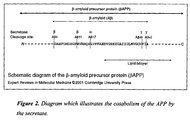
- the A ⁇ derives from its ⁇ APP precursor through a catabolic pathway called "amyloidogenic pathway" ( Figure 2 ).
- This pathway provides for the cleavage of the molecule upstream and downstream of the ⁇ -protein by two proteases, the beta-secretase and the gamma-secretase.
- the cutting of the beta-secretase (BACE) generates a long, soluble N-terminal fragment (sAPP ⁇ ) and a C-terminal peptide of 99 amino acids (C99).
- sAPP ⁇ beta-secretase
- C99 C-terminal peptide of 99 amino acids
- This is further cut by the gamma-secretase into two fragments which correspond to A ⁇ and a small C-terminal peptide (AICD) ( Selkoe DJ.
- ⁇ APP can encounter an alternative catabolic pathway called "non-amyloidogenic", since the protein is cut by another protease (alpha-secretase) at the residues 16-17 of A ⁇ . The action of the latter enzyme thus precludes the formation of ⁇ -amyloid.
- amyloid cascade hypothesis is supported by multiple proofs:
- the A ⁇ 1-42 increases until it constitutes 15-40% f the secreted A ⁇ peptides, while in normal conditions it represents only 5-10% thereof ( Rocchi et al. Causative and susceptibility genes for Alzheimer's disease: a review. Brain Res Bull 61:1-24, 2003 ; Lle ⁇ et al. Clinical, Pathological, and Biochemical Spectrum of Alzheimer Disease Associated with PS-1 Mutations. Am J Geriatr Psychiatry 12:146-56. 2004 ).
- the technical task of the present invention is that of providing methods for the diagnosis of and products for use in the prevention and/or care of human and/or animal pathologies characterised by the anomalous deposition of ⁇ -amyloid substance and/or amyloid-like substance in human and/or animal tissues and/or organs, and a screening method for determining the risk of such pathologies.
- the present invention refers to the recent discovery of a new punctiform mutation of the human APP gene.
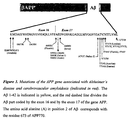
- the mutation is characterised by the substitution of a Cytosine with a Thymidine at codon 673 of the coding sequence of the human APP gene (D8765), corresponding with the nucleotide 2212 (transition c.2212>T ) of the isoform of human APP770 ( NM _ 000484 . 2 ) according to the nomenclature of the GenBank database, accessibly on the website http://www.ncbi.nlm.nih.gov.
- amyloid-like substances by amyloid-like substances, it is intended protein aggregates of A ⁇ which do not have the tinctorial and/or ultrastructural characteristics of the amyloid itself.
- Such mutation which induces in the protein sequence the substitution of an alanine with a valine in position 673 (Ala673Val) of APP770, corresponding with the amino acid residue 2 of A ⁇ , was identified in homozygosis of a patient affected with a grave form of dementia with presenile onset.
- the analysis of the cephalorachidian liquid of the patient showed a considerable diminution of the total tau protein and phosphorylated tau, as is observed in Alzheimer disease.
- the plasma levels of A ⁇ 1-40 and A ⁇ 1-42 are increased with respect to control subjects and also with respect to subjects that bear the same mutation in heterozygosis.
- the fibroblasts obtained from skin biopsy of the patient released, in their culture medium, higher quantities of A ⁇ 1-40 and A ⁇ 1-42 with respect to control fibroblasts.
- the two peptides were subjected to chemical-physical and morphological analysis aimed to evaluate their secondary structure, the aggregation kinetics, and the morphology and nature of the aggregates. These investigations showed that the mutated peptide had a propensity to form amyloid fibrils that were much larger than the wild-type. Quite surprisingly, the mixture composed of equimolar quantities of the two peptides not only aggregates less than the mutated peptide but also less than the wild type peptide on its own.
- a first application of our disclosure consists of the production, according to methods known by those skilled in the art, of a vector containing the cDNA of the human APP with Ala673Val, and the use of said vector in order to transfect cell lines usable for pathogenesis studies and therapy.
- a second application consists of the use of the construct according to the previous application as vector for the production, according to methods known by those skilled in the art, of transgenic non-human mammals capable of expressing human APP with Ala673Val mutation, as single form of APP (homozygote animals) or in combination with wild type human APP or containing another mutation (double transgenic).
- Such animals can be used as models for the study of pathogenesis, diagnosis, prevention and care of human and/or animal pathologies, characterised by the anomalous formation and deposition of ⁇ -amyloid and/or amyloid-like substance in organs and tissues.
- the preferred animal is the mouse, and in particular the knockout murine strain C57BL6 for the endogenous APP, and the preferred pathology is AD.
- a construct containing APP with Ala673Val mutation in the in vivo gene therapy (the DNA is transferred directly in the cells or tissues of the patient) or ex vivo gene therapy (the DNA is first transferred in cells isolated from the organism and laboratory-grown, which, thus modified, can be re-introduced in the patient) of pathologies characterised by anomalous deposition of ⁇ -amyloid substance in tissues and organs.
- the transfer of the construct into the target cells can be achieved by means of vectors of viral type, such as for example (a) retroviruses which have the capacity to integrate their DNA inside the proliferation cell chromosomes, (b) lentiviruses which allow transferring genetic material also in cells which do not proliferate, (c) adeno-associated viruses which do not integrate their DNA in the chromosomes of the cell but can be used only for genes of small size, (d) adenoviruses which can transport genes of large size but nevertheless ensure their expression for limited time periods, or (e) herpex simplex virus which only infects several types of cells, in particular the neurons.
- vectors of viral type such as for example (a) retroviruses which have the capacity to integrate their DNA inside the proliferation cell chromosomes, (b) lentiviruses which allow transferring genetic material also in cells which do not proliferate, (c) adeno-associated viruses which do not integrate their DNA in the chromosomes of the cell but can be
- RNA interference RNA interference
- the inhibition of the translation has the object of causing a block of the production of the mutated peptides, which have the strong tendency towards aggregation.
- the experiments based on RNAi technology applied to our disclosure can also be useful in the study of the pathogenesis of diseases characterised by anomalous formation and deposition of ⁇ -amyloid and/or amyloid-like substances in the tissues and organs.
- Another application of our disclosure provides for the use of the human APP with Ala673Val mutation and natural or synthesis peptides containing the mutation itself for the diagnosis, prevention and care of human and/or animal pathologies, characterised by anomalous formation and deposition of ⁇ -amyloid and/or amyloid-like substances in the tissues and organs.
- Our preferred embodiment provides for the use of low molecular weight peptides, like the hexapeptide DVEFRH, suitably formulated for the oral and/or parenteral administration, including the intrathecal administration.
- the preferred pathology is AD.
- the treatment provides for the administration of single peptides or the association of several peptides, used as single treatment or in association with other drugs.
- a further application of our disclosure provides for the production, by means of techniques known to those skilled in the art, of antibodies towards the proteins and/or peptides pursuant to the previous application, to be used in the diagnosis, prevention and/or care of the of human and/or animal pathologies, characterised by anomalous formation and deposition of ⁇ -amyloid and/or amyloid-like substances in the tissues and organs.
- the disclosure provides for a monoclonal antibody capable of recognising the Ala673Val mutation in the human APP and in peptides derived therefrom and containing such mutation.
- Such antibody can be used for diagnostic purposes in order to recognise the APP with Ala673Val mutation or, suitably formulated, for the treatment of amyloidosis characterised by the presence of this mutated APP.
- the preferred amyloidosis is AD.
- Example 1 Identification of a new mutation of the APP gene and description of the clinical phenotype of the carrier patient of such mutation.
- the identification of the mutation was conducted by means of the extraction of the genome DNA from the patient lymphocytes, amplification of the exons 16 and 17 of the gene APP by means of polymerase chain reaction (PCR), using the primers 5'-GTTTTGGGTAGCCTTTG-3 and 5'-GGCAAGACAAAACAGTAGTGG-3' and sequencing of the amplification product ( Figure 5 ) according to already described techniques ( Wakutani et al. Novel amyloid precursor protein gene missense mutation (D678N) in probably familial Alzheimer's disease. J Neurol Neurosurg Psychiatry 75:1039-42, 2004 ).
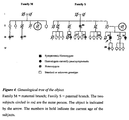
- the Ala673Val mutation was identified in homozygosis in a patient without familiality for dementia, affected by an evolutive psycho-organic syndrome with onset at age 36, with ingravescent memory deficits, planning difficulties and behavioural disturbances ( Figure 4 , III 18).
- the clinical description evolved towards a serious multi-sector cognitive decay, to which involuntary movements are associated of myoclonic type, Parkinsonism and spastic tetraparesis.
- the peptides bonded to the resin were then derivatised at the N-terminal with a lipophile probe (4-dodecylaminocarbonylfluorene-9-ylmethylsuccinimidyl carbonate) according to the method described by Ball et al. (Int J Pept Prot Res 40:370-9, 1992 ) with the modifications introduced by Bonetto et al. (J Biol Chem 277: 31327-34, 2002 ). After separation from the resin, the peptides were purified by means of HPLC, by using a reverse phase column C4 (Waters), obtaining a purity >95%. The identity of the peptides was determined by means of MALDI-TOF spectrometry (Reflex III Brucker Model).
- the peptides wild-type A ⁇ 1-40, mutated A ⁇ 1-40 and samples containing equimolar mixtures of the two were dissolved in 10 mM NaOH and subsequently diluted in 50 mM Tris HCl, pH 7.0, at the final concentration of 0.25 and 0.125 mM. The samples were then incubated at 37°C for 1, 4, 8, 24 hours and 3, 5, 10, 15 and 20 days. For each time, aliquots of the samples were analysed in order to determine the secondary structure, the aggregation, the ultrastructure and the optical-tinctorial properties of the aggregate.
- the variations induced by the mutation of the secondary structure of A ⁇ were investigated by means of Circular Dichroism according to the technique described by Clippingdale et al. (J Pept Sci 5:227-49, 2001 ).
- the peptides were diluted in 150 mM phosphate buffer, pH 7.4, to the final concentration of 100 ⁇ M, and the measurements were conducted with a Jasco-810 spectropolarimeter at a constant 37°C temperature.
- the spectra were acquired by using a 1 mm test tube and a scanning speed of 20 nm/min. After having obtained the spectrum of the buffer solution, the noise was reduced, when required, by using the moving average method.
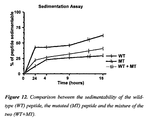
- the aggregation of wild-type A ⁇ 1-40, mutated A ⁇ 1-40 and their equimolar mixture was evaluated by determining the quantity of peptide that could be sedimented with centrifugation. At the different incubation times, 30 ⁇ l aliquots of the samples were centrifuged at 15,000 g for 15 minutes at 4°C. The pellet was solubilised in 25 ⁇ l of pure formic acid, and the solution was injected in HPLC provided with PRLP-S 100 ⁇ column, 4.6 x 150 mm (Labservice Analytica, Polymer Laboratories).
- the elution was made by using as movable phase an eluent A composed of 0.1% TFA in water and an eluent B constituted by 0.08% TFA in acetonitrile, at a flow speed of 0.7 ml/min, applying a 15-60% linear gradient of the eluent B in 20 min.
- the peak corresponding to the peptide was modified by measuring the absorbance of the eluate at 214 nm.
- the quantity of peptide that can be sedimented was calculated as percentage of the total quantity of peptide present in the initial solution.
- the pellets thus obtained were fixed in 2.5% glutaraldehyde in phosphate buffer, pH 7.4, post-fixed in 1% osmium tetroxide, dehydrated in acetone and included in epoxy rein (Spurr, Electron Microscopy Sciences). Ultrafine sections (500 ⁇ ) were collected on copper screens, coloured with uranyl acetate and lead citrate and observed under the electronic microscope.
- the ultrastructural analysis showed that in the first two days of incubation, the wild-type A ⁇ 1-40 peptide forms amorphous aggregates, oligomers and rare filamentous structures. After 48 hours, a short fibril material appears, not ramified, irregular (protofibril), and only after 72 hours of incubation are long rectilinear fibrils observed, of about 8 nm diameters, interposed with amorphous and protofibril material. Subsequently, the density of the fibrils increases and the quantity of amorphous and protofibril material is proportionally increased. Only after 15 days of incubation is most of the material composed of dense fibril networks.
- the aggregation kinetics of the mutated peptide A ⁇ 1-40 were very fast. Indeed, starting from 24 hours of incubation, long, regular fibrils lacking ramifications were present ( Figure 13 ), and after 5 days the sample was constituted by dense fibril networks, without protofibrils and amorphous material. Surprising, the equimolar mixture of the two peptides forms less fibrils not only with respect to the mutated peptide, but also with respect to the wild-type, and after 20 days of incubation most of the aggregates were composed of amorphous material ( Figure 14 ).
- Example 3 Inhibition of the amyloidogenesis by means of synthetic peptides, homologues of the N-terminal region of A ⁇ containing the Ala673Val mutation.
- Example 4 Transfection of cell lines with wild-type human APP , or containing the Ala> Val mutation in position 2 of A ⁇ .
- the Ala>Val mutation in position 2 of A ⁇ was inserted in the cDNA of human APP751 by means of site-specific mutagenesis (QuikChange® XL Site-Directed Mutagenesis Kit, Stratagene) using the oligonucleotides 5'-GATCTCTGAAGTGAAGATGGATGTAGAATTCC-3' and 5'-GTCATGTCGGAATTCTACATCCATCTTCACTT 3'.
- Both the wild-type and mutated form of APP were then amplified by means of PCT, by using the primers 5'-CCCGGATATCGCCACCATGCTGCCCGGTTTGGCAC-3' and 5'-ACCGAAGCTTTGTGGCGGGGGTCTAGTTC-3' (the first containing a site recognised by the restriction enzyme EcoRV, the second with site for the enzyme HindIII), and cloned in the vector pcDNA 3.1, at the restriction sites EcoRV and HindIII.
- the constructs thus produced were further amplified by means of transformation of Top Ten One Shot (Invitrogen) cells, purified by means of the kit Endofree Plasmid Maxi Kit (Qiagen), and used for transfecting COS7 and CHO cells by means of electroporation.
- the efficiency of the transfections was evaluated through the quantification of APP on cell lysates by means of Western blot, using the antibody 22C 11 (Chemicon International Inc.) directed against the N-terminal region of the protein (residues 61-88).
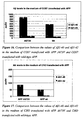
- the APP expression level was used for comparing the levels of A ⁇ production by cells transfected with two constructs.
- Example 5 Generation of transgenic mice, carriers of the Ala>Val mutation in position 2 of A ⁇ .
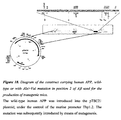
- the cDNA of wild-type APP751 was cloned in the vector pTSC21, containing the promoter murine Thy 1.2 (restriction sites HindIII and EcoRV) ( Figure 18 ).
- the construct was then subjected to site-specific mutagenesis with insertion of the Ala>Val mutation in position 2 of A ⁇ (Stratagene) by means of the same protocol reported for the cell transfections (see Example 4), and it was used for generating transgenic mice starting from the strain G57Bl / 6 . 6 founders (3 male and 3 female) positive for the transgene were obtained, which gave life to three lines which over-express human APP with Ala>Val mutation in position 2 of A ⁇ in the central nervous system.
- mice expressing human APP with mutation 2 of A ⁇ in homozygosis and heterozygosis will be used for pathogenesis studies, diagnosis, prevention and care of Alzheimer's disease and, more in general, of human and/or animal diseases characterised by an anomalous deposition of amyloid and/or amyloid-like substance in organs and tissues.
Landscapes
- Health & Medical Sciences (AREA)
- Life Sciences & Earth Sciences (AREA)
- Chemical & Material Sciences (AREA)
- Engineering & Computer Science (AREA)
- Organic Chemistry (AREA)
- Genetics & Genomics (AREA)
- Zoology (AREA)
- General Health & Medical Sciences (AREA)
- Biotechnology (AREA)
- Wood Science & Technology (AREA)
- Bioinformatics & Cheminformatics (AREA)
- Biomedical Technology (AREA)
- Proteomics, Peptides & Aminoacids (AREA)
- Molecular Biology (AREA)
- Biochemistry (AREA)
- Biophysics (AREA)
- General Engineering & Computer Science (AREA)
- Veterinary Medicine (AREA)
- Physics & Mathematics (AREA)
- Environmental Sciences (AREA)
- Neurology (AREA)
- Analytical Chemistry (AREA)
- Microbiology (AREA)
- Medicinal Chemistry (AREA)
- Animal Behavior & Ethology (AREA)
- Neurosurgery (AREA)
- Toxicology (AREA)
- Plant Pathology (AREA)
- Pathology (AREA)
- Gastroenterology & Hepatology (AREA)
- Biodiversity & Conservation Biology (AREA)
- Animal Husbandry (AREA)
- Immunology (AREA)
- Pharmacology & Pharmacy (AREA)
- Psychiatry (AREA)
- Chemical Kinetics & Catalysis (AREA)
- General Chemical & Material Sciences (AREA)
- Nuclear Medicine, Radiotherapy & Molecular Imaging (AREA)
- Hospice & Palliative Care (AREA)
- Public Health (AREA)
Applications Claiming Priority (2)
| Application Number | Priority Date | Filing Date | Title |
|---|---|---|---|
| IT001975A ITMI20071975A1 (it) | 2007-10-12 | 2007-10-12 | Prodotti e loro uso per la diagnosi prevenzione e-o cura di patologie umane e-o animali caraterizzate dalla anomala deposizione di sostanza b-amiloide e-o similamiloide in organi e tesstui umani e-o animali e metodo di screening per la determinazione |
| PCT/EP2008/008595 WO2009047002A2 (en) | 2007-10-12 | 2008-10-10 | Products and their use for the diagnosis, prevention, and/or care of human and/or animal pathologies characterised by the anomalous deposition of b-amyloid and/or amyloid-like substance in human and/or animal organs and tissues, and screening method for determining the risk of such pathologies |
Publications (2)
| Publication Number | Publication Date |
|---|---|
| EP2220251A2 EP2220251A2 (en) | 2010-08-25 |
| EP2220251B1 true EP2220251B1 (en) | 2016-08-03 |
Family
ID=40313814
Family Applications (1)
| Application Number | Title | Priority Date | Filing Date |
|---|---|---|---|
| EP08838209.8A Active EP2220251B1 (en) | 2007-10-12 | 2008-10-10 | Method for the diagnosis of pathologies characterised by the anomalous deposition of amyloid in organs and tissues by detecting a mutation at position 673 in app770, and vector and peptide for use in the therapy of said pathologies |
Country Status (7)
| Country | Link |
|---|---|
| US (1) | US20110010785A1 (enExample) |
| EP (1) | EP2220251B1 (enExample) |
| JP (1) | JP2011500007A (enExample) |
| CN (1) | CN102037136A (enExample) |
| ES (1) | ES2607897T3 (enExample) |
| IT (1) | ITMI20071975A1 (enExample) |
| WO (1) | WO2009047002A2 (enExample) |
Families Citing this family (13)
| Publication number | Priority date | Publication date | Assignee | Title |
|---|---|---|---|---|
| DE102010001198A1 (de) * | 2010-01-26 | 2011-07-28 | Robert Bosch GmbH, 70469 | Verfahren zur Identifikation von Verbrauchern bzw. Erzeugern in einem pneumatischen, hydraulischen oder elektrischen Netz |
| US9238796B2 (en) | 2010-06-04 | 2016-01-19 | Toagosei Co. Ltd. | Cell growth-promoting peptide and use thereof |
| CN103492415B (zh) | 2011-01-07 | 2017-12-29 | 精工爱普生株式会社 | 针对淀粉状蛋白前体蛋白质的信号肽的抗体 |
| WO2013180011A1 (ja) | 2012-05-28 | 2013-12-05 | 東亞合成株式会社 | 抗菌ペプチド及びその利用 |
| US9480727B2 (en) | 2012-10-18 | 2016-11-01 | Toagosei Co. Ltd. | Synthetic peptide for inhibiting expression of type 2 TNF receptor and use thereof |
| CN102943126A (zh) * | 2012-12-12 | 2013-02-27 | 芮屈生物技术(上海)有限公司 | 老年性痴呆病变前期APP基因mRNA水平原位杂交筛查试剂盒及筛查方法和应用 |
| DE102013201324B4 (de) | 2013-01-28 | 2024-05-16 | Aktiebolaget Skf | Verfahren zum Bestimmen einer Lagervorspannung |
| CN106574930B (zh) * | 2014-05-22 | 2019-09-03 | 株式会社岛津制作所 | 评价脑内的淀粉样蛋白β肽蓄积状态的替代性生物标记物和其分析方法 |
| US20160011616A1 (en) * | 2014-07-11 | 2016-01-14 | Microsoft Technology Licensing, Llc | Power management |
| WO2016172955A1 (zh) * | 2015-04-30 | 2016-11-03 | 江苏挪贝肽医药科技有限公司 | 一种筛选用于治疗阿尔茨海默病的药物和治疗靶点的方法 |
| CN109776665B (zh) * | 2019-02-02 | 2021-02-05 | 首都医科大学宣武医院 | 阿尔茨海默病新突变、其稳转细胞模型及医药用途 |
| IT201900010722A1 (it) * | 2019-07-02 | 2021-01-02 | Fondazione Irccs St Neurologico Carlo Besta | Composto e composizione per il trattamento multi-obiettivo di disturbi legati alla proteina tau |
| JP2024500768A (ja) * | 2020-12-18 | 2024-01-10 | ベイラー カレッジ オブ メディスン | 凝集抑制のためのAβ変異体の伝達 |
Citations (1)
| Publication number | Priority date | Publication date | Assignee | Title |
|---|---|---|---|---|
| WO2004099376A2 (en) * | 2003-04-30 | 2004-11-18 | Merck & Co., Inc. | Assays using amyloid precursor proteins with modified beta-secretase cleavage sites to monitor beta-secretase activity |
Family Cites Families (4)
| Publication number | Priority date | Publication date | Assignee | Title |
|---|---|---|---|---|
| US6787523B1 (en) * | 1997-12-02 | 2004-09-07 | Neuralab Limited | Prevention and treatment of amyloidogenic disease |
| US20050106731A1 (en) * | 2002-08-05 | 2005-05-19 | Davidson Beverly L. | siRNA-mediated gene silencing with viral vectors |
| EP1879613B1 (en) * | 2005-05-05 | 2011-11-30 | Merck Sharp & Dohme Corp. | Peptide conjugate compositions and methods for the prevention and treatment of alzheimer's disease |
| MX2008006957A (es) * | 2005-11-30 | 2008-10-20 | Abbott Lab | Metodos para la preparacion de formas recombinantes de proteina beta-amiloide humana y usos de estas proteinas. |
-
2007
- 2007-10-12 IT IT001975A patent/ITMI20071975A1/it unknown
-
2008
- 2008-10-10 US US12/682,578 patent/US20110010785A1/en not_active Abandoned
- 2008-10-10 WO PCT/EP2008/008595 patent/WO2009047002A2/en not_active Ceased
- 2008-10-10 EP EP08838209.8A patent/EP2220251B1/en active Active
- 2008-10-10 CN CN2008801213173A patent/CN102037136A/zh active Pending
- 2008-10-10 ES ES08838209.8T patent/ES2607897T3/es active Active
- 2008-10-10 JP JP2010528323A patent/JP2011500007A/ja active Pending
Patent Citations (1)
| Publication number | Priority date | Publication date | Assignee | Title |
|---|---|---|---|---|
| WO2004099376A2 (en) * | 2003-04-30 | 2004-11-18 | Merck & Co., Inc. | Assays using amyloid precursor proteins with modified beta-secretase cleavage sites to monitor beta-secretase activity |
Also Published As
| Publication number | Publication date |
|---|---|
| WO2009047002A2 (en) | 2009-04-16 |
| EP2220251A2 (en) | 2010-08-25 |
| JP2011500007A (ja) | 2011-01-06 |
| ITMI20071975A1 (it) | 2009-04-13 |
| US20110010785A1 (en) | 2011-01-13 |
| CN102037136A (zh) | 2011-04-27 |
| WO2009047002A3 (en) | 2009-08-06 |
| ES2607897T3 (es) | 2017-04-04 |
Similar Documents
| Publication | Publication Date | Title |
|---|---|---|
| EP2220251B1 (en) | Method for the diagnosis of pathologies characterised by the anomalous deposition of amyloid in organs and tissues by detecting a mutation at position 673 in app770, and vector and peptide for use in the therapy of said pathologies | |
| Lim et al. | FTDP-17 mutations in tau transgenic mice provoke lysosomal abnormalities and Tau filaments in forebrain | |
| Kovacs et al. | Alzheimer–associated presenilins 1 and 2: neuronal expression in brain and localization to intracellular membranes in mammalian cells | |
| Borchelt et al. | Familial Alzheimer's disease–linked presenilin 1 variants elevate Aβ1–42/1–40 ratio in vitro and in vivo | |
| US7276643B2 (en) | Transgenic animals, cell lines derived therefrom, and methods for screening for anti-amyloidogenic agents | |
| JP2000506375A (ja) | アルツハイマー病に関連する核酸およびタンパク質、ならびにその使用 | |
| EP0561087B1 (en) | Mutated form of the beta-amyloid precursor protein gene | |
| EP3066203B2 (en) | New alzheimer's disease animal model | |
| JP4969006B2 (ja) | 神経細胞死を抑制するポリペプチド、Humanin | |
| Brunner et al. | Cone versus rod disease in a mutant Rpgr mouse caused by different genetic backgrounds | |
| WO2000071671A2 (en) | New mutant genes in familial british dementia and familial danish dementia | |
| US6452065B2 (en) | Transgenic mouse expressing non-native wild-type and familial Alzheimer's Disease mutant presenilin 1 protein on native presenilin 1 null background | |
| US5525714A (en) | Mutated form of the β-amyloid precursor protein gene | |
| JP2000516087A (ja) | アルツハイマー病に関連する遺伝子配列およびタンパク質、ならびにその使用 | |
| Renbaum et al. | Monogenic determinants of familial Alzheimer's disease: presenilin-2 mutations | |
| US6207878B1 (en) | Sarcospan-deficient mouse as a model for clinical disorders associated with sarcospan mutations | |
| Carlesi et al. | Amyotrophic lateral sclerosis: a genetic point of view | |
| US7446239B2 (en) | SCA2 knockout animal and methods of use | |
| Guo et al. | Par-4 in neuronal death and survival in Alzheimer’s disease and other neurogenerative diseases | |
| JP4018304B2 (ja) | 高親和性コリントランスポーター | |
| KR100699453B1 (ko) | 신경퇴행성 질환용 모델로서의 형질전환 동물 | |
| Sollazzo | Unravelling pathological Ataxin-3 aggregation: new insights from and for in vitro studies | |
| EP1661577A1 (en) | Therapeutic preparation for hematopoietic disease | |
| Trojanowski et al. | Tau and a-Synuclein in Neurodegenerative Diseases | |
| Naseri | Rodent Models of Amyotrophic Lateral Sclerosis |
Legal Events
| Date | Code | Title | Description |
|---|---|---|---|
| PUAI | Public reference made under article 153(3) epc to a published international application that has entered the european phase |
Free format text: ORIGINAL CODE: 0009012 |
|
| 17P | Request for examination filed |
Effective date: 20100510 |
|
| AK | Designated contracting states |
Kind code of ref document: A2 Designated state(s): AT BE BG CH CY CZ DE DK EE ES FI FR GB GR HR HU IE IS IT LI LT LU LV MC MT NL NO PL PT RO SE SI SK TR |
|
| AX | Request for extension of the european patent |
Extension state: AL BA MK RS |
|
| DAX | Request for extension of the european patent (deleted) | ||
| 17Q | First examination report despatched |
Effective date: 20130320 |
|
| GRAP | Despatch of communication of intention to grant a patent |
Free format text: ORIGINAL CODE: EPIDOSNIGR1 |
|
| INTG | Intention to grant announced |
Effective date: 20160302 |
|
| GRAS | Grant fee paid |
Free format text: ORIGINAL CODE: EPIDOSNIGR3 |
|
| GRAA | (expected) grant |
Free format text: ORIGINAL CODE: 0009210 |
|
| AK | Designated contracting states |
Kind code of ref document: B1 Designated state(s): AT BE BG CH CY CZ DE DK EE ES FI FR GB GR HR HU IE IS IT LI LT LU LV MC MT NL NO PL PT RO SE SI SK TR |
|
| REG | Reference to a national code |
Ref country code: GB Ref legal event code: FG4D |
|
| REG | Reference to a national code |
Ref country code: CH Ref legal event code: EP Ref country code: AT Ref legal event code: REF Ref document number: 817379 Country of ref document: AT Kind code of ref document: T Effective date: 20160815 |
|
| REG | Reference to a national code |
Ref country code: IE Ref legal event code: FG4D |
|
| REG | Reference to a national code |
Ref country code: DE Ref legal event code: R096 Ref document number: 602008045460 Country of ref document: DE |
|
| REG | Reference to a national code |
Ref country code: FR Ref legal event code: PLFP Year of fee payment: 9 |
|
| REG | Reference to a national code |
Ref country code: NL Ref legal event code: MP Effective date: 20160803 |
|
| REG | Reference to a national code |
Ref country code: LT Ref legal event code: MG4D |
|
| REG | Reference to a national code |
Ref country code: CH Ref legal event code: NV Representative=s name: ING. MARCO ZARDI C/O M. ZARDI AND CO. S.A., CH |
|
| REG | Reference to a national code |
Ref country code: AT Ref legal event code: MK05 Ref document number: 817379 Country of ref document: AT Kind code of ref document: T Effective date: 20160803 |
|
| PG25 | Lapsed in a contracting state [announced via postgrant information from national office to epo] |
Ref country code: IS Free format text: LAPSE BECAUSE OF FAILURE TO SUBMIT A TRANSLATION OF THE DESCRIPTION OR TO PAY THE FEE WITHIN THE PRESCRIBED TIME-LIMIT Effective date: 20161203 Ref country code: LT Free format text: LAPSE BECAUSE OF FAILURE TO SUBMIT A TRANSLATION OF THE DESCRIPTION OR TO PAY THE FEE WITHIN THE PRESCRIBED TIME-LIMIT Effective date: 20160803 Ref country code: NL Free format text: LAPSE BECAUSE OF FAILURE TO SUBMIT A TRANSLATION OF THE DESCRIPTION OR TO PAY THE FEE WITHIN THE PRESCRIBED TIME-LIMIT Effective date: 20160803 Ref country code: FI Free format text: LAPSE BECAUSE OF FAILURE TO SUBMIT A TRANSLATION OF THE DESCRIPTION OR TO PAY THE FEE WITHIN THE PRESCRIBED TIME-LIMIT Effective date: 20160803 Ref country code: HR Free format text: LAPSE BECAUSE OF FAILURE TO SUBMIT A TRANSLATION OF THE DESCRIPTION OR TO PAY THE FEE WITHIN THE PRESCRIBED TIME-LIMIT Effective date: 20160803 Ref country code: NO Free format text: LAPSE BECAUSE OF FAILURE TO SUBMIT A TRANSLATION OF THE DESCRIPTION OR TO PAY THE FEE WITHIN THE PRESCRIBED TIME-LIMIT Effective date: 20161103 |
|
| PG25 | Lapsed in a contracting state [announced via postgrant information from national office to epo] |
Ref country code: PT Free format text: LAPSE BECAUSE OF FAILURE TO SUBMIT A TRANSLATION OF THE DESCRIPTION OR TO PAY THE FEE WITHIN THE PRESCRIBED TIME-LIMIT Effective date: 20161205 Ref country code: LV Free format text: LAPSE BECAUSE OF FAILURE TO SUBMIT A TRANSLATION OF THE DESCRIPTION OR TO PAY THE FEE WITHIN THE PRESCRIBED TIME-LIMIT Effective date: 20160803 Ref country code: SE Free format text: LAPSE BECAUSE OF FAILURE TO SUBMIT A TRANSLATION OF THE DESCRIPTION OR TO PAY THE FEE WITHIN THE PRESCRIBED TIME-LIMIT Effective date: 20160803 Ref country code: BE Free format text: LAPSE BECAUSE OF NON-PAYMENT OF DUE FEES Effective date: 20161031 Ref country code: AT Free format text: LAPSE BECAUSE OF FAILURE TO SUBMIT A TRANSLATION OF THE DESCRIPTION OR TO PAY THE FEE WITHIN THE PRESCRIBED TIME-LIMIT Effective date: 20160803 Ref country code: PL Free format text: LAPSE BECAUSE OF FAILURE TO SUBMIT A TRANSLATION OF THE DESCRIPTION OR TO PAY THE FEE WITHIN THE PRESCRIBED TIME-LIMIT Effective date: 20160803 Ref country code: GR Free format text: LAPSE BECAUSE OF FAILURE TO SUBMIT A TRANSLATION OF THE DESCRIPTION OR TO PAY THE FEE WITHIN THE PRESCRIBED TIME-LIMIT Effective date: 20161104 |
|
| PG25 | Lapsed in a contracting state [announced via postgrant information from national office to epo] |
Ref country code: EE Free format text: LAPSE BECAUSE OF FAILURE TO SUBMIT A TRANSLATION OF THE DESCRIPTION OR TO PAY THE FEE WITHIN THE PRESCRIBED TIME-LIMIT Effective date: 20160803 Ref country code: RO Free format text: LAPSE BECAUSE OF FAILURE TO SUBMIT A TRANSLATION OF THE DESCRIPTION OR TO PAY THE FEE WITHIN THE PRESCRIBED TIME-LIMIT Effective date: 20160803 |
|
| REG | Reference to a national code |
Ref country code: DE Ref legal event code: R097 Ref document number: 602008045460 Country of ref document: DE |
|
| PG25 | Lapsed in a contracting state [announced via postgrant information from national office to epo] |
Ref country code: DK Free format text: LAPSE BECAUSE OF FAILURE TO SUBMIT A TRANSLATION OF THE DESCRIPTION OR TO PAY THE FEE WITHIN THE PRESCRIBED TIME-LIMIT Effective date: 20160803 Ref country code: BE Free format text: LAPSE BECAUSE OF FAILURE TO SUBMIT A TRANSLATION OF THE DESCRIPTION OR TO PAY THE FEE WITHIN THE PRESCRIBED TIME-LIMIT Effective date: 20160803 Ref country code: BG Free format text: LAPSE BECAUSE OF FAILURE TO SUBMIT A TRANSLATION OF THE DESCRIPTION OR TO PAY THE FEE WITHIN THE PRESCRIBED TIME-LIMIT Effective date: 20161103 Ref country code: SK Free format text: LAPSE BECAUSE OF FAILURE TO SUBMIT A TRANSLATION OF THE DESCRIPTION OR TO PAY THE FEE WITHIN THE PRESCRIBED TIME-LIMIT Effective date: 20160803 Ref country code: CZ Free format text: LAPSE BECAUSE OF FAILURE TO SUBMIT A TRANSLATION OF THE DESCRIPTION OR TO PAY THE FEE WITHIN THE PRESCRIBED TIME-LIMIT Effective date: 20160803 |
|
| PLBE | No opposition filed within time limit |
Free format text: ORIGINAL CODE: 0009261 |
|
| STAA | Information on the status of an ep patent application or granted ep patent |
Free format text: STATUS: NO OPPOSITION FILED WITHIN TIME LIMIT |
|
| 26N | No opposition filed |
Effective date: 20170504 |
|
| REG | Reference to a national code |
Ref country code: IE Ref legal event code: MM4A |
|
| PG25 | Lapsed in a contracting state [announced via postgrant information from national office to epo] |
Ref country code: SI Free format text: LAPSE BECAUSE OF FAILURE TO SUBMIT A TRANSLATION OF THE DESCRIPTION OR TO PAY THE FEE WITHIN THE PRESCRIBED TIME-LIMIT Effective date: 20160803 Ref country code: LU Free format text: LAPSE BECAUSE OF NON-PAYMENT OF DUE FEES Effective date: 20161010 |
|
| REG | Reference to a national code |
Ref country code: FR Ref legal event code: PLFP Year of fee payment: 10 |
|
| PG25 | Lapsed in a contracting state [announced via postgrant information from national office to epo] |
Ref country code: IE Free format text: LAPSE BECAUSE OF NON-PAYMENT OF DUE FEES Effective date: 20161010 |
|
| PG25 | Lapsed in a contracting state [announced via postgrant information from national office to epo] |
Ref country code: HU Free format text: LAPSE BECAUSE OF FAILURE TO SUBMIT A TRANSLATION OF THE DESCRIPTION OR TO PAY THE FEE WITHIN THE PRESCRIBED TIME-LIMIT; INVALID AB INITIO Effective date: 20081010 Ref country code: CY Free format text: LAPSE BECAUSE OF FAILURE TO SUBMIT A TRANSLATION OF THE DESCRIPTION OR TO PAY THE FEE WITHIN THE PRESCRIBED TIME-LIMIT Effective date: 20160803 |
|
| PG25 | Lapsed in a contracting state [announced via postgrant information from national office to epo] |
Ref country code: TR Free format text: LAPSE BECAUSE OF FAILURE TO SUBMIT A TRANSLATION OF THE DESCRIPTION OR TO PAY THE FEE WITHIN THE PRESCRIBED TIME-LIMIT Effective date: 20160803 Ref country code: MT Free format text: LAPSE BECAUSE OF NON-PAYMENT OF DUE FEES Effective date: 20161031 Ref country code: MC Free format text: LAPSE BECAUSE OF FAILURE TO SUBMIT A TRANSLATION OF THE DESCRIPTION OR TO PAY THE FEE WITHIN THE PRESCRIBED TIME-LIMIT Effective date: 20160803 |
|
| REG | Reference to a national code |
Ref country code: FR Ref legal event code: PLFP Year of fee payment: 11 |
|
| PGFP | Annual fee paid to national office [announced via postgrant information from national office to epo] |
Ref country code: GB Payment date: 20250923 Year of fee payment: 18 |
|
| PGFP | Annual fee paid to national office [announced via postgrant information from national office to epo] |
Ref country code: FR Payment date: 20250924 Year of fee payment: 18 |
|
| REG | Reference to a national code |
Ref country code: CH Ref legal event code: U11 Free format text: ST27 STATUS EVENT CODE: U-0-0-U10-U11 (AS PROVIDED BY THE NATIONAL OFFICE) Effective date: 20251101 |
|
| PGFP | Annual fee paid to national office [announced via postgrant information from national office to epo] |
Ref country code: DE Payment date: 20250923 Year of fee payment: 18 |
|
| PGFP | Annual fee paid to national office [announced via postgrant information from national office to epo] |
Ref country code: IT Payment date: 20251022 Year of fee payment: 18 |
|
| PGFP | Annual fee paid to national office [announced via postgrant information from national office to epo] |
Ref country code: CH Payment date: 20251101 Year of fee payment: 18 |
|
| PGFP | Annual fee paid to national office [announced via postgrant information from national office to epo] |
Ref country code: ES Payment date: 20251103 Year of fee payment: 18 |