EP2219635B1 - Verfahren zur hemmung einer bakterienvirulenz und verbindungen in zusammenhang damit - Google Patents
Verfahren zur hemmung einer bakterienvirulenz und verbindungen in zusammenhang damit Download PDFInfo
- Publication number
- EP2219635B1 EP2219635B1 EP08869557.2A EP08869557A EP2219635B1 EP 2219635 B1 EP2219635 B1 EP 2219635B1 EP 08869557 A EP08869557 A EP 08869557A EP 2219635 B1 EP2219635 B1 EP 2219635B1
- Authority
- EP
- European Patent Office
- Prior art keywords
- compound
- alkyl
- qsec
- carbon atoms
- coli
- Prior art date
- Legal status (The legal status is an assumption and is not a legal conclusion. Google has not performed a legal analysis and makes no representation as to the accuracy of the status listed.)
- Not-in-force
Links
- 0 CCC(C)OCC*OCCOCCOCCOC(N*)=O Chemical compound CCC(C)OCC*OCCOCCOCCOC(N*)=O 0.000 description 4
- PCJNUVYBQHQATG-UHFFFAOYSA-N CC(CC1)CC1C1(C2)C2C1 Chemical compound CC(CC1)CC1C1(C2)C2C1 PCJNUVYBQHQATG-UHFFFAOYSA-N 0.000 description 1
- PALNJEZOLGBTEI-UHFFFAOYSA-N CC(CC1)CC1C1C2C1CCCC2 Chemical compound CC(CC1)CC1C1C2C1CCCC2 PALNJEZOLGBTEI-UHFFFAOYSA-N 0.000 description 1
- FMDGXCSMDZMDHZ-UHFFFAOYSA-N COc(cc1)ccc1N=C=O Chemical compound COc(cc1)ccc1N=C=O FMDGXCSMDZMDHZ-UHFFFAOYSA-N 0.000 description 1
- XJSFHUPJOBAKHV-UHFFFAOYSA-N COc(cc1)ccc1NC(Nc(cc1)ccc1NS(c1ccccc1)(=O)=O)=O Chemical compound COc(cc1)ccc1NC(Nc(cc1)ccc1NS(c1ccccc1)(=O)=O)=O XJSFHUPJOBAKHV-UHFFFAOYSA-N 0.000 description 1
- IDPURXSQCKYKIJ-UHFFFAOYSA-N COc1ccc(CN)cc1 Chemical compound COc1ccc(CN)cc1 IDPURXSQCKYKIJ-UHFFFAOYSA-N 0.000 description 1
- ZTGLMWWLYYWMSE-UHFFFAOYSA-N COc1ccc(CNC(c(cc2)ccc2S(Nc2ccccc2)(=O)=O)=O)cc1 Chemical compound COc1ccc(CNC(c(cc2)ccc2S(Nc2ccccc2)(=O)=O)=O)cc1 ZTGLMWWLYYWMSE-UHFFFAOYSA-N 0.000 description 1
- UGLIOSUKEZPTCF-UHFFFAOYSA-N Nc(cc1)ccc1NS(c1ccccc1)(=O)=O Chemical compound Nc(cc1)ccc1NS(c1ccccc1)(=O)=O UGLIOSUKEZPTCF-UHFFFAOYSA-N 0.000 description 1
- YBUXKQSCKVQATK-UHFFFAOYSA-N Nc(cc1)ccc1S(Nc1ccccc1)(=O)=O Chemical compound Nc(cc1)ccc1S(Nc1ccccc1)(=O)=O YBUXKQSCKVQATK-UHFFFAOYSA-N 0.000 description 1
- JQWARSLSSFVIKH-UHFFFAOYSA-N O=C(Nc(cc1)ccc1OC(F)(F)F)Nc(cc1)ccc1S(Nc1ccccc1)(=O)=O Chemical compound O=C(Nc(cc1)ccc1OC(F)(F)F)Nc(cc1)ccc1S(Nc1ccccc1)(=O)=O JQWARSLSSFVIKH-UHFFFAOYSA-N 0.000 description 1
- LGPKFIGMLPDYEA-UHFFFAOYSA-N O=C=Nc(cc1)ccc1OC(F)(F)F Chemical compound O=C=Nc(cc1)ccc1OC(F)(F)F LGPKFIGMLPDYEA-UHFFFAOYSA-N 0.000 description 1
- VBHMNFAJRPEJAS-UHFFFAOYSA-N [O-][N+](c(cc1)ccc1OC(c(cc1)ccc1S(Nc1ccccc1)(=O)=O)=O)=O Chemical compound [O-][N+](c(cc1)ccc1OC(c(cc1)ccc1S(Nc1ccccc1)(=O)=O)=O)=O VBHMNFAJRPEJAS-UHFFFAOYSA-N 0.000 description 1
Images









Classifications
-
- A—HUMAN NECESSITIES
- A61—MEDICAL OR VETERINARY SCIENCE; HYGIENE
- A61K—PREPARATIONS FOR MEDICAL, DENTAL OR TOILETRY PURPOSES
- A61K31/00—Medicinal preparations containing organic active ingredients
- A61K31/16—Amides, e.g. hydroxamic acids
- A61K31/17—Amides, e.g. hydroxamic acids having the group >N—C(O)—N< or >N—C(S)—N<, e.g. urea, thiourea, carmustine
-
- A—HUMAN NECESSITIES
- A61—MEDICAL OR VETERINARY SCIENCE; HYGIENE
- A61K—PREPARATIONS FOR MEDICAL, DENTAL OR TOILETRY PURPOSES
- A61K31/00—Medicinal preparations containing organic active ingredients
- A61K31/16—Amides, e.g. hydroxamic acids
- A61K31/18—Sulfonamides
-
- A—HUMAN NECESSITIES
- A61—MEDICAL OR VETERINARY SCIENCE; HYGIENE
- A61K—PREPARATIONS FOR MEDICAL, DENTAL OR TOILETRY PURPOSES
- A61K31/00—Medicinal preparations containing organic active ingredients
- A61K31/33—Heterocyclic compounds
- A61K31/395—Heterocyclic compounds having nitrogen as a ring hetero atom, e.g. guanethidine or rifamycins
- A61K31/435—Heterocyclic compounds having nitrogen as a ring hetero atom, e.g. guanethidine or rifamycins having six-membered rings with one nitrogen as the only ring hetero atom
- A61K31/44—Non condensed pyridines; Hydrogenated derivatives thereof
- A61K31/4406—Non condensed pyridines; Hydrogenated derivatives thereof only substituted in position 3, e.g. zimeldine
-
- A—HUMAN NECESSITIES
- A61—MEDICAL OR VETERINARY SCIENCE; HYGIENE
- A61K—PREPARATIONS FOR MEDICAL, DENTAL OR TOILETRY PURPOSES
- A61K31/00—Medicinal preparations containing organic active ingredients
- A61K31/63—Compounds containing para-N-benzenesulfonyl-N-groups, e.g. sulfanilamide, p-nitrobenzenesulfonyl hydrazide
-
- A—HUMAN NECESSITIES
- A61—MEDICAL OR VETERINARY SCIENCE; HYGIENE
- A61K—PREPARATIONS FOR MEDICAL, DENTAL OR TOILETRY PURPOSES
- A61K31/00—Medicinal preparations containing organic active ingredients
- A61K31/63—Compounds containing para-N-benzenesulfonyl-N-groups, e.g. sulfanilamide, p-nitrobenzenesulfonyl hydrazide
- A61K31/635—Compounds containing para-N-benzenesulfonyl-N-groups, e.g. sulfanilamide, p-nitrobenzenesulfonyl hydrazide having a heterocyclic ring, e.g. sulfadiazine
-
- A—HUMAN NECESSITIES
- A61—MEDICAL OR VETERINARY SCIENCE; HYGIENE
- A61K—PREPARATIONS FOR MEDICAL, DENTAL OR TOILETRY PURPOSES
- A61K47/00—Medicinal preparations characterised by the non-active ingredients used, e.g. carriers or inert additives; Targeting or modifying agents chemically bound to the active ingredient
- A61K47/50—Medicinal preparations characterised by the non-active ingredients used, e.g. carriers or inert additives; Targeting or modifying agents chemically bound to the active ingredient the non-active ingredient being chemically bound to the active ingredient, e.g. polymer-drug conjugates
-
- A—HUMAN NECESSITIES
- A61—MEDICAL OR VETERINARY SCIENCE; HYGIENE
- A61P—SPECIFIC THERAPEUTIC ACTIVITY OF CHEMICAL COMPOUNDS OR MEDICINAL PREPARATIONS
- A61P31/00—Antiinfectives, i.e. antibiotics, antiseptics, chemotherapeutics
- A61P31/04—Antibacterial agents
-
- C—CHEMISTRY; METALLURGY
- C07—ORGANIC CHEMISTRY
- C07C—ACYCLIC OR CARBOCYCLIC COMPOUNDS
- C07C311/00—Amides of sulfonic acids, i.e. compounds having singly-bound oxygen atoms of sulfo groups replaced by nitrogen atoms, not being part of nitro or nitroso groups
- C07C311/30—Sulfonamides, the carbon skeleton of the acid part being further substituted by singly-bound nitrogen atoms, not being part of nitro or nitroso groups
- C07C311/45—Sulfonamides, the carbon skeleton of the acid part being further substituted by singly-bound nitrogen atoms, not being part of nitro or nitroso groups at least one of the singly-bound nitrogen atoms being part of any of the groups, X being a hetero atom, Y being any atom, e.g. N-acylaminosulfonamides
- C07C311/47—Y being a hetero atom
-
- C—CHEMISTRY; METALLURGY
- C07—ORGANIC CHEMISTRY
- C07C—ACYCLIC OR CARBOCYCLIC COMPOUNDS
- C07C2602/00—Systems containing two condensed rings
- C07C2602/02—Systems containing two condensed rings the rings having only two atoms in common
- C07C2602/04—One of the condensed rings being a six-membered aromatic ring
- C07C2602/08—One of the condensed rings being a six-membered aromatic ring the other ring being five-membered, e.g. indane
-
- Y—GENERAL TAGGING OF NEW TECHNOLOGICAL DEVELOPMENTS; GENERAL TAGGING OF CROSS-SECTIONAL TECHNOLOGIES SPANNING OVER SEVERAL SECTIONS OF THE IPC; TECHNICAL SUBJECTS COVERED BY FORMER USPC CROSS-REFERENCE ART COLLECTIONS [XRACs] AND DIGESTS
- Y02—TECHNOLOGIES OR APPLICATIONS FOR MITIGATION OR ADAPTATION AGAINST CLIMATE CHANGE
- Y02A—TECHNOLOGIES FOR ADAPTATION TO CLIMATE CHANGE
- Y02A50/00—TECHNOLOGIES FOR ADAPTATION TO CLIMATE CHANGE in human health protection, e.g. against extreme weather
- Y02A50/30—Against vector-borne diseases, e.g. mosquito-borne, fly-borne, tick-borne or waterborne diseases whose impact is exacerbated by climate change
Definitions
- the present invention generally relates to the fields of bacteriology and infectious diseases. More specifically, it relates to inhibitors of certain bacterial signaling mechanisms and bacterial infection treatments using these inhibitors.
- Treatment of bacterial infections typically involves administration of one or more antibiotics. These agents, while often initially effective, may cause development of bacterial resistance to one or more types of antibiotics. Indeed, multi-drug resistant bacterial infections are a significant health concern throughout the world. Treatment methods that effectively eliminate bacterial infections without inducing bacterial resistance are therefore needed.
- Quorum sensing is a mechanism that allows bacteria to respond to hormone-like molecules called autoinducers (AI) and is responsible for controlling a plethora of virulence genes in several bacterial pathogens. Because QS is not directly involved in essential processes such as growth of the bacteria, inhibition of QS should not yield a selective pressure for development of resistance (Rasmussen and Givskov, 2006).
- EHEC enterohemorrhagic E. coli O157:H7
- AI-3 autoinducer-3
- the AI-3/epinephrine (epi)/norepinephrine (NE) inter-kingdom signaling cascade activates expression of the flagella regulon (necessary for the bacteria to swim through the mucus layer, and reach the epithelial barriers), the LEE genes (encodes a specialized secretory pathway, through which bacteria secrete toxins to the mammalian cells, which culminate in diarrhea) and Shiga toxin genes (responsible for hemolytic uremic syndrome (HUS)) in EHEC (Sperandio et al ., 2003; Clarke et al ., 2006; Walters et al ., 2006).
- HUS hemolytic uremic syndrome
- AI-3 and epinephrine/NE are agonistic signals, and response to both signals can be blocked by adrenergic antagonists such as phentolamine or propranolol (Sperandio et al ., 2003; Clarke et al ., 2006; Walters et al ., 2006; Walter and Sperandio, 2006).
- adrenergic antagonists such as phentolamine or propranolol
- QseC specifically senses AI-3/epinephrine and NE to augment its phosphorylation state, and that QseC directly binds to NE (Clarke et al ., 2006). QseC's recognition of these signals can be blocked with the ⁇ -adrenergic antagonist phentolamine (Clarke et al ., 2006).
- the QseC regulon is very complex and is intrinsically involved in the regulation of all known, and potentially several unknown, EHEC virulence genes.
- Manipulation of QseC and/or the AI-3/epi/NE signaling cascade may offer a means of controlling bacterial virulence and thus, bacterial infections. Such means may minimize the probability of inducing bacterial resistance relative to conventional antibiotics. Agents that modulate these systems therefore merit investigation.
- WO 02/070467 discloses a compound similar to the compound of formula (III) for use of present invention which is used in the treatment of bacterial infections as e.g. Lyme disease. Said compound differs from the compound of formula (III) for use of the present invention in that R bears an amide function.
- thiourea derivatives structurally related to the compound of formula (III) for use of the present invention.
- said thiourea derivatives differ structurally and functionally from the compound of the present invention in that amongst others the NH2 hydrogens in the ring system are replaced by an electronwithdrawing hetero aromatic ring system.
- the present invention is based on the discovery that certain compounds inhibit bacterial virulence by interfering with bacterial host communication. In general, these compounds do not kill or inhibit bacterial growth, but instead interfere with the bacteria's ability to recognize signals to activate its virulence genes. This is a novel strategy to fight bacterial infection: instead of "attacking" the bacterial cell, these compounds "confuse” communication to render the cell “blind” to the host. Because this strategy does not attack the bacteria per se as do conventional antibiotics, the evolutionary pressure for bacteria to evolve resistance mechanisms to this type of treatment is low. This approach has broad applicability as it is useful not only for certain mammalian bacterial pathogens, but also certain plant bacterial pathogens, such as Erwinia and Ralstonia.
- compounds for use of the present invention may be applied in any number of medical (e . g ., infection treatment), agricultural (e . g ., plant disease eradication), or environmental (e . g ., elimination of environmentally destructive species) purposes.
- medical e . g ., infection treatment
- agricultural e . g ., plant disease eradication
- environmental e . g ., elimination of environmentally destructive species
- compounds for use of the present invention may, in certain embodiments, be inhibitors of quorum sensing that would otherwise lead to pathogenesis or virulence.
- compounds for use of the present invention in certain embodiments, inhibit virulence.
- Compounds for use of the present invention may, in certain embodiments, be inhibitors of AI-3/epinephrine/NE signaling, such as in EHEC, Salmonella and F. tularensis pathogenesis.
- AI-3/epinephrine/NE signaling such as in EHEC, Salmonella and F. tularensis pathogenesis.
- compounds for use of the present invention inhibit Shiga toxin production.
- the compounds for use of the present invention inhibit QseC (Quorum sensing E. coli regulator C), a histidine sensor kinase.
- compounds for use of the present invention may also be used to treat infections in plants.
- compounds for use of the present invention inhibit virulence but do not kill bacteria ( ie. , they are not bacteriocidal) nor are they bacteriostatic.
- Other embodiments of the present invention are described herein.
- the present invention relates to a compound of formula (III): wherein Q, R, C, D, T and U are each independently H, substituted alkyl, or unsubstituted alkyl, preferably unsubstituted alkyl having 1 to 6 carbon atoms, -NH 2 ,-CH 2 NH 2 , -CH 2 NH-(alkyl having) 1 to 6 carbon atoms), a polymer tail, a polymer backbone, or a linker-polymer backbone; and K is S, or O, wherein for substituted alkyl the substituted alkyl group is selected from the group consisting of: trifluoromethyl, -CH 2 F, -CH 2 Cl, -CH 2 Br, -CH 2 OH, -CH 2 OCH 3 , -CH 2 OCH 2 CF 3 , -CH 2 OC(O)CH 3 , - CH 2 NH 2 , -CH 2 NH-(alkyl having 1 to 6 carbon atom
- the invention also relates to the use of a compound of formula (III): wherein Q, R, C, D, T, and U are each independently H, substituted alkyl, or unsubstituted alkyl, preferably unsubstituted alkyl having 1 to 6 carbon atoms, -NH 2 ,--CH 2 NH 2 , -CH 2 NH-(alkyl having 1 to 6 carbon atoms), a polymer tail, a polymer backbone, or a linker-polymer backbone; and K is S or O; wherein for substituted alkyl the substituted alkyl group is selected from the group consisting of:
- Any compound for use of the present invention may be administered to a subject via any method known to those of skill in the art.
- a compound for use of the present invention is administered orally. Dosage amounts are described elsewhere in this application, but in certain embodiments, a compound for use of the present invention is administered in an amount of about 0.1 to about 50 mg/kg body weight. In certain embodiments, a compound for use of the present invention is administered in an amount of about 10 to about 30 mg/kg body weight.
- Compounds for use of the present invention may also be administered via inhalation, intraperitoneally, intravenously, intramuscularly, rectally, buccally ( e.g ., via a mouth wash), transdermally, vaginally, or via eye or ear drops.
- bioavailable compounds for use of the present invention exhibiting a calculated water solubility of less than 1 mg/mL are preferred. Such values may be calculated by known in silico methods (e.g., BenchwareTM HTS DataMiner, Tripos, Inc.).
- a compound for use of the present invention is comprised in a composition, such as a pharmaceutically acceptable composition, that is nonabsorbable.
- a nonabsorbable composition is one that is not, for the most part, absorbed by the body or any particular part of the body. That is, such compositions are not absorbed or metabolized by the body in any meaningful manner or to any meaningful degree.
- a compound is nonabsorbable from the gut, lumen of the GI tract, the nasal passage, the mouth cavity, the skin, the ear canal, and/or the vagina.
- Such compositions may be useful for targeting infections in the gut, for example ( e .g. , certain stages of Salmonella or EHEC infections), the ear ( e . g ., Haemophilus influenzae ) or the vagina ( e . g ., Staphylococcus aureus ( Staphylococcus epidermiditis , a close homolog of S. aureus, induces biofilm formation in the presence of norepinephrine)).
- a compound for use of the present invention may be conjugated to a carrier that is nonabsorbable, and then administered to a subject.
- An absorbable compound is also considered a bioavailable compound.
- Such carriers include certain polymers, such nonabsorbable ones that are insoluble at the low pH of the stomach (pH 1-2) but readily dissolve at the pH of the intestine (pH >6.5) to release an encapsulated drug or expose a conjugated one.
- One specific class is the EudragitsTM, as shown below. EudragitsTM are completely nonabsorbable. When taken orally, they appear in the feces.
- Conjugation of a compound for use of the present invention to a nonabsorbabe carrier such as a EudragitTM or a cyclodextrin is one way to make a compound of the present invention completely nonabsorbable. Structural design of compounds may achieve this goal as well.
- An example of how a compound for use of the present invention, LED209 (also called compound 5) could be conjugated to a nonabsorbable carrier is shown below.
- Derivatives at sites A-F can be easily prepared with, for example, -CH 2 NH-CH 3 , that can then be used to couple to the carrier through a portion of its -CO 2 H groups.
- the resulting N-methyl 'peptide' bond is an enzymatically stable tertiary amide.
- Other methods of coupling to a carrier are known to those with skill in the art, as described herein.
- the alkyl group of Q, R, C, D, T and U is each independently unsuhstituted alkyl having 1 to 6 carbon atoms and the polymer tail of the compound for use of the present invention is wherein R is each independently H or alkyl having 1 to 6 carbon atoms; R 3 and R 4 are each independently H, alkyl having 1 to 6 carbon atoms, -NH 2 , -CH 2 NH 2 , -CH 2 NHCH 3 , -OH, or alkoxy having 1 to 6 carbon atoms; and m and p are each independently an integer ranging from 2-200, or any range derivable therein.
- NRC(O)-linkage shown in these moieties above may be an ether linkage, a urea linkage, a carbamate linkage or a carboxamide linkage, as those linkages are described herein.
- the alkyl group of Q, R, C, D, T and U is each independently unsubstituted alkyl having 1 to 6 carbon atoms and the polymer backbone or linker-polymer backbone of the compound for use of the present invention comprises any of the following copolymers: wherein a, a', b, c and d are each independently chosen such that the molecular weight of the polymer is about or at least about 125 kDa. -For example, the molecular weight of the polymer may be about or at least about 500. In certain embodiments, the molecular weight of the polymer ranges between about 500 and about 2500. The order of subunits in each type of copolymer is random.
- the terminal groups of such copolymers may be any terminal group known to those of skill in the art.
- a terminal group may comprise an alkoxy or hydroxyl (from, e.g ., laurel peroxide, benzoyl peroxide, or a persulfate) or a dialkyl cyano group. Terminal groups may vary with respect to the type of initiator, monomer, solvent(s) and radical chain transfer agents or terminators present in the reaction, as is known to those of skill in the art.
- a compound for use of the present invention may be immobilized on a substrate or a medical device that is then inserted into a subject.
- a compound for use of the present invention may be chemically modified such that immobilizing the compound on a substrate or medical device is facilitated.
- a compound for use of the present invention comprises one or more polymer backbones, such as a linker-polymer backbone, and/or polymer tails that may then be used for immobilization purposes. Methods of immobilizing bioactive molecules onto such devices are well-known in the art. See , e.g ., U.S. Patent Nos. 5,811,151 , 5,281,170 , 6,024,918 and 7,256,259 .
- Substrates onto which compounds of the present invention may be immobilized may, in certain embodiments, be substantially insoluble in body fluids and that are generally designed and constructed to be placed in or onto the body or to contact fluid of the body.
- medical devices include prostheses, stents, implants and ports.
- the compound for use of the present invention minimally affects adrenergic receptor activity.
- Methods of determining adrenergic receptor activity are well-known to those of skill in the art ( see , e . g ., Azzi et al ., 2001; Sen et al ., 2002; Zimmerman et al ., 1998) and at least one method is set forth in the Examples below.
- the phrase "minimally affects adrenergic receptor activity" refers to increasing or decreasing adrenergic receptor activity by about 1% or less.
- the bacterial infection may be caused by bacteria that have a QseC kinase or QseC kinase homolog.
- the bacterial infection may be caused by bacteria that sense AI-3/epinephrine/NE. Methods of determining whether bacteria contain a QseC kinase and/or sense AI-3/epinephrine/NE are well-known to those of skill in the art. See , e . g ., Clarke et al ., 2006.
- Particular bacteria that contain a QseC kinase and that sense AI-3/epinephrine/NE include EHEC , EPEC , UPEC , K-12, Klebsiella pneumoniae, Acinetobacter baumannii, Shigela flexneri, Salmonella enterica typhi and typhimurium, Yersinia pestis, Yersinia enterocolitica, Yersinia.
- a bacterial infection may be caused by a mammalian bacterial pathogen.
- a bacterial infection may be caused by a plant bacterial pathogen. Examples of such pathogens are described herein.
- the bacterial infection may be caused by at least one of the following organisms: Actinobacillus pleuropneumoniae, Burkholderia cepacia, Chromobacter violaceum, Coxiella burnetti, E.
- the organism is pathogenic E.
- the organism is Francisella tularensis.
- the organism is Salmonella typhimurium.
- the organism is Salmonella typhi.
- the organism is Pseudomonas aeruginosa.
- the organism is Staphylococcus aureus.
- the organism is Haemophilus influenza.
- ear infections and meningitis are two non-limiting examples of Haemophilus influenza infections that may be treated with a compound for use of the present invention.
- the bacterial infection may be caused by at least one of the following organisms: enteropathogenic E. coli (EPEC), enterotoxigenic E. coli (ETEC), enteroaggregative E. coli (EAEC), enteroinvasive E. coli (EIEC), diffuse adhering E. coli (DAEC), uropathogenic E coli (UPEC), E.
- EPEC enteropathogenic E. coli
- ETEC enterotoxigenic E. coli
- EAEC enteroaggregative E. coli
- EIEC enteroinvasive E. coli
- DAEC diffuse adhering E. coli
- UPEC uropathogenic E coli
- the Acinetobacter organism is Acinetobacter baumannii.
- the bacterial infection may be caused by a multi-drug resistant bacteria.
- multi-drug resistant bacteria examples include Salmonella and Staphylococci, and others are well-known to those of skill in the art. Also envisioned are multi-drug resistant bacteria that develop in the future.
- an infection may be caused by any organism discussed herein.
- the compound for use of the present invention may be comprised in a pharmaceutically acceptable composition.
- a pharmaceutically acceptable composition may be used in any method described herein.
- the pharmaceutically acceptable composition is absorbable.
- the pharmaceutically acceptable composition is nonabsorbable.
- the pharmaceutically acceptable composition comprises an enteric coating. Such coatings are well-known to those of skill in the art, and are described further herein.
- Also contemplated by the present invention is the compound for use of the present invention in a method of treating or preventing bacterial infection in a subject, comprising administering to the subject an effective amount of a compound for use of the present invention of formula (III), wherein the subject is an animal or a plant.
- aspects of the present invention contemplate the compound for use of the present invention in a method of treating or preventing hemolytic uremic syndrome in a subject, comprising administering to the subject an effective amount of a compound of formula wherein K, Q, R, C, D, T and U are as described above.
- K, Q, R, C, D, T and U are each hydrogen and K is S, as shown below:
- any specific compound discussed herein may, in certain embodiments, be excluded from a generic compound discussed herein. It is further contemplated that any compounds discussed in the following references may, in certain embodiments, be excluded from the generic compounds discussed herein: WO 2002/070467 , WO 2003/028762 , WO 2005/016873 and Shehata et al ., 1986.
- Periodontal disease refers to an above-normal rate of collagen degradation associated with the periodontium, which may include collagen degradation in the gingiva, the periodontal ligament, the cementum, and the alveolar bone.
- Periodontal diseases include, for example, gingivitis, chronic inflammatory periodontal disease, prepubertal periodontitis, juvenile periodontitis, and rapidly progressive periodontitis. Biofilms relating to periodontal disease are also specifically contemplated.
- Biofilms have been implicated in, for example, periodontal disease, tooth decoy, prostate infections, kidney stones, tuberculosis, Legionnaire's disease and some infections of the middle ear. Each of these indications may also be treated using compounds for use of the present invention.
- an ortho group may be moved to the para position, and/or a para group may be moved to a meta position).
- an NHSO 2 moiety may be exchanged for SO 2 NH, and then the NHSO 2 moiety may be moved to an alternate position on an aryl ring.
- an effective amount means adequate to accomplish a desired, expected, or intended result.
- Treatment and “treating” as used herein refer to administration or application of a therapeutic agent to a subject or performance of a procedure or modality on a subject for the purpose of obtaining a therapeutic benefit of a disease or health-related condition.
- a subject e. g., a mammal, such as a human
- a treatment comprising administration of a compound for use of the present invention.
- a subject of the present invention may be a plant, such that the plant may be treated with a compound for use of the present invention to obtain a beneficial result (e. g., reduction of an infection).
- therapeutic benefit refers to anything that promotes or enhances the well-being of the subject with respect to the medical treatment of a condition. This includes, but is not limited to, a reduction in the frequency or severity of the signs or symptoms of a disease.
- a therapeutically effective amount of a compound for use of the present invention may be administered to a subject having a bacterial infection, such that the infection is mitigated or eliminated.
- subject refers to an animal or plant, such as an infected animal or plant, or an animal or plant that is suspected of being infected or susceptible to infection.
- Animals include, for example, mammals, birds, fish, reptiles, amphibians, and any other vertebrates or invertebrates, such as those of economic, environmental, and/or other significant importance. Mammals include, but are not limited to, humans, livestock, and pets.
- livestock includes economically important animals such as cattle, sheep, goats, rabbits and horses. Birds include without limitation chickens, turkeys, ducks and geese.
- plants may refer to, for example, plants that produce fruits, vegetables, grains, tubers, legumes, flowers, and leafs such as spinach or tobacco leaf, or any other economically or environmentally important plant.
- viral infection refers to expression control of genes, proteins, or the exhibition of certain behaviors that allow infection of a host or the inhibition of treatment for infections. This includes, but is not limited to, production of toxins; production of proteins or other factors that allow the formation of lesions on subjects' cells or invasion of subjects' cells or tissues; formation of biofilms that resist treatment; formation of plaques in the oral cavity that lead to periodontal disease; and/or inhibition or displacement of commensal or probiotic organisms normally found in healthy subjects.
- Bacteriocidal refers to killing of bacteria.
- bacteriostatic refers to inhibiting the growth or reproduction of bacteria.
- the present invention overcomes the deficiencies of the prior art by providing compounds that, unlike antibiotics, do not kill or hinder bacterial growth but still may be used to treat bacterial infection. These compounds are not as susceptible to inducing bacterial resistance and thus present a novel avenue for bacterial infection treatment.
- EHEC Enterohemorrhagic E. coli
- EHEC a category B biothreat agent
- HUS hemolytic uremic syndrome
- EHEC has a very low infectious dose (as low as 50 colony forming units (cfu)), which is one of the major contributing factors to EHEC outbreaks.
- EHEC colonizes the large intestine where it causes attaching and effacing (AE) lesions on intestinal epithelial cells.
- the AE lesion is characterized by the destruction of the microvilli of the colon epithelium and the rearrangement of the cytoskeleton to form a pedestal-like structure, which cups the bacterium individually.
- the genes involved in the formation of the AE lesion are encoded within a chromosomal pathogenicity island named the locus of enterocyte effacement (LEE).
- Shiga toxin The mortality associated with EHEC infections stems from the production and release of a potent toxin, named Shiga toxin (Stx), by these bacteria.
- This potent inhibitor of protein synthesis can be absorbed systemically where it binds to receptors found in the kidneys and central nervous system (CNS), causing HUS, seizures, cerebral edema, and/or coma
- Shiga toxin has the same potency and mechanism of action as the plant toxin ricin: it causes cell death in endothelial cells, primarily in the urinary tract that leads to HUS, whose most common outcome is death.
- the genes encoding Shiga toxin are located within the late genes of a ⁇ -like bacteriophage, and are transcribed when the phage enters its lytic cycle. Disturbances in bacterial envelope, DNA replication, or protein synthesis (which are targets of conventional antibiotics) trigger an SOS response in the bacterial EHEC cells that signals the bacteriophage to enter the lytic cycle. The phage replicates, Shiga toxin is produced, and the phage lyses the bacteria, thereby releasing Shiga toxin in the host. Consequently, treatment of EHEC infections with conventional antimicrobials is highly controversial, and can do more harm than good.
- Salmonella enterica another category B biothreat agent, includes significant human pathogens responsible for food poisoning and enteric or typhoid fever (Boyle et al., 2007).
- Nontyphoidal Salmonella infections i . e ., 'food poisoning' or Salmonellosis
- Salmonella enterica also includes significant human pathogens responsible for food poisoning and enteric or typhoid fever (Boyle et al., 2007).
- Nontyphoidal Salmonella infections i . e ., 'food poisoning' or Salmonellosis
- nontyphoidal infections have a large health impact with an estimated ⁇ 1.4 million infections, 16,000 hospitalizations, and 400-600 deaths annually in the U.S. In economic terms, the impact has been estimated at $2.4 billion for 2005 (Frenzen, P., 2006). Salmonella nomenclature and species identification are complicated.
- Salmonella enterica serovar typhimurium S . typhimurium
- Salmonella enterica serovar Enteritidis S. Enteritidis
- the latter is often associated with eggs and poultry.
- typhoid fever is caused by Salmonella enterica serovar typhi ( S. typhi ) but is rare in the U.S. Over 2600 Salmonella enterica serovars have been identified (Todar, K. 2005).
- Francisella tularensis is a category A biothreat agent that has to be handled within Biosafety Level 3 (BSL-3) plus containment. Tularemia is classically considered a zoonotic disease and the incidence of human infection is low. F. tularensis is a highly infectious pathogen, with as few as 10 organisms being capable of causing disease in humans (Golovliov et al ., 1997). The disease can have a number of clinical presentations (Prior et al ., 2001; Pullen and Stuart, 1945; Stuart and Pullen, 1945; Syrjala et al ., 1986). Due to its high infectivity and lethality in humans, F.
- F. tularensis has been classified as a high-risk agent for bioterrorism. Furthermore, there is very little information on F. tularensis pathogenesis, and the only vaccine, F. tularensis live vaccine strain (LVS), is not readily available and poorly characterized (Sandstrom, 1994). Although natural infections with F. tularensis can be readily treated with antibiotic, this may not be the case with weaponized multi-antibiotic resistant strains-thus, alternative therapeutics are required (Checroun et al ., 2006; Clemens et al ., 2005; Clemens et al., 2004; Fortier et al., 1995; Lee et al ., 2006; Tarnvik, 1999).
- Quorum sensing plays a role in the activity of certain plant pathogenic bacteria.
- Bacterial plant pathogens produce an array of enzymes which attack host cell components, and these enzymes play important roles in suppression of host defense response and establishment of infection.
- Compounds for use of the present invention may thus be used to treat infected plants or pre-treat plants to prevent such infections.
- Bacterial pathogens such as Erwinia carotovora produce virulence factors, such as degradative enzymes, which assist the bacteria in entering plant cells and degrading plant tissues.
- the production of these factors is controlled by quorum sensing. See Pirhonen et al ., 1993; von Bodman et al ., 2003.
- Several groups of signal molecules are involved in different microbial quorum sensing systems. See Fuqua et al ., 1996; Robson et al ., 1997. Among them, the best characterized are the N-acyl homoserine lactones (AHLs), also known as autoinducers (AIs) (a term throughout this application).
- AHLs N-acyl homoserine lactones
- AIs autoinducers
- AHLs are members of a family of widely conserved signal molecules used in the quorum sensing systems of many Gram-negative bacteria. They also are involved in regulation of a diverse range of biological activities including expression of virulence genes of bacterial pathogens such as Erwinia carotovora, Erwinia chrysanthemi and Erwinia stewartii.
- Certain gram-positive bacteria are also affected by quorum sensing.
- quorum sensing pathogenic bacteria that may cause plant diseases treatable by compounds for use of the present invention include Agrobacterium tumefaciens, Pantoea stewartii, Erwinia carotovora, Erwinia chrysanthemi, Erwinia stewartii, Ralstonia solanacearum, Pseudomonas syringae, Pseudomonas aeruginosa and Xanthomonas campestris.
- Erwinia is a genus of Enterobacteriaceae bacteria containing mostly plant pathogenic species. It is a gram-negative bacterium related to E. coli , Shigella, Salmonella and Yersinia. A well-known member of this genus is the species Erwinia amylovora, which causes fireblight on apple, pear, and other Rosaceous crops. Erwinia carotovora is another plant pathogen. This pathogen, which possesses a QseC sensor, boasts a wide host range (carrot, potato, tomato, leafy greens, squash and other cucurbits, onion, green peppers, etc .) and is able to cause disease in almost any plant tissue it invades.
- BSR bacterial soft rot
- Most plants or plant parts can resist invasion by the bacteria, unless some type of wound is present. high humidity and temperatures around 30°C favor development of decay. Mutants can be produced which are less virulent. Virulence factors include: pectinases, cellulases, (which degrade plant cell walls), and also proteases, lipases, xylanases and nucleases.
- Other pathogenic Erwinia species include Erwinia chrysanthemi (causes BSR of corn in the field and in storage) and Erwinia stewartii (causes Stewart's wilt in corn).
- Ralstonia is a genus of proteobacteria, previously included in the genus Pseudomonas.
- One notorious species is Ralstonia solanacearum, the causal agent of bacterial wilt.
- Ralstonia solanacearum infects over 100 plant species, such as tomatoes, egg plants, green peppers, tobacco plants, Japanese radishes and strawberries (Kelman, 1953).
- Ginger, mulberry, banana are also susceptible as well as ornamental plants (e.g., geraniums) (Daughtrey, 2003).
- the species has been subclassified into at least five races and five biovars. Each race affects a different subset of plants.
- Ralstonia solanacearum race 3 bv 2 is a strain that has become adapted to temperate climates (Haywood et al ., 1998; Stead et al ., 1996). Other biovars of Ralstonia solanacearum can infect potatoes; however, bv 2 is by far the most destructive biovar in temperate areas. The organism has a narrow host range primarily infecting potato (Hayward, 2000). Brown rot has emerged recently as a serious disease of potato in Western Europe (Stead et al ., 1996) and Ralstonia solanacearum bv 2 is listed as a zero tolerance quarantine organism in the European Union (EU) (Official J. Eur. Communities, 1998).
- EU European Union
- biofilm refers to a material which naturally develops when microbes attach to a support that is made of a material including but not limited to stone, metal, plastic, glass and wood.
- Biofilm also refers to filamentous and non-filamentous bacteria that produce an extracellular polysaccharide and proteinaceous material that act as a natural glue to immobilize the cells. In nature, nonfilament-forming microorganisms stick to the biofilm surface, locating within an area of the biofilm that provides an optimal growth environment with respect to pH, dissolved oxygen, and nutrients. Since nutrients tend to concentrate on solid surfaces, including porous surfaces and wet, dry surfaces, a microorganism saves energy through cell adhesion to a solid surface rather than by growing unattached.
- Single-celled organisms generally exhibit two distinct modes of behavior. The first is the familiar free floating, or planktonic, form in which single cells float or swim independently in some liquid medium. The second is an attached state in which cells are closely packed and firmly attached to each other and usually a solid surface. The change in behavior is triggered by many factors, including quorum sensing (described below), as well as other mechanisms that vary between species. When a cell switches modes, it undergoes a phenotypic shift in behavior in which large suites of genes are up- and down- regulated.
- Biofilms have been found to be involved in a wide variety of microbial infections in the body, perhaps as high as 80% of all infections.
- the achievements of medical care in industrialized societies are markedly impaired due to chronic opportunistic infections that have become increasingly apparent in immunocompromised patients and the ageing population.
- Chronic infections remain a major challenge for the medical profession and are of great economic relevance because traditional antibiotic therapy is usually not sufficient to eradicate these infections.
- One major reason for persistence seems to be the capability of the bacteria to grow within biofilms that protects them from adverse environmental factors.
- Pseudomonas aeruginosa for example, is not only an important opportunistic pathogen and causative agent of emerging nosocomial infections, but can also be considered a model organism for the study of diverse bacterial mechanisms that contribute to bacterial persistence. Pseudomonas aeruginosa is also responsible for biofilm formed in the lungs of cystic fibrosis patients.
- biofilms are present on the removed tissue of 80% of patients undergoing surgery for chronic sinusitis. Biofilms are also present on the teeth of most animals as dental plaque, where they may become responsible for tooth decay. Compounds for use of the present invention may be employed to treat any condition associated with biofilms formed by quorum sensing bacteria.
- EHEC enterohemorrhagic E. coli
- GI normal human gastrointestinal
- NE epinephrine/norepinephrine
- AI-3 is a quorum sensing (QS) signal produced by several species of bacteria, including commensal E. coli, as well as several other intestinal bacterial species (EPEC E2348/69, EHEC O26:H11, EPEC O111:H9, Klebsiella pneumoniae, Shigella sp., Salmonella sp., Lactobacillus reuteri, and Enterobacter cloacae) (Walters et al ., 2006; Tannock et al ., 2005).
- QS quorum sensing
- the bacterial QS AI-3 signal cross-signals with the host hormones epinephrine and norepinephrine (NE). Both epinephrine and NE are present in the GI tract. Both hormones modulate intestinal smooth muscle contraction, submucosal blood flow, and chloride and potassium secretion in the intestine. Epinephrine and NE are recognized by adrenergic receptors in mammalian cells.
- the AI-3/epinephrine/NE inter-kingdom signaling cascade is present in several important bacterial pathogens of animals and plants ( e . g ., enterohemorrhagic E . coli (EHEC), uropathogenic E .
- EHEC enterohemorrhagic E . coli
- UPEC UPEC
- Shigella flexneri Salmonella typhi and typhimurium
- Erwinia carotovora Pasteurella multocida
- Haemophilus influenzae Actinobacillus pleuropneumoniae
- Chromobacter violaceum Pseudomonas aeruginosa
- Pseudomonas fluorescens Burkholderia cepacia
- Coxiella burnetti Yersinia pseudotuberculosis
- Yersinia pestis Francisella tularensis and Ralstonia solacearum
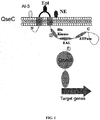
- QseC is a membrane bound histidine sensor kinase (see FIG. 1 ).
- these sensor kinases constitute two-component systems, acting in concert with response regulators.
- the sensor In response to the environmental signal, the sensor autophosphorylates its own conserved histidine residue.
- the histidine-bound phosphoryl group of the sensor kinase is transferred onto a specific aspartate residue on the cognate response regulator for activation.
- the activated response regulator then directly regulates transcription of its target genes.
- two-component systems are the major system of signal transduction (Igo et al ., 1989).
- QseC is a receptor for the AI-3/Epi/NE signals and is central for the pathogenesis of certain bacteria, such as EHEC, Salmonella and Francisella tularensis. QseC will directly bind these signals, and in response, augment its autophosphorylation (Clarke et al ., 2006). Subsequently, QseC transfers this phosphate to its cognate response regulator QseB (a transcription factor) which then regulates gene expression.
- QseB a transcription factor
- QseC homologs are present in several bacterial pathogens including EHEC, EPEC, UPEC, K-12, Klebsiella pneumoniae, Acinetobacter baumannii, Shigela flexneri, Salmonella enterica typhi and typhimurium, Yersinia pestis, Y. enterocolitica, Y.
- QseC quorum sensing
- QseC polypeptides include, but are not limited to polypeptides having the amino acid sequence provided in the following database accession numbers: YP_169166 , YP_514393 , YP_899230 , YP_001121274 , YP_7 64109.1 , YP_001891028 , YP_001677727 , YP_123578 , YP_095321 , YP_126604 , YP_286016 , NP_820223 , YP_001115442 , ZP_02062557 , YP_981771 , YP_001862321 , YP_001140960 , YP_02843268 , NP_439849 , YP_001341184 , YP_249422 , YP_001898056 , ZP_00943152 , YP_00129
- Embodiments of the invention include QseC kinase homolog compositions that may include a polypeptide or protein that is or is at least 40%, 50%, 60% 70%, 75%, 80%, 85%, 90%, 95%, 96%, 97%, 98%, or 99% identical or similar, including all values and ranges there between, to QseC kinase as long as key regions, such as its histidine kinase and transmembrane regions, are conserved. Sequence identity and/or similarity can be determined using standard techniques known in the art, such as a Jukes Cantor genetic distance model with 1000 bootstraps (see Yang and Zhang Nucleic Acids Res.
- Percent identity and percent similarity may be calculated by using alignment tools known to and readily ascertainable to those of skill in the art.
- nalidixic acid was the treatment of choice up to the early 90's, it is seldom used due to the prevalence of resistance strains (Crump et al ., 2003). More recently, several ciproflaxin and ceftriaxone resistant strains have emerged (Nakaya et al ., 2003; Samrakandi et al ., 2004; Weill et al ., 2006) as well. Other bacteria have also become resistant to various antibiotics, such as Staphylococcus, Enterococcus, and Streptococcus.
- QS antagonists Because QS is not directly involved in essential processes such as growth of the bacteria, inhibition of QS should not yield a selective pressure for development of resistance. QS antagonists confuse or obfuscate signaling between bacteria and, unlike antibiotics, do not kill or hinder bacterial growth. Hence, QS antagonists should be viewed as blockers of pathogenicity rather than as antimicrobials.
- EHEC enterohemorrhagic E. coli O157:H7
- Salmonella class B biothreat agents
- Francisella tularensis class A biothreat agent
- alkyl includes straight-chain alkyl, branched-chain alkyl, cycloalkyl (alicyclic), cyclic alkyl, heteroatom-unsubstituted alkyl, and heteroatom-unsubstituted C n -alkyl. In certain embodiments, lower alkyls are contemplated.
- lower alkyl refers to alkyls of 1-6 carbon atoms (that is, 1, 2, 3, 4, 5 or 6 carbon atoms).
- heteroatom-unsubstituted C n -alkyl refers to a radical, having a linear or branched, cyclic or acyclic structure, further having no carbon-carbon double or triple bonds, further having a total of n carbon atoms, all of which are nonaromatic, 3 or more hydrogen atoms, and no heteroatoms.
- a heteroatom-unsubstituted C 1 -C 10 -alkyl has 1 to 10 carbon atoms.
- alkyl-containing substituents refers to the number of carbon atoms being 1-6, e.g ., 1, 2, 3, 4, 5, or 6, or any range derivable therein. This term may apply to any alkyl-containing substituent described herein ( e . g ., alkyl, alkylthio, alkanediyl, aralkyl, alkylamino, dialkylamino, trialkylammonium, etc .)
- alkylthio refers to -S-alkyl, wherein alkyl is as defined above. Lower alkylthio is contemplated for any embodiment, wherein the alkyl moiety comprises 1-6 carbon atoms (that is, 1, 2, 3, 4, 5 or 6 carbon atoms).
- alkanediyl refers to both substituted and unsubstituted alkanediyl.
- alkanediyl refers to a non-aromatic divalent group, wherein the alkanediyl group is attached with two ⁇ -bonds, with one or two saturated carbon atom(s) as the point(s) of attachment, a linear or branched, cyclo, cyclic or acyclic structure, no carbon-carbon double or triple bonds, and no atoms other than carbon and hydrogen.
- substituted alkanediyl refers to a non-aromatic monovalent group, wherein the alkynediyl group is attached with two ⁇ -bonds, with one or two saturated carbon atom(s) as the point(s) of attachment, a linear or branched, cyclo, cyclic or acyclic structure, no carbon-carbon double or triple bonds, and at least one atom independently selected from the group consisting of N, O, F, Cl, Br, I, Si, P, and S.
- the following groups are non-limiting examples of substituted alkanediyl groups: -CH(F)-, -CF 2 -, -CH(Cl)-, -CH(OH)-, -CH(OCH 3 )-, and -CH 2 CH(Cl)-.
- aryl includes heteroatom-unsubstituted aryl, heteroatom-substituted aryl, heteroatom-unsubstituted C n -aryl, heteroatom-substituted C n -aryl, heteroaryl, heterocyclic aryl groups, carbocyclic aryl groups, biaryl groups, and single-valent radicals derived from polycyclic fused hydrocarbons (PAHs).
- PAHs polycyclic fused hydrocarbons
- heteroatom-unsubstituted C n -aryl refers to a radical, having a single carbon atom as a point of attachment, wherein the carbon atom is part of an aromatic ring structure containing only carbon atoms, further having a total of n carbon atoms, 5 or more hydrogen atoms, and no heteroatoms.
- a heteroatom-unsubstituted C 6 -C 10 -aryl has 6 to 10 carbon atoms.
- heteroatom-substituted C n -aryl refers to a radical, having either a single aromatic carbon atom or a single aromatic heteroatom as the point of attachment, further having a total of n carbon atoms, at least one hydrogen atom, and at least one heteroatom, further wherein each heteroatom is independently selected from the group consisting of N, O, F, Cl, Br, I, Si, P, and S.
- a heteroatom-unsubstituted C 1 -C 10 -heteroaryl has 1 to 10 carbon atoms.
- Non-limiting examples of heteroatom-substituted aryl groups include the groups: -C 6 H 4 F, -C 6 H 4 Cl, -C 6 H 4 Br, -C 6 H 4 I, -C 6 H 4 OH, -C 6 H 4 OCH 3 , -C 6 H 4 OCH 2 CH 3 , -C 6 H 4 OC(O)CH 3 , -C 6 H 4 NH 2 , -C 6 H 4 NHCH 3 , -C 6 H 4 N(CH 3 ) 2 , -C 6 H 4 CH 2 OH, -C 6 H 4 CH 2 OC(O)CH 3 , -C 6 H 4 CH 2 NH 2 , -C 6 H 4 CF 3 , -C 6 H 4 CN, -C 6 H 4 CHO, -C 6 H 4 CHO, -C 6 H 4 C(O)CH 3 , -C 6 H 4 C(O)C 6 H 5 , -C 6 H 4
- a "di-substituted aryl group” refers to an aryl group that is substituted by two substituents: the substituents may be heteroatom-unsubstituted or heteroatom-substituted. Additional aryl groups include oxazolyl, isoxazolyl, thiazolyl, isothiazolyl, pyrazolyl, oxadiazolyl, thiadiazolyl, triazolyl, benzofuranyl, benzothienyl, indolizinyl, isoindolyl, isoindolinyl, indolinyl, benzoxazolyl, benzisoxazolyl, benzthiazolyl, benzisothiazolyl, benzimidazolyl, indazolyl, carbazolyl, dibenzofuranyl, dibenzothienyl, fluorenyl, pyridazinyl, triazinyl, tetrazinyl,
- Aryl groups (including aryl groups comprised in aralkyl groups) that are optionally mono-, di-, tri-, tetra- or pentasubstituted are discussed throughout this disclosure and each specific compound or generic compound for use of the present invention that comprises an aryl group is specifically contemplated as being optionally mono-, di-, tri-, tetra- or pentasubstituted.
- Substituents may comprise any aryl substituent recited or shown herein.
- Non-limiting examples of substituents include halo, -OH, -CO 2 H, -C(O)NH 2 , -CN, trihalomethyl, trihalomethoxy, -NH 2 , -NO 2 , alkyl ( e . g ., lower unsubstituted or substituted alkyl), alkoxy ( e . g ., lower unsubstituted or substituted alkoxy), alkylamino (alkyl-N-), dialkylamino ((alkyl) 2 N-) and trialkylammonium ((alkyl) 3 -N(+)), wherein the alkyl groups may be the same or different).
- substituted alkyl and substituted alkoxy groups may optionally comprise one, two, three, or more of these substituents. Other substituents are described herein.
- aralkyl refers to substituted and unsubstituted aralkyl. When used without the “substituted” modifier, aralkyl refers to the monovalent group -alkanediyl-aryl, in which the terms alkanediyl and aryl are each used in a manner consistent with the definitions provided herein.
- Non-limiting examples of aralkyls are: phenylmethyl (benzyl, Bn), 1-phenyl-ethyl, 2-phenyl-ethyl, indenyl and 2,3-dihydro-indenyl, provided that indenyl and 2,3-dihydro-indenyl are only examples of aralkyl in so far as the point of attachment in each case is one of the saturated carbon atoms.
- aralkyl is used with the "substituted” modifier, either one or both the alkanediyl and the aryl is substituted.
- Non-limiting examples of substituted aralkyls are: (3-chlorophenyl)-methyl, 2-oxo-2-phenyl-ethyl (phenylcarbonyl-methyl), 2-chloro-2-phenyl-ethyl, chromanyl where the point of attachment is one of the saturated carbon atoms, and tetrahydroquinolinyl where the point of attachment is one of the saturated atoms.
- alkoxy includes straight-chain alkoxy, branched-chain alkoxy, cycloalkoxy, cyclic alkoxy, heteroatom-unsubstituted alkoxy, heteroatom-substituted alkoxy, heteroatom-unsubstituted C n -alkoxy, and heteroatom-substituted C n -alkoxy.
- lower alkoxys are contemplated.
- lower alkoxy refers to alkoxys of 1-6 carbon atoms (that is, 1, 2, 3, 4, 5 or 6 carbon atoms).
- heteroatom-unsubstituted C n -alkoxy refers to a group, having the structure -OR, in which R is a heteroatom-unsubstituted C n -alkyl, as that term is defined above.
- Heteroatom-unsubstituted alkoxy groups include: -OCH 3 , -OCH 2 CH 3 , -OCH 2 CH 2 CH 3 , -OCH(CH 3 ) 2 , and -OCH(CH 2 ) 2 .
- heteroatom-substituted C n -alkoxy refers to a group, having the structure -OR, in which R is a heteroatom-substituted C n -alkyl, as that term is defined above.
- R is a heteroatom-substituted C n -alkyl, as that term is defined above.
- -OCH 2 CF 3 is a heteroatom-substituted alkoxy group.
- acyl includes both substitued and unsubstituted acyl.
- acyl refers to a monovalent group, having a carbon atom of a carbonyl group as the point of attachment, further having a linear or branched, cyclo, cyclic or acyclic structure, further having no additional atoms that are not carbon or hydrogen, beyond the oxygen atom of the carbonyl group.
- the groups, -CHO, -C(O)CH 3 , -C(O)CH 2 CH 3 , -C(O)CH 2 CH 2 CH 3 , -C(O)CH(CH 3 ) 2 , -C(O)CH(CH 2 ) 2 , -C(O)C 6 H 5 , -C(O)C 6 H 4 CH 3 , -C(O)C 6 H 4 CH 2 CH 3 , -COC 6 H 3 (CH 3 ) 2 , and -C(O)CH 2 C 6 H 5 are non-limiting examples of acyl groups.
- acyl therefore encompasses, but is not limited to groups sometimes referred to as “alkyl carbonyl” and “aryl carbonyl” groups.
- substituted acyl refers to a monovalent group, having a carbon atom of a carbonyl group as the point of attachment, further having a linear or branched, cyclo, cyclic or acyclic structure, further having at least one atom, in addition to the oxygen of the carbonyl group, independently selected from the group consisting of N, O, F, Cl, Br, I, Si, P, and S.
- substituted acyl encompasses, but is not limited to, "heteroaryl ( e . g)
- Compounds for use of the present invention may contain one or more asymmetric centers and thus can occur as racemates and racemic mixtures, single enantiomers, diastereomeric mixtures and individual diastereomers. In certain embodiments, a single diastereomer is present. All possible stereoisomers of the macromolecules for use of the present invention are contemplated as being within the scope of the present invention. However, in certain aspects, particular diastereomers are contemplated.
- the chiral centers of the macromolecules for use of the present invention can have the S - or the R -configuration, as defined by the IUPAC 1974 Recommendations. In certain aspects, certain compounds for use of the present invention may comprise S - or R -configurations at particular carbon centers.
- Linkers may connect two moieties within a compound for use of the present invention.
- a linker may connect a polymer backbone to the rest of the molecule to form a linker-polymer backbone.
- Linkers that may be employed for such uses are well known to those of skill in the art.
- linkers include, but are not limited to, ethylenediamine, amino propanol, diethylenetriamine, polypeptides such as glycylglycine or GlyPheLeuGly, aspartic acid, polyaspartic acid, glutamic acid, polyglutamic acid, polyethylene glycol, diamino polyethylene glycol, or lysine.
- U.S. Patent 6,737,247 discloses several linkers which may be used with the present invention.
- More than one linker may be utilized within a compound for use of the present invention, and more than one type of linker may be employed. Two linkers, either the same or different in nature, may be joined together to form a longer linker as well. In certain embodiments, a single linker joins a polymer backbone to the rest of the molecule.
- any specific or generic compound that comprises a linkage as in one of the following it is specifically contemplated that an alternative linkage from this same group may be substituted: -SO 2 NR-, -NRSO 2 -, -S(O) 2 -, -S(O)-, -N(R)R-, -RN(R)-, -C(O)NR- and - NRC(O)-, wherein R is H or as otherwise shown herein.
- urea linkage (-NRC(O)NR-) represented in a generic or specific compound herein, it is specifically contemplated that a thiourea, oxamide (-NRC(O)C(O)-NR-), or carbamate (-ROC(O)NR- or -RN(R)C(O)O-) linkage may be employed, wherein R is H or as otherwise shown herein.
- substituent may be any such substituent as defined in the claims.
- Solvent choices for the methods of making compounds for use of the present invention will be known to one of ordinary skill in the art. Solvent choices may depend, for example, on which one(s) will facilitate the solubilizing of all the reagents or, for example, which one(s) will best facilitate the desired reaction (particularly when the mechanism of the reaction is known). Solvents may include, for example, polar solvents and non-polar solvents.
- Solvents choices include, but are not limited to, tetrahydrofuran, dimethylformamide, dimethylsulfoxide, dioxane, methanol, ethanol, hexane, methylene chloride and acetonitrile. More than one solvent may be chosen for any particular reaction or purification procedure. Water may also be admixed into any solvent choice. Further, water, such as distilled water, may constitute the reaction medium instead of a solvent.
- the term "functional group” generally refers to how persons of skill in the art classify chemically reactive groups. Examples of functional groups include hydroxyl, amine, sulfhydryl, amide, carboxyls, carbonyls, etc.
- protecting group refers to a moiety attached to a functional group to prevent an otherwise unwanted reaction of that functional group.
- Protecting groups are well-known to those of skill in the art. Non-limiting exemplary protecting groups fall into categories such as hydroxy protecting groups, amino protecting groups, sulfhydryl protecting groups and carbonyl protecting groups. Such protecting groups may be found in Greene and Wuts, 1999. Compounds for use of the present invention are specifically contemplated wherein one or more functional groups are protected by a protecting group.
- Certain of the methods set forth herein pertain to methods involving the administration of a pharmaceutically and/or therapeutically effective amount of a compound for use of the present invention for purposes of treating bacterial infections.
- a compound for use of the present invention may be administered to inhibit bacterial virulence by any method that allows contact of the active ingredient with a bacteria.
- a compound for use of the present invention may be administered alone, but will generally be administered with a pharmaceutically acceptable carrier selected on the basis of the chosen route of administration and standard pharmaceutical practice.
- a compound for use of the present invention may be given to a subject who has not responded, or who has negatively responded, to the administration of conventional antibiotics.
- a compound for use of the present invention is administered to a subject who harbors a multi-drug resistant bacteria or who is suspected of being exposed to a multi-drug resistant bacteria.
- a compound for use of the present invention may, in certain embodiments, be administered to a subject who may be threatened with exposure to a multi-drug resistant bacteria.
- a compound for use of the present invention is administered to a subject who harbors a bacteria containing a QseC sensor or who is suspected of being exposed to a bacteria containing a QseC sensor.
- a compound for use of the present invention may, in certain embodiments, be administered to a subject who may be threatened with exposure to a bacteria containing a QseC sensor.
- a compound for use of the present invention may be extensively purified and/or dialyzed to remove undesired small molecular weight molecules and/or lyophilized for more ready formulation into a desired vehicle, where appropriate. Such methods are well-known in the art.
- the active compounds will then generally be formulated for administration by any known route, such as oral or parenteral administration. Methods of administration are discussed in greater detail below.
- Aqueous compositions comprising a compound for use of the present invention will typically have an effective amount of a compound for use of the present invention to inhibit bacterial virulence.
- a compound for use of the present invention can be provided in prodrug form, also discussed above, meaning that an environment to which a compound for use of the present invention is exposed alters the prodrug into an active, or more active, form. It is contemplated that the term “precursor” covers compounds that are considered “prodrugs.”
- compositions comprising a compound for use of the present invention comprise an effective amount of one or more candidate substances (e . g ., a compound for use of the present invention) or additional agents dissolved or dispersed in a pharmaceutically acceptable carrier.
- candidate substances e . g ., a compound for use of the present invention
- additional agents dissolved or dispersed in a pharmaceutically acceptable carrier.
- pharmaceutically acceptable refers to molecular entities and compositions that do not produce an adverse, allergic or other untoward reaction when administered to an animal, such as, for example, a human, as appropriate.
- the preparation of a pharmaceutical composition that contains at least one candidate substance or additional active ingredient will be known to those of skill in the art in light of the present disclosure, as exemplified by Remington's Pharmaceutical Sciences, 18th Ed.
- pharmaceutically acceptable carrier includes any and all solvents, dispersion media, coatings, surfactants, antioxidants, preservatives (e . g ., antibacterial agents, antifungal agents), isotonic agents, absorption delaying agents, salts, preservatives, drugs, drug stabilizers, gels, binders, excipients, disintegration agents, lubricants, sweetening agents, flavoring agents, dyes, such like materials and combinations thereof, as would be known to one of ordinary skill in the art (see, for example, Remington's Pharmaceutical Sciences, pp 1289-1329, 1990 ). Except insofar as any conventional carrier is incompatible with the active ingredient, its use in the therapeutic or pharmaceutical compositions is contemplated.
- the candidate substance may comprise different types of carriers depending on whether it is to be administered in solid, liquid or aerosol form, and whether it needs to be sterile for such routes of administration as injection.
- the compound for use of present invention can be administered intravenously, intradermally, intraarterially, intraperitoneally, intralesionally, intracranially, intraarticularly, intraprostaticaly, intrapleurally, intratracheally, intranasally, intravitreally, intravaginally, intrarectally, topically, intramuscularly, subcutaneously, subconjunctival, intravesicularlly, mucosally, buccally, transdermally, intrapericardially, intraumbilically, intraocularally, orally, locally, via inhalation ( e .
- a composition comprising a compound for use of the present invention may be formulated for topical administration, for example, in a cream as mentioned, or in an ointment, salve, spray, gel, lotion, or emulsion.
- the composition may be formulated for transmucosal, transepithelial, transendothelial, or transdermal administration.
- transdermal formulation is a patch.
- the composition may further comprise a chemical penetration enhancer, a membrane permeability agent, a membrane transport agent, a preservative, a surfactant, or a stabilizer, as these terms are known to those of skill in the art.
- the present invention can utilize a patch.
- a transdermal or "skin” patch is a medicated adhesive patch that is placed on the skin to deliver a time released dose of medication through the skin and into the bloodstream.
- a wide variety of pharmaceuticals can be delivered by transdermal patches.
- the first commercially available prescription patch was approved by the U.S. Food and Drug Administration in December 1979, which administered scopolamine for motion sickness.
- the main components to a transdermal patch are (a) a liner to protect the patch during storage (removed prior to use); (b) the active agent; (c) an adhesive that serves to adhere the components of the patch together along with adhering the patch to the skin; (d) a membrane to control the release of the drug from the reservoir and multi-layer patches; and (e) a backing that protects the patch from the outer environment.
- Single-layer Drug-in-Adhesive patches have an adhesive layer that also contains the agent.
- the adhesive layer not only serves to adhere the various layers together, along with the entire system to the skin, but is also responsible for the releasing of the drug.
- the adhesive layer is surrounded by a temporary liner and a backing.
- Multi-layer Drug-in-Adhesive patches are similar to the single-layer system in that both adhesive layers are also responsible for the releasing of the drug.
- the multi-layer system is different however that it adds another layer of drug-in-adhesive, usually separated by a membrane (but not in all cases).
- This patch also has a temporary liner-layer and a permanent backing.
- Reservoir patches are unlike the Single-layer and Multi-layer Drug-in-Adhesive systems in that the reservoir transdermal system has a separate drug layer.
- the drug layer is a liquid compartment containing a drug solution or suspension separated by the adhesive layer.
- This patch is also backed by the backing layer. In this type of system the rate of release is zero order.
- Matrix patches have a drug layer of a semisolid matrix containing a drug solution or suspension. The adhesive layer in this patch surrounds the drug layer partially overlaying it.
- a topical application of a compound for use of the present invention is targeted at a natural body cavity such as the mouth, pharynx, esophagus, larynx, trachea, pleural cavity, peritoneal cavity, or hollow organ cavities including the bladder, colon or other visceral organs.
- a natural body cavity such as the mouth, pharynx, esophagus, larynx, trachea, pleural cavity, peritoneal cavity, or hollow organ cavities including the bladder, colon or other visceral organs.
- pharynx may be affected by simply oral swishing and gargling with solutions comprising a compound for use of the present invention.
- the composition is administered to a subject using a drug delivery device.
- a drug delivery device Any drug delivery device is contemplated for use in delivering a pharmaceutically effective amount of a compound for use of the present invention.
- the actual dosage amount of a composition comprising a compound for use of the present invention administered to an animal patient can be determined by physical and physiological factors such as body weight, severity of condition, the type of disease being treated, previous or concurrent therapeutic interventions, idiopathy of the patient and on the route of administration.
- the practitioner responsible for administration will, in any event, determine the concentration of active ingredient(s) in a composition and appropriate dose(s) for the individual subject.
- the dose can be repeated as needed as determined by those of ordinary skill in the art.
- a single dose is contemplated.
- two or more doses are contemplated.
- the time interval between doses can be any time interval as determined by those of ordinary skill in the art.
- the time interval between doses may be about 1 hour to about 2 hours, about 2 hours to about 6 hours, about 6 hours to about 10 hours, about 10 hours to about 24 hours, about 1 day to about 2 days, about 1 week to about 2 weeks, or longer, or any time interval derivable within any of these recited ranges.
- compositions may comprise, for example, at least about 0.1% of a compound for use of the present invention.
- a compound for use of the present invention may comprise between about 2% to about 75% of the weight of the unit, or between about 25% to about 60%, for example, and any range derivable therein.
- a dose may also comprise from about 1 microgram/kg/body weight, about 5 microgram/kg/body weight, about 10 microgram/kg body weight, about 50 microgram/kg body weight, about 100 microgram/kg body weight, about 200 microgram/kg body weight, about 350 microgram/kg body weight, about 500 microgram/kg body weight, about 1 milligram/kg/body weight, about 5 milligram/kg body weight, about 10 milligram/kg/body weight, about 20 milligram/kg body weight, about 50 milligram/kg body weight, about 100 milligram/kg body weight, about 200 milligram/kg body weight, about 350 milligram/kg body weight, about 500 milligram/kg body weight, to about 1000 mg/kg body weight or more per administration, and any range derivable therein.
- a range of about 5 mg/kg body weight to about 100 mg/kg body weight, about 5 microgram/kg/body weight to about 500 milligram/kg body weight, etc . can be administered, based on the numbers described above.
- the dosage administered is less than an amount that would be administered of a bacteriostatic or bacteriocidal agents, if such an agent were administered instead.
- bacteriostatic or bacteriocidal agents are administered at a mM range
- compounds for use of the present invention may, in certain embodiments, be administered at about a nM range or lower ( e.g ., about 100 nM or less) such that they achieve methods as described herein ( e . g ., methods of treating or preventing bacterial infection) without killing bacteria.
- the compound for use of the present invention may be administered in an amount that is effective to prevent virulence, or pathogenesis, but that is not a bacteriocidal or bacteriostatic amount.
- the composition may comprise various antioxidants to retard oxidation of one or more component.
- the prevention of the action of microorganisms can be brought about by preservatives such as various antibacterial and antifungal agents, including but not limited to parabens ( e . g ., methylparabens, propylparabens), chlorobutanol, phenol, sorbic acid, thimerosal, or combinations thereof.
- parabens e . g ., methylparabens, propylparabens
- chlorobutanol phenol
- sorbic acid thimerosal, or combinations thereof.
- the candidate substance may be formulated into a composition in a free base, neutral, or salt form.
- Pharmaceutically acceptable salts include the acid addition salts, e.g ., those formed with the free amino groups of a proteinaceous composition, or which are formed with inorganic acids such as for example, hydrochloric or phosphoric acids, or such organic acids as acetic, glycolic, lactic, tartaric, or mandelic acid. Salts formed with the free carboxyl groups can also be derived from inorganic bases such as for example, sodium, potassium, ammonium, calcium or ferric hydroxides; or such organic bases as isopropylamine, trimethylamine, histidine, TRIS, or procaine.
- a carrier can be a solvent or dispersion medium comprising but not limited to, water, ethanol, polyol (e . g ., glycerol, propylene glycol, liquid polyethylene glycol, etc .), lipids (e . g ., triglycerides, vegetable oils, liposomes) and combinations thereof.
- the proper fluidity can be maintained, for example, by the use of a coating, such as lecithin; by the maintenance of the required particle size by dispersion in carriers such as, for example liquid polyol or lipids; by the use of surfactants such as, for example hydroxypropylcellulose; or combinations thereof such methods.
- nasal solutions are usually aqueous solutions designed to be administered to the nasal passages in drops or sprays.
- Nasal solutions are prepared so that they are similar in many respects to nasal secretions, so that normal ciliary action is maintained.
- the aqueous nasal solutions usually are isotonic or slightly buffered to maintain a pH of about 5.5 to about 6.5.
- antimicrobial preservatives similar to those used in ophthalmic preparations, drugs, or appropriate drug stabilizers, if required, may be included in the formulation.
- various commercial nasal preparations are known and include drugs such as antibiotics or antihistamines.
- the candidate substance is prepared for administration by such routes as oral ingestion.
- the solid composition may comprise, for example, solutions, suspensions, emulsions, tablets, pills, capsules ( e . g ., hard or soft shelled gelatin capsules), sustained release formulations, buccal compositions, troches, elixirs, suspensions, syrups, wafers, or combinations thereof.
- Oral compositions may be incorporated directly with the food of the diet.
- carriers for oral administration comprise inert diluents, assimilable edible carriers or combinations thereof.
- the oral composition may be prepared as a syrup or elixir.
- a syrup or elixir and may comprise, for example, at least one active agent, a sweetening agent, a preservative, a flavoring agent, a dye, a preservative, or combinations thereof.
- Dosage formulations of the present pharmaceutical compositions can be prepared by combining them with a pharmaceutically acceptable carrier, such as a slow release agent, to make either immediate or slow release formulations as is well known in the art.
- a pharmaceutically acceptable carrier such as a slow release agent
- Such compositions could be used, for example, in the treatment of periodontal disease and other oral care indications.
- Such pharmaceutically acceptable carriers may be either solid or liquid in form such as, for example, cornstarch, lactose, sucrose, peanut oil, olive oil, sesame oil, propylene glycol and water. If a solid carrier is used, the dosage formulation of the present pharmaceutical compositions may be in, for example, powder, troche, or lozenges form.
- the dosage formulation of the present pharmaceutical compositions may be in, for example, soft gelatin capsule, syrup liquid suspension, emulsion, or solution form.
- the dosage formulations may also contain adjuvants, such as preserving, stabilizing, wetting or emulsifying agents, or solution promoters.
- adjuvants such as preserving, stabilizing, wetting or emulsifying agents, or solution promoters.
- Immediate and slow release formulations are well known in the art and have been described, for example, in U.S. Patent 4,764,377 , which describes a method for treating periodontal disease by means of a delivery device placed within the periodontal pocket so that release of a therapeutic agent occurs in the immediate vicinity of the disease process.
- Other means of treating periodontal disease are described in U.S. Patent 5,324,756 .
- an oral composition may comprise one or more binders, excipients, disintegration agents, lubricants, flavoring agents, or combinations thereof.
- a composition may comprise one or more of the following: a binder, such as, for example, gum tragacanth, acacia, cornstarch, gelatin or combinations thereof; an excipient, such as, for example, dicalcium phosphate, mannitol, lactose, starch, magnesium stearate, sodium saccharine, cellulose, magnesium carbonate or combinations thereof; a disintegrating agent, such as, for example, corn starch, potato starch, alginic acid or combinations thereof; a lubricant, such as, for example, magnesium stearate; a sweetening agent, such as, for example, sucrose, lactose, saccharin or combinations thereof; a flavoring agent, such as, for example peppermint, oil of wintergreen, cherry flavoring, orange flavoring, etc .; or combinations thereof the for
- the dosage unit form When the dosage unit form is a capsule, it may contain, in addition to materials of the above type, carriers such as a liquid carrier. Various other materials may be present as coatings or to otherwise modify the physical form of the dosage unit. For instance, tablets, pills, or capsules may be coated with shellac, sugar, or both.
- Certain coating materials are those which dissolve at about or at least about a pH of 5 or above, such as at about pH 5.1, 5.2, 5.3, 5.4, 5.5, 5.6, 5.7, 5.8, 5.9, 6.0, 6.1, 6.2, 6.3, 6.4, 6.5, 6.6, 6.7, 6.8, 6.9, 7.0 or above, such as pH of about 6.5 or above.
- Such coatings therefore only begin to dissolve when they have left the stomach and entered the small intestine. Accordingly, these coatings may be considered enteric coatings.
- a thick layer of coating is provided which will dissolve in minutes to hours, thereby allowing the capsule underneath to breakup only when it has reached the terminal ileum or the colon.
- Such a coating can be made from a variety of polymers such as cellulose acetate trimellitate (CAT), hydroxypropylmethyl cellulose phthalate (HPMCP), polyvinyl acetate phthalate (PVAP), cellulose acetate phthalate (CAP) and shellac as described by Healy, 1989.
- CAT cellulose acetate trimellitate
- HPMCP hydroxypropylmethyl cellulose phthalate
- PVAP polyvinyl acetate phthalate
- CAP cellulose acetate phthalate
- shellac shellac as described by Healy, 1989.
- Non-limiting exemplary coating materials are methyl methacrylates or copolymers of methacrylic acid and methyl methacrylate. Such materials are available as EUDRAGITTM polymers (Rohm Pharma, Darmstadt, Germany). Eudragits are copolymers of methacrylic acid and methyl methacrylate. Compositions may be based on EUDRAGITTM L100 and Eudragit S100. EUDRAGITTM L100 dissolves at pH 6 and upwards and comprises 48.3% methacrylic acid units per g dry substance; EUDRAGITTM S100 dissolves at pH 7 and upwards and comprises 29.2% methacrylic acid units per g dry substance.
- Certain coating compositions are based on EUDRAGITTM L100 and EUDRAGITTM S100 in the range 100 parts L100:0 parts S100 to 20 parts L100:80 parts S100.
- a non-limiting exemplary range is 70 parts L100:30 parts S100 to 80 parts L100:20 parts S100.
- a coat thickness of the order 150-200 ⁇ m is preferable. This is equivalent to 70-110 mg of coating for a size 0 capsule.
- a coat thickness of the order 80-120 ⁇ m is preferable, equivalent to 30 to 60 mg coating for a size 0 capsule.
- compounds for use of the present invention may be incorporated into the polymers that act as carriers that are nonabsorbable.
- Compounds for use of the present invention may be, for example, covalently bonded to such polymers.
- Such polymers may be, for example, the polymers mentioned above and/or the polymer tails and polymer backbones discussed herein.
- suppositories are solid dosage forms of various weights and shapes, usually medicated, for insertion into the rectum, vagina, or urethra. After insertion, suppositories soften, melt or dissolve in the cavity fluids.
- traditional carriers may include, for example, polyalkylene glycols, triglycerides, or combinations thereof.
- suppositories may be formed from mixtures containing, for example, the active ingredient in the range of about 0.5% to about 10%, and preferably about 1% to about 2%.
- Sterile injectable solutions are prepared by incorporating the active compounds in the required amount in the appropriate solvent with various other ingredients enumerated above, as required, followed by filtered sterilization.
- dispersions are prepared by incorporating the various sterilized active ingredients into a sterile vehicle which contains the basic dispersion medium and/or the other ingredients.
- certain methods of preparation may include vacuum-drying or freeze-drying techniques which yield a powder of the active ingredient plus any additional desired ingredient from a previously sterile-filtered liquid medium thereof.
- the liquid medium should be suitably buffered if necessary and the liquid diluent first rendered isotonic prior to injection with sufficient saline or glucose.
- the preparation of highly concentrated compositions for direct injection is also contemplated, where the use of DMSO as solvent is envisioned to result in extremely rapid penetration, delivering high concentrations of the active agents to a small area.
- composition must be stable under the conditions of manufacture and storage, and preserved against the contaminating action of microorganisms, such as bacteria and fungi. It will be appreciated that endotoxin contamination should be kept minimally at a safe level, for example, less that 0.5 ng/mg protein.
- prolonged absorption of an injectable composition can be brought about by the use in the compositions of agents delaying absorption, such as, for example, aluminum monostearate, gelatin, or combinations thereof.
- a compound for use of the present invention may be combined with traditional drugs.
- an anti-bacterial agent, an anti-diarrhea agent, and/or an adrenergic antagonist may be administered in combination with a compound for use with the present invention. It is contemplated that this type of combination therapy may be used in vitro or in vivo.
- a compound for use of the present invention may be provided in a combined amount with an effective amount of a second agent (or more) to inhibit bacterial virulence, such as by inhibiting quorum signaling.
- This process may involve administering the agents at the same time or within a period of time wherein separate administration of the substances produces a desired therapeutic benefit. This may be achieved by contacting the cell, tissue, biofilm, or organism with a single composition or pharmacological formulation that includes two or more agents, or by contacting the cell with two or more distinct compositions or formulations, wherein one composition includes one agent and the other includes another.
- the compounds for use of the present invention may precede, be co-current with and/or follow the other agents by intervals ranging from minutes to weeks.
- the agents are applied separately to a cell, tissue, biofilm, or organism, one would generally ensure that a significant period of time did not expire between the time of each delivery, such that the agents would still be able to exert an advantageously combined effect on the cell, tissue or organism.
- one or more agents may be administered within of substantially simultaneously, about 1 minute, about 5 minutes, about 10 minutes, about 20 minutes about 30 minutes, about 45 minutes, about 60 minutes, about 2 hours, about 3 hours, about 4 hours, about 5 hours, about 6 hours, about 7 hours about 8 hours, about 9 hours, about 10 hours, about 11 hours, about 12 hours, about 13 hours, about 14 hours, about 15 hours, about 16 hours, about 17 hours, about 18 hours, about 19 hours, about 20 hours, about 21 hours, about 22 hours, about 22 hours, about 23 hours, about 24 hours, about 25 hours, about 26 hours, about 27 hours, about 28 hours, about 29 hours, about 30 hours, about 31 hours, about 32 hours, about 33 hours, about 34 hours, about 35 hours, about 36 hours, about 37 hours, about 38 hours, about 39 hours, about 40 hours, about 41 hours, about 42 hours, about 43 hours, about 44 hours, about 45 hours, about 46 hours, about 47 hours, about 48 hours, about 1 day, about 2 days, about 3 days, about 4 days, about 5 days, about 5 days,
- a compound for use of the present invention is "A” and a second agent, such as an antibacterial agent, an anti-diarrhea agent, and/or an adrenergic antagonist (such as phentolamine, propranolol, or yombine) is "B":
- a compound for use of the present invention may be administered to a plant via any method known to those of skill in the art.
- the composition in a method of using a composition comprising a compound for use of the invention to treat a bacterial plant infection, the composition may be diluted in a suitable volume of water to provide an application solution which is then applied to foliage of a plant or plants at an application rate sufficient to give a desired effect ( e . g ., reduction of bacterial infection).
- Compounds for use of the present invention that are water-soluble are particularly suited for spraying, for example.
- Compounds that are not water-soluble or have limited water solubility may be applied as an emulsion or microemulsion, for example.
- Components such as solvents and organic acids may be added to emulsions comprising a compound for use of the invention to enhance emulsion stability.
- These additives generally function to increase solubility or dispersability of the surfactants in the aqueous carrier phase thus enabling the formulation of robust emulsions exhibiting enhanced thermal and pH stability, reduced viscosity, and high active agent loading.
- Solvents may be added to the compositions to increase the solubility or dispersibility of the surfactants in the aqueous carrier phase and thereby attain appropriate stability of the emulsion.
- Water soluble solvents may be added to increase the solubility of surfactants with a hydrophilic moiety in the aqueous carrier phase.
- Non-limiting examples of water soluble solvents include acetates, C 1-6 alkanols, C 1-6 diols, C 1-6 alkyl ethers of alkylene glycols and polyalkylene glycols, and mixtures thereof.
- the alkanol can be selected from methanol, ethanol, n-propanol, isopropanol, the various positional isomers of butanol, pentanol, and hexanol, and mixtures thereof. It may also be possible to utilize in addition to, or in place of, said alkanols, the diols such as methylene, ethylene, propylene and butylene glycols, and mixtures thereof, and including polyalkylene glycols.
- hydrophobic and hydrophilic solvents may also be used.
- Organic acids may be added to the compositions to enhance the stability of the emulsion, such as acetic, dichloroacetic, citric, malic, oxalic, salicylic, or tartaric acid.
- Other additives including inorganic acids and oxidizing agents may be added to the compositions comprising a compound for use of the invention to enhance emulsion stability.
- Non-limiting examples include boric acid, perchloric acid, phosphoric acid, sulfuric acid, hydrogen peroxide, lithium perchlorate, sodium phosphate, sodium chlorate and sodium iodide.
- a plant treatment composition is preferably dilute enough to be readily sprayed using standard agricultural spray equipment.
- the selection of application rates that are effective for a composition comprising a compound for use of the invention is within the skill of an ordinary artisan. Those of skill in the art will likewise recognize that individual plant conditions, weather and growing conditions, as well as the specific active ingredients and their weight ratio in the composition, will influence the degree of effectiveness of treating plant bacterial infections as achieved in practicing this invention.
- foliar application refers to the application of substances to the foliage, or above-ground portions, of plants, and especially application to the leaves of the plants. It is understood in the art that incidental amounts of substances used in foliar applications may filter to or contact the soil, but not in quantities which will permit penetration of the soil and significant contacting of the plant's roots compared to the amount contacting the leaves and other above-ground structures.
- Foliar application has been performed on farms, in greenhouses, on flowers, and in other agricultural settings for decades, and is performed in any of a variety of ways known in the art.
- farmers routinely apply pesticides and other agents to their crops by means of tractor mounted sprayers, by crop dusting, through pressurized sprinklers, and through systems such as elevated hoses used to spray grapevines.
- a compound for use of the present invention is dissolved or diluted in water, as appropriate, before use. Since farmers have been accustomed for years to mixing pesticides, fertilizers, and other agricultural chemicals for use in their fields, the mixing and application of a compound for use of the present invention is well within a farmer's skill.
- the amount of the mixture to be applied to the fields will depend on several variables. In foliar application, the goal is to moisten the foliage. How much water is necessary to accomplish this will depend largely on the amount of foliage to be covered and the precision of the method of application in directing the mixture to the foliage without also wetting the surrounding area.
- the amount of foliage will depend, for example, on the amount of age of the plants (young plants typically have smaller leaves than mature plants), the type of plant (different types of plants differ in the amount and density of their foliage) and the health of the plants. farmers have, of course, applied various chemicals to their crops for years, and are well familiar with judging the amount of liquid needed for foliar application on crops of different ages and types.
- the amount of a composition comprising a compound for use of the present invention to be added to achieve any desired concentration in parts per million is readily determined.
- the determination of whether the rate of application is sufficient to moisten the foliage is also easily made and the amount readily adjusted until a satisfactory rate is achieved.
- soil application refers to the application of a substance to the soil around a plant, where the intent is either to affect the soil directly or to place the roots of the plant in contact with the substance.
- substances applied through a soil application will not contact the foliage, but it is possible that incidental amounts of substances used in soil applications may contact the foliage in quantities which will not significant compared to the amount contacting the roots and other below-ground structures.
- Ralstonia solanacearum infections may, for example, be treated via soil applications since the route of infection is typically through the roots (Daughtery, 2003).
- the soil is preferably first saturated to wet the particles of the soil so that the composition comprising a compound for use of the present invention can move freely in the soil and reach the roots of the plants. Therefore, preferably the soil is saturated to 70-80% field capacity with ordinary water prior to agent application.
- concentration to be chosen varies primarily according to the flow rate of water permitted by the method of application. Methods having a higher flow rate generally require a lower concentration of a compound for use of the present invention, perhaps because more water containing the mixture reaches the roots of the plants. Conversely, lower flow rates will generally require higher concentrations of a compound for use of the present invention. Alternatively, the time of the application of the mixture can be altered.
- a low flow rate and low concentration of mixture can be balanced by increasing the time in which the water containing the mixture is applied.
- halving the flow rate or concentration of mixture can be compensated for by doubling the application time of the water-mixture solution.
- flow rate is a particularly important variable, the crop to which the mixture is being applied may also help determine the concentration of mixture to be applied. Typically, perennials take higher concentrations than do annuals.
- the farmer is usually well aware of the flow rate per acre of the irrigation or other soil application system in place on his or her property, as well as the acreage to be covered.
- the farmer can calculate the amount of water which will be used in watering the land for any particular amount of time (for example, 300 gallons per minute times 50 acres times 30 minutes is 450,000 gallons of water).
- the farmer can then calculate how much of a composition comprising a compound for use of the present invention is needed to result in an application of the desired concentration of the mixture.
- a composition comprising a compound for use of the present invention is applied for a period of time, such as minutes to hours to days.
- the practitioner may want to apply the mixture at a lower concentration, but for a longer period, such as overnight or over several days.
- Such applications are within the purview of the invention, so long as they result in a decrease in bacterial infection or symptoms thereof.
- the time of the application will also vary according to the particular method employed.
- compositions comprising a compound for use of the present invention may be applied to soil by being run through a hose, pipe, drip, sprinkler, irrigation channel, or other mechanism.
- the devices used are not necessarily precision equipment. Accordingly, when the water flow is turned off, water will typically continue to drip or run from the hose or through the irrigation channel or other applicator for some time. It is therefore understood that the times of application will generally be an approximation and will be measured from the start of the flow of the mixture to when the flow of the mixture is turned off, whether or not some of the mixture continues to drip or run from the applicator.
- the mixture will typically be in the top few inches of soil.
- the root system is deeper in the soil. It is therefore desirable to help move the mixture 6 to 12 inches into the soil to reach the root structures involved in active uptake.
- a composition comprising a compound for use of the present invention may be employed to extend the shelf life of harvested plant matter by reducing or preventing bacterial infection of the plant matter after it has been harvested.
- a solution or emulsion comprising a compound for use of the present invention may be employed for this purpose.
- Applying a composition comprising a compound for use of the present invention onto the harvested plant matter may be performed using any method known to those of skill in the art, such as using a dipping or spraying procedure performed at room temperature, during which the harvested plant matter is subjected or exposed to the applied composition for a time period of seconds to minutes and possibly hours.
- the composition may be brushed on the harvested plant matter using a suitable brush for such an application.
- LEE Locus of Enterocyte Effacement
- the LEE region contains five major operons: LEE1 , LEE2 , LEE3 , LEE4 and LEE5 , which encode a type III secretion system (TTSS), an adhesin (intimin), and this adhesin's receptor (Tir), which is translocated to the epithelial cell through the bacterial TTSS.
- the LEE genes are directly activated by the LEE-encoded regulator (Ler), which is the first gene in the LEE1 operon (Kaper et al., 2004).
- Transcriptional activation of LEE1 can be achieved using spent supernatant (bacteria producing AI-3 are grown to late exponential phase to an OD 600 1.0, bacterial cells are pelleted by centrifugation, the supernatant is filtered through a 0.22 ⁇ M filter to ensure it is free from bacterial cells; this is now the spent supernatant) from bacterial strains that produce AI-3 (Sperandio et al., 2003; Walters et al., 2006).
- cultures having an optical density of 0.2 to 0.3 are diluted into DMEM (negative control) or into DMEM containing 10% EHEC preconditioned medium. These bacteria were dispensed in 40 ⁇ l volume into the wells of 384 well plates, with the negative control bacterial added to wells of column 24. Wells in columns 2 and 23 received bacteria in conditioned medium and DMSO, wells in columns 3-22 received bacteria in conditioned medium and compounds from the UT Southwestern 150,000 compound file. Compounds were added at a final concentration of 5 ⁇ M and 1% DMSO, using a Biomek FX liquid handler.
- the luminescence value of each well is plotted as a function of the number of the well in each column.
- the hit rate for this initial screen was 7,000, with an error rate of 20%, which upon re-screening yielded a hit rate of 5,600 compounds, which includes compounds that inhibits AI-3 activation of LEE1 transcription, general inhibitors of bacterial transcription, and compounds that are simply toxic.
- a secondary screen was performed utilizing a ⁇ -lactamase bla::lacZ chromosomal reporter in the same genetic background as the LEE1::lacZ (strain MCAmp (Sperandio et al., 1999)). This secondary screen validated 75 compounds as specific AI-3 inhibitors and from this, LED209 (compound 5) was chosen due to its efficacy, no toxicity against bacterial cells, and potential for meaningful chemical modification.
- N-Acetylsulfanilyl chloride 1 (55 g, 236 mmol) was added in portion to a stirring, 0°C suspension of sodium acetate (48.4 g, 590 mmol) and aniline 2 (22 mL, 236 mmol) in ethanol (300 mL).
- the reaction mixture was stirred at room temperature overnight and then poured into ice-cold water (1.5 L) with vigorous stirring. After stirring for 1 h, the white solid that gradually precipitated was collected by filtration.
- Triethylamine (0.07 mL, 0.5 mmol) and phenyl isothiocyanate (2.1 mL, 11 mmol) were added sequentially to a solution of 4 (2.48 g, 10 mmol) in dry THF (10 mL). After heating under reflux for 48 h, all volatiles were removed under vacuum, and the resulting crude material was purified by flash chromatography on silica gel (hexanes/acetone, 3:1) to afford N-phenyl-4-[[(phenylamino)thioxomethyl]amino]benzenesulfonamide (5, also called LED209) (1.34 g, 35%) as a white solid, mp 160-162°C.
- Compound 46 was prepared in a similar manner as compound 41 in 67% yield: solid, TLC: EtOAc/ Hexanes 50%, Rf 0.4; 1 H NMR (CD 3 OD, 300M Hz) ⁇ 7.85-7.78 (m, 4H), 7.22-7.17 (m, 2H), 7.09-7.03 (m, 3H), 4.85-3.78 (m, 1H), 1.94-1.90 (m, 2H), 1.81-1.78 (m, 2H), 1.70-1.65 (m, 1H), 1.42-1.17(m, 5H).
- epinephrine binds to the QseC membrane receptor triggering expression of key virulence genes raises obvious concerns that any drug targeting this interaction may also interfere with adrenergic signaling systems operating in the host.
- Mammalian adrenergic receptors are a class of G protein-coupled receptors that are targets of their endogenous ligands, the catecholamines epinephrine (epi) and norepinephrine (NE) and are activated by these.
- adrenergic receptors There are three classes of adrenergic receptors ( ⁇ 1, ⁇ 2 and ⁇ ), each containing three members; each class of adrenergic receptors in turn activates a unique isoform of heterotrimeric G proteins that subsequently modulates the activity of key signaling proteins regulating intracellular second messengers.
- QseC autophosphorylation QseC autophosphorylation experiments were performed as described by Clarke et al. (2006). Briefly, As described previously (Clarke and Sperandio, 2005), the E. coli strain containing pVS155 ( qseC::MycHis ) was grown at 37°C in LB to an O.D. 600 of 0.7, at which point arabinose was added to a final volume of 0.2% and allowed to induce for three hours (Clarke and Sperandio, 2005). Nickel columns were utilized, according to manufacturer's instructions (Qiagen). Autophosphorylation experiments were performed with QseC embedded in liposomes. Liposomes were reconstituted as described by Janausch et al (2004).
- E. coli phospholipids (Avanti Polar Lipids, 20 mg/ml in chloroform) were evaporated and then dissolved into 5 ml potassium phosphate buffer containing 80 mg N-octyl- ⁇ -D-glucopyranoside. The solution was dialyzed overnight against potassium phosphate buffer. The resulting liposome suspension was subjected to freeze/thaw in liquid N 2 . Liposomes were then destabilized by the addition of 26.1 mg dodecylmaltoside, and 2.5 mg of QseC-MycHis was added, followed by stirring at room temperature for 10 minutes.
- Binding of tritiated norepinephrine to QseC was performed as described by Clarke et al. ( 5 ) with modifications.
- QseC loaded liposomes were prepared as described above, and signals loaded by freeze thawing in liquid N 2 as described above. However, the liposomes were incubated at room temperature for only 10 minutes, to allow only partial reconstitution of the lipids, so unbound signal could diffuse out from the liposome. These liposomes were then centrifuged at 12,000g for 5 minutes (to pellet the lipids), and the supernatant was discarded.
- the signal bound to QseC in these liposomes was measured using a scintilation counter, reading for tritium.
- readings were normalized against liposomes loaded with 5 ⁇ M tyrosine (which has a similar molecular weight to norepinephrine, and is not a signal to QseC).
- binding of norepinephrine was performed in the presence of 50 ⁇ M phentolamine, previously shown to inhibit binding to QseC, and 50 ⁇ M propranolol, which does not inhibit binding of norepinephrine to QseC (5). Binding to 5 ⁇ M norepinephrine was also performed in the presence 5 pM and 5 fM of LED209.
- RT-PCR Quantitative real-time (RT)-PCR was used in a variety of the following Examples, and the general protocol is as follows.
- RNA from three biological replicate cultures of each strain was extracted using the RiboPureTM - Bacteria RNA isolation kit (Ambion) following manufacturer's guidelines.
- the primers used in the Real-Time assays were designed using Primer Express v1.5 (Applied Biosystems) (Table 2).
- Real-Time RT-PCR was performed in a one-step reaction using an ABI 7500 sequence detection system (Applied Biosystems). Table 2.
- RNA polymerase subunit A RNA polymerase subunit A
- Fluorescein actin staining (FAS) test Fluorescein actin staining (FAS) test.
- FAS assays were performed as previously described by Knutton et al. (1989). In brief, overnight bacterial cultures grown aerobically in LB at 37°C were diluted 1:100 and used to infect confluent monolayers of HeLa cells grown on glass coverslips at 37°C and 5% CO 2 . Cells were grown for 6 hours at 37°C and 5% CO 2 . The coverslips were then washed, permeabilized with 0.2% Triton X-100, treated with FITC-phalloidin to visualize actin accumulation, and propidium iodide was added to stain bacteria. Samples were visualized by immunofluorescence using a Zeiss Axiovert microscope. The entire field of at least six coverslips from each strain was examined and images taken of AE lesions.
- EHEC enterohemorrhagic E. coli
- treatments based on conventional antibiotics have been associated with worse clinical outcomes (Tarr et al ., 2002), probably because antibiotics induce an SOS response that enhances EHEC virulence (Zhang et al ., 2000).
- the genes encoding Shiga-toxin are located within the late genes of a ⁇ bacteriophage, and are transcribed when the phage enters its lytic cycle upon induction of an SOS response in EHEC (Wagner et al., 2001). Shiga-toxins are responsible for the morbidity and mortality of these infections.
- LED209 does not kill or hinder EHEC growth ( FIG. 8F ), or trigger the EHEC SOS response. Consequently it does not promote expression of Shiga-toxin; indeed, it decreases the expression of the stxAB genes that encode this toxin ( FIG. 8C ).
- Diarrhea was described as i) none - normal pellets are dark green, hard and formed, ii) mild - diarrhea consisting of a mix of soft yellow-green unformed and formed pellets resulting in light staining of the hind legs, or iii) severe - diarrhea consisting of unformed or liquid feces, resulting in significant staining of the hind legs.
- Rabbits were euthanized at 7 days post-infection. At necropsy, the intestinal tract from the duodenum to the anus was removed and samples obtained for histologic and microbiologic analyses. To limit any litter-specific effects, at least two different litters were used to test each bacterial strain.
- LED209 compound 5
- EHEC gastrointestinal colonization
- Salmonella typhimurium Experiments - In vitro and In vivo
- qseC in S. typhimurium Construction of an isogenic S. typhimurium SL1344 qseC mutant was carried out as previously described (Datsenko and Wanner,, 2000). Briefly, SL11344 cells containing pKD46 were prepared for electroporation. A qseC PCR product was generated using primers depicted in Table 2 and pKD3 as a template and gel purified. Electroporation of the PCR product into these cells was performed, cells were incubated at 37°C for 2 hours, and plated on media containing 30 ⁇ g ml -1 chloramphenicol overnight at 37°C.
- Resulting colonies were patched for chloramphenicol resistance and ampicillin sensitivity, and PCR verified for the absence of the gene.
- the chloramphenicol cassette was then resolved from the mutant in order to create a nonpolar, isogenic qseC mutant. Plasmid pCP20, encoding a resolvase, was electroporated into the mutant strain, and resulting colonies were patched for chloramphenicol sensitivity.
- mice survival experiments with S. typhimurium mice (129x1/SvJ 7 to 9 weeks old, female) were either treated orally with LED209 (compound 5) (20 mg/kg in 5% DMSO, 23% PEG400, 70% sodium bicarbonate pH9, 2% Tween 80), intraperitonially infected with 10 8 cfu of S. typhimurium strain SL1344, or treated orally with LED209 (3 hours pre and post infection) and infected with 10 8 cfu of S. typhimurium strain SL1344. Ten mice per treatment were used, and these experiments were repeated twice to ensure reproducibility.
- LED209 compound 5
- mice were returned to their cages and monitored daily for signs of morbidity (anorexia, rapid shallow breathing, scruffy fur, decreased muscle tone, and lethargy) and death. At 12 days post infection the animals that survive were euthanized by CO 2 asphyxiation. Liver and spleens were harvested, homogenized and plated on LB agar plates for bacterial cell counts (cfus).
- Salmonella typhimurium encodes a homologue of the EHEC QseC (87% similarity) sensor kinase that also controls virulence gene expression (Merighi et al ., 2006) ( FIG. 11A ).
- EHEC and S. typhimurium QseC are functionally interchangeable (Merighi et al., 2006) and a S. typhimurium qseC mutant was found to be defective for colonization of the swine GI tract (Bearson and Bearson, 2007) and attenuated for systemic disease in mice ( FIG. 11B ).
- LED209 (compound 5) (20 mg/kg) was given orally to mice 3 hours before and 3 hours after intraperitoneal injection of a lethal dose of S. typhimurium. Twenty four hours after infection, only 30% of untreated mice remained alive whereas 80% of the LED209 treated mice were still alive ( FIG. 11B ). All the S. typhimurium-infected mice died within 72 hours of infection, and 20% of LED209 treated mice survived up to 12 days ( FIG. 11B ; FIG. 12 ). Even though LED209 did not influence S. typhimurium growth in vitro ( FIG. 8F ), there were ⁇ 10-fold fewer S. typhimurium cfus recovered from the spleens and livers of treated animals ( FIG.
- FIG. 13A Addition of LED209 to cultures in vitro diminished expression of the sifA virulence gene ( FIG. 13B ), which is important for the development of systemic disease by S . typhimurium (Beuzon et al .,, 2000). Importantly, transcription of sifA is activated by norepinephrine in a QseC-dependent manner ( FIG. 11A ). Together, these observations suggest that LED209 inhibition of S. typhimurium virulence gene expression in vivo compromises the survival of the pathogen in the host.
- Plasmid pVS175 containing the E. coli fliC::lacZ fusion was introduced into WT E. coli MC4100, the isogenic qseC mutant VS184 (Weiss et al., 2007), and the qseC complemented strains with the EHEC qseC (strain VS185 (Weiss et al ., 2007)), and F. tularensis qseC genes (pFTQseC).
- pFTQseC was constructed by cloning the Eco RV lBgl II fragment from pFTQseC_Full42 (FTT0094c cloned into pET-DEST42 (Invitrogen; C-terminal 6His tag)) into a Bam HI lHinc II digested pACYC184. Plasmid contains only the chloramphenicol resistance.
- J774 murine macrophages (1 X 10 4 ) were infected with 10 6 cfu of F. tularensis SCHU S4 (multiplicity of infection 1:100) for 2h at 37°C 5% CO 2 . They were treated with 40 ⁇ g/ml of gentamycin for 1 hour to kill extracellular bacteria and lysed with octoglucoside. Bacteria were diluted and plated in Mueller Hinton plates for cfu counts.
- mice survival experiments with F. tularensis All animal work performed with the SCHU S4 strain was conducted in a federally-licensed small animal containment level 3. Mice (C3H HeN, female) were either treated orally with LED209 (compound 5) (20 mg/kg in 5% DMSO, 23% PEG400, 70% sodium bicarbonate pH 9, 2% Tween 80), intranasally infected with 30 cfu o f F. tularensis strain SCHU S4, or treated orally with LED209 (3 hours post infection in a single dose) and infected with 30 cfu of F. tularensis strain SCHU S4. Ten mice per treatment were used, and these experiments were repeated twice to ensure reproducibility.
- mice were returned to their cages and monitored daily for signs of morbidity (anorexia, rapid shallow breathing, scruffy fur, decreased muscle tone, and lethargy) and death. At 9 days post infection the animals that survive were euthanized by CO 2 asphyxiation.
- Francisella tularensis has one histidine sensor kinase, QseC (57% similarity), encoded in its genome, and a qseC mutant is attenuated for mouse infection (Weiss et al., 2007).
- the F. tularensis and EHEC QseC proteins are also functionally interchangeable, and the F. tularensis QseC can rescue expression of a QseC-dependent gene in an E. coli qseC mutant ( FIG. 14A ).
- LED209 compound 5
- LED209 decreased expression of several F. tularensis virulence genes in vitro ( FIG. 14C ), including qseC itself.
- Quantitative-RT-PCR assays demonstrated that qseC expression is up-regulated during infection of mice by SCHU-S4 ( FIG. 14D ).
- LED209 was administered orally in a single dose three hours post-infection with SCHU-S4. While 80% of LED209 treated mice remained alive 9 days post-infection, only 10% of the untreated mice survived till this point ( FIG. 14E ). Thus a single oral dose of LED209 can protect mice already exposed to aerosolized F. tularensis. There was no overt toxicity of the LED209 and none of the mice treated with LED209 alone died ( FIG. 14E ).
- mice were infected with 30 colony forming units (cfu) of Francisella tularensis type A strain SCHU S4.
- the mice were then treated with 20 mg/kg of LED209 (compound 5) several time points after infections (1, 3, 6, 9 and 24 hours).
- LED209 compound 5
- At 175 hours post-infection only 20% of the untreated mice infected with F. tularensis were alive, while 60% of the mice treated with LED209 6 hours post infection were alive, and 75% of the mice treated with LED209 post-infection were alive. See FIG. 15 .
- These data show that LED209 can treat infection by the biothreat agent F. tularensis.
- Intracellular cAMP measurements Live-cell intracellular cAMP determinations were performed using an EPAC-based cAMP BRET reporter as described by Jiang et al. (2007).
- HEK293 cells expressing either ⁇ 2 (endogenous) or exogenously expressed ⁇ 1 or ⁇ 3 adrenergic receptors were treated with ⁇ -adrenergic-specific agonist (1 nM dobutamine, 100 nM terbutaline, or 10 nM BRL37344) alone or in combination with 5 ⁇ M LED209 (compound 5).
- ⁇ -adrenergic-specific agonist 1 nM dobutamine, 100 nM terbutaline, or 10 nM BRL37344
- Each cell line was also assessed for its ability to respond to 5 ⁇ M LED209 in the absence of ⁇ adrenergic receptor agonists.
- cAMP measurements were made at 100 second intervals over a time course of 25 minutes. Peak intracellular cAMP levels were identified
- mice Female CD-1 mice (18-21 g) were purchased from Charles River laboratories. Animals were allowed to acclimate to the animal facility at UT Southwestern Medical Center for approximately 1 week prior to use and all animal work was approved by the Institutional Animal Care and Use Committee at UT Southwestern. Mice were either injected with 20 mg/kg LED209 i.v. as a bolus in 0.2 ml of 5% DMSO/23% PEG400/2% Tween 80/70% 0.1 M sodium bicarbonate, pH 9 or given compound by oral gavage (0.2 ml) in the same formulation.
- mice were given an inhalation overdose of CO 2 and blood was harvested by cardiac puncture with a sodium citrate-coated needle and syringe containing 50 ⁇ l of sodium citrate.
- Plasma was isolated by centrifugation of the blood for 10 min at 8,0000 X g and frozen at -80°C until analysis.
- One hundred microliters of plasma was spiked with 20 ng of an internal standard, "K6" (2,4-dihydroxybenzaldehyde (5-phenyl-2-pyrimidinyl) hydrazone). Proteins were precipitated by 200 ⁇ l of acetonitrile, and the samples spun at 10,000 X g.
- the supernatant was resuspended to a final volume of 1 ml in 50:50 methanol:water containing 0.1% formic acid and filtered through a 0.45 micron filter.
- Samples were analyzed on an ABI/MDS Sciex 3200-Qtrap LC/MS/MS in positive MRM mode.
- the MRM transition monitored for LED209 was 384.0 to 94.1 for LED209 and 307.0 to 171.1 for the K6 internal standard.
- Electrospray ionization was used.
- a Shimadzu Prominence LC system was used with a 75 X 2 mm, 4 micron Phenomenex Synergi Fusion RP column. The flow rate was set at 0.5 ml/min.
- a standard curve was prepared by using blank murine plasma (Biomeda, Foster City, CA) spiked with various concentrations of LED209. The lower limit of detection was set at a signal to noise ratio of 3:1 when comparing spiked samples to blank plasma. Standard curves were constructed by plotting the analyte-to-internal standard ratio versus the concentration of LED209 in each samples and a power curve fit to the data. Back-calculation of concentrations indicated the curve was accurate to within 10% over 3 logs from 1000 to 10 ng/ml. Pharmacokinetic parameters for plasma were determined by using the noncompartmental analysis tool on the WinNonlin software package (Pharsight, Mountain View, CA).
- LED209 in 5% DMSO, 23% PEG400, 70% sodium bicarbonate pH 9, 2% Tween 80 was dosed daily for 5 days by oral gavage at 20 mg/kg in 3 female CD-1 mice in comparison to 3 mice given vehicle (5% DMSO, 23% PEG400, 70% sodium bicarbonate pH 9, 2% Tween 80) only.
- LED209 (compound 5) blocks epinephrine and NE triggering of QseC-mediated activation of virulence gene expression, there was a concern that this compound might also interfere with adrenergic signaling systems in the host.
- LED209 was shown to not influence signaling through human ⁇ -adrenergic receptor isoforms ( FIG. 10 ).
- Pharmacokinetic studies suggested that there are no inherent structural features that might limit its bioavailability or biocompatibility and revealed that LED209 is approximately 70% bioavailable when administered orally to mice ( FIG. 10 ).
- studies of LED209 in mice did not reveal any evidence of toxicity ( FIGS. 16-18 ).
Landscapes
- Health & Medical Sciences (AREA)
- Chemical & Material Sciences (AREA)
- Veterinary Medicine (AREA)
- Medicinal Chemistry (AREA)
- Pharmacology & Pharmacy (AREA)
- Life Sciences & Earth Sciences (AREA)
- Animal Behavior & Ethology (AREA)
- General Health & Medical Sciences (AREA)
- Public Health (AREA)
- Epidemiology (AREA)
- Organic Chemistry (AREA)
- Engineering & Computer Science (AREA)
- Bioinformatics & Cheminformatics (AREA)
- Communicable Diseases (AREA)
- Oncology (AREA)
- Chemical Kinetics & Catalysis (AREA)
- General Chemical & Material Sciences (AREA)
- Nuclear Medicine, Radiotherapy & Molecular Imaging (AREA)
- Pharmaceuticals Containing Other Organic And Inorganic Compounds (AREA)
Claims (12)
- Eine Verbindung nach der Formel (III):
 wobei Q, R, C, D, T und U jede unabhängig voneinander H, substituiertes Alkyl oder unsubstituiertes Alkyl, vorzugsweise unsubstituiertes Alkyl mit 1 bis 6 Kohlenstoffatomen, -NH2, -CH2NH2, -CH2NH-(Alkyl mi 1 bis 6 Kohlenstoffatomen), ein Polymerschwanz, ein Polymerrückgrat oder ein Linker-Polymerrückgrat sind; undK S oder O ist;wobei für substituiertes Alkyl die substituierte Alkylgruppe ausgewählt ist aus der Gruppe bestehend aus:Trifluormethyl, -CH2F, -CH2Cl, -CH2Br, -CH2OH, -CH2OCH3, -CH2OCH2CF3, - CH2OC(O)CH3, -CH2NH2, -CH2NH-(Alkyl mit 1 bis 6 Kohlenstoffatomen), - CH2NHCH3, -CH2N(CH3)2, -CH2CH2Cl, -CH2CH2OH, CH2CH2IOC(O)CH3, -CH2CH2NHCO2C(CH3)3 und -CH2Si(CH3)3,zur Verwendung in einem Verfahren zur Behandlung oder Prävention einer bakteriellen Infektion in einem menschlichen oder tierischen Subjekt.
 - Die Verbindung für die Verwendung nach Anspruch 1, wobei die Alkylgruppe von Q, R, C, D, T und U jede unabhängig voneinander unsubstituiertes Alkyl mit 1 bis 6 Kohlenstoffatomen ist und wobei (i) der Polymerschwanz umfasst


 R H oder ein Alkyl mit 1 bis 6 Kohlenstoffatomen ist;R3 und R4 jede unabhängig voneinander H, Alkyl mit 1 bis 6 Kohlenstoffatomen, -NH2, -CH2NH2, -CH2NHCH3, -OH oder Alkoxy mit 1 bis 6 Kohlenstoffatomen sind; undm und p jede unabhängig voneinadner eine ganze Zahl von 2-200 sind; oder (ii) das Linker-Polymerrückgrat oder das Polymerrückgrat umfasst
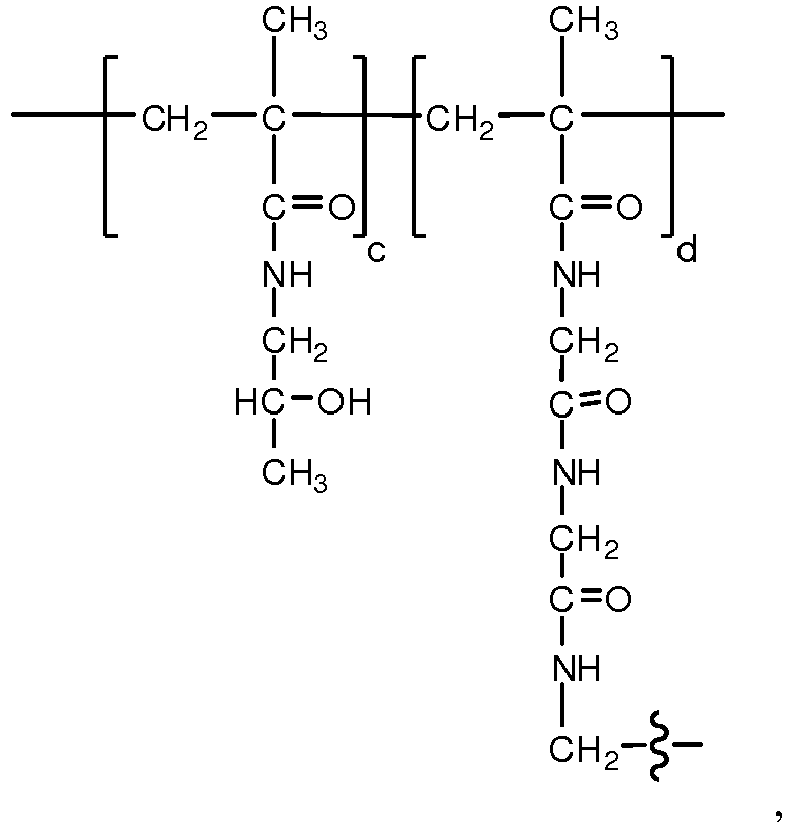
- Die Verbindung für die Verwendung nach Anspruch 1, wobei das Subjekt ein Tier ist.
- Die Verbindung für die Verwendung nach Anspruch 3, wobei die bakterielle Infektion verursacht wird durch ein Säugetier bakterielles Pathogen und vorzugsweise durch ein multiresistentes Bakterium oder durch ein Bakterium, das eine QseC Kinase oder QseC Kinase-Homolog aufweist, inbesondere wobei die bakterielle Infektion durch mindestens einen der Organismen Acinetobacter, einschließlich Acinetobacter baumannii, Actinobacillus pleuropneumoniae, Bordetella parapertussis, Burkholderia cepacia, Chromobacter violaceum, Citrobacter, Coxiella burnetti, E. coli, insbesondere enterotoxigenes E. coli, enteropathogenes E. coli., enteroaggregatives E. coli, enteroinvasives E. coli, diffus adhärentes E. coli, E. coli K1, Enterobacter, Francisella tularensis, Haemophilus influenzae, Klebsiella pseumonia, Legionella pneumophila, Pasteurella multocida, Pseudomonas aeruginosa, Pseudomonas fluorescens, Shigella flexneri, Salmonella typhi, Salmonella typhimurium, Vibrio cholerae, Vibrio parahaemoliticus, Vibrio vulnificus, Yersinia enterocolitica, Yersinia mollareti, Yersinia pestis oder Yersinia pseudotuberculosis verursacht wird, insbesondere wobei der E. coli Organismus ein pathogenes E. coli, ein enterohämorrhagisches E. coli oder ein uropathogenes E. coli ist.
- Die Verbindung für die Verwendung nach Anspruch 3, wobei die Verbindung in einer pharmazeutisch verträglichen absorbierbaren oder nicht-absorbierbaren Zusammensetzung umfasst ist.
- Die Verbindung für die Verwendung nach Anspruch 3, wobei die Verbindung mit einer enteralen Beschichtung beigemischt ist.
- Die Verbindung für die Verwendung nach Anspruch 3, wobei die Verbindung oral, über Inhalation, intraperitoneal, intravenös, intramuskular, rektal, buccal, transdermal, vaginal oder über Augen- oder Ohrtropfen verabreicht wird.
- Die Verbindung für die Verwendung nach Anspruch 7, wobei die Verbindung in einer Menge von ungefähr 0,1 bis ungefähr 50 mg/kg Körpergewicht, vorzugsweise in einer Menge von ungefähr 10 bis ungefähr 30 mg/kg Körpergewicht verabreicht wird.
- Verwendung der Verbindung nach Formel (III):
 wobei Q, R, C, D, T und U jede unabhängig voneinander H, substituiertes Alkyl oder unsubstituiertes Alkyl, vorzugsweise unsubstituiertes Alkyl mit 1 bis 6 Kohlenstoffatomen, -NH2, -CH2NH2, -CH2NH-(Akyl mit 1 bis 6 Kohlenstoffatomen), ein Polymerschwanz, ein Polymerrückgrat oder ein Linker-Polymerrückgrat sind; undK S oder O ist;wobei für substituierte Alkyl die substituierte Alkylgruppe ausgewählt ist aus der Gruppe bestehend aus:Trifluormethyl, -CH2F, -CH2Cl, -CH2Br, -CH2OH, -CH2OCH3, -CH2OCH2CF3, -CH2OC(O)CH3, -CH2NH2, -CH2NH-(Alkyl mit 1 bis 6 Kohlenstoffatomen), -CH2NHCH3, -CH2N(CH3)2, -CH2CH2Cl, -CH2CH2OH, CH2CH2OOC(O)CH3, -CH2CH2NHCO2C(CH3)3 und -CH2Si(CH3)3,in einem Verfahren zur Behandlung oder Prävention einer bakteriellen Infektion in einer Pflanze.
 - Die Verwendung nach Anspruch 9, wobei die Alkylgruppe von Q, R, C, D, T und U jede unabhängig voneinander unsubstituiertes Alkyl mit 1 bis 6 Kohlenstoffatomen ist, und wobei (i) der Polymerschwanz umfasst


 R H oder Alkyl mit 1 bis 6 Kohlenstoffatomen ist;R3 und R4 jede unabhängig voneinander H, Alkyl mit 1 bis 6 Kohlenstoffatomen, -NH2,-CH2NH2, -CH2NHCH3, -OH, oder Alkoxy mit 1 bis 6 Kohlenstoffatomen sind; undm und p jede unabhängig voneinander eine ganze Zahl von 2-200 sind; oder (ii) das Linker-Polymerrückgrat oder Polymerrückgrat umfasst

- Die Verwendung nach Anspruch 9, wobei die bakterielle Infektion durch ein Pflanzen bakterielles Pathogen verursacht wird und vorzugsweise durch ein multiresistentes Bakterium oder durch ein Bakterium, das eine QseC Kinase oder QseC Kinase-Homolog aufweist, insbesondere wobei die bakterielle Infektion durch mindestens einen der Organismen Burkholderia cepacia, Burkolderia phymatum, Erwinia carotovora, Pseudomonas aeruginosa, Ralstonia euthropha oder Ralstonia solanacearum verursacht wird.
- Die Verwenudng nach Anspruch 9, wobei die Verbinudng in einer pharmazeutisch vertäglichen absorbierbaren oder nicht absorbierbaren Zusammensetzung umfasst ist.
Applications Claiming Priority (2)
| Application Number | Priority Date | Filing Date | Title |
|---|---|---|---|
| US99963707P | 2007-10-19 | 2007-10-19 | |
| PCT/US2008/080533 WO2009088549A2 (en) | 2007-10-19 | 2008-10-20 | Methods of inhibiting bacterial virulence and compounds relating thereto |
Publications (2)
| Publication Number | Publication Date |
|---|---|
| EP2219635A2 EP2219635A2 (de) | 2010-08-25 |
| EP2219635B1 true EP2219635B1 (de) | 2017-01-25 |
Family
ID=40760255
Family Applications (1)
| Application Number | Title | Priority Date | Filing Date |
|---|---|---|---|
| EP08869557.2A Not-in-force EP2219635B1 (de) | 2007-10-19 | 2008-10-20 | Verfahren zur hemmung einer bakterienvirulenz und verbindungen in zusammenhang damit |
Country Status (6)
| Country | Link |
|---|---|
| US (1) | US8252841B2 (de) |
| EP (1) | EP2219635B1 (de) |
| KR (1) | KR20100096101A (de) |
| AU (1) | AU2008347024A1 (de) |
| CA (1) | CA2702992C (de) |
| WO (1) | WO2009088549A2 (de) |
Families Citing this family (20)
| Publication number | Priority date | Publication date | Assignee | Title |
|---|---|---|---|---|
| EP2385831A4 (de) * | 2009-01-09 | 2014-03-26 | Uab Research Foundation | Kleinmolekulare hemmer von nads, namnat und nmnat |
| FI20095678A0 (fi) * | 2009-06-16 | 2009-06-16 | Biotie Therapies Oy | Ureasubstituoituja sulfoniamidijohdannaisia |
| CN101857562A (zh) * | 2010-05-12 | 2010-10-13 | 中国人民解放军第四军医大学 | 具有抑制细菌毒力作用的QseC配体衍生物的合成方法 |
| US9155310B2 (en) * | 2011-05-24 | 2015-10-13 | Agienic, Inc. | Antimicrobial compositions for use in products for petroleum extraction, personal care, wound care and other applications |
| BR112015011253B1 (pt) | 2012-11-21 | 2021-11-09 | Nippon Soda Co., Ltd | Material de gravação, folha de gravação, método para uso de um composto |
| US11352551B2 (en) | 2012-11-26 | 2022-06-07 | Agienic, Inc. | Proppant coatings containing antimicrobial agents |
| US10208241B2 (en) | 2012-11-26 | 2019-02-19 | Agienic, Inc. | Resin coated proppants with antimicrobial additives |
| US9604946B2 (en) | 2013-03-12 | 2017-03-28 | The Board Of Regents Of The University Of Texas System | Methods for modulating bacterial virulence and related compounds |
| WO2015168430A1 (en) * | 2014-05-01 | 2015-11-05 | Agienic, Inc. | Compositions for use in corrosion protection |
| KR101650098B1 (ko) * | 2014-07-15 | 2016-08-23 | 한국식품연구원 | 병원성 대장균의 병원성 저해 물질 탐색방법 및 그에 이용되는 재조합 대장균 |
| BR112017016837B1 (pt) | 2015-02-25 | 2022-09-27 | Nippon Soda Co., Ltd | Modificação cristalina de um composto material de gravação, e, lâmina de gravação |
| EP3464260B8 (de) * | 2016-05-30 | 2022-02-16 | Technische Universität München | Harnstoffmotivhaltige verbindungen und derivate davon als antibakterielle wirkstoffe |
| RU2019114164A (ru) * | 2016-10-14 | 2020-11-16 | Пи Индастриз Лтд | Производные 4-замещенного фениламина и их использование для защиты культур от нежелательных фитопатогенных микроорганизмов |
| US11318141B2 (en) | 2017-06-30 | 2022-05-03 | Ohio State Innovation Foundation | Methods and compositions related to STK1-targeted small molecules as antibiotic resistance breakers |
| CN114650835A (zh) * | 2019-10-16 | 2022-06-21 | 中国海洋大学 | 高效杀灭耐药病害菌的药物及在抑制耐药病害菌中的应用 |
| US20230174523A1 (en) * | 2020-03-20 | 2023-06-08 | Amathus Therapeutics, Inc. | Benzenesulfonamide derivatives as trap1 modulators and uses thereof |
| US20230159509A1 (en) * | 2020-03-20 | 2023-05-25 | Amathus Therapeutics, Inc. | Pyridinesulfonamide derivatives as trap1 modulators and uses thereof |
| WO2022032134A1 (en) * | 2020-08-07 | 2022-02-10 | West Liberty University | Antimicrobial compositions and related methods |
| US20240139191A1 (en) * | 2020-12-14 | 2024-05-02 | University Of Pittsburgh-Of The Commonwealth System Of Higher Education | Small molecules as larp1 ligands |
| CN112851559B (zh) * | 2021-01-23 | 2022-11-08 | 中国人民解放军空军军医大学 | FtsZ及QseC双靶标抗菌分子及其制备方法和用途 |
Citations (1)
| Publication number | Priority date | Publication date | Assignee | Title |
|---|---|---|---|---|
| JPH11268421A (ja) * | 1998-03-23 | 1999-10-05 | Nippon Paper Industries Co Ltd | 感熱記録体 |
Family Cites Families (7)
| Publication number | Priority date | Publication date | Assignee | Title |
|---|---|---|---|---|
| US4412992A (en) | 1980-07-21 | 1983-11-01 | Biorex Laboratories Limited | 2-Hydroxy-5-phenylazobenzoic acid derivatives and method of treating ulcerative colitis therewith |
| AU3243199A (en) | 1998-03-05 | 1999-09-20 | University Of British Columbia, The | Methods for assaying type iii secretion inhibitors |
| JP3926983B2 (ja) * | 1998-09-23 | 2007-06-06 | テュラリク インコーポレイテッド | アリールスルホンアニリドウレア |
| WO2002070467A1 (en) * | 2001-02-26 | 2002-09-12 | 4Sc Ag | Derivatives of diphenylurea, diphenyloxalic acid diamide and diphenylsulfuric acid diamide and their use as medicaments |
| WO2003028762A1 (en) | 2001-09-28 | 2003-04-10 | Ethicon, Inc. | Novel antimicrobial resistance blocking compositions |
| US20030236306A1 (en) | 2002-06-20 | 2003-12-25 | Chen Andrew X. | Stabilized formulations of alpha adrenergic receptor antagonists and the uses thereof |
| DE10337497A1 (de) | 2003-08-14 | 2005-03-10 | Bayer Cropscience Ag | 4-Biphenylsubstituierte-Pyrazolidin-3,5-dion-Derivate |
-
2008
- 2008-10-20 AU AU2008347024A patent/AU2008347024A1/en not_active Abandoned
- 2008-10-20 WO PCT/US2008/080533 patent/WO2009088549A2/en not_active Ceased
- 2008-10-20 KR KR1020107011002A patent/KR20100096101A/ko not_active Withdrawn
- 2008-10-20 CA CA2702992A patent/CA2702992C/en not_active Expired - Fee Related
- 2008-10-20 US US12/254,690 patent/US8252841B2/en not_active Expired - Fee Related
- 2008-10-20 EP EP08869557.2A patent/EP2219635B1/de not_active Not-in-force
Patent Citations (1)
| Publication number | Priority date | Publication date | Assignee | Title |
|---|---|---|---|---|
| JPH11268421A (ja) * | 1998-03-23 | 1999-10-05 | Nippon Paper Industries Co Ltd | 感熱記録体 |
Non-Patent Citations (1)
| Title |
|---|
| DATABASE CA [online] CHEMICAL ABSTRACTS SERVICE, COLUMBUS, OHIO, US; NAKANO, TOMOYUKI ET AL: "Thermal printing material containing phenylsulfamoylurea compound as color developer", retrieved from STN Database accession no. 1999:629879 * |
Also Published As
| Publication number | Publication date |
|---|---|
| WO2009088549A3 (en) | 2010-01-07 |
| AU2008347024A1 (en) | 2009-07-16 |
| US20100048573A1 (en) | 2010-02-25 |
| CN101977597A (zh) | 2011-02-16 |
| KR20100096101A (ko) | 2010-09-01 |
| CA2702992A1 (en) | 2009-07-16 |
| US8252841B2 (en) | 2012-08-28 |
| CA2702992C (en) | 2017-09-19 |
| EP2219635A2 (de) | 2010-08-25 |
| WO2009088549A2 (en) | 2009-07-16 |
Similar Documents
| Publication | Publication Date | Title |
|---|---|---|
| EP2219635B1 (de) | Verfahren zur hemmung einer bakterienvirulenz und verbindungen in zusammenhang damit | |
| US10570152B2 (en) | Antibacterial therapeutics and prophylactics | |
| ES2732311T3 (es) | Compuestos de manósidos y procedimientos de uso de los mismos | |
| JP2010529194A (ja) | 抗生物質 | |
| EP2753613B1 (de) | Derivate aus xanthonverbindungen | |
| KR20140129030A (ko) | 캔디다증 및 아스퍼질러스 감염을 치료하기 위한 화합물 및 방법 | |
| KR20140028046A (ko) | 사이어졸계 화합물 및 그 제조 방법 | |
| TR201904760T4 (tr) | İnflamasyon ve vasküler proliferasyon ile ilişkili göz hastalıklarının tedavi edilmesine yönelik yöntemler. | |
| US11691949B2 (en) | Quinoline sulfonamide compounds and their use as antibacterial agents | |
| US9604946B2 (en) | Methods for modulating bacterial virulence and related compounds | |
| CN109503510B (zh) | 一种防龋抗菌的噻唑类化合物及其制备方法 | |
| JPS6210223B2 (de) | ||
| CN101977597B (zh) | 抑制细菌毒力的方法及其相关化合物 | |
| WO2018081869A1 (en) | Antimicrobial compounds | |
| Coruzzi et al. | Antisecretory and gastroprotective activities of compounds endowed with H2 antagonistic and nitric oxide (NO) donor properties | |
| CN105001241A (zh) | 均三唑并噻二唑和噻二嗪类衍生物及其制备方法和应用 | |
| KR100416066B1 (ko) | 구아니디노메틸 사이클로헥산 카복실산 에스테르 유도체 | |
| RU2803742C1 (ru) | Амиды натамицина и их применение для лечения грибковых инфекций | |
| US20260091082A1 (en) | Cyclic peptide derivative composition for treating or preventing eye disease | |
| CN114907288B (zh) | 硝基苯类化合物在制备铜绿假单胞菌群体感应抑制剂中的应用 | |
| CN100422161C (zh) | 羟基吗啉酮衍生物及其医药用途 | |
| CN119504644A (zh) | 一种苯并噻唑偶联异羟肟酸类化合物及其制备方法和应用 | |
| HK1200031A1 (en) | Positively charged water-soluble prodrugs of oxicams and related compounds with very high skin penetration rate | |
| HK1072769A (en) | Hydroxymorpholinone derivative and medicinal use thereof |
Legal Events
| Date | Code | Title | Description |
|---|---|---|---|
| PUAI | Public reference made under article 153(3) epc to a published international application that has entered the european phase |
Free format text: ORIGINAL CODE: 0009012 |
|
| 17P | Request for examination filed |
Effective date: 20100519 |
|
| AK | Designated contracting states |
Kind code of ref document: A2 Designated state(s): AT BE BG CH CY CZ DE DK EE ES FI FR GB GR HR HU IE IS IT LI LT LU LV MC MT NL NO PL PT RO SE SI SK TR |
|
| AX | Request for extension of the european patent |
Extension state: AL BA MK RS |
|
| RIN1 | Information on inventor provided before grant (corrected) |
Inventor name: STEWART, DONALD R. Inventor name: FALCK, JOHN R. Inventor name: SPERANDIO, VANESSA |
|
| DAX | Request for extension of the european patent (deleted) | ||
| 17Q | First examination report despatched |
Effective date: 20110210 |
|
| GRAP | Despatch of communication of intention to grant a patent |
Free format text: ORIGINAL CODE: EPIDOSNIGR1 |
|
| RIC1 | Information provided on ipc code assigned before grant |
Ipc: A61K 31/635 20060101ALI20160301BHEP Ipc: A61K 31/18 20060101ALI20160301BHEP Ipc: A01N 43/40 20060101ALI20160301BHEP Ipc: A61K 31/63 20060101ALI20160301BHEP Ipc: A61K 31/17 20060101AFI20160301BHEP Ipc: C07C 311/43 20060101ALI20160301BHEP Ipc: A61K 31/4406 20060101ALI20160301BHEP Ipc: A01N 47/30 20060101ALI20160301BHEP Ipc: A61P 31/04 20060101ALI20160301BHEP Ipc: C07C 311/47 20060101ALI20160301BHEP Ipc: A01N 47/48 20060101ALI20160301BHEP Ipc: A01N 41/06 20060101ALI20160301BHEP |
|
| INTG | Intention to grant announced |
Effective date: 20160318 |
|
| GRAJ | Information related to disapproval of communication of intention to grant by the applicant or resumption of examination proceedings by the epo deleted |
Free format text: ORIGINAL CODE: EPIDOSDIGR1 |
|
| GRAP | Despatch of communication of intention to grant a patent |
Free format text: ORIGINAL CODE: EPIDOSNIGR1 |
|
| INTC | Intention to grant announced (deleted) | ||
| INTG | Intention to grant announced |
Effective date: 20160810 |
|
| GRAS | Grant fee paid |
Free format text: ORIGINAL CODE: EPIDOSNIGR3 |
|
| STAA | Information on the status of an ep patent application or granted ep patent |
Free format text: STATUS: GRANT OF PATENT IS INTENDED |
|
| GRAA | (expected) grant |
Free format text: ORIGINAL CODE: 0009210 |
|
| STAA | Information on the status of an ep patent application or granted ep patent |
Free format text: STATUS: THE PATENT HAS BEEN GRANTED |
|
| AK | Designated contracting states |
Kind code of ref document: B1 Designated state(s): AT BE BG CH CY CZ DE DK EE ES FI FR GB GR HR HU IE IS IT LI LT LU LV MC MT NL NO PL PT RO SE SI SK TR |
|
| REG | Reference to a national code |
Ref country code: GB Ref legal event code: FG4D |
|
| RIN1 | Information on inventor provided before grant (corrected) |
Inventor name: FALCK, JOHN R. Inventor name: STEWART, DONALD R. Inventor name: SPERANDIO, VANESSA |
|
| REG | Reference to a national code |
Ref country code: CH Ref legal event code: EP |
|
| REG | Reference to a national code |
Ref country code: AT Ref legal event code: REF Ref document number: 863714 Country of ref document: AT Kind code of ref document: T Effective date: 20170215 |
|
| REG | Reference to a national code |
Ref country code: IE Ref legal event code: FG4D |
|
| REG | Reference to a national code |
Ref country code: CH Ref legal event code: NV Representative=s name: ALDO ROEMPLER PATENTANWALT, CH |
|
| REG | Reference to a national code |
Ref country code: DE Ref legal event code: R096 Ref document number: 602008048625 Country of ref document: DE |
|
| REG | Reference to a national code |
Ref country code: NL Ref legal event code: FP |
|
| REG | Reference to a national code |
Ref country code: LT Ref legal event code: MG4D |
|
| REG | Reference to a national code |
Ref country code: AT Ref legal event code: MK05 Ref document number: 863714 Country of ref document: AT Kind code of ref document: T Effective date: 20170125 |
|
| PG25 | Lapsed in a contracting state [announced via postgrant information from national office to epo] |
Ref country code: GR Free format text: LAPSE BECAUSE OF FAILURE TO SUBMIT A TRANSLATION OF THE DESCRIPTION OR TO PAY THE FEE WITHIN THE PRESCRIBED TIME-LIMIT Effective date: 20170426 Ref country code: FI Free format text: LAPSE BECAUSE OF FAILURE TO SUBMIT A TRANSLATION OF THE DESCRIPTION OR TO PAY THE FEE WITHIN THE PRESCRIBED TIME-LIMIT Effective date: 20170125 Ref country code: LT Free format text: LAPSE BECAUSE OF FAILURE TO SUBMIT A TRANSLATION OF THE DESCRIPTION OR TO PAY THE FEE WITHIN THE PRESCRIBED TIME-LIMIT Effective date: 20170125 Ref country code: NO Free format text: LAPSE BECAUSE OF FAILURE TO SUBMIT A TRANSLATION OF THE DESCRIPTION OR TO PAY THE FEE WITHIN THE PRESCRIBED TIME-LIMIT Effective date: 20170425 Ref country code: IS Free format text: LAPSE BECAUSE OF FAILURE TO SUBMIT A TRANSLATION OF THE DESCRIPTION OR TO PAY THE FEE WITHIN THE PRESCRIBED TIME-LIMIT Effective date: 20170525 Ref country code: HR Free format text: LAPSE BECAUSE OF FAILURE TO SUBMIT A TRANSLATION OF THE DESCRIPTION OR TO PAY THE FEE WITHIN THE PRESCRIBED TIME-LIMIT Effective date: 20170125 |
|
| PG25 | Lapsed in a contracting state [announced via postgrant information from national office to epo] |
Ref country code: ES Free format text: LAPSE BECAUSE OF FAILURE TO SUBMIT A TRANSLATION OF THE DESCRIPTION OR TO PAY THE FEE WITHIN THE PRESCRIBED TIME-LIMIT Effective date: 20170125 Ref country code: PL Free format text: LAPSE BECAUSE OF FAILURE TO SUBMIT A TRANSLATION OF THE DESCRIPTION OR TO PAY THE FEE WITHIN THE PRESCRIBED TIME-LIMIT Effective date: 20170125 Ref country code: PT Free format text: LAPSE BECAUSE OF FAILURE TO SUBMIT A TRANSLATION OF THE DESCRIPTION OR TO PAY THE FEE WITHIN THE PRESCRIBED TIME-LIMIT Effective date: 20170525 Ref country code: SE Free format text: LAPSE BECAUSE OF FAILURE TO SUBMIT A TRANSLATION OF THE DESCRIPTION OR TO PAY THE FEE WITHIN THE PRESCRIBED TIME-LIMIT Effective date: 20170125 Ref country code: BG Free format text: LAPSE BECAUSE OF FAILURE TO SUBMIT A TRANSLATION OF THE DESCRIPTION OR TO PAY THE FEE WITHIN THE PRESCRIBED TIME-LIMIT Effective date: 20170425 Ref country code: AT Free format text: LAPSE BECAUSE OF FAILURE TO SUBMIT A TRANSLATION OF THE DESCRIPTION OR TO PAY THE FEE WITHIN THE PRESCRIBED TIME-LIMIT Effective date: 20170125 Ref country code: LV Free format text: LAPSE BECAUSE OF FAILURE TO SUBMIT A TRANSLATION OF THE DESCRIPTION OR TO PAY THE FEE WITHIN THE PRESCRIBED TIME-LIMIT Effective date: 20170125 |
|
| REG | Reference to a national code |
Ref country code: FR Ref legal event code: PLFP Year of fee payment: 10 |
|
| REG | Reference to a national code |
Ref country code: DE Ref legal event code: R097 Ref document number: 602008048625 Country of ref document: DE |
|
| PG25 | Lapsed in a contracting state [announced via postgrant information from national office to epo] |
Ref country code: IT Free format text: LAPSE BECAUSE OF FAILURE TO SUBMIT A TRANSLATION OF THE DESCRIPTION OR TO PAY THE FEE WITHIN THE PRESCRIBED TIME-LIMIT Effective date: 20170125 Ref country code: RO Free format text: LAPSE BECAUSE OF FAILURE TO SUBMIT A TRANSLATION OF THE DESCRIPTION OR TO PAY THE FEE WITHIN THE PRESCRIBED TIME-LIMIT Effective date: 20170125 Ref country code: CZ Free format text: LAPSE BECAUSE OF FAILURE TO SUBMIT A TRANSLATION OF THE DESCRIPTION OR TO PAY THE FEE WITHIN THE PRESCRIBED TIME-LIMIT Effective date: 20170125 Ref country code: EE Free format text: LAPSE BECAUSE OF FAILURE TO SUBMIT A TRANSLATION OF THE DESCRIPTION OR TO PAY THE FEE WITHIN THE PRESCRIBED TIME-LIMIT Effective date: 20170125 Ref country code: SK Free format text: LAPSE BECAUSE OF FAILURE TO SUBMIT A TRANSLATION OF THE DESCRIPTION OR TO PAY THE FEE WITHIN THE PRESCRIBED TIME-LIMIT Effective date: 20170125 |
|
| PG25 | Lapsed in a contracting state [announced via postgrant information from national office to epo] |
Ref country code: DK Free format text: LAPSE BECAUSE OF FAILURE TO SUBMIT A TRANSLATION OF THE DESCRIPTION OR TO PAY THE FEE WITHIN THE PRESCRIBED TIME-LIMIT Effective date: 20170125 |
|
| PLBE | No opposition filed within time limit |
Free format text: ORIGINAL CODE: 0009261 |
|
| STAA | Information on the status of an ep patent application or granted ep patent |
Free format text: STATUS: NO OPPOSITION FILED WITHIN TIME LIMIT |
|
| 26N | No opposition filed |
Effective date: 20171026 |
|
| PG25 | Lapsed in a contracting state [announced via postgrant information from national office to epo] |
Ref country code: SI Free format text: LAPSE BECAUSE OF FAILURE TO SUBMIT A TRANSLATION OF THE DESCRIPTION OR TO PAY THE FEE WITHIN THE PRESCRIBED TIME-LIMIT Effective date: 20170125 |
|
| PG25 | Lapsed in a contracting state [announced via postgrant information from national office to epo] |
Ref country code: MC Free format text: LAPSE BECAUSE OF FAILURE TO SUBMIT A TRANSLATION OF THE DESCRIPTION OR TO PAY THE FEE WITHIN THE PRESCRIBED TIME-LIMIT Effective date: 20170125 |
|
| PG25 | Lapsed in a contracting state [announced via postgrant information from national office to epo] |
Ref country code: LU Free format text: LAPSE BECAUSE OF NON-PAYMENT OF DUE FEES Effective date: 20171020 |
|
| REG | Reference to a national code |
Ref country code: BE Ref legal event code: MM Effective date: 20171031 |
|
| PG25 | Lapsed in a contracting state [announced via postgrant information from national office to epo] |
Ref country code: BE Free format text: LAPSE BECAUSE OF NON-PAYMENT OF DUE FEES Effective date: 20171031 |
|
| PG25 | Lapsed in a contracting state [announced via postgrant information from national office to epo] |
Ref country code: MT Free format text: LAPSE BECAUSE OF NON-PAYMENT OF DUE FEES Effective date: 20171020 |
|
| REG | Reference to a national code |
Ref country code: FR Ref legal event code: PLFP Year of fee payment: 11 |
|
| PGFP | Annual fee paid to national office [announced via postgrant information from national office to epo] |
Ref country code: NL Payment date: 20181025 Year of fee payment: 11 |
|
| PGFP | Annual fee paid to national office [announced via postgrant information from national office to epo] |
Ref country code: IE Payment date: 20181023 Year of fee payment: 11 Ref country code: DE Payment date: 20181023 Year of fee payment: 11 |
|
| PGFP | Annual fee paid to national office [announced via postgrant information from national office to epo] |
Ref country code: FR Payment date: 20181026 Year of fee payment: 11 Ref country code: CH Payment date: 20181026 Year of fee payment: 11 Ref country code: GB Payment date: 20181024 Year of fee payment: 11 |
|
| PG25 | Lapsed in a contracting state [announced via postgrant information from national office to epo] |
Ref country code: HU Free format text: LAPSE BECAUSE OF FAILURE TO SUBMIT A TRANSLATION OF THE DESCRIPTION OR TO PAY THE FEE WITHIN THE PRESCRIBED TIME-LIMIT; INVALID AB INITIO Effective date: 20081020 |
|
| PG25 | Lapsed in a contracting state [announced via postgrant information from national office to epo] |
Ref country code: CY Free format text: LAPSE BECAUSE OF NON-PAYMENT OF DUE FEES Effective date: 20170125 |
|
| PG25 | Lapsed in a contracting state [announced via postgrant information from national office to epo] |
Ref country code: TR Free format text: LAPSE BECAUSE OF FAILURE TO SUBMIT A TRANSLATION OF THE DESCRIPTION OR TO PAY THE FEE WITHIN THE PRESCRIBED TIME-LIMIT Effective date: 20170125 |
|
| REG | Reference to a national code |
Ref country code: DE Ref legal event code: R119 Ref document number: 602008048625 Country of ref document: DE |
|
| REG | Reference to a national code |
Ref country code: CH Ref legal event code: PL |
|
| REG | Reference to a national code |
Ref country code: NL Ref legal event code: MM Effective date: 20191101 |
|
| PG25 | Lapsed in a contracting state [announced via postgrant information from national office to epo] |
Ref country code: DE Free format text: LAPSE BECAUSE OF NON-PAYMENT OF DUE FEES Effective date: 20200501 Ref country code: LI Free format text: LAPSE BECAUSE OF NON-PAYMENT OF DUE FEES Effective date: 20191031 Ref country code: CH Free format text: LAPSE BECAUSE OF NON-PAYMENT OF DUE FEES Effective date: 20191031 |
|
| PG25 | Lapsed in a contracting state [announced via postgrant information from national office to epo] |
Ref country code: NL Free format text: LAPSE BECAUSE OF NON-PAYMENT OF DUE FEES Effective date: 20191101 |
|
| GBPC | Gb: european patent ceased through non-payment of renewal fee |
Effective date: 20191020 |
|
| PG25 | Lapsed in a contracting state [announced via postgrant information from national office to epo] |
Ref country code: IE Free format text: LAPSE BECAUSE OF NON-PAYMENT OF DUE FEES Effective date: 20191020 Ref country code: GB Free format text: LAPSE BECAUSE OF NON-PAYMENT OF DUE FEES Effective date: 20191020 Ref country code: FR Free format text: LAPSE BECAUSE OF NON-PAYMENT OF DUE FEES Effective date: 20191031 |