EP2219280A2 - Ladungssteuerung - Google Patents
Ladungssteuerung Download PDFInfo
- Publication number
- EP2219280A2 EP2219280A2 EP10001578A EP10001578A EP2219280A2 EP 2219280 A2 EP2219280 A2 EP 2219280A2 EP 10001578 A EP10001578 A EP 10001578A EP 10001578 A EP10001578 A EP 10001578A EP 2219280 A2 EP2219280 A2 EP 2219280A2
- Authority
- EP
- European Patent Office
- Prior art keywords
- cell
- charging
- charger
- voltage
- circuit
- Prior art date
- Legal status (The legal status is an assumption and is not a legal conclusion. Google has not performed a legal analysis and makes no representation as to the accuracy of the status listed.)
- Granted
Links
Images


Classifications
-
- H—ELECTRICITY
- H02—GENERATION; CONVERSION OR DISTRIBUTION OF ELECTRIC POWER
- H02J—ELECTRIC POWER NETWORKS; CIRCUIT ARRANGEMENTS OR SYSTEMS FOR SUPPLYING OR DISTRIBUTING ELECTRIC POWER; SYSTEMS FOR STORING ELECTRIC ENERGY
- H02J7/00—Circuit arrangements for charging or discharging batteries or for supplying loads from batteries
- H02J7/50—Circuit arrangements for charging or discharging batteries or for supplying loads from batteries acting upon multiple batteries simultaneously or sequentially
-
- H—ELECTRICITY
- H02—GENERATION; CONVERSION OR DISTRIBUTION OF ELECTRIC POWER
- H02J—ELECTRIC POWER NETWORKS; CIRCUIT ARRANGEMENTS OR SYSTEMS FOR SUPPLYING OR DISTRIBUTING ELECTRIC POWER; SYSTEMS FOR STORING ELECTRIC ENERGY
- H02J7/00—Circuit arrangements for charging or discharging batteries or for supplying loads from batteries
- H02J7/80—Circuit arrangements for charging or discharging batteries or for supplying loads from batteries including monitoring or indicating arrangements
- H02J7/82—Control of state of charge [SOC]
Definitions
- the present invention relates to a charging controller.
- a charging controller which is connected to at least one secondary cell and also detachably connected to a charger or a cell driver to control charging from the charger to the secondary cell.
- Such charging controller includes a charging amount control circuit controlling a charger to charge up a cell voltage to a target voltage and a protection circuit preventing an overcharging.
- the charging amount control circuit outputs a charging control signal that instructs the charger to decrease a charging current when the cell voltage of any one of the secondary cells exceeds the target voltage.
- the protection circuit prevents the overcharging by blocking a current path from the charger to the secondary cell when the cell voltage exceeds an upper limit voltage (see, e.g., Japanese Patent Application Publication No. 2007-143284 )
- both of the charging amount control circuit and the protection circuit is supplied a power from the charger. Therefore, if a circuit generating the power in the charger becomes out of order, the charging amount control circuit and the protection circuit cannot properly work, which may lead to an overcharging.
- a secondary cell as a power source in order to make certain that the charging amount control circuit and the protection circuit always work.
- the secondary cell is in a standby state where the charger and the cell driver are not connected, power of the secondary cell is unnecessarily consumed.
- the present invention provides a charging controller capable of suppressing consumption of a secondary cell in a standby state while preventing an overcharging.
- a charging controller connected to at least one of secondary cells and detachably connected to a charger or a cell driver.
- the charging controller includes: a charging amount control circuit detecting a cell voltage of each secondary cell, comparing the detected cell voltage with a respective predetermined target voltage, and outputting a charging control signal for instructing the charger to reduce a charging current when the detected cell voltage exceeds the target voltage; and a protection circuit detecting a cell voltage of each secondary cell, comparing the detected cell voltage with a predetermined upper limit voltage higher than the respective target voltage, and cutting off a current path from the charger to the secondary cell when the detected cell voltage exceeds the upper limit voltage, the protection circuit operating by using the secondary cell as a power source while at least the charger is not connected.
- the charging amount control circuit does not operate.
- the protection circuit can surely prevent the overcharging by using the secondary cell as a power source. Further, when the charger and the cell driver are not connected (standby state), the charging amount control circuit does not work. Therefore, consumption of the secondary cell can be suppressed in the standby state, comparing to the conventional art where the charging amount control circuit always works by using the secondary cell as a power source.
- the protection circuit intermittently operates while neither the charger nor the cell driver are connected.
- the charging amount control circuit operates by using the secondary cell as a power source only when a control trigger signal is being inputted from the charger while at least the secondary cells are charged, and the control trigger signal is not inputted while neither the charger nor the cell driver are connected.
- the charging amount control circuit is supplied a power from the charger.
- the charging control in accordance with an aspect of the present invention further includes an overdischarging prevention circuit detecting a cell voltage of each secondary cell; comparing the detected cell voltage with a predetermined lower limit voltage lower than the respective target voltage; and outputting a discharging control signal for instructing the cell driver to stop receiving power from the secondary cell when the cell voltage is lower than the lower limit voltage, wherein the overdischarging prevention circuit does not operate while neither the charger nor the cell driver are connected.
- the overcharging of the secondary cell can be prevented by the overdischarging prevention circuit. Further, since the overdischarging prevention circuit does not operate in the standby state, the consumption of the secondary cell can be suppressed in the standby state as compared to the case where the overdischarging prevention circuit continues to work by using the secondary cell as a power source.
- a battery pack 1 is constituted by a charging controller in accordance with an embodiment of the present invention and a serial circuit including a plurality of (e.g., 4 in the drawing) secondary cells 11.
- the battery pack 1 is detachably connected to a charger 2 charging the secondary cell 11 as shown in Fig. 1 or a cell driver 3 operated by using the secondary cell as a power source as shown in Fig. 2 .
- the battery pack 1 includes a charging terminal 10a to which an output terminal at a high voltage side of the serial circuit of the secondary cells. 11 is connected and the DC power (referred to as a 'charging power' hereinafter) for charging the secondary cells is inputted; a discharging terminal 10b connected to the output terminal at the high voltage side of the serial circuit of the secondary cells 11; and ground terminal 10c connected to the ground and the output terminal at a low voltage side of the serial circuit of the secondary cells 11.
- a charging terminal 10a to which an output terminal at a high voltage side of the serial circuit of the secondary cells. 11 is connected and the DC power (referred to as a 'charging power' hereinafter) for charging the secondary cells is inputted
- a discharging terminal 10b connected to the output terminal at the high voltage side of the serial circuit of the secondary cells 11
- ground terminal 10c connected to the ground and the output terminal at a low voltage side of the serial circuit of the secondary cells 11.
- the battery pack 1 further includes a control power supply terminal 10d to which a DC power (referred to as a 'control power' hereinafter) of a constant voltage serving as a power source of the charging controller, e.g., 5 V, is inputted; and a charging control terminal 10e for outputting a charging control signal to the charger 2 which instructs the charger 2 to reduce a current value (referred to as a 'charging current' hereinafter) of the charging power.
- a DC power referred to as a 'control power' hereinafter
- a constant voltage serving as a power source of the charging controller
- the battery pack 1 is provided with a discharging control terminal 10f for outputting a discharging control signal to the cell driver 3 that instructs the cell driver 3 to block (i.e., cut off the discharging of the secondary cell) inputting (receiving) of the DC power from the secondary cell 11.
- the battery pack 1 includes a temperature detection element 13, e.g., thermistor, provided in close contact with the secondary cell 11 to detect a temperature thereof; and a temperature detection terminal 10g electrically connected to one end of the temperature detection element 13 to output a detection result thereof.
- the charger 2 is provided a charging terminal 20a for outputting the charging power; a ground terminal 20c connected to the ground; a control power supply terminal 20d for outputting the control power; a charging control terminal 20e to which the charging control signal is inputted; and a temperature detection terminal 20g to which the output of the temperature detection element 13 of the battery pack 1 is inputted.
- the charging terminal 10a, the ground terminal 10c, the control power terminal 10d, the charging control terminal 10e and the temperature detection terminal 10g of the battery pack 1 are respectively connected to the charging terminal 20a, the ground terminal 20c, the control power terminal 20d, the charging control terminal 20e and the temperature detection terminal 20g of the charger 2 to be conducted with each other.
- the charger 2 includes a charging circuit 21 for receiving a power from an external AC power source and generating the charging power to output via the charging terminal 20a; a charging control circuit 22 for controlling the charging circuit 21 depending on the charging control signal inputted to the charging control terminal 20e and the output of the temperature detection element 13 inputted to the temperature detection terminal 20g; a control power supply circuit 23 for generating a control power; and a switch circuit 24 provided between the control power supply circuit 23 and the control power supply terminal 20d and controlled by the charging control circuit 22 to turn on and off outputting of the control power from the control power supply terminal 20d.
- the cell driver 3 is provided with a discharging terminal 30b to which the DC power is inputted from the secondary cell 11 of the battery pack 1; a ground terminal 30c connected to the ground; a control power supply terminal 30d for outputting the control power; a discharging control terminal 30f to which the discharging control signal is inputted; a temperature detection terminal 30g to which the output of the temperature detection element 13 of the battery pack 1 is inputted.
- the discharging terminal 10b, the ground terminal 10c, the control power supply terminal 10d, the discharging control terminal 10f and the temperature detection terminal 10g of the battery pack 1 are respectively connected to the discharging terminal 30b, the ground terminal 30c, the control power supply terminal 30d, the discharging control terminal 30f and the temperature detection terminal 30g of the cell driver 3 to be conducted with each other.
- the cell driver 3 has a motor 31, e.g., an impact driver, connected between the discharging terminal 30b and the ground terminal 30c to operate by using the secondary cell 11 of the battery pack 1 as a power source. Furthermore, the cell driver 3 includes a switch 32 for connecting or disconnecting between the discharging terminal 30b and the motor 31 by manual operation; a control power supply circuit 33 for receiving the DC power via the discharging terminal 30b and the switch 32 from the secondary cell 11, and generating the control power to output from control power supply terminal 30d; a switch element 34 for connecting or disconnecting between the ground terminal 30c and the motor 31; and a discharging control circuit 35 for enabling or disabling a power supply from the battery pack 1 to the motor 31 by turning on and off the switch element 34 based on the discharging control signal inputted to the discharging control terminal 30f and the output of the temperature detection element 13 inputted to the temperature detection terminal 30g.
- a motor 31 e.g., an impact driver
- the battery pack 1 further includes a charging amount control circuit 14, which detects a cell voltage across each secondary cell 11, compares the detected cell voltage with a respective predetermined target voltage V1 ( Fig. 3 ) and, when the detected cell voltage of at least one of the secondary cells exceeds the target voltage V1, outputs a charging control signal to the charging control terminal 10e. More specifically, the charging control signal lowers to the ground a potential of the charging control terminals 10e and 20e which remains constant because the charging control terminals 10e and 20e are normally connected to the control power supply terminal 10d via, e.g., a resistor.
- the charging control circuit 22 instructs the charging circuit 21 to start outputting of the charging power when detecting a connection of the battery pack 1 based on lowering of a potential of the temperature detection terminal 20g, and to stop outputting of the charging power when the charging control signal is inputted to the charging control terminal 20e.
- an initial current I1 is supplied as a charging current Ia during a duration from timing T0, where outputting of the charging power is started, to timing T1, where the charging control signal is inputted, and then Ia is reduced from the initial current I1 to a termination current I2 during a duration T1 ⁇ T2 for which the charging control signal is being inputted. That is, as a constant current control is executed during the duration of T0 ⁇ T1, the voltage of the secondary cell goes up to the highest voltage Va of the secondary cell (referred to as a 'highest cell voltage' hereinafter), and a constant voltage control is performed during the duration of T1 ⁇ T2 so that the highest cell voltage remains in the target voltage V1.
- the charging control circuit 22 compares the temperature detected by the temperature detection element 13 (referred to as a 'detected temperature' hereinafter) with a predetermined threshold temperature (e.g., 70°C) before starting to charge or during charging and, when the detected temperature exceeds the threshold temperature, the charging control circuit 22 does not start to output the charging power or stops outputting the charging power.
- a predetermined threshold temperature e.g. 70°C
- the charging control circuit 22 stops the outputting of the charging power from the charging circuit 21 by switching the switch circuit 24 off and stopping the outputting of the charging power.
- the battery pack 1 also includes a protection circuit 15 blocking the current path from the charger 2 to the secondary cell 11.
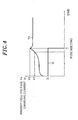
- the protection circuit 15 detects a voltage of each secondary cell, compares the detected cell voltage with an upper limit voltage V2 higher than the respective target voltage, and, when the detected cell voltage of at least one of the secondary cells exceeds the upper limit voltage V2 (that is, the highest cell voltage Va exceeds the upper limit voltage V2), makes the fuse 12 melted, as shown in Fig. 4 .
- the protection circuit 15 even if, e.g., the charging amount control circuit 14 or charger 2 becomes out of order, an abnormal generated heat caused by overcharging can be prevented.
- the battery pack 1 has an overdischarging prevention circuit 16.
- the overdischarging prevention circuit 16 detects a voltage of each secondary cell 11, compares the detected cell voltage with a lower limit voltage lower than the respective target voltage V1, and, when the cell voltage of at least one of the secondary cells is below the lower limit voltage, outputs the discharging control signal to the discharging control terminal 10f.
- the discharging control signal lowers to the ground a potential of the discharging control terminals 10f and 30f which remains constant because the discharging control terminals 10f and 30f are normally connected to the control power supply terminal 10d via, e.g., a resistor.
- the discharging control circuit 35 stops supplying a power from the secondary cell 11 to the motor 31 by turning off the switch element 34.
- the battery pack 1 also includes a power supply switch circuit 17.
- the power supply switch circuit 17 is turned on only when a desired control power is inputted to the control power supply terminal 10d and supplies the control power inputted from the control power supply terminal 10d to the charging control circuit 14, the protection circuit 15 and the overdischarging control circuit 16.
- the charging control circuit 14, the protection circuit 15 and the overdischarging control circuit 16 operate by using the control power supplied from the charger 2 or the cell driver 3.
- the charging control circuit 14 and the overdischarging control circuit 16 use only the control power inputted from the control power supply terminal 10d as a power source and, accordingly, are not supplied a power and do not operate, while neither of the charger 2 and the cell driver 3 are connected to the battery pack.
- the protection circuit 15 is supplied a power even when the control power is not inputted to the control power supply terminal 10d, which is because as follows. For example, there may be cases that a connection error occurs in between the control power supply terminals 10d and 20d, the control power supply circuit 23 in the charger 2 becomes out of order, and the like.
- the control power may be not inputted to the control power supply terminal 10d and, accordingly, an overcharging may occur. Therefore, in the embodiment of the present invention, there is employed a configuration that the protection circuit 15 operates by using the secondary cell 11 as a power source while neither the charger 2 nor the cell driver 3 are connected to the battery pack 1.
- the battery pack 1 includes a protection power supply switch 18a provided between the terminal at the high voltage side of the serial circuit of the secondary cells and the protection circuit 15, and a switch control circuit 18b.
- the protection power supply switch 18a switches on and off the power supply from the secondary cell 11 to the protection circuit 15.
- the switch control circuit 18b uses the secondary cell 11 as a power source and controls the protection power supply switch 18a to switch on or off based on states of the power supply switch circuit 17.
- the switch control circuit 18b performs a continuous switch-on operation where the protection power supply switch 18a remains switched on during a duration for which the power supply switch circuit 17 is switched on, i.e., the battery pack 1 is connected to the charger 2 or the cell driver 3 and the control power is supplied to the battery pack 1.
- the switch control circuit 18b executes an intermittent switch-on operation where the protection power supply switch 18a is intermittently switched on for, e.g., one second every 120 seconds (i.e., on-duty cycle is 1/120) and a power is intermittently supplied from the secondary cell 11 to the protection circuit 15 during a duration for which the power supply switch circuit 17 is turned off, i.e., the battery pack 1 is connected to neither the charger 2 nor the cell driver 3 and the control power is not supplied to the battery pack 1.
- the protection power supply switch 18a is intermittently switched on for, e.g., one second every 120 seconds (i.e., on-duty cycle is 1/120) and a power is intermittently supplied from the secondary cell 11 to the protection circuit 15 during a duration for which the power supply switch circuit 17 is turned off, i.e., the battery pack 1 is connected to neither the charger 2 nor the cell driver 3 and the control power is not supplied to the battery pack 1.
- the switch control circuit 18b monitors an output of the protection circuit 15 during the intermittent switch-on operation, terminates the intermittent switch-on operation after the protection circuit 15 starts to generate an output for melting the fuse 12 and moves to the continuous switch-on operation. Accordingly, there is no case that the supply of power to the protection circuit 15 stops while the fuse 12 is melted.
- an off duration for switching off the protection power supply switch 18a i.e., a state where the protection circuit 15 does not work
- an on duration for switching on the protection power supply switch 18a i.e., a state where the protection circuit 15 works
- durations are not limited thereto and may be set to suppress power consumption as long as a security can be assured, based on the characteristics of the secondary cell 11 and the charger 2.
- the protection circuit 15 continuously operates during the period of time for which the control power is supplied as described above. However, there may be reduced the power consumption by causing the switch control circuit 18b to execute the intermittent switch-on operation for a period of time excluding the period of time for which the fuse 12 is melted so that the protection circuit 15 always intermittently operates.
- the above circuits may be made compact by forming the circuits by an integrated circuit (IC) to reduce a number of components and a mounting area of the circuit. Therefore, there may be formed two or more among the charging amount control circuit 14, the protection circuit 15, overdischarging prevention circuit 16, the power supply switch circuit 17, switch control circuit 18a and the protection switch 18b by a single IC chip.
- IC integrated circuit
- the protection circuit 15 since the protection circuit 15 operates even while the control power is not supplied, an overcharging can be prevented. Further, since the charging control circuit 14 and the overdischarging prevention circuit 16 do not operate while the control power is not supplied, consumption of the secondary cell 11 in the standby state can be suppressed when comparing to the case that the charging control circuit 14 and the overdischarging prevention circuit 16 operate by using the secondary cell 11 as a power source.
- the protection circuit 15 since the protection circuit 15 intermittently operates while the control power is not supplied, consumption of the secondary cell 11 in the standby state can be suppressed when comparing to the case that the protection circuit 15 continues to operate.
- the charging control circuit 14 may use the secondary cell 11 as a power source instead of the control power.
- a switch circuit (not shown) switching off feeding power from the secondary cell 11 to the charging control circuit 14, for example, while the control power (referred to as a 'control trigger signal' in claims) is not inputted to the control power supply terminal 10d, consumption of the secondary cell 11 can be suppressed by switching off feeding power to the charging control circuit 14 while the battery pack 1 is connected to neither the charger 2 nor the cell driver 3, or the battery pack 1 is connected to the charger 2 but the switch circuit 24 in the charger 2 is switched off and there is no output of the control power.
Landscapes
- Engineering & Computer Science (AREA)
- Power Engineering (AREA)
- Charge And Discharge Circuits For Batteries Or The Like (AREA)
- Secondary Cells (AREA)
Applications Claiming Priority (1)
| Application Number | Priority Date | Filing Date | Title |
|---|---|---|---|
| JP2009034270A JP4831179B2 (ja) | 2009-02-17 | 2009-02-17 | 充電制御装置 |
Publications (3)
| Publication Number | Publication Date |
|---|---|
| EP2219280A2 true EP2219280A2 (de) | 2010-08-18 |
| EP2219280A3 EP2219280A3 (de) | 2013-07-31 |
| EP2219280B1 EP2219280B1 (de) | 2014-11-26 |
Family
ID=41796622
Family Applications (1)
| Application Number | Title | Priority Date | Filing Date |
|---|---|---|---|
| EP10001578.3A Not-in-force EP2219280B1 (de) | 2009-02-17 | 2010-02-16 | Ladungssteuerung |
Country Status (4)
| Country | Link |
|---|---|
| US (1) | US8299758B2 (de) |
| EP (1) | EP2219280B1 (de) |
| JP (1) | JP4831179B2 (de) |
| CN (1) | CN101807801B (de) |
Cited By (1)
| Publication number | Priority date | Publication date | Assignee | Title |
|---|---|---|---|---|
| CN104037735A (zh) * | 2013-03-05 | 2014-09-10 | 向智勇 | 电子烟的可充电电源保护装置及方法 |
Families Citing this family (17)
| Publication number | Priority date | Publication date | Assignee | Title |
|---|---|---|---|---|
| JP5747491B2 (ja) * | 2010-12-08 | 2015-07-15 | ソニー株式会社 | 蓄電システム、電動車両および電力システム |
| JP2013102649A (ja) * | 2011-11-09 | 2013-05-23 | Makita Corp | バッテリパック |
| WO2013126742A1 (en) * | 2012-02-23 | 2013-08-29 | Cymbet Corporation | Thin film battery charge control and method |
| JP5869447B2 (ja) * | 2012-08-21 | 2016-02-24 | 株式会社マキタ | 充電装置 |
| WO2014045745A1 (ja) * | 2012-09-18 | 2014-03-27 | Necエナジーデバイス株式会社 | 蓄電システムおよび電池保護方法 |
| JP6288722B2 (ja) * | 2013-03-14 | 2018-03-07 | Necエナジーデバイス株式会社 | 電池システム |
| JP2015065736A (ja) * | 2013-09-24 | 2015-04-09 | 日立工機株式会社 | 充電装置 |
| JP6167912B2 (ja) * | 2014-01-16 | 2017-07-26 | 富士通株式会社 | 携帯電子機器及び充電制御方法 |
| US10148111B2 (en) * | 2015-09-02 | 2018-12-04 | Tti (Macao Commercial Offshore) Limited | Power tool, battery pack, and combination, and method of controlling the same |
| JP2017216861A (ja) * | 2016-05-30 | 2017-12-07 | 日立工機株式会社 | 電池パック、充電装置、及び電動工具 |
| JP2018117438A (ja) * | 2017-01-17 | 2018-07-26 | 太陽誘電株式会社 | リチウムイオンキャパシタを備えた電源モジュール |
| CN112204843A (zh) * | 2018-05-30 | 2021-01-08 | 米沃奇电动工具公司 | 快速充电电池组 |
| JP7120041B2 (ja) * | 2019-01-22 | 2022-08-17 | 住友電装株式会社 | 車両用電源制御装置、及び車両用電源装置 |
| US11165274B1 (en) * | 2019-04-09 | 2021-11-02 | Jay Dee Ruybal | Portable, motor-driven alternator for use in recharging a battery |
| CN120300966A (zh) * | 2019-06-12 | 2025-07-11 | 苏州宝时得电动工具有限公司 | 一种电池包 |
| WO2022080828A1 (ko) | 2020-10-13 | 2022-04-21 | 주식회사 엘지화학 | 차량용 배터리 과충전 방지 시스템 및 방법 |
| TWI876965B (zh) * | 2024-04-23 | 2025-03-11 | 茂達電子股份有限公司 | 具有電流控制機制的電源供應電路 |
Citations (1)
| Publication number | Priority date | Publication date | Assignee | Title |
|---|---|---|---|---|
| JP2007143284A (ja) | 2005-11-17 | 2007-06-07 | Matsushita Electric Works Ltd | 電動工具用の電池パック |
Family Cites Families (10)
| Publication number | Priority date | Publication date | Assignee | Title |
|---|---|---|---|---|
| US4583034A (en) * | 1984-07-13 | 1986-04-15 | Martin Robert L | Computer programmed battery charge control system |
| JPS61122573A (ja) * | 1984-11-20 | 1986-06-10 | Fujitsu Ltd | ストロボ電子ビ−ム装置 |
| JP3426768B2 (ja) * | 1995-02-15 | 2003-07-14 | 富士通株式会社 | 充放電制御装置および該装置を用いたシステムの充放電方法 |
| JP3767767B2 (ja) * | 1997-11-28 | 2006-04-19 | ソニー株式会社 | 充電制御方法及び充電制御装置 |
| US6175211B1 (en) * | 1999-04-15 | 2001-01-16 | Black & Decker Inc. | Battery pack with identification device |
| CA2272943C (en) * | 1998-06-17 | 2008-08-12 | Black & Decker Inc. | Apparatus for charging batteries |
| JP3982078B2 (ja) * | 1998-08-26 | 2007-09-26 | ソニー株式会社 | 電池保護回路及び電子装置 |
| JP4114310B2 (ja) * | 2000-09-05 | 2008-07-09 | 株式会社デンソー | 組電池の状態監視装置 |
| JP4627588B2 (ja) * | 2000-10-20 | 2011-02-09 | パナソニック株式会社 | 電池パックとその検査装置 |
| JP4538435B2 (ja) * | 2006-08-30 | 2010-09-08 | 株式会社Gsユアサ | 電池パックの充電システム |
-
2009
- 2009-02-17 JP JP2009034270A patent/JP4831179B2/ja not_active Expired - Fee Related
-
2010
- 2010-02-10 CN CN201010116564.3A patent/CN101807801B/zh not_active Expired - Fee Related
- 2010-02-16 US US12/656,750 patent/US8299758B2/en not_active Expired - Fee Related
- 2010-02-16 EP EP10001578.3A patent/EP2219280B1/de not_active Not-in-force
Patent Citations (1)
| Publication number | Priority date | Publication date | Assignee | Title |
|---|---|---|---|---|
| JP2007143284A (ja) | 2005-11-17 | 2007-06-07 | Matsushita Electric Works Ltd | 電動工具用の電池パック |
Cited By (3)
| Publication number | Priority date | Publication date | Assignee | Title |
|---|---|---|---|---|
| CN104037735A (zh) * | 2013-03-05 | 2014-09-10 | 向智勇 | 电子烟的可充电电源保护装置及方法 |
| WO2014134815A1 (zh) * | 2013-03-05 | 2014-09-12 | Xiang Zhiyong | 电子烟的可充电电源保护装置及方法 |
| CN104037735B (zh) * | 2013-03-05 | 2018-09-07 | 惠州市吉瑞科技有限公司 | 电子烟的可充电电源保护装置及方法 |
Also Published As
| Publication number | Publication date |
|---|---|
| JP2010193597A (ja) | 2010-09-02 |
| US8299758B2 (en) | 2012-10-30 |
| CN101807801B (zh) | 2014-01-29 |
| JP4831179B2 (ja) | 2011-12-07 |
| EP2219280B1 (de) | 2014-11-26 |
| EP2219280A3 (de) | 2013-07-31 |
| US20100207581A1 (en) | 2010-08-19 |
| CN101807801A (zh) | 2010-08-18 |
Similar Documents
| Publication | Publication Date | Title |
|---|---|---|
| EP2219280B1 (de) | Ladungssteuerung | |
| CN105322611B (zh) | 电池组以及用于控制电池组的方法 | |
| US7990108B2 (en) | Charge detector | |
| US6307353B1 (en) | Secondary battery apparatus | |
| US10199844B2 (en) | Power-supplying device | |
| KR102246769B1 (ko) | 배터리 팩 및 이를 포함하는 전기 청소기 | |
| US20150061549A1 (en) | Battery pack, power tool and battery charger | |
| JP5892370B2 (ja) | 充電器及び電力供給システム | |
| GB2543949A (en) | Charge/discharge switch control circuits for batteries | |
| EP2654167B1 (de) | Batteriepack | |
| KR20080060177A (ko) | 배터리 상태 감시 회로 및 배터리 장치 | |
| US9231417B2 (en) | Rechargeable electrical device | |
| JP5657257B2 (ja) | 充電システム | |
| CN108011415A (zh) | 一种集成电池保护的电源管理单元芯片 | |
| JP2017225345A (ja) | 電源装置 | |
| US7793116B2 (en) | Power supply system with remote control circuit and power supply system operation method | |
| TWI868234B (zh) | 電池充電方法、電池充電裝置及電池充電系統 | |
| TW200415836A (en) | Battery state monitoring circuit and battery device | |
| CN116505618B (zh) | 储能设备的控制电路和储能设备 | |
| WO2021111849A1 (ja) | 電池パック及び電気機器システム | |
| JPWO2020110542A1 (ja) | 電池パック及び電気機器システム | |
| JP6373660B2 (ja) | バッテリパック | |
| JP2012205338A (ja) | 充電装置 | |
| JP2019051043A (ja) | 電気掃除機 | |
| JP2003164070A (ja) | 充電器 |
Legal Events
| Date | Code | Title | Description |
|---|---|---|---|
| PUAI | Public reference made under article 153(3) epc to a published international application that has entered the european phase |
Free format text: ORIGINAL CODE: 0009012 |
|
| AK | Designated contracting states |
Kind code of ref document: A2 Designated state(s): AT BE BG CH CY CZ DE DK EE ES FI FR GB GR HR HU IE IS IT LI LT LU LV MC MK MT NL NO PL PT RO SE SI SK SM TR |
|
| AX | Request for extension of the european patent |
Extension state: AL BA RS |
|
| PUAL | Search report despatched |
Free format text: ORIGINAL CODE: 0009013 |
|
| RAP1 | Party data changed (applicant data changed or rights of an application transferred) |
Owner name: PANASONIC CORPORATION |
|
| AK | Designated contracting states |
Kind code of ref document: A3 Designated state(s): AT BE BG CH CY CZ DE DK EE ES FI FR GB GR HR HU IE IS IT LI LT LU LV MC MK MT NL NO PL PT RO SE SI SK SM TR |
|
| AX | Request for extension of the european patent |
Extension state: AL BA RS |
|
| RIC1 | Information provided on ipc code assigned before grant |
Ipc: H02J 7/00 20060101AFI20130625BHEP |
|
| 17P | Request for examination filed |
Effective date: 20140116 |
|
| RBV | Designated contracting states (corrected) |
Designated state(s): AT BE BG CH CY CZ DE DK EE ES FI FR GB GR HR HU IE IS IT LI LT LU LV MC MK MT NL NO PL PT RO SE SI SK SM TR |
|
| GRAP | Despatch of communication of intention to grant a patent |
Free format text: ORIGINAL CODE: EPIDOSNIGR1 |
|
| INTG | Intention to grant announced |
Effective date: 20140710 |
|
| RIN1 | Information on inventor provided before grant (corrected) |
Inventor name: SAKAUE, MASAAKI |
|
| GRAS | Grant fee paid |
Free format text: ORIGINAL CODE: EPIDOSNIGR3 |
|
| GRAA | (expected) grant |
Free format text: ORIGINAL CODE: 0009210 |
|
| AK | Designated contracting states |
Kind code of ref document: B1 Designated state(s): AT BE BG CH CY CZ DE DK EE ES FI FR GB GR HR HU IE IS IT LI LT LU LV MC MK MT NL NO PL PT RO SE SI SK SM TR |
|
| REG | Reference to a national code |
Ref country code: GB Ref legal event code: FG4D |
|
| REG | Reference to a national code |
Ref country code: CH Ref legal event code: EP |
|
| REG | Reference to a national code |
Ref country code: AT Ref legal event code: REF Ref document number: 698669 Country of ref document: AT Kind code of ref document: T Effective date: 20141215 |
|
| REG | Reference to a national code |
Ref country code: IE Ref legal event code: FG4D |
|
| REG | Reference to a national code |
Ref country code: DE Ref legal event code: R096 Ref document number: 602010020475 Country of ref document: DE Effective date: 20150108 |
|
| REG | Reference to a national code |
Ref country code: FR Ref legal event code: PLFP Year of fee payment: 6 |
|
| REG | Reference to a national code |
Ref country code: NL Ref legal event code: VDEP Effective date: 20141126 |
|
| REG | Reference to a national code |
Ref country code: AT Ref legal event code: MK05 Ref document number: 698669 Country of ref document: AT Kind code of ref document: T Effective date: 20141126 |
|
| REG | Reference to a national code |
Ref country code: LT Ref legal event code: MG4D |
|
| PG25 | Lapsed in a contracting state [announced via postgrant information from national office to epo] |
Ref country code: ES Free format text: LAPSE BECAUSE OF FAILURE TO SUBMIT A TRANSLATION OF THE DESCRIPTION OR TO PAY THE FEE WITHIN THE PRESCRIBED TIME-LIMIT Effective date: 20141126 Ref country code: NO Free format text: LAPSE BECAUSE OF FAILURE TO SUBMIT A TRANSLATION OF THE DESCRIPTION OR TO PAY THE FEE WITHIN THE PRESCRIBED TIME-LIMIT Effective date: 20150226 Ref country code: LT Free format text: LAPSE BECAUSE OF FAILURE TO SUBMIT A TRANSLATION OF THE DESCRIPTION OR TO PAY THE FEE WITHIN THE PRESCRIBED TIME-LIMIT Effective date: 20141126 Ref country code: PT Free format text: LAPSE BECAUSE OF FAILURE TO SUBMIT A TRANSLATION OF THE DESCRIPTION OR TO PAY THE FEE WITHIN THE PRESCRIBED TIME-LIMIT Effective date: 20150326 Ref country code: IS Free format text: LAPSE BECAUSE OF FAILURE TO SUBMIT A TRANSLATION OF THE DESCRIPTION OR TO PAY THE FEE WITHIN THE PRESCRIBED TIME-LIMIT Effective date: 20150326 Ref country code: NL Free format text: LAPSE BECAUSE OF FAILURE TO SUBMIT A TRANSLATION OF THE DESCRIPTION OR TO PAY THE FEE WITHIN THE PRESCRIBED TIME-LIMIT Effective date: 20141126 Ref country code: FI Free format text: LAPSE BECAUSE OF FAILURE TO SUBMIT A TRANSLATION OF THE DESCRIPTION OR TO PAY THE FEE WITHIN THE PRESCRIBED TIME-LIMIT Effective date: 20141126 |
|
| PGFP | Annual fee paid to national office [announced via postgrant information from national office to epo] |
Ref country code: DE Payment date: 20150219 Year of fee payment: 6 |
|
| PG25 | Lapsed in a contracting state [announced via postgrant information from national office to epo] |
Ref country code: SE Free format text: LAPSE BECAUSE OF FAILURE TO SUBMIT A TRANSLATION OF THE DESCRIPTION OR TO PAY THE FEE WITHIN THE PRESCRIBED TIME-LIMIT Effective date: 20141126 Ref country code: LV Free format text: LAPSE BECAUSE OF FAILURE TO SUBMIT A TRANSLATION OF THE DESCRIPTION OR TO PAY THE FEE WITHIN THE PRESCRIBED TIME-LIMIT Effective date: 20141126 Ref country code: AT Free format text: LAPSE BECAUSE OF FAILURE TO SUBMIT A TRANSLATION OF THE DESCRIPTION OR TO PAY THE FEE WITHIN THE PRESCRIBED TIME-LIMIT Effective date: 20141126 Ref country code: GR Free format text: LAPSE BECAUSE OF FAILURE TO SUBMIT A TRANSLATION OF THE DESCRIPTION OR TO PAY THE FEE WITHIN THE PRESCRIBED TIME-LIMIT Effective date: 20150227 Ref country code: HR Free format text: LAPSE BECAUSE OF FAILURE TO SUBMIT A TRANSLATION OF THE DESCRIPTION OR TO PAY THE FEE WITHIN THE PRESCRIBED TIME-LIMIT Effective date: 20141126 Ref country code: CY Free format text: LAPSE BECAUSE OF FAILURE TO SUBMIT A TRANSLATION OF THE DESCRIPTION OR TO PAY THE FEE WITHIN THE PRESCRIBED TIME-LIMIT Effective date: 20141126 |
|
| PGFP | Annual fee paid to national office [announced via postgrant information from national office to epo] |
Ref country code: FR Payment date: 20150219 Year of fee payment: 6 Ref country code: GB Payment date: 20150218 Year of fee payment: 6 |
|
| PG25 | Lapsed in a contracting state [announced via postgrant information from national office to epo] |
Ref country code: CZ Free format text: LAPSE BECAUSE OF FAILURE TO SUBMIT A TRANSLATION OF THE DESCRIPTION OR TO PAY THE FEE WITHIN THE PRESCRIBED TIME-LIMIT Effective date: 20141126 Ref country code: SK Free format text: LAPSE BECAUSE OF FAILURE TO SUBMIT A TRANSLATION OF THE DESCRIPTION OR TO PAY THE FEE WITHIN THE PRESCRIBED TIME-LIMIT Effective date: 20141126 Ref country code: DK Free format text: LAPSE BECAUSE OF FAILURE TO SUBMIT A TRANSLATION OF THE DESCRIPTION OR TO PAY THE FEE WITHIN THE PRESCRIBED TIME-LIMIT Effective date: 20141126 Ref country code: EE Free format text: LAPSE BECAUSE OF FAILURE TO SUBMIT A TRANSLATION OF THE DESCRIPTION OR TO PAY THE FEE WITHIN THE PRESCRIBED TIME-LIMIT Effective date: 20141126 Ref country code: RO Free format text: LAPSE BECAUSE OF FAILURE TO SUBMIT A TRANSLATION OF THE DESCRIPTION OR TO PAY THE FEE WITHIN THE PRESCRIBED TIME-LIMIT Effective date: 20141126 |
|
| REG | Reference to a national code |
Ref country code: DE Ref legal event code: R097 Ref document number: 602010020475 Country of ref document: DE |
|
| PG25 | Lapsed in a contracting state [announced via postgrant information from national office to epo] |
Ref country code: PL Free format text: LAPSE BECAUSE OF FAILURE TO SUBMIT A TRANSLATION OF THE DESCRIPTION OR TO PAY THE FEE WITHIN THE PRESCRIBED TIME-LIMIT Effective date: 20141126 |
|
| PG25 | Lapsed in a contracting state [announced via postgrant information from national office to epo] |
Ref country code: LU Free format text: LAPSE BECAUSE OF FAILURE TO SUBMIT A TRANSLATION OF THE DESCRIPTION OR TO PAY THE FEE WITHIN THE PRESCRIBED TIME-LIMIT Effective date: 20150216 |
|
| REG | Reference to a national code |
Ref country code: CH Ref legal event code: PL |
|
| PLBE | No opposition filed within time limit |
Free format text: ORIGINAL CODE: 0009261 |
|
| STAA | Information on the status of an ep patent application or granted ep patent |
Free format text: STATUS: NO OPPOSITION FILED WITHIN TIME LIMIT |
|
| PG25 | Lapsed in a contracting state [announced via postgrant information from national office to epo] |
Ref country code: CH Free format text: LAPSE BECAUSE OF NON-PAYMENT OF DUE FEES Effective date: 20150228 Ref country code: MC Free format text: LAPSE BECAUSE OF FAILURE TO SUBMIT A TRANSLATION OF THE DESCRIPTION OR TO PAY THE FEE WITHIN THE PRESCRIBED TIME-LIMIT Effective date: 20141126 Ref country code: LI Free format text: LAPSE BECAUSE OF NON-PAYMENT OF DUE FEES Effective date: 20150228 |
|
| 26N | No opposition filed |
Effective date: 20150827 |
|
| REG | Reference to a national code |
Ref country code: IE Ref legal event code: MM4A |
|
| PG25 | Lapsed in a contracting state [announced via postgrant information from national office to epo] |
Ref country code: IT Free format text: LAPSE BECAUSE OF FAILURE TO SUBMIT A TRANSLATION OF THE DESCRIPTION OR TO PAY THE FEE WITHIN THE PRESCRIBED TIME-LIMIT Effective date: 20141126 |
|
| PG25 | Lapsed in a contracting state [announced via postgrant information from national office to epo] |
Ref country code: IE Free format text: LAPSE BECAUSE OF NON-PAYMENT OF DUE FEES Effective date: 20150216 |
|
| PG25 | Lapsed in a contracting state [announced via postgrant information from national office to epo] |
Ref country code: SI Free format text: LAPSE BECAUSE OF FAILURE TO SUBMIT A TRANSLATION OF THE DESCRIPTION OR TO PAY THE FEE WITHIN THE PRESCRIBED TIME-LIMIT Effective date: 20141126 |
|
| REG | Reference to a national code |
Ref country code: DE Ref legal event code: R119 Ref document number: 602010020475 Country of ref document: DE |
|
| GBPC | Gb: european patent ceased through non-payment of renewal fee |
Effective date: 20160216 |
|
| REG | Reference to a national code |
Ref country code: FR Ref legal event code: ST Effective date: 20161028 |
|
| PG25 | Lapsed in a contracting state [announced via postgrant information from national office to epo] |
Ref country code: MT Free format text: LAPSE BECAUSE OF FAILURE TO SUBMIT A TRANSLATION OF THE DESCRIPTION OR TO PAY THE FEE WITHIN THE PRESCRIBED TIME-LIMIT Effective date: 20141126 |
|
| PG25 | Lapsed in a contracting state [announced via postgrant information from national office to epo] |
Ref country code: GB Free format text: LAPSE BECAUSE OF NON-PAYMENT OF DUE FEES Effective date: 20160216 Ref country code: DE Free format text: LAPSE BECAUSE OF NON-PAYMENT OF DUE FEES Effective date: 20160901 Ref country code: FR Free format text: LAPSE BECAUSE OF NON-PAYMENT OF DUE FEES Effective date: 20160229 |
|
| PG25 | Lapsed in a contracting state [announced via postgrant information from national office to epo] |
Ref country code: SM Free format text: LAPSE BECAUSE OF FAILURE TO SUBMIT A TRANSLATION OF THE DESCRIPTION OR TO PAY THE FEE WITHIN THE PRESCRIBED TIME-LIMIT Effective date: 20141126 Ref country code: HU Free format text: LAPSE BECAUSE OF FAILURE TO SUBMIT A TRANSLATION OF THE DESCRIPTION OR TO PAY THE FEE WITHIN THE PRESCRIBED TIME-LIMIT; INVALID AB INITIO Effective date: 20100216 Ref country code: BG Free format text: LAPSE BECAUSE OF FAILURE TO SUBMIT A TRANSLATION OF THE DESCRIPTION OR TO PAY THE FEE WITHIN THE PRESCRIBED TIME-LIMIT Effective date: 20141126 |
|
| PG25 | Lapsed in a contracting state [announced via postgrant information from national office to epo] |
Ref country code: TR Free format text: LAPSE BECAUSE OF FAILURE TO SUBMIT A TRANSLATION OF THE DESCRIPTION OR TO PAY THE FEE WITHIN THE PRESCRIBED TIME-LIMIT Effective date: 20141126 |
|
| PG25 | Lapsed in a contracting state [announced via postgrant information from national office to epo] |
Ref country code: BE Free format text: LAPSE BECAUSE OF FAILURE TO SUBMIT A TRANSLATION OF THE DESCRIPTION OR TO PAY THE FEE WITHIN THE PRESCRIBED TIME-LIMIT Effective date: 20141126 |
|
| PG25 | Lapsed in a contracting state [announced via postgrant information from national office to epo] |
Ref country code: MK Free format text: LAPSE BECAUSE OF FAILURE TO SUBMIT A TRANSLATION OF THE DESCRIPTION OR TO PAY THE FEE WITHIN THE PRESCRIBED TIME-LIMIT Effective date: 20141126 |