EP2211898B1 - Novel patient subgroups for thrombolysis - Google Patents
Novel patient subgroups for thrombolysis Download PDFInfo
- Publication number
- EP2211898B1 EP2211898B1 EP08838897.0A EP08838897A EP2211898B1 EP 2211898 B1 EP2211898 B1 EP 2211898B1 EP 08838897 A EP08838897 A EP 08838897A EP 2211898 B1 EP2211898 B1 EP 2211898B1
- Authority
- EP
- European Patent Office
- Prior art keywords
- stroke
- patient
- desmoteplase
- patients
- timi
- Prior art date
- Legal status (The legal status is an assumption and is not a legal conclusion. Google has not performed a legal analysis and makes no representation as to the accuracy of the status listed.)
- Active
Links
Images



Classifications
-
- A—HUMAN NECESSITIES
- A61—MEDICAL OR VETERINARY SCIENCE; HYGIENE
- A61K—PREPARATIONS FOR MEDICAL, DENTAL OR TOILETRY PURPOSES
- A61K38/00—Medicinal preparations containing peptides
- A61K38/16—Peptides having more than 20 amino acids; Gastrins; Somatostatins; Melanotropins; Derivatives thereof
- A61K38/43—Enzymes; Proenzymes; Derivatives thereof
- A61K38/46—Hydrolases (3)
- A61K38/48—Hydrolases (3) acting on peptide bonds (3.4)
- A61K38/482—Serine endopeptidases (3.4.21)
-
- A—HUMAN NECESSITIES
- A61—MEDICAL OR VETERINARY SCIENCE; HYGIENE
- A61K—PREPARATIONS FOR MEDICAL, DENTAL OR TOILETRY PURPOSES
- A61K38/00—Medicinal preparations containing peptides
- A61K38/16—Peptides having more than 20 amino acids; Gastrins; Somatostatins; Melanotropins; Derivatives thereof
- A61K38/43—Enzymes; Proenzymes; Derivatives thereof
- A61K38/46—Hydrolases (3)
- A61K38/48—Hydrolases (3) acting on peptide bonds (3.4)
- A61K38/49—Urokinase; Tissue plasminogen activator
-
- A—HUMAN NECESSITIES
- A61—MEDICAL OR VETERINARY SCIENCE; HYGIENE
- A61P—SPECIFIC THERAPEUTIC ACTIVITY OF CHEMICAL COMPOUNDS OR MEDICINAL PREPARATIONS
- A61P43/00—Drugs for specific purposes, not provided for in groups A61P1/00-A61P41/00
-
- A—HUMAN NECESSITIES
- A61—MEDICAL OR VETERINARY SCIENCE; HYGIENE
- A61P—SPECIFIC THERAPEUTIC ACTIVITY OF CHEMICAL COMPOUNDS OR MEDICINAL PREPARATIONS
- A61P7/00—Drugs for disorders of the blood or the extracellular fluid
- A61P7/02—Antithrombotic agents; Anticoagulants; Platelet aggregation inhibitors
-
- A—HUMAN NECESSITIES
- A61—MEDICAL OR VETERINARY SCIENCE; HYGIENE
- A61P—SPECIFIC THERAPEUTIC ACTIVITY OF CHEMICAL COMPOUNDS OR MEDICINAL PREPARATIONS
- A61P9/00—Drugs for disorders of the cardiovascular system
-
- A—HUMAN NECESSITIES
- A61—MEDICAL OR VETERINARY SCIENCE; HYGIENE
- A61P—SPECIFIC THERAPEUTIC ACTIVITY OF CHEMICAL COMPOUNDS OR MEDICINAL PREPARATIONS
- A61P9/00—Drugs for disorders of the cardiovascular system
- A61P9/10—Drugs for disorders of the cardiovascular system for treating ischaemic or atherosclerotic diseases, e.g. antianginal drugs, coronary vasodilators, drugs for myocardial infarction, retinopathy, cerebrovascula insufficiency, renal arteriosclerosis
Definitions
- Stroke is the third leading cause of death, after cardiovascular disease and cancer. Each year, stroke is diagnosed in 750,000 patients and contributes to nearly 168,000 deaths in the United States only. Stroke has a high personal and social impact because of the severe disability that the disease causes.
- thrombolytics - such as plasminogen activators -
- penumbra plasminogen activators
- presently available and approved regimes for intravenous thrombolytic therapy are based on the time interval after the onset of the stroke symptoms. In other words, only patients with a stroke onset no later than 180 min (3 hours) before treatment are considered to be treatable with an approved thrombolytic treatment.
- ECASS-3 Recent clinical studies with the rt-PA alteplase established that rt-PA is effective even 3 to 4.5 hours after stroke onset.
- CT computed tomography
- MCA middle cerebral artery
- thrombolysis is associated with a significant risk of intracranial hemorrhage (ICH), which occurs up to 15% of all treated patients.
- ICH intracranial hemorrhage
- the clinical benefit of the currently available thrombolytic therapy does not compensate for this risk.
- selection of patients to be included in a thrombolysis protocol according to the current criteria is not sufficiently satisfactory.
- the selected patient subgroups will undergo a process of individual imaging before treatment for assessing the possible tissue at risk which indicates potentially salvageable brain tissue.
- the patients are selected as to exhibit an artery occlusion.
- the patients are selected as to tissue at risk and artery occlusion.
- the selected patients can be treated with a bolus injection of the non-neurotoxic plasminogen activator desmoteplase.
- a bolus of either about 90 or about 125 microgram plasminogen activator per kg body weight can be administered.
- the treatment can be initiated later than three hours after stroke onset.
- the target tissue of thrombolytic therapy is the so called tissue at risk.
- the pathopysiological rationale behind this is as follows:
- the core of infarction expands over time until nearly all of the tissue at risk has progressed to infarction.
- the ischemic changes within the tissue at risk are reversible, and it can potentially be salvaged. Therefore, the tissue at risk is the target of current thrombolytic therapy.
- the invention is based on the one hand on the individual assessment (diagnosis) of the tissue at risk (penumbra) of the patient, regardless of the time lapse after stroke onset.
- the invention is based on the selection (diagnosis) of stroke patients suffering from a stroke which is due to an occlusion within a cerebral blood vessel.
- the occlusion is detectable by means of an imaging tool. Accordingly the patients for stroke treatment are selected in view of their tissue at risk and/or for artery vessel occlusion.
- occlusion is defined as any stricture or narrowing of a blood vessel which results in a reduced blood flow of the tissue distal thereof compared to the healthy or normal blood vessel.
- the occlusion can either be partial or complete.
- occlusion encompasses also a stenosis, i.e. an abnormal narrowing of a blood vessel still allowing distal perfusion.
- any imaging tool can be applied which results in the visualization of the inner opening of structures filled with blood and therewith enables the identification of an arterial occlusion.
- Possible imaging modalities include MR angiography (MRA) or CT angiography (CTA) and further developments or modifications thereof; however without being limited to it.
- MRA MR angiography
- CTA CT angiography
- the visualization of blood vessels can also be referred to as angiography.
- Various methods for the further evaluation of MRI or CT images are known to the person skilled in the art (e.g. MTT, TTP or Tmax as post processing maps).
- the occlusion is localized in a proximal cerebral artery, in particular the middle cerebral artery (MCA), the anterior cerebral artery (ACA) and/or the posterior cerebral artery (PCA) including all of their branches, in particular M1 and/or M2.
- MCA middle cerebral artery
- ACA anterior cerebral artery
- PCA posterior cerebral artery
- the patient subgroup selected for thrombolysis has an occlusion at baseline which is describable by a TIMI grade of 0 or 1.
- the grade 0 means complete occlusion.
- a TIMI grade of 1 or less (i.e. 0 or 1) is referred to as a "high grade stenosis".
- the occlusion in the M1 and/or M2 of the proximal cerebral artery is preferably of a TIMI grade 0 or 1.
- the TIMI scale (Thrombolysis in Myocardial Infarction scale) was originally developed for the assessment of arterial occlusions in myocardial infarction and encompasses 4 grades as follows:
- TIMI scale was established in a myocard infarction trial and is since then known to the person skilled in thrombolysis, e.g. from Chesebro JH et al: "Thrombolysis in Myocardial Infarction (TIMI) Trial, Phase I: A comparison between intravenous tissue plasminogen activator and intravenous streptokinase. Clinical findings through hospital discharge", in: Circulation 1987; 76; 142-154 .
- the selected patient group suffers a stroke which can be described by an NIHSS score of at least 4, preferably up to and including 24.
- the invention can also pertain to stroke patients with a NIHSS score of at least 8.
- the group of patients selected for stroke treatment is characterized by a TIMI grade of 1 or 0 (i.e. a TIMI grade of less than 2), in particular in an M1 and/or M2 proximal cerebral artery, and an NIHSS score of at least 4. In a particular embodiment the NIHSS score is at least 8 to 24 (inclusive).
- the patients preferably show clinical signs of hemispheric infarction.
- the group of patients selected for stroke treatment is additionally characterized by cerebral tissue at risk and a cerebral artery occlusion.
- patients without tissue at risk are not considered to be treatable, even if they present at the hospital within the 3 hour time-window currently approved for rt-PA; whereas patients with tissue at risk and artery vessel occlusion are open to receive thrombolytic medication, even if they arrive at the hospital later than the 3 hours after stroke onset.
- Imaging techniques can be used for the assessment of tissue at risk and/or vessel occlusion, since they make it possible to obtain deeper insights into pathophysiological parameters in ischemic stroke. Imaging techniques can identify patients with an ischemia exceeding the infarct core, and who thus constitute the target population of the thrombolysis therapy according to this embodiment of the invention. Thus, pathophysiologically-based imaging in order to assess the tissue at risk as well as the infarcted core is a way to determine whether a patient is susceptible to the treatment according to the invention. Any imaging technique capable of assessing the tissue at risk and/or vessel occlusion is suitable, such as e.g. MRI or CT; however without being limited to it.
- Imaging can also be used to ensure patient safety by excluding individuals at high risk for post-treatment hemorrhage and those with low likelihood of benefit because there is no demonstrable tissue at risk.
- Risk factors which on a regular basis may exclude the treatment according to the invention (though not always), are the evidence of intracranial hemorrhage (ICH), subarachnoid hemorrhage (SAH), arteriovenous malformation (AV), cerebral aneurysm or cerebral neoplasm.
- ICH intracranial hemorrhage
- SAH subarachnoid hemorrhage
- AV arteriovenous malformation
- cerebral aneurysm cerebral neoplasm.
- patients with an acute infarction involving more than approximately 1/3 of the territory of the middle cerebral artery (MCA) or substantially the entire territory of the anterior cerebral artery (ACA) and/or the posterior cerebral artery (PCA) can be excluded from treatment by the invention.
- patients with signs of Blood Brain Barrier (BBB) leakage represent a risk factor for thro
- the concept of individual imaging is not limited to a certain time window, it can be favorable to treat the patients within a time window of up to 9 hours from stroke onset; i.e. the treatment is possible even later than 3 hours after stroke onset.
- the patient subgroups selected according to the invention suffer from a stroke which needs medical treatment.
- These subgroups are characterized by one or more clinical properties as outlined in detail below.
- the efficacy of the stroke treatment according to the invention can be shown by assessing the difference of percentage change of the core lesion volume from pre-treatment imaging assessment to day 30 after treatment between the groups with active treatment (verum) and placebo or with the comparison of the clinical response rate at day 90.
- the treatment of the selected stroke patients can comprise the administration of about 50 to 125 microgram of the plasminogen activator desmoteplase per kg body weight of the patient, in particular from about 90 to about 125, in particular 90 or 125 microgram per kg body weight of the patient. In a preferred embodiment 90 or 125 microgram per kg body weight of DSPA alpha 1 is administered.
- patients are excluded who do not suffer an M1 or M2 MCA occlusion and/or a mismatch volume of below about 120, 100 cc, in particular 75 cc or 50 cc or less at baseline.
- the patients for treatment can be selected for exhibiting an absolute mismatch volume of at least about 50, 75 or 100 or 120 cc at baseline.
- MRI is an imaging tool that can be applied, which can be performed with a diffusion-weighted sequence (DWI). Strong hyperintensity on DWI indicates a core lesion destined to infarction with or without therapeutic reperfusion. It is normally surrounded by a hypoperfused region measured with PWI (Perfusion Weight Imaging).
- DWI diffusion-weighted sequence
- This "match" of lesion size on DWI and PWI indicates minimal tissue at risk.
- Patients selected according to one embodiment of the invention present a PWI lesion distinctively larger than the DWI lesion and thus present a "mismatch", that indicates a potentially salvageable region of tissue at risk (penumbra).
- the region of the tissue at risk favorably is by at least about 20% larger than the region of the core infarct.
- the tissue at risk can be located e.g. in the area of the middle cerebral artery (MCA), the area of anterior cerebral artery (ACA) or the area of posterior cerebral artery (PCA).
- MCA middle cerebral artery
- ACA anterior cerebral artery
- PCA posterior cerebral artery
- MRA Magnetic Resonance Angiography
- MR as an imaging tool is named as an example only.
- the penumbra ("tissue at risk") identification is also possible e.g. with CT using the perfusion CT (PCT) method, or Positron Emission tomography (PET).
- PCT perfusion CT
- PET Positron Emission tomography
- Another example is ultrasound visualization.
- the NIHSS is a systematic assessment tool that provides a quantitative measure of stroke-related neurologic deficit.
- the NIHSS was originally designed as a research tool to measure baseline data on patients in acute stroke clinical trials.
- the scale is also widely used as a clinical assessment tool to evaluate acuity of stroke patients, determine appropriate treatment, and predict patient outcome.
- parameters such as the level of consciousness, the eye movement, the facial palsy or the motor ability of arms or legs are assessed and subject to a pre-defined numerical scoring.
- a NIHSS score of 6 or below is considered as a rather light stroke, whereas a NIHSS score from 6 to approximately 15 is qualified as a stroke of medium severity.
- a score of 15 or more of the NIHSS scale indicates a rather severe stroke. Frequently a stroke of an NIHSS score of 20 or more is considered as being untreatable. However, notably the qualification of the severity of a stroke depends also on the individual assessment of the patient by the physician, which includes aspects of the overall clinical performance of the patient. According to one embodiment of the invention a baseline NHISS score of at least 4 or of at least 8 is required. The maximum score can be selected to be 24. Hence on one embodiment to NIHSS score at baseline is from 4 to 24 (inclusive) or 8 to 24 (inclusive).
- imaging can be applied also the exclude certain patient groups from thrombolysis, namely in order to exclude certain risk factors. Accordingly in one embodiment , the selected patient groups do not exhibit one or more of the following properties
- the clinical outcome can e.g. be measured as a "clinical response rate" at day 90 after treatment, which e.g. is defined as having achieved one or more of the three parameters as follows:
- these groups of patients can show a reduction of the infarct core lesion volume at day 30 compared to the pre-treatment state (baseline).
- the plasminogen activator used for the stroke treatment can be administered to the patient as a single bolus injection with the plasminogen activator desmoteplase, at a dose of about 50 to 125 micrograms per kg body weight, in particular with about 90 or about 125 micrograms per kg body weight of the patients.
- the invention also pertains to the manufacture of a medicament (i.e. a certain dosage unit form) for treating selected stroke patients comprising a dosage, which allows the preparation of a ready-to-use formulation comprising of about 50 to 125 micrograms per kg body weight, or about 90 or about 125 micrograms/kg body weight.
- the dosage unit form can be, e.g.
- the dosage unit form contains about 5.0 to 12.5 mg, preferably about 9.0 or about 12.5 mg of the non-neurotoxic plasminogen activator desmoteplase.
- the patients selected show a reduction of the infarct core lesion volume at day 30 compared to the pre-treatment state (baseline).
- the present disclosure also relates to a thrombolytic treatment which can be performed with any plasminogen activator (PA).
- PA plasminogen activator
- plasminogen activator refers to all substances - either naturally or synthetically provided, with human origin or non-human origin - which stimulate via the proteolytic activation of plasminogen to plasmin the clot lysis.
- Typical PAs known to the skilled person are, e.g., the tissue plasminogen activator (PA), which is available in its recombinant form rtPA (alteplase), streptokinase or urokinase, and their respective derivates, fragments or mutants, which maintain the proteolytic activity (e.g. tenecteplase or reteplase for rtPA).
- a non-neurotoxic plasminogen activator is used, i.e., a plasminogen activator, which per se exhibits a substantially reduced potential to activate the NMDA type glutamate receptor.
- This plasminogen activator favorably is essentially non-activatable by beta-amyloid or prion protein and shows in the presence of fibrin an enhanced activity of more than about 550 fold, more than about 5500 fold, or more than about 10,000 fold, compared to the activity in the absence of fibrin.
- the increase of activity of the PA in the presence of fibrin compared to its activity in the absence of fibrin is more than about 100,000. Since the increase in activity of rt-PA is about 550, in one embodiment of the disclosure a PA is used which has an approximately 180-200 fold higher fibrin specificity/selectivity compared to rt-PA.
- the neurotoxicity can be assessed by methods known to the skilled person, e.g. with animal models in particular kainic acid models as described in detail in the international laid open WO03/037363 .
- This model is further described in detail in Liberatore et al. ( Liberatore, G.T.; Samson, A.; Bladin, C.; Schleuning, W.D.; Medcalf, R.L. "Vampire Bat Salivary Plasminogen Activator (Desmoteplase)", Stroke, February 2003, 537-543 ) and Reddrop et al.
- NMDA-mediated neurotoxicity is potentiated by intravenous tissue-type-, but not vampire bat-plasminogen activator, and is enhanced by fibrin", Monash University Department of Medicine, Version November 20, 2003 ).
- the PA has a plasma half-life of more than 2.5 min, more than 50 min, or more than 100 min.
- DSPA alpha 1 or PA with a biological activity and pharmacological properties essentially corresponding to DSPA alpha 1 regarding the activation of plasminogen and its enhanced fibrin selectivity/specificity are used.
- DSPA alpha 1 has a half-life of about 138 min and a 105,000 fold increased activity in the presence of fibrin compared to its activity in the absence of fibrin.
- DSPA alpha 1 is a plasminogen activator, which originally was isolated or derived from the saliva of Desmodus rotundus ( D esmodus S alivary P lasminogen A ctivator). Within the saliva, four variants of DSPA had been isolated which, similarly to alteplase and urokinase, are composed of various conserved domains previously established in related families of proteins.
- rDSPA alpha1 and rDSPA alpha2 exhibit the structural formula Finger (F), Epidermal Growth Factor (EGF) (sometimes also referred to as "(E)"), Kringle (K), Protease (P), whereas rDSPA beta and rDSPA gamma are characterized by the formulas EKP and KP, respectively.
- EGF Epidermal Growth Factor
- K Kringle
- P Protease
- rDSPA beta and rDSPA gamma are characterized by the formulas EKP and KP, respectively.
- Subtle sequence differences and data from southern blot hybridisation analysis indicate that the four enzymes are coded by four different genes and are not generated by differential splicing of a single primary transcript.
- the variant DSPA alpha 1 has an at least 70% structural homology to alteplase (rt-PA); the difference being that alteplase has two kringles (FEKKP), whereas DSPA alpha 1 has only one (FEKP).
- DSPA alpha 1 is a serine protease with 441 amino acids.
- DSPA alpha 1 activates plasminogen by catalysing the conversion of plasminogen into plasmin, which in turn breaks down the cross-linked fibrin abundant in blood clots.
- DSPA alpha 1 has been found to have a high specificity for plasminogen-bound fibrin, high fibrin selectivity (defined by activation by fibrin relative to activation by fibrinogen), substantially no neurotoxicity, and negligible activation by beta-amyloid and human cellular prion protein, in addition to a long dominant half-life of more than 2 hours (see above).
- Recombinant DSPA alpha 1 can be obtained from Chinese hamster ovary cells containing a recombinant plasmid carrying the DSPA alpha 1 gene from Desmodus rotundus.
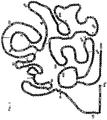
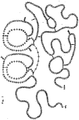
- Fig. 1 and fig. 2 show the structures of DSPA alpha 1 and alteplase. The sequence of the mature DSPA alpha 1 is shown in fig. 3 .
- the term "desmoteplase” is used for any plasminogen activator with identical or essentially the same biological activity of DSPA alpha 1 regarding the activation of plasminogen and its enhanced fibrin selectivity/specificity.
- the fibrin selectivity is at least 180 fold compared to rt-PA.
- the PAs defined as desmoteplase according to the invention can be at least 80 or 90%, at least 95 %, or at least 98% identical to the amino acid sequence according to fig. 3 (DSPA alpha 1).
- the plasminogen activators can include microheterogeneities, e.g. in terms of glycosylation and/or N-terminal variations, which are merely due to production systems.
- Desmoteplase in Acute Ischemic Stroke-2 was a randomized, placebo-controlled, double-blind study that investigated the safety and efficacy of Desmoteplase, DSPA, (90 and 125 mcgm/kg) in acute stroke within 3-9 hours after onset of symptoms.
- DIAS-2 patients had less severe strokes than in previous DSPA trials (DEDAS and DIAS): median NIHSS 9 vs 12; 46% (82/179) vs 37% (33/89) had no M1/M2 MCA occlusion.
- absolute mismatch volume at baseline increased, the placebo response rate declined relative to DSPA. Highest placebo response rates were found in patients with absolute mismatch volume ⁇ 75 cc (67%; 12/18) or absence of M1 or M2 MCA occlusion (63%; 12/19).
- DIAS-2 The mild strokes included in DIAS-2 may explain the unexpectedly high placebo response rate.
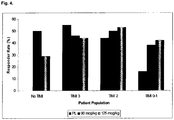
- the DIAS/DEDAS data showed that 38 patients (42.75%) had a TIMI 2-3 at baseline and 51 patients (57.3%) a TIMI 0-1. This differs to the DIAS-2 data where 70.4% of patients had a baseline TIMI 2-3. The highest percentage of baseline TIMI 2-3 was found in the 90 ⁇ g/kg (74.1%) and and the lowest in the 125 ⁇ g/kg group (64.5%) (see table 1 ).
- the absolute mismatch volume in DIAS-2 was inversely related to the placebo response rate, so that patients with a smaller mismatch volume (i.e. 50 cc or less) showed a higher placebo response rate.
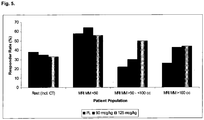
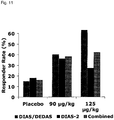
- a subgroup analysis including the MRI analysed patients of DIAS/DEDAS/DIAS-2 shows that a dose-dependent response of desmoteplase over placebo can be observed for patients with absolute mismatch volumes between 50 cc and 100 cc and for patients with a mismatch volume greater than 100 cc, whereas desmoteplase was not significantly better than placebo in the subgroup with less than 50 cc absolute mismatch volume ( fig. 5 ).
- the patients subgroup with TIMI 0-1 exhibited a base line NIHSS of 13.0, whereas the patients with TIMI 2-3 showed a base line NIHSS of 9.0 ( table 3 ).
- This correlation is based on the fact that patients with a more severe occlusion are more likely to have a more severe infarct.
- the TIMI grade shows also a correlation to the absolute mismatch volume, since patients with TIMI 0-1 exhibit a mismatch volume of 167.7 cc and patients with TIMI 2-3 a mismatch volume of 53.5 cc. ( table 3 ).
Landscapes
- Health & Medical Sciences (AREA)
- Life Sciences & Earth Sciences (AREA)
- Engineering & Computer Science (AREA)
- Bioinformatics & Cheminformatics (AREA)
- Pharmacology & Pharmacy (AREA)
- Veterinary Medicine (AREA)
- Public Health (AREA)
- General Health & Medical Sciences (AREA)
- Chemical & Material Sciences (AREA)
- Animal Behavior & Ethology (AREA)
- Medicinal Chemistry (AREA)
- Proteomics, Peptides & Aminoacids (AREA)
- Gastroenterology & Hepatology (AREA)
- Epidemiology (AREA)
- Immunology (AREA)
- Nuclear Medicine, Radiotherapy & Molecular Imaging (AREA)
- General Chemical & Material Sciences (AREA)
- Chemical Kinetics & Catalysis (AREA)
- Organic Chemistry (AREA)
- Cardiology (AREA)
- Biomedical Technology (AREA)
- Heart & Thoracic Surgery (AREA)
- Hematology (AREA)
- Diabetes (AREA)
- Vascular Medicine (AREA)
- Urology & Nephrology (AREA)
- Medicines That Contain Protein Lipid Enzymes And Other Medicines (AREA)
- Magnetic Resonance Imaging Apparatus (AREA)
- Enzymes And Modification Thereof (AREA)
- Peptides Or Proteins (AREA)
- Investigating Or Analysing Biological Materials (AREA)
- Electrotherapy Devices (AREA)
- Saccharide Compounds (AREA)
- Measuring Or Testing Involving Enzymes Or Micro-Organisms (AREA)
- Medicines Containing Antibodies Or Antigens For Use As Internal Diagnostic Agents (AREA)
Priority Applications (5)
| Application Number | Priority Date | Filing Date | Title |
|---|---|---|---|
| HRP20170001TT HRP20170001T1 (hr) | 2007-10-18 | 2008-10-20 | Nove podgrupe pacijenata za trombolizu |
| SI200831750A SI2211898T1 (sl) | 2007-10-18 | 2008-10-20 | Nove podskupine pacientov za trombolizo |
| EP08838897.0A EP2211898B1 (en) | 2007-10-18 | 2008-10-20 | Novel patient subgroups for thrombolysis |
| RS20170031A RS55590B1 (sr) | 2007-10-18 | 2008-10-20 | Nove podgrupe pacijenata za trombolizu |
| CY20171100041T CY1118417T1 (el) | 2007-10-18 | 2017-01-11 | Καινοφανεις υποομαδες ασθενων ωφελουμενες απο θρομβολυση |
Applications Claiming Priority (5)
| Application Number | Priority Date | Filing Date | Title |
|---|---|---|---|
| EP07020401A EP2050462A1 (en) | 2007-10-18 | 2007-10-18 | Improved treatment of stroke patients |
| EP07022867 | 2007-11-26 | ||
| EP08017954 | 2008-10-15 | ||
| PCT/EP2008/008871 WO2009049914A2 (en) | 2007-10-18 | 2008-10-20 | Novel patient subgroups for thrombolysis |
| EP08838897.0A EP2211898B1 (en) | 2007-10-18 | 2008-10-20 | Novel patient subgroups for thrombolysis |
Publications (2)
| Publication Number | Publication Date |
|---|---|
| EP2211898A2 EP2211898A2 (en) | 2010-08-04 |
| EP2211898B1 true EP2211898B1 (en) | 2016-12-07 |
Family
ID=40567844
Family Applications (1)
| Application Number | Title | Priority Date | Filing Date |
|---|---|---|---|
| EP08838897.0A Active EP2211898B1 (en) | 2007-10-18 | 2008-10-20 | Novel patient subgroups for thrombolysis |
Country Status (28)
| Country | Link |
|---|---|
| US (2) | US20100272704A1 (https=) |
| EP (1) | EP2211898B1 (https=) |
| JP (2) | JP5509085B2 (https=) |
| KR (1) | KR20100089077A (https=) |
| CN (1) | CN101903039B (https=) |
| AR (1) | AR068914A1 (https=) |
| AU (1) | AU2008314048B2 (https=) |
| BR (1) | BRPI0817785A2 (https=) |
| CA (1) | CA2702378A1 (https=) |
| CL (1) | CL2009000752A1 (https=) |
| CY (1) | CY1118417T1 (https=) |
| DK (1) | DK2211898T3 (https=) |
| EA (1) | EA020776B1 (https=) |
| ES (1) | ES2611155T3 (https=) |
| HR (1) | HRP20170001T1 (https=) |
| HU (1) | HUE032867T2 (https=) |
| IL (1) | IL205175A0 (https=) |
| LT (1) | LT2211898T (https=) |
| MX (1) | MX2010004157A (https=) |
| MY (1) | MY159200A (https=) |
| NZ (1) | NZ584640A (https=) |
| PL (1) | PL2211898T3 (https=) |
| PT (1) | PT2211898T (https=) |
| RS (1) | RS55590B1 (https=) |
| SI (1) | SI2211898T1 (https=) |
| TW (1) | TWI482628B (https=) |
| WO (1) | WO2009049914A2 (https=) |
| ZA (1) | ZA201002548B (https=) |
Families Citing this family (1)
| Publication number | Priority date | Publication date | Assignee | Title |
|---|---|---|---|---|
| DE10153601A1 (de) * | 2001-11-02 | 2003-05-22 | Paion Gmbh | DSPA zur Behandlung von Schlaganfall |
Family Cites Families (29)
| Publication number | Priority date | Publication date | Assignee | Title |
|---|---|---|---|---|
| US4766075A (en) * | 1982-07-14 | 1988-08-23 | Genentech, Inc. | Human tissue plasminogen activator |
| US5244806A (en) * | 1985-08-26 | 1993-09-14 | Eli Lilly And Company | DNA encoding novel tissue plasminogen activator derivatives having kringles 1 and 2 deleted, vectors and host cells |
| IL87276A (en) * | 1987-08-03 | 1995-07-31 | Fujisawa Pharmaceutical Co | Analog of tissue plasminogen activator comprising only the kringle 2 and protease domain dna encoding the same processes for the preparation thereof and pharmaceutical compositions containing the same |
| US5094953A (en) * | 1988-03-21 | 1992-03-10 | Genentech, Inc. | Human tissue plasminogen activator variants |
| IE69054B1 (en) * | 1988-07-20 | 1996-08-07 | Schering Ag | Vampire bat salivary plasminogen activators |
| US5714145A (en) * | 1988-09-02 | 1998-02-03 | Genentech, Inc. | Tissue plasminogen activator having zymogenic or fibrin specific properties |
| DE3903581A1 (de) * | 1989-02-07 | 1990-08-16 | Boehringer Mannheim Gmbh | Gewebs-plasminogenaktivator-derivat |
| US5676947A (en) * | 1989-02-07 | 1997-10-14 | Boehringer Manneheim Gmbh | Method for treating thromboembolic conditions using thrombolytically active proteins |
| US6008019A (en) * | 1989-02-13 | 1999-12-28 | Schering Aktiengesellschaft | Plasminogen activator from saliva of the vampire bat |
| US5891664A (en) * | 1989-04-07 | 1999-04-06 | Cancerforskningsfondet Af 1989 | Vectors and methods for recombinant production of uPA-binding fragments of the human urokinase-type plasminogen receptor (uPAR) |
| US5326700A (en) * | 1990-11-06 | 1994-07-05 | Eli Lilly And Company | DNA sequences encoding t-PA derivatives with cleavable sites |
| JPH06506459A (ja) * | 1991-04-16 | 1994-07-21 | ロシュ ダイアグノスティックス ゲーエムベーハー | プラスミノーゲン活性化剤を含有する多重ボーラス投与用医薬パッケージユニット |
| US5595736A (en) * | 1991-04-22 | 1997-01-21 | Eli Lilly And Company | Compounds and methods for treatment of thromboembolic disorders |
| ES2107790T3 (es) * | 1992-12-04 | 1997-12-01 | Schering Ag | Inhibidor de trombina procedente de la saliva de protostomias. |
| US5510330A (en) * | 1994-03-25 | 1996-04-23 | Boehringer Mannheim Gmbh | Combinations of thrombolytically active proteins and non-heparin anticoagulants, and uses thereof. |
| GB9412131D0 (en) * | 1994-06-17 | 1994-08-10 | British Bio Technology | Thrombolytic composition |
| US5827832A (en) * | 1995-03-06 | 1998-10-27 | Interneuron Pharmaceuticals, Inc. | Method of protecting brain tissue from cerebral infarction subsequent to ischemia |
| US5786187A (en) * | 1995-09-21 | 1998-07-28 | The Research Foundation Of State University Of New York | Method for reducing neuronal degeneration associated with seizure |
| US5945432A (en) * | 1995-12-22 | 1999-08-31 | The University Of Vermont And State Agricultural College | Thrombolytic agents and thienopyridine derivatives in acute stroke |
| US20020081294A1 (en) * | 1996-01-23 | 2002-06-27 | Genentech, Inc. | Co-administration of a thrombolytic and an anti-CD18 antibody in stroke |
| US5731186A (en) * | 1996-02-05 | 1998-03-24 | Schering Aktiengesellschaft | Method for the production of rDSPA α1 |
| US6354999B1 (en) * | 2000-01-14 | 2002-03-12 | Florence Medical Ltd. | System and method for detecting, localizing, and characterizing occlusions and aneurysms in a vessel |
| GB0025473D0 (en) * | 2000-10-17 | 2000-11-29 | Pfizer Ltd | Pharmaceutical combinations |
| DE10153601A1 (de) * | 2001-11-02 | 2003-05-22 | Paion Gmbh | DSPA zur Behandlung von Schlaganfall |
| US20060135425A1 (en) * | 2003-05-02 | 2006-06-22 | Paion Deutschland Gmbh | Intravenous injection of plasminogen non-neurotoxic activators for treating cerebral stroke |
| US20080057050A1 (en) * | 2003-05-02 | 2008-03-06 | Paion Deutschland Gmbh | Intravenous injection of plasminogen non-neurotoxic activators for treating cerebral stroke |
| KR20060015721A (ko) * | 2003-05-05 | 2006-02-20 | 파이온 도이치란트 게엠베하 | 신경보호제로서의 글루타메이트 수용체 길항제 |
| US20050085478A1 (en) * | 2003-08-22 | 2005-04-21 | Pharmacia Corporation | Compositions of a cyclooxygenase-2 selective inhibitor and a low-molecular-weight heparin for the treatment of central nervous system damage |
| US20090062199A1 (en) * | 2005-08-25 | 2009-03-05 | Biogen Idec Ma Inc. | Nogo Receptor Polypeptides and Polypeptide Fragments and Uses Thereof |
-
2008
- 2008-10-17 AR ARP080104540A patent/AR068914A1/es unknown
- 2008-10-17 TW TW097139886A patent/TWI482628B/zh not_active IP Right Cessation
- 2008-10-20 SI SI200831750A patent/SI2211898T1/sl unknown
- 2008-10-20 EP EP08838897.0A patent/EP2211898B1/en active Active
- 2008-10-20 AU AU2008314048A patent/AU2008314048B2/en not_active Ceased
- 2008-10-20 PT PT88388970T patent/PT2211898T/pt unknown
- 2008-10-20 HU HUE08838897A patent/HUE032867T2/en unknown
- 2008-10-20 EA EA201070485A patent/EA020776B1/ru not_active IP Right Cessation
- 2008-10-20 NZ NZ584640A patent/NZ584640A/xx not_active IP Right Cessation
- 2008-10-20 MX MX2010004157A patent/MX2010004157A/es active IP Right Grant
- 2008-10-20 ES ES08838897.0T patent/ES2611155T3/es active Active
- 2008-10-20 HR HRP20170001TT patent/HRP20170001T1/hr unknown
- 2008-10-20 WO PCT/EP2008/008871 patent/WO2009049914A2/en not_active Ceased
- 2008-10-20 KR KR1020107010609A patent/KR20100089077A/ko not_active Ceased
- 2008-10-20 BR BRPI0817785-6A patent/BRPI0817785A2/pt not_active IP Right Cessation
- 2008-10-20 DK DK08838897.0T patent/DK2211898T3/en active
- 2008-10-20 PL PL08838897T patent/PL2211898T3/pl unknown
- 2008-10-20 LT LTEP08838897.0T patent/LT2211898T/lt unknown
- 2008-10-20 RS RS20170031A patent/RS55590B1/sr unknown
- 2008-10-20 MY MYPI2010001704A patent/MY159200A/en unknown
- 2008-10-20 CN CN200880112073.2A patent/CN101903039B/zh not_active Expired - Fee Related
- 2008-10-20 CA CA2702378A patent/CA2702378A1/en not_active Abandoned
- 2008-10-20 US US12/682,779 patent/US20100272704A1/en not_active Abandoned
- 2008-10-20 JP JP2010529300A patent/JP5509085B2/ja not_active Expired - Fee Related
-
2009
- 2009-03-27 CL CL2009000752A patent/CL2009000752A1/es unknown
-
2010
- 2010-04-12 ZA ZA2010/02548A patent/ZA201002548B/en unknown
- 2010-04-18 IL IL205175A patent/IL205175A0/en unknown
-
2014
- 2014-01-07 JP JP2014000825A patent/JP2014065739A/ja not_active Withdrawn
- 2014-02-14 US US14/181,153 patent/US20140314736A1/en not_active Abandoned
-
2017
- 2017-01-11 CY CY20171100041T patent/CY1118417T1/el unknown
Also Published As
Similar Documents
| Publication | Publication Date | Title |
|---|---|---|
| Bourekas et al. | Intraarterial thrombolytic therapy within 3 hours of the onset of stroke | |
| Suarez et al. | Endovascular administration after intravenous infusion of thrombolytic agents for the treatment of patients with acute ischemic strokes | |
| Urbach et al. | Local intra-arterial fibrinolysis in thromboembolic “T” occlusions of the internal carotid artery | |
| Wu et al. | Assessing the clinical efficacy of recombinant tissue plasminogen activator on acute cerebral infarction | |
| EP2050462A1 (en) | Improved treatment of stroke patients | |
| EP2211898B1 (en) | Novel patient subgroups for thrombolysis | |
| Xianxian et al. | The efficiency analysis of thrombolytic rt-PA combined with intravascular interventional therapy in patients with acute basilar artery occlusion | |
| JP2011500617A5 (https=) | ||
| D'Aliberti et al. | Ischemic stroke | |
| HK1151233B (en) | Novel patient subgroups for thrombolysis | |
| Connors | Interventional stroke therapy: the potential benefit of direct intra-arterial infusion | |
| Venketasubramanian et al. | Brain attack: needing resuscitation | |
| Zhang et al. | Efficacy and safety of intracoronary thrombolysis versus PCI in myocardial infarction patients | |
| Polhemus et al. | Tandem Occlusion to Thrombolysis in Cerebral Infarction (TICI) 3: A Case of Perioperative Tirofiban for Carotid Artery Stenting | |
| Suri | Thrombolysis in Acute Ischemic Stroke | |
| Machraoui et al. | Efficacy and safety of APSAC in the treatment of acute myocardial infarction | |
| Yin | Acute basilar artery occlusion | |
| Oguro et al. | Effect of one-shot intravenous 0.42 mega unit urokinase therapy in patients with acute ischemic stroke | |
| Moreno-Gomez et al. | Therapeutic Options for Disabling Acute Ischemic Stroke | |
| Goldstein | Medical therapy for acute ischemic stroke | |
| Vallet | Acute Stroke With Large Ischemic Core Treated by Thrombectomy: Predictors of Good Outcome and Mortality | |
| Petrov et al. | Iveta Tasheva, et al. Single Center Experience with Catheter Based Treatment in Acute Ischemic Stroke | |
| Wong et al. | Acute ischaemic stroke: management, recent advances and controversies | |
| Schellinger | Stroke management in the early phase | |
| Csiba et al. | Fibrin-degrading drugs in acute stroke |
Legal Events
| Date | Code | Title | Description |
|---|---|---|---|
| PUAI | Public reference made under article 153(3) epc to a published international application that has entered the european phase |
Free format text: ORIGINAL CODE: 0009012 |
|
| 17P | Request for examination filed |
Effective date: 20100518 |
|
| AK | Designated contracting states |
Kind code of ref document: A2 Designated state(s): AT BE BG CH CY CZ DE DK EE ES FI FR GB GR HR HU IE IS IT LI LT LU LV MC MT NL NO PL PT RO SE SI SK TR |
|
| AX | Request for extension of the european patent |
Extension state: AL BA MK RS |
|
| RIN1 | Information on inventor provided before grant (corrected) |
Inventor name: AL-RAWI, YASIR, ALAA, SHAFEEK Inventor name: SOEHNGEN, MARIOLA Inventor name: EBEL, ALICE |
|
| RAP1 | Party data changed (applicant data changed or rights of an application transferred) |
Owner name: H. LUNDBECK A/S |
|
| 17Q | First examination report despatched |
Effective date: 20140603 |
|
| REG | Reference to a national code |
Ref country code: DE Ref legal event code: R079 Ref document number: 602008047790 Country of ref document: DE Free format text: PREVIOUS MAIN CLASS: A61K0038490000 Ipc: A61K0038480000 |
|
| RIC1 | Information provided on ipc code assigned before grant |
Ipc: A61K 38/49 20060101ALI20160321BHEP Ipc: A61K 38/48 20060101AFI20160321BHEP Ipc: A61P 9/10 20060101ALI20160321BHEP |
|
| GRAP | Despatch of communication of intention to grant a patent |
Free format text: ORIGINAL CODE: EPIDOSNIGR1 |
|
| INTG | Intention to grant announced |
Effective date: 20160503 |
|
| GRAS | Grant fee paid |
Free format text: ORIGINAL CODE: EPIDOSNIGR3 |
|
| GRAA | (expected) grant |
Free format text: ORIGINAL CODE: 0009210 |
|
| AK | Designated contracting states |
Kind code of ref document: B1 Designated state(s): AT BE BG CH CY CZ DE DK EE ES FI FR GB GR HR HU IE IS IT LI LT LU LV MC MT NL NO PL PT RO SE SI SK TR |
|
| AX | Request for extension of the european patent |
Extension state: AL BA MK RS |
|
| REG | Reference to a national code |
Ref country code: GB Ref legal event code: FG4D |
|
| REG | Reference to a national code |
Ref country code: CH Ref legal event code: EP Ref country code: AT Ref legal event code: REF Ref document number: 851159 Country of ref document: AT Kind code of ref document: T Effective date: 20161215 |
|
| REG | Reference to a national code |
Ref country code: IE Ref legal event code: FG4D |
|
| REG | Reference to a national code |
Ref country code: HR Ref legal event code: TUEP Ref document number: P20170001 Country of ref document: HR |
|
| REG | Reference to a national code |
Ref country code: RO Ref legal event code: EPE |
|
| REG | Reference to a national code |
Ref country code: DK Ref legal event code: T3 Effective date: 20170126 |
|
| REG | Reference to a national code |
Ref country code: PT Ref legal event code: SC4A Ref document number: 2211898 Country of ref document: PT Date of ref document: 20170131 Kind code of ref document: T Free format text: AVAILABILITY OF NATIONAL TRANSLATION Effective date: 20170119 |
|
| REG | Reference to a national code |
Ref country code: NL Ref legal event code: FP |
|
| REG | Reference to a national code |
Ref country code: DE Ref legal event code: R096 Ref document number: 602008047790 Country of ref document: DE |
|
| REG | Reference to a national code |
Ref country code: SE Ref legal event code: TRGR |
|
| REG | Reference to a national code |
Ref country code: HR Ref legal event code: T1PR Ref document number: P20170001 Country of ref document: HR |
|
| REG | Reference to a national code |
Ref country code: NO Ref legal event code: T2 Effective date: 20161207 |
|
| REG | Reference to a national code |
Ref country code: EE Ref legal event code: FG4A Ref document number: E013134 Country of ref document: EE Effective date: 20170112 |
|
| REG | Reference to a national code |
Ref country code: ES Ref legal event code: FG2A Ref document number: 2611155 Country of ref document: ES Kind code of ref document: T3 Effective date: 20170505 |
|
| REG | Reference to a national code |
Ref country code: SK Ref legal event code: T3 Ref document number: E 23386 Country of ref document: SK |
|
| REG | Reference to a national code |
Ref country code: DE Ref legal event code: R097 Ref document number: 602008047790 Country of ref document: DE |
|
| PLBE | No opposition filed within time limit |
Free format text: ORIGINAL CODE: 0009261 |
|
| STAA | Information on the status of an ep patent application or granted ep patent |
Free format text: STATUS: NO OPPOSITION FILED WITHIN TIME LIMIT |
|
| 26N | No opposition filed |
Effective date: 20170908 |
|
| REG | Reference to a national code |
Ref country code: HU Ref legal event code: AG4A Ref document number: E032867 Country of ref document: HU |
|
| REG | Reference to a national code |
Ref country code: HR Ref legal event code: PBON Ref document number: P20170001 Country of ref document: HR Effective date: 20171020 |
|
| REG | Reference to a national code |
Ref country code: DE Ref legal event code: R119 Ref document number: 602008047790 Country of ref document: DE |
|
| REG | Reference to a national code |
Ref country code: LT Ref legal event code: MM4D Effective date: 20171020 |
|
| REG | Reference to a national code |
Ref country code: EE Ref legal event code: MM4A Ref document number: E013134 Country of ref document: EE Effective date: 20171031 |
|
| REG | Reference to a national code |
Ref country code: DK Ref legal event code: EBP Effective date: 20171031 |
|
| REG | Reference to a national code |
Ref country code: NO Ref legal event code: MMEP |
|
| REG | Reference to a national code |
Ref country code: SE Ref legal event code: EUG |
|
| PG25 | Lapsed in a contracting state [announced via postgrant information from national office to epo] |
Ref country code: MC Free format text: LAPSE BECAUSE OF FAILURE TO SUBMIT A TRANSLATION OF THE DESCRIPTION OR TO PAY THE FEE WITHIN THE PRESCRIBED TIME-LIMIT Effective date: 20161207 |
|
| REG | Reference to a national code |
Ref country code: CH Ref legal event code: PL |
|
| REG | Reference to a national code |
Ref country code: NL Ref legal event code: MM Effective date: 20171101 |
|
| GBPC | Gb: european patent ceased through non-payment of renewal fee |
Effective date: 20171020 |
|
| REG | Reference to a national code |
Ref country code: SK Ref legal event code: MM4A Ref document number: E 23386 Country of ref document: SK Effective date: 20171020 |
|
| REG | Reference to a national code |
Ref country code: IE Ref legal event code: MM4A |
|
| REG | Reference to a national code |
Ref country code: FR Ref legal event code: ST Effective date: 20180629 |
|
| PG25 | Lapsed in a contracting state [announced via postgrant information from national office to epo] |
Ref country code: NO Free format text: LAPSE BECAUSE OF NON-PAYMENT OF DUE FEES Effective date: 20171031 Ref country code: SK Free format text: LAPSE BECAUSE OF NON-PAYMENT OF DUE FEES Effective date: 20171020 Ref country code: DE Free format text: LAPSE BECAUSE OF NON-PAYMENT OF DUE FEES Effective date: 20180501 Ref country code: GB Free format text: LAPSE BECAUSE OF NON-PAYMENT OF DUE FEES Effective date: 20171020 Ref country code: HR Free format text: LAPSE BECAUSE OF NON-PAYMENT OF DUE FEES Effective date: 20171020 Ref country code: EE Free format text: LAPSE BECAUSE OF NON-PAYMENT OF DUE FEES Effective date: 20171031 Ref country code: LT Free format text: LAPSE BECAUSE OF NON-PAYMENT OF DUE FEES Effective date: 20171020 Ref country code: CZ Free format text: LAPSE BECAUSE OF NON-PAYMENT OF DUE FEES Effective date: 20171020 Ref country code: LI Free format text: LAPSE BECAUSE OF NON-PAYMENT OF DUE FEES Effective date: 20171031 Ref country code: CH Free format text: LAPSE BECAUSE OF NON-PAYMENT OF DUE FEES Effective date: 20171031 Ref country code: NL Free format text: LAPSE BECAUSE OF NON-PAYMENT OF DUE FEES Effective date: 20171101 Ref country code: FI Free format text: LAPSE BECAUSE OF NON-PAYMENT OF DUE FEES Effective date: 20171020 Ref country code: CY Free format text: LAPSE BECAUSE OF NON-PAYMENT OF DUE FEES Effective date: 20171020 Ref country code: LU Free format text: LAPSE BECAUSE OF NON-PAYMENT OF DUE FEES Effective date: 20171020 |
|
| REG | Reference to a national code |
Ref country code: SI Ref legal event code: KO00 Effective date: 20180605 |
|
| REG | Reference to a national code |
Ref country code: BE Ref legal event code: FP Effective date: 20170123 Ref country code: BE Ref legal event code: MM Effective date: 20171031 |
|
| PG25 | Lapsed in a contracting state [announced via postgrant information from national office to epo] |
Ref country code: RO Free format text: LAPSE BECAUSE OF NON-PAYMENT OF DUE FEES Effective date: 20161207 Ref country code: HU Free format text: LAPSE BECAUSE OF NON-PAYMENT OF DUE FEES Effective date: 20171021 Ref country code: IS Free format text: LAPSE BECAUSE OF FAILURE TO SUBMIT A TRANSLATION OF THE DESCRIPTION OR TO PAY THE FEE WITHIN THE PRESCRIBED TIME-LIMIT Effective date: 20180430 Ref country code: FR Free format text: LAPSE BECAUSE OF NON-PAYMENT OF DUE FEES Effective date: 20171031 Ref country code: SI Free format text: LAPSE BECAUSE OF NON-PAYMENT OF DUE FEES Effective date: 20171021 Ref country code: SE Free format text: LAPSE BECAUSE OF NON-PAYMENT OF DUE FEES Effective date: 20171021 Ref country code: GR Free format text: LAPSE BECAUSE OF NON-PAYMENT OF DUE FEES Effective date: 20180504 Ref country code: BE Free format text: LAPSE BECAUSE OF NON-PAYMENT OF DUE FEES Effective date: 20171031 Ref country code: LV Free format text: LAPSE BECAUSE OF NON-PAYMENT OF DUE FEES Effective date: 20171020 |
|
| PG25 | Lapsed in a contracting state [announced via postgrant information from national office to epo] |
Ref country code: MT Free format text: LAPSE BECAUSE OF NON-PAYMENT OF DUE FEES Effective date: 20171020 |
|
| PG25 | Lapsed in a contracting state [announced via postgrant information from national office to epo] |
Ref country code: IT Free format text: LAPSE BECAUSE OF NON-PAYMENT OF DUE FEES Effective date: 20171020 Ref country code: IE Free format text: LAPSE BECAUSE OF NON-PAYMENT OF DUE FEES Effective date: 20171020 Ref country code: PT Free format text: LAPSE BECAUSE OF NON-PAYMENT OF DUE FEES Effective date: 20180723 |
|
| PG25 | Lapsed in a contracting state [announced via postgrant information from national office to epo] |
Ref country code: DK Free format text: LAPSE BECAUSE OF NON-PAYMENT OF DUE FEES Effective date: 20171031 |
|
| REG | Reference to a national code |
Ref country code: AT Ref legal event code: MM01 Ref document number: 851159 Country of ref document: AT Kind code of ref document: T Effective date: 20171020 |
|
| REG | Reference to a national code |
Ref country code: ES Ref legal event code: FD2A Effective date: 20181221 |
|
| PG25 | Lapsed in a contracting state [announced via postgrant information from national office to epo] |
Ref country code: AT Free format text: LAPSE BECAUSE OF NON-PAYMENT OF DUE FEES Effective date: 20171020 Ref country code: BG Free format text: LAPSE BECAUSE OF NON-PAYMENT OF DUE FEES Effective date: 20180506 |
|
| PG25 | Lapsed in a contracting state [announced via postgrant information from national office to epo] |
Ref country code: ES Free format text: LAPSE BECAUSE OF NON-PAYMENT OF DUE FEES Effective date: 20171021 |
|
| PG25 | Lapsed in a contracting state [announced via postgrant information from national office to epo] |
Ref country code: PL Free format text: LAPSE BECAUSE OF NON-PAYMENT OF DUE FEES Effective date: 20171020 |
|
| REG | Reference to a national code |
Ref country code: AT Ref legal event code: UEP Ref document number: 851159 Country of ref document: AT Kind code of ref document: T Effective date: 20161207 |
|
| PG25 | Lapsed in a contracting state [announced via postgrant information from national office to epo] |
Ref country code: TR Free format text: LAPSE BECAUSE OF NON-PAYMENT OF DUE FEES Effective date: 20171020 |