EP2209494B1 - Novel conjugated proteins and peptides - Google Patents
Novel conjugated proteins and peptides Download PDFInfo
- Publication number
- EP2209494B1 EP2209494B1 EP08806549.5A EP08806549A EP2209494B1 EP 2209494 B1 EP2209494 B1 EP 2209494B1 EP 08806549 A EP08806549 A EP 08806549A EP 2209494 B1 EP2209494 B1 EP 2209494B1
- Authority
- EP
- European Patent Office
- Prior art keywords
- protein
- group
- polymer
- labelled
- electron
- Prior art date
- Legal status (The legal status is an assumption and is not a legal conclusion. Google has not performed a legal analysis and makes no representation as to the accuracy of the status listed.)
- Not-in-force
Links
- 0 C*CC1CCCC1 Chemical compound C*CC1CCCC1 0.000 description 4
Images






Classifications
-
- A—HUMAN NECESSITIES
- A61—MEDICAL OR VETERINARY SCIENCE; HYGIENE
- A61K—PREPARATIONS FOR MEDICAL, DENTAL OR TOILETRY PURPOSES
- A61K47/00—Medicinal preparations characterised by the non-active ingredients used, e.g. carriers or inert additives; Targeting or modifying agents chemically bound to the active ingredient
- A61K47/50—Medicinal preparations characterised by the non-active ingredients used, e.g. carriers or inert additives; Targeting or modifying agents chemically bound to the active ingredient the non-active ingredient being chemically bound to the active ingredient, e.g. polymer-drug conjugates
-
- A—HUMAN NECESSITIES
- A61—MEDICAL OR VETERINARY SCIENCE; HYGIENE
- A61K—PREPARATIONS FOR MEDICAL, DENTAL OR TOILETRY PURPOSES
- A61K47/00—Medicinal preparations characterised by the non-active ingredients used, e.g. carriers or inert additives; Targeting or modifying agents chemically bound to the active ingredient
- A61K47/50—Medicinal preparations characterised by the non-active ingredients used, e.g. carriers or inert additives; Targeting or modifying agents chemically bound to the active ingredient the non-active ingredient being chemically bound to the active ingredient, e.g. polymer-drug conjugates
- A61K47/51—Medicinal preparations characterised by the non-active ingredients used, e.g. carriers or inert additives; Targeting or modifying agents chemically bound to the active ingredient the non-active ingredient being chemically bound to the active ingredient, e.g. polymer-drug conjugates the non-active ingredient being a modifying agent
- A61K47/62—Medicinal preparations characterised by the non-active ingredients used, e.g. carriers or inert additives; Targeting or modifying agents chemically bound to the active ingredient the non-active ingredient being chemically bound to the active ingredient, e.g. polymer-drug conjugates the non-active ingredient being a modifying agent the modifying agent being a protein, peptide or polyamino acid
- A61K47/64—Drug-peptide, drug-protein or drug-polyamino acid conjugates, i.e. the modifying agent being a peptide, protein or polyamino acid which is covalently bonded or complexed to a therapeutically active agent
- A61K47/645—Polycationic or polyanionic oligopeptides, polypeptides or polyamino acids, e.g. polylysine, polyarginine, polyglutamic acid or peptide TAT
-
- A—HUMAN NECESSITIES
- A61—MEDICAL OR VETERINARY SCIENCE; HYGIENE
- A61K—PREPARATIONS FOR MEDICAL, DENTAL OR TOILETRY PURPOSES
- A61K39/00—Medicinal preparations containing antigens or antibodies
- A61K39/395—Antibodies; Immunoglobulins; Immune serum, e.g. antilymphocytic serum
-
- A—HUMAN NECESSITIES
- A61—MEDICAL OR VETERINARY SCIENCE; HYGIENE
- A61K—PREPARATIONS FOR MEDICAL, DENTAL OR TOILETRY PURPOSES
- A61K47/00—Medicinal preparations characterised by the non-active ingredients used, e.g. carriers or inert additives; Targeting or modifying agents chemically bound to the active ingredient
- A61K47/30—Macromolecular organic or inorganic compounds, e.g. inorganic polyphosphates
-
- A—HUMAN NECESSITIES
- A61—MEDICAL OR VETERINARY SCIENCE; HYGIENE
- A61K—PREPARATIONS FOR MEDICAL, DENTAL OR TOILETRY PURPOSES
- A61K47/00—Medicinal preparations characterised by the non-active ingredients used, e.g. carriers or inert additives; Targeting or modifying agents chemically bound to the active ingredient
- A61K47/50—Medicinal preparations characterised by the non-active ingredients used, e.g. carriers or inert additives; Targeting or modifying agents chemically bound to the active ingredient the non-active ingredient being chemically bound to the active ingredient, e.g. polymer-drug conjugates
- A61K47/51—Medicinal preparations characterised by the non-active ingredients used, e.g. carriers or inert additives; Targeting or modifying agents chemically bound to the active ingredient the non-active ingredient being chemically bound to the active ingredient, e.g. polymer-drug conjugates the non-active ingredient being a modifying agent
- A61K47/56—Medicinal preparations characterised by the non-active ingredients used, e.g. carriers or inert additives; Targeting or modifying agents chemically bound to the active ingredient the non-active ingredient being chemically bound to the active ingredient, e.g. polymer-drug conjugates the non-active ingredient being a modifying agent the modifying agent being an organic macromolecular compound, e.g. an oligomeric, polymeric or dendrimeric molecule
- A61K47/59—Medicinal preparations characterised by the non-active ingredients used, e.g. carriers or inert additives; Targeting or modifying agents chemically bound to the active ingredient the non-active ingredient being chemically bound to the active ingredient, e.g. polymer-drug conjugates the non-active ingredient being a modifying agent the modifying agent being an organic macromolecular compound, e.g. an oligomeric, polymeric or dendrimeric molecule obtained otherwise than by reactions only involving carbon-to-carbon unsaturated bonds, e.g. polyureas or polyurethanes
- A61K47/60—Medicinal preparations characterised by the non-active ingredients used, e.g. carriers or inert additives; Targeting or modifying agents chemically bound to the active ingredient the non-active ingredient being chemically bound to the active ingredient, e.g. polymer-drug conjugates the non-active ingredient being a modifying agent the modifying agent being an organic macromolecular compound, e.g. an oligomeric, polymeric or dendrimeric molecule obtained otherwise than by reactions only involving carbon-to-carbon unsaturated bonds, e.g. polyureas or polyurethanes the organic macromolecular compound being a polyoxyalkylene oligomer, polymer or dendrimer, e.g. PEG, PPG, PEO or polyglycerol
-
- A—HUMAN NECESSITIES
- A61—MEDICAL OR VETERINARY SCIENCE; HYGIENE
- A61K—PREPARATIONS FOR MEDICAL, DENTAL OR TOILETRY PURPOSES
- A61K47/00—Medicinal preparations characterised by the non-active ingredients used, e.g. carriers or inert additives; Targeting or modifying agents chemically bound to the active ingredient
- A61K47/50—Medicinal preparations characterised by the non-active ingredients used, e.g. carriers or inert additives; Targeting or modifying agents chemically bound to the active ingredient the non-active ingredient being chemically bound to the active ingredient, e.g. polymer-drug conjugates
- A61K47/51—Medicinal preparations characterised by the non-active ingredients used, e.g. carriers or inert additives; Targeting or modifying agents chemically bound to the active ingredient the non-active ingredient being chemically bound to the active ingredient, e.g. polymer-drug conjugates the non-active ingredient being a modifying agent
- A61K47/62—Medicinal preparations characterised by the non-active ingredients used, e.g. carriers or inert additives; Targeting or modifying agents chemically bound to the active ingredient the non-active ingredient being chemically bound to the active ingredient, e.g. polymer-drug conjugates the non-active ingredient being a modifying agent the modifying agent being a protein, peptide or polyamino acid
- A61K47/65—Peptidic linkers, binders or spacers, e.g. peptidic enzyme-labile linkers
-
- A—HUMAN NECESSITIES
- A61—MEDICAL OR VETERINARY SCIENCE; HYGIENE
- A61P—SPECIFIC THERAPEUTIC ACTIVITY OF CHEMICAL COMPOUNDS OR MEDICINAL PREPARATIONS
- A61P29/00—Non-central analgesic, antipyretic or antiinflammatory agents, e.g. antirheumatic agents; Non-steroidal antiinflammatory drugs [NSAID]
-
- A—HUMAN NECESSITIES
- A61—MEDICAL OR VETERINARY SCIENCE; HYGIENE
- A61P—SPECIFIC THERAPEUTIC ACTIVITY OF CHEMICAL COMPOUNDS OR MEDICINAL PREPARATIONS
- A61P31/00—Antiinfectives, i.e. antibiotics, antiseptics, chemotherapeutics
-
- A—HUMAN NECESSITIES
- A61—MEDICAL OR VETERINARY SCIENCE; HYGIENE
- A61P—SPECIFIC THERAPEUTIC ACTIVITY OF CHEMICAL COMPOUNDS OR MEDICINAL PREPARATIONS
- A61P35/00—Antineoplastic agents
-
- A—HUMAN NECESSITIES
- A61—MEDICAL OR VETERINARY SCIENCE; HYGIENE
- A61P—SPECIFIC THERAPEUTIC ACTIVITY OF CHEMICAL COMPOUNDS OR MEDICINAL PREPARATIONS
- A61P37/00—Drugs for immunological or allergic disorders
Definitions
- This invention relates to a process for the preparation of novel conjugated proteins and peptides.
- proteins do not possess the properties required to achieve efficacy in clinical medical use.
- many native proteins do not make good medicines because upon administration to patients there are several inherent drawbacks that include: (1) proteins are digested by many endo- and exo-peptidases present in blood or tissue; (2) many proteins are immunogenic to some extent; and (3) proteins can be rapidly excreted by kidney ultrafiltration and by endocytosis.
- Some molecules which might find utility as active therapeutic agents in medicines are systemically toxic or lack optimal bioavailability and pharmacokinetics. When proteins clear from the blood circulation quickly they typically have to be administered to the patient frequently. Frequent administration further increases the risk of toxicity, especially immunologically derived toxicities.
- Water soluble, synthetic polymers are widely used to conjugate therapeutically active molecules such as proteins. These therapeutic conjugates have been shown to alter pharmacokinetics favourably by prolonging circulation time and decreasing clearance rates, decreasing systemic toxicity, and in several cases, displaying increased clinical efficacy.
- the process of covalently conjugating polyethylene glycol, PEG, to proteins is commonly known as "PEGylation”.
- WO 2005/007197 describes a series of novel conjugation reagents. These can be used to react with nucleophilic groups in a biological molecule, for example a protein, to produce a protein-polymer conjugate. These reagents find particular utility for their ability to conjugate with both sulphur atoms derived from a disulfide bond in a protein to give novel thioether conjugates.
- Immobilized-metal affinity chromatography is a standard technique for the purification of proteins and peptides.
- a polyhistidine tag often referred to as a "his-tag” (a short chain of contiguous histidine residues, typically 5 or 6 residues, not present in the native protein) is attached by synthetic methods to a protein, generally to one of the termini of the amino acid chain.
- the resulting protein or peptide is said to be "histidine tagged".
- Polyhistidine tags bind strongly to metals such as nickel and cobalt, via at least two of the histidine residues.
- polyhistidine tagged proteins are passed over a nickel- or cobalt-containing column.
- polyhistidine tag binds strongly to the column, thus enabling the tagged protein to be separated from mixtures.
- Polyhistidine tags are widely used, being attached to a wide range of proteins and peptides to enable them or products derived therefrom to be separated from mixtures at a future date.
- Some untagged proteins contain histidine residues in close proximity to each other, and such proteins may also bind to nickel and cobalt IMAC columns, although usually less strongly than polyhistidine tagged proteins.
- WO 99/32134 discloses histidine-linked protein polymer conjugates.
- WO 2005/007197 and Balan et al., Bioconj. Chem. 18(1), 61-76 disclose polymer conjugating reagents useful for conjugation across the disulfide bonds of proteins.
- Masri et al, J. Protein Chem, 7(1), 49-54 discloses the reaction of alkyl vinyl sulfones with histidine, cysteine and lysine groups.
- WO 95/34326 discloses polymer conjugation reactions using an active sulfone moiety.
- Liberatore et al, Bioconj. Chem. 1(1), 36-50 discloses a group of protein cross-linkers.
- the present invention provides a process of conjugating a polymer to a protein or peptide containing a polyhistidine tag, the process being defined as in claim 1.
- the polymer conjugates prepared by the process of the present invention are novel, and form part of the present invention.
- Z is a protein or a peptide.
- protein will be used for convenience, and except where the context requires otherwise, references to “protein” should be understood to be references to “protein or peptide”.
- a polyhistidine tag is a histidine chain, not found in the native protein or peptide, which has been attached to the protein or peptide by suitable means, for example by chemical means, by post-translational labelling with a polyhistidine tag or a moiety containing a polyhistidine tag, or via protein engineering by inserting histidine sequences in fusion with the target protein, for example by the use of a gene having a short coding sequence which codes for a polyhistidine tag of the desired length.
- each Q independently represents a linking group
- W represents an electron-withdrawing moiety or a moiety preparable by reduction of an electron-withdrawing moiety; or, if X' represents a polymer, X-Q-W- together may represent an electron withdrawing group; and in addition, if X represents a polymer, X' and electron withdrawing group W together with the interjacent atoms may form a ring;
- v' preferably represents an integer from 1 to 6, preferably 1 to 4, for example 1.
- Preferably v is 0.
- reagents may be mono or multifunctional and include for example PEG carbonates (e.g. PEG-p-nitrophenyl carbonate, PEG-succinimidyl carbonate, PEG-benzotriazolyl carbonate), PEG carboxylates and PEG esters (e.g.
- PEG-succinimidyl ester and PEG-p-nitrophenyl ester and their derivatives PEG aldehyde, PEG-tresyl or -tosyl, PEG-dichlortriazine or -chlorotriazine, PEG vinyl sulfone, PEG maleiimide and PEG-iodoacetamide; and corresponding reagents containing polymers other than PEG.
- Z in the novel conjugates of the present invention may be derived from a protein or a peptide.
- protein will be used for convenience, and except where the context requires otherwise, references to “protein” should be understood to be references to “protein or peptide”.
- the protein forming part of the novel conjugate of the formula Ia must contain at least two histidine residues. These two residues may be present in the native protein, and if so, the two residues must be located sufficiently close together in the native structure to enable conjugation to the groups A and B. This may occur when two histidine residues are adjacent to each other in the protein chain, or they may be close together as a result of the folding of the protein.
- Such proteins generally bind to IMAC columns.
- the prokaryotic organism Escherichia coli has one protein known as YODA where binding to IMAC columns can occur.
- the two histidine residues form part of a polyhistidine tag, i.e.
- a histidine chain not found in the native protein or peptide, which has been attached to the protein or peptide by suitable means, for example by chemical means, by post-translational labelling with a polyhistidine tag or a moiety containing a polyhistidine tag, or via protein engineering by inserting histidine sequences in fusion with the target protein, for example by the use of a gene having a short coding sequence which codes for a polyhistidine tag of the desired length.
- Polyhistidine tags used in the present invention contain up to 12 histidine residues. They must contain at least 2 residues; preferably they contain at least 3 residues, especially from 4 to 10 residues, especially from 5 to 8 residues, for example 5 or 6 residues. They may contain only histidine residues, or they may also contain one or more spacer residues or sequences in addition to histidine residues.
- the protein may be derivatised or functionalised if desired.
- the native protein may have been reacted with various blocking groups to protect sensitive groups thereon; or it may have been previously conjugated with one or more polymers or other molecules, either using the process of this invention or using an alternative process.
- the conjugates of the invention may have one or more additional polymers (including proteins) or other molelcules conjugated to the protein after conjugation according to the invention. Novel conjugates according to the present invention in which the protein is conjugated to one or two additional polymers are shown in Figures 3(a) and3(b) of the accompanying drawings.
- polymers together with their linking groups are shown schematically as A, B and C, while x, y and z represent the total number of polymers A, B and C conjugated in any combination to the protein via histidine residues.
- the protein may be conjugated to one or more molecules selected, for example, from small molecules, for example therapeutics or diagnostics; sialic acid; sugars; and starches.
- B and C in Figure 3 may therefore represent such molecules.
- Figure 3 shows A, B and C located adjacent each other, but this is merely schematic, and they may be spaced apart from each other.
- the polyhistidine tag is generally attached to the surface of the protein, generally at one end of the protein chain, and can be positioned at any desired site in the protein, the biological activity of the protein is largely maintained following the process for introducing a polyhistidine tag, and also following the subsequent process of site-specific conjugation at histidine residues of the polyhistidine tag to a polymer. For these reasons, the present invention can be used to form conjugates of proteins which have previously proved intractable to traditional conjugation processes.
- a conjugate of the present invention may still be purified using IMAC.
- IMAC immunological MAC
- at least two, preferably more, histidine residues in the polyhistidine tag need to remain unconjugated and available for binding to the nickel in the IMAC column.
- the reduction in the number of free histidine residues post conjugation allows for selectivity in binding to the IMAC column between unconjugated peptide or protein and the conjugated derivative.
- IMAC allows for separation of the multi-conjugated derivatives.
- a polymer in a conjugate of the invention may for example be a polyalkylene glycol, a polyvinylpyrrolidone, a polyacrylate, for example polyacryloyl morpholine, a polymethacrylate, a polyoxazoline, a polyvinylalcohol, a polyacrylamide or polymethacrylamide, for example polycarboxymethacrylamide or a polyacrylate or polymethacrylate with phosphatidyl choline pendent groups, such as 2-methacryloyloxyethyl phosphorylcholine, or an HPMA copolymer.
- the polymer may be one which is susceptible to enzymatic or hydrolytic degradation.
- Such polymers include polyesters, polyacetals, poly(ortho esters), polycarbonates, poly(imino carbonates), and polyamides, such as poly(amino acids).
- the polymer may be a homopolymer, random copolymer or a structurally defined copolymer such as a block copolymer.
- it may be a block copolymer derived from two or more alkylene oxides, or from poly(alkylene oxide) and either a polyester, polyacetal, poly(ortho ester), or a poly(amino acid).
- Polyfunctional polymers that may be used include copolymers of divinylether-maleic anhydride and styrene-maleic anhydride.
- Naturally occurring polymers may also be used, for example polysaccharides such as chitin, dextran, dextrin, chitosan, starch, cellulose, glycogen, poly(sialylic acid) and derivatives thereof.
- a protein may be used as the polymer. This allows conjugation of one protein, for example an antibody or antibody fragment, to a second protein, for example an enzyme or other active protein.
- a peptide containing a catalytic sequence is used, for example an O-glycan acceptor site for glycosyltransferase, it allows the incorporation of a substrate or a target for subsequent enzymatic reaction.
- Polymers such as polyglutamic acid may also be used, as may hybrid polymers derived from natural monomers such as saccharides or amino acids and synthetic monomers such as ethylene oxide or methacrylic acid.
- the polymer is a polyalkylene glycol, this is preferably one containing C 2 and/or C 3 units, and is especially a polyethylene glycol.
- a polymer, particularly a polyalkylene glycol may contain a single linear chain, or it may have branched morphology and can be composed of many chains either small or large.
- Pluronics are an important class of PEG block copolymers. These are derived from ethylene oxide and propylene oxide blocks. Substituted polyalkylene glycols, for example methoxypolyethylene glycol, may be used.
- a single-chain polyethylene glycol is initiated by a suitable group, for example an alkoxy, e.g. methoxy, aryloxy, carboxy or hydroxyl group, and is connected at the other end of the chain to a linking group Q or Q' as discussed below.
- the polymer may optionally be derivatised or functionalised in any desired way.
- Reactive groups may be linked at the polymer terminus or end group, or along the polymer chain through pendent linkers; in such case, the polymer is for example a polyacrylamide, polymethacrylamide, polyacrylate, polymethacrylate, or a maleic anhydride copolymer.
- Multimeric conjugates that contain more than one biological molecule, can result in synergistic and additive benefits.
- the polymer may be coupled to a solid support using conventional methods.
- the optimum molecular weight of the polymer will of course depend upon the intended application.
- the number average molecular weight is in the range of from 250g/mol, for example 500g/mole, to around 75,000g/mole.
- the compound of the general formula I is intended to leave the circulation and penetrate tissue, for example for use in the treatment of inflammation caused by malignancy, infection or autoimmune disease, or by trauma, it may be advantageous to use a lower molecular weight polymer in the range 2000-30,000g/mole.
- a higher molecular weight polymer for example in the range of 20,000 - 75,000g/mole.
- the polymer to be used should be selected so the conjugate is soluble in the solvent medium for its intended use.
- the conjugate will be soluble in aqueous media.
- Many proteins such as enzymes have utility in industry, for example to catalyze chemical reactions.
- the polymer should of course not unduly impair the intended function of the protein.
- the polymer is a synthetic polymer, and preferably it is a water-soluble polymer.
- a water-soluble polyethylene glycol is particularly preferred for many applications.
- a linking group Q' or Q may for example be a direct bond, an alkylene group (preferably a C 1-10 alkylene group), or an optionally-substituted aryl or heteroaryl group, any of which may be terminated or interrupted by one or more oxygen atoms, sulphur atoms, -NR groups (in which R has the meaning given below), keto groups, -O-CO- groups and/or -CO-O- groups.
- Suitable aryl groups include phenyl and naphthyl groups, while suitable heteroaryl groups include pyridine, pyrrole, furan, pyran, imidazole, pyrazole, oxazole, pyridazine, primidine and purine.
- the linkage to the polymer may be by way of a hydrolytically labile bond, or by a non-labile bond.
- the group Q which links to a hydrogen atom in a compound of the formula Ia is an alkylene group or a direct bond.
- X in formula Ia is a polymer, and X'-Q- is H-.
- W may for example represent a keto or aldehyde group CO, an ester group -O-CO- or a sulphone group -SO 2 -, or a group obtained by reduction of such a group, e.g. a CH.OH group, an ether group CH.OR, an ester group CH.O.C(O)R, an amine group CH.NH 2 , CH.NHR or CH.NR 2 , or an amide CH.NHC(O)R or CH.N(C(O)R) 2 . If X-Q-W- together represent an electron withdrawing group, this group may for example be a cyano group.
- the pH for the reaction will generally be between pH 4 to pH 10, typically between about 6 and about 8.5, for example about 6.5 to 8.0, preferably about 7.0-7.5.
- the concentration of the protein or peptide in the reaction mixture will generally be above 0.20 mg/ml and typically above 0.4 mg/ml, for example 0.5 mg/ml to 1.5 mg/ml.
- reagents of WO 2005/007197 the process comprises reacting either (i) a compound of the general formula
- the conjugation reagents II and III are chemically equivalent to each other, and are described in WO 2005/007197 . They are characterised by having a cross-functionalised, latently cross-conjugated, bis-alkylating moiety that is selective for two nucleophiles. It is surprising that high selectivity to two histidine residues may be obtained. Other conjugation methods tend to produce mixtures of products; for example, it has previously been found difficult to bind selectively to histidine residues rather than to lysine residues.
- Typical structures in which W' and X' together form a ring include in which n is an integer from 1 to 4, and
- the process according to the invention uses a reagent of the general formula: to produce a novel conjugate of the general formula:
- a key feature of this embodiment of the process of this invention is that an ⁇ -methylene leaving group and a double bond are cross-conjugated with an electron withdrawing function that serves as a Michael activating moiety. If the leaving group is prone to elimination in the cross-functional reagent rather than to direct displacement and the electron-withdrawing group is a suitable activating moiety for the Michael reaction then sequential intramolecular bis-alkylation can occur by consecutive Michael and retro-Michael reactions. The leaving moiety serves to mask a latent conjugated double bond that is not exposed until after the first alkylation has occurred and bis-alkylation results from sequential and interactive Michael and retro-Michael reactions as described in J. Am. Chem. Soc. 1979, 101, 3098-3110 and J.
- the electron withdrawing group and the leaving group are optimally selected so bis-alkylation can occur by sequential Michael and retro-Michael reactions. It is also possible to prepare cross-functional alkylating agents with additional multiple bonds conjugated to the double bond or between the leaving group and the electron withdrawing group as described in J. Am. Chem. Soc. 1988, 110, 5211-5212 .
- novel conjugates according to the invention include the following:
- the histidine residues are positioned in a polyhistidine tag.
- polymers other than polyethylene glycol may replace the PEG in the above formulae.
- the bonding to the histidine residues may be as shown in the following formula: but bonding to other nitrogen atoms in the histidines is also possible.
- the immediate product of the above process is a compound of the general formula Ia in which W is an electron-withdrawing group.
- W is an electron-withdrawing group.
- Such compounds have utility in themselves; because the process of the invention is reversible under suitable conditions, additionally compounds of formula Ia in which W is an electron-withdrawing moiety have utility in applications where release of the free protein is required, for example in direct clinical applications.
- An electron-withdrawing moiety W may, however, be reduced to give a moiety which prevents release of the protein, and such compounds will also have utility in many clinical, industrial and diagnostic applications. Further, the fact that once W has been reduced reverse reactions can no longer occur, means that no exchange will be observed if a stronger nucleophile is added.
- a group X-Q-W- which is a cyano group may be reduced to an amine group. formed by acylation of an amine).
- a group X-Q-W- which is a cyano group may be reduced to an amine group.
- the process may be carried out in a solvent or solvent mixture in which all reactants are soluble.
- the protein may be allowed to react directly with the compound of the general formula II or III in an aqueous reaction medium.
- This reaction medium may also be buffered, depending on the pH requirements of the nucleophile.
- the optimum pH for the reaction will generally be at least 6.0, typically between about 6.8 and about 8.5, for example about 6.5 or 7.0 to 8.0, for example about 7.5-8.0 but preferably about 7.0 to 7.5.
- Reaction temperatures between 3-37°C are generally suitable: proteins may decompose or denature impairing function if the conjugation reaction is conducted at a temperature where these processes may occur.
- Reactions conducted in organic media for example THF, ethyl acetate, acetone are typically conducted at temperatures up to ambient.
- the protein can be effectively conjugated with the desired reagent using a stoichiometric equivalent or a slight excess of reagent, unlike many other reagents.
- the reagents do not undergo competitive reactions with aqueous media used to solvate proteins, it is possible to conduct the conjugation reaction with an excess stoichiometry of reagent.
- the excess reagent and the product can be easily separated by ion exchange chromatography during routine purification of proteins, or by separation using nickel.
- more than one polymer may be conjugated to a suitable protein, and this is shown schematically in Figure 3 .
- two polymers could be conjugated to a 6-residue polyhistidine tag. This provides a useful method of attaching multiple polymer residues to a protein. This may be desired when it is wished to obtain a high molecular weight product using a lower molecular weight PEG, e.g.
- the compounds of the general formula Ia have a number of applications. They may for example be used for direct clinical application to a patient, and accordingly, the present invention further provides a pharmaceutical composition comprising a compound of the invention together with a pharmaceutically acceptable carrier.
- the invention further provides a compound of the invention for use in therapy, and a method of treating a patient which comprises administering a pharmaceutically-effective amount of a compound or a pharmaceutical composition according to the invention to the patient.
- Any desired pharmaceutical effect for example trauma treatment, enzyme replacement, protein replacement, wound management, toxin removal, antiinflammatory, anti-infective, immunomodulatory, vaccination or anti-cancer, may be obtained by suitable choice of protein.
- the compounds of the invention may also be used in non-clinical applications. For example, many physiologically active compounds such as enzymes are able to catalyse reactions in organic solvents, and compounds of the invention may be used in such applications. Further, compounds of the invention may be used as diagnostic tools. Compounds of the invention may include an imaging agent, for example a radio nucleotide, to enable tracking of the compound in vivo.
- an imaging agent for example a radio nucleotide
- the protein may for example be a peptide, polypeptide, antibody, antibody fragment, enzyme, cytokine, chemokine, receptor, blood factor, peptide hormone, toxin, transcription protein, or multimeric protein.
- Enzymes include carbohydrate-specific enzymes, proteolytic enzymes and the like. Enzymes of interest, for both industrial (organic based reactions) and biological applications in general and therapeutic applications in particular include the oxidoreductases, transferases, hydrolases, lyases, isomerases and ligases disclosed by US 4,179,337 .
- Specific enzymes of interest include asparaginase, arginase, adenosine deaminase, superoxide dismutase, catalase, chymotrypsin, lipase, uricase, bilirubin oxidase, glucose oxidase, glucuronidase, galactosidase, glucocerebrosidase, glucuronidase, glutaminase
- the proteins used in compounds of the present invention include for example factor VII, VIII or IX and other blood factors, insulin, ACTH, glucagen, somatostatin, somatotropins, thymosin, parathyroid hormone, pigmentary hormones, somatomedins, erythropoietin, luteinizing hormone, hypothalamic releasing factors, antidiuretic hormones, prolactin, interleukins, interferons, colony stimulating factors, hemoglobin, cytokines, antibodies, chorionicgonadotropin, follicle-stimulating hormone, thyroid-stimulating hormone and tissue plasminogen activator.
- allergen proteins disclosed by Dreborg et al Crit. Rev. Therap. Drug Carrier Syst. (1990) 6 315 365 as having reduced allergenicity when conjugated with a polymer such as poly(alkylene oxide) and consequently are suitable for use as tolerance inducers.
- allergens disclosed are Ragweed antigen E, honeybee venom, mite allergen and the like.
- Glycopolypeptides such as immunoglobulins, ovalbumin, lipase, glucocerebrosidase, lectins, tissue plasminogen activator and glycosilated interleukins, interferons and colony stimulating factors are of interest, as are immunoglobulins such as IgG, IgE, IgM, IgA, IgD and fragments thereof.
- receptor and ligand binding proteins and antibodies and antibody fragments which are used in clinical medicine for diagnostic and therapeutic purposes.
- the antibody may used alone or may be covalently conjugated ("loaded") with another atom or molecule such as a radioisotope or a cytotoxic/anti-infective drug.
- Epitopes may be used for vaccination to produce an immunogenic polymer - protein conjugate.
- 12 kDa PEG mono-sulfone (structure (2)) was prepared by incubation of the PEG bis-sulfone (structure (1)) in pH 7.8, 50 mM sodium phosphate buffer (10 mg/mL) for 5 hours. Two aliquots of C-terminal 6 ⁇ histidine tagged ProBNP (Abcam, ab51402, 13 kDa) in pH 7.8, 50 mM sodium phosphate (10 ⁇ L, 0.5 mg/mL) were chilled on ice and then either 1 molar equivalent (with respect to protein concentration) or 3 molar equivalents of 12 kDa PEG mono-sulfone were added (1.6 ⁇ L or 4.8 ⁇ L respectively). The reaction mixtures were then placed in the fridge and left for 16 hours.
- FIG. 4 the lane labelled M shows the Novex Sharp protein markers (Invitrogen) used as calibrants.
- the band labelled B in lane 1 is the sample of His 6 -proBNP as supplied (Abcam, 1 mg/mL). Band A is an impurity.
- Lane 2 is obtained from the 1 equivalent of 12 kDa PEG reaction mixture and shows bands, labelled C, D and E which correspond to a mono-PEGylated product, di-PEGylated product and tri-PEGylated product respectively.
- the lower bands, labelled A and B correspond to unreacted His 6 -proBNP and the impurity in the supplied sample respectively.
- Lane 3 is obtained from the 3 equivalents of 12 kDa PEG reaction mixture and shows bands, labelled C, D and E which correspond to a mono-PEGylated product, di-PEGylated product and tri-PEGylated product respectively.
- the lower bands, labelled B and A correspond to unreacted His 6 -proBNP and the impurity in the supplied sample respectively.
- the gel was then also stained with barium iodide for visualisation of PEG with the result shown in Figure 5 .
- the bands in Lane 1 correspond to unreacted PEG reagent which is labelled C, and bands labelled D, E and F which correspond to a mono-PEGylated product, di-PEGylated product and tri-PEGylated product respectively.
- the lower bands, labelled B and A correspond to unreacted His 6 -proBNP and the impurity in the supplied sample respectively.
- Lane 3 which is obtained from the 3 equivalents of 12 kDa PEG reaction mixture shows a band labelled C which corresponds to unreacted PEG reagent and bands labelled D, E and F which correspond to a mono-PEGylated product, di-PEGylated product and tri-PEGylated product respectively.
- the lower bands, labelled B and A correspond to unreacted His 6 -proBNP and the impurity in the supplied sample respectively.
- 30 kDa PEG mono -sulfone (structure (2) from example 1) was prepared by incubation of the PEG bis -sulfone (structure (1) from example 1) in pH 7.8, 50 mM sodium phosphate buffer (10 mg/mL) for 5 hours. Two aliquots of C-terminal 6 ⁇ histidine tagged ProBNP (Abcam, ab51402) in pH 7.8, 50 mM sodium phosphate (10 ⁇ L, 0.5 mg/mL) were chilled on ice then either 1 molar equivalent (with respect to protein concentration) or 3 equivalents of 30 kDa PEG mono-sulfone were added (2.0 ⁇ L or 6.0 ⁇ L respectively). The reaction was then placed in the fridge and left for 16 hours.
- the resulting reaction mixtures were analysed using SDS-PAGE for size-dependent separation of its constituents and the resulting gel after staining with Instant blue (Novexin) is shown in Figure 6 .
- the lane labelled M shows the Novex Sharp protein markers (Invitrogen) used as calibrants.
- the band labelled B in lane 1 is the sample of His 6 -proBNP as supplied (Abcam, 1 mg/mL). Band A is an impurity.
- the lane labelled 2 is obtained from the 1 equivalent of 30 kDa PEG reaction mixture and shows a bands labelled C which corresponds to a mono-PEGylated product and lower bands, labelled A and B which correspond to unreacted His 6 -proBNP and the impurity in the supplied sample respectively.
- the lane labelled 3 is obtained from the 3 equivalent of 30 kDa PEG reaction mixture and shows bands, labelled C, and D which correspond to a mono-PEGylated product and di-PEGylated product respectively and lower bands, labelled B and A which correspond to unreacted His 6 -proBNP and the impurity in the supplied sample respectively.
- the gel was then also stained with barium iodide for visualisation of PEG and the resulting gel is shown in Figure 7 .
- the lane labelled M shows the Novex Sharp protein markers (Invitrogen) used as calibrants.
- the band labelled B in lane 1 is the sample of His 6 -proBNP as supplied (Abcam, 1 mg/mL). Band A is an impurity.
- the lane labelled 2 is obtained from the 1 equivalent of 30 kDa PEG reaction mixture and shows a band labelled C which corresponds to unreacted PEG reagent, a band labelled F which corresponds to a PEG impurity, bands labelled D and E and F which correspond to mono-PEGylated and di-PEGylated products respectively, and lower bands, labelled B and A which correspond to unreacted His 6 -proBNP and the impurity in the supplied sample respectively.
- the lane labelled 3 is obtained from the 3 equivalents of 30 kDa PEG reaction mixture and shows a band labelled C which corresponds to unreacted PEG reagent, a band labelled F which corresponds to a PEG impurity, bands labelled D and E which correspond to mono-PEGylated and di-PEGylated products respectively, and lower bands, labelled B and A which correspond to unreacted His 6 -proBNP and the impurity in the supplied sample respectively.
- Example 3 12 kDa PEGylation of His 8 -beta synuclein and comparative reaction with non-histidine tagged beta synuclein
- 12 kDa PEG mono -sulfone (structure (2) from example 1) was prepared by incubation of the PEG bis -sulfone (structure (1) from example 1) in pH 7.8, 50 mM sodium phosphate buffer (10 mg/mL) for 5 hours. Two aliquots of N-terminal 8 ⁇ histidine tagged beta synuclein (Abcam cat. no. ab40545, 15 kDa) in pH 7.8, 50 mM sodium phosphate (10 ⁇ L, 0.39 mg/mL) were chilled on ice then either 1 molar equivalent (with respect to protein concentration) or 3 equivalents of 12 kDa PEG mono-sulfone were added (1.6 ⁇ L or 4.7 ⁇ L respectively). The reaction was then placed in the fridge and left for 16 hours.
- the resulting reaction mixtures were analysed using SDS-PAGE for size-dependent separation of its constituents and the resulting gel after staining with Instant blue (Novexin) is shown in Figure 8 .
- the lane labelled M shows the Novex Sharp protein markers (Invitrogen) used as calibrants.
- the band labelled B in lane 1 is the sample of His 8 -beta synuclein supplied by Abcam (0.8 mg/mL).
- Band A is an impurity.
- the lane labelled 2 is obtained from the 1 equivalent of 12 kDa PEG reaction mixture and shows bands, labelled C and D which correspond to a mono-PEGylated product and di-PEGylated product respectively and lower bands, labelled A and B which correspond to unreacted His 8 -beta synuclein and the impurity in the supplied sample respectively.
- the lane labelled 3 is obtained from the 3 equivalents of 12 kDa PEG reaction mixture and shows bands, labelled C, D, E and F which correspond to a mono-PEGylated product, di-PEGylated product, tri-PEGylated product and tetra-PEGylated product respectively and lower bands, labelled B and A which correspond to unreacted His 8 -beta synuclein and the impurity in the supplied sample respectively.
- the gel was then also stained with barium iodide for visualisation of PEG and the resulting gel is shown in Figure 9 .
- the lane labelled M shows the Novex Sharp protein markers (Invitrogen) used as calibrant.
- the lane labelled 1 is obtained from His 8 -beta synuclein as supplied by Abcam.
- the lane labelled 2 is obtained from the 1 equivalent of 12 kDa PEG reaction mixture and shows bands labelled C, D and E which correspond to a mono-PEGylated product, di-PEGylated product and tri-PEGylated product respectively, and lower bands, labelled B and A which correspond to unreacted His 8 -beta synuclein and the impurity in the supplied sample respectively.
- the lane labelled 3 is obtained from the 3 equivalents of 12 kDa PEG reaction mixture and shows bands labelled D, E and F which correspond to a mono-PEGylated product, di-PEGylated product, tri-PEGylated product and tetra-PEGylated product respectively, and lower bands, labelled B and A which correspond to unreacted His 8 -beta synuclein and the impurity in the supplied sample respectively.
- Band C is a PEG impurity.
- FIG. 10 A comparison 12 kDa PEGylation study was performed between His 8 -beta synuclein and non-histidine tagged beta synuclein (Abcam. cat no. ab48853) using 1 equivalent of the PEG reagent (2) at pH 7.0 and the SDS-PAGE result is shown in Figure 10 .
- the lane labelled M shows the Novex Sharp protein markers (Invitrogen) used as calibrants.
- the His 8 -beta synuclein result is shown in the lane labelled 1.
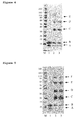
- the band labelled B is unreacted His 8 -beta synuclein and the band labelled C is mono-PEGylated His 8 -beta synuclein.
- the lane labelled 2 shows the non-histidine tagged beta synuclein reaction and the only visible band is labelled A and is the non-histidine tagged beta synuclein.
- 30 kDa PEG mono -sulfone (structure (2) from example 1) was prepared by incubation of the PEG bis -sulfone (structure (1) from example 1) in pH 7.8, 50 mM sodium phosphate buffer (10 mg/mL) for 5 hours. An aliquot of N-terminal 8 ⁇ histidine tagged beta synuclein (Abcam, ab40545, 15 kDa) in pH 7.8, 50 mM sodium phosphate (10 ⁇ L, 0.39 mg/mL) was chilled on ice then 1 molar equivalent (with respect to protein concentration) of 30 kDa PEG mono -sulfone was added (1.6 ⁇ L). The reaction was then placed in the fridge and left for 16 hours.
- the resulting reaction mixture was analysed using SDS-PAGE for size-dependent separation of its constituents and the resulting gel after staining with Instant blue (Novexin) is shown in Figure 11 .
- the lane labelled M shows the Novex Sharp protein markers (Invitrogen) used as calibrants.
- the lane labelled 1 is obtained from the sample of His 8 -beta synuclein supplied by Abcam (0.8 mg/mL) and the band labelled B is the Polyhistidine tagged protein whilst the band labelled A is an impurity.
- the lane labelled 2 is obtained from the 1 equivalent of 30 kDa PEG reaction mixture and shows a band labelled C which corresponds to a mono-PEGylated product and lower bands, labelled A and B which correspond to unreacted His 8 -beta synuclein and the impurity in the supplied sample respectively.
- the gel was then also stained with barium iodide for visualisation of PEG and the resulting gel is shown in Figure 12 .
- the lane labelled M shows the Novex Sharp protein markers (Invitrogen) used as calibrants.
- the lane labelled 1 is obtained from His 8 -beta synuclein as supplied by Abcam.
- the lane labelled 2 is obtained from the 1 equivalent of 30 kDa PEG reaction mixture and shows a band labelled C which corresponds to unreacted PEG reagent, bands labelled E and G which corresponds to PEG impurities, bands labelled D and F which correspond to a mono-PEGylated product and di-PEGylated product respectively, and lower bands, labelled B and A which correspond to unreacted His 8 -beta synuclein and the impurity in the supplied sample respectively.
- Step 2 Synthesis of 4-(3-(p-tolylthio)propanoyl)benzoic acid 3(5).
- Step 4 Synthesis of PEGylated 4-(3-tosylpropanoyl)benzoic acid, PEG reagent 3.
- the 4-(3-tosylpropanoyl)benzoic acid 3(4) (133 mg) and 0-(2-aminoethyl)-O'-methyl-PEG (MW 10 kDa, 502 mg, BioVectra) were dissolved in dry toluene (5 ml). The solvent was removed under vacuum without heating and the dry solid residue was then redissolved in dry dichloromethane (15 ml) under argon. To the resulting solution, cooled in an ice bath, was slowly added diisopropylcarbodiimide (DIPC, 60 mg) under argon. The reaction mixture was then kept stirring at room temperature overnight (15 h).
- DIPC diisopropylcarbodiimide
- Step 5 PEGylation on histidine of C-terminal his 8 -tagged IFN ⁇ -2b
- 5 kDa PEG mono -sulfone (structure (5)) was prepared by incubation of the PEG bis -sulfone (structure (4)) in pH 7.8, 50 mM sodium phosphate buffer (5 mg/mL) for 3 hours. Two aliquots of N-terminal 8 ⁇ histidine tagged beta synuclein (Abcam cat. no. ab40545, 15.4 kDa) in pH 7.4, 50 mM sodium phosphate (10 ⁇ L, 0.38 mg/mL) were chilled on ice then either 1 molar equivalent (with respect to protein concentration) or 3 equivalents of 5 kDa PEG mono-sulfone (5) were added (0.25 ⁇ L or ⁇ 0.74 ⁇ L respectively).
- beta synuclein (Abcam cat. no. ab48853, 14.3 kDa) were treated the same way and given either 1 molar equivalent (0.18 ⁇ L) or 3 equivalents (0.52 ⁇ L) of the 5 kDa PEG mono-sulfone.
- the reactions were then incubated at ambient temperature for 6 h.
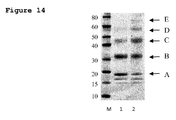
- the resulting reaction solutions were analysed using SDS-PAGE and stained with Instant blue (Expedeon) as shown in Figure 14 .
- the lane labelled M shows the Novex Sharp protein markers (Invitrogen) used as calibrants.
- the lanes labelled 1 and 2 are obtained from the 1 equivalent of 5 kDa PEG reaction mixture and 3 equivalents of PEG reaction mixture respectively.
- the band labelled A is His 8 -beta synuclein. Faint bands below it are impurities from the protein supplied by Abcam.
- the bands, labelled B, C, D and E which correspond to mono-PEGylated, di-PEGylated, tri-PEGylated and tetra-PEGylated protein products respectively.
- Example 7 10 kDa PEGylation of His 6 -anti TNF- ⁇ domain antibody fragment at different pH's
- 10 kDa PEG mono -sulfone (structure (2) from example 1) was prepared by incubation of the PEG bis -sulfone (structure (1) from example 1, 10 mg/mL) in pH 7.8, 50 mM sodium phosphate buffer (5 mg/mL) for 3 h.
- the C-terminal 6 ⁇ histidine tagged anti-TNF alpha domain antibody fragment (12.7 kDa) solution (0.6 mg/mL)in 50 mM sodium phosphate, 150 mM sodium chloride and 2 mM EDTA was prepared at 4 different pH's (pH 6.2, pH 6.7, pH 7.0 and pH 7.4).
- the resulting reaction solutions were analysed using SDS-PAGE and stained with Instant blue (Expedeon) as shown in Figure 15 .
- the lane labelled M shows the Novex Sharp protein markers (Invitrogen).
- the lanes labelled 1 to 4 are obtained from the reaction mixture using 3 molar equivalents of 10 kDa PEG at pH 6.2, pH 6.7, pH 7.0 and pH 7.4 respectively.
- the band labelled A is unreacted His 6 -anti-TNF alpha domain antibody fragment.
- the band labelled B is the mono-PEGylated domain product.
- the bands labelled C and D correspond to di-PEGylated and tri-PEGylated domain fragment respectively.
- PEGylation is seen at each of the four pH's and the extent of PEGylation increases as the pH is increased.
- Example 8 PEGylation of His 6 -anti TNF- ⁇ domain antibody fragment using 10 kDa, 20 kDa, 30 kDa and 40 kDa PEG.
- PEG bis -sulfone (structure (1) from example 1) were separately incubated in pH 7.8, 50 mM sodium phosphate buffer for 3 hours at ambient temperature to give the corresponding PEG mono-sulfones (structure (2) from example 1).
- the concentration of PEG was 10 mg/mL, 20 mg/mL, 30 mg/mL and 40 mg/mL for 10 kDa, 20 kDa, 30 kDa and 40 kDa PEG respectively.
- the lane labelled 1 is the His 6 - anti TNF domain antibody fragment shown as a reference.
- the lanes labelled 2 to 5 are obtained from the reaction of 10 kDa, 20 kDa, 30 kDa and 40 kDa PEGs respectively.
- the bands labelled A are unreacted His 6 -anti-TNF domain.
- the bands labelled B (B10, B20, B30 and B40) correspond to the mono-PEGylated domain fragments for 10, 20, 30 and 40 kDa PEG respectively.
- the band labelled C10 corresponds to the di-PEGylated product for the 10 kDa PEG reaction and the C20 band corresponds to the di-PEGylated product for the 20 kDa PEG reaction.
- Example 9 2 kDa PEGylation of His 6 -Endostatin and comparative reaction with Endostatin not possessing a polyhistidine tag.
- 2 kDa PEG mono -sulfone (structure (2) from example 1) was prepared by incubation of the PEG bis -sulfone (structure (1)) from example 1) in pH 7.8, 50 mM sodium phosphate buffer (1 mg/mL) for 4 hours. Two aliquots of C-terminal 6 ⁇ histidine tagged Endostatin (Calbiochem cat. no. 324743) in pH 6.2, 50 mM sodium phosphate (30 ⁇ L, 0.5 mg/mL) were chilled on ice then either 1 molar equivalent (with respect to protein concentration) or 3 equivalents of 2 kDa PEG mono -sulfone were added (1.4 ⁇ L or 4.2 ⁇ L respectively).
- reaction mixture was then placed in the fridge and left for 16 hours.
- Two aliquots of non-tagged Endostatin (Calbiochem cat. no. 324769) in pH 6.2, 50 mM sodium phosphate (10 ⁇ L, 0.2 mg/mL) were also chilled on ice, then either 1 molar equivalent (with respect to protein concentration) or 3 equivalents of 2 kDa PEG mono -sulfone (0.1 mg/mL) were added (2.0 ⁇ L or 6.0 ⁇ L respectively).
- the reaction was then placed in the fridge and left for 16 hours.
- the resulting reaction solutions were analysed using SDS-PAGE for size-dependent separation of their constituents and the resulting gel after staining with Instant blue (Expedeon) is shown in Figure 17 .
- the left-hand column of spots labelled M shows the Novex Sharp protein markers (Invitrogen).
- the lane labelled 1 is obtained from the sample of the 1 equivalent of 2kDa PEG with His 6 -Endostatin reaction and shows bands, labelled B and C which correspond to the unreacted protein, and mono-PEGylated product respectively.
- the lane labelled 2 is obtained from the sample of the 3 equivalent of 2kDa PEG with His 6 -Endostatin reaction and shows bands, labelled B and C which correspond to the unreacted protein and mono-PEGylated product respectively.
- the lanes labelled 3 and 4 were obtained from the 1 equivalent of 2kDa PEG with Endostatin reaction and 3 equivalents of 2kDa PEG with Endostatin reaction respectively. Only a single band labelled A and B respectively which corresponds to the unreacted protein is present for both reactions showing that the 2 kDa PEG only reacts with the His 6 -Endostatin.
- Example 10 20 kDa and 30 kDa PEGylation of Hi S8 -interferon alpha and comparison reaction with non-histidine tagged interferon alpha.
- a solution of N-terminal 8 ⁇ histidine tagged interferon ⁇ -2b (2.63 mL, 1.14 mg/mL) was prepared in pH 7.4, 50 mM sodium phosphate buffer containing 150 mM sodium chloride (PBS) and then 1.7 molar equivalent (with respect to the protein concentration) of 20 kDa PEG bis-sulfone (structure (1) from example 1) was added (420 ⁇ L of 11.5 mg/mL 20 kDa PEG bis-sulfone solution in deionised water). The reaction was placed in the refrigerator for 18 hours. The resulting reaction mixture was analysed by SDS-PAGE and the result shown in Figure 18 .
- the lane labelled M shows the Novex Sharp protein markers (Invitrogen) used as calibrants.
- the lane labelled 1 shows the reaction solution where the band labelled A corresponds to unreacted IFN, the band labelled B to monoPEGylated IFN, the band labelled C to diPEGylated IFN and the band labelled D to triPEGylated IFN.
- Example 11 Use of poly(vinyl pyrrolidone) (PVP bis-sulfone) for conjugation to N-terminal 8 ⁇ histidine tagged interferon alpha
- diethyl ether (15 ml) was added causing precipitation of the polymeric product.
- the liquid phase was decanted away and the solid residue redissolved in acetone (3 ml).
- the resulting acetone solution was then added dropwise to rapidly stirring diethyl ether (25 ml) and the precipitate isolated on a no. 2 sintered glass funnel with a slight burst of vacuum.
- PVP-amine 500 mg
- 4-[2,2-bis[(p-tolylsulfonyl)methyl]acetyl]-benzoic acid 125 mg
- 4-dimethylaminopyridine 6 mg
- anhydrous dichloromethane 10 ml
- 1,3-diisopropylcarbodiimide 80 ⁇ l
- the resulting mixture was allowed to stir for 20 h at room temperature and then filtered though non-absorbent cotton-wool.
- IFN (0.025 mg, 0.5 mg/ml) was prepared in 7.5, 50 mM sodium phosphate buffer containing 150 mM sodium chloride (PBS). To 50 ⁇ l of IFN (25 ⁇ g, 0.5 mg/ml) was added 50 ⁇ l of the fractionated PVP bis-sulfone solution (Fractions 72 min, 74 min, 76 min, 78 min and 80 min). The resulting solution was gently mixed and left at 4°C overnight. The resultant reaction solution was analysed by SDS-PAGE and the result is shown in Figure 19 .
- the lane labelled M shows the Novex Sharp protein markers (Invitrogen) used as calibrants.
- the lanes labelled 2 to 5 show the reaction solutions from the different sized PVP reagent fractions used (72 min to 80 min PVP fractions from 2 to 5 respectively).
- the bands labelled B show the mono- and multi-PVPylated IFN obtained.
- Example 13 Multimeric conjugation of N-terminal 8 ⁇ histidine tagged Interferon alpha with human serum albumin(HSA) containing a free cysteine.
- the resulting reaction mixture was purified by ion-exchange chromatography followed by metal-ion affinity chromatography and then analysed by SDS-PAGE and the result is shown in Figure 20 .
- the lane labelled M shows the Novex Sharp protein markers (Invitrogen) used as calibrants.
- the lane labelled 1 shows the purified reaction solution where the band labelled A is unreacted IFN, the band labelled B is mono-PEGylated IFN, the band labelled C is IFN-PEG-IFN and the band labelled D is IFN-PEG-albumin.
Landscapes
- Health & Medical Sciences (AREA)
- Life Sciences & Earth Sciences (AREA)
- Chemical & Material Sciences (AREA)
- Medicinal Chemistry (AREA)
- Public Health (AREA)
- Animal Behavior & Ethology (AREA)
- Veterinary Medicine (AREA)
- General Health & Medical Sciences (AREA)
- Pharmacology & Pharmacy (AREA)
- Engineering & Computer Science (AREA)
- Bioinformatics & Cheminformatics (AREA)
- Epidemiology (AREA)
- Proteomics, Peptides & Aminoacids (AREA)
- Organic Chemistry (AREA)
- Nuclear Medicine, Radiotherapy & Molecular Imaging (AREA)
- Chemical Kinetics & Catalysis (AREA)
- General Chemical & Material Sciences (AREA)
- Immunology (AREA)
- Molecular Biology (AREA)
- Microbiology (AREA)
- Rheumatology (AREA)
- Pain & Pain Management (AREA)
- Mycology (AREA)
- Inorganic Chemistry (AREA)
- Communicable Diseases (AREA)
- Oncology (AREA)
- Peptides Or Proteins (AREA)
- Medicinal Preparation (AREA)
- Medicines That Contain Protein Lipid Enzymes And Other Medicines (AREA)
- Medicines Containing Antibodies Or Antigens For Use As Internal Diagnostic Agents (AREA)
Priority Applications (1)
| Application Number | Priority Date | Filing Date | Title |
|---|---|---|---|
| EP08806549.5A EP2209494B1 (en) | 2007-10-09 | 2008-10-08 | Novel conjugated proteins and peptides |
Applications Claiming Priority (4)
| Application Number | Priority Date | Filing Date | Title |
|---|---|---|---|
| EP07253992 | 2007-10-09 | ||
| GB0813339A GB0813339D0 (en) | 2008-07-21 | 2008-07-21 | Novel reagents and method for conjugating biological molecules |
| PCT/GB2008/003409 WO2009047500A1 (en) | 2007-10-09 | 2008-10-08 | Novel conjugated proteins and peptides |
| EP08806549.5A EP2209494B1 (en) | 2007-10-09 | 2008-10-08 | Novel conjugated proteins and peptides |
Publications (2)
| Publication Number | Publication Date |
|---|---|
| EP2209494A1 EP2209494A1 (en) | 2010-07-28 |
| EP2209494B1 true EP2209494B1 (en) | 2016-07-20 |
Family
ID=40225449
Family Applications (1)
| Application Number | Title | Priority Date | Filing Date |
|---|---|---|---|
| EP08806549.5A Not-in-force EP2209494B1 (en) | 2007-10-09 | 2008-10-08 | Novel conjugated proteins and peptides |
Country Status (9)
| Country | Link |
|---|---|
| US (1) | US20100239517A1 (enExample) |
| EP (1) | EP2209494B1 (enExample) |
| JP (2) | JP5933923B2 (enExample) |
| KR (1) | KR20100090684A (enExample) |
| CN (1) | CN101820920B (enExample) |
| BR (1) | BRPI0818288A2 (enExample) |
| DK (1) | DK2209494T3 (enExample) |
| ES (1) | ES2597849T3 (enExample) |
| WO (1) | WO2009047500A1 (enExample) |
Families Citing this family (36)
| Publication number | Priority date | Publication date | Assignee | Title |
|---|---|---|---|---|
| GB0316294D0 (en) | 2003-07-11 | 2003-08-13 | Polytherics Ltd | Conjugated biological molecules and their preparation |
| DK2101821T3 (da) | 2006-12-15 | 2014-10-06 | Baxter Healthcare Sa | Faktor VIIA-(poly)sialinsyre-konjugat med forlænget halveringstid in vivo |
| ES2560807T3 (es) | 2008-07-21 | 2016-02-22 | Polytherics Limited | Nuevos reactivos y procedimiento de conjugación de moléculas biológicas |
| EP2350118B1 (en) | 2008-09-19 | 2016-03-30 | Nektar Therapeutics | Carbohydrate-based drug delivery polymers and conjugates thereof |
| US20110206633A1 (en) * | 2008-09-19 | 2011-08-25 | Nektar Therapectics | Polymer conjugates of cd-np peptides |
| GB0922354D0 (en) | 2009-12-21 | 2010-02-03 | Polytherics Ltd | Novel polymer conjugates |
| US9005598B2 (en) | 2009-03-04 | 2015-04-14 | Polytherics Limited | Conjugated proteins and peptides |
| GB0912485D0 (en) | 2009-07-17 | 2009-08-26 | Polytherics Ltd | Improved conjugation method |
| BR112012001814A8 (pt) | 2009-07-27 | 2018-02-06 | Baxalta GmbH | Conjugados de proteína de coagulação sanguínea |
| EP3081233B1 (en) | 2009-07-27 | 2020-12-23 | Baxalta GmbH | Glycopolysialylation of proteins other than blood coagulation proteins |
| US8642737B2 (en) | 2010-07-26 | 2014-02-04 | Baxter International Inc. | Nucleophilic catalysts for oxime linkage |
| US8809501B2 (en) | 2009-07-27 | 2014-08-19 | Baxter International Inc. | Nucleophilic catalysts for oxime linkage |
| RU2744370C2 (ru) | 2009-07-27 | 2021-03-05 | Баксалта Инкорпорейтед | Конъюгаты белков свертывания крови |
| US8604127B2 (en) * | 2009-10-29 | 2013-12-10 | Korea Advanced Institute Of Science And Technology | Conjugate of catechol-modified polyethylene glycol with protein or peptide and preparation method thereof |
| GB201007357D0 (en) | 2010-04-30 | 2010-06-16 | Leverton Licence Holdings Ltd | Conjugated factor VIII |
| GB201007356D0 (en) | 2010-04-30 | 2010-06-16 | Leverton Licence Holdings Ltd | Conjugated factor VIIa |
| ES2800983T3 (es) | 2010-12-22 | 2021-01-07 | Baxalta GmbH | Materiales y métodos para conjugar un derivado de ácido graso soluble en agua con una proteína |
| JP6202707B2 (ja) * | 2011-10-13 | 2017-09-27 | 国立大学法人鳥取大学 | 新規細胞膜透過ペプチド |
| HK1200695A1 (en) | 2012-04-16 | 2015-08-14 | Cantab Biopharmaceuticals Patents Limited | Optimised subcutaneous therapeutic agents |
| GB201210770D0 (en) | 2012-06-18 | 2012-08-01 | Polytherics Ltd | Novel conjugation reagents |
| US9650331B2 (en) | 2012-06-18 | 2017-05-16 | Polytherics Limited | Conjugation reagents |
| US9441010B2 (en) * | 2012-08-08 | 2016-09-13 | Clarkson University | Method for selective derivatization of oligohistidine sequence of recombinant proteins |
| ES2885854T3 (es) | 2014-10-14 | 2021-12-15 | Polytherics Ltd | Proceso para la conjugación de un péptido o proteína con un reactivo que comprende un grupo saliente que incluye una porción de PEG |
| US10098960B2 (en) | 2015-04-03 | 2018-10-16 | Ucl Business Plc | Polymer conjugate |
| JP2019506155A (ja) | 2016-01-12 | 2019-03-07 | クレッシェンド、バイオロジックス、リミテッドCrescendo Biologics Limited | 治療分子 |
| WO2017161206A1 (en) | 2016-03-16 | 2017-09-21 | Halozyme, Inc. | Conjugates containing conditionally active antibodies or antigen-binding fragments thereof, and methods of use |
| CN109152845B (zh) | 2016-04-14 | 2022-07-12 | 宝力泰锐克斯有限公司 | 含有在环内包含至少两个(-ch2-ch2-o-)单元的接头的缀合物和缀合试剂 |
| GB201608936D0 (en) | 2016-05-20 | 2016-07-06 | Polytherics Ltd | Novel conjugates and novel conjugating reagents |
| CN117534764A (zh) | 2016-06-06 | 2024-02-09 | 阿布泽纳(英国)有限公司 | 抗体、其用途及其缀合物 |
| GB201614162D0 (en) | 2016-08-18 | 2016-10-05 | Polytherics Ltd | Antibodies, uses thereof and conjugates thereof |
| DE102017103050B4 (de) * | 2017-02-15 | 2019-05-16 | Hoerbiger Automatisierungstechnik Holding Gmbh | Fahrwerk einer transportablen Einrichtung |
| GB201711068D0 (en) | 2017-07-10 | 2017-08-23 | Crescendo Biologics Ltd | Therapeutic molecules binding PSMA |
| WO2020188323A1 (en) * | 2019-03-18 | 2020-09-24 | Khashayar Karimian | Mate and separate: a convenient and general method for the separation and purification of target molecules from biological media by phase transition of pegylated recognition agents. |
| JP2024524109A (ja) * | 2021-06-17 | 2024-07-05 | ネクター セラピューティクス | ヒスチジン選択的ポリマー試薬 |
| CA3245384A1 (en) | 2022-03-03 | 2023-09-07 | Cambridge Enterprise Limited | Therapeutic antibodies |
| EP4556907B1 (en) * | 2023-11-20 | 2026-02-04 | Miltenyi Biotec B.V. & Co. KG | Site-specific conjugation of single domain antibody fragments (vhh) using equilibrium transfer alkylation reagent (etac) |
Family Cites Families (7)
| Publication number | Priority date | Publication date | Assignee | Title |
|---|---|---|---|---|
| CA1340522C (en) * | 1987-03-10 | 1999-05-04 | Heinz Dobeli | Fusion proteins containing neighbouring histidines for improved purification |
| US6552170B1 (en) * | 1990-04-06 | 2003-04-22 | Amgen Inc. | PEGylation reagents and compounds formed therewith |
| EP0991944B1 (en) * | 1997-06-25 | 2004-08-25 | N.V. Innogenetics S.A. | Methods for covalent immobilisation of biomolecules to a carrier by means of a his-tag |
| US5985263A (en) * | 1997-12-19 | 1999-11-16 | Enzon, Inc. | Substantially pure histidine-linked protein polymer conjugates |
| FR2778918B1 (fr) * | 1998-05-25 | 2000-07-21 | Commissariat Energie Atomique | Baton moleculaire et ses applications |
| DK1656952T3 (da) * | 1998-10-16 | 2014-01-20 | Biogen Idec Inc | Polyalkylenglycolkonjugater af interferon beta-1A og anvendelser deraf |
| GB0316294D0 (en) * | 2003-07-11 | 2003-08-13 | Polytherics Ltd | Conjugated biological molecules and their preparation |
-
2008
- 2008-10-08 US US12/682,057 patent/US20100239517A1/en not_active Abandoned
- 2008-10-08 BR BRPI0818288 patent/BRPI0818288A2/pt not_active Application Discontinuation
- 2008-10-08 KR KR1020107010204A patent/KR20100090684A/ko not_active Ceased
- 2008-10-08 CN CN200880110579.XA patent/CN101820920B/zh not_active Expired - Fee Related
- 2008-10-08 WO PCT/GB2008/003409 patent/WO2009047500A1/en not_active Ceased
- 2008-10-08 EP EP08806549.5A patent/EP2209494B1/en not_active Not-in-force
- 2008-10-08 DK DK08806549.5T patent/DK2209494T3/en active
- 2008-10-08 JP JP2010528477A patent/JP5933923B2/ja not_active Expired - Fee Related
- 2008-10-08 ES ES08806549.5T patent/ES2597849T3/es active Active
-
2016
- 2016-03-02 JP JP2016040039A patent/JP6250083B2/ja not_active Expired - Fee Related
Also Published As
| Publication number | Publication date |
|---|---|
| WO2009047500A1 (en) | 2009-04-16 |
| EP2209494A1 (en) | 2010-07-28 |
| JP2010540677A (ja) | 2010-12-24 |
| DK2209494T3 (en) | 2016-10-03 |
| US20100239517A1 (en) | 2010-09-23 |
| JP5933923B2 (ja) | 2016-06-22 |
| JP6250083B2 (ja) | 2017-12-20 |
| JP2016172720A (ja) | 2016-09-29 |
| CN101820920A (zh) | 2010-09-01 |
| CN101820920B (zh) | 2014-08-06 |
| BRPI0818288A2 (pt) | 2015-04-14 |
| KR20100090684A (ko) | 2010-08-16 |
| ES2597849T3 (es) | 2017-01-23 |
Similar Documents
| Publication | Publication Date | Title |
|---|---|---|
| DK2209494T3 (en) | New conjugated proteins and peptides | |
| JP5626655B2 (ja) | 生体分子を接合するための新規な試薬及び方法 | |
| US9415115B2 (en) | Conjugated proteins and peptides | |
| EP2861260B1 (en) | Conjugation reagents | |
| US8816051B2 (en) | Conjugated biological molecules and their preparation | |
| US10174125B2 (en) | Conjugation reagents | |
| JP2006521372A (ja) | 生物学的活性物質と生体適合性高分子の1:1接合体、この製造方法とこれを含む薬学組成物 | |
| EP2453924A1 (en) | Improved conjugation method |
Legal Events
| Date | Code | Title | Description |
|---|---|---|---|
| PUAI | Public reference made under article 153(3) epc to a published international application that has entered the european phase |
Free format text: ORIGINAL CODE: 0009012 |
|
| 17P | Request for examination filed |
Effective date: 20100427 |
|
| AK | Designated contracting states |
Kind code of ref document: A1 Designated state(s): AT BE BG CH CY CZ DE DK EE ES FI FR GB GR HR HU IE IS IT LI LT LU LV MC MT NL NO PL PT RO SE SI SK TR |
|
| AX | Request for extension of the european patent |
Extension state: AL BA MK RS |
|
| RIN1 | Information on inventor provided before grant (corrected) |
Inventor name: CHOI, JI-WON Inventor name: POWELL, KEITH Inventor name: GODWIN, ANTONY Inventor name: BROCCHINI, STEPHEN Inventor name: BRYANT, PENNY Inventor name: CONG, YUEHUA |
|
| RIN1 | Information on inventor provided before grant (corrected) |
Inventor name: BROCCHINI, STEPHEN Inventor name: BRYANT, PENNY Inventor name: CONG, YUEHUA Inventor name: CHOI, JI-WON Inventor name: GODWIN, ANTONY Inventor name: POWELL, KEITH |
|
| DAX | Request for extension of the european patent (deleted) | ||
| 17Q | First examination report despatched |
Effective date: 20140528 |
|
| GRAP | Despatch of communication of intention to grant a patent |
Free format text: ORIGINAL CODE: EPIDOSNIGR1 |
|
| INTG | Intention to grant announced |
Effective date: 20160202 |
|
| RAP1 | Party data changed (applicant data changed or rights of an application transferred) |
Owner name: POLYTHERICS LIMITED |
|
| GRAS | Grant fee paid |
Free format text: ORIGINAL CODE: EPIDOSNIGR3 |
|
| GRAA | (expected) grant |
Free format text: ORIGINAL CODE: 0009210 |
|
| AK | Designated contracting states |
Kind code of ref document: B1 Designated state(s): AT BE BG CH CY CZ DE DK EE ES FI FR GB GR HR HU IE IS IT LI LT LU LV MC MT NL NO PL PT RO SE SI SK TR |
|
| REG | Reference to a national code |
Ref country code: GB Ref legal event code: FG4D |
|
| REG | Reference to a national code |
Ref country code: CH Ref legal event code: EP |
|
| REG | Reference to a national code |
Ref country code: IE Ref legal event code: FG4D |
|
| REG | Reference to a national code |
Ref country code: AT Ref legal event code: REF Ref document number: 813505 Country of ref document: AT Kind code of ref document: T Effective date: 20160815 |
|
| REG | Reference to a national code |
Ref country code: DE Ref legal event code: R096 Ref document number: 602008045219 Country of ref document: DE |
|
| REG | Reference to a national code |
Ref country code: CH Ref legal event code: NV Representative=s name: ISLER AND PEDRAZZINI AG, CH |
|
| REG | Reference to a national code |
Ref country code: DK Ref legal event code: T3 Effective date: 20160929 |
|
| REG | Reference to a national code |
Ref country code: FR Ref legal event code: PLFP Year of fee payment: 9 |
|
| REG | Reference to a national code |
Ref country code: NL Ref legal event code: FP |
|
| REG | Reference to a national code |
Ref country code: LT Ref legal event code: MG4D |
|
| REG | Reference to a national code |
Ref country code: DE Ref legal event code: R079 Ref document number: 602008045219 Country of ref document: DE Free format text: PREVIOUS MAIN CLASS: A61K0047480000 Ipc: A61K0047500000 |
|
| REG | Reference to a national code |
Ref country code: AT Ref legal event code: MK05 Ref document number: 813505 Country of ref document: AT Kind code of ref document: T Effective date: 20160720 |
|
| REG | Reference to a national code |
Ref country code: ES Ref legal event code: FG2A Ref document number: 2597849 Country of ref document: ES Kind code of ref document: T3 Effective date: 20170123 |
|
| PG25 | Lapsed in a contracting state [announced via postgrant information from national office to epo] |
Ref country code: NO Free format text: LAPSE BECAUSE OF FAILURE TO SUBMIT A TRANSLATION OF THE DESCRIPTION OR TO PAY THE FEE WITHIN THE PRESCRIBED TIME-LIMIT Effective date: 20161020 Ref country code: HR Free format text: LAPSE BECAUSE OF FAILURE TO SUBMIT A TRANSLATION OF THE DESCRIPTION OR TO PAY THE FEE WITHIN THE PRESCRIBED TIME-LIMIT Effective date: 20160720 Ref country code: LT Free format text: LAPSE BECAUSE OF FAILURE TO SUBMIT A TRANSLATION OF THE DESCRIPTION OR TO PAY THE FEE WITHIN THE PRESCRIBED TIME-LIMIT Effective date: 20160720 Ref country code: IS Free format text: LAPSE BECAUSE OF FAILURE TO SUBMIT A TRANSLATION OF THE DESCRIPTION OR TO PAY THE FEE WITHIN THE PRESCRIBED TIME-LIMIT Effective date: 20161120 Ref country code: FI Free format text: LAPSE BECAUSE OF FAILURE TO SUBMIT A TRANSLATION OF THE DESCRIPTION OR TO PAY THE FEE WITHIN THE PRESCRIBED TIME-LIMIT Effective date: 20160720 |
|
| PG25 | Lapsed in a contracting state [announced via postgrant information from national office to epo] |
Ref country code: PL Free format text: LAPSE BECAUSE OF FAILURE TO SUBMIT A TRANSLATION OF THE DESCRIPTION OR TO PAY THE FEE WITHIN THE PRESCRIBED TIME-LIMIT Effective date: 20160720 Ref country code: AT Free format text: LAPSE BECAUSE OF FAILURE TO SUBMIT A TRANSLATION OF THE DESCRIPTION OR TO PAY THE FEE WITHIN THE PRESCRIBED TIME-LIMIT Effective date: 20160720 Ref country code: PT Free format text: LAPSE BECAUSE OF FAILURE TO SUBMIT A TRANSLATION OF THE DESCRIPTION OR TO PAY THE FEE WITHIN THE PRESCRIBED TIME-LIMIT Effective date: 20161121 Ref country code: LV Free format text: LAPSE BECAUSE OF FAILURE TO SUBMIT A TRANSLATION OF THE DESCRIPTION OR TO PAY THE FEE WITHIN THE PRESCRIBED TIME-LIMIT Effective date: 20160720 Ref country code: GR Free format text: LAPSE BECAUSE OF FAILURE TO SUBMIT A TRANSLATION OF THE DESCRIPTION OR TO PAY THE FEE WITHIN THE PRESCRIBED TIME-LIMIT Effective date: 20161021 Ref country code: BE Free format text: LAPSE BECAUSE OF NON-PAYMENT OF DUE FEES Effective date: 20160720 Ref country code: SE Free format text: LAPSE BECAUSE OF FAILURE TO SUBMIT A TRANSLATION OF THE DESCRIPTION OR TO PAY THE FEE WITHIN THE PRESCRIBED TIME-LIMIT Effective date: 20160720 |
|
| REG | Reference to a national code |
Ref country code: DE Ref legal event code: R097 Ref document number: 602008045219 Country of ref document: DE |
|
| PG25 | Lapsed in a contracting state [announced via postgrant information from national office to epo] |
Ref country code: EE Free format text: LAPSE BECAUSE OF FAILURE TO SUBMIT A TRANSLATION OF THE DESCRIPTION OR TO PAY THE FEE WITHIN THE PRESCRIBED TIME-LIMIT Effective date: 20160720 Ref country code: RO Free format text: LAPSE BECAUSE OF FAILURE TO SUBMIT A TRANSLATION OF THE DESCRIPTION OR TO PAY THE FEE WITHIN THE PRESCRIBED TIME-LIMIT Effective date: 20160720 |
|
| PLBE | No opposition filed within time limit |
Free format text: ORIGINAL CODE: 0009261 |
|
| STAA | Information on the status of an ep patent application or granted ep patent |
Free format text: STATUS: NO OPPOSITION FILED WITHIN TIME LIMIT |
|
| PG25 | Lapsed in a contracting state [announced via postgrant information from national office to epo] |
Ref country code: BG Free format text: LAPSE BECAUSE OF FAILURE TO SUBMIT A TRANSLATION OF THE DESCRIPTION OR TO PAY THE FEE WITHIN THE PRESCRIBED TIME-LIMIT Effective date: 20161020 Ref country code: SK Free format text: LAPSE BECAUSE OF FAILURE TO SUBMIT A TRANSLATION OF THE DESCRIPTION OR TO PAY THE FEE WITHIN THE PRESCRIBED TIME-LIMIT Effective date: 20160720 Ref country code: CZ Free format text: LAPSE BECAUSE OF FAILURE TO SUBMIT A TRANSLATION OF THE DESCRIPTION OR TO PAY THE FEE WITHIN THE PRESCRIBED TIME-LIMIT Effective date: 20160720 |
|
| 26N | No opposition filed |
Effective date: 20170421 |
|
| REG | Reference to a national code |
Ref country code: IE Ref legal event code: MM4A |
|
| PG25 | Lapsed in a contracting state [announced via postgrant information from national office to epo] |
Ref country code: LU Free format text: LAPSE BECAUSE OF NON-PAYMENT OF DUE FEES Effective date: 20161008 Ref country code: SI Free format text: LAPSE BECAUSE OF FAILURE TO SUBMIT A TRANSLATION OF THE DESCRIPTION OR TO PAY THE FEE WITHIN THE PRESCRIBED TIME-LIMIT Effective date: 20160720 |
|
| REG | Reference to a national code |
Ref country code: FR Ref legal event code: PLFP Year of fee payment: 10 |
|
| PG25 | Lapsed in a contracting state [announced via postgrant information from national office to epo] |
Ref country code: IE Free format text: LAPSE BECAUSE OF NON-PAYMENT OF DUE FEES Effective date: 20161008 |
|
| PGFP | Annual fee paid to national office [announced via postgrant information from national office to epo] |
Ref country code: FR Payment date: 20171006 Year of fee payment: 10 Ref country code: DK Payment date: 20171024 Year of fee payment: 10 Ref country code: DE Payment date: 20171027 Year of fee payment: 10 |
|
| PGFP | Annual fee paid to national office [announced via postgrant information from national office to epo] |
Ref country code: IT Payment date: 20171020 Year of fee payment: 10 Ref country code: CH Payment date: 20171030 Year of fee payment: 10 Ref country code: ES Payment date: 20171103 Year of fee payment: 10 Ref country code: NL Payment date: 20171024 Year of fee payment: 10 Ref country code: GB Payment date: 20171017 Year of fee payment: 10 |
|
| PG25 | Lapsed in a contracting state [announced via postgrant information from national office to epo] |
Ref country code: HU Free format text: LAPSE BECAUSE OF FAILURE TO SUBMIT A TRANSLATION OF THE DESCRIPTION OR TO PAY THE FEE WITHIN THE PRESCRIBED TIME-LIMIT; INVALID AB INITIO Effective date: 20081008 Ref country code: CY Free format text: LAPSE BECAUSE OF FAILURE TO SUBMIT A TRANSLATION OF THE DESCRIPTION OR TO PAY THE FEE WITHIN THE PRESCRIBED TIME-LIMIT Effective date: 20160720 |
|
| PG25 | Lapsed in a contracting state [announced via postgrant information from national office to epo] |
Ref country code: MT Free format text: LAPSE BECAUSE OF NON-PAYMENT OF DUE FEES Effective date: 20161031 Ref country code: TR Free format text: LAPSE BECAUSE OF FAILURE TO SUBMIT A TRANSLATION OF THE DESCRIPTION OR TO PAY THE FEE WITHIN THE PRESCRIBED TIME-LIMIT Effective date: 20160720 Ref country code: MC Free format text: LAPSE BECAUSE OF FAILURE TO SUBMIT A TRANSLATION OF THE DESCRIPTION OR TO PAY THE FEE WITHIN THE PRESCRIBED TIME-LIMIT Effective date: 20160720 |
|
| REG | Reference to a national code |
Ref country code: DE Ref legal event code: R119 Ref document number: 602008045219 Country of ref document: DE |
|
| REG | Reference to a national code |
Ref country code: DK Ref legal event code: EBP Effective date: 20181031 |
|
| REG | Reference to a national code |
Ref country code: CH Ref legal event code: PL |
|
| REG | Reference to a national code |
Ref country code: NL Ref legal event code: MM Effective date: 20181101 |
|
| GBPC | Gb: european patent ceased through non-payment of renewal fee |
Effective date: 20181008 |
|
| PG25 | Lapsed in a contracting state [announced via postgrant information from national office to epo] |
Ref country code: NL Free format text: LAPSE BECAUSE OF NON-PAYMENT OF DUE FEES Effective date: 20181101 Ref country code: DE Free format text: LAPSE BECAUSE OF NON-PAYMENT OF DUE FEES Effective date: 20190501 |
|
| PG25 | Lapsed in a contracting state [announced via postgrant information from national office to epo] |
Ref country code: FR Free format text: LAPSE BECAUSE OF NON-PAYMENT OF DUE FEES Effective date: 20181031 Ref country code: LI Free format text: LAPSE BECAUSE OF NON-PAYMENT OF DUE FEES Effective date: 20181031 Ref country code: CH Free format text: LAPSE BECAUSE OF NON-PAYMENT OF DUE FEES Effective date: 20181031 |
|
| PG25 | Lapsed in a contracting state [announced via postgrant information from national office to epo] |
Ref country code: IT Free format text: LAPSE BECAUSE OF NON-PAYMENT OF DUE FEES Effective date: 20181008 Ref country code: DK Free format text: LAPSE BECAUSE OF NON-PAYMENT OF DUE FEES Effective date: 20181031 Ref country code: GB Free format text: LAPSE BECAUSE OF NON-PAYMENT OF DUE FEES Effective date: 20181008 |
|
| REG | Reference to a national code |
Ref country code: ES Ref legal event code: FD2A Effective date: 20191129 |
|
| PG25 | Lapsed in a contracting state [announced via postgrant information from national office to epo] |
Ref country code: ES Free format text: LAPSE BECAUSE OF NON-PAYMENT OF DUE FEES Effective date: 20181009 |