EP2207899B1 - Assembly of large nucleic acids - Google Patents
Assembly of large nucleic acids Download PDFInfo
- Publication number
- EP2207899B1 EP2207899B1 EP08838436.7A EP08838436A EP2207899B1 EP 2207899 B1 EP2207899 B1 EP 2207899B1 EP 08838436 A EP08838436 A EP 08838436A EP 2207899 B1 EP2207899 B1 EP 2207899B1
- Authority
- EP
- European Patent Office
- Prior art keywords
- dna
- fragments
- cassettes
- yeast
- genome
- Prior art date
- Legal status (The legal status is an assumption and is not a legal conclusion. Google has not performed a legal analysis and makes no representation as to the accuracy of the status listed.)
- Not-in-force
Links
Images

Classifications
-
- C—CHEMISTRY; METALLURGY
- C12—BIOCHEMISTRY; BEER; SPIRITS; WINE; VINEGAR; MICROBIOLOGY; ENZYMOLOGY; MUTATION OR GENETIC ENGINEERING
- C12N—MICROORGANISMS OR ENZYMES; COMPOSITIONS THEREOF; PROPAGATING, PRESERVING, OR MAINTAINING MICROORGANISMS; MUTATION OR GENETIC ENGINEERING; CULTURE MEDIA
- C12N15/00—Mutation or genetic engineering; DNA or RNA concerning genetic engineering, vectors, e.g. plasmids, or their isolation, preparation or purification; Use of hosts therefor
- C12N15/09—Recombinant DNA-technology
- C12N15/10—Processes for the isolation, preparation or purification of DNA or RNA
- C12N15/1034—Isolating an individual clone by screening libraries
- C12N15/1093—General methods of preparing gene libraries, not provided for in other subgroups
-
- C—CHEMISTRY; METALLURGY
- C12—BIOCHEMISTRY; BEER; SPIRITS; WINE; VINEGAR; MICROBIOLOGY; ENZYMOLOGY; MUTATION OR GENETIC ENGINEERING
- C12N—MICROORGANISMS OR ENZYMES; COMPOSITIONS THEREOF; PROPAGATING, PRESERVING, OR MAINTAINING MICROORGANISMS; MUTATION OR GENETIC ENGINEERING; CULTURE MEDIA
- C12N15/00—Mutation or genetic engineering; DNA or RNA concerning genetic engineering, vectors, e.g. plasmids, or their isolation, preparation or purification; Use of hosts therefor
- C12N15/09—Recombinant DNA-technology
- C12N15/10—Processes for the isolation, preparation or purification of DNA or RNA
- C12N15/102—Mutagenizing nucleic acids
- C12N15/1027—Mutagenizing nucleic acids by DNA shuffling, e.g. RSR, STEP, RPR
-
- C—CHEMISTRY; METALLURGY
- C12—BIOCHEMISTRY; BEER; SPIRITS; WINE; VINEGAR; MICROBIOLOGY; ENZYMOLOGY; MUTATION OR GENETIC ENGINEERING
- C12N—MICROORGANISMS OR ENZYMES; COMPOSITIONS THEREOF; PROPAGATING, PRESERVING, OR MAINTAINING MICROORGANISMS; MUTATION OR GENETIC ENGINEERING; CULTURE MEDIA
- C12N15/00—Mutation or genetic engineering; DNA or RNA concerning genetic engineering, vectors, e.g. plasmids, or their isolation, preparation or purification; Use of hosts therefor
- C12N15/09—Recombinant DNA-technology
- C12N15/10—Processes for the isolation, preparation or purification of DNA or RNA
- C12N15/1034—Isolating an individual clone by screening libraries
- C12N15/1058—Directional evolution of libraries, e.g. evolution of libraries is achieved by mutagenesis and screening or selection of mixed population of organisms
-
- C—CHEMISTRY; METALLURGY
- C12—BIOCHEMISTRY; BEER; SPIRITS; WINE; VINEGAR; MICROBIOLOGY; ENZYMOLOGY; MUTATION OR GENETIC ENGINEERING
- C12N—MICROORGANISMS OR ENZYMES; COMPOSITIONS THEREOF; PROPAGATING, PRESERVING, OR MAINTAINING MICROORGANISMS; MUTATION OR GENETIC ENGINEERING; CULTURE MEDIA
- C12N15/00—Mutation or genetic engineering; DNA or RNA concerning genetic engineering, vectors, e.g. plasmids, or their isolation, preparation or purification; Use of hosts therefor
- C12N15/09—Recombinant DNA-technology
- C12N15/63—Introduction of foreign genetic material using vectors; Vectors; Use of hosts therefor; Regulation of expression
- C12N15/64—General methods for preparing the vector, for introducing it into the cell or for selecting the vector-containing host
-
- C—CHEMISTRY; METALLURGY
- C12—BIOCHEMISTRY; BEER; SPIRITS; WINE; VINEGAR; MICROBIOLOGY; ENZYMOLOGY; MUTATION OR GENETIC ENGINEERING
- C12N—MICROORGANISMS OR ENZYMES; COMPOSITIONS THEREOF; PROPAGATING, PRESERVING, OR MAINTAINING MICROORGANISMS; MUTATION OR GENETIC ENGINEERING; CULTURE MEDIA
- C12N15/00—Mutation or genetic engineering; DNA or RNA concerning genetic engineering, vectors, e.g. plasmids, or their isolation, preparation or purification; Use of hosts therefor
- C12N15/09—Recombinant DNA-technology
- C12N15/63—Introduction of foreign genetic material using vectors; Vectors; Use of hosts therefor; Regulation of expression
- C12N15/66—General methods for inserting a gene into a vector to form a recombinant vector using cleavage and ligation; Use of non-functional linkers or adaptors, e.g. linkers containing the sequence for a restriction endonuclease
-
- C—CHEMISTRY; METALLURGY
- C12—BIOCHEMISTRY; BEER; SPIRITS; WINE; VINEGAR; MICROBIOLOGY; ENZYMOLOGY; MUTATION OR GENETIC ENGINEERING
- C12N—MICROORGANISMS OR ENZYMES; COMPOSITIONS THEREOF; PROPAGATING, PRESERVING, OR MAINTAINING MICROORGANISMS; MUTATION OR GENETIC ENGINEERING; CULTURE MEDIA
- C12N15/00—Mutation or genetic engineering; DNA or RNA concerning genetic engineering, vectors, e.g. plasmids, or their isolation, preparation or purification; Use of hosts therefor
- C12N15/09—Recombinant DNA-technology
- C12N15/63—Introduction of foreign genetic material using vectors; Vectors; Use of hosts therefor; Regulation of expression
- C12N15/79—Vectors or expression systems specially adapted for eukaryotic hosts
- C12N15/80—Vectors or expression systems specially adapted for eukaryotic hosts for fungi
- C12N15/81—Vectors or expression systems specially adapted for eukaryotic hosts for fungi for yeasts
Definitions
- the invention relates to a method of assembling large nucleic acid molecules, by employing a combination of in vitro and in vivo assembly steps and to assembly of multiple overlapping nucleic acid fragments in yeast.
- the invention concerns accessing the ability of yeast to assemble long DNA molecules from a large number of components.
- nucleic acid molecules of interest are considerably larger, including the smallest genome known of any cell that has been propagated in pure culture, Mgenitalium, whose genome is approximately 600 kb.
- in vitro assembly methods are described, for example, in PCT publication WO 2007/021944 based on PCT/US2006/031394 and in PCT publication WO 2007/032837 based on PCT/US2006/031214 .
- yeast recombination has since been applied to the construction of plasmids and yeast synthetic chromosome (YACs).
- YACs yeast synthetic chromosome
- any DNA sequence can be joined to a vector DNA in yeast using short synthetic linkers that bridge the ends ( Raymond, C. K., et al., Biotechniques (1999) 26:134-138, 140-141 ; and Raymond, C. K., et al., Genome Res. (2002) 12:190-197 ).
- yeast will support at least 2 Mb of DNA in a linear centromeric yeast synthetic chromosome (YAC) described by Marschall, P., et al., Gene Ther. (1999) 6:1634-1637 , and this has been used to clone sequences that are unstable in E. coli as described by Kouprina, N., et al., EMBO Rep. (2003) 4:257-262 .
- YAC linear centromeric yeast synthetic chromosome
- the invention relates to a method as set out in the claims.
- a desired nucleic acid sequence is identified and used as a template for design of the building blocks for the desired nucleic acid sequence.
- the target molecule may comprise a sequence that occurs in nature, or may be designed by the practitioner. Cassettes representing overlapping segments of this sequence are designed to cover the entire desired sequence.
- some of the cassettes are designed to contain watermark sequences that allow for identification.
- the watermarks can be either non-coding or coding sequences. Typically the watermarks are located at sites known to tolerate transposon insertions so as to minimize biological effects on the final desired nucleic acid sequence.
- the cassettes are synthesized using standard techniques such as synthesizing sequences de novo using individual nucleotides, or are obtained from the natural sources.
- the cassettes, of the order of 2-10 kb are assembled in vitro, for example according to the techniques described in the above mentioned PCT publications, to obtain subsets of the desired nucleotide sequence.
- Several in vitro steps to assemble progressively larger portions of the desired sequence may be performed. In this manner, in one embodiment subsets that contain sequences on the order of 100 kb are obtained. These larger subsets of the desired sequence are then introduced into a host cell, where they are recombined and assembled. This step, too, is repeated if necessary until the desired large nucleic acid molecule is achieved.
- the synthetic nucleic acid cassettes and subsets may be produced in the form of plasmids, megaplasmids, synthetic chromosomes such as plant synthetic chromosomes, bacterial synthetic chromosomes, mammalian synthetic chromosomes, yeast synthetic chromosomes, satellite synthetic chromosomes, sausage chromosomes, gigachromosomes, and megachromosomes.
- Prokaryotic and eucaryotic host cells are both contemplated for use with the disclosed methods, including but not limited to bacterial host cells like E. coli, yeast host cells, such as S. cerevisiae, and insect host cells, such as Spodoptera frugiperda.
- the invention is directed to a method for the synthesis of a desired nucleic acid molecule, as set out in claim 1.
- steps b) and/or c) of the claim may be repeated, depending on the size of the original cassettes and the length of the desired nucleic acid molecule.
- the assembly in step c) should include additional nucleic acid sequences that represent an origin of replication and may also include a centromere and/or a selectable marker. These may be present on a separate vector or vectors or may be included in one or more of the subsets employed in the in vivo recombination.
- At least some of the cassettes may also contain a "watermark" which is foreign DNA that serves to identify the cassette in the assembled subsets or desired nucleic acid.
- the invention is directed to a method to assemble, simultaneously, at least 10 nucleic acid fragments having overlapping sequences in a host cell which method comprises transforming a culture of said cells with a mixture of said fragments wherein DNA encoding an origin of replication and preferably a centromere is included among said fragments, and culturing said host or an alternative replication cell to which the assembled fragments are transferred.
- a selectable marker is further included among the fragments.
- two of said fragments contain at one of their termini a telomeric sequence for protection against exonuclease activity.
- an origin of replication operable in a different host is included among said fragments.
- the fragments can either be double-stranded or single-stranded.
- the double-stranded fragments are generally 100 - 5 x10 6 base pairs and the single-stranded fragments are generally shorter.
- the wide range of sizes of the fragments is intended to include all intermediate integral values. Of course, it is not necessary for all of the fragments to be the same size, or even to be of the same order of magnitude in size.
- the invention is directed to a method to assemble 10 or more DNA fragments into a target DNA molecule.
- a method described herein comprises:
- the origin of replication will be an origin of replication operable in the host cells. If option (ii) is performed, the origin of replication must be compatible with the alternative culture. If option (i) is performed, inclusion of a centromere is optional because a consequence of lacking it is simply that the replicated DNA would accumulate in a single cell rather than being distributed to daughter cells. It may not be absolutely necessary to assure distribution of the replicated DNA molecules into daughter cells. In addition, a selectable marker may be included.
- the DNA encoding the origin of replication may be supplied as a separate fragment or as a portion of one or more of the fragments to be assembled. Further, as explained below, a DNA sequence operable as an origin of replication may be found indigenously in the fragments intended to be assembled and need not necessarily be otherwise supplied.
- the DNA molecule is assembled into a circular assembly thus preserving it from exonuclease activity, or two of the assembled fragments may comprise telomeres at one terminus of each so that a linear assembly bracketed by telomeres is obtained.
- a selectable marker is included in the fragments and culturing is done under selection conditions and the method of the invention may further include recovering the assembled DNA from either the original culture or the alternative culture.
- the assembled fragments may be recovered from the culture or from colonies grown from individual cells. According to the method of the invention, although at least one target DNA molecule must be assembled from 10 or more fragments, multiple assemblies of DNA molecules can be effected simultaneously in the same cell.
- the invention is directed to synthetic large nucleic acid molecules synthesized by the method of the invention and which do not occur in nature.
- the in vivo recombination steps require the inclusion at least of an origin of replication operable in a host cell, the resultants of the method will be novel.
- the invention is also directed to cultures of cells which contain the synthetic large nucleic acid molecules synthesized by the invention method and methods to use such cultures.
- the method of the invention is suitable for facile construction of nucleic acid molecules that sufficiently large that simple in vitro construction is not feasible.
- in vitro assembly of nucleic acid molecules larger than about 300 kb is problematic. Larger pieces can be assembled, however, by recombination in a suitable host cell capable both of recombining sequences with overlapping ends and tolerating large DNA molecules of 2-10 Mb or more.
- one application of the invention relates to the construction of a synthetic genome or genome fragment based on the genetic information obtained from an organism.
- Genetic information derived from whole genomes can be used as basis for designing the synthetic sequences of interest.
- the nucleic acid sequence of a whole mammalian chromosome or a fragment thereof can be the template for an artificially generated construct.
- Genomic sequences from a number of organisms are publicly available and can be used with the disclosed methods.
- genomic sequences include but are not limited to information obtained from Aeropyrum pernix; Agrobacterium tumefaciens; Anabaena; Anopheles gambiae; Apis mellifera; Aquifex aeolicus; Arabidopsis thaliana; Archaeoglobus fulgidus; Ashbya gossypii; Bacillus anthracis; Bacillus cereus; Bacillus halodurans; Bacillus licheniformis; Bacillus subtilis; Bacteroides fragilis; Bacteroides thetaiotaomicron; Bartonella henselae; Bartonella quintana; Bdellovibrio bacteriovorus; Bifidobacterium longum; Blochmanniafloridanus; Bordetella bronchiseptica; Bordetella parapertussis; Bordetella pertussis; Borrelia burgdorferi; Bradyrhizob
- presently described methods are equally applicable to presently unpublished nucleotide sequences, as they become available, including those that characterize multicellular organisms such as higher plants, such as corn and rice, mammals such as mice, pigs, cows, and companion animals. Many of these are available at the present time.
- the initial cassettes useful in constructing larger DNA molecules can be chosen in any manner desired by the practitioner. Thus, portions of genomes of various organisms can be included in the same DNA molecule or arbitrary designs of the cassettes can be employed.
- the original cassettes can be either synthesized or isolated from naturally occurring DNA or by reverse transcription of RNA.
- Metabolic pathways which do not exist in nature can be constructed in this manner.
- enzymes which are present in one organism that operate on a desired substrate produced by a different organism lacking such a downstream enzyme can be encoded in the same organism by virtue of constructing the assembly encoding both enzymes. Multiple enzymes can thus be included to construct complex metabolic pathways.
- combinatorial libraries can be prepared by mixing fragments where one or more of the fragments is supplied with the same overlapping sequences, but different intervening sequences encoding enzymes or other proteins.
- Genetic pathways can be constructed in a combinatorial fashion such that each member in the combinatorial library has a different combination of gene variants.
- a combinatorial library of 6 5 variants can be constructed from 30 individual DNA elements where 5 fragments are assembled and wherein each of the 5 fragments has 6 variants.
- the method of the invention employs two stages of synthesis.
- first stage relatively small nucleic acid molecules are assembled in in vitro ligation reactions.
- double-stranded DNA is used; however, these and other methods may be used for assembling single-stranded DNA.
- an isothermal method can also be employed.
- an efficient reaction composition that is operable on double stranded nucleic acid is used. It employs three enzymes - a T5 exonuclease, a processive polymerase and a Taq ligase.
- the reaction mixture includes T-5 exonuclease, a PhusionTM polymerase, Taq DNA ligase, an appropriate buffer such as ISO buffer (Tris pH 7.5, MgCl 2 , dNTP's, NAD, DTT, PEG 8,000) and assembly occurs under isothermal conditions in an hour or less.
- This reaction mixture can be frozen and used directly by adding it to the oligomeric fragments, including double stranded forms thereof and incubating at 50°C for 10-60 minutes.
- the method using this composition employs double-stranded nucleic acids since the T-5 exonuclease chews back one strand of the double-strand to expose overlapping sequences.
- Typical concentrations of the components of the ISO buffer are 100 mM Tris-Cl 5% PEG 8,000, 10 mM MgCl 2 , 10 mM DTT, 1 mM NAD, and 200 ⁇ M dNTP's.
- in vivo recombination techniques are employed. The features of in vivo recombination are discussed in detail with respect to the alternative embodiment employing complete in vivo assembly described below.
- genes that are known to perform non-homologous enjoining.
- these genes include Ku and DNA ligase IV as well as Rad 50, Mrell and Xrs2. This would minimize background unwanted recombination.
- a "close” culture is a culture into which the fragments are transfected for assembly.
- alternative culture refers to an alternative type of organism or cell culture to which the assembled DNA may be transferred for further replication.
- in vivo recombination offers a powerful tool for assembling multiple DNA fragments in a single efficient assembly step, and thus, in an alternative embodiment, the prior performance of in vitro subset assembly is not employed.
- This embodiment takes advantage of the capabilities of yeast or another host to absorb and recombine multiple fragments and to tolerate and propagate large assemblies that result from this recombination.
- In vivo assembly is appropriate for assembling as many as 10-500 fragments. Illustrated below, assembly of 25 fragments has been successfully demonstrated. The basic technique described is able to assemble 50, 75, 100, 200, 300, 400 or 500 such fragments.
- the fragments to be assembled may be double-stranded and comprise 100-5x10 6 base pairs or any intermediate number, including 200, 500, 1,000, 5,000, 10,000, 100,000 or 10 6 base pairs or may be single-stranded and contain 40-1,000 nucleotides or any intermediate integer such as 100 or 500 nucleotides.
- the number desired to be assembled may depend on the size of the fragments themselves. As noted above, not all of the fragments need to be the same size or even the same order of magnitude. Thus, the fragments in a single mixture may vary across the range. Very large assemblies can be tolerated.
- a construct of any size can be assembled inside a yeast cell so long as the sub-fragments can get into the nucleus, and the constructed DNA segment is completely and accurately replicated and not toxic to the host cell.
- DNA replication of the assembled molecule in yeast is dependent on the presence of a highly conserved and essential A-element or autonomously replicating sequence (ARS) consensus sequence (5'- T A TTTA T c A G TTT T A -3') (reviewed in Bell, S. P., Curr. Opin. Genet. Dev. (1995) 6:1634-1637 ).
- ARS autonomously replicating sequence
- this sequence should be present once every ⁇ 262 kb in an assembled construct when all 4 bases are equally represented.
- these origins of replication may automatically be present in the pieces whose assembly is desired, making the deliberate supply of a particular origin of replication unnecessary.
- these elements should be present more frequently in fragments representing the Mgenitalium genome (26.9 times on average, or once every ⁇ 16 kb) of the genome itself given its high A+T composition. This has been confirmed as there are 20 instances of the ARS consensus sequence in the assembled genome including 2 from the vector. This is an important consideration since it has been shown that a 170 kb YAC lacking efficient origins of replication can invoke a cell-cycle checkpoint response in yeast ( van Brabant, A. J., et al., Mol. Cell (2001) 7:705-713 ).
- assemblies of as much as 5 Mb up to 20 Mb could be assembled in yeast, and the in vivo aspects of the methods of the invention offer the opportunity to assemble 6-1,000 or an intermediate number of independent DNA fragments using the method of the invention to assemble sequences as long as 20 Mb.
- the fragments to be assembled must contain sequences that are overlapping at their termini.
- the overlaps are approximately 10 bp; in other embodiments, the overlaps may be 15, 25, 50, 60 or 80 bp and all integers within this range. Not all of the overlap lengths of all of the fragments need be the same. However, in order to avoid misassembly, individual overlaps that should not be duplicated among the fragments.
- a mixture of all of the fragments to be assembled is used to transfect the host recombination and assembly cell using standard transfection techniques.
- the ratio of the number of molecules of fragments in the mixture to the number of cells in the culture to be transfected must be high enough to permit at least some of the cells to take up more molecules of fragments than there are different fragments in the mixture. This is illustrated in the Example below, where for a mixture containing 25 different fragments, it is estimated that sufficient molecules of fragments are present in the mixture that the average cell would take up at least 40 pieces; in this illustration, approximately 1 in 1,000 cells will contain each of the 25 different fragments.
- the mixture contain a sufficient number of molecules of fragments to provide the average cell with 15-20 pieces; similarly, if there are 100 different fragments, in one embodiment, the mixture is supplied at sufficient concentration that the average cell would take up 150-200 fragments.
- included in the fragments to be assembled must be DNA providing an origin of replication, optionally and preferably a centromere, and optionally and preferably a selectable marker.
- the origin of replication may be operable only in the initial, or in an alternate type of cell intended to carry out replication, or shuttle vectors may be used permitting for example both replication in the initial host and subsequent transfection of assembled sequences in an alternative host, such as E. coli or Bacillus. It is convenient, but not necessary, to include all two or three of these elements in a single one of the fragments. In the presence of these elements only cells with successfully assembled sequences will be recovered. Because linear DNA unprotected by telomeres is subject to degradation, only assembled circular DNA or telomere-protected assembled DNA will survive to replicate.
- the origin of replication may be one selected by the practitioner and included in one of the fragments whose assembly is desired or may be included on a separate vector fragment included in the assembly. However, depending on the nature of the fragments, a supplemental origin of replication may not be required due to the coincidental presence of sequences that are operable as origins of replications indigenous to the fragments themselves. There is actually a rather high probability that such sequences will indeed occur.
- centromere merely assures that replicated DNA will be distributed between the mother and daughter cells during replication. In some embodiments, multiple copies of the assembled DNA may be permitted to remain in the same cell and still be recovered effectively. Thus, although the presence of a centromere is preferable, it is not completely necessary. Similarly, the presence of a selectable marker is optional but facilitates recovery of successful transformants in those cells where the DNA has been assembled into a circular pattern, or is telomere-protected.
- multiple assemblies of fragments may be obtained.
- two separate products one assembled from 10 fragments and the other assembled from 5, or one assembled from 20 fragments and the other assembled from 50, may be formed in a single host cell.
- cells with successfully assembled circular DNA sequences are propagated in the host arid isolated from the host culture or from cultures obtained from individual host cell colonies.
- the host culture is treated with the mixture of fragments for a short period, about 15 minutes-2 hours, and then total DNA is extracted and transfected.
- a vector containing a suitable origin of replication for the alternative cell type will be used. This embodiment in some cases has the advantage of shortening the time required to recover sufficient quantities of the assembled DNA due to the shorter multiplication time of these alternative cells.
- a selectable marker may also be included which provides an additional, perhaps redundant, method to limit the cells from which DNA is extracted to those having the desired construct.
- the assembly of multiple fragments of DNA into a single circular molecule may be used for the construction of any desired assembly.
- a naturally occurring genome such as Mgenitalium illustrated below, can be assembled in this manner and thus prepared synthetically.
- DNA molecules may be recovered from the host or alternative host cell culture. Standard isolation techniques are employed and these are well known in the art.
- isolated is meant that the DNA is present outside of its natural environment. Thus, even the reassembled DNA contained in the cultures in which it has been caused to reassemble can be considered “isolated” in this sense. Recovery of the DNA from these cells, however, may be desirable in order to further manipulate the assembled DNA or to culture it in other cells, including mammalian, plant or insect cells.
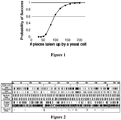
- Figure 1 shows that if a cell takes up ⁇ 90 pieces, it has about a 50% chance of taking up all 25 different pieces. If 10 8 host cells are exposed to DNA, even if the average cell takes up only 40 pieces, about 1 in 1,000 would get a complete set of pieces.
- any arbitrary large DNA molecule can be assembled using the methods of the invention.
- One particularly useful application is the assembly of genomes from microorganisms.
- the sequence to be assembled can comprise the nucleotide sequence of an organism's entire genome or a fraction thereof.
- Nucleotide sequences to be assembled by the disclosed method can be obtained from any organism, whether Protista, Archaebacteria, Eubacteria, Fungi, Platae, or Animalia. Sequence information from viral genomes is also contemplated for use with the disclosed methods.
- cassette refers to a starting nucleic acid molecule that contains a portion of the sequence of the desired target nucleic acid molecule that has been synthesized from single nucleotides or which has been obtained from the genome of an organism itself by fractionation of restriction digested genomic DNA or which has been obtained from cDNA reverse transcribed from mRNA in an organism.
- the initial cassettes are in the order of 2-10 kb and all intermediate values and are preferably on the order of approximately 5 kb. These cassettes may also be assembled by ligating smaller oligonucleotides.
- cassettes are double-stranded, although single-stranded cassettes could be used as well.
- the term “cassettes” also includes additional combinations of starting cassettes which are obtained from in vitro methods of ligation.
- the cassettes obtainable by in vitro ligation of initial portions of the desired sequence typically range from about 15 kb to about 200 kb and all integral values in between.
- These assemblies can either be called “cassettes” or “subsets” where “subsets” refers to a subset of the sequence of the desired target nucleic acid molecule; this refers to the fragments used for in vivo recombination in the in vitro / in vivo method.
- Subset means an assembly of cassettes that is of appropriate size for in vivo recombination in the in vitro / in vivo method. These can also be single or double stranded. Depending on the size of the target nucleic acid molecule, such subsets are typically in the range of 50-500 kb and integral values between these extremes. Thus, this embodiment of the methods of the invention begins with initial cassettes and, through assembly thereof, results in “subsets” which are then assembled in vivo. It is convenient, but not required, to assemble cassettes in vitro to a size of approximately 75-200 kb and then to conduct further assembly of subsets of this size in vivo.
- the entire Mgenitalium JCVI-1.0 chromosome was prepared based on M genitalium G37, and propagated in yeast using a TARBAC cloning vector. This construct is more than an order of magnitude larger than previously reported synthetic DNA products.
- This chromosome may be installed into a receptive Mycoplasma cytoplasm to produce a living "synthetic" cell ( Lartigue, C., et al., Science (2007) 317:632-638 ).
- the synthetic chromosome contains five short watermark sequences at intergenic locations that tolerate transposon insertions, and these insertions are not expected to affect viability.
- BAC's large bacterial synthetic chromosomes (BAC's) (>100 kb) transform less efficiently. Sheng, et al ., found that a 240 kb BAC transformed 30 times less efficiently than an 80 kb BAC in the same recipient strain of E. coli ( Sheng, Y., et al., Nucleic Acids Res. (1995) 23:1990-1996 .
- Example 2 in vivo yeast recombination was used.
- Example 2 the overlapping pieces, each of which has terminal 80 bp homologies to adjacent pieces were efficiently assembled and then joined to overlapping vector DNA by the transformation associated recombination (TAR) mechanism in yeast.
- TAR transformation associated recombination
- Two quarters of the M genitalium genome could be efficiently cloned as half genomes in a yeast vector, and more surprisingly, 4 quarters were recombined and cloned as whole genomes.
- Construction of the synthetic chromosome and successful transplantation into a Mycoplasma species is a first step in efforts to make a minimal cell using the synthetic genomics approach.
- the cassette-based assembly strategy facilitates construction of a minimal cell. Putatively dispensable genes can be deleted from individual cassettes. A mixture of native and deleted cassettes can then be assembled. This approach would create a library with individual members ranging from completely native to extensively deleted genomes. Transplantation of the genome library into a recipient Mycoplasma would generate many new viable variants. Gel electrophoresis of the transplanted genomic DNA could then be used to select the smallest genome for study as a reduced or possibly minimal genome.
- the M genitalium JCVI-1.0 is a small genome with a peculiar use of the termination codon, UGA, for tryptophan. This may make cloning in E. coli and other organisms less toxic because most of the M genitalium proteins will be truncated. If other constructions use this code, transplantation to generate a synthetic cell would need to be carried out in a cytoplasm that can properly translate the UGA to tryptophan. It might be possible to use other codon changes as long as there is a receptive cytoplasm with appropriate codon usage.
- the objective was to produce a cloned synthetic genome 582,970 base pairs in length with exactly the sequence that was designed. This is not trivial because differences (errors) between the actual and designed sequence can arise in several ways, including an error in the sequence used to prepare the cassettes, in the cassette produced or occurring during repair of assembly junctions. Propagation of assemblies in E. coli or yeast could also lead to errors. In the latter two instances, errors could occur at a late stage of the assembly. Therefore, it is prudent to sequence genome assembly clones at various points during assembly. In the example below, every type of error described above was found, but the number of errors was small and they were successfully corrected.
- the Mgenitalium G37 genome was originally sequenced in 1995. However, the genome was isolated and re-sequenced because an error in sequence could result in a non-viable synthetic genome. The sequence determined differed at 34 sites from the original sequence. See Glass, J. I., et al., PNAS (USA) (2006) 103:425-430 . The revised sequence specifies exactly the genome of viable M genitalium G37.
- This synthetic 582,970 bp Mycoplasma genitalium JCVI 1.0 genome contains all the genes of wild type M genitalium G37 except MG408, which is disrupted to block pathogenicity.
- the genome also contains added "watermark" sequences located at intergenic sites known to tolerate transposon insertions, for identification of the genome as synthetic. Antibiotic resistance markers are included to allow its selection.
- TAR transformation associated recombination
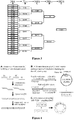
- Figure 2 shows the synthetic genome. Features shown include: watermarks and the aminoglycoside resistance marker, locations of the viable Tn4001 transposon insertions, locations of the overlapping synthetic DNA cassettes that comprise the whole genome sequence, locations of the 485 M genitalium protein coding genes, and locations of the 43 M genitalium rRNA, tRNA and structural RNA genes.
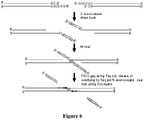
- Figure 3 diagrams the overall plan.
- cassettes were joined to make an A-series assembly approximately 24 kb in length.
- 3 A-assemblies went together to make a total of eight approximately 72 kb B-series assemblies.
- the 1/8 genome, B-assemblies were taken 2 at a time to make 1/4 genome, C-series assemblies.
- These assemblies were all made by in vitro recombination and cloned into E. coli using BAC vectors.
- Half genome and full genome assemblies were made by in vivo yeast recombination. Assemblies in bold boxes were sequenced to validate their correctness.
- cassettes 1 to 4 were joined together to form the A1-4 assembly
- cassettes 5 to 8 were assembled to form A5-8, and so forth.
- Cassettes 40 and 41 were merged to form a single cassette labeled 41*, hence the 101 original cassettes were reduced to 100, yielding 25 A-series assemblies.
- the 25 A-series assemblies were taken 3 at a time to form B-series assemblies.
- B1-12 was constructed from Al-4, A5-8, and A9-12.
- the native 580,076 kb Mgenitalium genome sequence (Mycoplasma genitalium G37 ATCC 33530 genomic sequence; accession No. L43967 ( Glass, J. I., et al. PNAS (USA) (2006) 103:425-430 ) was partitioned into 101 cassettes of approximately 5 to 7 kb in length that were individually synthesized and sequenced. In general, cassette boundaries were placed between genes so that each cassette contained one or several complete genes to simplify the future deletion or manipulation of the genes in individual cassettes. Most cassettes overlapped their adjacent neighbors by 80 bp; however, some segments overlapped by as much as 360 bp. Cassette 101 overlapped cassette 1, thus completing the circle.
- Cassettes 1 to 31, 36 to 39, 52 to 88 and 90 to 101 were synthesized by Blue Heron Technology (Bothell, WA), and their sequences were verified. The cassettes were supplied both as recombinant plasmid DNA and as E. coli clones carrying the recombinant plasmids. Sequences, trace data, and the primers used for sequencing accompanied each cassette. Cassettes are releasable from their vector DNA's by cleavage with a Type IIS restriction enzyme. Cassettes 32 to 35 and 40 to 51 were made by DNA2.0 (Menlo Park, CA).
- the eight B-series assemblies were constructed from A-series clones that had been cleaved with Not I. It was generally not necessary to gel purify the inserts from the cleaved vector DNA since, without complementary overhangs, they were inactive in subsequent reactions. A-assemblies were taken 3 at a time to make the B-assemblies, except for B62-77, which was constructed from 4 A-assemblies ( Fig. 3 ). The four C-series 1 ⁇ 4 genome assemblies were each constructed from 2 of the 1/8-genome B-assemblies as shown in Figure 3 . Clones of correct size were identified, sequence-verified, and stored at -80°C.
- Recombinant plasmids bearing the individual cassette DNA inserts were cleaved with the appropriate Type IIS restriction enzymes to release the insert DNA. After phenol-chloroform extraction and ethanol precipitation, the cassettes were used without removing vector DNA. The cassettes were assembled, 4 at a time, in the presence of BAC vector DNA using an in vitro recombination reaction as illustrated in Figure 3 . The steps of the reaction are first, the overlapping DNA molecules are digested with a 3'-exonuclease to expose the overlaps, and then the complementary overlaps are annealed, and the joints are repaired.
- the 66-69 assembly was constructed by mixing together equimolar amounts of the 4 cassette DNA's and a linear BAC vector that carries terminal overlaps to cassettes 66 and 69.
- the BAC was PCR-amplified using primers situated near the BamHI cloning site.
- Primer 66 (68 bp) contained a 20 bp overlap with the vector to the right of the BamHI site followed by a Not I site and then an overlap with the first 40 bp of cassette 66.
- Primer 69 (68 bp) overlapped the vector to the left of the site by 20 bp followed by the Not I site and then an overlap with the last 40 bp of cassette 69.
- the 3'-ends of the mixture of duplex vector and cassette DNA's were then digested to expose the overlap regions using T4 polymerase in the absence of dNTP's.
- the T4 polymerase was inactivated by incubation at 75°C, followed by slow cooling to anneal the complementary overlap regions.
- the annealed joints were repaired using Taq polymerase and Taq ligase at 45°C in the presence of all four dNTP's and nicotinamide adenine dinucleotide (NAD).
- cassette DNA's (66 to 69) are digested from their 3'-termini using the 3'-exonuclease activity of T4 polymerase in the absence of dNTP's to an extent sufficient to expose the regions of overlap (80 bp) between the adjacent fragments.
- the T4 polymerase is inactivated at 75°C and complementary overlaps are then annealed by slow cooling.
- the assembly is then repaired in a separate reaction using Taq polymerase and dNTP's to fill in the gaps, and Taq ligase to close the nicks, thus producing a covalent assembly.
- a BAC vector is prepared for the assembly reaction by PCR amplification using two primers that overlap 20 bp to either side of the BamHI cloning site, followed by a Not I site, and 40 bp of overlap with cassette 66 or cassette 69.
- the linear amplification product, after gel purification, is included in the assembly reaction of panel A, such that the desired assembly is a circular DNA containing the 4 cassettes and the BAC DNA as depicted in panel C.
- FIG. 5 A sample of the assembly reaction was subjected to field inversion gel electrophoresis (FIGE) to evaluate the success of the assembly, as shown in Figure 5 .
- the chew-back assembly (CBA) reaction 80 ⁇ l was carried out in a 250 ⁇ l PCR tube in a MJ-Research PTC-200 thermocycler and contained 5% PEG-8000, 200 mM Tris-Cl pH 7.5, 10 mM MgC12, 1 mM DTT, 100 ⁇ g/ml BSA, 4.8 U of T4 polymerase (NEB), 150 ng each of cassettes 66, 67, 68, and 69 and 150 ng BAC66-69 DNA.
- CBA chew-back assembly
- the repair (TRB) reaction (40 ⁇ l) contained 10 ⁇ l of the chew-back reaction, 40 U Taq DNA ligase (NEB), 1.2 U Taq DNA Polymerase (NEB), 5% PEG-8000, 50 mM Tris-Cl pH 7.5, 10 mM MgC12, 10 mM DTT, 25 ⁇ g/ml BSA, 200 ⁇ M each dNTP, and 1 mM NAD.
- Panel B shows the assembly reaction for B50-61 carried out as described in panel A.
- the amounts of A50-53, A54-57, and A58-61 DNA's were approximately 450 ng each.
- BAC50-61 DNA was 150 ng.
- a sample of the CBA reaction was analyzed as in panel A.
- Panel C shows the assembly reaction for C25-49, carried out as described in panel A. Approximately 300 ng, 250 ng, and 60 ng of gel-purified B25-36, B37-49, and BAC25-49 DNA were used respectively. A 10 ⁇ l sample of the CBA reaction was loaded onto a BioRad "Ready Agarose Mini GelTM (Catalog 161-3016) and subjected to FIGE (U-9 program (2)) for 14 hr at 23°C in a Hoeffer HE33 mini horizontal submarine electrophoresis tray using lx TAE buffer with 0.5 ⁇ g/ml EtBr without circulation. The DNA size standard was the low range PFG marker #N0350S (NEB). Bands were visualized using a Typhoon 9410 Fluorescence Imager (Amersham) with 532 nm excitation and 610 nm emission wavelengths.
- Panel D shows sizes of the Not I-cleaved assemblies as determined by FIGE using the U-9 program described in panel C.
- DH10B InvitroGen
- EPI300 Epicentre
- Stb14TM InvitroGen
- Colonies appeared after 24 to 48 hours. They were picked and grown overnight in 3 ml cultures of LB broth plus chloramphenicol.
- Plasmid DNA was prepared from 1.5 ml of culture using an alkaline lysis procedure. The DNA was then cleaved with Not I and analyzed by FILE to verify the correct sizes of the assemblies. Clones with the correct size were frozen in LB medium plus 15% glycerol and stored at -80°C. Some of the cloned assemblies were sequenced to ascertain the accuracy of the synthesis as indicated by bold boxes in Figure 3 .
- the twenty-five A-series assemblies and all the larger assemblies were cloned in the pCC1BAC vector from Epicentre.
- the pCC1BAC clones could be propagated at single copy level in EPI300 cells and then induced to 10 copies per cell according to the Epicentre protocol. Induced 100 ml cultures yielded up to 200 ⁇ g of plasmid DNA.
- the assembly inserts in the BAC's were immediately flanked on each side by a Not I site such that cleavage efficiently yielded the insert DNA with part of the Not I site attached at each end (the M genitalium genome has no Not I sites).
- the 3'-portion of the Not I site (2 nucleotides) was removed by the chew-back reaction.
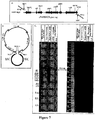
- the 5'-portion of the Not I site produced a 6-nucleotide overhang after annealing, but the overhang was removed during repair by the Taq polymerase 5'-exonuclease activity as shown in Figure 6 .
- Linear YAC clones are usually constructed by ligation of an insert into a restriction enzyme cloning site ( Burke, D. T., et al., Science, (1987) 236:806-812 .
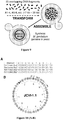
- An improvement upon this method uses co-transformation of overlapping insert and vector DNA's into yeast spheroplasts, where they are joined by homologous recombination ( Fig. 7A ). This produces circular clones and is known as TAR cloning ( Larionov, V., et al., Proc. Natl. Acad. Sci. USA (1996)93:491-496 ).
- a TAR clone like a linear YAC, contains a centromere and thus is maintained at chromosomal copy number along with the native yeast genome.
- the circularity of TAR clones allows them to be readily separated from the linear yeast chromosomes.
- Panel A of Figure 7 shows the vector used for TAR cloning. It contains both BAC and YAC sequences (shown to scale). Recombination of vector with insert occurs at "hooks" added to the TARBAC by PCR amplification.
- a yeast replication origin (ARS) allows for propagation of clones, as no ARS-like sequences ( Newlon, C. S., et al., Curr. Opin. Genet. Dev. (1993) 3:752-758 ) exist in the Mgenitalium genome. Selection in yeast is by complementation of histidine auxotrophy in the host strain.
- BAC sequences allow for potential electroporation into E. coli of clones purified from yeast.
- pTARBAC3 vector Zeng, C., et al., Genomics (2001) 11:27-34 .
- This vector contains both YAC and BAC sequences ( Fig. 7A ).
- the vector was prepared using a strategy similar to the one described above for BAC vectors. Overlaps were generated at the termini by PCR amplification using primers with 60 bp overlaps to either side of a single cut restriction site within one of the 1/4 genomes, followed by a Not I site and 20 bp from the vector termini.
- the vector was inserted at the intergenic BsmBI site in the third 1/4, C50-77.
- Panel B of Figure 7 shows assembly of Mgenitalium JCVI-1.0 1/4 genomes. These were purified from E. coli, Not I-digested, and mixed with a TARBAC vector for co-transformation into S. cerevisiae, where recombination at overlaps from 60-264 bp combined the six fragments into a single clone.
- the TARBAC was inserted into the BsmBI site in C50-77.
- Transformation of the yeast cells was performed using a published method ( Kouprina, N., et al., Methods Mol. Biol. (2006) 349:85-101 ).
- Yeast cells were harvested from an overnight culture and washed with water, then 1 M sorbitol. Cells were converted to spheroplasts by treatment with ZymolyaseTM and B-mercaptoethanol in the presence of 1 M sorbitol. The spheroplasts were washed with sorbitol and resuspended in a buffer containing sorbitol and CaCl 2 .
- Spheroplasts equivalent to 5 ml of original yeast culture were incubated in a 200 ⁇ l volume at room temperature for 10 min with 10 ng of vector and 120 ng of each 1/4 genome. Then 800 H.1 of 20% polyethylene glycol (PEG) 8000 (US Biochemicals) was added and incubation continued for 10 min. After recovery in rich medium, the transformed cells were selected at 30°C in top agar on sorbitol plates in the absence of histidine. Transformants were screened first by PCR and then by Southern Blot ( Fig. 7C ).
- TAR clones were screened initially by PCR. Clones positive for amplification of all input fragments were then characterized by Southern Blot.
- Total yeast DNA was prepared in an agarose plug (as per the BioRad CHEF DRIII manual protocol), Not I-digested to separate vector from M genitalium sequence, resolved by pulsed-field gel electrophoresis (Bio-Rad CHEF DRII or DRIII), transferred by vacuum (BioRad Model 785 Vacuum Blotter) to an Amersham Hybond-N+ membrane, probed with a mix of two digoxigenin-labeled (Roche) PCR products that hybridize within the nine M genitalium MgPa repetitive regions, and detected with anti-digoxigenin-AP Fab fragments followed by the fluorescent substrate HNPP (Roche).
- Desirable clones showed a single band of the same size as chromosomes resolved from an agarose plug of native M genitalium genomes. Shown here is a more detailed digest analysis of the final clone that was sequenced, by pulsed-field electrophoresis. Lanes are as follows: 1) Low-range pulsed field gel marker (NEB), 2) Host yeast strain VL6-48N ( Larionov, V., et al., Proc. Natl. Acad. Sci.
- TAR cloning was also performed with each of the four sets of two adjacent 1/4 genomes, as well as with quarters 1 to 3. DNA's from transformants of these various experiments were isolated and electroporated into E. coli ( Silverman, G. A., Methods Mol. Biol. (1996) 54:65-68 ). In this way, we obtained BAC clones of the sizes expected for D1-49, D50-101, and assemblies 25-77 and 1-77. Of these, D1-49 was chosen for sequencing and it was correct.
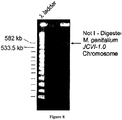
- Agarose plugs of sMgTARBAC37 were prepared according to the Bio-Rad CHEF manual protocol for yeast from a 1.5 L CM-HIS culture grown at 30°C to an OD of 0.5. The plugs were washed and dialyzed in 1 x NEB buffer 4, then incubated overnight at 37°C with restriction enzymes Rsr II, Fse I, and AsiS I, which cleave yeast but not sMgTARBAC37. Digested linear yeast DNA was removed from plugs by agarose gel electrophoresis at 4.5 V/cm for 2 hours. Intact circular sMGTARBAC37 DNA remained in the plug under these conditions. To evaluate the size and purity of the sMgTARBAC37 DNA one plug was incubated with Not I and the DNA in the plug was analyzed by electrophoresis. The gel was stained with SYBR gold.
- Figure 8 shows a band of approximately 590 kb with Not I digestion, but no band in the undigested control. DNA from the remaining plugs was used to prepare a library for sequencing. The sMgTARBAC37 DNA was sequenced to X coverage and confirmed to be as designed.
- A. Production of A-series assemblies Each of the 25 A-series assemblies shown in Table 1 is contained in pCC1BACTM and was propagated in the EPI300TM E. coli strain (Epicentre®). Table 1 Summary of the 25 A-series assemblies used in the construction of the M genitalium JCVI-1.1 synthetic genome.
- Assembly Size Digestion required to release the vector Amount overlap to adjacent assembly at 5' end Amount overlap to adjacent assembly at 3' end A1-4 23,636 bp BsmBI 80 bp 80 bp A5-8 26,166 bp NotI 80 bp 80 bp A9-12 23,872 bp BsmBI 80 bp 80 bp A13-16 23,653 bp SalI and NotI 80 bp 80 bp A17-20 23,312 bp NotI 80 bp 80 bp A21-24 23,211 bp NotI 80 bp 80 bp A25-28 24,992 bp NotI 80 bp 80 bp A29-32 26,257 bp NotI 80 bp 209 bp A33-36 20,448 bp NotI 209 bp 80 bp A37-41 25,706 bp NotI 80 bp 257 bp A42-45 19,223 bp NotI 257 bp 257 bp A46-
- the vector contains a histidine auxotrophic marker, a centromere and an origin of replication for selection and maintenance in yeast.
- the inclusion of a vector with yeast propagation elements permits evaluation of results of assembly.
- the cloning system allows for 10 copies or more of these BACs per cell.
- E. coli strains with these 25 assemblies were inoculated into 150 ml LB plus 12.5 ⁇ g/ml chloramphenicol and 1x induction solution (Epicentre®) and incubated at 37°C for 16 hours. The cultures were harvested and the BACs were purified using Qiagen's HiSpeed Plasmid Maxi Kit. DNA was eluted using 500 ⁇ l TE buffer.
- Yeast spheroplast transformation Yeast cells were treated with ZymolyaseTM to weaken the cell wall, and then made competent to take up foreign DNA by treatment with PEG and CaCl 2 , using the VL6-48N yeast strain (Kouprina, N., et al., supra).
- yeast spheroplasts were regenerated and selected on complete supplemental medium without histidine (CSM-His) plus adenine and 1M sorbitol agar plates for 3 days at 30°C. Following incubation for 3 days at 30°C on selective medium, approximately 800 colonies were obtained. Individual colonies were then transferred onto CSM-His agar plates as small patches and incubated for 2 days at 30°C. Once screened and confirmed to have the desired assembly, individual colonies from these plates were also analyzed. The overall process is diagrammed in Figure 9 .
- yeast cells were transformed with the 25 different overlapping A-series DNA segments ( ⁇ 17 kb to ⁇ 35 kb each) comprising the M genitalium genome.
- a single yeast cell must take up at least one representative of the 25 different DNA fragments and incorporate each into the nucleus, where homologous recombination takes place.
- the assembled genome labeled JCVI-1.1 in the figure, is 590,011 bp including the vector sequence (triangle) shown internal to A86-89.
- yeast propagation elements contained within the vector are an origin of replication (ARSH4), a centromere (Cen6), and a histidine selectable marker (His3).
- ARSH4 origin of replication
- Cen6 centromere
- His3 histidine selectable marker
- Multiplex PCR analysis DNA was extracted from the cultured yeast cells using the ChargeSwitch® Plasmid Yeast Mini Kit (Invitrogen, catalog number CS10203) according to the provided manual. Multiplex PCR was carried out in 10 ⁇ l reactions using a master mix consisting of a PCR buffer, a dNTP mixture, and HotStarTaq DNA polymerase (Qiagen, catalog number 206143). Two microliters of DNA, and 1 ⁇ l of a 10X primer stock, containing 20 oligos at 5 ⁇ M each, was added to each reaction.
- Cycling parameters were 94°C for 15 min, then 35 cycles of 94°C for 30 sec, 45°C (primer set 1) or 55°C (primer sets 2-4) for 90 sec, and 72°C for 90 sec, followed by a single 72°C incubation for 3 minutes.
- Two microliters of each reaction was loaded onto a 2% E-gel (Invitrogen) and 72V was applied for 30 minutes. Bands were visualized using an Amersham Typhoon 9410 Fluorescence Imager.
- Multiplex primer sets 1 and 2 were previously described (Gibson, D. G., et al., supra).
- the 40 amplicons are positioned around the Mgenitalium genome approximately every 15 kb. All 25 segments are required to be present to give rise to all 40 amplicons by PCR, thus giving a very good indication that all 25 pieces were incorporated into a yeast cell.
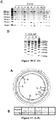
- Figures 10A-10B As shown in Figure 10A , 40 amplicons were designed such that 10 products could be produced in 4 separate multiplex PCR reactions (Set 1-Set 4). As diagrammed in Figure 10B , the 40 sets of primers each amplifies a small portion of the M genitalium genome approximately once every 15 kb.
- Each of the 25 segments provides primer binding sites for at least one of the 40 amplicons (shown as lines).
- Ten individual colonies were transferred to a single selective plate as small patches. Following incubation for 2 days at 30°C, approximately 10 7 cells from each of these 10 patches were scraped into 1 ml of water.
- multiplex primer set 1 and DNA extracted from these 10 clones multiplex PCR was performed and analyzed by gel electrophoresis. Clones 1 and 4 produced all 10 amplicons. Amplicon 1-h gave a weak signal that could be observed when the exposure time was increased (data not shown). This PCR analysis confirmed the presence of 10 of the 25 A-series assemblies in clones 1 and 4.
- PCR products range in size from 100 bp to 1075 bp and can be easily separated by electrophoresis on 2% agarose gels.
- DNA was extracted from 10 yeast clones and multiplex PCR, with primer set one, was performed.
- Clones 1 and 4 (c1 and c4) efficiently generated 9 of the 10 predicted amplicons.
- Amplicon 1-h could be observed when the signal emanating from the gel was increased.
- D Detailed analysis of clone 4. Using multiplex primer sets 1-4, multiplex PCR was performed and analyzed by gel electrophoresis. With the exception of amplicon 1-h, all 40 PCR products were efficiently generated from DNA extracted from clone 4.
- A70-73 is represented by amplicons 1-h and 3-h. Although amplicon 1-h is generated at lower levels compared to the other amplicons, amplicon 3-h is efficiently produced, providing strong evidence for the presence of A70-73 in clone 4. Clone 4 was selected for further analysis. In the results shown in Figure 10D , multiplex PCR was performed on clone 4 using all 4 primer sets. With the exception of amplicon 1-h, all 40 amplicons can be efficiently generated from this clone. In lanes labeled "L", the 100 bp ladder (NEB) was loaded and sizes are indicated. E.
- DNA was prepared from these yeast cells in agarose plugs for restriction analyses as described above.
- DNA was also extracted from the untransformed host strain.
- most of the linear yeast chromosomal DNA was removed by constant voltage electrophoresis.
- EagI, BssHII, and AatII five restriction fragments predicted by these digests for a complete genome assembly are observed when the digested plugs are subjected to field-inversion gel electrophoresis as shown in Figure 11C .
- the host yeast control shows none of these bands and only a smear of DNA smaller than ⁇ 150 kb is observed.
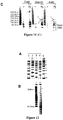
- Clone 1 gave a similar pattern to clone 4 when multiplex PCR products, amplified using primer set 1, were analyzed ( Figure 10C ). Therefore, we further analyzed clone 1. Using the 4 multiplex PCR primer sets shown in Figure 10 , all 40 amplicons are observed for clone 1, and following an EagI digest as shown in Figure 11 , the predicted 590 kb band is present as shown in Figure 12 .
- FIG 12A multiplex PCR was performed on DNA extracted from clone 1 using all 4 primer sets as in Figure 10 . All 40 amplicons are observed following electrophoresis on a 2% agarose gel.
- Figure 12B DNA was prepared from clone 1 in agarose plugs then digested with EagI and analyzed as in Figure 11 . The predicted 590 kb band can be observed (denoted by *) following field-inversion gel electrophoresis on a 1% agarose gel.
Landscapes
- Life Sciences & Earth Sciences (AREA)
- Genetics & Genomics (AREA)
- Health & Medical Sciences (AREA)
- Engineering & Computer Science (AREA)
- Chemical & Material Sciences (AREA)
- General Engineering & Computer Science (AREA)
- Biomedical Technology (AREA)
- Organic Chemistry (AREA)
- Biotechnology (AREA)
- Wood Science & Technology (AREA)
- Bioinformatics & Cheminformatics (AREA)
- Zoology (AREA)
- Molecular Biology (AREA)
- Biophysics (AREA)
- Plant Pathology (AREA)
- Biochemistry (AREA)
- General Health & Medical Sciences (AREA)
- Physics & Mathematics (AREA)
- Microbiology (AREA)
- Mycology (AREA)
- Crystallography & Structural Chemistry (AREA)
- Bioinformatics & Computational Biology (AREA)
- Ecology (AREA)
- Cell Biology (AREA)
- Micro-Organisms Or Cultivation Processes Thereof (AREA)
- Saccharide Compounds (AREA)
- Preparation Of Compounds By Using Micro-Organisms (AREA)
- Measuring Or Testing Involving Enzymes Or Micro-Organisms (AREA)
Applications Claiming Priority (6)
| Application Number | Priority Date | Filing Date | Title |
|---|---|---|---|
| US97838807P | 2007-10-08 | 2007-10-08 | |
| US98354907P | 2007-10-29 | 2007-10-29 | |
| US6221408P | 2008-01-23 | 2008-01-23 | |
| US2339208P | 2008-01-24 | 2008-01-24 | |
| US9627008P | 2008-09-11 | 2008-09-11 | |
| PCT/US2008/079109 WO2009048885A2 (en) | 2007-10-08 | 2008-10-07 | Assembly of large nucleic acids |
Publications (3)
| Publication Number | Publication Date |
|---|---|
| EP2207899A2 EP2207899A2 (en) | 2010-07-21 |
| EP2207899A4 EP2207899A4 (en) | 2010-12-01 |
| EP2207899B1 true EP2207899B1 (en) | 2018-04-18 |
Family
ID=40549815
Family Applications (1)
| Application Number | Title | Priority Date | Filing Date |
|---|---|---|---|
| EP08838436.7A Not-in-force EP2207899B1 (en) | 2007-10-08 | 2008-10-07 | Assembly of large nucleic acids |
Country Status (11)
| Country | Link |
|---|---|
| US (1) | US9593329B2 (OSRAM) |
| EP (1) | EP2207899B1 (OSRAM) |
| JP (1) | JP5618413B2 (OSRAM) |
| CN (1) | CN101932725A (OSRAM) |
| AU (1) | AU2008311000B2 (OSRAM) |
| CA (1) | CA2701923C (OSRAM) |
| DK (1) | DK2207899T3 (OSRAM) |
| IL (1) | IL204892B (OSRAM) |
| MX (1) | MX2010003644A (OSRAM) |
| MY (1) | MY161418A (OSRAM) |
| WO (1) | WO2009048885A2 (OSRAM) |
Families Citing this family (30)
| Publication number | Priority date | Publication date | Assignee | Title |
|---|---|---|---|---|
| US9267132B2 (en) | 2007-10-08 | 2016-02-23 | Synthetic Genomics, Inc. | Methods for cloning and manipulating genomes |
| WO2010045326A1 (en) | 2008-10-14 | 2010-04-22 | Barnes Wayne M | In vitro recombination methods using 5' exonuclease |
| SG171760A1 (en) | 2008-11-19 | 2011-07-28 | Amyris Inc | Compositions and methods for the assembly of polynucleotides |
| CA2754212C (en) | 2009-03-06 | 2016-08-02 | Synthetic Genomics, Inc. | Methods for cloning and manipulating genomes |
| US9821052B2 (en) | 2009-07-31 | 2017-11-21 | Seqirus UK Limited | Reverse genetics systems |
| US20110269119A1 (en) | 2009-10-30 | 2011-11-03 | Synthetic Genomics, Inc. | Encoding text into nucleic acid sequences |
| EP2542676A1 (en) * | 2010-03-05 | 2013-01-09 | Synthetic Genomics, Inc. | Methods for cloning and manipulating genomes |
| US9689012B2 (en) | 2010-10-12 | 2017-06-27 | Cornell University | Method of dual-adapter recombination for efficient concatenation of multiple DNA fragments in shuffled or specified arrangements |
| CN107058059B (zh) | 2011-09-26 | 2020-08-07 | 基因技术股份公司 | 高效的小体积核酸合成 |
| WO2014153188A2 (en) | 2013-03-14 | 2014-09-25 | Life Technologies Corporation | High efficiency, small volume nucleic acid synthesis |
| US20140303036A1 (en) * | 2011-11-23 | 2014-10-09 | Dsm Ip Assets B.V. | Nucleic Acid Assembly System |
| WO2013191950A2 (en) | 2012-06-22 | 2013-12-27 | Monsanto Technology Llc | Unique modular vector design |
| CA2882661C (en) * | 2012-08-31 | 2018-12-11 | Synthetic Genomics, Inc. | Crowding agent-induced nucleic acid transfer into a recipient host cell |
| US20140308710A1 (en) * | 2012-12-13 | 2014-10-16 | Synthetic Genomics, Inc. | Peg-mediated assembly of nucleic acid molecules |
| CA2898961A1 (en) * | 2013-01-23 | 2014-07-31 | Novartis Ag | Influenza virus reassortment |
| US20140274806A1 (en) | 2013-03-15 | 2014-09-18 | Synthetic Genomics Vaccines | Influenza virus reassortment |
| EP3167071B1 (en) | 2014-07-09 | 2020-10-07 | Gen9, Inc. | Compositions and methods for site-directed dna nicking and cleaving |
| CN107532129B (zh) | 2014-12-09 | 2022-09-13 | 生命技术公司 | 高效小体积核酸合成 |
| CN106282224B (zh) * | 2015-06-26 | 2020-05-01 | 深圳华大生命科学研究院 | 在靶细胞中构建人工染色体的方法以及真核细胞 |
| EP3359669B1 (en) | 2015-10-06 | 2020-05-13 | Pierce Biotechnology, Inc. | Devices and methods for producing proteins |
| EP3433354B1 (en) | 2016-03-23 | 2023-12-27 | Synthetic Genomics, Inc. | Generation of synthetic genomes |
| US20210284991A1 (en) * | 2016-11-21 | 2021-09-16 | Novozymes A/S | Yeast Cell Extract Assisted Construction of DNA Molecules |
| US10726110B2 (en) * | 2017-03-01 | 2020-07-28 | Seven Bridges Genomics, Inc. | Watermarking for data security in bioinformatic sequence analysis |
| EP3814494B1 (en) | 2018-06-29 | 2023-11-01 | Thermo Fisher Scientific GENEART GmbH | High throughput assembly of nucleic acid molecules |
| CN113056327A (zh) * | 2018-07-23 | 2021-06-29 | Dna斯克瑞普特公司 | 核酸链的大规模平行酶促合成 |
| GB201905303D0 (en) | 2019-04-15 | 2019-05-29 | Thermo Fisher Scient Geneart Gmbh | Multiplex assembly of nucleic acid molecules |
| US20220235378A1 (en) * | 2019-05-06 | 2022-07-28 | Dsm Ip Assets B.V. | Multipartite crispr donor |
| WO2021178809A1 (en) | 2020-03-06 | 2021-09-10 | Life Technologies Corporation | High sequence fidelity nucleic acid synthesis and assembly |
| CN113380322B (zh) * | 2021-06-25 | 2023-10-24 | 倍生生物科技(深圳)有限公司 | 人工核酸序列水印编码系统、水印字符串及编码和解码方法 |
| WO2024132094A1 (en) | 2022-12-19 | 2024-06-27 | Thermo Fisher Scientific Geneart Gmbh | Retrieval of sequence-verified nucleic acid molecules |
Family Cites Families (13)
| Publication number | Priority date | Publication date | Assignee | Title |
|---|---|---|---|---|
| US6348353B1 (en) * | 1995-06-07 | 2002-02-19 | Case Western Reserve University | Artificial mammalian chromosome |
| US5976846A (en) * | 1996-01-13 | 1999-11-02 | Passmore; Steven E. | Method for multifragment in vivo cloning and mutation mapping |
| AU6487196A (en) | 1996-07-09 | 1998-02-02 | Government Of The United States Of America, As Represented By The Secretary Of The Department Of Health And Human Services, The | Transformation-associated recombination cloning |
| WO1999014318A1 (en) * | 1997-09-16 | 1999-03-25 | Board Of Regents, The University Of Texas System | Method for the complete chemical synthesis and assembly of genes and genomes |
| US6670154B1 (en) * | 1998-07-27 | 2003-12-30 | Ronald A. Hitzeman | Automatic eukaryotic artificial chromosome vector |
| AU5597200A (en) * | 1999-06-07 | 2000-12-28 | Cell Genesys, Inc. | Hybrid yeast-bacteria cloning system and uses thereof |
| US7822969B2 (en) * | 2001-04-16 | 2010-10-26 | Digimarc Corporation | Watermark systems and methods |
| AU2002332027A1 (en) | 2001-10-04 | 2003-04-14 | The Government Of The United States Of America, As | Tandem repeat markers |
| JP2007534303A (ja) | 2003-05-22 | 2007-11-29 | ユニバーシティー オブ カリフォルニア | 合成遺伝子または他のdna配列を作製するための方法 |
| WO2007021944A2 (en) | 2005-08-11 | 2007-02-22 | The J. Craig Venter Institute | In vitro recombination method |
| ATE483802T1 (de) | 2005-08-11 | 2010-10-15 | Synthetic Genomics Inc | Verfahren zur in vitro-rekombination |
| CA2625971A1 (en) | 2005-10-12 | 2007-04-26 | The J. Craig Venter Institute | Minimal bacterial genome |
| CA2698627A1 (en) | 2007-10-05 | 2009-04-09 | Sapphire Energy, Inc. | System for capturing and modifying large pieces of genomic dna and constructing organisms with synthetic chloroplasts |
-
2008
- 2008-10-07 CN CN200880119758XA patent/CN101932725A/zh active Pending
- 2008-10-07 JP JP2010528976A patent/JP5618413B2/ja not_active Expired - Fee Related
- 2008-10-07 US US12/247,126 patent/US9593329B2/en active Active
- 2008-10-07 DK DK08838436.7T patent/DK2207899T3/en active
- 2008-10-07 MX MX2010003644A patent/MX2010003644A/es unknown
- 2008-10-07 MY MYPI2010001512A patent/MY161418A/en unknown
- 2008-10-07 EP EP08838436.7A patent/EP2207899B1/en not_active Not-in-force
- 2008-10-07 AU AU2008311000A patent/AU2008311000B2/en not_active Ceased
- 2008-10-07 WO PCT/US2008/079109 patent/WO2009048885A2/en not_active Ceased
- 2008-10-07 CA CA2701923A patent/CA2701923C/en active Active
-
2010
- 2010-04-06 IL IL204892A patent/IL204892B/en active IP Right Grant
Non-Patent Citations (2)
| Title |
|---|
| DEN DUNNEN J T ET AL: "RECONSTRUCTION OF THE 2.4 MB HUMAN DMD-GENE BY HOMOLOGOUS YAC RECOMBINATION", HUMAN MOLECULAR GENETICS, OXFORD UNIVERSITY PRESS, SURREY, vol. 1, no. 1, 1 April 1992 (1992-04-01), pages 19 - 28, XP000674744, ISSN: 0964-6906 * |
| M. BECKER: "Isolation of the repertoire of VSG expression site containing telomeres of Trypanosoma brucei 427 using transformation-associated recombination in yeast", GENOME RESEARCH, vol. 14, no. 11, 1 November 2004 (2004-11-01), pages 2319 - 2329, XP055141205, ISSN: 1088-9051, DOI: 10.1101/gr.2955304 * |
Also Published As
| Publication number | Publication date |
|---|---|
| DK2207899T3 (en) | 2018-09-03 |
| MX2010003644A (es) | 2010-06-23 |
| CA2701923A1 (en) | 2009-04-16 |
| CA2701923C (en) | 2018-07-10 |
| JP5618413B2 (ja) | 2014-11-05 |
| MY161418A (en) | 2017-04-14 |
| IL204892B (en) | 2018-02-28 |
| AU2008311000A1 (en) | 2009-04-16 |
| JP2010539994A (ja) | 2010-12-24 |
| EP2207899A4 (en) | 2010-12-01 |
| IL204892A0 (en) | 2010-11-30 |
| AU2008311000A2 (en) | 2010-06-03 |
| AU2008311000B2 (en) | 2013-12-19 |
| WO2009048885A3 (en) | 2009-12-30 |
| CN101932725A (zh) | 2010-12-29 |
| WO2009048885A2 (en) | 2009-04-16 |
| US9593329B2 (en) | 2017-03-14 |
| EP2207899A2 (en) | 2010-07-21 |
| US20090275086A1 (en) | 2009-11-05 |
Similar Documents
| Publication | Publication Date | Title |
|---|---|---|
| EP2207899B1 (en) | Assembly of large nucleic acids | |
| Gonzalez-Ballester et al. | Reverse genetics in Chlamydomonas: a platform for isolating insertional mutants | |
| US10041060B2 (en) | Method of nucleic acid cassette assembly | |
| CN105274004B (zh) | 用于克隆和操作基因组的方法 | |
| US20170088845A1 (en) | Vectors and methods for fungal genome engineering by crispr-cas9 | |
| US12234450B2 (en) | Generation of synthetic genomes | |
| EP2542676A1 (en) | Methods for cloning and manipulating genomes | |
| Primrose et al. | Principles of genome analysis and genomics | |
| US20190032047A1 (en) | Methods and Compositions for Rapid Assembly of Genetic Modules | |
| US20110053273A1 (en) | Methods for cloning and manipulating genomes | |
| Marx et al. | The octatricopeptide repeat protein Raa8 is required for chloroplast trans splicing | |
| Meslet-Cladière et al. | A new method to identify flanking sequence tags in chlamydomonas using 3’-RACE | |
| Gibson | Gene and genome construction in yeast | |
| US11939571B2 (en) | Library-scale engineering of metabolic pathways | |
| Dubé et al. | Deep Mutational Scanning of Protein–Protein Interactions Between Partners Expressed from Their Endogenous Loci In Vivo | |
| Sugiyama et al. | Advances in molecular methods to alter chromosomes and genome in the yeast Saccharomyces cerevisiae | |
| CA3023994A1 (en) | Glyphosate-resistant gene screening method, epsps mutant gene and deficient strain and use | |
| Ballerini | Engineering the Next Generation of tRNA Neochromosomes | |
| Houkes et al. | Design, construction and optimization of a synthetic RNA polymerase operon in Escherichia coli | |
| Almutawa | Impact of Chromosomal Translocations (CTs) on reproductive isolation and fitness in natural yeast isolates | |
| Gartner et al. | Assemblatron: An Automated Workflow for High-Throughput Assembly of Big-DNA Libraries | |
| WO2012040628A2 (en) | Rapid assemby of multiple arbitrary length dna fragments | |
| Pootakham et al. | Reverse genetics in Chlamydomonas: a platform for isolating insertional mutants |
Legal Events
| Date | Code | Title | Description |
|---|---|---|---|
| PUAI | Public reference made under article 153(3) epc to a published international application that has entered the european phase |
Free format text: ORIGINAL CODE: 0009012 |
|
| 17P | Request for examination filed |
Effective date: 20100430 |
|
| AK | Designated contracting states |
Kind code of ref document: A2 Designated state(s): AT BE BG CH CY CZ DE DK EE ES FI FR GB GR HR HU IE IS IT LI LT LU LV MC MT NL NO PL PT RO SE SI SK TR |
|
| AX | Request for extension of the european patent |
Extension state: AL BA MK RS |
|
| RIN1 | Information on inventor provided before grant (corrected) |
Inventor name: VENTER, J., CRAIG Inventor name: GLASS, JOHN, I. Inventor name: SMITH, HAMILTON, O. Inventor name: GIBSON, DANIEL, G. Inventor name: BENDERS, GWYNEDD, A. Inventor name: HUTCHISON, CLYDE, A. Inventor name: YOUNG, LEI |
|
| A4 | Supplementary search report drawn up and despatched |
Effective date: 20101029 |
|
| RIN1 | Information on inventor provided before grant (corrected) |
Inventor name: HUTCHISON, CLYDE, A. Inventor name: BENDERS, GWYNEDD, A. Inventor name: GIBSON, DANIEL, G. Inventor name: GLASS, JOHN, I. Inventor name: YOUNG, LEI Inventor name: SMITH, HAMILTON, O. Inventor name: VENTER, J., CRAIG |
|
| DAX | Request for extension of the european patent (deleted) | ||
| 17Q | First examination report despatched |
Effective date: 20140925 |
|
| GRAP | Despatch of communication of intention to grant a patent |
Free format text: ORIGINAL CODE: EPIDOSNIGR1 |
|
| INTG | Intention to grant announced |
Effective date: 20171121 |
|
| GRAS | Grant fee paid |
Free format text: ORIGINAL CODE: EPIDOSNIGR3 |
|
| GRAA | (expected) grant |
Free format text: ORIGINAL CODE: 0009210 |
|
| AK | Designated contracting states |
Kind code of ref document: B1 Designated state(s): AT BE BG CH CY CZ DE DK EE ES FI FR GB GR HR HU IE IS IT LI LT LU LV MC MT NL NO PL PT RO SE SI SK TR |
|
| REG | Reference to a national code |
Ref country code: GB Ref legal event code: FG4D |
|
| REG | Reference to a national code |
Ref country code: CH Ref legal event code: EP |
|
| REG | Reference to a national code |
Ref country code: DE Ref legal event code: R096 Ref document number: 602008054928 Country of ref document: DE |
|
| REG | Reference to a national code |
Ref country code: AT Ref legal event code: REF Ref document number: 990523 Country of ref document: AT Kind code of ref document: T Effective date: 20180515 |
|
| REG | Reference to a national code |
Ref country code: IE Ref legal event code: FG4D |
|
| REG | Reference to a national code |
Ref country code: DK Ref legal event code: T3 Effective date: 20180717 |
|
| REG | Reference to a national code |
Ref country code: SE Ref legal event code: TRGR |
|
| REG | Reference to a national code |
Ref country code: NL Ref legal event code: FP |
|
| REG | Reference to a national code |
Ref country code: DK Ref legal event code: T3 Effective date: 20180830 |
|
| REG | Reference to a national code |
Ref country code: LT Ref legal event code: MG4D |
|
| REG | Reference to a national code |
Ref country code: FR Ref legal event code: PLFP Year of fee payment: 11 |
|
| PG25 | Lapsed in a contracting state [announced via postgrant information from national office to epo] |
Ref country code: ES Free format text: LAPSE BECAUSE OF FAILURE TO SUBMIT A TRANSLATION OF THE DESCRIPTION OR TO PAY THE FEE WITHIN THE PRESCRIBED TIME-LIMIT Effective date: 20180418 Ref country code: NO Free format text: LAPSE BECAUSE OF FAILURE TO SUBMIT A TRANSLATION OF THE DESCRIPTION OR TO PAY THE FEE WITHIN THE PRESCRIBED TIME-LIMIT Effective date: 20180718 Ref country code: PL Free format text: LAPSE BECAUSE OF FAILURE TO SUBMIT A TRANSLATION OF THE DESCRIPTION OR TO PAY THE FEE WITHIN THE PRESCRIBED TIME-LIMIT Effective date: 20180418 Ref country code: FI Free format text: LAPSE BECAUSE OF FAILURE TO SUBMIT A TRANSLATION OF THE DESCRIPTION OR TO PAY THE FEE WITHIN THE PRESCRIBED TIME-LIMIT Effective date: 20180418 Ref country code: LT Free format text: LAPSE BECAUSE OF FAILURE TO SUBMIT A TRANSLATION OF THE DESCRIPTION OR TO PAY THE FEE WITHIN THE PRESCRIBED TIME-LIMIT Effective date: 20180418 Ref country code: BG Free format text: LAPSE BECAUSE OF FAILURE TO SUBMIT A TRANSLATION OF THE DESCRIPTION OR TO PAY THE FEE WITHIN THE PRESCRIBED TIME-LIMIT Effective date: 20180718 |
|
| PG25 | Lapsed in a contracting state [announced via postgrant information from national office to epo] |
Ref country code: LV Free format text: LAPSE BECAUSE OF FAILURE TO SUBMIT A TRANSLATION OF THE DESCRIPTION OR TO PAY THE FEE WITHIN THE PRESCRIBED TIME-LIMIT Effective date: 20180418 Ref country code: HR Free format text: LAPSE BECAUSE OF FAILURE TO SUBMIT A TRANSLATION OF THE DESCRIPTION OR TO PAY THE FEE WITHIN THE PRESCRIBED TIME-LIMIT Effective date: 20180418 Ref country code: GR Free format text: LAPSE BECAUSE OF FAILURE TO SUBMIT A TRANSLATION OF THE DESCRIPTION OR TO PAY THE FEE WITHIN THE PRESCRIBED TIME-LIMIT Effective date: 20180719 |
|
| REG | Reference to a national code |
Ref country code: AT Ref legal event code: MK05 Ref document number: 990523 Country of ref document: AT Kind code of ref document: T Effective date: 20180418 |
|
| PG25 | Lapsed in a contracting state [announced via postgrant information from national office to epo] |
Ref country code: PT Free format text: LAPSE BECAUSE OF FAILURE TO SUBMIT A TRANSLATION OF THE DESCRIPTION OR TO PAY THE FEE WITHIN THE PRESCRIBED TIME-LIMIT Effective date: 20180820 |
|
| REG | Reference to a national code |
Ref country code: DE Ref legal event code: R097 Ref document number: 602008054928 Country of ref document: DE |
|
| PG25 | Lapsed in a contracting state [announced via postgrant information from national office to epo] |
Ref country code: SK Free format text: LAPSE BECAUSE OF FAILURE TO SUBMIT A TRANSLATION OF THE DESCRIPTION OR TO PAY THE FEE WITHIN THE PRESCRIBED TIME-LIMIT Effective date: 20180418 Ref country code: RO Free format text: LAPSE BECAUSE OF FAILURE TO SUBMIT A TRANSLATION OF THE DESCRIPTION OR TO PAY THE FEE WITHIN THE PRESCRIBED TIME-LIMIT Effective date: 20180418 Ref country code: CZ Free format text: LAPSE BECAUSE OF FAILURE TO SUBMIT A TRANSLATION OF THE DESCRIPTION OR TO PAY THE FEE WITHIN THE PRESCRIBED TIME-LIMIT Effective date: 20180418 Ref country code: EE Free format text: LAPSE BECAUSE OF FAILURE TO SUBMIT A TRANSLATION OF THE DESCRIPTION OR TO PAY THE FEE WITHIN THE PRESCRIBED TIME-LIMIT Effective date: 20180418 Ref country code: AT Free format text: LAPSE BECAUSE OF FAILURE TO SUBMIT A TRANSLATION OF THE DESCRIPTION OR TO PAY THE FEE WITHIN THE PRESCRIBED TIME-LIMIT Effective date: 20180418 |
|
| PLBE | No opposition filed within time limit |
Free format text: ORIGINAL CODE: 0009261 |
|
| STAA | Information on the status of an ep patent application or granted ep patent |
Free format text: STATUS: NO OPPOSITION FILED WITHIN TIME LIMIT |
|
| PG25 | Lapsed in a contracting state [announced via postgrant information from national office to epo] |
Ref country code: IT Free format text: LAPSE BECAUSE OF FAILURE TO SUBMIT A TRANSLATION OF THE DESCRIPTION OR TO PAY THE FEE WITHIN THE PRESCRIBED TIME-LIMIT Effective date: 20180418 |
|
| 26N | No opposition filed |
Effective date: 20190121 |
|
| PG25 | Lapsed in a contracting state [announced via postgrant information from national office to epo] |
Ref country code: SI Free format text: LAPSE BECAUSE OF FAILURE TO SUBMIT A TRANSLATION OF THE DESCRIPTION OR TO PAY THE FEE WITHIN THE PRESCRIBED TIME-LIMIT Effective date: 20180418 |
|
| REG | Reference to a national code |
Ref country code: CH Ref legal event code: PL |
|
| PG25 | Lapsed in a contracting state [announced via postgrant information from national office to epo] |
Ref country code: MC Free format text: LAPSE BECAUSE OF FAILURE TO SUBMIT A TRANSLATION OF THE DESCRIPTION OR TO PAY THE FEE WITHIN THE PRESCRIBED TIME-LIMIT Effective date: 20180418 Ref country code: LU Free format text: LAPSE BECAUSE OF NON-PAYMENT OF DUE FEES Effective date: 20181007 |
|
| REG | Reference to a national code |
Ref country code: IE Ref legal event code: MM4A |
|
| PG25 | Lapsed in a contracting state [announced via postgrant information from national office to epo] |
Ref country code: CH Free format text: LAPSE BECAUSE OF NON-PAYMENT OF DUE FEES Effective date: 20181031 Ref country code: LI Free format text: LAPSE BECAUSE OF NON-PAYMENT OF DUE FEES Effective date: 20181031 |
|
| PG25 | Lapsed in a contracting state [announced via postgrant information from national office to epo] |
Ref country code: IE Free format text: LAPSE BECAUSE OF NON-PAYMENT OF DUE FEES Effective date: 20181007 |
|
| PG25 | Lapsed in a contracting state [announced via postgrant information from national office to epo] |
Ref country code: MT Free format text: LAPSE BECAUSE OF NON-PAYMENT OF DUE FEES Effective date: 20181007 |
|
| PG25 | Lapsed in a contracting state [announced via postgrant information from national office to epo] |
Ref country code: TR Free format text: LAPSE BECAUSE OF FAILURE TO SUBMIT A TRANSLATION OF THE DESCRIPTION OR TO PAY THE FEE WITHIN THE PRESCRIBED TIME-LIMIT Effective date: 20180418 |
|
| PG25 | Lapsed in a contracting state [announced via postgrant information from national office to epo] |
Ref country code: CY Free format text: LAPSE BECAUSE OF FAILURE TO SUBMIT A TRANSLATION OF THE DESCRIPTION OR TO PAY THE FEE WITHIN THE PRESCRIBED TIME-LIMIT Effective date: 20180418 Ref country code: HU Free format text: LAPSE BECAUSE OF FAILURE TO SUBMIT A TRANSLATION OF THE DESCRIPTION OR TO PAY THE FEE WITHIN THE PRESCRIBED TIME-LIMIT; INVALID AB INITIO Effective date: 20081007 |
|
| PG25 | Lapsed in a contracting state [announced via postgrant information from national office to epo] |
Ref country code: IS Free format text: LAPSE BECAUSE OF FAILURE TO SUBMIT A TRANSLATION OF THE DESCRIPTION OR TO PAY THE FEE WITHIN THE PRESCRIBED TIME-LIMIT Effective date: 20180818 |
|
| PGFP | Annual fee paid to national office [announced via postgrant information from national office to epo] |
Ref country code: NL Payment date: 20231026 Year of fee payment: 16 |
|
| PGFP | Annual fee paid to national office [announced via postgrant information from national office to epo] |
Ref country code: GB Payment date: 20231027 Year of fee payment: 16 |
|
| PGFP | Annual fee paid to national office [announced via postgrant information from national office to epo] |
Ref country code: SE Payment date: 20231027 Year of fee payment: 16 Ref country code: FR Payment date: 20231025 Year of fee payment: 16 Ref country code: DK Payment date: 20231027 Year of fee payment: 16 Ref country code: DE Payment date: 20231027 Year of fee payment: 16 |
|
| PGFP | Annual fee paid to national office [announced via postgrant information from national office to epo] |
Ref country code: BE Payment date: 20231027 Year of fee payment: 16 |
|
| REG | Reference to a national code |
Ref country code: DE Ref legal event code: R119 Ref document number: 602008054928 Country of ref document: DE |
|
| REG | Reference to a national code |
Ref country code: DK Ref legal event code: EBP Effective date: 20241031 |
|
| REG | Reference to a national code |
Ref country code: SE Ref legal event code: EUG |
|
| REG | Reference to a national code |
Ref country code: NL Ref legal event code: MM Effective date: 20241101 |
|
| GBPC | Gb: european patent ceased through non-payment of renewal fee |
Effective date: 20241007 |
|
| PG25 | Lapsed in a contracting state [announced via postgrant information from national office to epo] |
Ref country code: DE Free format text: LAPSE BECAUSE OF NON-PAYMENT OF DUE FEES Effective date: 20250501 |
|
| PG25 | Lapsed in a contracting state [announced via postgrant information from national office to epo] |
Ref country code: GB Free format text: LAPSE BECAUSE OF NON-PAYMENT OF DUE FEES Effective date: 20241007 |
|
| PG25 | Lapsed in a contracting state [announced via postgrant information from national office to epo] |
Ref country code: NL Free format text: LAPSE BECAUSE OF NON-PAYMENT OF DUE FEES Effective date: 20241101 Ref country code: BE Free format text: LAPSE BECAUSE OF NON-PAYMENT OF DUE FEES Effective date: 20241031 |
|
| PG25 | Lapsed in a contracting state [announced via postgrant information from national office to epo] |
Ref country code: FR Free format text: LAPSE BECAUSE OF NON-PAYMENT OF DUE FEES Effective date: 20241031 |
|
| REG | Reference to a national code |
Ref country code: BE Ref legal event code: MM Effective date: 20241031 |
|
| PG25 | Lapsed in a contracting state [announced via postgrant information from national office to epo] |
Ref country code: DK Free format text: LAPSE BECAUSE OF NON-PAYMENT OF DUE FEES Effective date: 20241031 |
|
| PG25 | Lapsed in a contracting state [announced via postgrant information from national office to epo] |
Ref country code: SE Free format text: LAPSE BECAUSE OF NON-PAYMENT OF DUE FEES Effective date: 20241008 |