EP2204187B1 - Human flu vaccine containing four influenza peptides - Google Patents
Human flu vaccine containing four influenza peptides Download PDFInfo
- Publication number
- EP2204187B1 EP2204187B1 EP10003160A EP10003160A EP2204187B1 EP 2204187 B1 EP2204187 B1 EP 2204187B1 EP 10003160 A EP10003160 A EP 10003160A EP 10003160 A EP10003160 A EP 10003160A EP 2204187 B1 EP2204187 B1 EP 2204187B1
- Authority
- EP
- European Patent Office
- Prior art keywords
- human
- influenza
- epitopes
- epitope
- mice
- Prior art date
- Legal status (The legal status is an assumption and is not a legal conclusion. Google has not performed a legal analysis and makes no representation as to the accuracy of the status listed.)
- Expired - Lifetime
Links
Images

Classifications
-
- A—HUMAN NECESSITIES
- A61—MEDICAL OR VETERINARY SCIENCE; HYGIENE
- A61K—PREPARATIONS FOR MEDICAL, DENTAL OR TOILETRY PURPOSES
- A61K38/00—Medicinal preparations containing peptides
- A61K38/16—Peptides having more than 20 amino acids; Gastrins; Somatostatins; Melanotropins; Derivatives thereof
-
- C—CHEMISTRY; METALLURGY
- C12—BIOCHEMISTRY; BEER; SPIRITS; WINE; VINEGAR; MICROBIOLOGY; ENZYMOLOGY; MUTATION OR GENETIC ENGINEERING
- C12N—MICROORGANISMS OR ENZYMES; COMPOSITIONS THEREOF; PROPAGATING, PRESERVING, OR MAINTAINING MICROORGANISMS; MUTATION OR GENETIC ENGINEERING; CULTURE MEDIA
- C12N7/00—Viruses; Bacteriophages; Compositions thereof; Preparation or purification thereof
-
- A—HUMAN NECESSITIES
- A61—MEDICAL OR VETERINARY SCIENCE; HYGIENE
- A61K—PREPARATIONS FOR MEDICAL, DENTAL OR TOILETRY PURPOSES
- A61K39/00—Medicinal preparations containing antigens or antibodies
- A61K39/12—Viral antigens
-
- A—HUMAN NECESSITIES
- A61—MEDICAL OR VETERINARY SCIENCE; HYGIENE
- A61K—PREPARATIONS FOR MEDICAL, DENTAL OR TOILETRY PURPOSES
- A61K39/00—Medicinal preparations containing antigens or antibodies
- A61K39/12—Viral antigens
- A61K39/145—Orthomyxoviridae, e.g. influenza virus
-
- A—HUMAN NECESSITIES
- A61—MEDICAL OR VETERINARY SCIENCE; HYGIENE
- A61K—PREPARATIONS FOR MEDICAL, DENTAL OR TOILETRY PURPOSES
- A61K39/00—Medicinal preparations containing antigens or antibodies
- A61K39/385—Haptens or antigens, bound to carriers
-
- A—HUMAN NECESSITIES
- A61—MEDICAL OR VETERINARY SCIENCE; HYGIENE
- A61P—SPECIFIC THERAPEUTIC ACTIVITY OF CHEMICAL COMPOUNDS OR MEDICINAL PREPARATIONS
- A61P27/00—Drugs for disorders of the senses
- A61P27/16—Otologicals
-
- A—HUMAN NECESSITIES
- A61—MEDICAL OR VETERINARY SCIENCE; HYGIENE
- A61P—SPECIFIC THERAPEUTIC ACTIVITY OF CHEMICAL COMPOUNDS OR MEDICINAL PREPARATIONS
- A61P31/00—Antiinfectives, i.e. antibiotics, antiseptics, chemotherapeutics
- A61P31/12—Antivirals
- A61P31/14—Antivirals for RNA viruses
- A61P31/16—Antivirals for RNA viruses for influenza or rhinoviruses
-
- A—HUMAN NECESSITIES
- A61—MEDICAL OR VETERINARY SCIENCE; HYGIENE
- A61K—PREPARATIONS FOR MEDICAL, DENTAL OR TOILETRY PURPOSES
- A61K39/00—Medicinal preparations containing antigens or antibodies
- A61K2039/54—Medicinal preparations containing antigens or antibodies characterised by the route of administration
- A61K2039/541—Mucosal route
- A61K2039/543—Mucosal route intranasal
-
- A—HUMAN NECESSITIES
- A61—MEDICAL OR VETERINARY SCIENCE; HYGIENE
- A61K—PREPARATIONS FOR MEDICAL, DENTAL OR TOILETRY PURPOSES
- A61K39/00—Medicinal preparations containing antigens or antibodies
- A61K2039/58—Medicinal preparations containing antigens or antibodies raising an immune response against a target which is not the antigen used for immunisation
-
- A—HUMAN NECESSITIES
- A61—MEDICAL OR VETERINARY SCIENCE; HYGIENE
- A61K—PREPARATIONS FOR MEDICAL, DENTAL OR TOILETRY PURPOSES
- A61K39/00—Medicinal preparations containing antigens or antibodies
- A61K2039/60—Medicinal preparations containing antigens or antibodies characteristics by the carrier linked to the antigen
- A61K2039/6031—Proteins
- A61K2039/6068—Other bacterial proteins, e.g. OMP
-
- C—CHEMISTRY; METALLURGY
- C12—BIOCHEMISTRY; BEER; SPIRITS; WINE; VINEGAR; MICROBIOLOGY; ENZYMOLOGY; MUTATION OR GENETIC ENGINEERING
- C12N—MICROORGANISMS OR ENZYMES; COMPOSITIONS THEREOF; PROPAGATING, PRESERVING, OR MAINTAINING MICROORGANISMS; MUTATION OR GENETIC ENGINEERING; CULTURE MEDIA
- C12N2760/00—MICROORGANISMS OR ENZYMES; COMPOSITIONS THEREOF; PROPAGATING, PRESERVING, OR MAINTAINING MICROORGANISMS; MUTATION OR GENETIC ENGINEERING; CULTURE MEDIA ssRNA viruses negative-sense
- C12N2760/00011—Details
- C12N2760/16011—Orthomyxoviridae
- C12N2760/16111—Influenzavirus A, i.e. influenza A virus
- C12N2760/16134—Use of virus or viral component as vaccine, e.g. live-attenuated or inactivated virus, VLP, viral protein
Definitions
- the present invention relates to influenza vaccines, and particularly to peptide-based vaccines comprising conserved epitopes of both B and T-lymphocytes recognized by the prevalent HLA's in humans.
- ABBREVIATIONS Ab: Antibodies; CTL: Cytotoxic T-lymphocytes; EID: Egg-infective dose; HA: Hemagglutinin; HAU: Hemagglutination unit; i.n.: intranasal; i.p. : intraperitoneal; NP: Nucleoprotein; PMBC: Peripheral blood mononuclear cells; TT: Tetanus toxoid.
- Influenza is a public health concern, it results in economic burden, morbidity and even mortality. Influenza infection may result in a variety of disease states, ranging from sub-clinical infection through a mild upper respiratory infection and tracheobronchitis to a severe occasionally lethal viral pneumonia. The reasons for this wide spectrum of severity are explained by the site of infection and the immune status of the host. The most important characteristic of influenza, from the immunological point of view, is the rapid, unpredictable changes of the surface glycoproteins, haemagglutinin and neuraminidase, referred to as antigenic shifts and drifts. These changes lead eventually to the emergence of new influenza strains, that enable the virus to escape the immune system and are the cause for almost annual epidemics (Laver et al., 1980 and 1980a; Webster, 1982).
- influenza vaccines currently available and licensed are based either on whole inactive virus, or on viral surface glycoproteins. These influenza vaccines fail to induce complete, long-term and cross-strain immunity.
- Influenza virus comprises two surface antigens: neuraminidase (NA) and hemagglutinin (HA), which undergo gradual changes (shifts and drifts), leading to the high antigenic variations in influenza.
- NA neuraminidase
- HA hemagglutinin
- the HA molecule (75-80 kD) comprises a plurality of antigenic determinants, several of which are in regions that undergo sequence changes in different strains (strain-specific determinants) and others in regions which are common to many HA molecules (common determinants).
- US 4,474,757 describes a synthetic vaccine against a plurality of different influenza virus comprising a suitable macromolecular carrier having attached thereto a peptide being an antigenic fragment of HA which is common to a plurality of different influenza virus strains.
- a suitable macromolecular carrier having attached thereto a peptide being an antigenic fragment of HA which is common to a plurality of different influenza virus strains.
- One of the described common determinants is the HA epitope 91-108 which is conserved in all H3 influenza subtype strains.
- the nucleoprotein (NP) is located in the viral core and is one of the group specific antigens which distinguishes between influenza A, B and C viruses. In contrast to the HA, the NP is one of the most conserved viral proteins, being 94% conserved in all influenza A viruses.
- Influenza A virus NP-specific antibody has no virus neutralizing activity, but NP is an important target for cytotoxic T lymphocytes (CTL) which are cross-reactive with all type A viruses (Townsend and Skehel, 1984). CTL recognize short synthetic peptides corresponding to linear regions of the influenza NP molecule (Townsend et al., 1985 and 1986).
- PCT International Publication WO 93/20846 describes a synthetic recombinant vaccine against a plurality of different influenza virus strains comprising at least one chimeric protein comprising the amino acid sequence of flagellin and at least one amino acid sequence of an epitope of influenza virus HA or NP, or an aggregate of said chimeric protein.
- a synthetic recombinant anti-influenza vaccine based on three epitopes was found to be highly efficient in mice.
- This vaccine included HA 91-108, a B cell epitope from the HA which is conserved in all H3 strains and elicits anti-influenza neutralizing antibodies, together with a T-helper and CTL epitopes from the NP(NP 55-69 and NP 147-158, respectively), which induce MHC-restricted immune responses.
- Each of these epitopes was expressed in the flagellin of Salmonella vaccine strain. The isolated flagella were administered intranasally to mice, resulting in protection against viral infection (Levi and Arnon, 1996).
- influenza peptide epitopes reactive with human cells were expressed in Salmonella flagellin and tested for efficacy in a human/mouse radiation chimera in which human PBMC were functionally engrafted. Clearance of the virus after challenge and resistance to lethal infection was found only in the vaccinated mice and production of virus specific human antibodies was also higher in this group. FACS analysis showed that most human cells in the transplanted mice were CD8+ and CD4+, indicating that the protection was mediated mainly by the cellular immune response.
- the present invention thus relates to a human synthetic peptide-based influenza vaccine for intranasal administration comprising a mixture of flagella containing at least four epitopes of influenza virus each expressed individually in Salmonella flagellin, said influenza virus epitopes being reactive with human cells and being selected from the group consisting of: (i) one B-cell hemagglutinin (HA) epitope; (ii) one T-helper hemagglutinin (HA) or nucleoprotein (NP) epitope that can bind to many HLA molecules; and (iii) at least two cytotoxic lymphocyte (CTL) nucleoprotein(NP) or matrix protein (M) epitopes that are restricted to the most prevalent HLA molecules in different human populations.
- HA B-cell hemagglutinin
- NP T-helper hemagglutinin
- NP nucleoprotein
- M matrix protein
- the B-cell HA epitope is the influenza virus hemagglutinin epitope 91-108 [HA 91-108] of the sequence:
- the T-helper epitopes are the influenza virus hemagglutinin epitope 307-319 [HA 307-319] of the sequence:
- the cytotoxic T-lymphocyte (CTL) epitopes used in the vaccine of the invention will change according to the population type, namely Caucasian or non-Caucasian (of Asian or African origin).
- the CTL epitopes are the influenza virus nucleoprotein (NP) epitope 335-350 [NP 335-350] of the sequence: and the NP epitope 380-393 [NP 380-393] of the sequence:
- the intranasal influenza vaccine consists of a mixture of the four influenza virus epitopes: hemagglutinin epitopes HA91-108 and HA307-319, and nucleoprotein epitopes NP335-350 and NP380-393, expressed individually in Salmonella flagellin.
- influenza virus epitopes hemagglutinin epitopes HA91-108 and HA307-319
- nucleoprotein epitopes NP335-350 and NP380-393 expressed individually in Salmonella flagellin.
- other CTL epitopes can be used.
- the present invention also relates to the use of a mixture of flagella containing at least four epitopes of influenza virus each expressed individually in Salmonella flagellin, as described above, for the preparation of a human synthetic influenza vaccine for intranasal administration.
- the present invention further relates to a method for inducing a human immune response and conferring protection against influenza virus in humans, which comprises administering intranasally to human individuals a synthetic peptide-based influenza vaccine comprising a mixture of flagella, as described above.
- tetra construct means a mixture of the flagella expressing the four influenza epitopes HA91-108, HA307-319, NP335-350 and NP380-393, respectively.
- peptide-based vaccine holds several advantages over traditional vaccines, including safety considerations, the relatively long shelf-life, the ability to target the immune response towards specific epitopes that are not suppressive nor hazardous for the host and the possibility of preparing multi-pathogen vaccine.
- the efficacy of a peptide vaccine is highly dependent on the exact identification of the immunogenic epitopes that confer protection as well as the efficient presentation of these epitopes to the immune system.
- T-cell epitopes are MHC-restricted.
- influenza epitopes are necessary for human use: one B-cell HA epitope, one T-helper HA or NP epitope that can bind to many HLA molecules, and at least two CTL NP or matrix epitopes that are restricted to the most prevalent HLA molecules in the different populations.
- B-cell influenza epitope is HA 91-108.
- T-helper influenza epitope is HA 307-319.
- HA 306-324 Rothbard, 1988
- NP 206-229 Bothbard, 1991
- the CTL influenza epitopes are different in the Caucasian, the Asia- or the Africa-originated population.
- the influenza CTL epitopes are NP335-350 and NP380-393 (Dyer and Middleton, 1993; Gulukota and DeLisi, 1996), that are restricted to the most prevalent HLA molecules in the Caucasian population.
- influenza epitopes that can be used for the Caucasian population are the nucleoprotein epitopes: NP305-313 (DiBrino, 1993); NP384-394 (Kvist, 1991); NP89-101 (Cerundolo, 1991); NP91-99 (Silver et al, 1993); NP380-388 (Suhrbier, 1993); NP44-52 and NP265-273 (DiBrino, 1994); and NP365-380 (Townsend, 1986); and the matrix protein (M) epitopes M2-22, M2-12, M3-11, M3-12, M41-51, M50-59, M51-59, M134-142, M145-155, M164-172, M164-173 (all described by Nijman, 1993); M17-31, M55-73, M57-68 (Carreno, 1992); M27-35, M232-240 (DiBrino, 1993).
- influenza CTL epitopes that can be used are HA458-467 of the sequence Asn-Val-Lys-Asn-Leu-Tyr-Glu-Lys-Val-Lys (NVKNLYEKVK), a CTL epitope for allele A11 with high frequency in Japanese, Chinese, Thais and Indian populations ( J. Immunol.
- peptides are usually poor immunogens, the efficacy of peptide-based vaccine depends on the adequate presentation of the epitopes to the immune system.
- the influenza epitopes were expressed in the flagellin gene of Salmonella vaccine strain, which provides both carrier and adjuvant function. After cleavage of the flagella from the bacteria and the purification steps, the fine suspension of the flagella was used for vaccination. All immunizations were performed with a mixture of the four epitopes: HA91-108, HA307-319, NP335-350 and NP380-393, expressed in Salmonella flagellin, in the absence of any adjuvant. The mixture of said four epitopes is referred to as "tetra construct" throughout the specification.
- the three T-cell epitopes used in the vaccine of the present invention were selected due to their specific recognition by the prevalent HLA's in the Caucasian population, and were included in the vaccine together with the HA 91-108 B cell epitope. In order to overcome the problem of antigenic variation of the virus, all these epitopes are derived from conserved regions in the virus proteins and hence, can induce cross-strain protection.
- the two CTL epitopes from the inner nucleoprotein are recognized by the prevalent HLAs of the Caucasian population: the NP 335-350 epitope is restricted to A2, A3, Aw68.1 and B37 HLA haplotypes, and the NP 380-393 epitope is restricted to B8 and B27 HLA haplotypes.
- the T- helper epitope from the hemagglutinin, HA 307-319 is a "universal" epitope restricted to most of MHC class II molecules, including DR1, DR2, DR4, DR5, DR7, DR9, DR52A, and others.
- These T-cell epitopes, together with the B-cell epitope HA 91-108, were expressed individually in flagellin, and the mixture of resultant flagella was used without any adjuvant for intranasal vaccination of human/mouse radiation chimera, thus inducing a human immune response and conferring protection.
- the vaccinated mice were also protected from a lethal infection and their recovery was quicker.
- a humanized mouse model was employed.
- human PBMC can be adoptively transferred i.p. into the SCID mouse and that the engrafted cells survive for an extended period of time producing high levels of human Ig, has offered many new possibilities in clinical immunology research (reviewed in Mosier, 1991).
- many researchers have been utilizing this model for studying the capacity of engrafted lymphocytes to generate primary and secondary human humoral responses, and for viral research studies.
- the human/mouse radiation chimera were immunized with the tetra construct administered by the intranasal route. This is the first report of induction of local immune response in the nasal cavity and lungs following intranasal immunization in the human/mouse radiation chimera.
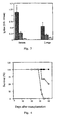
- the induction of local immune response in the lungs was demonstrated by the presence of specific anti-influenza antibodies in the lungs homogenates ( Fig. 3 ), by elevation of CD8 + lymphocytes proportion and by the viral clearance as a result of immunization with the tetra construct ( Fig. 2 ).
- the tetra flagellin construct could also protect the mice from a lethal dose challenge of the virus, which is the ultimate demonstration of the protective effect. Under these conditions, in which the challenge dose is orders of magnitude higher than that pertaining in natural infection, all the chimera were infected regardless of their immune state.
- mice The partial protection in the non-vaccinated mice is probably due to polyclonal stimulation and expansion of memory cells originating from the donor. This could be due to either previous exposure of the donor to the antigen or because it is cross-reactive to some extent with other recall antigens, a phenomena that was previously reported for other antigens (Marcus et al, 1995).
- the results with the tetra construct according to the invention demonstrate the ability of a synthetic peptide-based vaccine to confer protection against influenza viral challenge.
- the recombinant flagellin construct indeed presents the influenza B and T-cell epitopes to the human immune cells in an efficient manner and induces both humoral and cellular responses. Since the employed T cell epitopes are recognized by a variety of HLA molecules, the vaccine was effective in all the experiments in which different donors with unknown HLA typing were utilized, indicating the applicability of this approach for a human vaccine in a heterologous population.
- EXAMPLE 1 Response of the chimeric mice to whole inactivated influenza virus.
- mice were immunized i.p. with 50 ⁇ g of the virus on the day of PBMC transplantation, followed by a sublethal viral challenge with influenza A/Texas/1/77 strain 14 days after immunization.
- the vaccination of human/mouse radiation chimera with the whole killed virus vaccine, without any adjuvant, induced production of specific antibodies - the serum antibody titer was significantly higher (2.4 fold) in the immunized chimera as compared to the control group.
- this vaccination markedly reduced the subsequent virus infection.
- the lung virus titer after challenge was significantly lower (by 2.7 orders of magnitude) in the immunized chimera as compared to the control group.
- EXAMPLE 2 FACS analysis of immunized mice for evaluating the engraftment of human PBMC in human / BALB chimera
- the successful engraftment of the human cells in the human/mouse chimera was demonstrated in a preliminary experiment showing that most of the lymphocytes in the peritoneum (50-80%) and in the lungs of the mice (30-60%) were of human origin.
- human cell engraftment in the human/mouse chimera the presence of human cells in the engrafted mice was analyzed by FACS.
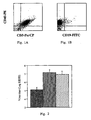
- Fig. 1 is a FACS histogram depicting the pattern of human lung lymphocytes after immunization with the tetra construct without further challenge infection.
- the cells were stained with anti-CD45 antibodies together with anti-CD3 or together with anti-CD19.
- most of the human cells are CD3 + , namely T cells (80%-90%) and only a minor population is CD19 + (3%-10%).
- Similar data were obtained for human lymphocytes in the peritoneum. It is of interest that the CD8 + /CD4 + ratio in the immunized mice ranged between 1 and 2 as compared to a ratio of 0.3-0.5 in the untreated chimera. This disproportionate expression of CD8 cells may suggest that they play a role in the observed protection.
- Influenza infection is a respiratory disease, hence, a local immune response induced by an intranasal administration of the vaccine could be more efficient than parenteral administration.
- the immunization schedule was modified in order to adapt it for intranasal immunization.
- mice (6-8 per group in 7 repeated experiments) were immunized intranasally (i.n.) 10-12 days after PBMC transplantation, as described in the Methods. Ten days later, they were challenged i.n. with 10 -4 HAU in 50 ⁇ l allantoic fluid of live A/Texas/1/77 strain of influenza virus. Five days later they were sacrificed and their lungs were removed for virus titration. As shown in Fig. 2 , which depicts the cumulative results, the vaccination with the tetra construct enabled the chimera to clear the virus from their lungs significantly more efficiently than the group vaccinated with the native flagella, or the group which was not transplanted with PMBC but were immunized with the tetra construct. Although the same percentage of human T lymphocytes was detected in both transplanted groups ( Fig. 1 ), only the mice vaccinated with the hybrid flagellin show the ability to reduce virus burden, indicating specific and efficient local response in the lungs.
- Fig. 4 describes the results of two repeated experiments and demonstrates the survival of vaccinated and non-vaccinated mice (both transplanted with human PBMC), as well as of another control group that was not transplanted but was vaccinated with the tetra construct. As can be seen, while all control mice that were immunized with the tetra construct but had not been transplanted with the human lymphocytes died within 19 days after the infection, 100% survival was observed in the mice that received the PBMC prior to immunization.
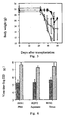
- the body weight loss pattern of the challenged mice is depicted: the transplanted group that was immunized with the tetra flagellin construct, shows only a slight reduction in their body weight following the lethal dose infection and a rapid return to normal, while the control group that was transplanted with human PMBC but immunized with the native flagellin, lost more weight (the body weight is significantly different between the experimental group and the control groups on days 22-33 after transplantation) and the surviving mice started to recover weight only on the last days of the experiment.
- the non-transplanted, vaccinated control group lost weight rapidly and did not recuperate.
- the survival of the transplanted group that was immunized with the native flagella is better than that of the non-transplanted group probably due to some memory anti-influenza response of the donor's cells.
- influenza vaccines are effective only against the strains included in the vaccine. Therefore, it was of interest to examine the ability of the flagellin hybrids that express influenza epitopes to protect mice from different influenza strains that carry various hemagglutinin and neuraminidase glycoproteins.
- the B-cell epitope that is expressed in the flagellin is conserved in all influenza H3 subtypes, while the T-cell epitopes are from regions of the hemagglutinin and nucleoprotein highly conserved in other subtypes as well.
- influenza strains that were used for infection were: A/Texas/1/77 (H3N2), A/Japanese/57 (H2N2) and A/PR/8/34 (H1N1).
- Protective immunity was observed against all three strains, as presented in Fig. 6 .
- Human Ig specific for each influenza strain was detected in the sera of all the transplanted and vaccinated mice, but not in the control group, as shown in Fig. 7 .
Landscapes
- Health & Medical Sciences (AREA)
- Life Sciences & Earth Sciences (AREA)
- Chemical & Material Sciences (AREA)
- General Health & Medical Sciences (AREA)
- Virology (AREA)
- Medicinal Chemistry (AREA)
- Pharmacology & Pharmacy (AREA)
- Immunology (AREA)
- Veterinary Medicine (AREA)
- Public Health (AREA)
- Animal Behavior & Ethology (AREA)
- Microbiology (AREA)
- Epidemiology (AREA)
- Organic Chemistry (AREA)
- Mycology (AREA)
- Engineering & Computer Science (AREA)
- Bioinformatics & Cheminformatics (AREA)
- Zoology (AREA)
- Genetics & Genomics (AREA)
- Wood Science & Technology (AREA)
- Pulmonology (AREA)
- Chemical Kinetics & Catalysis (AREA)
- Nuclear Medicine, Radiotherapy & Molecular Imaging (AREA)
- General Chemical & Material Sciences (AREA)
- Biomedical Technology (AREA)
- Biotechnology (AREA)
- General Engineering & Computer Science (AREA)
- Biochemistry (AREA)
- Molecular Biology (AREA)
- Communicable Diseases (AREA)
- Oncology (AREA)
- Gastroenterology & Hepatology (AREA)
- Proteomics, Peptides & Aminoacids (AREA)
- Medicines Containing Antibodies Or Antigens For Use As Internal Diagnostic Agents (AREA)
- Peptides Or Proteins (AREA)
Applications Claiming Priority (2)
| Application Number | Priority Date | Filing Date | Title |
|---|---|---|---|
| IL12733198A IL127331A0 (en) | 1998-11-30 | 1998-11-30 | Peptide-based vaccine for influenza |
| EP99972929A EP1135159A2 (en) | 1998-11-30 | 1999-11-28 | Peptide-based vaccine for influenza |
Related Parent Applications (1)
| Application Number | Title | Priority Date | Filing Date |
|---|---|---|---|
| EP99972929.6 Division | 1999-11-28 |
Publications (2)
| Publication Number | Publication Date |
|---|---|
| EP2204187A1 EP2204187A1 (en) | 2010-07-07 |
| EP2204187B1 true EP2204187B1 (en) | 2012-05-09 |
Family
ID=11072200
Family Applications (2)
| Application Number | Title | Priority Date | Filing Date |
|---|---|---|---|
| EP10003160A Expired - Lifetime EP2204187B1 (en) | 1998-11-30 | 1999-11-28 | Human flu vaccine containing four influenza peptides |
| EP99972929A Withdrawn EP1135159A2 (en) | 1998-11-30 | 1999-11-28 | Peptide-based vaccine for influenza |
Family Applications After (1)
| Application Number | Title | Priority Date | Filing Date |
|---|---|---|---|
| EP99972929A Withdrawn EP1135159A2 (en) | 1998-11-30 | 1999-11-28 | Peptide-based vaccine for influenza |
Country Status (15)
| Country | Link |
|---|---|
| US (3) | US6740325B1 (enExample) |
| EP (2) | EP2204187B1 (enExample) |
| JP (1) | JP2002531415A (enExample) |
| KR (1) | KR100703571B1 (enExample) |
| AT (1) | ATE556719T1 (enExample) |
| AU (1) | AU766883B2 (enExample) |
| BR (1) | BR9915811A (enExample) |
| CA (1) | CA2352454C (enExample) |
| DK (1) | DK2204187T3 (enExample) |
| ES (1) | ES2389611T3 (enExample) |
| HK (1) | HK1040620A1 (enExample) |
| IL (3) | IL127331A0 (enExample) |
| NZ (1) | NZ511918A (enExample) |
| PT (1) | PT2204187E (enExample) |
| WO (1) | WO2000032228A2 (enExample) |
Families Citing this family (56)
| Publication number | Priority date | Publication date | Assignee | Title |
|---|---|---|---|---|
| IL127331A0 (en) * | 1998-11-30 | 1999-09-22 | Yeda Res & Dev | Peptide-based vaccine for influenza |
| WO2002026252A1 (en) * | 2000-08-10 | 2002-04-04 | Tsinghua University | A vaccine for influenza virus and its preparation |
| FI20031536A0 (fi) * | 2003-10-20 | 2003-10-20 | Biotie Therapies Oyj | Korkean affiniteetin ligandit influenssavirukselle ja menetelmät niiden valmistamiseen |
| PL1692265T3 (pl) | 2003-11-04 | 2011-12-30 | The Administrators Of The Tulane Educational Fund | Sposób zapobiegania fuzji wirus:komórka przez hamowanie działania regionu inicjowania fuzji w wirusach RNA zawierających fuzogenne błonowe białka otoczki klasy I |
| GB0716992D0 (en) * | 2007-08-31 | 2007-10-10 | Immune Targeting Systems Its L | Influenza antigen delivery vectors and constructs |
| RU2007129840A (ru) * | 2005-01-05 | 2009-02-20 | Филадельфия Хелт Энд Эдьюкейшн Корпорейшн Д/Б/А Дрексел Юниверсити Колледж Оф Медисин (Us) | Средства доставки, биологически активные вещества и вирусные вакцины |
| JP2008527009A (ja) | 2005-01-19 | 2008-07-24 | バクシネート コーポレーション | 病原体関連分子パターンおよび抗原を含む組成物ならびに免疫応答を刺激するためのそれらの使用 |
| FI20060200A0 (fi) * | 2005-04-20 | 2006-02-27 | Glykos Finland Oy | Menetelmä ihmisen influenssaviruksen sialihahappositoumisspesifisyyden analysoimiseksi |
| MX2007015105A (es) * | 2005-06-01 | 2008-03-18 | Variation Biotechnologies Inc | Formulacion de vacuna de influenza a base de peptido. |
| US7871626B2 (en) * | 2005-08-04 | 2011-01-18 | St. Jude Children's Research Hospital | Modified influenza virus for monitoring and improving vaccine efficiency |
| US7468187B2 (en) | 2005-10-18 | 2008-12-23 | Iowa State University Research Foundation, Inc. | Canine influenza virus and related compositions and methods of use |
| WO2007051036A2 (en) * | 2005-10-26 | 2007-05-03 | Protelix, Inc. | Influenza combinatorial antigen vaccine |
| JP2009514536A (ja) * | 2005-11-07 | 2009-04-09 | シドニー キンメル キャンサー センター | Cd40リガンド融合蛋白質ワクチン |
| WO2007066334A1 (en) * | 2005-12-06 | 2007-06-14 | Yeda Research And Development Co. Ltd. At The Weizmann Institute Of Science | Improved influenza vaccine |
| HUE049580T2 (hu) * | 2006-01-27 | 2020-09-28 | Seqirus Uk Ltd | Hemagglutinint és mátrixfehérjéket tartalmazó, influenza elleni oltóanyagok |
| GB0613977D0 (en) | 2006-02-07 | 2006-08-23 | Peptcell Ltd | Peptide sequences and compositions |
| EP2476432B1 (en) * | 2006-03-07 | 2015-08-19 | Vaxinnate Corporation | Compositions that include hemagglutinin, methods of making and methods of use thereof |
| US20080208486A1 (en) * | 2006-03-23 | 2008-08-28 | Jari Natunen | Integrated System, Device and Use Thereof |
| US8222204B2 (en) | 2006-05-03 | 2012-07-17 | The Administrators of the Tulane Educational Fund and Autoimmune Technologies, LLC | Influenza inhibiting compositions and methods |
| WO2008002663A2 (en) * | 2006-06-28 | 2008-01-03 | The Board Of Trustees Of The Leland Stanford Junior University | Immunogenic protein constructs |
| FI20060946A0 (fi) * | 2006-10-26 | 2006-10-26 | Glykos Finland Oy | Influenssaviruksen nukleiinihappoja ja peptidejä |
| US20090060889A1 (en) * | 2007-03-12 | 2009-03-05 | Von Hofe Eric | Ii-RNAi involved Ii suppression in cancer immunotherapy |
| ES2539818T3 (es) | 2007-08-02 | 2015-07-06 | Biondvax Pharmaceuticals Ltd. | Vacunas contra la gripe multiepitópicas multiméricas |
| SG190562A1 (en) | 2008-04-18 | 2013-06-28 | Vaxinnate Corp | Deletion mutants of flagellin and methods of use |
| EP2278997B1 (en) | 2008-04-21 | 2016-08-10 | Nanobio Corporation | Nanoemulsion influenza vaccine |
| WO2009130618A2 (en) * | 2008-04-25 | 2009-10-29 | Institute For Systems Biology | Flagellin polypeptide vaccines |
| US8486619B2 (en) | 2008-05-02 | 2013-07-16 | University Of Rochester | Arrayed imaging reflectometry (air) sensor chip comprising influenza hemagglutinin (HA) polypeptides suitable for the detection of antiviral immune responses |
| WO2010144797A2 (en) | 2009-06-12 | 2010-12-16 | Vaccine Technologies, Incorporated | Influenza vaccines with enhanced immunogenicity and uses thereof |
| WO2011005772A1 (en) | 2009-07-06 | 2011-01-13 | Variation Biotechnologies, Inc. | Methods for preparing vesicles and formulations produced therefrom |
| US9849173B2 (en) | 2009-07-06 | 2017-12-26 | Variation Biotechnologies Inc. | Methods for preparing vesicles and formulations produced therefrom |
| JP6119030B2 (ja) | 2010-07-06 | 2017-04-26 | ヴァリエーション バイオテクノロジーズ インコーポレイテッド | インフルエンザを治療するための組成物及び方法 |
| MX359103B (es) | 2011-01-13 | 2018-09-14 | Variation Biotechnologies Inc | Composiciones y sus usos en el tratamiento de infecciones virales. |
| US20130323280A1 (en) | 2011-01-13 | 2013-12-05 | Variation Biotechnologies, Inc. | Methods for preparing vesicles and formulations produced therefrom |
| WO2012114323A1 (en) | 2011-02-22 | 2012-08-30 | Biondvax Pharmaceuticals Ltd. | Multimeric multiepitope polypeptides in improved seasonal and pandemic influenza vaccines |
| JP2014520805A (ja) | 2011-07-06 | 2014-08-25 | ナノバイオ コーポレーション | ヒト呼吸器合胞体ウイルスワクチン |
| EP2747779A4 (en) | 2011-08-22 | 2015-04-08 | Nanobio Corp | HERPES SIMPLEX VIRUS VACCINE NANOEMULSION |
| CA2890084C (en) | 2011-11-18 | 2021-05-04 | Maura Ellen Campbell | Synthetic derivatives of mpl and uses thereof |
| CA2894442C (en) | 2012-01-12 | 2020-01-21 | Variation Biotechnologies Inc. | Compositions and methods for treating viral infections |
| US20150079077A1 (en) | 2012-01-27 | 2015-03-19 | Variation Biotechnologies, Inc. | Methods and compositions for therapeutic agents |
| US8932598B2 (en) | 2012-08-28 | 2015-01-13 | Vaxinnate Corporation | Fusion proteins and methods of use |
| RU2685933C2 (ru) | 2013-02-05 | 2019-04-23 | Нитто Денко Корпорейшн | Композиция противораковой вакцины, содержащая пептид wt1, для трансдермального введения |
| CN103961698A (zh) | 2013-02-05 | 2014-08-06 | 日东电工株式会社 | 经皮或粘膜给予用疫苗组合物 |
| US10449144B2 (en) | 2013-02-05 | 2019-10-22 | Nitto Denko Corporation | WT1 peptide cancer vaccine composition for transdermal administration |
| EP2762155B1 (en) | 2013-02-05 | 2020-03-11 | Nitto Denko Corporation | Vaccine Composition |
| KR20140100417A (ko) | 2013-02-05 | 2014-08-14 | 닛토덴코 가부시키가이샤 | 경피 투여용 백신 조성물 |
| IN2014CH00393A (enExample) | 2013-02-05 | 2015-04-03 | Nitto Denko Corp | |
| KR20140100415A (ko) | 2013-02-05 | 2014-08-14 | 닛토덴코 가부시키가이샤 | 경피 투여용 백신 조성물 |
| KR20140099828A (ko) | 2013-02-05 | 2014-08-13 | 닛토덴코 가부시키가이샤 | 점막 투여용 백신 조성물 |
| CA2840978A1 (en) | 2013-02-05 | 2014-08-05 | Nitto Denko Corporation | Vaccine composition for mucosal administration |
| JP6497691B2 (ja) | 2013-02-05 | 2019-04-10 | 日東電工株式会社 | 粘膜投与用wt1ペプチド癌ワクチン組成物 |
| RU2531235C2 (ru) * | 2013-02-15 | 2014-10-20 | Общество с ограниченной ответственностью "Универсальные БиоСистемы" (ООО "УБС") | Поливалентная вакцина против гриппа на основе гибридного белка |
| CN103901202B (zh) * | 2014-04-04 | 2015-08-12 | 中国人民解放军成都军区疾病预防控制中心 | 基于共有表位甲型流感病毒抗体通用型竞争性elisa检测方法 |
| US10471141B2 (en) | 2014-09-03 | 2019-11-12 | Nitto Denko Corporation | Bisphosphonate-containing vaccine pharmaceutical composition for humoral immunity |
| CN106687138B (zh) | 2014-09-03 | 2021-10-15 | 日东电工株式会社 | 包含双膦酸盐剂的细胞性免疫用疫苗药物组合物 |
| EP3332809A4 (en) | 2015-08-06 | 2019-04-10 | Nitto Denko Corporation | COMPOSITION FOR IMMUNITY INDUCTION PROMOTION AND PHARMACEUTICAL VACCINE COMPOSITION |
| CN111148528A (zh) | 2016-12-28 | 2020-05-12 | 英福瓦克思公司 | 流感疫苗 |
Family Cites Families (4)
| Publication number | Priority date | Publication date | Assignee | Title |
|---|---|---|---|---|
| IL61904A (en) | 1981-01-13 | 1985-07-31 | Yeda Res & Dev | Synthetic vaccine against influenza virus infections comprising a synthetic peptide and process for producing same |
| IL101639A0 (en) | 1992-04-17 | 1992-12-30 | Yeda Res & Dev | Recombinant influenza vaccines |
| WO1997044667A2 (fr) * | 1996-05-21 | 1997-11-27 | Institut Pasteur | Methodes d'utilisation de complexes peptide/complexe majeur d'histocompatibilite pour obtenir ou purifier des cellules t antigene-specifiques et pour stimuler des cellules t |
| IL127331A0 (en) * | 1998-11-30 | 1999-09-22 | Yeda Res & Dev | Peptide-based vaccine for influenza |
-
1998
- 1998-11-30 IL IL12733198A patent/IL127331A0/xx unknown
-
1999
- 1999-11-28 US US09/856,920 patent/US6740325B1/en not_active Expired - Lifetime
- 1999-11-28 JP JP2000584919A patent/JP2002531415A/ja active Pending
- 1999-11-28 AT AT10003160T patent/ATE556719T1/de active
- 1999-11-28 CA CA2352454A patent/CA2352454C/en not_active Expired - Lifetime
- 1999-11-28 BR BR9915811-6A patent/BR9915811A/pt not_active IP Right Cessation
- 1999-11-28 EP EP10003160A patent/EP2204187B1/en not_active Expired - Lifetime
- 1999-11-28 PT PT10003160T patent/PT2204187E/pt unknown
- 1999-11-28 IL IL14336799A patent/IL143367A0/xx active IP Right Grant
- 1999-11-28 AU AU14066/00A patent/AU766883B2/en not_active Expired
- 1999-11-28 NZ NZ511918A patent/NZ511918A/en not_active IP Right Cessation
- 1999-11-28 WO PCT/IL1999/000640 patent/WO2000032228A2/en not_active Ceased
- 1999-11-28 KR KR1020017006639A patent/KR100703571B1/ko not_active Expired - Lifetime
- 1999-11-28 EP EP99972929A patent/EP1135159A2/en not_active Withdrawn
- 1999-11-28 ES ES10003160T patent/ES2389611T3/es not_active Expired - Lifetime
- 1999-11-28 DK DK10003160.8T patent/DK2204187T3/da active
- 1999-11-28 HK HK02102105.6A patent/HK1040620A1/zh unknown
-
2001
- 2001-05-24 IL IL143367A patent/IL143367A/en not_active IP Right Cessation
-
2004
- 2004-05-17 US US10/846,548 patent/US7192595B2/en not_active Expired - Lifetime
-
2007
- 2007-02-07 US US11/672,429 patent/US7514086B2/en not_active Expired - Fee Related
Also Published As
| Publication number | Publication date |
|---|---|
| US6740325B1 (en) | 2004-05-25 |
| WO2000032228A3 (en) | 2000-10-05 |
| JP2002531415A (ja) | 2002-09-24 |
| EP1135159A2 (en) | 2001-09-26 |
| BR9915811A (pt) | 2001-08-21 |
| PT2204187E (pt) | 2012-08-10 |
| AU1406600A (en) | 2000-06-19 |
| KR100703571B1 (ko) | 2007-04-05 |
| IL143367A0 (en) | 2002-04-21 |
| CA2352454A1 (en) | 2000-06-08 |
| AU766883B2 (en) | 2003-10-23 |
| US20050002954A1 (en) | 2005-01-06 |
| WO2000032228A2 (en) | 2000-06-08 |
| US20070122424A1 (en) | 2007-05-31 |
| HK1145448A1 (en) | 2011-04-21 |
| US7514086B2 (en) | 2009-04-07 |
| EP2204187A1 (en) | 2010-07-07 |
| NZ511918A (en) | 2003-08-29 |
| ES2389611T3 (es) | 2012-10-29 |
| DK2204187T3 (da) | 2012-08-20 |
| IL127331A0 (en) | 1999-09-22 |
| IL143367A (en) | 2006-09-05 |
| CA2352454C (en) | 2013-02-05 |
| ATE556719T1 (de) | 2012-05-15 |
| HK1040620A1 (zh) | 2002-06-21 |
| KR20010089512A (ko) | 2001-10-06 |
| US7192595B2 (en) | 2007-03-20 |
Similar Documents
| Publication | Publication Date | Title |
|---|---|---|
| EP2204187B1 (en) | Human flu vaccine containing four influenza peptides | |
| Ben-Yedidia et al. | Intranasal administration of peptide vaccine protects human/mouse radiation chimera from influenza infection | |
| Eliasson et al. | CTA1-M2e-DD: a novel mucosal adjuvant targeted influenza vaccine | |
| Ben-Yedidia et al. | Towards an epitope-based human vaccine for influenza | |
| Jeon et al. | Intranasal immunization with synthetic recombinant vaccine containing multiple epitopes of influenza virus | |
| US10201601B2 (en) | Compositions and methods for increasing immunogenicity of glycoprotein vaccines | |
| Hurwitz et al. | Murine TH response to influenza virus: recognition of hemagglutinin, neuraminidase, matrix, and nucleoproteins. | |
| US5674502A (en) | Cross-reactive influenza a immunization | |
| Sawai et al. | Induction of cytotoxic T‐lymphocyte and antibody responses against highly pathogenic avian influenza virus infection in mice by inoculation of apathogenic H5N1 influenza virus particles inactivated with formalin | |
| US12397050B2 (en) | Universal mammalian influenza vaccine | |
| Zhang et al. | Multi-COBRA hemagglutinin formulated with cGAMP microparticles elicits protective immune responses against influenza viruses | |
| Park et al. | Preparation and immunogenicity of influenza virus-like particles using nitrocellulose membrane filtration | |
| HK1145448B (en) | Human flu vaccine containing four influenza peptides | |
| MXPA01005398A (en) | Peptide-based vaccine for influenza | |
| Burakoff et al. | Cell-mediated immunity to viral glycoproteins | |
| Arnon et al. | Synthetic recombinant vaccines against viral agents | |
| KR20190137385A (ko) | 저온 적응된 약독화 바이러스를 이용한 유니버설 독감 백신 | |
| WO1994022917A1 (en) | Cross-reactive influenza a immunization | |
| Ben-Yedidia et al. | Synthetic peptide-based vaccines against influenza | |
| Shortridge et al. | Avirulent Avian Influenza Virus as | |
| Krauss et al. | DNA Vaccine Encoding Hemagglutinin |
Legal Events
| Date | Code | Title | Description |
|---|---|---|---|
| PUAI | Public reference made under article 153(3) epc to a published international application that has entered the european phase |
Free format text: ORIGINAL CODE: 0009012 |
|
| AC | Divisional application: reference to earlier application |
Ref document number: 1135159 Country of ref document: EP Kind code of ref document: P |
|
| AK | Designated contracting states |
Kind code of ref document: A1 Designated state(s): AT BE CH CY DE DK ES FI FR GB GR IE IT LI LU MC NL PT SE |
|
| AX | Request for extension of the european patent |
Extension state: AL LT LV MK RO SI |
|
| 17P | Request for examination filed |
Effective date: 20101229 |
|
| REG | Reference to a national code |
Ref country code: HK Ref legal event code: DE Ref document number: 1145448 Country of ref document: HK |
|
| 17Q | First examination report despatched |
Effective date: 20110404 |
|
| GRAP | Despatch of communication of intention to grant a patent |
Free format text: ORIGINAL CODE: EPIDOSNIGR1 |
|
| RIC1 | Information provided on ipc code assigned before grant |
Ipc: C07K 14/11 20060101ALN20111101BHEP Ipc: A61K 39/145 20060101AFI20111101BHEP |
|
| RIN1 | Information on inventor provided before grant (corrected) |
Inventor name: BEN-YEDIDIA, TAMAR Inventor name: LEVI, RAPHAEL Inventor name: ARNON, RUTH |
|
| GRAS | Grant fee paid |
Free format text: ORIGINAL CODE: EPIDOSNIGR3 |
|
| GRAA | (expected) grant |
Free format text: ORIGINAL CODE: 0009210 |
|
| AC | Divisional application: reference to earlier application |
Ref document number: 1135159 Country of ref document: EP Kind code of ref document: P |
|
| AK | Designated contracting states |
Kind code of ref document: B1 Designated state(s): AT BE CH CY DE DK ES FI FR GB GR IE IT LI LU MC NL PT SE |
|
| AX | Request for extension of the european patent |
Extension state: AL LT LV MK RO SI |
|
| REG | Reference to a national code |
Ref country code: GB Ref legal event code: FG4D |
|
| REG | Reference to a national code |
Ref country code: AT Ref legal event code: REF Ref document number: 556719 Country of ref document: AT Kind code of ref document: T Effective date: 20120515 Ref country code: CH Ref legal event code: EP |
|
| REG | Reference to a national code |
Ref country code: IE Ref legal event code: FG4D |
|
| REG | Reference to a national code |
Ref country code: DE Ref legal event code: R096 Ref document number: 69944207 Country of ref document: DE Effective date: 20120712 |
|
| REG | Reference to a national code |
Ref country code: NL Ref legal event code: T3 |
|
| REG | Reference to a national code |
Ref country code: PT Ref legal event code: SC4A Free format text: AVAILABILITY OF NATIONAL TRANSLATION Effective date: 20120803 |
|
| REG | Reference to a national code |
Ref country code: SE Ref legal event code: TRGR |
|
| REG | Reference to a national code |
Ref country code: DK Ref legal event code: T3 |
|
| REG | Reference to a national code |
Ref country code: LT Ref legal event code: MG9D Effective date: 20120509 |
|
| REG | Reference to a national code |
Ref country code: GR Ref legal event code: EP Ref document number: 20120401762 Country of ref document: GR Effective date: 20120920 Ref country code: ES Ref legal event code: FG2A Ref document number: 2389611 Country of ref document: ES Kind code of ref document: T3 Effective date: 20121029 |
|
| PG25 | Lapsed in a contracting state [announced via postgrant information from national office to epo] |
Ref country code: CY Free format text: LAPSE BECAUSE OF FAILURE TO SUBMIT A TRANSLATION OF THE DESCRIPTION OR TO PAY THE FEE WITHIN THE PRESCRIBED TIME-LIMIT Effective date: 20120509 Ref country code: FI Free format text: LAPSE BECAUSE OF FAILURE TO SUBMIT A TRANSLATION OF THE DESCRIPTION OR TO PAY THE FEE WITHIN THE PRESCRIBED TIME-LIMIT Effective date: 20120509 |
|
| REG | Reference to a national code |
Ref country code: HK Ref legal event code: GR Ref document number: 1145448 Country of ref document: HK |
|
| PGFP | Annual fee paid to national office [announced via postgrant information from national office to epo] |
Ref country code: DK Payment date: 20121126 Year of fee payment: 14 Ref country code: LU Payment date: 20121126 Year of fee payment: 14 |
|
| PGFP | Annual fee paid to national office [announced via postgrant information from national office to epo] |
Ref country code: IE Payment date: 20121120 Year of fee payment: 14 |
|
| PGFP | Annual fee paid to national office [announced via postgrant information from national office to epo] |
Ref country code: PT Payment date: 20121116 Year of fee payment: 14 Ref country code: SE Payment date: 20121122 Year of fee payment: 14 Ref country code: GR Payment date: 20121121 Year of fee payment: 14 |
|
| PLBE | No opposition filed within time limit |
Free format text: ORIGINAL CODE: 0009261 |
|
| STAA | Information on the status of an ep patent application or granted ep patent |
Free format text: STATUS: NO OPPOSITION FILED WITHIN TIME LIMIT |
|
| PGFP | Annual fee paid to national office [announced via postgrant information from national office to epo] |
Ref country code: AT Payment date: 20121122 Year of fee payment: 14 |
|
| 26N | No opposition filed |
Effective date: 20130212 |
|
| REG | Reference to a national code |
Ref country code: DE Ref legal event code: R097 Ref document number: 69944207 Country of ref document: DE Effective date: 20130212 |
|
| PG25 | Lapsed in a contracting state [announced via postgrant information from national office to epo] |
Ref country code: MC Free format text: LAPSE BECAUSE OF NON-PAYMENT OF DUE FEES Effective date: 20121130 |
|
| REG | Reference to a national code |
Ref country code: PT Ref legal event code: MM4A Free format text: LAPSE DUE TO NON-PAYMENT OF FEES Effective date: 20140528 |
|
| REG | Reference to a national code |
Ref country code: DK Ref legal event code: EBP Effective date: 20131130 |
|
| REG | Reference to a national code |
Ref country code: SE Ref legal event code: EUG |
|
| REG | Reference to a national code |
Ref country code: AT Ref legal event code: MM01 Ref document number: 556719 Country of ref document: AT Kind code of ref document: T Effective date: 20131128 |
|
| REG | Reference to a national code |
Ref country code: GR Ref legal event code: ML Ref document number: 20120401762 Country of ref document: GR Effective date: 20140603 |
|
| REG | Reference to a national code |
Ref country code: IE Ref legal event code: MM4A |
|
| PG25 | Lapsed in a contracting state [announced via postgrant information from national office to epo] |
Ref country code: PT Free format text: LAPSE BECAUSE OF NON-PAYMENT OF DUE FEES Effective date: 20140528 Ref country code: GR Free format text: LAPSE BECAUSE OF NON-PAYMENT OF DUE FEES Effective date: 20140603 Ref country code: AT Free format text: LAPSE BECAUSE OF NON-PAYMENT OF DUE FEES Effective date: 20131128 Ref country code: SE Free format text: LAPSE BECAUSE OF NON-PAYMENT OF DUE FEES Effective date: 20131129 |
|
| PG25 | Lapsed in a contracting state [announced via postgrant information from national office to epo] |
Ref country code: DK Free format text: LAPSE BECAUSE OF NON-PAYMENT OF DUE FEES Effective date: 20131130 Ref country code: IE Free format text: LAPSE BECAUSE OF NON-PAYMENT OF DUE FEES Effective date: 20131128 |
|
| PG25 | Lapsed in a contracting state [announced via postgrant information from national office to epo] |
Ref country code: LU Free format text: LAPSE BECAUSE OF NON-PAYMENT OF DUE FEES Effective date: 20131128 |
|
| REG | Reference to a national code |
Ref country code: FR Ref legal event code: PLFP Year of fee payment: 17 |
|
| REG | Reference to a national code |
Ref country code: FR Ref legal event code: PLFP Year of fee payment: 18 |
|
| REG | Reference to a national code |
Ref country code: FR Ref legal event code: PLFP Year of fee payment: 19 |
|
| PGFP | Annual fee paid to national office [announced via postgrant information from national office to epo] |
Ref country code: NL Payment date: 20181122 Year of fee payment: 20 |
|
| PGFP | Annual fee paid to national office [announced via postgrant information from national office to epo] |
Ref country code: DE Payment date: 20181126 Year of fee payment: 20 |
|
| PGFP | Annual fee paid to national office [announced via postgrant information from national office to epo] |
Ref country code: CH Payment date: 20181126 Year of fee payment: 20 Ref country code: FR Payment date: 20181127 Year of fee payment: 20 Ref country code: GB Payment date: 20181126 Year of fee payment: 20 Ref country code: IT Payment date: 20181122 Year of fee payment: 20 Ref country code: BE Payment date: 20181122 Year of fee payment: 20 Ref country code: ES Payment date: 20181218 Year of fee payment: 20 |
|
| REG | Reference to a national code |
Ref country code: NL Ref legal event code: MK Effective date: 20191127 |
|
| REG | Reference to a national code |
Ref country code: DE Ref legal event code: R071 Ref document number: 69944207 Country of ref document: DE |
|
| REG | Reference to a national code |
Ref country code: CH Ref legal event code: PL |
|
| REG | Reference to a national code |
Ref country code: BE Ref legal event code: MK Effective date: 20191128 |
|
| REG | Reference to a national code |
Ref country code: GB Ref legal event code: PE20 Expiry date: 20191127 |
|
| PG25 | Lapsed in a contracting state [announced via postgrant information from national office to epo] |
Ref country code: GB Free format text: LAPSE BECAUSE OF EXPIRATION OF PROTECTION Effective date: 20191127 |
|
| REG | Reference to a national code |
Ref country code: ES Ref legal event code: FD2A Effective date: 20220128 |
|
| PG25 | Lapsed in a contracting state [announced via postgrant information from national office to epo] |
Ref country code: ES Free format text: LAPSE BECAUSE OF EXPIRATION OF PROTECTION Effective date: 20191129 |