US6740325B1 - Peptide-based vaccine for influenza - Google Patents
Peptide-based vaccine for influenza Download PDFInfo
- Publication number
- US6740325B1 US6740325B1 US09/856,920 US85692001A US6740325B1 US 6740325 B1 US6740325 B1 US 6740325B1 US 85692001 A US85692001 A US 85692001A US 6740325 B1 US6740325 B1 US 6740325B1
- Authority
- US
- United States
- Prior art keywords
- human
- epitopes
- influenza
- epitope
- vaccine
- Prior art date
- Legal status (The legal status is an assumption and is not a legal conclusion. Google has not performed a legal analysis and makes no representation as to the accuracy of the status listed.)
- Expired - Lifetime
Links
- 206010022000 influenza Diseases 0.000 title description 47
- 229940023041 peptide vaccine Drugs 0.000 title description 8
- 101710154606 Hemagglutinin Proteins 0.000 claims abstract description 45
- 101710093908 Outer capsid protein VP4 Proteins 0.000 claims abstract description 45
- 101710135467 Outer capsid protein sigma-1 Proteins 0.000 claims abstract description 45
- 101710176177 Protein A56 Proteins 0.000 claims abstract description 45
- 239000000185 hemagglutinin Substances 0.000 claims abstract description 44
- 108010061100 Nucleoproteins Proteins 0.000 claims abstract description 41
- 102000011931 Nucleoproteins Human genes 0.000 claims abstract description 41
- 108010040721 Flagellin Proteins 0.000 claims abstract description 32
- 241000712461 unidentified influenza virus Species 0.000 claims abstract description 29
- 210000003495 flagella Anatomy 0.000 claims abstract description 21
- 210000003719 b-lymphocyte Anatomy 0.000 claims abstract description 17
- 210000004698 lymphocyte Anatomy 0.000 claims abstract description 16
- 239000000203 mixture Substances 0.000 claims abstract description 14
- 210000005260 human cell Anatomy 0.000 claims abstract description 13
- 229960003971 influenza vaccine Drugs 0.000 claims abstract description 13
- 108090000765 processed proteins & peptides Proteins 0.000 claims abstract description 10
- 241000607142 Salmonella Species 0.000 claims abstract description 8
- 230000001472 cytotoxic effect Effects 0.000 claims abstract description 4
- 231100000433 cytotoxic Toxicity 0.000 claims abstract description 3
- 229960005486 vaccine Drugs 0.000 claims description 24
- 239000002671 adjuvant Substances 0.000 claims description 6
- 210000000987 immune system Anatomy 0.000 claims description 5
- 230000000638 stimulation Effects 0.000 claims description 2
- FWMNVWWHGCHHJJ-SKKKGAJSSA-N 4-amino-1-[(2r)-6-amino-2-[[(2r)-2-[[(2r)-2-[[(2r)-2-amino-3-phenylpropanoyl]amino]-3-phenylpropanoyl]amino]-4-methylpentanoyl]amino]hexanoyl]piperidine-4-carboxylic acid Chemical compound C([C@H](C(=O)N[C@H](CC(C)C)C(=O)N[C@H](CCCCN)C(=O)N1CCC(N)(CC1)C(O)=O)NC(=O)[C@H](N)CC=1C=CC=CC=1)C1=CC=CC=C1 FWMNVWWHGCHHJJ-SKKKGAJSSA-N 0.000 claims 1
- 108060003393 Granulin Proteins 0.000 abstract description 3
- 241000699670 Mus sp. Species 0.000 description 57
- 241000700605 Viruses Species 0.000 description 30
- 210000003819 peripheral blood mononuclear cell Anatomy 0.000 description 27
- 241000699666 Mus <mouse, genus> Species 0.000 description 23
- 210000001151 cytotoxic T lymphocyte Anatomy 0.000 description 21
- 230000003053 immunization Effects 0.000 description 21
- 238000002649 immunization Methods 0.000 description 21
- 210000004072 lung Anatomy 0.000 description 21
- 208000015181 infectious disease Diseases 0.000 description 20
- 238000002474 experimental method Methods 0.000 description 18
- 210000004027 cell Anatomy 0.000 description 17
- 230000005855 radiation Effects 0.000 description 17
- 210000001744 T-lymphocyte Anatomy 0.000 description 13
- LOKCTEFSRHRXRJ-UHFFFAOYSA-I dipotassium trisodium dihydrogen phosphate hydrogen phosphate dichloride Chemical compound P(=O)(O)(O)[O-].[K+].P(=O)(O)([O-])[O-].[Na+].[Na+].[Cl-].[K+].[Cl-].[Na+] LOKCTEFSRHRXRJ-UHFFFAOYSA-I 0.000 description 10
- 239000002953 phosphate buffered saline Substances 0.000 description 10
- 230000004044 response Effects 0.000 description 10
- 230000004083 survival effect Effects 0.000 description 10
- 230000003612 virological effect Effects 0.000 description 10
- 239000000427 antigen Substances 0.000 description 9
- 108091007433 antigens Proteins 0.000 description 9
- 102000036639 antigens Human genes 0.000 description 9
- 238000002054 transplantation Methods 0.000 description 9
- 238000002255 vaccination Methods 0.000 description 9
- 238000004519 manufacturing process Methods 0.000 description 8
- 241001465754 Metazoa Species 0.000 description 7
- 238000007912 intraperitoneal administration Methods 0.000 description 6
- 231100000518 lethal Toxicity 0.000 description 6
- 230000001665 lethal effect Effects 0.000 description 6
- 238000002965 ELISA Methods 0.000 description 5
- 238000012413 Fluorescence activated cell sorting analysis Methods 0.000 description 5
- 108091034117 Oligonucleotide Proteins 0.000 description 5
- 230000008901 benefit Effects 0.000 description 5
- 230000028993 immune response Effects 0.000 description 5
- 231100000636 lethal dose Toxicity 0.000 description 5
- 238000000034 method Methods 0.000 description 5
- 239000013612 plasmid Substances 0.000 description 5
- 230000001681 protective effect Effects 0.000 description 5
- 108090000623 proteins and genes Proteins 0.000 description 5
- 102000004169 proteins and genes Human genes 0.000 description 5
- 210000002966 serum Anatomy 0.000 description 5
- 108091003079 Bovine Serum Albumin Proteins 0.000 description 4
- HVLSXIKZNLPZJJ-TXZCQADKSA-N HA peptide Chemical compound C([C@@H](C(=O)N[C@@H](CC(O)=O)C(=O)N[C@@H](C(C)C)C(=O)N1[C@@H](CCC1)C(=O)N[C@@H](CC(O)=O)C(=O)N[C@@H](CC=1C=CC(O)=CC=1)C(=O)N[C@@H](C)C(O)=O)NC(=O)[C@H]1N(CCC1)C(=O)[C@@H](N)CC=1C=CC(O)=CC=1)C1=CC=C(O)C=C1 HVLSXIKZNLPZJJ-TXZCQADKSA-N 0.000 description 4
- 241000282412 Homo Species 0.000 description 4
- 108010006232 Neuraminidase Proteins 0.000 description 4
- 102000005348 Neuraminidase Human genes 0.000 description 4
- 238000011579 SCID mouse model Methods 0.000 description 4
- JLCPHMBAVCMARE-UHFFFAOYSA-N [3-[[3-[[3-[[3-[[3-[[3-[[3-[[3-[[3-[[3-[[3-[[5-(2-amino-6-oxo-1H-purin-9-yl)-3-[[3-[[3-[[3-[[3-[[3-[[5-(2-amino-6-oxo-1H-purin-9-yl)-3-[[5-(2-amino-6-oxo-1H-purin-9-yl)-3-hydroxyoxolan-2-yl]methoxy-hydroxyphosphoryl]oxyoxolan-2-yl]methoxy-hydroxyphosphoryl]oxy-5-(5-methyl-2,4-dioxopyrimidin-1-yl)oxolan-2-yl]methoxy-hydroxyphosphoryl]oxy-5-(6-aminopurin-9-yl)oxolan-2-yl]methoxy-hydroxyphosphoryl]oxy-5-(6-aminopurin-9-yl)oxolan-2-yl]methoxy-hydroxyphosphoryl]oxy-5-(6-aminopurin-9-yl)oxolan-2-yl]methoxy-hydroxyphosphoryl]oxy-5-(6-aminopurin-9-yl)oxolan-2-yl]methoxy-hydroxyphosphoryl]oxyoxolan-2-yl]methoxy-hydroxyphosphoryl]oxy-5-(5-methyl-2,4-dioxopyrimidin-1-yl)oxolan-2-yl]methoxy-hydroxyphosphoryl]oxy-5-(4-amino-2-oxopyrimidin-1-yl)oxolan-2-yl]methoxy-hydroxyphosphoryl]oxy-5-(5-methyl-2,4-dioxopyrimidin-1-yl)oxolan-2-yl]methoxy-hydroxyphosphoryl]oxy-5-(5-methyl-2,4-dioxopyrimidin-1-yl)oxolan-2-yl]methoxy-hydroxyphosphoryl]oxy-5-(6-aminopurin-9-yl)oxolan-2-yl]methoxy-hydroxyphosphoryl]oxy-5-(6-aminopurin-9-yl)oxolan-2-yl]methoxy-hydroxyphosphoryl]oxy-5-(4-amino-2-oxopyrimidin-1-yl)oxolan-2-yl]methoxy-hydroxyphosphoryl]oxy-5-(4-amino-2-oxopyrimidin-1-yl)oxolan-2-yl]methoxy-hydroxyphosphoryl]oxy-5-(4-amino-2-oxopyrimidin-1-yl)oxolan-2-yl]methoxy-hydroxyphosphoryl]oxy-5-(6-aminopurin-9-yl)oxolan-2-yl]methoxy-hydroxyphosphoryl]oxy-5-(4-amino-2-oxopyrimidin-1-yl)oxolan-2-yl]methyl [5-(6-aminopurin-9-yl)-2-(hydroxymethyl)oxolan-3-yl] hydrogen phosphate Polymers Cc1cn(C2CC(OP(O)(=O)OCC3OC(CC3OP(O)(=O)OCC3OC(CC3O)n3cnc4c3nc(N)[nH]c4=O)n3cnc4c3nc(N)[nH]c4=O)C(COP(O)(=O)OC3CC(OC3COP(O)(=O)OC3CC(OC3COP(O)(=O)OC3CC(OC3COP(O)(=O)OC3CC(OC3COP(O)(=O)OC3CC(OC3COP(O)(=O)OC3CC(OC3COP(O)(=O)OC3CC(OC3COP(O)(=O)OC3CC(OC3COP(O)(=O)OC3CC(OC3COP(O)(=O)OC3CC(OC3COP(O)(=O)OC3CC(OC3COP(O)(=O)OC3CC(OC3COP(O)(=O)OC3CC(OC3COP(O)(=O)OC3CC(OC3COP(O)(=O)OC3CC(OC3COP(O)(=O)OC3CC(OC3COP(O)(=O)OC3CC(OC3CO)n3cnc4c(N)ncnc34)n3ccc(N)nc3=O)n3cnc4c(N)ncnc34)n3ccc(N)nc3=O)n3ccc(N)nc3=O)n3ccc(N)nc3=O)n3cnc4c(N)ncnc34)n3cnc4c(N)ncnc34)n3cc(C)c(=O)[nH]c3=O)n3cc(C)c(=O)[nH]c3=O)n3ccc(N)nc3=O)n3cc(C)c(=O)[nH]c3=O)n3cnc4c3nc(N)[nH]c4=O)n3cnc4c(N)ncnc34)n3cnc4c(N)ncnc34)n3cnc4c(N)ncnc34)n3cnc4c(N)ncnc34)O2)c(=O)[nH]c1=O JLCPHMBAVCMARE-UHFFFAOYSA-N 0.000 description 4
- 230000037396 body weight Effects 0.000 description 4
- 229940098773 bovine serum albumin Drugs 0.000 description 4
- 238000002360 preparation method Methods 0.000 description 4
- 238000011725 BALB/c mouse Methods 0.000 description 3
- 108060003951 Immunoglobulin Proteins 0.000 description 3
- 108010090054 Membrane Glycoproteins Proteins 0.000 description 3
- 102000012750 Membrane Glycoproteins Human genes 0.000 description 3
- 241000283973 Oryctolagus cuniculus Species 0.000 description 3
- 241000392514 Salmonella enterica subsp. enterica serovar Dublin Species 0.000 description 3
- 230000000890 antigenic effect Effects 0.000 description 3
- 230000027645 antigenic variation Effects 0.000 description 3
- 238000013459 approach Methods 0.000 description 3
- 238000003776 cleavage reaction Methods 0.000 description 3
- 238000011156 evaluation Methods 0.000 description 3
- 238000001943 fluorescence-activated cell sorting Methods 0.000 description 3
- 230000035931 haemagglutination Effects 0.000 description 3
- 102000018358 immunoglobulin Human genes 0.000 description 3
- 230000007108 local immune response Effects 0.000 description 3
- 102000004196 processed proteins & peptides Human genes 0.000 description 3
- 238000011084 recovery Methods 0.000 description 3
- 230000007017 scission Effects 0.000 description 3
- 239000000725 suspension Substances 0.000 description 3
- 230000009385 viral infection Effects 0.000 description 3
- 108700028369 Alleles Proteins 0.000 description 2
- 102100024222 B-lymphocyte antigen CD19 Human genes 0.000 description 2
- 241000894006 Bacteria Species 0.000 description 2
- 241000283707 Capra Species 0.000 description 2
- RTZKZFJDLAIYFH-UHFFFAOYSA-N Diethyl ether Chemical compound CCOCC RTZKZFJDLAIYFH-UHFFFAOYSA-N 0.000 description 2
- 108090000288 Glycoproteins Proteins 0.000 description 2
- 102000003886 Glycoproteins Human genes 0.000 description 2
- 101000980825 Homo sapiens B-lymphocyte antigen CD19 Proteins 0.000 description 2
- 229940124842 Salmonella vaccine Drugs 0.000 description 2
- 108010008038 Synthetic Vaccines Proteins 0.000 description 2
- 241000512294 Thais Species 0.000 description 2
- 208000036142 Viral infection Diseases 0.000 description 2
- 230000002378 acidificating effect Effects 0.000 description 2
- 150000001413 amino acids Chemical group 0.000 description 2
- AVKUERGKIZMTKX-NJBDSQKTSA-N ampicillin Chemical compound C1([C@@H](N)C(=O)N[C@H]2[C@H]3SC([C@@H](N3C2=O)C(O)=O)(C)C)=CC=CC=C1 AVKUERGKIZMTKX-NJBDSQKTSA-N 0.000 description 2
- 229960000723 ampicillin Drugs 0.000 description 2
- 238000004458 analytical method Methods 0.000 description 2
- 210000001185 bone marrow Anatomy 0.000 description 2
- 210000002798 bone marrow cell Anatomy 0.000 description 2
- 238000005119 centrifugation Methods 0.000 description 2
- MYSWGUAQZAJSOK-UHFFFAOYSA-N ciprofloxacin Chemical compound C12=CC(N3CCNCC3)=C(F)C=C2C(=O)C(C(=O)O)=CN1C1CC1 MYSWGUAQZAJSOK-UHFFFAOYSA-N 0.000 description 2
- 201000010099 disease Diseases 0.000 description 2
- 208000037265 diseases, disorders, signs and symptoms Diseases 0.000 description 2
- 239000012530 fluid Substances 0.000 description 2
- 108020001507 fusion proteins Proteins 0.000 description 2
- 102000037865 fusion proteins Human genes 0.000 description 2
- 102000054766 genetic haplotypes Human genes 0.000 description 2
- 238000011577 humanized mouse model Methods 0.000 description 2
- 230000008348 humoral response Effects 0.000 description 2
- 230000036039 immunity Effects 0.000 description 2
- 230000002163 immunogen Effects 0.000 description 2
- 230000006698 induction Effects 0.000 description 2
- 230000001939 inductive effect Effects 0.000 description 2
- 208000037797 influenza A Diseases 0.000 description 2
- 208000037798 influenza B Diseases 0.000 description 2
- 239000007937 lozenge Substances 0.000 description 2
- 239000002609 medium Substances 0.000 description 2
- 238000002941 microtiter virus yield reduction assay Methods 0.000 description 2
- 238000010172 mouse model Methods 0.000 description 2
- 230000003472 neutralizing effect Effects 0.000 description 2
- 210000004303 peritoneum Anatomy 0.000 description 2
- 238000000746 purification Methods 0.000 description 2
- 229940124551 recombinant vaccine Drugs 0.000 description 2
- 238000011160 research Methods 0.000 description 2
- 238000007619 statistical method Methods 0.000 description 2
- 229960000814 tetanus toxoid Drugs 0.000 description 2
- 238000004448 titration Methods 0.000 description 2
- 230000026683 transduction Effects 0.000 description 2
- 238000010361 transduction Methods 0.000 description 2
- 230000004580 weight loss Effects 0.000 description 2
- NHBKXEKEPDILRR-UHFFFAOYSA-N 2,3-bis(butanoylsulfanyl)propyl butanoate Chemical compound CCCC(=O)OCC(SC(=O)CCC)CSC(=O)CCC NHBKXEKEPDILRR-UHFFFAOYSA-N 0.000 description 1
- 206010002091 Anaesthesia Diseases 0.000 description 1
- 208000031504 Asymptomatic Infections Diseases 0.000 description 1
- 241000197194 Bulla Species 0.000 description 1
- 241000588724 Escherichia coli Species 0.000 description 1
- 238000001134 F-test Methods 0.000 description 1
- 108010075326 HLA-B51 Antigen Proteins 0.000 description 1
- 102000018713 Histocompatibility Antigens Class II Human genes 0.000 description 1
- 101000797623 Homo sapiens Protein AMBP Proteins 0.000 description 1
- 108010001336 Horseradish Peroxidase Proteins 0.000 description 1
- 241000712431 Influenza A virus Species 0.000 description 1
- 101900222562 Influenza A virus Nucleoprotein Proteins 0.000 description 1
- 239000006142 Luria-Bertani Agar Substances 0.000 description 1
- 108091054438 MHC class II family Proteins 0.000 description 1
- 206010035737 Pneumonia viral Diseases 0.000 description 1
- 102100032859 Protein AMBP Human genes 0.000 description 1
- 206010057190 Respiratory tract infections Diseases 0.000 description 1
- 241000293869 Salmonella enterica subsp. enterica serovar Typhimurium Species 0.000 description 1
- 229930006000 Sucrose Natural products 0.000 description 1
- CZMRCDWAGMRECN-UGDNZRGBSA-N Sucrose Chemical compound O[C@H]1[C@H](O)[C@@H](CO)O[C@@]1(CO)O[C@@H]1[C@H](O)[C@@H](O)[C@H](O)[C@@H](CO)O1 CZMRCDWAGMRECN-UGDNZRGBSA-N 0.000 description 1
- 230000024932 T cell mediated immunity Effects 0.000 description 1
- 206010044314 Tracheobronchitis Diseases 0.000 description 1
- 206010046306 Upper respiratory tract infection Diseases 0.000 description 1
- 108010067390 Viral Proteins Proteins 0.000 description 1
- 239000002253 acid Substances 0.000 description 1
- 230000001154 acute effect Effects 0.000 description 1
- 238000013019 agitation Methods 0.000 description 1
- 230000000735 allogeneic effect Effects 0.000 description 1
- BFNBIHQBYMNNAN-UHFFFAOYSA-N ammonium sulfate Chemical compound N.N.OS(O)(=O)=O BFNBIHQBYMNNAN-UHFFFAOYSA-N 0.000 description 1
- 229910052921 ammonium sulfate Inorganic materials 0.000 description 1
- 230000037005 anaesthesia Effects 0.000 description 1
- 230000005875 antibody response Effects 0.000 description 1
- OHDRQQURAXLVGJ-HLVWOLMTSA-N azane;(2e)-3-ethyl-2-[(e)-(3-ethyl-6-sulfo-1,3-benzothiazol-2-ylidene)hydrazinylidene]-1,3-benzothiazole-6-sulfonic acid Chemical compound [NH4+].[NH4+].S/1C2=CC(S([O-])(=O)=O)=CC=C2N(CC)C\1=N/N=C1/SC2=CC(S([O-])(=O)=O)=CC=C2N1CC OHDRQQURAXLVGJ-HLVWOLMTSA-N 0.000 description 1
- 230000001580 bacterial effect Effects 0.000 description 1
- 230000009286 beneficial effect Effects 0.000 description 1
- 208000002352 blister Diseases 0.000 description 1
- 230000000903 blocking effect Effects 0.000 description 1
- 210000004369 blood Anatomy 0.000 description 1
- 239000008280 blood Substances 0.000 description 1
- 230000001413 cellular effect Effects 0.000 description 1
- 230000036755 cellular response Effects 0.000 description 1
- 230000008859 change Effects 0.000 description 1
- 239000003153 chemical reaction reagent Substances 0.000 description 1
- 239000003795 chemical substances by application Substances 0.000 description 1
- 229930002875 chlorophyll Natural products 0.000 description 1
- 235000019804 chlorophyll Nutrition 0.000 description 1
- ATNHDLDRLWWWCB-AENOIHSZSA-M chlorophyll a Chemical compound C1([C@@H](C(=O)OC)C(=O)C2=C3C)=C2N2C3=CC(C(CC)=C3C)=[N+]4C3=CC3=C(C=C)C(C)=C5N3[Mg-2]42[N+]2=C1[C@@H](CCC(=O)OC\C=C(/C)CCC[C@H](C)CCC[C@H](C)CCCC(C)C)[C@H](C)C2=C5 ATNHDLDRLWWWCB-AENOIHSZSA-M 0.000 description 1
- 229960003405 ciprofloxacin Drugs 0.000 description 1
- 239000011248 coating agent Substances 0.000 description 1
- 238000000576 coating method Methods 0.000 description 1
- 230000001143 conditioned effect Effects 0.000 description 1
- 230000003750 conditioning effect Effects 0.000 description 1
- 238000010276 construction Methods 0.000 description 1
- 230000001186 cumulative effect Effects 0.000 description 1
- 230000001419 dependent effect Effects 0.000 description 1
- 238000001514 detection method Methods 0.000 description 1
- 238000010790 dilution Methods 0.000 description 1
- 239000012895 dilution Substances 0.000 description 1
- 230000000694 effects Effects 0.000 description 1
- 239000013604 expression vector Substances 0.000 description 1
- 239000012997 ficoll-paque Substances 0.000 description 1
- 239000007850 fluorescent dye Substances 0.000 description 1
- 239000012634 fragment Substances 0.000 description 1
- 230000006870 function Effects 0.000 description 1
- 231100001261 hazardous Toxicity 0.000 description 1
- 210000005104 human peripheral blood lymphocyte Anatomy 0.000 description 1
- 210000002865 immune cell Anatomy 0.000 description 1
- 230000001900 immune effect Effects 0.000 description 1
- 229940072221 immunoglobulins Drugs 0.000 description 1
- 230000002458 infectious effect Effects 0.000 description 1
- 208000037799 influenza C Diseases 0.000 description 1
- 239000011229 interlayer Substances 0.000 description 1
- 238000002955 isolation Methods 0.000 description 1
- 230000007774 longterm Effects 0.000 description 1
- 210000001165 lymph node Anatomy 0.000 description 1
- 210000003563 lymphoid tissue Anatomy 0.000 description 1
- 239000000463 material Substances 0.000 description 1
- 239000011159 matrix material Substances 0.000 description 1
- 230000001404 mediated effect Effects 0.000 description 1
- 230000004048 modification Effects 0.000 description 1
- 238000012986 modification Methods 0.000 description 1
- 230000004899 motility Effects 0.000 description 1
- 210000004400 mucous membrane Anatomy 0.000 description 1
- 210000003928 nasal cavity Anatomy 0.000 description 1
- 239000006833 oxoid nutrient broth Substances 0.000 description 1
- 238000007911 parenteral administration Methods 0.000 description 1
- 239000008188 pellet Substances 0.000 description 1
- 102000013415 peroxidase activity proteins Human genes 0.000 description 1
- 108040007629 peroxidase activity proteins Proteins 0.000 description 1
- 239000013641 positive control Substances 0.000 description 1
- 239000002244 precipitate Substances 0.000 description 1
- 238000012545 processing Methods 0.000 description 1
- 239000000047 product Substances 0.000 description 1
- 230000035755 proliferation Effects 0.000 description 1
- 230000005180 public health Effects 0.000 description 1
- 230000009467 reduction Effects 0.000 description 1
- 238000009877 rendering Methods 0.000 description 1
- 230000000241 respiratory effect Effects 0.000 description 1
- 208000023504 respiratory system disease Diseases 0.000 description 1
- 208000020029 respiratory tract infectious disease Diseases 0.000 description 1
- 238000003118 sandwich ELISA Methods 0.000 description 1
- 230000000405 serological effect Effects 0.000 description 1
- 229910052709 silver Inorganic materials 0.000 description 1
- 239000004332 silver Substances 0.000 description 1
- 238000002415 sodium dodecyl sulfate polyacrylamide gel electrophoresis Methods 0.000 description 1
- YEENEYXBHNNNGV-XEHWZWQGSA-M sodium;3-acetamido-5-[acetyl(methyl)amino]-2,4,6-triiodobenzoate;(2r,3r,4s,5s,6r)-2-[(2r,3s,4s,5r)-3,4-dihydroxy-2,5-bis(hydroxymethyl)oxolan-2-yl]oxy-6-(hydroxymethyl)oxane-3,4,5-triol Chemical compound [Na+].CC(=O)N(C)C1=C(I)C(NC(C)=O)=C(I)C(C([O-])=O)=C1I.O[C@H]1[C@H](O)[C@@H](CO)O[C@]1(CO)O[C@@H]1[C@H](O)[C@@H](O)[C@H](O)[C@@H](CO)O1 YEENEYXBHNNNGV-XEHWZWQGSA-M 0.000 description 1
- 239000000243 solution Substances 0.000 description 1
- 238000001228 spectrum Methods 0.000 description 1
- 210000000952 spleen Anatomy 0.000 description 1
- 238000010561 standard procedure Methods 0.000 description 1
- 239000000758 substrate Substances 0.000 description 1
- 239000005720 sucrose Substances 0.000 description 1
- 229940126577 synthetic vaccine Drugs 0.000 description 1
- 238000012360 testing method Methods 0.000 description 1
- 208000009421 viral pneumonia Diseases 0.000 description 1
- 238000005406 washing Methods 0.000 description 1
- XLYOFNOQVPJJNP-UHFFFAOYSA-N water Substances O XLYOFNOQVPJJNP-UHFFFAOYSA-N 0.000 description 1
Images



Classifications
-
- A—HUMAN NECESSITIES
- A61—MEDICAL OR VETERINARY SCIENCE; HYGIENE
- A61K—PREPARATIONS FOR MEDICAL, DENTAL OR TOILETRY PURPOSES
- A61K38/00—Medicinal preparations containing peptides
- A61K38/16—Peptides having more than 20 amino acids; Gastrins; Somatostatins; Melanotropins; Derivatives thereof
-
- C—CHEMISTRY; METALLURGY
- C12—BIOCHEMISTRY; BEER; SPIRITS; WINE; VINEGAR; MICROBIOLOGY; ENZYMOLOGY; MUTATION OR GENETIC ENGINEERING
- C12N—MICROORGANISMS OR ENZYMES; COMPOSITIONS THEREOF; PROPAGATING, PRESERVING, OR MAINTAINING MICROORGANISMS; MUTATION OR GENETIC ENGINEERING; CULTURE MEDIA
- C12N7/00—Viruses; Bacteriophages; Compositions thereof; Preparation or purification thereof
-
- A—HUMAN NECESSITIES
- A61—MEDICAL OR VETERINARY SCIENCE; HYGIENE
- A61K—PREPARATIONS FOR MEDICAL, DENTAL OR TOILETRY PURPOSES
- A61K39/00—Medicinal preparations containing antigens or antibodies
- A61K39/12—Viral antigens
-
- A—HUMAN NECESSITIES
- A61—MEDICAL OR VETERINARY SCIENCE; HYGIENE
- A61K—PREPARATIONS FOR MEDICAL, DENTAL OR TOILETRY PURPOSES
- A61K39/00—Medicinal preparations containing antigens or antibodies
- A61K39/12—Viral antigens
- A61K39/145—Orthomyxoviridae, e.g. influenza virus
-
- A—HUMAN NECESSITIES
- A61—MEDICAL OR VETERINARY SCIENCE; HYGIENE
- A61K—PREPARATIONS FOR MEDICAL, DENTAL OR TOILETRY PURPOSES
- A61K39/00—Medicinal preparations containing antigens or antibodies
- A61K39/385—Haptens or antigens, bound to carriers
-
- A—HUMAN NECESSITIES
- A61—MEDICAL OR VETERINARY SCIENCE; HYGIENE
- A61P—SPECIFIC THERAPEUTIC ACTIVITY OF CHEMICAL COMPOUNDS OR MEDICINAL PREPARATIONS
- A61P27/00—Drugs for disorders of the senses
- A61P27/16—Otologicals
-
- A—HUMAN NECESSITIES
- A61—MEDICAL OR VETERINARY SCIENCE; HYGIENE
- A61P—SPECIFIC THERAPEUTIC ACTIVITY OF CHEMICAL COMPOUNDS OR MEDICINAL PREPARATIONS
- A61P31/00—Antiinfectives, i.e. antibiotics, antiseptics, chemotherapeutics
- A61P31/12—Antivirals
- A61P31/14—Antivirals for RNA viruses
- A61P31/16—Antivirals for RNA viruses for influenza or rhinoviruses
-
- A—HUMAN NECESSITIES
- A61—MEDICAL OR VETERINARY SCIENCE; HYGIENE
- A61K—PREPARATIONS FOR MEDICAL, DENTAL OR TOILETRY PURPOSES
- A61K39/00—Medicinal preparations containing antigens or antibodies
- A61K2039/54—Medicinal preparations containing antigens or antibodies characterised by the route of administration
- A61K2039/541—Mucosal route
- A61K2039/543—Mucosal route intranasal
-
- A—HUMAN NECESSITIES
- A61—MEDICAL OR VETERINARY SCIENCE; HYGIENE
- A61K—PREPARATIONS FOR MEDICAL, DENTAL OR TOILETRY PURPOSES
- A61K39/00—Medicinal preparations containing antigens or antibodies
- A61K2039/58—Medicinal preparations containing antigens or antibodies raising an immune response against a target which is not the antigen used for immunisation
-
- A—HUMAN NECESSITIES
- A61—MEDICAL OR VETERINARY SCIENCE; HYGIENE
- A61K—PREPARATIONS FOR MEDICAL, DENTAL OR TOILETRY PURPOSES
- A61K39/00—Medicinal preparations containing antigens or antibodies
- A61K2039/60—Medicinal preparations containing antigens or antibodies characteristics by the carrier linked to the antigen
- A61K2039/6031—Proteins
- A61K2039/6068—Other bacterial proteins, e.g. OMP
-
- C—CHEMISTRY; METALLURGY
- C12—BIOCHEMISTRY; BEER; SPIRITS; WINE; VINEGAR; MICROBIOLOGY; ENZYMOLOGY; MUTATION OR GENETIC ENGINEERING
- C12N—MICROORGANISMS OR ENZYMES; COMPOSITIONS THEREOF; PROPAGATING, PRESERVING, OR MAINTAINING MICROORGANISMS; MUTATION OR GENETIC ENGINEERING; CULTURE MEDIA
- C12N2760/00—MICROORGANISMS OR ENZYMES; COMPOSITIONS THEREOF; PROPAGATING, PRESERVING, OR MAINTAINING MICROORGANISMS; MUTATION OR GENETIC ENGINEERING; CULTURE MEDIA ssRNA viruses negative-sense
- C12N2760/00011—Details
- C12N2760/16011—Orthomyxoviridae
- C12N2760/16111—Influenzavirus A, i.e. influenza A virus
- C12N2760/16134—Use of virus or viral component as vaccine, e.g. live-attenuated or inactivated virus, VLP, viral protein
Definitions
- the present invention relates to influenza vaccines, and particularly to peptide-based vaccines comprising conserved epitopes of both B and T-lymphocytes recognized by the prevalent HLA's in humans.
- ABBREVIATIONS Ab: Antibodies; CTL: Cytotoxic T-lymphocytes; EID: Egg-infective dose; HA: Hemagglutinin; HAU: Hemagglutination unit; i.n.: intranasal; i.p.: intraperitoneal; NP: Nucleoprotein; PMBC: Peripheral blood mononuclear cells; TT: Tetanus toxoid.
- Influenza is a public health concern, it results in economic burden, morbidity and even mortality. Influenza infection may result in a variety of disease states, ranging from sub-clinical infection through a mild upper respiratory infection and tracheobronchitis to a severe occasionally lethal viral pneumonia. The reasons for this wide spectrum of severity are explained by the site of infection and the immune status of the host. The most important characteristic of influenza, from the immunological point of view, is the rapid, unpredictable changes of the surface glycoproteins, haemagglutinin and neuraminidase, referred to as antigenic shifts and drifts. These changes lead eventually to the emergence of new influenza strains, that enable the virus to escape the immune system and are the cause for almost annual epidemics (Laver et al., 1980 and 1980a; Webster, 1982).
- influenza vaccines currently available and licensed are based either on whole inactive virus, or on viral surface glycoproteins. These influenza vaccines fail to induce complete, long-term and cross-strain immunity.
- Influenza virus comprises two surface antigens: neuraminidase (NA) and hemagglutinin (HA), which undergo gradual changes (shifts and drifts), leading to the high antigenic variations in influenza.
- NA neuraminidase
- HA hemagglutinin
- the HA molecule (75-80 kD) comprises a plurality of antigenic determinants, several of which are in regions that undergo sequence changes in different strains (strain-specific determinants) and others in regions which are common to many HA molecules (common determinants).
- U.S. Pat. No. 4,474,757 describes a synthetic vaccine against a plurality of different influenza virus comprising a suitable macromolecular carrier having attached thereto a peptide being an antigenic fragment of HA which is common to a plurality of different influenza virus strains.
- a suitable macromolecular carrier having attached thereto a peptide being an antigenic fragment of HA which is common to a plurality of different influenza virus strains.
- One of the described common determinants is the HA epitope 91-108 which is conserved in all H3 influenza subtype strains.
- the nucleoprotein (NP) is located in the viral core and is one of the group specific antigens which distinguishes between influenza A, B and C viruses. In contrast to the HA, the NP is one of the most conserved viral proteins, being 94% conserved in all influenza A viruses.
- Influenza A virus NP-specific antibody has no virus neutralizing activity, but NP is an important target for cytotoxic T lymphocytes (CTL) which are cross-reactive with all type A viruses (Townsend and Skehel, 1984). CTL recognize short synthetic peptides corresponding to linear regions of the influenza NP molecule (Townsend et al., 1985 and 1986).
- PCT International Publication WO 93/20846 describes a synthetic recombinant vaccine against a plurality of different influenza virus strains comprising at least one chimeric protein comprising the amino acid sequence of flagellin and at least one amino acid sequence of an epitope of influenza virus HA or NP, or an aggregate of said chimeric protein.
- a synthetic recombinant anti-influenza vaccine based on three epitopes was found to be highly efficient in mice.
- This vaccine included HA 91-108, a B cell epitope from the HA which is conserved in all H3 strains and elicits anti-influenza neutralizing antibodies, together with a T-helper and CTL epitopes from the NP(NP 55-69 and NP 147-158, respectively), which induce MHC-restricted immune responses.
- Each of these epitopes was expressed in the flagellin of Salmonella vaccine strain. The isolated flagella were administered intranasally to mice, resulting in protection against viral infection (Levi and Arnon, 1996).
- influenza peptide epitopes reactive with human cells were expressed in Salmonella flagellin and tested for efficacy in a human/mouse radiation chimera in which human PBMC were functionally engrafted. Clearance of the virus after challenge and resistance to lethal infection was found only in the vaccinated mice and production of virus specific human antibodies was also higher in this group. FACS analysis showed that most human cells in the transplanted mice were CD8+ and CD4+, indicating that the protection was mediated mainly by the cellular immune response.
- the present invention thus relates to a human synthetic peptide-based influenza vaccine for intranasal administration comprising a mixture of flagella containing at least four epitopes of influenza virus each expressed individually in Salmonella flagellin, said influenza virus epitopes being reactive with human cells and being selected from the group consisting of: (i) one B-cell hemagglutinin (HA) epitope; (ii) one T-helper hemagglutinin (HA) or nucleoprotein (NP) epitope that can bind to many HLA molecules; and (iii) at least two cytotoxic lymphocyte (CTL) nucleoprotein(NP) or matrix protein (M) epitopes that are restricted to the most prevalent HLA molecules in different human populations.
- HA B-cell hemagglutinin
- NP T-helper hemagglutinin
- NP nucleoprotein
- M matrix protein
- the preferred B-cell HA epitope is the influenza virus hemagglutinin epitope 91-108 [HA 91-108] of the sequence:
- the preferred T-helper epitopes are the influenza virus hemagglutinin epitope 307-319 [HA 307-319] of the sequence:
- the cytotoxic T-lymphocyte (CTL) epitopes used in the vaccine of the invention will change according to the population type, namely Caucasian or non-Caucasian (of Asian or African origin).
- CTL epitopes are the influenza virus nucleoprotein (NP) epitope 335-350 [NP 335-350] of the sequence:
- NP 380-393 [NP 380-393] of the sequence:
- the intranasal influenza vaccine consists of a mixture of the four influenza virus epitopes: hemagglutinin epitopes HA91-108 and HA307-319, and nucleoprotein epitopes NP335-350 and NP380-393, expressed individually in Salmonella flagellin.
- influenza virus epitopes hemagglutinin epitopes HA91-108 and HA307-319
- nucleoprotein epitopes NP335-350 and NP380-393 expressed individually in Salmonella flagellin.
- other CTL epitopes can be used.
- the present invention also relates to the use of a mixture of flagella containing at least four epitopes of influenza virus each expressed individually in Salmonella flagellin, as described above, for the preparation of a human synthetic influenza vaccine for intranasal administration.
- the present invention further relates to a method for inducing a human immune response and conferring protection against influenza virus in humans, which comprises administering intranasally to human individuals a synthetic peptide-based influenza vaccine comprising a mixture of flagella, as described above.
- tetra construct means a mixture of the flagella expressing the four influenza epitopes HA91-108, HA307-319, NP335-350 and NP380-393, respectively.
- FIGS. 1A-1B depict typical FACS histograms of human lung lymphocytes in human/mouse radiation chimera, immunized with the tetra construct.
- the samples were taken 7 days after the immunization.
- the cells were separated on phicoll gradient and stained with anti-CD45 together with anti-CD3 (FIG. 1A) or together with anti-CD19 (FIG. 1 B), conjugated to the respective fluorescence dye.
- the histograms show that after immunization most of the human cells are T cells and almost no B cells can be detected.
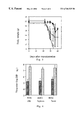
- FIG. 2 Lungs homogenates from the immunized and non-immunized mice as well as a group of non-transplanted mice were analyzed for the virus titer 5 days after viral challenge.
- the mice were immunized with the tetra construct (left block) or native flagellin that does not express the influenza epitopes (middle block).
- Another control group did not receive PBMC but were immunized with the tetra construct (right block).
- the figure presents mean data from 7 repeated experiments, in which each group consisted of 6-8 animals. In each experiment different donor was employed.
- FIG. 3 Human antibodies production (total amount of IgG, IgM and IgA), in human/mouse radiation chimera (6-8 animals per group in 7 repeated experiments, different donor employed in each experiment) immunized with the tetra construct (left column) or native flagellin that does not express the influenza epitopes (middle column). Another control group did not receive PBMC, but was immunized with the tetra construct (right column). Sera samples were diluted 1:10, lungs samples were diluted 1:60. Ab production in the group that was transplanted and vaccinated with the tetra construct (left column) was significantly higher than in the other control groups.
- FIG. 5 Body weight of surviving mice, which is indicative of disease severity and the potential for a recovery process.
- Human/mouse radiation chimera (5-10 animals per group in 2 repeated experiments, different donor employed in each experiment) were transplanted with PBMC on day 0, vaccinated intranasally on day 9 and challenged intranasally 7 days later with a lethal dose of the virus.
- Mice vaccinated with the tetra construct (black circles) lost less weight and recovered more quickly than the other groups.
- Control groups consisted of transplanted mice that were administered with native flagellin (hollow circles) or non-transplanted mice that were vaccinated with the tetra construct (squares). After day 40, all the surviving mice slowly recovered and gained weight.
- FIG. 6 Protective vaccination of human/mouse radiation chimera transplanted with PBMC and immunized intranasally with the tetra construct.
- Each group of human/mouse chimera (5-10 animals per group in 2 repeated experiments, different donor employed in each experiment) transplanted with PBMC obtained by leukapheresis from one donor was infected 7 days after the immunization with one of three different influenza strains: A/PR/8/34 (H1N1), A/Japanese/57 (H2N2) or A/Texas/1/77 (H3N2). Both transplanted (left column) and non-transplanted (right column) mice were vaccinated with the tetra construct. However, only the transplanted mice were able to resist the infection and the virus titer in their lungs is significantly reduced.
- FIG. 7 Serum human antibodies towards influenza virus following immunization of lethally irradiated human/mouse radiation chimera (5-10 per group) radioprotected with 3 ⁇ 10 6 SCID bone marrow (BM) and transplanted with 70 ⁇ 10 6 human PBMC. All the groups were immunized with the tetra construct and then challenged with sub-lethal dose of H1N1 strain (black lozenges) or H2N2 (black circles) or H3N2 (black squares).
- H1N1 strain black lozenges
- H2N2 black circles
- H3N2 black squares
- mice that did not receive PBMC and were immunized with the same vaccine prior to challenge with H1N1 (hollow lozenges) or H2N2 (hollow circles) or H3N2 (hollow squares).
- peptide-based vaccine holds several advantages over traditional vaccines, including safety considerations, the relatively long shelf-life, the ability to target the immune response towards specific epitopes that are not suppressive nor hazardous for the host and the possibility of preparing multi-pathogen vaccine.
- the efficacy of a peptide vaccine is highly dependent on the exact identification of the immunogenic epitopes that confer protection as well as the efficient presentation of these epitopes to the immune system.
- T-cell epitopes are MHC-restricted.
- influenza epitopes are necessary for human use: one B-cell HA epitope, one T-helper HA or NP epitope that can bind to many HLA molecules, and at least two CTL NP or matrix epitopes that are restricted to the most prevalent HLA molecules in the different populations.
- a preferred B-cell influenza epitope is HA 91-108.
- Preferred T-helper influenza epitopes are HA 307-319 and HA 306-324 (Rothbard, 1988), but also NP 206-229 (Brett, 1991) may be used.
- the CTL influenza epitopes are different in the Caucasian, the Asia- or the Africa-originated population.
- the preferred influenza CTL epitopes are NP335-350 and NP380-393 (Dyer and Middleton, 1993; Gulukota and DeLisi, 1996), that are restricted to the most prevalent HLA molecules in the Caucasian population.
- influenza epitopes that can be used according to the invention for the Caucasian population are the nucleoprotein epitopes: NP305-313 (DiBrino, 1993); NP384-394 (Kvist, 1991); NP89-101 (Cerundolo, 1991); NP91-99 (Silver et al, 1993); NP380-388 (Suhrbier, 1993); NP44-52 and NP265-273 (DiBrino, 1994); and NP365-380 (Townsend, 1986); and the matrix protein (M) epitopes M2-22, M2-12, M3-11, M3-12, M41-51, M50-59, M51-59, M134-142, M145-155, M164-172, M164-173 (all described by Nijman, 1993); M17-31, M55-73, M57-68 (Carreno, 1992); M27-35, M232-240 (DiBrino, 1993).
- influenza CTL epitopes that can be used are HA458-467 of the sequence Asn-Val-Lys-Asn-Leu-Tyr-Glu-Lys-Val-Lys (NVKNLYEKVK), a CTL epitope for allele All with high frequency in Japanese, Chinese, Thais and Indian populations (J. Immunol.
- ACSMGLIY Ala-Cys-Ser-Met-Gly-Leu-Ile-Tyr
- peptides are usually poor immunogens, the efficacy of peptide-based vaccine depends on the adequate presentation of the epitopes to the immune system.
- the influenza epitopes were expressed in the flagellin gene of Salmonella vaccine strain, which provides both carrier and adjuvant function. After cleavage of the flagella from the bacteria and the purification steps, the fine suspension of the flagella was used for vaccination. All immunizations were performed with a mixture of the four epitopes: HA91-108, HA307-319, NP335-350 and NP380-393, expressed in Salmonella flagellin, in the absence of any adjuvant. The mixture of said four epitopes is referred to as “tetra construct” throughout the specification.
- the three T-cell epitopes used in the vaccine of the present invention were selected due to their specific recognition by the prevalent HLA's in the Caucasian population, and were included in the vaccine together with the HA 91-108 B cell epitope. In order to overcome the problem of antigenic variation of the virus, all these epitopes are derived from conserved regions in the virus proteins and hence, can induce cross-strain protection.
- the two CTL epitopes from the inner nucleoprotein are recognized by the prevalent HLAs of the Caucasian population: the NP 335-350 epitope is restricted to A2, A3, Aw68.1 and B37 HLA haplotypes, and the NP 380-393 epitope is restricted to B8 and B27 HLA haplotypes.
- the T- helper epitope from the hemagglutinin, HA 307-319 is a “universal” epitope restricted to most of MHC class II molecules, including DR1, DR2, DR4, DR5, DR7, DR9, DR52A, and others.
- These T-cell epitopes, together with the B-cell epitope HA 91-108, were expressed individually in flagellin and the mixture of resultant flagella was used without any adjuvant for intranasal vaccination of human/mouse radiation chimera, thus inducing a human immune response and conferring protection.
- the vaccinated mice were also protected from a lethal infection and their recovery was quicker.
- a humanized mouse model was employed.
- human PBMC can be adoptively transferred i.p. into the SCID mouse and that the engrafted cells survive for an extended period of time producing high levels of human Ig, has offered many new possibilities in clinical immunology research (reviewed in Mosier, 1991).
- many researchers have been utilizing this model for studying the capacity of engrafted lymphocytes to generate primary and secondary human humoral responses, and for viral research studies.
- the human/mouse radiation chimera were immunized with the tetra construct administered by the intranasal route. This is the first report of induction of local immune response in the nasal cavity and lungs following intranasal immunization in the human/mouse radiation chimera.
- the induction of local immune response in the lungs was demonstrated by the presence of specific anti-influenza antibodies in the lungs homogenates (FIG. 3 ), by elevation of CD8+ lymphocytes proportion and by the viral clearance as a result of immunization with the tetra construct (FIG. 2 ).
- the tetra flagellin construct could also protect the mice from a lethal dose challenge of the virus, which is the ultimate demonstration of the protective effect. Under these conditions, in which the challenge dose is orders of magnitude higher than that pertaining in natural infection, all the chimera were infected regardless of their immune state.
- mice The partial protection in the non-vaccinated mice is probably due to polyclonal stimulation and expansion of memory cells originating from the donor. This could be due to either previous exposure of the donor to the antigen or because it is cross-reactive to some extent with other recall antigens, a phenomena that was previously reported for other antigens (Marcus et al, 1995).
- the results with the tetra construct according to the invention demonstrate the ability of a synthetic peptide-based vaccine to confer protection against influenza viral challenge.
- the recombinant flagellin construct indeed presents the influenza B and T-cell epitopes to the human immune cells in an efficient manner and induces both humoral and cellular responses. Since the employed T cell epitopes are recognized by a variety of HLA molecules, the vaccine was effective in all the experiments in which different donors with unknown HLA typing were utilized, indicating the applicability of this approach for a human vaccine in a heterologous population.
- mice BALB/c mice (4-8 weeks old) were obtained from Olac Farms (Bicester, U.K.), NOD/SCID mice (4-6 weeks old) from the Weizmann Institute Animal Breeding Center (Rehovot, Israel). All mice were fed sterile food and acid water containing ciprofloxacin (20 ⁇ g/ml).
- mice were exposed to a split lethal total body irradiation (TBI) of 4 Gy followed 3 days later by 10 Gy.
- TBI lethal total body irradiation
- the source of radiation is a gamma beam 150-A 60 Co (produced by the Atomic Energy of Canada, Kanata, Ontario).
- Bone marrow cells from NOD/SCID mice (4-6 weeks old) were obtained according to Levite et al., 1991. Recipient irradiated mice were injected with 2-3 ⁇ 10 6 SCID bone marrow cells (i.v. in 0.2 ml phosphate-buffered saline (PBS)) one day after irradiation.
- PBS ml phosphate-buffered saline
- Leukapheresis was performed on normal volunteers. Cells were collected by processing 3-4 liters of blood through Haemonetics V50 (USA) during 3-3.5 hours. The Leukapheresis product was centrifuged at 1200 rpm for 10 min. and the plasma removed.
- Oligonucleotides corresponding to the designated influenza epitopes namely NP335-350 (SAAFEDLRVLSFIRGY), NP380-393 (ELRSRYWAIRTRSG) and two peptides from the H3 subtype haemagglutinin: HA91-108 (SKAFSNCYPYDVPDYASL) and HA307-319 (PKYVKQNTLKLAT) were synthesized in a 380B Applied Biosystems DNA Synthesizer, with additional GAT sequence at the 3′ of each oligonucleotide in order to preserve the EcoRV restriction site, as described (Levi and Arnon, 1996).
- the synthetic oligonucleotides were inserted at the EcoRV site of the plasmid pLS408 and eventually transformed into a flagellin negative live vaccine strain (an Aro A mutant) of Salmonella dublin SL5928 by transduction, using the phage P22HT105/1 int. Finally, the flagella were purified after acidic cleavage and a fine suspension was used for immunization (Levi and Arnon, 1996).
- the desired plasmids were used to transform Salmonella typhimurium LB5000 (a restrictive negative, modification proficient non flagellated) competent cells (Bullas and Ryu, 1983, herein entirely incorporated by reference) and were then transferred to a flagellin negative live vaccine strain (an Aro A mutant) of Salmonella dublin SL5928 by transduction using the phage P22HT105/1 int (Orbach and Jackson, 1982, and Schmieger, 1972, both herein entirely incorporated by reference).
- the transformed S. dublin were selected for ampicillin resistance, motility under the light microscope and growth in semisolid LB agar plates, supplemented with Oxoid nutrient broth #2. Selected clones were grown overnight in 2 liters of LB amp. Medium and the flagellin was purified by acidic cleavage, according to the technique described by Bennett et al., 1985, herein entirely incorporated by reference.
- Flagella were isolated according to Bennett et al., 1985: Bacterial cells from an overnight culture grown in LB/ampicillin medium were pelleted and suspended in a small volume of PBS. The pH was reduced with 1 M HCl to 2.0 and the suspension was incubated at room temperature for 30 minutes with gentle agitation. The stripped cells were removed by centrifugation at 5000 rpm for 15 minutes and the pH was readjusted to 7.4. The flagella were then precipitated by (NH 4 ) 2 SO 4 (35% w/v) and maintained overnight at 4° C. The pellet obtained after centrifugation at 10,000 rpm for 10 minutes at 4° C. was dissolved in PBS, dialyzed against a large volume of PBS at 4° C.
- This resulting flagella is an aggregate of the flagellin protein and may be used as such for a vaccine. Presence of the chimeric flagellin HA and NP epitope protein of the invention are shown in FIG. 2 after SDS-PAGE of the flagella.
- mice On the ninth day after PBMC transplantation, human/mouse chimera were immunized once, intranasally with a mixture of 25 ⁇ g of each hybrid flagellin construct in total volume of 50 ⁇ l PBS or, in the control group, with 75 ⁇ g of the native flagella. This amount was predetermined as the optimal dose in a preliminary experiment in BALB/c mice. Infection of mice was performed 7 days later by inoculating intranasally the infectious allantoic fluid, 50 ⁇ l 10 ⁇ 4 HAU virus per mouse, In both immunization and infection, the mice were under a light ether anesthesia. The chimera were sacrificed on the 5th day after infection. Their lungs were removed for viral titration.
- mice engrafted with human lymphocytes were sacrificed 27-29 days after PBMC transplantation. Lymphocytes from lung homogenates as well as peritoneal washes were separated on ficoll-paque gradient (Pharmacia Biotech AB, Upsala, Sweden) and then incubated for 30 min on ice with a mixture of appropriate fluorescently-labeled monoclonal antibodies. After washing, double fluorescent analysis of human antigens was performed on a FACScan analyzer (Beckton-Dickinson, CA).
- anti-CD45-phycoerythrine PE
- anti-CD3-peridinin chlorophyll protein PerCP
- anti-CD19-FITC clone 4G7
- influenza strains A/PR/8/34 H1N1
- A/Japanese/57 H2N2
- A/Texas/1/77 H3N2
- Virus amounts were measured in hemagglutination units (HAU).
- HAU hemagglutination units
- the inactive virus A/Texas/1/77
- Virus growth and purification were according to standard methods (Barret and Inglis, 1985).
- lung samples were homogenized in PBS containing 0.1% BSA and centrifuged in order to remove debris.
- Virus titers were determined by whole egg titration method (Barret and Inglis, 1985). The titer was calculated by hemagglutination and presented as Log EID 50 (Thompson, 1947).
- mice were immunized i.p. with 50 ⁇ g of the virus on the day of PBMC transplantation, followed by a sublethal viral challenge with influenza A/Texas/1/77 strain 14 days after immunization.
- this vaccination markedly reduced the subsequent virus infection.
- the lung virus titer after challenge was significantly lower (by 2.7 orders of magnitude) in the immunized chimera as compared to the control group.
- the successful engraftment of the human cells in the human/mouse chimera was demonstrated in a preliminary experiment showing that most of the lymphocytes in the peritoneum (50-80%) and in the lungs of the mice (30-60%) were of human origin.
- human cell engraftment in the human/mouse chimera the presence of human cells in the engrafted mice was analyzed by FACS.
- FIG. 1 is a FACS histogram depicting the pattern of human lung lymphocytes after immunization with the tetra construct without further challenge infection.
- the cells were stained with anti-CD45 antibodies together with anti-CD3 or together with anti-CD19.
- most of the human cells are CD3+, namely T cells (80%-90%) and only a minor population is CD19+(3%-10%).
- Similar data were obtained for human lymphocytes in the peritoneum. It is of interest that the CD8+/CD4+ ratio in the immunized mice ranged between 1 and 2 as compared to a ratio of 0.3-0.5 in the untreated chimera. This disproportionate expression of CD8 cells may suggest that they play a role in the observed protection.
- Influenza infection is a respiratory disease, hence, a local immune response induced by an intranasal administration of the vaccine could be more efficient than parenteral administration.
- the immunization schedule was modified in order to adapt it for intranasal immunization.
- mice (6-8 per group in 7 repeated experiments) were immunized intranasally (i.n.) 10-12 days after PBMC transplantation, as described in the Methods. Ten days later, they were challenged i.n. with 10 ⁇ 4 HAU in 50 ⁇ l allantoic fluid of live A/Texas/1/77 strain of influenza virus. Five days later they were sacrificed and their lungs were removed for virus titration. As shown in FIG. 2, which depicts the cumulative results, the vaccination with the tetra construct enabled the chimera to clear the virus from their lungs significantly more efficiently than the group vaccinated with the native flagella, or the group which was not transplanted with PMBC but were immunized with the tetra construct. Although the same percentage of human T lymphocytes was detected in both transplanted groups (FIG. 1 ), only the mice vaccinated with the hybrid flagellin show the ability to reduce virus burden, indicating specific and efficient local response in the lungs.
- FIG. 4 describes the results of two repeated experiments and demonstrates the survival of vaccinated and non-vaccinated mice (both transplanted with human PBMC), as well as of another control group that was not transplanted but was vaccinated with the tetra construct.
- PBMC peripheral blood mononuclear cell
- FIG. 4 describes the results of two repeated experiments and demonstrates the survival of vaccinated and non-vaccinated mice (both transplanted with human PBMC), as well as of another control group that was not transplanted but was vaccinated with the tetra construct.
- 100% survival was observed in the mice that received the PBMC prior to immunization. This indicates that survival is due to the response of the transplanted human immunocompetent cells.
- the PBMC by themselves provided a limited beneficial effect, as 50% survival was observed in the control group that was vaccinated with the native flagellin, that itself does not induce any anti-influenza protective response.
- the body weight loss pattern of the challenged mice is depicted: the transplanted group that was immunized with the tetra flagellin construct, shows only a slight reduction in their body weight following the lethal dose infection and a rapid return to normal, while the control group that was transplanted with human PMBC but immunized with the native flagellin, lost more weight (the body weight is significantly different between the experimental group and the control groups on days 22-33 after transplantation) and the surviving mice started to recover weight only on the last days of the experiment.
- the non-transplanted, vaccinated control group lost weight rapidly and did not recuperate.
- the survival of the transplanted group that was immunized with the native flagella is better than that of the non-transplanted group probably due to some memory anti-influenza response of the donor's cells.
- influenza vaccines are effective only against the strains included in the vaccine. Therefore, it was of interest to examine the ability of the flagellin hybrids that express influenza epitopes to protect mice from different influenza strains that carry various hemagglutinin and neuraminidase glycoproteins.
- the B-cell epitope that is expressed in the flagellin is conserved in all influenza H3 subtypes, while the T-cell epitopes are from regions of the hemagglutinin and nucleoprotein highly conserved in other subtypes as well.
- influenza strains that were used for infection were: A/Texas/1/77 (H3N2), A/Japanese/57 (H2N2) and A/PR/8/34 (H1N1).
- Protective immunity was observed against all three strains, as presented in FIG. 6 .
- Human Ig specific for each influenza strain was detected in the sera of all the transplanted and vaccinated mice, but not in the control group, as shown in FIG. 7 .
Landscapes
- Health & Medical Sciences (AREA)
- Life Sciences & Earth Sciences (AREA)
- Chemical & Material Sciences (AREA)
- General Health & Medical Sciences (AREA)
- Virology (AREA)
- Medicinal Chemistry (AREA)
- Pharmacology & Pharmacy (AREA)
- Immunology (AREA)
- Veterinary Medicine (AREA)
- Public Health (AREA)
- Animal Behavior & Ethology (AREA)
- Microbiology (AREA)
- Epidemiology (AREA)
- Organic Chemistry (AREA)
- Mycology (AREA)
- Engineering & Computer Science (AREA)
- Bioinformatics & Cheminformatics (AREA)
- Zoology (AREA)
- Genetics & Genomics (AREA)
- Wood Science & Technology (AREA)
- Pulmonology (AREA)
- Chemical Kinetics & Catalysis (AREA)
- Nuclear Medicine, Radiotherapy & Molecular Imaging (AREA)
- General Chemical & Material Sciences (AREA)
- Biomedical Technology (AREA)
- Biotechnology (AREA)
- General Engineering & Computer Science (AREA)
- Biochemistry (AREA)
- Molecular Biology (AREA)
- Communicable Diseases (AREA)
- Oncology (AREA)
- Gastroenterology & Hepatology (AREA)
- Proteomics, Peptides & Aminoacids (AREA)
- Medicines Containing Antibodies Or Antigens For Use As Internal Diagnostic Agents (AREA)
- Peptides Or Proteins (AREA)
Priority Applications (2)
| Application Number | Priority Date | Filing Date | Title |
|---|---|---|---|
| US10/846,548 US7192595B2 (en) | 1998-11-30 | 2004-05-17 | Peptide-based vaccine for influenza |
| US11/672,429 US7514086B2 (en) | 1998-11-30 | 2007-02-07 | Peptide-based vaccine for influenza |
Applications Claiming Priority (3)
| Application Number | Priority Date | Filing Date | Title |
|---|---|---|---|
| IL12733198A IL127331A0 (en) | 1998-11-30 | 1998-11-30 | Peptide-based vaccine for influenza |
| IL127331 | 1998-11-30 | ||
| PCT/IL1999/000640 WO2000032228A2 (en) | 1998-11-30 | 1999-11-28 | Peptide-based vaccine for influenza |
Related Child Applications (1)
| Application Number | Title | Priority Date | Filing Date |
|---|---|---|---|
| US10/846,548 Division US7192595B2 (en) | 1998-11-30 | 2004-05-17 | Peptide-based vaccine for influenza |
Publications (1)
| Publication Number | Publication Date |
|---|---|
| US6740325B1 true US6740325B1 (en) | 2004-05-25 |
Family
ID=11072200
Family Applications (3)
| Application Number | Title | Priority Date | Filing Date |
|---|---|---|---|
| US09/856,920 Expired - Lifetime US6740325B1 (en) | 1998-11-30 | 1999-11-28 | Peptide-based vaccine for influenza |
| US10/846,548 Expired - Lifetime US7192595B2 (en) | 1998-11-30 | 2004-05-17 | Peptide-based vaccine for influenza |
| US11/672,429 Expired - Fee Related US7514086B2 (en) | 1998-11-30 | 2007-02-07 | Peptide-based vaccine for influenza |
Family Applications After (2)
| Application Number | Title | Priority Date | Filing Date |
|---|---|---|---|
| US10/846,548 Expired - Lifetime US7192595B2 (en) | 1998-11-30 | 2004-05-17 | Peptide-based vaccine for influenza |
| US11/672,429 Expired - Fee Related US7514086B2 (en) | 1998-11-30 | 2007-02-07 | Peptide-based vaccine for influenza |
Country Status (15)
| Country | Link |
|---|---|
| US (3) | US6740325B1 (enExample) |
| EP (2) | EP1135159A2 (enExample) |
| JP (1) | JP2002531415A (enExample) |
| KR (1) | KR100703571B1 (enExample) |
| AT (1) | ATE556719T1 (enExample) |
| AU (1) | AU766883B2 (enExample) |
| BR (1) | BR9915811A (enExample) |
| CA (1) | CA2352454C (enExample) |
| DK (1) | DK2204187T3 (enExample) |
| ES (1) | ES2389611T3 (enExample) |
| HK (1) | HK1040620A1 (enExample) |
| IL (3) | IL127331A0 (enExample) |
| NZ (1) | NZ511918A (enExample) |
| PT (1) | PT2204187E (enExample) |
| WO (1) | WO2000032228A2 (enExample) |
Cited By (29)
| Publication number | Priority date | Publication date | Assignee | Title |
|---|---|---|---|---|
| WO2006111616A1 (en) * | 2005-04-20 | 2006-10-26 | Glykos Finland Oy | Peptide vaccine for influenza virus |
| US20070098742A1 (en) * | 2005-10-18 | 2007-05-03 | Iowa State University Research Foundation, Inc. | Canine influenza virus and related compositions and methods of use |
| US20070122424A1 (en) * | 1998-11-30 | 2007-05-31 | Yeda Research And Development Co. Ltd. | Peptide-based vaccine for influenza |
| WO2007019094A3 (en) * | 2005-08-04 | 2007-07-12 | St Jude Childrens Res Hospital | Modified influenza virus for monitoring and improving vaccine efficiency |
| WO2007091030A2 (en) | 2006-02-07 | 2007-08-16 | Peptcell Limited | Peptide sequences and compositions |
| US20070224205A1 (en) * | 2006-03-07 | 2007-09-27 | Powell Thomas J | Compositions that include hemagglutinin, methods of making and methods of use thereof |
| US20070243629A1 (en) * | 2003-10-20 | 2007-10-18 | Glykos Finland Oy | High Affinity Ligands for Influenza Virus and Methods for Their Production |
| WO2008112218A2 (en) | 2007-03-12 | 2008-09-18 | Antigen Express, Inc. | Li-rnai involved li suppression in cancer immunotherapy |
| WO2009016639A2 (en) | 2007-08-02 | 2009-02-05 | Biondvax Pharmaceuticals Ltd. | Multimeric multiepitope influenza vaccines |
| US20090169576A1 (en) * | 2005-10-26 | 2009-07-02 | Roberto Crea | Influenza combinatorial antigen vaccine |
| US20090292615A1 (en) * | 2006-09-28 | 2009-11-26 | Jari Natunen | Integrated system, device and use thereof |
| US20100074920A1 (en) * | 2006-10-26 | 2010-03-25 | Glykos Finland Oy | Peptide vaccine for influenza virus |
| US20100183655A1 (en) * | 2006-06-28 | 2010-07-22 | James Robert Swartz | Immunogenic Protein Constructs |
| WO2010144797A2 (en) | 2009-06-12 | 2010-12-16 | Vaccine Technologies, Incorporated | Influenza vaccines with enhanced immunogenicity and uses thereof |
| US20110135680A1 (en) * | 2008-04-18 | 2011-06-09 | Langzhou Song | Deletion mutants of flagellin and methods of use |
| WO2012097347A1 (en) | 2011-01-13 | 2012-07-19 | Variation Biotechnologies, Inc. | Methods for preparing vesicles and formulations produced therefrom |
| US8932598B2 (en) | 2012-08-28 | 2015-01-13 | Vaxinnate Corporation | Fusion proteins and methods of use |
| US9303070B2 (en) | 2011-02-22 | 2016-04-05 | Biondvax Pharmaceuticals Ltd. | Multimeric multiepitope polypeptides in improved seasonal and pandemic influenza vaccines |
| US9610248B2 (en) | 2010-07-06 | 2017-04-04 | Variation Biotechnologies, Inc. | Compositions and methods for treating influenza |
| US9849173B2 (en) | 2009-07-06 | 2017-12-26 | Variation Biotechnologies Inc. | Methods for preparing vesicles and formulations produced therefrom |
| US9907746B2 (en) | 2009-07-06 | 2018-03-06 | Variation Biotechnologies, Inc. | Methods for preparing vesicles and formulations produced therefrom |
| WO2018126060A1 (en) * | 2016-12-28 | 2018-07-05 | Invvax, Inc. | Influenza vaccines |
| US10105440B2 (en) | 2011-11-18 | 2018-10-23 | Variation Biotechnologies Inc. | Synthetic derivatives of MPL and uses thereof |
| US10471141B2 (en) | 2014-09-03 | 2019-11-12 | Nitto Denko Corporation | Bisphosphonate-containing vaccine pharmaceutical composition for humoral immunity |
| US10736844B2 (en) | 2011-01-13 | 2020-08-11 | Variation Biotechnologies Inc. | Compositions and methods for treating viral infections |
| US10925936B2 (en) | 2014-09-03 | 2021-02-23 | Nitto Denko Corporation | Vaccine pharmaceutical composition for cell-mediated immunity containing bisphosphonates |
| US11167033B2 (en) | 2012-01-12 | 2021-11-09 | Variation Biotechnologies Inc. | Compositions and methods for treating viral infections |
| US11167032B2 (en) | 2012-01-27 | 2021-11-09 | Variation Biotechnologies Inc. | Methods and compositions for therapeutic agents |
| US11278616B2 (en) | 2015-08-06 | 2022-03-22 | Nitto Denko Corporation | Immunity induction promoting composition, and vaccine pharmaceutical composition |
Families Citing this family (27)
| Publication number | Priority date | Publication date | Assignee | Title |
|---|---|---|---|---|
| AU2002223398A1 (en) * | 2000-08-10 | 2002-04-08 | Tsinghua University | A vaccine for influenza virus and its preparation |
| DK1692265T3 (da) | 2003-11-04 | 2011-11-21 | Univ Tulane | Fremgangsmåde til hindring af en virus-celle-fusion ved hæmning af fusionsinitieringsområdets funktion i RNA-vira med klasse 1-membranfusogene envelopeproteiner |
| GB0716992D0 (en) * | 2007-08-31 | 2007-10-10 | Immune Targeting Systems Its L | Influenza antigen delivery vectors and constructs |
| WO2006074303A2 (en) * | 2005-01-05 | 2006-07-13 | Philadelphia Health And Education Corporation | Delivery vehicles, bioactive substances and viral vaccines |
| MY157941A (en) | 2005-01-19 | 2016-08-15 | Vaxinnate Corp | Compositions of pathogen-associated molecular patterns and methods of use |
| MX2007015105A (es) * | 2005-06-01 | 2008-03-18 | Variation Biotechnologies Inc | Formulacion de vacuna de influenza a base de peptido. |
| US9533036B2 (en) * | 2005-11-07 | 2017-01-03 | Microvax, Llc | Methods for generating immune responses to influenza antigens with a secretable CD40L fusion protein |
| AU2006322907B2 (en) * | 2005-12-06 | 2012-08-02 | Yeda Research And Development Co. Ltd. At The Weizmann Institute Of Science | Improved influenza vaccine |
| HUE049580T2 (hu) * | 2006-01-27 | 2020-09-28 | Seqirus Uk Ltd | Hemagglutinint és mátrixfehérjéket tartalmazó, influenza elleni oltóanyagok |
| US8222204B2 (en) | 2006-05-03 | 2012-07-17 | The Administrators of the Tulane Educational Fund and Autoimmune Technologies, LLC | Influenza inhibiting compositions and methods |
| CA2721800A1 (en) | 2008-04-21 | 2009-10-29 | Nanobio Corporation | Nanoemulsion influenza vaccine |
| JP2011519834A (ja) * | 2008-04-25 | 2011-07-14 | インスティチュート フォー システムズ バイオロジー | フラジェリンポリペプチドワクチン |
| WO2009135152A2 (en) | 2008-05-02 | 2009-11-05 | University Of Rochester | Arrayed detector system for measurement of influenza immune response |
| CA2840982C (en) | 2011-07-06 | 2022-06-07 | Vira BITKO | Human respiratory syncytial virus vaccine |
| WO2013028738A1 (en) | 2011-08-22 | 2013-02-28 | Nanobio Corporation | Herpes simplex virus nanoemulsion vaccine |
| KR20140099828A (ko) | 2013-02-05 | 2014-08-13 | 닛토덴코 가부시키가이샤 | 점막 투여용 백신 조성물 |
| EP2762152A1 (en) | 2013-02-05 | 2014-08-06 | Nitto Denko Corporation | WT1 peptide cancer vaccine composition for transdermal administration |
| CN103961306A (zh) | 2013-02-05 | 2014-08-06 | 日东电工株式会社 | 经皮给予用疫苗组合物 |
| EP3662927A3 (en) | 2013-02-05 | 2020-10-21 | Nitto Denko Corporation | Vaccine composition |
| RU2697443C2 (ru) | 2013-02-05 | 2019-08-14 | Нитто Денко Корпорейшн | Препарат противораковой вакцины, содержащий пептид wt1, в форме ленты трансдермального введения |
| US10206985B2 (en) | 2013-02-05 | 2019-02-19 | Nitto Denko Corporation | WT1 peptide cancer vaccine composition for mucosal administration |
| RU2014102948A (ru) * | 2013-02-05 | 2015-08-10 | Нитто Денко Корпорейшн | Вакцинная композиция для мукозального введения |
| CN103961698A (zh) | 2013-02-05 | 2014-08-06 | 日东电工株式会社 | 经皮或粘膜给予用疫苗组合物 |
| CA2841016A1 (en) | 2013-02-05 | 2014-08-05 | Nitto Denko Corporation | Wt1 peptide cancer vaccine composition for transdermal administration |
| US20140220100A1 (en) | 2013-02-05 | 2014-08-07 | Nitto Denko Corporation | Vaccine composition for transdermal administration |
| RU2531235C2 (ru) | 2013-02-15 | 2014-10-20 | Общество с ограниченной ответственностью "Универсальные БиоСистемы" (ООО "УБС") | Поливалентная вакцина против гриппа на основе гибридного белка |
| CN103901202B (zh) * | 2014-04-04 | 2015-08-12 | 中国人民解放军成都军区疾病预防控制中心 | 基于共有表位甲型流感病毒抗体通用型竞争性elisa检测方法 |
Citations (1)
| Publication number | Priority date | Publication date | Assignee | Title |
|---|---|---|---|---|
| WO1993020846A1 (en) | 1992-04-17 | 1993-10-28 | Yeda Research And Development Co. Ltd | Recombinant influenza vaccines |
Family Cites Families (3)
| Publication number | Priority date | Publication date | Assignee | Title |
|---|---|---|---|---|
| IL61904A (en) | 1981-01-13 | 1985-07-31 | Yeda Res & Dev | Synthetic vaccine against influenza virus infections comprising a synthetic peptide and process for producing same |
| AU3036597A (en) * | 1996-05-21 | 1997-12-09 | Institut National De La Sante Et De La Recherche Medicale (Inserm) | Method for using peptide complexes/major histocompatibility complex to obtain or purify antigen-specific t cells and to stimulate t cells |
| IL127331A0 (en) * | 1998-11-30 | 1999-09-22 | Yeda Res & Dev | Peptide-based vaccine for influenza |
-
1998
- 1998-11-30 IL IL12733198A patent/IL127331A0/xx unknown
-
1999
- 1999-11-28 DK DK10003160.8T patent/DK2204187T3/da active
- 1999-11-28 AT AT10003160T patent/ATE556719T1/de active
- 1999-11-28 BR BR9915811-6A patent/BR9915811A/pt not_active IP Right Cessation
- 1999-11-28 PT PT10003160T patent/PT2204187E/pt unknown
- 1999-11-28 ES ES10003160T patent/ES2389611T3/es not_active Expired - Lifetime
- 1999-11-28 US US09/856,920 patent/US6740325B1/en not_active Expired - Lifetime
- 1999-11-28 CA CA2352454A patent/CA2352454C/en not_active Expired - Lifetime
- 1999-11-28 AU AU14066/00A patent/AU766883B2/en not_active Expired
- 1999-11-28 KR KR1020017006639A patent/KR100703571B1/ko not_active Expired - Lifetime
- 1999-11-28 IL IL14336799A patent/IL143367A0/xx active IP Right Grant
- 1999-11-28 EP EP99972929A patent/EP1135159A2/en not_active Withdrawn
- 1999-11-28 EP EP10003160A patent/EP2204187B1/en not_active Expired - Lifetime
- 1999-11-28 JP JP2000584919A patent/JP2002531415A/ja active Pending
- 1999-11-28 HK HK02102105.6A patent/HK1040620A1/zh unknown
- 1999-11-28 WO PCT/IL1999/000640 patent/WO2000032228A2/en not_active Ceased
- 1999-11-28 NZ NZ511918A patent/NZ511918A/en not_active IP Right Cessation
-
2001
- 2001-05-24 IL IL143367A patent/IL143367A/en not_active IP Right Cessation
-
2004
- 2004-05-17 US US10/846,548 patent/US7192595B2/en not_active Expired - Lifetime
-
2007
- 2007-02-07 US US11/672,429 patent/US7514086B2/en not_active Expired - Fee Related
Patent Citations (1)
| Publication number | Priority date | Publication date | Assignee | Title |
|---|---|---|---|---|
| WO1993020846A1 (en) | 1992-04-17 | 1993-10-28 | Yeda Research And Development Co. Ltd | Recombinant influenza vaccines |
Non-Patent Citations (9)
| Title |
|---|
| Francine Connan, et al. A simple assay for detection of peptides promoting the assembly of HLA class I molecules. Eur. J. Immunol. 1994. 24: 777-780. |
| Jeff Alexander, et al. Derivation of HLA-A11/K<b >Transgenic Mice. The American Association of Immunologists (1977). |
| Jeff Alexander, et al. Derivation of HLA-A11/Kb Transgenic Mice. The American Association of Immunologists (1977). |
| Jonathan B. Rothbard, et al. Structural Model of HLA-DR1 Restricted T Cell Antigen Recognition. Cell. vol 52, 515-523. (Feb. 26, 1988). |
| Raphael Levi, et al. Synthetic recombinant influenza vaccine induces efficient long-term immunity and cross-strain protection. Vaccine vol. 14, No. 1, pp. 85-92 (1996) Elsevier Sceince Ltd. |
| Sutton, Julian, et al. A sequence pattern for peptides presented to cytotoxic T lymphocytes by HLA B8 revealed by analysis of epitopes and eluted peptides. European Journal of Immunology (1993). |
| Tamar Ben-Yedidia, et al. Efficacy of anti-influenza peptide vaccine in aged mice. Mechanisms of ageing and development, 104 (1998) 11-23. |
| Tamar Ben-Yedidia, et al. Intranasal administrationof peptide vaccine protects human/mouse radiation chimera from influenza infection. Dept. of Immunology, The Weizmann Institute Science, Rehovot, Israel. |
| Tao Dong, et al. An HLA-B35-restricted epitope modified at an anchor residue results in an antagonist peptide. Eur. J. Immunol. 1996 26: 335-339. |
Cited By (75)
| Publication number | Priority date | Publication date | Assignee | Title |
|---|---|---|---|---|
| US20070122424A1 (en) * | 1998-11-30 | 2007-05-31 | Yeda Research And Development Co. Ltd. | Peptide-based vaccine for influenza |
| US7514086B2 (en) * | 1998-11-30 | 2009-04-07 | Yeda Research And Development, Co. Ltd | Peptide-based vaccine for influenza |
| US20070243629A1 (en) * | 2003-10-20 | 2007-10-18 | Glykos Finland Oy | High Affinity Ligands for Influenza Virus and Methods for Their Production |
| EP1871786A4 (en) * | 2005-04-20 | 2010-08-25 | Glykos Finland Oy | PEPTIDE VACCINE AGAINST THE GRIPPEVIRUS |
| WO2006111616A1 (en) * | 2005-04-20 | 2006-10-26 | Glykos Finland Oy | Peptide vaccine for influenza virus |
| US20090074666A1 (en) * | 2005-04-20 | 2009-03-19 | Jonas Angstrom | Peptide vaccine for influenza virus |
| WO2007019094A3 (en) * | 2005-08-04 | 2007-07-12 | St Jude Childrens Res Hospital | Modified influenza virus for monitoring and improving vaccine efficiency |
| US8574592B2 (en) | 2005-08-04 | 2013-11-05 | St. Jude Children's Research Hospital | Modified influenza virus for monitoring and improving vaccine efficiency |
| CN103172710A (zh) * | 2005-08-04 | 2013-06-26 | 圣祖德儿童研究医院 | 用于监测并改善疫苗功效的修饰的流感病毒 |
| US20110104202A1 (en) * | 2005-08-04 | 2011-05-05 | St. Jude Children's Research Hospital | Modified Influenza Virus For Monitoring And Improving Vaccine Efficiency |
| US8293247B2 (en) | 2005-08-04 | 2012-10-23 | St. Jude Children's Research Hospital | Modified influenza virus for monitoring and improving vaccine efficiency |
| US9499850B2 (en) | 2005-08-04 | 2016-11-22 | St. Jude Children's Research Hospital | Modified influenza virus for monitoring and improving vaccine efficiency |
| CN103172710B (zh) * | 2005-08-04 | 2016-08-17 | 圣祖德儿童研究医院 | 用于监测并改善疫苗功效的修饰的流感病毒 |
| US7871626B2 (en) | 2005-08-04 | 2011-01-18 | St. Jude Children's Research Hospital | Modified influenza virus for monitoring and improving vaccine efficiency |
| USRE44916E1 (en) | 2005-10-18 | 2014-05-27 | Iowa State University Research Foundation, Inc. | Canine influenza virus and related compositions and methods of use |
| US20090035325A1 (en) * | 2005-10-18 | 2009-02-05 | Iowa State University Research Foundation, Inc. | Canine influenza virus and related compositions and methods of use |
| US7468187B2 (en) | 2005-10-18 | 2008-12-23 | Iowa State University Research Foundation, Inc. | Canine influenza virus and related compositions and methods of use |
| US7842295B2 (en) | 2005-10-18 | 2010-11-30 | Iowa State University Research Foundation, Inc. | Canine influenza virus and related compositions and methods of use |
| USRE45564E1 (en) | 2005-10-18 | 2015-06-16 | Iowa State University Research Foundation, Inc. | Canine influenza virus and related compositions and methods of use |
| US20070098742A1 (en) * | 2005-10-18 | 2007-05-03 | Iowa State University Research Foundation, Inc. | Canine influenza virus and related compositions and methods of use |
| US20090169576A1 (en) * | 2005-10-26 | 2009-07-02 | Roberto Crea | Influenza combinatorial antigen vaccine |
| US10765734B2 (en) | 2006-02-07 | 2020-09-08 | Peptcell Limited | Influenza peptides and compositions |
| US9446116B2 (en) | 2006-02-07 | 2016-09-20 | Peptcell Limited | Peptide sequences and compositions |
| US10279032B2 (en) | 2006-02-07 | 2019-05-07 | Peptcell Limited | Peptide sequences and compositions |
| US20100047275A1 (en) * | 2006-02-07 | 2010-02-25 | Gregory Alan Stoloff | Peptide sequences and compositions |
| WO2007091030A2 (en) | 2006-02-07 | 2007-08-16 | Peptcell Limited | Peptide sequences and compositions |
| EP3263589A2 (en) | 2006-02-07 | 2018-01-03 | Peptcell Limited | Peptide sequences and compositions |
| US10335480B2 (en) | 2006-02-07 | 2019-07-02 | Peptcell Limited | Peptide sequences and compositions |
| US11439702B2 (en) | 2006-02-07 | 2022-09-13 | Peptcell Limited | Influenza peptides and compositions |
| EP2383284A2 (en) | 2006-02-07 | 2011-11-02 | Peptcell Limited | Peptide sequences and compositions |
| EP2383285A2 (en) | 2006-02-07 | 2011-11-02 | Peptcell Limited | Peptide Sequences and Compositions |
| EP3620463A1 (en) | 2006-02-07 | 2020-03-11 | PepTcell Limited | Peptide sequences and compositions |
| US9889191B2 (en) | 2006-02-07 | 2018-02-13 | Peptcell Limited | Peptide sequences and compositions |
| US8475802B2 (en) | 2006-02-07 | 2013-07-02 | Pep T cell Limited | Peptide sequences and compositions |
| US8444995B2 (en) | 2006-02-07 | 2013-05-21 | PepTCell, Ltd. | Peptide sequences and compositions |
| US8945579B2 (en) | 2006-03-07 | 2015-02-03 | Vaxinnate Corporation | Methods of treatment with compositions that include hemagglutinin |
| US8420102B2 (en) | 2006-03-07 | 2013-04-16 | Vaxinnate Corporation | Compositions that include hemagglutinin |
| US9200042B2 (en) | 2006-03-07 | 2015-12-01 | Vaxinnate Corporation | Flagellin fusion proteins |
| US20070253982A1 (en) * | 2006-03-07 | 2007-11-01 | Langzhou Song | Compositions that include hemagglutinin, methods of making and methods of use thereof |
| US20070224205A1 (en) * | 2006-03-07 | 2007-09-27 | Powell Thomas J | Compositions that include hemagglutinin, methods of making and methods of use thereof |
| US9056901B2 (en) | 2006-03-07 | 2015-06-16 | Vaxinnate Corporation | Methods of making hemagglutinin proteins |
| US20110117128A1 (en) * | 2006-03-07 | 2011-05-19 | Powell Thomas J | Compositions that Include Hemagglutinin, Methods of Making and Methods of Use Thereof |
| US20100183655A1 (en) * | 2006-06-28 | 2010-07-22 | James Robert Swartz | Immunogenic Protein Constructs |
| US8481045B2 (en) * | 2006-06-28 | 2013-07-09 | The Board Of Trustees Of The Leland Stanford Junior University | Immunogenic protein constructs |
| US20090292615A1 (en) * | 2006-09-28 | 2009-11-26 | Jari Natunen | Integrated system, device and use thereof |
| US20110191867A1 (en) * | 2006-10-26 | 2011-08-04 | Glykos Finland Oy | Peptide vaccine for influenza virus |
| US20100074920A1 (en) * | 2006-10-26 | 2010-03-25 | Glykos Finland Oy | Peptide vaccine for influenza virus |
| US20090060889A1 (en) * | 2007-03-12 | 2009-03-05 | Von Hofe Eric | Ii-RNAi involved Ii suppression in cancer immunotherapy |
| WO2008112218A2 (en) | 2007-03-12 | 2008-09-18 | Antigen Express, Inc. | Li-rnai involved li suppression in cancer immunotherapy |
| US8747861B2 (en) | 2007-08-02 | 2014-06-10 | Biondvax Pharmaceuticals Ltd. | Multimeric multiepitope influenza vaccines |
| WO2009016639A2 (en) | 2007-08-02 | 2009-02-05 | Biondvax Pharmaceuticals Ltd. | Multimeric multiepitope influenza vaccines |
| US9353159B2 (en) | 2007-08-02 | 2016-05-31 | Biondvax Pharmaceuticals Ltd. | Multimeric multiepitope influenza vaccines |
| US20110182974A1 (en) * | 2007-08-02 | 2011-07-28 | Tamar Ben-Yedidia | Multimeric multiepitope influenza vaccines |
| US9205138B2 (en) | 2008-04-18 | 2015-12-08 | Vaxinnate Corporation | Deletion mutants of flagellin and methods of use |
| US9211320B2 (en) | 2008-04-18 | 2015-12-15 | Vaxinnate Corporation | Deletion mutants of flagellin and methods of use |
| US8932605B2 (en) | 2008-04-18 | 2015-01-13 | Vaxinnate Corporation | Deletion mutants of flagellin and methods of use |
| US20110135680A1 (en) * | 2008-04-18 | 2011-06-09 | Langzhou Song | Deletion mutants of flagellin and methods of use |
| WO2010144797A2 (en) | 2009-06-12 | 2010-12-16 | Vaccine Technologies, Incorporated | Influenza vaccines with enhanced immunogenicity and uses thereof |
| US9849173B2 (en) | 2009-07-06 | 2017-12-26 | Variation Biotechnologies Inc. | Methods for preparing vesicles and formulations produced therefrom |
| US9907746B2 (en) | 2009-07-06 | 2018-03-06 | Variation Biotechnologies, Inc. | Methods for preparing vesicles and formulations produced therefrom |
| US9610248B2 (en) | 2010-07-06 | 2017-04-04 | Variation Biotechnologies, Inc. | Compositions and methods for treating influenza |
| WO2012097347A1 (en) | 2011-01-13 | 2012-07-19 | Variation Biotechnologies, Inc. | Methods for preparing vesicles and formulations produced therefrom |
| US10736844B2 (en) | 2011-01-13 | 2020-08-11 | Variation Biotechnologies Inc. | Compositions and methods for treating viral infections |
| US9303070B2 (en) | 2011-02-22 | 2016-04-05 | Biondvax Pharmaceuticals Ltd. | Multimeric multiepitope polypeptides in improved seasonal and pandemic influenza vaccines |
| US10105440B2 (en) | 2011-11-18 | 2018-10-23 | Variation Biotechnologies Inc. | Synthetic derivatives of MPL and uses thereof |
| US11167033B2 (en) | 2012-01-12 | 2021-11-09 | Variation Biotechnologies Inc. | Compositions and methods for treating viral infections |
| US11167032B2 (en) | 2012-01-27 | 2021-11-09 | Variation Biotechnologies Inc. | Methods and compositions for therapeutic agents |
| US8932598B2 (en) | 2012-08-28 | 2015-01-13 | Vaxinnate Corporation | Fusion proteins and methods of use |
| US10925936B2 (en) | 2014-09-03 | 2021-02-23 | Nitto Denko Corporation | Vaccine pharmaceutical composition for cell-mediated immunity containing bisphosphonates |
| US10471141B2 (en) | 2014-09-03 | 2019-11-12 | Nitto Denko Corporation | Bisphosphonate-containing vaccine pharmaceutical composition for humoral immunity |
| US11278616B2 (en) | 2015-08-06 | 2022-03-22 | Nitto Denko Corporation | Immunity induction promoting composition, and vaccine pharmaceutical composition |
| US11111277B2 (en) | 2016-12-28 | 2021-09-07 | Invvax, Inc. | Influenza vaccines |
| WO2018126060A1 (en) * | 2016-12-28 | 2018-07-05 | Invvax, Inc. | Influenza vaccines |
| US11739127B2 (en) | 2016-12-28 | 2023-08-29 | Invvax, Inc. | Influenza vaccines |
| US12234263B2 (en) | 2016-12-28 | 2025-02-25 | Invvax, Inc. | Influenza vaccines |
Also Published As
| Publication number | Publication date |
|---|---|
| EP1135159A2 (en) | 2001-09-26 |
| KR100703571B1 (ko) | 2007-04-05 |
| EP2204187A1 (en) | 2010-07-07 |
| IL143367A0 (en) | 2002-04-21 |
| US20050002954A1 (en) | 2005-01-06 |
| CA2352454A1 (en) | 2000-06-08 |
| HK1040620A1 (zh) | 2002-06-21 |
| WO2000032228A3 (en) | 2000-10-05 |
| DK2204187T3 (da) | 2012-08-20 |
| JP2002531415A (ja) | 2002-09-24 |
| CA2352454C (en) | 2013-02-05 |
| IL127331A0 (en) | 1999-09-22 |
| US7192595B2 (en) | 2007-03-20 |
| BR9915811A (pt) | 2001-08-21 |
| US20070122424A1 (en) | 2007-05-31 |
| NZ511918A (en) | 2003-08-29 |
| AU766883B2 (en) | 2003-10-23 |
| EP2204187B1 (en) | 2012-05-09 |
| AU1406600A (en) | 2000-06-19 |
| IL143367A (en) | 2006-09-05 |
| US7514086B2 (en) | 2009-04-07 |
| HK1145448A1 (en) | 2011-04-21 |
| ES2389611T3 (es) | 2012-10-29 |
| KR20010089512A (ko) | 2001-10-06 |
| PT2204187E (pt) | 2012-08-10 |
| ATE556719T1 (de) | 2012-05-15 |
| WO2000032228A2 (en) | 2000-06-08 |
Similar Documents
| Publication | Publication Date | Title |
|---|---|---|
| US6740325B1 (en) | Peptide-based vaccine for influenza | |
| Ben-Yedidia et al. | Intranasal administration of peptide vaccine protects human/mouse radiation chimera from influenza infection | |
| Eliasson et al. | CTA1-M2e-DD: a novel mucosal adjuvant targeted influenza vaccine | |
| Kodihalli et al. | Selection of a single amino acid substitution in the hemagglutinin molecule by chicken eggs can render influenza A virus (H3) candidate vaccine ineffective | |
| Ben-Yedidia et al. | Towards an epitope-based human vaccine for influenza | |
| Jeon et al. | Intranasal immunization with synthetic recombinant vaccine containing multiple epitopes of influenza virus | |
| US10201601B2 (en) | Compositions and methods for increasing immunogenicity of glycoprotein vaccines | |
| Hurwitz et al. | Murine TH response to influenza virus: recognition of hemagglutinin, neuraminidase, matrix, and nucleoproteins. | |
| US5674502A (en) | Cross-reactive influenza a immunization | |
| US12397050B2 (en) | Universal mammalian influenza vaccine | |
| Katz et al. | Recognition of influenza virus hemagglutinin by subtype-specific and cross-reactive proliferative T cells: contribution of HA1 and HA2 polypeptide chains. | |
| Uchida et al. | Application of surface-linked liposomal antigens to the development of vaccines that induce both humoral and cellular immunity | |
| HK1145448B (en) | Human flu vaccine containing four influenza peptides | |
| MXPA01005398A (en) | Peptide-based vaccine for influenza | |
| WO1994022917A1 (en) | Cross-reactive influenza a immunization | |
| Ben-Yedidia et al. | Synthetic peptide-based vaccines against influenza | |
| Arnon et al. | SYNTHETIC RECOMBINANT VACCINE INDUCES ANTI-INFLUENZA LONG-TERM IMMUNITY AND CROSS-STRAIN |
Legal Events
| Date | Code | Title | Description |
|---|---|---|---|
| AS | Assignment |
Owner name: YEDA RESEARCH AND DEVELOPMENT CO., LTD., ISRAEL Free format text: ASSIGNMENT OF ASSIGNORS INTEREST;ASSIGNORS:ARNON, RUTH;BEN-YEDIDIA, TAMAR;LEVI, RAPHAEL;REEL/FRAME:012050/0149;SIGNING DATES FROM 20010307 TO 20010507 |
|
| STCF | Information on status: patent grant |
Free format text: PATENTED CASE |
|
| FPAY | Fee payment |
Year of fee payment: 4 |
|
| FPAY | Fee payment |
Year of fee payment: 8 |
|
| FPAY | Fee payment |
Year of fee payment: 12 |