EP2198046B1 - Molecular adaptors - Google Patents
Molecular adaptors Download PDFInfo
- Publication number
- EP2198046B1 EP2198046B1 EP08806515.6A EP08806515A EP2198046B1 EP 2198046 B1 EP2198046 B1 EP 2198046B1 EP 08806515 A EP08806515 A EP 08806515A EP 2198046 B1 EP2198046 B1 EP 2198046B1
- Authority
- EP
- European Patent Office
- Prior art keywords
- pore
- cyclodextrin
- analyte
- βcd
- nucleotide
- Prior art date
- Legal status (The legal status is an assumption and is not a legal conclusion. Google has not performed a legal analysis and makes no representation as to the accuracy of the status listed.)
- Active
Links
Images




Classifications
-
- G—PHYSICS
- G01—MEASURING; TESTING
- G01N—INVESTIGATING OR ANALYSING MATERIALS BY DETERMINING THEIR CHEMICAL OR PHYSICAL PROPERTIES
- G01N33/00—Investigating or analysing materials by specific methods not covered by groups G01N1/00 - G01N31/00
- G01N33/48—Biological material, e.g. blood, urine; Haemocytometers
- G01N33/50—Chemical analysis of biological material, e.g. blood, urine; Testing involving biospecific ligand binding methods; Immunological testing
- G01N33/68—Chemical analysis of biological material, e.g. blood, urine; Testing involving biospecific ligand binding methods; Immunological testing involving proteins, peptides or amino acids
- G01N33/6872—Intracellular protein regulatory factors and their receptors, e.g. including ion channels
-
- C—CHEMISTRY; METALLURGY
- C07—ORGANIC CHEMISTRY
- C07K—PEPTIDES
- C07K14/00—Peptides having more than 20 amino acids; Gastrins; Somatostatins; Melanotropins; Derivatives thereof
- C07K14/195—Peptides having more than 20 amino acids; Gastrins; Somatostatins; Melanotropins; Derivatives thereof from bacteria
- C07K14/305—Peptides having more than 20 amino acids; Gastrins; Somatostatins; Melanotropins; Derivatives thereof from bacteria from Micrococcaceae (F)
- C07K14/31—Peptides having more than 20 amino acids; Gastrins; Somatostatins; Melanotropins; Derivatives thereof from bacteria from Micrococcaceae (F) from Staphylococcus (G)
-
- C—CHEMISTRY; METALLURGY
- C12—BIOCHEMISTRY; BEER; SPIRITS; WINE; VINEGAR; MICROBIOLOGY; ENZYMOLOGY; MUTATION OR GENETIC ENGINEERING
- C12Q—MEASURING OR TESTING PROCESSES INVOLVING ENZYMES, NUCLEIC ACIDS OR MICROORGANISMS; COMPOSITIONS OR TEST PAPERS THEREFOR; PROCESSES OF PREPARING SUCH COMPOSITIONS; CONDITION-RESPONSIVE CONTROL IN MICROBIOLOGICAL OR ENZYMOLOGICAL PROCESSES
- C12Q1/00—Measuring or testing processes involving enzymes, nucleic acids or microorganisms; Compositions therefor; Processes of preparing such compositions
- C12Q1/34—Measuring or testing processes involving enzymes, nucleic acids or microorganisms; Compositions therefor; Processes of preparing such compositions involving hydrolase
- C12Q1/44—Measuring or testing processes involving enzymes, nucleic acids or microorganisms; Compositions therefor; Processes of preparing such compositions involving hydrolase involving esterase
-
- C—CHEMISTRY; METALLURGY
- C12—BIOCHEMISTRY; BEER; SPIRITS; WINE; VINEGAR; MICROBIOLOGY; ENZYMOLOGY; MUTATION OR GENETIC ENGINEERING
- C12Q—MEASURING OR TESTING PROCESSES INVOLVING ENZYMES, NUCLEIC ACIDS OR MICROORGANISMS; COMPOSITIONS OR TEST PAPERS THEREFOR; PROCESSES OF PREPARING SUCH COMPOSITIONS; CONDITION-RESPONSIVE CONTROL IN MICROBIOLOGICAL OR ENZYMOLOGICAL PROCESSES
- C12Q1/00—Measuring or testing processes involving enzymes, nucleic acids or microorganisms; Compositions therefor; Processes of preparing such compositions
- C12Q1/68—Measuring or testing processes involving enzymes, nucleic acids or microorganisms; Compositions therefor; Processes of preparing such compositions involving nucleic acids
-
- C—CHEMISTRY; METALLURGY
- C12—BIOCHEMISTRY; BEER; SPIRITS; WINE; VINEGAR; MICROBIOLOGY; ENZYMOLOGY; MUTATION OR GENETIC ENGINEERING
- C12Q—MEASURING OR TESTING PROCESSES INVOLVING ENZYMES, NUCLEIC ACIDS OR MICROORGANISMS; COMPOSITIONS OR TEST PAPERS THEREFOR; PROCESSES OF PREPARING SUCH COMPOSITIONS; CONDITION-RESPONSIVE CONTROL IN MICROBIOLOGICAL OR ENZYMOLOGICAL PROCESSES
- C12Q1/00—Measuring or testing processes involving enzymes, nucleic acids or microorganisms; Compositions therefor; Processes of preparing such compositions
- C12Q1/68—Measuring or testing processes involving enzymes, nucleic acids or microorganisms; Compositions therefor; Processes of preparing such compositions involving nucleic acids
- C12Q1/6869—Methods for sequencing
-
- G—PHYSICS
- G01—MEASURING; TESTING
- G01N—INVESTIGATING OR ANALYSING MATERIALS BY DETERMINING THEIR CHEMICAL OR PHYSICAL PROPERTIES
- G01N33/00—Investigating or analysing materials by specific methods not covered by groups G01N1/00 - G01N31/00
- G01N33/48—Biological material, e.g. blood, urine; Haemocytometers
- G01N33/50—Chemical analysis of biological material, e.g. blood, urine; Testing involving biospecific ligand binding methods; Immunological testing
- G01N33/68—Chemical analysis of biological material, e.g. blood, urine; Testing involving biospecific ligand binding methods; Immunological testing involving proteins, peptides or amino acids
-
- Y—GENERAL TAGGING OF NEW TECHNOLOGICAL DEVELOPMENTS; GENERAL TAGGING OF CROSS-SECTIONAL TECHNOLOGIES SPANNING OVER SEVERAL SECTIONS OF THE IPC; TECHNICAL SUBJECTS COVERED BY FORMER USPC CROSS-REFERENCE ART COLLECTIONS [XRACs] AND DIGESTS
- Y10—TECHNICAL SUBJECTS COVERED BY FORMER USPC
- Y10T—TECHNICAL SUBJECTS COVERED BY FORMER US CLASSIFICATION
- Y10T436/00—Chemistry: analytical and immunological testing
- Y10T436/14—Heterocyclic carbon compound [i.e., O, S, N, Se, Te, as only ring hetero atom]
- Y10T436/145555—Hetero-N
- Y10T436/147777—Plural nitrogen in the same ring [e.g., barbituates, creatinine, etc.]
Definitions
- the invention relates to transmembrane protein pores that are useful for detecting analytes by stochastic sensing.
- a cyclodextrin is covalently attached to the pore in an orientation that allows detection of the analyte.
- Stochastic detection is an approach to sensing that relies on the observation of individual binding events between analyte molecules and a receptor.
- Stochastic sensors can be created by placing a single pore of nanometer dimensions in an insulating membrane and measuring voltage-driven ionic transport through the pore in the presence of analyte molecules. The frequency of occurrence of fluctuations in the current reveals the concentration of an analyte that binds within the pore. The identity of an analyte is revealed through its distinctive current signature, notably the duration and extent of current block ( Braha, O., Walker, B., Cheley, S., Kasianowicz, J. J., Song, L., Gouaux, J. E., and Bayley, H. (1997) Chem.Biol. 4, 497-505 ; and Bayley, H., and Cremer, P. S. (2001) Nature 413, 226-230 ).
- Engineered versions of the bacterial pore-forming toxin ⁇ -hemolysin ( ⁇ HL) have been used for stochastic sensing of many classes of molecules ( Bayley, H., and Cremer, P. S. (2001) Nature 413, 226-230 ; Shin, S.-H., Luchian, T., Cheley, S., Braha, O., and Bayley, H. (2002) Angew.Chem.Int.Ed. 41, 3707-3709 ; and Guan, X., Gu, L.-Q., Cheley, S., Braha, O., and Bayley, H. (2005) ChemBioChem 6, 1875-1881 ).
- a cyclodextrin can be covalently attached to a transmembrane protein pore in a specific orientation.
- the inventors have also surprisingly demonstrated that a cyclodextrin can be covalently attached to a transmembrane pore in an orientation that allows an analyte to affect the current flowing through the pore in a manner specific for that analyte.
- a cyclodextrin can therefore be covalently attached to the pore in an orientation that allows the pore to be used to detect the analyte via stochastic sensing.
- the pore is modified to facilitate the orientation of the cyclodextrin.
- the transmembrane protein pores of the invention are useful tools for stochastic sensing, especially for detecting nucleotides or sequencing nucleic acids.
- the invention provides a transmembrane beta-barrel protein pore for use in detecting an analyte in a sample, which comprises a cyclodextrin that facilitates an interaction between the pore and the analyte, wherein the cyclodextrin is covalently attached to the pore in an orientation that allows the analyte to be detected using the pore, the pore is modified at a first site to facilitate the orientation of the cyclodextrin and is modified at a second site to facilitate the covalent attachment of the cyclodextrin, the transmembrane beta-barrel protein pore comprises a channel and at least part of the cyclodextrin is inside the channel, the first site holds the cyclodextrin in the correct orientation via non-covalent interactions, the correct orientation is the one wherein chemical groups in the cyclodextrin that are capable of interacting with the analyte are oriented towards the end of the pore through which the an ana
- the invention also provides:
- the present invention relates to a transmembrane beta-barrel protein pore for use in detecting an analyte.
- the transmembrane protein pore comprises a cyclodextrin that facilitates an interaction with the analyte.
- the cyclodextrin is covalently attached to the pore in a specific orientation.
- the cyclodextrin is oriented such that, during the interaction between the analyte and the pore, the analyte affects the current flowing through the pore in a manner specific for that analyte.
- the cyclodextrin is therefore covalently attached to the pore in an orientation that allows the pore to be used to detect the analyte via stochastic sensing.
- the transmembrane protein pore of the invention is a useful tool for stochastic sensing.
- the fixed nature of the cyclodextrin means that the signal obtained from the pore is entirely dependent on the presence of the analyte in the barrel or channel of the pore and is not affected by dissociation of the cyclodextrin from the pore.
- the fixed nature of the cyclodextrin means that a distinctive current will flow through the pore whenever an analyte interacts with the pore.
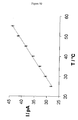
- the transmembrane protein pore of the invention has additional benefits. As described in the Example, the transmembrane protein pore of the invention is capable of functioning at elevated temperatures, such as up to 55°C or up to 100°C. This means that the pore is suitable for detecting analytes under extreme conditions.
- the fixed nature of the cyclodextrin means that it is not free to interact with the analyte independently of the pore. This reduces interference and means that a more accurate measurement of the concentration of the analyte can be obtained.
- the attachment of the cyclodextrin to the pore permanently alters its ion selectivity. This allows the production of a transmembrane protein pore having a particular ion selectivity.
- the fixed nature of the cyclodextrin means that the pore and cyclodextrin can be stored together, thereby allowing the production of a ready-to-use sensor.
- a transmembrane protein pore is a polypeptide that permits ions to flow from one side of the membrane to the other along an applied potential.
- the pore preferably permits the analyte to flow from one side of the membrane to the other along the applied potential.
- the pore is typically an oligomer.
- the pore is preferably made up of several repeating subunits, such as 6, 7 or 8 subunits.
- the pore is more preferably heptameric.
- the pore typically comprises a barrel or channel through which the ions may flow.
- the subunits of the pore typically surround a central axis and contribute strands to a transmembrane ⁇ barrel or channel.
- the barrel or channel of the pore typically comprises amino acids that facilitate interaction with the analyte. These amino acids are preferably located near the constriction of the barrel or channel.
- a pore for use in detecting nucleotides or nucleic acids typically comprises one or more positively charged amino acids, such as arginine, lysine or histidine. These amino acids typically facilitate the interaction between the pore and a nucleotide by interacting with the phosphate groups in the nucleotide or by ⁇ -cation interaction with the base in the nucleotide.
- a pore for use in detecting nucleotides or nucleic acids preferably has a ring of positively charged amino acids, such as arginine, lysine or histidine, located near the constriction of the barrel or channel.
- Each positively charged amino acid is typically provided by each of the pore subunits.
- Pores for use in accordance with the invention are ⁇ -barrel pores.
- ⁇ -barrel pores comprise a barrel or channel that is formed from ⁇ -sheet.
- Suitable ⁇ -barrel pores include, but are not limited to, ⁇ -toxins, such as ⁇ -hemolysin and leukocidins, and outer membrane proteins/porins of bacteria, such as Mycobacterium smegmatis porin A (MspA), outer membrane porin F (OmpF), outer membrane porin G (OmpG), outer membrane phospholipase A and Neisseria autotransporter lipoprotein (NalP).
- MspA Mycobacterium smegmatis porin A
- OmpF outer membrane porin F
- OmpG outer membrane porin G
- Neisseria autotransporter lipoprotein Neisseria autotransporter lipoprotein
- the most preferred pore for use in the invention is a variant of ⁇ -hemolysin.
- the ⁇ -hemolysin pore is formed of seven identical subunits (i.e. it is heptameric). The sequence of one subunit of ⁇ -hemolysin is shown in SEQ ID NO: 2.
- a variant is a heptameric pore in which one or more of the seven subunits has an amino acid sequence which varies from that of SEQ ID NO: 2 and which retains pore activity.
- Variants include modifications that facilitate covalent attachment of the cyclodextrin and orientation of the cyclodextrin as discussed below.
- 1, 2, 3, 4, 5, 6 or 7 of the subunits in a variant ⁇ -hemolysin may have an amino acid sequence that varies from that of SEQ ID NO: 2. All seven subunits within a variant pore are may be identical but are typically different, particularly as one or more of the subunits has been modified to facilitate covalent attachment of the cyclodextrin and orientation of the cyclodextrin as discussed below.
- Preferred variants of ⁇ -hemolysin for use in detecting nucleotides or nucleic acids have one or more positively charged amino acids, such as arginine, lysine or histidine, located near the constriction of the barrel or channel.
- the pore preferably has a ring of 4, 5, 6 or preferably 7 positively charged amino acids, such as arginine, lysine or histidine, located near the constriction of the barrel or channel.
- Each amino acid in the ring is typically provided by each of the variant subunits.
- Suitable variants include a positively charged amino acid at position 113 of each subunit.
- the pore for use in detecting nucleotides or nucleic acids is preferably ⁇ -hemolysin (M113K-RL2) 7 which comprises seven subunits as shown in SEQ ID NO: 4 or preferably ⁇ -hemolysin (M113H-RL2) 7 which comprises seven subunits as shown in SEQ ID NO: 6 or most preferably ⁇ -hemolysin (M113R-RL2) 7 which comprises seven subunits as shown in SEQ ID NO: 8.
- ⁇ -hemolysin have one or more uncharged amino acids, such as asparagine, or one or more aromatic amino acids, such as phenylalanine, located near the constriction of the barrel or channel.
- This has the purpose of binding and orienting ⁇ -CD-PDP for the covalent attachment reaction, and maintaining orientation of ⁇ -CD-PDP after covalent attachment.
- the pore preferably has a ring of 4, 5, 6 or preferably 7 uncharged or aromatic amino acids located near the constriction of the barrel or channel. Each amino acid in the ring is typically provided by each of the variant subunits. Suitable variants include an uncharged or aromatic amino acid at position 113 of each subunit.
- the pore for use in accordance with the invention is preferably ⁇ -hemolysin (M113F-RL2) 6 (M113C-D8RL2) 1 .
- the variant may be a naturally-occurring variant which is expressed by an organism, for instance by a Staphylococcus bacterium. Variants also include non-naturally occurring variants produced by recombinant technology. Over the entire length of the amino acid sequence of SEQ ID NO: 2, a subunit of a variant will preferably be at least 50% homologous to that sequence based on amino acid identity. More preferably, the subunit polypeptide may be at least 55%, at least 60%, at least 65%, at least 70%, at least 75%, at least 80%, at least 85%, at least 90% and more preferably at least 95%, 97% or 99% homologous based on amino acid identity to the amino acid sequence of SEQ ID NO: 2 over the entire sequence. There may be at least 80%, for example at least 85%, 90% or 95%, amino acid identity over a stretch of 200 or more, for example 230, 250, 270 or 280 or more, contiguous amino acids ("hard homology").
- Amino acid substitutions may be made to the amino acid sequence of SEQ ID NO: 2, for example up to 1, 2, 3, 4, 5, 10, 20 or 30 substitutions. Conservative substitutions may be made, for example, according to Table 1 below. Table 1 - Conservative substitutions Amino acids in the same block in the second column and preferably in the same line in the third column may be substituted for each other. NON-AROMATIC Non-polar G A P I L V Polar - uncharged C S T M N Q Polar - charged D E H K R AROMATIC H F W Y
- One or more amino acid residues of the amino acid sequence of SEQ ID NO: 2 may alternatively or additionally be deleted. Up to 1, 2, 3, 4, 5, 10, 20 or 30 residues may be deleted, or more.
- Variants may include subunits made of fragments of SEQ ID NO: 2. Such fragments retain pore forming activity. Fragments may be at least 50, 100, 200 or 250 amino acids in length. Such fragments may be used to produce chimeric pores. A fragment preferably comprises the pore forming domain of SEQ ID NO: 2.
- Variants include chimeric protein pores comprising fragments or portions of SEQ ID NO: 2.
- Chimeric protein pores are formed from subunits each comprising fragments or portions of SEQ ID NO: 2.
- the pore or channel part of a chimeric protein pore is typically formed by the fragments or portions of SEQ ID NO: 2.
- One or more amino acids may be alternatively or additionally added to the polypeptides described above.
- An extension may be provided at the N-terminus or C-terminus of the amino acid sequence of SEQ ID NO: 2 or polypeptide variant or fragment thereof.
- the extension may be quite short, for example from 1 to 10 amino acids in length. Alternatively, the extension may be longer, for example up to 50 or 100 amino acids.
- a carrier protein may be fused to an amino acid sequence according to the invention.
- Standard methods in the art may be used to determine homology.
- the UWGCG Package provides the BESTFIT program which can be used to calculate homology, for example used on its default settings ( Devereux et al (1984) Nucleic Acids Research 12, p387-395 ).
- the PILEUP and BLAST algorithms can be used to calculate homology or line up sequences (such as identifying equivalent residues or corresponding sequences (typically on their default settings)), for example as described in Altschul S. F. (1993) J Mol Evol 36:290-300 ; Altschul, S.F et al (1990) J Mol Biol 215:403-10 .
- HSPs high scoring sequence pair
- T some positive-valued threshold score
- Altschul et al, supra these initial neighbourhood word hits act as seeds for initiating searches to find HSP's containing them.
- the word hits are extended in both directions along each sequence for as far as the cumulative alignment score can be increased.
- Extensions for the word hits in each direction are halted when: the cumulative alignment score falls off by the quantity X from its maximum achieved value; the cumulative score goes to zero or below, due to the accumulation of one or more negative-scoring residue alignments; or the end of either sequence is reached.
- the BLAST algorithm parameters W, T and X determine the sensitivity and speed of the alignment.
- the BLAST algorithm performs a statistical analysis of the similarity between two sequences; see e.g., Karlin and Altschul (1993) Proc. Natl. Acad. Sci. USA 90: 5873-5787 .
- One measure of similarity provided by the BLAST algorithm is the smallest sum probability (P(N)), which provides an indication of the probability by which a match between two amino acid sequences would occur by chance.
- P(N) the smallest sum probability
- a sequence is considered similar to another sequence if the smallest sum probability in comparison of the first sequence to the second sequence is less than about 1, preferably less than about 0.1, more preferably less than about 0.01, and most preferably less than about 0.001.
- a transmembrane protein pore may be modified for example by the addition of histidine or aspartic acid residues to assist their identification or purification or by the addition of a signal sequence to promote their secretion from a cell where the polypeptide does not naturally contain such a sequence.
- a pore may be labelled with a revealing label.
- the revealing label may be any suitable label which allows the pore to be detected. Suitable labels include, but are not limited to, fluorescent molecules, radioisotopes, e.g. 125 I, 35 S, enzymes, antibodies, antigens, polynucleotides and ligands such as biotin.
- the pore may be isolated from a pore-producing organism, such as Staphylococcus aureus, or made synthetically or by recombinant means.
- the pore may be synthesized by in vitro translation and transcription.
- the amino acid sequence of the pore may be modified to include non-naturally occurring amino acids or to increase the stability of the compound.
- the pores are produced by synthetic means, such amino acids may be introduced during production.
- the pores may also be altered following either synthetic or recombinant production.
- the pores may also be produced using D-amino acids. This is conventional in the art for producing such proteins or peptides.
- the pore contains first and second specific modifications to facilitate attachment and orientation of the cyclodextrin.
- the pore may also contain other non-specific modifications as long as they do not interfere with the attachment and orientation of the cyclodextrin.
- a number of non-specific side chain modifications are known in the art and may be made to the side chains of the pores. Such modifications include, for example, reductive alkylation of amino acids by reaction with an aldehyde followed by reduction with NaBH 4 , amidination with methylacetimidate or acylation with acetic anhydride.
- a recombinant transmembrane pore can be produced using standard methods known in the art. Nucleic acid sequences encoding a pore or a pore subunit may be isolated and replicated using standard methods in the art. Nucleic acid sequences encoding a pore or a pore subunit may be expressed in a bacterial host cell using standard techniques in the art. The pore or a pore subunit may be produced in a cell by in situ expression of the polypeptide from a recombinant expression vector. The expression vector optionally carries an inducible promoter to control the expression of the polypeptide.
- Nucleic acid sequences encoding a pore or a pore subunit may be isolated and replicated using standard methods in the art. Chromosomal DNA may be extracted from a pore-producing organism, such as Staphylococcus aureus. The gene encoding the pore or a pore subunit may be amplified using PCR involving specific primers. The amplified sequence may then be incorporated into a recombinant replicable vector such as a cloning vector. The vector may be used to replicate the nucleic acid in a compatible host cell.
- nucleic acid sequences encoding a pore or a pore subunit may be made by introducing a polynucleotide encoding a pore or a pore subunit into a replicable vector, introducing the vector into a compatible host cell, and growing the host cell under conditions which bring about replication of the vector.
- the vector may be recovered from the host cell.
- Suitable host cells for cloning of polynucleotides encoding a pore or a pore subunit are known in the art and described in more detail below.
- the nucleic acid sequence encoding a pore or a pore subunit may be cloned into suitable expression vector.
- the nucleic acid sequence encoding a pore or a pore subunit is typically operably linked to a control sequence which is capable of providing for the expression of the coding sequence by the host cell.
- Such expression vectors can be used to express a pore or a pore subunit.
- operably linked refers to a juxtaposition wherein the components described are in a relationship permitting them to function in their intended manner.
- a control sequence "operably linked" to a coding sequence is ligated in such a way that expression of the coding sequence is achieved under conditions compatible with the control sequences. Multiple copies of the same or different pore or pore subunit genes may be introduced into the vector.
- the expression vector may then be introduced into a suitable host cell.
- the method of the invention may be carried out on a cell produced by introducing a nucleic acid sequence encoding a pore or a pore subunit into an expression vector, introducing the vector into a compatible bacterial host cell, and growing the host cell under conditions which bring about expression of the nucleic acid sequence encoding the pore or the pore subunit.
- the recombinantly-expressed pore subunits will self-assemble into a pore in the host cell membrane.
- the recombinant pore produced in this manner may be isolated from the host cell and inserted into another membrane.
- the different subunits may be expressed separately in different host cells as described above, removed from the host cells and assembled into a pore in a separate membrane, such as a rabbit cell membrane.
- the vectors may be for example, plasmid, virus or phage vectors provided with an origin of replication, optionally a promoter for the expression of the said nucleic acid sequence and optionally a regulator of the promoter.
- the vectors may contain one or more selectable marker genes, for example a tetracycline resistance gene. Promoters and other expression regulation signals may be selected to be compatible with the host cell for which the expression vector is designed. A T7, trc, lac, ara or ⁇ L promoter is typically used.
- the host cell typically expresses the pore or the pore subunit at a high level. Host cells transformed with a nucleic acid sequence encoding a pore or a pore subunit will be chosen to be compatible with the expression vector used to transform the cell.
- the host cell is typically bacterial and preferably Escherichia coli. Any cell with a ⁇ DE3 lysogen, for example C41 (DE3), BL21 (DE3), JM109 (DE3), B834 (DE3), TUNER, Origami and Origami B, can express a vector comprising the T7 promoter.
- a pore or a pore subunit may be produced in large scale following purification by any protein liquid chromatography system from pore-producing organisms or after recombinant expression as described above.
- Typical protein liquid chromatography systems include FPLC, AKTA systems, the Bio-Cad system, the Bio-Rad BioLogic system and the Gilson HPLC system.
- the naturally-occurring or recombinantly-produced pore or or pore subunit may then be inserted into a naturally-occurring or artificial membrane for use in accordance with the invention.
- Pores or pore subunits can be inserted into a membrane using any method known in the art. For instance, pores or pore subunits can be introduced into a membrane using the "pick and place" method described in International Application No. PCT/GB2006/001057 (published as WO 2006/100484 ).
- the transmembrane pore comprises a cyclodextrin that facilitates the interaction between the pore and the analyte.
- the presence of the cyclodextrin improves the host-guest chemistry of the pore and the analyte.
- the principles of host-guest chemistry are well-known in the art.
- the cyclodextrin has an effect on the physical or chemical properties of the pore that improves its interaction with the analyte.
- the cyclodextrin typically alters the charge of the barrel or channel of the pore or specifically interacts with or binds to the analyte thereby facilitating its interaction with the pore.
- At least part of the cyclodextrin is inside the barrel or channel of the pore.
- Preferably, all of the cyclodextrin is inside the barrel or channel of the pore.
- the cyclodextrin mediates the interaction between the analyte and the pore.
- the analyte preferably reversibly binds to the pore via or in conjunction with the cyclodextrin.
- the analyte most preferably reversibly binds to the pore via or in conjunction with the cyclodextrin as it passes through the pore across the membrane.
- the analyte can also reversibly bind to the barrel or channel of the pore via or in conjunction with the cyclodextrin as it passes through the pore across the membrane.
- the cyclodextrin preferably constricts the barrel or channel so that it may interact with the analyte.
- the cyclodextrin more preferably constricts the barrel or channel and restricts flow of ions through the pore. Flow of ions through the pore is restricted if the presence of the cyclodextrin interferes with movement of ions through the pore and across the membrane. Flow of ions through the pore is required for analyte detection. As discussed above, the interaction between the analyte and the pore affects the current of ions flowing through the pore in a manner specific for that analyte.
- the cyclodextrin is cyclic. The cyclodextrin preferably has the same symmetry as the pore.
- a cyclodextrin having seven-fold symmetry is typically used if the pore is heptameric (e.g. has seven subunits around a central axis that contribute 14 strands to a transmembrane ⁇ barrel).
- a cyclodextrin having six-fold symmetry is typically used if the pore is hexameric (e.g. has six subunits around a central axis that contribute 12 strands to a transmembrane ⁇ barrel, or is a 12-stranded ⁇ barrel).
- the cyclodextrin typically interacts with, such as binds to, the analyte. Interaction, such as binding, between the cyclodextrin and the analyte increases the likelihood that the analyte interacts with the pore.
- the cyclodextrin typically interacts with the analyte via host-guest chemistry.
- a portion of the cyclodextrin is typically capable of interacting with the analyte. The portion comprises one or more chemical groups that are capable of interacting with the analyte.
- the one or more chemical groups preferably interact with the analyte by non-covalent interactions, such as hydrophobic interactions, hydrogen bonding, Van der Waal's forces, ⁇ -cation interactions and/or electrostatic forces.
- the one or more chemical groups that are capable of interacting with the analyte preferably comprise amino groups and/or hydroxyl groups.
- the amino groups or hydroxyl groups can be attached to primary, secondary or tertiary carbon atoms.
- the portion of the cyclodextrin that is capable of interacting with the analyte preferably comprises an aromatic ring that is capable of interacting with the analyte via ⁇ -cation interactions.
- the portion of the cyclodextrin that is capable of interacting with the analyte more preferably comprises a ring of amino groups or hydroxyl groups, such as a ring of 6, 7 or 8 amino groups or hydroxyl groups.
- the portion most preferably comprises a ring of seven amino groups or hydroxyl groups.
- a ring of protonated amino groups may interact with negatively charged groups in an analyte, such as phosphate groups in a nucleotide.
- a ring of amino groups may interact with an analyte in combination with a ring of positively charged amino acids in the constriction of the barrel or channel of the pore.
- a ring of hydroxyl groups may interact with the analyte via hydrogen bonding.
- a ring of hydroxyl groups may interact with the analyte in combination with a ring of uncharged amino acids in the constriction of the barrel or channel of the pore.
- the cyclodextrin most preferably (1) constricts the barrel or channel and thereby restricts flow of ions through the pore and (2) interacts with or binds to the analyte.
- the cyclodextrin preferably comprises one or more chemical groups that are capable of interacting with one or more amino acids in the pore.
- the cyclodextrin more preferably comprises one or more chemical groups that are capable of interacting with one or more amino acids in the pore via non-covalent interactions, such as hydrophobic interactions, hydrogen bonding, Van der Waal's forces, ⁇ -cation interactions and/or electrostatic forces.
- the chemical groups that are capable of interacting with one or more amino acids in the pore are typically hydroxyls.
- the hydroxyl groups can be attached to primary, secondary or tertiary carbon atoms.
- the hydroxyl groups may form hydrogen bonds with uncharged amino acids in the pore, preferably in the barrel or channel of the pore.
- the interaction of one or more chemical groups in the cyclodextrin with one or more amino acids in the pore can be used to hold the cyclodextrin in the correct orientation.
- the one or more chemical groups in the cyclodextrin that are capable of interacting with one or more amino acids in the pore to hold the cyclodextrin in the correct orientation may be the same one or more chemical groups that are capable of interacting with the analyte or may be different from the one or more chemical groups that are capable of interacting with the analyte.
- the cyclodextrin is preferably heptakis-6-amino- ⁇ -cyclodextrin (am 7 - ⁇ -CD) or 6-monodeoxy-6-monoamino- ⁇ -cyclodextrin (am 1 ⁇ -CD).
- Table 2 shows preferred combinations of pores and cyclodextrins.
- the cyclodextrin is covalently attached to the pore.
- the cyclodextrin can be covalently attached to the pore using any method known in the art.
- the cyclodextrin may be attached directly to the pore.
- the cyclodextrin is preferably attached to the pore using a bifunctional crosslinker. Suitable crosslinkers are well-known in the art.
- a preferred crosslinker is succinimidyl 3-(2-pyridyldithio)propionate (SPDP).
- the cyclodextrin is covalently attached to the bifunctional crosslinker before the cyclodextrin/crosslinker complex is covalently attached to the pore but it is also possible to covalently attach the bifunctional crosslinker to the pore before the bifunctional crosslinker/pore complex is attached to the cyclodextrin.
- the site of covalent attachment is selected such that the cyclodextrin facilitates interaction of the analyte with the pore and thereby allows detection of the analyte.
- the site of covalent attachment is selected such that the analyte affects the current flowing through the pore in a manner specific for that analyte.
- the cyclodextrin is covalently attached to the barrel or channel of the pore.
- the cyclodextrin can be covalently attached at any site in the barrel or channel as long as the cyclodextrin facilitates interaction of the analyte with the pore and thereby allows detection of the analyte.
- the cyclodextrin is covalently attached to an amino acid in the barrel or channel that is close to the site at which the interaction between the cyclodextrin and the barrel or channel takes place.
- a bifunctional crosslinker of suitable length may be used so that the cyclodextrin can reach the site in the barrel or channel at which the interaction between the cyclodextrin and the barrel or channel takes place.
- the cyclodextrin does not have to be attached to the site within the barrel or channel with which it reversibly interacts when contacted with the pore.
- the pore is modified to facilitate the covalent attachment of the cyclodextrin with the bifunctional crosslinker.
- the barrel or channel of the pore is preferably modified to facilitate the covalent attachment of the cyclodextrin with the bifunctional crosslinker.
- the pore may be modified using any method known in the art. Any of the variants discussed above may be used to facilitate the covalent attachment of the cyclodextrin or the bifunctional crosslinker.
- the modification typically involves the introduction of one or more, such as 1, 2, 3, 4, 5, 6 or 7, amino acids into the pore, preferably the barrel or channel of the pore, to facilitate covalent attachment of the cyclodextrin with the bifunctional crosslinker.
- the one or more amino acids may be introduced into the same or different subunits of the pore. Any amino acid that is capable of forming a covalent bond, such as cysteine, can be introduced. The amino acid may be naturally-occurring or non-naturally occurring.
- the one or more amino acids are preferably introduced by substitutions. Table 3 below shows an example of the types of amino acids that can be introduced into the pore to facilitate the covalent attachment of the cyclodextrin or the bifunctional crosslinkers via specific chemical groups.
- a cysteine residue is introduced into a heptameric pore using one of the subunits shown in SEQ ID NOs: 14 and 16.
- the cyclodextrin is covalently attached to the pore in an orientation that allows the analyte to be detected using the pore.
- the cyclodextrin is oriented such that the analyte affects the current flowing through the pore in a manner specific for that analyte.
- the cyclodextrin is oriented so this it improves the host-guest chemistry of the pore and analyte.
- the cyclodextrin is oriented so that it affects the physical or chemical properties of the pore and improves its interaction with the analyte.
- the cyclodextrin is capable of specifically interacting with or binding to the analyte
- the cyclodextrin is oriented so that it specifically interacts with or binds to the analyte.
- the portion of the cyclodextrin that interacts with the analyte is oriented towards the end of the pore through which the analyte enters.
- one or more chemical groups in the cyclodextrin that are capable of interacting with the analyte are oriented towards the end of the pore through which the analyte enters.
- the groups are preferably amino groups or hydroxyl groups.
- the end of the pore through which the analyte enters may be the cis end or the trans end. The end is preferably the trans end.
- the orientation of the cyclodextrin is determined by the covalent attachment and/or the host-guest chemistry between the cyclodextrin and the pore.
- the covalent attachment may be designed so that the cyclodextrin is correctly oriented.
- the site (e.g. amino acid) at which the cyclodextrin is covalently attached to the pore may be designed so that the cyclodextrin is correctly oriented and/or a bifunctional crosslinker may be used so that the cyclodextrin is correctly oriented.
- the pore is modified to facilitate orientation of the cyclodextrin. Modification of the pore can improve the host-guest chemistry between the cyclodextrin and the pore and thereby hold the cyclodextrin in the correct orientation.
- the barrel or channel of the pore is modified to facilitate orientation of the cyclodextrin.
- the barrel or channel of the pore may be modified at any site that facilitates orientation of the cyclodextrin.
- the barrel or channel of the pore is modified at the site(s) at which host-guest chemistry occurs between the covalently-attached cyclodextrin and the pore.
- one or more amino acids in the barrel or channel of the pore that are capable of interacting with the covalently-attached cyclodextrin via non-covalent interactions are modified to facilitate orientation of the cyclodextrin.
- the amino acids that are modified may be one or more of the amino acids discussed above that facilitate interaction of the pore with the analyte.
- the pore may be modified using any method known in the art. Any of the variants discussed above may be used to facilitate the orientation of the cyclodextrin.
- the modification typically involves the introduction into the pore, or preferably the barrel or channel, of one or more, such as 1, 2, 3, 4, 5, 6 or 7, amino acids to facilitate the orientation of the cyclodextrin.
- the one or more amino acids may be introduced into the same or different subunits.
- the one or amino acids are preferably amino acids that hold the cyclodextrin in the correct orientation.
- the one or amino acids are more preferably amino acids that hold the cyclodextrin in the correct orientation via non-covalent interactions, such as hydrophobic interactions, hydrogen bonding, Van der Waal's forces, ⁇ -cation interactions and/or electrostatic forces.
- the one or more amino acids may be naturally-occurring or non-naturally occurring.
- the one or more amino acids are preferably uncharged amino acids.
- the uncharged amino acids may be polar, such as asparagine, or nonpolar, such as phenylalanine.
- Uncharged amino acids in the pore can orientate the cyclodextrin by interacting with hydroxyl groups in the cyclodextrin via hydrogen bonding.
- the one or more amino acids are preferably introduced by substitutions. Table 4 below shows the types of amino acids that can be introduced into the pore to correctly orient cyclodextrins containing different chemical groups.
- a heptameric pore comprises six phenylalanine residues that are capable of orienting an cyclodextrin containing hydroxyl groups attched to primary carbon atoms, such as 6-monodeoxy-6-monoamino- ⁇ -cyclodextrin (am 1 ⁇ CD), towards the cis side of the pore.
- the heptameric pore can comprise six of the subunits shown in SEQ ID NO: 10.
- a heptameric pore comprises six asparagine residues that are capable of orienting an cyclodextrin containing secondary hydroxyl groups, such as 6-monodeoxy-6-monoamino- ⁇ -cyclodextrin (am 1 ⁇ CD), towards the trans side of the pore.
- the heptameric pore can comprise six of the subunits shown in SEQ ID NO: 12.
- the pore is modified to facilitate the covalent attachment and to facilitate the orientation of the cyclodextrin.
- the spatial relationship between the site of covalent attachment and site(s) at which the pore is modified to facilitate the orientation of the cyclodextrin is designed to ensure that the cyclodextrin is held in the correct orientation.
- the modification can be made anywhere within the pore, preferably in the barrel or channel, as long as the cyclodextrin is held in the correct orientation.
- the modification that facilitates the covalent attachment and the modification(s) that facilitate the orientation of the cyclodextrin are spatially proximate within the pore.
- the modification that facilitates the covalent attachment and the modification(s) that facilitate the orientation of the cyclodextrin are made in the same ring of amino acids within the barrel or channel of the pore.
- One amino acid in the ring may be modified to facilitate covalent attachment of the cyclodextrin, while one or more, such as 1, 2, 3, 4, 5 or 6, of the other amino acids in the ring can be modified to facilitate orientation of the cyclodextrin.
- a bifunctional crosslinker of appropriate length may be used to ensure that the cyclodextrin is positioned close to the modification(s) that facilitate the orientation of the cyclodextrin and thereby correctly oriented. Any of the modifications discussed above can be used.
- a heptameric pore is produced using six of the subunits shown in SEQ ID NO: 10 and one of the subunits shown in SEQ ID NO: 14 or using six of the subunits shown in SEQ ID NO: 12 and one of the subunits shown in SEQ ID NO: 16.
- the invention also relates to a method of producing a transmembrane protein pore of the invention.
- the method comprises modifying a transmembrane protein pore at a first site to facilitate the covalent attachment of a cyclodextrin, which facilitates an interaction between the pore and an analyte and modifying the pore at a second site to facilitate the orientation of the cyclodextrin.
- the method also comprises covalently attaching the cyclodextrin to the pore.
- the cyclodextrin can be covalently attached to the pore using any method known in the art.
- any of the pores, cyclodextrins and bifunctional crosslinkers discussed above can be used in the method.
- the site of covalent attachment is selected as discussed above.
- the pore is modified to facilitate the covalent attachment of the cyclodextrin and to facilitate the orientation of the cyclodextrin. This is discussed in more detail above.
- the method also comprises determining whether or not the cyclodextrin is attached to the pore in an orientation that allows the analyte to be detected using the pore. This involves determining whether or not the transmembrane protein pore can be used to determine the presence or absence of the analyte. This can be done as described in more detail below. If the presence or absence of the analyte can be determined, the cyclodextrin is in the correct orientation and a transmembrane protein pore of the invention has been produced. If the presence or absence of the analyte cannot be determined, the cyclodextrin is likely to be in an incorrect orientation and a transmembrane protein pore of the invention has not been produced.
- the present invention also relates to a method of determining the presence or absence of an analyte.
- the method comprises contacting the analyte with a transmembrane protein pore of the invention so that the analyte interacts with the pore and measuring the current passing through the pore during the interaction and thereby determining the presence or absence of the analyte.
- Any of the transmembrane protein pores of the invention can be used. The benefits associated with using a transmembrane protein pore of the invention to detect an analyte is discussed above.
- the analyte is present if the current flows through the pore in a manner specific for the analyte (i.e. if a distinctive current associated with the analyte is detected flowing through the pore).
- the analyte is absent if the current does not flow through the pore in a manner specific for the analyte.
- the invention therefore involves stochastic sensing of an analyte.
- the invention can be used to differentiate analytes of similar structure on the basis of the different effects they have on the current passing through a transmembrane protein pore.
- the invention can also be used to measure the concentration of a particular analyte in a sample.
- the invention may also be used in a sensor that uses many or thousands of pores of the invention in bulk sensing applications.
- the method may be carried out using any suitable membrane/pore system in which a transmembrane protein pore of the invention is inserted into a membrane.
- the method is typically carried out using (i) an artificial membrane comprising a transmembrane protein pore of the invention, (ii) an isolated, naturally-occurring membrane comprising a transmembrane protein pore of the invention, or (iii) a cell expressing a transmembrane protein pore that has been modified in accordance with the invention.
- the method is preferably carried out using an artificial membrane.
- the membrane may comprise other transmembrane and/or intramembrane proteins as well as other molecules in addition to the transmembrane protein pore of the invention.
- the method of the invention is typically carried out in vitro.
- the membrane forms a barrier to the flow of ions and analytes.
- the membrane is preferably a lipid bilayer.
- Lipid bilayers suitable for use in accordance with the invention can be made using methods known in the art.
- lipid bilayer membranes can be formed using the method of Montal and Mueller (1972).
- the method of the invention may be carried out using lipid bilayers formed from any membrane lipid including, but not limited to, phospholipids, glycolipids, cholesterol and mixtures thereof.
- the lipid bilayer is preferably formed from 1,2-diphytanoyl-sn-glycero-3-phosphocholine.
- the pore may be suspended in a purified form in a solution containing a lipid bilayer such that it diffuses to the lipid bilayer and is inserted by binding to the lipid bilayer and assembling into a functional state.
- the pore may be directly inserted into the membrane using the method described in M.A. Holden, H. Bayley. J. Am. Chem. Soc. 2005, 127, 6502-6503 .
- the analyte may be contacted with the pore on either side of the membrane.
- the analyte may be introduced to the pore on either side of the membrane.
- the analyte may be contacted with the side of the membrane that allows the analyte to pass through the pore to the other side of the membrane.
- the analyte is contacted with an end of the pore, which in its native environment allows the entry of ions or small molecules, such as analytes, into the barrel or channel of the pore such that the analyte may pass through the pore.
- the analyte interacts with the pore and/or cyclodextrin as it passes across the membrane through the barrel or channel of the pore.
- the analyte may be contacted with the side of the membrane that allows the analyte to interact with the pore via or in conjunction with the cyclodextrin, dissociate from the pore and remain on the same side of the membrane.
- the present invention provides pores in which the orientation of the cyclodextrin is fixed.
- the analyte is preferably contacted with the end of the pore towards which the cyclodextrin is oriented.
- the analyte is contacted with the end of the pore towards which the portion of the cyclodextrin that interacts with the analyte is orientated.
- the analyte may interact with the pore in any manner and at any site.
- the analyte preferably reversibly binds to the pore via or in conjunction with the cyclodextrin.
- the analyte most preferably reversibly binds to the pore via or in conjunction with the cyclodextrin as it passes through the pore across the membrane.
- the analyte can also reversibly bind to the barrel or channel of the pore via or in conjunction with the cyclodextrin as it passes through the pore across the membrane.
- the analyte affects the current flowing through the pore in a manner specific for that analyte. For example, a particular analyte will reduce the current flowing through the pore for a particular mean time period and to a particular extent. In other words, the current flowing through the pore is distinctive for a particular analyte.
- Control experiments may be carried out to determine the effect a particular analyte has on the current flowing through the pore. Results from carrying out the method of the invention on a test sample can then be compared with those derived from such a control experiment in order to identify a particular analyte in the sample or determine whether a particular analyte is present in the sample.
- the frequency at which the current flowing through the pore is affected in a manner indicative of a particular analyte can be used to determine the concentration of that analyte in the sample.
- the method may be carried out using any apparatus that is suitable for investigating a membrane/pore system in which a transmembrane protein pore is inserted into a membrane.
- the method may be carried out using any apparatus that is suitable for stochastic sensing.
- the apparatus comprises a chamber comprising an aqueous solution and a barrier that separates the chamber into two sections.
- the barrier has an aperture in which the membrane containing the pore is formed.
- the analyte may be contacted with the pore by introducing the analyte into the chamber.
- the analyte may be introduced into either of the two sections of the chamber.
- the method of the invention involves measuring the current passing through the pore during interaction with the analyte. Therefore the apparatus also comprises an electrical circuit capable of applying a potential and measuring an electrical signal across the membrane and pore.
- the method may be carried out using a patch clamp or a voltage clamp.
- the method preferably involves the use of a voltage clamp.
- the Example discloses one way to carry out a voltage clamp method.
- the analyte can be any substance in a sample. Suitable analytes include, but are not limited to, metal ions, inorganic salts, polymers, such as a polymeric acids or bases, dyes, bleaches, pharmaceuticals, diagnostic agents, recreational drugs, explosives and environmental pollutants.
- the analyte can be an analyte that is secreted from cells.
- the analyte can be an analyte that is present inside cells such that the analyte must be extracted from the cells before the invention can be carried out.
- the analyte is preferably an amino acid, peptide, polypeptide or a protein.
- the amino acid, peptide, polypeptide or protein can be naturally-occurring or non-naturally-occurring.
- the polypeptide or protein can include within it synthetic or modified amino acids. A number of different types of modification to amino acids are known in the art. For the purposes of the invention, it is to be understood that the analyte can be modified by any method available in the art.
- the protein can be an enzyme, antibody, hormone, growth factor or growth regulatory protein, such as a cytokine.
- the cytokine may be selected from an interleukin, preferably IFN-1, IL-2, IL-4, IL-5, IL-6, IL-10, IL-12 or IL-13, an interferon, preferably IL- ⁇ or other cytokines such as TNF- ⁇ .
- the protein may be a bacterial protein, fungal protein, virus protein or parasite-derived protein. Before it is contacted with the pore, the protein may be unfolded to form a polypeptide chain and thereby allow it to enter the barrel or channel of the pore and interact with the pore via or in conjunction with the cyclodextrin.
- the analyte is present in any suitable sample.
- the invention is typically carried out on a sample that is known to contain or suspected to contain the analyte.
- the invention may be carried out on a sample that contains one or more analytes whose identity is unknown.
- the invention may be carried out on a sample to confirm the identity of one or more analytes whose presence in the sample is known or expected.
- the sample may be a biological sample.
- the invention may be carried out in vitro on a sample obtained from or extracted from any organism or microorganism.
- the organism or microorganism is typically prokaryotic or eukaryotic and typically belongs to one the five kingdoms: plantae, animalia, fungi, monera and protista.
- the invention may be carried out in vitro on a sample obtained from or extracted from any virus.
- the sample is preferably a fluid sample.
- the sample typically comprises a body fluid of the patient.
- the sample may be urine, lymph, saliva, mucus or amniotic fluid but is preferably blood, plasma or serum.
- the sample is human in origin, but alternatively it may be from another mammal animal such as from commercially farmed animals such as horses, cattle, sheep or pigs or may alternatively be pets such as cats or dogs.
- the sample may be a non-biological sample.
- the non-biological sample is preferably a fluid sample.
- Examples of a non-biological sample include surgical fluids, water such as drinking water, sea water or river water, and reagents for laboratory tests.
- the sample is typically processed prior to being assayed, for example by centrifugation or by passage through a membrane that filters out unwanted molecules or cells, such as red blood cells.
- the sample may be measured immediately upon being taken.
- the sample may also be typically stored prior to assay, preferably below -70°C.
- the method of the invention involves the measuring of a current passing through the pore during interaction with the analyte. Suitable conditions for measuring ionic currents through transmembrane protein pores are known in the art and disclosed in the Example.
- the method is carried out with a voltage applied across the membrane and pore.
- the voltage used is typically from -250mV to +250mV.
- the voltage used is preferably in a range having a lower limit selected from -200 mV, -150 mV, -100 mV, -50 mV, -20mV and 0 mV and an upper limit independently selected from +10 mV, + 20 mV, +50 mV, +100 mV, +150 mV and +200 mV.
- the method is carried out in the presence of any alkali metal chloride salt.
- the salt is present in the aqueous solution in the chamber. Potassium chloride (KCl), sodium chloride (NaCl) or caesium chloride (CsCl) is typically used. KCl is preferred.
- the salt concentration is typically from 0.1 to 2.5M, from 0.3 to 1.9M, from 0.5 to 1.8M, from 0.7 to 1.7M, from 0.9 to 1.6M or from 1M to 1.4M.
- the salt concentration is preferably about 1M.
- the method is typically carried out in the presence of a buffer.
- the buffer is present in the aqueous solution in the chamber. Any buffer may be used in the method of the invention.
- One suitable buffer is Tris-HCl buffer.
- the method is typically carried out at a pH of from 4.0 to 10.0, from 4.5 to 9.5, from 5.0 to 9.0, from 5.5 to 8.8, from 6.0 to 8.7 or from 7.0 to 8.8 or 7.5 to 8.5.
- the pH used is preferably about 8.0.
- the method is typically carried out at from 0°C to 100°C, from 15°C to 95°C, from 16°C to 90°C, from 17°C to 85°C, from 18°C to 80°C, 19°C to 70°C, or from 20°C to 60°C.
- the method is preferably carried out at room temperature.
- the present invention also relates to a method of identifying an individual nucleotide.
- the method comprises contacting the nucleotide with a transmembrane protein pore of the invention so that the nucleotide interacts with the pore and measuring the current passing through the pore during the interaction and thereby determining the identity of the nucleotide.
- the invention therefore involves stochastic sensing of an individual nucleotide.
- the invention can be used to differentiate nucleotides of similar structure on the basis of the different effects they have on the current passing through a transmembrane protein pore. Individual nucleotides can be identified at the single molecule level from their current amplitude when they interact with the pore.
- the invention can also be used to determine whether or not a particular nucleotide is present in a sample.
- the invention can also be used to measure the concentration of a particular nucleotide in a sample.
- An individual nucleotide in accordance with the invention is a single nucleotide.
- An individual nucleotide is one which is not bound to another polynucleotide by a nucleotide bond.
- a nucleotide bond involves one of the phosphate groups of a nucleotide being bound to the sugar group of another nucleotide.
- An individual nucleotide is typically one which is not bound by a nucleotide bond to another polynucleotide sequence of at least 5, at least 10, at least 20, at least 50, at least 100, at least 200, at least 500, at least 1000 or at least 5000 nucleotides.
- the individual nucleotide has been digested from a target polynucleotide sequence, such as a DNA or RNA strand.
- the method of the invention may be used to identify any nucleotide.
- the nucleotide can be naturally-occurring or artificial.
- a nucleotide typically contains a nucleobase, a sugar and at least one phosphate group.
- the nucleobase is typically heterocyclic. Suitable nucleobases include purines and pyrimidines and more specifically adenine, guanine, thymine, uracil and cytosine.
- the sugar is typically a pentose sugar. Suitable sugars include, but are not limited to, ribose and deoxyribose.
- the nucleotide is typically a ribonucleotide or deoxyribonucleotide.
- the nucleotide typically contains a monophosphate, diphosphate or triphosphate.
- Suitable nucleotides include, but are not limited to, adenosine monophosphate (AMP), adenosine diphosphate (ADP), adenosine triphosphate (ATP), guanosine monophosphate (GMP), guanosine diphosphate (GDP), guanosine triphosphate (GTP), thymidine monophosphate (TMP), thymidine diphosphate (TDP), thymidine triphosphate (TTP), uridine monophosphate (UMP), uridine diphosphate (UDP), uridine triphosphate (UTP), cytidine monophosphate (CMP), cytidine diphosphate (CDP), cytidine triphosphate (CTP), cyclic adenosine monophosphate (cAMP), cyclic guanosine monophosphate (cGMP), deoxyadenosine monophosphate (dAMP), deoxyadenosine diphosphate (dADP), deoxyaden
- the nucleotide may be derived from the digestion of a nucleic acid sequence such as ribonucleic acid (RNA) or deoxyribonucleic acid. Individual nucleotides from a single nucleic acid sequence may be contacted with the pore in a sequential manner in order to sequence the whole or part of the nucleic acid. Sequencing nucleic acids in accordance with the second embodiment of the invention is discussed in more detail below.
- RNA ribonucleic acid
- deoxyribonucleic acid Individual nucleotides from a single nucleic acid sequence may be contacted with the pore in a sequential manner in order to sequence the whole or part of the nucleic acid. Sequencing nucleic acids in accordance with the second embodiment of the invention is discussed in more detail below.
- the nucleotide is typically unmodified, such as when the nucleotide is derived from the digestion of a nucleic acid sequence. Alternatively, the nucleotide may be modified or damaged. The nucleotide is typically methylated.
- the nucleotide may be labelled with a revealing label.
- the revealing label may be any suitable label which allows the nucleotide to be detected. Suitable labels include fluorescent molecules, radioisotopes, e.g. 125 I, 35 S, and linkers such as biotin.
- the nucleotide is typically present in any suitable biological sample. Suitable biological samples are discussed above.
- the voltage used is preferably about +130 mV for deoxy-ribo nucleotides 5' monophosphate, such as dAMP, dTMP, dGMP and dCMP, and +110 mV for ribo nucleotides 5' monophosphate, such as AMP, TMP, GMP and UMP.
- the method is preferably carried out at +130mV at pH 8.0, 1M KCl for deoxy-ribo nucleotides 5' monophosphate, such as dAMP, dTMP, dGMP and dCMP, and at +1 10mV at pH 8.0, 1M KCl for ribo nucleotides 5' monophosphate, such as AMP, TMP, GMP and UMP.
- the present invention also relates to a method of sequencing a target nucleic acid sequence.
- the method comprises (a) digesting an individual nucleotide from one end of the target sequence using a processive exonuclease; (b) contacting the nucleotide with a transmembrane protein pore of the invention so that the nucleotide interacts with the pore; (c) measuring the current passing through the pore during the interaction and thereby determining the identity of the nucleotide; and (d) repeating steps (a) to (c) at the same end of the nucleic acid sequence and thereby determining the sequence of the nucleic acid.
- the method involves stochastic sensing of each single nucleotide of a nucleic acid sequence in a successive manner in order to sequence the nucleic acid.
- a transmembrane protein pore of the invention is particularly suited to this method.
- it is important to ensure that every nucleotide in the nucleic acid is identified in a successive manner.
- the fixed nature of the cyclodextrin in a transmembrane protein pore of the invention means that a distinctive current will flow through the pore whenever each successive nucleotide interacts with the pore.
- the whole or only part of the nucleic acid may be sequenced using this method.
- the nucleic acid can be any length.
- the nucleic acid can be at least 10, at least 50, at least 100, at least 150, at least 200, at least 250, at least 300, at least 400 or at least 500 nucleotides in length.
- the nucleic acid can be naturally-occurring or artificial.
- the method may be used to verify the sequence of a manufactured oligonucleotide. The method is typically carried out in vitro .
- Steps (b) and (c) of this method are generally identical to the steps carried out in the method of identifying nucleotides discussed above. All of the discussion above concerning detecting analytes, and in particular concerning the pores, membranes, apparatus and conditions that may be used, equally applies to this method.
- the nucleic acid is typically present in any biological sample as discussed above.
- the method of sequencing a target nucleic acid involves contacting the nucleic acid with a processive exonuclease to release individual nucleotides from one end of the nucleic acid.
- Processive exonucleases are enzymes that typically latch onto one end of a nucleic acid and digest the sequence one nucleotide at a time from that end.
- the processive exonuclease can digest the nucleic acid in the 5' to 3' direction or 3' to 5' direction.
- the end of the nucleic acid to which the processive exonuclease binds is typically determined through the choice of enzyme used and/or using methods known in the art. Hydroxyl groups or cap structures at either end of the nucleic acid sequence may typically be used to prevent or facilitate the binding of the processive exonuclease to a particular end of the nucleic acid sequence.
- Any processive exonuclease enzyme may be used in the method.
- the preferred enzyme for use in the method is lambda exonuclease.
- the sequence of one subunit of lambda exonuclease is shown in SEQ ID NO: 17. Three identical subunits interact to form a trimer exonuclease.
- Variants of lambda exonuclease are enzymes formed of polypeptide subunits which have an amino acid sequence which varies from that of SEQ ID NO: 17 and which retain processive exonuclease activity.
- the variants may vary from SEQ ID NO: 17 in the same manner and to the same extent as discussed for variants of SEQ ID NO: 2 above.
- a variant preferably comprises the domains responsible for binding to the nucleic acid and for digesting the nucleic acid (catalytic domain).
- a variant preferably has an increased or reduced rate of enzyme activity as required and/or higher salt tolerance compared to the wild-type enzyme.
- the processive exonuclease may be produced using any of the methods discussed above for the production of transmembrane protein pores.
- the method of sequencing a target nucleic acid sequence involves contacting the nucleic acid sequence with the processive exonuclease so that the nucleotides are digested from the end of the nucleic acid at a rate that allows identification of each individual nucleotide as discussed above.
- Methods for doing this are well known in the art. For example, Edman degradation is used to successively digest single amino acids from the end of polypeptide such that they may be identified using High Performance Liquid Chromatography (HPLC). A homologous method may be used in the present invention.
- the processive exonuclease is preferably covalently attached to the transmembrane protein pore.
- Methods for covalently attaching the processive exonuclease to the pore are well known in the art.
- the rate at which the processive exonuclease must function is typically slower than the optimal rate of a wild-type processive exonuclease.
- a suitable rate of activity of the processive exonuclease in the method of the second embodiment involves digestion of from 0.5 to 1000 nucleotides per second, from 0.6 to 500 nucleotides per second, 0.7 to 200 nucleotides per second, from 0.8 to 100 nucleotides per second, from 0.9 to 50 nucleotides per second or 1 to 20 or 10 nucleotides per second.
- the rate is preferably 1, 10, 100, 500 or 1000 nucleotides per second.
- a suitable rate of processive exonuclease activity can be achieved in various ways. For example, variant processive exonucleases with a reduced optimal rate of activity may be used in accordance with the invention.
- the activity of processive exonucleases is typically pH dependent such that their activity falls as pH is reduced.
- the method of the second embodiment is typically carried out at a pH of from 7.5 to 8.0 or from 7.7 to 8.0.
- the pH used is preferably about 8.0.
- the rate of activity of processive exonucleases typically falls as salt concentration rises. However, very high salt concentrations typically have a detrimental effect on the activity of the enzyme.
- Another way of limiting the rate of the enzyme is to carry out the method at a salt concentration that reduces the rate of the activity of the enzyme without adversely affecting its activity.
- the method may be carried out at a salt concentration of from 0.5 to 1M.
- the salt concentration is preferably about 1M.
- kits that may be used to carry out the method of sequencing a target nucleic acid sequence.
- the kits are therefore suitable for sequencing nucleic acids.
- the kits comprise a transmembrane pore of the invention and a processive exonuclease.
- the kit may additionally comprise one or more other reagents or instruments which enable any of the embodiments of the method mentioned above to be carried out.
- reagents or instruments include one or more of the following: suitable buffer(s) (aqueous solutions), means to obtain a sample from a subject (such as a vessel or an instrument comprising a needle), means to amplify nucleic acid sequences, a membrane as defined above or voltage or patch clamp apparatus.
- Reagents may be present in the kit in a dry state such that a fluid sample resuspends the reagents.
- the kit may also, optionally, comprise instructions to enable the kit to be used in the method of the invention or details regarding which patients the method may be used for.
- the kit may, optionally, comprise nucleotides.
- the ⁇ -hemolysin mutant pores (M113F-RL2) 7 (WT background; SEQ ID NO: 10), (M113N-RL2) 7 (WT background; SEQ ID NO: 12), (M113F-RL2) 6 (M113C-D8RL2) 1 (SEQ ID NOs: 10 and 14), (M113N) 6 (T117C-D8RL3) 1 (SEQ ID NOs: 12 and 16) were expressed, assembled and purified as previously described.
- RL2 is the product of a semisynthetic gene that was devised to permit cassette mutagenesis of the sequence encoding the transmembrane ⁇ barrel ( Cheley, S., Braha, O., Lu, X., Conlan, S., and Bayley, H. (1999) Protein Sci. 8, 1257-1267 ). It contains six silent restriction sites and five altered amino acids in the encoded polypeptide sequence (K8A, V124L, G130S, N139Q and I142L). D8RL2 is RL2 with an octa-aspartate tail.
- RL3 is identical to the WT ⁇ HL polypeptide at the amino acid level, but the gene contains six silent mutations in the region encoding the loop that aid cassette mutagenesis (S. Cheley, unpublished).
- D8RL3 is RL3 with an octa-aspartate tail.
- Figure 12 shows the complete polynucleotide sequence of pT7-RL3-D8.
- Reagents were obtained as follows: 1,2-diphytanoyl- sn -glycero-3-phosphocholine (Avanti Polar Lipids), pentane (JT Baker), hexadecane (99+%, Sigma-Aldrich), 6-monodeoxy-6-monoamino- ⁇ -cyclodextrin hydrochloride (99%, Cyclolabs Budapest, Hungary), Trizma base (99.9%, Sigma-Aldrich), concentrated HCl (analytical reagent grade, Fisher Scientific), potassium chloride (99%, Sigma-Aldrich), 2-adamantanamine ⁇ HCl (99%, Aldrich), succinimidyl 3-(2-pyridyldithio)propionate (SPDP, 95%, Fluka), triethylamine (99.5%, Fluka).
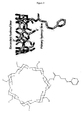
- 6-Monodeoxy-6-monoamino- ⁇ -cyclodextrin (am 1 ⁇ CD) hydrochloride (11.7 mg, 0.01 mmol) and succinimidyl 3-(2-pyridyldithio)propionate (SPDP, 6.24 mg, 0.02 mmol) were dissolved in 5 mL MeOH / H 2 O (1:1).
- Triethylamine 100 ⁇ L was added over 5 min and the mixture was stirred overnight. The desired product appeared as a white precipitate, which was filtered off and washed successively with cold water and acetone. An analytical sample was obtained by recrystallization from DMSO and water.
- a bilayer of 1,2-diphytanoyl- sn -glycero-3-phosphocholine was formed across an aperture of 100-150 ⁇ m in diameter in a polycarbonate film (20- ⁇ m thickness from Goodfellow, Malvern, PA) that divided a planar bilayer chamber into two compartments, cis and trans. Both compartments contained 1 mL of buffer. Engineered protein pores were added to the cis compartment, which was connected to ground. ⁇ CD-PDP was added to the trans compartment, which was connected to the head-stage of the amplifier.
- the pdb files of the heptameric ⁇ -hemolysin pores (M113F-RL2) 7 and (M113N-RL2) 7 provided by Michelle Montoya and Eric Gouaux were displayed in PyMOL (DeLano Scientific, San Carlos, CA).
- PyMOL PyMOL
- the ⁇ CD-PDP structure was also constructed in PyMOL by using the building tools.
- the length of the linker was measured by building ⁇ CD-PDP in PyMol; the distance between the N atom in the amide bond of am 1 ⁇ CD and the pyridyl S atom is approximately 7.0 ⁇ in an extended conformation. Therefore, the linker is slightly longer than required for linking am 1 ⁇ CD to a cysteine at position-113 with the ⁇ CD in the orientation found in (M113F-RL2) 7 or to a cysteine at position-117 with the ⁇ CD in the orientation found in (M113N-RL2) 7 .
- a heteroheptameric ⁇ HL pore (M113F-RL2) 6 (M113C-D8RL2) 1 was engineered with six phenylalanine residues at position-113 and a single cysteine at the seventh position.
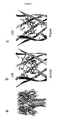
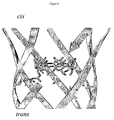
- the cysteine residue in the M113C subunit was designed to be able to react with the pyridyl disulfide of ⁇ CD-PDP presented from the trans side of the bilayer in such a way that the primary hydroxyls of the cyclodextrin would remain in the proximity of the six Phe residues of the M113F subunits.
- ⁇ CD would be anchored inside the ⁇ HL pore as a permanent molecular adaptor.
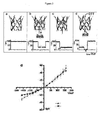
- the 70% block is most likely generated when ⁇ CD-PDP binds within the pore with its primary hydroxyls interacting with the Phe-113 side chains and the linker protruding towards the cis side.
- the 95% block may occur when ⁇ CD-PDP enters the pore with the pyridyl ring lodged inside the cavity of the cyclodextrin, thereby reducing the current flow.
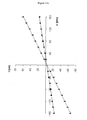
- I-V Current-voltage
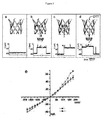
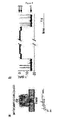
- this state is presumed to represent the ⁇ HL pore with ⁇ CD covalently attached through a disulfide bond to position 117 ( Figures 4 and 5c ).
- the disulfide bond was cleaved after the addition of 2 mM DTT to the cis chamber ( Figure 5d ).
- a transient intermediate state with 80% current block and a lifetime of 300 ⁇ 20 ms (n 5) was observed ( Figure 5d ).
- I-V curves were measured for the adduct (M113N-RL2) 6 (T117C-D8RL3) 1 - ⁇ CD. he I-V curve of this complex is similar to that of (M113N-RL2) 7 • ⁇ CD within the range of ⁇ 100 mV, diverging slightly at both high positive and negative potentials ( Figure 5e ).
- the presumed covalent adduct, (M113F-RL2) 6 (T117C-D8RL3) 1 - ⁇ CD, was examined by electrical recording in 25 mM Tris ⁇ HCl, pH 8.0, 1 M KC1, at ⁇ 100 mV (n 3).
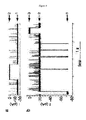
- Cis -Lithocholic acid is the tightest binding molecule known for ⁇ CD ( Yang, Z., and Breslow, R. (1997) Tetrahedron Lett. 38, 6171-6172 ). Therefore, we chose this molecule to test the newly constructed pores for studying binding events of long duration. (Ml13F-RL2) 6 (M113C-D8RL2) 1 - ⁇ CD was selected because of its quieter background signal in the absence of analyte (see Figure 7 , for example).
- the events showed a 98% current block, with a 92% block for 200 ⁇ 100 ms at the beginning of each event and for 150 ⁇ 100 ms at the end of the event ( Figure 8b , Figure 9 ).
- Non-covalent cyclodextrins lodged within the ⁇ HL pore can drastically alter the charge selectivity for ion transport ( Gu, L.-Q., Dalla Serra, M., Vincent, J. B., Vigh, G., Cheley, S., Braha, O., and Bayley, H. (2000) Proc.Natl.Acad.Sci. USA 97, 3959-3964 ).
- the charge selectivity (P k +/P Cl -, KCl: cis 200 mM, trans 1000 mM) of WT- ⁇ HL changes from 0.55 ⁇ 0.02 to 0.25 ⁇ 0.01 after ⁇ CD becomes lodged in the lumen, i.e.
- Vr The reversal potentials
- P K +/P Cl - was calculated with the Goldman-Hodgkin-Katz equation by using activities and the experimental V r value (20). *25 mM Tris-HCl, pH 8.0.
- the salt concentrations (KCl) are given in mM. ⁇ +100 mV, 1 M KCl, 25 mM Tris-HCl, pH 8.0, in both chambers.
- Covalent attachment means that there are no gaps in detection, and control over the ⁇ CD orientation is important because it is likely that certain analytes bind through only one of the two entrances to the ⁇ CD cavity or that they bind in different ways depending upon the side of entry ( Kang, X. F., Cheley, S., Guan, X., and Bayley, H. (2006) J Am Chem Soc 128(33), 10684-10685 ).
- Tables 7 to 16 below set out the sequence information Table 7 - SEQ ID NOs: 1 and 2 - Wild-type ⁇ -hemolysin from Staphylococcus aureus SEQ ID NO: 2 is encoded by residues 1 to 879 of SEQ ID NO: 1 gcagattctg atattaatat taaaaccggt actacagata ttggaagcaa tactacagta 60 aaaacaggtg atttagtcac ttatgataaa gaaaatggca tgcacaaaaaagtatttat 120 agttttatcg atgataaaaa tcacaataaaaactgctag ttattagaac gaaaggtacc 180 attgctggtc aatatagagt ttatagcgaa gaaggtgcta acaaagtgg ttagcctt
Landscapes
- Life Sciences & Earth Sciences (AREA)
- Chemical & Material Sciences (AREA)
- Health & Medical Sciences (AREA)
- Engineering & Computer Science (AREA)
- Organic Chemistry (AREA)
- Proteomics, Peptides & Aminoacids (AREA)
- Molecular Biology (AREA)
- Immunology (AREA)
- Zoology (AREA)
- Wood Science & Technology (AREA)
- General Health & Medical Sciences (AREA)
- Biochemistry (AREA)
- Microbiology (AREA)
- Biotechnology (AREA)
- Analytical Chemistry (AREA)
- Physics & Mathematics (AREA)
- Biophysics (AREA)
- Genetics & Genomics (AREA)
- Biomedical Technology (AREA)
- Urology & Nephrology (AREA)
- Hematology (AREA)
- Bioinformatics & Cheminformatics (AREA)
- General Engineering & Computer Science (AREA)
- Cell Biology (AREA)
- Medicinal Chemistry (AREA)
- Food Science & Technology (AREA)
- General Physics & Mathematics (AREA)
- Pathology (AREA)
- Gastroenterology & Hepatology (AREA)
- Peptides Or Proteins (AREA)
- Investigating Or Analyzing Materials By The Use Of Electric Means (AREA)
- Measuring Or Testing Involving Enzymes Or Micro-Organisms (AREA)
Applications Claiming Priority (2)
| Application Number | Priority Date | Filing Date | Title |
|---|---|---|---|
| GB0719531A GB2453377A (en) | 2007-10-05 | 2007-10-05 | Transmembrane protein pores and molecular adapters therefore. |
| PCT/GB2008/003372 WO2009044170A1 (en) | 2007-10-05 | 2008-10-06 | Molecular adaptors |
Publications (2)
| Publication Number | Publication Date |
|---|---|
| EP2198046A1 EP2198046A1 (en) | 2010-06-23 |
| EP2198046B1 true EP2198046B1 (en) | 2014-12-24 |
Family
ID=38739231
Family Applications (1)
| Application Number | Title | Priority Date | Filing Date |
|---|---|---|---|
| EP08806515.6A Active EP2198046B1 (en) | 2007-10-05 | 2008-10-06 | Molecular adaptors |
Country Status (8)
| Country | Link |
|---|---|
| US (1) | US8822160B2 (enExample) |
| EP (1) | EP2198046B1 (enExample) |
| JP (1) | JP2010539966A (enExample) |
| AU (1) | AU2008306633A1 (enExample) |
| CA (1) | CA2701602A1 (enExample) |
| GB (1) | GB2453377A (enExample) |
| IL (1) | IL204834A0 (enExample) |
| WO (1) | WO2009044170A1 (enExample) |
Families Citing this family (54)
| Publication number | Priority date | Publication date | Assignee | Title |
|---|---|---|---|---|
| GB0523282D0 (en) | 2005-11-15 | 2005-12-21 | Isis Innovation | Methods using pores |
| GB2453377A (en) | 2007-10-05 | 2009-04-08 | Isis Innovation | Transmembrane protein pores and molecular adapters therefore. |
| CA2730068A1 (en) | 2008-07-07 | 2010-01-14 | Oxford Nanopore Technologies Limited | Base-detecting pore |
| US20110229877A1 (en) | 2008-07-07 | 2011-09-22 | Oxford Nanopore Technologies Limited | Enzyme-pore constructs |
| DE202009019021U1 (de) | 2008-09-22 | 2015-09-24 | University Of Washington | Msp-nanoporen |
| GB0820927D0 (en) | 2008-11-14 | 2008-12-24 | Isis Innovation | Method |
| CN102482330A (zh) | 2009-01-30 | 2012-05-30 | 牛津纳米孔技术有限公司 | 酶突变体 |
| EP2391732B1 (en) | 2009-01-30 | 2015-05-27 | Oxford Nanopore Technologies Limited | Methods using adaptors for nucleic acid constructs in transmembrane sequencing |
| GB0905140D0 (en) | 2009-03-25 | 2009-05-06 | Isis Innovation | Method |
| EP2507387B1 (en) | 2009-12-01 | 2017-01-25 | Oxford Nanopore Technologies Limited | Biochemical analysis instrument and method |
| WO2012042226A2 (en) | 2010-10-01 | 2012-04-05 | Oxford Nanopore Technologies Limited | Biochemical analysis apparatus and rotary valve |
| BR112013020411B1 (pt) | 2011-02-11 | 2021-09-08 | Oxford Nanopore Technologies Limited | Monômero de msp mutante, construto, polinucleotídeo, poro, kit e aparelho para caracterizar uma sequência de ácido nucleico alvo, e, método para caracterizar uma sequência de ácido nucleico alvo |
| KR20140050067A (ko) | 2011-07-25 | 2014-04-28 | 옥스포드 나노포어 테크놀로지즈 리미티드 | 막횡단 포어를 사용한 이중 가닥 폴리뉴클레오티드 서열분석을 위한 헤어핀 루프 방법 |
| EP3663412B1 (en) | 2011-09-23 | 2022-03-09 | Oxford Nanopore Technologies PLC | Analysis of a polymer comprising polymer units by means of translocation through a nanopore |
| CN104039979B (zh) | 2011-10-21 | 2016-08-24 | 牛津纳米孔技术公司 | 使用孔和Hel308解旋酶表征目标多核苷酸的酶方法 |
| EP2798083B1 (en) | 2011-12-29 | 2017-08-09 | Oxford Nanopore Technologies Limited | Method for characterising a polynucelotide by using a xpd helicase |
| CA2861808C (en) | 2011-12-29 | 2021-02-23 | Oxford Nanopore Technologies Limited | Enzyme method |
| EP3736339B1 (en) * | 2012-02-16 | 2022-07-27 | Oxford Nanopore Technologies plc | Analysis of measurements of a polymer |
| WO2013153359A1 (en) | 2012-04-10 | 2013-10-17 | Oxford Nanopore Technologies Limited | Mutant lysenin pores |
| CA2879355C (en) | 2012-07-19 | 2021-09-21 | Oxford Nanopore Technologies Limited | Helicase construct and its use in characterising polynucleotides |
| US11155860B2 (en) | 2012-07-19 | 2021-10-26 | Oxford Nanopore Technologies Ltd. | SSB method |
| AU2013291763B2 (en) | 2012-07-19 | 2019-06-20 | Oxford Nanopore Technologies Limited | Modified helicases |
| GB201222928D0 (en) | 2012-12-19 | 2013-01-30 | Oxford Nanopore Tech Ltd | Analysis of a polynucleotide |
| GB201314695D0 (en) | 2013-08-16 | 2013-10-02 | Oxford Nanopore Tech Ltd | Method |
| CA2901545C (en) | 2013-03-08 | 2019-10-08 | Oxford Nanopore Technologies Limited | Use of spacer elements in a nucleic acid to control movement of a helicase |
| GB201313477D0 (en) | 2013-07-29 | 2013-09-11 | Univ Leuven Kath | Nanopore biosensors for detection of proteins and nucleic acids |
| CN103267785B (zh) * | 2013-05-14 | 2016-04-13 | 西北大学 | 一种检测药物包裹或释放过程的单分子分析方法 |
| GB201316849D0 (en) | 2013-09-23 | 2013-11-06 | Isis Innovation | Method |
| EP3575410A3 (en) | 2013-10-18 | 2020-03-04 | Oxford Nanopore Technologies Limited | Modified enzymes |
| GB201406151D0 (en) | 2014-04-04 | 2014-05-21 | Oxford Nanopore Tech Ltd | Method |
| EP3097210B2 (en) | 2014-01-22 | 2022-04-20 | Oxford Nanopore Technologies Limited | Method for attaching one or more polynucleotide binding proteins to a target polynucleotide |
| GB201403096D0 (en) | 2014-02-21 | 2014-04-09 | Oxford Nanopore Tech Ltd | Sample preparation method |
| WO2015161117A2 (en) | 2014-04-16 | 2015-10-22 | The Uab Research Foundation | Msp nanopores and uses thereof |
| GB201417712D0 (en) | 2014-10-07 | 2014-11-19 | Oxford Nanopore Tech Ltd | Method |
| US10443097B2 (en) | 2014-05-02 | 2019-10-15 | Oxford Nanopore Technologies Ltd. | Method of improving the movement of a target polynucleotide with respect to a transmembrane pore |
| CN119899249A (zh) | 2014-09-01 | 2025-04-29 | 弗拉芒区生物技术研究所 | 突变csgg孔 |
| US10266885B2 (en) | 2014-10-07 | 2019-04-23 | Oxford Nanopore Technologies Ltd. | Mutant pores |
| GB201418159D0 (en) | 2014-10-14 | 2014-11-26 | Oxford Nanopore Tech Ltd | Method |
| EP3971300B1 (en) | 2014-10-16 | 2024-06-05 | Oxford Nanopore Technologies plc | Sorting of polymers |
| GB201502810D0 (en) | 2015-02-19 | 2015-04-08 | Oxford Nanopore Tech Ltd | Method |
| GB201502809D0 (en) | 2015-02-19 | 2015-04-08 | Oxford Nanopore Tech Ltd | Mutant pore |
| CN107735686B (zh) | 2015-04-14 | 2021-06-11 | 鲁汶天主教大学 | 具有内部蛋白质衔接子的纳米孔 |
| CN109072295B (zh) | 2015-12-08 | 2022-05-31 | 鲁汶大学研究与发展中心 | 修饰的纳米孔,包含其的组合物及其应用 |
| KR102222191B1 (ko) | 2016-03-02 | 2021-03-02 | 옥스포드 나노포어 테크놀로지즈 리미티드 | 돌연변이체 기공 |
| CN118272512A (zh) | 2016-04-06 | 2024-07-02 | 牛津纳米孔科技公开有限公司 | 突变体孔 |
| GB201609220D0 (en) | 2016-05-25 | 2016-07-06 | Oxford Nanopore Tech Ltd | Method |
| EP3464616B1 (en) | 2016-05-25 | 2022-05-04 | Oxford Nanopore Technologies plc | Method |
| CN106932448B (zh) * | 2017-02-26 | 2019-06-21 | 西北大学 | 一种基于纳米孔单分子技术的手性分子识别和对映体过量检测方法 |
| GB201707122D0 (en) | 2017-05-04 | 2017-06-21 | Oxford Nanopore Tech Ltd | Pore |
| EP3645552B1 (en) | 2017-06-30 | 2023-06-28 | Vib Vzw | Novel protein pores |
| GB201807793D0 (en) | 2018-05-14 | 2018-06-27 | Oxford Nanopore Tech Ltd | Method |
| IL293024B1 (en) * | 2019-11-19 | 2026-07-01 | Univ Groningen | Artificial insemination, methods and uses |
| CN117229363A (zh) * | 2022-06-06 | 2023-12-15 | 天津赛德生物制药有限公司 | 用于肺癌早期诊断的肽核酸功能化核孔膜及制备方法与应用 |
| CN120435657A (zh) | 2022-10-28 | 2025-08-05 | 格罗宁根大学 | 蛋白质的基于纳米孔的分析 |
Family Cites Families (40)
| Publication number | Priority date | Publication date | Assignee | Title |
|---|---|---|---|---|
| FI82266C (fi) | 1982-10-19 | 1991-02-11 | Cetus Corp | Foerfarande foer framstaellning av il-2 -mutein. |
| EP0753071A1 (en) * | 1993-04-28 | 1997-01-15 | Worcester Foundation For Experimental Biology | Cell-targeted lytic pore-forming agents |
| US5777078A (en) * | 1993-04-28 | 1998-07-07 | Worcester Foundation For Experimental Biology | Triggered pore-forming agents |
| US5795782A (en) * | 1995-03-17 | 1998-08-18 | President & Fellows Of Harvard College | Characterization of individual polymer molecules based on monomer-interface interactions |
| US6362002B1 (en) * | 1995-03-17 | 2002-03-26 | President And Fellows Of Harvard College | Characterization of individual polymer molecules based on monomer-interface interactions |
| WO1999005167A1 (en) | 1997-07-25 | 1999-02-04 | University Of Massachusetts | Designed protein pores as components for biosensors |
| US6087099A (en) * | 1997-09-08 | 2000-07-11 | Myriad Genetics, Inc. | Method for sequencing both strands of a double stranded DNA in a single sequencing reaction |
| US6127166A (en) * | 1997-11-03 | 2000-10-03 | Bayley; Hagan | Molluscan ligament polypeptides and genes encoding them |
| JPH11137260A (ja) | 1997-11-06 | 1999-05-25 | Soyaku Gijutsu Kenkyusho:Kk | 抗インフルエンザウイルス環状ダンベル型rna−dnaキメラ化合物及び抗インフルエンザウイルス剤 |
| US6123819A (en) * | 1997-11-12 | 2000-09-26 | Protiveris, Inc. | Nanoelectrode arrays |
| DE19826758C1 (de) * | 1998-06-15 | 1999-10-21 | Soft Gene Gmbh | Darstellung von linearen kovalent geschlossenen DNA-Molekülen als Expressionskonstrukte |
| US6267872B1 (en) | 1998-11-06 | 2001-07-31 | The Regents Of The University Of California | Miniature support for thin films containing single channels or nanopores and methods for using same |
| US6426231B1 (en) * | 1998-11-18 | 2002-07-30 | The Texas A&M University System | Analyte sensing mediated by adapter/carrier molecules |
| NO986133D0 (no) * | 1998-12-23 | 1998-12-23 | Preben Lexow | FremgangsmÕte for DNA-sekvensering |
| EP1192103A1 (en) * | 1999-06-22 | 2002-04-03 | President And Fellows of Harvard College | Control of solid state dimensional features |
| CA2376650C (en) * | 1999-06-29 | 2008-01-15 | University Health Network | Peptide conjugates for the stabilization of membrane proteins and interactions with biological membranes |
| EP1238105A2 (en) * | 1999-12-02 | 2002-09-11 | Molecular Staging Inc. | Generation of single-strand circular dna from linear self-annealing segments |
| US6916665B2 (en) * | 2000-02-11 | 2005-07-12 | The Texas A&M University System | Biosensor compositions and methods of use |
| US7001792B2 (en) * | 2000-04-24 | 2006-02-21 | Eagle Research & Development, Llc | Ultra-fast nucleic acid sequencing device and a method for making and using the same |
| AU2002239284A1 (en) | 2000-11-27 | 2002-06-03 | The Regents Of The University Of California | Methods and devices for characterizing duplex nucleic acid molecules |
| US7807408B2 (en) * | 2001-03-19 | 2010-10-05 | President & Fellows Of Harvard College | Directed evolution of proteins |
| US6863833B1 (en) * | 2001-06-29 | 2005-03-08 | The Board Of Trustees Of The Leland Stanford Junior University | Microfabricated apertures for supporting bilayer lipid membranes |
| WO2003095669A1 (en) | 2002-05-10 | 2003-11-20 | The Texas A & M University System | Stochastic sensing through covalent interactions |
| US7163658B2 (en) * | 2003-04-23 | 2007-01-16 | Rouvain Bension | Rapid sequencing of polymers |
| WO2005056750A2 (en) | 2003-12-11 | 2005-06-23 | Quark Biotech, Inc. | Inversion-duplication of nucleic acids and libraries prepared thereby |
| WO2006028508A2 (en) | 2004-03-23 | 2006-03-16 | President And Fellows Of Harvard College | Methods and apparatus for characterizing polynucleotides |
| WO2006020775A2 (en) | 2004-08-13 | 2006-02-23 | Harvard University | An ultra high-throughput opti-nanopore dna readout platform |
| US7867716B2 (en) | 2004-12-21 | 2011-01-11 | The Texas A&M University System | High temperature ion channels and pores |
| GB0505971D0 (en) | 2005-03-23 | 2005-04-27 | Isis Innovation | Delivery of molecules to a lipid bilayer |
| GB0523282D0 (en) * | 2005-11-15 | 2005-12-21 | Isis Innovation | Methods using pores |
| AU2006331512B2 (en) | 2005-12-22 | 2012-02-23 | Pacific Biosciences Of California, Inc. | Active surface coupled polymerases |
| US7932029B1 (en) | 2006-01-04 | 2011-04-26 | Si Lok | Methods for nucleic acid mapping and identification of fine-structural-variations in nucleic acids and utilities |
| US20100311602A1 (en) | 2006-10-13 | 2010-12-09 | J. Craig Venter Institute, Inc. | Sequencing method |
| EP2122344B8 (en) | 2007-02-20 | 2019-08-21 | Oxford Nanopore Technologies Limited | Lipid bilayer sensor system |
| WO2008124107A1 (en) | 2007-04-04 | 2008-10-16 | The Regents Of The University Of California | Compositions, devices, systems, and methods for using a nanopore |
| GB2453377A (en) | 2007-10-05 | 2009-04-08 | Isis Innovation | Transmembrane protein pores and molecular adapters therefore. |
| JP2011515102A (ja) * | 2008-03-28 | 2011-05-19 | パシフィック バイオサイエンシーズ オブ カリフォルニア, インコーポレイテッド | 核酸シーケンシング用組成物及び方法 |
| US20110229877A1 (en) | 2008-07-07 | 2011-09-22 | Oxford Nanopore Technologies Limited | Enzyme-pore constructs |
| CA2730068A1 (en) * | 2008-07-07 | 2010-01-14 | Oxford Nanopore Technologies Limited | Base-detecting pore |
| DE202009019021U1 (de) | 2008-09-22 | 2015-09-24 | University Of Washington | Msp-nanoporen |
-
2007
- 2007-10-05 GB GB0719531A patent/GB2453377A/en not_active Withdrawn
-
2008
- 2008-10-06 AU AU2008306633A patent/AU2008306633A1/en not_active Abandoned
- 2008-10-06 CA CA2701602A patent/CA2701602A1/en not_active Abandoned
- 2008-10-06 EP EP08806515.6A patent/EP2198046B1/en active Active
- 2008-10-06 JP JP2010527535A patent/JP2010539966A/ja active Pending
- 2008-10-06 US US12/681,643 patent/US8822160B2/en active Active
- 2008-10-06 WO PCT/GB2008/003372 patent/WO2009044170A1/en not_active Ceased
-
2010
- 2010-04-06 IL IL204834A patent/IL204834A0/en unknown
Non-Patent Citations (1)
| Title |
|---|
| HOLDEN MATTHEW A ET AL: "Direct transfer of membrane proteins from bacteria to planar bilayers for rapid screening by single-channel recording.", NATURE CHEMICAL BIOLOGY JUN 2006, vol. 2, no. 6, June 2006 (2006-06-01), pages 314 - 318, ISSN: 1552-4450 * |
Also Published As
| Publication number | Publication date |
|---|---|
| US20100297638A1 (en) | 2010-11-25 |
| AU2008306633A2 (en) | 2010-05-13 |
| GB2453377A (en) | 2009-04-08 |
| AU2008306633A1 (en) | 2009-04-09 |
| US8822160B2 (en) | 2014-09-02 |
| GB0719531D0 (en) | 2007-11-14 |
| CA2701602A1 (en) | 2009-04-09 |
| JP2010539966A (ja) | 2010-12-24 |
| EP2198046A1 (en) | 2010-06-23 |
| WO2009044170A1 (en) | 2009-04-09 |
| IL204834A0 (en) | 2010-11-30 |
Similar Documents
| Publication | Publication Date | Title |
|---|---|---|
| US8822160B2 (en) | Molecular adaptors | |
| EP2310534B1 (en) | Base-detecting pore | |
| EP2350122B1 (en) | Methods of enhancing translocation of charged analytes through transmembrane protein pores | |
| US11592382B2 (en) | Method of analyzing post-translational modifications | |
| EP2272981B1 (en) | Methods using pores | |
| US20140001056A1 (en) | Method using fluorinated amphiphiles | |
| KR20170042794A (ko) | 돌연변이체 csgg 포어 |
Legal Events
| Date | Code | Title | Description |
|---|---|---|---|
| PUAI | Public reference made under article 153(3) epc to a published international application that has entered the european phase |
Free format text: ORIGINAL CODE: 0009012 |
|
| 17P | Request for examination filed |
Effective date: 20100419 |
|
| AK | Designated contracting states |
Kind code of ref document: A1 Designated state(s): AT BE BG CH CY CZ DE DK EE ES FI FR GB GR HR HU IE IS IT LI LT LU LV MC MT NL NO PL PT RO SE SI SK TR |
|
| AX | Request for extension of the european patent |
Extension state: AL BA MK RS |
|
| 17Q | First examination report despatched |
Effective date: 20101117 |
|
| DAX | Request for extension of the european patent (deleted) | ||
| GRAP | Despatch of communication of intention to grant a patent |
Free format text: ORIGINAL CODE: EPIDOSNIGR1 |
|
| INTG | Intention to grant announced |
Effective date: 20140721 |
|
| GRAS | Grant fee paid |
Free format text: ORIGINAL CODE: EPIDOSNIGR3 |
|
| GRAA | (expected) grant |
Free format text: ORIGINAL CODE: 0009210 |
|
| AK | Designated contracting states |
Kind code of ref document: B1 Designated state(s): AT BE BG CH CY CZ DE DK EE ES FI FR GB GR HR HU IE IS IT LI LT LU LV MC MT NL NO PL PT RO SE SI SK TR |
|
| REG | Reference to a national code |
Ref country code: GB Ref legal event code: FG4D |
|
| REG | Reference to a national code |
Ref country code: CH Ref legal event code: EP |
|
| RAP2 | Party data changed (patent owner data changed or rights of a patent transferred) |
Owner name: ISIS INNOVATION LIMITED |
|
| REG | Reference to a national code |
Ref country code: IE Ref legal event code: FG4D |
|
| REG | Reference to a national code |
Ref country code: AT Ref legal event code: REF Ref document number: 703167 Country of ref document: AT Kind code of ref document: T Effective date: 20150115 |
|
| REG | Reference to a national code |
Ref country code: DE Ref legal event code: R096 Ref document number: 602008036046 Country of ref document: DE Effective date: 20150212 |
|
| REG | Reference to a national code |
Ref country code: NL Ref legal event code: VDEP Effective date: 20141224 |
|
| PG25 | Lapsed in a contracting state [announced via postgrant information from national office to epo] |
Ref country code: FI Free format text: LAPSE BECAUSE OF FAILURE TO SUBMIT A TRANSLATION OF THE DESCRIPTION OR TO PAY THE FEE WITHIN THE PRESCRIBED TIME-LIMIT Effective date: 20141224 Ref country code: NO Free format text: LAPSE BECAUSE OF FAILURE TO SUBMIT A TRANSLATION OF THE DESCRIPTION OR TO PAY THE FEE WITHIN THE PRESCRIBED TIME-LIMIT Effective date: 20150324 Ref country code: LT Free format text: LAPSE BECAUSE OF FAILURE TO SUBMIT A TRANSLATION OF THE DESCRIPTION OR TO PAY THE FEE WITHIN THE PRESCRIBED TIME-LIMIT Effective date: 20141224 |
|
| REG | Reference to a national code |
Ref country code: LT Ref legal event code: MG4D |
|
| PG25 | Lapsed in a contracting state [announced via postgrant information from national office to epo] |
Ref country code: HR Free format text: LAPSE BECAUSE OF FAILURE TO SUBMIT A TRANSLATION OF THE DESCRIPTION OR TO PAY THE FEE WITHIN THE PRESCRIBED TIME-LIMIT Effective date: 20141224 Ref country code: SE Free format text: LAPSE BECAUSE OF FAILURE TO SUBMIT A TRANSLATION OF THE DESCRIPTION OR TO PAY THE FEE WITHIN THE PRESCRIBED TIME-LIMIT Effective date: 20141224 Ref country code: LV Free format text: LAPSE BECAUSE OF FAILURE TO SUBMIT A TRANSLATION OF THE DESCRIPTION OR TO PAY THE FEE WITHIN THE PRESCRIBED TIME-LIMIT Effective date: 20141224 Ref country code: GR Free format text: LAPSE BECAUSE OF FAILURE TO SUBMIT A TRANSLATION OF THE DESCRIPTION OR TO PAY THE FEE WITHIN THE PRESCRIBED TIME-LIMIT Effective date: 20150325 |
|
| REG | Reference to a national code |
Ref country code: AT Ref legal event code: MK05 Ref document number: 703167 Country of ref document: AT Kind code of ref document: T Effective date: 20141224 |
|
| PG25 | Lapsed in a contracting state [announced via postgrant information from national office to epo] |
Ref country code: NL Free format text: LAPSE BECAUSE OF FAILURE TO SUBMIT A TRANSLATION OF THE DESCRIPTION OR TO PAY THE FEE WITHIN THE PRESCRIBED TIME-LIMIT Effective date: 20141224 |
|
| PG25 | Lapsed in a contracting state [announced via postgrant information from national office to epo] |
Ref country code: RO Free format text: LAPSE BECAUSE OF FAILURE TO SUBMIT A TRANSLATION OF THE DESCRIPTION OR TO PAY THE FEE WITHIN THE PRESCRIBED TIME-LIMIT Effective date: 20141224 Ref country code: EE Free format text: LAPSE BECAUSE OF FAILURE TO SUBMIT A TRANSLATION OF THE DESCRIPTION OR TO PAY THE FEE WITHIN THE PRESCRIBED TIME-LIMIT Effective date: 20141224 Ref country code: SK Free format text: LAPSE BECAUSE OF FAILURE TO SUBMIT A TRANSLATION OF THE DESCRIPTION OR TO PAY THE FEE WITHIN THE PRESCRIBED TIME-LIMIT Effective date: 20141224 Ref country code: CZ Free format text: LAPSE BECAUSE OF FAILURE TO SUBMIT A TRANSLATION OF THE DESCRIPTION OR TO PAY THE FEE WITHIN THE PRESCRIBED TIME-LIMIT Effective date: 20141224 Ref country code: ES Free format text: LAPSE BECAUSE OF FAILURE TO SUBMIT A TRANSLATION OF THE DESCRIPTION OR TO PAY THE FEE WITHIN THE PRESCRIBED TIME-LIMIT Effective date: 20141224 |
|
| PG25 | Lapsed in a contracting state [announced via postgrant information from national office to epo] |
Ref country code: AT Free format text: LAPSE BECAUSE OF FAILURE TO SUBMIT A TRANSLATION OF THE DESCRIPTION OR TO PAY THE FEE WITHIN THE PRESCRIBED TIME-LIMIT Effective date: 20141224 Ref country code: IS Free format text: LAPSE BECAUSE OF FAILURE TO SUBMIT A TRANSLATION OF THE DESCRIPTION OR TO PAY THE FEE WITHIN THE PRESCRIBED TIME-LIMIT Effective date: 20150424 Ref country code: PL Free format text: LAPSE BECAUSE OF FAILURE TO SUBMIT A TRANSLATION OF THE DESCRIPTION OR TO PAY THE FEE WITHIN THE PRESCRIBED TIME-LIMIT Effective date: 20141224 |
|
| REG | Reference to a national code |
Ref country code: DE Ref legal event code: R097 Ref document number: 602008036046 Country of ref document: DE |
|
| REG | Reference to a national code |
Ref country code: FR Ref legal event code: PLFP Year of fee payment: 8 |
|
| PG25 | Lapsed in a contracting state [announced via postgrant information from national office to epo] |
Ref country code: DK Free format text: LAPSE BECAUSE OF FAILURE TO SUBMIT A TRANSLATION OF THE DESCRIPTION OR TO PAY THE FEE WITHIN THE PRESCRIBED TIME-LIMIT Effective date: 20141224 |
|
| PLBE | No opposition filed within time limit |
Free format text: ORIGINAL CODE: 0009261 |
|
| STAA | Information on the status of an ep patent application or granted ep patent |
Free format text: STATUS: NO OPPOSITION FILED WITHIN TIME LIMIT |
|
| 26N | No opposition filed |
Effective date: 20150925 |
|
| PG25 | Lapsed in a contracting state [announced via postgrant information from national office to epo] |
Ref country code: IT Free format text: LAPSE BECAUSE OF FAILURE TO SUBMIT A TRANSLATION OF THE DESCRIPTION OR TO PAY THE FEE WITHIN THE PRESCRIBED TIME-LIMIT Effective date: 20141224 |
|
| PG25 | Lapsed in a contracting state [announced via postgrant information from national office to epo] |
Ref country code: SI Free format text: LAPSE BECAUSE OF FAILURE TO SUBMIT A TRANSLATION OF THE DESCRIPTION OR TO PAY THE FEE WITHIN THE PRESCRIBED TIME-LIMIT Effective date: 20141224 |
|
| PG25 | Lapsed in a contracting state [announced via postgrant information from national office to epo] |
Ref country code: BE Free format text: LAPSE BECAUSE OF FAILURE TO SUBMIT A TRANSLATION OF THE DESCRIPTION OR TO PAY THE FEE WITHIN THE PRESCRIBED TIME-LIMIT Effective date: 20141224 Ref country code: LU Free format text: LAPSE BECAUSE OF FAILURE TO SUBMIT A TRANSLATION OF THE DESCRIPTION OR TO PAY THE FEE WITHIN THE PRESCRIBED TIME-LIMIT Effective date: 20151006 |
|
| REG | Reference to a national code |
Ref country code: CH Ref legal event code: PL |
|
| PG25 | Lapsed in a contracting state [announced via postgrant information from national office to epo] |
Ref country code: MC Free format text: LAPSE BECAUSE OF FAILURE TO SUBMIT A TRANSLATION OF THE DESCRIPTION OR TO PAY THE FEE WITHIN THE PRESCRIBED TIME-LIMIT Effective date: 20141224 |
|
| REG | Reference to a national code |
Ref country code: IE Ref legal event code: MM4A |
|
| PG25 | Lapsed in a contracting state [announced via postgrant information from national office to epo] |
Ref country code: CH Free format text: LAPSE BECAUSE OF NON-PAYMENT OF DUE FEES Effective date: 20151031 Ref country code: LI Free format text: LAPSE BECAUSE OF NON-PAYMENT OF DUE FEES Effective date: 20151031 |
|
| REG | Reference to a national code |
Ref country code: DE Ref legal event code: R081 Ref document number: 602008036046 Country of ref document: DE Owner name: OXFORD UNIVERSITY INNOVATION LIMITED, OXFORD, GB Free format text: FORMER OWNER: ISIS INNOVATION LTD., OXFORD, GB Ref country code: DE Ref legal event code: R082 Ref document number: 602008036046 Country of ref document: DE Representative=s name: KRAUS & WEISERT PATENTANWAELTE PARTGMBB, DE Ref country code: DE Ref legal event code: R081 Ref document number: 602008036046 Country of ref document: DE Owner name: OXFORD UNIVERSITY INNOVATION LIMITED, GB Free format text: FORMER OWNER: ISIS INNOVATION LTD., OXFORD, GB |
|
| REG | Reference to a national code |
Ref country code: FR Ref legal event code: PLFP Year of fee payment: 9 |
|
| PG25 | Lapsed in a contracting state [announced via postgrant information from national office to epo] |
Ref country code: IE Free format text: LAPSE BECAUSE OF NON-PAYMENT OF DUE FEES Effective date: 20151006 |
|
| PG25 | Lapsed in a contracting state [announced via postgrant information from national office to epo] |
Ref country code: HU Free format text: LAPSE BECAUSE OF FAILURE TO SUBMIT A TRANSLATION OF THE DESCRIPTION OR TO PAY THE FEE WITHIN THE PRESCRIBED TIME-LIMIT; INVALID AB INITIO Effective date: 20081006 Ref country code: BG Free format text: LAPSE BECAUSE OF FAILURE TO SUBMIT A TRANSLATION OF THE DESCRIPTION OR TO PAY THE FEE WITHIN THE PRESCRIBED TIME-LIMIT Effective date: 20141224 |
|
| PG25 | Lapsed in a contracting state [announced via postgrant information from national office to epo] |
Ref country code: CY Free format text: LAPSE BECAUSE OF FAILURE TO SUBMIT A TRANSLATION OF THE DESCRIPTION OR TO PAY THE FEE WITHIN THE PRESCRIBED TIME-LIMIT Effective date: 20141224 |
|
| REG | Reference to a national code |
Ref country code: FR Ref legal event code: CA Effective date: 20170710 Ref country code: FR Ref legal event code: CD Owner name: ISIS INNOVATION LIMITED, GB Effective date: 20170710 |
|
| PG25 | Lapsed in a contracting state [announced via postgrant information from national office to epo] |
Ref country code: TR Free format text: LAPSE BECAUSE OF FAILURE TO SUBMIT A TRANSLATION OF THE DESCRIPTION OR TO PAY THE FEE WITHIN THE PRESCRIBED TIME-LIMIT Effective date: 20141224 Ref country code: MT Free format text: LAPSE BECAUSE OF FAILURE TO SUBMIT A TRANSLATION OF THE DESCRIPTION OR TO PAY THE FEE WITHIN THE PRESCRIBED TIME-LIMIT Effective date: 20141224 |
|
| REG | Reference to a national code |
Ref country code: FR Ref legal event code: PLFP Year of fee payment: 10 |
|
| PG25 | Lapsed in a contracting state [announced via postgrant information from national office to epo] |
Ref country code: PT Free format text: LAPSE BECAUSE OF FAILURE TO SUBMIT A TRANSLATION OF THE DESCRIPTION OR TO PAY THE FEE WITHIN THE PRESCRIBED TIME-LIMIT Effective date: 20141224 |
|
| REG | Reference to a national code |
Ref country code: FR Ref legal event code: PLFP Year of fee payment: 11 |
|
| P01 | Opt-out of the competence of the unified patent court (upc) registered |
Effective date: 20230425 |
|
| PGFP | Annual fee paid to national office [announced via postgrant information from national office to epo] |
Ref country code: GB Payment date: 20250923 Year of fee payment: 18 |
|
| PGFP | Annual fee paid to national office [announced via postgrant information from national office to epo] |
Ref country code: FR Payment date: 20250925 Year of fee payment: 18 |
|
| PGFP | Annual fee paid to national office [announced via postgrant information from national office to epo] |
Ref country code: DE Payment date: 20250923 Year of fee payment: 18 |