EP2197436B1 - Sucking tablet for use in reducing tobacco and/or alcohol dependence - Google Patents
Sucking tablet for use in reducing tobacco and/or alcohol dependence Download PDFInfo
- Publication number
- EP2197436B1 EP2197436B1 EP08805430.9A EP08805430A EP2197436B1 EP 2197436 B1 EP2197436 B1 EP 2197436B1 EP 08805430 A EP08805430 A EP 08805430A EP 2197436 B1 EP2197436 B1 EP 2197436B1
- Authority
- EP
- European Patent Office
- Prior art keywords
- acetaldehyde
- alcohol
- smoking
- cysteine
- tobacco
- Prior art date
- Legal status (The legal status is an assumption and is not a legal conclusion. Google has not performed a legal analysis and makes no representation as to the accuracy of the status listed.)
- Active
Links
Images



Classifications
-
- A—HUMAN NECESSITIES
- A24—TOBACCO; CIGARS; CIGARETTES; SIMULATED SMOKING DEVICES; SMOKERS' REQUISITES
- A24B—MANUFACTURE OR PREPARATION OF TOBACCO FOR SMOKING OR CHEWING; TOBACCO; SNUFF
- A24B15/00—Chemical features or treatment of tobacco; Tobacco substitutes, e.g. in liquid form
- A24B15/18—Treatment of tobacco products or tobacco substitutes
- A24B15/28—Treatment of tobacco products or tobacco substitutes by chemical substances
- A24B15/30—Treatment of tobacco products or tobacco substitutes by chemical substances by organic substances
-
- A—HUMAN NECESSITIES
- A24—TOBACCO; CIGARS; CIGARETTES; SIMULATED SMOKING DEVICES; SMOKERS' REQUISITES
- A24B—MANUFACTURE OR PREPARATION OF TOBACCO FOR SMOKING OR CHEWING; TOBACCO; SNUFF
- A24B15/00—Chemical features or treatment of tobacco; Tobacco substitutes, e.g. in liquid form
- A24B15/18—Treatment of tobacco products or tobacco substitutes
- A24B15/28—Treatment of tobacco products or tobacco substitutes by chemical substances
- A24B15/30—Treatment of tobacco products or tobacco substitutes by chemical substances by organic substances
- A24B15/34—Treatment of tobacco products or tobacco substitutes by chemical substances by organic substances containing a carbocyclic ring other than a six-membered aromatic ring
- A24B15/345—Treatment of tobacco products or tobacco substitutes by chemical substances by organic substances containing a carbocyclic ring other than a six-membered aromatic ring containing condensed rings
-
- A—HUMAN NECESSITIES
- A24—TOBACCO; CIGARS; CIGARETTES; SIMULATED SMOKING DEVICES; SMOKERS' REQUISITES
- A24D—CIGARS; CIGARETTES; TOBACCO SMOKE FILTERS; MOUTHPIECES OF CIGARS OR CIGARETTES; MANUFACTURE OF TOBACCO SMOKE FILTERS OR MOUTHPIECES
- A24D3/00—Tobacco smoke filters, e.g. filter tips or filtering inserts; Filters specially adapted for simulated smoking devices; Mouthpieces of cigars or cigarettes
- A24D3/06—Use of materials for tobacco smoke filters
- A24D3/14—Use of materials for tobacco smoke filters of organic materials as additive
-
- A—HUMAN NECESSITIES
- A61—MEDICAL OR VETERINARY SCIENCE; HYGIENE
- A61K—PREPARATIONS FOR MEDICAL, DENTAL OR TOILETRY PURPOSES
- A61K31/00—Medicinal preparations containing organic active ingredients
- A61K31/185—Acids; Anhydrides, halides or salts thereof, e.g. sulfur acids, imidic, hydrazonic or hydroximic acids
- A61K31/19—Carboxylic acids, e.g. valproic acid
- A61K31/195—Carboxylic acids, e.g. valproic acid having an amino group
- A61K31/197—Carboxylic acids, e.g. valproic acid having an amino group the amino and the carboxyl groups being attached to the same acyclic carbon chain, e.g. gamma-aminobutyric acid [GABA], beta-alanine, epsilon-aminocaproic acid or pantothenic acid
- A61K31/198—Alpha-amino acids, e.g. alanine or edetic acid [EDTA]
-
- A—HUMAN NECESSITIES
- A61—MEDICAL OR VETERINARY SCIENCE; HYGIENE
- A61K—PREPARATIONS FOR MEDICAL, DENTAL OR TOILETRY PURPOSES
- A61K33/00—Medicinal preparations containing inorganic active ingredients
- A61K33/02—Ammonia; Compounds thereof
-
- A—HUMAN NECESSITIES
- A61—MEDICAL OR VETERINARY SCIENCE; HYGIENE
- A61K—PREPARATIONS FOR MEDICAL, DENTAL OR TOILETRY PURPOSES
- A61K38/00—Medicinal preparations containing peptides
- A61K38/04—Peptides having up to 20 amino acids in a fully defined sequence; Derivatives thereof
- A61K38/05—Dipeptides
-
- A—HUMAN NECESSITIES
- A61—MEDICAL OR VETERINARY SCIENCE; HYGIENE
- A61K—PREPARATIONS FOR MEDICAL, DENTAL OR TOILETRY PURPOSES
- A61K9/00—Medicinal preparations characterised by special physical form
- A61K9/0012—Galenical forms characterised by the site of application
- A61K9/0053—Mouth and digestive tract, i.e. intraoral and peroral administration
- A61K9/0056—Mouth soluble or dispersible forms; Suckable, eatable, chewable coherent forms; Forms rapidly disintegrating in the mouth; Lozenges; Lollipops; Bite capsules; Baked products; Baits or other oral forms for animals
-
- A—HUMAN NECESSITIES
- A61—MEDICAL OR VETERINARY SCIENCE; HYGIENE
- A61K—PREPARATIONS FOR MEDICAL, DENTAL OR TOILETRY PURPOSES
- A61K9/00—Medicinal preparations characterised by special physical form
- A61K9/20—Pills, tablets, discs, rods
-
- A—HUMAN NECESSITIES
- A61—MEDICAL OR VETERINARY SCIENCE; HYGIENE
- A61P—SPECIFIC THERAPEUTIC ACTIVITY OF CHEMICAL COMPOUNDS OR MEDICINAL PREPARATIONS
- A61P1/00—Drugs for disorders of the alimentary tract or the digestive system
-
- A—HUMAN NECESSITIES
- A61—MEDICAL OR VETERINARY SCIENCE; HYGIENE
- A61P—SPECIFIC THERAPEUTIC ACTIVITY OF CHEMICAL COMPOUNDS OR MEDICINAL PREPARATIONS
- A61P25/00—Drugs for disorders of the nervous system
- A61P25/30—Drugs for disorders of the nervous system for treating abuse or dependence
- A61P25/32—Alcohol-abuse
-
- A—HUMAN NECESSITIES
- A61—MEDICAL OR VETERINARY SCIENCE; HYGIENE
- A61P—SPECIFIC THERAPEUTIC ACTIVITY OF CHEMICAL COMPOUNDS OR MEDICINAL PREPARATIONS
- A61P25/00—Drugs for disorders of the nervous system
- A61P25/30—Drugs for disorders of the nervous system for treating abuse or dependence
- A61P25/34—Tobacco-abuse
-
- A—HUMAN NECESSITIES
- A61—MEDICAL OR VETERINARY SCIENCE; HYGIENE
- A61P—SPECIFIC THERAPEUTIC ACTIVITY OF CHEMICAL COMPOUNDS OR MEDICINAL PREPARATIONS
- A61P39/00—General protective or antinoxious agents
- A61P39/02—Antidotes
Definitions
- Smoking causes various effects that are detrimental to health. It increases, to an extremely significant extent, the risk of various cancers, such as cancer of the lungs, the mouth, the pharynx, the larynx, the oesophagus, and the stomach. Smoking causes coronary heart disease and chronic obstructive pulmonary disease. Smoking during pregnancy causes an increase in the rate of foetal and neonatal deaths, premature labour, and the low birth weights of new-borns. Children, whose parents smoke, suffer more often from bronchitis and pneumonia and have an increased risk of developing cancer later in their lives.
- Acetaldehyde has been observed to cause cancer in animals and to also comprise a local carcinogen, when occurring in human saliva and the alimentary tract.
- the acetaldehyde in saliva in vivo increased by tenfold from the levels that occurred when enjoying ethanol alone.
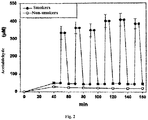
- the acetaldehyde in saliva immediately increased, when smoking began, but also quickly decreased after smoking stopped ( Fig. 2 ).
- the acetaldehyde in saliva increased from its basic level to a value of 261.4 ⁇ 45.5 ⁇ M.
- the acetaldehyde in saliva immediately increased, when smoking began, but also quickly decreased after smoking stopped ( Fig. 3 ).
- the first metabolism product of alcohol is acetaldehyde.
- Alcohol is evenly distributed in the liquid phase of the organism. Consequently, as long as an individual is enjoying alcohol and as long as there is alcohol in the organism, the amount of alcohol in the blood, saliva, gastric juice, and the contents of the bowel remain the same.
- the microbes of the alimentary tract are capable of oxidizing alcohol into acetaldehyde in the alimentary tract.
- Acetaldehyde is formed in the organism from alcohol as a result of the hepatic metabolism and, locally, in the alimentary tract through microbes ( Salaspuro et al, (1996) Ann Med 28:195-200 ).
- carcinogenic acetaldehyde can be formed endogenously by the microbes in the mouth from various foodstuffs, which have high sugar or hydrocarbon contents, particularly in an acid-free stomach.
- Atrophic gastritis and an acid-free stomach are well-known risk factors for the cancer of the stomach.
- acetaldehyde Due to the microbial metabolism, acetaldehyde is formed in the stomach in a case, where the stomach is acid-free or rendered acid-free by means of medicines ( Väkeväinen et al., 2000, Alimentary Pharmacology Ther 14:1511-1518 ).
- microbes produce high acetaldehyde contents from ethanol and sugar in the stomach, resulting in an increased risk of developing cancers of the stomach ( Väkeväinen et al, Scand J Gastroenterol 2002 (6):648-655 ).
- the patent application WO 02/36098 describes a preparation that slowly dissolves in the mouth, the stomach or the large intestine, releasing, over a long period of time, a substance that binds acetaldehyde and, in this way, reducing the risk of developing cancers of the mouth and the alimentary tract.
- the patent application WO 2006/037848 describes preparations that are kept in the mouth or attached to a cigarette, or compositions, which are absorbed into or in some other way attached to the cigarette, the surface that is kept in the mouth, in particular, and which are used for the time it takes to consume the tobacco product.
- the acetaldehyde-binding substance is released into the saliva from the preparation that is kept in the mouth or from the tobacco product during the use of the tobacco product.
- the present invention provides a preparation, which can be used for withdrawing from tobacco and/or alcohol.
- the preparation removes an essential portion of the acetaldehyde that is present in the smoke of the tobacco product, or binds the acetaldehyde, which enters the saliva or the alimentary tract in connection with smoking or drinking alcohol.
- the method also preferably comprises a programme, which makes the withdrawal from tobacco and/or alcohol successful.
- sucking tablet according to the invention is characterized by what is presented in the characterizing part of Claim 1.
- the present invention provides sucking tablets in accordance with the appended claims for use in reducing tobacco and/or alcohol dependence, wherein the use comprises stages a), b) and c) as defined in appended claim 1 Stage a) should be repeated in connection with smoking or consuming alcohol for at least 5, preferably at least 10, more preferably 15 to 50 times, or as many as 20 to 100 times, typically 10 to 20 times.
- One stage of the treatment or the programme comprises observing that smoking and/or alcohol dependence has reduced or ended. This can be carried out directly after undergoing the programme. If no withdrawal has taken place, the individual is advised to repeat the programme. In case withdrawal seems to have taken place, i.e., the individual no longer has a craving for tobacco and/or alcohol, checkups are carried out at regular intervals, first at intervals of 2 to 7 days, then, e.g., 2 weeks, and then one month. The withdrawal can be considered successful, if the individual has been able to refrain from regular smoking and/or regular and heavy alcohol consumption (exceeding moderate use) for the next half a year or preferably a year.
- the use described herein also comprises a stage, where the individual is told about the health hazards and dependence caused by the acetaldehyde contained in tobacco and/or alcohol so that, when starting the method, they are aware of the damages caused by tobacco and/or alcohol.
- acetaldehyde may increase the potential of tobacco products to cause addiction, when acetaldehyde and biogenous amines are formed in cigarette smoke and/or in vivo.
- Talhout et al. 2007 have discovered that acetaldehyde causes dependence in rodents. This dependence cooperates with the dependence caused by nicotine.
- Acetaldehyde may penetrate the blood-brain barrier and, on the other hand, it can also be formed in the brain.
- studies are controversial, as normal people do not have measurable amounts of acetaldehyde in their blood while burning alcohol.
- the brain studies in turn, have been run on test animals and very high acetaldehyde concentrations were used.
- the acetaldehyde which is dissolved in saliva from tobacco or formed in saliva from alcohol as a combustion product of microbes, can condense with amino acid tryptamine and form harmane that functions as a neurotransmitter. Harmane, the condensation product of acetaldehyde and tryptamine, can also be formed in an acid-free stomach in connection with using drugs that inhibit the acid secretion and as a result of the action of the ADH enzyme contained in Helicobacter, whenever the individual either consumes alcohol or when alcohol drifts into the saliva or gastric juice through the blood circulation. Tryptamine occurs in milk products (e.g., fermented cheese) and soy products, for example.
- milk products e.g., fermented cheese
- the harmane that is generated in the mouth or the stomach can absorb through the mucous membranes directly into the blood circulation and further drift to the brain without being subjected to the detoxication mechanisms of the liver in between.
- the harmane that enters the brain can cause dysphoric symptoms (resembling a hangover), or it may also enhance the alcohol dependence ( Callaway et al. 1996, Life Sciences 58(21):1817-1821 ).
- Tobacco withdrawal products that typically contain nicotine, such as nicotine gum, can be used at the times, when the individual is able to refrain from smoking.
- tobacco withdrawal products that typically contain nicotine, such as nicotine gum
- Such products include, e.g., Nicorette ® products, such as chewing gums, tablets, plasters or products, which are described, for example, in the patent specifications US 5,488,962 and US 5,845,647 . If the individual is unable to refrain from the use of tobacco products and restarts smoking, they can use preparations that contain the acetaldehyde-binding compounds according to the invention, which contain the compounds capable of binding acetaldehyde.
- the use presented herein for withdrawing from tobacco and/or alcohol thus includes a stage(s), wherein the individual is withdrawn from the dependence caused by acetaldehyde by means according to the invention; and a stage(s), wherein the individual is withdrawn from nicotine by means of tobacco withdrawal products that contain nicotine.
- the products according to the invention are used during the time, when the individual is not able to refrain from smoking, and the nicotine-containing preparations during the time, when the individual is able to refrain from smoking.
- tobacco product refers to any tobacco product, such as a cigarette, cigar or pipe.
- the tobacco product can already include a filter that is normally used or the product can be without a filter. However, it is preferable that the filter does not prevent the smoke from drifting through the component (holder, acetaldehyde-binding filter) that contains the acetaldehyde-binding material.
- “Smoking” refers to the use of the tobacco product, such as the cigarette, cigar or other tobacco product.
- connection with smoking herein refers to the period of time that starts from starting to smoke and ends, when smoking stops.
- in connection with smoking herein refers to the period of time, when acetaldehyde enters the mouth of the smoker.
- In connection with consuming alcoholic drinks herein refers to the period of time that starts from starting to consume alcohol and ends, when there is no more alcohol in the blood.
- Binding of acetaldehyde refers to a chemical reaction between the acetaldehyde and a compound that has a free amino group and/or sulphhydryl or sulphonic group, in which reaction the acetaldehyde together with the “acetaldehyde-binding substance” forms a larger molecule and in which reaction water can be formed.
- the "acetaldehyde-binding substance” preferably refers to a compound that comprises one or more free amino groups and sulphhydryl groups or sulphonic groups.
- the "compound” can refer to one or more compounds.
- acetaldehyde when reacting with cysteine, acetaldehyde binds itself to both the sulphhydryl and the amino group, forming 2-methyl-L-thiazolidine-4-carboxylic acid and water. Acetaldehyde can bind itself to the amino group of almost any protein, whereby Schiff base or a 2-methyl-imidzole ring is formed.
- Cysteine, its salts and derivatives are particularly suitable for the use described herein.
- the most suitable amino acids in the use described herein include L- and D-cysteine, acetyl cysteine, N-penicillamine or the derivatives of cysteine, which function in the same way as L- or D-cysteine and their salts.
- the compound is most suitably L-cysteine and its salts.
- Suitable compounds for binding acetaldehyde in the organism also include the compounds according to the formula (I): wherein
- amino acids or other compounds that suitably bind acetaldehyde and contain a free sulphhydryl (SH) and/or amino (NH 2 ) group include:
- the acetaldehyde-binding substance according to the present invention is L-cysteine.
- Suitable compounds also include the salts of the acetaldehyde-binding compounds (pharmaceutically acceptable salts, in particular). Any acetaldehyde-binding compounds that present no health hazards in the dosages used are suitable for the preparations described herein.
- the acetaldehyde-binding compounds disclosed wherein can also be used to bind aldehydes other than acetaldehyde.
- the taste or the smell of the compounds is not unpleasant or too strong. It is possible to disguise the unpleasant taste of an effective compound by means of suitable sweetening agents or flavourings; however, by using compounds that have a mild and/or pleasant taste, the compound can be kept simple and it is easier to produce. Another way of reducing the significance of the product's taste is to use as small amounts as possible.
- Tobacco can be used by smoking, chewing, or wetting or snuffing. According to our research, smoking, in particular, seems to cause the formation of acetaldehyde in the mouth.
- Smoking in connection with the present invention typically refers to smoking cigarettes or cigars or, alternatively, a pipe.
- a "harmful/carcinogenic concentration of acetaldehyde" in the human mouth, oesophagus, stomach and large intestine is 50 to 100 ⁇ Mol/l of saliva. Even lower acetaldehyde concentrations together with tryptamine cause the formation of harmane.
- a detrimental, carcinogenic or harmane-forming acetaldehyde concentration in the human mouth can be obtained, for example, in connection with smoking and/or drinking alcohol, and even after drinking alcohol as long as there is alcohol in the blood, saliva or gastric juice.
- An object of the present invention is to keep the acetaldehyde in the mouth on a level essentially lower than without using the preparations according to the present invention.
- the acetaldehyde concentration of saliva is preferably kept on a level that is at least 60%, and more preferably at least 80% lower than without using the composition. It is most preferable to remove essentially all of the acetaldehyde so that there is no time to form the harmane that causes addiction. In connection with smoking, all of the acetaldehyde in saliva can be removed by the preparations mentioned above. In connection with using alcohol, the acetaldehyde that is formed in the saliva can preferably be reduced by at least about 70%. Preparations that slowly release cysteine into the stomach can be used to preferably reduce the acetaldehyde by at least about 70%, preferably by at least about 80%, and more preferably by at least about 90%.
- the "local preparation that is placed in the mouth” refers to all preparations that are sucked, and wherein the release of the substance is intended to have a local effect in the mouth.
- the preparation can release the acetaldehyde-binding substance in a short time, e.g., during 5 to 15 minutes, or for a long time, such as more than a half an hour.
- composition refers to a composition that comprises the effective substance(s), possibly mixed together with a suitable carrier.
- the composition is in the form of a local preparation, which is suitable to be used in the mouth.
- composition refers to a non-toxic composition suitable for human consumption.
- effective compounds also refer to the salts of these compounds; particularly salts that are suitable for human consumption or pharmaceutically acceptable.
- compositions according to the invention are particularly suitable for oral use.
- the preparation preferably comprises at least one carrier, which does not prevent but facilitates the release of the effective substance.
- the carrier adjusts the release of the effective substance.
- the preparation has a shape that makes it easier to keep in the mouth either during smoking or when drinking alcohol.
- the preparation can otherwise be of any shape, such as round or elliptical, longitudinal, capsule-shaped, convex or annular. It is also preferable that the preparation is relatively small so that its use does not complicate or change the smoking activity or the use of alcohol.
- the ideal operating time of the preparation that is used in connection with smoking is the same as that consumed by smoking (about 5min).
- the operating time of the preparation, which is used in connection with consuming alcohol and which slowly releases the acetaldehyde-binding compound either into the mouth or the stomach, is preferably 2 to 4 hours.
- the preparation is also less expensive.
- the preparation according to the invention comprises 1,25 to 5 mg of L-cysteine.
- composition can comprise:
- the sugars can comprise, for example, saccharose, fructose or glucose or mixtures thereof.
- the sugar alcohols can comprise mannitol, sorbitol, maltitol, lactitol, isomalt, or xylitol or mixtures thereof.
- No additive preferably reacts with the other ingredients in the preparation.
- a preferable sweetener comprises mannitol, and its amount in the preparation can be quite large; accordingly, it functions as a diluent at the same time.
- the flavourings can comprise, for example, spearmint, peppermint, menthol, citrus fruit, eucalyptus or aniseed or a mixture thereof.
- the preparation can also comprise other ingredients, such as substances that prevent bad oral smell, substances that function as breath fresheners and/or prevent dental caries, or the preparation can comprise vitamins.
- the preparation can also comprise substances that increase salivation. However, these additives should not prevent the quick release of the acetaldehyde-binding substance into the saliva. As previously described herein, the preparation should release the acetaldehyde-biding substance so effectively that an essential amount of acetaldehyde is bound to the saliva before the acetaldehyde influences the cells of the mucous membrane in the mouth.
- a preparation (such as one tablet) which can essentially comprise or consist of the following: Acetaldehyde-binding substance(s) 1 to 50 mg Diluting agent(s)/sweetener(s) 50 to 750 mg Flavouring(s) q.s. Lubricant(s) (0.5 to 3% by weight) 5 to 25 mg
- the preparation can be a sucking tablet comprising: Acetaldehyde-binding substances 1 to 50 mg Sugar or sugar alcohol, such as mannitol 50 to 750 mg Flavouring q.s. Magnesium stearate 5 to 25 mg
- the composition is prepared by mixing a powdery mass and compressing it into sucking tablets by any well-known methods.
- the amount of acetaldehyde-binding compounds is increased, the amount of diluent(s)/sweetener(s) and flavourings can also be increased, as the taste of the acetaldehyde-binding substances must be disguised.
- the preparation can essentially comprise or consist of the following: Acetaldehyde-binding substances 1 to 50 mg Gum base comprising sweeteners or other substances 500 to 1500 mg Flavouring q.s. Lubricant (0.5 to 3% by weight) 5 to 30 mg
- the gum base which can comprise medicated chewing gum ( Morjaria, Y. et al., Drug Delivery Systems & Sciences, vol. 4, No. 1, 2004 ) that comprises natural or synthetic elastomers, softeners, waxes and lipids.
- Natural gum bases including crude rubber and smoked natural rubber, are permitted by the FDA. However, modem gum bases are mostly synthetic and include styrene-butadiene rubber, polyethylene and polyvinyl acetate.
- the gum base constitutes 15 to 40% of the chewing gum. The remaining portion consists of medicine, sugar, sweeteners, softeners, flavourings and colouring agents.
- a formulation that contains Pharmagum gums can be compressed into a gum tablet by using conventional tablet presses.
- the manufacturing method is quick and inexpensive.
- the amount of gum base in the preparation, comprising sweeteners can be 50 to 500 mg, preferably 500 to 1500 mg.
- Pharmagum S contains rubber base and sorbitol
- Pharmagum M contains rubber base, mannitol, and isomalt.
- the diluents include, e.g., lactose, calcium phosphates, starch, carboxymethyl cellulose, hydroxymethyl cellulose.
- the sweetener can be, for example, mannitol or xylitol.
- the preparation is preferably capable of binding acetaldehyde from the saliva during the smoking of at least one, possibly 1, 2 or 3 cigarettes or cigars.
- the content of acetaldehyde formed in the saliva as a consequence of smoking can be reduced so that, in connection with smoking, the preparation, preferably one or two preparations at the same time, are placed in the mouth, under the tongue or in the cheek, or between the cheek and the gum, for example, releasing, at a suitable and preferably constant velocity, cysteine or another acetaldehyde-binding substance that essentially has the same effect as cysteine, continuously and advantageously, until one tobacco product has been consumed.
- a new acetaldehyde-binding preparation is placed in the mouth.
- the preparation is also capable of reducing the salivary acetaldehyde content during smoking one cigar, cigarette or pipe, to the level where the acetaldehyde was before smoking.
- acetaldehyde-binding substance is repeated as many times as a new tobacco product is started. It is preferable to place the preparation in the mouth already before starting to smoke a new cigar, cigarette or pipe.
- the preparation according to a preferred embodiment of the present invention is capable of releasing the acetaldehyde-binding substance into the saliva under the conditions prevailing in the mouth within less than 30 minutes, and preferably within less than 15 minutes from the point of time, when the preparation is brought into contact with the saliva. Accordingly, the acetaldehyde-binding substances are released within 0 to 5 minutes, more preferably within 0 to 10 minutes, most preferably within 0 to 15 minutes from the point of time, when the preparation is brought into contact with the saliva.
- the release of the acetaldehyde-binding substances preferably takes essentially the time of smoking one cigar or cigarette, i.e., the time of actual smoking and a few minutes longer.
- compositions can be used, which slowly release the acetaldehyde-releasing substance into the mouth and which are described in the patent application WO02/36098 .
- Prolonged release of the effective substance means that the substance is released over at least 30 minutes, preferably at least 120 minutes, most preferably more than four hours.
- release times of the effective substance of as long as 4 to 8 hours can be achieved.
- the compound is preferably released under the conditions of the mouth in amounts of 15 to 25 mg an hour.
- 1 or 2 preparations according to the invention can be placed in the mouth at a time and they can be replaced with new ones at 4 to 10-hour intervals, most preferably at 6 to 8-hour intervals.
- a sucking tablet comprising: Cysteine 20 mg Mannitol (or an equivalent sugar or sugar alcohol) 750 mg Flavouring q.s. Magnesium stearate 10 mg
- the composition was prepared by mixing a powdery mass and compressing it into sucking tablets.
- Sucking tablets were prepared as in Example 1, but they comprised 1.25 mg, 2.5 mg, 5 mg, and 10 mg of cysteine.
- testees Two individuals tested the preparation prepared according to Example 1. The salivary acetaldehyde contents of the testees were measured before smoking and then after 5 minutes during smoking, i.e., 0min, 5min, 10min, and 15min after the testees started smoking. Each testee smoked one cigarette and, at the same time, saliva was collected from their mouths, as they sucked placebo tablets. Smoking lasted for 5min. In another test, the testees repeated the study by sucking tablets containing 20 mg of cysteine.
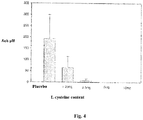
- the average salivary acetaldehyde contents immediately after smoking were 191.2 ⁇ 48.5 ⁇ M, 0 ⁇ M, 0 ⁇ M, 0 ⁇ M with the placebo and the 5 mg, 10 mg, and 20 mg L-cysteine tablets, respectively.
- the L-cysteine tablet of 1.25 mg reduced the amount of acetaldehyde by about two thirds compared with the placebo.
- testees enjoyed alcohol in amounts of 0.8 g per kilo of body weight. Thereafter, the testees attached, under their upper lip, a buccal tablet that contained 100 mg of N-acetyl cysteine and that slowly released the acetyl cysteine.
- the salivary acetaldehyde levels were measured at intervals of 20 minutes up to 320 minutes. The results are shown in Fig. 5 . Throughout, the acetaldehyde contents of those using the acetyl cysteine tablets were lower than of those using the placebo.
Landscapes
- Health & Medical Sciences (AREA)
- Chemical & Material Sciences (AREA)
- Life Sciences & Earth Sciences (AREA)
- General Health & Medical Sciences (AREA)
- Veterinary Medicine (AREA)
- Public Health (AREA)
- Medicinal Chemistry (AREA)
- Animal Behavior & Ethology (AREA)
- Pharmacology & Pharmacy (AREA)
- Epidemiology (AREA)
- Engineering & Computer Science (AREA)
- General Chemical & Material Sciences (AREA)
- Chemical Kinetics & Catalysis (AREA)
- Bioinformatics & Cheminformatics (AREA)
- Organic Chemistry (AREA)
- Addiction (AREA)
- Nuclear Medicine, Radiotherapy & Molecular Imaging (AREA)
- Materials Engineering (AREA)
- Toxicology (AREA)
- Biomedical Technology (AREA)
- Immunology (AREA)
- Neurology (AREA)
- Inorganic Chemistry (AREA)
- Proteomics, Peptides & Aminoacids (AREA)
- Neurosurgery (AREA)
- Psychiatry (AREA)
- Gastroenterology & Hepatology (AREA)
- Physiology (AREA)
- Nutrition Science (AREA)
- Zoology (AREA)
- Acyclic And Carbocyclic Compounds In Medicinal Compositions (AREA)
- Pharmaceuticals Containing Other Organic And Inorganic Compounds (AREA)
- Cigarettes, Filters, And Manufacturing Of Filters (AREA)
- Medicines That Contain Protein Lipid Enzymes And Other Medicines (AREA)
- Medicinal Preparation (AREA)
- Plural Heterocyclic Compounds (AREA)
- Manufacture Of Tobacco Products (AREA)
Priority Applications (1)
| Application Number | Priority Date | Filing Date | Title |
|---|---|---|---|
| PL08805430T PL2197436T3 (pl) | 2007-09-14 | 2008-09-12 | Tabletka do ssania do stosowania w zmniejszeniu uzależnienia od tytoniu i/lub alkoholu |
Applications Claiming Priority (2)
| Application Number | Priority Date | Filing Date | Title |
|---|---|---|---|
| FI20070705A FI20070705A7 (fi) | 2007-09-14 | 2007-09-14 | Asetaldehydin sitominen suussa ja mahalaukussa |
| PCT/FI2008/050507 WO2009034232A1 (en) | 2007-09-14 | 2008-09-12 | Preparation and a component intended to be added to a tobacco product |
Publications (3)
| Publication Number | Publication Date |
|---|---|
| EP2197436A1 EP2197436A1 (en) | 2010-06-23 |
| EP2197436A4 EP2197436A4 (en) | 2010-09-22 |
| EP2197436B1 true EP2197436B1 (en) | 2017-11-22 |
Family
ID=38572901
Family Applications (1)
| Application Number | Title | Priority Date | Filing Date |
|---|---|---|---|
| EP08805430.9A Active EP2197436B1 (en) | 2007-09-14 | 2008-09-12 | Sucking tablet for use in reducing tobacco and/or alcohol dependence |
Country Status (20)
| Country | Link |
|---|---|
| US (1) | US20110033560A1 (enExample) |
| EP (1) | EP2197436B1 (enExample) |
| JP (2) | JP2010539144A (enExample) |
| KR (1) | KR20100069684A (enExample) |
| CN (2) | CN107744174A (enExample) |
| AP (1) | AP2894A (enExample) |
| AU (1) | AU2008297061A1 (enExample) |
| BR (1) | BRPI0816847A2 (enExample) |
| CA (1) | CA2704129C (enExample) |
| DK (1) | DK2197436T3 (enExample) |
| EA (1) | EA030968B1 (enExample) |
| ES (1) | ES2659390T3 (enExample) |
| FI (1) | FI20070705A7 (enExample) |
| HK (1) | HK1251123A1 (enExample) |
| HU (1) | HUE035905T2 (enExample) |
| MX (1) | MX2010002862A (enExample) |
| NO (1) | NO2197436T3 (enExample) |
| PL (1) | PL2197436T3 (enExample) |
| PT (1) | PT2197436T (enExample) |
| WO (1) | WO2009034232A1 (enExample) |
Families Citing this family (12)
| Publication number | Priority date | Publication date | Assignee | Title |
|---|---|---|---|---|
| ZA200901679B (en) | 2009-03-09 | 2015-08-26 | Tobacco Res And Development Institute (Pty) Ltd | Apparatus for introducing objects into filter rod material |
| ZA201008663B (en) | 2010-12-01 | 2014-08-27 | Tobacco Res And Dev Inst (Pty) Ltd | Feed mechanism |
| CN102559806B (zh) * | 2011-12-29 | 2014-08-06 | 华宝食用香精香料(上海)有限公司 | 海藻酸钠骨架多孔淀粉颗粒的制备方法、含有所述颗粒的卷烟滤嘴与用途 |
| FI129157B (en) | 2012-05-28 | 2021-08-13 | Biohit Oyj | Composition for use in reducing the incidence of or preventing severe headaches |
| CN102871222A (zh) * | 2012-09-26 | 2013-01-16 | 南通烟滤嘴有限责任公司 | 纸质滤材的吸味修饰添加剂及施加方法 |
| FI20135097L (fi) * | 2013-02-01 | 2014-08-02 | Biohit Oyj | Koostumus aldehydien sitomiseen suussa |
| CN103300477B (zh) * | 2013-06-18 | 2015-12-09 | 云南烟草科学研究院 | 一种新型滤嘴材料及其制备方法与应用 |
| GB201412752D0 (en) | 2014-07-17 | 2014-09-03 | Nicoventures Holdings Ltd | Electronic vapour provision system |
| US20160157515A1 (en) * | 2014-12-05 | 2016-06-09 | R.J. Reynolds Tobacco Company | Smokeless tobacco pouch |
| US11717554B2 (en) * | 2019-09-19 | 2023-08-08 | Max R&D Llc | Method for preventing or treating hangover symptom(s) associated with consumption of alcoholic beverage(s) |
| USD950841S1 (en) | 2020-12-14 | 2022-05-03 | ARK Industries | Smoking cessation device |
| JP2024024130A (ja) * | 2020-12-28 | 2024-02-22 | 日産化学株式会社 | 液体組成物中のホルムアルデヒドを低減する方法及び液体組成物の製造方法 |
Family Cites Families (18)
| Publication number | Priority date | Publication date | Assignee | Title |
|---|---|---|---|---|
| US3232294A (en) * | 1962-03-05 | 1966-02-01 | Nat Lead Co | Tobacco smoke filter |
| GB8313044D0 (en) * | 1983-05-12 | 1983-06-15 | Caseley J R | Reducing toxic effects of tobacco |
| US4882335A (en) | 1988-06-13 | 1989-11-21 | Alko Limited | Method for treating alcohol-drinking response |
| HU201865B (en) * | 1989-04-28 | 1991-01-28 | Pecsi Dohanygyar | Tobacco-smoke filter of high efficiency |
| US5488962A (en) | 1990-10-10 | 1996-02-06 | Perfetti, S.P.A. | Chewing gum which is a substitute for tobacco smoke |
| US5845647A (en) | 1996-06-28 | 1998-12-08 | Regent Court Technologies | Tobacco and related products |
| US6415798B1 (en) * | 1997-09-19 | 2002-07-09 | Thione International, Inc. | Antioxidants to neutralize tobacco free radicals |
| US5829449A (en) * | 1997-09-19 | 1998-11-03 | Thione International, Inc. | Smoking products containing antioxidants |
| US5922346A (en) * | 1997-12-01 | 1999-07-13 | Thione International, Inc. | Antioxidant preparation |
| FI121528B (fi) * | 2000-10-30 | 2010-12-31 | Biohit Oyj | Farmaseuttinen koostumus syöpään sairastumisen riskin vähentämiseen paikallisesti sitomalla asetaldehydi syljessä, mahalaukussa tai paksusuolessa |
| IT1319684B1 (it) * | 2000-12-12 | 2003-10-23 | Ursula Mariah Rothlin | Prodotti alimentari fitoterapici. |
| CN1311022A (zh) * | 2001-02-28 | 2001-09-05 | 陈胜利 | 速效戒烟戒毒养生液及制备方法 |
| RU2201247C2 (ru) * | 2001-04-19 | 2003-03-27 | Юрий Александрович Гун | Биологически активная добавка для снижения алкогольной зависимости с гепатопротекторными свойствами |
| MY137772A (en) * | 2001-09-01 | 2009-03-31 | British American Tobacco Co | Smoking articles and smokable filler materials therefor |
| EP1304048B1 (en) * | 2001-10-22 | 2004-09-22 | Ivo Pera | Composition to reduce or quit smoking addiction |
| CN1593395A (zh) * | 2003-09-09 | 2005-03-16 | 尹广宇 | 用乙酰半胱氨酸制成的解酒剂 |
| JP5654726B2 (ja) * | 2004-10-08 | 2015-01-14 | ビオヒット・ユルキネン・オサケユキテュアBiohit Oyj | 唾液中のアルデヒド類を結合するための方法および製剤 |
| DE102006038622B4 (de) * | 2006-08-17 | 2008-08-28 | Hauni Maschinenbau Ag | Aufbereitung von aus Tabakprodukten bestehenden Tabakportionen |
-
2007
- 2007-09-14 FI FI20070705A patent/FI20070705A7/fi not_active Application Discontinuation
-
2008
- 2008-09-12 AU AU2008297061A patent/AU2008297061A1/en not_active Abandoned
- 2008-09-12 CA CA2704129A patent/CA2704129C/en active Active
- 2008-09-12 MX MX2010002862A patent/MX2010002862A/es active IP Right Grant
- 2008-09-12 US US12/678,037 patent/US20110033560A1/en not_active Abandoned
- 2008-09-12 BR BRPI0816847 patent/BRPI0816847A2/pt not_active IP Right Cessation
- 2008-09-12 EP EP08805430.9A patent/EP2197436B1/en active Active
- 2008-09-12 ES ES08805430.9T patent/ES2659390T3/es active Active
- 2008-09-12 AP AP2010005224A patent/AP2894A/xx active
- 2008-09-12 WO PCT/FI2008/050507 patent/WO2009034232A1/en not_active Ceased
- 2008-09-12 KR KR1020107008150A patent/KR20100069684A/ko not_active Ceased
- 2008-09-12 NO NO08805430A patent/NO2197436T3/no unknown
- 2008-09-12 CN CN201710935068.2A patent/CN107744174A/zh active Pending
- 2008-09-12 PT PT88054309T patent/PT2197436T/pt unknown
- 2008-09-12 DK DK08805430.9T patent/DK2197436T3/en active
- 2008-09-12 PL PL08805430T patent/PL2197436T3/pl unknown
- 2008-09-12 CN CN200880116002A patent/CN101873855A/zh active Pending
- 2008-09-12 EA EA201070326A patent/EA030968B1/ru unknown
- 2008-09-12 HU HUE08805430A patent/HUE035905T2/en unknown
- 2008-09-12 JP JP2010524538A patent/JP2010539144A/ja not_active Withdrawn
-
2014
- 2014-03-19 JP JP2014056942A patent/JP2014122237A/ja active Pending
-
2018
- 2018-08-17 HK HK18110572.5A patent/HK1251123A1/zh unknown
Also Published As
| Publication number | Publication date |
|---|---|
| DK2197436T3 (en) | 2018-02-26 |
| FI20070705L (fi) | 2009-06-02 |
| EA030968B1 (ru) | 2018-10-31 |
| JP2014122237A (ja) | 2014-07-03 |
| FI20070705A0 (fi) | 2007-09-14 |
| CN101873855A (zh) | 2010-10-27 |
| MX2010002862A (es) | 2010-08-04 |
| AP2894A (en) | 2014-05-31 |
| EP2197436A1 (en) | 2010-06-23 |
| JP2010539144A (ja) | 2010-12-16 |
| PL2197436T3 (pl) | 2018-04-30 |
| WO2009034232A1 (en) | 2009-03-19 |
| EA201070326A1 (ru) | 2010-10-29 |
| HUE035905T2 (en) | 2018-05-28 |
| US20110033560A1 (en) | 2011-02-10 |
| AP2010005224A0 (en) | 2010-04-30 |
| CN107744174A (zh) | 2018-03-02 |
| ES2659390T3 (es) | 2018-03-15 |
| BRPI0816847A2 (pt) | 2015-03-17 |
| KR20100069684A (ko) | 2010-06-24 |
| HK1251123A1 (zh) | 2019-01-25 |
| NO2197436T3 (enExample) | 2018-04-21 |
| AU2008297061A1 (en) | 2009-03-19 |
| EP2197436A4 (en) | 2010-09-22 |
| CA2704129C (en) | 2018-11-06 |
| CA2704129A1 (en) | 2009-03-19 |
| FI20070705A7 (fi) | 2009-06-02 |
| PT2197436T (pt) | 2018-02-23 |
Similar Documents
| Publication | Publication Date | Title |
|---|---|---|
| DK2197436T3 (en) | SUGGESTED TABLE FOR USE IN REDUCING TOBACCO AND / OR ALCOHOL ADDICTION | |
| CN102770138B (zh) | 含有尼古丁的软凝胶锭剂 | |
| JP3210945B2 (ja) | 喫煙代替物 | |
| JP3730522B2 (ja) | 喫煙欲求抑制組成物 | |
| AU2013269448B2 (en) | Composition for preventing headaches | |
| WO1996000070A1 (en) | Treatment of nicotine craving and/or smoking withdrawal symptoms with an oral composition containing nicotine and caffeine or xanthine | |
| EA025779B1 (ru) | Никотинсодержащий состав | |
| JP5654726B2 (ja) | 唾液中のアルデヒド類を結合するための方法および製剤 | |
| US20080000489A1 (en) | Method and preparation for binding aldehydes in saliva | |
| AU2014259550A1 (en) | Preparation and a component intended to be added to a tobacco product | |
| JPH10218748A (ja) | アルコール臭低減剤および飲食物 | |
| WO2006004418A2 (en) | Encapsulated tobacco smoke |
Legal Events
| Date | Code | Title | Description |
|---|---|---|---|
| PUAI | Public reference made under article 153(3) epc to a published international application that has entered the european phase |
Free format text: ORIGINAL CODE: 0009012 |
|
| 17P | Request for examination filed |
Effective date: 20100331 |
|
| AK | Designated contracting states |
Kind code of ref document: A1 Designated state(s): AT BE BG CH CY CZ DE DK EE ES FI FR GB GR HR HU IE IS IT LI LT LU LV MC MT NL NO PL PT RO SE SI SK TR |
|
| AX | Request for extension of the european patent |
Extension state: AL BA MK RS |
|
| A4 | Supplementary search report drawn up and despatched |
Effective date: 20100825 |
|
| RIC1 | Information provided on ipc code assigned before grant |
Ipc: A61P 25/34 20060101ALI20100816BHEP Ipc: A24D 3/14 20060101ALI20100816BHEP Ipc: A61K 31/198 20060101AFI20090331BHEP Ipc: A61K 33/02 20060101ALI20100816BHEP Ipc: A61K 33/04 20060101ALI20100816BHEP Ipc: A61K 38/05 20060101ALI20100816BHEP Ipc: A61P 25/32 20060101ALI20100816BHEP Ipc: A61K 38/06 20060101ALI20100816BHEP Ipc: A24B 15/30 20060101ALI20100816BHEP |
|
| DAX | Request for extension of the european patent (deleted) | ||
| 17Q | First examination report despatched |
Effective date: 20140805 |
|
| GRAP | Despatch of communication of intention to grant a patent |
Free format text: ORIGINAL CODE: EPIDOSNIGR1 |
|
| RIC1 | Information provided on ipc code assigned before grant |
Ipc: A61K 38/05 20060101ALI20170711BHEP Ipc: A61K 31/198 20060101AFI20170711BHEP Ipc: A61P 25/34 20060101ALI20170711BHEP Ipc: A61P 25/32 20060101ALI20170711BHEP Ipc: A24D 3/14 20060101ALI20170711BHEP |
|
| INTG | Intention to grant announced |
Effective date: 20170807 |
|
| RIN1 | Information on inventor provided before grant (corrected) |
Inventor name: SUOVANIEMI, OSMO Inventor name: SALASPURO, VILLE Inventor name: SALASPURO, MIKKO Inventor name: MARVOLA, MARTTI |
|
| GRAS | Grant fee paid |
Free format text: ORIGINAL CODE: EPIDOSNIGR3 |
|
| GRAA | (expected) grant |
Free format text: ORIGINAL CODE: 0009210 |
|
| AK | Designated contracting states |
Kind code of ref document: B1 Designated state(s): AT BE BG CH CY CZ DE DK EE ES FI FR GB GR HR HU IE IS IT LI LT LU LV MC MT NL NO PL PT RO SE SI SK TR |
|
| REG | Reference to a national code |
Ref country code: GB Ref legal event code: FG4D |
|
| REG | Reference to a national code |
Ref country code: CH Ref legal event code: EP |
|
| REG | Reference to a national code |
Ref country code: IE Ref legal event code: FG4D |
|
| REG | Reference to a national code |
Ref country code: AT Ref legal event code: REF Ref document number: 947751 Country of ref document: AT Kind code of ref document: T Effective date: 20171215 |
|
| REG | Reference to a national code |
Ref country code: DE Ref legal event code: R096 Ref document number: 602008053079 Country of ref document: DE |
|
| REG | Reference to a national code |
Ref country code: NL Ref legal event code: FP |
|
| REG | Reference to a national code |
Ref country code: PT Ref legal event code: SC4A Ref document number: 2197436 Country of ref document: PT Date of ref document: 20180223 Kind code of ref document: T Free format text: AVAILABILITY OF NATIONAL TRANSLATION Effective date: 20180216 |
|
| REG | Reference to a national code |
Ref country code: DK Ref legal event code: T3 Effective date: 20180221 |
|
| REG | Reference to a national code |
Ref country code: SE Ref legal event code: TRGR |
|
| REG | Reference to a national code |
Ref country code: ES Ref legal event code: FG2A Ref document number: 2659390 Country of ref document: ES Kind code of ref document: T3 Effective date: 20180315 |
|
| REG | Reference to a national code |
Ref country code: NO Ref legal event code: T2 Effective date: 20171122 |
|
| REG | Reference to a national code |
Ref country code: LT Ref legal event code: MG4D |
|
| REG | Reference to a national code |
Ref country code: EE Ref legal event code: FG4A Ref document number: E015007 Country of ref document: EE Effective date: 20180214 |
|
| PG25 | Lapsed in a contracting state [announced via postgrant information from national office to epo] |
Ref country code: LT Free format text: LAPSE BECAUSE OF FAILURE TO SUBMIT A TRANSLATION OF THE DESCRIPTION OR TO PAY THE FEE WITHIN THE PRESCRIBED TIME-LIMIT Effective date: 20171122 |
|
| REG | Reference to a national code |
Ref country code: HU Ref legal event code: AG4A Ref document number: E035905 Country of ref document: HU |
|
| PG25 | Lapsed in a contracting state [announced via postgrant information from national office to epo] |
Ref country code: HR Free format text: LAPSE BECAUSE OF FAILURE TO SUBMIT A TRANSLATION OF THE DESCRIPTION OR TO PAY THE FEE WITHIN THE PRESCRIBED TIME-LIMIT Effective date: 20171122 Ref country code: BG Free format text: LAPSE BECAUSE OF FAILURE TO SUBMIT A TRANSLATION OF THE DESCRIPTION OR TO PAY THE FEE WITHIN THE PRESCRIBED TIME-LIMIT Effective date: 20180222 Ref country code: LV Free format text: LAPSE BECAUSE OF FAILURE TO SUBMIT A TRANSLATION OF THE DESCRIPTION OR TO PAY THE FEE WITHIN THE PRESCRIBED TIME-LIMIT Effective date: 20171122 |
|
| REG | Reference to a national code |
Ref country code: GR Ref legal event code: EP Ref document number: 20180400454 Country of ref document: GR Effective date: 20180627 |
|
| PG25 | Lapsed in a contracting state [announced via postgrant information from national office to epo] |
Ref country code: SK Free format text: LAPSE BECAUSE OF FAILURE TO SUBMIT A TRANSLATION OF THE DESCRIPTION OR TO PAY THE FEE WITHIN THE PRESCRIBED TIME-LIMIT Effective date: 20171122 Ref country code: CY Free format text: LAPSE BECAUSE OF FAILURE TO SUBMIT A TRANSLATION OF THE DESCRIPTION OR TO PAY THE FEE WITHIN THE PRESCRIBED TIME-LIMIT Effective date: 20171122 |
|
| REG | Reference to a national code |
Ref country code: DE Ref legal event code: R097 Ref document number: 602008053079 Country of ref document: DE |
|
| PG25 | Lapsed in a contracting state [announced via postgrant information from national office to epo] |
Ref country code: RO Free format text: LAPSE BECAUSE OF FAILURE TO SUBMIT A TRANSLATION OF THE DESCRIPTION OR TO PAY THE FEE WITHIN THE PRESCRIBED TIME-LIMIT Effective date: 20171122 |
|
| REG | Reference to a national code |
Ref country code: FR Ref legal event code: PLFP Year of fee payment: 11 |
|
| PLBE | No opposition filed within time limit |
Free format text: ORIGINAL CODE: 0009261 |
|
| STAA | Information on the status of an ep patent application or granted ep patent |
Free format text: STATUS: NO OPPOSITION FILED WITHIN TIME LIMIT |
|
| 26N | No opposition filed |
Effective date: 20180823 |
|
| PG25 | Lapsed in a contracting state [announced via postgrant information from national office to epo] |
Ref country code: SI Free format text: LAPSE BECAUSE OF FAILURE TO SUBMIT A TRANSLATION OF THE DESCRIPTION OR TO PAY THE FEE WITHIN THE PRESCRIBED TIME-LIMIT Effective date: 20171122 |
|
| PG25 | Lapsed in a contracting state [announced via postgrant information from national office to epo] |
Ref country code: MC Free format text: LAPSE BECAUSE OF FAILURE TO SUBMIT A TRANSLATION OF THE DESCRIPTION OR TO PAY THE FEE WITHIN THE PRESCRIBED TIME-LIMIT Effective date: 20171122 |
|
| REG | Reference to a national code |
Ref country code: IE Ref legal event code: MM4A |
|
| PG25 | Lapsed in a contracting state [announced via postgrant information from national office to epo] |
Ref country code: LU Free format text: LAPSE BECAUSE OF NON-PAYMENT OF DUE FEES Effective date: 20180912 |
|
| PG25 | Lapsed in a contracting state [announced via postgrant information from national office to epo] |
Ref country code: IE Free format text: LAPSE BECAUSE OF NON-PAYMENT OF DUE FEES Effective date: 20180912 |
|
| PG25 | Lapsed in a contracting state [announced via postgrant information from national office to epo] |
Ref country code: MT Free format text: LAPSE BECAUSE OF NON-PAYMENT OF DUE FEES Effective date: 20180912 |
|
| PG25 | Lapsed in a contracting state [announced via postgrant information from national office to epo] |
Ref country code: IS Free format text: LAPSE BECAUSE OF FAILURE TO SUBMIT A TRANSLATION OF THE DESCRIPTION OR TO PAY THE FEE WITHIN THE PRESCRIBED TIME-LIMIT Effective date: 20180322 |
|
| REG | Reference to a national code |
Ref country code: AT Ref legal event code: UEP Ref document number: 947751 Country of ref document: AT Kind code of ref document: T Effective date: 20171122 |
|
| P01 | Opt-out of the competence of the unified patent court (upc) registered |
Effective date: 20230514 |
|
| PGFP | Annual fee paid to national office [announced via postgrant information from national office to epo] |
Ref country code: CZ Payment date: 20230905 Year of fee payment: 16 |
|
| PGFP | Annual fee paid to national office [announced via postgrant information from national office to epo] |
Ref country code: PT Payment date: 20230831 Year of fee payment: 16 Ref country code: GR Payment date: 20230921 Year of fee payment: 16 Ref country code: DK Payment date: 20230925 Year of fee payment: 16 Ref country code: BE Payment date: 20230920 Year of fee payment: 16 |
|
| PG25 | Lapsed in a contracting state [announced via postgrant information from national office to epo] |
Ref country code: PT Free format text: LAPSE BECAUSE OF NON-PAYMENT OF DUE FEES Effective date: 20250312 |
|
| REG | Reference to a national code |
Ref country code: DK Ref legal event code: EBP Effective date: 20240930 |
|
| PG25 | Lapsed in a contracting state [announced via postgrant information from national office to epo] |
Ref country code: CZ Free format text: LAPSE BECAUSE OF NON-PAYMENT OF DUE FEES Effective date: 20240912 |
|
| REG | Reference to a national code |
Ref country code: BE Ref legal event code: MM Effective date: 20240930 |
|
| PG25 | Lapsed in a contracting state [announced via postgrant information from national office to epo] |
Ref country code: BE Free format text: LAPSE BECAUSE OF NON-PAYMENT OF DUE FEES Effective date: 20240930 |
|
| PG25 | Lapsed in a contracting state [announced via postgrant information from national office to epo] |
Ref country code: GR Free format text: LAPSE BECAUSE OF NON-PAYMENT OF DUE FEES Effective date: 20250407 |
|
| REG | Reference to a national code |
Ref country code: CH Ref legal event code: U11 Free format text: ST27 STATUS EVENT CODE: U-0-0-U10-U11 (AS PROVIDED BY THE NATIONAL OFFICE) Effective date: 20251001 |
|
| PGFP | Annual fee paid to national office [announced via postgrant information from national office to epo] |
Ref country code: FI Payment date: 20250905 Year of fee payment: 18 |
|
| PG25 | Lapsed in a contracting state [announced via postgrant information from national office to epo] |
Ref country code: DK Free format text: LAPSE BECAUSE OF NON-PAYMENT OF DUE FEES Effective date: 20240930 |
|
| PGFP | Annual fee paid to national office [announced via postgrant information from national office to epo] |
Ref country code: DE Payment date: 20250919 Year of fee payment: 18 |
|
| PGFP | Annual fee paid to national office [announced via postgrant information from national office to epo] |
Ref country code: NO Payment date: 20250923 Year of fee payment: 18 |
|
| PGFP | Annual fee paid to national office [announced via postgrant information from national office to epo] |
Ref country code: TR Payment date: 20250908 Year of fee payment: 18 Ref country code: IT Payment date: 20250923 Year of fee payment: 18 Ref country code: PL Payment date: 20250905 Year of fee payment: 18 Ref country code: NL Payment date: 20250918 Year of fee payment: 18 |
|
| PGFP | Annual fee paid to national office [announced via postgrant information from national office to epo] |
Ref country code: HU Payment date: 20250922 Year of fee payment: 18 Ref country code: GB Payment date: 20250918 Year of fee payment: 18 |
|
| PGFP | Annual fee paid to national office [announced via postgrant information from national office to epo] |
Ref country code: AT Payment date: 20250919 Year of fee payment: 18 Ref country code: FR Payment date: 20250919 Year of fee payment: 18 |
|
| PGFP | Annual fee paid to national office [announced via postgrant information from national office to epo] |
Ref country code: SE Payment date: 20250918 Year of fee payment: 18 |
|
| PGFP | Annual fee paid to national office [announced via postgrant information from national office to epo] |
Ref country code: EE Payment date: 20250929 Year of fee payment: 18 |
|
| PGFP | Annual fee paid to national office [announced via postgrant information from national office to epo] |
Ref country code: CH Payment date: 20251001 Year of fee payment: 18 |
|
| PGFP | Annual fee paid to national office [announced via postgrant information from national office to epo] |
Ref country code: ES Payment date: 20251028 Year of fee payment: 18 |