EP2189951B1 - Sheet indentifying apparatus and sheet identifying method - Google Patents
Sheet indentifying apparatus and sheet identifying method Download PDFInfo
- Publication number
- EP2189951B1 EP2189951B1 EP10154812.1A EP10154812A EP2189951B1 EP 2189951 B1 EP2189951 B1 EP 2189951B1 EP 10154812 A EP10154812 A EP 10154812A EP 2189951 B1 EP2189951 B1 EP 2189951B1
- Authority
- EP
- European Patent Office
- Prior art keywords
- image
- identification
- sheet
- area
- identification result
- Prior art date
- Legal status (The legal status is an assumption and is not a legal conclusion. Google has not performed a legal analysis and makes no representation as to the accuracy of the status listed.)
- Active
Links
Images




Classifications
-
- G—PHYSICS
- G07—CHECKING-DEVICES
- G07D—HANDLING OF COINS OR VALUABLE PAPERS, e.g. TESTING, SORTING BY DENOMINATIONS, COUNTING, DISPENSING, CHANGING OR DEPOSITING
- G07D7/00—Testing specially adapted to determine the identity or genuineness of valuable papers or for segregating those which are unacceptable, e.g. banknotes that are alien to a currency
- G07D7/20—Testing patterns thereon
- G07D7/2016—Testing patterns thereon using feature extraction, e.g. segmentation, edge detection or Hough-transformation
-
- G—PHYSICS
- G06—COMPUTING OR CALCULATING; COUNTING
- G06V—IMAGE OR VIDEO RECOGNITION OR UNDERSTANDING
- G06V10/00—Arrangements for image or video recognition or understanding
- G06V10/40—Extraction of image or video features
- G06V10/50—Extraction of image or video features by performing operations within image blocks; by using histograms, e.g. histogram of oriented gradients [HoG]; by summing image-intensity values; Projection analysis
-
- G—PHYSICS
- G07—CHECKING-DEVICES
- G07D—HANDLING OF COINS OR VALUABLE PAPERS, e.g. TESTING, SORTING BY DENOMINATIONS, COUNTING, DISPENSING, CHANGING OR DEPOSITING
- G07D7/00—Testing specially adapted to determine the identity or genuineness of valuable papers or for segregating those which are unacceptable, e.g. banknotes that are alien to a currency
- G07D7/06—Testing specially adapted to determine the identity or genuineness of valuable papers or for segregating those which are unacceptable, e.g. banknotes that are alien to a currency using wave or particle radiation
- G07D7/12—Visible light, infrared or ultraviolet radiation
-
- G—PHYSICS
- G07—CHECKING-DEVICES
- G07D—HANDLING OF COINS OR VALUABLE PAPERS, e.g. TESTING, SORTING BY DENOMINATIONS, COUNTING, DISPENSING, CHANGING OR DEPOSITING
- G07D7/00—Testing specially adapted to determine the identity or genuineness of valuable papers or for segregating those which are unacceptable, e.g. banknotes that are alien to a currency
- G07D7/17—Apparatus characterised by positioning means or by means responsive to positioning
-
- G—PHYSICS
- G07—CHECKING-DEVICES
- G07D—HANDLING OF COINS OR VALUABLE PAPERS, e.g. TESTING, SORTING BY DENOMINATIONS, COUNTING, DISPENSING, CHANGING OR DEPOSITING
- G07D7/00—Testing specially adapted to determine the identity or genuineness of valuable papers or for segregating those which are unacceptable, e.g. banknotes that are alien to a currency
- G07D7/20—Testing patterns thereon
- G07D7/2075—Setting acceptance levels or parameters
Definitions
- This invention relates to a sheet identifying apparatus and sheet identifying method which identify the type and truth/false of each sheet such as a paper sheet by comparing an image pattern acquired from the sheet with preset reference patterns in an automatic checking apparatus for sheets such as securities.
- an identification process for a digital image pattern (which is hereinafter simply referred to as a pattern) tends to require a sensor input of higher resolution as it is desired to perform a higher-degree identification process.
- a sensor input of higher resolution as it is desired to perform a higher-degree identification process.
- the technique for narrowing down to-be-processed pixels by performing a random pixel selecting operation and attaining both of the high-degree resolution and high-speed processes is known (for example, refer to Jpn. Pat. Appln. KOKAI Publication No. H9-134464 ).
- the pixel selecting operation is randomly performed for each checking process, it becomes practically impossible to detect a checking portion thereby to enhance the reliability.
- EP-A-1 484 719 describes a method for developing a template of a reference document, such as a bank note and using that template to validate other test documents.
- the method involves using images of a plurality of reference documents, such as banknotes and segmenting each image in a like manner into a plurality of segments. Each segment is then classified using a one-class classifier to determine a reference classification parameter. These parameters are used to define a threshold reference classification parameter.
- the step of segmenting is optimised to determine a preferred number of segments, and a preferred combination of these for use in a subsequent validation process. Preferably, this is done using a stochastic algorithm such as a genetic algorithm.
- US-A-5 216 724 describes an apparatus for image reading or processing, that can precisely identify a particular pattern, such as of banknotes or securities faithful copying of which is to be prohibited.
- the apparatus is provided with a detecting unit for detecting positional information of an original image, and a discriminating unit for extracting the pattern data of a certain part of the original image and discriminating whether the original image is the predetermined image, based on the similarity between the pattern data and the predetermined pattern.
- an object of this invention is to provide a sheet identification apparatus and sheet identification method which can efficiently estimate classes of sheets such as paper sheets and perform a pattern identification process which is robust to a variation in the medium by dividing an image pattern of each sheet into a plurality of areas (pixels or sets of pixels), weighting and selecting the areas, attaining the identification results for the respective areas and determining the identification result of the whole portion based on a logical combination of the identification results.
- a sheet identification apparatus comprising: a selection parameter holding module configured to store a selection area and an image corresponding to the selection area, the selection area being used for identification and selected from among a plurality of areas of an image which is used as a reference when a sheet is to be identified; an image input module configured to input an image of a fed sheet; an area dividing module configured to divide the image input by the input module into predetermined areas; characterized by: a feed state detecting module configured to detect a feed state of the sheet that is being fed; a conversion module configured to convert the image of the selection area stored in the selection parameter holding module, based on a skew amount detected by the feed state detecting module; an identification result acquiring module configured to perform an identification between the image of the selection area converted by the conversion module and an image of an area corresponding to the selection area, and to obtain an identification result for each image; and an identification result determining module configured to determine an identification result of the whole portion, based on the identification result acquired by the identification result
- a sheet identification method comprising: storing a selection area and an image corresponding to the selection area, the selection area being used for identification and selected from among a plurality of areas of an image which is used as a reference when a sheet is to be identified; inputting an image of the sheet which is being fed; dividing the input image into predetermined areas; characterized by: calculating a skew amount of the sheet which is being fed; converting the image of the stored selection area, based on the calculated skew amount; performing an identification between the image of the converted selection area and an image of an area corresponding to the selection area, and obtaining an identification result for each image; and determining an identification result of the whole portion, based on the identification result obtained for each image.
- a parameter preparing method comprising: inputting an image of a sheet which is to be used as a reference when a plurality of types are to be identified; dividing the input image into predetermined areas; characterized by: calculating a degree of difference for each area with respect to each of the types of sheet; performing weighting for each area, based on the calculated degree of difference; selecting a predetermined number of areas from among the weighted areas in a descending order of weights; storing the selected areas and the input image as parameters; calculating a standard deviation for each area with respect to each of the types, based on images of a plurality of sheets; calculating a weight parameter based on an image of a sheet; dividing the calculated weight parameter by the calculated standard deviation; and normalizing a quotient of said dividing and determining a weight.
- the following describes a sheet identification apparatus and sheet identification method which can efficiently estimate the class of each sheet and perform a pattern identification process which is robust to a variation in the medium by dividing an image pattern of the sheet into a plurality of areas (pixels or sets of pixels), weighting and selecting the areas, attaining the identification results for the respective areas and determining the identification result of the whole portion based on a logical combination of the above identification results.
- a sheet identifying apparatus identifies the types and truth/false of sheets (media) such as paper sheets based on image patterns of the sheets. For example, it identifies the types (classes, denominations) and truth/false of the sheets based on image patterns (image data) acquired by optically reading images printed on the paper sheets such as securities (such as banknotes).
- FIG. 1 schematically shows the configuration of a sheet identifying apparatus according to one embodiment of this invention.
- the sheet identifying apparatus includes an input interface (I/F) section 1 which inputs an image pattern (input pattern) acquired by optically reading an image on a sheet such as a paper sheet, a preceding-stage identification result buffer section 10 which temporarily stores the preceding-stage identification result and candidates obtained as the result of the identification process, and an input pattern buffer section 11 which temporarily stores an image pattern (input pattern) input.
- I/F input interface
- dividing section 2 used as area dividing means for dividing the input image pattern into a plurality of areas
- dividing parameter holding section 21 which holds dividing parameters
- weighting section 3 used as weighting means for weighting the divided areas
- weighting parameter holding section 31 which holds weighting parameters
- selecting section 4 used as area selecting means for selecting an area used for identification from the weighted areas
- selection parameter holding section 41 which holds selecting parameters.
- an area identifying section 5 used as identification result acquiring means for acquiring an identification result with a reference pattern for each selected area
- an area identification result holding section 51 which holds the identification result for each area
- a whole portion identifying section 6 which identifies the identification results of the whole portion
- a whole portion identification result holding section 61 which holds the identification result of the whole portion
- a final identifying section 7 used as identification result determining means for determining the identification result or the whole portion by use of a logical combination of the identification results for the respective areas
- a final identification result holding section 71 which holds the final identification result
- an output interface (I/F) section 8 which outputs the identification result
- an output result buffer section 81 which temporarily stores the output result.
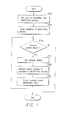
- FIG. 2 is a flowchart for illustrating the sheet identifying process according to the first embodiment. The identification process is explained below based on the above flowchart.
- dividing parameters are initialized (ST1).
- the dividing patterns indicate concrete numerical values which express area division of each pattern.
- FIG. 3 a case wherein an input pattern is uniformly divided into areas of 32 in the lateral direction and 13 in the longitudinal direction (416 in total) in a lattice form is shown as an example.
- the dividing parameters are expressed as follows, for example.
- pi hi vi li di
- pi indicates a dividing parameter of an i-th area (1 i 416)
- hi indicates the horizontal coordinate of a start point of the i-th area
- vi indicates the vertical coordinate of the start point of the i-th area
- li indicates the horizontal width of the i-th area
- di indicates the vertical height of the i-th area.
- weighting parameters are initialized (ST2).
- selecting parameters are initialized (ST3). If the selecting parameter is set as Q, the selecting parameter Q is divided into a selection rate q0 and selected area number qj (j 1). That is, the following equation is obtained.
- Q q ⁇ 0 , q ⁇ 1 , q ⁇ 2 ,
- the selection rate is a ratio of the selected area to the entire area. That is, the following expression is set. 0.0 q ⁇ 0 1.0
- the number of the area selected at this time is set to a selected area number.
- the number of selected area numbers is determined according to the selection rate.
- the value of the selected area number is set in the following range. 1 qj 416
- a reference pattern is input.
- the number of classes of the pattern is set to "2" and a 2-class identification problem is dealt with.
- FIGS. 4, 5 and FIGS. 6, 7 schematically show two patterns of different classes.
- the reference pattern is a pattern used as a reference of a class which is free from an influence by a stain of a medium and an input variation.
- One reference pattern is set for each class.
- each class to which the reference pattern, belongs is known.
- the area dividing process is performed.
- the area dividing process as shown in FIG. 5 is performed for the reference pattern (class A) shown in FIG. 4 .
- the area dividing process as shown in FIG. 7 is performed for the reference pattern (class B) shown in FIG. 6 .
- FIGS. 5 and 7 schematically show the state of area division.
- the reference pattern input process and the area dividing process are repeatedly performed for all of the classes (set4 to ST6).
- the weighting parameter is updated (ST7).
- the weighting parameter is updated according to a difference between the classes. For example, if reference patterns for the two classes A and B are expressed by a(0) and b(0) and the number of pixels contained in one area is set to N, the feature amounts are expressed as follows, for example.
- f a 0 , i a 0 i 1 , a 0 i 2 , , a 0 i n , , a 0 i N
- f b 0 , i b 0 i 1 , b 0 i 2 , , b 0 i n , , b 0 i N
- f(a(0), i) and f(b(0), i) are feature amounts of the i-th areas of a(0) and b(0) (1 i 416).
- a(0, i, n) and b(0, i, n) are pixel values of n-th pixels of the i-th areas of a(0) and b(0) (1 n N).
- the feature amount is an n-dimensional vector determined by the N pixel values.
- D f a 0 , i , f b 0 , i sqrt ⁇ n b 0 i n - a 0 i n ⁇ 2
- the weighting parameter is derived as a value obtained by dividing the distances between the reference patterns for the respective areas by the total sum of the differences between the reference patterns of all of the areas.
- the above process is adequate as the first stage of the area weighting process.
- the weighting parameter is tuned by use of a learning pattern.
- the learning pattern is a sample belonging to a class which is known except the reference pattern. It is preferable that the learning pattern have a certain number of samples and reflect the distribution of sets of all of the patterns of the classes to which they belong. If the learning pattern is input, the area-dividing process is performed like the case of the reference pattern. The learning pattern input process and the area dividing process are repeatedly performed for all of the samples of all of the classes (ST8 to ST10).
- the weighting parameter is updated (ST11).
- the weighting parameter is updated according to a variation in the class. For example, if M learning patterns for the two classes A and B are expressed by a(k) and b(k) (1 k M), the following equations indicating values expressing variations can be attained.
- s(a, i) and s(b, i) indicate variation values of the i-th areas of the classes A and B and (a(k), i) and (b(k), i) indicate average vectors of the i-th areas of the classes A and B. That is, the variation values in the present embodiment are obtained by deriving standard deviations of the learning patterns of the respective classes for the respective areas.
- the weighting parameter is updated as follows. wi wi / s a + s b i
- the weighting parameter is determined by taking the difference between the classes and the variation in the class into consideration.
- the selecting parameter is updated (ST12).
- the area weighting and selecting processes based on the difference between the classes and the variation in the class are performed and the learning phase is completed.
- an identification phase In the identification phase, an unknown pattern is input and the identification result is output.
- the unknown pattern is a sample belonging to a class which is unknown. If such an unknown pattern is input (ST13, ST14), the area dividing process is performed like the case of the reference pattern and learning pattern (ST15).
- an area specified by the selecting parameter is selected (ST16). Further, the identification process is performed for each of the selected areas (ST17 to ST19).
- the algorithm of the identification process itself is not particularly limited, but in the case of a 2-class identification problem, the result of the identification process is set to one of "class A", "class B" and "reject".
- the most primitive identification algorithm utilizes Euclid distance between the reference pattern and an unknown pattern. For example, if the unknown pattern is x and the identification result of an i-th area for the unknown pattern x is z(x, i), the following relations can be obtained.
- the whole identification result is determined based on the identification results for the respective areas.
- this invention is featured in that the identification result is temporarily obtained for each area and the identification result of the whole portion is determined based on the majority rule, logical equation or weighting process thereof.
- the Euclid distance for each area is derived as described before and the simple mean or weighted mean is derived and then the whole identification result is determined without deriving the identification result for each area.
- the local feature cannot be sufficiently identified and the local medium variation (stain, light brush-stroke or the like) gives an influence on the identification performance.
- the identification process of higher precision can be realized. For example, if an unknown pattern is x and the whole identification result for the unknown pattern x is z(x), the following relations can be attained in the case of the majority rule.
- z x classA ifi
- z x i classA mostfrequentlyoccurs
- z x classB ifi
- z x i classB mostfrequentlyoccurs
- z x reject ifi
- z x i reject mostfrequentlyoccurs
- the identification result of the whole portion can be determined by expressing the relation between i
- (z(x, i) class A), i
- (z(x, i) class B) and i
- (z(x, i) reject) by use of logical equations.
- z(x) class A if the following condition is satisfied. i
- z x i classB / i
- z x i classA / i
- weighted majority rule and weighted logical equation can be utilized by taking the degrees of weighting of the weighted parameters on the majority rule and logical equation into consideration. That is, the following relations can be obtained.
- z x classA ifiwi
- z x i classA mostfrequentlyoccurs
- z x classB ifiwi
- z x i classB mostfrequentlyoccurs
- z x reject ifiwi
- z x i reject mostfrequentlyoccurs
- z(x) class A if the following condition is satisfied. iwi
- z x i classB / iwi
- the identification result z(x) of the unknown pattern obtained by the above process is output (ST19).
- the first embodiment it becomes possible to efficiently estimate the class of the sheet or paper sheet and perform a pattern identification process which is robust to a variation in the medium by dividing an image pattern of the paper sheet into a plurality of areas (pixels or sets of pixels), weighting and selecting the areas, attaining the identification results for the respective areas and determining the identification result of the whole portion based on a logical combination of the identification results.
- the areas are weighted and selected based on the difference between the classes and a variation in the class, the amount of calculations can be reduced and the high identification performance can be attained in comparison with the method of uniformly processing the whole portion of the pattern.
- the local feature is not dependent on the other portion and the local variation can be acquired without giving an influence by the local variation on the other portion in comparison with the simple mean of the feature amounts for the respective areas and the behavior of the whole identification process can be simply adjusted by use of the parameters.
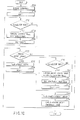
- FIG. 8 is a flowchart for illustrating a sheet identifying process according to the second embodiment.
- Initialization of dividing parameters, initialization of weighting parameters and initialization of selecting parameters ST1, ST2, ST3 are the same as those of the first embodiment and the explanation thereof is omitted.
- a random area selecting process is repeatedly performed while a learning pattern is being input and the weighting parameters are sequentially optimized based on the evaluation.
- a reference pattern is input like the first embodiment (ST4 to ST6).
- the number of classes of the pattern is set to "2" and a 2-class identification problem is dealt with.
- the reference pattern is a pattern used as a reference of a class which is free from an influence due to a stain of a medium and an input variation.
- One reference pattern is set for each class. Further, a class to which the reference pattern belongs is known.
- the area dividing process is performed.
- the reference pattern input process and the area dividing process are repeatedly performed for all of the classes.
- the operation of updating the weighting parameters using the reference patterns of the first embodiment is not performed.
- a learning pattern is input (ST8, ST9). It is preferable for the learning pattern to have a certain number of samples and reflect the distribution of sets of all of the patterns of a class to which the pattern belongs.
- the area dividing process is performed (ST10).
- the basic evaluation method is to enhance the degree of the weighting parameter of the selected area if the area is effective for identification of the input learning pattern and lower the degree of the weighting parameter of the selected area if it is ineffective.
- the way of determining "effective” or “ineffective” is not limited in this invention.
- the most primitive evaluation algorithm is attained by using the Euclid distance between the reference pattern and the learning pattern. For example, when the reference patterns of the two classes are set to a(0) and b(0) and the learning pattern belonging to the class A is y, then the following relation can be attained.
- the weighting parameter updating operation is repeatedly performed for all of the learning patterns (ST24) and the normalization process is performed as follows after the updating operation (ST25). wi wi / iwi
- the random area selection and evaluation operations are alternately and repeatedly performed and the weighting parameter based on the evaluation is determined.
- the selection parameter is updated, but the contents thereof are sequentially registered as the selected area numbers in the order of increasing degrees of weighting like the first embodiment (ST26).
- the feature that the selected area numbers are further narrowed down (ST27) is attained.
- the learning phase is completed.
- the identification phase (after the unknown pattern input operation (set13 to ST19)) of the second embodiment is the same as that of the first embodiment. Finally, an identification result for the unknown pattern is output.
- FIG. 9 is a flowchart for illustrating a case wherein the random area selection is not performed in the second embodiment. Since the steps in the flowchart are the same as those described above (in FIG. 8 ), the explanation thereof is omitted.
- the evaluation process for the randomly selected areas or for all of the areas is repeatedly performed and the degrees of weighting of the area are sequentially updated based on the evaluation.
- the identification process using parameters corresponding to real data can be performed.
- both of the identification performance and reliability can be enhanced by applying a random mask to the selected areas and narrowing down the areas.
- FIG. 10 is a flowchart for illustrating an identifying process according to the third embodiment.
- the parameter initialization process corresponds to the dividing parameter initialization process, weighting parameter initialization process and selection parameter initialization process and the explanation thereof is omitted here.
- the third embodiment has a feature that the final identification result is determined based on the majority rule, logical equation or weighting process thereof for a plurality of identification results obtained by a plurality of area selecting processes.
- a plurality of area selection processes are performed (ST31, ST32).
- the area selection algorithm the area selection algorithm in the first embodiment or second embodiment can be used. If the number of loops is set to LOOPMAX, selecting parameters Qloop of LOOPMAX can be obtained Qloop 1 loop LOOPMAX
- an unknown pattern is input (ST36, ST37) and the identification result thereof is output (ST38).
- unknown pattern processes of LOOPMAX are performed based on the selecting parameters of LOOPMAX and whole identification results of LOOPMAX can be obtained as the result (ST39 to ST42).
- the unknown pattern is set to x and the whole identification result for the unknown pattern x based on the selecting parameters Qloop is set to z(x,loop).
- the present embodiment has a feature that the final identification result is determined based on the majority rule, logical equation or weighting process thereof for a plurality of identification results obtained by a plurality of area selecting processes. For example, if the majority rule is applied, the following relations can be obtained.
- z x classA ifloop
- z x loop classA ⁇ mostfrequentlyoccurs
- z x classB ifloop
- z x loop classB ⁇ mostfrequentlyoccurs
- z x reject ifloop
- z x loop reject ⁇ mostfrequentlyoccurs
- loop[(z(x, loop) class A), loop
- (z(x, loop) class B) and loop
- z(x) class A if the following condition is set up.
- ( z x loop class A ) > loop
- z x loop classB > loop
- ( z x loop class A ) > loop
- z x loop classB > loop
- weighted majority rule and weighted logical equation can be attained by considering the degrees of weighting of the weighting parameters in the majority rule and logical equation. That is, the following relations can be attained.
- z x classA ifloopwi
- z x loop classA ⁇ mostfrequentlyoccurs
- z x classB ifloopwi
- z x loop classB ⁇ mostfrequentlyoccurs
- z x reject ifloopwi
- z x loop reject ⁇ mostfrequentlyoccurs
- z(x) class A if the following condition is set up.
- ( z x loop class A ) > loopwi
- z x loop classB > loopwi
- ( z x loop class A ) > loopwi
- z x loop classB ) > loopwi
- the identification result z(x) of an unknown pattern obtained by the above process is output (ST44).
- the final identification result is determined based on the majority rule, logical equation or weighting process thereof for a plurality of identification results obtained by a plurality of area selecting processes, the results identified based on various viewpoints can be unified. Therefore, the identification performance which is more robust than that obtained by one area selecting process can be attained.
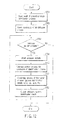
- FIG. 11 is a flowchart for illustrating an identifying process according to the fourth embodiment.
- the fourth embodiment has a feature that the first-order and second-order candidates, a plurality of (n) high-order candidates of the results of the preceding-stage identification processes obtained by different identification means provided in the preceding stage, or two or more candidates of desired orders to be identified, for example, two to n candidates of desired orders to be identified are set as identification process candidates and the final identification result is determined by combining the candidates.
- the result of the preceding-stage identification process is input (ST51).
- the algorithm of the preceding-stage identification process is not particularly limited, but the result of the identification process is generally expressed by a set of "order, class (category), score (similarity)". For example, the following items are provided.
- candidates of the identification process are selected (ST52). For example, it is supposed in the above example that a difference between the score (990) of the first candidate of the result of the preceding-stage identification process and the score (900) of the second candidate is small and determination of "reject" is made for the preceding-stage identification process.
- the two classes of the first candidate ($1) and the second candidate ($100) are registered as candidates of the identification process.
- two candidates of desired orders to be identified may be selected. For example, suppose that the following items are provided in another example.
- the scores of the first candidate ($20 C (old)) and the second candidate ($20 (new)) are close to each other, but only the generations thereof are different and the amounts thereof are the same, that is, distinct identification thereof is not required in some cases. In such a case, for example, the first candidate ($20 (old)) and third candidate ($1) are selected.
- the unknown pattern identification result z(x) obtained by the above process is output (ST56).
- the fourth embodiment it is supposed that no error occurs in the preceding-stage identification process, but in the practical case, an error may occur in the preceding-stage identification process in some cases.
- the first candidate is $20 (old) and the second candidate is $20 (new) in the preceding-stage identification process, but there occurs a case wherein the correct answer is $20 (new). Therefore, there is provided a method for setting the number of candidates selected based on the result of the preceding-stage identification process to "n" instead of "2", processing an unknown pattern with respect to the n candidates and determining the final identification result based on the processing results.
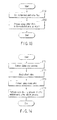
- FIG. 12 is a flowchart for illustrating a case wherein the process is performed with respect to the n candidates in the fourth embodiment and then the final identification result is determined.
- the process (ST57) of combining first-order unknown pattern identification results is additionally provided in the process shown in FIG. 11 .
- the first-order unknown pattern identification result z ij (x) is an unknown pattern identification result obtained based on the i-th and j-th candidates. The explanation is made in the following case.
- the number of classes to be processed can be reduced by setting the first-order and second-order candidates, a plurality of (n) high-order candidates of the results of the preceding-stage identification processes obtained by different identification means provided in the preceding stage, or two or more candidates of desired orders to be identified as identification process candidates and determining the final identification result by combining the candidates. Further, even when determination of "reject" is made in the preceding-stage identification process, determination of "accept” can be made according to the high identification performance of this invention in some cases.
- FIG. 13 is a flowchart for illustrating the identifying process according to the fifth embodiment.
- the fifth embodiment has a feature that an area in which a signature or stamp to be written or printed on a paper sheet or the like whose feature is unstable and which is already known to be excluded is previously registered as a to-be-excluded area and, after this, an area other than the to-be-excluded area is processed as an object.
- a to-be-excluded area flag is set for each area, the to-be-excluded area flag is set to 1" if the area is a to-be-excluded area and it is set to "0" if the area is not a to-be-excluded area (ST61).
- ST61 the process performed after the to-be-excluded area flag setting process (ST61) is the same as that explained in the other embodiments, the explanation thereof is omitted here.
- the process after the area selection process can be performed with the area other than the to-be-excluded area used as an object by previously registering the known to-be-excluded area, a high-speed and stable identification process can be attained.
- FIG. 14 is a flowchart for illustrating an identifying process according to the sixth embodiment.
- skewing and sliding of a paper sheet or the like caused by the feeding condition of the paper sheet are detected (ST71), corresponding offset values are read according to an offset conversion table previously prepared based on the detected sliding amounts and skewing amounts (ST72), and the coordinates of the respective areas are converted according to the offset values (ST73).
- ST74 a process starting from the area dividing process is performed (ST74). Since the process starting from the area dividing process is the same as that described in the other embodiments, the explanation thereof is omitted here.
- FIG. 15 is a schematic diagram for illustrating the sixth embodiment.
- the position of the paper sheet P is detected by use of a transmission light sensor, for example.
- the position (reference position) of the paper sheet P is expressed as follows when it is input in an ideal feeding condition of the paper sheet P.
- the method is to derive the centers of gravity of the four end point coordinates in the ideal case and in a case where the influence by sliding and skewing is applied and set a difference between the two centers of gravity as a sliding amount.
- the coordinates of the respective areas are converted as follows based on the thus derived sliding amounts X C , Y C and skew amount .
- X ⁇ i X i ⁇ cos - Y i ⁇ sin + ⁇ X C
- Y ⁇ i X i ⁇ sin + Y i ⁇ cos + ⁇ Y C
- (X i , Y i ) is the coordinates of the n-th pixel in the i-th area in the ideal case
- (X' i , Y' i ) is the coordinates of the n-th pixel in the i-th area when the influence by sliding and skewing is taken into consideration.
- the coordinates conversion is performed on all pixels in the region. Nonetheless, the conversion may be performed on only the center pixel in the region in a simple method, In this case, paper sheets can be identified at a high speed, while reducing the influence of the sliding and skewing of each paper sheet.
- the coordinates conversion is performed without changing the inclination of the extraction frame.
- the efficiency of identifying paper sheets may decrease. Nonetheless, almost all influence of the sliding and skewing of each paper sheet can be eliminated, because the coordinates of the center pixel are corrected (or converted).
- the conversion performed without changing the inclination of the extraction frame is results in no problems. Rather, it is advantageous because of the high-speed sheet identification it achieves.
- the sixth embodiment sliding and skewing of the paper sheet caused by the feeding state of the paper sheet are detected, a corresponding offset value is read from the prepared offset conversion table based on the sliding amount and skewing amount and the coordinates of the respective areas are converted by use of the offset value. Then, the succeeding area dividing process can be performed at high speed with high precision.
- FIG. 17 is a flowchart for illustrating an identifying process according to the seventh embodiment.
- the seventh embodiment has a feature that processes are repeatedly performed with the coordinate and temperature swung in a preset range with respect to one or two objective patterns when the identification result is obtained for each area and the identification results are determined based on the above processes.
- the state in which the coordinate and concentration are swung is expressed by use of a parameters and is called a "shift parameter".
- the range in which and can be set is a reference one (pixel), for example. Further, the range in which can be set is a reference 20(%) and the range in which can be set is a reference 2 (levels).
- the feature amount f(c(0), i) of the i-th area of the reference pattern c(0) of a class c is converted into a shift feature amount f' (c(0), i) based on the set shift parameters for J shift parameters (ST81 to ST84) and the process is performed for the shift feature amount (ST85, ST86).
- FIG. 18 is a schematic diagram for illustrating the coordinate swinging way.
- the range in which and which are offset amounts relating to the coordinate can be set is a reference one (pixel).
- a distance between an input pattern (i-th area) P1 extracted as shown in FIG. 18 and a reference pattern P2 as shown in FIG. 18 is calculated.
- (X i , Y i ) indicates the reference coordinate of the i-th area. The distance is "256" when and are "0" (reference coordinate).
- the distance is not set to the Euclid distance but is set to the sum of the concentration differences between the pixels of the two patterns.
- FIG. 19 is a schematic diagram for illustrating the concentration swinging way.
- the range in which the concentration gain value can be set is a reference 20(%) and the range in which the concentration offset amount can be set is a reference 2 (levels).
- a distance between an input pattern P3 shown in FIG. 19 and a reference pattern P4 is calculated.
- the coordinate and concentration can be swung in preset ranges to obtain J processing results in total.
- the final area identification result is determined based on the J processing results (ST87).
- the feature amount can be converted with the influence by the above errors taken into consideration by repeatedly performing the processes with the coordinate and concentration swung in the preset ranges for the one or two object patterns and determining the identification result based on the above processes when the identification results are obtained for the respective areas.
- the succeeding area identification process can be precisely performed.
- This invention is not limited to the above embodiments.
- a multiple class identification problem is substantially equal to superposition of 2-class identification problems, this invention can be applied to this case.
- the area identification algorithm is not limited to the algorithm using the Euclid distance and, for example, various methods such as the simple similarity method, subspatial method and vector quantization method can be applied.
Landscapes
- General Physics & Mathematics (AREA)
- Physics & Mathematics (AREA)
- Engineering & Computer Science (AREA)
- Health & Medical Sciences (AREA)
- Toxicology (AREA)
- General Health & Medical Sciences (AREA)
- Multimedia (AREA)
- Computer Vision & Pattern Recognition (AREA)
- Theoretical Computer Science (AREA)
- Image Analysis (AREA)
- Inspection Of Paper Currency And Valuable Securities (AREA)
- Packaging For Recording Disks (AREA)
- Control And Safety Of Cranes (AREA)
- Making Paper Articles (AREA)
- Collating Specific Patterns (AREA)
Applications Claiming Priority (3)
| Application Number | Priority Date | Filing Date | Title |
|---|---|---|---|
| JP2005229928 | 2005-08-08 | ||
| JP2006176735A JP5111794B2 (ja) | 2005-08-08 | 2006-06-27 | 紙葉類識別装置、紙葉類識別方法、及び辞書作成方法 |
| EP06016527A EP1752934B1 (en) | 2005-08-08 | 2006-08-08 | Sheet identifying apparatus and sheet identifying method |
Related Parent Applications (2)
| Application Number | Title | Priority Date | Filing Date |
|---|---|---|---|
| EP06016527.1 Division | 2006-08-08 | ||
| EP06016527A Division EP1752934B1 (en) | 2005-08-08 | 2006-08-08 | Sheet identifying apparatus and sheet identifying method |
Publications (2)
| Publication Number | Publication Date |
|---|---|
| EP2189951A1 EP2189951A1 (en) | 2010-05-26 |
| EP2189951B1 true EP2189951B1 (en) | 2015-11-04 |
Family
ID=37012005
Family Applications (2)
| Application Number | Title | Priority Date | Filing Date |
|---|---|---|---|
| EP10154812.1A Active EP2189951B1 (en) | 2005-08-08 | 2006-08-08 | Sheet indentifying apparatus and sheet identifying method |
| EP06016527A Active EP1752934B1 (en) | 2005-08-08 | 2006-08-08 | Sheet identifying apparatus and sheet identifying method |
Family Applications After (1)
| Application Number | Title | Priority Date | Filing Date |
|---|---|---|---|
| EP06016527A Active EP1752934B1 (en) | 2005-08-08 | 2006-08-08 | Sheet identifying apparatus and sheet identifying method |
Country Status (6)
| Country | Link |
|---|---|
| US (1) | US7991197B2 (https=) |
| EP (2) | EP2189951B1 (https=) |
| JP (1) | JP5111794B2 (https=) |
| CN (2) | CN101739749B (https=) |
| AT (1) | ATE485574T1 (https=) |
| DE (1) | DE602006017634D1 (https=) |
Families Citing this family (23)
| Publication number | Priority date | Publication date | Assignee | Title |
|---|---|---|---|---|
| JP4901524B2 (ja) * | 2007-02-22 | 2012-03-21 | 株式会社東芝 | 紙葉類の汚損度判定装置および汚損度判定方法 |
| JP2008252862A (ja) * | 2007-03-05 | 2008-10-16 | Ricoh Co Ltd | 画像処理装置、画像処理方法及び画像処理プログラム |
| CN101796550B (zh) * | 2007-09-07 | 2012-12-12 | 光荣株式会社 | 纸张类识别装置和纸张类识别方法 |
| US8121441B2 (en) * | 2007-10-26 | 2012-02-21 | Murata Machinery, Ltd. | Image processing apparatus, image scanning apparatus, image processing method, and image processing program |
| DE102008048043A1 (de) * | 2008-09-19 | 2010-03-25 | Giesecke & Devrient Gmbh | Kalibrieren eines Sensors zur Wertdokumentbearbeitung |
| US8085989B2 (en) * | 2008-10-23 | 2011-12-27 | Glory Ltd. | Method and apparatus for determining authenticity |
| JP2011028512A (ja) * | 2009-07-24 | 2011-02-10 | Toshiba Corp | 紙葉類の正損判定用辞書作成方法、紙葉類処理装置、及び紙葉類処理方法 |
| AT509022B1 (de) * | 2009-08-14 | 2012-09-15 | Ait Austrian Inst Technology | Verfahren zur qualitätsprüfung eines digitalbilds |
| JP5631760B2 (ja) * | 2011-01-20 | 2014-11-26 | 株式会社東芝 | 紙葉類処理装置、及び辞書作成方法 |
| NL2006990C2 (en) * | 2011-06-01 | 2012-12-04 | Nl Bank Nv | Method and device for classifying security documents such as banknotes. |
| JP6098065B2 (ja) * | 2011-09-13 | 2017-03-22 | 株式会社リコー | 画像検査装置、画像検査方法、及びプログラム |
| JP2013238948A (ja) * | 2012-05-14 | 2013-11-28 | Sony Corp | 画像処理装置および方法、並びに、プログラム |
| CA2887167C (en) | 2012-11-14 | 2017-10-31 | Mitsubishi Electric Corporation | Signal processing device, signal processing method and information reading apparatus |
| CN103390308B (zh) * | 2013-07-05 | 2016-12-28 | 深圳市国科微半导体股份有限公司 | 基于部分图像子块的高速纸币判别系统及其判别方法 |
| KR101492406B1 (ko) * | 2013-09-06 | 2015-02-16 | 기산전자 주식회사 | 지폐처리장치의 상태 분석 및 예측 시스템과 그 계층 구조 |
| JP6369143B2 (ja) * | 2014-06-03 | 2018-08-08 | 富士ゼロックス株式会社 | 真贋評価装置及びプログラム |
| WO2017079904A1 (zh) * | 2015-11-10 | 2017-05-18 | 深圳怡化电脑股份有限公司 | 一种货币面值的识别方法及装置 |
| JP6736881B2 (ja) * | 2015-12-25 | 2020-08-05 | 株式会社リコー | 画像処理装置、画像形成装置、画像処理方法及びプログラム |
| US10810589B2 (en) * | 2017-02-27 | 2020-10-20 | Ncr Corporation | Validation of damaged banknotes |
| CN107170107B (zh) * | 2017-05-10 | 2019-09-20 | 深圳怡化电脑股份有限公司 | 传感器采集数据的方法、装置、设备及存储介质 |
| CN107895424B (zh) * | 2017-10-31 | 2020-11-17 | 深圳怡化电脑股份有限公司 | 一种纸币的识别方法、系统及金融终端 |
| JP7374453B2 (ja) * | 2019-03-28 | 2023-11-07 | 株式会社イシダ | 学習済みモデル生成方法、学習済みモデル生成装置、商品判別方法、商品判別装置、商品判別システム及び計量装置 |
| CN113538809B (zh) * | 2021-06-11 | 2023-08-04 | 深圳怡化电脑科技有限公司 | 一种基于自助设备的数据处理方法和装置 |
Family Cites Families (29)
| Publication number | Priority date | Publication date | Assignee | Title |
|---|---|---|---|---|
| DE69023782T2 (de) | 1989-02-10 | 1996-06-13 | Canon Kk | Gerät zum Lesen oder Verarbeiten eines Bildes. |
| US5199543A (en) * | 1990-08-22 | 1993-04-06 | Oki Electric Industry Co., Ltd. | Apparatus for and method of discriminating bill |
| JPH05258146A (ja) * | 1992-03-13 | 1993-10-08 | Glory Ltd | 紙葉類の斜行データ補正装置 |
| US5729623A (en) * | 1993-10-18 | 1998-03-17 | Glory Kogyo Kabushiki Kaisha | Pattern recognition apparatus and method of optimizing mask for pattern recognition according to genetic algorithm |
| JP3436958B2 (ja) * | 1993-12-08 | 2003-08-18 | 株式会社東芝 | 画像入力装置 |
| US5483606A (en) * | 1994-01-03 | 1996-01-09 | Xerox Corporation | Method for automatically registering a document having a plurality of pages |
| SE502658C2 (sv) | 1994-02-28 | 1995-12-04 | Non Stop Info Ab | Förfarande och kontrollanordning för avläsning av identitets -och värdehandlingar. |
| US5680472A (en) * | 1994-06-09 | 1997-10-21 | Cr Machines, Inc. | Apparatus and method for use in an automatic determination of paper currency denominations |
| US5528387A (en) * | 1994-11-23 | 1996-06-18 | Xerox Corporation | Electronic image registration for a scanner |
| JP3187698B2 (ja) * | 1995-11-08 | 2001-07-11 | 沖電気工業株式会社 | 紙葉類認識装置 |
| JP3716873B2 (ja) * | 1996-03-26 | 2005-11-16 | グローリー工業株式会社 | 紙葉類識別装置 |
| US6433896B1 (en) * | 1997-06-10 | 2002-08-13 | Minolta Co., Ltd. | Image processing apparatus |
| TW376492B (en) * | 1997-08-06 | 1999-12-11 | Nippon Telegraph & Telephone | Methods for extraction and recognition of pattern in an image, method for image abnormality judging, and memory medium with image processing programs |
| US6067374A (en) * | 1997-11-13 | 2000-05-23 | Xerox Corporation | Seal detection system and method |
| JP3104868B2 (ja) * | 1997-11-25 | 2000-10-30 | 富士ゼロックス株式会社 | 画像処理装置 |
| KR100264331B1 (ko) * | 1998-05-26 | 2000-08-16 | 윤종용 | 원고 비틀림 보정 장치 및 방법 |
| US6741743B2 (en) * | 1998-07-31 | 2004-05-25 | Prc. Inc. | Imaged document optical correlation and conversion system |
| US7145699B2 (en) * | 2001-03-30 | 2006-12-05 | Sharp Laboratories Of America, Inc. | System and method for digital document alignment |
| WO2003073387A2 (de) * | 2002-02-28 | 2003-09-04 | Siemens Aktiengesellschaft | Verfahren, vorrichtung und computerprogramm zur überprüfung der authentizität von nichtelektronischen dokumenten |
| US6766045B2 (en) * | 2002-03-11 | 2004-07-20 | Digital Verification Ltd. | Currency verification |
| JP2004062565A (ja) * | 2002-07-30 | 2004-02-26 | Canon Inc | 画像処理装置及び方法並びにプログラム記憶媒体 |
| US6785405B2 (en) * | 2002-10-23 | 2004-08-31 | Assuretec Systems, Inc. | Apparatus and method for document reading and authentication |
| EP1601599B1 (en) * | 2003-03-12 | 2008-05-28 | De La Rue International Limited | Optical double feed detection |
| GB0313002D0 (en) * | 2003-06-06 | 2003-07-09 | Ncr Int Inc | Currency validation |
| AU2003903511A0 (en) * | 2003-07-08 | 2003-07-24 | Canon Kabushiki Kaisha | Image registration method improvement |
| JP2005074673A (ja) * | 2003-08-28 | 2005-03-24 | Fuji Photo Film Co Ltd | ずれ量取得方法、ずれ量取得装置、およびずれ量取得プログラム |
| JP2005322139A (ja) * | 2004-05-11 | 2005-11-17 | Nippon Conlux Co Ltd | 紙葉類識別装置および方法 |
| US7983468B2 (en) * | 2005-02-09 | 2011-07-19 | Jp Morgan Chase Bank | Method and system for extracting information from documents by document segregation |
| JP2007072583A (ja) * | 2005-09-05 | 2007-03-22 | Toshiba Corp | 紙葉類の厚さ検知装置および紙葉類の厚さ検知方法 |
-
2006
- 2006-06-27 JP JP2006176735A patent/JP5111794B2/ja active Active
- 2006-08-08 CN CN2009102619833A patent/CN101739749B/zh active Active
- 2006-08-08 EP EP10154812.1A patent/EP2189951B1/en active Active
- 2006-08-08 EP EP06016527A patent/EP1752934B1/en active Active
- 2006-08-08 US US11/500,462 patent/US7991197B2/en active Active
- 2006-08-08 AT AT06016527T patent/ATE485574T1/de active
- 2006-08-08 CN CN2006101107961A patent/CN1912932B/zh active Active
- 2006-08-08 DE DE602006017634T patent/DE602006017634D1/de active Active
Also Published As
| Publication number | Publication date |
|---|---|
| EP2189951A1 (en) | 2010-05-26 |
| ATE485574T1 (de) | 2010-11-15 |
| JP5111794B2 (ja) | 2013-01-09 |
| EP1752934B1 (en) | 2010-10-20 |
| US20070031021A1 (en) | 2007-02-08 |
| CN1912932B (zh) | 2010-12-29 |
| DE602006017634D1 (de) | 2010-12-02 |
| CN101739749A (zh) | 2010-06-16 |
| JP2007073035A (ja) | 2007-03-22 |
| EP1752934A3 (en) | 2008-05-21 |
| CN101739749B (zh) | 2012-11-28 |
| CN1912932A (zh) | 2007-02-14 |
| US7991197B2 (en) | 2011-08-02 |
| EP1752934A2 (en) | 2007-02-14 |
Similar Documents
| Publication | Publication Date | Title |
|---|---|---|
| EP2189951B1 (en) | Sheet indentifying apparatus and sheet identifying method | |
| JP5108018B2 (ja) | 紙葉類識別装置及び紙葉類識別方法 | |
| CN103460222B (zh) | 字符串提取方法以及字符串提取装置 | |
| US20110320930A1 (en) | Method and means for identifying valuable documents | |
| JP4105694B2 (ja) | 紙片鑑別装置、紙片鑑別方法及びプログラム | |
| JP5372183B2 (ja) | 硬貨分類装置および硬貨分類方法 | |
| JP4932177B2 (ja) | 硬貨分類装置および硬貨分類方法 | |
| JP6555751B2 (ja) | 紙幣処理装置及び紙幣処理方法 | |
| US5542518A (en) | Method of identifying the denominations of pieces of paper | |
| EP2431951A2 (en) | Sheet processing apparatus and sheet processing method | |
| JP2003109007A (ja) | 帳票様式分類装置、帳票様式分類方法、帳票様式分類プログラムおよび画像照合装置 | |
| JP2003091730A (ja) | 画像照合装置、画像照合方法および画像照合プログラム | |
| CN105139516A (zh) | 一种纸张类残破程度识别结构及纸币交易装置 | |
| KR20070011866A (ko) | 지폐 권종 인식 방법 및 장치 | |
| KR101232684B1 (ko) | 베이시안 접근법을 이용한 지폐 진위 감별 방법 | |
| JPH08221632A (ja) | 印刷パターンの真偽判別方法 | |
| JP2002092683A (ja) | 媒体真偽鑑別装置 | |
| JP2012181855A (ja) | 辞書作成方法及び識別用辞書を記憶する記憶媒体 | |
| JP5044255B2 (ja) | 紙葉類判別装置および紙葉類判別方法 | |
| JP3423136B2 (ja) | 紙葉類識別方法 | |
| JP2001056876A (ja) | ニューラルネットワークを用いた媒体の金種および真偽鑑別方法 | |
| JPH0814860B2 (ja) | 紙葉類判別方法 | |
| JPH1069559A (ja) | 紙幣識別方法 | |
| JP2000293725A (ja) | 投票用紙計数仕分け装置および投票用紙計数仕分け装置のプリセット装置およびその方法並びに投票用紙計数仕分け装置のプリセットプログラムを記録した媒体 | |
| JPH09120469A (ja) | 媒体のカテゴリ判定方法 |
Legal Events
| Date | Code | Title | Description |
|---|---|---|---|
| PUAI | Public reference made under article 153(3) epc to a published international application that has entered the european phase |
Free format text: ORIGINAL CODE: 0009012 |
|
| 17P | Request for examination filed |
Effective date: 20100226 |
|
| AC | Divisional application: reference to earlier application |
Ref document number: 1752934 Country of ref document: EP Kind code of ref document: P |
|
| AK | Designated contracting states |
Kind code of ref document: A1 Designated state(s): AT DE FR GB |
|
| 17Q | First examination report despatched |
Effective date: 20130606 |
|
| GRAP | Despatch of communication of intention to grant a patent |
Free format text: ORIGINAL CODE: EPIDOSNIGR1 |
|
| RIC1 | Information provided on ipc code assigned before grant |
Ipc: G06K 9/46 20060101ALI20150420BHEP Ipc: G07D 7/12 20060101ALI20150420BHEP Ipc: G07D 7/20 20060101AFI20150420BHEP Ipc: G07D 7/16 20060101ALI20150420BHEP |
|
| INTG | Intention to grant announced |
Effective date: 20150528 |
|
| GRAS | Grant fee paid |
Free format text: ORIGINAL CODE: EPIDOSNIGR3 |
|
| GRAA | (expected) grant |
Free format text: ORIGINAL CODE: 0009210 |
|
| AC | Divisional application: reference to earlier application |
Ref document number: 1752934 Country of ref document: EP Kind code of ref document: P |
|
| AK | Designated contracting states |
Kind code of ref document: B1 Designated state(s): AT DE FR GB |
|
| REG | Reference to a national code |
Ref country code: GB Ref legal event code: FG4D |
|
| REG | Reference to a national code |
Ref country code: AT Ref legal event code: REF Ref document number: 759665 Country of ref document: AT Kind code of ref document: T Effective date: 20151115 |
|
| REG | Reference to a national code |
Ref country code: DE Ref legal event code: R096 Ref document number: 602006047192 Country of ref document: DE |
|
| REG | Reference to a national code |
Ref country code: AT Ref legal event code: MK05 Ref document number: 759665 Country of ref document: AT Kind code of ref document: T Effective date: 20151104 |
|
| PG25 | Lapsed in a contracting state [announced via postgrant information from national office to epo] |
Ref country code: AT Free format text: LAPSE BECAUSE OF FAILURE TO SUBMIT A TRANSLATION OF THE DESCRIPTION OR TO PAY THE FEE WITHIN THE PRESCRIBED TIME-LIMIT Effective date: 20151104 |
|
| REG | Reference to a national code |
Ref country code: FR Ref legal event code: PLFP Year of fee payment: 11 |
|
| REG | Reference to a national code |
Ref country code: DE Ref legal event code: R097 Ref document number: 602006047192 Country of ref document: DE |
|
| PLBE | No opposition filed within time limit |
Free format text: ORIGINAL CODE: 0009261 |
|
| STAA | Information on the status of an ep patent application or granted ep patent |
Free format text: STATUS: NO OPPOSITION FILED WITHIN TIME LIMIT |
|
| 26N | No opposition filed |
Effective date: 20160805 |
|
| REG | Reference to a national code |
Ref country code: FR Ref legal event code: PLFP Year of fee payment: 12 |
|
| REG | Reference to a national code |
Ref country code: FR Ref legal event code: PLFP Year of fee payment: 13 |
|
| PGFP | Annual fee paid to national office [announced via postgrant information from national office to epo] |
Ref country code: RO Payment date: 20180802 Year of fee payment: 9 |
|
| PG25 | Lapsed in a contracting state [announced via postgrant information from national office to epo] |
Ref country code: FR Free format text: LAPSE BECAUSE OF NON-PAYMENT OF DUE FEES Effective date: 20190831 |
|
| PGFP | Annual fee paid to national office [announced via postgrant information from national office to epo] |
Ref country code: GB Payment date: 20240620 Year of fee payment: 19 |
|
| PGFP | Annual fee paid to national office [announced via postgrant information from national office to epo] |
Ref country code: DE Payment date: 20240612 Year of fee payment: 19 |
|
| REG | Reference to a national code |
Ref country code: DE Ref legal event code: R119 Ref document number: 602006047192 Country of ref document: DE |