EP2185937B2 - Method for assaying sepsis in humans - Google Patents
Method for assaying sepsis in humans Download PDFInfo
- Publication number
- EP2185937B2 EP2185937B2 EP08801791.8A EP08801791A EP2185937B2 EP 2185937 B2 EP2185937 B2 EP 2185937B2 EP 08801791 A EP08801791 A EP 08801791A EP 2185937 B2 EP2185937 B2 EP 2185937B2
- Authority
- EP
- European Patent Office
- Prior art keywords
- psp
- reg
- sepsis
- patients
- protein
- Prior art date
- Legal status (The legal status is an assumption and is not a legal conclusion. Google has not performed a legal analysis and makes no representation as to the accuracy of the status listed.)
- Active
Links
Images


Classifications
-
- G—PHYSICS
- G01—MEASURING; TESTING
- G01N—INVESTIGATING OR ANALYSING MATERIALS BY DETERMINING THEIR CHEMICAL OR PHYSICAL PROPERTIES
- G01N33/00—Investigating or analysing materials by specific methods not covered by groups G01N1/00 - G01N31/00
- G01N33/48—Biological material, e.g. blood, urine; Haemocytometers
- G01N33/50—Chemical analysis of biological material, e.g. blood, urine; Testing involving biospecific ligand binding methods; Immunological testing
- G01N33/68—Chemical analysis of biological material, e.g. blood, urine; Testing involving biospecific ligand binding methods; Immunological testing involving proteins, peptides or amino acids
- G01N33/6893—Chemical analysis of biological material, e.g. blood, urine; Testing involving biospecific ligand binding methods; Immunological testing involving proteins, peptides or amino acids related to diseases not provided for elsewhere
-
- G—PHYSICS
- G01—MEASURING; TESTING
- G01N—INVESTIGATING OR ANALYSING MATERIALS BY DETERMINING THEIR CHEMICAL OR PHYSICAL PROPERTIES
- G01N2333/00—Assays involving biological materials from specific organisms or of a specific nature
- G01N2333/435—Assays involving biological materials from specific organisms or of a specific nature from animals; from humans
- G01N2333/46—Assays involving biological materials from specific organisms or of a specific nature from animals; from humans from vertebrates
- G01N2333/47—Assays involving proteins of known structure or function as defined in the subgroups
- G01N2333/4701—Details
- G01N2333/474—Pancreatic thread protein; Reg protein
-
- G—PHYSICS
- G01—MEASURING; TESTING
- G01N—INVESTIGATING OR ANALYSING MATERIALS BY DETERMINING THEIR CHEMICAL OR PHYSICAL PROPERTIES
- G01N2800/00—Detection or diagnosis of diseases
- G01N2800/26—Infectious diseases, e.g. generalised sepsis
Definitions
- the present invention relates to a method of prediction and/or diagnosis of a systematic infection in human, in particular for prediction of the development of sepsis, based on the level of pancreatic stone protein / regenerating protein (PSP/reg) in body fluids, and to an assay kit.
- PSP/reg pancreatic stone protein / regenerating protein
- Systemic responses to severe trauma include a number of parameters affecting innate immunity, inflammatory reactions and cellular activities.
- Severe trauma patients may have a benign outcome with no infection while others suffer from infections or sepsis. Sepsis is associated with multiple organ failure and a high mortality.
- markers for diagnosis of sepsis are leukocyte counts, C-reactive protein and procalcitonin. The latter are two proteins highly induced after trauma, yet without any known function.
- cytokines such as IL-6, IL-8 and IL-18 are employed to monitor patients.
- none of the above mentioned markers serves as a predictive indicator for infections including sepsis, hence treatment may lag behind the onset of sepsis.
- pancreatic protein is induced due to handling stress, even in the absence of pancreatic tissue damage ( R. Graf et al., J Surg Res 2002, 195:136-144 ).
- This protein, pancreatic stone protein / regenerating protein (PSP/reg) belongs to a family of lectin binding proteins. Under conditions of acute or chronic pancreatitis, it is highly up-regulated and may appear in the serum. Since the regulation of this protein is not purely restricted to diet induced secretion like other zymogens, it may appear elevated in other conditions, e.g. during pancreatitis. Thus far, the protein has been studied predominantly in the pancreas.
- the present invention relates to a method of prediction and/or diagnosis of a systemic infection in humans, in particular for prediction of the development of sepsis, wherein the level of pancreatic stone protein / regenerating protein (PSP/reg) is determined in body fluid sample, and a high level is indicative of the development of sepsis at early stages of the disease.
- the present invention relates to a method of determination of PSP/reg levels in body fluids, and a kit of parts for such a method.
- the present invention relates to a method of prediction and/or diagnosis of a systemic infection in humans, in particular for prediction of the development of sepsis, wherein the level of pancreatic stone protein / regenerating protein (PSP/reg) is determined in a body fluid sample, e.g. serum, and a high level is indicative of the development of sepsis at early stages of the disease.
- a body fluid sample e.g. serum
- Other body fluids than serum useful for determination of PSP/reg levels are e.g. whole blood, urine, sputum, cerebrospinal fluid, tear fluid, sweat, milk, or extracts from solid tissue or from fecal matter.
- the PSP/reg level indicative for development of posttraumatic sepsis is dependent on the body fluid chosen for the determination. For blood serum this level is 60 to 80 ng/ml on days 3, 4 or 5.
- the invention relates to a method of prediction and/or diagnosis of the development of sepsis, wherein the level of pancreatic stone protein / regenerating protein (PSP/reg) is determined in serum, and a level of 60 ng/ml or more, in particular a level of 80 ng/ml or more, on days 3, 4 or 5 is indicative of the development of sepsis.
- Any known method may be used for the determination of the level of PSP/reg in body fluids. Methods considered are e.g. ELISA, RIA, EIA, mass spectrometry, or microarray analysis. Such methods when used for diagnosis of systemic infection, e.g. sepsis, are a further object of the invention.
- a preferred method for the determination of PSP/reg in human body fluids, e.g. serum, is an ELISA.
- the PSP/reg ELISA consists of a sandwich array: Conventional microtiter plates are coated with one type of antibody ("first" antibody”), e.g. a guinea pig polyclonal antibody, directed against PSP/reg. The plates are then blocked and the sample or standard is loaded. After the incubation, a different type of antibody (“second" antibody) against PSP/reg is applied, e.g. a polyclonal rabbit antibody. A third antibody detecting the particular type of the "second" antibody, e.g.
- a anti-rabbit antibody conjugated with a suitable label, e.g. an enzyme for chromogenic detection
- a suitable label e.g. an enzyme for chromogenic detection
- the plate is developed with a substrate for the label in order to detect and quantify the label, being a measure for the presence and amount of PSP/reg.
- the label is an enzyme for chromogenic detection
- the substrate is a colour-generating substrate of the conjugated enzyme. The colour reaction is then detected in a microplate reader and compared to standards.
- Suitable pairs of antibodies are any combination of guinea pig, rat, mouse, rabbit, goat, chicken, donkey or horse. Preferred are polyclonal antibodies, but it is also possible to use monoclonal antibodies or antibody fragments.
- Suitable labels are chromogenic labels, i.e. enzymes which can be used to convert a substrate to a detectable coloured or fluorescent compound, spectroscopic labels, e.g. fluorescent labels or labels presenting a visible colour, affinity labels which may be developed by a further compound specific for the label and allowing easy detection and quantification, or any other label used in standard ELISA.
- PSP/reg detection is radioimmunoassay or competitive immunoassay using a single antibody and chemiluminescence detection on automated commercial analytical robots.
- Microparticle enhanced fluorescence, fluorescence polarized methodologies, or mass spectrometry may also be used.
- Detection devices e.g. microarrays, are useful components as readout systems for PSP/reg.
- a kit of parts for the determination of PSP/reg for diagnosis/prediction of systemic infection comprises, for example, apparatus, reagents and standard solutions of PSP/reg.
- Apparatus considered are e.g. microtiter plates for ELISA, pre-coated ELISA plates, and plate covers.
- Reagents are those reagents particularly developed and designed for the detection of PSP/reg.
- Standard solutions of PSP/reg preferably contain PSP/reg synthesized according to the directions hereinbelow.
- the kit of parts may contain further hardware, such as pipettes, solutions such as buffers, blocking solutions and the like, filters, colour tables and directions for use.
- PSP/reg is a protein expressed in the pancreas and the intestine. It can be cloned from pancreatic mRNA and subcloned into a yeast expression vector. The protein can then be expressed under the control of ADH.
- a suitable expression medium may comprise methanol to induce and maintain the secretion of PSP/reg.
- PSP/reg is preferable purified using SP-Sepharose-cellulose by a pH and salt gradient. Such purified PSP/reg is used to prepare standard solutions for comparison with PSP/reg levels in body fluids. Polyclonal antibodies against the protein may be obtained from mice, rats, rabbits, goats, chicken, donkey, horses and guinea pigs or other suitable animals using standard methods.
- PSP/reg is highly increased in patients during or before clinical signs of sepsis are apparent.
- the detection and quantification of serum PSP/reg is accomplished e.g. by a sandwich ELISA with a limit of detection of less than 100 pg/ml.
- Normal serum values are between 5 and 15 ng/ml.
- Patients with a severe trauma develop sepsis between day 7 and 10 after the accident causing the trauma.
- the serum values correlate with the severity of sepsis. They may reach over 200 ng/ml.
- PSP/reg values start to increase at day 3 to day 5 and reach values above 60-80 ng/ml.
- cDNA for the production of PSP/reg specific antibodies
- such cDNA is prepared by reverse transcription of pancreatic mRNA using state of the art laboratory methods.
- a PCR reaction using primers specific for the sequence coding for PSP/reg and selectively amplifying PSP/reg cDNA is performed.
- the PCR reaction is then repeated with the elongation primer to add a sequence specific for insertion into the Pichia pastoris transfection vector.
- the primer is designed to fuse the coding region of the signal peptide of the alpha-mating factor with a KEX2 site and the coding region of the mature human PSP/reg.
- Subcloning into the Pichia pastoris vector is a two-step procedure.
- the PCR product is ligated into the pCR2.1 vector (Invitrogen, TAcloning) and the sequence verified. Then the PCR product is cleaved by XhoI/Notl restriction digestion and ligated into transfer vector pPIC9 (Invitrogen). The Pichia pastoris strain KM71 (Invitrogen) is transformed and the most productive clone is selected for expansion and production of recombinant protein.
- Expression is induced by resuspending the cells in 1/5 volume (200 ml) of BMM (buffered minimum methanol, BMG in which glycerol is replaced by 0.5% methanol) in the same baffled flask. 100% methanol is added to achieve a concentration of 0.5% (1 ml) every 24 hrs until optimal time of induction is reached.
- BMM buffered minimum methanol
- 100% methanol is added to achieve a concentration of 0.5% (1 ml) every 24 hrs until optimal time of induction is reached.
- the cells are harvested by centrifugation at 1500-3000xg at room temperature.
- the medium supernatant is collected and frozen until purification of the peptide.
- the polypeptide is purified from media supernatants.
- Media supernatants are diluted 1:3 with distilled water.
- the pH is adjusted to pH 3.5 with HCl.
- the medium supernatant is then applied to a SP-Sepharose column and eluted by a salt and pH gradient (10 mM LiCl, 50 mM MES, pH 5.3 starting buffer, 2 M LiCl, 50 mM MES, pH 6.3 end buffer).
- Fractions are collected and analyzed by SDS-gel electrophoresis.
- the fractions with the highest and purest protein contents are combined and dialyzed against 10 mM HEPES pH 7.5.
- the sequence of the polypeptide is verified by N-terminal sequencing and the concentration is assessed by amino acid analysis.
- a sandwich ELISA may be used on the basis of a guinea pig antiserum raised against recombinant human PSP/reg and a rabbit antiserum against the same protein.
- IgGs are purified by absorption on a column of protein A beads (HiTrap®, Pharmacia): A HiTrap® column is equilibrated with 200 mM NaH 2 PO 4 /Na 2 HPO 4 at pH 7.
- the rabbit antiserum is pH-adjusted with the same buffer solution (final concentration 20 mM) and then loaded onto the column, which is afterwards washed with 100 mM and 10 mM Tris/HCl pH 8 consecutively.
- the IgG fraction is eluted with 0.1 M citric acid pH 3.
- the eluted fractions are immediately neutralized with 1 M Tris/HCl pH 8.9.
- 96-well microtiter plates (Costar EIA plates, flat bottom, high binding) are coated over night at 4°C with guinea pig anti-rat PSP/reg IgG fraction, diluted 1:500 in TBS (100 ⁇ l/well). After a washing step, the plate is blocked with 150 ⁇ l 1% BSA/TBS for one hour, which is afterwards replaced by 100 ⁇ l of different standard concentration of recombinant human PSP/reg (0, 0.1, 0.5, 1.0, 1.5, 2.5, 3.5, or 5.0 ng/ml) or 100 ⁇ l samples of diluted sample. Samples and standards are loaded in duplicates and incubated for 1 hr at room temperature.
- the plate is incubated for 1 hr with 100 ⁇ l rabbit anti-rat PSP/reg IgG, diluted 1:500. Another washing step follows before a 30 min incubation with 100 ⁇ l of a commercially available mouse monoclonal anti-rabbit IgG antibody is started (mouse anti-rabbit alkaline phosphatase conjugated, IgG fraction, diluted 1:1000; purchased from Sigma).
- a soluble phosphatase substrate p-nitrophenyl phosphate disodium (Sigma 104® tablets), added in alkaline phosphatase buffer (100 mM Tris/HCl pH 9.5, 100 mM NaCl, 0.8 mM MgCl 2 ). After an incubation period of about 20 min optical density (OD) at 405 nm is measured in an MRX microplate reader (Dynatech Laboratories).
- the test is established with recombinant human PSP/regl alpha.
- Recombinant PSP/reg 1 beta the second isoform, was made using the same technique.
- PSP/reg 1 beta is recognized equally well by the ELISA. Therefore, the ELISA is specific for the known PSP/reg family of proteins.
- the study population included 63 injured patients who were admitted to the Division of Trauma Surgery (level I trauma center), University Hospital Zurich, in a time period from January 2002 to September 2003. Inclusion criteria were an injury severity score (ISS) 16 points, patient age > 16 years, less than four hours between accident and hospital admission, and surveillance on the intensive care unit (ICU) with a survival of more than five days. Patients with a pancreatic injury were excluded. All patients were treated according to the advanced trauma life support (ATLS) guidelines and a standard trauma protocol. In brief, after control of airway, ventilation, and monitoring of cardiovascular functions, life-saving procedures including decompression of body cavities, control of hemorrhage and contamination were carried out.
- ISS injury severity score
- ICU intensive care unit
- Table 1 summarizes demographic data and injury scores at the day of admission. The severity of injury and gender distribution were very similar. Table 1. Demographic data of enrolled patients Parameter No infection Infection Sepsis Number 14 22 27 Age (yr) 38.6 ⁇ 16.9 36.6 ⁇ 15.5 37.3 ⁇ 16.0 Males 11 (78.6 %) 15 (68.2%) 22 (81.5%) ISS a (points) 34.6 ⁇ 9.3 32.2 ⁇ 13.9 38.7 ⁇ 15.6 GCS b (points) 8.9 ⁇ 5.2 9.2 ⁇ 4.9 8.8 ⁇ 5.1 APACHE II c (points) 15.0 ⁇ 6.2 13.6 ⁇ 6.6 17.0 ⁇ 6.8 ICU d (days) 9.1 ⁇ 5.9 16.3 ⁇ 8.2 26.6 ⁇ 9.9 Mean ⁇ SD. Values in parentheses are percentages. a ISS, injury severity score b GCS, Glasgow coma scale c APACHE II, acute physiology and chronic health evaluation II d ICU, intensive care
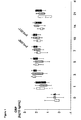
- IL-6 Figure 2
- PCT procalcitonin
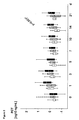
- PCT was clearly increased 20-fold in the septic patient group prior to and during sepsis, while the other groups remain at levels around 0.5-2 ng/ml ( Figure 3 ).
- the maximal increase in PCT was 25 fold versus healthy subjects. The statistics do not indicate significant differences due to the high variation in the sample.
- PSP/reg is synthesized predominantly in the pancreas and in the intestine. In response to a local tissue injury it is highly upregulated. In the absence of pancreatic tissue injury, PSP/reg is not expected to be up-regulated.
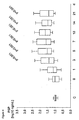
- polytrauma causes a release of cytokines that may affect the expression and secretion of PSP/reg. Therefore, it was tested whether these proteins are increased in patients with severe trauma that had no pancreatic injury. The combined data of all patients after polytrauma indicate an increase at day one that becomes significant at day three, compared to day zero as well as compared to healthy subjects ( Figure 4 ).
- pancreatic stone protein is slightly increased after a polytrauma.
- the data were then analyzed using stratification assigned to patients without infection, patients with infection and patients with sepsis.
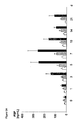
- PSP/reg values in patients without an infection are slightly increased with a peak at day 7-10 ( Figures 5A , 5B ).
- PSP/reg values in patients without an infection are slightly increased with a peak at day 7-10 ( Figures 5A , 5B ).
- PSP/reg values in patients without an infection are slightly increased with a peak at day 7-10 ( Figures 5A , 5B ).
- polytraumatic patients exhibiting sepsis show a large increase in serum PSP/reg.
- the early increase of PSP/reg in patients with sepsis can therefore be used as a serum marker to predict sepsis. Therefore the specificity, the positive and the negative predictive values are summarized for three potential cut-off values e.g. 30,60 and 80 ng/ml at day three and five. The specificity is around 80 percent for cut-off values of 60 and 80 ng/ml. The positive and negative predictive values above are also between 60 and 80% indicating that patients can be identified by this method early on. Table 3. Sensitivity, specificity, and positive and negative predictive values for three cut off points of PSP serum levels for patients with sepsis compared with patients without infectious complications or local infections. The two groups non-infection were compared with the septic group. The infectious group is not included.
- the analysis is based on PSP serum values obtained on day 3 or day 5 after trauma.
Landscapes
- Life Sciences & Earth Sciences (AREA)
- Health & Medical Sciences (AREA)
- Engineering & Computer Science (AREA)
- Molecular Biology (AREA)
- Chemical & Material Sciences (AREA)
- Biomedical Technology (AREA)
- Urology & Nephrology (AREA)
- Hematology (AREA)
- Immunology (AREA)
- Cell Biology (AREA)
- General Health & Medical Sciences (AREA)
- Biotechnology (AREA)
- Proteomics, Peptides & Aminoacids (AREA)
- Food Science & Technology (AREA)
- Medicinal Chemistry (AREA)
- Physics & Mathematics (AREA)
- Analytical Chemistry (AREA)
- Biochemistry (AREA)
- Microbiology (AREA)
- General Physics & Mathematics (AREA)
- Pathology (AREA)
- Investigating Or Analysing Biological Materials (AREA)
- Measuring Or Testing Involving Enzymes Or Micro-Organisms (AREA)
- Investigating Or Analysing Materials By The Use Of Chemical Reactions (AREA)
- Peptides Or Proteins (AREA)
- Other Investigation Or Analysis Of Materials By Electrical Means (AREA)
Priority Applications (2)
| Application Number | Priority Date | Filing Date | Title |
|---|---|---|---|
| EP08801791.8A EP2185937B2 (en) | 2007-09-07 | 2008-09-02 | Method for assaying sepsis in humans |
| PL08801791T PL2185937T5 (pl) | 2007-09-07 | 2008-09-02 | Sposób wykrywania posocznicy u ludzi |
Applications Claiming Priority (3)
| Application Number | Priority Date | Filing Date | Title |
|---|---|---|---|
| EP07017539 | 2007-09-07 | ||
| PCT/EP2008/007158 WO2009030456A1 (en) | 2007-09-07 | 2008-09-02 | Method for assaying sepsis in humans |
| EP08801791.8A EP2185937B2 (en) | 2007-09-07 | 2008-09-02 | Method for assaying sepsis in humans |
Publications (3)
| Publication Number | Publication Date |
|---|---|
| EP2185937A1 EP2185937A1 (en) | 2010-05-19 |
| EP2185937B1 EP2185937B1 (en) | 2011-06-29 |
| EP2185937B2 true EP2185937B2 (en) | 2014-07-16 |
Family
ID=40040164
Family Applications (1)
| Application Number | Title | Priority Date | Filing Date |
|---|---|---|---|
| EP08801791.8A Active EP2185937B2 (en) | 2007-09-07 | 2008-09-02 | Method for assaying sepsis in humans |
Country Status (13)
| Country | Link |
|---|---|
| US (2) | US8435755B2 (enExample) |
| EP (1) | EP2185937B2 (enExample) |
| JP (1) | JP5048838B2 (enExample) |
| CN (1) | CN101796418B (enExample) |
| AT (1) | ATE514950T1 (enExample) |
| AU (1) | AU2008295046B2 (enExample) |
| CA (1) | CA2696319C (enExample) |
| DK (1) | DK2185937T4 (enExample) |
| ES (1) | ES2368877T5 (enExample) |
| NZ (1) | NZ583474A (enExample) |
| PL (1) | PL2185937T5 (enExample) |
| PT (1) | PT2185937E (enExample) |
| WO (1) | WO2009030456A1 (enExample) |
Families Citing this family (18)
| Publication number | Priority date | Publication date | Assignee | Title |
|---|---|---|---|---|
| WO2011151783A1 (en) | 2010-05-31 | 2011-12-08 | University Hospital Of Basel | Method for assaying lower respiratory tract infection or inflammation |
| US20130165345A1 (en) | 2010-08-31 | 2013-06-27 | Universitaet Zuerich | Method for assaying peritonitis in humans |
| US20130004968A1 (en) * | 2010-09-22 | 2013-01-03 | Robert Webber | Sepsis blood biomarker system |
| WO2014009480A1 (en) | 2012-07-12 | 2014-01-16 | Universität Zürich | Method for assaying sepsis and outcome in humans by detection of psp/reg |
| WO2014068018A1 (en) * | 2012-10-30 | 2014-05-08 | Abbott Gmbh & Co.Kg | Methods of prognosis and diagnosis of sepsis |
| WO2014117165A1 (en) * | 2013-01-28 | 2014-07-31 | Vanderbilt University | Method for differentiating sepsis and systemic inflammatory response syndrome (sirs) |
| EP2813852A3 (en) | 2013-06-11 | 2015-03-25 | University Of Zurich | Method for detecting the development of an infection in humans |
| CN106367488A (zh) * | 2016-08-29 | 2017-02-01 | 北京泱深生物信息技术有限公司 | Letmd1在脓毒症诊断中的应用 |
| EP3438668A1 (en) | 2017-08-04 | 2019-02-06 | B.R.A.H.M.S GmbH | Diagnosis and risk stratification of fungal infections |
| JP7366007B2 (ja) | 2017-09-13 | 2023-10-20 | ベー.エル.アー.ハー.エム.エス ゲゼルシャフト ミット ベシュレンクテル ハフツング | プロアドレノメジュリンに基づく輸液療法のガイダンスのための方法 |
| EP3682247B1 (en) | 2017-09-13 | 2022-02-09 | B.R.A.H.M.S GmbH | Proadrenomedullin as a marker for abnormal platelet levels |
| EP3502706A1 (en) | 2017-12-20 | 2019-06-26 | B.R.A.H.M.S GmbH | Workflow for risk assessment and patient management using procalcitonin and midregional-proadrenomedullin |
| CN108181472B (zh) * | 2018-03-05 | 2020-07-21 | 吉林大学 | 昆虫细胞表达psp为校准品的检测psp试剂盒 |
| EP3578989A1 (en) | 2018-06-06 | 2019-12-11 | B.R.A.H.M.S GmbH | Pro-adm for prognosis of trauma-related complications in polytrauma patients |
| FR3087338B1 (fr) | 2018-10-22 | 2020-10-09 | Amadeite | Extrait d'algues pour son utilisation pour le traitement ou la prevention de l'immunosuppression post-traumatique |
| US20230400464A1 (en) * | 2020-11-03 | 2023-12-14 | Abionic Sa | Method for assessing the severity of sars |
| JP2024516680A (ja) * | 2021-04-30 | 2024-04-16 | エフ. ホフマン-ラ ロシュ アーゲー | 敗血症の早期検出用のil6マーカーパネル |
| CA3233713A1 (en) * | 2021-11-25 | 2023-06-01 | Nicolas Durand | Method for the management of antibiotic administration |
Family Cites Families (12)
| Publication number | Priority date | Publication date | Assignee | Title |
|---|---|---|---|---|
| EP0378924B1 (en) | 1988-12-21 | 1996-11-13 | The General Hospital Corporation | Detection of neurological disease or dysfunction |
| GB9613629D0 (en) | 1996-06-28 | 1996-08-28 | Univ Leeds | Reg gene expression in cancer tissue |
| EP1318405B1 (de) * | 2001-12-04 | 2004-11-17 | B.R.A.H.M.S Aktiengesellschaft | Verfahren zur Diagnose von Sepsis unter Bestimmung löslicher Cytokeratinfragmente |
| ATE272214T1 (de) | 2001-12-04 | 2004-08-15 | Brahms Ag | Verfahren zur diagnose von sepsis unter bestimmung von s100b |
| DE50105971D1 (de) * | 2001-12-04 | 2005-05-25 | Brahms Ag | Verfahren zur Diagnose von Sepsis unter Bestimmung von CA 125 |
| DE50103032D1 (de) | 2001-12-04 | 2004-09-02 | Brahms Ag | Verfahren zur Diagnose von Sepsis unter Bestimmung von CA 19-9 |
| DE10228103A1 (de) | 2002-06-24 | 2004-01-15 | Bayer Cropscience Ag | Fungizide Wirkstoffkombinationen |
| JP2004194534A (ja) * | 2002-12-17 | 2004-07-15 | Sumitomo Pharmaceut Co Ltd | 炎症性腸疾患疾患マーカーおよびその利用 |
| DE602004015064D1 (de) * | 2003-01-06 | 2008-08-28 | Wyeth Corp | Zusammensetzungen und verfahren zur diagnose und behandlung von kolonkrebs |
| WO2004087874A2 (en) * | 2003-03-28 | 2004-10-14 | Nuvelo, Inc. | Novel nucleic acids and polypeptides |
| US20070224638A1 (en) * | 2006-03-27 | 2007-09-27 | Institut Pasteur | Secreted proteins as early markers and drug targets for autoimmunity, tumorigenesis and infections |
| WO2011151783A1 (en) * | 2010-05-31 | 2011-12-08 | University Hospital Of Basel | Method for assaying lower respiratory tract infection or inflammation |
-
2008
- 2008-09-02 ES ES08801791.8T patent/ES2368877T5/es active Active
- 2008-09-02 NZ NZ583474A patent/NZ583474A/en unknown
- 2008-09-02 CA CA2696319A patent/CA2696319C/en active Active
- 2008-09-02 AU AU2008295046A patent/AU2008295046B2/en active Active
- 2008-09-02 JP JP2010523316A patent/JP5048838B2/ja active Active
- 2008-09-02 DK DK08801791.8T patent/DK2185937T4/da active
- 2008-09-02 AT AT08801791T patent/ATE514950T1/de active
- 2008-09-02 EP EP08801791.8A patent/EP2185937B2/en active Active
- 2008-09-02 US US12/676,650 patent/US8435755B2/en active Active
- 2008-09-02 WO PCT/EP2008/007158 patent/WO2009030456A1/en not_active Ceased
- 2008-09-02 PL PL08801791T patent/PL2185937T5/pl unknown
- 2008-09-02 CN CN2008801058553A patent/CN101796418B/zh active Active
- 2008-09-02 PT PT08801791T patent/PT2185937E/pt unknown
-
2013
- 2013-03-29 US US13/853,514 patent/US9857381B2/en active Active
Also Published As
| Publication number | Publication date |
|---|---|
| ES2368877T5 (es) | 2014-10-20 |
| CA2696319C (en) | 2021-02-02 |
| WO2009030456A1 (en) | 2009-03-12 |
| EP2185937A1 (en) | 2010-05-19 |
| NZ583474A (en) | 2011-07-29 |
| US9857381B2 (en) | 2018-01-02 |
| ES2368877T3 (es) | 2011-11-23 |
| JP2010538282A (ja) | 2010-12-09 |
| CN101796418B (zh) | 2013-05-01 |
| US20130203612A1 (en) | 2013-08-08 |
| JP5048838B2 (ja) | 2012-10-17 |
| AU2008295046B2 (en) | 2013-08-01 |
| US8435755B2 (en) | 2013-05-07 |
| PT2185937E (pt) | 2011-09-06 |
| CA2696319A1 (en) | 2009-03-12 |
| DK2185937T4 (da) | 2014-10-20 |
| PL2185937T3 (pl) | 2012-02-29 |
| DK2185937T3 (da) | 2011-09-12 |
| PL2185937T5 (pl) | 2014-12-31 |
| EP2185937B1 (en) | 2011-06-29 |
| ATE514950T1 (de) | 2011-07-15 |
| US20100222223A1 (en) | 2010-09-02 |
| AU2008295046A1 (en) | 2009-03-12 |
| CN101796418A (zh) | 2010-08-04 |
Similar Documents
| Publication | Publication Date | Title |
|---|---|---|
| EP2185937B1 (en) | Method for assaying sepsis in humans | |
| EP2612152B1 (en) | Method to diagnose infectious peritonitis and predict the severity and outcome thereof in humans. | |
| AU2011340630B2 (en) | Biomarkers and parameters for hypertensive disorders of pregnancy | |
| US20230019870A1 (en) | Method for assaying lower respiratory tract infection or inflammation | |
| Vestergaard et al. | Immunoassays of human trefoil factors 1 and 2: measured on serum from patients with inflammatory bowel disease | |
| JP7846017B2 (ja) | 気道感染症の診断のためのバイオマーカー | |
| EP2673646B1 (en) | Diagnostic method for urinary tract infection | |
| HK1215731A1 (zh) | 借助抗利尿激素原对呼吸道和肺部的感染及慢性病的诊断和风险性分级 | |
| Palmiere et al. | Pancreatic stone protein as a postmortem biochemical marker for the diagnosis of sepsis | |
| US20030175713A1 (en) | Method for diagnosis of inflammatory diseases using CALGRANULIN C | |
| EP3087395B1 (en) | Method for detecting a systemic inflammation and test system | |
| EP2813852A2 (en) | Method for detecting the development of an infection in humans | |
| WO2019004748A9 (ko) | 페리오스틴을 이용한 아이소사이아네이트 직업성 천식의 진단방법 | |
| CN116298327A (zh) | 用于诊断脓毒症的标志物及其用途 | |
| Chu et al. | Diagnostic value of apoptosis biomarkers in severe sepsis-A pilot study | |
| Michailides et al. | Pancreatic stone protein predicts hospital stay in community-acquired infections | |
| EP3194957B1 (en) | Method and panel for determining acute kidney injury | |
| KR20250071597A (ko) | 미생물 유래 물질에 대한 노출 여부 확인용 바이오마커 및 이의 용도 |
Legal Events
| Date | Code | Title | Description |
|---|---|---|---|
| PUAI | Public reference made under article 153(3) epc to a published international application that has entered the european phase |
Free format text: ORIGINAL CODE: 0009012 |
|
| 17P | Request for examination filed |
Effective date: 20100204 |
|
| AK | Designated contracting states |
Kind code of ref document: A1 Designated state(s): AT BE BG CH CY CZ DE DK EE ES FI FR GB GR HR HU IE IS IT LI LT LU LV MC MT NL NO PL PT RO SE SI SK TR |
|
| AX | Request for extension of the european patent |
Extension state: AL BA MK RS |
|
| GRAP | Despatch of communication of intention to grant a patent |
Free format text: ORIGINAL CODE: EPIDOSNIGR1 |
|
| DAX | Request for extension of the european patent (deleted) | ||
| GRAS | Grant fee paid |
Free format text: ORIGINAL CODE: EPIDOSNIGR3 |
|
| GRAA | (expected) grant |
Free format text: ORIGINAL CODE: 0009210 |
|
| AK | Designated contracting states |
Kind code of ref document: B1 Designated state(s): AT BE BG CH CY CZ DE DK EE ES FI FR GB GR HR HU IE IS IT LI LT LU LV MC MT NL NO PL PT RO SE SI SK TR |
|
| REG | Reference to a national code |
Ref country code: GB Ref legal event code: FG4D |
|
| REG | Reference to a national code |
Ref country code: CH Ref legal event code: EP |
|
| REG | Reference to a national code |
Ref country code: IE Ref legal event code: FG4D |
|
| REG | Reference to a national code |
Ref country code: DE Ref legal event code: R096 Ref document number: 602008007970 Country of ref document: DE Effective date: 20110818 |
|
| REG | Reference to a national code |
Ref country code: PT Ref legal event code: SC4A Free format text: AVAILABILITY OF NATIONAL TRANSLATION Effective date: 20110829 |
|
| REG | Reference to a national code |
Ref country code: DK Ref legal event code: T3 |
|
| REG | Reference to a national code |
Ref country code: NL Ref legal event code: T3 Ref country code: RO Ref legal event code: EPE |
|
| REG | Reference to a national code |
Ref country code: CH Ref legal event code: NV Representative=s name: SCHMAUDER & PARTNER AG PATENT- UND MARKENANWAELTE |
|
| REG | Reference to a national code |
Ref country code: SE Ref legal event code: TRGR |
|
| PG25 | Lapsed in a contracting state [announced via postgrant information from national office to epo] |
Ref country code: LT Free format text: LAPSE BECAUSE OF FAILURE TO SUBMIT A TRANSLATION OF THE DESCRIPTION OR TO PAY THE FEE WITHIN THE PRESCRIBED TIME-LIMIT Effective date: 20110629 Ref country code: HR Free format text: LAPSE BECAUSE OF FAILURE TO SUBMIT A TRANSLATION OF THE DESCRIPTION OR TO PAY THE FEE WITHIN THE PRESCRIBED TIME-LIMIT Effective date: 20110629 |
|
| REG | Reference to a national code |
Ref country code: NO Ref legal event code: T2 Effective date: 20110629 |
|
| REG | Reference to a national code |
Ref country code: GR Ref legal event code: EP Ref document number: 20110402251 Country of ref document: GR Effective date: 20111013 |
|
| REG | Reference to a national code |
Ref country code: ES Ref legal event code: FG2A Ref document number: 2368877 Country of ref document: ES Kind code of ref document: T3 Effective date: 20111123 |
|
| PG25 | Lapsed in a contracting state [announced via postgrant information from national office to epo] |
Ref country code: SI Free format text: LAPSE BECAUSE OF FAILURE TO SUBMIT A TRANSLATION OF THE DESCRIPTION OR TO PAY THE FEE WITHIN THE PRESCRIBED TIME-LIMIT Effective date: 20110629 Ref country code: LV Free format text: LAPSE BECAUSE OF FAILURE TO SUBMIT A TRANSLATION OF THE DESCRIPTION OR TO PAY THE FEE WITHIN THE PRESCRIBED TIME-LIMIT Effective date: 20110629 |
|
| PG25 | Lapsed in a contracting state [announced via postgrant information from national office to epo] |
Ref country code: IS Free format text: LAPSE BECAUSE OF FAILURE TO SUBMIT A TRANSLATION OF THE DESCRIPTION OR TO PAY THE FEE WITHIN THE PRESCRIBED TIME-LIMIT Effective date: 20111029 Ref country code: EE Free format text: LAPSE BECAUSE OF FAILURE TO SUBMIT A TRANSLATION OF THE DESCRIPTION OR TO PAY THE FEE WITHIN THE PRESCRIBED TIME-LIMIT Effective date: 20110629 |
|
| PGFP | Annual fee paid to national office [announced via postgrant information from national office to epo] |
Ref country code: BE Payment date: 20110914 Year of fee payment: 4 |
|
| PG25 | Lapsed in a contracting state [announced via postgrant information from national office to epo] |
Ref country code: CY Free format text: LAPSE BECAUSE OF FAILURE TO SUBMIT A TRANSLATION OF THE DESCRIPTION OR TO PAY THE FEE WITHIN THE PRESCRIBED TIME-LIMIT Effective date: 20110629 Ref country code: SK Free format text: LAPSE BECAUSE OF FAILURE TO SUBMIT A TRANSLATION OF THE DESCRIPTION OR TO PAY THE FEE WITHIN THE PRESCRIBED TIME-LIMIT Effective date: 20110629 |
|
| REG | Reference to a national code |
Ref country code: PL Ref legal event code: T3 |
|
| PLBI | Opposition filed |
Free format text: ORIGINAL CODE: 0009260 |
|
| PG25 | Lapsed in a contracting state [announced via postgrant information from national office to epo] |
Ref country code: MC Free format text: LAPSE BECAUSE OF NON-PAYMENT OF DUE FEES Effective date: 20110930 |
|
| PLAX | Notice of opposition and request to file observation + time limit sent |
Free format text: ORIGINAL CODE: EPIDOSNOBS2 |
|
| 26 | Opposition filed |
Opponent name: CABINET LAVOIX Effective date: 20120329 |
|
| REG | Reference to a national code |
Ref country code: DE Ref legal event code: R026 Ref document number: 602008007970 Country of ref document: DE Effective date: 20120329 |
|
| PLBB | Reply of patent proprietor to notice(s) of opposition received |
Free format text: ORIGINAL CODE: EPIDOSNOBS3 |
|
| PG25 | Lapsed in a contracting state [announced via postgrant information from national office to epo] |
Ref country code: MT Free format text: LAPSE BECAUSE OF FAILURE TO SUBMIT A TRANSLATION OF THE DESCRIPTION OR TO PAY THE FEE WITHIN THE PRESCRIBED TIME-LIMIT Effective date: 20110629 |
|
| PG25 | Lapsed in a contracting state [announced via postgrant information from national office to epo] |
Ref country code: BG Free format text: LAPSE BECAUSE OF FAILURE TO SUBMIT A TRANSLATION OF THE DESCRIPTION OR TO PAY THE FEE WITHIN THE PRESCRIBED TIME-LIMIT Effective date: 20110929 |
|
| PG25 | Lapsed in a contracting state [announced via postgrant information from national office to epo] |
Ref country code: HU Free format text: LAPSE BECAUSE OF FAILURE TO SUBMIT A TRANSLATION OF THE DESCRIPTION OR TO PAY THE FEE WITHIN THE PRESCRIBED TIME-LIMIT Effective date: 20110629 |
|
| PUAH | Patent maintained in amended form |
Free format text: ORIGINAL CODE: 0009272 |
|
| STAA | Information on the status of an ep patent application or granted ep patent |
Free format text: STATUS: PATENT MAINTAINED AS AMENDED |
|
| 27A | Patent maintained in amended form |
Effective date: 20140716 |
|
| AK | Designated contracting states |
Kind code of ref document: B2 Designated state(s): AT BE BG CH CY CZ DE DK EE ES FI FR GB GR HR HU IE IS IT LI LT LU LV MC MT NL NO PL PT RO SE SI SK TR |
|
| REG | Reference to a national code |
Ref country code: DE Ref legal event code: R102 Ref document number: 602008007970 Country of ref document: DE |
|
| REG | Reference to a national code |
Ref country code: CH Ref legal event code: AELC |
|
| REG | Reference to a national code |
Ref country code: DE Ref legal event code: R102 Ref document number: 602008007970 Country of ref document: DE Effective date: 20140716 |
|
| REG | Reference to a national code |
Ref country code: ES Ref legal event code: DC2A Ref document number: 2368877 Country of ref document: ES Kind code of ref document: T5 Effective date: 20141020 Ref country code: DK Ref legal event code: T4 Effective date: 20141016 |
|
| REG | Reference to a national code |
Ref country code: SE Ref legal event code: RPEO |
|
| REG | Reference to a national code |
Ref country code: NL Ref legal event code: T3 |
|
| REG | Reference to a national code |
Ref country code: NO Ref legal event code: T2 Effective date: 20110629 Ref country code: NO Ref legal event code: TB2 |
|
| REG | Reference to a national code |
Ref country code: PL Ref legal event code: T5 |
|
| REG | Reference to a national code |
Ref country code: GR Ref legal event code: EP Ref document number: 20140402065 Country of ref document: GR Effective date: 20141121 |
|
| PG25 | Lapsed in a contracting state [announced via postgrant information from national office to epo] |
Ref country code: LV Free format text: LAPSE BECAUSE OF FAILURE TO SUBMIT A TRANSLATION OF THE DESCRIPTION OR TO PAY THE FEE WITHIN THE PRESCRIBED TIME-LIMIT Effective date: 20140716 |
|
| REG | Reference to a national code |
Ref country code: FR Ref legal event code: PLFP Year of fee payment: 9 |
|
| PG25 | Lapsed in a contracting state [announced via postgrant information from national office to epo] |
Ref country code: BE Free format text: THE PATENT HAS BEEN ANNULLED BY A DECISION OF A NATIONAL AUTHORITY Effective date: 20110629 |
|
| REG | Reference to a national code |
Ref country code: FR Ref legal event code: PLFP Year of fee payment: 10 |
|
| REG | Reference to a national code |
Ref country code: FR Ref legal event code: PLFP Year of fee payment: 11 |
|
| P01 | Opt-out of the competence of the unified patent court (upc) registered |
Effective date: 20230526 |
|
| REG | Reference to a national code |
Ref country code: CH Ref legal event code: U11 Free format text: ST27 STATUS EVENT CODE: U-0-0-U10-U11 (AS PROVIDED BY THE NATIONAL OFFICE) Effective date: 20251001 |
|
| PGFP | Annual fee paid to national office [announced via postgrant information from national office to epo] |
Ref country code: PT Payment date: 20250821 Year of fee payment: 18 Ref country code: FI Payment date: 20250929 Year of fee payment: 18 |
|
| PGFP | Annual fee paid to national office [announced via postgrant information from national office to epo] |
Ref country code: DK Payment date: 20250923 Year of fee payment: 18 Ref country code: DE Payment date: 20250919 Year of fee payment: 18 |
|
| PGFP | Annual fee paid to national office [announced via postgrant information from national office to epo] |
Ref country code: NO Payment date: 20250923 Year of fee payment: 18 Ref country code: GR Payment date: 20250922 Year of fee payment: 18 |
|
| PGFP | Annual fee paid to national office [announced via postgrant information from national office to epo] |
Ref country code: PL Payment date: 20250822 Year of fee payment: 18 Ref country code: TR Payment date: 20250826 Year of fee payment: 18 Ref country code: NL Payment date: 20250918 Year of fee payment: 18 Ref country code: IT Payment date: 20250923 Year of fee payment: 18 Ref country code: LU Payment date: 20250919 Year of fee payment: 18 |
|
| PGFP | Annual fee paid to national office [announced via postgrant information from national office to epo] |
Ref country code: GB Payment date: 20250918 Year of fee payment: 18 |
|
| PGFP | Annual fee paid to national office [announced via postgrant information from national office to epo] |
Ref country code: FR Payment date: 20250919 Year of fee payment: 18 Ref country code: AT Payment date: 20250919 Year of fee payment: 18 |
|
| PGFP | Annual fee paid to national office [announced via postgrant information from national office to epo] |
Ref country code: SE Payment date: 20250918 Year of fee payment: 18 |
|
| PGFP | Annual fee paid to national office [announced via postgrant information from national office to epo] |
Ref country code: CZ Payment date: 20250827 Year of fee payment: 18 Ref country code: IE Payment date: 20250918 Year of fee payment: 18 |
|
| PGFP | Annual fee paid to national office [announced via postgrant information from national office to epo] |
Ref country code: RO Payment date: 20250825 Year of fee payment: 18 |
|
| PGFP | Annual fee paid to national office [announced via postgrant information from national office to epo] |
Ref country code: CH Payment date: 20251001 Year of fee payment: 18 |
|
| PGFP | Annual fee paid to national office [announced via postgrant information from national office to epo] |
Ref country code: ES Payment date: 20251028 Year of fee payment: 18 |