EP2132013B1 - Verfahren zur herstellung von dünne metallnanodrähte durch biotemplating - Google Patents
Verfahren zur herstellung von dünne metallnanodrähte durch biotemplating Download PDFInfo
- Publication number
- EP2132013B1 EP2132013B1 EP08724294A EP08724294A EP2132013B1 EP 2132013 B1 EP2132013 B1 EP 2132013B1 EP 08724294 A EP08724294 A EP 08724294A EP 08724294 A EP08724294 A EP 08724294A EP 2132013 B1 EP2132013 B1 EP 2132013B1
- Authority
- EP
- European Patent Office
- Prior art keywords
- fibrils
- solvent
- volts
- metal
- silver
- Prior art date
- Legal status (The legal status is an assumption and is not a legal conclusion. Google has not performed a legal analysis and makes no representation as to the accuracy of the status listed.)
- Not-in-force
Links
- 238000000034 method Methods 0.000 title claims abstract description 36
- 229910052751 metal Inorganic materials 0.000 title claims abstract description 32
- 239000002184 metal Substances 0.000 title claims abstract description 32
- 239000002070 nanowire Substances 0.000 title claims abstract description 29
- 238000004519 manufacturing process Methods 0.000 title claims abstract description 13
- 239000002904 solvent Substances 0.000 claims abstract description 27
- 102000004169 proteins and genes Human genes 0.000 claims abstract description 24
- 108090000623 proteins and genes Proteins 0.000 claims abstract description 24
- 230000015572 biosynthetic process Effects 0.000 claims abstract description 19
- 239000003638 chemical reducing agent Substances 0.000 claims abstract description 12
- 230000009977 dual effect Effects 0.000 claims abstract description 5
- 230000001737 promoting effect Effects 0.000 claims abstract description 5
- BQCADISMDOOEFD-UHFFFAOYSA-N Silver Chemical compound [Ag] BQCADISMDOOEFD-UHFFFAOYSA-N 0.000 claims description 34
- 235000018102 proteins Nutrition 0.000 claims description 22
- 229910052709 silver Inorganic materials 0.000 claims description 21
- 239000004332 silver Substances 0.000 claims description 21
- RHQDFWAXVIIEBN-UHFFFAOYSA-N Trifluoroethanol Chemical compound OCC(F)(F)F RHQDFWAXVIIEBN-UHFFFAOYSA-N 0.000 claims description 16
- 108010067770 Endopeptidase K Proteins 0.000 claims description 8
- 230000029087 digestion Effects 0.000 claims description 8
- 108091005804 Peptidases Proteins 0.000 claims description 7
- 102000035195 Peptidases Human genes 0.000 claims description 7
- PCHJSUWPFVWCPO-UHFFFAOYSA-N gold Chemical compound [Au] PCHJSUWPFVWCPO-UHFFFAOYSA-N 0.000 claims description 7
- 229910052737 gold Inorganic materials 0.000 claims description 7
- 239000010931 gold Substances 0.000 claims description 7
- 235000019833 protease Nutrition 0.000 claims description 7
- KBPLFHHGFOOTCA-UHFFFAOYSA-N 1-Octanol Chemical compound CCCCCCCCO KBPLFHHGFOOTCA-UHFFFAOYSA-N 0.000 claims description 6
- 102100033468 Lysozyme C Human genes 0.000 claims description 6
- 108010014251 Muramidase Proteins 0.000 claims description 6
- 108010062010 N-Acetylmuramoyl-L-alanine Amidase Proteins 0.000 claims description 6
- 239000004365 Protease Substances 0.000 claims description 6
- 150000001298 alcohols Chemical group 0.000 claims description 6
- 230000002209 hydrophobic effect Effects 0.000 claims description 6
- 239000004325 lysozyme Substances 0.000 claims description 6
- 229960000274 lysozyme Drugs 0.000 claims description 6
- 235000010335 lysozyme Nutrition 0.000 claims description 6
- BASFCYQUMIYNBI-UHFFFAOYSA-N platinum Chemical compound [Pt] BASFCYQUMIYNBI-UHFFFAOYSA-N 0.000 claims description 6
- 150000003839 salts Chemical class 0.000 claims description 5
- BBMCTIGTTCKYKF-UHFFFAOYSA-N 1-heptanol Chemical compound CCCCCCCO BBMCTIGTTCKYKF-UHFFFAOYSA-N 0.000 claims description 4
- LRHPLDYGYMQRHN-UHFFFAOYSA-N N-Butanol Chemical compound CCCCO LRHPLDYGYMQRHN-UHFFFAOYSA-N 0.000 claims description 4
- AMQJEAYHLZJPGS-UHFFFAOYSA-N N-Pentanol Chemical compound CCCCCO AMQJEAYHLZJPGS-UHFFFAOYSA-N 0.000 claims description 4
- 108091000054 Prion Proteins 0.000 claims description 4
- 102000029797 Prion Human genes 0.000 claims description 4
- ZSIAUFGUXNUGDI-UHFFFAOYSA-N hexan-1-ol Chemical compound CCCCCCO ZSIAUFGUXNUGDI-UHFFFAOYSA-N 0.000 claims description 4
- NOESYZHRGYRDHS-UHFFFAOYSA-N insulin Chemical compound N1C(=O)C(NC(=O)C(CCC(N)=O)NC(=O)C(CCC(O)=O)NC(=O)C(C(C)C)NC(=O)C(NC(=O)CN)C(C)CC)CSSCC(C(NC(CO)C(=O)NC(CC(C)C)C(=O)NC(CC=2C=CC(O)=CC=2)C(=O)NC(CCC(N)=O)C(=O)NC(CC(C)C)C(=O)NC(CCC(O)=O)C(=O)NC(CC(N)=O)C(=O)NC(CC=2C=CC(O)=CC=2)C(=O)NC(CSSCC(NC(=O)C(C(C)C)NC(=O)C(CC(C)C)NC(=O)C(CC=2C=CC(O)=CC=2)NC(=O)C(CC(C)C)NC(=O)C(C)NC(=O)C(CCC(O)=O)NC(=O)C(C(C)C)NC(=O)C(CC(C)C)NC(=O)C(CC=2NC=NC=2)NC(=O)C(CO)NC(=O)CNC2=O)C(=O)NCC(=O)NC(CCC(O)=O)C(=O)NC(CCCNC(N)=N)C(=O)NCC(=O)NC(CC=3C=CC=CC=3)C(=O)NC(CC=3C=CC=CC=3)C(=O)NC(CC=3C=CC(O)=CC=3)C(=O)NC(C(C)O)C(=O)N3C(CCC3)C(=O)NC(CCCCN)C(=O)NC(C)C(O)=O)C(=O)NC(CC(N)=O)C(O)=O)=O)NC(=O)C(C(C)CC)NC(=O)C(CO)NC(=O)C(C(C)O)NC(=O)C1CSSCC2NC(=O)C(CC(C)C)NC(=O)C(NC(=O)C(CCC(N)=O)NC(=O)C(CC(N)=O)NC(=O)C(NC(=O)C(N)CC=1C=CC=CC=1)C(C)C)CC1=CN=CN1 NOESYZHRGYRDHS-UHFFFAOYSA-N 0.000 claims description 4
- RYGMFSIKBFXOCR-UHFFFAOYSA-N Copper Chemical compound [Cu] RYGMFSIKBFXOCR-UHFFFAOYSA-N 0.000 claims description 3
- LFQSCWFLJHTTHZ-UHFFFAOYSA-N Ethanol Chemical class CCO LFQSCWFLJHTTHZ-UHFFFAOYSA-N 0.000 claims description 3
- 229910052802 copper Inorganic materials 0.000 claims description 3
- 239000010949 copper Substances 0.000 claims description 3
- 229910000510 noble metal Inorganic materials 0.000 claims description 3
- 229910052697 platinum Inorganic materials 0.000 claims description 3
- BYEAHWXPCBROCE-UHFFFAOYSA-N 1,1,1,3,3,3-hexafluoropropan-2-ol Chemical compound FC(F)(F)C(O)C(F)(F)F BYEAHWXPCBROCE-UHFFFAOYSA-N 0.000 claims description 2
- UNAFZLBJFTWWCP-UHFFFAOYSA-N 1,1,1,3,3-pentafluorobutan-2-ol Chemical compound CC(F)(F)C(O)C(F)(F)F UNAFZLBJFTWWCP-UHFFFAOYSA-N 0.000 claims description 2
- INAIBHXNHIEDAM-UHFFFAOYSA-N 1,1,1-trifluorooctan-2-ol Chemical compound CCCCCCC(O)C(F)(F)F INAIBHXNHIEDAM-UHFFFAOYSA-N 0.000 claims description 2
- GILIYJDBJZWGBG-UHFFFAOYSA-N 1,1,1-trifluoropropan-2-ol Chemical compound CC(O)C(F)(F)F GILIYJDBJZWGBG-UHFFFAOYSA-N 0.000 claims description 2
- PSQZJKGXDGNDFP-UHFFFAOYSA-N 2,2,3,3,3-pentafluoropropan-1-ol Chemical compound OCC(F)(F)C(F)(F)F PSQZJKGXDGNDFP-UHFFFAOYSA-N 0.000 claims description 2
- WXJFKAZDSQLPBX-UHFFFAOYSA-N 2,2,3,3,4,4,4-heptafluorobutan-1-ol Chemical compound OCC(F)(F)C(F)(F)C(F)(F)F WXJFKAZDSQLPBX-UHFFFAOYSA-N 0.000 claims description 2
- JUGSKHLZINSXPQ-UHFFFAOYSA-N 2,2,3,3,4,4,5,5-octafluoropentan-1-ol Chemical compound OCC(F)(F)C(F)(F)C(F)(F)C(F)F JUGSKHLZINSXPQ-UHFFFAOYSA-N 0.000 claims description 2
- CQUGKRRGHQRGNL-UHFFFAOYSA-N 2,2,3,3-tetrafluorooctan-1-ol Chemical compound CCCCCC(F)(F)C(F)(F)CO CQUGKRRGHQRGNL-UHFFFAOYSA-N 0.000 claims description 2
- NBUKAOOFKZFCGD-UHFFFAOYSA-N 2,2,3,3-tetrafluoropropan-1-ol Chemical compound OCC(F)(F)C(F)F NBUKAOOFKZFCGD-UHFFFAOYSA-N 0.000 claims description 2
- LVFXLZRISXUAIL-UHFFFAOYSA-N 2,2,3,4,4,4-hexafluorobutan-1-ol Chemical compound OCC(F)(F)C(F)C(F)(F)F LVFXLZRISXUAIL-UHFFFAOYSA-N 0.000 claims description 2
- VOGSDFLJZPNWHY-UHFFFAOYSA-N 2,2-difluoroethanol Chemical compound OCC(F)F VOGSDFLJZPNWHY-UHFFFAOYSA-N 0.000 claims description 2
- GGDYAKVUZMZKRV-UHFFFAOYSA-N 2-fluoroethanol Chemical group OCCF GGDYAKVUZMZKRV-UHFFFAOYSA-N 0.000 claims description 2
- HDBGBTNNPRCVND-UHFFFAOYSA-N 3,3,3-trifluoropropan-1-ol Chemical compound OCCC(F)(F)F HDBGBTNNPRCVND-UHFFFAOYSA-N 0.000 claims description 2
- BUGIAHXXBFVPGW-UHFFFAOYSA-N 3,3,4,4,4-pentafluorobutan-2-ol Chemical compound CC(O)C(F)(F)C(F)(F)F BUGIAHXXBFVPGW-UHFFFAOYSA-N 0.000 claims description 2
- VKRFUGHXKNNIJO-UHFFFAOYSA-N 4,4,4-trifluorobutan-1-ol Chemical compound OCCCC(F)(F)F VKRFUGHXKNNIJO-UHFFFAOYSA-N 0.000 claims description 2
- QROUUECTKRZFHF-UHFFFAOYSA-N 4,4,5,5,5-pentafluoropentan-1-ol Chemical compound OCCCC(F)(F)C(F)(F)F QROUUECTKRZFHF-UHFFFAOYSA-N 0.000 claims description 2
- WNHMIKSCDKSJDI-UHFFFAOYSA-N 5,5,5-trifluoropentan-1-ol Chemical compound OCCCCC(F)(F)F WNHMIKSCDKSJDI-UHFFFAOYSA-N 0.000 claims description 2
- VVYYCUYDINGEMB-UHFFFAOYSA-N 6,6-difluorohexan-1-ol Chemical compound OCCCCCC(F)F VVYYCUYDINGEMB-UHFFFAOYSA-N 0.000 claims description 2
- JQDDAZCUGNDHPA-UHFFFAOYSA-N 7,7,7-trifluoroheptan-1-ol Chemical compound OCCCCCCC(F)(F)F JQDDAZCUGNDHPA-UHFFFAOYSA-N 0.000 claims description 2
- QTBSBXVTEAMEQO-UHFFFAOYSA-M Acetate Chemical compound CC([O-])=O QTBSBXVTEAMEQO-UHFFFAOYSA-M 0.000 claims description 2
- 102100026882 Alpha-synuclein Human genes 0.000 claims description 2
- 102000035101 Aspartic proteases Human genes 0.000 claims description 2
- 108091005502 Aspartic proteases Proteins 0.000 claims description 2
- 101000946377 Bos taurus Alpha-lactalbumin Proteins 0.000 claims description 2
- 108010004032 Bromelains Proteins 0.000 claims description 2
- CPELXLSAUQHCOX-UHFFFAOYSA-M Bromide Chemical compound [Br-] CPELXLSAUQHCOX-UHFFFAOYSA-M 0.000 claims description 2
- BVKZGUZCCUSVTD-UHFFFAOYSA-L Carbonate Chemical compound [O-]C([O-])=O BVKZGUZCCUSVTD-UHFFFAOYSA-L 0.000 claims description 2
- VEXZGXHMUGYJMC-UHFFFAOYSA-M Chloride anion Chemical compound [Cl-] VEXZGXHMUGYJMC-UHFFFAOYSA-M 0.000 claims description 2
- 108090001069 Chymopapain Proteins 0.000 claims description 2
- 108010005843 Cysteine Proteases Proteins 0.000 claims description 2
- 102000005927 Cysteine Proteases Human genes 0.000 claims description 2
- 108090000270 Ficain Proteins 0.000 claims description 2
- KRHYYFGTRYWZRS-UHFFFAOYSA-M Fluoride anion Chemical compound [F-] KRHYYFGTRYWZRS-UHFFFAOYSA-M 0.000 claims description 2
- 102000004877 Insulin Human genes 0.000 claims description 2
- 108090001061 Insulin Proteins 0.000 claims description 2
- 229910002651 NO3 Inorganic materials 0.000 claims description 2
- NHNBFGGVMKEFGY-UHFFFAOYSA-N Nitrate Chemical compound [O-][N+]([O-])=O NHNBFGGVMKEFGY-UHFFFAOYSA-N 0.000 claims description 2
- IOVCWXUNBOPUCH-UHFFFAOYSA-M Nitrite anion Chemical compound [O-]N=O IOVCWXUNBOPUCH-UHFFFAOYSA-M 0.000 claims description 2
- 108090000526 Papain Proteins 0.000 claims description 2
- 102000057297 Pepsin A Human genes 0.000 claims description 2
- 108090000284 Pepsin A Proteins 0.000 claims description 2
- 102100032442 Protein S100-A8 Human genes 0.000 claims description 2
- 102100032420 Protein S100-A9 Human genes 0.000 claims description 2
- 108010022999 Serine Proteases Proteins 0.000 claims description 2
- 102000012479 Serine Proteases Human genes 0.000 claims description 2
- 108090000787 Subtilisin Proteins 0.000 claims description 2
- QAOWNCQODCNURD-UHFFFAOYSA-L Sulfate Chemical compound [O-]S([O-])(=O)=O QAOWNCQODCNURD-UHFFFAOYSA-L 0.000 claims description 2
- ISWQCIVKKSOKNN-UHFFFAOYSA-L Tiron Chemical compound [Na+].[Na+].OC1=CC(S([O-])(=O)=O)=CC(S([O-])(=O)=O)=C1O ISWQCIVKKSOKNN-UHFFFAOYSA-L 0.000 claims description 2
- 108090000631 Trypsin Proteins 0.000 claims description 2
- 102000004142 Trypsin Human genes 0.000 claims description 2
- 108090000185 alpha-Synuclein Proteins 0.000 claims description 2
- 108010027597 alpha-chymotrypsin Proteins 0.000 claims description 2
- 235000019835 bromelain Nutrition 0.000 claims description 2
- 229960002976 chymopapain Drugs 0.000 claims description 2
- 229960002376 chymotrypsin Drugs 0.000 claims description 2
- 235000019836 ficin Nutrition 0.000 claims description 2
- POTUGHMKJGOKRI-UHFFFAOYSA-N ficin Chemical compound FI=CI=N POTUGHMKJGOKRI-UHFFFAOYSA-N 0.000 claims description 2
- XMBWDFGMSWQBCA-UHFFFAOYSA-N hydrogen iodide Chemical compound I XMBWDFGMSWQBCA-UHFFFAOYSA-N 0.000 claims description 2
- 229940125396 insulin Drugs 0.000 claims description 2
- 235000019834 papain Nutrition 0.000 claims description 2
- 229940055729 papain Drugs 0.000 claims description 2
- 229940111202 pepsin Drugs 0.000 claims description 2
- BDERNNFJNOPAEC-UHFFFAOYSA-N propan-1-ol Chemical compound CCCO BDERNNFJNOPAEC-UHFFFAOYSA-N 0.000 claims description 2
- 108090000250 sortase A Proteins 0.000 claims description 2
- 229910021653 sulphate ion Inorganic materials 0.000 claims description 2
- 239000012588 trypsin Substances 0.000 claims description 2
- 102000013455 Amyloid beta-Peptides Human genes 0.000 claims 1
- 108010090849 Amyloid beta-Peptides Proteins 0.000 claims 1
- 239000002042 Silver nanowire Substances 0.000 description 15
- KRKNYBCHXYNGOX-UHFFFAOYSA-N citric acid Chemical compound OC(=O)CC(O)(C(O)=O)CC(O)=O KRKNYBCHXYNGOX-UHFFFAOYSA-N 0.000 description 15
- ZMXDDKWLCZADIW-UHFFFAOYSA-N N,N-Dimethylformamide Chemical compound CN(C)C=O ZMXDDKWLCZADIW-UHFFFAOYSA-N 0.000 description 13
- 206010002022 amyloidosis Diseases 0.000 description 10
- 238000004630 atomic force microscopy Methods 0.000 description 10
- 230000009467 reduction Effects 0.000 description 10
- 108010094108 Amyloid Proteins 0.000 description 9
- 102000001049 Amyloid Human genes 0.000 description 9
- SQGYOTSLMSWVJD-UHFFFAOYSA-N silver(1+) nitrate Chemical compound [Ag+].[O-]N(=O)=O SQGYOTSLMSWVJD-UHFFFAOYSA-N 0.000 description 9
- JADVWWSKYZXRGX-UHFFFAOYSA-M thioflavine T Chemical compound [Cl-].C1=CC(N(C)C)=CC=C1C1=[N+](C)C2=CC=C(C)C=C2S1 JADVWWSKYZXRGX-UHFFFAOYSA-M 0.000 description 9
- XLYOFNOQVPJJNP-UHFFFAOYSA-N water Substances O XLYOFNOQVPJJNP-UHFFFAOYSA-N 0.000 description 6
- 229920000642 polymer Polymers 0.000 description 5
- 239000000523 sample Substances 0.000 description 5
- KDLHZDBZIXYQEI-UHFFFAOYSA-N Palladium Chemical compound [Pd] KDLHZDBZIXYQEI-UHFFFAOYSA-N 0.000 description 4
- FOIXSVOLVBLSDH-UHFFFAOYSA-N Silver ion Chemical compound [Ag+] FOIXSVOLVBLSDH-UHFFFAOYSA-N 0.000 description 4
- 238000000089 atomic force micrograph Methods 0.000 description 4
- 238000005266 casting Methods 0.000 description 4
- 238000011534 incubation Methods 0.000 description 4
- 239000000463 material Substances 0.000 description 4
- 238000000465 moulding Methods 0.000 description 4
- 239000002086 nanomaterial Substances 0.000 description 4
- 239000002105 nanoparticle Substances 0.000 description 4
- 239000008188 pellet Substances 0.000 description 3
- 108090000765 processed proteins & peptides Proteins 0.000 description 3
- 108010016626 Dipeptides Proteins 0.000 description 2
- DHMQDGOQFOQNFH-UHFFFAOYSA-N Glycine Chemical compound NCC(O)=O DHMQDGOQFOQNFH-UHFFFAOYSA-N 0.000 description 2
- 238000000862 absorption spectrum Methods 0.000 description 2
- 238000013459 approach Methods 0.000 description 2
- 238000006243 chemical reaction Methods 0.000 description 2
- 238000009826 distribution Methods 0.000 description 2
- 230000001747 exhibiting effect Effects 0.000 description 2
- 238000013467 fragmentation Methods 0.000 description 2
- 238000006062 fragmentation reaction Methods 0.000 description 2
- 229920002521 macromolecule Polymers 0.000 description 2
- 238000005259 measurement Methods 0.000 description 2
- 239000002071 nanotube Substances 0.000 description 2
- 238000012856 packing Methods 0.000 description 2
- 229910052763 palladium Inorganic materials 0.000 description 2
- 229920001184 polypeptide Polymers 0.000 description 2
- 102000004196 processed proteins & peptides Human genes 0.000 description 2
- 238000000159 protein binding assay Methods 0.000 description 2
- 241000894007 species Species 0.000 description 2
- QKNYBSVHEMOAJP-UHFFFAOYSA-N 2-amino-2-(hydroxymethyl)propane-1,3-diol;hydron;chloride Chemical compound Cl.OCC(N)(CO)CO QKNYBSVHEMOAJP-UHFFFAOYSA-N 0.000 description 1
- QCVGEOXPDFCNHA-UHFFFAOYSA-N 5,5-dimethyl-2,4-dioxo-1,3-oxazolidine-3-carboxamide Chemical compound CC1(C)OC(=O)N(C(N)=O)C1=O QCVGEOXPDFCNHA-UHFFFAOYSA-N 0.000 description 1
- 102000007469 Actins Human genes 0.000 description 1
- 108010085238 Actins Proteins 0.000 description 1
- 102000002322 Egg Proteins Human genes 0.000 description 1
- 108010000912 Egg Proteins Proteins 0.000 description 1
- 239000004471 Glycine Substances 0.000 description 1
- 102000007474 Multiprotein Complexes Human genes 0.000 description 1
- 108010085220 Multiprotein Complexes Proteins 0.000 description 1
- 108010038006 Peptide Nanotubes Proteins 0.000 description 1
- 238000002441 X-ray diffraction Methods 0.000 description 1
- 238000002835 absorbance Methods 0.000 description 1
- 238000004458 analytical method Methods 0.000 description 1
- 125000003118 aryl group Chemical group 0.000 description 1
- 238000003556 assay Methods 0.000 description 1
- 230000008901 benefit Effects 0.000 description 1
- 210000000234 capsid Anatomy 0.000 description 1
- 230000015556 catabolic process Effects 0.000 description 1
- 230000003197 catalytic effect Effects 0.000 description 1
- 238000003508 chemical denaturation Methods 0.000 description 1
- 239000003795 chemical substances by application Substances 0.000 description 1
- 239000011248 coating agent Substances 0.000 description 1
- 238000000576 coating method Methods 0.000 description 1
- 238000010276 construction Methods 0.000 description 1
- 238000006731 degradation reaction Methods 0.000 description 1
- 235000014103 egg white Nutrition 0.000 description 1
- 210000000969 egg white Anatomy 0.000 description 1
- 230000005284 excitation Effects 0.000 description 1
- 238000002474 experimental method Methods 0.000 description 1
- 238000011049 filling Methods 0.000 description 1
- 229910052739 hydrogen Inorganic materials 0.000 description 1
- 239000001257 hydrogen Substances 0.000 description 1
- 238000003384 imaging method Methods 0.000 description 1
- 238000010348 incorporation Methods 0.000 description 1
- 229910021645 metal ion Inorganic materials 0.000 description 1
- 239000002082 metal nanoparticle Substances 0.000 description 1
- 239000010445 mica Substances 0.000 description 1
- 229910052618 mica group Inorganic materials 0.000 description 1
- 239000002245 particle Substances 0.000 description 1
- 238000005192 partition Methods 0.000 description 1
- 239000002049 peptide nanotube Substances 0.000 description 1
- 238000006116 polymerization reaction Methods 0.000 description 1
- 230000008569 process Effects 0.000 description 1
- 238000010079 rubber tapping Methods 0.000 description 1
- 238000001338 self-assembly Methods 0.000 description 1
- -1 silver ions Chemical class 0.000 description 1
- 238000004611 spectroscopical analysis Methods 0.000 description 1
- 230000006641 stabilisation Effects 0.000 description 1
- 238000011105 stabilization Methods 0.000 description 1
- 238000003786 synthesis reaction Methods 0.000 description 1
- 230000008719 thickening Effects 0.000 description 1
- 230000003612 virological effect Effects 0.000 description 1
Images



Classifications
-
- C—CHEMISTRY; METALLURGY
- C30—CRYSTAL GROWTH
- C30B—SINGLE-CRYSTAL GROWTH; UNIDIRECTIONAL SOLIDIFICATION OF EUTECTIC MATERIAL OR UNIDIRECTIONAL DEMIXING OF EUTECTOID MATERIAL; REFINING BY ZONE-MELTING OF MATERIAL; PRODUCTION OF A HOMOGENEOUS POLYCRYSTALLINE MATERIAL WITH DEFINED STRUCTURE; SINGLE CRYSTALS OR HOMOGENEOUS POLYCRYSTALLINE MATERIAL WITH DEFINED STRUCTURE; AFTER-TREATMENT OF SINGLE CRYSTALS OR A HOMOGENEOUS POLYCRYSTALLINE MATERIAL WITH DEFINED STRUCTURE; APPARATUS THEREFOR
- C30B29/00—Single crystals or homogeneous polycrystalline material with defined structure characterised by the material or by their shape
- C30B29/60—Single crystals or homogeneous polycrystalline material with defined structure characterised by the material or by their shape characterised by shape
-
- B—PERFORMING OPERATIONS; TRANSPORTING
- B22—CASTING; POWDER METALLURGY
- B22F—WORKING METALLIC POWDER; MANUFACTURE OF ARTICLES FROM METALLIC POWDER; MAKING METALLIC POWDER; APPARATUS OR DEVICES SPECIALLY ADAPTED FOR METALLIC POWDER
- B22F1/00—Metallic powder; Treatment of metallic powder, e.g. to facilitate working or to improve properties
- B22F1/05—Metallic powder characterised by the size or surface area of the particles
- B22F1/054—Nanosized particles
- B22F1/0547—Nanofibres or nanotubes
-
- B—PERFORMING OPERATIONS; TRANSPORTING
- B82—NANOTECHNOLOGY
- B82Y—SPECIFIC USES OR APPLICATIONS OF NANOSTRUCTURES; MEASUREMENT OR ANALYSIS OF NANOSTRUCTURES; MANUFACTURE OR TREATMENT OF NANOSTRUCTURES
- B82Y30/00—Nanotechnology for materials or surface science, e.g. nanocomposites
-
- C—CHEMISTRY; METALLURGY
- C30—CRYSTAL GROWTH
- C30B—SINGLE-CRYSTAL GROWTH; UNIDIRECTIONAL SOLIDIFICATION OF EUTECTIC MATERIAL OR UNIDIRECTIONAL DEMIXING OF EUTECTOID MATERIAL; REFINING BY ZONE-MELTING OF MATERIAL; PRODUCTION OF A HOMOGENEOUS POLYCRYSTALLINE MATERIAL WITH DEFINED STRUCTURE; SINGLE CRYSTALS OR HOMOGENEOUS POLYCRYSTALLINE MATERIAL WITH DEFINED STRUCTURE; AFTER-TREATMENT OF SINGLE CRYSTALS OR A HOMOGENEOUS POLYCRYSTALLINE MATERIAL WITH DEFINED STRUCTURE; APPARATUS THEREFOR
- C30B29/00—Single crystals or homogeneous polycrystalline material with defined structure characterised by the material or by their shape
- C30B29/02—Elements
-
- C—CHEMISTRY; METALLURGY
- C30—CRYSTAL GROWTH
- C30B—SINGLE-CRYSTAL GROWTH; UNIDIRECTIONAL SOLIDIFICATION OF EUTECTIC MATERIAL OR UNIDIRECTIONAL DEMIXING OF EUTECTOID MATERIAL; REFINING BY ZONE-MELTING OF MATERIAL; PRODUCTION OF A HOMOGENEOUS POLYCRYSTALLINE MATERIAL WITH DEFINED STRUCTURE; SINGLE CRYSTALS OR HOMOGENEOUS POLYCRYSTALLINE MATERIAL WITH DEFINED STRUCTURE; AFTER-TREATMENT OF SINGLE CRYSTALS OR A HOMOGENEOUS POLYCRYSTALLINE MATERIAL WITH DEFINED STRUCTURE; APPARATUS THEREFOR
- C30B7/00—Single-crystal growth from solutions using solvents which are liquid at normal temperature, e.g. aqueous solutions
-
- B—PERFORMING OPERATIONS; TRANSPORTING
- B22—CASTING; POWDER METALLURGY
- B22F—WORKING METALLIC POWDER; MANUFACTURE OF ARTICLES FROM METALLIC POWDER; MAKING METALLIC POWDER; APPARATUS OR DEVICES SPECIALLY ADAPTED FOR METALLIC POWDER
- B22F2998/00—Supplementary information concerning processes or compositions relating to powder metallurgy
-
- Y—GENERAL TAGGING OF NEW TECHNOLOGICAL DEVELOPMENTS; GENERAL TAGGING OF CROSS-SECTIONAL TECHNOLOGIES SPANNING OVER SEVERAL SECTIONS OF THE IPC; TECHNICAL SUBJECTS COVERED BY FORMER USPC CROSS-REFERENCE ART COLLECTIONS [XRACs] AND DIGESTS
- Y10—TECHNICAL SUBJECTS COVERED BY FORMER USPC
- Y10T—TECHNICAL SUBJECTS COVERED BY FORMER US CLASSIFICATION
- Y10T428/00—Stock material or miscellaneous articles
- Y10T428/12—All metal or with adjacent metals
- Y10T428/12431—Foil or filament smaller than 6 mils
Definitions
- the present invention provides methods for the manufacturing of metal nanowires using protein fibrils as biotemplates.
- the methods comprise use of a solvent providing a dual effect by promoting the formation of protein fibrils of suitable size as well as acting as a reducing agent.
- the invention further provides metal nanowires produced by the methods according to the invention.
- the ultra-thin nanowires are in great need for constructions of the conductive circuits in nano-scale electronics.
- the self-assembling biotemplates may enable us to grow the nano-structures directly in the required places in the nano-devices avoiding the stage of their positioning and micro-manipulations.
- the biotemplating involves two major steps; firstly, the regular and hierarchical assembly of biological molecules into the structural scaffold and then incorporation of the inorganic component with required properties.
- biotemplates There are a number of previous attempts to use biotemplates for this purpose, among them the DNA molecules are most widely explored for manufacturing of conductive metal nanowires with diameters in the range of 20 to 100 nm and the lengths of 0.5 to 12 ⁇ m 1-3 .
- amyloids possess a distinctive structural feature such as cross- ⁇ -sheet core packed by polypeptide chain and supported by a dense network of hydrogen bonding as well as by hydrophobic stacking of aromatic side-chains 12 . Consequently, amyloids are remarkably stable towards mechanical damage and chemical denaturation over a wide range of conditions, far exceeding similar properties of other macromolecules such as DNA 8 . Such properties make them particularly attractive for biotechnological applications, particularly as there is an unlimited natural source of these species. Lysozyme is a ubiquitous protein, which, can readily polymerize under tightly controlled conditions into regular and unbranched fibrous structures growing up to 10 ⁇ m in length 13,14 .
- the present invention provides methods for the manufacturing of metal nanowires using protein fibrils as templates.
- the methods comprise the use of a solvent providing a dual effect by promoting the formation of protein fibrils of suitable size as well as acting as a reducing agent.
- the present invention provides a method as set forth in claim 1 for the manufacture of metal nanowires, the method comprising incubating protein fibrils in a solution of a metal salt in a solvent, said solvent having a hydrophobic constant, logP, between 0 and 3.0 and further having a standard reducing potential, E 0 , between 0 volts and 1.5 volts, allowing the formation of metal nanowires on the protein fibril templates.
- the method can further comprise proteinase digestion of the protein fibril template following the formation of the metal nanowire.
- Proteinase digestion can be made by the use of proteinase K, other serine proteases like trypsin, ⁇ -chymotrypsin, ⁇ -chymotrypsin and subtilisin; cysteine proteases like bromelain, papain, chymopapain, ficin and sortase A, or aspartic proteases like rennin and pepsin.
- the solvent can have a hydrophobic constant, log P, defined as the log of the partition coefficient between octanol and water, which is between 0 and 3.0, preferably between 0.2 and 1.0, and even more preferably between 0.3 and 0.5.
- the solvent can have a standard reducing potential, E 0 , between -0.2 volts and 1.5 volts, preferably between 0 volts and 0.8 volts, such as between 0.1 volts and 0.7 volts, or even more preferably 0.2 volts and 0.6 volts.
- a solvent with a lower reducing potential within the above ranges can be selected for the reduction of a metal with a lower reducing potential, e.g. silver having a reducing potential of 0.8 volts
- a solvent with a higher reducing potential within the above ranges can be selected for the reduction of a metal with a higher reducing potential, e.g. gold having a reducing potential of 1.7 volts.
- the solvent can be a halogenated alcohol, preferably a fluorinated alcohol.
- the fluorinated alcohol can be selected from a fluorinated ethanol, propanol, butanol, pentanol, hexanol, heptanol, octanol.
- the alcohol can be a mono, di-, tri-, tetra-, penta-, hexa-, hepta-, octa-, or nona-fluorinated alcohol.
- the solvent can be selected from 2-Fluoroethanol, 2,2-Difluoroethanol, 2,2,2-Trifluoroethanol, 1,1,1-Trifluoro-2-propanol, 3,3,3-Trifluoro-1-propanol, Hexafluoro-2-propanol, 2,2,3,3-Tetrafluoro-1-propanol, 2,2,3,3,3-Pentafluoro-1-propanol, 4,4,4-Trifluoro-1-butanol, 2,2,3,4,4,4-Hexafluoro-1-butanol, 2,2,3,3,4,4,4-Heptafluoro-1-butanol, 3,3,4,4,4-Pentafluoro-2-butanol, 1,1,1,3,3-Pentafluoro-2-butanol, 5,5,5-Trifluoro-1-pentanol, 4,4,5,5,5-Pentafluoro-1-pentanol, 2,2,3,3,4,4,5,5-Oct
- the protein fibrils are preferably amyloid fibrils.
- the protein fibrils can be selected from lysozyme fibrils, Alzheimer ⁇ -amyloids fibrils, prion fbrils, insulin fibrils, bovine ⁇ -lactalbumin fibrils, S100A8 fibrils, S100A9 fibrils, ⁇ -synuclein fibrils.
- the nanowire can be manufactured from a noble metal, i.e. silver, gold, platinum or palladium, or from another suitable metal such as copper.
- a noble metal i.e. silver, gold, platinum or palladium
- another suitable metal such as copper
- the metal salt can be provided as any suitable salt, such as a nitrate, nitrite, carbonate, chloride, bromide, fluoride, iodide, acetate, sulphate.
- the method of the invention further provides metal nanowires.
- the metal nanowires have a diameter of less than 3 nm, preferably less than 2 nm.
- the metal nanowires have a length of more than 0.5 ⁇ m, preferably more than 1 ⁇ m, or even more preferably more than 2 ⁇ m.
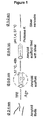
- the method used for nanowire production is outlined in Figure 1 .
- two critical events i.e. metal reduction and assembly of the nanowire within the biotemplate mould occur concomitantly.
- a key factor in this procedure is the use of a solvent exhibiting a dual effect, both promoting the formation of protein fibrils of suitable size, and acting a reducing agent, the solvent being exemplified by 2,2,2-trifluoroethanol (TFE).
- TFE 2,2,2-trifluoroethanol
- the solvent induces the lateral assembly of individual protein fibrils into larger and thicker scaffolds, which trap silver in inter-fibrillar space and serve a role of the moulds.
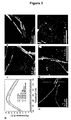
- the amyloid fibrils were characterised by 2-4 nm height in AFM images ( Figure 3b ), exhibiting typical amyloid tinctorial features such as thioflavin T dye binding 16,17 ( Figure 3a ).
- After incubation with TFE in the presence and absence of silver ions become thicker with ca 6-9 nm height ( Figure 3c, 3e ), which corroborated with a slight decrease in thioflavin T binding due to a decrease in number of exposed thioflavin T binding sites ( Figure 3a ).
- the yellow-brown colour was developed, indicating silver reduction.
- the proteinaceous moulding scaffolds were digested by proteinase K.
- the amyloid was fully removed after 24 hours of proteinase treatment. This was conformed by the drop of the thioflavin T signal to the level of free dye in solution ( Figure 3a ) and by AFM ( Figure 3e ).
- the nanowires were released and observed by AFM ( Figure 3d ), while the thioflavin T signal also disappeared, indicating the degradation of amyloid structures ( Figure 3a ).
- the nanowires were characterised by having a diameter of 1-2.5 nm and a variable length from 0.5 to ca. 2 ⁇ m ( Figure 3 ).
- the nanowires were straight or banded and sometimes a few nanowires were twisted around each other ( Figure 3d , figure 4 ).
- proteinaceous amyloid polymers assembled into larger scaffolds can be used for casting metal nanostructures.
- the limit in biotemplating producing the ultra thin silver nanowire of ca. 1 nm diameter has been reached, which is significantly below the dimensions attainable by standard electronic manufacturing processes and also one order of magnitude thinner than nanowires fabricated using other proteinaceous scaffolds 8,9 .
- the method according to the present invention allows removing the moulding scaffold by proteinase digestion compared to other approaches, in which the protein polymers remain within the formed metal wires 8 .
- TFE fluorinated alcohol
- the major advantage of the methods according to the invention is the use of a solvent such as TFE, which compared to other combinations of solvents and reducing agents induces formation and stabilization of protein fibril scaffold simultaneously with metal ion reduction.
- Less suited reducing agents, such as citric acid and DMF causes fragmentation of the protein fibrils without the formation of metal nanowires.
- the process of biotemplating can be used as a tool to get an insight on the properties of the scaffold itself, according to the present invention on amyloid.
- Perutz and co-authors suggested that the amyloid fibrils are probably built of a few concentric cylindrical ⁇ -sheets containing the hollow part filled with water 18 .
- This hypothesis was supported by production of synthetic dipeptide amyloid-like nanotubes and filling them with silver of ca. 20 nm diameter 9 .
- the NMR-based analysis of amyloid fibrils of A ⁇ peptide and prions indicate the dense packing within fibrillar interior, which rules out the cavity in the protofilament core 19,20 .
- the data directly demonstrate the absence of the hollow part within the individual amyloid fibrils, unlike synthetic peptide nanotubes, prior their assembly into the larger scaffold.
- the methods according to the invention can be used to form nanowires from a noble metal, such as silver, gold, platinum, and palladium, or other suitable metal such as copper.
- a noble metal such as silver, gold, platinum, and palladium, or other suitable metal such as copper.
- the methods according to the invention can be used to produce nanoparticles with controlled dimensions.
- Hen egg white lysozyme was purchased from Sigma (USA). Amyloid was produced by incubation of protein in 20 mM glycine buffer at pH 2.5, 57°C. Proteinase K was purchased from Fementas (Lithuania). DMF, TFE and citric acid were purchased from Fluka (Germany).
- Thioflavin T binding amyloid assay was carried out as described previously 13 . Fluorescence measurements were performed on a Jasco spectrofluorometer FP 6500, using excitation at 440 nm and measuring emission between 460 and 520 nm.
- AFM measurements were performed on a PICO PLUS microscope (Molecular Imaging, USA) in a tapping mode using a 100 ⁇ m scanner with acoustically driven cantilevers operating at a resonance frequency in 320-370 kHz range. Scanning resolution was 512x512 pixels. The scanning was performed in trace and retrace to avoid the scan artefacts. Specimens were diluted in MiliQ water, incubated on freshly cleaved mica for 10 min, subsequently washed 2 X 200 ⁇ l with MiliQ water and dried over night at room temperature. The parameters of nanostructures were measured by using a Scanning Probe Image Processor software (Image Metrology, Denmark).
- the stock of 1M AgNO 3 in MiliQ water was diluted to a final concentration of 20 mM with the excess of appropriate reducing agents such as TFE, DMF or citric acid and subsequently incubated at 57°C for 72 hours. Reduction of silver was estimated by measuring absorbance spectra at 300-700 nm on a Lambda 40 spectrophotometer (Perkin Elmer, USA) as described previously 15 .
- Amyloid fibrils were sedimented for 30 min at 12000 g on a minicentrifuge (Eppendorf, Germany). The pellet was resuspended in 100 ⁇ l MiliQ water and sedimented again. AgNO 3 was added to the fibrillar pellet to 20 mM final concentration and the sample was incubated at room temperature for 24 h. The fibrils were centrifuged and an access of reducing agent was added to the pellet, following incubation for 48 h at 57°C. The complexes were centrifuged, resuspended at 100 mM Tris-HCl pH 7.4 and 0.2 mg/ml protease K was added for 24 h at 37°C in order to achieve the full digestion of the amyloid scaffold. Consequently, the samples were analysed by AFM and ThT binding assay.
Landscapes
- Chemical & Material Sciences (AREA)
- Engineering & Computer Science (AREA)
- Nanotechnology (AREA)
- Crystallography & Structural Chemistry (AREA)
- Materials Engineering (AREA)
- Organic Chemistry (AREA)
- Metallurgy (AREA)
- Inorganic Chemistry (AREA)
- Physics & Mathematics (AREA)
- Composite Materials (AREA)
- Condensed Matter Physics & Semiconductors (AREA)
- General Physics & Mathematics (AREA)
- Manufacture Of Metal Powder And Suspensions Thereof (AREA)
- Powder Metallurgy (AREA)
- Crystals, And After-Treatments Of Crystals (AREA)
Claims (14)
- Ein Verfahren zur Herstellung von Metallnanodrähten, wobei das Verfahren Inkubieren von Proteinfibrillen in einer Lösung eines Metallsalzes in einem Lösungsmittel umfasst, wobei das Lösungsmittel, das eine hydrophobe Konstante, log P, zwischen 0 und 3,0 aufweist und weiter ein Standardreduktionspotential, E0, zwischen 0 Volt und 1,5 Volt aufweist, einen Doppeleffekt bereitstellt, indem es die Bildung von Proteinfibrillen mit geeigneter Größe fördert sowie als Reduktionsmittel dient, was die Bildung von Metallnanodrähten auf den Proteinfibrillenmatrices erlaubt.
- Das Verfahren nach Anspruch 1, weiter umfassend Proteinaseaufschluss der Proteinfibrillenmatrix im Anschluss an die Bildung der Metallnanodrähte.
- Das Verfahren nach Anspruch 2, wobei der Proteinaseaufschluss durch die Verwendung einer Proteinase erfolgt, ausgewählt aus Proteinase K, einer Serinprotease wie Trypsin, α-Chymotrypsin, β-Chymotrypsin und Subtilisin; einer Cysteinprotease wie Bromelain, Papain, Chymopapain, Ficin und Sortase A, und einer Asparaginprotease wie Rennin und Pepsin.
- Das Verfahren nach Anspruch 1, wobei das Lösungsmittel eine hydrophobe Konstante, log P, aufweist, die zwischen 0 und 3,0, vorzugsweise zwischen 0,2 und 1,0, und noch stärker bevorzugt zwischen 0,3 und 0,5 liegt.
- Das Verfahren nach Anspruch 1, wobei das Lösungsmittel ein Standardreduktionspotential, E0, zwischen 0 Volt und 1,5 Volt, vorzugsweise zwischen 0 Volt und 0,8 Volt, wie z.B. zwischen 0,1 1 Volt und 0,7 Volt, oder noch stärker bevorzugt zwischen 0,2 Volt und 0,6 Volt, aufweist.
- Das Verfahren nach Anspruch 1, wobei das Lösungsmittel ein fluorierter Alkohol ist.
- Das Verfahren nach Anspruch 1, wobei das Lösungsmittel aus einem fluorierten Ethanol, Propanol, Butanol, Pentanol, Hexanol, Heptanol, Octanol ausgewählt ist.
- Das Verfahren nach Anspruch 1, wobei das Lösungsmittel ausgewählt ist aus
2-Fluorethanol,
2,2-Difluorethanol,
2,2,2-Trifluorethanol,
1,1,1-Trifluor-2-propanol,
3,3,3-Trifluor-1-propanol,
Hexafluor-2-propanol,
2,2,3,3-Tetrafluor-1-propanol,
2,2,3,3,3-Pentafluor-1-propanol,
4,4,4-Trifluor-1-butanol,
2,2,3,4,4,4-Hexafluor-1-butanol,
2,2,3,3,4,4,4-Heptafluor-1-butanol,
3,3,4,4,4-Pentafluor-2-butanol,
1,1,1,3,3-Pentafluor-2-butanol,
5,5,5-Trifluor-1-pentanol,
4,4,5,5,5-Pentafluor-1-pentanol,
2,2,3,3,4,4,5,5-Octafluor-1-pentanol,
6,6-Difluor-1-hexanol,
7,7, 7-Trifluor-1-heptanol,
1,1,1 -Trifluor-2-octanol,
2,2,3,3-Tetrafluor-1-octanol. - Das Verfahren nach Anspruch 6, wobei das Lösungsmittel 2,2,2-Trifluorethanol ist.
- Das Verfahren nach Anspruch 1, wobei die Proteinfibrillen aus Lysozymfibrillen, Alzheimer-β-amyloidfibrillen, Prionfibrillen, Insulinfibrillen, bovinen α-Lactalbuminfibrillen, S100A8-Fibrillen, S100A9-Fibrillen und α-Synucleinfibrillen ausgewählt sind.
- Das Verfahren nach Anspruch 1, wobei das Metall aus einem Edelmetall, wie z.B. Silver, Gold oder Platin, und Kupfer ausgewählt ist.
- Das Verfahren nach Anspruch 1, wobei das Metallsalz aus einem Nitrat, Nitrit, Carbonat, Chlorid, Bromid, Fluorid, Iodid, Acetat, Sulfat ausgewählt ist.
- Das Verfahren nach Anspruch 1, wobei das Metall Silber ist.
- Das Verfahren nach Anspruch 1, wobei das Metall Silber ist und das Lösungsmittel 2,2,2-Trifluorethanol ist.
Applications Claiming Priority (2)
| Application Number | Priority Date | Filing Date | Title |
|---|---|---|---|
| US90820007P | 2007-03-27 | 2007-03-27 | |
| PCT/SE2008/050348 WO2008118094A1 (en) | 2007-03-27 | 2008-03-27 | Thin metal nanowires produced by biotemplating |
Publications (3)
| Publication Number | Publication Date |
|---|---|
| EP2132013A1 EP2132013A1 (de) | 2009-12-16 |
| EP2132013A4 EP2132013A4 (de) | 2010-10-20 |
| EP2132013B1 true EP2132013B1 (de) | 2012-02-08 |
Family
ID=39788754
Family Applications (1)
| Application Number | Title | Priority Date | Filing Date |
|---|---|---|---|
| EP08724294A Not-in-force EP2132013B1 (de) | 2007-03-27 | 2008-03-27 | Verfahren zur herstellung von dünne metallnanodrähte durch biotemplating |
Country Status (4)
| Country | Link |
|---|---|
| US (1) | US20120141817A1 (de) |
| EP (1) | EP2132013B1 (de) |
| AT (1) | ATE544566T1 (de) |
| WO (1) | WO2008118094A1 (de) |
Families Citing this family (13)
| Publication number | Priority date | Publication date | Assignee | Title |
|---|---|---|---|---|
| CN103187391B (zh) * | 2011-12-31 | 2016-01-06 | 中芯国际集成电路制造(北京)有限公司 | 半导体器件及其制造方法 |
| CN102658371B (zh) * | 2012-03-02 | 2014-07-23 | 燕山大学 | 一种超细铂纳米线的制备方法 |
| CN102784925B (zh) * | 2012-07-16 | 2014-04-16 | 燕山大学 | 一种以醋酸奥曲肽为模板水相制备金纳米粒子链的方法 |
| CN103071809B (zh) * | 2013-01-17 | 2015-04-08 | 燕山大学 | 一种铂纳米线的制备方法 |
| CN103600089B (zh) * | 2013-12-03 | 2015-06-10 | 燕山大学 | 不同形貌的一维银纳米结构材料的合成方法 |
| CN104014810B (zh) * | 2014-05-29 | 2016-08-17 | 燕山大学 | 一种利用醋酸奥曲肽为模板制备链球状钴铂合金的方法 |
| CN104014811B (zh) * | 2014-05-29 | 2016-03-02 | 燕山大学 | 一种利用醋酸奥曲肽为模板制备珊瑚状纳米钴的方法 |
| CN105945300B (zh) * | 2016-05-06 | 2018-12-28 | 燕山大学 | 以卵清溶菌酶为模板制备Rh-Ni纳米粒子链的方法 |
| CN106041114A (zh) * | 2016-05-20 | 2016-10-26 | 燕山大学 | 一种Pt基合金纳米线的制备方法 |
| CN106735302B (zh) * | 2016-12-30 | 2019-07-05 | 杭州罗松贸易有限公司 | 一种铂纳米线的制备方法 |
| WO2022034556A1 (en) * | 2020-08-14 | 2022-02-17 | Bluact Technologies Gmbh | Anti-viral compositions and method of killing virus |
| KR102196021B1 (ko) * | 2020-10-06 | 2020-12-29 | 고려대학교 산학협력단 | 퇴행성 신경질환 치료제 스크리닝용 아밀로이드 베타 올리고머-금 나노입자 복합체 제조방법 |
| US20240229247A9 (en) * | 2022-10-21 | 2024-07-11 | King Faisal University | Acid-induced steel corrosion inhibitor based on rotten eggs |
Family Cites Families (2)
| Publication number | Priority date | Publication date | Assignee | Title |
|---|---|---|---|---|
| KR100439579B1 (ko) * | 2001-06-07 | 2004-07-12 | 학교법인 포항공과대학교 | 유기 나노관의 합성 및 이를 주형으로 이용한 초미세 금속나노선의 합성 |
| US7862652B2 (en) * | 2005-05-04 | 2011-01-04 | The Arizona Board Of Regents On Behalf Of The University Of Arizona | Directional self-assembly of biological electrical interconnects |
-
2008
- 2008-03-27 WO PCT/SE2008/050348 patent/WO2008118094A1/en not_active Ceased
- 2008-03-27 AT AT08724294T patent/ATE544566T1/de active
- 2008-03-27 US US12/593,268 patent/US20120141817A1/en not_active Abandoned
- 2008-03-27 EP EP08724294A patent/EP2132013B1/de not_active Not-in-force
Also Published As
| Publication number | Publication date |
|---|---|
| WO2008118094A1 (en) | 2008-10-02 |
| EP2132013A4 (de) | 2010-10-20 |
| US20120141817A1 (en) | 2012-06-07 |
| ATE544566T1 (de) | 2012-02-15 |
| EP2132013A1 (de) | 2009-12-16 |
Similar Documents
| Publication | Publication Date | Title |
|---|---|---|
| EP2132013B1 (de) | Verfahren zur herstellung von dünne metallnanodrähte durch biotemplating | |
| Malisauskas et al. | Ultrathin silver nanowires produced by amyloid biotemplating | |
| Gazit | Use of biomolecular templates for the fabrication of metal nanowires | |
| Elliott et al. | Chiral shells and achiral cores in CdS quantum dots | |
| García-Álvarez et al. | In vivo formation of protein corona on gold nanoparticles. The effect of their size and shape | |
| Tan et al. | Chiral plasmonic hybrid nanostructures: a gateway to advanced chiroptical materials | |
| Millstone et al. | Controlling the edge length of gold nanoprisms via a seed‐mediated approach | |
| Yu et al. | Tailoring the protein conformation to synthesize different-sized gold nanoclusters | |
| Ménard‐Moyon et al. | Self‐assembly of tyrosine into controlled supramolecular nanostructures | |
| Zou et al. | Isotopic graphene–isolated-Au-nanocrystals with cellular Raman-silent signals for cancer cell pattern recognition | |
| KR101361266B1 (ko) | 안정한 원자 양자 클러스터, 그 제조방법 및 용도 | |
| Ardini et al. | Metal-induced self-assembly of peroxiredoxin as a tool for sorting ultrasmall gold nanoparticles into one-dimensional clusters | |
| Lara et al. | Towards lysozyme nanotube and 3D hybrid self-assembly | |
| US20040238367A1 (en) | Methods for fabricating metal nanowires | |
| CN108483389B (zh) | 一种银纳米电极及其制备方法 | |
| Lim et al. | Formation of Au/Pd alloy nanoparticles on TMV | |
| KR102608931B1 (ko) | 알츠하이머병 조기 진단이 가능한 나노플라즈모닉 바이오센서 및 이의 제조방법 | |
| Calò et al. | Nanoscale device architectures derived from biological assemblies: The case of tobacco mosaic virus and (apo) ferritin | |
| Bajpai et al. | Chiral nanomaterial-based approaches for diagnosis and treatment of protein-aggregated neurodiseases: current status and future opportunities | |
| Povilonienė et al. | Functionalization of α-synuclein fibrils | |
| Padalkar et al. | Protein-templated semiconductor nanoparticle chains | |
| Domigan et al. | Dielectrophoretic manipulation and solubility of protein nanofibrils formed from crude crystallins | |
| Padalkar et al. | Fabrication of ZnS nanoparticle chains on a protein template | |
| Vannoy et al. | Bioimaging and self-assembly of lysozyme fibrils utilizing CdSe/ZnS quantum dots | |
| EP4180388A1 (de) | Polyschwefelnitridmaterial, eine suspension davon und entsprechendes herstellungsverfahren |
Legal Events
| Date | Code | Title | Description |
|---|---|---|---|
| PUAI | Public reference made under article 153(3) epc to a published international application that has entered the european phase |
Free format text: ORIGINAL CODE: 0009012 |
|
| 17P | Request for examination filed |
Effective date: 20090929 |
|
| AK | Designated contracting states |
Kind code of ref document: A1 Designated state(s): AT BE BG CH CY CZ DE DK EE ES FI FR GB GR HR HU IE IS IT LI LT LU LV MC MT NL NO PL PT RO SE SI SK TR |
|
| DAX | Request for extension of the european patent (deleted) | ||
| A4 | Supplementary search report drawn up and despatched |
Effective date: 20100917 |
|
| RIC1 | Information provided on ipc code assigned before grant |
Ipc: C30B 7/00 20060101ALI20100913BHEP Ipc: C30B 29/60 20060101ALI20100913BHEP Ipc: C07K 14/47 20060101ALI20100913BHEP Ipc: B28B 3/00 20060101AFI20081015BHEP Ipc: C01G 5/00 20060101ALI20100913BHEP Ipc: C30B 29/02 20060101ALI20100913BHEP |
|
| GRAP | Despatch of communication of intention to grant a patent |
Free format text: ORIGINAL CODE: EPIDOSNIGR1 |
|
| RIC1 | Information provided on ipc code assigned before grant |
Ipc: C30B 29/02 20060101ALI20110728BHEP Ipc: C01G 5/00 20060101ALI20110728BHEP Ipc: C07K 14/47 20060101ALI20110728BHEP Ipc: C30B 7/00 20060101ALI20110728BHEP Ipc: B28B 3/00 20060101AFI20110728BHEP Ipc: C30B 29/60 20060101ALI20110728BHEP |
|
| RTI1 | Title (correction) |
Free format text: METHOD FOR THE MANUFACTURE OF THIN METAL NANOWIRES BY BIOTEMPLATING |
|
| GRAS | Grant fee paid |
Free format text: ORIGINAL CODE: EPIDOSNIGR3 |
|
| GRAA | (expected) grant |
Free format text: ORIGINAL CODE: 0009210 |
|
| AK | Designated contracting states |
Kind code of ref document: B1 Designated state(s): AT BE BG CH CY CZ DE DK EE ES FI FR GB GR HR HU IE IS IT LI LT LU LV MC MT NL NO PL PT RO SE SI SK TR |
|
| REG | Reference to a national code |
Ref country code: GB Ref legal event code: FG4D |
|
| REG | Reference to a national code |
Ref country code: AT Ref legal event code: REF Ref document number: 544566 Country of ref document: AT Kind code of ref document: T Effective date: 20120215 Ref country code: CH Ref legal event code: EP |
|
| REG | Reference to a national code |
Ref country code: DE Ref legal event code: R096 Ref document number: 602008013253 Country of ref document: DE Effective date: 20120405 |
|
| REG | Reference to a national code |
Ref country code: NL Ref legal event code: VDEP Effective date: 20120208 |
|
| LTIE | Lt: invalidation of european patent or patent extension |
Effective date: 20120208 |
|
| PG25 | Lapsed in a contracting state [announced via postgrant information from national office to epo] |
Ref country code: NO Free format text: LAPSE BECAUSE OF FAILURE TO SUBMIT A TRANSLATION OF THE DESCRIPTION OR TO PAY THE FEE WITHIN THE PRESCRIBED TIME-LIMIT Effective date: 20120508 Ref country code: LT Free format text: LAPSE BECAUSE OF FAILURE TO SUBMIT A TRANSLATION OF THE DESCRIPTION OR TO PAY THE FEE WITHIN THE PRESCRIBED TIME-LIMIT Effective date: 20120208 Ref country code: IS Free format text: LAPSE BECAUSE OF FAILURE TO SUBMIT A TRANSLATION OF THE DESCRIPTION OR TO PAY THE FEE WITHIN THE PRESCRIBED TIME-LIMIT Effective date: 20120608 Ref country code: HR Free format text: LAPSE BECAUSE OF FAILURE TO SUBMIT A TRANSLATION OF THE DESCRIPTION OR TO PAY THE FEE WITHIN THE PRESCRIBED TIME-LIMIT Effective date: 20120208 Ref country code: NL Free format text: LAPSE BECAUSE OF FAILURE TO SUBMIT A TRANSLATION OF THE DESCRIPTION OR TO PAY THE FEE WITHIN THE PRESCRIBED TIME-LIMIT Effective date: 20120208 |
|
| PG25 | Lapsed in a contracting state [announced via postgrant information from national office to epo] |
Ref country code: GR Free format text: LAPSE BECAUSE OF FAILURE TO SUBMIT A TRANSLATION OF THE DESCRIPTION OR TO PAY THE FEE WITHIN THE PRESCRIBED TIME-LIMIT Effective date: 20120509 Ref country code: PL Free format text: LAPSE BECAUSE OF FAILURE TO SUBMIT A TRANSLATION OF THE DESCRIPTION OR TO PAY THE FEE WITHIN THE PRESCRIBED TIME-LIMIT Effective date: 20120208 Ref country code: FI Free format text: LAPSE BECAUSE OF FAILURE TO SUBMIT A TRANSLATION OF THE DESCRIPTION OR TO PAY THE FEE WITHIN THE PRESCRIBED TIME-LIMIT Effective date: 20120208 Ref country code: BE Free format text: LAPSE BECAUSE OF FAILURE TO SUBMIT A TRANSLATION OF THE DESCRIPTION OR TO PAY THE FEE WITHIN THE PRESCRIBED TIME-LIMIT Effective date: 20120208 Ref country code: LV Free format text: LAPSE BECAUSE OF FAILURE TO SUBMIT A TRANSLATION OF THE DESCRIPTION OR TO PAY THE FEE WITHIN THE PRESCRIBED TIME-LIMIT Effective date: 20120208 Ref country code: PT Free format text: LAPSE BECAUSE OF FAILURE TO SUBMIT A TRANSLATION OF THE DESCRIPTION OR TO PAY THE FEE WITHIN THE PRESCRIBED TIME-LIMIT Effective date: 20120608 |
|
| REG | Reference to a national code |
Ref country code: AT Ref legal event code: MK05 Ref document number: 544566 Country of ref document: AT Kind code of ref document: T Effective date: 20120208 |
|
| PG25 | Lapsed in a contracting state [announced via postgrant information from national office to epo] |
Ref country code: CY Free format text: LAPSE BECAUSE OF FAILURE TO SUBMIT A TRANSLATION OF THE DESCRIPTION OR TO PAY THE FEE WITHIN THE PRESCRIBED TIME-LIMIT Effective date: 20120208 |
|
| PG25 | Lapsed in a contracting state [announced via postgrant information from national office to epo] |
Ref country code: CZ Free format text: LAPSE BECAUSE OF FAILURE TO SUBMIT A TRANSLATION OF THE DESCRIPTION OR TO PAY THE FEE WITHIN THE PRESCRIBED TIME-LIMIT Effective date: 20120208 Ref country code: SI Free format text: LAPSE BECAUSE OF FAILURE TO SUBMIT A TRANSLATION OF THE DESCRIPTION OR TO PAY THE FEE WITHIN THE PRESCRIBED TIME-LIMIT Effective date: 20120208 Ref country code: RO Free format text: LAPSE BECAUSE OF FAILURE TO SUBMIT A TRANSLATION OF THE DESCRIPTION OR TO PAY THE FEE WITHIN THE PRESCRIBED TIME-LIMIT Effective date: 20120208 Ref country code: EE Free format text: LAPSE BECAUSE OF FAILURE TO SUBMIT A TRANSLATION OF THE DESCRIPTION OR TO PAY THE FEE WITHIN THE PRESCRIBED TIME-LIMIT Effective date: 20120208 Ref country code: DK Free format text: LAPSE BECAUSE OF FAILURE TO SUBMIT A TRANSLATION OF THE DESCRIPTION OR TO PAY THE FEE WITHIN THE PRESCRIBED TIME-LIMIT Effective date: 20120208 Ref country code: SE Free format text: LAPSE BECAUSE OF FAILURE TO SUBMIT A TRANSLATION OF THE DESCRIPTION OR TO PAY THE FEE WITHIN THE PRESCRIBED TIME-LIMIT Effective date: 20120208 Ref country code: MC Free format text: LAPSE BECAUSE OF NON-PAYMENT OF DUE FEES Effective date: 20120331 |
|
| REG | Reference to a national code |
Ref country code: CH Ref legal event code: PL |
|
| PG25 | Lapsed in a contracting state [announced via postgrant information from national office to epo] |
Ref country code: SK Free format text: LAPSE BECAUSE OF FAILURE TO SUBMIT A TRANSLATION OF THE DESCRIPTION OR TO PAY THE FEE WITHIN THE PRESCRIBED TIME-LIMIT Effective date: 20120208 Ref country code: IT Free format text: LAPSE BECAUSE OF FAILURE TO SUBMIT A TRANSLATION OF THE DESCRIPTION OR TO PAY THE FEE WITHIN THE PRESCRIBED TIME-LIMIT Effective date: 20120208 |
|
| PLBE | No opposition filed within time limit |
Free format text: ORIGINAL CODE: 0009261 |
|
| STAA | Information on the status of an ep patent application or granted ep patent |
Free format text: STATUS: NO OPPOSITION FILED WITHIN TIME LIMIT |
|
| REG | Reference to a national code |
Ref country code: FR Ref legal event code: ST Effective date: 20121130 |
|
| REG | Reference to a national code |
Ref country code: IE Ref legal event code: MM4A |
|
| 26N | No opposition filed |
Effective date: 20121109 |
|
| REG | Reference to a national code |
Ref country code: DE Ref legal event code: R119 Ref document number: 602008013253 Country of ref document: DE Effective date: 20121002 |
|
| GBPC | Gb: european patent ceased through non-payment of renewal fee |
Effective date: 20120508 |
|
| PG25 | Lapsed in a contracting state [announced via postgrant information from national office to epo] |
Ref country code: LI Free format text: LAPSE BECAUSE OF NON-PAYMENT OF DUE FEES Effective date: 20120331 Ref country code: FR Free format text: LAPSE BECAUSE OF NON-PAYMENT OF DUE FEES Effective date: 20120410 Ref country code: IE Free format text: LAPSE BECAUSE OF NON-PAYMENT OF DUE FEES Effective date: 20120327 Ref country code: AT Free format text: LAPSE BECAUSE OF FAILURE TO SUBMIT A TRANSLATION OF THE DESCRIPTION OR TO PAY THE FEE WITHIN THE PRESCRIBED TIME-LIMIT Effective date: 20120208 Ref country code: CH Free format text: LAPSE BECAUSE OF NON-PAYMENT OF DUE FEES Effective date: 20120331 |
|
| PG25 | Lapsed in a contracting state [announced via postgrant information from national office to epo] |
Ref country code: GB Free format text: LAPSE BECAUSE OF NON-PAYMENT OF DUE FEES Effective date: 20120508 Ref country code: ES Free format text: LAPSE BECAUSE OF FAILURE TO SUBMIT A TRANSLATION OF THE DESCRIPTION OR TO PAY THE FEE WITHIN THE PRESCRIBED TIME-LIMIT Effective date: 20120519 |
|
| PG25 | Lapsed in a contracting state [announced via postgrant information from national office to epo] |
Ref country code: MT Free format text: LAPSE BECAUSE OF FAILURE TO SUBMIT A TRANSLATION OF THE DESCRIPTION OR TO PAY THE FEE WITHIN THE PRESCRIBED TIME-LIMIT Effective date: 20120208 Ref country code: BG Free format text: LAPSE BECAUSE OF FAILURE TO SUBMIT A TRANSLATION OF THE DESCRIPTION OR TO PAY THE FEE WITHIN THE PRESCRIBED TIME-LIMIT Effective date: 20120508 |
|
| PG25 | Lapsed in a contracting state [announced via postgrant information from national office to epo] |
Ref country code: TR Free format text: LAPSE BECAUSE OF FAILURE TO SUBMIT A TRANSLATION OF THE DESCRIPTION OR TO PAY THE FEE WITHIN THE PRESCRIBED TIME-LIMIT Effective date: 20120208 |
|
| PG25 | Lapsed in a contracting state [announced via postgrant information from national office to epo] |
Ref country code: LU Free format text: LAPSE BECAUSE OF NON-PAYMENT OF DUE FEES Effective date: 20120327 |
|
| PG25 | Lapsed in a contracting state [announced via postgrant information from national office to epo] |
Ref country code: HU Free format text: LAPSE BECAUSE OF FAILURE TO SUBMIT A TRANSLATION OF THE DESCRIPTION OR TO PAY THE FEE WITHIN THE PRESCRIBED TIME-LIMIT Effective date: 20080327 |
|
| PG25 | Lapsed in a contracting state [announced via postgrant information from national office to epo] |
Ref country code: DE Free format text: LAPSE BECAUSE OF FAILURE TO SUBMIT A TRANSLATION OF THE DESCRIPTION OR TO PAY THE FEE WITHIN THE PRESCRIBED TIME-LIMIT Effective date: 20121002 |