EP2117334B1 - Food compositions incorporating additional long chain fatty acids - Google Patents
Food compositions incorporating additional long chain fatty acids Download PDFInfo
- Publication number
- EP2117334B1 EP2117334B1 EP08705462.3A EP08705462A EP2117334B1 EP 2117334 B1 EP2117334 B1 EP 2117334B1 EP 08705462 A EP08705462 A EP 08705462A EP 2117334 B1 EP2117334 B1 EP 2117334B1
- Authority
- EP
- European Patent Office
- Prior art keywords
- oil
- pufa
- acid
- food
- total
- Prior art date
- Legal status (The legal status is an assumption and is not a legal conclusion. Google has not performed a legal analysis and makes no representation as to the accuracy of the status listed.)
- Active
Links
Images






Classifications
-
- A—HUMAN NECESSITIES
- A23—FOODS OR FOODSTUFFS; TREATMENT THEREOF, NOT COVERED BY OTHER CLASSES
- A23K—FODDER
- A23K50/00—Feeding-stuffs specially adapted for particular animals
- A23K50/80—Feeding-stuffs specially adapted for particular animals for aquatic animals, e.g. fish, crustaceans or molluscs
-
- A—HUMAN NECESSITIES
- A23—FOODS OR FOODSTUFFS; TREATMENT THEREOF, NOT COVERED BY OTHER CLASSES
- A23C—DAIRY PRODUCTS, e.g. MILK, BUTTER OR CHEESE; MILK OR CHEESE SUBSTITUTES; PREPARATION THEREOF
- A23C11/00—Milk substitutes, e.g. coffee whitener compositions
- A23C11/02—Milk substitutes, e.g. coffee whitener compositions containing at least one non-milk component as source of fats or proteins
- A23C11/10—Milk substitutes, e.g. coffee whitener compositions containing at least one non-milk component as source of fats or proteins containing or not lactose but no other milk components as source of fats, carbohydrates or proteins
- A23C11/103—Milk substitutes, e.g. coffee whitener compositions containing at least one non-milk component as source of fats or proteins containing or not lactose but no other milk components as source of fats, carbohydrates or proteins containing only proteins from pulses, oilseeds or nuts, e.g. nut milk
-
- A—HUMAN NECESSITIES
- A23—FOODS OR FOODSTUFFS; TREATMENT THEREOF, NOT COVERED BY OTHER CLASSES
- A23C—DAIRY PRODUCTS, e.g. MILK, BUTTER OR CHEESE; MILK OR CHEESE SUBSTITUTES; PREPARATION THEREOF
- A23C19/00—Cheese; Cheese preparations; Making thereof
- A23C19/02—Making cheese curd
- A23C19/05—Treating milk before coagulation; Separating whey from curd
- A23C19/054—Treating milk before coagulation; Separating whey from curd using additives other than acidifying agents, NaCl, CaCl2, dairy products, proteins, fats, enzymes or microorganisms
-
- A—HUMAN NECESSITIES
- A23—FOODS OR FOODSTUFFS; TREATMENT THEREOF, NOT COVERED BY OTHER CLASSES
- A23C—DAIRY PRODUCTS, e.g. MILK, BUTTER OR CHEESE; MILK OR CHEESE SUBSTITUTES; PREPARATION THEREOF
- A23C9/00—Milk preparations; Milk powder or milk powder preparations
- A23C9/152—Milk preparations; Milk powder or milk powder preparations containing additives
- A23C9/1528—Fatty acids; Mono- or diglycerides; Petroleum jelly; Paraffine; Phospholipids; Derivatives thereof
-
- A—HUMAN NECESSITIES
- A23—FOODS OR FOODSTUFFS; TREATMENT THEREOF, NOT COVERED BY OTHER CLASSES
- A23D—EDIBLE OILS OR FATS, e.g. MARGARINES, SHORTENINGS OR COOKING OILS
- A23D7/00—Edible oil or fat compositions containing an aqueous phase, e.g. margarines
- A23D7/001—Spread compositions
-
- A—HUMAN NECESSITIES
- A23—FOODS OR FOODSTUFFS; TREATMENT THEREOF, NOT COVERED BY OTHER CLASSES
- A23D—EDIBLE OILS OR FATS, e.g. MARGARINES, SHORTENINGS OR COOKING OILS
- A23D7/00—Edible oil or fat compositions containing an aqueous phase, e.g. margarines
- A23D7/003—Compositions other than spreads
-
- A—HUMAN NECESSITIES
- A23—FOODS OR FOODSTUFFS; TREATMENT THEREOF, NOT COVERED BY OTHER CLASSES
- A23D—EDIBLE OILS OR FATS, e.g. MARGARINES, SHORTENINGS OR COOKING OILS
- A23D9/00—Other edible oils or fats, e.g. shortenings or cooking oils
-
- A—HUMAN NECESSITIES
- A23—FOODS OR FOODSTUFFS; TREATMENT THEREOF, NOT COVERED BY OTHER CLASSES
- A23J—PROTEIN COMPOSITIONS FOR FOODSTUFFS; WORKING-UP PROTEINS FOR FOODSTUFFS; PHOSPHATIDE COMPOSITIONS FOR FOODSTUFFS
- A23J3/00—Working-up of proteins for foodstuffs
- A23J3/14—Vegetable proteins
- A23J3/16—Vegetable proteins from soybean
-
- A—HUMAN NECESSITIES
- A23—FOODS OR FOODSTUFFS; TREATMENT THEREOF, NOT COVERED BY OTHER CLASSES
- A23K—FODDER
- A23K20/00—Accessory food factors for animal feeding-stuffs
- A23K20/10—Organic substances
- A23K20/158—Fatty acids; Fats; Products containing oils or fats
-
- A—HUMAN NECESSITIES
- A23—FOODS OR FOODSTUFFS; TREATMENT THEREOF, NOT COVERED BY OTHER CLASSES
- A23K—FODDER
- A23K50/00—Feeding-stuffs specially adapted for particular animals
-
- A—HUMAN NECESSITIES
- A23—FOODS OR FOODSTUFFS; TREATMENT THEREOF, NOT COVERED BY OTHER CLASSES
- A23K—FODDER
- A23K50/00—Feeding-stuffs specially adapted for particular animals
- A23K50/10—Feeding-stuffs specially adapted for particular animals for ruminants
-
- A—HUMAN NECESSITIES
- A23—FOODS OR FOODSTUFFS; TREATMENT THEREOF, NOT COVERED BY OTHER CLASSES
- A23K—FODDER
- A23K50/00—Feeding-stuffs specially adapted for particular animals
- A23K50/30—Feeding-stuffs specially adapted for particular animals for swines
-
- A—HUMAN NECESSITIES
- A23—FOODS OR FOODSTUFFS; TREATMENT THEREOF, NOT COVERED BY OTHER CLASSES
- A23K—FODDER
- A23K50/00—Feeding-stuffs specially adapted for particular animals
- A23K50/70—Feeding-stuffs specially adapted for particular animals for birds
- A23K50/75—Feeding-stuffs specially adapted for particular animals for birds for poultry
-
- A—HUMAN NECESSITIES
- A23—FOODS OR FOODSTUFFS; TREATMENT THEREOF, NOT COVERED BY OTHER CLASSES
- A23L—FOODS, FOODSTUFFS OR NON-ALCOHOLIC BEVERAGES, NOT OTHERWISE PROVIDED FOR; PREPARATION OR TREATMENT THEREOF
- A23L11/00—Pulses, i.e. fruits of leguminous plants, for production of food; Products from legumes; Preparation or treatment thereof
- A23L11/60—Drinks from legumes, e.g. lupine drinks
- A23L11/65—Soy drinks
-
- A—HUMAN NECESSITIES
- A23—FOODS OR FOODSTUFFS; TREATMENT THEREOF, NOT COVERED BY OTHER CLASSES
- A23L—FOODS, FOODSTUFFS OR NON-ALCOHOLIC BEVERAGES, NOT OTHERWISE PROVIDED FOR; PREPARATION OR TREATMENT THEREOF
- A23L27/00—Spices; Flavouring agents or condiments; Artificial sweetening agents; Table salts; Dietetic salt substitutes; Preparation or treatment thereof
- A23L27/60—Salad dressings; Mayonnaise; Ketchup
-
- A—HUMAN NECESSITIES
- A23—FOODS OR FOODSTUFFS; TREATMENT THEREOF, NOT COVERED BY OTHER CLASSES
- A23L—FOODS, FOODSTUFFS OR NON-ALCOHOLIC BEVERAGES, NOT OTHERWISE PROVIDED FOR; PREPARATION OR TREATMENT THEREOF
- A23L33/00—Modifying nutritive qualities of foods; Dietetic products; Preparation or treatment thereof
- A23L33/10—Modifying nutritive qualities of foods; Dietetic products; Preparation or treatment thereof using additives
- A23L33/115—Fatty acids or derivatives thereof; Fats or oils
- A23L33/12—Fatty acids or derivatives thereof
-
- A—HUMAN NECESSITIES
- A61—MEDICAL OR VETERINARY SCIENCE; HYGIENE
- A61P—SPECIFIC THERAPEUTIC ACTIVITY OF CHEMICAL COMPOUNDS OR MEDICINAL PREPARATIONS
- A61P3/00—Drugs for disorders of the metabolism
- A61P3/02—Nutrients, e.g. vitamins, minerals
-
- A—HUMAN NECESSITIES
- A23—FOODS OR FOODSTUFFS; TREATMENT THEREOF, NOT COVERED BY OTHER CLASSES
- A23V—INDEXING SCHEME RELATING TO FOODS, FOODSTUFFS OR NON-ALCOHOLIC BEVERAGES AND LACTIC OR PROPIONIC ACID BACTERIA USED IN FOODSTUFFS OR FOOD PREPARATION
- A23V2002/00—Food compositions, function of food ingredients or processes for food or foodstuffs
-
- Y—GENERAL TAGGING OF NEW TECHNOLOGICAL DEVELOPMENTS; GENERAL TAGGING OF CROSS-SECTIONAL TECHNOLOGIES SPANNING OVER SEVERAL SECTIONS OF THE IPC; TECHNICAL SUBJECTS COVERED BY FORMER USPC CROSS-REFERENCE ART COLLECTIONS [XRACs] AND DIGESTS
- Y02—TECHNOLOGIES OR APPLICATIONS FOR MITIGATION OR ADAPTATION AGAINST CLIMATE CHANGE
- Y02A—TECHNOLOGIES FOR ADAPTATION TO CLIMATE CHANGE
- Y02A40/00—Adaptation technologies in agriculture, forestry, livestock or agroalimentary production
- Y02A40/80—Adaptation technologies in agriculture, forestry, livestock or agroalimentary production in fisheries management
- Y02A40/81—Aquaculture, e.g. of fish
- Y02A40/818—Alternative feeds for fish, e.g. in aquacultures
Definitions
- the present invention relates to the utilization of transgenically derived stearidonic acid in the development of functional food products. More specifically it relates to an improvement in both the nutritional quality and shelf-life of food products through the use of transgenic plant-derived stearidonic acid.
- LC-PUFA plant-derived long-chain polyunsaturated fatty acid compositions
- the inventor provides techniques and methods for the utilization of plant-derived LC-PUFA in foodstuffs that improves nutritional quality when combined with oil from conventionally improved breeds of oil-producing plants.
- dietary fats have been thought of as valueless or even harmful dietary components.
- Many studies have made a physiological link between dietary fats and obesity and other pathologies such as atherosclerosis. Given this perception of low nutritional value, consumption of fats has been discouraged by many in the medical establishment.
- the wider class of fat molecules includes fatty acids, isoprenols, steroids, other lipids and oil-soluble vitamins.
- fatty acids are carboxylic acids, which have from 2 to 26 carbons in their "backbone,” with none, or various numbers of unsaturations in their carbohydrate structure. They generally have dissociation constants (pKa) of about 4.5 indicating that in normal body conditions (physiological pH of 7.4) the vast majority will be in a dissociated form.
- Omega-3 fatty acids are long-chain polyunsaturated fatty acids (18-22 carbon atoms in chain length) with the first of the double bonds (“unsaturations") beginning with the third carbon atom. They are called “polyunsaturated” because their molecules have two or more double bonds “unsaturations” in their carbohydrate chain. They are termed "long-chain” fatty acids since their carbon backbone has at least 18 carbon atoms.
- the LC-PUFA family of oils for food compositions includes: alpha linolenic acid (“ALA”), stearidonic acid (“SDA”), gamma linolenic acid (“GLA”), linoleic acid (“LA”).
- ALA is the "base” omega-3 fatty acid, from which SDA is made in the body through a series of enzymatic reactions, but can be reduced to provide a healthier oil composition. This synthesis processes from ALA are called “elongation” (the molecule becomes longer by incorporating new carbon atoms) and “desaturation” (new double bonds are created), respectively.
- ALA is primarily found in certain plant seeds (e.g., flax).
- soybean oil represents two-thirds of all food oil consumed in the United States. Food companies have used soybean oil because it is plentiful and relatively low cost. Soybean oil is typically low in harmful saturated fat and has a taste and texture desired by consumers. Currently, soybean oil accounts for roughly 80%, or 18.0 billion pounds, of the oil consumed in the US and is the most widely used oil in food production.
- hydrogen must be added to soybean oil to increase its shelf-life and stability for use in processed foods such as fried foods, baked goods and snack products. This hydrogenation process creates trans fats.
- trans-fats have been linked to heart disease due to the findings that they have a negative impact on human cholesterol profiles.
- United States FDA has required food labels to include a trans fat content as from January 1, 2006. This has created a substantial demand for supplies of dietary oils that have lower levels of trans fats. Accordingly, there is a market demand for a composition with lower trans fats with a profile that also includes other identifiable health benefits, such as Omega-3 fatty acids to meet federal guidelines and the demands of consumers for healthier food.
- US7741500 discloses a process for refining, bleaching, and deodorizing oil under conditions that minimize oxidation and isomerization of the unsaturated fatty acids within the oil.
- the process can be used with seeds of transgenic plants, such as canola and soy, to give oils enriched in stearidonic acid.
- transgenic plants such as canola and soy
- oils enriched in stearidonic acid These oil compositions have advantageous stability characteristics and can be useful for nutritional, pharmaceutical, industrial, and other purposes.
- WO 2005/021761 describes genetic modification of soy plants to produce seeds and soy oils having increased stearidonic acid concentration and further discloses a method of producing soybean seed with a modified fatty acid profile by expression of desaturase enzymes in transgenic soybean plants and methods of increasing the nutritional value of edible products for human or animal consumption utilizing the soy oil.
- WO 2005/083093 describes a process for the production of arachidonic acid, eicosapentaenoic acid or docosahexaenoic acid and a process for the production of triglycerides with an elevated content of unsaturated fatty acids, in particular arachidonic acid, eicosapentaenoic acid and/or docosahexaenoic acid, in transgenic plants, advantageously in the seed of the transgenic plant.
- WO 2007/056823 describes feedstuffs for use in aquaculture.
- the fish or crustaceans are fed a feedstuff comprising lipid, wherein the fatty acid of the lipid comprises at least 5.5 wt.% stearidonic acid (SDA).
- SDA may be provided in the form of a transgenic organism, or extract or portion thereof. Alternatively, the SDA may be provided in the form of a plant oil from a non-transgenic organism.
- the current invention provides an invention that answers both of the needs described above. It offers an alternative to fish or microbe supplied Omega-3 fatty acids and provides food/feed product comprising a soybean oil that has lower linolenic acid content, improving its taste profile and enhancing shelf-life without the production of trans fats through hydrogenation.
- the technology relied upon is both conventional plant breeding technology, oil processing technology and transgenically developed plants.
- the plant species that are specifically included within the group of those that could supply demand are: soybeans, corn, and canola, but also may include other plants as needed.
- the LC-PUFA's of the food/feed products of the invention can be used to improve the health characteristics of a great variety of food products. This production can also be scaled-up as needed to both reduce the need to harvest wild fish stocks and to provide essential fatty acid components for aquaculture operations, each easing pressure on global fisheries.
- the inventor has found that the concentration of LC-PUFA's from transgenic plant sources disclosed herein require a lower concentration in a given food or beverage product to be physiologically significant, these ranges are well within acceptable volume parameters for typical food products and can be used for a wider variety of foodstuffs.
- the present invention encompasses the use of a transgenic plant oil comprising stearidonic acid and a soybean oil comprising less than 3 % linolenic acid based on the fatty acid composition of the soybean oil to form a mixture for increasing the shelf-life of a food product.
- a transgenic plant oil comprising stearidonic acid and a soybean oil comprising less than 3 % linolenic acid based on the fatty acid composition of the soybean oil to form a mixture for increasing the shelf-life of a food product.
- Several food products made from the oil mixture have been produced and found to have similar taste and sensory properties compared to products made from conventional oils, such as soybean oil.
- the plant-derived oil mixture has substantially improved shelf-life characteristics relative to other Omega-3 containing products.
- a plant-derived oil mixture can provide an oil reduced in trans-fats that can synergistically improve the health profile of the delivered oil by also delivering the health benefits of Omega-3 oil.
- acceptable food products can be made with stearidonic acid, increasing their shelf-life beyond that of competitive oils.
- Expression The process of the transcription of a gene to produce the corresponding mRNA and translation of this mRNA to produce the corresponding gene product (i.e., a peptide, polypeptide, or protein).
- Gene - Chromosomal DNA Gene - Chromosomal DNA, plasmid DNA, cDNA, synthetic DNA, or other DNA that encodes a peptide, polypeptide, protein, or RNA molecule.
- Mouthfeel Means how the substance feels in a human mouth. With regard to taste test profiles this refers to the viscosity, texture and smoothness of the substance being tested.
- Nutritional Food Bar means a food bar designed to promote health.
- Transformation - refers to the introduction of nucleic acid into a recipient host.
- Transgene Any piece of a nucleic acid molecule that is inserted by artifice into a cell, or an ancestor thereof, and becomes part of the genome of the plant or animal which develops from that cell.
- a transgene may include a gene which is partly or entirely exogenous (i.e., foreign) to the transgenic plant or animal, or may represent a gene having identity to an endogenous gene of the plant or animal.
- Disclosed herein is a system for an improved method of production of stearidonic acid and its incorporation into the diets of humans in an effort to improve human health.
- This production is through the utilization of transgenic plants engineered to produce LC-PUFA in high yield to allow commercial incorporation into food products.
- the acid and salt forms of fatty acids for instance, butyric acid and butyrate, arachidonic acid and arachidonate, will be considered interchangeable chemical forms.
- the oil composition of the food products disclosed herein provides for a lower linolenic acid profile than known soybean compositions while providing the benefits of Omega-3 derived stearidonic acid.
- the oil composition contains soybean oil that has less than 3% by weight linolenic acid based on the total weight of fatty acids, compared to 8% for traditional soybean oils. This results in a more stable soybean oil because with less linolenic acid the oil itself will oxidize more slowly resulting in superior shelf life. Also the flavor notes of linolenic acid are such that with a composition lower in this compound the oil will have a more palatable flavor profile.
- soybeans with less linolenic acid require less or no partial hydrogenation. Therefore the production of undesirable trans fats in processed soybean oil can be reduced or eliminated and the corresponding oil will have a better cooking profile.
- Table 1a it is important to provide a basis of what constitutes 'normal' ranges of oil composition vis-à-vis the oil compositions of the food/feed products of the current invention.
- a significant source of data used to establish basic composition criteria for edible oils and fats of major importance has been the Ministry of Agriculture, Fisheries and Food (MAFF) and the Federation of Oils, Seeds and Fats Associations (FOSFA) at the Leatherhead Food Research Association facility in the United Kingdom. It must also be noted that figures that reference "SDA + Vistive Tm " also comprise the LC-PUFA oil of the food/feed products of the invention.
- the LC-PUFA rich oil produced in an recombinant oilseed plant provides an oil composition not previously available for food manufacturers. It provides for the incorporation of an Omega-3 oil in food products that was not present in appreciable amounts in typical vegetable oils prior to the current invention. In addition the use of this Omega-3 oil is made possible without the traditional concerns with food sensory qualities, or shelf-life when such oils are delivered from a fish or algal source. After delivery of the oil it can be taken and utilized for the production of baked goods, dairy products, spreads, margarines, sports products, nutrition bars and infant formulas, feed, aquaculture, neutraceutical and medicinal uses. Each having enhanced nutritional content.
- Table 1b to illustrate the utility of the current invention a variety of food products have been/are being chosen representing a broad range of food categories, to determine the impact of LC-PUFA and other Omega-3 oils on product taste and shelf life.
- Oxidative stability as measured by accepted shelf-life sensory tests, is an important PUFA characteristic that determines the useful lifetime and flavor characteristics of fat and oils. Oxidative deterioration in fats and oils can be assessed by wet chemical methods such as peroxide value (PV, which measures peroxides resulting from primary oxidation), and p-anisidine value (AV, which principally measures 2-alkenals resulting from secondary oxidation), or in foods, can be assessed by sensory tasting tests.
- PV peroxide value
- AV p-anisidine value
- Table 1b BEVERAGES DAIRY PRODUCTS BAKING PREPARED FOODS OIL BASED PRODUCTS SNACK FOODS Soy milks Cheeses Breads Entrees Salad Granola Smoothies Cream Rolls Side Dishes Dressing Cereals Fruit Juices Cheeses Cakes Soups Mayonnaise Snack/Nutritional Dairy Drinks Sour Cream Pastries Sauces Margarine/ Bars Yogurt Cookies Processed Spreads Confectionary Yogurt Crackers Meats Shortening Drinks Muffins Processed Non Dairy Fish Creamers Pet Foods Dips
- food products of the current invention include baked goods and baked good mixes (e.g., cakes, brownies, muffins, cookies, pastries, pies, and pie crusts), shortening and oil products (e.g., shortenings, margarines, frying oils, cooking and salad oils, popcorn oils, salad dressings, and mayonnaise), foods that are fried in oil (e.g., potato chips, corn chips, tortilla chips, other fried farinaceous snack foods, french fries, doughnuts, and fried chicken), dairy products and artificial dairy products (e.g., butter, ice cream and other fat-containing frozen desserts, yogurt, and cheeses, including natural cheeses, processed cheeses, cream cheese, cottage cheese, cheese foods and cheese spread, milk, cream, sour cream, buttermilk, and coffee creamer), meat products (e.g., hamburgers
- baked goods and baked good mixes e.g., cakes, brownies, muffins, cookies, pastries, pies, and pie crusts
- shortening and oil products e.g.,
- Table 2b LC-PUFA Oil Variant-1 (Produced by Transgenic Plants) ANALYTICAL DATA OF SOYBEAN SEEDS AND OILS - CRUSH (250 kg) SEED CRUDE OIL RBD OIL Moisture (w/w%) 9.13 8.8 11.51 N/A N/A N/A N/A N/A N/A Oil Content (%) 192 18.56 19.72 N/A N/A N/A N/A N/A N/A Peroxide value (PV, meq/kg) N/A N/A N/A 0.46 0.00 0.06 0.0 0.0 0.0 Free fatty acids (FFA, %) N/A N/A N/A 0.24 024 0.42 0.05 0.13 0.05 p-Anisidine value (AV) N/A N/A N/A 0.43 0.31 0.22 0.3 0.63 0.83 Conjugated dienes (AV) N/A N/A N/A 0.43 0.31 0.22 0.3 0.63 0.83 Conjugated dienes
- the primary source of stearidonic acid was oil extracted from transgenic soybeans which have been engineered to produce high levels of stearidonic acid.
- the soybeans were processed at an oil processing facility and oil was extracted consistent with the methods described in US Patent Applications Publications 2006/0111578 , and 2006/0111254 .
- Table 3c Italian Salad Dressing - Shelf Life Attributes Flax Oil 35°C 35°C (95°F) 35°C (95°F) 35°C (95°F) 23°C (73°F) 23°C (73°F) 23°C (73°F) Initial 1 months 2 months 3 months 4 months 2 months 4 months 6 months APPEARANCE Opacity 5.5 5 5 6 5.5 5.5 5 5.5 Color 5 5 5.5 6 7 5 5 5 5 AROMA Total Aroma 7 7 7.5 8 8 7 7 7 7 Vinegar 5.5 6 6 6 6 6 6 6 6 6 6 6 6 6 5.5 5.5 P.t 5 5 5 5.5 5.5 4.5 4 5 Total Onion/ Garlic/Herb 3.5 4 3.5 3 3 3.5 4 3.5 Total Oil 3.5 3 3 3 3.5 3 3 3 3 3 3 3 3 3 3 3 3 3 3 3 3 3 3 3 3 3 3 3 3 3 3 3 3 3 3 3 3 3 3 3 3 3 3 3 3 3 3 3 3 3 3 3 3 3 3 3 3 3 3 3 3 3 3
- samples of various salad dressings were submitted to a contracting food laboratory for confirmatory studies and analysis.
- the general approach to the shelf-life testing is for 5 attribute panelists to taste the dressings and come to consensus regarding the attributes and intensity (on a 15 pt scale - 0 being absent, 15 being extreme) for each dressing.
- the lists of attributes identified by the panelists are in the attached documents. Additional attributes are identified as warranted.
- the characteristics of attribute testing are provided below, Table 5, along with the data from sensory testing at various time points, Table 6.
- VISTIVE soybean oil developed through conventional breeding, contains less than three percent by weight linolenic acid based on the total weight of fatty acids as compared to the typical eight percent level found in traditional soybeans. The result is a more stable soybean oil, with less need for hydrogenation. Because soybeans with a lower linolenic acid level reduce the need for partial hydrogenation, their application in processed soybean oils will reduce the presence of trans fats in processed soybean oil. In a synergistic combination with the transgenic SDA of the invention a LC-PUFA oil composition has been developed that satisfies both government regulatory needs and commercial needs for dietary oils with a healthier profile.
- Table 5 LC-PUFA DRESSING DEFINITIONS OF SENSORY ATTRIBUTES APPEARANCE Yellow Color The intensity of the yellow color in the sample, from light to dark yellow. AROMA/FLAVOR Total Aroma The total aroma intensity of the sample. Total Flavor The total flavor intensity of the sample, including the basic tastes. Total Oil The intensity of aroma/flavor of any type of oil, including oxidized oil. Oxidized Oil The intensity of aroma/flavor of oxidized oil, described as old oil that has undergone oxidation, characterized as cardboard, beany, painty, or fishy.
- the intensity of aroma/flavor of believed to not intended in the product includes oxidized oil and other off notes. The nature of the off note is to be described. Mayonnaise/Dairy The intensity of the aroma/flavor associated with mayonnaise or dairy product. Vinegar The intensity of the aroma/flavor of white vinegar or acetic acid. Onion/Garlic/Herb The intensity of aroma/flavor associated with onion, garlic, and all dried and fresh green herbs. Sour One of the four basic tastes, perceived primarily on the sides of the tongue; common to acids. Salty One of the four basic tastes, perceived primarily on the sides of the tongue; common to sodium chloride (table salt).
- FEELING FACTORS Putton The amount of burning or irritation of the nasal cavity produced by smelling the sample, such as with horseradish.
- TEXTURE Viscosity by Mouth The degree of thickness of the sample as perceived when manipulated in the mouth.
- Oily Mouthcoating The amount of coating perceived on the soft tissues of the mouth AFTERTASTE Total Aftertaste The total aftertaste intensity of the sample.
- the samples containing LC-PUFA are signifycantly less off-flavored than corresponding fish and algal Omega-3 oil formulations, providing the benefit of the presence of an omega-3 formulation without the substantially shortened shelf-life and limited stability. Due to pungent flavors and extremely unpleasant odors the fish and algal derived oils simply could not be tested and were removed from the 3 months accelerated evaluation period whereas the LC-PUFA composition was not. Overall the LC-PUFA compositions of the food/feed products demonstrate improved stability, reduced degradation and consequent enhanced shelf-life for commercial utilization in conjunction with the delivery of beneficial Omega-3's into the diet.
- the LC-PUFA compositions of the food/feed products developed utilized for enhanced Ranch Dressings maintained their flavor profile longer than the fish and algal oils after 6 months room temperature storage.
- the more complex flavor system does do some masking, but the LC-PUFA containing dressings are again less off flavored than comparable based fish/algal dressings.
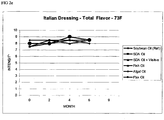
- the Italian dressings have demonstrated significant stability in terms of flavor relative to other omega-3 containing test subjects. Accelerated testing has been completed through four months testing at 35°C (95°F). At this point, all of the products exhibited off flavors, with the fish oils demonstrating the highest in off notes. Significantly, the LC-PUFA formulations of the food/feed products were very similar to the soybean oil reference with the improvements in composition and health profile in place.
- the Collins-style dressings demonstrated significant improvements according to sensory parameters relative to Fish Oil and Algal Oil formulations containing other Omega-3's. Also, accelerated testing has been completed. High intensity off flavors developed in the fish and algal samples at two months whereas the LC-PUFA oil of the food/feed products of the invention and the reference soybean oil could be evaluated according to sensory parameters at 3 months.
- the reference and flax samples exhibited more characteristic flavors and less off flavor than the LC-PUFA oil of the food/feed products of the invention.
- the LC-PUFA oil of the food/feed products exhibited more characteristic flavors and less off flavors than the fish and algal samples. This demonstrates that LC-PUFA has improved shelf life vs. fish and algal oils.
- room temperature testing was completed for the formulations through 4 months. Results indicate that the LC-PUFA product has a significantly lower profile for off flavors and unpleasant odors relative to other omega-3 sources, including fish and algal oils.
- Table 7a LC-PUFA SALAD DRESSING FORMULATIONS - RANCH Variant Control LC-PUFA SDA Fish Oil Algal Oil Flax Oil Formula Number 50-RA-325-000 50-RA-691-000 50-RA-326-000 50-RA-328-000 50-RA-330-000 50-RA-327- 000 INGREDIENT % Liquid Soybean Oil 44.5000 33.17 33.1700 43.0700 43.2700 42.9700 Omega 3 Oil 11.33 11.33 1.43 1.23 1.53 Water 39.3530 39.3530 39.3530 39.3530 39.3530 39.3530 39.3530 39.3530 39.3530 39.3530 39.3530 39.3530 39.3530 Egg York, Liquid, 10% Salt 2.9000 2.9000 2.9000 2.9000 2.9000 2.9000 2.9000 2.9000 2.9000 2.9000 2.9000 Vinegar, White Distilled, 120 g 2.8500 2.8500 2.8500 2.8500
- the general approach to the shelf life testing is for 5 trained attribute panelists to taste the dressings and come to consensus regarding the attributes and intensity (on a 15 pt scale - 0 being absent, 15 being extreme) for each dressing.
- the lists of attributes identified by the panelists are in the attached documents. Additional attributes would be identified as warranted.
- soybean oil sample did not differ by 1.0 or more for any attribute. Panelists commented that this sample had a slight oxidized, slight beany note.
- the LC-PUFA sample was slightly lower in total Onion/Garlic/Herb Aroma. Panelists commented that this sample had a slight oxidized oil, slight pondy note.
- the Fish Oil sample did not differ by 1.0 or more for any attribute. Panelists commented that this sample had a slight beany, slight oxidized oil note.
- Algal Oil sample was slightly higher in yellow color. Panelists commented that this sample had a very slight oxidized oil note.
- Flax Oil sample was higher in Total Off Flavor, and slightly Higher in Total Off Aroma and Oily Mouthfeel. Panelists commented that this Sample had a slight fishy flavor
- the tables above provide significant data on flavor and consistency.
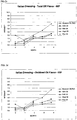
- the tables above represent the data developed for a preferred embodiment of the current invention. Please also see Figures 3a-3h for graphical representation of the data with Collins Dressing.
- the samples containing LC-PUFA are significantly less off-flavored than those containing the fish and algal oils. Due to pungent flavors and extremely unpleasant odor the fish and algal derived oils were simply removed from the 3 months accelerated evaluation period whereas LC-PUFA was not. Demonstrating improved stability, reduced degradation and consequent enhanced shelf-life.
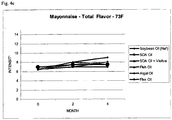
- a mayonnaise was prepared and tested with the omega-3 containing oil disclosed herein, the data provided applies for all mayonnaise and spoonable salad dressing variants, produced in a variety of ways (colloid mill and frying mill).
- the general approach to the shelf life testing is for 5 trained attribute panelists to taste the dressings and come to consensus regarding the attributes and intensity (on a 15 pt scale - 0 being absent, 15 being extreme) for each dressing.
- the lists of attributes identified by the panelists are in the attached documents. Additional attributes would be identified as warranted.
- Table 9c VALUE SCALE REFERENCE APPEARANCE Color 0.0 White (paper) 7.5 Manila Folder AROMA ⁇ FLAVOR Eggy 8.0/6.0 Chopped Hard Boiled Eggs Vinegar Aroma 6.5 100% Heinz Distilled Vinegar solution Vinegar Flavor 4.0 2% Heinz Distilled Vinegar solution Total Off 3.5 Edamame, raw soybeans Oxidized Dairy/Oil (aroma and flavor) 4.0 Canola Oil (opened 9/05) 5.0 Wesson Vegetable Oil (opened 11/22/04) 8.0 Kraft Parmesan Cheese (2001 expiration date) Sweet 2.0 2.0% Sucrose in Water 5.0 5.0% Sucrose in Water Sour 2.0 0.025% Citric Acid in Water 5.0 0.04% Citric Acid in Water Salty 2.0 0.2% Sodium Chloride in Water 5.0 0.5% Sodium Chloride in Water MOUTHFEEL FACTORS P.t (aroma) 8.0 100% Heinz Distilled Vinegar solution TEXTURE Viscosity by Mou
- Soymilk can be prepared in two different ways. In the first, LC-PUFA enriched soybeans are de-hulled, flaked and then made into full fatted soy flour.
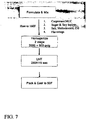
- the soymilk is formulated by first dissolving the soy flour into water, mixing, and processing to inactivate the enzymes. The soy base is filtered to remove additional solids and degassed. The remaining ingredients are added, mixed, the product is then homogenized in a two stage homogenizer, then processed through a Ultra High Temperature (UHT) thermal processing unit. The resulting product is packed and refrigerated with a typical shelf life of 12 weeks. Following is a formulation as provided in Table 10, see also FIG. 6 for a process flow diagram.
- UHT Ultra High Temperature
- the example used can also be applied to different types of homogenization and thermal processing units (direct steam and indirect steam).
- Different soymilk flavors, including plain, chocolate, apple, orange and berry can be prepared in the same manner.
- the resulting product was found to have acceptable flavor and mouth "feel" properties in comparison to soymilk made from flour processed the same way but without the LC-PUFA enhancement of the current invention.
- the second approach to this example is to use isolated soy protein, and to add LC-PUFA enriched soy oil to achieve a new product composition.
- Table 11 Vanilla Soymilk % Water 88.058 Sucrose 3.500 Isolated Soy Protein 2.700 Maltodextrin 3.500 11% LC-PUFA Soybean Oil 1.500 Carageenan 0.022 Cellulose gum 0.350 Salt 0.040 Natural & Artificial Flavors 0.330 TOTAL 100.000
- soymilk flavors including plain, chocolate, apple, orange and berry can be prepared in the same manner.
- the resulting product was found to have acceptable flavor and mouthfeel properties in comparison to soymilk made with refined, bleached and deodorized soybean oil.
- Fruit smoothies can be developed from soymilk. Other sources of LC-PUFA oil could be used for the development of fruit smoothies as well. Also the processes developed for the production of the fruit smoothies takes into account the unique properties of the LC-PUFA oil for enhancing health and nutrition. Two smoothie type products have been developed, and both products have been determined to have extended shelf life properties. During a process that involves the utilization of ultra high pasteurization, stored refrigerated, with a 12 week shelf life typical of other refrigerated drinks. Although a mixed berry prototype is described herein, other flavors can be developed including strawberry, grape, cranberry, orange, lemon, apple, pineapple, mango, strawberry- banana and any other fruit flavor combination.
- soymilk is prepared as described in the first part of Example 4, utilizing LC-PUFA enriched soy flour. Additional ingredients including stabilizers, flavorings and fruit are added prior to homogenization.
- Table 12 MIXED BERRY FRUIT SMOOTHIE - SOY BASED % Water 77.774 LC-PUFA Enriched Soy Flour 6.773 Pectin 0.300 Cellulose gel/pectin mix 0.400 Sucrose 9.300 Citric Acid, anhydrous 0.450 Potassium Citrate, granular 0.060 Soy lecithin 0.060 Salt 0.070 Frozen Strawberry Puree 4.000 Frozen Blackberry Puree 0.500 Red Grape Juice Concentrate 0.123 Natural Flavor 0.020 Natural Flavor 0.060 Natural Berry Flavor 0.050 Natural and Artificial Mixed Berry Flavor 0.040 Natural and Artificial Blueberry Flavor 0.020 Total 100.000
- the soybase portion was prepared according to the process described in Example 4. The processing for the remainder of the product is described below: Table 13: Preparation Procedures: 1. Pre-weigh all dry ingredients 2. Stabilizer portion: Add prescribed water for stabilizer portion into mixing vessel and begin agitation. 3. Heat water to 43 to 49°C (110 to 120°F). 4. Mix the pectin and Avicel with a portion of the dry sugar and add slowly to the water with high shear mixing. Allow 5 minutes for hydration. 5. Add the citric acid. 6. Soy milk portion: 7. Add the potassium citrate, soy lecithin and salt. 8. Combine the stablilzer portion and soymilk portion into larger, steam jacketed mixing vessel. 9. Add the purees, color, and flavorings and mix until uniform. 10.
- Stabilizer portion Add prescribed water for stabilizer portion into mixing vessel and begin agitation. 3. Heat water to 43 to 49°C (110 to 120°F). 4. Mix the pectin and Avicel with a portion of the dry sugar and add slowly to the water with high shear mixing. Allow 5 min for hydration. 5. Add the citric acid. 6. Soy milk portion: Add the prescribed water for the soymilk portion into a separate mixing vessel and begin agitation. 7. Heat the water to 38 to 43°C (100 to 110°F). 8. Add the soy protein isolate. Mix well to disperse. 9. Add the potassium citrate, soy lecithin, salt and oil. 10. Combine the stablilzer portion and soymilk portion into larger, steam jacketed mixing vessel. 11. Add the frozen strawberry puree, color, and flavorings and mix until uniform. 12. Check pH. Expected pH 4.2 ⁇ 0.2.
- Table 16 70% Fat Margarine Type Spread Control SDA LC- PUFA Fish Algal Flax Ingredient % % % % % % Soy Salad Oil 35.00 10.65 10.65 31.90 32.35 31.73 Partially Hydrogenated Soy Bean Oil* 35.00 35.00 35.00 35.00 35.00 Omega 3 Oil 24.35 24.35 3.10 2.65 3.27 Water 27.60 27.60 27.60 27.60 27.60 Salt 2.00 2.00 2.00 2.00 2.00 2.00 2.00 2.00 2.00 2.00 2.00 2.00 2.00 2.00 2.00 2.00 2.00 2.00 Lecithin, Soy Based** 0.14 0.14 0.14 0.14 0.14 0.14 Sodium Benzoate 0.09 0.09 0.09 0.09 0.09 0.09 52% Plastic Mono & Diglyceride *** 0.15 0.15 0.15 0.15 0.15 0.15 Vitamin A / Beta Carotene Blend**** 0.01 0.01 0.01 0.01 0.01 0.01 0.01 0.01 Natural & Artificial Butter Flavor 0.01 0.01 0.01 0.01 0.01 0.
- a typical margarine process is, the water, salt, sodium benzoate, and butter flavor are mixed as an aqueous phase.
- a milk ingredient such as whey powder, sodium caseinate or milk powder may be added to the aqueous phase.
- the oils, lecithin, mono and diglycerides, vitamins, and flavorings are mixed, and combined with the aqueous phase and mixed.
- the mixed emulsion is passed through a series of scraped surface heat exchangers, pin mixers and resting tubes (A, B and C units respectively) to achieve a desired fill temperature and consistency.
- the LC-PUFA can also be developed into food products including cookies. Below is provided one recipe for such utilization. Table 17: Ingredient % Flour 49.20 Baker's Sugar 16.00 Hardened soybean oil (Mpt 36-38°) 17.40 20% LC-PUFA Oil 7.5 Liquid soya oil 4.1 Salt 0.80 Water 5.00 Total 100.00
- a nucleic acid encoding a transgenic protein can be introduced into a host cell.
- the recombinant host cells can be used to produce the transgenic protein, including a desirable fatty acid such as LC-PUFA that can be secreted or held in the seed, seed pod or other portion of a target plant.
- a nucleic acid encoding a transgenic protein can be introduced into a host cell, e.g., by homologous recombination. In most cases, a nucleic acid encoding the transgenic protein of interest is incorporated into a recombinant expression vector.
- transgenic plants and transformed host cells which comprise, in a 5' to 3' orientation, a promoter operably linked to a heterologous structural nucleic acid sequence.
- Additional nucleic acid sequences may also be introduced into the plant or host cell along with the promoter and structural nucleic acid sequence. These additional sequences may include 3' transcriptional terminators, 3' polyadenylation signals, other untranslated nucleic acid sequences, transit or targeting sequences, selectable markers, enhancers, and operators.
- nucleic acid sequences including recombinant vectors, structural nucleic acid sequences, promoters, and other regulatory elements, are described above.
- the means for preparing such recombinant vectors are well known in the art. For example, methods for making recombinant vectors particularly suited to plant transformation are described in U.S. Pat. Nos. 4,940,835 and 4,757,011 .
- Typical vectors useful for expression of nucleic acids in cells and higher plants are well known in the art and include vectors derived from the tumor-inducing (Ti) plasmid of Agrobacterium tumefaciens. Other recombinant vectors useful for plant transformation, have also been described in the literature.
- Ti tumor-inducing
- the transformed host cell may generally be any cell which is compatible with the present invention.
- the transformed host cell may be prokaryotic, more preferably a bacterial cell, even more preferably an Agrobacterium , Bacillus, Escherichia , Pseudomonas cell, and most preferably is an Escherichia coli cell.
- the transformed host cell is preferably eukaryotic, and more preferably a plant, yeast, or fungal cell.
- the yeast cell preferably is a Saccharomyces cerevisiae , Schizosaccharomyces pombe, or Pichia pastoris .
- the plant cell preferably is an alfalfa, apple, banana, barley, bean, broccoli, cabbage, canola, carrot, cassava, celery, citrus, clover, coconut, coffee, corn, cotton, cucumber, garlic, grape, linseed, melon, oat, olive, onion, palm, pea, peanut, pepper, potato, radish, rapeseed (non-canola), rice, rye, sorghum, soybean, spinach, strawberry, sugarbeet, sugarcane, sunflower, tobacco, tomato, or wheat cell.
- the transformed host cell is more preferably a canola, maize, or soybean cell; and most preferably a soybean cell.
- the soybean cell is preferably an elite soybean cell line.
- An "elite line" is any line that has resulted from breeding and selection for superior agronomic performance.
- the transgenic plant disclosed herein is preferably an alfalfa, apple, banana, barley, bean, broccoli, cabbage, canola, carrot, cassava, celery, citrus, clover, coconut, coffee, corn, cotton, cucumber, garlic, grape, linseed, melon, oat, olive, onion, palm, pea, peanut, pepper, potato, radish, rapeseed (non-canola), rice, rye, safflower, sorghum, soybean, spinach, strawberry, sugarbeet, sugarcane, sunflower, tobacco, tomato, or wheat plant.
- the transformed host plant is most preferably a canola, maize, or soybean cell; and of these most preferably a soybean plant.
- a method for preparing transgenic plants capable of producing a substantial amount of LC-PUFA comprising, in a 5' to 3' direction, a promoter operably linked to a heterologous structural nucleic acid sequence.
- the nucleic acid sequence comprising the sequence of LC-PUFA when translated and transcribed into amino acid form.
- Other structural nucleic acid sequences may also be introduced into the plant along with the promoter and structural nucleic acid sequence. These other structural nucleic acid sequences may include 3' transcriptional terminators, 3' polyadenylation signals, other untranslated nucleic acid sequences, transit or targeting sequences, selectable markers, enhancers, and operators.
- the method generally comprises selecting a suitable plant cell, transforming the plant cell with a recombinant vector, obtaining the transformed host cell, and culturing the transformed host cell under conditions effective to produce a plant.
- the transgenic plant may generally be any type of plant, preferably is one with agronomic, horticultural, ornamental, economic, or commercial value, and more preferably is an alfalfa, apple, banana, barley, bean, broccoli, cabbage, canola, carrot, castorbean, celery, citrus, clover, coconut, coffee, corn, cotton, cucumber, Douglas fir, Eucalyptus, garlic, grape, Loblolly pine, linseed, melon, oat, olive, onion, palm, parsnip, pea, peanut, pepper, poplar, potato, radish, Radiata pine, rapeseed (non-canola), rice, rye, safflower, sorghum, Southern pine, soybean, spinach, strawberry, sugarbeet, sugarcane, sunflower, Sweetgum, tea, tobacco, tomato, turf, or wheat plant.
- the transformed plant is more preferably a canola, maize, or soybean cell; and most preferably a soybean plant.
- transformants are generally cultured in the presence of a selective media which selects for the successfully transformed cells and induces the regeneration of the desired plant shoots. These shoots are typically obtained within two to four months.
- the shoots are then transferred to an appropriate root-inducing medium containing the selective agent and an antibiotic to prevent bacterial growth. Many of the shoots will develop roots. These are then transplanted to soil or other media to allow the continued development of roots.
- the method, as outlined, will generally vary depending on the particular plant strain employed.
- the regenerated transgenic plants are self-pollinated to provide homozygous transgenic plants.
- pollen obtained from the regenerated transgenic plants may be crossed with non-transgenic plants, preferably inbred lines of economically important species.
- pollen from non-transgenic plants may be used to pollinate the regenerated transgenic plants.
- the transgenic plant may pass along the nucleic acid sequence encoding the protein of interest to its progeny.
- the transgenic plant is preferably homozygous for the nucleic acid encoding the protein of interest protein and transmits that sequence to all its offspring upon as a result of sexual reproduction.
- Progeny may be grown from seeds produced by the transgenic plant. These additional plants may then be self-pollinated to generate a true breeding line of plants.
- the progeny from these plants are evaluated, among other things, for gene expression.
- the gene expression may be detected by several common methods (e.g., western blotting, immunoprecipitation, and ELISA).
- Regulatory sequences include those that direct constitutive expression of a nucleotide sequence in many types of host cells, those that direct expression of the nucleotide sequence only in certain host cells (e.g., tissue-specific regulatory sequences) and those that direct expression in a regulatable manner (e.g., only in the presence of an inducing agent). It will be appreciated by those skilled in the art that the design of the expression vector may depend on such factors as the choice of the host cell to be transformed and the level of expression of transgenic protein desired.
- the transgenic protein expression vectors can be introduced into host cells to thereby produce transgenic proteins encoded by nucleic acids.
- transformation and “transfection” refer to a variety of art-recognized techniques for introducing foreign nucleic acid (e.g., DNA) into a host cell, including calcium phosphate or calcium chloride co-precipitation, DEAE-dextran-mediated transfection, lipofection, electroporation, microinjection and viral-mediated transfection. Suitable methods for transforming or transfecting host cells can be found in Sambrook et al. (Molecular Cloning: A Laboratory Manual, 2nd Edition, Cold Spring Harbor Laboratory press (1989 )), and other laboratory manuals.
- any of the agents of the invention can be substantially purified and/or be biologically active and/or recombinant.
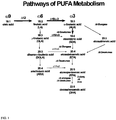
- Omega-3 and Omega-6 fatty acids are fatty acids that are required in human nutrition.
- Omega-6 fatty acids include linoleic acid and its derivatives. These oils are considered essential to human nutrition because these fatty acids must be consumed in the diet because humans cannot manufacture them from other dietary fats or nutrients, and they cannot be stored in the body.
- Fatty Acids of this sort provide energy and are also components of nerve cells, cellular membranes, and are converted to hormone-like substances known as prostaglandins.
- linoleic acid is an 18-carbon long polyunsaturated fatty acid containing two double bonds. Its first double bond occurs at the sixth carbon from the omega end, classifying it as an omega-6 oil.
- GLA gamma linoleic acid
- DGLA dihomo-gamma linoleic acid
- AA arachidonic acid
- the DGLA and AA are then converted into two types of prostaglandins by adding two carbon molecules and removing hydrogen molecules.
- DGLA is converted to PGE1, while AA is converted into PGE2.
- PGE3 is made by the conversion of omega-3 fatty acids.
- omega-6 oils in relation to consumption of omega-3 oils can lead to an overproduction of inflammation-producing prostagladins (PGE2) and a scarcity of anti-inflammatory prostaglandins (PGE1 and PGE2). This in turn can lead to a variety of other health problems. Going further, the daily consumption of omega-6 fatty acids by consumers may be excessive, due to the presence of omega-6 fatty acids in common cooking vegetable oils and processed foods currently on the market.
- the ratio of omega-6 to omega-3 fatty acid consumption can often reach 20:1 in Western diets. To achieve a more desirable ratio, the increased production of LC-PUFA while reducing the production of LA in a transgenic oilseed plant is envisaged.
- the resulting oil contains lower levels of LA while providing for the production of significant quantities of LC-PUFA and can be used in a variety of roles in the food industry from cooking oil to food ingredient.
- Tocopherols are natural antioxidants and essential nutrients in the diet found in plant oils. These antioxidants protect cell membranes and other fat-soluble parts of the body, such as low-density lipoprotein (LDL) cholesterol from damage. It also appears to protect the body against cardiovascular disease and certain forms of cancer and has demonstrated immuno-enhancing effects. Enhancements in the presence of tocopherols in the oil of transgenic seed oil plants will be beneficial to consumers of the oil. Enhanced concentrations of tocopherols will be beneficial as a part of an oil product and may also reduce the oxidation of LC-PUFA
Landscapes
- Life Sciences & Earth Sciences (AREA)
- Chemical & Material Sciences (AREA)
- Polymers & Plastics (AREA)
- Engineering & Computer Science (AREA)
- Food Science & Technology (AREA)
- Health & Medical Sciences (AREA)
- Oil, Petroleum & Natural Gas (AREA)
- Zoology (AREA)
- Animal Husbandry (AREA)
- Birds (AREA)
- Nutrition Science (AREA)
- Microbiology (AREA)
- Insects & Arthropods (AREA)
- Botany (AREA)
- Agronomy & Crop Science (AREA)
- Mycology (AREA)
- Biochemistry (AREA)
- Biophysics (AREA)
- Marine Sciences & Fisheries (AREA)
- Diabetes (AREA)
- Bioinformatics & Cheminformatics (AREA)
- Chemical Kinetics & Catalysis (AREA)
- Obesity (AREA)
- Hematology (AREA)
- Medicinal Chemistry (AREA)
- Veterinary Medicine (AREA)
- Organic Chemistry (AREA)
- Public Health (AREA)
- General Health & Medical Sciences (AREA)
- Animal Behavior & Ethology (AREA)
- General Chemical & Material Sciences (AREA)
- Nuclear Medicine, Radiotherapy & Molecular Imaging (AREA)
- Pharmacology & Pharmacy (AREA)
- Edible Oils And Fats (AREA)
- Fodder In General (AREA)
- Coloring Foods And Improving Nutritive Qualities (AREA)
- Seasonings (AREA)
- Acyclic And Carbocyclic Compounds In Medicinal Compositions (AREA)
- Dairy Products (AREA)
- Confectionery (AREA)
Applications Claiming Priority (2)
| Application Number | Priority Date | Filing Date | Title |
|---|---|---|---|
| US87830007P | 2007-01-03 | 2007-01-03 | |
| PCT/US2008/000051 WO2008085840A2 (en) | 2007-01-03 | 2008-01-03 | Food compositions incorporating additional long chain fatty acids |
Publications (3)
| Publication Number | Publication Date |
|---|---|
| EP2117334A2 EP2117334A2 (en) | 2009-11-18 |
| EP2117334A4 EP2117334A4 (en) | 2014-08-13 |
| EP2117334B1 true EP2117334B1 (en) | 2018-11-14 |
Family
ID=39609252
Family Applications (1)
| Application Number | Title | Priority Date | Filing Date |
|---|---|---|---|
| EP08705462.3A Active EP2117334B1 (en) | 2007-01-03 | 2008-01-03 | Food compositions incorporating additional long chain fatty acids |
Country Status (12)
| Country | Link |
|---|---|
| US (1) | US20100173061A1 (enExample) |
| EP (1) | EP2117334B1 (enExample) |
| JP (2) | JP2010514458A (enExample) |
| KR (1) | KR101502635B1 (enExample) |
| CN (1) | CN101677590A (enExample) |
| AR (1) | AR064742A1 (enExample) |
| AU (1) | AU2008203869B2 (enExample) |
| BR (1) | BRPI0806266A2 (enExample) |
| CA (1) | CA2673940C (enExample) |
| IL (1) | IL199661A (enExample) |
| NZ (1) | NZ578165A (enExample) |
| WO (1) | WO2008085840A2 (enExample) |
Families Citing this family (20)
| Publication number | Priority date | Publication date | Assignee | Title |
|---|---|---|---|---|
| WO2010107422A1 (en) * | 2009-03-16 | 2010-09-23 | Monsanto Technology Llc | Poultry meat and eggs comprising beneficial fatty acids |
| US20100266746A1 (en) * | 2009-04-16 | 2010-10-21 | Monsanto Technology Llc | Spread formulations including stearidonic acid |
| US20100272875A1 (en) * | 2009-04-24 | 2010-10-28 | Monsanto Technology Llc | Omega-3 enriched cereal, granola, and snack bars |
| AU2015200580B2 (en) * | 2009-04-24 | 2016-07-07 | Monsanto Technology Llc | Omega-3 enriched cereal, granola, and snack bars |
| WO2011002802A2 (en) * | 2009-06-30 | 2011-01-06 | Solae, Llc | Omega-3 fatty acid enriched baked foods and bar compositions |
| AU2010266593B2 (en) * | 2009-06-30 | 2015-01-29 | Monsanto Technology Llc | Nut butter and related products enriched with omega-3 |
| CA2761010A1 (en) * | 2009-06-30 | 2011-01-06 | Solae, Llc | Omega-3 fatty acid enriched beverages |
| MX2012000610A (es) * | 2009-07-15 | 2012-01-27 | Solae Llc | Sopas y salsas enriquecidas con acidos grasos omega-3. |
| BR112012007166A2 (pt) * | 2009-09-30 | 2017-05-02 | Solae Llc | "composição de gordura alimentícia, método de uso de ácido estearidônico para formar uma composição de gordura alimentícia,composições alimentícias, manteiga de nozes e metodo para usar ácido esteardônico para formar uma manteiga de nozes. |
| US8372465B2 (en) | 2010-02-17 | 2013-02-12 | Bunge Oils, Inc. | Oil compositions of stearidonic acid |
| KR101287492B1 (ko) * | 2011-06-30 | 2013-07-19 | 주식회사 빙그레 | 아마씨유를 포함하는 오메가-3 지방산 강화 아이스크림 및 이의 제조방법 |
| CN104366437B (zh) * | 2014-11-11 | 2016-03-02 | 中国科学院青岛生物能源与过程研究所 | 富含n-3多不饱和脂肪酸的佐餐酱及其制备方法 |
| JP6035314B2 (ja) * | 2014-12-02 | 2016-11-30 | モンサント テクノロジー エルエルシー | 有益な脂肪酸を含む家禽肉および家禽卵 |
| JP2018057392A (ja) * | 2017-11-21 | 2018-04-12 | モンサント テクノロジー エルエルシー | 有益な脂肪酸を含む家禽肉および家禽卵 |
| CN108739977B (zh) * | 2018-06-26 | 2021-06-25 | 安徽鲜森绿色食品有限公司 | 一种鸡蛋保鲜工艺 |
| EP3893666A4 (en) | 2018-12-14 | 2022-09-14 | DSM IP Assets B.V. | FOOD INGREDIENT WITH IMPROVED TASTE WITH POLYUNSATURATED FATTY ACID AND METHOD OF MANUFACTURE THEREOF |
| US20210235733A1 (en) | 2020-02-04 | 2021-08-05 | Memphis Meats, Inc. | Characteristics of meat products |
| US20210274809A1 (en) * | 2020-03-06 | 2021-09-09 | Iowa State University Research Foundation, Inc. | Bioactive feed additive for livestock |
| EP4340639A2 (en) * | 2021-05-20 | 2024-03-27 | DSM IP Assets B.V. | Fish flavour and fish analogue product |
| WO2023240152A1 (en) | 2022-06-07 | 2023-12-14 | Upside Foods, Inc. | Engineering cell lines capable of proliferation in growth factor free media formulations |
Family Cites Families (40)
| Publication number | Priority date | Publication date | Assignee | Title |
|---|---|---|---|---|
| US3676157A (en) * | 1970-07-16 | 1972-07-11 | Kelco Co | Method of preparing freeze-thaw stable spoonable salad dressing |
| US4273790A (en) * | 1979-11-19 | 1981-06-16 | Standard Brands Incorporated | Low-fat liquid spread and process |
| US4757011A (en) | 1983-09-30 | 1988-07-12 | E. I. Du Pont De Nemours And Company | Herbicide resistant tobacco |
| US4792523A (en) * | 1984-08-31 | 1988-12-20 | Cetus Corporation | 3'Expression enhancing fragments and method |
| US4940835A (en) * | 1985-10-29 | 1990-07-10 | Monsanto Company | Glyphosate-resistant plants |
| US4913921A (en) | 1987-09-11 | 1990-04-03 | General Mills, Inc. | Food products containing fish oils stabilized with fructose |
| US5638637A (en) * | 1987-12-31 | 1997-06-17 | Pioneer Hi-Bred International, Inc. | Production of improved rapeseed exhibiting an enhanced oleic acid content |
| US5534425A (en) * | 1988-02-03 | 1996-07-09 | Iowa State University Research Foundation, Inc. | Soybeans having low linolenic acid content and method of production |
| US5340594A (en) * | 1988-09-07 | 1994-08-23 | Omegatech Inc. | Food product having high concentrations of omega-3 highly unsaturated fatty acids |
| US5985348A (en) | 1995-06-07 | 1999-11-16 | Omegatech, Inc. | Milk products having high concentrations of omega-3 highly unsaturated fatty acids |
| US5750827A (en) * | 1991-09-30 | 1998-05-12 | Cargill Incorporated | Canola variety producing a seed with reduced glucosinolates and linolenic acid yielding an oil with low sulfur, improved sensory characteristics and increased oxidative stability |
| CA2124673C (en) * | 1991-12-04 | 2008-08-05 | John Browse | Fatty acid desaturase genes from plants |
| JPH0923817A (ja) * | 1995-07-07 | 1997-01-28 | Nisshin Oil Mills Ltd:The | 油脂含有飲食物 |
| JPH0975000A (ja) * | 1995-07-07 | 1997-03-25 | Nisshin Oil Mills Ltd:The | 母子栄養用油脂含有飲食物 |
| US6077828A (en) | 1996-04-25 | 2000-06-20 | Abbott Laboratories | Method for the prevention and treatment of cachexia and anorexia |
| AR006830A1 (es) * | 1996-04-26 | 1999-09-29 | Du Pont | Aceite de soja con alta estabilidad oxidativa |
| ATE418595T1 (de) * | 1998-02-13 | 2009-01-15 | Lipidia Holding S A | Raffinieren von essbaren ölen mit höchstem antioxidativem wirkungsgrad |
| DE69937050T2 (de) * | 1998-06-12 | 2008-05-29 | Calgene Llc, Davis | Polyungesättigte fettsäuren in pflanzen |
| US6123978A (en) | 1998-08-31 | 2000-09-26 | Mcneil-Ppc, Inc. | Stable salad dressings |
| WO2000042207A2 (en) * | 1999-01-14 | 2000-07-20 | Monsanto Technology Llc | Soybean transformation method |
| US6603061B1 (en) * | 1999-07-29 | 2003-08-05 | Monsanto Company | Agrobacterium-mediated plant transformation method |
| NO313076B1 (no) * | 1999-12-28 | 2002-08-12 | Pronova Biocare As | Flytende n¶rings- og/eller nytelsesmiddel og fremgangsmåte for fremstilling derav |
| US7037547B2 (en) | 2000-11-30 | 2006-05-02 | Kraft Foods Holdings, Inc. | Method of deflavoring soy-derived materials for use in beverages |
| EP1489915A4 (en) * | 2002-03-08 | 2005-09-14 | Monsanto Technology Llc | TREATMENT AND PREVENTION OF INFLAMMATORY DISEASES |
| US20040107460A1 (en) * | 2002-03-21 | 2004-06-03 | Fillatti Joanne J. | Nucleic acid constructs and methods for producing altered seed oil compositions |
| US7278200B2 (en) | 2002-05-02 | 2007-10-09 | Harman International Industries, Incorporated | Method of tensioning a diaphragm for an electro-dynamic loudspeaker |
| US20060006888A1 (en) | 2003-02-04 | 2006-01-12 | Microfabrica Inc. | Electrochemically fabricated microprobes |
| US20040172682A1 (en) * | 2003-02-12 | 2004-09-02 | Kinney Anthony J. | Production of very long chain polyunsaturated fatty acids in oilseed plants |
| MY134678A (en) * | 2003-05-05 | 2007-12-31 | Malaysian Palm Oil Board | A process for obtaining an oil composition and the oil composition obtained therefrom |
| US20050181019A1 (en) | 2003-07-03 | 2005-08-18 | Slim-Fast Foods Company, Division Of Conopco, Inc. | Nutrition bar |
| NO347177B1 (no) * | 2003-08-01 | 2023-06-19 | Basf Plant Science Gmbh | Fremgangsmåte for fremstilling av flerumettede fettsyrer i transgene organismer |
| CA2881252C (en) | 2003-08-21 | 2017-02-28 | Monsanto Technology Llc | Soybean oil having 5 to 50% sda and less than 10% gla |
| CA2542574C (en) * | 2003-11-12 | 2014-03-18 | E. I. Du Pont De Nemours And Company | Delta-15 desaturases suitable for altering levels of polyunsaturated fatty acids in oleaginous plants and yeast |
| CA2559360A1 (en) * | 2004-02-27 | 2005-09-09 | Basf Plant Science Gmbh | Method for producing c18, c20 and c22 polyunsaturated fatty acids in transgenic plants |
| EP1734947B1 (en) * | 2004-04-16 | 2015-04-15 | Monsanto Technology, LLC | Expression of fatty acid desaturases in corn |
| US7344747B2 (en) * | 2004-04-29 | 2008-03-18 | Gfa Brands, Inc. | Oxidative stabilization of omega-3 fatty acids in low linoleic acid-containing peanut butter |
| US7456270B2 (en) * | 2004-09-01 | 2008-11-25 | Abbott Laboratories | Δ6-desaturase genes and uses thereof |
| TWI363600B (en) * | 2004-09-21 | 2012-05-11 | Kao Corp | Acidic oil-in-water emulsion composition |
| WO2006052664A2 (en) * | 2004-11-04 | 2006-05-18 | Monsanto Technology Llc | Processes for preparation of oil compositions |
| DK1965658T3 (en) * | 2005-11-18 | 2019-01-21 | Commw Scient Ind Res Org | FEATURES FOR AQUACULTURE INCLUDING STEARIDONIC ACID |
-
2008
- 2008-01-03 WO PCT/US2008/000051 patent/WO2008085840A2/en not_active Ceased
- 2008-01-03 NZ NZ578165A patent/NZ578165A/en unknown
- 2008-01-03 US US12/522,076 patent/US20100173061A1/en not_active Abandoned
- 2008-01-03 CN CN200880007019A patent/CN101677590A/zh active Pending
- 2008-01-03 EP EP08705462.3A patent/EP2117334B1/en active Active
- 2008-01-03 KR KR1020097016221A patent/KR101502635B1/ko active Active
- 2008-01-03 CA CA2673940A patent/CA2673940C/en active Active
- 2008-01-03 BR BRPI0806266-8A patent/BRPI0806266A2/pt not_active Application Discontinuation
- 2008-01-03 AU AU2008203869A patent/AU2008203869B2/en active Active
- 2008-01-03 JP JP2009544917A patent/JP2010514458A/ja active Pending
- 2008-01-04 AR ARP080100024A patent/AR064742A1/es not_active Application Discontinuation
-
2009
- 2009-07-02 IL IL199661A patent/IL199661A/en active IP Right Grant
-
2014
- 2014-04-02 JP JP2014076387A patent/JP2014168468A/ja active Pending
Non-Patent Citations (1)
| Title |
|---|
| None * |
Also Published As
| Publication number | Publication date |
|---|---|
| AR064742A1 (es) | 2009-04-22 |
| KR101502635B1 (ko) | 2015-03-16 |
| CN101677590A (zh) | 2010-03-24 |
| NZ578165A (en) | 2012-04-27 |
| IL199661A0 (en) | 2010-04-15 |
| WO2008085840A3 (en) | 2008-10-23 |
| JP2010514458A (ja) | 2010-05-06 |
| JP2014168468A (ja) | 2014-09-18 |
| KR20090101290A (ko) | 2009-09-24 |
| US20100173061A1 (en) | 2010-07-08 |
| CA2673940C (en) | 2015-11-03 |
| AU2008203869A1 (en) | 2008-07-17 |
| AU2008203869B2 (en) | 2013-07-11 |
| BRPI0806266A2 (pt) | 2011-09-06 |
| WO2008085840A2 (en) | 2008-07-17 |
| IL199661A (en) | 2013-08-29 |
| CA2673940A1 (en) | 2008-07-17 |
| EP2117334A4 (en) | 2014-08-13 |
| EP2117334A2 (en) | 2009-11-18 |
Similar Documents
| Publication | Publication Date | Title |
|---|---|---|
| AU2008203870B2 (en) | Food compositions incorporating stearidonic acid. | |
| AU2008203869B2 (en) | Food compositions incorporating additional long chain fatty acids | |
| US20090110800A1 (en) | Food compositions incorporating additional long chain fatty acids | |
| Bennion et al. | The technology of cake making | |
| US20090169650A1 (en) | Food compositions incorporating stearidonic acid | |
| AU2009269433A1 (en) | Taste-improving agent for foods and drinks | |
| US8828470B2 (en) | Stabilization of omega-3 fatty acids in oil-water emulsions | |
| EP1755404A1 (en) | Cereal and fruit oil | |
| CN107087780A (zh) | 富含ω‑3的坚果黄油及其相关产物 | |
| EP1959746B1 (en) | Improved fat composition | |
| Nehra et al. | Enrichment of Essential Fatty Acids in Food | |
| Dunford | Foods, health, and omega-3 oils | |
| Sivakumar | Process Optimization for Production of Functional Yoghurt by Incorporating Flax Seed Extracts | |
| Kinsella | Biotechnological Developments: Potential for Improvements in Food Formulation, Nutrient Delivery, and Safety | |
| Mendu | Consumer Acceptance and Quality Attributes of Flaxseed Enhanced Cheese Sauce | |
| Sedat et al. | RECENT STUDIES ON ANALYSIS OF TRANS FATTY ACIDS IN TURKISH FOOD PRODUCTS | |
| WO2010121092A1 (en) | Spread formulations including stearidonic acid |
Legal Events
| Date | Code | Title | Description |
|---|---|---|---|
| PUAI | Public reference made under article 153(3) epc to a published international application that has entered the european phase |
Free format text: ORIGINAL CODE: 0009012 |
|
| 17P | Request for examination filed |
Effective date: 20090630 |
|
| AK | Designated contracting states |
Kind code of ref document: A2 Designated state(s): AT BE BG CH CY CZ DE DK EE ES FI FR GB GR HR HU IE IS IT LI LT LU LV MC MT NL NO PL PT RO SE SI SK TR |
|
| DAX | Request for extension of the european patent (deleted) | ||
| A4 | Supplementary search report drawn up and despatched |
Effective date: 20140716 |
|
| RIC1 | Information provided on ipc code assigned before grant |
Ipc: A23J 3/16 20060101ALI20140710BHEP Ipc: A23D 9/00 20060101AFI20140710BHEP Ipc: A23C 11/10 20060101ALI20140710BHEP Ipc: A23C 9/152 20060101ALI20140710BHEP Ipc: A23L 1/24 20060101ALI20140710BHEP Ipc: A23C 19/05 20060101ALI20140710BHEP Ipc: A23K 1/18 20060101ALI20140710BHEP Ipc: A23L 1/30 20060101ALI20140710BHEP Ipc: A23K 1/16 20060101ALI20140710BHEP Ipc: A23D 7/00 20060101ALI20140710BHEP |
|
| 17Q | First examination report despatched |
Effective date: 20160114 |
|
| REG | Reference to a national code |
Ref country code: DE Ref legal event code: R079 Ref document number: 602008057888 Country of ref document: DE Free format text: PREVIOUS MAIN CLASS: A23D0009000000 Ipc: A23K0020158000 |
|
| GRAP | Despatch of communication of intention to grant a patent |
Free format text: ORIGINAL CODE: EPIDOSNIGR1 |
|
| STAA | Information on the status of an ep patent application or granted ep patent |
Free format text: STATUS: GRANT OF PATENT IS INTENDED |
|
| RIC1 | Information provided on ipc code assigned before grant |
Ipc: A23K 50/10 20160101ALI20180430BHEP Ipc: A23K 20/158 20160101AFI20180430BHEP Ipc: A23L 27/60 20160101ALI20180430BHEP Ipc: A23L 33/12 20160101ALI20180430BHEP Ipc: A23C 19/05 20060101ALI20180430BHEP Ipc: A23C 9/152 20060101ALI20180430BHEP Ipc: A23D 7/00 20060101ALI20180430BHEP Ipc: A23K 50/80 20160101ALI20180430BHEP Ipc: A23K 50/30 20160101ALI20180430BHEP Ipc: A23C 11/10 20060101ALI20180430BHEP Ipc: A23D 9/00 20060101ALI20180430BHEP Ipc: A23J 3/16 20060101ALI20180430BHEP Ipc: A23K 50/00 20160101ALI20180430BHEP Ipc: A23K 50/75 20160101ALI20180430BHEP |
|
| INTG | Intention to grant announced |
Effective date: 20180525 |
|
| GRAS | Grant fee paid |
Free format text: ORIGINAL CODE: EPIDOSNIGR3 |
|
| GRAA | (expected) grant |
Free format text: ORIGINAL CODE: 0009210 |
|
| STAA | Information on the status of an ep patent application or granted ep patent |
Free format text: STATUS: THE PATENT HAS BEEN GRANTED |
|
| AK | Designated contracting states |
Kind code of ref document: B1 Designated state(s): AT BE BG CH CY CZ DE DK EE ES FI FR GB GR HR HU IE IS IT LI LT LU LV MC MT NL NO PL PT RO SE SI SK TR |
|
| REG | Reference to a national code |
Ref country code: GB Ref legal event code: FG4D |
|
| REG | Reference to a national code |
Ref country code: CH Ref legal event code: EP Ref country code: AT Ref legal event code: REF Ref document number: 1063755 Country of ref document: AT Kind code of ref document: T Effective date: 20181115 |
|
| REG | Reference to a national code |
Ref country code: DE Ref legal event code: R096 Ref document number: 602008057888 Country of ref document: DE |
|
| REG | Reference to a national code |
Ref country code: IE Ref legal event code: FG4D |
|
| REG | Reference to a national code |
Ref country code: NL Ref legal event code: MP Effective date: 20181114 |
|
| REG | Reference to a national code |
Ref country code: LT Ref legal event code: MG4D |
|
| REG | Reference to a national code |
Ref country code: AT Ref legal event code: MK05 Ref document number: 1063755 Country of ref document: AT Kind code of ref document: T Effective date: 20181114 |
|
| PG25 | Lapsed in a contracting state [announced via postgrant information from national office to epo] |
Ref country code: BG Free format text: LAPSE BECAUSE OF FAILURE TO SUBMIT A TRANSLATION OF THE DESCRIPTION OR TO PAY THE FEE WITHIN THE PRESCRIBED TIME-LIMIT Effective date: 20190214 Ref country code: NO Free format text: LAPSE BECAUSE OF FAILURE TO SUBMIT A TRANSLATION OF THE DESCRIPTION OR TO PAY THE FEE WITHIN THE PRESCRIBED TIME-LIMIT Effective date: 20190214 Ref country code: IS Free format text: LAPSE BECAUSE OF FAILURE TO SUBMIT A TRANSLATION OF THE DESCRIPTION OR TO PAY THE FEE WITHIN THE PRESCRIBED TIME-LIMIT Effective date: 20190314 Ref country code: ES Free format text: LAPSE BECAUSE OF FAILURE TO SUBMIT A TRANSLATION OF THE DESCRIPTION OR TO PAY THE FEE WITHIN THE PRESCRIBED TIME-LIMIT Effective date: 20181114 Ref country code: LT Free format text: LAPSE BECAUSE OF FAILURE TO SUBMIT A TRANSLATION OF THE DESCRIPTION OR TO PAY THE FEE WITHIN THE PRESCRIBED TIME-LIMIT Effective date: 20181114 Ref country code: AT Free format text: LAPSE BECAUSE OF FAILURE TO SUBMIT A TRANSLATION OF THE DESCRIPTION OR TO PAY THE FEE WITHIN THE PRESCRIBED TIME-LIMIT Effective date: 20181114 Ref country code: LV Free format text: LAPSE BECAUSE OF FAILURE TO SUBMIT A TRANSLATION OF THE DESCRIPTION OR TO PAY THE FEE WITHIN THE PRESCRIBED TIME-LIMIT Effective date: 20181114 Ref country code: HR Free format text: LAPSE BECAUSE OF FAILURE TO SUBMIT A TRANSLATION OF THE DESCRIPTION OR TO PAY THE FEE WITHIN THE PRESCRIBED TIME-LIMIT Effective date: 20181114 Ref country code: FI Free format text: LAPSE BECAUSE OF FAILURE TO SUBMIT A TRANSLATION OF THE DESCRIPTION OR TO PAY THE FEE WITHIN THE PRESCRIBED TIME-LIMIT Effective date: 20181114 |
|
| PG25 | Lapsed in a contracting state [announced via postgrant information from national office to epo] |
Ref country code: SE Free format text: LAPSE BECAUSE OF FAILURE TO SUBMIT A TRANSLATION OF THE DESCRIPTION OR TO PAY THE FEE WITHIN THE PRESCRIBED TIME-LIMIT Effective date: 20181114 Ref country code: GR Free format text: LAPSE BECAUSE OF FAILURE TO SUBMIT A TRANSLATION OF THE DESCRIPTION OR TO PAY THE FEE WITHIN THE PRESCRIBED TIME-LIMIT Effective date: 20190215 Ref country code: NL Free format text: LAPSE BECAUSE OF FAILURE TO SUBMIT A TRANSLATION OF THE DESCRIPTION OR TO PAY THE FEE WITHIN THE PRESCRIBED TIME-LIMIT Effective date: 20181114 Ref country code: PT Free format text: LAPSE BECAUSE OF FAILURE TO SUBMIT A TRANSLATION OF THE DESCRIPTION OR TO PAY THE FEE WITHIN THE PRESCRIBED TIME-LIMIT Effective date: 20190314 |
|
| PG25 | Lapsed in a contracting state [announced via postgrant information from national office to epo] |
Ref country code: IT Free format text: LAPSE BECAUSE OF FAILURE TO SUBMIT A TRANSLATION OF THE DESCRIPTION OR TO PAY THE FEE WITHIN THE PRESCRIBED TIME-LIMIT Effective date: 20181114 Ref country code: DK Free format text: LAPSE BECAUSE OF FAILURE TO SUBMIT A TRANSLATION OF THE DESCRIPTION OR TO PAY THE FEE WITHIN THE PRESCRIBED TIME-LIMIT Effective date: 20181114 Ref country code: PL Free format text: LAPSE BECAUSE OF FAILURE TO SUBMIT A TRANSLATION OF THE DESCRIPTION OR TO PAY THE FEE WITHIN THE PRESCRIBED TIME-LIMIT Effective date: 20181114 Ref country code: CZ Free format text: LAPSE BECAUSE OF FAILURE TO SUBMIT A TRANSLATION OF THE DESCRIPTION OR TO PAY THE FEE WITHIN THE PRESCRIBED TIME-LIMIT Effective date: 20181114 |
|
| REG | Reference to a national code |
Ref country code: DE Ref legal event code: R097 Ref document number: 602008057888 Country of ref document: DE |
|
| PG25 | Lapsed in a contracting state [announced via postgrant information from national office to epo] |
Ref country code: EE Free format text: LAPSE BECAUSE OF FAILURE TO SUBMIT A TRANSLATION OF THE DESCRIPTION OR TO PAY THE FEE WITHIN THE PRESCRIBED TIME-LIMIT Effective date: 20181114 Ref country code: RO Free format text: LAPSE BECAUSE OF FAILURE TO SUBMIT A TRANSLATION OF THE DESCRIPTION OR TO PAY THE FEE WITHIN THE PRESCRIBED TIME-LIMIT Effective date: 20181114 Ref country code: MC Free format text: LAPSE BECAUSE OF FAILURE TO SUBMIT A TRANSLATION OF THE DESCRIPTION OR TO PAY THE FEE WITHIN THE PRESCRIBED TIME-LIMIT Effective date: 20181114 Ref country code: SK Free format text: LAPSE BECAUSE OF FAILURE TO SUBMIT A TRANSLATION OF THE DESCRIPTION OR TO PAY THE FEE WITHIN THE PRESCRIBED TIME-LIMIT Effective date: 20181114 |
|
| REG | Reference to a national code |
Ref country code: CH Ref legal event code: PL |
|
| PLBE | No opposition filed within time limit |
Free format text: ORIGINAL CODE: 0009261 |
|
| STAA | Information on the status of an ep patent application or granted ep patent |
Free format text: STATUS: NO OPPOSITION FILED WITHIN TIME LIMIT |
|
| PG25 | Lapsed in a contracting state [announced via postgrant information from national office to epo] |
Ref country code: LU Free format text: LAPSE BECAUSE OF NON-PAYMENT OF DUE FEES Effective date: 20190103 |
|
| REG | Reference to a national code |
Ref country code: BE Ref legal event code: MM Effective date: 20190131 |
|
| 26N | No opposition filed |
Effective date: 20190815 |
|
| REG | Reference to a national code |
Ref country code: IE Ref legal event code: MM4A |
|
| PG25 | Lapsed in a contracting state [announced via postgrant information from national office to epo] |
Ref country code: SI Free format text: LAPSE BECAUSE OF FAILURE TO SUBMIT A TRANSLATION OF THE DESCRIPTION OR TO PAY THE FEE WITHIN THE PRESCRIBED TIME-LIMIT Effective date: 20181114 |
|
| PG25 | Lapsed in a contracting state [announced via postgrant information from national office to epo] |
Ref country code: BE Free format text: LAPSE BECAUSE OF NON-PAYMENT OF DUE FEES Effective date: 20190131 |
|
| PG25 | Lapsed in a contracting state [announced via postgrant information from national office to epo] |
Ref country code: CH Free format text: LAPSE BECAUSE OF NON-PAYMENT OF DUE FEES Effective date: 20190131 Ref country code: LI Free format text: LAPSE BECAUSE OF NON-PAYMENT OF DUE FEES Effective date: 20190131 |
|
| PG25 | Lapsed in a contracting state [announced via postgrant information from national office to epo] |
Ref country code: IE Free format text: LAPSE BECAUSE OF NON-PAYMENT OF DUE FEES Effective date: 20190103 |
|
| PG25 | Lapsed in a contracting state [announced via postgrant information from national office to epo] |
Ref country code: TR Free format text: LAPSE BECAUSE OF FAILURE TO SUBMIT A TRANSLATION OF THE DESCRIPTION OR TO PAY THE FEE WITHIN THE PRESCRIBED TIME-LIMIT Effective date: 20181114 |
|
| PG25 | Lapsed in a contracting state [announced via postgrant information from national office to epo] |
Ref country code: MT Free format text: LAPSE BECAUSE OF NON-PAYMENT OF DUE FEES Effective date: 20190103 |
|
| PG25 | Lapsed in a contracting state [announced via postgrant information from national office to epo] |
Ref country code: CY Free format text: LAPSE BECAUSE OF FAILURE TO SUBMIT A TRANSLATION OF THE DESCRIPTION OR TO PAY THE FEE WITHIN THE PRESCRIBED TIME-LIMIT Effective date: 20181114 |
|
| PG25 | Lapsed in a contracting state [announced via postgrant information from national office to epo] |
Ref country code: HU Free format text: LAPSE BECAUSE OF FAILURE TO SUBMIT A TRANSLATION OF THE DESCRIPTION OR TO PAY THE FEE WITHIN THE PRESCRIBED TIME-LIMIT; INVALID AB INITIO Effective date: 20080103 |
|
| PGFP | Annual fee paid to national office [announced via postgrant information from national office to epo] |
Ref country code: GB Payment date: 20251218 Year of fee payment: 19 |
|
| PGFP | Annual fee paid to national office [announced via postgrant information from national office to epo] |
Ref country code: FR Payment date: 20251222 Year of fee payment: 19 |
|
| PGFP | Annual fee paid to national office [announced via postgrant information from national office to epo] |
Ref country code: DE Payment date: 20251216 Year of fee payment: 19 |