EP2105864B1 - Authentifizierungsvorrichtung und Authentifizierungsverfahren - Google Patents
Authentifizierungsvorrichtung und Authentifizierungsverfahren Download PDFInfo
- Publication number
- EP2105864B1 EP2105864B1 EP08169860A EP08169860A EP2105864B1 EP 2105864 B1 EP2105864 B1 EP 2105864B1 EP 08169860 A EP08169860 A EP 08169860A EP 08169860 A EP08169860 A EP 08169860A EP 2105864 B1 EP2105864 B1 EP 2105864B1
- Authority
- EP
- European Patent Office
- Prior art keywords
- input
- information
- forgery
- feature point
- registered
- Prior art date
- Legal status (The legal status is an assumption and is not a legal conclusion. Google has not performed a legal analysis and makes no representation as to the accuracy of the status listed.)
- Ceased
Links
Images








Classifications
-
- G—PHYSICS
- G06—COMPUTING OR CALCULATING; COUNTING
- G06V—IMAGE OR VIDEO RECOGNITION OR UNDERSTANDING
- G06V40/00—Recognition of biometric, human-related or animal-related patterns in image or video data
- G06V40/10—Human or animal bodies, e.g. vehicle occupants or pedestrians; Body parts, e.g. hands
- G06V40/12—Fingerprints or palmprints
- G06V40/1365—Matching; Classification
- G06V40/1371—Matching features related to minutiae or pores
-
- G—PHYSICS
- G06—COMPUTING OR CALCULATING; COUNTING
- G06V—IMAGE OR VIDEO RECOGNITION OR UNDERSTANDING
- G06V40/00—Recognition of biometric, human-related or animal-related patterns in image or video data
- G06V40/10—Human or animal bodies, e.g. vehicle occupants or pedestrians; Body parts, e.g. hands
- G06V40/12—Fingerprints or palmprints
- G06V40/1382—Detecting the live character of the finger, i.e. distinguishing from a fake or cadaver finger
-
- G—PHYSICS
- G06—COMPUTING OR CALCULATING; COUNTING
- G06V—IMAGE OR VIDEO RECOGNITION OR UNDERSTANDING
- G06V40/00—Recognition of biometric, human-related or animal-related patterns in image or video data
- G06V40/40—Spoof detection, e.g. liveness detection
Definitions
- the present invention relates to personal identification using bio information such as fingerprints. More particularly, the present invention relates to an authentication apparatus, an authentication method and an authentication program that allow distinction of a forgery such as a false finger by using a changing tendency of a form that a forgery such as a false finger has.
- JP 2005-143804 discloses that a plurality of square wave input voltages having different frequencies are applied to a subject, output voltages which are responses thereto are measured to calculate impedance, and it is discriminated whether a finger is of a living body or not by investigating whether the impedance is within a range of reference impedance.
- WO 2004/023999 discloses that when a plurality of images are continuously sampled, secrete that is secreted from exocrine glands of the organism skin is detected, and whether the subject is an organism or not is sensed by the existence of the secrete or not.
- JP 2002-279413 A discloses that standard deviation of a pixel value of an input fingerprints image is calculated, the difference between the maximum value and the minimum value of the standard deviation values of N frames are given, and if the value thereof is at or larger than a threshold level, it is identified to be bio fingerprints and if below the threshold level, it is identified to be false fingerprints.
- US 5 974 176 A relates to an automatic matching device for planar point patterns, which may be applied for the recognition of fingerprints, which in the background section thereof states that when the image of a fingerprint is scanned, a computer uses a software to abstract the distribution of the feature points of the fingerprints and by matching two patterns comprising feature points obtained in different time or places, it can be decided, whether the two fingerprints came from the same finger. Accordingly, if a similarity between a reference pattern and a test pattern can be calculated based on a scaling factor, it can be decided that the two fingerprints come from the same finger.
- WO 98/10370 A2 relates to identity verification by comparison and interpretation of skin patterns, and discusses the issue of isomorphic dilation, which affects the entire print uniformly. WO 98/10370 A2 further points out that a failure to account properly for isomorphic dilation results into unacceptably high rates of failure to verify or recognize an authorized user - i.e. high rates of the so-called "false rejection".
- An object of the present invention relates to authentication information using bio information such as fingerprints, and is to improve identification accuracy whether a living body or a forgery (non-living body) and to prevent an authentication error.
- the present invention relates to an authentication apparatus, an authentication method, an authentication program and a recording medium.
- the characteristics such as uniform reducing feature by the passage of time of a gummy finger made like a bio finger, whether a living body or a forgery is determined, a determination error of a living body by a forgery is prevented, and authentication accuracy of a living body is improved.
- the feature information of the forgery is characteristic information that the forgery has.
- characteristic information is characteristics such as reduction by the passage of time.
- the feature information is information not shown in a living body such as expansion or a regular change according to materials. If the input feature information extracted in the feature information extraction unit matches or is similar to feature information of a forgery, whether a living body or a forgery can be determined when the input image information is determined to be by a forgery, high accurate authentication of a living body can be done, and the above objects can be achieved.
- the a forgery determination unit may determine to be a false finger if the input image information is input fingerprint image information and input feature information extracted from the input fingerprint image reduces uniformly, or, in the authentication apparatus, preferably, the a forgery determination unit may determine to be a false finger if the input image information is an input fingerprint image and input feature information extracted from the input fingerprint image reduces uniformly when the verification unit determines to be by an original person. From such structure, the above objects can be achieved.
- the input feature information and the registered feature information may be fingerprint feature point information
- the a forgery determination unit may calculate a rate that distances between input feature points and a center of fingerprints are shorter than distances between registered feature points corresponding thereto and the center of fingerprints concerning a plurality of matching feature points, and determines to be a false finger if the rate is larger than a predetermined threshold level
- the input feature information and the registered feature information may be fingerprint feature point information
- the a forgery determination unit may calculate a rate that distances between input feature points and the center of fingerprints are shorter than a predetermined ratio of distances between registered feature points corresponding thereto and the center of fingerprints concerning a plurality of matching feature points, and determines to be a false finger if the rate is larger than a predetermined threshold level. From such structure, the above objects can be achieved.
- the input feature information and the registered feature information may be fingerprint feature point information
- the a forgery determination unit may calculate a rate that distances between input matching feature points are shorter than distances between registered matching feature points corresponding thereto, and determines to be a false finger if the rate is larger than a predetermined threshold level
- the input feature information and the registered feature information may be fingerprint feature point information
- the a forgery determination unit may calculate a rate that distances between input matching feature points are shorter than a predetermined ratio of distances between registered matching feature points corresponding thereto, and determines to be a false finger if the rate is larger than a predetermined threshold level.
- the forgery determination unit may select the predetermined number of pairs of matching feature points in order of longer distance between matching feature points, and calculates a rate used in a forgery determination from distances between the selected matching feature points.
- the forgery determination unit may determine to be a false finger if the rate calculated for the forgery determination is larger than the predetermined threshold level, and requests re-inputting if the rate is smaller than the threshold level and larger than a predetermined re-input threshold level.
- the forgery determination unit may verify the input feature information with reduced registered feature information obtained by extraction of feature information after an registered image reduces in a plurality of powers, and determines to be a false finger when a degree of similarity obtained from the result is higher than a predetermined ratio to a degree of the similarity obtained at the verification unit. From such structure, the above objects can be achieved.
- the forgery determination unit may determine to be a false finger if the calculated degree of the similarity is larger than a predetermined false finger threshold level, and requests re-inputting if the degree is smaller than the false finger threshold level and larger than a predetermined re-input threshold level.
- an authentication apparatus using bio information comprising: a bio information reading unit reading in input bio information; a feature information extraction unit extracting input feature information from the input bio information read in by the bio information reading unit; a verification unit verifying input feature information extracted at the feature information extraction unit with registered feature information registered in advance, and determining whether the input feature information matches the registered feature information; and a forgery determination unit determining that the input bio information is by a forgery if the input feature information extracted at the feature information extraction unit has an almost radial uniform change for the registered feature information.
- the input bio information may be input fingerprint image information
- the forgery determination unit may determine to be a forgery if the input feature information extracted from the input fingerprint image reduces uniformly.
- an authentication method using image information comprising: reading in input image information; extracting input feature information from the read in input image information; verifying the input feature information with registered feature information registered in advance, and determining whether the input feature information matches the registered feature information; and determining the input image information to be by a forgery if the input image feature information has an almost radial uniform change for the registered feature information.
- the authentication method preferably may determine to be a false finger if the input feature information extracted from the input image information reduces uniformly.
- an authentication method using bio information comprising: reading in input bio information; extracting input feature information from the read in bio information; verifying the input feature information with registered feature information registered in advance, and determining whether the input feature information matches the registered feature information; and determining that the input bio information is a forgery if the input feature information has an almost radial uniform change for the registered feature information.
- the present invention is provided a computer executable authentication program with using image information, the program comprising: reading in input image information; extracting input feature information from the read in input image information; verifying the input feature information with registered feature information registered in advance, and determining whether the input feature information matches the registered feature information; and determining the input image information to be a forgery if the input image information has an almost radial uniform change for the registered feature information.
- the authentication program preferably may determine to be a false finger if the input feature information extracted from the input image information reduces uniformly.
- an authentication program is provided a computer executable authentication program with using bio information, the program comprising: reading in input bio information; extracting input feature information from the read in bio information; verifying the input feature information with registered feature information registered in advance, and determining whether the input feature information matches the registered feature information; and determining that if the input bio information is a forgery if the input feature information has an almost radial uniform change for the registered feature information.
- the authentication program preferably may determine to be a forgery if the input feature information extracted from the input bio information reduces uniformly.
- the program may comprise determining to be a false finger if the input feature information extracted from the input image information reduces uniformly.
- the program may comprise determining to be a forgery if the input feature information extracted from the input bio information reduces uniformly.
- a false finger is, for example, a gummy finger made from gelatin, the finger has characteristic of uniform reducing as time passes. With considering the feature of the false finger as feature, by using this, whether a living body or a forgery can be accurately determined, and authentication accuracy of a living body can be improved.
- Figs. 1A and 1B depict a process of deformation of a false finger according to a first embodiment
- Figs. 2A to 2C depict a change of feature points of a bio finger and a false finger
- Figs. 3A to 3C depict a change of feature points of a bio finger
- Fig. 4 depicts a superimposed image where a bio finger image and a false finger image are superimposed
- Fig. 6 depicts a superimposed image where a bio finger image and a false finger image are superimposed
- Figs. 7A and 7B depict a false finger image
- Fig. 10 is a flowchart showing a subroutine for determining reduction of verification data
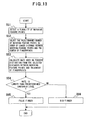
- Fig. 11 is a flowchart showing a subroutine for determining a false finger
- Fig. 12 is a flowchart showing another subroutine for determining a false finger
- Fig. 13 is a flowchart showing one example of processing procedure of verification
- Fig. 15 is a flowchart showing one example of processing procedure of verification
- Fig. 16 is a flowchart showing one example of processing procedure of verification according to a fourth embodiment
- Fig. 17 is a flowchart showing one example of processing procedure of verification according to a fifth embodiment
- Fig. 18 is a flowchart showing one example of processing procedure of verification according to a sixth embodiment
- Fig. 20 depicts a function block of a fingerprint authentication apparatus according to an eighth embodiment
- Fig. 21 is a flowchart showing one example of processing procedure of verification according to a ninth embodiment
- Fig. 23 is a flowchart showing one example of processing procedure of verification
- Fig. 27 depicts a function block of a fingerprint authentication apparatus according to another embodiment
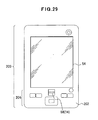
- Fig. 29 depicts a personal digital assistant
- Fig. 30 depicts a portable device
- Fig. 31 depicts a vein authentication apparatus.
- FIGs. 1A and 1B depict process of deformation of a false finger. Structure shown in Figs. 1A and 1B are one example and the present invention is not limited to such structure.
- a false finger 2 made from gelatin has the same form as a bio finger just after being made as shown in Fig. 1A . However, if some time passes, tendency appears in the form of the false finger 2 that a uniform change (reduction) occurs shown in Fig. 1B . This is the characteristic tendency that gelatin, a material of the false finger 2, has.
- the case may occur that distortion is generated in an input image by a factor such that an input way to a fingerprint sensor is not suitable.
- image distortion input distortion
- image distortion in this case has essential difference from uniform changing tendency in a reduction change of the false finger 2.
- a characteristic phenomenon of the false finger 2 for example, reducing in a distortion direction of the volume of feature uniformly does not appear in the image distortion.
- FIGs. 2A to 2C and 3A to 3C depict a change of feature points of a bio finger and a false finger
- a bio finger image 4 ( Fig. 2A ) is an image read out from a bio finger.
- a false finger image 6 ( Fig. 2B ) is an image read out from the false finger 2 ( Fig. 1B ) made from gelatin when time passes since being made. Since the false finger 2 copies a bio finger, relationship between these bio finger image 4 and false finger image 6 is similarity.
- feature points i 1 , i 2 , i 3 , i 4 and i 5 are extracted from the bio finger image 4
- feature points j 1 , j 2 , j 3 , j 4 and j 5 are extracted from the false finger image 6.
- each of the feature point i 1 to i 5 and each of the feature point j 1 to j 5 are matching feature points respectively.
- the feature points j 1 , j 2 , j 3 , j 4 and j 5 of the false finger image 6 are inside the feature points i 1 , i 2 , i 3 , i 4 and i 5 of the bio finger image 4, so declining directions are uniform.
- each of the feature point i 1 to i 5 and each of the feature points k 1 to k 5 are matching feature points.
- the feature points i 1 , i 2 , i 3 , i 4 and i 5 and the feature points k 1 , k 2 , k 3 , k 4 and k 5 obtained from the bio finger images 4 and 8, declining directions are not uniform.
- Fig. 4 depicts a superimposed image where a bio finger image and a false finger image are superimposed correspondingly to Fig. 2C
- Fig. 5 depicts a superimposed image where two bio finger images are superimposed correspondingly to Fig. 3C . As shown in Fig.
- Figs. 7A and 7B depict a false finger image of the false finger ( Fig. 1 ).
- the bio finger image 6 may distort. In this case, distortion in a lateral direction does not appear. Distortion appears such as non-uniform distortion in upward and downward directions. Such distortion does not appear as the false finger image 6 and the bio finger image 4 being compared.
- FIG. 8 depicts a function block of a fingerprint authentication apparatus. Structure shown in Fig. 8 is one example and the present invention is not limited to such structure.
- This fingerprint authentication apparatus 12 is one example of a biometric authentication apparatus using fingerprints for biometric authentication.
- the fingerprint authentication apparatus 12 includes a fingerprint image reading unit 14, a feature data extraction unit 16, a verification unit 18, a feature data storing unit 20 and a forgery distinction unit 22.
- the fingerprint image reading unit 14 is a means for reading a fingerprint image from fingerprints, and is configured of, for example a sweeping typed fingerprint sensor.
- the feature data extraction unit 16 is a means for extracting feature data as feature information from a fingerprint image as image information picked by the fingerprint image reading unit 14.
- the verification unit 18 is a means for verifying feature data extracted from a fingerprint image by the feature data extraction unit 16 with registered feature data registered in the feature data storing unit 20 in advance. As known methods about this verification, there are a feature points method and a pattern matching method, etc.
- the feature data storing unit 20 is a means for storing personal registered feature data.
- the a forgery distinction unit 22 compares input feature data and registered feature data, determines whether the input feature data is by the false finger 2 ( Fig. 1 ), and determines that a read fingerprint image is by the false finger 2 ( Fig. 1 ) in case, for example, the input feature data varies (reduces) uniformly.
- FIG. 9 is a flowchart showing one example of processing procedure of verification
- Fig. 10 is a flowchart showing a subroutine for determining reduction of verification data. Structure shown in Figs. 9 and 10 are one example and the present invention is not limited to such structure.
- This processing procedure is one example of an authentication method and an authentication program, and includes a determination process in case where verification data reduces uniformly. Any one or more of the singular points described above may be used for the determination of reduction, the singular points being (1) length of distances between the center of fingerprints and the feature points, (2) length of distance between the feature points, (3) matching degree of the feature points and (4) tendency occurring to obtained image distortion.
- a verification process is started by an event such as turning power on.
- a fingerprint image is input by the fingerprint image reading unit 14 (step S11).
- the volume of feature is extracted from the fingerprint image (step S12).
- Feature data is extracted by the extraction of the volume of feature.
- the extracted feature data is input feature data.
- the input feature data is verified with registered feature data by a verification process in the verification unit 18 (step S13).
- the registered feature data is registered in the feature data storage unit 20 in advance, and is read out from the feature data storage unit 20 when verification.
- step S14 determines whether the input feature data is by an original person or not. If the input feature data cannot be determined to be by an original person (NO of step S14), it is determined to be another person (step S15), and the verification process is ended.
- step S14 If the input feature data can be determined to be by an original person (YES of step S14), a forgery determination process by the forgery distinction unit 22 is implemented. In this case, it is determined whether verification data, that is, input feature data reduces uniformly (step S16). If the data does not reduce uniformly (NO of step S16), it is determined to be by an original person (step S17) and the verification process is ended.
- step S18 If the input feature data reduces uniformly, it is determined to be a false finger (step S18) and the verification process is ended.
- step S16 Determination whether the input feature data reduces uniformly (step S16) will now refer to Fig. 10 .
- D_Ii ⁇ D_Ei (1 ⁇ i ⁇ N) represents the case where the distance D_Ii is shorter than the distance D_Ei.
- determination whether a bio finger or a false finger can be made with avoiding influence of image distortion, thus, high accurate authentication can be processed.
- an input image is obtained by an image input process (step S121), an registered image is reduced into a plurality of powers by an image reduction process (step S122), and by extracting feature data from the reduced registered image, reduced registered feature data is generated (step S123).
- step S124 The input feature data and the reduced registered feature data are verified, and a degree of similarity is calculated (step S124).
- the calculated degree of similarity it is determined whether a condition where the degree of similarity is larger than a value consisted of a product of "the degree of similarity calculated in a verification process" and "a predetermined ratio” is met, that is, “the degree of similarity calculated in step S124 > (the degree of similarity calculated in a verification process) * (a predetermined ratio)” is met (step S125). If the condition is met (YES of step S125), it is determined to be a false finger (step S126) and if the above condition is not met (NO of step S125), it is determined to be a bio finger (step S127).
- determination whether a bio finger or a false finger can be made with avoiding influence of image distortion, thus, high accurate authentication can be processed.
- the degree of similarity calculated in a verification process is used.
- the present invention is not limited to such degree, and "a degree of similarity calculated from input feature data, and one-power reduced registered feature data” may be used.
- the input image is verified with reduced registered feature data obtained by extracting feature data after a registered image reduces into a plurality of powers. If a degree of similarity obtained from the result is larger than a value constituted of a product of the degree of similarity obtained by the verification unit 18 and a predetermined ratio, it is distinguished to be a false finger.
- FIG. 21 is a flowchart showing one example of processing procedure of verification. Structure shown in Fig. 21 is one example and the present invention is not limited to such structure.
- a false finger threshold level for discriminating a false finger and a re-input threshold level where discrimination whether a false finger or not is difficult are set, and if a degree of similarity calculated for a forgery determination is larger than the false finger threshold level, it is distinguished to be a false finger, and if the degree of similarity is smaller than the false finger threshold level and larger than the re-input threshold level, re-inputting of fingerprints is requested.
- This method is applicable to all the methods including a feature points method since executing only expansion and reduction of an image itself.
- the fingerprint authentication apparatus 12 shown in Fig. 8 and the processing procedure shown in Fig. 9 are used.
- determination whether a bio finger or a false finger can be made with avoiding influence of image distortion, thus, high accurate authentication can be processed.
- An fingerprint authentication apparatus 12 of this embodiment as shown in Fig. 22 , an output unit 40 that takes out an output of a forgery distinction unit 22 is disposed, and is configured that four outputs of an original person/bio output 42, an original person/a forgery output 44, another person/bio output 46 and another person/a forgery output 48 are taken out. Concerning other structures, the description thereabout is omitted with denoting the same reference numerals as Fig. 8 to the same components as Fig.8 .
- This processing procedure is, as shown in Fig. 23 , one example of an authentication method and an authentication program, and started by an event of a power supply, etc.
- a fingerprint image is input by the fingerprint image reading unit 14 (step S141), if the fingerprint image is read out, the volume of feature is extracted from the fingerprint image (step S142), and feature data is extracted from the extraction of the volume of feature.
- the extracted feature data is input feature data.
- the input feature data is verified with registered feature data by a verification process in the verification unit 18 (step S143).
- the registered feature data is registered in the feature data storing unit 20 in advance. In verification, the registered feature data is read out from the feature data storing unit 20. Based on the verification process, whether input feature data is by an original person is determined (step S144).
- FIG. 24 depicts a function block of a fingerprint authentication apparatus according to an eleventh embodiment
- Fig. 25 is a flowchart showing one example of processing procedure of verification. Structure shown in Figs. 24 and 25 is one example and the present invention is not limited to such structure.
- a forgery distinction unit 22 is disposed before a verification unit 18, an output unit 40 that takes out an output of the verification unit 18 is disposed, and four outputs of an original person/bio output 42, original person/a forgery output 44, another person/bio output 46 and another person/a forgery output 48 are taken out.
- Concerning other structures, the description thereabout is omitted with denoting the same reference numerals as Fig. 22 to the same parts as Fig. 22 .
- step S164 the input feature data is verified with registered feature data by a verification process in the verification unit 18 (step S165). Since the registered feature data is registered in the feature data storing unit 20 in advance, the registered feature data is read out from the feature data storing unit 20 in verification. Based on the verification process, whether the input feature data is by an original person or not is determined (step S166).
- step S164 If it is a forgery (YES of step S164), the input feature data is verified with registered feature data by a verification process in the verification unit 18 (step S169). The registered feature data is read out from the feature data storing unit 20 in verification. Based on the verification process, whether the input feature data is by an original person or not is determined (step S170).
- step S170 If the input feature data is determined to be by an original person (YES of step S170), the original person/a forgery output 46 is obtained (step S171), and the verification process is ended. If the input feature data is not determined to be by an original person (NO of step S170), another person/a forgery output 48 is obtained (step S172), and the verification process is ended.
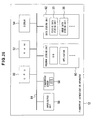
- FIG. 26 depicts structure of hardware of a fingerprint authentication apparatus according to a twelfth embodiment. Structure shown in Fig. 26 is one example and the present invention is not limited to such structure. In Fig. 26 , the same components as described in Figs. 8 , 20 , 22 and 24 are denoted by the same reference numerals.
- the fingerprint authentication apparatus 12 includes a computer as an information processing means. All or any one of the fingerprint authentication apparatuses 12 in the first, eighth, tenth and eleventh embodiments are composed of a computer as well.
- a CPU Central Processing Unit
- RAM Random-Access Memory
- a display 54 an input/output unit 56
- a fingerprint sensor 58 a program storing unit 60 and a data storing unit 62. They are connected by a bus 64.
- the CPU 50 is a control means for executing taking in an authentication image, a verification process, and other storing and calculating of various data by performing application programs such as an OS (Operating System) and an authentication program.
- the CPU 50 configures the described feature data extraction unit 16, verification unit 18, a forgery distinction unit 22 or output unit 40, etc.
- the RAM 52 is a work area.
- the display 54 is an information proposing means, and for example, is composed of an LCD (Liquid Crystal Display).
- the input/output unit 56 also corresponds to the described output unit 40, etc., and is used for an input and output of information, etc. A keyboard and so on is used for information input.
- the program storing unit 60 is one example of a recording means for recording a program, and is composed of a recording medium that is readable and writable by a computer. This program storing unit 60 stores the described authentication program and a verification routine, etc. as an OS and an application program,.
- an electronic apparatus that mounts an authentication apparatus mounts a processor such as a computer like a personal computer and a portable device, whether a living body or a forgery can be determined with using such processor as the authentication apparatus too, thus, authentication accuracy of a living body can be enhanced.
- a PC 100 is one example of an electronic apparatus mounting the fingerprint authentication apparatus 12 ( Fig. 26 ). As shown in Fig. 28 , it is configured of a casing 102 and a casing 104 openably and closenably via a hinge 106. At the casing 102, a keyboard 108 is disposed, and the fingerprint sensor 58 is also disposed as the fingerprint image reading unit 14 ( Fig. 8 ). At the casing 104, the display 54 is mounted.
- a vein authentication apparatus 400 is one example of an electronic apparatus mounting an authentication apparatus. As shown in Fig. 31 , a capturing image unit 404 is provided with a casing 402. Support parts 406 and 408 that support a palm with sandwiching the capturing image unit 400 are disposed. It is configured that vein information is obtained from a palm image taken by the capturing image unit 404. In this example, whether a living body or a forgery can be accurately distinguished, and an authentication error by a forgery can be prevented.
- the present invention utilizes characteristic information that a forgery has such that a gummy finger made from gelatin has, and distinguishes whether a forgery or a living body. There is no need to dispose special hardware, authentication accuracy of a living body can be enhanced, thus the present invention is useful.
- Embodiment 1 An authentication apparatus using image information, comprising: an image information reading unit reading in input image information; a feature information extraction unit extracting input feature information from the input image information read in by the image information reading unit; a verification unit verifying the input feature information extracted by the feature information extraction unit and registered feature information registered in advance, and determining whether the input feature information matches the registered feature information; and a forgery distinction unit distinguishing that the input image information is by a forgery if the input feature information extracted by the feature information extraction unit has an almost radial uniform change for the registered feature information.
- Embodiment 2 An authentication apparatus according to embodiment 1, wherein the input image information is input fingerprint image information, and the forgery determination unit determines to be a false finger if the input feature information extracted from the input fingerprint image reduces uniformly.
- Embodiment 3 An authentication apparatus according to embodiment 1, wherein the input image information is an input fingerprint image, and the forgery determination unit determines to be a false finger if the input feature information extracted from the input fingerprint image reduces uniformly when the verification unit determines to be by an original person.
- Embodiment 5 An authentication apparatus according to embodiment 1, wherein the input feature information and the registered feature information are fingerprint feature point information, and wherein the a forgery determination unit calculates a rate that distances between input feature points and the center of fingerprints are shorter than a predetermined ratio of distances between registered feature points corresponding thereto and the center of fingerprints concerning a plurality of matching feature points, and determines to be a false finger if the rate is larger than a predetermined threshold level.
- Embodiment 6 An authentication apparatus according to embodiment 4, wherein the forgery determination unit selects the predetermined number of matching feature points in order of longer distance between matching feature points and the center of fingerprints, and calculates a rate used in a forgery determination from distances between the selected matching feature points and the center of fingerprints.
- Embodiment 8 An authentication apparatus according to embodiment 1, wherein the input feature information and the registered feature information are fingerprint feature point information, and wherein the a forgery determination unit calculates a rate that distances between input matching feature points are shorter than distances between registered matching feature points corresponding thereto, and determines to be a false finger if the rate is larger than a predetermined threshold level.
- Embodiment 9 An authentication apparatus according to embodiment 1, wherein the input feature information and the registered feature information are fingerprint feature point information, and wherein the a forgery determination unit calculates a rate that distances between input matching feature points are shorter than a predetermined ratio of distances between registered matching feature points corresponding thereto, and determines to be a false finger if the rate is larger than a predetermined threshold level.
- Embodiment 11 An authentication apparatus according to embodiment 9, wherein the forgery determination unit selects the predetermined number of pairs of matching feature points in order of loner distance between matching feature points, and calculates a rate used in a forgery determination from distances between the selected matching feature points.
- Embodiment 12 An authentication apparatus according to embodiment 4, wherein the forgery determination unit determines to be a false finger if the rate calculated for the forgery determination is larger than the predetermined threshold level, and requests re-inputting if the rate is smaller than the threshold level and larger than a predetermined re-input threshold level.
- Embodiment 13 An authentication apparatus according to embodiment 5, wherein the forgery determination unit determines to be a false finger if the rate calculated for the forgery determination is larger than the predetermined threshold level, and requests re-inputting if the rate is shorter than the threshold level and larger than the predetermined re-inputted threshold level.
- Embodiment 14 An authentication apparatus according to embodiment 6, wherein the forgery determination unit determines to be a false finger if the rate calculated for the forgery determination is larger than the predetermined threshold level, and requests re-inputting if the rate is smaller than the threshold level and larger than a predetermined re-input threshold level.
- Embodiment 15 An authentication apparatus according to embodiment 7, wherein the forgery determination unit determines to be a false finger if the rate calculated for the forgery determination is larger than the predetermined threshold level, and requests re-inputting if the rate is smaller than the threshold level and larger than a predetermined re-input threshold level.
- Embodiment 16 An authentication apparatus according to embodiment 8, wherein the forgery determination unit determines to be a false finger if the rate calculated for the forgery determination is larger than the predetermined threshold level, and requests re-inputting if the rate is smaller than the threshold level and larger than a predetermined re-input threshold level.
- Embodiment 17 An authentication apparatus according to embodiment 9, wherein the forgery determination unit determines to be a false finger if the rate calculated for the forgery determination is larger than the predetermined threshold level, and requests re-inputting if the rate is smaller than the threshold level and larger than a predetermined re-input threshold level.
- Embodiment 18 An authentication apparatus according to embodiment 10, wherein the forgery determination unit determines to be a false finger if the rate calculated for the forgery determination is larger than the predetermined threshold level, and requests re-inputting if the rate is smaller than the threshold level and larger than a predetermined re-input threshold level.
- Embodiment 19 An authentication apparatus according to embodiment 11, wherein the forgery determination unit determines to be a false finger if the rate calculated for the forgery determination is larger than the predetermined threshold level, and requests re-inputting if the rate is smaller than the threshold level and larger than a predetermined re-input threshold level.
- Embodiment 20 An authentication apparatus according to embodiment 1, wherein the forgery determination unit verifies expanded input feature information obtained by extraction of feature information after an input image expands in a plurality of powers with registered feature information, and determines to be a false finger when a degree of similarity obtained from the result is higher than a predetermined ratio to a degree of the similarity obtained at the verification unit.
- Embodiment 21 An authentication apparatus according to embodiment 1, wherein the forgery determination unit verifies input feature information with reduced registered feature information obtained by extraction of feature information after an registered image reduces in a plurality of powers, and determines to be a false finger when a degree of similarity obtained from the result is higher than a predetermined ratio to a degree of the similarity obtained at the verification unit.
- Embodiment 22 An authentication apparatus according to embodiment 21, comprising a reduction feature information storing unit that stores reduced feature information reduced in a plurality of powers in advance.
- Embodiment 24 An authentication apparatus according to embodiment 21, wherein the forgery determination unit determines to be a false finger if the calculated degree of the similarity is larger than a predetermined false finger threshold level, and requests re-inputting if the degree is smaller than the false finger threshold level and larger than a predetermined re-input threshold level.
- Embodiment 25 An authentication apparatus using bio information, comprising: a bio information reading unit reading in input bio information; a feature information extraction unit extracting input feature information from the input bio information read in by the bio information reading unit; a verification unit verifying the input feature information extracted at the feature information extraction unit with registered feature information registered in advance, and determining whether the input feature information matches the registered feature information; and a forgery determination unit determining that the input bio information is by a forgery if the input feature information extracted at the feature information extraction unit has an almost radial uniform change for the registered feature information.
- Embodiment 27 An authentication method using image information, comprising: reading in input image information; extracting input feature information from the read in input image information; verifying the input feature information with registered feature information registered in advance, and determining whether the input feature information matches the registered feature information; and determining the input image information to be by a forgery if the input image feature information has an almost radial uniform change for the registered feature information.
- Embodiment 28 An authentication method according to embodiment 27, comprising determining to be a false finger if the input feature information extracted from the input image information reduces uniformly.
Landscapes
- Engineering & Computer Science (AREA)
- Human Computer Interaction (AREA)
- Physics & Mathematics (AREA)
- General Physics & Mathematics (AREA)
- Multimedia (AREA)
- Theoretical Computer Science (AREA)
- Collating Specific Patterns (AREA)
- Measurement Of The Respiration, Hearing Ability, Form, And Blood Characteristics Of Living Organisms (AREA)
Claims (15)
- Authentifikationsvorrichtung (12), die eine Bildinformation verwendet, umfassend:eine Bildinformations-Leseeinheit (14) zum Einlesen einer eingegebenen biometrischen Bildinformation;eine Merkmalsinformations-Extraktionseinheit (16) zum Extrahieren einer eingegebenen Merkmalspunktinformation von der eingegebenen biometrischen Bildinformation, die durch die Bildinformations-Leseeinheit eingelesen wird;eine Verifikationseinheit (18) zum Verifizieren der eingegebenen, durch die Merkmalsinformations-Extraktionseinheit extrahierten Merkmalspunktinformation mit einer registrierten Merkmalspunktinformation, die vorab registriert wird, und zum Bestimmen, ob die eingegebene Merkmalspunktinformation mit der registrierten Merkmalspunktinformation übereinstimmt; undeine Fälschungsunterscheidungseinheit (22) zum Erkennen, dass die eingegebene biometrische Bildinformation durch eine Fälschung ist, wenn die eingegebene Merkmalspunktinformation, die durch die Merkmalsinformations-Extraktionseinheit (16) extrahiert wird, eine radialförmige, uniforme Änderung um ein Zentrum für die registrierte Merkmalspunktinformation aufweist.
- Authentifikationsvorrichtung (12) nach Anspruch 1, wobei
die eingegebene biometrische Bildinformation eine eingegebene Fingerabdruckbildinformation ist, und
die Fälschungsunterscheidungseinheit (22) einen falschen Finger bestimmt, wenn die von dem eingegebenen Fingerabdruckbild extrahierte eingegebene Merkmalspunktinformation uniform in einer Form reduziert ist. - Authentifikationsvorrichtung (12) nach Anspruch 1, wobei
die eingegebene biometrische Bildinformation ein eingegebenes Fingerabdruckbild ist, und
die Fälschungsunterscheidungseinheit (22) einen falschen Finger bestimmt, wenn die von dem eingegebenen Fingerabdruckbild extrahierte eingegebene Merkmalspunktinformation in einer Form uniform reduziert ist, wenn die Verifikationseinheit (18) diese durch eine ursprüngliche Person bestimmt. - Authentifikationsvorrichtung nach Anspruch 1, wobei
die eingegebene Merkmalspunktinformation und die registrierte Merkmalspunktinformation eine Fingerabdruck-Merkmalspunktinformationen ist, und wobei die Fälschungsunterscheidungseinheit (22) eine Rate berechnet, mit der Abstände zwischen eingegebenen Merkmalspunkten und dem Zentrum von Fingerabdrücken geringer als Abstände sind oder ein vorbestimmtes Verhältnis von Abständen zwischen registrierten Merkmalspunkten, die damit zusammenhängen, und einem Zentrum von Fingerabdrücken in Bezug auf eine Vielzahl von übereinstimmenden Merkmalspunkten, und einen falschen Finger bestimmt, wenn die Rate größer als ein vorbestimmter Schwellenwertpegel ist. - Authentifikationsvorrichtung nach Anspruch 4, wobei
die Fälschungsunterscheidungseinheit (22) die vorbestimmte Anzahl von übereinstimmenden Merkmalspunkten in einer Reihenfolge eines längeren Abstands zwischen übereinstimmenden Merkmalspunkten und dem Zentrum von Fingerabdrücken auswählt, und eine Rate berechnet, die in einer Fälschungsbestimmung verwendet wird, aus Abständen zwischen den ausgewählten übereinstimmenden Merkmalspunkten und dem Zentrum der Fingerabdrücke. - Authentifikationsvorrichtung (12) nach irgendeinem der vorhergehenden Ansprüche, wobei
die eingegebene Merkmalspunktinformation und die registrierte Merkmalspunktinformation eine Fingerabdruck-Merkmalspunktinformationen ist, und wobei die Fälschungsunterscheidungseinheit (22) eine Rate berechnet, mit der Abstände zwischen eingegebenen übereinstimmenden Merkmalspunkten geringer als Abstände sind oder ein vorbestimmtes Verhältnis von Abständen zwischen registrierten übereinstimmenden Merkmalspunkten, die damit zusammen hängen, und einen falschen Finger bestimmt, wenn die Rate größer als ein vorbestimmter Schwellenwertpegel ist. - Authentifikationsvorrichtung nach Anspruch 6, wobei
die Fälschungsunterscheidungseinheit (22) die vorbestimmte Anzahl von Paaren übereinstimmender Merkmalspunkte in einer Reihenfolge eines längeren Abstands zwischen übereinstimmenden Merkmalspunkten auswählt, und eine Rate berechnet, die in einer Fälschungsbestimmung verwendet wird, aus Abständen zwischen den ausgewählten übereinstimmenden Merkmalspunkten. - Authentifikationsvorrichtung (12) nach Anspruch 4, 5, 6 oder 7, wobei
die Fälschungsunterscheidungseinheit (22) einen falschen Finger bestimmt, wenn die Rate, die durch die Fälschungsbestimmung berechnet wird, größer als der vorbestimmte Schwellenwertpegel ist, und ein erneutes Eingeben anfordert, wenn die Rate geringer als der Schwellenwertpegel ist und größer als ein vorbestimmter Wiedereingabeschwellenwertpegel. - Authentifikationsvorrichtung (12) nach zumindest einem der Ansprüche 1 bis 8, wobei
die Fälschungsunterscheidungseinheit (22) eine expandierte eingegebene Merkmalspunktinformation verifiziert, die durch Extraktion einer Merkmalspunktinformation erhalten wird, nachdem ein eingegebenes Bild mehrfach expandiert wird, mit einer registrierten Merkmalspunktinformation, und einen falschen Finger bestimmt, wenn ein Ähnlichkeitsgrad, der aus dem Resultat erhalten wird, höher als ein vorbestimmtes Verhältnis zu einem Ähnlichkeitsgrad ist, der an der Verifikationseinheit erhalten wird. - Authentifikationsvorrichtung (12) nach zumindest einem der Ansprüche 1 bis 8, wobei
die Fälschungsunterscheidungseinheit (22) eine eingegebene Merkmalspunktinformation mit einer reduzierten registrierten Merkmalspunktinformation verifiziert, die durch Extraktion einer Merkmalspunktinformation erhalten wird, nachdem ein registriertes Bild mehrfach reduziert wird, und einen falschen Finger bestimmt, wenn ein Ähnlichkeitsgrad, der von dem Resultat erhalten wird, höher als ein vorbestimmtes Verhältnis für einen Ähnlichkeitsgrad ist, der an der Verifikationseinheit erhalten wird. - Authentifikationsvorrichtung (12) nach Anspruch 10, mit einer reduzierten-Merkmalspunktinformations-Speichereinheit, die eine reduzierte Merkmalspunktinformation speichert, die vorab mehrfach reduziert wird.
- Authentifikationsvorrichtung (12) nach Anspruch 9 oder 10, wobei
die Fälschungsunterscheidungseinheit (22) einen falschen Finger bestimmt, wenn der berechnete Ähnlichkeitsgrad größer als ein vorbestimmter Falschfinger-Schwellenwertpegel ist, und ein erneutes Eingeben anfordert, wenn der Grad geringer als der Falschfinger-Schwellenwertpegel ist und größer als ein vorbestimmter Wiedereingabeschwellenwertpegel. - Authentifikationsvorrichtung (12), die eine biometrische Information verwendet, nach zumindest einem der Ansprüche 1 bis 12, wobei die eingegebene biometrische Bildinformation eine biometrische Information ist.
- Authentifikationsverfahren, das eine Bildinformation verwendet, umfassend:Einlesen einer eingegebenen biometrischen Bildinformation;Extrahieren einer eingegebenen Merkmalspunktinformation aus der eingelesenen eingegebenen biometrischen Bildinformation;Verifizieren der eingegebenen Merkmalspunktinformation mit einer registrierten Merkmalspunktinformation, die vorab registriert ist, und Bestimmen, ob die eingegebene Merkmalspunktinformation mit der registrierten Merkmalspunktinformation übereinstimmt; undBestimmen, dass die eingegebenen biometrische Bildinformation durch eine Fälschung ist, wenn die eingegebene Merkmalspunktinformation eine radialförmige uniforme Änderung um ein Zentrum für die registrierte Merkmalspunktinformation aufweist.
- Authentifikationsverfahren nach Anspruch 14, mit einem Bestimmen eines falschen Fingers, wenn die aus der eingegebenen Bildinformation extrahierte eingegebene Merkmalspunktinformation uniform reduziert ist.
Applications Claiming Priority (1)
| Application Number | Priority Date | Filing Date | Title |
|---|---|---|---|
| JP2008084647A JP5120013B2 (ja) | 2008-03-27 | 2008-03-27 | 認証装置、認証方法及び認証プログラム |
Publications (3)
| Publication Number | Publication Date |
|---|---|
| EP2105864A2 EP2105864A2 (de) | 2009-09-30 |
| EP2105864A3 EP2105864A3 (de) | 2010-11-10 |
| EP2105864B1 true EP2105864B1 (de) | 2012-08-08 |
Family
ID=40202085
Family Applications (1)
| Application Number | Title | Priority Date | Filing Date |
|---|---|---|---|
| EP08169860A Ceased EP2105864B1 (de) | 2008-03-27 | 2008-11-25 | Authentifizierungsvorrichtung und Authentifizierungsverfahren |
Country Status (3)
| Country | Link |
|---|---|
| US (1) | US8520914B2 (de) |
| EP (1) | EP2105864B1 (de) |
| JP (1) | JP5120013B2 (de) |
Families Citing this family (17)
| Publication number | Priority date | Publication date | Assignee | Title |
|---|---|---|---|---|
| US8098906B2 (en) * | 2006-10-10 | 2012-01-17 | West Virginia University Research Corp., Wvu Office Of Technology Transfer & Wvu Business Incubator | Regional fingerprint liveness detection systems and methods |
| WO2011052036A1 (ja) * | 2009-10-27 | 2011-05-05 | 富士通株式会社 | 生体情報処理装置、生体情報処理方法及び生体情報処理用コンピュータプログラム |
| CN102667849B (zh) * | 2009-12-07 | 2015-07-08 | 日本电气株式会社 | 伪指判别设备 |
| FR2981769B1 (fr) * | 2011-10-25 | 2013-12-27 | Morpho | Dispositif anti-fraude |
| US9396382B2 (en) * | 2012-08-17 | 2016-07-19 | Flashscan3D, Llc | System and method for a biometric image sensor with spoofing detection |
| JP6197345B2 (ja) | 2013-04-22 | 2017-09-20 | 富士通株式会社 | 生体認証装置、生体認証システム、および生体認証方法 |
| US9582705B2 (en) | 2014-08-31 | 2017-02-28 | Qualcomm Incorporated | Layered filtering for biometric sensors |
| US9665763B2 (en) * | 2014-08-31 | 2017-05-30 | Qualcomm Incorporated | Finger/non-finger determination for biometric sensors |
| US9195879B1 (en) | 2014-08-31 | 2015-11-24 | Qualcomm Incorporated | Air/object determination for biometric sensors |
| JP6482816B2 (ja) * | 2014-10-21 | 2019-03-13 | Kddi株式会社 | 生体検知装置、システム、方法及びプログラム |
| US9726755B2 (en) | 2015-09-23 | 2017-08-08 | Qualcomm Incorporated | Spoof detection by ultrasonic subdermal probe |
| CN107025419B (zh) * | 2016-01-29 | 2020-11-10 | 北京小米移动软件有限公司 | 指纹模板录入方法及装置 |
| JP6794766B2 (ja) * | 2016-10-19 | 2020-12-02 | 日本電気株式会社 | 指紋処理装置、指紋処理方法、プログラム、指紋処理回路 |
| US20190138779A1 (en) * | 2017-11-07 | 2019-05-09 | Electronics And Telecommunications Research Institute | Method and apparatus for fingerprint recognition |
| US10789449B2 (en) * | 2018-01-25 | 2020-09-29 | Egis Technology Inc. | Electronic device for distinguishing between fingerprint feature points and non-fingerprint feature points and method for the same |
| JP7409145B2 (ja) * | 2020-02-21 | 2024-01-09 | 京セラドキュメントソリューションズ株式会社 | パスワード認証装置、画像処理装置、パスワード認証方法 |
| US12469316B1 (en) * | 2023-02-08 | 2025-11-11 | Veracity Protocol Inc. | Authentication and identification of physical objects using microstructural features |
Family Cites Families (19)
| Publication number | Priority date | Publication date | Assignee | Title |
|---|---|---|---|---|
| US5909501A (en) * | 1996-09-09 | 1999-06-01 | Arete Associates | Systems and methods with identity verification by comparison and interpretation of skin patterns such as fingerprints |
| JP3625245B2 (ja) * | 1996-10-16 | 2005-03-02 | 株式会社リコー | 画像処理方法及び画像処理装置 |
| US5974176A (en) * | 1996-11-26 | 1999-10-26 | Wen-Hsing Hsu | Automatic matching device for planar point patterns and method thereof |
| JP3002721B2 (ja) * | 1997-03-17 | 2000-01-24 | 警察庁長官 | 図形位置検出方法及びその装置並びにプログラムを記録した機械読み取り可能な記録媒体 |
| AU1330501A (en) * | 1999-10-07 | 2001-05-10 | Veridicom, Inc. | Spoof detection for biometric sensing systems |
| JP3801454B2 (ja) | 2001-03-21 | 2006-07-26 | シャープ株式会社 | 擬似指紋判別装置および指紋照合装置 |
| JP2002298141A (ja) * | 2001-03-29 | 2002-10-11 | Nec Corp | パターン照合装置とそのパターン照合方法、及びパターン照合プログラム |
| JP2003030659A (ja) | 2001-07-16 | 2003-01-31 | Matsushita Electric Ind Co Ltd | 虹彩認証装置及び虹彩撮像装置 |
| US6674260B1 (en) | 2002-06-20 | 2004-01-06 | Hewlett-Packard Development Company, L.P. | DC motor control |
| WO2004023999A1 (ja) | 2002-09-13 | 2004-03-25 | Fujitsu Limited | 生体検知装置および方法並びに生体検知機能を有する認証装置 |
| US7116805B2 (en) * | 2003-01-07 | 2006-10-03 | Avagotechnologies Ecbu Ip (Singapore) Pte. Ltd. | Fingerprint verification device |
| JP2005143804A (ja) | 2003-11-14 | 2005-06-09 | Glory Ltd | 生体検知装置、生体検知方法および指紋認証装置 |
| FR2862785B1 (fr) * | 2003-11-21 | 2006-01-20 | Atmel Grenoble Sa | Capteur d'empreinte digitale a deux sens de balayage |
| US7505613B2 (en) * | 2005-07-12 | 2009-03-17 | Atrua Technologies, Inc. | System for and method of securing fingerprint biometric systems against fake-finger spoofing |
| JP4624882B2 (ja) * | 2005-08-01 | 2011-02-02 | 株式会社東海理化電機製作所 | 個人認証装置及び個人認証方法 |
| JP4872399B2 (ja) * | 2006-03-17 | 2012-02-08 | 富士通株式会社 | 偽造指紋判別機能を備えた指紋像入力装置 |
| JP4762765B2 (ja) * | 2006-03-17 | 2011-08-31 | 富士通株式会社 | 生体検知装置、指紋認証装置、及び生体検知方法 |
| JP4951291B2 (ja) * | 2006-08-08 | 2012-06-13 | 株式会社日立メディアエレクトロニクス | 生体認証装置 |
| JP2008084647A (ja) | 2006-09-27 | 2008-04-10 | Matsushita Electric Ind Co Ltd | プラズマディスプレイパネル |
-
2008
- 2008-03-27 JP JP2008084647A patent/JP5120013B2/ja active Active
- 2008-11-25 EP EP08169860A patent/EP2105864B1/de not_active Ceased
- 2008-11-26 US US12/323,668 patent/US8520914B2/en active Active
Also Published As
| Publication number | Publication date |
|---|---|
| EP2105864A2 (de) | 2009-09-30 |
| US20090245596A1 (en) | 2009-10-01 |
| EP2105864A3 (de) | 2010-11-10 |
| JP5120013B2 (ja) | 2013-01-16 |
| US8520914B2 (en) | 2013-08-27 |
| JP2009238014A (ja) | 2009-10-15 |
Similar Documents
| Publication | Publication Date | Title |
|---|---|---|
| EP2105864B1 (de) | Authentifizierungsvorrichtung und Authentifizierungsverfahren | |
| EP2101282B1 (de) | Authentifizierungsvorrichtung | |
| US9747491B2 (en) | Dynamic handwriting verification and handwriting-based user authentication | |
| KR101584045B1 (ko) | 세그먼트 기반 수기서명 인증 시스템 및 방법 | |
| EP2444933B1 (de) | Biometric authentication device, biometric authentication method and computer program for biometric authentication | |
| CN101178768B (zh) | 图像处理设备和方法以及个人识别设备 | |
| US20190163954A1 (en) | Fingerprint enrollment method and apparatus | |
| US20180137329A1 (en) | User authentication method using fingerprint image and method of generating coded model for user authentication | |
| EP2495698A1 (de) | Vorrichtung zur verarbeitung biometrischer daten, verfahren zur verarbeitung biometrischer daten sowie computerprogramm zur verarbeitung biometrischer daten | |
| US12423788B2 (en) | Generalized anomaly detection | |
| US9104901B2 (en) | Electronic device including interleaved biometric spoof detection data acquisition and related methods | |
| US20230147685A1 (en) | Generalized anomaly detection | |
| US20210279441A1 (en) | Method and apparatus with anti-spoofing | |
| US10572749B1 (en) | Systems and methods for detecting and managing fingerprint sensor artifacts | |
| KR101828800B1 (ko) | 반사파를 이용한 위·변조 지문 검증 방법 및 장치 | |
| US20210034895A1 (en) | Matcher based anti-spoof system | |
| CN107038360B (zh) | 移动终端的指纹注册方法和指纹识别方法 | |
| US20240257552A1 (en) | Non-contact three-dimensional palm vein modeling method and apparatus, and authentication method | |
| EP3937075B1 (de) | Verfahren und vorrichtung mit fingerabdruckverifizierung | |
| US7668336B2 (en) | Extracting embedded information from a document | |
| CN112818312A (zh) | 基于人脸识别技术mes系统登录认证方法及mes系统 | |
| Chaitanya et al. | Verification of pattern unlock and gait behavioural authentication through a machine learning approach | |
| Joshi et al. | Investigating the impact of thresholding and thinning methods on the performance of partial fingerprint identification systems: a review | |
| US10789449B2 (en) | Electronic device for distinguishing between fingerprint feature points and non-fingerprint feature points and method for the same | |
| US12406518B2 (en) | Methods and systems for determining the authenticity of an identity document |
Legal Events
| Date | Code | Title | Description |
|---|---|---|---|
| PUAI | Public reference made under article 153(3) epc to a published international application that has entered the european phase |
Free format text: ORIGINAL CODE: 0009012 |
|
| AK | Designated contracting states |
Kind code of ref document: A2 Designated state(s): AT BE BG CH CY CZ DE DK EE ES FI FR GB GR HR HU IE IS IT LI LT LU LV MC MT NL NO PL PT RO SE SI SK TR |
|
| AX | Request for extension of the european patent |
Extension state: AL BA MK RS |
|
| PUAL | Search report despatched |
Free format text: ORIGINAL CODE: 0009013 |
|
| AK | Designated contracting states |
Kind code of ref document: A3 Designated state(s): AT BE BG CH CY CZ DE DK EE ES FI FR GB GR HR HU IE IS IT LI LT LU LV MC MT NL NO PL PT RO SE SI SK TR |
|
| AX | Request for extension of the european patent |
Extension state: AL BA MK RS |
|
| 17P | Request for examination filed |
Effective date: 20110510 |
|
| AKX | Designation fees paid |
Designated state(s): DE FR GB |
|
| 17Q | First examination report despatched |
Effective date: 20110831 |
|
| GRAP | Despatch of communication of intention to grant a patent |
Free format text: ORIGINAL CODE: EPIDOSNIGR1 |
|
| GRAS | Grant fee paid |
Free format text: ORIGINAL CODE: EPIDOSNIGR3 |
|
| GRAA | (expected) grant |
Free format text: ORIGINAL CODE: 0009210 |
|
| AK | Designated contracting states |
Kind code of ref document: B1 Designated state(s): DE FR GB |
|
| REG | Reference to a national code |
Ref country code: GB Ref legal event code: FG4D |
|
| REG | Reference to a national code |
Ref country code: DE Ref legal event code: R096 Ref document number: 602008017763 Country of ref document: DE Effective date: 20121004 |
|
| PLBE | No opposition filed within time limit |
Free format text: ORIGINAL CODE: 0009261 |
|
| STAA | Information on the status of an ep patent application or granted ep patent |
Free format text: STATUS: NO OPPOSITION FILED WITHIN TIME LIMIT |
|
| 26N | No opposition filed |
Effective date: 20130510 |
|
| REG | Reference to a national code |
Ref country code: DE Ref legal event code: R097 Ref document number: 602008017763 Country of ref document: DE Effective date: 20130510 |
|
| REG | Reference to a national code |
Ref country code: FR Ref legal event code: PLFP Year of fee payment: 8 |
|
| REG | Reference to a national code |
Ref country code: FR Ref legal event code: PLFP Year of fee payment: 9 |
|
| REG | Reference to a national code |
Ref country code: FR Ref legal event code: PLFP Year of fee payment: 10 |
|
| PGFP | Annual fee paid to national office [announced via postgrant information from national office to epo] |
Ref country code: FR Payment date: 20171012 Year of fee payment: 10 Ref country code: DE Payment date: 20171121 Year of fee payment: 10 |
|
| PGFP | Annual fee paid to national office [announced via postgrant information from national office to epo] |
Ref country code: GB Payment date: 20171122 Year of fee payment: 10 |
|
| REG | Reference to a national code |
Ref country code: DE Ref legal event code: R119 Ref document number: 602008017763 Country of ref document: DE |
|
| GBPC | Gb: european patent ceased through non-payment of renewal fee |
Effective date: 20181125 |
|
| PG25 | Lapsed in a contracting state [announced via postgrant information from national office to epo] |
Ref country code: FR Free format text: LAPSE BECAUSE OF NON-PAYMENT OF DUE FEES Effective date: 20181130 Ref country code: DE Free format text: LAPSE BECAUSE OF NON-PAYMENT OF DUE FEES Effective date: 20190601 |
|
| PG25 | Lapsed in a contracting state [announced via postgrant information from national office to epo] |
Ref country code: GB Free format text: LAPSE BECAUSE OF NON-PAYMENT OF DUE FEES Effective date: 20181125 |