EP2096612B1 - Travel control plan generation system and computer program - Google Patents
Travel control plan generation system and computer program Download PDFInfo
- Publication number
- EP2096612B1 EP2096612B1 EP07859692A EP07859692A EP2096612B1 EP 2096612 B1 EP2096612 B1 EP 2096612B1 EP 07859692 A EP07859692 A EP 07859692A EP 07859692 A EP07859692 A EP 07859692A EP 2096612 B1 EP2096612 B1 EP 2096612B1
- Authority
- EP
- European Patent Office
- Prior art keywords
- lower level
- vehicle
- plan
- level plan
- travel
- Prior art date
- Legal status (The legal status is an assumption and is not a legal conclusion. Google has not performed a legal analysis and makes no representation as to the accuracy of the status listed.)
- Not-in-force
Links
Images



Classifications
-
- G—PHYSICS
- G08—SIGNALLING
- G08G—TRAFFIC CONTROL SYSTEMS
- G08G1/00—Traffic control systems for road vehicles
- G08G1/16—Anti-collision systems
- G08G1/161—Decentralised systems, e.g. inter-vehicle communication
-
- B—PERFORMING OPERATIONS; TRANSPORTING
- B60—VEHICLES IN GENERAL
- B60W—CONJOINT CONTROL OF VEHICLE SUB-UNITS OF DIFFERENT TYPE OR DIFFERENT FUNCTION; CONTROL SYSTEMS SPECIALLY ADAPTED FOR HYBRID VEHICLES; ROAD VEHICLE DRIVE CONTROL SYSTEMS FOR PURPOSES NOT RELATED TO THE CONTROL OF A PARTICULAR SUB-UNIT
- B60W30/00—Purposes of road vehicle drive control systems not related to the control of a particular sub-unit, e.g. of systems using conjoint control of vehicle sub-units
- B60W30/10—Path keeping
- B60W30/12—Lane keeping
-
- B—PERFORMING OPERATIONS; TRANSPORTING
- B60—VEHICLES IN GENERAL
- B60W—CONJOINT CONTROL OF VEHICLE SUB-UNITS OF DIFFERENT TYPE OR DIFFERENT FUNCTION; CONTROL SYSTEMS SPECIALLY ADAPTED FOR HYBRID VEHICLES; ROAD VEHICLE DRIVE CONTROL SYSTEMS FOR PURPOSES NOT RELATED TO THE CONTROL OF A PARTICULAR SUB-UNIT
- B60W50/00—Details of control systems for road vehicle drive control not related to the control of a particular sub-unit, e.g. process diagnostic or vehicle driver interfaces
- B60W50/08—Interaction between the driver and the control system
- B60W50/14—Means for informing the driver, warning the driver or prompting a driver intervention
-
- B—PERFORMING OPERATIONS; TRANSPORTING
- B60—VEHICLES IN GENERAL
- B60W—CONJOINT CONTROL OF VEHICLE SUB-UNITS OF DIFFERENT TYPE OR DIFFERENT FUNCTION; CONTROL SYSTEMS SPECIALLY ADAPTED FOR HYBRID VEHICLES; ROAD VEHICLE DRIVE CONTROL SYSTEMS FOR PURPOSES NOT RELATED TO THE CONTROL OF A PARTICULAR SUB-UNIT
- B60W10/00—Conjoint control of vehicle sub-units of different type or different function
- B60W10/04—Conjoint control of vehicle sub-units of different type or different function including control of propulsion units
- B60W10/06—Conjoint control of vehicle sub-units of different type or different function including control of propulsion units including control of combustion engines
-
- B—PERFORMING OPERATIONS; TRANSPORTING
- B60—VEHICLES IN GENERAL
- B60W—CONJOINT CONTROL OF VEHICLE SUB-UNITS OF DIFFERENT TYPE OR DIFFERENT FUNCTION; CONTROL SYSTEMS SPECIALLY ADAPTED FOR HYBRID VEHICLES; ROAD VEHICLE DRIVE CONTROL SYSTEMS FOR PURPOSES NOT RELATED TO THE CONTROL OF A PARTICULAR SUB-UNIT
- B60W10/00—Conjoint control of vehicle sub-units of different type or different function
- B60W10/18—Conjoint control of vehicle sub-units of different type or different function including control of braking systems
- B60W10/184—Conjoint control of vehicle sub-units of different type or different function including control of braking systems with wheel brakes
-
- B—PERFORMING OPERATIONS; TRANSPORTING
- B60—VEHICLES IN GENERAL
- B60W—CONJOINT CONTROL OF VEHICLE SUB-UNITS OF DIFFERENT TYPE OR DIFFERENT FUNCTION; CONTROL SYSTEMS SPECIALLY ADAPTED FOR HYBRID VEHICLES; ROAD VEHICLE DRIVE CONTROL SYSTEMS FOR PURPOSES NOT RELATED TO THE CONTROL OF A PARTICULAR SUB-UNIT
- B60W10/00—Conjoint control of vehicle sub-units of different type or different function
- B60W10/20—Conjoint control of vehicle sub-units of different type or different function including control of steering systems
-
- B—PERFORMING OPERATIONS; TRANSPORTING
- B60—VEHICLES IN GENERAL
- B60W—CONJOINT CONTROL OF VEHICLE SUB-UNITS OF DIFFERENT TYPE OR DIFFERENT FUNCTION; CONTROL SYSTEMS SPECIALLY ADAPTED FOR HYBRID VEHICLES; ROAD VEHICLE DRIVE CONTROL SYSTEMS FOR PURPOSES NOT RELATED TO THE CONTROL OF A PARTICULAR SUB-UNIT
- B60W2510/00—Input parameters relating to a particular sub-units
- B60W2510/20—Steering systems
- B60W2510/202—Steering torque
-
- B—PERFORMING OPERATIONS; TRANSPORTING
- B60—VEHICLES IN GENERAL
- B60W—CONJOINT CONTROL OF VEHICLE SUB-UNITS OF DIFFERENT TYPE OR DIFFERENT FUNCTION; CONTROL SYSTEMS SPECIALLY ADAPTED FOR HYBRID VEHICLES; ROAD VEHICLE DRIVE CONTROL SYSTEMS FOR PURPOSES NOT RELATED TO THE CONTROL OF A PARTICULAR SUB-UNIT
- B60W2554/00—Input parameters relating to objects
-
- B—PERFORMING OPERATIONS; TRANSPORTING
- B60—VEHICLES IN GENERAL
- B60W—CONJOINT CONTROL OF VEHICLE SUB-UNITS OF DIFFERENT TYPE OR DIFFERENT FUNCTION; CONTROL SYSTEMS SPECIALLY ADAPTED FOR HYBRID VEHICLES; ROAD VEHICLE DRIVE CONTROL SYSTEMS FOR PURPOSES NOT RELATED TO THE CONTROL OF A PARTICULAR SUB-UNIT
- B60W2554/00—Input parameters relating to objects
- B60W2554/40—Dynamic objects, e.g. animals, windblown objects
- B60W2554/404—Characteristics
- B60W2554/4041—Position
-
- B—PERFORMING OPERATIONS; TRANSPORTING
- B60—VEHICLES IN GENERAL
- B60W—CONJOINT CONTROL OF VEHICLE SUB-UNITS OF DIFFERENT TYPE OR DIFFERENT FUNCTION; CONTROL SYSTEMS SPECIALLY ADAPTED FOR HYBRID VEHICLES; ROAD VEHICLE DRIVE CONTROL SYSTEMS FOR PURPOSES NOT RELATED TO THE CONTROL OF A PARTICULAR SUB-UNIT
- B60W2554/00—Input parameters relating to objects
- B60W2554/40—Dynamic objects, e.g. animals, windblown objects
- B60W2554/404—Characteristics
- B60W2554/4042—Longitudinal speed
-
- B—PERFORMING OPERATIONS; TRANSPORTING
- B60—VEHICLES IN GENERAL
- B60W—CONJOINT CONTROL OF VEHICLE SUB-UNITS OF DIFFERENT TYPE OR DIFFERENT FUNCTION; CONTROL SYSTEMS SPECIALLY ADAPTED FOR HYBRID VEHICLES; ROAD VEHICLE DRIVE CONTROL SYSTEMS FOR PURPOSES NOT RELATED TO THE CONTROL OF A PARTICULAR SUB-UNIT
- B60W2554/00—Input parameters relating to objects
- B60W2554/40—Dynamic objects, e.g. animals, windblown objects
- B60W2554/404—Characteristics
- B60W2554/4049—Relationship among other objects, e.g. converging dynamic objects
-
- B—PERFORMING OPERATIONS; TRANSPORTING
- B60—VEHICLES IN GENERAL
- B60W—CONJOINT CONTROL OF VEHICLE SUB-UNITS OF DIFFERENT TYPE OR DIFFERENT FUNCTION; CONTROL SYSTEMS SPECIALLY ADAPTED FOR HYBRID VEHICLES; ROAD VEHICLE DRIVE CONTROL SYSTEMS FOR PURPOSES NOT RELATED TO THE CONTROL OF A PARTICULAR SUB-UNIT
- B60W2554/00—Input parameters relating to objects
- B60W2554/80—Spatial relation or speed relative to objects
-
- B—PERFORMING OPERATIONS; TRANSPORTING
- B60—VEHICLES IN GENERAL
- B60W—CONJOINT CONTROL OF VEHICLE SUB-UNITS OF DIFFERENT TYPE OR DIFFERENT FUNCTION; CONTROL SYSTEMS SPECIALLY ADAPTED FOR HYBRID VEHICLES; ROAD VEHICLE DRIVE CONTROL SYSTEMS FOR PURPOSES NOT RELATED TO THE CONTROL OF A PARTICULAR SUB-UNIT
- B60W2556/00—Input parameters relating to data
- B60W2556/45—External transmission of data to or from the vehicle
- B60W2556/50—External transmission of data to or from the vehicle of positioning data, e.g. GPS [Global Positioning System] data
-
- B—PERFORMING OPERATIONS; TRANSPORTING
- B60—VEHICLES IN GENERAL
- B60W—CONJOINT CONTROL OF VEHICLE SUB-UNITS OF DIFFERENT TYPE OR DIFFERENT FUNCTION; CONTROL SYSTEMS SPECIALLY ADAPTED FOR HYBRID VEHICLES; ROAD VEHICLE DRIVE CONTROL SYSTEMS FOR PURPOSES NOT RELATED TO THE CONTROL OF A PARTICULAR SUB-UNIT
- B60W30/00—Purposes of road vehicle drive control systems not related to the control of a particular sub-unit, e.g. of systems using conjoint control of vehicle sub-units
- B60W30/14—Adaptive cruise control
- B60W30/143—Speed control
-
- B—PERFORMING OPERATIONS; TRANSPORTING
- B60—VEHICLES IN GENERAL
- B60W—CONJOINT CONTROL OF VEHICLE SUB-UNITS OF DIFFERENT TYPE OR DIFFERENT FUNCTION; CONTROL SYSTEMS SPECIALLY ADAPTED FOR HYBRID VEHICLES; ROAD VEHICLE DRIVE CONTROL SYSTEMS FOR PURPOSES NOT RELATED TO THE CONTROL OF A PARTICULAR SUB-UNIT
- B60W30/00—Purposes of road vehicle drive control systems not related to the control of a particular sub-unit, e.g. of systems using conjoint control of vehicle sub-units
- B60W30/14—Adaptive cruise control
- B60W30/16—Control of distance between vehicles, e.g. keeping a distance to preceding vehicle
-
- B—PERFORMING OPERATIONS; TRANSPORTING
- B60—VEHICLES IN GENERAL
- B60W—CONJOINT CONTROL OF VEHICLE SUB-UNITS OF DIFFERENT TYPE OR DIFFERENT FUNCTION; CONTROL SYSTEMS SPECIALLY ADAPTED FOR HYBRID VEHICLES; ROAD VEHICLE DRIVE CONTROL SYSTEMS FOR PURPOSES NOT RELATED TO THE CONTROL OF A PARTICULAR SUB-UNIT
- B60W40/00—Estimation or calculation of non-directly measurable driving parameters for road vehicle drive control systems not related to the control of a particular sub unit, e.g. by using mathematical models
- B60W40/02—Estimation or calculation of non-directly measurable driving parameters for road vehicle drive control systems not related to the control of a particular sub unit, e.g. by using mathematical models related to ambient conditions
-
- B—PERFORMING OPERATIONS; TRANSPORTING
- B60—VEHICLES IN GENERAL
- B60W—CONJOINT CONTROL OF VEHICLE SUB-UNITS OF DIFFERENT TYPE OR DIFFERENT FUNCTION; CONTROL SYSTEMS SPECIALLY ADAPTED FOR HYBRID VEHICLES; ROAD VEHICLE DRIVE CONTROL SYSTEMS FOR PURPOSES NOT RELATED TO THE CONTROL OF A PARTICULAR SUB-UNIT
- B60W40/00—Estimation or calculation of non-directly measurable driving parameters for road vehicle drive control systems not related to the control of a particular sub unit, e.g. by using mathematical models
- B60W40/02—Estimation or calculation of non-directly measurable driving parameters for road vehicle drive control systems not related to the control of a particular sub unit, e.g. by using mathematical models related to ambient conditions
- B60W40/06—Road conditions
- B60W40/072—Curvature of the road
-
- B—PERFORMING OPERATIONS; TRANSPORTING
- B60—VEHICLES IN GENERAL
- B60W—CONJOINT CONTROL OF VEHICLE SUB-UNITS OF DIFFERENT TYPE OR DIFFERENT FUNCTION; CONTROL SYSTEMS SPECIALLY ADAPTED FOR HYBRID VEHICLES; ROAD VEHICLE DRIVE CONTROL SYSTEMS FOR PURPOSES NOT RELATED TO THE CONTROL OF A PARTICULAR SUB-UNIT
- B60W40/00—Estimation or calculation of non-directly measurable driving parameters for road vehicle drive control systems not related to the control of a particular sub unit, e.g. by using mathematical models
- B60W40/02—Estimation or calculation of non-directly measurable driving parameters for road vehicle drive control systems not related to the control of a particular sub unit, e.g. by using mathematical models related to ambient conditions
- B60W40/06—Road conditions
- B60W40/076—Slope angle of the road
Definitions
- the present invention relates to a travel control plan generating system and a computer program for generating a travel control plan for an automatically driven vehicle.
- Japanese Unexamined Patent Application No. 2004-182149 discloses an apparatus for controlling automatic driving of a vehicle.
- a target deceleration is determined on the basis of a relative speed and a relative distance of a home vehicle to an obstacle ahead, and a braking force is controlled automatically such that an actual deceleration matches the target deceleration.
- JP 2006 123795 relates to a device for controlling inter-vehicle distance according to the preamble of claim 1, a method for controlling inter-vehicle distance, a driving operation support device and a drive operation support method.
- JP 2001 301484 relates to a device and method for supporting safety travel and recording medium.
- the control policy of the home vehicle is determined from the relative speed and relative distance to a peripheral vehicle, i.e. state parameters of the home vehicle at a certain moment, and therefore the home vehicle can only respond to variation in the conditions (acceleration/deceleration, lateral position, and so on) of the peripheral vehicle after the variation has actually occurred. As a result, so-called consequential control is performed. Hence, it is difficult to respond to condition variation with sufficient leeway and the response in such cases is limited, and therefore, depending on the response, control that contravenes the travel policy of the home vehicle in terms of comfort and fuel efficiency may be performed.
- the present invention has been designed in consideration of the circumstances described above, and provides a travel control plan generating system and a computer program as defined by the independent claims, capable of responding flexibly to variation in the conditions of a peripheral environment while satisfying a travel policy of a home vehicle.
- a travel control plan generating system (also referred to simply as a "generating system” hereafter) according to this embodiment is formed using hardware of a microcomputer such as an ECU (Electronic Control Unit) and software, and is installed in an automatically driven and controlled vehicle A. As shown in Fig.
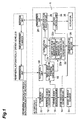
- the generating system 1 includes a peripheral vehicle recognition unit 12, a home vehicle state quantity estimation unit 14, a peripheral vehicle behavior prediction unit (lower level plan obtaining means, inferring means) 16, a vehicle group all-vehicle behavior prediction correction unit 18, a condition setting input unit 20, a travel control plan generation unit (upper level plan generating means, lower level plan generating means) 22, an evaluation unit (evaluating means) 24, a lower level plan selection unit (lower level plan selecting means) 26, a transmission unit 28, and a reception unit (lower level plan obtaining means, communicating means) 30.
- the peripheral vehicle recognition unit 12 is connected to a periphery sensor 32 that performs peripheral monitoring, such as a millimeter wave radar, an image sensor, a laser radar, or an ultrasonic wave sensor.
- the peripheral vehicle recognition unit 12 recognizes a peripheral vehicle C (here, a non-communicative vehicle C that is driven manually and does not have a communication function) existing on the periphery of the vehicle A (also referred to as a home vehicle) on the basis of a detection value (reflection information from a peripheral object such as a vehicle, for example) from the periphery sensor 32, and calculates peripheral vehicle information such as a relative distance, a relative speed, and a relative angle from the home vehicle A.
- a peripheral vehicle C here, a non-communicative vehicle C that is driven manually and does not have a communication function
- a detection value reflection information from a peripheral object such as a vehicle, for example
- the home vehicle state estimation unit 14 is connected to a home vehicle sensor 34 that detects a home vehicle's state.
- the home vehicle sensor 34 include a yaw rate sensor, a vehicle speed sensor, an acceleration sensor, a steering angle sensor, a white line detection sensor, and a GPS.
- the home vehicle state estimation unit 14 calculates a state estimated value (a yaw rate, a lateral position within a lane, a lateral velocity, a yaw angle relative to a road shape, a home vehicle position, and so on) of the vehicle A at a corresponding point in time using a vehicle model incorporated into the software.
- the peripheral vehicle behavior prediction unit 16 obtains the peripheral vehicle information calculated by the peripheral vehicle recognition unit 12 and the state estimation value of the vehicle A calculated by the home vehicle state estimation unit 14. From the obtained information, the peripheral vehicle behavior prediction unit 16 calculates a position information history of the vehicle A, a relative position information history and a relative speed of the peripheral vehicle C, and so on, and estimates the position information history and current conditions (speed, acceleration, yaw angle relative to the road alignment, and so on) of the peripheral vehicle C from this information. Thus, the positional relationships of the peripheral vehicle C and the tendencies of the peripheral vehicle C (driver preferences such as inter-vehicle distance, vehicle speed, acceleration, and willingness to change lanes) can be estimated.
- the peripheral vehicle behavior prediction unit 16 also obtains traveling road information (lane number increases/decreases, convergence, forks, shape, curbs, and so on) from a navigation system, infrastructure facilities, and so on. Then, on the basis of the position information history and current conditions of the peripheral vehicle C and the road information, the peripheral vehicle behavior prediction unit 16 tentatively predicts the future (for example, within approximately several hundred meters) behavior (including a travel course and a speed pattern) of the peripheral vehicle C as a lower level plan of the peripheral vehicle C from the tendencies of the peripheral vehicle C and in accordance with a driver model generated in advance.
- traveling road information latitude increases/decreases, convergence, forks, shape, curbs, and so on
- the peripheral vehicle behavior prediction unit 16 tentatively predicts the future (for example, within approximately several hundred meters) behavior (including a travel course and a speed pattern) of the peripheral vehicle C as a lower level plan of the peripheral vehicle C from the tendencies of the peripheral vehicle C and in accordance with a driver model generated in advance.
- the reception unit 30 obtains a travel control plan for another automatically driven vehicle B, which is generated by the vehicle B, through inter-vehicle communication using radio waves of 2.4GHz or the like.
- the travel control plan includes a similar upper level plan, to be described below, to that of the vehicle A, and a lower level plan including a travel course and a speed pattern.
- the vehicle group all-vehicle behavior prediction correction unit 18 obtains the lower level plan of the vehicle A, which is selected by the lower level plan selection unit 26, and also obtains the lower level plan of the vehicle B from the reception unit 30 and the behavior prediction (lower level plan) of the vehicle C from the peripheral vehicle behavior prediction unit 16.
- the vehicle group all-vehicle behavior prediction correction unit 18 then corrects the lower level plans of the respective vehicles such that mismatch points (when two vehicles overlap or the like) are eliminated by overlapping the plans on a temporal axis.
- the condition setting input unit 20 receives input of overall travel conditions to a destination specified by the driver, for example the destination, desired travel time, fuel efficiency precedence, rest plans, and so on.
- the travel control plan generation unit 22 includes an upper level plan generation unit (upper level plan generating means) 22a and a lower level plan generation unit (lower level plan generating means) 22b.
- the upper level plan generation unit 22a dynamically generates a travel plan in units of several tens of km and several tens of minutes extending between interchanges IC or service areas/parking areas SAPA, taking into consideration overall travel conditions, which are set in units of several hundred km and several hours to the destination specified by the driver, travel environment conditions such as navigation information and infrastructure information, and so on.
- the travel plan includes the travel time, travel plan policies (rest frequency, fuel efficiency, other vehicle precedence, and so on), vehicle group organization, and so on.
- a route search to the destination is performed, and a plurality of candidate routes is selected.
- An optimum route satisfying traffic information, the desired travel time, and the travel plan policies is then selected.
- the entire route is then divided into units of ICs or SAPAs, and a travel plan is determined for each section.
- a vehicle group organization policy plan is also determined as a travel plan.
- a vehicle group organization policy plan a plurality of automatically driven vehicles are organized into a vehicle group such that starts and stops can be performed en masse, thereby reducing repeated unnecessary starts and stops during travel through congestion, for example.
- the upper level plan generation unit 22a dynamically generates an event transition plan in units of several hundred meters and several tens of seconds from each point in time on the basis of the travel plan generated as described above, recognition of the peripheral conditions (based on the periphery sensor 32, infrastructure monitoring information, etc.), and so on.
- the event transition plan includes a lane change (a completion target point, a desired lane change time (degree of urgency), a minimum allowable lane change time (during emergency avoidance or the like), whether the lane change is necessary or required for emergency avoidance, the probability of returning to the original lane, and so on), an upper limit speed modification (a new upper limit speed, a completion target point, a desired acceleration G, a desired deceleration G, a desired jerk, an allowable jerk, whether or not the required speed has been reached, and so on), an inter-vehicle distance, convergence (a desired convergence point, a desired convergence speed, a desired convergence operation time (degree of urgency), and so on), diversion (similar to convergence), organization of a rank, withdrawal from the rank, and so on.
- a lane change a completion target point, a desired lane change time (degree of urgency), a minimum allowable lane change time (during emergency avoidance or the like), whether the lane change is necessary or required for emergency avoidance, the
- the content of the parentheses indicates relevant setting conditions when an instruction is issued to the lower level plan generation unit 22b. For example, when an instruction is issued to the vehicles as a travel plan to cooperate with their surrounding vehicles together with a congestion vehicle group control instruction, an event transition such as a lane change or an upper limit speed modification is planned in order to achieve the travel plan.
- the lower level plan generation unit 22b dynamically generates a lower level plan including a target travel course and a target speed pattern in units of several centimeters and several tens of milliseconds from each point in time over several hundred meters on the basis of the road information.
- the lower level plan generated by the lower level plan generation unit 22b in this manner is used to realize the upper level event transition plan generated by the upper level plan generation unit 22a, while the event transition plan is used to realize the upper level travel plan.
- the travel plan corresponds to the travel policies specified by the driver.
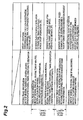
- travel control plan generation is divided into multiple layers, i.e. the upper level plan and the lower level plan, and the upper level plan itself is divided into multiple layers, i.e. the travel plan and the event transition plan.
- the time scale thereof becomes smaller than that of the upper level plan.
- the corrected lower level plans of the vehicle B and the vehicle A and the corrected behavior prediction of the vehicle C are input from the vehicle group all-vehicle behavior prediction correction unit 18, and the lower level plan is generated on the basis of this input.
- a travel plan and an event transition plan serving as the upper level plans of the vehicle B may be obtained by the travel control plan generation unit 22 from the vehicle group all-vehicle behavior prediction correction unit 18, and the travel plan and event transition plan of the home vehicle A may be generated on the basis of the obtained plans.
- the evaluation unit 24 evaluates each of a plurality of tentatively generated lower level plans of the vehicle A on the basis of a predetermined index (for example, safety, comfort, environmental considerations (based on fuel efficiency etc.), and so on), taking into consideration the behavior prediction of the peripheral vehicle C and the lower level plan of the automatically driven vehicle B obtained from the vehicle group all-vehicle behavior prediction correction unit 18.
- a predetermined index for example, safety, comfort, environmental considerations (based on fuel efficiency etc.), and so on
- Safety can be evaluated from the inter-vehicle distance, the steering urgency, and so on.
- Comfort can be evaluated from a maximum lateral G, an average lateral G, the yaw rate, and so on.
- the fuel efficiency can be evaluated from an anticipated fuel consumption and consideration to other vehicles can be evaluated from the other vehicle precedence.
- the problem is corrected in the travel control plan generation unit 22, whereupon a new evaluation is performed by the evaluation unit 24.
- a request to reconsider the event transition plan is issued, whereby the upper level plan is regenerated.
- the reliability of the lower level plans is taken into account.
- the lower level plan generated by the automatically driven vehicle B and the lower level plan inferred in relation to the manually driven vehicle C differ in terms of reliability, and therefore the lower level plans are evaluated taking the reliability thereof into account.
- the reliability of the lower level plan obtained from the prediction performed by the peripheral vehicle behavior prediction unit 16 is set to be lower than the reliability of the lower level plan of the automatically driven vehicle B obtained by the reception unit 30.
- the inter-vehicle distance can be reduced further in relation to the automatically driven vehicle B than in relation to the manually driven vehicle A, selected by the lower level plan selection unit 26, to the other automatically driven vehicle B through inter-vehicle communication using radio waves of 2.4GHz or the like.
- the upper level plan of the vehicle A may also be transmitted.
- the peripheral vehicle C existing on the periphery of the home vehicle A is recognized in the peripheral vehicle recognition unit 12 on the basis of a detection value from the periphery sensor 32, whereupon peripheral vehicle information such as the relative distance, angle and speed to the home vehicle A is calculated. Then, on the basis of a detection value from the home vehicle sensor 34, a state estimated value of the home vehicle A (the home vehicle position, yaw rate, lateral position within the lane, lateral velocity, yaw angle relative to road shape, and so on) at the corresponding point in time is calculated in the home vehicle state estimation unit 14.
- a state estimated value of the home vehicle A the home vehicle position, yaw rate, lateral position within the lane, lateral velocity, yaw angle relative to road shape, and so on
- the peripheral vehicle information calculated by the peripheral vehicle recognition unit 12 and the state estimated value of the vehicle A calculated by the home vehicle state estimation unit 14 are obtained in the peripheral vehicle behavior prediction unit 16.
- the position information history of the vehicle A, the relative position information history and relative speed of the peripheral vehicle C, and vehicle C for example.
- the lower level plan selection unit 26 selects the lower level plan having the best evaluation from among a plurality of lower level plans as the travel control plan to be executed. For example, when safety is emphasized, the lower level plan with which the highest level of safety can be secured is selected as the travel control plan to be executed. Note that in the case described above, reliability is taken into account during the evaluation performed by the evaluation unit 24, but reliability may also be taken into account during the selection made by the lower level plan selection unit 26. In other words, an evaluation score output by the evaluation unit 24 may be multiplied by the reliability and thereby corrected, and the selection may be made on the basis of the corrected evaluation score.
- a driving control unit 36 On the basis of the selected lower level plan (including the travel course and speed pattern), a driving control unit 36 generates an instruction value in relation to an actuator 38, taking into account the estimated value of the home vehicle's state, such that a position and a speed at each point in time can be reproduced faithfully.
- the actuator 38 is constituted by actuators of an engine, a brake, an electric power steering, and so on, and an ECU for controlling these actuators, and drive-controls these components upon reception of a throttle opening instruction value, a brake pressure instruction value, a steering torque instruction value, and so on from the driving control unit 36.
- the transmission unit 28 transmits the lower level plan of the so on are then calculated from the obtained information, and from this information, the position information history and current conditions (speed, acceleration, yaw angle relative to road shape, and so on) of the peripheral vehicle C are estimated.
- the positional relationships and tendencies of the peripheral vehicle C can be estimated.
- the peripheral vehicle behavior prediction unit 16 also obtains traveling road information (lane number increases/decreases, convergence, forks, shape, curbs, and so on) from the navigation system, infrastructure facilities, and so on.
- the peripheral vehicle behavior prediction unit 16 tentatively predicts the future (for example, within approximately several hundred meters) behavior (including the travel course and speed pattern) of the peripheral vehicle C from the tendencies of the peripheral vehicle C and in accordance with a driver model generated in advance. At this time, the behavior prediction of the peripheral vehicle C is generated together with a reliability value.
- the reliability value is set at a predetermined value, which is lower than the reliability of the lower level plan of the automatically driven vehicle B.
- the vehicle group all-vehicle behavior prediction correction unit 18 obtains the lower level plan of the vehicle A selected by the lower level plan selection unit 26, and also obtains the lower level plan of the vehicle B from the reception unit 30 and the behavior prediction of the vehicle C from the peripheral vehicle behavior prediction unit 16.
- the vehicle group all-vehicle behavior prediction correction unit 18 then corrects the lower level plans of the respective vehicles such that mismatch points (when two vehicles overlap or the like) are eliminated by overlapping the plans on a temporal axis
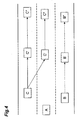
- C', C" denote the position of the vehicle C at intervals of several tens of milliseconds, for example (likewise in relation to the vehicle B).
- condition setting input unit 20 receives input of the overall travel conditions to the destination specified by the driver, for example the destination, desired travel time, fuel efficiency precedence, rest plans, and so on.
- the upper level plan generation unit 22a dynamically generates a travel plan in units of several tens of km and several tens of minutes extending between interchanges IC or service areas/parking areas SAPA, taking into consideration the overall travel conditions, which are set in units of several hundred km and several hours to the destination specified by the driver, travel environment conditions such as the navigation information and infrastructure information, and so on
- a route search to the destination is performed, and a plurality of candidate routes is selected.
- An optimum route satisfying the traffic information, the desired travel time, and the travel plan policies is then selected.
- the entire route is then divided into units of ICs or SAPAs, and a travel plan is determined for each section. If necessary, a vehicle group organization policy plan is also determined as a travel plan.
- the upper level plan generation unit 22a dynamically generates an event transition plan in units of several hundred meters and several tens of seconds from each point in time on the basis of the travel plan generated as described above, recognition of the peripheral conditions, and so on.
- the lower level plan generation unit 22b dynamically generates a lower level plan including a target travel course and a target speed pattern in units of several centimeters and several tens of milliseconds from each point in time over several hundred meters on the basis of the road information.
- a plurality of lower level plans may be generated using an identical course generation method, or the plurality of lower level plans may be generated using various course generation methods.
- a plurality of lower level plans may be generated for each of a case in which the event is performed and a case in which the event is not performed.
- step S401 when a lane change is planned as the upper level plan, for example, first, a determination is made in the lower level plan generation unit 22b as to whether or not emergency avoidance is required (step S401).
- emergency avoidance setting such as permitting sudden steering, is performed, whereupon the procedure advances to a step S403.
- step S404 a determination is made as to whether or not the number of lanes is about to decrease (step S404).
- step S405 setting indicating that the original lane cannot be returned to through normal steering is performed
- step S406 setting indicating that the original lane can be returned to through first-half gentle steering
- step S403 a completion target point of the lane change is set, and in a following step S407, a time required to perform the lane change is set.
- step S407 a time required to perform the lane change is set.
- step S408 a time required to perform the lane change is set.
- step S409 a determination is made as to whether or not sufficient time is available to perform the lane change.
- step S410 When sufficient time is not available, on the other hand, a determination is made as to whether or not the available time is a minimum allowable time (step S411).
- step S412 When the available time is not the minimum allowable time and some leeway exists, the time required to perform the lane change is shortened (step S412), whereupon the procedure returns to the step S408.
- the available time is the minimum allowable time
- a determination is made in a step S413 as to whether or not the lane change is necessary, and when the lane change is necessary, the procedure advances to the step S410.
- a determination is made in a step S414 to cancel the lane change, whereupon the procedure advances to the step S410.
- the determined content is transmitted to an upper order layer.
- a determination to perform the lane change along the course generated when the available time is sufficient a determination to perform the lane change along the course generated when the available time is insufficient but corresponds to the minimum allowable time and the lane change is necessary, or a determination to cancel the lane change when the available time is insufficient and corresponds to the minimum allowable time and the lane change is not necessary, is transmitted to the upper order layer.
- a new event transition plan not including a lane change is generated, and a lower level plan for realizing the new event transition plan is generated.
- the evaluation unit 24 evaluates each of the plurality of tentatively generated lower level plans of the vehicle A on the basis of the predetermined index (for example, safety, comfort, environmental considerations (based on fuel efficiency etc.), and so on), taking into consideration the behavior prediction of the peripheral vehicle C and the lower level plan of the automatically driven vehicle B obtained from the vehicle group all-vehicle behavior prediction correction unit 18.
- the evaluation performed by the evaluation unit 24 indicates a problem such as an inability to ensure safety, the problem is corrected in the travel control plan generation unit 22, whereupon a new evaluation is performed by the evaluation unit 24.
- a request to reconsider the event transition plan is issued, whereby the upper level plan is regenerated.
- the reliability of the lower level plans is taken into account.
- the lower level plan generated by the automatically driven vehicle B and the lower level plan inferred in relation to the manually driven vehicle C differ in reliability, and therefore the lower level plans are evaluated taking the reliability thereof into account.
- the reliability of the lower level plan obtained from the prediction performed by the peripheral vehicle behavior prediction unit 16 is set to be lower than the reliability of the lower level plan of the automatically driven vehicle B obtained by the reception unit 30.
- the inter-vehicle distance can be reduced further in relation to the automatically driven vehicle B than in relation to the manually driven vehicle C, for example.
- the lower level plan selection unit 26 selects the lower level plan having the best evaluation from among the plurality of lower level plans as the travel control plan to be executed. For example, when safety is emphasized, the lower level plan with which the highest level of safety can be secured is selected as the travel control plan to be executed.
- Fig. 6 is a view illustrating evaluation and selection of the lower level plan of the vehicle A.
- a lane change is planned as the upper level plan, and that a route I and a route II have been generated as the lower level plans.
- the reliability of the lower level plan of the automatically driven vehicle B is higher than the reliability of the lower level plan of the manually driven vehicle C, and therefore the route II is evaluated as having a higher level of safety.
- the lower level plan selection unit 26 selects the route II having the higher level of safety as the lower level plan of the vehicle A.
- the driving control unit 36 generates an instruction value in relation to the actuator 38, taking into account the estimated value of the home vehicle state of quantity, such that the position and speed at each point in time can be reproduced faithfully.
- the actuator 38 then drive-controls the engine, the brake, the steering, and so on upon reception of a throttle opening instruction value, a brake pressure instruction value, a steering torque instruction value, and so on from the driving control unit 36, whereby the vehicle A is subjected to automatic driving control.
- the transmission unit 28 transmits the lower level plan of the vehicle A, selected by the lower level plan selection unit 26, to the other automatically driven vehicle B. At this time, the upper level plan of the vehicle A may also be transmitted.
- an upper level plan corresponding to the travel policy of the vehicle A can be generated, and a lower level plan for realizing the upper level plan can be generated.
- the lower level plan includes at least a travel course, and the lower level plan of the vehicle A is evaluated in consideration of the lower level plans of the peripheral vehicles B, C.
- a lower level plan to be executed can then be selected in accordance with the evaluation.
- the lower level plan can be selected on the basis of an evaluation performed in accordance with a predetermined index (for example, safety, comfort, environmental considerations (based on fuel efficiency etc.), and so on), and therefore the vehicle A can be controlled on the basis of an appropriate plan corresponding to conditions specified by the driver.
- a predetermined index for example, safety, comfort, environmental considerations (based on fuel efficiency etc.), and so on
- realization of the upper level plan and a flexible response to the peripheral environment can both be realized favorably.
- IMTS Intelligent Multimode Transit System, reserved road travel
- a single plan is not shared by a plurality of vehicles.
- the travel road is fixed, and therefore an optimum plan can be generated by adjusting all of the plans in advance.
- peripheral vehicles are unknown, and each vehicle travels in accordance with its own plan. Therefore, a plan that takes into consideration the plans of the peripheral vehicles must be devised to ensure that the vehicles operate harmoniously, and since it is substantially impossible to travel in accordance with a preset optimum plan, the plan must be adjusted dynamically in accordance with the peripheral vehicles.
- travel control plan generation is performed in a multi-layer fashion, and therefore a lower level plan can be generated flexibly in accordance with the peripheral vehicles while realizing the absolute upper level plan. Hence, optimum vehicle control can be performed.
- a plurality of lower level plans is generated in relation to the vehicle A, and on the basis of the evaluation performed by the evaluation unit 24, a lower level plan to be executed is selected from the plurality of lower level plans Therefore, the vehicle A can be controlled on the basis of an appropriate plan corresponding to the conditions specified by the driver.
- the upper level plan is regenerated, or the upper level plan is regenerated in accordance with the evaluation performed by the evaluation unit 24, and therefore the upper level plan can be reconsidered when a lower level plan cannot be generated or the predetermined index specified by the driver cannot be satisfied sufficiently.
- the peripheral vehicle behavior prediction unit 16 infers the lower level plan of the peripheral vehicle on the basis of the behavior of the peripheral vehicle, and therefore, a lower level plan can be obtained in relation to a peripheral vehicle that does not include communication means or the peripheral vehicle (for example, a manually driven vehicle) C that does not have a travel control plan.
- the lower level plan of the peripheral vehicle can be obtained by the reception unit 30, and therefore the lower level plan of the automatically driven vehicle B, which is a peripheral vehicle having a travel control plan, and the lower level plan of a peripheral vehicle of the automatically driven vehicle B, which is inferred in the automatically driven vehicle B, can be obtained through communication.
- the vehicle A can be subjected to travel control on the basis of a more appropriate plan.
- the evaluation unit 24 evaluates the lower level plan of the vehicle A taking into consideration the reliability of the lower level plans of the peripheral vehicles.
- a lower level plan is generated by the automatically driven vehicle B and inferred in relation to the manually driven vehicle C, and therefore the reliability levels of the respective lower level plans of the peripheral vehicles are different. Therefore, by taking the reliability into account while evaluating the lower level plan of the vehicle A, the vehicle A can be subjected to travel control on the basis of a more appropriate plan.
- the reliability of the lower level plan obtained from the prediction made by the peripheral vehicle behavior prediction unit 16 is lower than the reliability of the lower level plan of the automatically driven vehicle B obtained by the communication unit 30, and therefore, by performing the evaluation on the basis of the reliability, the vehicle A can be subjected to travel control on the basis of a more appropriate plan in a traffic environment where the manually driven vehicle C and the automatically driven vehicle B coexist.
- the lower level plan includes a speed pattern in addition to the travel course of the vehicle A, and therefore longitudinal direction control corresponding to the speed pattern can be set as a control target in addition to lateral direction control corresponding to the travel course.
- the present invention is not limited to the embodiment described above, and may be subjected to various modifcations.
- a traffic environment in which the automatically driven vehicle B and the manually driven non-communicative vehicle C coexist as the peripheral vehicles of the automatically driven vehicle A was described, but other automatically driven vehicles and manually driven non-communicative vehicles may also exist.
- a vehicle D that is manually driven but capable of communication may exist as a peripheral vehicle.
- the vehicle D includes a driving support control apparatus 100.
- the driving support control apparatus 100 includes a behavior prediction unit 116, a behavior suggestion unit 118, a display unit 120, an ACC/LKA correction unit 122, a reception unit 130, and a transmission unit 132.
- the reception unit 130 receives the lower level plans of the vehicles A, B and the behavior prediction for the vehicle C, which is predicted in the vehicle A.
- the behavior prediction unit 116 predicts the behavior of the vehicle D from vehicle-installed sensor information relating to a vehicle speed sensor, an accelerator pedal sensor, a brake sensor, a steering angle sensor, and so on of the vehicle D, the behavior prediction result generated by the vehicle A in relation to the vehicle C, which is obtained via the reception unit 130, and the lower level plans of the vehicles A, B.
- the reliability of the behavior prediction (lower level plan) of the vehicle D is set for use during lower level plan generation in the travel control plan generation unit 22 of the vehicle A.
- the reliability of the manually driven communicative vehicle D is set to be higher than the reliability of the manually driven non-communicative vehicle C and lower than the reliability of the automatically driven vehicle B.
- the transmission unit 132 transmits the behavior prediction (lower level plan) of the vehicle D to the vehicle A.
- the behavior suggestion unit 118 When the display unit 120 or a driving support apparatus such as an ACC (adaptive cruise control) apparatus or an LKA (lane keep assist) apparatus exists in the non-automatically driven vehicle D, the behavior suggestion unit 118 generates a preferable behavior for the driver or the driving support apparatus.
- the display unit 120 displays the preferable driving method as a suggestion to the driver performing manual driving.
- the ACC/LKA correction unit 122 generates a target speed correction and a steering assist torque corresponding to the ACC/LKA driving support apparatus or the like in accordance with the preferred driving method.
- the behavior of the peripheral vehicle D which may affect the home vehicle A, can be predicted with a high degree of precision through cooperation with the peripheral vehicle D, and therefore an appropriate travel control plan can be generated for the automatically driven vehicle A in a traffic environment where automatically driven vehicles and manually driven vehicles coexist.
- suggestions for preferred driving directions and driving support can be issued to the vehicle D.
- a traffic environment in which the automatically driven vehicle B and the manually driven non-communicative vehicle C coexist as the peripheral vehicles of the automatically driven vehicle A and a traffic environment in which the manually driven communicative vehicle D exists were described in the above embodiment, but an optimum lower level plan can also be generated for all vehicles in a case where convergence is considered within an environment where a plurality of automatically driven vehicles ⁇ , ⁇ , ⁇ coexist, as shown in Fig.8 . More specifically, as shown in Fig.
- the travel control plan generating system 1 is installed in the automatically driven vehicle A was described, but the system 1 may be provided on the infrastructure facility side.
- a travel control plan generating system and a computer program capable of responding flexibly to variation in the conditions of a peripheral environment while satisfying a travel policy of a home vehicle can be provided.
Landscapes
- Engineering & Computer Science (AREA)
- Automation & Control Theory (AREA)
- Transportation (AREA)
- Mechanical Engineering (AREA)
- Human Computer Interaction (AREA)
- Physics & Mathematics (AREA)
- General Physics & Mathematics (AREA)
- Traffic Control Systems (AREA)
- Navigation (AREA)
- Control Of Driving Devices And Active Controlling Of Vehicle (AREA)
Abstract
Description
- The present invention relates to a travel control plan generating system and a computer program for generating a travel control plan for an automatically driven vehicle.
- Japanese Unexamined Patent Application No.
2004-182149 -
JP 2006 123795 claim 1, a method for controlling inter-vehicle distance, a driving operation support device and a drive operation support method. -
JP 2001 301484 - However, in the conventional apparatus described above, the control policy of the home vehicle is determined from the relative speed and relative distance to a peripheral vehicle, i.e. state parameters of the home vehicle at a certain moment, and therefore the home vehicle can only respond to variation in the conditions (acceleration/deceleration, lateral position, and so on) of the peripheral vehicle after the variation has actually occurred. As a result, so-called consequential control is performed. Hence, it is difficult to respond to condition variation with sufficient leeway and the response in such cases is limited, and therefore, depending on the response, control that contravenes the travel policy of the home vehicle in terms of comfort and fuel efficiency may be performed.
- The present invention has been designed in consideration of the circumstances described above, and provides a travel control plan generating system and a computer program as defined by the independent claims, capable of responding flexibly to variation in the conditions of a peripheral environment while satisfying a travel policy of a home vehicle.
-
-
Fig. 1 is a block diagram showing the constitution of an automatically driven vehicle A installed with a travel control plan generating system according to an embodiment; -
Fig. 2 is a view showing a flow of multi-layer travel control plan generation; -
Fig. 3 is a view showing positional relationships between a vehicle A and peripheral vehicles B, C; -
Fig. 4 is a view showing a lower level plan of the peripheral vehicle B and a behavior prediction (lower level plan) of the vehicle C; -
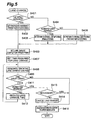
Fig. 5 is a flowchart of lower level plan generation when a lane change is planned; -
Fig. 6 is a view illustrating evaluation and selection of a lower level plan of the vehicle A; -
Fig. 7 is a block diagram showing a modified example of the constitution of the automatically driven vehicle A installed with the travel control plan generating system; and -
Fig. 8 is a view illustrating optimum control during vehicle convergence. - An embodiment of the present invention will be described below with reference to the attached drawings. Note that in the description of the drawings, identical elements have been allocated identical reference symbols and duplicate description thereof has been omitted.
- A travel control plan generating system (also referred to simply as a "generating system" hereafter) according to this embodiment is formed using hardware of a microcomputer such as an ECU (Electronic Control Unit) and software, and is installed in an automatically driven and controlled vehicle A. As shown in
Fig. 1 , thegenerating system 1 includes a peripheralvehicle recognition unit 12, a home vehicle statequantity estimation unit 14, a peripheral vehicle behavior prediction unit (lower level plan obtaining means, inferring means) 16, a vehicle group all-vehicle behaviorprediction correction unit 18, a conditionsetting input unit 20, a travel control plan generation unit (upper level plan generating means, lower level plan generating means) 22, an evaluation unit (evaluating means) 24, a lower level plan selection unit (lower level plan selecting means) 26, atransmission unit 28, and a reception unit (lower level plan obtaining means, communicating means) 30. - The peripheral
vehicle recognition unit 12 is connected to aperiphery sensor 32 that performs peripheral monitoring, such as a millimeter wave radar, an image sensor, a laser radar, or an ultrasonic wave sensor. The peripheralvehicle recognition unit 12 recognizes a peripheral vehicle C (here, a non-communicative vehicle C that is driven manually and does not have a communication function) existing on the periphery of the vehicle A (also referred to as a home vehicle) on the basis of a detection value (reflection information from a peripheral object such as a vehicle, for example) from theperiphery sensor 32, and calculates peripheral vehicle information such as a relative distance, a relative speed, and a relative angle from the home vehicle A. - The home vehicle
state estimation unit 14 is connected to ahome vehicle sensor 34 that detects a home vehicle's state. Examples of thehome vehicle sensor 34 include a yaw rate sensor, a vehicle speed sensor, an acceleration sensor, a steering angle sensor, a white line detection sensor, and a GPS. On the basis of a detection value from thehome vehicle sensor 34, the home vehiclestate estimation unit 14 calculates a state estimated value (a yaw rate, a lateral position within a lane, a lateral velocity, a yaw angle relative to a road shape, a home vehicle position, and so on) of the vehicle A at a corresponding point in time using a vehicle model incorporated into the software. - The peripheral vehicle
behavior prediction unit 16 obtains the peripheral vehicle information calculated by the peripheralvehicle recognition unit 12 and the state estimation value of the vehicle A calculated by the home vehiclestate estimation unit 14. From the obtained information, the peripheral vehiclebehavior prediction unit 16 calculates a position information history of the vehicle A, a relative position information history and a relative speed of the peripheral vehicle C, and so on, and estimates the position information history and current conditions (speed, acceleration, yaw angle relative to the road alignment, and so on) of the peripheral vehicle C from this information. Thus, the positional relationships of the peripheral vehicle C and the tendencies of the peripheral vehicle C (driver preferences such as inter-vehicle distance, vehicle speed, acceleration, and willingness to change lanes) can be estimated. The peripheral vehiclebehavior prediction unit 16 also obtains traveling road information (lane number increases/decreases, convergence, forks, shape, curbs, and so on) from a navigation system, infrastructure facilities, and so on. Then, on the basis of the position information history and current conditions of the peripheral vehicle C and the road information, the peripheral vehiclebehavior prediction unit 16 tentatively predicts the future (for example, within approximately several hundred meters) behavior (including a travel course and a speed pattern) of the peripheral vehicle C as a lower level plan of the peripheral vehicle C from the tendencies of the peripheral vehicle C and in accordance with a driver model generated in advance. - The
reception unit 30 obtains a travel control plan for another automatically driven vehicle B, which is generated by the vehicle B, through inter-vehicle communication using radio waves of 2.4GHz or the like. The travel control plan includes a similar upper level plan, to be described below, to that of the vehicle A, and a lower level plan including a travel course and a speed pattern. - The vehicle group all-vehicle behavior
prediction correction unit 18 obtains the lower level plan of the vehicle A, which is selected by the lower levelplan selection unit 26, and also obtains the lower level plan of the vehicle B from thereception unit 30 and the behavior prediction (lower level plan) of the vehicle C from the peripheral vehiclebehavior prediction unit 16. The vehicle group all-vehicle behaviorprediction correction unit 18 then corrects the lower level plans of the respective vehicles such that mismatch points (when two vehicles overlap or the like) are eliminated by overlapping the plans on a temporal axis. - The condition setting
input unit 20 receives input of overall travel conditions to a destination specified by the driver, for example the destination, desired travel time, fuel efficiency precedence, rest plans, and so on. - The travel control
plan generation unit 22 includes an upper level plan generation unit (upper level plan generating means) 22a and a lower level plan generation unit (lower level plan generating means) 22b. The upper levelplan generation unit 22a dynamically generates a travel plan in units of several tens of km and several tens of minutes extending between interchanges IC or service areas/parking areas SAPA, taking into consideration overall travel conditions, which are set in units of several hundred km and several hours to the destination specified by the driver, travel environment conditions such as navigation information and infrastructure information, and so on. The travel plan includes the travel time, travel plan policies (rest frequency, fuel efficiency, other vehicle precedence, and so on), vehicle group organization, and so on. - More specifically, a route search to the destination is performed, and a plurality of candidate routes is selected. An optimum route satisfying traffic information, the desired travel time, and the travel plan policies is then selected. The entire route is then divided into units of ICs or SAPAs, and a travel plan is determined for each section. If necessary, a vehicle group organization policy plan is also determined as a travel plan. In a vehicle group organization policy plan, a plurality of automatically driven vehicles are organized into a vehicle group such that starts and stops can be performed en masse, thereby reducing repeated unnecessary starts and stops during travel through congestion, for example.
- Further, the upper level
plan generation unit 22a dynamically generates an event transition plan in units of several hundred meters and several tens of seconds from each point in time on the basis of the travel plan generated as described above, recognition of the peripheral conditions (based on theperiphery sensor 32, infrastructure monitoring information, etc.), and so on. The event transition plan includes a lane change (a completion target point, a desired lane change time (degree of urgency), a minimum allowable lane change time (during emergency avoidance or the like), whether the lane change is necessary or required for emergency avoidance, the probability of returning to the original lane, and so on), an upper limit speed modification (a new upper limit speed, a completion target point, a desired acceleration G, a desired deceleration G, a desired jerk, an allowable jerk, whether or not the required speed has been reached, and so on), an inter-vehicle distance, convergence (a desired convergence point, a desired convergence speed, a desired convergence operation time (degree of urgency), and so on), diversion (similar to convergence), organization of a rank, withdrawal from the rank, and so on. Note that the content of the parentheses indicates relevant setting conditions when an instruction is issued to the lower levelplan generation unit 22b. For example, when an instruction is issued to the vehicles as a travel plan to cooperate with their surrounding vehicles together with a congestion vehicle group control instruction, an event transition such as a lane change or an upper limit speed modification is planned in order to achieve the travel plan. - To realize the event transition plan generated by the upper level
plan generation unit 22a, the lower levelplan generation unit 22b dynamically generates a lower level plan including a target travel course and a target speed pattern in units of several centimeters and several tens of milliseconds from each point in time over several hundred meters on the basis of the road information. - Referring to
Fig. 2 , the lower level plan generated by the lower levelplan generation unit 22b in this manner is used to realize the upper level event transition plan generated by the upper levelplan generation unit 22a, while the event transition plan is used to realize the upper level travel plan. The travel plan corresponds to the travel policies specified by the driver. Hence, travel control plan generation is divided into multiple layers, i.e. the upper level plan and the lower level plan, and the upper level plan itself is divided into multiple layers, i.e. the travel plan and the event transition plan. As the level of the plan decreases, the time scale thereof becomes smaller than that of the upper level plan. By dividing travel control plan generation into multiple layers in this manner, a request for reconsideration of the event transition plan can be issued when a lower level plan cannot be generated by the lower levelplan generation unit 22b, and as a result, the upper level plan can be regenerated. - Note that in the travel control
plan generation unit 22, the corrected lower level plans of the vehicle B and the vehicle A and the corrected behavior prediction of the vehicle C are input from the vehicle group all-vehicle behaviorprediction correction unit 18, and the lower level plan is generated on the basis of this input. At this time, a travel plan and an event transition plan serving as the upper level plans of the vehicle B may be obtained by the travel controlplan generation unit 22 from the vehicle group all-vehicle behaviorprediction correction unit 18, and the travel plan and event transition plan of the home vehicle A may be generated on the basis of the obtained plans. - The
evaluation unit 24 evaluates each of a plurality of tentatively generated lower level plans of the vehicle A on the basis of a predetermined index (for example, safety, comfort, environmental considerations (based on fuel efficiency etc.), and so on), taking into consideration the behavior prediction of the peripheral vehicle C and the lower level plan of the automatically driven vehicle B obtained from the vehicle group all-vehicle behaviorprediction correction unit 18. Safety can be evaluated from the inter-vehicle distance, the steering urgency, and so on. Comfort can be evaluated from a maximum lateral G, an average lateral G, the yaw rate, and so on. As regards environmental considerations, the fuel efficiency can be evaluated from an anticipated fuel consumption and consideration to other vehicles can be evaluated from the other vehicle precedence. When the evaluation performed by theevaluation unit 24 indicates a problem such as an inability to ensure safety, the problem is corrected in the travel controlplan generation unit 22, whereupon a new evaluation is performed by theevaluation unit 24. When the problem cannot be corrected, a request to reconsider the event transition plan is issued, whereby the upper level plan is regenerated. - In the evaluation performed by the
evaluation unit 24, the reliability of the lower level plans is taken into account. For example, the lower level plan generated by the automatically driven vehicle B and the lower level plan inferred in relation to the manually driven vehicle C differ in terms of reliability, and therefore the lower level plans are evaluated taking the reliability thereof into account. More specifically, the reliability of the lower level plan obtained from the prediction performed by the peripheral vehiclebehavior prediction unit 16 is set to be lower than the reliability of the lower level plan of the automatically driven vehicle B obtained by thereception unit 30. Hence, the inter-vehicle distance can be reduced further in relation to the automatically driven vehicle B than in relation to the manually driven vehicle A, selected by the lower levelplan selection unit 26, to the other automatically driven vehicle B through inter-vehicle communication using radio waves of 2.4GHz or the like. At this time, the upper level plan of the vehicle A may also be transmitted. - Next, driving control of the automatically driven vehicle A installed with the travel control
plan generating system 1 will be described. Here, as shown inFig. 3 , a case in which the automatically driven vehicle A is subjected to driving control in a traffic environment where the manually driven vehicle C and the automatically driven vehicle B exist as peripheral vehicles will be described. - First, the peripheral vehicle C existing on the periphery of the home vehicle A is recognized in the peripheral
vehicle recognition unit 12 on the basis of a detection value from theperiphery sensor 32, whereupon peripheral vehicle information such as the relative distance, angle and speed to the home vehicle A is calculated. Then, on the basis of a detection value from thehome vehicle sensor 34, a state estimated value of the home vehicle A (the home vehicle position, yaw rate, lateral position within the lane, lateral velocity, yaw angle relative to road shape, and so on) at the corresponding point in time is calculated in the home vehiclestate estimation unit 14. - Next, the peripheral vehicle information calculated by the peripheral
vehicle recognition unit 12 and the state estimated value of the vehicle A calculated by the home vehiclestate estimation unit 14 are obtained in the peripheral vehiclebehavior prediction unit 16. The position information history of the vehicle A, the relative position information history and relative speed of the peripheral vehicle C, and vehicle C, for example. - On the basis of the evaluation results of the
evaluation unit 24, the lower levelplan selection unit 26 selects the lower level plan having the best evaluation from among a plurality of lower level plans as the travel control plan to be executed. For example, when safety is emphasized, the lower level plan with which the highest level of safety can be secured is selected as the travel control plan to be executed. Note that in the case described above, reliability is taken into account during the evaluation performed by theevaluation unit 24, but reliability may also be taken into account during the selection made by the lower levelplan selection unit 26. In other words, an evaluation score output by theevaluation unit 24 may be multiplied by the reliability and thereby corrected, and the selection may be made on the basis of the corrected evaluation score. - On the basis of the selected lower level plan (including the travel course and speed pattern), a driving
control unit 36 generates an instruction value in relation to anactuator 38, taking into account the estimated value of the home vehicle's state, such that a position and a speed at each point in time can be reproduced faithfully. - The
actuator 38 is constituted by actuators of an engine, a brake, an electric power steering, and so on, and an ECU for controlling these actuators, and drive-controls these components upon reception of a throttle opening instruction value, a brake pressure instruction value, a steering torque instruction value, and so on from the drivingcontrol unit 36. - The
transmission unit 28 transmits the lower level plan of the so on are then calculated from the obtained information, and from this information, the position information history and current conditions (speed, acceleration, yaw angle relative to road shape, and so on) of the peripheral vehicle C are estimated. Thus, the positional relationships and tendencies of the peripheral vehicle C (driver preferences such as inter-vehicle distance, vehicle speed, acceleration/deceleration, and willingness to change lanes) can be estimated. The peripheral vehiclebehavior prediction unit 16 also obtains traveling road information (lane number increases/decreases, convergence, forks, shape, curbs, and so on) from the navigation system, infrastructure facilities, and so on. Then, on the basis of the position information history and current conditions of the peripheral vehicle C and the road information, the peripheral vehiclebehavior prediction unit 16 tentatively predicts the future (for example, within approximately several hundred meters) behavior (including the travel course and speed pattern) of the peripheral vehicle C from the tendencies of the peripheral vehicle C and in accordance with a driver model generated in advance. At this time, the behavior prediction of the peripheral vehicle C is generated together with a reliability value. The reliability value is set at a predetermined value, which is lower than the reliability of the lower level plan of the automatically driven vehicle B. - Next, the vehicle group all-vehicle behavior
prediction correction unit 18 obtains the lower level plan of the vehicle A selected by the lower levelplan selection unit 26, and also obtains the lower level plan of the vehicle B from thereception unit 30 and the behavior prediction of the vehicle C from the peripheral vehiclebehavior prediction unit 16. The vehicle group all-vehicle behaviorprediction correction unit 18 then corrects the lower level plans of the respective vehicles such that mismatch points (when two vehicles overlap or the like) are eliminated by overlapping the plans on a temporal axis - Thus, the lower level plans of the vehicles B and C serving as peripheral vehicles can be obtained, as shown in
Fig. 4 . Here, C', C" denote the position of the vehicle C at intervals of several tens of milliseconds, for example (likewise in relation to the vehicle B). - Meanwhile, the condition setting
input unit 20 receives input of the overall travel conditions to the destination specified by the driver, for example the destination, desired travel time, fuel efficiency precedence, rest plans, and so on. - Next, the upper level
plan generation unit 22a dynamically generates a travel plan in units of several tens of km and several tens of minutes extending between interchanges IC or service areas/parking areas SAPA, taking into consideration the overall travel conditions, which are set in units of several hundred km and several hours to the destination specified by the driver, travel environment conditions such as the navigation information and infrastructure information, and so on - More specifically, a route search to the destination is performed, and a plurality of candidate routes is selected. An optimum route satisfying the traffic information, the desired travel time, and the travel plan policies is then selected. The entire route is then divided into units of ICs or SAPAs, and a travel plan is determined for each section. If necessary, a vehicle group organization policy plan is also determined as a travel plan.
- Further, the upper level
plan generation unit 22a dynamically generates an event transition plan in units of several hundred meters and several tens of seconds from each point in time on the basis of the travel plan generated as described above, recognition of the peripheral conditions, and so on. - Next, in order to realize the event transition plan generated by the upper level
plan generation unit 22a, the lower levelplan generation unit 22b dynamically generates a lower level plan including a target travel course and a target speed pattern in units of several centimeters and several tens of milliseconds from each point in time over several hundred meters on the basis of the road information. At this time, a plurality of lower level plans may be generated using an identical course generation method, or the plurality of lower level plans may be generated using various course generation methods. Furthermore, when the corresponding event transition is not necessary, a plurality of lower level plans may be generated for each of a case in which the event is performed and a case in which the event is not performed. - When the lower level plan cannot be generated by the lower level
plan generation unit 22b, a request for reconsideration of the event transition plan is issued, and as a result, the upper level plan is regenerated. A lower level plan for realizing the new upper level plan is then generated. - More specifically, as shown in
Fig. 5 , when a lane change is planned as the upper level plan, for example, first, a determination is made in the lower levelplan generation unit 22b as to whether or not emergency avoidance is required (step S401). When emergency avoidance is required, emergency avoidance setting, such as permitting sudden steering, is performed, whereupon the procedure advances to a step S403. When emergency avoidance is not required, on the other hand, a determination is made as to whether or not the number of lanes is about to decrease (step S404). When the number of lanes is about to decrease, setting indicating that the original lane cannot be returned to through normal steering is performed (step S405), whereupon the procedure advances to the step S403. When the number of lanes is not about to decrease, on the other hand, setting indicating that the original lane can be returned to through first-half gentle steering is performed (step S406), whereupon the procedure advances to the step S403. - In the step S403, a completion target point of the lane change is set, and in a following step S407, a time required to perform the lane change is set. On the basis of the set information, a lane change course is then tentatively generated (step S408). Next, a determination is made as to whether or not sufficient time is available to perform the lane change (step S409). When sufficient time is available, the procedure advances to a step S410. When sufficient time is not available, on the other hand, a determination is made as to whether or not the available time is a minimum allowable time (step S411). When the available time is not the minimum allowable time and some leeway exists, the time required to perform the lane change is shortened (step S412), whereupon the procedure returns to the step S408. When the available time is the minimum allowable time, on the other hand, a determination is made in a step S413 as to whether or not the lane change is necessary, and when the lane change is necessary, the procedure advances to the step S410. When the lane change is not necessary, a determination is made in a step S414 to cancel the lane change, whereupon the procedure advances to the step S410. In the step S410, the determined content is transmitted to an upper order layer. Accordingly, a determination to perform the lane change along the course generated when the available time is sufficient, a determination to perform the lane change along the course generated when the available time is insufficient but corresponds to the minimum allowable time and the lane change is necessary, or a determination to cancel the lane change when the available time is insufficient and corresponds to the minimum allowable time and the lane change is not necessary, is transmitted to the upper order layer. When the lane change is canceled, a new event transition plan not including a lane change is generated, and a lower level plan for realizing the new event transition plan is generated.
- Next, the
evaluation unit 24 evaluates each of the plurality of tentatively generated lower level plans of the vehicle A on the basis of the predetermined index (for example, safety, comfort, environmental considerations (based on fuel efficiency etc.), and so on), taking into consideration the behavior prediction of the peripheral vehicle C and the lower level plan of the automatically driven vehicle B obtained from the vehicle group all-vehicle behaviorprediction correction unit 18. When the evaluation performed by theevaluation unit 24 indicates a problem such as an inability to ensure safety, the problem is corrected in the travel controlplan generation unit 22, whereupon a new evaluation is performed by theevaluation unit 24. When the problem cannot be corrected, a request to reconsider the event transition plan is issued, whereby the upper level plan is regenerated. - In the evaluation performed by the
evaluation unit 24, the reliability of the lower level plans is taken into account. For example, the lower level plan generated by the automatically driven vehicle B and the lower level plan inferred in relation to the manually driven vehicle C differ in reliability, and therefore the lower level plans are evaluated taking the reliability thereof into account. More specifically, the reliability of the lower level plan obtained from the prediction performed by the peripheral vehiclebehavior prediction unit 16 is set to be lower than the reliability of the lower level plan of the automatically driven vehicle B obtained by thereception unit 30. Thus, the inter-vehicle distance can be reduced further in relation to the automatically driven vehicle B than in relation to the manually driven vehicle C, for example. - On the basis of the evaluation results of the
evaluation unit 24, the lower levelplan selection unit 26 selects the lower level plan having the best evaluation from among the plurality of lower level plans as the travel control plan to be executed. For example, when safety is emphasized, the lower level plan with which the highest level of safety can be secured is selected as the travel control plan to be executed. -
Fig. 6 is a view illustrating evaluation and selection of the lower level plan of the vehicle A. As shown inFig. 6 , it is assumed that a lane change is planned as the upper level plan, and that a route I and a route II have been generated as the lower level plans. At this time, the reliability of the lower level plan of the automatically driven vehicle B is higher than the reliability of the lower level plan of the manually driven vehicle C, and therefore the route II is evaluated as having a higher level of safety. Hence, when safety is to be emphasized, the lower levelplan selection unit 26 selects the route II having the higher level of safety as the lower level plan of the vehicle A. - Next, on the basis of the selected lower level plan (including the travel course and speed pattern), the driving
control unit 36 generates an instruction value in relation to theactuator 38, taking into account the estimated value of the home vehicle state of quantity, such that the position and speed at each point in time can be reproduced faithfully. - The
actuator 38 then drive-controls the engine, the brake, the steering, and so on upon reception of a throttle opening instruction value, a brake pressure instruction value, a steering torque instruction value, and so on from the drivingcontrol unit 36, whereby the vehicle A is subjected to automatic driving control. - Meanwhile, the
transmission unit 28 transmits the lower level plan of the vehicle A, selected by the lower levelplan selection unit 26, to the other automatically driven vehicle B. At this time, the upper level plan of the vehicle A may also be transmitted. - Hence, in the travel control
plan generating system 1 according to this embodiment, an upper level plan corresponding to the travel policy of the vehicle A can be generated, and a lower level plan for realizing the upper level plan can be generated. As the level of the plan decreases, the time scale thereof becomes smaller than that of the upper level plan. The lower level plan includes at least a travel course, and the lower level plan of the vehicle A is evaluated in consideration of the lower level plans of the peripheral vehicles B, C. A lower level plan to be executed can then be selected in accordance with the evaluation. By stratifying the travel control plan into an upper level plan and a lower level plan in this manner, variation in the conditions of the peripheral environment can be responded to flexibly by means of the lower level plan while satisfying the travel policy by means of the upper level plan. Furthermore, the lower level plan can be selected on the basis of an evaluation performed in accordance with a predetermined index (for example, safety, comfort, environmental considerations (based on fuel efficiency etc.), and so on), and therefore the vehicle A can be controlled on the basis of an appropriate plan corresponding to conditions specified by the driver. In other words, by evaluating and selecting lower level plans that have been broken down into a smaller time scale than the upper level plan, realization of the upper level plan and a flexible response to the peripheral environment can both be realized favorably. - In other words, in the vehicle control according to this embodiment, in contrast to IMTS (Intelligent Multimode Transit System, reserved road travel), a single plan is not shared by a plurality of vehicles. On a reserved road, the travel road is fixed, and therefore an optimum plan can be generated by adjusting all of the plans in advance. On a normal road, however, the travel road is used for a wide range of purposes, peripheral vehicles are unknown, and each vehicle travels in accordance with its own plan. Therefore, a plan that takes into consideration the plans of the peripheral vehicles must be devised to ensure that the vehicles operate harmoniously, and since it is substantially impossible to travel in accordance with a preset optimum plan, the plan must be adjusted dynamically in accordance with the peripheral vehicles. In this embodiment, travel control plan generation is performed in a multi-layer fashion, and therefore a lower level plan can be generated flexibly in accordance with the peripheral vehicles while realizing the absolute upper level plan. Hence, optimum vehicle control can be performed.
- Further, a plurality of lower level plans is generated in relation to the vehicle A, and on the basis of the evaluation performed by the
evaluation unit 24, a lower level plan to be executed is selected from the plurality of lower level plans Therefore, the vehicle A can be controlled on the basis of an appropriate plan corresponding to the conditions specified by the driver. - Further, when a lower level plan cannot be generated, the upper level plan is regenerated, or the upper level plan is regenerated in accordance with the evaluation performed by the
evaluation unit 24, and therefore the upper level plan can be reconsidered when a lower level plan cannot be generated or the predetermined index specified by the driver cannot be satisfied sufficiently. - Further, the peripheral vehicle
behavior prediction unit 16 infers the lower level plan of the peripheral vehicle on the basis of the behavior of the peripheral vehicle, and therefore, a lower level plan can be obtained in relation to a peripheral vehicle that does not include communication means or the peripheral vehicle (for example, a manually driven vehicle) C that does not have a travel control plan. Furthermore, the lower level plan of the peripheral vehicle can be obtained by thereception unit 30, and therefore the lower level plan of the automatically driven vehicle B, which is a peripheral vehicle having a travel control plan, and the lower level plan of a peripheral vehicle of the automatically driven vehicle B, which is inferred in the automatically driven vehicle B, can be obtained through communication. Hence, in a traffic environment where manually driven vehicles and automatically driven vehicles coexist, the vehicle A can be subjected to travel control on the basis of a more appropriate plan. - Further, the
evaluation unit 24 evaluates the lower level plan of the vehicle A taking into consideration the reliability of the lower level plans of the peripheral vehicles. Here, a lower level plan is generated by the automatically driven vehicle B and inferred in relation to the manually driven vehicle C, and therefore the reliability levels of the respective lower level plans of the peripheral vehicles are different. Therefore, by taking the reliability into account while evaluating the lower level plan of the vehicle A, the vehicle A can be subjected to travel control on the basis of a more appropriate plan. - Further, the reliability of the lower level plan obtained from the prediction made by the peripheral vehicle
behavior prediction unit 16 is lower than the reliability of the lower level plan of the automatically driven vehicle B obtained by thecommunication unit 30, and therefore, by performing the evaluation on the basis of the reliability, the vehicle A can be subjected to travel control on the basis of a more appropriate plan in a traffic environment where the manually driven vehicle C and the automatically driven vehicle B coexist. - Furthermore, the lower level plan includes a speed pattern in addition to the travel course of the vehicle A, and therefore longitudinal direction control corresponding to the speed pattern can be set as a control target in addition to lateral direction control corresponding to the travel course.
- Note that the present invention is not limited to the embodiment described above, and may be subjected to various modifcations. For example, in the embodiment described above, a traffic environment in which the automatically driven vehicle B and the manually driven non-communicative vehicle C coexist as the peripheral vehicles of the automatically driven vehicle A was described, but other automatically driven vehicles and manually driven non-communicative vehicles may also exist.
- Further, as shown in
Fig. 7 , a vehicle D that is manually driven but capable of communication may exist as a peripheral vehicle. As shown inFig. 7 , the vehicle D includes a drivingsupport control apparatus 100. The drivingsupport control apparatus 100 includes abehavior prediction unit 116, abehavior suggestion unit 118, adisplay unit 120, an ACC/LKA correction unit 122, areception unit 130, and atransmission unit 132. - The
reception unit 130 receives the lower level plans of the vehicles A, B and the behavior prediction for the vehicle C, which is predicted in the vehicle A. Thebehavior prediction unit 116 predicts the behavior of the vehicle D from vehicle-installed sensor information relating to a vehicle speed sensor, an accelerator pedal sensor, a brake sensor, a steering angle sensor, and so on of the vehicle D, the behavior prediction result generated by the vehicle A in relation to the vehicle C, which is obtained via thereception unit 130, and the lower level plans of the vehicles A, B. At this time, the reliability of the behavior prediction (lower level plan) of the vehicle D is set for use during lower level plan generation in the travel controlplan generation unit 22 of the vehicle A. The reliability of the manually driven communicative vehicle D is set to be higher than the reliability of the manually driven non-communicative vehicle C and lower than the reliability of the automatically driven vehicle B. - The
transmission unit 132 transmits the behavior prediction (lower level plan) of the vehicle D to the vehicle A. When thedisplay unit 120 or a driving support apparatus such as an ACC (adaptive cruise control) apparatus or an LKA (lane keep assist) apparatus exists in the non-automatically driven vehicle D, thebehavior suggestion unit 118 generates a preferable behavior for the driver or the driving support apparatus. Thedisplay unit 120 displays the preferable driving method as a suggestion to the driver performing manual driving. The ACC/LKA correction unit 122 generates a target speed correction and a steering assist torque corresponding to the ACC/LKA driving support apparatus or the like in accordance with the preferred driving method. - Hence, when the communicative manually driven vehicle D exists, the behavior of the peripheral vehicle D, which may affect the home vehicle A, can be predicted with a high degree of precision through cooperation with the peripheral vehicle D, and therefore an appropriate travel control plan can be generated for the automatically driven vehicle A in a traffic environment where automatically driven vehicles and manually driven vehicles coexist. Moreover, suggestions for preferred driving directions and driving support can be issued to the vehicle D.
- Further, a traffic environment in which the automatically driven vehicle B and the manually driven non-communicative vehicle C coexist as the peripheral vehicles of the automatically driven vehicle A and a traffic environment in which the manually driven communicative vehicle D exists were described in the above embodiment, but an optimum lower level plan can also be generated for all vehicles in a case where convergence is considered within an environment where a plurality of automatically driven vehicles α, β, γ coexist, as shown in
Fig.8 . More specifically, as shown inFig. 8(a) , when a lower level plan according to which a vehicle a performs a lane change while a vehicle β travels at a constant speed is generated, the lower level plan is shared among the vehicles α, β, γ such that first, a safest lower level plan is generated for a convergence vehicle γ in relation to the main road vehicles α, β, as shown inFig. 8(b) , and on the basis thereof, the vehicle β is decelerated, the lane change to be performed by the vehicle α is canceled, and so on, as shown inFig. 8(c) . Thus, optimum overall vehicle control can be performed. In this case, the behavior of a manually driven vehicle can be predicted when such a vehicle is present, and therefore optimum vehicle control can still be performed. - Furthermore, in the above embodiment, a case in which the travel control
plan generating system 1 is installed in the automatically driven vehicle A was described, but thesystem 1 may be provided on the infrastructure facility side. - According to the present invention, a travel control plan generating system and a computer program capable of responding flexibly to variation in the conditions of a peripheral environment while satisfying a travel policy of a home vehicle can be provided.
Claims (9)
- A travel control plan generating system comprising:upper level plan generating means (22a) adapted to generate an upper level plan corresponding to a travel policy of a vehicle;lower level plan generating means (22b) adapted to generate a lower level plan, which is a plan for achieving said upper level plan and includes at least a travel course;lower level plan obtaining means (30) adapted to obtain a lower level plan including at least a travel course of a peripheral vehicle of said vehicle;evaluating means (24) adapted to evaluate said lower lever plan of said vehicle in accordance with a predetermined index, taking into account said lower level plan of said peripheral vehicle; andlower level plan selecting means (26) adapted to select a lower level plan to be executed by said vehicle on the basis of an evaluation performed by said evaluating means; anda driver control unit (36) adapted to control the actuators (38) of the vehicle according to the selected lower level plan;characterised in that a time scale of said lower level plan is smaller than a time scale of said upper level plan, said lower level plan generating means generates a plurality of lower level plans for said vehicle,said lower level plan selecting means selects said lower level plan to be executed from said plurality of lower level plans on the basis of said evaluation performed by said evaluating means, and said upper level plan generating means regenerates said upper level plan when said lower level plan cannot be generated.
- The travel control plan generating system according to claim 1 wherein said upper level plan generating means regenerates said upper level plan in accordance with said evaluation performed by said evaluating means.
- The travel control plan generating system according to any of claims 1 to 2, wherein said lower level plan generating means includes inferring means (16) adapted to infer said lower level plan of said peripheral vehicle on the basis of a behavior of said peripheral vehicle, and
said lower level plan of said peripheral vehicle is obtained from an inference by said inferring means. - The travel control plan generating system according to claim 3, wherein said lower level plan obtaining means includes communicating means (30) adapted to communicate with said peripheral vehicle, and
said lower level plan of said peripheral vehicle is obtained through communication performed by said communicating means. - The travel control plan generating system according to claim 4, wherein said evaluating means evaluates said lower level plan of said vehicle taking into account a reliability of said lower level plan of said peripheral vehicle.
- The travel control plan generating system according to claim 5, wherein a reliability of a lower level plan obtained from said inferring means is lower than a reliability of a lower level plan of an automatically driven vehicle obtained from said communicating means.
- The travel control plan generating system according to any of claims 1 to 6, wherein said lower level plan includes a speed pattern of said vehicle.
- A computer program comprising software code adapted to perform:an upper level plan generating step for generating an upper level plan corresponding to a travel policy of a vehicle;a lower level plan generating step for generating a lower level plan, which is a plan for achieving said upper level plan and includes at least a travel course;a lower level plan obtaining step for obtaining a lower level plan including at least a travel course of a peripheral vehicle of said vehicle;an evaluating step for evaluating said lower level plan of said vehicle in accordance with a predetermined index, taking into account said lower level plan of said peripheral vehicle;a lower level plan selecting step for selecting a lower level plan to be executed by said vehicle on the basis of an evaluation performed in said evaluating step; anda control step where the automatically driven vehicle is controlled by the selected lower level plan;characterised in that a time scale of said lower level plan is smaller than a time scale of said upper level plan,said lower level plan generating step includes generating a plurality of lower level plans for said vehicle,said lower level plan selecting step includes selecting said lower level plan to be executed from said plurality of lower level plans on the basis of said evaluation, andsaid upper level plan generating step includes regenerating said upper level plan when said lower level plan cannot be generated.
- A computer program comprising software code according to claim 8 wherein said upper level plan generating step includes regenerating said upper level plan in accordance with said evaluation performed by said evaluating means.
Applications Claiming Priority (2)
| Application Number | Priority Date | Filing Date | Title |
|---|---|---|---|
| JP2006313258A JP4525670B2 (en) | 2006-11-20 | 2006-11-20 | Travel control plan generation system |
| PCT/JP2007/072885 WO2008062897A1 (en) | 2006-11-20 | 2007-11-20 | Travel control plan generation system and computer program |
Publications (3)
| Publication Number | Publication Date |
|---|---|
| EP2096612A1 EP2096612A1 (en) | 2009-09-02 |
| EP2096612A4 EP2096612A4 (en) | 2011-06-08 |
| EP2096612B1 true EP2096612B1 (en) | 2012-08-15 |
Family
ID=39429824
Family Applications (1)
| Application Number | Title | Priority Date | Filing Date |
|---|---|---|---|
| EP07859692A Not-in-force EP2096612B1 (en) | 2006-11-20 | 2007-11-20 | Travel control plan generation system and computer program |
Country Status (5)
| Country | Link |
|---|---|
| US (1) | US9076338B2 (en) |
| EP (1) | EP2096612B1 (en) |
| JP (1) | JP4525670B2 (en) |
| CN (1) | CN101542553B (en) |
| WO (1) | WO2008062897A1 (en) |
Cited By (1)
| Publication number | Priority date | Publication date | Assignee | Title |
|---|---|---|---|---|
| DE102019215680B3 (en) * | 2019-10-11 | 2021-01-07 | Audi Ag | Method for predicting behavior of a target vehicle |
Families Citing this family (126)
| Publication number | Priority date | Publication date | Assignee | Title |
|---|---|---|---|---|
| CN101393686B (en) * | 2008-10-13 | 2011-07-20 | 徐菲 | All-weather vehicle driving safety indication and control system device |
| US8831820B2 (en) * | 2009-01-28 | 2014-09-09 | Toyota Jidosha Kabushiki Kaisha | Vehicle group control method and vehicle group control device |
| JP5316186B2 (en) * | 2009-04-10 | 2013-10-16 | トヨタ自動車株式会社 | Vehicle control apparatus and vehicle control method |
| JP5218667B2 (en) | 2009-10-22 | 2013-06-26 | トヨタ自動車株式会社 | Travel control device |
| KR101291067B1 (en) | 2009-11-26 | 2013-08-07 | 한국전자통신연구원 | Car control apparatus and its autonomous driving method, local sever apparatus and its autonomous driving service method, whole region sever apparatus and its autonomous driving service method |
| US8620569B2 (en) | 2009-12-17 | 2013-12-31 | Toyota Jidosha Kabushiki Kaisha | Vehicle control device |
| US9067571B2 (en) | 2009-12-18 | 2015-06-30 | Toyota Jidosha Kabushiki Kaisha | Travel control device |
| CN102666241B (en) | 2009-12-22 | 2014-12-31 | 丰田自动车株式会社 | Vehicle control device |
| CN102712318B (en) | 2010-01-15 | 2015-04-08 | 丰田自动车株式会社 | Vehicle control device |
| JP5413466B2 (en) | 2010-01-15 | 2014-02-12 | トヨタ自動車株式会社 | Vehicle control device |
| JP5552339B2 (en) * | 2010-03-12 | 2014-07-16 | トヨタ自動車株式会社 | Vehicle control device |
| JP5663942B2 (en) * | 2010-05-11 | 2015-02-04 | トヨタ自動車株式会社 | Traveling track creation device |
| US8897948B2 (en) * | 2010-09-27 | 2014-11-25 | Toyota | Systems and methods for estimating local traffic flow |
| US8509982B2 (en) | 2010-10-05 | 2013-08-13 | Google Inc. | Zone driving |
| JP2012081897A (en) * | 2010-10-13 | 2012-04-26 | Toyota Motor Corp | Drive assist system |
| KR101074638B1 (en) * | 2011-05-04 | 2011-10-18 | 한국항공우주연구원 | Driving Lane Decision Method Using Steering Model |
| US8855847B2 (en) * | 2012-01-20 | 2014-10-07 | Toyota Motor Engineering & Manufacturing North America, Inc. | Intelligent navigation system |
| DE102012201982A1 (en) * | 2012-02-10 | 2013-08-14 | Robert Bosch Gmbh | Method and device for community-based navigation |
| JP5921246B2 (en) * | 2012-02-15 | 2016-05-24 | 三菱電機株式会社 | Information equipment |
| JP5916444B2 (en) * | 2012-03-08 | 2016-05-11 | 日立建機株式会社 | Mining vehicle |
| US8457827B1 (en) * | 2012-03-15 | 2013-06-04 | Google Inc. | Modifying behavior of autonomous vehicle based on predicted behavior of other vehicles |
| US8793046B2 (en) | 2012-06-01 | 2014-07-29 | Google Inc. | Inferring state of traffic signal and other aspects of a vehicle's environment based on surrogate data |
| KR101394884B1 (en) * | 2012-06-18 | 2014-05-13 | 현대모비스 주식회사 | Congestion Control Device and Method for Inter-Vehicle Communication |
| JP6003349B2 (en) * | 2012-07-27 | 2016-10-05 | トヨタ自動車株式会社 | Vehicle behavior prediction device |
| US9026300B2 (en) * | 2012-11-06 | 2015-05-05 | Google Inc. | Methods and systems to aid autonomous vehicles driving through a lane merge |
| JP6055848B2 (en) * | 2013-02-01 | 2016-12-27 | 日立オートモティブシステムズ株式会社 | Travel control device and travel control system |
| GB201305067D0 (en) * | 2013-03-19 | 2013-05-01 | Massive Analytic Ltd | Apparatus for controlling a land vehicle which is self-driving or partially self-driving |
| US9074894B2 (en) * | 2013-07-08 | 2015-07-07 | GM Global Technology Operations LLC | Vehicle range projection estimation |
| JP6155973B2 (en) * | 2013-08-27 | 2017-07-05 | 株式会社デンソー | Driving support device and driving support method |
| TWI511069B (en) * | 2013-11-28 | 2015-12-01 | Inst Information Industry | Travel plan apparatus, method and storage media |
| JP6269104B2 (en) * | 2014-01-27 | 2018-01-31 | アイシン・エィ・ダブリュ株式会社 | Automatic driving support system, automatic driving support method, and computer program |
| JP6308032B2 (en) * | 2014-06-04 | 2018-04-11 | 株式会社デンソー | System and method for generating driving maneuvers |
| JP6245083B2 (en) * | 2014-06-06 | 2017-12-13 | 株式会社デンソー | Control device |
| US20170043784A1 (en) * | 2014-06-06 | 2017-02-16 | Hitachi Automotive Systems, Ltd. | Vehicle Travel Control Device |
| US9321461B1 (en) | 2014-08-29 | 2016-04-26 | Google Inc. | Change detection using curve alignment |
| JP6353322B2 (en) * | 2014-09-04 | 2018-07-04 | 日立建機株式会社 | Transport vehicle and travel control device thereof |
| US9248834B1 (en) | 2014-10-02 | 2016-02-02 | Google Inc. | Predicting trajectories of objects based on contextual information |
| JP6430799B2 (en) * | 2014-11-28 | 2018-11-28 | 株式会社デンソー | Vehicle travel control device |
| SG11201705773VA (en) * | 2015-01-16 | 2017-08-30 | Mitsubishi Heavy Ind Mechatronics Systems Ltd | Navigation system and on-board unit |
| JP6365402B2 (en) * | 2015-05-13 | 2018-08-01 | トヨタ自動車株式会社 | Travel control device |
| JP6394497B2 (en) * | 2015-05-25 | 2018-09-26 | トヨタ自動車株式会社 | Automatic vehicle driving system |
| KR20180008726A (en) * | 2015-06-03 | 2018-01-24 | 닛산 지도우샤 가부시키가이샤 | Vehicle control device and vehicle control method |
| JP6448154B2 (en) * | 2015-07-10 | 2019-01-09 | 本田技研工業株式会社 | Vehicle control device, vehicle control method, and vehicle control program |
| JP2017019421A (en) * | 2015-07-13 | 2017-01-26 | 日立オートモティブシステムズ株式会社 | Peripheral environment recognition device, and peripheral environment recognition program |
| BR112018001165B1 (en) * | 2015-07-21 | 2023-11-07 | Nissan Motor Co., Ltd | DRIVING PLANNING DEVICE, TRAVEL AID DEVICE AND DRIVING PLANNING METHOD |
| JP6421716B2 (en) * | 2015-07-29 | 2018-11-14 | トヨタ自動車株式会社 | Vehicle driving support control device |
| WO2017022448A1 (en) * | 2015-08-06 | 2017-02-09 | 本田技研工業株式会社 | Vehicle control device, vehicle control method and vehicle control program |
| EP3335954A4 (en) * | 2015-08-17 | 2018-09-12 | Yamaha Hatsudoki Kabushiki Kaisha | Leaning vehicle |
| KR101957117B1 (en) * | 2015-09-30 | 2019-03-11 | 닛산 지도우샤 가부시키가이샤 | Information presentation apparatus and information presentation method |
| CN106652515B (en) * | 2015-11-03 | 2020-03-20 | 中国电信股份有限公司 | Automatic vehicle control method, device and system |
| US9910441B2 (en) * | 2015-11-04 | 2018-03-06 | Zoox, Inc. | Adaptive autonomous vehicle planner logic |
| AU2015354564B2 (en) * | 2015-11-30 | 2017-11-09 | Komatsu Ltd. | Work machine control system, work machine, work machine management system, and method for controlling work machine |
| EP3385670B1 (en) * | 2015-11-30 | 2021-03-31 | Huawei Technologies Co., Ltd. | Autopilot navigation method, device, system, on-board terminal and server |
| JP6558239B2 (en) * | 2015-12-22 | 2019-08-14 | アイシン・エィ・ダブリュ株式会社 | Automatic driving support system, automatic driving support method, and computer program |
| DE102015016758A1 (en) * | 2015-12-23 | 2017-06-29 | Daimler Ag | Method for moving, in particular for controlling or regulating, a vehicle convoy |
| JP6512140B2 (en) | 2016-03-09 | 2019-05-15 | トヨタ自動車株式会社 | Automatic driving system |
| JP6270227B2 (en) * | 2016-03-14 | 2018-01-31 | 本田技研工業株式会社 | Vehicle control device, vehicle control method, and vehicle control program |
| JP6617628B2 (en) * | 2016-03-18 | 2019-12-11 | スズキ株式会社 | Inter-vehicle information sharing system |
| US9645577B1 (en) * | 2016-03-23 | 2017-05-09 | nuTonomy Inc. | Facilitating vehicle driving and self-driving |
| CN108883770B (en) * | 2016-03-24 | 2020-09-22 | 日产自动车株式会社 | Travel path estimation method and travel path estimation device |
| US10902725B2 (en) | 2016-03-25 | 2021-01-26 | Hitachi Automotive Systems, Ltd. | Vehicle control device |
| JP6214796B1 (en) * | 2016-03-30 | 2017-10-18 | 三菱電機株式会社 | Travel plan generation device, travel plan generation method, and travel plan generation program |
| DE102016205972A1 (en) * | 2016-04-11 | 2017-11-09 | Volkswagen Aktiengesellschaft | Method for the autonomous or semi-autonomous execution of a cooperative driving maneuver |
| DE112016006745T5 (en) | 2016-04-15 | 2018-12-27 | Honda Motor Co., Ltd. | Vehicle control system, vehicle control method and vehicle control program |
| US9953472B2 (en) * | 2016-05-04 | 2018-04-24 | General Electric Company | System and method for determining grade errors of a route |
| JP2017213936A (en) * | 2016-05-30 | 2017-12-07 | 本田技研工業株式会社 | Vehicle control system, vehicle control method, and vehicle control program |
| JP6576570B2 (en) * | 2016-09-07 | 2019-09-18 | 三菱電機株式会社 | Travel plan correction device and travel plan correction method |
| CN109843680B (en) * | 2016-10-18 | 2022-04-08 | 本田技研工业株式会社 | vehicle control device |
| US11204606B2 (en) * | 2016-10-18 | 2021-12-21 | Honda Motor Co., Ltd. | Vehicle control device |
| CN109843683B (en) * | 2016-10-18 | 2022-03-22 | 本田技研工业株式会社 | vehicle control device |
| CN109963760B (en) * | 2016-10-18 | 2022-04-01 | 本田技研工业株式会社 | Vehicle control device |
| JP6713410B2 (en) * | 2016-11-21 | 2020-06-24 | 日立オートモティブシステムズ株式会社 | Electronic control unit |
| CN110024009A (en) * | 2016-11-28 | 2019-07-16 | 瑞典爱立信有限公司 | Client computer control based on prediction |
| KR102471072B1 (en) * | 2016-12-21 | 2022-11-25 | 삼성전자주식회사 | Electronic apparatus and operating method for the same |
| US10353390B2 (en) | 2017-03-01 | 2019-07-16 | Zoox, Inc. | Trajectory generation and execution architecture |
| CN110352330B (en) * | 2017-03-07 | 2024-04-19 | 罗伯特·博世有限公司 | Motion planning system and method for autonomous vehicles |
| US11150662B2 (en) | 2017-03-30 | 2021-10-19 | Nec Corporation | Vehicle control system, self-driving vehicle, vehicle control method, and program |
| JP6781335B2 (en) * | 2017-03-30 | 2020-11-04 | 本田技研工業株式会社 | Vehicle control system, server device, vehicle control method, and vehicle control program |
| JP6624150B2 (en) | 2017-04-11 | 2019-12-25 | トヨタ自動車株式会社 | Autonomous driving system |
| US10814913B2 (en) | 2017-04-12 | 2020-10-27 | Toyota Jidosha Kabushiki Kaisha | Lane change assist apparatus for vehicle |
| RU2721438C1 (en) * | 2017-05-24 | 2020-05-19 | Ниссан Мотор Ко., Лтд. | Method for movement assistance by movement assistance device |
| JP6760204B2 (en) * | 2017-06-06 | 2020-09-23 | トヨタ自動車株式会社 | Steering support device |
| JP6627821B2 (en) | 2017-06-06 | 2020-01-08 | トヨタ自動車株式会社 | Lane change support device |
| JP6627822B2 (en) * | 2017-06-06 | 2020-01-08 | トヨタ自動車株式会社 | Lane change support device |
| JP6642522B2 (en) * | 2017-06-06 | 2020-02-05 | トヨタ自動車株式会社 | Lane change support device |
| JP6897349B2 (en) * | 2017-06-09 | 2021-06-30 | トヨタ自動車株式会社 | Driving support device |
| WO2019000391A1 (en) * | 2017-06-30 | 2019-01-03 | 华为技术有限公司 | Vehicle control method, device, and apparatus |
| US10545505B2 (en) * | 2017-08-28 | 2020-01-28 | Toyota Research Institute, Inc | Trajectory plan modification for an autonomous vehicle operation in a heterogeneous vehicle environment |
| JP7027738B2 (en) | 2017-09-06 | 2022-03-02 | 株式会社デンソー | Driving support device |
| JP6917253B2 (en) * | 2017-09-15 | 2021-08-11 | 本田技研工業株式会社 | Vehicle control device, vehicle, vehicle control device processing method and program |
| JP6933080B2 (en) * | 2017-10-05 | 2021-09-08 | いすゞ自動車株式会社 | Vehicle speed control device |
| JP7020130B2 (en) * | 2018-01-17 | 2022-02-16 | トヨタ自動車株式会社 | Vehicle controls, methods, and programs |
| JP7003689B2 (en) * | 2018-01-29 | 2022-01-20 | トヨタ自動車株式会社 | Control device and agent cooperation method |
| US10955851B2 (en) | 2018-02-14 | 2021-03-23 | Zoox, Inc. | Detecting blocking objects |
| CN108609016A (en) * | 2018-03-12 | 2018-10-02 | 上海伊控动力系统有限公司 | A kind of Vehicular intelligent speed limiting system and method based on vehicle net |
| US11084490B2 (en) | 2018-04-11 | 2021-08-10 | Hyundai Motor Company | Apparatus and method for controlling drive of vehicle |
| US11173910B2 (en) | 2018-04-11 | 2021-11-16 | Hyundai Motor Company | Lane change controller for vehicle system including the same, and method thereof |
| EP3569460B1 (en) | 2018-04-11 | 2024-03-20 | Hyundai Motor Company | Apparatus and method for controlling driving in vehicle |
| EP3552902B1 (en) | 2018-04-11 | 2025-05-28 | Hyundai Motor Company | Apparatus and method for providing a driving path to a vehicle |
| US11351989B2 (en) | 2018-04-11 | 2022-06-07 | Hyundai Motor Company | Vehicle driving controller, system including the same, and method thereof |
| US11084491B2 (en) | 2018-04-11 | 2021-08-10 | Hyundai Motor Company | Apparatus and method for providing safety strategy in vehicle |
| US11077854B2 (en) * | 2018-04-11 | 2021-08-03 | Hyundai Motor Company | Apparatus for controlling lane change of vehicle, system having the same and method thereof |
| US11334067B2 (en) | 2018-04-11 | 2022-05-17 | Hyundai Motor Company | Apparatus and method for providing safety strategy in vehicle |
| US11597403B2 (en) | 2018-04-11 | 2023-03-07 | Hyundai Motor Company | Apparatus for displaying driving state of vehicle, system including the same and method thereof |
| US10836394B2 (en) | 2018-04-11 | 2020-11-17 | Hyundai Motor Company | Apparatus and method for lane change control |
| EP3552901B1 (en) | 2018-04-11 | 2025-07-02 | Hyundai Motor Company | Apparatus and method for providing safety strategy in vehicle |
| ES2889930T3 (en) | 2018-04-11 | 2022-01-14 | Hyundai Motor Co Ltd | Apparatus and method for control to enable an autonomous system in a vehicle |
| US11548509B2 (en) * | 2018-04-11 | 2023-01-10 | Hyundai Motor Company | Apparatus and method for controlling lane change in vehicle |
| US10843710B2 (en) | 2018-04-11 | 2020-11-24 | Hyundai Motor Company | Apparatus and method for providing notification of control authority transition in vehicle |
| DE102018109883A1 (en) * | 2018-04-24 | 2018-12-20 | Continental Teves Ag & Co. Ohg | Method and device for the cooperative tuning of future driving maneuvers of a vehicle with foreign maneuvers of at least one other vehicle |
| US10768637B2 (en) * | 2018-08-30 | 2020-09-08 | Pony Ai Inc. | Prioritizing vehicle navigation |
| US10861183B2 (en) * | 2019-01-31 | 2020-12-08 | StradVision, Inc. | Method and device for short-term path planning of autonomous driving through information fusion by using V2X communication and image processing |
| CN109658740A (en) * | 2019-02-19 | 2019-04-19 | 百度在线网络技术(北京)有限公司 | Exchange method and device between vehicle |
| CN109855641B (en) * | 2019-02-20 | 2021-06-11 | 百度在线网络技术(北京)有限公司 | Method, device, storage medium and terminal equipment for predicting motion trail |
| GB2587454B (en) * | 2019-05-29 | 2021-12-29 | Motional Ad Llc | Estimating speed profiles |
| US11814046B2 (en) | 2019-05-29 | 2023-11-14 | Motional Ad Llc | Estimating speed profiles |
| JP7228470B2 (en) * | 2019-06-06 | 2023-02-24 | 株式会社日立製作所 | Planning system and method |
| JP7215391B2 (en) * | 2019-10-15 | 2023-01-31 | トヨタ自動車株式会社 | Vehicle control system and vehicle control device for self-driving vehicle |
| JP2021142903A (en) * | 2020-03-12 | 2021-09-24 | 本田技研工業株式会社 | Vehicle follow-up travel system, information processing method, and program |
| JP7380489B2 (en) * | 2020-08-31 | 2023-11-15 | トヨタ自動車株式会社 | Travel control device and travel control method |
| KR102467014B1 (en) * | 2020-11-24 | 2022-11-15 | 주식회사 오비고 | Method for generating a driving route of an autonomous vehicle in case of an emergency and a server using the same |
| CN112455465B (en) * | 2020-12-08 | 2022-02-01 | 广州小鹏自动驾驶科技有限公司 | Driving environment sensing method and device, electronic equipment and storage medium |
| US11840256B2 (en) * | 2021-07-30 | 2023-12-12 | Mitsubishi Electric Research Laboratories, Inc. | Global multi-vehicle decision making system for connected and automated vehicles in dynamic environment |
| WO2023204098A1 (en) * | 2022-04-19 | 2023-10-26 | 大学共同利用機関法人情報・システム研究機構 | Safety rule generation device, navigation system, safety rule generation method, navigation method, and program |
| DE102023204457B3 (en) * | 2023-05-12 | 2024-07-18 | Volkswagen Aktiengesellschaft | Method for selecting a target object for a longitudinal guidance system of a motor vehicle, electronic vehicle guidance system for a motor vehicle and motor vehicle with an electronic vehicle guidance system |
| WO2024257138A1 (en) * | 2023-06-12 | 2024-12-19 | 株式会社Subaru | Driving assistance system, driving assistance processing method, and recording medium |
Family Cites Families (58)
| Publication number | Priority date | Publication date | Assignee | Title |
|---|---|---|---|---|
| US193347A (en) * | 1877-07-24 | George p | ||
| US313664A (en) * | 1885-03-10 | Sail-boat | ||
| US189040A (en) * | 1877-04-03 | Improvement in sash-holders | ||
| US243389A (en) * | 1881-06-28 | merrill | ||
| JP2525046B2 (en) * | 1988-10-19 | 1996-08-14 | 株式会社ロボテック研究所 | Mobile remote control system |
| JP2909106B2 (en) * | 1989-09-29 | 1999-06-23 | マツダ株式会社 | Travel control device for mobile vehicles |
| JPH0454600A (en) | 1990-06-21 | 1992-02-21 | Mazda Motor Corp | Car alarm device |
| JP3185489B2 (en) * | 1993-08-09 | 2001-07-09 | 富士ゼロックス株式会社 | Production plan creation device |
| JPH08263793A (en) * | 1995-03-23 | 1996-10-11 | Honda Motor Co Ltd | Vehicle control device |
| IL117792A (en) | 1995-05-08 | 2003-10-31 | Rafael Armament Dev Authority | Autonomous command and control unit for mobile platform |
| JPH10105895A (en) * | 1996-09-30 | 1998-04-24 | Hitachi Ltd | Moving object control method |
| JPH10207504A (en) * | 1997-01-20 | 1998-08-07 | Komatsu Ltd | Artificial intelligence machine and artificial intelligence machine system |
| US6223117B1 (en) * | 1997-05-27 | 2001-04-24 | General Motors Corporation | Cut-in management for an adaptive cruise control system |
| US6026347A (en) * | 1997-05-30 | 2000-02-15 | Raytheon Company | Obstacle avoidance processing method for vehicles using an automated highway system |
| JPH113499A (en) * | 1997-06-10 | 1999-01-06 | Hitachi Ltd | Mobile object management system, mobile object mounting device, base station equipment, and mobile object management method |
| JP3930110B2 (en) * | 1997-08-11 | 2007-06-13 | 富士重工業株式会社 | Vehicle cruise control device |
| JPH11144185A (en) * | 1997-09-03 | 1999-05-28 | Honda Motor Co Ltd | Automatic operation control guidance system |
| JP3400311B2 (en) * | 1997-09-19 | 2003-04-28 | 本田技研工業株式会社 | Detection abnormality determination method in vehicle distance sensor |
| US7647180B2 (en) * | 1997-10-22 | 2010-01-12 | Intelligent Technologies International, Inc. | Vehicular intersection management techniques |
| JP3653954B2 (en) | 1997-10-23 | 2005-06-02 | トヨタ自動車株式会社 | Mobile device for mobile traffic control system, control station for mobile traffic control system, mobile traffic control system |
| JP2969175B1 (en) | 1998-06-02 | 1999-11-02 | 建設省土木研究所長 | Main Line Traffic Flow Prediction Method for Merging Control System of Driving Support Road System |
| JP3928277B2 (en) | 1998-11-04 | 2007-06-13 | 株式会社デンソー | Preceding vehicle selection device, inter-vehicle control device, inter-vehicle alarm device, and recording medium |
| JP3555476B2 (en) | 1999-01-12 | 2004-08-18 | トヨタ自動車株式会社 | Travel control device for vehicles |
| JP4193266B2 (en) | 1999-02-22 | 2008-12-10 | 株式会社エクォス・リサーチ | Peripheral vehicle notification device |
| US7382274B1 (en) * | 2000-01-21 | 2008-06-03 | Agere Systems Inc. | Vehicle interaction communication system |
| JP3973008B2 (en) * | 2000-02-09 | 2007-09-05 | 富士通株式会社 | Safe driving support device, method and recording medium |
| JP4453217B2 (en) | 2001-04-11 | 2010-04-21 | 日産自動車株式会社 | Inter-vehicle distance control device |
| DE10231557A1 (en) * | 2001-07-11 | 2003-07-31 | Bosch Gmbh Robert | Deceleration triggering and controlling system for vehicle to avoid collision detects objects in sensor range to determine measurement values and predict movement trajectories of objects |
| DE60226817D1 (en) * | 2001-08-23 | 2008-07-10 | Nissan Motor | Driving Assistance System |
| JP4173292B2 (en) | 2001-08-23 | 2008-10-29 | 日産自動車株式会社 | Driving assistance device for vehicle |
| JP3714258B2 (en) * | 2002-02-01 | 2005-11-09 | 日産自動車株式会社 | Recommended operation amount generator for vehicles |
| US6873911B2 (en) * | 2002-02-01 | 2005-03-29 | Nissan Motor Co., Ltd. | Method and system for vehicle operator assistance improvement |
| JP2003240574A (en) * | 2002-02-14 | 2003-08-27 | Mitsubishi Electric Corp | Navigation device and navigation method |
| US6502034B1 (en) * | 2002-02-21 | 2002-12-31 | Ford Global Technologies, Inc. | Method and apparatus for activating a crash countermeasure using a transponder and adaptive cruise control |
| JP2004167666A (en) * | 2002-08-30 | 2004-06-17 | Sony Corp | Robot apparatus and operation control method thereof |
| JP4411836B2 (en) | 2002-12-05 | 2010-02-10 | トヨタ自動車株式会社 | Brake control device for vehicle |
| JP3948416B2 (en) * | 2003-02-27 | 2007-07-25 | 株式会社デンソー | Collision avoidance control device |
| JP4578795B2 (en) | 2003-03-26 | 2010-11-10 | 富士通テン株式会社 | Vehicle control device, vehicle control method, and vehicle control program |
| US7343232B2 (en) | 2003-06-20 | 2008-03-11 | Geneva Aerospace | Vehicle control system including related methods and components |
| JP4172368B2 (en) * | 2003-10-07 | 2008-10-29 | 株式会社デンソー | Vehicle detection device |
| JP2005199875A (en) * | 2004-01-16 | 2005-07-28 | Nippon Seiki Co Ltd | Vehicle information providing device |
| US7369941B2 (en) * | 2004-02-18 | 2008-05-06 | Delphi Technologies, Inc. | Collision detection system and method of estimating target crossing location |
| JP4379199B2 (en) * | 2004-05-17 | 2009-12-09 | 日産自動車株式会社 | Lane change support apparatus and method |
| JP4532181B2 (en) * | 2004-06-24 | 2010-08-25 | 日産自動車株式会社 | VEHICLE DRIVE OPERATION ASSISTANCE DEVICE AND VEHICLE HAVING VEHICLE DRIVE OPERATION ASSISTANCE DEVICE |
| JP4400418B2 (en) * | 2004-10-29 | 2010-01-20 | 日産自動車株式会社 | Inter-vehicle distance control device, inter-vehicle distance control method, driving operation support device, and driving operation support method |
| JP4604683B2 (en) | 2004-11-25 | 2011-01-05 | 日産自動車株式会社 | Hazardous situation warning device |
| JP4626295B2 (en) | 2004-12-21 | 2011-02-02 | 日産自動車株式会社 | Driving support system and driving support device |
| WO2006070865A1 (en) | 2004-12-28 | 2006-07-06 | Kabushiki Kaisha Toyota Chuo Kenkyusho | Vehicle motion control device |
| US7561846B2 (en) * | 2005-09-07 | 2009-07-14 | Gm Gobal Technology Operations, Inc. | Vehicle-to-vehicle communication |
| JP4710976B2 (en) * | 2006-08-07 | 2011-06-29 | トヨタ自動車株式会社 | Travel control device |
| DE102006039183A1 (en) | 2006-08-21 | 2008-03-20 | Siemens Ag | Driver assistance system for local and temporal evaluation and prediction of the driving dynamics of a vehicle |
| EP2082388B1 (en) * | 2006-10-13 | 2015-08-19 | Continental Teves AG & Co. oHG | Method and apparatus for identifying concealed objects in road traffic |
| US20100094509A1 (en) * | 2006-10-13 | 2010-04-15 | Continental Teves Ag & Co Ohg | System for Reducing The Braking Distance of a Vehicle |
| JP4138868B2 (en) * | 2006-11-02 | 2008-08-27 | 松下電器産業株式会社 | Driving support system and driving support method |
| JP2008191781A (en) | 2007-02-01 | 2008-08-21 | Hitachi Ltd | Collision avoidance system |
| JP2008242544A (en) | 2007-03-26 | 2008-10-09 | Hitachi Ltd | Collision avoidance apparatus and method |
| JP4623057B2 (en) * | 2007-06-05 | 2011-02-02 | トヨタ自動車株式会社 | Moving area acquisition device for own vehicle |
| JP4853525B2 (en) | 2009-02-09 | 2012-01-11 | トヨタ自動車株式会社 | Moving region prediction device |
-
2006
- 2006-11-20 JP JP2006313258A patent/JP4525670B2/en not_active Expired - Fee Related
-
2007
- 2007-11-20 CN CN2007800426873A patent/CN101542553B/en not_active Expired - Fee Related
- 2007-11-20 EP EP07859692A patent/EP2096612B1/en not_active Not-in-force
- 2007-11-20 US US12/515,391 patent/US9076338B2/en active Active
- 2007-11-20 WO PCT/JP2007/072885 patent/WO2008062897A1/en not_active Ceased
Cited By (3)
| Publication number | Priority date | Publication date | Assignee | Title |
|---|---|---|---|---|
| DE102019215680B3 (en) * | 2019-10-11 | 2021-01-07 | Audi Ag | Method for predicting behavior of a target vehicle |
| WO2021069541A1 (en) | 2019-10-11 | 2021-04-15 | Audi Ag | Method for predicting the behaviour of a target vehicle |
| US12494122B2 (en) | 2019-10-11 | 2025-12-09 | Audi Ag | Method for predicting the behavior of a target vehicle |
Also Published As
| Publication number | Publication date |
|---|---|
| US9076338B2 (en) | 2015-07-07 |
| EP2096612A1 (en) | 2009-09-02 |
| JP2008129804A (en) | 2008-06-05 |
| CN101542553A (en) | 2009-09-23 |
| EP2096612A4 (en) | 2011-06-08 |
| US20100042282A1 (en) | 2010-02-18 |
| WO2008062897A1 (en) | 2008-05-29 |
| CN101542553B (en) | 2012-12-19 |
| JP4525670B2 (en) | 2010-08-18 |
Similar Documents
| Publication | Publication Date | Title |
|---|---|---|
| EP2096612B1 (en) | Travel control plan generation system and computer program | |
| JP7226238B2 (en) | vehicle control system | |
| CN111688663B (en) | Motorized vehicles and methods of controlling autonomous driving operations thereof | |
| US10503165B2 (en) | Input from a plurality of teleoperators for decision making regarding a predetermined driving situation | |
| JP4371137B2 (en) | Automatic operation control device | |
| JP4900133B2 (en) | Travel control plan evaluation device | |
| JP4952268B2 (en) | Travel control plan generator | |
| US12397808B2 (en) | Vehicle control system and method for operating a driving function upon actuation of the accelerator pedal | |
| US20230382377A1 (en) | Vehicle Guidance System and Method for Operating a Driving Function Depending on the Expected Stopping Duration | |
| US20230382417A1 (en) | Vehicle Control System and Method for Outputting Information Related to a Signaling Unit | |
| CN113012448B (en) | Intelligent driving system for vehicle distribution formation for solving intersection traffic jam | |
| CN116135660B (en) | Systems and methods for driver takeover in autonomous vehicles based on monitoring-based driver behavior management. | |
| US12534081B2 (en) | Vehicle control system and method for operating a driving function taking into account the distance from the stop line | |
| US12415517B2 (en) | Vehicle guidance system and method for automated starting of a vehicle | |
| US12545279B2 (en) | Vehicle guidance system and method for operating a driving function in the presence of a contradiction with map data | |
| JP7669834B2 (en) | Vehicle driving control device and vehicle driving control method | |
| US12491904B2 (en) | Vehicle guidance system and method for operating a driving function in different modes | |
| US12528470B2 (en) | Vehicle guidance system and method for operating a driving function following a driving-off process | |
| US12359928B2 (en) | Vehicle dispatch system, traveling route generation method, and non-transitory computer readable recording medium | |
| US12509084B2 (en) | Vehicle control system and method for operating a driving function according to a preceding vehicle | |
| US20230382373A1 (en) | Vehicle Control System and Method for Operating a Driving Function in the Event of a Change in Configuration | |
| EP4186768B1 (en) | Motion manager, autonomous driving apparatus, and control system | |
| JP2025177630A (en) | Vehicle control device and vehicle control method | |
| CN117227727A (en) | Vehicle control method, device and vehicle |
Legal Events
| Date | Code | Title | Description |
|---|---|---|---|
| PUAI | Public reference made under article 153(3) epc to a published international application that has entered the european phase |
Free format text: ORIGINAL CODE: 0009012 |
|
| 17P | Request for examination filed |
Effective date: 20090618 |
|
| AK | Designated contracting states |
Kind code of ref document: A1 Designated state(s): AT BE BG CH CY CZ DE DK EE ES FI FR GB GR HU IE IS IT LI LT LU LV MC MT NL PL PT RO SE SI SK TR |
|
| DAX | Request for extension of the european patent (deleted) | ||
| A4 | Supplementary search report drawn up and despatched |
Effective date: 20110509 |
|
| 17Q | First examination report despatched |
Effective date: 20111222 |
|
| REG | Reference to a national code |
Ref country code: DE Ref legal event code: R079 Ref document number: 602007024864 Country of ref document: DE Free format text: PREVIOUS MAIN CLASS: G08G0001160000 Ipc: B60W0030120000 |
|
| GRAP | Despatch of communication of intention to grant a patent |
Free format text: ORIGINAL CODE: EPIDOSNIGR1 |
|
| RIC1 | Information provided on ipc code assigned before grant |
Ipc: G08G 1/16 20060101ALI20120223BHEP Ipc: B60W 30/12 20060101AFI20120223BHEP Ipc: B60W 50/14 20120101ALI20120223BHEP |
|
| GRAS | Grant fee paid |
Free format text: ORIGINAL CODE: EPIDOSNIGR3 |
|
| GRAA | (expected) grant |
Free format text: ORIGINAL CODE: 0009210 |
|
| AK | Designated contracting states |
Kind code of ref document: B1 Designated state(s): AT BE BG CH CY CZ DE DK EE ES FI FR GB GR HU IE IS IT LI LT LU LV MC MT NL PL PT RO SE SI SK TR |
|
| REG | Reference to a national code |
Ref country code: AT Ref legal event code: REF Ref document number: 570646 Country of ref document: AT Kind code of ref document: T Effective date: 20120815 Ref country code: CH Ref legal event code: EP Ref country code: GB Ref legal event code: FG4D |
|
| REG | Reference to a national code |
Ref country code: IE Ref legal event code: FG4D |
|
| REG | Reference to a national code |
Ref country code: DE Ref legal event code: R096 Ref document number: 602007024864 Country of ref document: DE Effective date: 20121018 |
|
| REG | Reference to a national code |
Ref country code: NL Ref legal event code: VDEP Effective date: 20120815 |
|
| REG | Reference to a national code |
Ref country code: AT Ref legal event code: MK05 Ref document number: 570646 Country of ref document: AT Kind code of ref document: T Effective date: 20120815 |
|
| PG25 | Lapsed in a contracting state [announced via postgrant information from national office to epo] |
Ref country code: AT Free format text: LAPSE BECAUSE OF FAILURE TO SUBMIT A TRANSLATION OF THE DESCRIPTION OR TO PAY THE FEE WITHIN THE PRESCRIBED TIME-LIMIT Effective date: 20120815 Ref country code: FI Free format text: LAPSE BECAUSE OF FAILURE TO SUBMIT A TRANSLATION OF THE DESCRIPTION OR TO PAY THE FEE WITHIN THE PRESCRIBED TIME-LIMIT Effective date: 20120815 Ref country code: LT Free format text: LAPSE BECAUSE OF FAILURE TO SUBMIT A TRANSLATION OF THE DESCRIPTION OR TO PAY THE FEE WITHIN THE PRESCRIBED TIME-LIMIT Effective date: 20120815 Ref country code: CY Free format text: LAPSE BECAUSE OF FAILURE TO SUBMIT A TRANSLATION OF THE DESCRIPTION OR TO PAY THE FEE WITHIN THE PRESCRIBED TIME-LIMIT Effective date: 20120815 Ref country code: IS Free format text: LAPSE BECAUSE OF FAILURE TO SUBMIT A TRANSLATION OF THE DESCRIPTION OR TO PAY THE FEE WITHIN THE PRESCRIBED TIME-LIMIT Effective date: 20121215 |
|
| RAP2 | Party data changed (patent owner data changed or rights of a patent transferred) |
Owner name: TOYOTA JIDOSHA KABUSHIKI KAISHA |
|
| PG25 | Lapsed in a contracting state [announced via postgrant information from national office to epo] |
Ref country code: GR Free format text: LAPSE BECAUSE OF FAILURE TO SUBMIT A TRANSLATION OF THE DESCRIPTION OR TO PAY THE FEE WITHIN THE PRESCRIBED TIME-LIMIT Effective date: 20121116 Ref country code: LV Free format text: LAPSE BECAUSE OF FAILURE TO SUBMIT A TRANSLATION OF THE DESCRIPTION OR TO PAY THE FEE WITHIN THE PRESCRIBED TIME-LIMIT Effective date: 20120815 Ref country code: PL Free format text: LAPSE BECAUSE OF FAILURE TO SUBMIT A TRANSLATION OF THE DESCRIPTION OR TO PAY THE FEE WITHIN THE PRESCRIBED TIME-LIMIT Effective date: 20120815 Ref country code: BE Free format text: LAPSE BECAUSE OF FAILURE TO SUBMIT A TRANSLATION OF THE DESCRIPTION OR TO PAY THE FEE WITHIN THE PRESCRIBED TIME-LIMIT Effective date: 20120815 Ref country code: SI Free format text: LAPSE BECAUSE OF FAILURE TO SUBMIT A TRANSLATION OF THE DESCRIPTION OR TO PAY THE FEE WITHIN THE PRESCRIBED TIME-LIMIT Effective date: 20120815 Ref country code: SE Free format text: LAPSE BECAUSE OF FAILURE TO SUBMIT A TRANSLATION OF THE DESCRIPTION OR TO PAY THE FEE WITHIN THE PRESCRIBED TIME-LIMIT Effective date: 20120815 Ref country code: PT Free format text: LAPSE BECAUSE OF FAILURE TO SUBMIT A TRANSLATION OF THE DESCRIPTION OR TO PAY THE FEE WITHIN THE PRESCRIBED TIME-LIMIT Effective date: 20121217 |
|
| PG25 | Lapsed in a contracting state [announced via postgrant information from national office to epo] |
Ref country code: NL Free format text: LAPSE BECAUSE OF FAILURE TO SUBMIT A TRANSLATION OF THE DESCRIPTION OR TO PAY THE FEE WITHIN THE PRESCRIBED TIME-LIMIT Effective date: 20120815 |
|
| PG25 | Lapsed in a contracting state [announced via postgrant information from national office to epo] |
Ref country code: EE Free format text: LAPSE BECAUSE OF FAILURE TO SUBMIT A TRANSLATION OF THE DESCRIPTION OR TO PAY THE FEE WITHIN THE PRESCRIBED TIME-LIMIT Effective date: 20120815 Ref country code: DK Free format text: LAPSE BECAUSE OF FAILURE TO SUBMIT A TRANSLATION OF THE DESCRIPTION OR TO PAY THE FEE WITHIN THE PRESCRIBED TIME-LIMIT Effective date: 20120815 Ref country code: ES Free format text: LAPSE BECAUSE OF FAILURE TO SUBMIT A TRANSLATION OF THE DESCRIPTION OR TO PAY THE FEE WITHIN THE PRESCRIBED TIME-LIMIT Effective date: 20121126 Ref country code: CZ Free format text: LAPSE BECAUSE OF FAILURE TO SUBMIT A TRANSLATION OF THE DESCRIPTION OR TO PAY THE FEE WITHIN THE PRESCRIBED TIME-LIMIT Effective date: 20120815 Ref country code: RO Free format text: LAPSE BECAUSE OF FAILURE TO SUBMIT A TRANSLATION OF THE DESCRIPTION OR TO PAY THE FEE WITHIN THE PRESCRIBED TIME-LIMIT Effective date: 20120815 |
|
| PG25 | Lapsed in a contracting state [announced via postgrant information from national office to epo] |
Ref country code: IT Free format text: LAPSE BECAUSE OF FAILURE TO SUBMIT A TRANSLATION OF THE DESCRIPTION OR TO PAY THE FEE WITHIN THE PRESCRIBED TIME-LIMIT Effective date: 20120815 Ref country code: SK Free format text: LAPSE BECAUSE OF FAILURE TO SUBMIT A TRANSLATION OF THE DESCRIPTION OR TO PAY THE FEE WITHIN THE PRESCRIBED TIME-LIMIT Effective date: 20120815 |
|
| PLBE | No opposition filed within time limit |
Free format text: ORIGINAL CODE: 0009261 |
|
| STAA | Information on the status of an ep patent application or granted ep patent |
Free format text: STATUS: NO OPPOSITION FILED WITHIN TIME LIMIT |
|
| REG | Reference to a national code |
Ref country code: CH Ref legal event code: PL |
|
| 26N | No opposition filed |
Effective date: 20130516 |
|
| GBPC | Gb: european patent ceased through non-payment of renewal fee |
Effective date: 20121120 |
|
| PG25 | Lapsed in a contracting state [announced via postgrant information from national office to epo] |
Ref country code: LI Free format text: LAPSE BECAUSE OF NON-PAYMENT OF DUE FEES Effective date: 20121130 Ref country code: BG Free format text: LAPSE BECAUSE OF FAILURE TO SUBMIT A TRANSLATION OF THE DESCRIPTION OR TO PAY THE FEE WITHIN THE PRESCRIBED TIME-LIMIT Effective date: 20121115 Ref country code: CH Free format text: LAPSE BECAUSE OF NON-PAYMENT OF DUE FEES Effective date: 20121130 |
|
| REG | Reference to a national code |
Ref country code: IE Ref legal event code: MM4A |
|
| REG | Reference to a national code |
Ref country code: FR Ref legal event code: ST Effective date: 20130731 |
|
| REG | Reference to a national code |
Ref country code: DE Ref legal event code: R084 Ref document number: 602007024864 Country of ref document: DE |
|
| REG | Reference to a national code |
Ref country code: DE Ref legal event code: R097 Ref document number: 602007024864 Country of ref document: DE Effective date: 20130516 |
|
| PG25 | Lapsed in a contracting state [announced via postgrant information from national office to epo] |
Ref country code: IE Free format text: LAPSE BECAUSE OF NON-PAYMENT OF DUE FEES Effective date: 20121120 |
|
| REG | Reference to a national code |
Ref country code: DE Ref legal event code: R084 Ref document number: 602007024864 Country of ref document: DE Effective date: 20130829 |
|
| PG25 | Lapsed in a contracting state [announced via postgrant information from national office to epo] |
Ref country code: FR Free format text: LAPSE BECAUSE OF NON-PAYMENT OF DUE FEES Effective date: 20121130 Ref country code: MT Free format text: LAPSE BECAUSE OF FAILURE TO SUBMIT A TRANSLATION OF THE DESCRIPTION OR TO PAY THE FEE WITHIN THE PRESCRIBED TIME-LIMIT Effective date: 20120815 Ref country code: GB Free format text: LAPSE BECAUSE OF NON-PAYMENT OF DUE FEES Effective date: 20121120 |
|
| PG25 | Lapsed in a contracting state [announced via postgrant information from national office to epo] |
Ref country code: TR Free format text: LAPSE BECAUSE OF FAILURE TO SUBMIT A TRANSLATION OF THE DESCRIPTION OR TO PAY THE FEE WITHIN THE PRESCRIBED TIME-LIMIT Effective date: 20120815 Ref country code: MC Free format text: LAPSE BECAUSE OF NON-PAYMENT OF DUE FEES Effective date: 20121130 |
|
| PG25 | Lapsed in a contracting state [announced via postgrant information from national office to epo] |
Ref country code: LU Free format text: LAPSE BECAUSE OF NON-PAYMENT OF DUE FEES Effective date: 20121120 |
|
| PG25 | Lapsed in a contracting state [announced via postgrant information from national office to epo] |
Ref country code: HU Free format text: LAPSE BECAUSE OF FAILURE TO SUBMIT A TRANSLATION OF THE DESCRIPTION OR TO PAY THE FEE WITHIN THE PRESCRIBED TIME-LIMIT Effective date: 20071120 |
|
| PGFP | Annual fee paid to national office [announced via postgrant information from national office to epo] |
Ref country code: DE Payment date: 20191105 Year of fee payment: 13 |
|
| REG | Reference to a national code |
Ref country code: DE Ref legal event code: R119 Ref document number: 602007024864 Country of ref document: DE |
|
| PG25 | Lapsed in a contracting state [announced via postgrant information from national office to epo] |
Ref country code: DE Free format text: LAPSE BECAUSE OF NON-PAYMENT OF DUE FEES Effective date: 20210601 |