EP2085472B1 - D-serin-dehydratase und verwendung davon - Google Patents
D-serin-dehydratase und verwendung davon Download PDFInfo
- Publication number
- EP2085472B1 EP2085472B1 EP07829927.8A EP07829927A EP2085472B1 EP 2085472 B1 EP2085472 B1 EP 2085472B1 EP 07829927 A EP07829927 A EP 07829927A EP 2085472 B1 EP2085472 B1 EP 2085472B1
- Authority
- EP
- European Patent Office
- Prior art keywords
- serine
- dehydratase
- sample
- amino acid
- protein
- Prior art date
- Legal status (The legal status is an assumption and is not a legal conclusion. Google has not performed a legal analysis and makes no representation as to the accuracy of the status listed.)
- Not-in-force
Links
Images



Classifications
-
- C—CHEMISTRY; METALLURGY
- C12—BIOCHEMISTRY; BEER; SPIRITS; WINE; VINEGAR; MICROBIOLOGY; ENZYMOLOGY; MUTATION OR GENETIC ENGINEERING
- C12Q—MEASURING OR TESTING PROCESSES INVOLVING ENZYMES, NUCLEIC ACIDS OR MICROORGANISMS; COMPOSITIONS OR TEST PAPERS THEREFOR; PROCESSES OF PREPARING SUCH COMPOSITIONS; CONDITION-RESPONSIVE CONTROL IN MICROBIOLOGICAL OR ENZYMOLOGICAL PROCESSES
- C12Q1/00—Measuring or testing processes involving enzymes, nucleic acids or microorganisms; Compositions therefor; Processes of preparing such compositions
- C12Q1/527—Measuring or testing processes involving enzymes, nucleic acids or microorganisms; Compositions therefor; Processes of preparing such compositions involving lyase
-
- C—CHEMISTRY; METALLURGY
- C12—BIOCHEMISTRY; BEER; SPIRITS; WINE; VINEGAR; MICROBIOLOGY; ENZYMOLOGY; MUTATION OR GENETIC ENGINEERING
- C12N—MICROORGANISMS OR ENZYMES; COMPOSITIONS THEREOF; PROPAGATING, PRESERVING, OR MAINTAINING MICROORGANISMS; MUTATION OR GENETIC ENGINEERING; CULTURE MEDIA
- C12N9/00—Enzymes; Proenzymes; Compositions thereof; Processes for preparing, activating, inhibiting, separating or purifying enzymes
- C12N9/88—Lyases (4.)
-
- G—PHYSICS
- G01—MEASURING; TESTING
- G01N—INVESTIGATING OR ANALYSING MATERIALS BY DETERMINING THEIR CHEMICAL OR PHYSICAL PROPERTIES
- G01N2333/00—Assays involving biological materials from specific organisms or of a specific nature
- G01N2333/90—Enzymes; Proenzymes
- G01N2333/988—Lyases (4.), e.g. aldolases, heparinase, enolases, fumarase
Definitions
- the present invention relates to D-serine dehydratase. More particularly, the present invention relates to D-serine dehydratase derived from eukaryote and use thereof.
- Amino acid has L- and D-enantiomers.
- L-amino acid is known to play an important role in forming a protein and to exhibit various bioactivities in a living body.
- D-amino acid has been known to be constituents of a cell wall and be essential for bacteria to grow, the role of D-amino acid in eukaryotes has not been clarified.
- D-amino acid has an important physiological function also in eukaryotes.
- D-serine exists in the mammalian brain in a liberation state and acts as a coagonist of an NMDA receptor (non-patent document 1); in the cerebral spinal fluid or the serum of patients with schizophrenic disorder, the D-serine content is significantly reduced and the ratio of the D-serine content in the total serine content (D-serine content / total serine content) is also significantly reduced (non-patent documents 2 and 3); and the ratio of the D-serine content in the total serine content (D-serine content / total serine content) is also significantly reduced in the serum of patients with Alzheimer's disease (non-patent document 4), etc.
- a current D-serine quantification method has some problems, for example, it requires skills, it takes a lot of time, it requires expensive instruments such as HPLC and capillary electrophoresis and GC, it is difficult to secure the safety in clinical application because it is difficult to be disposed of. That is to say, the current method needs complicated pre-treatment such as derivatization by using an unstable fluorescence reagent.
- the noise of L-amino acid which exists in a larger amount than D-serine, makes it difficult to analyze the results. Consequently, in this state, only persons with high skill can carry out accurate quantification.
- this enzyme does not react with L-serine at all, and it is therefore determined that this enzyme has an extremely high substrate-specificity. This property means that this enzyme is extremely useful in the quantification of D-serine.
- this enzyme it is possible to accurately quantify the amount of D-serine in a sample, and it is possible to quantify D-serine, in a living body sample, which has much larger content of L-serine than the content of D-serine under the conditions in which quantification cannot be carried out with a conventional enzyme.
- the present invention is based on the above-mentioned results and findings, and provides the below-mentioned D-serine dehydratase, and a gene encoding the enzyme, as well as a quantification method of D-serine.
- DNA encoding a protein refers to DNA from which a protein is obtained when the DNA is expressed, that is to say, it refers to DNA having a base sequence corresponding to an amino acid sequence of the protein. Therefore, degeneracy of codon is also considered.
- disease is used interchangeably with disorder, illness, pathologic condition, or the like, showing a not-normal state.
- isolated and purified are used interchangeably.
- isolated used about D-serine dehydratase of the present invention refers to a state in which, when the enzyme of the present invention is derived from a natural material, any components other than the enzyme are not substantially included in a natural material (in particular, a contaminated protein is not substantially included).
- the content of the contaminated protein on a weight basis is, for example, less than about 20%, preferably less than about 10%, further preferably less than about 5%, and still further preferably, less than about 1% with respect to the total weight.
- the term "isolated” refers to a state that is free from other components derived from the used host cell, a culture medium, or the like.
- the content of the contaminated components on a weight basis is, for example, less than about 20%, preferably less than about 10%, further preferably less than about 5%, and still further preferably, less than about 1%, with respect to the total weight.
- D-serine dehydratase means “isolated D-serine dehydratase.”
- enzyme used instead of D-serine dehydratase.
- isolated used about DNA refers to a state in which, when DNA originally exists in a native state, the DNA is separated from other nucleic acid co-existing in a native state.
- the DNA may include a part of other nucleic acid components such as a nucleic acid sequence flanking in the native state (for example, a sequence of a promoter region or a terminator sequence).
- the "isolated” state does not substantially include other DNA components co-existing in a native state.
- the DNA is a cDNA molecule and the like which is prepared by a genetically engineering technique
- the "isolated” state does not substantially include cell components, culture solution, and the like.
- the DNA is a chemically synthesized DNA
- the "isolated” state does not include a precursor (raw material) such as dDNTP, chemical materials used in the synthesis process, and the like.
- DNA means “isolated DNA.”
- a first aspect of the present invention provides a novel D-serine dehydratase based on the finding that a gene with unknown function of Saccharomyces cerevisiae encodes D-serine dehydratase.
- the D-serine dehydratase of the present invention is also referred to as an "enzyme of the present invention.”
- the enzyme of the present invention includes a protein having an amino acid sequence set forth in SEQ ID NO: 1.
- the amino acid sequence is registered in Genebank (http://www.ncbi.nlm.nih.gov/Genbank/ index.html) as an amino acid sequence encoding a protein with unknown function (Accession: P53095, DEFINITION: Uncharacterized protein YGL196W).
- An enzyme of the present invention breaks down D-serine to pyruvic acid and ammonia similar to the already-known bacteria-derived D-serine dehydratases (D-serine deaminase and D-serine ammonia-lyase (EC4.3.1.18)), but the enzyme of the present invention does not have a homology to the already-known D-serine dehydratase in a primary structure.
- the enzyme has an extremely high substrate-specificity to D-serine. That is to say, the enzyme is not observed to have a reactivity with respect to L-serine and it has extremely low reactivity with respect to D-threonine (the reactivity to D-threonine was 5% when the reactivity to D-serine was 100%).
- the enzyme of the present invention is excellent in the substrate-specificity as compared with the already-known enzyme of the same kind.
- the modified protein may sometimes have a protein before modification. That is to say, the modification of the amino acid sequence does not have a substantial effect on the function of the protein, so that the function of the protein may be often maintained before and after the modification.
- the present invention provides a protein having an amino acid sequence homologous to the amino acid sequence set forth in SEQ ID NO: 1 and the D-serine dehydratase activity (hereinafter, which is referred to as "homologous protein").
- the "homologous amino acid sequence” herein denotes an amino acid sequence that is partly different from the amino acid sequence set forth in SEQ ID NO: 1 but this difference does not have a substantial effect on the function (herein, the D-serine dehydratase activity) of the protein.
- the "partial difference in the amino acid sequence” typically denotes that mutation (change) occurs in an amino acid sequence due to deletion or substitution of one to several amino acids constituting the amino acid sequence, or addition or insertion of one to several amino acids constituting the amino acid sequence, or the combination thereof.
- the difference in the amino acid sequence is permitted as long as the D-serine dehydratase activity is maintained (more or less change in the activity is permitted).
- the position in which a difference in the amino acid sequence occurs is not particularly limited and the difference may occur in a plurality of positions.
- the plurality herein signifies a numerical value corresponding to less than about 30%, preferably less than about 20%, further preferably less than about 10%, still further preferably less than about 5%, and most preferably less than about 1% with respect to the total amino acid. That is to say, the homologous protein has, for example, about 70% or more, preferably about 80% or more, further preferably about 90% or more, still further preferably about 95% or more and most preferably about 99% or more of similarly to the amino acid sequence set forth in SEQ ID NO: 1.
- a homologous protein is obtained by allowing conservative amino acid substitution to be generated in an amino acid residue that is not essential to the D-serine dehydratase activity.
- conservative amino acid substitution denotes a substitution of an amino acid residue to an amino acid residue having a side chain of the same property.
- the amino acid residue is classified into some families according to its side chain, for example, the basic side chain (for example, lysin, arginine, histidine), the acid side chain (for example, asparatic acid, glutamic acid), the uncharged polar side chain (for example, glycine, asparagine, glutamine, serine, threonine, tyrosine, cysteine), the nonpolar side chain (for example, alanine, valine, leucine, isleucine, proline, phenyl alanine, methionine, tryptophane), ⁇ branched side chain (for example, threonine, valine, isleucine), and the aromatic side chain (for example, tyrosine, phenyl alanine, tryptophane, histidine).
- the conservative amino acid substitution is carried out between the amino acid residues in the same family.
- the identity (%) between two amino acid sequences or two nucleic acids can be determined by the following procedure. Firstly, two sequences are aligned for optimum comparison of the two sequences (for example, a gap may be introduced into the first sequence so as to obtain an optimum alignment with respect to the second sequence). When a molecule (amino acid residue or nucleotide) at the specific position in the first sequence and a molecule in the corresponding position in the second sequence are the same, the molecules in the positions are defined as being identical.
- identity (%) number of identical positions / total number of positions ⁇ 100)
- the comparison and determination of identity between two sequences can be carried out by using a mathematical algorithm.
- a specific example of mathematical algorithm that can be used for comparing sequences include an algorithm described in Karlin and Altschul (1990) Proc. Natl. Acad. Sci. USA 87:2264-68 and modified by Karlin and Altschul (1993) Proc. Natl. Acad. Sci. USA 90:5873-77 but the algorithm is not necessarily limited to this.
- NBLAST and XBLAST programs version 2.0 of Altschul et al. (1990) J. Mol. Biol. 215: 403-10 .
- Gapped BLAST as described in Altschul et al., (1997) Amino Acids Research 25(17): 3389-3402 can be utilized.
- the default parameters of the respective programs e.g., XBLAST and NBLAST
- Another example of mathematical algorithm that can be used for comparing sequences includes an algorithm of Meyers and Miller (Comput. Appl. Biosci.
- ALIGN program which has been incorporated into the ALIGN program that can be used for, for example, GENESTREAM network server (IGH adjoin, France) or ISREC server.
- GENESTREAM network server IGH Montpellier, France
- ISREC server ISREC server.
- a PAM120 weight residue table can be used with a gap length penalty of 12 and a gap penalty of 4.
- the identity between two amino acid sequences can be determined using the GAP program in the GCG software package, using a Blossom 62 matrix or PAM250 matrix and a gap weight of 12, 10, 8, 6, or 4, and a gap length weight of 2, 3, or 4.
- the homology between two nucleic acid sequences can be determined using the GAP program in the GCG software package (available at http://www.gcg.com) with a gap weight of 50 and a gap length weight of 3.
- the enzyme of the present invention can be prepared easily by a genetic engineering technique.
- an appropriate host cell for example, Escherichia coli
- DNA encoding the protein of the present invention is transformed by DNA encoding the protein of the present invention, and recovering proteins expressed in the transformant.
- the recovered proteins are appropriately purified according to the purposes.
- various modifications can be carried out.
- DNA encoding the enzyme of the present invention and other appropriate DNA are inserted into the same vector and the vector is used for producing a recombinant protein. Then, the enzyme including a recombinant protein in which other peptide or protein is linked to can be obtained.
- a second aspect of the present invention provides a gene encoding the enzyme of the present invention, that is, a novel D-serine dehydratase gene.
- the gene of the present invention includes DNA encoding the amino acid sequence set forth in SEQ ID NO: 1. Specific examples of this exemplary embodiment include DNA consisting of the base sequence set forth in SEQ ID NO: 2 and DNA consisting of the base sequence set forth in SEQ ID NO: 3.
- the base sequence set forth in SEQ ID NO: 2 is full-length cDNA of protein YGL196W. Note here that no intron exists and, therefore, the sequence of cDNA corresponds to the sequence of a genome DNA.
- a protein encoded by the modified DNA may sometimes have the equal function as a protein before modification. That is to say, the modification of the DNA sequence does not have a substantial effect on the function of the encoded protein, so that the function of the encoded protein is often maintained before and after the modification.
- the present invention provides DNA having a base sequence homologous to the base sequence set forth in SEQ ID NO: 2 and encoding a protein having a D-serine dehydratase activity (hereinafter, which is referred to as "homologous DNA").
- the "homologous DNA” herein denotes a base sequence that is partly different from the base sequence set forth in SEQ ID NO: 2 but that does not substantially affect the function of the protein encoded by the base sequence (herein, D-serine dehydratase activity) due to the difference.
- a specific example of the homologous DNA includes DNA that hybridizes to the complementary base sequence of base sequence of SEQ ID NO.: 2 under stringent conditions.
- stringent conditions are referred to as conditions in which a so-called specific hybrid can be formed and a nonspecific hybrid cannot be formed.
- Such stringent conditions are known to persons skilled in the art.
- Such stringent conditions can be set with reference to, for example, Molecular Cloning (Third Edition, Cold Spring Harbor Laboratory Press, New York ) and Current protocols in molecular biology (edited by Frederick M. Ausubel et al., 1987 ).
- An example of the stringent conditions can include a condition in which a hybridization solution (50% formamide, 10 ⁇ SSC (0.15M NaCl, 15 mM sodium citrate, pH 7.0), 5 ⁇ Denhardt solution, 1% SDS, 10% dextran sulfate, and 10 ⁇ g/ml denatured salmon sperm DNA, 50 mM phosphate buffer (pH 7.5)) is used and incubated at about 42°C to about 50°C, thereafter, 0.1 ⁇ SSC and 0.1% SDS are used and washed at about 65°C to about 70°C.
- a hybridization solution 50% formamide, 10 ⁇ SSC (0.15M NaCl, 15 mM sodium citrate, pH 7.0
- 5 ⁇ Denhardt solution 1% SDS
- 10% dextran sulfate 10% dextran sulfate
- 10 ⁇ g/ml denatured salmon sperm DNA 50 mM phosphate buffer (pH 7.5)
- Further preferable stringent conditions can include conditions in which, for example, as a hybridization solution, 50% formamide, 5 ⁇ SSC (0.15M NaCl, 15 mM sodium citrate, pH 7.0), 1 ⁇ Denhardt solution, 1% SDS, 10% dextran sulfate, 10 ⁇ g/ml denatured salmon sperm DNA and 50 mM phosphate buffer (pH 7.5) are used.
- a hybridization solution 50% formamide, 5 ⁇ SSC (0.15M NaCl, 15 mM sodium citrate, pH 7.0), 1 ⁇ Denhardt solution, 1% SDS, 10% dextran sulfate, 10 ⁇ g/ml denatured salmon sperm DNA and 50 mM phosphate buffer (pH 7.5) are used.
- homologous DNA can include DNA encoding a protein having a base sequence including substitution, deletion, insertion, addition or inversion in one or a plurality of bases when the base sequence of SEQ ID NO.: 2 is a reference base sequence, and having a D-serine dehydratase activity.
- the substitution, deletion, or the like, of the base may occur in a plurality of sites.
- the "plurality" herein denotes, for example, 2 to 40 base sequences, preferably 2 to 20 base sequences, and more preferably 2 to 10 base sequences, although it depends upon the positions or kinds of the amino acid residue in the three-dimensional structure of the protein encoded by the DNA.
- the above-mentioned homologous DNA can be obtained by modifying DNA having a base sequence of SEQ ID NO.: 2 so as to include substitution, deletion, insertion, addition and/or inversion of base by using a site specific mutation method by, for example, a treatment with a restriction enzyme; treatment with exonuclease, DNA ligase, etc; introduction of mutation by a site-directed mutagenesis ( Molecular Cloning, Third Edition, Chapter 13, Cold Spring Harbor Laboratory Press, New York ); random mutagenesis ( Molecular Cloning, Third Edition, Chapter 13, Cold Spring Harbor Laboratory Press, New York ), and the like.
- homologous DNA can be obtained by other method such as irradiation with ultraviolet ray.
- a further example of the homologous DNA can include DNA having difference in base as mentioned above due to polymorphism represented by SNP.
- the gene of the present invention can be prepared in an isolated state by standard genetic engineering technique, molecular biological technique, biochemical technique, and the like, with reference to sequence information disclosed in this specification or attached sequence list.
- the gene of the present invention can be prepared by appropriately using oligonucleotide probe / primer capable of specifically hybridizing the gene of the present invention from appropriate genome DNA library or cDNA library of yeasts, or cell body extract of yeasts.
- An oligonucleotide primer can be easily synthesized by using, for example, a commercially available automated DNA synthesizer.
- a production method of libraries used for preparing the gene of the present invention see, for example, Molecular Cloning, Third Edition, Cold Spring Harbor Laboratory Press, New York .
- a gene having a base sequence set forth in SEQ ID NO: 2 can be isolated by using a hybridization method using an entire or a part of the complimentary sequence as a probe.
- amplification and isolation can be carried out by using a nucleic acid amplification reaction (for example, PCR) using a synthesized oligonucleotide primer designed to specifically hybridize to a part of the base sequence.
- vector containing the gene of the present invention.
- the term "vector" as used in this specification is intended to refer to a nucleic acid molecule capable of transporting another nucleic acid that is inserted into the vector to the inside of the target such as cells.
- the form of vector is not particularly limited and therefor examples of the vector may include a plasmid vector, a cosmid vector, a phage vector, a viral vector (e.g., an adenovirus vector, an adeno-associated virus vector, a retrovirus vector, a herpes virus vector). According to the purpose of use (cloning, protein expression), and by considering the kinds of host cells, an appropriate vector is selected.
- a vector examples include a vector using Escherichia coli as a host (M13 phage or the modified body thereof, ⁇ phage or the modified body thereof, pBR322 or the modified body thereof (pB325, pAT153, pUC8, etc.) and the like), a vector using yeast as a host (pYepSec1, pMFa, pYES2, etc.), a vector using insect cells as a host (pAc, pVL, etc.), a vector using mammalian cells as a host (pCDM8, pMT2PC, etc.).
- the vector of the present invention is preferably an expression vector.
- expression vector is a vector capable of introducing the nucleic acid inserted therein into the target cells (host cells) and expressing in the cells.
- the expression vector usually includes a promoter sequence necessary for expression of the inserted nucleic acid and an enhancer sequence for promoting the expression, and the like.
- An expression vector including a selection marker can be used. When such an expression vector is used, by using the selection marker, the presence or absence of the introduction of an expression vector (and the degree thereof) can be confirmed.
- Insertion of the gene of the present invention, insertion of the selection marker gene (if necessary), and insertion of a promoter (if necessary), and the like, into a vector can be carried out by a standard recombination DNA technology (see, for example, Molecular Cloning, Third Edition, 1.84, Cold Spring Harbor Laboratory Press, New York , a already-known method using restriction enzyme and DNA ligase).
- the present invention further relates to a transformant into which the gene of the present invention is introduced.
- the gene of the present invention exists as an exogenous molecule.
- the transformant of the present invention can be preferably prepared by transfection or transformation using the vector of the present invention mentioned above.
- the transfection and the like can be carried out by, for example, a calcium phosphate coprecipitation method, electroporation ( Potter, H. et al., Proc. Natl. Acad. Sci. U.S.A. 81, 7161-7165(1984 )), lipofection ( Felgner, P.L. et al., Proc. Natl. Acad. Sci. U.S.A.
- microinjection Graessmann, M. & Graessmann, A., Proc. Natl. Acad. Sci. U.S.A. 73,366-370 (1976 )
- the host cell may include bacterial cell (for example, Escherichia coil), yeast cell (for example, Saccharomyces cerevisiae , Schizosaccharomyces pombe , Pichia pastoris ), and the like.
- a further aspect of the present invention provides a production method of D-serine dehydratase by using the above-mentioned transformant.
- a step of culturing the above-mentioned transformant is carried out in a condition in which a protein encoded by a gene introduced therein is produced.
- the culture conditions for transformant are well-known (see, for example, Oshima et al., Post-Sequence Protein Experimentation 2, "Preparation Method of Sample” Tokyo Kagaku Dojin Co., Ltd., 2002).
- a step of recovering the produced protein (that is to say, D-serine dehydratase) is carried out.
- the intended protein can be recovered from a culture solution or a cell body. When the protein is produced outside the cell body, the protein is recovered from the culture solution, and in other case, the protein can be recovered from inside the cell body.
- the intended protein can be obtained by separation and purification after removing insoluble matters by, for example, filtration, centrifugation of culture supernatant followed by carrying out any combinations of salting out of ammonium sulfate precipitation, dialysis, various types of chromatographies, and the like.
- the intended protein when the intended protein is recovered from a cell body, the intended protein can be obtained by pulverizing the cell body by pressuring treatment, ultrasonication, and the like, followed by separation and purification thereof similar to the above.
- the cell body may be recovered from a culture solution by filtration, centrifugation, and the like, followed by carrying out the above-mentioned series of processes (pulverizing, separation, and purification of cell body).
- the present invention further provides an application of the enzyme of the present invention.
- D-serine dehydratases enzyme of Escherichia coli described in non-patent document 6, enzyme of Klebsiella pneumoniae described in non-patent document 7, and the like
- quantification of D-serine using D-serine dehydratase has not been reported. This is anticipated because the substrate-specificity of the already-known enzyme is low.
- the enzyme of the present invention is excellent in the substrate-specificity as compared with the same kinds of already-known enzymes and does not substantially have the reactivity with respect to L-serine. With the enzyme of the present invention having such properties, it is possible to selectively quantify D-serine in a sample.
- the enzyme of the present invention is suitable for quantification of D-serine. That is to say, the enzyme of the present invention is useful as a reagent for quantifying D-serine. Therefore, the present invention provides a reagent for quantifying D-serine including the enzyme of the present invention.
- the present invention further provides a quantification method of D-serine using the enzyme of the present invention (hereinafter, which is referred to as "the quantification method of the present invention”).
- the D-serine quantification method of the present invention is based on the following principle. That is to say, D-serine in a sample is broken down by using the enzyme of the present invention having a high specificity with respect to D-serine, and the generated ammonia or pyruvic acid is quantified.
- the quantification method of the present invention includes the following steps of: (1) preparing a sample; (2) adding D-serine dehydratase of the present invention to the sample and reacting with each other; (3) quantifying ammonia or pyruvic acid generated as a result of the step (2); and (4) calculating the amount of the D-serine in the sample from the quantified value obtained in the step (3). These steps are carried out sequentially in this order. Hereinafter, each step is described in detail.
- a sample is prepared.
- the sample may include samples (for example, blood, serum, lymph, spinal fluid, bone marrow, tissue extract, plant extract, cell extract, and the like) derived from a living body (human or non-human animals and plants, and microorganisms) or samples (for example, food, drugs, livestock food, soil, river and ocean water, and the like) derived from a non-living body.
- samples for example, blood, serum, lymph, spinal fluid, bone marrow, tissue extract, plant extract, cell extract, and the like
- samples for example, food, drugs, livestock food, soil, river and ocean water, and the like
- the D-serine dehydratase of the present invention is added to a sample and reacted with each other.
- the addition amount of the D-serine dehydratase is set to, for example, 1 ⁇ g/ml to 50 ⁇ g/ml but it is not necessarily limited to thereto.
- the reaction temperature is set to, for example, 20°C to 40°C, and preferably, 30°C to 37°C.
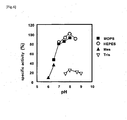
- the pH of the reaction solution is set in the range from about 7.5 to about 9.0, preferably around pH 8. The pH can be adjusted by using Tris buffer solution or HEPES buffer solution.
- the reaction time is set to, for example, 5 minutes to 3 hours. The measurement over time may be carried out.
- the above-mentioned reaction conditions are described as one example, and therefore a part of all of them can be appropriately modified. A person skilled in the art can modify or optimize a reaction condition through the preliminary experiment.
- this step is carried in the presence of pyridoxal-5'-phosphate. That is to say, it is preferable that pyridoxal-5'-phosphate together with D-serine dehydratase is added to a sample. Since pyridoxal-5'-phosphate is originally covalently linked to D-serine dehydratase, it is not essential to add pyridoxal-5'-phosphate to a reaction system. However, with the addition of pyridoxal-5'-phosphate, even when pyridoxal-5'-phosphate is dropped in a part of an enzyme molecule, accurate and highly reliable experiment data can be obtained.
- the amount of pyridoxal-5'-phosphate to be added is, for example, 0.25 ⁇ g/ml to 5 ⁇ g/ml but it is not particularly limited thereto.
- quantification of ammonia or pyruvic acid generated in the step (2) is carried out.
- a Nessler method see, for example, John, C et al., (1976) Biochemical J. 159: 803-806
- an indophenol method see, for example, J. Berthelot: Report chem Appt 1, 284, 1859 , Japanese Patent Application Examined Publication No. S58-11024 , Japanese Patent Application Unexamined Publication No. S61-38463 , and Japanese Patent Application Unexamined Publication No.
- the quantification method of pyruvic acid includes a method of coupling pyruvic acid and lactate dehydrogenase to each other and analyzing the decrease in the absorbance according to the oxidation of NADH in the region of ultraviolet ray (see, for example, Nishimura et al. (1991) Biochemistry 30, 4032-4077, edited by Japan Association of Clinical Research, "In vitro diagnostic agents," p488, Yakuji Nippo, Ltd. (1991 )), and a method for oxidizing pyruvic acid with oxygen and analyzing hydrogen peroxide generated according to the progress of the reaction, and the like.
- the amount of D-serine in a sample is calculated.
- the quantified value of ammonia or pyruvic acid is compared with the calibration curve, thus calculating the amount of D-serine in a sample.
- the following steps are carried out: (5) adding amino acid racemase to a reaction solution after the step (2) and reacting with each other in the presence of the D-serine dehydratase; (6) quantifying ammonia or pyruvic acid generated as a result of the step (5); and (7) calculating the total amount of serine in the sample from the quantified value obtained in the step (6) and the amount of D-serine calculated in the step (4), sequentially in this order.
- the amount of D-serine in a sample is quantified, and meanwhile, by using amino acid racemase, L-serine in a sample is converted into D-serine, thereby quantifying the total amount of serine in the sample. That is to say, according to the quantification method in this embodiment, in addition to the amount of D-serine in a sample, the total amount of serine (that is to say, total of the amount of D-serine and the amount of L-serine) is calculated. Thus, the ratio of the amount of D-serine to the total amount of serine can be clarified.
- the quantification method in this embodiment provides information (data) useful for diagnosis of schizophrenic disorder and Alzheimer's disease. Furthermore, in diagnosis of not only schizophrenic disorder and Alzheimer's disease, but also diagnosis of various diseases that are recognized to have a relationship between the ratio of the D-serine content in the total serine content and the onset and progressing state or pathologic condition and the like, the quantification method of this embodiment is expected to be used.
- each characteristic step in this embodiment is described in detail.
- amino acid racemase is added to a reaction solution after step (2) and reacted with each other. Since the previously added D-serine dehydratase and pyridoxal-5'-phosphate coexist in the reaction solution after the step (2), an enzymes reaction with amino acid racemase and an enzyme reaction with D-serine dehydratase proceed simultaneously. Note here that in the quantification method of this embodiment, after the step (2), a part of the reaction solution is sampled and the sampled reaction solution is used to carry out the step (3), and the rest of the reaction solution (or a part thereof) is used in the step (5).
- amino acid racemase used in the present invention is not limited to an enzyme that is generally regarded as serine racemase.
- serine racemase is preferably employed.
- bacterial racemase see, Toru Yoshimura (2005) Vitamin 79, 277-283
- animal racemase see, Arias C.A. et al., (2000) Microbiology 146, 1727-1734 .
- the addition amount of amino acid racemase is set to, for example, 1 ⁇ g/ml to 50 ⁇ g/ml but not necessarily limited to this amount.
- the reaction conditions (reaction temperature, reaction pH, and reaction time) of this step conform to the reaction conditions in the above-mentioned step (2) in principle. However, a part or all of the conditions may be appropriately modified. Furthermore, a person skilled in the art can modify and optimize the reaction conditions through the preliminary experiment.
- D-serine dehydratase may be added together with amino acid racemase. Furthermore, it is preferable that this step is carried out in the presence of pyridoxal-5'-phosphate. In this stage, pyridoxal-5'-phosphate may be added.
- ammonia or pyruvic acid generated as a result of the step (5) is quantified. That is to say, D-serine generated by the effect of amino acid racemase is broken down with D-serine dehydratase, thereby generating ammonia or pyruvic acid, and the amount of the generated ammonia or pyruvic acid is quantified.
- This step is carried out by the same method in the above-mentioned step (3).
- a total amount of serine in the sample is calculated from the quantified value of ammonia or pyruvic acid obtained in the step (6) and the amount of D-serine calculated in the step (4).
- the amount of L-serine that has originally existed in the sample is calculated.
- the amount of D-serine the amount of D-serine that has been originally existed in a sample
- the amount of L-serine can be calculated by the same method as the calculation method of D-serine in the step (4), that is to say, the amount can be calculated by a method using a calibration curve showing the relationship between the amount of ammonia or pyruvic acid and the amount of D-serine.
- the reaction between D-serine dehydratase and amino acid racemase is further carried out so as to quantify the amount of L-serine in the sample.
- the quantification of the amount of D-serine by D-serine dehydratase and the quantification of the amount of L-serine by D-serine dehydratase and amino acid racemase can be carried out independently.
- another embodiment of the present invention provides a D-serine quantification method including the following steps of: (1) preparing sample; (2) adding the D-serine dehydratase of the present invention to a part of the sample and reacting with each other; (3) quantifying ammonia or pyruvic acid generated as a result of the step (2); (4) calculating a total amount of serine in the sample from the quantified value obtained in the step (3); (5) adding the D-serine dehydratase and amino acid racemase to another part of the sample and reacting with each other; (6) quantifying ammonia or pyruvic acid generated as a result of the step (5); and (7) calculating a total amount of serine in the sample from the quantified value obtained in the step (6).
- any of the steps (2) to (4) and the steps (5) to (7) may be carried out earlier and may be carried out concurrently.
- the quantified value obtained in the step (6) reflects the amounts of L-serine and D-serine, which have been originally existed in a sample. Therefore, the total amount of serine in the sample can be calculated from the quantified value obtained in the step (6), (step (7)). Note here that each step in this embodiment can be carried out by the same method and the conditions of the above-mentioned corresponding steps.
- the present invention further provides a kit for carrying out a quantification method of the present invention.
- the quantification method of the present invention can be carried in a simpler and easier way for a shorter time.
- the kit of the present invention includes D-serine dehydratase of the present invention (reagent for quantifying D-serine) as an essential component.
- D-serine dehydratase of the present invention reagent for quantifying D-serine
- one or more reagents for example, buffer solution, pyridoxal-5'-phosphate, D-serine as a standard reagent
- instruments, and the like which are necessary to the detection of the reaction of the enzyme or the reaction product, may be included in a kit.
- kits used for quantifying the total serine content may includes amino acid racemase in addition to D-serine content in a sample. Furthermore, it is furthermore preferable that a kit includes one or more reagents (for example, buffer solution, pyridoxal-5'-phosphate, D-serine as a standard reagent), instruments, and the like, which are necessary to the detection of the reaction of the enzyme or the reaction product.
- a kit of the present invention is includes an instruction.
- Novel D-serine dehydratase is searched by the following method.
- BLAST search a gene, YGL196W, which is thought to encode protein having a three-dimensional structure homologous to the N-terminal domain of bacterial alanine racemase was found on a genome of Saccharomyces cerevisiae .
- protein encoded by the gene, YGL196W was prepared.
- the production of ammonia was measured by the below-mentioned method by using D-serine, L-serine, D-threonine and L-threonine as a substrate.
- PCR was carried out by using chromosome DNA of Saccharomyces cerevisiae BY4742 strain (the American Type Culture Collection (ATCC)) as a template and using the following primers.
- the obtained DNA fragment was cleaved with Xho I and Hind III, and then ligated to pET15b (Novagen) which had been cleaved with the same restriction enzymes.
- pET15b Novagen
- the constructed plasmid pDsdSC encodes D-serine dehydratase to which an amino acid tag of total 16 residues including six His residues at N terminal and 10 residues including a thrombin cleavage site is added.
- a plasmid pDsdSC was introduced into Escherichia coli BL21 (DE3) (Novagen).
- BL21 (DE3) cells after the introduction were planted on 5 ml of LB medium containing 50 ⁇ g/ml ampicillin and cultured at 37°C over night. This was planted on 200 ml of the same medium and cultured at 37°C.
- IPTG final concentration: 0.5 mM
- washing buffer having an amount of 10 times larger than that of the washing buffer (20 mM Tris HCl (pH 7.9) containing 500 mM NaCl and 80 mM) and eluted with an elution buffer (20 mM Tris HCl (pH 7.9) containing 500 mM NaCl and 1 M imidazole).
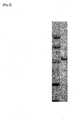
- An active fraction was dialyzed with 500 times amount of A buffer (20 mM Tris HCl (pH 7.5) containing 140 mM NaCl) and then applied to DEAE-TOYOPEARL column (10 ml) equilibrated with A buffer containing 2x10 -5 M pyridoxal-5'-phosphate. The purity of the enzyme eluted with this buffer was confirmed ( Fig. 2 ).
- D-serine dehydratase catalyzes a reaction expressed by the following reaction formula.
- the activity of serine dehydratase was measured as follows: ammonia as a reaction product was measured by a Nessler method or pyruvic acid as a reaction product was measured by coupling with lactate dehydrogenase and by oxidation of NADH.
- ammonia as a reaction product was measured by a Nessler method
- pyruvic acid as a reaction product was measured by coupling with lactate dehydrogenase and by oxidation of NADH.
- the specific activity was 3.7 ⁇ mol/min/mg.
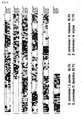
- the substrate-specificity of the novel enzyme was examined by the following method. That is to say, as the substrate, L-serine and D-threonine in addition to D-serine were prepared, and the reactivity of the enzyme with respect to each substrate was examined by the Nessler method. Note here that the reactivity of the enzyme with respect to L-serine or D-threonine was examined by the Nessler method in the same conditions as in the case of D-serine except that L-serine (Wako Pure Chemical Industries, Ltd.) or D-threonine (Wako Pure Chemical Industries, Ltd.) was used as a substrate. The results are shown in Fig. 4 . As is apparent from Fig. 4 , the novel enzyme (left) shows no reactivity with respect to L-serine and low reaction with respect to D-threonine. Thus, it has been clarified that the novel enzyme has an extremely excellent substrate-specificity with respect to D-serine.
- the influence and effect of metal ion on the activity of the novel enzyme were examined by the following method.
- the compounds shown in Fig. 5 were incubated with untreated novel enzyme and 2 mM EDTA, and then dialyzed with Tris buffer solution.
- the D-serine dehydratase activity of the novel enzyme was measured by a Nessler method in the presence of 0.05 mM or 0.5 mM of any of KCI, NaCl, MnCl 2 , MgCl 2 , CaCl 2 , NiSO 4 , CuSO 4 and ZnCl 2 .
- the results are shown in Fig. 5 .
- the dynamic characteristic of the novel enzyme was examined by the following method.
- the concentration of D-serine was changed and the D-serine dehydratase activity of the novel enzyme in the respective concentrations of D-serine was measured.
- the inverse number of the obtained rate was plotted to the inverse number of the D-serine concentration.
- the maximum rate was calculated from the inverse number of the y section and Km value was calculated from the inverse number of the x section.
- the results are shown in Fig. 7 . As is apparent from Fig. 7 , the maximum rate was 4.2 ⁇ mol/min/mg and the Km value was calculated to be 0.46 mM.
- the serum (50 ⁇ l) is prepared from the peripheral blood of the subject (serum sample).
- the serum sample is diluted 10 times with 10 mM HEPES-NaOH buffer (pH 8.0), and then, 10 ⁇ l of 2 ⁇ M pyridoxal-5'-phosphate solution and 1 nmol D-serine dehydratase are added. Then, the mixture is incubated at 30°C for 10 minutes. Thereafter, trichloroacetic acid (final concentration: 5%) is added so as to stop the reaction. After centrifugation (10,000 rpm for 5 minutes), ammonia contained in the supernatant is quantified by the use of a Nessler reagent.
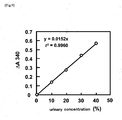
- the above-mentioned quantification method is carried out by using a standard reagent containing a predetermined amount of D-serine (1 mM, 10 mM, 50 mM and 100 mM) instead of the serum sample, and a calibration curve showing the relationship between the quantified value of ammonia and the D-serine content is formed. Based on this calibration curve, from the quantified value of ammonia obtained with respect to the serum sample, the amount of D-serine in the serum sample is calculated.
- the serum (50 ⁇ l ⁇ 2) is prepared from the peripheral blood of the subject (serum samples 1 and 2). D-serine in the serum sample 1 is quantified by the same procedure as in (1).
- total serine in the serum sample 2 is quantified by the following method.
- the serum sample 2 is diluted 10 times with 10 mM HEPES-NaOH buffer (pH 8.0), 10 ⁇ l of 2 ⁇ M pyridoxal-5'-phosphate solution, 1 nmol serine racemase, and 1 nmol D-serine dehydratase are added, and incubated at 30°C for 10 minutes. Thereafter, trichloroacetic acid (final concentration: 5%) is added so as to stop the reaction. After centrifugation (10,000 rpm for 5 minutes), ammonia contained in the supernatant is quantified by the use of Nessler reagent.
- the amount of D-serine in the serum sample 2 is calculated from the quantified value of ammonia.
- the principle of the quantification method is mentioned below.
- discoideum is amplified by PCR using Dicty cDB clone as a template and a primer designed to have six His residues at C-terminal.
- Escherichia coli Rosetta strain is transformed by using an expression vector constructed by inserting the obtained DNA fragment into pET16b (Novagen), and IPTG is added so as to express serine racemase. Purification of serine racemase is carried out by the use of Ni-NTA-Bind Resins (Novagen).
- An example of the serine racemase used in the measurement may include an enzyme derived from bacteria (as to the preparation method, see, for example, Arias C.A.
- A. novel D-serine dehydratase disclosed in this specification has a high substrate-specificity with respect to D-serine.
- the quantification method of the present invention using such an enzyme having an excellent substrate-specificity, even if a sample includes a contaminated material (in particular, L-serine), it is possible to accurately quantify D-serine. Therefore, the quantification method of the present invention is a suitable method for quantifying D-serine in a living body sample.
- the quantification method of the present invention enables D-serine in a living body sample whose L-serine content is much larger than D-serine content to be quantified under the condition where quantification is not possible with a conventional enzyme.
- the quantification method of the present invention is expected to be applied to diagnosis of human or mammalian nervous diseases such as schizophrenic disorder and Alzheimer's disease or BSE (Bovine Spongiform Encephalopathy).
- the quantification method of the present invention can be carried out by using extremely a general microplate reader and a spectrophotometer.
- the quantification method of the present invention has also large advantages: complicated pre-treatment is not required; and a kit for carrying out this method can be easily produced.
- the quantification method of the present invention can be carried out by a simple and easy operation and does not require skill for analyzing data.
- this method can be carried out by using a disposable instrument such as microplate, which contributes to the reduction of risk of infection to workers handling living body samples.
- a disposable instrument such as microplate
- economical cost and time cost which were problems in a conventional quantification method of D-serine, can be radically reduced.
- this method is expected to be applied to mass health examination, and the like.
Landscapes
- Chemical & Material Sciences (AREA)
- Life Sciences & Earth Sciences (AREA)
- Organic Chemistry (AREA)
- Health & Medical Sciences (AREA)
- Zoology (AREA)
- Engineering & Computer Science (AREA)
- Wood Science & Technology (AREA)
- Genetics & Genomics (AREA)
- Bioinformatics & Cheminformatics (AREA)
- Microbiology (AREA)
- Proteomics, Peptides & Aminoacids (AREA)
- Molecular Biology (AREA)
- General Health & Medical Sciences (AREA)
- Biotechnology (AREA)
- General Engineering & Computer Science (AREA)
- Biochemistry (AREA)
- Physics & Mathematics (AREA)
- Immunology (AREA)
- Analytical Chemistry (AREA)
- Biophysics (AREA)
- Medicinal Chemistry (AREA)
- Biomedical Technology (AREA)
- Enzymes And Modification Thereof (AREA)
- Measuring Or Testing Involving Enzymes Or Micro-Organisms (AREA)
- Micro-Organisms Or Cultivation Processes Thereof (AREA)
Claims (11)
- D-Serin-Dehydratase beinhaltend das folgende Protein (a) oder (b):(a) ein Protein mit einer Aminosäuresequenz dargestellt in SEQ ID NR: 1; oder(b) ein Protein, das eine Aminosäuresequenz aufweist mit 70% oder mehr Ähnlichkeit zu der Aminosäuresequenz dargestellt in SEQ ID NR: 1, und mit einer D-Serin Dehydratase-Aktivität, die nicht mit L-Serin reagiert und wobei eine Reaktivität zu D-Threonin nicht mehr als 5% beträgt, wenn eine Reaktivität zu D-Serin 100% ist.
- D-Serin-Dehydratase nach Anspruch 1, die ein rekombinantes Protein ist exprimiert in Escherichia coli als Wirt.
- D-Serin-Dehydratase-Gen, beinhaltend eine der DNA ausgewählt aus der Gruppe bestehend aus den folgenden (A) bis (C):(A) DNA kodierend eine Aminosäuresequenz dargestellt in SEQ ID NR: 1;(B) DNA, die eine Basensequenz dargestellt in SEQ ID NR: 2 aufweist; und(C) DNA, die eine Basensequenz aufweist, die homolog zu der Basensequenz dargestellt in SEQ ID NR: 2 ist und kodierend ein Protein wie in Abschnitt (b) von Anspruch 1 definiert.
- Vektor zur Expression von D-Serin-Dehydratase, beinhaltend ein Gen nach Anspruch 3.
- Transformant in den das Gen nach Anspruch 3 eingebracht ist.
- Herstellungsverfahren für D-Serin-Dehydratase, das Verfahren beinhaltend Schritte von:(1) Kultivierung des Transformanten nach Anspruch 5 unter einer Bedingung bei der durch das Gen kodiertes Protein hergestellt wird; und(2) Sammeln des hergestellten Proteins.
- Reagenz zur Quantifizierung von D-Serin beinhaltend D-Serin-Dehydratase nach Anspruch 1 oder 2.
- Kit zur Quantifizierung von D-Serin beinhaltend ein Reagenz zur Quantifizierung von D-Serin nach Anspruch 7.
- D-Serin-Quantifizierungsverfahren beinhaltend die folgende Schritte von:(1) Vorbereiten eines Reagenz;(2) Hinzufügen von D-Serin-Dehydratase nach Anspruch 1 oder 2 in die Probe und deren Reaktion miteinander;(3) Quantifizieren von Ammonium oder Brenztraubensäure generiert als ein Resultat von (2); und(4) Berechnen einer Menge von D-Serin in der Probe des quantifizierten Wertes erhalten in (3).
- D-Serin-Quantifizierungsverfahren nach Anspruch 9, das Verfahren weiter beinhaltend die folgenden Schritte von:(5) Hinzufügen von Aminosäure-Racemase zu einer Reaktionslösung nach dem Schritt (2) und miteinander reagieren in einer Koexistenz von der D-Serin Dehydratase;(6) Quantifizieren von Ammonium oder Brenztraubensäure generiert als ein Resultat von (5); und(7) Berechnen einer Gesamtmenge von Serin in der Probe des quantifizierten Wertes erhalten in (6) und der Menge von D-Serin kalkuliert in (4).
- D-Serin-Quantifizierungsverfahren beinhaltend die folgende Schritte von:(1) Vorbereiten einer Probe:(2) Hinzufügen der D-Serin-Dehydratase nach Anspruch 1 oder 2 zu einem Teil der Probe, sodass diese miteinander reagieren;(3) Quantifizieren von Ammonium oder Brenztraubensäure generiert als ein Resultat von (2); und(4) Berechnen einer Menge von Serin in der Probe von dem quantifizierten Wert erhalten in (3);(5) Hinzufügen der D-Serin-Dehydratase nach Anspruch 1 oder 2 und Aminosäure-Racemase zu einem anderen Teil der Probe und dadurch miteinander reagieren;(6) Quantifizieren von Ammonium oder Brenztraubensäure generiert als ein Resultat von (5); und(7) Berechnen einer totalen Menge von Serin in der Probe des quantifizierten Wertes erhaltend in (6).
Applications Claiming Priority (2)
| Application Number | Priority Date | Filing Date | Title |
|---|---|---|---|
| JP2006283398 | 2006-10-18 | ||
| PCT/JP2007/070193 WO2008047802A1 (fr) | 2006-10-18 | 2007-10-16 | D-sérine déshydratase et son utilisation |
Publications (3)
| Publication Number | Publication Date |
|---|---|
| EP2085472A1 EP2085472A1 (de) | 2009-08-05 |
| EP2085472A4 EP2085472A4 (de) | 2010-01-06 |
| EP2085472B1 true EP2085472B1 (de) | 2013-08-21 |
Family
ID=39314029
Family Applications (1)
| Application Number | Title | Priority Date | Filing Date |
|---|---|---|---|
| EP07829927.8A Not-in-force EP2085472B1 (de) | 2006-10-18 | 2007-10-16 | D-serin-dehydratase und verwendung davon |
Country Status (4)
| Country | Link |
|---|---|
| US (2) | US20100190196A1 (de) |
| EP (1) | EP2085472B1 (de) |
| JP (1) | JP5218949B2 (de) |
| WO (1) | WO2008047802A1 (de) |
Family Cites Families (10)
| Publication number | Priority date | Publication date | Assignee | Title |
|---|---|---|---|---|
| DE2329174C2 (de) | 1973-06-07 | 1975-07-24 | Boehringer Mannheim Gmbh, 6800 Mannheim | Verfahren zur quantitativen Bestimmung von Blutammoniak |
| JPS5811024B2 (ja) | 1979-07-27 | 1983-03-01 | 株式会社 ヤトロン | 液体中のアンモニア測定方法 |
| JPS6138463A (ja) | 1984-07-30 | 1986-02-24 | Wako Pure Chem Ind Ltd | アンモニアの定量法 |
| JPS6144351A (ja) | 1984-08-06 | 1986-03-04 | Wako Pure Chem Ind Ltd | アンモニアの定量方法 |
| JPS6214799A (ja) | 1985-07-11 | 1987-01-23 | Kyowa Medetsukusu Kk | ピルビン酸の定量法 |
| JP3036711B2 (ja) | 1991-05-21 | 2000-04-24 | 旭化成工業株式会社 | 乳酸またはピルビン酸の高感度定量法および定量用組成物 |
| JPH07108239B2 (ja) | 1991-10-03 | 1995-11-22 | 日水製薬株式会社 | ピルビン酸の定量方法及び該方法を利用する生体成分の定量方法 |
| JPH05219991A (ja) | 1992-02-10 | 1993-08-31 | Taunzu:Kk | 酵素反応利用定量分析方法 |
| JP2006149203A (ja) * | 2003-02-19 | 2006-06-15 | Alfresa Pharma Corp | ホモシステインの測定方法 |
| WO2006024892A1 (en) * | 2004-09-02 | 2006-03-09 | Suntory Limited | Method for analyzing genes of industrial yeasts |
-
2007
- 2007-10-16 JP JP2008539830A patent/JP5218949B2/ja active Active
- 2007-10-16 EP EP07829927.8A patent/EP2085472B1/de not_active Not-in-force
- 2007-10-16 WO PCT/JP2007/070193 patent/WO2008047802A1/ja not_active Ceased
- 2007-10-16 US US12/445,642 patent/US20100190196A1/en not_active Abandoned
-
2012
- 2012-03-26 US US13/430,583 patent/US8367368B2/en not_active Expired - Fee Related
Non-Patent Citations (1)
| Title |
|---|
| FEDERIUK ET AL: "Characterization of the catalytic pathway for D-serine dehydratase. Evidence for variation of the rate-determining step with substrate structure.", JOURNAL OF BIOLOGICAL CHEMISTRY, vol. 258, no. 9, 1 May 1983 (1983-05-01), pages 5379 - 5385, XP055042349, ISSN: 0021-9258 * |
Also Published As
| Publication number | Publication date |
|---|---|
| US20100190196A1 (en) | 2010-07-29 |
| JP5218949B2 (ja) | 2013-06-26 |
| WO2008047802A1 (fr) | 2008-04-24 |
| EP2085472A4 (de) | 2010-01-06 |
| JPWO2008047802A1 (ja) | 2010-02-25 |
| US20120244520A1 (en) | 2012-09-27 |
| US8367368B2 (en) | 2013-02-05 |
| EP2085472A1 (de) | 2009-08-05 |
Similar Documents
| Publication | Publication Date | Title |
|---|---|---|
| EP2508600B1 (de) | Mutantes enzym und seine anwendung | |
| JP4231668B2 (ja) | 新規なフルクトシルペプチドオキシダーゼ | |
| US9365834B2 (en) | Glucose oxidase variants | |
| US9062286B2 (en) | Amadoriase having altered substrate specificity | |
| EP2589655A1 (de) | Glucosedehydrogenase | |
| CN107043754A (zh) | 经修饰的亮氨酸脱氢酶 | |
| JP2020141690A (ja) | 糖化ペプチドに作用するアマドリアーゼを用いたHbA1c測定法 | |
| Kadziola et al. | Novel class III phosphoribosyl diphosphate synthase: structure and properties of the tetrameric, phosphate-activated, non-allosterically inhibited enzyme from Methanocaldococcus jannaschii | |
| CN116064427B (zh) | 一种酰基辅酶a合成酶突变体、其编码基因、表达菌株及其应用 | |
| KR102596402B1 (ko) | HbA1c 디히드로게나아제 | |
| EP1666586B1 (de) | Pyrrolochinolin-chinon (pqq)-abhängige glucosedehydrogenase-modifikation mit ausgezeichneter substratspezifität | |
| EP3216865A1 (de) | Amadoriase mit verbesserter resistenz gegenüber anionischen tensiden | |
| CN109706130A (zh) | 果糖基氨基酸氧化酶突变体、检测试剂盒及检测方法 | |
| US8367368B2 (en) | D-serine dehydratase and use thereof | |
| Kim et al. | Motif‐based search for a novel fructosyl peptide oxidase from genome databases | |
| Ferri et al. | Biomolecular engineering of biosensing molecules—The challenges in creating sensing molecules for glycated protein biosensing— | |
| JP7812343B2 (ja) | ウリカーゼ活性化剤及び尿酸測定試薬 | |
| JP5261055B2 (ja) | 改変型ホルムアルデヒド脱水素酵素及びその利用 | |
| EP3677681A1 (de) | Glykierte hämoglobinoxidasevariante und messverfahren | |
| KR101574952B1 (ko) | α-2,3 및 α-2,6 시알산 전이효소의 변이체 탐색 방법 및 시알릴올리고당 생산에의 응용 | |
| WO2012043601A1 (ja) | アマドリアーゼ改変体 | |
| CN119432779B (zh) | 一种酰基辅酶A合成酶突变体ACS01-Des4、其编码基因、表达菌株及其应用 | |
| CN121227683A (zh) | 麦角硫因三甲胺裂解酶突变体及其应用 | |
| CN121931067A (zh) | 一种酰基辅酶a氧化酶突变体及其表达菌株和应用 | |
| Tanaka et al. | Expression, identification and purification of Dictyostelium acetoacetyl-CoA thiolase expressed in Escherichia coli |
Legal Events
| Date | Code | Title | Description |
|---|---|---|---|
| PUAI | Public reference made under article 153(3) epc to a published international application that has entered the european phase |
Free format text: ORIGINAL CODE: 0009012 |
|
| 17P | Request for examination filed |
Effective date: 20090505 |
|
| AK | Designated contracting states |
Kind code of ref document: A1 Designated state(s): AT BE BG CH CY CZ DE DK EE ES FI FR GB GR HU IE IS IT LI LT LU LV MC MT NL PL PT RO SE SI SK TR |
|
| A4 | Supplementary search report drawn up and despatched |
Effective date: 20091208 |
|
| DAX | Request for extension of the european patent (deleted) | ||
| 17Q | First examination report despatched |
Effective date: 20100331 |
|
| GRAP | Despatch of communication of intention to grant a patent |
Free format text: ORIGINAL CODE: EPIDOSNIGR1 |
|
| GRAS | Grant fee paid |
Free format text: ORIGINAL CODE: EPIDOSNIGR3 |
|
| GRAA | (expected) grant |
Free format text: ORIGINAL CODE: 0009210 |
|
| AK | Designated contracting states |
Kind code of ref document: B1 Designated state(s): AT BE BG CH CY CZ DE DK EE ES FI FR GB GR HU IE IS IT LI LT LU LV MC MT NL PL PT RO SE SI SK TR |
|
| REG | Reference to a national code |
Ref country code: GB Ref legal event code: FG4D |
|
| REG | Reference to a national code |
Ref country code: CH Ref legal event code: EP |
|
| REG | Reference to a national code |
Ref country code: AT Ref legal event code: REF Ref document number: 628130 Country of ref document: AT Kind code of ref document: T Effective date: 20130915 |
|
| REG | Reference to a national code |
Ref country code: IE Ref legal event code: FG4D |
|
| REG | Reference to a national code |
Ref country code: DE Ref legal event code: R096 Ref document number: 602007032448 Country of ref document: DE Effective date: 20131017 |
|
| REG | Reference to a national code |
Ref country code: AT Ref legal event code: MK05 Ref document number: 628130 Country of ref document: AT Kind code of ref document: T Effective date: 20130821 Ref country code: NL Ref legal event code: VDEP Effective date: 20130821 |
|
| REG | Reference to a national code |
Ref country code: LT Ref legal event code: MG4D |
|
| PG25 | Lapsed in a contracting state [announced via postgrant information from national office to epo] |
Ref country code: AT Free format text: LAPSE BECAUSE OF FAILURE TO SUBMIT A TRANSLATION OF THE DESCRIPTION OR TO PAY THE FEE WITHIN THE PRESCRIBED TIME-LIMIT Effective date: 20130821 Ref country code: LT Free format text: LAPSE BECAUSE OF FAILURE TO SUBMIT A TRANSLATION OF THE DESCRIPTION OR TO PAY THE FEE WITHIN THE PRESCRIBED TIME-LIMIT Effective date: 20130821 Ref country code: PT Free format text: LAPSE BECAUSE OF FAILURE TO SUBMIT A TRANSLATION OF THE DESCRIPTION OR TO PAY THE FEE WITHIN THE PRESCRIBED TIME-LIMIT Effective date: 20131223 Ref country code: IS Free format text: LAPSE BECAUSE OF FAILURE TO SUBMIT A TRANSLATION OF THE DESCRIPTION OR TO PAY THE FEE WITHIN THE PRESCRIBED TIME-LIMIT Effective date: 20131221 Ref country code: SE Free format text: LAPSE BECAUSE OF FAILURE TO SUBMIT A TRANSLATION OF THE DESCRIPTION OR TO PAY THE FEE WITHIN THE PRESCRIBED TIME-LIMIT Effective date: 20130821 Ref country code: CY Free format text: LAPSE BECAUSE OF FAILURE TO SUBMIT A TRANSLATION OF THE DESCRIPTION OR TO PAY THE FEE WITHIN THE PRESCRIBED TIME-LIMIT Effective date: 20130731 |
|
| PG25 | Lapsed in a contracting state [announced via postgrant information from national office to epo] |
Ref country code: GR Free format text: LAPSE BECAUSE OF FAILURE TO SUBMIT A TRANSLATION OF THE DESCRIPTION OR TO PAY THE FEE WITHIN THE PRESCRIBED TIME-LIMIT Effective date: 20131122 Ref country code: PL Free format text: LAPSE BECAUSE OF FAILURE TO SUBMIT A TRANSLATION OF THE DESCRIPTION OR TO PAY THE FEE WITHIN THE PRESCRIBED TIME-LIMIT Effective date: 20130821 Ref country code: LV Free format text: LAPSE BECAUSE OF FAILURE TO SUBMIT A TRANSLATION OF THE DESCRIPTION OR TO PAY THE FEE WITHIN THE PRESCRIBED TIME-LIMIT Effective date: 20130821 Ref country code: SI Free format text: LAPSE BECAUSE OF FAILURE TO SUBMIT A TRANSLATION OF THE DESCRIPTION OR TO PAY THE FEE WITHIN THE PRESCRIBED TIME-LIMIT Effective date: 20130821 Ref country code: BE Free format text: LAPSE BECAUSE OF FAILURE TO SUBMIT A TRANSLATION OF THE DESCRIPTION OR TO PAY THE FEE WITHIN THE PRESCRIBED TIME-LIMIT Effective date: 20130821 Ref country code: FI Free format text: LAPSE BECAUSE OF FAILURE TO SUBMIT A TRANSLATION OF THE DESCRIPTION OR TO PAY THE FEE WITHIN THE PRESCRIBED TIME-LIMIT Effective date: 20130821 |
|
| PG25 | Lapsed in a contracting state [announced via postgrant information from national office to epo] |
Ref country code: CY Free format text: LAPSE BECAUSE OF FAILURE TO SUBMIT A TRANSLATION OF THE DESCRIPTION OR TO PAY THE FEE WITHIN THE PRESCRIBED TIME-LIMIT Effective date: 20130821 |
|
| PG25 | Lapsed in a contracting state [announced via postgrant information from national office to epo] |
Ref country code: NL Free format text: LAPSE BECAUSE OF FAILURE TO SUBMIT A TRANSLATION OF THE DESCRIPTION OR TO PAY THE FEE WITHIN THE PRESCRIBED TIME-LIMIT Effective date: 20130821 Ref country code: CZ Free format text: LAPSE BECAUSE OF FAILURE TO SUBMIT A TRANSLATION OF THE DESCRIPTION OR TO PAY THE FEE WITHIN THE PRESCRIBED TIME-LIMIT Effective date: 20130821 Ref country code: SK Free format text: LAPSE BECAUSE OF FAILURE TO SUBMIT A TRANSLATION OF THE DESCRIPTION OR TO PAY THE FEE WITHIN THE PRESCRIBED TIME-LIMIT Effective date: 20130821 Ref country code: DK Free format text: LAPSE BECAUSE OF FAILURE TO SUBMIT A TRANSLATION OF THE DESCRIPTION OR TO PAY THE FEE WITHIN THE PRESCRIBED TIME-LIMIT Effective date: 20130821 Ref country code: RO Free format text: LAPSE BECAUSE OF FAILURE TO SUBMIT A TRANSLATION OF THE DESCRIPTION OR TO PAY THE FEE WITHIN THE PRESCRIBED TIME-LIMIT Effective date: 20130821 Ref country code: EE Free format text: LAPSE BECAUSE OF FAILURE TO SUBMIT A TRANSLATION OF THE DESCRIPTION OR TO PAY THE FEE WITHIN THE PRESCRIBED TIME-LIMIT Effective date: 20130821 |
|
| PG25 | Lapsed in a contracting state [announced via postgrant information from national office to epo] |
Ref country code: IT Free format text: LAPSE BECAUSE OF FAILURE TO SUBMIT A TRANSLATION OF THE DESCRIPTION OR TO PAY THE FEE WITHIN THE PRESCRIBED TIME-LIMIT Effective date: 20130821 Ref country code: MC Free format text: LAPSE BECAUSE OF FAILURE TO SUBMIT A TRANSLATION OF THE DESCRIPTION OR TO PAY THE FEE WITHIN THE PRESCRIBED TIME-LIMIT Effective date: 20130821 Ref country code: ES Free format text: LAPSE BECAUSE OF FAILURE TO SUBMIT A TRANSLATION OF THE DESCRIPTION OR TO PAY THE FEE WITHIN THE PRESCRIBED TIME-LIMIT Effective date: 20130821 |
|
| REG | Reference to a national code |
Ref country code: CH Ref legal event code: PL |
|
| PLBE | No opposition filed within time limit |
Free format text: ORIGINAL CODE: 0009261 |
|
| STAA | Information on the status of an ep patent application or granted ep patent |
Free format text: STATUS: NO OPPOSITION FILED WITHIN TIME LIMIT |
|
| 26N | No opposition filed |
Effective date: 20140522 |
|
| REG | Reference to a national code |
Ref country code: IE Ref legal event code: MM4A |
|
| PG25 | Lapsed in a contracting state [announced via postgrant information from national office to epo] |
Ref country code: CH Free format text: LAPSE BECAUSE OF NON-PAYMENT OF DUE FEES Effective date: 20131031 Ref country code: LI Free format text: LAPSE BECAUSE OF NON-PAYMENT OF DUE FEES Effective date: 20131031 |
|
| REG | Reference to a national code |
Ref country code: DE Ref legal event code: R097 Ref document number: 602007032448 Country of ref document: DE Effective date: 20140522 |
|
| PG25 | Lapsed in a contracting state [announced via postgrant information from national office to epo] |
Ref country code: IE Free format text: LAPSE BECAUSE OF NON-PAYMENT OF DUE FEES Effective date: 20131016 |
|
| PG25 | Lapsed in a contracting state [announced via postgrant information from national office to epo] |
Ref country code: TR Free format text: LAPSE BECAUSE OF FAILURE TO SUBMIT A TRANSLATION OF THE DESCRIPTION OR TO PAY THE FEE WITHIN THE PRESCRIBED TIME-LIMIT Effective date: 20130821 |
|
| PG25 | Lapsed in a contracting state [announced via postgrant information from national office to epo] |
Ref country code: BG Free format text: LAPSE BECAUSE OF FAILURE TO SUBMIT A TRANSLATION OF THE DESCRIPTION OR TO PAY THE FEE WITHIN THE PRESCRIBED TIME-LIMIT Effective date: 20130821 Ref country code: LU Free format text: LAPSE BECAUSE OF NON-PAYMENT OF DUE FEES Effective date: 20131016 Ref country code: HU Free format text: LAPSE BECAUSE OF FAILURE TO SUBMIT A TRANSLATION OF THE DESCRIPTION OR TO PAY THE FEE WITHIN THE PRESCRIBED TIME-LIMIT; INVALID AB INITIO Effective date: 20071016 |
|
| PG25 | Lapsed in a contracting state [announced via postgrant information from national office to epo] |
Ref country code: MT Free format text: LAPSE BECAUSE OF FAILURE TO SUBMIT A TRANSLATION OF THE DESCRIPTION OR TO PAY THE FEE WITHIN THE PRESCRIBED TIME-LIMIT Effective date: 20130821 |
|
| REG | Reference to a national code |
Ref country code: FR Ref legal event code: PLFP Year of fee payment: 9 |
|
| PGFP | Annual fee paid to national office [announced via postgrant information from national office to epo] |
Ref country code: DE Payment date: 20151007 Year of fee payment: 9 Ref country code: GB Payment date: 20151028 Year of fee payment: 9 |
|
| PGFP | Annual fee paid to national office [announced via postgrant information from national office to epo] |
Ref country code: FR Payment date: 20151023 Year of fee payment: 9 |
|
| REG | Reference to a national code |
Ref country code: DE Ref legal event code: R119 Ref document number: 602007032448 Country of ref document: DE |
|
| GBPC | Gb: european patent ceased through non-payment of renewal fee |
Effective date: 20161016 |
|
| REG | Reference to a national code |
Ref country code: FR Ref legal event code: ST Effective date: 20170630 |
|
| PG25 | Lapsed in a contracting state [announced via postgrant information from national office to epo] |
Ref country code: DE Free format text: LAPSE BECAUSE OF NON-PAYMENT OF DUE FEES Effective date: 20170503 Ref country code: FR Free format text: LAPSE BECAUSE OF NON-PAYMENT OF DUE FEES Effective date: 20161102 Ref country code: GB Free format text: LAPSE BECAUSE OF NON-PAYMENT OF DUE FEES Effective date: 20161016 |