EP2081914B1 - Kristalline form von 2-chlor-5-[3,6-dihydro-3-methyl-2,6-dioxo-4-(trifluormethyl)-1-(2h)-pyrimidinyl]-4-fluor-n-[[methyl-(1-methylethyl)amino]sulfonyl]benzamid - Google Patents
Kristalline form von 2-chlor-5-[3,6-dihydro-3-methyl-2,6-dioxo-4-(trifluormethyl)-1-(2h)-pyrimidinyl]-4-fluor-n-[[methyl-(1-methylethyl)amino]sulfonyl]benzamid Download PDFInfo
- Publication number
- EP2081914B1 EP2081914B1 EP07821246A EP07821246A EP2081914B1 EP 2081914 B1 EP2081914 B1 EP 2081914B1 EP 07821246 A EP07821246 A EP 07821246A EP 07821246 A EP07821246 A EP 07821246A EP 2081914 B1 EP2081914 B1 EP 2081914B1
- Authority
- EP
- European Patent Office
- Prior art keywords
- methyl
- solvent
- phenyluracil
- dihydro
- crystalline form
- Prior art date
- Legal status (The legal status is an assumption and is not a legal conclusion. Google has not performed a legal analysis and makes no representation as to the accuracy of the status listed.)
- Active
Links
Images

Classifications
-
- C—CHEMISTRY; METALLURGY
- C07—ORGANIC CHEMISTRY
- C07D—HETEROCYCLIC COMPOUNDS
- C07D239/00—Heterocyclic compounds containing 1,3-diazine or hydrogenated 1,3-diazine rings
- C07D239/02—Heterocyclic compounds containing 1,3-diazine or hydrogenated 1,3-diazine rings not condensed with other rings
- C07D239/24—Heterocyclic compounds containing 1,3-diazine or hydrogenated 1,3-diazine rings not condensed with other rings having three or more double bonds between ring members or between ring members and non-ring members
- C07D239/28—Heterocyclic compounds containing 1,3-diazine or hydrogenated 1,3-diazine rings not condensed with other rings having three or more double bonds between ring members or between ring members and non-ring members with hetero atoms or with carbon atoms having three bonds to hetero atoms with at the most one bond to halogen, directly attached to ring carbon atoms
- C07D239/46—Two or more oxygen, sulphur or nitrogen atoms
- C07D239/52—Two oxygen atoms
- C07D239/54—Two oxygen atoms as doubly bound oxygen atoms or as unsubstituted hydroxy radicals
-
- A—HUMAN NECESSITIES
- A01—AGRICULTURE; FORESTRY; ANIMAL HUSBANDRY; HUNTING; TRAPPING; FISHING
- A01N—PRESERVATION OF BODIES OF HUMANS OR ANIMALS OR PLANTS OR PARTS THEREOF; BIOCIDES, e.g. AS DISINFECTANTS, AS PESTICIDES OR AS HERBICIDES; PEST REPELLANTS OR ATTRACTANTS; PLANT GROWTH REGULATORS
- A01N43/00—Biocides, pest repellants or attractants, or plant growth regulators containing heterocyclic compounds
- A01N43/48—Biocides, pest repellants or attractants, or plant growth regulators containing heterocyclic compounds having rings with two nitrogen atoms as the only ring hetero atoms
-
- C—CHEMISTRY; METALLURGY
- C07—ORGANIC CHEMISTRY
- C07B—GENERAL METHODS OF ORGANIC CHEMISTRY; APPARATUS THEREFOR
- C07B2200/00—Indexing scheme relating to specific properties of organic compounds
- C07B2200/13—Crystalline forms, e.g. polymorphs
Definitions
- the present invention relates to a crystalline form of 2-chloro-5- [3,6-dihydro-3-methyl-2,6-dioxo-4- (trifluoromethyl) -1- (2H) -pyrimidinyl] -4-fluoro N - [[methyl- (1-methylethyl) amino] sulfonyl] benzamide, which is also referred to below as phenyluracil I.
- the invention also relates to a process for the preparation of this crystalline form and to formulations for crop protection which contain this crystalline form of phenyluracil.
- phenyluracil I which corresponds to the following formula, it is a herbicidal active ingredient, which from the WO 01/083459 is known.
- Other processes for its preparation are out WO 03/097589 .
- WO 05/054208 and WO 06/097589 as well as from the older international application PCT / EP 2006/062414 known. All known processes for the preparation of phenyluracil I, provide this as an amorphous substance.
- amorphous phenyluracil I is only conditionally suitable for the preparation of formulations which contain the substance as a solid. Especially with multiphase formulations stability problems can occur.
- the present invention relates to a substantially solvent-free crystalline form of 2-chloro-5- [3,6-dihydro-3-methyl-2,6-dioxo-4- (trifluoromethyl) -1- (2H) -pyrimidinyl] - 4-fluoro-N - [[methyl- (1-methylethyl) amino] sulfonyl] benzamide.
- Form II the inventive, substantially solvent-free form of phenyluracil I is also referred to below as Form II.
- the term "substantially solvent-free” means that Form II of the invention contains no detectable amounts of solvents incorporated in the crystal lattice, i. H. the proportion of solvent in the crystal lattice is below 10 mol%, in particular not more than 5 mol%, based on the phenyluracil I.
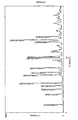
- Form II according to the invention can be identified by means of X-ray powder diffractometry on the basis of its diffraction diagram.
- an X-ray powder diffraction pattern recorded at 25 ° C. using Cu-K ⁇ radiation (1.54178 ⁇ ) shows at least 2, usually at least 4, often at least 6, especially at least 8, and especially all 2 ⁇ in the following Table 1 Values, or as lattice spacings d, given reflexes: Table 1: 2 ⁇ there] 6.3 ⁇ 0.2 ° 14.92 ⁇ 0.3 9.4 ⁇ 0.2 ° 9.37 ⁇ 0.2 10,9 ⁇ 0,2 ° 8.15 ⁇ 0.1 11.9 ⁇ 0.2 ° 7.45 ⁇ 0.05 12.6 ⁇ 0.2 ° 7.02 ⁇ 0.05 15.0 ⁇ 0.2 ° 5.90 ⁇ 0.05 15.8 ⁇ 0.2 ° 5.62 ⁇ 0.04 17.1 ⁇ 0.2 ° 5.19 ⁇ .0.03 20.0 ⁇ 0.2 ° 4.44 ⁇ 0.02 20.4 ⁇ 0.2 ° 4.
- DSC Differential Scanning Calorimetry
- Form II shows a thermogram with a characteristic melting peak in the range of 170 and 200 ° C.
- the peak maximum is typically in the range of about 180 ° C to 190 ° C.
- the melting points given here are based on differential calorimetry (differential scanning calorimetry: DSC, aluminum crucible, heating rate 5 K / min).
- a solution of the phenyluracil I in an organic solvent which is substantially free of water ready and then effected in a second step, a controlled crystallization of Phenyluracils I.
- Substantially free of water in this context means that the concentration of water in the solution containing phenyluracil I is 10% by weight, often 5 wt .-% and in particular 1 wt .-%, based on the total amount of solvent, does not exceed.
- controlled crystallization is to be understood as meaning that the crystallization takes place over a relatively long time, which is generally at least 1 h, frequently at least 2 h and in particular at least 3 h.
- the crystallization can also over a longer period up to several days, z. B. 1, 2 to 3 days. Frequently, however, the crystallization time will not exceed 15 hours. Accordingly, the crystallization is usually carried out over a period of 1 to 24 hours, often 2 hours to 15 hours, especially 3 to 10 hours.
- Suitable solvents are in principle those organic solvents and solvent mixtures in which the phenyluracil I is sufficiently soluble at elevated temperature, for. B. at 50 ° C has a solubility of at least 100 g / L.
- solvents and solvent mixtures whose boiling point is in the range of 50 to 160 ° C at atmospheric pressure.
- Particularly preferred organic solvents L1 are mono-C 1 -C 3 -alkylbenzenes, especially toluene, and mixtures of mono-C 1 -C 3 -alkylbenzenes, especially of toluene with tetrahydrofuran. Preference is also given to mixtures of the preferred solvents L1, in particular mixtures of mono-C 1 -C 3 -alkylbenzenes, especially mixtures of toluene with methanol, small amounts of methanol (eg up to 20% by volume, in particular up to 10%) already being present Vol .-%) lead to an improvement in the purity of the resulting crystals.
- the solvent L1 typically constituting the major amount, in particular at least 70% by weight and especially at least 90% by weight of the solvent used for the crystallization.
- the solvent L1 is the sole solvent or contains less than 5% by weight, based on the total solvent amount of an organic solvent other than L1.
- the concentration of phenyluracil I in the solution used for crystallization naturally depends on the nature of the solvent and the solution temperature and is often in the range of 50 to 800 g / L. Suitable conditions can be determined by one skilled in the art by routine experimentation.
- the solution of phenyluracil I used for the crystallization which contains phenyluracil I in a purity of at least 85%, frequently at least 90%, in particular at least 95%, d.
- the proportion of organic impurities other than an organic solvent makes no more than 15% by weight, often not more than 10% by weight and in particular not more than 5% by weight, based on the phenyluracil dissolved in the solvent I off.
- any known form of phenyluracil I can be used to prepare the solution by dissolving the phenyluracil I.
- a form of phenyluracil I other than Form II in particular a solid or liquid melt of phenyluracil or amorphous phenyluracil I, as known from the prior art into consideration.
- Suitable forms of phenyluracil other than Form I are also solvates, in particular hydrates of phenyluracil I or a methanol solvate of phenyluracil I.
- Also suitable are mixtures of different forms of phenyluracil.
- the hydrates of phenyluracil I are the subject of a co-pending patent application which is incorporated herein by reference.
- the solvent used to dissolve the phenyluracil I is typically one of the abovementioned organic solvents L1 or a mixture of different solvents L1 or a mixture of solvents, containing at least 70 wt .-% and especially at least 90 wt .-%, based on the total amount of the solvent used for dissolving, of solvent L1.
- the phenyluracil I In order to dissolve the different form of phenyluracil I, the phenyluracil I will usually be incorporated as a finely divided solid or as a melt while being mixed into the solvent at a temperature at which the solvent or solvent mixture can completely dissolve the phenyluracil I.
- Dissolution of the amorphous form I usually follows at temperatures in the range from 20 to 160 ° C.
- the phenyluracil I is dissolved at elevated temperature, in particular at least 50 ° C., especially at least 80 ° C., the naturally used for dissolution temperature will not exceed the boiling point of the solvent.
- the dissolution takes place at temperatures in the range of 50 to 140 ° C, in particular in the range of 80 to 120 ° C and particularly preferably in the range of 95 to 115 ° C.
- the amount of phenyluracil I dissolved in the solvent naturally depends on the nature of the solvent L1 and the solution temperature and is often in the range of 100 to 800 g / L. Suitable conditions can be determined by one skilled in the art by routine experimentation.
- the solution of phenyluracil I can also be provided by reacting a reaction mixture obtained by a chemical reaction containing the phenyluracil I, optionally after separating off reagents and / or by-products, into an organic solvent which is substantially free according to the invention Water, convicted.
- an organic solvent or solvent mixture which consists at least partially, preferably at least 50% by weight of a solvent suitable for crystallization and, if necessary, carries out work-up, excess reagents being used and any existing catalysts, any existing, unsuitable solvent, eg. As water and / or methanol removed.
- the preparation of a solution of phenyluracil I by chemical reaction of a suitable precursor of phenyluracil I can be carried out in analogy to the methods described in the cited prior art, to which reference is made in its entirety.
- solvates of phenyluracil I are used to prepare the solution, it may be advantageous to remove the solvate solvent after dissolution, however, before crystallization, for example by distillation.
- the crystallization is usually carried out so far that at least 80 wt .-%, preferably at least 90 wt .-%, of the phenyluracil I used crystallize out.
- the procedure is such that the solution containing the phenyluracil I dissolved at elevated temperature, preferably at least 50 ° C, z. B. 50 to 150 ° C, preferably 80 to 120 ° C and more preferably in the range of 100 to 115 ° C, and then causes the crystallization of phenyluracil I by cooling and optionally concentrating the solution.
- the solution of the phenyluracil I is cooled by at least 20 K, in particular by 30 to 60 K, in order to initiate the crystallization.
- the process of cooling can be carried out in a controlled manner, i. H. it is cooled with a low cooling rate of usually not more than 20 K / h, z. B.
- the controlled cooling is carried out with the beginning of the crystallization. But you can also cool faster and then you will move the crystals over a longer period in the mother liquor, d. H. until the desired crystallization time is reached before isolation.
- the crystallization can be carried out by first cooling down the solution of phenyluracil until a part or the total amount of the phenyluracil has crystallized out, then reheating it to dissolve the crystallizate, but without complete dissolution of the crystallizate finally cools again.
- temperatures and cooling rates what has been said above applies analogously.
- Form II crystallization can be promoted or accelerated by seeding with Form II seed crystals, for example, by adding seed Form II seeds prior to or during crystallization.
- seed crystals in the crystallization are typically 0.001 to 10 wt .-%, often 0.005 to 5 wt .-%, in particular 0.01 to 1 wt .-% and especially 0.05 to 0.5 wt. %, based on the dissolved phenyluracil I.
- the crystallization is carried out in the presence of seed crystals of Form II, they are preferably added only at a temperature at which the saturation concentration of the phenyluracil I in the particular solvent, ie at or below that temperature at which the dissolved amount of phenyluracil I forms a saturated solution in the respective solvent.
- the temperature dependence of the saturation concentration in a solvent can be determined by the person skilled in the art in routine experiments.
- the addition of seed crystals occurs when the temperature of the solution is not more than 60 ° C.
- the solution is allowed to reach temperatures below 30 ° C, especially 25 ° C or below, e.g. B.
- the cooling in the presence of seed crystals can be controlled with a cooling rate of usually not more than 30 K / h, z. B. 1 to 30 K / h, often 2 to 20 K / h and especially 3 to 15 K / h or not controlled.
- the crystallization by adding an anhydrous nonpolar solvent L2, z. B. from 5 to 60 vol .-%, in particular 20 to 55 vol .-% and especially from 30 to 50 vol .-%, based on the volume of the solvent used for dissolving the phenyluracil 1 or solvent mixture.
- the addition of the nonpolar solvent L2 over a longer period, for. B. over a period of 30 min to 10 h, in particular over a period of 1 h to 8 h.
- the addition of the nonpolar solvent can be in the form of pure non-polar solvent or in the form of a mixture of nonpolar solvent with one of the aforementioned solvents L1, in particular in admixture with the solvent used for dissolution.
- non-polar solvents are aliphatic and cycloaliphatic hydrocarbons such as pentane, hexane, cyclohexane, isohexane, heptane, octane, decane, as well as haloaromatics such as chlorobenzene, dichlorobenzene or mixtures thereof.
- the washing can be done in one or more steps, often washing with water in the last washing step.
- the washing is typically carried out at temperatures below 30 ° C, often below 25 ° C and especially below 20 ° C in order to minimize the loss of desired product.
- the obtained Form II can be dried and then fed to further processing. Frequently, however, the moist active substance obtained after washing, in particular a water-moist active substance, will be passed on directly for further processing.
- the crystallization according to the invention gives the form II having a content of phenyluracil I of at least 94% by weight, in particular at least 96% by weight.
- the proportion of Form II, based on the total amount of phenyluracil I, is typically at least 90%, often at least 95% and especially at least 98%.
- the group L 1 is a nucleophilic leaving group, preferably halogen such as chlorine, bromine or iodine, C 1 -C 6 alkyl sulfate such as methyl sulfate, C 1 -C 6 alkylsulfonyloxy such as methylsulfonyloxy, C 1 -C 6 -Halogenalkylsulfonyloxy as trifluoromethylsulfonyloxy or phenylsulfonyloxy; very preferably for C 1 -C 6 -alkyl sulfate.
- halogen such as chlorine, bromine or iodine
- C 1 -C 6 alkyl sulfate such as methyl sulfate
- C 1 -C 6 alkylsulfonyloxy such as methylsulfonyloxy
- C 1 -C 6 -Halogenalkylsulfonyloxy as trifluoromethylsul
- Suitable methylating agents C are methyl halides such as methyl iodide, methyl bromide, methyl chloride, dimethyl sulfate, methyl C 1 -C 6 -haloalkylsulfonate or methyl phenylsulfonate; particularly preferred are methyl halides and dimethylsulfate; highly preferred is dimethyl sulfate.
- the methylating agent C can be used both in an equimolar amount, based on the NH-uracil, as well as in substoichiometric amount or more than stoichiometric amount.
- the process (2) is carried out in the presence of a base, with all customary organic and inorganic bases, for. B.
- the method (1) bases come into consideration. Preference is given to bases selected from alkali metal hydroxides and alkaline earth metal hydroxides such as lithium hydroxide, sodium hydroxide, potassium hydroxide and calcium hydroxide, alkali metal and alkaline earth metal oxides such as lithium oxide, sodium oxide, calcium oxide and magnesium oxide, alkali metal and alkaline earth metal carbonates such as lithium carbonate, sodium carbonate, potassium carbonate and calcium carbonate, and also alkali metal bicarbonates such as sodium bicarbonate.
- the base used is sodium or potassium hydroxide.
- the bases are generally used in equimolar amounts based on the NH-uracil, but they can also be used catalytically, in excess or, if appropriate, as a solvent.
- the pH is maintained in the range from 1 to 6 during the entire reaction by continuous or batchwise addition of base.
- "Portion-wise base addition” means that the base addition occurs during the reaction in individual portions, ie in at least 2 portions, or in several up to many portions, or continuously.
- the NH-uracil, the methylating agent C and optionally the base separated can be introduced simultaneously or successively in the reaction vessel and led to the reaction.
- reaction of the NH-uracil with the methylating agent C takes place in an organic solvent.
- Suitable solvents for these reactions depending on the temperature range, aliphatic, cycloaliphatic or aromatic hydrocarbons such as pentane, hexane, cyclopentane, cyclohexane, toluene, xylene, chlorinated aliphatic and aromatic hydrocarbons such as dichloromethane, trichloromethane, 1,2-dichloroethane, 1,1, 2,2-tetrachloroethane, chlorobenzene, 1,2-, 1,3- or 1,4-dichlorobenzene, chlorotoluenes, dichlorotoluenes, open-chain dialkyl ethers such as diethyl ether, di-n-propyl ether, di-n-isopropyl ether, methyl tert-butyl ether , cyclic ethers such as tetrahydrofuran, 1,4-dioxane, anisole, glycol ethers such as di
- Preferred solvents are N, N-dialkylamides such as N, N-dimethylformamide, N-alkyllactams such as N-methylpyrrolidone, ketones such as acetone, aromatic hydrocarbons such as toluene, chlorinated aliphatic and aromatic hydrocarbons such as dichloromethane or chlorobenzene, * cyclic ethers such as tetrahydrofuran, aliphatic Carboxylic acid C 1 -C 6 alkyl esters such as ethyl acetate, butyl acetate or mixtures of these solvents.
- the methylation of the NH-uracil is carried out at temperatures between -5 ° C and 100 ° C.
- the reaction time can be determined by those skilled in the art in a conventional manner by routine methods such as thin layer chromatography or HPLC.
- reaction in another variant of the process (2a), can also be carried out in a multiphase system. This variant is preferred.
- reaction of the NH-uracil with the methylating agent C takes place in an aqueous-organic multiphase system in the presence of one or more phase transfer catalysts.
- phase transfer catalysts are quaternary ammonium salts, phosphonium salts, crown ethers or polyglycols.
- Preferred suitable quaternary ammonium salts include e.g. For example, tetra (C 1 -C 18 ) -alkylammonium halides and N-benzyltri- (C 1 -C 18 ) -alkylammonium halides.
- Preferred suitable phosphonium salts include e.g. B.
- C 1 -C 18 -Alkyltriphenylphosphoniumchloride bromides, acetates, tetra (C 1 -C 18 ) alkylphosphoniumchloride or bromides tetraphenylphosphonium chloride or bromide, Benzyltriphenylphosphonium chloride or bromide.
- Preferred suitable crown ethers include, for. 18-crown-6, dibenzo-18-crown-6.
- Preferred suitable polyglycols include, for. B.
- phase-transfer catalyst is used in an amount of up to 20 mol%, based on the NH-uracil.
- the multiphase system comprises an aqueous phase and at least one organic liquid phase.
- solid phases can occur.
- the aqueous phase is preferably a solution containing the base, especially an aqueous solution of alkali or alkaline earth hydroxides (such as lithium hydroxide, sodium hydroxide, potassium hydroxide and calcium hydroxide), carbonates (such as lithium carbonate, sodium carbonate, potassium carbonate and calcium carbonate) or alkali metal bicarbonates (such as sodium bicarbonate ) in water.
- alkali metal or alkaline earth metal hydroxides such as lithium hydroxide, sodium hydroxide, potassium hydroxide and calcium hydroxide
- carbonates such as lithium carbonate, sodium carbonate, potassium carbonate and calcium carbonate
- alkali metal bicarbonates such as sodium bicarbonate
- the base (s) is (are) generally used in equimolar amounts based on the NH-uracil, but they can also be used catalytically, in excess or optionally as a solvent. Preference is given to using at least an equimolar amount of base, based on the NH-uracil.
- aliphatic, cycloaliphatic or aromatic hydrocarbons such as pentane, hexane, cyclopentane, cyclohexane, toluene, xylene, chlorinated aliphatic and aromatic hydrocarbons such as dichloromethane, trichloromethane, 1,2-dichloroethane, 1,1, 2,2-tetrachloroethane, chlorobenzene, 1,2-, 1,3- or 1,4-dichlorobenzene, chlorotoluenes, dichlorotoluenes, open-chain dialkyl ethers such as diethyl ether, di-n-propyl ether, di-n-isopropyl ether, methyl tert-butyl ether , cyclic ethers such as tetrahydrofuran (THF) and anisole, aliphatic carboxylic acid C 1 -C 6 alkyl esters such as
- ethyl acetate, n-butyl acetate, chlorobenzene, THF, toluene or mixtures of these solvents are preferred.
- very preferred are ethyl acetate, n-butyl acetate, chlorobenzene and THF mixtures as well as toluene and THF mixtures.
- solid phases may occur when z.
- the NH-uracil, the methylating agent C, the base and / or the phase transfer catalyst are not completely dissolved.
- the multiphase system consists of aqueous sodium hydroxide solution as aqueous phase, and of toluene and tetrahydrofuran as organic phase, or dichloromethane and tetrahydrofuran, chlorobenzene and tetrahydrofuran, or of ethyl acetate or n-butyl acetate.
- the NH-uracil, the methylating agent C, the base and the optionally phase transfer catalyst can be separated, introduced simultaneously or successively in the reaction vessel and led to the reaction.
- the phases will be separated prior to the crystallization of Form II.
- the product obtained in this way is dried prior to crystallization by drying methods known to the person skilled in the art, for example by azeotropic distilling off of the water together with part of the organic solvent.
- illustration 1 1 shows a X-ray powder diffractogram of the form II.
- Figure 2 shows an IR spectrum of Form II.
- the IR spectra were using FTIR spectrometers "Nicolet Magna 550" and “Nicolet Magna 750" Fa. Thermo Electron Corp./USA in the wavenumber range of 400-4000 cm -1 at a resolution of 4 cm -1 (32 scans).
- the specimens used were KBr compacts.
- the melting points and heat of fusion were determined by means of DSC using a Mettler Toledo DSC 25 from Mettler at a heating rate of 5 K / min in the range from -5 ° to + 80 ° C.
- the amount of sample was 5 to 10 mg.
- amorphous phenyluracil I 1 g were dissolved in 25 ml of the solvent indicated in each case at room temperature. The resulting solution was heated to and maintained at the temperature indicated in Table 3, passing a stream of nitrogen over the solution to evaporate the solvent. After the solvent was removed, it was cooled to ambient temperature and the crystalline material isolated and analyzed by DSC and / or X-ray powder diffraction (XRD). In all cases Form II was obtained.
- Example 10 1 g of amorphous phenyluracil I was dissolved in 25 ml of acetonitrile at room temperature. The clear solution was allowed to stand open at ambient temperature for a week, with the solvent largely evaporated and a crystalline white precipitate remaining. The DSC peak at 187 ° C and confirmed the presence of Form II.
- Example 11 Preparation of form II of phenyluracil I by crystallization of the amorphous form I from acetone
- 0.2 g of the amorphous Form I was dissolved in 10 drops of acetone with stirring at 22 ° C. Thereafter, stirring was continued for a further 3 minutes and a first haze formed, which increased during the next 30 minutes to form a precipitate. The precipitate was allowed to settle (30 min.) And then the acetone was removed in vacuo and thus obtained 0.191 g (96% of theory) of Form II with a melting point of 180-184 ° C.
- Form II like Form I, is useful as a herbicide but is superior in effectiveness.
- the invention therefore also relates to crop protection compositions containing the crystalline form II and for the formulation of pesticides customary auxiliaries, in particular pesticides in the form of aqueous or non-aqueous suspension concentrates.
- the invention also relates to a method for controlling undesired plant growth, which comprises reacting the form II of the phenyluracil, preferably as a suitable active ingredient preparation on plants, their habitat and / or on seeds.
- the herbicidal compositions containing Form II combat plant growth on nonculture areas very well, especially at high application rates.
- crops such as wheat, rice, corn, soybeans and cotton, they act against weeds and grass weeds without significantly damaging the crops. This effect occurs especially at low application rates.
- the form II or the herbicidal compositions containing them can still be present in a further number of crop plants used to eliminate unwanted plants.
- the following cultures may be considered:
- Form II or the herbicidal compositions containing them can also be used in crops which are tolerant to herbicides by breeding, including genetic engineering methods.
- the form II or the herbicidal compositions containing them can also be used in cultures that are tolerant by breeding, including genetic engineering methods against insect or fungal infestation.
- Form II is also suitable for the defoliation and desiccation of parts of plants, for which crop plants such as cotton, potato, rapeseed, sunflower, soybean or field beans, in particular cotton, come into consideration.
- crop plants such as cotton, potato, rapeseed, sunflower, soybean or field beans, in particular cotton
- the form II is particularly suitable for drying the aerial parts of crop plants such as potato, rapeseed, sunflower and soybean. This allows a completely mechanical harvesting of these important crops. Of economic interest is also the harvest relief, which is made possible by the time-concentrated dropping or reducing the adhesion to the tree in citrus fruits, olives or other types and varieties of pome, stone and peel fruit.
- the same mechanism ie the promotion of training of separating tissue between fruit or leaf and shoot part of the plants is also essential for a good controllable defoliation of crops, especially cotton.
- shortening the time interval in which the individual cotton plants ripen leads to increased fiber quality after harvest.
- Form II is also suitable for the control of conifers, in particular of wild-growing conifer seedlings, especially for the control of wild-growing pine seedlings.
- the form II is also suitable for the control of weeds in crops, such.
- crops such as soybean, cotton, oilseed rape, flax, lentils, rice, sugar beet, sunflower, tobacco and cereals, such as. Corn or wheat.
- Form II or the herbicidal compositions containing them for example in the form of directly sprayable aqueous solutions, powders, suspensions, even high-percentage aqueous, oily or other suspensions, oil suspensions, pastes, dusts, scattering agents or granules by spraying, atomizing, dusting, scattering or pouring.
- the forms of application depend on the intended use; In any case, they should ensure the finest possible distribution of the active compounds according to the invention.
- the herbicidal compositions contain a herbicidally effective amount of the form II and for the formulation of pesticides customary excipients and carriers.
- Suitable carriers are in principle all solid substances which are customarily used in crop protection agents, in particular in herbicides.
- Solid carriers are z.
- mineral earths such as silica gels, silicates, talc, kaolin, Attaclay, limestone, lime, chalk, bolus, loess, clay, dolomite, diatomaceous earth, calcium and magnesium sulfate, magnesium oxide, ground plastics, fertilizers such.
- Ammonium sulfate, ammonium phosphate, ammonium nitrate, ureas and vegetable products such as cereal flour, tree bark, wood and nutshell flour, cellulose powder and other solid carriers.
- the compositions have a liquid phase.
- a liquid phase are basically water and those organic solvents into consideration, in which the form II has little or no solubility, z. B. those in which the solubility of the form II of phenyluracil I at 25 ° C and 1013 mbar not more than 1 wt .-%, in particular not more than 0.1 wt -% and especially not more than 0.01 wt .-% is.
- Preferred liquid phases are, in particular, water and aqueous solvents, ie solvent mixtures which, in addition to water, are still up to 30% by weight, preferably but not more than 10% by weight, based on the total amount of water and solvent, of one or more water-miscible organic solvents, e.g. B. water-miscible ethers such as tetrahydrofuran, methyl glycol, methyl diglycol, alkanols such as methanol, ethanol, isopropanol or polyols such as glycol, glycerol, diethylene glycol, propylene glycol and the like.
- water-miscible organic solvents e.g.
- water-miscible ethers such as tetrahydrofuran, methyl glycol, methyl diglycol, alkanols such as methanol, ethanol, isopropanol or polyols such as glycol, glycerol, diethylene glycol, propy
- Preferred liquid phases are furthermore non-aqueous organic solvents in which the solubility of form II of phenyluracil I at 25 ° C. and 1013 mbar is not more than 1% by weight, in particular not more than 0.1% by weight and especially is not more than 0.01% by weight.
- These include in particular aliphatic and cycloaliphatic hydrocarbons and oils, in particular those of vegetable origin, furthermore C 1 -C 4 -alkyl esters of saturated or unsaturated fatty acids or fatty acid mixtures, in particular the methyl esters, for.
- oleic acid methyl ester, stearic acid methyl ester, rapeseed oil methyl ester but also paraffinic mineral oils and the like.
- Typical adjuvants include surface-active substances, in particular the wetting agents and dispersants (auxiliaries) commonly used in crop protection agents, viscosity-modifying additives (thickeners, thickeners), antifoams, antifreeze agents, pH adjusters, stabilizers, anticaking agents and biocides (preservative).
- wetting agents and dispersants auxiliaries
- viscosity-modifying additives thickeners
- antifoams antifreeze agents
- pH adjusters stabilizers
- anticaking agents and biocides (preservative).
- the invention relates in particular to crop protection agents in the form of an aqueous suspension concentrate (SC).
- SC aqueous suspension concentrate
- Such suspension concentrates contain the form II of the phenyluracil I in a finely divided particulate form, the particles of the form II being suspended in an aqueous phase.
- the size of the drug particles, d. H. the size, which does not exceed 90% by weight of the active ingredient particles, is typically below 30 ⁇ m, in particular below 20 ⁇ m.
- at least 40% by weight and in particular at least 60% by weight of the particles have diameters below 2 ⁇ m in the SCs according to the invention.
- the amount of active ingredient, d. H. the total amount of phenyluracil of form II and optionally further active ingredients is usually in the range from 10 to 70% by weight, in particular in the range from 20 to 50% by weight, based on the total weight of the suspension concentrate in such SCs.
- Suitable surface-active substances are preferably anionic and nonionic surfactants. Suitable surface-active substances are also protective colloids. The amount of surface-active substances will generally be from 0.5 to 30% by weight, in particular from 1 to 20% by weight, based on the total weight of the aqueous SCs according to the invention.
- the surfactants include at least one anionic surfactant and at least one nonionic surfactant, wherein the anionic to nonionic surfactant ratio is typically in the range of 10: 1 to 1:10.
- anionic surface-active substances alkyl aryl, phenyl sulfonates, alkyl sulfates, alkyl sulfonates, alkyl ether sulfates, alkylaryl ether sulfates, Alkylpolyglykoletherphosphate, Polyarylphenyletherphosphate, alkyl sulfosuccinates, olefin, paraffin, petroleum, Tauride, Sarcosides, fatty acids, alkyl naphthalene sulfonic acids, naphthalenesulfonic acids, lignosulfonic acids, condensates include sulfonated naphthalenes with Formaldehyde or with formaldehyde and phenol and optionally urea and condensation products of phenolsulfonic acid, formaldehyde and urea, lignin-sulfite waste liquor and lignosulfonates, alkyl
- B tristyryl, and polycarboxylates such.
- polyacrylates maleic anhydride / olefin copolymers (eg., Sokalan ® CP9, BASF), including the alkali, alkaline earth, ammonium and amine salts of the aforementioned substances.
- Preferred anionic surface-active substances are those which carry at least one sulphonate group and, in particular, their alkali metal salts and their ammonium salts.
- nonionic surface-active substances comprise alkylphenol alkoxylates, alcohol alkoxylates, fatty amine alkoxylates, Polyoxyethylenglycerolfettklader, castor oil alkoxylates, fatty acid alkoxylates, fatty amide alkoxylates, FettLiterepolydiethanolamide, Lanolineth-carboxylates, fatty acid polyglycol esters, isotridecyl alcohol, fatty amides, methylcellulose, fatty acid ester, alkyl polyglycosides, glycerol fatty acid ester, polyethylene glycol, polypropylene glycol, polyethylene glycol polypropylene glycol block copolymers, polyethylene glycol alkyl ether, Polypropylene glycol alkyl ethers, polyethylene glycol polypropylene glycol ether block copolymers (polyethylene oxide-polypropylene oxide block copolymers) and mixtures thereof.
- Preferred nonionic surfactants are fatty alcohol ethoxylates, alkyl polyglycosides, glycerol fatty acid esters, castor oil alkoxylates, fatty acid alkoxylates, fatty acid amide alkoxylates, lanolin ethoxylates, fatty acid polyglycol esters, and ethylene oxide-propylene oxide block copolymers and mixtures thereof.
- Protective colloids are typically water-soluble, amphiphilic polymers.
- proteins and denatured proteins such as casein, polysaccharides such as water-soluble starch derivatives and cellulose derivatives, in particular hydrophobically modified starches and celluloses, furthermore polycarboxylates such as polyacrylic acid and acrylic acid copolymers, Polyvinyl alcohol, polyvinylpyrrolidone, vinylpyrrolidone copolymers, polyvinylamines, polyethyleneimines, and polyalkylene ethers.
- Suitable viscosity-modifying additives (thickeners) for the aqueous SCs according to the invention are, in particular, compounds which impart a modified flow behavior to the formulation, for example a high viscosity at rest and low viscosity in the agitated state.
- compounds used for this purpose in suspension concentrates are suitable.
- These include for example inorganic substances, for example layer silicates and organically modified layer silicates such as bentonite or attapulgite (eg. As Attaclay ® from Engelhardt), and organic substances such as polysaccharides and heteropolysaccharides, such as Xanthan Gum ® (Kelzan ® from.
- Rhodopol ® 23 Rhone Poulenc
- Veegum ® from RT Vanderbilt
- said xanthan gum ® is preferably used.
- the amount of the viscosity-modifying additives is often 0.1 to 5 wt .-%, based on the total weight of the SC.
- aqueous SC's anti-foam agents are for example known for this purpose silicone emulsions (silicone ® SRE, from Wacker, or Rhodorsil ® from Rhodia), long-chain alcohols, fatty acids and their salts, defoamers of the type of aqueous wax dispersions, solid defoamers (so-called. Compounds ), fluoroorganic compounds and mixtures thereof.
- the amount of antifoaming agent is typically 0.1 to 1% by weight based on the total weight of the SC.
- Preservatives may also be added to the suspension concentrates according to the invention for stabilization. Suitable preservatives are those based on isothiazolones, for example Proxel ® from. ICI or Acticide ® RS from. Thor Chemie or Kathon ® MK from Rohm & Haas. The amount of preservative is typically 0.05 to 0.5% by weight based on the total weight of the SC.
- Suitable antifreeze are liquid polyols, eg. As ethylene glycol, propylene glycol or glycerol and urea.
- the amount of antifreeze is generally 1 to 20 wt .-%, in particular 5 to 10 wt .-%, based on the total weight of the aqueous suspension concentrate.
- the aqueous SCs of the invention may contain buffers for pH regulation.
- buffers are alkali salts of weak inorganic or organic acids such. For example, phosphoric acid, boric acid, acetic acid, propionic acid, citric acid, fumaric acid, tartaric acid, oxalic acid and succinic acid.
- formulations of the crystalline modifications form II may contain other conventional ingredients, as in the seed treatment, eg. B. be used in pickling or Coaten.
- these include in particular colorants, adhesives, fillers and plasticizers.
- Suitable colorants are all the dyes and pigments customary for such purposes. Both water-insoluble pigments and water-soluble dyes are useful in this case. Examples which may be mentioned are those under the names Rhodamine B, CI Pigment Red 112 and CI Solvent Red 1, Pigment Blue 15: 4, Pigment Blue 15: 3, Pigment Blue 15: 2, Pigment Blue 15: 1, Pigment Blue 80, Pigment yellow 1, pigment yellow 13, pigment red 48: 2, pigment red 48: 1, pigment red 57: 1, pigment red 53: 1, pigment orange 43, pigment orange 34, pigment orange 5, pigment green 36, pigment green 7 , Pigment white 6, Pigment brown 25, Basic violet 10, Basic violet 49, Acid red 51, Acid red 52, Acid red 14, Acid blue 9, Acid yellow 23, Basic red 10, Basic red 108 well-known dyes and pigments.
- the amount of colorant will usually not exceed 20% by weight of the formulation and is preferably in the range of 0.1 to 15% by weight based on the total weight of the formulation.
- Suitable adhesives are all customary binders which can be used in pickling agents.
- suitable binders include thermoplastic polymers such as polyvinylpyrrolidone, polyvinyl acetate, polyvinyl alcohol and Tylose furthermore polyacrylates, polymethacrylates, polybutenes, polyisobutenes, polystyrene, polyethyleneamines, polyethyleneamides, the abovementioned protective colloids, polyesters, polyetheresters, polyanhydrides, polyesterurethanes, polyesteramides, thermoplastic polysaccharides, e.g.
- Cellulose derivatives such as cellulose esters, cellulose ethers, cellulose ether esters, including methylcellulose, ethylcellullose, hydroxymethylcellulose, carboxymethylcellulose, hydroxypropylcellulose and starch derivatives and modified starches, dextrins, maltodextrins, alginates and chitosans, furthermore fats, oils, proteins, including casein, gelatin and zein, rubbers. Arabic, shellac.
- the adhesives are plant compatible, i. they have no or no appreciable phytotoxic effects.
- the adhesives are biodegradable.
- the adhesive is selected to act as a matrix for the active ingredients of the formulation.
- the amount of adhesive will usually not constitute more than 40% by weight of the formulation and is preferably in the range of from 1 to 40% by weight, and more preferably in the range of from 5 to 30% by weight, based on the total weight of the formulation.
- the formulation for seed treatment may also contain inert fillers.
- inert fillers examples of these are the abovementioned solid support materials, in particular finely divided inorganic materials such as clays, chalk, bentonite, kaolin, talc, perlite, mica, silica gel, diatomaceous earth, quartz powder, montmorillonite, but also finely divided organic materials such as wood flour, cereal flour, activated carbon and the like.
- the amount of filler is preferably selected so that the total amount of filler does not exceed 75% by weight, based on the total weight of all non-volatile constituents of the formulation. Often, the amount of filler ranges from 1 to 50 weight percent, based on the total weight of all nonvolatile components of the formulation.
- the formulation for seed treatment may still contain a plasticizer which increases the flexibility of the coating.
- plasticizers are oligomeric polyalkylene glycols, glycerol, dialkyl phthalates, alkyl benzyl phthalates, glycol benzoates and comparable compounds.
- the amount of plasticizer in the coating is often in the range of 0.1 to 20 weight percent, based on the total weight of all nonvolatile components of the formulation.
- the invention also relates to crop protection agents in the form of a non-aqueous suspension concentrate.
- suspension concentrates contain the form II of the phenyluracil I in a finely divided particulate form, the particles of the form II being suspended in a non-aqueous phase.
- the size of the drug particles, d. H. the size, which does not exceed 90% by weight of the active ingredient particles, is typically below 30 ⁇ m, in particular below 20 ⁇ m.
- at least 40 wt .-% and in particular at least 60 wt .-% of the particles have diameters below 2 microns.
- the amount of drug i. the total amount of phenyluracil I in the form II and optionally further active ingredients is usually in the range from 10 to 70% by weight, in particular in the range from 20 to 50% by weight, based on the total weight, in such non-aqueous SCs of the non-aqueous suspension concentrate.
- Suitable surface-active substances are preferably the abovementioned anionic and nonionic surfactants.
- the amount of surface-active substances will generally be from 1 to 30% by weight, in particular from 2 to 20% by weight, based on the total weight of the non-aqueous SCs according to the invention.
- the surfactants include at least one anionic surfactant and at least one nonionic surfactant, wherein the anionic to nonionic surfactant ratio typically ranges from 10: 1 to 1:10.
- the form I according to the invention can also be formulated as a powder, scattering and dusting agent.
- Such formulations may be prepared by mixing or co-grinding Form II with a solid carrier and optionally further adjuvants.
- the inventive form II may also be in the form of granules, for. B. wrapping, impregnating and homogeneous granules are formulated.
- Such formulations can be prepared by binding the active compounds to solid carriers.
- Solid carriers are mineral earths such as silicic acids, silica gels, silicates, talc, kaolin, limestone, lime, chalk, bolus, loess, clay, dolomite, diatomaceous earth, calcium and magnesium sulfate, magnesium oxide, ground plastics, fertilizers such as ammonium sulfate, ammonium phosphate, ammonium nitrate, Ureas and vegetable products such as cereal flour, bark, wood and nutshell flour, cellulose powder or other solid carriers.
- the concentrations of Form II in the ready-to-use formulations can be varied within wide ranges.
- the formulations contain from about 11 to 98 wt .-%, preferably 10 to 95 wt .-%, based on the total weight of active ingredients.
- the application of the form II or the herbicidal compositions containing them takes place, if the formulation is not already ready for use, in the form of aqueous spray mixtures.
- aqueous spray mixtures These are prepared by diluting the aforementioned formulations containing Form II of the phenyluracil I with water.
- the spray mixtures may also contain other ingredients in dissolved, emulsified or suspended form, for example fertilizers, active ingredients of other herbicidal or growth-regulating active ingredient groups, other active ingredients, eg.
- fertilizers active ingredients of other herbicidal or growth-regulating active ingredient groups, other active ingredients, eg.
- mineral salts which are used to address nutritional and trace element deficiencies, as well as non-phytotoxic oils and oil concentrates.
- these constituents are added to the spray mixture before or after dilution of the formulations according to the invention.
- the application of the form II or the herbicidal compositions containing them can be carried out in the pre-emergence or postemergence process. If the phenyluracil I is less compatible for certain crops, application techniques may be used in which the herbicidal agents are sprayed with the help of sprayers so that the leaves of the sensitive crops are not affected if possible, while the active ingredients growing on the leaves underneath undesirable Plants or the uncovered ground surface arrive (post-directed, lay-by).
- the application rates of Form II are 0.001 to 3.0, preferably 0.01 to 1.0 kg / ha of active substance (a.S.).
- Form II can be mixed with numerous representatives of other herbicidal or growth-regulating active ingredient groups and / or safeners and applied together.
- the form II can, for example, in analogy to those in WO2003 / 024221 .
- WO 2006/097509 and WO 2007/042447 described mixtures of phenyluracils I with herbicides, growth regulators and / or safeners applied or applied.
- 1,2,4-thiadiazoles, 1,3,4-thiadiazoles, amides, aminophosphoric acid and derivatives thereof, aminotriazoles, anilides, aryloxy- are used as mixing components.
- Suitable safeners are, for example, (quinoline-8-oxy) acetic acids, 1-phenyl-5-haloalkyl-1H-1,2,4-triazole-3-carboxylic acids, 1-phenyl-4,5-dihydro-5-alkyl- 1 H-pyrazole-3,5-dicarboxylic acids, 4,5-dihydro-5,5-diaryl-3-isoxazolecarboxylic acids, dichloroacetamides, alpha-oximinophenylacetonitriles, acetophenone oximes, 4,6-dihalo-2-phenylpyrimidines, N - [[4 - (Aminocarbonyl) phenyl] sulfonyl] -2-benzoic acid amides, 1,8-naphthalic anhydride, 2-halo-4- (haloalkyl) -5-thiazolecarboxylic acids, phosphorothiolates and N-alkyl-O-pheny
- the culture vessels used were plastic pots which were filled with soil (eg loamy sand with about 3.0% humus) as substrate.
- soil eg loamy sand with about 3.0% humus
- the seeds of the test plants were sown separately by species.
- the active ingredients suspended in water were applied directly after sowing by means of finely distributing nozzles.
- the jars were lightly rained to promote germination and growth, and then with transparent plastic hoods covered until the plants had grown. This cover causes a uniform germination of the test plants, if it was not affected by the active ingredients.
- test plants were grown depending on growth form only to a stature height of 3 to 15 cm and only then treated with the suspended in water compounds.
- the test plants were either sown directly and grown in the same containers or they were first grown separately as seedlings and transplanted into the test containers a few days before the treatment.
- the plants were kept species-specific at temperatures of 10 to 25 ° C and 20 to 35 ° C.
- the trial period lasted for 2 to 4 weeks. During this time, the plants were cared for, and their response to each treatment was evaluated.
- the rating was based on a scale of 0 to 100. 100 means no emergence of the plants or complete destruction of at least the above-ground parts and 0 no damage or normal growth course.
- Form II of the invention and as a comparative compound were from WO 01/83459 Form I, in each case formulated as an aqueous suspension concentrate (SC, 100 g / l), optionally with the addition of 1 l / ha of Rustica oil® in the greenhouse test.
- SC aqueous suspension concentrate
- the suspension concentrates had the following composition: Phenyluracil I 100 g / L 1,2-propylene glycol 70 g / L Dispersant I 167 g / L Dispersant II 20 g / L Xanthan gum 3 g / L biocide 1.8 g / L water ad 1 L Dispersant I: EO / PO block copolymer Dispersant II: phenolsulfonic acid-formaldehyde condensation product
- the plants used in the greenhouse experiments were composed of the following species: Latin name German name Ambrosia elatior Mugwort-leaved Ambrosia Capsella bursa-pastoris Common shepherd's purse Chenopodium album White goosefoot Euphorbia heterophylla Spurge Galium aparine cleavers Glycine max Soybean Helianthus annuus sunflower Hordeum vulgare Winter barley Kochia scoparia Besenradmelde Lamium purpureum Purple deadnettle Matricaria inodora Odorless chamomile Mercurialis annua Annual broom herb Papaver rhoeas poppy Pharitis purpurea Purple Morning Glory Polygonum convolvulus buckwheat Salsola kali ssp.
- Form II according to the invention has a significantly improved herbicidal activity with the same or better tolerance by the crop compared to the known Form I.
Landscapes
- Chemical & Material Sciences (AREA)
- Organic Chemistry (AREA)
- Life Sciences & Earth Sciences (AREA)
- Dentistry (AREA)
- Wood Science & Technology (AREA)
- Plant Pathology (AREA)
- Health & Medical Sciences (AREA)
- Engineering & Computer Science (AREA)
- Agronomy & Crop Science (AREA)
- General Health & Medical Sciences (AREA)
- Pest Control & Pesticides (AREA)
- Zoology (AREA)
- Environmental Sciences (AREA)
- Plural Heterocyclic Compounds (AREA)
- Pharmaceuticals Containing Other Organic And Inorganic Compounds (AREA)
- Agricultural Chemicals And Associated Chemicals (AREA)
- Organic Low-Molecular-Weight Compounds And Preparation Thereof (AREA)
Abstract
Description
- Die vorliegende Erfindung betrifft eine kristalline Form von 2-Chlor-5-[3,6-dihydro-3-methyl-2,6-dioxo-4-(trifluormethyl)-1-(2H)-pyrimidinyl]-4-fluor-N-[[methyl-(1 -methylethyl)amino]sulfonyl]benzamid, das im Folgenden auch als Phenyluracil I bezeichnet wird. Die Erfindung betrifft auch ein Verfahren zur Herstellung dieser kristallinen Form sowie Formulierungen für den Pflanzenschutz, welche diese kristalline Form des Phenyluracils enthalten.
- Bei dem Phenyluracil I, welches der folgenden Formel entspricht,

WO 01/083459 WO 03/097589 WO 05/054208 WO 06/097589 PCT/EP 2006/062414 - Eigene Untersuchungen der Anmelderin haben gezeigt, dass das amorphe Phenyluracil I nur bedingt zur Herstellung von Formulierungen, welche die Substanz als Feststoff enthalten, geeignet ist. Insbesondere bei mehrphasigen Formulierungen können Stabilitätsprobleme auftreten.
- Es wurde nunmehr überraschenderweise gefunden, dass durch geeignete Verfahren eine kristalline, im Wesentlichen lösungsmittelfreie Form des Phenyluracils I erhalten wird, welche diese Nachteile nicht aufweist. Zudem hat sich überraschenderweise gezeigt, dass diese kristalline Form eine bessere herbizide Wirksamkeit und in einer Reihe von Kulturen eine bessere Nutzpflanzenverträglichkeit aufweist als die bislang bekannte amorphe Form des Phenyluracils I. Zudem ist die erfindungsgemäße kristalline Form kompakter als die bislang amorphe Form und fällt bei der Herstellung in Form diskreter Kristalle oder Kristallite an. Sie ist daher leichter zu handhaben als Form I. Dementsprechend betrifft die vorliegende Erfindung eine im Wesentlichen lösungsmittelfreie kristalline Form von 2-Chlor-5-[3,6-dihydro-3-methyl-2,6-dioxo-4-(trifluormethyl)-1-(2H)-pyrimidinyl]-4-fluor-N-[[methyl-(1-methylethyl)amino]sulfonyl]benzamid.
- Zur Unterscheidung von der bekannten amorphen Form, im Folgenden als Form I bezeichnet, wird die erfindungsgemäße, im Wesentlichen lösungsmittelfreie Form des Phenyluracils I im Folgenden auch als Form II bezeichnet.
- Bezogen auf die Form II bedeutet der Ausdruck "im Wesentlichen lösungsmittelfrei", dass die erfindungsgemäße Form II keine nachweisbaren Mengen an Lösungsmitteln im Kristallgitter eingebaut enthält, d. h. der Anteil an Lösungsmittel im Kristallgitter liegt unterhalb 10 mol-%, insbesondere nicht mehr als 5 mol-%, bezogen auf das Phenyluracil I.
- Die erfindungsgemäße Form II kann mittels Röntgenpulverdiffraktometrie anhand ihres Beugungsdiagramms identifiziert werden. So zeigt ein bei 25 °C unter Verwendung von Cu-Kα-Strahlung (1,54178 Ä) aufgenommenes Röntgenpulverdiffraktogramm wenigstens 2, in der Regel wenigstens 4, häufig wenigstens 6, insbesondere wenigstens 8 und speziell alle der in der folgenden Tabelle 1 als 2θ-Werte, bzw. als Netzebenenabstände d, angegebenen Reflexe:
Tabelle 1: 2θ d [Å] 6,3 ± 0,2° 14,92 ± 0,3 9,4 ± 0,2° 9,37 ± 0,2 10,9 ± 0,2° 8,15 ± 0,1 11,9 ± 0,2° 7,45 ± 0,05 12,6 ± 0,2° 7,02 ± 0,05 15,0 ± 0,2° 5,90 ± 0,05 15,8 ± 0,2° 5,62 ± 0,04 17,1 ± 0,2° 5,19 ±.0,03 20,0 ± 0,2° 4,44 ± 0,02 20,4 ± 0,2° 4,36 ± 0,02 24,7 ± 0,2° 3,61 ± 0,02 25,2 ± 0,2° 3,53 ± 0,02 26,2 ± 0,2° 3,40 ± 0,02 - Untersuchungen an Einkristallen der Form II bei -170 °C zeigen, dass die zugrunde liegende Kristallstruktur monoklin ist. Die Elementarzelle weist die Raumgruppe P2(1)/c auf. Die charakteristischen Daten der Kristallstruktur von Form II sind in der Tabelle 2 zusa mmengefasst.
Tabelle 2: Kristallographische Eigenschaften der Form II (gemessen bei -170 °C) Parameter Form II Klasse Monoklin Raumgruppe P2(1)/c a 9,377(5) Å b 7,698(4) Å c 28,12(2) Å α 90° β 96,37(3)° γ 90° Volumen 2017,1 (17) Å 3 Z 4 Dichte (berechnet) 1,649 Mg/m3 R1 ; wR2 0,057; 0,149 Wellenlänge 1,54178 Å a,b,c = Kantenlänge der Elementarzelle
α,β,Y = Winkel der Elementarzelle
Z = Anzahl der Moleküle in der Elementarzelle - Neben der Röntgenpulverdiffraktometrie und der kristallographischen Analyse kann man auch die Differentialscanningkalorimetrie (DSC) zur Identifizierung der Form II heranziehen.
- Form II zeigt ein Thermogramm mit charakteristischem Schmelzpeak im Bereich von 170 und 200 °C. Das Peakmaximum liegt typischerweise im Bereich von etwa 180 °C bis190 °C. Die hier angegebenen Schmelzpunkte beziehen sich auf mittels Differentialkalorimetrie (Differential Scanning Calorimetry: DSC, Tiegelmaterial Aluminium, Aufheizrate 5 K/min) ermittelte Werte.
- Die Herstellung der erfindungsgemäßen Form II des Phenyluracils I gelingt durch kontrollierte Kristallisation aus einer Lösung des Phenyluracils I in einem organischen Lösungsmittel, das im Wesentlichen frei ist von Wasser.
- Hierzu stellt man in einem ersten Schritt i) eine Lösung des Phenyluracils I in einem organischen Lösungsmittel, das im Wesentlichen frei ist von Wasser, bereit und bewirkt anschließend in einem zweiten Schritt eine kontrollierte Kristallisation des Phenyluracils I.
- Im Wesentlichen frei von Wasser bedeutet in diesem Zusammenhang, dass die Konzentration an Wasser in der das Phenyluracil I enthaltenden Lösung 10 Gew.-%, häufig 5 Gew.-% und insbesondere 1 Gew.-%, bezogen auf die Gesamtmenge an Lösungsmittel, nicht überschreitet.
- Der Begriff "kontrollierte Kristallisation" ist so zu verstehen, dass die Kristallisation über einen längeren Zeitpunkt erfolgt, der in der Regel wenigstens 1 h, häufig wenigstens 2 h und insbesondere wenigstens 3 h beträgt. Die Kristallisation kann auch über einen längeren Zeitraum bis hin zu mehreren Tagen, z. B. 1, 2 bis 3 Tagen erfolgen. Häufig wird die Kristallisationsdauer jedoch 15 h nicht überschreiten. Dementsprechend erfolgt die Kristallisation in der Regel über einen Zeitraum von 1 bis 24 h, häufig 2 h bis 15 h, insbesondere 3 bis 10 h.
- Geeignete Lösungsmittel sind grundsätzlich solche organischen Lösungsmittel und Lösungsmittelgemische, in denen das Phenyluracil I bei erhöhter Temperatur hinreichend löslich ist, z. B. bei 50 °C eine Löslichkeit von wenigstens 100 g/L aufweist.
- Bevorzugt werden weiterhin Lösungsmittel und Lösungsmittelgemische, deren Siedepunkt bei Normaldruck im Bereich von 50 bis 160 °C liegt.
- Beispiele für geeignete Lösungsmittel sind insbesondere die im Folgenden genannten organischen Lösungsmittel, die im Folgenden auch als Lösungsmittel L1 bezeichnet werden:
- C1-C6-Alkanole wie Methanol, Ethanol, Propanol, n-Butanol, Isobutanol, tert.-Butanol, 1-Pentanol oder Hexanol,
- acyclische Ketone mit 3 bis 8 C-Atomen wie Aceton, Methylethylketon oder 3-Methylbutan-2-on (Isopropylmethylketon),
- cyclische Ketone mit 5 bis 8 C-Atomen wie Cyclohexanon oder Cycloheptanon,
- aromatische Kohlenwasserstoffe und Kohlenwasserstoffgemische sowie aromatische Chlorkohlenwasserstoffe, insbesondere Mono- und Di-C1-C3-alkylbenzole wie Toluol, Xylole, Chlorbenzol und Dichlorbenzole,
- Di-C1-C6-alkylether wie Diethylether, Diisopropylether und Methyl-tert.-butylether,
- 5- oder 6-gliedrige alicyclischen Ether wie Tetrahydrofuran (THF) oder Dioxan,
- Nitroalkane mit 1 bis 3 C-Atomen wie Nitromethan,
- Alkylnitrile mit 2 bis 6 C-Atomen wie Acetonitril, Propionitril, Isobutyronitril und Butyronitril,
- C1-C4-Alkylester aliphatischer C1-C4-Carbonsäuren, insbesondere C1-C4-Alkylester der Essigsäure wie Ethylacetat und Butylacetat,
- N,N-Dimethylamide aliphatischer C1-C4-Carbonsäuren wie Dimethylformamid und Dimethylacetamid, sowie
- Gemische der vorgenannten Lösungsmittel.
- Bevorzugte organische Lösungsmittel L1 sind
- C2-C4-Alkanole wie Methanol, Ethanol, Propanol, n-Butanol, Isobutanol und tert.-Butanol,
- acyclische Ketone mit 3 bis 6 C-Atomen wie Aceton, Methylethylketon oder 3-Methylbutan-2-on (Isopropylmethylketon),
- Mono-C1-C3-alkylbenzole wie Toluol,
- Di-C1-C6-alkylether wie Diethylether, Diisopropylether und Methyl-tert.-butylether,
- C1-C4-Alkylester der Essigsäure wie Ethylacetat und Butylacetat,
- 5- oder 6-gliedrige alicyclischen Ether wie Tetrahydrofuran (THF), sowie
- Gemische der vorgenannten Lösungsmittel.
- Besonders bevorzugte organische Lösungsmittel L1 sind Mono-C1-C3-alkylbenzole, speziell Toluol sowie Gemische von Mono-C1-C3-alkylbenzolen, speziell von Toluol mit Tetrahydrofuran. Bevorzugt sind auch Gemische der bevorzugten Lösungsmittel L1, insbesondere Gemische von Mono-C1-C3-alkylbenzolen, speziell Gemische von Toluol mit Methanol, wobei bereits geringe Mengen an Methanol (z. B. bis 20 Vol.-%, insbesondere bis 10 Vol.-%) zu einer Verbesserung der Reinheit des erhaltenen Kristallisats führen.
- Geeignet sind grundsätzlich auch Mischungen der vorgenannten organischen Lösungsmittel L1 mit davon verschiedenen Lösungsmitteln L2, wobei das Lösungsmittel L1 typischerweise die Hauptmenge, insbesondere wenigstens 70 Gew.-% und speziell wenigstens 90 Gew.-% des zur Kristallisation eingesetzten Lösungsmittels ausmacht. Insbesondere ist das Lösungsmittel L1 alleiniges Lösungsmittel oder enthält weniger als 5 Gew.-%, bezogen auf die Gesamtlösungsmittelmenge eines von L1 verschiedenen organischen Lösungsmittels.
- Insbesondere handelt es sich bei den weiteren organischen Lösungsmitteln L2 um
- Carbonate mit vorzugsweise 2 bis 6 C-Atomen wie Dimethylcarbonat, Diethylcarbonat oder Ethylencarbonat,
- C1-C6-Alkylester aliphatischer C1-C4-Carbonsäuren wie Methylacetat, Ethylacetat, Propylacetat, Methylisobutyrat und Isobutylacetat,
- Hydroxy-C1-C4-alkylaromaten und C1-C4-Alkylcarbonalyaromaten wie Benzylalkohol und Acetophenon,
- aliphatische Chlorkohlenwasserstoffe wie Dichlormethan und Dichlorethan,
- Sulfoxide mit vorzugsweise 2 bis 6 C-Atomen wie Dimethylsulfoxid,
- Sulfone mit vorzugsweise 2 bis 6 C-Atomen wie Dimethylsulfon und Tetramethylensulfon, und
- Aliphatische und cycloaliphatische Kohlenwasserstoffe mit in der Regel 5 bis 10 C-Atomen wie Hexan, Cyclohexan, Petrolether und Petroleumbenzin.
- Die Konzentration an Phenyluracil I in der zur Kristallisation eingesetzten Lösung hängt naturgemäß von der Art des Lösungsmittels und der Lösungstemperatur ab und liegt häufig im Bereich von 50 bis 800 g/L. Geeignete Bedingungen können vom Fachmann durch Routineexperimente ermittelt werden.
- Vorzugsweise enthält die zur Kristallisation eingesetzte Lösung des Phenyluracils I, das Phenyluracil I in einer Reinheit von wenigstens 85 %, häufig wenigstens 90 %, insbesondere wenigstens 95 %, d. h. der Anteil organischer Verunreinigungen, die kein organisches Lösungsmittel sind, macht nicht mehr als 15 Gew.-%, häufig nicht mehr als 10 Gew.-% und insbesondere nicht mehr als 5 Gew.-%, bezogen auf das in dem Lösungsmittel gelöst vorliegende Phenyluracil I aus.
- Die Lösung enthaltend das Phenyluracil I kann z. B. durch folgende Methoden bereitgestellt werden:
- (1) Lösen des Phenyluracils I, vorzugsweise in einer von Form II verschiedenen Form, in einem organischen Lösungsmittel, das im Wesentlichen frei ist von Wasser; oder
- (2) Herstellung des Phenyluracils I durch eine chemische Umsetzung und Überführung des Reaktionsgemischs, gegebenenfalls nach Abtrennen von Reagenzien und/oder Nebenprodukten, in ein erfindungsgemäß geeignetes organisches Lösungsmittel, das im Wesentlichen frei ist von Wasser.
- Zur Herstellung der Lösung durch Lösen des Phenyluracils I kann grundsätzlich jede bekannte Form des Phenyluracils I eingesetzt werden. Naturgemäß wird man eine Form des Phenyluracils I wählen, die von der Form II verschieden ist. Hierzu kommen insbesondere eine feste oder flüssige Schmelze des Phenyluracils oder amorphes Phenyluracil I, wie aus dem Stand der Technik bekannt, in Betracht. Geeignete von Form I verschiedene Formen des Phenyluracils sind auch Solvate, insbesondere Hydrate des Phenyluracils I oder ein Methanol-Solvat des Phenyluracils I. Geeignet sind auch Mischungen unterschiedlicher Formen des Phenyluracils. Die Hydrate des Phenyluracils I sind Gegenstand einer parallelen Patentanmeldung auf die hier in vollem Umfang Bezug genommen wird.
- Bei dem zum Lösen des Phenyluracils I verwendeten Lösungsmittel handelt es sich typischerweise um eines der vorgenannten organischen Lösungsmittel L1 oder um eine Mischung verschiedener Lösungsmittel L1 oder um ein Lösungsmittelgemisch, das wenigstens 70 Gew.-% und speziell wenigstens 90 Gew.-%, bezogen auf die Gesamtmenge des zum Lösen eingesetzten Lösungsmittels, an Lösungsmittel L1 enthält.
- Zum Lösen der von Form II verschiedenen Form des Phenyluracils I wird man üblicherweise das Phenyluracil I als feinteiligen Feststoff oder als Schmelze unter Durchmischen in das Lösungsmittel bei einer Temperatur einarbeiten, bei der das Lösungsmittel bzw. Lösungsmittelgemisch das Phenyluracil I vollständig zu Lösen vermag.
- Das Lösen der amorphen Form I folgt üblicherweise bei Temperaturen im Bereich von 20 bis 160 °C In einer bevorzugten Ausführungsform der Erfindung erfolgt das Lösen des Phenyluracils I bei erhöhter Temperatur, insbesondere bei wenigstens 50 °C, speziell bei wenigstens 80 °C, wobei die zum Lösen angewendete Temperatur naturgemäß den Siedepunkt des Lösungsmittels nicht überschreiten wird. Häufig erfolgt das Lösen bei Temperaturen im Bereich von 50 bis 140 °C, insbesondere im Bereich von 80 bis 120 °C und besonders bevorzugt im Bereich von 95 bis 115 °C.
- Die Menge an Phenyluracil I, die im Lösungsmittel gelöst wird, hängt naturgemäß von der Art des Lösungsmittels L1 und der Lösungstemperatur ab und liegt häufig im Bereich von 100 bis 800 g/L. Geeignete Bedingungen können vom Fachmann durch Routineexperimente ermittelt werden.
- Die Lösung des Phenyluracils I kann auch dadurch bereitgestellt werden, dass man ein durch eine chemische Umsetzung erhaltenes Reaktionsgemisch, welches das Phenyluracil I enthält, gegebenenfalls nach Abtrennen von Reagenzien und/oder Nebenprodukten, in ein erfindungsgemäß geeignetes organisches Lösungsmittel, das im Wesentlichen frei ist von Wasser, überführt. Dabei kann man so vorgehen, dass man die Umsetzung in einem organischen Lösungsmittel oder Lösungsmittelgemisch durchführt, das zumindest teilweise, vorzugsweise zu wenigstens 50 Gew.-% aus einem zur Kristallisation geeigneten Lösungsmittel besteht und, sofern erforderlich, eine Aufarbeitung durchführt, wobei man überschüssige Reagenzien und ggf. vorhandene Katalysatoren, ggf. vorhandenes, nicht geeignetes Lösungsmittel, z. B. Wasser und/oder Methanol entfernt. Die Herstellung einer Lösung des Phenyluracils I durch chemische Umsetzung einer geeigneten Vorstufe des Phenyluracils I, kann in Analogie zu den Methoden, die im eingangs zitierten Stand der Technik beschrieben sind, erfolgen, worauf hier in vollem Umfang Bezug genommen wird.
- Sofern Solvate des Phenyluracils I zur Herstellung der Lösung eingesetzt werden, kann es vorteilhaft sein, das Solvat-Lösungsmittel nach dem Lösen jedoch vor der Kristallisation zu entfernen, beispielsweise durch Destillation.
- Die Kristallisation der Form II des Phenyluracils I kann in üblicher Weise bewirkt werden, z. B.
- durch Abkühlen der Lösung, welche das Phenyluracil I gelöst enthält,
- durch Zugabe eines die Löslichkeit vermindernden organischen Lösungsmittels zu der Lösung, welche das Phenyluracil I gelöst enthält, insbesondere durch Zugabe eines wasserfreien unpolaren organischen Lösungsmittels;
- durch Einengen der Lösung, welche das Phenyluracil I gelöst enthält, oder
- durch eine Kombination der vorgenannten Maßnahmen
- Die Kristallisation wird in der Regel soweit geführt, dass wenigstens 80 Gew.-%, vorzugsweise wenigstens 90 Gew.-%, des eingesetzten Phenyluracils I auskristallisieren.
- In einer bevorzugten Ausführungsform der Erfindung wird man so vorgehen, dass man die Lösung, welche das Phenyluracil I gelöst enthält, bei erhöhter Temperatur, vorzugsweise bei wenigstens 50 °C, z. B. 50 bis 150 °C, vorzugsweise 80 bis 120 °C und besonders bevorzugt im Bereich von 100 bis 115 °C herstellt, und anschließend die Kristallisation des Phenyluracils I durch Abkühlen und gegebenenfalls Einengen der Lösung bewirkt. Vorzugsweise kühlt man die Lösung des Phenyluracils I um wenigstens 20 K, insbesondere um 30 bis 60 K ab, um die Kristallisation einzuleiten. Der Vorgang des Abkühlens kann in kontrollierter Weise durchgeführt werden, d. h. man kühlt mit einer geringen Abkühlrate von in der Regel nicht mehr als 20 K/h, z. B. 0,5 bis 20 K/h und häufig 1 bis 15 K/h ab. Vorteilhafterweise wird das kontrollierte Abkühlen mit Beginn der Kristallisation durchgeführt. Man kann aber auch rascher abkühlen und man wird dann das Kristallisat über einen längeren Zeitraum in der Mutterlauge bewegen, d. h. bis die gewünschte Kristallisationsdauer erreicht ist, bevor man es isoliert.
- Zur Verbesserung der Reinheit kann die Kristallisation so durchgeführt werden, dass man zunächst die Lösung Phenyluracils herunterkühlt, bis ein Teil oder die Gesamtmenge des Phenyluracils auskristallisiert ist, anschließend wieder erhitzt, um das Kristallisat anzulösen, jedoch ohne dass ein vollständiges Lösen des Kristallisates eintritt, und abschließend wieder abkühlt. Bezüglich der Temperaturen und Abkühlraten gilt das zuvor Gesagte analog.
- Die Kristallisation der Form II lässt sich durch Animpfen mit Impfkristallen der Form II fördern oder beschleunigen, beispielsweise indem vor oder während der Kristallisation Impfkristalle der Form II zugesetzt werden.
- Sofern man bei der Kristallisation Impfkristalle zusetzt, beträgt ihre Menge typischerweise 0,001 bis 10 Gew.-%, häufig 0,005 bis 5 Gew.-%, insbesondere 0,01 bis 1 Gew.-% und speziell 0,05 bis 0,5 Gew.-%, bezogen auf das gelöste Phenyluracil I.
- Sofern man die Kristallisation in Gegenwart von Impfkristallen der Form II durchführt, werden diese vorzugsweise erst bei einer Temperatur zugegeben, bei der die Sättigungskonzentration des Phenyluracils I in dem jeweiligen Lösungsmittel erreicht ist, d. h. bei oder unterhalb derjenigen Temperatur, bei der die gelöste Menge an Phenyluracil I in dem jeweiligen Lösungsmittel eine gesättigte Lösung bildet. Die Temperaturabhängigkeit der Sättigungskonzentration in einem Lösungsmittel kann der Fachmann in Routineexperimenten ermitteln. Häufig erfolgt die Zugabe der Impfkristalle, wenn die Temperatur der Lösung nicht mehr als 60 °C beträgt. Vorzugsweise lässt man nach der Zugabe der Impfkristalle die Lösung auf Temperaturen unterhalb 30 °C, insbesondere von 25 °C oder darunter, z. B. auf Temperaturen im Bereich von 0 °C bis 25 °C abkühlen, bevor man zur Isolierung der Form II des Phenyluracils I das erhaltene kristalline Material von der Mutterlauge abtrennt. Das Abkühlen bei Anwesenheit von Impfkristallen kann kontrolliert mit einer Abkühlrate von in der Regel nicht mehr als 30 K/h, z. B. 1 bis 30 K/h, häufig 2 bis 20 K/h und insbesondere 3 bis 15 K/h oder nicht kontrolliert erfolgen.
- Auch hier kann ein Wiederaufheizen zum Anlösen des Kristallisates mit anschließender erneuter Abkühlung, wie zuvor beschrieben, zur Verbesserung der Produktreinheit führen.
- Es hat sich bewährt, wenn man das kristalline Material noch eine Zeit lang bei Temperaturen unterhalb der Kristallisationstemperatur, z. B. im Bereich von 0 bis 35 °C in der Mutterlauge bewegt, z. B. 1 h bis 3 h, um eine vollständige Kristallisation in die Form II zu gewährleisten. Die Gesamtdauer vom Beginn des Abkühlens bis zur Isolierung der Kristalle durch Abtrennung der Mutterlauge liegt dann in den oben genannten Bereichen.
- Alternativ kann man die Kristallisation auch durch Zugabe eines wasserfreien unpolaren Lösungsmittels L2, z. B. von 5 bis 60 Vol.-%, insbesondere 20 bis 55 Vol.-% und speziell von 30 bis 50 Vol.-%, bezogen auf das Volumen des zum Lösen des Phenyluracils 1 verwendeten Lösungsmittels bzw. Lösungsmittelgemischs bewirken. Vorzugsweise erfolgt die Zugabe des unpolaren Lösungsmittels L2 über einen längeren Zeitraum, z. B. über einen Zeitraum von 30 min bis 10 h, insbesondere über einen Zeitraum von 1 h bis 8 h.
- Insbesondere kann man die Zugabe des unpolaren Lösungsmittels und den Zusatz von Impfkristallen miteinander kombinieren. Die Zugabe des unpolaren Lösungsmittels kann in Form von reinem unpolaren Lösungsmittel oder in Form eines Gemisches von unpolarem Lösungsmittel mit einem der vorgenannten Lösungsmittel L1, insbesondere im Gemisch mit dem zum Lösen eingesetzten Lösungsmittel, erfolgen. Beispiele für unpolare Lösungsmittel sind aliphatische und cycloaliphatische Kohlenwasserstoffe wie Pentan Hexan, Cyclohexan, Isohexan, Heptan, Octan, Decan, sowie Halogenaromaten wie Chlorbenzol, Dichlorbenzol oder Gemische davon.
- Die Gewinnung der Form II aus dem Kristallisat, d. h. die Abtrennung der Form II von der Mutterlauge, gelingt durch übliche Techniken zur Trennung fester Bestandteile von Flüssigkeiten, z. B. durch Filtration, Zentrifugieren oder durch Dekantieren. In der Regel wird man den isolierten Feststoff waschen, z. B. mit dem zur Kristallisation verwendeten Lösungsmittel, mit Wasser oder mit einem Gemisch aus dem zur Kristallisation verwendeten organischen Lösungsmittel mit Wasser. Das Waschen kann in ein oder mehreren Schritten erfolgen, wobei man häufig im letzten Waschschritt mit Wasser wäscht. Das Waschen erfolgt typischerweise bei Temperaturen unterhalb 30 °C, häufig unterhalb 25 °C und insbesondere unterhalb 20 °C, um den Verlust an Wertprodukt möglichst gering zu halten. Anschließend kann man die erhaltene Form II trocknen und dann der Weiterverarbeitung zuführen. Häufig wird man jedoch den nach Waschen erhaltenen feuchten Wirkstoff, insbesondere einen wasserfeuchten Wirkstoff direkt der weiteren Verarbeitung zuführen.
- Durch die erfindungsgemäße Kristallisation wird die Form II mit einem Gehalt an Phenyluracil I von wenigstens 94 Gew.-%, insbesondere wenigstens 96 Gew.-% erhalten. Der Anteil an Form II, bezogen auf die Gesamtmenge an Phenyluracil I liegt typischerweise bei wenigstens 90 %, häufig wenigstens 95 % und insbesondere wenigstens 98%.
- Die Herstellung des als Ausgangsmaterial für die Herstellung der Form II verwendeten 2-Chlor-5-[3,6-dihydro-2,6-dioxo-4-(trifluormethyl)-1 (2H)-pyrimidinyl]-4-fluor-N-[[methyl(1-methylethyl)-amino]sulfonyl]-benzamid kann nach den in
WO 01/083459 WO 03/097589 WO 05/054208 WO 06/097589 PCT/EP 2006/062414 - Besonders bevorzugt wird das Phenyluracil I nach folgenden Verfahren hergestellt:
- 1) Umwandlung der 2-Chlor-5-[3,6-dihydro-2,6-dioxo-4-(trifluormethyl)-1 (2H)-pyrimidinyl]-4-fluor-benzoesäure in ihr Säurechlorid oder das entsprechende Anhydrid und anschließende Umsetzung des entsprechenden aktivierten Säurederivats mit N-Methyl-N-(1-methylethyl)sulfamoylamid, z. B.:

Diese Umsetzung erfolgt üblicherweise bei Temperaturen von 20 °C bis zum Siedepunkt der Reaktionsmischung in einem organischen Lösungsmittel in Gegenwart einer Base sowie gegebenenfalls eines Katalysators [vgl. z. B.WO 01/083459 WO 03/097589 WO 04/039768
Geeignete Lösungsmittel sind aliphatische Kohlenwasserstoffe wie Pentan, Hexan, Cyclohexan und Gemische von C5-C8-Alkanen, aromatische Kohlenwasserstoffe wie Toluol, o-, m- und p-Xylol, halogenierte Kohlenwasserstoffe wie Methylenchlorid, Chloroform und Chlorbenzol, Ether wie Diethylether, Diisopropylether, tert.-Butylmethylether, Dioxan, Anisol und Tetrahydrofuran, Nitrile wie Acetonitril und Propionitril, Ketone wie Aceton, Methylethylketon, Diethylketon und tert.-Butylmethylketon, Alkohole wie Methanol, Ethanol, n-Propanol, Isopropanol, n-Butanol und tert.-Butanol, sowie Dimethylsulfoxid, Dimethylformamid und Dimethylacetamid. Es können auch Gemische der genannten Lösungsmittel verwendet werden.
Als Basen kommen allgemein anorganische Basen wie Alkalimetall- und Erdalkalimetallhydroxide wie Lithiumhydroxid, Natriumhydroxid, Kaliumhydroxid und Calciumhydroxid, Alkalimetall- und Erdalkalimetalloxide wie Lithiumoxid, Natriumoxid, Calciumoxid und Magnesiumoxid, Alkalimetall- und Erdalkalimetallhydride wie Lithiumhydrid, Natriumhydrid, Kaliumhydrid und Calciumhydrid, Alkalimetallamide wie Lithiumamid, Natriumamid und Kaliumamid, Alkalimetall- und Erdalkalimetallcarbonate wie Lithiumcarbonat, Kaliumcarbonat und Calciumcarbonat sowie Alkalimetallhydrogencarbonate wie Natriumhydrogencarbonat, metallorganische Verbindungen, insbesondere Alkalimetallalkyle wie Methyllithium, Butyllithium und Phenyllithium, Alkylmagnesiumhalogenide wie Methylmagnesiumchlorid sowie Alkalimetall- und Erdalkalimetallalkoholate wie Natriummethanolat, Natriumethanolat, Kaliumethanolat, Kalium- tert.-Butanolat, Kalium-tert.-Pentanolat und Dimethoxymagnesium, außerdem organische Basen, z. B. tertiäre Amine wie Trimethylamin, Triethylamin, Diisopropylethylamin und N-Methylpiperidin, Pyridin, substituierte Pyridine wie Collidin, Lutidin und 4-Dimethylaminopyridin sowie bicyclische Amine in Betracht.
Die Basen werden im Allgemeinen in katalytischen oder äquimolaren Mengen eingesetzt, sie können aber auch im Überschuss oder gegebenenfalls als Lösungsmittel verwendet werden.
Die Edukte werden im Allgemeinen in äquimolaren Mengen miteinander umgesetzt. Es kann vorteilhaft sein, eines der Edukte in einem Überschuss einzusetzen. - 2) Methylierung von 2-Chlor-5-[3,6-dihydro-2,6-dioxo-4-(trifluormethyl)-1 (2H)-pyrimidinyl]-4-fluor-N-[[methyl(1-methylethyl)amino]sulfonyl]-benzamid (im Folgenden "NH-Uracil") mit einem Methylierungsmittel C:

- Die Gruppe L1 steht für eine nucleophile Abgangsgruppe, bevorzugt für Halogen wie Chlor, Brom oder lod, C1-C6-Alkylsulfat wie Methylsulfat, C1-C6-Alkylsulfonyloxy wie Methylsulfonyloxy, C1-C6-Halogenalkylsulfonyloxy wie Trifluormethylsulfonyloxy oder Phenylsulfonyloxy; sehr bevorzugt für C1-C6-Alkylsulfat.
- Geeignete Methylierungsmittel C sind Methylhalogenide wie Methyliodid, Methylbromid, Methylchlorid, Dimethylsulfat, C1-C6-Halogenalkylsulfonsäure-methylester oder Phenylsulfonsäuremethylester, besonders bevorzugt sind Methylhalogenide und Dimethylsulfat; außerordentlich bevorzugt ist Dimethylsulfat.
- Das Methylierungsmittel C kann sowohl in äquimolarer Menge, bezogen auf das NH-Uracil, als auch in substöchiometrischer Menge oder überstöchiometrischer Menge eingesetzt werden.
- Üblicherweise wird das Verfahren (2) in Gegenwart einer Base durchgeführt, wobei alle üblichen organischen und anorganischen Basen, z. B. die Verfahren (1) genannten Basen, in Betracht kommen. Bevorzugt sind Basen ausgewählt unter Alkali- und Erdalkalimetallhydroxiden wie Lithiumhydroxid, Natriumhydroxid, Kaliumhydroxid und Calciumhydroxid, Alkali- und Erdalkalimetalloxiden wie Lithiumoxid, Natriumoxid, Calciumoxid und Magnesiumoxid, Alkali- und Erdalkalimetallcarbonaten wie Lithiumcarbonat, Natriumcarbonat, Kaliumcarbonat und Calciumcarbonat sowie Alkalimetallhydrogencarbonaten wie Natriumhydrogencarbonat. In einer besonders bevorzugten Ausführungsform setzt man als Base Natrium- oder Kaliumhydroxid ein. Die Basen werden im Allgemeinen in äquimolaren Mengen bezogen auf das NH-Uracil eingesetzt, sie können aber auch katalytisch, im Überschuss oder gegebenenfalls als Lösungsmittel verwendet werden.
- In einer sehr bevorzugten Variante des Verfahrens (2) wird der pH-Wert während der gesamten Umsetzung durch kontinuierliche oder portionsweise Basenzugabe in einem Bereich von 1 bis 6 gehalten. "Portionsweise Basenzugabe" bedeutet, dass die Basenzugabe während der Umsetzung in einzelnen Portionen erfolgt, d. h. in mindestens 2 Portionen, oder in mehreren bis zu vielen Portionen, oder kontinuierlich.
- Zur Umsetzung können das NH-Uracil, das Methylierungsmittel C und gegebenenfalls die Base getrennt, gleichzeitig oder nacheinander in das Reaktionsgefäß eingebracht und zur Reaktion geführt werden.
- Gemäß einer ersten Ausführungsform des Verfahrens (2) erfolgt die Umsetzung des NH-Uracils mit dem Methylierungsmittel C in einem organischen Lösungsmittel.
- Als Lösungsmittel für diese Umsetzungen kommen, je nach Temperaturbereich, aliphatische, cycloaliphatische oder aromatische Kohlenwasserstoffe wie Pentan, Hexan, Cyclopentan, Cyclohexan, Toluol, Xylol, chlorierte aliphatische und aromatische Kohlenwasserstoffe wie Dichlormethan, Trichlormethan, 1,2-Dichlorethan, 1,1,2,2-Tetrachlorethan, Chlorbenzol, 1,2-, 1,3- oder 1,4-Dichlorbenzol, Chlortoluole, Dichlortoluole, offfenkettige Dialkylether wie Diethylether, Di-n-proplyether, Di-n-isopropylether, Methyl-tert-butylether, cyclische Ether wie Tetrahydrofuran, 1,4-Dioxan, Anisol, Glykolether wie Dimethylglykolether, Diethylglykolether, Diethylenglykoldimethylether, Diethylenglykoldiethylether, C1-C4-Alkohole wie Methanol, Ethanol, n-Propanol, iso-Propanol, n-Butanol, aliphatische Carbonsäure-C1-C6-alkylester wie Methylacetat, Ethylacetat oder n-Butylacetat; Ketone wie Aceton, Methylethylketon, Methylisopropylketon, Methylisobutylketon, Butanon, Carbonate wie Diethylcarbonat und Ethylencarbonat, N,N-Dialkylamide wie N,N-Dimethylformamid oder N,N-Dimethylacetamid, N-Alkyllactame wie N-Methylpyrrolidon, Sulfoxide wie Dimethylsulfoxid, Tetraalkylharnstoffe wie Tetramethylharnstoff, Tetraethylharnstoff, Tetrabutylharnstoffe, Dimethylethylenharnstoff, Dimethylpropylenharnstoff oder Gemische dieser Lösungsmittel in Betracht.
- Als Lösungsmittel bevorzugt sind N,N-Dialkylamide wie N,N-Dimethylformamid, N-Alkyllactame wie N-Methylpyrrolidon, Ketone wie Aceton, aromatische Kohlenwasserstoffe wie Toluol, chlorierte aliphatische und aromatische Kohlenwasserstoffe wie Dichlormethan oder Chlorbenzol, *cyclische Ether wie Tetrahydrofuran, aliphatische Carbonsäure-C1-C6-alkylester wie Ethylacetat, Butylacetat oder Gemische dieser Lösungsmittel.
- Vorzugsweise führt man die Methylierung des NH-Uracils bei Temperaturen zwischen -5 °C und 100 °C durch. Die Reaktionszeit kann der Fachmann in an sich üblicher Weise durch Routinemethoden wie Dünnschichtchromatographie oder HPLC ermitteln.
- In einer anderen Variante des Verfahrens (2a) kann die Umsetzung auch in einem Mehrphasensystem durchgeführt werden. Diese Variante ist bevorzugt.
- Bezüglich Methylierungsmittel C, pH-Wert, Base, Temperatur und Druck gilt das zuvor Gesagte.
- Gemäß einer zweiten, bevorzugten Ausführungsform des Verfahrens (2) erfolgt die Umsetzung des NH-Uracils mit dem Methylierungsmittel C in einem wässrig-organischen Mehrphasensystem in Gegenwart eines oder mehrerer Phasentransferkatalysatoren.
- Beispiele für Phasentransferkatalysatoren sind quartäre Ammoniumsalze, Phosphoniumsalze, Kronenether oder Polyglycole. Bevorzugte geeignete quartäre Ammoniumsalze umfassen z. B. Tetra-(C1-C18)-alkylammonium-halogenide und N-Benzyltri-(C1-C18)-alkylammonium-halogenide. Bevorzugte geeignete Phosphoniumsalze umfassen z. B. C1-C18-Alkyltriphenylphosphoniumchloride, -bromide, -acetate, Tetra-(C1-C18)-alkylphosphoniumchloride oder -bromide Tetraphenylphosphoniumchlorid oder -bromid, Benzyltriphenylphosphonium chlorid oder-bromid. Bevorzugte geeignete Kronenether umfassen z. B. 18-Krone-6, Dibenzo-18-Krone-6. Bevorzugte geeignete Polyglycole umfassen z. B. Diethylenglycol-dibutylether (=Butyldiglyme), Tetraethylenglycol-dimethylether (= Tetraglyme), Triethylenglycol-dimethylether (= Triglyme), Polyglycol-dimethylether. In der Regel setzt man den Phasentransferkatalysator in einer Menge von bis zu 20 mol-%, bezogen auf das NH-Uracil ein.
- Das Mehrphasensystem umfasst eine wässrige Phase und wenigstens eine organische flüssige Phase. Daneben können auch feste Phasen auftreten.
- Die wässrige Phase ist vorzugsweise eine Lösung, welche die Base enthält, insbesondere eine wässrige Lösung von Alkali- oder Erdalkalihydroxiden (wie Lithiumhydroxid, Natriumhydroxid, Kaliumhydroxid und Calciumhydroxid), -carbonaten (wie Lithiumcarbonat, Natriumcarbonat, Kaliumcarbonat und Calciumcarbonat) oder Alkalimetallhydrogencarbonaten (wie Natriumhydrogencarbonat) in Wasser. Besonders bevorzugt verwendet man Alkali- oder Erdalkalihydroxide, sehr bevorzugt Natriumhydroxid.
- Die Base(n) wird (werden) im Allgemeinen in äquimolaren Mengen bezogen auf das NH-Uracil eingesetzt, sie können aber auch katalytisch, im Überschuss oder gegebenenfalls als Lösungsmittel verwendet werden. Vorzugsweise setzt man wenigstens eine äquimolare Menge an Base, bezogen auf das NH-Uracil ein.
- Für die organische Phase kommen vorzugsweise als Lösungsmittel je nach Temperaturbereich aliphatische, cycloaliphatische oder aromatische Kohlenwasserstoffe wie Pentan, Hexan, Cyclopentan, Cyclohexan, Toluol, Xylol, chlorierte aliphatische und aromatische Kohlenwasserstoffe wie Dichlormethan, Trichlormethan, 1,2-Dichlorethan, 1,1,2,2-Tetrachlorethan, Chlorbenzol, 1,2-, 1,3- oder 1,4-Dichlorbenzol, Chlortoluole, Dichlortoluole, offenkettige Dialkylether wie Diethylether, Di-n-proplyether, Di-n-isopropylether, Methyl-tert-butylether, cyclische Ether wie Tetrahydrofuran (THF) und Anisol, aliphatische Carbonsäure-C1-C6-alkylester wie Methylacetat, Ethylacetat oder n-Butylacetat oder Gemische dieser Lösungsmittel in Betracht. Für die organische Phase sind Ethylacetat, n-Butylacetat, Chlorbenzol, THF, Toluol oder Gemische dieser Lösungsmittel als Lösungsmittel bevorzugt; sehr bevorzugt sind Ethylacetat, n-Butylacetat, Chlorbenzol und THF-Gemische sowie Toluol und THF-Gemische.
- Während der Umsetzung können feste Phasen auftreten, wenn z. B. das NH-Uracil, das Methylierungsmittel C, die Base und/oder der Phasentransferkatalysator nicht vollständig gelöst sind.
- In einer bevorzugten Ausführungsform besteht das Mehrphasensystem als wässrige Phase aus wässriger Natriumhydroxid-Lösung, und als organische Phase aus Toluol und Tetrahydrofuran, oder Dichlormethan und Tetrahydrofuran, Chlorbenzol und Tetrahydrofuran, oder aus Ethylacetat oder n-Butylacetat.
- Zur Umsetzung können das NH-Uracil, die Methylierungsmittel C, die Base und der gegebenenfalls Phasentransferkatalysator getrennt, gleichzeitig oder nacheinander in das Reaktionsgefäß eingebracht und zur Reaktion geführt werden.
- In der Regel wird man bei Verwendung eines Zweiphasensystems vor der Kristallisation der Form II die Phasen trennen. Besonders bevorzugt trocknet man das auf diesem Weg erhaltene Produkt vor der Kristallisation durch dem Fachmann bekannte Trocknungsmethoden, beispielsweise durch azeotropes Abdestillieren des Wasser zusammen mit einem Teil des organischen Lösungsmittels..
- Die folgenden Abbildungen und Beispiele dienen der Erläuterung der Erfindung und sind nicht einschränkend zu verstehen.
-
Abbildung 1 zeigt ein Röntgenpulverdifraktogramm der Form II. Das Röntgendiffraktogramm der Form II wurde mit einem Diffraktometer D-5000 der Fa. Bruker-AXS in Reflexionsgeometrie im Bereich von 2θ = 4° - 35° mit einer Schrittweite von 0,02° unter Verwendung der Cu-Kα-Strahlung bei 25 °C aufgenommen. Aus ermittelten 2θ-Werten wurden die angegebenen Netzebenenabstände d berechnet. -
Abbildung 2 zeigt ein IR-Spektrum der Form II. Die IR-Spektren wurden mittels FTIR-Spectrometern "Nicolet Magna 550" und "Nicolet Magna 750" der Fa. Thermo Electron Corp./USA im Wellenzahlenbereich von 400 - 4000 cm-1 bei einer Auflösung von 4 cm-1 (32 Scans) aufgenommen. Als Probenkörper dienten KBr-Presslinge. - Die Bestimmung der Schmelzpunkte und Schmelzwärmen erfolgte mittels DSC mit einem Mettler Toledo DSC 25 der Fa. Mettler mit einer Aufheizrate von 5 K/min im Bereich von -5° bis +80 °C. Die Probenmenge betrug 5 bis 10 mg.
- Die Bestimmung der kristallographischen Daten der Form II (Tabelle 1) erfolgte an einem Einkristalldiffraktometer der Fa. Bruker ("Bruker P4") unter Verwendung von Cu-Kα-Strahlung.
- 1 g amorphes Phenyluracil I wurden in 25 ml des jeweils angegebenen Lösungsmittels bei Raumtemperatur gelöst. Die erhaltene Lösung wurde auf die in Tabelle 3 angegebene Temperatur erwärmt und bei dieser Temperatur belassen, wobei man zum Verdampfen des Lösungsmittels einen Stickstoffstrom über die Lösung leitete. Nachdem das Lösungsmittel entfernt war, kühlte man auf Umgebungstemperatur und isolierte das kristalline Material und analysierte mittels DSC und/oder mittels Röntgenpulverdiffraktometrie (XRD). In allen Fällen wurde die Form II erhalten.
Tabelle 3 Beispiel Lösungsmittel T [°C] XRD1) DSC-Peak [°C] 1 Aceton 35 n.a. 187 2 Isopropanol 35 + 183, 187 3 Isopropanol 70 n.a. 190 4 Toluol 35 + 189 5 Toluol 80 + 189 6 Methylisobutylketon 100 n.a. 189 7 1-Pentanol 50 n.a. 188 8 1-Pentanol 120 + 178 9 Nitromethan 40 + 186 1) Röntgenpulverdiffraktogramm: + = gemessen; n.a. nicht gemessen - Beispiel 10: 1 g amorphes Phenyluracil I wurden bei Raumtemperatur in 25 ml Acetonitril gelöst. Die klare Lösung ließ man eine Woche offen bei Umgebungstemperatur stehen, wobei das Lösungsmittel weitgehend verdampfte und ein kristalliner weißer Niederschlag zurückblieb. Der DSC-Peak bei 187 °C und bestätigte das Vorliegen der Form II.
- Man löste 0,2 g der amorphen Form I in 10 Tropfen Aceton unter Rühren bei 22 °C. Danach rührte man weitere 3 Minuten und es bildete sich eine erste Trübung, die sich während der nächsten 30 Minuten unter Bildung eines Niederschlages verstärkte. Man ließ den Niederschlag absitzen (30 min.) und entfernte dann das Aceton im Vakuum und erhielt auf diese Weise 0,191 g (96 % der Theorie) der Form II mit einem Schmelzpunkt von 180 - 184 °C.
- 50,0 g (0,098 mol) 2-Chlor-5-[3,6-dihydro-2,6-dioxo-4-(trifluormethyl)-1 (2H)-pyrimidinyl]-4-fluor-N-{[methyl-(1-methylethyl)amino]sulfonyl}-benzamid, 3,2 g (0,0089 mol) Tetrabutylammoniumbromid (= TBAB) und 15,1 g (0,12 mol) Dimethylsulfat wurden bei 25 °C in einem Gemisch aus Toluol, Wasser und THF vorgelegt und der Ansatz auf 40 °C aufgeheizt. Anschließend stellte man durch Zugabe von wässriger 10%iger NaOH-Lösung im Reaktionsgemisch einen pH-Wert von 5,3 - 5,5 ein. Während der ganzen Reaktionsdauer wurde weiterhin wässrige 10%ige NaOH-Lösung zugegeben, so dass der pH-Wert über den gesamten Reaktionsverlauf konstant bei dem zuvor eingestellten pH-Wert Iag. Nach beendeter Reaktion wurde das Reaktionsgemisch noch 3,5 h bei 40 °C nachgerührt. Anschließend wurden die Phasen getrennt.
- Aus der so erhaltenen Lösung wurden 55 bis 60 % des eingesetzten Lösungsmittels durch Destillation bei Normaldruck entfernt, wobei man eine heiße Lösung der Titelverbindung in Toluol erhielt. Die Lösung wurde anschließend auf 70 °C und dann innerhalb von 5 h mit konstanter Abkühlrate auf 20 °C abgekühlt und 3 h bei 20 °C nachgerührt. Der ausgefallene Feststoff wurde abgesaugt und getrocknet. Man erhielt 42,6 g (84,0 %) der Titelverbindung als Form II mit einem Wirkstoffgehalt von 96,8 %.
- Die Form II eignet sich ebenso wie die Form I als Herbizid, ist jedoch dieser bezüglich Wirksamkeit überlegen. Die Erfindung betrifft daher auch Pflanzenschutzmittel, enthaltend die kristalline Form II und für die Formulierung von Pflanzenschutzmitteln übliche Hilfsmittel, insbesondere Pflanzenschutzmittel in Form von wässrigen oder nicht-wässrigen Suspensionskonzentraten. Die Erfindung betrifft auch ein Verfahren zur Bekämpfung von unerwünschtem Pflanzenwuchs, das dadurch gekennzeichnet, dass man die Form II des Phenyluracils, vorzugsweise als geeignete Wirkstoffaufbereitung auf Pflanzen, deren Lebensraum und/oder auf Samen einwirken lässt.
- Die die Form II enthaltenden herbiziden Mittel bekämpfen Pflanzenwuchs auf Nichtkulturflächen sehr gut, besonders bei hohen Aufwandmengen. In Kulturen wie Weizen, Reis, Mais, Soja und Baumwolle wirken sie gegen Unkräuter und Schadgräser, ohne die Kulturpflanzen nennenswert zu schädigen. Dieser Effekt tritt vor allem bei niedrigen Aufwandmengen auf.
- In Abhängigkeit von der jeweiligen Applikationsmethode kann die Form II bzw. können die sie enthaltenden herbiziden Mittel noch in einer weiteren Zahl von Kulturpflanzen zur Beseitigung unerwünschter Pflanzen eingesetzt werden. In Betracht kommen beispielsweise folgende Kulturen:
- Allium cepa, Ananas comosus, Arachis hypogaea, Asparagus officinalis, Beta vulgaris spec. altissima, Beta vulgaris spec. rapa, Brassica napus var. napus, Brassica napus var. napobrassica, Brassica rapa var. silvestris, Camellia sinensis, Carthamus tinctorius, Carya illinoinensis, Citrus limon, Citrus sinensis, Coffea arabica (Coffea canephora, Coffea liberica), Cucumis sativus, Cynodon dactylon, Daucus carota, Elaeis guineensis, Fragaria vesca, Glycine max, Gossypium hirsutum, (Gossypium arboreum, Gossypium herbaceum, Gossypium vitifolium), Helianthus annuus, Hevea brasiliensis, Hordeum vulgare, Humulus lupulus, Ipomoea batatas, Juglans regia, Lens culinaris, Linum usitatissimum, Lycopersicon lycopersicum, Malus spec., Manihot esculenta, Medicago sativa, Musa spec., Nicotiana tabacum (N.rustica), Olea europaea, Oryza sativa, Phaseolus lunatus, Phaseolus vulgaris, Picea abies, Pinus spec., Pisum sativum, Prunus armeniaca, Prunus avium, Prunus cerasus, Prunus dulcis, Prunus domesticua, Prunus persica, Pyrus communis, Ribes sylvestre, Ricinus communis, Saccharum officinarum, Secale cereale, Solanum tuberosum, Sorghum bicolor (s. vulgare), Theobroma cacao, Trifolium pratense, Triticum aestivum, Triticum durum, Vicia faba, Vitis vinifera und Zea mays.
- Darüber hinaus kann die Form II bzw. können die sie enthaltenden herbiziden Mittel auch in Kulturen, die durch Züchtung einschließlich gentechnischer Methoden gegen die Wirkung von Herbiziden tolerant sind, verwendet werden.
- Weiterhin kann die Form II bzw. können die sie enthaltenden herbiziden Mittel auch in Kulturen, die durch Züchtung einschließlich gentechnischer Methoden gegen Insekten- oder Pilzbefall tolerant sind, verwendet werden.
- Des Weiteren wurde gefunden, dass die Form II auch zur Defoliation und Desikkation von Pflanzenteilen geeignet ist, wofür Kulturpflanzen wie Baumwolle, Kartoffel, Raps, Sonnenblume, Sojabohne oder Ackerbohnen, insbesondere Baumwolle, in Betracht kommen. Diesbezüglich wurden Mittel zur Desikkation und /oder Defoliation von Pflanzen, Verfahren zur Herstellung dieser Mittel und Verfahren zur Desikkation und/oder Defoliation von Pflanzen mit der Form II gefunden.
- Als Desikkantien eignet sich die Form II insbesondere zur Austrocknung der oberirdischen Teile von Kulturpflanzen wie Kartoffel, Raps, Sonnenblume und Sojabohne. Damit wird ein vollständig mechanisches Beernten dieser wichtigen Kulturpflanzen ermöglicht. Von wirtschaftlichem Interesse ist ferner die Ernteerleichterung, die durch das zeitlich konzentrierte Abfallen oder Vermindern der Haftfestigkeit am Baum bei Zitrusfrüchten, Oliven oder bei anderen Arten und Sorten von Kern-, Stein- und Schalenobst ermöglicht wird. Derselbe Mechanismus, d. h. die Förderung der Ausbildung von Trenngewebe zwischen Frucht- oder Blatt- und Sprossteil der Pflanzen ist auch für ein gut kontrollierbares Entblättern von Nutzpflanzen, insbesondere Baumwolle, wesentlich. Außerdem führt die Verkürzung des Zeitintervalls, in dem die einzelnen Baumwollpflanzen reif werden, zu einer erhöhten Faserqualität nach der Ernte.
- Des Weiteren wurde gefunden, dass die Form II auch zur Kontrolle von Koniferen, insbesondere von wildwachsenden Koniferensämlingen, speziell zur Kontrolle von wildwachsenden Kiefernsämlingen geeignet ist.
- Weiterhin eignet sich die Form II auch zur Kontrolle von Unkräutern in Kulturpflanzen, wie z. B. Sojabohne, Baumwolle, Raps, Flachs, Linsen, Reis, Zuckerrübe, Sonnenblume, Tabak und Getreide, wie z. B. Mais oder Weizen.
- Die Form II bzw. die sie enthaltenden herbiziden Mittel können beispielsweise in Form von direkt versprühbaren wässrigen Lösungen, Pulvern, Suspensionen, auch hochprozentigen wässrigen, öligen oder sonstigen Suspensionen, Ölsuspensionen, Pasten, Stäubemitteln, Streumitteln oder Granulaten durch Versprühen, Vernebeln, Verstäuben, Verstreuen oder Gießen angewendet werden. Die Anwendungsformen richten sich nach den Verwendungszwecken; sie sollten in jedem Fall möglichst die feinste Verteilung der erfindungsgemäßen Wirkstoffe gewährleisten.
- Die herbiziden Mittel enthalten eine herbizid wirksame Menge der Form II und für die Formulierung von Pflanzenschutzmitteln übliche Hilfsmittel und Trägerstoffe.
- Als Trägerstoffe kommen grundsätzlich alle festen Substanzen in Betracht, die üblicherweise in Pflanzenschutzmitteln, insbesondere in Herbiziden zum Einsatz kommen. Feste Trägerstoffe sind z. B. Mineralerden, wie Kieselgele, Silikate, Talkum, Kaolin, Attaclay, Kalkstein, Kalk, Kreide, Bolus, Löß, Ton, Dolomit, Diatomeenerde, Calcium- und Magnesiumsulfat, Magnesiumoxid, gemahlene Kunststoffe, Düngemittel, wie z. B. Ammoniumsulfat, Ammoniumphosphat, Ammoniumnitrat, Harnstoffe und pflanzliche Produkte, wie Getreidemehl, Baumrinden-, Holz- und Nussschalenmehl, Cellulosepulver und andere feste Trägerstoffe.
- Im Falle von flüssigen Formulierungen der Form II weisen die Zusammensetzungen eine flüssige Phase auf. Als flüssige Phase kommen grundsätzlich Wasser sowie solche organischen Lösungsmittel in Betracht, in denen die Form II nur eine geringe oder keine Löslichkeit besitzt, z. B. solche, in denen die Löslichkeit der Form II des Phenyluracils I bei 25 °C und 1013 mbar nicht mehr als 1 Gew.-%, insbesondere nicht mehr als 0,1 Gew,-% und speziell nicht mehr als 0,01 Gew.-% beträgt.
- Bevorzugte flüssige Phasen sind insbesondere Wasser und wässrige Lösungsmittel, d. h. Lösungsmittelgemische, die neben Wasser noch bis zu 30 Gew.-%, vorzugsweise jedoch nicht mehr als 10 Gew.-%, bezogen auf die Gesamtmenge an Wasser und Lösungsmittel, eines oder mehrere mit Wasser mischbare organische Lösungsmittel, z. B. mit Wasser mischbare Ether wie Tetrahydrofuran, Methylglykol, Methyldiglykol, Alkanole wie Methanol, Ethanol, Isopropanol oder Polyole wie Glykol, Glycerin, Diethylenglykol, Propylenglykol und dergleichen, enthalten.
- Bevorzugte flüssige Phasen sind weiterhin nicht-wässrige organische Lösungsmittel, in denen die Löslichkeit der Form II des Phenyluracils I bei 25 °C und 1013 mbar nicht mehr als 1 Gew.-%, insbesondere nicht mehr als 0,1 Gew.-% und speziell nicht mehr als 0,01 Gew.-% beträgt. Hierzu zählen insbesondere aliphatische und cycloaliphatische Kohlenwasserstoffe sowie Öle, insbesondere solche pflanzlichen Ursprungs, weiterhin C1-C4-Alkylester von gesättigten oder ungesättigten Fettsäuren oder Fettsäuregemischen, insbesondere die Methylester, z. B. Ölsäuremethylester, Stearinsäuremethylester, Rapsölmethylester, aber auch paraffinische Mineralöle und dergleichen.
- Typische Hilfsmittel umfassen oberflächenaktive Substanzen, insbesondere die in Pflanzenschutzmitteln üblicherweise eingesetzten Netzmittel und Dispergier(hilfs)mittel, weiterhin die Viskosität verändernde Additive (Verdicker, Andicker), Antischaummittel, Frostschutzmittel, Mittel zur Einstellung des pH-Wertes, Stabilisatoren, Anticaking-Mittel und Biozide (Konservierungsmittel).
- Die Erfindung betrifft insbesondere Mittel für den Pflanzenschutz in Form eines wässrigen Suspensionskonzentrats (SC). Derartige Suspensionskonzentrate enthalten die Form II des Phenyluracils I in einer feinteiligen partikulären Form, wobei die Partikel der Form II in einer wässrigen Phase suspendiert vorliegen. Die Größe der Wirkstoffpartikel, d. h. die Größe, welche 90 Gew.-% der Wirkstoffpartikel nicht überschreiten, liegt dabei typischerweise unterhalb 30 µm, insbesondere unterhalb 20 µm. Vorteilhafterweise weisen in den erfindungsgemäßen SC's wenigstens 40 Gew.-% und insbesondere wenigstens 60 Gew.-% der Teilchen Durchmesser unterhalb 2 µm auf.
- Wässrige Suspensionskonzentrate enthalten neben dem Wirkstoff typischerweise oberflächenaktive Substanzen, sowie gegebenenfalls Antischaummittel, Verdicker (= Andicker), Frostschutzmittel, Stabilisatoren (Biozide), Mittel zur Einstellung des pH-Wertes und Anticaking-Mittel.
- Die Menge an Wirkstoff, d. h. die Gesamtmenge an Phenyluracil der Form II sowie an gegebenenfalls weiteren Wirkstoffen, liegt in derartigen SC's üblicherweise im Bereich von 10 bis 70 Gew.-%, insbesondere im Bereich von 20 bis 50 Gew.-%, bezogen auf das Gesamtgewicht des Suspensionskonzentrats.
- Als oberflächenaktive Substanzen kommen vorzugsweise anionische und nichtionische Tenside in Betracht. Geeignete oberflächenaktive Substanzen sind auch Schutzkolloide. Die Menge an oberflächenaktiven Substanzen wird in der Regel 0,5 bis 30 Gew.-%, insbesondere 1 bis 20 Gew.-%, bezogen auf das Gesamtgewicht der erfindungsgemäßen wässrigen SC's betragen. Vorzugsweise umfassen die die oberflächenaktiven Substanzen wenigstens eine anionische oberflächenaktive Substanz und wenigstens eine nichtionische oberflächenaktive Substanz, wobei das Mengeverhältnis von anionischer zu nichtionischer oberflächenaktiver Substanz typischerweise im Bereich von 10 : 1 bis 1 : 10 liegt.
- Zu den Beispielen anionischer oberflächenaktiver Substanzen (Tenside) zählen Alkylarylsulfonate, Phenylsulfonate, Alkylsulfate, Alkylsulfonate, Alkylethersulfate, Alkylarylethersulfate, Alkylpolyglykoletherphosphate, Polyarylphenyletherphosphate, Alkylsulfosuccinate, Olefinsulfonate, Paraffinsulfonate, Petroleumsulfonate, Tauride, Sarkoside, Fettsäuren, Alkylnaphthalinsulfonsäuren, Naphthalinsulfonsäuren, Ligninsulfonsäuren, Kondensationsprodukte sulfonierter Naphthaline mit Formaldehyd oder mit Formaldehyd und Phenol und gegebenenfalls Harnstoff sowie Kondensationsprodukte aus Phenolsulfonsäure, Formaldehyd und Harnstoff, Lignin-Sulfit-Ablauge und Ligninsulfonate, Alkylphosphate, Alkylarylphosphate, z. B. Tristyrylphosphate, sowie Polycarboxylate wie z. B. Polyacrylate, Maleinsäureanhydrid/Olefin-Copolymere (z. B. Sokalan® CP9, BASF), einschließlich der Alkali-, Erdalkali-, Ammonium- und Amin-Salze der vorgenannten Substanzen. Bevorzugte anionische oberflächenaktive Substanzen sind solche, die wenigstens eine Sulfonatgruppe tragen und insbesondere deren Alkalimetall- und deren Ammoniumsalze.
- Beispiele für nichtionische oberflächenaktiver Substanzen umfassen Alkylphenolalkoxylate, Alkoholalkoxylate, Fettaminalkoxylate, Polyoxyethylenglycerolfettsäureester, Rizinusölalkoxylate, Fettsäurealkoxylate, Fettsäureamidalkoxylate, Fettsäurepolydiethanolamide, Lanolineth-oxylate, Fettsäurepolyglykolester, Isotridecylalkohol, Fettsäureamide, Methylcellulose, Fettsäureester, Alkylpolyglykoside, Glycerolfettsäureester, Polyethylenglykol, Polypropylenglykol, Polyethylenglykolpolypropylenglykol-Blockcopolymere, Polyethylenglykolalkylether, Polypropylenglykolalkylether, Polyethylenglykolpolypropylenglykolether-Blockcopolymere (Polyethylenoxid-Polypropylenoxid-Blockcopolymere) und deren Gemische. Bevorzugte nichtionische oberflächenaktive Substanzen sind Fettalkoholethoxylate, Alkylpolyglykoside, Glycerolfettsäureester, Rizinusölalkoxylate, Fettsäurealkoxylate, Fettsäureamidalkoxylate, Lanolinethoxylate, Fettsäurepolyglykolester und Ethylenoxid-Propylenoxid-Blockcopolymere und deren Mischungen.
- Schutzkolloide sind typischerweise wasserlösliche, amphiphile Polymere. Beispiele hierfür sind Proteine und denaturierte Proteine wie Casein, Polysaccharide wie wasserlösliche Stärkederivate und Cellulosederivate, insbesondere hydrophob modifizierte Stärken und Cellulosen, weiterhin Polycarboxylate wie Polyacrylsäure und Acrylsäurecopolymere, Polyvinylalkohol, Polyvinylpyrrolidon, Vinylpyrrolidon-Copolymere, Polyvinylamine, Polyethylenimine, und Polyalkylenether.
- Für die erfindungsgemäßen wässrigen SC's geeignete, die Viskosität verändernde Additive (Andicker) sind insbesondere Verbindungen, die der Formulierung ein modifiziertes Fließverhalten verleihen, z.B. eine hohe Viskosität im Ruhezustand und niedrige Viskosität im bewegten Zustand. Geeignet sind grundsätzlich alle für diesen Zweck in Suspensionskonzentraten eingesetzte Verbindungen. Zu nennen sind beispielsweise anorganische Substanzen, z.B. Schichtsilikate und organisch modifizierte Schichtsilikate wie Bentonite oder Attapulgite (z. B. Attaclay® Firma Engelhardt), und organische Substanzen wie Polysaccharide und Heteropolysaccharide wie Xanthan Gum® (Kelzan® der Fa. Kelco), Rhodopol® 23 (Rhone Poulenc) oder Veegum® (Firma R.T. Vanderbilt) zu nennen, wobei Xanthan-Gum® bevorzugt verwendet wird. Die Menge der die Viskosität verändernden Additive beträgt häufig 0,1 bis 5 Gew.-%, bezogen auf das Gesamtgewicht des SC's.
- Als für die erfindungsgemäßen wässrigen SC's geeignete Antischaummittel kommen beispielsweise für diesen Zweck bekannte Silikonemulsionen (Silikon® SRE, Firma Wacker oder Rhodorsil® der Firma Rhodia), langkettige Alkohole, Fettsäuren und deren Salze, Entschäumer vom Typ wässriger Wachsdispersionen, feste Entschäumer (sog. Compounds), fluororganische Verbindungen und deren Gemische in Betracht. Die Menge an Antischaummittel beträgt typischerweise 0,1 bis 1 Gew.-%, bezogen auf das Gesamtgewicht des SC's.
- Den erfindungsgemäßen Suspensionskonzentraten kann man zur Stabilisierung auch Konservierungsmittel zusetzen. Geeignete Konservierungsmittel sind solche auf Basis von Isothiazolonen, beispielsweise Proxel® der Fa. ICI oder Acticide® RS der Fa. Thor Chemie oder Kathon® MK der Firma Rohm & Haas. Die Menge an Konservierungsmittel beträgt typischerweise 0,05 bis 0,5 Gew.-%, bezogen auf das Gesamtgewicht des SC's.
- Geeignete Frostschutzmittel sind flüssige Polyole, z. B. Ethylenglycol, Propylenglycol oder Glycerin sowie Harnstoff. Die Menge an Frostschutzmitteln beträgt in der Regel 1 bis 20 Gew.-%, insbesondere 5 bis 10 Gew.-%, bezogen auf das Gesamtgewicht des wässrigen Suspensionskonzentrats.
- Gegebenenfalls können die erfindungsgemäßen wässrigen SC's Puffer zur pH-Wert Regulation enthalten. Beispiele für Puffer sind Alkalisalze schwacher anorganischer oder organischer Säuren wie z. B. Phosphorsäure, Borsäure, Essigsäure, Propionsäure, Citronensäure, Fumarsäure, Weinsäure, Oxalsäure und Bernsteinsäure.
- Sofern die Formulierungen der kristallinen Modifikationen Form II zur Saatgutbehandlung eingesetzt werden, können sie weitere übliche Bestandteile enthalten, wie sie bei der Saatgutbehandlung, z. B. bei Beizen oder Coaten eingesetzt werden. Hierzu zählen neben den vorgenannten Bestandteilen insbesondere Farbmittel, Kleber, Füllstoffe und Weichmacher.
- Als Farbmittel kommen alle die für derartige Zwecke üblichen Farbstoffe und Pigmente in Betracht. Dabei sind sowohl in Wasser wenig lösliche Pigmente als auch in Wasser lösliche Farbstoffe verwendbar. Als Beispiele genannt seien die unter den Bezeichnungen Rhodamin B, C. I. Pigment Red 112 und C. I. Solvent Red 1, Pigment blue 15:4, Pigment blue 15:3, Pigment blue 15:2, Pigment blue 15:1, Pigment blue 80, Pigment yellow 1, Pigment yellow 13, Pigment red 48:2, Pigment red 48:1, Pigment red 57:1, Pigment red 53:1, Pigment orange 43, Pigment orange 34, Pigment orange 5, Pigment green 36, Pigment green 7, Pigment white 6, Pigment brown 25, Basic violet 10, Basic violet 49, Acid red 51, Acid red 52, Acid red 14, Acid blue 9, Acid yellow 23, Basic red 10, Basic red 108 bekannten Farbstoffe und Pigmente. Die Menge an Farbmittel wird üblicherweise nicht mehr als 20 Gew.-% der Formulierung ausmachen und liegt vorzugsweise im Bereich von 0,1 bis 15 Gew.-%, bezogen auf das Gesamtgewicht der Formulierung.
- Als Kleber kommen alle üblichen in Beizmitteln einsetzbaren Bindemittel in Frage. Beispiele für geeignete Bindemittel umfassen thermoplastische Polymere wie Polyvinylpyrrolidon, Polyvinylacetat, Polyvinylalkohol und Tylose weiterhin Polyacrylate, Polymethacrylate, Polybutene, Polyisobutene, Polystyrol, Polyethylenamine, Polyethylenamide, die vorgenannten Schutzkolloide, Polyester, Polyetherester, Polyanhydride, Polyesterurethane, Polyesteramide, thermoplastische Polysaccharide, z. B. Cellulosederivate wie Celluloseester, Celluloseether, Celluloseetherester, einschließlich Methylcellulose, Ethylcellullose, Hydroxymethylcellulose, Carboxymethylcellulose, Hydroxypropylcellulose und Stärkederivate und modifizierte Stärken, Dextrine, Maltodextrine, Alginate und Chitosane, weiterhin Fette, Öle, Proteine, einschließlich Casein, Gelatine und Zein, Gummi-Arabicum, Schellack. Vorzugsweise sind die Kleber pflanzenverträglich, d.h. sie weisen keine oder keinen nennenswerten phytotoxischen Wirkungen auf. Vorzugsweise sind die Kleber biologisch abbaubar. Vorzugsweise ist der Kleber so gewählt, dass er als Matrix für die aktiven Bestandteile der Formulierung wirkt. Die Menge an Kleber wird üblicherweise nicht mehr als 40 Gew.-% der Formulierung ausmachen und liegt vorzugsweise im Bereich von 1 bis 40 Gew.-% und insbesondere im Bereich von 5 bis 30 Gew.-%, bezogen auf das Gesamtgewicht der Formulierung.
- Neben dem Kleber kann die Formulierung für die Saatgutbehandlung auch inerte Füllstoffe enthalten. Beispiele hierfür sind die vorgenannten festen Trägermaterialien, insbesondere feinteilige anorganische Materialien wie Tone, Kreide, Bentonit, Kaolin, Talkum, Perlit, Mica, Kieselgel, Diatomeenerde, Quarzpulver, Montmorillonit, aber auch feinteilige organische Materialen, wie Holzmehl, Getreidemehl, Aktivkohle und dergleichen. Die Menge an Füllstoff wird vorzugsweise so gewählt, dass die Gesamtmenge an Füllstoff 75 Gew.-%, bezogen auf das Gesamtgewicht aller nicht flüchtigen Bestandteile der Formulierung nicht überschreitet. Häufig liegt die Menge an Füllstoff im Bereich von 1 bis 50 Gew.-%, bezogen auf das Gesamtgewicht aller nicht flüchtigen Bestandteile der Formulierung.
- Daneben kann die Formulierung für die Saatgutbehandlung noch einen Weichmacher enthalten, der die Flexibilität der Beschichtung erhöht. Beispiele für Weichmacher sind oligomere Polyalkylenglykole, Glycerin, Dialkylphthalate, Alkylbenzylphthalate, Glykolbenzoate und vergleichbare Verbindungen. Die Menge an Weichmacher in der Beschichtung liegt häufig im Bereich von 0,1 bis 20 Gew.-%, bezogen auf das Gesamtgewicht aller nicht flüchtigen Bestandteile der Formulierung.
- Die Erfindung betrifft insbesondere auch Mittel für den Pflanzenschutz in Form eines nicht-wässrigen Suspensionskonzentrats. Derartige Suspensionskonzentrate enthalten die Form II des Phenyluracils I in einer feinteiligen partikulären Form, wobei die Partikel der Form II in einer nicht-wässrigen Phase suspendiert vorliegen. Die Größe der Wirkstoffpartikel, d. h. die Größe, welche 90 Gew.-% der Wirkstoffpartikel nicht überschreiten, liegt dabei typischerweise unterhalb 30 µm, insbesondere unterhalb 20 µm. Vorteilhafterweise weisen in den nicht-wässrigen SC's wenigstens 40 Gew.-% und insbesondere wenigstens 60 Gew.-% der Teilchen Durchmesser unterhalb 2 µm auf.
- Nich-wässrige Suspensionskonzentrate enthalten neben dem Wirkstoff typischerweise oberflächenaktive Substanzen, sowie gegebenenfalls Antischaummittel, Verdicker (= Andicker), Frostschutzmittel, Stabilisatoren (Biozide), Mittel zur Einstellung des pH-Wertes und Anticaking-Mittel.
- Die Menge an Wirkstoff, d.h. die Gesamtmenge an Phenyluracil I in der Form II sowie an gegebenenfalls weiteren Wirkstoffen, liegt in derartigen nicht-wässrigen SC's üblicherweise im Bereich von 10 bis 70 Gew.-%, insbesondere im Bereich von 20 bis 50 Gew.-%, bezogen auf das Gesamtgewicht des nicht-wässrigen Suspensionskonzentrats.
- Als oberflächenaktive Substanzen kommen vorzugsweise die zuvor genannten anionischen und nichtionischen Tenside in Betracht. Die Menge an oberflächenaktiven Substanzen wird in der Regel 1 bis 30 Gew.-%, insbesondere 2 bis 20 Gew.-%, bezogen auf das Gesamtgewicht der erfindungsgemäßen nicht-wässrigen SC's betragen. Vorzugsweise umfassen die die oberflächenaktiven Substanzen wenigstens eine anionische oberflächenaktive Substanz und wenigstens eine nichtionische oberflächenaktive Substanz, wobei das Mengeverhältnis von anionischer zu nichtionischer oberflächenaktiver Substanz typischerweise im Bereich von 10:1 1 bis 1:10 liegt.
- Die erfindungsgemäße Form I kann auch als Pulver-, Streu- und Stäubemittel formuliert werden. Derartige Formulierungen können durch Mischen oder gemeinsames Vermahlen der Form II mit einem festen Trägerstoff und gegebenenfalls weiteren Hilfsmitteln hergestellt werden.
- Die erfindungsgemäße Form II kann auch in Form von Granulaten, z. B. Umhüllungs-, Imprägnierungs- und Homogengranulaten formuliert werden. Derartige Formulierungen können durch Bindung der Wirkstoffe an feste Trägerstoffe hergestellt werden. Feste Trägerstoffe sind Mineralerden wie Kieselsäuren, Kieselgele, Silikate, Talkum, Kaolin, Kalkstein, Kalk, Kreide, Bolus, Löß, Ton, Dolomit, Diatomeenerde, Calcium- und Magnesiumsulfat, Magnesiumoxid, gemahlene Kunststoffe, Düngemittel, wie Ammoniumsulfat, Ammoniumphosphat, Ammoniumnitrat, Harnstoffe und pflanzliche Produkte wie Getreidemehl, Baumrinden-, Holz- und Nussschalenmehl, Cellulosepulver oder andere feste Trägerstoffe.
- Die Konzentrationen der Form II in den anwendungsfertigen Zubereitungen können in weiten Bereichen variiert werden. Im Allgemeinen enthalten die Formulierungen etwa von 11 bis 98 Gew.-%, vorzugsweise 10 bis 95 Gew.-%, bezogen auf das Gesamtgewicht an Wirkstoffen.
- Die folgenden Formulierungsbeispiele verdeutlichen die Herstellung solcher Zubereitungen:
- I. 20 Gewichtsteile der Form II werden mit 3 Gewichtsteilen des Natriumsalzes der Diisobutylnaphthalinsulfonsäure, 17 Gewichtsteilen des Natriumsalzes einer Ligninsulfonsäure aus einer Sulfit-Ablauge und 60 Gewichtsteilen pulverförmigem Kieselsäuregel gut vermischt und in einer Hammermühle vermahlen. Auf diese weise erhält man ein wasserdispergierbares Pulver, welches die Form II enthält. Durch feines Verteilen der Mischung in 20000 Gewichtsteilen Wasser erhält man eine Spritzbrühe, die 0,1 Gew.-% der Form II enthält.
- II. 3 Gewichtsteile der Form II werden mit 97 Gewichtsteilen feinteiligem Kaolin vermischt. Man erhält auf diese Weise ein Stäubemittel, das 3 Gew.-% der Form II enthält.
- III. 20 Gewichtsteile der Form II werden mit 2 Gewichtsteilen Calciumsalz der Dodecylbenzolsulfonsäure, 8 Gewichtsteilen Fettalkoholpolyglykolether, 2 Gewichtsteilen Natriumsalz eines Phenolsulfonsäure-Harnstoff-Formaldehyd-Kondensates und 68 Gewichtsteilen eines paraffinischen Mineralöls innig vermischt. Man erhält ein stabiles nichtwässriges Suspensionskonzentrat der Form II.
- IV. 10 Gewichtsteile der Form II wurden in einer Lösung von 17 Gewichtsteilen eines Poly(ethylenglykol)(propylenglykol)blockcopolymeren, 2 Gewichtsteilen eines Phenolsulfonsäure-Formaldehyd-Kondensates und etwa 1 Gewichtsteil sonstigen Hilfsmitteln (Verdicker, Entschäumer) in einem Gemisch aus 7 Gewichtsteilen Propylenglykol und 63 Gewichtsteilen Wasser als Suspensionskonzentrat formuliert.
- Die Applikation der Form II bzw. die der sie enthaltenden herbiziden Mittel erfolgt, sofern die Formulierung nicht bereits gebrauchsfertig ist, in Form wässriger Spritzbrühen. Diese werden durch Verdünnen der vorgenannten, die Form II des Phenyluracils I enthaltenden Formulierungen mit Wasser bereitet. Die Spritzbrühen können auch weitere Bestandteile in gelöster, emulgierter oder suspendierter Form enthalten, beispielsweise Düngemittel, Wirkstoffe anderer herbizider oder wachstumsregulierender Wirkstoffgruppen, weitere Wirkstoffe, z. B. Wirkstoffe zur Bekämpfung von tierischen Schädlingen oder phytopathogenen Pilzen bzw. Bakterien, weiterhin Mineralsalze, welche zur Behebung von Ernährungs- und Spurenelementmängeln eingesetzt werden, sowie nicht-phytotoxische Öle und Ölkonzentrate. In der Regel werden diese Bestandteile vor während oder nach dem Verdünnen der erfindungsgemäßen Formulierungen der Spritzbrühe zugesetzt.
- Die Applikation der Form II bzw. die der sie enthaltenden herbiziden Mittel kann im Vorauflauf- oder im Nachauflaufverfahren erfolgen. Sofern das Phenyluracil I für gewisse Kulturpflanzen weniger verträglich ist, können Ausbringungstechniken angewandt werden, bei welchen die herbiziden Mittel mit Hilfe der Spritzgeräte so gespritzt werden, dass die Blätter der empfindlichen Kulturpflanzen nach Möglichkeit nicht getroffen werden, während die Wirkstoffe auf die Blätter darunter wachsender unerwünschter Pflanzen oder die unbedeckte Bodenfläche gelangen (post-directed, lay-by).
- Die Aufwandmengen an der Form II betragen je nach Bekämpfungsziel, Jahreszeit, Zielpflanzen und Wachstumsstadium 0,001 bis 3,0, vorzugsweise 0,01 bis 1,0 kg/ha aktive Substanz (a.S.).
- Zur Verbreiterung des Wirkungsspektrums und zur Erzielung synergistischer Effekte oder zur Selektivitätssteigerung kann die Form II mit zahlreichen Vertretern anderer herbizider oder wachstumsregulierender Wirkstoffgruppen und/oder Safenern gemischt und gemeinsam ausgebracht werden. Die Form II kann beispielsweise in Analogie zu den in
WO2003/024221 ,WO 2004/080183 ,WO 2006/097509 undWO 2007/042447 beschriebenen Mischungen von Phenyluracilen I mit Herbiziden, Wachstumsregulatoren und/oder Safenern angewendet bzw. appliziert werden. - Beispielsweise kommen als Mischungspartner 1,2,4-Thiadiazole, 1,3,4-Thiadiazole, Amide, Aminophosphorsäure und deren Derivate, Aminotriazole, Anilide, Aryloxy-/- Heteroaryloxyalkansäuren und deren Derivate, Benzoesäure und deren Derivate, Benzothiadiazinone, 2-(Hetaroyl/Aroyl)-1,3-cyclohexandione, Heteroaryl-Aryl-Ketone, Benzylisoxazolidinone, meta-CF3-Phenylderivate, Carbamate, Chinolincarbonsäure und deren Derivate, Chloracetanilide, Cyclohexenonoximetherderivate, Diazine, Dichlorpropionsäure und deren Derivate, Dihydrobenzofurane, Dihydrofuran-3-one, Dinitroaniline, Dinitrophenole, Diphenylether, Dipyridyle, Halogencarbonsäuren und deren Derivate, Harnstoffe, 3-Phenyluracile, Imidazole, Imidazolinone, N-Phenyl-3,4,5,6-tetrahydrophthalimide, Oxadiazole, Oxirane, Phenole, Aryloxy- und Heteroaryloxyphenoxypropionsäureester, Phenylessigsäure und deren Derivate, 2-Phenylpropionsäure und deren Derivate, Pyrazole, Phenylpyrazole, Pyridazine, Pyridincarbonsäure und deren Derivate, Pyrimidylether, Sulfonamide, Sulfonylharnstoffe, Triazine, Triazinone, Triazolinone, Triazolcarboxamide und Uracile in Betracht. Geeignete Safener sind beispielsweise (Chinolin-8-oxy)essigsäuren, 1-Phenyl-5-haloalkyl-1 H-1,2,4-triazol-3-carbonsäuren, 1-Phenyl-4,5-dihydro-5-alkyl-1 H-pyrazol-3,5-dicarbonsäuren, 4,5-Dihydro-5,5-diaryl-3-isoxazolcarbonsäuren, Dichloroacetamide, alpha-Oximinophenylacetonitrile, Acetophenonoxime, 4,6-Dihalo-2-phenylpyrimidine, N-[[4-(Aminocarbonyl)phenyl]sulfonyl]-2-benzoesäureamide, 1,8-Naphthalsäureanhydrid, 2-Halo-4-(haloalkyl)-5-thiazolcarbonsäuren, Phosphorthiolate und N-Alkyl-O-phenylcarbamate sowie ihre landwirtschaftlich brauchbaren Salze, und vorausgesetzt sie haben eine Säurefunktion, ihre landwirtschaftlich brauchbaren Derivate, wie Amide, Ester und Thioester.
- Außerdem kann es von Nutzen sein, die Form II allein oder in Kombination mit anderen Herbiziden und/oder Safenern auch noch mit weiteren Pflanzenschutzmitteln gemischt, gemeinsam auszubringen, beispielsweise mit Mitteln zur Bekämpfung von Schädlingen oder phytopathogenen Pilzen bzw. Bakterien. Von Interesse ist ferner die Mischbarkeit mit Mineralsalzlösungen, welche zur Behebung von Ernährungs- und Spurenelementmängeln eingesetzt werden. Es können auch nicht-phytotoxische Öle und Ölkonzentrate zugesetzt werden.
- Die herbizide Wirkung der Form II ließ sich durch die folgenden Gewächshausversuche zeigen:
- Als Kulturgefäße dienten Kunststofftöpfe, die mit Boden (z. B. lehmiger Sand mit etwa 3,0 % Humus) als Substrat gefüllt wurden. Die Samen der Testpflanzen wurden nach Arten getrennt eingesät.
- Bei Vorauflaufbehandlung wurden die in Wasser suspendierten Wirkstoffe direkt nach Einsaat mittels fein verteilender Düsen aufgebracht. Die Gefäße wurden leicht beregnet, um Keimung und Wachstum zu fördern, und anschließend mit durchsichtigen Plastikhauben abgedeckt, bis die Pflanzen angewachsen waren. Diese Abdeckung bewirkt ein gleichmäßiges Keimen der Testpflanzen, sofern dies nicht durch die Wirkstoffe beeinträchtigt wurde.
- Zum Zweck der Nachauflaufbehandlung wurden die Testpflanzen je nach Wuchsform erst bis zu einer Wuchshöhe von 3 bis 15 cm angezogen und erst dann mit den in Wasser suspendierten Wirkstoffen behandelt. Die Testpflanzen wurden dafür entweder direkt gesät und in den gleichen Gefäßen aufgezogen oder sie wurden erst als Keimpflanzen getrennt angezogen und einige Tage vor der Behandlung in die Versuchsgefäße verpflanzt.
- Die Pflanzen wurden artenspezifisch bei Temperaturen von 10 bis 25 °C bzw. 20 bis 35 °C gehalten. Die Versuchsperiode erstreckte sich über 2 bis 4 Wochen. Während dieser Zeit wurden die Pflanzen gepflegt, und ihre Reaktion auf die einzelnen Behandlungen wurde ausgewertet.
- Bewertet wurde nach einer Skala von 0 bis 100. Dabei bedeutet 100 kein Aufgang der Pflanzen bzw. völlige Zerstörung zumindest der oberirdischen Teile und 0 keine Schädigung oder normaler Wachstumsverlauf.
- Nach den oben genanten Methoden wurden die erfindungsgemäße Form II und als Vergleichsverbindung die aus
WO 01/83459 Phenyluracil I 100 g/L 1,2-Propylenglykol 70 g/L Dispergiermittel I 167 g/L Dispergiermittel II 20 g/L Xanthan-Gum 3 g/L Biozid 1,8 g/L Wasser ad 1 L Dispergiermittel I: EO/PO-Blockcopolymer
Dispergiermittel II: Phenolsulfonsäure-Formaldehyd-Kondensationsprodukt - Die in den Gewächshausversuchen verwendeten Pflanzen setzten sich aus folgenden Arten zusammen:
Lateinischer Name Deutscher Name Ambrosia elatior Beifußblättrige Ambrosia Capsella bursa-pastoris Gemeines Hirtentäschelkraut Chenopodium album Weißer Gänsefuß Euphorbia heterophylla Wolfsmilch Galium aparine Klebkraut Glycine max Sojabohne Helianthus annuus Sonnenblume Hordeum vulgare Wintergerste Kochia scoparia Besenradmelde Lamium purpureum purpurroteTaubnessel Matricaria inodora Geruchlose Kamille Mercurialis annua Einjähriges Bingelkraut Papaver rhoeas Klatschmohn Pharbitis purpurea Purpurtrichterwinde Polygonum convolvulus Windenknöterich Salsola kali ssp. ruthenica Russisches Salzkraut Secale cereale Winterroggen Sida spinosa Stachelige Samtmalve Sinapis arvensis Ackersenf Stellaria media Vogelsternmiere Thlaspi arvense Ackerhellerkraut Triticum aestivum Sommerweizen Veronica persicaria Persischer Ehrenpreis Viola arvensis Acherstiefmütterchen Tabelle 4 Vergleich der herbiziden Wirksamkeit der Form II mit der aus WO 01/83459 bekannten Form I im Vorauflauf (Gewächshaus) Testpflanzen Aufwandmenge (g/ha a. S.) Wirkstoff Form II Form I Schaden [%] Nutzpflanze: Glycine max 25 30 70 12,5 10 30 Schadpflanze: Stellaria media 25 100 75 12,5 85 65 Ambrosia elatior 12,5 75 60 Helianthus annuus 12,5 100 70 Euphorbia heterophylla 12,5 100 95 6,25 70 40 Mercurialis annua 6,25 100 40 Pharbitis purpurea 6,25 100 70 Sida spinosa 12,5 100 90 Tabelle 5 Vergleich der herbiziden Wirksamkeit der Form II mit der aus WO 01/83459 bekannten Form I im Nachauflauf unter Zusatz von 1 I/ha Rustica Öl® (Gewächshaus) Testpflanzen Aufwandmenge (g/ha a. S.) Wirkstoff Form II Form I Schaden [%] Nutzpflanze: Hordeum vulgare 20 20 20 15 10 15 Secale cereale 20 15 15 15 10 10 10 5 10 Triticum aestivum 20 15 15 Schadpflanze: Capsella bursa-pastoris 15 100 80 Chenopodium album 15 100 70 Galium aparine 15 100 75 Lamium purpureum 10 90 60 Matricaria inodora 5 100 65 Thlaspi arvense 5 100 70 Polygonum convolvulus 15 100 70 Stellaria media 5 100 50 Viola arvensis 5 90 40 Tabelle 6 Vergleich der herbiziden Wirksamkeit der Form II mit der aus WO 01/83459 bekannten Form I im Nachauflauf (Gewächshaus) Testpflanzen Aufwandmenge (g/ha a. S.) Wirkstoff Form II Form I Schaden [%] Nutzpflanze: Hordeum vulgare 20 0 5 15 0 5 Schadpflanze: Kochia scoparia 20 100 45 Papaver rhoeas 20 70 20 Polygonum convolvulus 20 100 40 Salsola kali ssp. ruthenica 20 100 80 Sinapis arvensis 10 80 50 Thlaspi arvense 10 98 30 Veronica persicaria 15 80 40 - Die Testergebnisse zeigen deutlich, dass die erfindungsgemäße Form II bei gleicher oder besserer Toleranz durch die Nutzpflanze gegenüber der bekannten Form I eine deutlich verbesserte herbizide Wirksamkeit aufweist.
Claims (13)
- Kristalline Form II von 2-Chlor-5-[3,6-dihydro-3-methyl-2,6-dioxo-4-(trifluormethyl)-1-(2H)-pyrimidinyl]-4-fluor-N-[[methyl-(1-methylethyl)amino]sulfonyl]-benzamid, worin der Anteil an Lösungsmittel im Kristallgitter unterhalb von 10 mol-% bezogen auf 2-Chlor-5-[3,6-dihydro-3-methyl-2,6-dioxo-4-(trifluormethyl)-1-(2H)-pyrimidinyl]-4-fluor-N-[[methyl-(1-methylethyl)amino]sulfonyl]benzamid liegt.
- Kristallinen Form II gemäß Anspruch 1, die in einem Röntgenpulverdiffraktogramm bei 25 °C und Cu-Kα-Strahlung wenigstens zwei der folgenden, als 2θ-Werte angegebenen Reflexe zeigt: 6,3 ± 0,3°, 9,4 ± 0.3°, 10,9 ± 0,3°, 11,9 ± 0,3°, 12,6 ± 0,3°, 15,0 ± 0,3°, 15,8 ± 0,3°, 17,1 ± 0,3°, 20,0 ± 0.3°, 20,4 ± 0,3°, 24,7 ± 0,3°, 25,2 ± 0,3°, 26,2 ± 0,3°.
- Kristalline Form II gemäß Anspruch 1 oder 2, die einen Schmelzpeak im Bereich von 170 bis 200°C mit einem Peakmaximum im Bereich von 180 bis 190°C.
- Kristalline Form II gemäß einem der vorhergehenden Ansprüche mit einem Gehalt an 2-Chlor-5-[3,6-dihydro-3-methyl-2,6-dioxo-4-(trifluormethyl)-1-(2H)-pyrimidinyl]-4-fluor-N-[[methyl-(1-methylethyl)amino]sulfonyl]benzamidvon wenigstens 94 Gew.-%.
- Verfahren zur Herstellung der kristallinen Form II gemäß einem der Ansprüche 1 bis 4, umfassend:i) Bereitstellung einer Lösung von 2-Chlor-5-[3,6-dihydro-3-methyl-2,6-dioxo-4-(trifluormethyl)-1-(2H)-pyrimidinyl]-4-fluor-N-[[methyl-(1-methylethyl)-amino]sulfonyl]benzamid in einem organischen Lösungsmittel, worin die Konzentration an Wasser 10 Gew.-%, bezogen auf die Gesamtmenge an Lösungsmittel, nicht überschreitet,ii) Bewirken einer Kristallisation von 2-Chlor-5-[3,6-dihydro-3-methyl-2,6-dioxo-4-(trifluormethyl)-1-(2H)-pyrimidinyl]-4-fluor-N-[[methyl-(1-methylethyl)amino]sulfonyl]benzamid über einen Zeitraum von wenigstens 1h.
- Verfahren gemäß Anspruch 5, dadurch gekennzeichnet, dass das organische Lösungsmittel ausgewählt ist unter C1-C6-Alkanolen, acyclischen Ketonen mit 3 bis 8 C-Atomen, cyclischen Ketonen mit 5 bis 8 C-Atomen, Mono-C1-C3-Alkylbenzolen, Chlorbenzol, Dichlorbenzolen, Di-C1-C6-alkylethern, 5- oder 6-gliedrigen alicyclischen Ethern, Nitroalkanen mit 1 bis 3 C-Atomen, C1-C4-Alkylester aliphatischer C1-C4-Carbonsäuren, Alkylnitrilen mit 2 bis 6 C-Atomen, N,N-Dimethylamiden aliphatischer C1-C4-Carbonsäuren und deren Gemischen.
- Verfahren gemäß einem der Ansprüche 5 oder 6, wobei man die Kristallisation durch Abkühlen und/oder Einengen der in Schritt 1 bereitgestellten Lösung bewirkt.
- Verfahren gemäß einem der Ansprüche 5 bis 7, wobei man die Kristallisation durch Zugabe eines die Löslichkeit vermindernden Lösungsmittels bewirkt.
- Verfahren gemäß einem der Ansprüche 5 bis 8, wobei die Kristallisation in Gegenwart von Impfkristallen der Form II erfolgt.
- Pflanzenschutzmittel, enthaltend die kristalline Form II gemäß einem der Ansprüche 1 bis 4 und für die Formulierung von Pflanzenschutzmitteln übliche Hilfsmittel.
- Pflanzenschutzmittel gemäß Anspruch 10 in Form eines wässrigen Suspensionskonzentrats.
- Pflanzenschutzmittel gemäß Anspruch 10 in Form eines nicht-wässrigen Suspensionskonzentrats.
- Verfahren zur Bekämpfung von unerwünschtem Pflanzenwuchs, dadurch gekennzeichnet, dass man die Form II nach einem der Ansprüche 1 bis 4 auf Pflanzen, deren Lebensraum und/oder auf Samen einwirken lässt.
Priority Applications (2)
| Application Number | Priority Date | Filing Date | Title |
|---|---|---|---|
| PL07821246T PL2081914T3 (pl) | 2006-10-13 | 2007-10-12 | Krystaliczna postać 2-chloro-5-[3,6-dihydro-3-metylo-2,6-diokso-4-(trifluorometylo)-1-(2H)- -pirymidynylo]-4-fluoro-N-[[metylo-(1-metyloetylo)amino]sulfonylo]benzamidu |
| EP07821246A EP2081914B1 (de) | 2006-10-13 | 2007-10-12 | Kristalline form von 2-chlor-5-[3,6-dihydro-3-methyl-2,6-dioxo-4-(trifluormethyl)-1-(2h)-pyrimidinyl]-4-fluor-n-[[methyl-(1-methylethyl)amino]sulfonyl]benzamid |
Applications Claiming Priority (3)
| Application Number | Priority Date | Filing Date | Title |
|---|---|---|---|
| EP06122265 | 2006-10-13 | ||
| PCT/EP2007/060879 WO2008043835A2 (de) | 2006-10-13 | 2007-10-12 | Kristalline form von 2-chlor-5-[3,6-dihydro-3-methyl-2,6-dioxo-4-(trifluormethyl)-1-(2h)-pyrimidinyl]-4-fluor-n-[[methyl-(1-methylethyl)amino]sulfonyl]benzamid |
| EP07821246A EP2081914B1 (de) | 2006-10-13 | 2007-10-12 | Kristalline form von 2-chlor-5-[3,6-dihydro-3-methyl-2,6-dioxo-4-(trifluormethyl)-1-(2h)-pyrimidinyl]-4-fluor-n-[[methyl-(1-methylethyl)amino]sulfonyl]benzamid |
Publications (2)
| Publication Number | Publication Date |
|---|---|
| EP2081914A2 EP2081914A2 (de) | 2009-07-29 |
| EP2081914B1 true EP2081914B1 (de) | 2011-03-02 |
Family
ID=39283231
Family Applications (1)
| Application Number | Title | Priority Date | Filing Date |
|---|---|---|---|
| EP07821246A Active EP2081914B1 (de) | 2006-10-13 | 2007-10-12 | Kristalline form von 2-chlor-5-[3,6-dihydro-3-methyl-2,6-dioxo-4-(trifluormethyl)-1-(2h)-pyrimidinyl]-4-fluor-n-[[methyl-(1-methylethyl)amino]sulfonyl]benzamid |
Country Status (26)
| Country | Link |
|---|---|
| US (1) | US8362026B2 (de) |
| EP (1) | EP2081914B1 (de) |
| JP (1) | JP5441702B2 (de) |
| KR (1) | KR101494911B1 (de) |
| CN (1) | CN101535277B (de) |
| AR (1) | AR063306A1 (de) |
| AT (1) | ATE500232T1 (de) |
| AU (1) | AU2007306270C1 (de) |
| BR (1) | BRPI0719209B1 (de) |
| CA (1) | CA2666196C (de) |
| CL (1) | CL2007002949A1 (de) |
| CR (1) | CR10704A (de) |
| DE (1) | DE502007006624D1 (de) |
| EA (1) | EA015518B1 (de) |
| ES (1) | ES2361206T3 (de) |
| IL (1) | IL198092A (de) |
| MX (1) | MX2009003497A (de) |
| MY (1) | MY145977A (de) |
| NZ (1) | NZ575890A (de) |
| PE (1) | PE20081460A1 (de) |
| PL (1) | PL2081914T3 (de) |
| TW (1) | TWI423766B (de) |
| UA (1) | UA100677C2 (de) |
| UY (1) | UY30645A1 (de) |
| WO (1) | WO2008043835A2 (de) |
| ZA (1) | ZA200903231B (de) |
Families Citing this family (62)
| Publication number | Priority date | Publication date | Assignee | Title |
|---|---|---|---|---|
| FR2784076B1 (fr) * | 1998-10-06 | 2000-12-22 | Gilson Sa | Ensemble comprenant des recharges de cones de pipette empilees |
| PE20080859A1 (es) | 2006-10-13 | 2008-09-04 | Basf Ag | Hidratos de 2-cloro-5-[3,6-dihidro-3-metil-2,6-dioxo-4-(trifluorometil)-1-(2h)-pirimidinil]-4-fluor-n-[[metil(1-metiletil)amino]sulfonil]benzamida |
| WO2010031833A1 (de) * | 2008-09-19 | 2010-03-25 | Basf Se | Verwendung von dibenzotetraphenylperiflanthen in organischen solarzellen |
| MX2012002072A (es) * | 2009-08-27 | 2012-03-21 | Basf Se | Formulaciones concentradas acuosas que contienen saflufenacilo y glifosato. |
| MX2012001732A (es) * | 2009-08-27 | 2012-04-02 | Basf Se | Formulaciones concentradas en suspension acuosa que contienen saflufenacilo. |
| WO2011070054A1 (en) | 2009-12-09 | 2011-06-16 | Basf Se | Liquid suspension concentrate formulations containing saflufenacil and glyphosate |
| CN102655748B (zh) * | 2009-12-09 | 2015-11-25 | 巴斯夫欧洲公司 | 含有苯嘧磺草胺的液体悬浮浓缩物配制剂 |
| CN106220696B (zh) | 2011-03-07 | 2019-12-24 | 株式会社林原 | 含有2-O-α-D-葡萄糖基-L-抗坏血酸无水结晶的粉末的制造方法 |
| GB201202393D0 (en) * | 2012-02-09 | 2012-03-28 | Syngenta Ltd | Polymorphs |
| TWI652012B (zh) * | 2013-05-20 | 2019-03-01 | 杜邦股份有限公司 | 殺真菌吡唑的固態形式 |
| WO2015091642A1 (en) | 2013-12-19 | 2015-06-25 | BASF Agro B.V. | Dilute aqueous compositions of saflufenacil |
| CA2971674C (en) | 2015-01-15 | 2023-06-06 | Basf Se | Herbicidal combination comprising saflufenacil and glufosinate |
| BR112017015652B1 (pt) | 2015-01-22 | 2022-06-07 | BASF Agro B.V. | Combinação herbicida, método de controle de vegetação indesejável e método de tratamento por extermínio de vegetação |
| US10813356B2 (en) | 2015-07-10 | 2020-10-27 | BASF Agro B.V. | Herbicidal composition comprising cinmethylin and dimethenamid |
| AU2016292677B2 (en) | 2015-07-10 | 2020-09-24 | BASF Agro B.V. | Herbicidal composition comprising cinmethylin and specific quinolinecarboxylic acids |
| CN107846889B (zh) | 2015-07-10 | 2020-12-08 | 巴斯夫农业公司 | 包含环庚草醚和派罗克杀草砜的除草组合物 |
| WO2017009140A1 (en) | 2015-07-10 | 2017-01-19 | BASF Agro B.V. | Herbicidal composition comprising cinmethylin and acetochlor or pretilachlor |
| CN107846891B (zh) | 2015-07-10 | 2024-02-20 | 巴斯夫农业公司 | 包含环庚草醚和特异性色素合成抑制剂的除草组合物 |
| LT3319434T (lt) | 2015-07-10 | 2019-07-10 | BASF Agro B.V. | Herbicidinė kompozicija, apimanti cinmetiliną ir petoksamidą |
| US11219215B2 (en) | 2015-07-10 | 2022-01-11 | BASF Agro B.V. | Herbicidal composition comprising cinmethylin and specific inhibitors of protoporphyrinogen oxidase |
| US11219212B2 (en) | 2015-07-10 | 2022-01-11 | BASF Agro B.V. | Herbicidal composition comprising cinmethylin and imazamox |
| BR112018000482B1 (pt) | 2015-07-10 | 2022-11-22 | BASF Agro B.V. | Composição herbicida, uso da composição e método para o controle da vegetação indesejada |
| EA201890259A1 (ru) | 2015-07-10 | 2018-07-31 | Басф Агро Б.В. | Способ борьбы с устойчивыми или толерантными к гербицидам сорняками |
| BR112018001400B1 (pt) | 2015-07-24 | 2021-11-09 | Basf Se | Compostos, composição, uso do composto, método para o combate de fungos fitopatogênicos e semente |
| CA2995644C (en) | 2015-09-03 | 2023-10-03 | BASF Agro B.V. | Microparticle compositions comprising saflufenacil |
| CA3001774C (en) | 2015-10-22 | 2023-10-17 | Basf Se | A process for preparing an aqueous dispersion of microparticles |
| WO2018019845A1 (en) | 2016-07-29 | 2018-02-01 | Basf Se | Method for controlling ppo resistant weeds |
| BR112019012789A2 (pt) | 2016-12-20 | 2019-12-03 | Fmc Corporation | composição de sulfentrazona, processo para a preparação de sulfentrazon-1 e método para o controle do crescimento indesejado dos vegetais |
| PH12021553028A1 (en) | 2019-06-07 | 2023-08-23 | Basf Agro Bv | Microparticle compositions comprising saflufenacil |
| PY2047858A (es) | 2019-08-26 | 2021-06-17 | Adama Agan Ltd | Novedosas composiciones líquidas solubles de saflufenacil, metodo de preparación y uso de estas |
| EP4008185A1 (de) | 2020-12-03 | 2022-06-08 | BASF Agro B.V. | Herbizide zusammensetzung mit saflufenacil mikropartikeln |
| EP4011205A1 (de) | 2020-12-08 | 2022-06-15 | Basf Se | Mikropartikelzusammensetzungen mt triflodimoxazin |
| AR124927A1 (es) | 2021-02-24 | 2023-05-17 | Adama Agan Ltd | Composiciones herbicidas que comprenden inhibidores de acetolactato sintasa a base de imidazolinona y usos de los mismos |
| CN116917274A (zh) | 2021-03-04 | 2023-10-20 | 安道麦阿甘有限公司 | 苯嘧磺草胺-钠和苯嘧磺草胺-钾的固体形式、其制备方法和用途 |
| CN113185467B (zh) * | 2021-04-20 | 2022-03-08 | 江苏乾元生物科技有限公司 | 一种苯嘧磺草胺的制备方法 |
| IL310178A (en) | 2021-08-09 | 2024-03-01 | Adama Agan Ltd | A new process for the production of cephalopencil using new intermediates |
| JP2024546857A (ja) | 2021-12-16 | 2024-12-26 | ビーエーエスエフ アグロ ベー.ブイ. | 水生環境中で望ましくない植生を防除する方法 |
| WO2023232507A1 (en) | 2022-05-30 | 2023-12-07 | BASF Agro B.V. | Process for recovering saflufenacil from process streams |
| WO2024012913A1 (en) | 2022-07-13 | 2024-01-18 | BASF Agro B.V. | Herbicidal eode formulation comprising several active ingredients |
| CA3265577A1 (en) | 2022-08-26 | 2024-02-29 | BASF Agro B.V. | AQUEOUS HERBICIDE FORMULATIONS |
| EP4651718A1 (de) | 2022-12-22 | 2025-11-26 | BASF Agro B.V. | Verfahren zur bekämpfung unerwünschter pflanzen mit ppo-herbiziden und kombinationen in herbizidtoleranten kulturpflanzen |
| EP4687448A1 (de) | 2023-03-29 | 2026-02-11 | BASF Agro B.V. | Verfahren zur bekämpfung von parasitärem unkraut (orobache) in protoporphyrinogenoxidase (ppo)-inhibitortolerantem sonnenblumenpflanzen |
| AR132221A1 (es) | 2023-03-30 | 2025-06-04 | Adama Agan Ltd | Proceso para la preparación de derivados de sulfamida |
| AU2024321555A1 (en) | 2023-08-04 | 2026-02-12 | Basf Se | Herbicidal compositions comprising trifludimoxazin |
| WO2025031862A1 (en) | 2023-08-04 | 2025-02-13 | Basf Se | Herbicidal compositions comprising saflufenacil |
| WO2025098807A1 (en) | 2023-11-07 | 2025-05-15 | Basf Se | Herbicidal compositions comprising glyphosate |
| WO2025114125A1 (en) | 2023-12-01 | 2025-06-05 | Basf Se | Herbicidal compositions comprising glufosinate |
| WO2025120633A1 (en) | 2023-12-06 | 2025-06-12 | Adama Agan Ltd. | Herbicidal mixtures comprising saflufenacil and fluroxypyr |
| WO2025124944A1 (en) | 2023-12-12 | 2025-06-19 | Basf Se | Herbicidal compositions comprising 2,4-d |
| WO2025124942A1 (en) | 2023-12-12 | 2025-06-19 | BASF Agro B.V. | Process for preparing a saflufenacil intermediate |
| WO2025172125A1 (en) | 2024-02-16 | 2025-08-21 | Basf Se | Herbicidal compositions comprising pyroxasulfone |
| WO2025172127A1 (en) | 2024-02-16 | 2025-08-21 | Basf Se | Herbicidal compositions comprising imazethapyr |
| WO2025176575A1 (en) | 2024-02-23 | 2025-08-28 | Basf Se | Herbicidal compositions comprising dimethenamid |
| WO2025181801A1 (en) | 2024-02-26 | 2025-09-04 | Adama Agan Ltd. | An herbicidal formulation comprising saflufenacil and fluroxypyr |
| WO2025180968A1 (en) | 2024-02-27 | 2025-09-04 | Basf Se | Herbicidal compositions comprising mesotrione |
| WO2025209887A1 (en) | 2024-04-05 | 2025-10-09 | Basf Se | Herbicidal compositions comprising topramezone |
| WO2025228721A1 (en) | 2024-04-30 | 2025-11-06 | Basf Se | Herbicidal compositions comprising isoxaflutole |
| WO2025237738A1 (en) | 2024-05-16 | 2025-11-20 | Basf Se | Herbicidal compositions comprising clethodim |
| WO2025237737A1 (en) | 2024-05-16 | 2025-11-20 | Basf Se | Herbicidal compositions comprising acetochlor |
| WO2025237741A1 (en) | 2024-05-16 | 2025-11-20 | Basf Se | Herbicidal compositions comprising diclosulam |
| EP4696139A1 (de) | 2024-08-12 | 2026-02-18 | Basf Se | Herbizidzusammensetzungen mit herbizid b |
| WO2026094037A1 (en) | 2024-10-29 | 2026-05-07 | Adama Agan Ltd. | Efficient purification of saflufenacil |
Family Cites Families (8)
| Publication number | Priority date | Publication date | Assignee | Title |
|---|---|---|---|---|
| US4885027A (en) | 1985-04-05 | 1989-12-05 | Chevron Research Company | Herbicidal arylmethylenesulfonamido-acetamide and thioacetamide derivatives |
| NZ517562A (en) * | 2000-05-04 | 2004-09-24 | Basf Ag | Uracil substituted phenyl sulfamoyl carboxamides |
| WO2003029219A1 (de) | 2001-09-25 | 2003-04-10 | Basf Aktiengesellschaft | Kristalline hydrate von nicotinsaeurenilid- und benzoylanilid-derivaten |
| MXPA04010748A (es) | 2002-05-16 | 2005-03-07 | Basf Ag | Metodo para produccion de halogenuros de acido sulfamico. |
| US7737275B2 (en) * | 2003-12-03 | 2010-06-15 | Basf Aktiengesellschaft | Method for producing 3-phenyl(thio)uracils and 3-phenyldithiouracils |
| CN1989111B (zh) | 2004-07-22 | 2012-12-05 | 巴斯福股份公司 | 生产3-苯基(硫代)尿嘧啶和二硫代尿嘧啶的方法 |
| BRPI0609798B1 (pt) | 2005-05-24 | 2015-01-27 | Basf Se | Processo para a preparação de compostos |
| PE20080859A1 (es) * | 2006-10-13 | 2008-09-04 | Basf Ag | Hidratos de 2-cloro-5-[3,6-dihidro-3-metil-2,6-dioxo-4-(trifluorometil)-1-(2h)-pirimidinil]-4-fluor-n-[[metil(1-metiletil)amino]sulfonil]benzamida |
-
2007
- 2007-10-12 CL CL200702949A patent/CL2007002949A1/es unknown
- 2007-10-12 PE PE2007001378A patent/PE20081460A1/es active IP Right Grant
- 2007-10-12 CA CA2666196A patent/CA2666196C/en active Active
- 2007-10-12 MY MYPI20091455A patent/MY145977A/en unknown
- 2007-10-12 AU AU2007306270A patent/AU2007306270C1/en active Active
- 2007-10-12 BR BRPI0719209A patent/BRPI0719209B1/pt active IP Right Grant
- 2007-10-12 NZ NZ575890A patent/NZ575890A/en unknown
- 2007-10-12 JP JP2009531856A patent/JP5441702B2/ja active Active
- 2007-10-12 WO PCT/EP2007/060879 patent/WO2008043835A2/de not_active Ceased
- 2007-10-12 PL PL07821246T patent/PL2081914T3/pl unknown
- 2007-10-12 TW TW096138313A patent/TWI423766B/zh active
- 2007-10-12 AT AT07821246T patent/ATE500232T1/de active
- 2007-10-12 MX MX2009003497A patent/MX2009003497A/es active IP Right Grant
- 2007-10-12 CN CN200780040911.5A patent/CN101535277B/zh active Active
- 2007-10-12 EA EA200900494A patent/EA015518B1/ru not_active IP Right Cessation
- 2007-10-12 UY UY30645A patent/UY30645A1/es active IP Right Grant
- 2007-10-12 KR KR1020097009689A patent/KR101494911B1/ko active Active
- 2007-10-12 US US12/444,653 patent/US8362026B2/en active Active
- 2007-10-12 EP EP07821246A patent/EP2081914B1/de active Active
- 2007-10-12 UA UAA200904213A patent/UA100677C2/ru unknown
- 2007-10-12 DE DE502007006624T patent/DE502007006624D1/de active Active
- 2007-10-12 AR ARP070104567A patent/AR063306A1/es not_active Application Discontinuation
- 2007-10-12 ES ES07821246T patent/ES2361206T3/es active Active
-
2009
- 2009-04-01 CR CR10704A patent/CR10704A/es unknown
- 2009-04-07 IL IL198092A patent/IL198092A/en active IP Right Grant
- 2009-05-11 ZA ZA200903231A patent/ZA200903231B/xx unknown
Also Published As
Similar Documents
| Publication | Publication Date | Title |
|---|---|---|
| EP2079714B1 (de) | Hydrate des 2-chlor-5-ý3,6-dihydro-3-methyl-2,6-dioxo-4-(trifluormethyl)-1-(2h)-pyrimidinyl¨-4-fluor-n-ýýmethyl-(1-methylethyl)amino¨sulfonyl¨benzamids | |
| WO2008043835A2 (de) | Kristalline form von 2-chlor-5-[3,6-dihydro-3-methyl-2,6-dioxo-4-(trifluormethyl)-1-(2h)-pyrimidinyl]-4-fluor-n-[[methyl-(1-methylethyl)amino]sulfonyl]benzamid | |
| EP2173742B1 (de) | Kristalline form des [3-(4,5-dihydro-3-isoxazolyl)-2-methyl-4-(methylsulfonyl)phenyl]-(5-hydroxy-1-methyl-1h-pyrazol-4-yl)methanons | |
| EP0473551A1 (de) | 3-Aryluracil-Derivate, Verfahren zu ihrer Herstellung und diese enthaltende Unkrautbekämpfungsmittel | |
| EP1527052A1 (de) | 3-heterocyclyl-substituierte benzoesäurederivate | |
| EP0851858B1 (de) | Substituierte 2-phenylpyridine als herbizide | |
| EP0843662A1 (de) | Substituierte 2-phenylpyridine als herbizide | |
| WO2004007467A1 (de) | Neue 3-(3-[aminosulfonylamino]-4-cyano-phenyl)-6-trifluormethyluracile | |
| DE19616719A1 (de) | Benzylhydroxylamine und Zwischenprodukte zu deren Herstellung |
Legal Events
| Date | Code | Title | Description |
|---|---|---|---|
| PUAI | Public reference made under article 153(3) epc to a published international application that has entered the european phase |
Free format text: ORIGINAL CODE: 0009012 |
|
| 17P | Request for examination filed |
Effective date: 20090513 |
|
| AK | Designated contracting states |
Kind code of ref document: A2 Designated state(s): AT BE BG CH CY CZ DE DK EE ES FI FR GB GR HU IE IS IT LI LT LU LV MC MT NL PL PT RO SE SI SK TR |
|
| AX | Request for extension of the european patent |
Extension state: AL HR MK |
|
| 17Q | First examination report despatched |
Effective date: 20100115 |
|
| GRAP | Despatch of communication of intention to grant a patent |
Free format text: ORIGINAL CODE: EPIDOSNIGR1 |
|
| RAX | Requested extension states of the european patent have changed |
Extension state: MK Payment date: 20090513 Extension state: HR Payment date: 20090513 Extension state: AL Payment date: 20090513 |
|
| GRAA | (expected) grant |
Free format text: ORIGINAL CODE: 0009210 |
|
| GRAS | Grant fee paid |
Free format text: ORIGINAL CODE: EPIDOSNIGR3 |
|
| AK | Designated contracting states |
Kind code of ref document: B1 Designated state(s): AT BE BG CH CY CZ DE DK EE ES FI FR GB GR HU IE IS IT LI LT LU LV MC MT NL PL PT RO SE SI SK TR |
|
| AX | Request for extension of the european patent |
Extension state: AL HR MK |
|
| REG | Reference to a national code |
Ref country code: GB Ref legal event code: FG4D Free format text: NOT ENGLISH |
|
| REG | Reference to a national code |
Ref country code: CH Ref legal event code: EP |
|
| REG | Reference to a national code |
Ref country code: IE Ref legal event code: FG4D Free format text: LANGUAGE OF EP DOCUMENT: GERMAN |
|
| REF | Corresponds to: |
Ref document number: 502007006624 Country of ref document: DE Date of ref document: 20110414 Kind code of ref document: P |
|
| REG | Reference to a national code |
Ref country code: DE Ref legal event code: R096 Ref document number: 502007006624 Country of ref document: DE Effective date: 20110414 |
|
| REG | Reference to a national code |
Ref country code: RO Ref legal event code: EPE |
|
| REG | Reference to a national code |
Ref country code: ES Ref legal event code: FG2A Ref document number: 2361206 Country of ref document: ES Kind code of ref document: T3 Effective date: 20110614 |
|
| REG | Reference to a national code |
Ref country code: GR Ref legal event code: EP Ref document number: 20110400845 Country of ref document: GR Effective date: 20110513 |
|
| REG | Reference to a national code |
Ref country code: NL Ref legal event code: VDEP Effective date: 20110302 |
|
| PG25 | Lapsed in a contracting state [announced via postgrant information from national office to epo] |
Ref country code: SE Free format text: LAPSE BECAUSE OF FAILURE TO SUBMIT A TRANSLATION OF THE DESCRIPTION OR TO PAY THE FEE WITHIN THE PRESCRIBED TIME-LIMIT Effective date: 20110302 Ref country code: LV Free format text: LAPSE BECAUSE OF FAILURE TO SUBMIT A TRANSLATION OF THE DESCRIPTION OR TO PAY THE FEE WITHIN THE PRESCRIBED TIME-LIMIT Effective date: 20110302 Ref country code: LT Free format text: LAPSE BECAUSE OF FAILURE TO SUBMIT A TRANSLATION OF THE DESCRIPTION OR TO PAY THE FEE WITHIN THE PRESCRIBED TIME-LIMIT Effective date: 20110302 |
|
| REG | Reference to a national code |
Ref country code: PL Ref legal event code: T3 |
|
| LTIE | Lt: invalidation of european patent or patent extension |
Effective date: 20110302 |
|
| PG25 | Lapsed in a contracting state [announced via postgrant information from national office to epo] |
Ref country code: NL Free format text: LAPSE BECAUSE OF FAILURE TO SUBMIT A TRANSLATION OF THE DESCRIPTION OR TO PAY THE FEE WITHIN THE PRESCRIBED TIME-LIMIT Effective date: 20110302 Ref country code: SI Free format text: LAPSE BECAUSE OF FAILURE TO SUBMIT A TRANSLATION OF THE DESCRIPTION OR TO PAY THE FEE WITHIN THE PRESCRIBED TIME-LIMIT Effective date: 20110302 Ref country code: CY Free format text: LAPSE BECAUSE OF FAILURE TO SUBMIT A TRANSLATION OF THE DESCRIPTION OR TO PAY THE FEE WITHIN THE PRESCRIBED TIME-LIMIT Effective date: 20110302 Ref country code: FI Free format text: LAPSE BECAUSE OF FAILURE TO SUBMIT A TRANSLATION OF THE DESCRIPTION OR TO PAY THE FEE WITHIN THE PRESCRIBED TIME-LIMIT Effective date: 20110302 |
|
| REG | Reference to a national code |
Ref country code: IE Ref legal event code: FD4D |
|
| REG | Reference to a national code |
Ref country code: HU Ref legal event code: AG4A Ref document number: E011270 Country of ref document: HU |
|
| PG25 | Lapsed in a contracting state [announced via postgrant information from national office to epo] |
Ref country code: EE Free format text: LAPSE BECAUSE OF FAILURE TO SUBMIT A TRANSLATION OF THE DESCRIPTION OR TO PAY THE FEE WITHIN THE PRESCRIBED TIME-LIMIT Effective date: 20110302 Ref country code: IE Free format text: LAPSE BECAUSE OF FAILURE TO SUBMIT A TRANSLATION OF THE DESCRIPTION OR TO PAY THE FEE WITHIN THE PRESCRIBED TIME-LIMIT Effective date: 20110302 |
|
| PG25 | Lapsed in a contracting state [announced via postgrant information from national office to epo] |
Ref country code: SK Free format text: LAPSE BECAUSE OF FAILURE TO SUBMIT A TRANSLATION OF THE DESCRIPTION OR TO PAY THE FEE WITHIN THE PRESCRIBED TIME-LIMIT Effective date: 20110302 Ref country code: CZ Free format text: LAPSE BECAUSE OF FAILURE TO SUBMIT A TRANSLATION OF THE DESCRIPTION OR TO PAY THE FEE WITHIN THE PRESCRIBED TIME-LIMIT Effective date: 20110302 Ref country code: IS Free format text: LAPSE BECAUSE OF FAILURE TO SUBMIT A TRANSLATION OF THE DESCRIPTION OR TO PAY THE FEE WITHIN THE PRESCRIBED TIME-LIMIT Effective date: 20110702 |
|
| PLBE | No opposition filed within time limit |
Free format text: ORIGINAL CODE: 0009261 |
|
| STAA | Information on the status of an ep patent application or granted ep patent |
Free format text: STATUS: NO OPPOSITION FILED WITHIN TIME LIMIT |
|
| 26N | No opposition filed |
Effective date: 20111205 |
|
| PG25 | Lapsed in a contracting state [announced via postgrant information from national office to epo] |
Ref country code: DK Free format text: LAPSE BECAUSE OF FAILURE TO SUBMIT A TRANSLATION OF THE DESCRIPTION OR TO PAY THE FEE WITHIN THE PRESCRIBED TIME-LIMIT Effective date: 20110302 |
|
| REG | Reference to a national code |
Ref country code: DE Ref legal event code: R097 Ref document number: 502007006624 Country of ref document: DE Effective date: 20111205 |
|
| BERE | Be: lapsed |
Owner name: BASF SE Effective date: 20111031 |
|
| PG25 | Lapsed in a contracting state [announced via postgrant information from national office to epo] |
Ref country code: MC Free format text: LAPSE BECAUSE OF NON-PAYMENT OF DUE FEES Effective date: 20111031 |
|
| PG25 | Lapsed in a contracting state [announced via postgrant information from national office to epo] |
Ref country code: BE Free format text: LAPSE BECAUSE OF NON-PAYMENT OF DUE FEES Effective date: 20111031 |
|
| PG25 | Lapsed in a contracting state [announced via postgrant information from national office to epo] |
Ref country code: MT Free format text: LAPSE BECAUSE OF FAILURE TO SUBMIT A TRANSLATION OF THE DESCRIPTION OR TO PAY THE FEE WITHIN THE PRESCRIBED TIME-LIMIT Effective date: 20110302 |
|
| PG25 | Lapsed in a contracting state [announced via postgrant information from national office to epo] |
Ref country code: LU Free format text: LAPSE BECAUSE OF NON-PAYMENT OF DUE FEES Effective date: 20111012 |
|
| REG | Reference to a national code |
Ref country code: AT Ref legal event code: MM01 Ref document number: 500232 Country of ref document: AT Kind code of ref document: T Effective date: 20121031 |
|
| PG25 | Lapsed in a contracting state [announced via postgrant information from national office to epo] |
Ref country code: AT Free format text: LAPSE BECAUSE OF NON-PAYMENT OF DUE FEES Effective date: 20121031 |
|
| REG | Reference to a national code |
Ref country code: FR Ref legal event code: PLFP Year of fee payment: 9 |
|
| REG | Reference to a national code |
Ref country code: FR Ref legal event code: PLFP Year of fee payment: 10 |
|
| REG | Reference to a national code |
Ref country code: FR Ref legal event code: PLFP Year of fee payment: 11 |
|
| REG | Reference to a national code |
Ref country code: FR Ref legal event code: PLFP Year of fee payment: 12 |
|
| PGFP | Annual fee paid to national office [announced via postgrant information from national office to epo] |
Ref country code: PT Payment date: 20180924 Year of fee payment: 12 |
|
| PGFP | Annual fee paid to national office [announced via postgrant information from national office to epo] |
Ref country code: RO Payment date: 20181004 Year of fee payment: 12 Ref country code: HU Payment date: 20181025 Year of fee payment: 12 Ref country code: GR Payment date: 20181030 Year of fee payment: 12 Ref country code: PL Payment date: 20180928 Year of fee payment: 12 |
|
| PG25 | Lapsed in a contracting state [announced via postgrant information from national office to epo] |
Ref country code: RO Free format text: LAPSE BECAUSE OF NON-PAYMENT OF DUE FEES Effective date: 20191012 Ref country code: PT Free format text: LAPSE BECAUSE OF NON-PAYMENT OF DUE FEES Effective date: 20200515 Ref country code: GR Free format text: LAPSE BECAUSE OF NON-PAYMENT OF DUE FEES Effective date: 20200506 |
|
| PG25 | Lapsed in a contracting state [announced via postgrant information from national office to epo] |
Ref country code: HU Free format text: LAPSE BECAUSE OF NON-PAYMENT OF DUE FEES Effective date: 20191013 Ref country code: BG Free format text: LAPSE BECAUSE OF NON-PAYMENT OF DUE FEES Effective date: 20200531 |
|
| PGFP | Annual fee paid to national office [announced via postgrant information from national office to epo] |
Ref country code: ES Payment date: 20201113 Year of fee payment: 14 Ref country code: IT Payment date: 20201022 Year of fee payment: 14 |
|
| PG25 | Lapsed in a contracting state [announced via postgrant information from national office to epo] |
Ref country code: PL Free format text: LAPSE BECAUSE OF NON-PAYMENT OF DUE FEES Effective date: 20191012 |
|
| PG25 | Lapsed in a contracting state [announced via postgrant information from national office to epo] |
Ref country code: IT Free format text: LAPSE BECAUSE OF NON-PAYMENT OF DUE FEES Effective date: 20211012 |
|
| REG | Reference to a national code |
Ref country code: ES Ref legal event code: FD2A Effective date: 20230203 |
|
| PG25 | Lapsed in a contracting state [announced via postgrant information from national office to epo] |
Ref country code: ES Free format text: LAPSE BECAUSE OF NON-PAYMENT OF DUE FEES Effective date: 20211013 |
|
| P01 | Opt-out of the competence of the unified patent court (upc) registered |
Effective date: 20230404 |
|
| PGFP | Annual fee paid to national office [announced via postgrant information from national office to epo] |
Ref country code: TR Payment date: 20250923 Year of fee payment: 19 |
|
| REG | Reference to a national code |
Ref country code: CH Ref legal event code: U11 Free format text: ST27 STATUS EVENT CODE: U-0-0-U10-U11 (AS PROVIDED BY THE NATIONAL OFFICE) Effective date: 20251101 |
|
| PGFP | Annual fee paid to national office [announced via postgrant information from national office to epo] |
Ref country code: DE Payment date: 20251028 Year of fee payment: 19 |
|
| PGFP | Annual fee paid to national office [announced via postgrant information from national office to epo] |
Ref country code: GB Payment date: 20251023 Year of fee payment: 19 |
|
| PGFP | Annual fee paid to national office [announced via postgrant information from national office to epo] |
Ref country code: FR Payment date: 20251027 Year of fee payment: 19 |
|
| PGFP | Annual fee paid to national office [announced via postgrant information from national office to epo] |
Ref country code: CH Payment date: 20251101 Year of fee payment: 19 |
|
| REG | Reference to a national code |
Ref country code: GB Ref legal event code: 732E Free format text: REGISTERED BETWEEN 20260226 AND 20260304 |