EP2066113B1 - Audio processing apparatus, video processing apparatus, and audiovisual system - Google Patents
Audio processing apparatus, video processing apparatus, and audiovisual system Download PDFInfo
- Publication number
- EP2066113B1 EP2066113B1 EP08170137.7A EP08170137A EP2066113B1 EP 2066113 B1 EP2066113 B1 EP 2066113B1 EP 08170137 A EP08170137 A EP 08170137A EP 2066113 B1 EP2066113 B1 EP 2066113B1
- Authority
- EP
- European Patent Office
- Prior art keywords
- processing apparatus
- video
- type
- audio
- processing
- Prior art date
- Legal status (The legal status is an assumption and is not a legal conclusion. Google has not performed a legal analysis and makes no representation as to the accuracy of the status listed.)
- Not-in-force
Links
- 230000005236 sound signal Effects 0.000 claims description 42
- 238000012937 correction Methods 0.000 claims description 6
- 230000001934 delay Effects 0.000 claims description 4
- 230000000750 progressive effect Effects 0.000 claims description 4
- 238000006243 chemical reaction Methods 0.000 claims description 2
- 230000008054 signal transmission Effects 0.000 claims 1
- 238000000926 separation method Methods 0.000 description 14
- 230000001360 synchronised effect Effects 0.000 description 10
- 238000010586 diagram Methods 0.000 description 8
- 238000005259 measurement Methods 0.000 description 5
- 230000006870 function Effects 0.000 description 4
- 239000000284 extract Substances 0.000 description 2
- 238000000034 method Methods 0.000 description 2
- 230000003044 adaptive effect Effects 0.000 description 1
- 238000004458 analytical method Methods 0.000 description 1
- 238000004364 calculation method Methods 0.000 description 1
- 230000001419 dependent effect Effects 0.000 description 1
- 238000005516 engineering process Methods 0.000 description 1
- 238000003702 image correction Methods 0.000 description 1
- 230000002093 peripheral effect Effects 0.000 description 1
- 238000003672 processing method Methods 0.000 description 1
- 230000004044 response Effects 0.000 description 1
Images

Classifications
-
- H—ELECTRICITY
- H04—ELECTRIC COMMUNICATION TECHNIQUE
- H04N—PICTORIAL COMMUNICATION, e.g. TELEVISION
- H04N5/00—Details of television systems
- H04N5/04—Synchronising
-
- H—ELECTRICITY
- H04—ELECTRIC COMMUNICATION TECHNIQUE
- H04N—PICTORIAL COMMUNICATION, e.g. TELEVISION
- H04N21/00—Selective content distribution, e.g. interactive television or video on demand [VOD]
- H04N21/20—Servers specifically adapted for the distribution of content, e.g. VOD servers; Operations thereof
- H04N21/23—Processing of content or additional data; Elementary server operations; Server middleware
- H04N21/236—Assembling of a multiplex stream, e.g. transport stream, by combining a video stream with other content or additional data, e.g. inserting a URL [Uniform Resource Locator] into a video stream, multiplexing software data into a video stream; Remultiplexing of multiplex streams; Insertion of stuffing bits into the multiplex stream, e.g. to obtain a constant bit-rate; Assembling of a packetised elementary stream
- H04N21/2368—Multiplexing of audio and video streams
-
- H—ELECTRICITY
- H04—ELECTRIC COMMUNICATION TECHNIQUE
- H04N—PICTORIAL COMMUNICATION, e.g. TELEVISION
- H04N21/00—Selective content distribution, e.g. interactive television or video on demand [VOD]
- H04N21/40—Client devices specifically adapted for the reception of or interaction with content, e.g. set-top-box [STB]; Operations thereof
- H04N21/43—Processing of content or additional data, e.g. demultiplexing additional data from a digital video stream; Elementary client operations, e.g. monitoring of home network or synchronising decoder's clock; Client middleware
- H04N21/4302—Content synchronisation processes, e.g. decoder synchronisation
- H04N21/4307—Synchronising the rendering of multiple content streams or additional data on devices, e.g. synchronisation of audio on a mobile phone with the video output on the TV screen
- H04N21/43072—Synchronising the rendering of multiple content streams or additional data on devices, e.g. synchronisation of audio on a mobile phone with the video output on the TV screen of multiple content streams on the same device
-
- H—ELECTRICITY
- H04—ELECTRIC COMMUNICATION TECHNIQUE
- H04N—PICTORIAL COMMUNICATION, e.g. TELEVISION
- H04N21/00—Selective content distribution, e.g. interactive television or video on demand [VOD]
- H04N21/40—Client devices specifically adapted for the reception of or interaction with content, e.g. set-top-box [STB]; Operations thereof
- H04N21/43—Processing of content or additional data, e.g. demultiplexing additional data from a digital video stream; Elementary client operations, e.g. monitoring of home network or synchronising decoder's clock; Client middleware
- H04N21/434—Disassembling of a multiplex stream, e.g. demultiplexing audio and video streams, extraction of additional data from a video stream; Remultiplexing of multiplex streams; Extraction or processing of SI; Disassembling of packetised elementary stream
- H04N21/4341—Demultiplexing of audio and video streams
-
- H—ELECTRICITY
- H04—ELECTRIC COMMUNICATION TECHNIQUE
- H04N—PICTORIAL COMMUNICATION, e.g. TELEVISION
- H04N21/00—Selective content distribution, e.g. interactive television or video on demand [VOD]
- H04N21/40—Client devices specifically adapted for the reception of or interaction with content, e.g. set-top-box [STB]; Operations thereof
- H04N21/43—Processing of content or additional data, e.g. demultiplexing additional data from a digital video stream; Elementary client operations, e.g. monitoring of home network or synchronising decoder's clock; Client middleware
- H04N21/439—Processing of audio elementary streams
-
- H—ELECTRICITY
- H04—ELECTRIC COMMUNICATION TECHNIQUE
- H04N—PICTORIAL COMMUNICATION, e.g. TELEVISION
- H04N21/00—Selective content distribution, e.g. interactive television or video on demand [VOD]
- H04N21/40—Client devices specifically adapted for the reception of or interaction with content, e.g. set-top-box [STB]; Operations thereof
- H04N21/45—Management operations performed by the client for facilitating the reception of or the interaction with the content or administrating data related to the end-user or to the client device itself, e.g. learning user preferences for recommending movies, resolving scheduling conflicts
- H04N21/462—Content or additional data management, e.g. creating a master electronic program guide from data received from the Internet and a Head-end, controlling the complexity of a video stream by scaling the resolution or bit-rate based on the client capabilities
- H04N21/4622—Retrieving content or additional data from different sources, e.g. from a broadcast channel and the Internet
-
- H—ELECTRICITY
- H04—ELECTRIC COMMUNICATION TECHNIQUE
- H04N—PICTORIAL COMMUNICATION, e.g. TELEVISION
- H04N21/00—Selective content distribution, e.g. interactive television or video on demand [VOD]
- H04N21/40—Client devices specifically adapted for the reception of or interaction with content, e.g. set-top-box [STB]; Operations thereof
- H04N21/47—End-user applications
- H04N21/485—End-user interface for client configuration
- H04N21/4852—End-user interface for client configuration for modifying audio parameters, e.g. switching between mono and stereo
-
- H—ELECTRICITY
- H04—ELECTRIC COMMUNICATION TECHNIQUE
- H04N—PICTORIAL COMMUNICATION, e.g. TELEVISION
- H04N21/00—Selective content distribution, e.g. interactive television or video on demand [VOD]
- H04N21/40—Client devices specifically adapted for the reception of or interaction with content, e.g. set-top-box [STB]; Operations thereof
- H04N21/47—End-user applications
- H04N21/485—End-user interface for client configuration
- H04N21/4854—End-user interface for client configuration for modifying image parameters, e.g. image brightness, contrast
Definitions
- the present invention relates to an audio processing apparatus and a video processing apparatus capable of communicating delay information about video display to control delay time of audio signal, and also relates to a audiovisual (A/V) system comprising such audio and video processing apparatuses.
- A/V audiovisual
- Japanese Patent Application Laid-Open No. 2002-344898 discusses the following method for synchronizing video and audio.
- a video processing apparatus monitor sends delay time information, as a control command, caused by an intrinsic delay factor for video display to an amplifier via a serial bus.
- the amplifier provides a required delay time to synchronize an audio output with a video display according to the control command.
- a time lag between video and audio is set according to the intrinsic delay factor of processing carried out in the monitor. Therefore, in a case, for example, where the image processing method changes depending on the type of an input device, sufficient synchronization is difficult to obtain.
- the image processing time changes depending on the type of input video signal, such as a still image/moving image and resolution, the type of an input device, such as a game console or a digital versatile disc (DVD) player, and an image quality setting by the user. If the delay time for video display changes due to a change in image processing time, synchronization of video and audio may become insufficient when they are reproduced.
- US 2006/001270 A1 discloses a home theater system having a DVD player, an AV amplifier and a TV receiver connected together via digital interfaces.
- Video signals for the TV receiver are supplied from the AV amplifier.
- the AV amplifier acquires information of the processing time for the video signal being supplied by doing a look-up from an EEPROM in the TV receiver containing the processing times for each available scan mode (480p, 720p, 1080i etc.).
- the AV amplifier delays the audio signal to which the video signal corresponds by the acquired processing time.
- EP 1104179 A discloses a TV receiver having three inputs (an antenna unit and first and second peripheral input units). For each input a video signal is subjected to processing by a video signal processing unit and an audio signal is subjected is subjected to processing by an audio signal processing unit.
- a microprocessor unit adjusts the delay of the audio signal output from the audio signal processing unit using a delay unit so that the video and audio signals processed by the video and audio signal processing units are synchronized.
- the delays in the two processing units may be measured or may be predetermined and stored in a table. The differences in delay stored in the table depend on the type of audio and video signal.
- EP 1619902 A discloses a video apparatus having a controller which receives information regarding a video source (e.g., air, a cable, a satellite, or a recording medium) and/or an external device.
- the external device information includes at least one of a manufacturer name, model name and identification (ID) of the external device.
- the controller detects external delay information of the video signal.
- the controller can detect external delay information stored in a memory corresponding to the video source information and/or the external device information, or read external delay information from the external device in real time.
- the external delay information stored in the memory includes a delay time based on the manufacturer and model of the external device.
- an audio processing apparatus as specified in claim 1 or 5.
- a video processing apparatus as specified in claims 2 to 5.
- a system as specified in claim 6.
- the video processing apparatus can take account of the input-source type when setting the type of processing to be applied to the video signal from the input source. This makes it possible to apply different processing to a video signal received from, say, a games console than to a video signal received from a DVD player even if the two types of device output the same type of video signal.
- an adaptive synchronized reproduction where a video image and an audio are synchronized, can be realized according to various conditions, such as a type of input video signal, a type of input source, and various adjustments by the user.
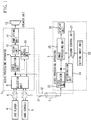
- Fig. 1 is a block diagram illustrating an audio processing apparatus and a video processing apparatus according to a first exemplary embodiment of the present invention.
- An audio processing apparatus 1 and a video processing apparatus 2 are connectable to each other.
- the audio processing apparatus 1 and the video processing apparatus 2 are connected via a first interface cable 3.
- the audio processing apparatus 1 and a first video audio output device 4 as an input source are connected via a second interface cable 6.
- the audio processing apparatus 1 and a second video audio output device 5 are connected via a third interface cable 7.
- the first, second, and third interface cables 3, 6, and 7 each include a video audio signal line 31, which transmits a multiplexed video and audio signal, and a control signal line 32 physically grouped together. More specifically, a High-Definition Multimedia Interface (HDMI) cable can be used.
- HDMI High-Definition Multimedia Interface
- the video audio signal line 31 transmits a video audio signal including a video signal and an audio signal associated with each other.
- the control signal line 32 transmits a control signal including information about a device type for alternate authentication of the devices to be connected, and command information for controlling operations of the devices.
- the audio processing apparatus 1 is capable of processing audio signals from a plurality of input sources and is configured as follows.
- a selection unit 8 selects an input source from among a plurality of input sources and outputs a video audio signal of the selected input source under the control of a first control unit 13. At the same time, the selection unit 8 also transmits the video audio signal of the selected input source to the video processing apparatus 2.
- An audio separation unit 9 extracts an audio signal from the video audio signal output from the selection unit 8, and outputs the extracted audio signal. This separation is necessary only when the input audio signal is multiplexed with the video signal.
- a delay unit 10 provides a predetermined delay time on the audio signal received from the audio separation unit 9.
- An amplifier 11 amplifies the audio signal output from the delay unit 10 to a level capable of driving a speaker unit 12.
- the speaker unit 12 converts the amplified audio signal into audible sound.
- the first control unit 13 outputs a control signal to the selection unit 8 to provide an instruction on the input source to be selected and transmits the information about a type of the selected input source to a second control unit 21 in the video processing apparatus 2. Further, the first control unit 13 receives delay information from the second control unit 21, and sets a delay time based on the delay information and outputs it to the delay unit 10.
- the video processing apparatus 2 has the following configuration.
- a video separation unit 23 extracts a video signal from the video audio signal output from the selection unit 8 of the audio processing apparatus 1 and outputs the extracted video signal. This separation is necessary only when the input video signal is multiplexed with the audio signal.
- a determination unit 24 analyzes the video signal output from the video separation unit 23 to obtain a type of a video signal, such as resolution, a scan mode (interlace or progressive), and a moving image or a still image. The determination unit 24 determines the type of the video signal based on the result of the analysis and outputs the determination result to the second control unit 21.
- a type of a video signal such as resolution, a scan mode (interlace or progressive), and a moving image or a still image.
- An image processing unit 25 performs signal processing, such as conversion, calculation, and correction, on the video signal output from the video separation unit 23 based on the type of the input source according to instructions from the second control unit 21.
- a display unit 26 displays a video image based on the video signal processed by the image processing unit 25.
- a setting input unit 22 outputs image quality setting information about the video image to be displayed on the display unit 26 to the second control unit 21, which is input by a user's operation.
- the second control unit 21 outputs a control signal to the image processing unit 25 for executing image processing according to the output from the determination unit 24, the setting input unit 22, and the first control unit 13 in the audio processing apparatus 1.
- the audio processing apparatus 1 starts its operation when the power is on.
- the first control unit 13 controls the selection unit 8 to select one of the plurality of input sources and to output a video audio signal of the selected input source.
- the first control unit 13 selects the input source according to the instruction for selecting the connected device operated by a user. When only one device is connected to the audio processing apparatus 1, the input from the connected device is automatically selected.
- the video audio signal of the selected input source is output to the video processing apparatus 2, and is input to the audio separation unit 9.
- the audio separation unit 9 separates an audio signal from the video audio signal.
- the control signal of the selected input source is input to the first control unit 13.
- the first control unit 13 transmits information about the type of device of the selected input source to the second control unit 21 in the video processing apparatus 2.
- step S201 the video separation unit 23 separates a video signal from the video audio signal and outputs the video signal to the image processing unit 25. Further, the determination unit 24 determines a type of the video signal concerning resolution, a scan mode, and a moving image or a still image.
- step S202 the second control unit 21 receives the control signal transmitted from the first control unit 13 in step S102.
- step S203 the second control unit 21 recognizes information about the model type contained in the control signal.
- step S204 the second control unit 21 recognizes the output of the setting input unit 22.
- step S205 the second control unit 21 determines optimum image processing based on the results of the setting input recognition processing (S204), the device type information recognition processing (S203), and the video signal separation determination processing (S201).
- the second control unit 21 further determines a delay time required for the image processing. In other words, the second control unit 21 sets a delay time associated with each image processing.
- step S206 the second control unit 21 sets the determined image processing to the image processing unit 25.
- step S207 the second control unit 21 transmits delay information concerning the delay time to the first control unit 13.
- the image processing unit 25 performs image processing appropriate to the type of video signal that the user is viewing, the type of device, and the setting input by the user.
- step S209 the display unit 26 displays a video image processed as described above.
- the delay information refers to the delay time between the input of the video signal and the display on the display unit 26 of the video signal, including the time for processing the video signal.
- step S104 first control unit 13 in the audio processing apparatus 1 receives the delay information transmitted from the second control unit 21 in step S207.
- step S105 the first control unit 13 sets the delay time to the delay unit 10 based on the delay information.
- step S106 the delay unit 10 delays the audio signal separated in step S103 for the period equivalent to the time set in the delay unit 10.
- step S107 the amplifying unit 11 amplifies and outputs the audio signal from the speaker unit 12, which is synchronized with the video signal that the user is viewing.
- the video processing apparatus 2 performs image processing supporting the cinema mode.
- the type of device is a game console
- the video processing apparatus 2 performs image processing supporting the game mode.
- the image processing supporting the cinema mode can include 2-3 pull-down processing. Since the 2-3 pull-down processing is frame interpolation processing, the display delay time becomes long.
- the image processing supporting the game mode can include intra-field interpolation processing. Shorter delay time can be achieved by skipping noise reduction processing and performing the minimum image processing required, so that the uncomfortable feeling, a use may have, due to the delay responding to the operation by the user can be minimized.
- the video processing apparatus 2 since the video processing apparatus 2, thus, selectively executes the image processing that supports the device connected to the audio processing apparatus 1, the image processing time changes.
- the video processing apparatus 2 converts the resolution of the video signal into the resolution at which the display unit 26 can display a video image.
- the video signal is an interlace signal
- the video processing apparatus 2 converts the video signal into a progressive signal, and also converts the resolution of the video signal into the resolution at which the display unit 26 can display a video image.
- the above-described image processing can be replaced by other appropriate processing according to the image type, i.e., a still image or a moving image.
- the video processing apparatus 2 since the video processing apparatus 2, thus, sets the image processing that supports the type of video signal output from the device connected to the audio processing apparatus 1, the image processing time changes.
- the video processing apparatus 2 executes color correction processing.
- the video processing apparatus 2 executes no color correction processing. Otherwise, the video processing apparatus 2 lowers the processing level.
- the video processing apparatus 2 may perform the image corrections, such as noise reduction or gamma correction, according to the settings made by the user. The image processing time, thus, changes according to the image quality setting made by the user.
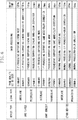
- the delay time data required from starting of the image processing to displaying of the video image is stored in a memory in the second control unit 21 as a table data as illustrated in Fig. 6 .
- the delay time data corresponding to the type of the device, the type of the video signal, and the image quality setting made by the user is transmitted to the first control unit 13.
- the delay time data can be written in a register in the second control unit 21 or an external memory, so that the first control unit 13 can access thereto to obtain the delay time data.
- the second control unit 21 may transmit any suitable information dependent on the image-processing executed by the image processing unit 25.
- the delay information supplied could be "image-processing type".
- the first control unit 13 can then convert this information into the required delay time data, for example by using a look-up table provided in the audio processing apparatus 1 or in an external memory.
- audio reproduction synchronized with video display can be performed even when the image processing time changes according to the type of the device, the type of the video signal, and the image quality setting made by the user.
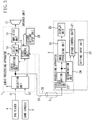
- Fig. 2 is a block diagram illustrating an audio processing apparatus 1 and a video processing apparatus 2 according to a second exemplary embodiment of the present invention.
- the difference from the first exemplary embodiment lies in the point that a multiplexing signal line 27 is used as the second interface cable connecting the audio processing apparatus 1 with the first video audio output device 4.
- the multiplexing signal line 27 transmits a time-division multiplex signal composed of a video signal, an audio signal, and a control signal.
- the audio separation unit 9 in the audio processing apparatus 1 separates the output signal from the selection unit 8 into the audio signal, the video signal and the control signal and outputs them.
- the video signal separated by the audio separation unit 9 is output to the image processing unit 25 and the determination unit 24 via the video signal line 33, and the determination unit 24 determines the type of the video signal.
- the control signal is transmitted from the first control unit 13 to the second control unit 21 in the video processing apparatus 2. Other processing is similar to that in the first exemplary embodiment.
- audio reproduction synchronized with video display can be performed even when the video separation unit 23 in the first exemplary embodiment is omitted and many types of the input interface in the audio processing apparatus 1 are used.
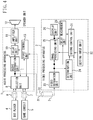
- Fig. 3 is a block diagram illustrating a audio processing apparatus 1 and a video processing apparatus 2 not embodying the present invention.
- the difference from the other exemplary embodiments lies in the point that the second and the third interface cables connecting the audio processing apparatus 1 with the first video audio output device 4 and the second video audio output apparatus 5, respectively, are each replaced by a video audio signal line 31.
- the audio processing apparatus 1 further includes a second setting input unit 28. A user can input the type of a device via the second setting input unit 28.
- the user can input and define, via the second setting input unit 28, the type information about an input device to be selected by the selection unit 8.
- the first control unit 13 stores the information about the device selected by the selection unit 8 and transmits the information to the second control unit 21 in the video processing apparatus 2. Other processing is similar to that in the first exemplary embodiment.
- audio reproduction synchronized with video display can be performed even when the audio processing apparatus 1 uses no control signal line for input interface.
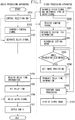
- Fig. 4 is a block diagram illustrating an audio processing apparatus 1 and a video processing apparatus 2 according to a third exemplary embodiment of the present invention.
- the difference from the other exemplary embodiments lies in the point that the video processing apparatus 2 further includes a delay measurement unit 29.
- the delay measurement unit 29 compares the input signal and the output signal of the image processing unit 25, and measures a delay time between the input signal and the output signal. Consequently, the delay measurement unit 29 outputs the delay time to the second control unit 21.
- the delay measurement unit 29 detects frame number information multiplexed with a video signal and scene changes caused by a luminance change based on the input and output video signals of the image processing unit 25 to measure the delay time between the input signal and the output signal.
- the second control unit 21 sums up a stored response time of the display unit 26 and the delay time between the input signal and the output signal, which is input from the delay measurement unit 29, and transmits the total value to the first control unit 13 as delay information.
- Other processing is similar to that in the first exemplary embodiment.
- audio reproduction synchronized with video display can be performed even when the input video signal is analyzed in the image processing unit 25 and image processing is dynamically changed according to the analyzed result.
- the information about the type of input source is information relating to a type of device (e.g. DVD player, games console) serving as the input source.
- the information about the type of input source could alternatively be or include information relating to a type of function of the input source (e.g. DVD playback function, gaming function).
- the information relating to the type of input source may be independent of the type of video signal.
- a DVD player and a games console may both output video signals of the same type (e.g. 1080i), in which case the type of video signal will be the same for both, but the type of input source (device type or function type, etc.) is different in each case.
Landscapes
- Engineering & Computer Science (AREA)
- Multimedia (AREA)
- Signal Processing (AREA)
- Human Computer Interaction (AREA)
- Databases & Information Systems (AREA)
- Two-Way Televisions, Distribution Of Moving Picture Or The Like (AREA)
- Television Signal Processing For Recording (AREA)
- Television Receiver Circuits (AREA)
- Signal Processing For Digital Recording And Reproducing (AREA)
- Studio Devices (AREA)
Applications Claiming Priority (1)
| Application Number | Priority Date | Filing Date | Title |
|---|---|---|---|
| JP2007306003A JP4958748B2 (ja) | 2007-11-27 | 2007-11-27 | 音声処理装置、映像処理装置及びそれらの制御方法 |
Publications (3)
| Publication Number | Publication Date |
|---|---|
| EP2066113A2 EP2066113A2 (en) | 2009-06-03 |
| EP2066113A3 EP2066113A3 (en) | 2010-09-08 |
| EP2066113B1 true EP2066113B1 (en) | 2017-07-19 |
Family
ID=40328860
Family Applications (1)
| Application Number | Title | Priority Date | Filing Date |
|---|---|---|---|
| EP08170137.7A Not-in-force EP2066113B1 (en) | 2007-11-27 | 2008-11-27 | Audio processing apparatus, video processing apparatus, and audiovisual system |
Country Status (4)
| Country | Link |
|---|---|
| US (2) | US8208069B2 (enExample) |
| EP (1) | EP2066113B1 (enExample) |
| JP (1) | JP4958748B2 (enExample) |
| CN (1) | CN101448164A (enExample) |
Families Citing this family (26)
| Publication number | Priority date | Publication date | Assignee | Title |
|---|---|---|---|---|
| JPWO2008056709A1 (ja) * | 2006-11-07 | 2010-02-25 | ソニー株式会社 | 受信装置、受信装置における遅延情報送信方法、音声出力装置および音声出力装置における遅延制御方法 |
| JP4958748B2 (ja) * | 2007-11-27 | 2012-06-20 | キヤノン株式会社 | 音声処理装置、映像処理装置及びそれらの制御方法 |
| JP5040943B2 (ja) * | 2009-03-12 | 2012-10-03 | セイコーエプソン株式会社 | 画像音声供給装置、画像音声供給システム、画像音声供給方法、及び画像音声供給用プログラム |
| JP2011059351A (ja) * | 2009-09-09 | 2011-03-24 | Toshiba Corp | 映像信号処理装置および映像信号処理方法 |
| US20120212672A1 (en) * | 2009-11-06 | 2012-08-23 | Koninklijke Philips Electronics N.V. | Method and apparatus for controlling settings of a device for playback of a content item |
| JP5595028B2 (ja) | 2009-12-14 | 2014-09-24 | キヤノン株式会社 | 放送受信装置及び方法 |
| US20110310956A1 (en) * | 2010-06-22 | 2011-12-22 | Jian-Liang Lin | Methods for controlling video decoder to selectively skip one or more video frames and related signal processing apparatuses thereof |
| JP5604230B2 (ja) * | 2010-08-31 | 2014-10-08 | 京楽産業.株式会社 | 遊技機 |
| JP5604229B2 (ja) * | 2010-08-31 | 2014-10-08 | 京楽産業.株式会社 | 遊技機 |
| WO2012093714A1 (ja) * | 2011-01-07 | 2012-07-12 | シャープ株式会社 | 再生装置、再生装置の制御方法、生成装置、生成装置の制御方法、記録媒体、データ構造、制御プログラム、及び該プログラムを記録した記録媒体 |
| US8441577B2 (en) * | 2011-02-08 | 2013-05-14 | Echostar Technologies L.L.C. | Apparatus, systems and methods for synchronization of a video stream and an audio stream |
| KR101937708B1 (ko) * | 2012-07-09 | 2019-04-11 | 삼성전자 주식회사 | 카메라 제어 시스템과 이를 포함하는 단말기 및 카메라 제어 방법 |
| BR112015004056A2 (pt) * | 2012-08-28 | 2017-07-04 | Koninklijke Philips Nv | dispositivo de fornecimento de áudio; visor; sistema de áudio e vídeo; método de fornecimento de áudio; e programa de computador |
| US20140114456A1 (en) * | 2012-10-22 | 2014-04-24 | Arbitron Inc. | Methods and Systems for Clock Correction and/or Synchronization for Audio Media Measurement Systems |
| TWI549496B (zh) * | 2014-05-08 | 2016-09-11 | 宏碁股份有限公司 | 行動電子裝置以及視訊補償方法 |
| US20170142295A1 (en) * | 2014-06-30 | 2017-05-18 | Nec Display Solutions, Ltd. | Display device and display method |
| CN104954884B (zh) * | 2015-06-15 | 2018-05-01 | 北京维鲸视界科技有限公司 | 一种同屏展现实时报警和历史报警信息的方法和系统 |
| CN106454471A (zh) * | 2016-08-17 | 2017-02-22 | 青岛海信电器股份有限公司 | 一种终端设备的音画同步方法及装置 |
| JP2019004401A (ja) * | 2017-06-19 | 2019-01-10 | セイコーエプソン株式会社 | プロジェクションシステム、プロジェクター及びプロジェクションシステムの制御方法 |
| CN111491202B (zh) * | 2019-01-29 | 2021-06-15 | 广州市百果园信息技术有限公司 | 一种视频发布方法、装置、设备和存储介质 |
| CN109819303B (zh) * | 2019-03-06 | 2021-04-23 | Oppo广东移动通信有限公司 | 数据输出方法及相关设备 |
| CN112653916B (zh) * | 2019-10-10 | 2023-08-29 | 腾讯科技(深圳)有限公司 | 一种音视频同步优化的方法及设备 |
| CN112135177B (zh) * | 2020-09-25 | 2022-10-21 | 北京猿力未来科技有限公司 | 数据流同步方法及装置 |
| KR102892001B1 (ko) | 2021-01-18 | 2025-12-01 | 삼성전자주식회사 | 멀티미디어 콘텐트의 오디오 신호 및 비디오 신호를 동기화하는 방법 및 그 장치 |
| CN113453052B (zh) * | 2021-06-22 | 2022-11-08 | Vidaa(荷兰)国际控股有限公司 | 音画同步方法及显示设备 |
| WO2022228571A1 (zh) | 2021-04-30 | 2022-11-03 | 海信视像科技股份有限公司 | 一种显示设备和音频数据处理方法 |
Family Cites Families (16)
| Publication number | Priority date | Publication date | Assignee | Title |
|---|---|---|---|---|
| US4313135B1 (en) * | 1980-07-28 | 1996-01-02 | J Carl Cooper | Method and apparatus for preserving or restoring audio to video |
| JP3508951B2 (ja) | 1994-09-30 | 2004-03-22 | ソニー株式会社 | 映像信号処理装置 |
| DE19956913C2 (de) | 1999-11-26 | 2001-11-29 | Grundig Ag | Verfahren und Vorrichtung zur Anpassung der Laufzeitdifferenz von Video- und Audiosignal in einem Fernsehgerät |
| GB0000874D0 (en) * | 2000-01-14 | 2000-03-08 | Koninkl Philips Electronics Nv | Latency handling for interconnected devices |
| WO2001053140A1 (de) | 2000-01-19 | 2001-07-26 | Ress Kutschen Gmbh | Kufenfahrzeug |
| JP2002290932A (ja) * | 2001-03-27 | 2002-10-04 | Toshiba Corp | デジタル放送受信装置とその制御方法 |
| JP2002344898A (ja) | 2001-05-17 | 2002-11-29 | Pioneer Electronic Corp | 映像表示装置、音声調整装置及び映像音声出力装置、並びに映像音声同期方法 |
| US7212247B2 (en) | 2002-01-31 | 2007-05-01 | Thomson Licensing | Audio/video system providing variable delay |
| JP4517727B2 (ja) * | 2004-05-27 | 2010-08-04 | ヤマハ株式会社 | オーディオ・ビデオアンプ |
| JP4472444B2 (ja) | 2004-06-30 | 2010-06-02 | 株式会社ニフコ | 開閉動作体の停止位置における引き込み係止機構 |
| JP4427733B2 (ja) | 2004-07-16 | 2010-03-10 | ソニー株式会社 | 映像音声処理システム、アンプ装置および音声遅延処置方法 |
| KR100651894B1 (ko) | 2004-07-23 | 2006-12-06 | 엘지전자 주식회사 | 영상기기 및 그 제어방법 |
| JP2007235519A (ja) | 2006-03-01 | 2007-09-13 | Matsushita Electric Ind Co Ltd | 映像音声同期方法及び映像音声同期システム |
| JP4544190B2 (ja) * | 2006-03-31 | 2010-09-15 | ソニー株式会社 | 映像音声処理システム、映像処理装置、音声処理装置、映像音声の出力装置および映像と音声の同期処理方法 |
| JP2007318604A (ja) | 2006-05-29 | 2007-12-06 | Funai Electric Co Ltd | ディジタル音声信号処理装置 |
| JP4958748B2 (ja) * | 2007-11-27 | 2012-06-20 | キヤノン株式会社 | 音声処理装置、映像処理装置及びそれらの制御方法 |
-
2007
- 2007-11-27 JP JP2007306003A patent/JP4958748B2/ja not_active Expired - Fee Related
-
2008
- 2008-10-21 US US12/255,456 patent/US8208069B2/en not_active Expired - Fee Related
- 2008-11-27 EP EP08170137.7A patent/EP2066113B1/en not_active Not-in-force
- 2008-11-27 CN CNA2008101801266A patent/CN101448164A/zh active Pending
-
2012
- 2012-05-22 US US13/477,769 patent/US8786779B2/en not_active Expired - Fee Related
Non-Patent Citations (1)
| Title |
|---|
| None * |
Also Published As
| Publication number | Publication date |
|---|---|
| JP2009130821A (ja) | 2009-06-11 |
| US20090135300A1 (en) | 2009-05-28 |
| CN101448164A (zh) | 2009-06-03 |
| US8208069B2 (en) | 2012-06-26 |
| EP2066113A2 (en) | 2009-06-03 |
| US20120229704A1 (en) | 2012-09-13 |
| EP2066113A3 (en) | 2010-09-08 |
| JP4958748B2 (ja) | 2012-06-20 |
| US8786779B2 (en) | 2014-07-22 |
Similar Documents
| Publication | Publication Date | Title |
|---|---|---|
| EP2066113B1 (en) | Audio processing apparatus, video processing apparatus, and audiovisual system | |
| EP1840868B1 (en) | Audiovisual (AV) system and control method thereof | |
| US8301007B2 (en) | Video and audio processing system, video processing apparatus, audio processing apparatus, output apparatus, and method of controlling the system | |
| US10136221B2 (en) | Sound processing unit, sound processing system, audio output unit and display device | |
| US8395705B2 (en) | Auto install apparatus and method for AV device connection with digital TV | |
| JP4837018B2 (ja) | Av装置 | |
| KR100640832B1 (ko) | 디지털 티브이 |
Legal Events
| Date | Code | Title | Description |
|---|---|---|---|
| PUAI | Public reference made under article 153(3) epc to a published international application that has entered the european phase |
Free format text: ORIGINAL CODE: 0009012 |
|
| AK | Designated contracting states |
Kind code of ref document: A2 Designated state(s): AT BE BG CH CY CZ DE DK EE ES FI FR GB GR HR HU IE IS IT LI LT LU LV MC MT NL NO PL PT RO SE SI SK TR |
|
| AX | Request for extension of the european patent |
Extension state: AL BA MK RS |
|
| PUAL | Search report despatched |
Free format text: ORIGINAL CODE: 0009013 |
|
| AK | Designated contracting states |
Kind code of ref document: A3 Designated state(s): AT BE BG CH CY CZ DE DK EE ES FI FR GB GR HR HU IE IS IT LI LT LU LV MC MT NL NO PL PT RO SE SI SK TR |
|
| AX | Request for extension of the european patent |
Extension state: AL BA MK RS |
|
| 17P | Request for examination filed |
Effective date: 20110308 |
|
| AKX | Designation fees paid |
Designated state(s): DE FR GB |
|
| 17Q | First examination report despatched |
Effective date: 20110624 |
|
| REG | Reference to a national code |
Ref country code: DE Ref legal event code: R079 Ref document number: 602008051153 Country of ref document: DE Free format text: PREVIOUS MAIN CLASS: H04N0005040000 Ipc: H04N0021236800 |
|
| GRAP | Despatch of communication of intention to grant a patent |
Free format text: ORIGINAL CODE: EPIDOSNIGR1 |
|
| RIC1 | Information provided on ipc code assigned before grant |
Ipc: H04N 21/2368 20110101AFI20170120BHEP Ipc: H04N 21/462 20110101ALI20170120BHEP Ipc: H04N 21/439 20110101ALI20170120BHEP Ipc: H04N 21/485 20110101ALI20170120BHEP Ipc: H04N 5/04 20060101ALI20170120BHEP Ipc: H04N 21/434 20110101ALI20170120BHEP Ipc: H04N 21/43 20110101ALI20170120BHEP |
|
| INTG | Intention to grant announced |
Effective date: 20170213 |
|
| GRAS | Grant fee paid |
Free format text: ORIGINAL CODE: EPIDOSNIGR3 |
|
| GRAA | (expected) grant |
Free format text: ORIGINAL CODE: 0009210 |
|
| AK | Designated contracting states |
Kind code of ref document: B1 Designated state(s): DE FR GB |
|
| REG | Reference to a national code |
Ref country code: GB Ref legal event code: FG4D |
|
| REG | Reference to a national code |
Ref country code: DE Ref legal event code: R096 Ref document number: 602008051153 Country of ref document: DE |
|
| REG | Reference to a national code |
Ref country code: DE Ref legal event code: R097 Ref document number: 602008051153 Country of ref document: DE |
|
| PLBE | No opposition filed within time limit |
Free format text: ORIGINAL CODE: 0009261 |
|
| STAA | Information on the status of an ep patent application or granted ep patent |
Free format text: STATUS: NO OPPOSITION FILED WITHIN TIME LIMIT |
|
| 26N | No opposition filed |
Effective date: 20180420 |
|
| GBPC | Gb: european patent ceased through non-payment of renewal fee |
Effective date: 20171127 |
|
| REG | Reference to a national code |
Ref country code: FR Ref legal event code: ST Effective date: 20180731 |
|
| PG25 | Lapsed in a contracting state [announced via postgrant information from national office to epo] |
Ref country code: FR Free format text: LAPSE BECAUSE OF NON-PAYMENT OF DUE FEES Effective date: 20171130 |
|
| PG25 | Lapsed in a contracting state [announced via postgrant information from national office to epo] |
Ref country code: GB Free format text: LAPSE BECAUSE OF NON-PAYMENT OF DUE FEES Effective date: 20171127 |
|
| PGFP | Annual fee paid to national office [announced via postgrant information from national office to epo] |
Ref country code: DE Payment date: 20211020 Year of fee payment: 14 |
|
| REG | Reference to a national code |
Ref country code: DE Ref legal event code: R119 Ref document number: 602008051153 Country of ref document: DE |
|
| PG25 | Lapsed in a contracting state [announced via postgrant information from national office to epo] |
Ref country code: DE Free format text: LAPSE BECAUSE OF NON-PAYMENT OF DUE FEES Effective date: 20230601 |